



Round faces are generous faces. They carry softness through the cheeks, which is lovely right up until a haircut ends at the exact spot that makes the face look broader than it is.
That is why blonde haircuts for round faces work best when they create a little lift, a little length, and some movement that breaks the circle without fighting it. A blunt line at the cheekbone can make the whole style feel boxy. A soft angle, a side part, or a blonde dimension that shifts the eye downward does the opposite.
Blonde helps more than people think. Light pieces around the face can brighten the skin, while deeper roots and lowlights add shadow in places that keep the shape from going flat. The trick is not “go lighter and hope for the best.” It’s choosing a cut that knows where to stop, where to bend, and where to leave some air.
1. Long Blonde Layers That Start Below the Cheekbone
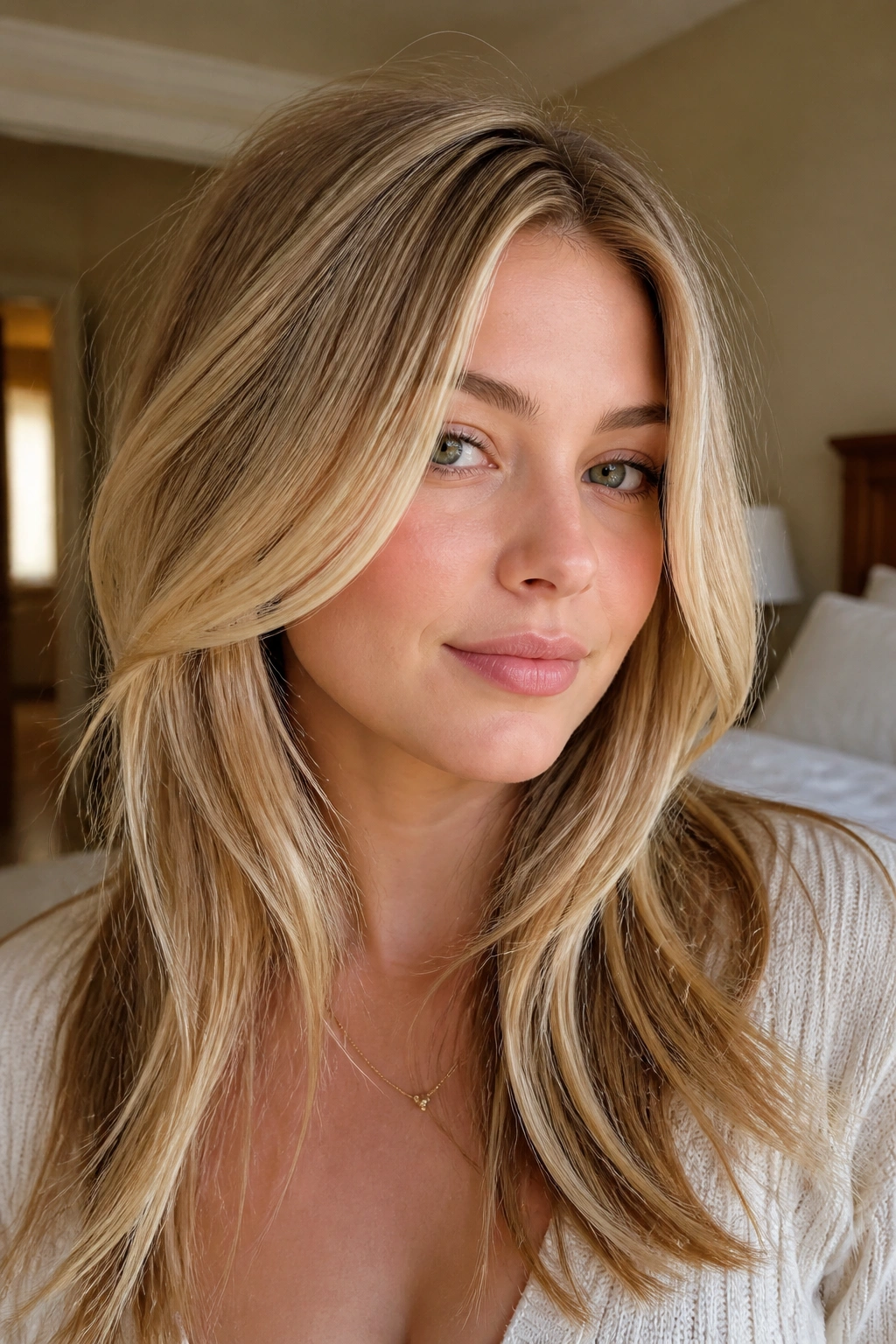
Long layers are one of the easiest ways to flatter a round face because they keep the shape moving vertically instead of spreading it wide. The sweetest spot is usually past the cheekbone, with the shortest face-framing piece landing near the jaw or even a little lower.
A soft blonde balayage makes this cut even better. The darker root at the crown keeps the top from looking puffy, while lighter ends pull the eye downward. That contrast matters more than people realize.
If your hair is thick, ask for layers that remove bulk from the mid-lengths, not from the ends only. If it’s fine, keep the layers longer and lighter so the hair still looks full. Too many short layers near the cheeks can make the face feel rounder, not slimmer.
Best for: medium to thick hair, wavy textures, and anyone who wants shape without a lot of daily styling.
2. A Collarbone Lob with a Deep Side Part
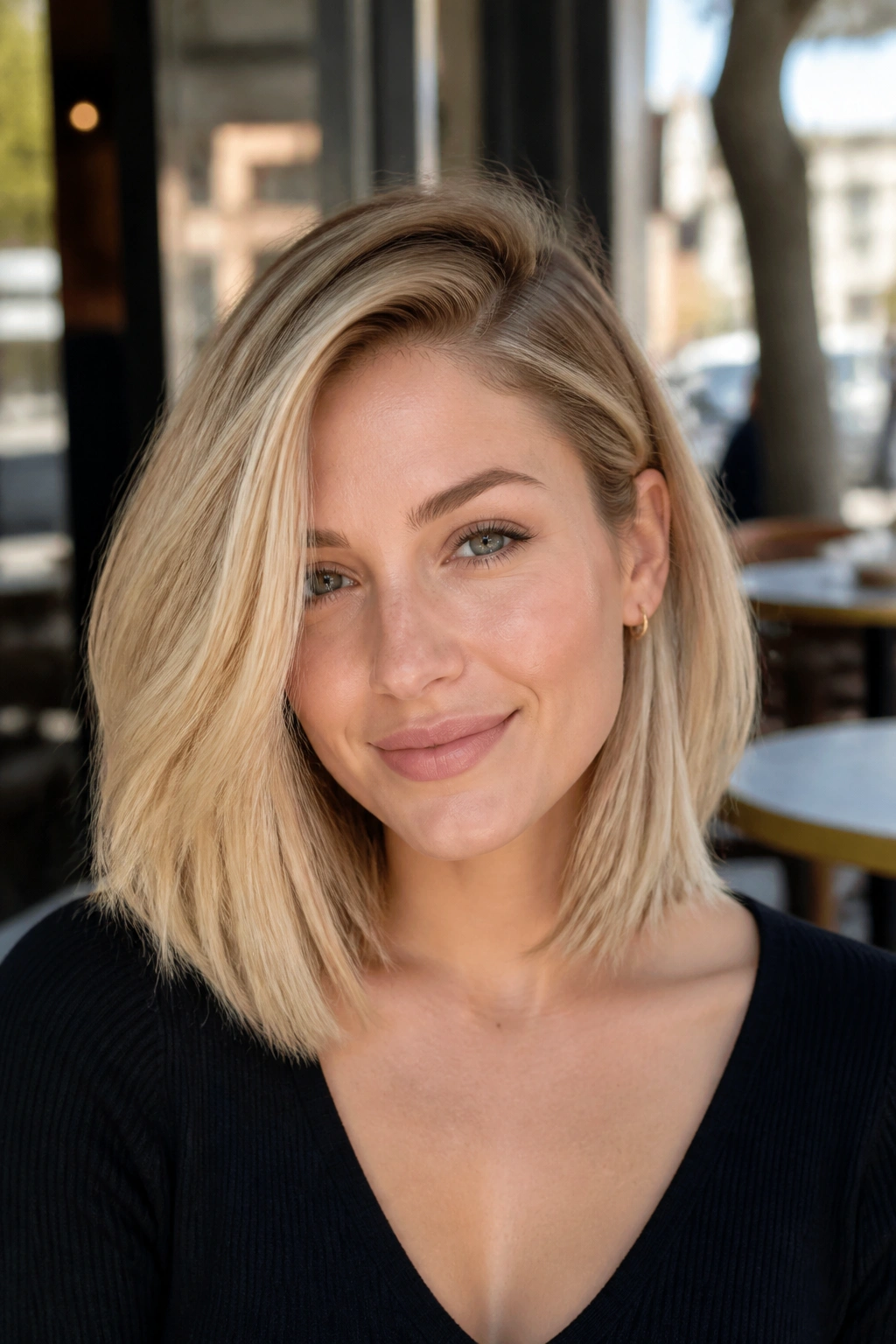
Want a cut that looks polished without feeling severe? A collarbone lob with a deep side part does that job well. The length sits below the widest part of the face, which gives you a cleaner line from cheek to shoulder.
The side part is doing real work here. It interrupts symmetry, adds instant height at the crown, and keeps the style from sitting like a cap around the head. On a round face, that little bit of asymmetry goes a long way.
How to Style It
- Blow-dry with a round brush, lifting at the roots on the heavier side.
- Tuck one side behind the ear to show a little jawline.
- Use a beige or champagne blonde glaze to keep the color soft, not flat.
If you like a haircut that behaves on busy mornings, this one is hard to beat. It still looks intentional even when it’s not perfectly styled. Good haircuts do that.
3. Curtain Bangs with Loose Blonde Waves
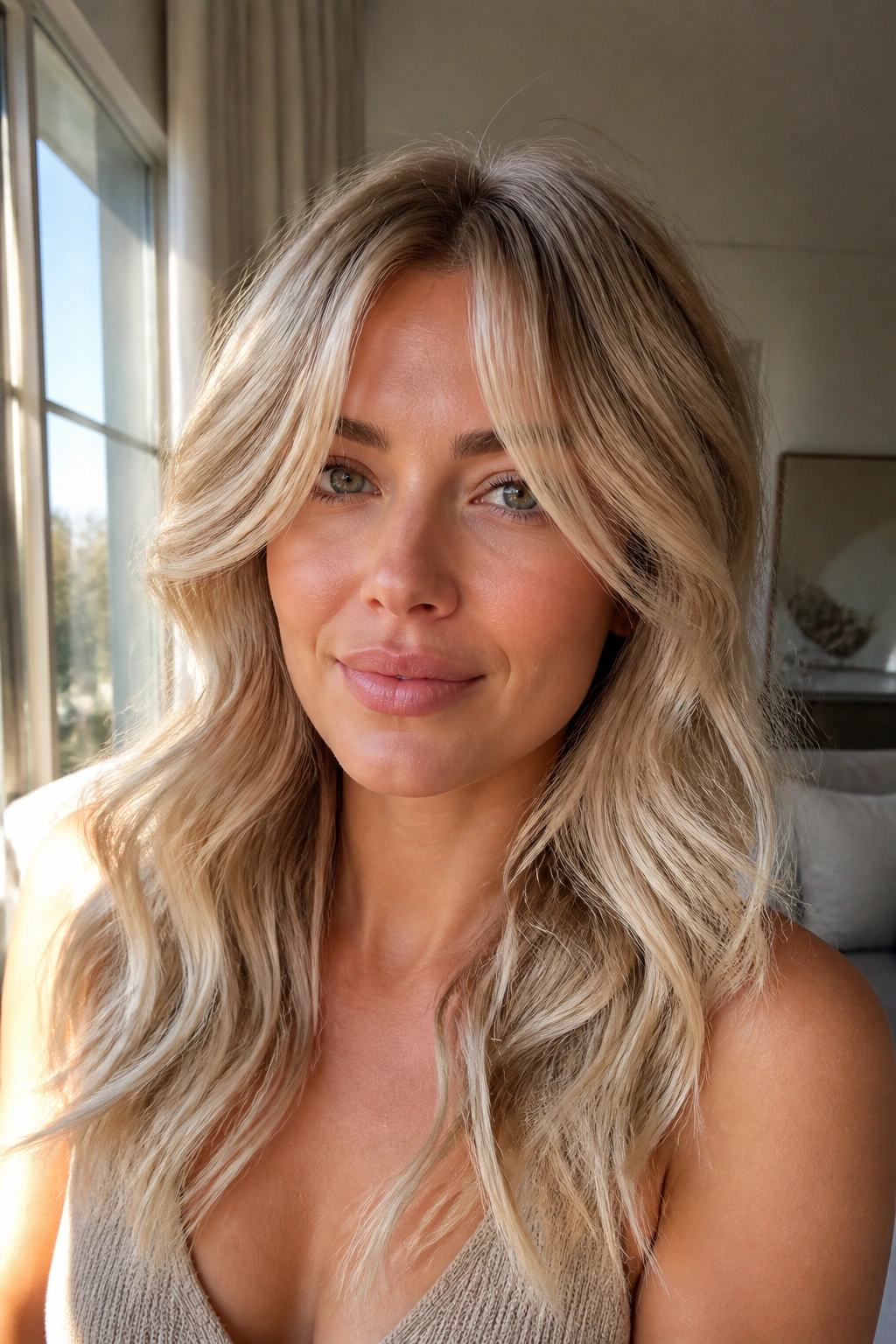
Curtain bangs can be a gift for round faces when they’re cut with enough length to open in the middle and sweep outward. They create a vertical slit of skin at the forehead, which draws the eye upward before it lands on the cheeks.
Loose waves below the bangs keep the shape from ballooning out at the sides. The point is softness with direction. Blonde balayage, especially with lighter ends, helps the layers read clearly instead of blending into one big shape.
Why It Works
The fringe frames the face without cutting it in half. The waves add texture, but not a puff of width right at the cheeks. That balance is the whole game.
If you have a cowlick or a stubborn front section, ask for longer curtain bangs rather than a short fringe. Short bangs can still work, but they need more daily effort, and this style loses its charm fast when it’s fighting your forehead.
4. An Angled Bob That Skims the Jaw
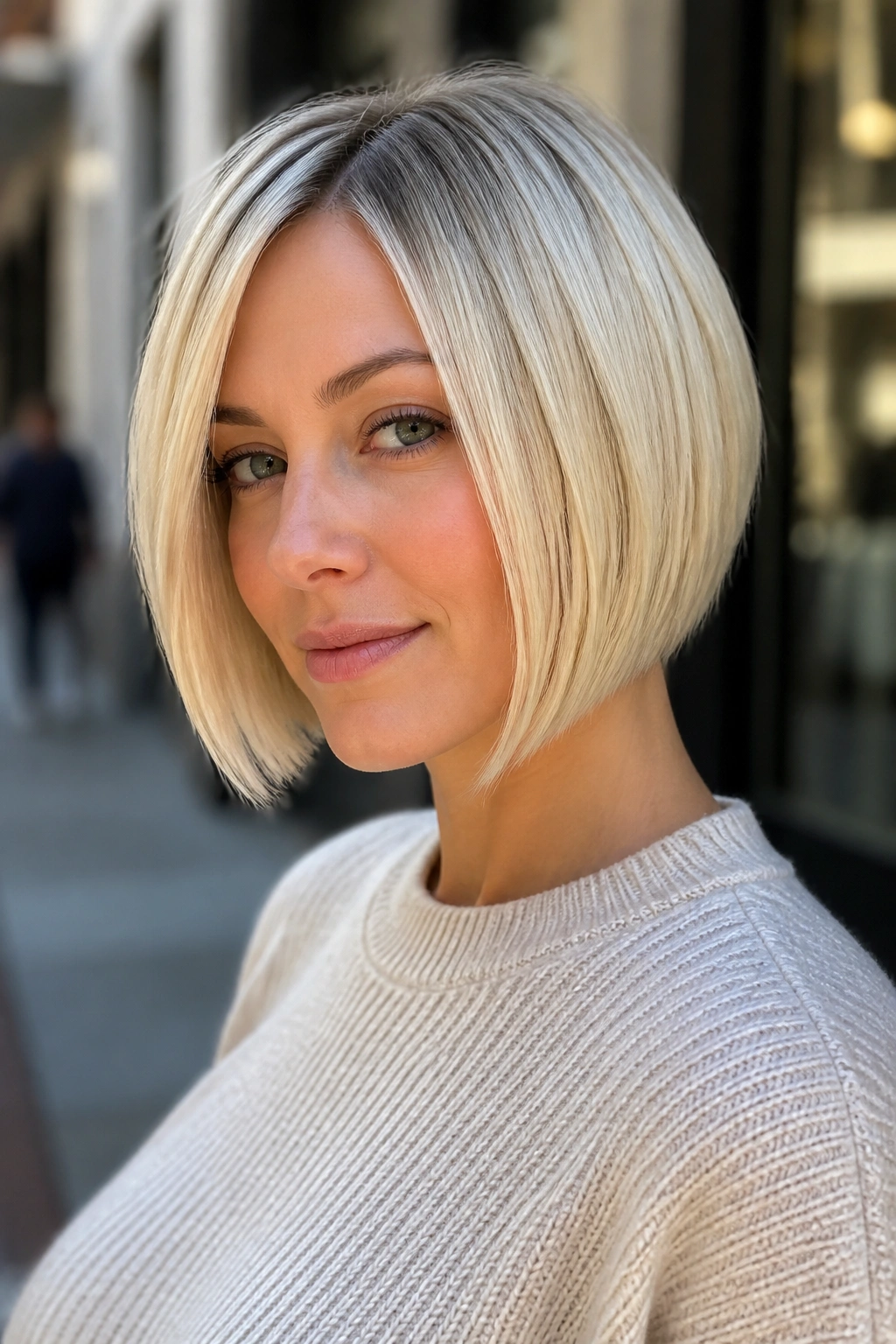
A bob can flatter a round face, but only if the angle is doing something useful. The back should sit a touch shorter, while the front pieces fall below the jawline and narrow the silhouette. If the cut ends exactly at the cheek, it usually feels too blunt.
This is where blonde color helps. A cool icy blonde or a clean pearl tone can make the angles look sharper, while a soft root shadow keeps the crown from looking wide. The result is crisp but not hard.
You’ll notice this cut looks strongest when the front pieces curve forward slightly rather than curling inward toward the cheeks. That forward line pulls the eye down. It’s a small thing, and it changes everything.
Not every bob needs to be airy and messy. Sometimes a clean angle is the point. On round faces, though, it needs length in front or it can sit too high and feel boxy.
5. A Soft Shag with Bottleneck Bangs
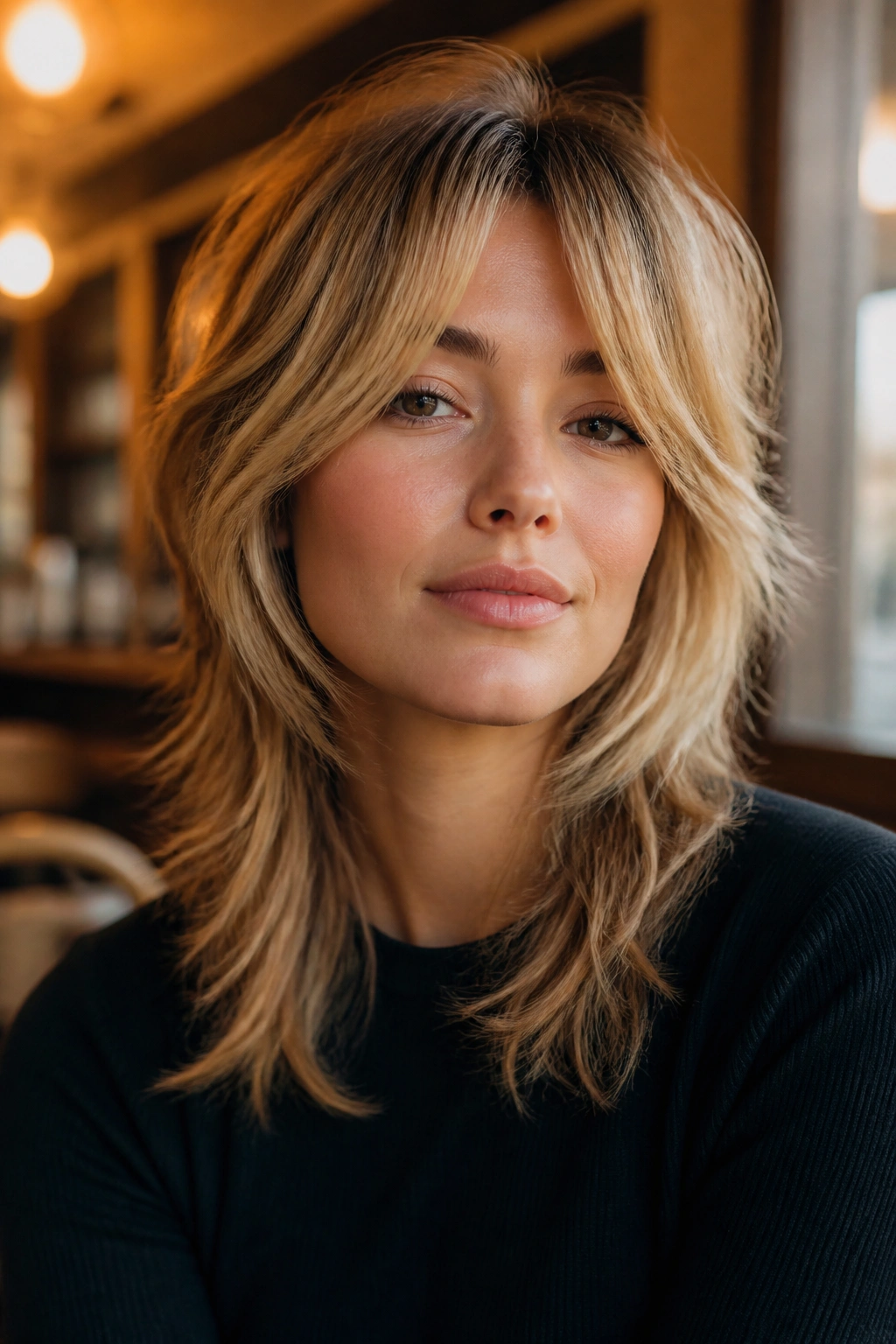
A shag can flatter a round face better than a sleek, one-length cut if the layers are placed with some restraint. The messier versions you see on mood boards are not the goal here. You want broken texture, not a cloud.
Bottleneck bangs are a smart match because they start narrow at the center and open around the eyes and cheekbones. That shape gives the face a little architectural break without swallowing it. A warm honey blonde or toasted beige blonde keeps the layers readable.
What to Ask For
- Soft crown layers, not choppy short ones.
- Bangs that open just above the cheekbone.
- Ends that stay light and piecey.
- A dry finish that keeps movement, not frizz.
If your hair is fine, ask your stylist to keep the shag longer and more feathered. Too much internal layering can make it airy in a bad way. You want texture that moves, not ends that disappear.
6. A Blonde Pixie with Height at the Crown
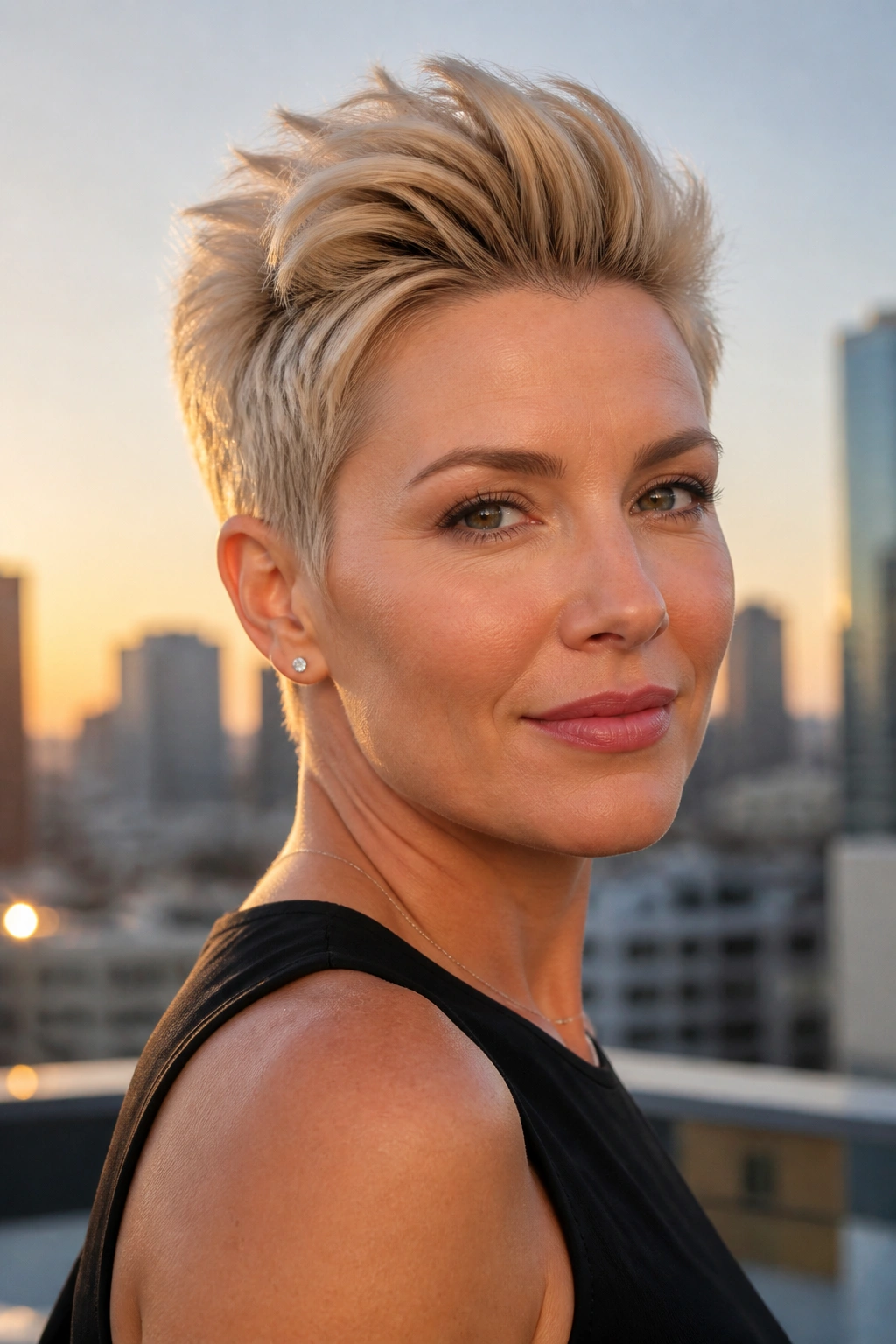
Short hair on a round face can be sharp in the best way when it creates height instead of width. A pixie with lift at the crown and softness around the temples gives the face a longer line, which is exactly what you want.
The blonde color matters here too. Light pieces on top make the crown look higher, especially if the sides are kept a shade deeper. That tiny contrast builds shape without needing a lot of length. Short does not have to mean flat.
The Shape to Ask For
- Longer top layers, usually 2 to 4 inches.
- Tapered sides that stay close to the head.
- A fringe that sweeps forward or diagonally.
- Light texture paste for separation.
This cut is best if you like cheekbones, earrings, and a little edge. It’s not the most forgiving style for a rushed morning, though, so be honest about how much styling you’ll actually do.
7. The Butterfly Cut on Long Blonde Hair
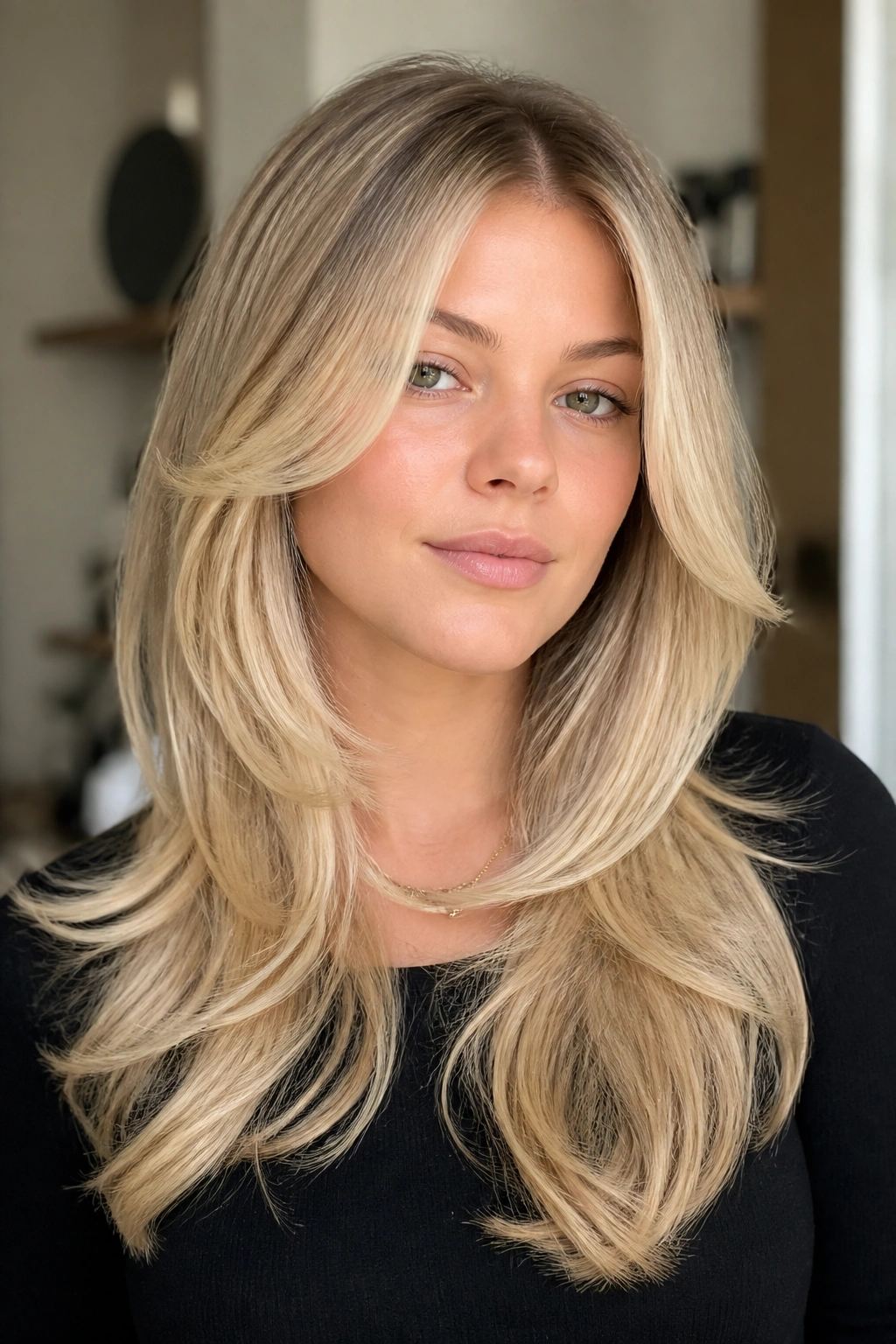
The butterfly cut can be a little dramatic in photos, but on a round face it works for a simple reason: the shorter front layers act like face-framing wings, while the length stays intact in the back. That keeps the eye moving down the hair instead of across the cheeks.
Blonde dimension makes the layers easier to see. A soft root melt into buttery ends keeps the style from feeling heavy around the face. If the front pieces start near the chin and then fall into the rest of the length, the effect is graceful, not fussy.
One thing people miss: the butterfly cut needs blow-dry shape. Air-drying can still look good, but the style really shows itself when the layers get a little bend away from the face. A round brush and a medium barrel brush do most of the work.
It’s a smart pick if you want movement and length at the same time. That combination is harder to get than it sounds.
8. A Blunt Lob with Hidden Texture
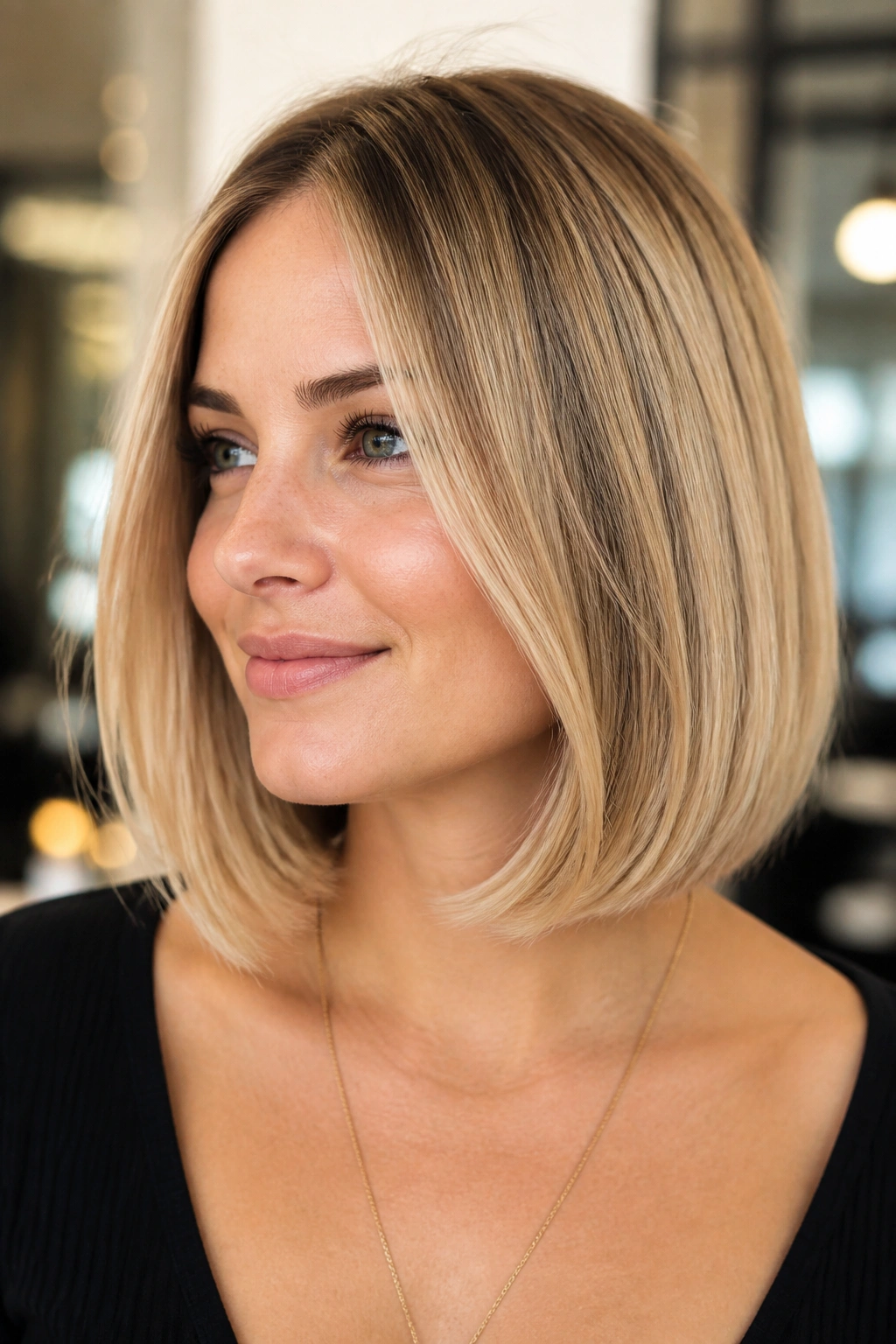
A blunt lob can work on a round face, but only if the cut stops below the chin and has a little hidden texture inside. Otherwise, it can sit like a shelf around the face, which is not the look anyone is after.
The beauty of this version is the clean outer line. Inside, though, the stylist can remove just enough bulk to keep it from feeling heavy. A neutral blonde with a soft root shadow is the best match because it keeps the shape smooth instead of over-fragmented.
If you wear straight hair a lot, this is a strong option. It looks expensive in the plainest sense of the word — neat, glossy, and controlled. But it still needs a tiny bend at the ends or it can feel too severe.
Best paired with: middle part, off-center part, or a tucked-behind-one-ear finish.
9. Wavy Midlength Hair with Bright Face Pieces
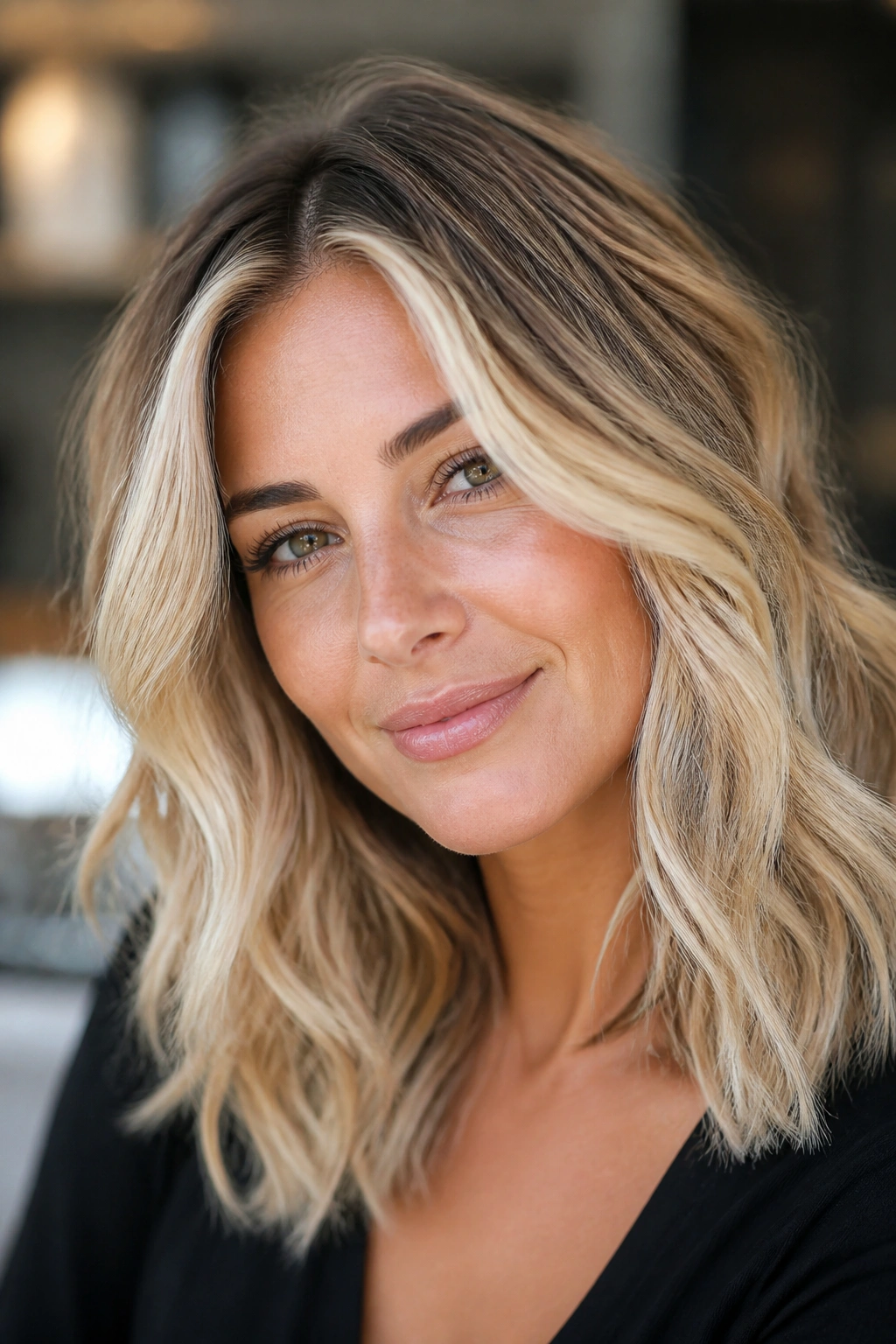
Bright face pieces can be a lifesaver on a round face if they’re placed carefully. The trick is to brighten near the temples and cheekbones without making the widest part of the face the brightest part.
That is why midlength waves work so well. The shape gives you enough length to narrow the overall outline, while the lighter front pieces lift the face and pull attention upward. If the rest of the hair is a deeper beige or rooty blonde, the contrast becomes even cleaner.
Unlike a full-head platinum look, this style keeps some shadow in the base. That shadow is your friend. It stops the cut from turning into one pale block, which can make round features look even softer.
If you want something flattering but not too precious, this is a strong middle ground. It feels fresh without being high-maintenance.
10. Feathered Layers with Side-Swept Bangs
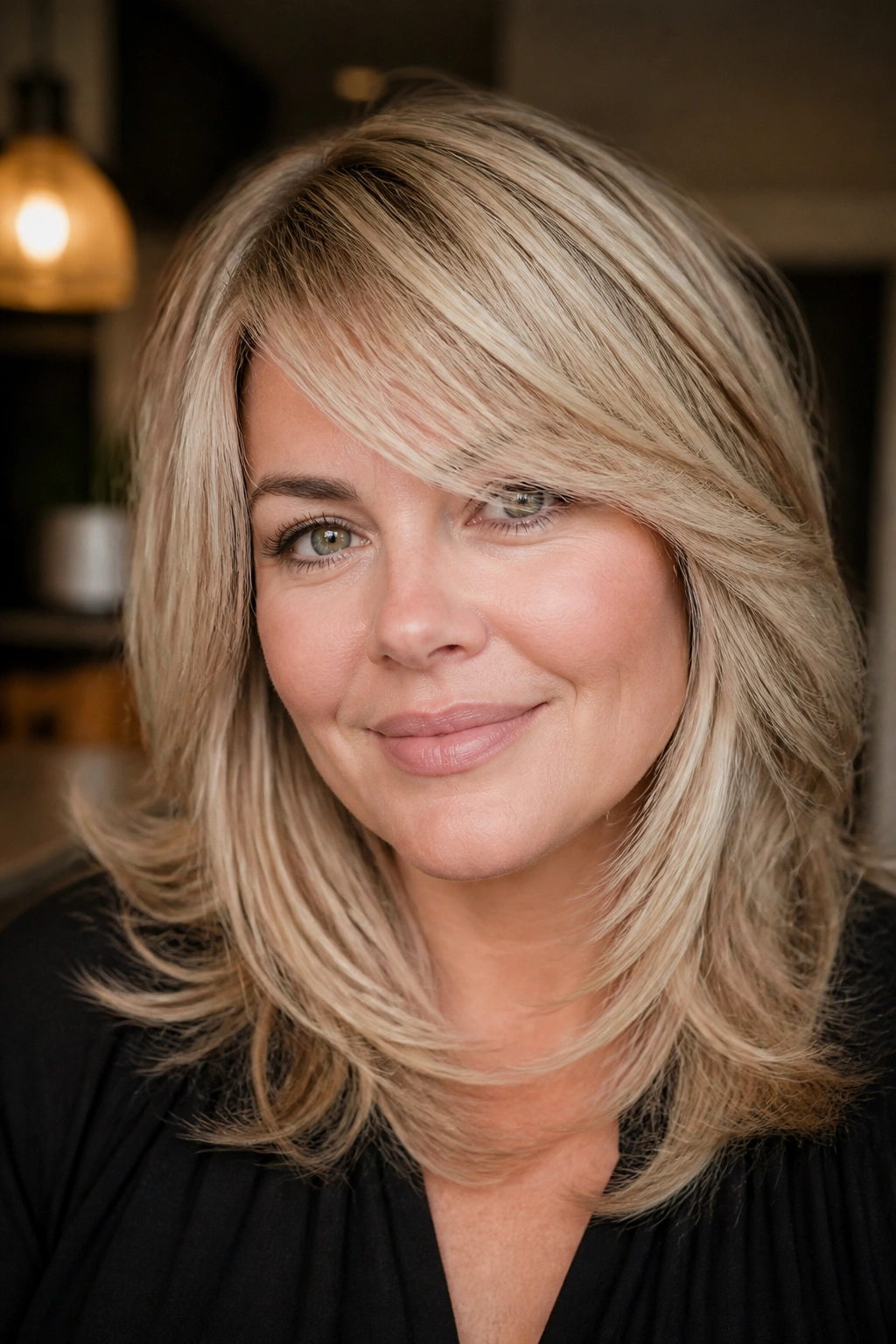
A feathered cut has a bit of old-school glamour to it, but the modern version is less polished and more airy. On a round face, the feathering helps the hair slip past the cheeks instead of resting on them.
Side-swept bangs are the quiet hero here. They add diagonal movement across the forehead, which interrupts the round shape in a nice, soft way. Pair that with a creamy blonde or sandy blonde and the whole style feels light on the eye.
Styling Notes
A medium round brush gives the ends a slight flick away from the face. That flick matters more than a lot of people think. It keeps the hair from tucking inward at the jaw and making the face feel wider.
Use a lightweight mousse at the roots if your hair tends to collapse. Too much product and the feathered effect turns sticky. Too little and the layers disappear.
11. A French Bob That Sits Below the Cheek
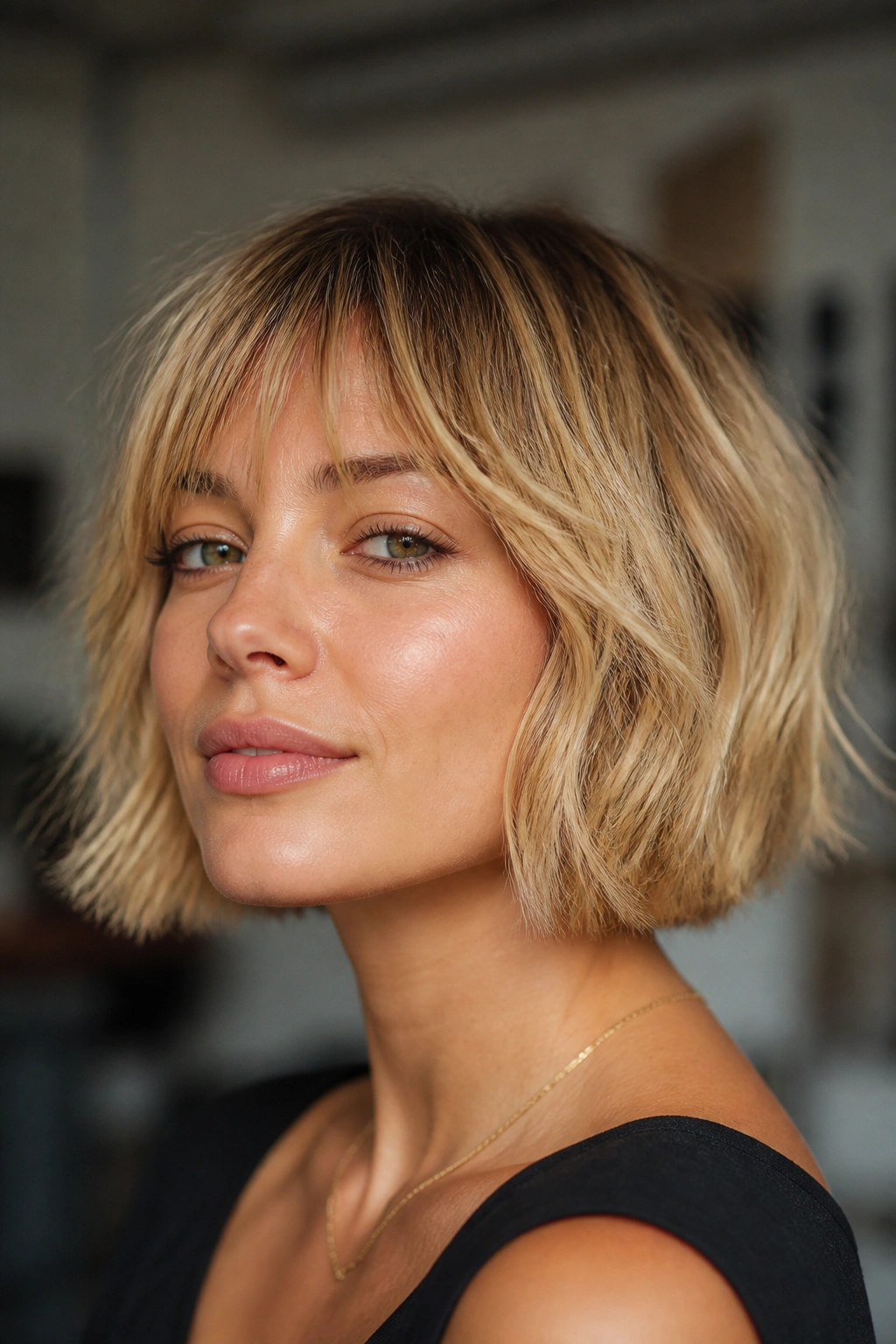
A French bob can flatter a round face, but only if it’s not cut too high. The sweet version sits just below the cheekbone or brushes the jawline with enough softness that it doesn’t box in the face.
This is a cut that loves texture. Soft blonde, a little grain at the ends, and an imperfect bend all help it look lived-in instead of rigid. If the fringe is included, keep it airy and slightly see-through rather than heavy across the forehead.
It’s a chic choice, but not a lazy one. The shape needs intention, and the cut should feel as if it was tailored to your face rather than copied from a photo. That means talking honestly with your stylist about where your cheeks are fullest and where the hair should fall below that point.
A round face and a short bob can get along just fine. They just need some breathing room.
12. A U-Shaped Cut with Beveled Ends
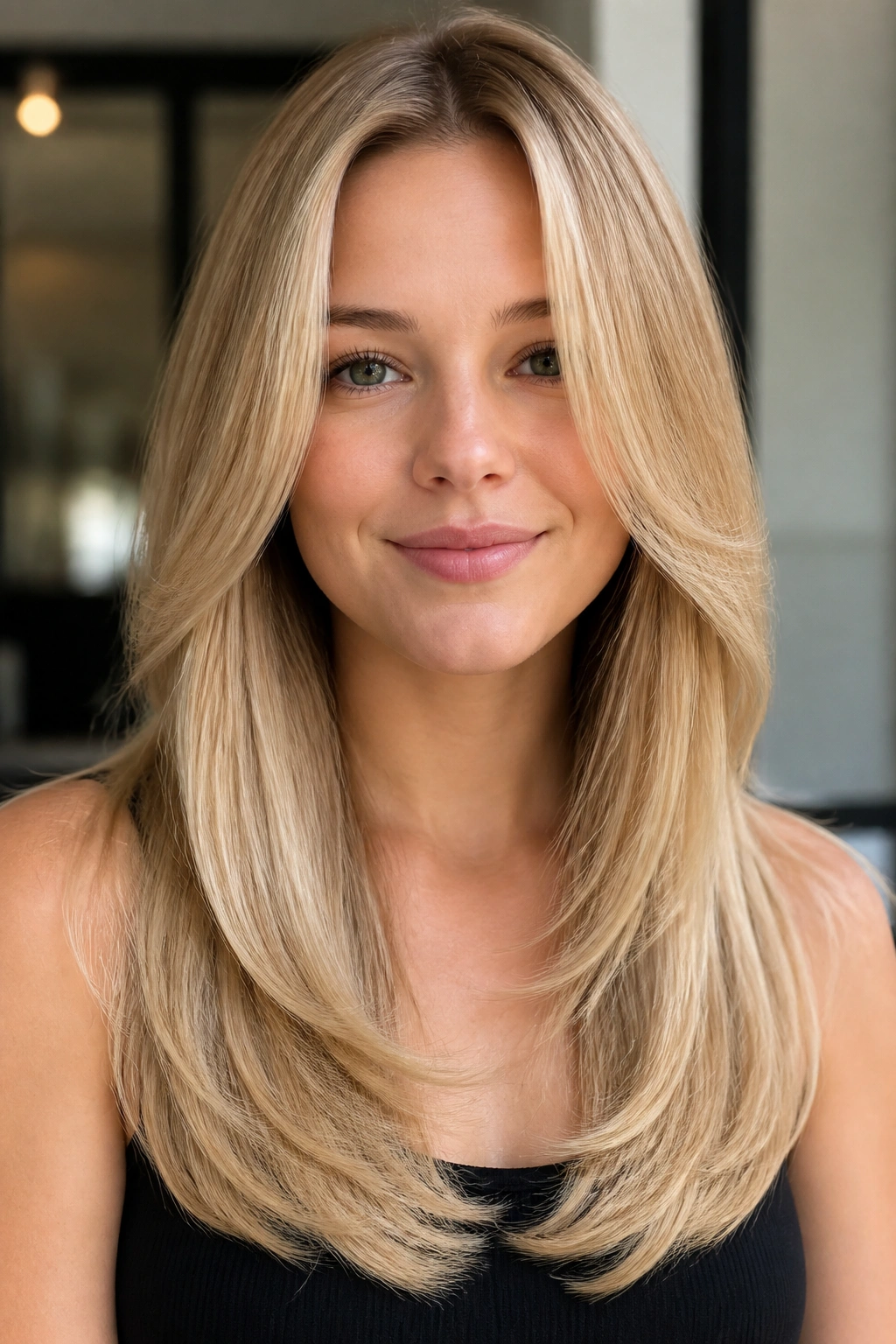
The U-shape is one of those cuts that sounds subtle until you see it on hair with some length. The center stays longest, and the front pieces arc gently around the face, which creates a longer outline than a straight-across hemline.
Beveled ends keep the cut from feeling heavy. They also help blonde highlights catch differently along the edge, so the hair doesn’t look like one flat curtain. If you like glossy, smooth finishes, this is a very comfortable place to live.
Why It Flatters Round Faces
- The center length draws the eye down.
- The front pieces frame, not widen.
- The beveled finish keeps the outline soft.
- A warm or neutral blonde adds dimension without too much contrast.
If your hair is thick, this cut can be a relief. It removes bulk while keeping weight where the hair needs it. That’s harder to do than it sounds.
13. A Choppy Lob with Rooty Balayage
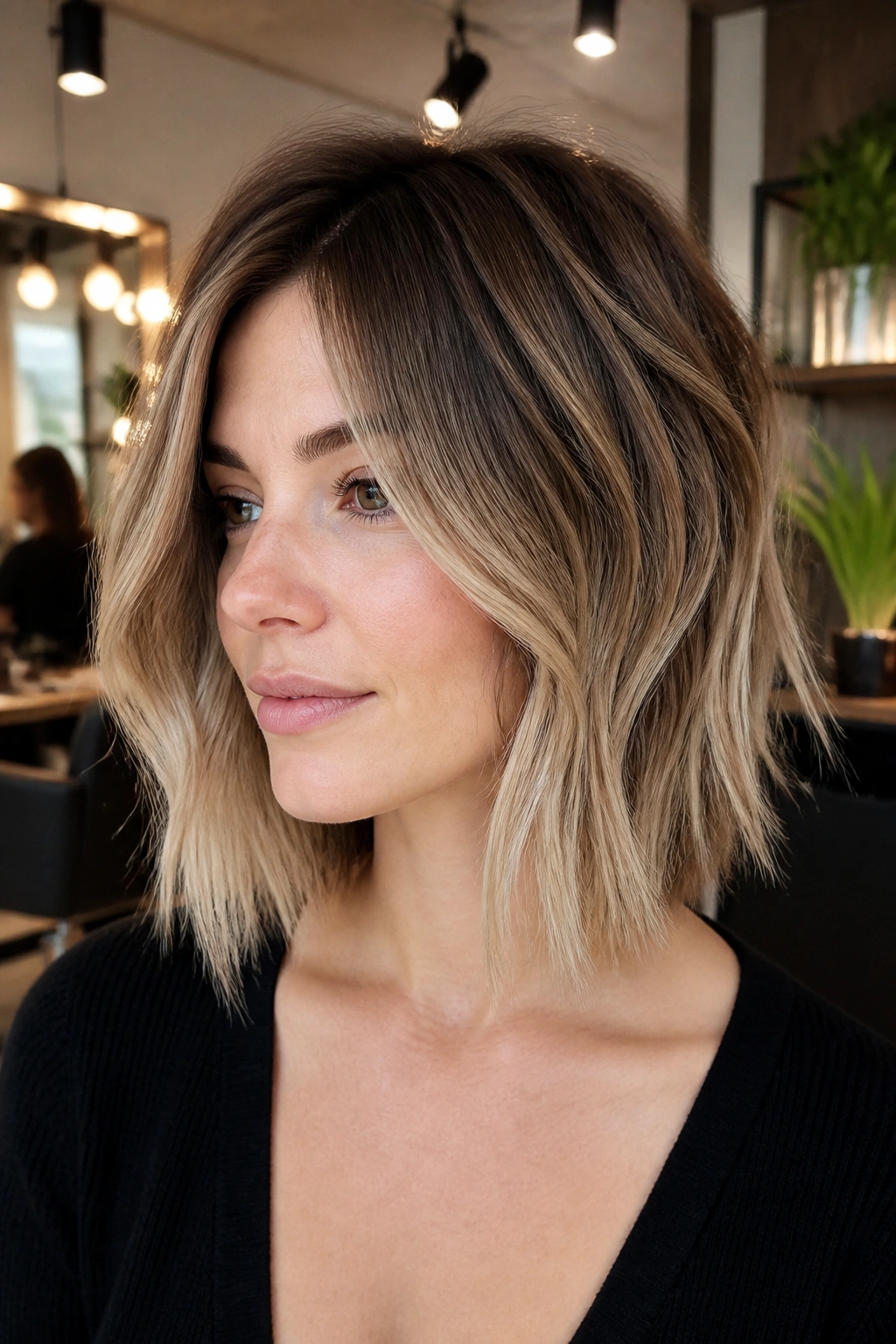
A uniform blonde can make a round face look wider because it removes shadow from the whole shape. Rooty balayage fixes that fast. The darker base adds depth, and the lighter pieces give the cut some lift and movement.
The choppy lob part matters too. A little unevenness in the ends keeps the line from feeling rigid, especially if your hair naturally wants to bend in toward the cheeks. An off-center part works well here because it breaks up symmetry without making the style fussy.
This cut has a relaxed feel, but it still needs discipline in the placement of the layers. Choppy does not mean random. The best version keeps the chop mostly in the lower half of the cut, where it can move without puffing out at the sides.
If you hate hair that feels too precious, this one is worth a close look.
14. A Grown-Out Pixie-Bob
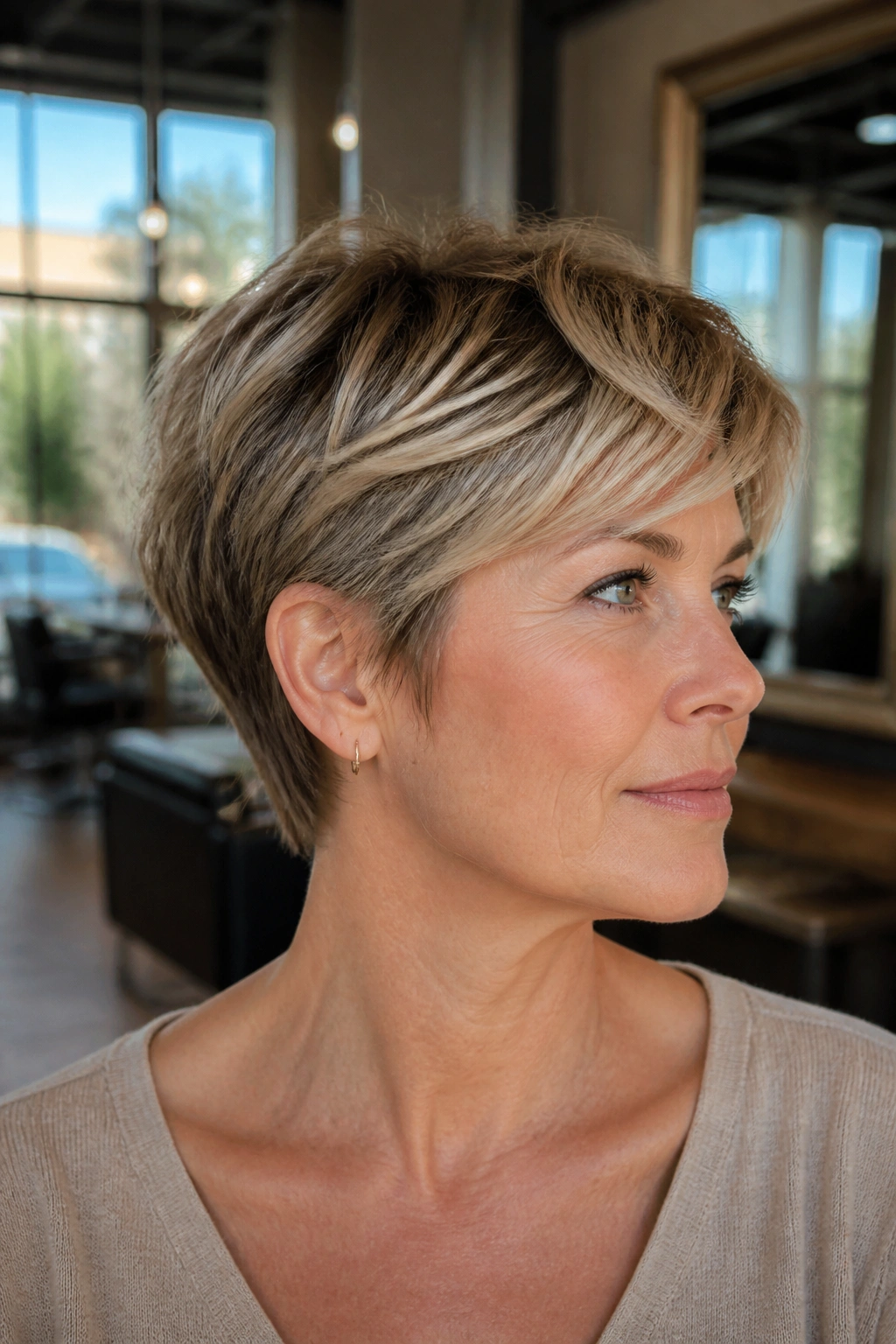
If you’re in that awkward space between a pixie and a bob, you’re not stuck — you’re in good shape for a grown-out pixie-bob. The longer top creates a vertical line, while the nape stays short enough to keep the neck open.
This cut can be especially flattering in blonde because the top layers show off texture. A few brighter pieces around the crown and fringe make the haircut look intentional, not like you missed a trim. That’s a useful difference.
The best part is how flexible it is. You can wear it tucked, swept forward, or slightly messy, and each version changes the face shape a bit. If the sides are too full, though, the roundness comes back fast. Keep the ears clean or partly exposed.
Some styles look cute. This one looks like you know exactly what your hair is doing.
15. Mermaid Waves with Soft Face Framing
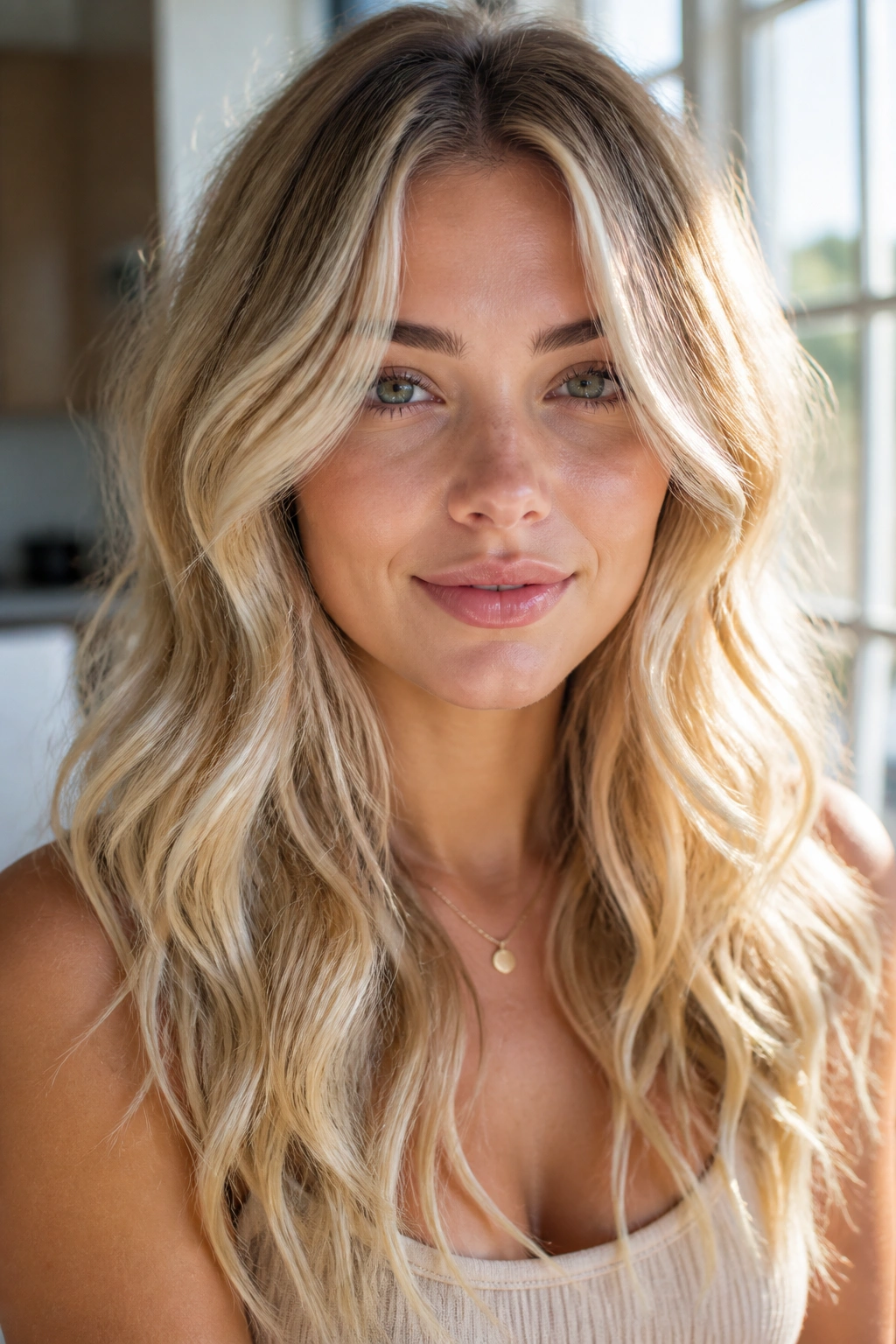
Loose mermaid waves have an easy rhythm when they’re done right. The hair moves in long bends instead of tight, even ripples, and that keeps the width from stacking up around the cheeks.
A round face usually benefits when the shortest pieces sit lower than the cheekbone. So if you want this kind of wave, ask for face-framing layers that begin near the mouth or jaw, not up high. A soft butter blonde or champagne blonde gives the waves more depth.
The texture should feel piecey, not crimped. That means a large-barrel iron, a loose wrap, and a quick brush-through once the curls cool. Too much uniform curl can widen the face more than you expected.
It’s a glamorous shape, but it works because it stays loose. Tight is the wrong idea here.
16. A Soft Wolf Cut in Blonde
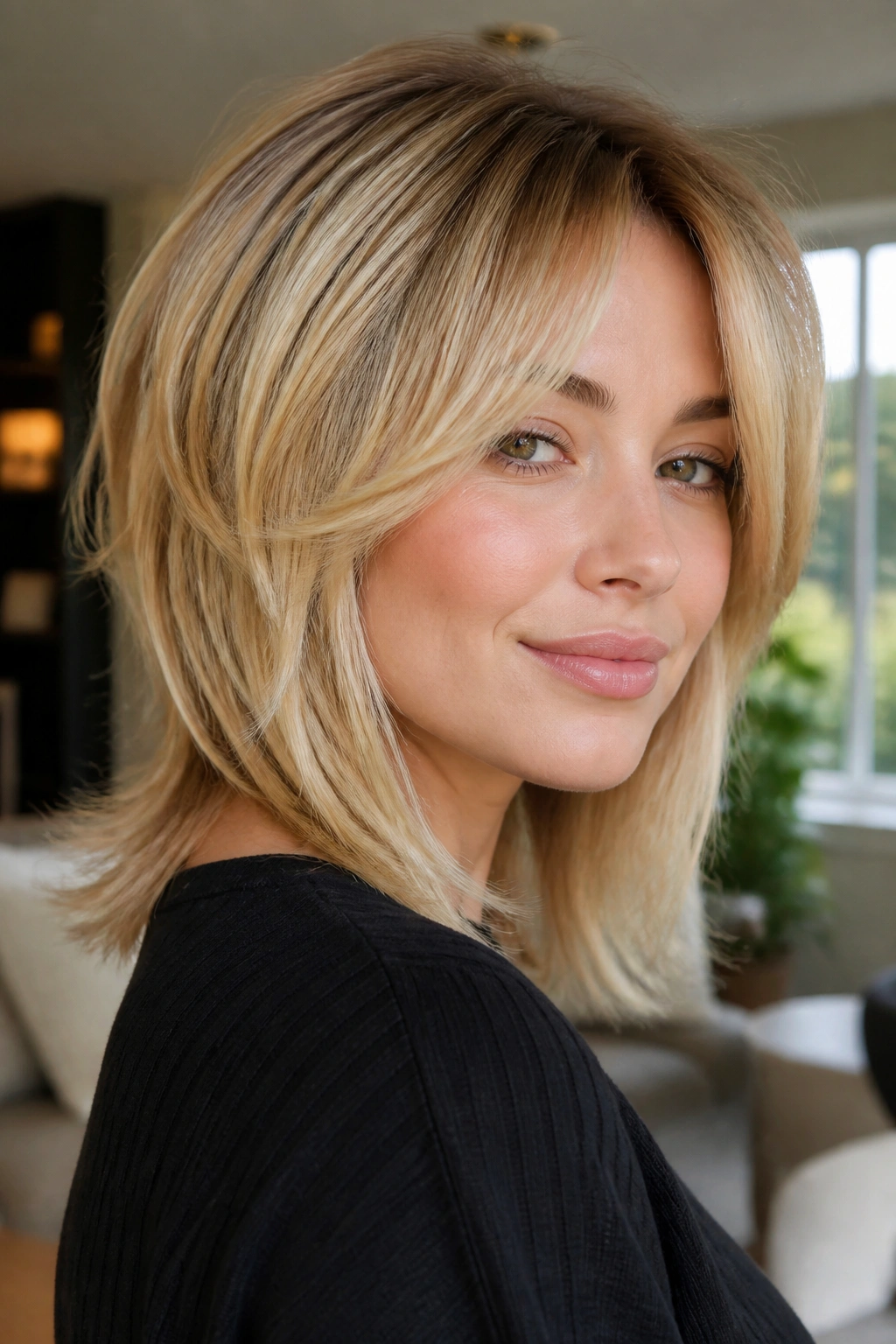
A wolf cut can be rough around the edges on the wrong face shape, but a softened version is a different story. Keep the crown layers controlled, leave the fringe airy, and let the length stay a little longer around the jaw.
That broken outline helps a round face because it keeps the eye moving instead of locking the gaze on one wide point. Add dimensional blonde — something with light and shadow, not one flat tone — and the haircut starts to feel deliberate rather than shaggy.
What to avoid: layers that puff out at the cheek, heavy bangs, and too-short crown sections. Those choices can make the face feel broader. The soft version should look worn-in, not wild.
This cut suits people who like a little attitude in their hair. It is not neat, and that’s the point.
17. A Sleek Center-Parted Blonde Lob
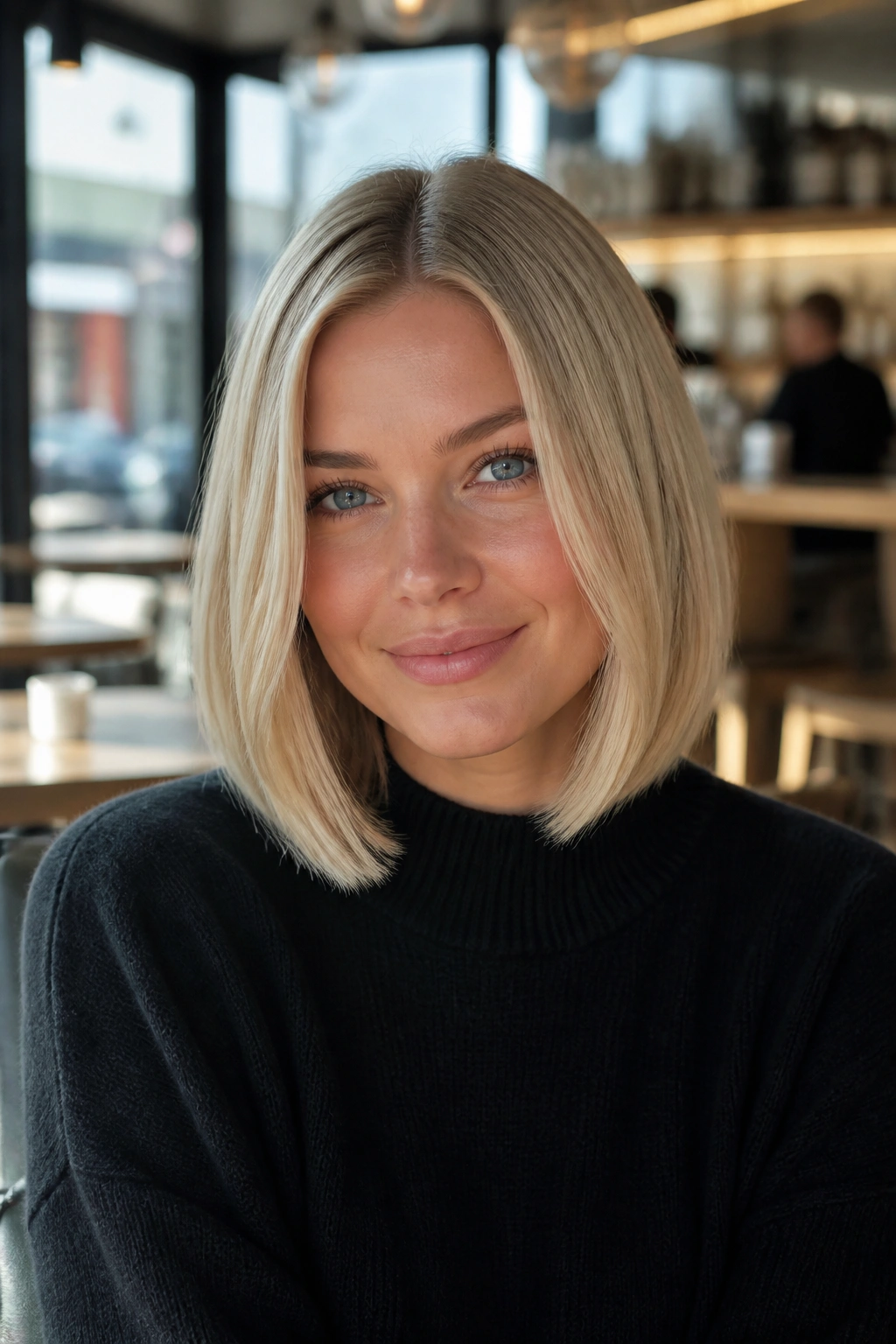
A center part can absolutely work on a round face, but the cut needs length and clean edges to support it. A lob that falls below the jaw gives the face a longer frame, and the center part adds a vertical line through the middle.
The Details That Matter
- Keep the length at collarbone or just below.
- Add a slight bevel at the ends so the hair doesn’t puff out.
- Use a cool beige or neutral blonde for a smoother finish.
- Flat iron only if the hair already wants to lie that way.
This style is not about hiding the face. It’s about giving the face a clean border. If your features are balanced and you like a simple shape, it can look sharp in the best possible sense.
The catch is that the line has to stay soft. A dead-straight, heavy blunt cut can feel harsh on some round faces. A little bend at the end changes the mood completely.
18. Curly Blonde Hair with Crown Layers
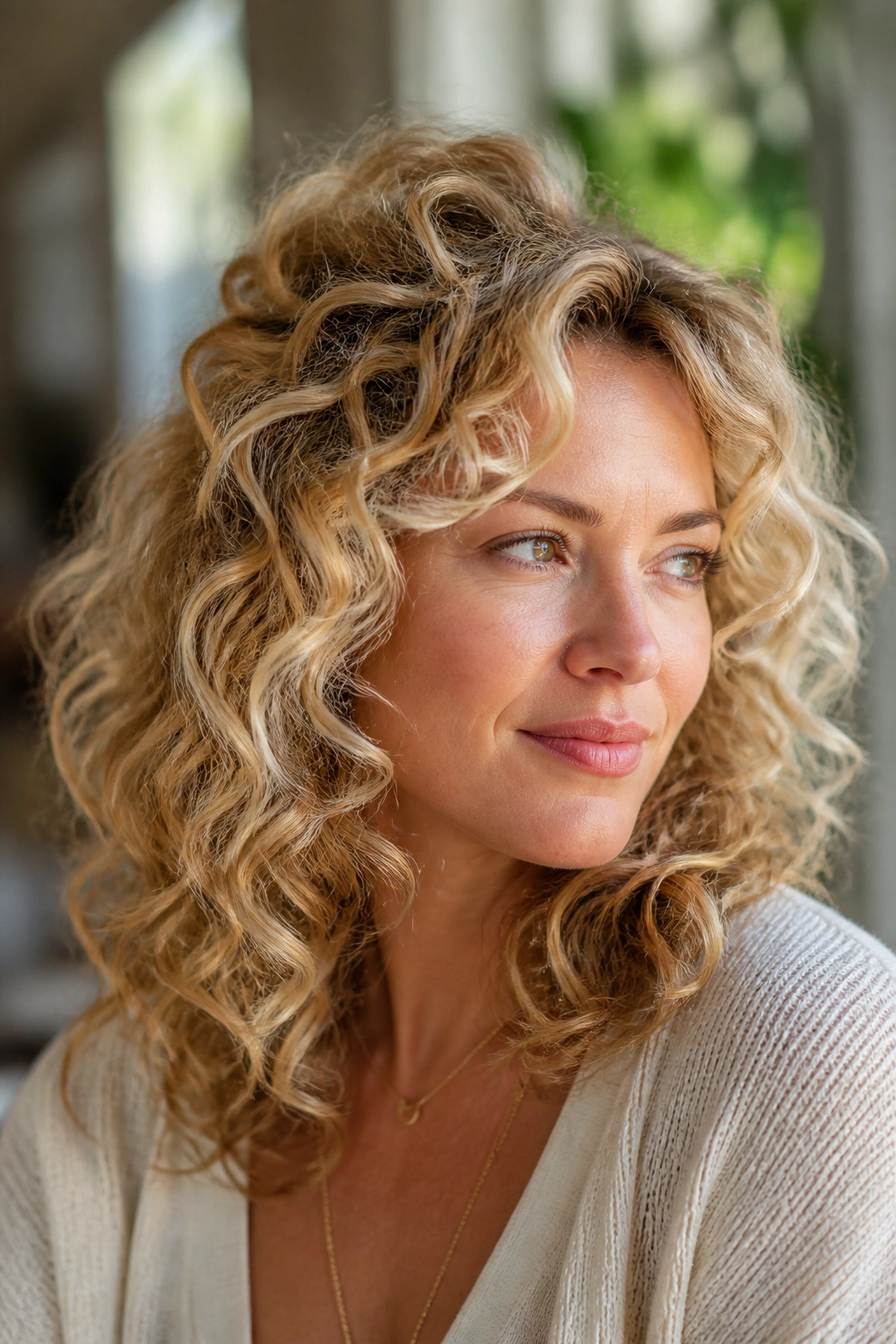
Curly hair on a round face needs shape at the top, not bulk at the sides. Crown layers create a little lift so the curls rise upward before they spread outward, which keeps the silhouette more oval.
Blonde highlights help curls show their pattern. A few lighter ribbons around the front and the upper half of the hair make the shape easier to read, especially when the curls are loose or medium-tight. If everything is the same shade, the texture can blur together.
The cut should respect the curl pattern, not fight it. That usually means dry cutting or cutting curl by curl, depending on the stylist’s method. A wet curl can lie to you. A dry curl tells the truth.
If your curls shrink a lot, ask for the front pieces to stay a little longer than you think you need. Shrinkage is where a lot of good intentions go sideways.
19. An Off-Center Bob with Tapered Ends
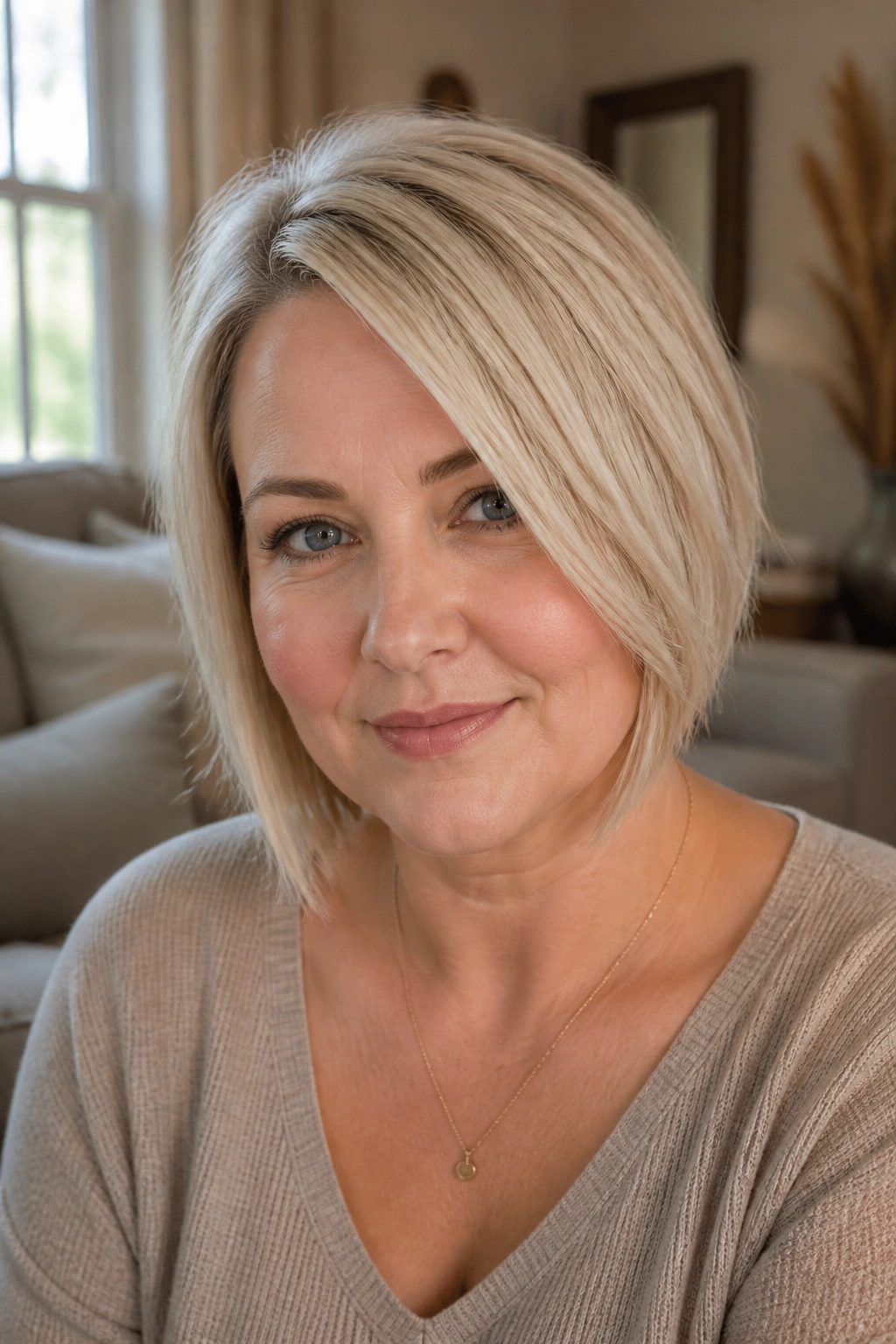
Unlike a true one-length bob, an off-center bob gives the face just enough asymmetry to feel more open. The part doesn’t need to be dramatic. Even a half-inch shift can change how the hair falls across the cheeks.
Tapered ends are the key here. They keep the bob from sitting like a block and help the blonde pieces separate into soft strands. A pearl blonde or neutral wheat blonde is a smart choice if you want something calm and wearable.
This style is especially nice on straight or slightly wavy hair because it stays close to the head without losing shape. If the ends are too blunt, the cut can feel heavy. If they’re too shredded, it can lose the polished edge.
A good bob always has balance. This one just refuses to be too symmetrical.
20. A Tapered Bixie with a Long Fringe
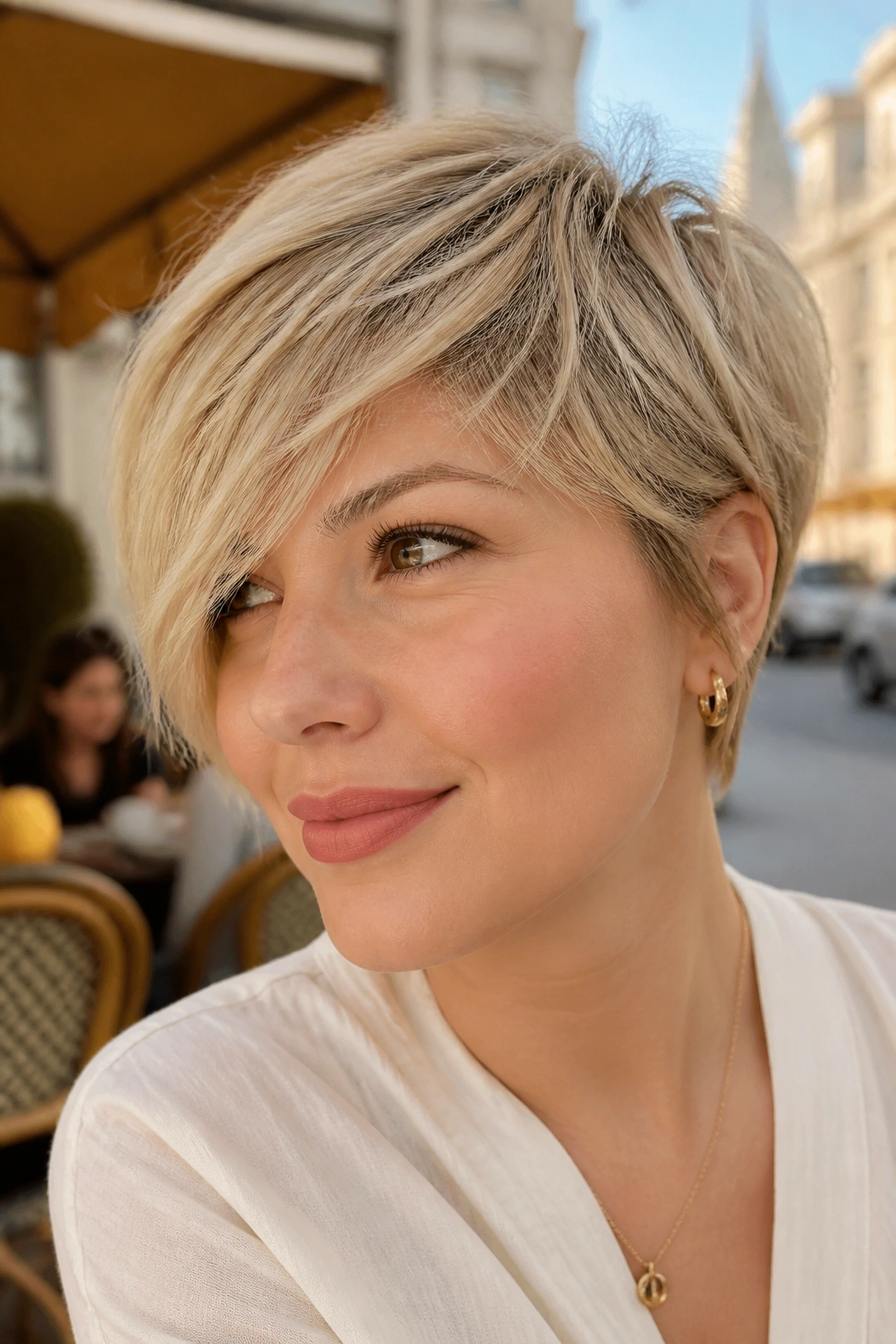
A bixie — that in-between cut that lives somewhere between a pixie and a bob — can be a very flattering shape for a round face when the fringe is longer than the sides. The taper gives the face room, and the front line adds length.
A long fringe is especially useful because it can sweep diagonally across the forehead, which creates a little tension in the shape. That tension is good. It keeps the face from feeling too circular. A soft golden blonde makes the texture visible without making the cut look hard.
This is a smart cut if you want short hair but not a full pixie. It gives you shape around the ears, lift at the top, and some play at the front. That combination works better than people expect.
If your hair is fine, this cut can be a lifesaver. It creates body where there wasn’t much to begin with.
21. Shoulder-Length Layers with Flipped Ends
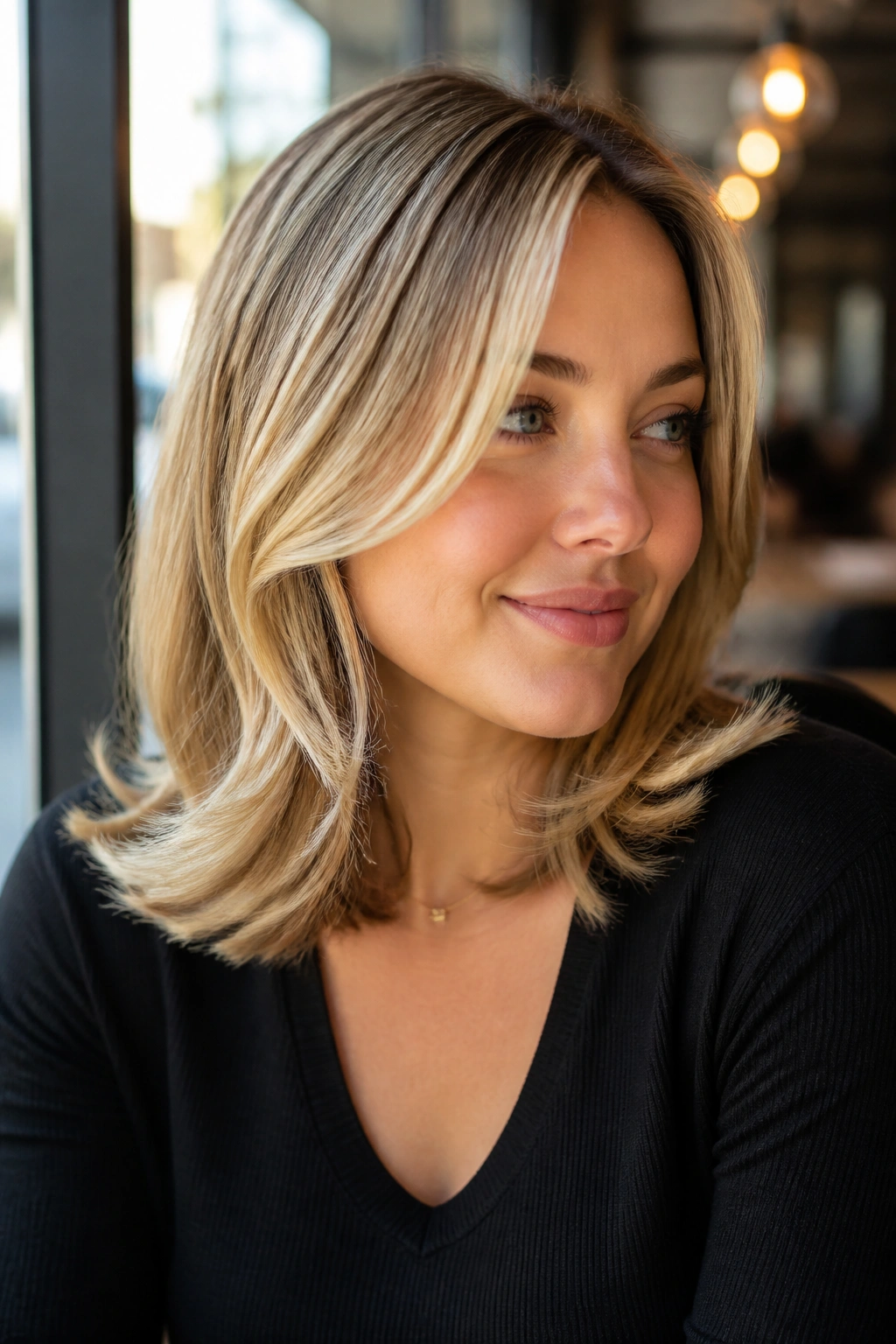
Shoulder-length hair can flatter a round face when the ends are flipped away from the cheeks rather than tucked inward. That outward motion creates a wider line low on the hair, which makes the face seem more balanced.
How to Read the Shape
The top should stay fairly smooth. The movement belongs in the lower half. That way, the eye travels down the hair instead of stopping at the middle of the face.
A blonde balayage with soft ribbons through the ends helps the flip stand out. If the color is too solid, the shape can go a little dull. If it’s too streaky, the cut starts looking busy. Somewhere in between is the sweet spot.
This is one of those styles that looks simple and takes a bit of technique. A blow-dryer with a nozzle and a medium brush can do most of the shaping. The trick is to guide the ends out, not curl them under.
22. A Platinum Blonde Crop with Wispy Fringe
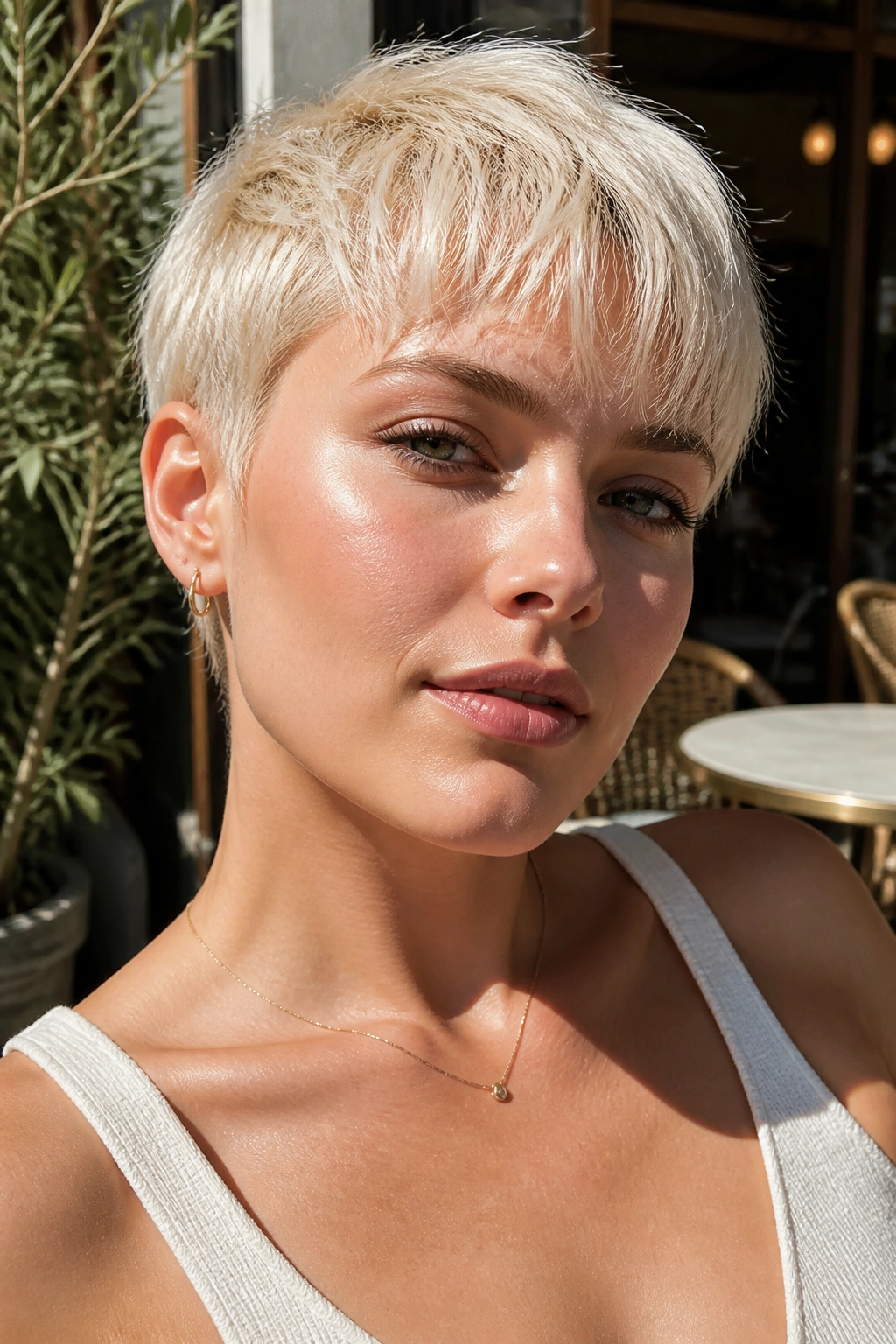
Short platinum hair on a round face can look fantastic when the fringe is light and piecey. A heavy fringe can make the face feel boxed in. A wispy one does the opposite, because it lets skin show through and keeps the forehead from disappearing.
The crop should be close at the sides and slightly longer on top. That gives the cut some lift. Platinum color adds edge, but it also puts a lot of attention on shape, so the line needs to be clean. There’s nowhere to hide.
Best for: strong brows, neat styling habits, and people who like a high-contrast look.
The maintenance is real. Platinum needs regular toning and a careful wash routine, and short hair needs trims to keep the outline sharp. If you enjoy that kind of upkeep, the payoff is big. If you don’t, this one turns into a chore fast.
23. Long Layers with Bottleneck Bangs
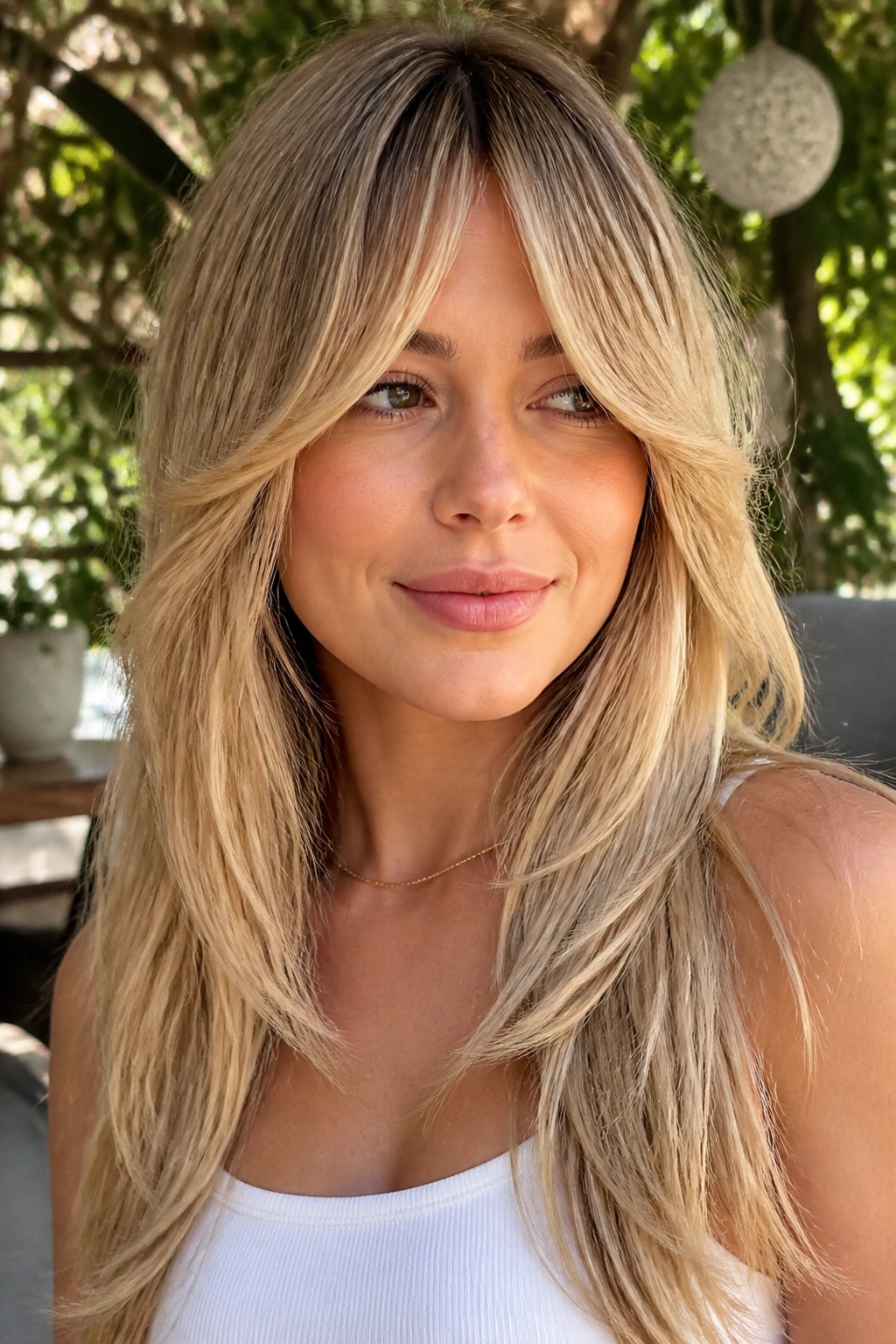
Bottleneck bangs sit between curtain bangs and a full fringe. They’re narrower at the center, then open wider as they move down the face. On a round face, that shape adds a gentle vertical break without eating up forehead space.
Long layers underneath keep the hair from forming one thick shape around the jaw. The blonde color can be soft and warm here — think oat, beige, or light caramel blonde — because the bangs already provide enough structure.
This is a good option if you like hair that can be worn up or down without losing its shape. The bangs still help when the rest is tied back, which is handy. Some face-framing cuts disappear the second you make a ponytail. These do not.
If your hair is dense, the bangs should stay light at the center and a little longer at the sides. That keeps them from turning into a heavy curtain.
24. A Graduated Bob with a Piecey Finish
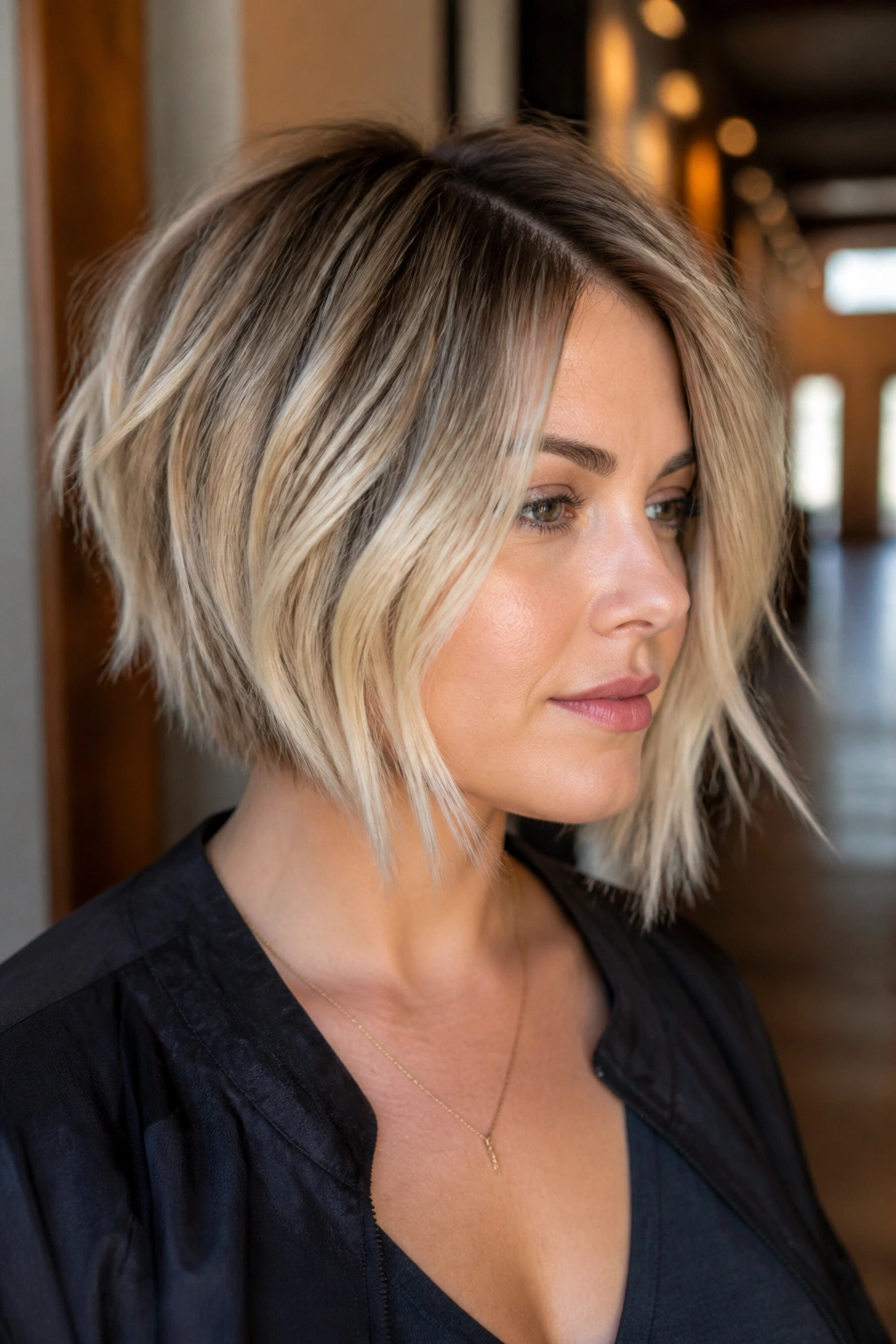
A graduated bob is cut a little shorter in the back and longer in the front, which gives the face a more tapered outline. On a round face, that longer front line helps guide the eye downward and away from the widest point.
The piecey finish is what keeps it modern. You do not want one stiff helmet shape. You want separation in the ends, a bit of air between the strands, and a blonde tone with enough dimension to show the movement. A dark root with creamy ends does that beautifully.
Best Features to Ask For
- Slight stacking at the nape, not a big bump.
- Longer front pieces that miss the cheekbone.
- A razor-light texture through the ends.
- Subtle highlights that follow the curve of the cut.
It’s a smart cut for thick hair because it removes bulk and creates shape. If the nape is too bulky, though, the bob starts to fight the face instead of framing it.
25. A Soft Rounded Lob with Invisible Layers
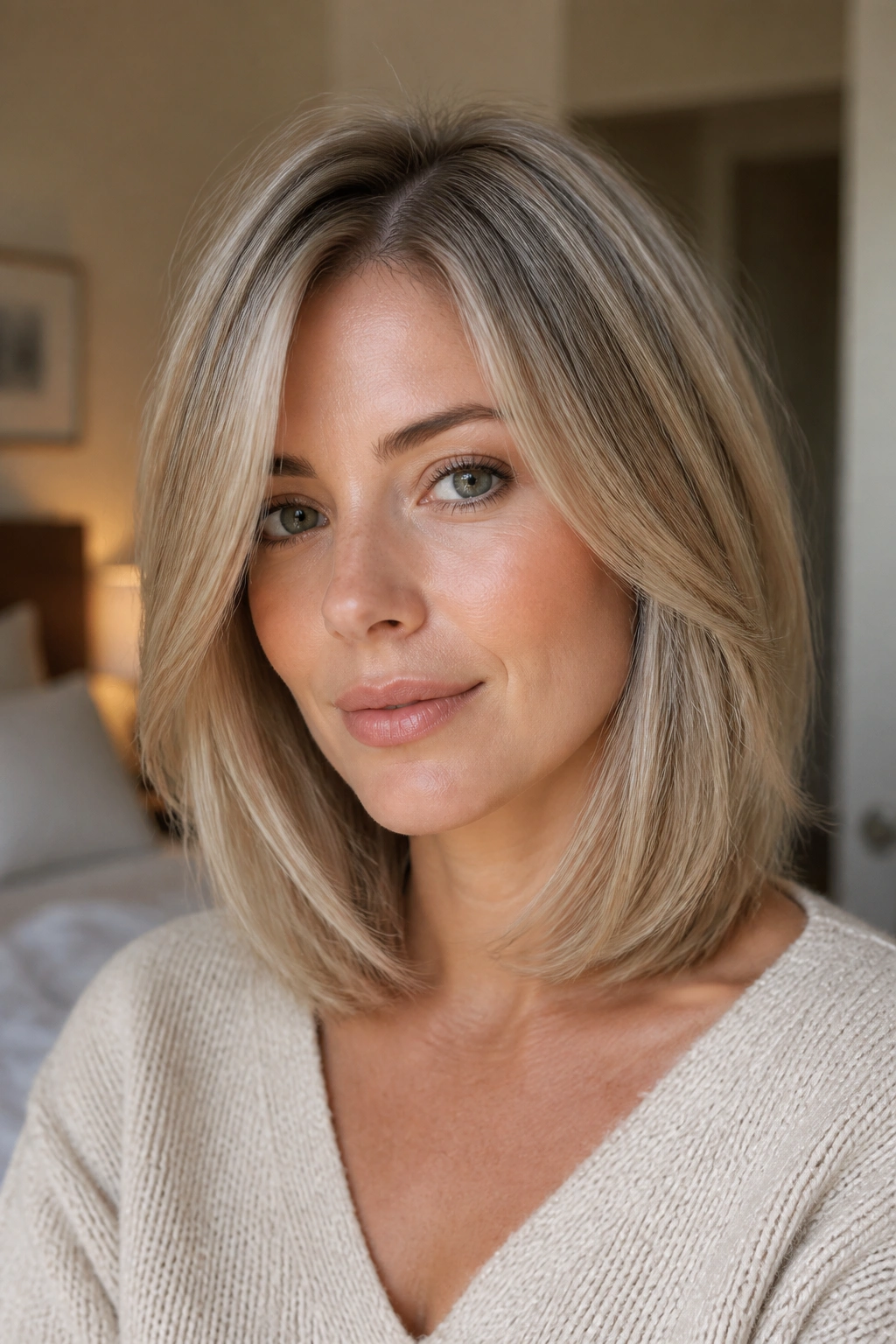
A rounded lob can be one of the easiest blonde cuts to live with on a round face, as long as the rounding happens in the hair, not at the cheeks. The length should sit around the collarbone, and the layers should be quiet enough that you feel them more than you see them.
Invisible layers are the reason this works. They remove weight inside the cut so the outside line stays smooth. That gives you movement without the choppy look some layered styles create. A soft beige blonde or sandy blonde makes the finish look calm and expensive, if I can use that word without getting carried away.
This is the cut for someone who wants polish, not drama. It works air-dried, blow-dried, tucked, flipped, or worn with a loose wave. And if you want a haircut that doesn’t make you think too hard on weekday mornings, that matters more than people admit.
Final Thoughts
The best blonde haircuts for round faces do a few things well at the same time: they stretch the eye vertically, keep the widest part of the face from being the brightest or heaviest point, and use color to add depth where the shape needs it. That can mean long layers, a smart lob, a soft fringe, or a short cut with real lift on top.
A haircut name helps, but placement helps more. Bring photos that show the front, the side, and the back, and tell your stylist where your face feels widest to you. That one conversation saves more bad haircuts than any trend ever will.
And if you’re torn between two lengths, choose the one that gives your face a little room to breathe. Hair grows. Balance is harder to fake.
