



Oval faces can wear a short haircut with a lot of range, but that freedom has a trap built into it. People hear “oval” and assume the face can handle anything, which is how you end up with a crop that looks flat at the crown or a bob that hangs like a curtain at the jaw.
The shape itself is balanced: forehead and jawline stay close in width, the cheekbones sit where they should, and the outline is a little longer than it is wide. That balance is why short hair looks so good here, but it also means the cut needs a point of view.
Some styles sharpen the edges. Some widen the cheekbones. Some add lift so the whole thing does not collapse into one smooth line. The trick is choosing the one that matches your hair texture, your styling patience, and how much neck you want to show.
Start with the classics, then move into the cuts with a little more attitude.
1. Classic Pixie for Oval Faces
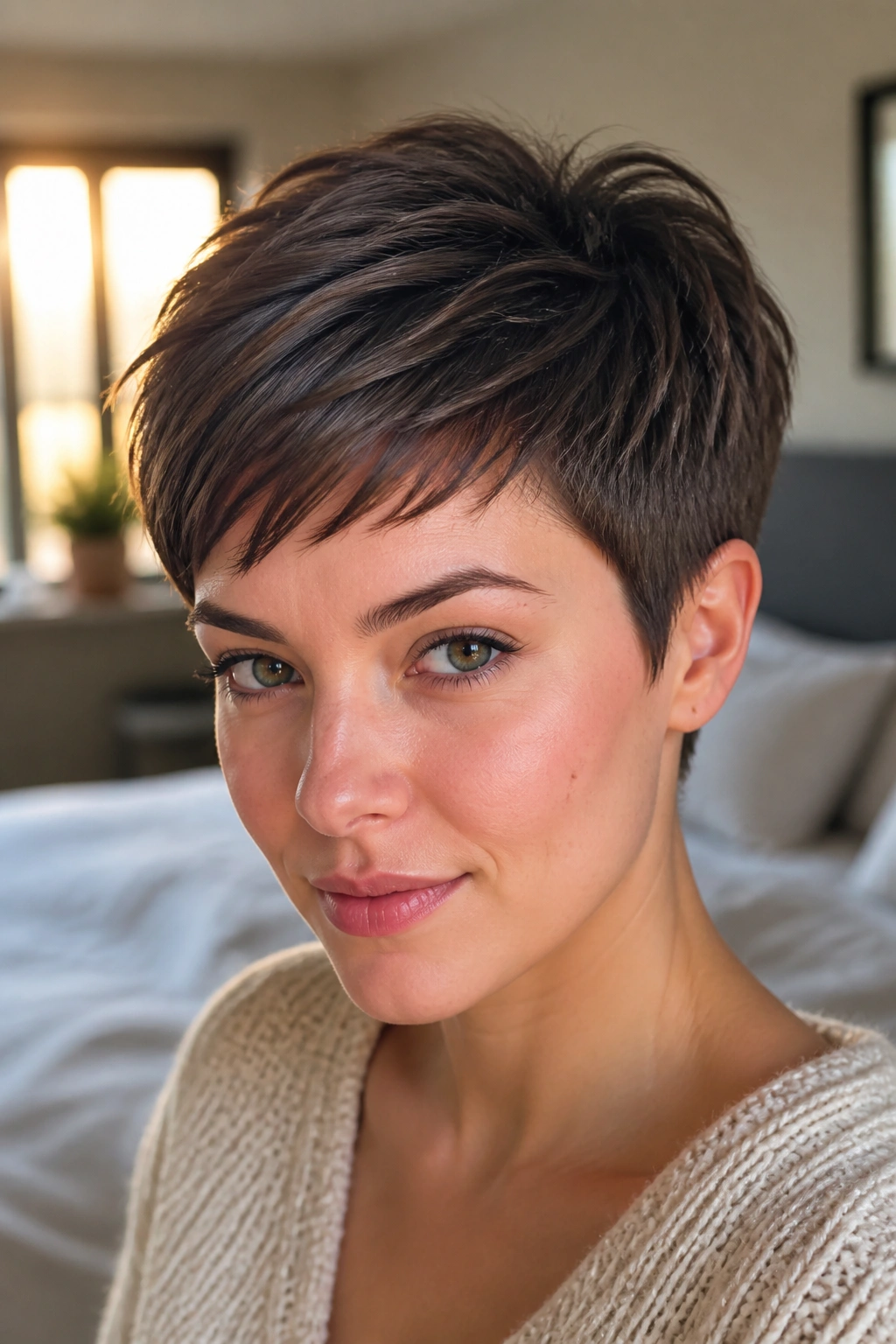
The classic pixie works because it respects the natural symmetry of an oval face instead of fighting it. Keep the sides soft around the ears and leave 1.5 to 3 inches on top so the cut still has some lift. Too short everywhere and the shape can go severe; too long everywhere and it starts looking like a grown-out compromise.
A good pixie is all about the contour. I like a little taper through the nape and a fringe that can be swept forward or lifted with paste. That gives you two moods in one cut. One day it looks sharp, the next a bit mussed and easy.
Ask for point-cut texture on the top layers if your hair tends to lie flat. A dime-size amount of matte paste or cream wax is usually enough. Use your fingertips, not a brush, and pinch the front pieces into place.
Less product, more shape. That is the whole game here.
2. Textured Crop with Choppy Layers
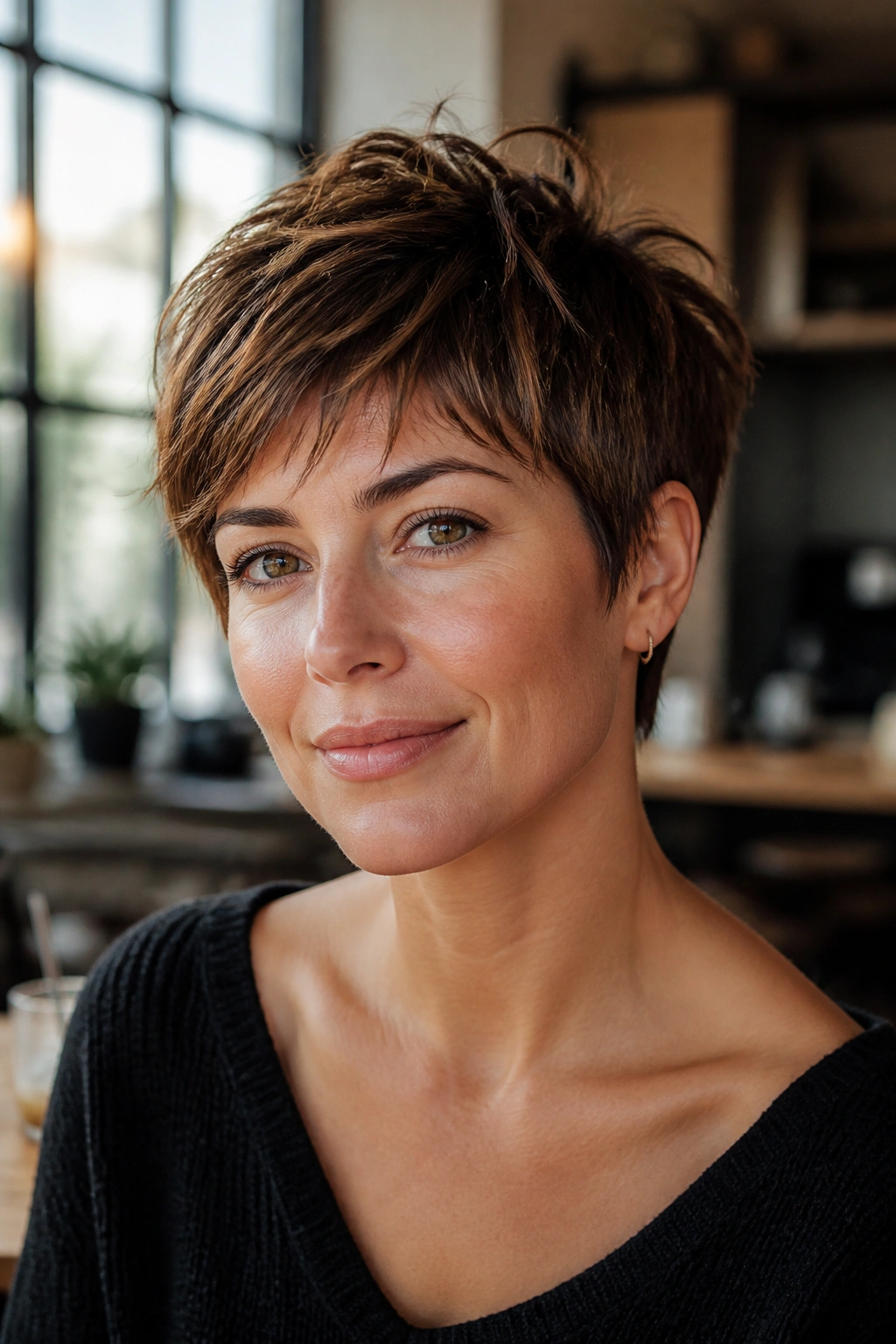
Short hair can still feel soft. A textured crop proves that. It keeps the outline close to the head, but the ends are broken up so the haircut moves instead of sitting like a helmet.
Why It Flatters Oval Faces
Oval faces can take a lot of shape around the perimeter, and a choppy crop uses that freedom well. The slightly irregular edges draw attention to the eyes and cheekbones, which is exactly where you want the viewer looking. If your hair is fine, the extra texture also makes it look fuller without adding bulk.
How to Ask for It
- Ask for short, piecey layers with the ends point-cut, not blunt-cut.
- Keep the top a little longer than the sides so you can bend it forward or up.
- Style with a pea-size dab of matte clay on dry hair for separation.
- If your hair is straight, a quick blast with salt spray before drying helps the cut hold its shape.
This is the kind of haircut that looks better when it is not overworked. A little mess is the point.
3. French Bob Grazing the Jaw
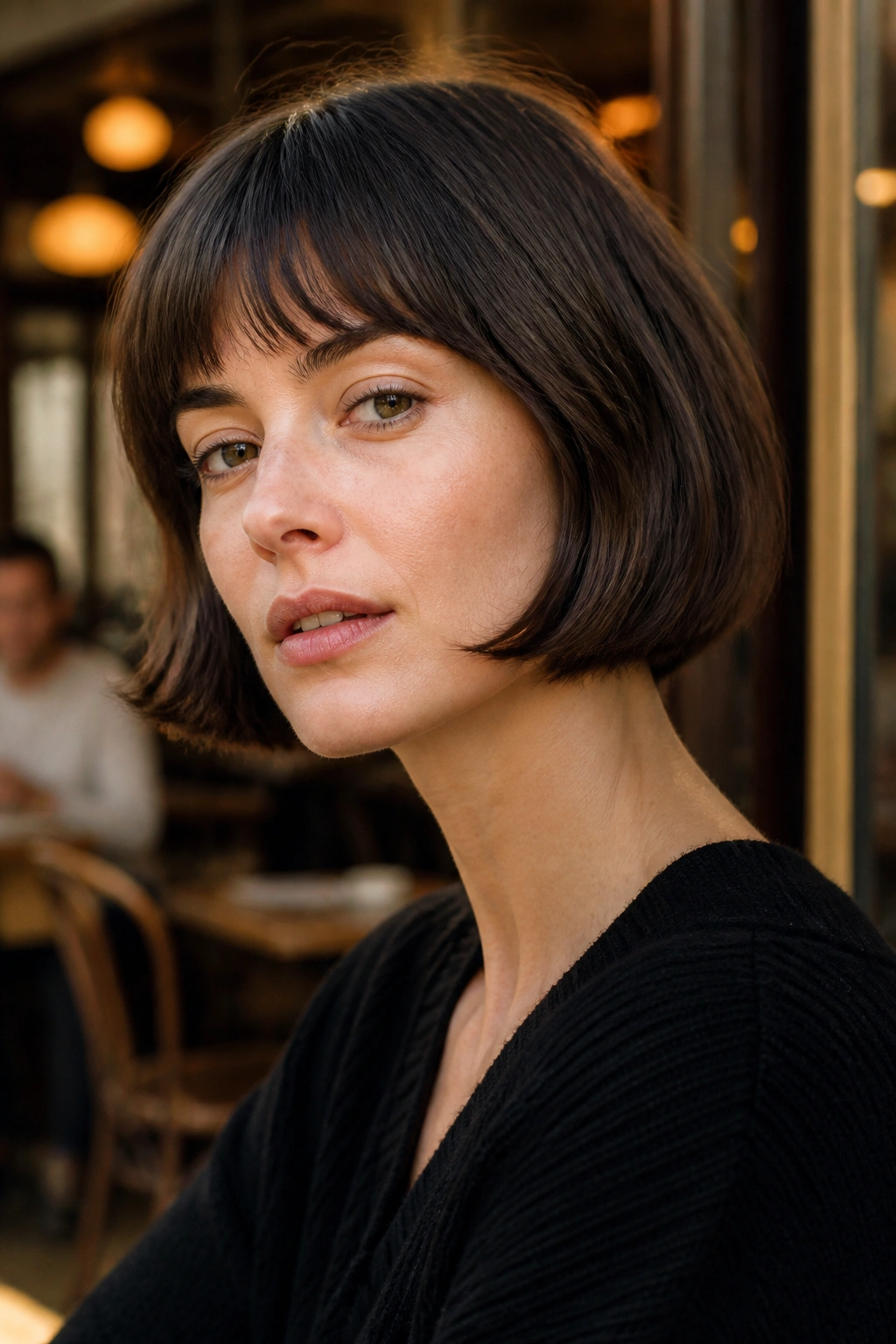
A French bob lands right at the jaw, and that location is doing most of the work. On an oval face, that length sharpens the lower half without cutting the face in two. It feels chic when it’s neat and a little rebellious when the ends are tucked under loosely or left to flick out.
What Makes It Work
The cut usually sits between the mouth and chin, with a soft edge and a touch of bend. That tiny bend matters. It keeps the bob from looking stiff and gives the face a gentle frame instead of a hard box. A micro fringe can work here, but I prefer a light, eyebrow-skimming bang if the forehead feels long.
Oval faces can carry this cut because the jawline already has balance. The bob just underlines it.
Styling Notes
- Blow-dry with a small round brush, about 1 inch wide, to create a bend at the ends.
- Use a light smoothing cream if your hair frizzes at the ends.
- If you want more Parisian than polished, let the front pieces dry with a slight separation.
One inch can change the whole haircut. That sounds dramatic, but it’s true.
4. Chin-Length Blunt Bob
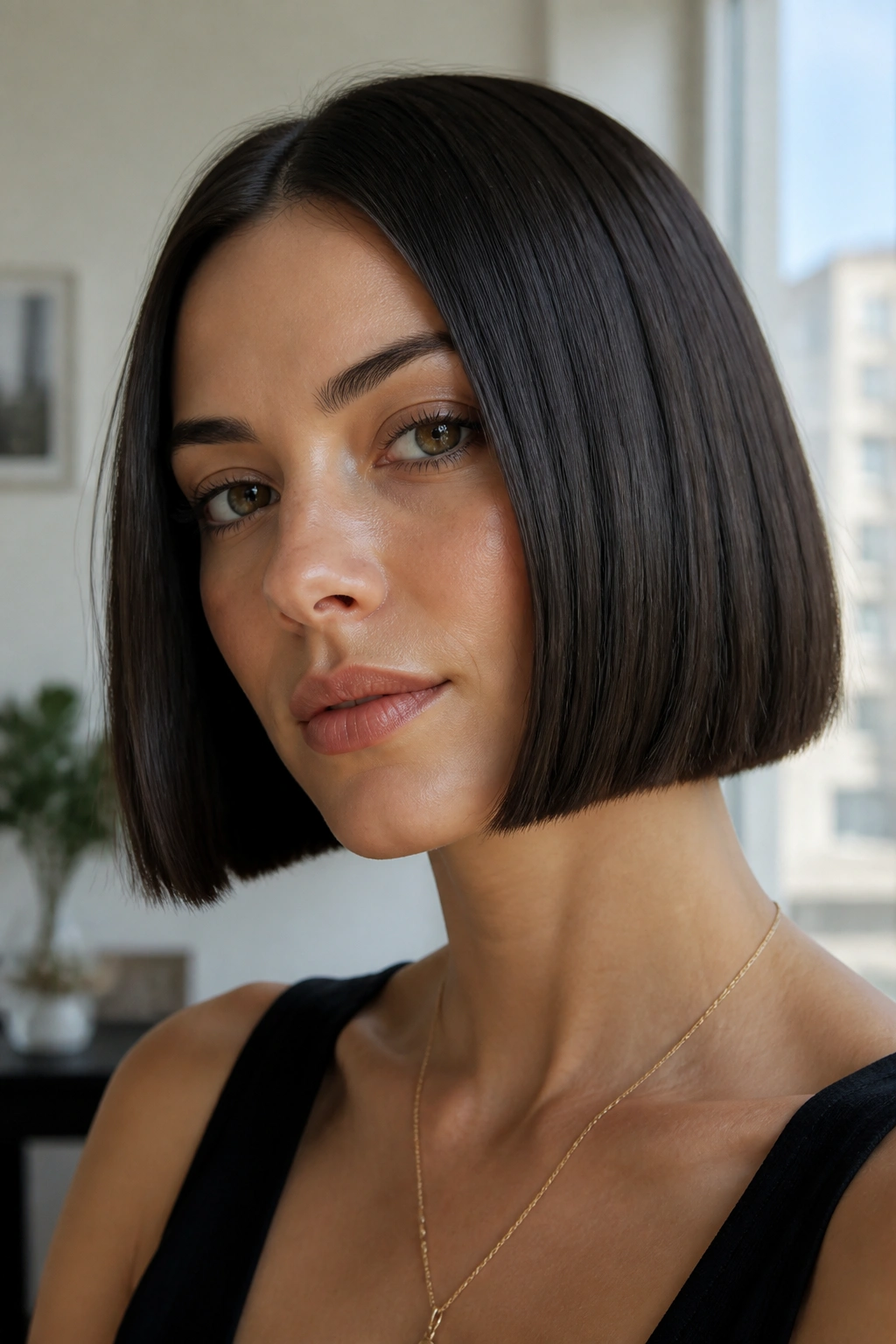
Straight lines love oval faces. A chin-length blunt bob is the simplest proof. The weight sits evenly, the ends look dense, and the face gets a clean frame that does not need much extra decorating.
What makes this cut different from a softer bob is the edge. The line should feel deliberate, almost architectural, with very little layering at the perimeter. If your hair is straight or only slightly wavy, this is one of those cuts that looks expensive without trying to be fancy about it.
The risk is flatness. Keep the part slightly off center if your hair falls too close to the scalp, and ask for a tiny bit of internal texture so the bob does not puff out at the bottom. The length should skim the jaw, not sit too far above it.
A blunt bob is calm, not boring. That’s the distinction.
5. Side-Parted Asymmetrical Bob
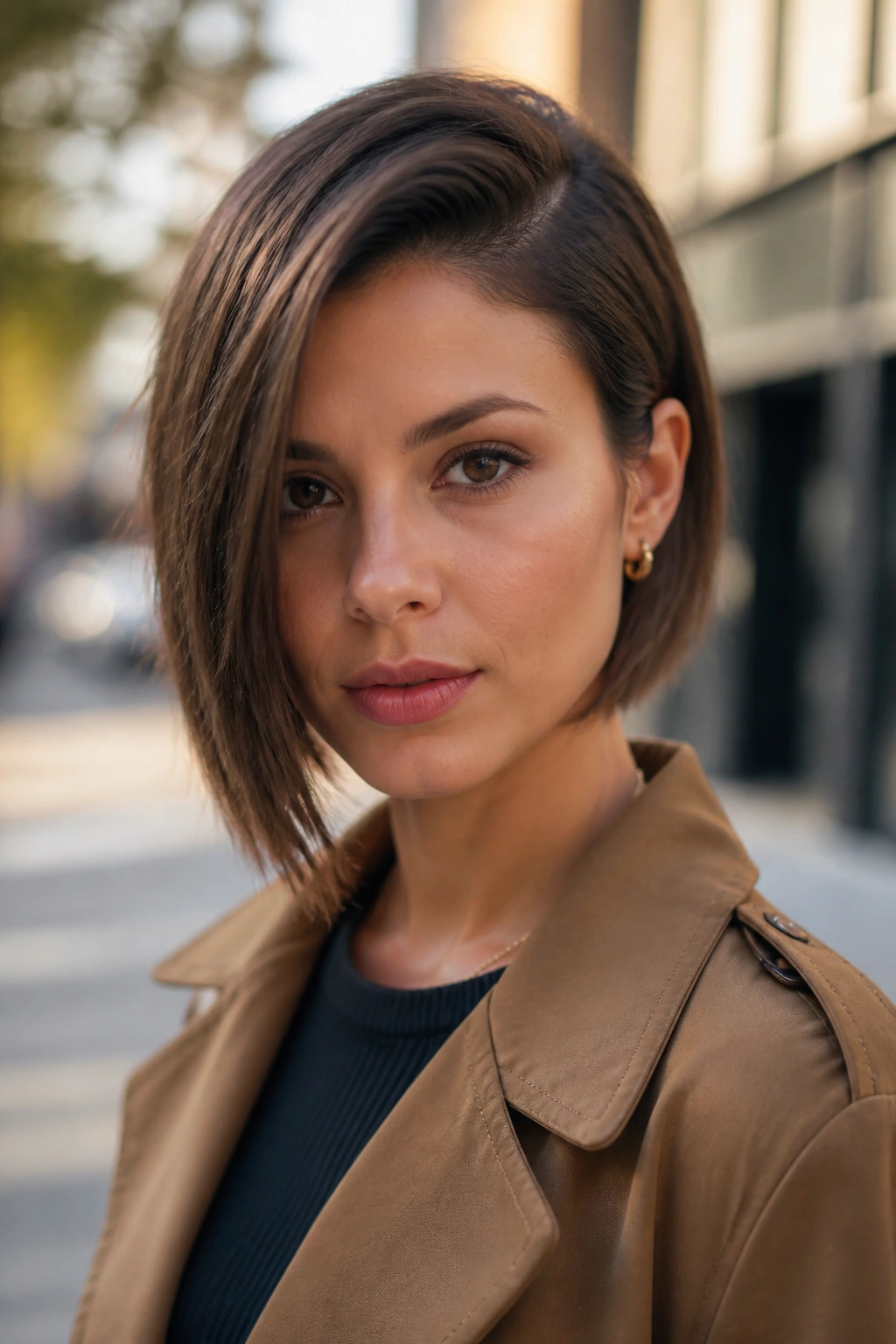
One side a little longer changes the whole mood. An asymmetrical bob adds movement to an oval face without needing heavy layers or loud styling, and the diagonal line naturally pulls the eye downward in a flattering way.
The longer side should not be wildly longer. A 1- to 2-inch difference is enough for most people. Go too far and the haircut starts looking like a statement first and a haircut second. The best version lands just below the jaw on one side and close to jaw length on the other, which gives the face shape without making it feel crowded.
A deep side part helps, especially if your hair wants volume at the root. It lifts one side of the face and makes the whole cut feel a little more alive. I like this one for people who want a bob but do not want the same bob everyone else has.
That little angle matters.
6. Bixie Cut
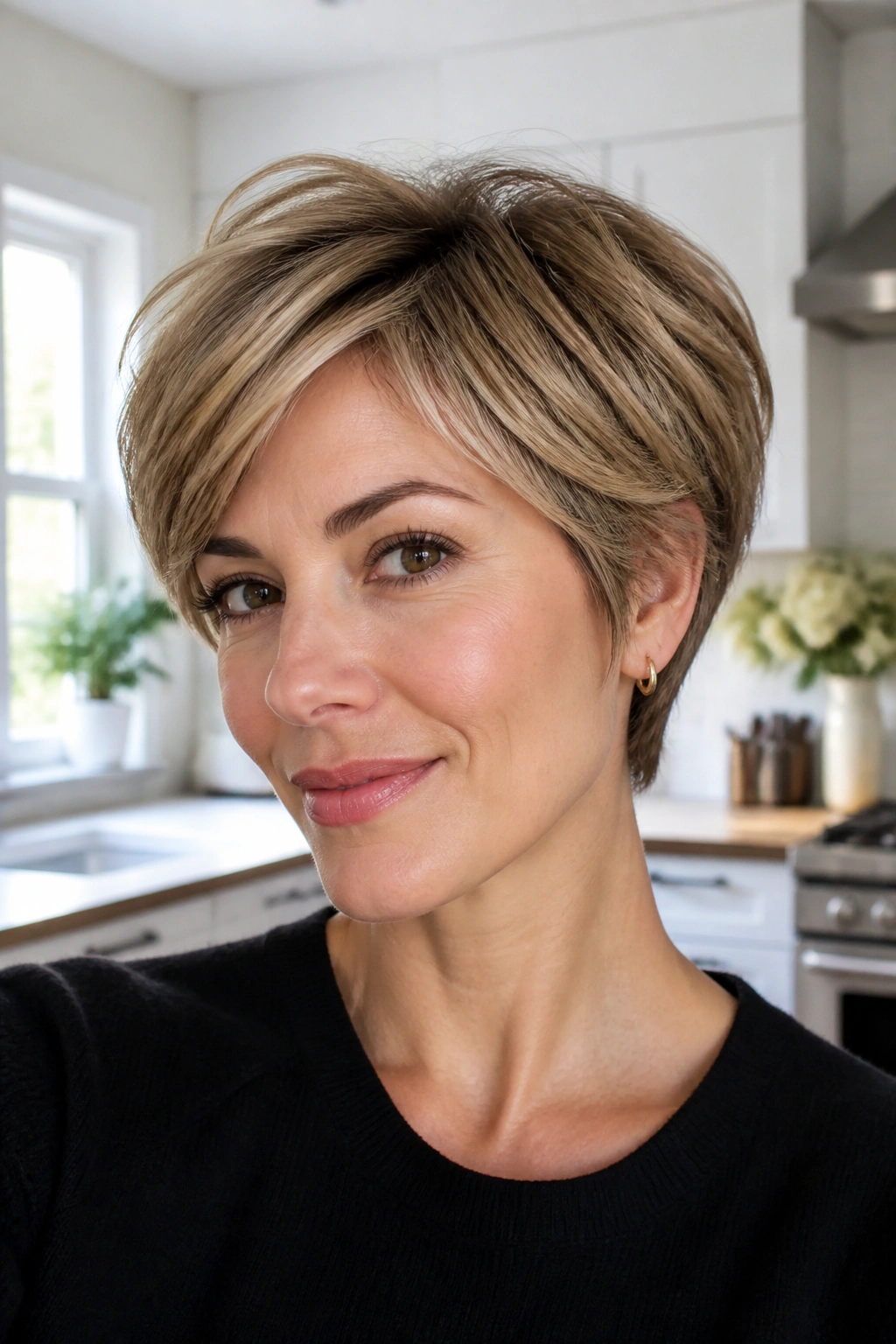
The bixie sits between a bob and a pixie, which is exactly why it works so well on oval faces. It keeps enough length around the front to feel soft, but the back and sides stay short enough to make the face look open and bright.
It is a good cut if you want short hair without the commitment of a full pixie. The top usually has a bit of lift, the fringe can be swept or broken up, and the nape stays neat. On an oval face, that mix keeps the proportions lively. You get cheekbone attention without losing all softness around the temples.
The Styling Sweet Spot
The bixie likes a little mousse at the roots and a quick rough-dry with your fingers. Use a small round brush only if the fringe needs direction. If your hair is thick, ask for light internal layering so the cut does not mushroom out at the sides.
It grows out well, too. That matters more than people admit.
7. Curly Pixie with Soft Fringe
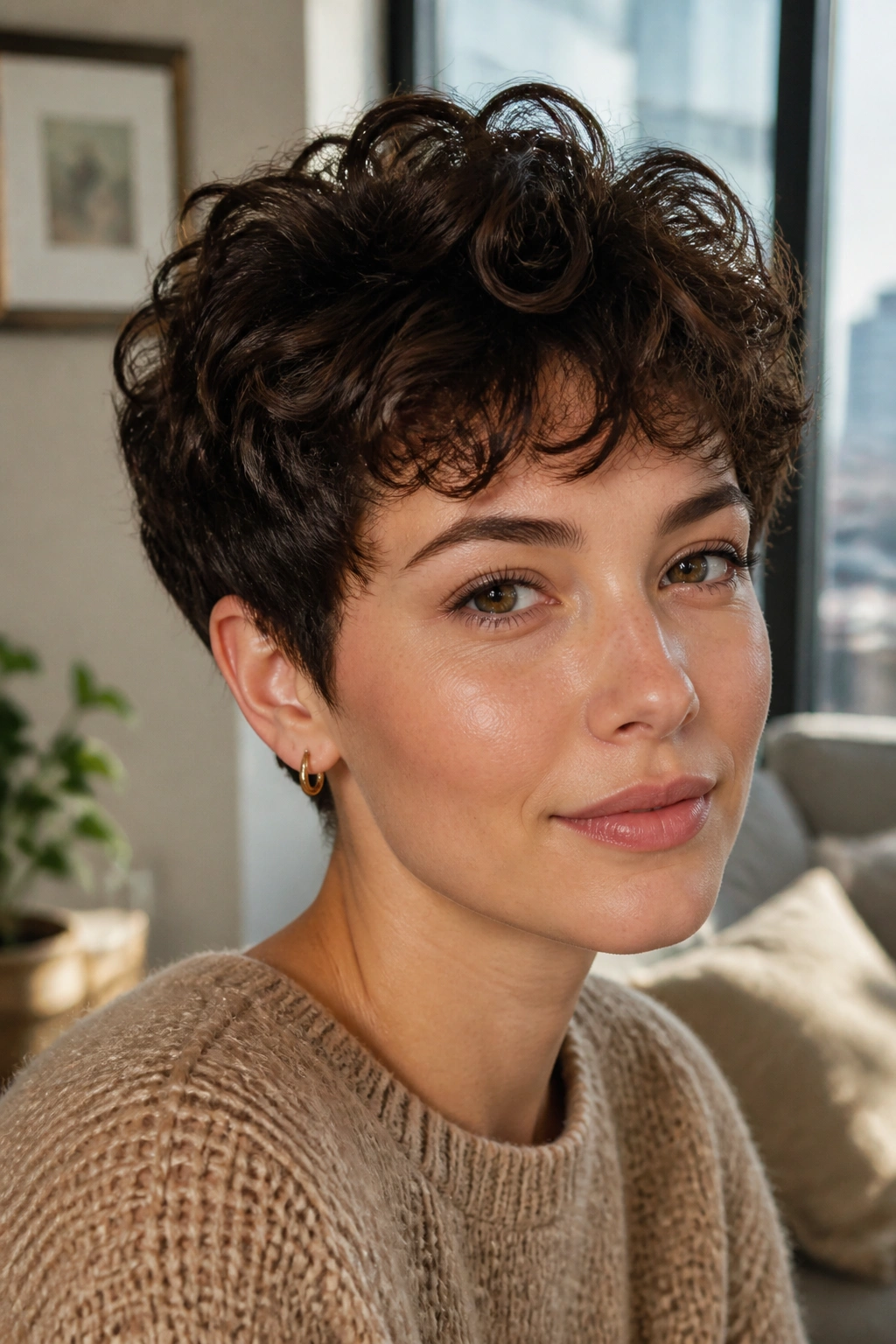
Curly hair and short cuts get blamed for each other too often. The problem is usually the shape, not the curl. A curly pixie with a soft fringe can look fantastic on an oval face because it lets the curls build around the top while keeping the sides neat and close.
Curl Placement Is Everything
Ask your stylist to keep the shortest pieces away from the tightest curl zones unless you want a lot of shrinkage. The fringe should sit just long enough to break across the forehead, not fight it. On an oval face, that little bit of fringe keeps the look friendly instead of overly cropped.
The top can be left longer so the curls spring up and forward. That adds height, which oval faces handle well. The result should feel airy, not puffy. Big difference.
Use a curl cream on damp hair, scrunch gently, and diffuse on low heat if you need shape fast. Then leave it alone. Seriously.
8. Tapered Crop with Longer Top
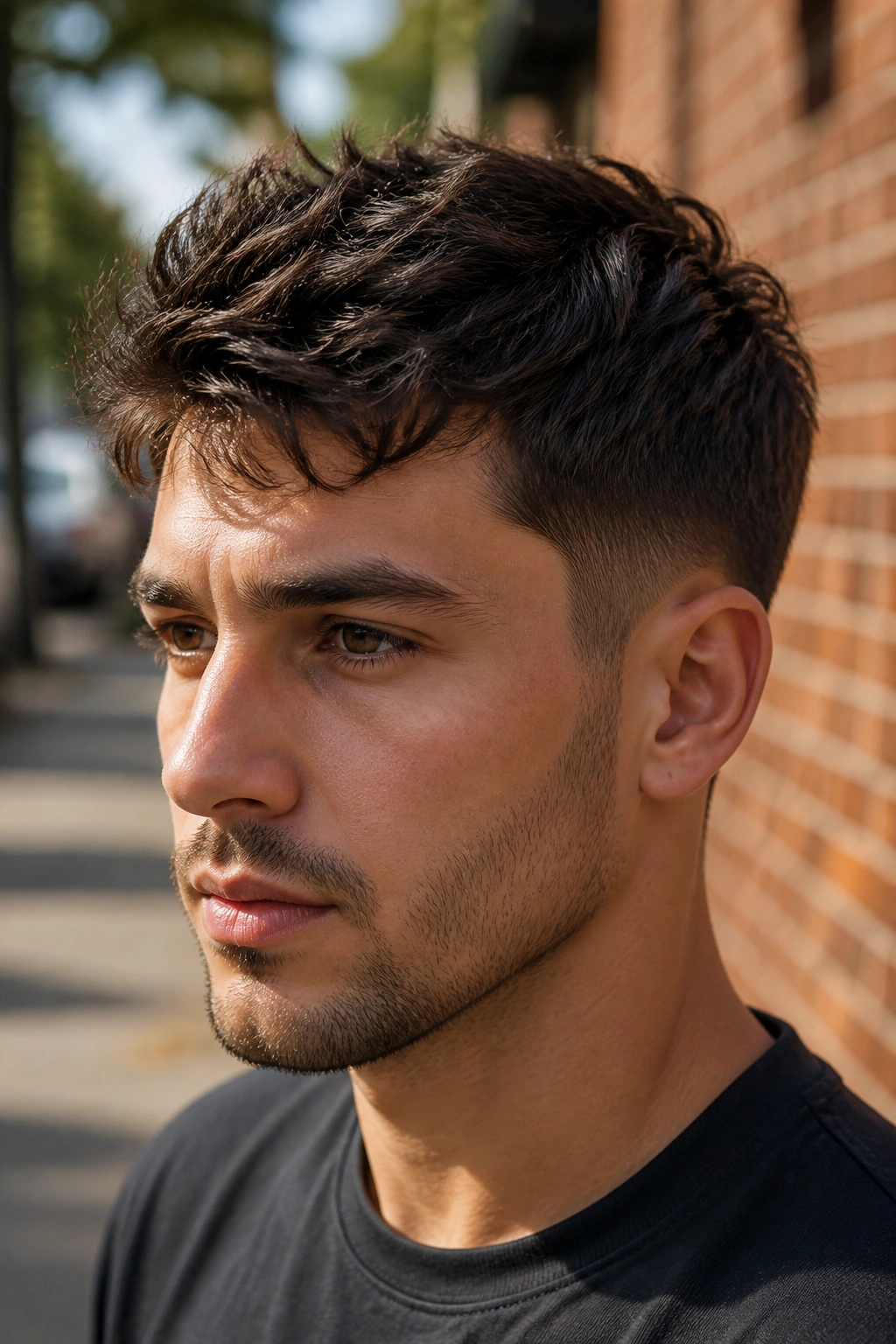
Tapered crops are underrated because they do a lot of work without looking busy. The sides and nape taper close to the head, while the top stays long enough to push up, sweep over, or rough up with texture.
This cut is especially good if your hair is thick or coarse. A tighter taper removes bulk where you do not need it, and the longer top keeps the haircut from feeling too severe. Oval faces carry that contrast well because the shape already has balance. You can afford a little drama on top.
What to Ask the Stylist
- Keep the nape clean and tight.
- Leave 2 to 4 inches on top, depending on how much movement you want.
- Use scissors, not a razor, if your hair frizzes easily.
- Ask for soft sideburns if you want the cut to feel less barbershop and more tailored.
This is one of those cuts that looks sharper after a few weeks of growth, not worse. That is worth something.
9. Shaggy Bob with Piecey Ends
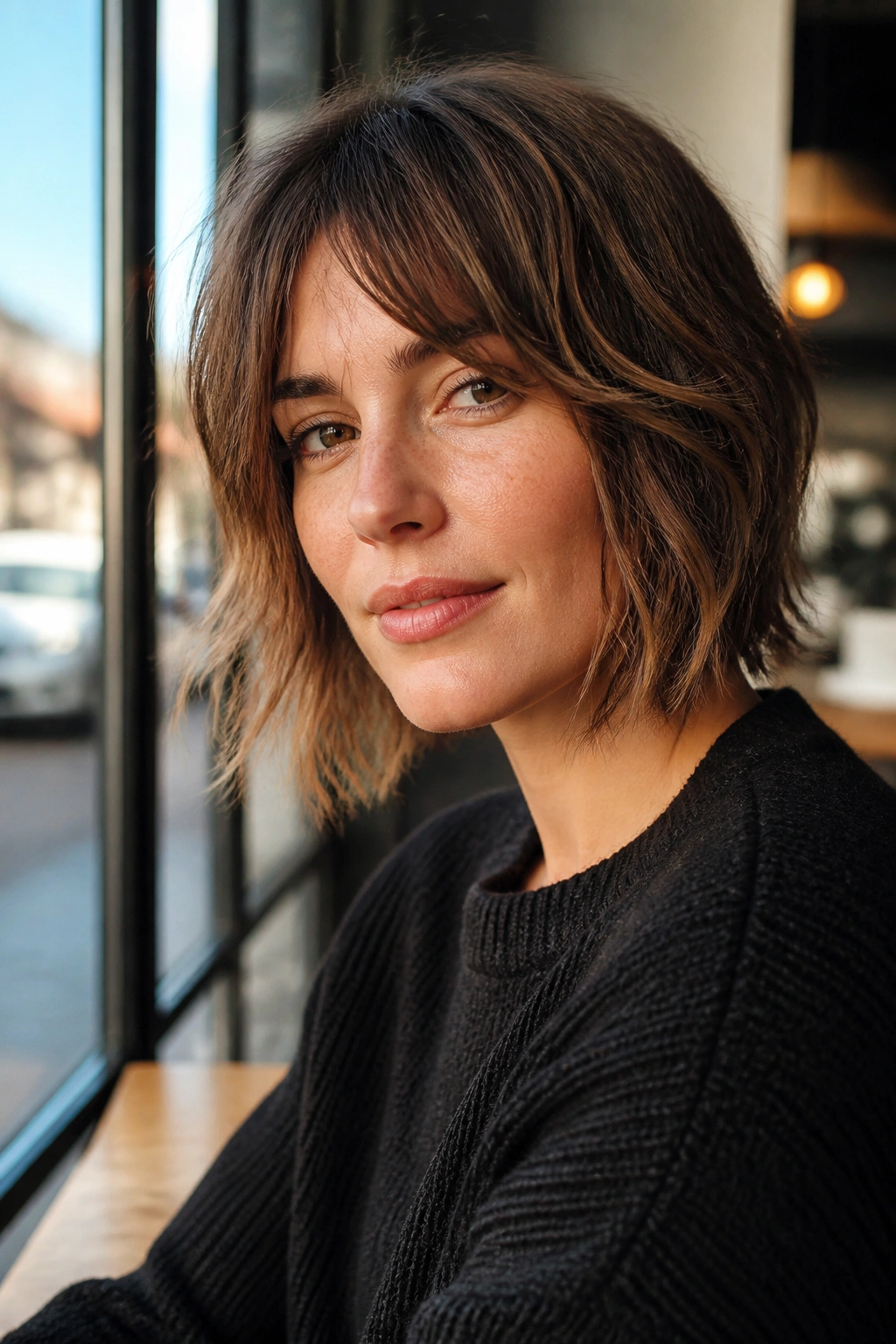
Messy can be deliberate. A shaggy bob with piecey ends gives oval faces a little looseness around the jaw without losing the shape of the haircut. It’s shorter than a lob, softer than a blunt bob, and much more forgiving when you do not feel like blow-drying every strand into place.
The ends should look broken up, not ragged. That means light layering through the bottom half and a bit of texture through the face-framing pieces. If your hair is straight, this cut benefits from a rough dry and a touch of sea spray. If it’s wavy, even better. The natural bend does half the work.
I like this cut because it does not overthink itself. It lets the hair move, and that movement keeps an oval face from looking too polished or too flat.
Small Styling Edge
A little cream on the ends goes a long way. Use too much and the whole thing collapses.
10. Sleek Ear-Length Bob
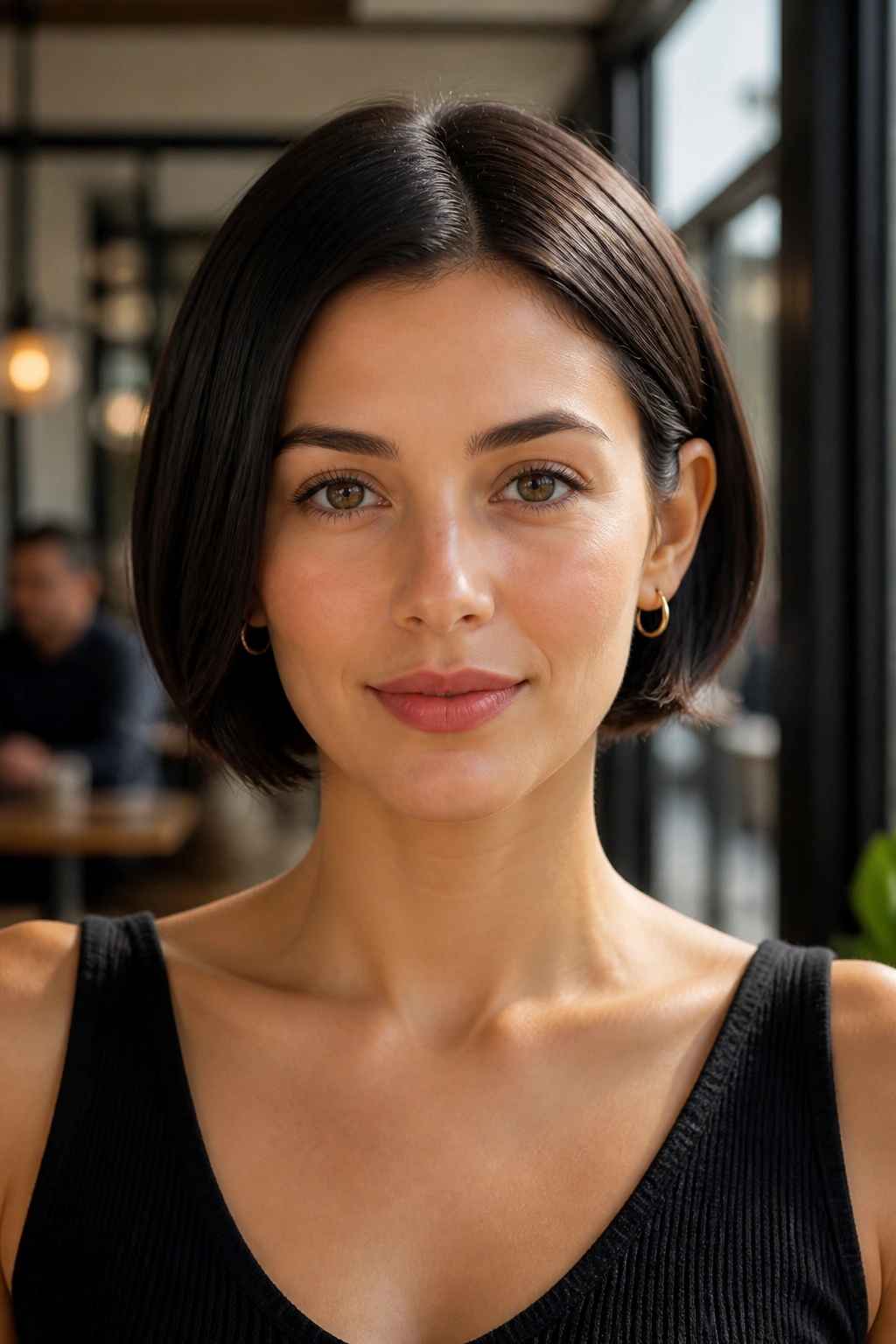
Not every short cut needs movement. A sleek ear-length bob makes a strong case for restraint, especially on an oval face where the clean line can do more than layers ever could.
This cut sits high enough to show the neck and low enough to frame the cheekbones. It works best when the hair is naturally straight or easy to smooth with a blow-dryer and flat brush. The finish should look deliberate, almost glassy, but not stiff. If the ends kick out, the shape loses some of its punch.
Best For
- Straight or lightly wavy hair.
- People who like a sharp part, middle or deep side.
- Anyone who wants a short cut that tucks behind the ear cleanly.
- Hair that can handle a smoothing cream and a quick pass with a flat iron.
Oval faces can carry the minimalism here because the bone structure already gives the haircut something to rest on. You do not need much else.
11. Layered Bob with Curtain Bangs
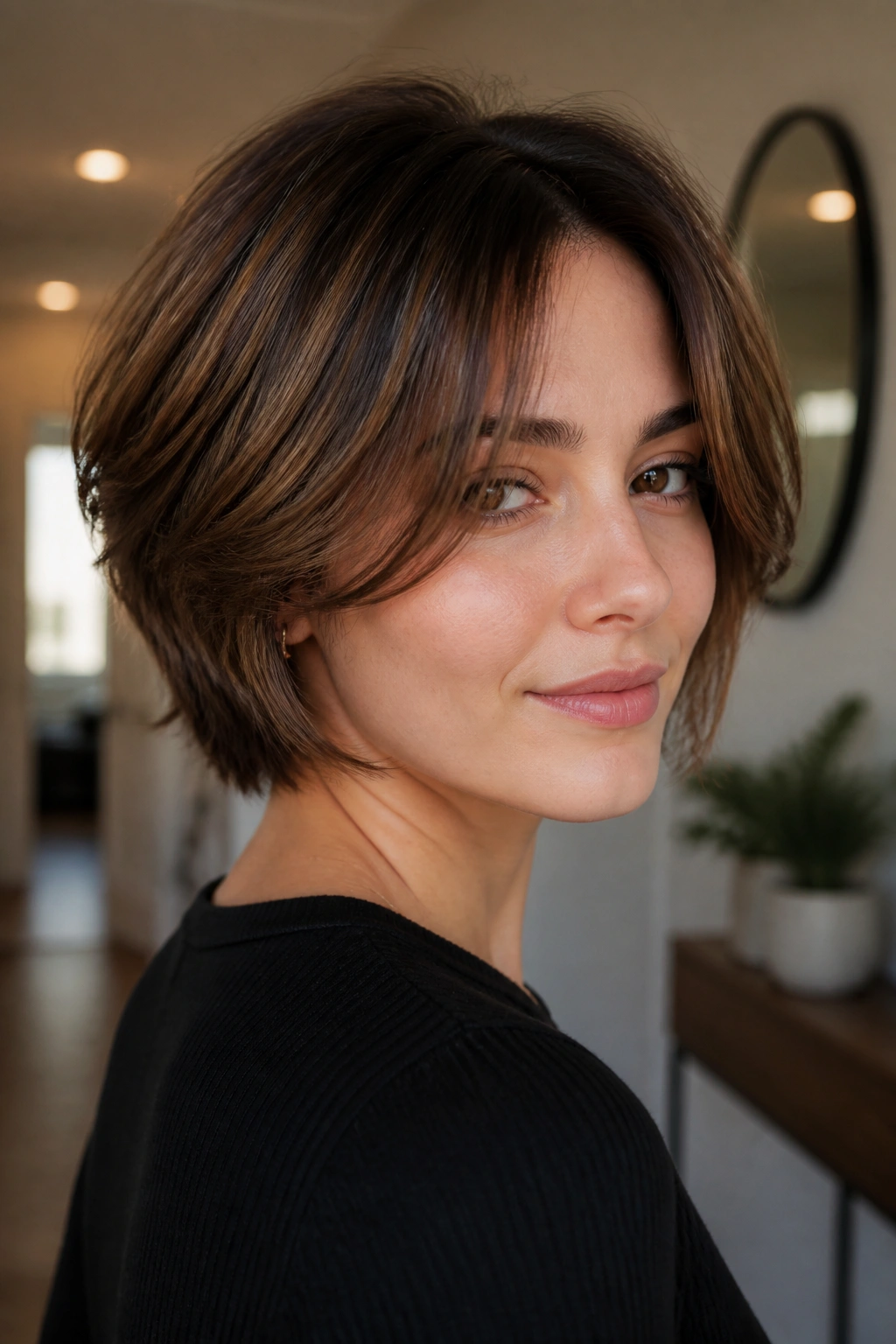
A short cut with curtain bangs can soften an oval face without hiding it. That is the trick. The bangs part around the center, sweep off the temples, and create a little frame around the eyes and cheekbones.
How to Keep It From Going Heavy
The layers around the crown should stay light, or the bangs start to feel like a curtain in the literal sense. Ask for the shortest bang pieces around the eyebrow or just below it, then let them lengthen into the front layers. The bob itself can sit at chin length or a touch higher, depending on how much neck you want to show.
This cut is friendly to a lot of hair types, but it needs a little maintenance. Bangs usually want a quick blow-dry with a round brush so they bend away from the face instead of sticking straight down. If your hair cowlicks at the front, tell your stylist before they start cutting. That detail matters more than people think.
The face-framing sweep gives oval faces a softer edge without stealing the shape.
12. Feathered Crop
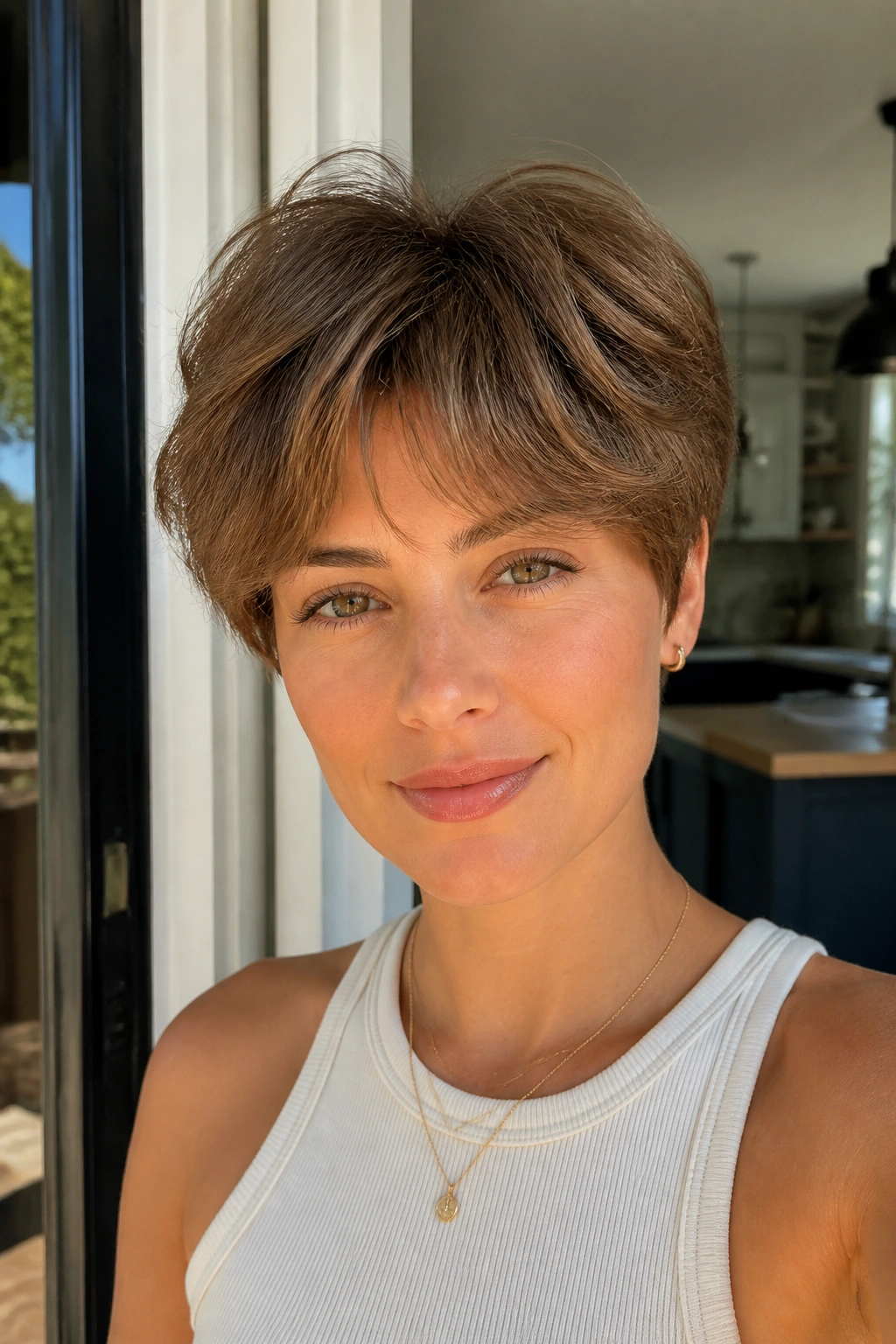
Feathered layers are a good answer when hair feels heavy. On an oval face, a feathered crop keeps the outline light around the sides while creating soft lift at the crown and temples.
This is not the old-school feathering that looks stiff or dated. Modern feathering should feel airy, with ends that blur into each other instead of sitting in hard blocks. It works especially well if your hair is thick, because the layers remove weight without forcing the haircut into a choppy shape.
If you want movement, this one delivers without too much styling. A blow-dryer and a paddle brush can be enough, or you can use a round brush just at the ends for a little bend. I would not go too heavy on the products. Feathered cuts lose their charm when they’re weighed down.
The real win here is lightness. You feel it before you even see it.
13. Undercut Pixie
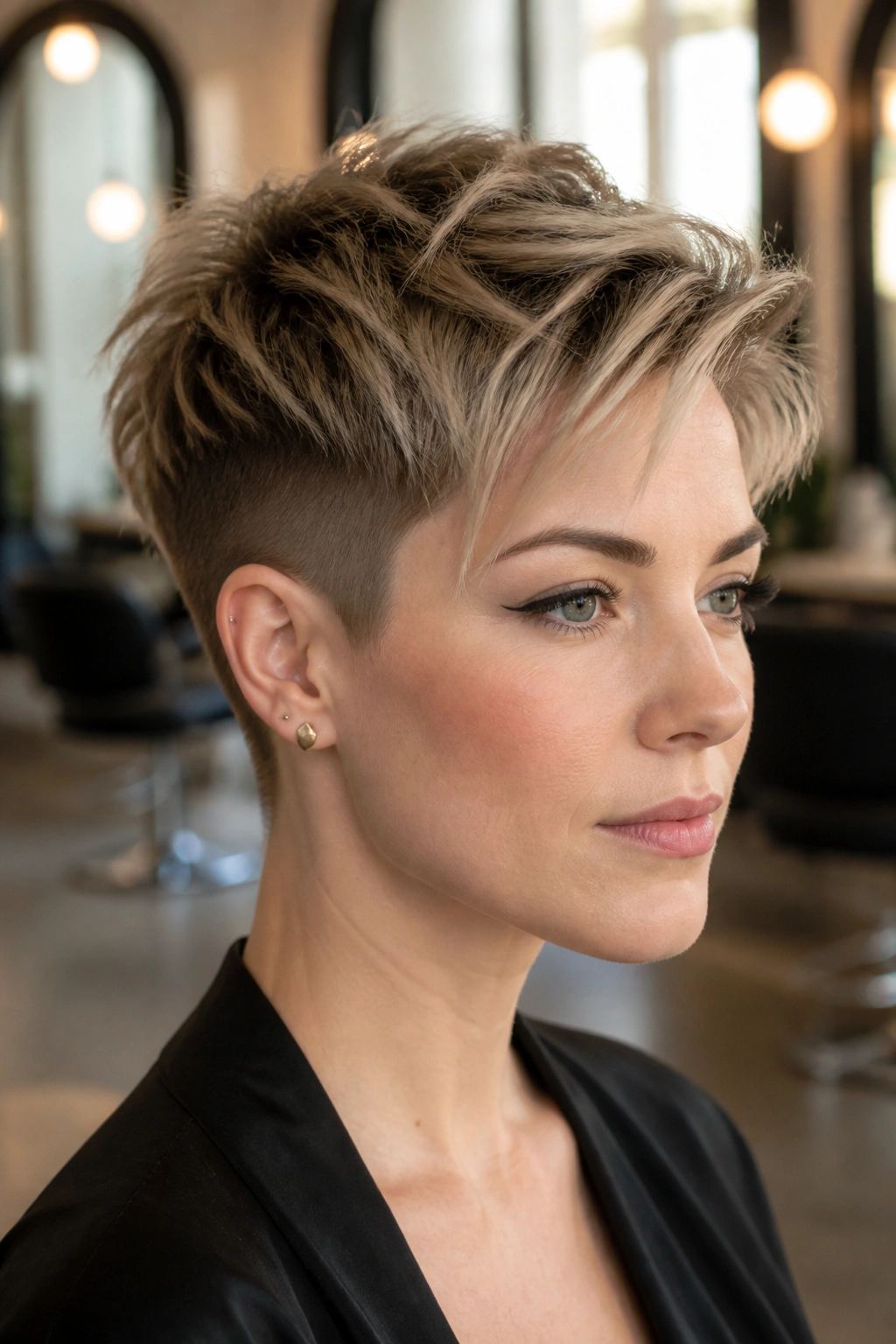
Want the shortest cut on the list that still has attitude? The undercut pixie is it. It keeps the top and fringe soft enough to style in different directions, while the sides or nape are clipped much shorter to remove bulk and create a cleaner line.
Oval faces can handle the contrast because the face shape already balances itself. The undercut simply sharpens the edges. That makes it a smart choice for dense hair, sweaty weather, or anyone who hates spending ten minutes wrestling with the back of their head. You can hide the undercut if you want a gentler look, or expose it a little more for edge.
A small warning: this cut needs upkeep. The short sections grow fast, and the line can blur sooner than you expect. Still, it grows out nicely into a longer pixie, which softens the commitment.
This one has teeth. In a good way.
14. Wavy Micro Bob
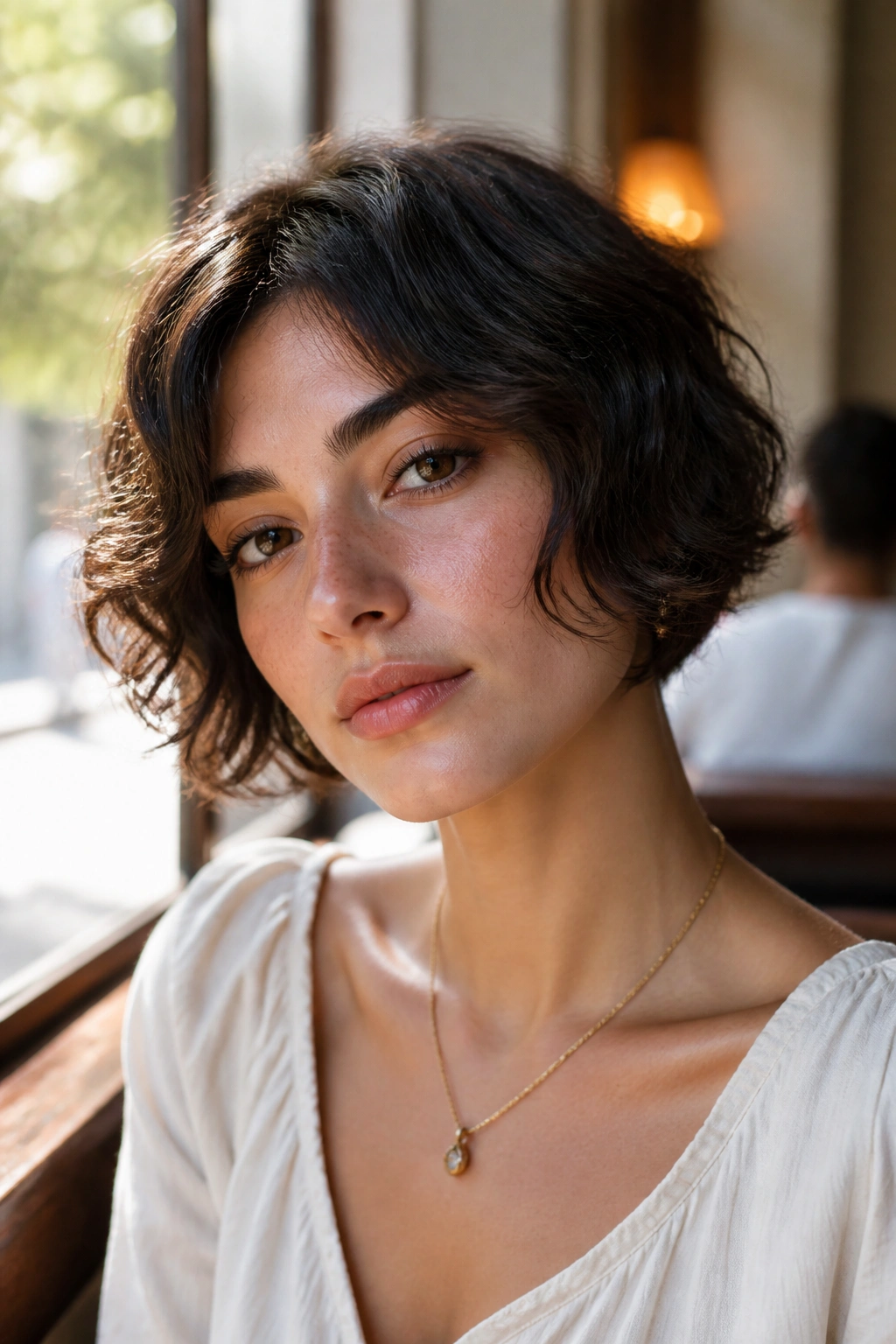
Micro bobs sound delicate, but the best ones have a little grit. On an oval face, a wavy micro bob sits above the jaw and puts the emphasis on the cheekbones, which keeps the face looking open and sharp at the same time.
What to Watch For
- Keep the ends blunt enough to hold the shape.
- Let the wave fall naturally instead of forcing a perfect curl.
- Use a light salt spray or wave cream, not a heavy serum.
- Ask for a length that does not cut directly across the widest part of your jaw if your hair is very full.
This cut works especially well when your hair already has a natural bend. If you fight the wave, it looks overstyled. If you let it do its thing, the haircut gets that slightly undone, cool-weather feel that people keep trying to copy and usually miss.
It is small, but not quiet.
15. Stacked Bob with Crown Lift
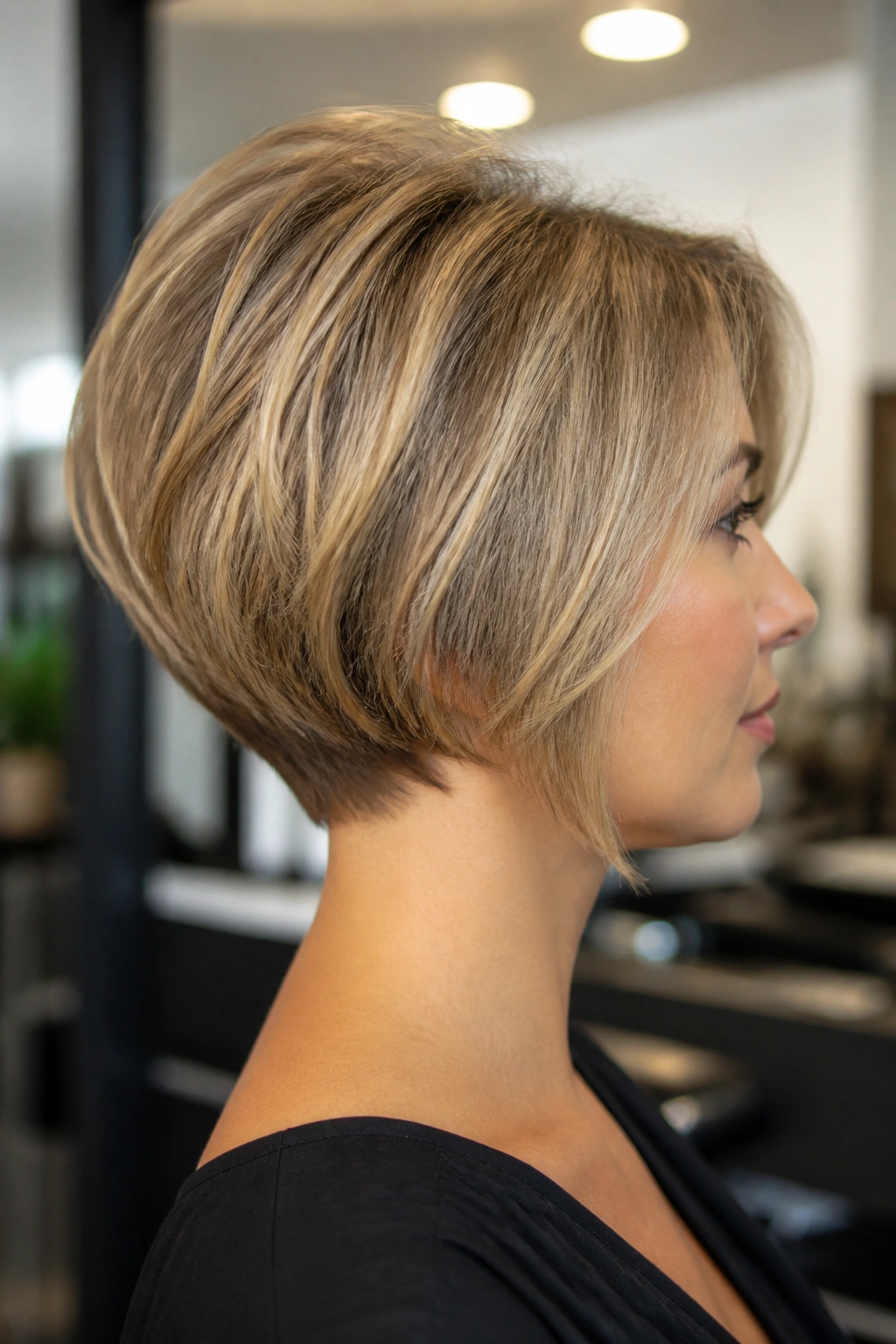
A stacked bob is one of those cuts that looks tidy from the side and full from the back. The graduation at the nape builds shape under the crown, which is useful if your hair goes flat on top or if you want a little more height without teasing it to death.
Oval faces tend to wear this well because the extra lift changes the silhouette without making the face look wider. The front can stay near the jaw, while the back curves up neatly. That curve is doing the heavy lifting.
Styling Notes
Use a round brush at the crown and direct the hair up and back as you dry it. The underlayer should sit close to the head while the top layers soften over it. If you have fine hair, a root spray helps the shape hold. If your hair is thick, ask for enough graduation in the back so the stack does not turn into a shelf.
The stacked bob is neat, but never flat. That’s why it earns its place.
16. Jaw-Length Curly Bob
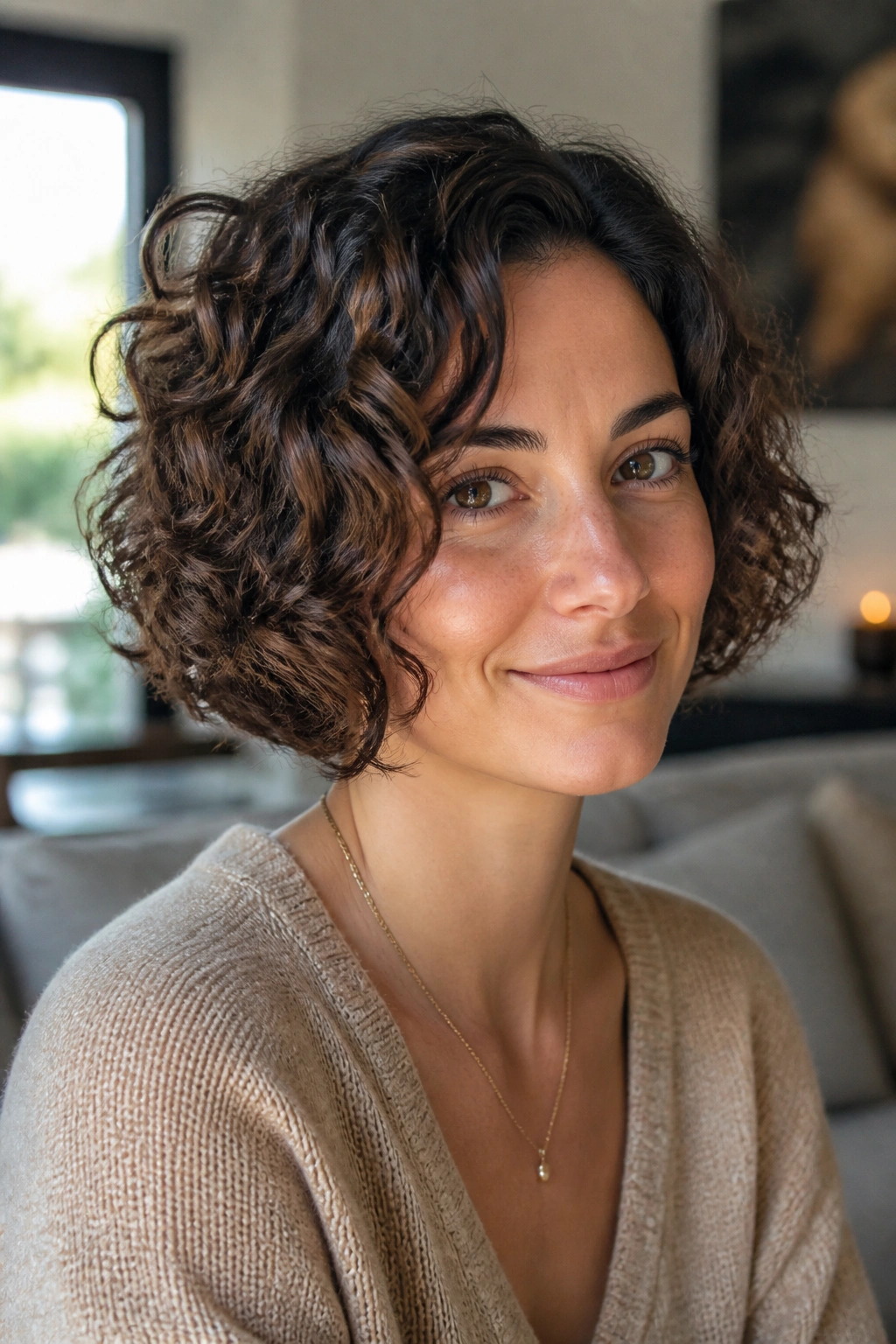
Curls at jaw length can look gorgeous on an oval face—if the shape is cut with restraint. Too much layering and the cut balloons out. Too little and it turns triangular. The sweet spot is a bob that lets the curls sit around the jaw and cheekbones without crowding the sides of the face.
The Shape Matters More Than the Length
A good jaw-length curly bob should be cut curl by curl, or at least with curl pattern in mind. The shortest pieces should not sit so high that the top half goes narrow and the bottom half flares out. That’s the part most people get wrong. The cut needs balance, and the curls need room to spring in a controlled way.
Diffuse on low heat, then shape the ends with a little cream if needed. Don’t over-touch it while it dries. Curly bobs have a habit of looking better once they settle.
On an oval face, the curve of the curls echoes the natural balance of the shape. That’s the whole appeal.
17. Soft Mullet Crop
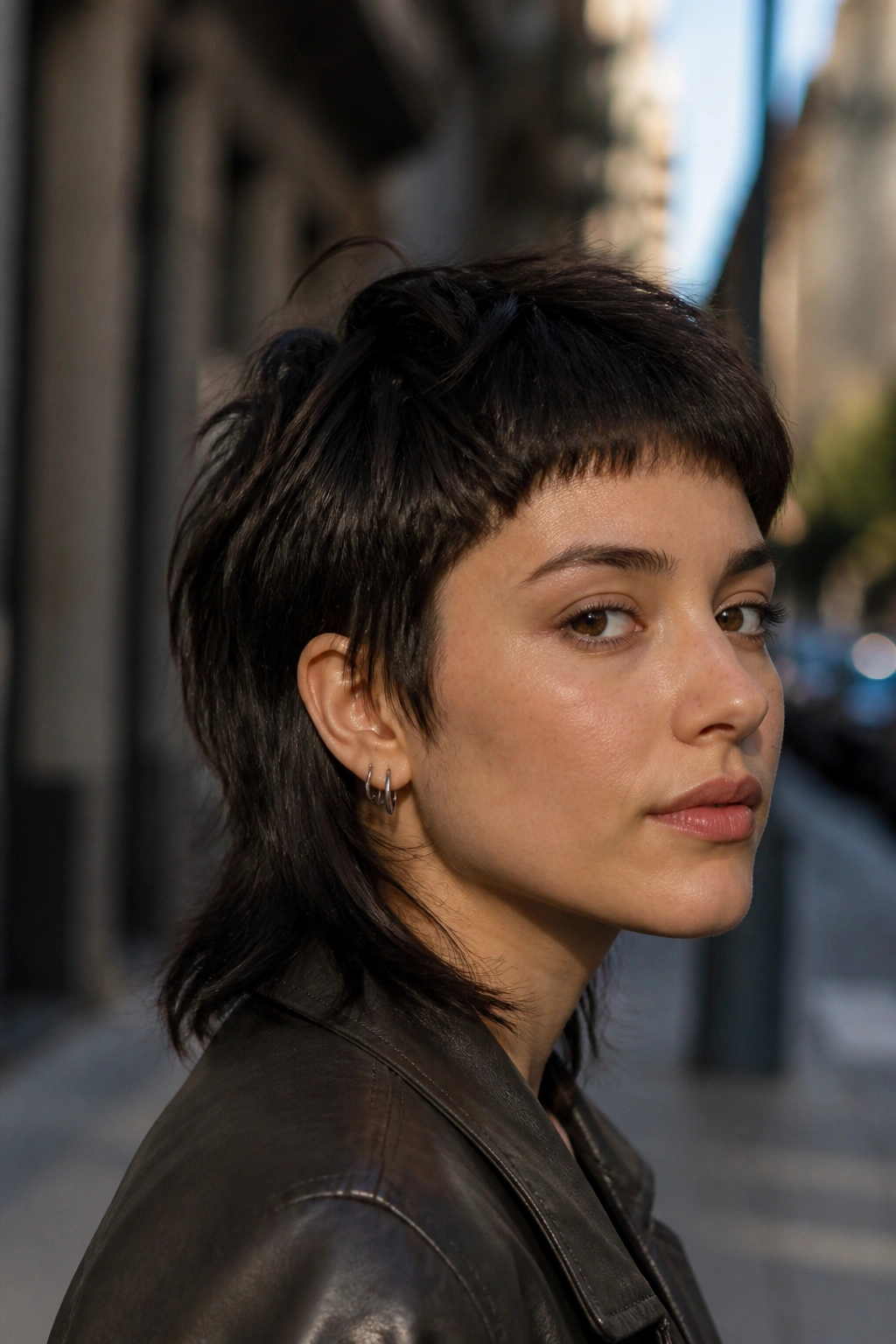
Yes, a mullet can work on an oval face. The key word is soft. Not spiky, not theatrical, not trapped in some stubborn rock-band fantasy unless that is the point you are actually after.
A soft mullet crop keeps the front and crown short enough to stay light, then leaves a little extra length through the nape. On an oval face, that tailing shape can make the jawline look sharper and the cheekbones stand out more. It works best when the transition between the short and long areas is blended, not chopped hard.
This is a haircut for people who want movement and a little edge without losing wearability. It usually looks better with some texture in the top and a bit of separation at the ends. If your hair is straight, use a small amount of styling cream and rough it up with your hands. If it’s wavy, even better.
The soft mullet crop is not for everyone. That is part of the appeal.
18. Rounded Bob with Tucked Ends
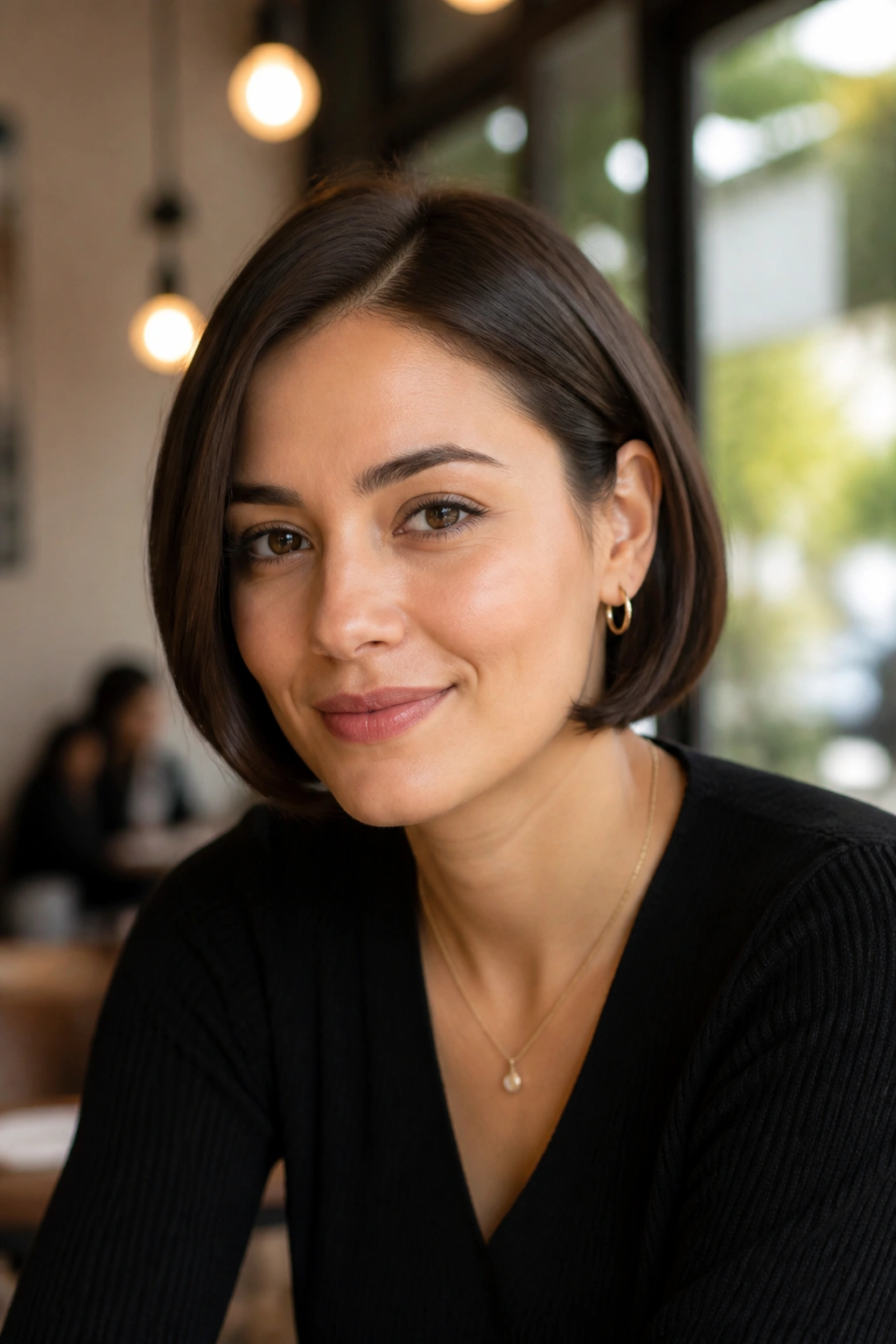
This is the haircut for someone who likes polish but not stiffness. A rounded bob with tucked ends curves inward slightly at the bottom, so the silhouette feels smooth and controlled rather than boxy.
Oval faces do well with this shape because the rounded edge follows the line of the face instead of cutting across it. The effect is especially nice if the hair has a medium thickness and enough bend to hold the tuck. The length can sit anywhere from lip to chin, depending on how much structure you want.
What to Ask Your Stylist
- Keep the line softly curved under, not blunt.
- Add a small amount of internal layering if your hair is thick.
- Leave enough length around the front to tuck behind the ear.
- Use a round brush or roller brush to guide the ends inward.
A rounded bob reads calm. Not plain. Calm.
19. Sideswept Fringe Pixie-Bob
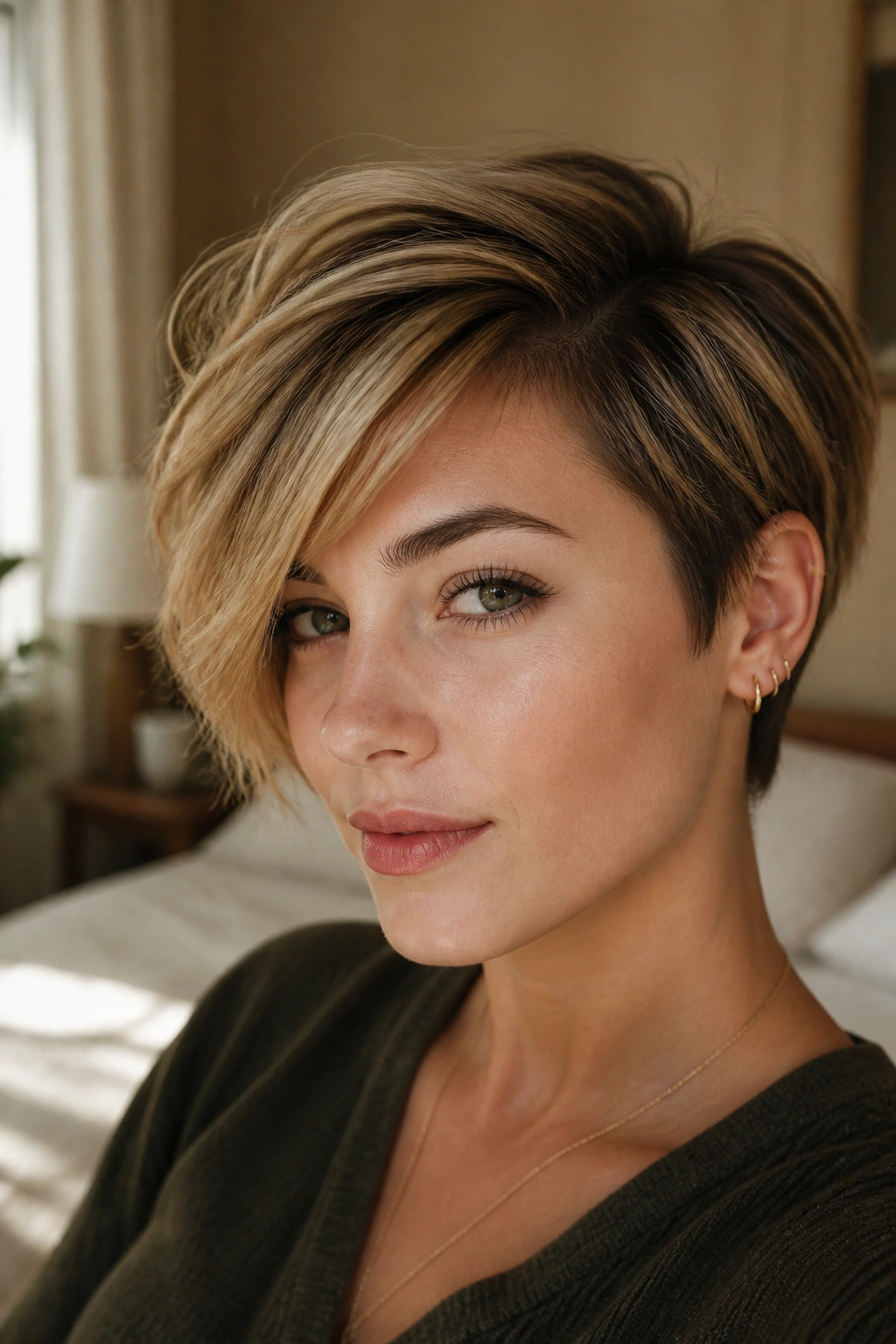
Half pixie, half bob, and the fringe is doing the heavy lifting. A sideswept fringe pixie-bob gives an oval face some movement across the forehead while keeping the sides short enough to feel breezy and modern.
What I like here is the grow-out. It is kinder than a strict pixie because the fringe can lengthen first, then blend into a longer bob shape. That makes the cut useful for people who want short hair now but do not want to panic when it starts getting a little shaggy. The side-swept front also adds a diagonal line that flatters the face without making it look too symmetrical.
This is a smart pick if you want softness near the forehead or if you prefer a cut that can be styled one way for work and another way for a night out. A little mousse at the root and a brush-off to the side is often enough.
Easy to wear. Not boring.
20. Short Wolf Cut with Soft Layers
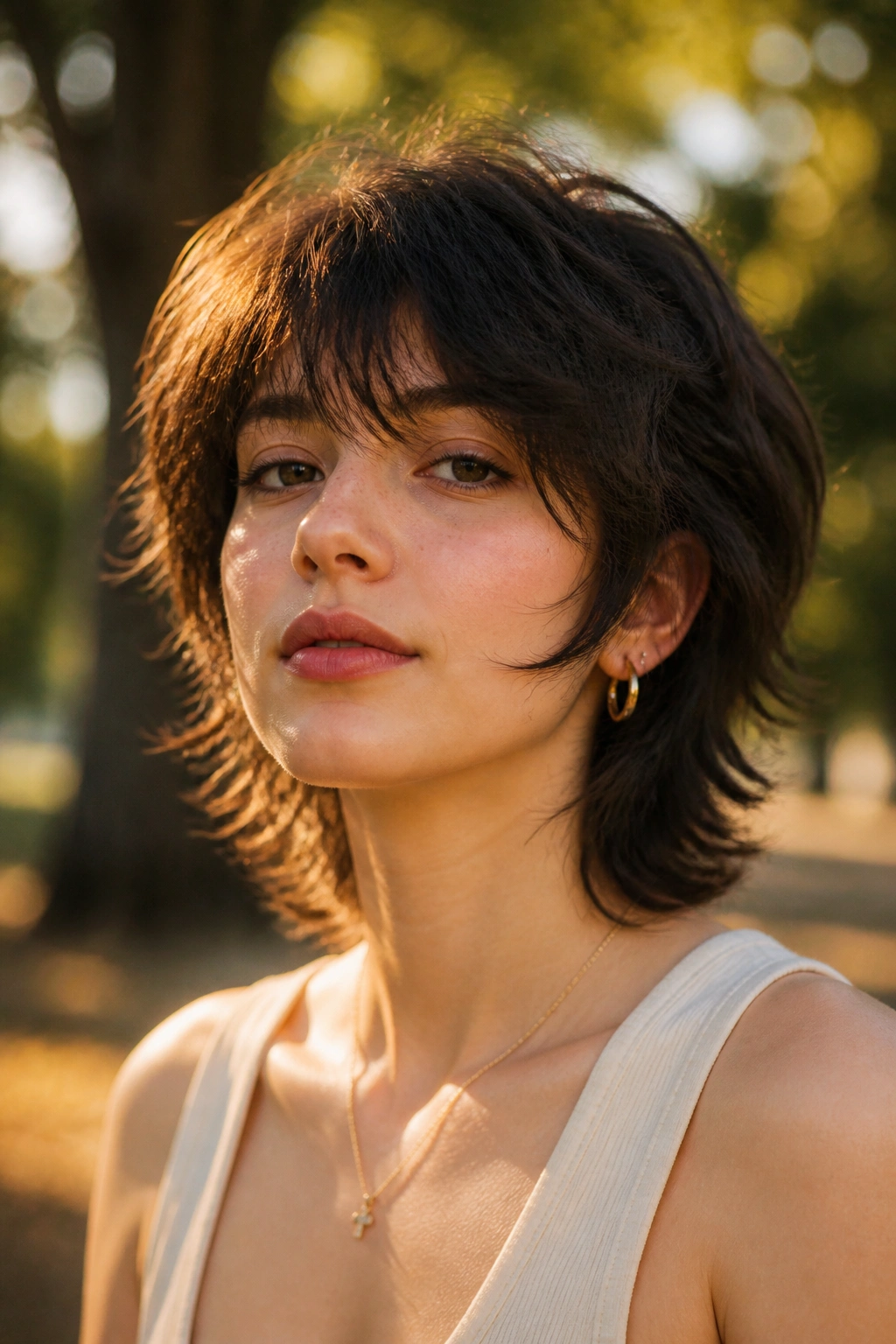
The short wolf cut is the wildcard at the end of the list. It borrows the shag’s movement and the mullet’s shape, then softens both so the result feels wearable instead of costume-like. On an oval face, that works because the extra texture keeps the shape alive from every angle.
Keep the layers short enough to stay airy, but not so short that the crown goes too choppy. The best version has volume at the top, loose movement around the cheeks, and a bit of length left through the back so the outline does not collapse. If your hair is wavy, the cut can almost dry itself into place. If it is straight, you’ll need a touch of texture spray and a little finger-drying.
I like this cut for people who want their hair to have personality without looking overdone. It can be messy, sleek, or somewhere in between, and that flexibility makes it one of the easiest ways to keep a short haircut from feeling stale. If you want one cut that still looks interesting after a long day, this is the one I would put near the top of the pile.
