



Round faces get blamed for the wrong haircut advice. The old rule that you must hide your cheeks or keep everything long enough to skim your ribs is lazy, and it misses the point. The best haircuts for round faces work with softness instead of fighting it.
What usually helps is not mysterious. A cut can add height at the crown, build a diagonal line through the front, or leave the widest part of the face exposed in a smarter way. That’s why a blunt bob can work. So can a pixie. So can bangs. The trick is placement, not panic.
A round face is not a problem shape. It just asks for better line work. Some people want to sharpen the jaw. Some want to show off cheekbones. Some want a cut that feels light around the face and easy to style before coffee. Keep that in mind as you move through these 18 haircuts, because the right choice is usually the one that makes the face look more intentional, not more hidden.
1. Long Layers for Round Faces
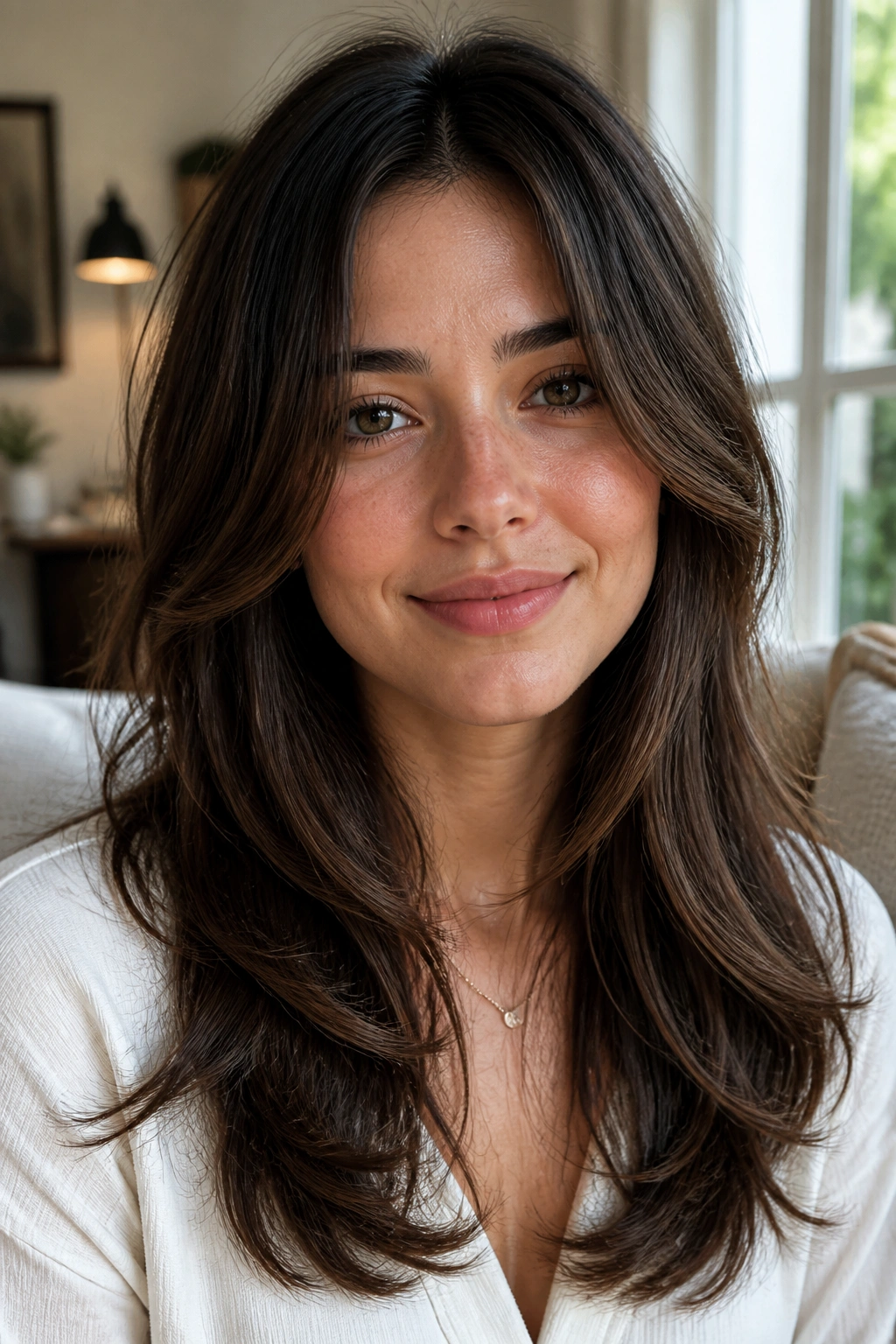
Long layers are the safest place to start, and I mean that in the best way. They give a round face vertical movement without stealing the fullness that makes the face look fresh and soft.
Why It Works
The magic sits in the front pieces. Ask for the shortest layer to start around the cheekbone or just below the lip, then let the rest fall longer through the collarbone and chest. That keeps the eye moving downward instead of stopping right at the widest part of the face.
- Best when the front pieces are cut on a slight angle.
- The longest layers should stay heavy enough to keep the ends from puffing out.
- A side part or off-center part helps the shape even more.
- Works on straight, wavy, and loose curly hair.
My favorite detail: keep the layers subtle near the back. Too many short layers in the back can make the whole cut flip out in a weird way.
2. Curtain Bangs with a Collarbone Cut
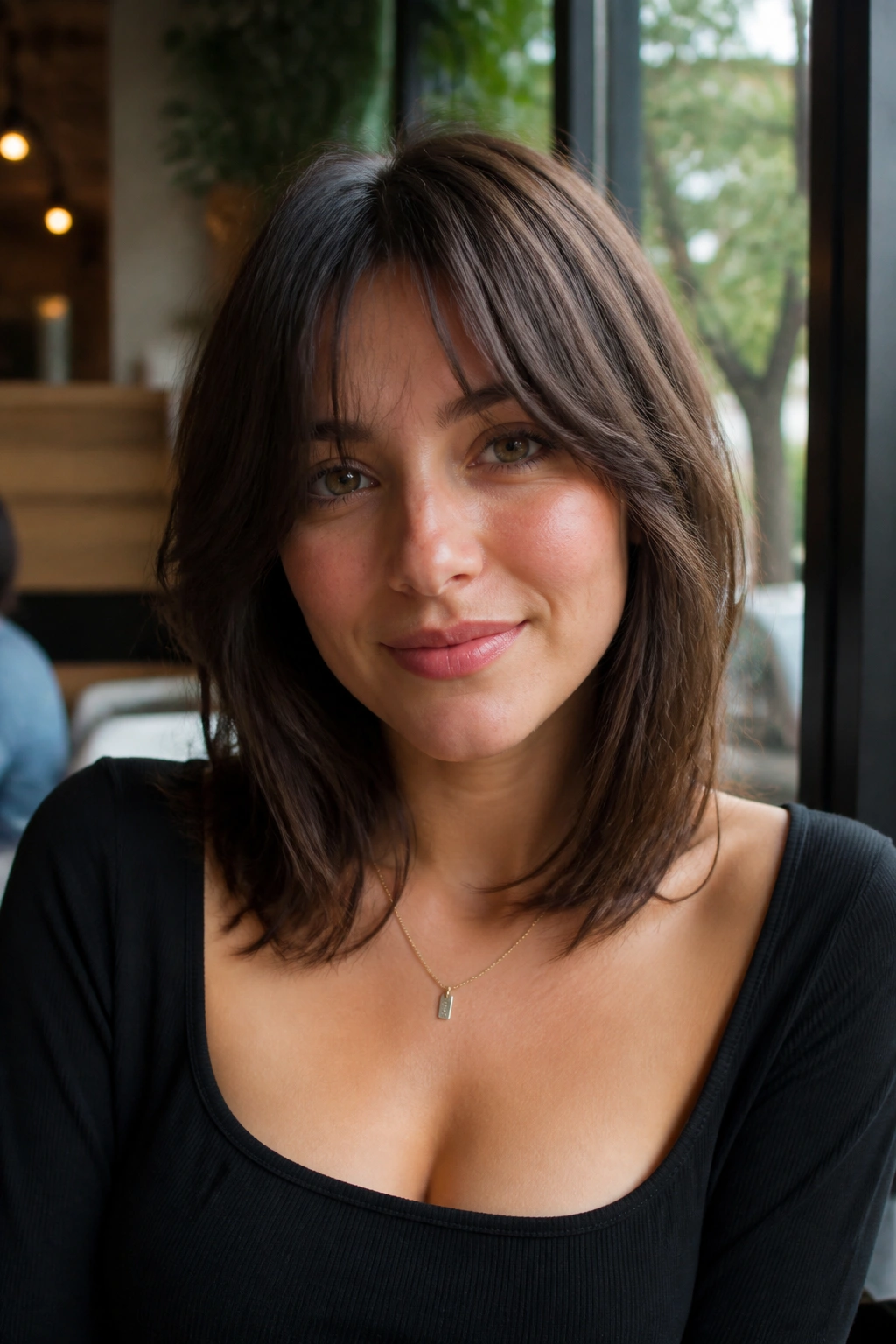
Curtain bangs can do more for a round face than people expect. The trick is length. Short curtain bangs can widen the center of the face, while longer ones that hit around the cheekbone soften the middle and open the sides.
The cleanest version sits with a collarbone cut underneath it. That gives the bangs room to sweep out instead of sitting like a heavy curtain over the forehead. I like this cut because it has movement without looking overdone. It also grows out well, which matters if you do not want a strict trim schedule.
Ask your stylist for a soft center split, longer pieces near the temples, and a face frame that blends into the rest of the cut instead of ending in one blunt line. If your hair is thick, the bangs need internal removal so they do not feel bulky. If your hair is fine, keep the fringe airy and light. No helmet effect. Ever.
3. Textured Lob with Feathered Ends
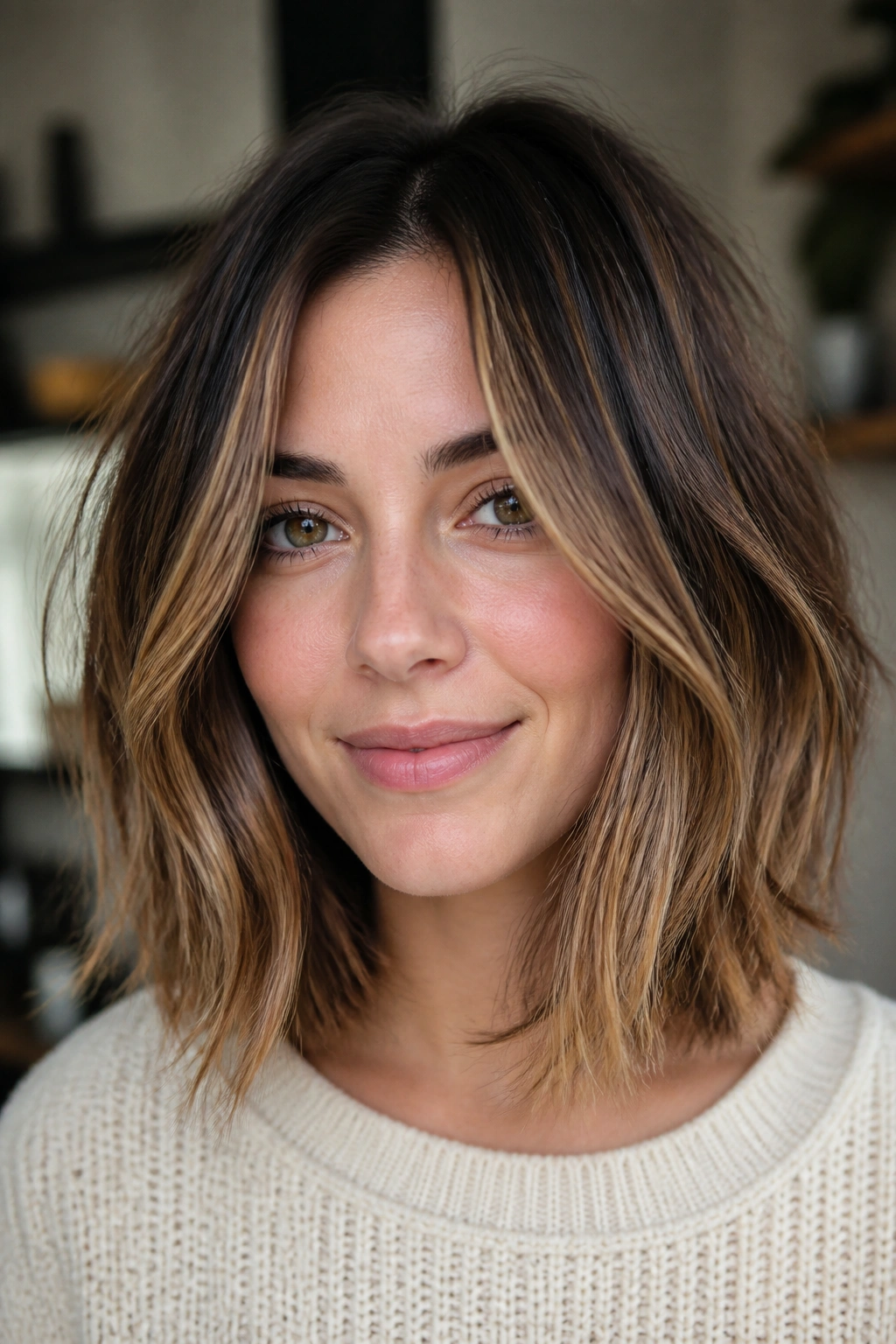
Why does the textured lob keep showing up on round faces? Because it solves two problems at once: it gives you length where you want it and movement where you need it. A lob that lands between the chin and collarbone can be tricky if it’s one solid block. Add feathered ends, though, and the whole shape starts to feel softer and narrower through the cheeks.
How to Wear It
A little bend in the hair makes this cut come alive. You do not need beach waves sprayed into oblivion. A loose wave or a quick pass with a flat iron is enough to break up the line.
- Ask for light texturizing only through the bottom third.
- Keep the front pieces slightly longer than the back.
- A middle part works if the ends are soft.
- A deep side part makes it more dramatic.
This is a good cut for people who want polish but not stiffness. Clean, not severe.
4. Asymmetrical Bob with a Deep Side Part
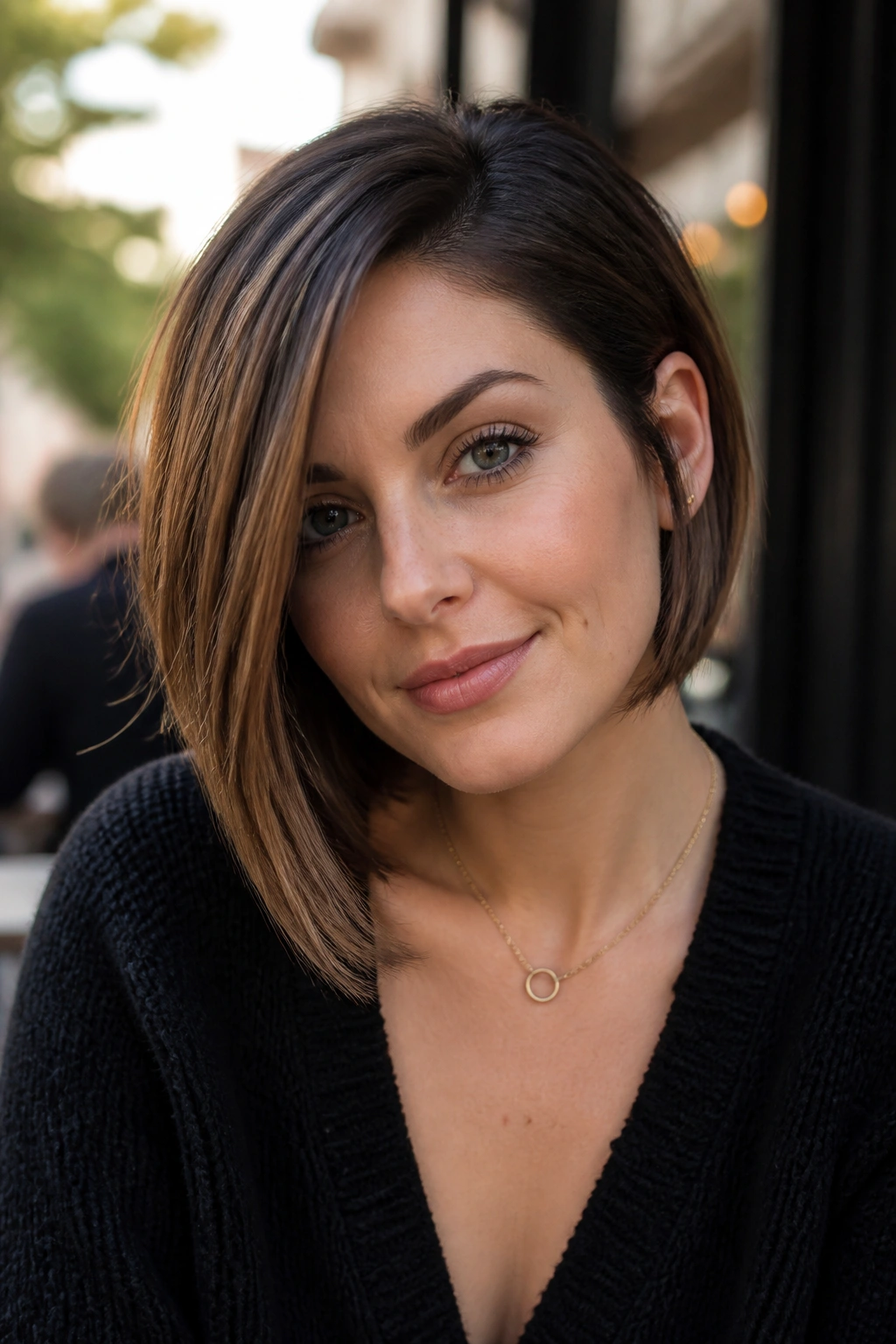
Walk into a salon asking for a bob, and this is the version that quietly does the most work. One side sits a touch longer than the other, and the deep side part gives the face a slant instead of a circle. That slant matters.
The best asymmetrical bob does not scream “asymmetrical.” It just feels a little off-center in a good way. The longer side should skim the jaw or sit just below it, while the shorter side can tuck closer to the ear. That small shift pulls attention away from the widest part of the face and toward the eyes and lips.
- Keep the line crisp, not choppy.
- Add a slight bevel at the ends.
- Use a side part that starts above the arch of the eyebrow.
- Works especially well on straight or slightly wavy hair.
One thing: if your hair is very curly, the asymmetry needs to be planned carefully or it can look lopsided instead of sharp.
5. Modern Shag with Wispy Fringe
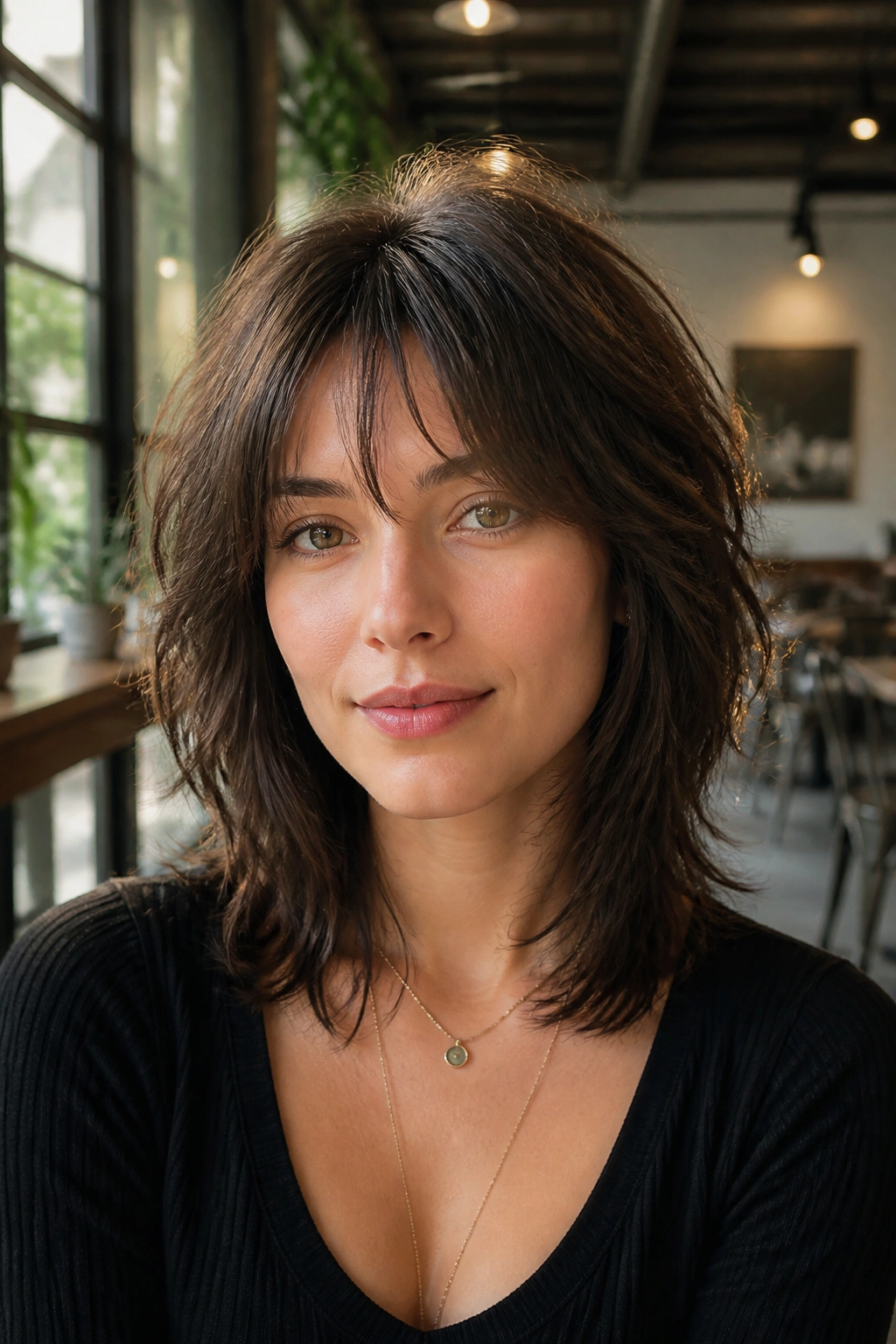
The shag is what happens when a round face wants attitude. It gives you shape without turning everything into one smooth oval, and that’s the point. A good shag adds lift at the crown, softness around the cheeks, and a little messiness that keeps the cut from feeling precious.
It is a little wild. That’s why it works.
The modern version is less mullet, more controlled texture. Think medium-length layers, a wispy fringe, and movement that starts high enough to create air around the face. If the fringe is too dense, the face can look shorter. If the layers are too short, the whole cut can puff up in the wrong spots. Balance matters here.
I like this cut on hair that already has a bit of wave. Straight hair can wear it too, but it usually needs a blow-dry or a texture spray to show the shape. Thick hair benefits from internal removal. Fine hair needs fewer layers, not more. That part gets ignored all the time.
6. Butterfly Layers for Round Faces
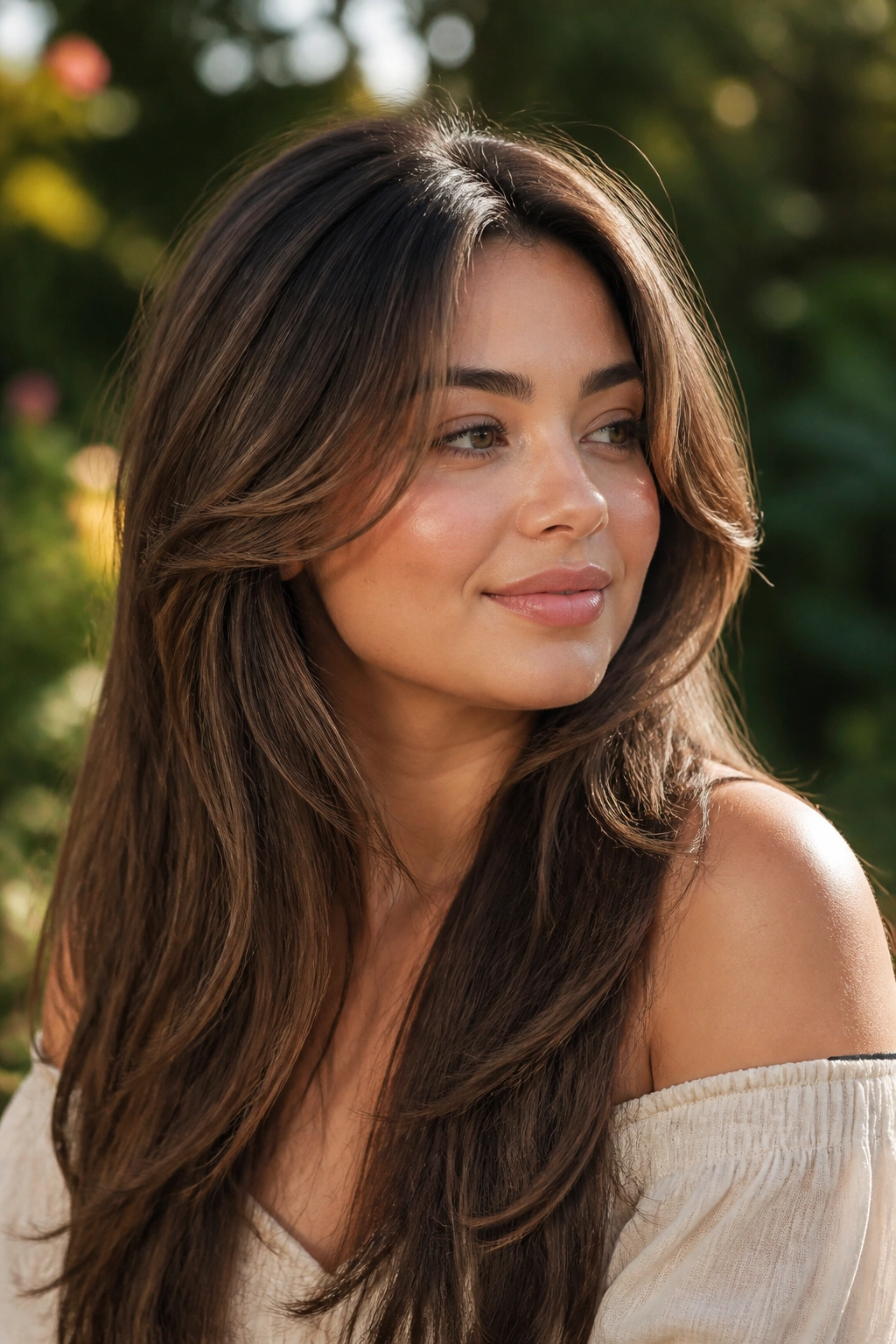
Unlike a standard long-layer cut, butterfly layers create two clear shapes at once: volume near the crown and long, loose movement through the bottom. That contrast is exactly why they suit round faces so well. They lift the eye upward, then let the longer pieces fall past the cheeks.
The look can sound dramatic, but it does not have to be. If your hair is medium to long, the shorter face-framing pieces can start around the chin or cheekbone, while the lower length stays intact. That gives you the illusion of more structure without chopping everything off.
What to Ask For
Ask for soft, blended layers rather than hard steps. The shortest pieces should not stop at the widest part of the cheek. They should sweep around it.
This cut is best for someone who likes styling options. You can wear the front tucked, blown out, or curled away from the face. On a round face, that flexibility is gold. One day it feels airy. The next day it looks sleek enough for a sharper outfit. Not many cuts pull that off.
7. Pixie Cut with a Long Crown
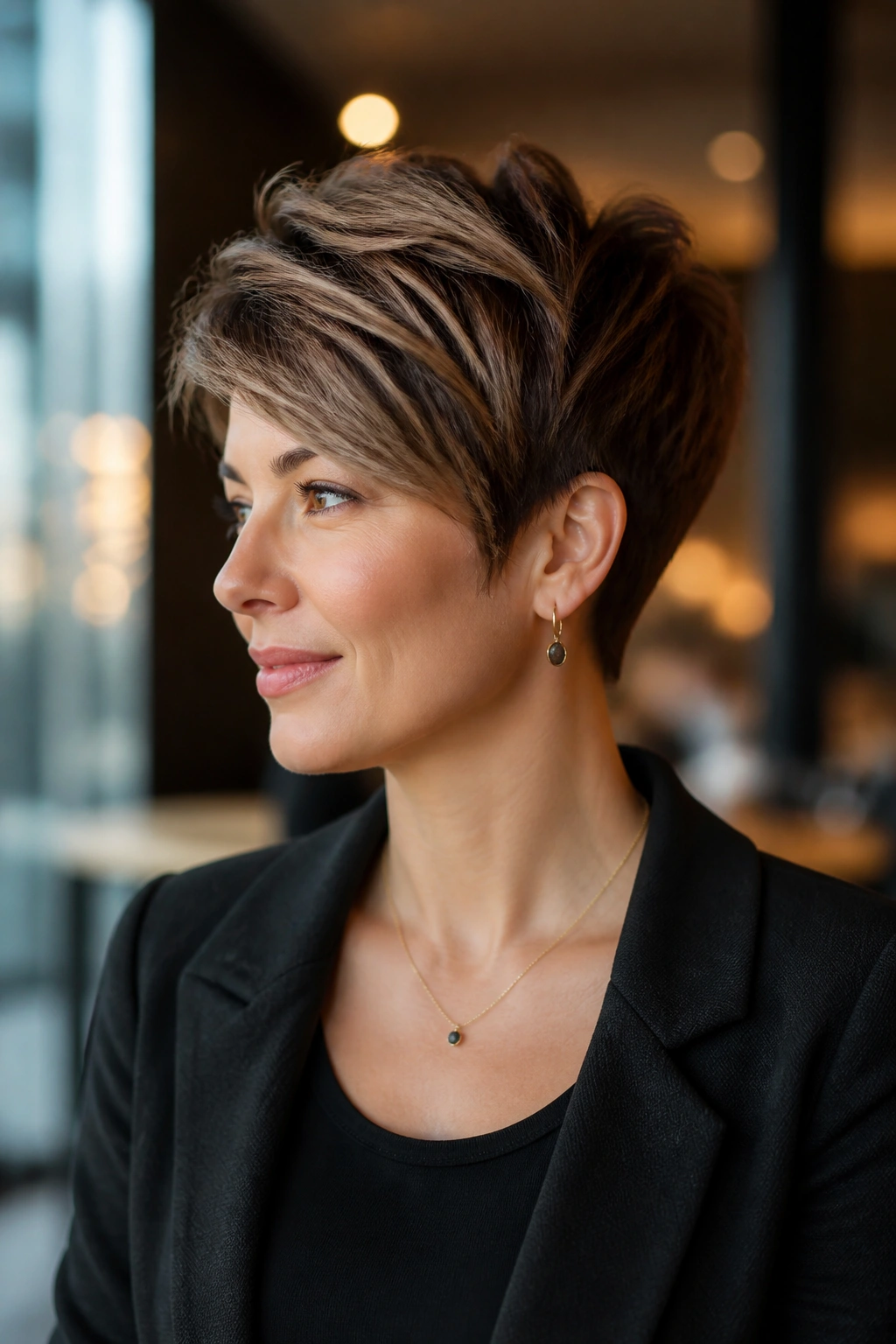
Short hair can do the same thing long hair does, only faster. The pixie with a long crown proves it. By keeping the top longer and the sides tighter, you create height instead of width, which is the whole game with round faces.
Why It Works
The crown length gives your hair a vertical line. That alone changes how the face reads. Add a side-swept front or a longer fringe piece, and the face frame starts to feel slimmer without looking forced.
- Keep the top about 2 to 4 inches long, depending on texture.
- Ask for tapered sides and a soft nape.
- Leave enough fringe to sweep across the forehead.
- Use matte paste or a light cream, not heavy gel.
If your hair grows fast, this cut still works, but the shape needs trims to stay clean. That’s the tradeoff. Short hair always asks for more maintenance than people think. Still, if you want something sharp, easy, and a little cheeky, this one is hard to beat.
8. Blunt Bob with Hidden Movement
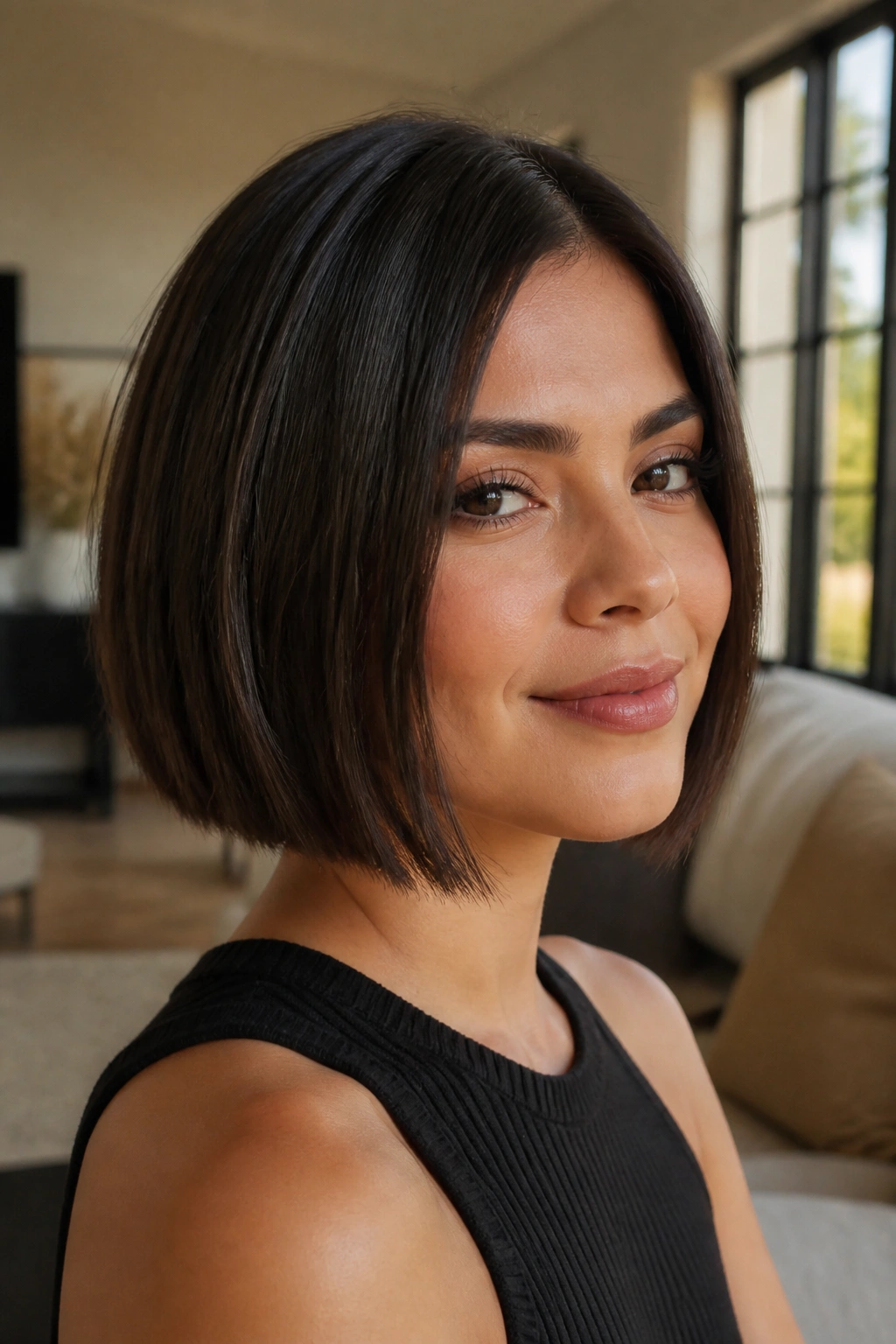
A blunt bob can flatter a round face more than wispy layers ever will. Strange, maybe. True, though. The reason is the clean edge: when the line lands well, it gives the face a sharper frame and keeps the shape from getting too soft.
The key is hidden movement inside the cut, not on the outside. That means the perimeter stays strong while the interior has some slide cutting or soft removal so it does not sit like a helmet. The ends should hug the jaw or fall just below it, never stop right at the fullest part of the cheeks if your hair is dense and straight.
This cut works best on people who like a polished look. It pairs well with tucked-behind-the-ear styling, bold earrings, and a neat side part. If your hair is very curly, I would not force the blunt version unless the stylist knows curly geometry well. On the right hair, though, it looks clean and expensive without trying too hard.
9. Sleek Collarbone Cut with a Soft Middle Part
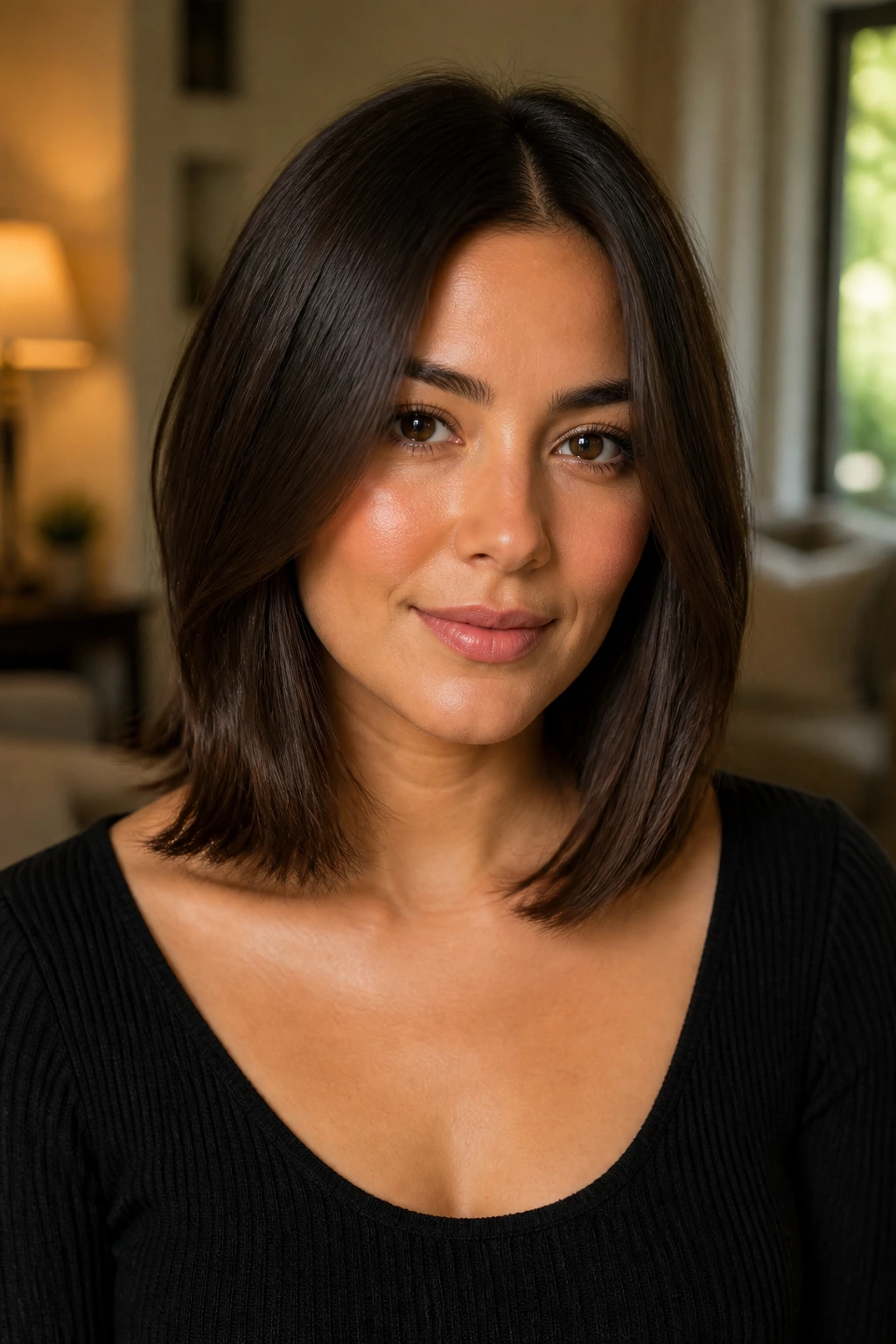
Can a middle part work on a round face? Yes, but only when the cut earns it. A sleek collarbone length gives the face enough vertical line to support the center split, and the softness in the front keeps it from feeling flat.
The front pieces should start below the cheekbone and slide into the collarbone length, not stop abruptly at the jaw. That one detail changes everything. A sharp middle part on a short cut can widen the face. A middle part with longer front pieces can actually make the face look longer and calmer.
How to Style It
Blow-dry the roots up and forward first, then direct the ends straight down or with a tiny bend away from the cheeks. If you want extra shape, wrap just the front section around a large round brush for a soft curve.
This is a good cut for people who like clean lines and low fuss. It does not look messy by accident, which is part of the appeal. It looks deliberate.
10. Bixie Cut with Tapered Sides
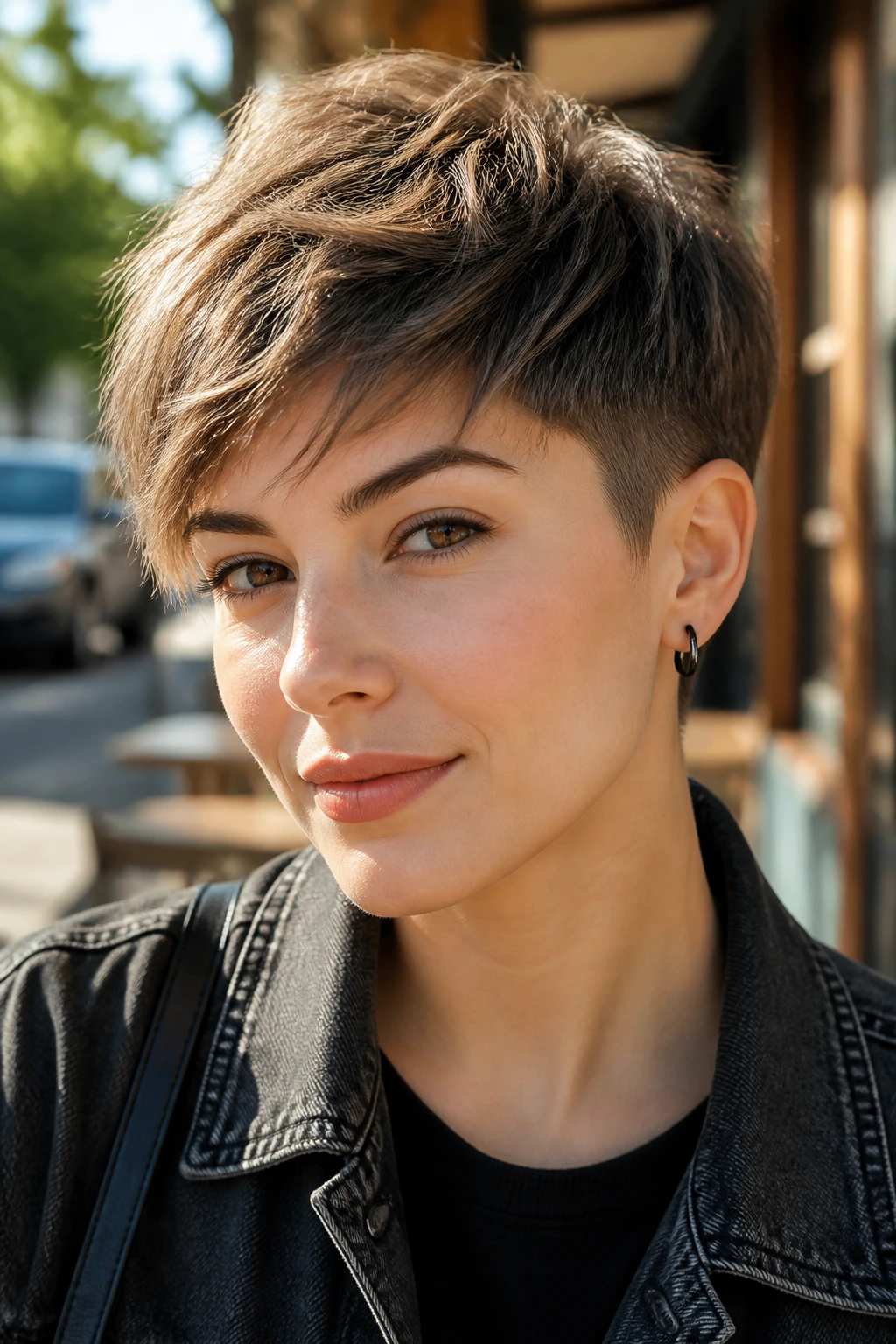
If a pixie feels too short and a bob feels too heavy, the bixie lands in the middle without looking indecisive. That middle ground is why it works so well on round faces. The tapered sides keep the shape narrow, and the longer top gives the cut enough height to avoid that puffy, mushroomy look.
The best bixie has a bit of grain in it. Not a lot. Just enough. The fringe can fall soft and side-swept, or the top can be tousled forward for a more lived-in look. Keep the nape neat and the ears partially exposed, and the face opens up in a way that feels lighter than a full bob.
- Top length: about 2 to 4 inches.
- Sides: tapered close, but not shaved unless you want edge.
- Fringe: soft, piecy, or side-swept.
- Styling: a pea-sized amount of paste or cream.
This cut suits someone who likes short hair but still wants a little shape play. It has personality. It also grows out in a manageable way, which is more useful than people admit.
11. Soft Wolf Cut with Cheekbone Pieces
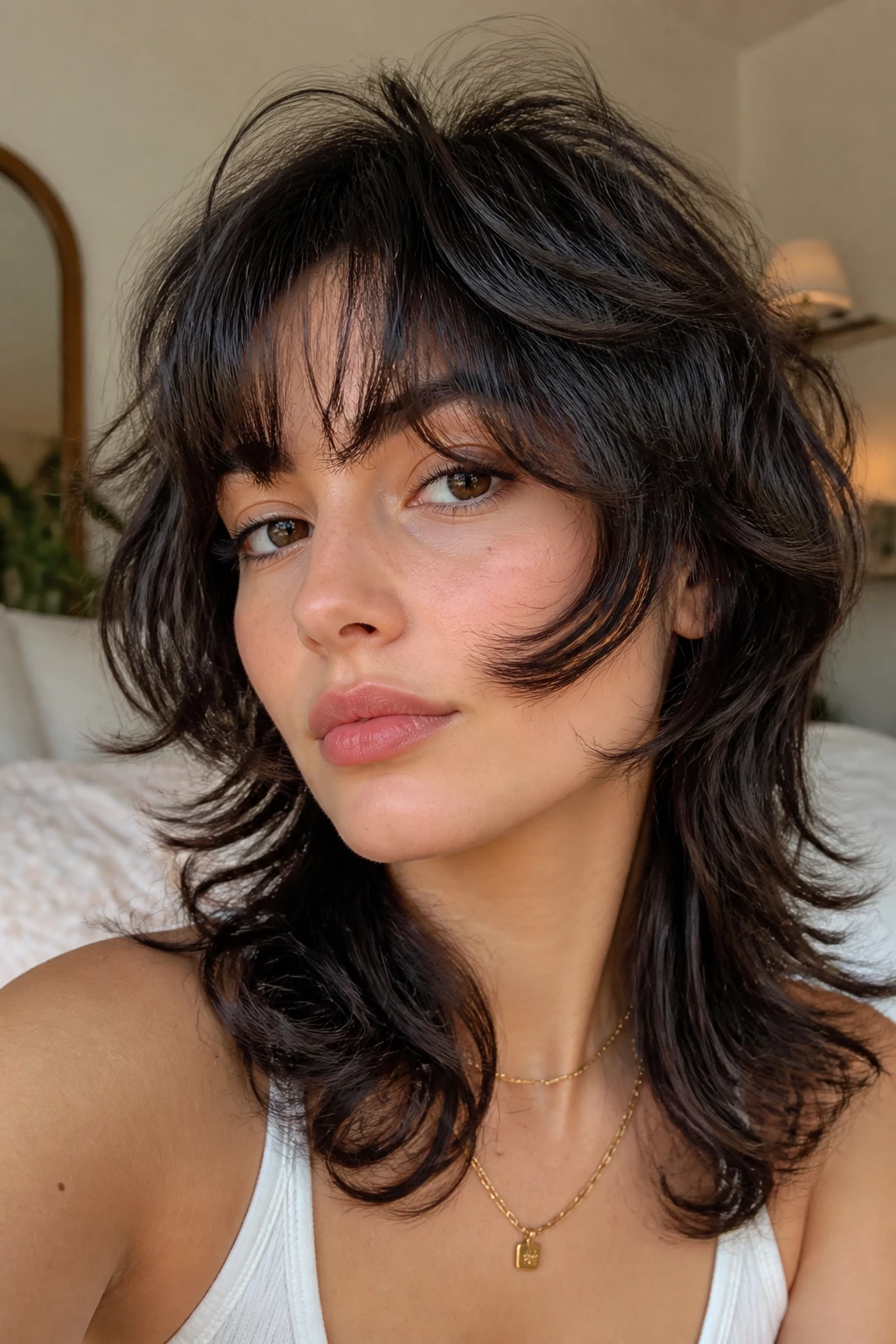
The wolf cut can go wrong fast on a round face if the layers are too aggressive. Done well, though, it gives you the one thing many face shapes need: controlled chaos. The crown gets lift, the cheeks get a few soft pieces, and the length keeps everything from ballooning out.
I like this cut most on wavy hair. The texture helps the layers fall into place instead of sticking out in every direction. On straight hair, it needs styling, or the shape can look floppy. On very curly hair, the shortest layers need to be placed with care so the outline does not get too wide.
The cheekbone pieces are the part to watch. They should start high enough to create shape but long enough to skim, not sit on, the fullest part of the face. If they hit the middle of the cheek and stop, the effect gets boxy. If they sweep past the cheekbone and blend into the longer lengths, the whole cut looks smarter. There’s a big difference.
12. Chin-Length French Bob
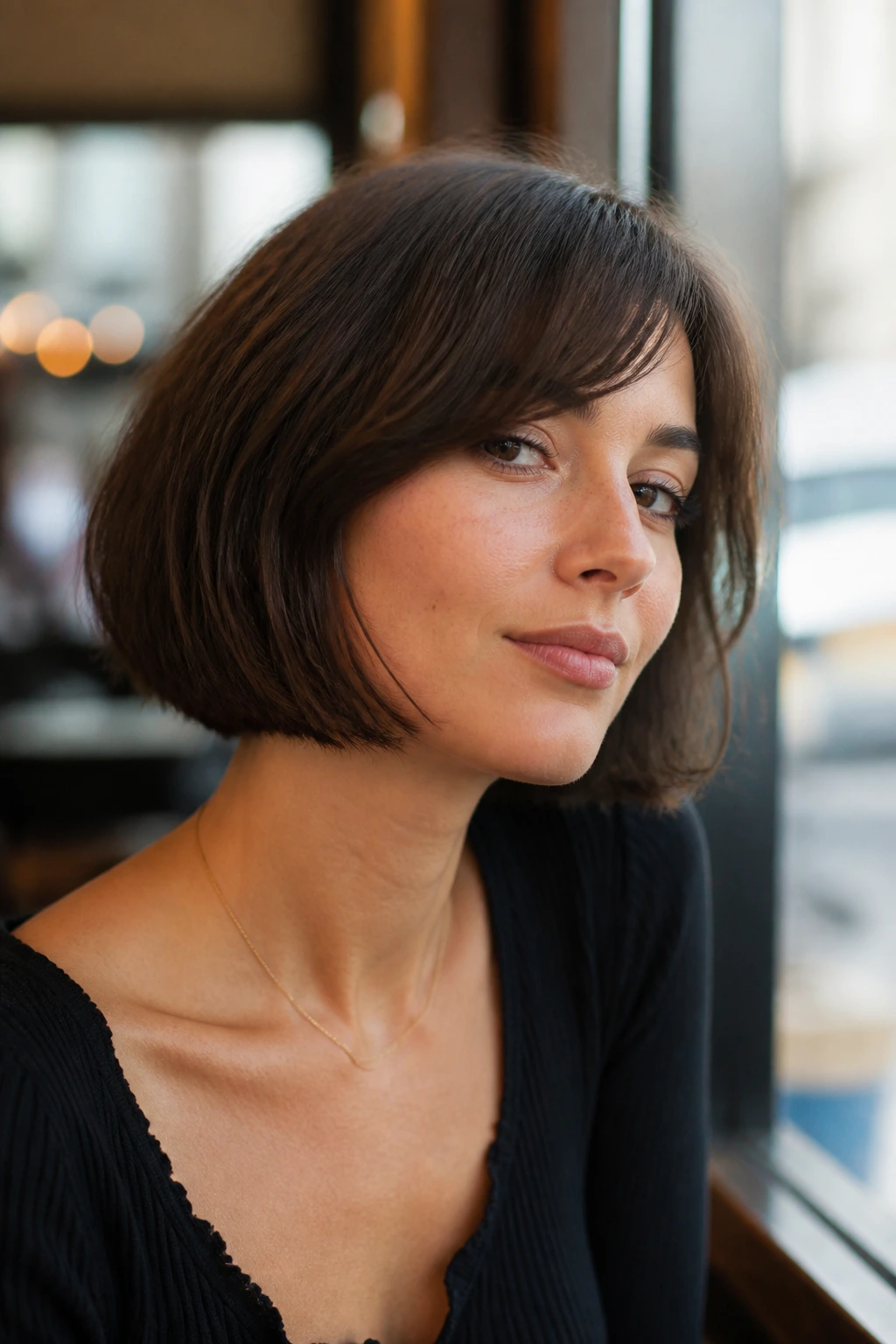
A French bob is short, neat, and a little bit smug in the best way. Unlike a standard chin-length bob, the French version usually feels softer at the edges and less corporate. That softness matters for round faces, because it keeps the cut from turning into a hard circle around the jaw.
The chin-length part is the tricky bit. If the hair is very dense and straight, I prefer the line to sit either just above the chin or just below it, not directly on the fullest point. That tiny shift keeps the face from feeling boxed in. Add a side sweep or a loose fringe, and it gets even better.
This cut is strongest on hair that can hold a little bend. It looks especially good with a tucked side and a lip color, which sounds like a small thing but changes the whole mood. A French bob is not trying to be invisible. It wants to be noticed. That is half the appeal.
13. Long Curls with Internal Layers
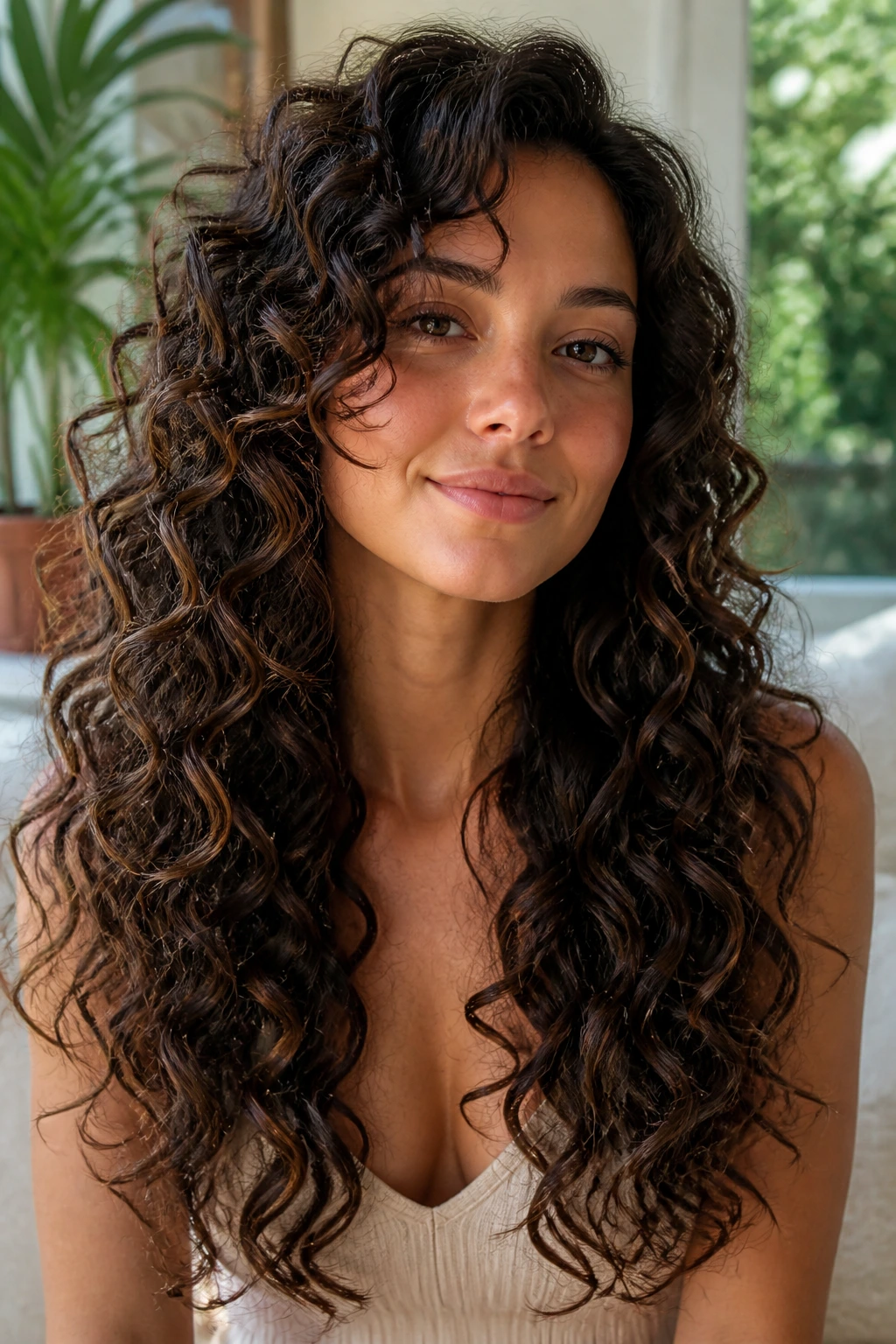
Long curls are not boring when they’re cut well. In fact, a round face can look more sculpted with curls than with straight hair, because the pattern gives shape on its own. The catch is the layers. They need to be inside the shape, not hacked across the top.
Why It Works
Internal layers remove bulk without chopping the curl pattern into a triangle. That lets the curls fall around the face instead of puffing out at the cheeks. A good curly cut also keeps some weight at the bottom so the length still pulls the eye downward.
- Ask for a dry cut if your curls are strong and springy.
- Keep the shortest face frame below the cheekbone.
- Avoid blunt bangs unless you want a bold look.
- Diffuse on low heat to keep the root lift soft.
I like this cut because it proves a round face does not have to hide behind straightening. It can wear texture and still look defined. Sometimes better, actually.
14. Angled Lob with Swept Bangs
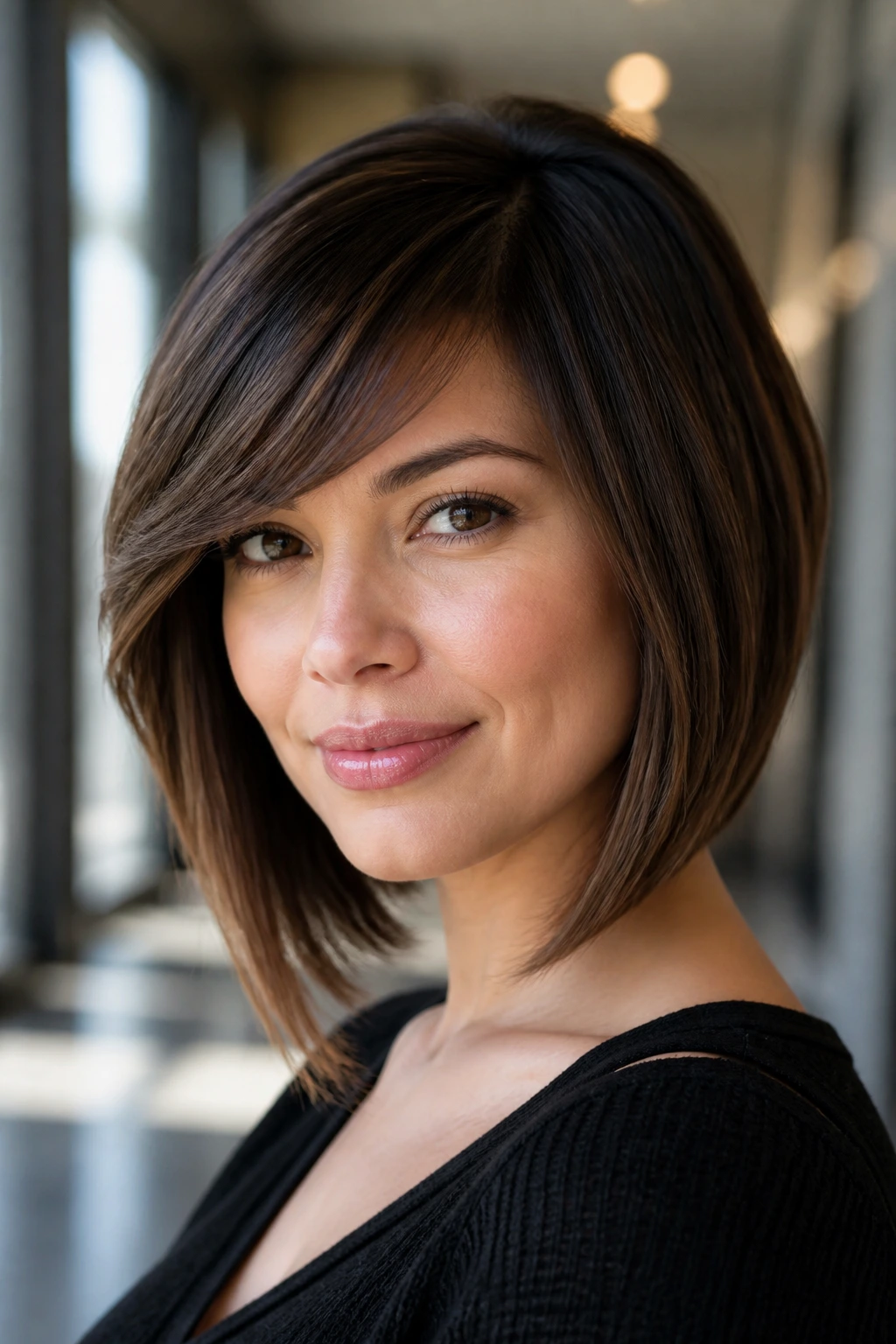
If you want one haircut that feels more structured than a shag but less stiff than a blunt bob, this is it. The angled lob gives the face a forward line, and the swept bangs keep the forehead from dominating the whole look.
The angle matters. Shorter in the back, longer in the front, but not in a dramatic wedge. You want a gentle slope that lands around the collarbone in front and rises a little in the back. That shape narrows the face visually without feeling severe.
Swept bangs are the quiet hero here. They soften the center of the face and direct attention toward the eyes. A full heavy fringe can make the face feel shorter; a light sweep gives you the same interest with less weight. If your hair is thick, keep the bang area thin enough to move. If it is fine, leave enough density so it does not separate into wisps by noon. Hair has opinions. You might as well work with them.
15. Shoulder-Grazing Cut with Flipped Ends
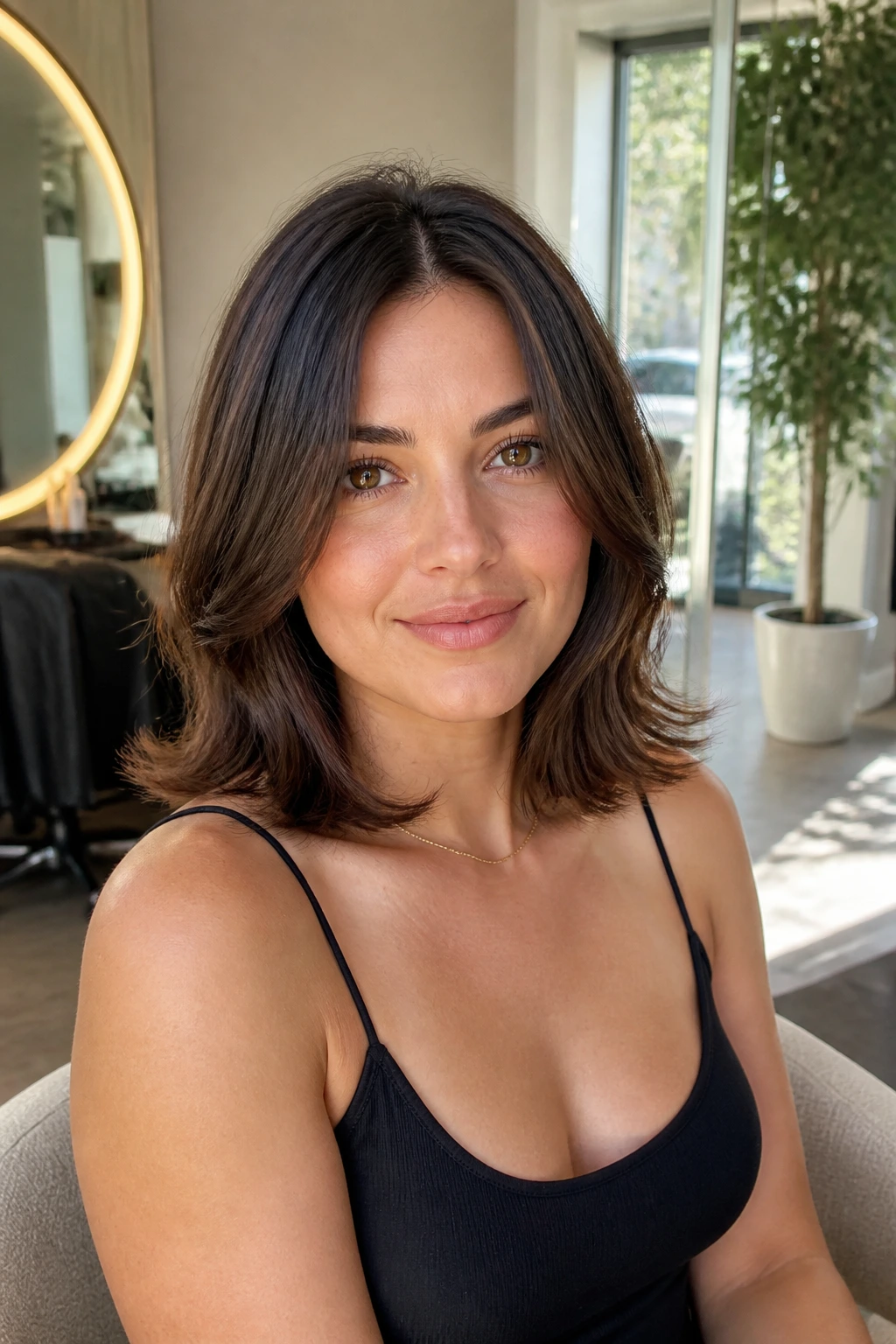
Why do flipped ends keep showing up in shoulder-length cuts? Because they add movement right where a round face needs it. A shoulder-grazing cut can look heavy if it hangs straight, but the flipped finish breaks the line and keeps the bottom from sitting like a shelf.
The shape is simple. The length hits around the shoulders, and the ends curl away from the face instead of under it. That outward turn changes the mood fast. It feels lighter, a little retro, and far less boxy than a straight cut at the same length.
How to Style It
Wrap the ends around a medium round brush, then direct the final inch outward. A flat iron works too if you only bend the last section. Keep the roots smooth and the movement mostly at the bottom.
This is a good choice if you like a polished finish but do not want a severe bob. It plays nicely with side parts, clips, and tucked front pieces. Easy. Clean. No drama.
16. Cropped Curls with a Rounded Silhouette
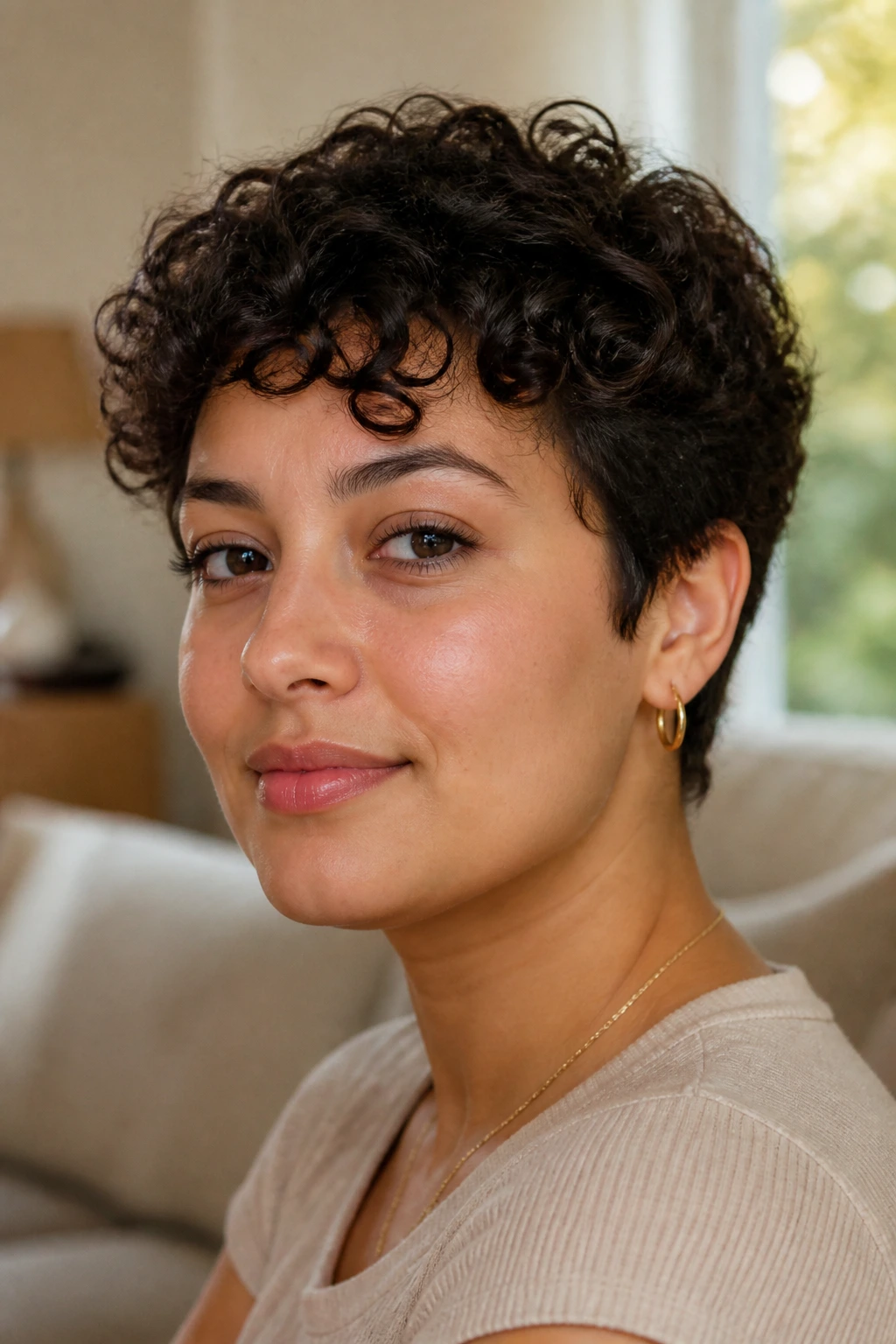
A cropped curly cut can work on a round face when the shape is rounded on purpose instead of by accident. That sounds obvious, but plenty of bad curly cuts happen because the stylist leaves the sides too wide and the top too flat. The result is a halo that adds width in exactly the wrong place.
The better version keeps the crown a little higher, the sides a little narrower, and the curl pattern soft around the temples. The outline can still be full, but it should feel lifted. That lift is what separates a smart crop from a puffball.
- Keep some length on top for bounce.
- Ask for shape around the temple, not bulk.
- Leave a few longer curls at the front.
- Dry the curls with a diffuser pointed upward to keep the root from collapsing.
This cut has real personality. It also saves time in the morning, which is not nothing. Short curls that are cut well are a joy. Short curls cut badly are a daily argument.
17. Tapered Crop with a Side Sweep
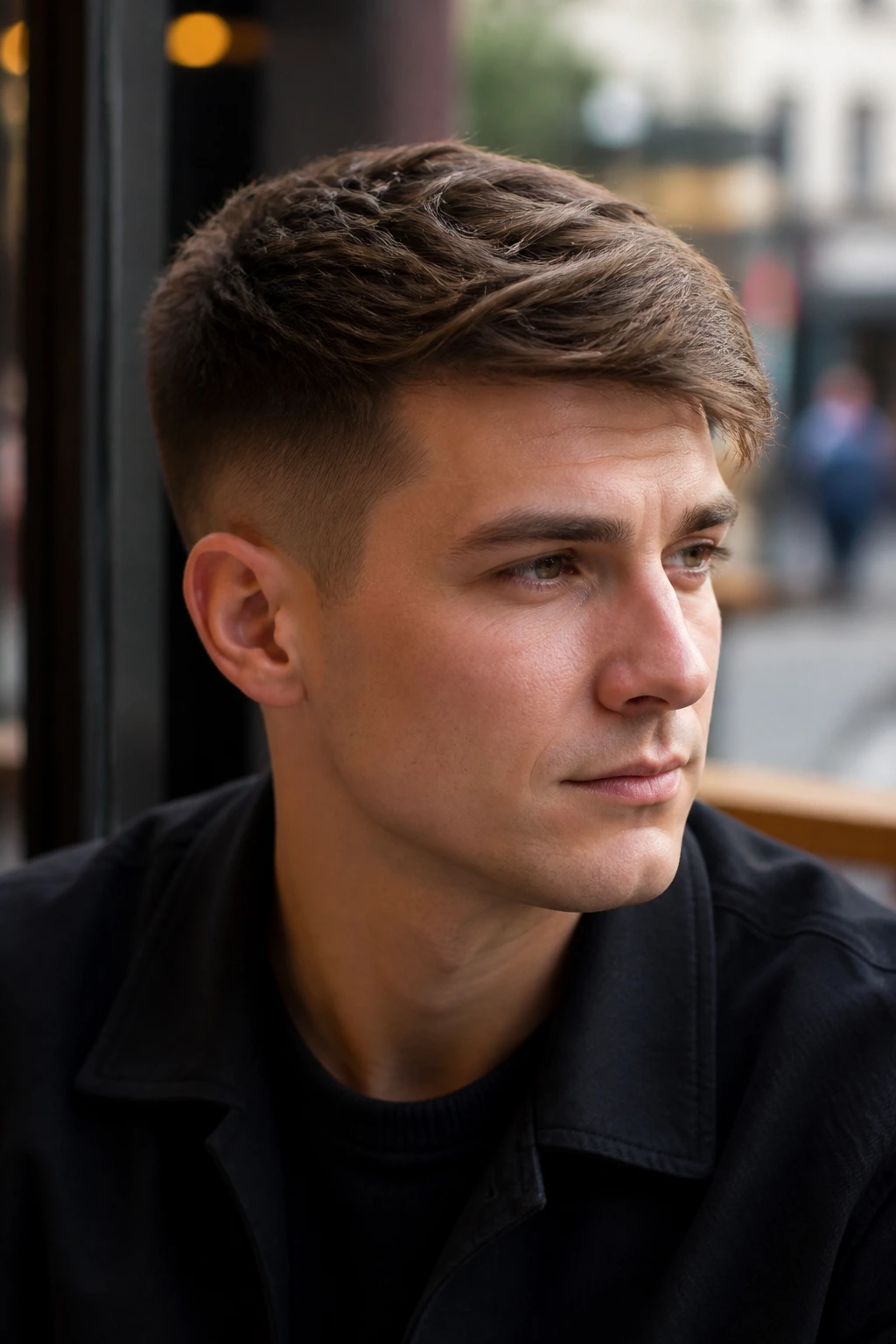
A tapered crop is one of those cuts that gets overlooked because it looks simple in a photo. Simple is the point. The sides and back are kept close, the top carries the movement, and the side sweep gives the forehead and cheek area some breathing room.
The shape works especially well if your hair is fine or medium density. Fine hair gets lift without looking sparse. Denser hair gets weight removed where it tends to bulk up. The side sweep is what makes the cut feel friendly on a round face — it breaks the symmetry and keeps the focus moving across the face instead of stopping in the middle.
I like this cut for people who do not want to fuss with hot tools every morning. A little paste, a quick finger comb, and it’s done. If the top gets too flat, it loses its edge. If it gets too tall, it starts to look like a different haircut. So the balance matters, but not in some delicate, impossible way. You just need the top to stay alive.
18. Airy Crop with Side-Swept Fringe for Round Faces
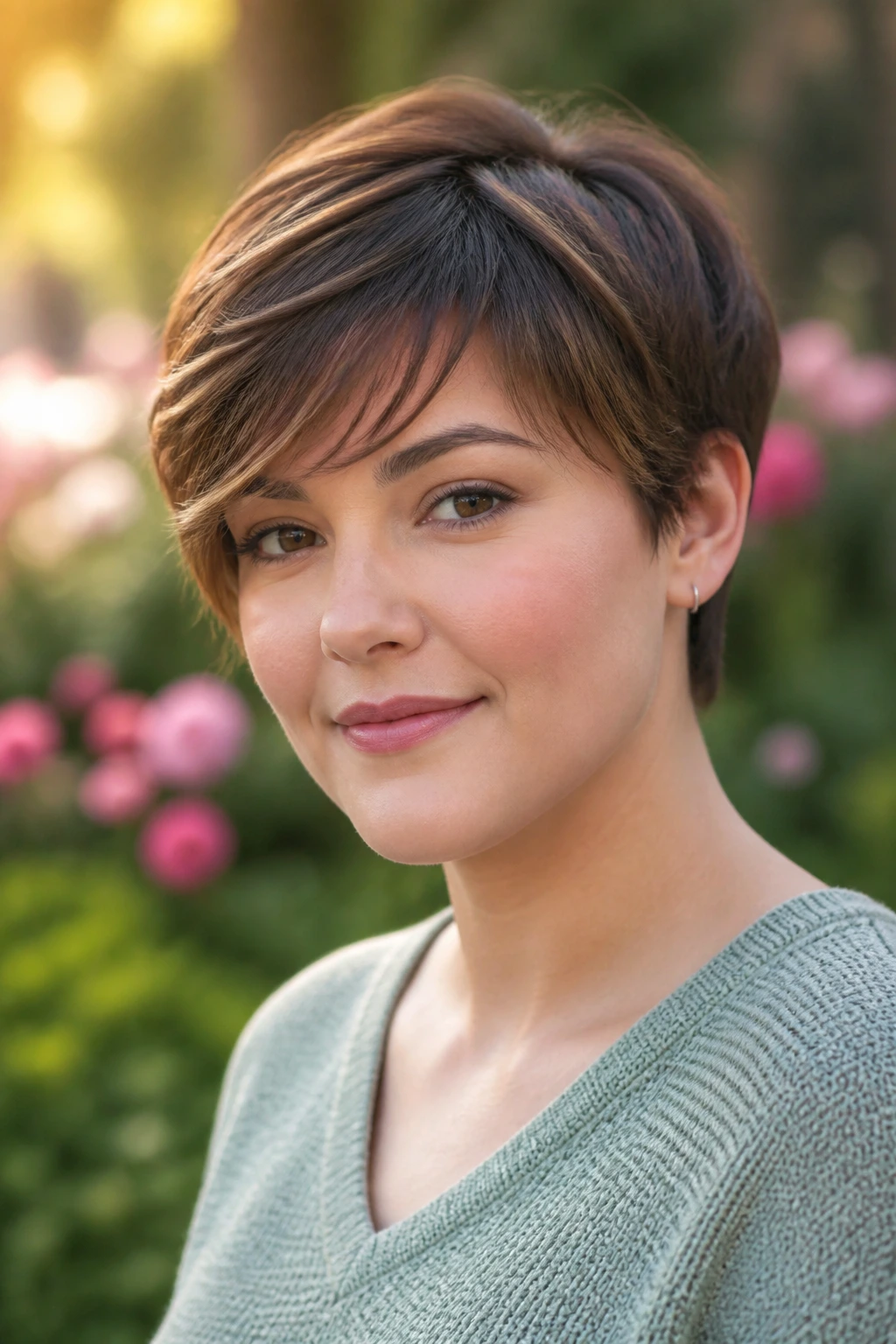
Unlike a heavy pixie, this crop keeps the face open. The fringe is the part that does the work — swept across, light at the ends, and long enough to skim one eyebrow or cheekbone without sitting square on the forehead. That small difference keeps the cut from feeling boxy.
The airy version is best for someone who wants short hair but does not want hard edges. It works on straight hair, wavy hair, and even soft curls, as long as the fringe stays light. The crown can have a little lift, but not enough to make the cut tall and stiff. Think relaxed, not precious.
A good stylist will keep the sides narrow, leave the top with enough length to move, and point-cut the fringe so it falls with a soft edge. If you like earrings, this cut is especially fun because it clears the jawline and lets the face take center stage. If you’re nervous about going short, start with a longer fringe and trim later. That way the shape grows with you instead of boxing you in on day one.
