



Fine hair can look flat in a hurry, but the right short haircuts for fine hair make it look fuller without turning your morning into a styling project you resent by noon.
Weight is the enemy.
That sounds harsh, but it’s the truth behind most good short cuts. Fine strands need shape, not heaviness, which is why a blunt edge, a smart fringe, or a bit of controlled movement can change everything. The trick is not to pile on soft layers until the ends disappear. That’s how hair starts looking thin at the bottom, and nobody wants that.
One more thing. Fine hair is not always sparse hair. Some people have a lot of strands that are just narrow; others have lower density and fewer strands per square inch. Those two situations need different cuts, even though they often get lumped together in salon conversations.
The cuts below are the ones I keep coming back to because they make the hair look denser, cleaner, and easier to live with. Some are crisp and blunt. Some bring a little swing and lift. A few are more daring. All of them work with fine hair instead of fighting it.
1. Chin-Length Blunt Bob for Fine Hair
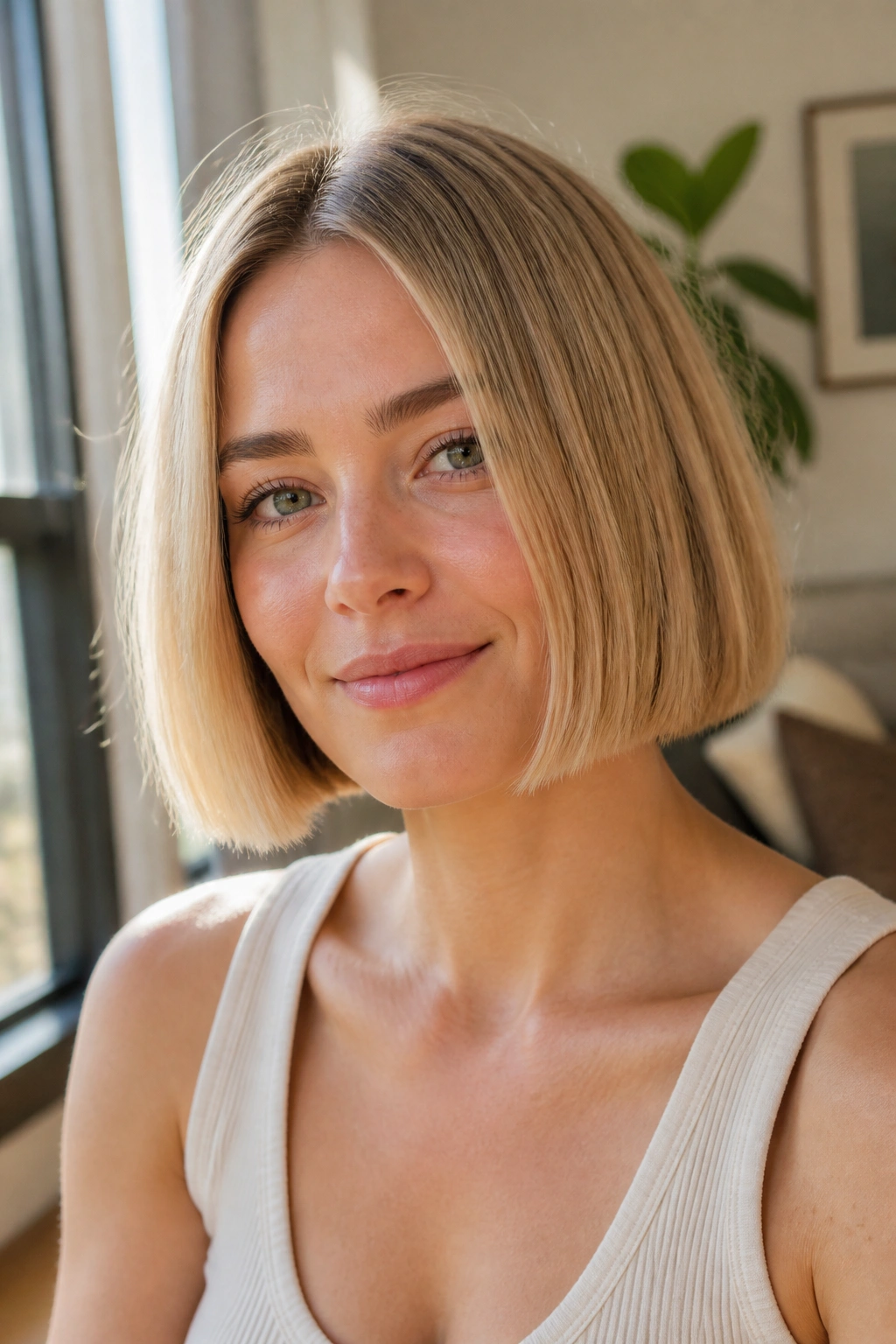
A chin-length blunt bob is one of the safest bets if you want fine hair to look thicker at a glance. The hard line at the bottom gives the eye something solid to read, and that matters more than people think. Wispy ends can be pretty, sure, but they do not do much for fullness.
Why the blunt edge matters
A clean perimeter makes the whole style look denser because every strand lands in the same place. That’s the whole magic trick.
Ask your stylist for minimal layers, a strong baseline, and a soft bevel only at the very ends. If the cut gets too sliced up, you lose the weight line that gives fine hair its shape.
- Best on straight to slightly wavy hair
- Works well with a middle part or a slight off-center part
- Usually needs a trim every 6 to 8 weeks
- Blows out fast with a paddle brush or a 1-inch round brush
My favorite part: it still looks intentional on day three, which is more than I can say for many softer cuts.
2. French Bob With Soft Fringe for Fine Hair
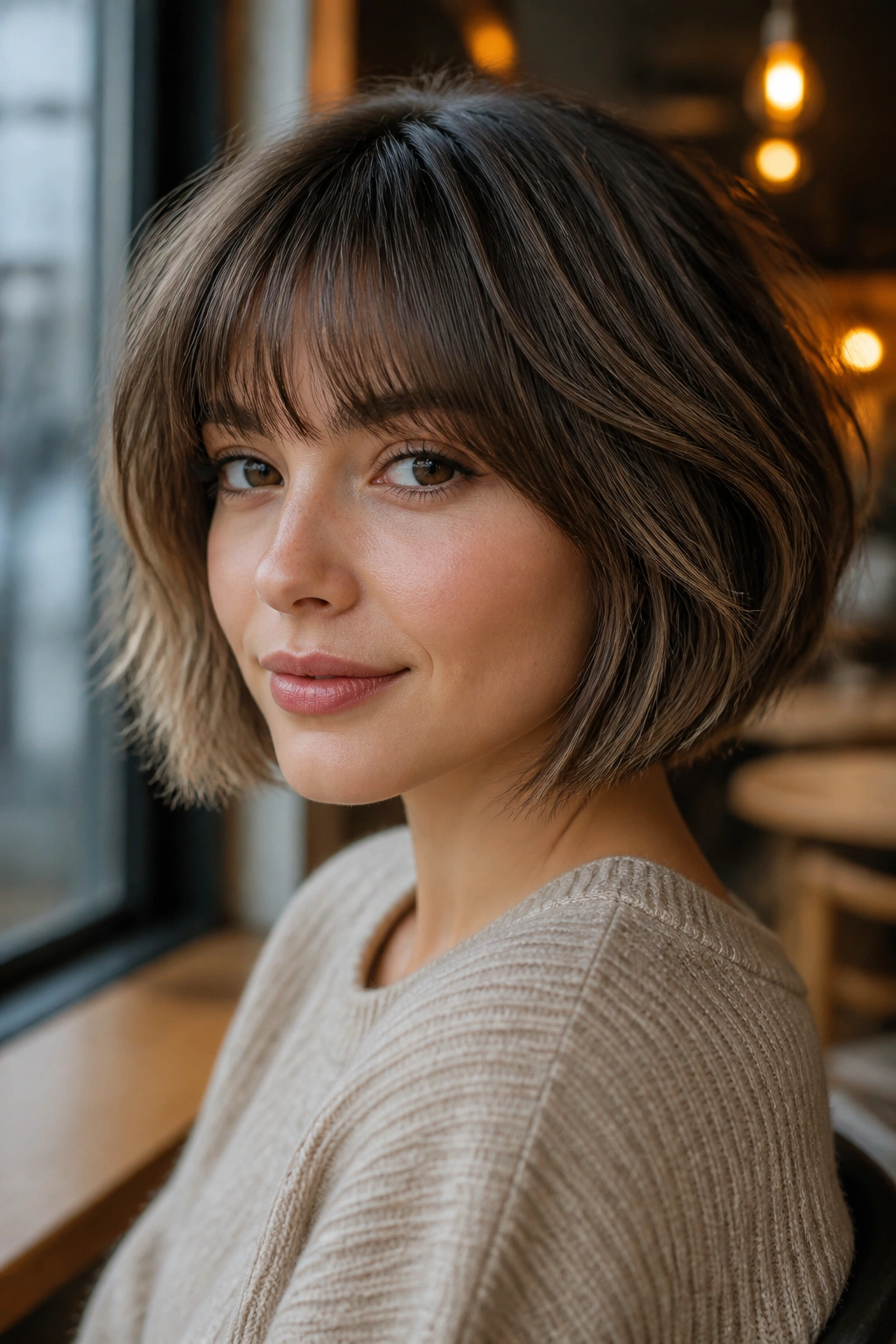
The French bob has a little attitude, and that’s why it works. It sits shorter than a classic bob, usually around the jawline, and the fringe takes some of the visual work off the ends. On fine hair, that front detail helps the cut feel fuller even when the back is kept neat.
Unlike a severe bob, this one likes a bit of looseness. The fringe should brush the brows or skim just above them, not sit like a helmet. A light bend through the mid-lengths keeps it from looking too proper.
If your hair is naturally straight, this cut is easy to wear. If it has a soft wave, even better. The style looks best when it has a little air in it, not when every strand is ironed into place. I’d avoid heavy texturizing here. You want shape, not holes.
3. Long-Crown Pixie for Fine Hair
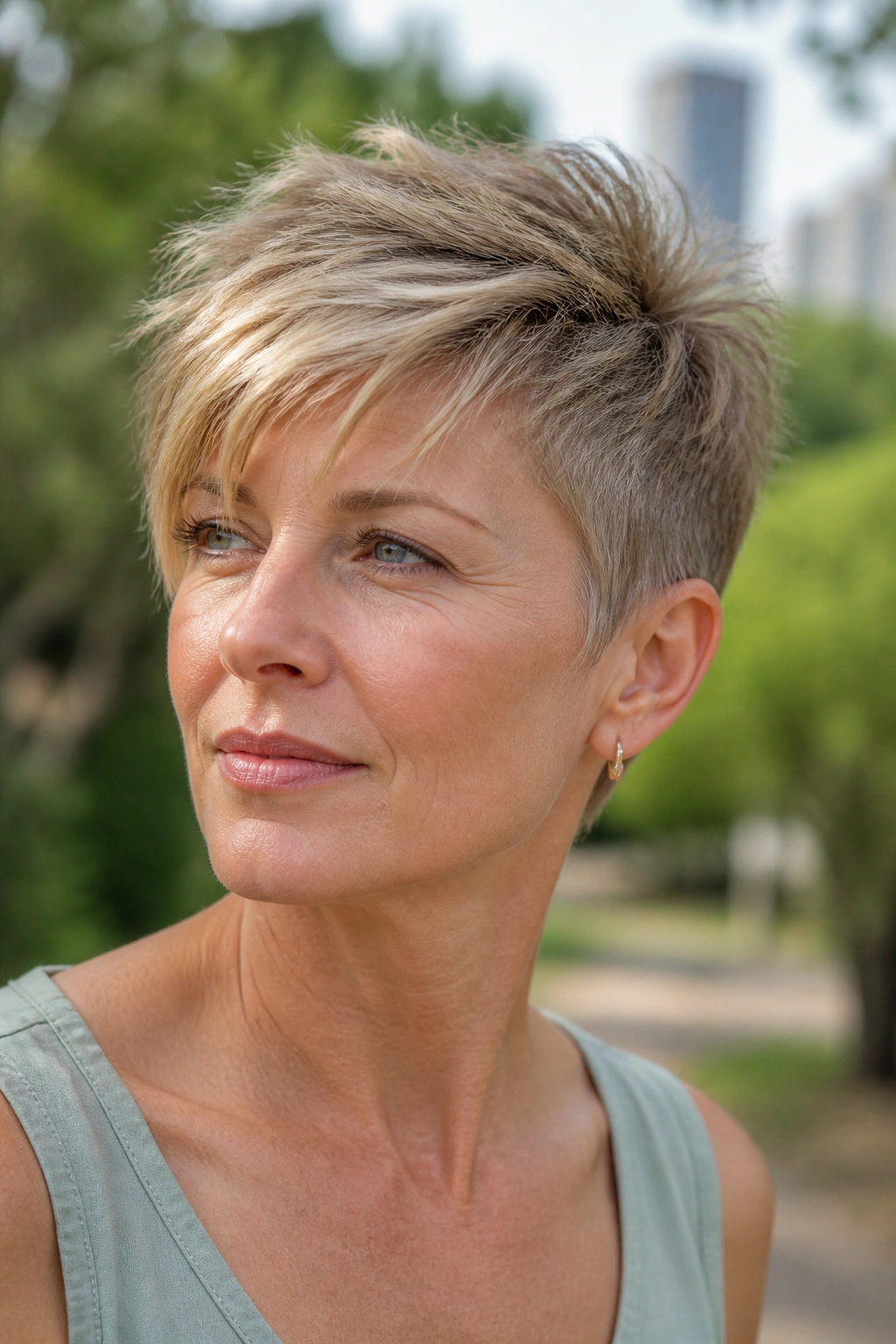
Can a pixie make fine hair look fuller? Absolutely, if the top stays long enough to create lift. The long-crown pixie keeps the sides close and leaves more length through the crown, which means you get height where fine hair usually collapses.
How to wear it
The styling trick is simple: dry the roots first, then direct the hair upward with your fingers or a small round brush. A pea-sized amount of paste or cream is enough. More than that and the hair starts to separate in a greasy way that fine strands hate.
This cut is especially good if your hairline is neat and your crown sits flat. It also plays nicely with a side sweep or a tiny fringe. You do need regular trims, though. Let it grow too long and the shape goes fuzzy fast.
A long-crown pixie is polished when it’s a little imperfect. That’s the part people miss.
4. Bixie Cut With Soft Movement
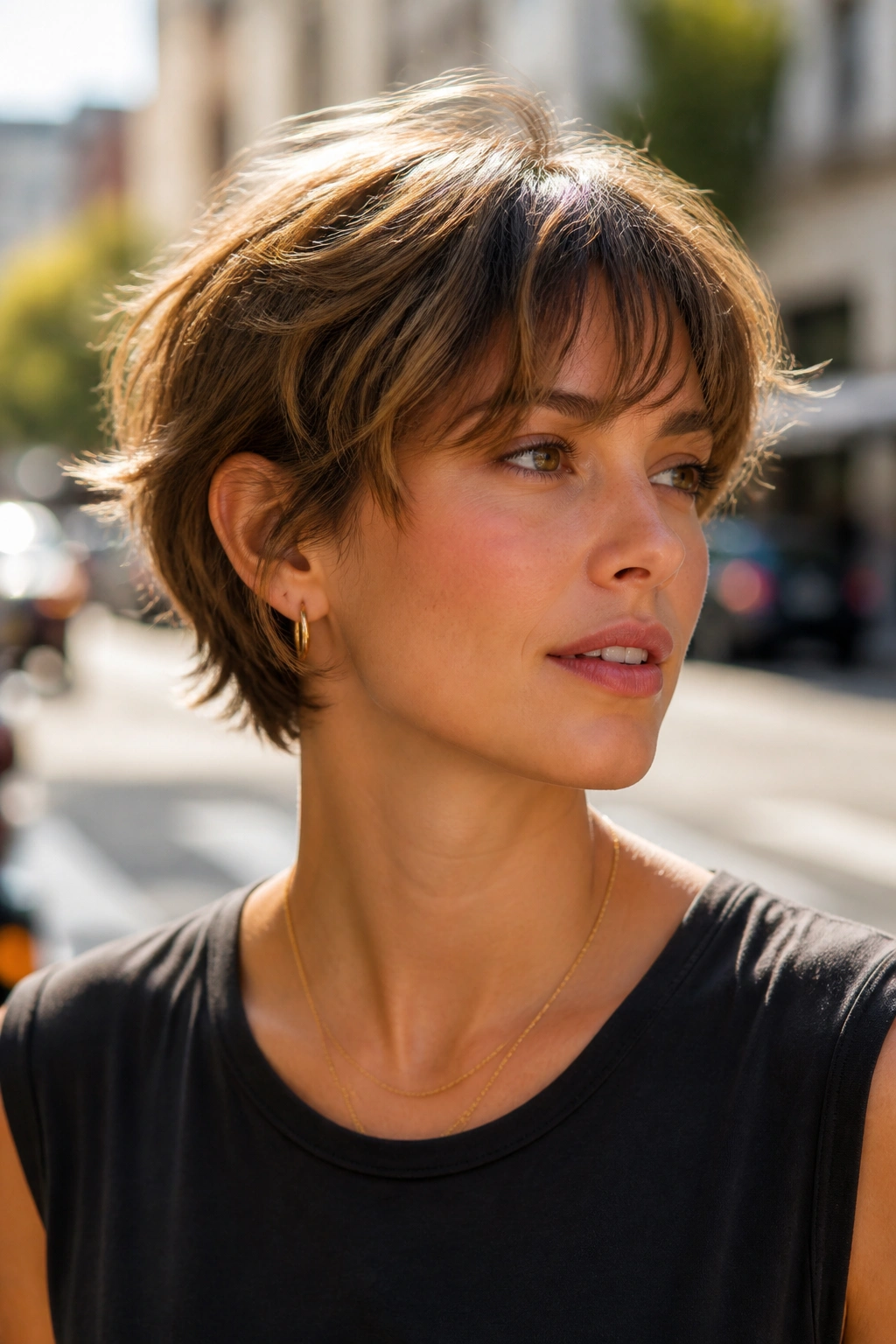
A bixie sits between a bob and a pixie, and that middle ground is exactly why so many fine-haired people like it. You get the openness of short hair without giving up all the movement at the sides. The silhouette is short enough to keep the ends looking dense, but not so cropped that it feels severe.
What makes it different
A true bixie keeps more length around the ears and a bit of softness near the nape. That keeps the cut from reading as harsh. It also gives fine hair something to swing around when you move, which matters more than a perfect blow-dry.
- Good for people who want short hair without a full pixie
- Looks best with light texturizing at the top
- Needs a matte paste or lightweight mousse, not heavy cream
- Can be worn sleek or tousled
If you like change but hate looking overdone, this is a smart cut. It has just enough edge to feel fresh, and just enough softness to stay easy.
5. Inverted Bob With a Clean Nape
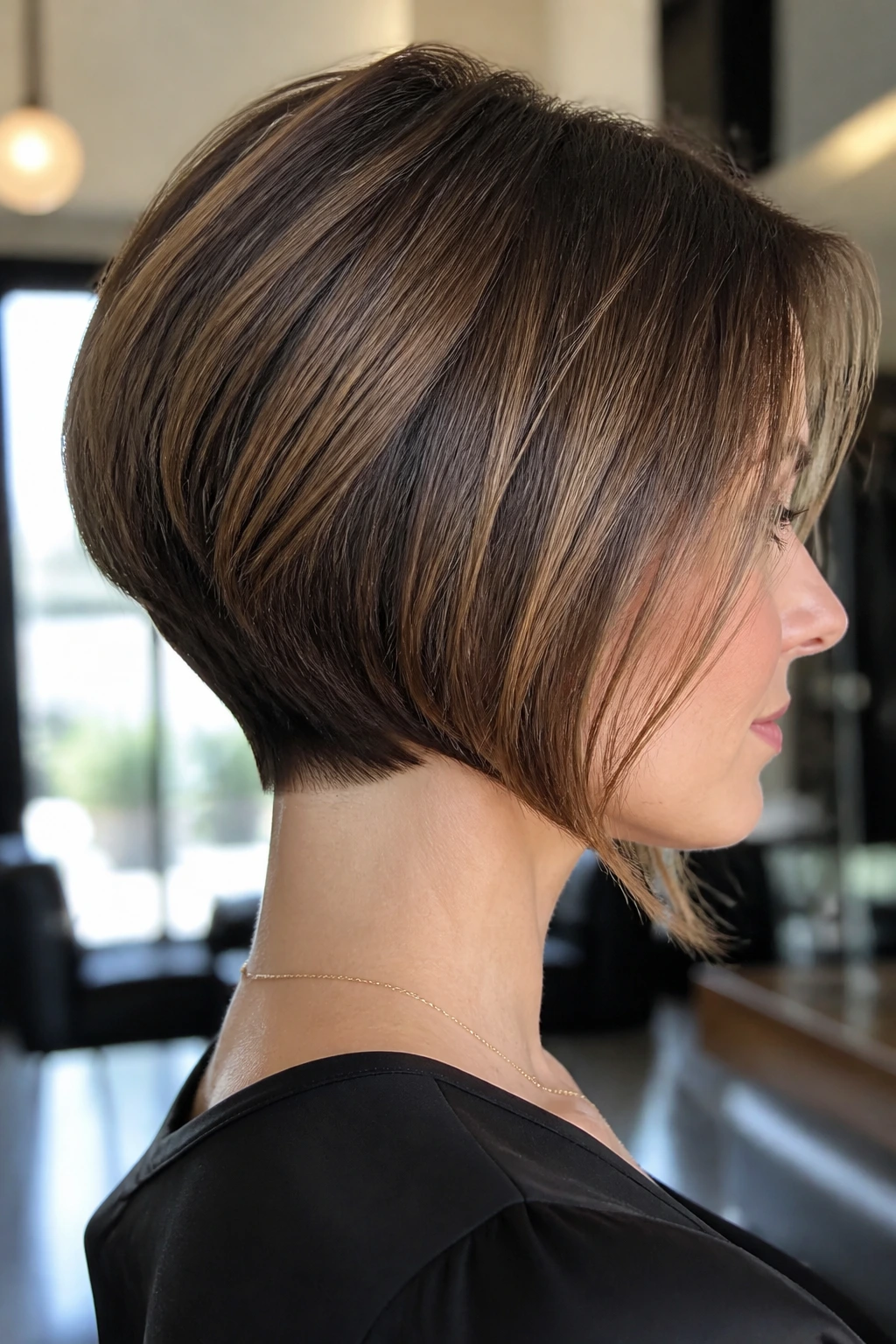
The inverted bob is one of the few layered cuts I trust on fine hair, because the stacking happens in the back where it can build shape instead of breaking it apart. The front stays longer, so the eye sees movement and length, while the nape stays neat and lifted.
That contrast helps the crown look fuller. It also keeps the hair from hanging straight down in a single limp curtain. The angle needs to be controlled, though. Too much graduation and the back starts to look bulky while the front goes stringy.
This cut shines on straight and lightly wavy hair. It’s less forgiving if your hair has a strong cowlick at the nape, because those little flips can fight the shape. Still, when the lines are clean, this is a sharp-looking bob that does a lot with a little.
6. Textured Crop With Piecey Fringe
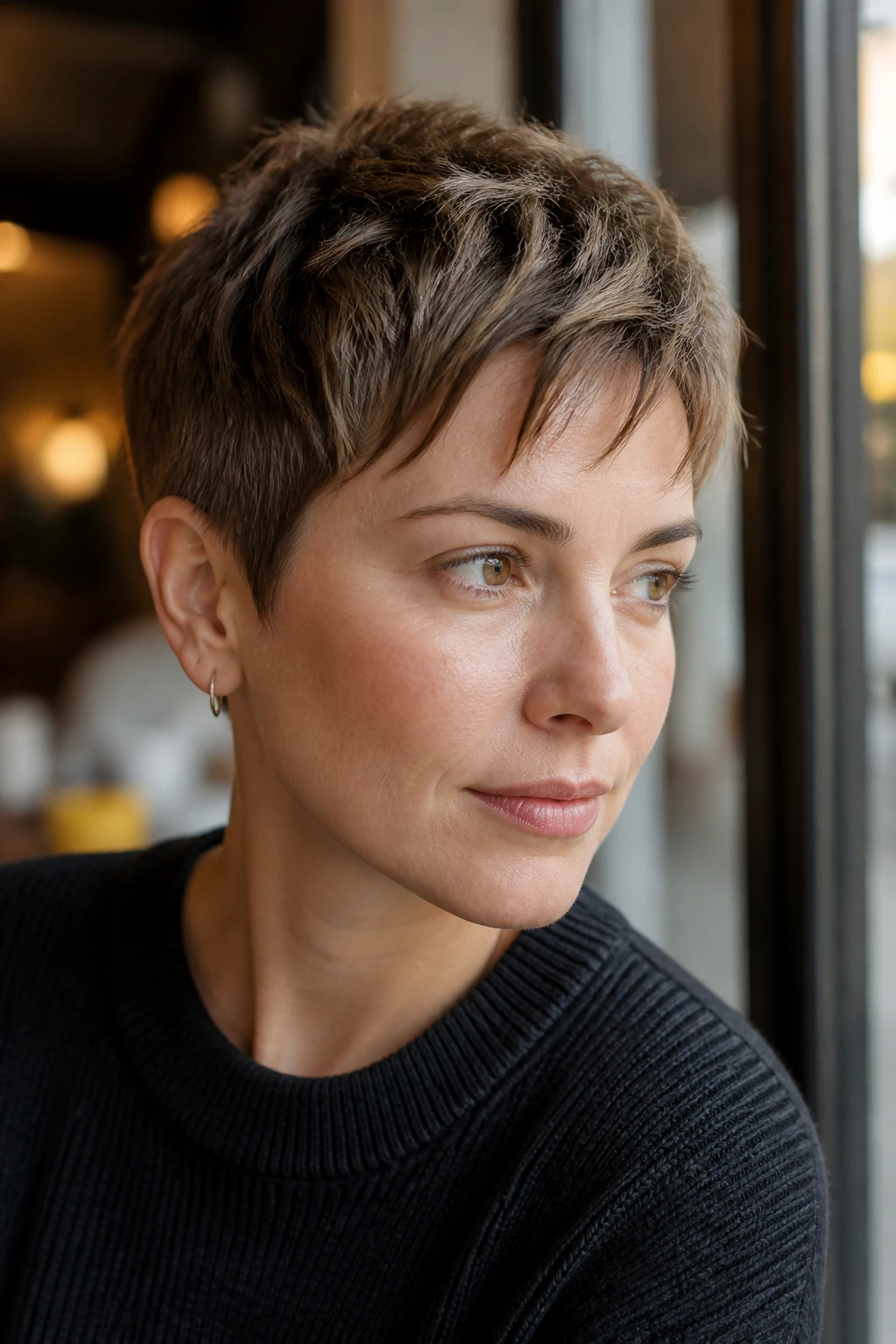
A textured crop is the cut I’d choose for someone who likes short hair and does not want to fuss with it. The shape sits close to the head, the fringe breaks up the forehead, and the choppy ends keep fine hair from lying too flat. It has a bit of grit, which helps.
The important part is restraint. If the stylist goes too hard with thinning shears, the crop can turn airy in a bad way. Ask for soft point cutting and a fringe that separates into pieces rather than one heavy block. That gives the cut movement without making it see-through.
A tiny bit of styling wax at the ends is enough. Work it through dry hair, pinch the fringe, and leave the rest alone. This is not a cut that needs perfection. In fact, it looks better when it’s a touch messy.
7. Jaw-Skimming Bob With a Side Part
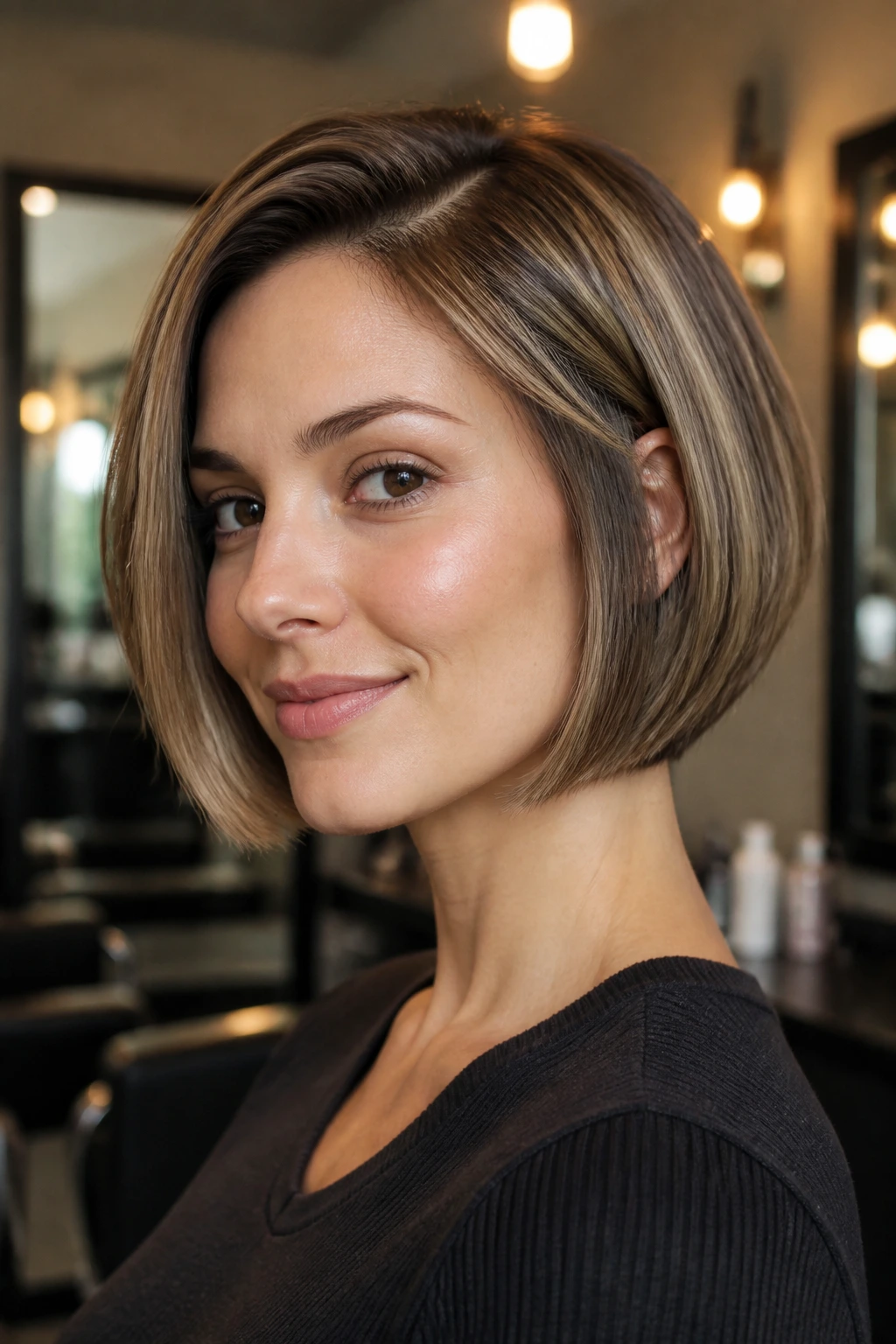
A side part changes everything when your hair is fine. It creates instant lift at the roots, and that lift gives a jaw-skimming bob a fuller look than a center part sometimes can. The length at the jaw also helps sharpen the face without dragging the hair down.
Why it works for fine hair
The side part breaks up symmetry, which keeps the style from lying flat against the head. That little imbalance is useful. It tricks the eye into seeing more body on the heavier side, even when the actual density hasn’t changed.
- Best for round and oval faces
- Easy to tuck behind one ear
- Looks fuller when blow-dried away from the part
- Can be paired with soft ends, not chunky layers
I like this cut for people who want a bob that feels relaxed, not exact. It is not fussy. It just needs the root lift in the right place and a clean line at the bottom.
8. Short Shag With Soft Ends
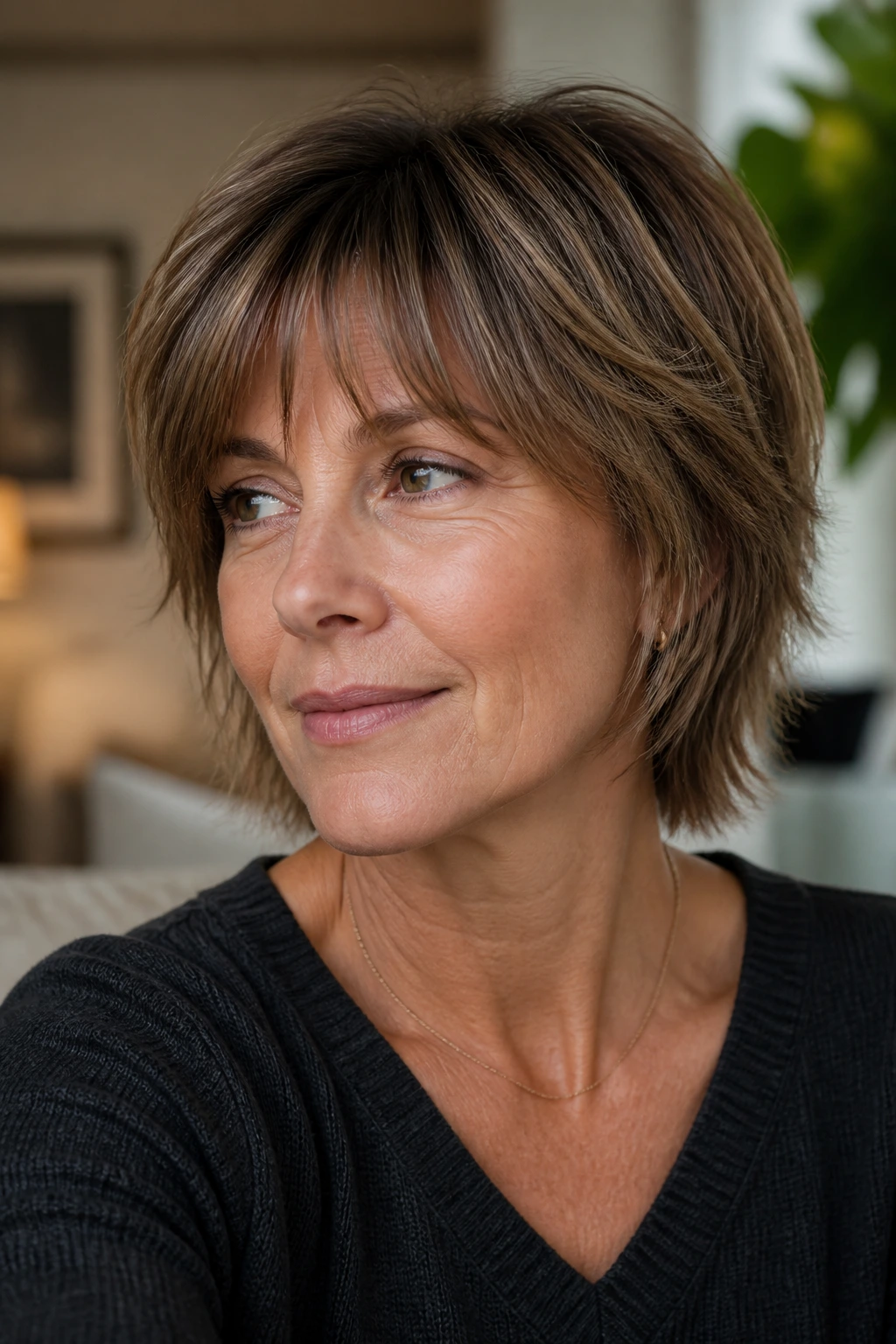
A short shag gives fine hair movement in a way blunt cuts cannot, but it’s a cut that needs a careful hand. Too much layering and you get strings instead of shape. Just enough layering, though, and the hair suddenly has life.
Unlike a polished bob, the shag is supposed to look a little broken up. That works especially well if your hair has a wave pattern or if you like to air-dry. The crown gets a touch of lift, the ends get a little swing, and the fringe keeps the cut from feeling wide.
This is a good choice if you like texture sprays and a more casual finish. It is not the best cut for someone who wants perfect smoothness every day. If that sounds like you, skip it. But if you want short hair that moves around and still feels light, a shag can be excellent.
9. Micro Bob With a Sharp Line
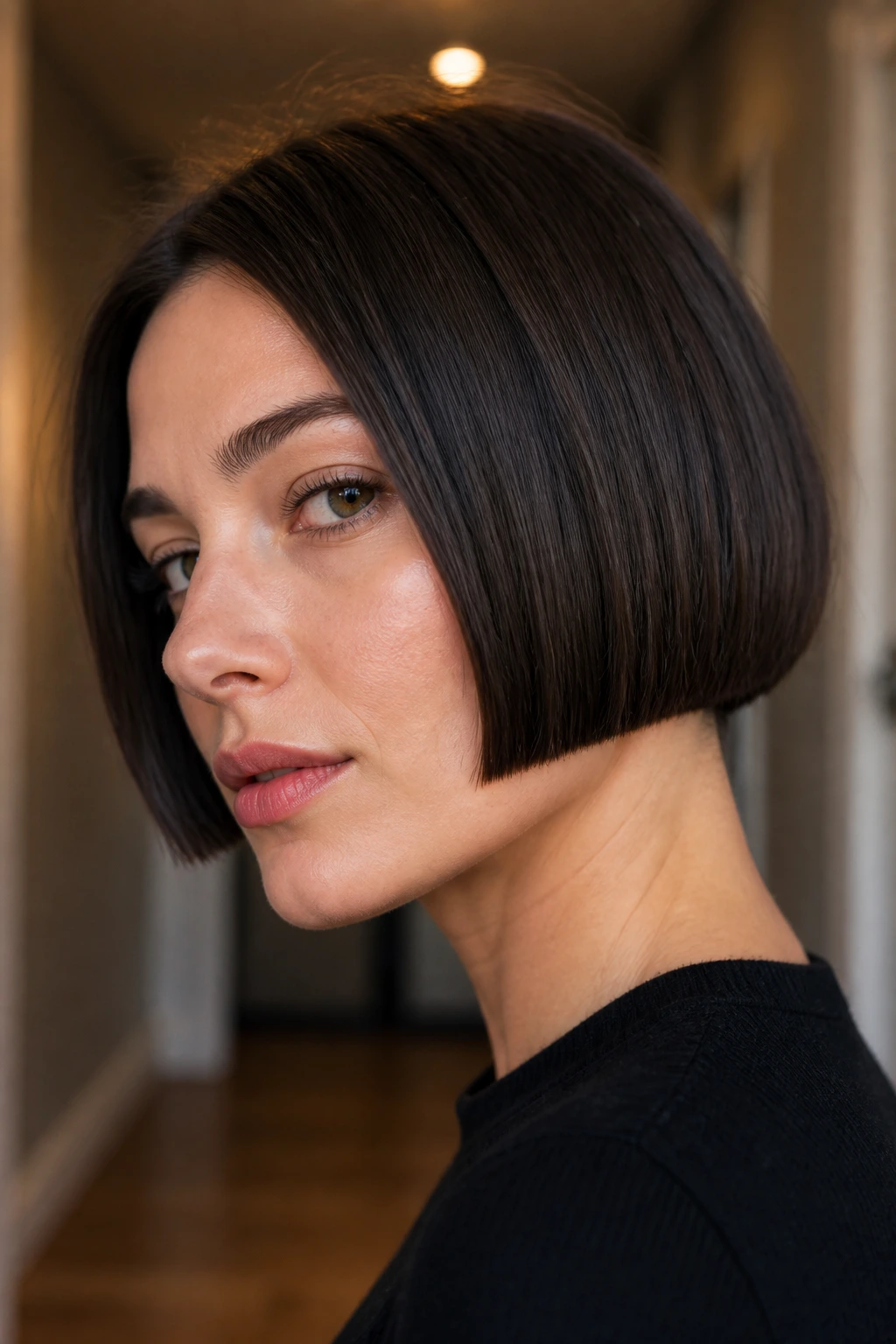
Can you go this short with fine hair? Yes, and sometimes you should. A micro bob sits around the ear to just below the jaw, and the short length keeps the ends compact enough to look denser than they would at shoulder length. It is crisp, clean, and a little bold.
The whole cut depends on the line. Keep it blunt. Keep it neat. If you start feathering the bottom too much, the illusion of thickness disappears fast. A micro bob looks strongest on straight hair or hair that can be blown smooth with a quick pass of a brush.
How to wear it
A tuck behind the ear works well here. So does a tiny bend at the front pieces.
This is the cut for someone who likes structure and wants hair that behaves. It won’t hide in the background, and that’s half the fun.
10. Feathered Bob With Airy Movement
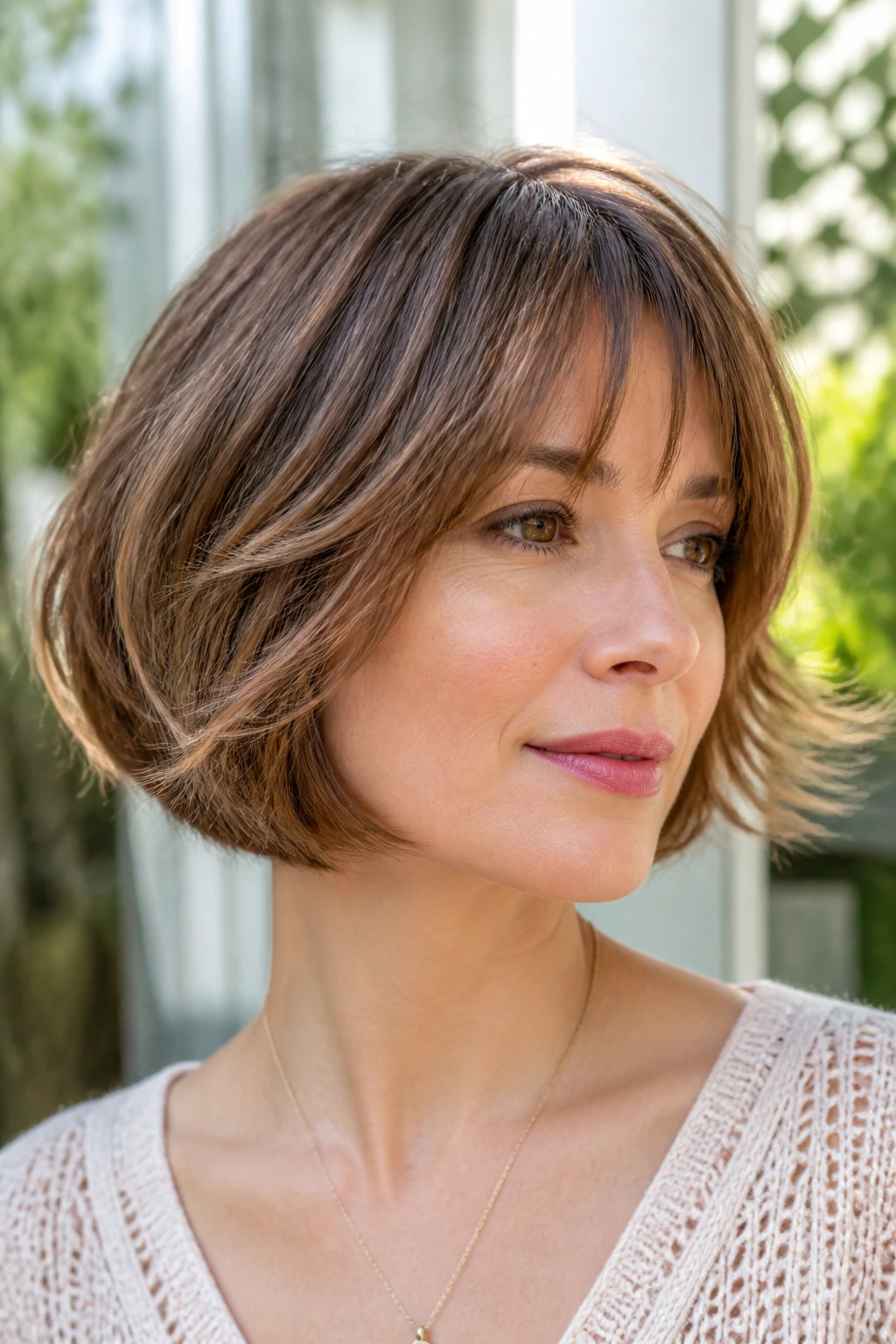
A feathered bob sounds old-fashioned in the wrong hands. In the right hands, it’s one of the easiest ways to give fine hair motion without sacrificing shape. The feathering should happen inside the cut, not all the way through the perimeter, so the outer line still looks full.
That distinction matters. Fine hair needs some lift near the cheekbone and crown, but it also needs a visible edge at the bottom. If everything is chipped away, the style starts looking tired. A good feathered bob keeps the top light and the ends intact.
This cut works beautifully with a round brush and a quick bend at the ends. You do not need a giant blowout. A slight curve inward at the bottom is enough. If your hair tends to collapse by lunch, a little dry shampoo at the roots can help the crown keep its shape.
11. Asymmetrical Bob That Pulls the Eye
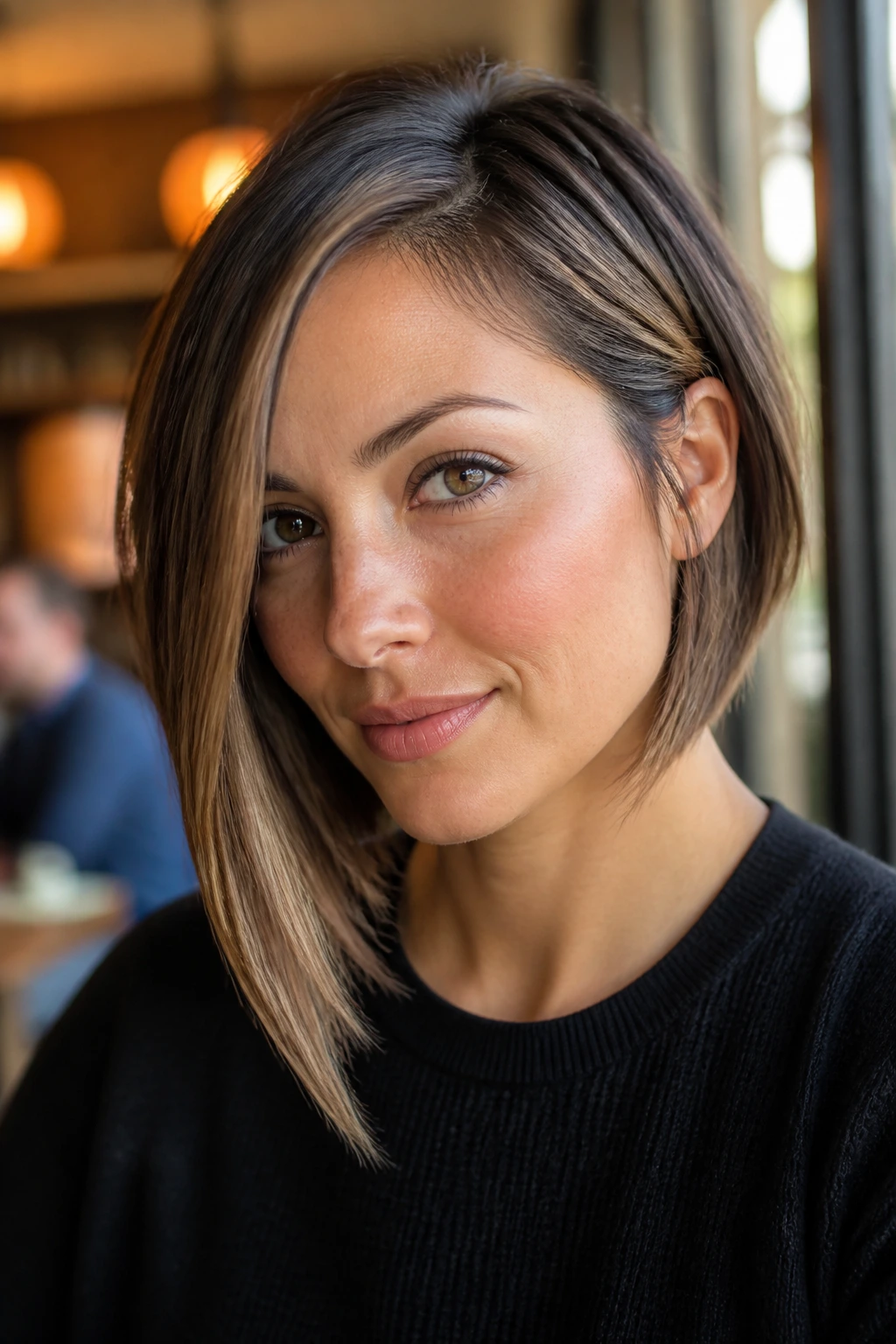
An asymmetrical bob is a smart move when one side of your hair lies flatter than the other or when you want a cut that feels less predictable. The longer side creates a built-in focal point, which draws attention away from any lack of density at the back.
It’s a good style for fine hair because it does not rely on volume everywhere. One strong angle can do a lot of the work. The shorter side can sit near the jaw, while the longer side lands closer to the collarbone or upper neck, depending on how dramatic you want it.
- Best when the longer side is only 1 to 2 inches longer
- Works well with a deep side part
- Can be tucked or styled forward
- Needs clean edges to stay sharp
I like this one for people who want a little edge without going full editorial. It has personality, but it still wears like a real haircut.
12. Tapered Pixie With a Longer Top
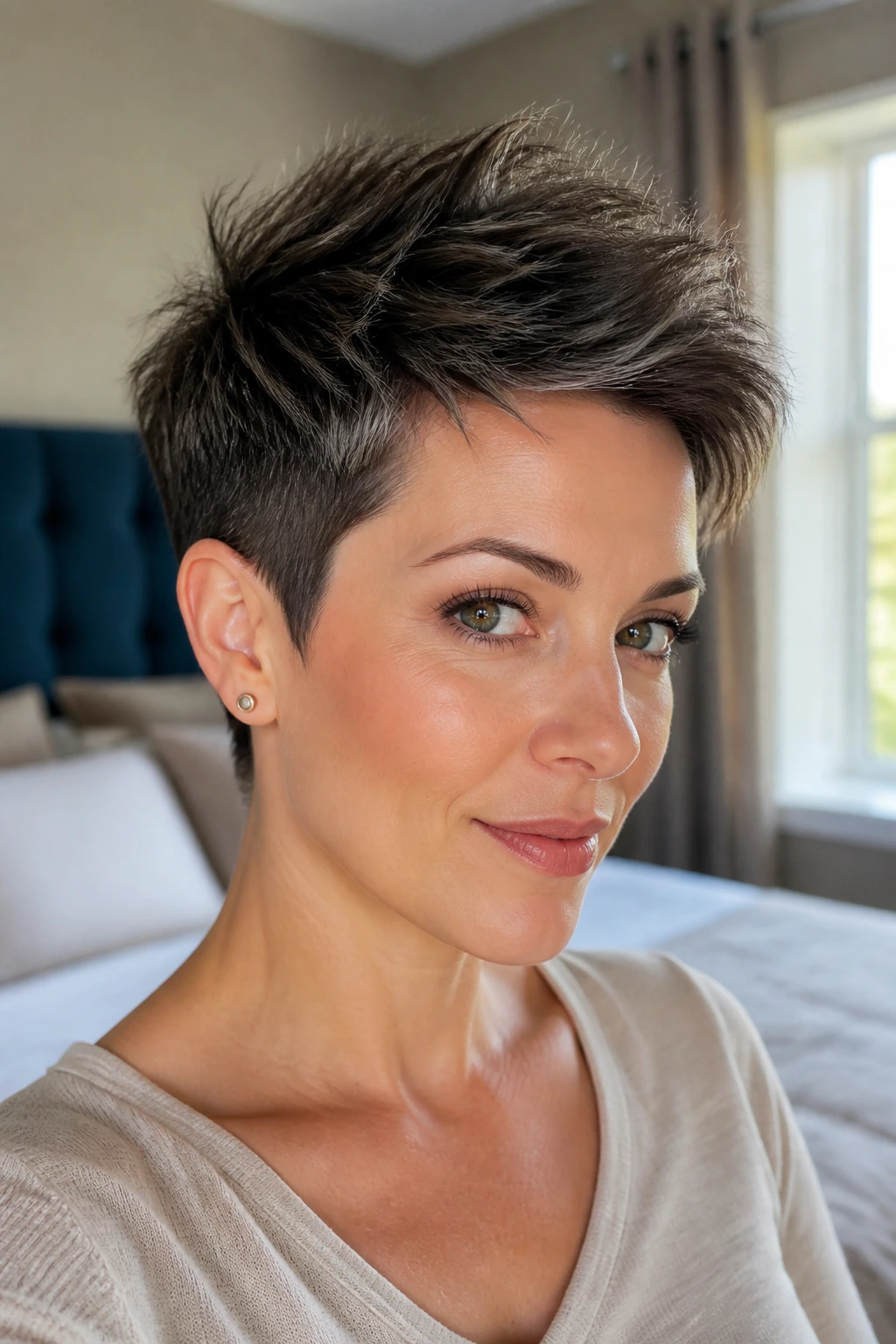
A tapered pixie is one of the easiest cuts to live with if your fine hair clings to the head and refuses to lift. The nape and sides are tapered close, which keeps the outline neat, while the top stays long enough to create height and direction.
The shape is the point. A pixie like this should feel snug at the sides and slightly airy on top. That contrast is what makes the hair look like it has more body. If the top gets too short, you lose styling options. If it stays too long, the cut can flop.
This is a good cut for someone who likes to wash, scrunch, and go. A little root spray, a little rough drying, and you’re done. It also grows out better than people expect, which matters if you hate the awkward in-between phase.
13. Rounded Bob With Internal Shape
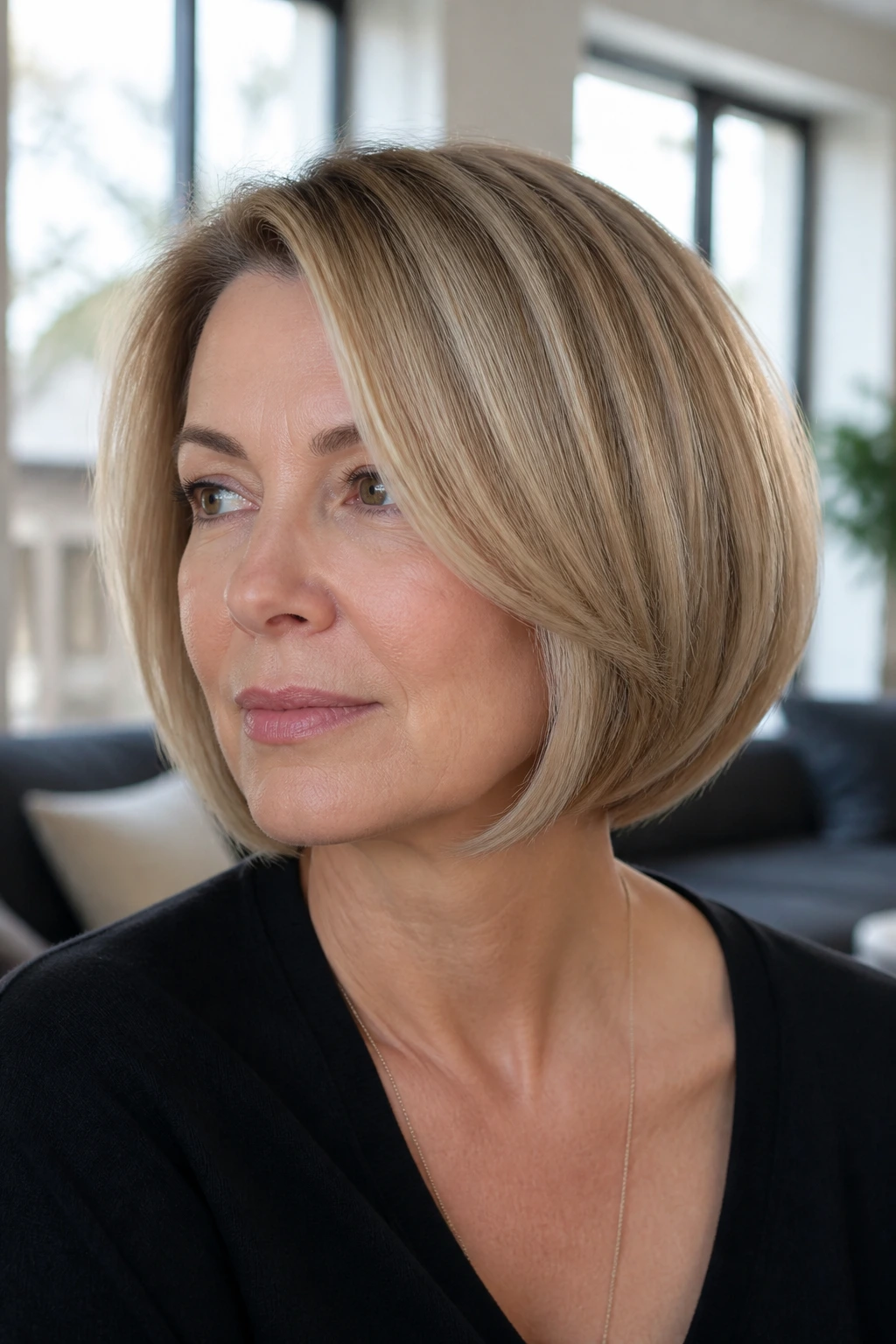
A rounded bob is underrated for fine hair because the curve at the back gives the illusion of fullness where many cuts go flat. The shape hugs the head gently, then turns under just enough at the ends to make the outline look dense and clean.
The key is internal shape, not heavy stacking. You want the inside to support the curve, not destroy the perimeter. That means subtle layering near the crown and careful weight control around the cheekbones. Too much thinning and the rounded shape loses its punch.
This cut works best when blow-dried with a brush that follows the head shape. You’re not chasing big volume here. You’re building a soft, controlled curve that makes the hair look thick from every angle. It’s a polished option, and I think it suits people who like order more than mess.
14. Undercut Nape Crop for Extra Lift
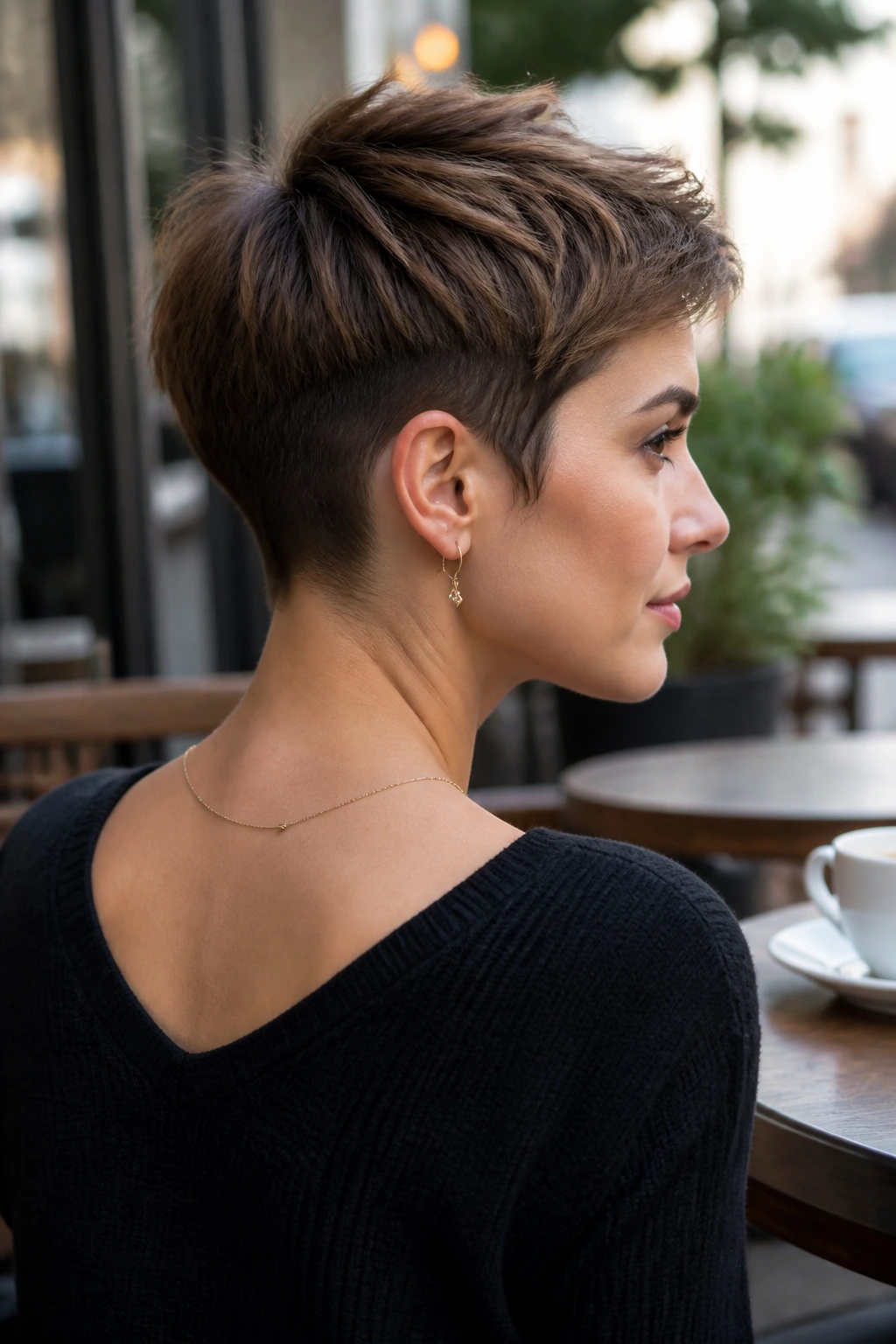
An undercut sounds dramatic, but on the right head shape it can solve a real problem. Fine hair sometimes gets puffy or awkward at the nape even when the rest of the cut is flat, and removing a little weight underneath can help the top sit better.
When to ask for it
Ask for a hidden undercut only if you have a bulky neckline, a stubborn cowlick, or hair that flips out at the back. On very sparse hair, too much removal can make the cut feel too exposed, so this is not the first option I’d choose for everyone.
The top should stay soft and short enough to cover the undercut cleanly when it’s lying normally. That way you get a neater shape without broadcasting the trimming trick underneath.
It’s a practical cut, not a flashy one. If you wear your hair short all the time and want less fuss at the neck, it can make mornings easier.
15. Curtain Bang Bob That Frames the Face

Curtain bangs do a lot for fine hair because they add structure near the face, where the eye looks first. A bob with curtain bangs keeps the ends from doing all the heavy lifting. The face-framing pieces create shape up top, which helps the whole style feel fuller.
The bangs should be soft, not thick. Split them from the center and let them fall into the cheek area. If they’re cut too blunt, they can eat up too much density and make the front look heavy in one spot. A light bend through the lengths keeps everything moving.
This is one of my favorite cuts for longer foreheads or anyone who wants to soften a strong jaw. It feels easy, a little romantic, and less severe than a straight-across fringe. The trade-off is maintenance: those bangs need regular trimming or they’ll start hanging in the eyes.
16. Wedge Cut With Built-In Lift
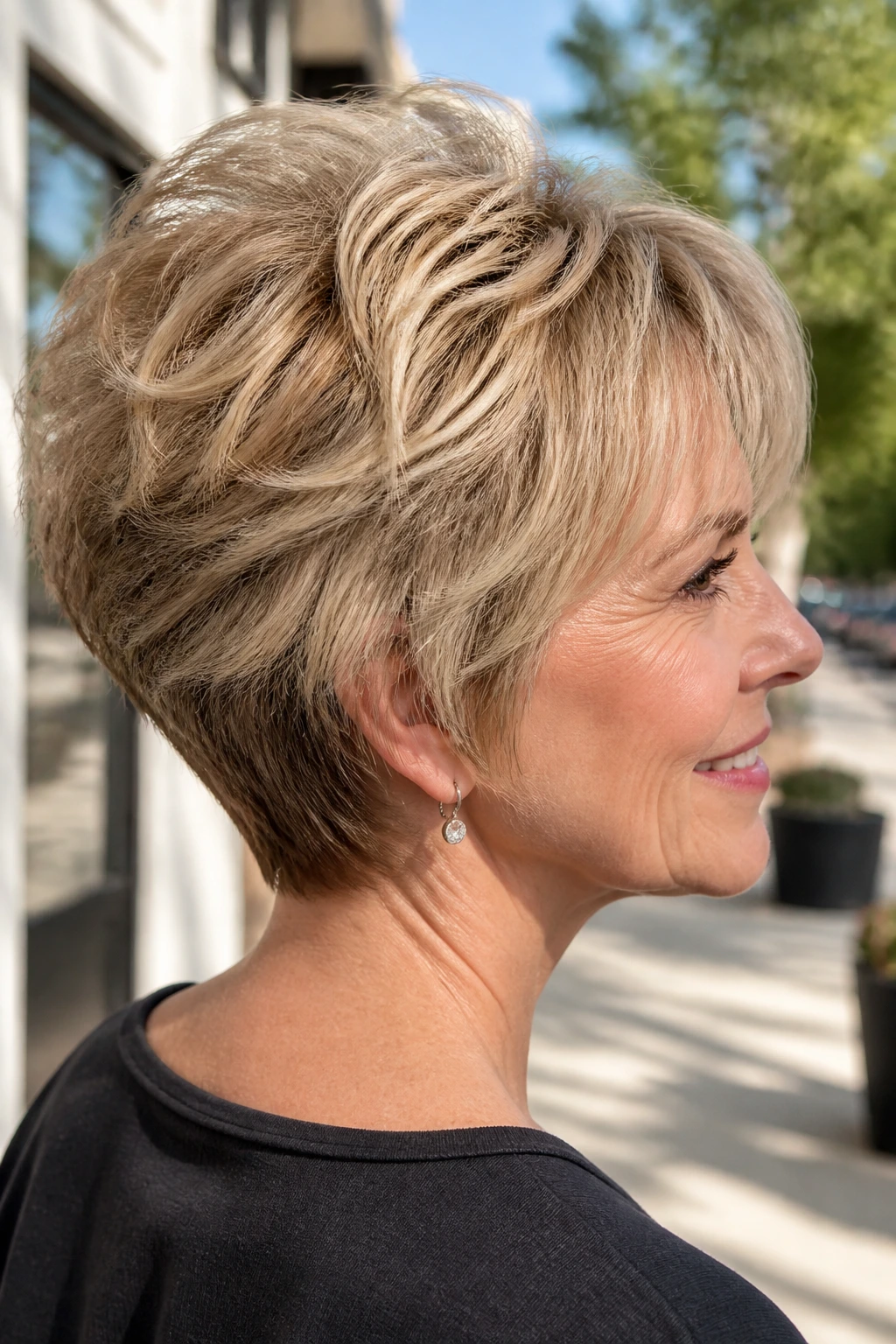
The wedge cut has been around forever because it works. Shorter at the back, fuller through the crown, and angled forward, it gives fine hair a shape that looks intentional even when the hair itself doesn’t want to cooperate.
That stacked back creates a sense of lift without asking the strands to do too much. The front pieces can stay slightly longer, which keeps the face from feeling boxed in. The whole cut sits best on straight hair or hair that can be smoothed with a quick blow-dry.
- Great for someone who likes a neat silhouette
- Needs clear graduation at the back
- Works well with a side part or a soft fringe
- Best trimmed before the shape grows out too much
It’s not flashy. It’s useful. And useful cuts are underrated.
17. Razor-Cut Crop With Soft Separation
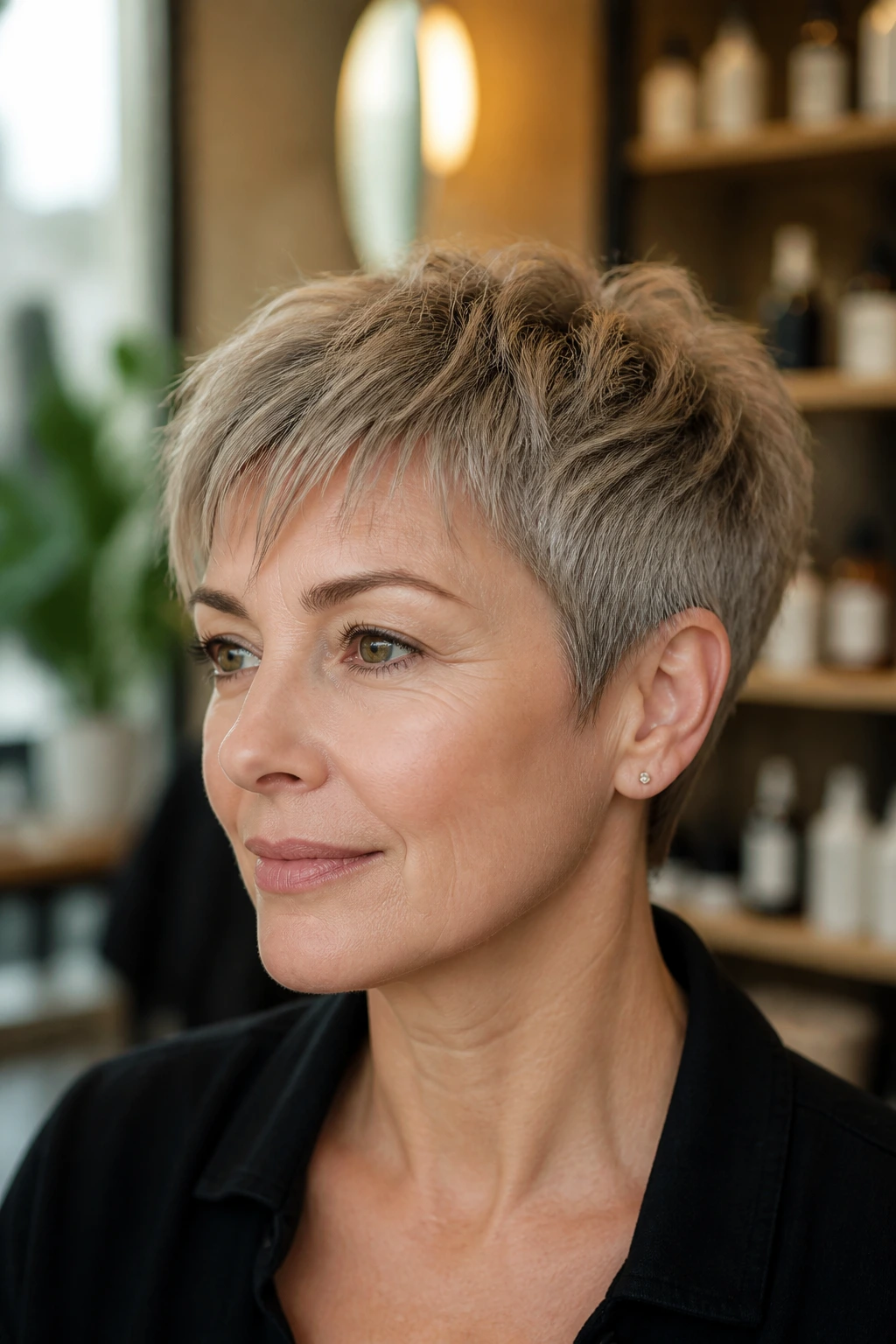
A razor cut can be tricky on fine hair, and I’m not going to pretend otherwise. If the hair is already fragile or see-through at the ends, too much razor work can make it look thinner. But on the right hair, a razor-cut crop gives a soft, airy edge that scissors cannot match.
The trick is to use the razor only where the hair can handle it, usually through the top or around the fringe. The perimeter should still hold some weight. That balance keeps the style from going wispy. Think of it as controlled softness, not destruction.
This cut works well if you like piecey texture and a little separation through the fringe. A matte paste or a light cream can bring out those edges without making the hair clump. It’s a good option, but only if the stylist knows when to stop.
18. Layered Crop With Side-Swept Bangs
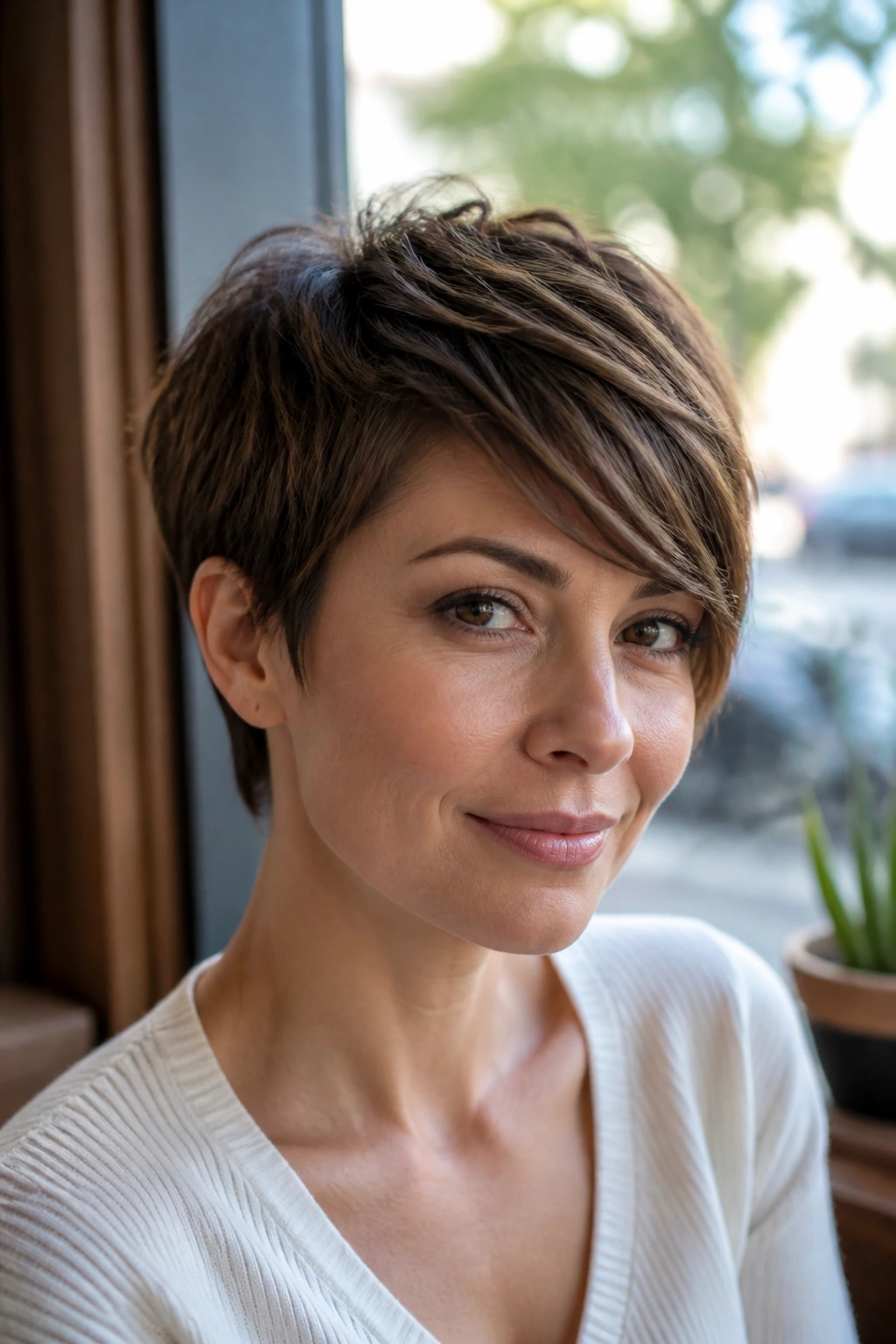
A side-swept fringe can rescue a short haircut that feels too plain. It pulls the eye diagonally, which is useful on fine hair because diagonal lines feel softer and fuller than a straight drop. Paired with a layered crop, it keeps the style from sitting flat against the scalp.
What makes it different
The layers should be short enough to create movement, but not so short that the crown turns fuzzy. The bangs should begin somewhere near the arch of the brow and slide toward the cheekbone. That shape gives the front some action while leaving the rest of the cut tidy.
This is a smart choice if your face shape feels a little long or if you want to soften a strong forehead. It also grows out nicely. The fringe simply becomes a longer sweep rather than an awkward wall of hair.
A little blow-dry at the front is enough. You do not need a salon-level finish every day.
19. Sleek Bob You Can Tuck Behind the Ear
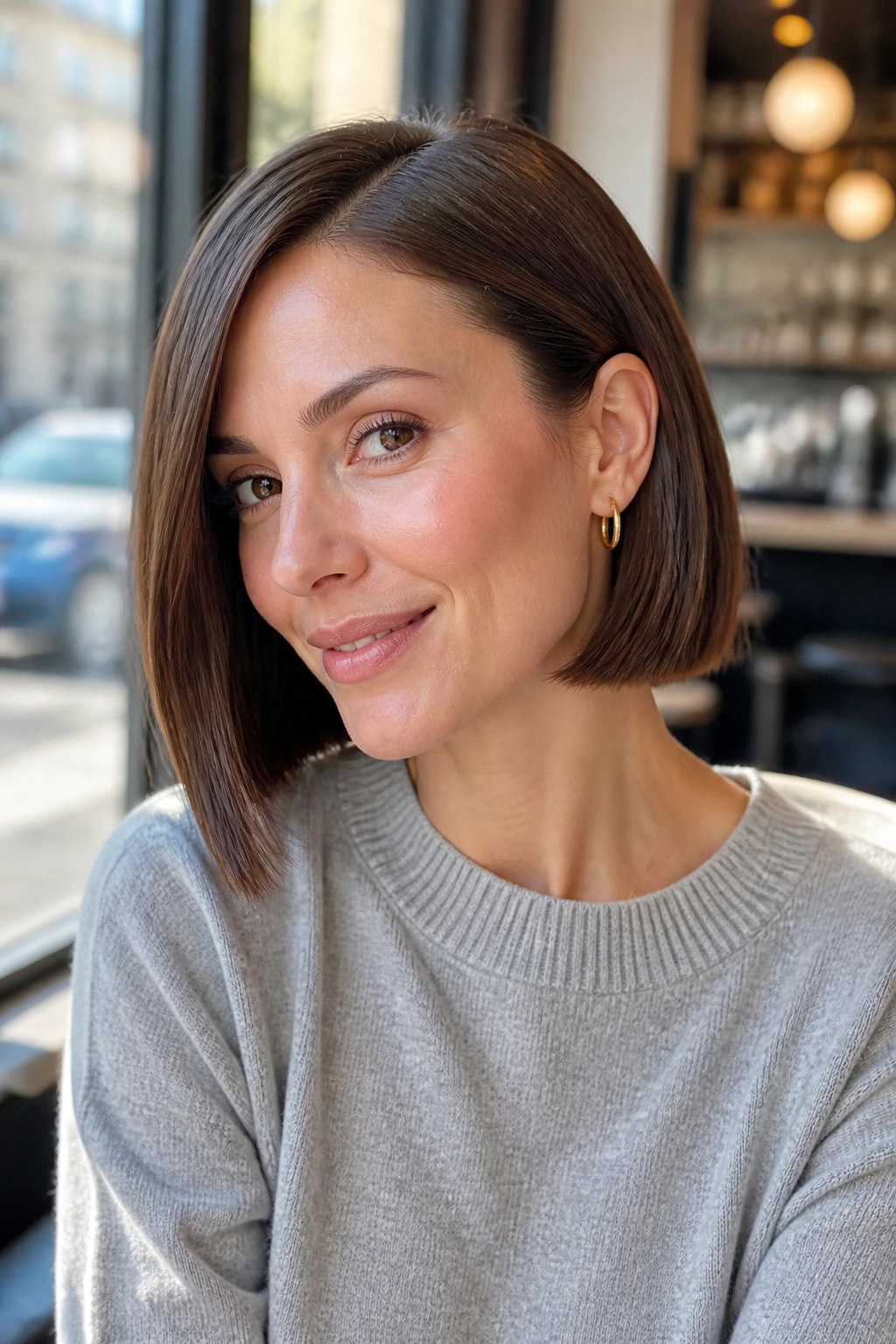
A sleek bob can be a gift for fine hair when you’re tired of chasing volume that never shows up. Instead of fighting for big lift, this cut leans into line, shine, and clean edges. Tucking one side behind the ear breaks the shape in a controlled way, which keeps it from feeling too stiff.
The beauty of this cut is how neat it looks with little effort. A center part gives it polish. A side part gives it lift. Either way, the perimeter should stay blunt enough to read as full.
It’s especially good for people who like simple styling and clean clothes. The haircut does not need much help. A smoothing cream, a quick blow-dry, and maybe a flat iron on the ends is usually enough. If your hair is fine but plentiful, this can look gorgeous. If it’s very sparse, keep the line a touch shorter.
20. Pageboy Cut With a Soft Curve
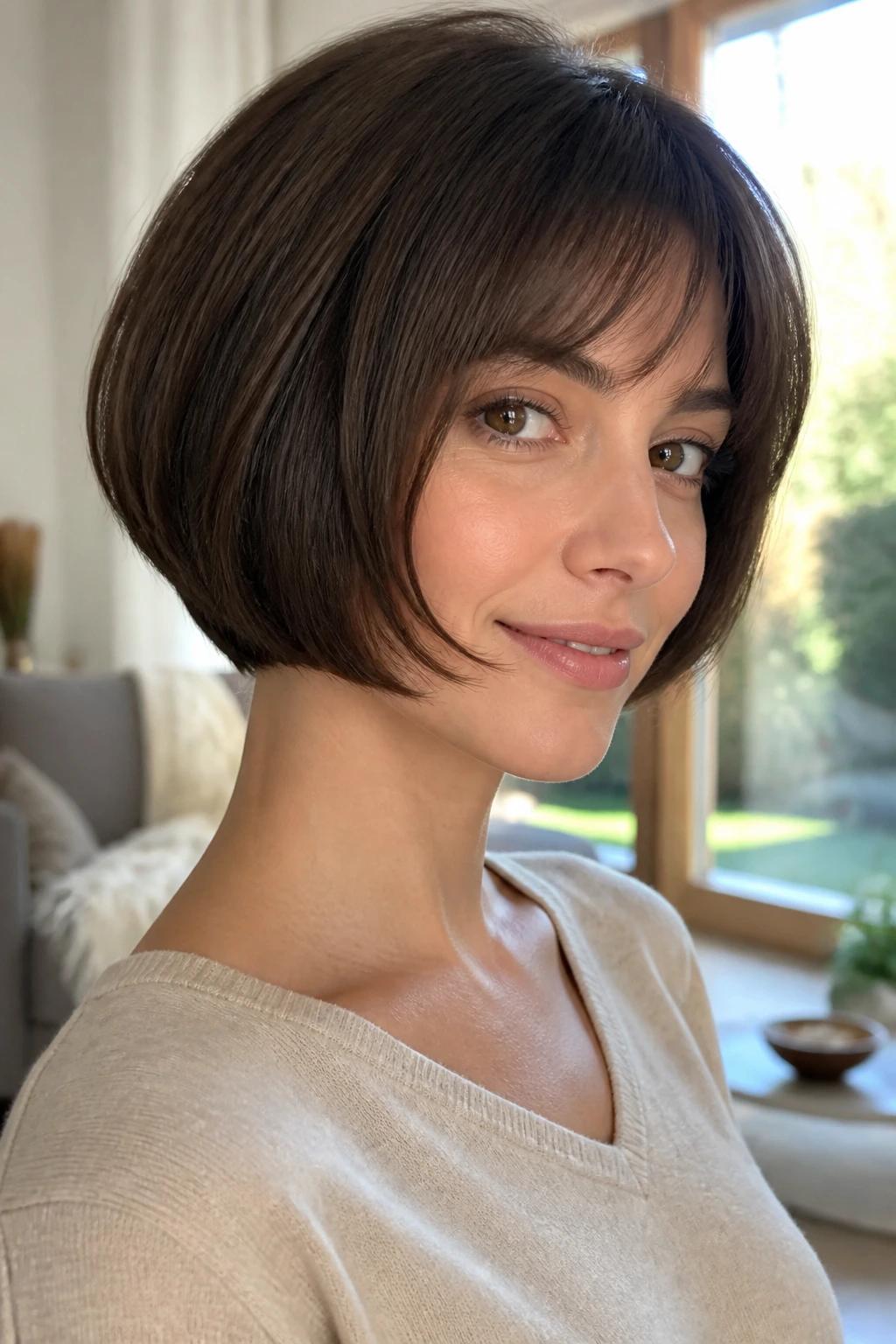
The pageboy cut is one of those shapes that keeps coming back because it solves a problem fine hair has: it creates a clear outline. The curved ends tuck inward, the crown stays smooth, and the fringe can be added or skipped depending on how much face framing you want.
What makes it work is the curve. Straight, puffed-out ends can look stringy on fine hair, but a soft undercurve makes the hair appear denser and more controlled. It’s a neat cut, a little retro, and honestly more wearable than people expect.
If you want a short style that feels tidy without looking severe, this is a good place to land. It’s strongest on straight hair, though a mild wave can add some charm. Keep the finish clean, not stiff. That’s where it looks best.
Final Thoughts
Short hair can be a relief when fine strands stop holding shape and start sticking to the scalp. The best cuts do not chase fake volume. They build a better outline, protect the ends, and give the hair enough structure to look fuller than it is.
If you’re sitting between two lengths, I’d usually lean shorter rather than longer. Fine hair tends to look denser when the weight is removed in the right place, and a blunt edge often beats a over-layered shoulder-length cut that strings out by noon.
Bring photos to your stylist, yes, but bring a little honesty too. Tell them where your hair falls flat, where it flips, and how much work you’re willing to do in the morning. That conversation matters more than the cut name on its own.
