



A good men’s haircut can change the whole shape of your face. A bad one can make even a sharp beard look unfinished. That matters.
Barbers look at density, cowlicks, temples, and the crown before they touch a clipper. Most clients do not. They point at a photo, say “something like this,” and hope the hair on their head behaves the way it did on somebody else’s.
When people search for haircut ideas, what they’re really after is something that looks sharp at work, survives sweat and humidity, and doesn’t demand a bathroom shelf full of products. Fair ask. The trick is matching the cut to the hair you actually have, not the hair you wish you had on a good day.
These 25 haircuts for men cover short, medium, and longer options that still make sense when you step out of the chair and live a normal life. Some are clean and quiet. Some have a little attitude. Start with the one that fits your texture, then use the barber notes under each heading to make it yours.
1. Classic Taper
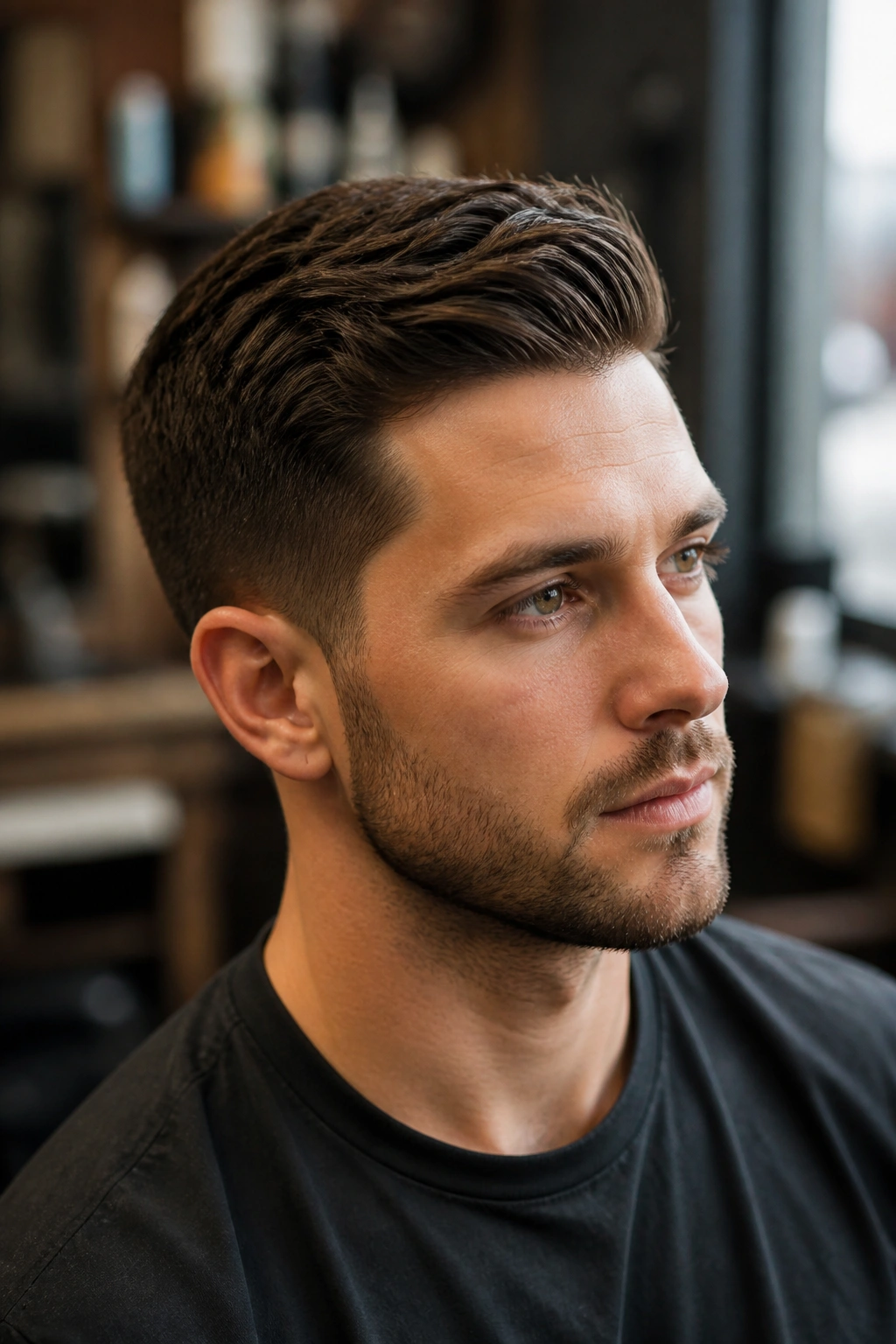
A classic taper is the haircut I’d trust on almost anyone.
It keeps the sides and neckline neat without stripping the whole head down to skin, which is why it looks natural on straight, wavy, and even slightly curly hair. The top can stay scissor-cut and soft, or it can be clipped shorter if you want less maintenance. Either way, the shape stays tidy as it grows out.
Why It Works
- The taper removes bulk around the ears and neck, which cleans up the outline fast.
- The top can be left at 1 to 3 inches, depending on how much movement you want.
- It works on round, square, and oval faces because it does not fight the head shape.
- Ask for a low or mid taper if you want the cut to stay quiet.
Best move: tell your barber you want the taper to look clean, not sharp enough to feel disconnected.
2. Crew Cut
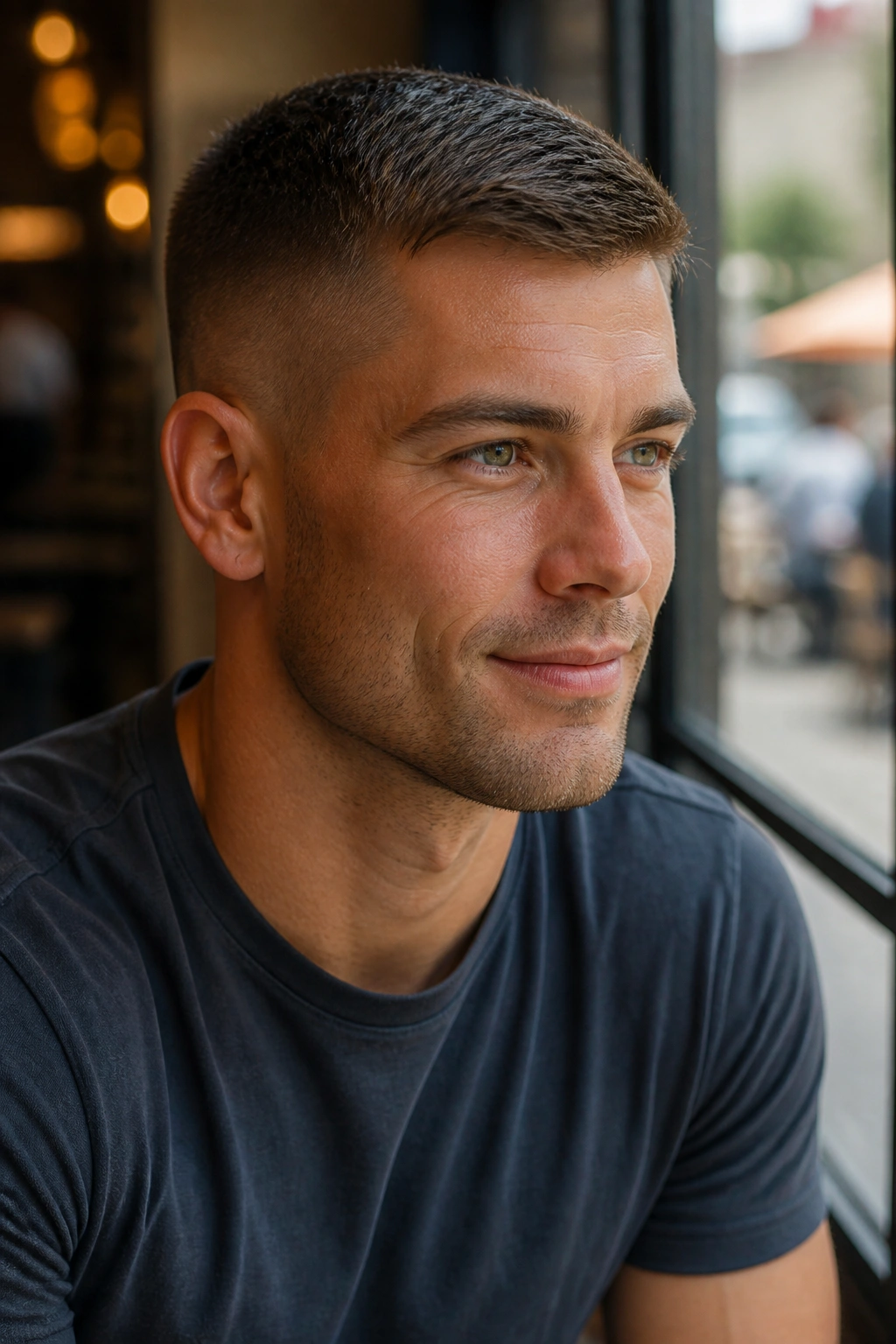
A crew cut is what I recommend when a client wants to look put together without thinking about hair before coffee.
The top stays short, usually around 1 to 2 inches, with the front left a touch longer so it can sit forward or stand up a little. The sides are clipped shorter and blended cleanly, which keeps the whole cut athletic but not harsh. It has that crisp, straight-line energy that makes a jaw look a bit stronger.
It also grows out kindly. That is the part people forget. A crew cut does not fall apart the second it leaves the barber chair. If your hair is thick, coarse, or stubborn in the morning, this cut gives you structure without a fight.
3. Buzz Cut
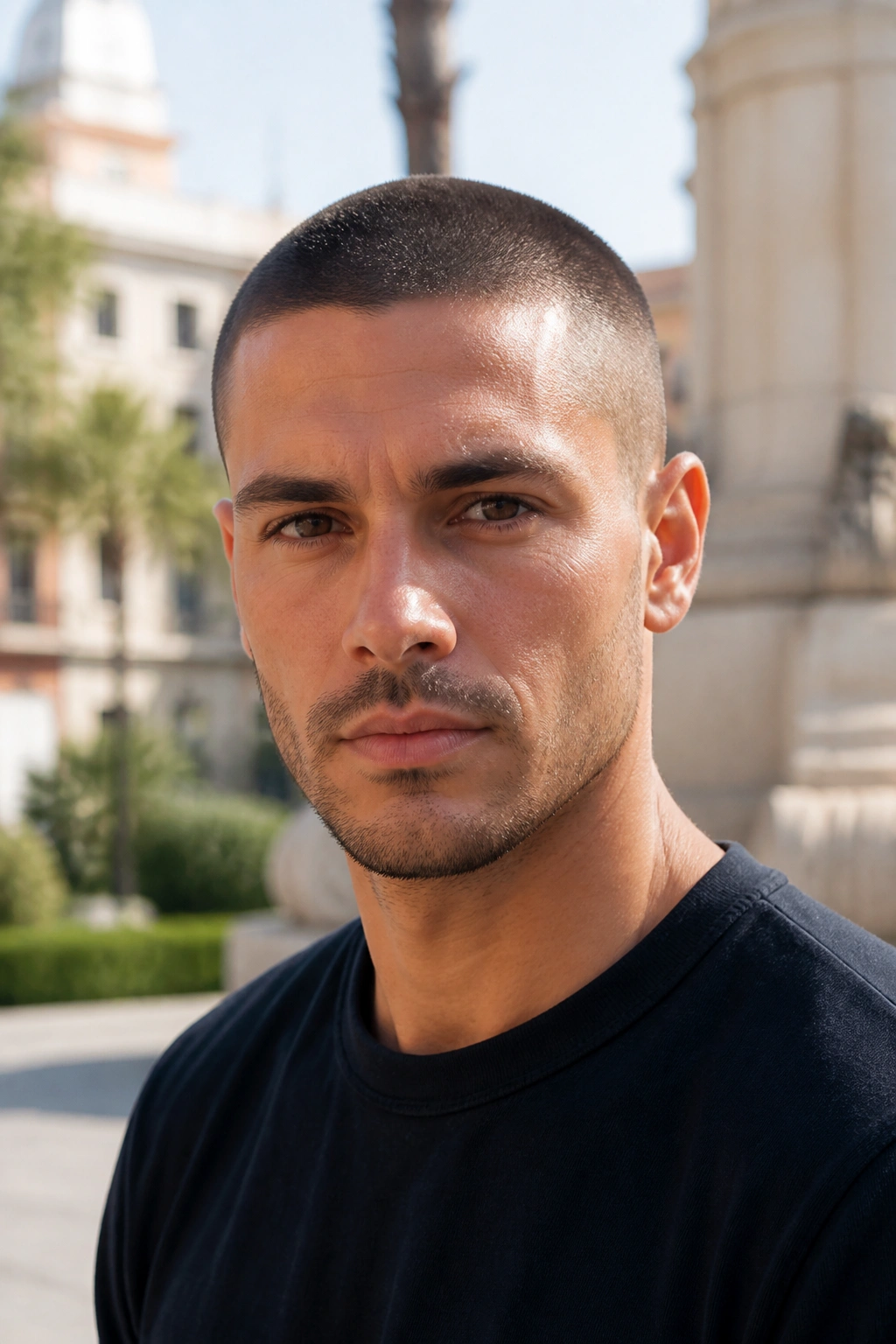
Can a buzz cut look intentional? Absolutely—if the guard length fits your head shape.
The mistake is treating every buzz the same. A #1 all over is a different beast from a #3 or #4, and those small changes matter when you have a strong crown, a scar, or a hairline that is doing its own thing. Shorter guards show more scalp and more head shape. Longer ones soften both.
How to Ask for It
- Say whether you want one length all over or a slightly longer top.
- Mention your preferred guard number if you know it.
- Ask for a neat edge around the ears and neckline if you want a cleaner finish.
- If your scalp gets sunburned easily, leave a bit more length.
A buzz cut is blunt. That is the appeal. No drama, no fluff, no pretending the hair is something it is not.
4. Ivy League

You know the guy who can go from office chair to dinner table without looking overdone? He is usually wearing some version of an Ivy League.
It sits between a crew cut and a side part. The top is long enough to part and comb neatly, often around 1.5 to 3 inches, while the sides stay tapered and controlled. The shape feels polished, but it still has room to breathe. That is why it works so well on men who want order without stiffness.
The Ivy League is especially good if your hair has a little bend to it. Straight hair lays down neatly; wavy hair gives the cut some life. Use a small amount of cream or light pomade, then comb with the grain instead of forcing every strand into place. If the front starts to puff up, your barber can take a little weight out of the front corners.
5. French Crop
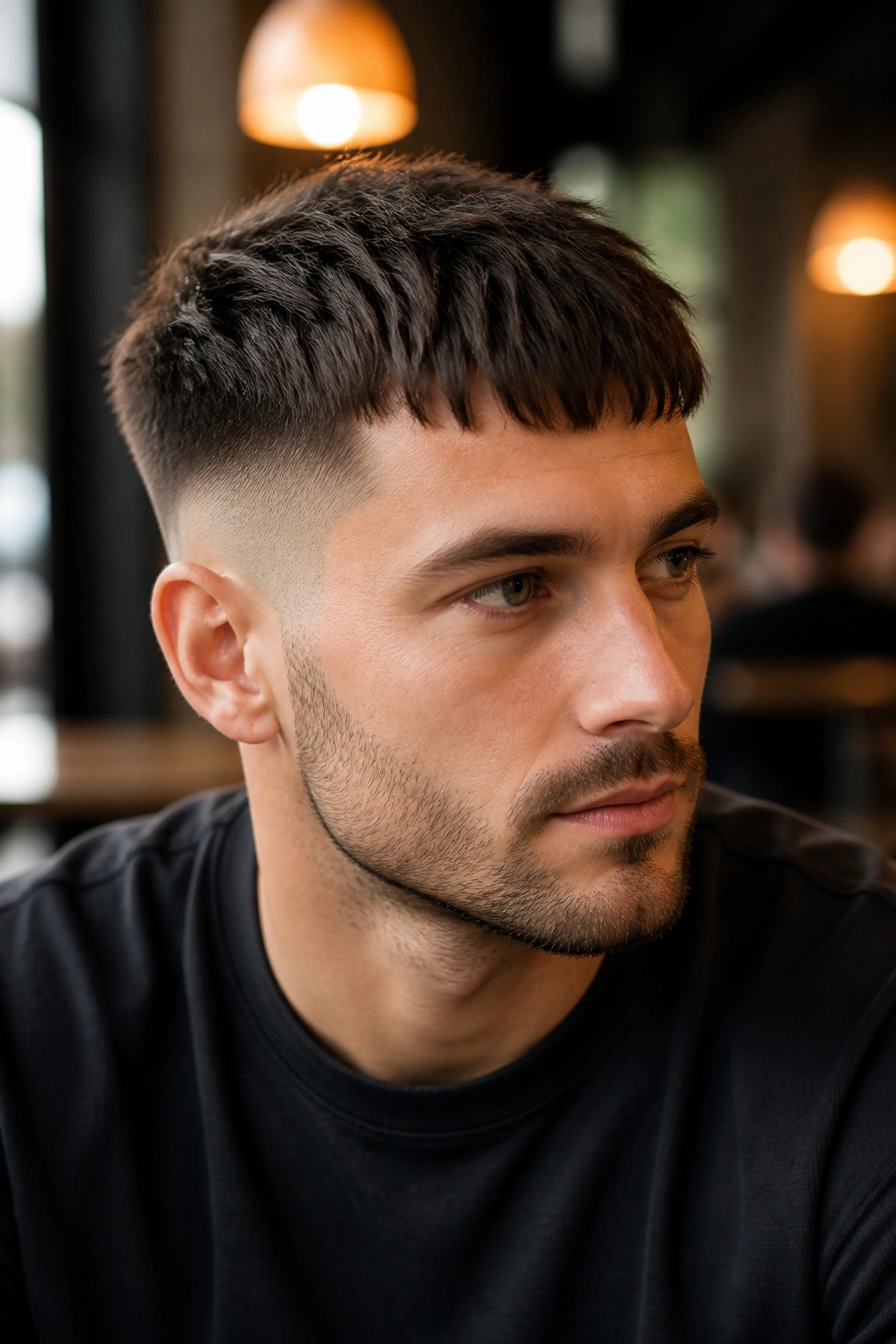
The fringe is the whole point here.
A French crop keeps the top short and textured, then pushes the front forward into a blunt or slightly choppy fringe. The sides usually fade or taper tight, which makes the top look fuller than it really is. If your hairline is receding a bit, this cut can be a smart move because the fringe shifts attention away from the temples.
It also behaves well in real life. You can finger-style it in under a minute. A matte clay or paste is enough for most hair types, and the shape still looks decent when it gets messy. If your hair grows straight out at the front, ask the barber to respect the growth pattern instead of cutting the fringe too heavy. That tiny detail keeps the front from standing up like a shelf.
6. Textured Crop
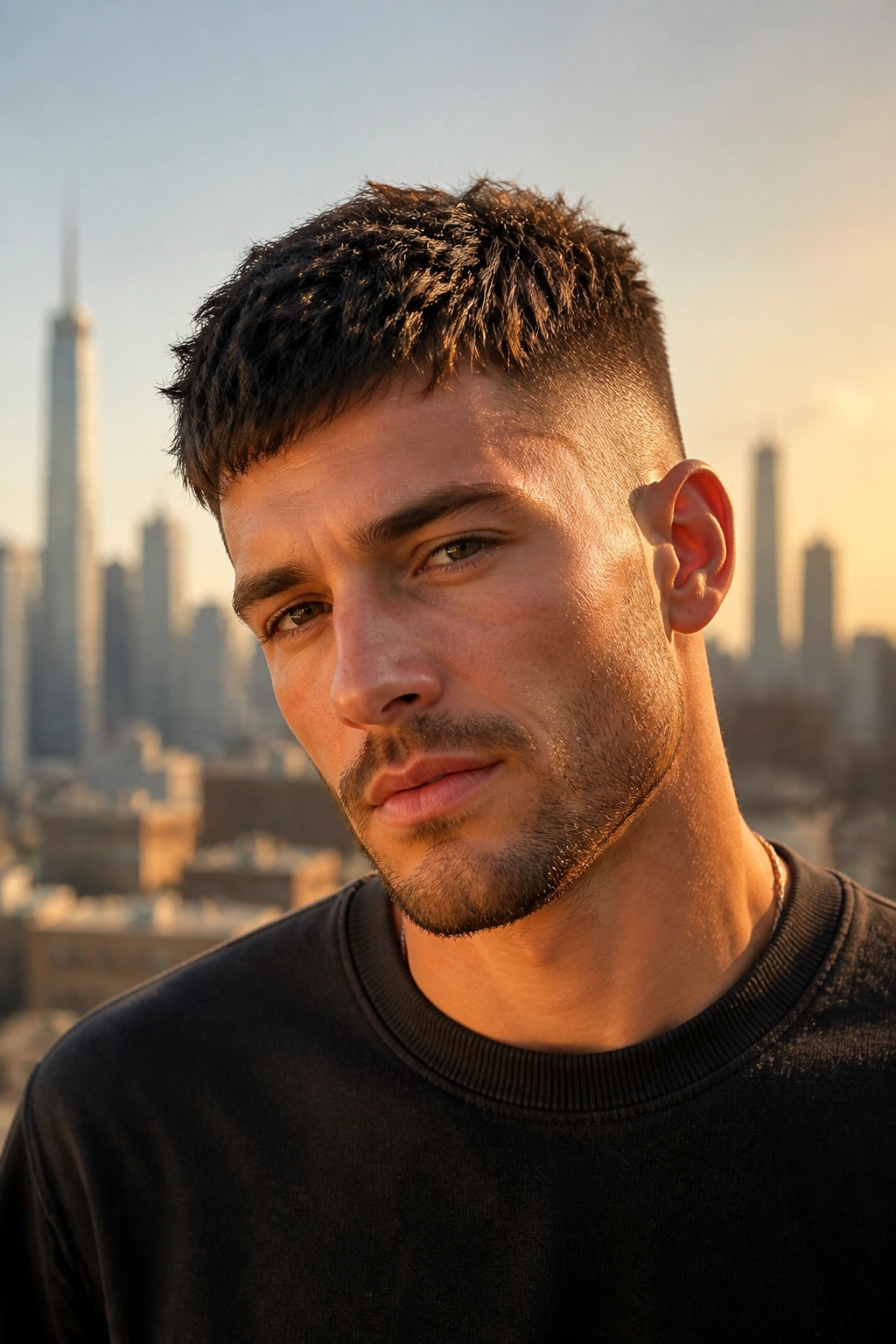
Unlike the French crop, this version leans messier on purpose.
The top gets point-cut and chipped into short, uneven pieces so it breaks up in a good way. That texture matters if your hair is thick, dense, or stubbornly flat. A heavy, blunt crop can feel boxy. A textured crop feels lighter, especially when paired with a mid fade or low fade on the sides.
This is one of those cuts that looks better with a little imperfection. Run a pea-sized amount of matte paste through dry hair, pinch the front, and leave some pieces out of place. Too much product kills the shape fast. If the top starts to look shiny or glued together, you used too much. Less, always less.
7. Side Part
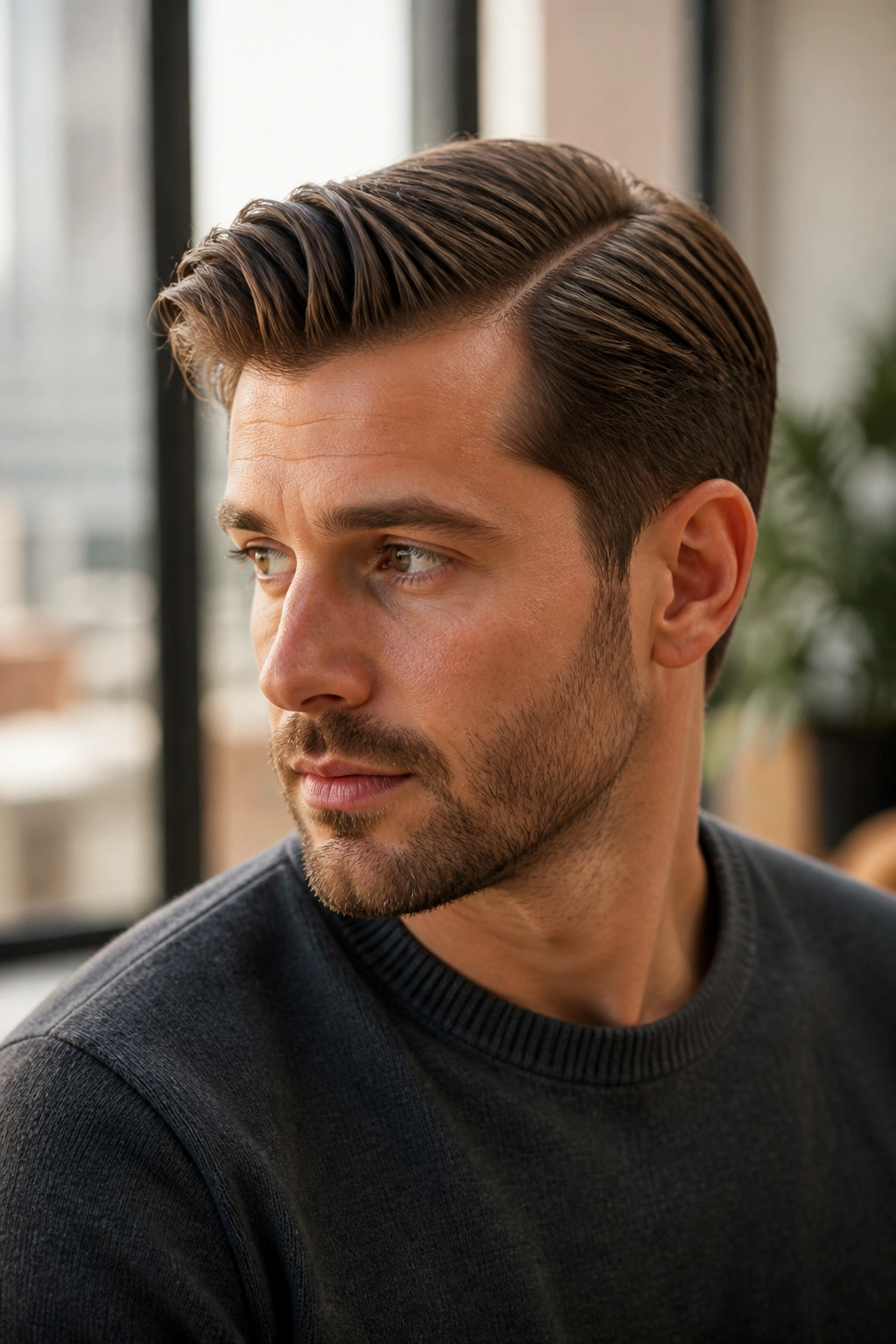
A side part is still one of the cleanest ways to look dressed without looking stiff.
The real trick is the part placement. A natural side part, done where the hair already wants to split, looks easy. A hard part etched into the scalp looks sharper and more deliberate. Both work, but they send different signals. The side part works best when the top has enough length to sweep across—usually 2 to 4 inches—while the sides stay tapered or faded.
What to Ask Your Barber
- Keep the top long enough to comb over cleanly.
- Leave the side shorter but not bare.
- Blend the back into a neat taper if you want a softer look.
- Tell the barber which side you part on every day.
A side part is not flashy. That is why it lasts.
8. Slick Back
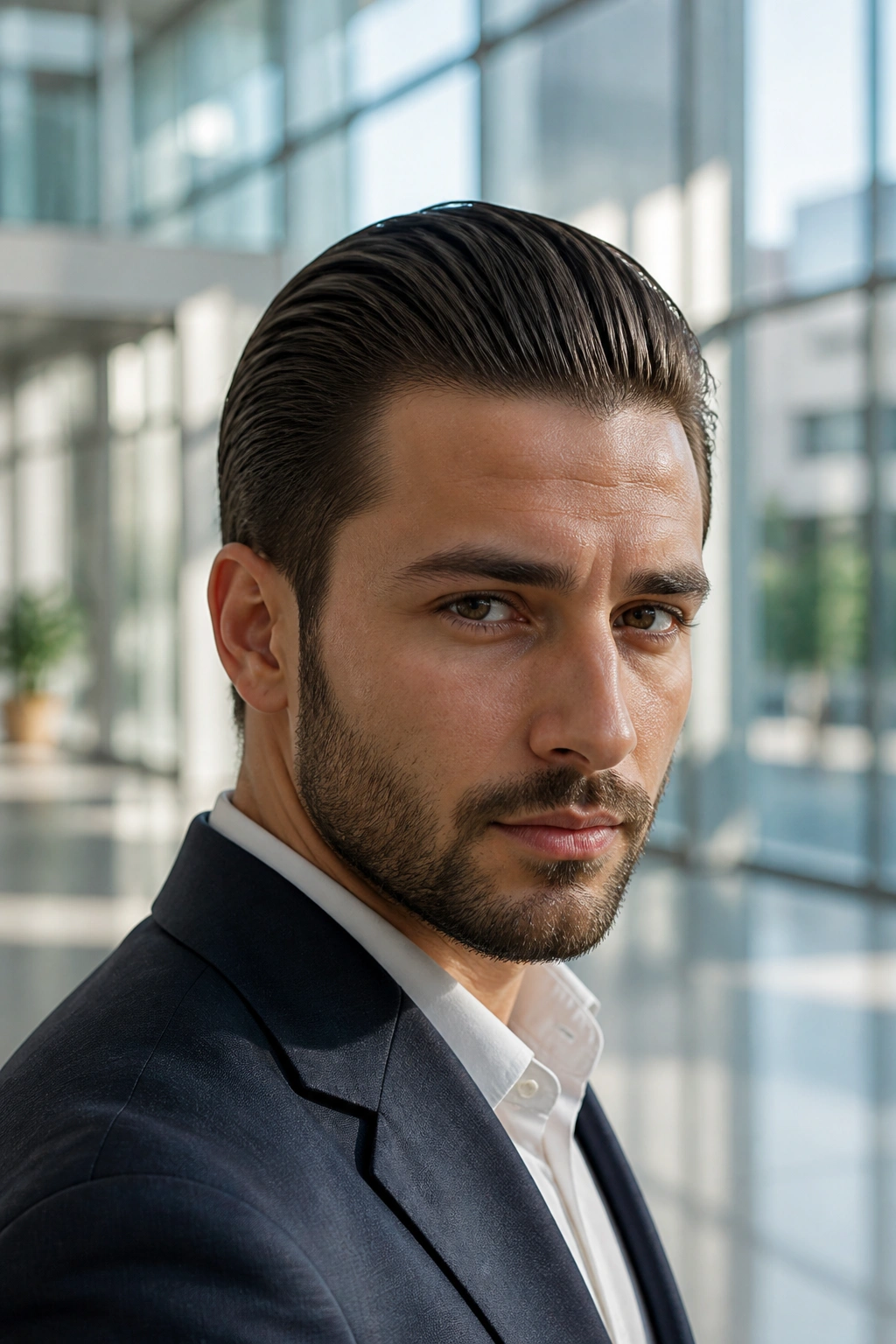
A slick back only looks good when the haircut leaves enough weight on top.
If the top is too short, it slips straight into helmet territory. If it is too long and heavy, it falls forward by lunchtime. The sweet spot is usually medium length with the sides tapered or faded enough to keep the profile tight. Straight and slightly wavy hair take to this cut best, though thicker hair can work too if it is cut with some layering.
The finish can change the whole mood. A glossy pomade gives you a sharper, more classic look. A matte cream turns the slick back into something softer and less formal. I prefer the softer version on most men because it feels less dated and less like you are trying to play a role. Comb it back when damp, then use the dryer on low heat to set the direction before the product hardens.
9. Pompadour
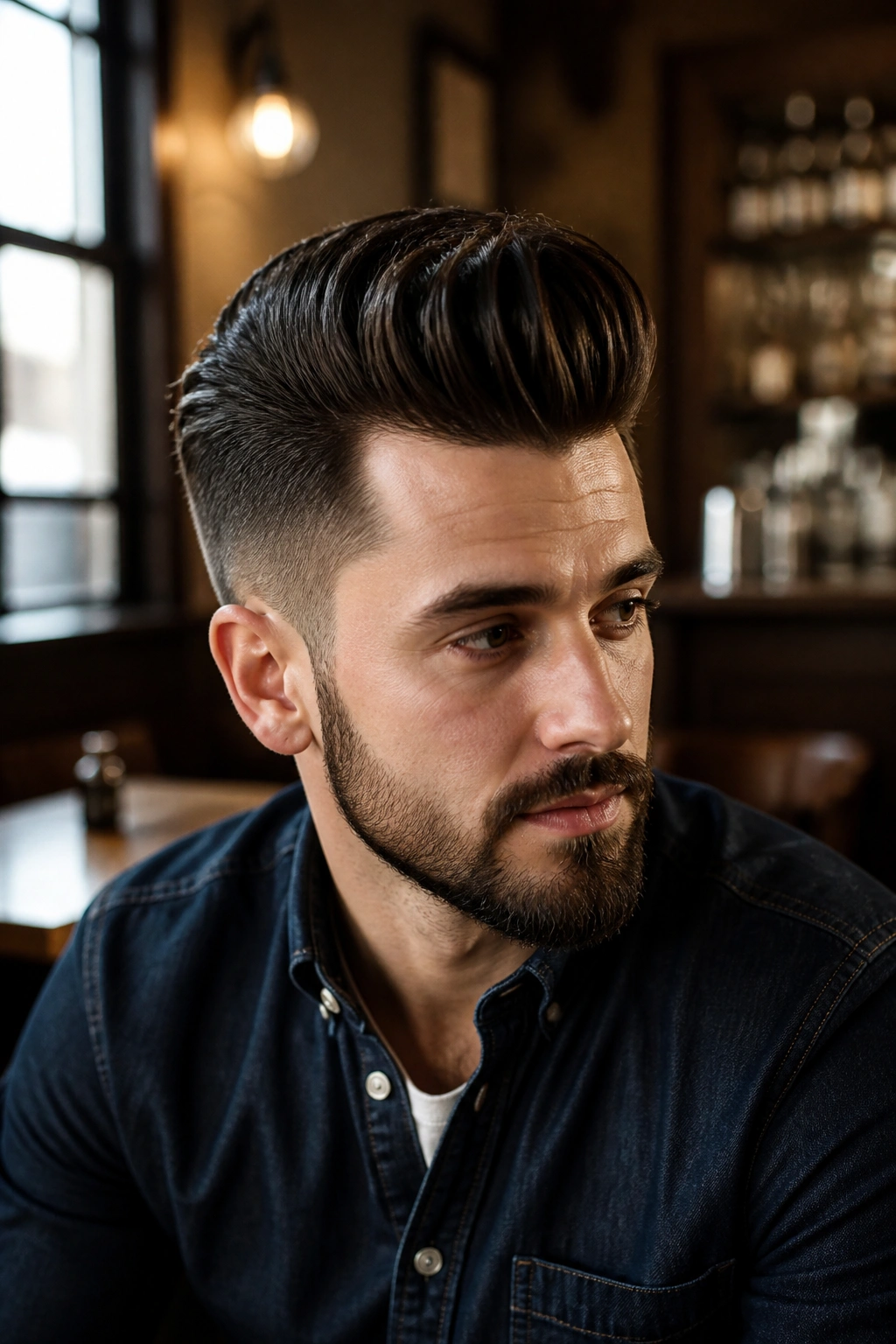
Why does the pompadour keep hanging around? Because it creates height without needing a lot of length everywhere else.
The shape is built from volume at the front and control through the sides and back. The top needs enough length to lift—usually 3 to 5 inches, sometimes a little more—while the sides stay tighter so the front does not look heavy. A modern pompadour is usually more textured than the old glossy version. That makes it easier to wear.
The one part people skip is drying. Lift the front while you blow-dry, and direct the air from the roots up and back. If you skip that step, the hair will collapse by the time you get outside. A small round brush helps, but fingers work too if your hair has enough body. Finish with a light hold product first, then add a touch more only where the front needs support.
10. Quiff
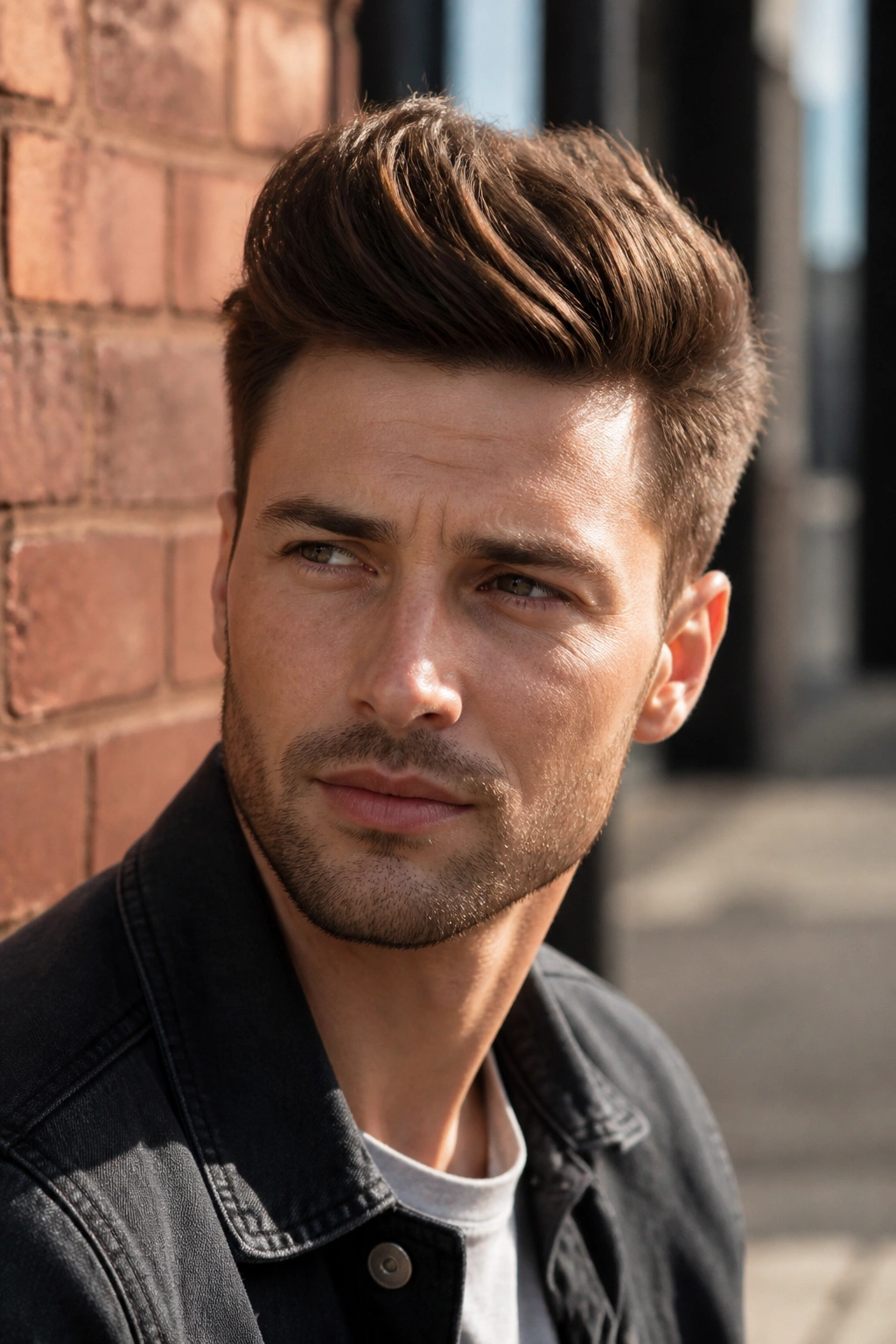
If you want volume up front but not the polished shine of a pompadour, the quiff is the easier cousin.
It starts with a lifted front and a looser shape through the rest of the top. The sides can be faded, tapered, or clipped short, depending on how bold you want the cut to read. On wavy hair, the quiff almost styles itself. On straight hair, it needs a little help from heat and a matte product.
A good quiff looks casual even when it is carefully cut. That is the appeal. It feels less buttoned-up than a side part and less formal than a slick back. A little sea-salt spray at the roots gives grip, and a pea-sized amount of clay keeps the front from drooping. If the front is too heavy, your barber should take weight out of the interior, not just shorten the visible top.
11. Undercut
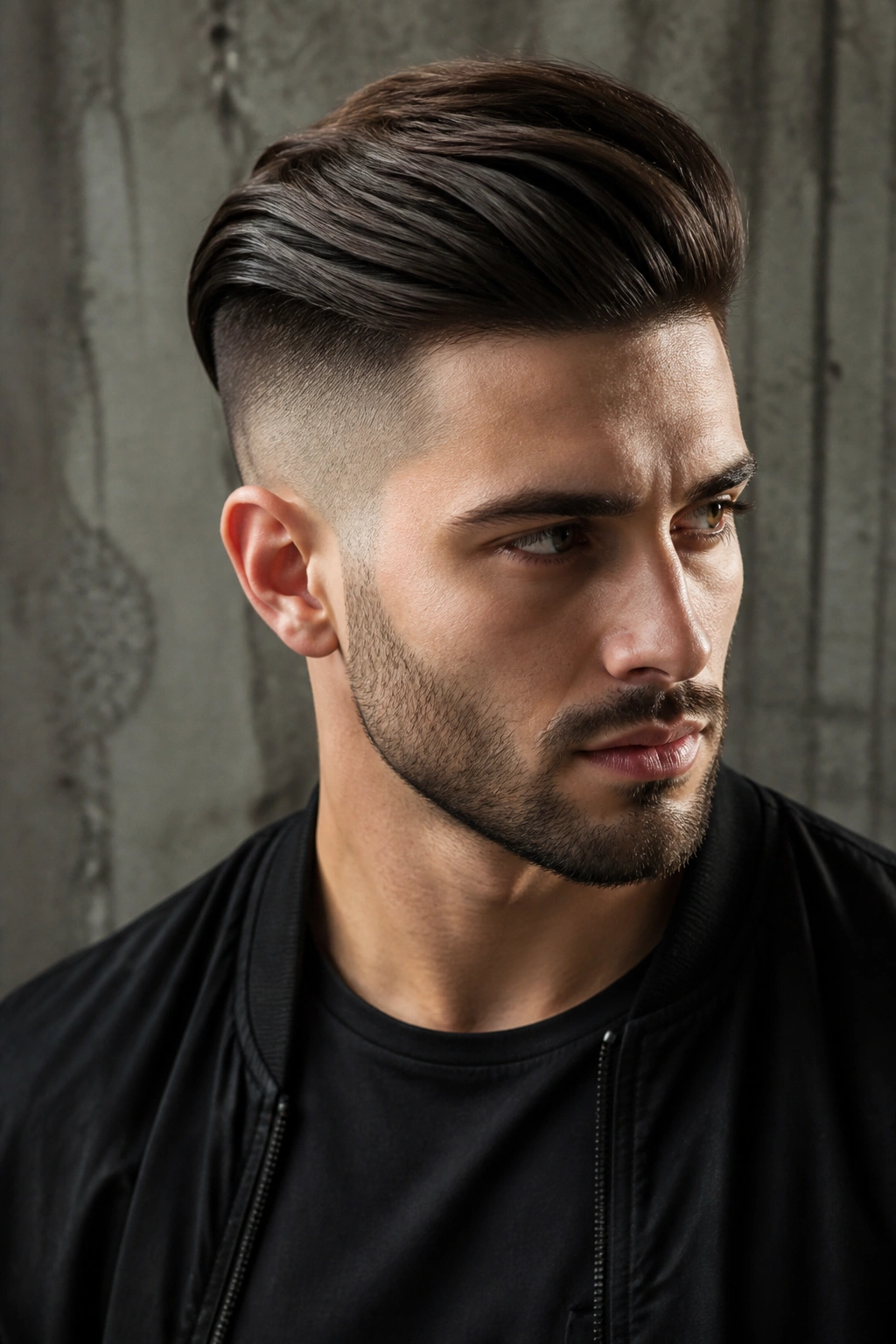
The undercut is pure contrast. Long on top, short underneath, no apology.
That sharp difference is what makes it work, and also what makes it easy to overdo. If the top is left too long and the sides are shaved too high, the whole thing can look heavy in a strange way. If the top is textured and kept at a sensible length, the cut feels modern and clean. Thick straight hair handles it well because the top can sweep back, part over, or hang forward without collapsing.
Watch out for the grow-out phase. An undercut grows out more awkwardly than a taper or fade. The sides start to puff at the wrong time, and the top can lose its balance. If you do not want frequent barber visits, this is not the calmest choice. But if you like sharp shape and do not mind keeping the edges fresh, it can look excellent.
12. Caesar Cut
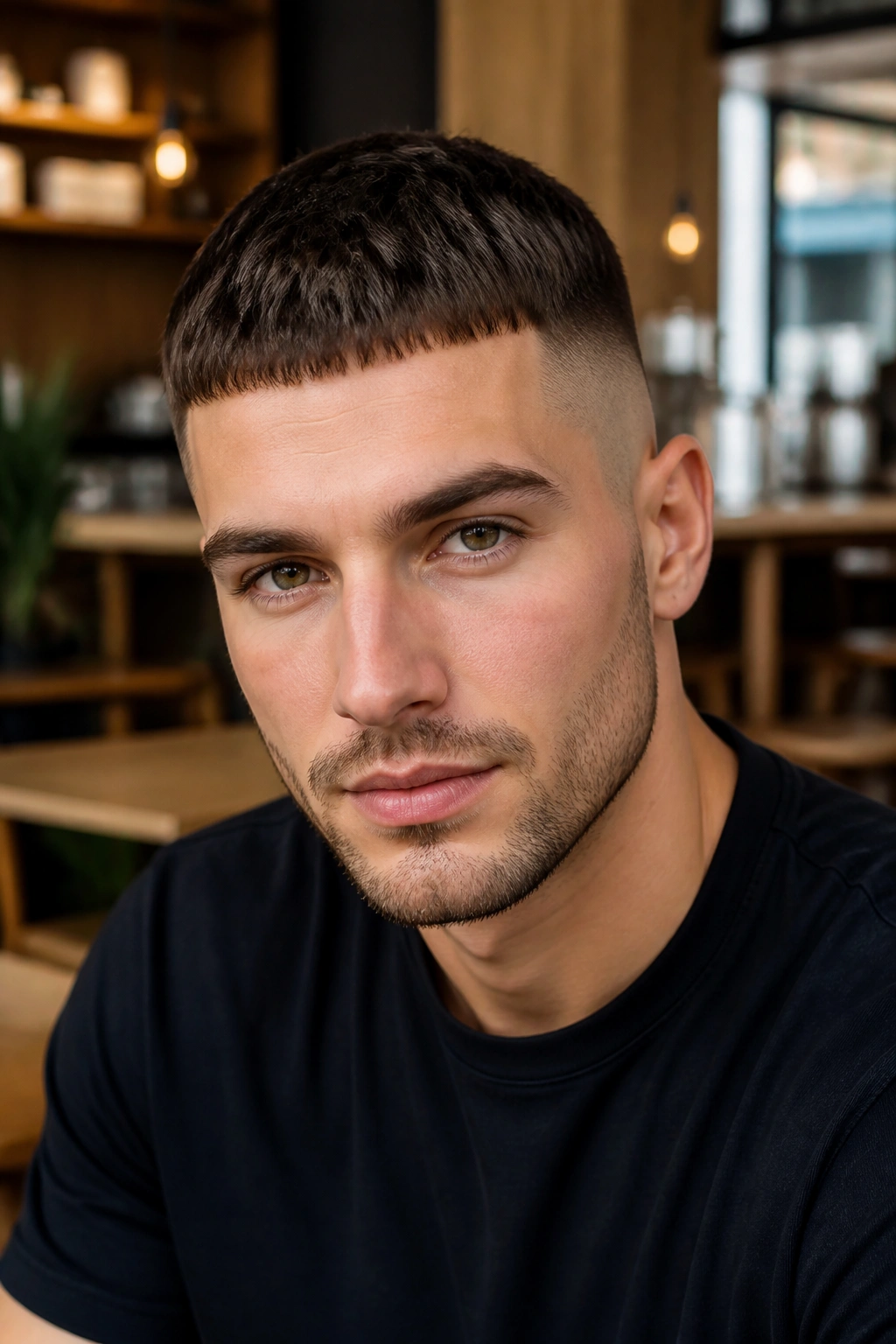
If the fringe is the star, the Caesar cut keeps everything blunt and tidy.
The top is short, the front is cut into a straight or slightly rounded fringe, and the sides stay close to the head. It has Roman-statue energy, but the modern version is softer and more wearable. I like it on men with straight or coarse hair because the texture sits up nicely without much product.
It is also useful if your temples are starting to thin. The forward fringe puts some weight in front where the eye lands first. That does not erase thinning, and it should not try to. It simply makes the cut feel deliberate. If your hair curls hard at the front, though, a Caesar can fight you. A barber who understands your growth pattern can shorten the fringe a touch and soften the corners so it lies flat instead of springing up.
13. High and Tight
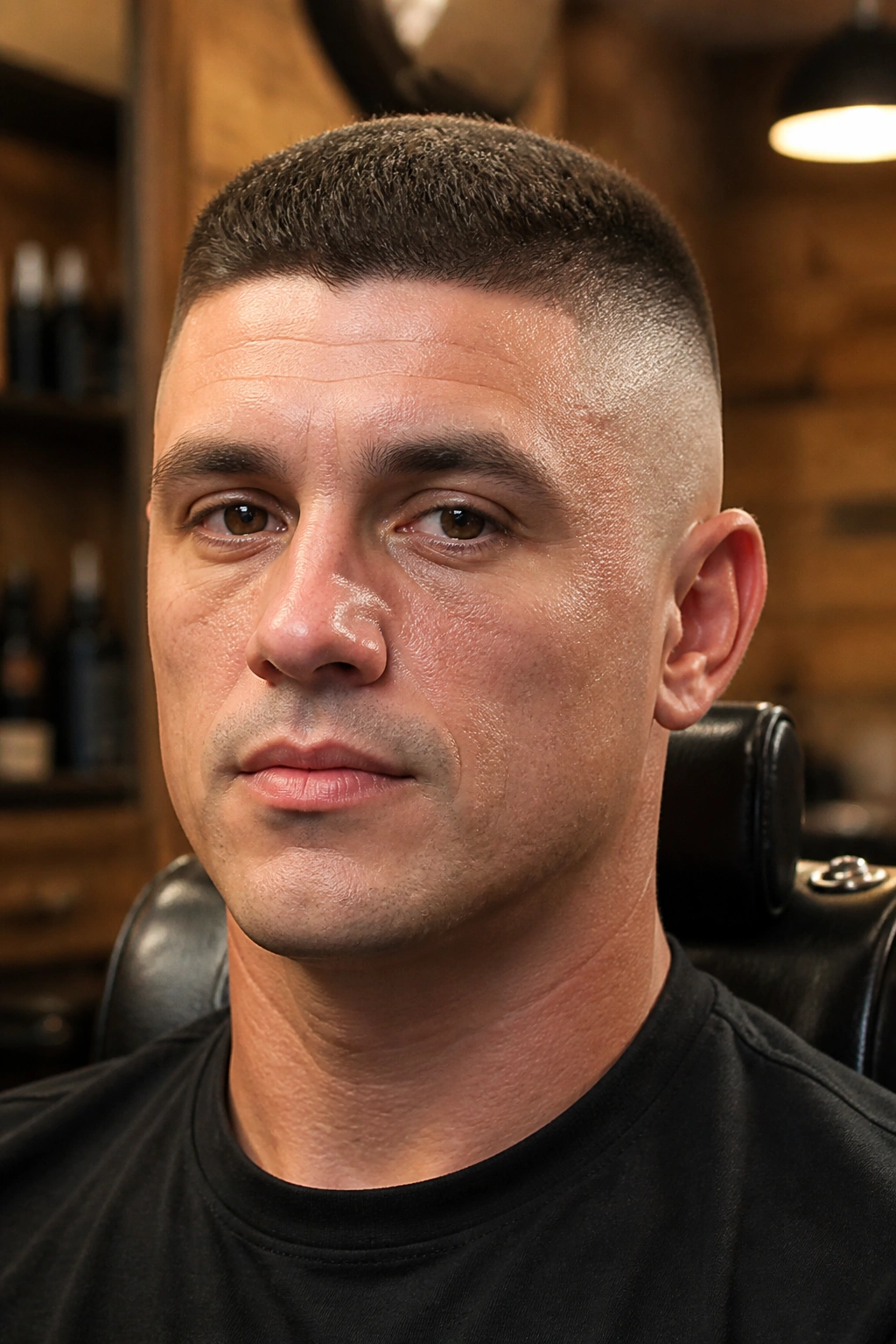
Can a high and tight look severe? Yes. That is part of the charm.
The sides are cut very short, often into a skin fade or near-skin fade, while the top is left slightly longer in a narrow strip. It is tidy, efficient, and easy to maintain. Coarse hair works especially well here because the short length lets the cut keep its shape without ballooning out. If you want zero fuss, this is one of the most practical short haircuts for men.
What to Watch For
- A very high fade exposes more of the head shape.
- A softer top length—around 0.5 to 1.5 inches—keeps it from looking too severe.
- A beard can balance the shortness nicely.
- The neckline needs frequent cleanup or the whole thing loses its edge.
It is a blunt haircut. If you want softness, skip it. If you want clean lines and zero extra time in the mirror, it is hard to beat.
14. Fade with Curly Top
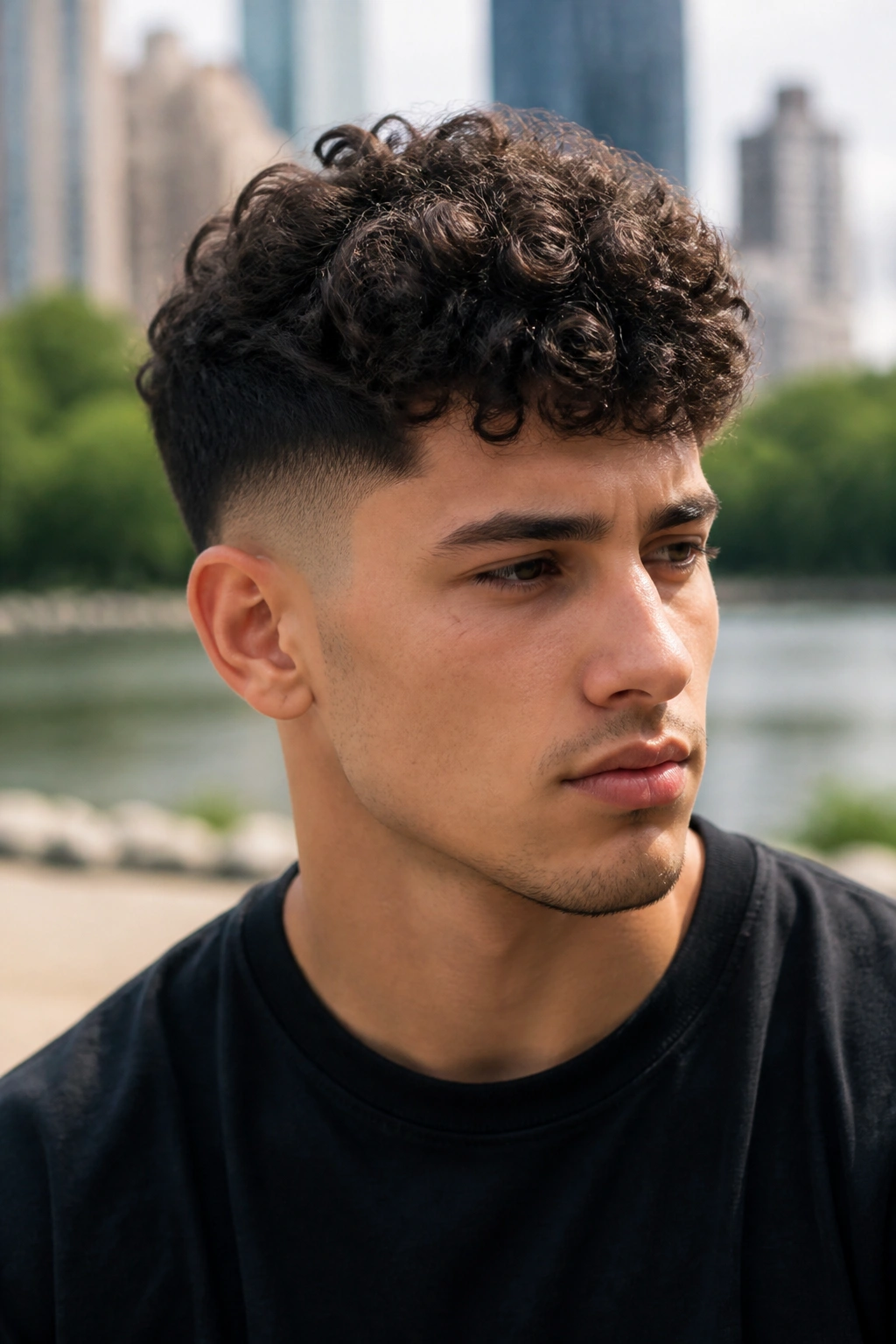
Curly hair looks better when it has room to breathe up top and clean sides underneath.
That is why a fade with curly top works so well. The fade clears away the bulk around the ears and temples, which makes the curls sit higher and look more defined. Leave enough length on top—usually 2 to 4 inches, depending on the curl pattern—so the curl forms instead of turning into a tight puff. The barber should cut the curls in a way that keeps their natural spring, not flatten them into a block.
What to Tell the Barber
- Keep the top layered enough for curl shape.
- Fade the sides low, mid, or high depending on how bold you want it.
- Leave a little extra length at the crown if it grows differently.
- Ask for shaping around the front so the fringe does not hang awkwardly.
Curl cream, not heavy gel, is usually the move. You want definition, not crunch.
15. Short Afro Fade
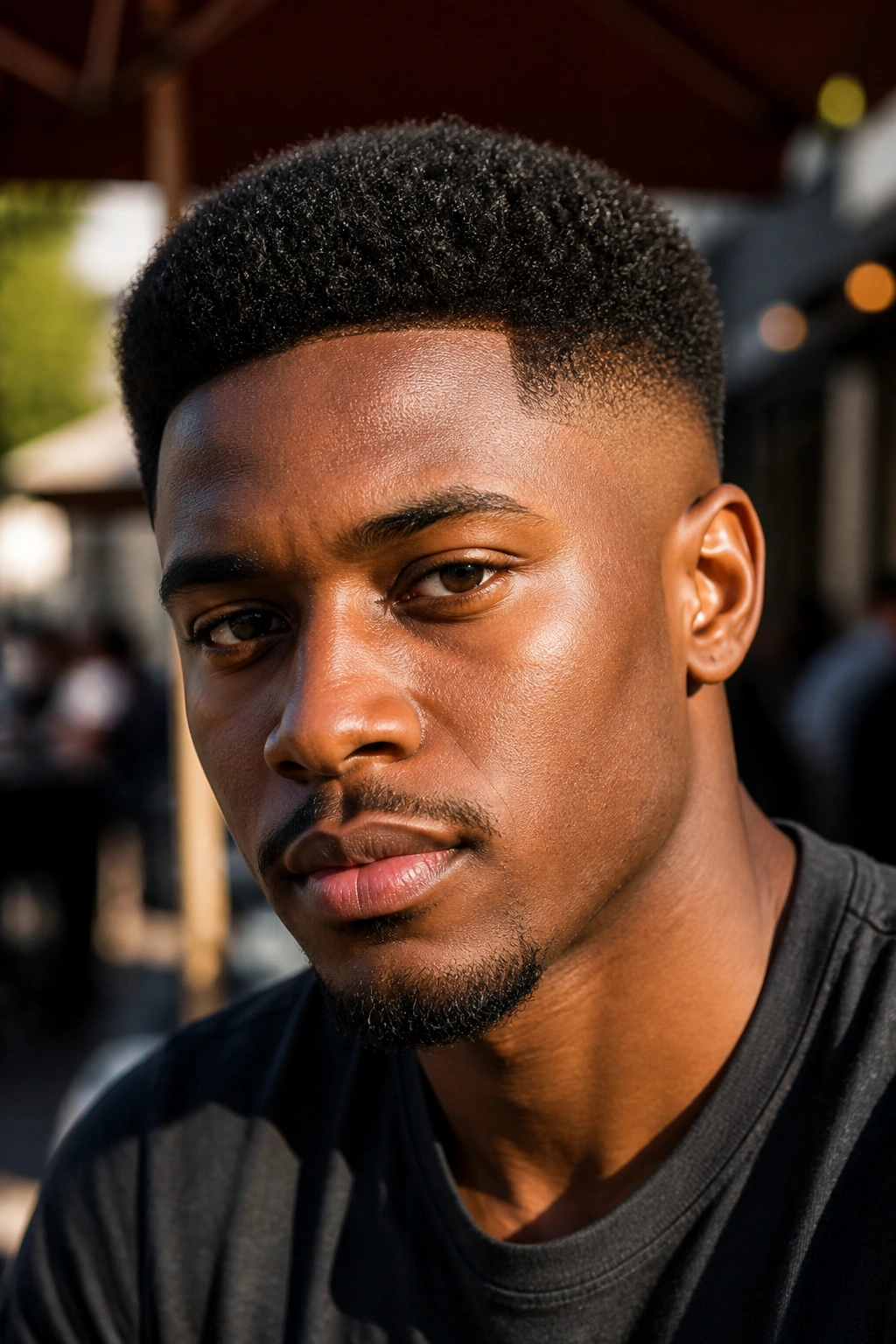
The best short afro fade feels crisp around the edges and soft through the top.
A good version keeps the natural texture visible instead of scraping everything down too far. The fade at the sides and nape sharpens the outline, while the top stays rounded and balanced. A clean line-up at the forehead can frame the face nicely, but it should still follow the hairline instead of carving a shape that looks forced a week later.
Moisture matters here. Dry coils and tight curls lose shape fast if they are ignored. A leave-in conditioner or light curl cream keeps the texture from looking dusty, and a pick can lift the top a little if it needs more shape. I would avoid piling on shiny product. It tends to sit on top of the hair instead of helping it.
- Ask for a tapered edge if you want a softer grow-out.
- Use a small amount of leave-in on damp hair.
- Keep the top even, but not flat.
- Book trims often enough to protect the shape.
16. Brush Back
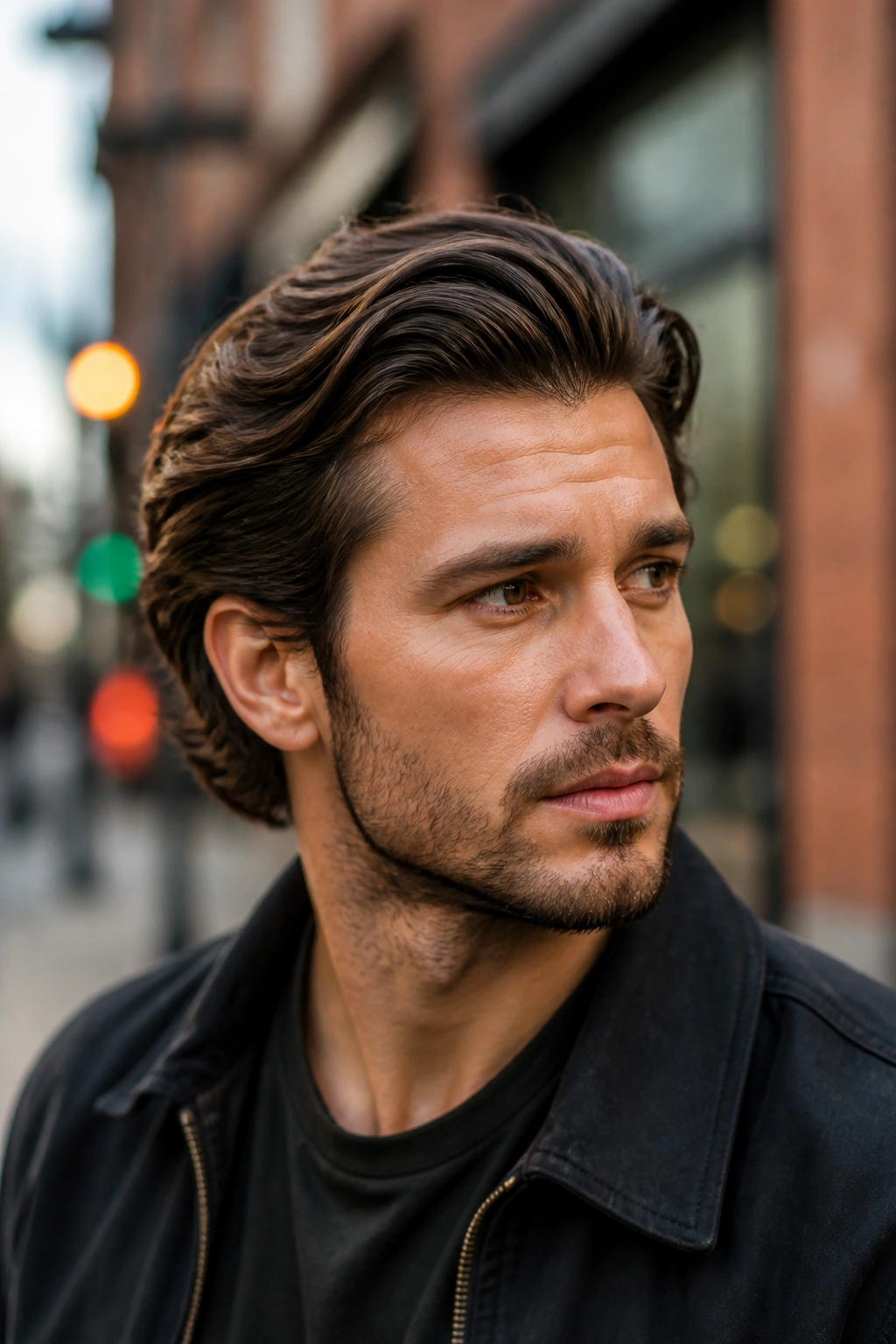
Unlike a slick back, a brush back keeps movement.
The hair is directed away from the forehead, but not forced flat against the scalp. That makes it a little easier to wear day to day, especially if your hair has a natural wave. The top is usually medium length, and the sides can be tapered or faded depending on how tight you want the cut to feel. It has a bit of polish, but it still looks human, which I think matters.
This is a good cut for men who want the face opened up without losing texture. A matte cream or light pomade is enough. You are not trying to glue the front down. You are guiding it back and letting the strands keep some life. If your hair splits weirdly at the front, ask the barber to leave a touch more length in the center so it can be brushed back with the grain instead of against it.
17. Bro Flow
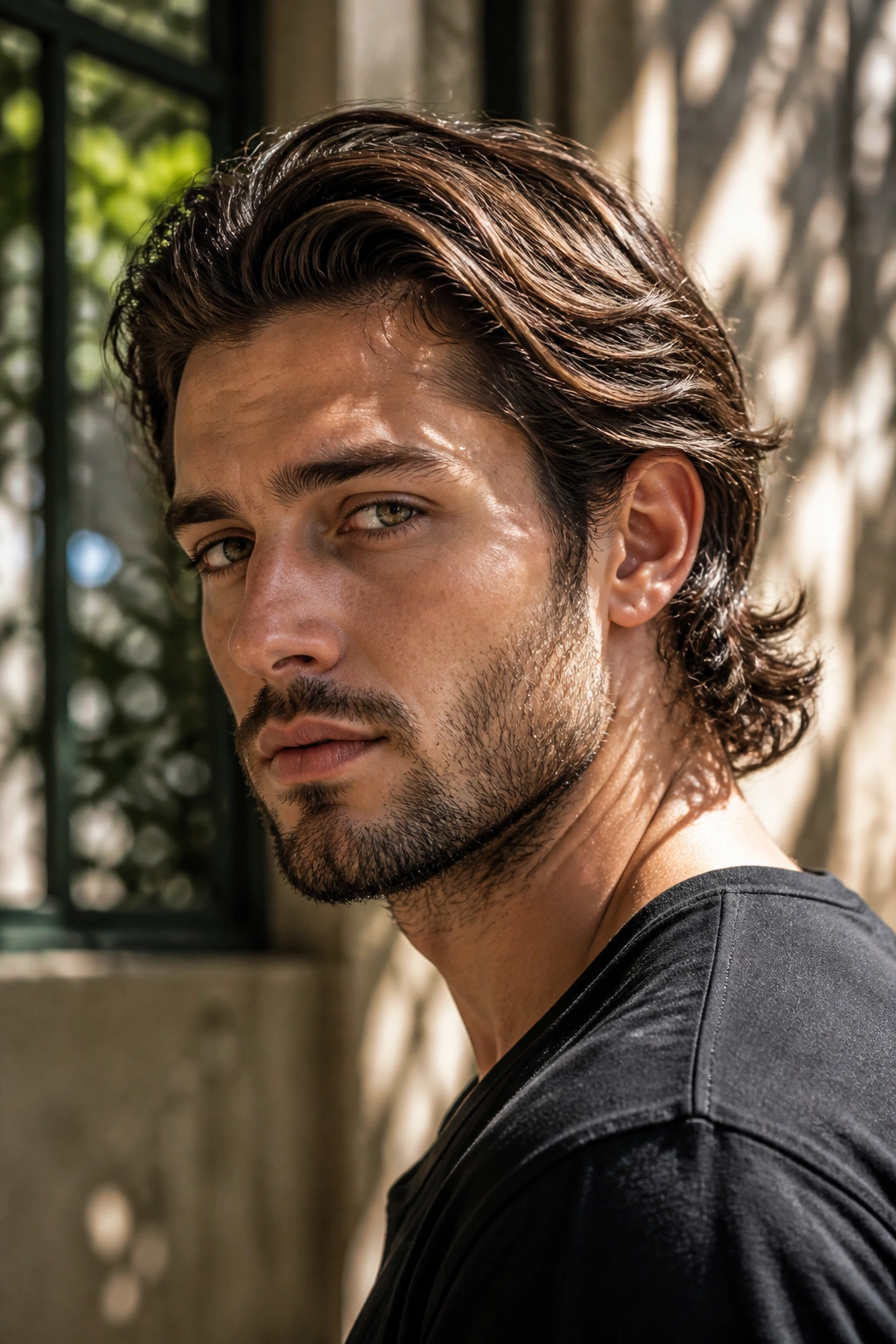
The bro flow is a patience haircut.
It needs enough length to move back naturally, usually touching the ears or slipping past them, and the ends need to stay healthy or the whole style looks rough. A good bro flow has layers. Not too many, not too few. Just enough to keep the hair from hanging like a curtain. The shape should move when you turn your head, not sit there like it has been shellacked in place.
This cut looks best when the ends are healthy. Split ends and dry ends show fast because there is nowhere for them to hide. Conditioner matters. So does a trim every couple of months to keep the length from turning stringy. If your hair tends to puff out at the sides, ask for longer layers around the ears and a little weight removed near the ends.
18. Curtain Haircut
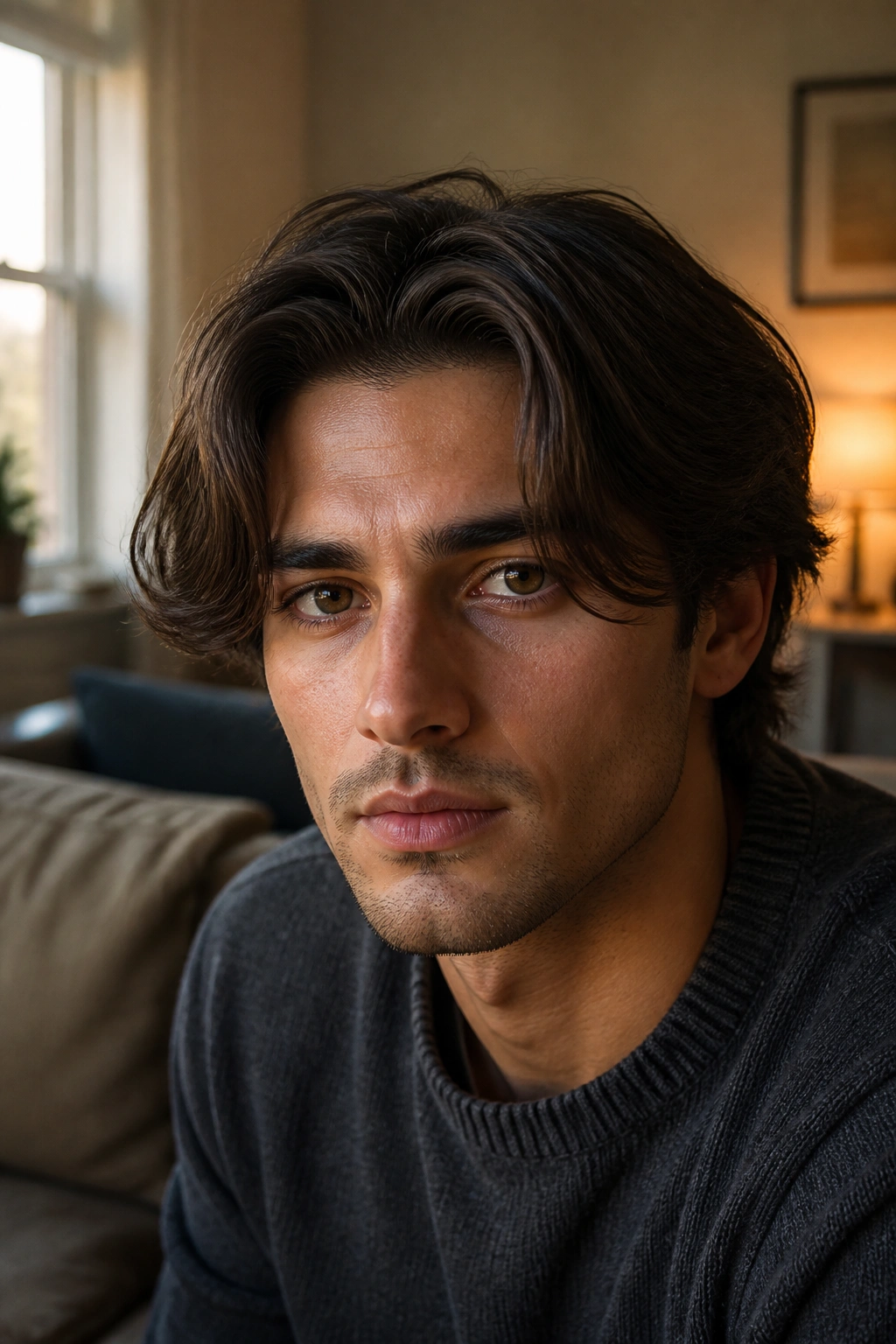
Can curtains still work without looking like a throwback costume? Yes, if the part is soft and the sides stay neat.
The curtain haircut leaves length through the top and fringe, then splits or brushes the front away from the center so the hair falls in two loose sides. It looks best on straight to wavy hair with enough density to hold shape. A middle part gives you the most classic version, while a slight off-center part feels less strict.
How to Style It
- Towel-dry until the hair is damp, not dripping.
- Work in a light cream or sea-salt spray.
- Push the front apart with your fingers first.
- Use a comb only if the part needs help.
The cut lives or dies on movement. If the fringe is cut too short, you lose the whole effect. If it is too long and heavy, it hangs in your eyes.
19. Two-Block Cut
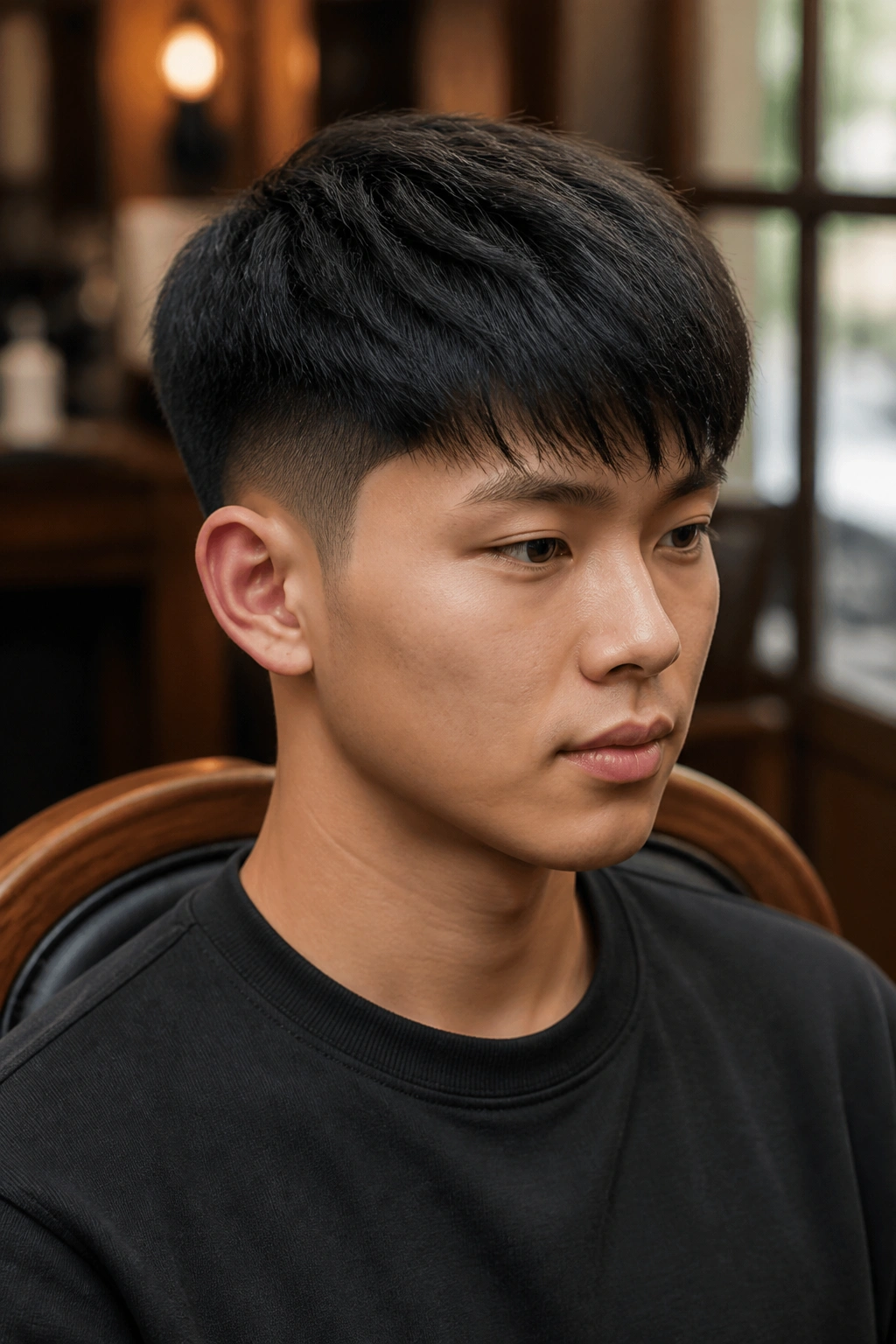
The two-block cut is all about separation, but cleaner than a full undercut.
The sides and back are cut short, while the top stays longer and fuller, usually with a clear break between the two sections. That makes the upper part look heavier and more styled without needing much actual styling time. It works especially well on straight, thick hair that tends to grow outward instead of lying flat. The contrast gives it shape.
It can be worn forward, parted, or brushed slightly back. That flexibility is a big part of the appeal. If your hair is dense and refuses to behave, the two-block cut gives it a frame. The only catch is maintenance: once the sides grow out too much, the contrast gets fuzzy and the whole point gets lost. A barber who knows how to keep the top weight in line will make a big difference here.
- Short sides and back.
- Fuller top with movement.
- Strong separation at the parietal ridge.
- Best on thick, straight, or slightly wavy hair.
20. Drop Fade
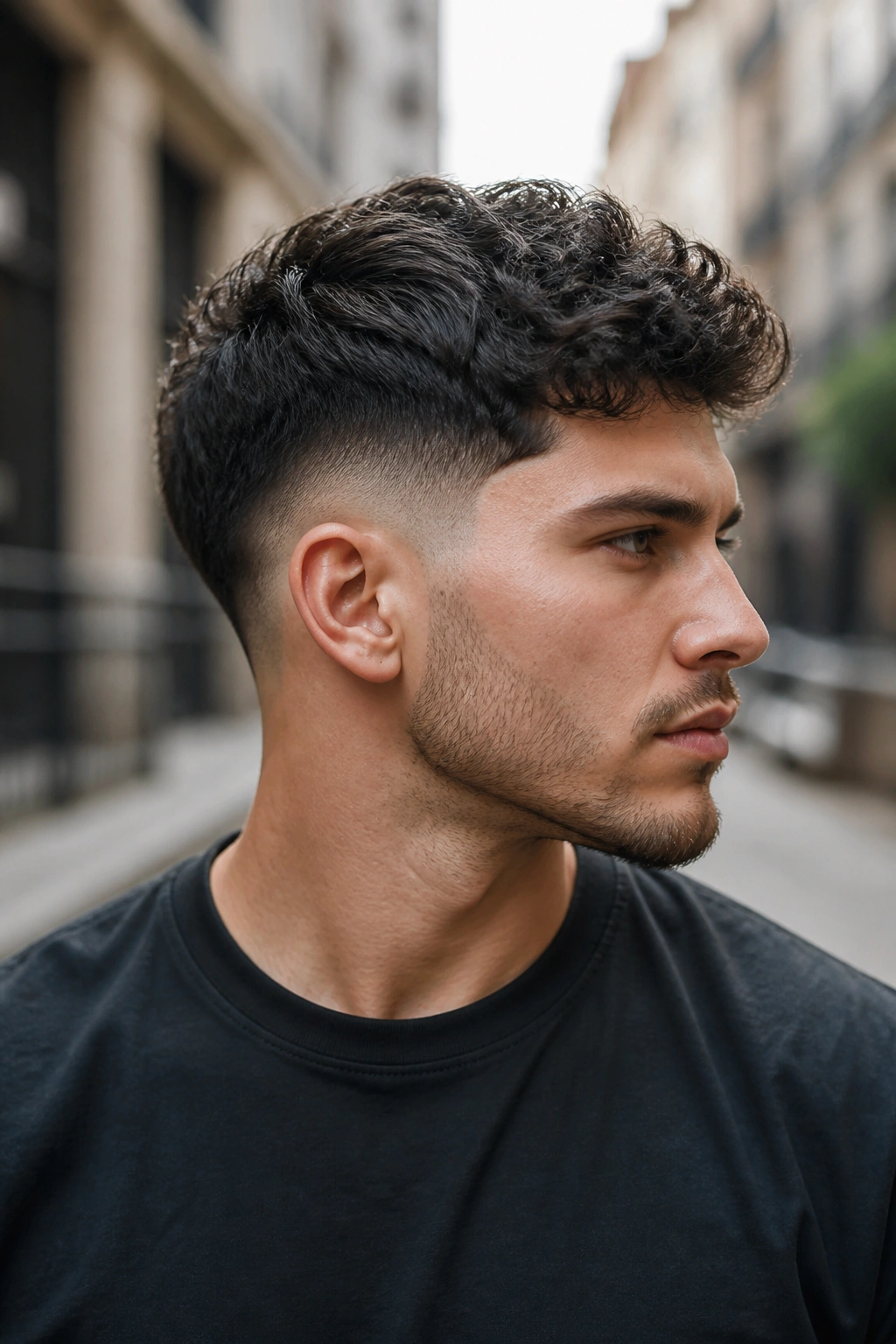
A drop fade follows the shape of the head instead of drawing a straight line around it.
That little dip behind the ear changes the whole feel of the cut. It softens the profile, especially on men with broader heads or strong cheekbones, and it pairs with nearly any top style: curls, a crop, a quiff, even a short pompadour. The shape is the selling point. A straight fade can look boxy on some heads. A drop fade curves better.
The fade can sit low, mid, or high. Low drop fades are subtle and clean. Higher ones read sharper and more dramatic. Either way, the barber needs to blend the fade into the back of the head carefully so it does not look like the haircut suddenly fell off a cliff. If you wear a beard, the drop fade can connect nicely into the sideburn area and make the whole face frame feel more intentional.
21. Burst Fade Mohawk
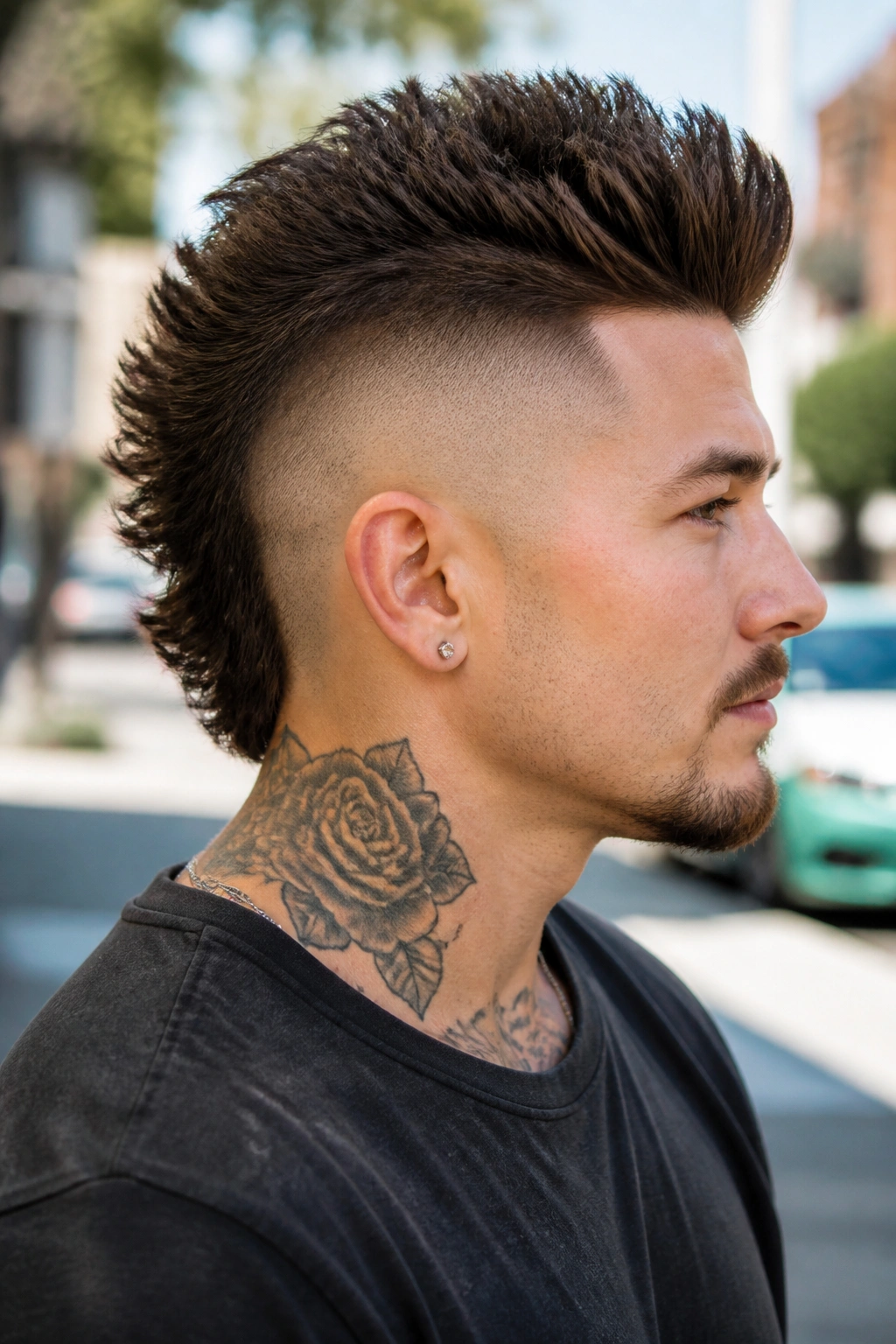
This is not a quiet haircut.
The burst fade curves around the ear and leaves a central strip of hair running from front to back, which creates that mohawk shape without making it look like a punk costume from the back row. Curls, coils, and coarse texture work well here because they give the strip some height and movement. If the top is straight and flat, the cut can look weak unless you style it up.
The edges matter a lot. A burst fade loses its shape quickly if the neckline and around-ear areas get fuzzy. That means more frequent cleanup than a taper or crew cut. Still, if you want something with energy, this is one of the strongest shapes on the list. Keep the top textured, not stiff. A crunchy mohawk is a bad idea. A lifted, flexible one looks much better.
22. Mullet
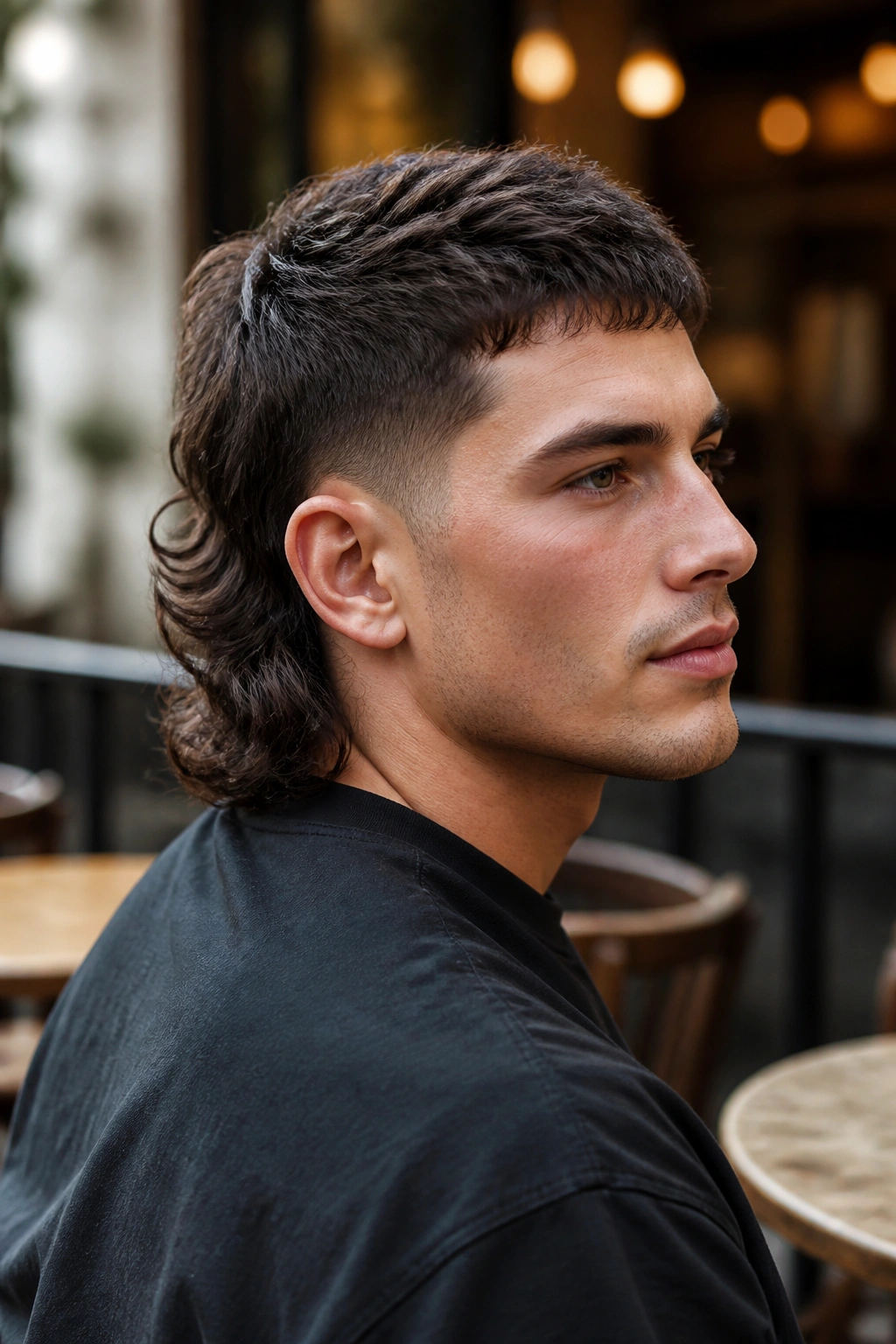
The modern mullet only works when the back is controlled.
Forget the joke version for a second. The better mullet has tighter sides, a clean front, and length left at the back with purpose. It can be shaggy, sharp, or curly, but it should look shaped rather than accidental. Wavy and curly hair often wear this cut better because the texture keeps the back from lying flat and lifeless.
Who Pulls It Off Best
- Men with natural texture.
- Men who do not mind regular shaping.
- Men who want something bold without shaving the sides bare.
- Men who keep the neckline tidy.
The mullet is not for everyone. That is fine. It is still a real haircut, and a good barber can make it look deliberate instead of goofy. The difference lives in the blend and the proportion. Too much length in the back turns it into a mess. Too little and it loses the point.
23. Shag
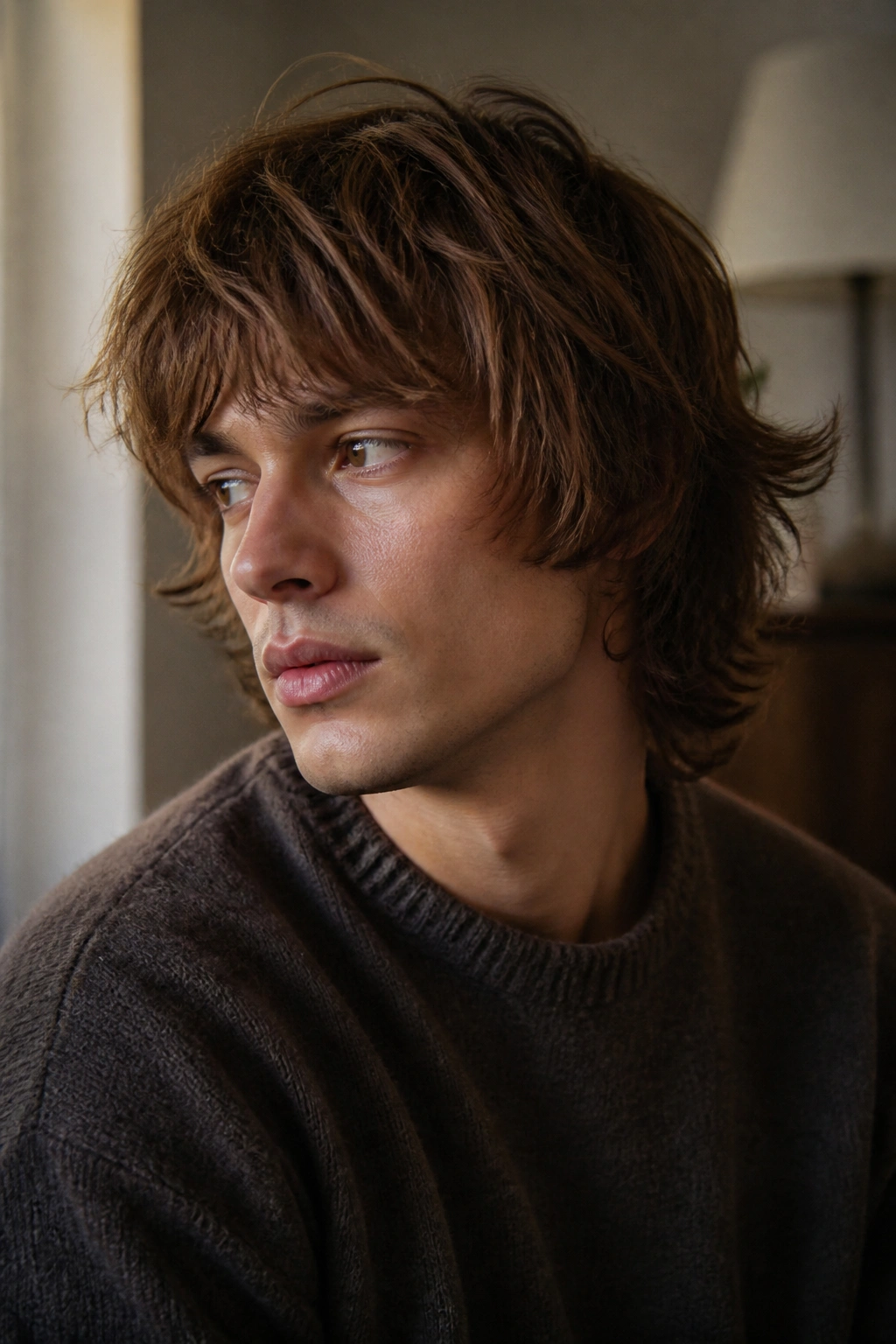
A shag should move when you shake your head.
That is the whole feeling of it. Layers, choppy ends, and a little unevenness give the cut a loose shape that works especially well on wavy and curly hair. It also suits thicker hair that gets bulky if it is cut too blunt. The top and sides are usually kept in balance rather than heavily disconnected, which keeps the style soft and wearable.
I like a shag when a client wants a cut that looks better a little messy than overly neat. Air-dry it, scrunch it, or use a diffuser if you have curls. A touch of light cream or leave-in conditioner keeps the layers from puffing into a triangle. If the hair is fine, the barber should be careful with over-layering. Too much removal and the cut starts looking thin instead of airy.
24. Man Bun with Taper
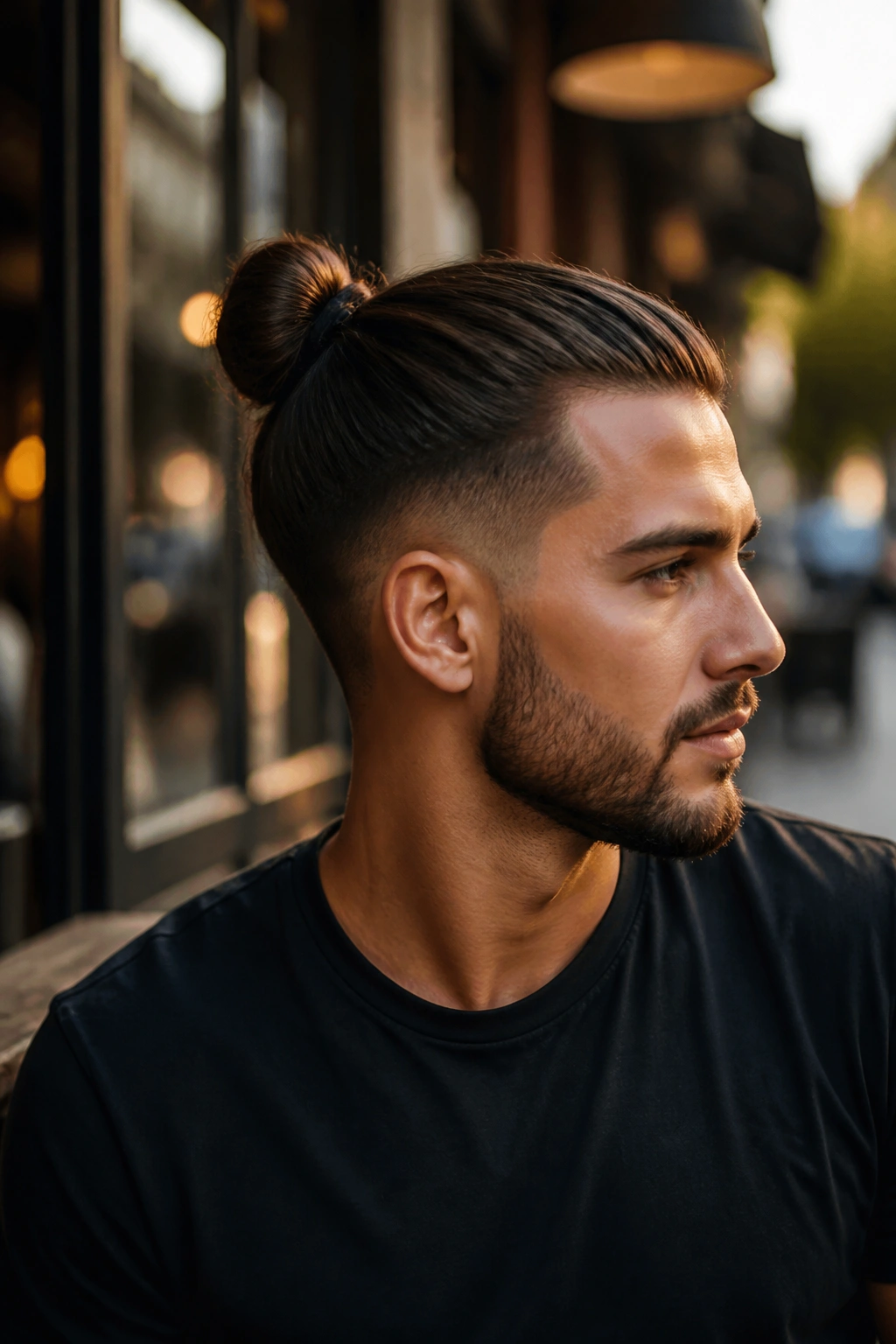
Is a bun a haircut or a hairstyle? With a taper, it becomes both.
The hair at the sides and nape is cleaned up so the bun sits on top of a tidy frame instead of looking like an afterthought. That taper is the part people skip, and it makes a huge difference. Long hair tied back with sloppy edges can look unfinished. Long hair with a neat taper looks deliberate. If your hair is thick, this combination can take a lot of bulk out of the sides without sacrificing length where you want it.
What to Ask For
- Clean taper at the temples and neckline.
- Keep enough length on top and through the crown to tie back comfortably.
- Blend the sideburns into the beard if you wear one.
- Leave the top long enough that the bun does not pull tight at the scalp.
A man bun needs maintenance, even when it looks relaxed. Stray hairs around the neck show fast.
25. Skin Fade with Hard Part
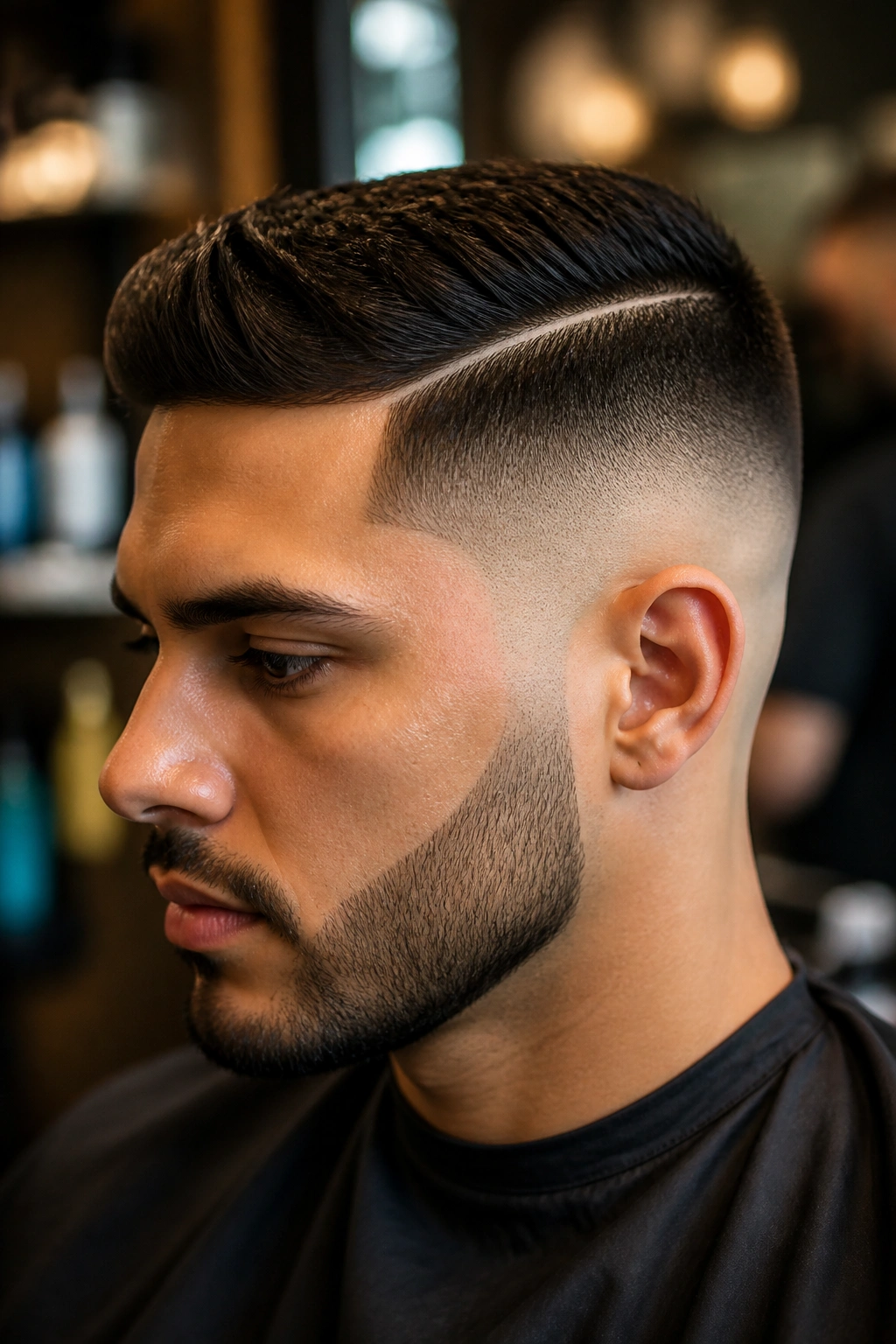
A skin fade with hard part is sharp, precise, and hard to ignore.
The fade drops to bare skin at the sides, then a hard part is carved in with a trimmer to separate the top from the side. That line gives the cut a strong edge, which works well with a comb-over, slick back, or even a short quiff. The top can be textured or smooth, but it should have enough length to show the part clearly. If the hair is too short, the line starts doing all the work and the cut feels forced.
This is one of the more high-maintenance styles on the list. The fade needs frequent cleanups, and the hard part grows out visibly fast. It can look excellent on men who want a crisp, clean, no-nonsense shape. It can also overemphasize a receding hairline if the contrast is too aggressive. A good barber will know when to soften the part a little and when to leave the line bold.
Final Thoughts
The best haircut is not the loudest one. It is the one that fits your hair density, your growth pattern, and the amount of effort you are willing to spend on a weekday morning.
If you are torn between two styles, pick the one that gives your barber more room to work with your natural texture. That small choice usually matters more than the trendiest name on the page.
Bring a clear photo, yes. Bring a real description too. Tell the barber how your hair behaves when it is dry, where it sticks up, and how much time you want to spend styling it. That conversation does more for the final result than any buzzy haircut name ever will.
