



Square faces are not hard to work with. They just punish lazy cuts faster than softer face shapes do.
A square face usually has a broad forehead, a strong jaw, and sides that read almost straight from temple to chin. That shape gives you a lot of structure, which is useful, but it also means a blunt line at the wrong place can make the whole face feel boxier than it really is.
The haircuts for square faces that work best usually do one of three things: soften the corners, break up the width with movement, or add a little vertical lift. I keep coming back to the ends first, because the ends are where a cut either helps you or hands you a problem.
You do not need to hide a square face. You need a haircut that plays a little smarter than the bone structure. Some of the options below are soft and airy, some are sharp on purpose, and a few are the kind of cuts that look simple until you realize how carefully they’re built.
1. Side-Swept Pixie with Tapered Sides
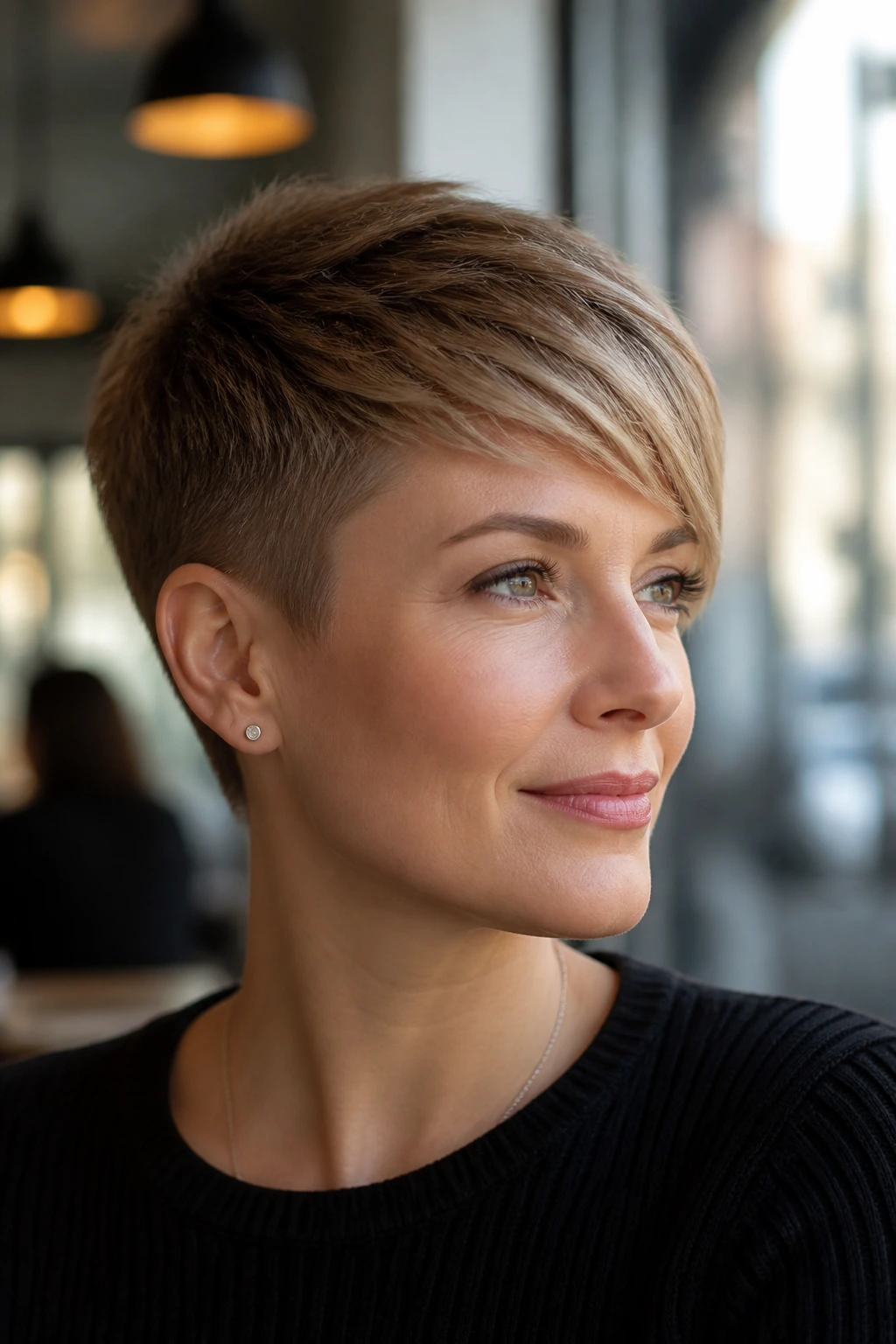
A pixie can be one of the sharpest haircuts for square faces, but only if the shape is controlled. The magic here is the diagonal line from the fringe, not the length on top by itself.
Why It Works
A side-swept fringe cuts across the forehead and pulls the eye off the jaw. That matters. Square faces already have strong symmetry, so a clean diagonal gives the eye somewhere else to go. Keep the sides tapered close to the head and leave enough length on top to brush forward or across, not straight up like a stiff little helmet.
Ask for soft texture through the top and a nape that follows the neck instead of flaring out. If your hair is thick, point cutting at the crown keeps the cut from feeling bulky. If it’s fine, a bit of lift at the roots is enough.
- Fringe: long enough to graze the brow line
- Sides: tapered, not puffed out
- Top: piecey, with direction
- Styling: matte paste or a light cream
Best move: keep the fringe movable. A frozen pixie turns boxy fast.
2. Curtain Bang Shag for Square Faces
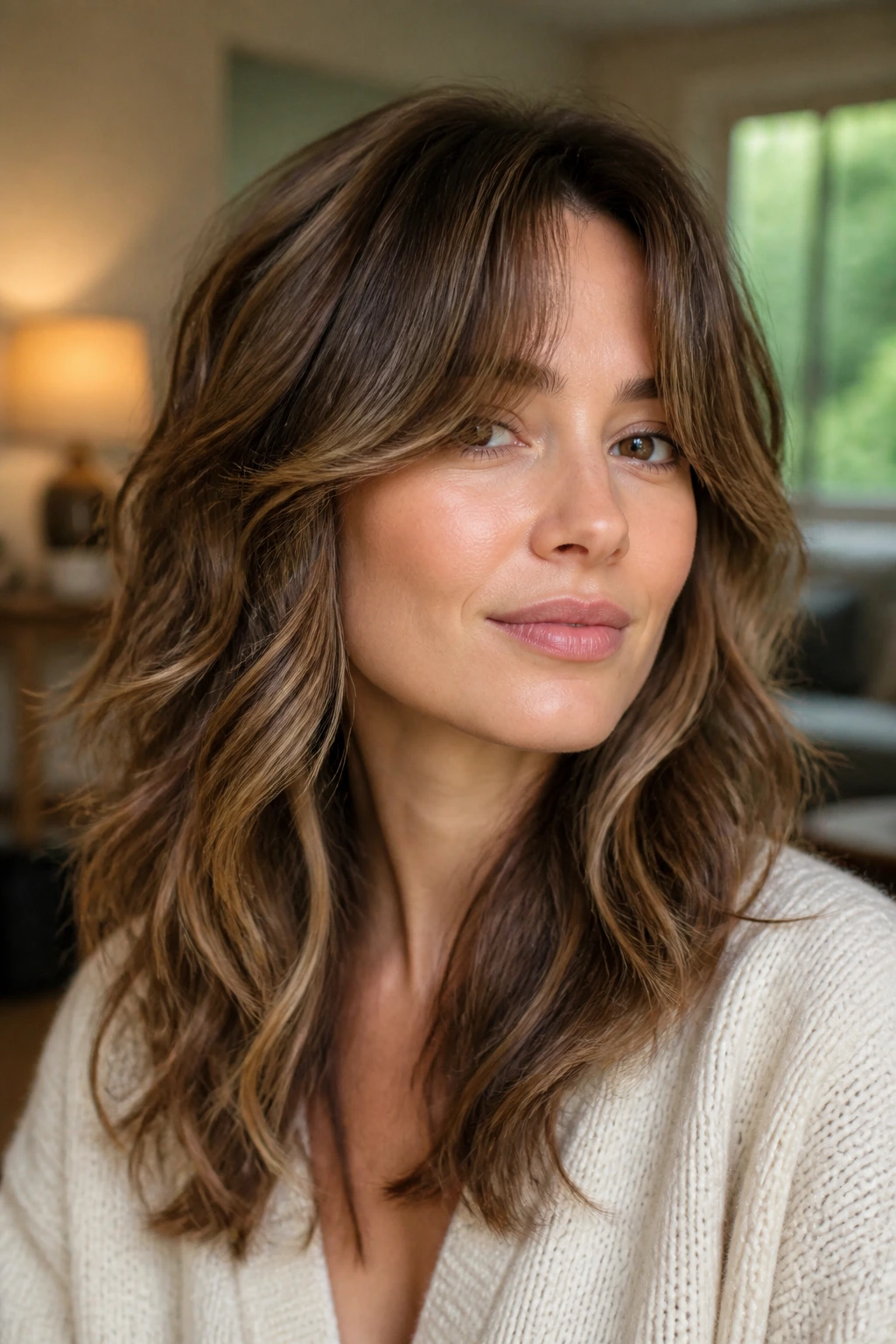
Why do curtain bangs help so much? Because they split the forehead line and soften the width without hiding your features.
The shag part does a lot of quiet work here. Those broken layers around the cheekbones and jaw stop the hair from sitting like one solid block. On a square face, that little bit of irregularity is a gift. It keeps the cut from echoing the face shape too neatly.
How to Ask for It
Tell your stylist you want longer curtain bangs that open at the center and drop toward the cheekbones. The shortest point should usually sit around the bridge of the nose or just below it. The layers around the face should stay soft, not choppy for the sake of being choppy. Choppy can be lovely. Choppy can also look like you lost a fight with thinning shears.
A good shag should move when you turn your head. If it just sits there, the shape is wrong. And no, it does not need to be messy to work.
3. Collarbone Lob with Soft Bends
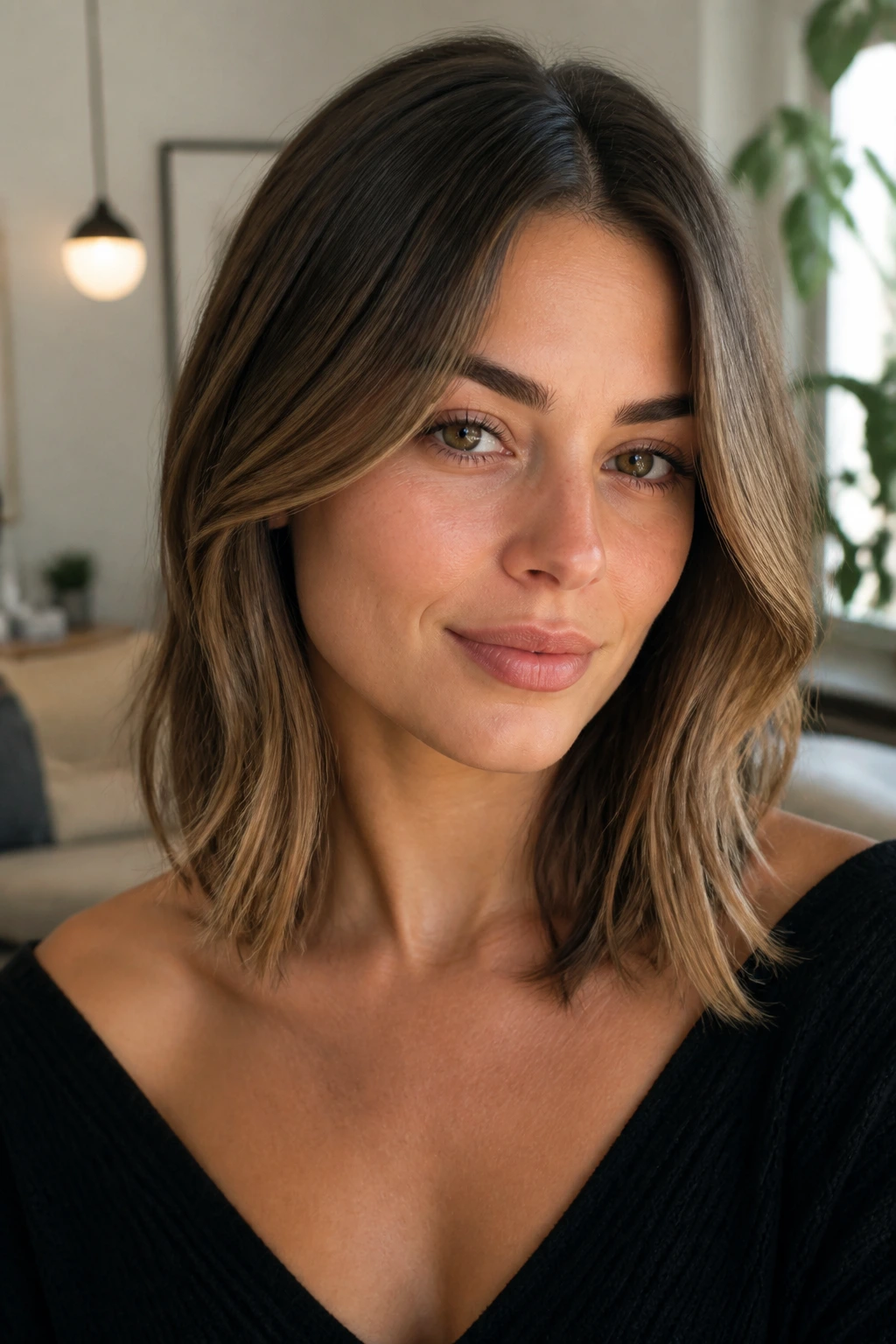
Picture hair that grazes the collarbone and flips just a little at the ends. That bend matters more than people think.
A collarbone lob works on square faces because it sits below the jaw but still keeps the neck and shoulders visible. That line lengthens the face without dragging everything down. Add a soft bend through the mids and ends, and the shape stops feeling rigid.
- Length should hit around the collarbone, not the chin
- Ends should curve lightly, not stay poker-straight
- A center part can work if the bend is soft
- A side part gives a little more asymmetry
This is one of those haircuts that looks plain on a hanger and much better on a person. The reason is movement. On a square face, movement near the lower half of the hair breaks up the hard edges around the jaw, and that softens the whole look without making the cut obvious.
4. Deep Side-Part Bob
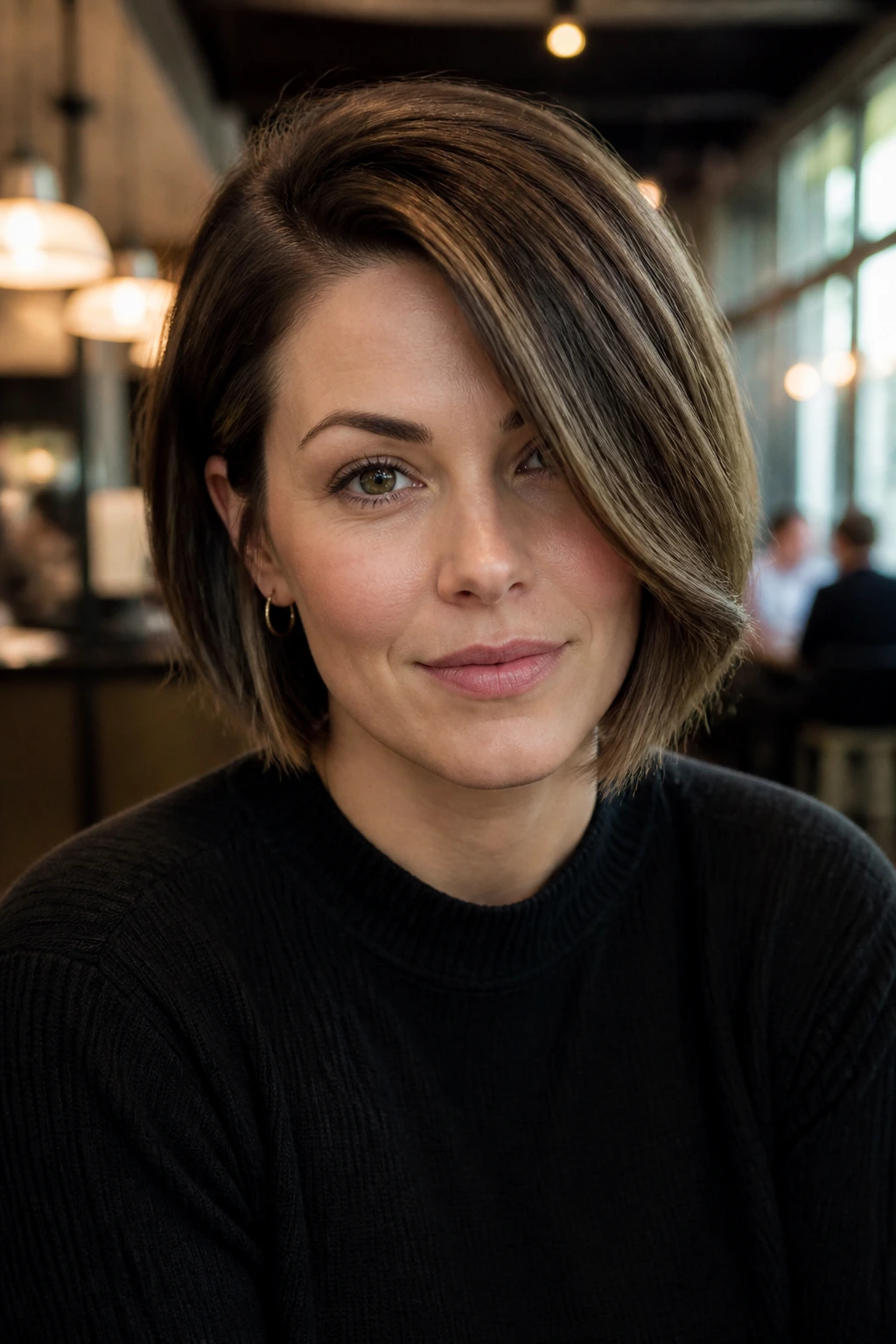
A square face does not always need softness; sometimes it needs a strong diagonal. A deep side part gives you that immediately.
The part itself shifts the weight of the haircut away from the center of the face, which changes how the forehead and jaw read together. Instead of two equal sides, you get a little imbalance, and that imbalance is flattering here. It feels deliberate, not fussy.
Keep the bob a little below the jaw or right at the cheekbone, depending on your texture. A deep side-part bob that lands exactly at the jawline can be tricky. Too blunt, and it turns boxy. Better to let it skim past the jaw with a soft edge or a slight bend under.
I like this cut most on straight or lightly wavy hair. It has enough structure to look polished, but the part keeps it from looking severe. A square face can wear severe. Still, you usually do not need more of it.
5. Long Layers with Cheekbone Fringe
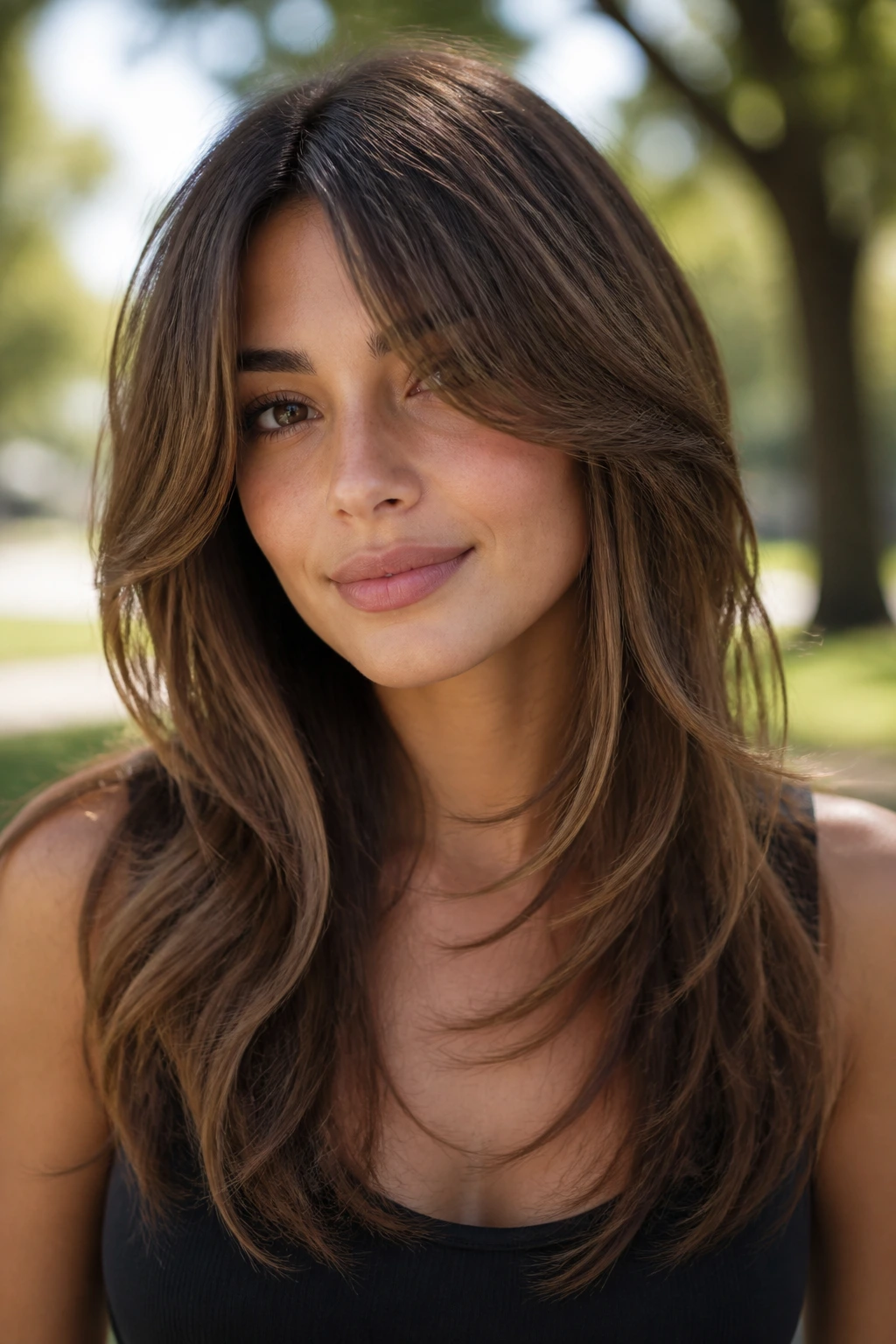
Long hair on a square face works best when the sides do not hang like curtains. That is where cheekbone-framing layers earn their keep.
The key is where the shortest face pieces land. If they stop around the cheekbone, they soften the transition from forehead to jaw and keep the hair from lying flat against the sides of the face. That little gap of movement changes everything. It makes the face feel less rigid and the hair look lighter.
The rest of the length can stay long, which is useful if you like to wear your hair up sometimes or pull it into loose waves. Long layers prevent the bottom from feeling heavy. They also help thick hair sit more neatly around the shoulders instead of exploding outward.
This cut is not flashy. That is the point. It works because the face pieces do their job quietly, and the longer lengths keep the whole shape vertical instead of wide.
6. Soft French Bob
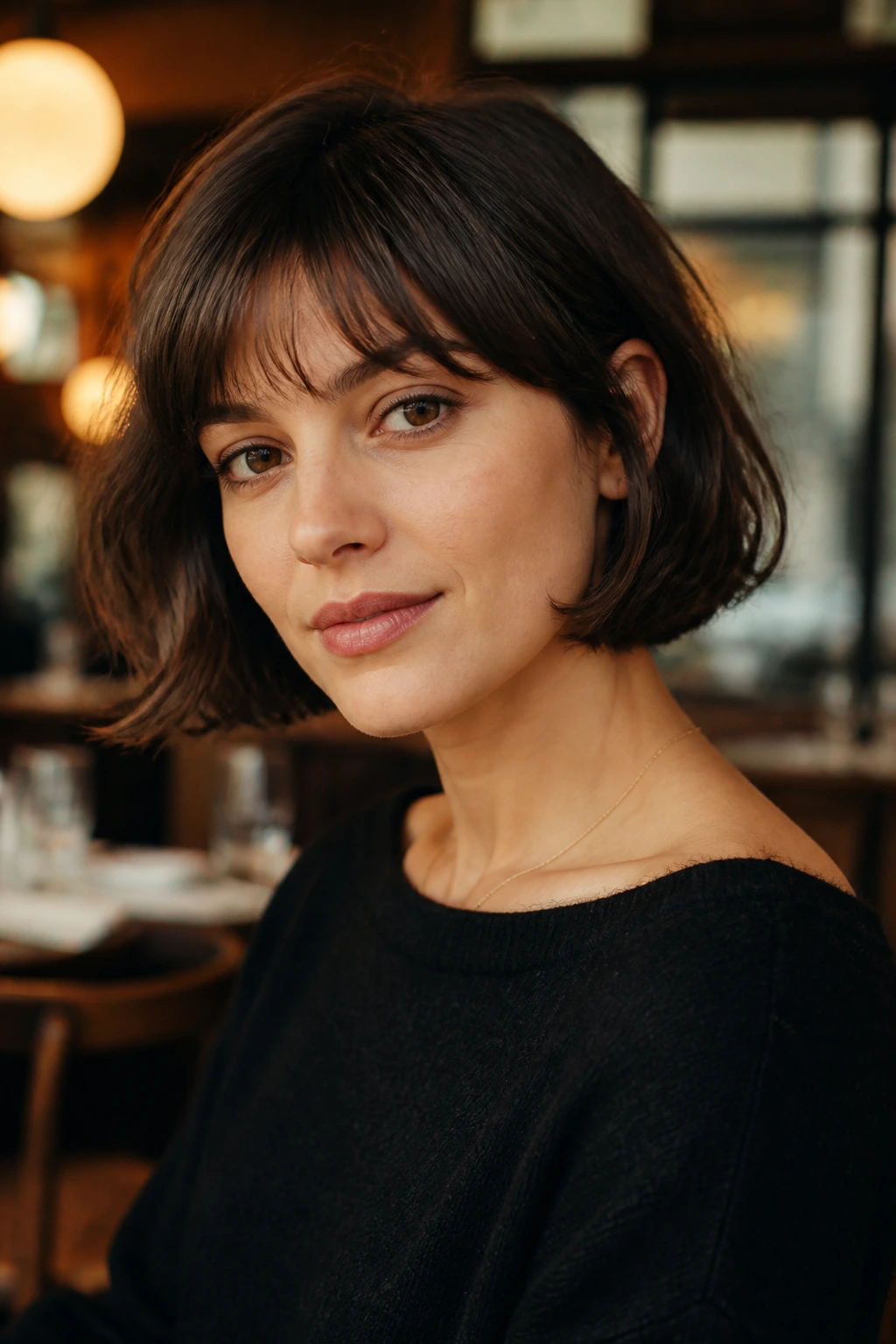
A blunt French bob can be too clean on some square faces. A soft French bob is where things get interesting.
The shape is short and chic, usually around the jawline or just under it, but the edges are softened with texture and a little bend. That softness is what keeps the cut from echoing the jaw too hard. Add a light fringe or a piecey bang, and the whole look becomes much friendlier to a square face.
What to Tell Your Stylist
Ask for texture through the perimeter and avoid a hard, straight line at chin level. That line can make the face feel wider. A tiny bit of length past the jaw often works better than a cut that hits right on it.
Ask for:
- a length just below the jaw
- soft, broken ends
- a fringe that falls lightly, not in one heavy curtain
- shape that curves in rather than flares out
This is one of those cuts that looks casual and careful at the same time. Hard to fake. Even harder to overdo.
7. Butterfly Cut
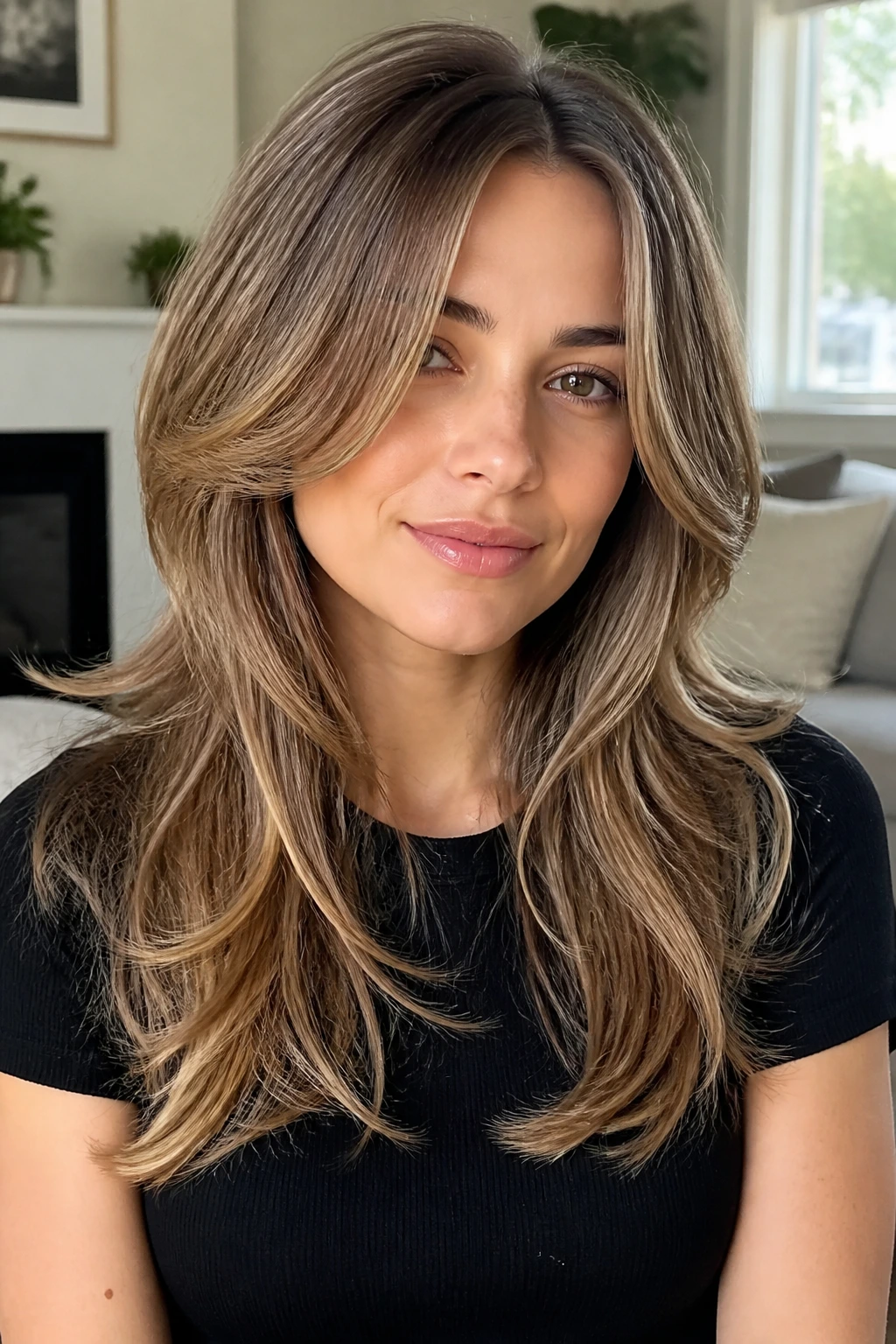
A butterfly cut can feel dramatic, but on a square face it usually works because the shorter layers stay high and the longer layers keep everything flowing down.
The shorter face-framing pieces start near the cheekbones, which is the good part. That draws attention upward and inward. The longer bottom length keeps the cut from getting too wide through the jaw. So you get lift near the face without the boxy outline that a heavy mid-length cut can create.
I like this cut on hair that already has some body. Wavy hair makes it easy. Straight hair can wear it too, but you’ll need a round brush or a large hot tool to show the separation between the layers. Without that, it can flatten fast.
A butterfly cut is a little bit glam and a little bit practical. That’s a rare combo. It also grows out nicely, which matters because a lot of layered cuts lose their shape faster than people expect.
8. Shoulder-Length Cut with a Center Part
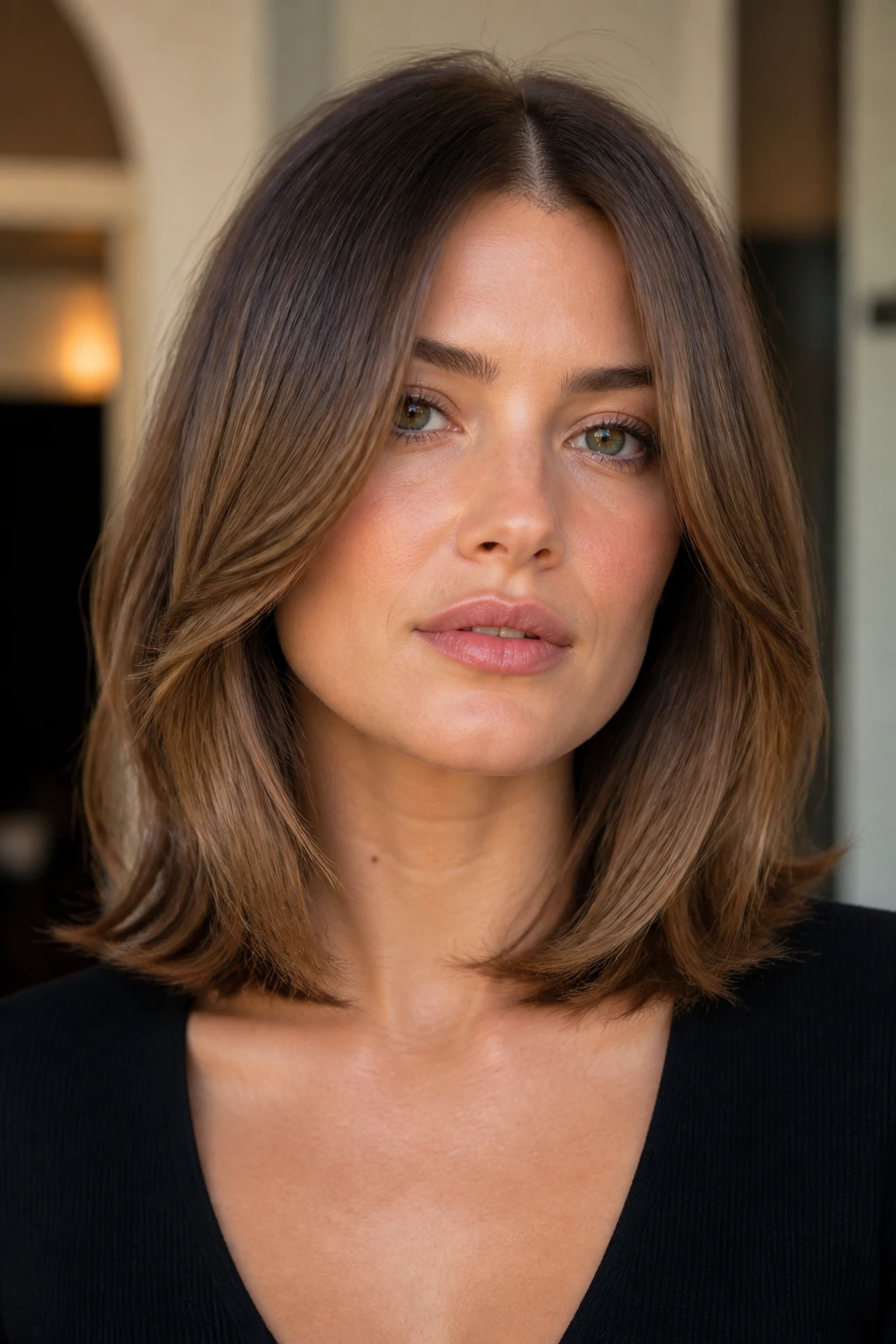
A center part on a square face is not the enemy. A flat center part is the enemy.
That sounds picky, and it is. The center part can look lovely when the hair around it has bend, softness, or a bit of internal layering. Then the eye moves down the face instead of getting stuck on the width of the forehead and jaw.
Best With
This cut tends to shine on hair that has some natural wave or a little density. Straight, fine hair can still wear it, but the ends need help. A soft bend with a blow-dryer brush or a large iron prevents the lengths from hanging like a sheet.
If you want to keep it simple, ask for:
- a center part with face-framing layers
- ends that curve away from the jaw
- no heavy bulk at the chin line
It’s a quiet haircut. Not dramatic. But quiet cuts can be the smartest ones when the face already has strong lines.
9. Angled A-Line Bob
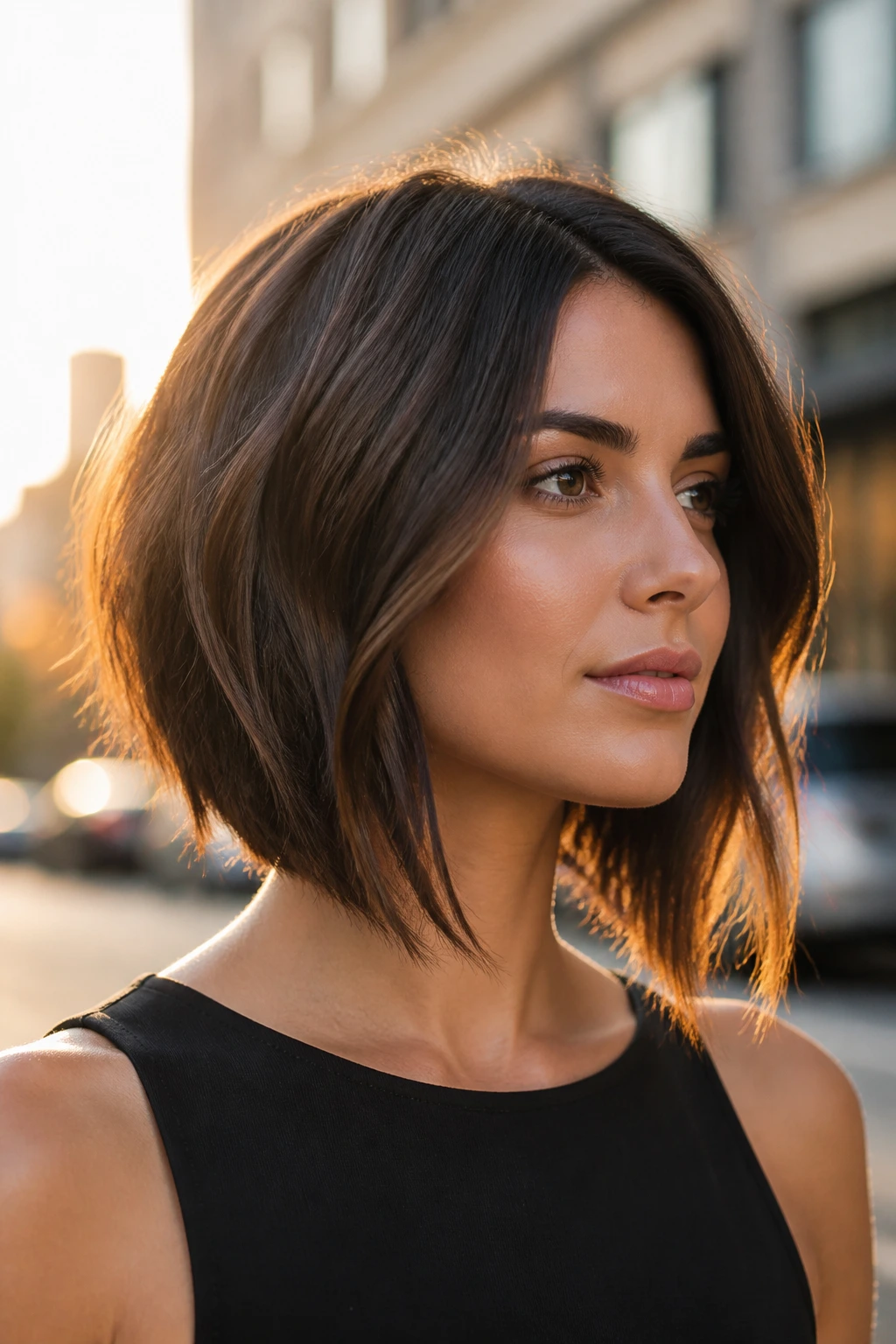
Unlike a boxy bob that stops at the same point all around, an A-line bob is longer in front and shorter in back. That small angle does a lot of work.
On square faces, the forward length helps pull the eye downward along the diagonal, which softens the jawline instead of boxing it in. The shorter back keeps the nape neat and gives the cut a bit of lift, so it does not feel heavy.
This is one of the cleanest choices if you like a polished look. It can be sharp, but it’s a useful kind of sharp. The front pieces should usually fall below the jaw, or at least skim it with some bend. If they land right at the widest part of the face, the shape can get too square too fast.
Best for straight or slightly wavy hair. Curly hair can wear an A-line bob too, though the angle needs to be adjusted so the curls do not puff outward at the jaw.
10. Long Straight Cut with Invisible Layers
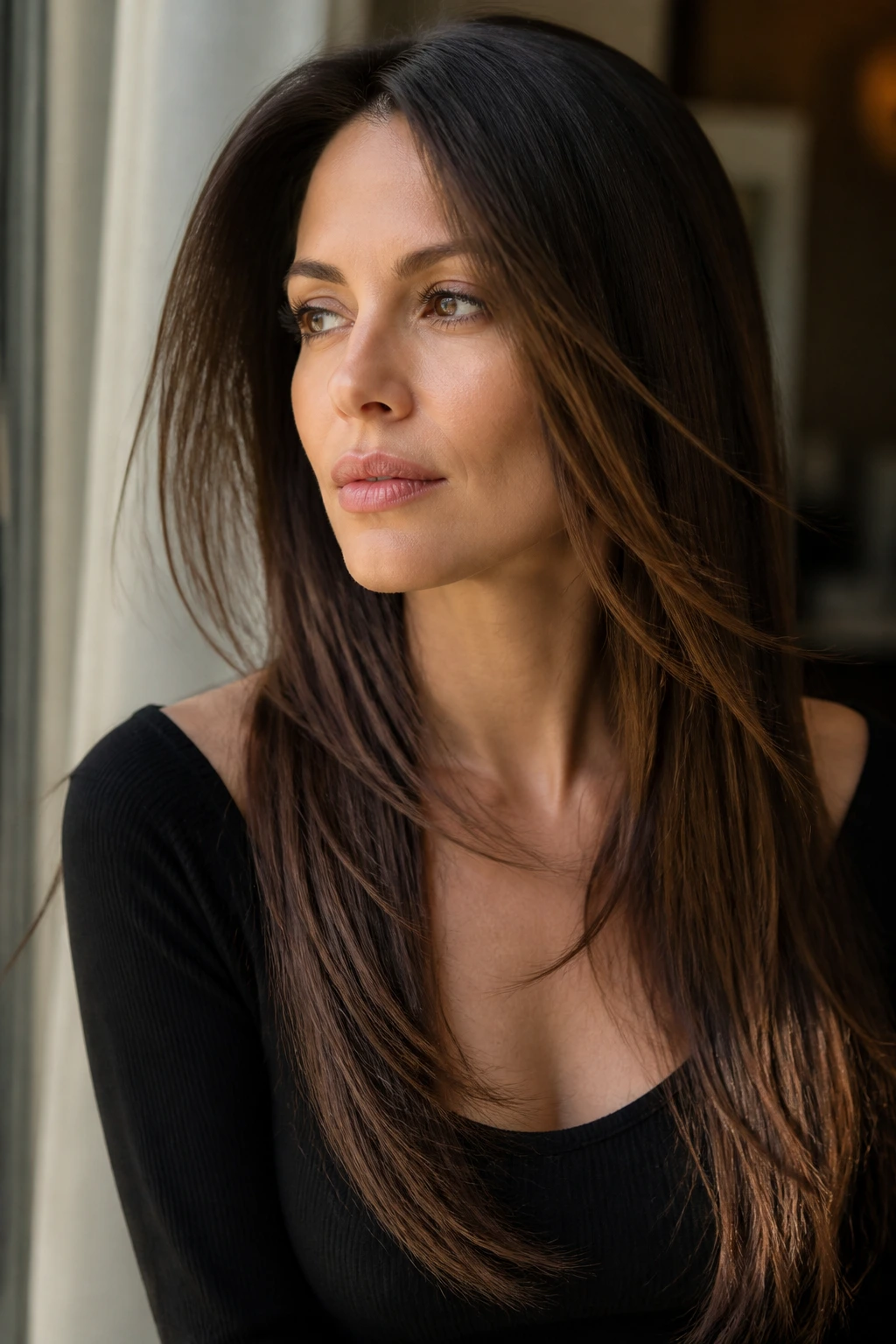
Run your fingers through a long cut with invisible layers and the ends move instead of hanging like a curtain. That is the whole trick.
Square faces can wear long straight hair beautifully, but only if the line is broken up a little. Invisible layers do that without taking away length. They keep the hair from forming one blunt block on both sides of the face, which is where the trouble starts.
- Ask for subtle internal layers, not obvious steps
- Keep the ends slightly beveled with point cutting
- Add a soft side part if the center line feels too strict
- Use a smoothing cream, but only a small amount
This style is especially good if you like hair that can go from polished to undone with one quick pass of a brush. It looks best when the ends are healthy. Split ends make long straight cuts look tired fast, and that is not the mood we want here.
11. Wispy Bangs and Medium Layers
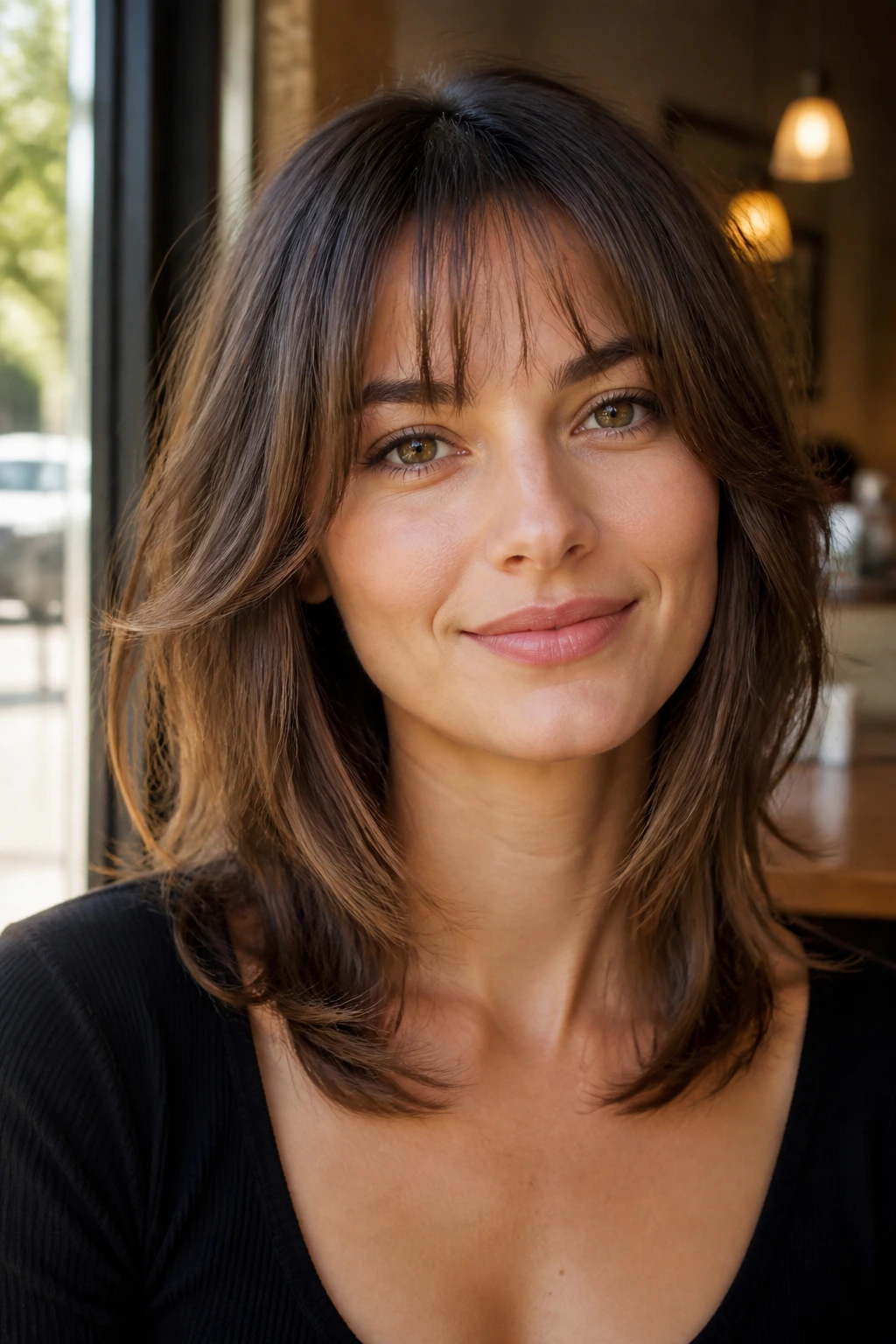
Heavy bangs can box in a square face. Wispy bangs do the opposite.
They let a little forehead show through, which keeps the top of the face lighter. The point is not to cover everything. The point is to soften the width without building a hard horizontal line across the forehead. Medium layers below the bangs do the rest, moving the eye down the face in a smoother way.
I like wispy bangs most when they stay loose at the temples. The corners should feather into the side pieces, not sit in one blunt strip. If the fringe gets too dense, the square face starts to feel stronger rather than softer. That happens fast.
This cut suits people who want bangs without a full commitment to a heavy fringe. It also grows out gracefully, which matters more than people admit. A fringe that only looks good on day one is not much of a fringe.
12. Rounded Curly Crop

Curly hair has an advantage here: it already brings softness. The job is to shape it so the curl pattern works with the face, not against it.
A rounded curly crop keeps the silhouette curved around the head instead of flat at the sides. That curve is useful on a square face because it blurs the jawline and keeps the overall shape from looking too angular. The outline should feel round, airy, and lifted at the crown.
Shape Notes
Tell your stylist you want roundness through the sides and crown, not a triangle or a pyramid. That distinction matters a lot with curls. A triangle adds width where you do not want it. A rounded crop does the opposite.
A few useful details:
- Keep the shape balanced at the temples
- Let curls spring away from the jaw
- Avoid a hard, straight edge at chin level
- Diffuse with the head tipped slightly forward for lift
This cut can be short and still feel soft. That is its real strength.
13. Lob with Flipped Ends
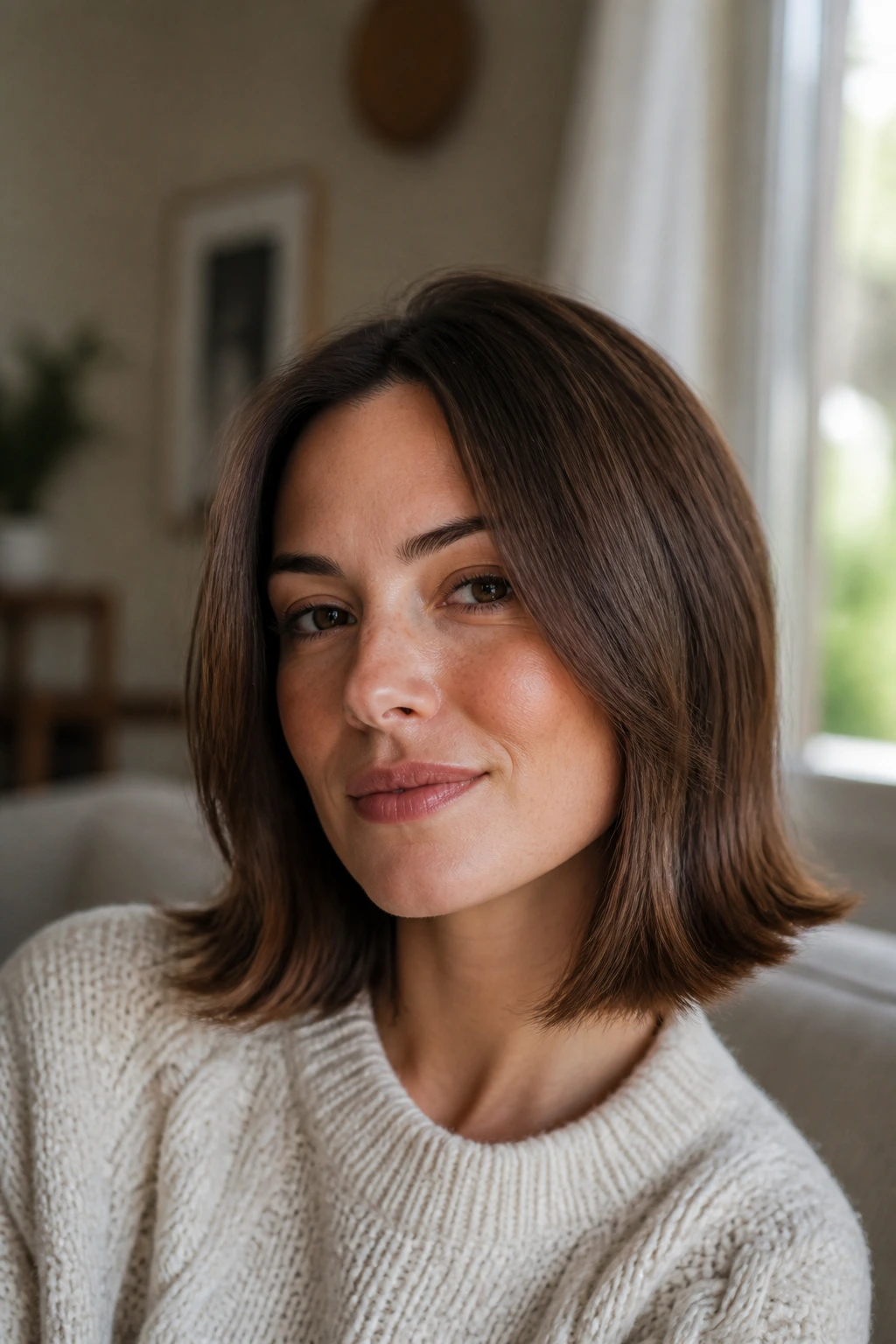
A lob with flipped ends has a little old-school energy, and I mean that in a good way. The outward flip breaks the straight line that often makes square faces look boxy.
The flip can be subtle. It does not need to look like a pageant blowout from thirty years ago. A gentle bend out from the collarbone is enough. The motion at the bottom pulls the eye away from the jaw and keeps the ends from sitting flat against the neck.
This cut works especially well if your hair naturally wants to bend. If it does not, a round brush or a flat iron curve at the last 2 inches can create the shape. Keep the top smooth and the ends lively. That contrast is what makes it work.
A lot of square-face advice gets stuck on bangs or no bangs. I think that misses the point. Sometimes the answer is down at the bottom of the haircut, where the ends decide whether the shape feels square or soft.
14. Feathered Layers Below the Shoulders
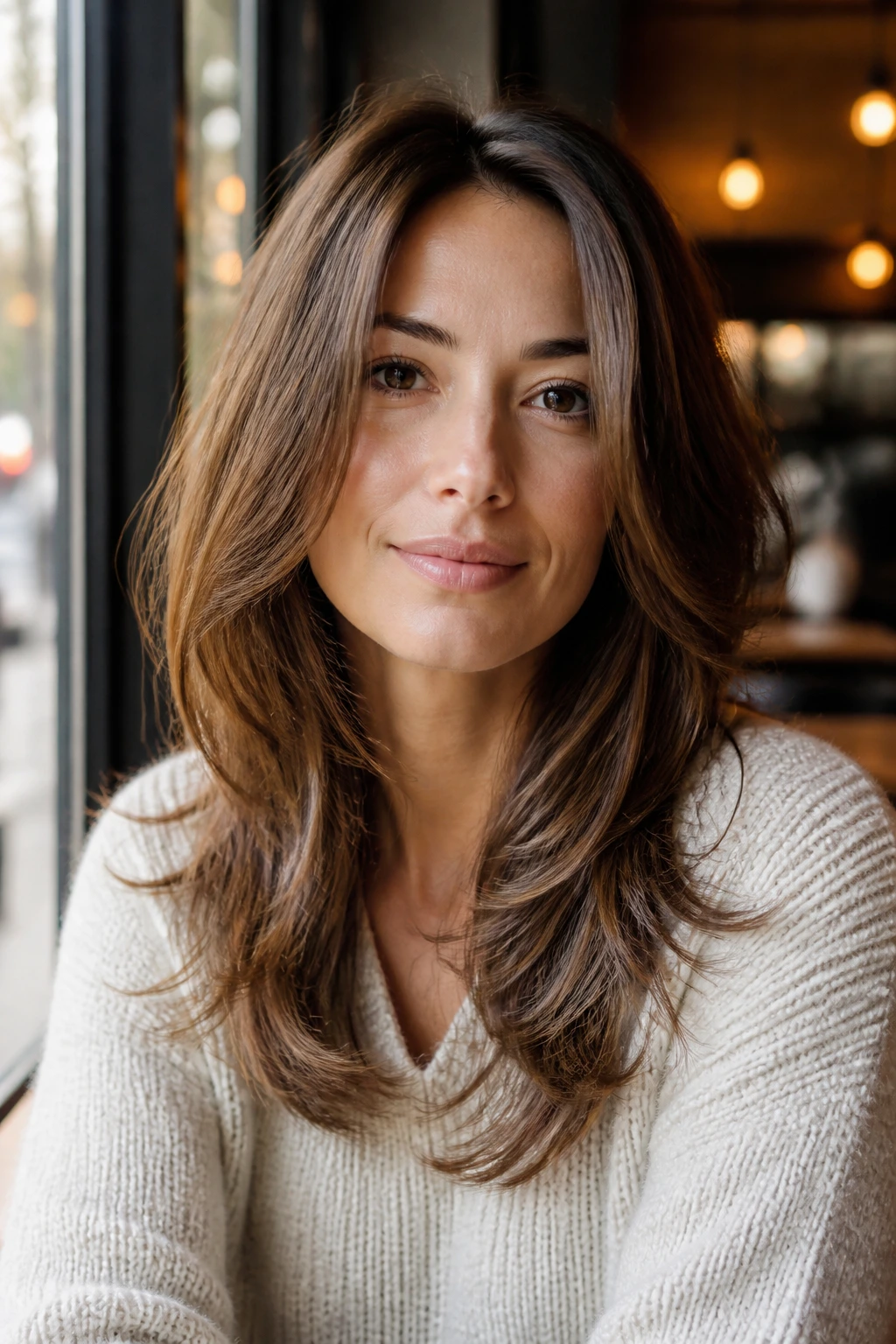
Unlike choppy layers that can look piecey in a bad way, feathered layers blur the edge. That is why they’re so helpful on a square face.
Feathering lets the hair taper out lightly instead of ending in a heavy block. When the layers start below the shoulders, they soften the lower half of the face without crowding the jaw. That makes the whole silhouette feel longer and more relaxed.
This cut is especially kind to thick hair. Thick hair can look beautiful on a square face, but when it’s one solid mass, it can make the jaw line feel stricter. Feathering breaks that up. It also gives coarse hair a bit more swing, which is never a bad thing.
If you want movement without obvious steps, this is a smart place to land. It’s not loud. It just works, and it works for a long time before it needs much fuss.
15. Bottleneck Bangs on Mid-Length Hair
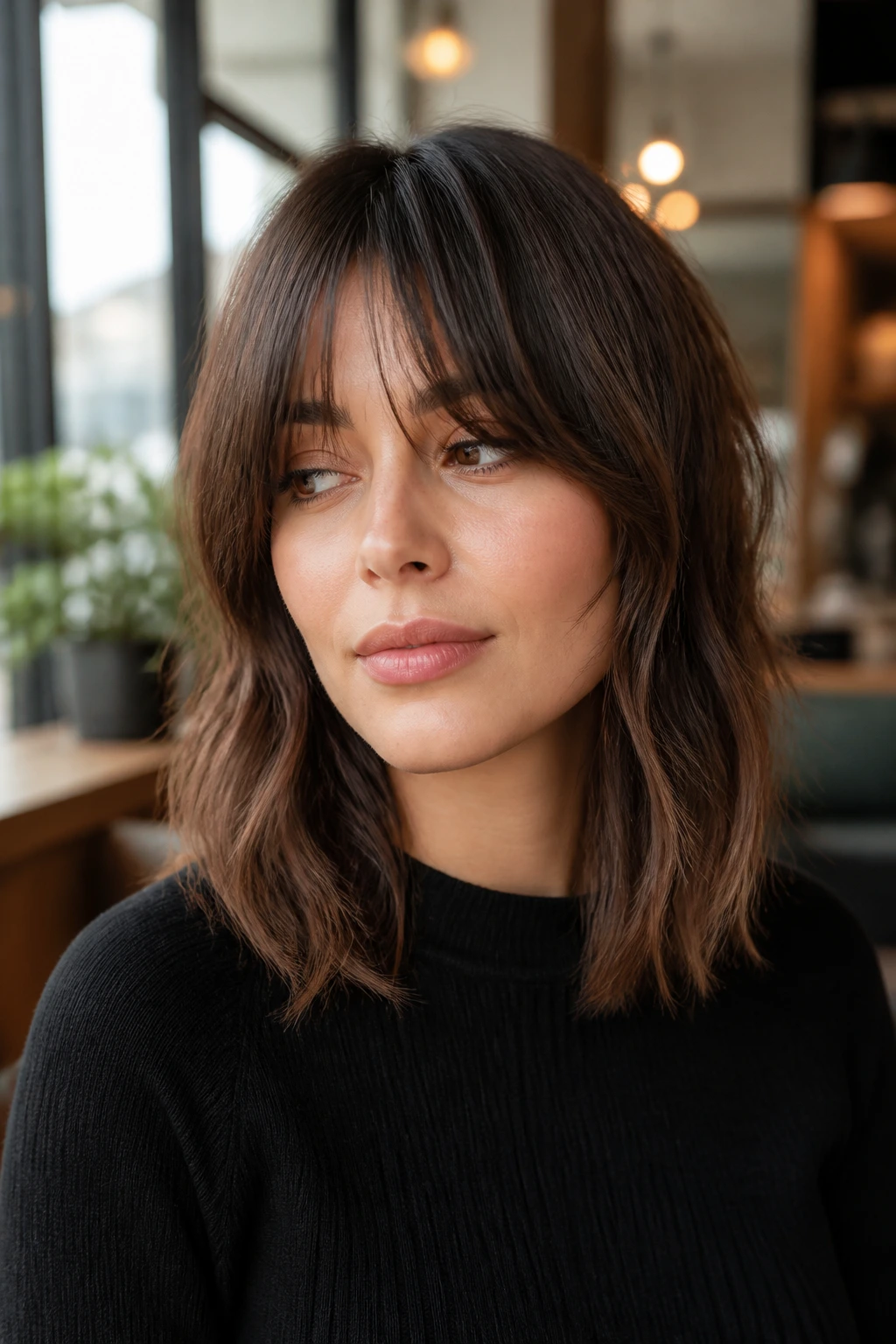
Why do bottleneck bangs flatter square faces so often? Because they start narrow between the brows and open out around the cheekbones, which creates a soft diagonal line right where you need it.
That shape matters more than people realize. Square faces can look strong in the forehead and jaw at the same time, so a fringe that widens gently near the middle of the face helps balance both ends. It’s softer than a blunt bang and more controlled than a curtain fringe that splits too wide too soon.
How to Wear Them
The best length is usually one that can skim the lashes in the center and blend into the sides around the cheekbone. Keep the sides touchable and light. If the fringe gets too thick, the face starts feeling boxed in again.
Bottleneck bangs also work because they give you options. You can wear them blown down, swept to the side, or mixed into a mid-length cut with layers. They are not fussy. That is part of the appeal.
16. Tapered Pixie with Height at the Crown
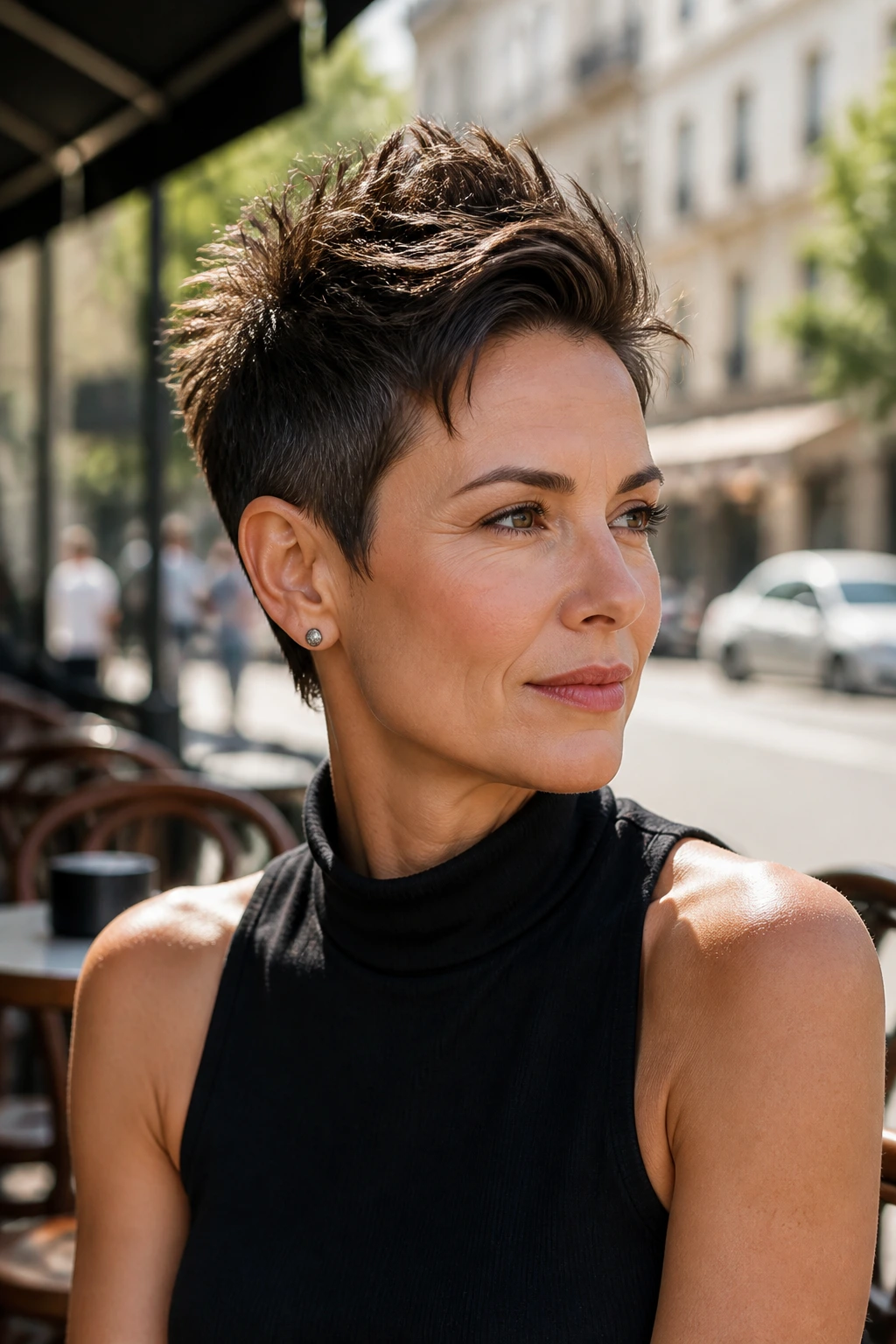
A tapered pixie with a little height at the crown stretches a square face in a good way. It adds vertical lift, which is useful when the jawline is already strong.
The sides should stay close and neat. The top should have enough length to rise off the head a bit, not in a stiff spike, but in a soft, shaped lift. That contrast between narrow sides and taller top keeps the face from reading wide.
- Crown length: long enough to lift with fingers
- Sides: tight, but not shaved unless you want that edge
- Nape: clean and tapered
- Product: lightweight wax or paste, not glossy gel
This is a confident cut. It shows the face. If that sounds too exposed, it probably is not your first choice. But if you want short hair that brings out the bone structure rather than hiding it, this is one of the cleanest options on the list.
17. Soft Wolf Cut
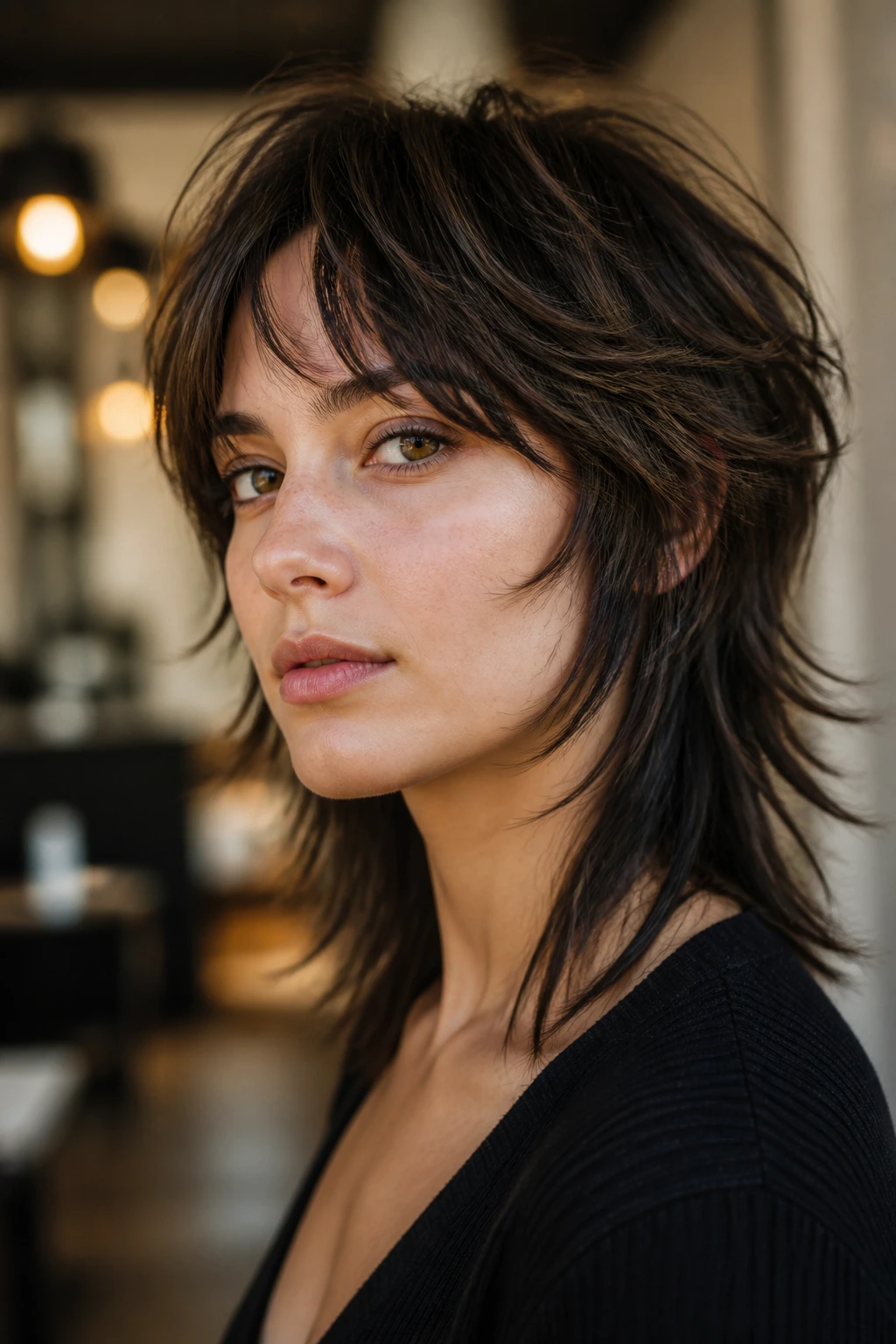
A wolf cut can go wrong fast on a square face if the sides puff out in the wrong places. Softening it changes the whole story.
The shorter layers at the crown add lift, while the longer pieces keep the shape from looking too full at the jaw. That’s the balance. The cut should feel shaggy, not jagged. I’d keep the cheekbone layers a little longer and let the texture live mostly around the crown and the ends.
This is a good choice if your hair has wave, bend, or a bit of natural mess to it. Straight hair can wear it too, but it needs styling to show the separation. A square face and a stiff wolf cut can look too harsh together. A soft one avoids that.
There’s a reason people keep coming back to this shape. It has movement. And movement, on a square face, does a lot of the flattering work for you.
18. Textured Blunt Bob
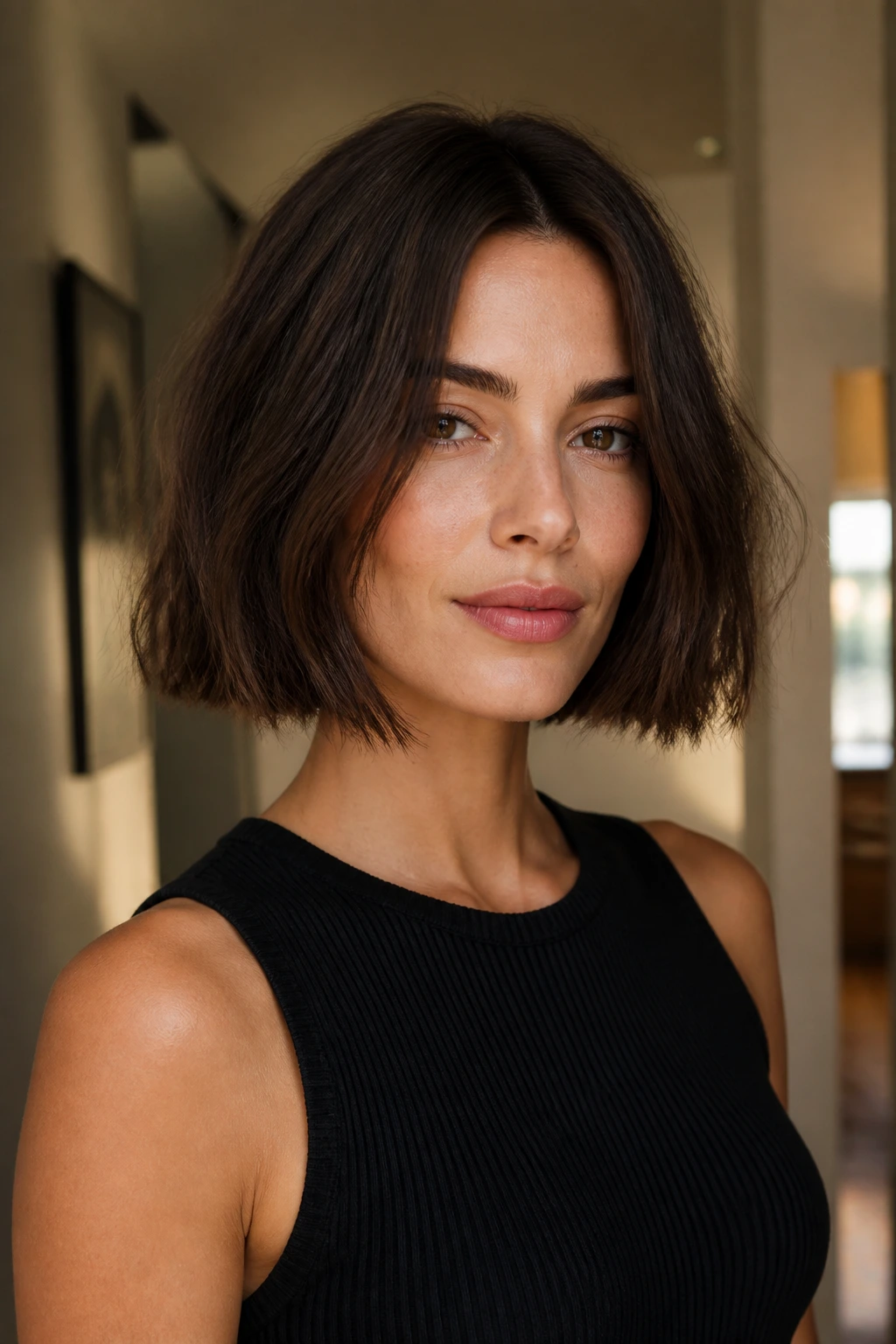
Blunt does not automatically mean bad for square faces. The trick is texture, placement, and a bit of restraint.
A textured blunt bob keeps the clean outline but removes some of the hard edge. That makes it easier to wear than a pure one-length bob that stops exactly at the jaw. If the bob sits a little below the jaw and has point-cut ends or soft internal movement, it can look crisp without feeling severe.
Watch the Length
Length is the whole game here. If it hits right at the widest part of the jaw, it can make the face look boxier. Below that point, it starts to work with the structure instead of repeating it.
A side part also helps. It breaks up the symmetry enough to keep the look from feeling too exact. This haircut is a good pick for people who like neat lines but do not want the face shape mirrored back at them too literally.
19. Long Waves with Face-Framing Pieces
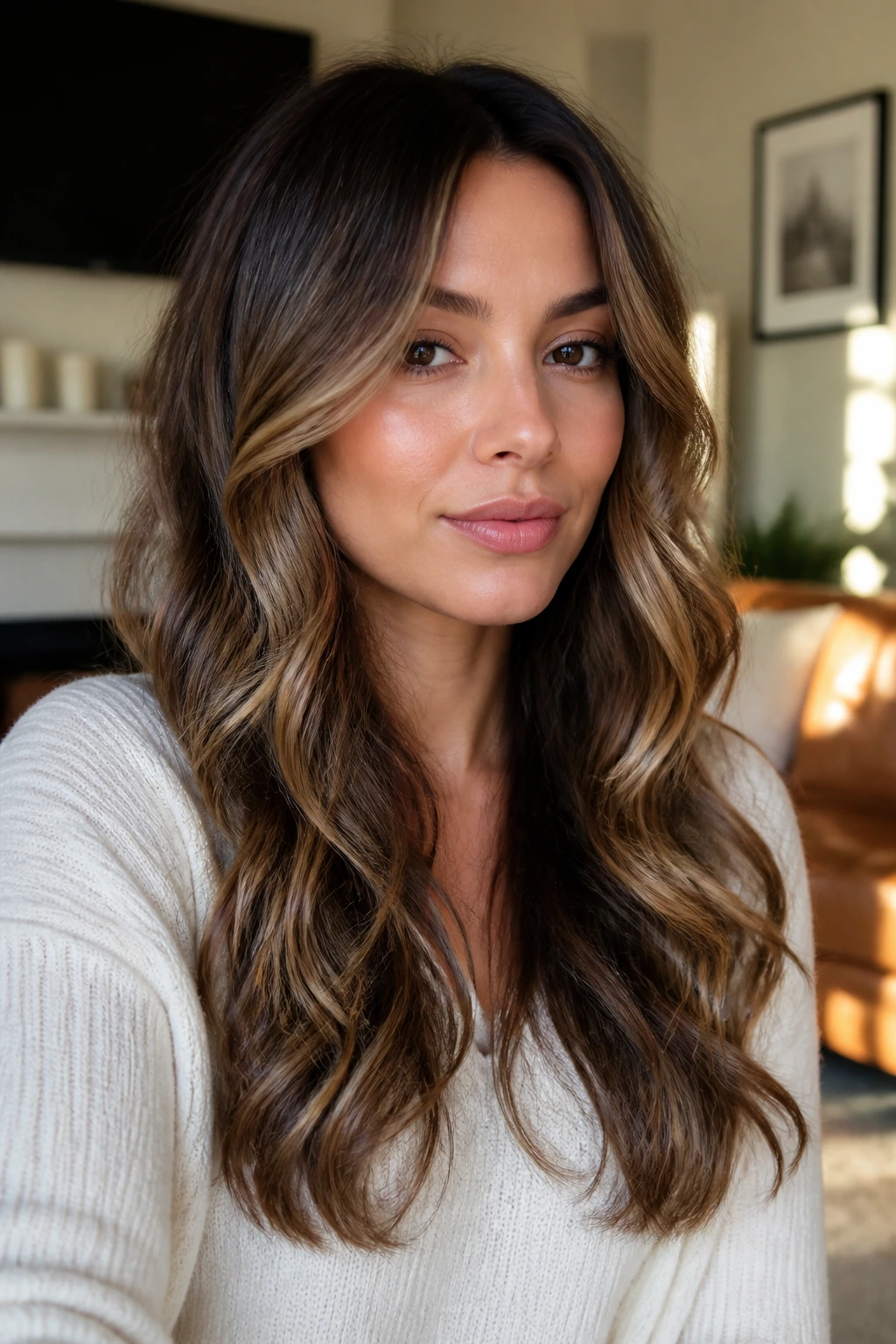
Long waves are one of the easiest haircuts for square faces to wear, but the face-framing pieces are what make them useful rather than generic.
Those front pieces should start around the cheekbone or just below it. That placement softens the transition from forehead to jaw and keeps the waves from falling straight down the sides of the face like drapes. The waves themselves add movement, which breaks up the angular look of the jaw.
If you use a curling iron, keep the sections around 1 inch wide and leave the last inch out for a looser finish. Brush the waves out once they cool. That small step matters. Tight curls can look too formal here, while brushed waves feel lighter and less fixed.
This cut is a safe choice, sure, but safe does not mean dull. When the layers and waves are placed well, it looks relaxed in a way that never really goes out of style.
20. Tucked-Under Mid-Length Cut
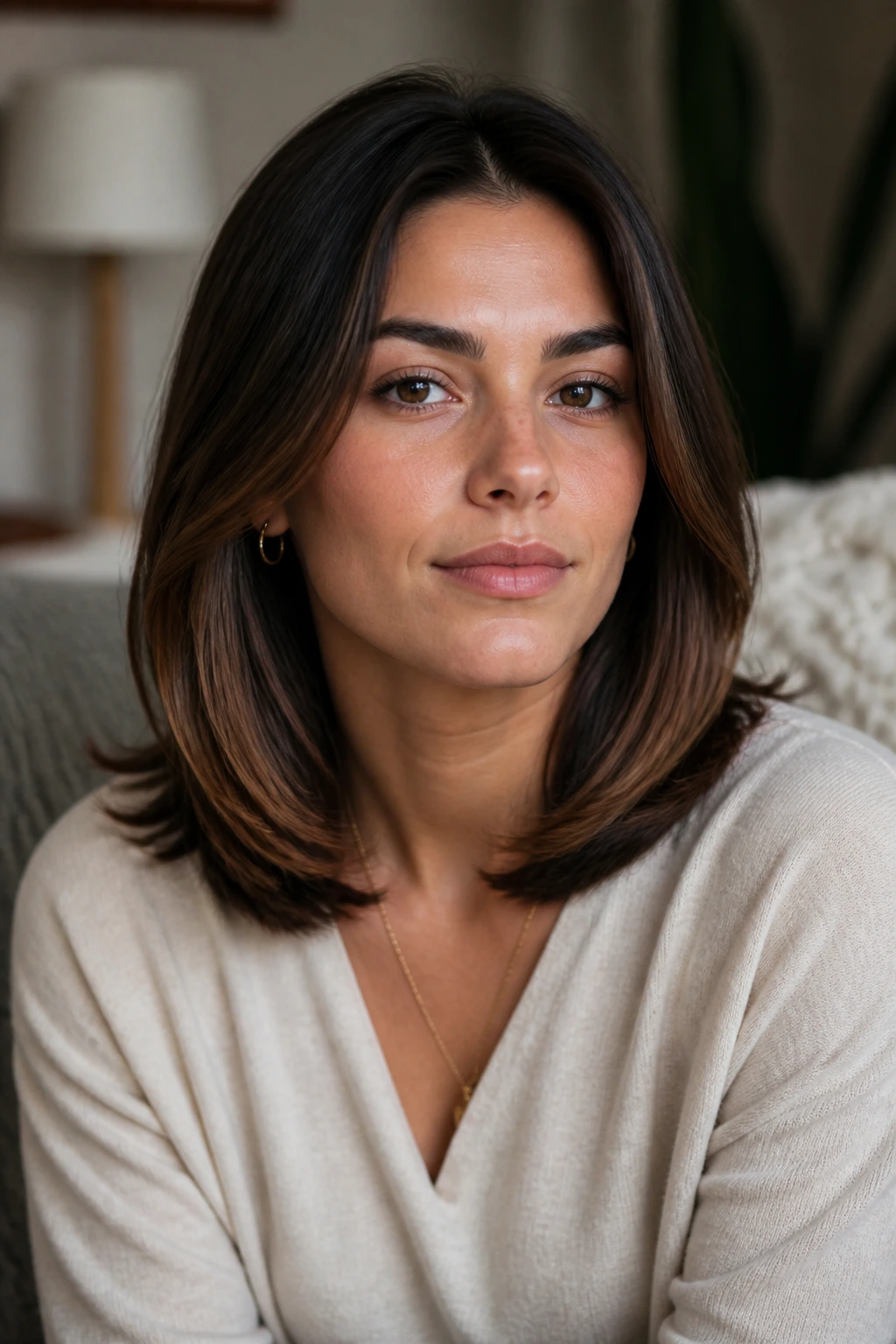
A mid-length cut that tucks under at the ends can be quietly flattering on a square face because it curves the eye inward instead of outward.
That curve matters. A straight edge at the bottom can make the jaw feel more prominent. A tucked-under edge softens the line and creates a little shadow under the hair, which helps the face look less boxy. It’s a small detail with a big effect.
What Makes the Curve Matter
The curve should start around the last 2 inches of hair, not halfway up the head. Too much bend can look dated or overdone. A little undercurve is enough. If the hair is thick, a round brush and a blow-dry smooth down the ends without making the shape stiff.
This cut is especially useful if you like a shoulder-grazing length but do not want your hair hanging straight and heavy. It gives shape without asking for much drama.
21. Short Curly Bob
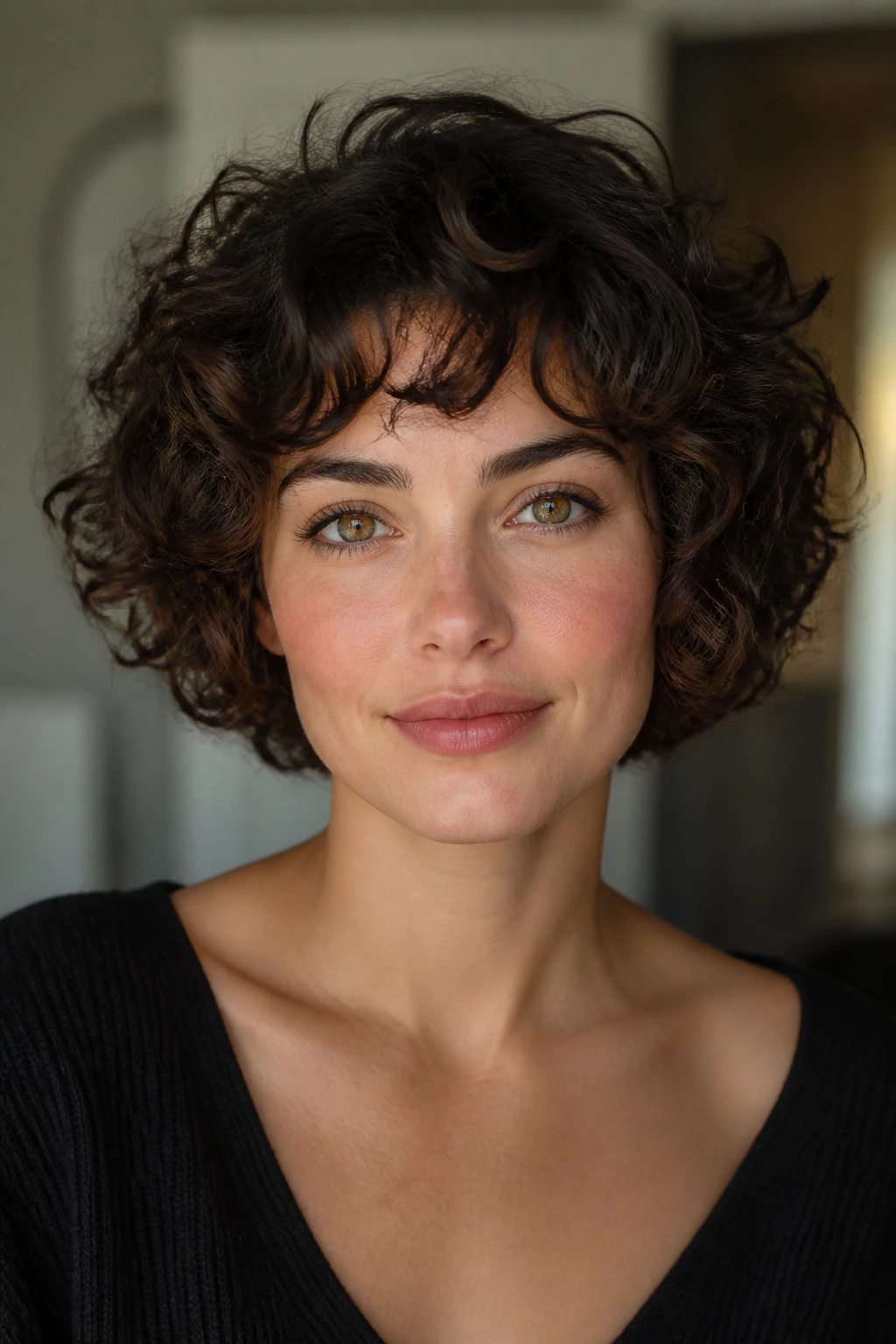
Why does a short curly bob work so well on some square faces? Because curls break the straight lines for you.
The important part is the outline. You want a bob that stays rounded and airy around the cheeks rather than puffing out wide at the sides. If the curls are allowed to spring upward a little, the whole face feels lighter. If they’re cut too blunt or too heavy, the shape can get wide fast.
- Keep some height at the crown
- Avoid a dense, flat fringe unless it’s very soft
- Let the curls sit a touch below the jaw
- Shape the sides so they do not flare at the widest point
This is a short haircut with personality. It can look playful, polished, or somewhere between the two. And because curls already bring texture, you often do not need much styling beyond a good cut and a decent diffuser.
22. Curved Shoulder-Length Cut
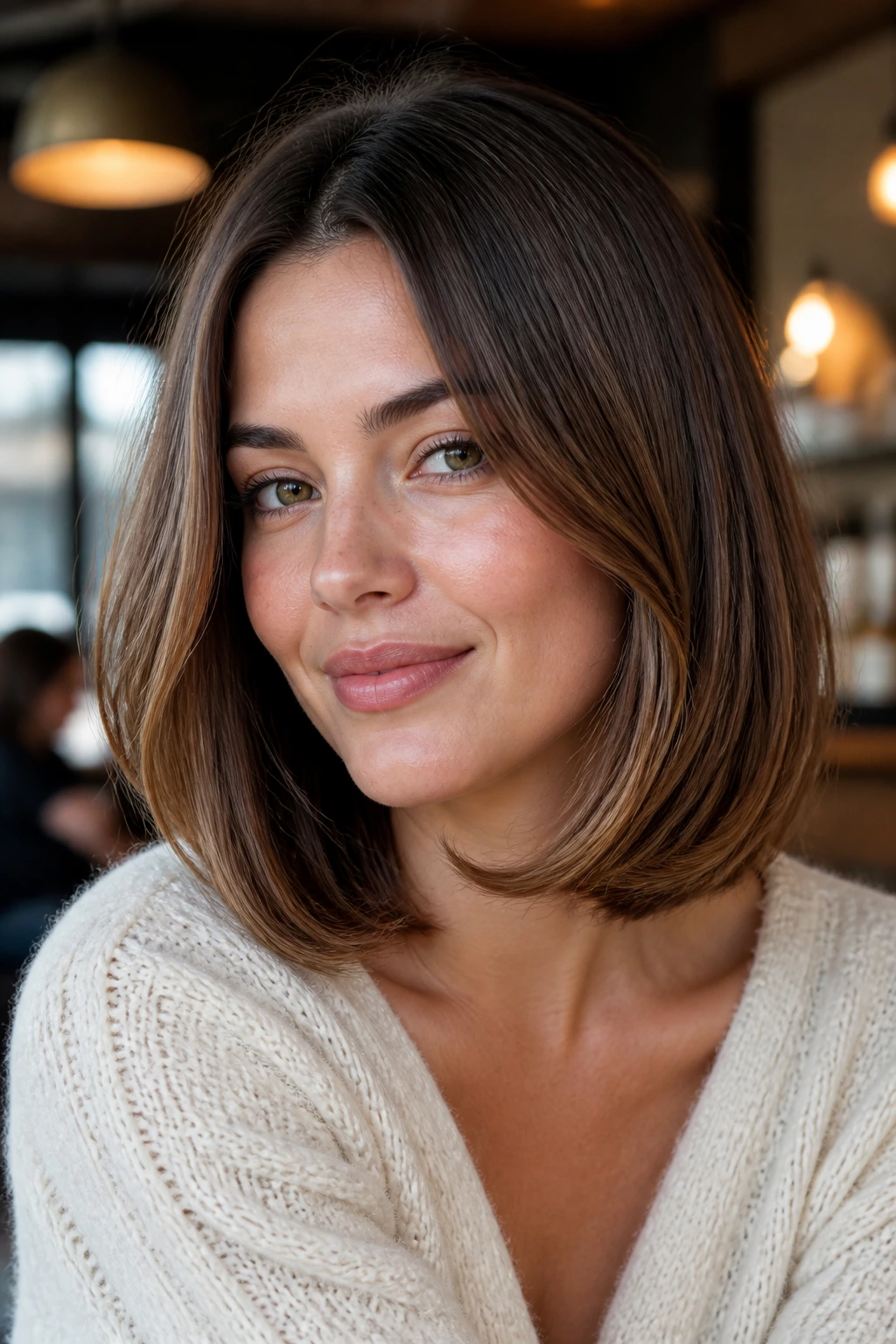
If you want one haircut that rarely fights a square face, this is the one I keep circling back to. A curved shoulder-length cut gives you softness, length, and enough shape to feel finished.
The ends should bend inward or under just a little, while the front pieces stay long enough to skim past the jaw. That combination keeps the lower half of the face from looking too rigid. It also gives you room to wear the hair straight, waved, or loosely pinned back without losing the shape.
The nice thing about this cut is that it does not rely on one trick. You can pair it with a side part, a middle part, curtain bangs, or no bangs at all. It holds up because the curve is built into the silhouette, not bolted on with styling alone.
If you’re stuck between short and long, neat and soft, this is the compromise I’d trust. Not a boring compromise. A useful one.
