



Haircuts for straight hair can look expensive with almost no styling — or they can fall flat in a way that makes you stare at the mirror and wonder where all the shape went. Straight strands tell on a cut fast. Every line shows. Every mistake shows. That’s the blessing and the headache.
The reason this texture is tricky is simple: straight hair doesn’t hide bad shape the way curls and waves sometimes do. If the perimeter is too wispy, the ends can look see-through. If the layers sit too high, the whole head can feel thin through the bottom. If the cut is too heavy, the hair can hang like a curtain. Not flattering. Not even a little.
The best straight-hair cuts usually do one of two things well: they create a strong outline, or they build movement without stealing too much weight. A clean blunt line can make fine hair look denser. A smart internal layer can stop thick hair from turning into a heavy sheet. That balance is where the good stuff lives.
And once you start looking at straight hair through that lens, the options get more interesting. A bob reads differently on straight hair than it does on wavy hair. So does a shag. So does a pixie. The shape matters more than the hype, and the first cut that proves that point is a blunt bob.
1. Blunt Bob for Straight Hair
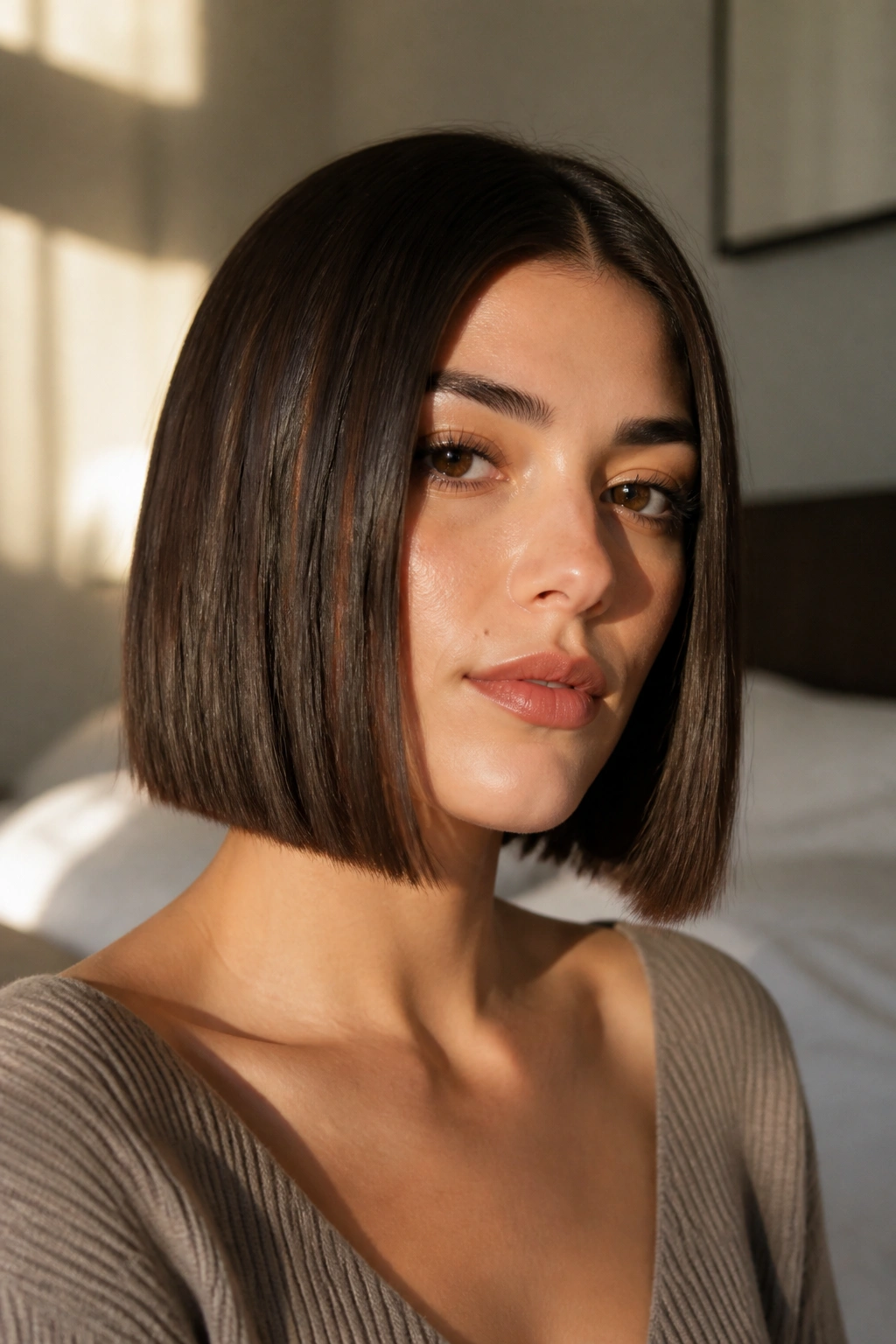
A blunt bob is one of the cleanest haircuts for straight hair because it lets the hair do what it already wants to do: fall in a neat line. No coaxing. No wrestling. Just a crisp edge that looks sharp the second it’s dry.
Why It Works
On straight strands, a blunt perimeter creates the illusion of density, even if the hair is fine. That’s the whole trick. The ends sit together instead of feathering out, so the shape looks fuller from root to tip.
I like this cut most when it lands somewhere between the chin and just below the jaw. Shorter than that, and you get a more obvious graphic shape. A little longer, and it starts to feel softer without losing the edge.
What to Ask For
- A one-length perimeter with minimal texturizing at the ends.
- A length that hits the chin, jaw, or upper neck depending on how much face you want to show.
- Very light internal cleanup only if your hair is thick and puffs at the bottom.
- A dry trim or dry check-in if your stylist likes to work that way, because straight hair reveals tiny uneven spots fast.
Best for: fine to medium hair, sharp cheekbones, and anyone who wants a cut that looks deliberate even on a plain day. A blunt bob does not need much help.
2. Collarbone Cut with a Center Part
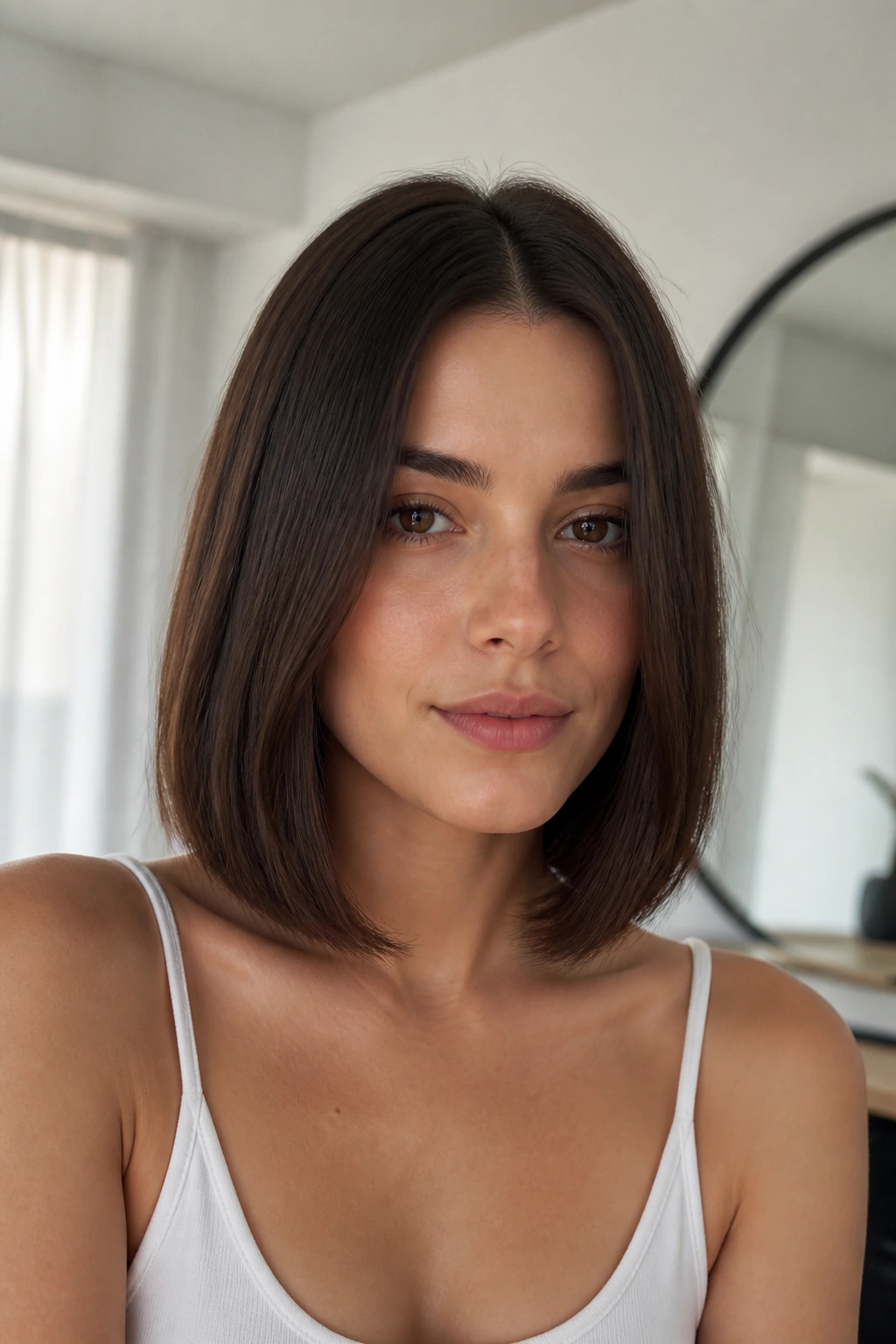
Why does the collarbone cut keep showing up in good salons? Because it sits in that sweet spot where straight hair can still move, but it doesn’t lose its shape when you skip a blowout. The length skims past the shoulders, which keeps it from flipping out awkwardly all day.
This is one of those straight-hair cuts that feels calm. A center part makes the line feel even and long, and the collarbone length gives enough room for tucked-behind-the-ear moments, clips, or a half-up style. It’s the haircut version of a clean white shirt.
It also grows out without getting ugly too fast, which matters more than people admit. A lot of layered cuts start losing their shape at the six-week mark. The collarbone cut tends to stay friendly longer. If your hair is fine, ask for a touch of face framing that starts around the chin. If it’s thick, keep the ends blunt and let the weight do the work.
One good pass with a flat brush is often enough. Simple haircuts should earn that simplicity.
3. Curtain Bang Lob
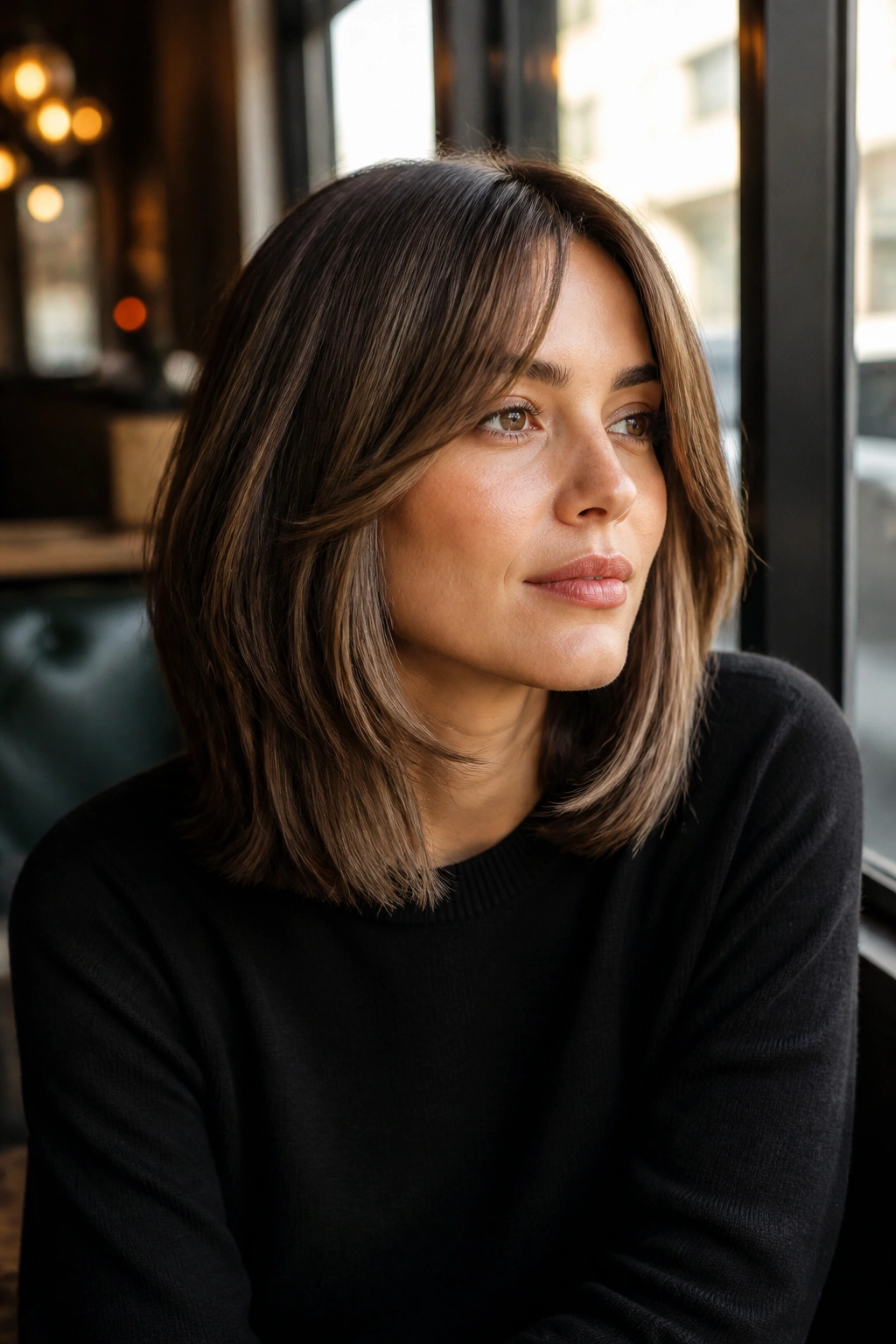
You know that cut that looks soft, but not mushy? That’s the curtain bang lob. Straight hair gives curtain bangs a cleaner drape than wavy hair does, which makes the whole cut read polished instead of fussy.
The Part That Matters Most
The bangs should start somewhere around the cheekbone, not halfway up the forehead. That placement gives the fringe room to sweep back and blend into the lob. Too short, and the shape can look chopped up. Too heavy, and the bangs sit there like a helmet.
The lob itself works best at collarbone length or just above it. That length keeps the front pieces visible when they’re tucked behind the ears, and it gives the bangs a place to live without getting lost.
Quick Fit Check
- Good for square faces because the fringe softens the front of the face.
- Good for heart-shaped faces if the bangs start lower and blend gently.
- Needs a round brush or blow-dry brush if you want the curtain effect to sit right.
- Avoid very dense bang lines if your hair is fine; they can steal too much weight from the front.
This cut is pretty forgiving, which is why people keep coming back to it. It looks styled even when it isn’t trying too hard.
4. Long Layers with a Light Hand

Straight hair does not need a lot of layers. That’s the part many people get backwards. It needs the right layers, placed where the hair actually benefits from movement instead of where a styling chart says they should go.
A long layered cut works when the shortest pieces start low enough to keep the perimeter full. Around the collarbone or just below is usually safer than starting at the cheek. Higher layers can make the crown feel thin and the ends feel ragged, especially if the hair is fine.
I’m partial to this cut for people who love length but hate the way long straight hair can hang in one heavy sheet. A few well-placed layers stop that problem without turning the hair into a shag. The effect is subtle. That’s the point. You should see swing, not choppiness.
If you wear your hair straight most of the time, ask for the layers to be cut with your natural fall in mind, not just while the hair is wet. Straight hair shifts less than textured hair, so tiny placement mistakes show up fast. The cut should move when you walk. Not flap around.
5. Chin-Length French Bob

A French bob on straight hair has a little attitude. Not loud attitude. More like a raised eyebrow and a neat blazer. The cut usually sits around the chin, sometimes a touch shorter, and the ends stay blunt enough to keep the silhouette tidy.
What makes it different from a standard bob is the mood. The French version often feels a little looser through the styling, even when the cut itself is sharp. Straight hair helps here because it keeps the line clear while still letting you tuck one side or push the fringe off the face.
This cut flatters people who want their jawline to show. It also works well if your hair naturally lies flat and you’re tired of fighting it. Don’t add a lot of thinning. Don’t over-stack the back. Let the shape be the shape.
A tiny bend at the ends can soften it, but it doesn’t need curling every morning. Good straight-hair cuts should save time, not create it.
6. Angled Lob with a Clean Edge
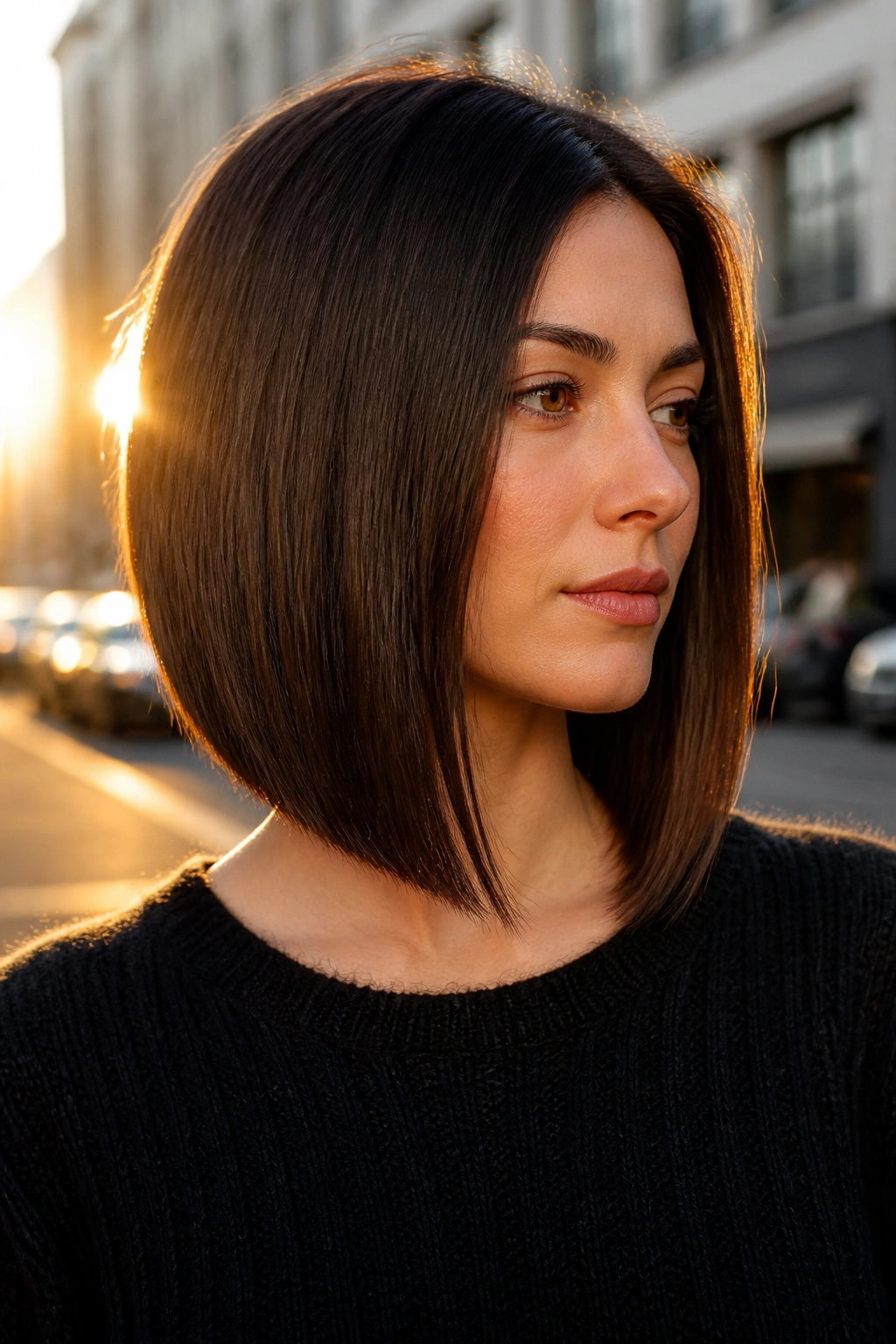
You can see this haircut from the side before you even hear it described. The back sits a little shorter, the front grazes closer to the collarbone, and the whole thing leans forward with purpose. On straight hair, that angle reads clean instead of dramatic.
Why the Angle Matters
The angle helps create movement without relying on loose waves. Straight hair tends to show length in a long, uninterrupted line, which can feel heavy at the shoulders. A gradual angle breaks that line just enough to keep the shape interesting.
This cut can be a smart pick for anyone with a rounder face, because the forward lean gives a little visual length. It also works for thick hair that gets bulky at the bottom. The shorter back removes some weight, but the longer front keeps the cut from looking boxy.
What to Watch
- Keep the angle gradual, not severe, unless you want a sharper fashion cut.
- Ask for the front pieces to land near the collarbone, not mid-chest, or the angle gets lost.
- Use a flat brush or paddle brush to keep the ends smooth after washing.
- Skip aggressive razoring if your hair already frays at the tips.
There’s a reason this shape keeps showing up. It looks intentional without being precious.
7. One-Length Mid-Length Cut
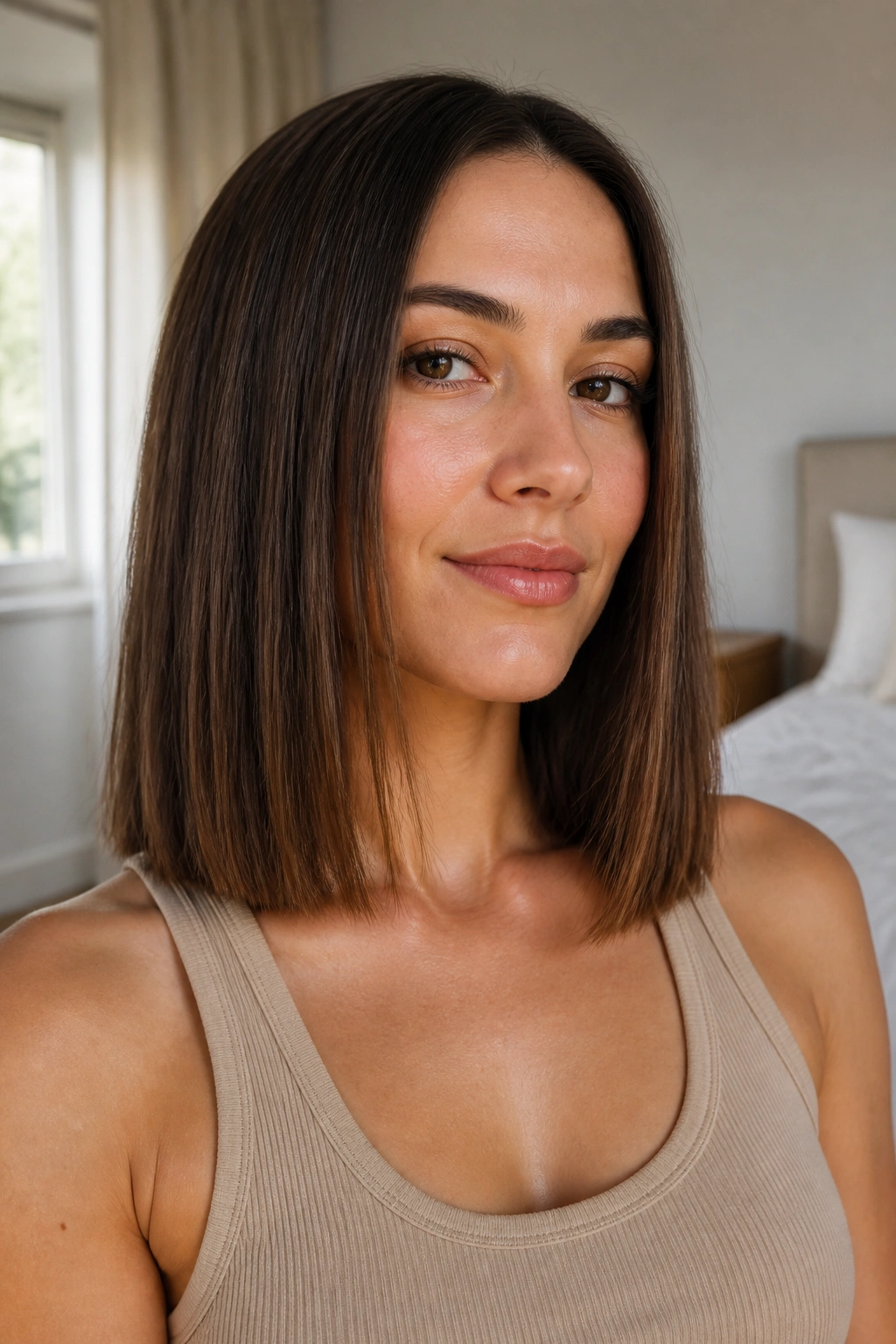
Simple can be stubborn. A one-length mid-length cut proves it. There’s nowhere for the eye to hide, so the line has to be good. On straight hair, that honesty is a strength.
This cut usually lands somewhere between the shoulders and the upper chest. It’s a favorite for thick straight hair because the weight stays even all the way across. No weird stacking. No puffy layers fighting the rest of the head. Just a straight, solid shape that lies down neatly.
It’s also a nice option if you style with clips, headbands, or silk scrunchies. The cut doesn’t get in the way. It works with accessories instead of competing with them. I’d reach for this if you want something low-maintenance but not boring. A clean middle part makes it modern. A soft side part makes it gentler.
One caution: if your ends split easily, keep the maintenance trims regular. A one-length cut looks best when the bottom edge stays crisp. Once that edge frays, the whole thing loses its charm.
8. Long Hair with Invisible Layers
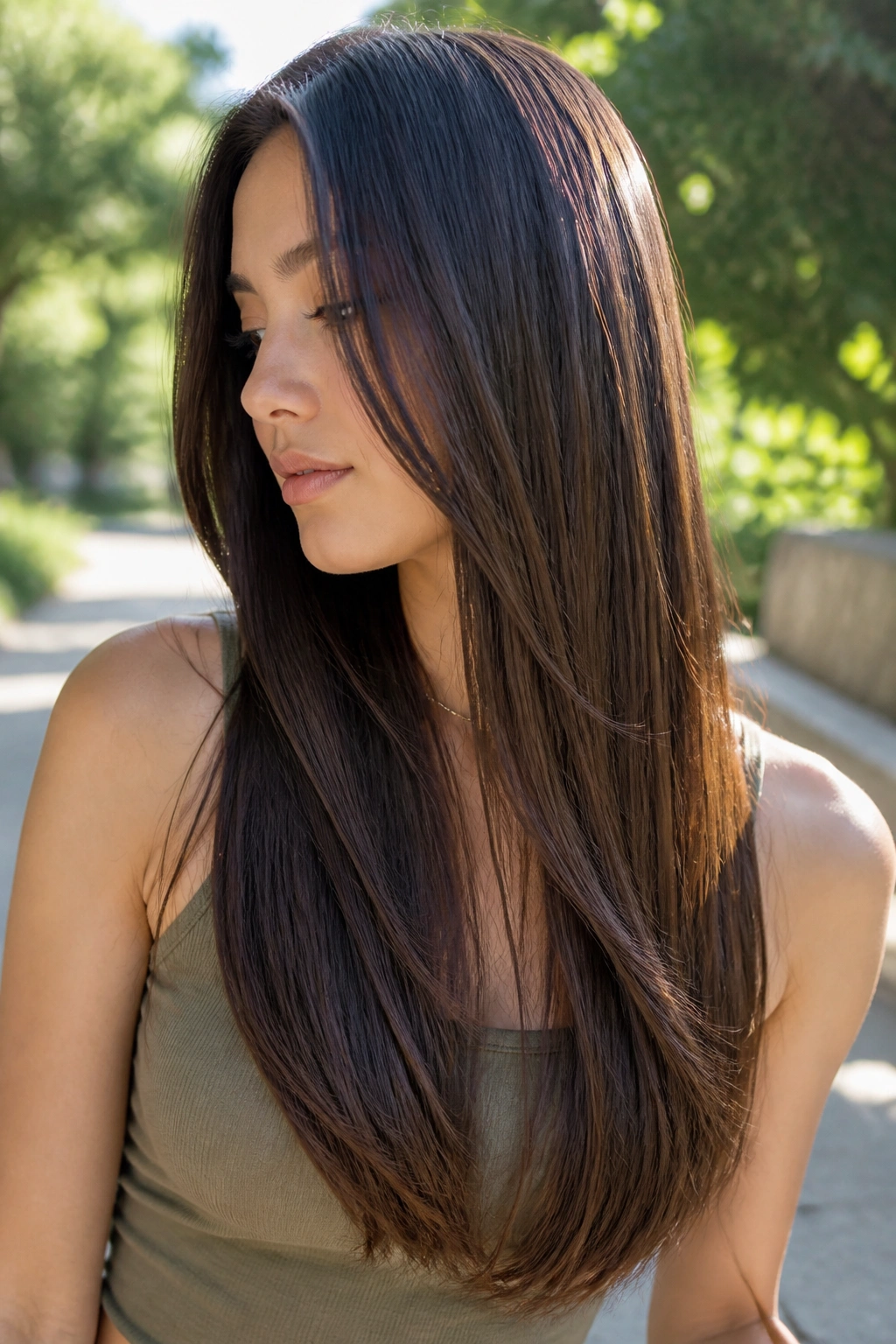
Long straight hair can start to feel like a curtain if all the weight sits at the bottom. Invisible layers fix that without announcing themselves. That’s why they’re smart. You keep the length, but the interior gets just enough lightness to move.
The layers are usually cut so they don’t break the perimeter line much. From the outside, the haircut still reads long and smooth. Inside the shape, though, there’s a little relief so the hair doesn’t collapse flat against the head or drag at the ends.
This works especially well for thick hair that looks broader at the bottom than at the crown. It also helps hair that tangles at the nape because the mass isn’t all hanging in one place. Ask for the shortest pieces to stay low enough that the cut still looks long when it’s tucked behind the shoulders.
For straight hair, the secret is restraint. Too many layers and you lose the point. Too few and you’re back to square one. The best invisible layers are the ones nobody notices at first, but everyone notices when the hair moves.
9. Pixie with a Tapered Neck
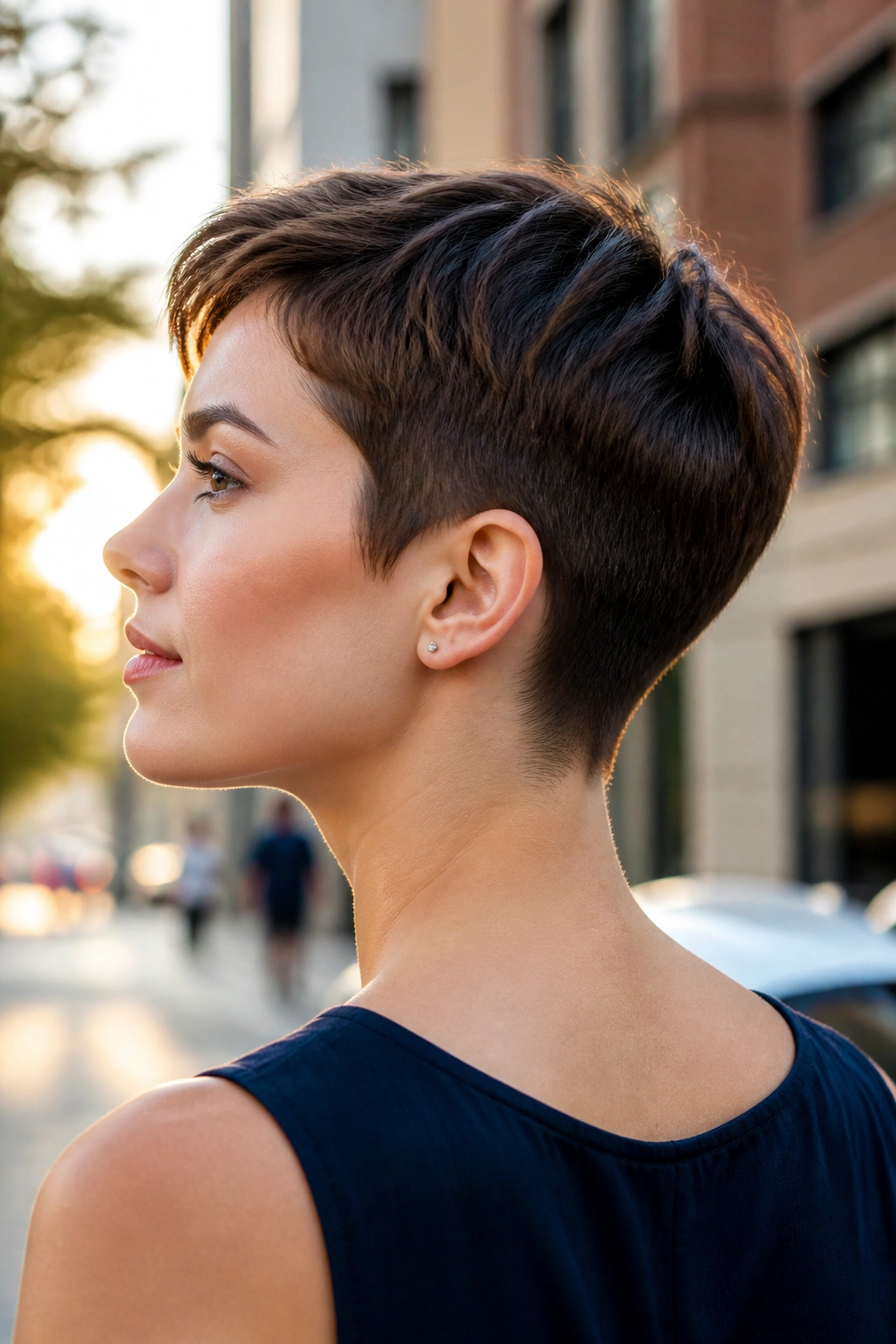
A pixie on straight hair can look almost architectural when it’s cut well. The straight texture shows the shape instantly, especially at the nape and around the ears, so the edges need to be tidy. No fluff. No confusion.
This is a cut for someone who likes clean lines and doesn’t mind booking trims often. The tapered neck keeps the back snug, while the top can stay a touch longer for softness or a side sweep. If you have a cowlick at the crown, straight hair will not hide it, so the cut has to work with that growth pattern rather than against it.
Best Details
- Longer top pieces give you styling options.
- A neat taper at the neck keeps the shape from looking heavy.
- Soft sideburns can make the cut feel less severe.
- Matte paste or light cream works better than heavy wax for most straight hair.
I like a straight-hair pixie when it looks crisp around the ears and a little airy on top. Too much product and it gets helmety. Keep it touchable. That matters.
10. Soft Shag with Straight-Friendly Texture
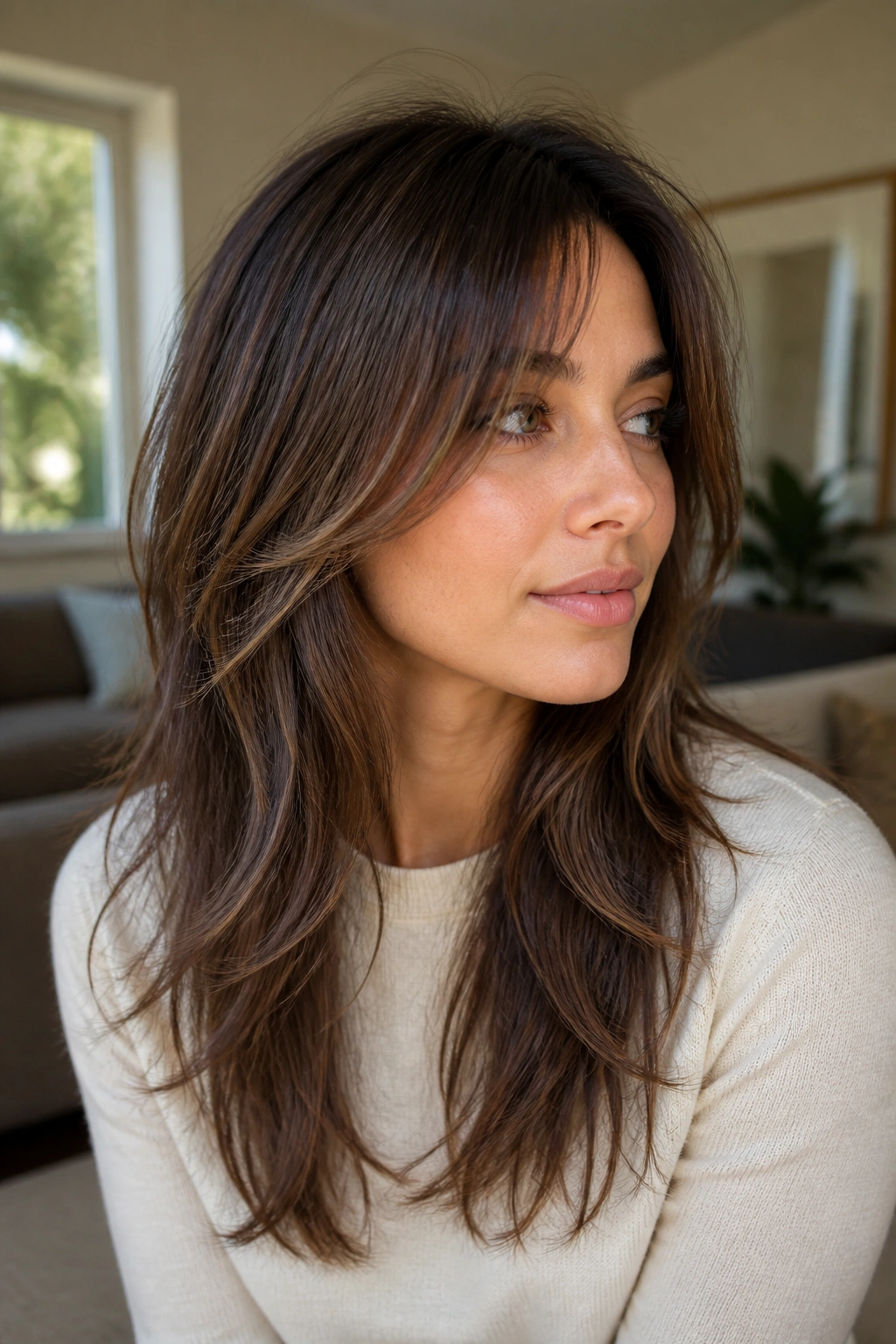
A lot of people think shags are only for wavy hair. Not true. Straight hair can wear a shag, but the cut has to be softer and a little more controlled or it can look chopped to pieces.
The trick is to keep the layers diffused and the outline still readable. On straight hair, heavy razor work often creates ragged ends that hang flat. A better shag for this texture uses length in the face-framing pieces and less drama at the crown. You want movement, not a broken silhouette.
What I’d Avoid
- Very short crown layers that make the head look narrow.
- Over-thinned ends that go wispy within a week.
- Chunky face-framing chunks unless you like a more dramatic look.
- Too much separation if your hair is fine, because it can expose the scalp.
The good version of a straight-hair shag feels cool and easy. The bad version looks like the haircut stopped halfway through. That’s a blunt way to put it, but it’s accurate.
11. Shoulder-Grazing Cut with Side Bangs
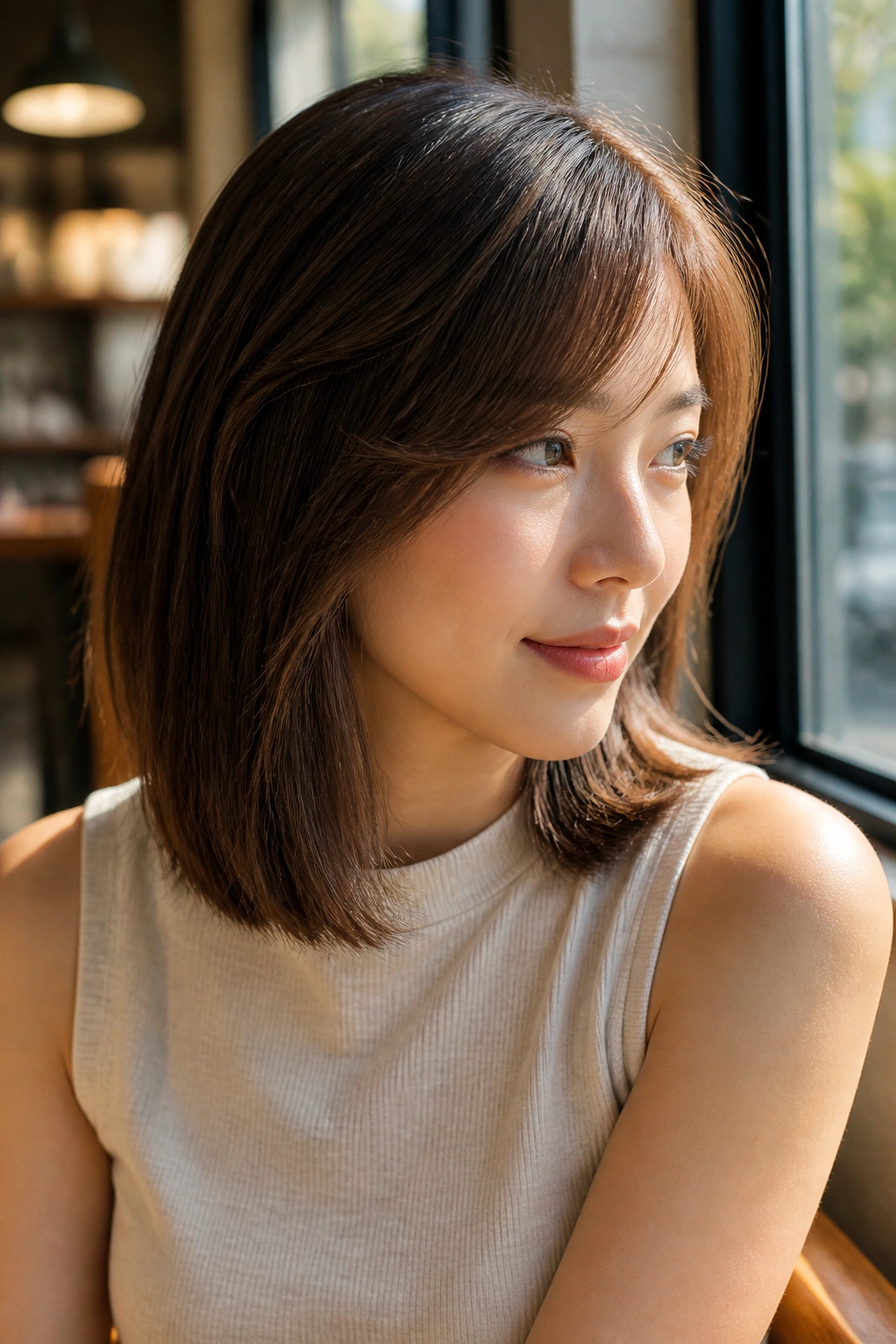
Want movement without a lot of layering? Side bangs do a lot of heavy lifting here. A shoulder-grazing cut on straight hair gives you enough length to tie it back, while the fringe shifts the balance of the face.
This cut works because the side bang breaks up the straight fall near the front, where flat hair can sometimes look a little severe. If your forehead feels broad, or if your face shape likes a diagonal line, this is a smart pick. The bangs should be soft enough to sweep, not so dense that they sit like a panel.
The shoulder length also helps the hair swing when you move. Straight hair at this length can feel airy if the ends are clean and the top isn’t overloaded with layers. I’d keep the edges blunt or only slightly textured. That keeps the cut from losing weight.
A side bang is one of those details that can save a simple cut. Small thing. Big difference.
12. Glass Hair Cut with Micro Layers
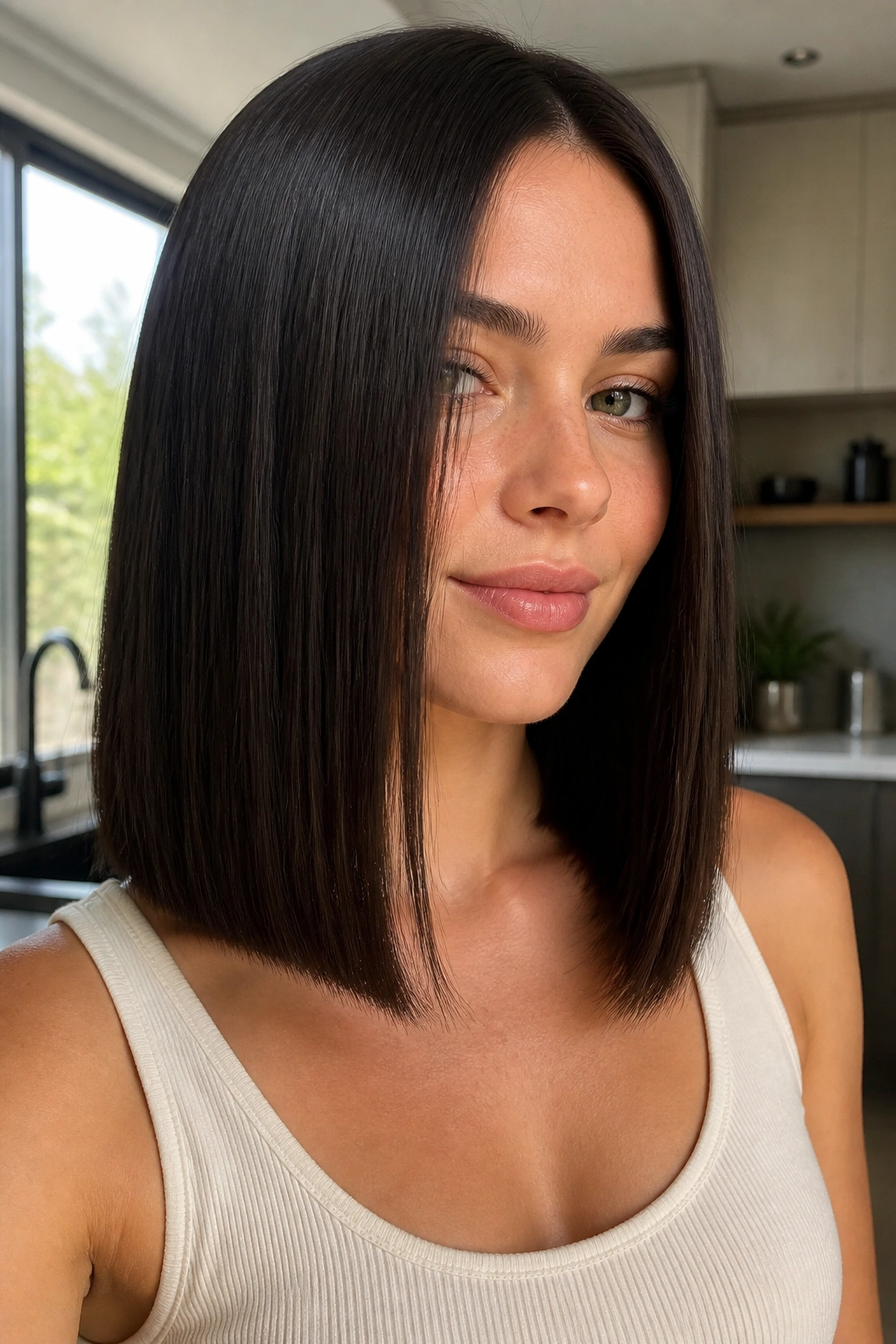
If shine is your obsession, this is the cut that shows it off. A glass-hair cut is all about a sleek, reflective surface, so the perimeter stays blunt and the layers stay nearly invisible. Straight hair is made for this kind of finish.
Why It Looks So Smooth
The hair lies in a tight, even line, which lets light bounce across the surface without a lot of broken edges. That means the cut needs precision. The ends should be tidy, the sectioning should be clean, and the internal layers — if there are any — should be tiny.
This is not the place for choppy texture. It’s also not the place for aggressive thinning shears. Once the edge gets fuzzy, the whole glass effect disappears. Keep the cut weighty enough to hold shape, then style with a smoothing blow-dry and a flat iron if needed.
A Few Practical Rules
- Trim split ends on time or the finish will lose its polish fast.
- Use a heat protectant every time you flat iron.
- One pass per section is usually enough if the hair is already straight.
- A pea-sized amount of serum can calm the ends without making them limp.
It’s a high-maintenance look only if you insist on fighting the hair. If your strands already run straight, this cut can feel almost unfair in how easy it is.
13. Hime-Inspired Straight Cut
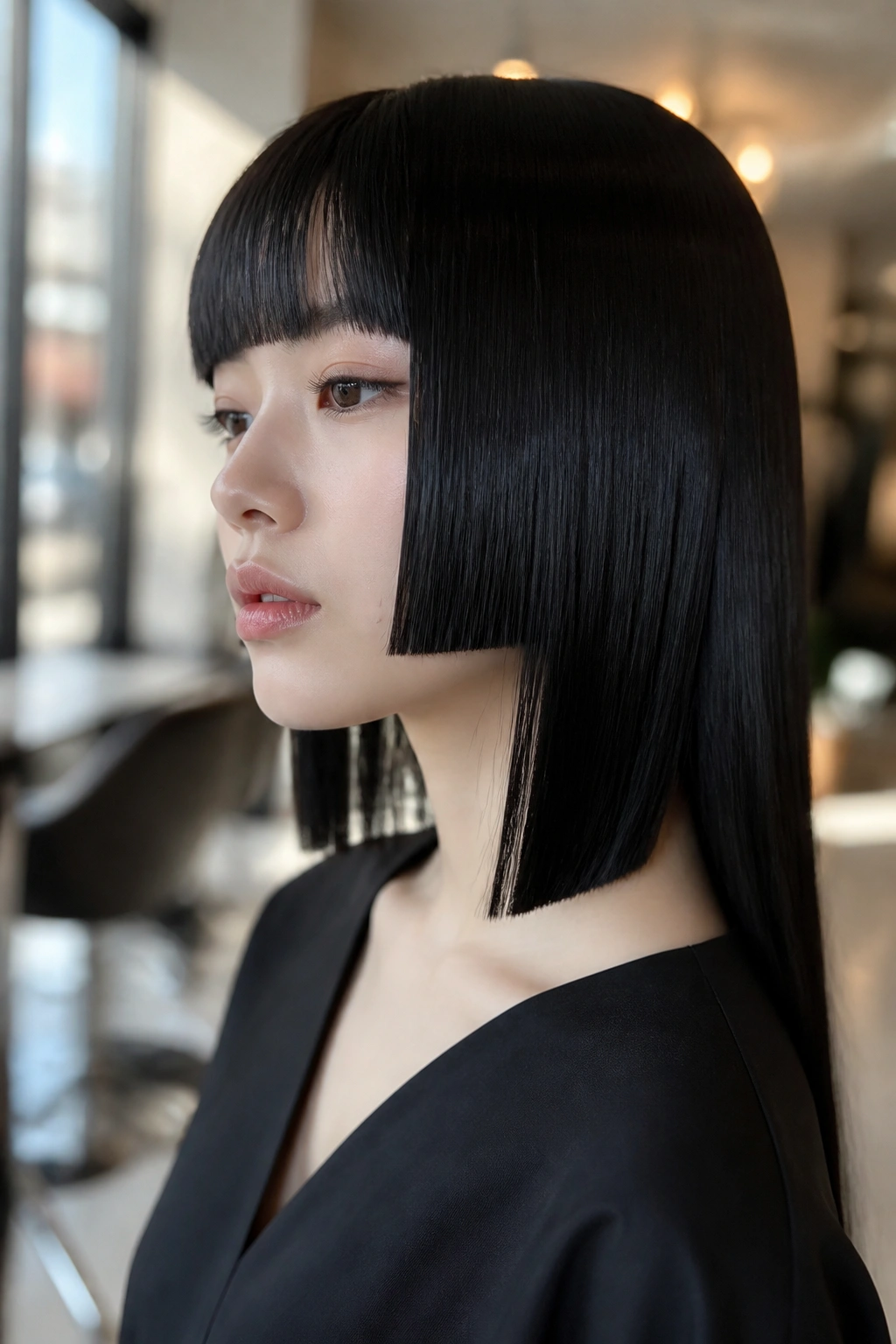
This is the one for people who like geometry. The hime-inspired cut uses front sections that sit shorter than the rest, often around the cheekbone or jaw, while the back stays longer and blunt. Straight hair shows the contrast beautifully.
The shape comes from Japanese styling traditions, and it works best when it’s treated as a deliberate design choice, not a costume. On straight hair, the line between the front panels and the longer back pieces is clean and sharp. That’s what makes it interesting. The cut has presence even when you don’t do much to it.
I’d recommend a softer version if you want something wearable every day. Ask for the shorter face-framing sections to blend gently into the rest of the hair instead of sitting like disconnected strips. That keeps it chic rather than severe. It also helps if your hair is medium to thick, because very fine hair can make the contrast look sparse.
This is a bold haircut, no doubt. But bold doesn’t have to mean loud.
14. A-Line Bob
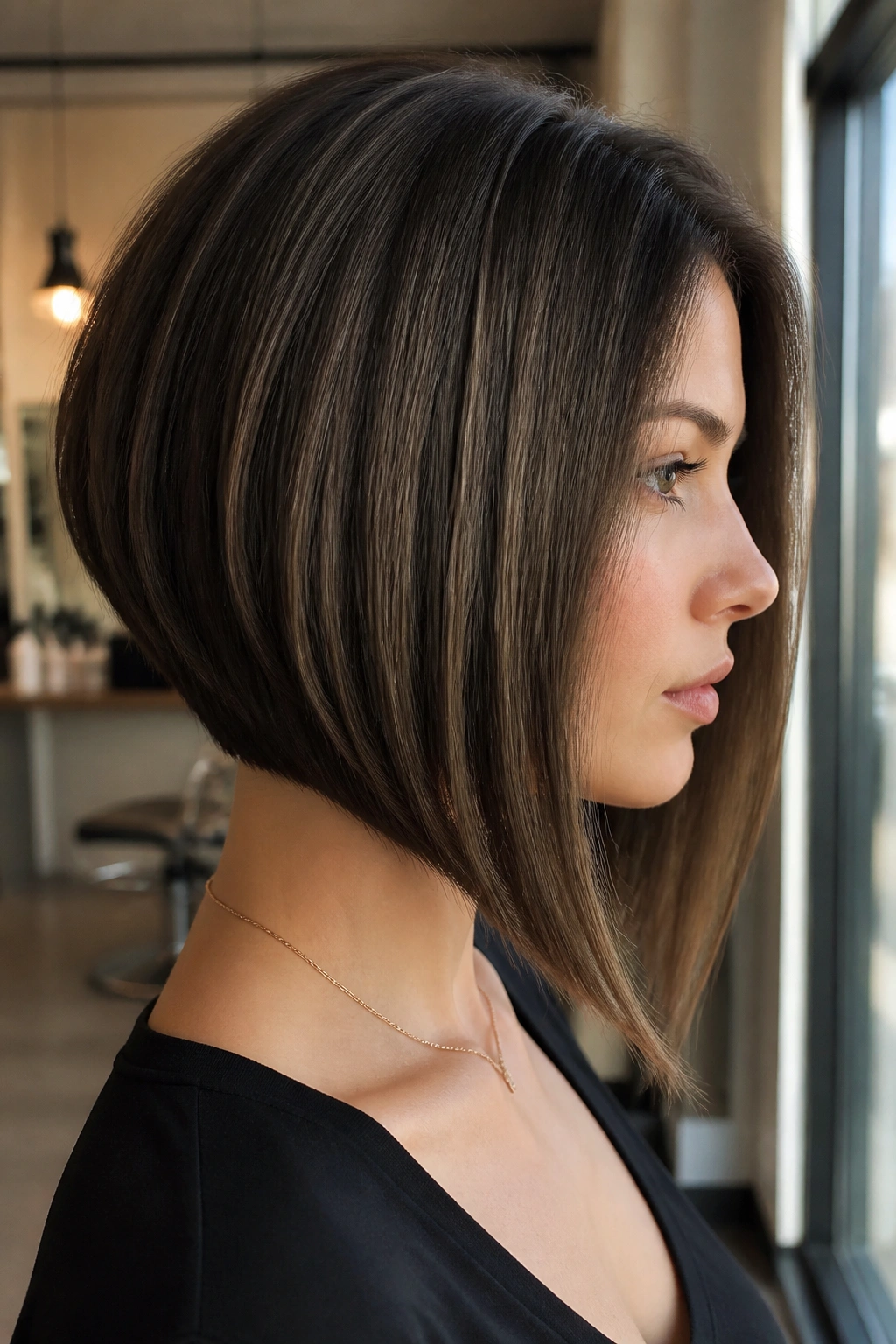
A small change in length can alter everything. That’s why the A-line bob stays relevant. It’s shorter in the back, longer in the front, and the shape creates a subtle forward sweep that straight hair shows off beautifully.
Who It Flatters
- Round faces, because the longer front pieces help stretch the line of the face.
- Square jaws, because the front lengths soften the corners.
- Thick straight hair, because the shorter back removes bulk.
- People who like structure but don’t want a cut that feels severe.
The angle should be gentle enough to look smooth, not choppy. On straight hair, a steep angle can feel a little dated unless it’s done with intent. Keep the back neat and the front clean. If the stylist over-texturizes the ends, the shape loses its polish fast.
This is one of those cuts that looks quietly expensive when it’s maintained well. A flat iron isn’t required every day, but a smooth dry finish helps the line stay clear. The shape does the talking. That’s half the appeal.
15. Rounded Crop with Tucked Ends
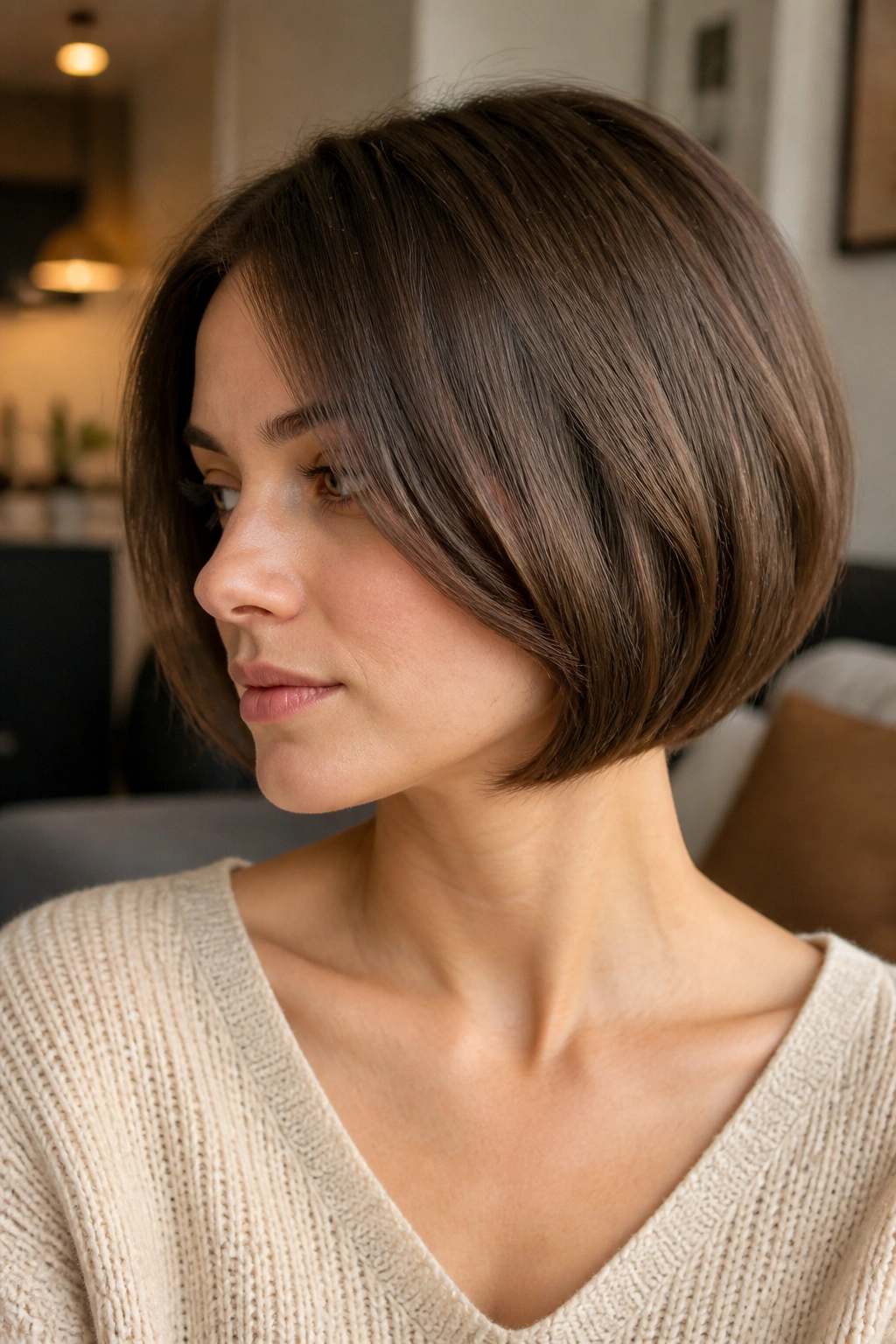
If your straight hair tends to flip out at the ends, a rounded crop can be a relief. The shape hugs the head a bit more closely and curves inward around the jaw, which makes the haircut feel softer and more contained.
I like this on hair that has a little body but not much wave. The rounded shape gives the illusion of fullness without relying on layers. It’s especially nice if you want something shorter than a lob but not as sharp as a French bob. The ends should be guided under, not hacked short, so the silhouette stays smooth.
This cut often needs a good blow-dry with a paddle brush or a round brush, depending on how much tuck you want. The point is to keep the outline controlled. Straight hair can otherwise kick outward in odd spots, especially around the crown and nape. A little pressure from the brush fixes more than people expect.
It’s tidy, maybe even a little proper. That’s not a flaw.
16. Long Blunt Cut with Face-Framing Pieces
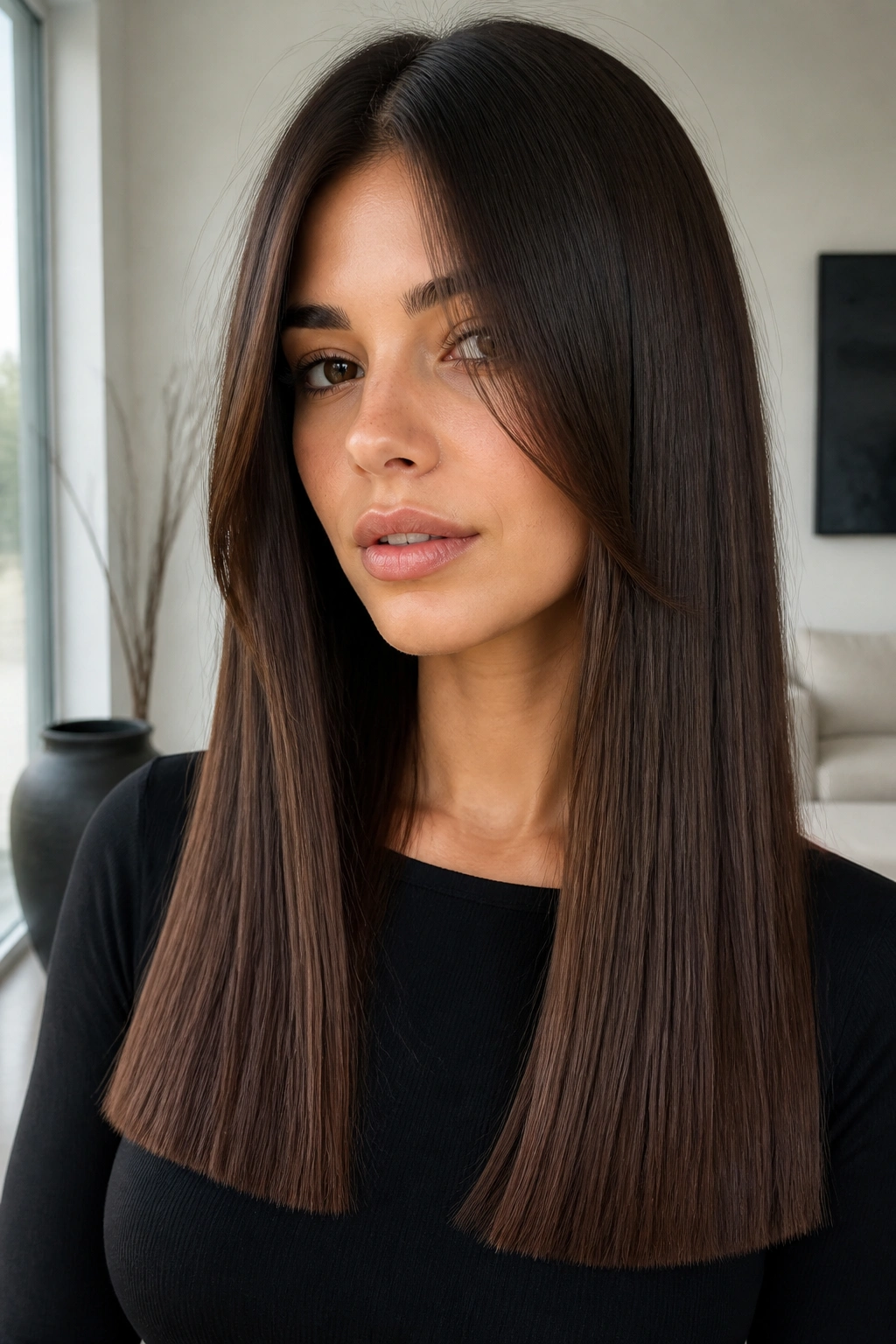
A long blunt cut is for people who want their hair to look thick, full, and expensive without sacrificing length. Straight hair loves this cut because the edge stays visible from top to bottom. Add just a few face-framing pieces, and the whole thing softens without losing the main line.
How Much Framing Is Enough
The framing should start low enough to keep the front from looking sliced up. Chin to collarbone is usually the sweet spot. Shorter than that, and the pieces can look disconnected from the rest of the hair. The idea is to open the face, not build a separate haircut around it.
This style is especially good for medium to thick hair. A blunt bottom keeps the mass together, while the face frame prevents the cut from feeling heavy near the front. If your hair is fine, ask for very gentle framing only. Too much separation can make the ends look thin.
The Practical Part
- Ask for the perimeter to stay solid.
- Keep the face-framing pieces soft and long.
- Trim the ends regularly so the line doesn’t fray.
- Style with a center part or slight off-center part depending on your face shape.
It’s a clean cut, but not boring. There’s a reason stylists keep returning to it.
17. Bixie with Soft Edges
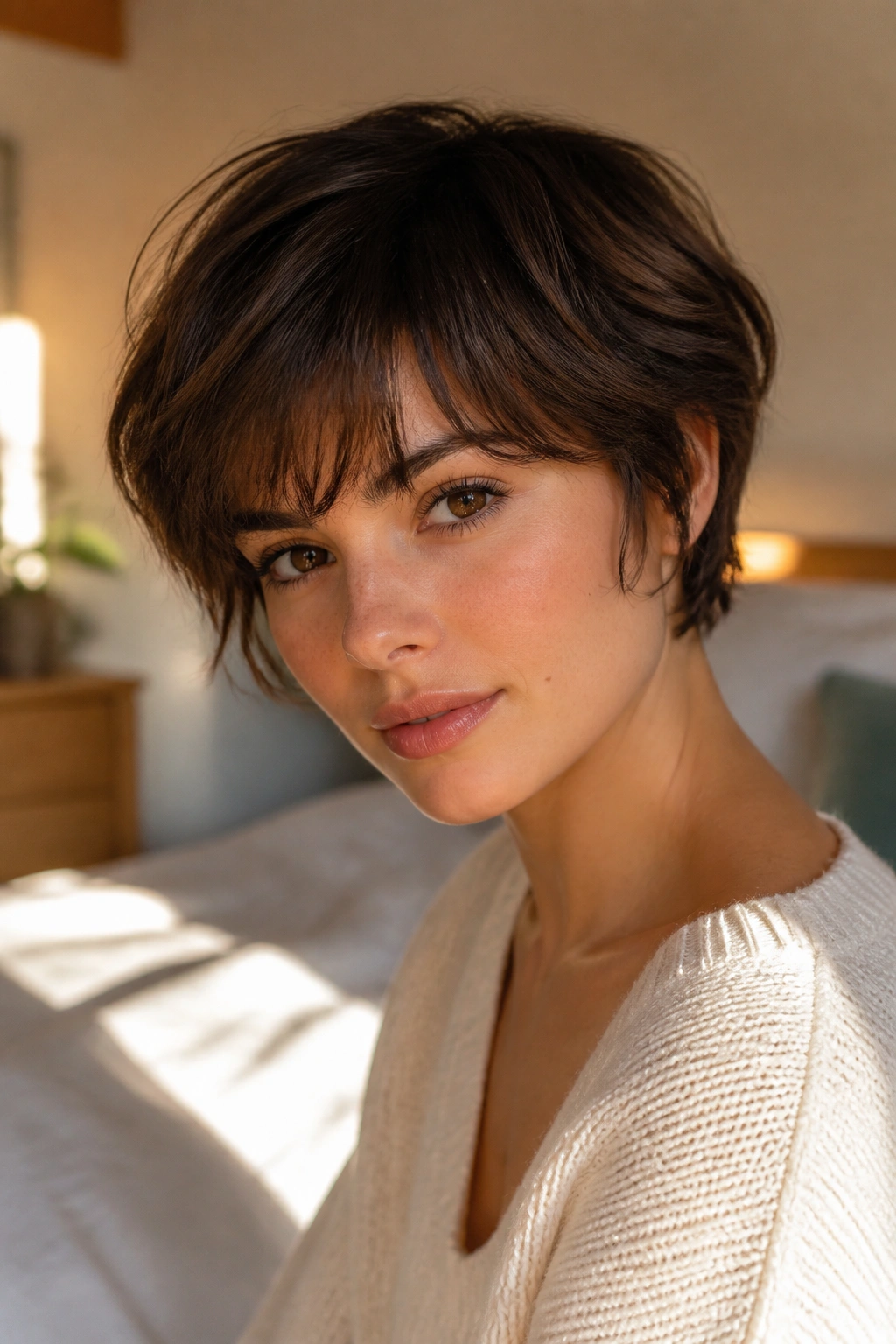
The bixie is a compromise cut, and that’s exactly why it works so well. It sits between a bob and a pixie, which gives straight hair a nice mix of shape and lightness. You get the ease of short hair without going full crop.
The soft-edge part matters. On straight hair, a bixie can turn harsh if the perimeter is too chopped or the top is too disconnected. Keep the edges rounded and the top slightly longer, and the cut becomes easy to tuck, sweep, or piece out with a little cream.
This is a good option if you want a shorter look but don’t want the upkeep of a strict pixie. It also works if your hair is naturally flat, because the cut can be lifted at the crown with a quick blow-dry and a dab of product. Not a lot. A dab is enough. Too much and the shape collapses.
I’d call this a smart middle-ground haircut. Not timid. Just practical.
18. Sleek Midi Cut with a Deep Side Part
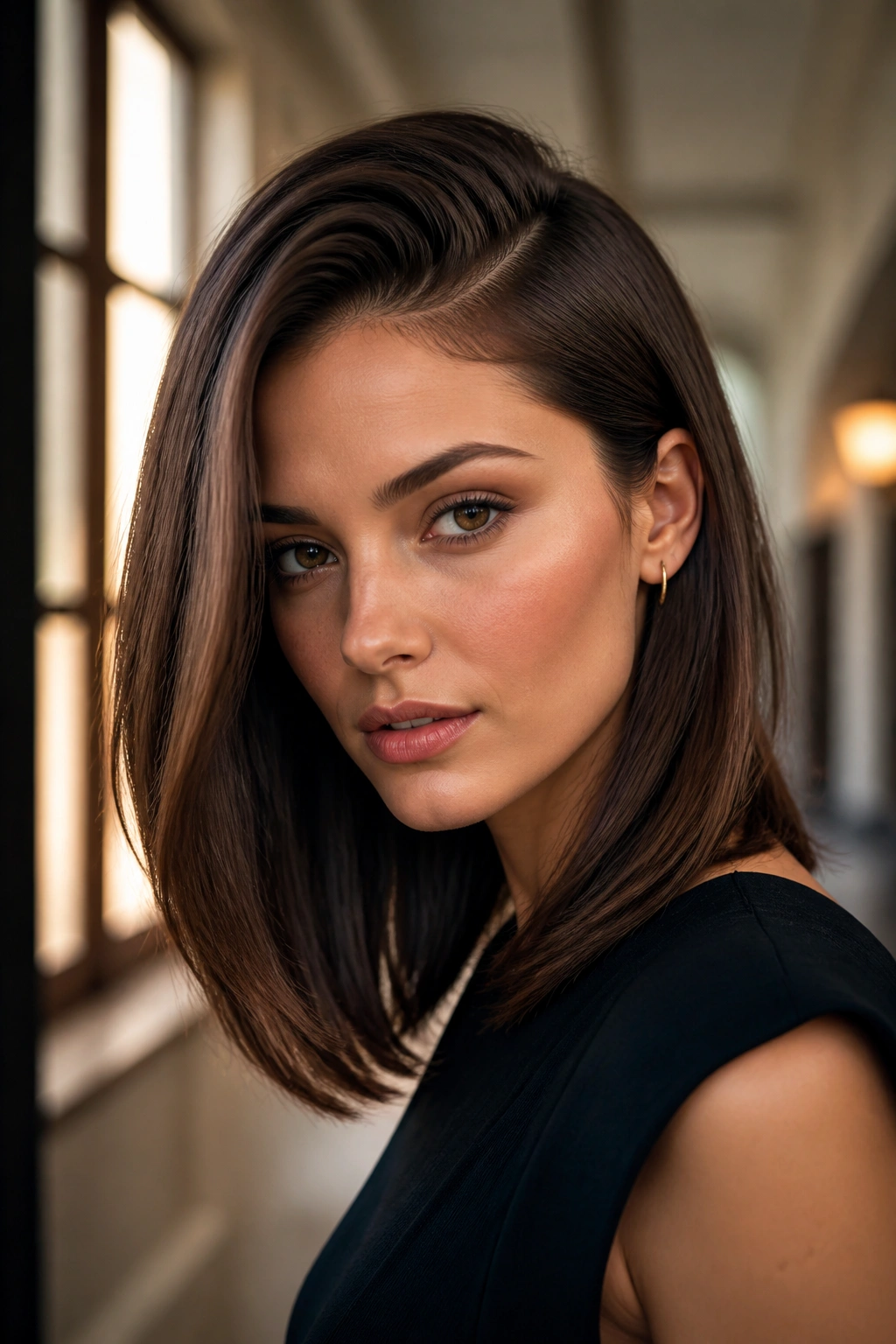
Want more volume without touching the layers? Shift the part. A deep side part can give straight hair a lift at the crown that a center part won’t. Pair that with a sleek midi length, and you get a cut that feels polished but not stiff.
The midi length usually lands around the shoulders or a touch below. That gives the hair enough weight to stay smooth, while the side part creates a little drama up top. It’s a good move for fine hair that lies flat along the scalp. The part gives the illusion of more hair where you need it most.
Styling Notes
- Blow-dry the roots in the opposite direction of your part first.
- Clip the front section while it cools if you want the lift to last longer.
- Keep the ends clean and blunt so the cut still reads sleek.
- Use a light mist, not a heavy spray, or the shine gets dull.
This is the kind of haircut that can go to a meeting or a dinner without changing much. Straight hair likes that kind of efficiency.
19. Lob with Understated Internal Layers
Not all layers announce themselves. That’s the appeal here. A lob with understated internal layers keeps the outside line strong while easing some of the weight inside the cut. On straight hair, that gives you movement without a choppy finish.
This cut is especially useful if your hair is thick and tends to sit like a block at the ends. The internal layering relieves that pressure while the outer edge still looks polished. From the front, the lob stays clean. From the side, it has a little bend and swing. That’s a better deal than cutting the whole shape up just to create movement.
Ask your stylist to keep the layers hidden and low. You do not want the top layer floating away from the rest of the hair. You want the shape to still read as a lob first, layered cut second. That distinction matters.
I think this is one of the smartest straight-hair cuts on the list. It’s subtle, and subtle usually ages well.
20. Feather Cut for Straight Hair
A feather cut can look lovely on straight hair when it’s done with a light hand. The soft pieces fan away from the face and around the sides, which adds motion without breaking the silhouette apart. The old, overdone version of feathering feels dated. The restrained version feels fresh.
Why It Behaves Well
Straight hair lets the layers show cleanly, so the feathering has to be careful. The ends should taper softly, not splinter into wisps. I like this cut when the longest pieces still hold the main length, while the shorter pieces skim the cheekbones or jaw.
It’s a nice choice if you want a softer frame around the face and you don’t mind a bit more styling. A blow-dry brush can smooth the layers into place quickly. If the hair is fine, keep the feathering minimal. If it’s thick, you can go a little further without losing fullness.
Ask For
- Soft feathering around the face only, if you want a gentle version.
- Longer interior layers if you want more swing through the sides.
- A clean, blunt base so the cut doesn’t drift into frizz territory.
- Light styling cream rather than heavy oil.
It’s a good reminder that layered hair does not have to look messy.
21. Straight Hair Wolf Cut
The wolf cut is not for everybody, and that’s fine. On straight hair, it looks edgier and more deliberate than on wavy hair, because the layers read in a clear, stacked way. If you want a cut with attitude, this one brings it.
Unlike a soft shag, the wolf cut has more separation and more shape through the crown. The top tends to sit shorter, the lengths stay longer, and the whole haircut gets a slightly untamed feel. Straight hair makes those pieces obvious, which is either the appeal or the problem, depending on your taste.
Best Fit
- Thicker straight hair that can support lots of layers.
- People who like styling with texture spray or a rough-dry finish.
- Faces that benefit from volume at the top, especially if the jaw is strong.
- Anyone who wants a cut that feels a bit undone rather than neat.
It can fall apart fast if the layers are too aggressive or if the ends are cut too thin. So the version you want should still have enough weight to hold together. Otherwise it turns into a mess instead of a shape.
22. Crisp Tailored Cut with Minimal Layers
Some straight hair looks best when the haircut behaves like tailoring. Clean shoulder line. Exact ends. Minimal layers, placed only where they solve a problem. That’s the crisp tailored cut, and it’s one of my favorites for people who want polish without a lot of fuss.
This cut works because it respects the natural fall of straight hair instead of trying to force drama into it. The outline stays solid, which keeps fine hair looking thicker and thick hair looking controlled. If you need movement, ask for the smallest possible amount of internal softening around the face or the lower third of the hair. That’s enough. More usually muddies the line.
It also ages well in the everyday sense. It doesn’t need a perfect blowout to make sense. A quick dry with a paddle brush, a center part, and a tiny bit of serum can be enough. That’s the kind of haircut people keep in rotation because it holds up in real life, not just in the chair.
For straight hair, that matters. A good cut should make your routine smaller, not more annoying.
