



Thick hair is a gift until it isn’t. One minute you’ve got shine, body, and a ponytail that could anchor a sailboat; the next, your bob is puffing out at the sides, your blow-dry takes forever, and every blunt line seems to grow a personality of its own.
The best haircuts for thick hair do not fight that density. They shape it, trim it where it needs trimming, and leave enough structure so the cut still looks intentional when you air-dry, sleep on it, or forget to round-brush the back section for the third time. That’s the whole game.
And thick hair is not one thing. Some heads of hair are thick because the individual strands are coarse. Some are thick because there are a lot of strands packed together. Some are both. A cut that works on soft, dense waves can look puffy on coarse straight hair, and a razor-heavy shape that flatters one person can frizz out another. Small difference. Big result.
So the smart move is to choose a shape that works with your texture, your styling habits, and how much time you want to spend with a brush in your hand. The cuts below cover long, medium, and short options, from sleek and blunt to broken-up and airy, so you can land on something that feels like your hair instead of a fight with it.
1. Long Layers That Take Weight Out of Thick Hair
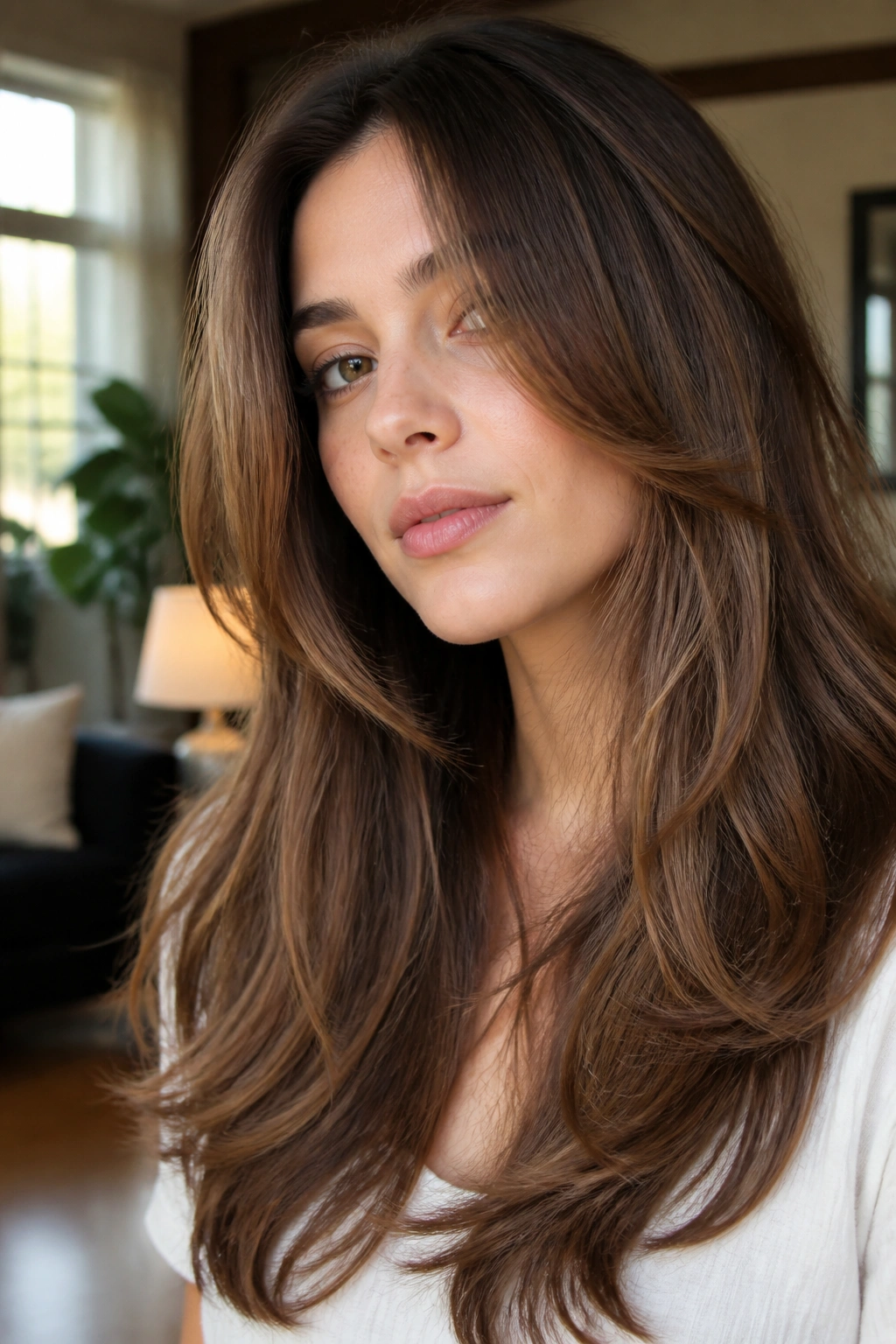
Long layers are the old reliable move for thick hair, but only when they’re cut with restraint. If the layers start too high, the whole shape can turn fluffy and uneven. Ask for internal layers that begin below the chin, then keep the perimeter fairly full so the ends still look strong.
What to ask for
- Keep the first layer around the collarbone or lower.
- Leave the bottom line blunt or nearly blunt.
- Remove bulk through the interior, not with aggressive thinning shears.
- Skip heavy texturizing at the crown if your hair already expands on its own.
That last point matters more than people think. Thick hair often looks better when it has a clean outline and a little movement inside the shape. Too much slicing at the ends can create frayed-looking volume, which is not the same thing as softness.
This cut works well if you like to wear your hair down most days and want it to swing instead of sit like a curtain. It also grows out gracefully, which is one of the few haircut perks that actually lives up to the hype. No drama. No hard line to keep chasing every five weeks.
2. Blunt Collarbone Lob
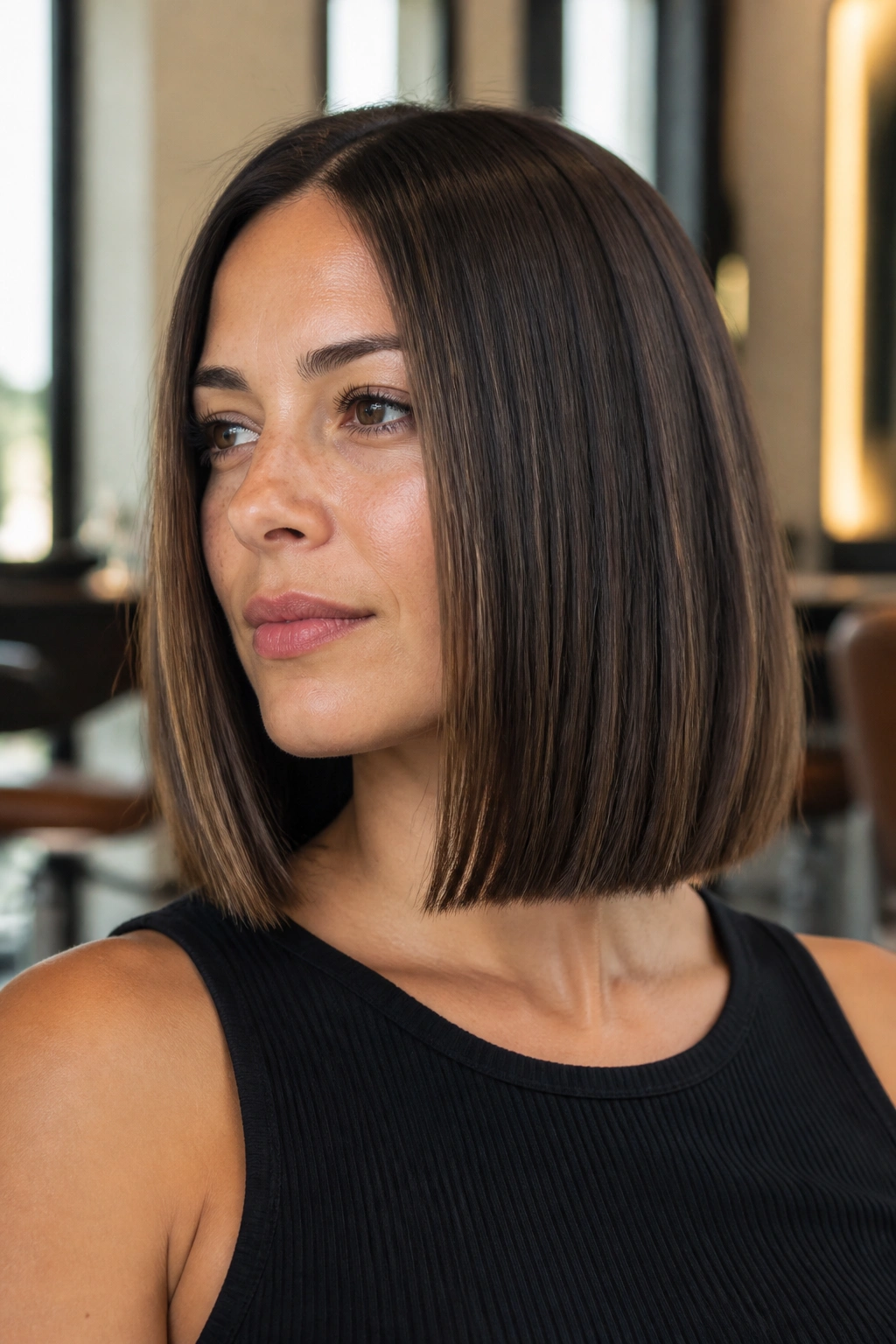
A blunt lob at the collarbone is one of the cleanest answers to thick hair because it gives all that density somewhere to sit. The line reads crisp, the ends look intentional, and the length is long enough to pull back when you need it. That balance is the reason this cut keeps showing up on people with a lot of hair.
The trick is placement. If the lob lands right at the widest part of your shoulders or jaw, it can widen the whole silhouette. A cut that hits just above or just below that spot usually looks calmer and falls better. That tiny shift changes everything.
This is the haircut I’d pick for someone who wants a polished shape without constant styling. A quick bend with a flat iron or a rough blow-dry with a paddle brush is usually enough. Thick hair gives the lob enough body to hold its own; it does not need much help.
3. The Soft Shag
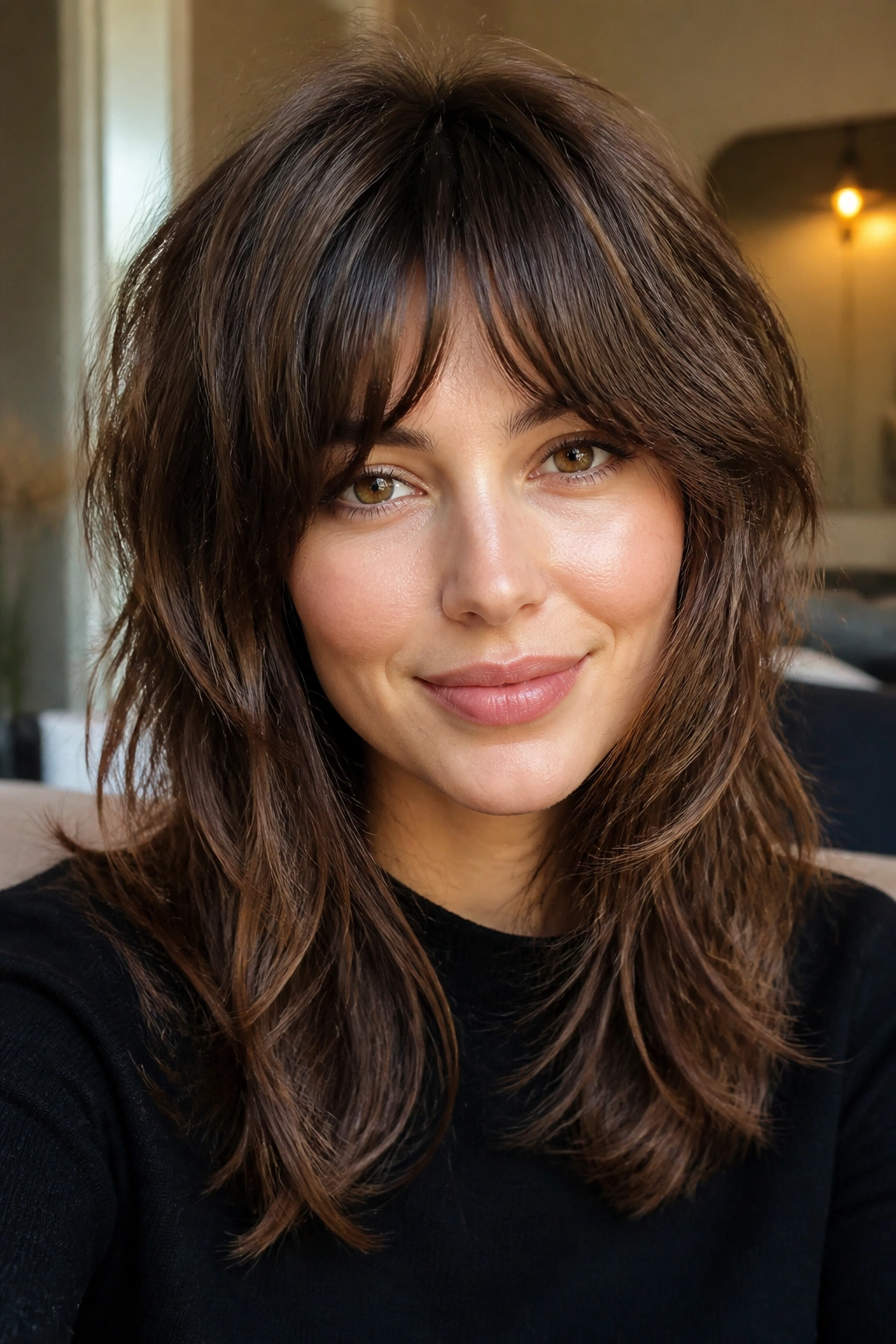
Why does a shag work so well on dense hair? Because it breaks up the mass without making the cut feel chopped to pieces. A good shag removes weight at the crown and around the face, then leaves enough length in the lower sections so the whole thing still moves.
The word soft is doing a lot of work here. You want texture, yes, but not a ragged finish unless that is the point of your style. Think cheekbone-grazing pieces, a little lift at the top, and ends that fall in loose layers rather than hard steps. On thick hair, that shape can look lively instead of bulky.
Best for
- Wavy hair that gets puffy when it’s one length.
- Straight hair that needs movement.
- People who like an undone finish.
- Anyone who does not want to fight the crown every morning.
A shag is not for someone chasing a glossy, tidy outline. It has attitude. That is the appeal.
4. Butterfly Cut
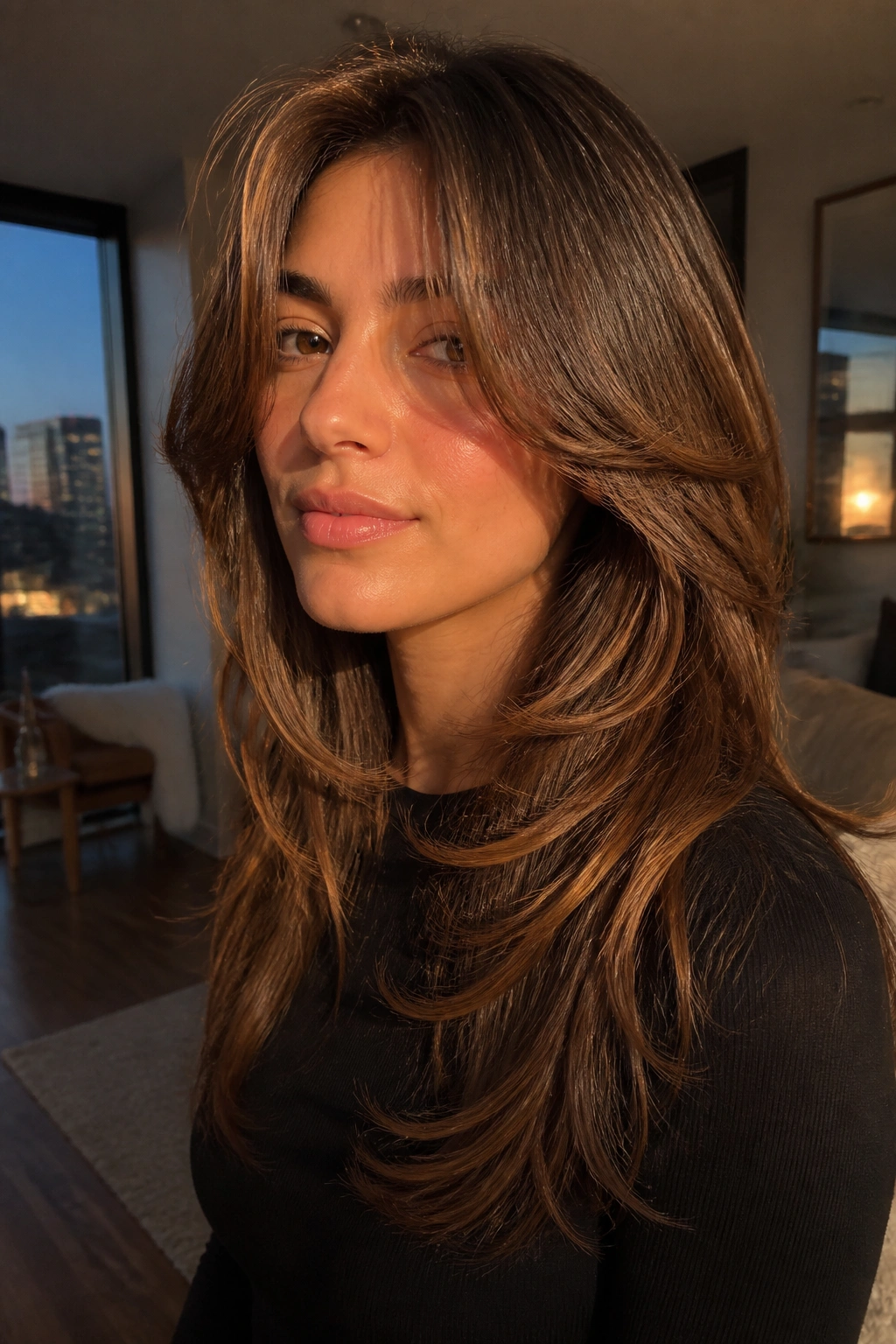
The butterfly cut is for anyone who wants the drama of long hair without carrying all the weight in one heavy sheet. Shorter face-framing layers sit over longer lengths underneath, so the front moves and lifts while the back keeps its length. Thick hair gets a lot out of that split personality.
What I like about this cut is how flexible it is. Wear it blown out and the shorter layers fall like a soft frame around the face. Tie it back and the long base still gives you a proper ponytail. The shape doesn’t disappear when you stop styling it, which is more useful than it sounds.
It does ask a little more from your routine than a blunt cut. A round brush, a large velcro roller, or even a quick pass with hot rollers helps the top layers separate from the lower length. If you air-dry and never touch it, the effect is quieter. Still good. Just less dramatic.
5. French Bob for Thick Hair

A French bob looks chic because it is compact. On thick hair, that compactness matters. The cut usually sits around the chin or slightly below, with a soft edge and enough structure to keep the shape from ballooning out by noon.
The best version for thick hair is not overly short at the jaw unless you know your face shape likes that. A little extra length keeps the line from looking puffy. I also prefer a bob with either a soft fringe or no fringe at all; heavy bangs plus thick hair can turn into a lot of forehead and a lot of maintenance.
The beauty of this cut is the low-fuss shape. It looks deliberate even when it’s a little imperfect, which is a gift on busy mornings. Ask your stylist to keep the perimeter clean and use light internal removal only where the hair needs it.
6. Pixie Cut With a Long Top
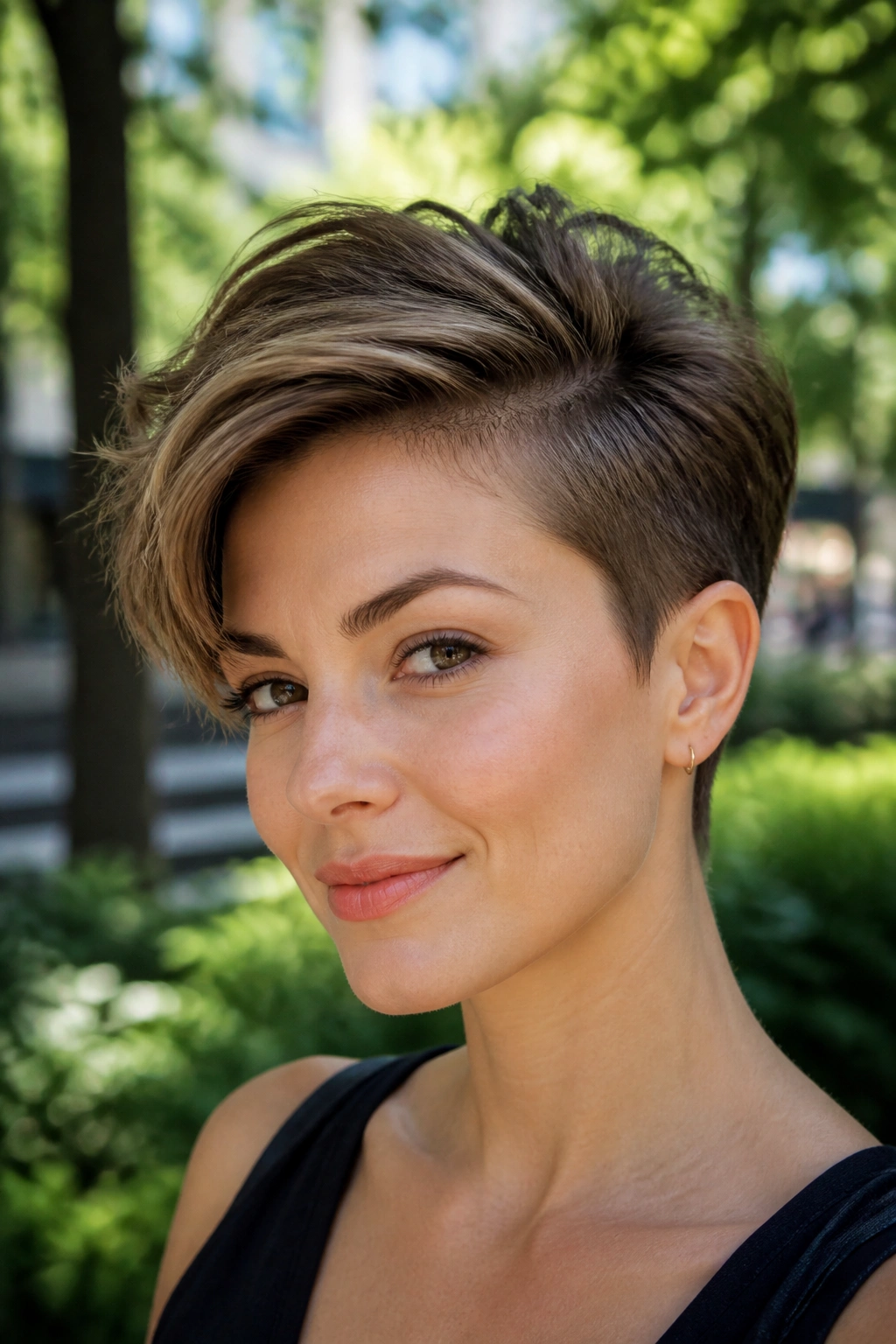
A pixie with a longer top works because thick hair gives the cut natural lift. The sides and nape stay tight, while the top keeps about 2 to 4 inches of length for movement and styling. That contrast keeps the cut from reading flat or helmet-like.
The key is balance. If the top is too long and the sides too fluffy, you get a mushroom shape. If the sides are over-thinned, the cut can look patchy as it grows out. A good pixie on thick hair usually uses point cutting around the ears and neckline, then leaves enough heft on top to sweep to one side or spike up with a small dab of paste.
This cut is not for people who hate trims. It grows quickly, and thick hair shows every inch of regrowth. But if you like a sharp silhouette and short hair that still has body, it’s a strong option.
7. Bixie Cut
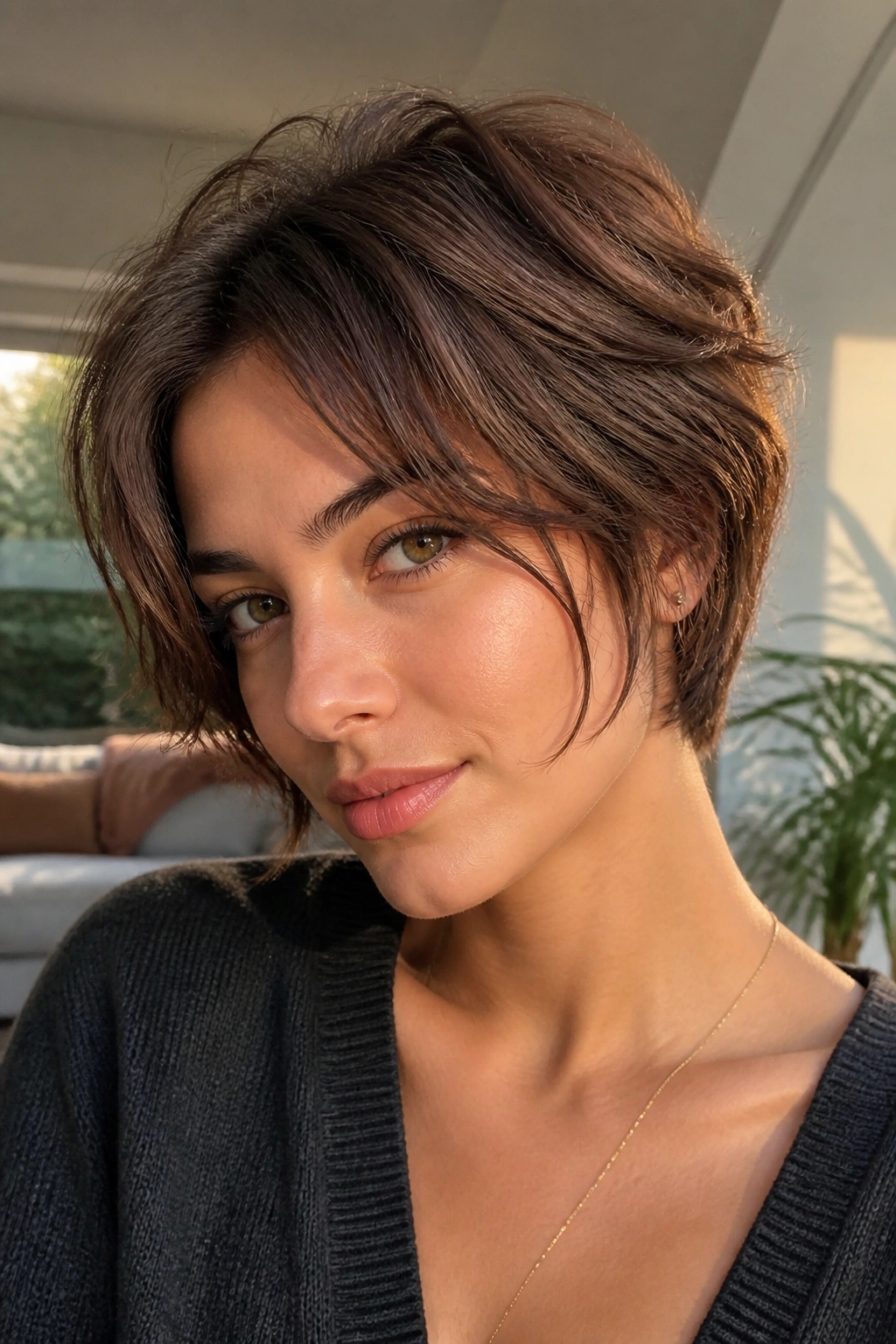
A bixie sits right between a bob and a pixie, and that middle ground suits thick hair better than people expect. You get the airy shape of a short cut without losing all the softness around the jaw and ears. The result feels less severe than a pixie and less heavy than a bob.
What makes the bixie useful on dense hair is the back. It is usually shorter and slightly tucked, which takes weight out of the nape. Around the front, there is enough length to skim the cheekbones or ears, so the cut still feels feminine and adjustable rather than cropped in one blunt move.
If you like hair you can style in five minutes, this is worth a look. A little mousse, a finger dry, maybe a small round brush at the fringe. Done. The bixie has enough shape on its own that you do not need to micromanage every piece.
8. Curly Layers That Let Thick Curls Spring Up
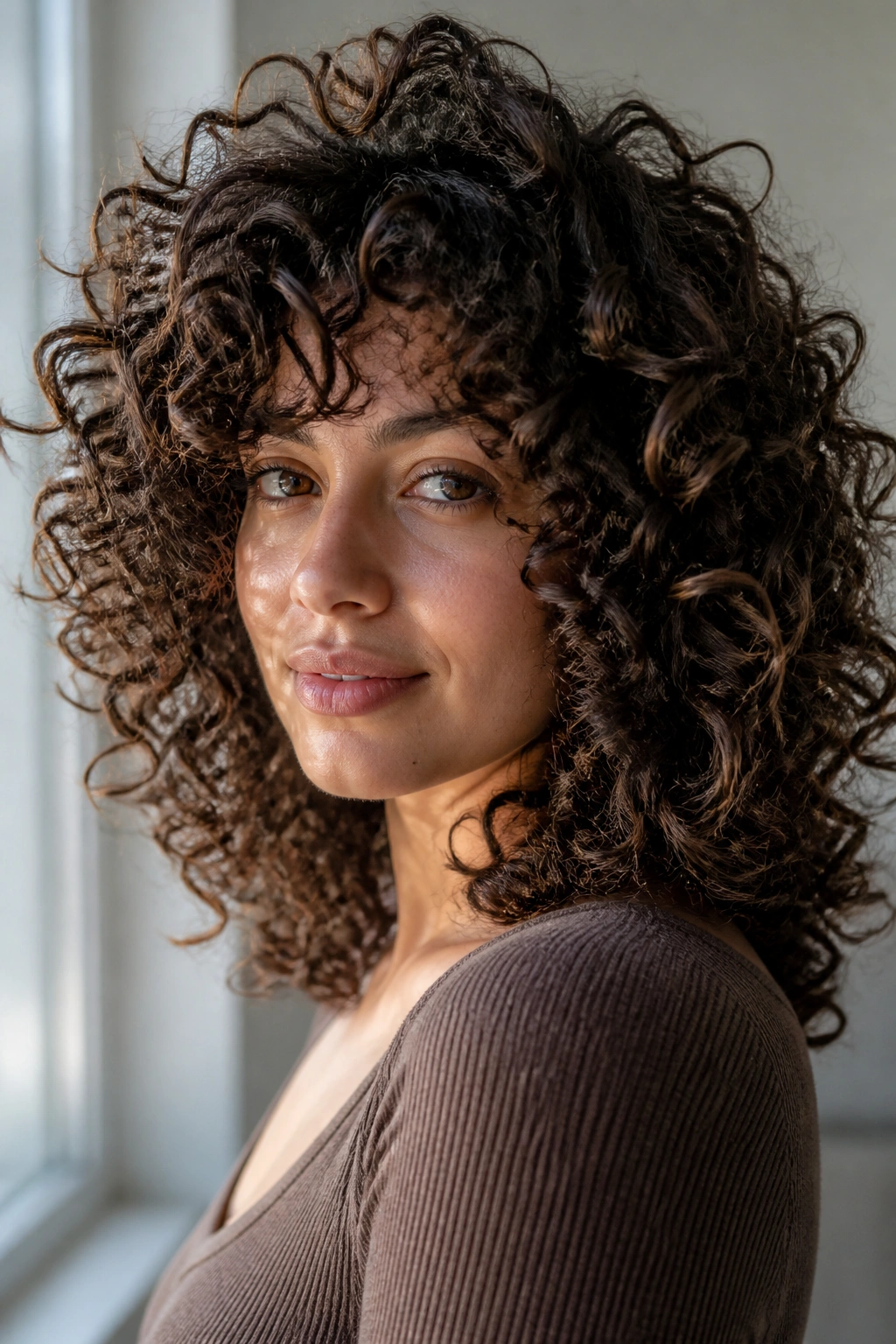
Do thick curls look their best when they’re cut dry? Usually, yes. Cutting curls dry lets the stylist see how much each coil shrinks, where the weight sits, and which sections are collapsing under their own bulk. Wet cutting can work, but on dense curls it sometimes hides the real shape.
The best curly layers are tailored to the curl pattern, not forced into a straight-hair system. That means layers that encourage the curls to stack and spring instead of stretching everything down into a triangular shape. You want lift, roundness, and enough lightness for the curls underneath to show up.
Ask for a shape that respects how your curls behave on day two as well as day one. That sounds fussy, but it saves you from a cut that only looks good after a perfect diffuser session. Thick curls need room to bounce. Give them that room.
What to request
- A dry curl-by-curl or curl-by-cluster cut if possible.
- Layers that follow the natural spring pattern.
- Minimal thinning near the ends.
- A shape that keeps width under control at the sides.
9. U-Shaped Long Cut
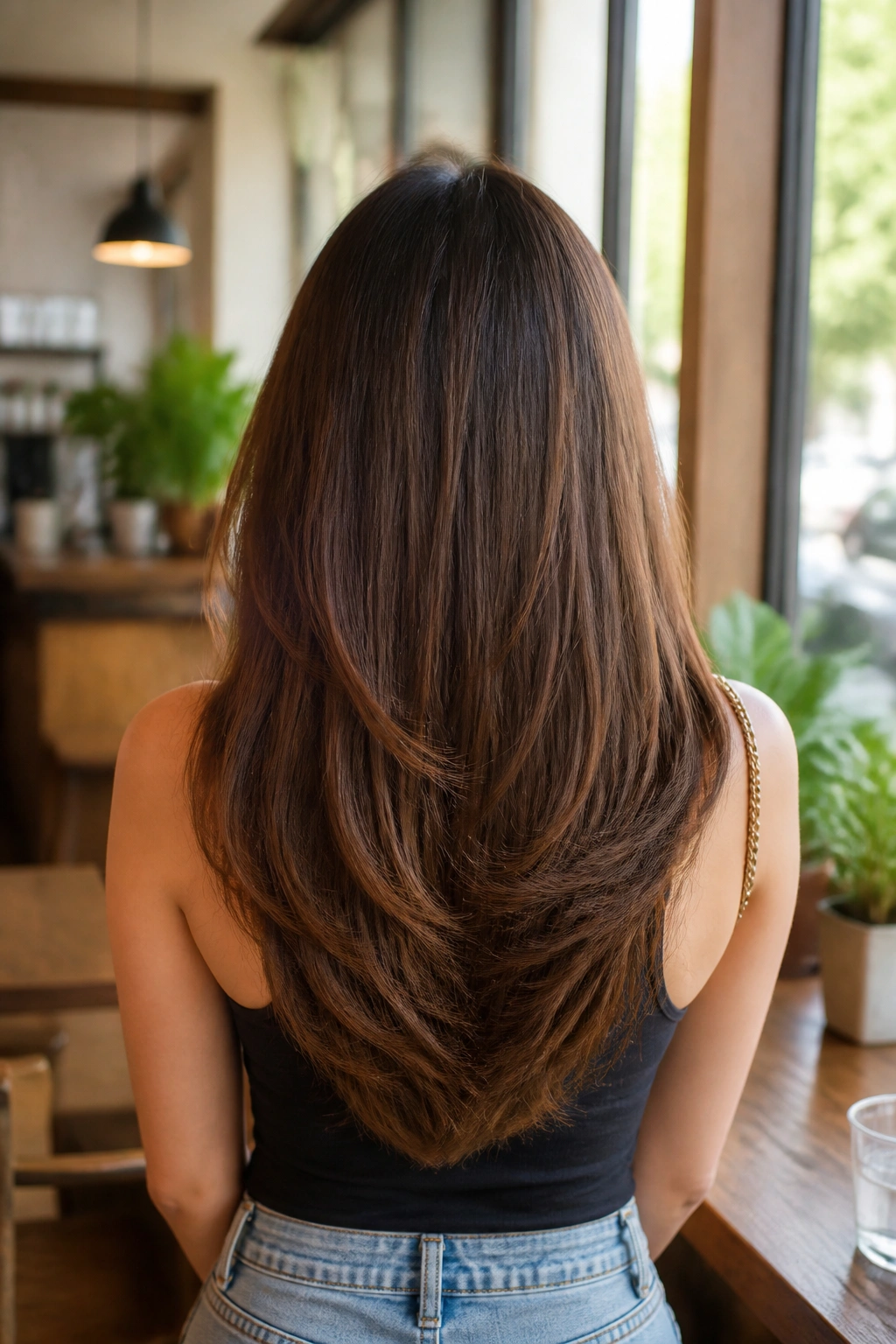
A U-shaped cut is one of the quietest ways to make thick hair look softer. The center stays longest, and the sides curve upward just enough to create a rounded outline. It is a gentler shape than a blunt line, but not so layered that it loses its weight.
This cut works especially well if you like wearing your hair long and want to keep ponytail length. The back falls with a little more movement, and the sides sit in a way that flatters the neck and shoulders. It is a subtle cut, which is exactly why it works.
I like this shape for people who want their thick hair to feel less blocky without looking chopped up. There is nothing flashy here. That is the point. A good U-cut quietly solves the “too much hair” problem without making a big scene about it.
10. V-Shaped Long Cut
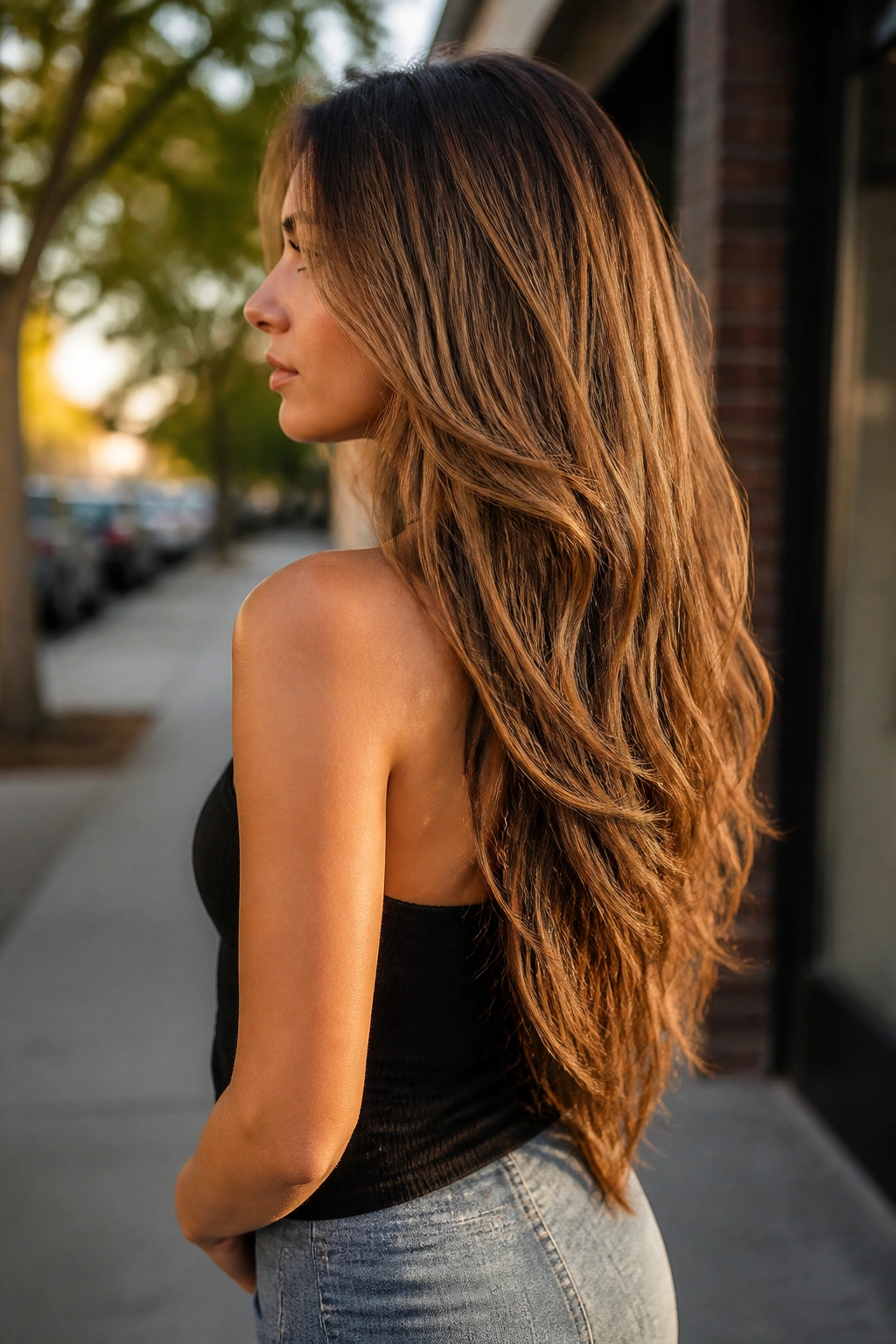
A V-shape brings more drama than a U-shape because the back tapers into a point. On thick hair, that point can pull weight downward and create a leaner silhouette through the back, especially if your hair tends to spread wide at the ends.
This cut is best when the point is soft, not razor sharp. A harsh V can look dated fast and can also leave the sides feeling stringy if the stylist removes too much from the interior. You want a tapered finish that keeps the length full enough to look rich when your hair is down.
It’s a strong choice if you wear your hair in loose waves. The wave pattern follows the shape and makes the line feel intentional. Straight, heavy thick hair can do it too, but it usually needs a better blow-dry to keep the point from disappearing.
11. Angled Bob
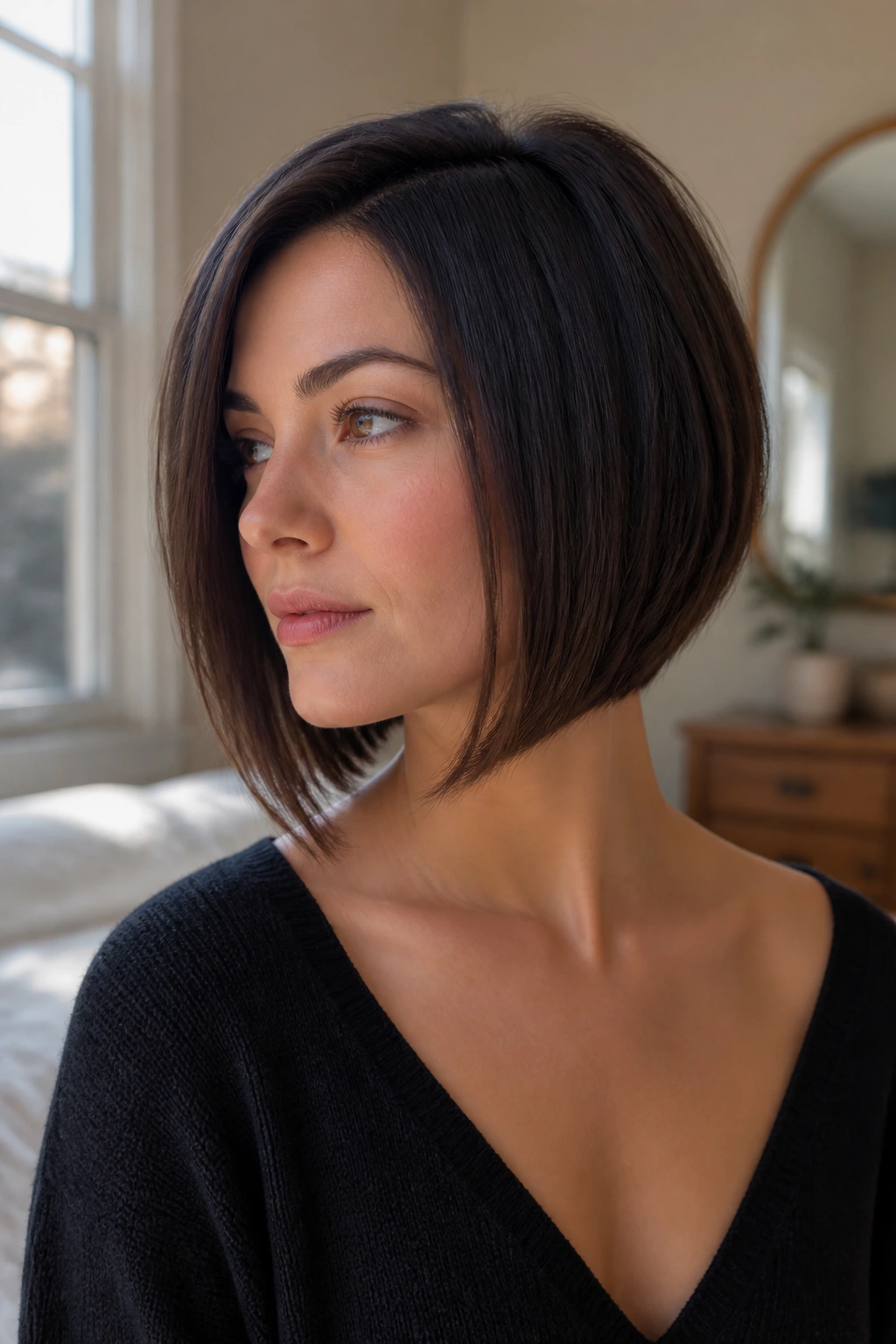
An angled bob is longer in the front and shorter at the back, which helps thick hair sit close to the head instead of kicking out at the sides. That front-to-back angle creates movement without requiring a lot of layering, and that is the real selling point.
Unlike a blunt bob, the angle gives the hair a natural direction. The shape draws the eye forward, frames the jaw, and keeps the back from feeling too heavy. For thick hair, that can be the difference between a bob that feels sleek and a bob that feels like it’s trying to take over the room.
Keep the angle subtle if your hair is coarse or very dense. Too much slope can make the cut look severe, and thick hair tends to exaggerate sharp lines. A modest angle usually wears better day to day.
12. Stacked Bob
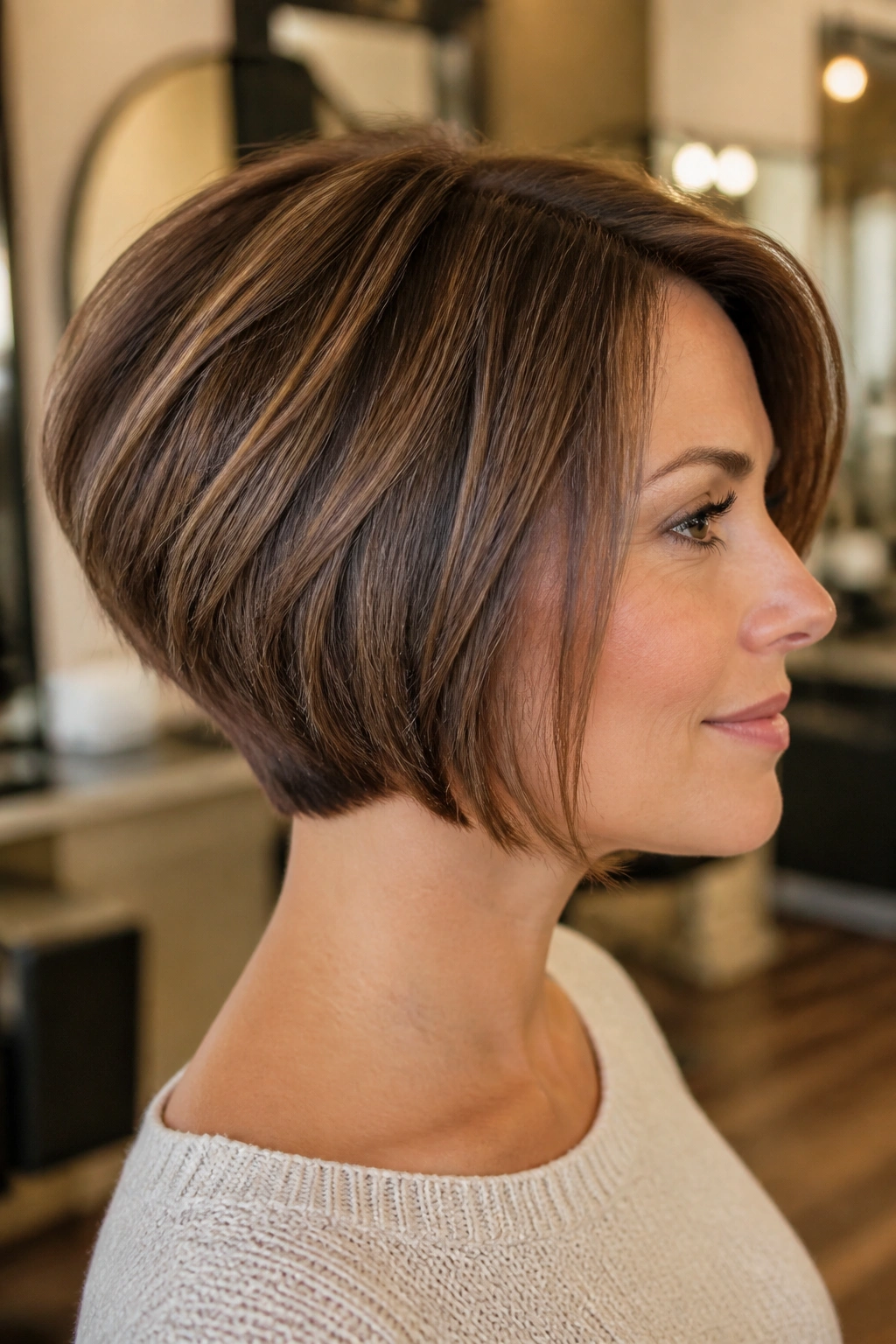
A stacked bob is the answer when the back of your hair refuses to behave. The layers are built shorter at the nape and longer as they move upward, which creates lift at the crown and removes a good bit of bulk from the back.
Why it works on thick hair
The stacked shape helps the hair curve inward instead of pushing outward. That sounds small, but it changes how the cut sits against the neck and shoulders. Thick hair often needs that extra internal structure or it just sits there like a shelf.
I’d ask for soft stacking, not a giant graduated mound at the back. Too much stacking can look old-fashioned or too puffy, especially if your hair is coarse. The best version has a neat nape, a little crown lift, and a front that still feels modern.
If you want short hair that keeps its shape, this is a strong candidate. It does need trimming to stay crisp, though. Let it grow too long and the stack loses its purpose fast.
13. Shoulder-Length Cut With Invisible Layers
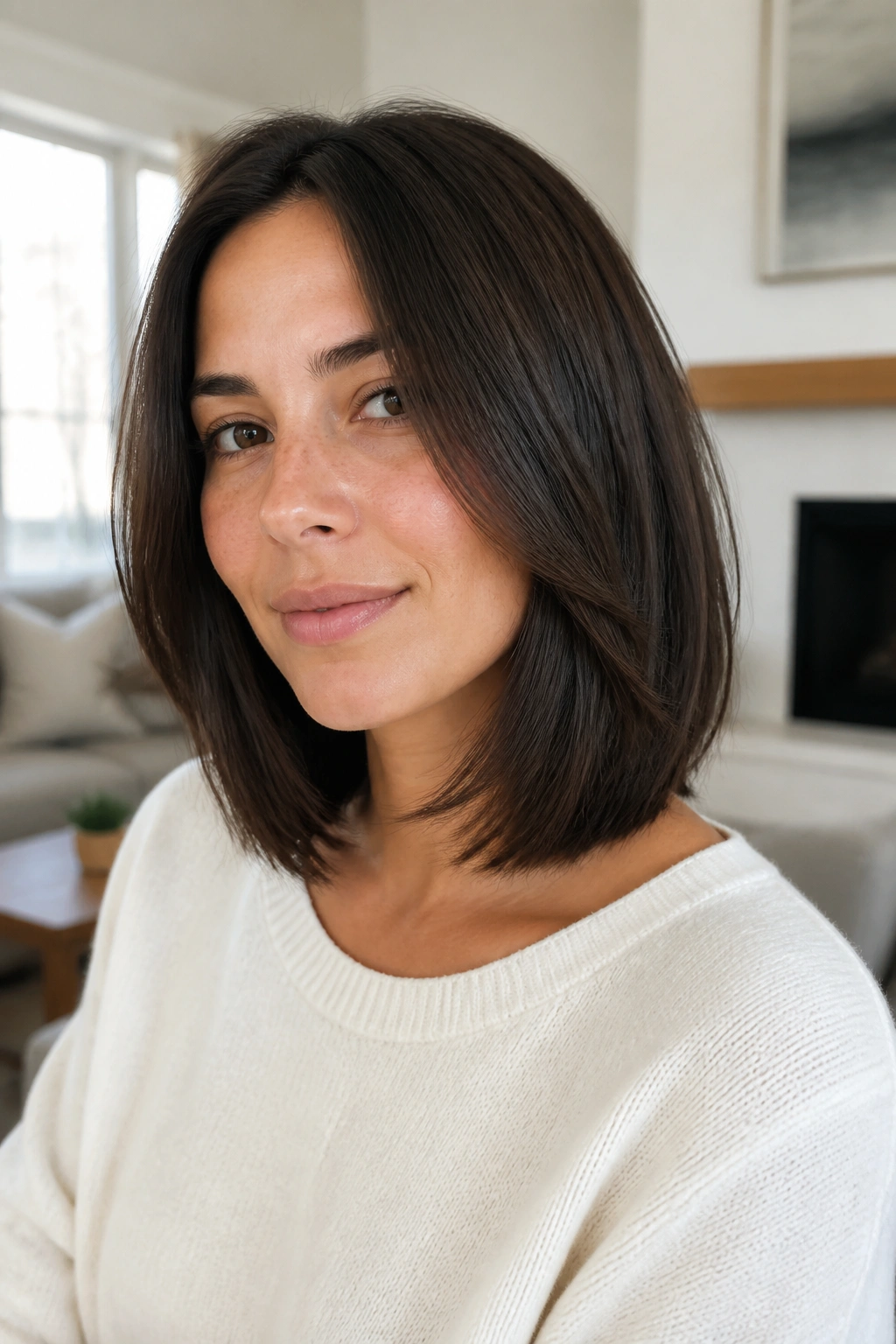
This is one of my favorite haircuts for thick hair because it solves a real problem quietly. The outside line stays smooth, but hidden layers inside the shape remove just enough weight to keep the cut from puffing out. You get movement without obvious choppiness.
That “invisible” part matters. Too many layered shoulder cuts look busy at the ends and frizzy in humidity. Here, the stylist keeps the top layer clean and tucks the weight loss underneath, so the surface still looks tidy when you run a brush through it.
Ask for
- Shoulder-length or slightly below.
- Hidden internal layers, not visible stair-step layers.
- A blunt outer line if your ends are strong.
- Light face framing only if you want extra softness.
This cut is a workhorse. It behaves in a braid, a claw clip, a low bun, and a blowout. Not flashy. Useful. Sometimes that’s the smarter choice.
14. Curtain Bangs and a Mid-Length Cut

Curtain bangs can make thick hair look lighter around the face without sacrificing length everywhere else. They split in the middle, sweep out to each side, and break up the density around the forehead in a way that feels soft rather than heavy.
The catch is styling. Curtain bangs are famous for looking effortless, but they usually need a round brush, a quick bend with a flat iron, or a few minutes with a blow-dryer and a roller. On thick hair, that extra bit of shaping stops them from collapsing into the rest of the cut.
Mid-length hair gives the bangs room to breathe. Too short, and the bangs can dominate the whole look. Too long, and they can disappear into the side layers. Somewhere around the collarbone usually gives the best balance.
This is a good pick if you want a face-change without going fully short.
15. Wolf Cut

A wolf cut is basically a shag with more bite. It has shorter layers on top, a looser shape through the sides, and a rougher, more disconnected feel that works well when thick hair tends to sit too heavy and too neat. If you want polished, skip it. If you want movement and edge, keep reading.
What thick hair does well with a wolf cut is volume control. The shape takes some of the density out of the lower sections and pushes energy upward, which gives you that messy, lived-in outline people either love or absolutely do not. There’s no middle ground here.
It does need a stylist who understands how to tailor the layers to your face and texture. A wolf cut that is too aggressive can swamp the face or puff at the crown. A smarter version keeps the choppiness, but tones down the extremes so it wears in real life, not only in photos.
16. Choppy Midi Cut
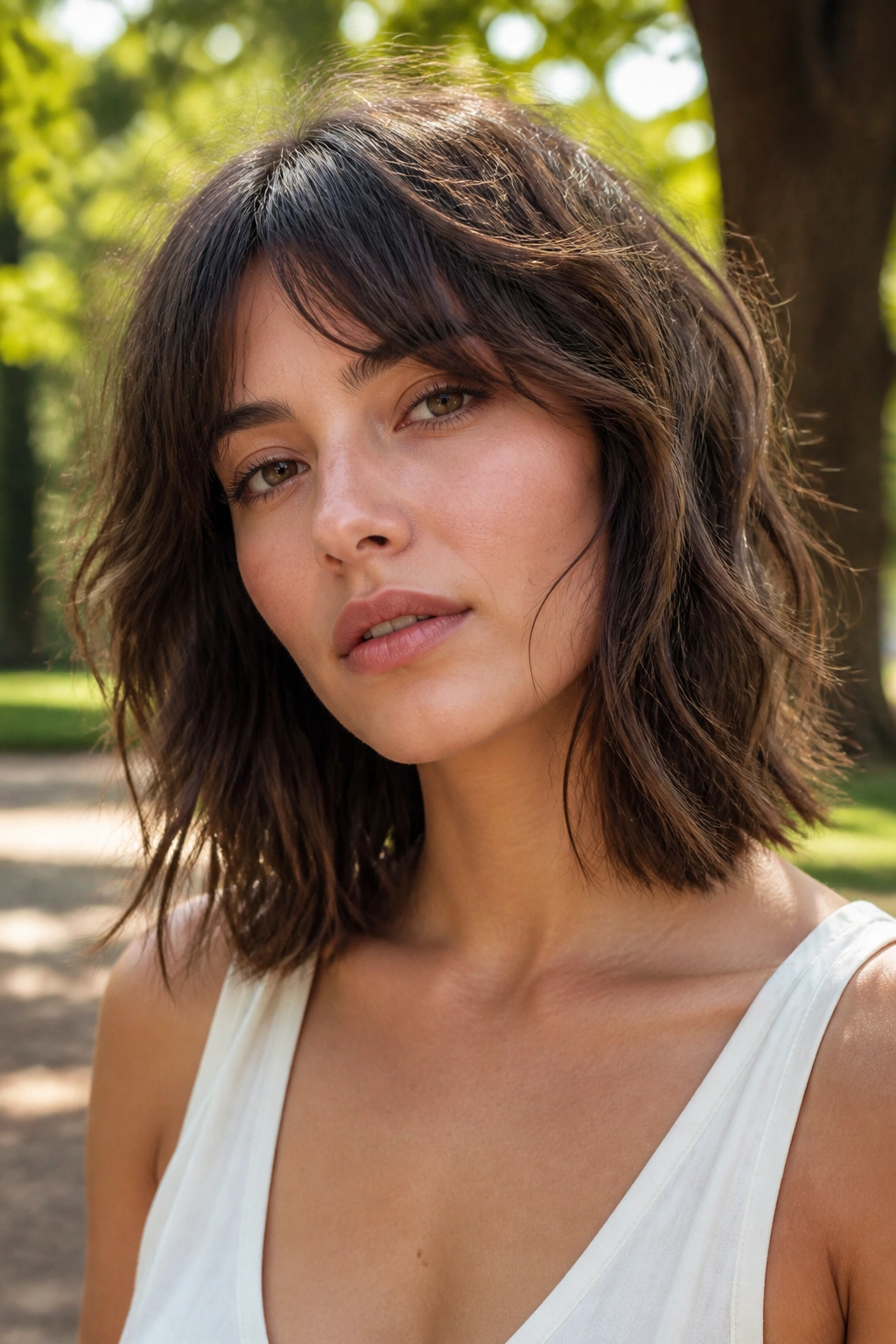
A choppy midi cut sits in that practical zone between short and long, usually around the collarbone to upper chest. On thick hair, the choppiness keeps the shape from turning into a heavy block, but the overall length still feels grown-up and easy to tie back.
I like this cut because it doesn’t ask for a huge style routine. The ends are broken up enough that the hair moves, but not so layered that you’re constantly fixing pieces that stick out. It looks good on straight, wavy, and slightly curly textures, which is a nice bonus.
A few styling habits help:
- Air-dry with a light cream if you want piecey movement.
- Use a one-inch bend with a flat iron for extra separation.
- Keep the ends healthy, since choppy cuts show damage faster.
- Trim it before the ends start to fray.
That last one is the boring part. Still matters.
17. Glass Bob
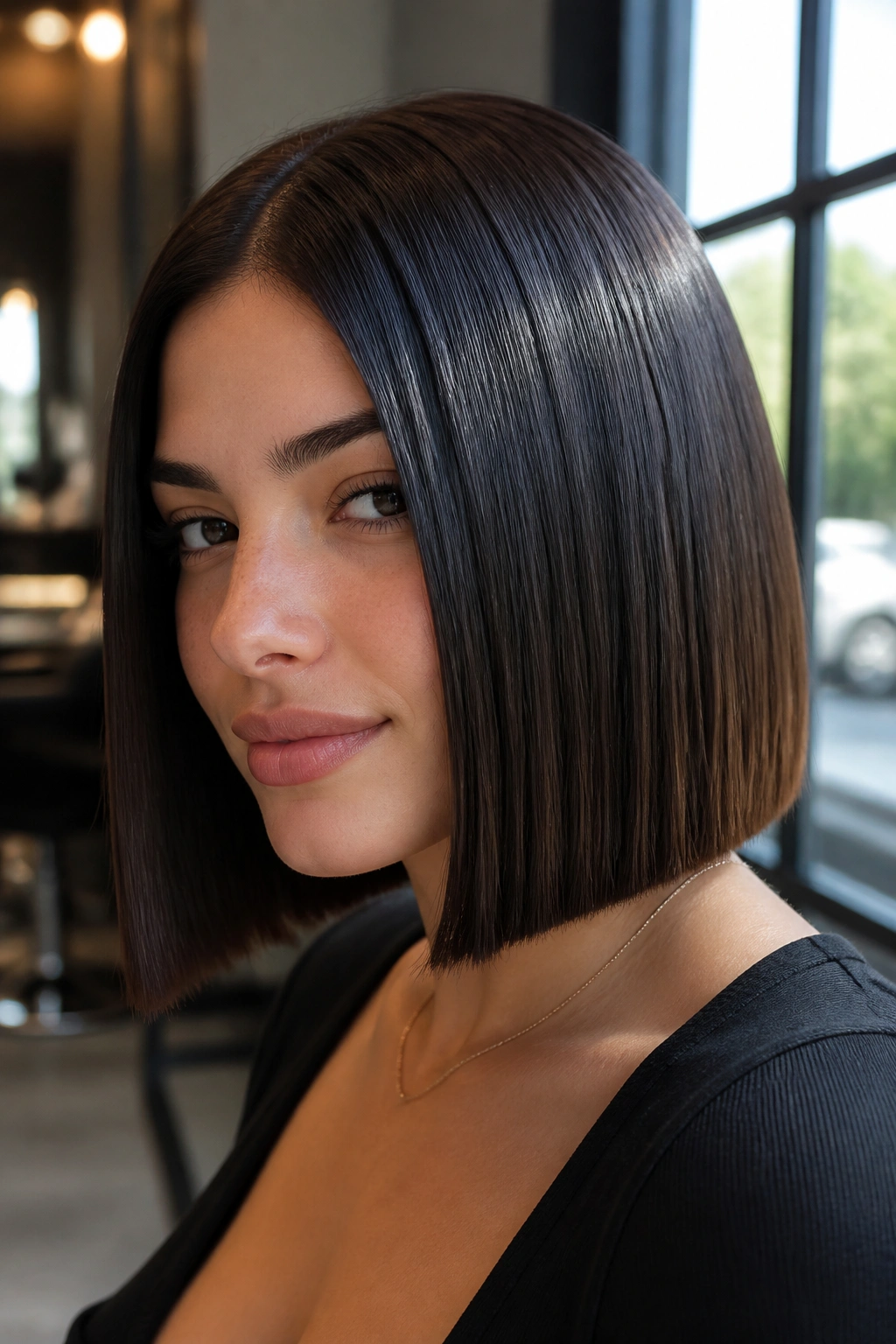
A glass bob is sleek, blunt, and shiny, which makes it a bit of a power move on thick hair. The cut depends on precision. The ends need to be clean, the perimeter needs to stay even, and the surface needs enough control that it reflects light in a smooth sheet instead of exploding outward.
Unlike textured bobs, this one is not trying to look undone. It looks sharp. Thick hair can hold that shape beautifully if it’s cut with enough internal weight removed to keep the bob from kicking out at the bottom. If you go too short or too layered, you lose the whole point.
This is the bob for someone who likes a flat iron, a smoothing cream, and a crisp finish. It is less forgiving in humidity and requires more upkeep than a shag or lob. But when it’s done well, it looks clean in a way textured cuts never quite do.
18. Long Hair With an Undercut
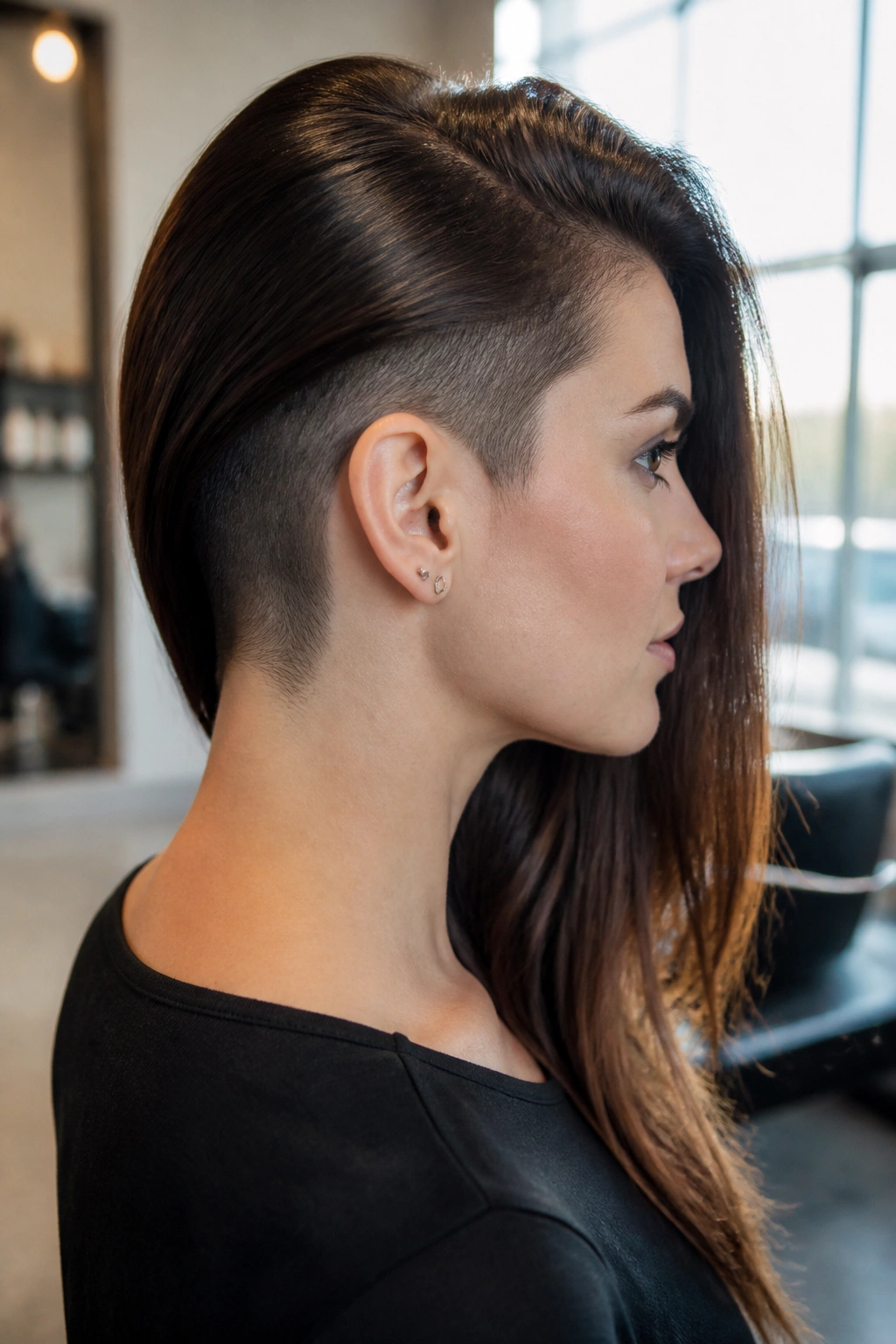
An undercut is one of the smartest ways to deal with truly heavy hair. A stylist removes bulk from underneath—usually at the nape, sometimes behind one ear, sometimes in a hidden section under the crown—so the top layer keeps its length while the weight underneath disappears.
The best part is how invisible it can be. When your hair is down, nobody has to know. When you wear a ponytail or bun, the shape sits flatter and feels lighter. That can be a huge relief if thick hair makes your head hot or gives you a constant tug at the scalp.
There is a catch. It grows out in a way that needs attention, and if you decide you hate it, you can’t undo it overnight. So this is the cut for someone who wants real bulk removal, not just a little softness around the edges.
19. Razor-Cut Lob

A razor-cut lob can be beautiful on thick hair when the texture is right. The razor softens the ends, adds movement, and keeps the cut from looking too blocky, especially if your hair is naturally wavy or has a bit of bend in it already.
But here’s the part people skip over: a razor is not a magic wand. On coarse hair that frizzes easily, too much razor work can make the ends look fuzzy and worn out. So this cut needs a stylist with a light hand and a good eye for texture.
How to get the most from it
- Ask for a shoulder-skimming lob.
- Keep the ends soft, not shredded.
- Pair it with light layering through the interior only.
- Avoid over-thinning if your hair already expands in humidity.
Used well, this cut feels airy and modern. Used badly, it looks chewed up. The difference is in the hand cutting it.
20. Face-Framing Layers on Long Hair
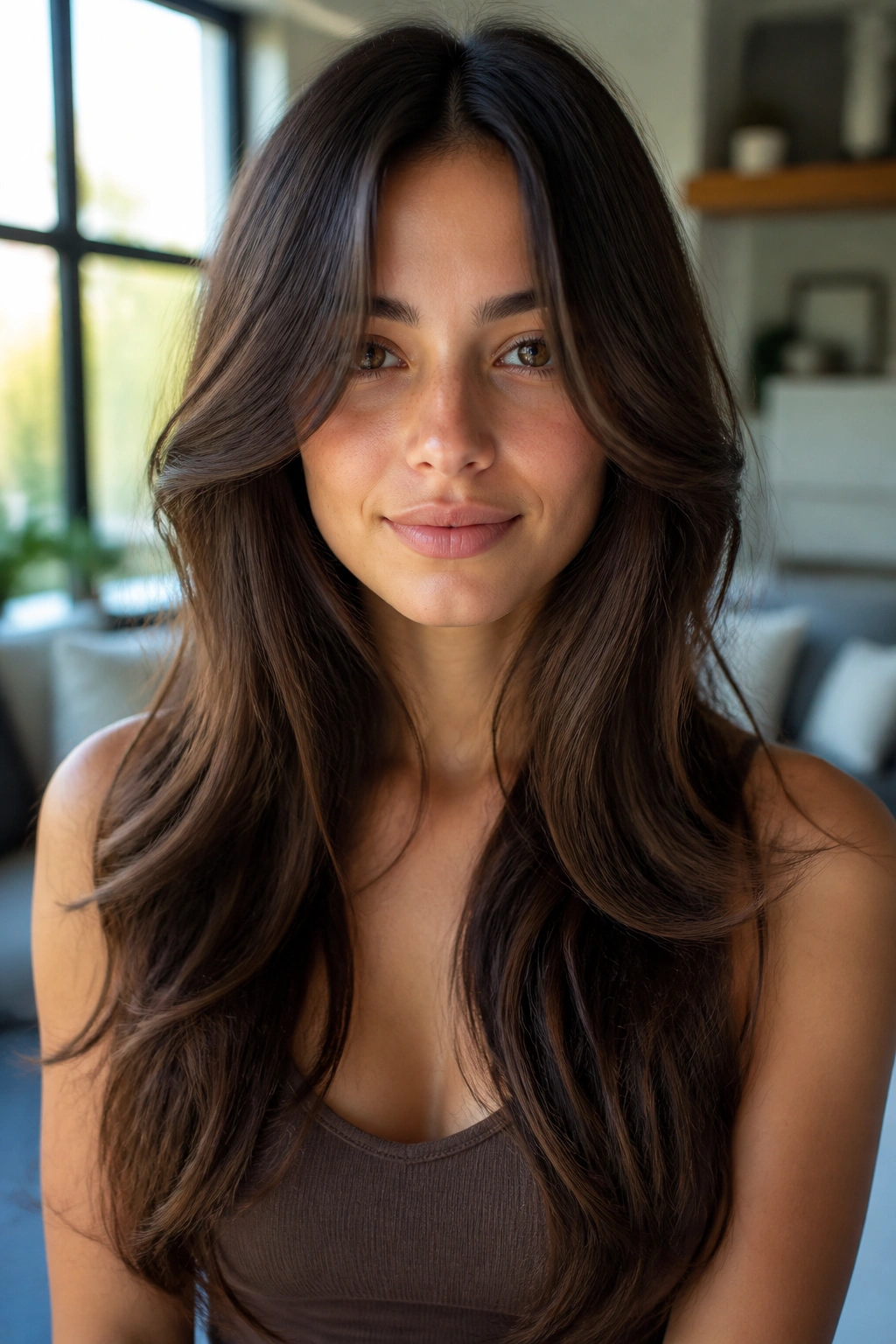
If you want to keep your length, face-framing layers are the easiest place to start. They take weight out of the front, soften thick hair around the cheeks and jaw, and give you a little movement without changing the whole silhouette.
The best versions start around the cheekbone, nose, or lips, then taper into the rest of the hair. That range keeps the front from looking too short or too disconnected. For thick hair, I usually prefer fewer, stronger face-framing pieces over lots of wispy ones. Too many little pieces just make styling messy.
This cut is also useful if you wear your hair up a lot. Those front pieces drop around a bun or ponytail and make the whole style look finished. Small thing. Big payoff.
If you’re nervous about a major cut, this is the least risky place to begin.
21. Soft Wedge Cut
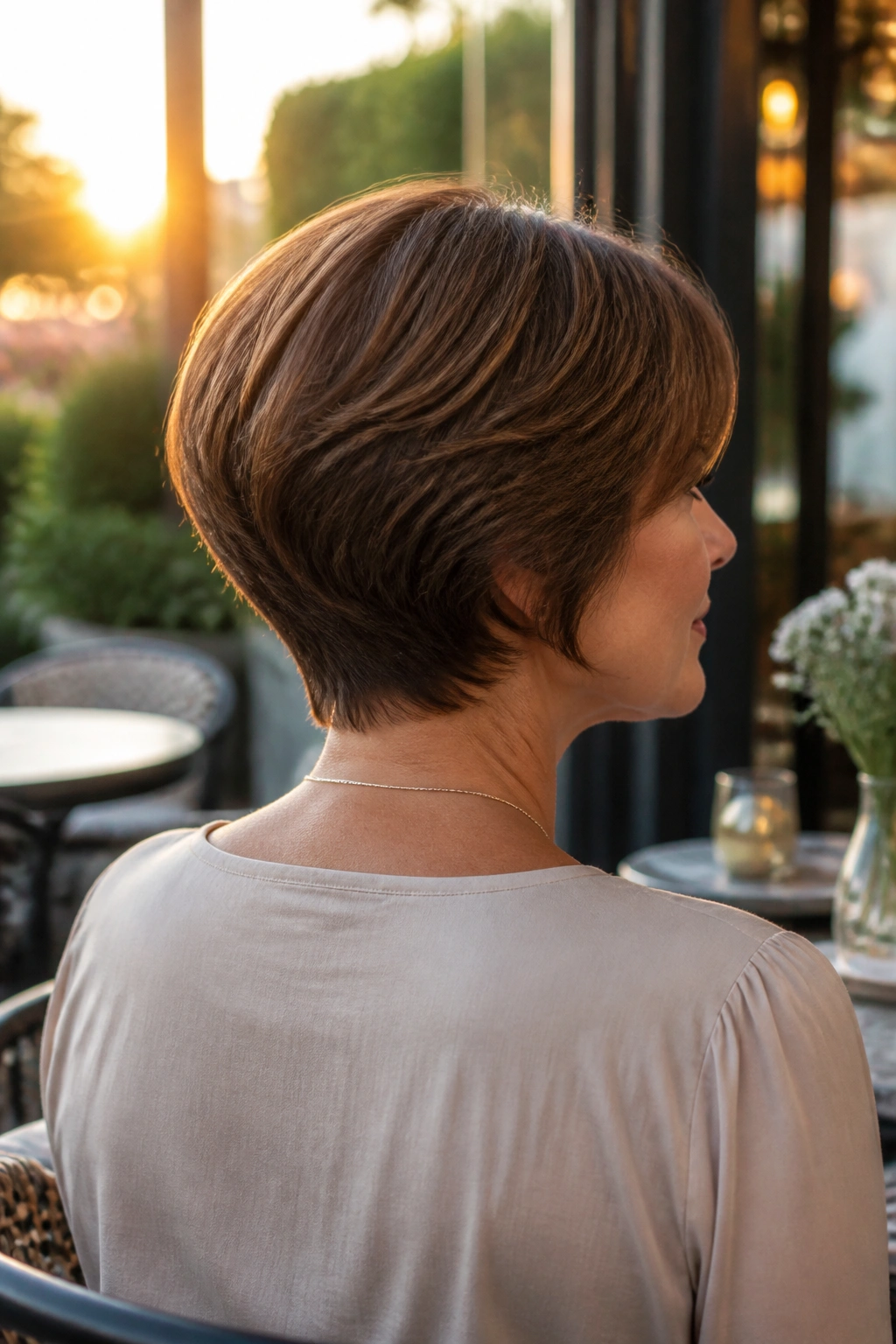
The wedge cut gets a bad reputation because people remember the stiff, over-sprayed versions. A soft wedge is different. It keeps the shorter back and stacked shape that help thick hair sit closer to the head, but the lines are gentler and the sides blend better into the face.
That structure is handy if your hair feels heavy at the nape. The cut lifts away some of that mass so the neck area looks cleaner and the crown gets a little shape without turning into a helmet. It also works nicely if you like easy ear tucks and a neat outline.
I’d call this a good choice for someone who wants a short-to-medium cut with a bit of posture. It has shape without looking overly styled. The word “soft” is doing real work again here. Without it, the cut can get dated fast.
22. Tapered Coily Crop
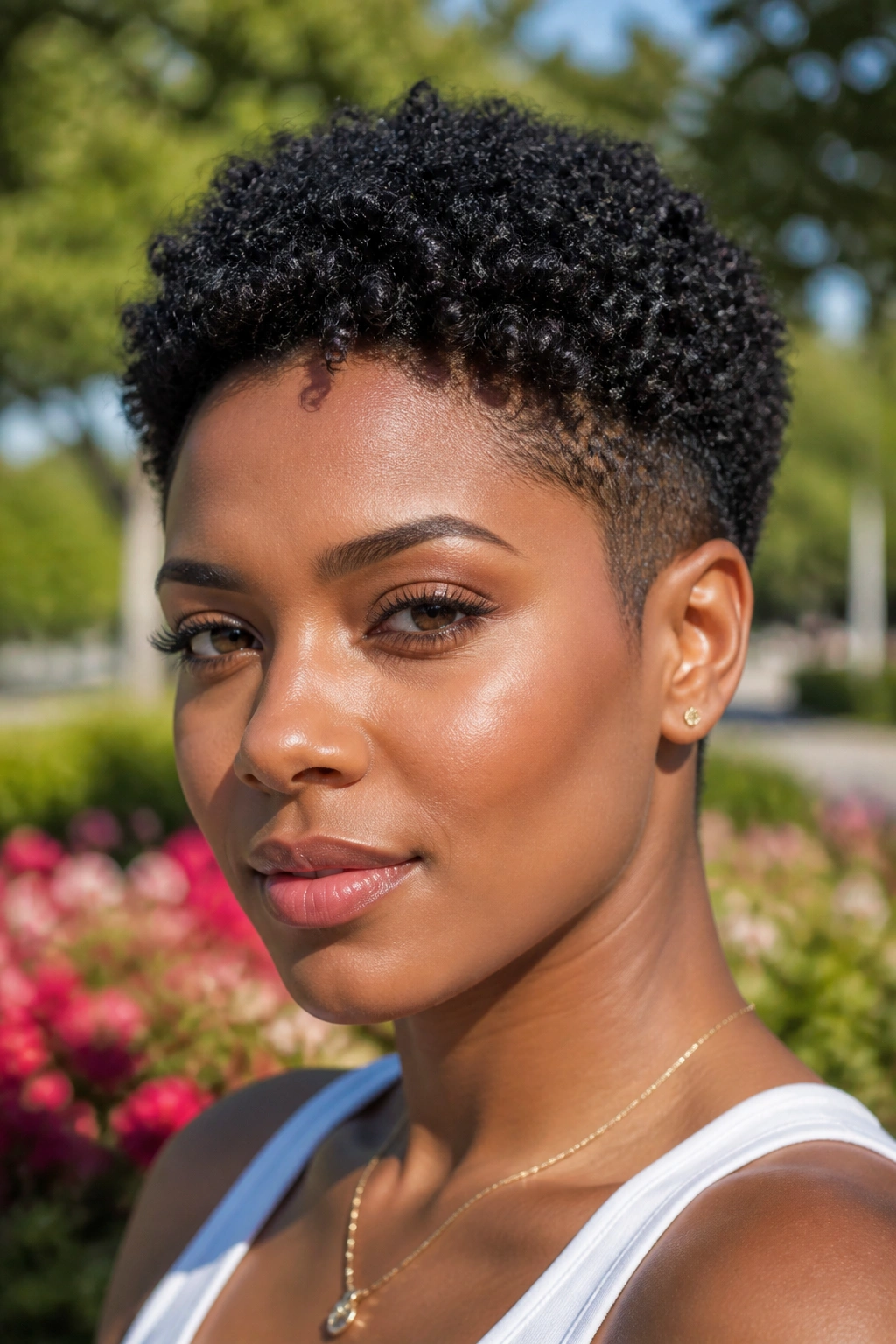
For thick coily hair, a tapered crop can be a relief. The sides and nape are cut shorter, while the top keeps enough length for shape, height, and styling room. That taper stops the silhouette from ballooning and lets the curls stack instead of spreading out.
A good coily crop depends on respecting shrinkage. What looks like two inches in the chair may spring up much higher once dry, so the cut should be designed with the finished shape in mind. I also like this cut when the hairline at the temples or nape needs a cleaner frame, because the tapered edges make the whole style look sharper without taking away texture.
This is one of those haircuts that rewards confidence. The shape is direct. The upkeep is manageable. And if you like twist-outs, sponge curls, or a little product and go, it gives you a strong base without a lot of extra bulk.
