



The best long haircuts for round faces do one job well: they make the face read longer without making the hair feel stiff. That sounds simple, but a lot of cuts miss the mark because they add volume in exactly the wrong place — right at the cheeks, right at the jaw, right where a round face already has softness.
A good long cut does the opposite. It creates a vertical line, keeps the widest part of the face open, and uses movement lower down so the hair looks light instead of puffy. Sometimes that means layers that start below the chin. Sometimes it means a fringe that breaks up the forehead without chopping the face in half. Sometimes it’s a blunt shape worn sleek enough to stay narrow through the sides.
Texture changes the whole equation. Straight hair shows every line. Wavy hair can add width if the layers sit too high. Curly hair can be flattering or chaotic depending on where the shape is built. That is why the same haircut can look elegant on one person and all wrong on another — not because the idea is bad, but because the placement was lazy.
The list below leans on cuts that do the heavy lifting for you. Some are soft and easy. Some are sharper. A few are a little more fashion-forward. All of them are built with the same basic goal: keep the eye moving down.
1. Long Layers That Start Below the Chin
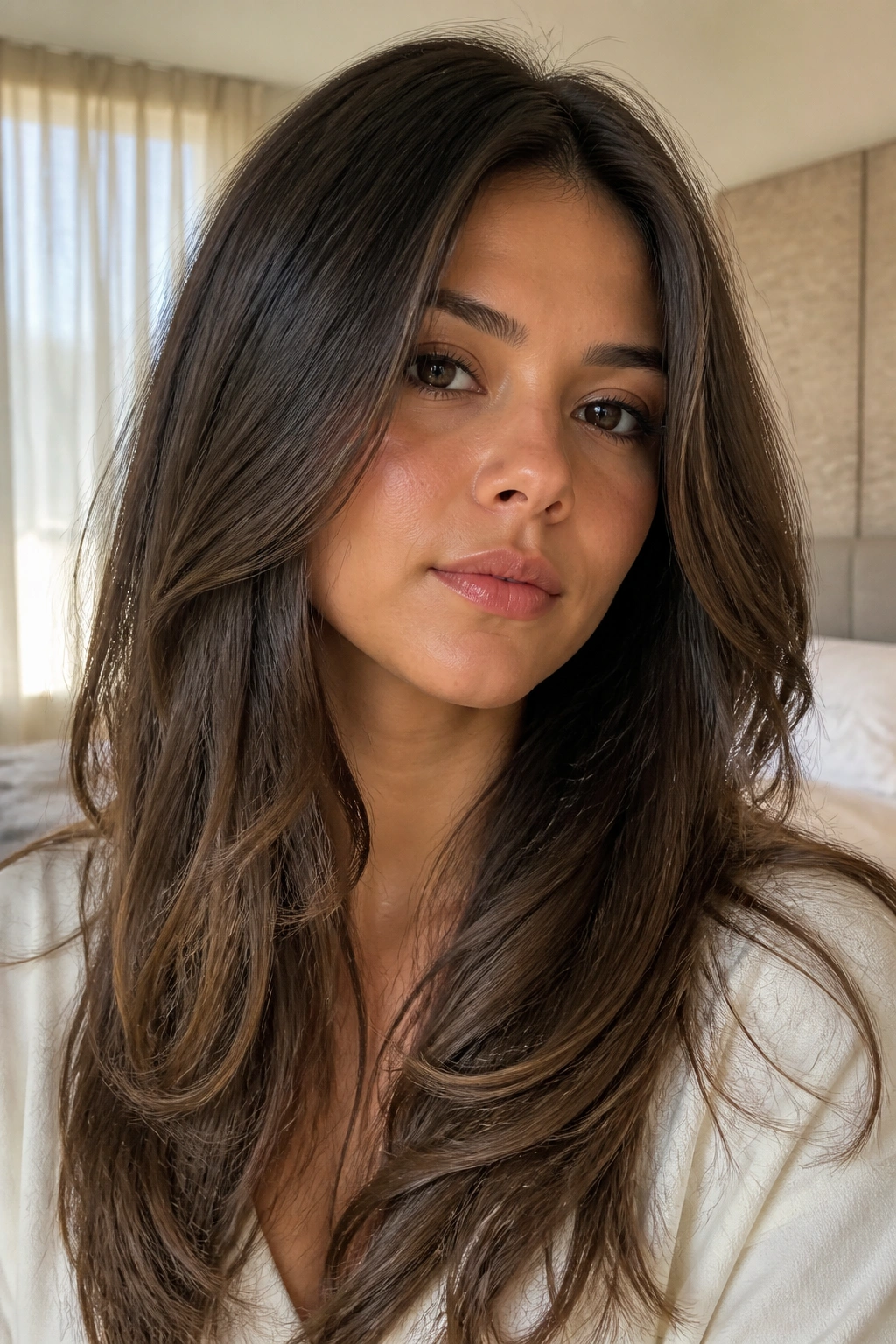
If you want a safe, smart starting point, this is it. Long layers that begin below the chin keep the hair from puffing out around the cheeks, which is exactly where a round face usually needs breathing room.
The sweet spot is lower than most people think. Start the first visible layer about 1 to 2 inches below the chin, and let the rest fall from there. That keeps the face open and gives the hair movement without building a shelf at cheek level.
Why the Starting Point Matters
When layers begin too high, the hair fans out across the sides of the face. That can make the face look wider, even if the cut is technically “layered.” Lower layers do the opposite. They guide the eye down toward the collarbone, chest, and ends.
This cut works especially well on medium to thick hair. Fine hair can wear it too, but the layering needs to stay soft so the ends do not look thin.
- Ask for long, blended layers instead of choppy steps.
- Keep the shortest face-framing piece below the chin.
- A middle part or a slight off-center part both work here.
- This cut looks good air-dried, but a round brush gives the layers more swing.
Best for: anyone who wants movement without losing length.
2. Curtain Bangs with Soft Face-Framing
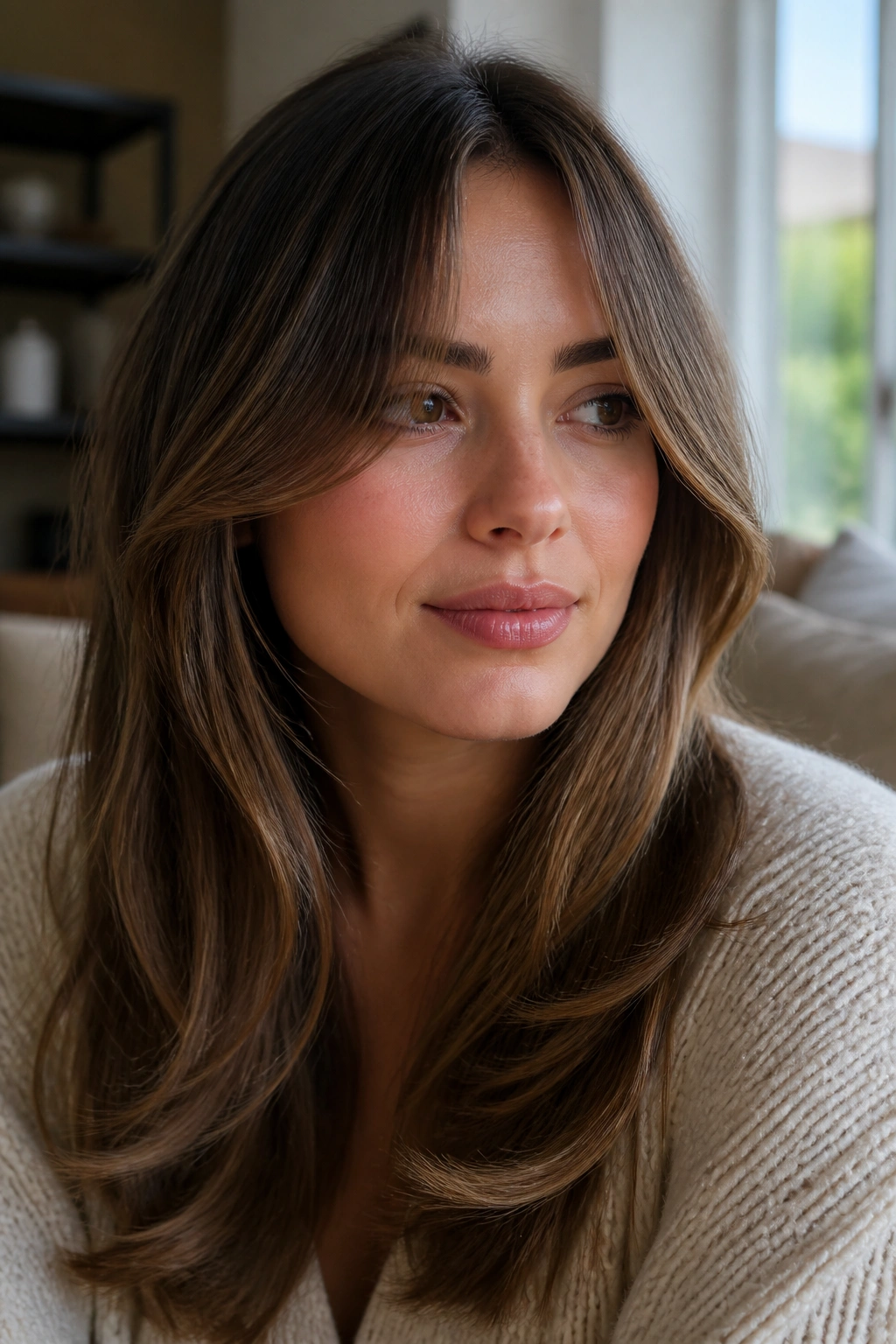
Curtain bangs are one of the easiest ways to soften a round face without giving up long hair. They part in the center, open away from the forehead, and fall into longer sides that skim the cheekbones instead of stopping there.
The cut works because it creates two diagonal lines. Diagonal lines are your friend. They interrupt the circular shape of the face and make everything feel a little longer and leaner.
The trick is length. Curtain bangs that are too short can make the face feel shorter, not slimmer. The shortest point usually lands around the brows, then the sides taper toward the cheekbone or lip.
A good version of this cut should feel soft, not heavy. The bangs should blend into the rest of the haircut so there is no hard line sitting across the forehead. If you like ponytails, this is a strong pick, because the fringe still leaves enough hair around the face to look intentional when the rest is tied back.
3. The Butterfly Cut
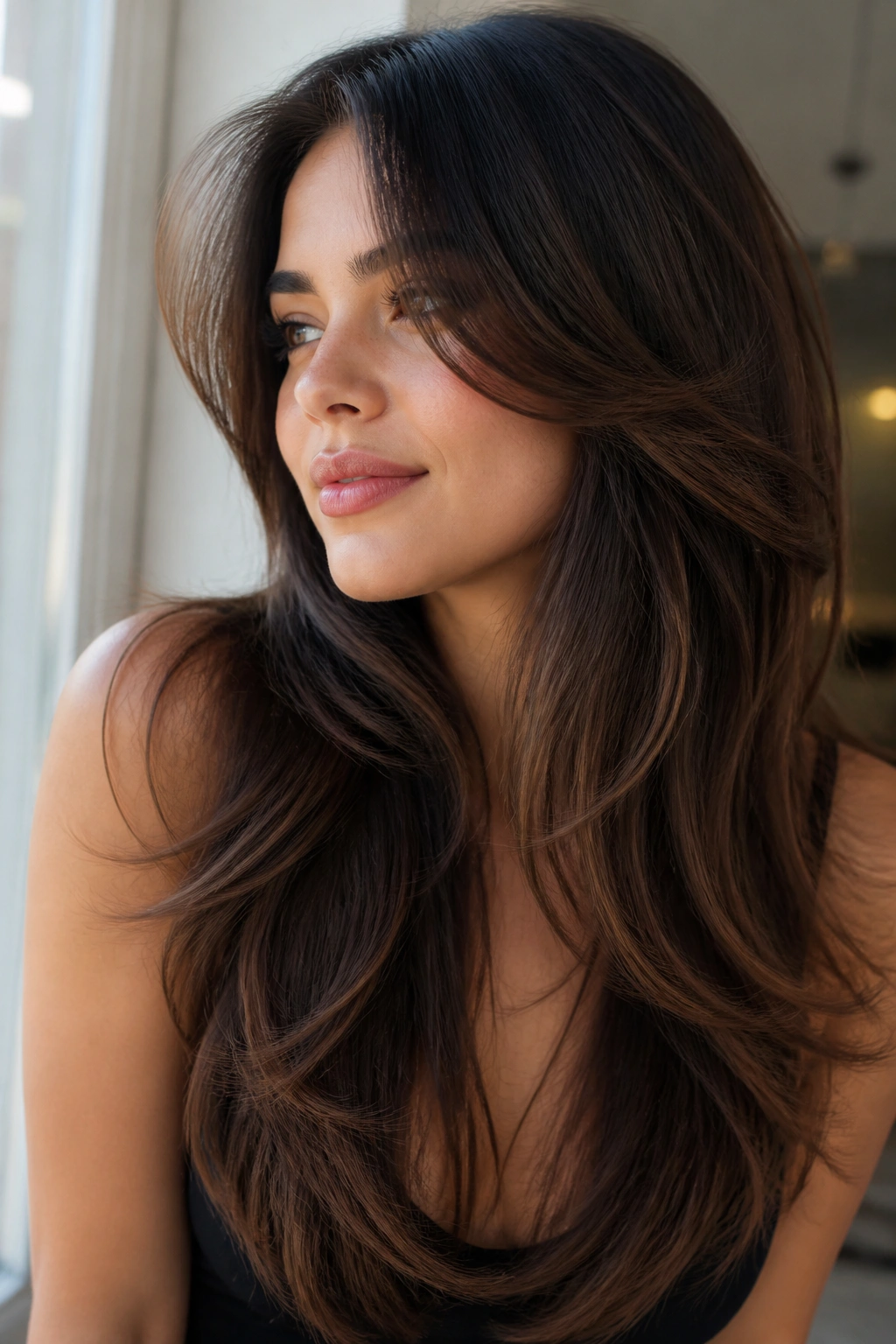
Why does the butterfly cut get recommended so often for round faces? Because it gives you two shapes at once: lift at the top and length below. That combination can be gold.
The shorter upper layers create movement around the crown and cheek area, while the long bottom layers stay sleek and grounded. The result is airy hair that still hangs vertically, which is exactly what a round face needs.
How to Ask for It
Tell your stylist you want shorter face layers that blend into very long lengths. That keeps the haircut from turning into a wide, fluffy halo.
- The shortest top layers should sit near the cheekbone or slightly below.
- The bottom layer should stay long enough to keep the silhouette narrow.
- If your hair is thick, ask for light internal removal, not a heavy chop.
- If your hair is fine, keep the top layers soft so the ends do not get stringy.
The butterfly cut looks best when you style it with some bend. Not curls. Just bend. A little bounce at the ends keeps the layers from lying flat like a curtain.
4. U-Shaped Long Cut
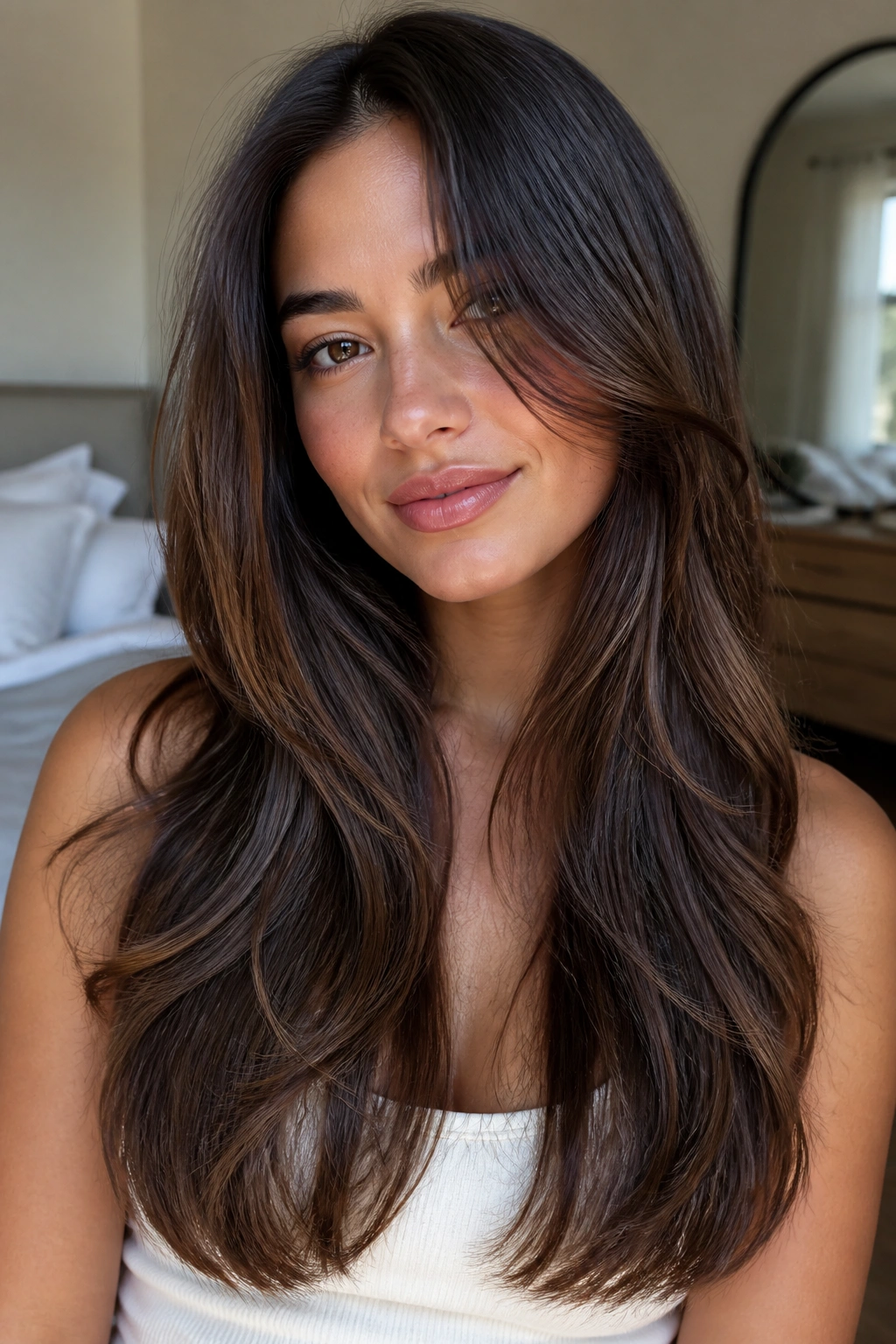
A U shape is softer than a V, and that softness matters. The curve at the back gives the haircut a gentle finish, while the front pieces stay long enough to keep the face from looking boxed in.
This is one of those cuts that looks expensive even when it is quietly simple. The perimeter is clean, the movement is subtle, and the shape does not fight the face. For round faces, that matters more than drama.
The U cut is especially useful if your hair is thick and tends to spread out at the sides. The curved bottom keeps the edges from feeling blunt or heavy. It also grows out well, which saves you from constant fixes.
- Ask for a smooth U at the back, not a harsh dip.
- Keep the front at least collarbone length.
- Use it with loose waves or a sleek blowout.
- Skip aggressive layering if your hair already has a lot of volume.
It is a calm haircut. Some people want that. Honestly, most do.
5. V-Cut Layers
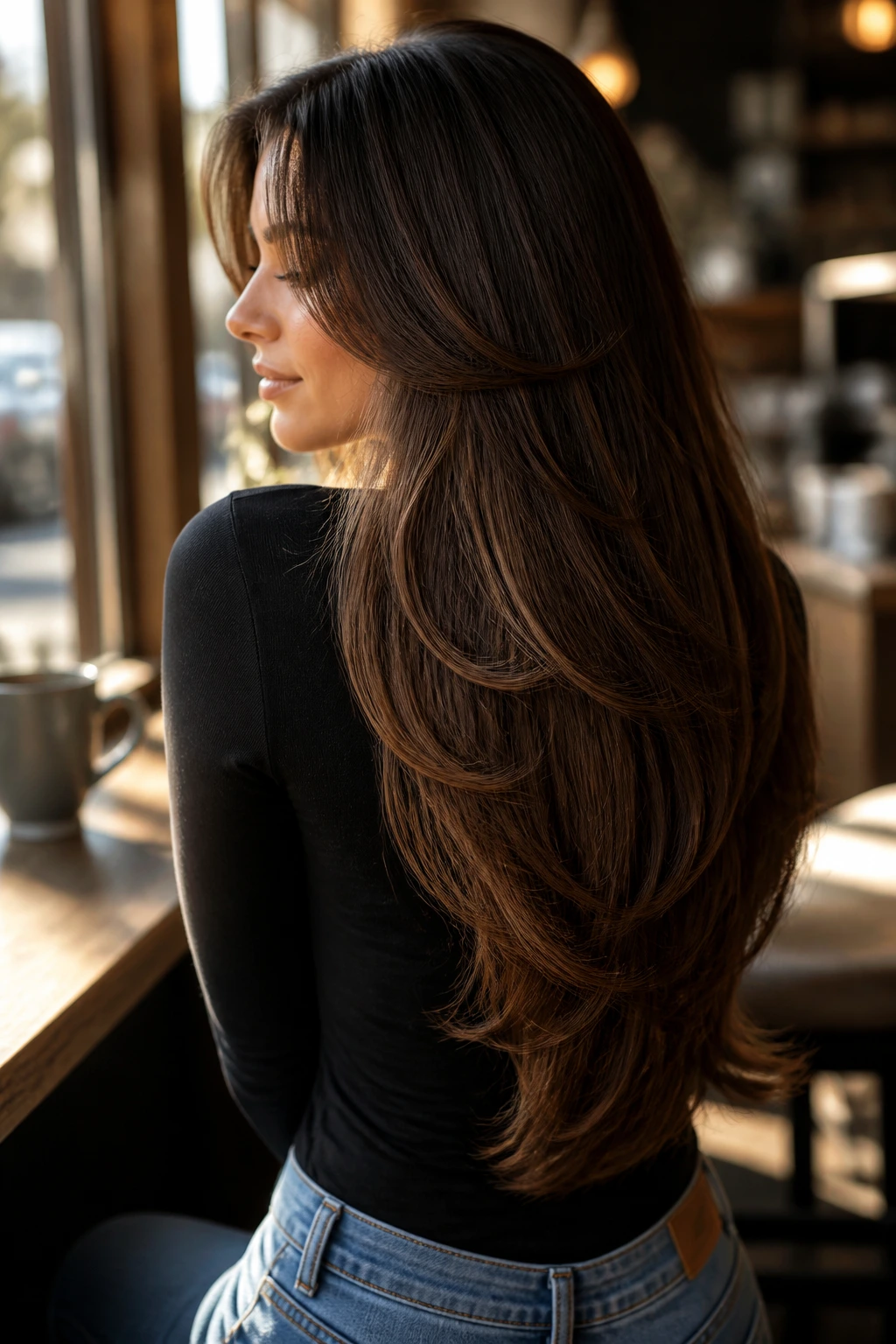
A V-cut gives the hair a pointed shape at the back, and that point does a nice job of drawing the eye downward. On a round face, that downward pull is useful. It gives the haircut direction.
The sharpness at the back also helps long hair look lighter. Instead of one heavy wall of length, you get a shape that narrows as it goes down. That keeps the sides from feeling too broad.
The front still matters. If the front layers are too short or too full, the cut can add width right where you do not want it. The best V-cut for a round face keeps the longest pieces around the chest or lower, with face-framing layers that stay soft.
This shape works best on thick, straight, or wavy hair. Very fine hair can look a little thin at the ends if the point is too dramatic. If that is your hair, ask for a gentle V, not a sharp one.
6. Long Shag with Piecey Ends

A long shag is not for everybody. Good. Haircuts should have a point of view.
Unlike a polished layered cut, the shag uses broken-up texture to keep the shape from feeling heavy. On a round face, that means the haircut can add energy without adding a lot of width. The ends look airy. The crown gets a little lift. The whole thing feels less sweet, more sharp.
The best version is not the overdone, giant-volume shag people remember from old photos. It is softer than that. Think feathered crown layers, piecey ends, and maybe a curtain fringe if you want extra movement.
This cut shines on wavy and curly hair because the natural texture already helps separate the layers. Straight hair can wear it too, but it usually needs a blow-dry or a bit of texture spray so the cut does not collapse into flatness.
If you want hair that looks lived-in instead of carefully arranged, this is a strong choice.
7. Deep Side Part with Long Layers
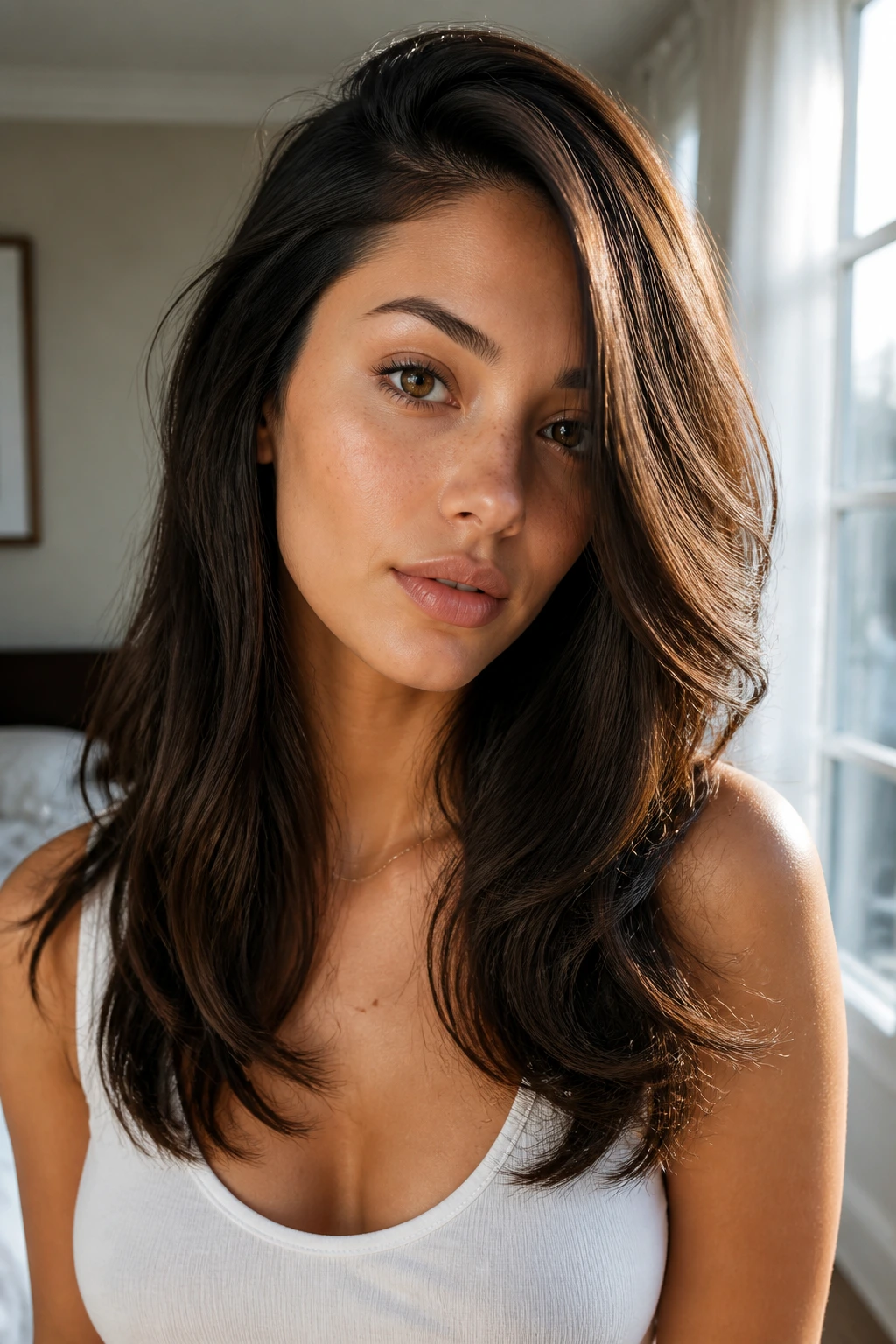
A deep side part does more work than people give it credit for. It breaks symmetry, adds height at the root, and shifts the visual weight away from the center of the face. On a round face, that can make a real difference.
Pair it with long layers and the effect gets stronger. The part creates a diagonal line, and the layers keep the length moving so the hair does not sit like one heavy sheet on both sides.
What to Tell Your Stylist
- Keep the layers long enough to fall below the chin.
- Ask for a side part friendly shape, not a dead-center curtain.
- Avoid bulky side pieces that stop right at the cheek.
- Add light lift at the crown if your hair lies flat.
A deep side part is also one of the fastest fixes. You do not need a dramatic haircut change to get the effect. Sometimes the cut is already there, and the part is doing the real shaping. Flat roots ruin the whole thing.
8. Softly Blended Invisible Layers
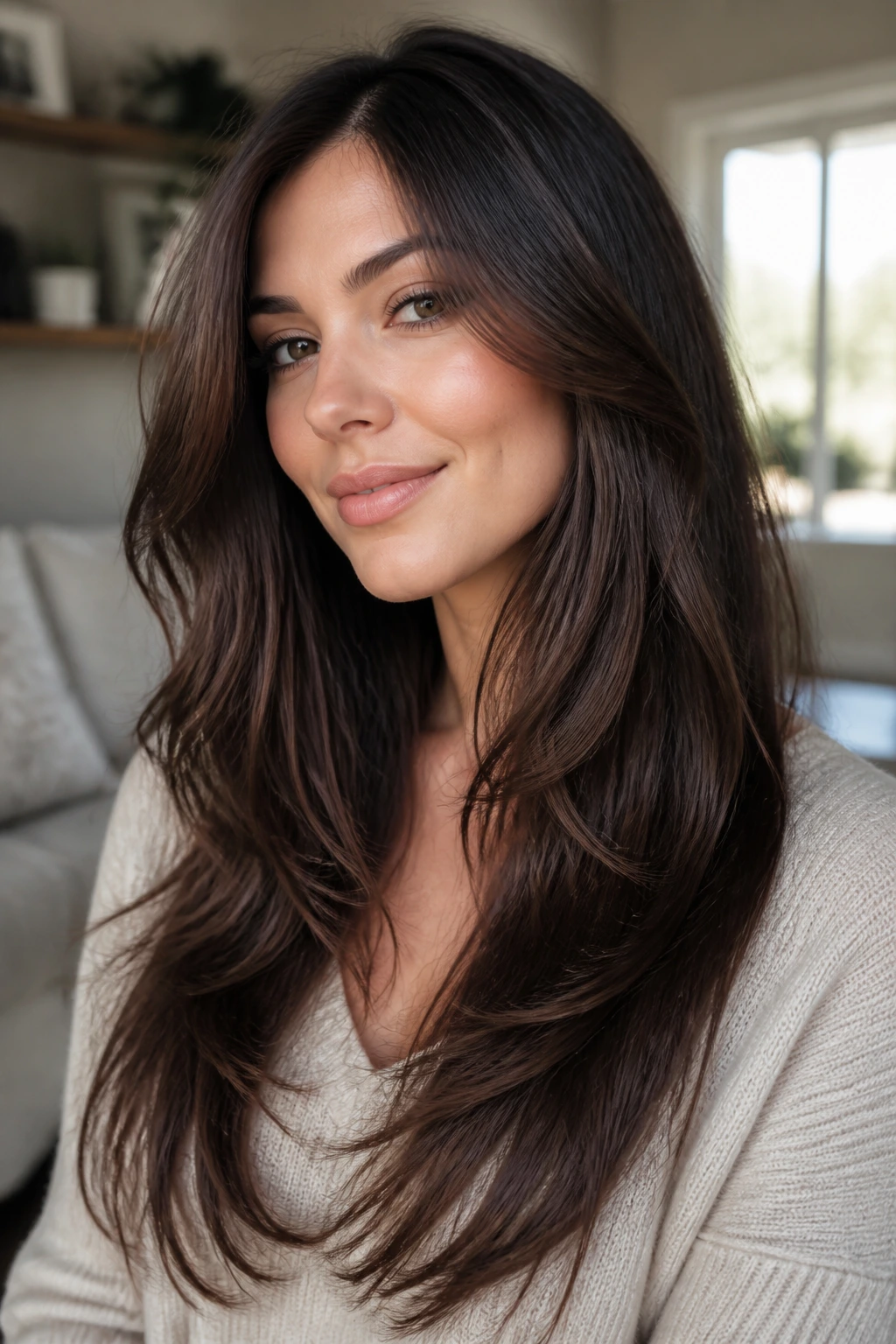
Want movement but hate obvious layers? This is the cut to ask about.
Invisible layers sit inside the haircut instead of stepping out in visible chunks. That means the silhouette stays long and smooth, but the weight gets removed from the inside. For round faces, that is useful because the hair can move without spreading outward like a triangle.
It is a particularly good option for thick, straight hair that looks heavy around the cheeks. A blunt long cut can feel too solid in that case. Invisible layers keep the length but take out the bulk.
The best thing about this cut is how quiet it is. It does not scream “I got layers.” It just makes the hair sit better. The face looks more open, the ends move more easily, and the shape grows out without ugly steps.
Ask for internal layers only if you want the cleanest version. If you add too much face framing, the cut can lose the smooth effect that makes it work in the first place.
9. Bottleneck Bangs with Long Length
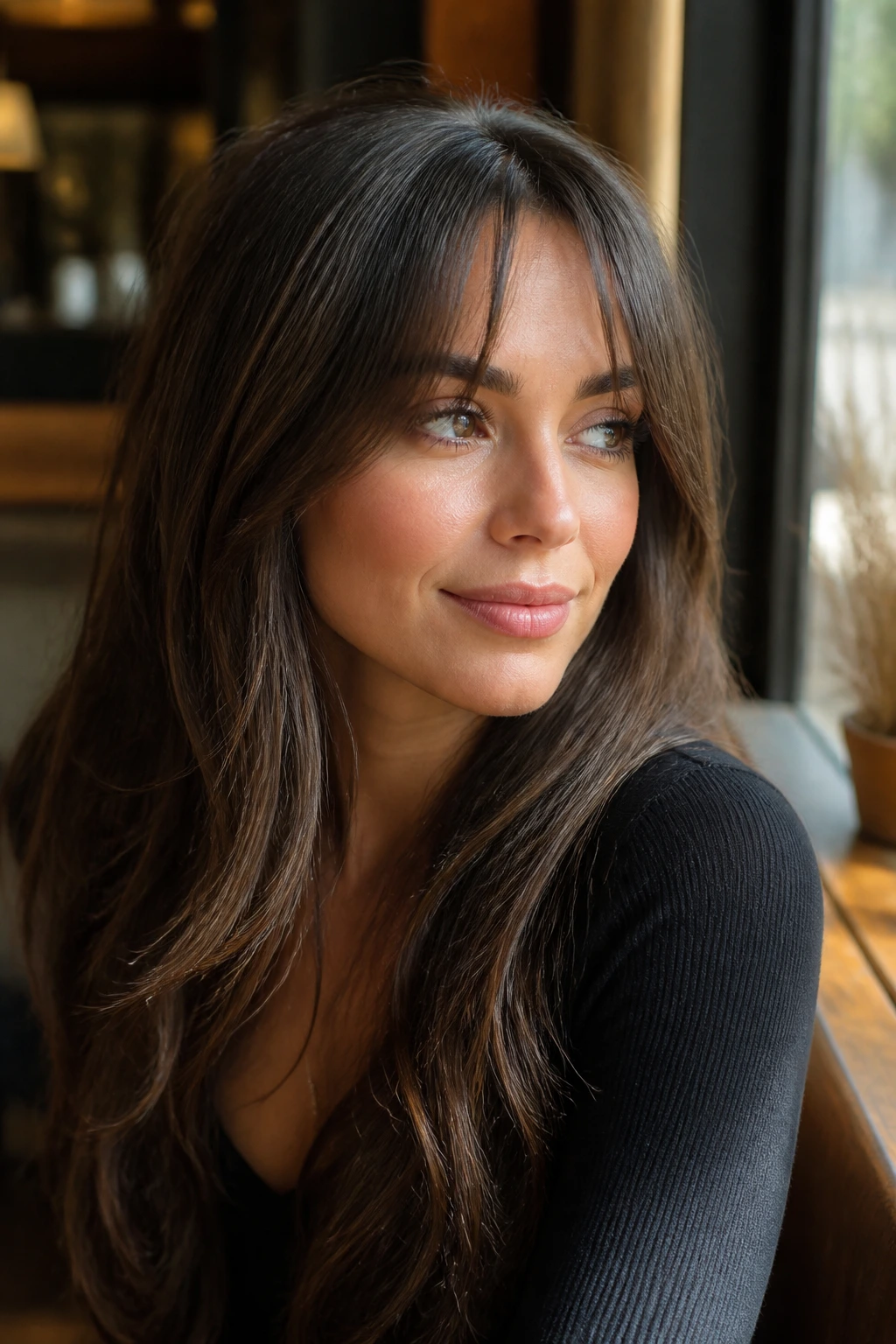
Bottleneck bangs are underrated on round faces. They start narrow in the center, then open out softly near the temples and cheekbones, which gives the forehead shape without adding a hard line.
That opening is the whole point. It creates a little vertical space in the middle of the face, then lets the sides fall long enough to slim the cheeks. It is softer than a blunt fringe and more controlled than a full curtain bang.
What to Watch For
The length needs to be right. If the bangs stop too high, they can make the face look shorter. If they are too dense, they sit like a block and lose the softness that makes them flattering.
- Ask for a center section that is slightly shorter than the sides.
- Keep the longest pieces around the brow to cheekbone area.
- Style them with a small round brush so they curve instead of sticking straight out.
- Let them blend into long layers, not cut off from the rest of the hair.
This cut is a good middle ground for people who want fringe but do not want a heavy bang maintenance routine. It grows out more gracefully than blunt fringe, which is a nice bonus.
10. Cheekbone-Grazing Face Frame
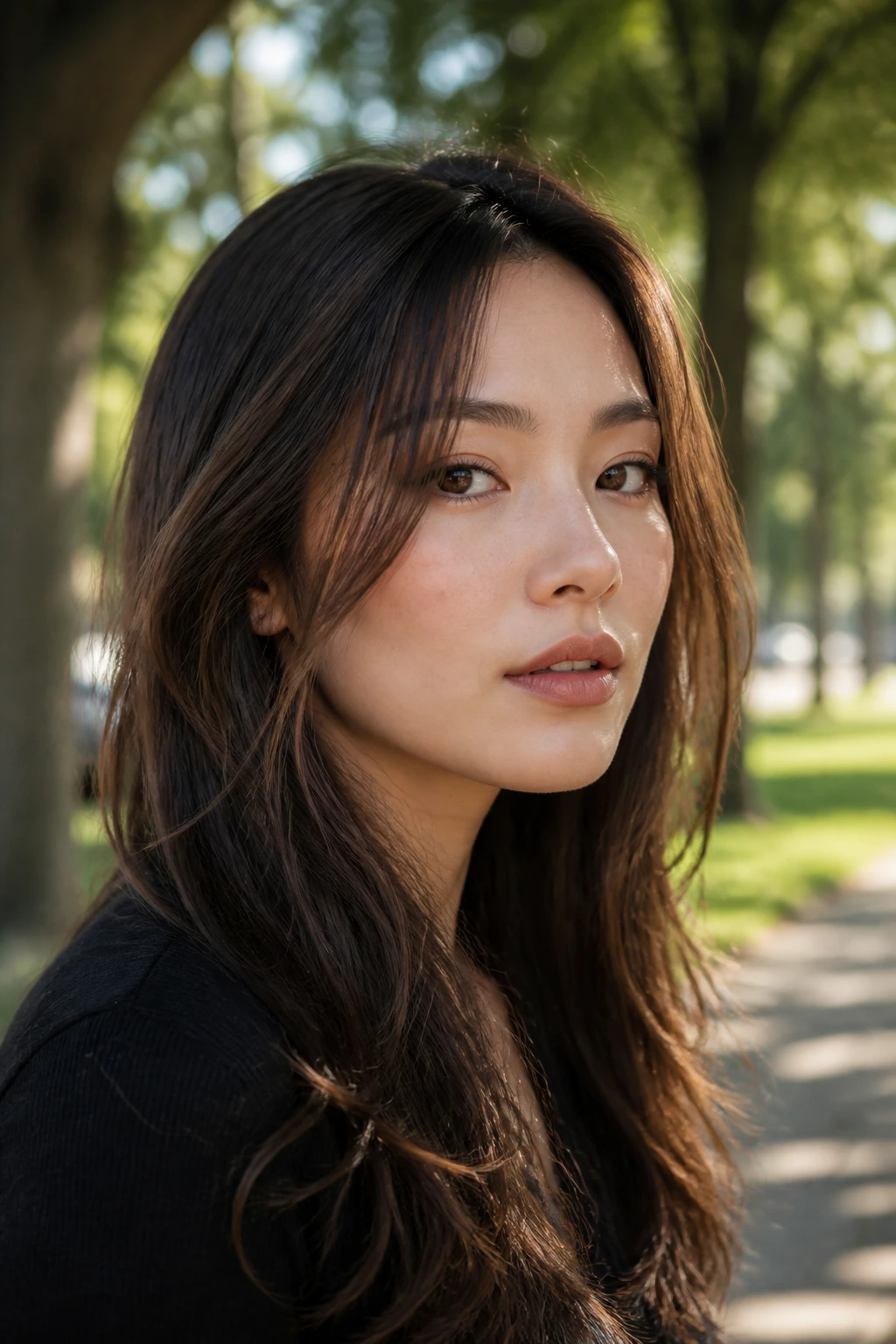
If your hair hangs straight down from the temples, your face can look wider than it is. A cheekbone-grazing frame fixes that by carving a cleaner line through the upper half of the hair.
The best pieces start near the cheekbone, then taper toward the lips or collarbone. That path matters. It avoids adding bulk at the jaw, and it gives the face a more angled look without making the haircut feel severe.
This shape is especially nice on wavy hair, because the bend in the hair makes the frame feel soft and natural. On straight hair, it looks sharper and more deliberate. Both can work.
The key is restraint. Too many face-framing pieces can turn into a thick curtain on the sides of the face, and that is exactly what you do not want. One or two smart pieces per side usually do more than a heavy layer stack.
A good face frame should make you notice your cheekbones before you notice the haircut. That is the whole game.
11. Sleek Blunt Length with Minimal Layers
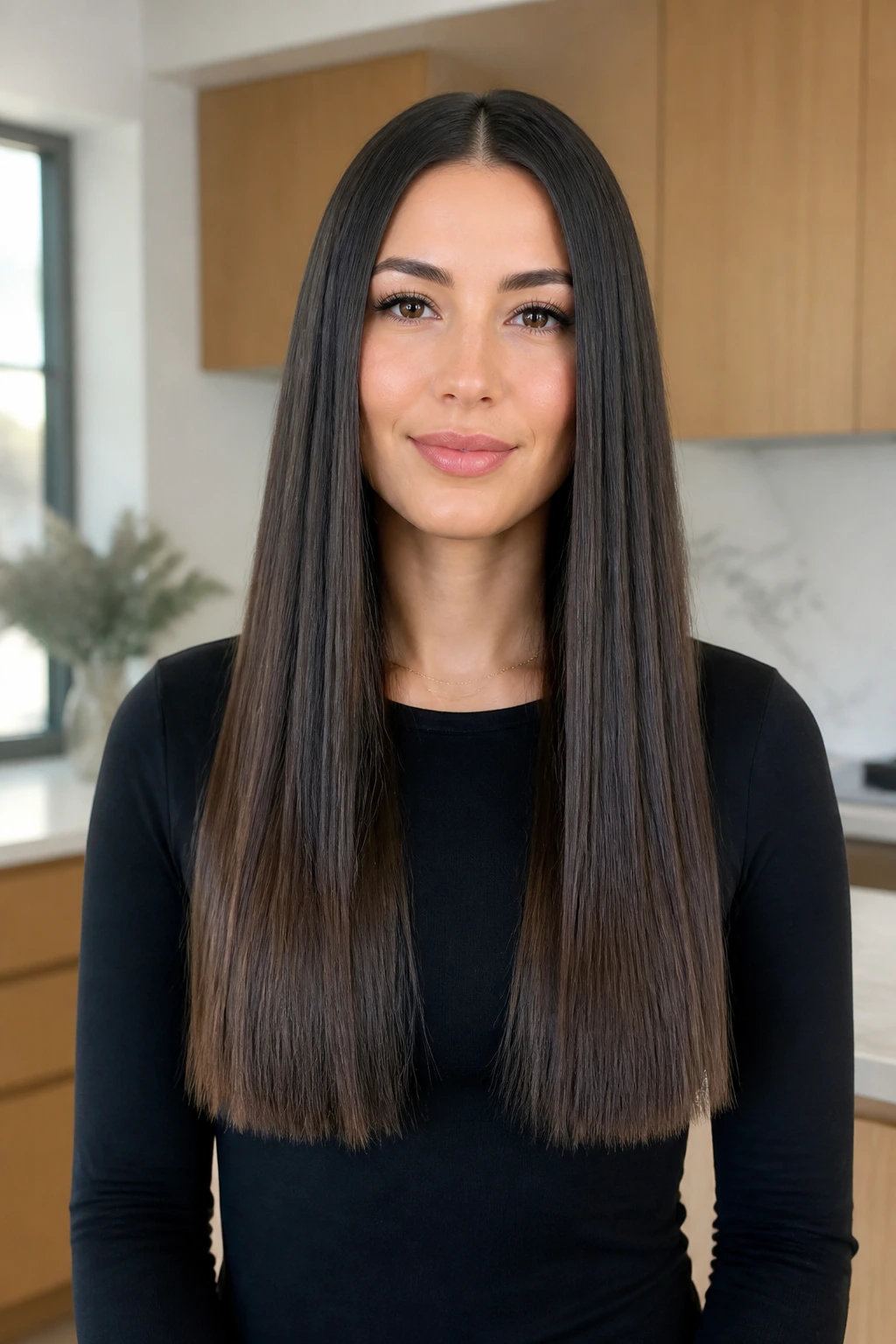
People often assume blunt cuts are bad for round faces. Not always. A long blunt cut can look clean and lengthening when the hair is worn sleek and the ends fall well below the widest part of the face.
The appeal is simple: one strong vertical sheet of hair reads as length, not width. If the hair is straight or blown out smooth, the eye moves down the line instead of bouncing out to the sides.
This cut is especially good for fine hair because the blunt edge makes the ends look fuller. Too many layers can make fine hair look thin around the shoulders, which is not helpful.
But there is a catch. If your hair tends to puff at the sides or flip out at cheek level, blunt length can work against you. In that case, ask for a tiny bit of internal shaping so the haircut does not sit like a triangle.
I like this cut on people who want polish without a lot of fuss. It is direct. No fluff. No nonsense.
12. Long Wolf Cut

A long wolf cut is the edgy cousin in this group. It leans on short crown layers, longer ends, and a rougher texture that feels less polished than a butterfly cut or a classic shag.
For round faces, the shape can be useful because it builds height on top while keeping the lower lengths long. That gives the face more vertical pull. The texture also breaks up the sides, which keeps the haircut from feeling too round.
Unlike a softer layered cut, the wolf cut has attitude. It is messier, choppier, and a little less predictable. That can be great if your hair naturally holds waves or if you like a rough-dry finish with a bit of grit.
Who It Suits Best
- Wavy hair that already has some bend.
- Thick hair that needs weight removed from the crown.
- People who like a lived-in look rather than a smooth blowout.
- Anyone willing to style the layers with texture cream or spray.
If your hair is very fine or very straight, the wolf cut can fall flat unless you are willing to style it. It is not a lazy haircut, despite the casual look.
13. Long Layers with Flipped Ends
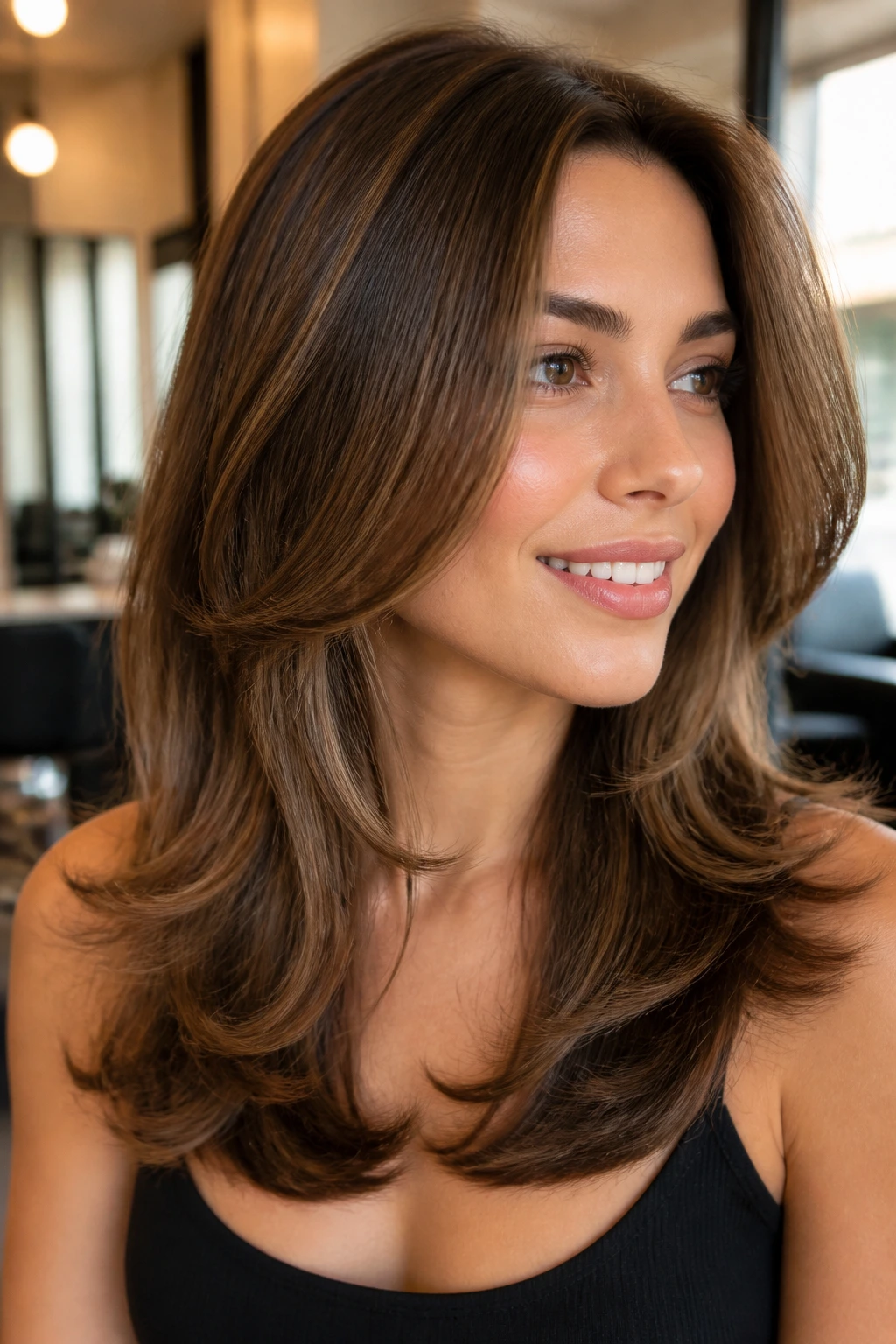
Why do flipped ends change the shape so much? Because they break the straight line at the bottom of the hair and send the eye outward and down at the same time. That little bend makes long hair feel lighter and less boxy.
A good version of this cut uses layers that still start low, then finishes with ends that can flick slightly away from the neck and cheeks. The effect is subtle, not retro-cartoon. You want movement, not a hard curl.
This cut works well if your hair already has a little natural bend or if you like a blowout with a round brush. The flipped finish makes the style feel awake, especially around the collarbone area.
How to Get It
Ask for long layers with softly beveled ends. Then style with a 1.25-inch round brush or curling iron and turn the last inch of the hair outward. Keep the roots smooth. If the top gets too big, the whole shape starts to widen.
A small flip at the ends can do more than a lot of layering. That sounds dramatic, but it is true.
14. Long Asymmetrical Cut
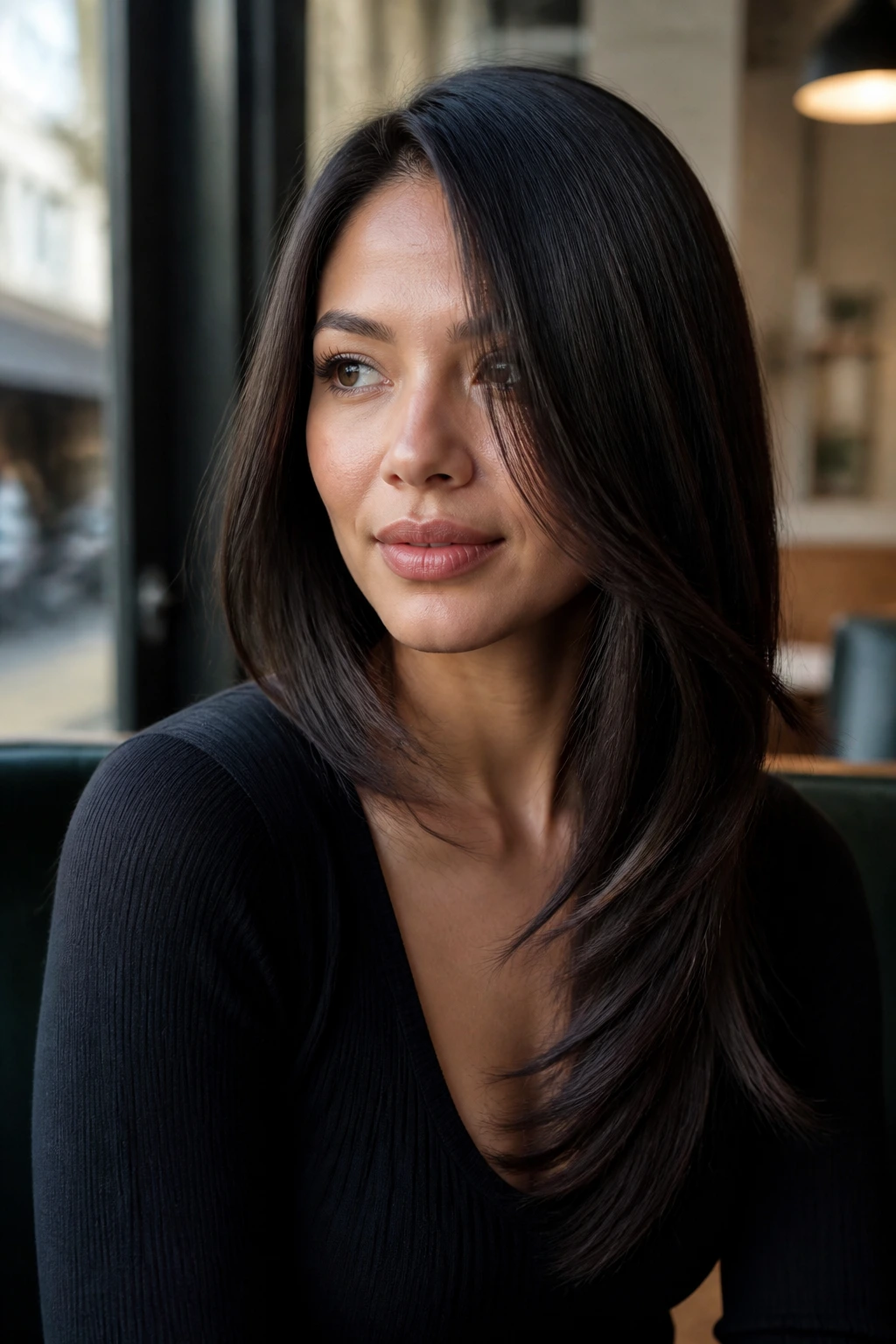
A subtle asymmetrical cut can be a quiet fix for a round face. One side sits a little longer than the other, which breaks the even horizontal balance that can make the face feel wider.
The difference does not need to be huge. One to 2 inches is enough in many cases. You are not trying to make the haircut look lopsided. You are trying to create a line that moves across the face instead of framing it evenly on both sides.
That slight imbalance can be flattering because the eye keeps traveling. It does not settle on the cheeks and stop there. It keeps going.
This cut is best when the rest of the hair is smooth or softly waved. Very tight curls can hide the asymmetry unless the shape is cut with the curl pattern in mind.
If you like a modern look and do not mind a little edge, this one is a clever choice. It is not loud. It just changes the geometry.
15. Long Hair with Long Side Bangs
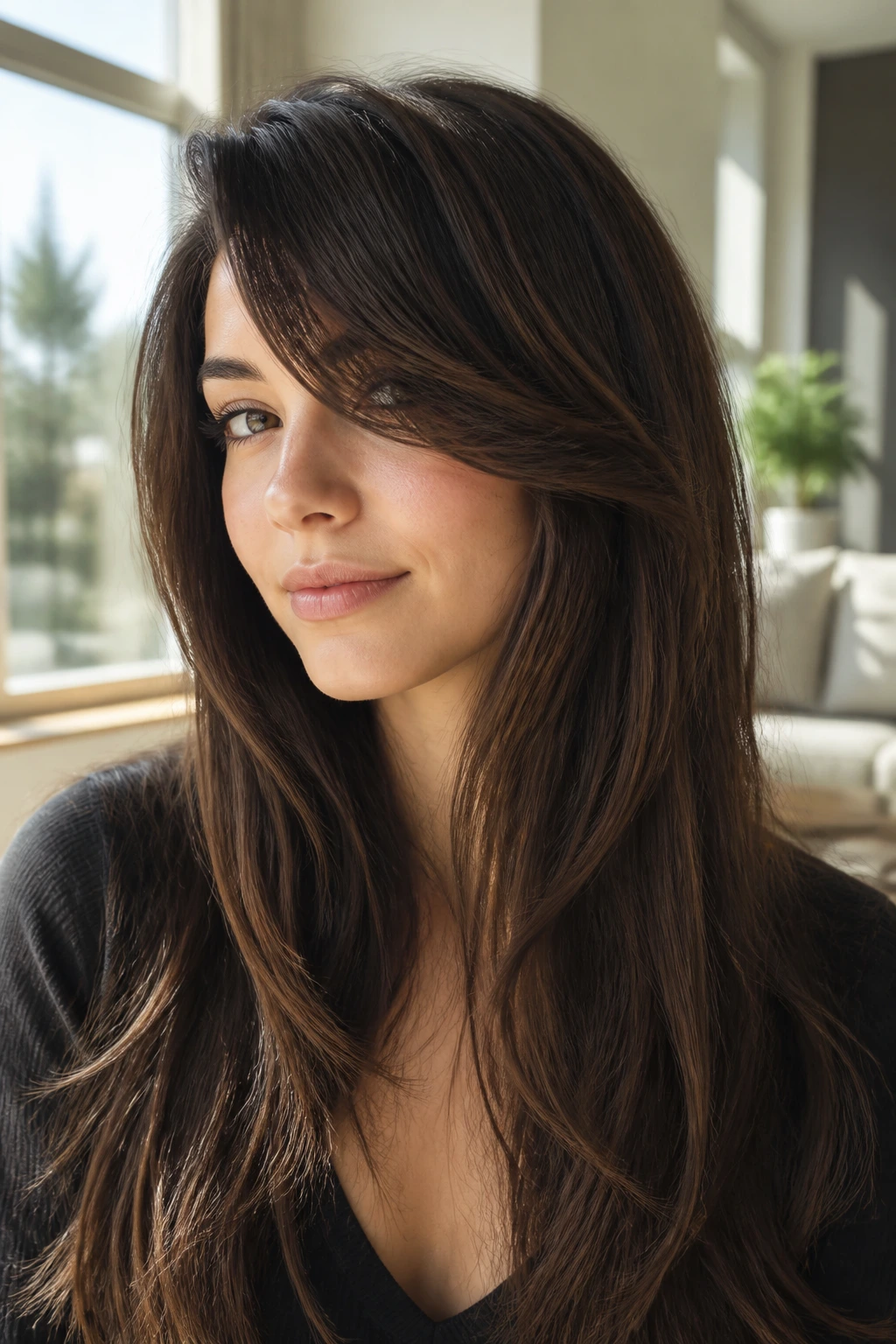
Long side bangs are one of the easiest shape-shifters in hair. They sweep across the forehead on a diagonal, and that diagonal line is flattering on round faces because it interrupts the soft curve of the cheeks.
The bangs need to stay long enough to blend into the rest of the haircut. If they stop too high, they can feel dated or fussy. The best version usually starts around the brow area and falls toward the cheekbone or even the lip.
This is a nice option if you wear glasses. The bangs can sit to one side without fighting the frames, and they keep the forehead from feeling too open.
Long side bangs also work well with ponytails and buns, which makes them more practical than short fringe. You can wear them loose, pin them back, or tuck them behind the ear and still keep the face shape visible.
They are not flashy. That is part of the appeal.
16. Layered Cut with Collarbone Flicks
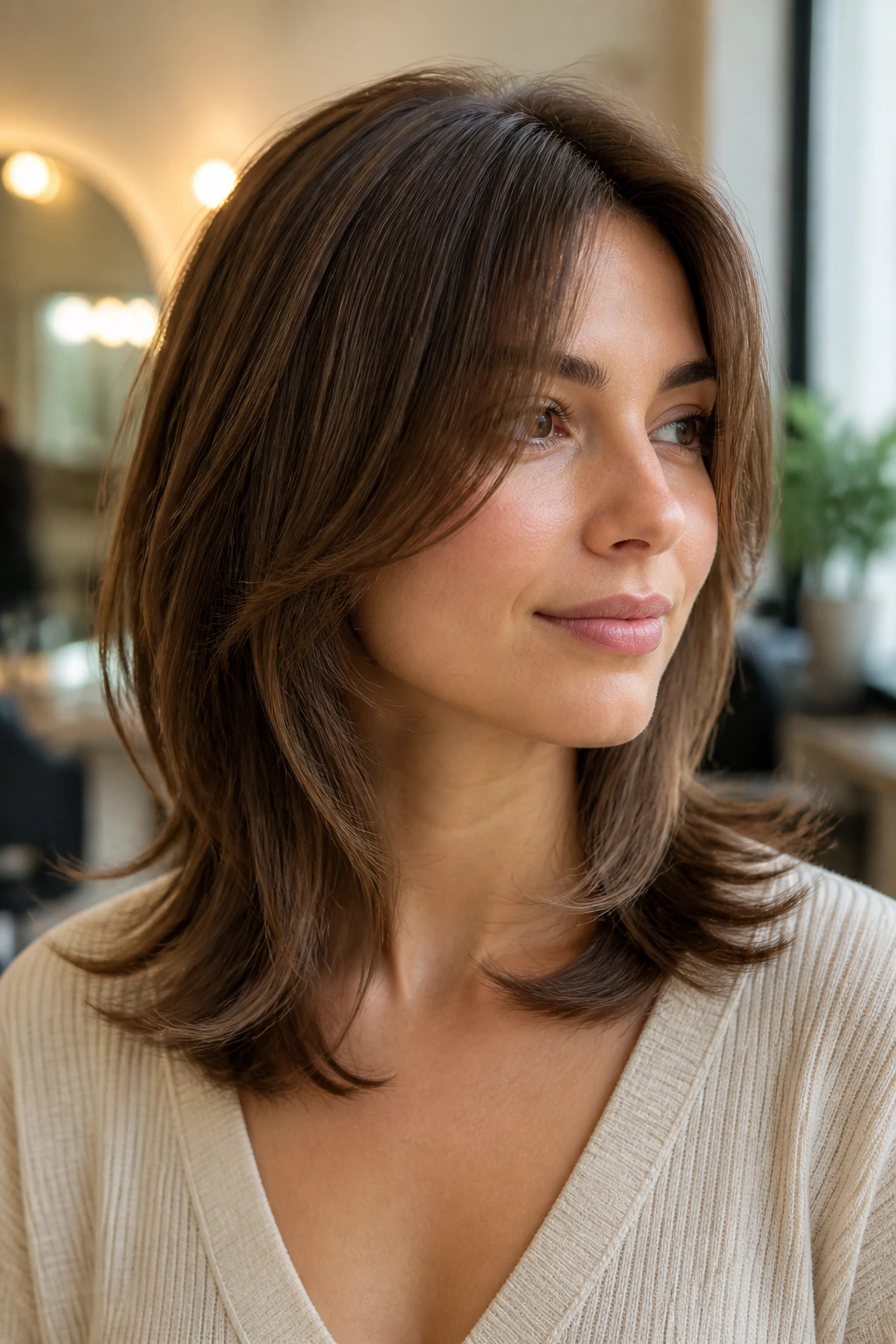
If your hair sits flat at the shoulders, collarbone flicks can save the whole shape. The layers fall to the collarbone, then turn out just enough to keep the ends lively and the face looking longer.
The reason this works is placement. Collarbone length sits below the cheek area, which means the hair does not bulk up around the widest part of the face. It gives you movement low enough to feel flattering.
This cut looks especially good on medium to thick hair because the flicked ends keep the bottom from turning heavy. It also plays nicely with a round brush blowout, since the brush naturally wants to curve the hair at that point.
Quick Shape Notes
- Keep the shortest layers below chin level.
- Aim for soft flicks, not stiff curls.
- Ask for the ends to skim the collarbone rather than stop right at the jaw.
- Use a light styling cream if your hair frizzes at the ends.
A lot of people think the secret is more layer. Usually it is better placement.
17. A-Line Front Long Cut
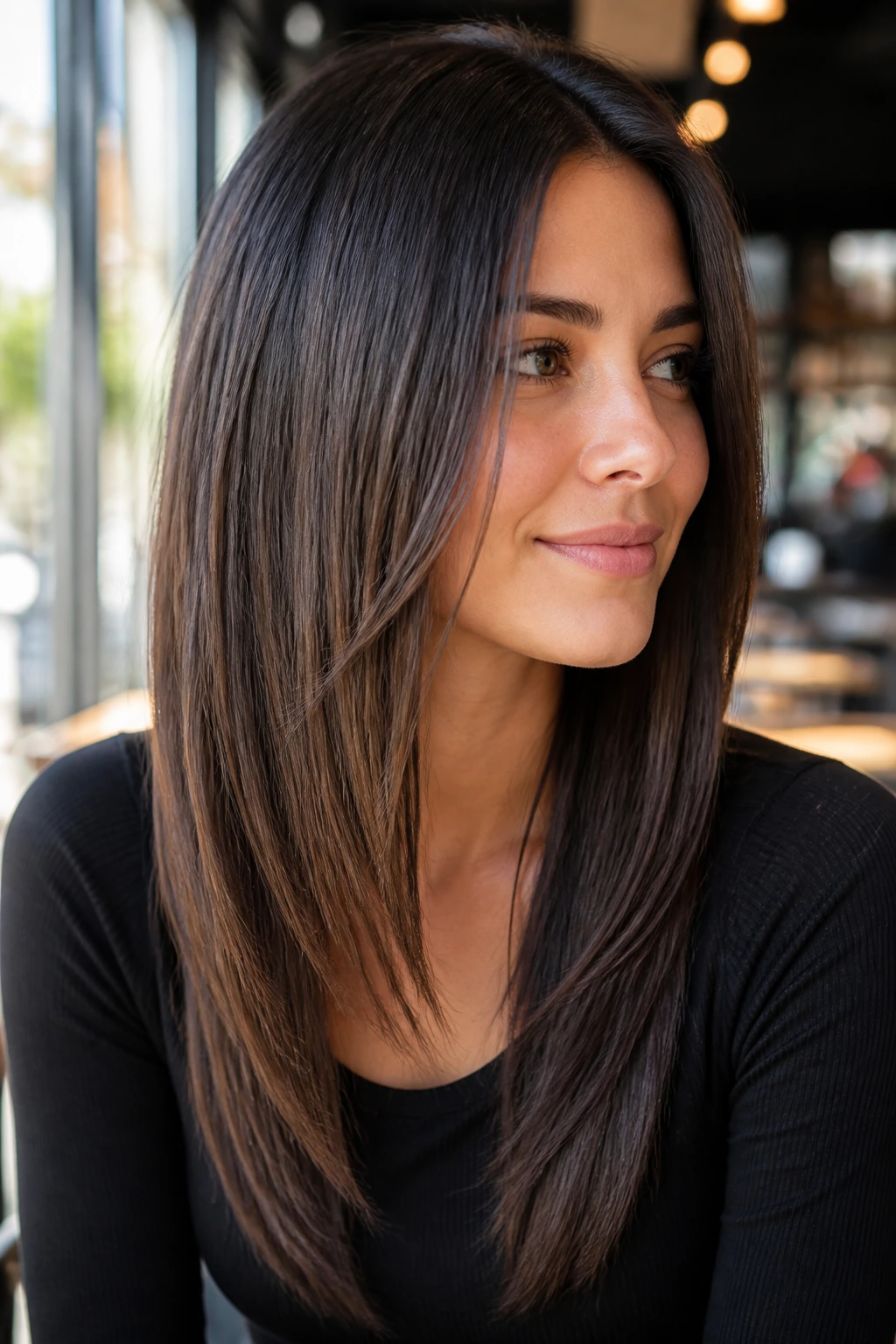
An A-line long cut is longer in the front than in the back, which creates a forward slope that helps a round face look more elongated. The eye moves down the front pieces first, and that gives the whole shape a narrower feel.
It is cleaner than a shag and less pointed than a V-cut. That middle ground makes it useful for people who want definition without a lot of texture. Straight hair wears this cut especially well because the lines stay clear.
The front length should not be so long that it drags or looks disconnected. A gentle difference — front pieces a little lower than the back — is usually enough. If the angle is too steep, the haircut can feel dated fast.
I like this cut on hair that naturally falls sleek. It gives you shape with almost no drama. If your hair is very thick, a bit of internal weight removal can keep the front from feeling heavy.
This is one of the quieter options on the list. Quiet can be good.
18. Razored Long Layers for Fine Hair
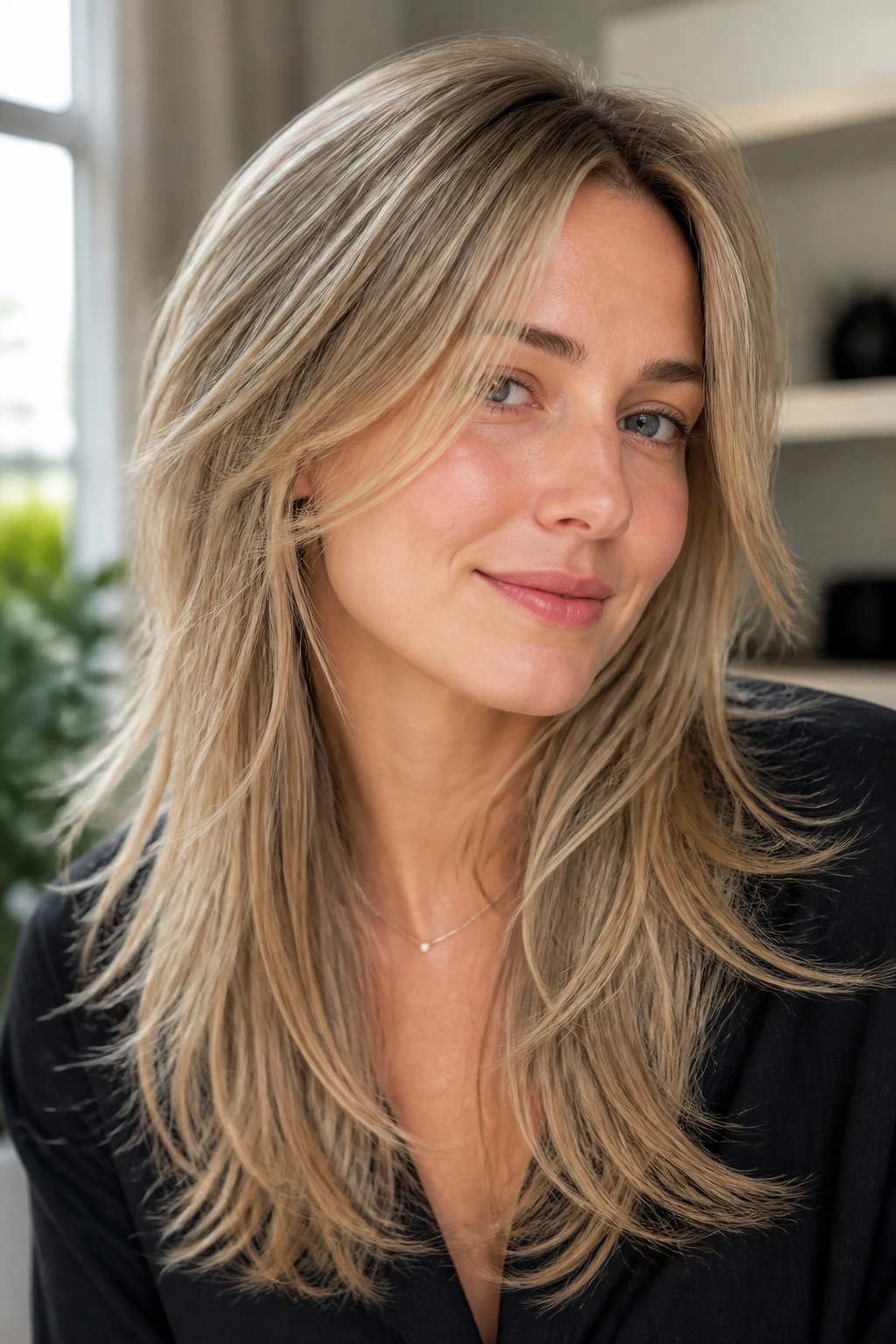
Can a razor cut work on fine hair? Yes, but only if the hand is light. A razor can soften the ends and add movement, which helps fine hair avoid that flat, stuck-to-the-head look that round faces often struggle with.
The danger is overdoing it. Too much razor work can make the ends look frayed or thin, and that makes the haircut collapse instead of lift. You want airy movement, not shredded ends.
A good razor cut keeps the overall length intact and uses the razor mostly at the perimeter or on a few internal pieces. That creates a softer outline without removing too much density.
If your hair is fine but has some body, this can be a strong choice. If it is fragile or breaks easily, scissors may be safer. That is the plain truth.
A round face does not need more width, but fine hair often needs more life. This cut tries to solve both at once.
19. Heavy Crown Volume with Sleek Ends
Volume at the crown can make a round face look longer because it pulls the eye upward before it goes down the length of the hair. The trick is to keep the lower half sleek so the sides do not balloon out.
That balance matters. Big volume everywhere turns into width. Volume only at the top creates lift. The difference is not subtle once you see it in a mirror.
The Part Matters Too
A slightly off-center part usually works better than a strict center part here. It gives the crown lift on one side and keeps the shape from feeling too even.
- Ask for layers that support lift at the top.
- Keep the mid-lengths smooth and controlled.
- Use a root-drying angle that pushes hair upward, not sideways.
- Avoid heavy layering at the jaw.
This cut is useful if your face feels widest through the cheeks. The lifted crown helps redirect attention upward, while the smooth lengths keep the outline neat. It is a practical shape, not a flashy one, and it tends to photograph well in real life — which is a nicer test than any mirror selfie.
20. Long Cut with Wispy Fringe and Tapered Length
A wispy fringe is softer than blunt bangs, and that softness matters on a round face. It breaks up the forehead without cutting the face into two equal halves, which is where blunt fringe can go wrong.
The tapered length does the rest of the work. Instead of ending in one heavy line, the hair narrows a little toward the bottom, which keeps the shape from looking boxy. That taper can be subtle. It does not need to shout.
This cut is a good low-commitment option because wispy fringe grows out more easily than a dense bang. You are not signing up for a strict maintenance schedule. You are buying yourself some shape with fewer consequences.
It also works nicely if you like to tuck hair behind the ears, because the fringe keeps the front from disappearing completely. On wavy hair, the effect is even softer. On straight hair, it looks neat and easy.
If you want the face to feel open but still framed, this is one of the most forgiving choices in the whole group.
Final Thoughts
Round faces do well with long hair when the haircut respects where the width lives. That usually means keeping bulk below the chin, building movement low on the face, and using diagonal lines when you want more shape.
The strongest cuts here do not rely on one trick. They use placement, texture, and length together. A curtain bang can help. So can a deep side part. So can a blunt length worn sleek enough to stay narrow. The right answer is the one that fits your hair density and the way you actually wear it.
Bring a reference photo, but speak in details too. Say where you want the shortest layer to sit. Say whether your hair puffs at the sides. Say if you want to blow-dry it or leave it air-dried most days. That conversation is usually what separates a decent haircut from one you keep coming back to.
