



Round faces are easiest to flatter when the haircut does some of the contouring for you. The best short haircuts for round faces build a little height where the eye needs to travel, then keep the sides from puffing out at cheek level. That does not mean you need a harsh cut or a style that looks severe from every angle. It means the shape has to do some work.
A good stylist usually looks for the same three things: lift at the crown, a diagonal line through the front, and length that drops below the widest part of the face. If the cut ends right at the cheek and curves back in, the face can read wider. If it breaks that circle with asymmetry, texture, or a lower edge near the jaw, the whole thing feels sharper.
The nice part is that there is no single answer here. Pixies can work. So can bobs, crops, shags, and even a few bolder cuts that people dismiss too quickly. The trick is choosing the version that fits your hair texture, your styling patience, and the amount of forehead or cheek you want to show.
1. Textured Pixie Cut for Round Faces
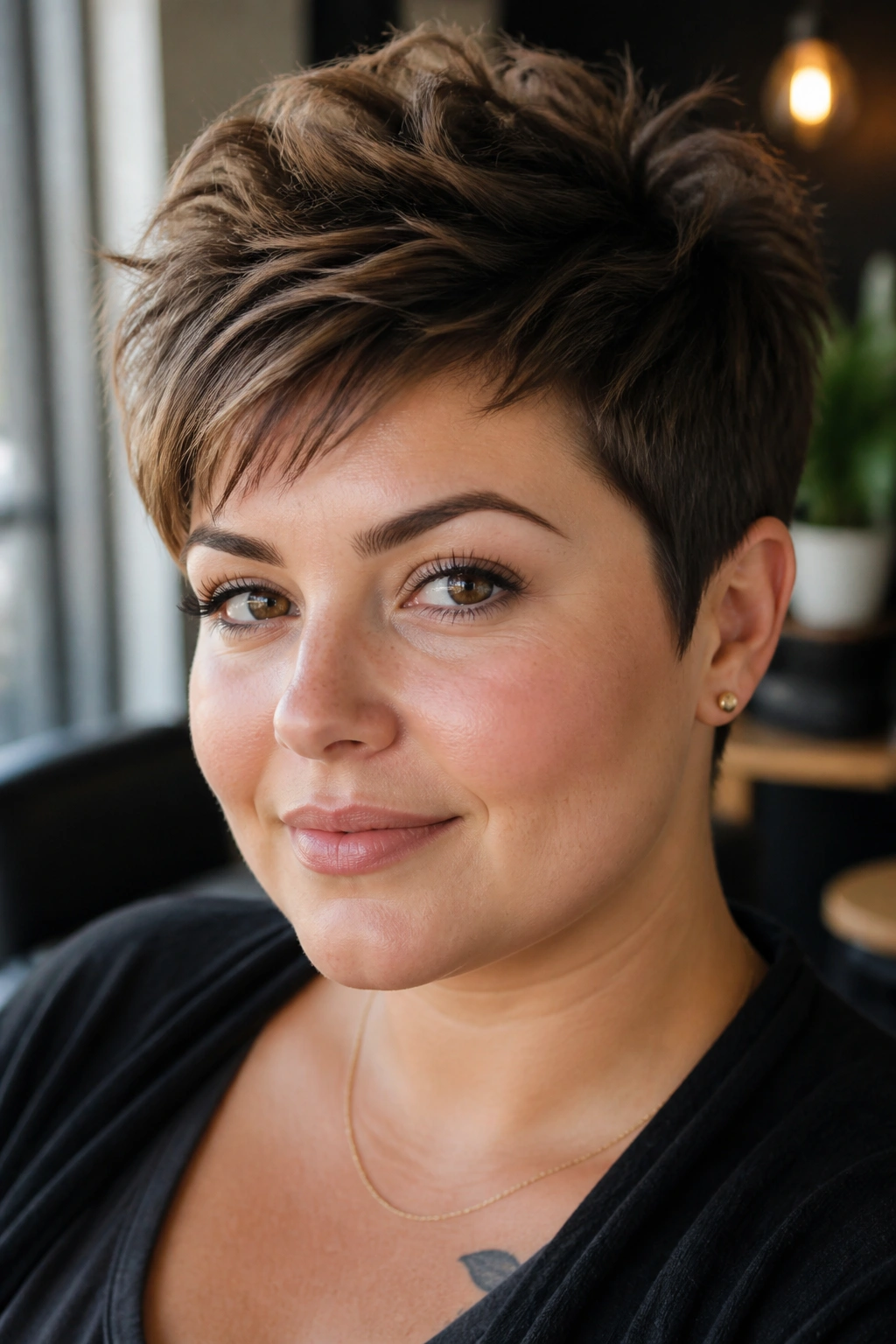
If I had to pick one short cut that keeps a round face from feeling too soft, it would be this one. A textured pixie gives you height on top and clean sides, which is exactly the kind of shape that helps the face read a little longer.
What to Ask for
Ask for 2 to 3 inches on top, shorter tapered sides, and a bit of choppiness through the crown. You do not want a smooth helmet shape. You want movement, with ends that separate instead of sitting in one flat sheet.
- Keep the top long enough to pinch and lift with paste.
- Ask for the sides to hug the head, not flare out.
- Leave a little length around the temples if you want a softer finish.
Best for: fine to medium hair that needs body fast.
Styling tip: Work a pea-size amount of matte paste through dry hair and push the top slightly upward and forward. A few uneven pieces are doing more good here than a perfectly neat finish ever will.
2. Long Pixie with Side-Swept Fringe
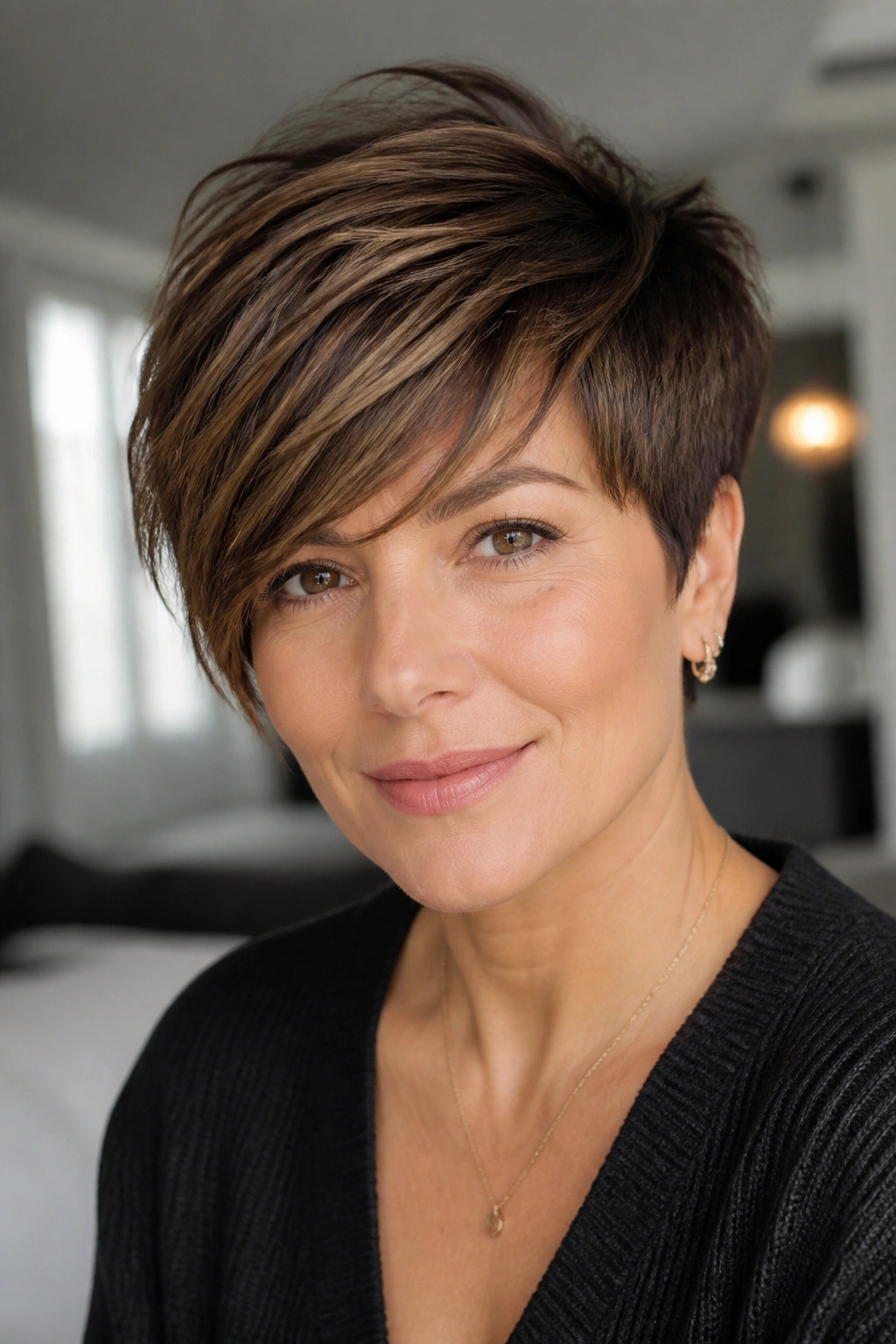
Why does a side-swept fringe matter so much? Because it cuts across the face on a diagonal, and a diagonal line is useful on a round shape. A center-heavy fringe can box the face in. A sweep that starts higher on one side and falls softly across the forehead does the opposite.
The front pieces should land somewhere between the brow and the upper cheek, depending on your hair density. Too short, and the fringe loses that slanted effect. Too long, and it starts behaving like a bob fringe, which can close things up again.
How to Style It
Blow-dry the fringe in the opposite direction first, then flip it over. That small trick gives you bend at the root, which keeps the front from lying flat against the forehead. If your hair is stubborn, a quick pass with a medium round brush and a dab of light cream is enough.
This is a smart pick if you want a pixie shape but still want a little softness near the face. It feels less severe. That matters.
3. Asymmetrical Pixie Cut
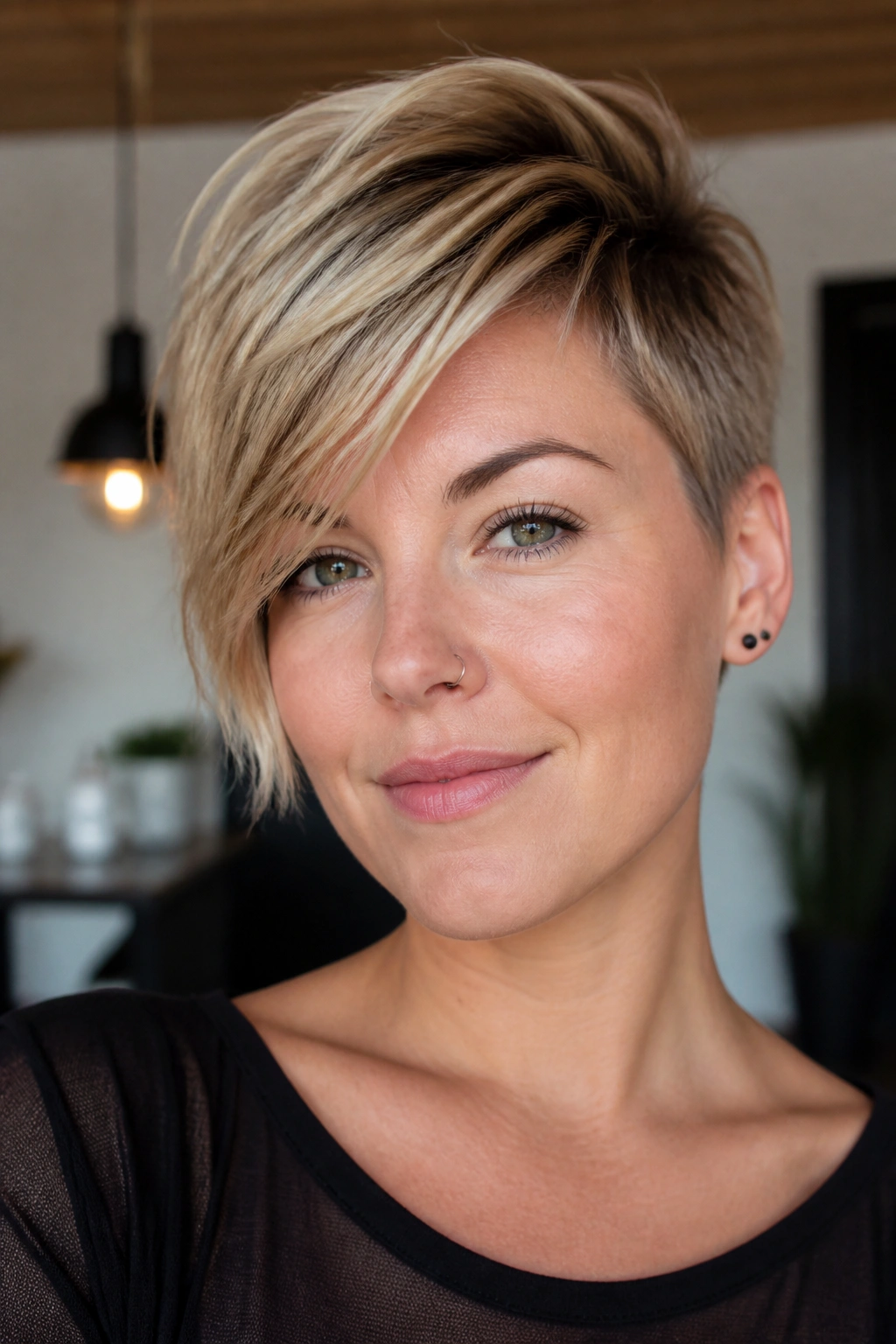
One side shorter. One side longer. Done well, that imbalance is doing the job for you.
An asymmetrical pixie breaks the face’s natural symmetry in a good way, which is useful when the goal is to make a round face look a little more sculpted. If one side grazes the ear and the other falls toward the cheekbone or jaw, the eye starts moving instead of sitting in one place.
- Ask for a 1 to 2 inch difference between sides, not a dramatic gap.
- Keep the longer side soft, not chunky.
- Leave enough length at the front to tuck behind one ear.
The cut looks especially good if your hair has a natural bend or a strong part. Straight, shiny hair shows the line clearly. Wavy hair gives it a little more ease. Either way, skip a blunt finish at the temples; that can make the face look wider than it is.
4. Cropped French Bob
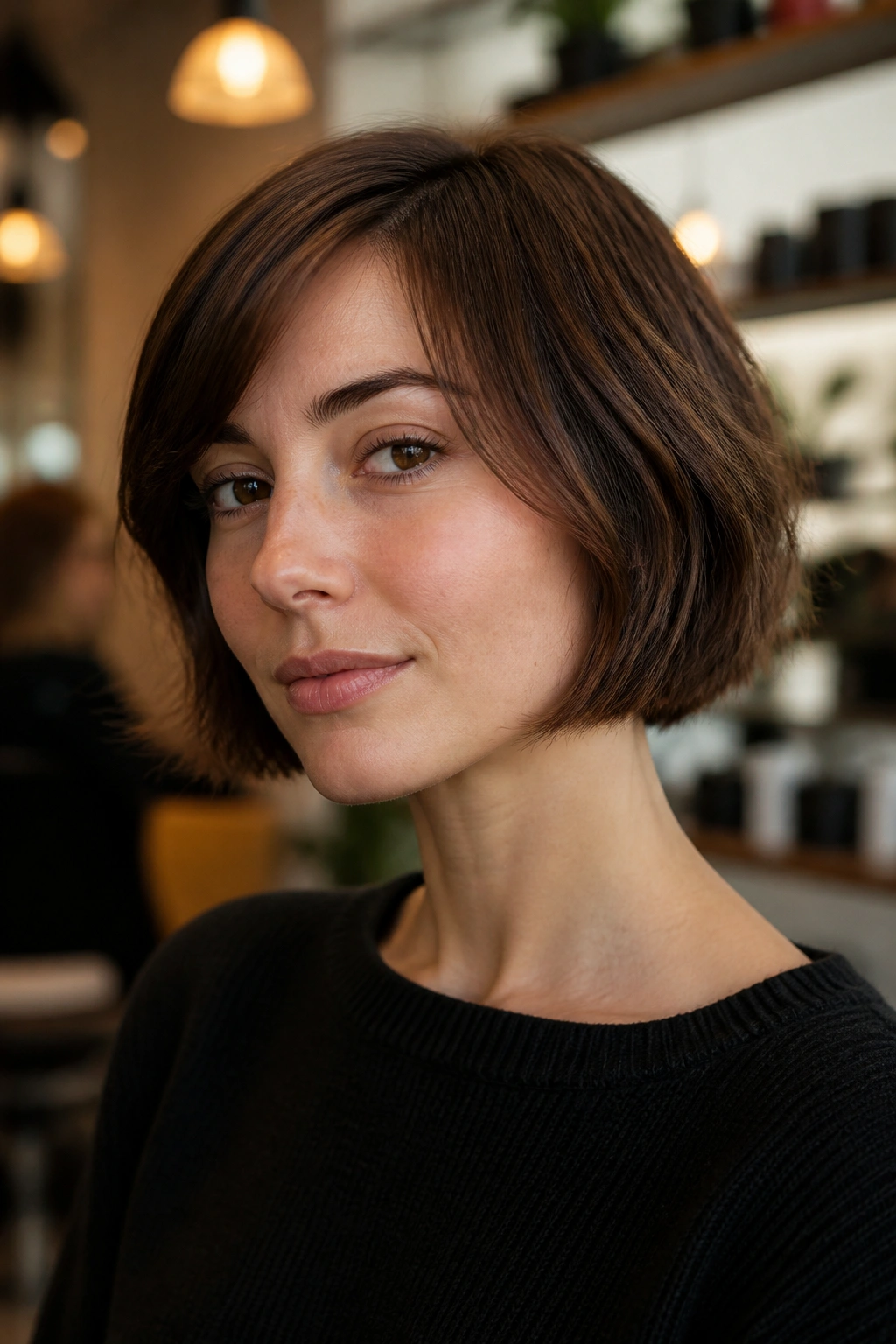
The French bob gets tossed around a lot, but the good version is shorter, sharper, and more deliberate than people expect. For a round face, the sweet spot is often just at or slightly below the jaw, with ends that move instead of curling into a perfect circle.
A chin-skimming bob can be charming, but if it is too rounded, it can echo the shape of the face. The better version keeps the perimeter light, with a soft bend or a bit of razored texture through the bottom. That tiny bit of irregularity matters more than people think.
Shape Notes
Ask for a blunt-ish line with point-cut ends and a slight side part. If your hair is thick, a little internal removal under the top layer helps the bob sit closer to the head.
Styling Note
Air-dry it with a bit of mousse or blow it out with a flat brush for a cleaner line. Either way, keep the volume controlled at the cheeks. That’s the difference between chic and puffy.
5. Choppy Chin-Length Bob

A choppy chin-length bob is a different animal from a dense blunt bob. The choppiness breaks up the outline, which stops the style from forming one solid circle around the face.
That matters on a round face because chin-length cuts can be tricky. If the line lands right at the fullness of the cheek and stays heavy, the whole thing looks wider. A choppy finish changes that. The eye sees movement, not one strong horizontal band.
This is a strong option for thick hair that wants to spread outward. Ask for light point cutting through the ends and a few short interior pieces near the crown. Not too many. If the layers get aggressive, the bob starts to stick out at the sides, and that is the wrong shape.
If you like a lived-in finish, this one is forgiving. A little bend is enough. Too polished, and the cut loses its edge.
6. Angled A-Line Bob
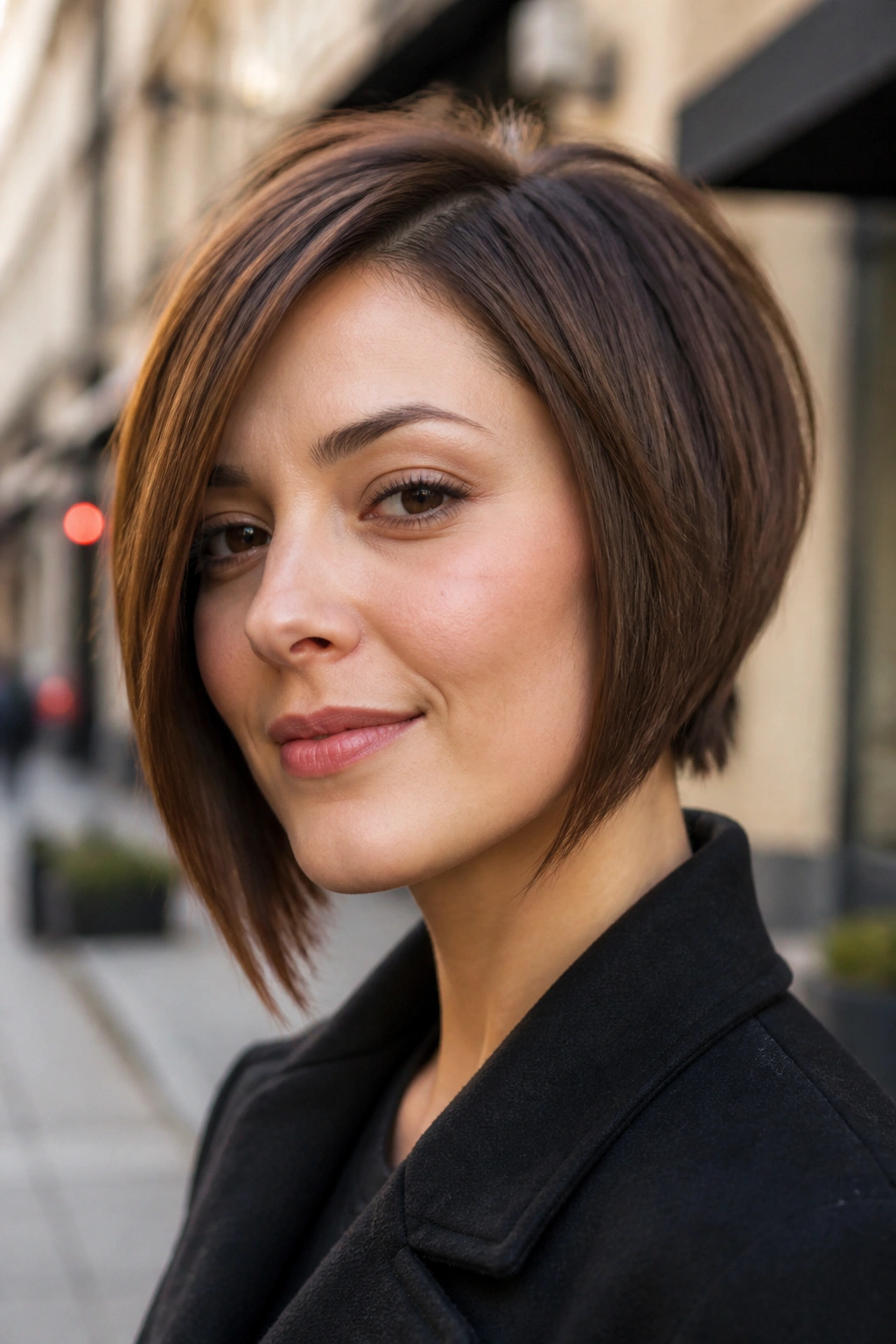
This is one of the easiest ways to create length without actually growing your hair out. The back stays shorter, the front drops longer, and the whole line moves forward and downward around the face.
A good A-line bob should sit below the chin at the front and ride higher at the nape. That angle pulls the eye downward instead of outward. On a round face, that is a gift. It sharpens the jaw visually, even if the jaw itself is soft.
Ask Your Stylist For
- A shorter nape with clean stacking, not a puffy back.
- Front pieces that angle toward the collarbone or just below the jaw.
- A side part to keep the front from looking too symmetrical.
This cut works especially well on straight or slightly wavy hair. Curly hair can do it too, but the angle has to be cut with shrinkage in mind. Otherwise the front disappears faster than you expect.
7. Jaw-Length Blunt Bob with Soft Ends
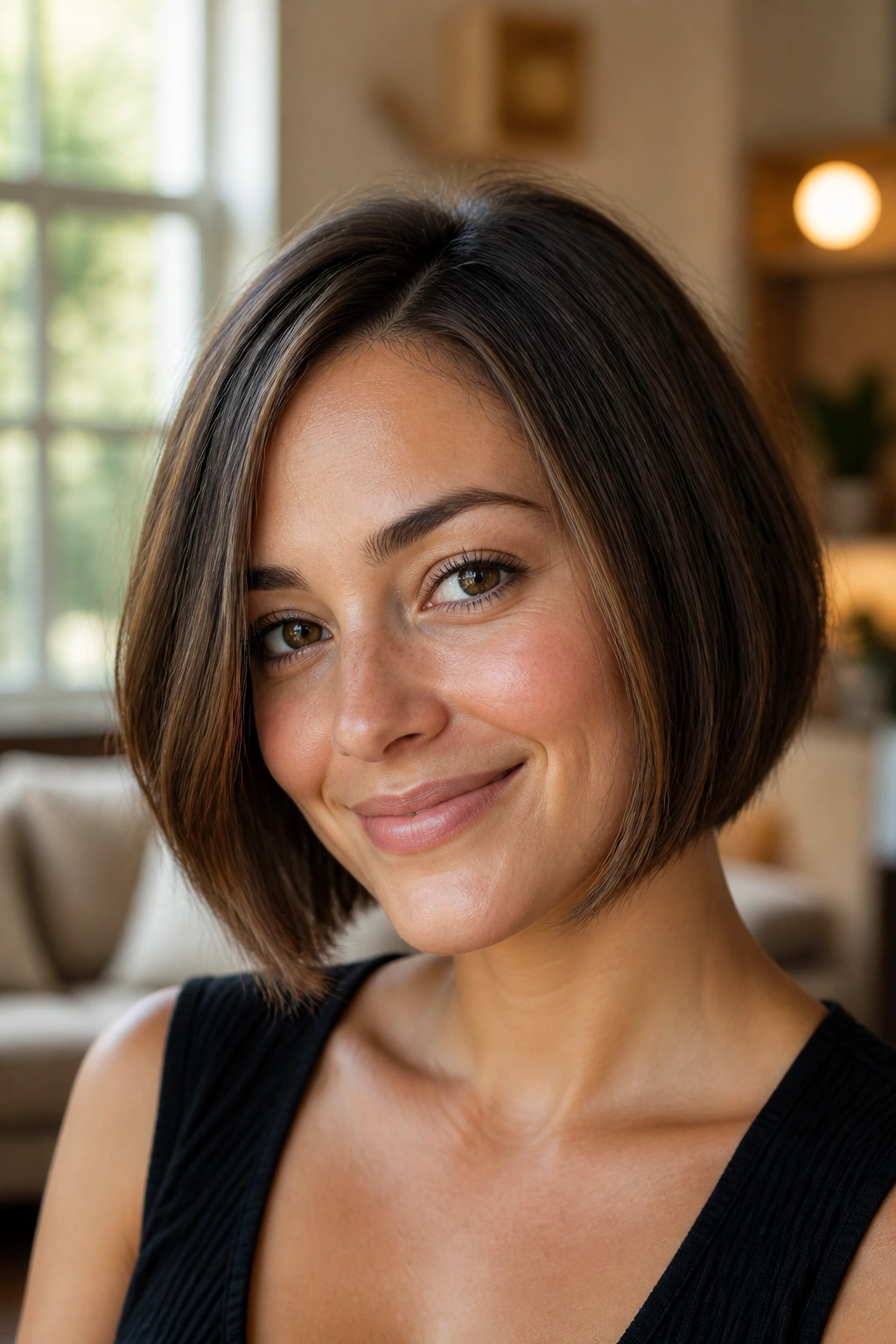
A blunt bob can work on a round face. It just needs the right length and a softer edge than the textbook version.
The problem with a lot of blunt bobs is the line sits too high and too clean. That creates a wide band right at the cheeks. If the bob falls just below the jaw and the ends are softened with a tiny bit of point cutting, the effect changes fast. The face feels framed, not boxed in.
This cut is a good fit if your hair is fine and you want it to look fuller without teasing or mousse. The blunt perimeter gives the illusion of density. The softened ends keep it from looking stiff.
Skip a center part if your face already reads very round. A side part or a very slight off-center part will usually give you more shape for less effort.
8. Layered Bob with Side Part

What if you want movement more than sharpness? Then this is the one to watch.
A side part shifts the weight of the hair away from the middle of the face, and layers keep the bob from building a hard edge around the cheeks. The best version usually keeps the upper layers short enough to move, but not so short that they stand away from the head.
Keeping It From Puffing Out
The mistake is stacking too much volume at cheek level. Don’t do that. Keep the lift either at the crown or tucked lower into the ends. That gives you height without width.
A few things help here:
- Blow-dry the roots in the opposite direction of your part.
- Use a round brush only at the ends if you need a bend.
- Ask for layers that start below the cheekbone, not right on it.
This is a nice cut if you want something soft, wearable, and easy to refresh with dry shampoo on day two.
9. Shaggy Bob with Feathered Ends

A shaggy bob is one of those cuts that can look casual in the best way. It takes a shape that might feel heavy and makes it move.
Feathered ends matter because they keep the perimeter from reading as a hard ring. On a round face, that’s useful. You want the eye to travel through the hair, not stop at one thick line and bounce right back to the cheeks.
This cut usually works best when the top has a little height and the bottom stays airy. Think piecey ends, not chunky ends. A bit of mousse or texture spray gives the hair some grip without turning it stiff.
If your hair is dense, ask for removal through the interior layers, not just the surface. Surface-only layers can look fluffy. Interior shaping keeps the bob lighter and cleaner.
10. Short Shag with Curtain Bangs
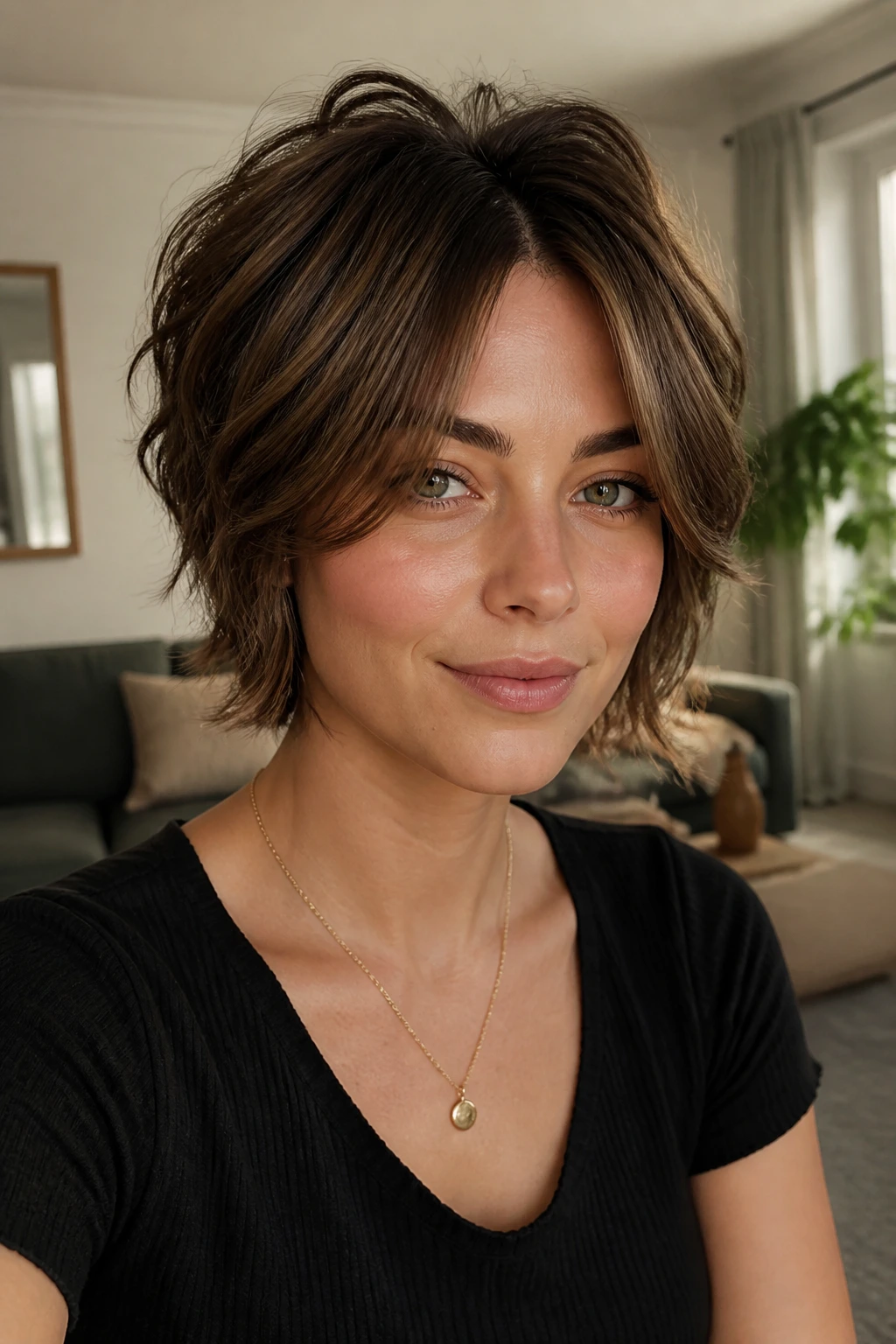
Curtain bangs are one of the easiest ways to soften a round face without hiding it. They open in the middle, sweep outward, and leave the forehead visible enough to keep the cut from feeling boxed in.
A short shag with curtain bangs works because it builds height around the crown while the bangs break up the width across the cheeks. The shortest point of the fringe should usually sit around the brow or just below it, with longer pieces sliding toward the cheekbones. That shape pulls the eye up and out.
How to Wear It
Use a light styling cream and rough-dry the bangs with your fingers. If you try to force them into a perfect bend, they can look stiff. A loose wave is the point.
This cut is especially good if your hair has natural texture. Straight hair can wear it too, but it needs a little more styling to keep the bangs from collapsing into the center.
11. Tapered Crop with Nape Detail
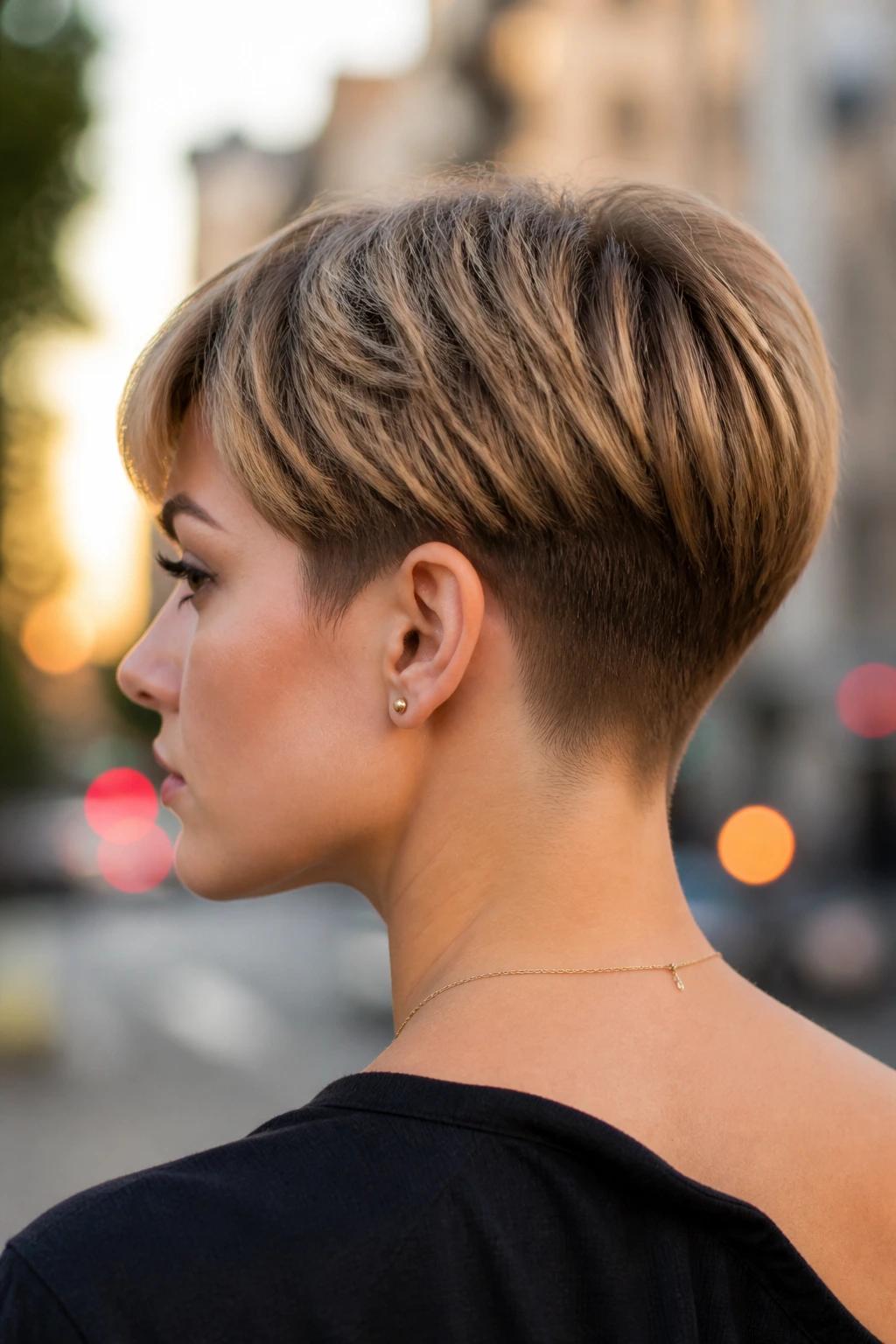
This cut can make thick hair feel lighter almost immediately. The taper at the nape and around the ears removes bulk, while the top stays full enough to give the face some lift.
The nape detail is not just a design choice. It changes the silhouette from the side and back, which matters more than people give it credit for. If your hair tends to stick out at the neckline, a tapered crop solves that neatly.
Good Fit For
- Thick straight hair that grows wide at the sides.
- Wavy hair that gets bulky at the neck.
- Anyone who wants a neat outline with less daily fuss.
Leave the top at around 2 to 4 inches so you can style it forward or upward. A small amount of paste or cream is enough. Too much product flattens the crown and defeats the whole point.
12. Undercut Pixie
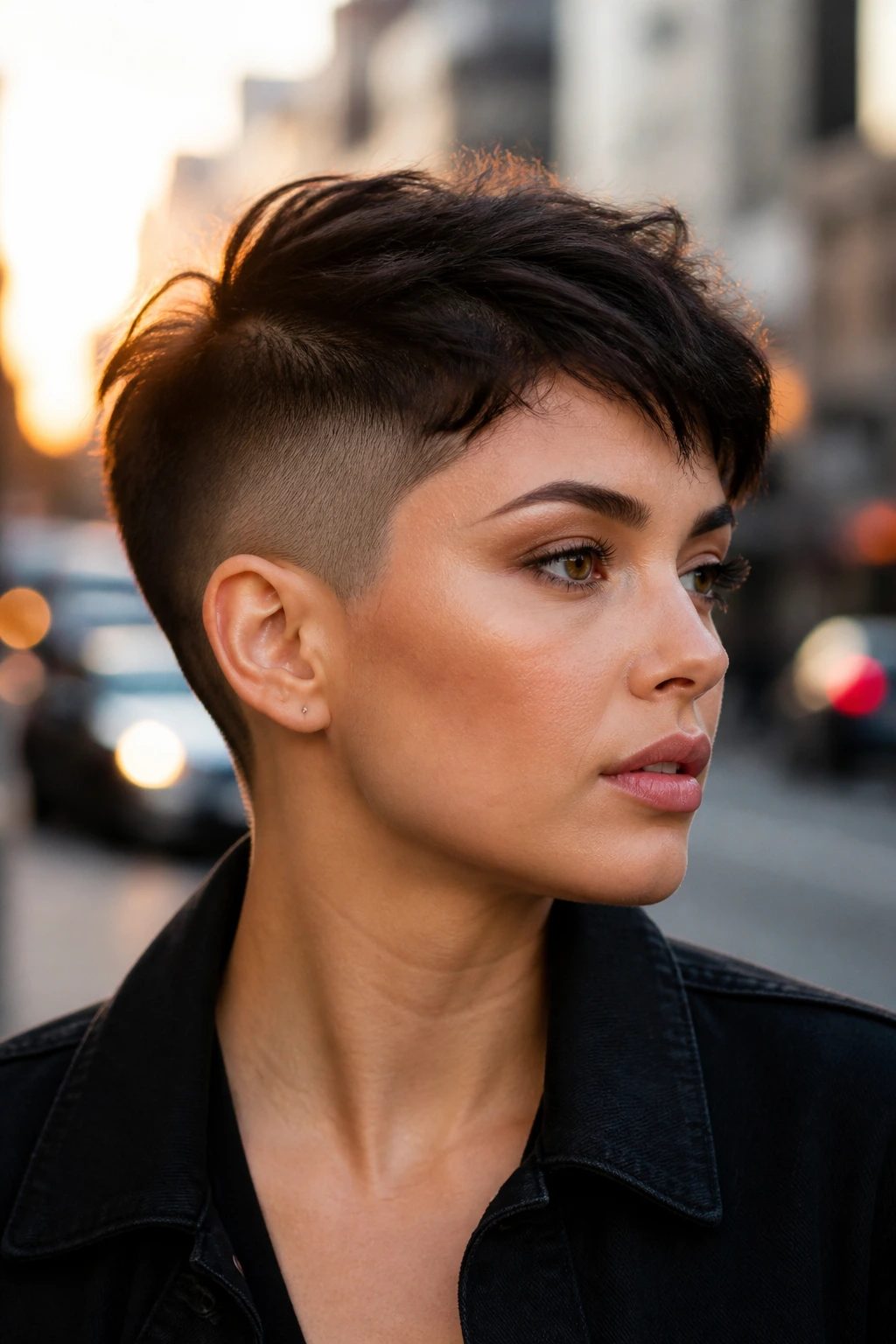
An undercut pixie is a little more dramatic, but it earns its keep on a round face because it removes the side bulk that often makes the face read wider.
Unlike a standard pixie, the undercut keeps the lower sections very short, sometimes close to the scalp, while the top stays longer. That contrast creates height without adding width. It also makes dense hair behave. Which, honestly, is half the battle.
This cut is best for someone who does not mind trims every 3 to 4 weeks. The undercut grows out fast enough that the shape can lose its clean line if you ignore it for too long.
If you have very fine hair, ask your stylist to keep enough top length to avoid see-through spots. The undercut should reduce bulk, not make the whole cut look thin.
13. Curly Pixie Cut for Round Faces
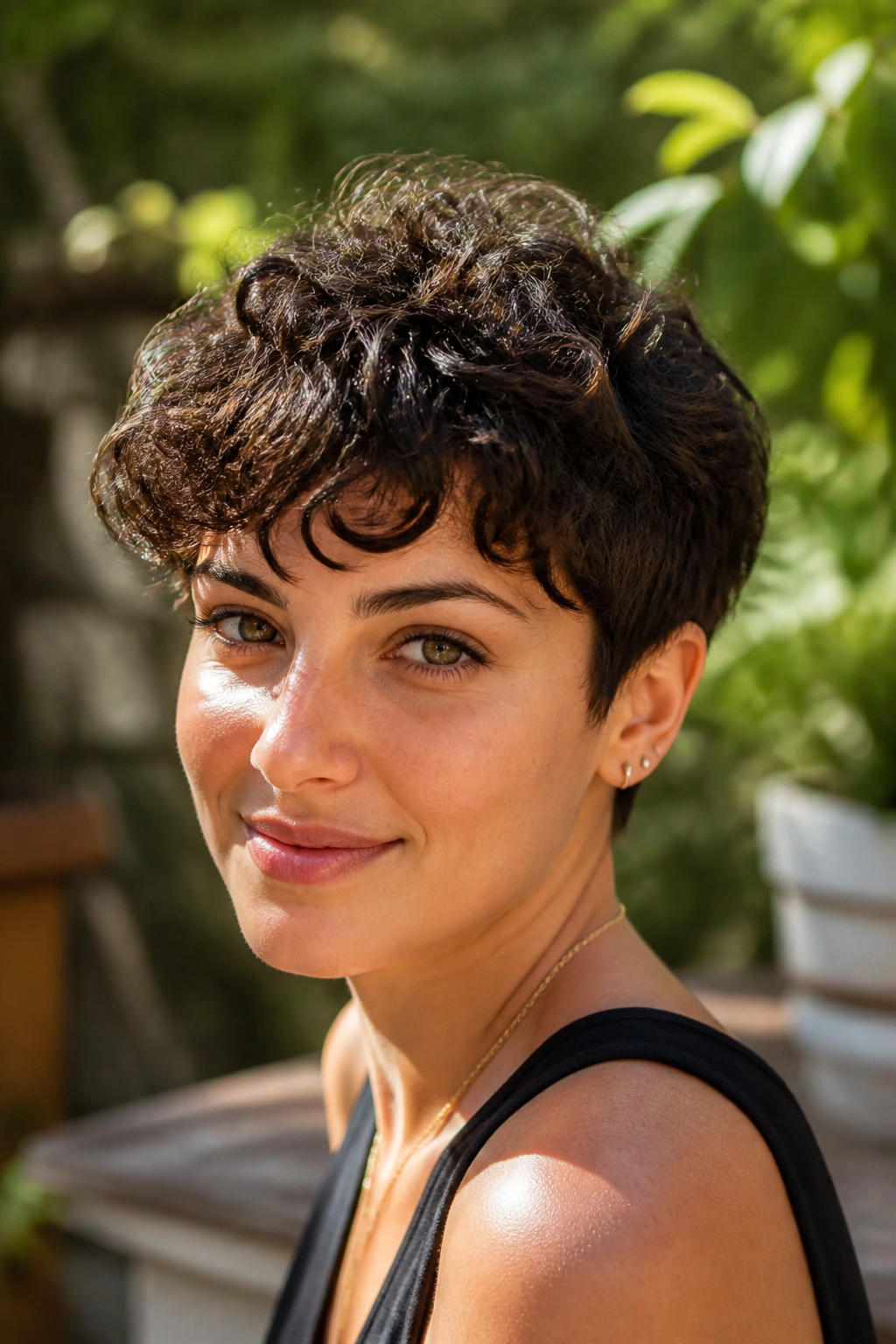
Curls can be a blessing here. They lift on their own, and that lift helps a round face look longer if the shape is cut with some care.
The main thing is this: do not cut curls into a flat, wet line and hope for the best. Curly pixies need shape built around how the curls spring up. The sides can stay tighter, while the top should keep enough length to stack upward instead of flaring sideways.
Dry-Cutting Matters
A lot of curl specialists prefer to cut at least part of the shape dry, because curls lie to you when they are wet. A section that looks neat at the chair can bounce up an inch or more once it dries.
That’s why this cut works best when the stylist watches the curl pattern piece by piece. Round faces do better when the tallest curls sit up top and the widest curls are controlled near the temples.
Use a light cream, not a heavy butter. Heavy products pull curls down and make the sides spread.
14. Curly Tapered Crop
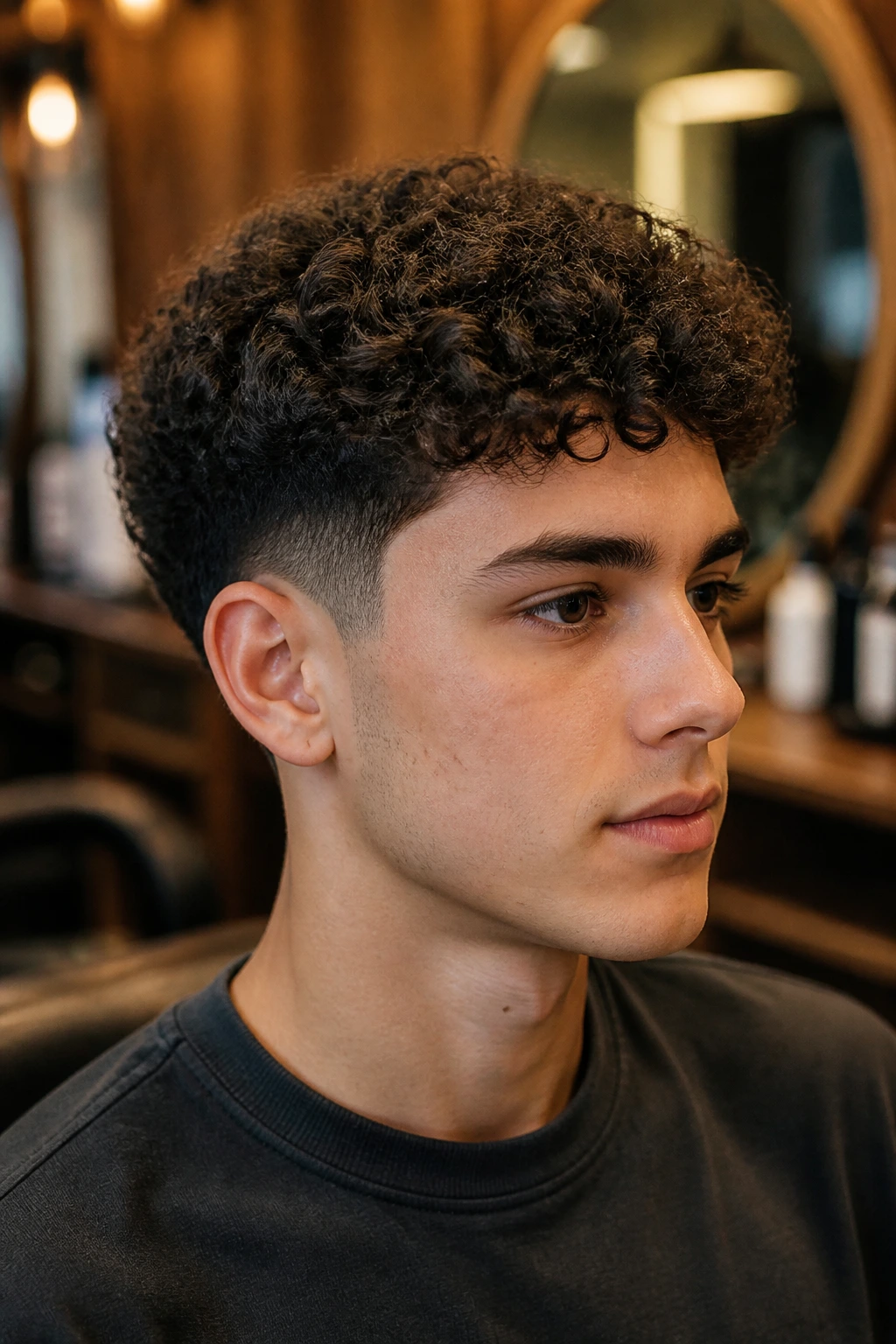
What if your curls are tighter and you want even less width at the sides? Then the tapered crop is the sharper move.
This version keeps the outline close around the ears and neck while leaving enough length on top for the curl pattern to show. The result is more vertical shape and less side expansion. On a round face, that shift is useful. It gives the face somewhere to go.
A tapered crop is also easier to refresh in the morning than a fuller curly cut. Mist the hair, add a small amount of curl cream, and scrunch the top. Leave the sides alone unless they need to be smoothed back into place.
I like this cut on people who want structure. It has one job and does it cleanly.
15. Wavy Micro Bob
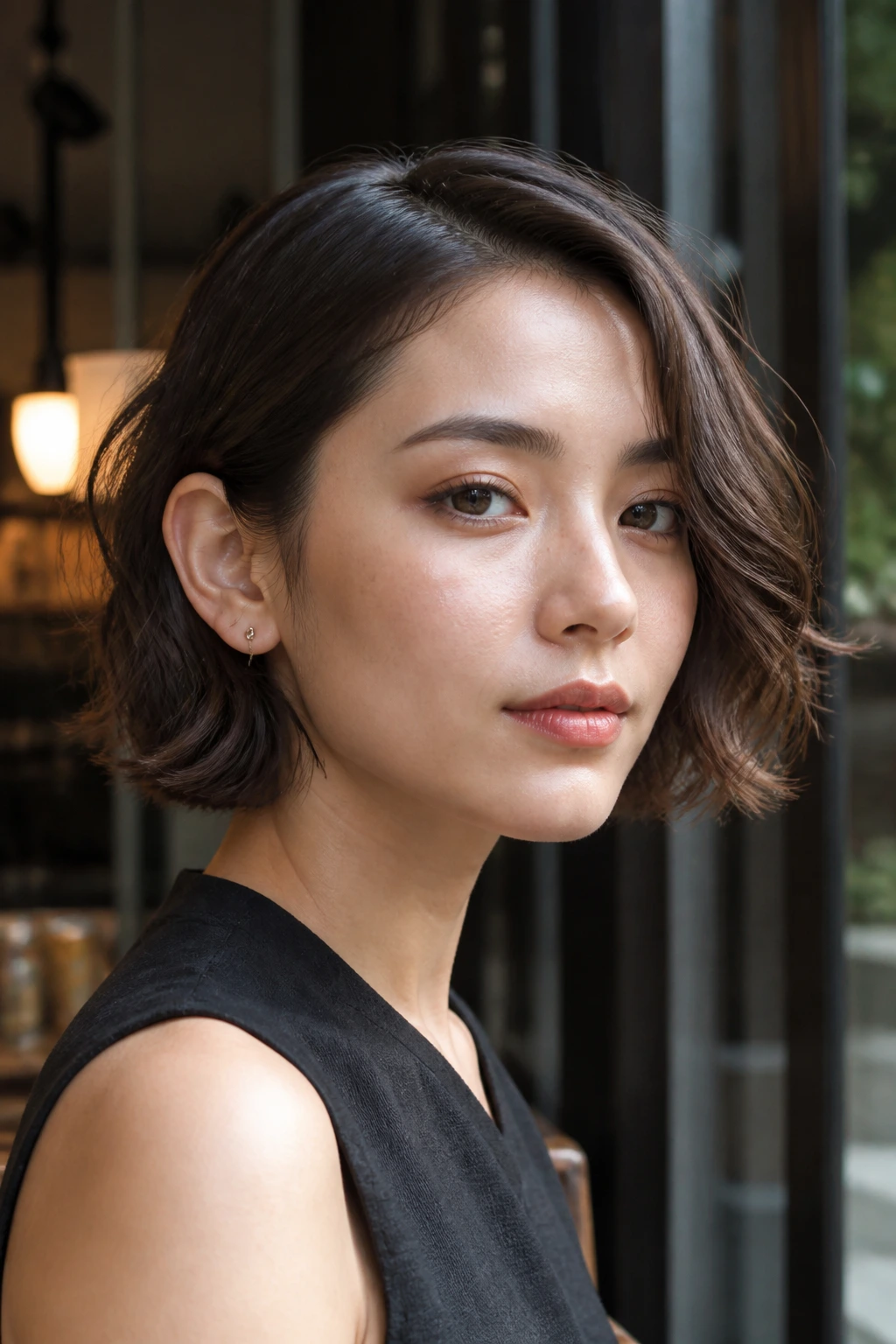
A micro bob sits between a pixie and a classic bob, and that middle ground can work nicely on round faces if the edges are handled well.
The best version lands around the jaw or just below it, with enough length to tuck one side behind the ear. Wavy hair gives the cut a little vertical movement, which helps keep the face from feeling boxed in. The style looks especially good when the ends are left soft rather than curled under.
Watch For This
If the cut is too rounded, it can echo the shape of the face. That is the part to avoid.
A few details help:
- Keep a side part or broken part.
- Ask for texture through the lower third.
- Let the front pieces angle slightly longer than the back.
Fine hair gets lift from this shape. Thick hair needs careful weight removal so the bob does not balloon.
16. Side-Parted Crop with Tuck-Behind Ear Length
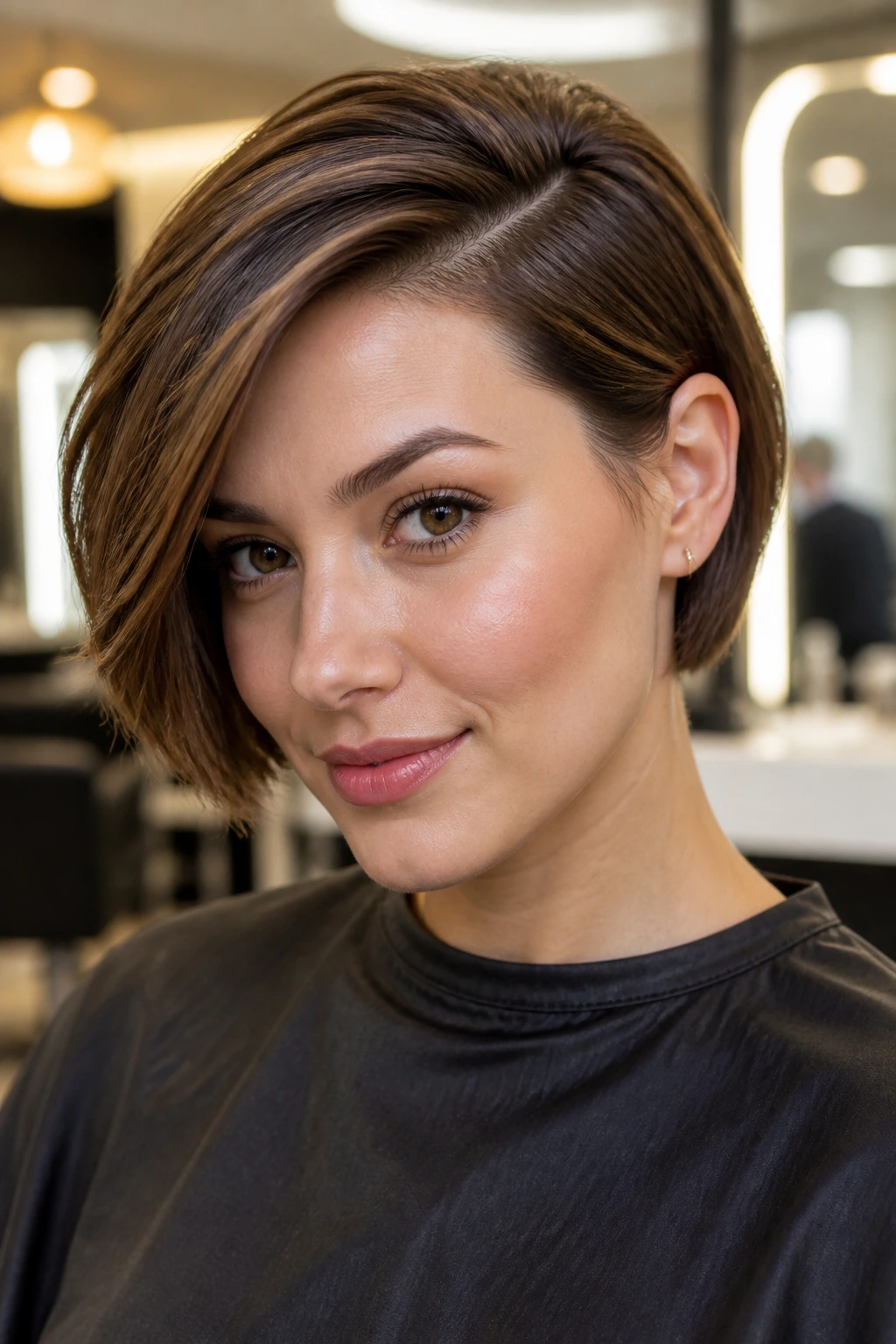
The simplest way to stretch a round face is often the least dramatic one: a deep side part and one side long enough to tuck behind the ear.
That exposed cheekbone changes the whole look. It creates a visual line from forehead to jaw, and the tucked side opens space around the face instead of covering it evenly. The result feels lighter and more deliberate.
This is a good cut if you work in a setting where you want something neat but not fussy. It can look polished in five minutes. A quick blow-dry at the roots and a little smoothing cream around the ear is usually enough.
Ask for one side to skim the cheekbone and the other to stay a touch shorter behind the ear. That slight imbalance is what keeps the style from becoming boxy.
17. Soft Bowl Cut
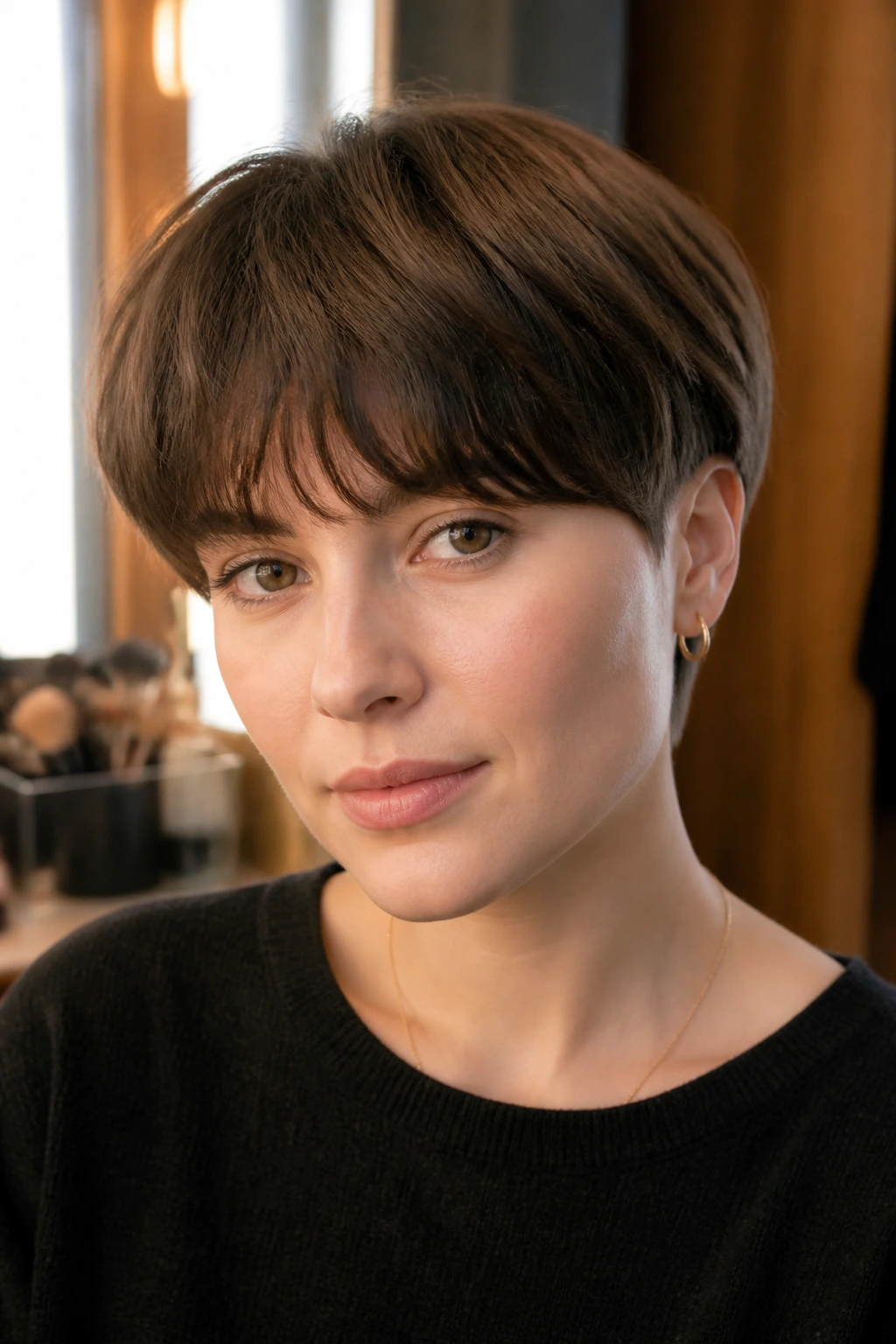
The bowl cut gets a bad reputation because people picture one hard line all the way around the head. That version is tough on a round face. A softer bowl cut is a different story.
The newer, softer version breaks up the edge, trims the temples shorter, and leaves the fringe a bit feathered instead of heavy. That changes the silhouette from a circle into something closer to a rounded square. Subtle, but useful.
It works best on straight or slightly wavy hair. Curly hair can wear a bowl shape too, though the outline has to be customized more carefully. If the fringe sits too low and the sides stay too full, the face can look wider in a hurry.
This is one of those cuts where the details matter more than the label. A soft bowl cut is not about copying a retro shape. It is about borrowing the idea and making it lighter.
18. Bixie Cut
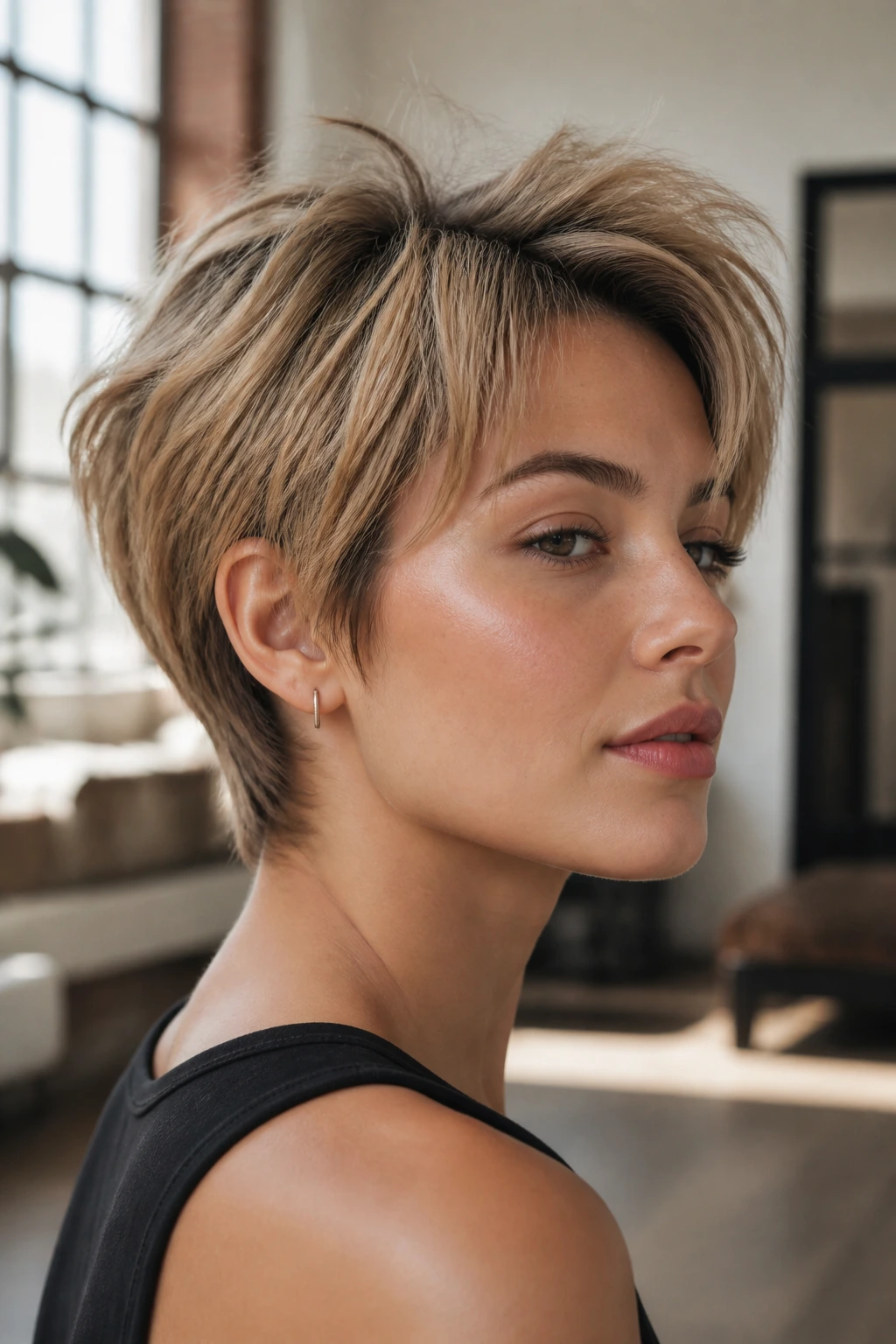
A bixie sits between a bob and a pixie, which is exactly why it flatters round faces so often. It keeps some softness around the sides while still lifting the crown enough to avoid that all-over roundness people worry about.
The best bixie usually has short, airy layers on top, a bit of length around the ears, and a tapered nape. That mix gives you movement without the heavy perimeter of a full bob. It also grows out gracefully, which is underrated.
Why It Works
The cut keeps the face open without leaving everything exposed. That balance matters. Too short and it can feel severe; too long and the shape starts to widen again.
If you want a version that leans more feminine, leave a little fringe. If you want something sharper, keep the front pieces chunkier and the sides more fitted. Either way, the bixie is a strong compromise cut for people who are not ready to commit fully to a pixie.
19. Tousled Pageboy with Soft Fringe

A pageboy usually sounds too round for a round face, and that instinct is not wrong. The classic version can be too smooth and too circular.
A tousled pageboy, though, changes the game. The ends are broken up, the fringe is softened, and the shape stops behaving like a perfect halo. If the length sits just below the jaw and the crown has a bit of lift, the face reads cleaner and longer.
This cut has a nice retro feel without looking costume-y. It suits hair that bends naturally or can take a rough blow-dry. A little mousse at the roots and a small brush through the fringe is enough to keep it from collapsing.
The key is not to let the lower edge become too heavy. The moment it starts to curl under in one solid band, the face gets more circular again.
20. Slicked-Back Short Cut
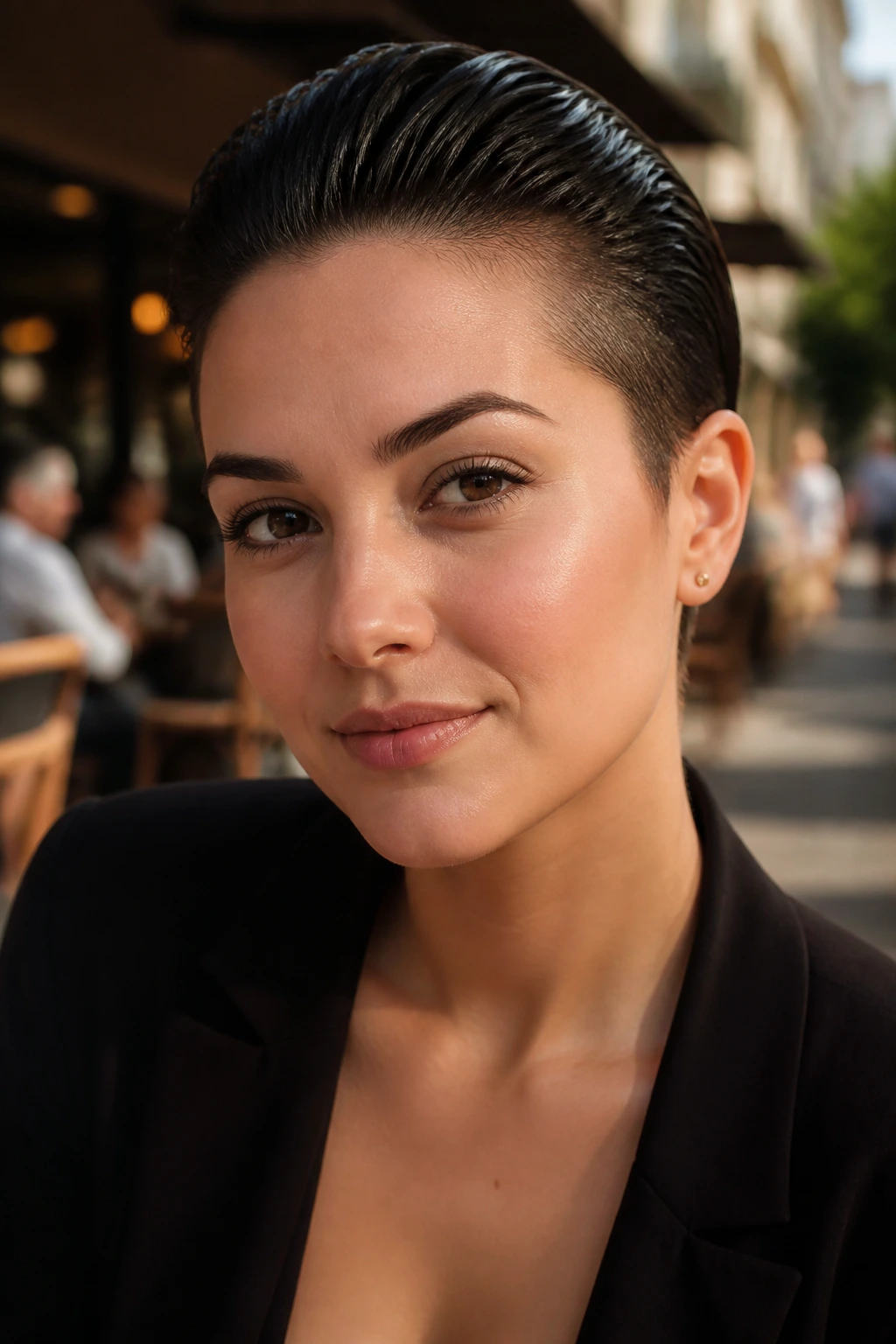
A slicked-back short cut is not only for nights out or fashion shoots. On a round face, it can be a smart way to show structure fast.
When the hair is pulled back from the forehead and temples, you see more of the bone structure and less of the width at the cheeks. The face usually looks longer because the hair is not interrupting the vertical line. Use a light gel or strong cream on damp hair, then comb it back while it is still pliable.
This one is not for someone who hates product. Be honest about that. It can look clean and sharp, but it does need a little discipline to hold its shape.
If you want a softer version, leave a few pieces loose at the hairline. If you want a stronger look, keep the sides close and the top smooth. Both work.
21. Mullet-Inspired Crop
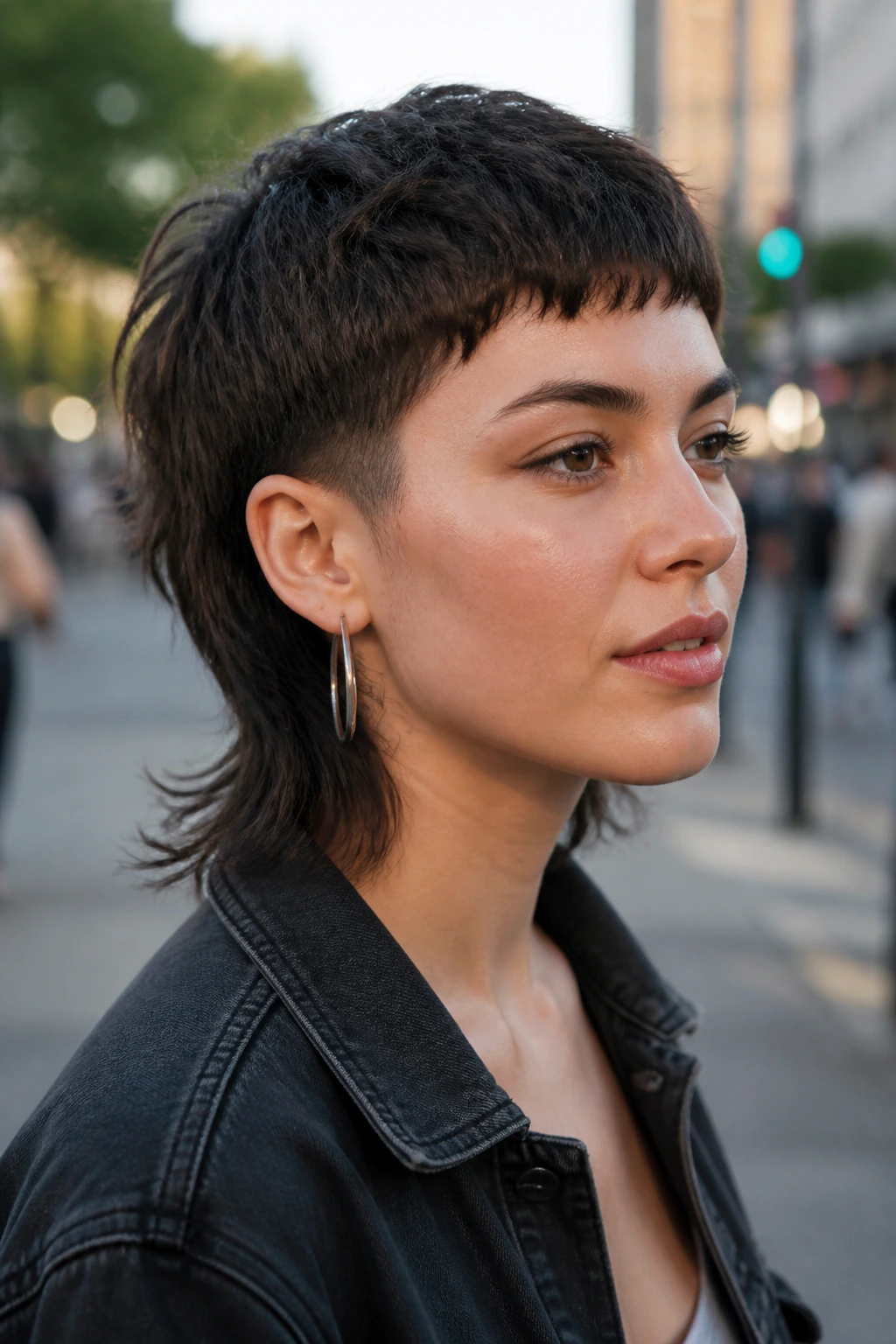
A mullet-inspired crop sounds bold, and it is. But the shape can be surprisingly kind to a round face when it is cut with restraint.
The short top and sides keep the upper part of the head neat, while the longer nape pieces create a little vertical movement in the back. That contrast pulls the eye downward and gives the face more length. The trick is keeping the transition soft so it does not turn into a hard line at the temples.
This works well on hair with some bend. Straight hair can wear it too, though it usually needs a touch of texture spray to keep the crown from falling flat. If the front grows too heavy, the cut loses its lightness fast.
I like this option for people who want personality in the haircut, not just shape. It has both.
22. Razored Bob with Airy Layers
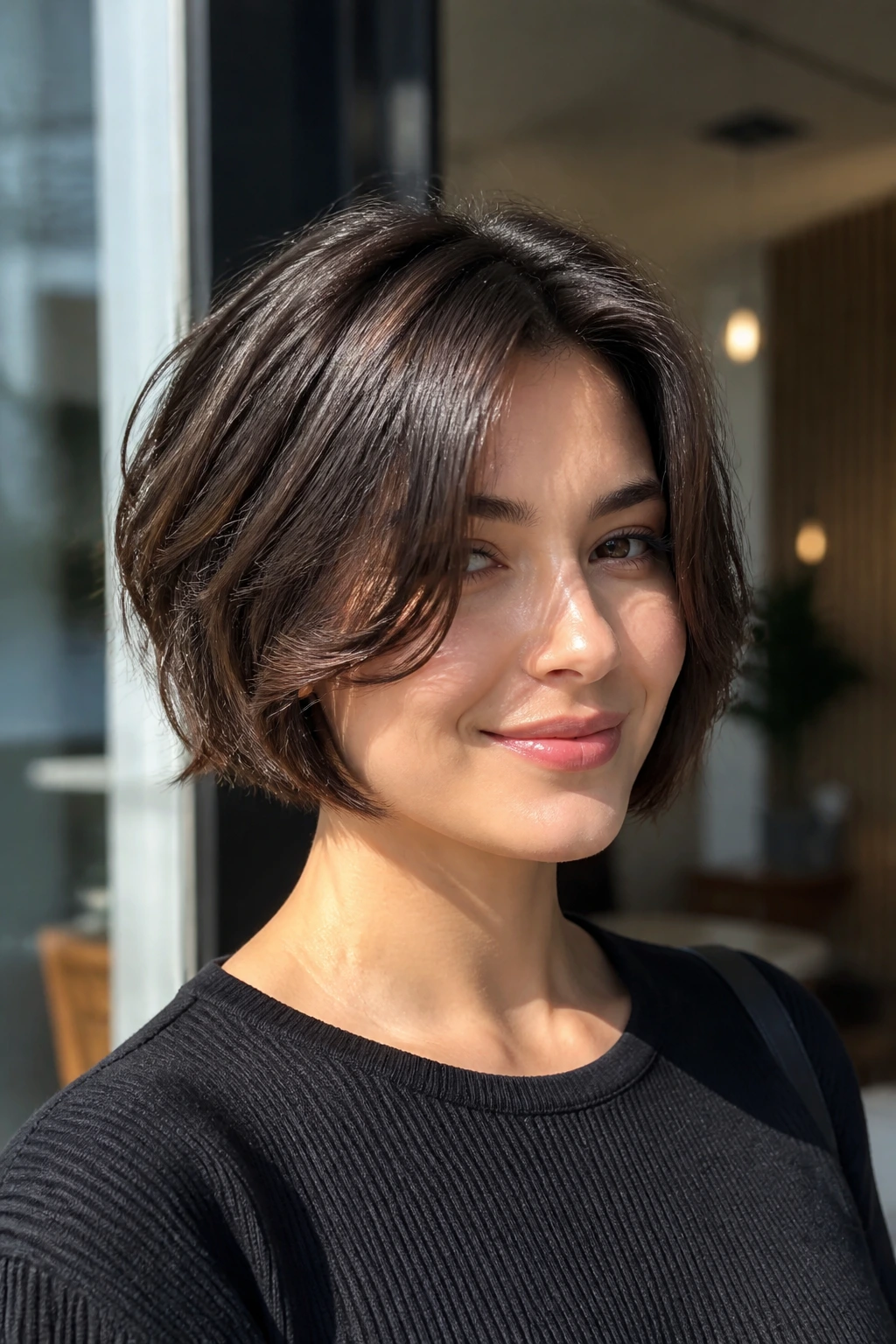
A razored bob is a smart move for thick hair because it removes bulk without leaving the ends blunt and heavy.
The razor gives the perimeter a feathered look, which keeps the cut from sitting like one solid block around the face. On a round face, that softness matters. You want the sides to move, not sit there with all their weight at cheek level.
What to Ask For
- Light razoring through the ends, not aggressive thinning.
- Layers kept below the cheekbone.
- A slight side part or off-center part.
This cut can get frizzy if the hair is coarse, so a small amount of smoothing cream helps. Use enough to tame the ends, not so much that the layers stick together. That balance is the whole game.
23. Blunt Bob with Deep Side Part for Round Faces
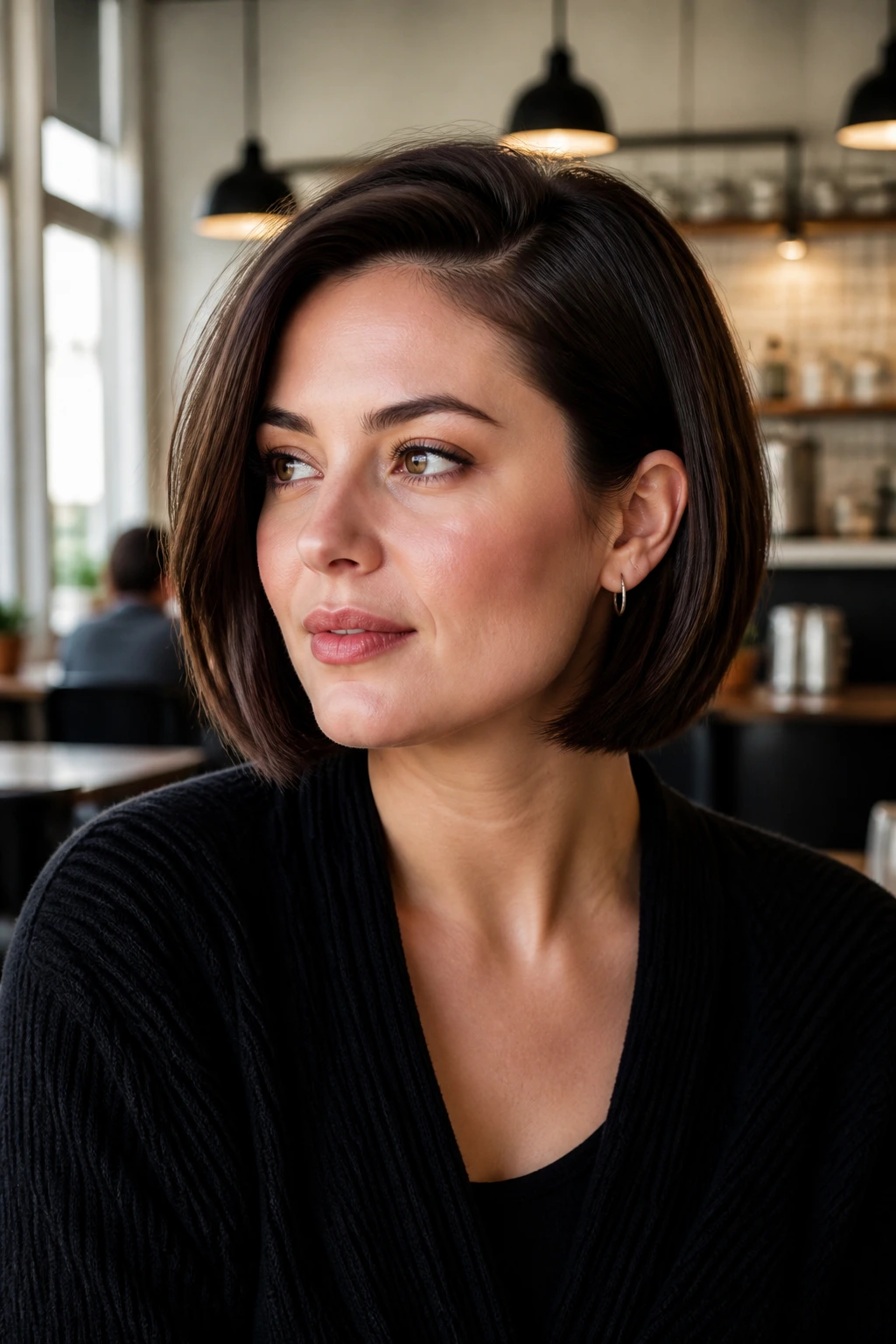
A blunt bob with a deep side part is sharper than people expect, and that sharpness is useful on a round face. The blunt line gives structure. The side part stops it from feeling too symmetrical.
The cut usually works best when it lands just below the jaw, not right on the cheeks. A center part with a blunt edge can make the face look wider. Shift the part hard to one side, and suddenly the bob has attitude and angle.
It’s sharp without being harsh.
If your hair is fine, this is a nice way to get density at the ends. If your hair is thick, ask for a tiny bit of internal removal so the bob does not flare out. The goal is a clean line with some bend, not a helmet.
24. Short Afro with Shaped Sides
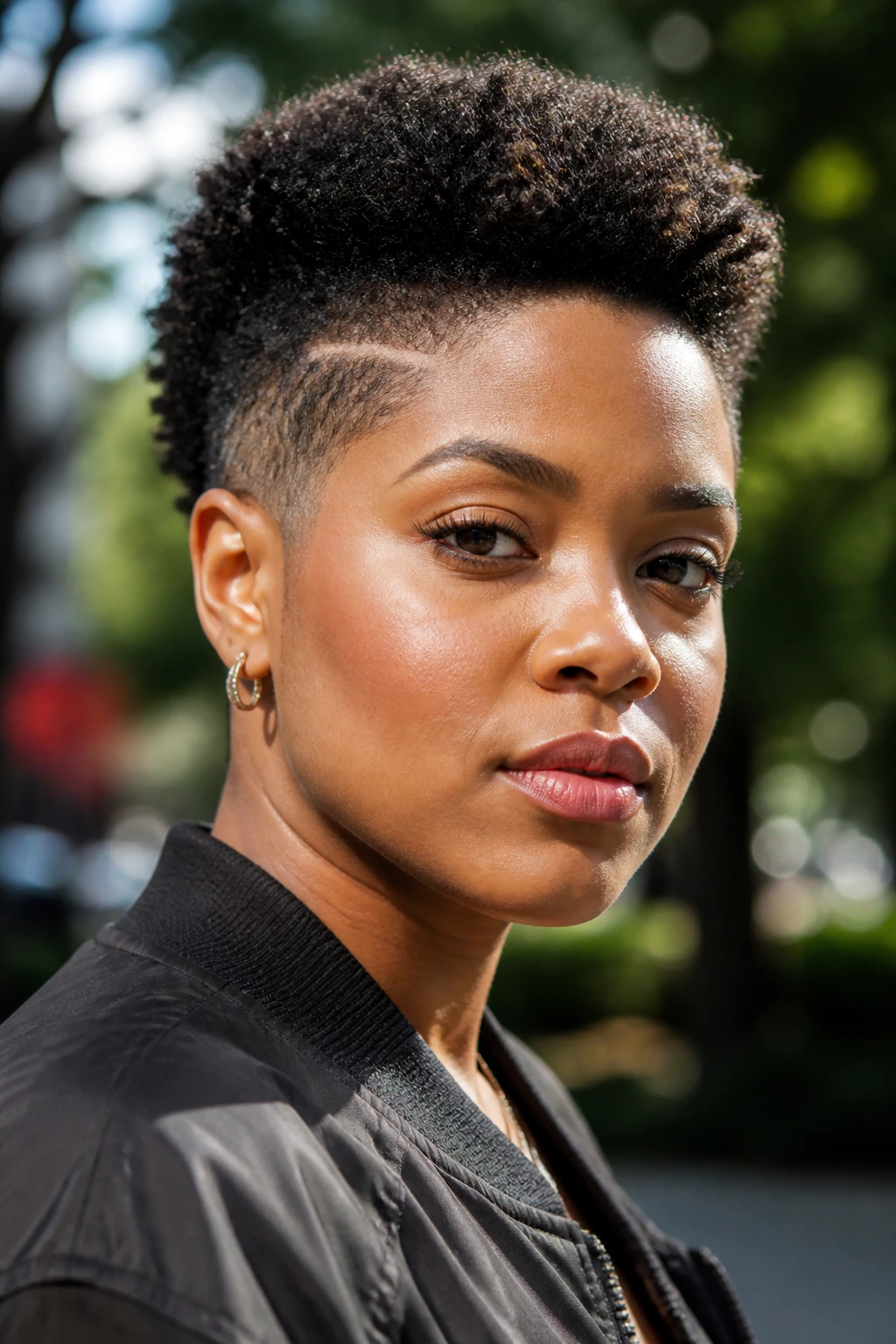
A short afro can look fantastic on a round face when the shape is built upward instead of outward. The silhouette matters more than the length.
A tighter shape at the sides and a little height on top gives the face room. If the sides are left too wide, the style can swallow the jawline. If the crown is encouraged upward with a pick or fingers, the whole look becomes more vertical.
Good Shape Notes
- Keep the sides trimmed to follow the head, not fan out.
- Let the top stay fuller so the shape rises.
- Define the outline every 4 to 6 weeks.
Moisture matters here, too. Dry curls lose shape and start to spread. A light leave-in and a curl cream with enough hold will keep the silhouette cleaner for longer.
25. Soft Crop with Wispy Bangs
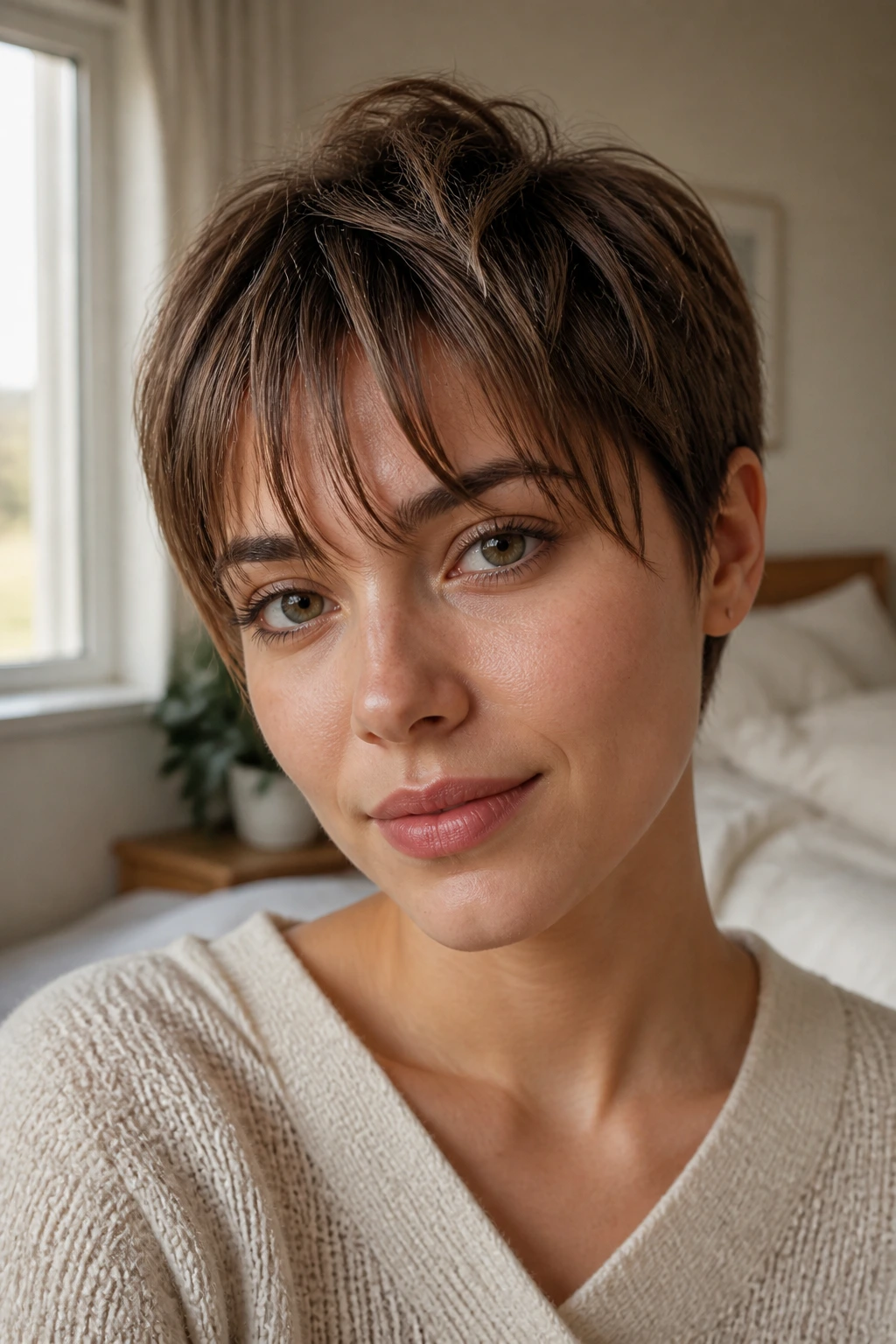
This is the cut I’d hand to someone who wants a gentle, low-drama answer to a round face. The soft crop stays short enough to feel fresh, and the wispy bangs break up the forehead without closing everything in.
The bangs should be light, not heavy. Think airy strands that touch the brow or skim just above it, with a little separation between pieces. That keeps the front soft and stops the face from feeling boxed in. The sides should stay close enough to avoid width, while the top keeps just enough length for a bit of lift.
If you want the safest starting point among short haircuts for round faces, this is it. Ask for softness around the fringe, a little height at the crown, and enough structure at the sides to keep the outline clean. Then let it grow out a bit before deciding whether you want more edge or more length.
