



Thick hair can look sculpted one minute and like a helmet the next. The difference is the cut, not the hair.
The best short haircuts for thick hair do one simple thing well: they remove weight where you do not want it, then keep enough shape at the edges so the style still looks intentional when it air-dries, bends, or grows out a little. Too much thinning can leave the ends fuzzy. Too little weight removal leaves the back bulky, hot, and annoyingly triangular.
The shape matters more than people think. A blunt bob can look crisp on one head and boxy on another. A pixie can look sharp or puffy depending on whether the crown is chipped, the nape is tapered, and the fringe sits where it should. Thick hair is forgiving in some ways, but not in the lazy way. It asks for a plan.
Start with the shortest shapes if you want less drying time and more neck clearance. Then work toward the bobs and lobs if you like movement, face-framing, or a little more room to tuck hair behind your ears. The first cut is the one I reach for when someone wants the most change with the least daily fuss.
1. Textured Pixie Cut
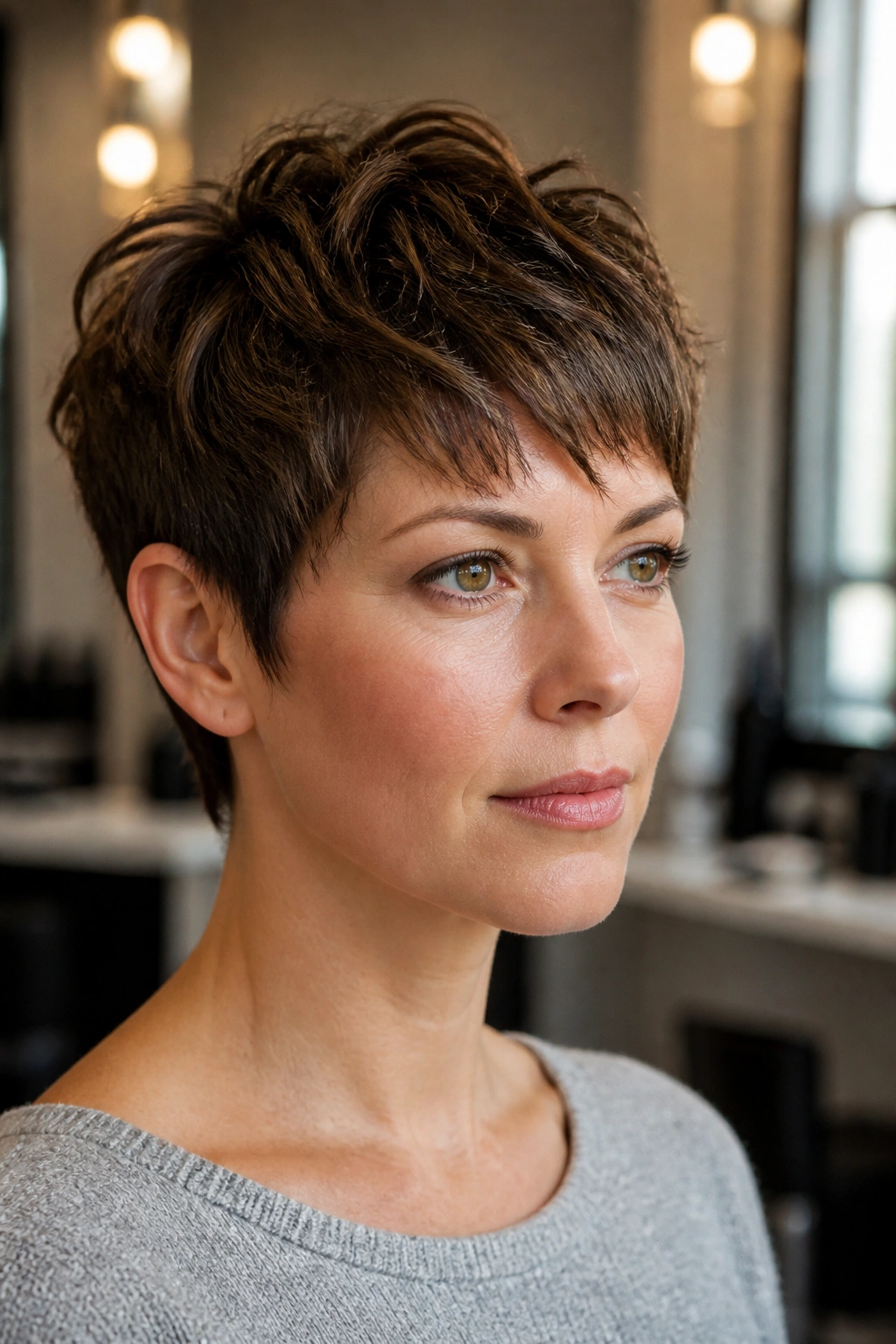
A textured pixie is the cleanest way to take thick hair short without making it look like a solid block. Keep the sides snug around the ears and leave softness through the crown, where 2 to 3 inches on top gives you enough room to push the hair forward, upward, or flat. Point cutting at the ends keeps the shape airy; one blunt snip too many and the whole thing starts reading as helmet hair.
Why it works on dense hair
Internal layers remove weight from the center without exposing too much scalp. That matters on thick hair, because a heavy crown can push the front forward and the nape outward.
- Ask for a tight nape and softly chipped top layers.
- Use a matte paste or light wax, not a glossy pomade.
- Style with fingers first, comb second, if at all.
- Plan on trims every 4 to 6 weeks.
Best part: it dries fast and still looks deliberate.
2. Tapered Crop With Side-Swept Fringe
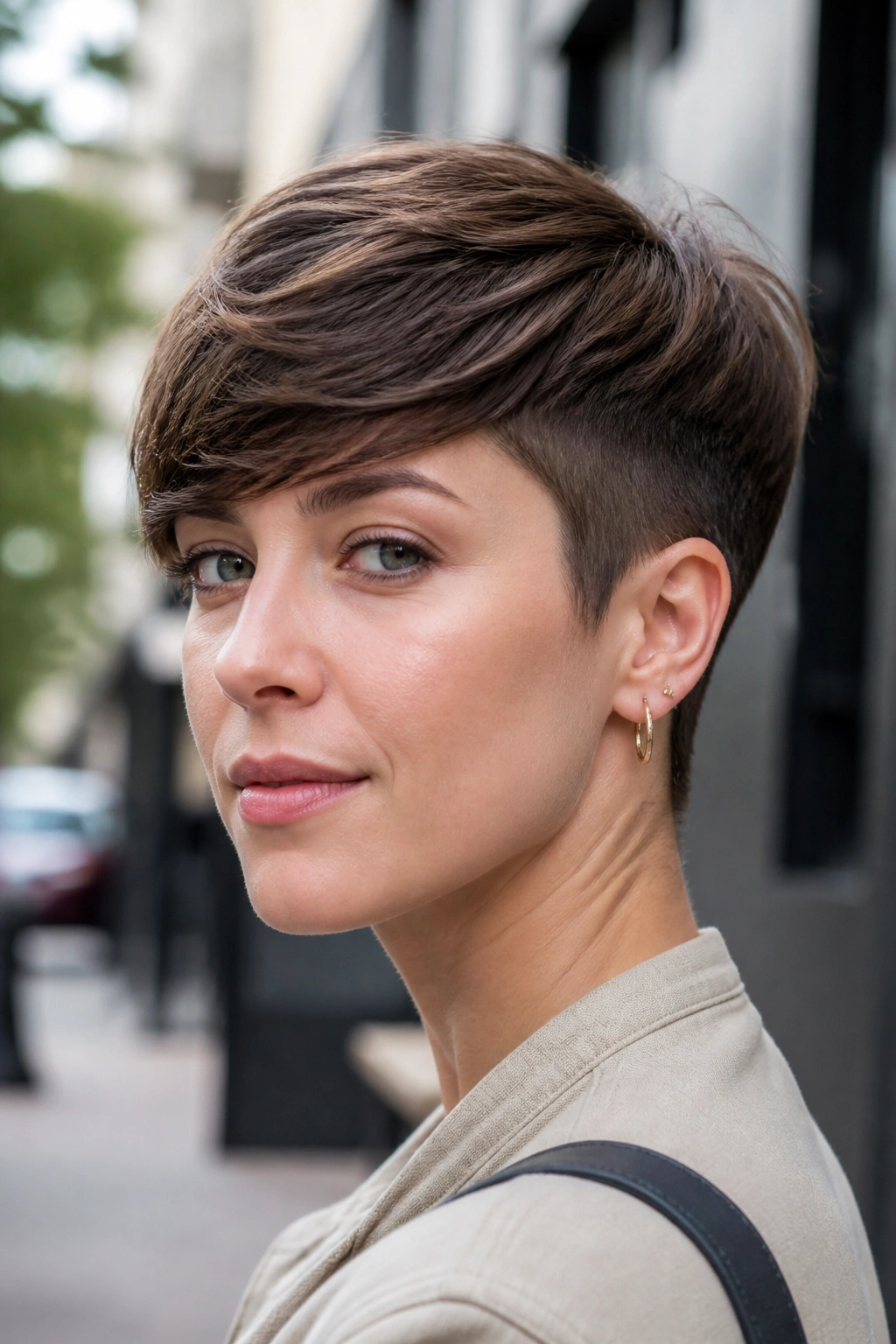
This cut is blunt about one thing: it wants control. A tapered crop keeps the bulk low at the sides and back, while the longer fringe gives thick hair somewhere to fall instead of ballooning around the temples.
The side-swept front is doing more work than people realize. It softens the forehead, breaks up width, and makes the whole cut feel less military. If your hair sticks out at the sides as it grows, this shape is a relief.
I like this on straight or slightly wavy hair because it sits neatly with a quick blow-dry or even a rough dry and a touch of cream. Keep the top soft, not stacked. Too much height here turns the crop into a little mushroom cap, and nobody needs that.
3. French Bob With a Soft Bend

Why does a French bob work so well on thick hair? Because it uses density as shape instead of fighting it. Cut around the cheekbone or just under the jaw, then let the ends bend under a little instead of forcing them pin-straight.
That soft bend keeps the line from feeling hard. It also gives the hair enough movement that the whole style looks lighter, even when the actual density is still there. Thick hair can hold this cut beautifully, especially if the stylist removes weight from the interior and leaves the perimeter clean.
How to wear it
A small round brush, a 1-inch curling iron, or a fast bend with a flat iron all work. If you air-dry, tuck one side behind the ear and let the other fall forward. It looks chic without acting like it tried too hard.
4. Blunt Chin-Length Bob
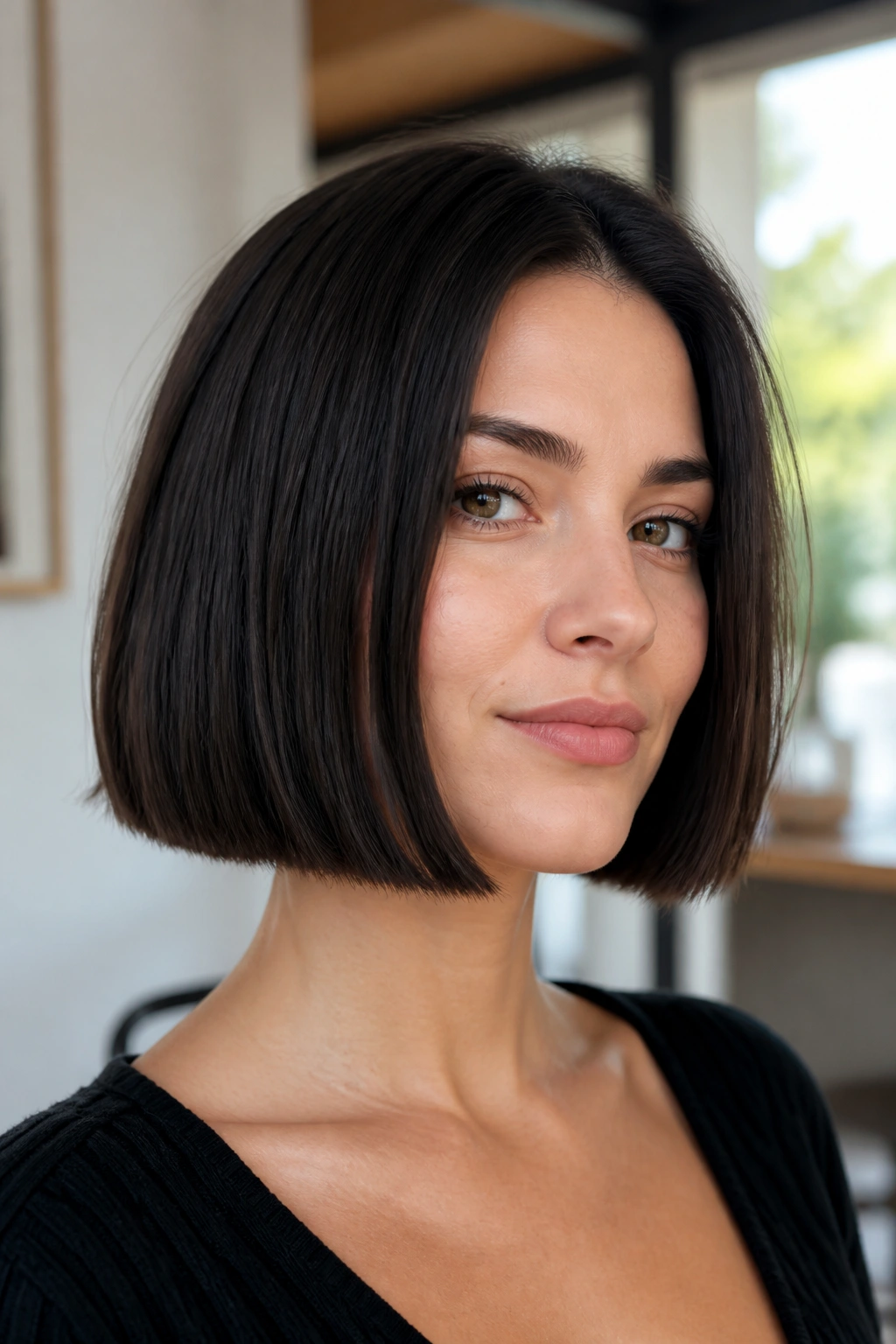
A blunt chin-length bob is bold in the right way. Thick hair gives it substance, so the line does not disappear into wisps, and the cut lands with a clean edge that feels neat instead of flimsy.
The trick is not to over-thin the ends. That’s the mistake. If you slice the perimeter too much, the bob turns frayed and the bottom starts to fan out. Keep the outline solid, then remove bulk from the inside with careful sectioning so the surface stays smooth.
This shape works especially well if you like a middle part or a slightly off-center part. It can be polished with a flat brush or worn with a little bend for a softer finish. If your jaw is strong, this cut looks sharp. If your jaw is softer, the clean edge gives the face a nice frame.
5. Layered Lob That Skims the Collarbone

A lob that lands near the collarbone is one of the easiest short haircuts for thick hair to live with. It keeps enough length to tuck, braid, or clip back, but it still feels shorter than the heavy, shoulder-dragging lengths that thick hair tends to collect.
What makes this version work is where the layers start. Keep them below the cheekbone and above the ends, so the hair moves without collapsing. If layers start too high, the shape can puff at the sides. If they start too low, the weight never leaves.
I like this cut for people growing out a shorter bob or anyone who wants a low-drama style. It can be air-dried with cream and left alone, or blown out with a paddle brush for a sleeker look. The length is forgiving. That matters more than people admit.
6. Shag Bob With Curtain Bangs
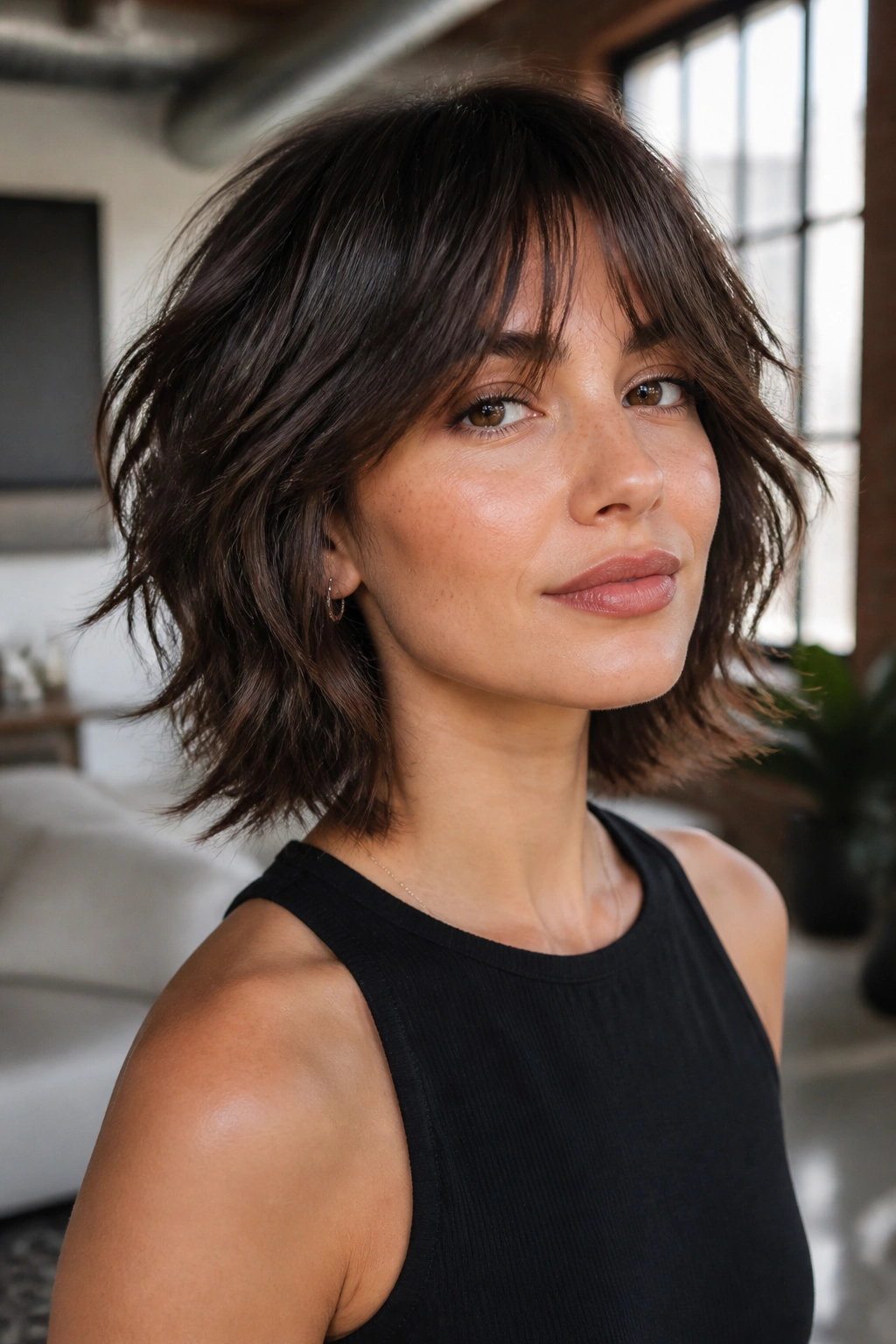
A shag bob is what happens when thick hair wants personality instead of perfection. The layers give the cut motion, and the curtain bangs break up the front so the whole style does not look heavy around the face.
Unlike a blunt bob, this one does not rely on one hard line. It works by letting the texture show. On wavy hair, that’s a gift. On straighter hair, you may need a little salt spray or mousse to make the layers separate instead of sitting in one lump.
What to ask for
Ask your stylist for soft face-framing layers, not razor-chopped pieces that stick out. A shag bob should move, not fray.
This cut is best if you like a little mess in your hair. Clean and shiny is not the point here. Shape is.
7. Rounded Italian Bob

A rounded Italian bob sits fuller at the bottom and curves gently under the chin. Thick hair loves that shape because the density helps hold the curve instead of fighting it.
The profile matters here. From the side, you want a soft oval line, not a box. That curve keeps the cut from feeling stiff, which is the main risk with heavy hair at this length. A little round brushing at the ends makes a big difference, but the cut itself should do most of the work.
I especially like this on straight, dense hair that tends to puff out at the sides. The rounded edge reins that in. It also feels polished without getting rigid. If you want a bob that looks neat at 8 a.m. and still decent after a windy commute, this is one of the safer bets.
8. Undercut Pixie
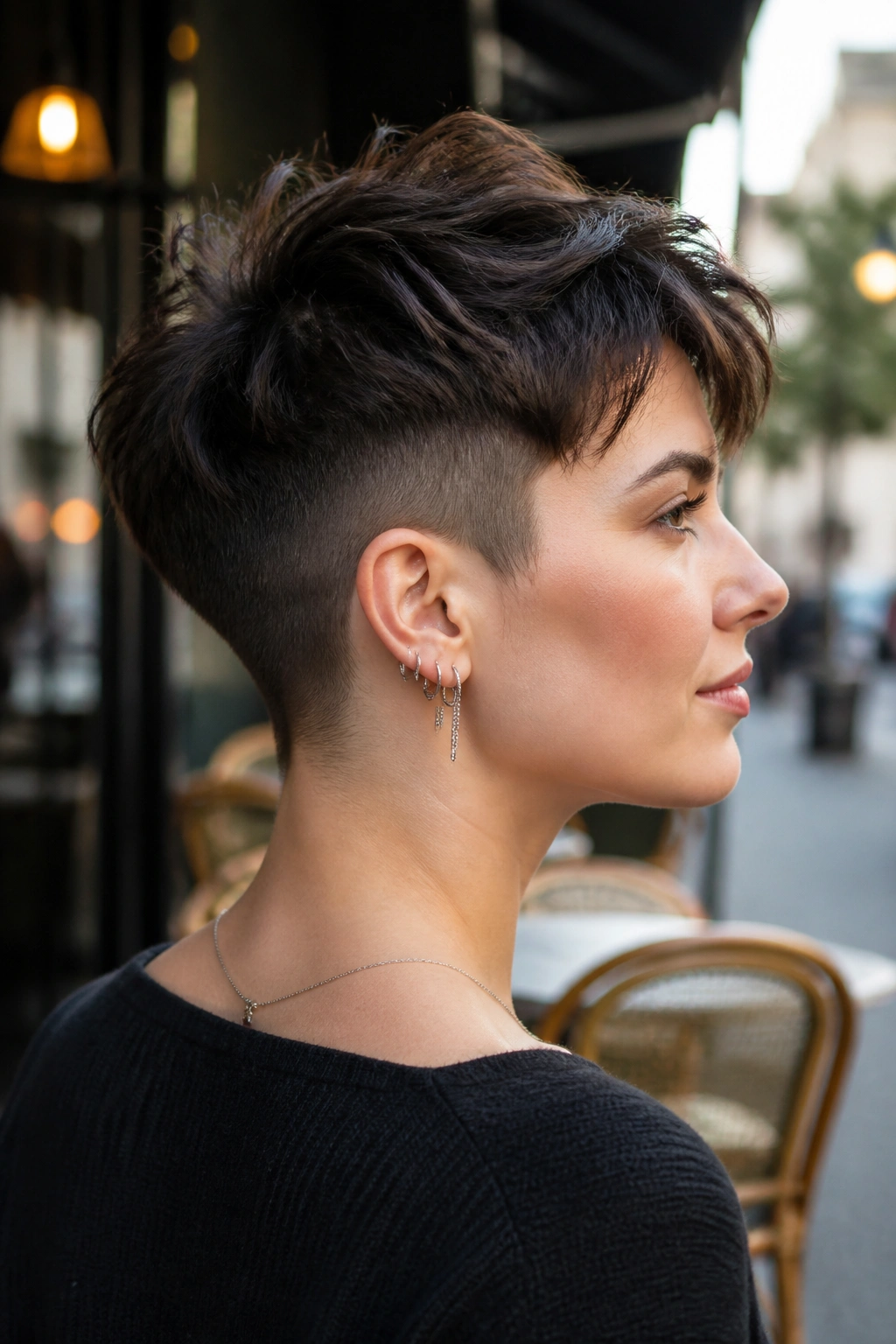
An undercut pixie is not shy. It solves bulk by taking hair out of the equation at the nape and sometimes around the ears, which is exactly where thick hair likes to pile up.
The result can feel almost light around the head. That’s the point. You keep the top long enough to style with texture or sweep to one side, while the hidden undercut keeps the outline from bulking up under collars and hats. It is especially useful if your hair is coarse, dense, or hot to wear in warm weather.
What to ask for at the salon
- Keep the top longer than the sides.
- Taper the nape cleanly.
- Leave enough length at the crown for movement.
- Avoid an over-harsh disconnect unless you want the edge to show.
This cut does grow out with a stronger shape change than a regular pixie, so it needs maintenance. No surprise there.
9. A-Line Bob
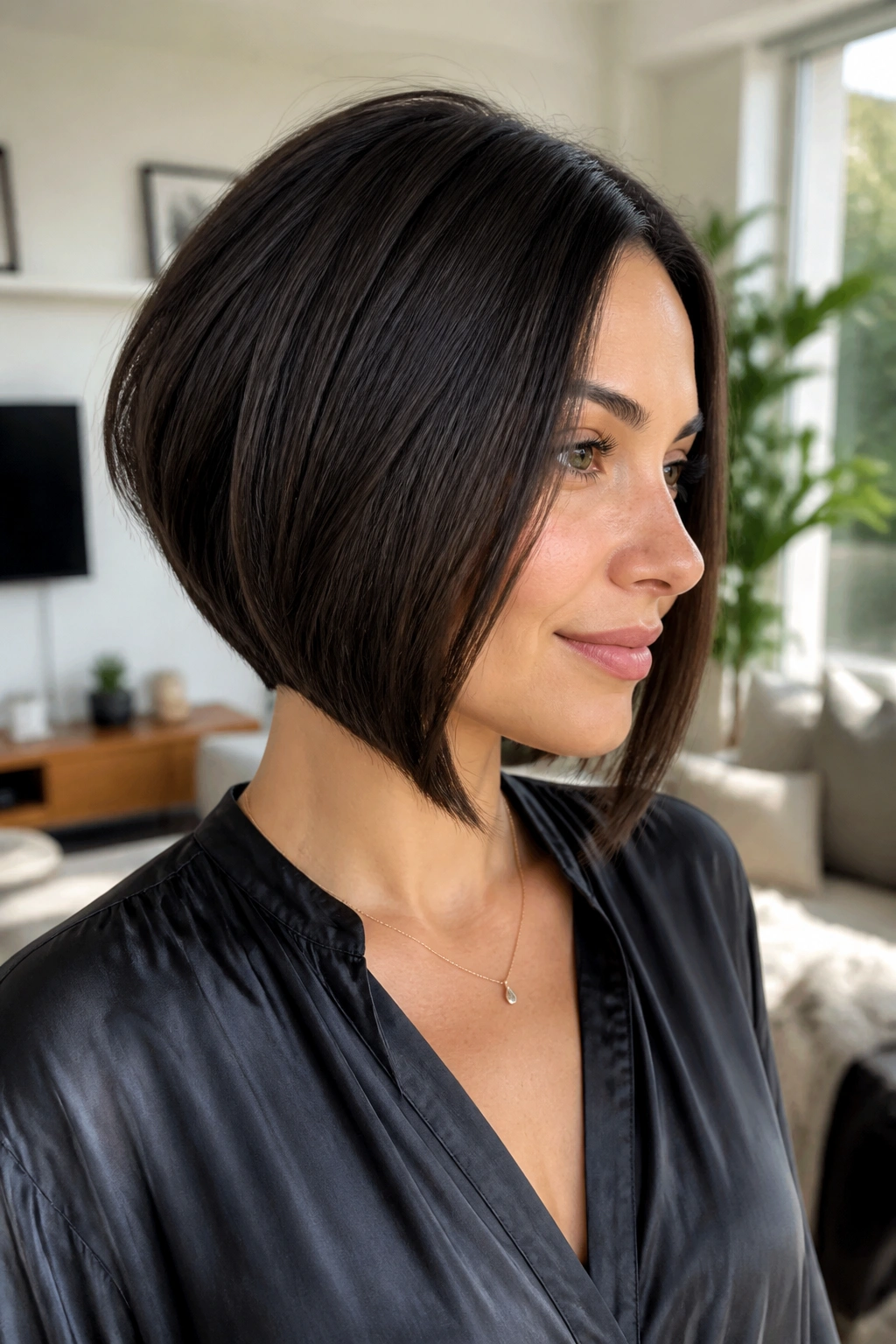
Why do A-line bobs behave so well on thick hair? Because the longer front pieces stretch the shape, while the shorter back removes weight from the neck. It is a simple geometry trick, and it works.
The angle does not need to be dramatic. A subtle A-line is often better, because a huge difference between back and front can make thick hair kick outward at the jaw. A gentle slope keeps the front soft and the back controlled.
This cut suits round and square faces especially well, since the front pieces draw the eye down. It also gives straight hair a little edge without forcing you into a high-maintenance blowout every morning. If you want something clean, modern, and easy to tuck behind one ear, this one earns its keep.
10. Wavy Crop With a Nape Taper
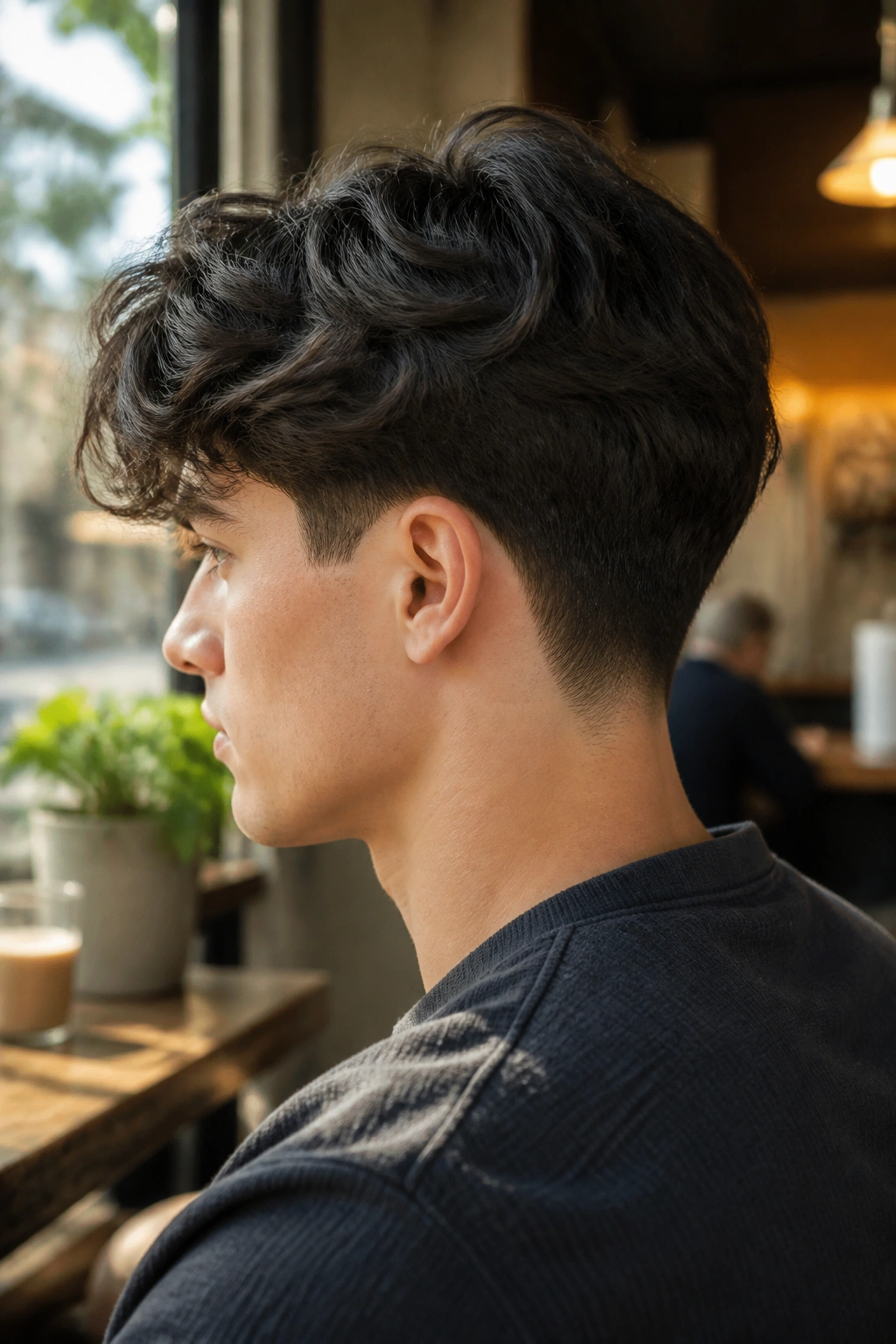
A wavy crop with a nape taper is one of those cuts that looks relaxed but still has structure. The tapered back keeps the hair from stacking up at the neckline, while the wavy top adds softness and movement.
It works because the cut respects the wave pattern instead of flattening it. Thick hair with wave usually expands when it’s cut too bluntly at a short length. A taper in the nape gives the shape a place to end, which stops the back from puffing out under shirts and jackets.
Styling notes
- Scrunch in a light cream on damp hair.
- Diffuse on low heat if you want more bend.
- Let the crown stay piecey, not smooth.
- Finish with a tiny bit of texture spray if the top falls flat.
This is a good cut when you want short hair that still feels soft.
11. Bixie Cut
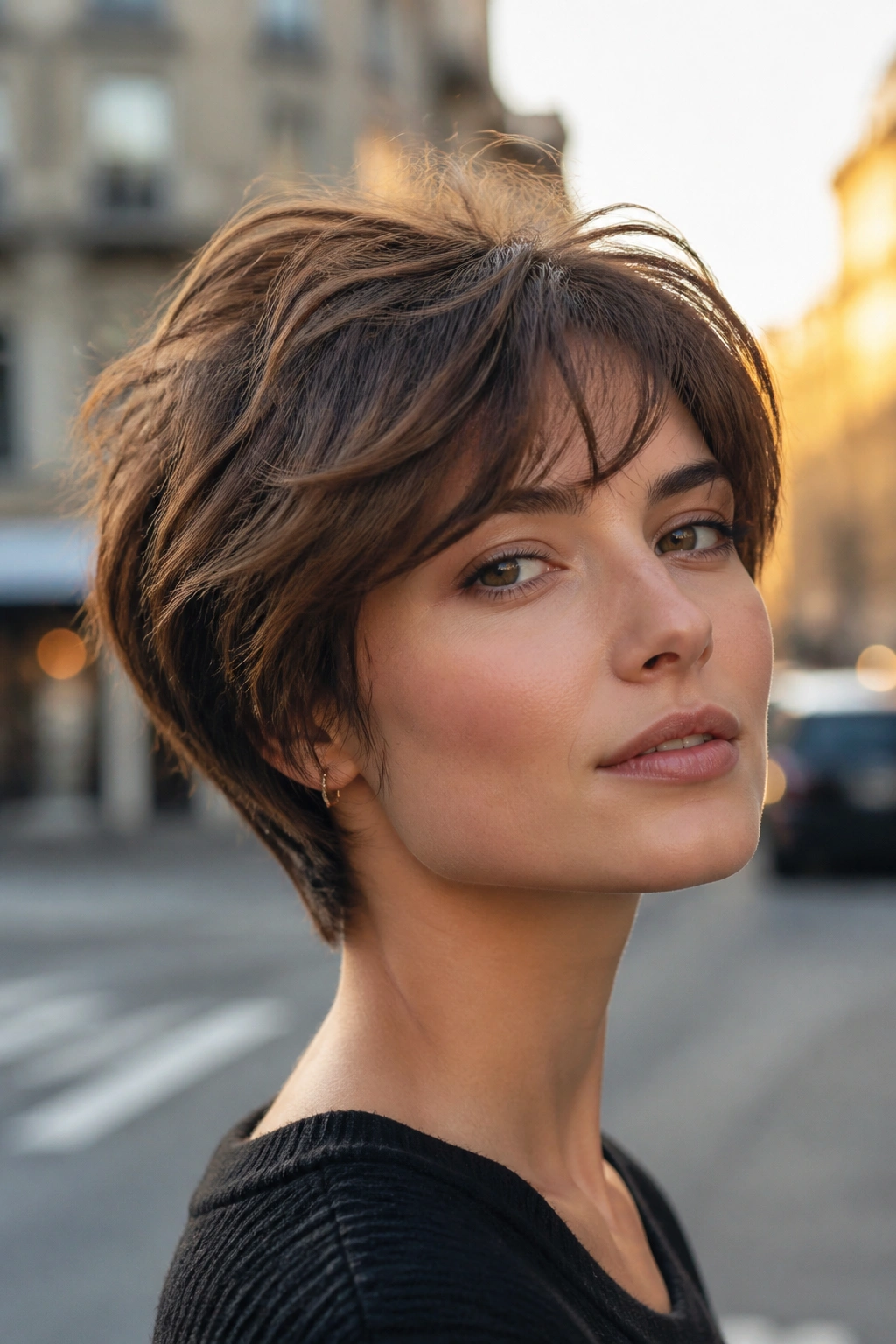
The bixie sits between a bob and a pixie, and thick hair loves that middle ground. You get enough length to tuck the sides or sweep the fringe, but not so much bulk that the shape turns into a triangle.
What I like most is the flexibility. A bixie can lean cleaner and sharper, or it can go choppier and more playful. The cut usually works best with point-cut ends and short internal layers, which keep the crown from becoming too dense while still leaving the perimeter visible.
It is also one of the better grow-out cuts on this list. If you get bored fast, that matters. The shape changes gracefully as it gets a little longer, which is more than most short cuts can say.
12. Collarbone Lob With Invisible Layers
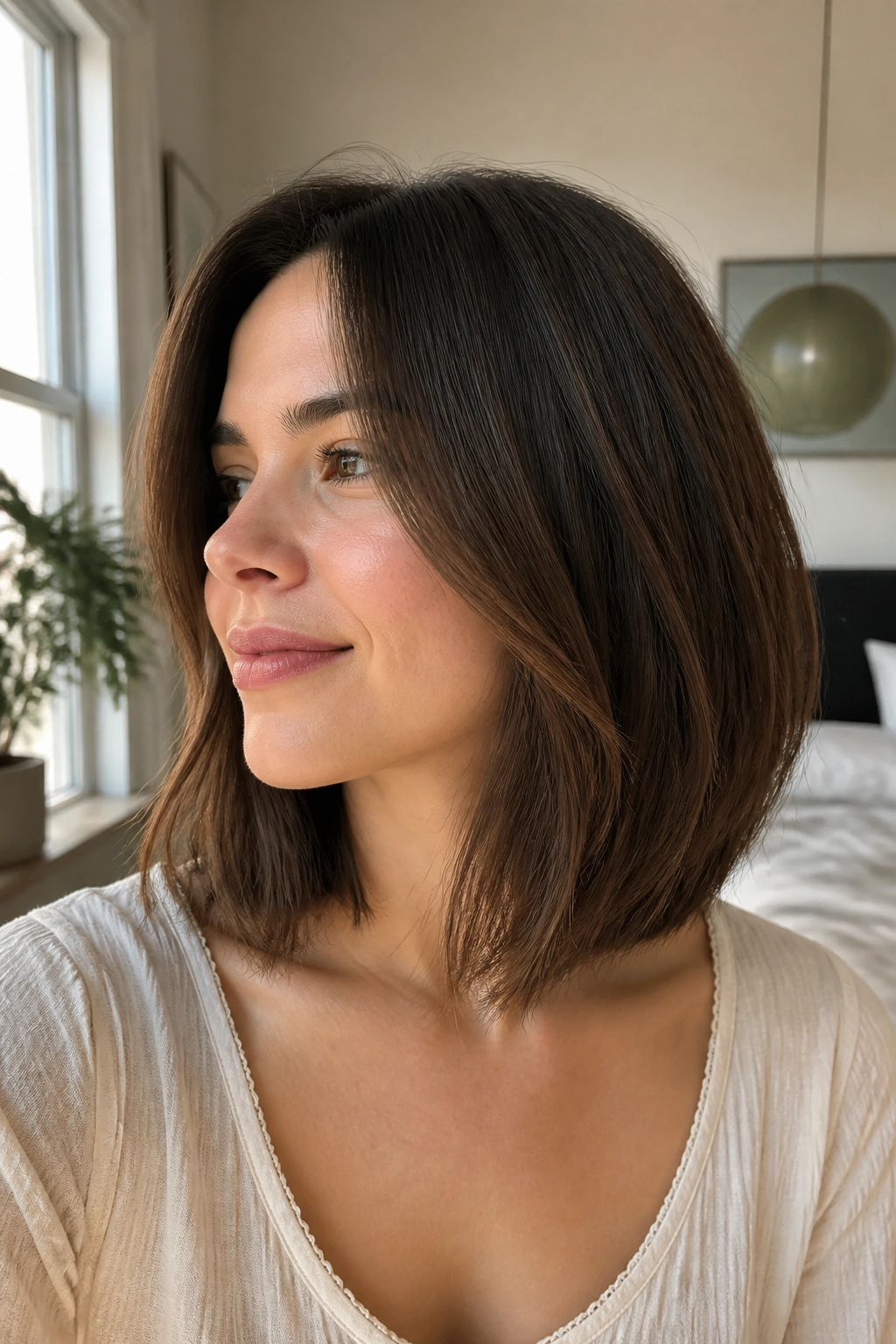
Invisible layers are a smart move when you want thick hair to feel lighter without looking thinned out. The outside line stays full, which is the part people see, while the inner sections lose some of the weight that causes puffing.
That makes this lob a good choice if you like a dense look but hate the feeling of your hair sitting like a block. It also behaves well in humid air because the shape has some give. The ends move, the middle breathes, and the whole cut looks less stiff than a blunt one of the same length.
Ask for slide cutting inside the shape, not on the perimeter. That distinction matters. The outer line should still feel solid when you tuck it behind your ears or pull it into a half-up clip.
13. Wolf Cut Lite
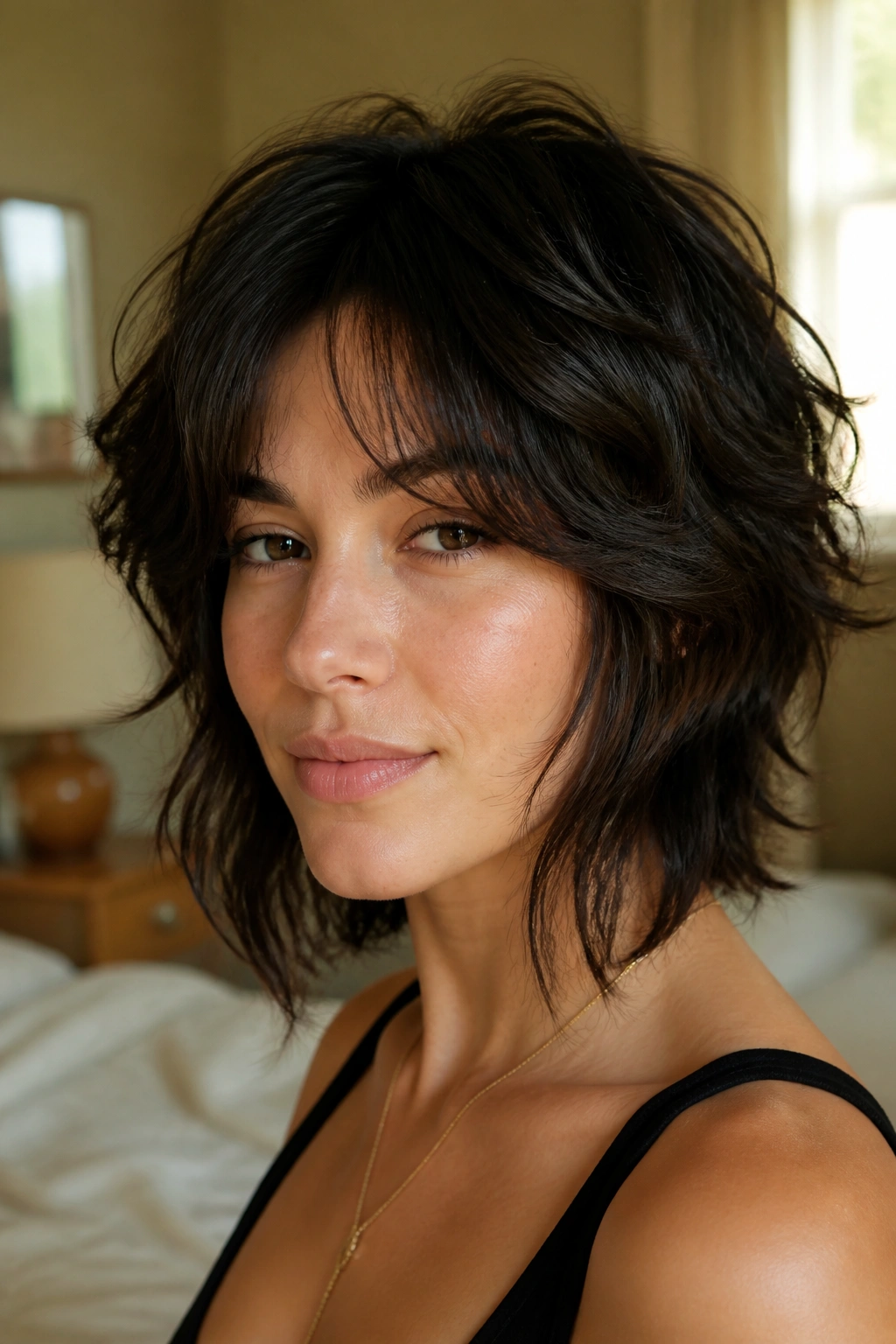
A wolf cut lite takes the wildness of the wolf cut and tones it down enough for real life. Think shorter crown layers, longer pieces around the face, and a nape that does not drag the whole style down.
Thick hair gives this cut structure fast. You do not need a lot of teasing or product. The layers do the work, especially if your hair has wave or a loose curl pattern. What I would avoid is over-texturizing the ends. That can make the cut look shaggy in a cheap way instead of in a cool way.
Where it fits best
- Best for hair that dries with bend.
- Good if you like air-drying.
- Better with a soft fringe than a heavy one.
- Less friendly to poker-straight hair unless you style it.
This is a cut for people who do not want their hair to look too neat. Fair enough.
14. Graduated Bob
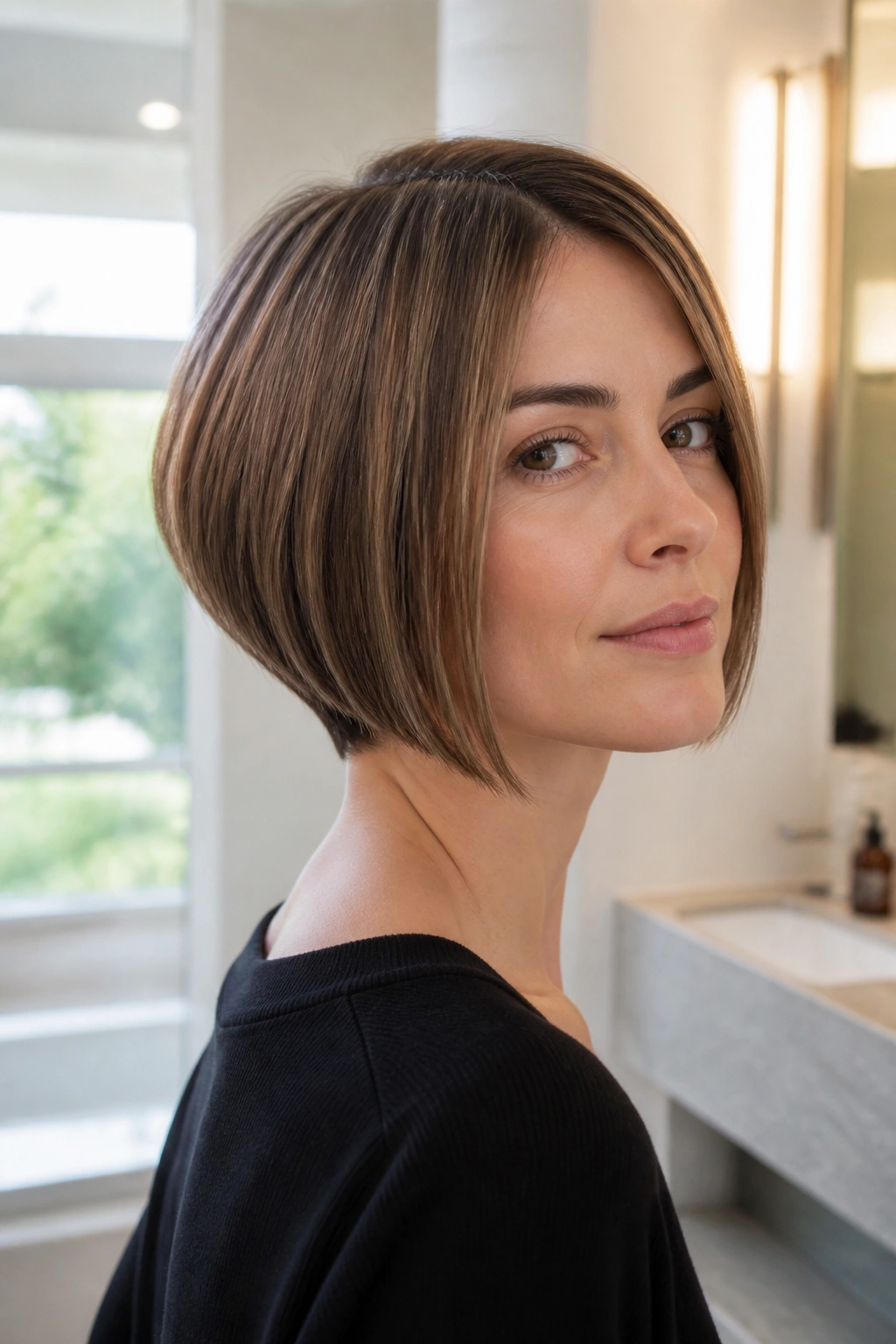
A graduated bob stacks weight in the back and lets the front sit a bit longer. On thick hair, that rear graduation is useful because it lifts the shape off the neck without making the entire cut feel loose.
The key is restraint. Too much graduation and the bob starts looking dated. Too little, and the back still feels heavy. The best version has a crisp nape, a smooth curve through the crown, and a front that skims the jaw instead of wrapping around it too tightly.
This is one of my favorites for straight, dense hair because it stays controlled with less effort than people expect. The shape does the heavy lifting. You mostly keep it smooth, tuck one side if you want, and go.
15. Jaw-Length Box Bob
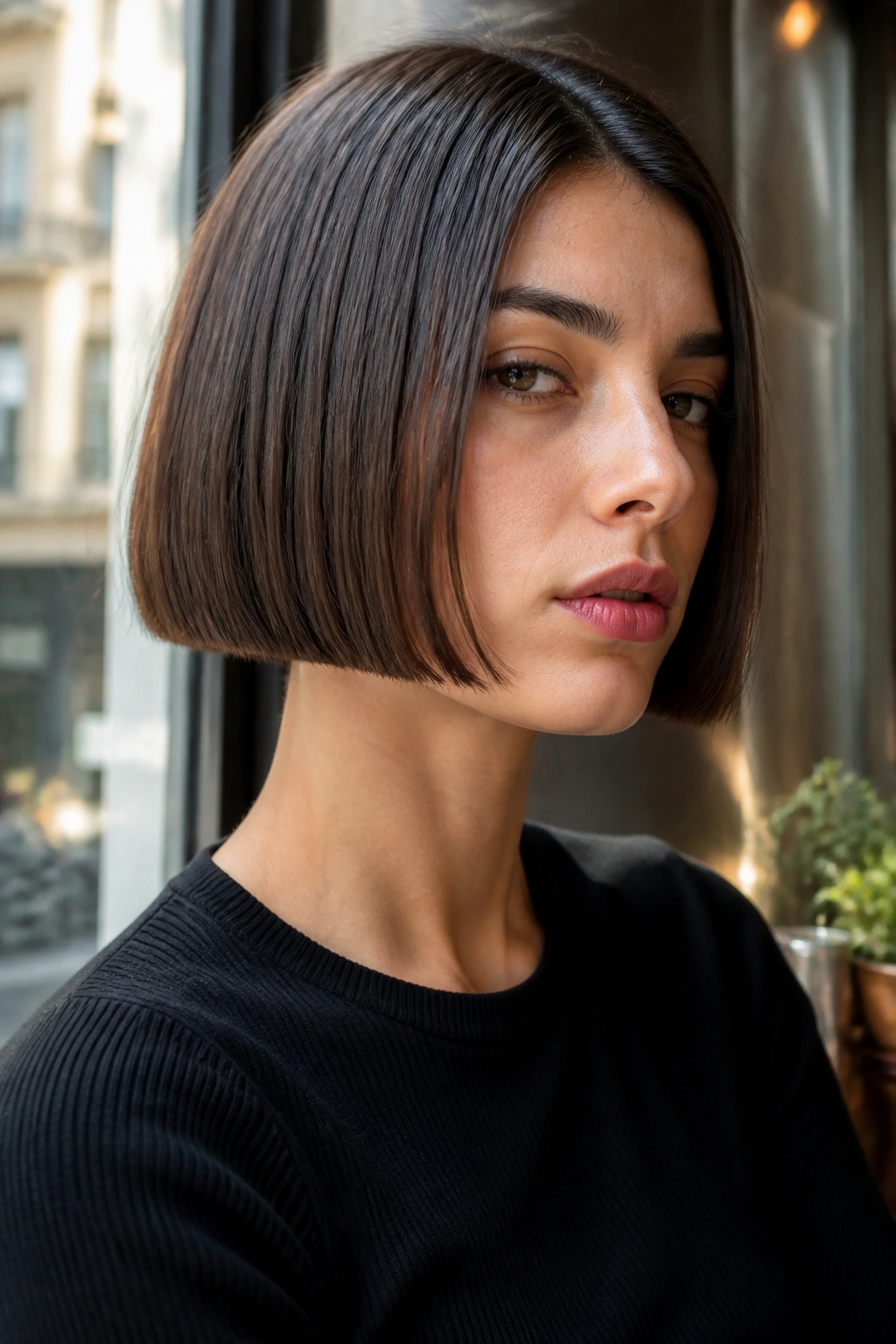
Why choose a box bob for thick hair? Because thick hair can support the straight, graphic outline without collapsing into fine ends. The result feels deliberate, not flimsy.
The danger is puffiness. A box bob needs internal weight removal so the line sits flat enough to look sharp. If the hair at the bottom is left too dense, the ends flare out and the whole thing gets wide. That is why the interior should be worked carefully, while the perimeter stays blunt.
How to keep it from ballooning
- Dry the hair with tension using a paddle brush.
- Keep the part clean and even.
- Use a smoothing cream before heat styling.
- Ask for minimal texturizing at the outline.
If you like a bold shape with a crisp edge, this one delivers. If you hate maintaining a straight line, skip it.
16. Side-Parted Crop With a Long Fringe
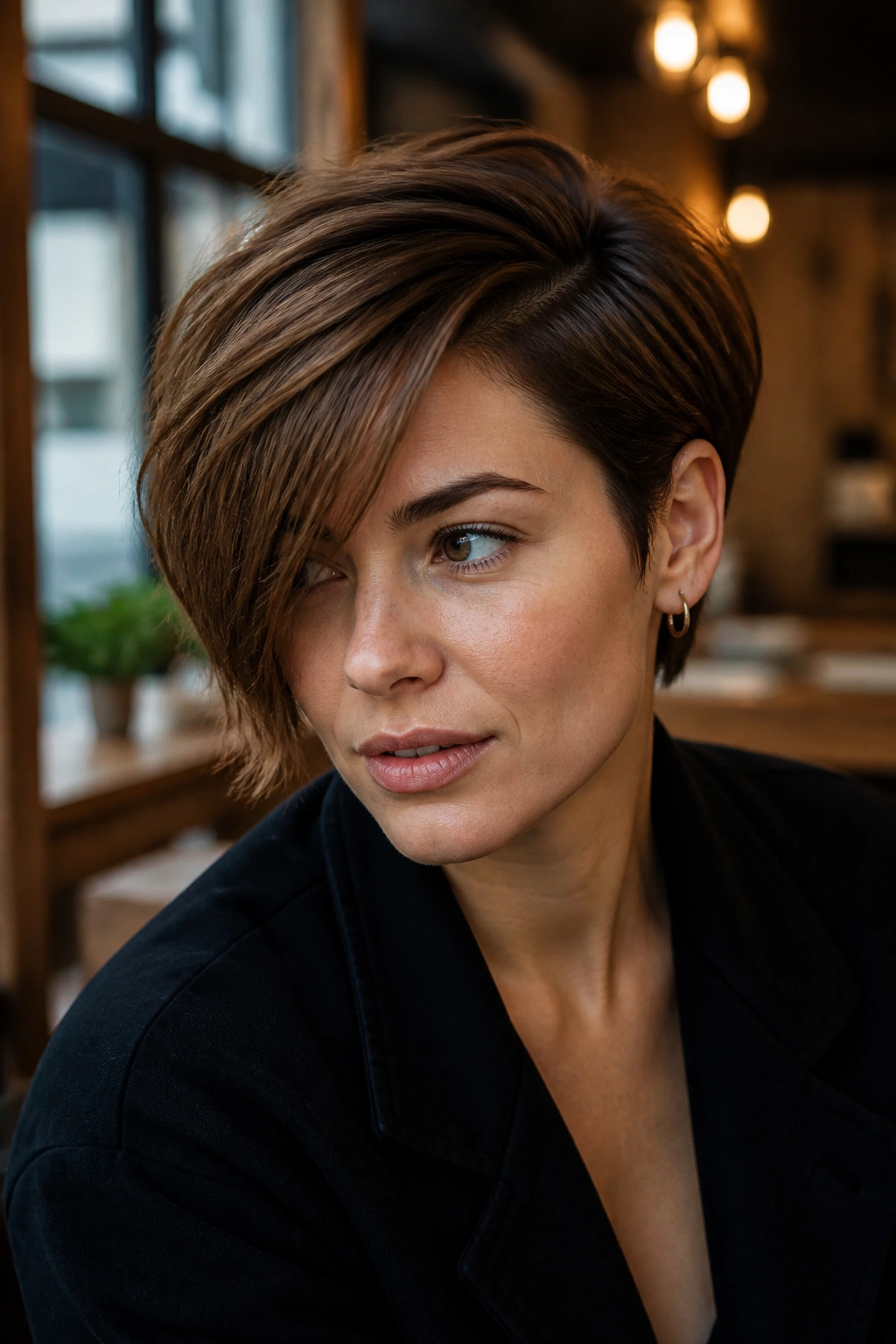
A side-parted crop with a long fringe is a smart fix for thick hair that wants to fall forward in one heavy sheet. The longer fringe breaks that sheet up and gives the eye somewhere to go.
It also softens strong foreheads and broad cheeks. The side part creates a little asymmetry, which keeps the cut from feeling severe. Thick hair helps here because the fringe has enough body to stay where it’s placed instead of splitting apart after ten minutes.
I like this cut on people who want short hair but still want some face framing. It can look sleek with a brush-dried finish, or a bit undone with air drying and a touch of cream. Either way, the front does the talking.
17. Soft Mullet
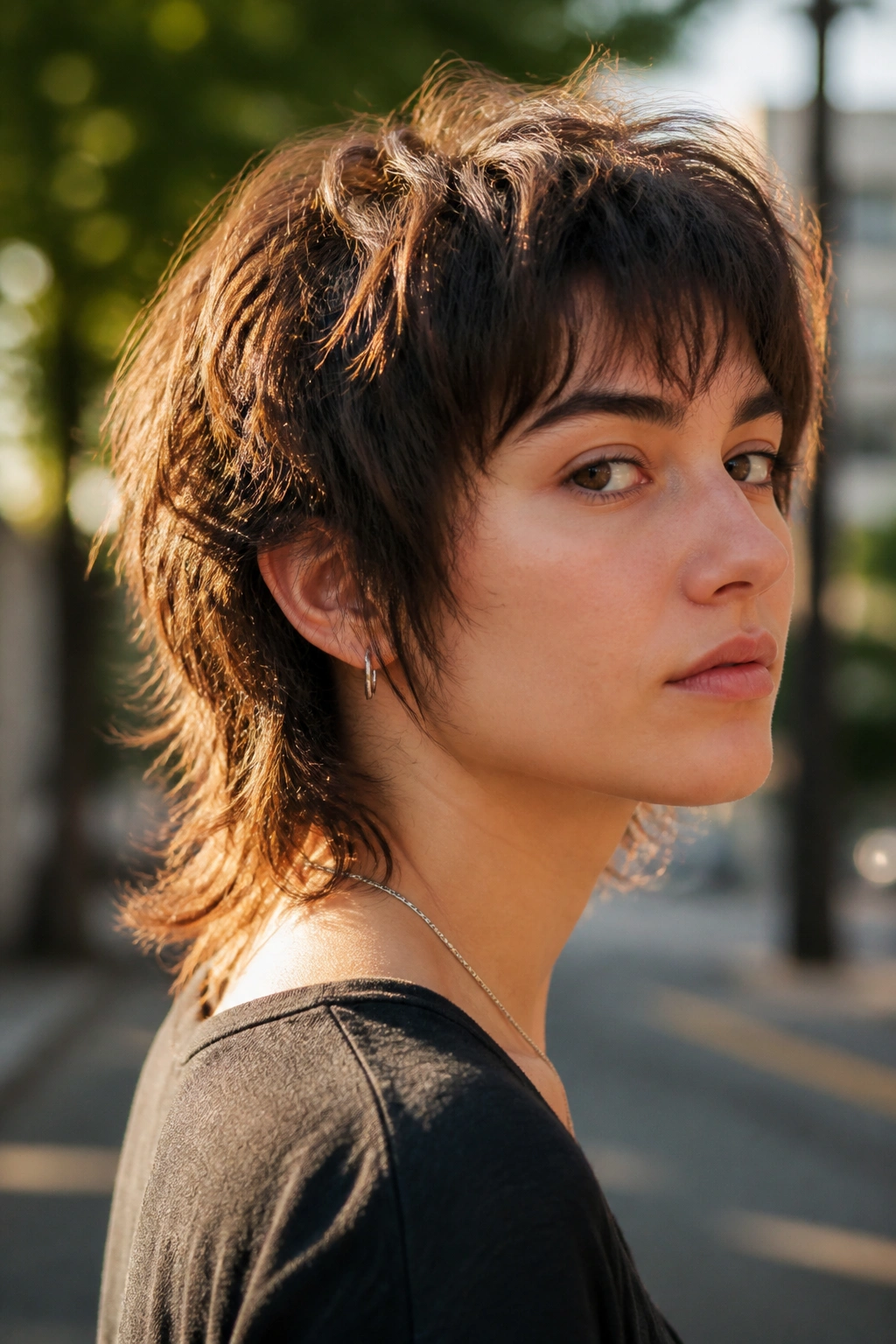
A soft mullet sounds braver than it is. The shape keeps length at the nape, shortens the crown, and leaves soft framing around the face, which gives thick hair a lot of movement without the hard edges of a more dramatic cut.
The reason it works is balance. Thick hair can carry the contrast between short and long sections better than finer hair can. The cut looks messy only when the layers are too blunt or too short at the wrong point. Keep the transitions smooth and the result feels modern instead of costume-like.
This is a good choice if you like hair with personality and you do not mind a style that gets noticed. It grows out in a workable way too, which matters. Hair that grows fast needs a cut with a little flexibility.
18. Razor Cut Bob
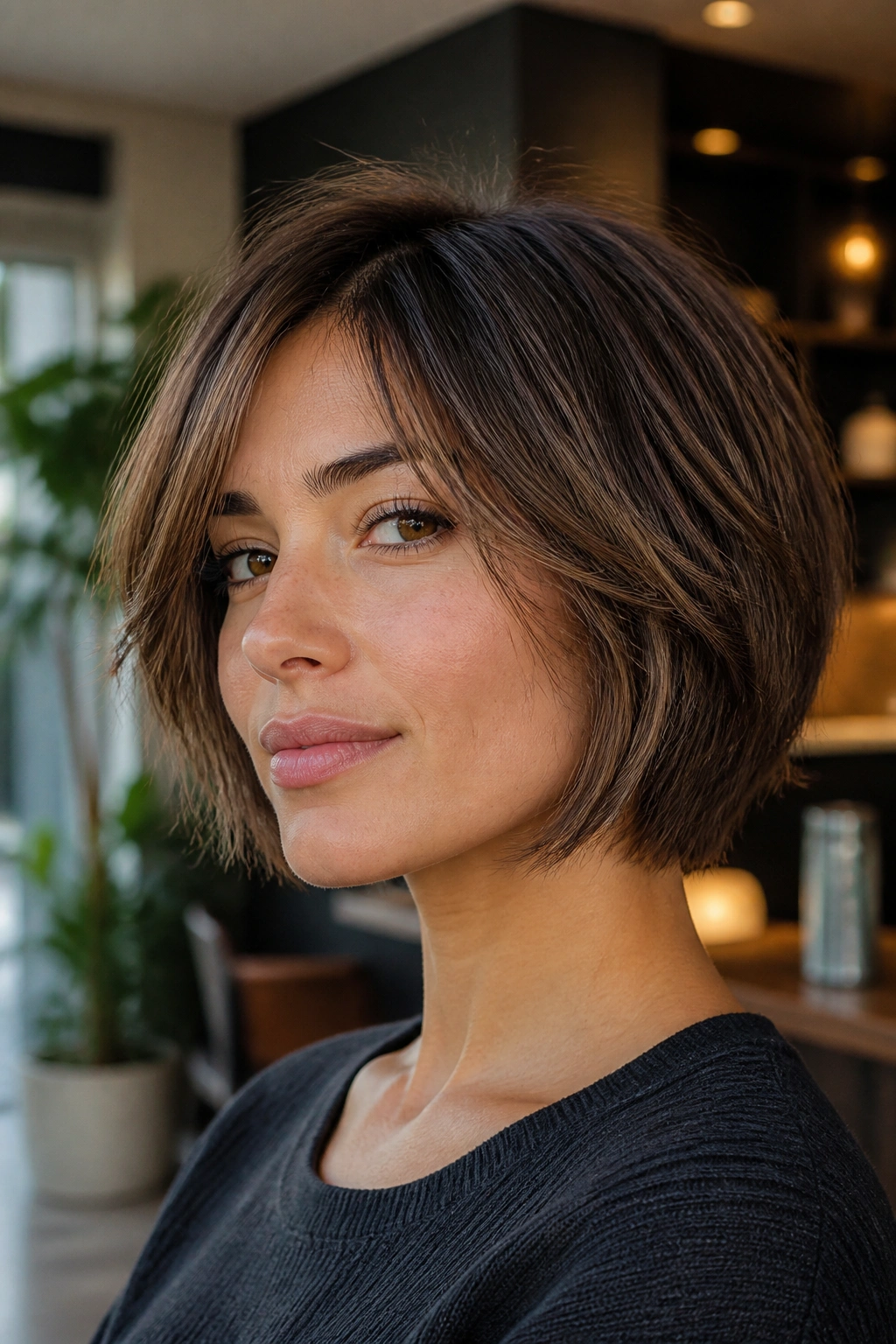
A razor cut bob can be lovely on thick hair, but only in the right hands. The razor softens edges and creates separation, which is useful when the hair feels too solid or too heavy for a scissors-only cut.
The downside is also obvious: if the hair is already dry, frizzy, or prone to splitting, a razor can make the ends look shredded. I would reserve this cut for hair that has some shine and some bend. On the right head, it creates a piecey finish that moves around the jaw instead of sitting like a brick.
Best use case
It shines when you want a bob that feels lighter and a little more lived-in. It is less about polish, more about texture.
19. Ear-Length Crop
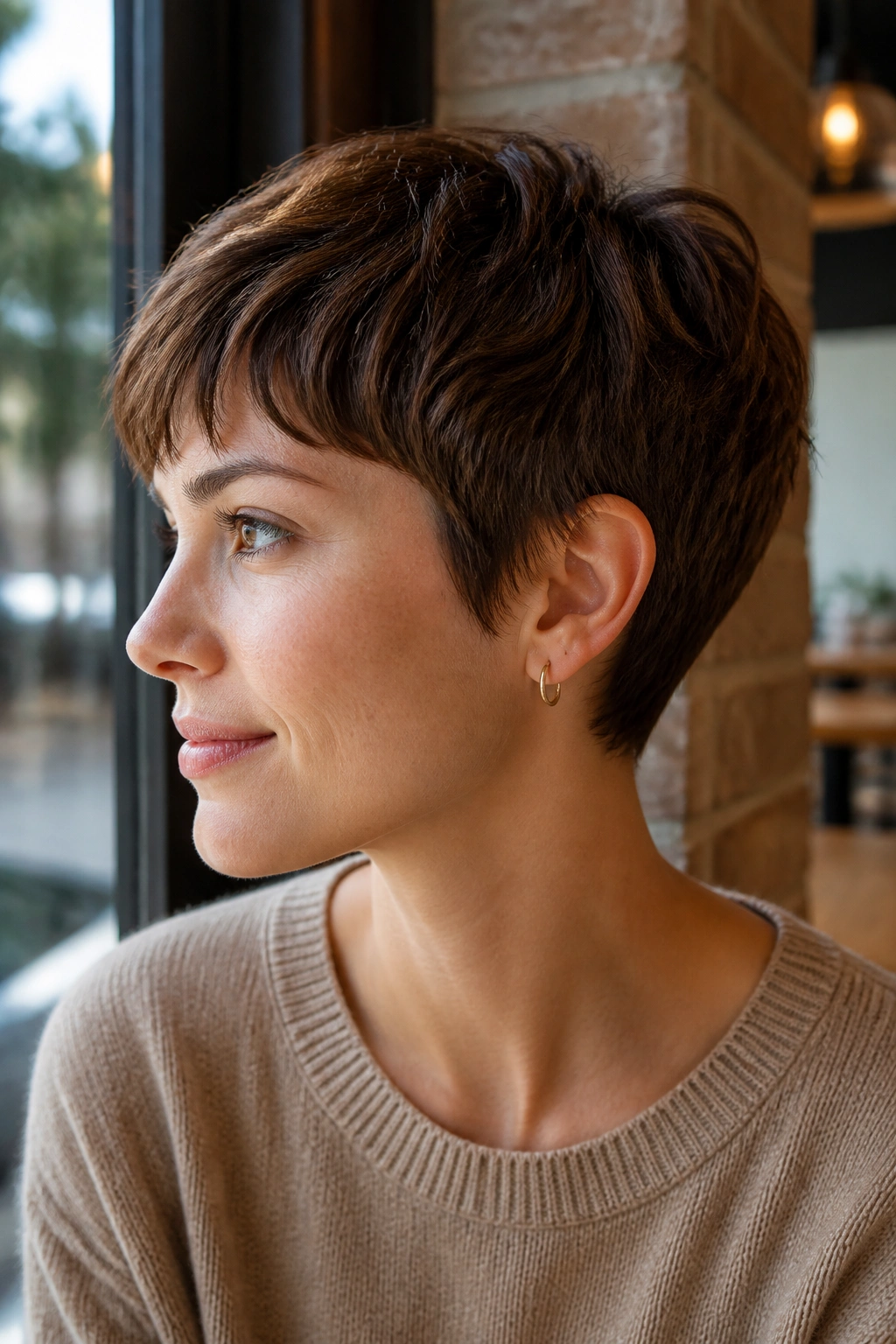
An ear-length crop is tiny, bold, and unfairly useful for thick hair. With the right taper at the nape, it can take a huge amount of weight out of the back and make the whole head feel lighter in a matter of seconds.
The short length around the ears also shows off earrings, glasses, and necklines in a way longer hair cannot. That sounds cosmetic, but it changes how the cut feels on your face. Thick hair at this length needs a clean outline or it can swell outward, so keep the side shape neat and the top soft.
What makes it work
- Tight nape taper.
- Slight texture through the top.
- Soft sideburns, not hard blocks.
- A trim schedule of about 4 weeks.
This is not a safe cut. That is exactly why some people love it.
20. Piecey Pixie Bob
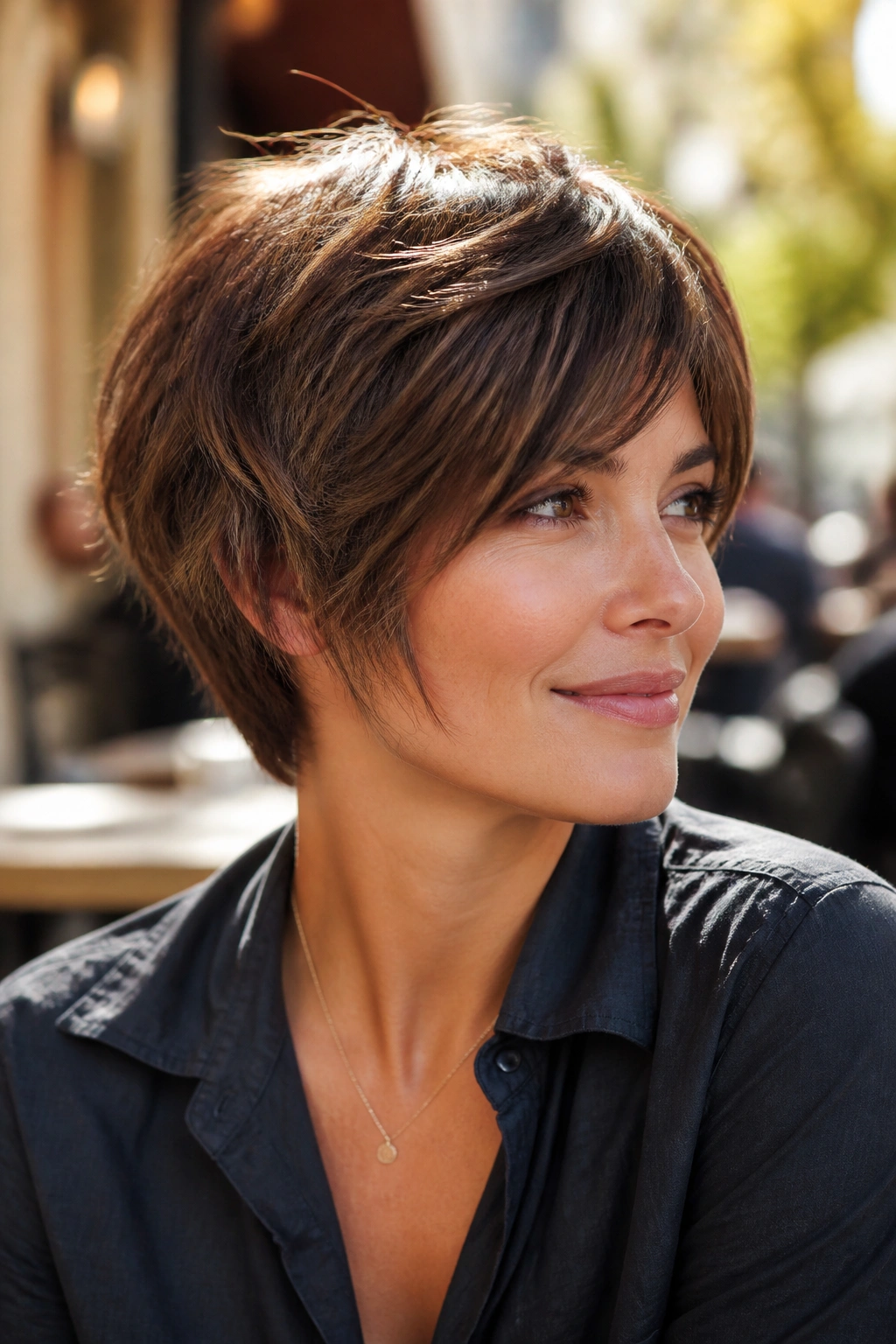
A piecey pixie bob gives you the shortness of a pixie and the face-framing of a bob, which is a useful combination when thick hair gets too big at one length. The cut depends on separation, not bulk.
That means the stylist should build in choppy movement without grinding the ends down to nothing. You want pieces, not fuzz. The front can sweep to the side or tuck behind the ear, while the back stays shorter and lighter. It’s a tidy shape with some energy.
This cut works well if you want a style that can look polished at the office and a little undone on the weekend. It also plays nicely with texture paste, which you can scrunch through the ends for more definition.
21. Asymmetrical Bob
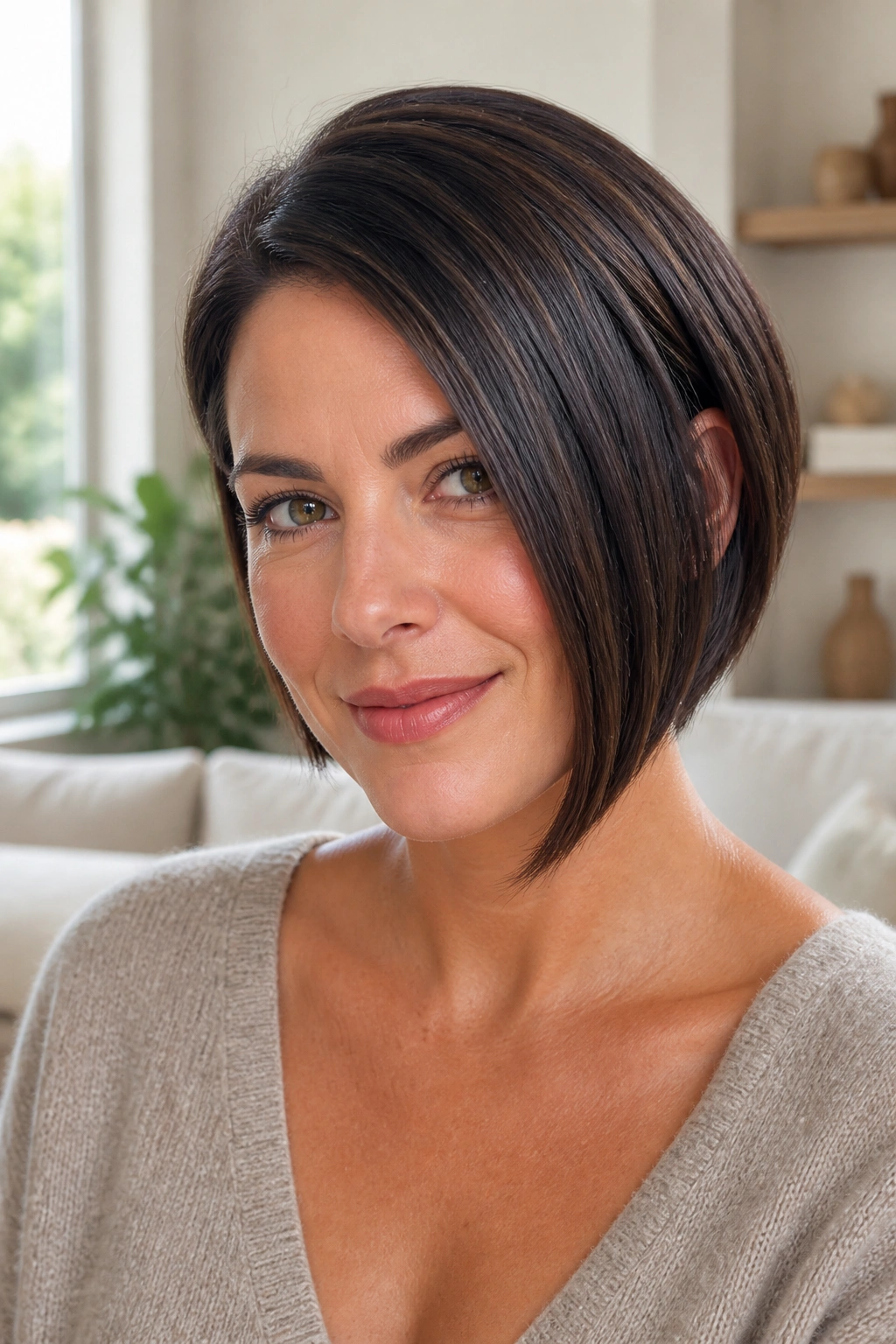
Does an asymmetrical bob suit thick hair? Yes, because the density gives the unequal lengths enough weight to hold a clean line. One side sits a little longer, the other a little shorter, and the result feels sharp without needing wild styling.
The trick is subtlety. A difference of half an inch to 2 inches is usually enough. Push the asymmetry too far and the cut starts fighting the face instead of framing it. Keep the ends smooth and the perimeter polished so the shape reads as deliberate.
I like this cut on people who want something modern but not gimmicky. It works best on straight or lightly wavy hair, since the line matters. If the hair frizzes, the asymmetry gets lost.
22. Neck-Length Flip Bob
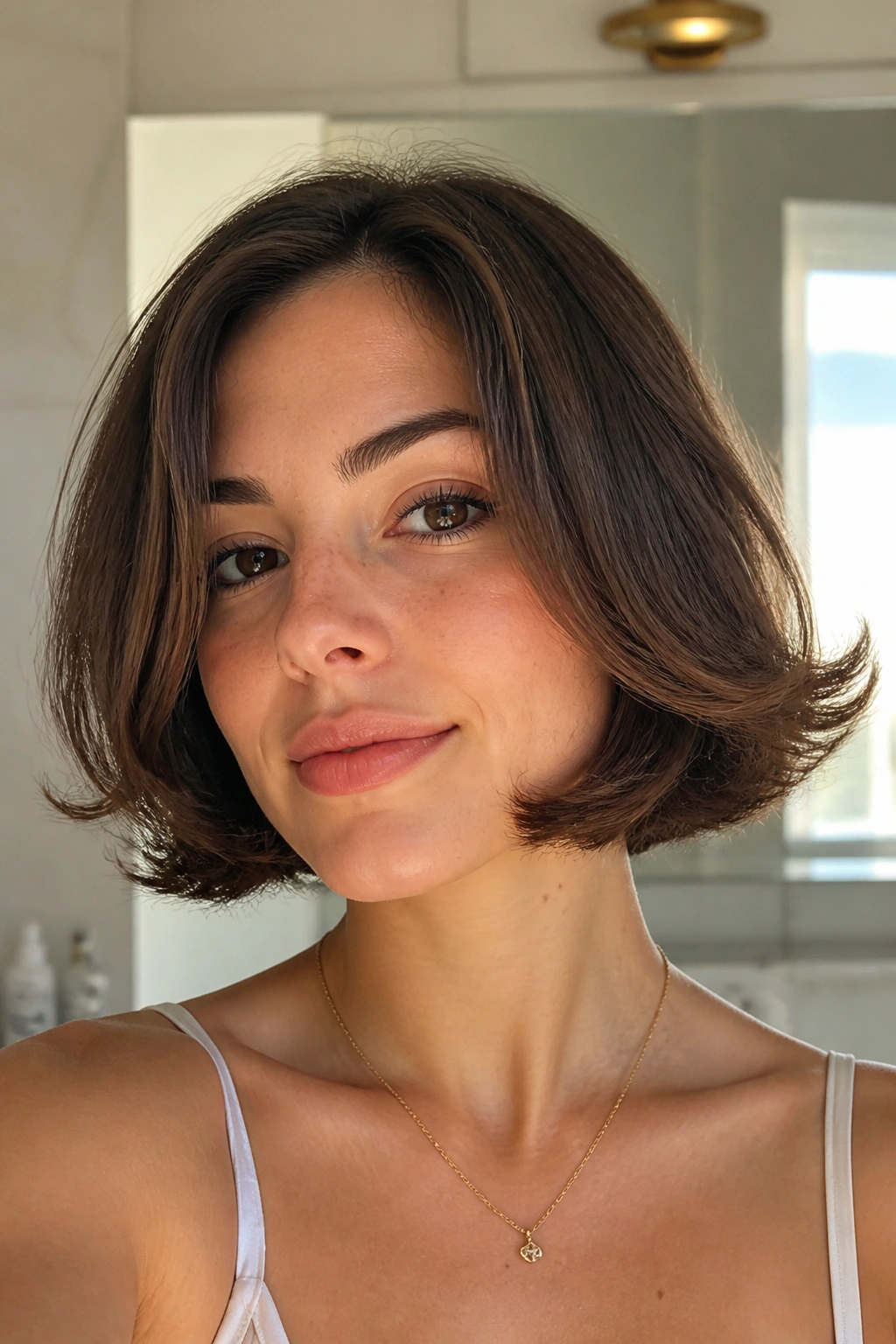
A neck-length flip bob gives thick hair room to move without asking it to lie flat all day. The ends can flick inward or outward depending on how you dry them, which is part of the appeal.
This cut sits in a sweet spot: short enough to free the neck, long enough to use a brush or roller if you want bounce. The key is a clean edge at the bottom, because uneven ends make the flip look accidental instead of stylish. Thick hair has enough body to hold the shape once it’s set.
Styling notes
- Use a round brush for inward bend.
- Use a flat brush for a straighter, flipped-out finish.
- Keep heat moderate so the ends do not puff.
- A light spray on the ends helps the flip last.
It is a cheerful cut, honestly. Sometimes hair should move a little.
23. Tousled Crop With Micro Bangs

Micro bangs are a statement, full stop. On thick hair, they work because the fringe has enough density to stay visible and sharp instead of splitting into wisps.
The rest of the crop should stay soft and a little tousled so the bangs feel like part of the cut, not a separate decision. I would not pair micro bangs with a heavy, square shape. That turns the whole style too hard around the face. Keep the sides slightly chipped and the crown textured.
This cut suits people who do not mind trimming the fringe often. Bangs that short show growth fast. If you hate forehead maintenance, skip it. If you like a cut that feels a bit graphic and a bit playful, this one has real personality.
24. Curly Short Shag
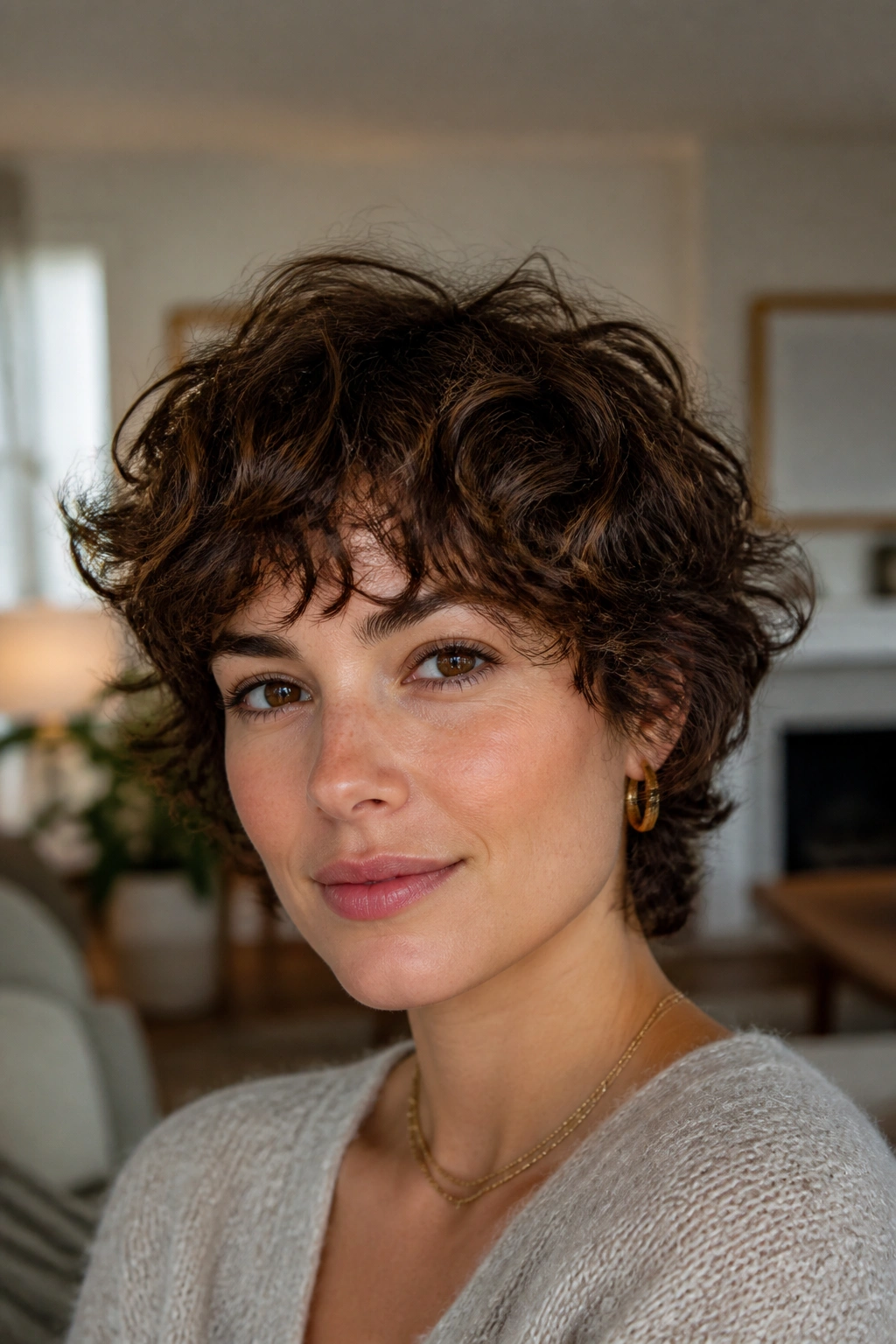
A curly short shag solves the triangle problem that thick curls can create at shorter lengths. Instead of letting the hair expand outward at the bottom, the layers let the curl sit where it wants and fall in smaller, softer stacks.
This is one of the rare short haircuts for thick hair that gets better when you stop trying to control every curl. The cut needs shape, but it also needs room. Drying curly hair with a diffuser at low heat and a curl cream or gel keeps the layers defined without making them stiff.
Why it works
The curls do not fight the cut; they become the cut. That sounds dramatic, but it is true.
If your curl pattern is tight and springy, ask for shaping that respects the curl groupings. A good shag should remove weight without exploding the outline.
25. Tapered Short Cut for Coily Thick Hair
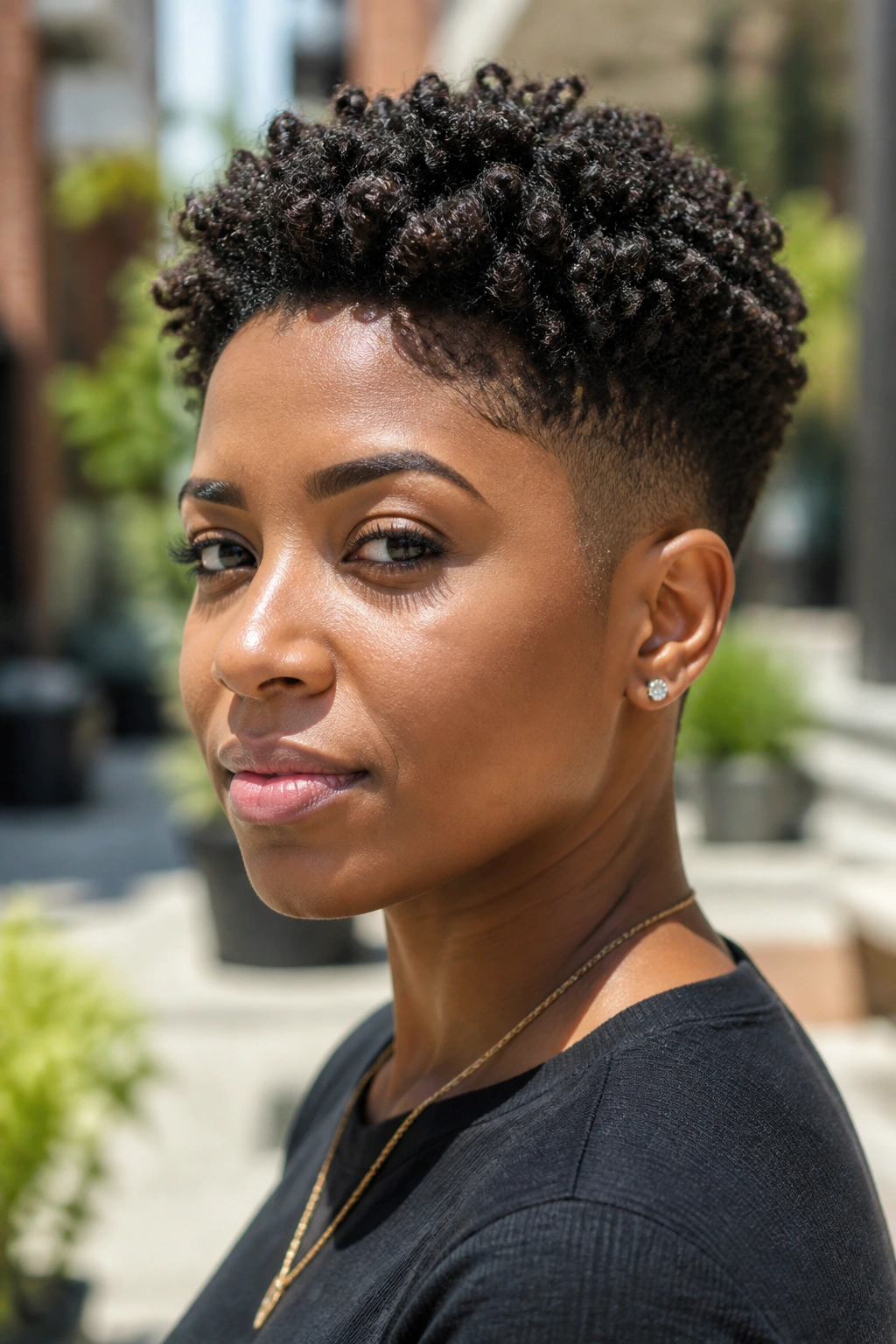
A tapered short cut for coily thick hair gives the hair a clear silhouette, which is often the missing piece when the density is high and the shape keeps rounding out in the wrong places. The taper at the sides and nape keeps the outline neat, while the top stays full enough to show the coil pattern.
What I like here is the contrast. The cut can look soft and sculpted at the same time, which is harder to pull off than it sounds. If you keep the top too short, you lose that crown shape. If you leave the sides too full, the whole head grows wide.
What to ask for
- Preserve length on top.
- Taper the sides and nape gradually.
- Keep the coil pattern intact.
- Avoid over-thinning the front.
This cut works best when the shape is intentional from every angle, not only straight on.
Final Thoughts
Thick hair does not need to be tamed into silence. It needs a shape that respects its weight, its bend, and the way it sits after lunch, after a commute, after a windy day outside.
The strongest short haircuts for thick hair are the ones that control bulk without wrecking the body of the hair. That means cleaner napes, smarter layering, and a blunt edge when you want one. It also means knowing when to stop cutting. Too much thinning is a lazy fix, and thick hair punishes lazy fixes.
If you’re heading to a salon, bring a photo, then tell the stylist where your hair bothers you most: the crown, the sides, the neck, or the fringe. That answer matters more than face-shape theory ever will.
