



A round face and long brown hair can be a strong match—if the cut keeps the eye moving up and down instead of stopping at the widest part of the cheeks. Brown hair helps here because it shows shape in a calmer way than very high-contrast color, so layers, bends, and part lines read clearly without shouting for attention.
The cuts that usually work best create length below the chin, build softness around the jaw, and avoid a heavy wall right at cheek level. That does not mean every style has to look the same. Far from it. A deep side part, a curtain fringe, a tapered hem, or a long shag can all flatter a round face if the shape is placed in the right spot.
The trick is keeping the hair from feeling boxy. Long brown haircuts for round faces tend to look best when the front pieces do some lifting, the ends stay light, and the cut has enough movement to keep the outline narrow. Some are polished, some are messy, and a few look even better after they soften up a bit.
1. Long Layers That Start Below the Chin
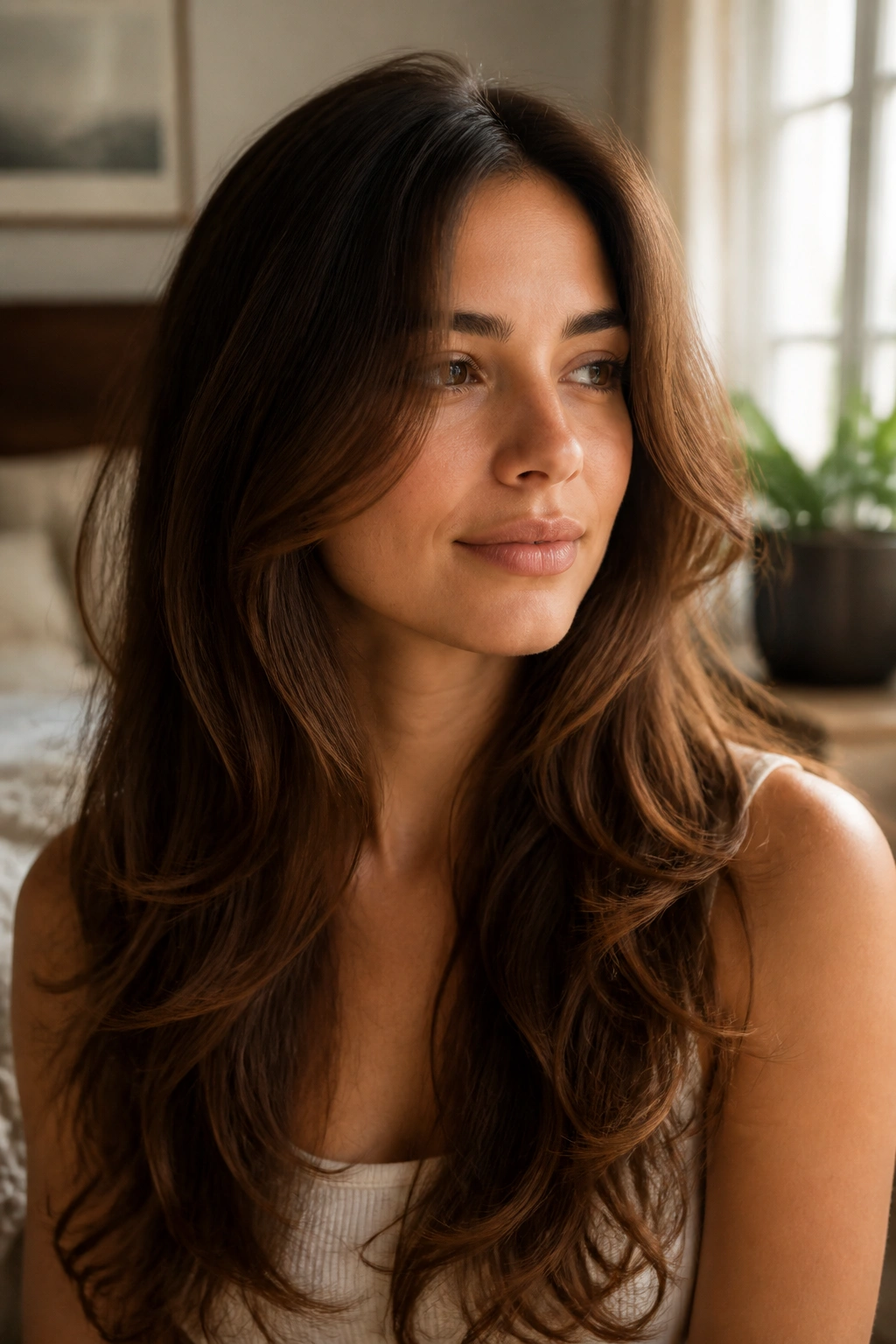
Long layers that begin below the chin are one of the easiest wins for a round face. They keep the volume away from the cheeks, which is the whole point, and they let the hair fall in a longer line instead of spreading out sideways. On brown hair, that shape reads cleanly because the layers catch light at different points, even when the color itself is understated.
I like this cut on medium-thick hair most of all. It gives movement without making the ends look thin. If your hair is straight, the shape feels sleek; if it waves a little, the cut gets a soft bend that keeps the face from looking wider.
- Ask for the shortest face-framing piece to land at the bottom of the chin or lower.
- Keep the ends blunt enough to hold weight.
- Add a loose wave with a 1.25-inch iron if the hair hangs too flat.
Skip cheekbone-level layers. They can puff out right where a round face already has width.
2. Curtain Bangs With Sleek Lengths
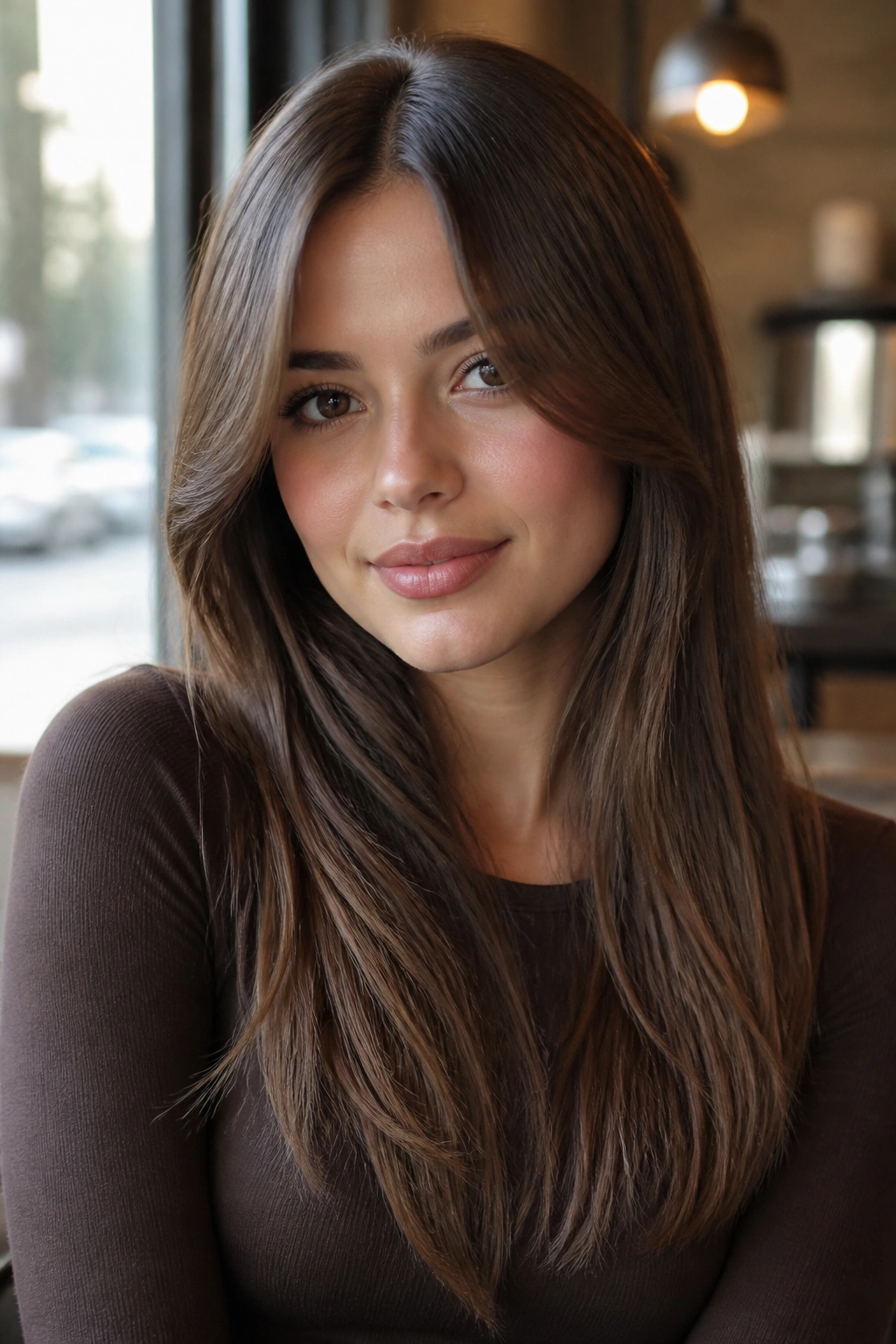
Curtain bangs can be magic on round faces when they open early and sweep away from the center of the face. The mistake is cutting them too short or too full. That makes the forehead feel boxed in. Better to keep them soft, parted, and just long enough to skim the cheekbone.
Why They Work on Round Faces
The angle matters more than the fringe itself. A curtain bang creates two diagonal lines that break up the circle of the face, and the rest of the hair stays long enough to pull the eye downward. On brown hair, especially espresso or chestnut shades, that shape feels crisp without needing a loud color contrast.
How to Wear Them
Blow-dry the fringe with a round brush so it bends away from the face, then smooth the lengths with a paddle brush or a wide iron bend. Keep the front pieces a little longer than you think you need. They settle after the first shampoo, and that extra length keeps the shape from jumping up too high.
If you want one cut that feels current without trying too hard, this is it. It has range. It also grows out better than most fringe cuts, which matters once you get tired of trimming bangs every few weeks.
3. A Deep Side Part With Sweeping Face Frame
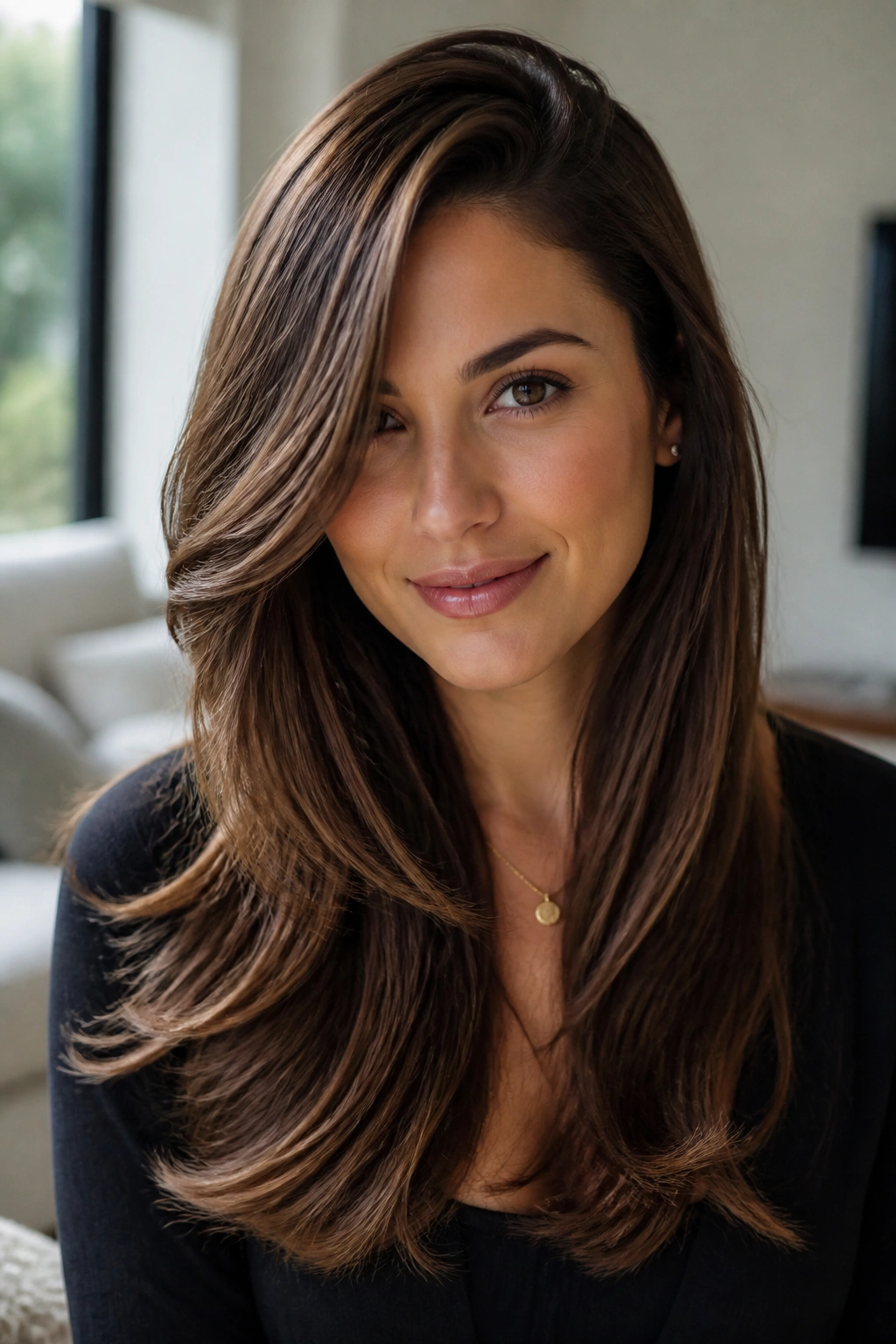
A deep side part changes the whole mood of long brown hair. It breaks the symmetry that can make a round face feel wider, and it gives the hair a clear direction. One side can tuck behind the ear; the other can sweep across the cheek and fall lower, which creates a stronger vertical line.
The best version is not stiff. A little bend through the front is better than a perfectly flat curtain of hair. I’d ask for a long face frame that starts below the cheekbone, then let the parting do the rest. Brown hair with this shape looks especially good when the ends are beveled just enough to move.
This is a smart choice if you wear glasses, by the way. The side part keeps the hair from sitting squarely over the frames, so the whole look feels lighter around the face. It is also one of the easiest long styles to switch up. Move the part an inch, and the cut behaves differently.
4. The U-Shaped Hem With Soft Ends
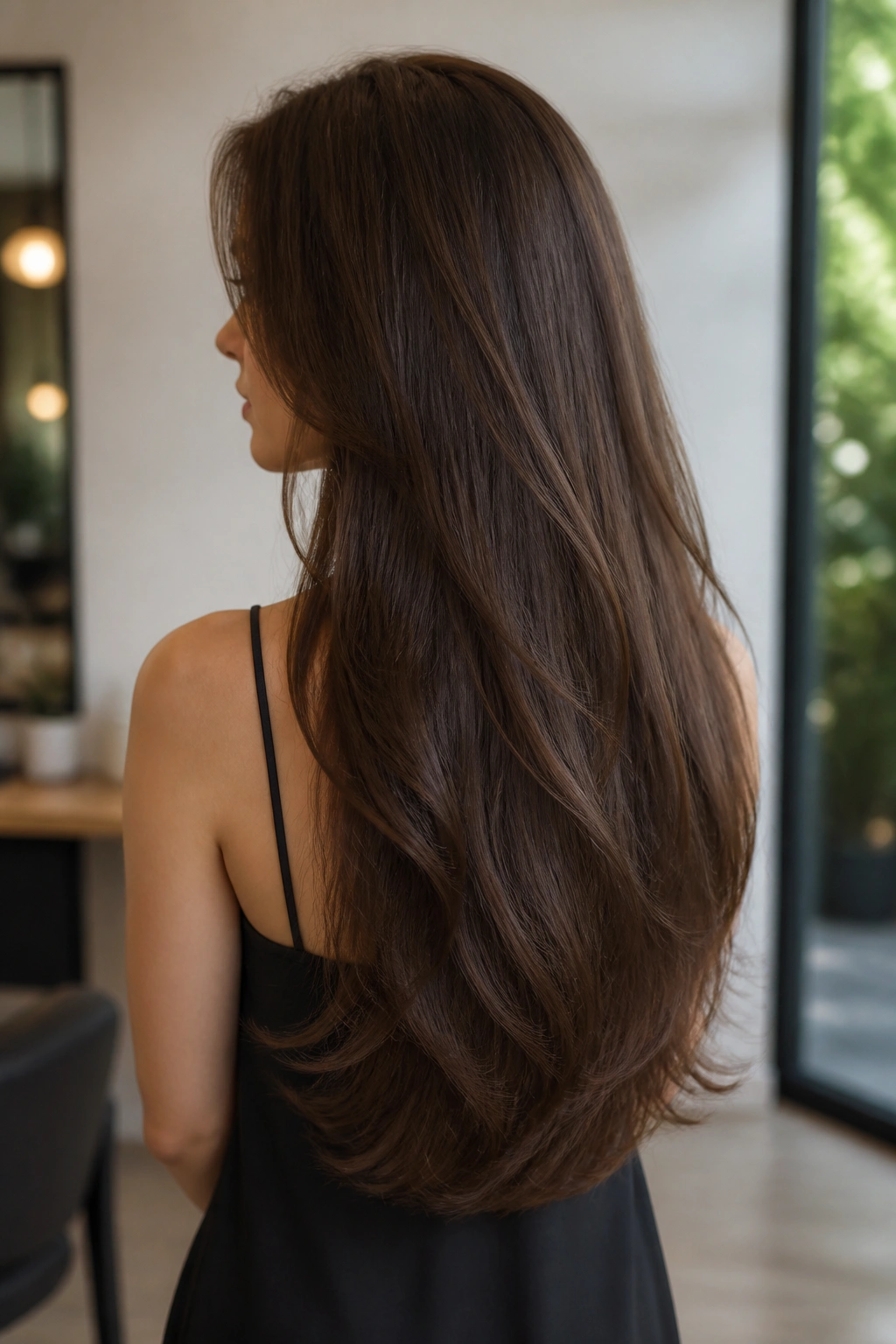
Why does a U-shaped hem flatter a round face so well? Because the line at the back stays full, while the sides taper just enough to avoid a wide silhouette. The U shape is gentler than a blunt straight line, and that softness helps the face feel longer.
Keep the perimeter smooth, then add a small amount of internal layering so the hair does not hang like a curtain. Brown hair in a deep cocoa or hazelnut tone makes this shape look rich, especially when the ends are neat and glossy. There is no need for dramatic layers here.
A U-shaped cut also plays nicely with waves. The curve at the back makes the hair look expensive in a quiet way, and the front can be left a little longer to slim the cheeks. If your hair is very fine, keep the U subtle. Too much curve can make the ends look wispy.
This is a low-drama cut. That is part of the appeal.
5. V-Cut Layers That Narrow the Outline
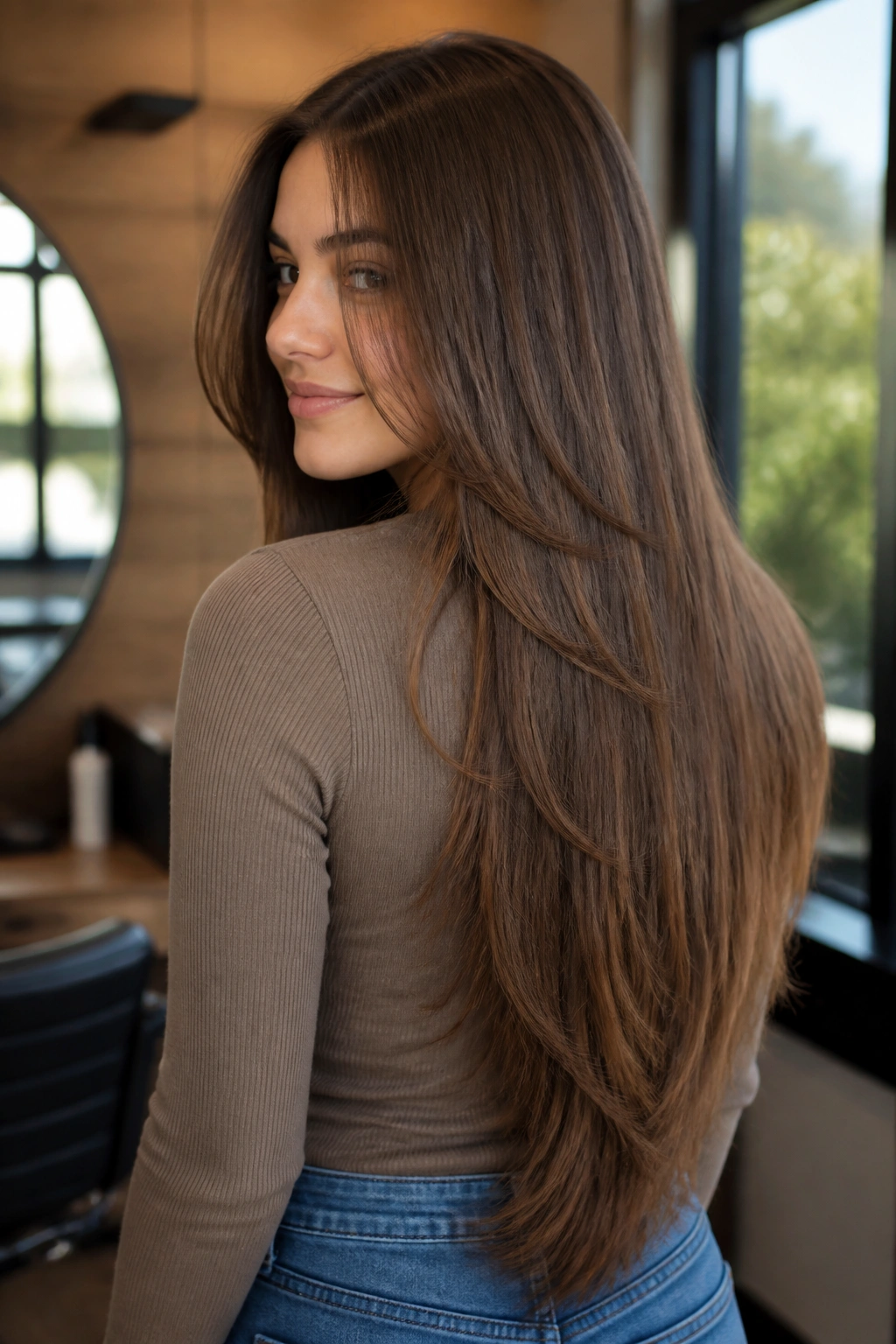
A V-cut gives you a sharper line through the back, and that can work beautifully on a round face when you want more length and less width. The longest point sits in the center, while the sides angle in. It makes the whole silhouette feel slimmer from the back, which is not a small thing if your hair is thick.
The front should still do some framing. Otherwise the V can feel too severe. Ask for soft face pieces that start around the lips or lower, then keep the back longer and taper the layers gently. On long brown hair, the shape looks best when there is a little wave in the lower half, because the V is easier to see when the hair moves.
This cut is especially good for people who like wearing their hair down most of the time. It holds shape on a ponytail, too. That sounds minor, but it matters. A cut that falls well both loose and tied back earns its keep fast.
6. The Butterfly Cut on Long Brown Hair
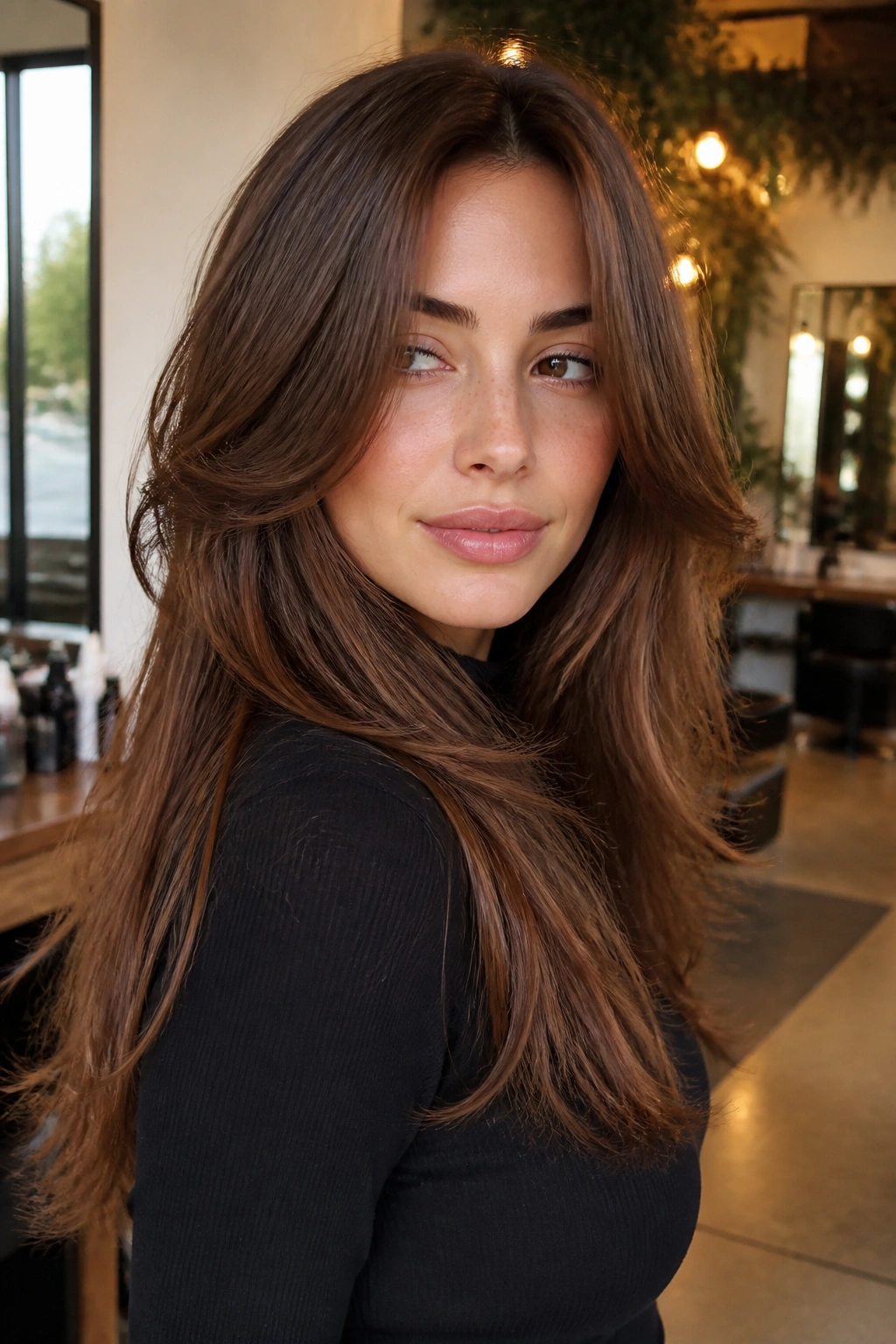
The butterfly cut has become a favorite for a reason: it gives lift without forcing you to lose length. The top layers float around the face and shoulders, while the bottom layer stays long. On a round face, that separation helps a lot, because the volume sits higher and the length still drops below the chin.
What Makes It Flatter
The shorter top layers create movement near the crown, which adds height. Height is your friend here. The longer underlayer keeps the hair from widening out at the cheeks, and the brown color makes the layered shape easy to read even when the styling is soft.
How to Style It
Blow-dry the front with a large round brush or a hot brush, lifting the roots and turning the ends away from the face. Leave the lower section loose and smooth, or add a loose wave through the mid-lengths only. Do not curl every layer the same way. That flattens the effect and makes the haircut look busy instead of clean.
This is one of those cuts that looks more expensive when it has movement. Flat styling works, but bend and lift work better.
7. A Long Shag With Airy Fringe
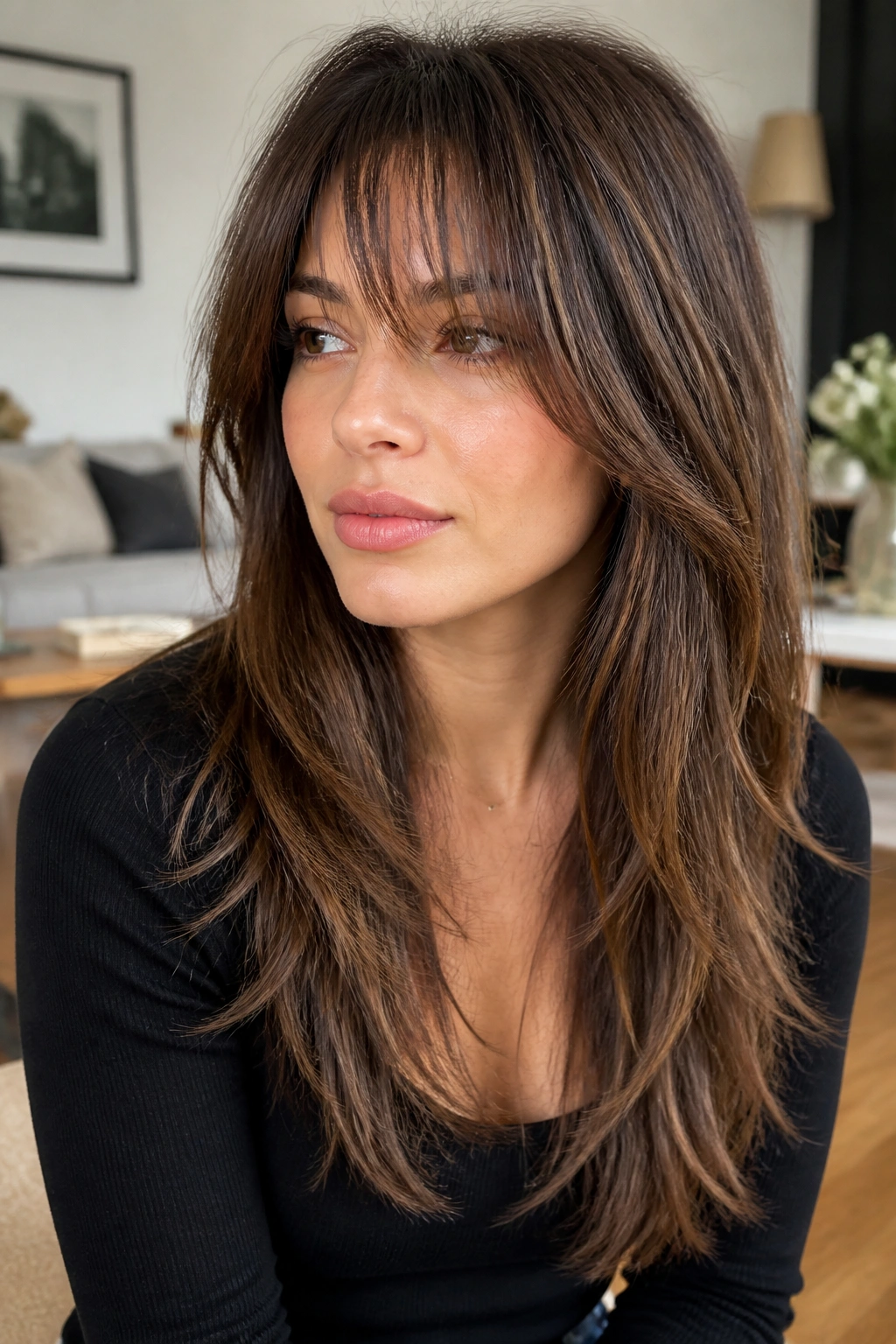
A shag can be a smart cut for a round face when the texture is controlled and the fringe stays light. The wrong shag gets puffy at the sides. The right one looks lived-in, slightly cool, and shaped in a way that pulls the eye downward instead of outward.
The Pieces That Matter
- Keep the fringe airy, not dense.
- Let the shortest layers sit near the cheekbone, then taper them down.
- Leave enough length in the back so the cut still feels long, not chopped.
- Use a small amount of mousse at the roots if your hair collapses by noon.
Brown hair gives a shag nice depth because the layers catch just enough light to show movement. You do not need wild color to make this cut interesting. In fact, a rich mocha or chestnut tone often looks better than something louder.
What to Watch For
A shag needs restraint. Too many short pieces around the face can make a round face feel wider. Keep the texture mostly vertical, and the cut stays flattering instead of messy in the wrong way.
8. Invisible Layers for Thick Brown Hair
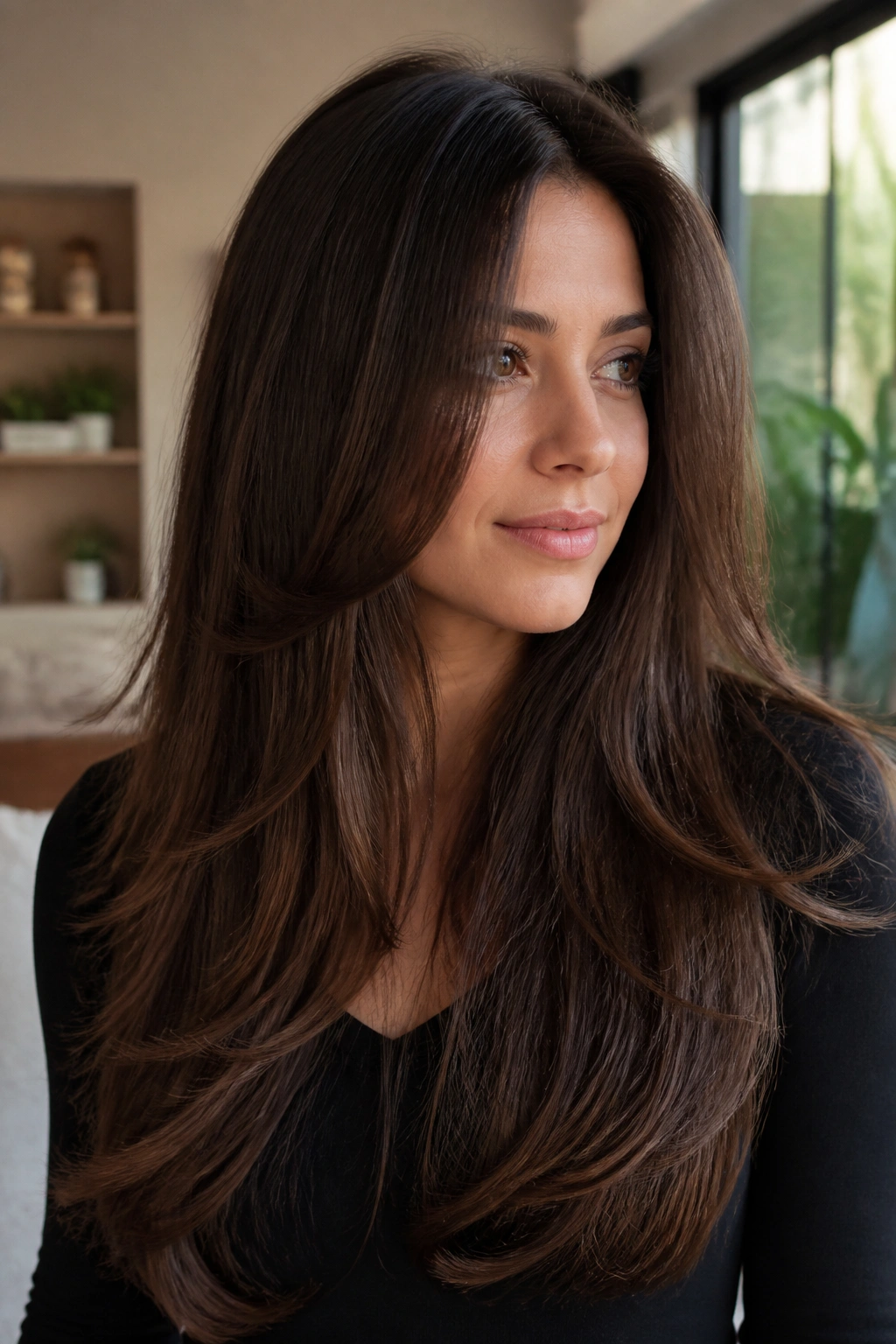
Invisible layers are for people who want movement without seeing obvious steps. They sit inside the haircut, so the perimeter still looks smooth, but the weight is removed where the hair starts to swell out. That matters on round faces because thick hair can add width fast if it is cut in one block.
The cut works especially well on long brown hair that tends to puff at the sides. The outside line stays polished, while the inside layers stop the bulk from taking over. You get shape, but not that chopped-up look some layered cuts can have when they are overdone.
I prefer this on people who wear their hair straight or softly waved. The shape is subtle at first glance, then the movement shows up when you turn your head. That is the point. If you want a haircut that looks clean at the office and relaxed on the weekend, this one does both without fuss.
9. Face-Framing Layers With Loose Waves
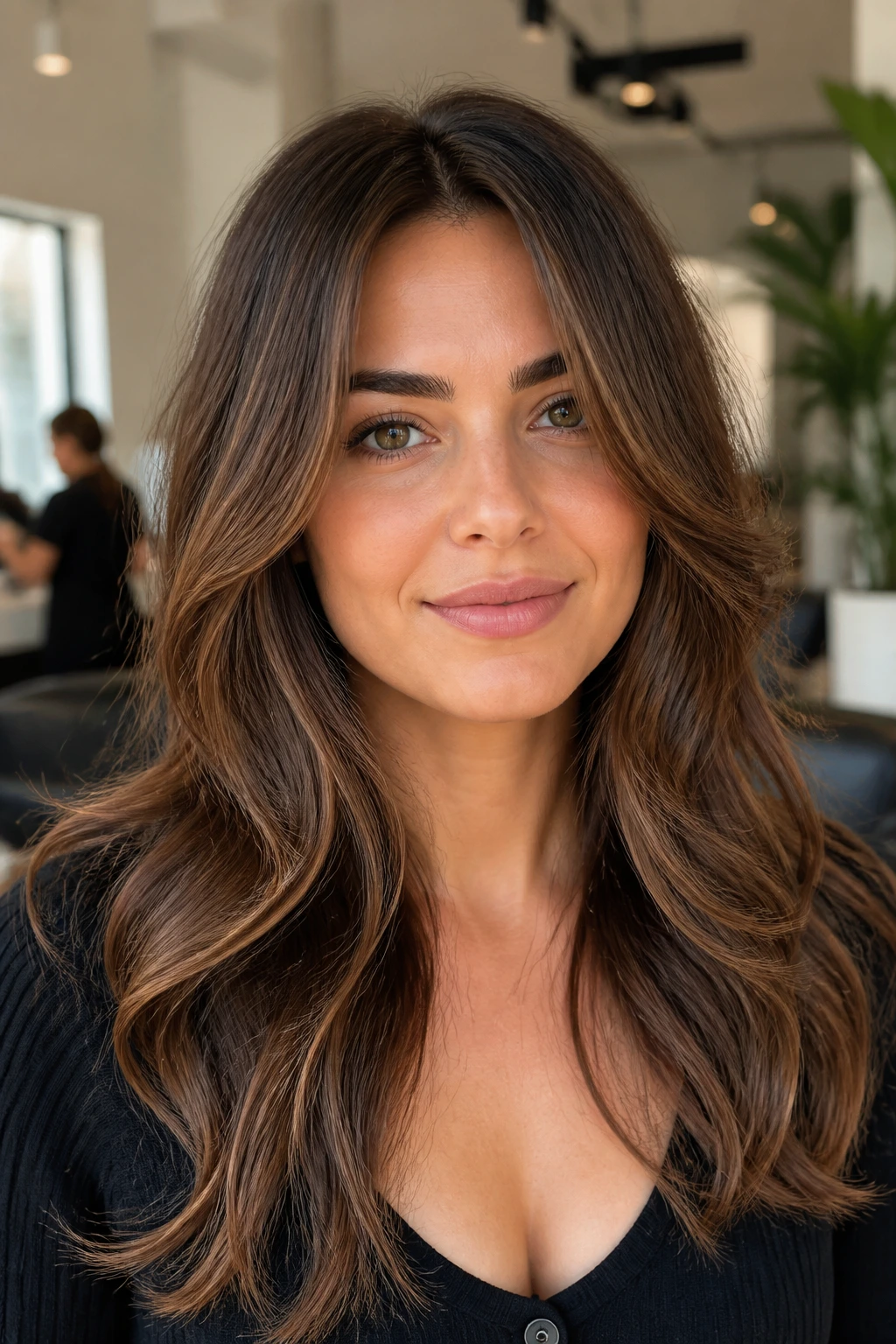
Can a round face wear layers near the front without looking wider? Yes, if the pieces begin low enough and the wave is soft, not puffy. The goal is to create a frame that travels downward, not a halo that sits at cheek level.
Where the Layers Should Start
Ask for the first front layer to begin around the mouth or collarbone, then angle it slightly longer as it moves back. That keeps the front open. A loose wave through the mid-lengths helps the layers blend, especially on brown hair where the shadow and shine make the cut look deeper.
The styling is easy. Use a 1-inch or 1.25-inch iron, leave the ends a little straighter, and brush the curls out with your fingers. That broken-up finish is what keeps the shape from feeling formal. A tight curl pattern can add width. A soft bend lowers it.
I like this cut more than a lot of people expect. It is simple, but it does a quiet amount of work.
10. Bottleneck Bangs With Long Length
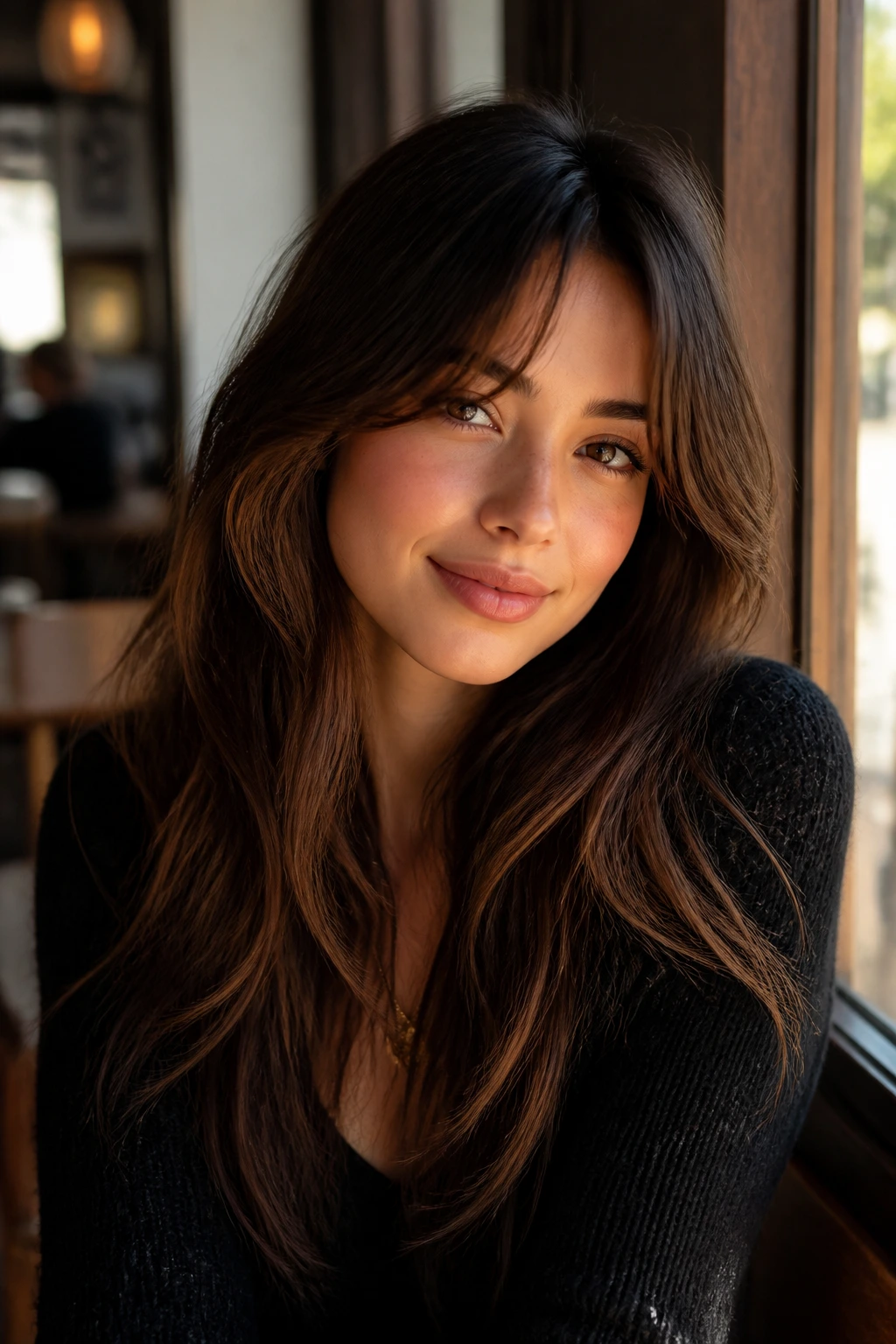
Bottleneck bangs are a smarter fringe than they get credit for. They open in the center like a curtain, but they stay narrower near the forehead, which helps a round face feel a little longer and more sculpted. The rest of the hair should stay long and light through the sides.
Keep the bangs soft around the brow and cheekbone, not blunt. Then let the lengths fall past the shoulders with only enough layering to stop them from looking heavy. On brown hair, especially cooler tones, the contrast between fringe and length looks crisp without feeling severe.
- Trim the bangs every 4 to 6 weeks.
- Blow-dry them side to side, not straight down.
- Ask for the shortest piece to sit between the eyebrow and cheekbone.
This fringe loves movement. If you wear it too flat, it can look dense fast.
11. The Straight Long Cut With Beveled Ends
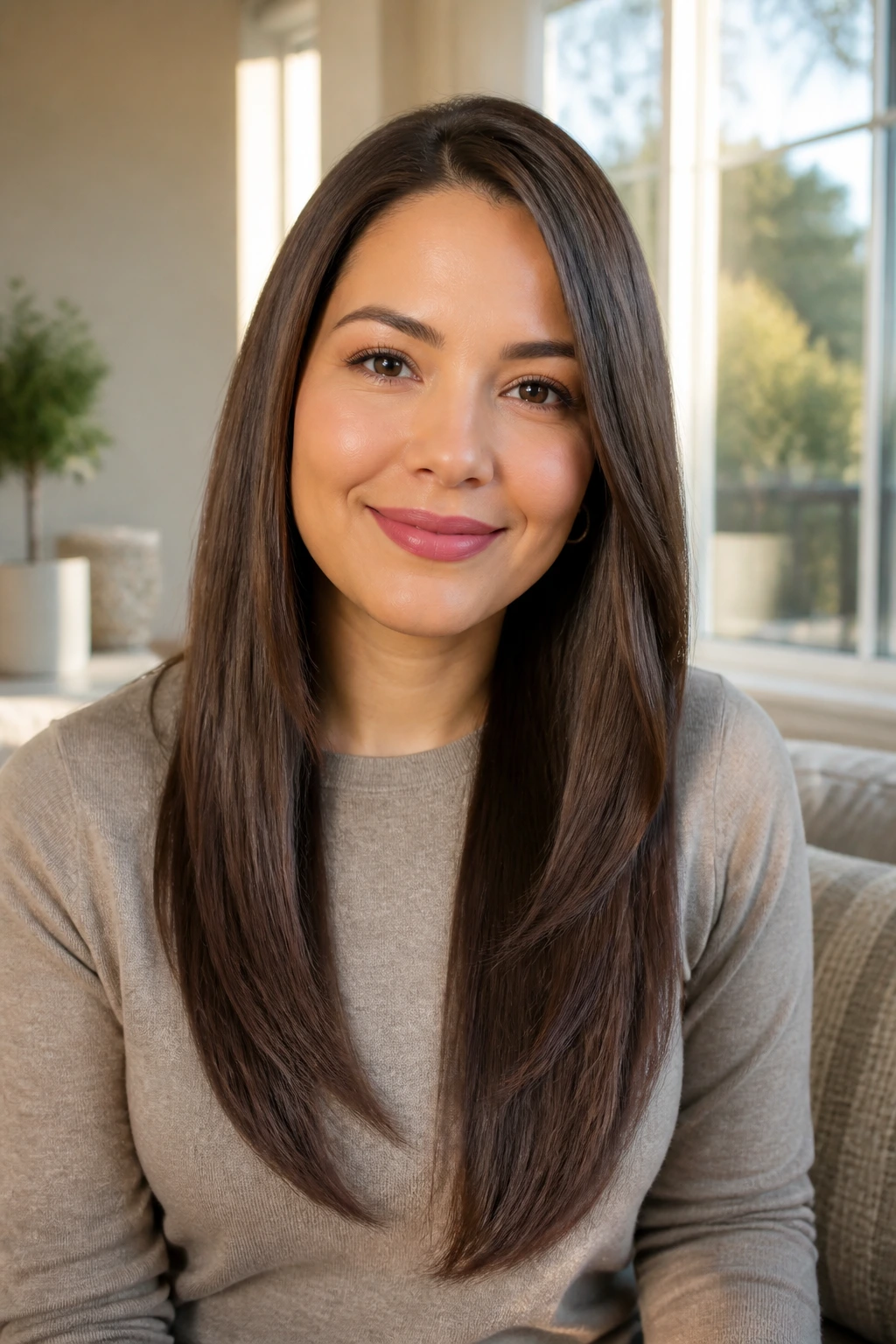
A straight long cut can flatter a round face if the ends are beveled and the part is not dead-center every day. The danger with a single-length cut is obvious: it can widen the look of the jaw and cheeks if the line is too blunt. But when the ends taper softly, the shape stays clean.
Brown hair makes this cut look richer than light hair often does. The straight line shows off gloss, and the beveled finish keeps the bottom from feeling heavy. A flat iron pass with a slight bend at the ends is enough. You do not need a pin-straight board unless that is your thing.
This is a practical cut for people who like low effort mornings. It air-dries into a neat shape, then a quick smoothing pass takes it the rest of the way. If your hair is very fine, keep the bevel subtle so you do not lose thickness at the bottom.
12. Long Waves With Caramel Money Pieces
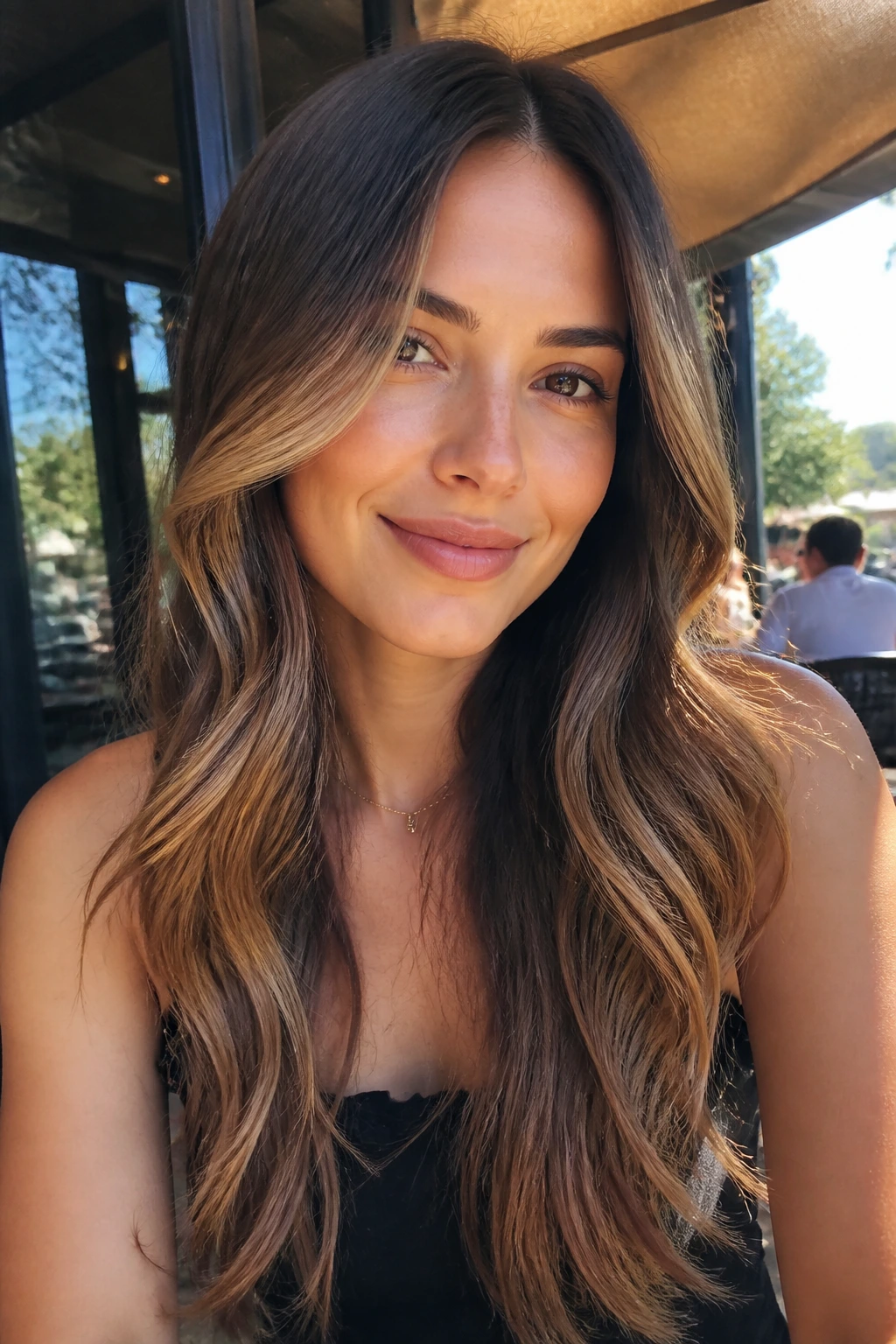
Long waves and caramel money pieces are a strong pairing because the lighter front sections pull attention toward the center of the face, not outward. The brown base keeps the whole thing grounded. You get brightness without turning the haircut into a color stunt.
The money pieces should sit below the cheekbone, ideally around the mouth or collarbone. That placement matters. Too high, and they can make the cheeks look fuller. Too low, and they lose the lifting effect. Brown hair with caramel or chestnut ribbons also shows texture well in loose waves, since the contrast is soft but visible.
This style is a good choice if your hair needs some life but you do not want a full color overhaul. It looks best when the waves are broad, not tight. A broad wave gives the lighter pieces room to fall naturally, which keeps the face shape long and easy on the eye.
13. Side-Swept Bangs With Layered Ends
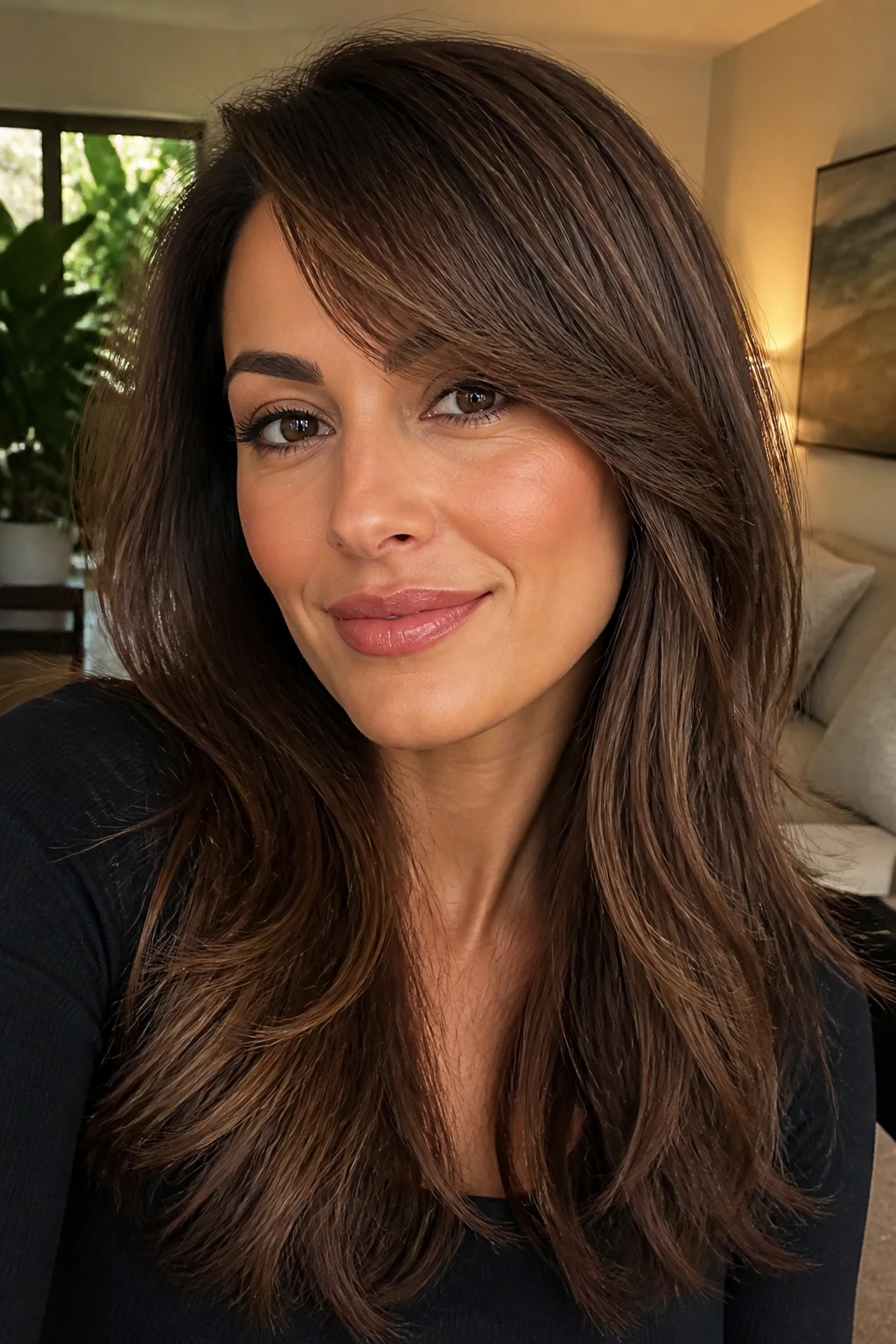
Side-swept bangs are old-school in the best way. They still work because they send the eye diagonally across the face, and diagonal lines are useful on round shapes. The bangs should be long enough to blend into the rest of the cut, not cut off sharply in the middle of the forehead.
Who This Suits
This is a nice pick for someone who wants fringe but does not want the upkeep of a full bang. The sweep softens the forehead, narrows the upper face, and pairs well with long brown layers that hit below the shoulders. It is also forgiving if your hair has a cowlick.
Styling Note
Dry the bangs in the direction you want them to fall, using a small round brush or your fingers and a nozzle attachment. Then let the ends of the haircut stay loose. A touch of bend at the bottom keeps the whole style from looking too dated.
I would choose this over a blunt fringe on a round face almost every time. It is easier to live with.
14. The Soft Wolf Cut That Keeps Length
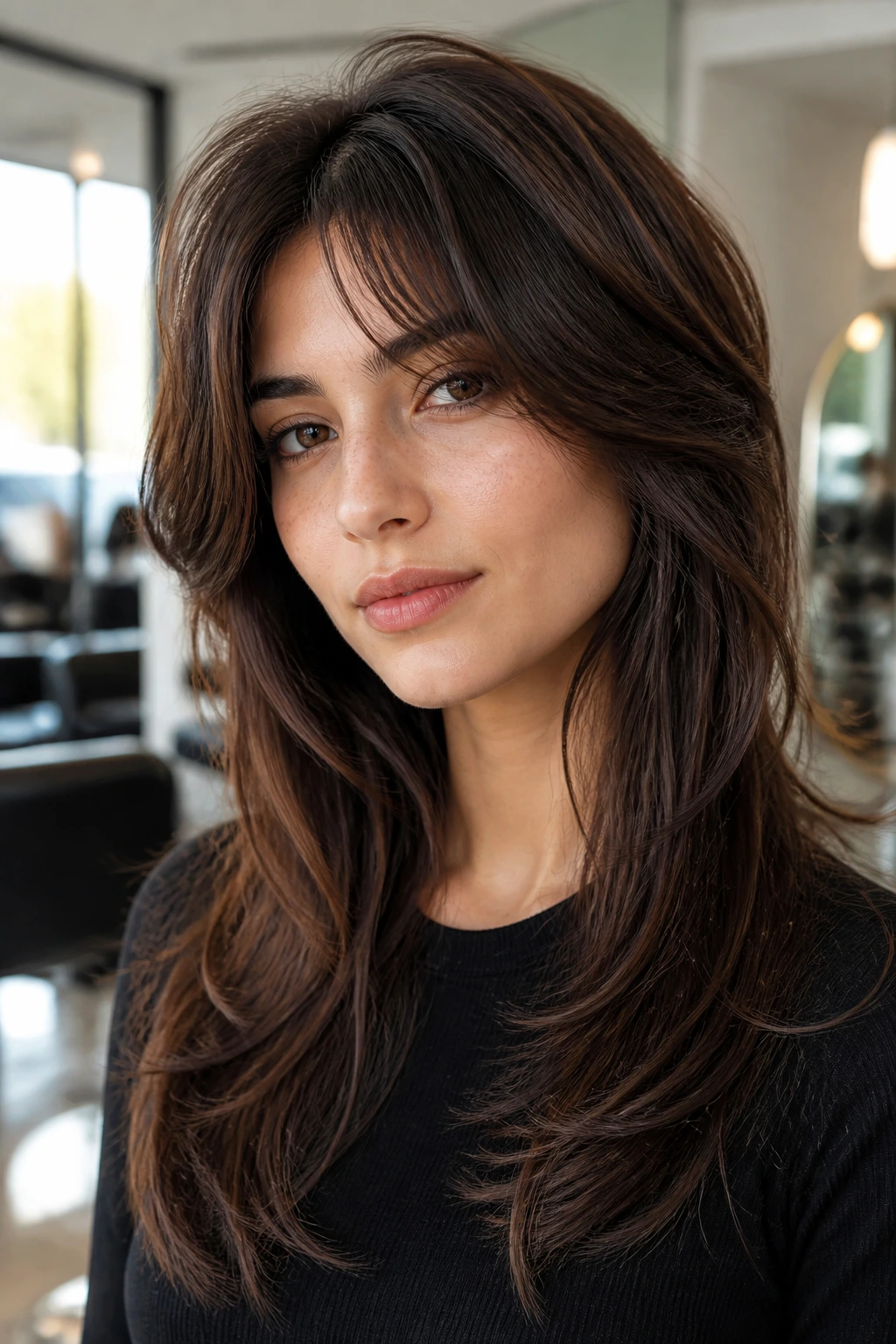
A wolf cut sounds aggressive, but a softer version can be excellent on a round face. The trick is keeping the layers long enough that the cut still reads as hair, not as a crown of texture. You want lift through the top and movement through the sides, not a triangle.
Brown hair helps here because the darker depth makes the layered shape look intentional instead of frizzy. Ask for shaggy layers around the crown, then keep the front pieces long and tapered. That lets the cut narrow at the cheeks while still feeling edgy.
This one is not for everyone. If you like polished, ignore it. If you want a cut that looks cool with air-drying and a little texture cream, it has a real place. The best versions are the ones with restraint. Too much choppiness and the round face loses definition fast.
15. Internal Layers for Thick Brown Hair
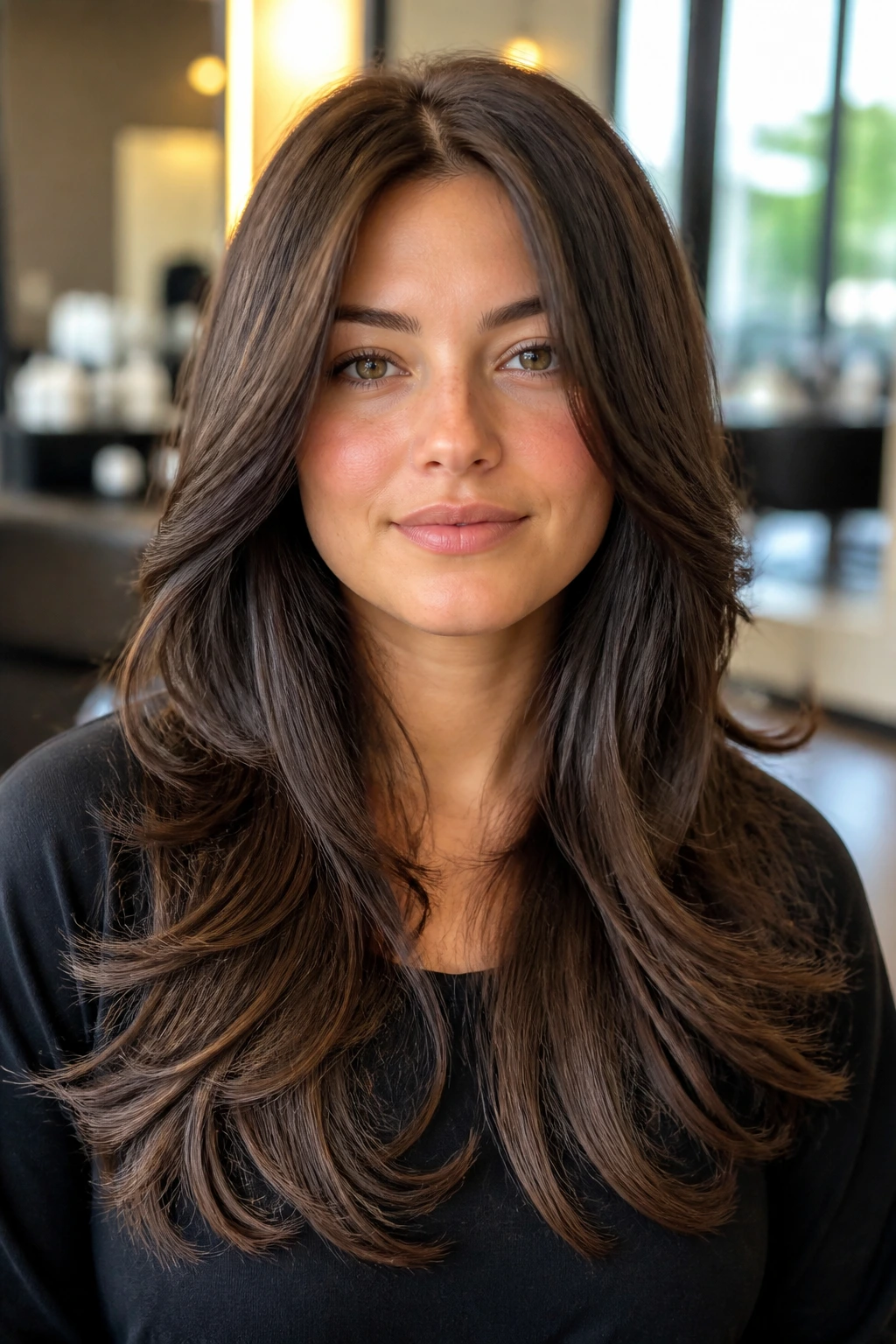
Thick hair on a round face needs weight removed from the inside, not just the ends. Internal layers do exactly that. They reduce bulk where the hair would otherwise balloon out, but they leave the outer line long and neat. The result is cleaner shape and less side width.
What to Ask Your Stylist
- Keep the perimeter long and even.
- Remove weight from the middle sections rather than the very front.
- Avoid over-thinning the ends, or the cut will look stringy.
- If your hair is dense, ask for a dry check after the cut so the shape can be corrected where it falls.
This is one of the most useful long brown haircuts for round faces because it solves a real problem, not a styling fantasy. Thick brown hair often looks amazing from the back and too broad from the front. Internal layers fix that balance.
A Small Warning
Do not let anyone take too much weight out near the face. That is how thick hair gets frizzy and vague. You want control, not collapse.
16. The Middle Part With Cheekbone-Skimming Layers
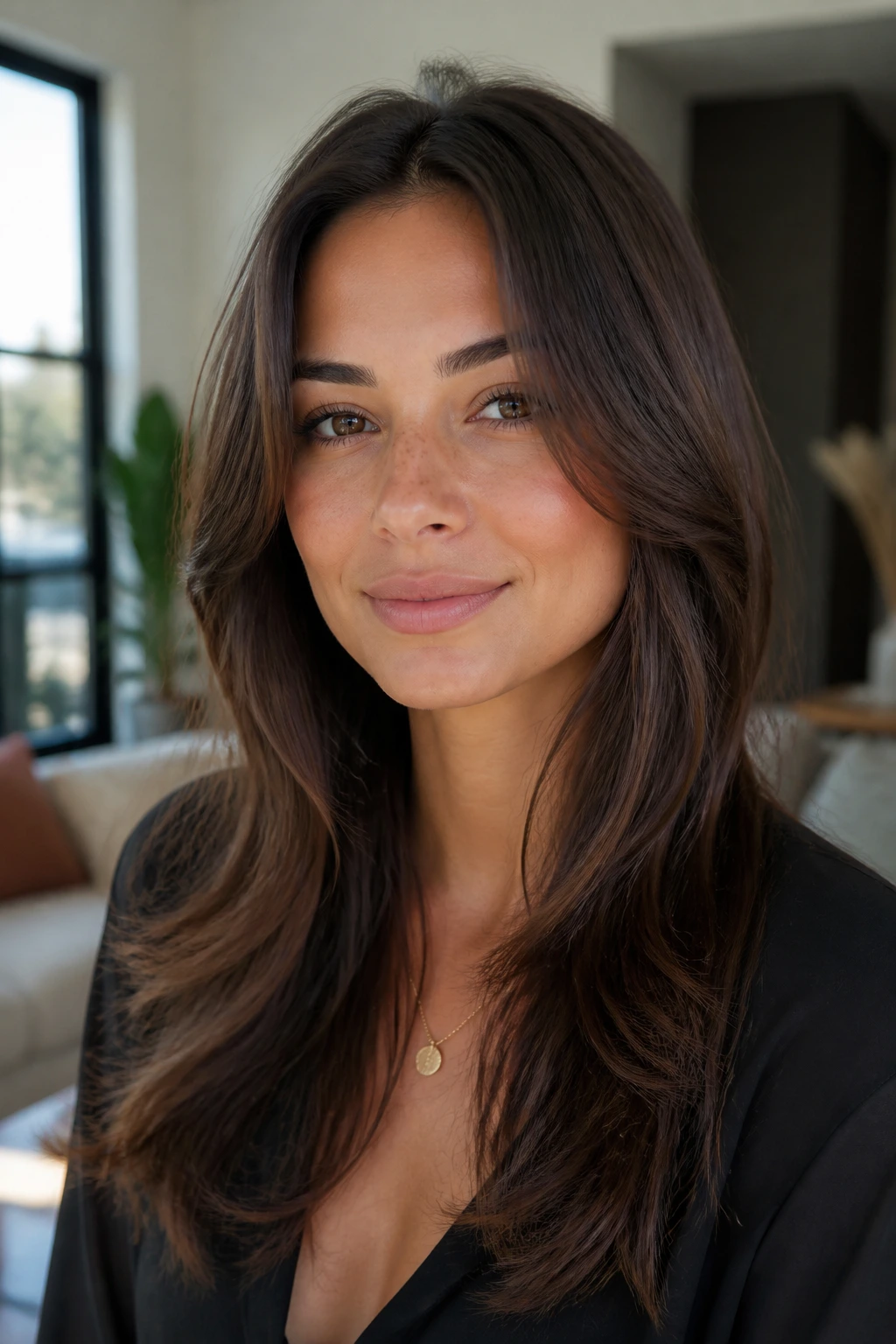
A middle part can work on a round face, but only if the front pieces earn their place. The part itself is clean and symmetrical; the layers do the shaping. That means the shortest pieces need to start at or below the cheekbone so the face looks longer, not rounder.
The look is especially good on glossy brown hair because the center line becomes part of the style. The hair falls in two clean sheets, then the front pieces break the shape just enough to keep it from feeling flat. I like this when the cut is sleek and the ends are gently textured, not razor thin.
If you wear your hair in a middle part already, this is probably the safest upgrade. It keeps your habit and improves the line. The haircut does not fight the part. It works with it.
17. Long Curls With an Elongated Silhouette
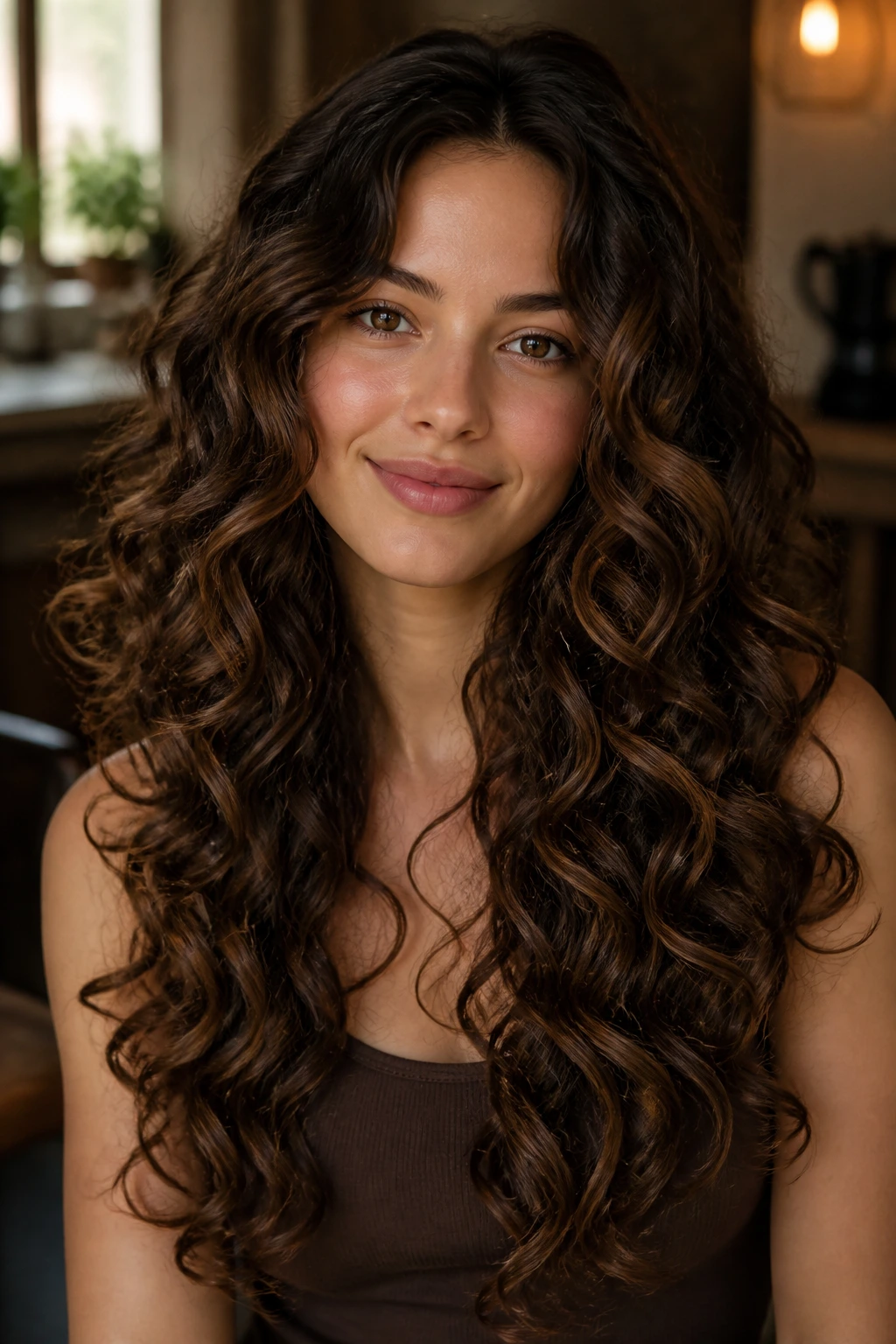
Long curls do not need to look wide. That is the myth. With the right cut, curls can fall in a vertical line that makes a round face look longer and more defined. The key is keeping the shape from puffing out near the cheeks and letting the curls stack lower.
Brown curls are gorgeous because the curl pattern catches light differently from root to tip. Chestnut, mocha, and deep cocoa shades all show the shape without needing extra color. Ask for layers that preserve length around the outer curve and avoid too many short pieces at the temples.
Curl-Cut Details That Matter
- Cut curls dry or mostly dry so shrinkage is visible.
- Keep the shortest layer below cheek level.
- Shape the front pieces so they fall forward, not outward.
- Use a diffuser on low heat to keep the curl pattern intact.
A round face needs an oval outline here. Not a puffball.
18. Feathered Layers Around the Collarbone
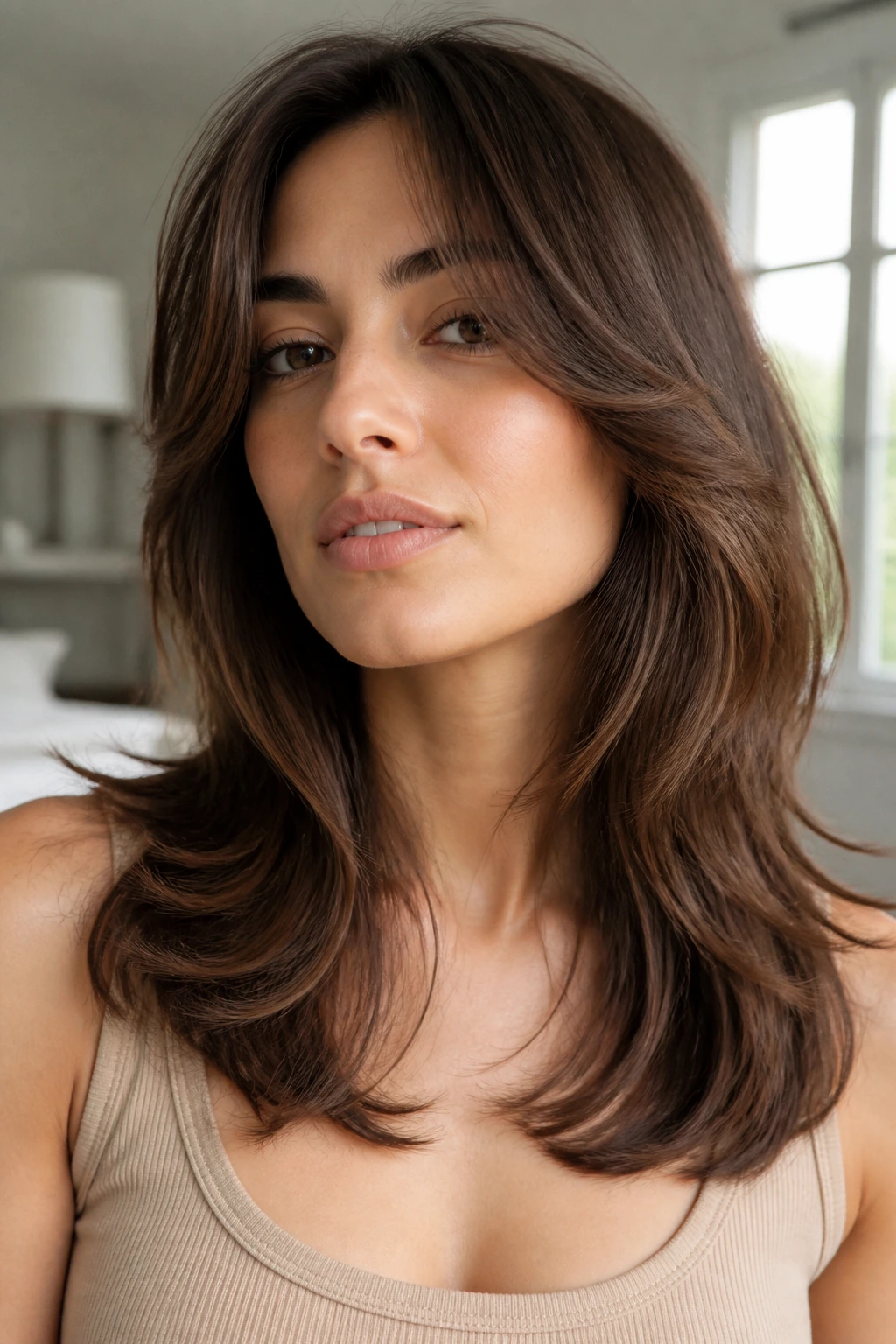
Feathered layers around the collarbone create a soft break in the silhouette, and that break helps a round face look a little longer. The collarbone is a good place for movement because it sits below the cheeks but still frames the upper body. The hair feels airy without losing length.
Why This Placement Works
The collarbone sits low enough to keep width away from the jaw, and the feathering softens the ends so the haircut never feels heavy. On brown hair, especially warm brunette shades, the movement looks expensive in a quiet way. It is not flashy. It just looks finished.
The Styling Habit That Helps
Flip the front away from the face with a round brush while blow-drying, then let the ends settle naturally. A light mist of texture spray on the mid-lengths gives the feathering some separation. Too much spray, though, and the layers turn crunchy. That ruins the whole effect.
This cut is a good middle ground if you want softness but not obvious shaggy layers. It moves, yet stays neat.
19. A Blunt Perimeter With Light Top Layers
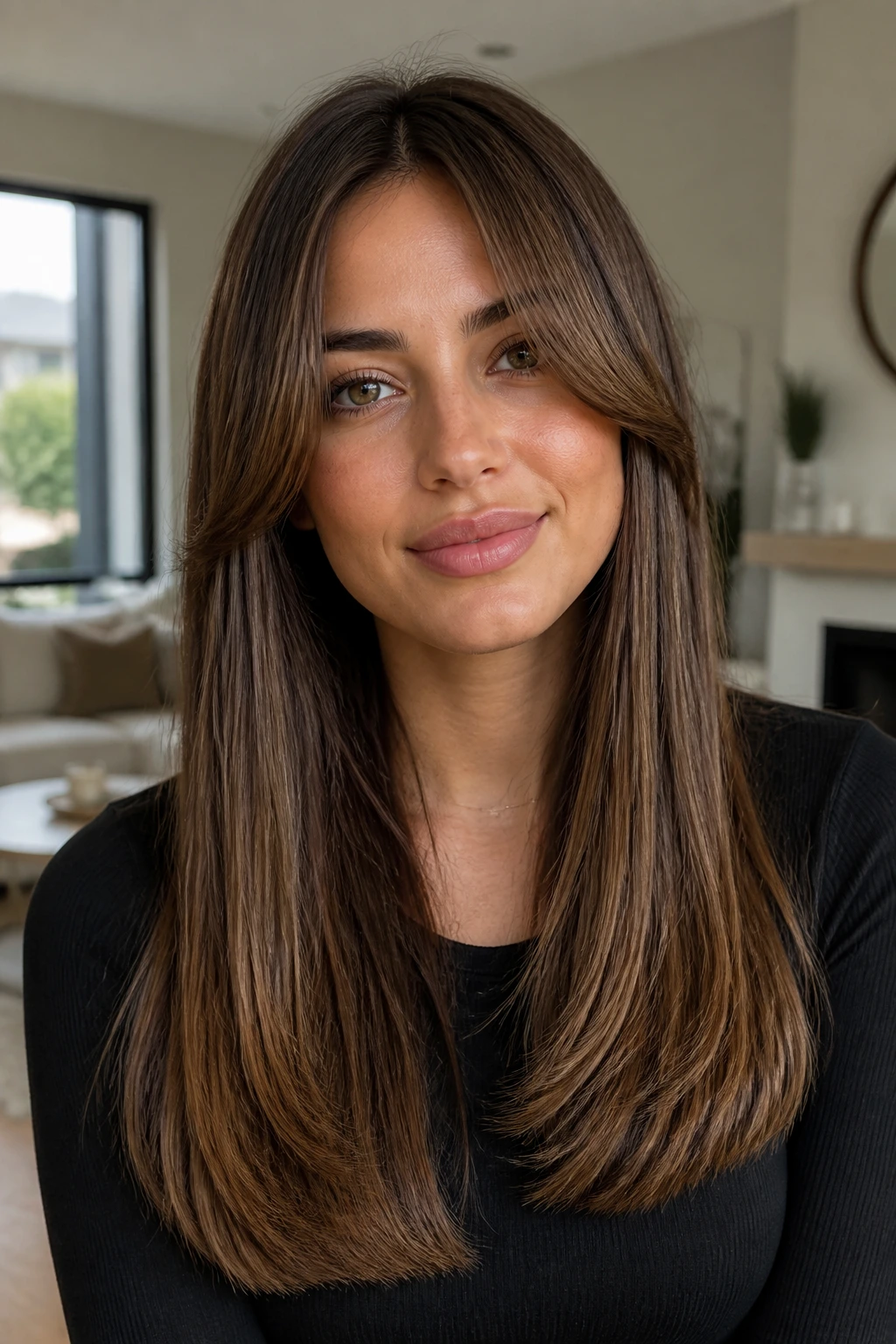
A blunt perimeter can still work on a round face when the top layers are kept light and the front is shaped carefully. The solid bottom line gives the hair fullness, while the internal texture keeps it from feeling like a triangle. That combination is useful if your hair is fine to medium and you want the ends to look thick.
The blunt line should sit well below the shoulders, not at the jaw. That keeps the silhouette long. Then a few feather-light layers through the top half stop the cut from looking static. Brown hair handles this shape well because the darker tone makes the line look strong without needing a lot of styling.
I’d choose this for someone who likes a polished look and hates messy layers. It is neat, not fussy. The caution is simple: if the top layers get too short, the cut starts to widen. Keep them subtle.
20. Razor-Cut Layers That Move When You Walk
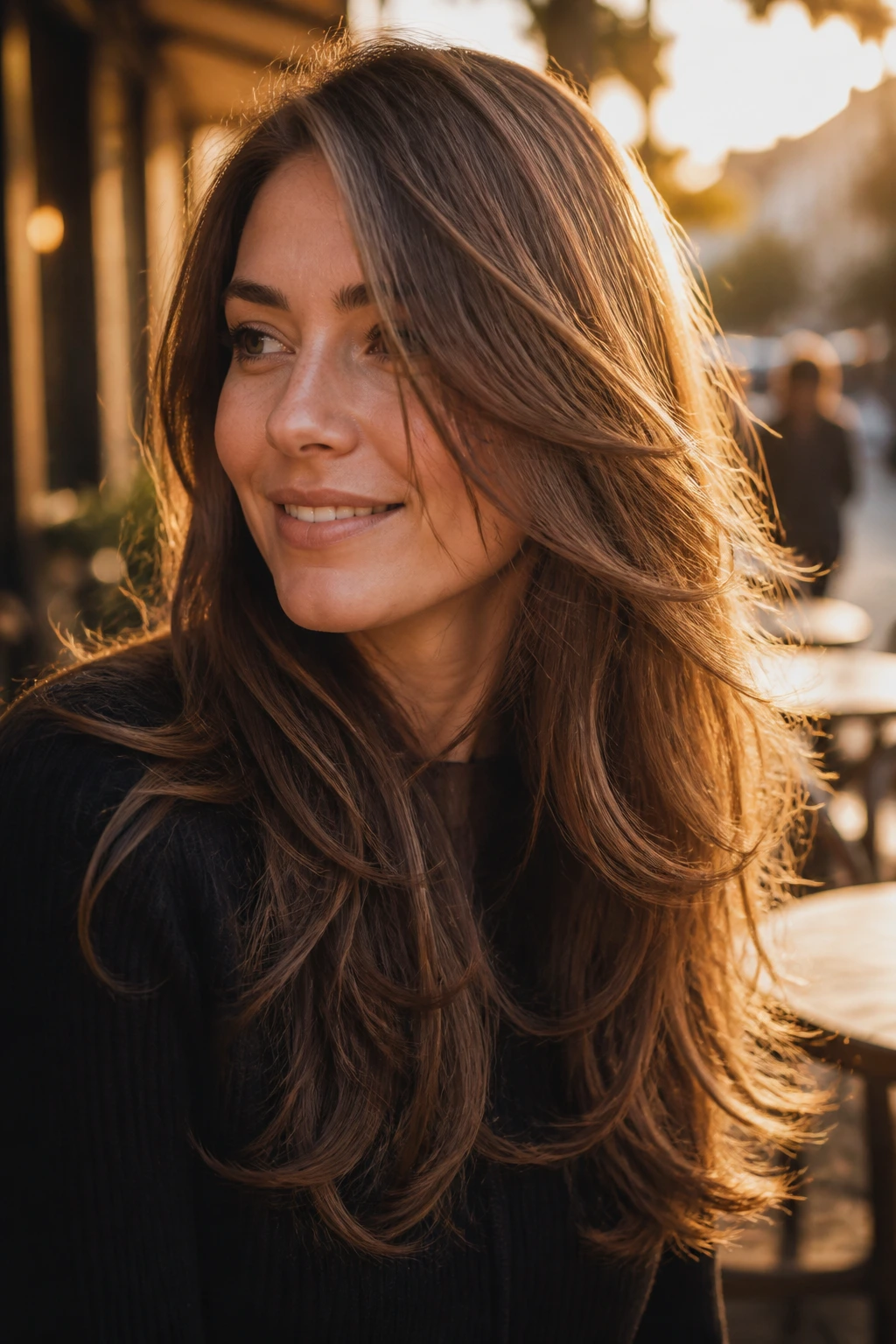
Razor-cut layers are a little rebellious, and that can be a good thing if your long brown hair feels too heavy. The razor creates soft, broken edges that move well, which helps a round face by avoiding a hard horizontal line across the sides. The shape feels airy instead of bulky.
This cut likes hair with some natural bend. Straight, slippery hair can make razor cuts look too wispy at the ends, so be careful there. On medium-thick brown hair, though, the result can be excellent. The layers flick slightly, the light catches the edges, and the whole cut feels alive.
It is not the best pick for someone who wants a crisp, classic line. It is better for people who want a bit of texture and do not mind a softer finish. If you air-dry a lot, this one can save time. If you demand precision, choose a different shape.
21. Angled Front Pieces That Pull the Eye Down
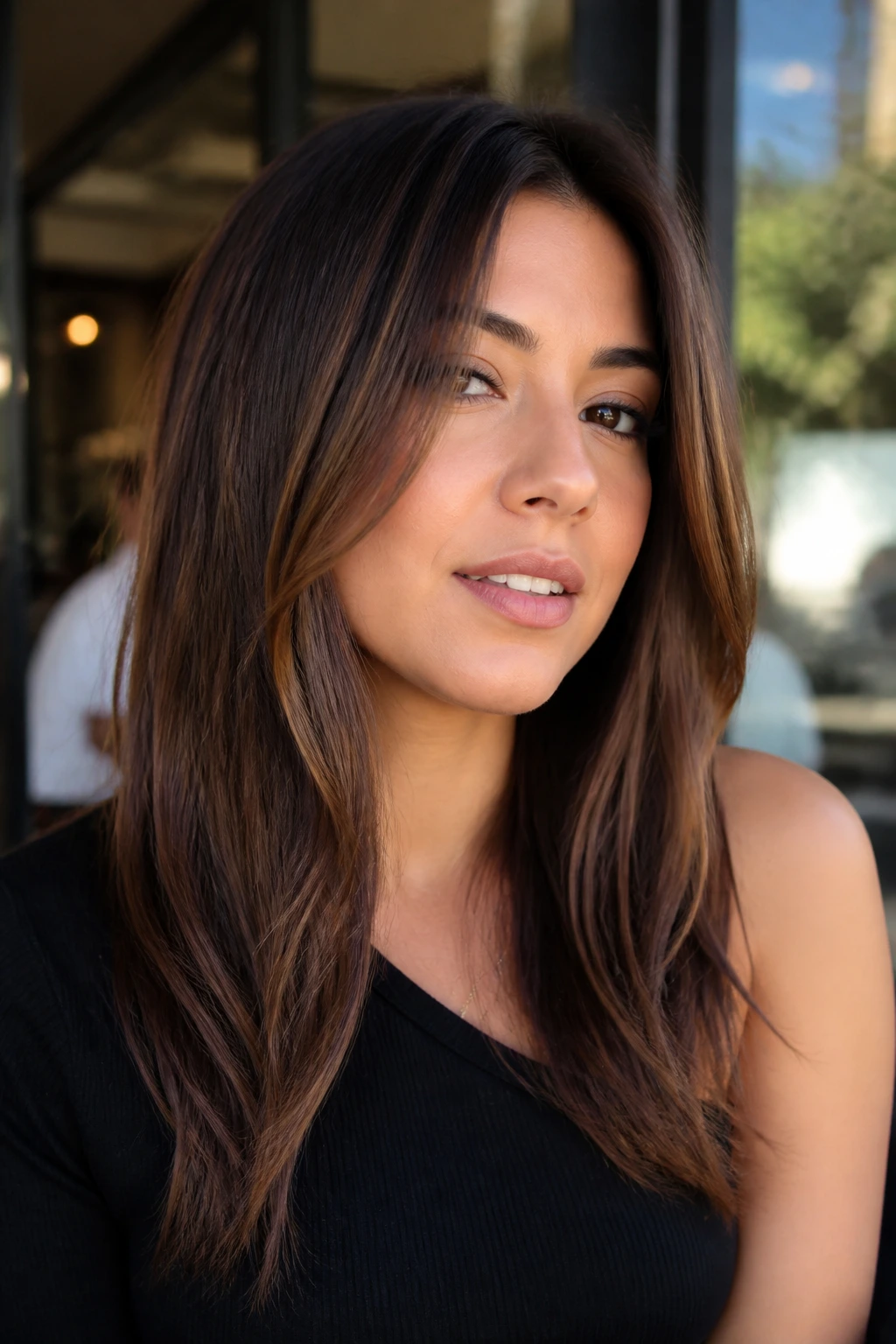
Picture hair that starts a little fuller near the top, then drops in longer angles beside the face. That is the point of angled front pieces. They stretch the line of the haircut downward and keep attention off the widest part of a round face.
The front should not be chopped into obvious steps. It should slide from shorter to longer in a way that looks smooth when the hair moves. Brown hair makes that transition read well because the tonal depth shows every shift in length. A warm brown with a bit of gloss looks especially nice here.
This style is useful if you tuck your hair behind your ears often. The front pieces still do the work even when one side is pinned away. That makes it practical, not just pretty. And yes, a haircut should be both if you are going to wear it for months.
22. Long Layers With a Subtle Side Fringe
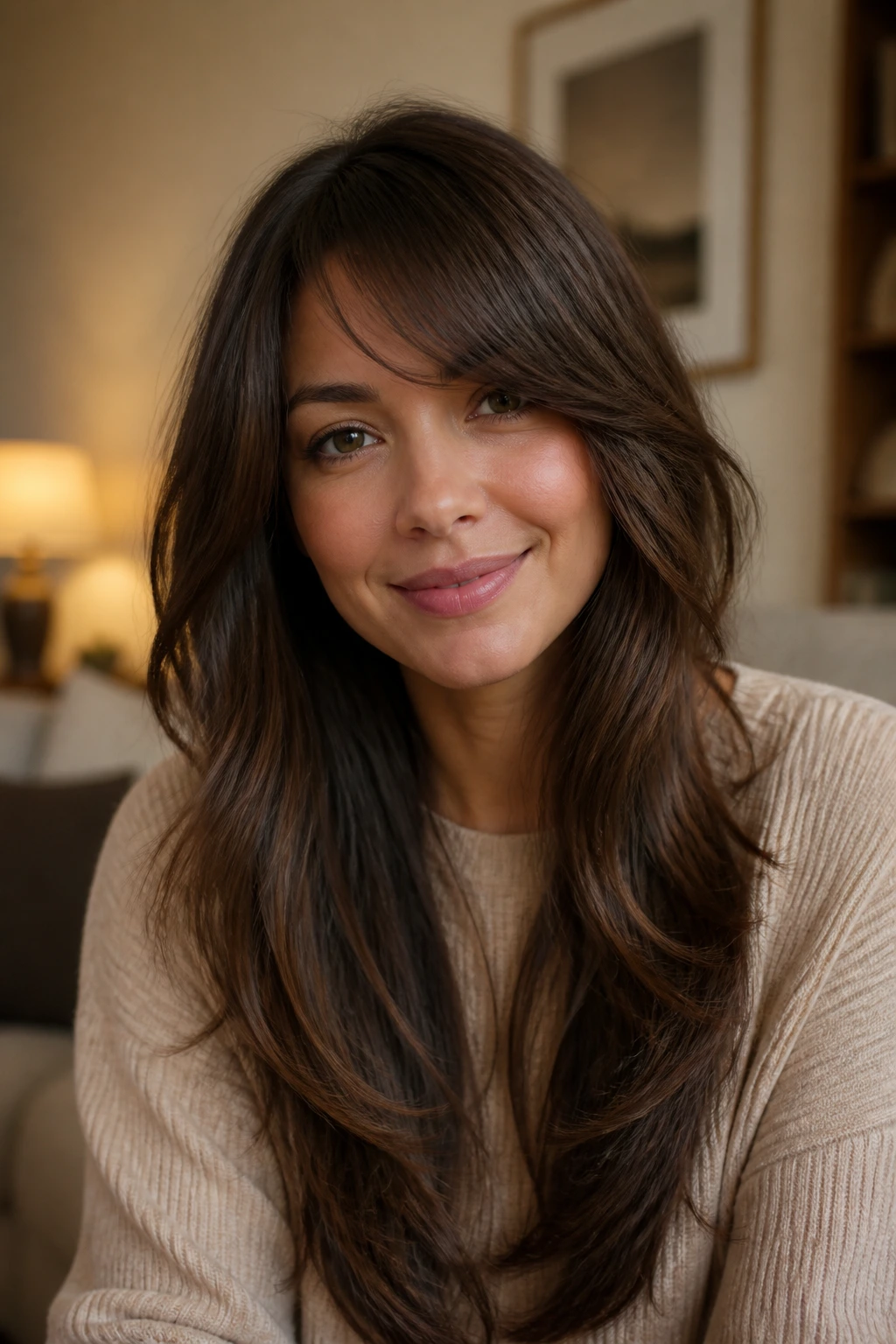
A subtle side fringe gives you a little face shaping without the commitment of full bangs. The fringe should be soft, light, and easy to push aside if you change your mind. That flexibility is what makes it good for round faces. It breaks up the forehead just enough, then blends into the longer layers.
The Shape to Ask For
- Keep the fringe long enough to tuck back on busy days.
- Angle it toward the cheekbone instead of cutting it straight across.
- Let the rest of the layers stay long and controlled.
- Use a blow-dry cream if your fringe frizzes at the hairline.
The side fringe works well on brown hair because the color keeps the piece from looking separate or harsh. It slips into the rest of the cut. That matters. A fringe that feels pasted on is almost always a mistake.
I like this choice for people who want a small change that still makes a visible difference. It is quiet, which is exactly why it works.
23. Cascading Layers That Start Near the Cheekbone
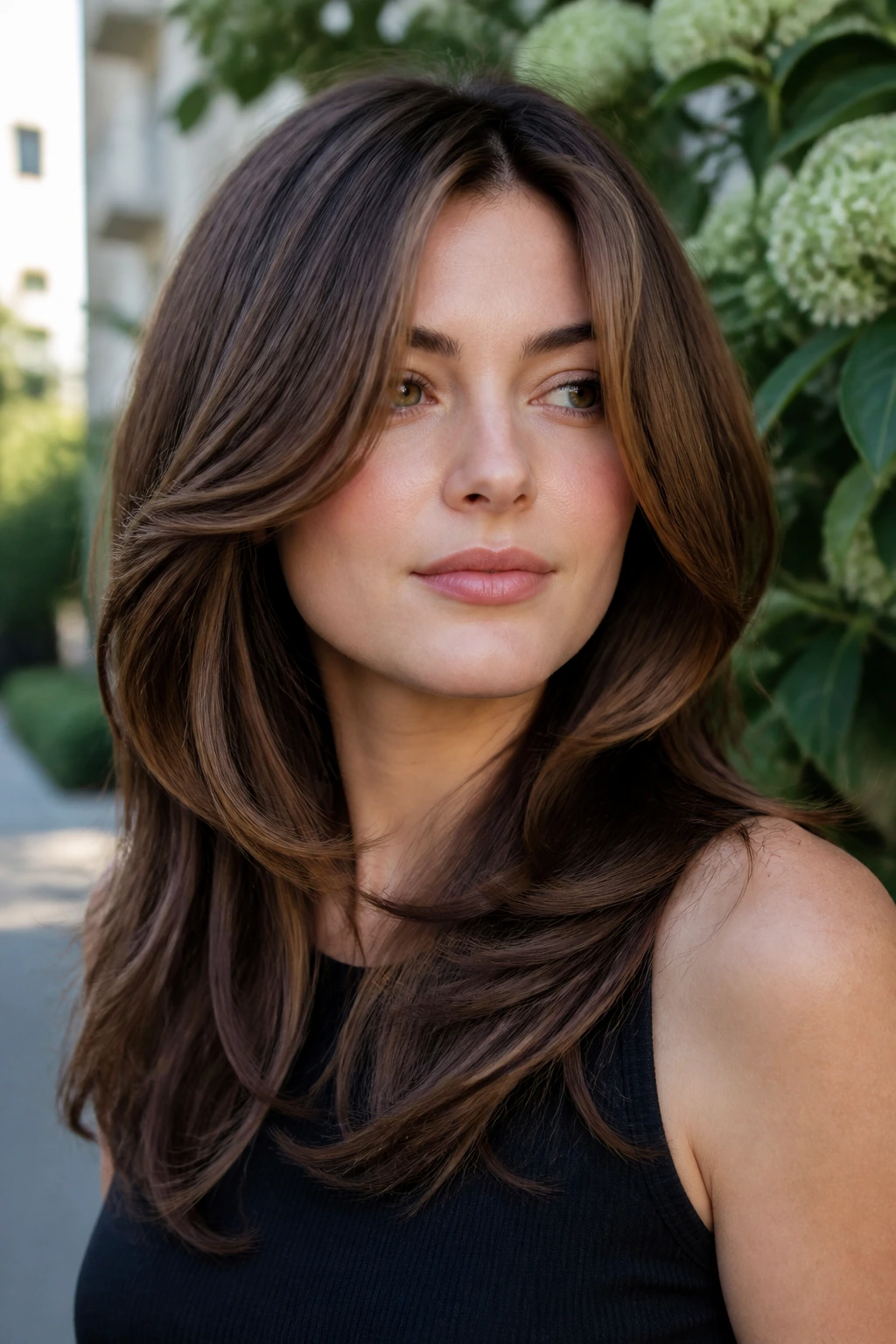
Cascading layers are one of those cuts that sound fancier than they are. Really, it is about staggered lengths that fall one over another in a smooth line. On a round face, the important part is where the cascade begins. Start it near the cheekbone and the cut opens the face without spreading the sides too much.
Brown hair gives this shape depth because each layer shows up as a separate plane of light and shadow. That is especially nice if the hair has a bit of wave. The layers seem to melt into each other, but you can still see the shape. It looks deliberate, not overworked.
This is a solid choice if you want movement but hate choppy styling. It stays feminine and soft without turning fluffy. The longest layers should still fall well below the chin so the roundness of the face never gets boxed in.
24. Flipped-Out Ends With a Clean Inner Shape
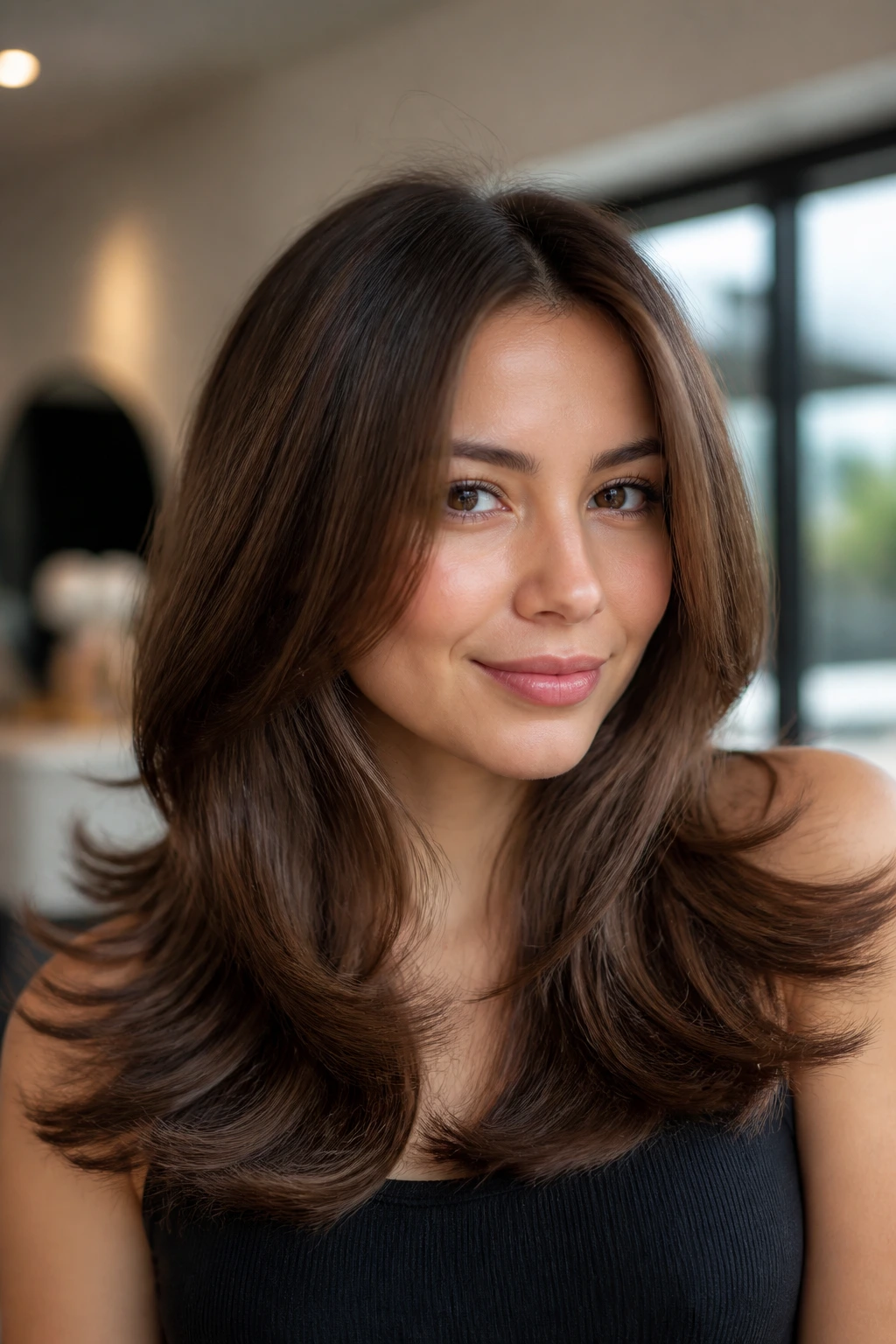
Flipped-out ends can sound retro, but on long brown hair they read fresh when the rest of the haircut is clean. The flip adds motion at the bottom, which keeps the face from looking dragged down by a heavy straight curtain. The inner shape needs to stay smooth, though. That balance is what keeps it from turning theatrical.
A round face benefits from the outward flip because it sends the eye to the sides at the very bottom, not at cheek level. The line still feels long. The flip is just a finishing note, not the main event. A round brush and a medium blowout make this easy.
I like this on medium-density hair most. Thin hair can lose shape fast. Thick hair, on the other hand, may need the ends lightly thinned so the flip does not look bulky. If you want a little polish without going full blowout, this is a good middle road.
25. Ribbon Layers Through Chocolate Brown Hair
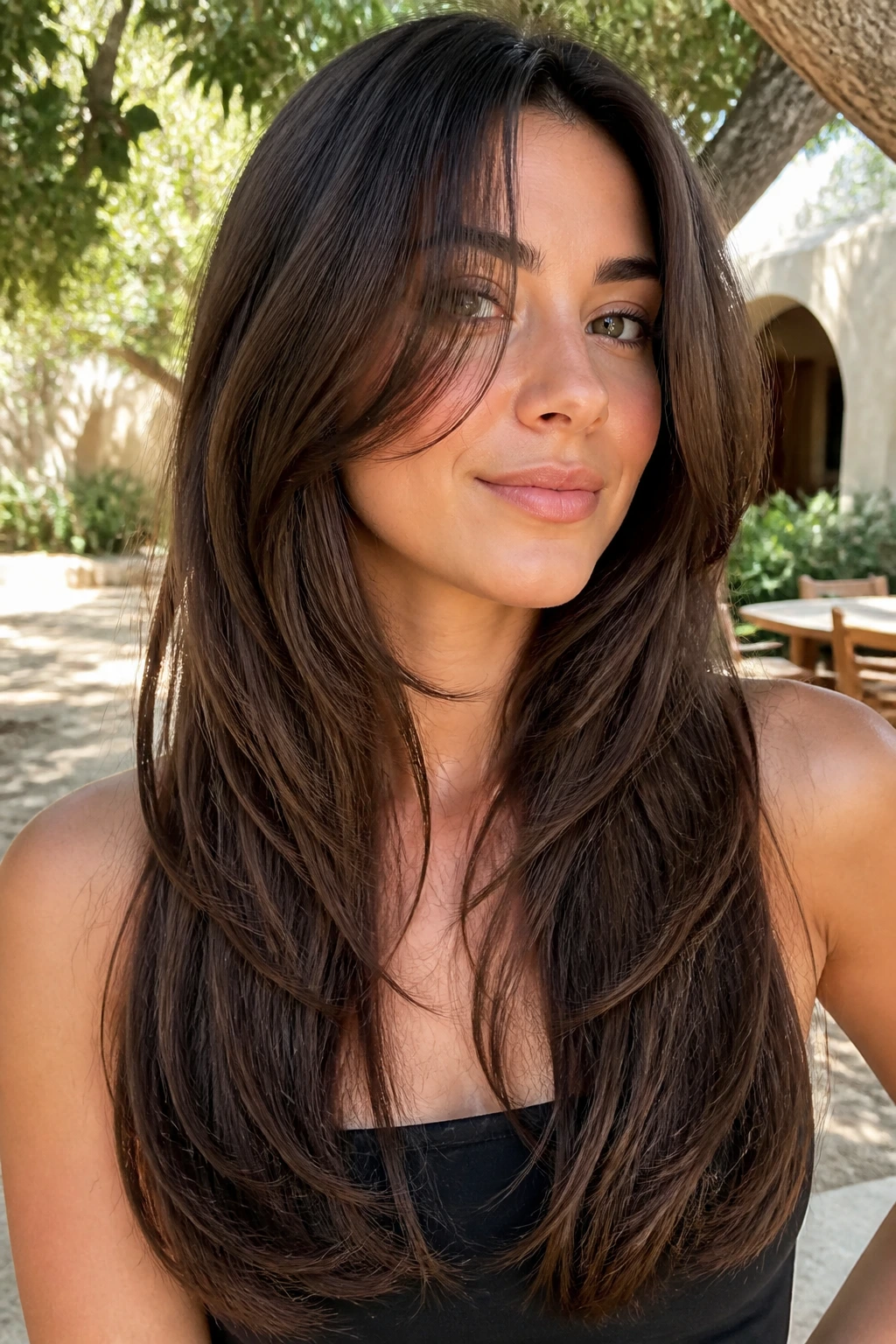
Ribbon layers are thin, smooth strands of movement that run through the haircut like strips of fabric. On chocolate brown hair, they catch the light in a way that makes the whole style feel richer. The reason they work on a round face is simple: they create vertical motion without piling volume at the sides.
The layers should be long and soft, not chopped. Think of them as thin paths through the hair rather than big steps. That keeps the shape elegant. A center part or slightly off-center part both work here, but the front pieces should still fall lower than the cheekbone.
This cut is especially nice if your brown hair has shine. The ribbon effect shows up best on healthy-looking ends and a smooth finish. If your hair is dry, use a little leave-in cream on the mid-lengths so the layers separate without looking frayed. It is a pretty look, but not a delicate one.
26. Heavy Texture With a Polished Finish
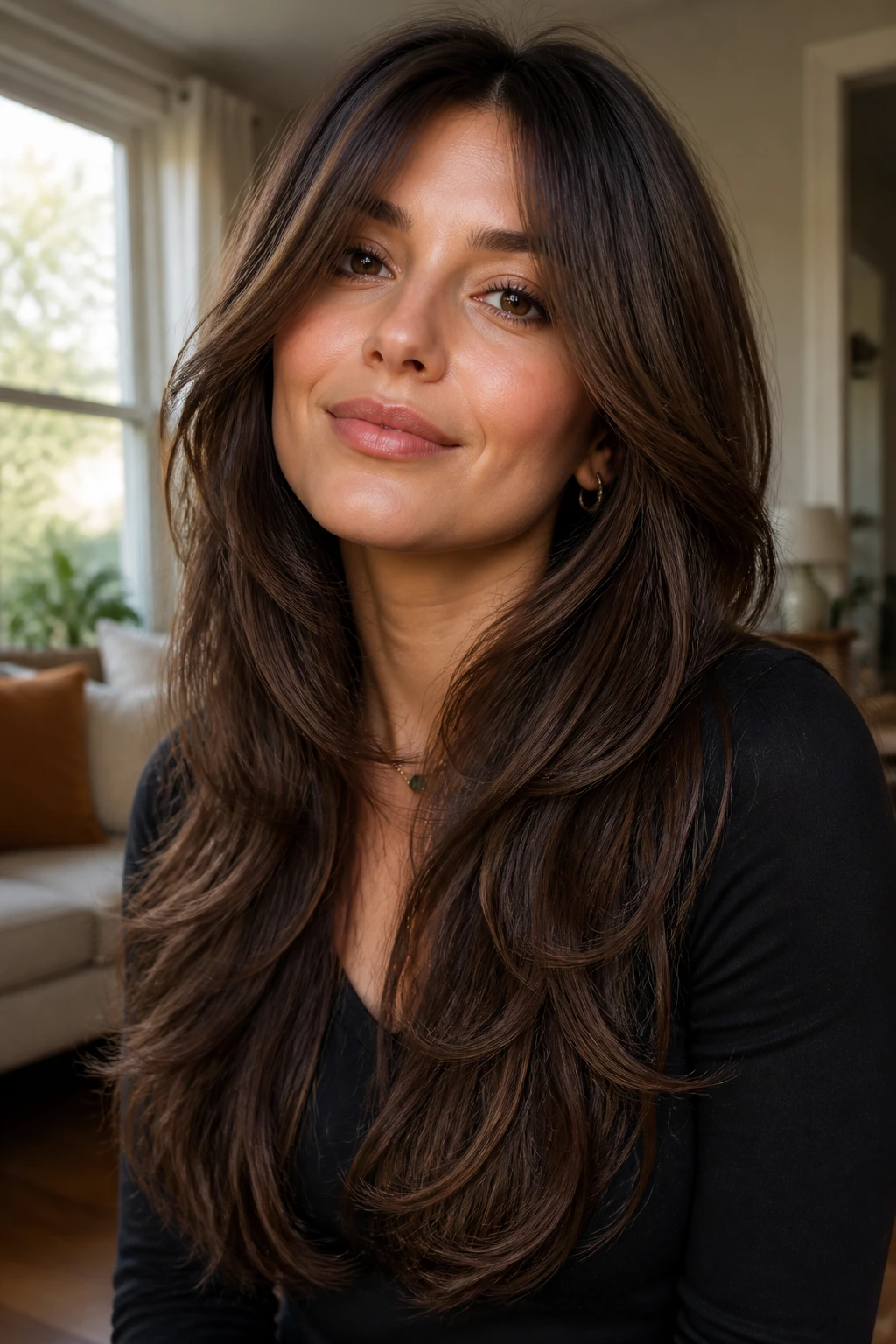
Heavy texture can flatter a round face when the finish stays polished. That sounds contradictory, but it is exactly the point. The texture gives movement, while the smoother finish keeps the hair from puffing out in the wrong places. Long brown hair handles this well because the color helps the textured pieces blend.
This cut works best when the texture lives mostly from the ears down. Up near the cheeks, keep the line controlled. Otherwise the haircut starts to spread sideways. A soft wave, a large bend, or a brushed-out curl all fit here. I would not use tiny curls or a rough diffuser unless the hair is naturally that way.
The result is relaxed but tidy. It is a useful cut for someone who wants body without a lot of styling drama. And that last part matters more than people admit. A haircut that needs constant repair is not a good haircut.
27. Mermaid Waves With Strategic Layering
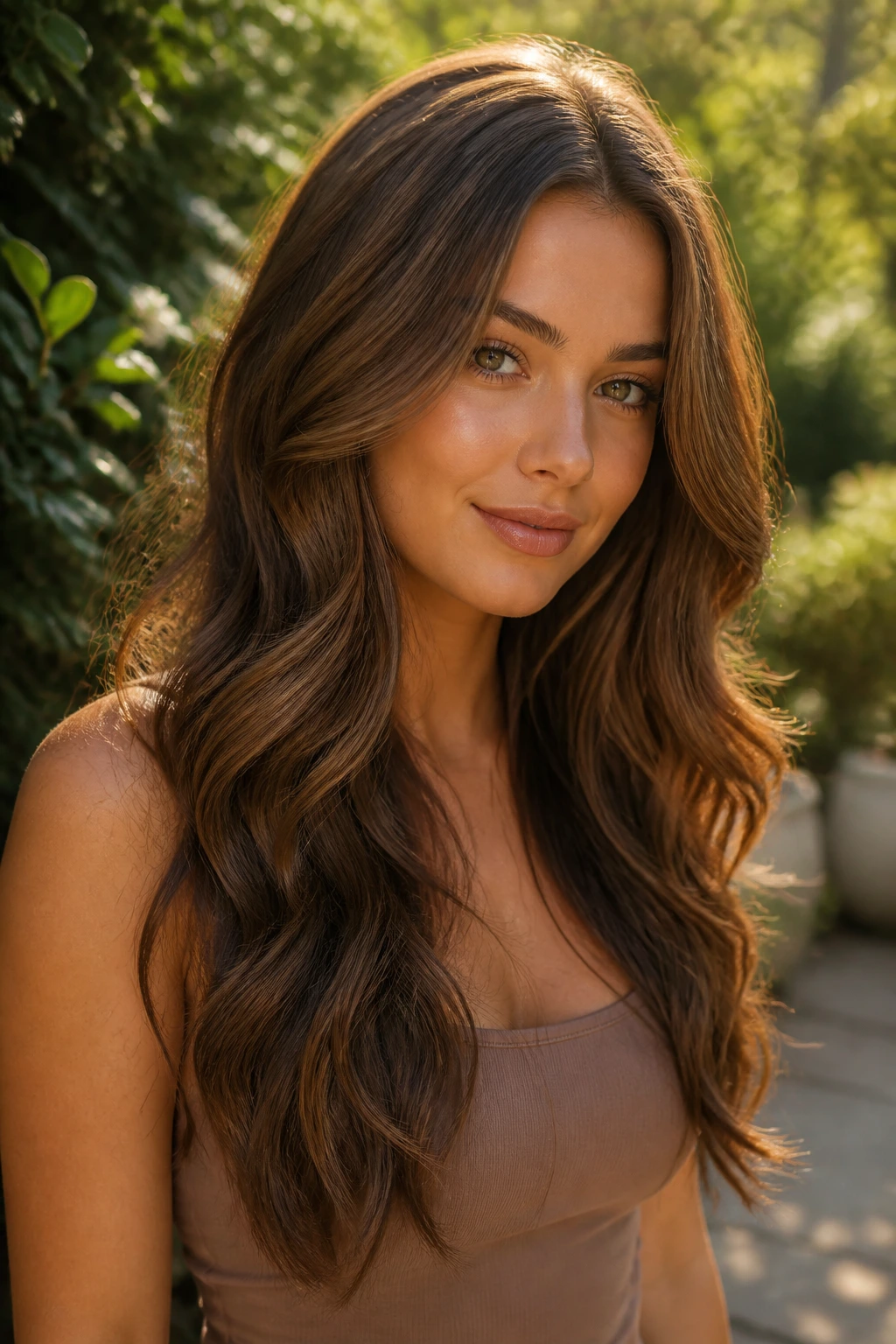
Mermaid waves look glamorous, but they can widen a round face if the layers are placed badly. The answer is strategic layering—long, low layers that let the wave fall in a narrow shape. The face frame should remain long and soft, while the wave pattern starts below the cheeks.
What to Ask For
Ask for layers that support the wave, not layers that break it apart. That usually means longer internal layers and a few face-framing pieces that begin around the mouth or lower. On brown hair, this works especially well because the waves show off the depth of the shade.
How to Style It
Use a large iron or a waving tool and keep the wave loose from the roots. Brush it out after it cools. That is the part many people skip, and it changes everything. Brushed-out waves sit flatter at the sides and look longer through the face.
This style suits people who like softness and movement more than sharp edges. It is romantic, but it still needs structure.
28. Tucked-Under Ends That Slim the Outline
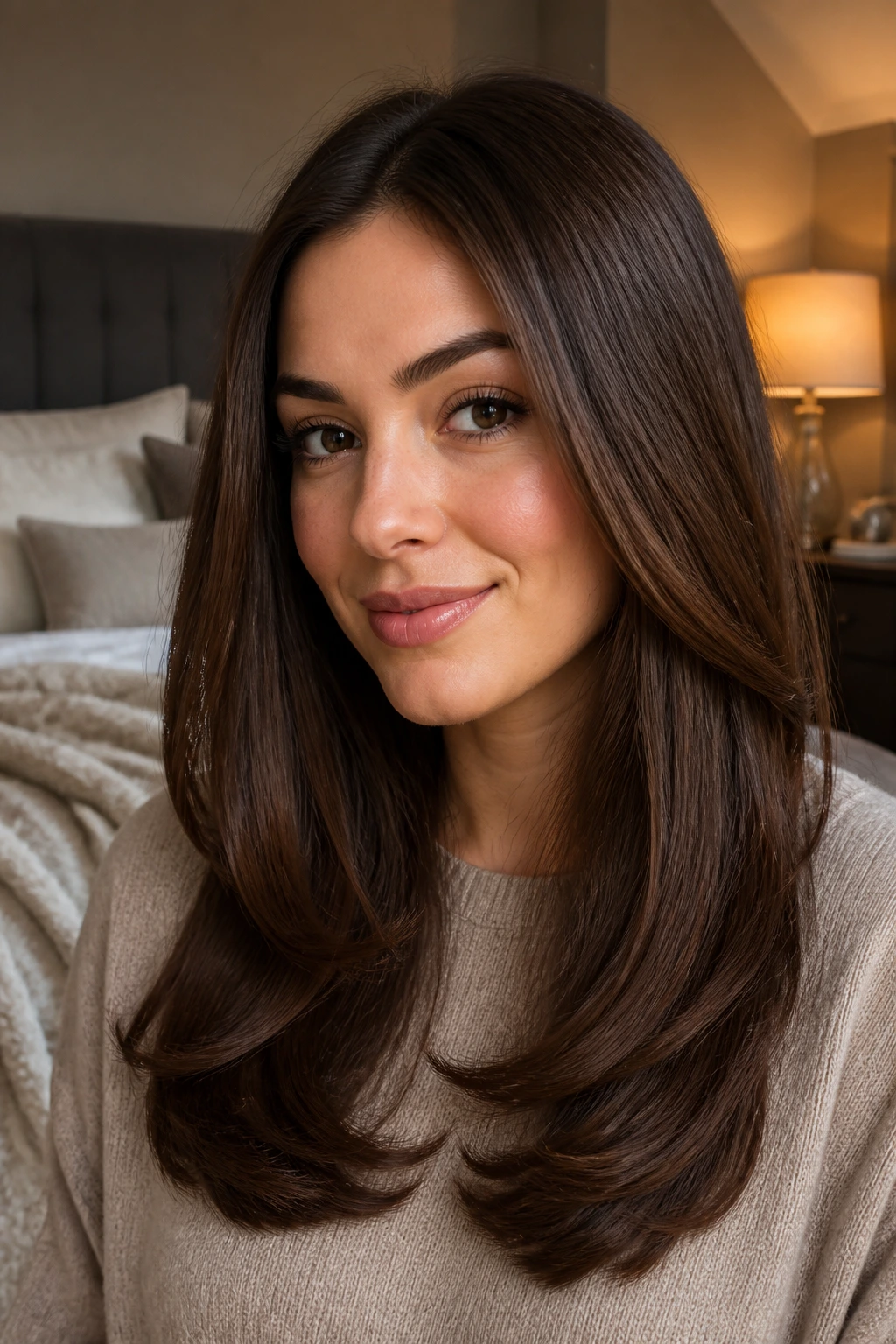
Tucked-under ends are underrated. They create a rounded finish at the bottom, but because the curve sits low, the face feels longer rather than wider. On a round face, that low curve is easier to wear than a flip or a hard blunt edge. The eye moves down and stops at the hem.
Brown hair looks especially sleek with this finish. The color makes the bend visible, and a smooth blowout adds a neat edge. You can wear the rest of the hair straight or with a soft wave; the important part is that the ends curl inward rather than flare out at the cheeks.
This is a cut for someone who likes controlled hair. It is tidy, a little old-school, and more flattering than people expect when the length is right. Keep the hem below the shoulders. That is the rule that keeps the shape from turning too round.
29. Glossy Straight Length With Barely-There Face Framing
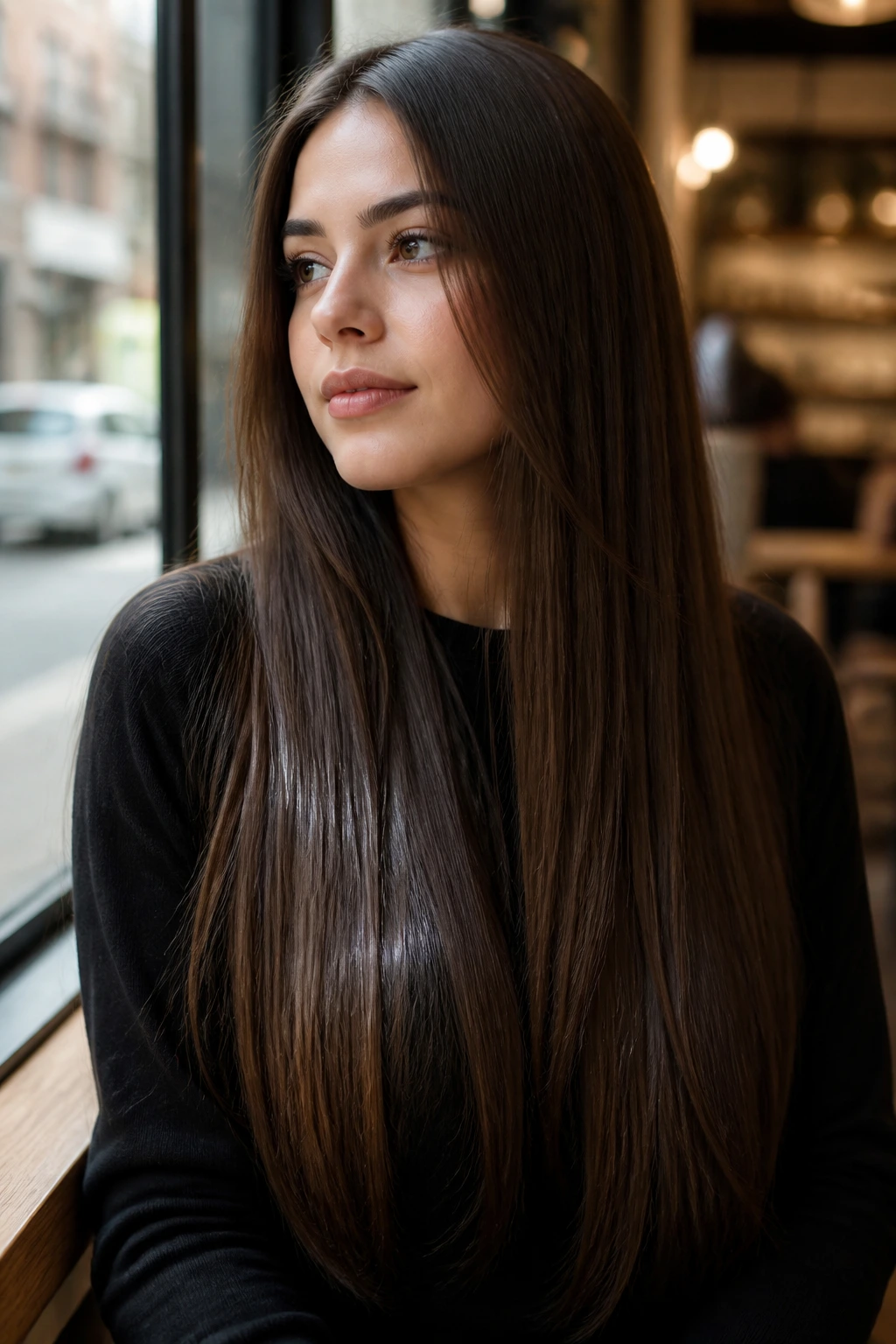
A glossy straight cut can be excellent on a round face if the face framing is so light you almost miss it. The hair should look long, clean, and smooth, with only a whisper of shorter pieces around the front. That whisper matters. It breaks the outline without stealing fullness from the length.
The center or slightly off-center part both work, but the key is shine. Brown hair gets a lot of mileage from gloss because the color shows it off better than many lighter shades. A serum on the mids and ends, plus a careful blow-dry, does more here than a stack of products ever will.
This is a good cut for people who like minimal fuss. It is not trying to be trendy. It just makes the face look a touch longer and the hair look cared for. If you want one of the cleanest long brown haircuts for round faces, this is close to the top of the stack.
30. The Soft Tapered Cut That Looks Finished on Day One
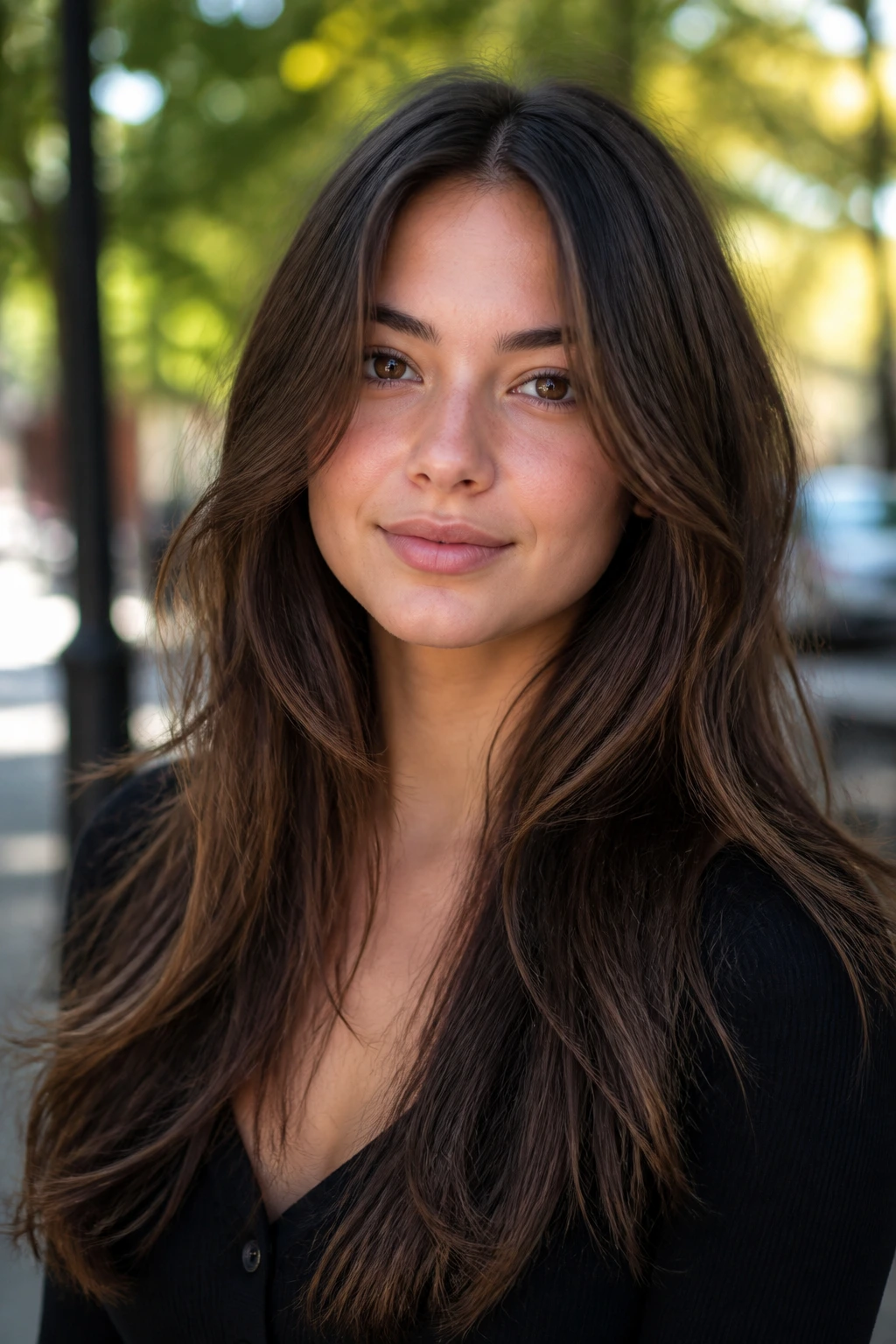
A soft tapered cut is the one I’d hand to someone who wants long hair, a round-face-friendly shape, and no drama when the haircut starts to grow out. The taper keeps the outline narrower near the sides, while the length stays full and feminine. It is neat without feeling stiff.
Brown hair makes this shape easy to live with because the color keeps the taper visible even when the styling is simple. You can air-dry it, give it a quick bend with a large iron, or smooth it straight. It still holds its line. That is a big deal. Some cuts only look good on the day you leave the salon. This one keeps its shape longer.
Ask for the front to remain longer than the cheekbone and the back to taper gently rather than drop in one block. That combination gives the face length and keeps the ends from fanning out. It is the sort of cut that still looks deliberate when you are three weeks past a trim, and that is usually when a haircut earns its keep.
