



A round face is not the problem. The wrong haircut line is.
The best graduated haircuts for round faces do three things at once: they lift the crown, keep the sides from puffing out at cheek level, and draw the eye downward instead of letting it bounce straight across the widest part of the face. That sounds small. It isn’t.
Graduation is one of those haircut tricks that looks quiet in the mirror and does a lot of heavy lifting under the surface. Some versions are sharp and stacked, some are soft and almost hidden, and some depend on a long front panel or a deep side part rather than obvious layers. The shape matters more than the label.
I like graduated cuts for round faces because they can be tailored without feeling severe. You do not need to hide your face. You need clean lines, a little vertical movement, and the right place for the weight to sit. Get that right, and even a simple bob can look sharper, leaner, and more deliberate.
1. Chin-Length Stacked Bob for Round Faces
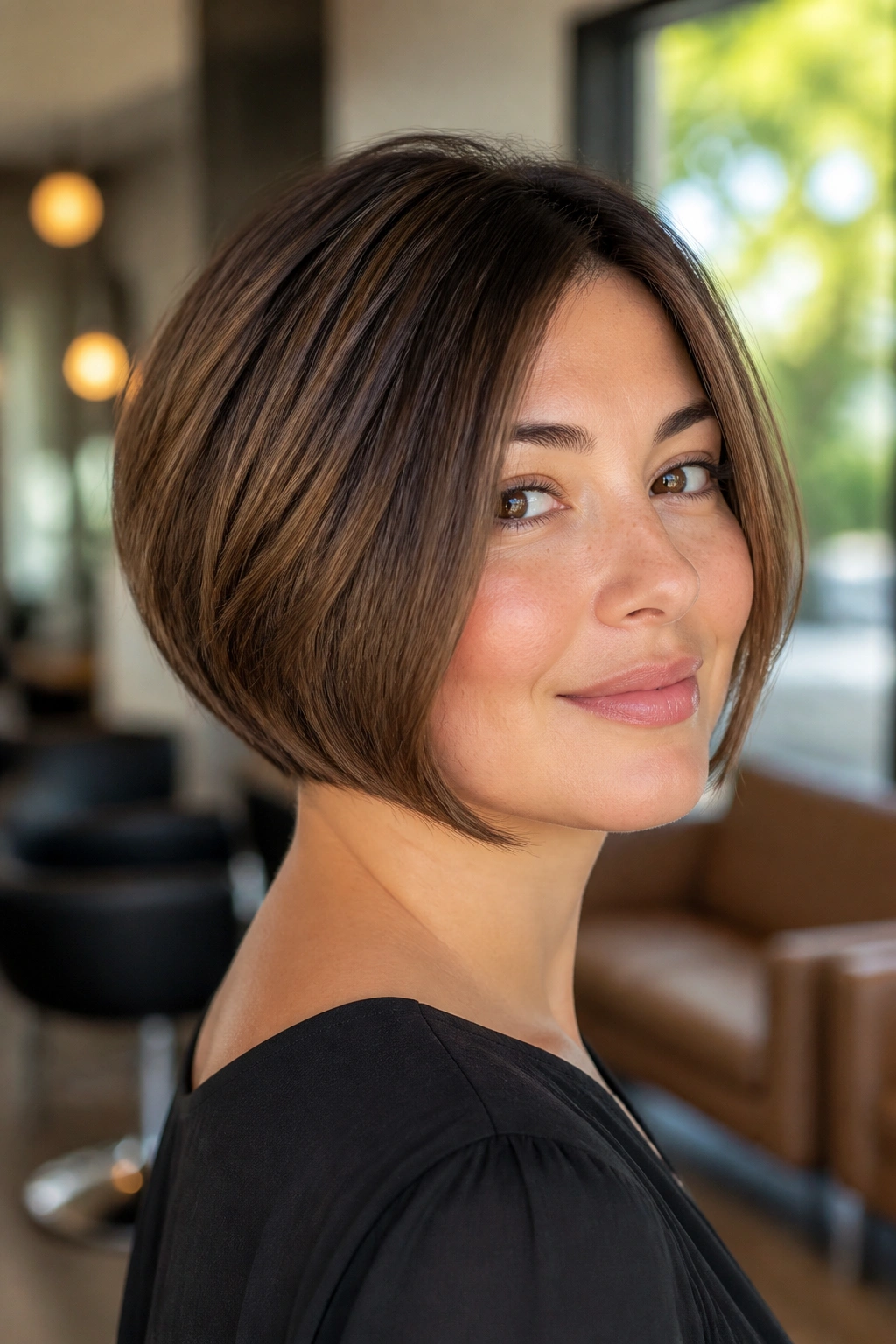
This is the cut I reach for when someone wants definition without going ultra-short. The back is stacked close to the nape, while the front lands just below the chin so the widest part of the face does not meet a blunt line.
Why It Works at Jaw Level
Keep the stack compact, not fluffy. If the back balloons, you lose the clean shape and the cut starts to widen the head instead of narrowing it. A good version should hug the neck and swing forward just enough to skim the jaw.
Ask your stylist to leave the longest front pieces about 1/2 to 1 inch below the chin. That tiny difference keeps the eye moving downward. It also makes the cheek area look less dominant, which is the whole game with graduated haircuts for round faces.
- Shorter at the nape, longer in front
- Soft undercut or light stacking in thick hair
- Round-brush the front downward and slightly inward
- Finish with a light spray, not heavy cream
Best for: straight, wavy, or slightly thick hair that likes structure.
2. Angled Lob With Longer Front Panels
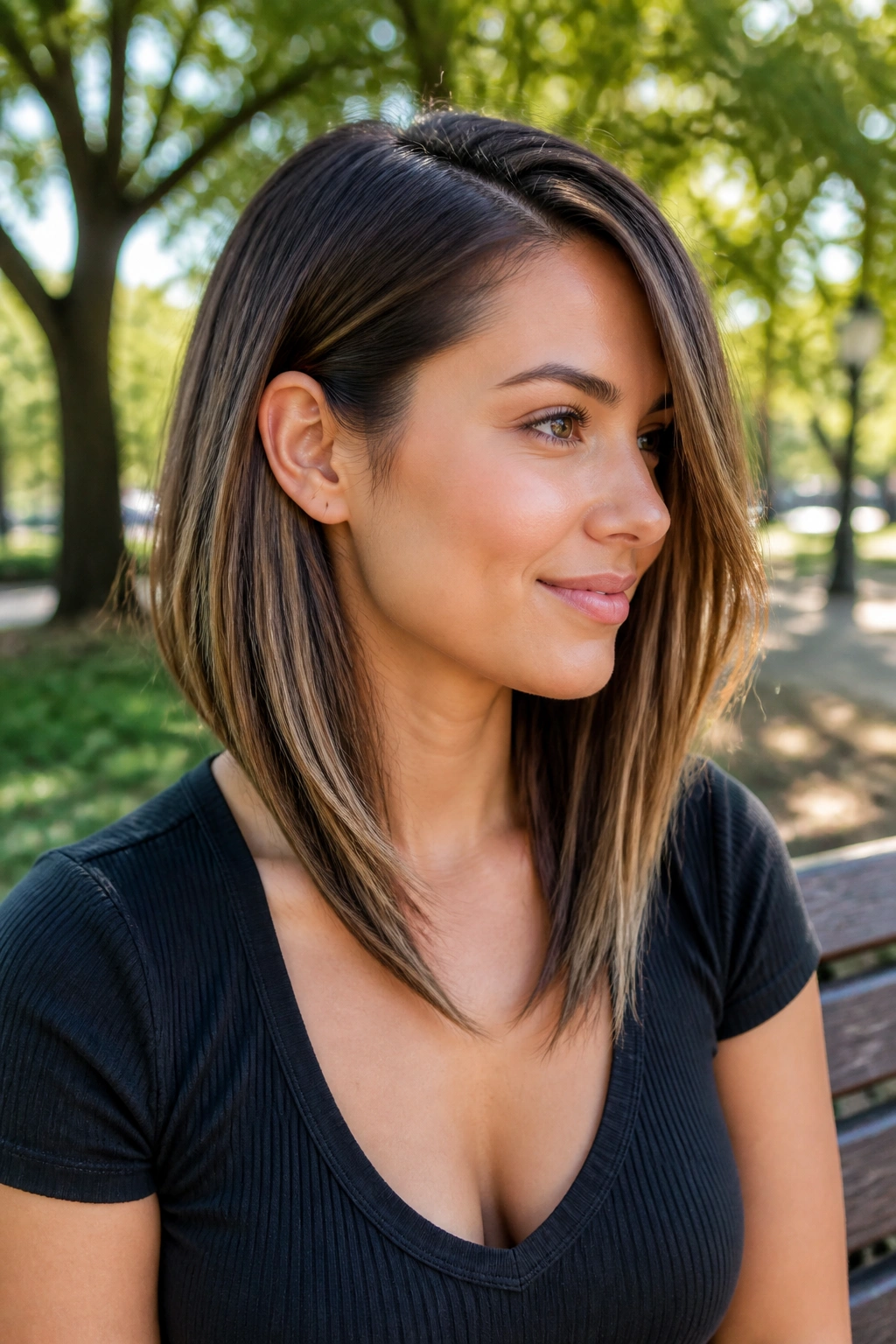
The angle is doing the real work here. A lob that tilts from a shorter back to longer front pieces gives the face a longer read, and that’s exactly why it flatters a round shape so well.
What I like about this version is how easy it is to wear loose. You can air-dry it, tuck one side behind the ear, or bend the ends with a flat iron for a soft swing. The front panels should fall somewhere between the collarbone and the top of the chest, because that length stretches the outline without feeling heavy.
Skip a boxy finish. If the ends sit too blunt at the jaw, the cut loses its lift. A little bevel at the ends keeps the line clean and the face looking more open.
3. Soft Wedge Bob
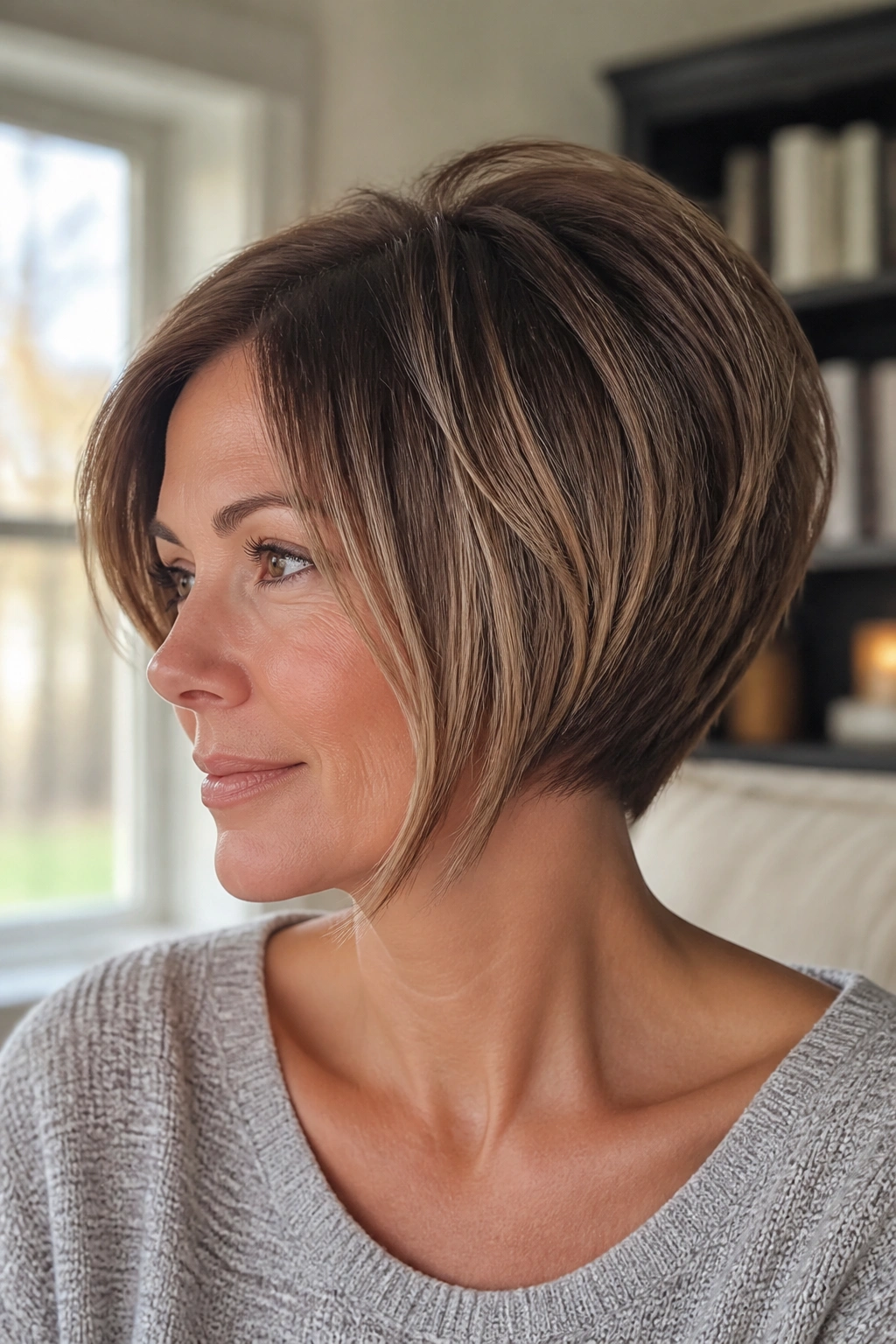
Why do wedge bobs keep coming back? Because they solve a real shape problem. The back rises gently, the neckline stays neat, and the front drops forward enough to keep the face from looking wider.
What to Ask For
Tell your stylist you want a soft wedge, not a helmet. That difference matters. The shortest layers should sit at the nape, then build smoothly toward the crown without a hard shelf around the ears.
A round face usually looks better when the silhouette has a touch of lift above the occipital bone and less fullness through the cheeks. This cut gives you that without going extreme. It is polished, but not stiff.
One sentence matters here: keep the sides close and the crown a little taller. That balance is what gives the wedge its shape.
4. Textured Pixie-Bob
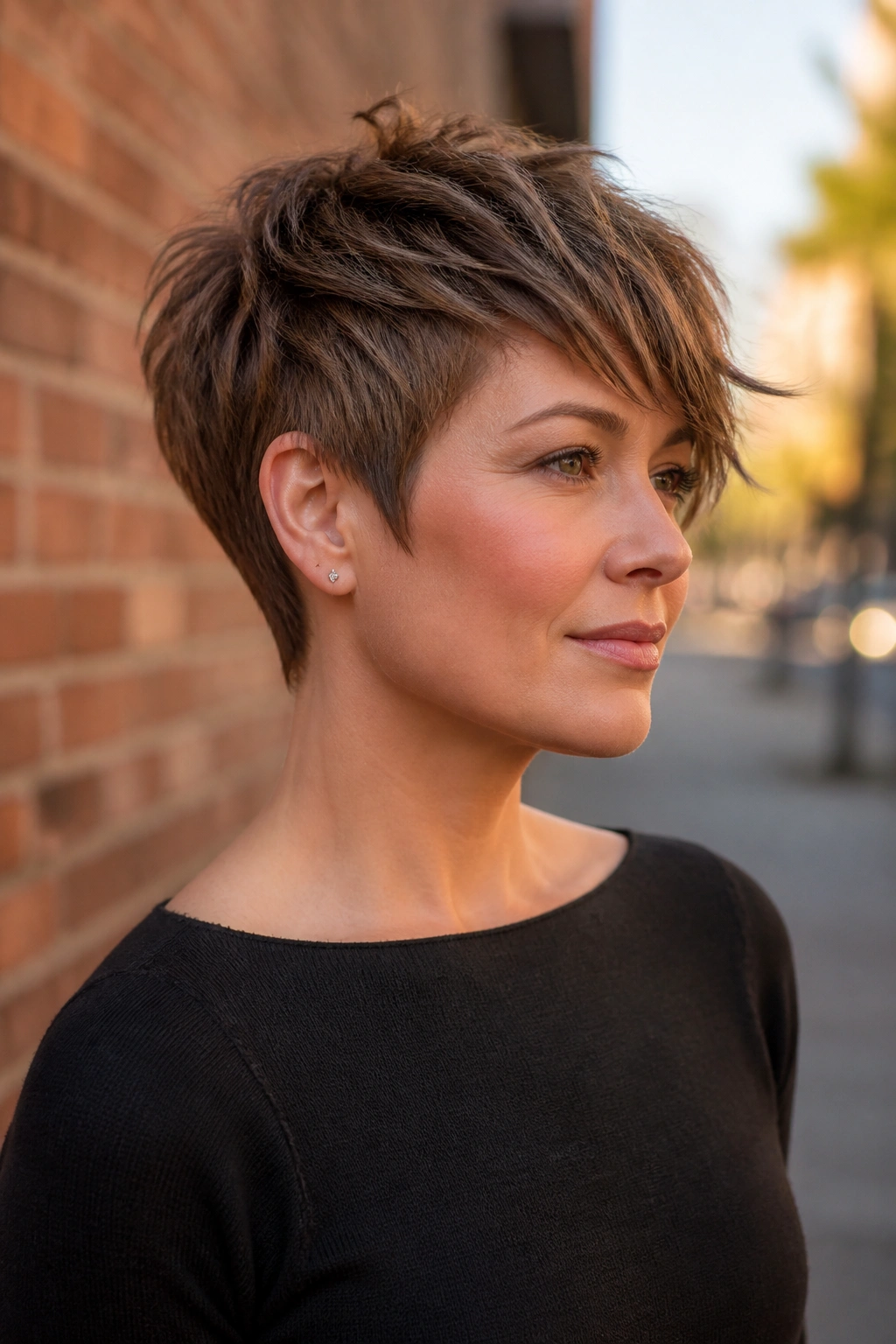
I’ve seen this cut rescue hair that was stuck between pixie and bob lengths, and it works because it never lets the sides get too bulky. The back stays short, the top gets a little movement, and the fringe can sweep across the forehead instead of stopping flat.
The trick is texture, not mess. Ask for choppy ends around the crown and a clean taper at the nape. If the stylist leaves too much width over the ears, the roundness shows up fast. If the top is lifted with a bit of mousse or root spray, the whole face reads longer.
A pixie-bob is one of those styles that can look expensive without trying hard. That is rare. It also grows out fairly well if the perimeter stays controlled.
5. Collarbone Graduated Lob
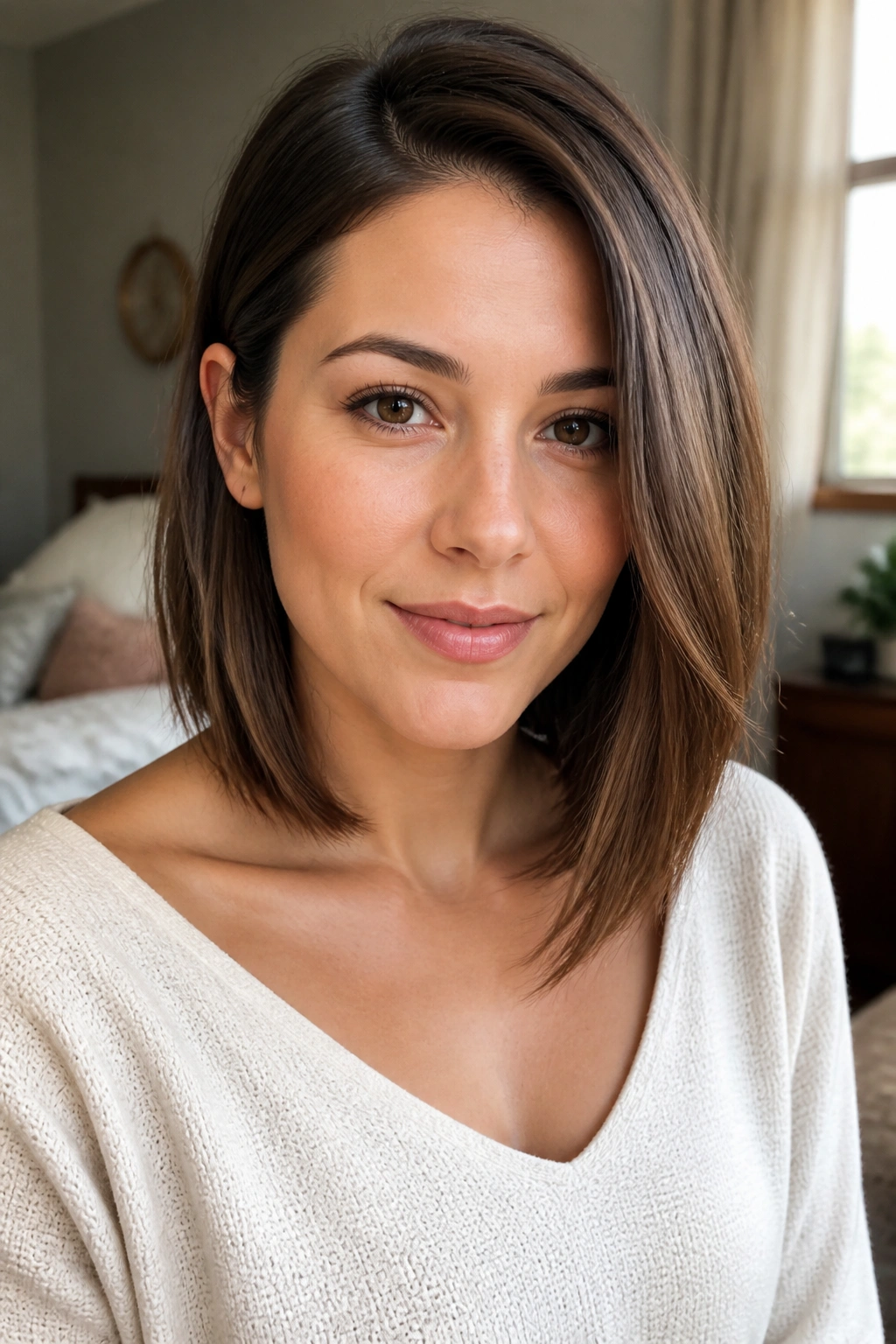
This is the safe bet when you want movement and length at the same time. The collarbone is a sweet spot for round faces because it sits below the cheeks, which gives the face room to breathe.
The graduation here should be subtle. You do not need a dramatic stack. You need internal lift, a little more length in the front, and enough shape to keep the ends from hanging like one heavy curtain. That’s the mistake people make with medium-length cuts: they leave too much weight at the exact place they are trying to slim.
Tuck one side behind the ear and let the other side fall forward. That small asymmetry changes the read of the whole cut. It feels simple. It works.
6. Asymmetrical Graduated Bob
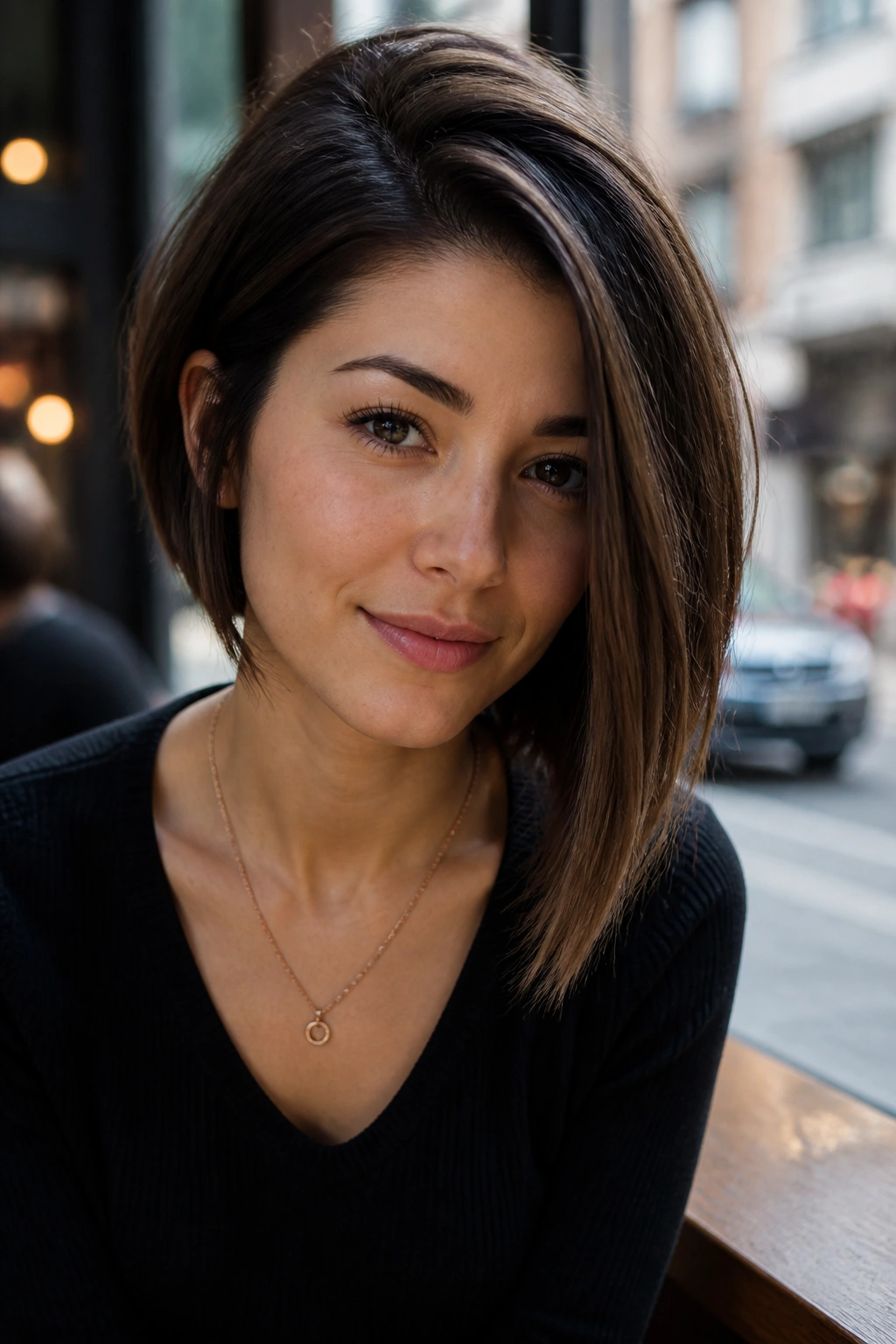
A symmetrical bob can be lovely, but on a round face it can feel too even, too neat, too boxed in. An asymmetrical version breaks that circle immediately.
The longer side does the lengthening. The shorter side keeps the shape from dragging down the face. A difference of even 1 to 2 inches can be enough, especially if the longer side falls just past the jaw. That little offset gives the cut energy and keeps it from sitting flat.
Who should try it? Anyone who wants edge without sacrificing polish. It’s especially good if your hair has a natural side part and stubbornly refuses to sit in the center. Let it be what it already wants to be.
7. Curly Graduated Bob
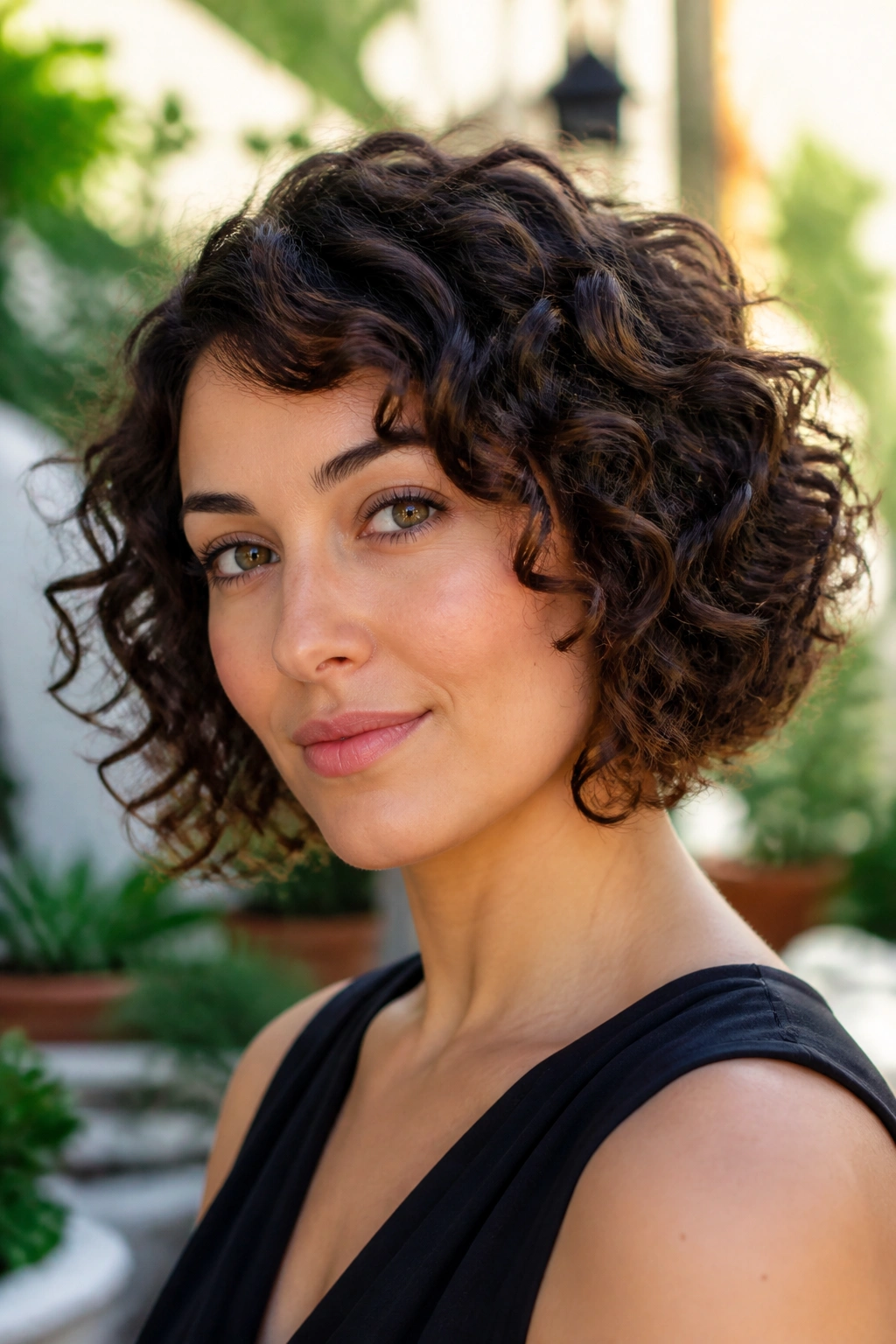
Curly hair changes the rules a bit. If the graduation is cut the wrong way, the sides puff out and the face looks wider. If it’s cut well, the curls stack in a clean shape and the whole head looks lighter.
The Curl-by-Curl Difference
Dry cutting helps here. Curls spring up, sometimes a lot, and a stylist who cuts them wet can miss how much space they actually take. The shortest layers should support the crown, while the perimeter stays slightly longer than you think you need.
Use a diffuser on low heat and stop scrunching when the curls are about 80 percent dry. That keeps the shape from turning into a halo around the cheeks. A curl cream with a light hold is enough; heavy butter or thick oils can weigh the whole cut down.
Good sign: the curls sit on top of each other, not out to the sides.
8. French Bob With Hidden Graduation

A French bob can be tricky on a round face if the fringe is heavy and the sides are too wide. Done right, though, it gives you a neat little frame with just enough lift in the back to keep the shape lively.
The “hidden” part matters. You do not want obvious stacking. You want a short back that curves under cleanly, a soft fringe that stays airy, and edges that stop before the cheeks take over the frame. If the bangs are too dense, the forehead disappears and the face can look shorter. Keep them light.
This cut suits straight to wavy hair best. It has that easy, lived-in feel people like, but it still needs precision in the nape. That part is not optional.
9. Shaggy Graduated Lob
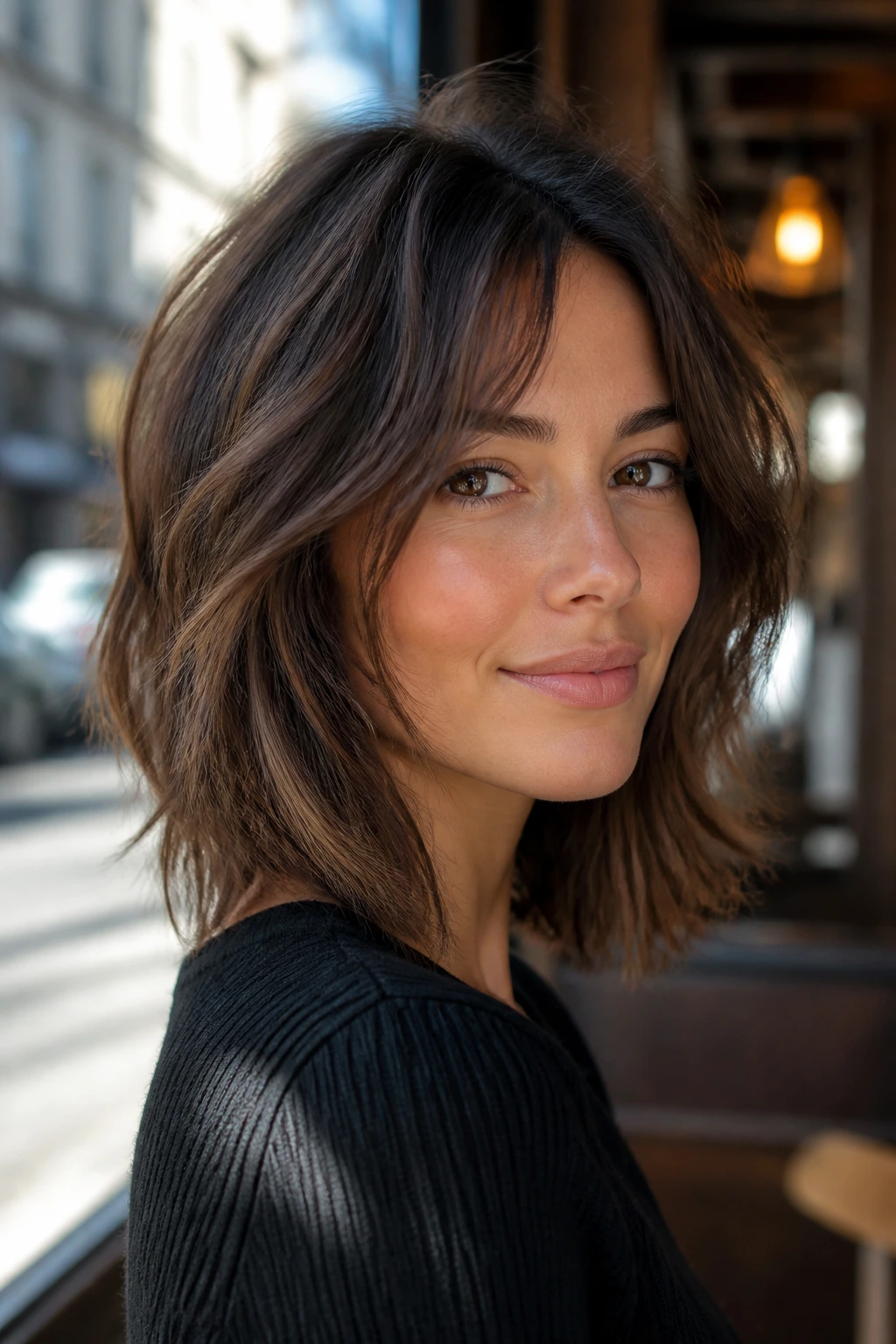
A shaggy lob gives round faces some breathing room, as long as the layers are placed with care. The danger is a lot of volume right at the cheeks. The fix is simple: keep the shape soft at the top, then let the movement live lower down.
What Makes It Different
Unlike a blunt lob, this one has broken-up ends and loose, touchable layers. The graduation underneath keeps the bottom from looking thick and square. The shagging on top gives the hair movement without making the crown look flat.
If you style it, bend a few pieces away from the face with a flat iron and leave the rest a little undone. Don’t curl everything the same direction. That’s when shag cuts start to look dated. A small amount of texturizing spray at the ends is enough.
This is one of the better graduated haircuts for round faces if you like relaxed hair that still has shape.
10. Sleek A-Line Bob
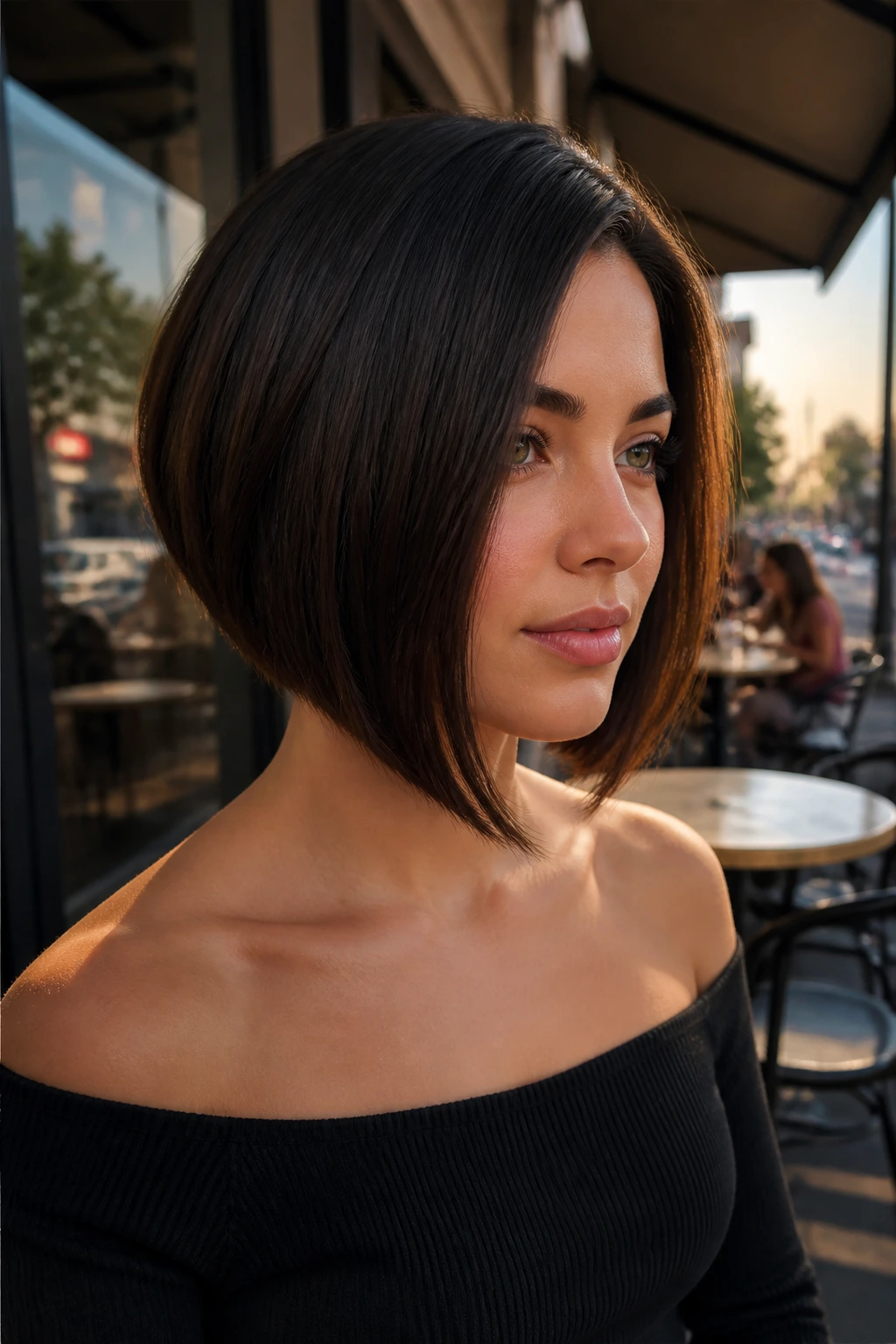
The A-line bob is the neat cousin of the stacked bob. The back is shorter, the front is longer, and the entire shape moves forward in a clean diagonal that helps a round face look narrower.
What I like here is the sharpness. A sleek finish gives the haircut a clear edge, and that edge helps balance softness in the face. Keep the front pieces smooth and let them sit below the chin. If they land right at the cheek, the line gets choppy in a bad way.
This cut is for someone who likes control. It does not want a lot of fluff or separation. It wants shine, a clean part, and precise ends. If your hair is naturally straight, great. If not, you’ll need a round brush or a flat iron to keep the angle visible.
11. Jaw-Skimming Crop With Tapered Nape
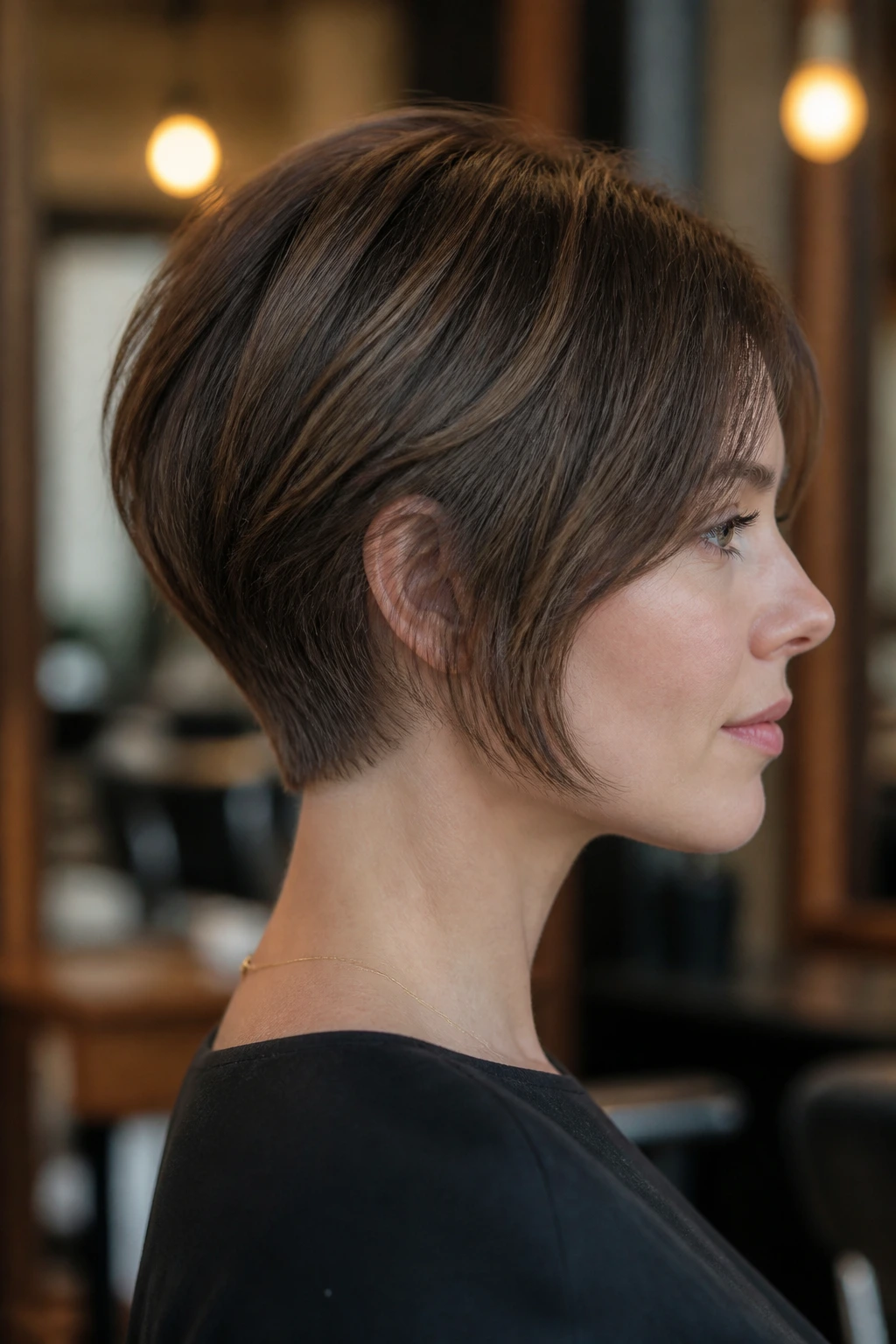
Can a very short cut work on a round face? Absolutely, if the nape is tight and the top carries enough shape to keep the eye moving upward.
The Three Length Zones That Matter
The nape should be the shortest point. The crown should have some lift. The side pieces need to skim the jaw instead of sitting on it. That’s the whole formula, and it’s easier to get right than people think.
Ask for soft sideburns rather than hard edges. Hard edges can make the cut feel boxy. A tapered nape gives you a cleaner neck line, which matters more than people realize when the face itself already has soft curves.
- Tight at the back of the neck
- A little height at the top
- Side lengths that brush the jaw, not stop on it
- Minimal bulk around the ears
12. Layered Lob With Face-Framing Pieces for Round Faces

This is one of the easiest graduated haircuts for round faces to live with day to day. The length stays around the collarbone, which gives you room to tuck, clip, or wave it, and the face-framing pieces carve a cleaner line along the cheeks.
I like this cut because it doesn’t try too hard. The graduation can stay hidden under the top layer, so the shape looks soft rather than chopped. If your hair is medium to thick, this is a good way to remove weight without losing the feeling of hair around your face.
The face-framing pieces should start below the cheekbone, not at it. That matters. Start them too high and you end up emphasizing the widest part of the face. Start them lower and the whole style starts to lengthen the outline.
13. Wavy Graduated Bob
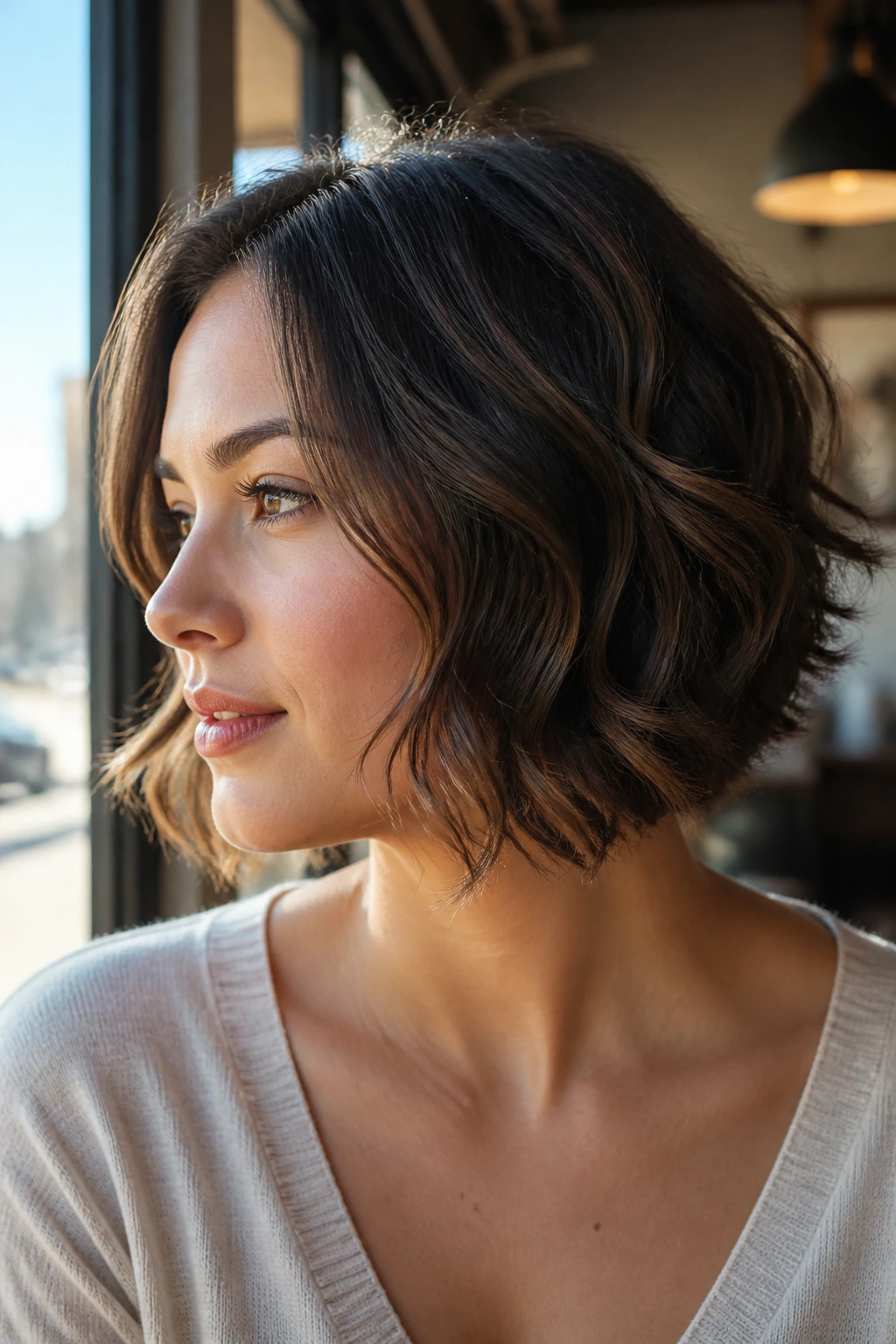
Waves can make a round face look wider if they puff out at the cheeks. That’s the danger. The fix is to keep the wave pattern lower and the graduation neat in the back.
How to Style It
Use a medium-barrel iron if you need to set waves, and start the bend below the cheek line. Let the top stay smoother. That contrast keeps the face from getting boxed in by too much movement at the sides.
A light mousse on damp hair helps the back keep its shape. Too much cream and the bob collapses. Too much spray and it turns crunchy. A small amount goes a long way here.
This cut looks best when the wave bends are irregular. A little unevenness makes the haircut feel modern without making it messy.
14. Stacked Crop With Long Side Fringe
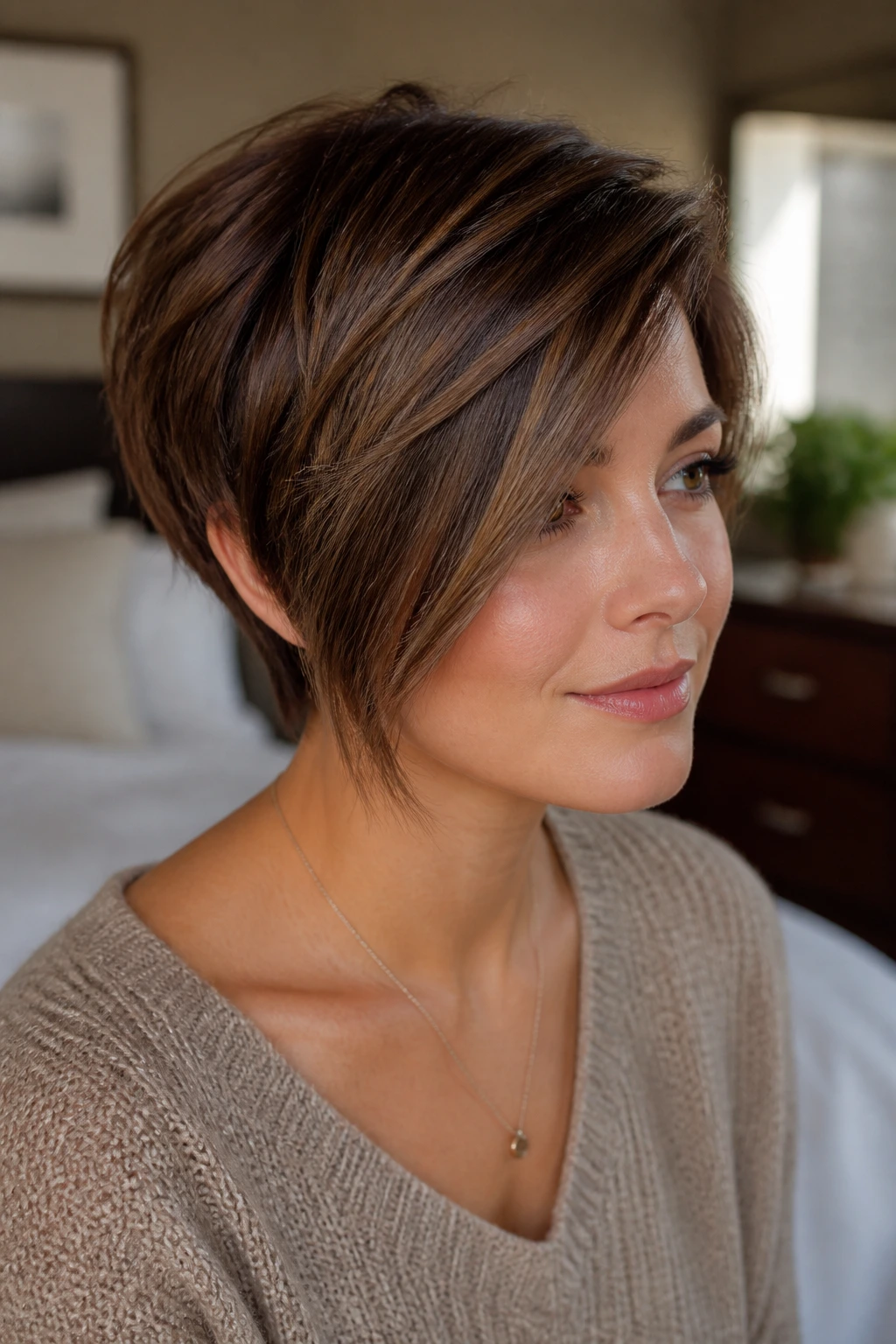
A long side fringe changes the whole mood of a cropped cut. It breaks up the symmetry of a round face and gives you a diagonal line across the forehead, which helps the face look longer and less full.
The stack at the back keeps the crown lifted, while the fringe softens the front. That combination is useful if your cheeks are fuller than your jaw. It keeps the cut from sitting like a little round cap on top of the head.
Unlike a blunt fringe, a side fringe gives you room to play. You can sweep it high, let it drop lower, or pin it back on one side. Flexibility matters when your haircut is short. It matters even more when you’re trying to avoid width at the sides.
15. Razor-Cut Graduated Lob

A razor-cut lob can look airy and sharp at the same time, which is a rare combination. The razor softens the ends and takes the hard weight out of the line, so the haircut moves instead of sitting in one block.
What to Watch For
This cut works best on hair that isn’t already frizzy or fragile. A razor can rough up weak ends fast, and that is not the look you want. On healthy medium or thick hair, though, the result can be lovely: soft edges, clear length, and less bulk around the face.
Keep the layers long and low. Short razor layers near the cheek can make a round face look broader. Long, feathered pieces below the cheekbone keep the outline leaner.
My take: this is a strong choice if you want movement without the shaggy look of too many layers.
16. Volume-Top Pixie Bob
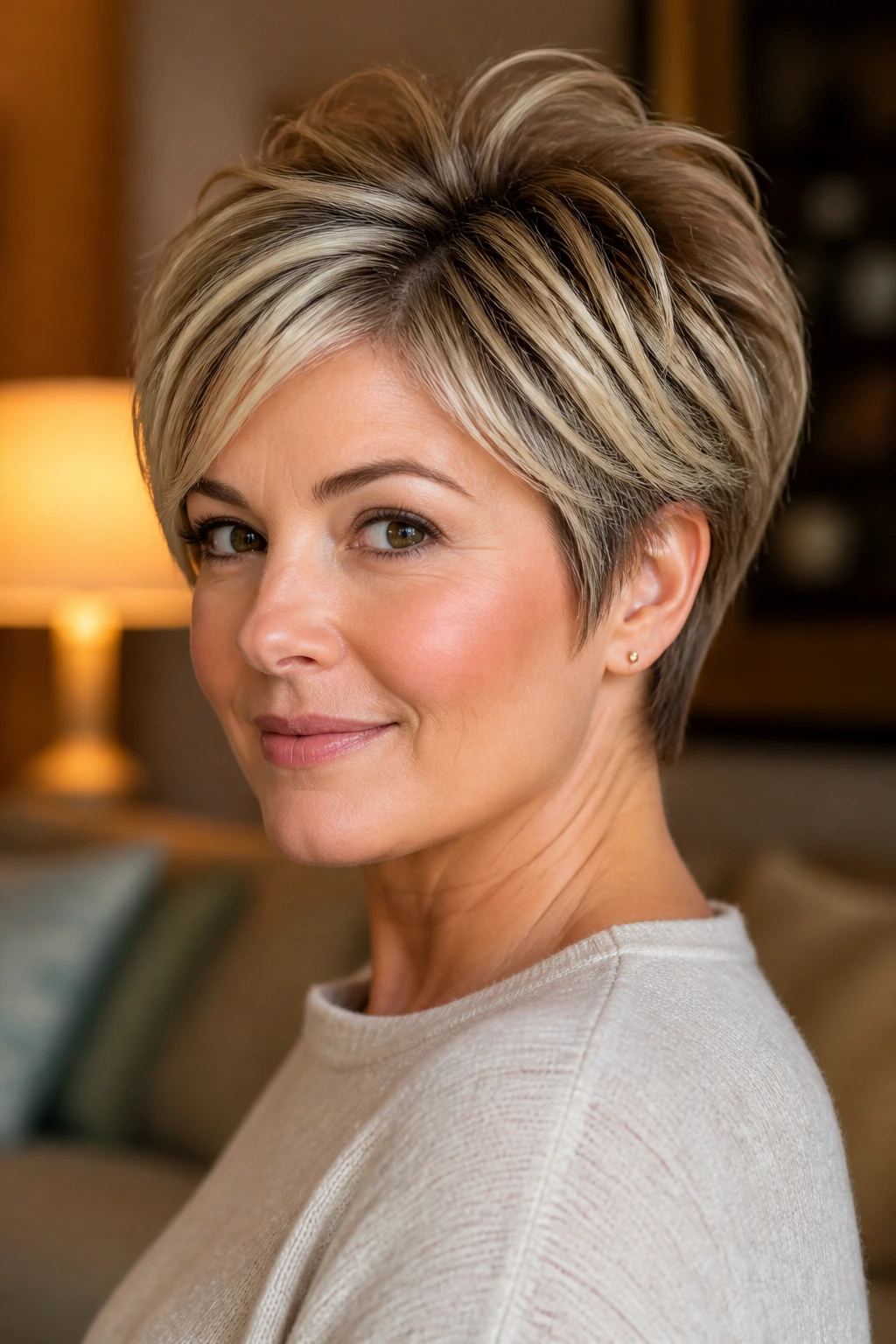
The crown is the star here. A pixie bob with real lift on top changes the face shape fast because it adds height where a round face benefits most.
The sides should stay slim. Not flat, slim. There’s a difference. Flat sides can make the cut look lifeless, but bulky sides make the face wider. A little taper through the temples and behind the ears keeps the outline clean.
This cut also saves time in the morning. A bit of root lift, a quick finger-dry, and a small amount of matte paste can be enough. If you like short hair and hate long styling sessions, this one deserves a hard look.
17. Blunt Bob With Nape Graduation
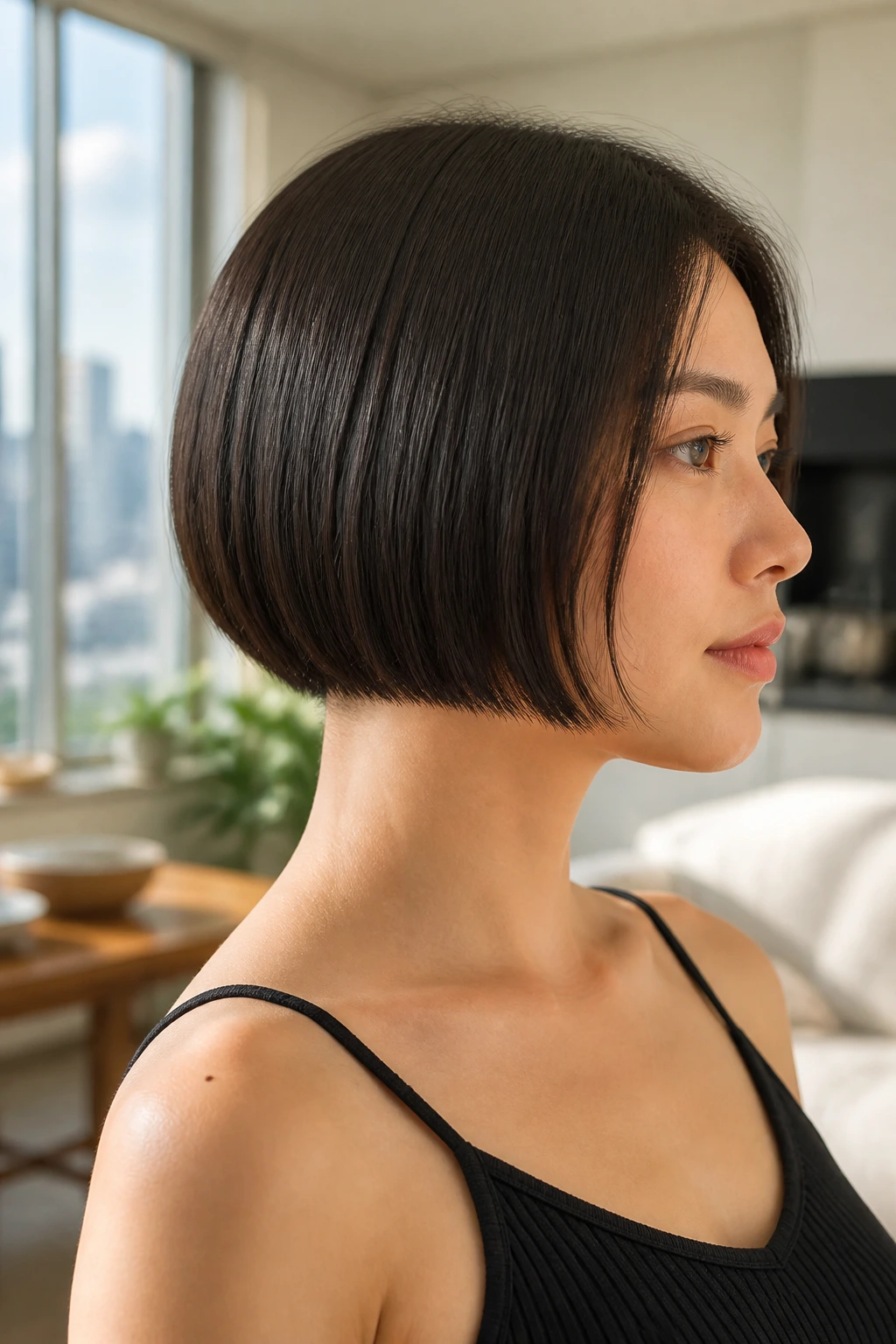
A blunt bob does not sound like an obvious match for a round face, and sometimes it isn’t. The difference here is the hidden graduation at the nape, which gives the cut a cleaner fall and keeps the back from looking heavy.
The front should stay crisp. The line should be strong. That said, the shape needs enough internal shaping to avoid turning into a block. A tiny bit of taper under the top layer can make the whole cut sit better on the head.
This is a good option if you like a polished look and don’t want too much texture. It also works well for fine hair that needs a stronger edge to look full without puffing out.
18. Shoulder-Length Cut With Internal Graduation
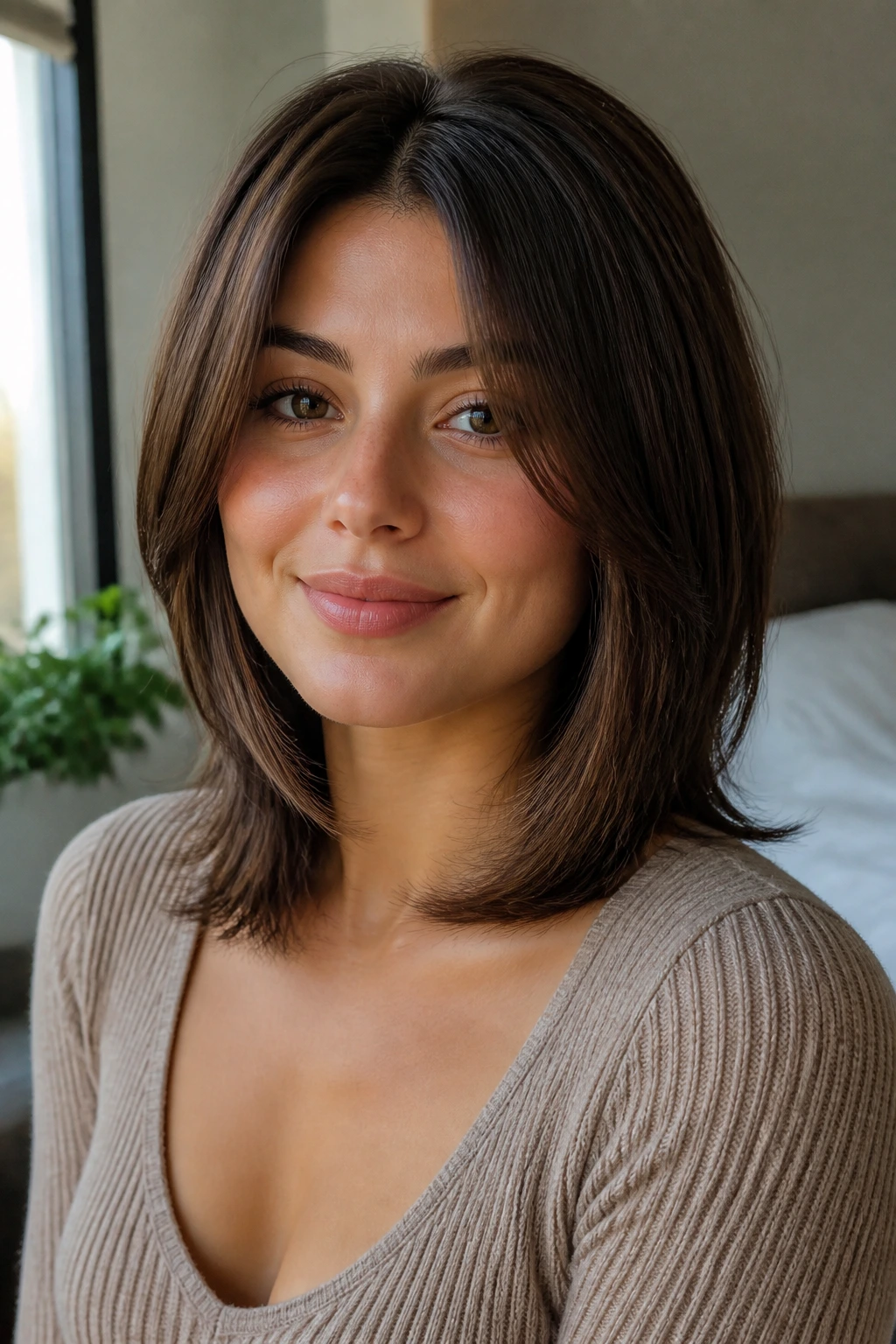
Need length, but not the heaviness that often comes with it? Internal graduation is the answer. The outer shape stays shoulder length, while the inside is shaped so the hair falls with more lift and less bulk.
Why This Cut Stays Flattering
The length lands below the widest part of the face, which already helps. The internal layers stop the bottom from looking like a thick curtain. That matters a lot if your hair is dense or slightly wavy.
Ask for soft face-framing pieces that begin under the cheekbone and blend down toward the collarbone. You want a gentle slope, not a hard chunk of layering. That is the difference between flattering and fussy.
It’s one of the more forgiving graduated haircuts for round faces, especially if you want hair you can still tie back.
19. Tapered Wedge Cut
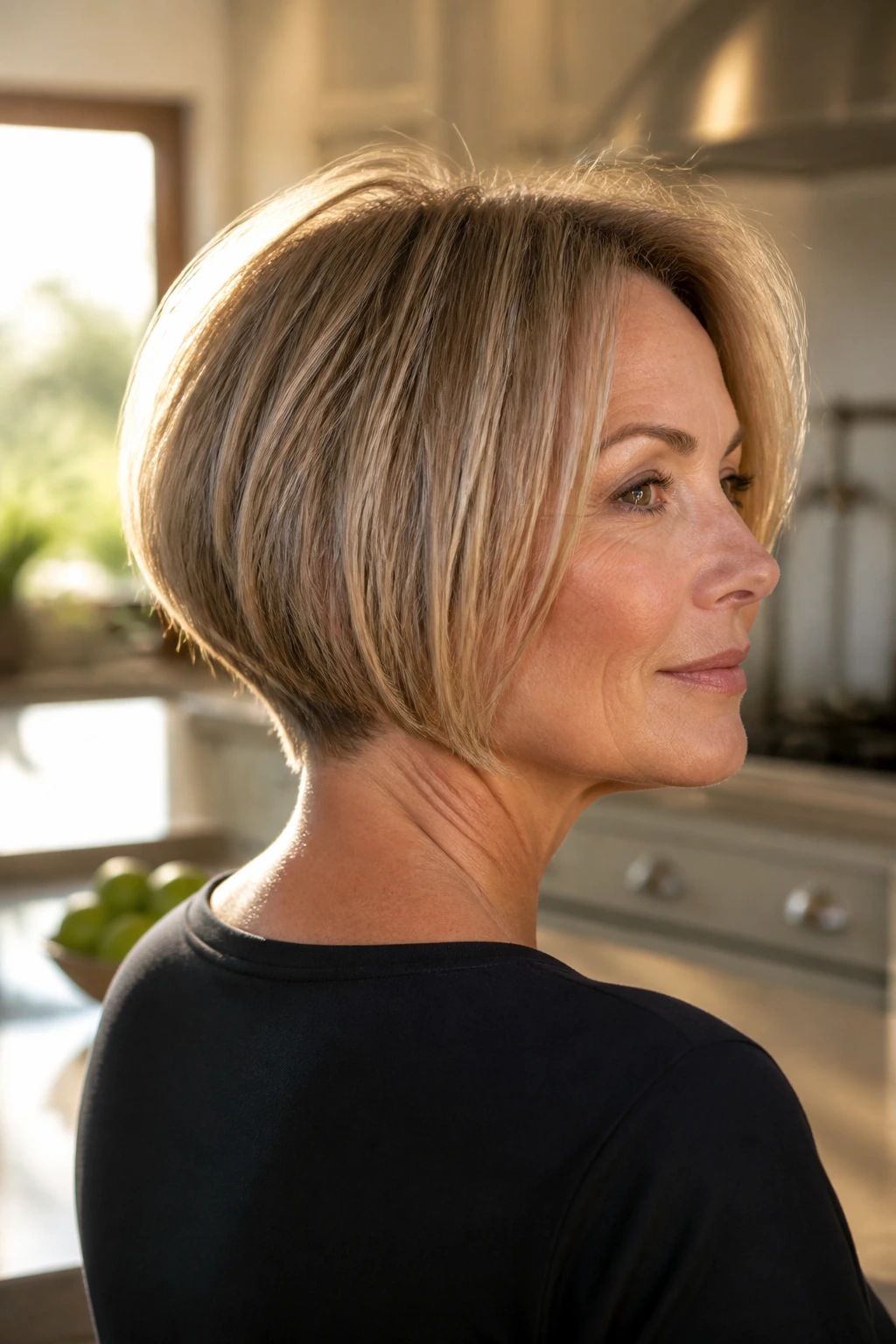
Picture a cut that hugs the head, lifts at the back, and narrows toward the jaw. That is the wedge, and it has been doing useful work for round faces for a long time.
The reason is simple. The cut keeps bulk away from the cheeks and directs the shape upward. If the stack is clean, the neck looks longer and the face looks a bit more oval. That is the entire trick, and it’s a good one.
- Short, neat nape
- Gentle rise through the crown
- Longer front corners for balance
- Minimal puff at the sides
One sentence is enough here: the back should feel carved, not teased.
20. Chin-Length Bob With Deep Side Part
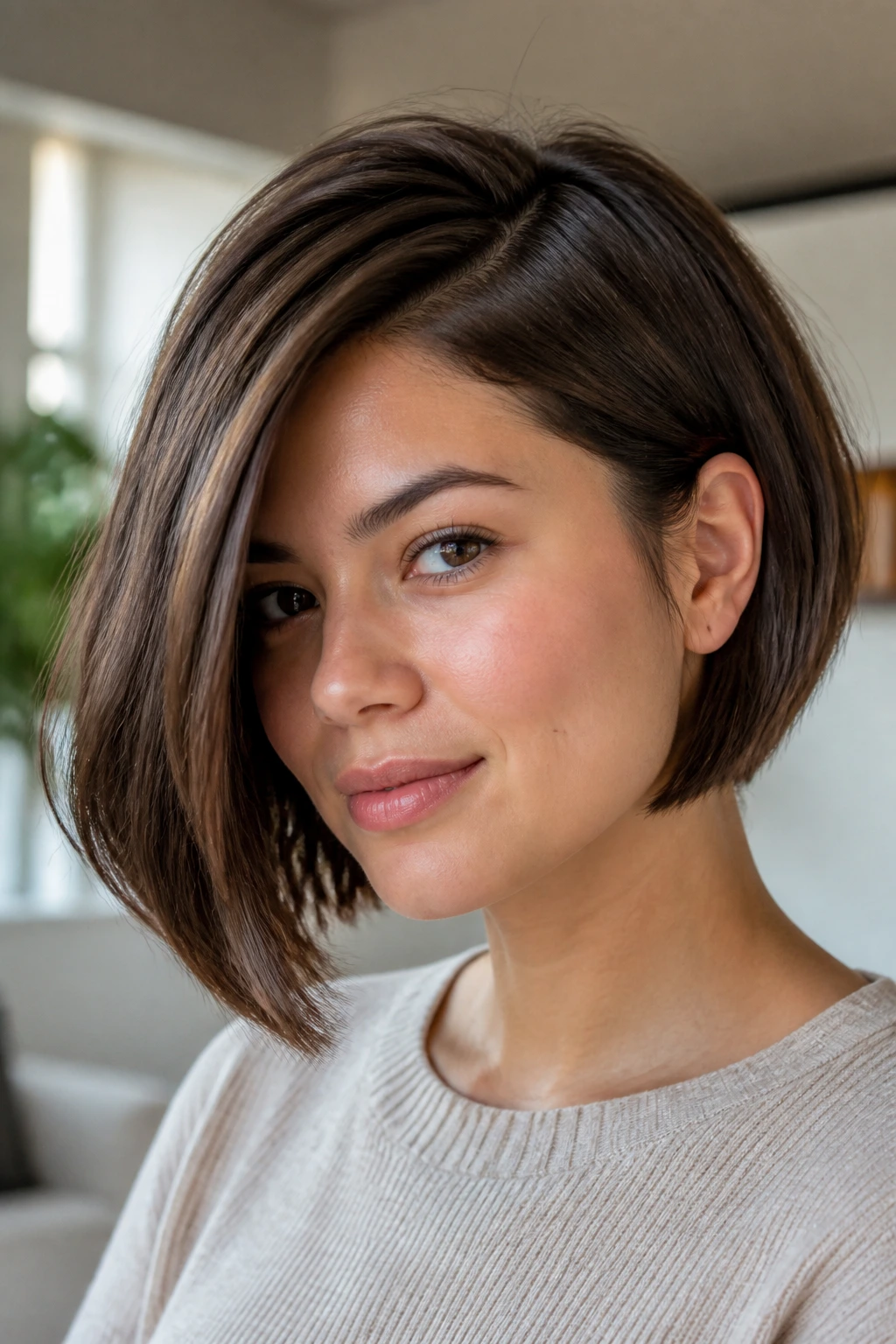
A deep side part can rescue a bob that feels too even. The part creates a diagonal line, and diagonal lines are friendly to round faces because they break up the circle.
The bob itself should sit right at the chin or just below it, with the longer side moving past the jaw. That keeps the face from reading wider. If the ends are too blunt, the cut can feel boxy, so I’d keep a slight bend through the front.
This is a strong choice if your hair naturally falls to one side anyway. Fight the growth pattern and you spend your whole day adjusting. Work with it and the haircut starts to feel easy.
21. Tousled Graduated Crop
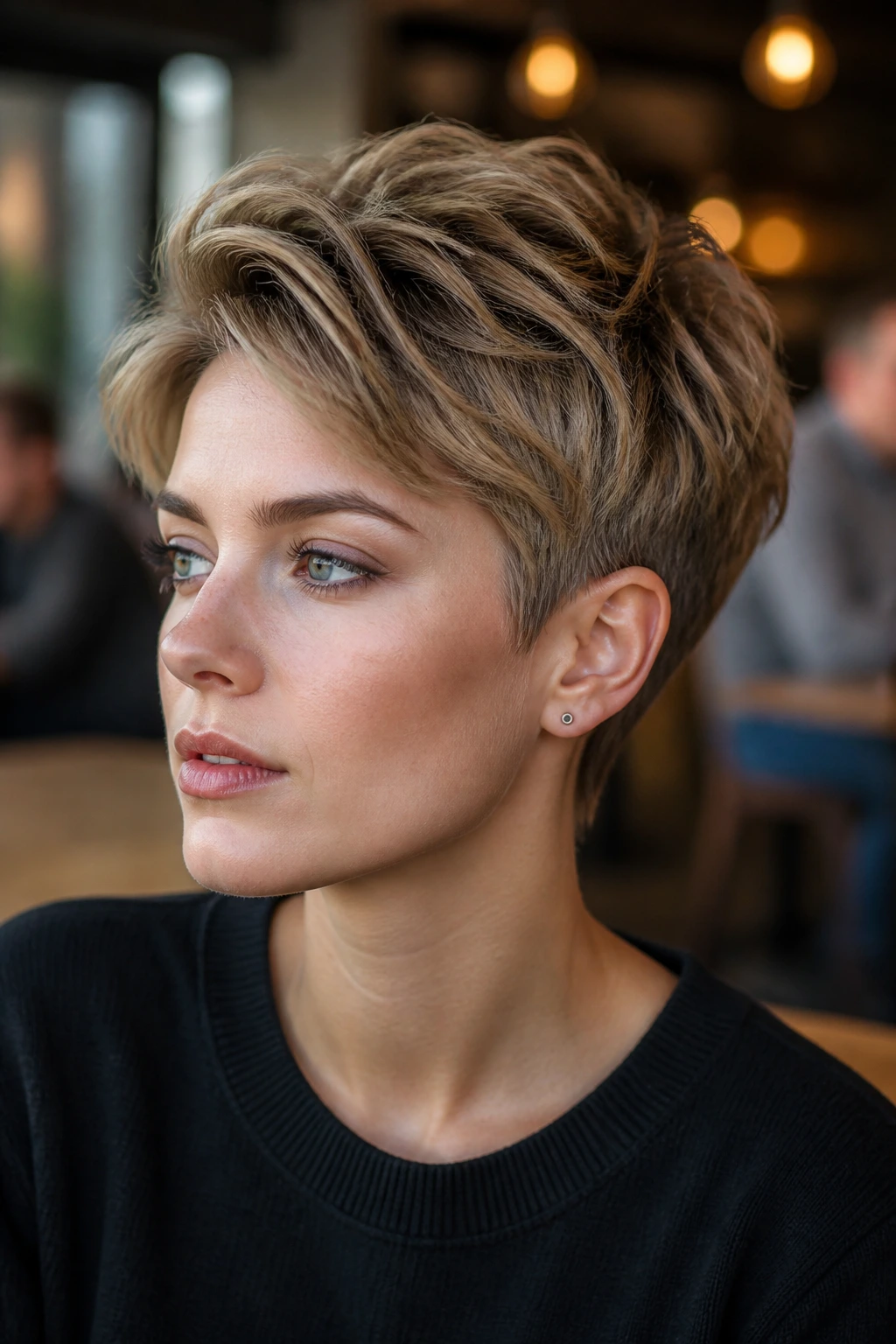
A tousled crop sounds casual, but the shape underneath still needs discipline. The back has to be clean, the top needs a bit of height, and the sides should stay controlled so the face doesn’t get overwhelmed by fluff.
How to Keep It Soft, Not Puffy
Use a small amount of mousse on damp hair, then rough-dry with your fingers until the roots are about 90 percent dry. After that, add texture with a paste or spray just on the ends. Too much product makes the crop sit heavy, and heavy is the enemy here.
This cut suits people who don’t want a polished blowout every morning. It looks better with a little life in it. A perfectly smooth finish can make it feel stiff.
The shape is short, but the attitude is light.
22. Long Pixie With Sweeping Fringe
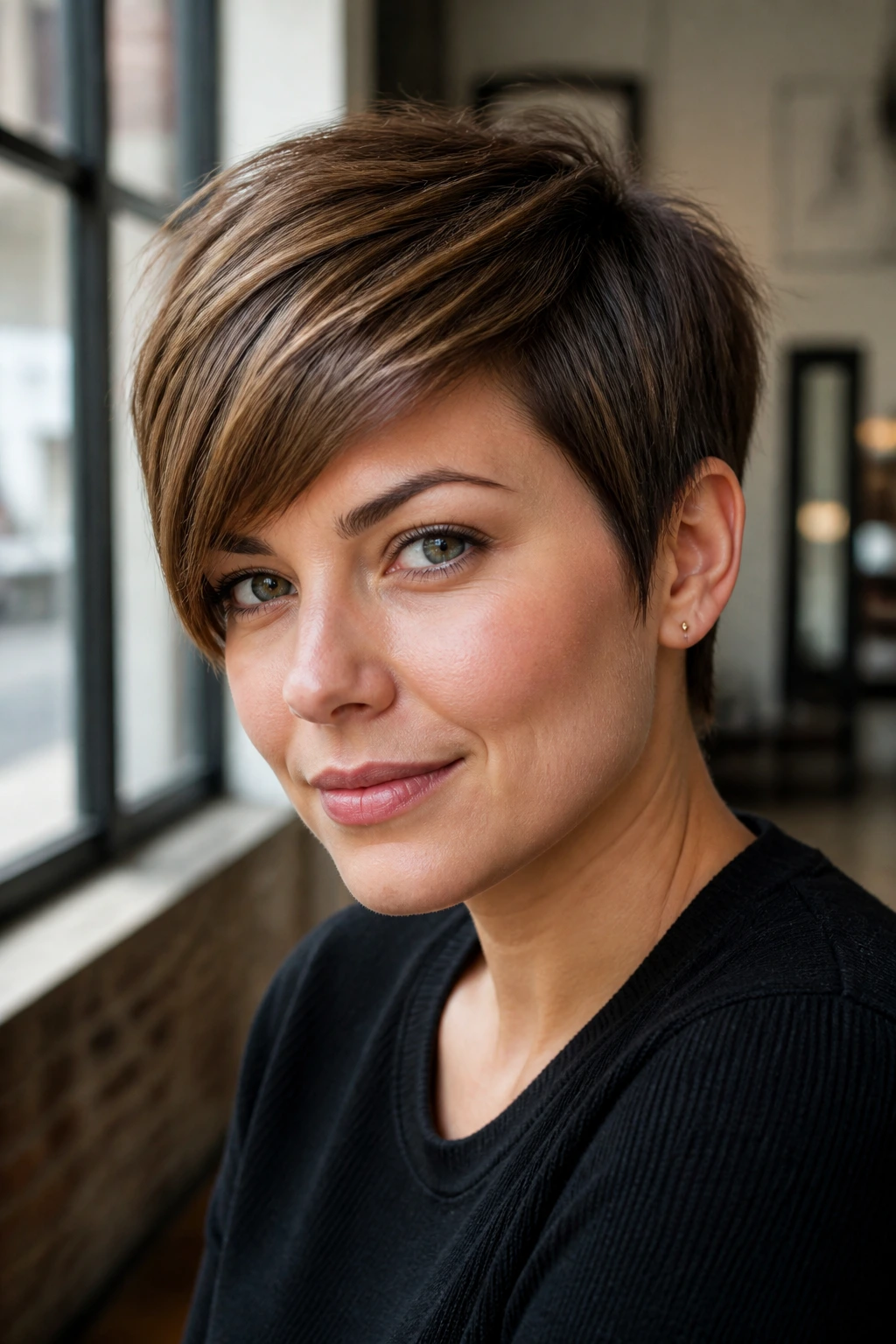
If you want short hair without going all the way in, this is a smart middle ground. The fringe sweeps across the forehead and pulls the eye diagonally, while the back stays trimmed enough to keep the outline neat.
The sides should be narrow, not flat. A little bit of texture on top keeps the cut from sitting like a cap. That’s the risk with longer pixies on round faces: too much width on the sides, and the face looks fuller than it is.
This style works especially well if you like earrings, glasses, or a visible neckline. It puts the focus where you want it, not on the cheeks.
23. Weightless Graduated Bob for Thick Hair
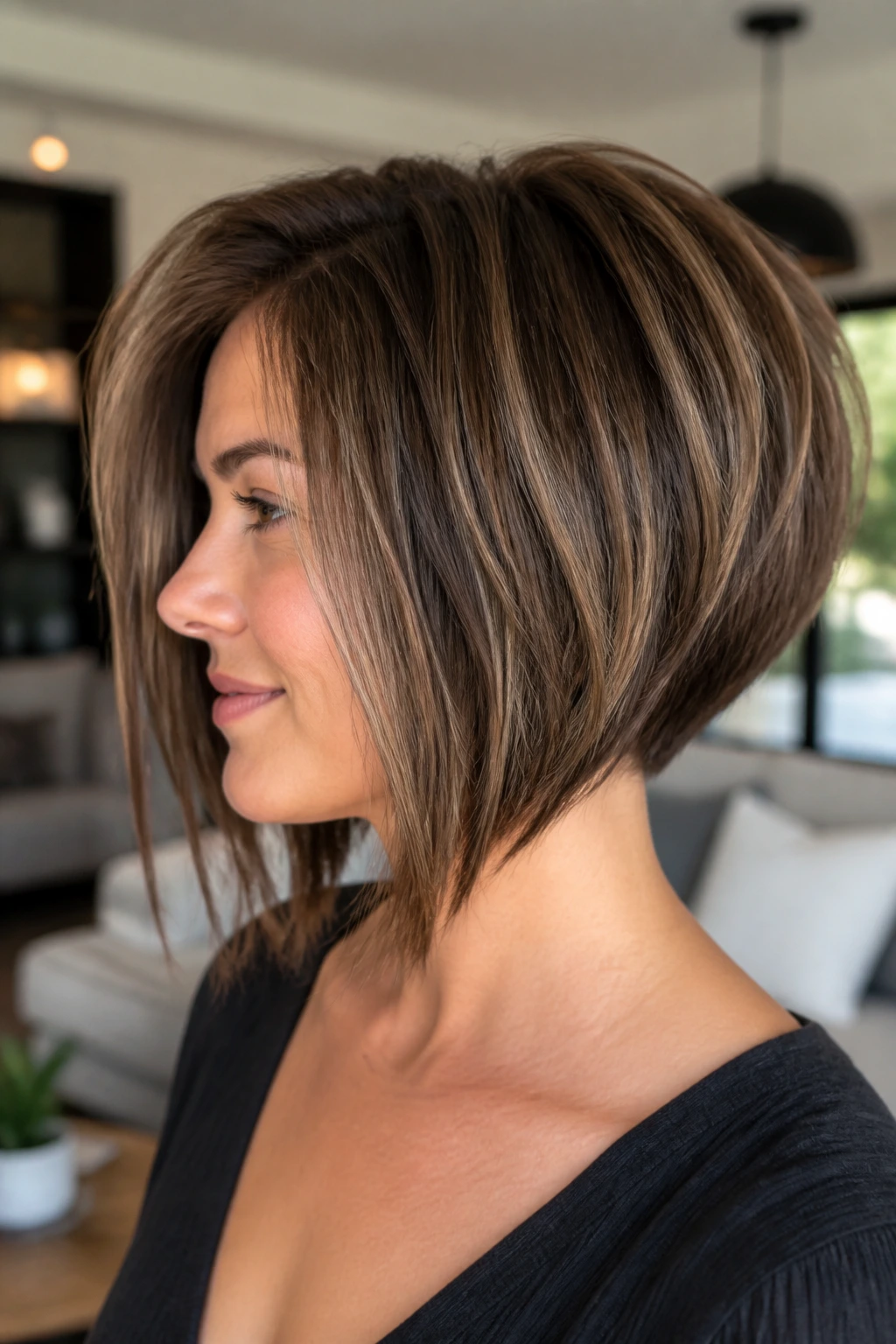
Thick hair needs a different kind of graduation. Too much bulk and the whole style turns into a mushroom. Too many short layers and it frizzes outward. The sweet spot is a controlled stack with weight removed from the inside, not hacked off the outside.
What To Ask Your Stylist
Ask for internal debulking, a compact nape, and longer side pieces that stay below the cheekbone. If your hair is dense, the stylist may also need to remove some weight under the top layer so the bob doesn’t poof at the sides.
- Keep the perimeter clean
- Remove bulk from the interior, not the edges
- Leave the front long enough to skim the jaw
- Dry the hair downward to keep the sides narrow
This is one of the best graduated haircuts for round faces when the hair itself is doing too much. Good shape beats heavy texture every time.
24. Airy Graduated Lob for Fine Hair
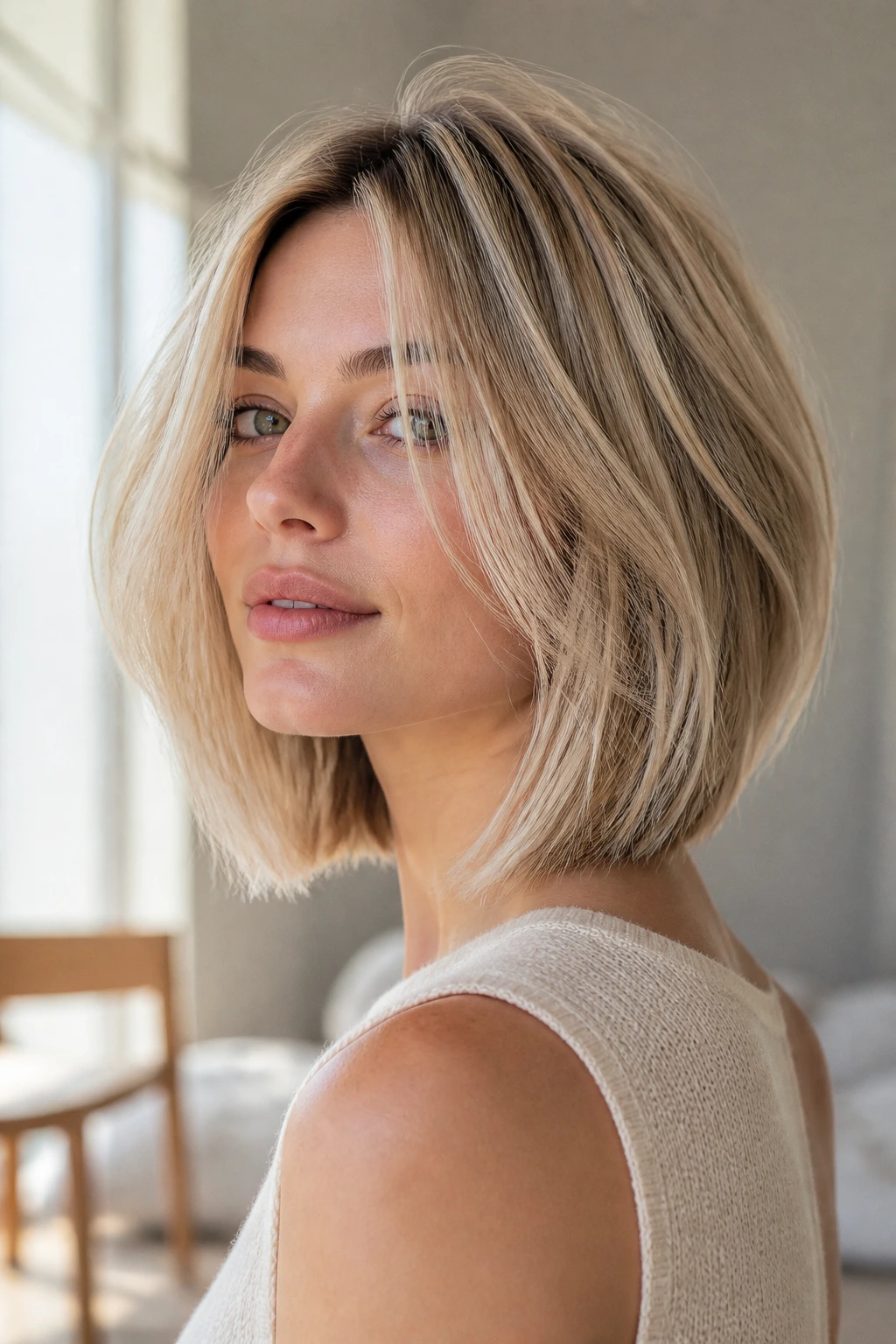
Fine hair needs a different approach. Too much layering can make the ends look thin and stringy, which is not flattering on any face shape. A light graduation gives you lift at the back without stripping away the fullness you need.
What makes this cut work is restraint. Keep the layers soft and the ends blunt enough to hold a line. That little bit of structure makes the hair look thicker while still giving the face some length. If the front lands at the collarbone, even better.
Use a root spray before blow-drying and lift the roots with a round brush. You do not need a lot of product. Fine hair goes limp fast.
A small amount of movement is enough.
25. Graduated Cut With Curtain Bangs

Curtain bangs are one of the easiest ways to soften a round face without hiding it. They open up the forehead, create a vertical path down the center, and blend into the sides of a graduated cut without making the face feel boxed in.
The bangs should start around the cheekbone and drift longer toward the jaw. If they’re cut too short, they can make the face look shorter. If they’re too heavy, they can fight the graduation under the hair. Keep them airy and let them move.
This combo is best on medium-length hair that you actually style. A quick bend with a round brush makes the whole cut look deliberate. Let them fall flat, and you lose the shape.
26. Graduated Cut for Natural Curls
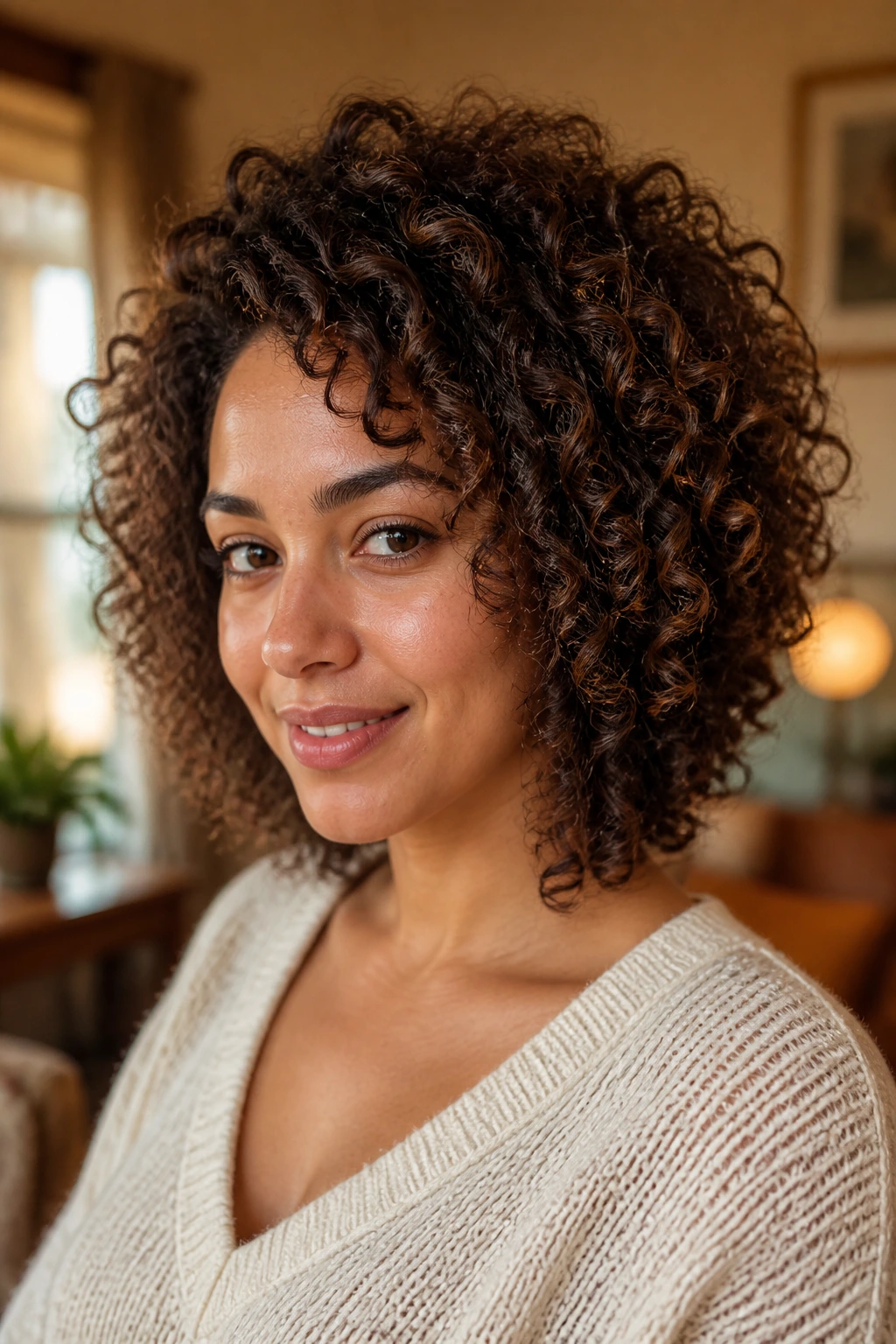
Curly hair needs shape, not just length. A good graduated cut for natural curls keeps the crown lifted, the sides controlled, and the lower curls from swelling out like a triangle.
Why Dry Cutting Matters
Curls shrink. Sometimes a lot. Cutting them wet can lead to surprise bulk around the cheeks once the hair dries. A dry or curl-by-curl cut shows where each curl really sits, which is the only honest way to shape a round face well.
Ask for longer front pieces and a soft stack in the back. The curls should fall in layers that follow their own pattern, not force themselves into a straight line. That is where a lot of curly cuts go wrong.
Diffusing on low heat and stopping before the hair is fully dry keeps the shape springy instead of frizzy. A curl cream with a light hold is enough. Heavy products flatten the lift you want.
27. Inverted Lob With Side Tuck
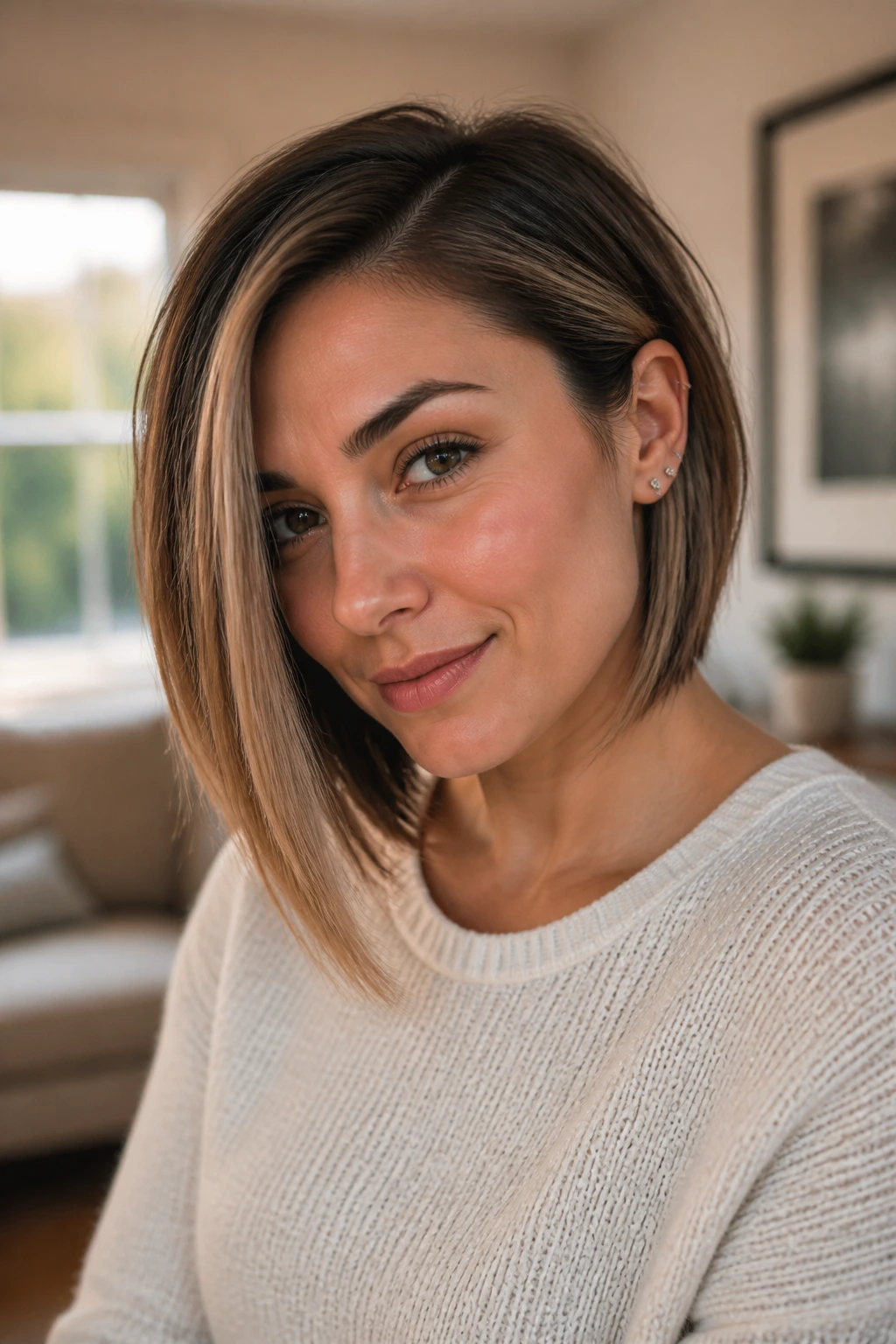
A side tuck can change a haircut more than people expect. When one side gets tucked behind the ear, the face opens up and the opposite side keeps a clean line that lengthens the look.
The inverted lob gives you the structure: shorter back, longer front, and a shape that naturally pulls the eye downward. The side tuck adds asymmetry, which helps round faces by breaking up the symmetry that often makes them look wider.
Use this if you like low-effort styling with a little polish. It works for workdays, dinners, and those days when you want to look like you meant it. A little shine spray on the tucked side can make the whole thing feel finished.
28. Mid-Length Graduated Cut With Long Layers

This is the cut for someone who wants movement without committing to a bob or a pixie. The length usually sits between the collarbone and the top of the chest, which is long enough to feel soft but far enough from the cheeks to avoid width.
The long layers should start low. That matters. If they begin near the cheekbones, the cut can make the face look rounder. Start them below the chin and let them blend down through the ends, and the shape gets a cleaner fall. A center part can work if the front pieces are long enough; a soft side part often gives even better balance.
This version also plays nicely with hair that bends or waves naturally. It does not need perfect styling every day. It just needs the length placed in the right spots. That’s the part people miss when they ask for “layers” without saying where.
Final Note
The best graduated haircut for a round face is rarely the shortest one or the trendiest one. It’s the one that puts the weight in the right place. Shorter at the nape, longer through the front, and enough height at the crown to keep the eye moving.
If you want the easiest salon conversation, ask for a cut that avoids width at cheek level. Say where your hair tends to puff, where it falls flat, and how much styling you’re willing to do. That tells a stylist almost everything they need.
A good graduation should look like it belongs on your head. Not borrowed. Not forced. Just cleaner, sharper, and easier to wear than the haircut you were fighting before.
