



Finding a haircut that actually works with a round face shape is a balancing act. For years, the conventional wisdom was to hide the face behind long, straight curtains or heavy layers, but that approach often just highlights the roundness you might be trying to offset. True balance comes from creating structure, verticality, and movement. When you inject texture into a cut, you aren’t just cutting hair; you are creating shadows, depth, and angles that weren’t there before.
The goal isn’t to change your face shape. It is to work with your features to create a visual illusion of length or sharpness. This is where texture becomes your best asset. By breaking up the solid lines of the hair, you draw the eye toward the detail in the cut rather than the width of the cheeks. Whether you are working with curls, fine straight hair, or coarse waves, the principles of layering and piecey finishes remain the same.
1. The Choppy Pixie
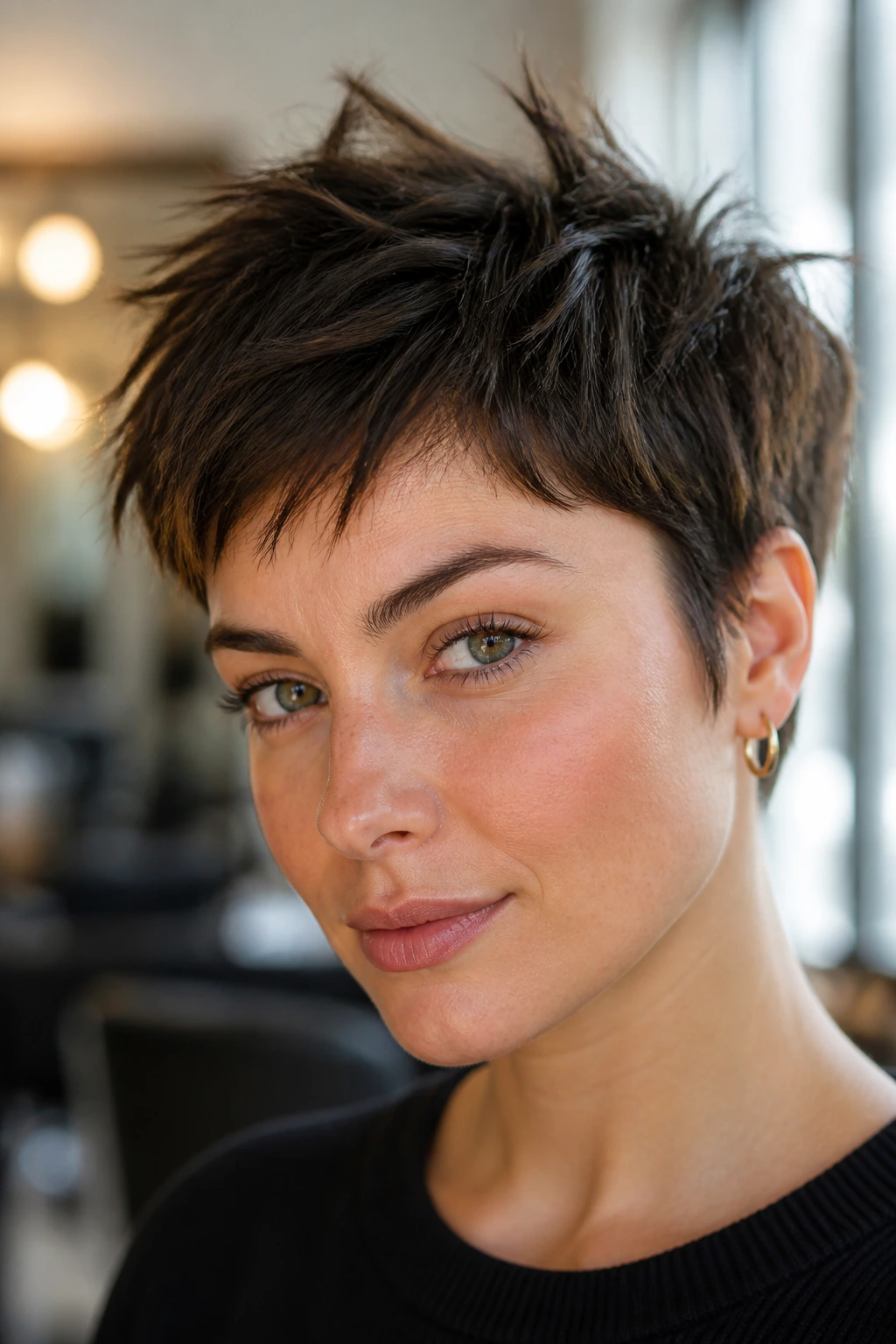
Many people with round faces are told to stay away from short hair, but a choppy pixie is actually one of the most effective ways to build structure. The key is in the crown. You want volume at the top, which draws the eye upward and creates a sense of vertical height.
Why It Works for Round Faces
By keeping the sides tight and the top piecey, you avoid adding width at the ears—the widest part of a round face. The choppy ends create a jagged line that breaks up the softness of the jaw, adding a bit of necessary grit to the overall look.
How to Style It
Use a matte texturizing paste rather than a shiny pomade. Shiny products can make the hair look flat or oily, which defeats the point of the texture. Take a pea-sized amount, rub it between your fingers, and pull the ends of the hair upward and outward to create that messy, intentional “bedhead” vibe.
2. The Long Shag
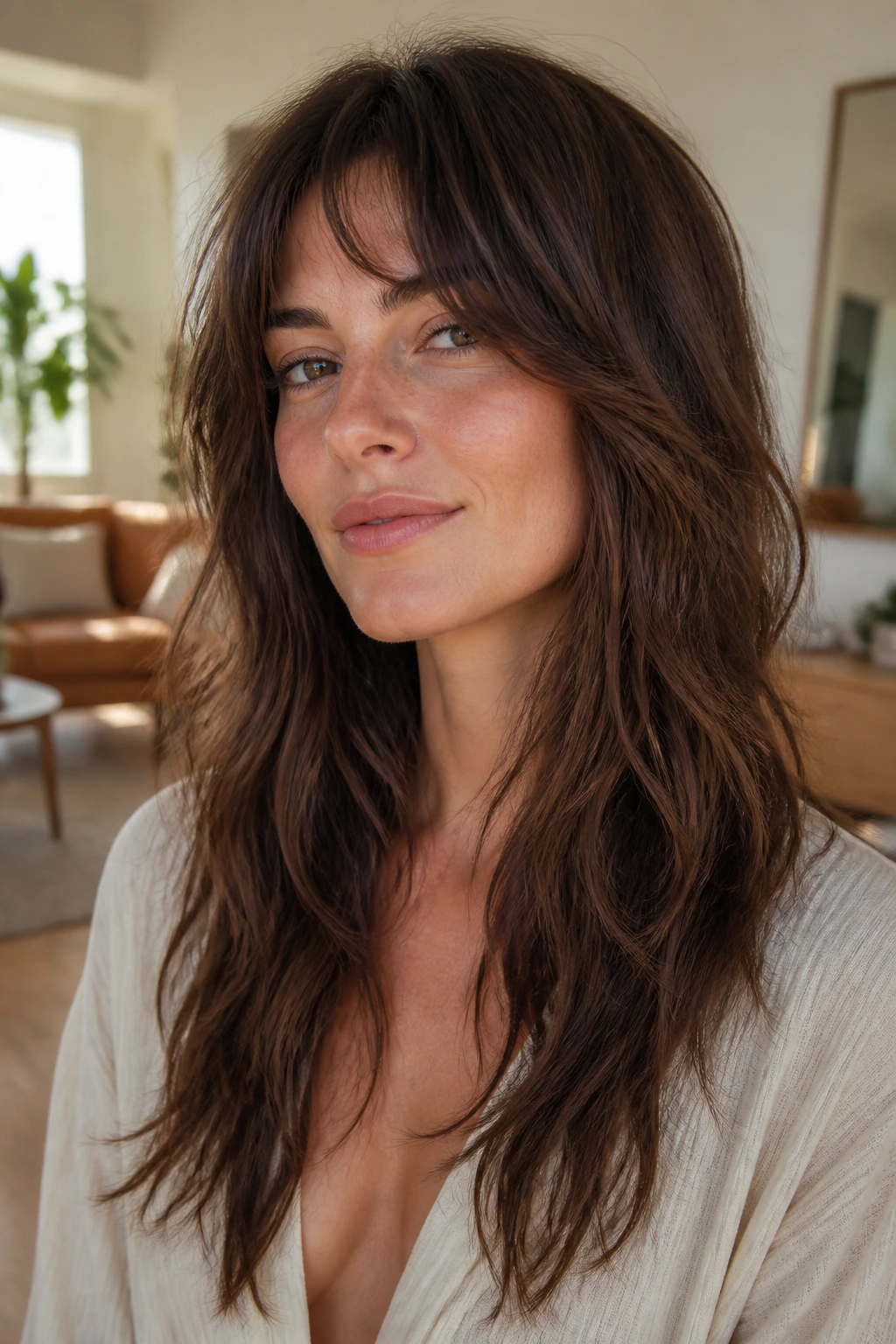
If you love your length, you don’t have to chop it all off. A long shag is a classic for a reason. It incorporates layers starting around the cheekbones and moving down, which effectively creates an “X” shape that frames the face beautifully.
The Mechanics of the Cut
Ask your stylist for “shattered” ends. This technique removes weight from the bottom of the hair, preventing the dreaded triangle shape that often happens with thick, wavy hair. When the ends are wispy, they create movement that distracts from a round jawline.
Pro Styling Tip
Do not worry about making this look perfect. A shag is supposed to look a little lived-in. Let your hair air dry after applying a light sea salt spray to enhance your natural wave pattern. If your hair is poker-straight, use a large-barrel curling iron to add just a few loose bends, focusing on the mid-lengths.
3. The Textured Chin-Length Bob
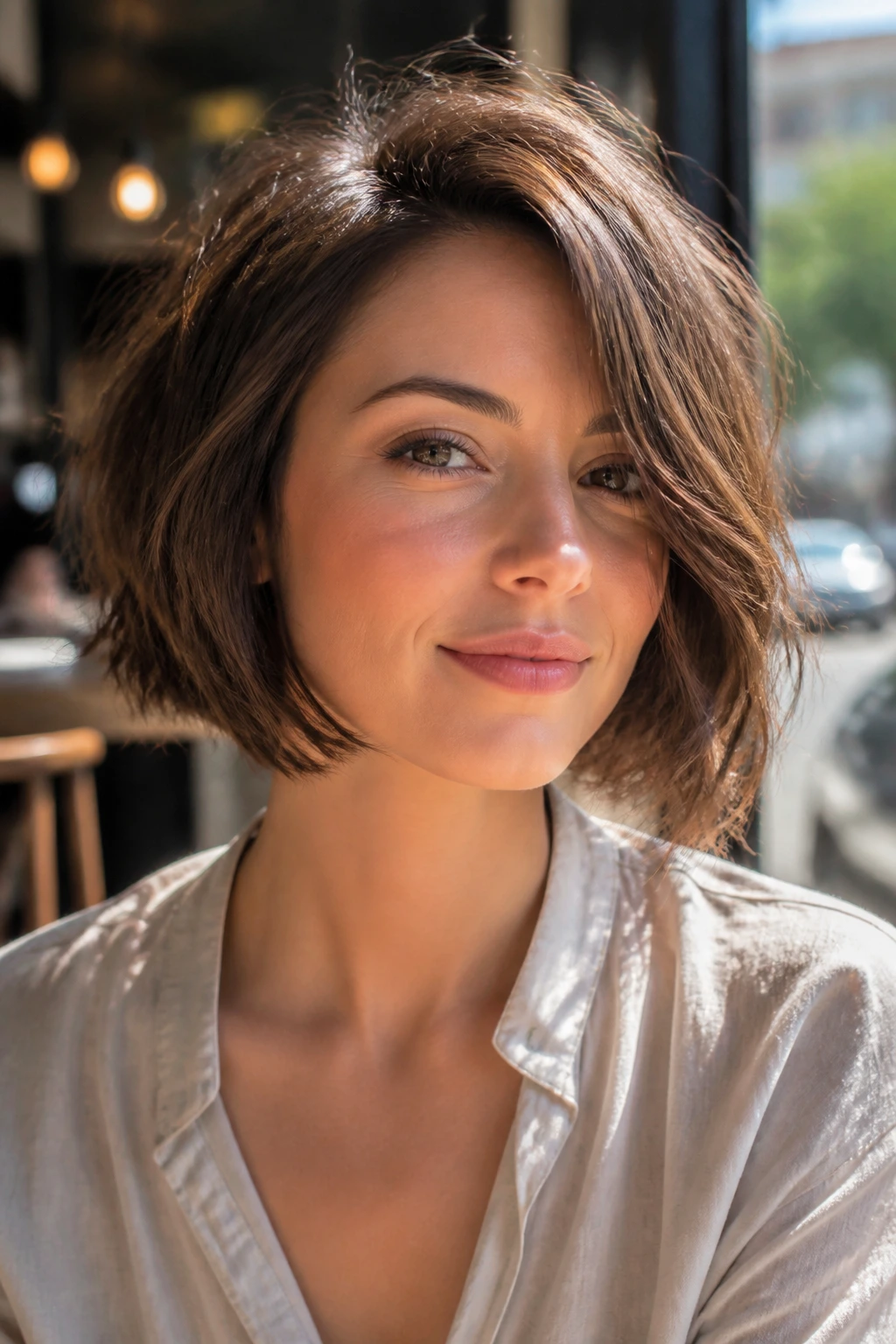
The traditional rule says round faces should avoid chin-length bobs, but that rule is outdated. The problem is usually a blunt, heavy cut that creates a horizontal line right at the widest part of your face. By adding texture and layers to that same length, you turn a potential mistake into a deliberate, edgy style.
How to Prevent the “Bubble” Effect
The danger with a shorter bob is that it can round out and make your head look like a helmet. To avoid this, ensure the stylist uses texturizing shears throughout the ends. You want the hair to feel light and airy, not heavy and rounded.
Versatility
This cut works surprisingly well with a deep side part. Shifting your part just an inch or two away from the center creates an immediate asymmetrical line, which is the fastest way to break up the symmetry of a round face.
4. Feathered Layers
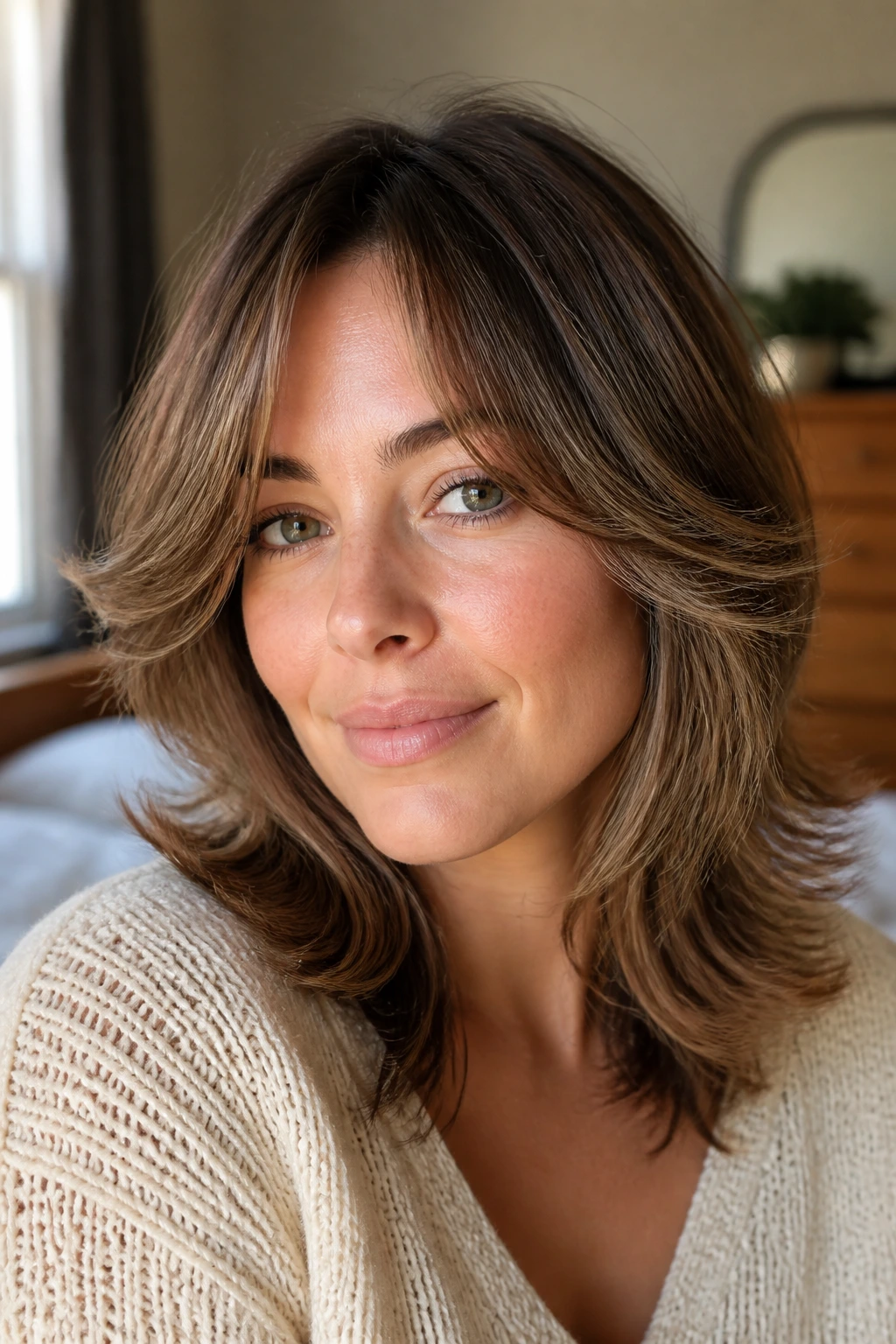
Feathered layers are a bit of a throwback, but they have made a significant comeback because they offer soft, sweeping motion that doesn’t overwhelm the face. Unlike heavy, shelf-like layers, feathered cuts focus on tapering the hair so it blends seamlessly.
Where to Place the Layers
The shortest layers should hit right at or just below your cheekbones. This draws the eye to your eyes and the top half of your face, effectively “cutting” the width of the cheeks. It softens the entire look without sacrificing overall length.
Maintenance
These layers require a bit more styling time than a blunt cut. You will want to use a round brush to blow the ends backward, away from your face. This open styling technique keeps the hair from clinging to the cheeks, which is exactly what we want to avoid.
5. Curtain Bangs with Long Waves
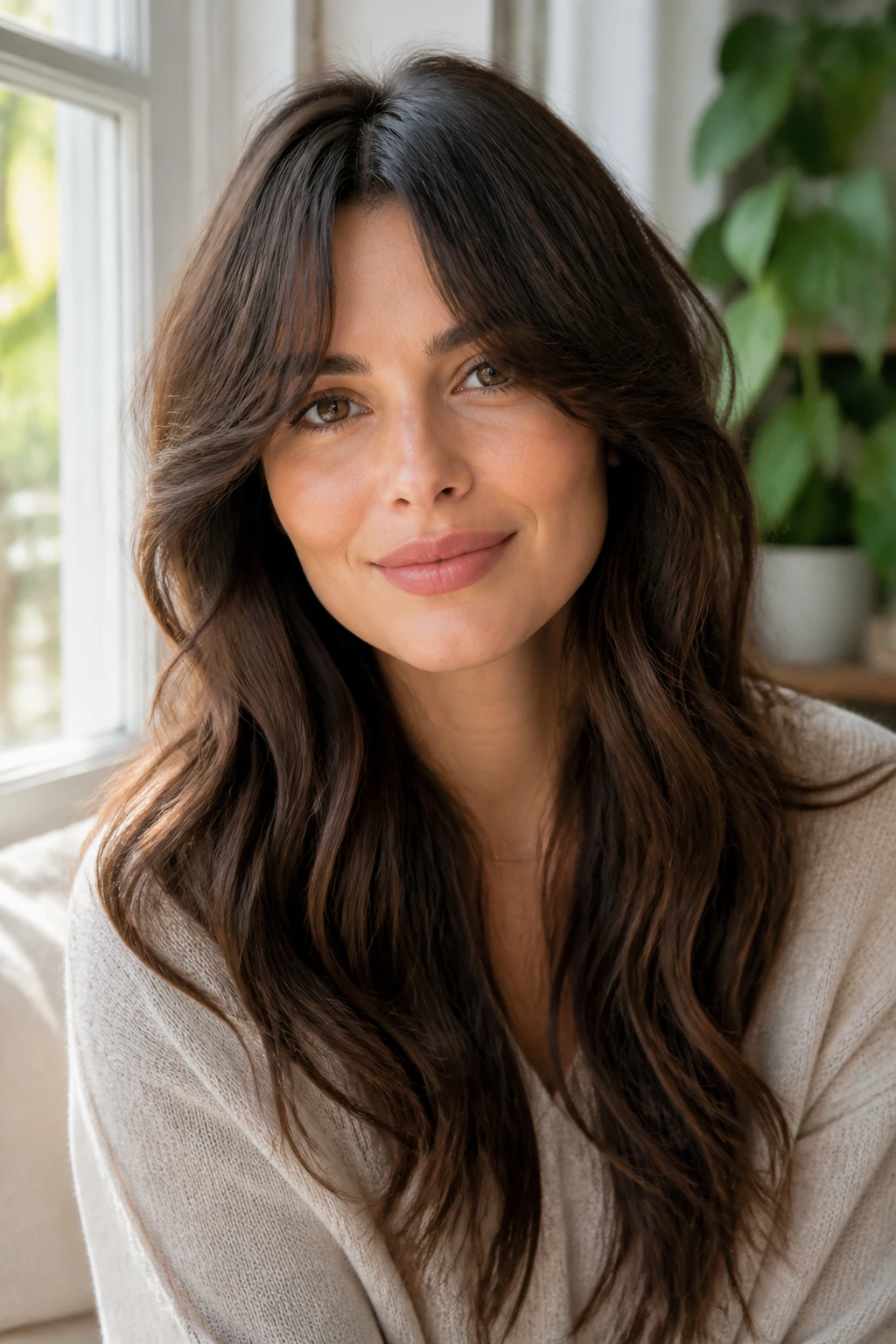
Curtain bangs are universally flattering, but they are a specific cheat code for round faces. They act as a veil, sitting slightly open in the middle and tapering off to the sides. This creates a soft, angled frame that guides the eye down toward the chin.
The Perfect Blend
The magic happens where the bangs meet the rest of your hair. You want a seamless transition from the short fringe to the longer layers. If the bangs are cut too bluntly, they sit on your forehead like a shelf. You need them to be sliced into, so they look soft and wispy.
Styling the “Swoop”
Use a round brush or a large hot roller to set the bangs while the hair is damp. Roll them away from your face. This creates a soft, swooping motion that mimics the curve of a cheekbone, but with more definition.
6. The Modern Mullet
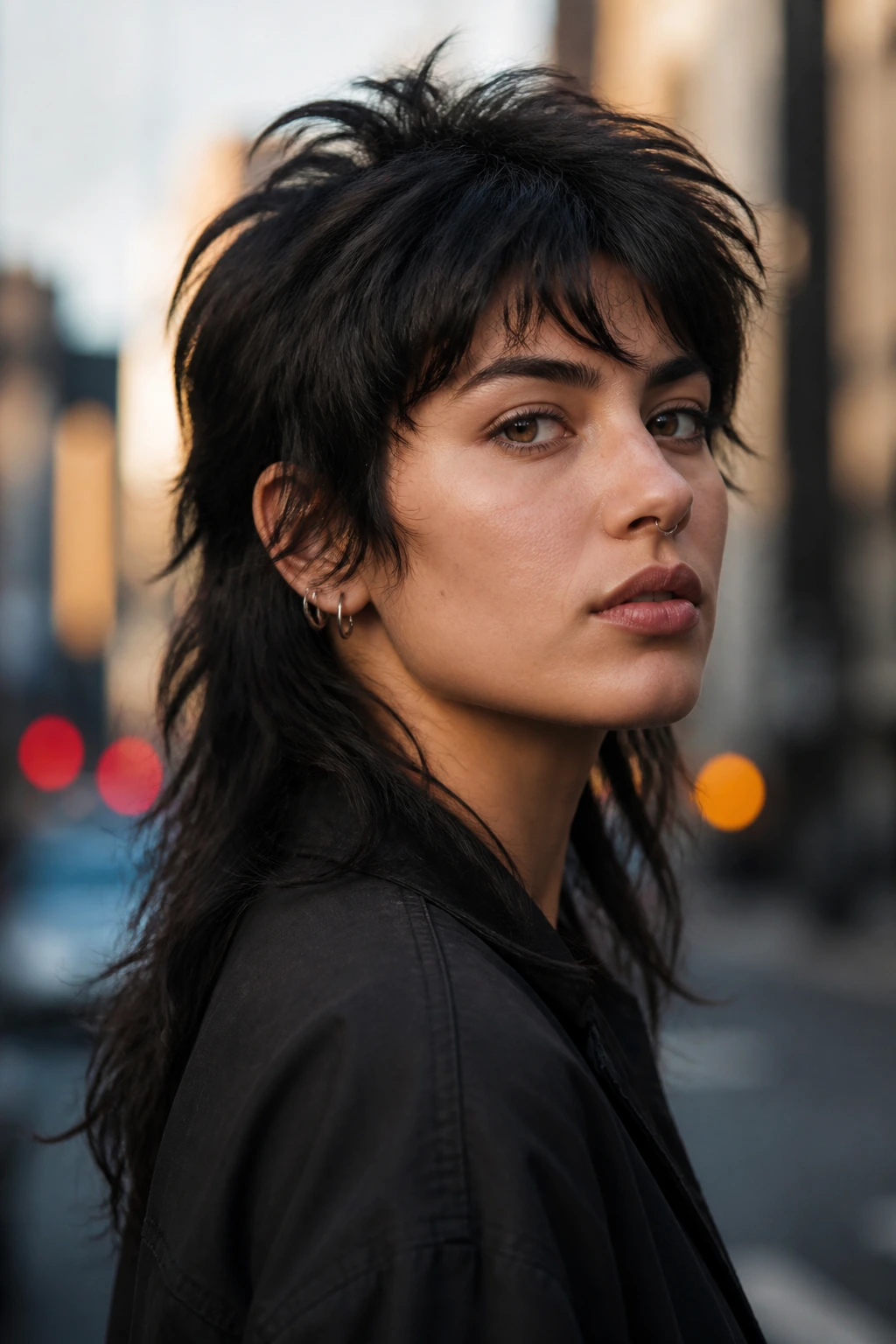
Yes, the mullet is back, but it is not the 1980s version you are thinking of. The modern, textured version is essentially a shag with more dramatic length in the back and shorter, face-framing pieces in the front. It is an incredibly bold look.
Why It Flatters Roundness
The short, choppy pieces around the crown provide that much-needed height, while the length in the back provides the illusion of vertical length. It is a very intentional, high-fashion look that screams confidence. If you have a round face, this style does a great job of adding edge and personality.
The Texture Factor
This cut relies entirely on texture. It should not be sleek. If you have fine hair, you will need a volumizing mousse at the roots. If you have thick hair, your stylist needs to be aggressive with the razor to get that piecey, lived-in feel.
7. The Razor Cut Lob
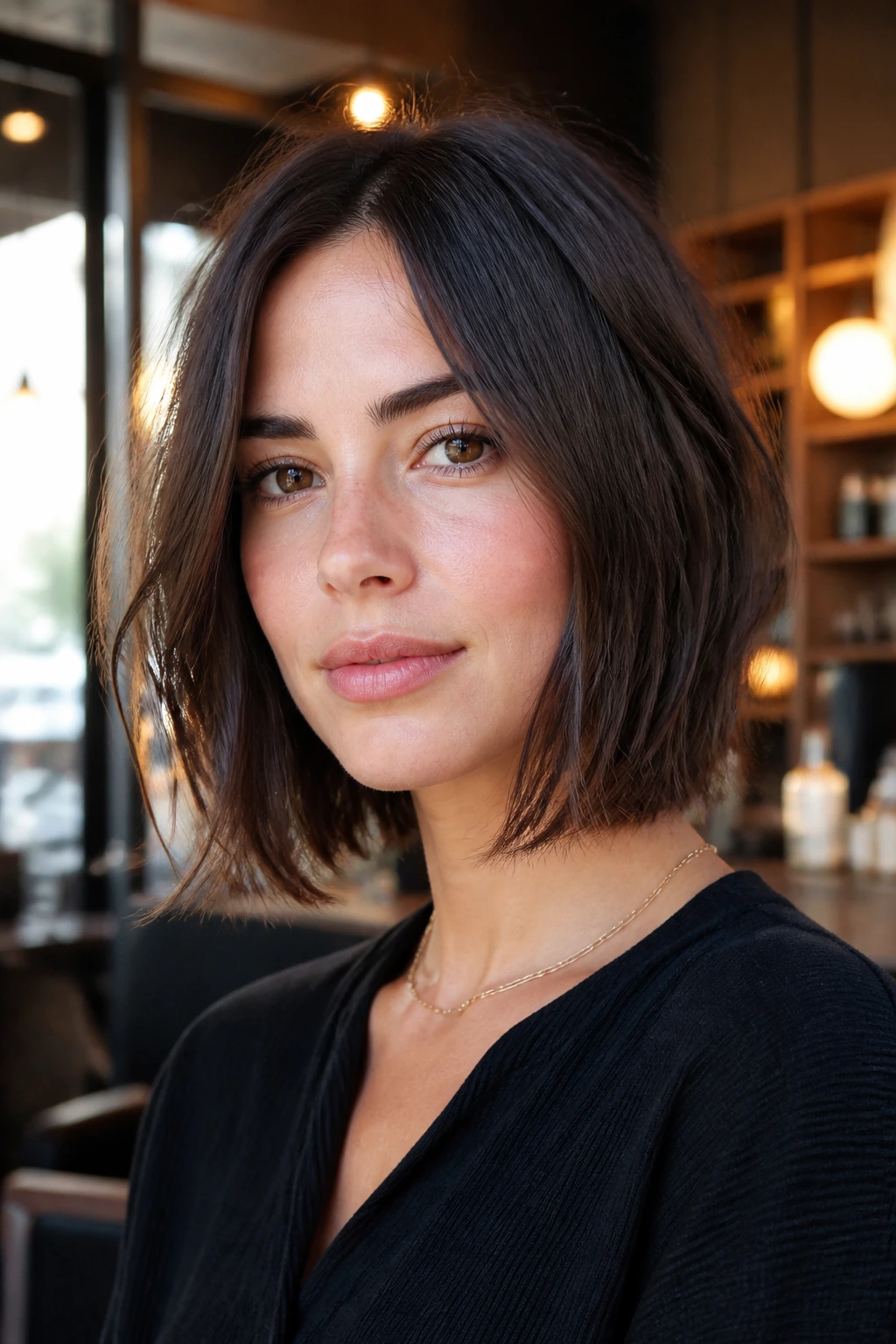
A “lob” (long bob) is a great middle ground. Using a razor instead of scissors to cut the ends changes the entire dynamic. Scissors create a blunt, clean line; a razor creates a soft, frayed edge.
The Benefit of Razor Cutting
Razor cutting is all about removing bulk. For someone with a round face, you want to remove bulk from the ends to prevent your hair from flaring out. A razor-cut lob sits flat against the neck, creating a sleek, vertical silhouette.
Style It Messy
This cut looks best when it is slightly messy. Use a texturizing spray on dry hair and give it a shake. Do not worry about perfection. The rawness of the ends is the whole point of this style.
8. Messy Beach Waves
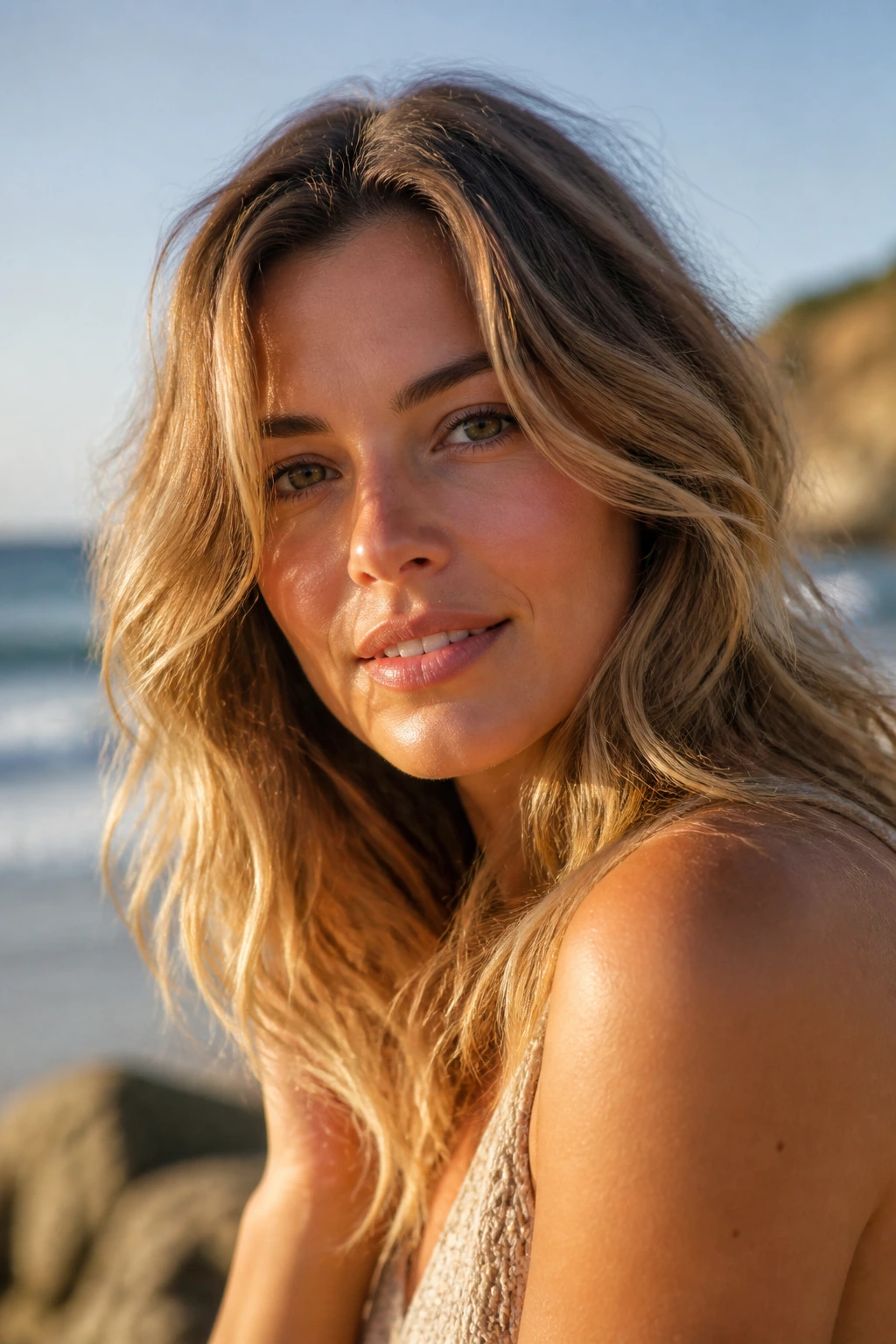
Waves are naturally flattering, but the secret is in how you place them. Tight, small curls can make a round face look wider. Loose, irregular waves that start below the cheekbone are the way to go.
Creating the Irregular Wave
Avoid using a clamp curling iron, which tends to create uniform, “perfect” curls. Instead, use a wand or a flat iron. Wrap the hair loosely and leave the ends out of the iron—this keeps the look modern and prevents the “sausage curl” effect that often widens the face.
The “S” Shape
When you wave the hair, try to create an “S” shape rather than a spiral. This breaks up the circle of the face by adding horizontal and vertical movement that feels organic rather than styled.
9. Asymmetrical Bob
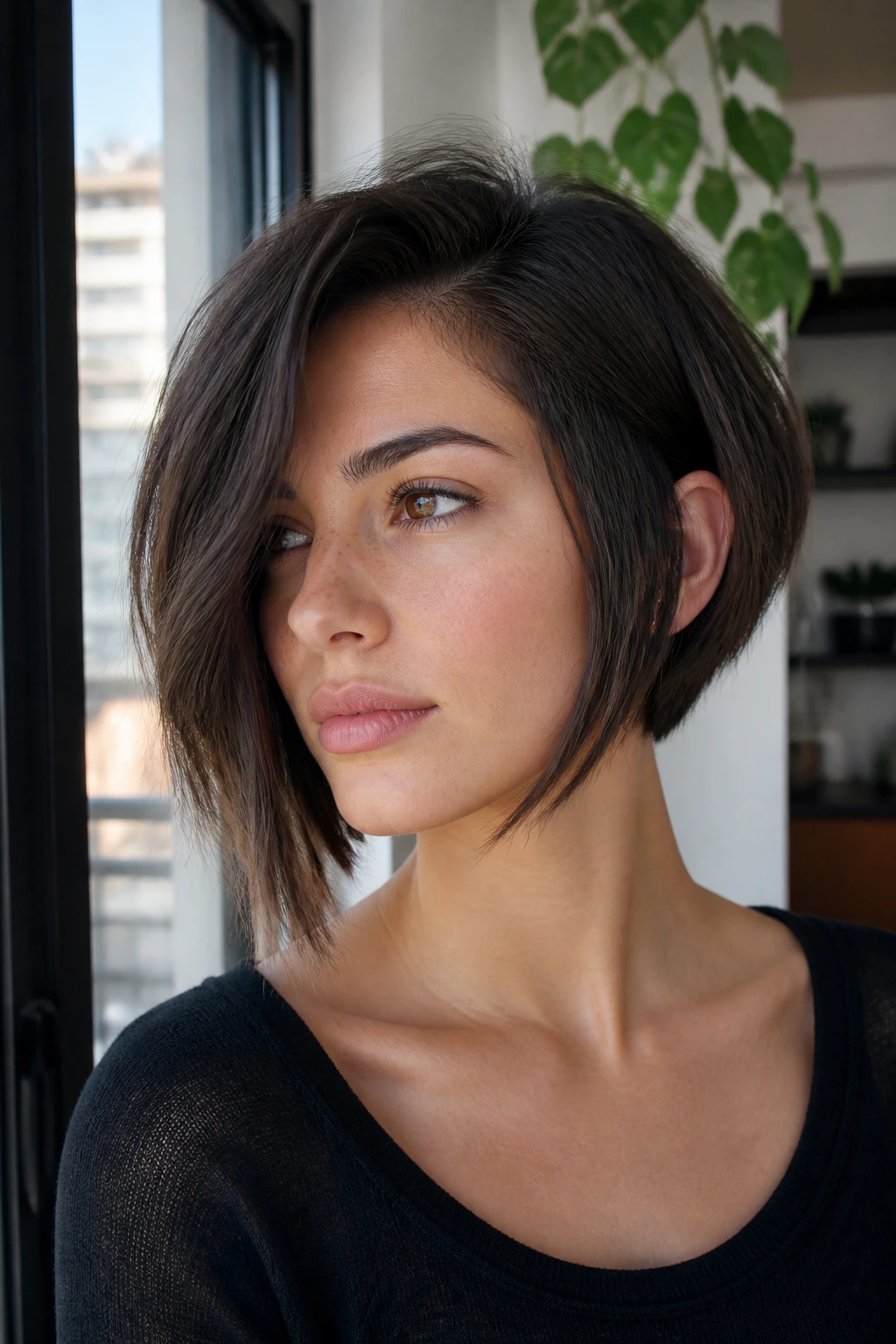
If you want to drastically change your face shape, asymmetry is your best friend. An asymmetrical bob, where one side is slightly longer than the other, creates a diagonal line across your face.
The Visual Illusion
Your brain naturally follows the path of the hair. With an asymmetrical cut, the eyes are forced to travel along the diagonal line of the hair, which creates the illusion of a longer, more angular face. It is a subtle trick, but it is one of the most effective tools in a stylist’s kit.
Keep the Ends Textured
Do not make the longer side too blunt. Keep it shattered or layered so that the transition from short to long doesn’t feel like a hard stop. It should feel like a fluid, continuous movement.
10. Wispy Shag
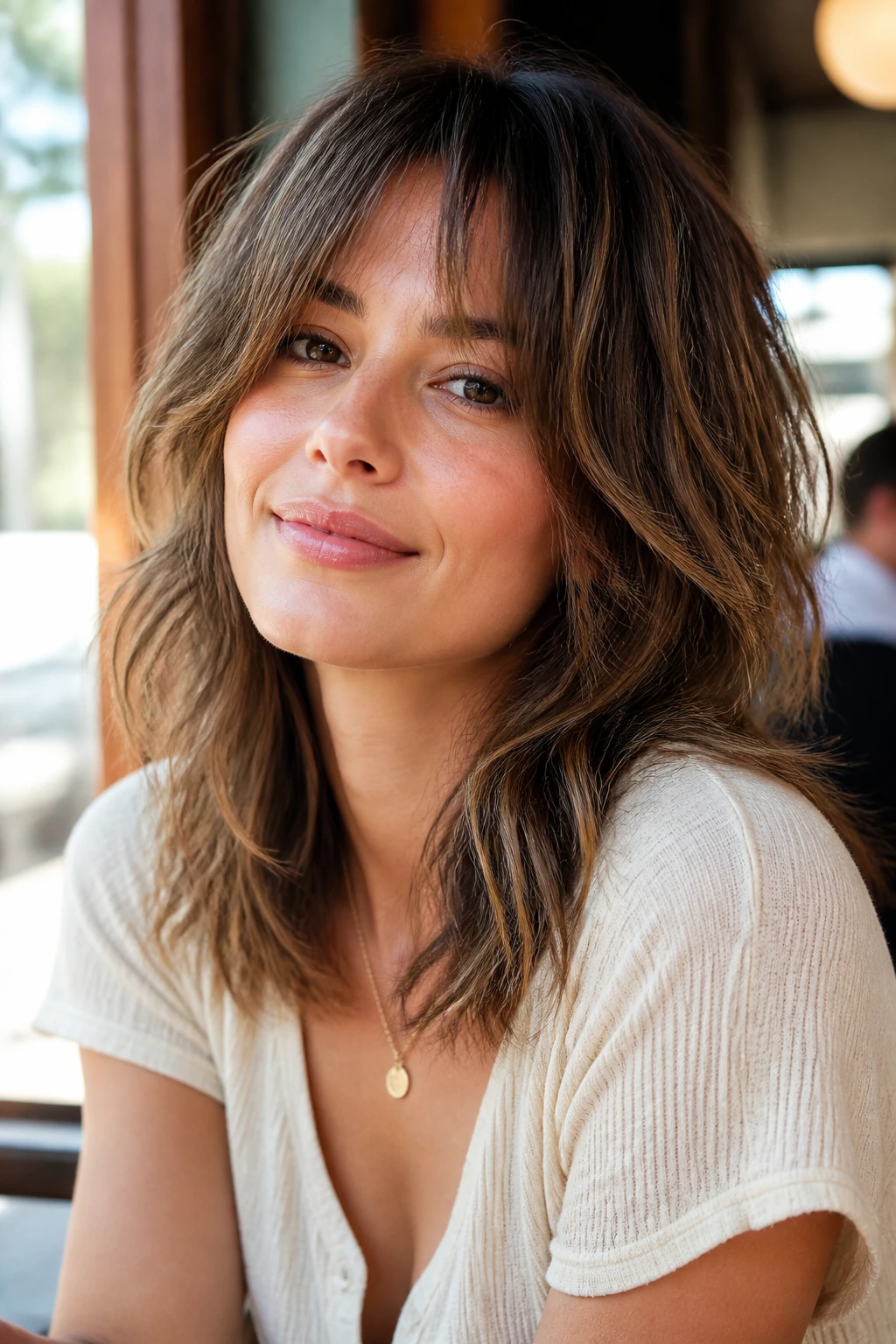
The wispy shag is all about lightness. It feels like your hair has been cut with a heavy hand, but in the best way possible. It’s less “rock star” than the traditional shag and more “effortless French girl.”
Why it Works for Soft Features
If you have a very round face with soft features, this cut adds definition without being too aggressive. The wispy ends draw focus to the tips of the hair, pulling the viewer’s eyes away from the cheeks.
Product Selection
Avoid heavy waxes. You want your hair to move. A light, airy dry texture spray is perfect for this. It adds grip without weighing down the fine layers that define the cut.
11. Side-Swept Pixie
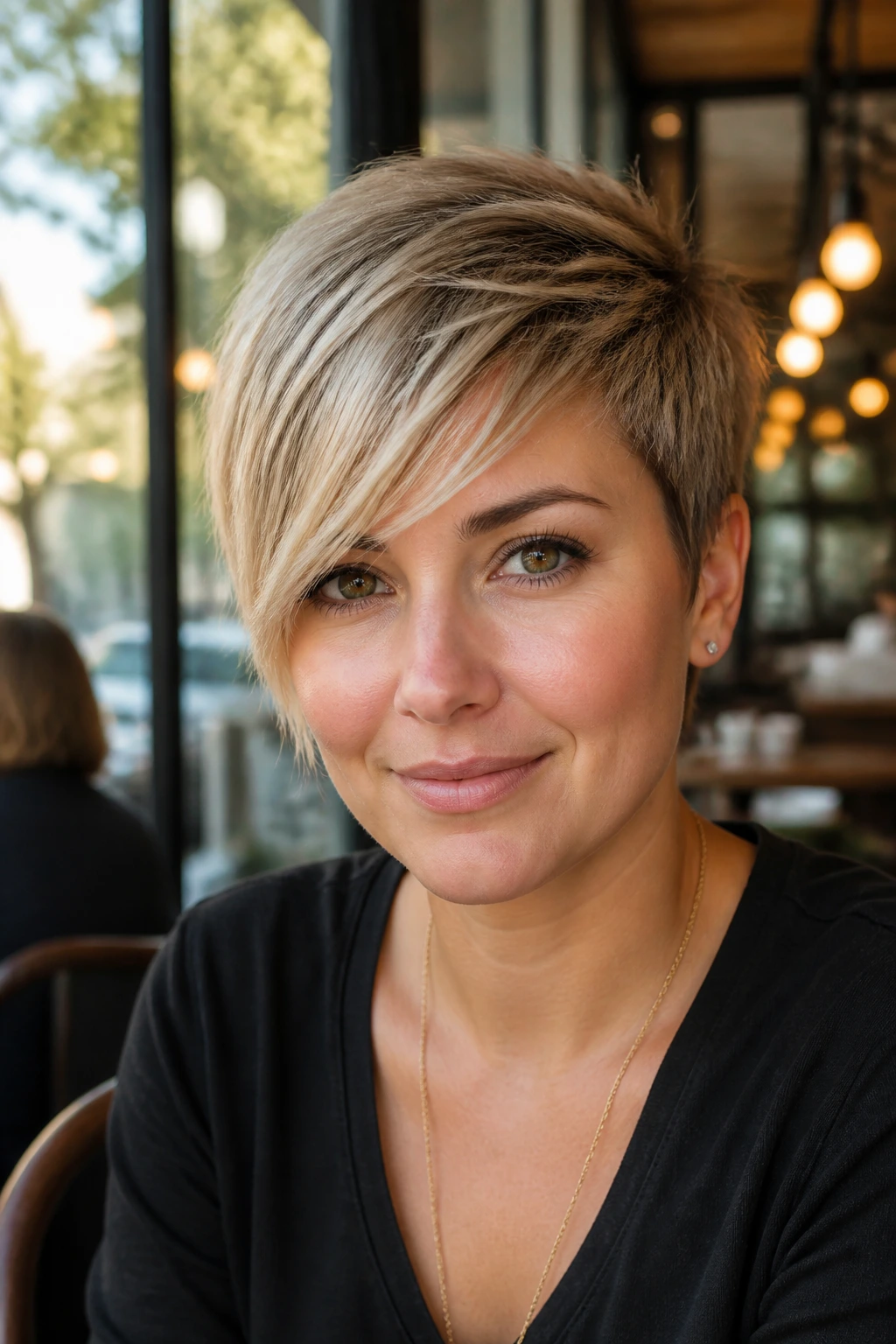
A side-swept pixie is similar to the classic version but incorporates a long, sweeping fringe that covers part of the forehead. This is great if you are worried about showing too much forehead or if you want to create an even sharper diagonal line.
Framing the Face
The long fringe should sweep across the forehead and blend into the sides. This creates an angular, sharp contrast to the natural roundness of the face. It feels more feminine than a traditional buzz-cut style but still carries that bold, short-hair energy.
Daily Maintenance
This cut is all about the sweep. A quick blow-dry in the morning using a small round brush will set the shape of the fringe. Once it is dry, it tends to stay put for the rest of the day.
12. Blunt Cut with Textured Ends
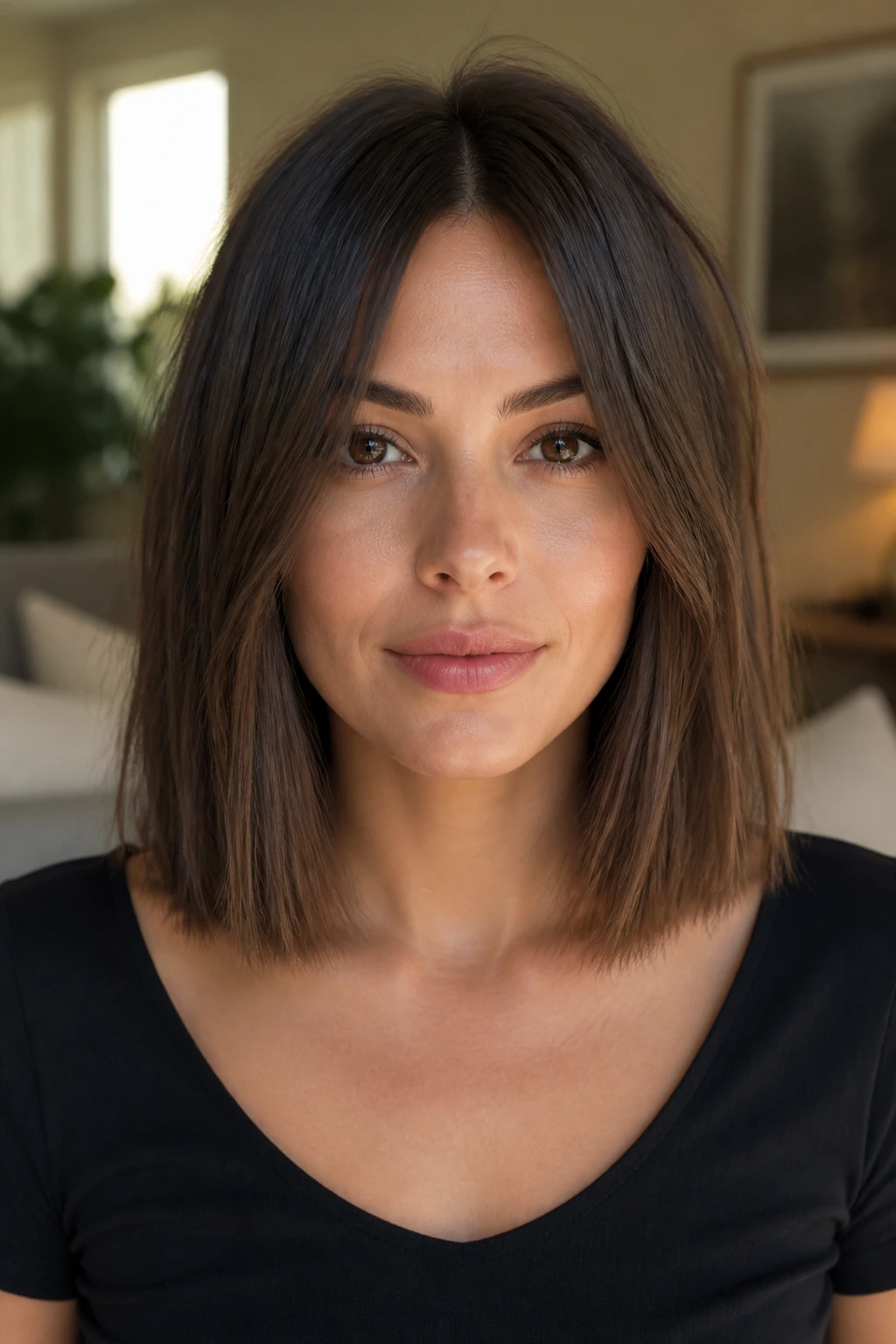
You might want a blunt cut because it looks healthy and thick, but a perfectly blunt cut all the way around can sometimes make a round face feel contained. The fix? Keep the perimeter blunt but texture the interior.
The Hybrid Approach
Ask your stylist to keep the ends straight across, but to point-cut into the hair about two inches up from the ends. This removes weight from the interior, preventing the hair from being too puffy or triangular, while the bluntness at the bottom makes the hair look full and healthy.
Styling for Fullness
If you have fine hair, this is a great way to maximize volume. The blunt ends create the illusion of thickness, while the interior texturing ensures the hair doesn’t just sit flat and wide.
13. The Butterfly Cut
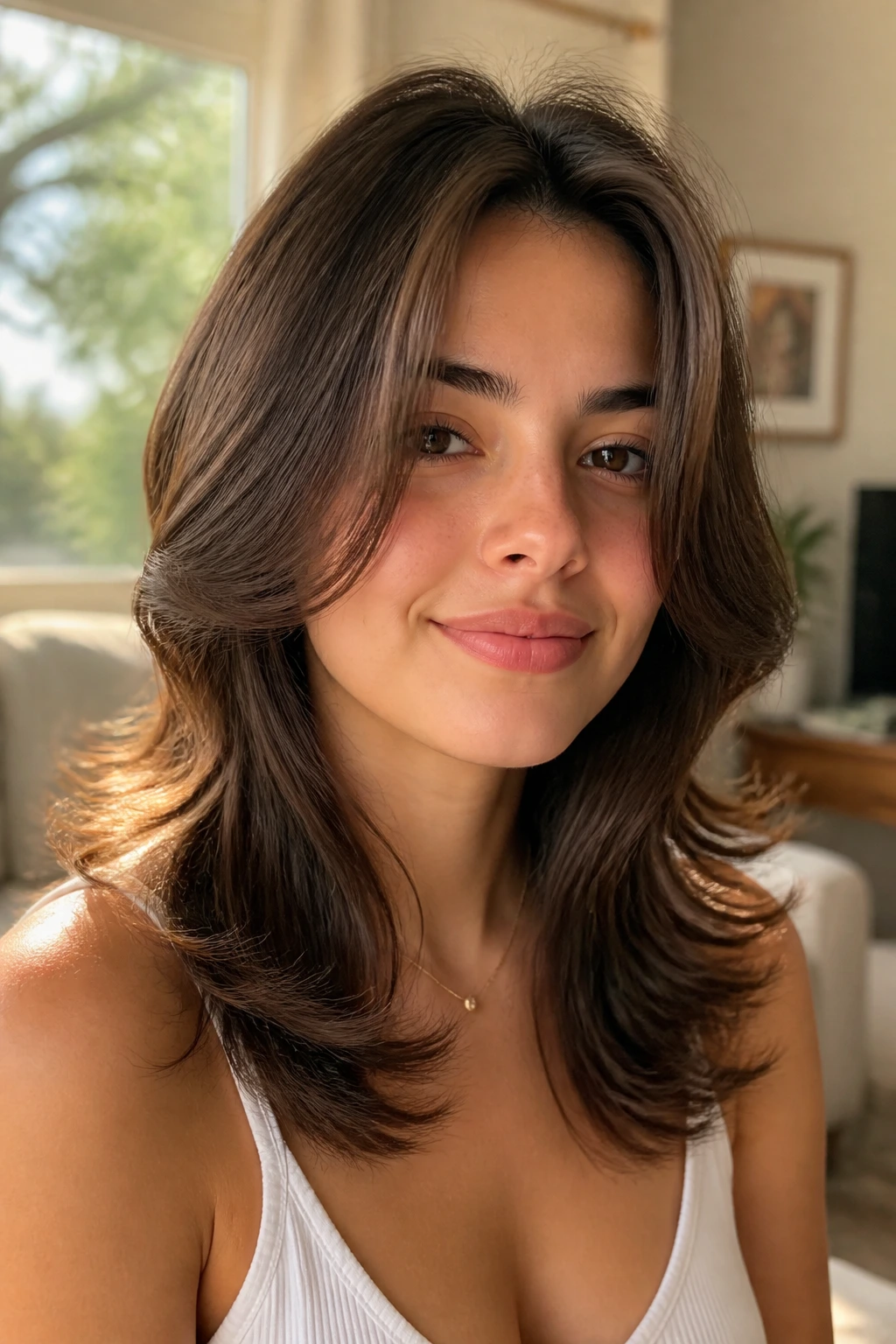
This is currently one of the most popular styles, and for good reason—it is specifically designed for movement. It features shorter layers around the face that frame the chin and longer layers in the back.
The “Flick” Effect
The layers around the face are often styled with a round brush to “flick” outward. This creates a frame that is wider than the hair itself, which actually makes the face look narrower in comparison.
Why It Is Great for Volume
If your hair tends to fall flat, the butterfly cut builds in volume at the crown and the cheekbones. It is a very bouncy, lively cut that looks fantastic when it’s allowed to have a bit of volume.
14. Tight Ringlet Shag
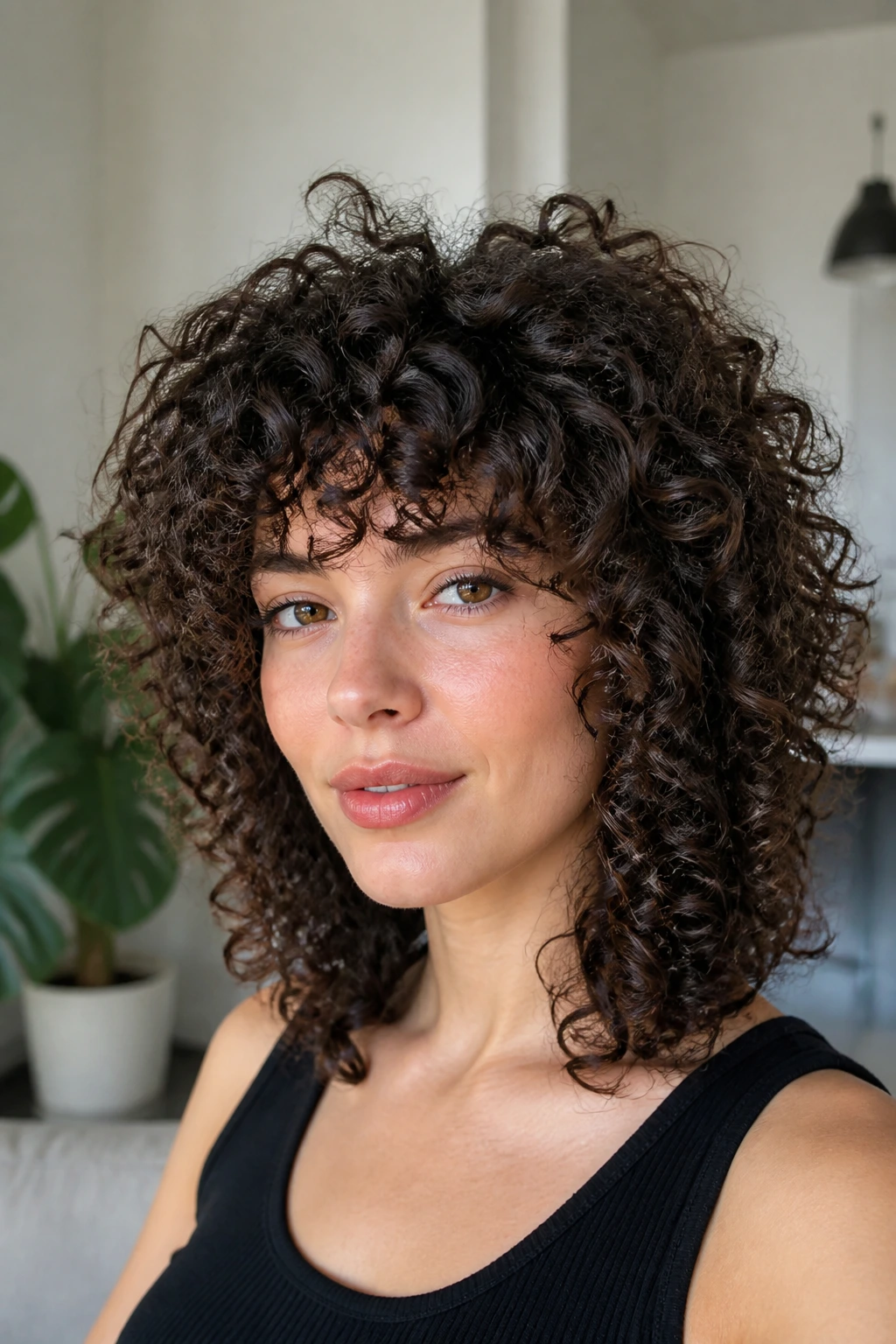
If you have naturally curly hair, do not try to fight it. A curly shag embraces the volume of your curls and uses that shape to balance a round face.
Managing the Volume
The trick to a curly shag is to ensure the volume is at the top and the sides, rather than just the bottom. If the volume is only at the bottom, it makes the face look rounder. If you cut the top shorter and allow the curls to sit higher, you get a beautiful, elongated shape.
Essential Curly Tools
You absolutely need a diffuser. Never let curly hair air dry if you want a specific shape, as it will often dry flat at the roots. A diffuser helps you encourage the hair to dry in a lifted, voluminous shape.
15. Graduated Bob
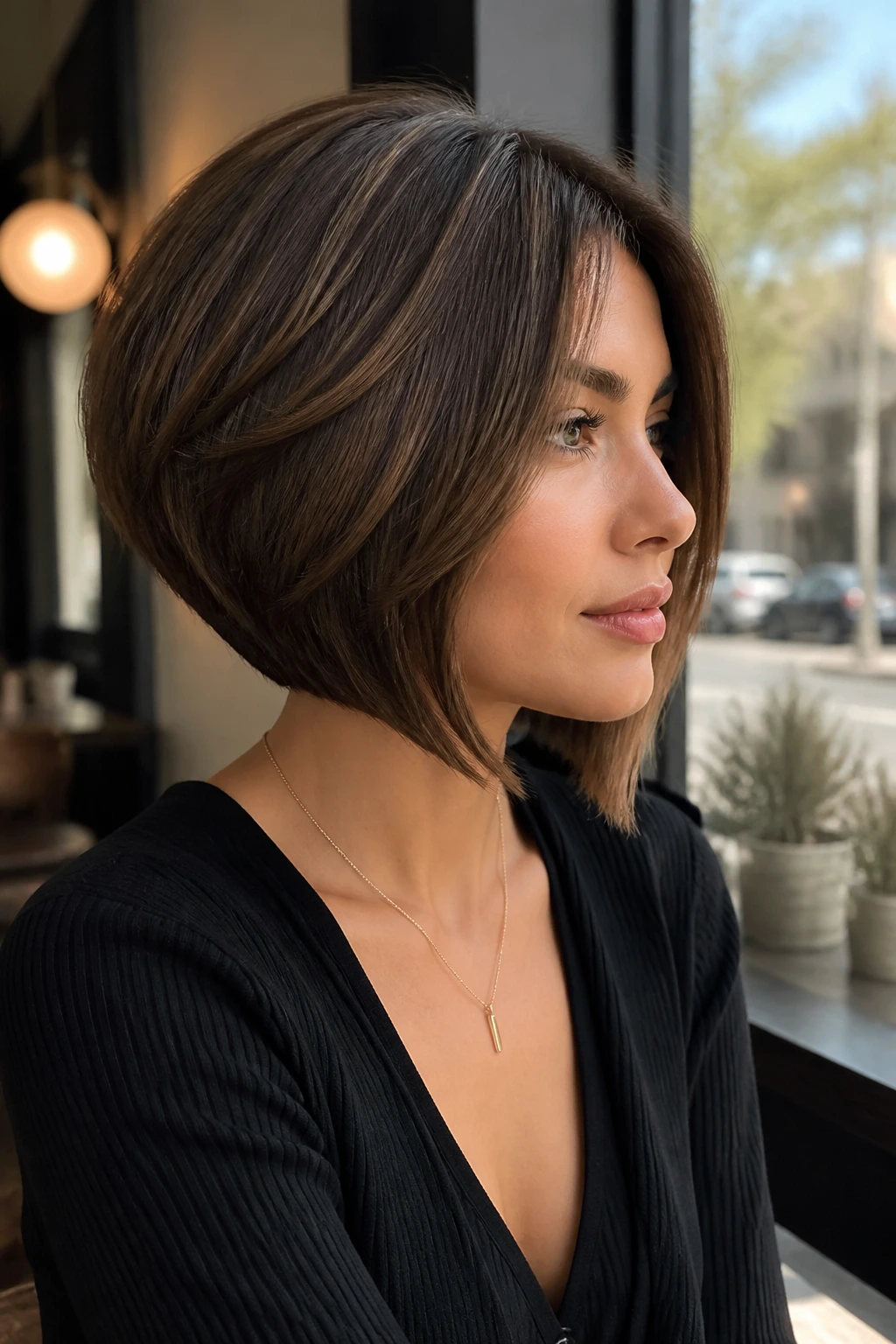
A graduated bob is shorter in the back and longer in the front. This creates a natural slope that acts as a visual guide for the eyes.
The Angle is Key
The steeper the graduation, the more dramatic the effect. A very steep angle will look more modern and edgy, while a gentle slope is more conservative and soft. For a round face, a slightly steeper angle is usually better as it creates a sharper line near the jaw.
Avoiding the “Triangle”
Graduated bobs can sometimes get bulky at the nape of the neck. Make sure your stylist is thinning out that back section. You want a sleek transition, not a mountain of hair sitting on your neck.
16. Face-Framing Layers
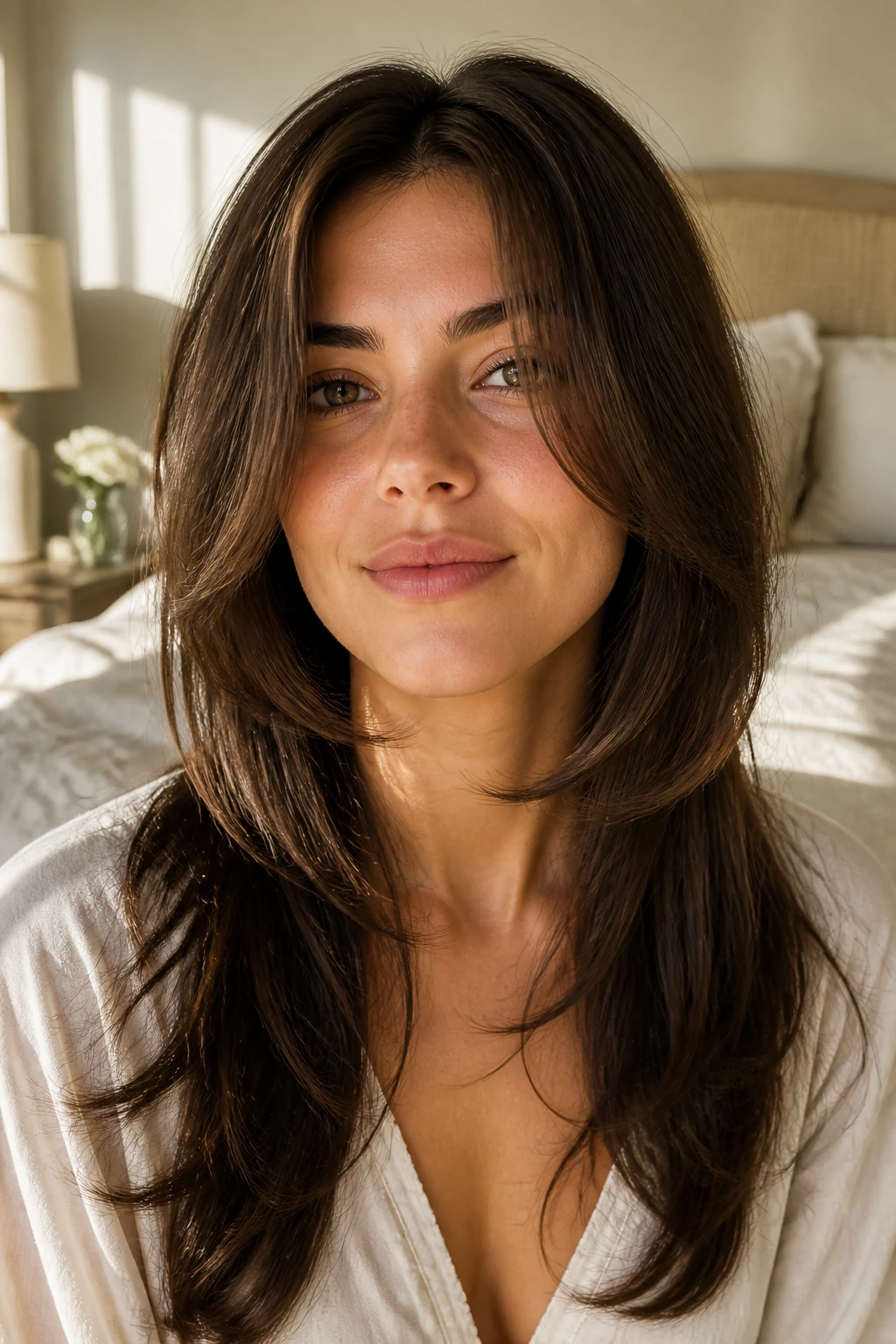
This isn’t a cut per se, but rather a technique that should be added to any length. If you have long, one-length hair, your round face might look swallowed by it. Adding layers that start at the chin and flow downward changes everything.
Why This is Effective
It breaks the “wall” of hair that can sometimes make a round face look like it’s floating in the middle of it. By cutting into the hair, you create visual gaps that expose the neck and the jawline, creating a much more flattering silhouette.
Styling the Layers
You don’t need a professional blowout for this. Just use a flat iron to give the ends of the layers a slight inward bend. That simple curve is enough to soften the transition and create a nice, framed look.
17. Shattered Ends
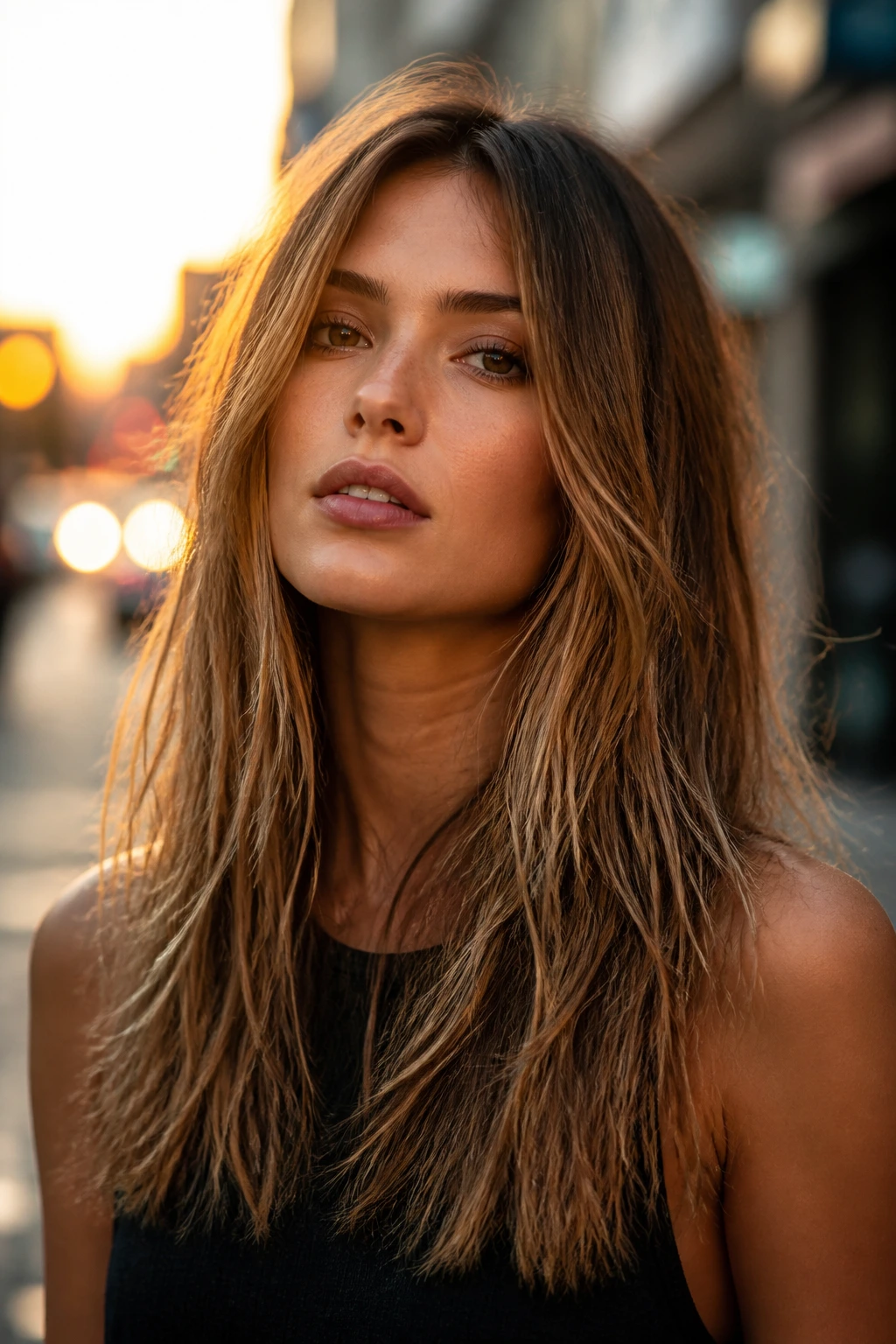
“Shattered” is a term stylists use for heavy point-cutting. It creates an uneven, jagged bottom edge. This is perfect for someone who wants the length of long hair but the edge of a shorter cut.
The Visual Distraction
Because the ends are uneven, they create a chaotic, interesting texture that draws the eye downward. It’s impossible for someone to focus on the width of your cheeks when your ends are doing something interesting.
Versatility
This style looks great with a middle part or a side part. It’s a very low-maintenance look because it doesn’t require a perfect trim. In fact, it looks better as it grows out a little.
18. Undercut Pixie
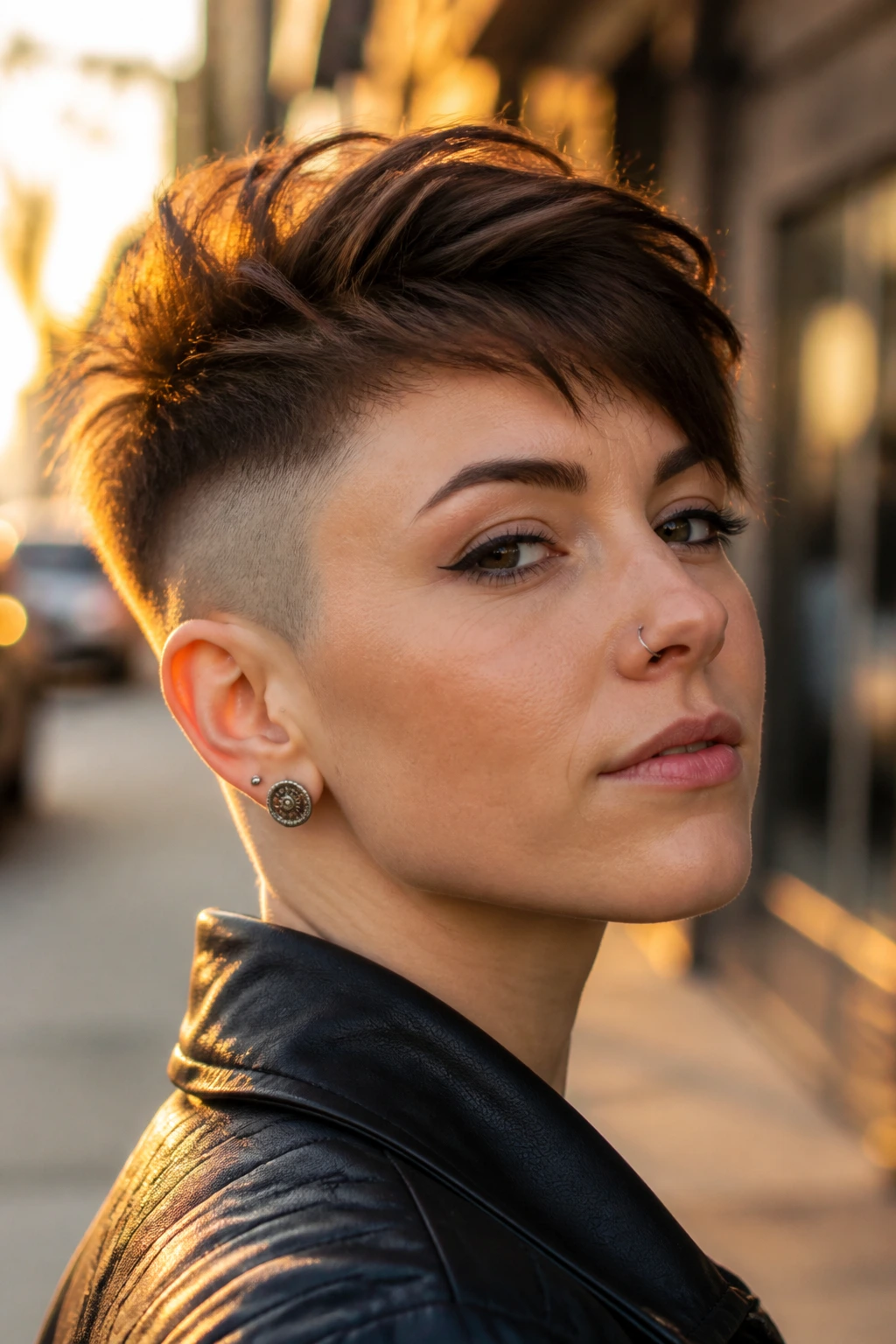
If you really want to lean into the edgy side, an undercut pixie is a bold choice. By shaving or tapering the sides and back, you remove all the width from the face.
The Contrast
You are left with a crown of textured hair that you can style however you want—spiky, messy, or sleek. The contrast between the shaved skin and the textured top is striking, and it completely eliminates any “roundness” around the ears.
Who is this for?
This is for the person who wants to wake up and spend two minutes on their hair. It is not for the person who wants to hide behind their hair. It is a confident, deliberate style that demands attention.
19. Deep Side Part with Layers
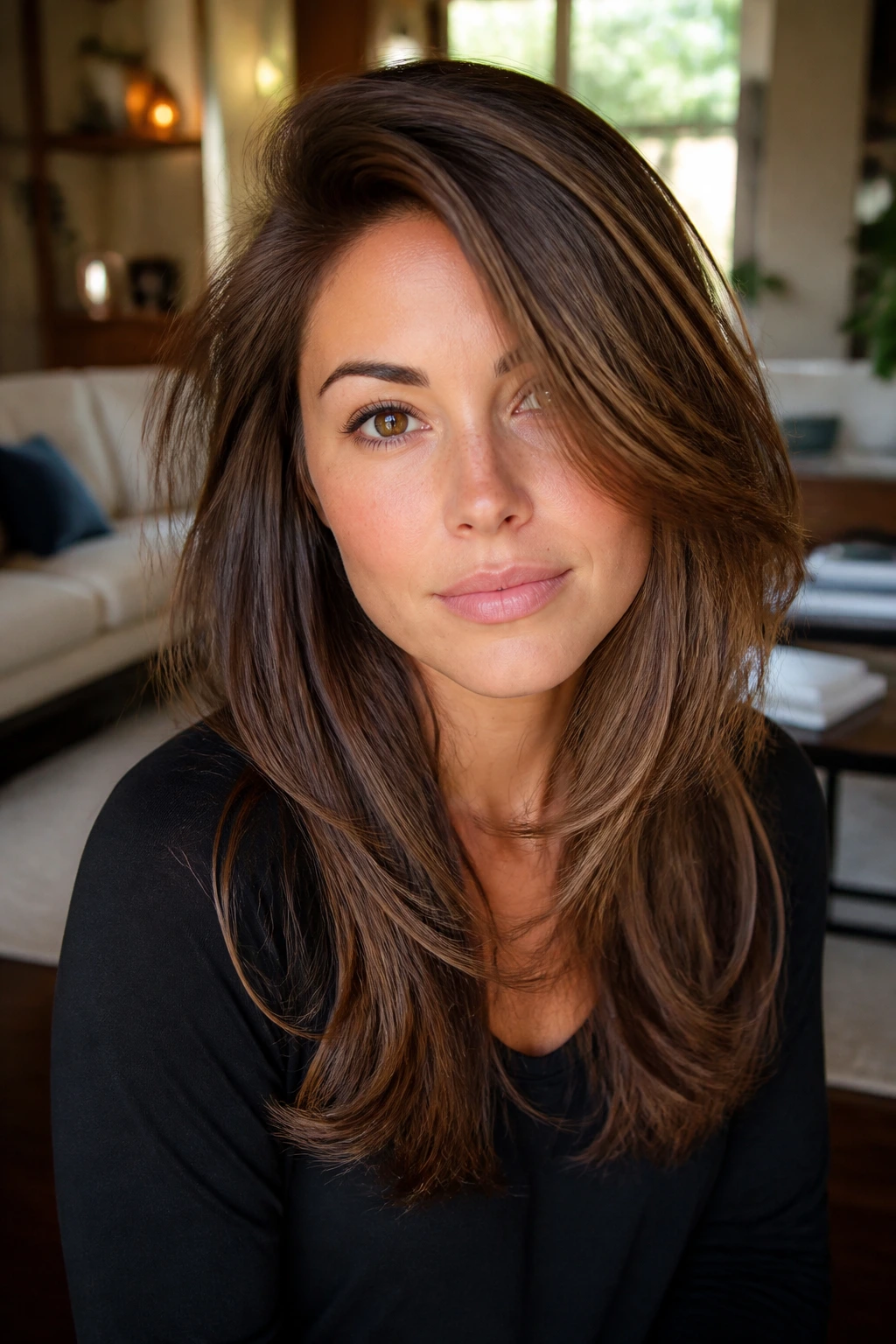
Sometimes, you don’t need a haircut change; you need a parting change. But when you combine a deep side part with layers, you create the ultimate face-elongating hack.
The Geometry
When you part your hair deeply to one side, you create an instant diagonal line that cuts across the forehead. This makes the forehead look wider and the chin look narrower. Adding layers ensures that the hair doesn’t fall flat against the head, maintaining that necessary height at the crown.
Styling
Use a tail comb to get a razor-sharp part. Avoid the zigzag or messy part if you want the full effect of the elongation. A clean, deep side part is more powerful than it looks.
20. Soft Wolf Cut
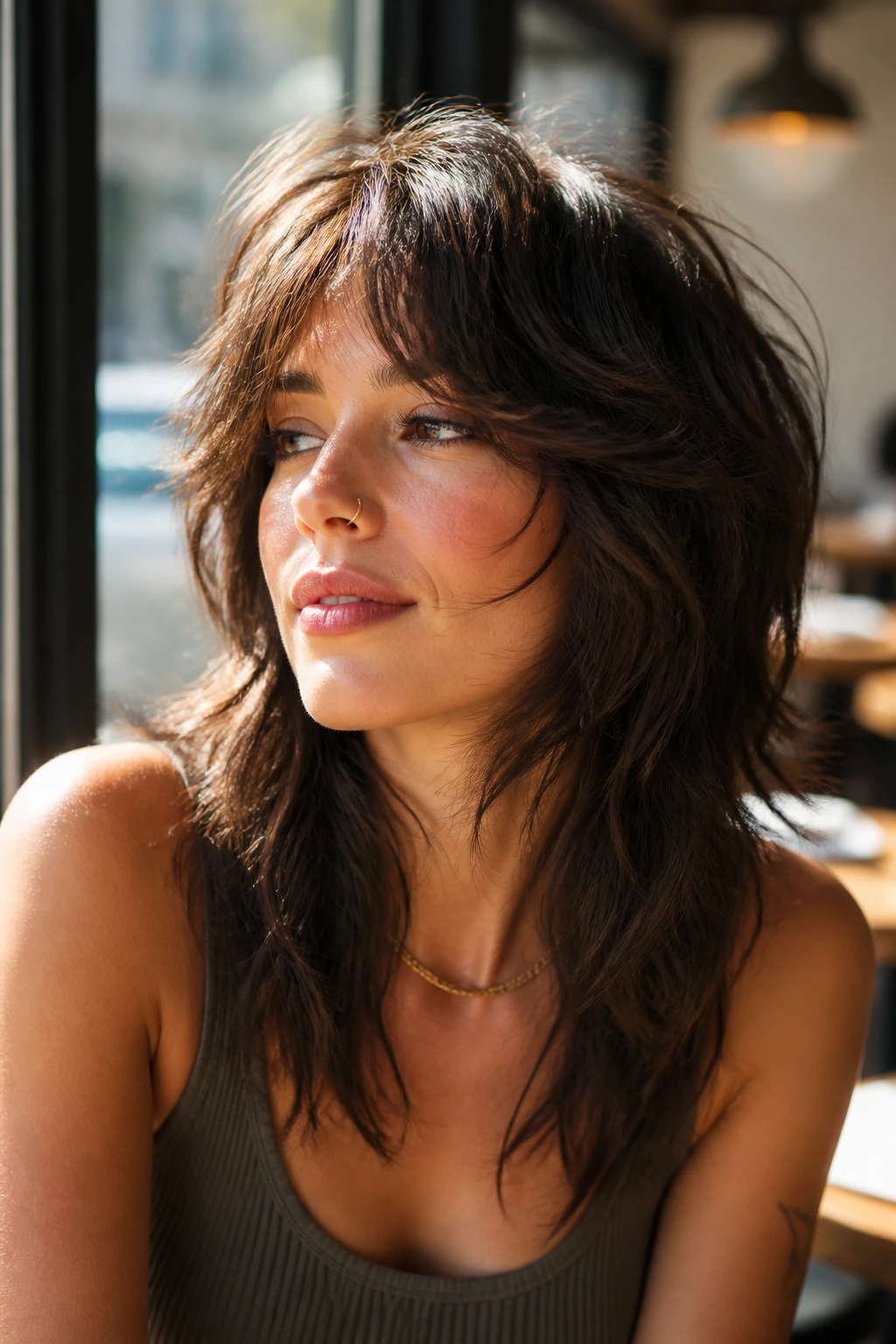
The “wolf cut” has become a sensation because it blends the best of a mullet and a shag. It is incredibly heavy on the layers and very focused on texture.
Why it Works
The layers are very short at the top and long at the bottom. This creates a massive amount of volume at the crown, which effectively elongates the entire head shape. It is a very busy, textured cut, which is great for hiding a round jawline.
Texture is Not Optional
If you have straight hair, you will need to put in the work with a curling wand to get the “wolf” effect. The cut relies on the messy, wavy texture to look finished. Without it, the layers can sometimes look thin.
21. Piecey Crop
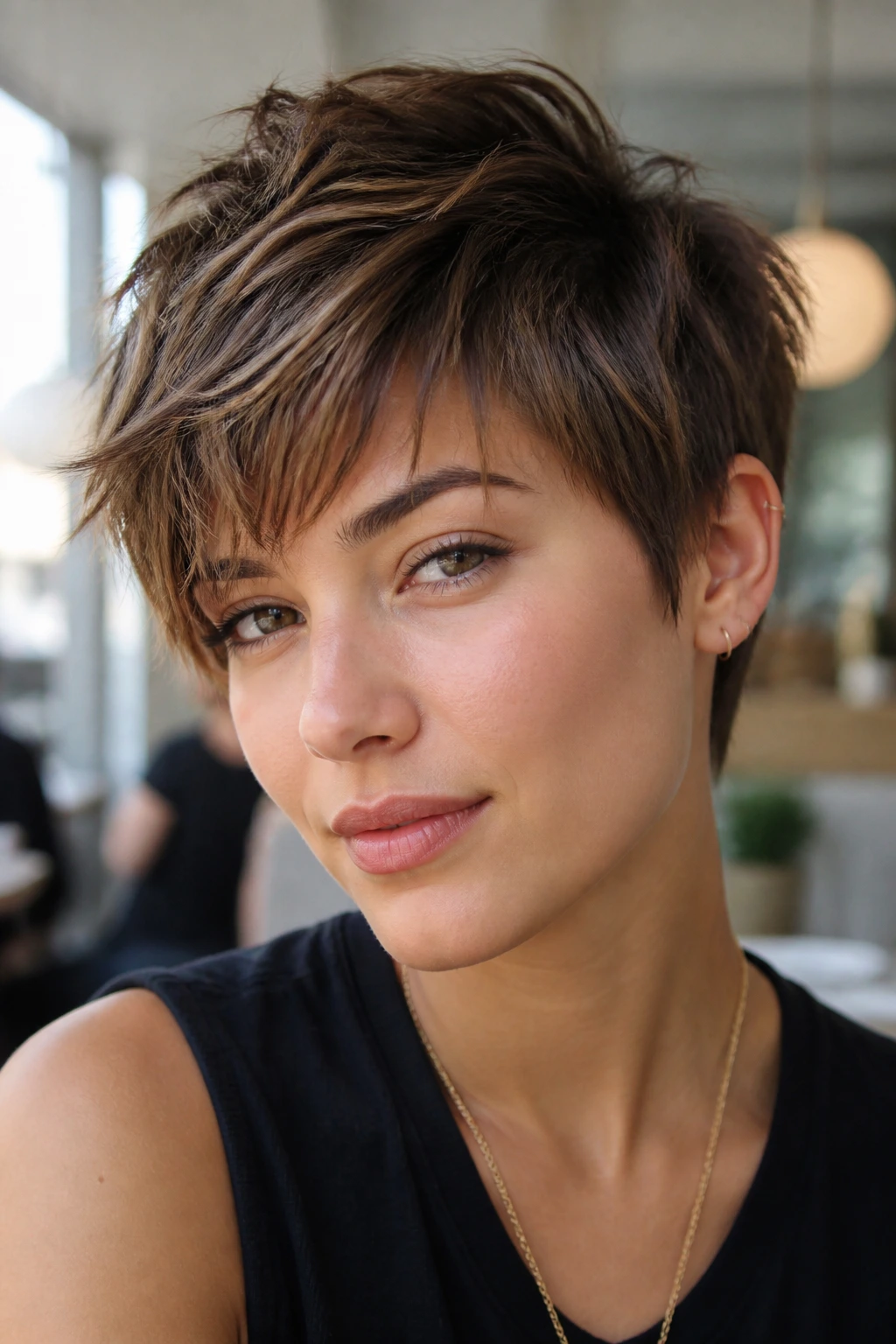
A piecey crop is a longer version of a pixie. It sits closer to the jaw and is styled with a “piecey” finish, meaning you can see the individual sections of hair rather than one solid block.
Defined Texture
Using a texturizing wax or cream is essential here. You want to twist the ends of the hair to define them. This definition creates a focal point that is not your face.
The Softness
Because this style is a bit longer than a traditional pixie, it feels softer and more approachable. It is a great “gateway” short haircut for someone who is nervous about going too short.
22. Layered Mid-Length
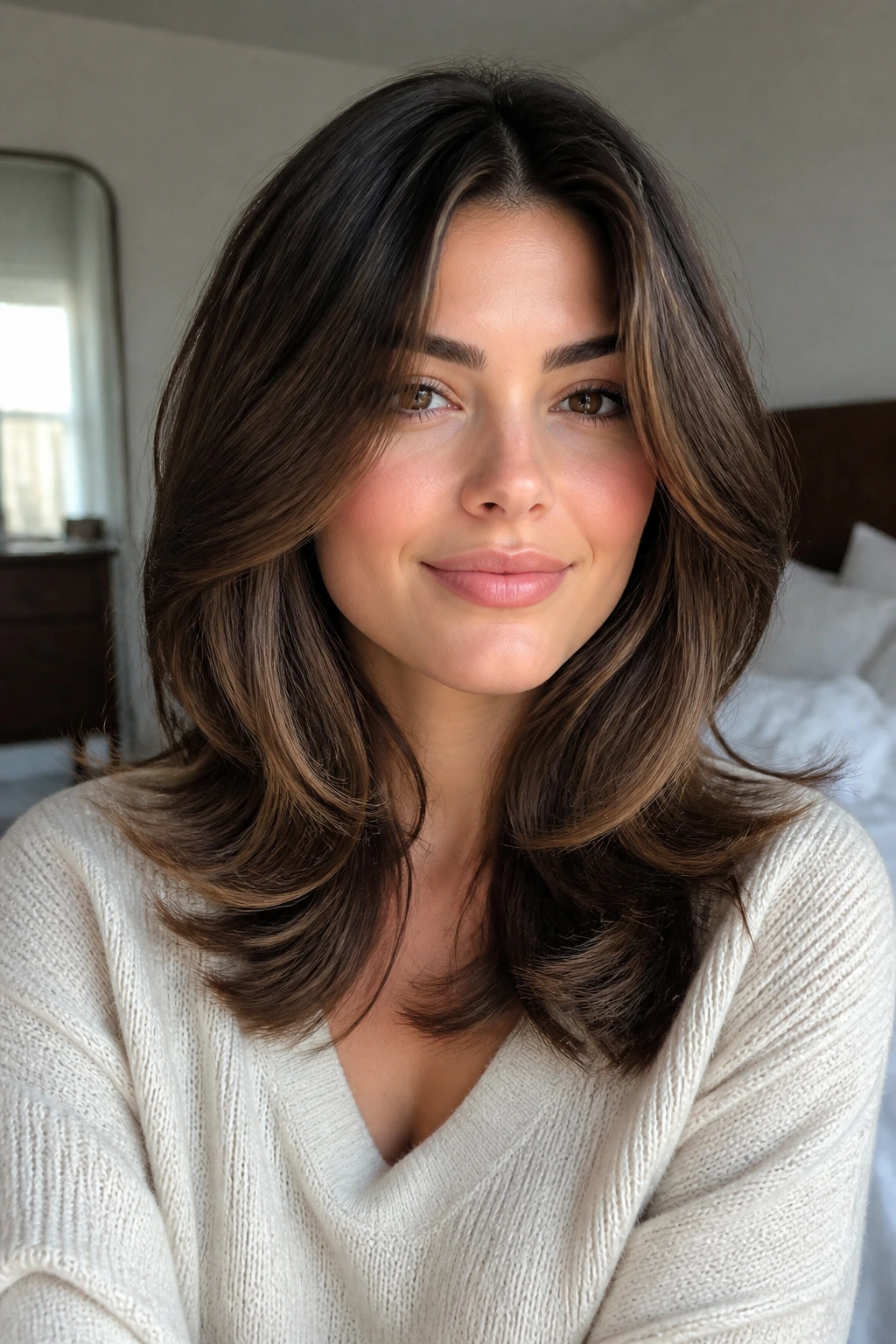
A mid-length cut that hits just below the collarbone is often considered the most flattering length for almost every face shape. With a round face, keep these layers long and soft.
Softening the Angles
If you have very round cheeks, you want layers that start below your mouth. This ensures that the bulk of the hair sits away from the widest part of your face. It creates a nice, flowing line that leads the eye down to the chest.
Blowout Method
For this length, a big, bouncy blowout is the gold standard. Use a large round brush to lift the roots and flip the ends out slightly. This creates a wide frame that makes the face look smaller by comparison.
23. Textured Mullet Shag
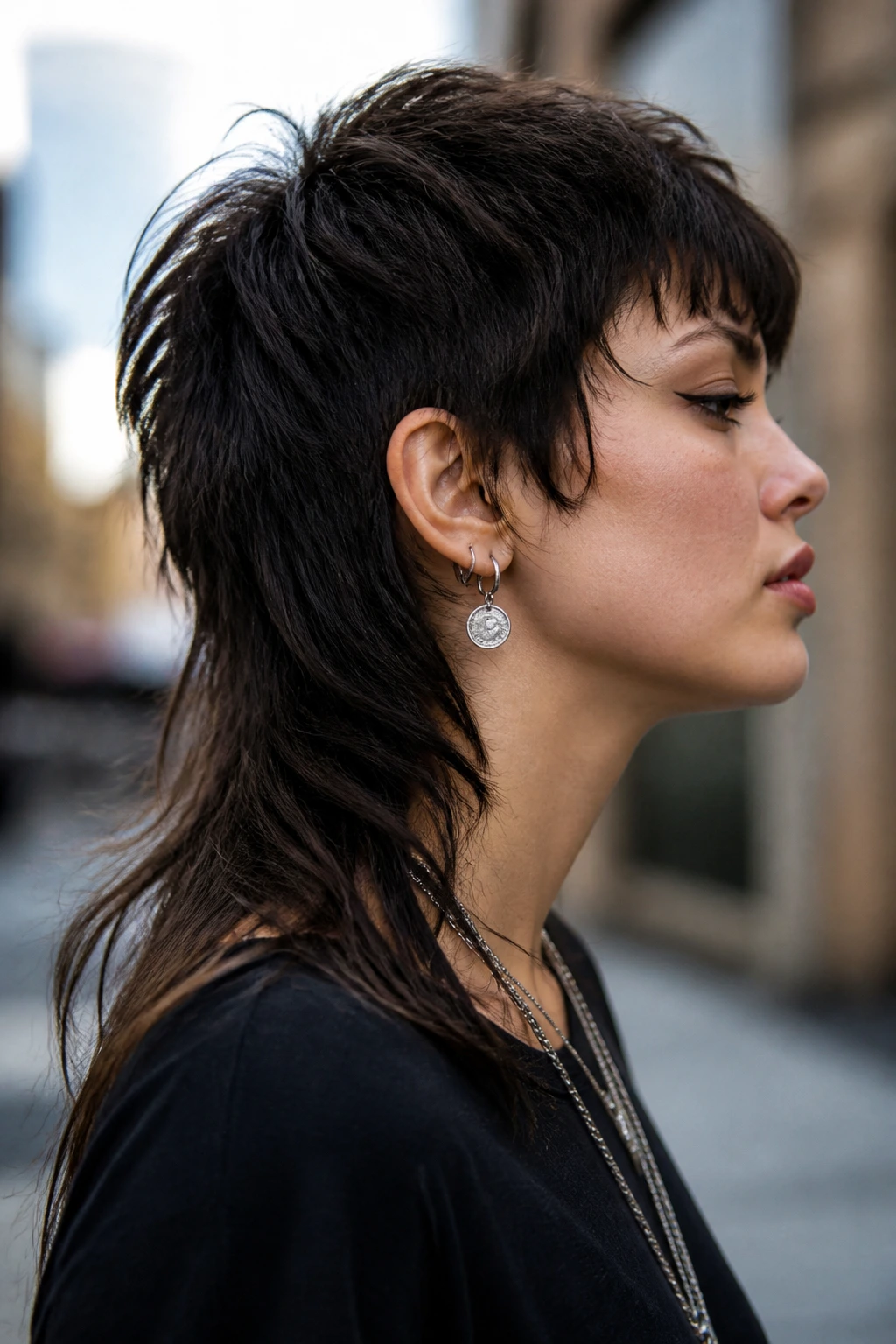
This is a more extreme, fashion-forward version of the shag. It’s shorter in the front and sides, and significantly longer in the back.
Managing the Weight
Because it is so short on the sides, it is excellent for taking the width out of the face. It is a very “pointed” cut, and it works well to create a sharper overall vibe.
Confidence
This is not a timid haircut. It is meant to be worn with attitude. If you have a round face and you want to redefine your silhouette, this is the way to do it.
24. Textured Blunt Bangs
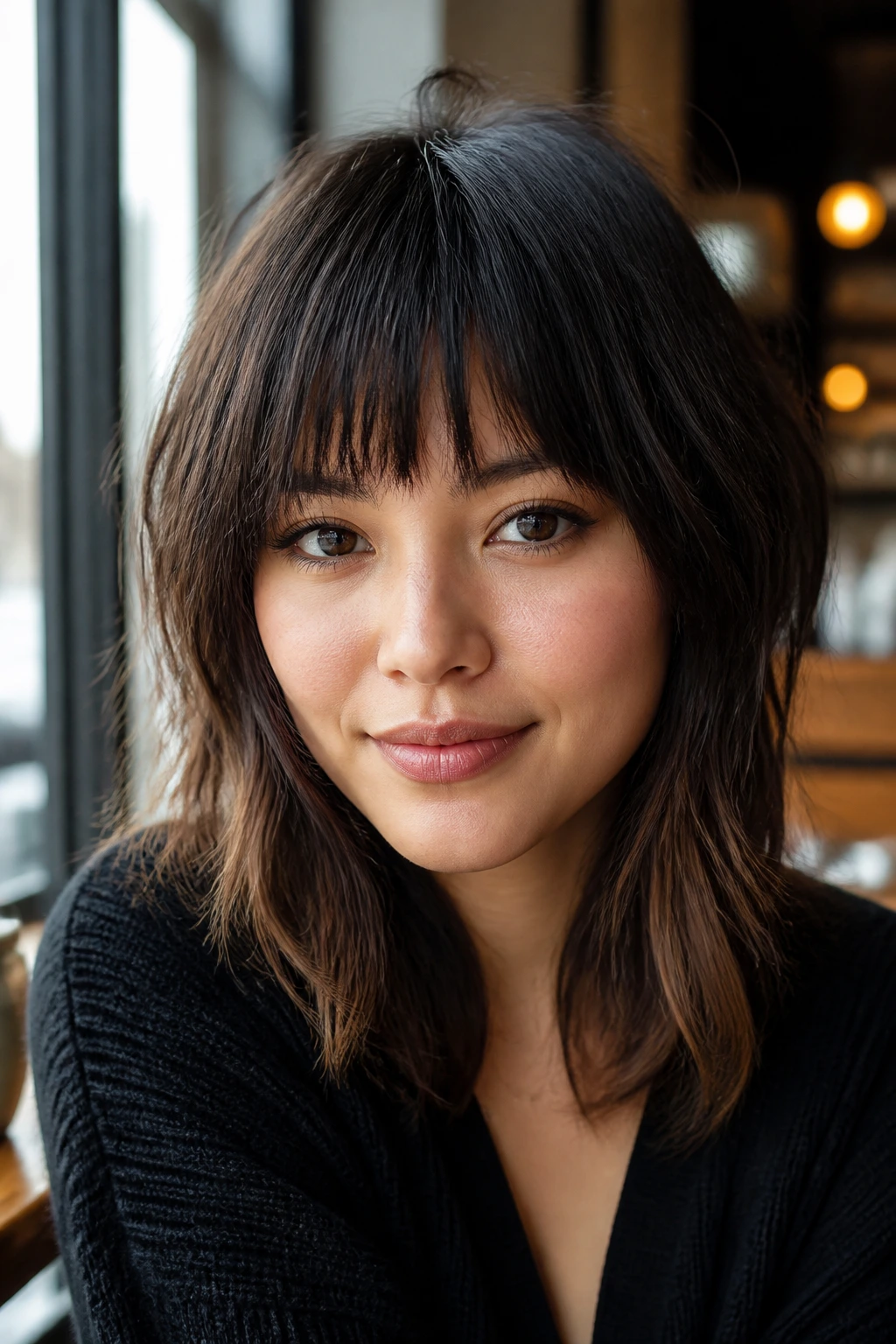
For years, people with round faces were told, “No bangs.” But textured, blunt bangs are actually fantastic. The key is to keep them just above the eyebrows so they don’t cover your eyes and make the face feel “closed in.”
The “Shattered” Fringe
Don’t get a solid line of hair across your forehead. Get “shattered” or “point-cut” bangs. This means the ends are wispy and uneven, so you can see a little bit of your forehead through the gaps. This prevents the “helmet” look.
Why it works
By cutting a horizontal line across the top of your face, you change the way the face is perceived. It can actually make the face look more oval, especially if the sides of the bangs are slightly longer and blend into your layers.
25. Scandi Waves
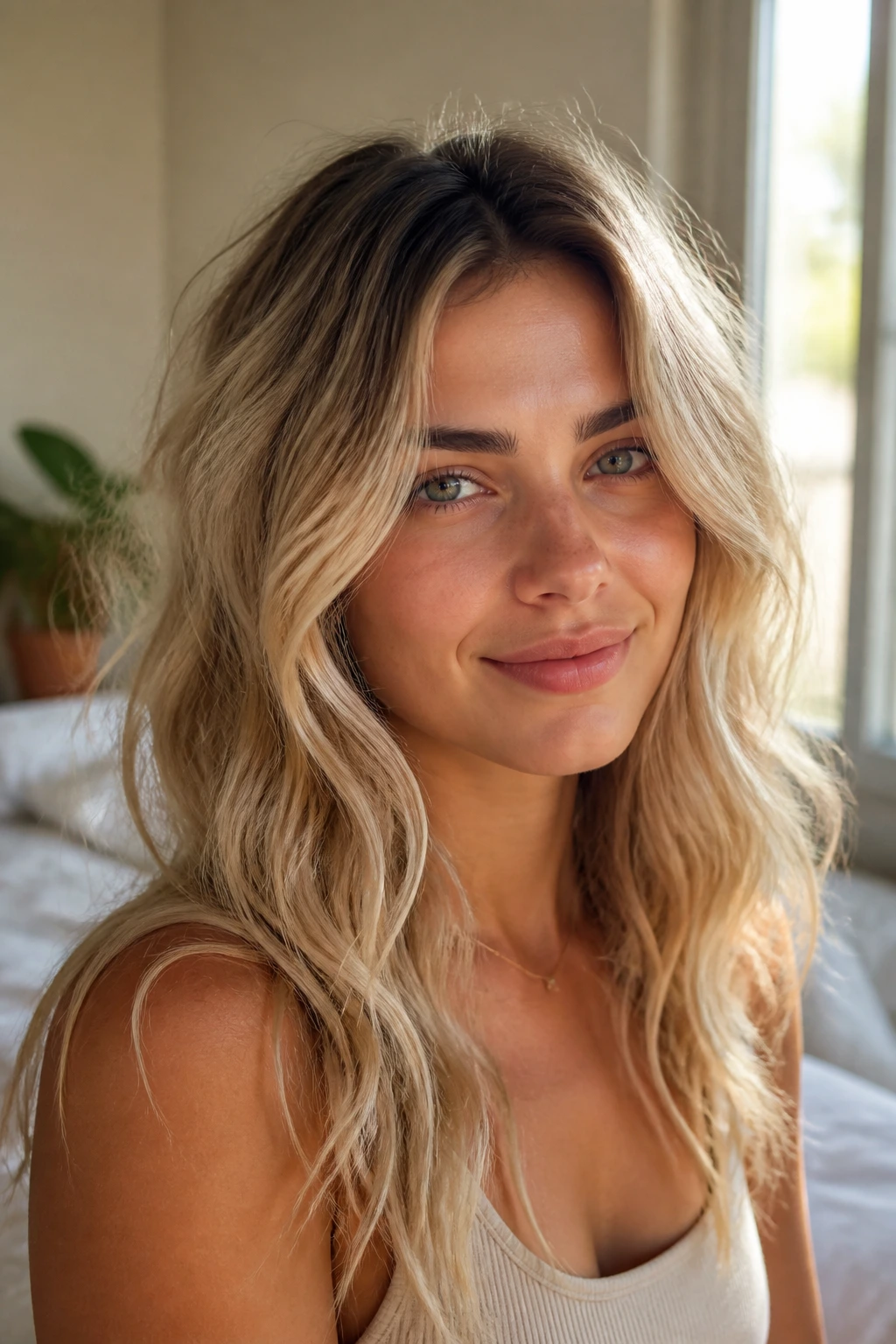
“Scandi” or Scandinavian waves are all about airiness. This style uses texture to make the hair look like you just spent a day at the beach, but with more structure.
The Technique
This relies on a specific type of wave that is slightly more open and less defined than a traditional curl. It is all about “air” in the hair. You use a texture spray and a light-hold hairspray to keep it fluffy rather than weighed down.
Why it flatters
The fluffiness creates a wider silhouette that, ironically, makes the face seem smaller and more delicate. It is a very soft, romantic look.
26. Tapered Natural Curls
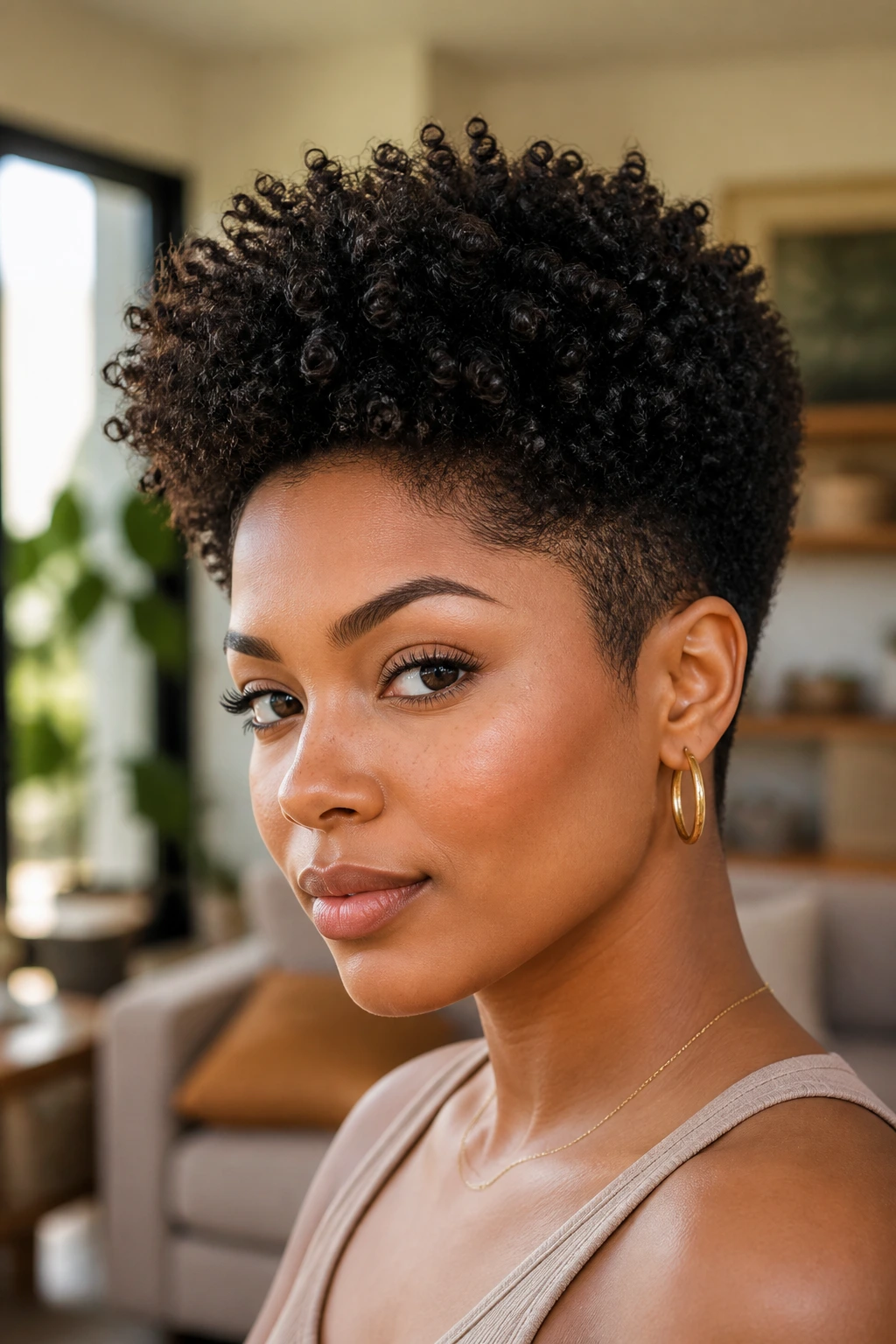
If you have afro-textured hair, a tapered cut—shorter on the sides and longer on top—is a perfect way to work with your natural shape.
Elevating the Volume
By keeping the hair longer on top, you build vertical height. This is essential for round faces because it pulls the face up and out, rather than focusing on the width of the cheeks.
Shape Definition
Use a curl-defining cream to ensure the curls on top are bouncy and separated. A little bit of oil on the ends helps keep them from looking fuzzy, which ensures the silhouette stays crisp and defined.
27. Choppy Mid-Length Bob
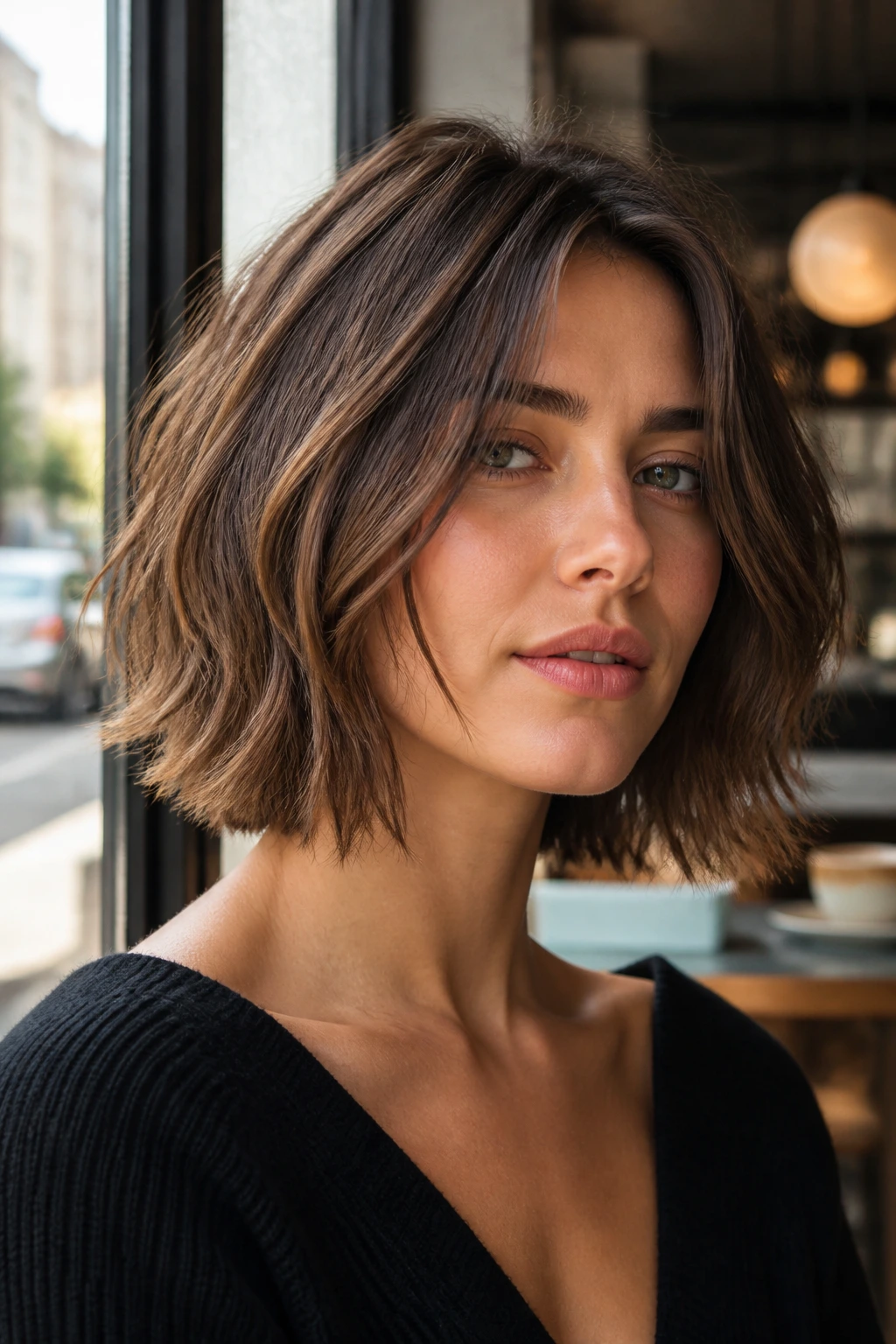
This is the “cool girl” bob. It’s a bit longer than a chin-length bob, usually hitting right at the collarbone. It’s meant to look undone.
The Cutting Technique
Use a razor or thinning shears throughout the entire head. You want the ends to be soft and the layers to be invisible but present. It should feel like your hair is moving constantly.
Styling
This is the ultimate wash-and-wear cut. Apply a little mousse while wet, scrunch it, and let it go. The natural texture of your hair will do all the work.
28. Soft Shaggy Lob
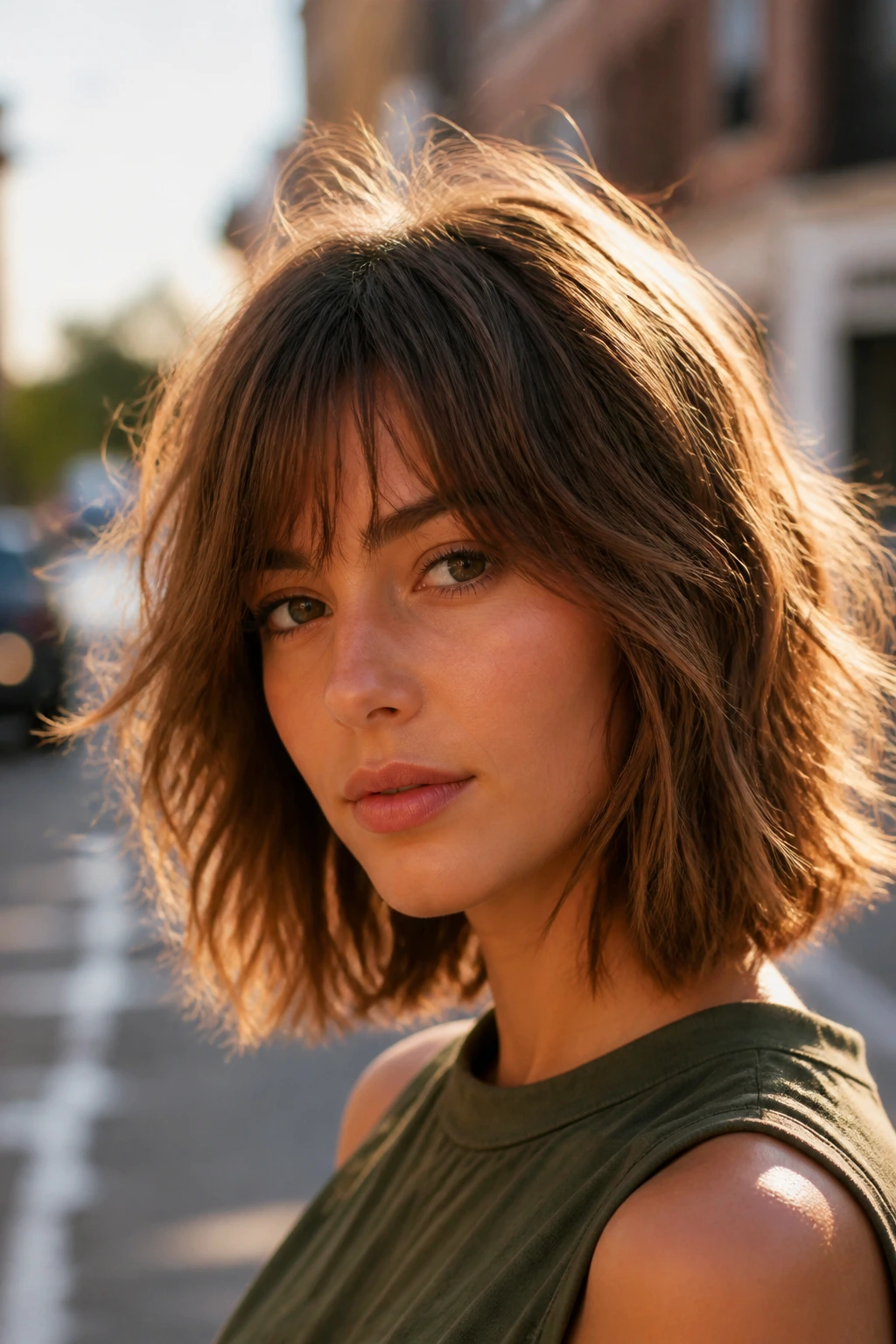
This is the final evolution of the shag. It is a long bob (lob) cut into a shag shape. It is easy, breezy, and very flattering.
Why it works for everyone
It has the length of a lob, so you can still tie it back, but it has the movement and texture of a shag. It hits the perfect balance between practical and stylish.
The Bottom Line
Whether you go for a pixie, a bob, or long layers, the secret is always the same: texture. By breaking up the solid surfaces of your hair, you create visual interest that pulls focus from the width of your face and highlights your eyes and smile. Don’t be afraid to ask your stylist for “shattered ends” or “piecey layers.” These aren’t just buzzwords; they are the technical tools to achieving that effortlessly textured look that balances your features perfectly.
Final Thoughts
When you are choosing from these 28 textured haircuts, the most important thing is to be honest with your stylist about your hair type and your tolerance for styling. A “textured” cut requires styling products. You cannot just roll out of bed and expect a shaggy, piecey look to exist on its own. You need sea salt sprays, dry texturizing sprays, or light pomades to encourage the hair to sit in those jagged, flattering shapes.
Also, remember that proportions matter. If you are going for a shorter cut, ensure the volume is at the crown. If you are opting for length, ensure the layers are focused around your face to open it up. A round face is a beautiful canvas, and with the right cut, you can add all the angles and edges you want without losing the softness you already have. Take these ideas to your next appointment, talk through your specific hair texture, and don’t be afraid to experiment. You might just find that the “rules” you were told to follow were holding you back from your best style yet.
