



Long haircuts for straight hair have a sneaky reputation. People assume straight texture makes everything easy, and that’s exactly how a lot of bad cuts happen. Straight hair shows the line, the weight, the imbalance, the uneven layer, and the sad little frayed end that should have been trimmed a half inch higher.
The upside is huge. When the shape is right, straight hair looks sharp in a way wavy or curly hair can’t always imitate. A clean perimeter can look glossy and expensive. A well-placed layer can make the whole head move without turning the ends into string.
What works best depends on density, face shape, and how much fuss you’ll actually tolerate in the morning. Fine straight hair usually needs a stronger outline. Thick straight hair often needs some weight removed, but not so much that it turns fluffy or hollow. The sweet spot is a cut that makes the hair look deliberate, not overworked. Start there.
1. Classic One-Length Cut for Straight Hair
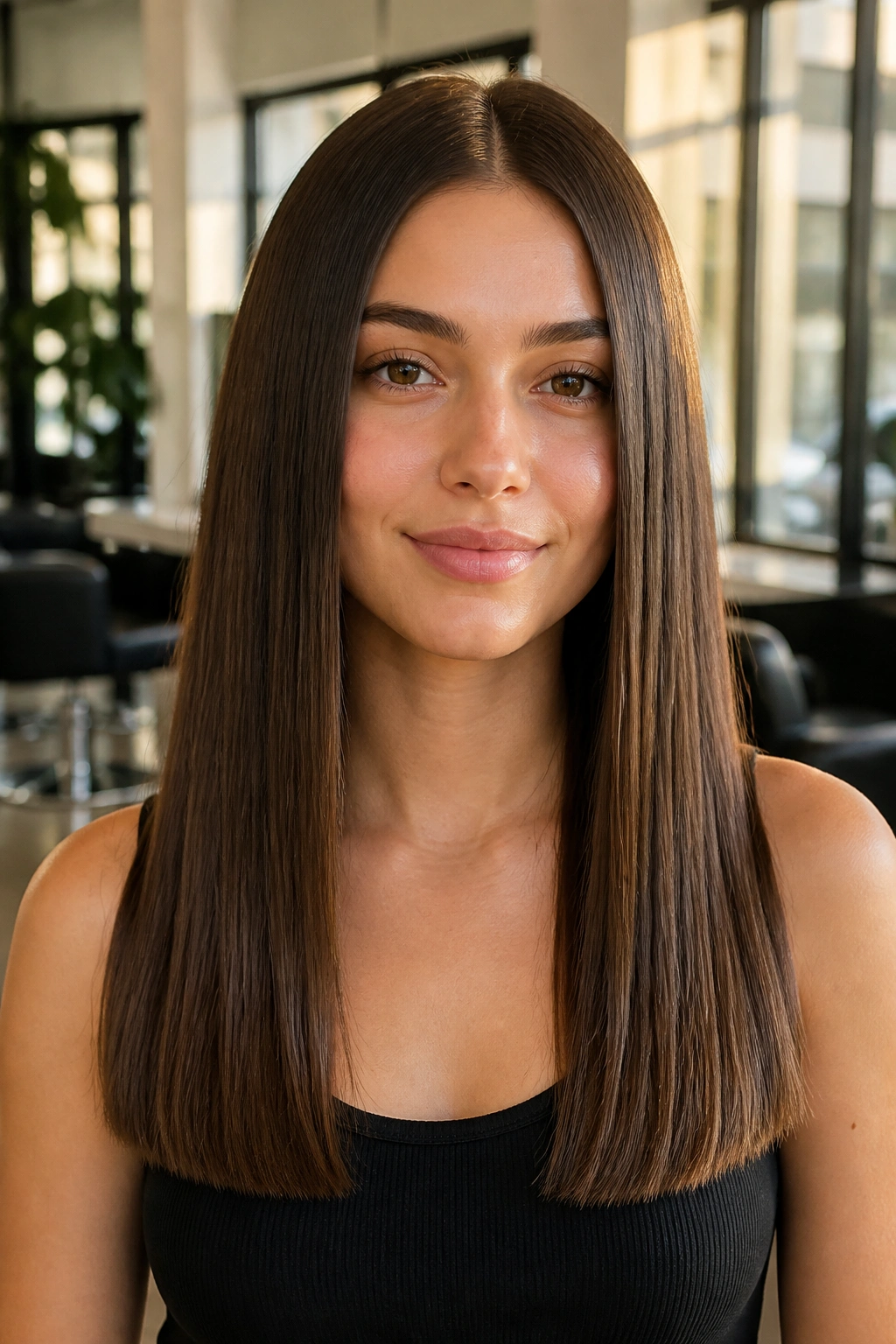
The classic one-length cut is the haircut that makes straight hair look crisp and full. Nothing beats a clean line when you want the ends to read as thick, healthy, and intentional. If your hair is fine, this is one of the fastest ways to make the bottom look denser without adding any extra styling time.
I like this cut when the hair already has shine and the wearer wants that sleek, glassy finish. It sits well at chest length, mid-back, or longer, and it doesn’t need much layering to behave. The downside is obvious: if the hair is very thick, one length can feel heavy at the bottom unless the stylist removes a little weight underneath.
Ask for the perimeter to stay blunt and the ends to be dusted, not thinned. That tiny detail matters. Thinning shears can leave straight hair looking wispy at the wrong spots, and once that happens, the line loses its power fast.
2. Soft U-Shape Cut
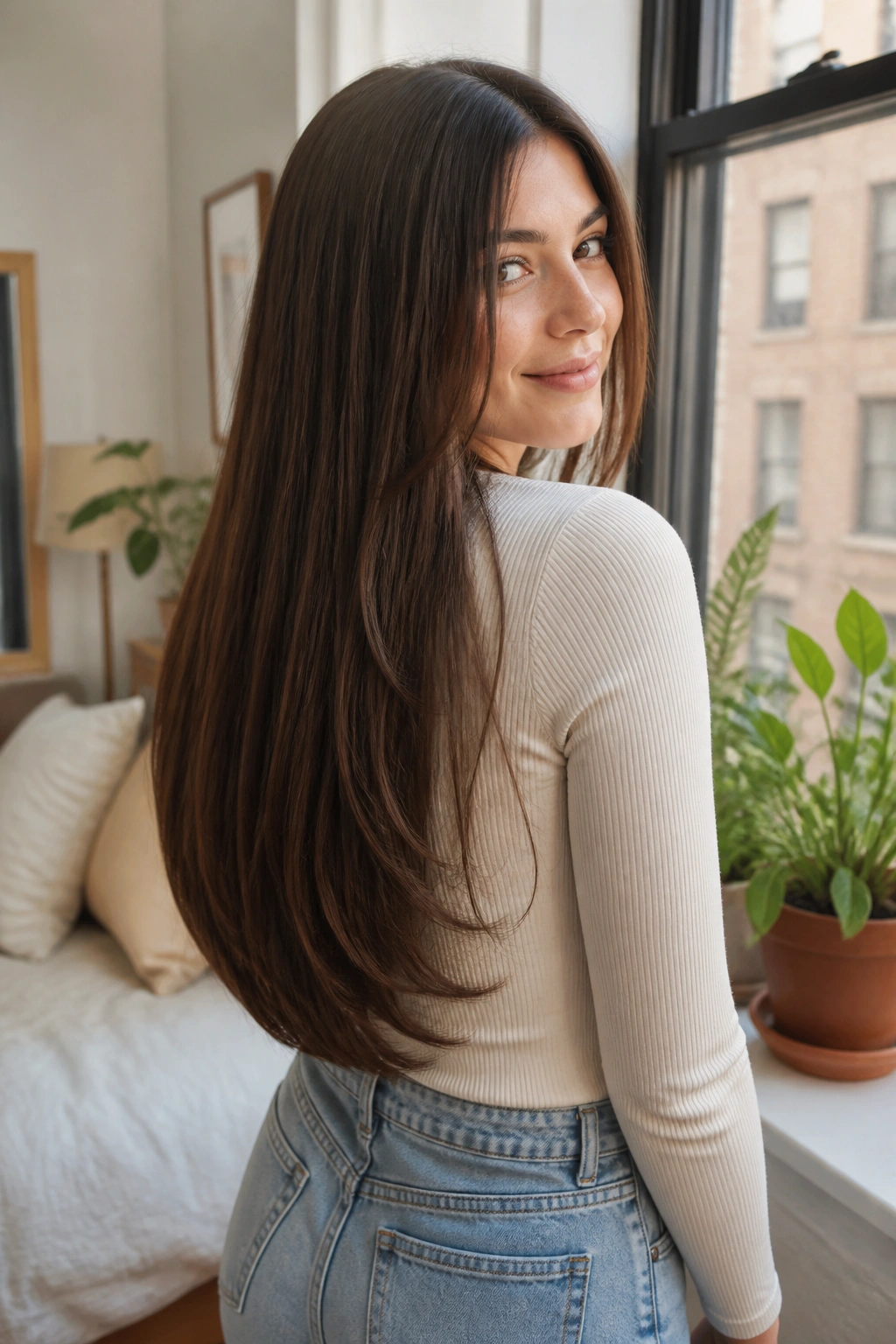
A soft U-shape is what I recommend when someone wants movement but doesn’t want a sharp edge. The back curves gently upward at the sides, so the overall silhouette feels softer than a blunt line. It’s a quiet haircut, which sounds boring until you see how well it frames long straight hair.
Why It Works
The curve stops the hair from looking like one flat curtain. It also keeps the longest section in the middle, which helps the back feel fuller without making the sides heavy. Straight hair loves this shape because the curve shows up cleanly, even when you air-dry and go.
What to Ask For
- Keep the curve subtle, not dramatic.
- Let the shortest side pieces land a little below the collarbone.
- Keep the back long enough that the shape still reads as long hair.
- Skip aggressive texturizing at the ends.
This cut is a good match for someone who wears their hair down most days and wants the length to look polished without feeling severe. It’s calm. That’s the charm.
3. Sharp V-Shape Cut
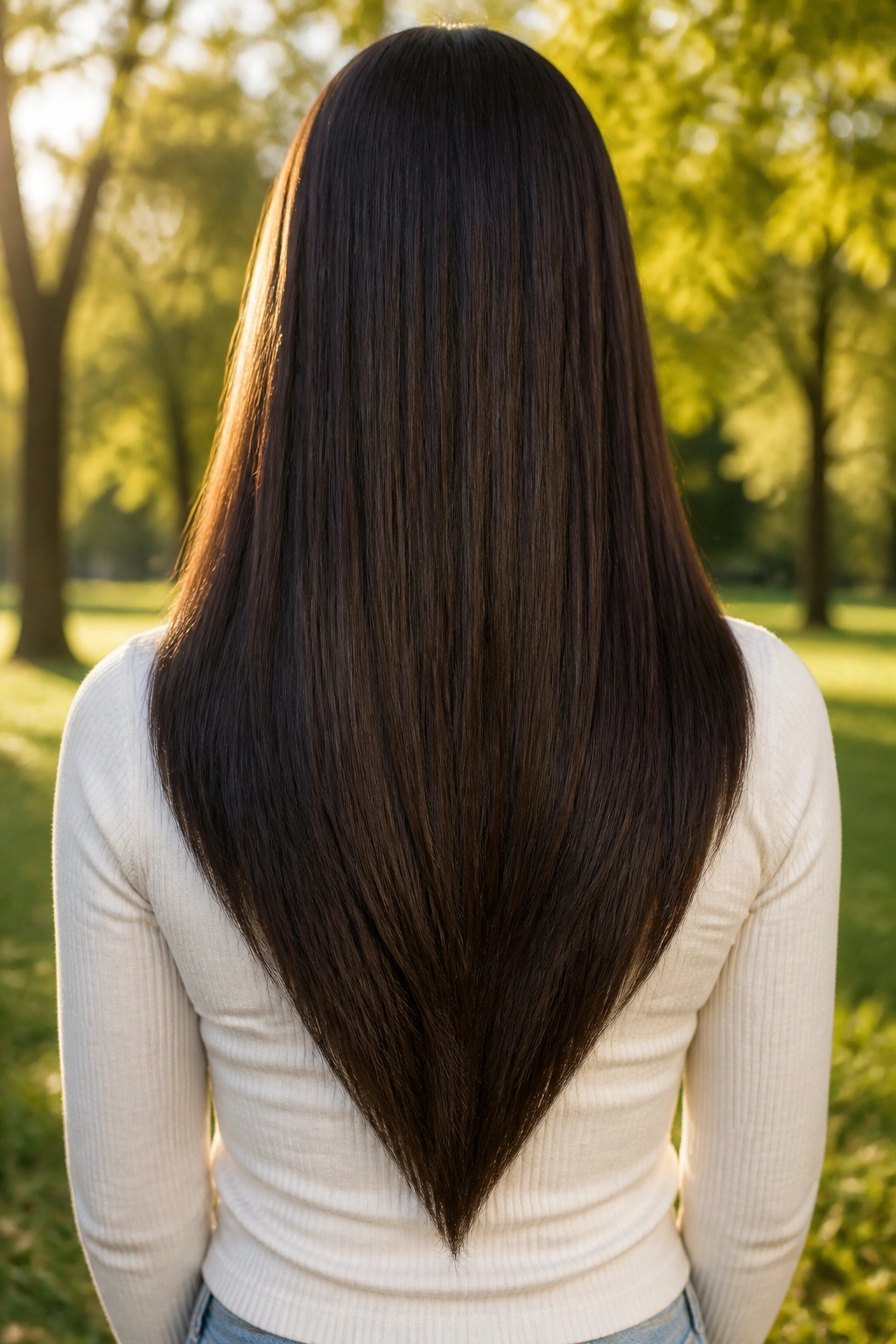
Why does the V-shape look so good on some people and so thin on others? Because this cut lives or dies by density. When straight hair is thick enough to support a pointed back, the V-shape gives you a sleek, dramatic fall that looks almost tailored. When the hair is too fine, the point can turn fragile fast.
The appeal is in the line. The center back stays the longest, while the sides angle up toward the shoulders, so the hair falls like a narrow waterfall instead of a wide sheet. That can be gorgeous on long, dense hair. It also keeps long lengths from feeling blocky.
What I would not do is push the point too low if the ends are already see-through. A deep V on fine hair can look unfinished by the time it reaches the middle of the back. Keep the point modest if you want fullness. Keep it deeper only if the hair has enough bulk to carry it.
4. Long Layers Starting at the Chin
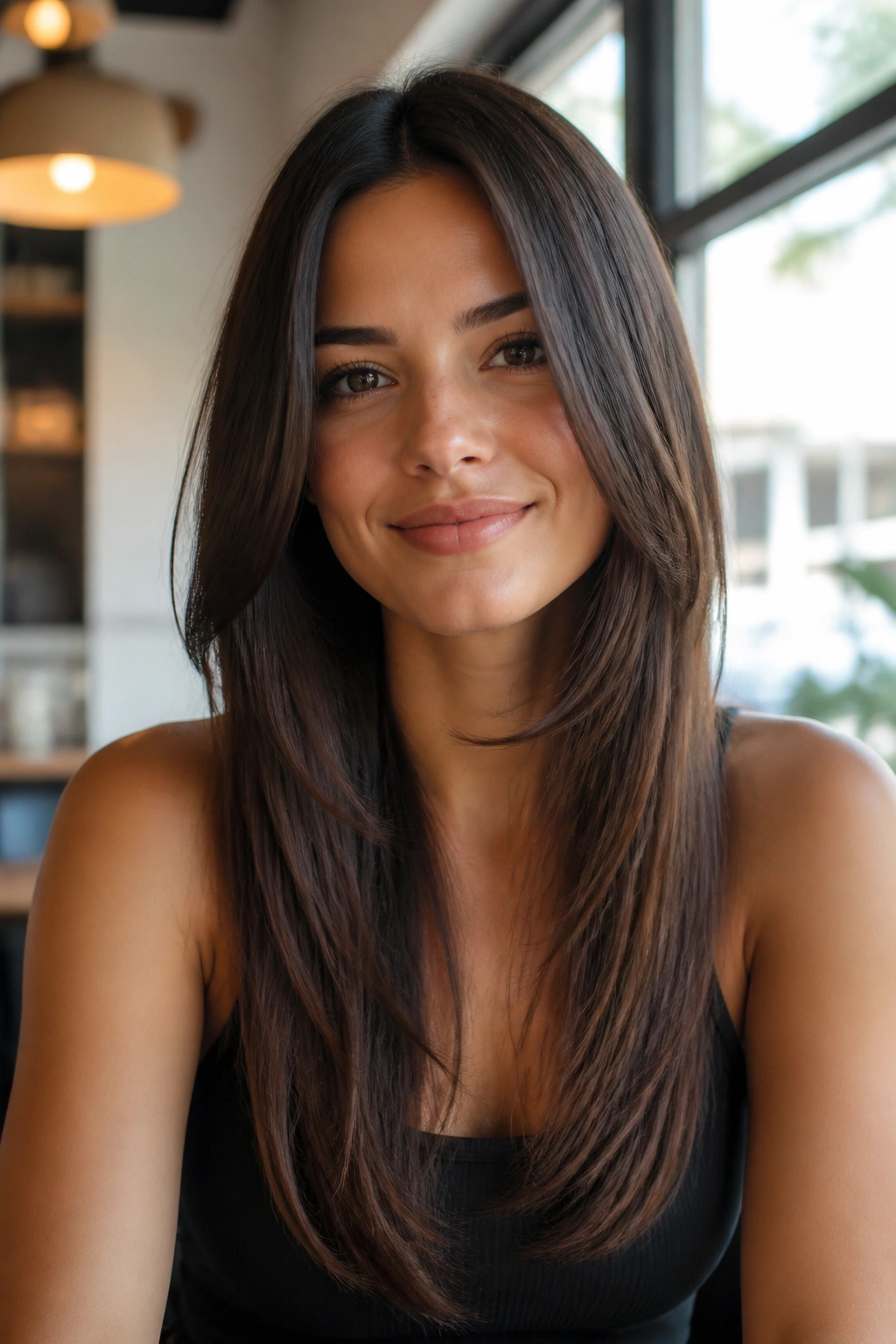
If straight hair collapses around your jaw by lunchtime, chin-length layers can wake it up. They add movement right where the face needs it most, and they stop the bottom from looking too heavy. This is one of the easiest ways to get shape without sacrificing length.
How to Ask for It
Tell the stylist you want the first layer to begin at the chin, not above it. That placement matters because anything shorter can start to pull volume up too high and make the top feel airy in a way you may not want. Keep the bottom line long so the cut still reads as a true long style.
A chin-start layer works well when you wear the hair loose, tucked behind the ears, or half-up. The front pieces move without taking over the whole haircut. If you like a middle part, the layers will frame both sides evenly. If you prefer a side part, they can soften the heavier side without much effort.
It’s a useful cut. No drama, just shape.
5. Long Layers Starting at the Collarbone
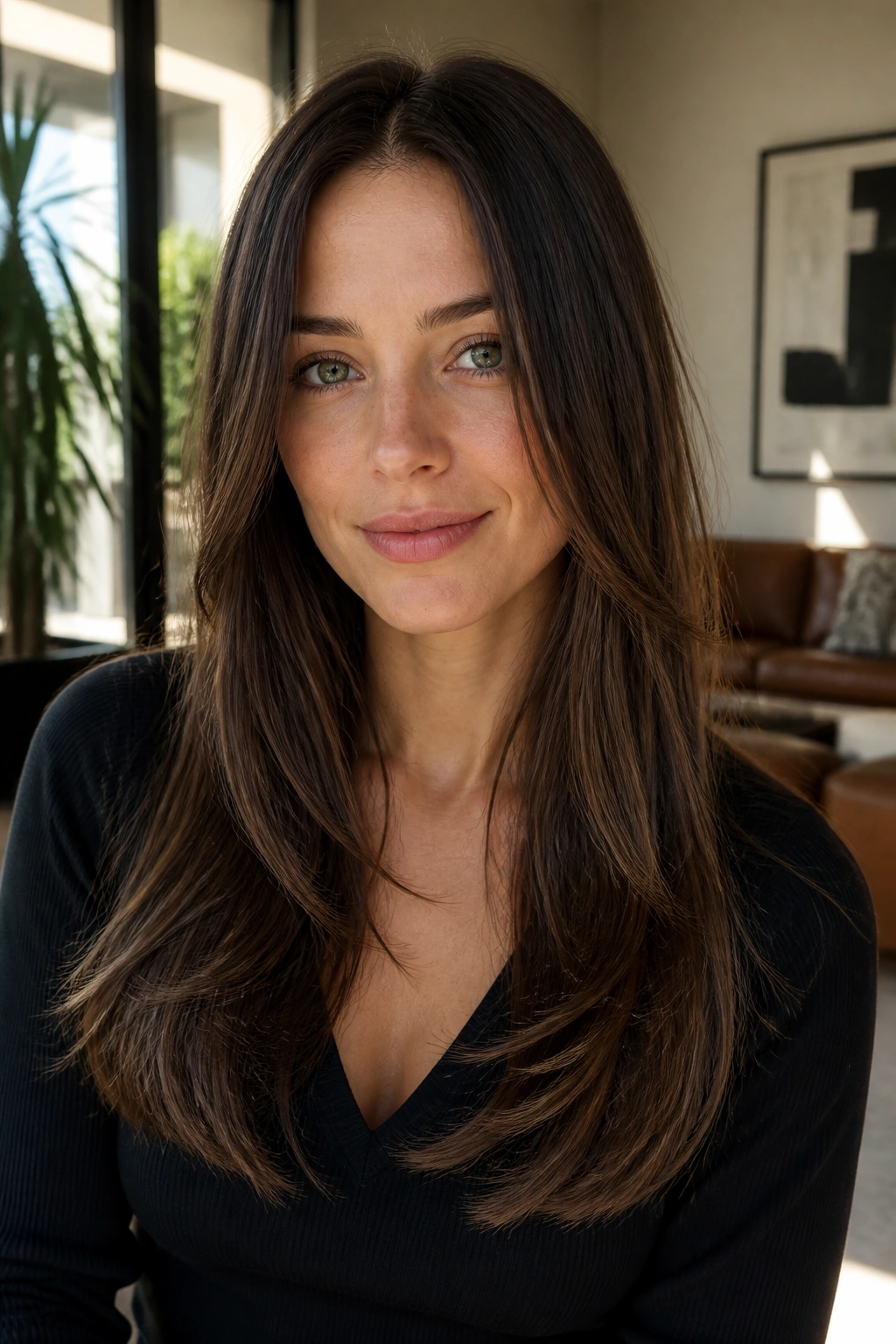
Collarbone layers are the grown-up cousin of chin layers. They keep the hair long and calm, but they add enough bend to stop the ends from looking like one heavy block. If chin layers feel too visible for you, this is the middle ground that usually makes people happy.
The collarbone is a smart place to start because the layer sits where the hair naturally swings. You feel the movement when you walk, which sounds minor until you realize that straight hair can look a little frozen if every strand is the same length. This cut fixes that without making the style choppy.
I especially like it for people who want to wear their hair both down and in a low ponytail. The shorter front pieces still show, but they don’t get in the way. The length stays luxurious, and the shape doesn’t demand a round brush every morning.
6. Face-Framing Layers
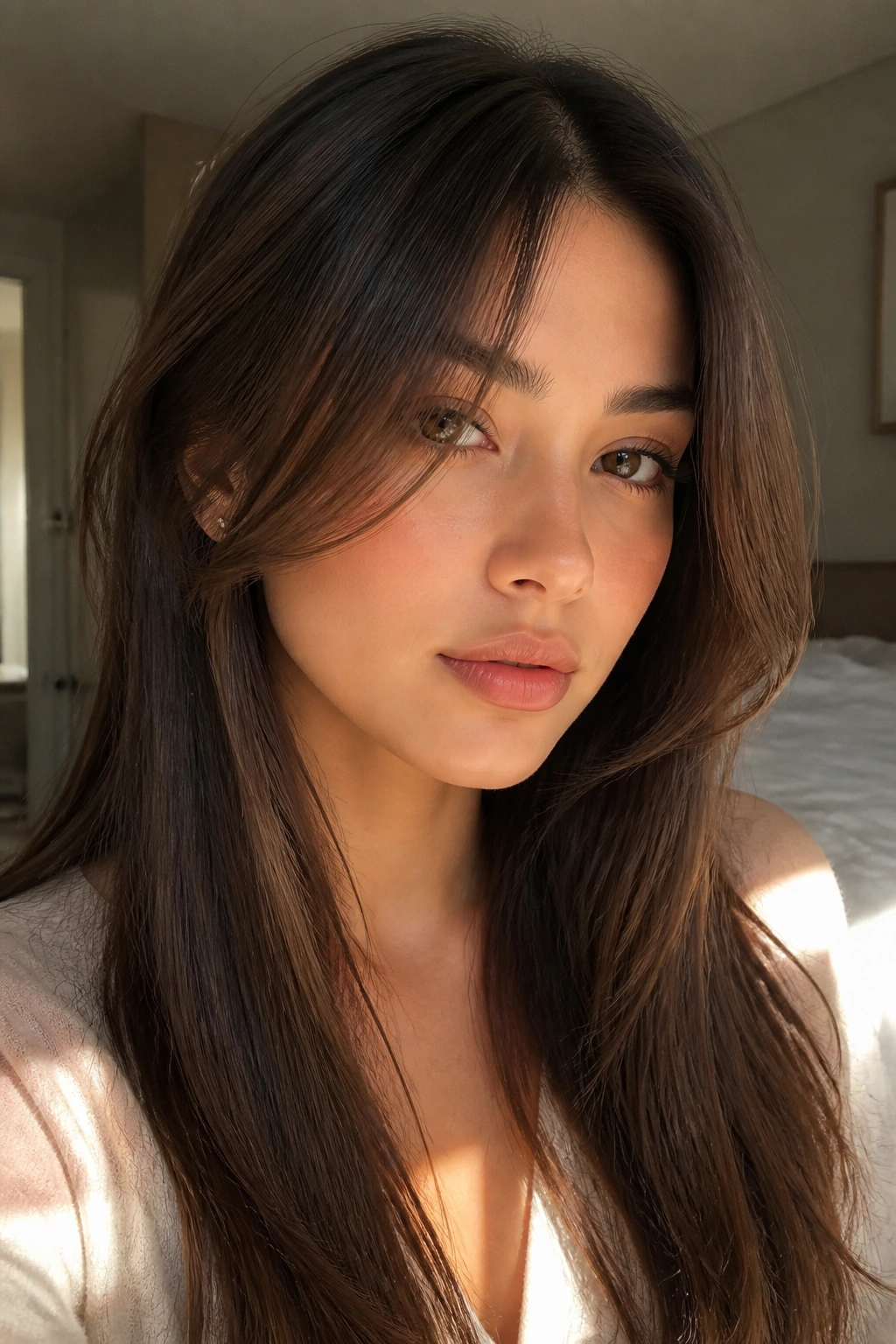
Face-framing layers do one job and do it well: they make long straight hair feel less heavy around the face. The front changes everything. Even a small adjustment, like soft pieces starting at the cheekbone or jaw, can make the whole haircut look brighter and lighter.
The trick is to keep the frame narrow enough to flatter, not so wide that it steals the whole haircut. Long straight hair can handle a strong face frame because the rest of the length stays clean and orderly. That balance is what makes the style work. Too much face framing and you end up with pieces that fight the rest of the hair. Too little and the cut looks like a long sheet with a couple of stray bits in front.
This is one of the most forgiving options if you like wearing your hair tucked behind one ear, clipped back, or pulled into a half-up style. The front pieces fall on purpose, which is more flattering than letting the sides hang there and hope for the best.
7. Curtain Layers
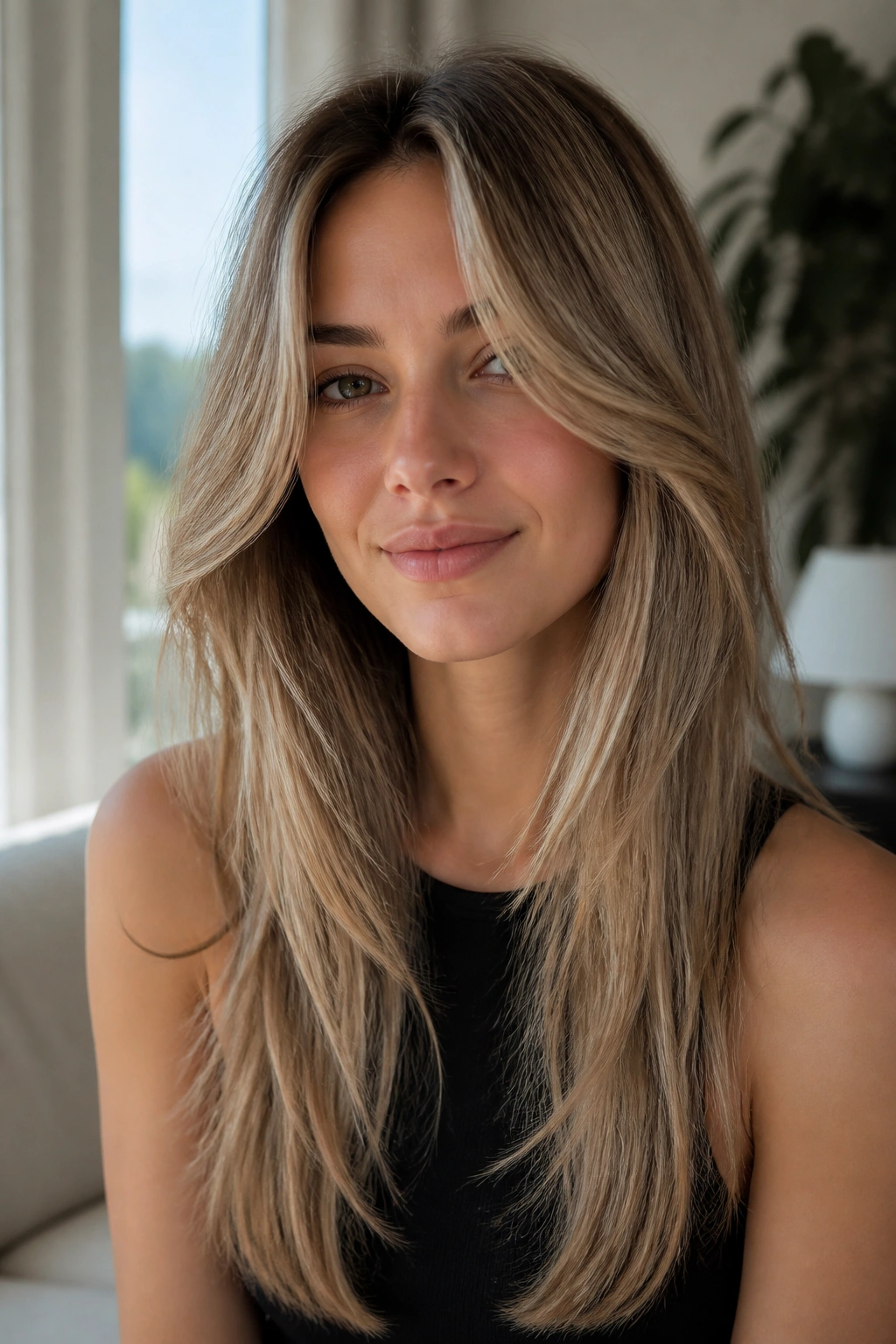
Curtain layers are what you reach for when you want the middle part to look soft instead of severe. They open away from the face in two sweeping panels, and on straight hair that shape reads clearly without much styling. They’re especially good if you hate cuts that feel too stiff.
Why They Work on Straight Hair
Straight hair gives curtain layers a clean edge. The front pieces can be cut to start around the cheekbone, then drop into longer lengths that blend with the rest of the hair. Because the hair doesn’t bend much on its own, the shape stays visible instead of disappearing into fluff.
What to Watch For
- The shortest point should support your face, not crowd it.
- The blend into the longer lengths should feel smooth, not chopped.
- They work best with a center or very soft off-center part.
- They need a little blow-drying or brushing if you want that open, sweeping look.
This cut looks polished when the hair is tucked behind the shoulders and even better when the ends have a clean, straight finish. It’s easy to wear and easy to grow out, which is rare enough to matter.
8. Invisible Layers
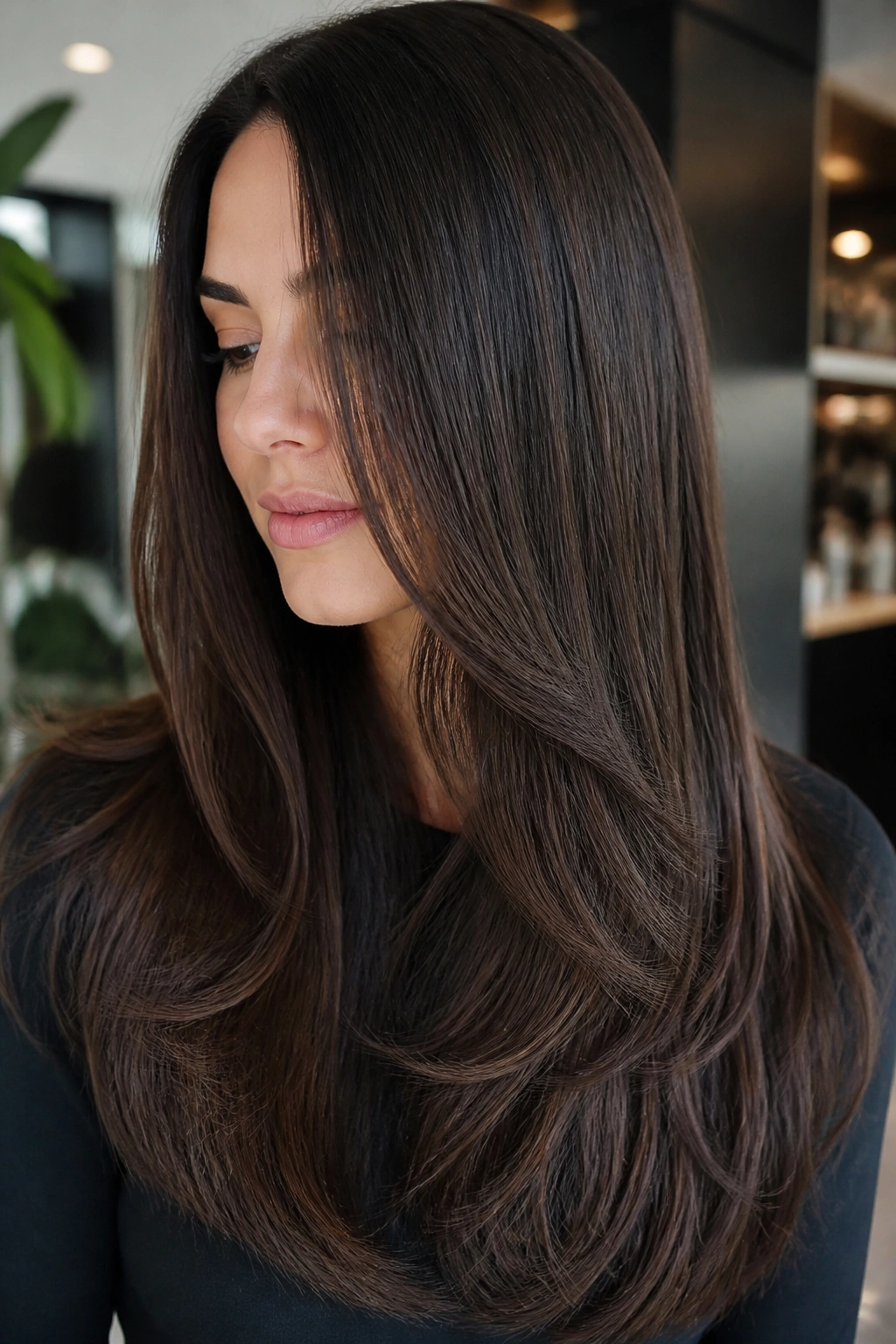
Invisible layers are the haircut for someone who wants movement but does not want the world to see obvious layer lines. The cut removes weight from the inside of the hair, so the outside still looks long and smooth. On thick straight hair, that can be a lifesaver.
What Makes Them Different
The layers sit under the surface. You feel the effect more than you see it. Hair drops better, moves more, and feels lighter through the mids and ends, but the perimeter stays cleaner than it would with standard layers. Straight hair makes this especially useful because every visible line is easy to spot.
Good Fit If You Want…
- Less bulk without losing length.
- A smoother shape around the shoulders.
- Hair that moves more when you walk.
- A cut that looks tidy in a ponytail and loose.
There’s a catch. If the hair is already fine, invisible layers can sometimes make the ends feel too airy. In that case, keep the weight closer to the bottom. This is a thick-hair move first, and a fine-hair move only when handled carefully.
9. Butterfly Cut
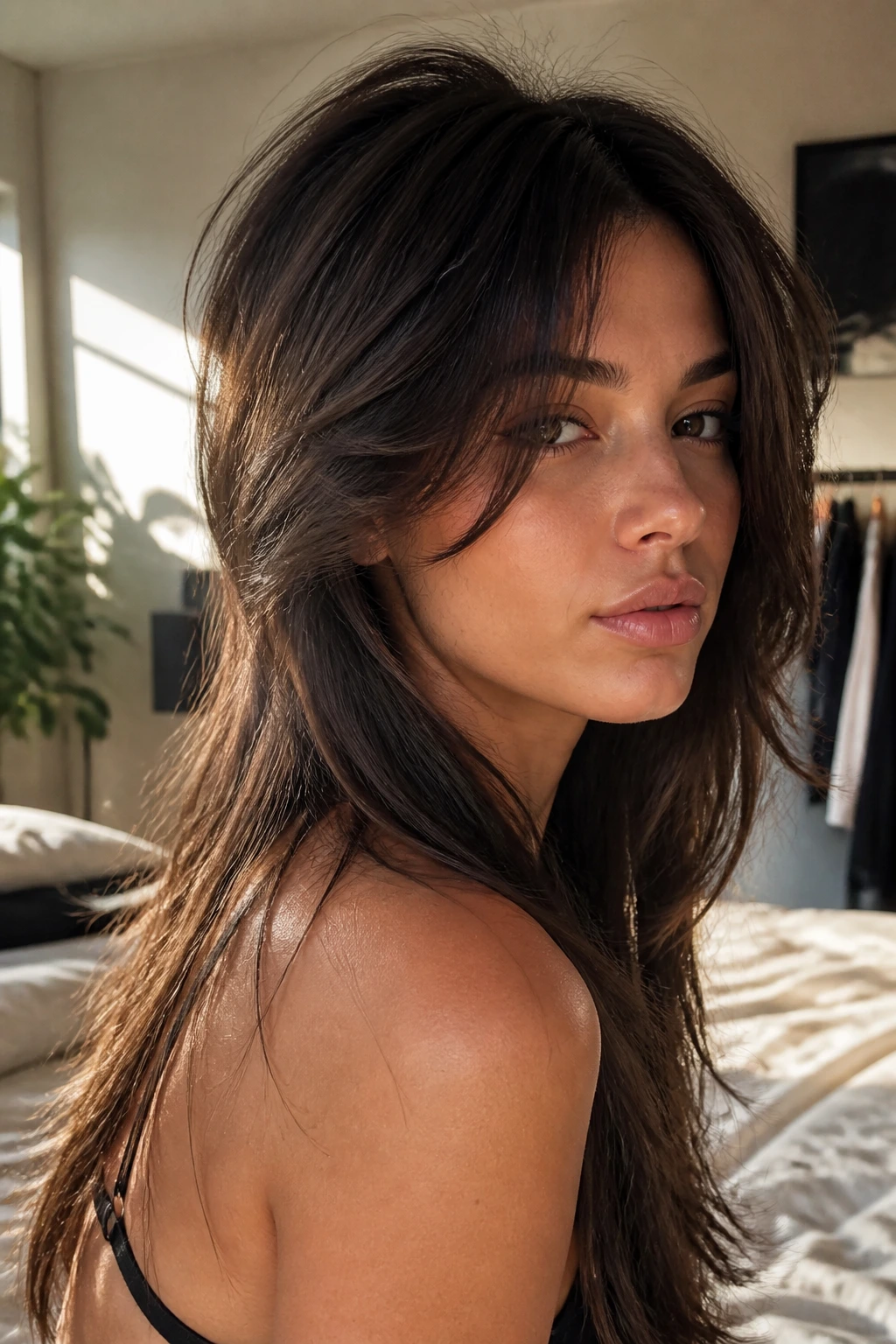
The butterfly cut is for the person who wants long hair to feel dramatic without chopping it off. Why do people keep coming back to it? Because it gives you a short, face-framing top section and a long back section, and that contrast can make straight hair look fuller right away.
How It Lifts Straight Hair
The shorter front layers create the look of a big blowout, even when the back stays long. Straight hair shows the shape cleanly, which is half the appeal. You see the lift around the face, then the long length drops behind it. That contrast is the whole point.
The downside is maintenance. If the front layers are cut too bluntly, they can hang there like a shelf. If they’re too short, you lose the softness that makes the style feel wearable. The best butterfly cuts have a gentle blend, not a hard jump.
I like this cut for someone who enjoys a little movement around the face and doesn’t mind styling the front pieces with a round brush or a large curling iron. It gives long hair a bit of theater. Not too much. Just enough.
10. Long Shag Cut
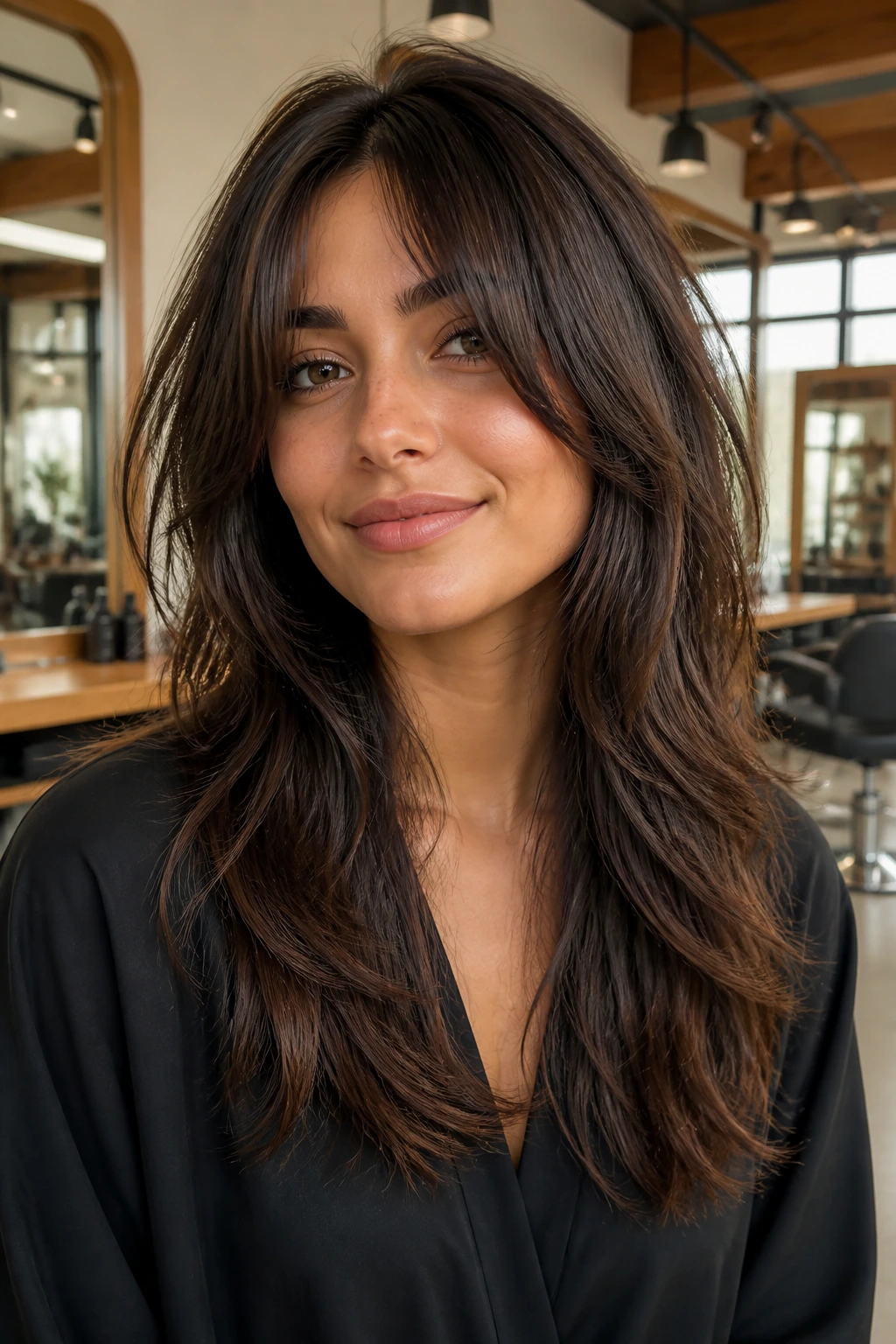
The long shag is the cut for straight hair that feels a little too polite. It adds texture, broken-up ends, and a looser shape that keeps the style from lying flat all the way through. It should look lived-in, not messy.
The key is restraint. On straight hair, a shag can become choppy very fast if the layers are cut too high or the ends are over-texturized. Done well, though, it adds movement through the crown and sides while keeping enough length that the haircut still feels feminine, sleek, or whatever word you want to use for something that looks deliberately undone.
This cut likes a bit of styling cream, a blow-dry with fingers, or a quick bend at the ends. If you want hair that falls out of bed and somehow behaves, this is not that cut. If you want shape with edge, it earns its keep.
11. Soft Wolf Cut for Straight Hair
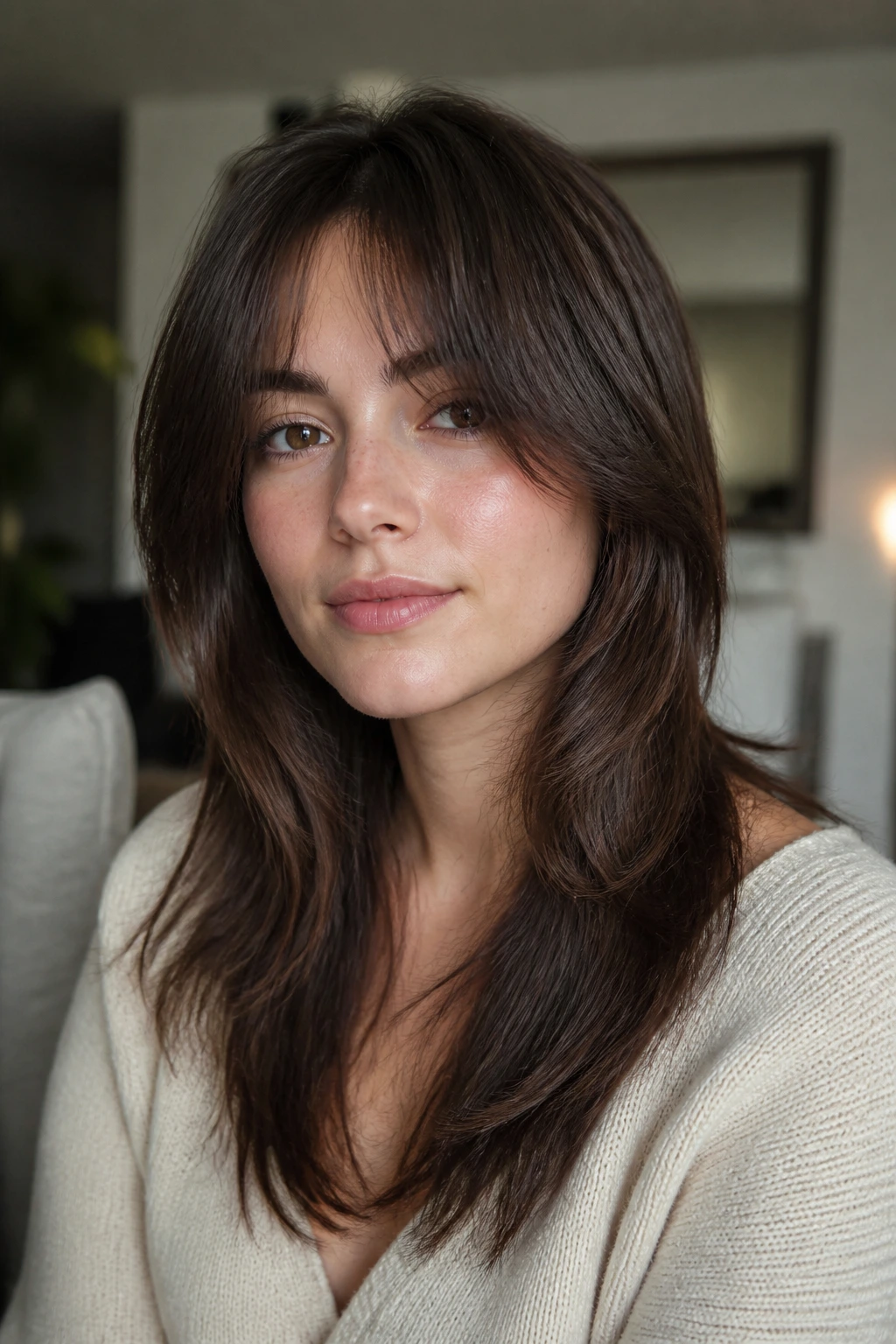
The wolf cut can work on straight hair, but only when it is softened. A hard wolf cut on pin-straight hair can look too broken up. A soft version keeps the crown a little fuller, the sides a little lighter, and the ends less severe. That balance is the entire trick.
Where People Go Wrong
They ask for the texture and forget the harmony. Then the top gets too short, the bottom gets too thin, and the haircut starts looking like three different ideas fighting each other. Straight hair does not hide that mistake. It puts it under a spotlight.
A better version keeps the layers longer and the edge less jagged. The result is a cut with lift at the top and movement through the lengths, but without the hard bite that can make straight hair look choppy in a bad way. If you wear your hair with a bit of bend or a loose wave now and then, this style becomes even easier to live with.
I would choose this only if you want something with attitude. Otherwise, keep reading.
12. Full Fringe with Long Length
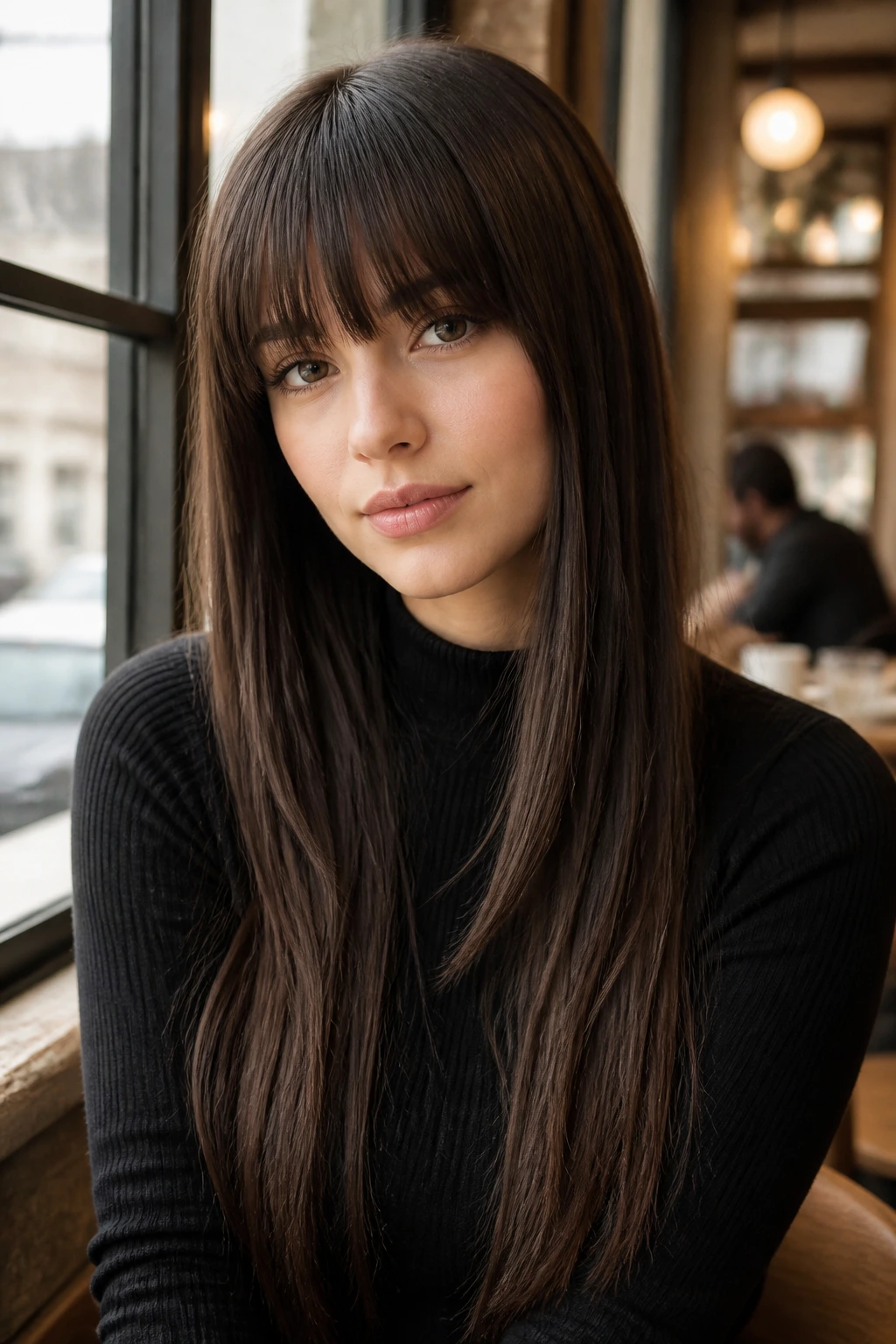
A full fringe changes the whole personality of long straight hair. The length can stay soft and sleek, but the front gets a strong line across the forehead. That line gives the haircut weight. It can make long hair feel chic instead of safe.
The honest part: full bangs are a commitment. They need more upkeep than the rest of the haircut, and straight hair tends to show where the fringe sits a little too low or splits too easily. Cowlicks matter here. So does forehead shape. If the fringe wants to separate at the center, you’ll spend time fixing it.
Still, when it works, it really works. A full fringe can balance a long face, sharpen soft features, or make long hair feel less samey. Keep the ends blunt and the fringe dense enough to sit flat without looking like a sparse curtain. That last detail is the difference between strong and awkward.
13. Curtain Bangs with Long Hair
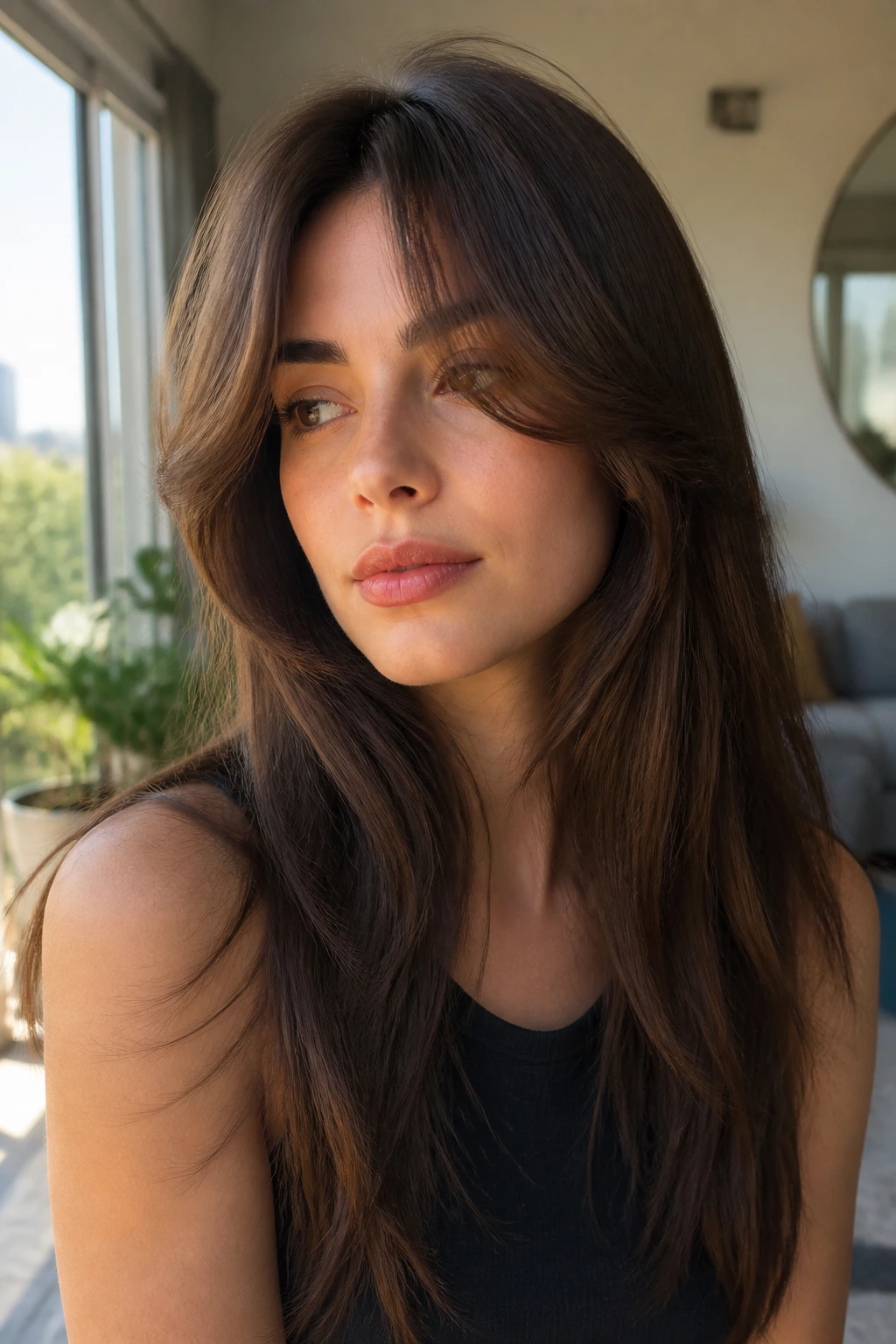
Curtain bangs are the easygoing cousin of a full fringe. They part in the middle, sweep to both sides, and blend into long hair without asking for constant babysitting. On straight hair, the shape stays visible and clean, which is why so many people keep coming back to it.
What Makes Them Work
They soften the front without taking over the whole haircut. That matters on long straight hair, where the length can already feel heavy around the face. Curtain bangs break that up and make the haircut feel lighter near the eyes and cheeks.
They also grow out better than blunt bangs. That is not a small thing. A fringe that needs perfect trimming every couple of weeks is a pain. Curtain bangs usually buy you more breathing room, which is one reason they make sense for busy people or for anyone who gets bored easily.
If your hair tends to fall flat, ask for the shortest piece to sit around the cheekbone or just below it. Too short and the bangs lose that easy sweep. Too long and they stop reading as bangs at all.
14. Side-Swept Bangs
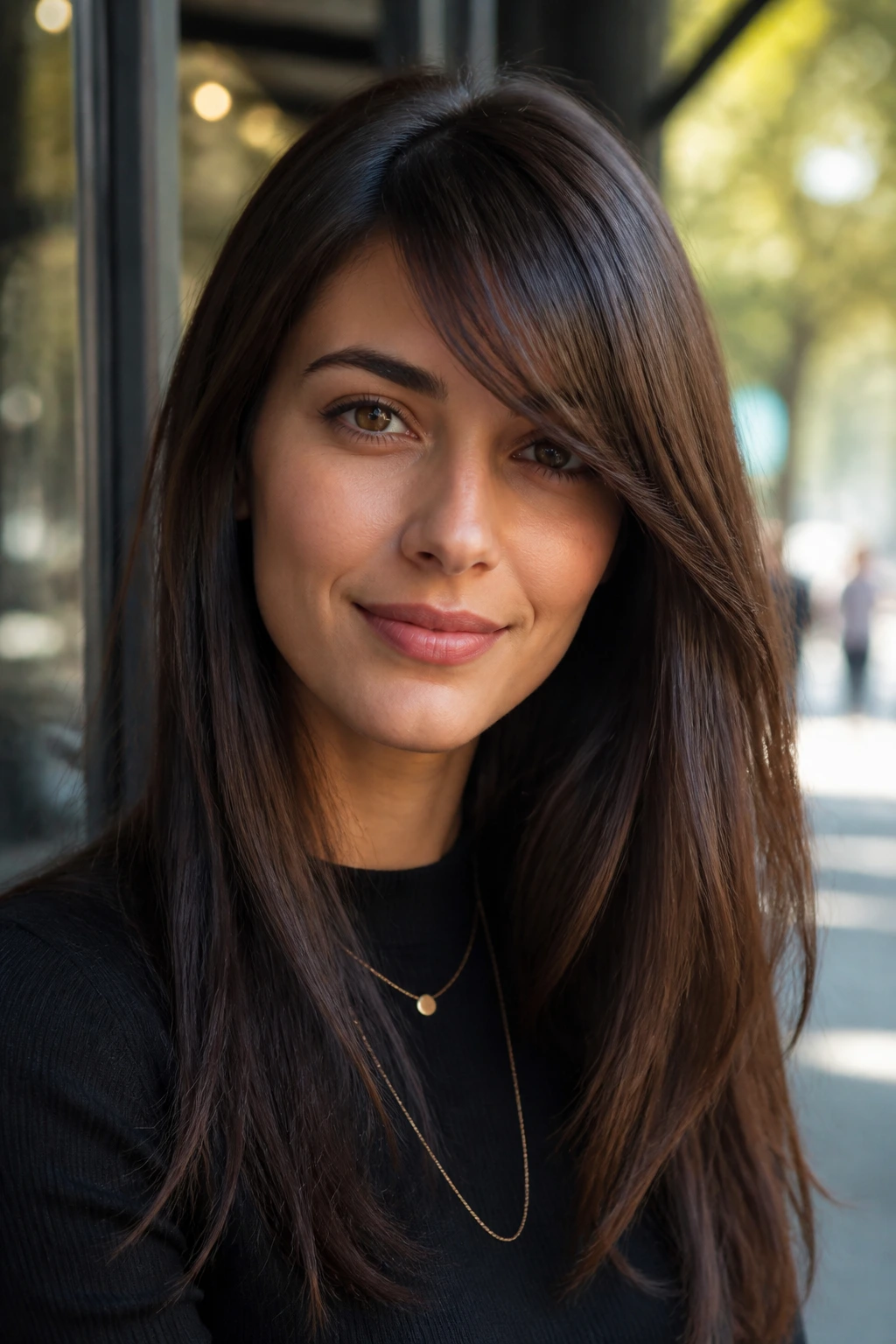
Side-swept bangs have been around long enough to stop pretending they’re trendy. They work because they soften the front of long straight hair without demanding a center part, and they can make the haircut feel more relaxed. They’re especially good if your hair already wants to fall to one side.
- They work well with long faces because they break up vertical length.
- They can soften a strong jawline without hiding it.
- They’re easier to grow out than a full fringe.
- They look better when the shortest point lands around the cheekbone.
This is not the most dramatic option on the list, and that’s exactly why some people love it. It’s easy to wear to work, easy to tuck back, and easy to let fall naturally on days when you cannot be bothered. If you want a small change that still feels like a haircut, not a costume, this one does the job.
15. Rounded Perimeter Cut
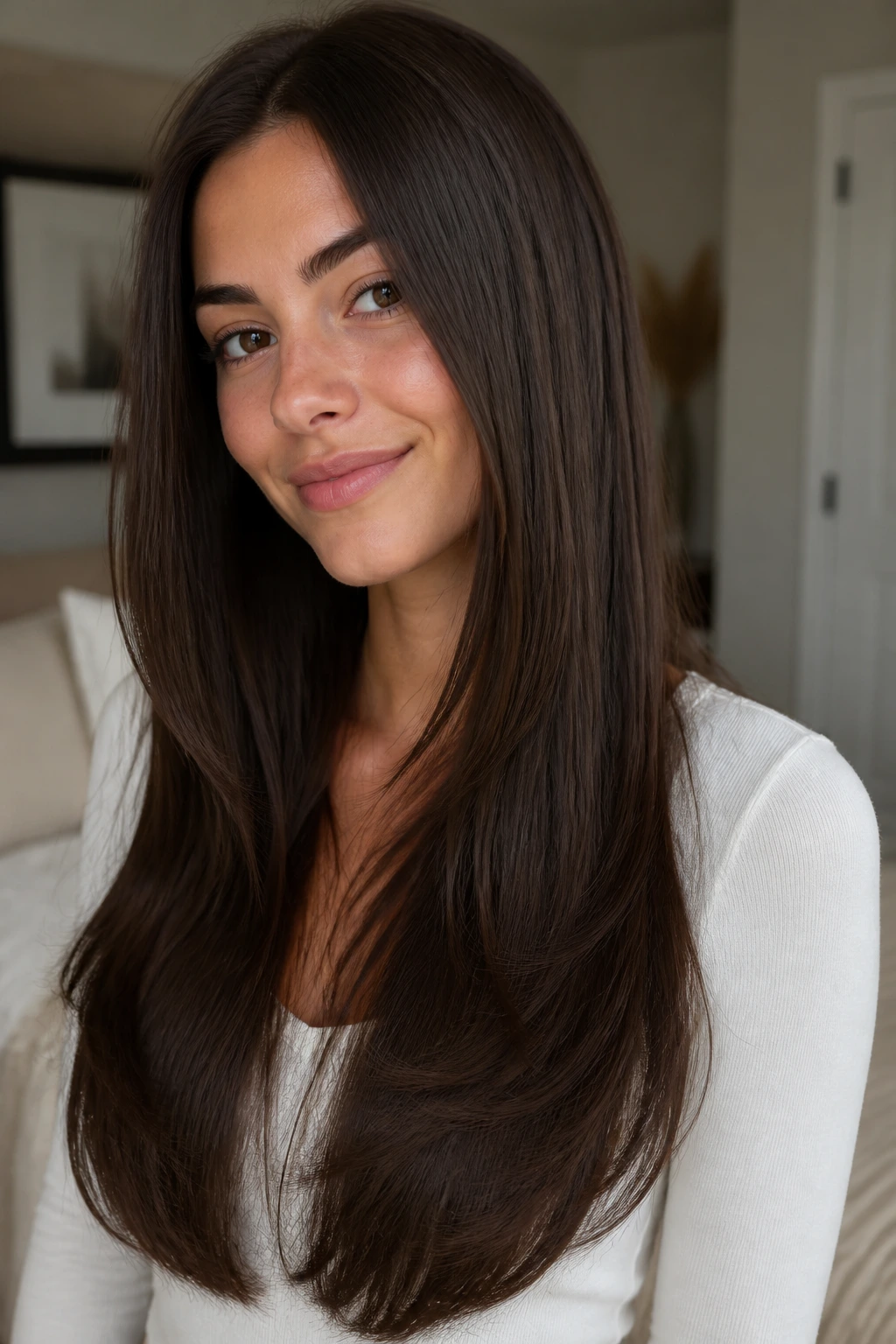
A rounded perimeter cut is what happens when you want softness without obvious layers. The outline curves around the head and shoulders, so the whole shape feels gentler than a blunt, straight-across line. It keeps long straight hair from looking boxy.
I like this cut for hair that has enough density to hold shape but still needs a little movement around the edges. The rounded finish makes the ends feel less severe, especially when the hair is worn over the shoulders. It also plays nicely with subtle side parts and soft center parts.
This is one of those cuts that looks simple until you see the before-and-after. A harsh edge can make long hair sit like a block. A rounded edge lets it drape. That difference sounds tiny in words and looks obvious in a mirror.
16. Feathered Ends Cut
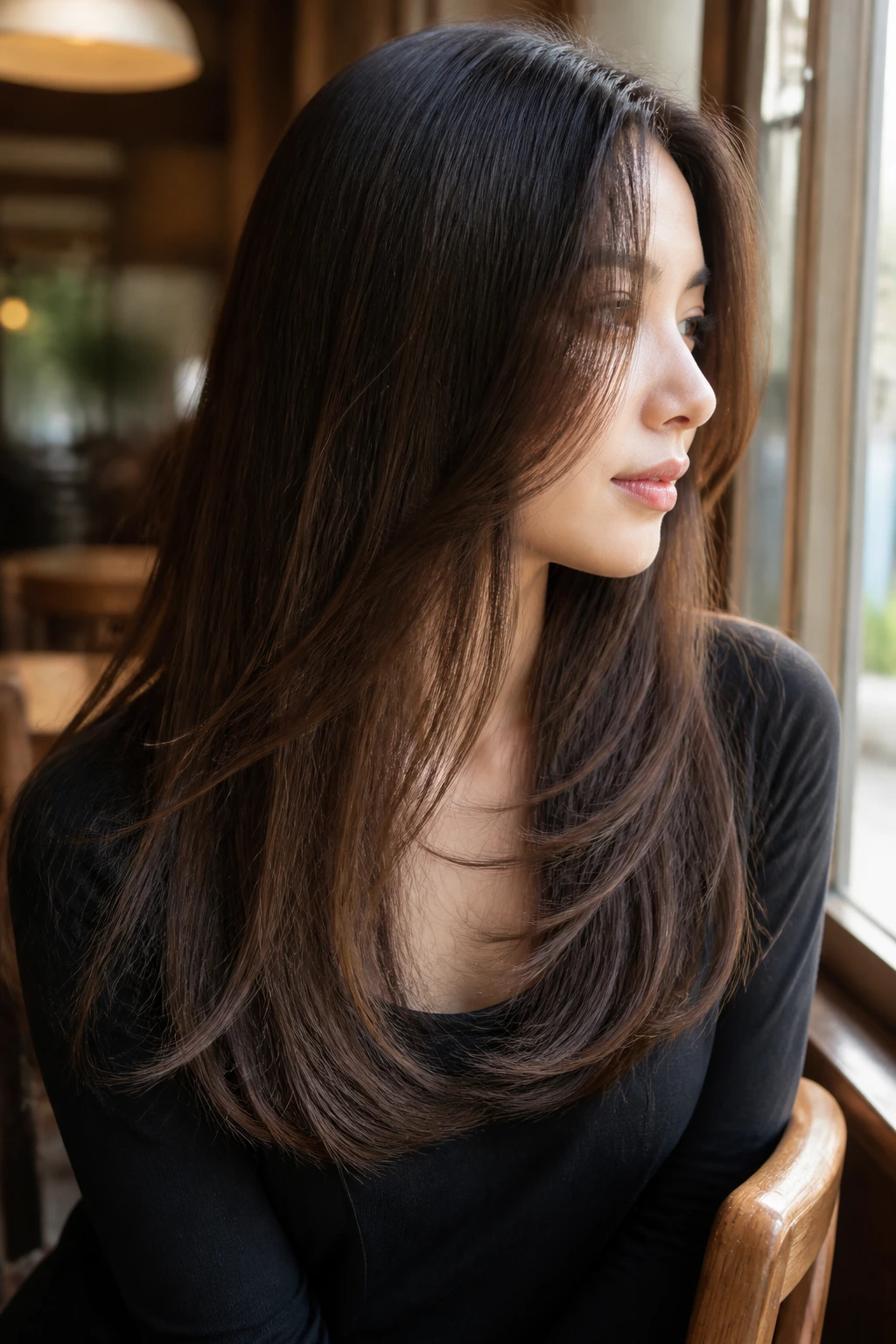
Feathered ends can be gorgeous on straight hair, but only if the stylist knows when to stop. A little feathering softens the line; too much makes the hair look shredded. That is the whole game.
What to Ask for
Tell the stylist you want the ends softened with point cutting, not heavily thinned out. Point cutting slices into the edge at an angle, which takes the square feeling off the bottom without destroying the density. That matters a lot on straight hair because the perimeter is what gives the cut its strength.
Who Should Skip It
- Very fine hair that already looks wispy at the ends.
- Hair that breaks easily from heat or bleach.
- Anyone who wants a hard, blunt line.
Feathering is useful when the hair is thick and the ends feel bulky after a fresh cut. It can help the style move more naturally and sit better against the shoulders. Just don’t let anyone overdo it with thinning shears. That tool has its place, and this is not always that place.
17. Tapered Bottom Cut
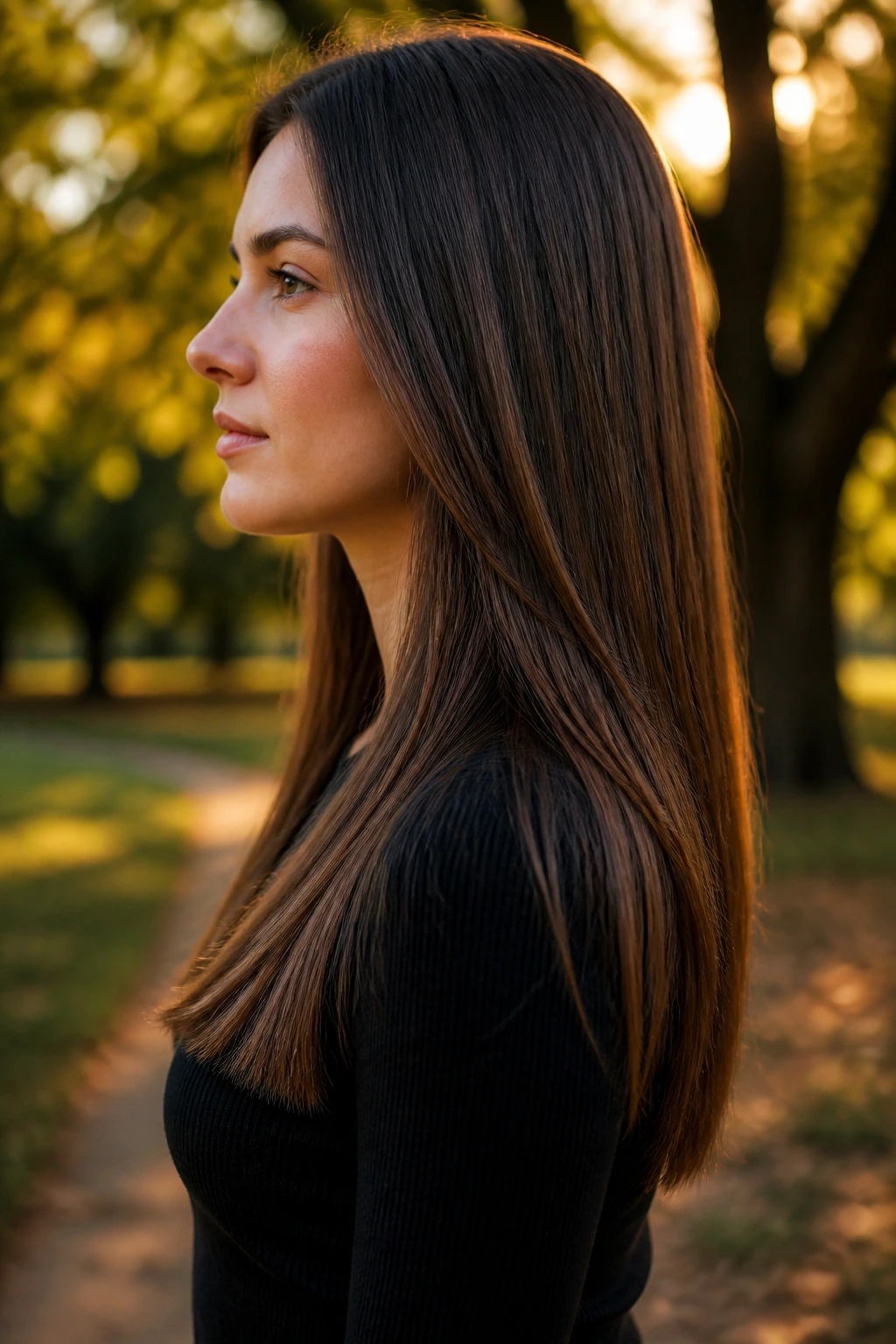
A tapered bottom cut narrows the shape as it moves toward the ends, which is handy when straight hair turns into a wide shelf. The goal is a slimmer lower half and a cleaner fall. It’s a smart cut for thick hair that grows outward instead of down.
The shape is different from a V-cut. A V points sharply toward the center back. A taper is gentler and often more subtle, so the outline still feels long and feminine without shouting about itself. That matters if you want movement but not a dramatic point.
You will want to be careful if your hair is fine. Too much taper can leave the ends looking stringy. On dense hair, though, this cut can make the whole head feel lighter without sacrificing too much length. It’s one of those technical cuts that sounds plain and does a lot of work.
18. Hush Cut for Straight Hair
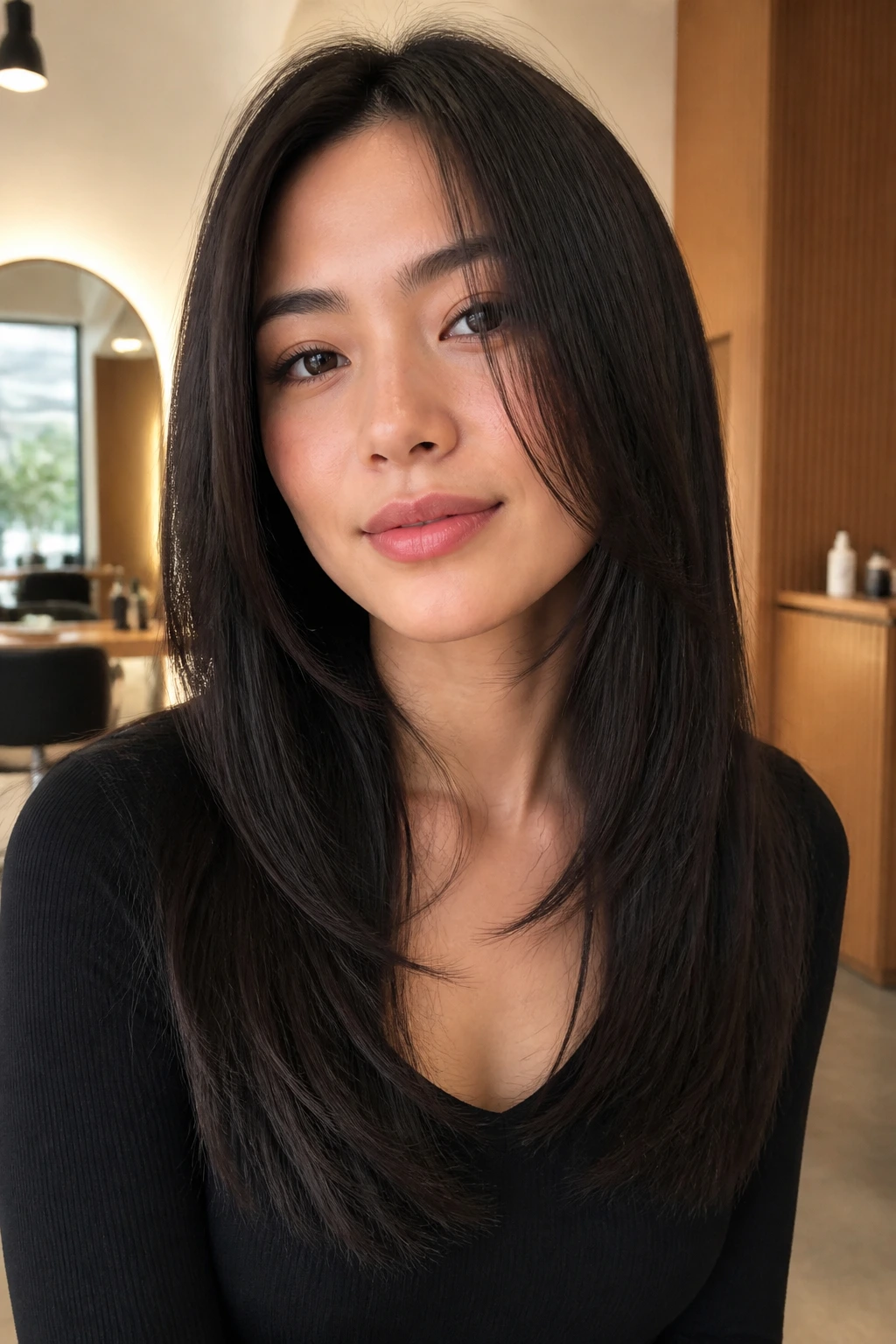
The hush cut is the quiet one in the bunch. It uses soft, barely-there layers to create movement without making the haircut obvious from across the room. On straight hair, that restraint is the appeal. You get shape, but you do not get a pile of choppy edges.
This cut works especially well if you want length that still moves when you turn your head. The layers are delicate enough to avoid the shaggy feel, yet there’s more life in the hair than a straight one-length cut gives you. It sits in a nice middle zone. Not stiff. Not messy. Just easy.
If I had to steer someone toward one long haircut for straight hair that plays nicely with low effort, this would be near the top of the list. It grows out cleanly, it does not scream for daily styling, and it lets the hair keep its shine. Straight hair rewards restraint, and this cut knows it.
