



A good medium-length haircut has a useful trick up its sleeve: it can look polished with a comb, loose with a bit of cream, and a little rough around the edges without looking accidental. That is why medium haircuts for men stay in such a sweet spot. You get enough length to shape, but not so much that every morning turns into a project.
But the cut itself has to do the heavy lifting. A lot of men say they want “medium length,” then walk out with a grown-out mess that only looks decent on day one. Shape matters. So does the weight line around the ears, the way the crown falls, and whether the front is cut to move or cut to sit there like a helmet.
I keep coming back to that distinction because it’s the whole game. A medium cut should still look deliberate when it air-dries. If it needs three products and a pep talk, it’s asking too much.
The eighteen styles below cover clean, loose, textured, wavy, curly, and a few cuts that land right between classic and relaxed. Some are safer bets for office days. Some are better for thick hair that wants to balloon out. A few are the sort of cuts that look better after they’ve been lived in for a week, which is not a flaw if you know what to ask for.
1. Classic Tapered Side Part
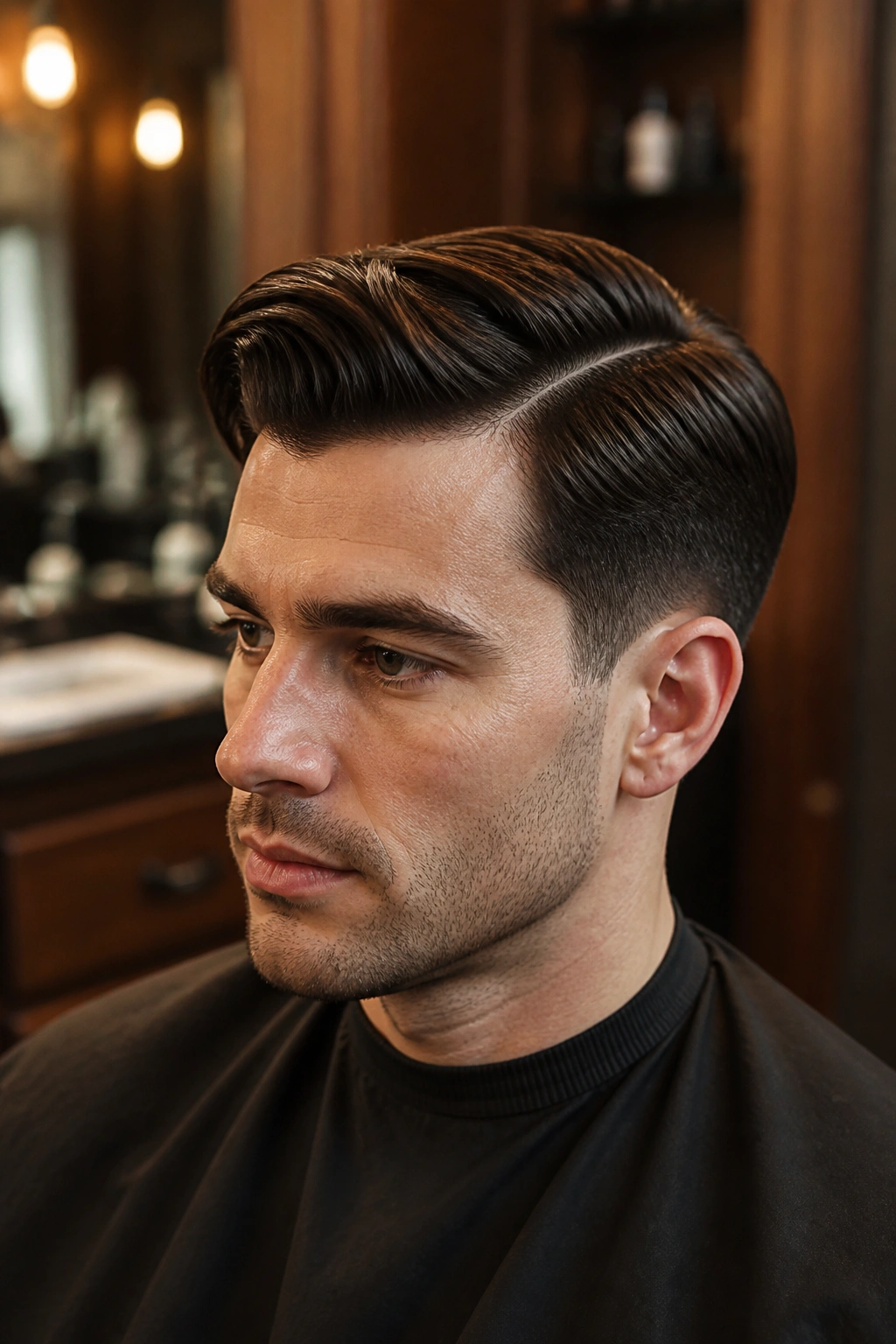
The classic tapered side part is the haircut I’d hand to a guy who wants to look put-together without looking stiff. It keeps enough length on top to comb, part, or push to the side, while the taper around the ears and neckline keeps everything tidy. The result feels steady. Clean, but not severe.
Why It Works
The shape gives your barber room to balance the head instead of just removing bulk. Ask for 3 to 4 inches on top, a soft side part, and a low or mid taper at the temples and nape. That keeps the sides neat without making the top look like it was bolted on.
- Best on straight or slightly wavy hair
- Works well with a matte cream or light pomade
- Needs a trim every 3 to 5 weeks
- Easy to dress up or down
My one rule: keep the part where your hair naturally wants to split. Fighting that line usually makes the whole cut look forced.
2. Textured Fringe With a Mid Taper
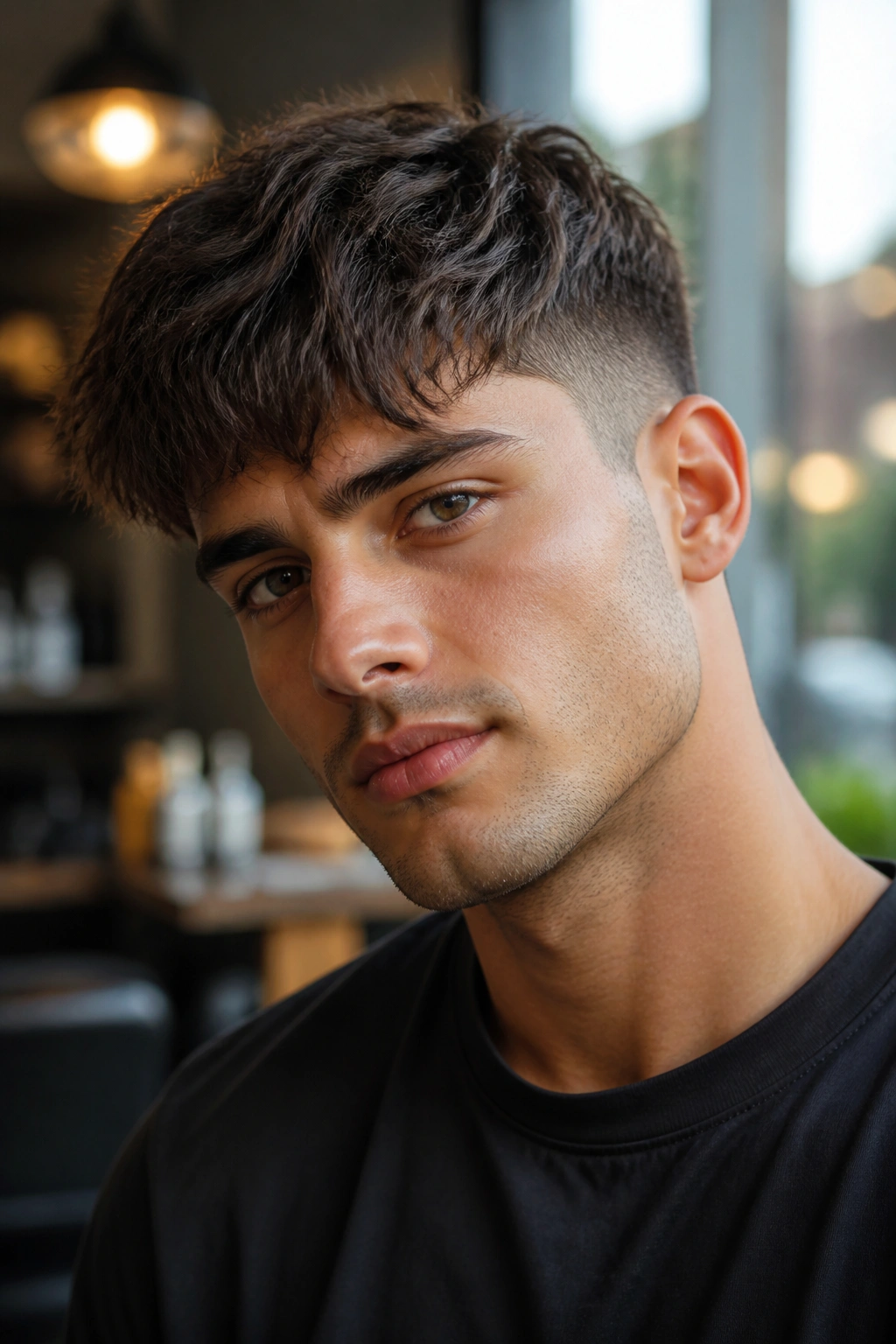
This is the cut I’d point to if you want something sharper than a mop but looser than a slicked style. The fringe sits forward, broken up with choppy texture, so the forehead is softened without being hidden. A mid taper on the sides keeps it from drifting into shag territory.
The good version has movement. Not spray-helmet movement. Real movement. Your barber should point-cut the front so the fringe falls in uneven pieces, not one blunt sheet. Two to three inches at the front is usually enough, with a little more length toward the crown if your hair lies flat.
If your hairline feels a little high, this cut can be a smart move. It draws the eye forward and down, which is often kinder than brushing everything straight back. Blow-dry it toward the forehead, then use a pea-sized amount of matte clay. Too much product kills the texture fast.
This one is especially good for guys who like a slightly lived-in look. It doesn’t need perfection. In fact, it looks worse when you try too hard.
3. Curtain Cut With Soft Layers
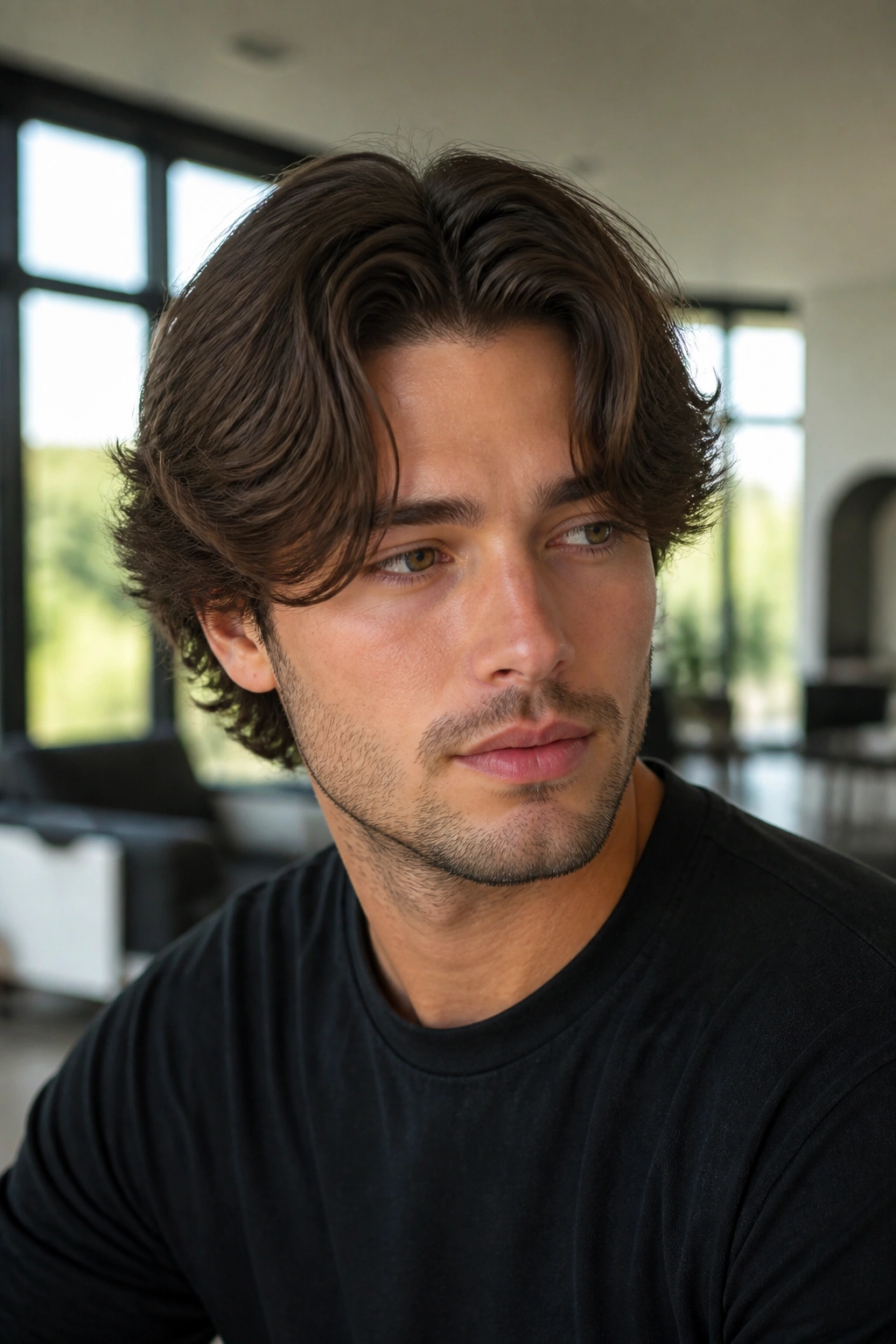
Why do curtain haircuts keep hanging around? Because they work when the rest of your hair is only halfway cooperating. The middle part opens the face, and the soft layers around the cheekbones keep the shape from feeling heavy. It’s a forgiving cut, which is rare and useful.
The trick is in the layering. You do not want a blunt bowl cut with a center part slapped on top. Ask for length that falls around the eyebrows and cheekbones, with the sides reduced gently, not chopped down hard. If your hair has a slight wave, even better. It gives the part some bend instead of making it look staged.
How to Wear It
Let the hair air-dry halfway, then work in a light cream or sea salt spray. Use your fingers more than a comb. A comb makes it too neat, too fast.
This cut suits oval and longer faces especially well, though square faces can wear it too if the front is kept soft. The whole thing lives or dies on texture. Flat curtain hair is a dead giveaway that the layers were cut wrong.
4. Bro Flow With Natural Movement
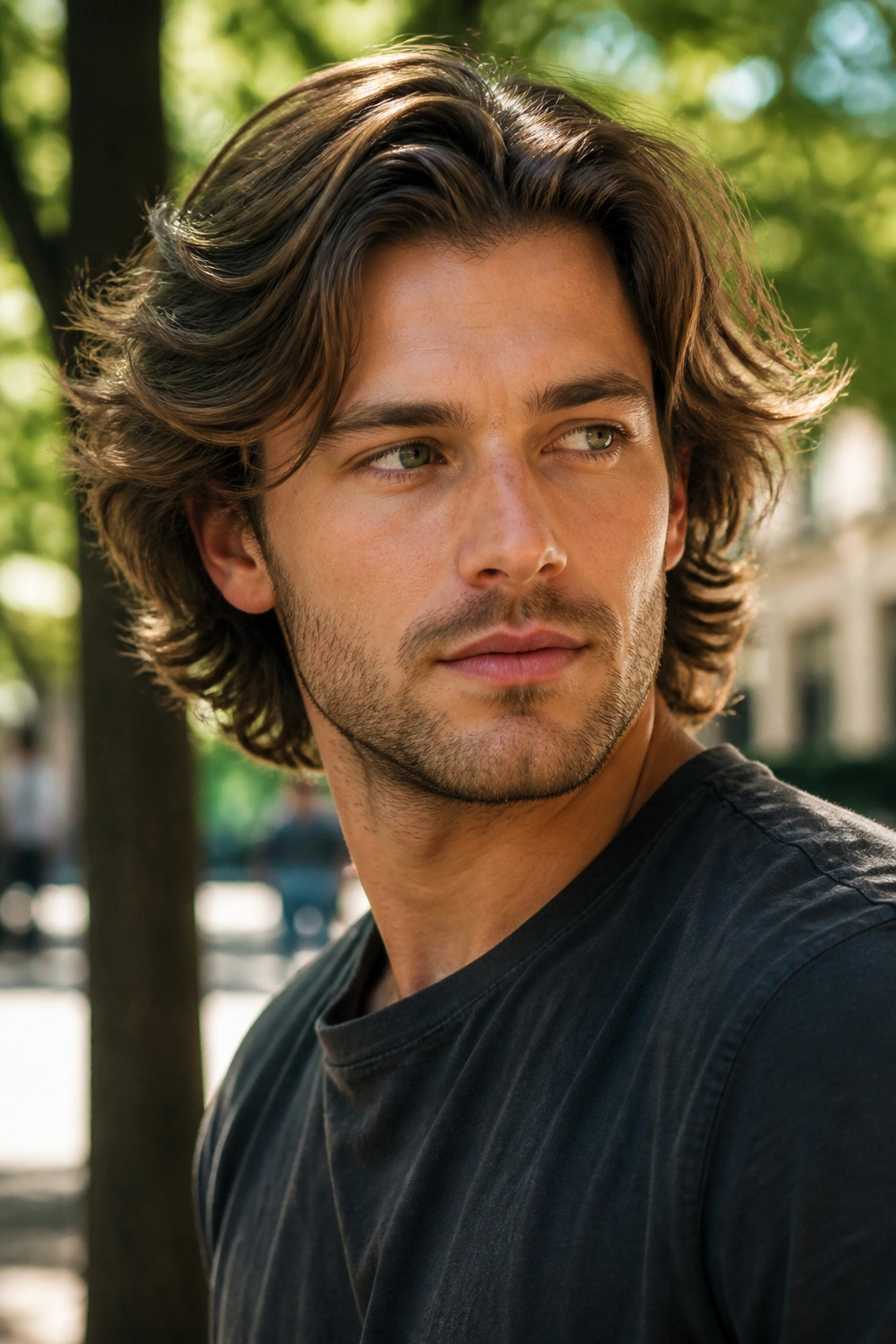
A guy grows his hair for six months, then tells the barber he wants “something medium.” That’s where the bro flow usually starts to make sense. It keeps length around the ears and collar, lets the hair fall back naturally, and avoids the hard lines that make longer cuts feel boxed in.
The best version depends on layers. Without them, the hair just hangs there. With them, it moves. Ask for length that reaches the top of the collar in back, softer edges around the sides, and enough shaping at the front so it doesn’t puff out awkwardly when the wind hits it. This is not a precision cut. It’s a controlled one.
- Works well on thick, straight, or wavy hair
- Looks better with a little natural bend
- Needs a clean neckline every few weeks
- Usually pairs well with light facial hair
The nice thing about the bro flow is that it doesn’t need much. A leave-in conditioner or a dab of lightweight cream is often enough. If your hair is dense, ask the barber to remove weight from the interior so the sides don’t kick out. That small detail saves a lot of annoyance later.
5. Slicked-Back Medium Cut
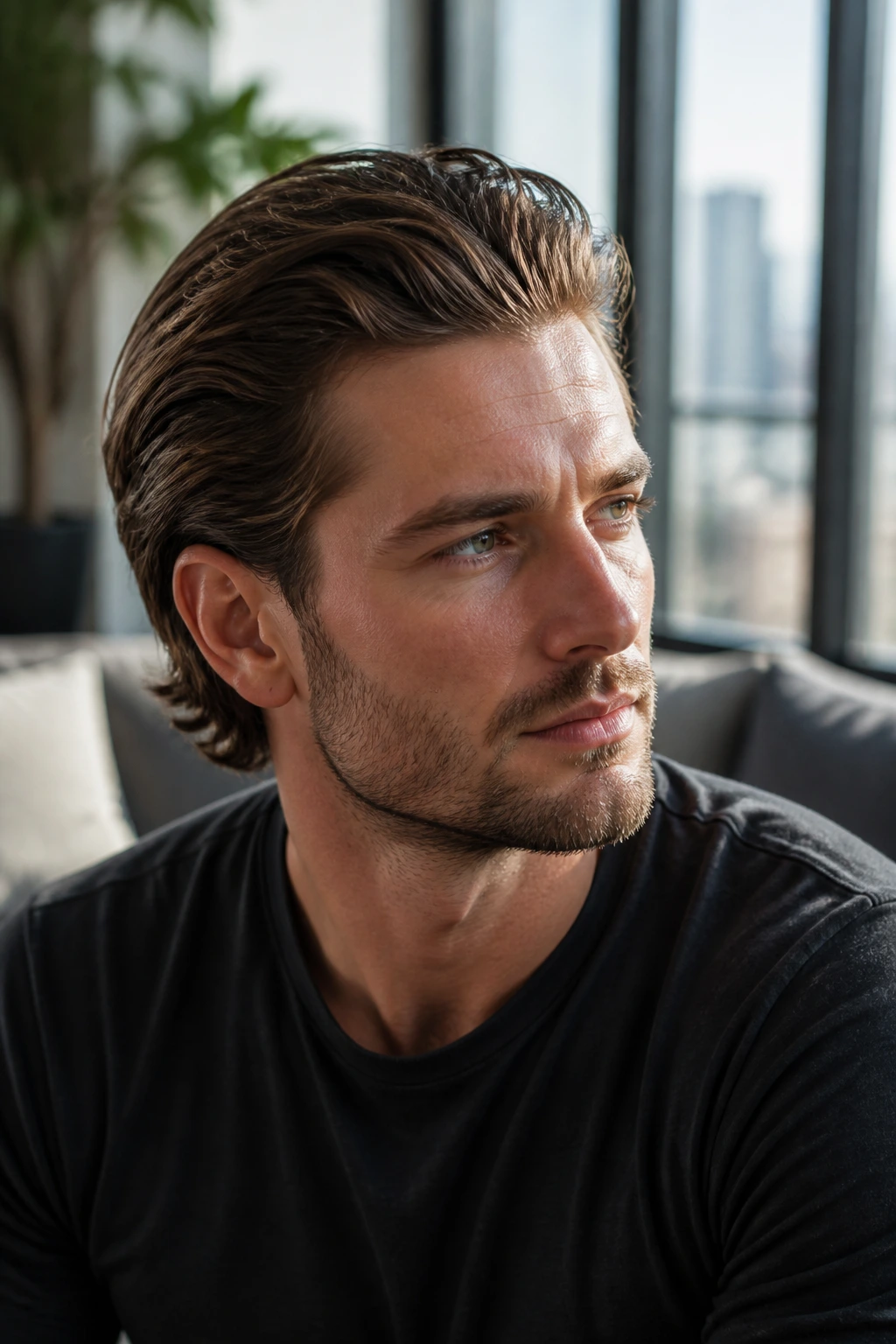
The slicked-back medium cut can look very sharp, or very dated, and the difference is usually product choice and length control. Done well, it has a smooth shape that follows the head without plastering the hair flat. Done badly, it looks wet and tired.
I prefer this cut when the top stays around 4 to 5 inches and the sides are tapered rather than buzzed down. That gives enough hair to comb back without exposing every bump in the skull. Straight hair works best, though slightly wavy hair can pull it off if you blow-dry first. The drying step matters more than people think. Hair that is brushed back wet often collapses later.
A medium-hold pomade or styling cream gives the right finish. High-shine products can work, but they make the cut look more formal and a little less modern. If your hair is thin, go lighter. Heavy grease makes thin hair separate and show scalp faster than you’d expect.
The parting line doesn’t have to be obvious. That’s one of the better things about this style. It can be classic without looking like you borrowed your grandfather’s haircut.
6. Wavy Layered Crop
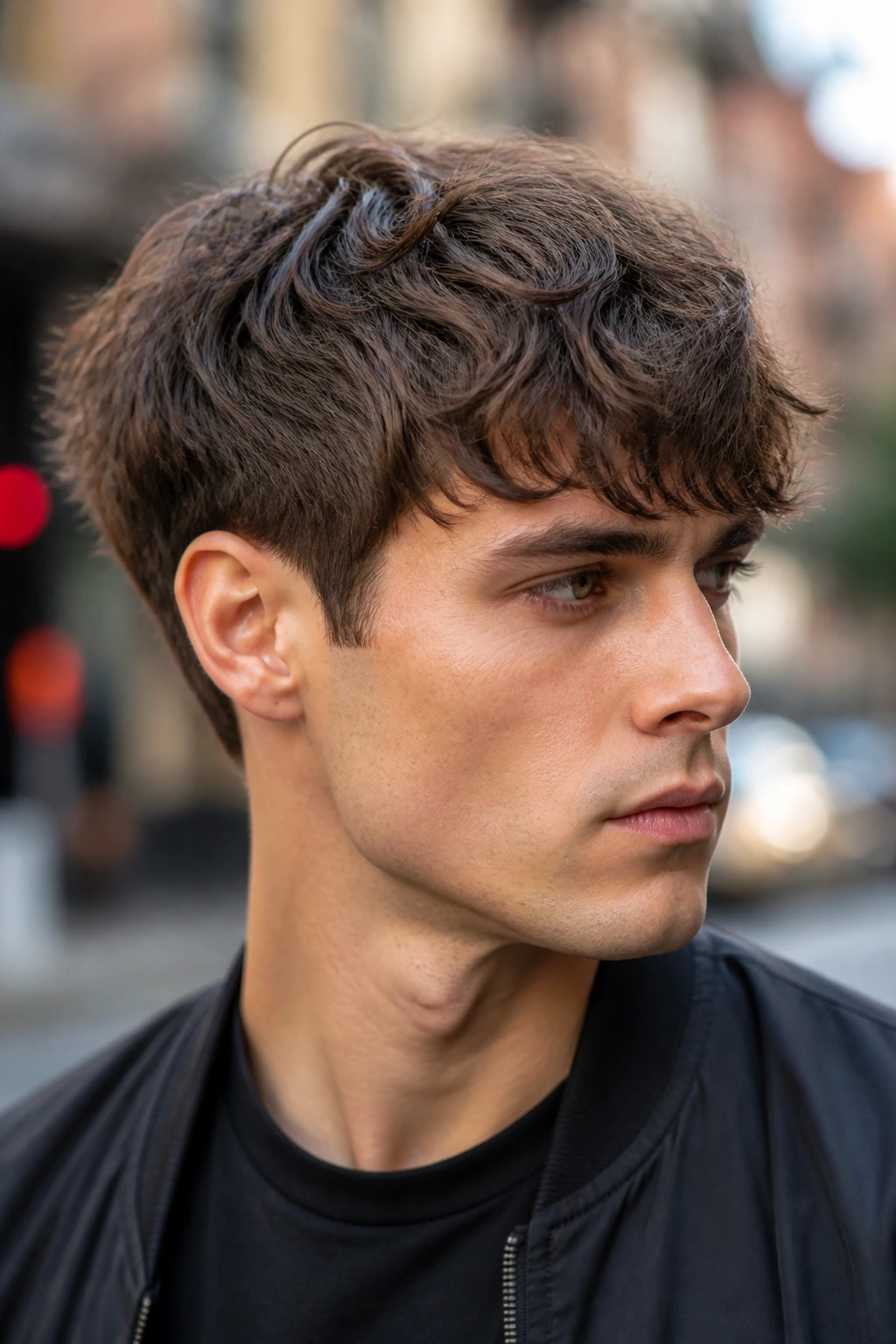
A wavy layered crop is the cut I’d choose for someone who has texture and wants to show it instead of fighting it. Compared with a short crop, this version leaves enough length on top to let the wave form properly, then removes bulk through the sides and interior layers so it doesn’t poof out.
What makes it different is control. A standard crop can sit hard and flat. This one stays softer around the edges, which matters if your waves swell in humidity or kink up near the crown. Ask for 2 to 3 inches on top, longer toward the front, and a tapered side shape that follows the head.
How to Get the Most From It
Use a small amount of curl cream or lightweight paste on damp hair. Scrunch it a little. Not a lot. Then let it dry with your hands out of it. A diffuser can help if your waves are stubborn, but it’s not mandatory.
This cut suits men whose hair feels thick but not coarse. It can also tidy up a natural cowlick, which is worth a lot on its own. The whole point is to keep the wave visible without turning the haircut into a bush.
7. Modern Shag With Tapered Sides
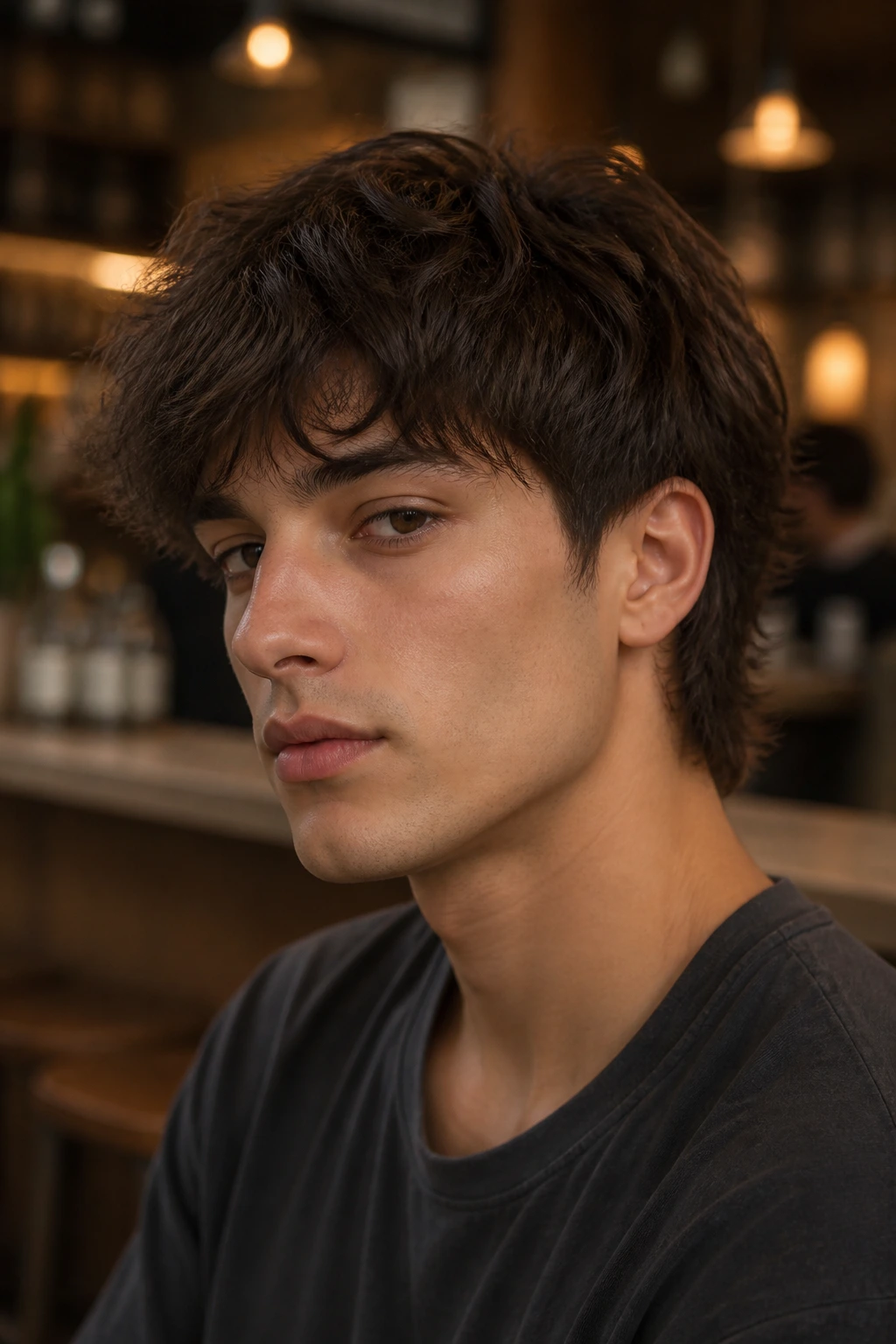
The modern shag is one of those cuts that sounds messy until you see a good one. Then it clicks. Layers are cut through the top and around the face, the ends stay piecey, and the sides are tapered just enough to keep the shape from drifting into full rock-band chaos.
Why It Works
It’s a smart cut for thick hair because it removes weight in the places that usually puff up first. If your hair grows out wide rather than long, the shag can keep it from turning into a triangle. Ask for soft layers from the fringe through the crown, plus a clean but not skinny taper on the sides.
- Strong choice for wavy or thick hair
- Easy to wear with a matte paste
- Better with a little natural bend than with perfect straightness
- Needs light trimming to keep the layers from mulching together
My favorite detail: a shag looks best when the ends don’t all land at the same level. Uneven lengths give it shape. Same-length layers make it limp, which is a shame because this style should have a little edge.
8. Ivy League Grow-Out
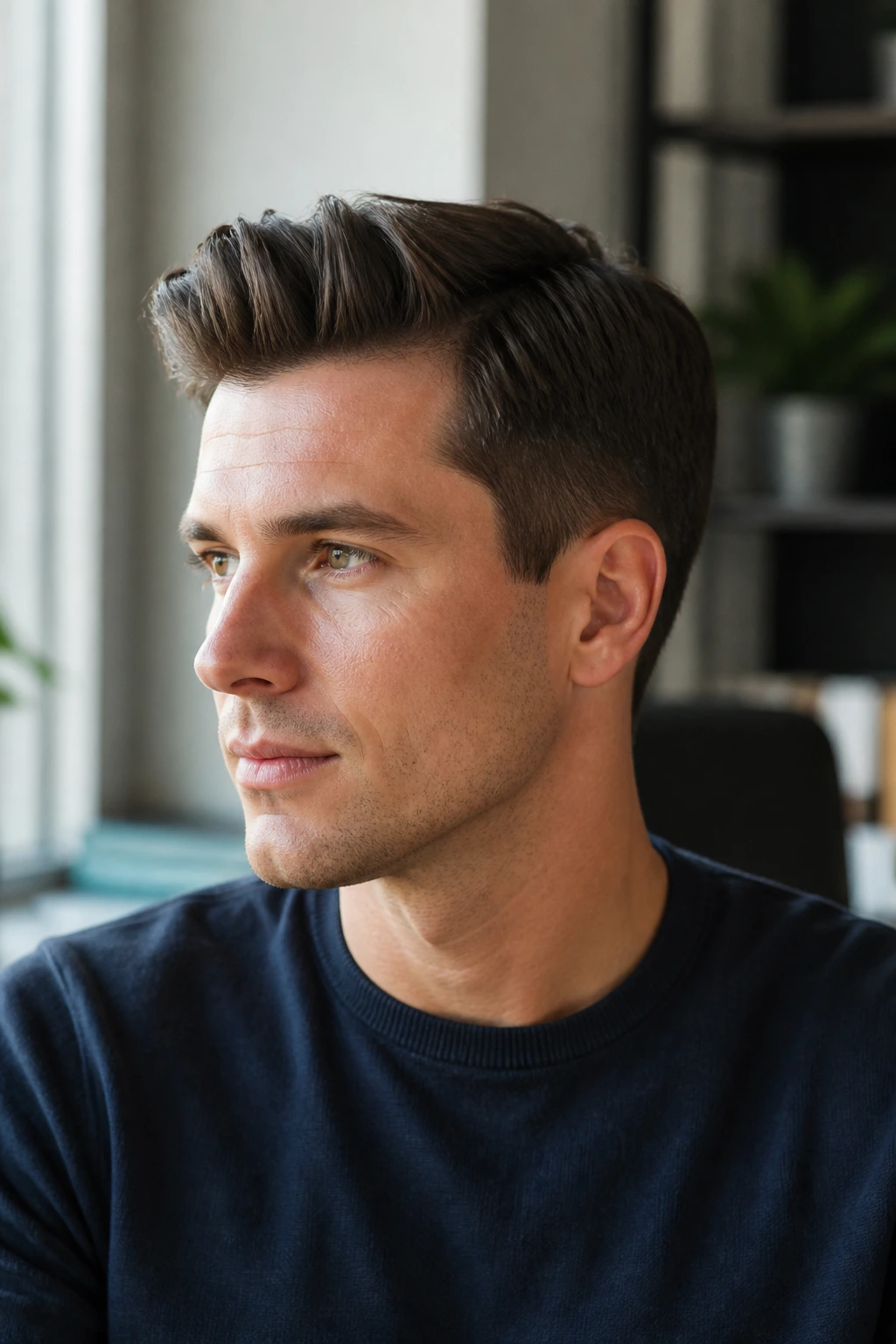
A polished grow-out can look better than a fresh fade if the barber knows where to leave weight. That’s why the Ivy League grow-out works. It keeps the clean bones of a short classic cut, then adds just enough length on top to move into medium territory without looking shaggy.
The shape usually sits around 2 to 4 inches on top with a neat taper on the sides and back. The top can be side-parted, brushed up, or pushed a little loose. It’s flexible in a way that a strict crew cut never is. If you work somewhere that dislikes wild hair, this is a safe lane with more personality than a buzz.
The best part is how little fuss it needs. A bit of cream, a quick comb, and you’re done. If you want more texture, skip the comb and work it through with your fingers after a blow-dry. That tiny shift makes the haircut feel less office and more lived-in.
This is also a good choice if you’re easing out of shorter cuts. It keeps the transition clean. No awkward in-between stage.
9. Comb Over With a Low Taper
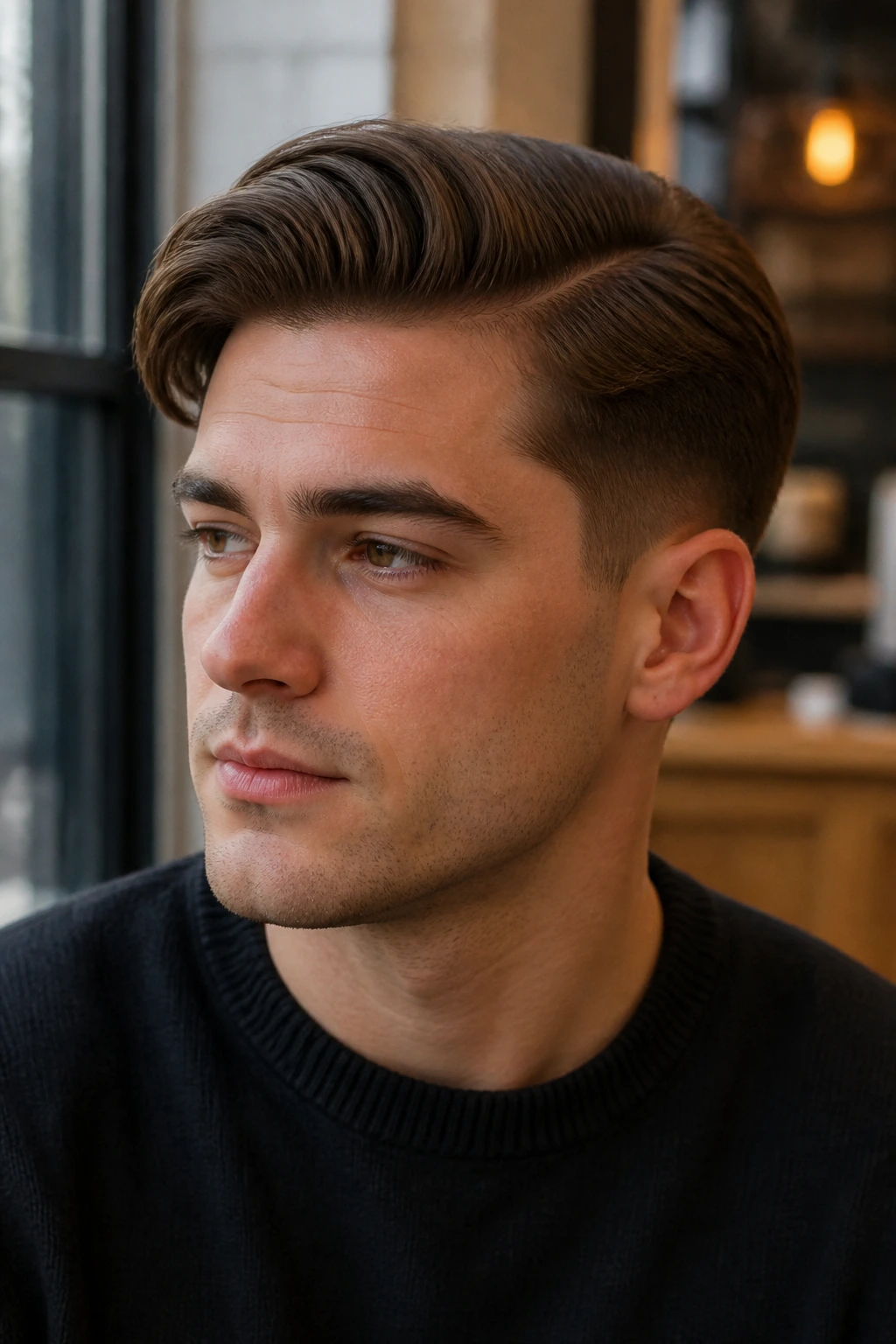
What’s the difference between a comb over that looks sharp and one that looks like a rescue mission? Texture. The old version was all shine and no movement. The better version uses medium length, a soft side part, and a low taper that keeps the sides neat without making the top feel disconnected.
If your hair leans straight, this cut is a solid option. Ask for enough top length to sweep across naturally—usually 3 to 4 inches—and keep the front slightly longer so it can drape instead of sticking up. The barber should blend the part area carefully. Harsh weight lines are the enemy here.
How to Style It
Blow-dry the front up and over first. Then set the shape with a light cream or a matte paste. Use a comb only for the main sweep, not for every strand. The goal is a clean arc, not a hard shell.
If your hair is thinning on top, a soft comb over can still work, but keep the hold light. Heavy product makes sparse areas more obvious. Lightness helps. A lot.
10. Messy Quiff With Volume
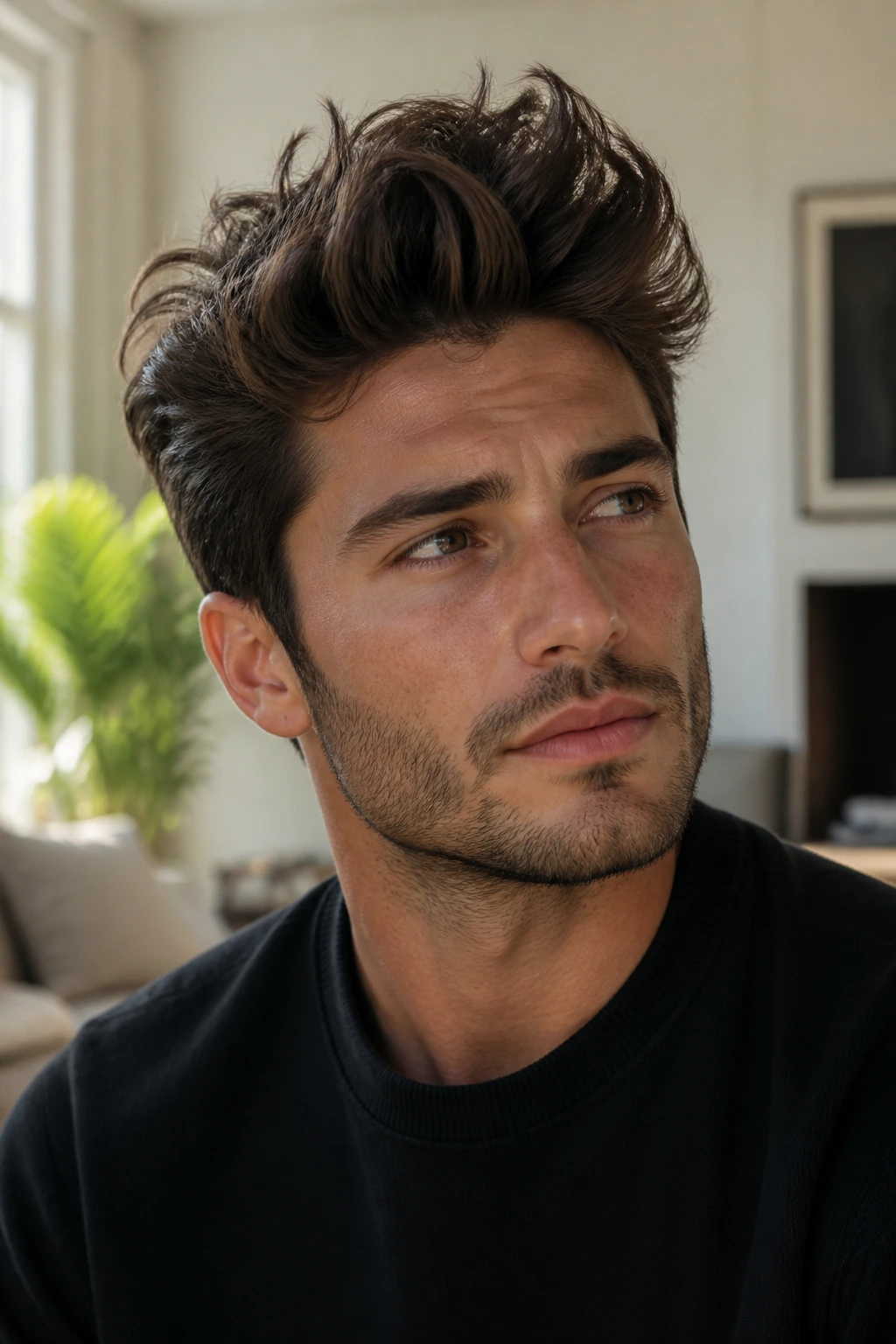
A messy quiff is what happens when you want height but don’t want your hair to look frozen in place. The front lifts up and back, the sides stay controlled, and the top keeps enough looseness to move. That mix gives it a bit of swagger without crossing into cosplay.
This cut usually needs 3 to 5 inches in the front, with slightly shorter length behind it so the quiff has somewhere to rise from. Ask for the top to be layered, not blunt. Blunt quiffs can look boxy fast, especially on thick hair. A barber who point-cuts the front will give you a softer finish.
- Best with a blow-dryer and round brush
- Matte clay or paste gives the best finish
- Works well on straight to slightly wavy hair
- Needs less height if your hair is very fine
The one thing I’d avoid is overworking the front. Quiffs go bad when every strand gets separated. A little mess is part of the appeal. Too much mess and it just looks like you lost a fight with a towel.
11. Middle-Part Flow
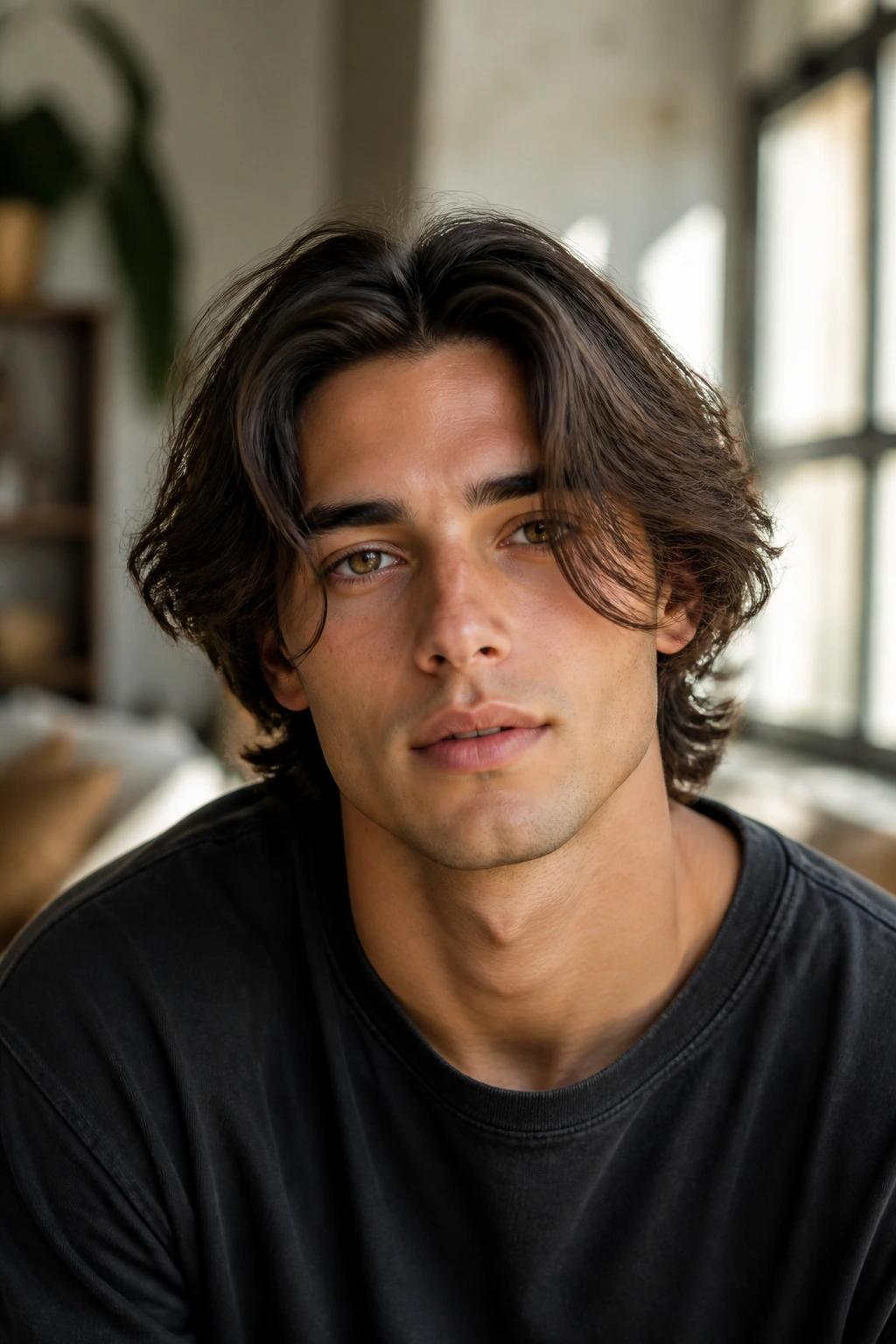
A middle part can look almost annoyingly easy when it’s cut right. The hair falls on both sides, the length frames the face, and the cut carries itself without too much product. That said, it only looks good when the layers are soft enough to move.
The middle-part flow works best when the hair is allowed to fall with its own weight. You want enough length to reach the cheek area or just below it, and the ends should be feathered so the part doesn’t split into two stiff curtains. A lot of bad middle parts are just heavy hair with a center line drawn through the middle.
I like this cut on oval faces and on guys with a little natural wave. Straight hair can wear it too, but it needs some bend at the ends or it can feel too flat. A tiny bit of sea salt spray, then air-drying, usually does the trick.
The best thing about this style is how relaxed it feels without becoming sloppy. That balance is rare. And useful.
12. Curly Medium Crop
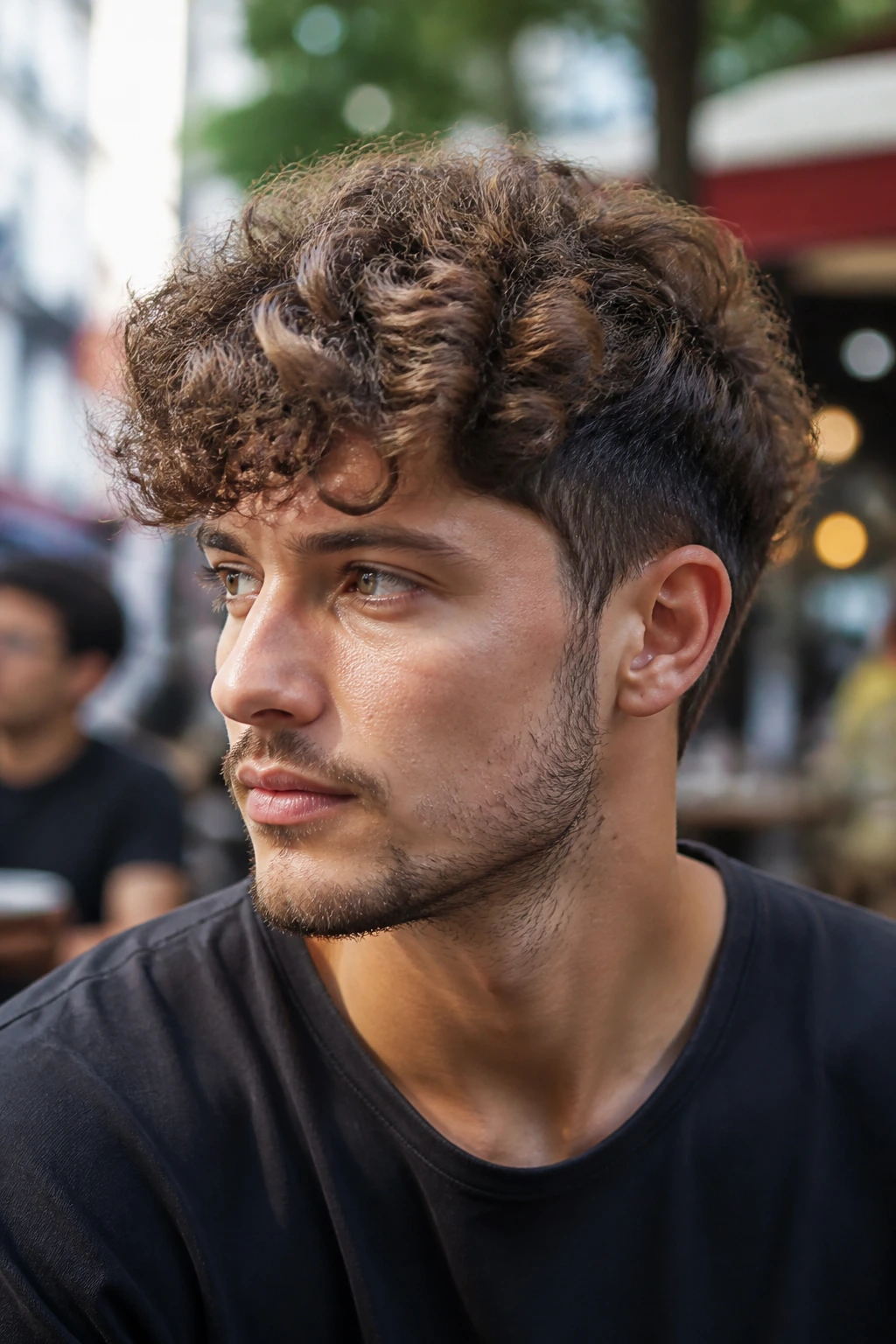
Unlike a short curly fade, a medium crop gives the curl room to form instead of being cut into submission. That means better shape on top, less triangle effect on the sides, and more control over where the curl lands. If you’ve spent years getting your curls cut too short, this feels like a relief.
The cut usually keeps 3 to 5 inches on top, with the sides tapered softly rather than clipped down to skin. That helps the curl sit on the head instead of springing out from it. Ask the barber not to thin the curls too aggressively. That mistake makes frizz worse, not better.
Who It’s Best For
- Men with loose curls through tight coils
- Hair that gets bigger when it dries
- Anyone who wants shape without a hard fade
- People who use curl cream or leave-in conditioner already
A curl cream and a diffuser can help, but don’t smother the hair. Curly hair usually looks best when it still has a little air in it. This cut gives you that balance. Clean enough to look intentional, loose enough to keep the curl alive.
13. Brush-Back With a Tapered Neckline
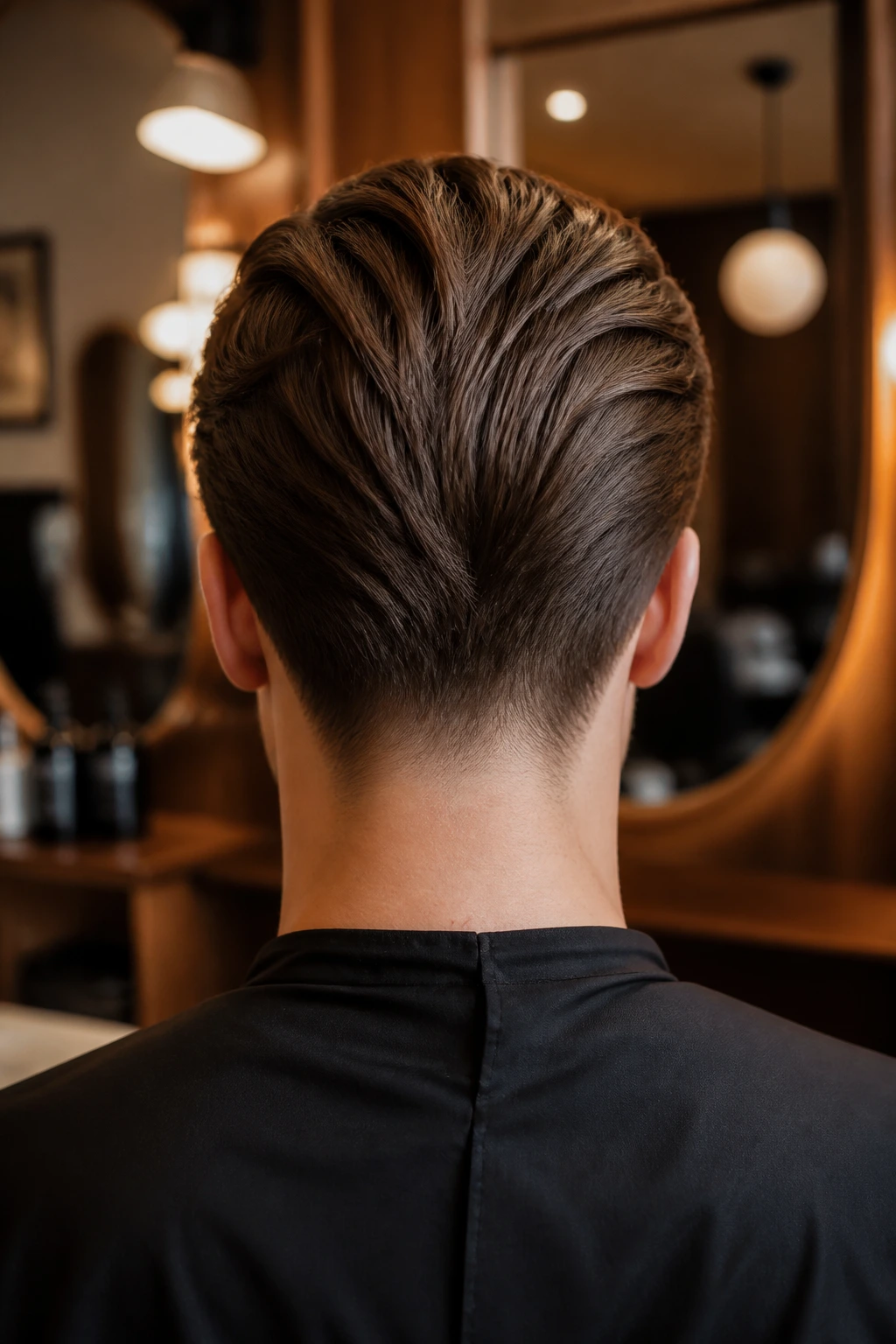
The brush-back sits somewhere between slicked back and casually pushed away from the face. It has polish, but not the shine of a full pomade style. The tapered neckline is the detail that makes it feel finished. Without that, it can look like a weekend grow-out.
Ask for medium length on top—around 4 inches is a good target—and enough length through the crown to comb back smoothly. The sides should taper cleanly into the neckline, which keeps the silhouette neat from behind. That part matters more than people think. A haircut is often judged from the back half of the head, not the front.
Why It Works
The brush-back suits hair that has a little body. Flat hair can wear it, but the cut needs more layering so it doesn’t collapse. Use a blow-dryer to push the hair up and away from the forehead, then set it with a light cream or low-shine paste. The trick is lift first, product second.
If you wear glasses, this cut tends to play nicely with frames because it keeps the front open. Small detail. Big difference.
14. Soft Pompadour
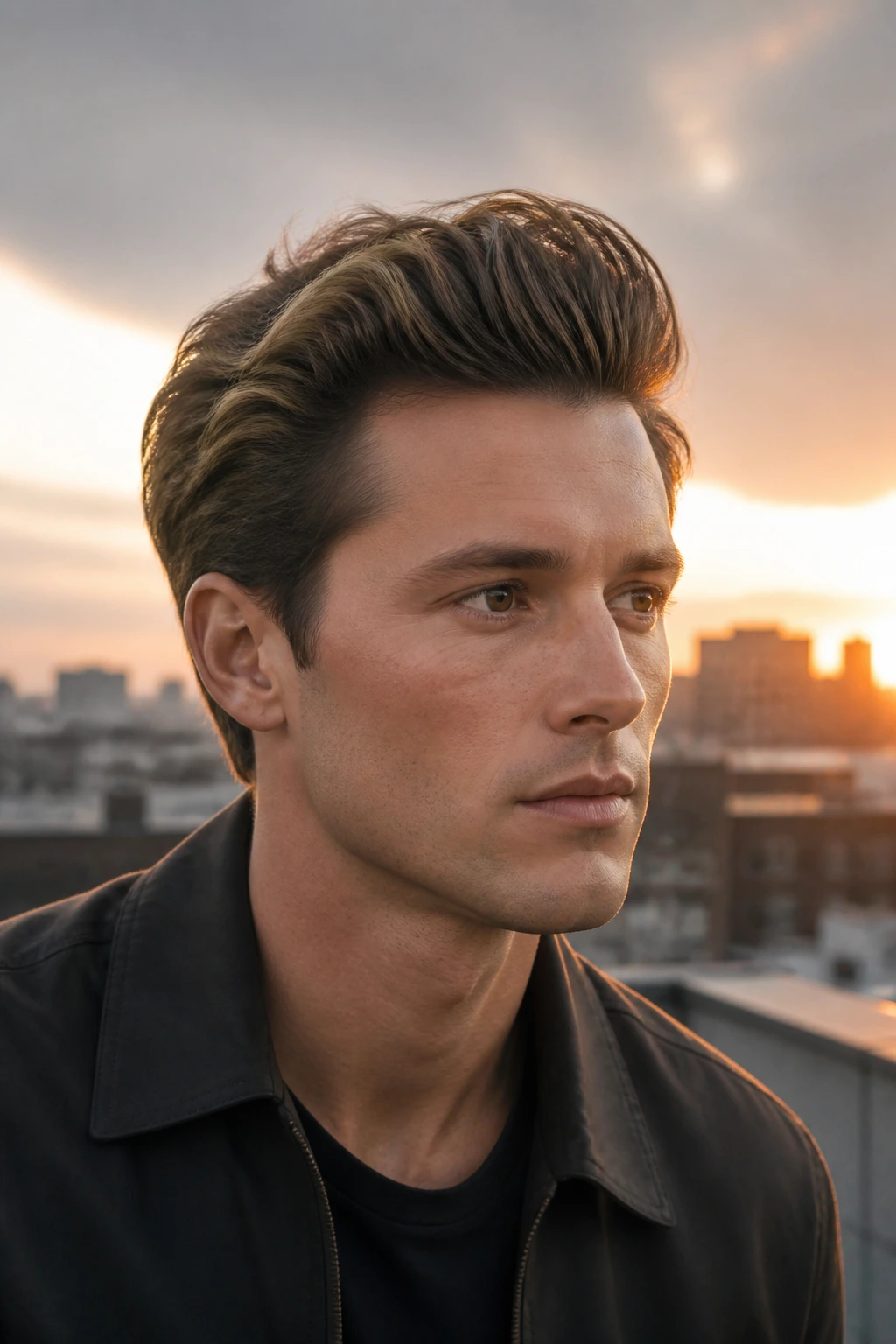
A soft pompadour is the calmer cousin of the big, high-volume version. It still has lift in the front, but the shape is gentler and the sides stay more natural. That makes it easier to wear and a lot less theatrical.
The cut needs length where the front can rise—usually 4 to 5 inches—but the back can sit a touch shorter so the shape leans upward. Ask your barber to keep the top layered enough to blow-dry into height without making it rigid. The sides should taper, not vanish. Once the sides get too short, the front starts looking like a separate object.
A matte paste gives this cut a modern finish. High-shine pomade pushes it into a more retro lane. Neither is wrong. They just tell different stories. If your hair is thick, keep the product light and use the blow-dryer to build shape instead of relying on extra hold.
This is a strong pick for square or oval faces, since the lift adds a little length without making the haircut bulky. Clean, but with some swagger. That’s the sweet spot.
15. Drop Fade With Longer Top
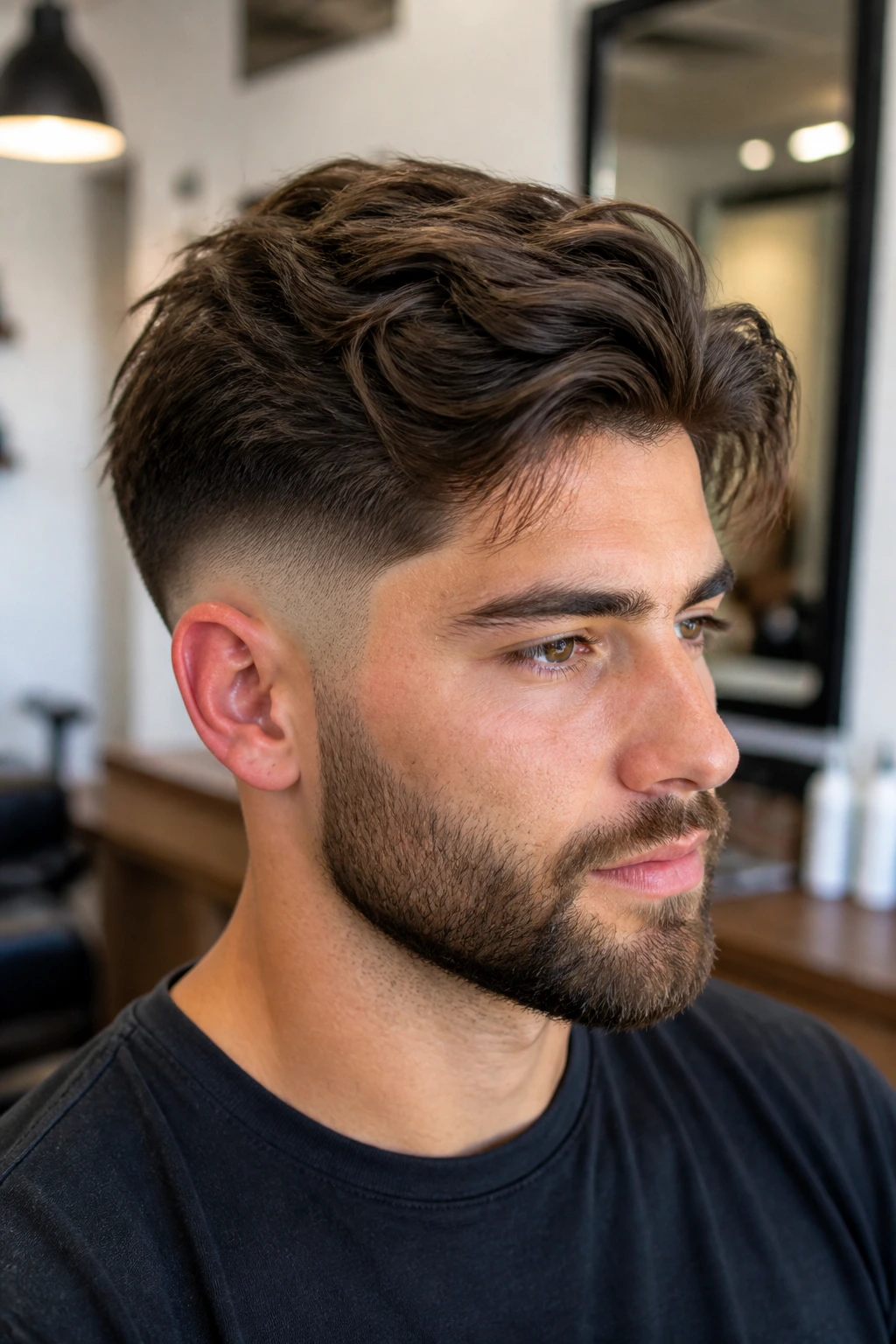
What happens when you want the top to stay medium but the sides to feel sharp? You get the drop fade. The fade curves lower behind the ear, which gives the head shape a cleaner line than a straight fade. It’s one of the smartest ways to keep length on top without making the cut feel heavy.
The top can wear several ways: swept back, textured forward, or parted loosely. Three to five inches on top is a good range, depending on how much movement you want. Ask for the fade to drop behind the ear rather than ride high. That curve is the whole point. It makes the haircut look more tailored.
How to Ask for It
Tell the barber you want the fade to stay soft at the crown and lower at the back of the ear. Mention whether you want the top disconnected or blended. That tiny sentence changes the whole result.
This cut works especially well if your hair gets dense around the sides. It strips away the weight without taking away your options up top. And that’s the nice part. One haircut, a few different ways to wear it.
16. Medium Mullet With Clean Edges
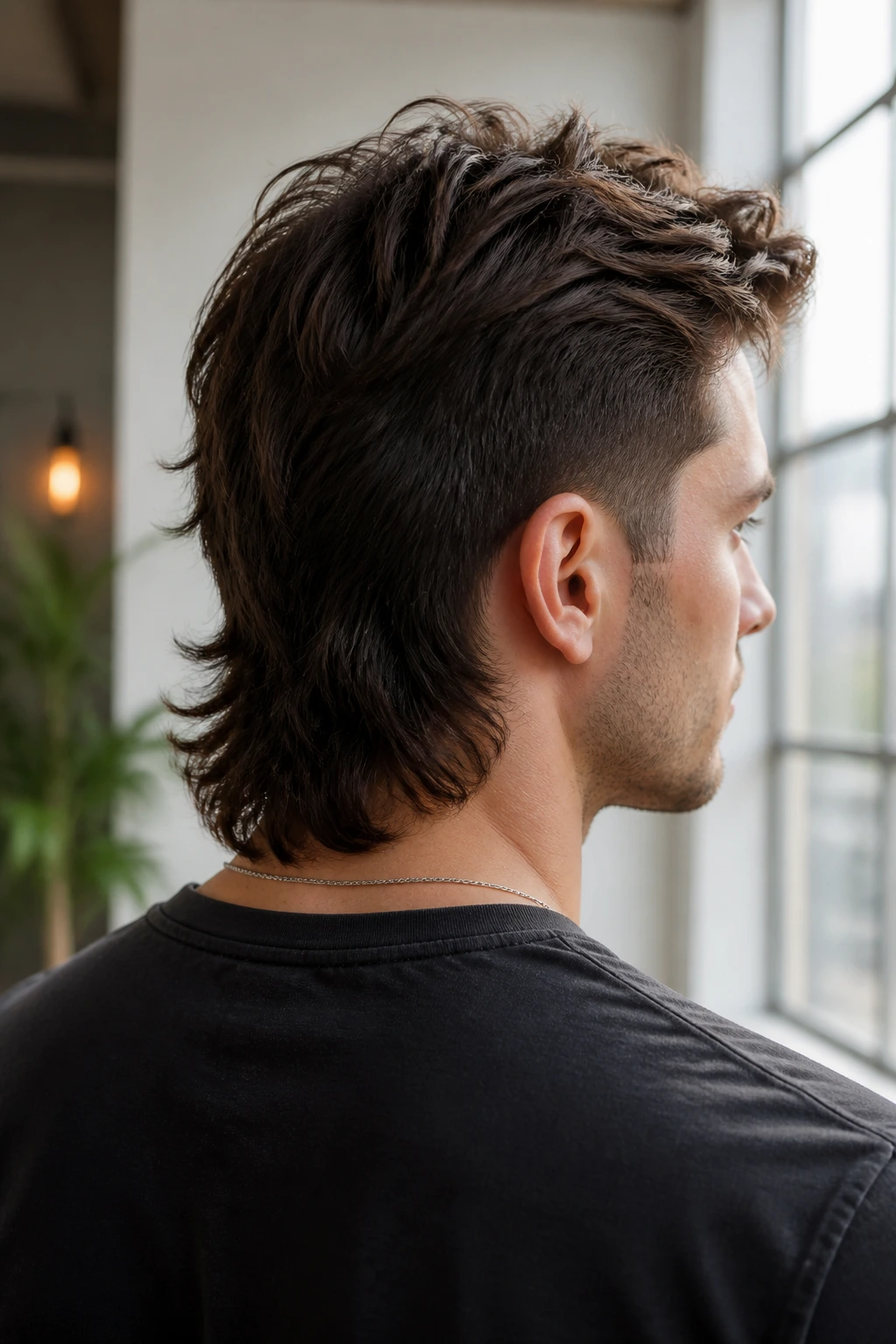
A modern mullet only works when it knows what to leave alone. The back gets the length, the top keeps movement, and the sides are cleaned up just enough to avoid the “forgot to book a trim” look. That’s the difference between deliberate and accidental.
Ask for medium length at the crown and nape, with the sides trimmed tighter but not shaved bare. The fringe can be worn loose, piecey, or brushed slightly forward. If the barber softens the transition between the top and back, the cut stays wearable instead of turning into a joke. It’s a real haircut when the outline is controlled.
- Best on wavy or straight hair with body
- Needs regular neck cleanup
- Can be styled with matte paste or a light cream
- Looks better when the back is layered, not blunt
This style is not for everybody, and that’s fine. It has attitude. If you want something restrained, skip it. If you want a medium cut that has a little bite, it can be a smart choice.
17. Swept-Forward Layers
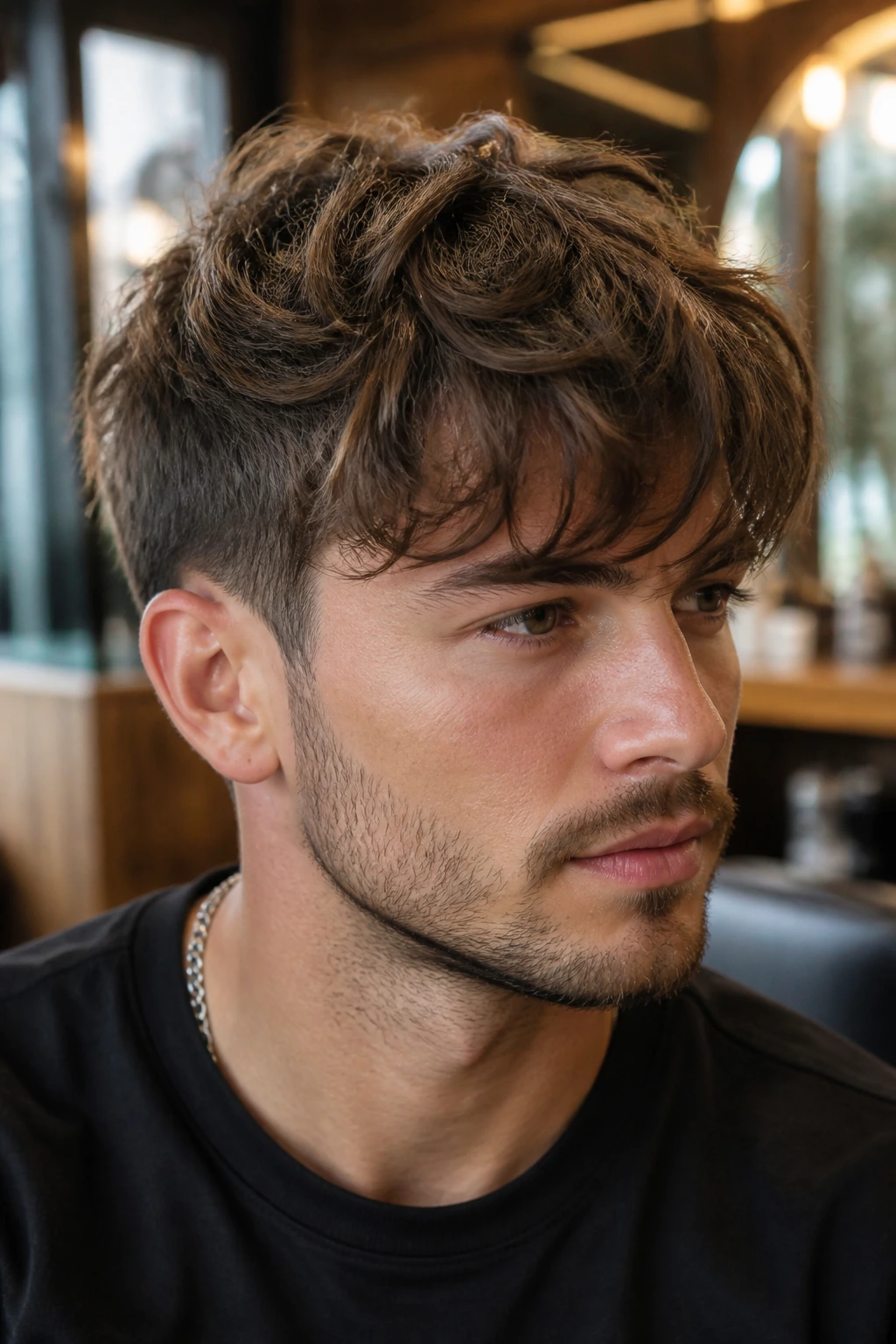
Pushing the hair forward is often smarter than trying to hide a front that won’t sit flat. Swept-forward layers give the haircut a relaxed shape while keeping the top medium in length. The front falls toward the forehead, but the layering keeps it from turning into a heavy fringe.
The cut works best when the barber builds texture through the crown and front, then removes bulk at the sides so the silhouette narrows a little. That helps if your hair grows upward at the root or if you have a stubborn cowlick. The layers give the hair somewhere to land.
A light paste or cream is usually enough. Brush the front forward with your fingers, then let a few pieces break off naturally. This is one of those cuts that can look almost too plain in the chair and much better once it moves with your head. Humid air helps it. So does a bit of mess.
If you have a strong forehead or a receding front, this style can be kinder than a slick-back. It gives coverage without pretending the hairline doesn’t exist.
18. Natural Layered Cut With a Side Sweep
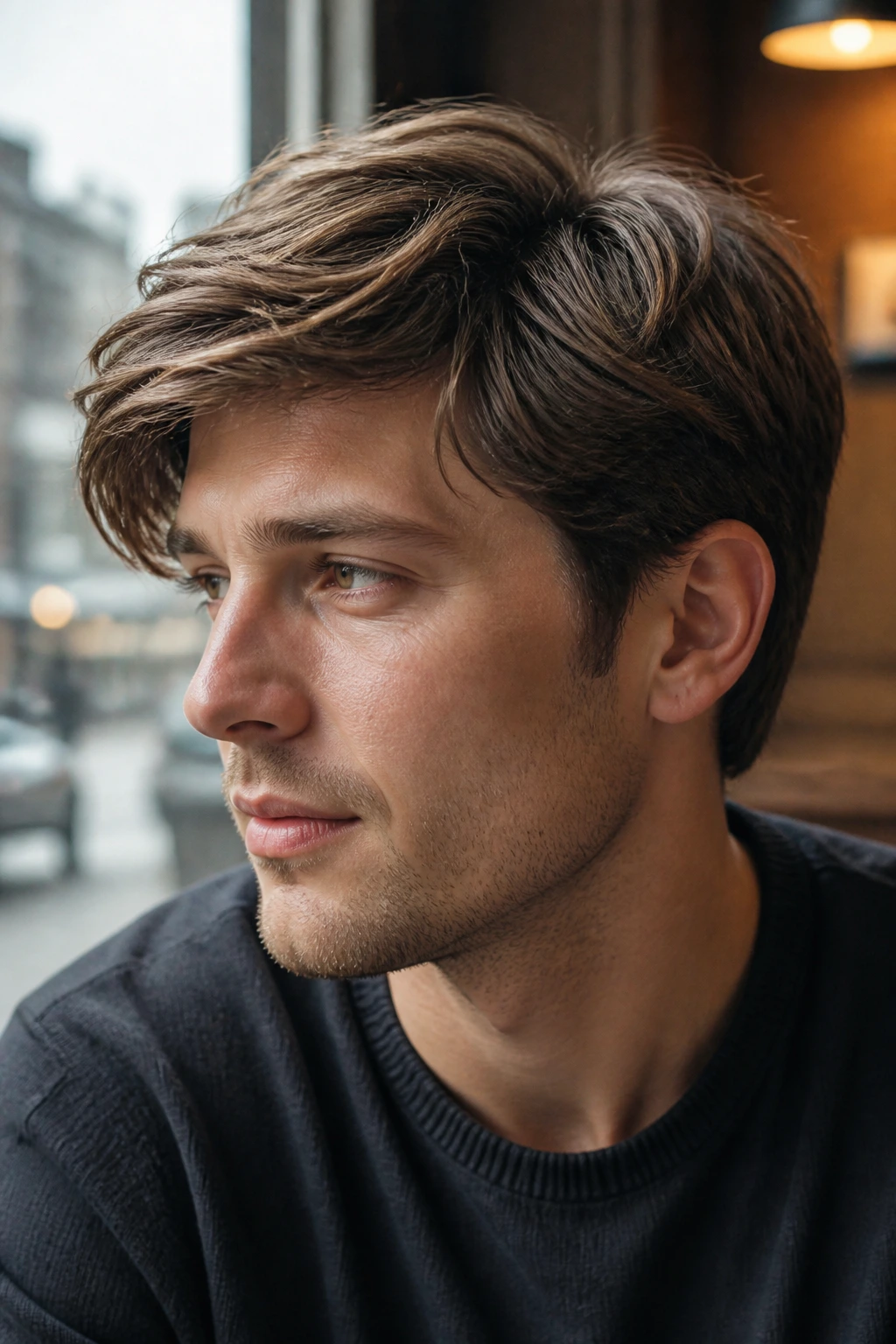
Unlike a strict side part, the natural side sweep leans into how your hair already falls. That makes it feel easy without becoming lazy. The top stays medium, the layers keep the shape light, and the sweep gives you enough direction to look finished.
This cut is one of the best choices for men who want movement more than structure. Ask for soft layers through the top and crown, a gentle taper at the sides, and a side sweep that follows the natural growth pattern instead of forcing a hard line. Internal layering matters here. It keeps the top from puffing out into one wide shelf.
Best Fit
- Hair that grows with a slight wave
- Guys who air-dry more than they blow-dry
- Anyone who wants a cut that still looks decent after a long day
- Faces that do better with some asymmetry
A light cream, a towel dry, and a quick finger sweep are enough most mornings. That’s the appeal. It’s not flashy. It just works in a way that feels calm and lived-in.
Final Thoughts

The easiest mistake with medium hair is asking for length and skipping shape. Those are not the same thing. A real haircut has lines, weight control, and a front that knows where it wants to fall.
If you’re stuck between styles, bring your barber two photos: one of the overall shape and one of the neckline or sides. That tiny move solves more bad haircuts than any product ever will. And if your hair has a cowlick, a strong wave, or a weird split at the crown, say so before the clippers come out.
The good medium cuts are the ones that still look like hair after a long day, not like a style that gave up halfway through. Pick the one that matches your texture first, then your routine. That order saves a lot of regret.
