



Short haircuts for men have one job: make life easier without making you look careless. The best ones do that quietly. They trim the nonsense out of your morning, keep the sides neat when the weather turns rude, and still leave enough shape on top that you don’t look like you took a lawn mower to your head.
The mistake a lot of guys make is chasing the shortest cut instead of the right cut. Those are not the same thing. A buzz cut on a square jaw, a French crop on a receding hairline, and a low taper on thick curls all send a different message, even when they’re all squarely in short-hair territory.
Hair texture matters more than people admit. So does head shape. So does the crown swirl at the back that keeps sticking up no matter how many times you flatten it. A good barber works with those quirks instead of pretending they do not exist, and that’s why some short cuts look effortless while others look like a rushed compromise.
1. Buzz Cut
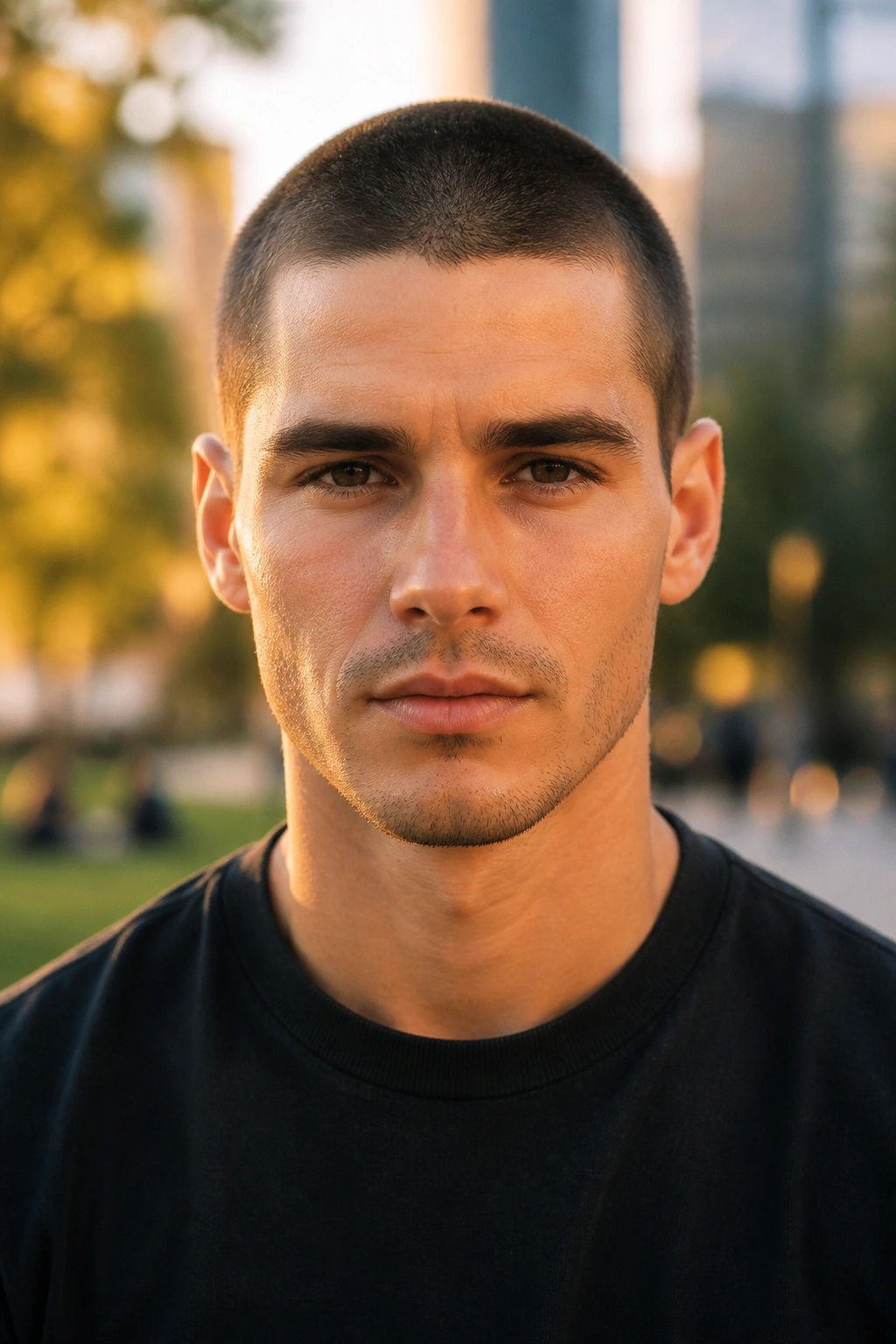
A buzz cut is the blunt instrument of men’s haircuts, and I mean that in a good way. It strips everything down to clean lines, even length, and almost zero fuss.
Why it works so well
The buzz cut suits men who want a sharp look without styling time. A #1 or #2 guard keeps the hair short enough to stay neat, while a #3 or #4 leaves a little more softness if your head shape needs it. That tiny difference matters more than people think.
It also handles thinning spots better than longer cuts. When the hair is the same length all over, the eye stops hunting for gaps.
- Best for: strong bone structure, busy routines, warm climates
- Ask for: one guard length all over, or a faded buzz with a slightly tighter side
- Avoid if: you want to hide a bumpy scalp or a very uneven hairline
- Maintenance: every 2 to 4 weeks, depending on how fast your hair grows
My take: a buzz cut looks best when the neckline is cleaned up properly. A sloppy edge makes the whole thing feel unfinished.
2. Crew Cut
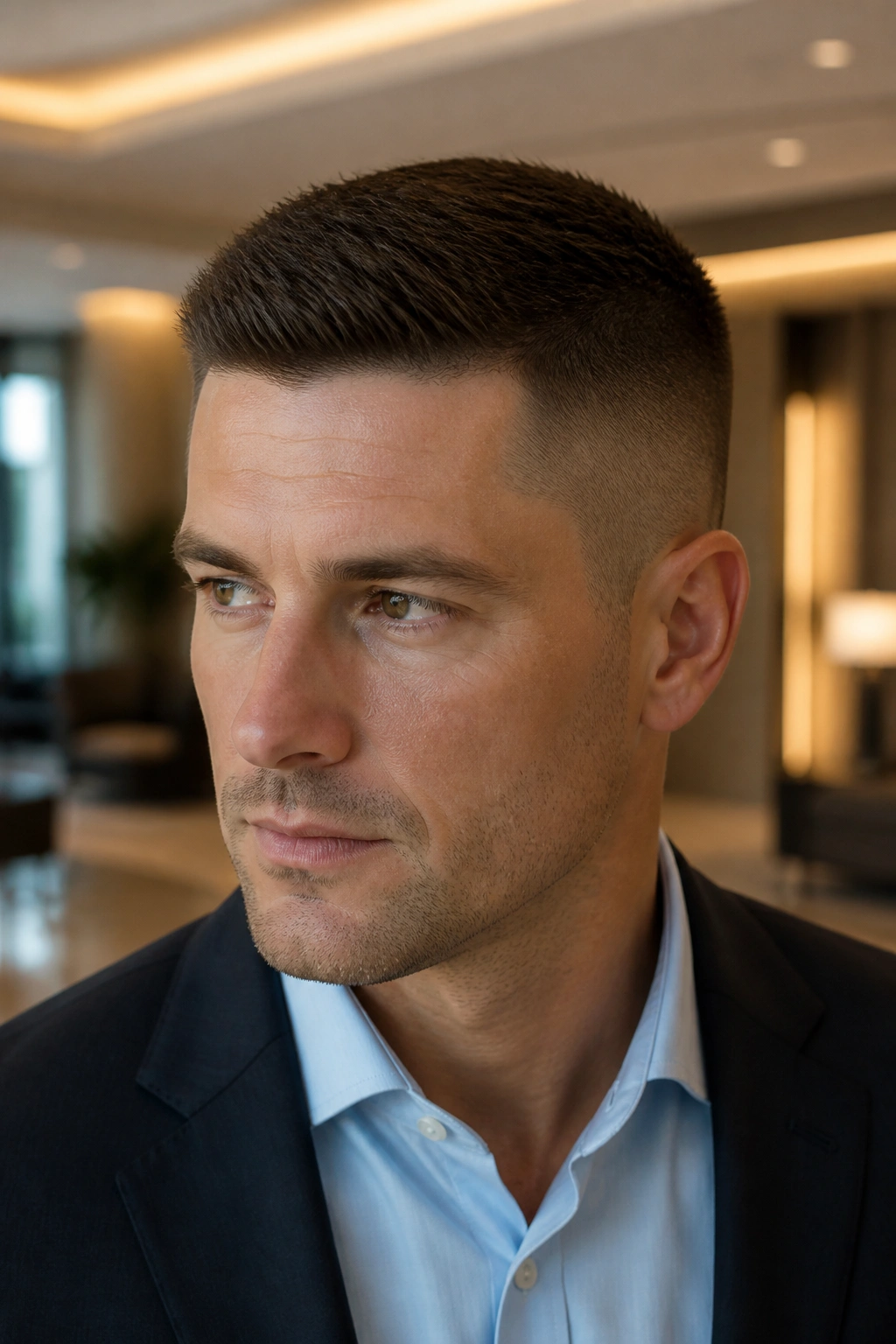
The crew cut is what happens when a buzz cut gets a bit of dignity. It stays short, but the top carries enough length to add shape, especially near the front.
That extra length gives you room to brush the hair forward, slightly up, or just let it settle naturally. On straight or slightly wavy hair, it sits nicely without needing much product. On thicker hair, it can hold a neat, tidy profile that still feels casual.
I like the crew cut because it works in more places than people expect. Office, gym, date night, weekend errands. It does not scream for attention, which is part of the charm.
Ask your barber for a tapered neckline, short sides, and a top that is longer by about half an inch to an inch at the front. That small slope from back to front gives the cut its shape. Without it, the crew cut can look flat.
3. French Crop
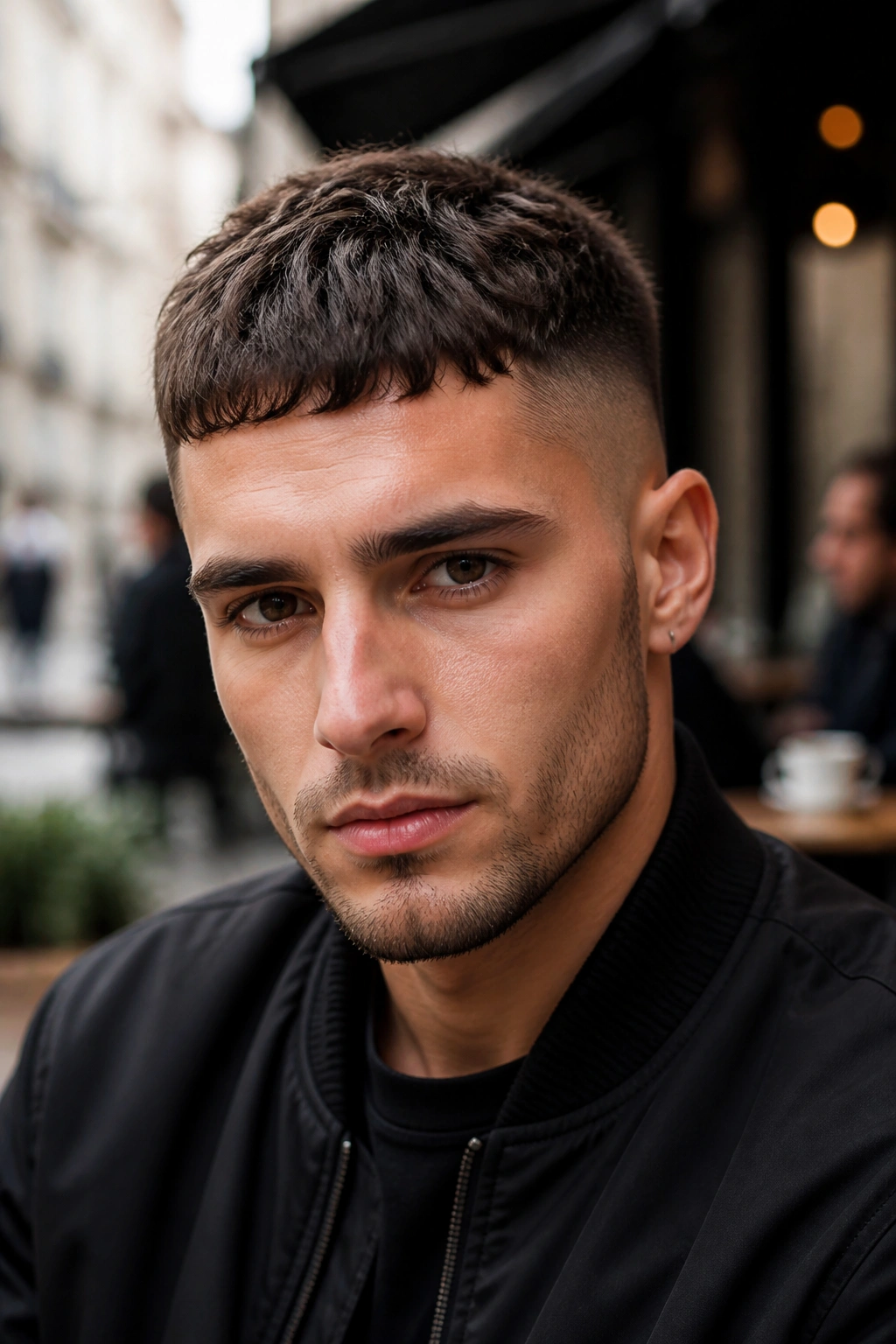
Why does the French crop keep showing up in good barbershops? Because it solves a lot of problems at once.
The short fringe pulls attention forward, which helps if your hairline is getting thinner or a little uneven. The top stays choppy and textured, so the cut looks deliberate instead of bare. On straight hair, it reads crisp. On wavy hair, it gets a rougher, more relaxed edge that I usually prefer.
What to ask for
Tell the barber you want short, blunt bangs that sit just above the brow or graze it slightly. Ask for texture on top and a tight fade or taper on the sides. If your hair grows forward at the front, this cut behaves nicely. If it grows straight up like a stubborn brush, you’ll need more product and a bit more patience.
Who it suits
- Men with a receding hairline
- Guys who want a low-maintenance cut with style
- Straight, thick, or wavy hair types
- Faces that need a bit more width up front
The French crop has a nice habit of looking better on day two.
4. High and Tight
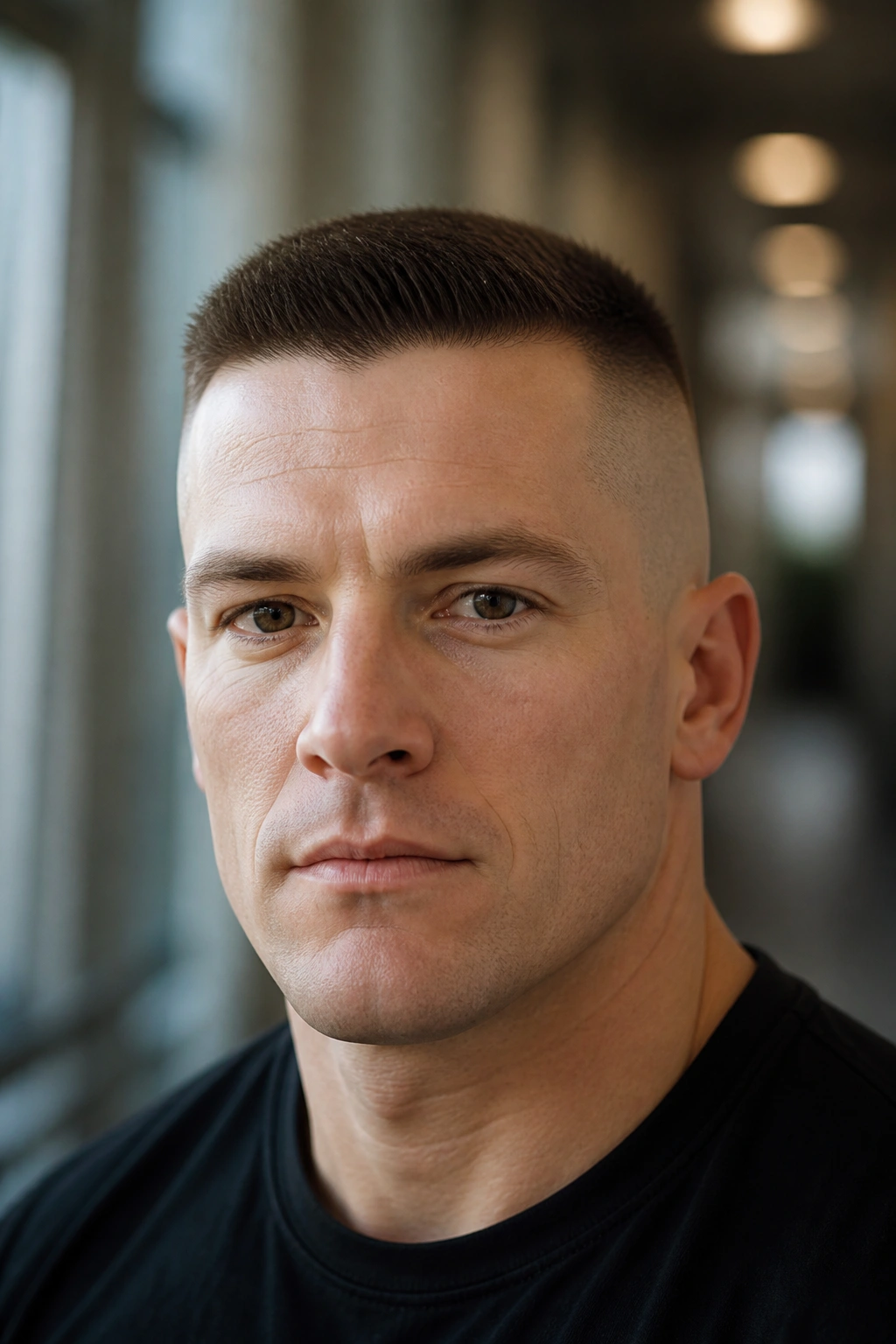
A high and tight has military roots, but the reason people still wear it is simpler than that: it looks clean fast.
The sides are clipped very short, often down to a skin fade or something close to it, while the top stays short and narrow. That narrow top is the point. It keeps the silhouette lean, which works especially well on strong jawlines and broad faces. If you carry a lot of bulk in your hair, this cut cuts through it without much negotiation.
The version I like best has a softer transition than the old-school, severe version. Too harsh, and it starts to look like a costume. Just enough blend, and it feels sharp.
- Good for: thick hair, athletic builds, low-fuss routines
- Less ideal for: very long faces, because it can make them look longer
- Styling: a dab of matte paste if you want the top to lie cleanly
- Barber note: keep the top short, but not flattened to the scalp
That balance is the whole cut.
5. Caesar Cut
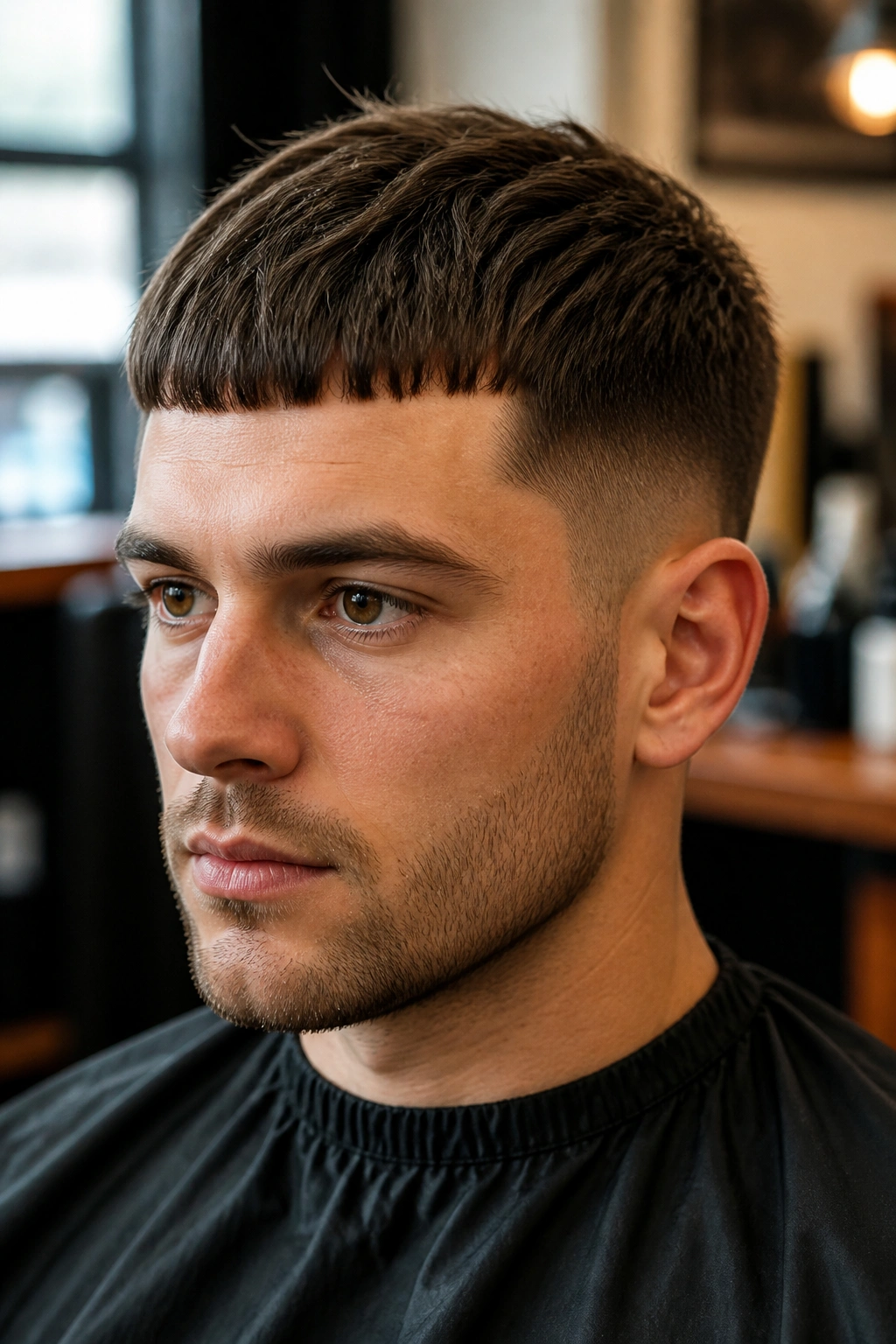
The Caesar cut is old, but it doesn’t feel dusty when it’s done right. The short, straight fringe gives it a clean front edge, and the sides stay neat without stealing the show.
It’s a smart cut for men with straight hair or a slightly uneven hairline. The blunt fringe helps disguise a forehead you’d rather not feature, and the short length keeps the shape compact. If your hair tends to push forward on its own, this cut works with you instead of against you.
I’ve always thought the Caesar is underrated because it looks simple and is actually pretty technical. The barber has to keep the line across the front even, while the texture on top still needs enough movement to avoid looking like a helmet. That’s harder than it sounds.
Use a small amount of matte clay, rake it forward with your fingers, and stop before it gets stiff. The best Caesar cut still looks like hair, not shellacked plastic.
6. Textured Crop
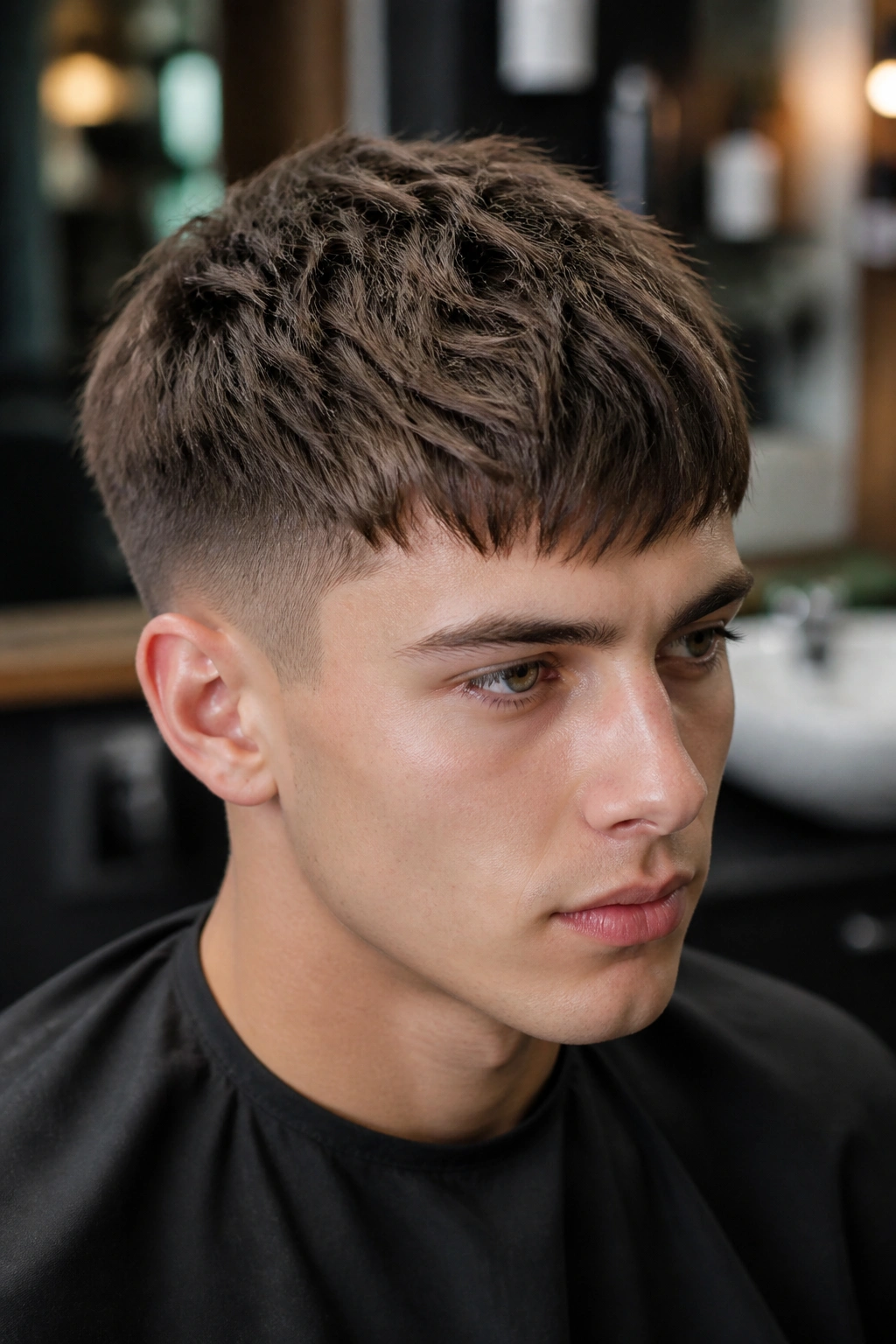
Compared with a Caesar, the textured crop feels looser and a bit less formal. Compared with a quiff, it’s shorter, lighter, and far easier to live with.
That’s why I recommend it so often for thick hair. The choppy top breaks up bulk, and the sides can sit in a taper or fade without creating a heavy block. It’s especially good if your hair wants to puff up in humidity. A blunt, compact shape keeps the top under control.
What makes it different
The texture is not decoration. It’s the whole point. The barber should cut into the top with layers that let the hair move instead of sitting in one solid sheet. If the top is too uniform, the crop loses the roughness that makes it work.
- Best styling product: matte paste or styling cream
- Great for: dense hair, slightly wavy hair, busy mornings
- Less great for: very flat, fine hair that needs lift
- Trim schedule: every 3 to 5 weeks to keep the shape clean
This cut has a nice, practical edge to it.
7. Ivy League Cut

The Ivy League is the smarter cousin in the crew cut family. It keeps the sides short, but the top has enough length to part cleanly or sweep to one side.
A lot of men like it because it looks put together without trying too hard. The top is usually left long enough for a neat side part, and the front can be brushed up just a little for shape. That little bit of height changes the whole mood of the haircut.
How to style it
Use a light cream or a low-shine pomade. Comb the top into a soft side part, then push the front slightly up if you want more lift. Keep the finish clean, not wet. A shiny Ivy League can look older than it needs to.
The cut works especially well if you want something office-friendly that still feels modern. It also grows out politely, which is a trait more cuts should have.
Short version: if a crew cut feels too plain and a comb over feels too polished, the Ivy League sits right in the middle.
8. Low Taper Fade
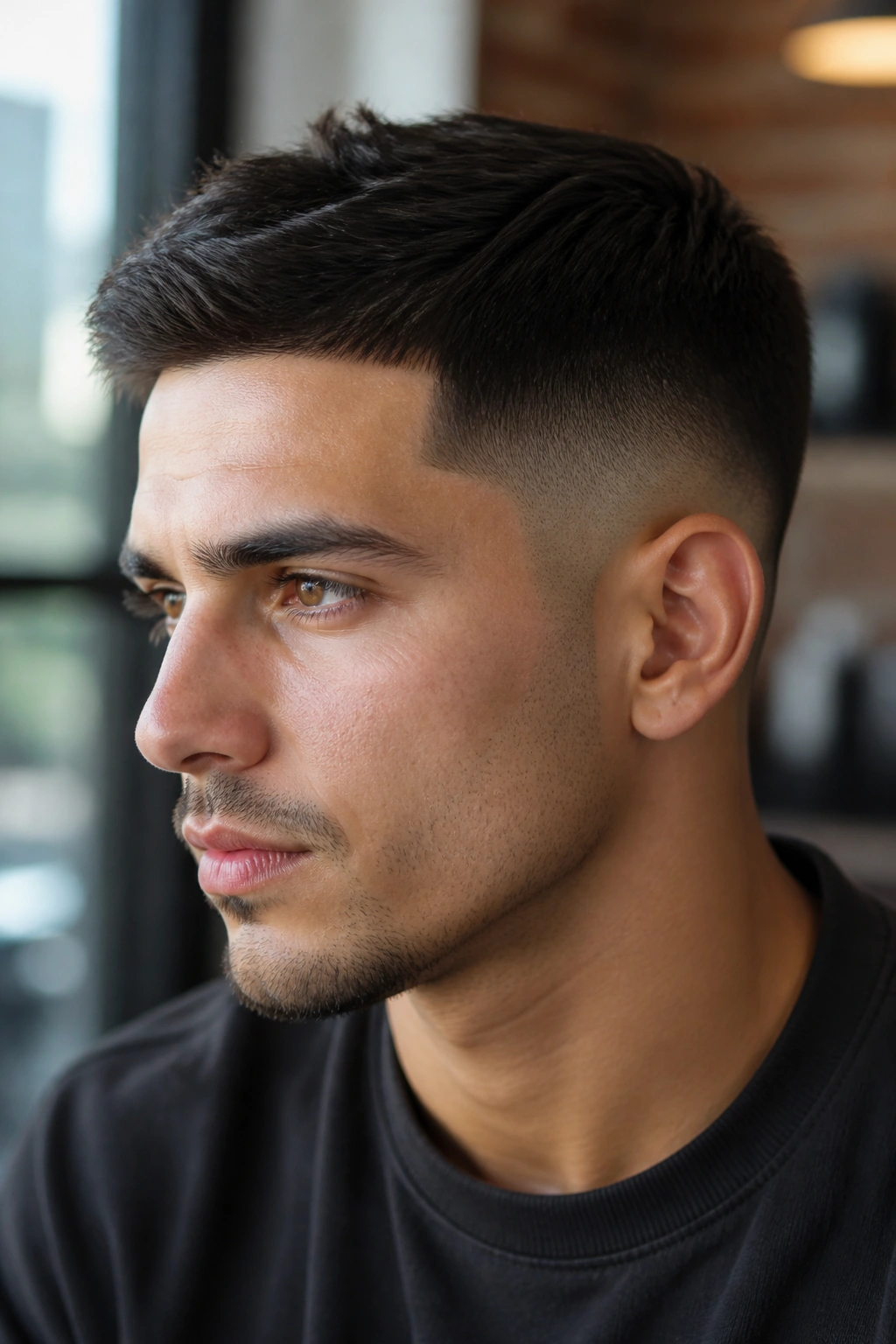
A low taper fade is one of those cuts that doesn’t shout, and that’s why it gets worn so much. The fade stays low around the ears and neckline, which keeps the haircut calm instead of dramatic.
You get clean edges without the high-contrast look of a skin fade. That makes it a strong choice for men who want short hair but still need to look normal in a meeting, at school, or around people who dislike flashy haircuts. It’s a haircut with manners.
The top can be anything from cropped and textured to slightly brushed up. That flexibility is the real draw. A low taper fade pairs with straight hair, wavy hair, and even curls if the barber keeps the transition soft.
Ask for a taper around the sideburns and neckline, not a hard disconnect. Too much weight left above the ears makes the shape bulky. Too little blend, and the fade starts to feel more aggressive than intended.
9. Skin Fade with Short Top
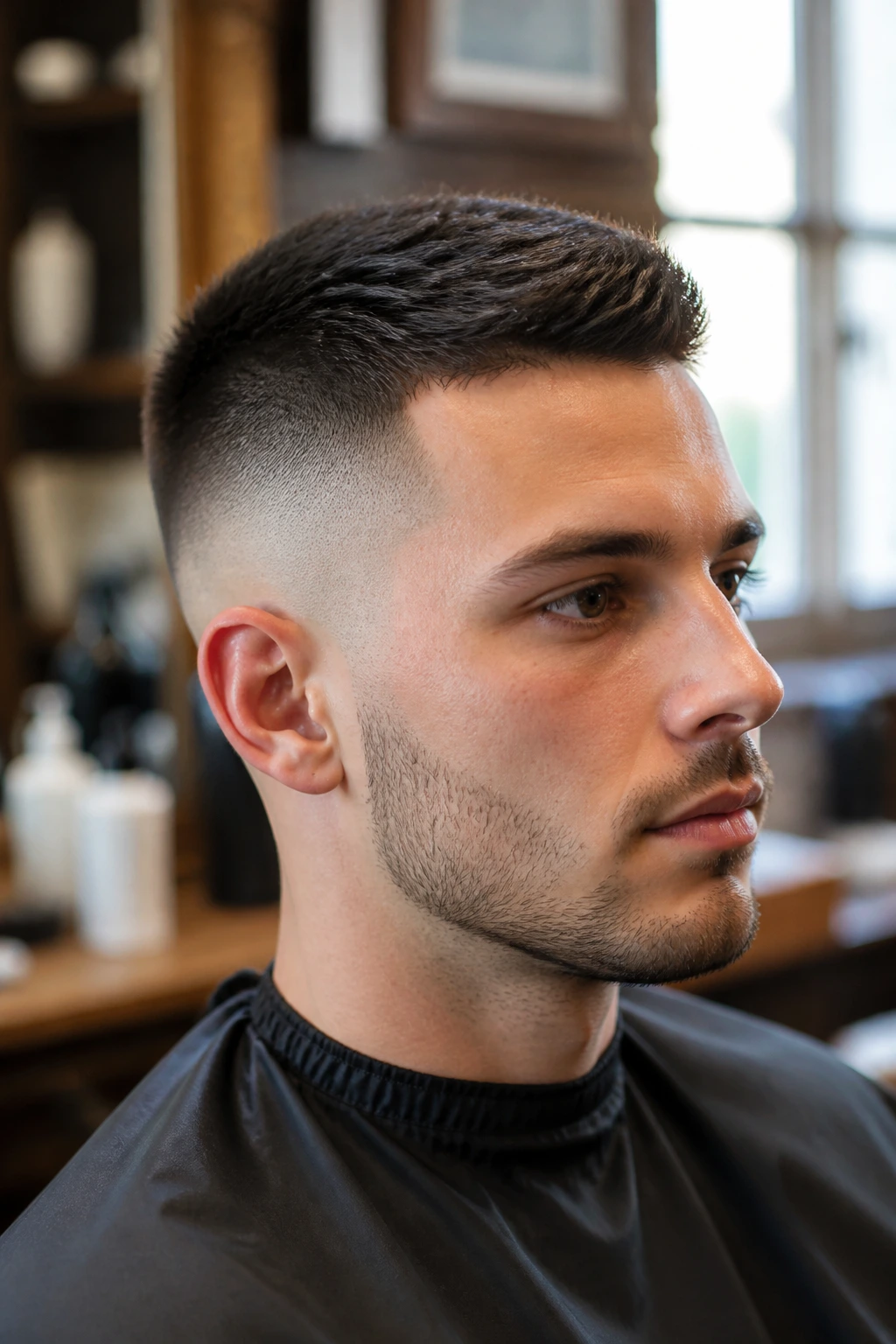
Can a short cut still look sharp enough to feel dressed up? Absolutely. A skin fade with a short top proves it.
The fade starts right down to the skin near the ears and neck, then climbs into a short top that can be textured, brushed forward, or left flat and neat. That contrast is the whole point. The clean sides make the top look fuller, even when the actual length is modest.
What to tell the barber
Say how high you want the fade to start, and be specific. Low skin fade, mid skin fade, or high skin fade are not interchangeable. A low version feels more wearable. A high version has more bite. The top should usually stay short enough that it doesn’t flop over.
This cut asks for upkeep. It looks freshest in the first two weeks, then softens fast as the fade grows out. That is not a flaw if you like crisp lines. It is a flaw only if you want a haircut that can coast for months.
10. Short Quiff
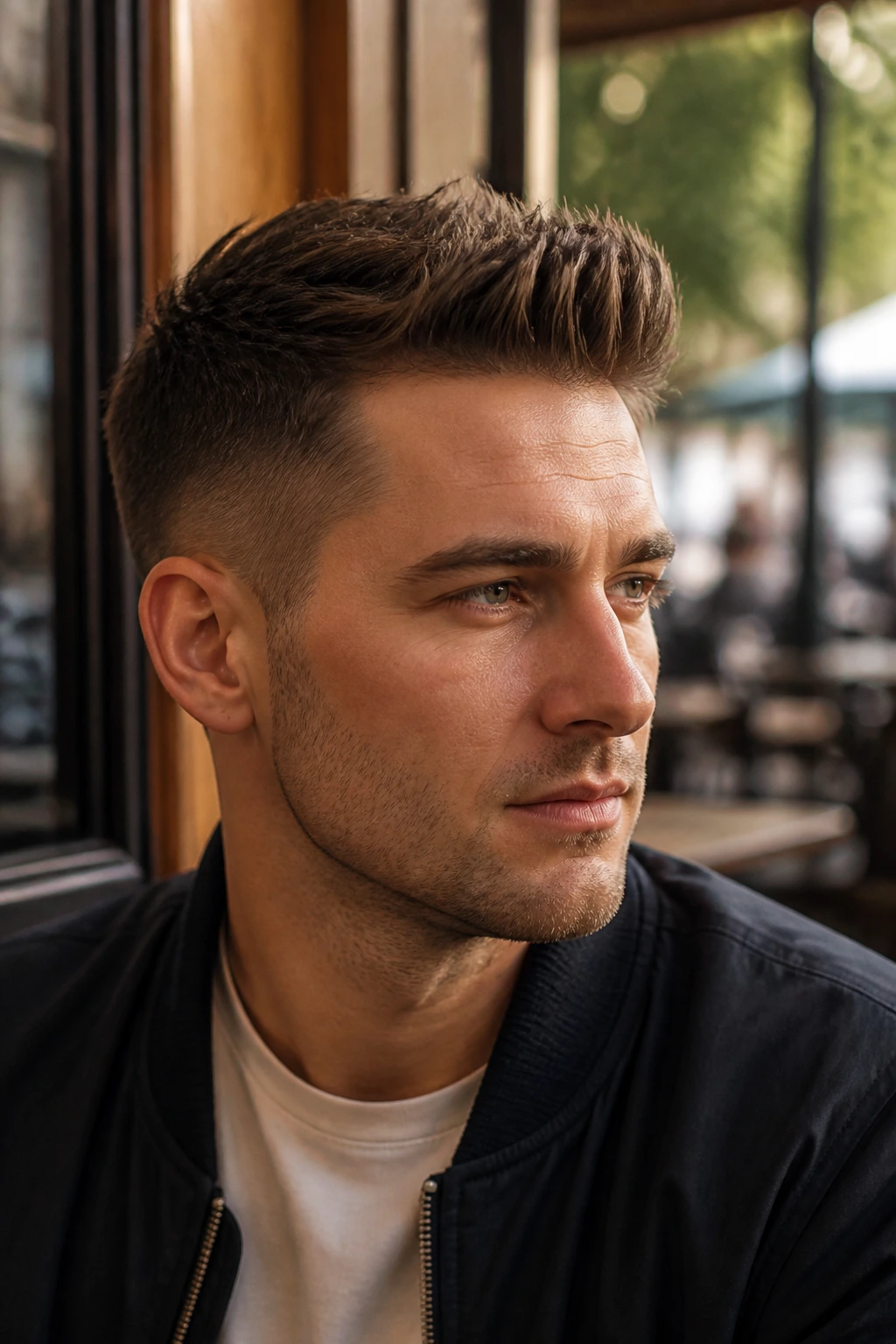
A short quiff works best on hair that has some natural body. Flat, fine hair can do it, but it takes more effort and a stronger product.
The look is simple: short sides, a little more length in front, and the top pushed up and back just enough to show shape. Not a towering pompadour. Not a stiff shell. Just a controlled lift that gives the face some energy.
I remember seeing how much difference 1 extra inch can make here. That inch at the front changes the whole haircut. Without it, the quiff collapses into a plain crop. With it, the cut suddenly has movement.
Use a blow dryer first. Pinch the front upward with your fingers while drying, then finish with a matte clay or fiber. If you skip the drying step, the hair usually falls back down by lunchtime.
11. Short Comb Over
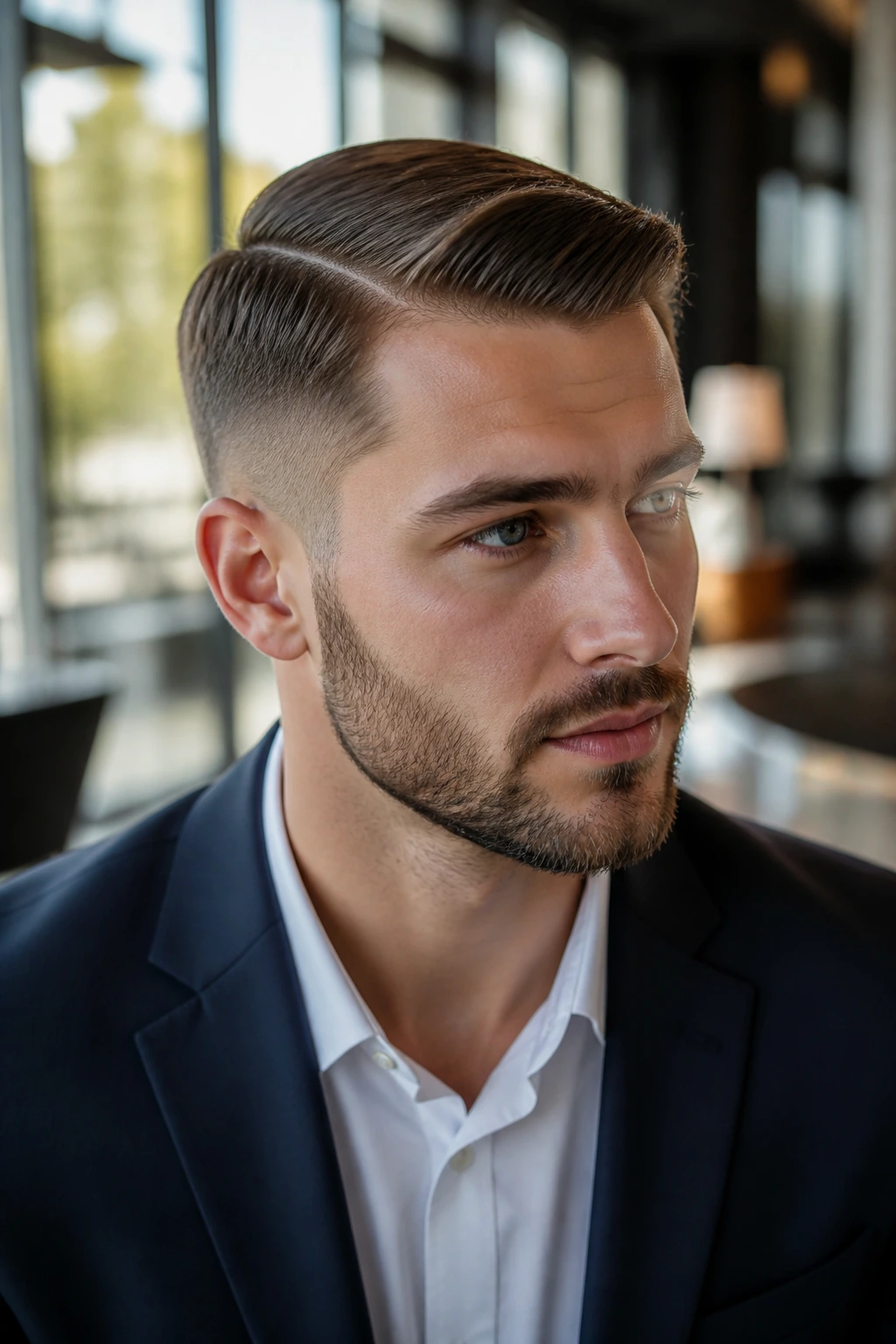
A short comb over is not the old banker version people joke about. Done well, it’s neat, practical, and a lot more modern than the name sounds.
The top stays short enough to avoid looking bulky, while the hair is guided across a side part. The sides can taper cleanly, and the top can have enough texture that the part feels natural rather than painted on. That matters. A comb over works when it looks like hair that chose a direction, not hair that was forced into one.
This cut is a good choice if your hair lies mostly flat and you want a tidy finish with a little polish. It also helps if you have mild thinning near the temples, since the side sweep can soften the outline. I would avoid a heavy gel finish. It turns the whole thing into a shiny sheet.
A light cream or low-shine pomade keeps the shape in place without making it look frozen.
12. Spiky Crop
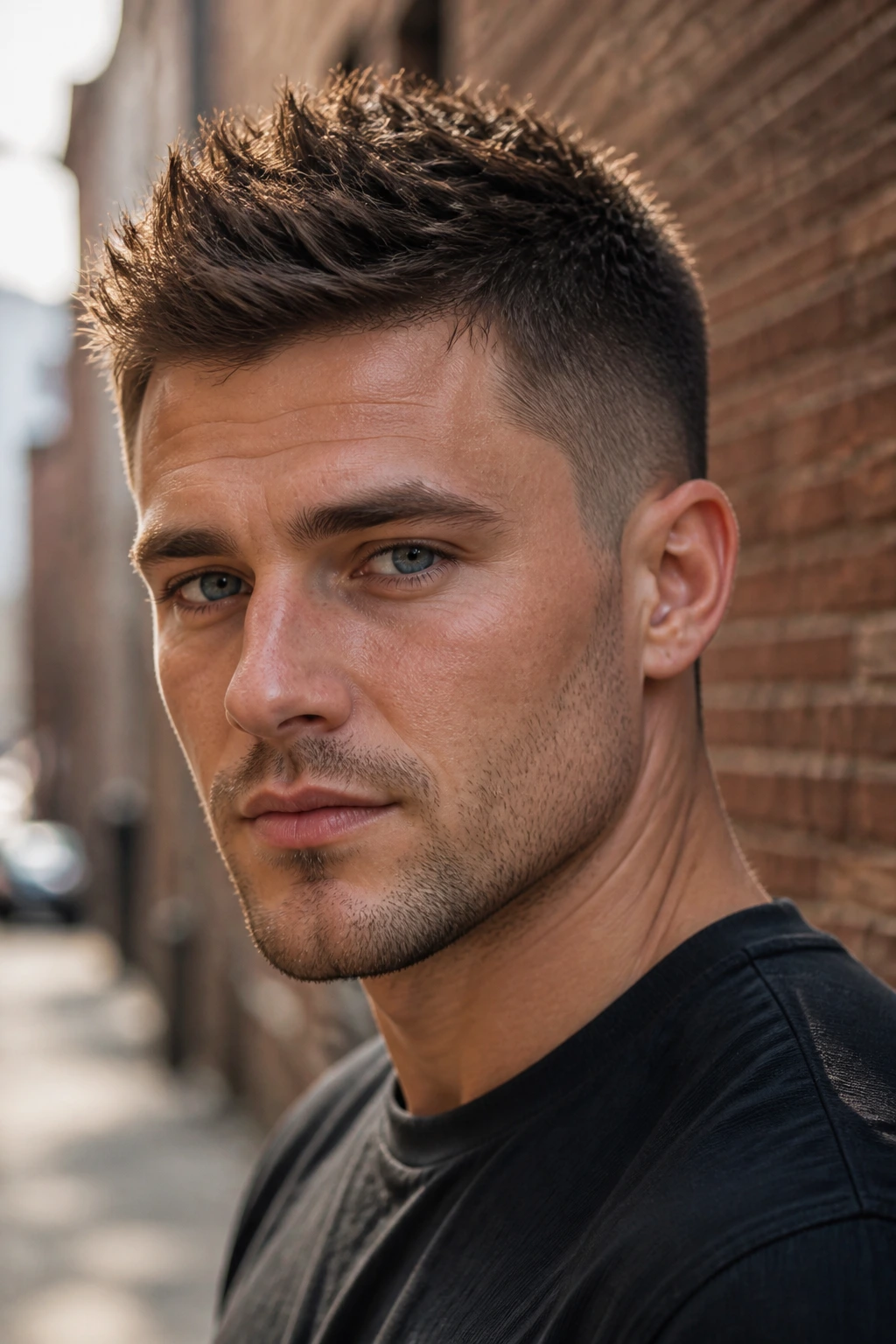
The spiky crop sits halfway between playful and practical. The spikes are short, tight, and controlled, not the crunchy, overbuilt spikes people wore when they were trying too hard.
That’s the key difference. A good spiky crop uses texture to break up thick hair and add a bit of lift at the front. The sides stay short, often faded or tapered, so the top feels lighter. It’s a strong option if your hair is dense and tends to lie heavy.
What makes it different
Unlike a quiff, this cut does not need a lot of length. Unlike a Caesar, it leans upward instead of forward. That makes it useful for guys who want movement but do not want to deal with long top sections that fall into the eyes.
- Product: matte paste or fiber
- Best hair type: thick, straight, or slightly wavy
- Maintenance: easy, but the shape softens if you skip trims for too long
- Look: casual, youthful, a little rough around the edges
The trick is to separate the tips with your fingers, not a comb.
13. Flat Top
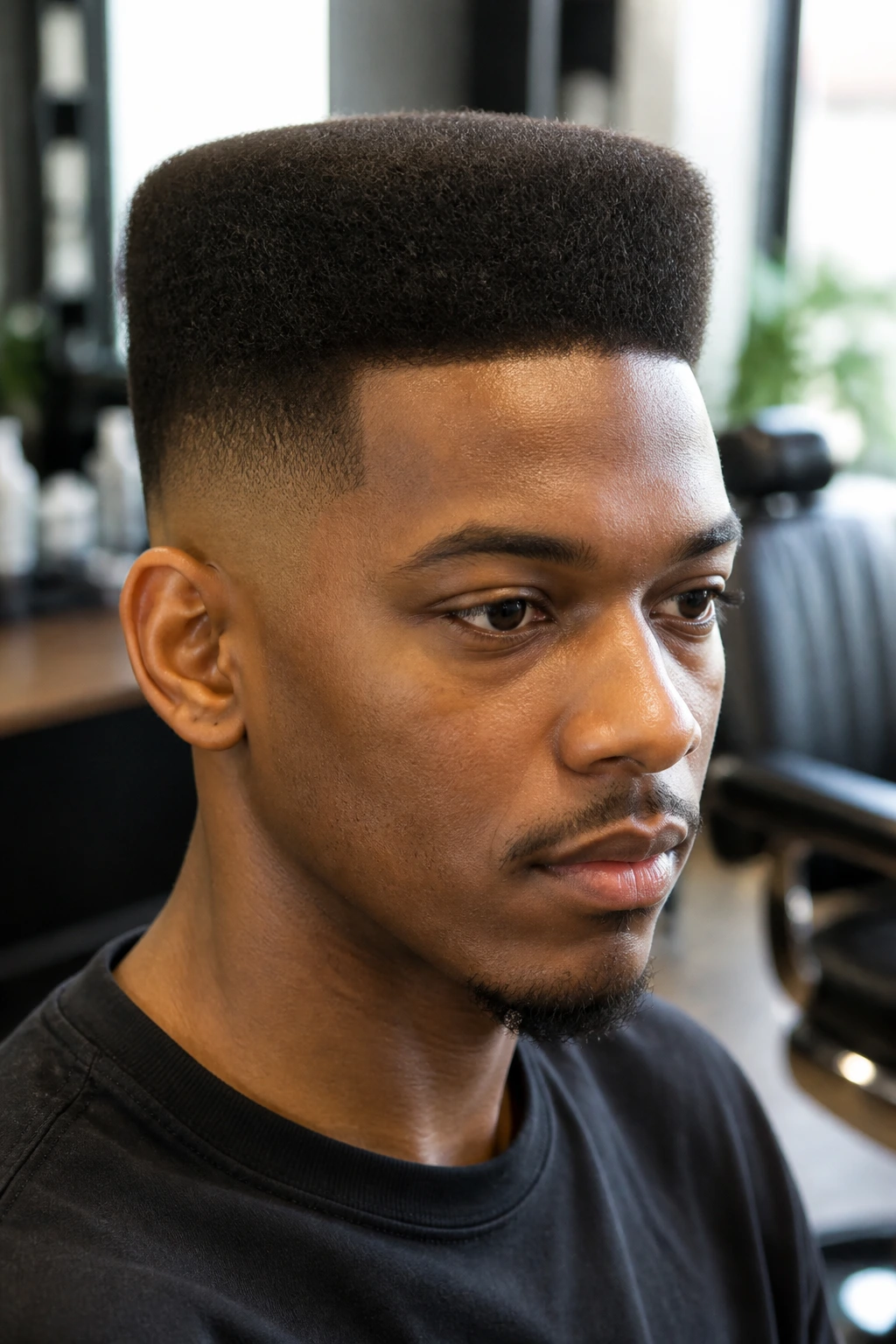
A flat top is one of the most specific short haircuts men can wear. It is also one of the most unforgiving.
The top is cut to stand level, which creates a squared shape that works best on thick, coarse hair with natural lift. That clean horizontal line is the signature. If the hair is too soft or too fine, the shape falls apart quickly and starts looking accidental instead of intentional.
Why it still has fans
Because when it’s done well, it has presence. The flat top makes a head look structured from every angle, and the edges can feel crisp without being loud. It also pairs nicely with a tight fade on the sides, which keeps the shape from getting boxy in a bad way.
The barber needs to check balance from the front, side, and back. That sounds obvious, but I’ve seen plenty of flat tops that were fine from one angle and strange from another. That’s a haircut you want shaped in person, not guessed at.
14. Butch Cut
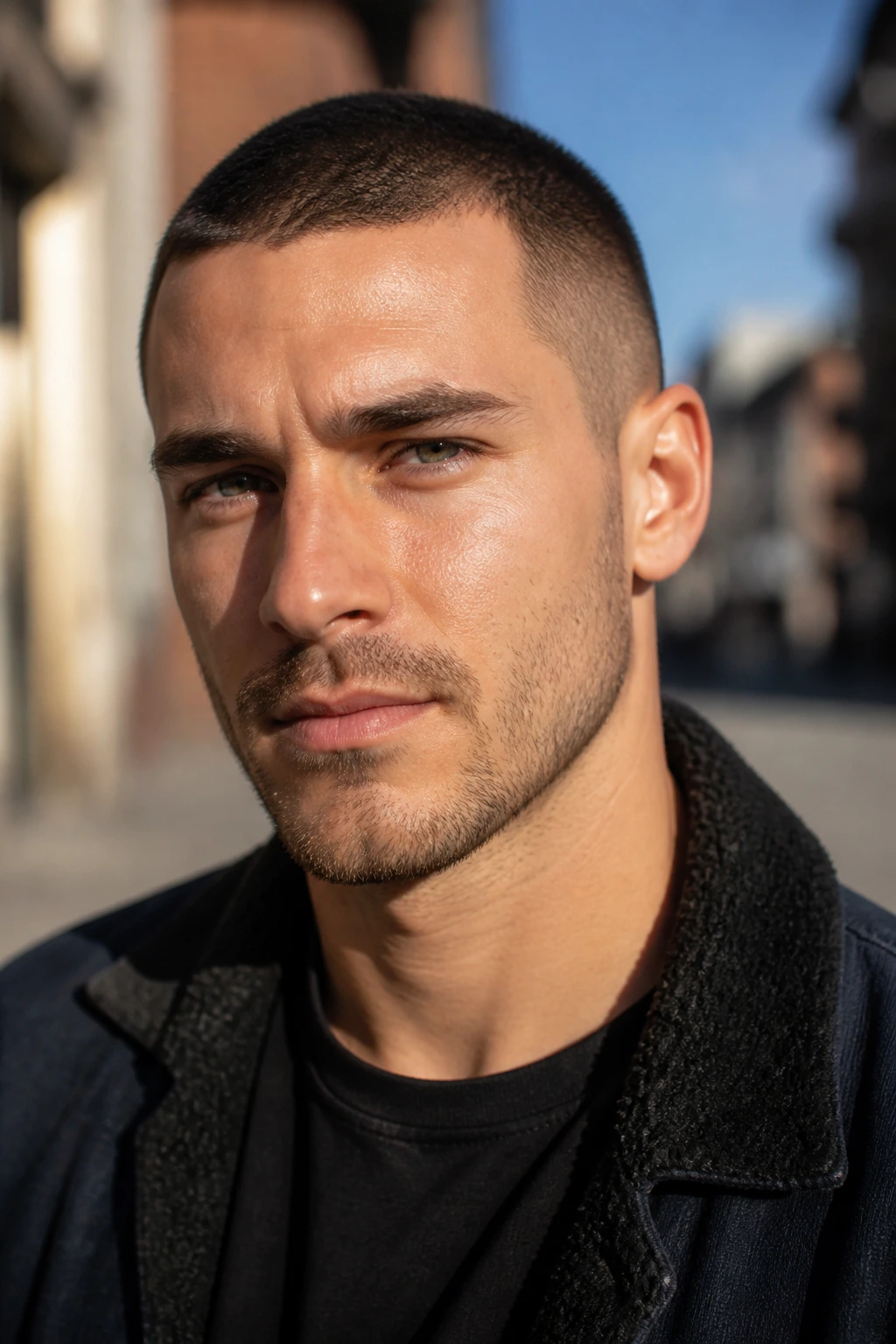
The butch cut lives in the small gap between a buzz cut and a crew cut. That gap matters.
It gives you more presence on top than a pure buzz, but not so much length that you need product or combing. The look is plain in the best sense. Clean. Masculine. Easy to keep neat. If you want a cut that never asks much from you, this is one of the safest bets.
I like it on men who want a short haircut but do not want to show every contour of the scalp. A little extra length helps soften the head shape and makes the cut feel less severe than a very short buzz. The sides should still be tidy, usually with a taper or a short guard, so the shape doesn’t puff out.
One thing people miss: the butch cut looks better when the neckline is trimmed close and the sideburns are matched properly. Those tiny edges stop it from looking like a stopgap between barber visits.
15. Burr Cut
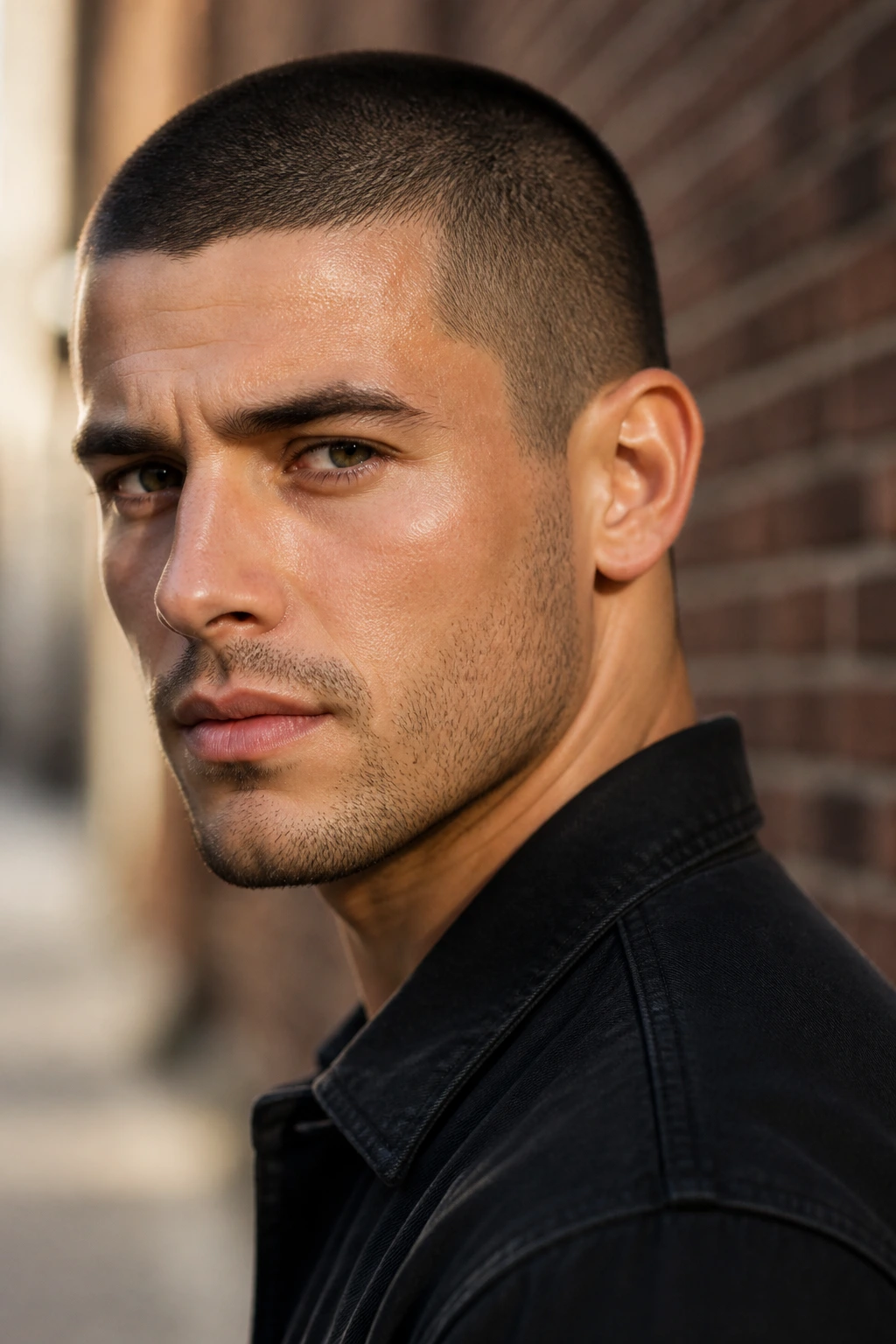
A burr cut is even shorter than most men realize when they hear the name. It’s close to the scalp, but not shaved down to skin.
That slight length makes it useful for men who want the cleanest possible look without exposing every scrape, bump, or dry patch on the head. It works well on strong features and hair that grows evenly. If your scalp texture is uneven, you’ll notice it more here than with almost any other short cut.
How to know if it fits
If you’ve ever wanted a shaved head but felt a little uneasy about the commitment, start here. The burr cut gives you that stripped-down feel with a bit of softness left in the hair. It’s also fast to maintain. A clipper pass every couple of weeks keeps it looking deliberate.
Use a light scalp moisturizer if your skin dries out. That’s not vanity. It keeps the cut looking healthy instead of chalky. And if you have a strong swirl at the crown, a burr cut will show it, so don’t be surprised when the back behaves differently from the front.
16. Disconnected Undercut
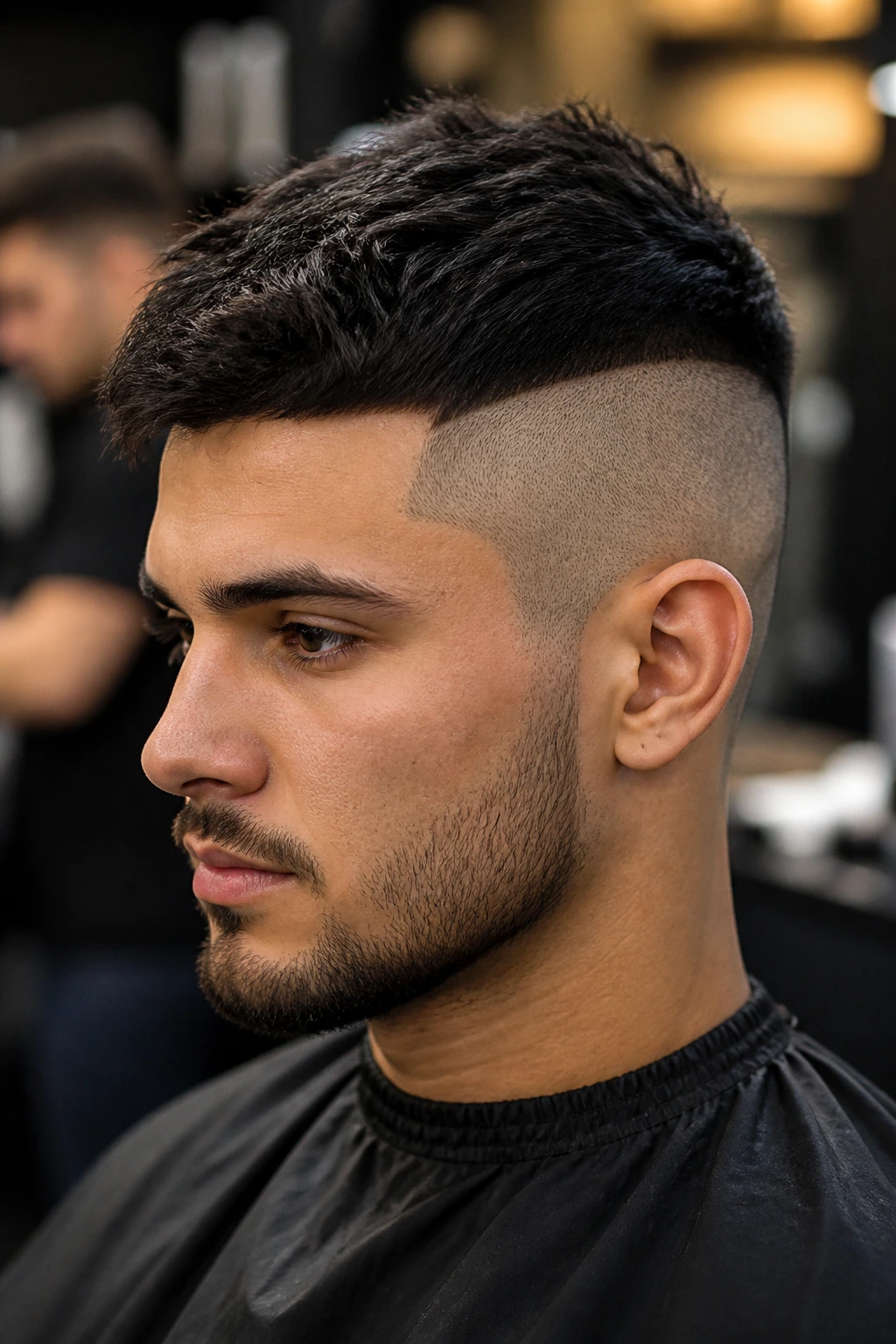
The disconnected undercut is for men who like a clear break between top and sides. No soft blend. No subtle fade. Just a visible contrast.
That makes it one of the bolder short haircuts, even when the top itself stays fairly short. The top can be cropped, brushed back, or pushed to one side, while the sides are clipped much shorter and stop sharply below the longer section. The line of separation gives the haircut its attitude.
A lot of guys either love this look or hate it. I’m in the first group when the top has enough texture to stop it from feeling rigid. If the top is too shiny or too flat, the disconnect feels harsh. If the top has some movement, the whole shape gets cleaner and more deliberate.
Best on thick hair. Better still on men who don’t mind the barber keeping the outline precise every 3 to 4 weeks. This is not a cut you let drift.
17. Regulation Cut
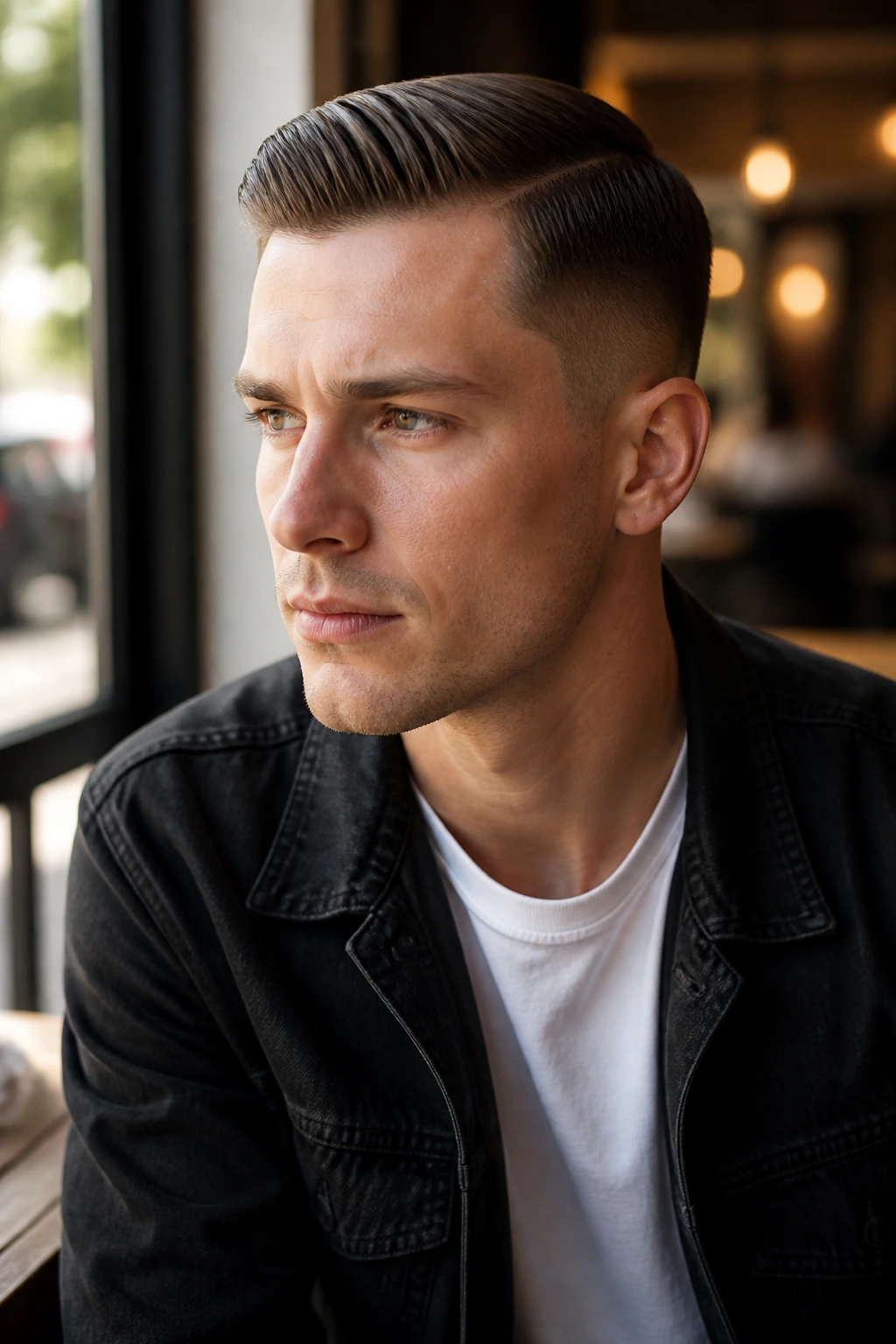
The regulation cut is tidy without being stiff, which is harder to pull off than people think.
It usually features a short side part, clean tapering around the sides and back, and enough top length to comb neatly. There’s a military-rooted honesty to it. Nothing fussy. Nothing decorative. Just a controlled shape that stays in place and grows out without becoming a mess.
I like this cut for men who want short hair that still reads polished. It has more structure than a buzz cut, more restraint than a slick back, and more seriousness than a crop. That middle ground is useful if you dress simply and want the haircut to match.
Use a light pomade or cream, then comb the top to one side while it’s still slightly damp. If the hair dries in the wrong direction, dampen the front and reset it. That tiny step keeps the part from splitting awkwardly.
18. Temple Fade with Curls
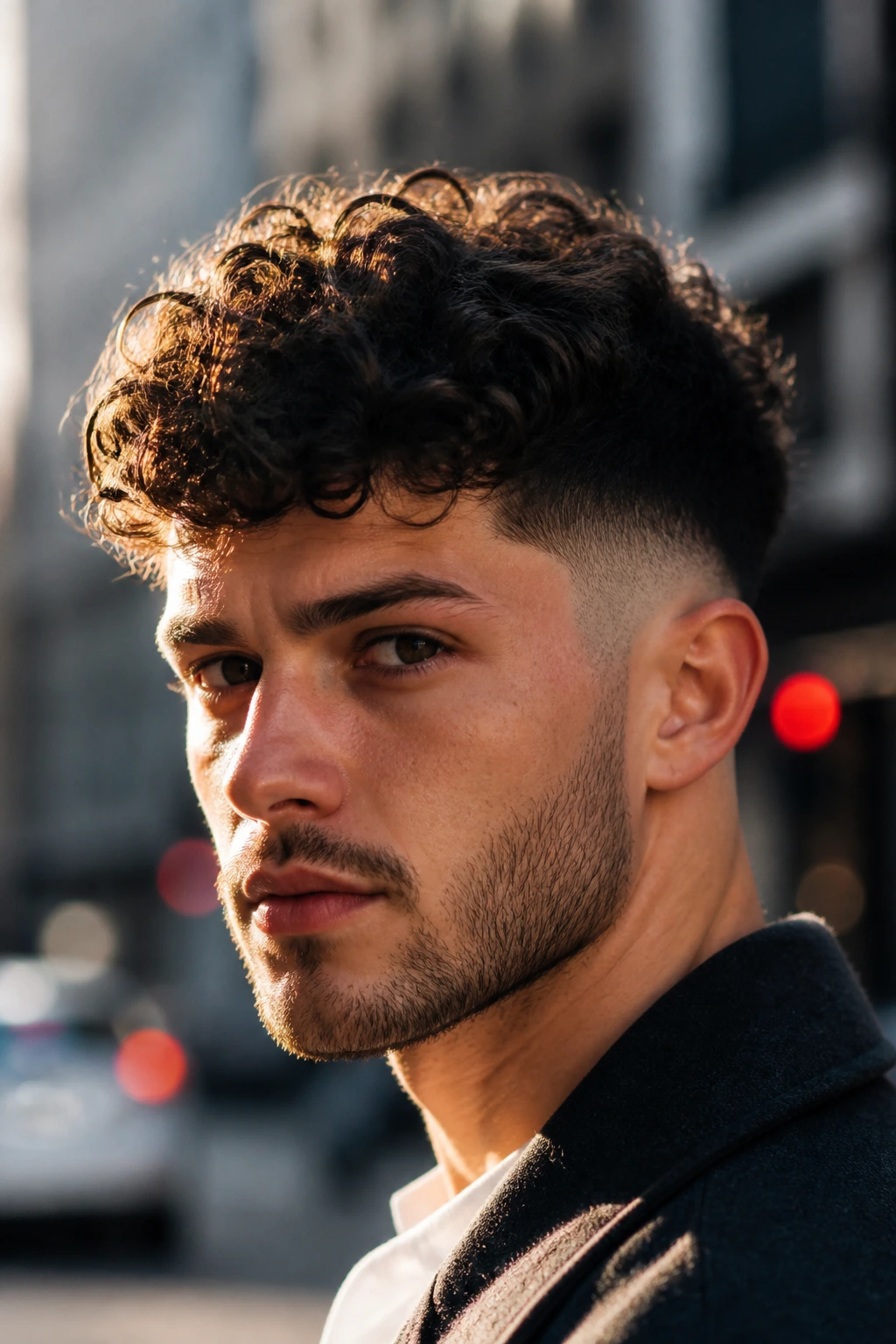
Curly hair changes the game. A temple fade with curls works because it lets the texture stay alive while cleaning up the edges where curls can look bulky.
The fade at the temples gives the haircut a neat frame. The curl on top stays short enough to manage, but long enough to show shape and movement. That matters with curls, because cutting too much off the top often leaves them looking flat and tight in a bad way. Too much length, and the shape turns fuzzy.
Why this cut works on curls
- It reduces puff around the face
- It keeps the sides cleaner than a full round shape
- It lets the top keep its natural spring
- It grows out more gracefully than a blunt all-over cut
A curl cream or light leave-in conditioner helps if the hair dries out. The goal is definition, not crunch. If the curls are dense, a barber who understands scissor work near the front will keep the shape from ballooning.
19. Short Afro Fade
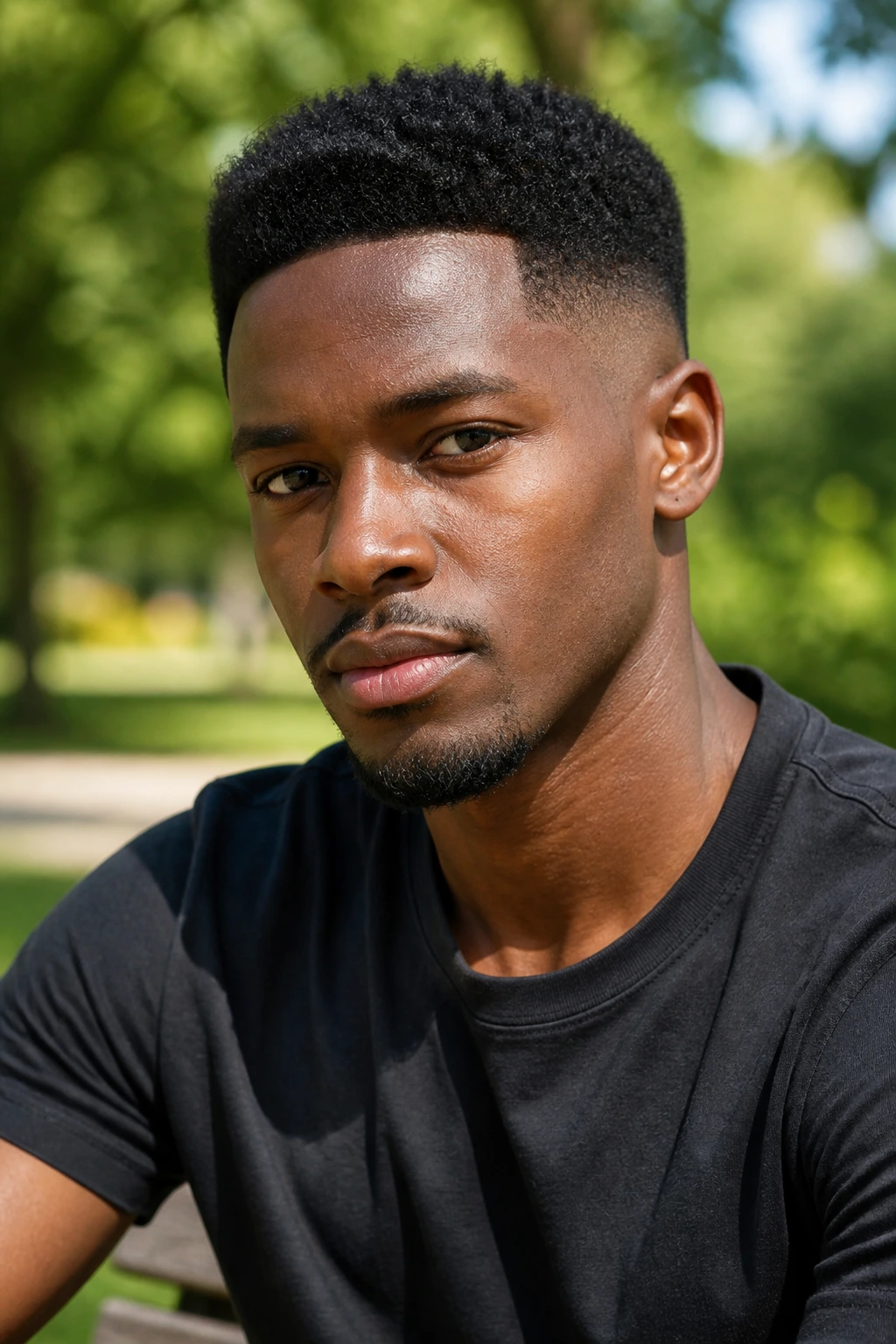
A short afro fade is one of the cleanest ways to wear coily hair short without flattening it into nothing.
The fade sharpens the sides, while the top keeps enough length to show the natural pattern of the hair. The shape can be rounded, squared, or slightly tapered depending on the head and the barber’s hand. I prefer the version that follows the head shape closely. It looks balanced and takes less effort to keep neat.
The biggest mistake is trying to cut the top too low just to make it easy. Short doesn’t have to mean stripped. Coily hair often looks best when there’s enough length for the shape to breathe. A little sponge styling can bring out the texture if the hair needs separation, but a clean brush and a light moisturizer do plenty on their own.
Ask for a fade that matches the density of the hair. A heavy top with a weak fade looks unfinished. A proper fade makes the whole haircut feel intentional.
20. Messy Fringe
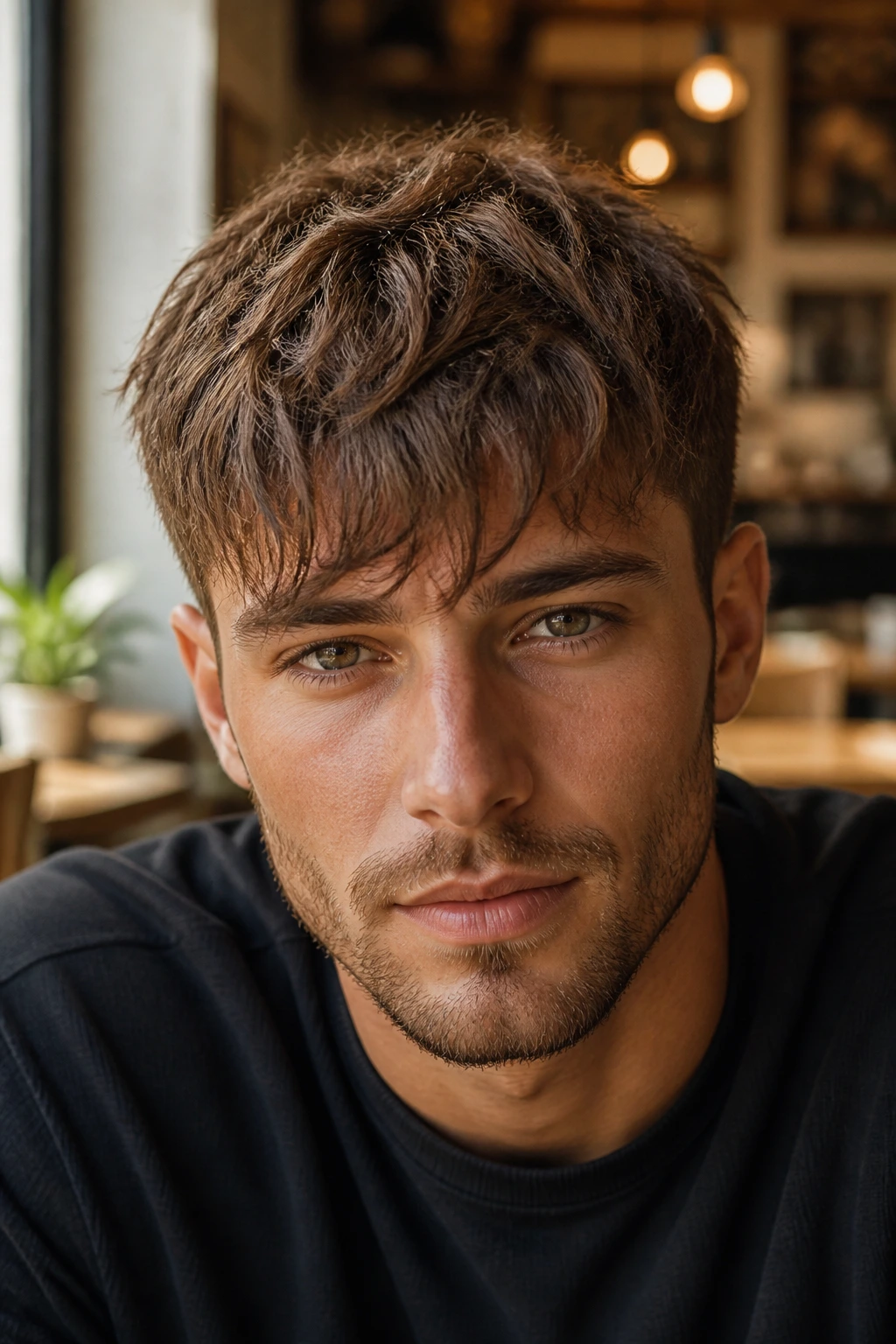
A messy fringe is what I recommend when someone wants short hair but refuses to look over-groomed.
The front falls forward in a loose way, but the shape is still controlled through the sides and crown. That makes it a useful cut for straight or wavy hair, especially when the hair has a bit of bend and doesn’t sit like a board. It can soften a strong forehead and give a face some movement without needing a lot of length.
The word “messy” can be dangerous here. Messy should mean textured, not neglected. The barber needs to build layers through the top so the fringe breaks up naturally. If the top is left too blunt, the cut ends up hanging in one dead sheet across the forehead, which is a bad look on almost everyone.
Use a matte cream and lift the front with your fingers. If you want a cleaner result, dry the fringe forward, then push just the middle section slightly off-center. That tiny mismatch makes it look casual instead of forced.
21. Short Slick Back
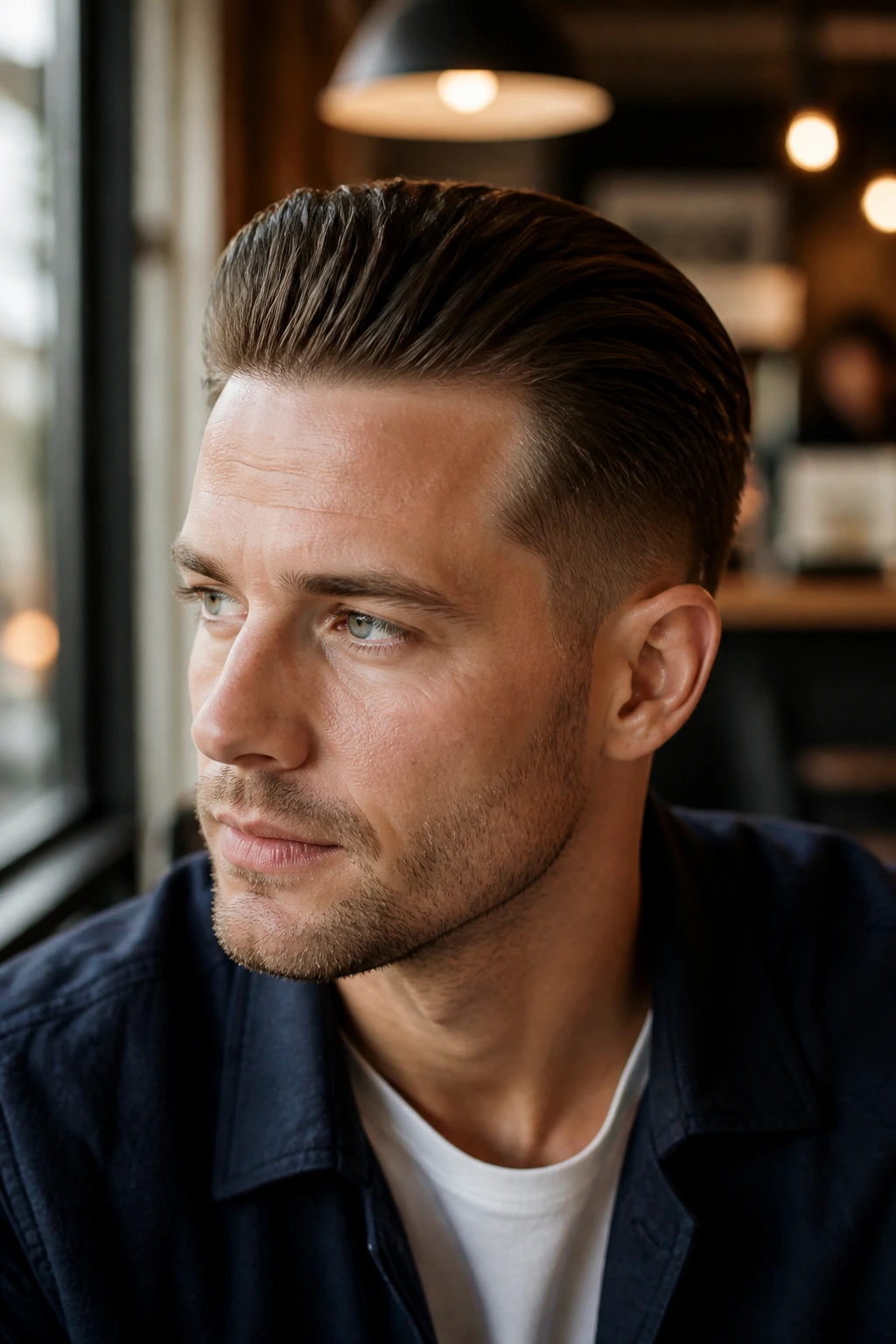
Can you slick hair back and still keep it short? Yes, if you stop before the style turns greasy or overlong.
A short slick back keeps the top trimmed close enough to stay manageable, then directs the hair away from the forehead with a comb or fingers. The sides are usually tapered or faded, which keeps the silhouette neat. It works best when the hair has a bit of natural thickness and enough length on top to move backward without poking out.
How to style it without overdoing it
Start with damp hair. Use a small amount of cream or low-shine pomade, warm it in your hands, and push the top back from the hairline toward the crown. Stop once the hair lies in place with a little texture left. If it looks wet, you used too much.
This cut pairs well with a sharper jawline and straightforward clothes. It can also look a little severe if the fade is too high, so a low or mid taper usually feels better. The neatness is the point. The shine is optional.
22. Short Mullet
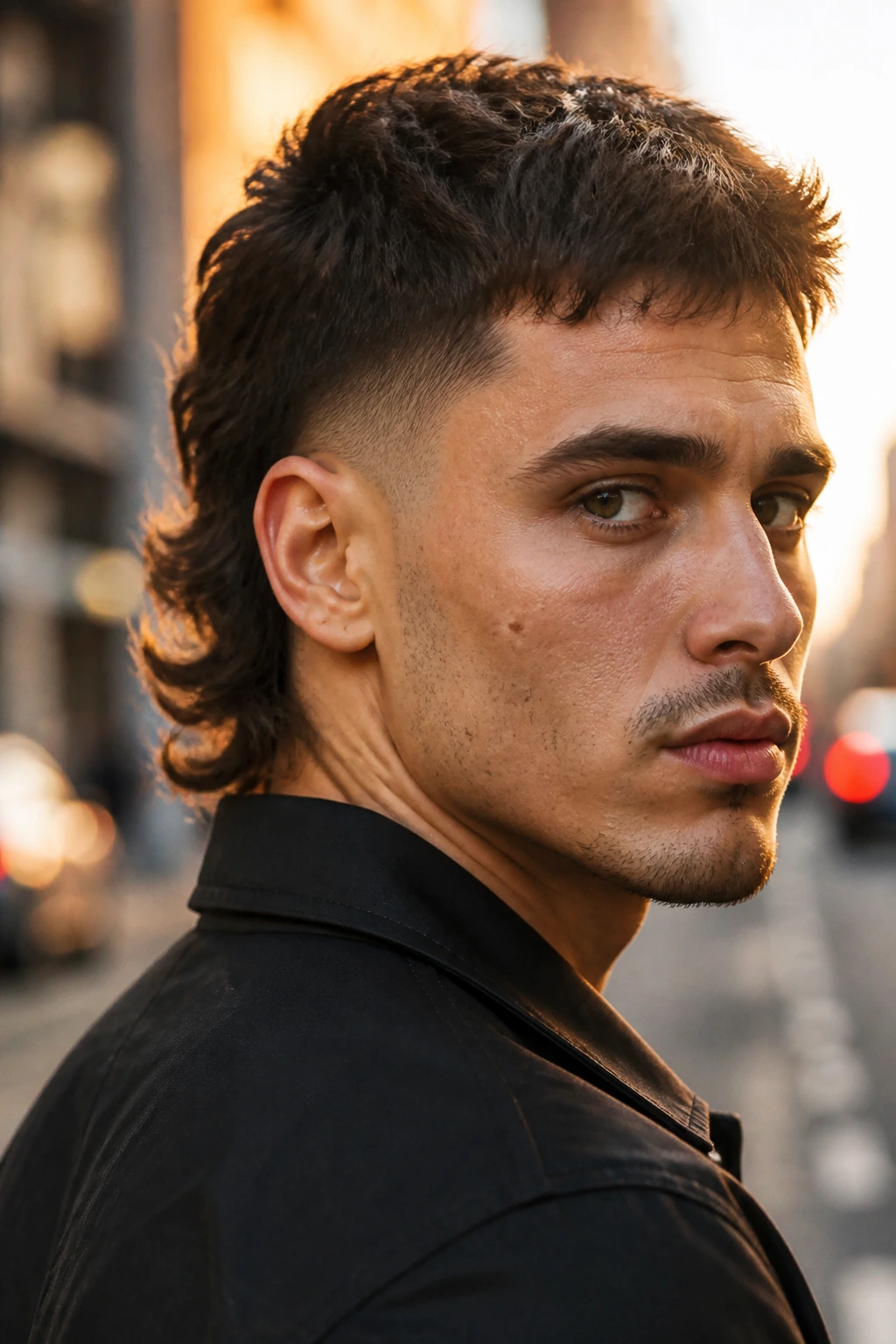
The short mullet still gets raised eyebrows, which is part of the appeal. But the modern version is much cleaner than the old stereotype.
The front and sides stay short, while the back carries a little extra length. That back section does not need to be dramatic. In fact, the best versions are restrained enough that the haircut feels playful rather than costume-like. If you keep the layers soft and the top textured, it can look sharp on wavy or straight hair.
I’ve seen this cut work best when the barber keeps the side profile tight and lets the back fall just long enough to be noticeable. Too much length turns it into a joke. Too little and it loses the whole point. It’s a narrow lane, which is why a good barber matters here more than most people admit.
- Best for: wavy hair, confident wearers, people who like shape with character
- Less ideal for: men who need a conservative office cut
- Product: light matte paste, maybe a little sea-salt spray
- Maintenance: shape the back every month or so
23. Layered Scissor Cut
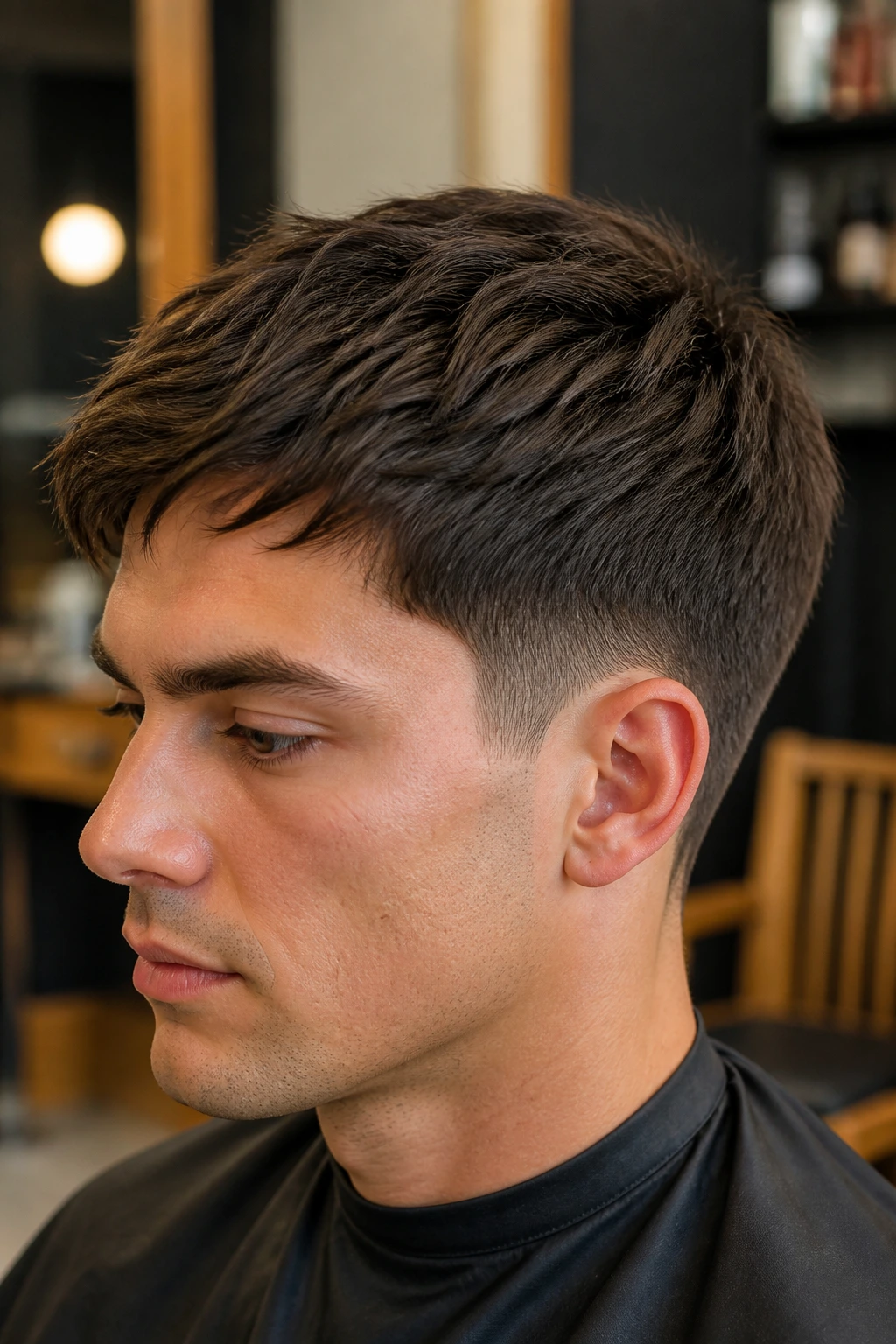
A layered scissor cut is the haircut I’d pick for men who want short hair that still moves like hair.
Instead of relying on clippers to create all the shape, the barber uses scissors to remove weight in sections. That keeps the top soft and natural, especially on straight or wavy hair that can go flat when it’s cut too bluntly. It also helps the crown sit better, which is a bigger deal than people expect.
This cut doesn’t look flashy. It looks considered. The layers stop the top from puffing out, while the sides can still be kept short with a taper or a clean scissor-over-comb finish. If your hair is thick but not coarse, this is a lovely middle path. It grows out in a calmer way than many fade-heavy cuts, too.
The catch is that it needs a barber who actually uses scissors well. Not every barber does. Ask how they handle weight removal around the crown and front. Their answer tells you plenty.
24. Side Part Taper
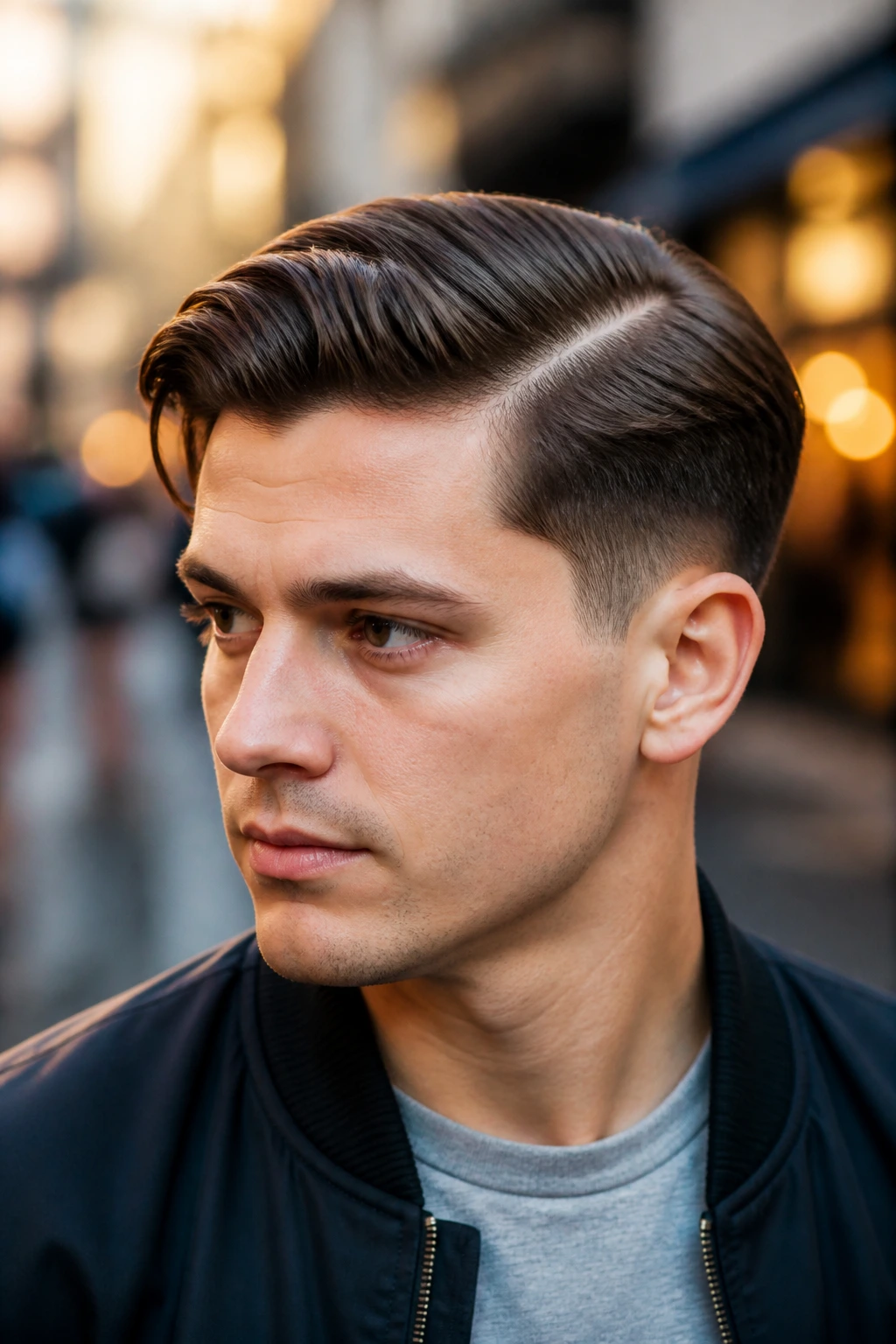
A side part taper is what I reach for when a man wants short hair that still has a bit of old-school order.
The part gives the haircut direction, while the taper keeps the sides neat without the hard drop of a fade. That makes the whole style feel calmer and easier to wear in settings where a stronger haircut would look out of place. It suits straight and slightly wavy hair best, especially when the top lies naturally to one side.
What separates a good side part taper from a boring one is the edge work. The line of the part should be visible but not shaved in unless you want that harder look. The taper around the ears and neckline should be clean enough to sharpen the shape without stealing attention from the top.
This cut is also useful if you wear a beard. The taper can blend into facial hair without making the jawline look chopped up. Done right, the whole look feels balanced and quietly confident.
25. Brush Up Fade
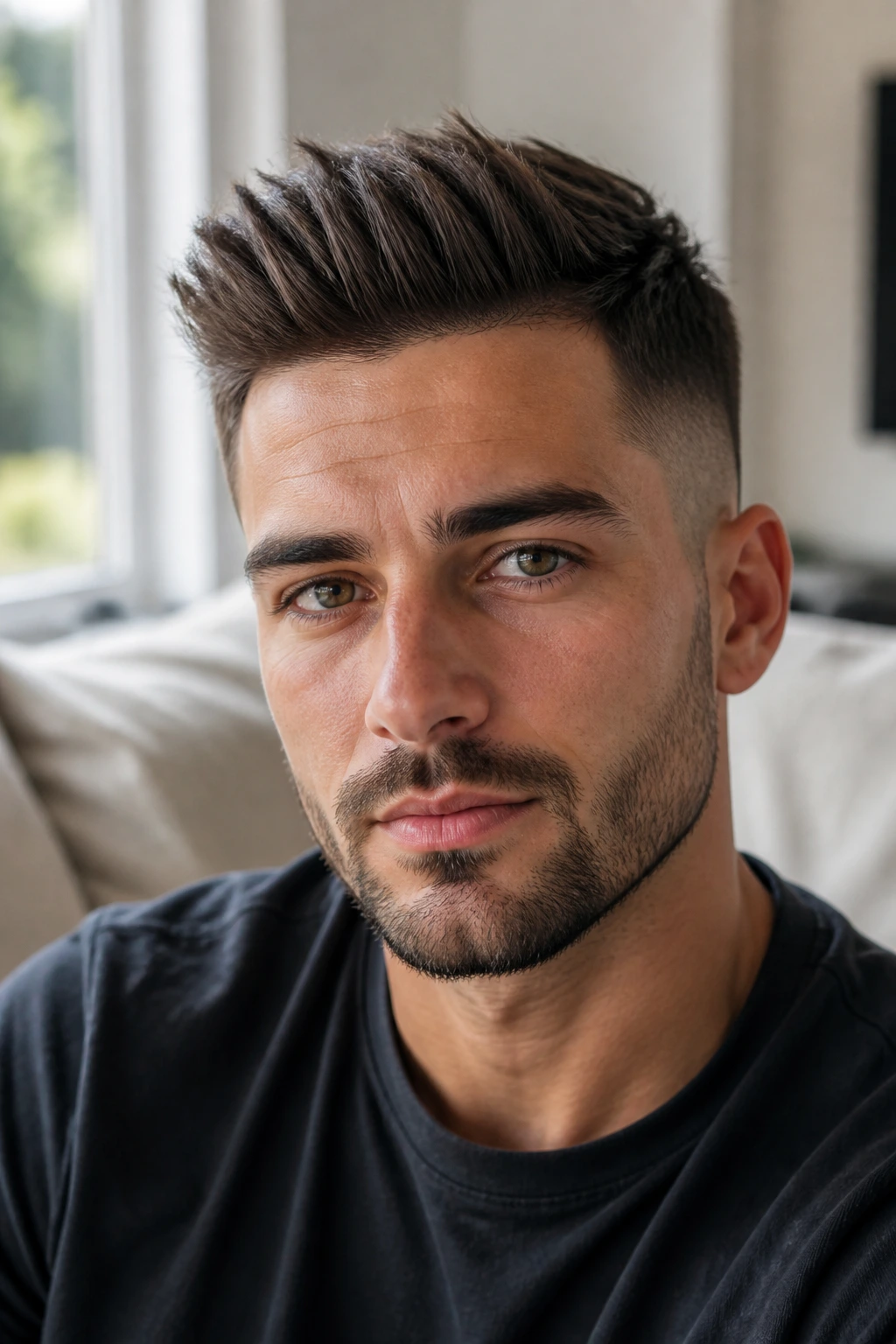
A brush up fade is short, tidy, and just lively enough to keep from feeling plain.
The top stays relatively short, but it gets pushed upward instead of lying flat. That creates a little height without the commitment of a full quiff. The fade on the sides keeps the shape crisp, so the lifted front does not make the haircut feel bulky. On thick hair, it can look strong. On finer hair, it needs a good blow-dry and a product with grip.
How to wear it well
Dry the front up and slightly back with a vent brush or your fingers. Use a matte clay or fiber, then pinch small sections at the front to build separation. Stop before the top gets stiff. The best brush up fades still move a little.
I like this cut because it sits in a useful middle lane. It has more life than a buzz cut, more lift than a crop, and less maintenance than a full quiff. For men who want one last haircut that feels clean, modern, and easy to explain to a barber, this is a strong place to land.
