



Oval faces make haircut shopping feel easier than it really is. When you start looking at haircuts for oval faces, almost everything seems available, which sounds nice until you realize choice can turn into indecision fast.
An oval face usually has balanced proportions: the forehead is a touch wider than the jaw, the cheekbones sit high, and the face is a little longer than it is wide. That balance gives you room to play. It also means the wrong cut can change the whole mood in a hurry — too much width at the sides, too much height on top, or bangs that crowd the eyes can throw off the shape you were hoping to show off.
Texture matters more than people admit. A blunt bob on thick, straight hair behaves one way; the same bob on fine waves behaves another. So the smartest way to pick a cut is not to chase one magical shape. It is to match the shape to your hair density, your styling habits, and the amount of time you’re willing to spend with a brush and a blow-dryer.
These are the cuts I keep coming back to for oval faces: some polished, some messy, some short enough to feel like a reset. A few are quietly flattering. A few are a little louder. That’s the fun part.
1. Long Layers for Oval Faces
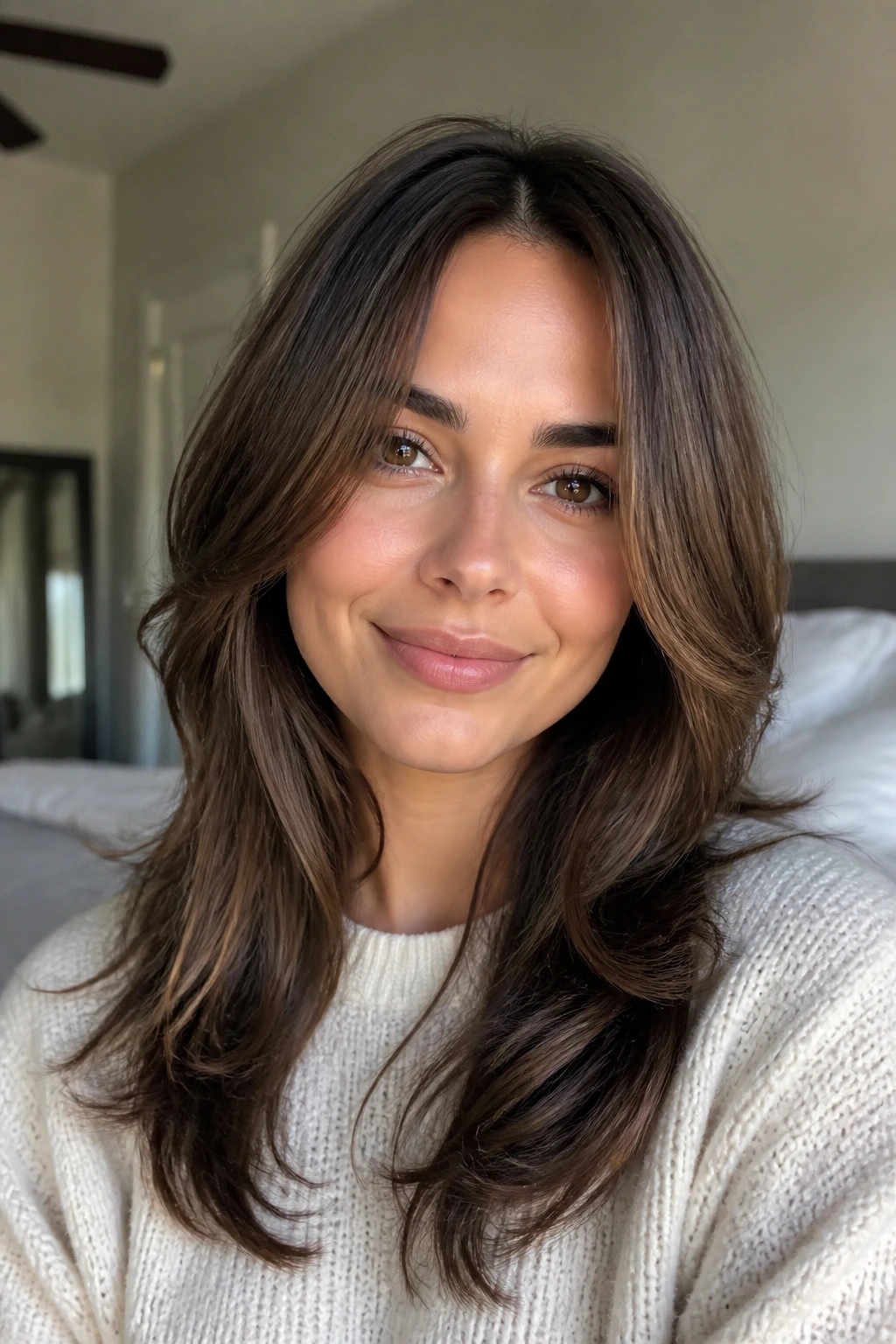
Long layers are the safest bet if you want movement without giving up length. On oval faces, they keep the silhouette soft while stopping long hair from hanging straight down like one heavy curtain.
The trick is placement. Ask for layers that start below the chin, often around the collarbone or just under it, so the cut keeps its shape without widening the face at the cheek level. If the shortest pieces are too high, the hair can puff out at exactly the wrong spot. If they’re too low, the layers barely show at all.
What to ask for at the salon
- Keep the longest layer near the chest or a little lower.
- Start face-framing pieces at the collarbone, not the cheekbones, if you want to keep length.
- Ask for soft internal layers so the ends do not feel heavy.
- Blow-dry with a medium round brush if you want a bend, or air-dry with a curl cream if your hair has wave.
Best for: medium to thick hair that needs shape but not a big chop.
This cut is steady. It does not try too hard. And on an oval face, that is exactly the point.
2. The Chin-Length Blunt Bob
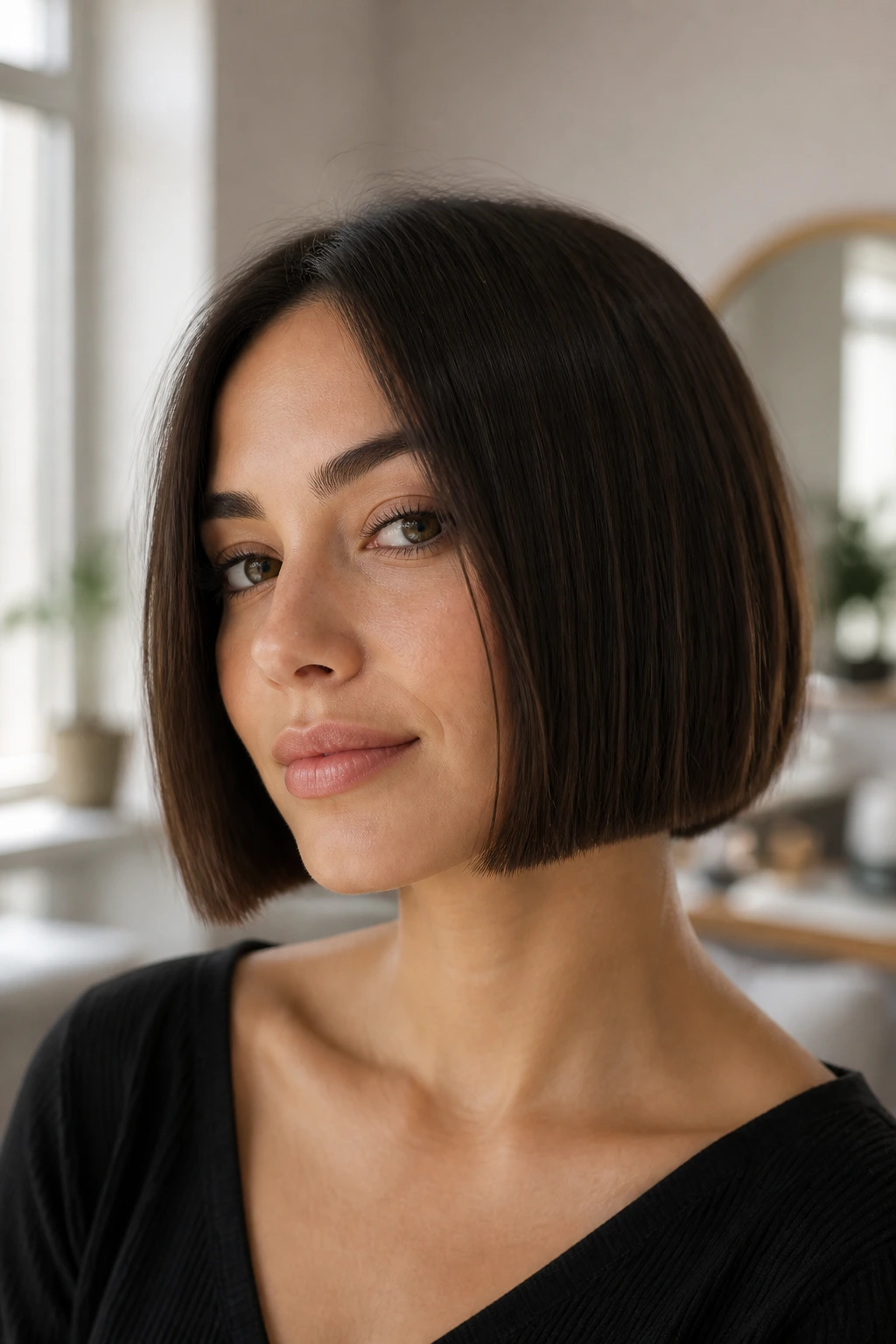
Why does a chin-length bob work so well on oval faces? Because it puts the jawline in the spotlight and lets the cheekbones do their job without extra fuss.
A clean, blunt line at the chin gives you instant structure. It looks sharp on straight hair and still holds its shape on wavy hair, as long as the ends are cut with enough precision. If your hair is fine, this cut can make it look fuller because the perimeter feels solid. If your hair is thick, the weight helps the bob sit neatly instead of flipping out everywhere.
That said, this one is not for someone who hates salon visits. A chin-length bob loses its edge fast once the length grows past the jaw. You’ll usually want a trim every 6 to 8 weeks if you like the shape crisp.
A good styling habit makes a huge difference. Tuck one side behind the ear, leave the other loose, and the whole cut suddenly feels less severe. One small move. Big payoff. A flat iron set to low heat can also bend the ends just a touch inward, which stops the bob from looking boxy.
3. The Collarbone Lob With Soft Texture
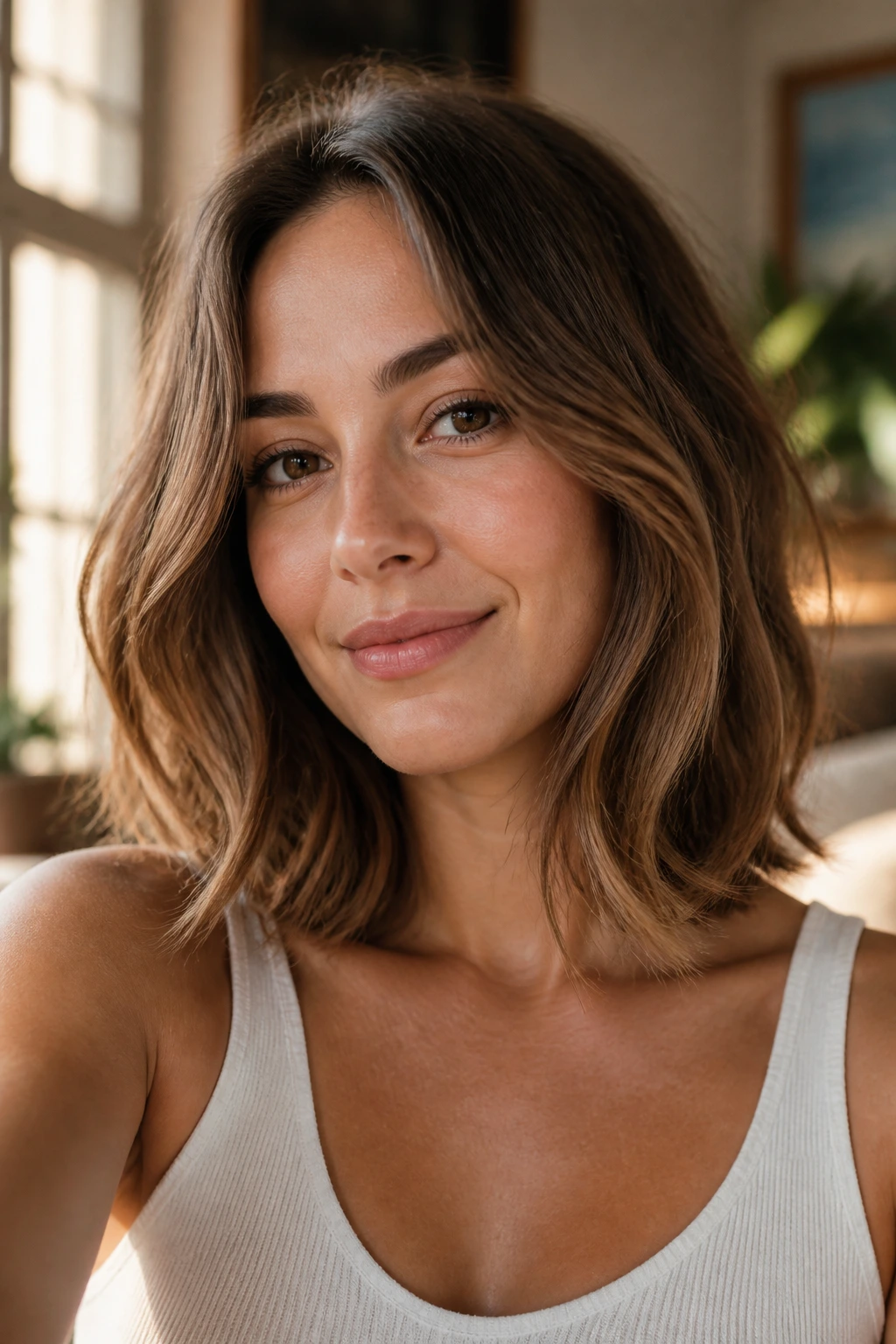
The collarbone lob is the haircut people choose when they want change without commitment. It sits in that useful middle ground: short enough to feel fresh, long enough to still pull back into a low ponytail.
On oval faces, this length works because it keeps the face open while adding enough structure around the shoulders. The collarbone is a useful stopping point. Hair that ends there frames the neckline without pressing in too close to the cheeks. Add soft texture, and the whole thing feels relaxed instead of stiff.
This is a cut that likes movement. A one-inch curling iron or a flat iron bend through the mid-lengths gives it that loose, lived-in shape people ask for at the salon and then struggle to recreate at home. The answer is usually less heat, more patience, and a little texture spray at the roots.
If you want a simple way to wear it, part it slightly off-center. That tiny shift keeps the style from looking too symmetrical, and oval faces can handle the slight asymmetry without losing balance. It’s a practical cut. Also a forgiving one.
4. Curtain Bangs With Shoulder-Length Hair

Curtain bangs can be the best thing that happens to shoulder-length hair, especially on oval faces. They open up the center of the face, soften the forehead, and let the rest of the haircut keep its length.
Why the bangs work
Curtain bangs split in the middle and sweep out toward the cheeks, which means they do not crowd the eyes the way a heavy fringe can. On an oval face, that matters. You keep the face visible while adding a little frame where it counts.
The most flattering version usually starts around the brow or just below it and gets longer toward the cheekbones. That shape blends into the rest of the hair instead of sitting on top of it like a separate piece. The result feels easy, not fussy.
How to wear them
- Blow-dry the bangs side to side with a small round brush.
- Use a light mousse at the roots if your hair falls flat.
- Keep the longest pieces brushing the tops of the cheekbones.
- Ask for soft edges, not a hard, straight line.
When they miss the mark
Curtain bangs need some upkeep. Not a huge amount, but enough that you should be ready to shape them every morning. If your hair grows very fast or cowlicks at the front are stubborn, they can split in awkward places. Still, when they land well, they’re hard to beat.
5. The Pixie Cut With Soft Side Length
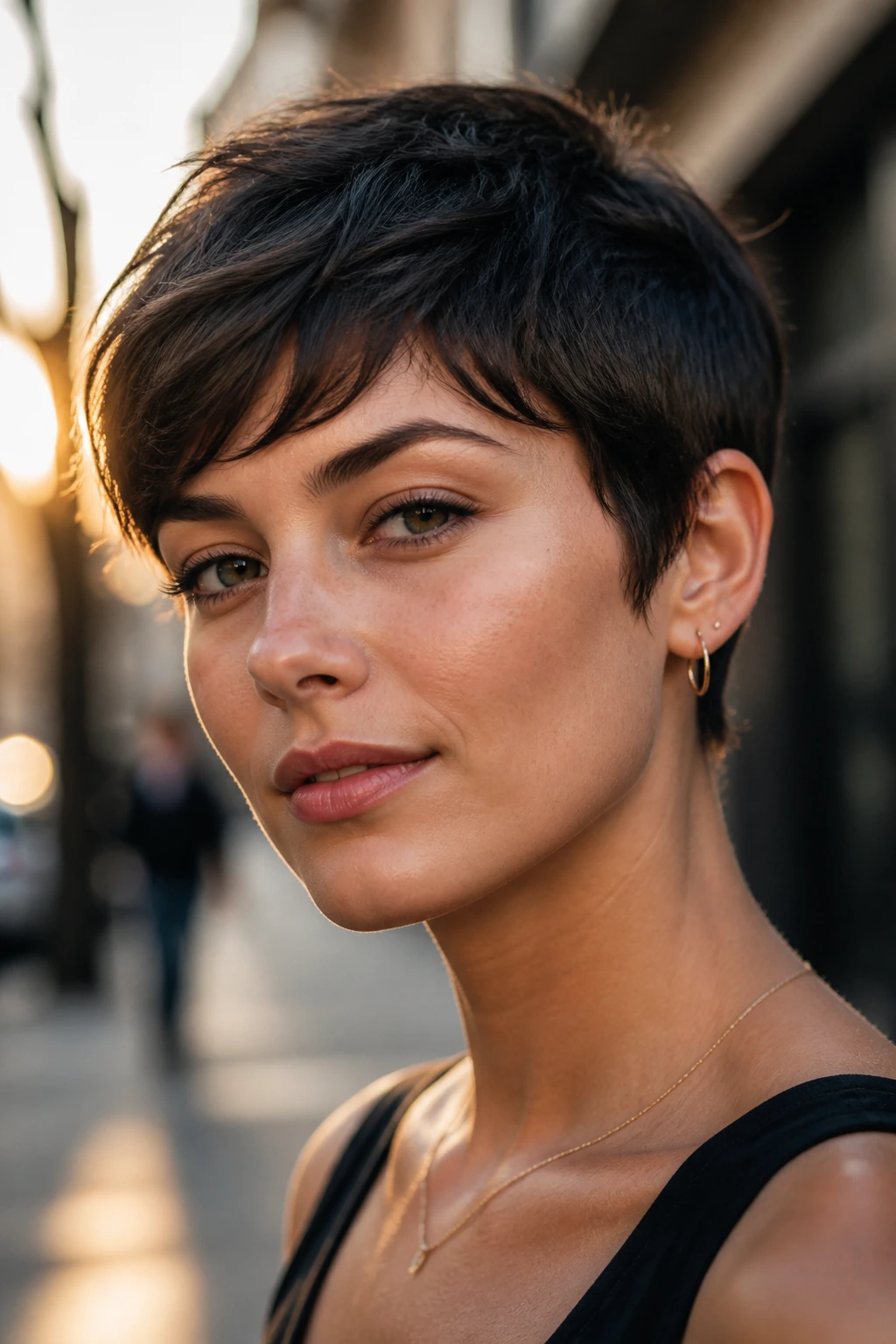
A pixie does not fight an oval face; it puts the face front and center. That is why it can look so clean, so sharp, and so good when the cut keeps just enough softness around the edges.
The version I like best has a little more length on top and around the sideburns. That keeps the shape from feeling too severe. A super-short pixie with no fringe can work, sure, but a touch of side length usually gives more flexibility. You can sweep it forward, tuck it behind the ear, or spike it up with a dab of matte paste if you want texture.
What to watch for: if the top gets too tall, the cut can stretch the face longer than you want. Oval faces can handle height, but they do not need a giant mound on the crown. Keep the top controlled and the sides snug.
This cut is a good fit if you like seeing your features. Brows, cheekbones, earrings — all of it shows. There’s nowhere to hide. Some people hate that. Others love it. I’m in the second camp when the cut is done with a bit of softness.
6. Side-Swept Bangs on a Medium Cut
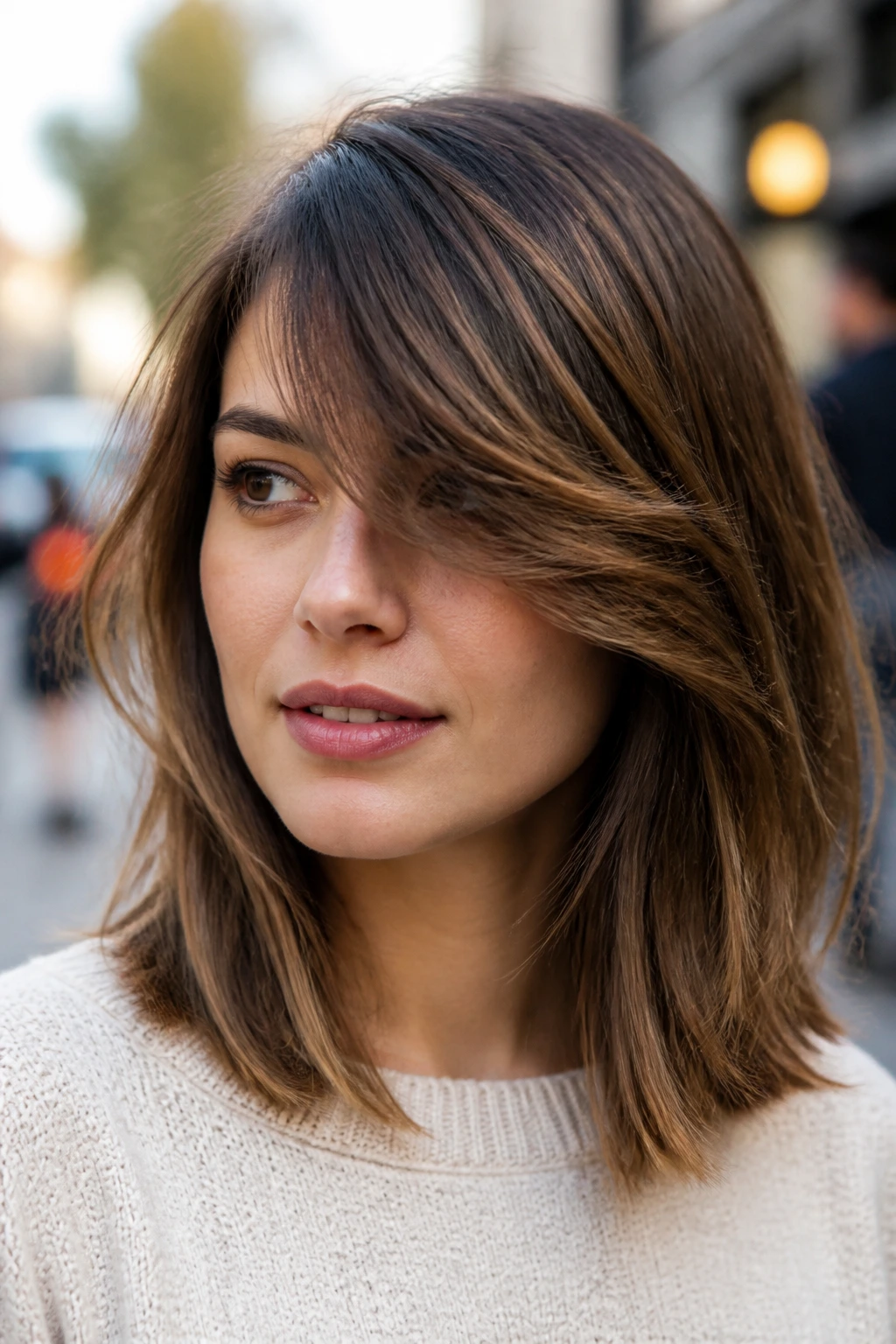
Side-swept bangs are the quiet answer for anyone who wants a fringe without the full commitment of curtain bangs or blunt bangs. On an oval face, they soften the forehead and keep the shape open.
The best version starts with a deep enough side part that the bangs have somewhere to travel. A short, chopped bang that barely reaches the brow can look awkward. A longer sweep, however, slides across the face and blends into medium-length layers without drawing too much attention to itself.
This style is especially useful if your hair is medium density and you want movement without losing control. The bang gives the haircut a point of focus. The rest of the hair can stay simple — shoulder length, lightly layered, maybe a soft bend at the ends — and the whole look still feels deliberate.
One small warning: side-swept bangs can collapse if your root area gets oily fast. Dry shampoo at the roots helps, but so does not overloading the front with heavy conditioner. Keep the weight off the fringe. It makes a difference.
7. The Soft Shag for Oval Faces
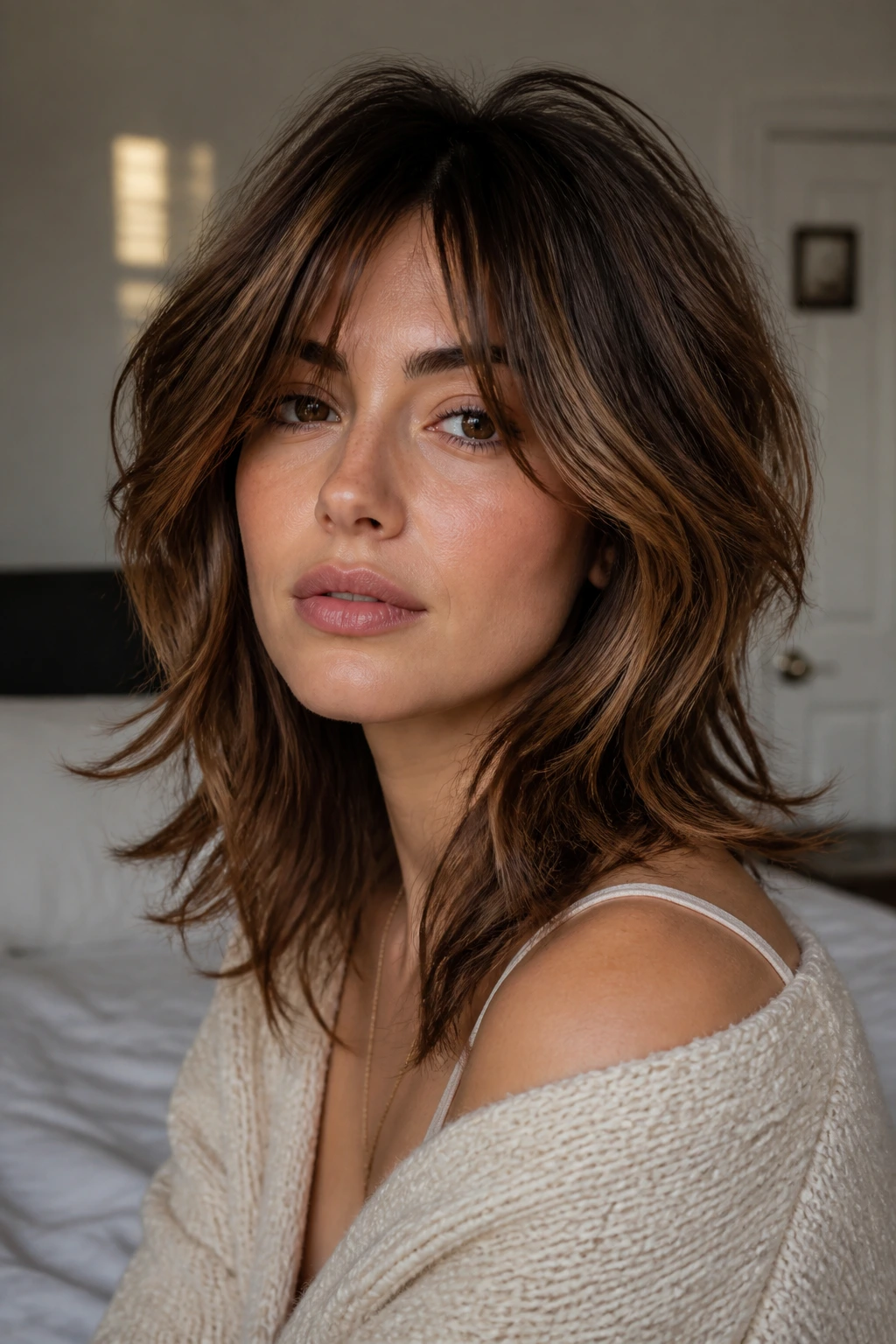
The soft shag works because it refuses to stay too neat. On oval faces, that looseness is useful. It adds energy around the cheeks and jaw without making the face look wider than it is.
Why it works
A shag is built on layers, but the modern version is less choppy than the old rock-and-roll cuts people picture. The best soft shag has broken-up ends, a little crown lift, and pieces that fall around the cheekbones. That gives the haircut motion from top to bottom, which is why it looks alive even when you do not blow it out perfectly.
Who should consider it
- Wavy hair that wants shape without a full styling routine.
- Medium to thick hair that feels heavy when it grows out.
- Anyone who likes messy texture more than polished lines.
What to ask for
Ask for shaggy layers that keep some weight at the bottom. If the cut gets over-thinned, it can go stringy fast. The better shag still has enough density to move like hair, not feathers. A sea-salt spray or a light styling cream usually does the job. Too much product will make the ends clump.
This one has personality. A lot of it. And oval faces can take that without losing balance.
8. The French Bob
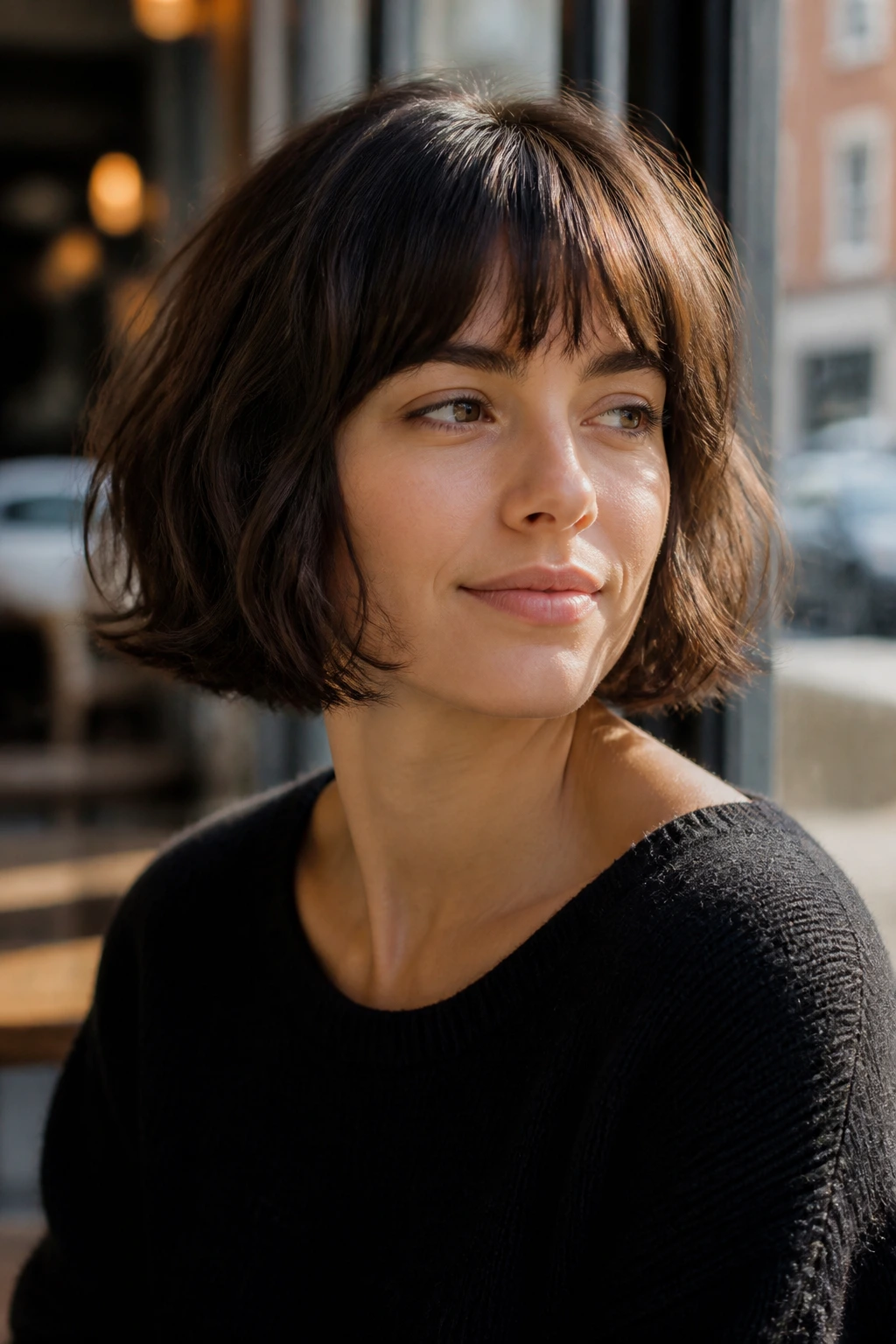
The French bob has a certain attitude, and I mean that in the best way. It’s short, cheeky, and a little more lived-in than a classic bob.
Why does it flatter oval faces so well? Because it usually lands somewhere around the lip line to the jaw, which keeps the proportions tidy while showing off the center of the face. Add a fringe — even a soft one — and the whole cut looks intentional rather than accidental.
The French bob works best when the ends are not too stiff. A slight bend inward, a little texture through the body, and maybe a whisper of undone wave keep it from feeling like a helmet. That matters more than people think. A French bob that is cut too blunt and worn too flat can look heavy very fast.
It suits fine to medium hair especially well, since that texture gives the bob shape without making it bulky. If your hair is thick, ask for interior removal rather than aggressive thinning. You want the line to stay clean.
Short. Sharp. Easy to remember.
9. The Modern Mullet
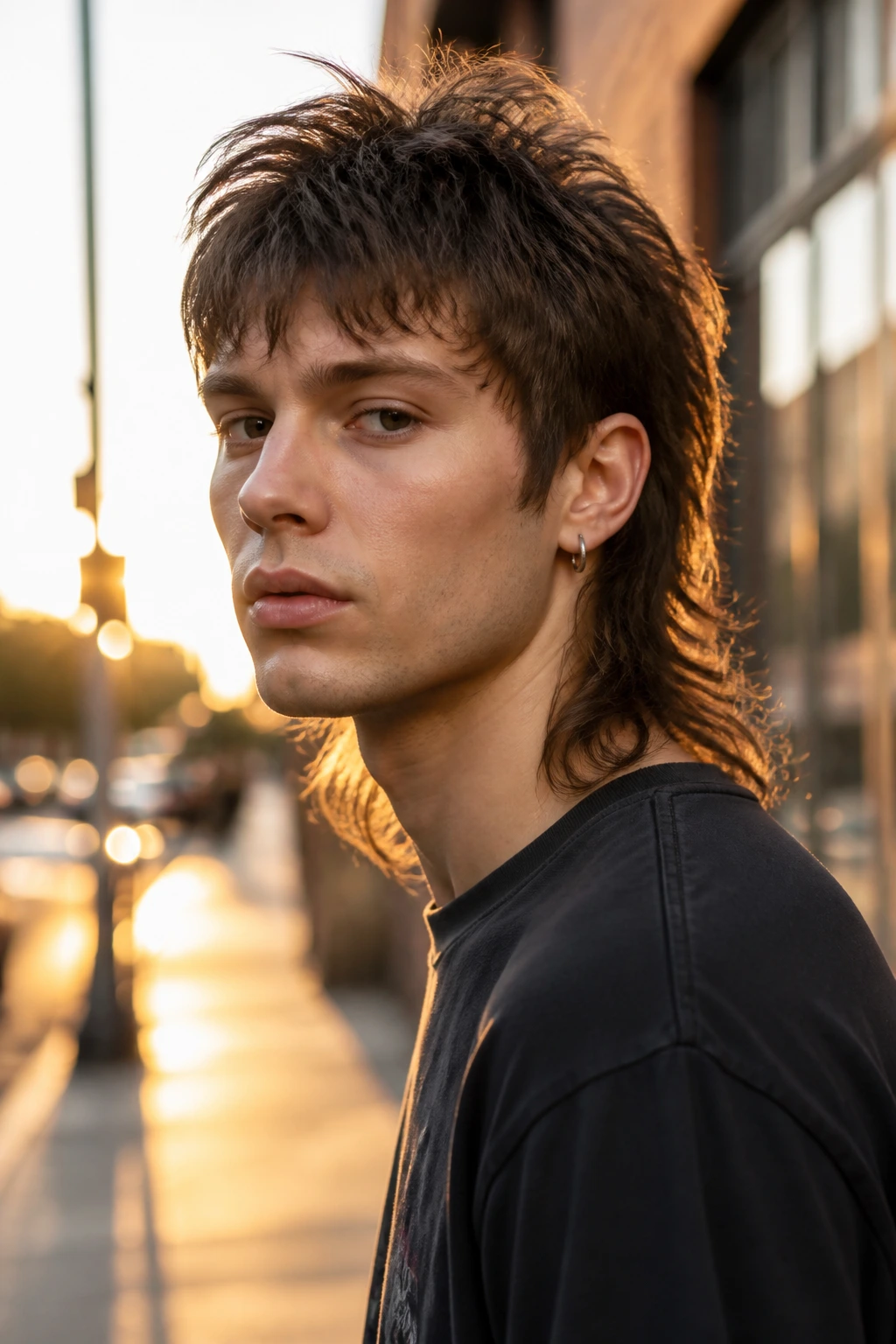
The modern mullet gets a bad reputation from its louder past, but the softer version has a real place on oval faces. It keeps length in the back, lightness up front, and enough texture everywhere else to avoid looking stuck in one era.
The reason it works is proportion. Oval faces can carry a haircut with contrast because the face shape already reads balanced. A little height at the crown, a little softness around the temple, and a longer nape do not overwhelm the features. They frame them.
What makes the modern mullet wearable is restraint. The top should not be too bulky, and the transition from short to long should be smooth. Think feathered, not disconnected. If the cut is too extreme, you end up with costume hair. Nobody wants that unless they do, and that is a different conversation.
This is a good cut for wavy or curly hair because the texture helps blur the line between sections. Straight hair can wear it too, but it needs more styling. A bit of paste, a diffuser, and a scrunched finish keep the shape from falling flat.
10. The Blunt Collarbone Cut
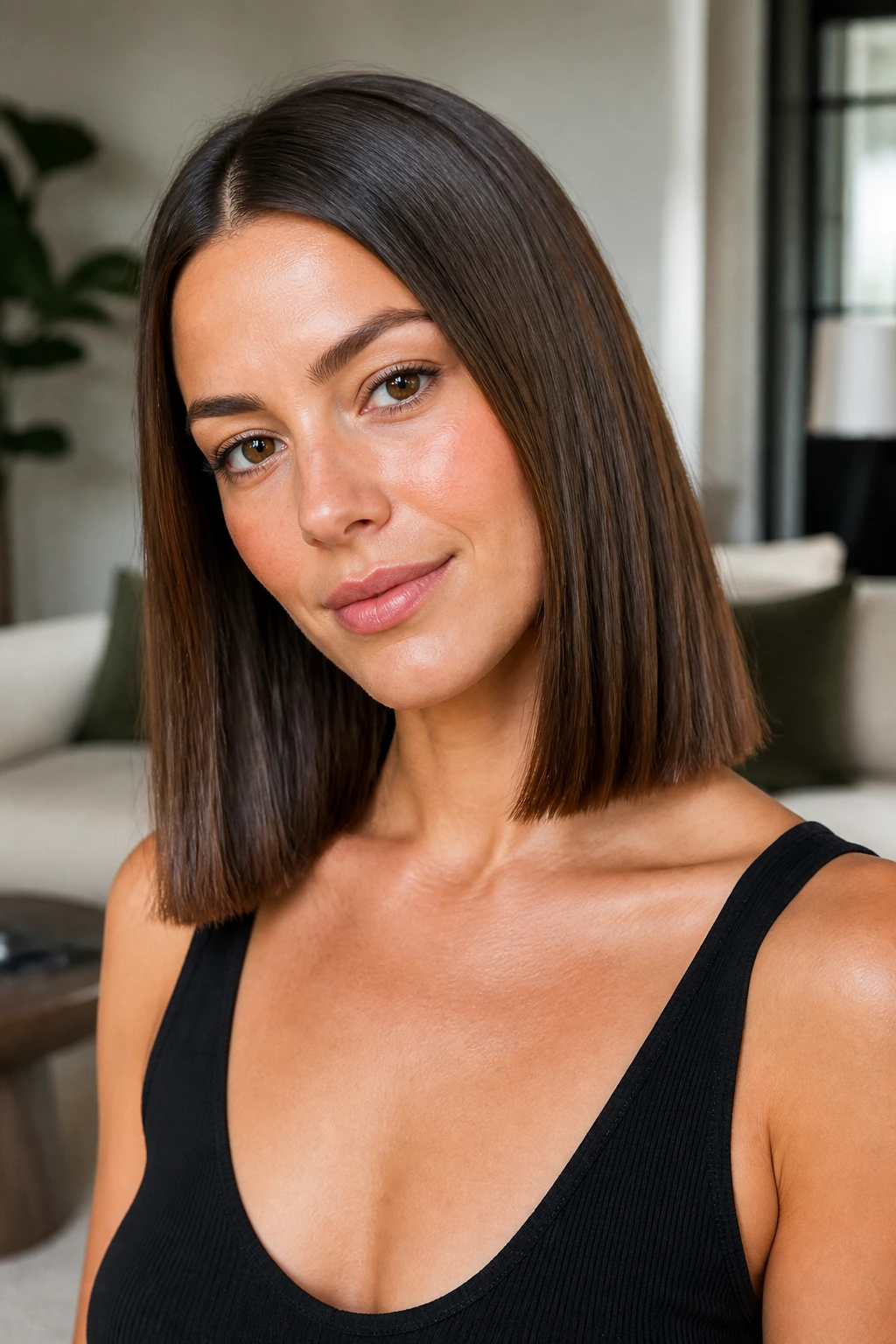
A blunt collarbone cut is for the person who likes clean edges and does not want the haircut to argue back. It’s one length, or close to it, and that simplicity can look expensive without actually being complicated.
On an oval face, the collarbone length is forgiving. It sits far enough below the jaw to avoid crowding the lower half of the face, but it’s not so long that it drags everything downward. The blunt edge makes hair look thick, which is a bonus if your ends are fine or prone to breakage.
This is the cut I’d pick for straight hair when I want polish fast. A quick blowout with a paddle brush, a pass of heat protectant, and a small amount of smoothing cream at the ends usually does the trick. You do not need a lot of product. Too much will take the movement out of it.
If your face has a longer oval shape, the blunt collarbone cut can help keep the vertical line from feeling exaggerated. If your hair is very thick, ask for a tiny bit of internal removal under the top layer so the shape lies flat instead of mushrooming out at the sides.
11. Curly Shoulder-Length Layers
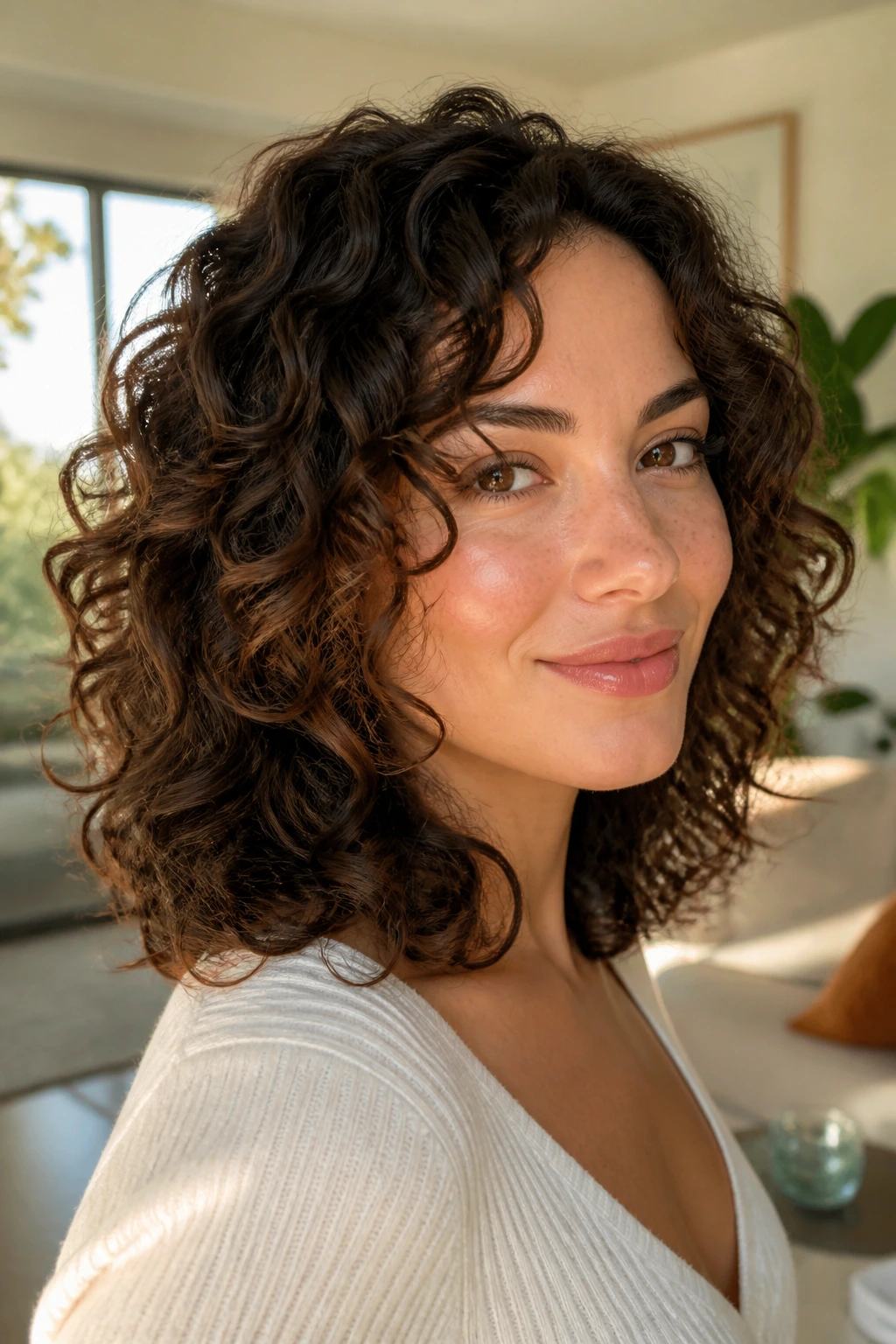
Curly hair at one length can swallow an oval face whole. A few thoughtful layers change that fast. They let the curl pattern stack without ballooning out in the wrong places.
The best curly shoulder-length cut starts with the shape of the curl itself. A good stylist will usually cut curls dry or mostly dry, because spring factor matters. A curl that looks shoulder length when wet might bounce up 2 or 3 inches once it dries. That is the kind of detail that saves you from getting home with a shape you did not ask for.
The shape to ask for
- Keep the longest layer around shoulder level.
- Let the front pieces fall near the cheekbones or jaw.
- Preserve enough weight at the bottom so the curls do not frizz outward.
- Avoid over-thinning the crown unless your hair is extremely dense.
The payoff is a cut that feels open around the face instead of heavy on top. Oval faces can handle a lot of curl volume, but they still look better when the curl shape is defined. Diffuse on low heat, then stop touching it. That part is annoyingly simple, but it matters.
12. Sleek Long Hair With a Center Part
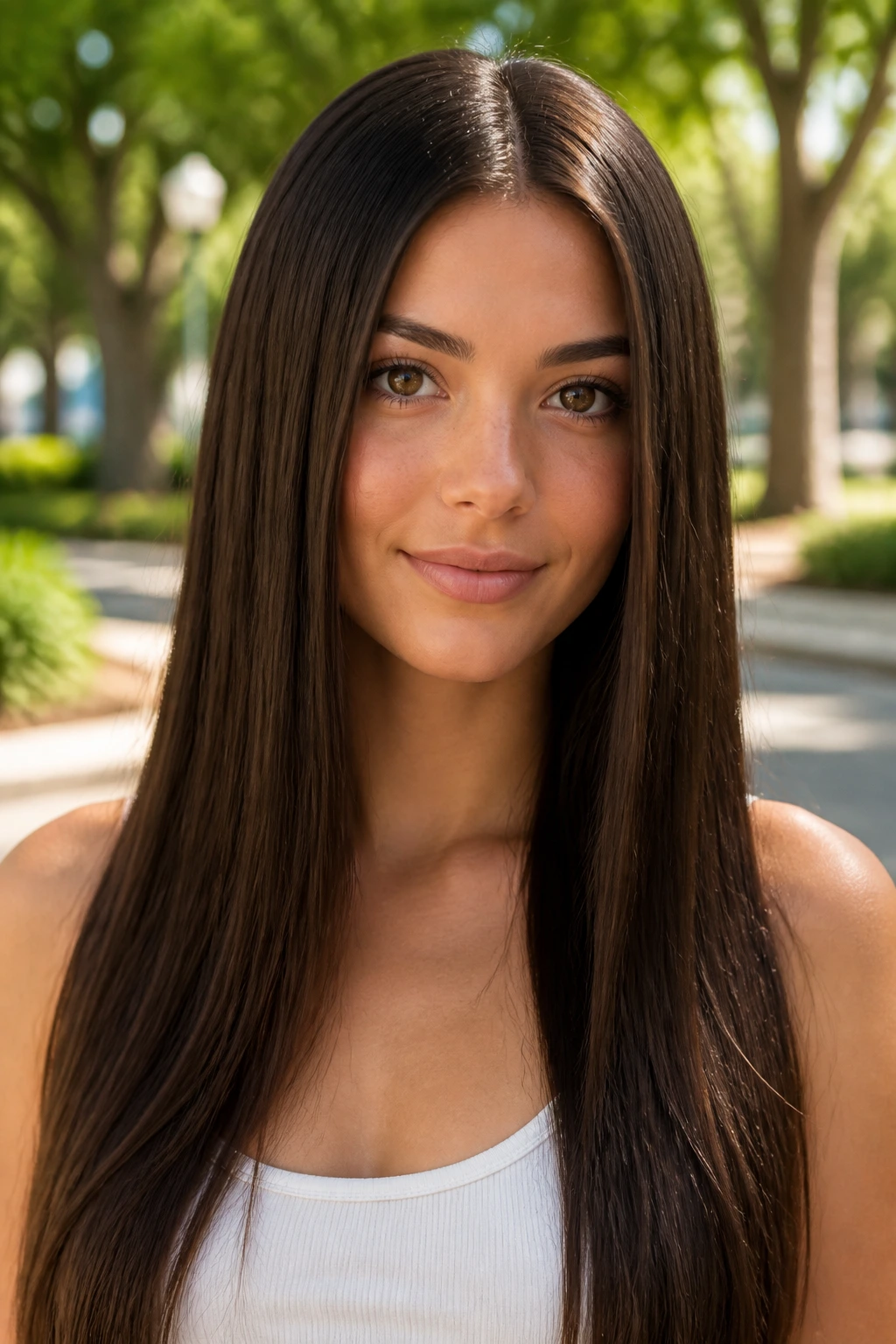
Long, sleek hair with a center part can look almost severe in the wrong hands, but on an oval face it often lands in the sweet spot. The face already has balance, so the straight vertical lines work with it rather than against it.
The key is not length alone. It is finish. Hair that is too flat at the crown and too heavy at the ends can drag the face down. Hair that’s glossy, smooth, and lightly layered through the very ends feels deliberate. A center part keeps the shape clean and symmetrical, which can be stunning on faces that already read even.
What keeps it from going flat
A little root lift helps a lot. You do not need a big blowout. Even a small round brush pass at the crown and a touch of volumizing spray can stop the top from collapsing. A drop or two of hair oil on the mid-lengths and ends gives the surface that polished look without making it greasy.
Best styling habits
- Blow-dry with the nozzle pointed down the hair shaft.
- Keep the part straight with a comb while the hair is still warm.
- Use heat only on the surface, not at the ends every day.
- Trim split ends often so the line stays clean.
If you like a calm, clean look, this is a strong choice. No frills. Just shine and shape.
13. The Wolf Cut
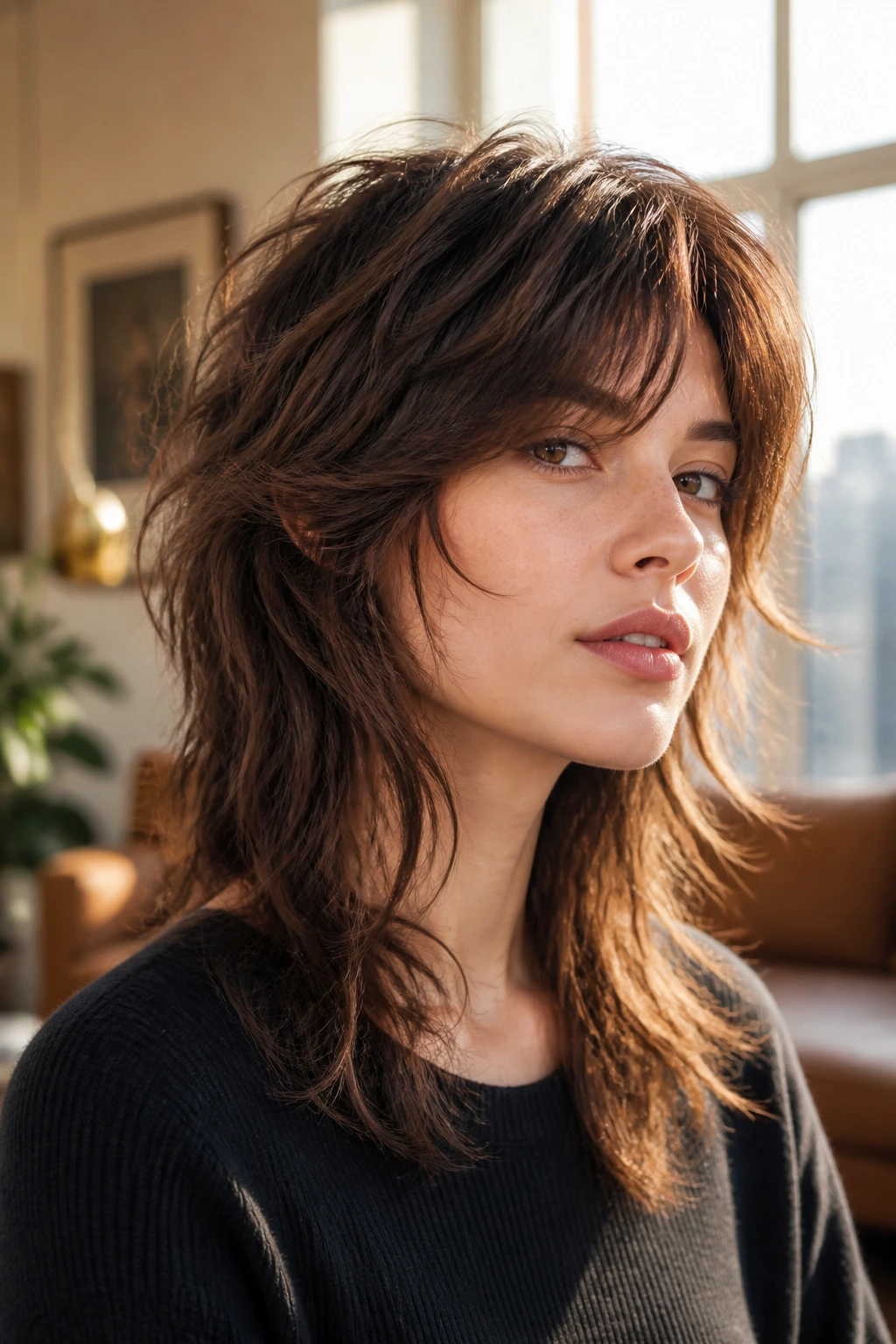
The wolf cut can look chaotic in photos and better in real life, which is the opposite of how a lot of haircuts behave. On oval faces, the mix of shaggy layers and longer lengths creates movement without erasing the face shape.
This cut is basically a shag and a mullet meeting somewhere in the middle. The crown gets volume, the mid-lengths get broken up, and the ends stay loose. That mix works on oval faces because it adds texture without forcing width at one point. The eye moves around the haircut instead of stopping dead.
The version worth getting is softer than the internet versions that go extreme. Ask for layers that keep the shape around the cheekbones and jaw, but do not hollow out the ends too much. That hollow look can be fun on a photo shoot. It is less fun on a Tuesday morning when your hair won’t settle.
Best on wavy or thick hair. Fine hair can wear it too, but it needs careful layering or it will lose body fast.
14. The Asymmetrical Bob
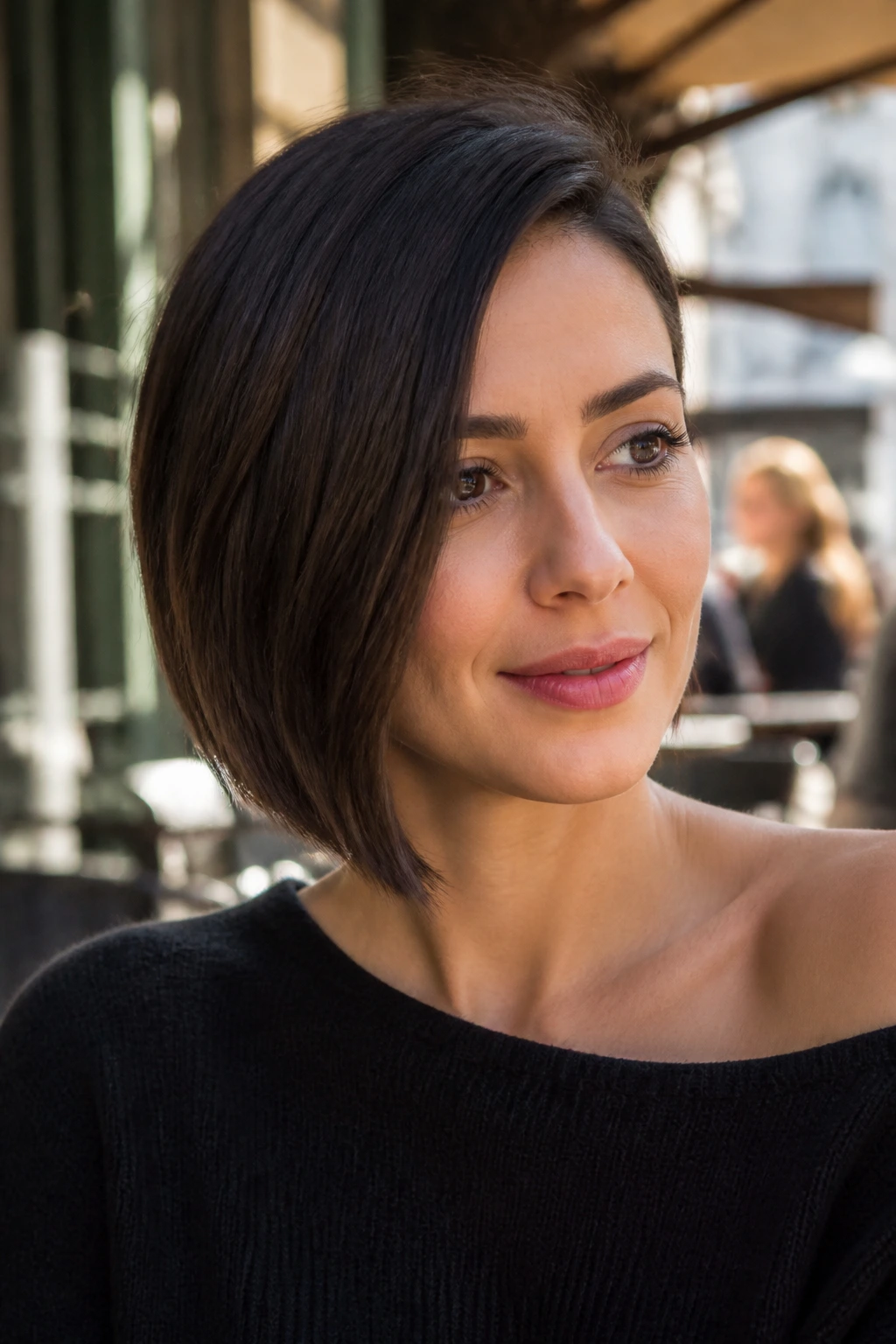
Unlike a regular bob, the asymmetrical bob pulls the eye diagonally. That tiny shift changes everything on an oval face. It adds edge without needing extra length or heavy styling.
Usually one side is cut a little longer than the other — not wildly, just enough to be noticeable. Sometimes the difference is only an inch. Sometimes it’s 2. The point is movement, not shock value. On an oval face, that diagonal line keeps the haircut from feeling too static.
This cut works best when the shorter side still grazes the jaw and the longer side falls just below it. If the difference gets too extreme, the effect can start to look costume-like. There’s a fine line there. You want interesting, not theatrical.
It suits straight hair especially well because the asymmetry shows clearly. Wavy hair can wear it too, but the waves will soften the edge, so the difference should be slightly stronger at the cut stage. A flat iron or smoothing brush brings out the geometry when you want it visible.
Sharp, but not severe. That’s the sweet spot.
15. Face-Framing Layers With Long Waves
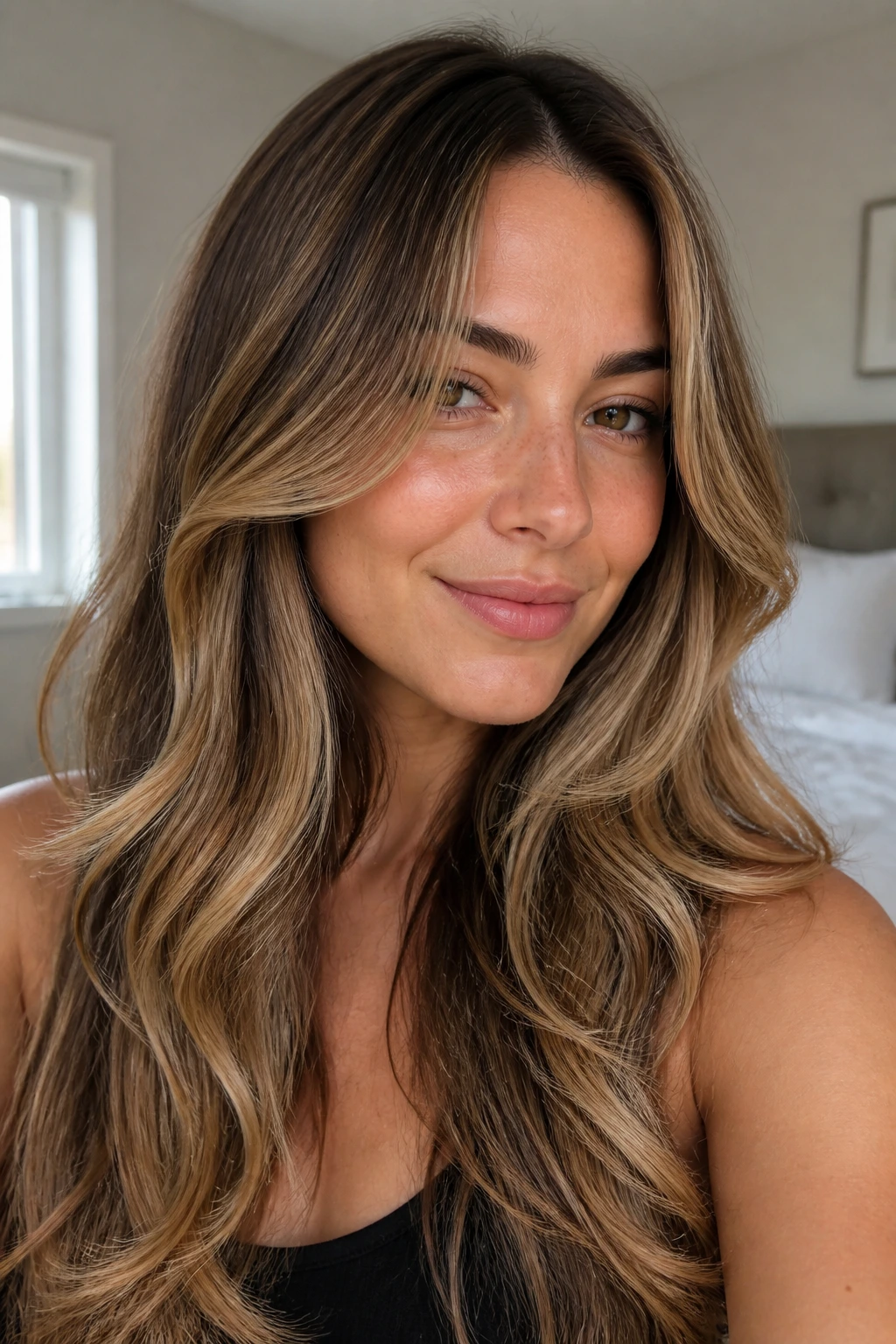
A good face-framing cut can change the whole mood of long hair. On oval faces, the front pieces do a lot of the visual work, so the placement matters more than people think.
The shortest pieces should usually start around the cheekbones or just below them, then blend down through the jaw and collarbone. That keeps the face open while still giving the haircut a sense of shape. If the front pieces are too short, they can look disconnected from the rest of the hair. If they’re too long, they barely frame anything.
This is one of the easiest cuts to style into soft waves. Wrap 1-inch sections around a curling iron, leave the ends slightly straighter, and brush them out once they cool. You get movement without turning the whole head into curls. A little wave at the front is usually enough.
It also plays nicely with different parts. Center part, side part, slightly off-center — all of them work. That flexibility makes it a solid choice if your mood changes a lot or if you want a haircut that looks good even when you toss your hair up halfway through the day.
16. Feathered Layers With a Side Part
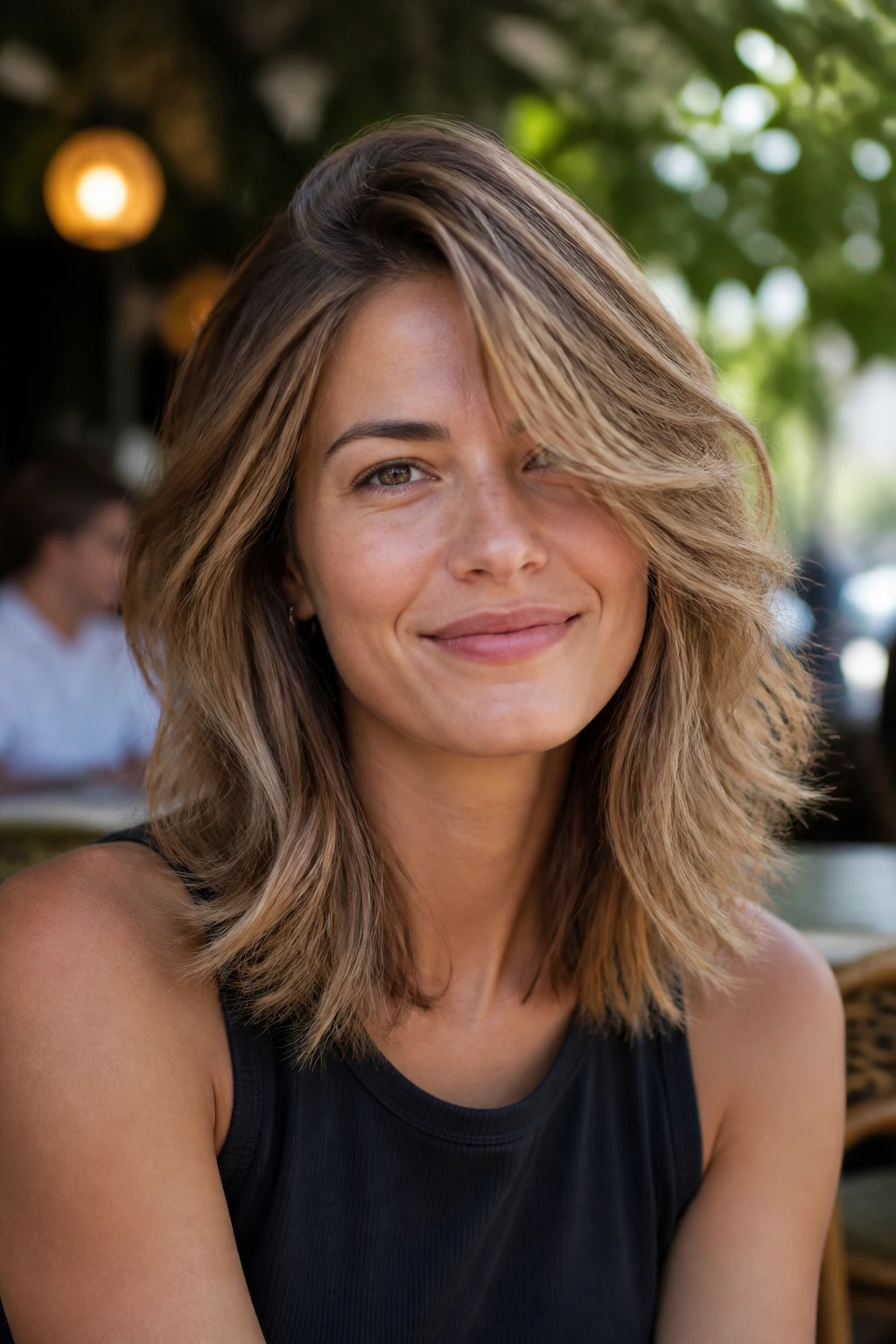
Feathered layers can feel a little old-school on paper, but done right, they look light and flattering rather than dated. On oval faces, the soft sweep of the layers helps keep the silhouette airy around the cheeks and temples.
The reason this cut still matters is volume placement. Feathering lifts the top and softens the sides, which gives hair a floating kind of movement. That is useful if your hair is dense, because a blunt shape can feel heavy fast. It’s also helpful if you want the face to stay visible without adding a hard frame.
A side part makes the whole thing more relaxed. It breaks up the symmetry and lets the front pieces fall in a way that feels natural. A round brush and a medium heat setting are usually enough to build the shape. Velcro rollers at the crown can help if your roots collapse quickly.
This cut is not flashy. That’s part of its appeal. It reads polished in daylight and soft at night, and it does not need a lot of explaining.
17. The Bixie
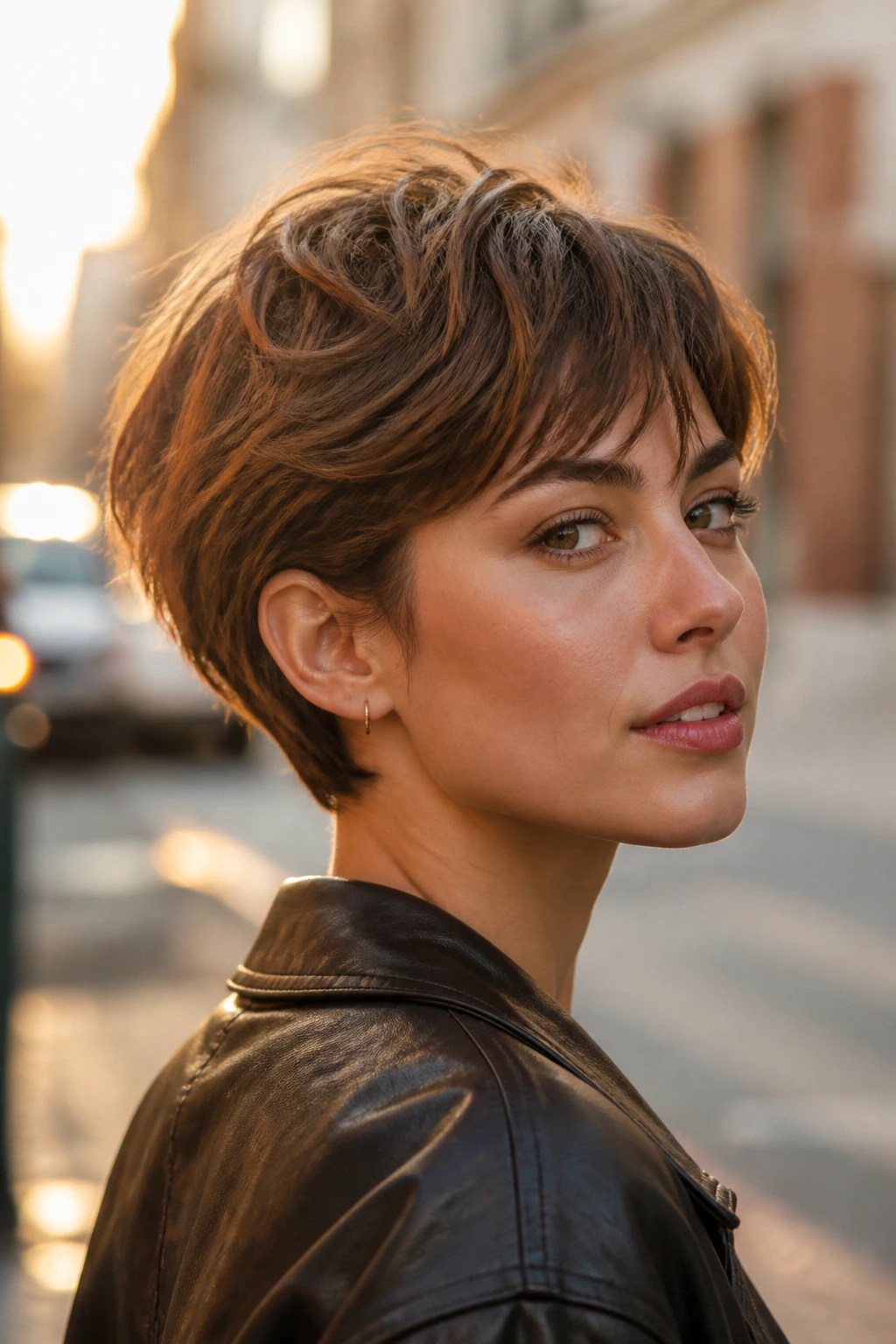
What do you get when a bob and a pixie have a sensible conversation? The bixie. It sits in that sweet spot between short and very short, which makes it a smart option for oval faces that want shape without full commitment.
The bixie keeps more length than a classic pixie, usually around the ears and nape, while staying lighter and shorter than a bob. That extra movement means you can tuck pieces behind the ear, push the fringe forward, or rough it up with a little styling cream. The face stays open, but the cut still has enough body to look deliberate.
Why it’s easier than it sounds
- The grow-out is softer than a pure pixie.
- The shape works with straight, wavy, or slightly curly hair.
- It gives the neck some space, which can feel fresh fast.
This is a good cut if you want short hair but not the maintenance of a super-tight crop. It still needs trims, yes. But the in-between length makes the grow-out less awkward than you might expect. That alone is worth a lot.
18. The Tapered Buzz Cut
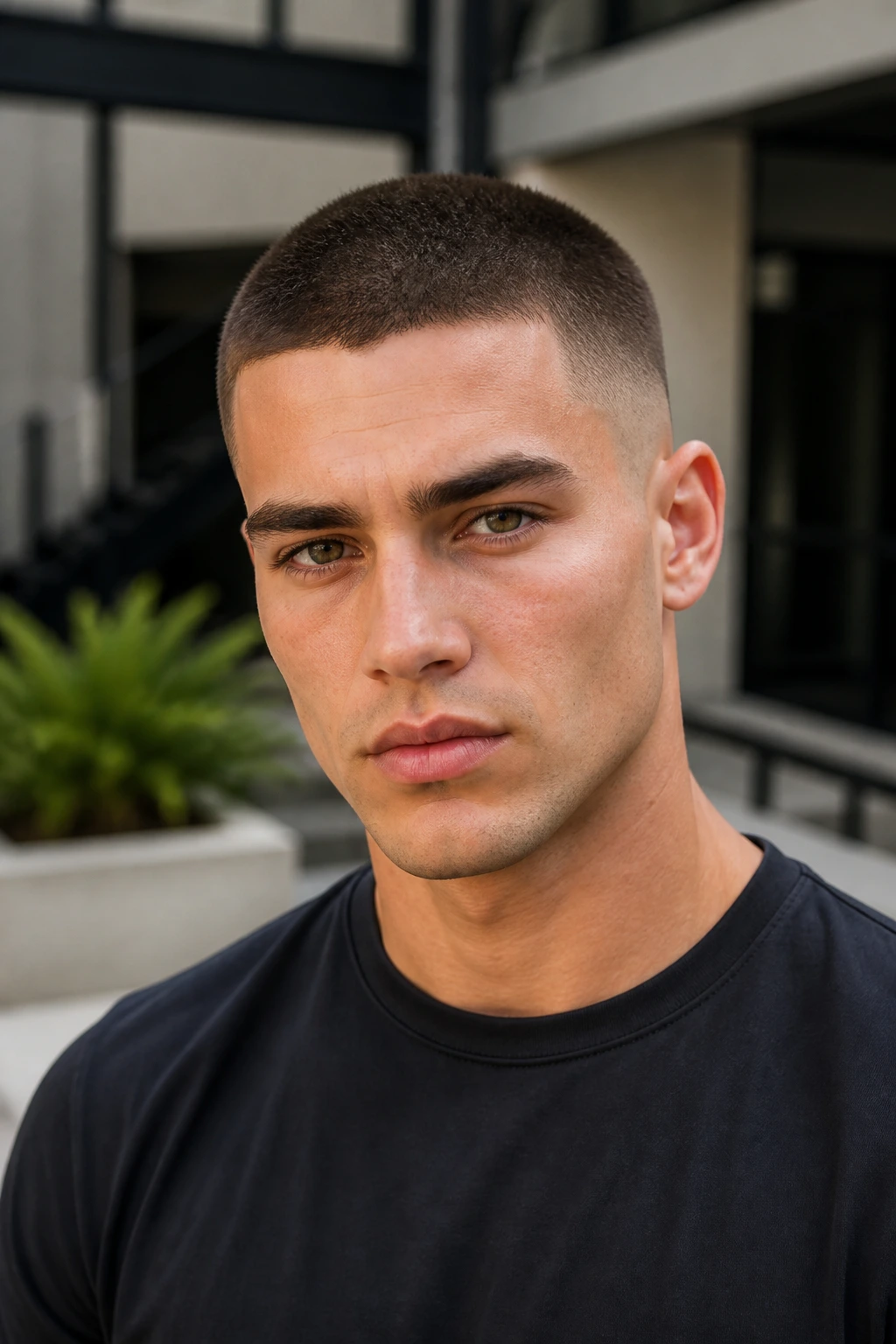
A tapered buzz cut is for the person who wants the face, not the hair, to do the talking. On an oval face, that can look striking because the shape already has balance. You are not trying to correct anything. You are stripping the haircut down and letting the features sit in plain view.
The taper matters. A little length on top — even a guard size or two longer than the sides — keeps the cut from feeling flat. Shorter sides and a clean nape make the shape look deliberate instead of unfinished. If you want a softer result, ask for a low taper around the ears and temples. That gives the edges a cleaner finish without making the whole thing severe.
Maintenance is different here. The daily routine is easy, but the trim schedule is not nonexistent. Buzz cuts lose their crispness as they grow, so many people like a cleanup every 2 to 4 weeks if they want the shape tight. A little scalp care helps too. Sunscreen on the scalp matters when the hair is this short. So does moisturizing if your skin gets dry.
This is the boldest cut on the list, and maybe the cleanest. No hiding. No fuss. Just shape, balance, and a face that gets to be the main event.
