



A good haircut after 50 should make your hair easier to live with, not more demanding. The best haircuts for women over 50 do exactly that: they give shape where hair has gone flat, soften places that feel too sharp, and keep styling from turning into a small morning project.
Hair changes in ways people do not always talk about. The crown can lie flatter, the ends can get drier, and the texture that used to behave nicely can suddenly feel wiry or puffy at the wrong times. That does not mean you need to chop everything off. It means the cut has to work with the hair you have, not the hair you remember from ten years ago.
I see one mistake over and over: too much layering too high up. It can make fine hair look thinner and make thick hair spread out like a triangle. On the other hand, a blunt edge can give limp hair more presence, and a well-placed fringe can change the whole balance of a face without touching much length. Small changes. Big difference.
These 18 haircuts lean into that idea. Some are short and crisp, some keep a little swing, and some let you keep your length without dragging everything down. Start with the shape that sounds closest to your hair’s real life, not the one that looks prettiest on a screen.
1. Chin-Length Bob for Women Over 50
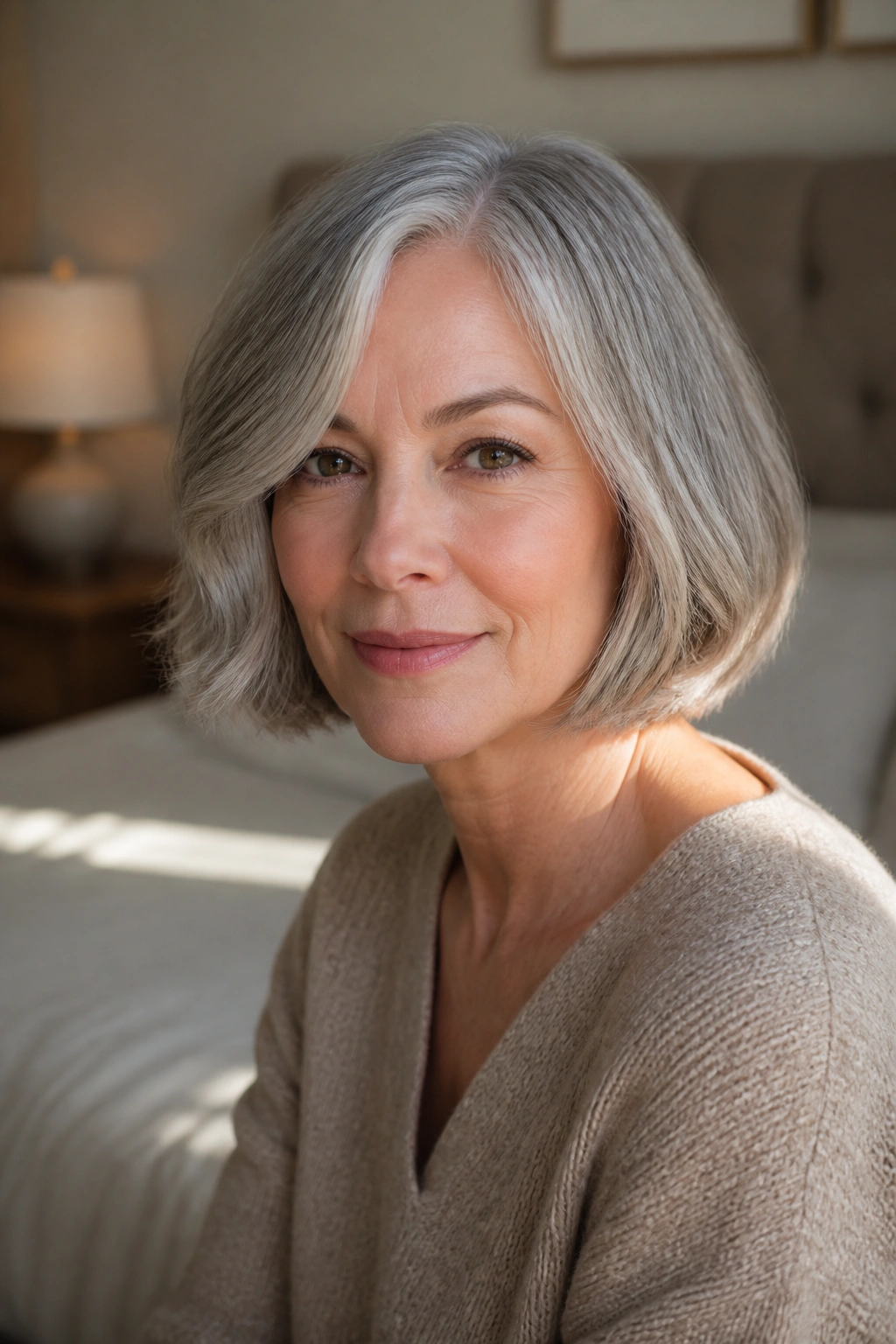
A chin-length bob is the cleanest way to add shape without making hair feel fussy. It sits right where the jaw starts to define the face, so it gives a clear outline without swallowing your features. On straight hair, it looks sharp. On loose waves, it looks relaxed in a good way.
What makes this cut work is the balance between firmness and softness. Ask for a blunt perimeter with only a little graduation underneath, so the line stays full while the body of the hair moves. If your hair is fine, keep the layers minimal. If your hair is thick, have your stylist remove bulk inside the shape instead of chopping up the outer line.
Why It Flatters a Softer Jawline
A chin-length bob puts the eye where you want it: on the jaw, cheekbones, and neck. That kind of framing can make the whole face feel more defined. It also tends to show off silver hair nicely, because a clean edge lets the shine do the work.
- Best on straight, slightly wavy, or bendy hair
- Works well with a side part or a soft center part
- Needs a trim every 6 to 8 weeks to keep the line crisp
- Looks polished with a quick blow-dry or airdryed with cream
Pro tip: ask for the ends to be lightly point-cut, not heavily thinned. Too much texture at the hem makes a bob look fluffy instead of full.
2. Soft Layered Lob
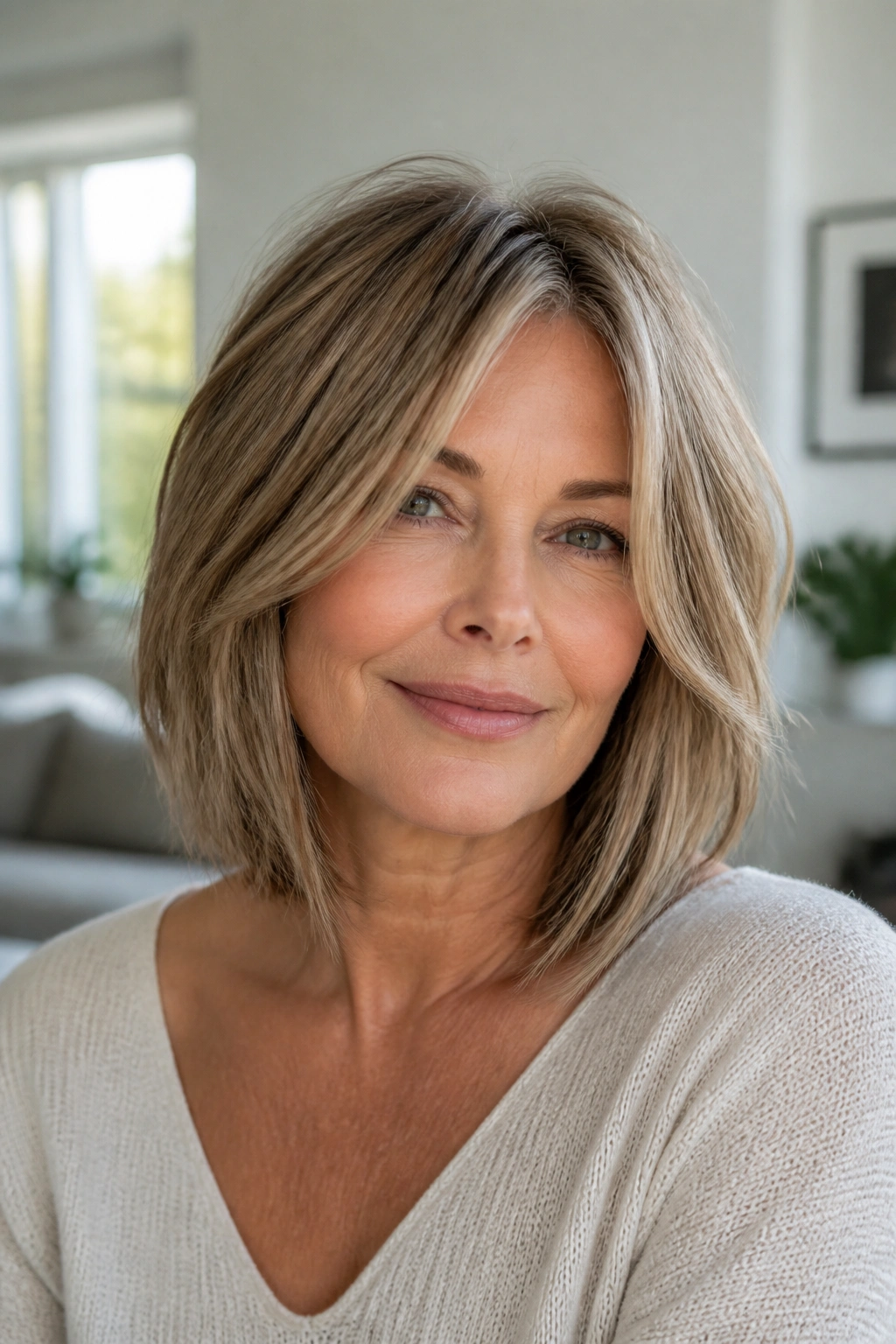
If you want length but hate the weight of long hair, the soft layered lob is the one I would reach for first. It lands somewhere between the chin and collarbone, so it gives movement without losing the sense of hair on your shoulders. That in-between length tends to be forgiving, which is why so many women keep coming back to it.
The real trick is where the layers begin. Keep them low and soft, usually below the cheekbone, so the hair can swing instead of puffing out. Too many short layers turn a lob into a shag. Too few and it hangs like a curtain. The sweet spot is a cut that bends when you move, not one that needs constant fixing.
A soft layered lob is especially useful if your hair feels heavy at the ends or if you like tucking it behind one ear and still having some shape left. It can be blown smooth with a round brush, or you can rough-dry it and let the layers do their own thing. Either way, it keeps the look light without making the haircut disappear.
3. Pixie Cut with Side-Swept Fringe
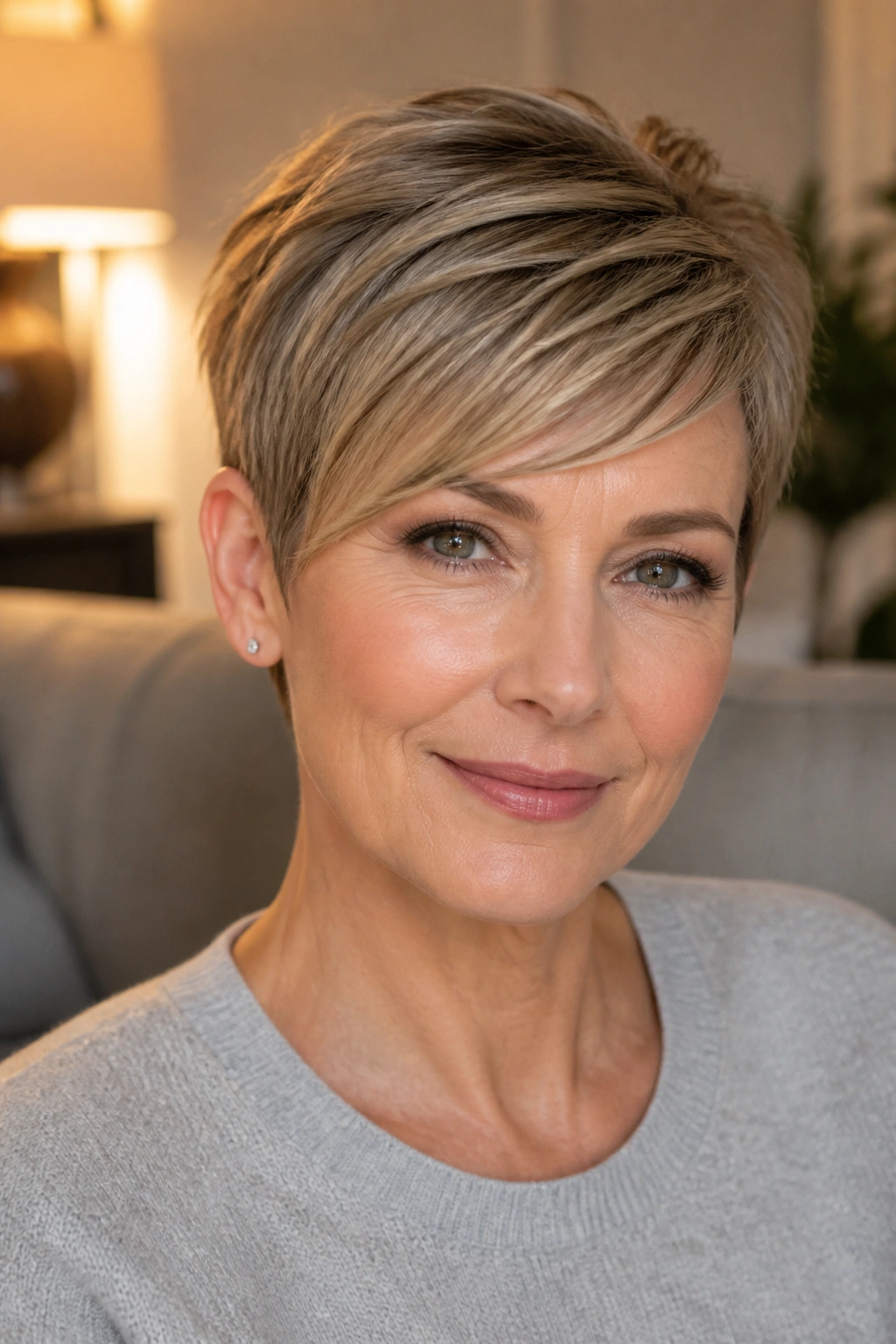
Why do people keep coming back to a pixie with a side-swept fringe? Because it takes weight off the neck, opens the face, and still leaves enough length on top to feel feminine and soft. Short hair does not have to mean severe hair. Not even close.
The fringe is what changes everything here. Keep the top around 2 to 3 inches, taper the sides neatly around the ears, and leave the front long enough to sweep across the forehead instead of sitting straight up. That little sweep can make a broad forehead look more balanced and can also work well if you wear glasses, since the line of the hair stays out of the frame.
How to Wear It
Use a pea-sized dab of styling cream or a small bit of paste on dry hair. Work it through the crown with your fingertips, then direct the fringe slightly off-center so it falls with some movement instead of looking fixed in place.
If your hairline is soft or a bit uneven, keep the edges around the ears and nape gentle rather than sharply clipped. A pixie should look deliberate, not helmet-like. That is the difference between a short cut that flatters and one that feels too hard.
4. French Bob
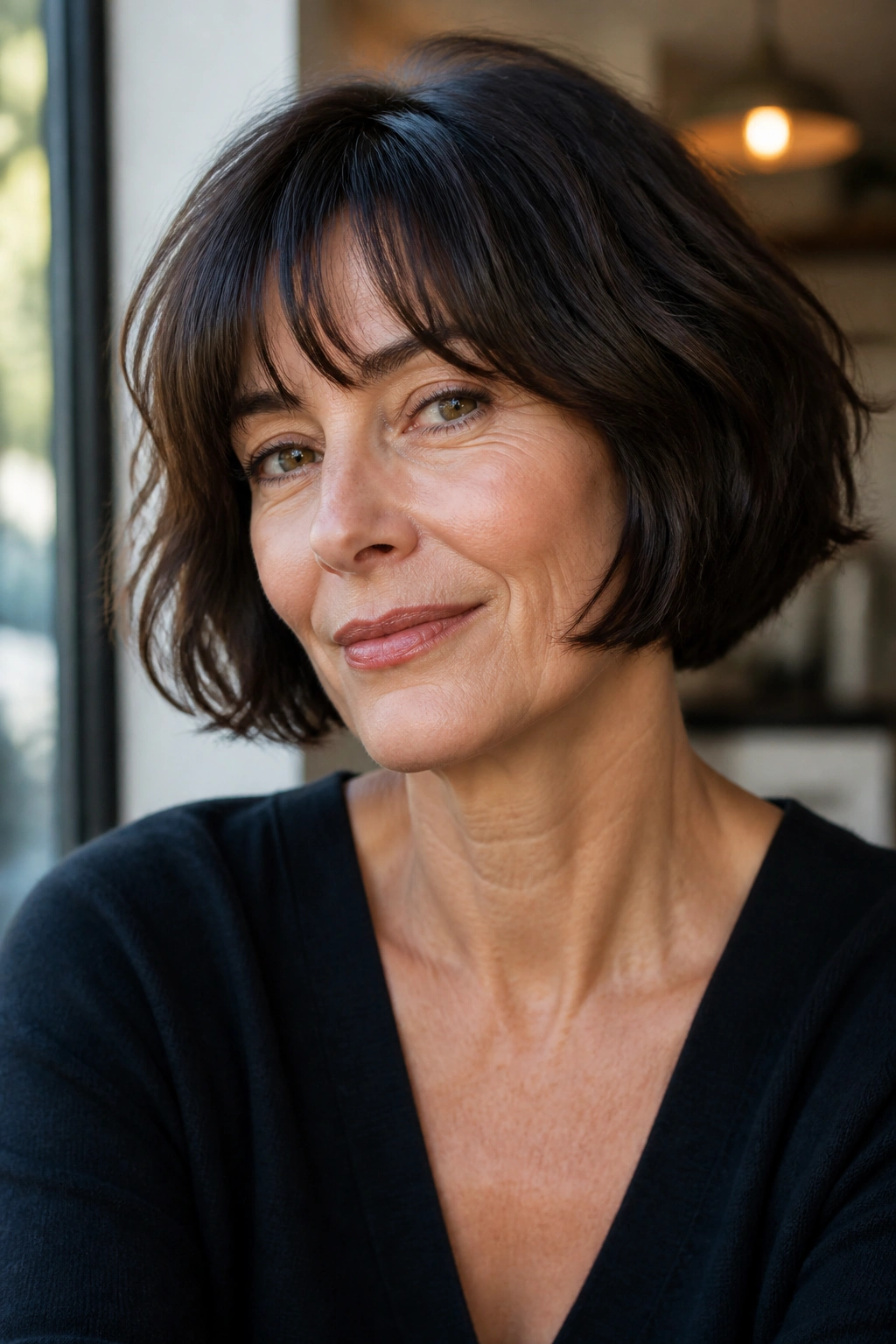
Picture a bob that sits near the cheekbone, has a little bend, and looks like it was cut by someone who knows when to stop. That is the charm of a French bob. It has structure, but it never feels overworked.
The length is the point. A French bob usually skims the lip or cheekbone, which gives the face a bit of lift and keeps the neck area open. Add a soft fringe or a bit of texture at the front, and the whole cut feels easier to wear. On straight hair, it lands with a crisp line. On wavy hair, it gets that undone swing that makes the shape feel lived-in.
- Best with a light fringe or a broken-up front
- Works well if you like air-drying
- Needs regular trimming to keep the line from dropping
- Looks especially sharp on silver, white, or dark glossy hair
The main thing to avoid is over-layering. A French bob should feel light, but not shredded. Keep the shape compact, let the ends sit cleanly, and you get a cut that looks thoughtful without trying too hard.
5. Shoulder-Length Shag
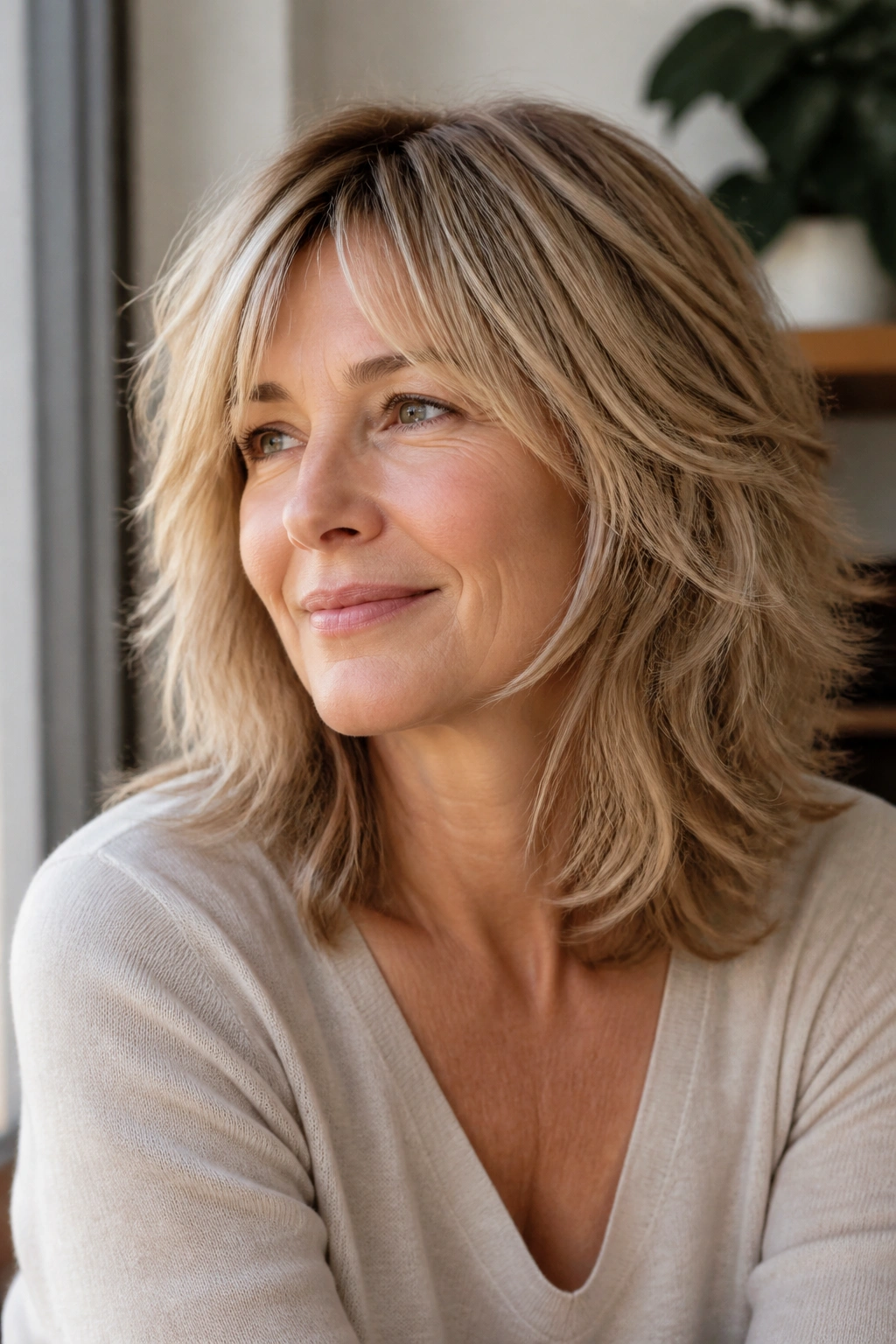
A shoulder-length shag is for anyone who wants movement without losing length. It has soft layers through the crown and around the face, so the hair can move instead of hanging straight down. On wavy or curly hair, that movement feels natural. On straight hair, it adds texture you can actually see.
This cut works because the shorter pieces around the top create lift while the longer outer shape keeps the style from going wild. Ask for layers that are broken up, not sliced to bits. You want pieces that separate a little, not ends that disappear into fuzz. If your hair is thick, your stylist can remove some weight underneath. If your hair is fine, keep the layers farther apart so the cut does not collapse.
Styling helps, but it does not need to be elaborate. A little mousse at the roots, a diffuser, or even a rough blow-dry with your fingers can be enough. The shag looks best when it keeps a bit of texture and does not pretend to be a sleek salon finish. That is the whole point.
6. Blunt Collarbone Cut for Women Over 50
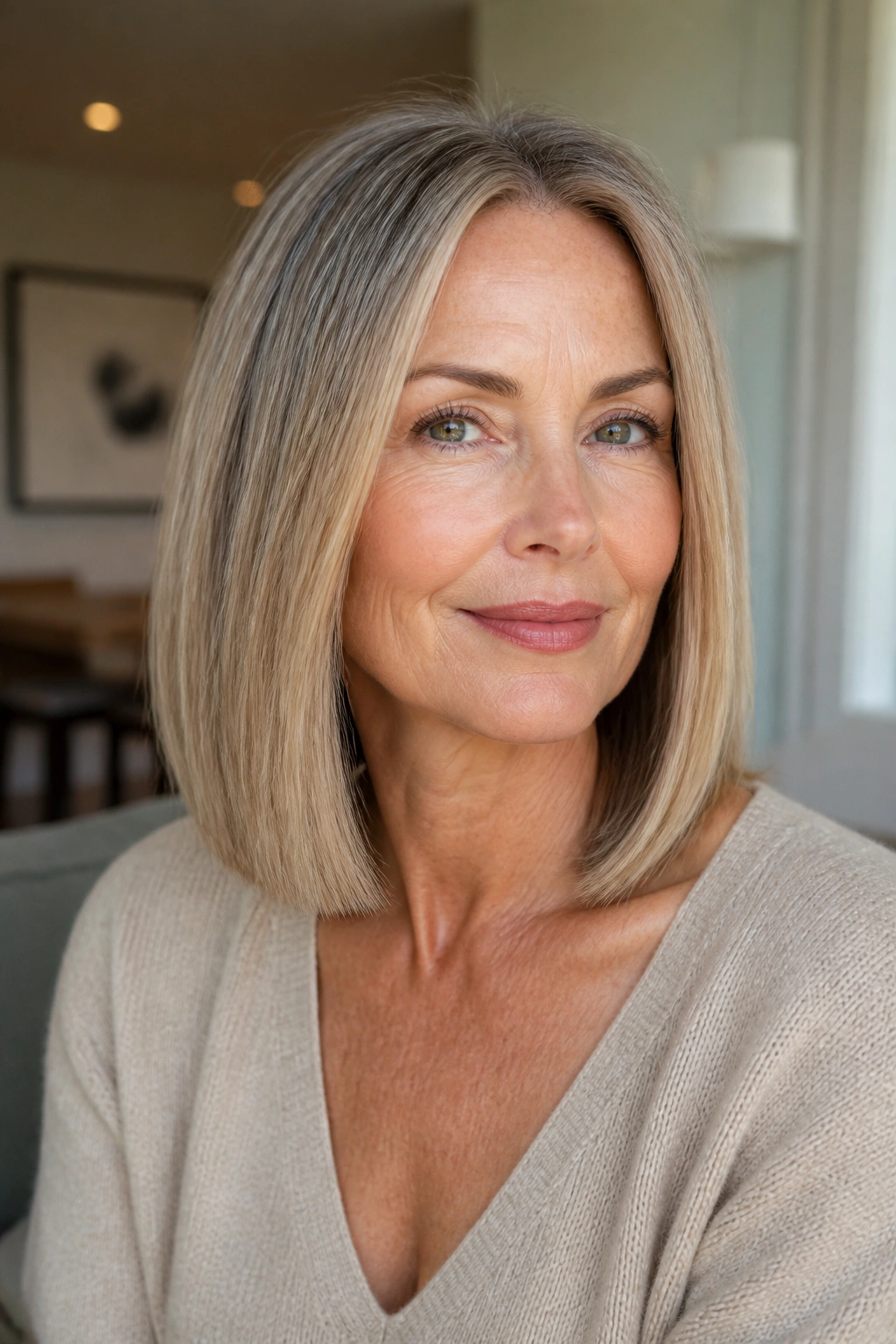
If your hair feels thin at the ends, a blunt collarbone cut usually does more for fullness than layers ever will. The clean edge gives the hair a stronger outline, and that makes even medium-density hair look denser. It is one of those cuts that looks calm, not flashy, which is exactly why it works.
Compared with a shag or a heavily layered lob, this cut is simpler to live with. The perimeter stays solid, the movement comes from the hair itself, and you do not spend all day trying to coax pieces into place. Ask for the length to hit right at the collarbone or just below it, with only a tiny bit of face framing if you want softness around the jaw. Keep the ends blunt. Really blunt.
This is a good choice if you like air-drying, if your hair lies flat at the crown, or if you want a shape that still looks neat after it has grown out a little. It also plays nicely with glasses and earrings because the line is clean and the face gets the attention. Simple. That is why people keep returning to it.
7. Tapered Crop
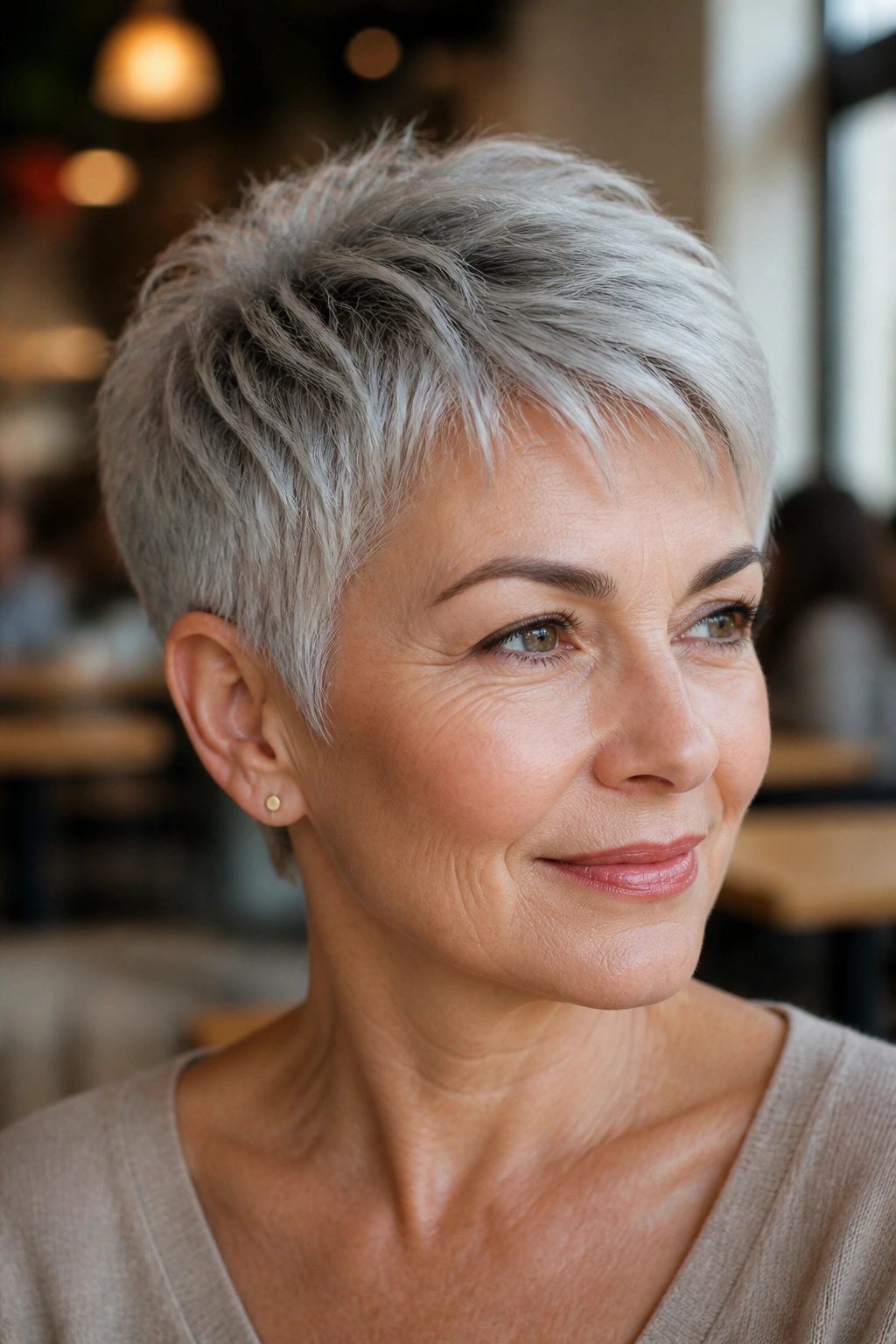
A tapered crop is the short haircut that stops looking apologetic once it is cut correctly. The top has enough length to show texture, while the sides and nape are trimmed in a way that keeps the shape close to the head. It feels clean, cool, and far less high-maintenance than many people expect.
Where to Keep the Length
Keep about 1 to 2 inches on top if you want lift and movement. That gives you room to sweep the hair forward, side to side, or slightly up at the crown. Around the ears and nape, the taper should be softer rather than shaved down unless you want a much sharper look.
What to Ask Your Stylist
- Use scissors instead of heavy clipper work if you want softness
- Leave enough length at the crown for the hair to rise, not flatten
- Avoid too much texturizing if your hair is fine
- Keep the fringe soft if you want balance around the forehead
A tapered crop works especially well when the neck gets hot or bulky under longer hair. It is practical, but it still has shape. That matters more than people think. A good crop should feel easy, not hidden behind styling tricks.
8. Curly Rounded Bob
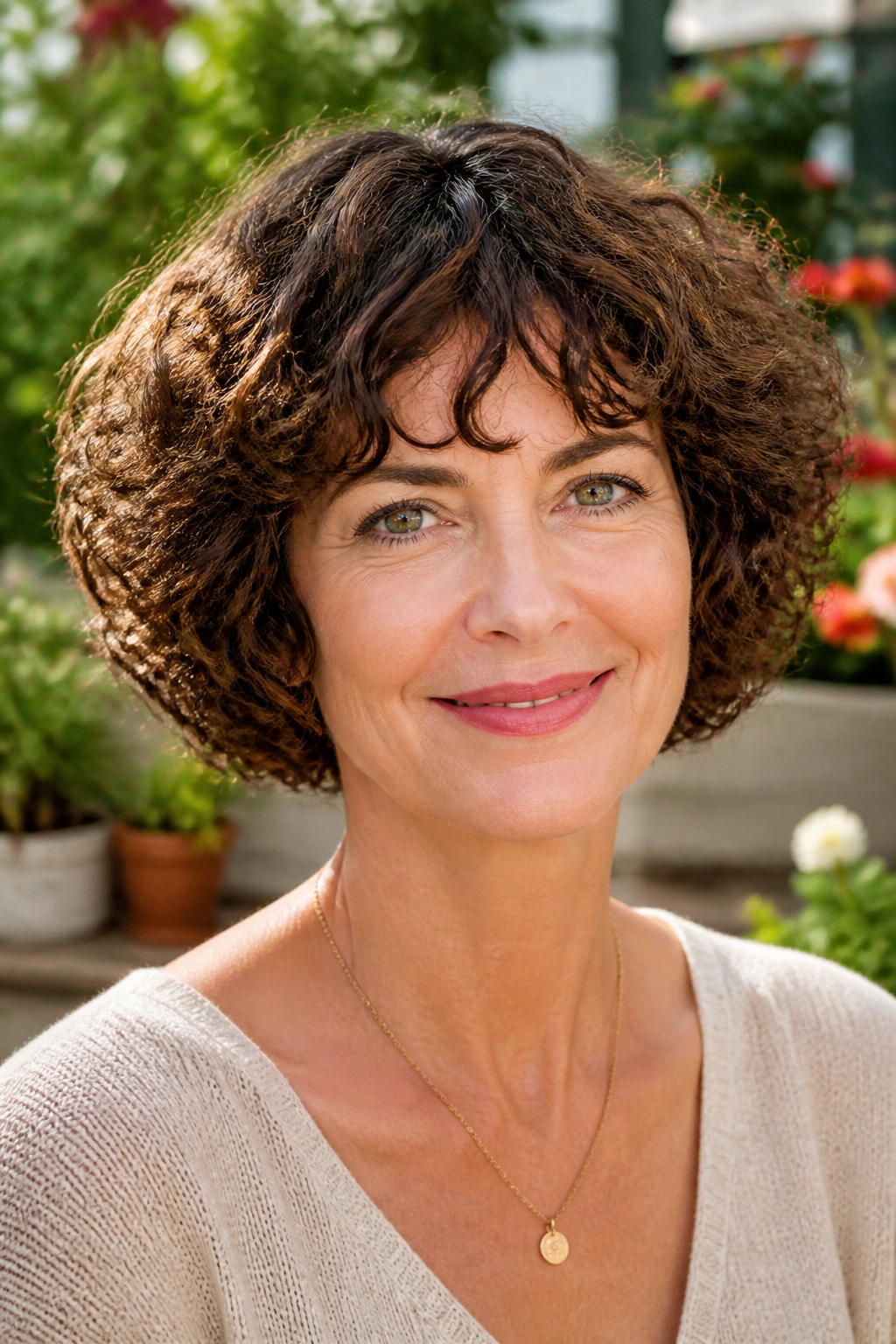
Curly hair after 50 usually needs shape, not control. So why does a rounded bob work so well? Because it follows the curl pattern instead of fighting it, and that keeps the cut from ballooning at the sides or dropping flat at the roots.
The rounded part is the key. Ask for a bob that keeps enough weight around the perimeter so the curls stack in a soft curve, then let the top hold a little room for spring. Cutting curls dry, or nearly dry, helps the stylist see where the hair really lands. That matters more than a perfectly even line on wet hair, because curls lie. They always lie.
How to Get the Curl to Sit Right
- Ask for a curl-friendly cut, ideally one done dry or curl by curl
- Keep the shape at chin length or just below for the cleanest roundness
- Use gel or cream on soaking-wet hair and scrunch gently
- Diffuse on low heat until the roots are dry and the curls feel set
The big mistake is thinning curly hair too much near the ends. That is how you get a triangle shape or frizz that looks bigger than the haircut itself. Keep the outline balanced, and the curls will do a lot of the work on their own.
9. Feathered Mid-Length Cut
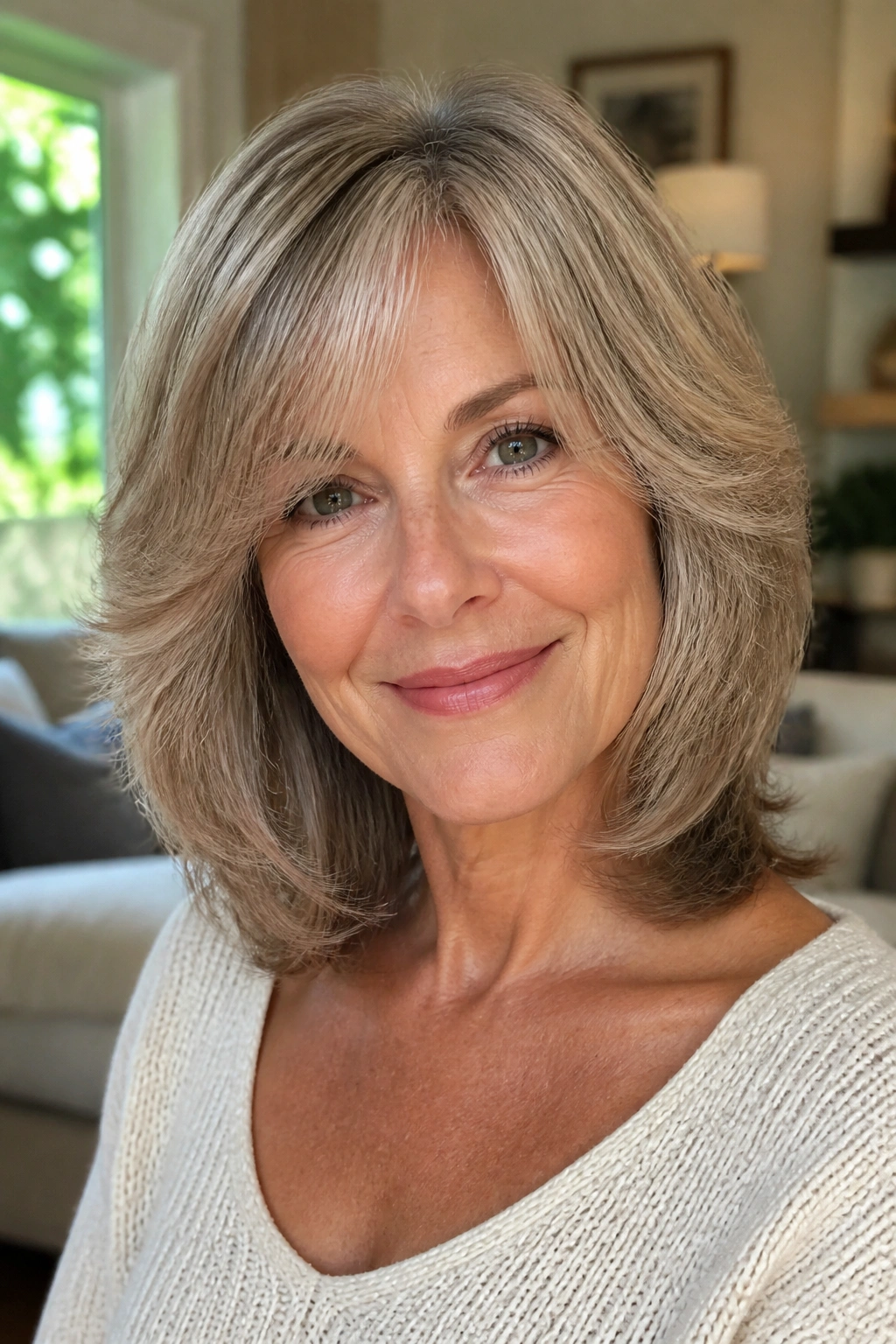
Feathering is not the same as thinning. A feathered mid-length cut softens the edges of the hair so it moves without losing shape. It is a good match for women who want a little lightness around the face but do not want all the structure chopped away.
The best feathering happens around the cheekbones, jaw, and outer ends. That gives the hair a softer fall, especially if it tends to feel bulky through the sides. If your hair is thick, feathering can keep it from sitting like one heavy block. If your hair is fine, keep the feathering subtle so the length still looks full.
This cut usually works best when the hair falls somewhere between the shoulders and the collarbone. It can be blow-dried smooth, or left a bit imperfect with a round brush bend at the ends. The point is not to create wispy, broken hair. The point is to let the cut move.
10. Sleek Angled Bob
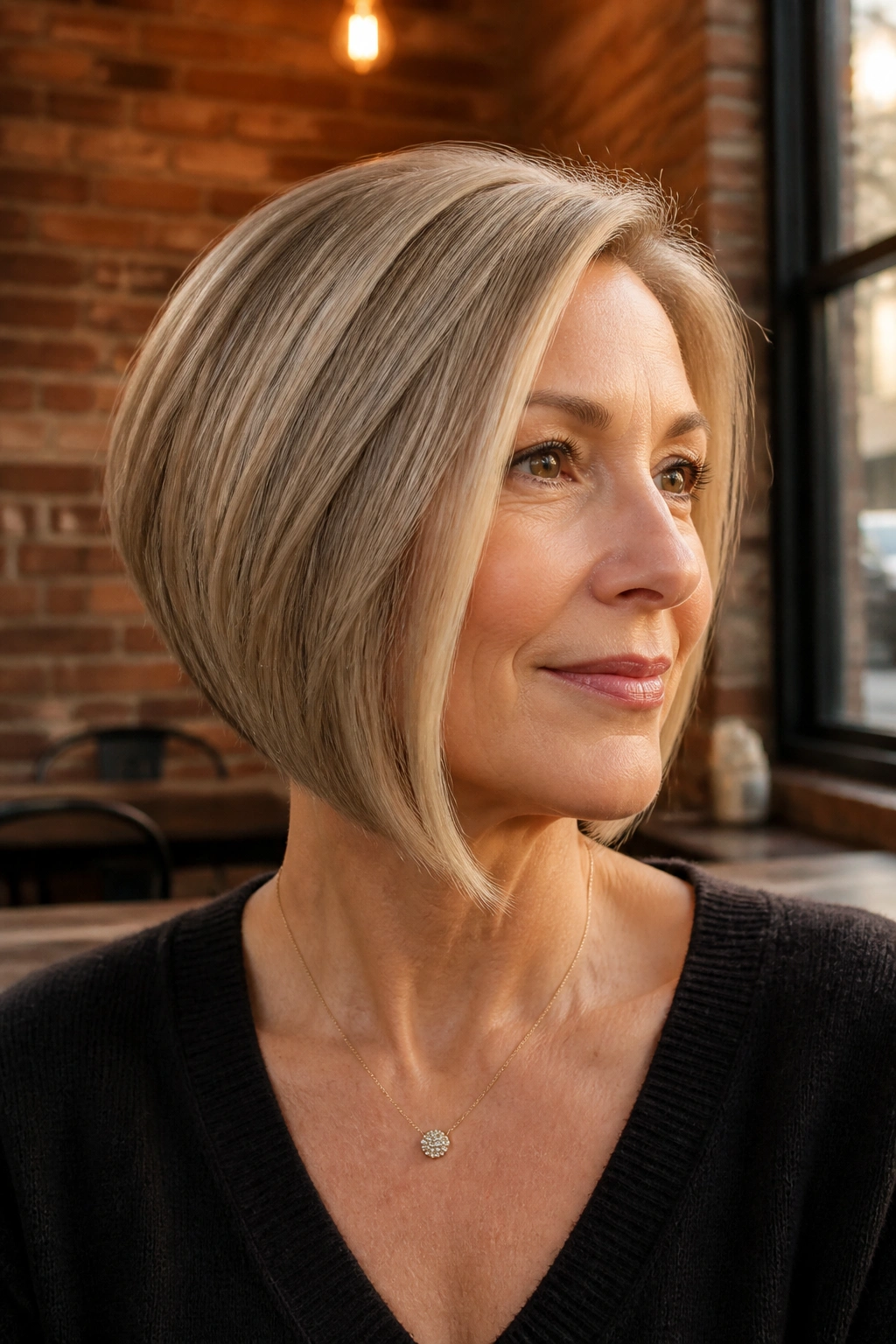
If the chin-length bob is the classic shirt, the angled bob is the tailored version. It is shorter in the back and gradually longer toward the front, which gives the hair a clean diagonal line and a sharper profile. That shape can lift the neck visually and make the whole haircut feel more intentional.
The angle should not be extreme unless you want that look. A small difference of 1 to 2 inches from back to front is often enough. That subtle slant gives the bob edge without making it look dated or too dramatic. Straight hair shows the line best, but a slight wave can soften it in a nice way too.
Ask for the back to sit snugly against the head and for the front to skim the jaw or collarbone, depending on how much length you want to keep. A side part tends to make the angle feel softer. A center part can make it look sharper. Both work. The only thing I would avoid is over-layering the front, because it blunts the whole point of the cut.
11. Wispy Bangs with a Soft Bob
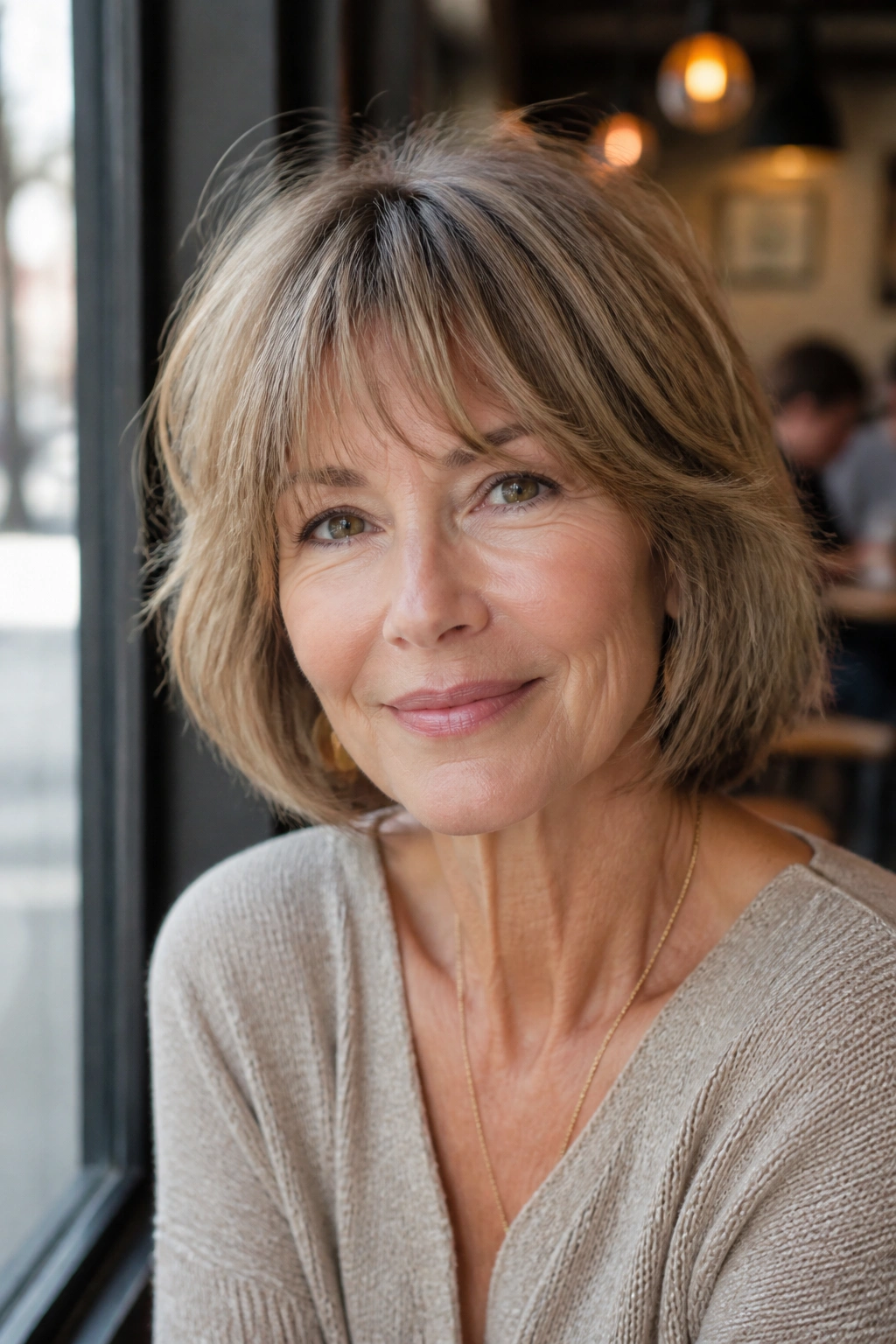
A wispy fringe can change a haircut faster than changing the length. It softens the forehead, gives the eyes a frame, and takes some weight off the face without demanding a full curtain of hair. Paired with a soft bob, it can look light and easy instead of heavy or severe.
Why It Works
Wispy bangs are forgiving because they are cut with space between the pieces. That means they grow out more gently than a thick straight fringe. If your forehead feels long, if you wear glasses, or if you want to shift attention upward, this is one of the easiest ways to do it.
What to Avoid
- Too much density at the center of the fringe
- Cutting the bangs too short when the hair has a strong bend
- Forcing them straight across if your hair naturally splits
- Starting with a heavy bob under a wispy fringe, which can feel mismatched
The safest move is to start longer than you think you need, then trim again later if necessary. Short bangs are hard to undo. Wispy ones grow out with less drama, and that alone makes them worth a look.
12. Bixie Cut
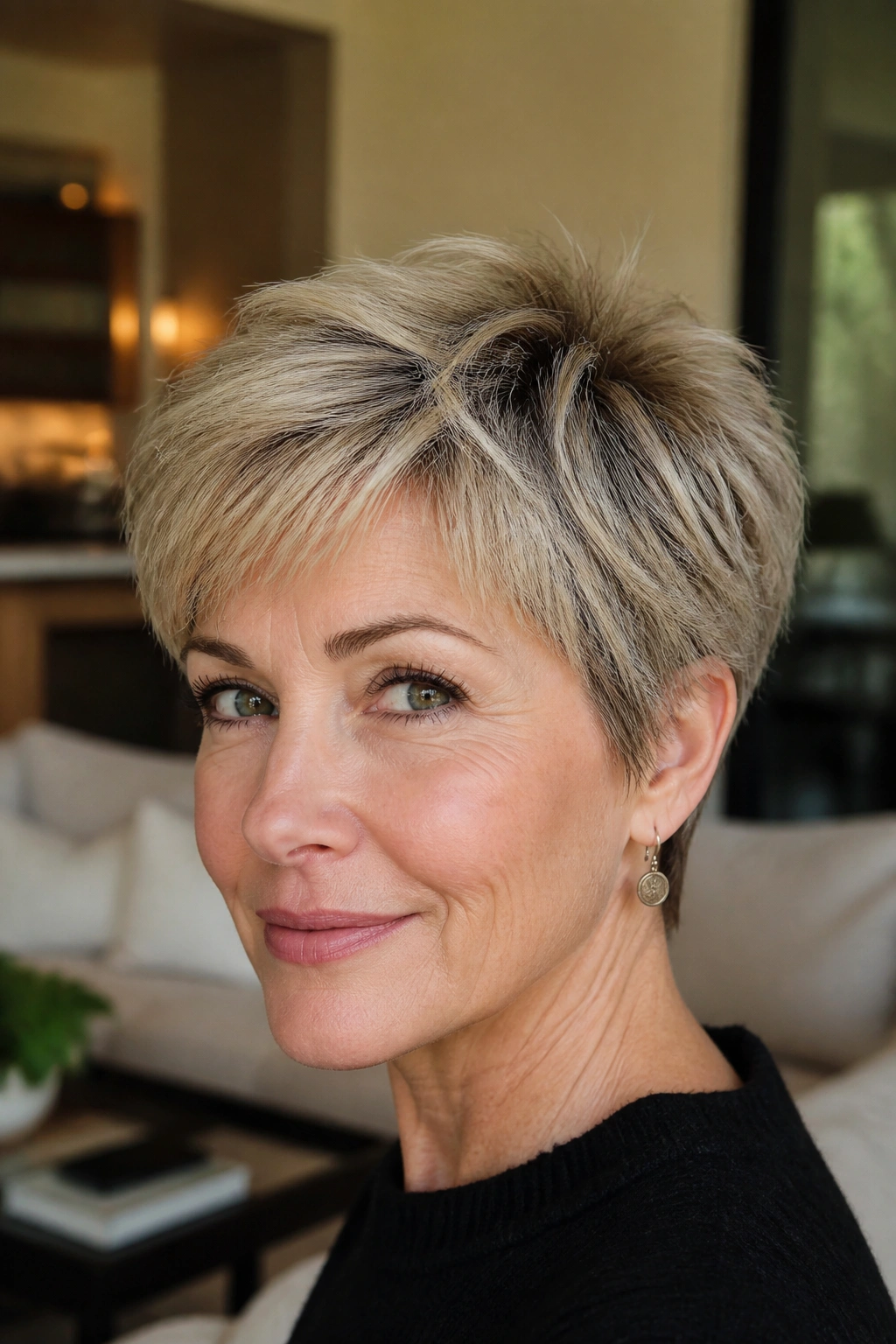
If a bob feels too heavy and a pixie feels too short, the bixie lives right between them. It borrows the softness of a bob and the lift of a pixie, which is why it suits women who want some shape on top without a lot of bulk around the jaw.
The cut usually has a textured crown, shorter sides, and a nape that sits close enough to keep the outline neat. You still have enough hair to play with, but the whole shape feels lighter than a standard bob. That makes it handy for straight or slightly wavy hair, especially when the strands around the temples start to feel too wide or too flat.
Styling takes only a small amount of product. A pea-sized bit of cream or paste is usually enough. Work it through damp hair, then use your fingers to push the top where you want it and let the sides settle on their own. The bixie is not a strict cut. That is what makes it pleasant to wear.
13. Long Layers with Face-Framing Pieces
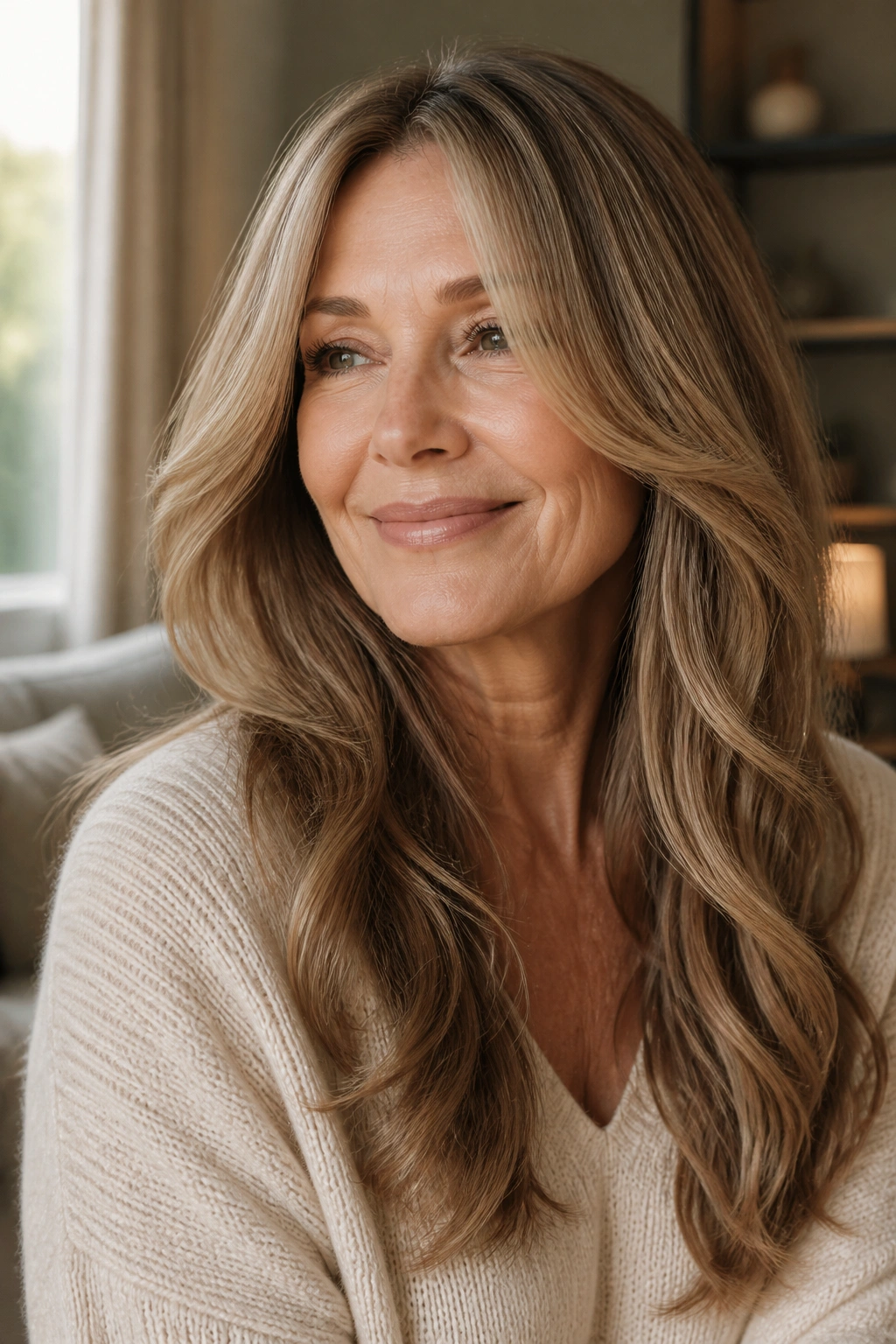
Long hair after 50 is not the problem; limp ends are. If your hair is healthy and you still like the feeling of length, there is no reason to cut it all off. The trick is keeping the shape honest so the hair looks full instead of dragged down.
Face-framing pieces help here, but they should start low enough to blend with the rest of the cut. Think cheekbone, jaw, or just below, not a chopped-up layer that starts at the ear and never quite lands. The longest pieces can stay well below the shoulders. What matters is that the ends still look thick and the front opens the face a little.
This cut is a good match for hair that has some natural wave or body. If your hair is fine, keep the layers minimal and the perimeter mostly blunt. If your hair is coarse, leave enough weight in the ends so the shape does not frizz out. A long cut only looks elegant when the ends still have substance.
14. Wedge Cut
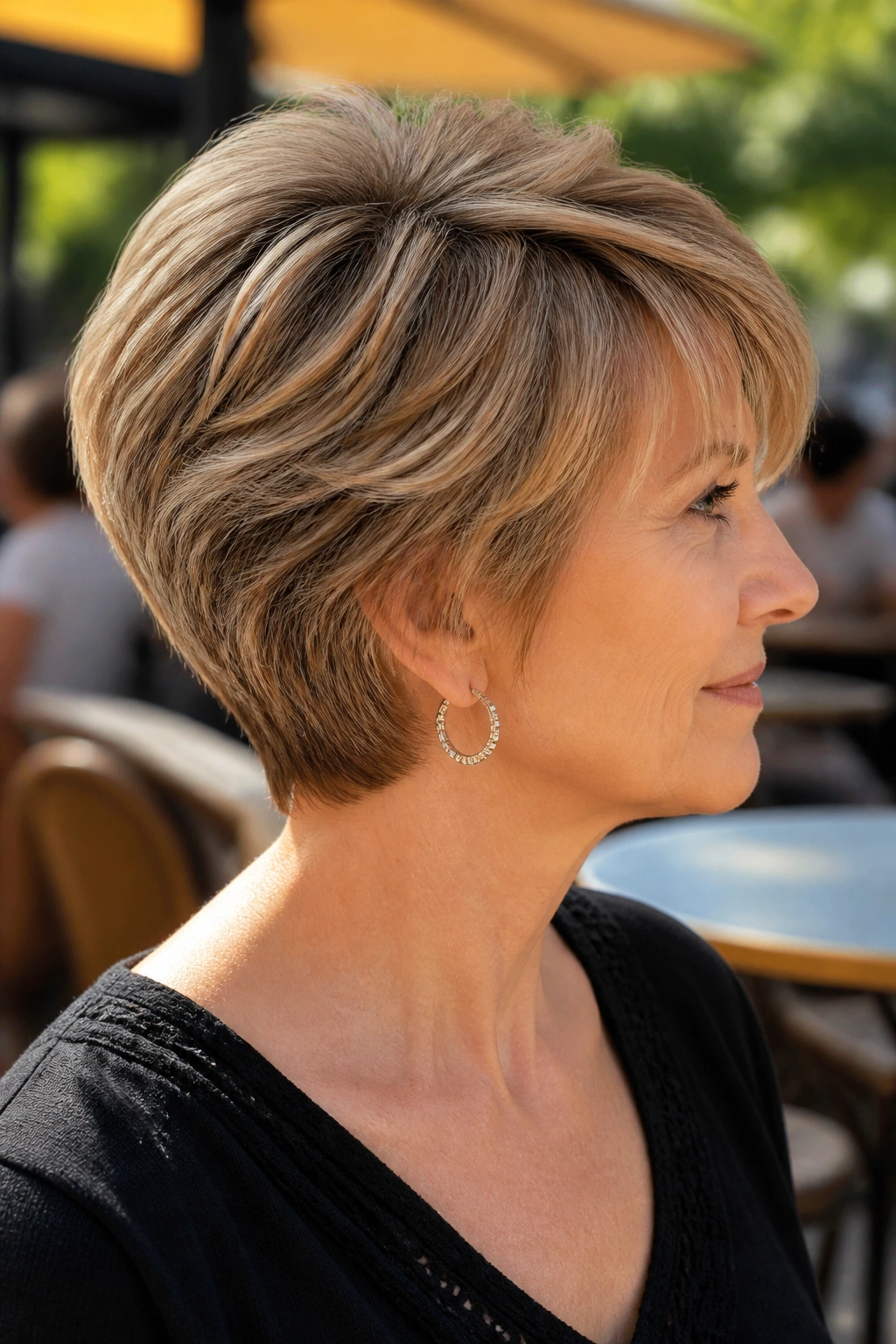
Why does the wedge keep coming back? Because it gives lift at the back without asking for a full round-brush session every morning. The stacked shape builds height where many people lose it, especially at the crown and upper nape.
Best For
- Flat crowns
- Straight or slightly wavy hair
- Anyone who wants a neat shape with some bite
- Hair that gets bulky around the neck
Ask For
- Soft graduation in the back, not a hard shelf
- A longer top so the cut does not feel rigid
- A side-swept fringe if you want to soften the front
The wedge can go wrong when it is cut too sharply. Then it starts to look frozen in time. Keep the shape clean but soften the edges, and it becomes a smart, practical haircut again. The modern version is gentler. That is the whole trick.
15. Collarbone Cut with Curtain Bangs
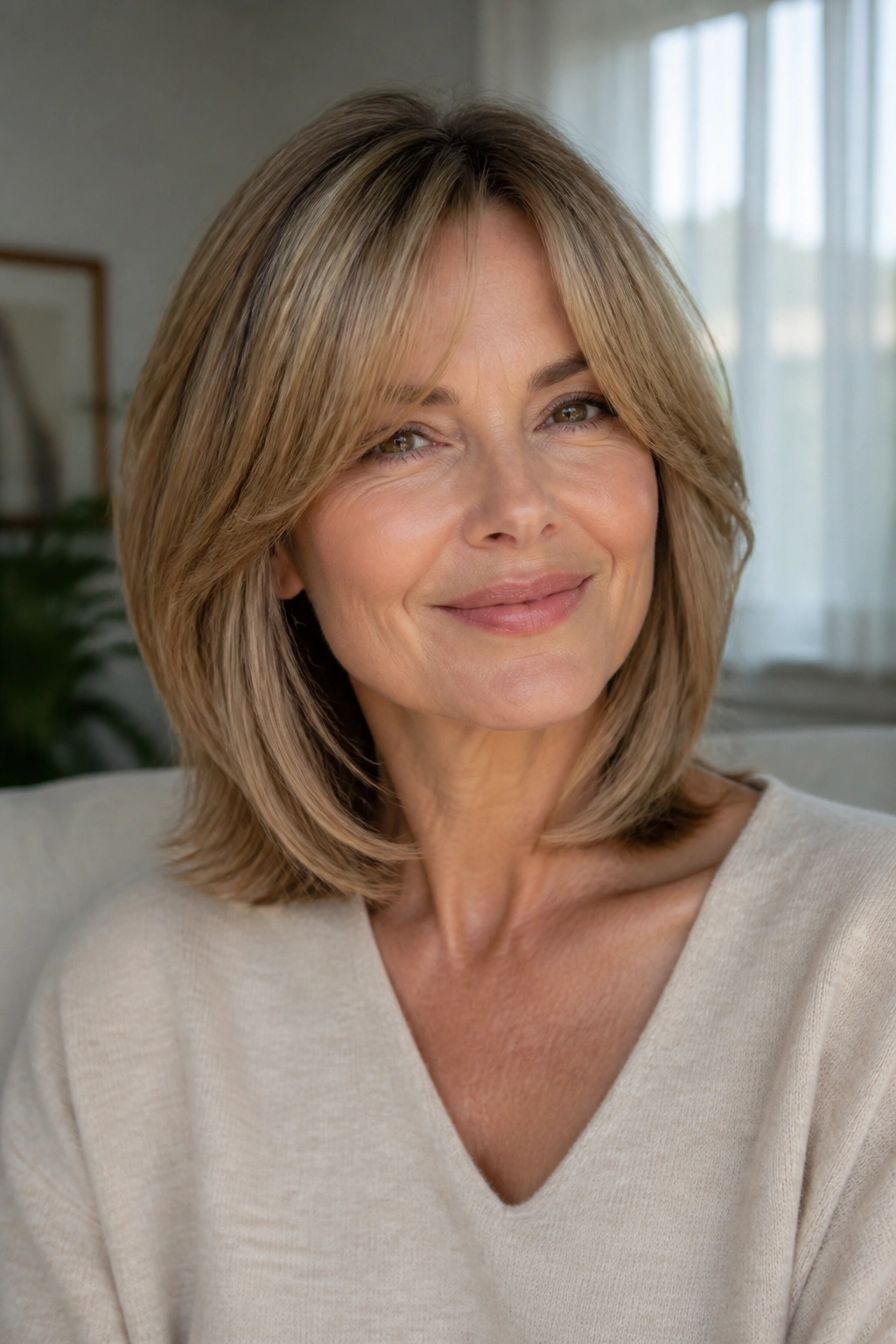
A collarbone cut with curtain bangs gives you swing, shape, and a bit of softness around the eyes without locking you into a short fringe. The bangs split in the middle or just off-center, which helps them blend into the sides instead of sitting like a separate piece.
This is one of the easiest ways to keep shoulder-length hair from looking too flat. The fringe opens the face, and the collarbone length gives the ends somewhere to move. It works well on medium to thick hair, especially if you like to air-dry and let the natural bend show up. If your hair grows quickly at the temples, curtain bangs are also easier to live with than a blunt fringe because they grow out in a more forgiving way.
Keep the starting point of the bangs somewhere around the nose bridge, cheekbone, or slightly lower depending on your face and forehead. Too short, and they lose the soft sweep. Too heavy, and they stop looking like curtain bangs. The line between the two is not wide.
16. Soft Undercut Pixie
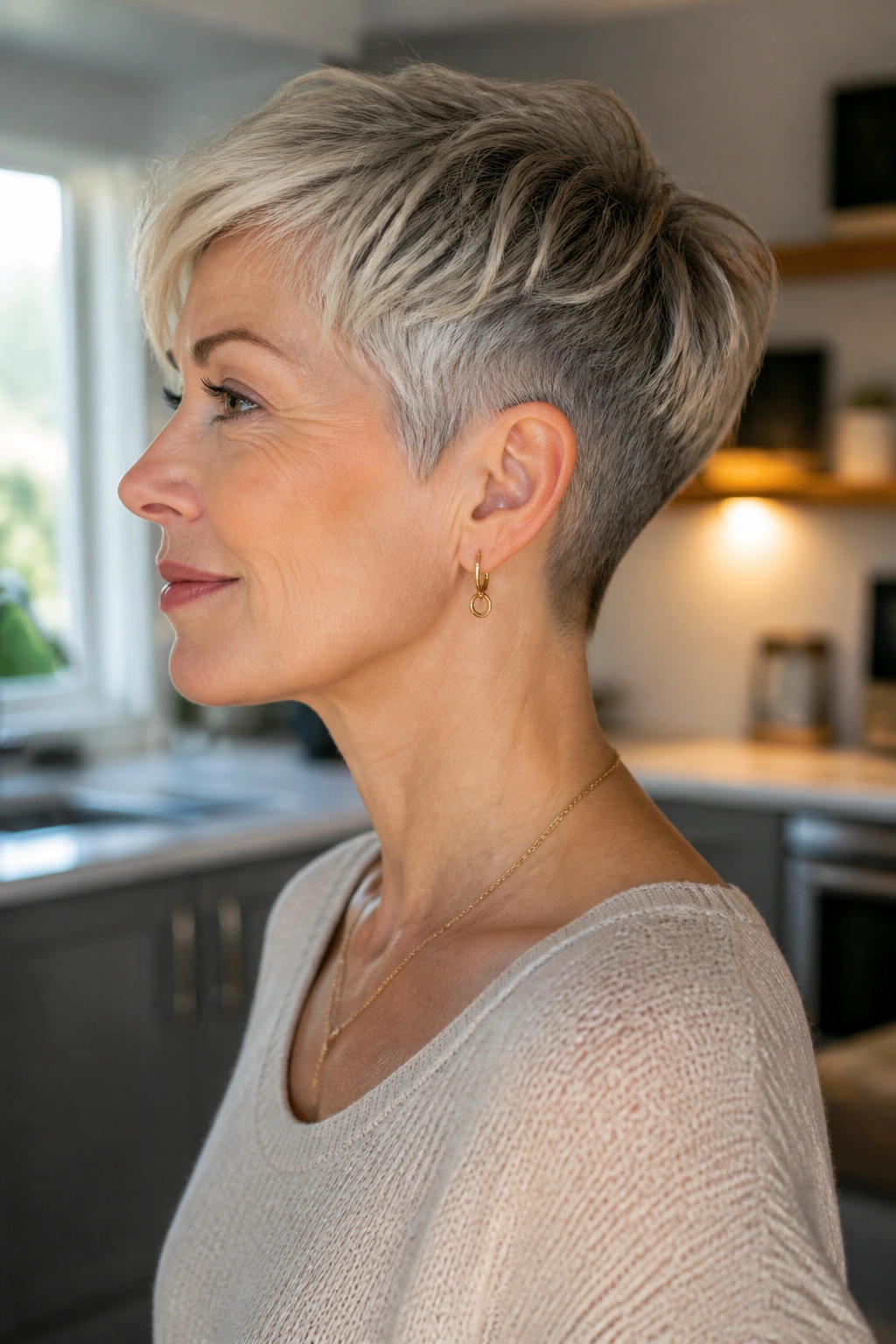
A soft undercut pixie is for thick hair that refuses to stay small. Instead of piling on more product or trying to flatten the shape down, this cut removes bulk where the hair tends to puff out: usually the nape and lower sides. The top stays a little longer, so the haircut still has movement.
Unlike a standard pixie, the undercut lets the top look airy instead of mushroom-shaped. That matters a lot if your hair has strong density, coarse texture, or a natural wave that expands when it dries. The cut can be very subtle too. A hidden undercut at the nape is enough for some people. Others need a bit more removal around the lower sides to keep the outline neat.
This is not the most low-maintenance option during the grow-out phase. It needs trims to keep the short sections tidy. But if you have spent years fighting volume you did not ask for, this shape can be a relief. It takes weight off the hair, which takes weight off your whole morning routine.
17. Textured Lob with Piecey Ends
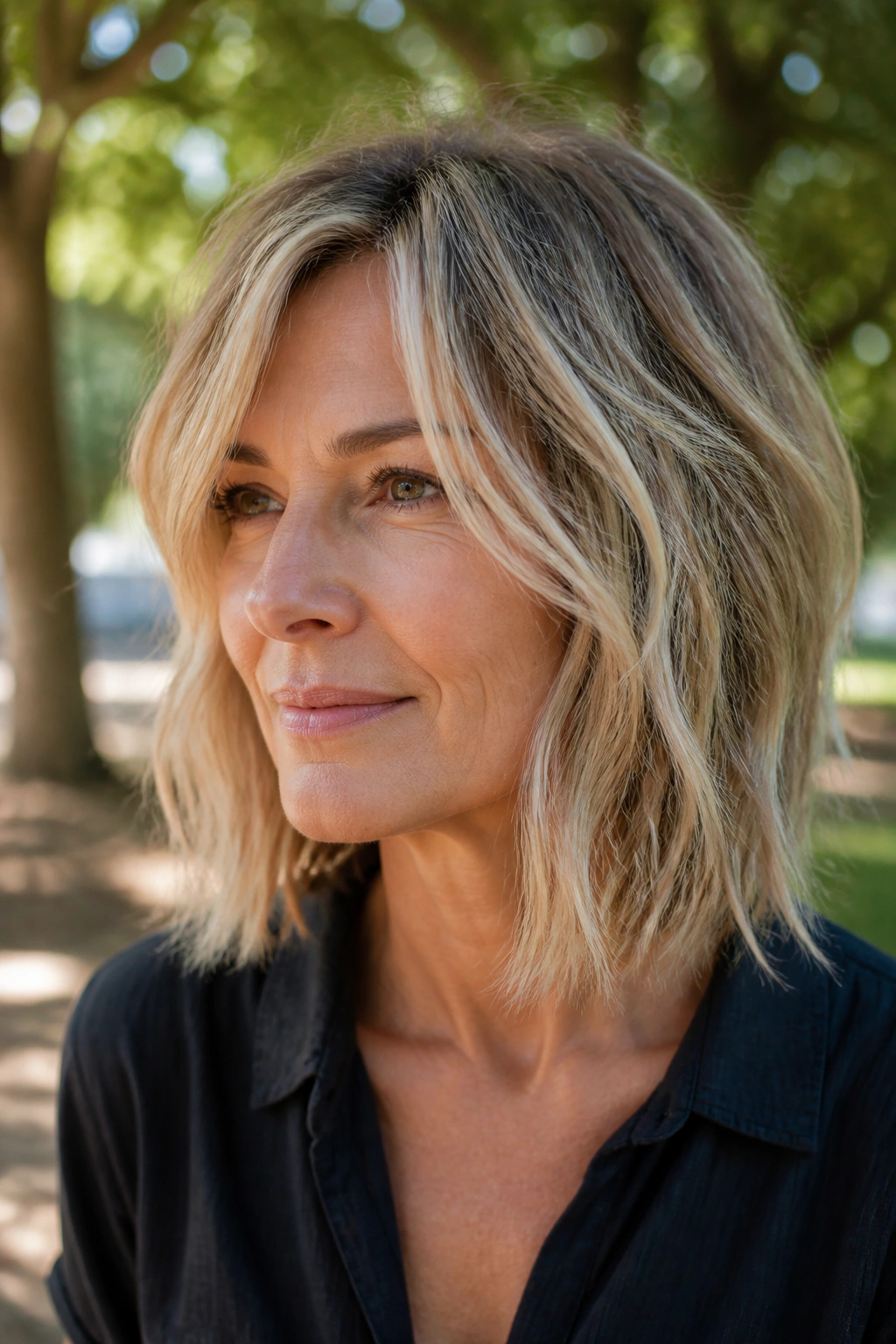
If you like the idea of a lob but want it to feel less polished, a textured version with piecey ends gives you that extra movement. It sits in the same length zone as a classic lob, but the ends are broken up just enough to keep the haircut from looking too solid.
The texture should live near the lower half of the cut, not all the way up the head. That keeps the top from becoming too thin while still giving the outer shape some separation. Ask for soft point cutting at the ends and maybe a touch of internal texture if your hair is dense. If your hair is fine, go lighter on the texturizing so the ends do not look see-through.
A piecey lob is one of those cuts that looks good with a loose wave, a quick bend from a flat iron, or even just a bit of cream scrunched through damp hair. It is a strong middle ground for women who want something modern without sacrificing the ability to pull the hair back or tuck it behind the ears.
18. Shoulder-Length Blunt Cut for Women Over 50
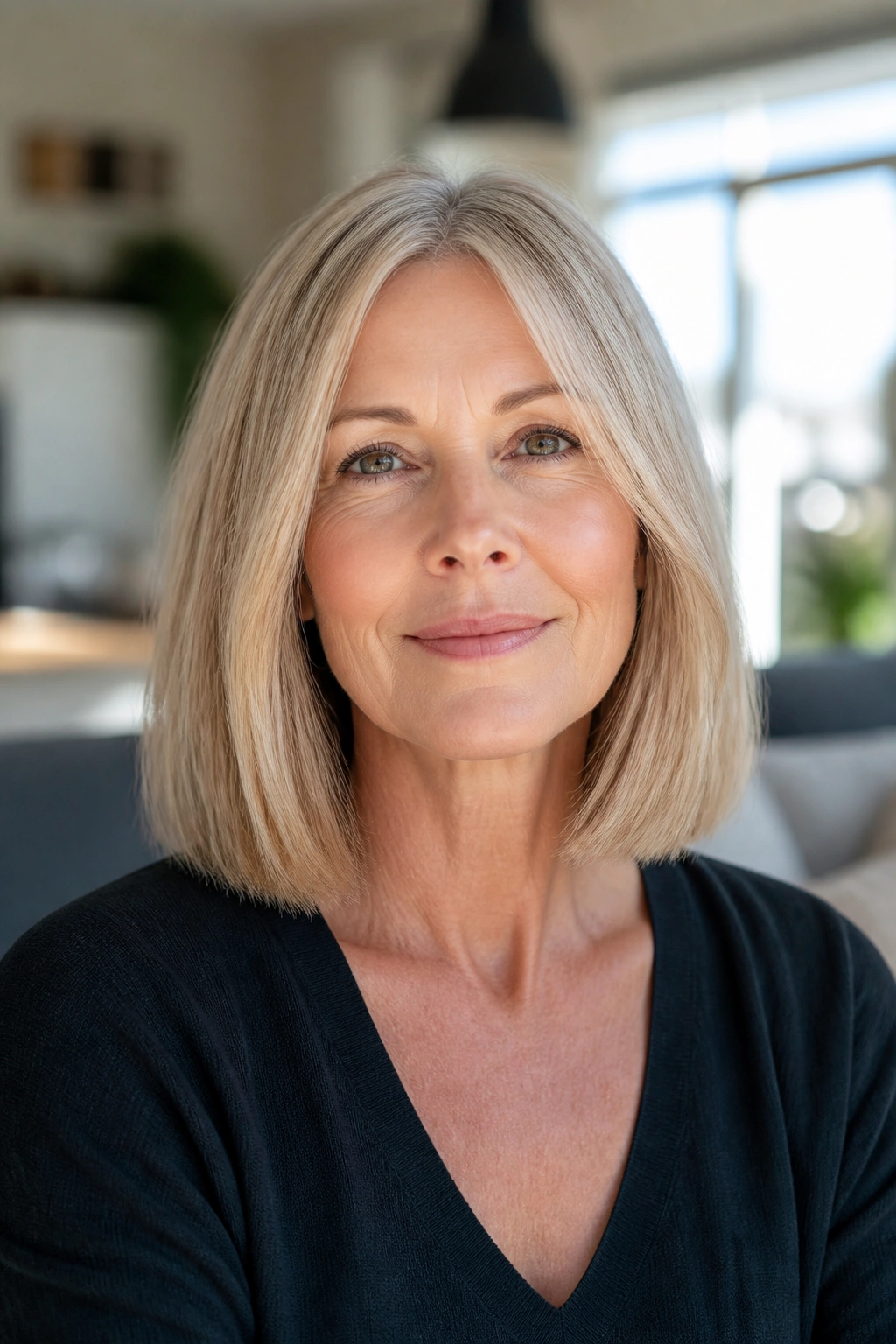
A shoulder-length blunt cut is what I suggest when someone wants length, shine, and a cleaner outline. The movement comes from the hair itself, not from layers chopping it apart. That gives the cut a steady, calm look that works especially well when the hair has good density or a natural bend.
The length should sit at the shoulder or just below it, with the ends cut straight across and only a tiny bit of interior shaping if the hair is very thick. Too much layering can make this shape lose its point fast. A slight off-center part usually helps it feel softer, and a little serum on the ends keeps the line from looking dry.
What Keeps It from Looking Heavy
- A clean parting that breaks up the symmetry
- Minimal interior debulking if the hair is thick
- Soft movement from a round brush or a loose bend
- Ends kept full rather than wispy
This is a good cut for silver hair, dark hair, or anything in between, because the straight edge shows off texture and shine. It is quiet, but not boring. There is a difference.
Final Thoughts
A flattering haircut after 50 is rarely about chasing a new identity. It is about making the hair you already have look fuller, cleaner, and easier to live with. That usually means paying attention to where the line lands, how much weight stays at the ends, and whether the cut works with your real texture instead of against it.
Bring photos if you like them, but bring better information too: how your hair dries on its own, where it goes flat, where it puffs, and how much time you actually want to spend on it. That conversation matters more than any trend photo. A good stylist will hear the shape you want and translate it into something your hair can actually do.
