



Long wispy haircuts for round faces work because they change the line your eye follows. A round face usually has its softest width through the cheeks, so a cut that falls below that point does more shape work than a blunt line sitting right on top of it.
Length helps. So does air between the layers. The trick is not to pile volume at the sides; it is to keep movement lower, let the front pieces fall forward, and use wisps instead of heavy blocks of hair that stop the face in its tracks.
I have little patience for cuts that stop right at the cheekbone and call it balance. That spot is already busy on a round face. The better options all do the same quiet thing in different ways: they pull the eye down, soften the perimeter, and keep the hair from turning into a wide frame. The first one starts with the front pieces in exactly the right place.
1. Face-Framing Layers That Start at the Mouth
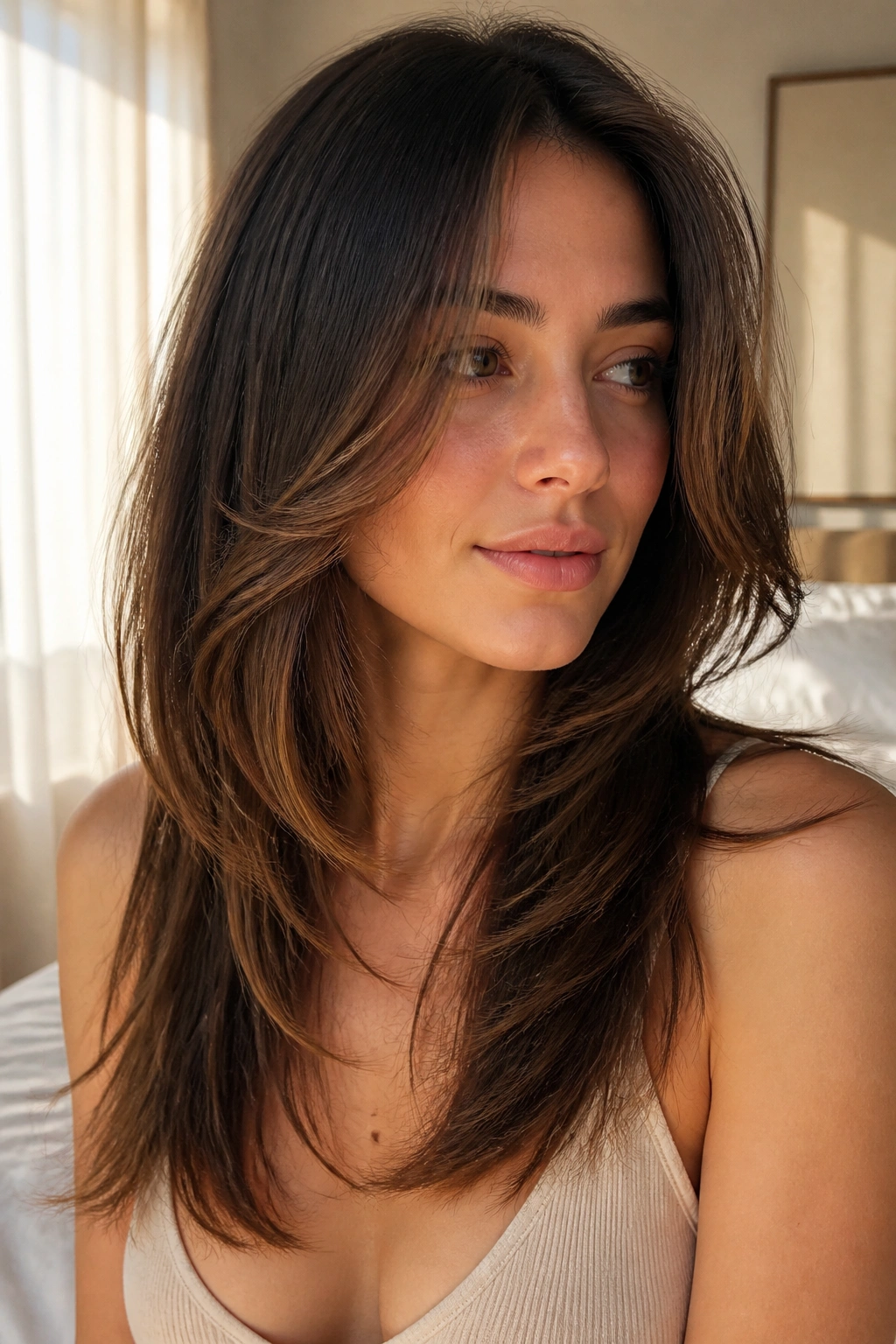
Start the shortest front layer at the mouth line, and the whole haircut breathes better. On a round face, that small shift keeps the frame from sitting right on the cheek, which is where a lot of cuts go wrong.
Why It Flatters a Round Face
The mouth line gives you a lower starting point, so the eye travels down instead of across. That creates length without making the hair look severe. It also keeps the sides from puffing outward at the widest part of the face, which is the main thing you want to avoid.
I like this cut best when the front pieces are soft, not chunky. Ask for a gentle taper into the rest of the length, with the shortest piece landing around the corner of the mouth and the next layer drifting toward the collarbone.
- shortest face-framing piece at the mouth, not the cheekbone
- longer layer around the chin to collarbone
- point-cut ends for a wispy finish
- blended sides, not a separate curtain
Tip: Blow-dry the front pieces away from the face with a round brush for 30 to 45 seconds each side. That little bend changes the whole read of the cut.
2. Curtain Bangs with Long Side Pieces
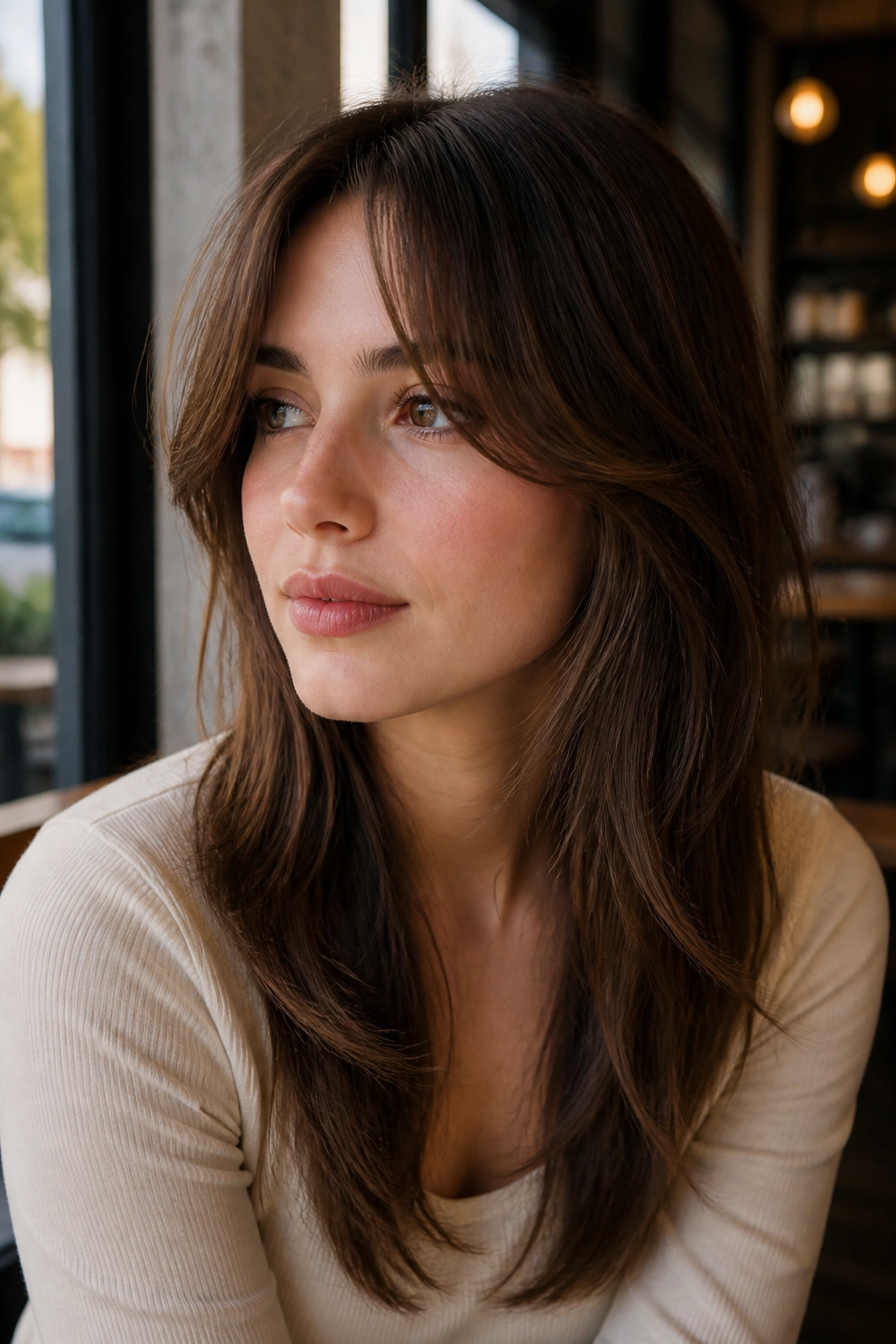
Curtain bangs are one of the few fringe styles that can flatter a round face without making it feel shorter. The catch is length. If the bangs stop too high, they crowd the cheeks. If they open too soon, they lose the shape.
The sweet spot is usually around the brow line at the center, then sweeping down to the cheekbone or a little lower at the sides. That diagonal movement is doing a lot of quiet work. It cuts across the width of the face and gives the front of the haircut some lift without turning it into a block.
I’d pair this with long hair that has soft layers through the midlengths. A center part keeps the curtain shape honest, but a slightly off-center part can be easier if your hairline fights you in the morning. Either way, keep the fringe light. Heavy curtain bangs can look dense fast.
3. Soft U-Shape With Wispy Ends
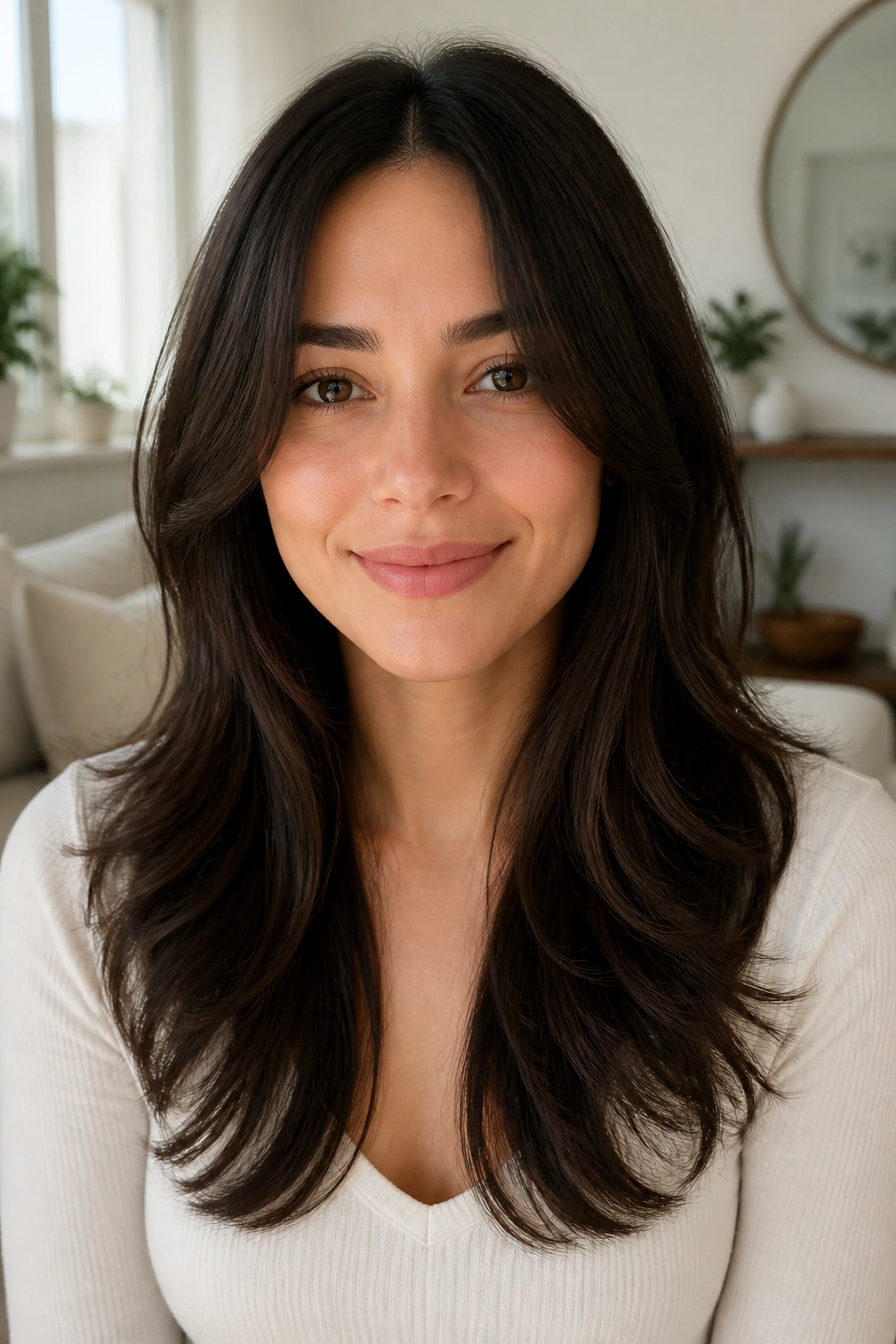
Why does a U-shape work so well on a round face? Because it keeps the outline curved without letting the sides get wider than they need to be.
The center of the haircut stays the longest, usually around the upper chest or bust, while the side sections taper up just enough to create movement. That means the hair looks full and soft, but not bulky at the jaw. It’s a neat little trick, and it doesn’t need a lot of styling to read well.
How to Style It
A loose wave works better than pin-straight hair here. Use a 1.25-inch curling iron or a flat iron bend, then brush the ends out once they cool. You want a soft U, not a rigid outline. A tiny bit of shine cream on the ends helps the wisps look intentional instead of frayed.
4. The Butterfly Cut

If you’ve ever wanted the drama of short layers without losing the length, this is the one people keep coming back to. The butterfly cut is built around lift at the top and softness through the ends, which is a smart setup for a round face.
The short layers sit high enough to create movement around the crown and cheek area, but the longer bottom layer stays in place and keeps the silhouette long. That contrast matters. It gives you volume where the eye wants to go up and down, not straight across the cheeks.
What to Ask Your Stylist For
- shortest interior layer around the collarbone
- long bottom length left intact
- face-framing pieces that skim the jaw or lower
- softened ends so the layers don’t sit in a shelf
One caution: If the shortest layer lands right at the cheekbone, the shape can puff out. Keep it lower.
5. Deep Side-Swept Layers
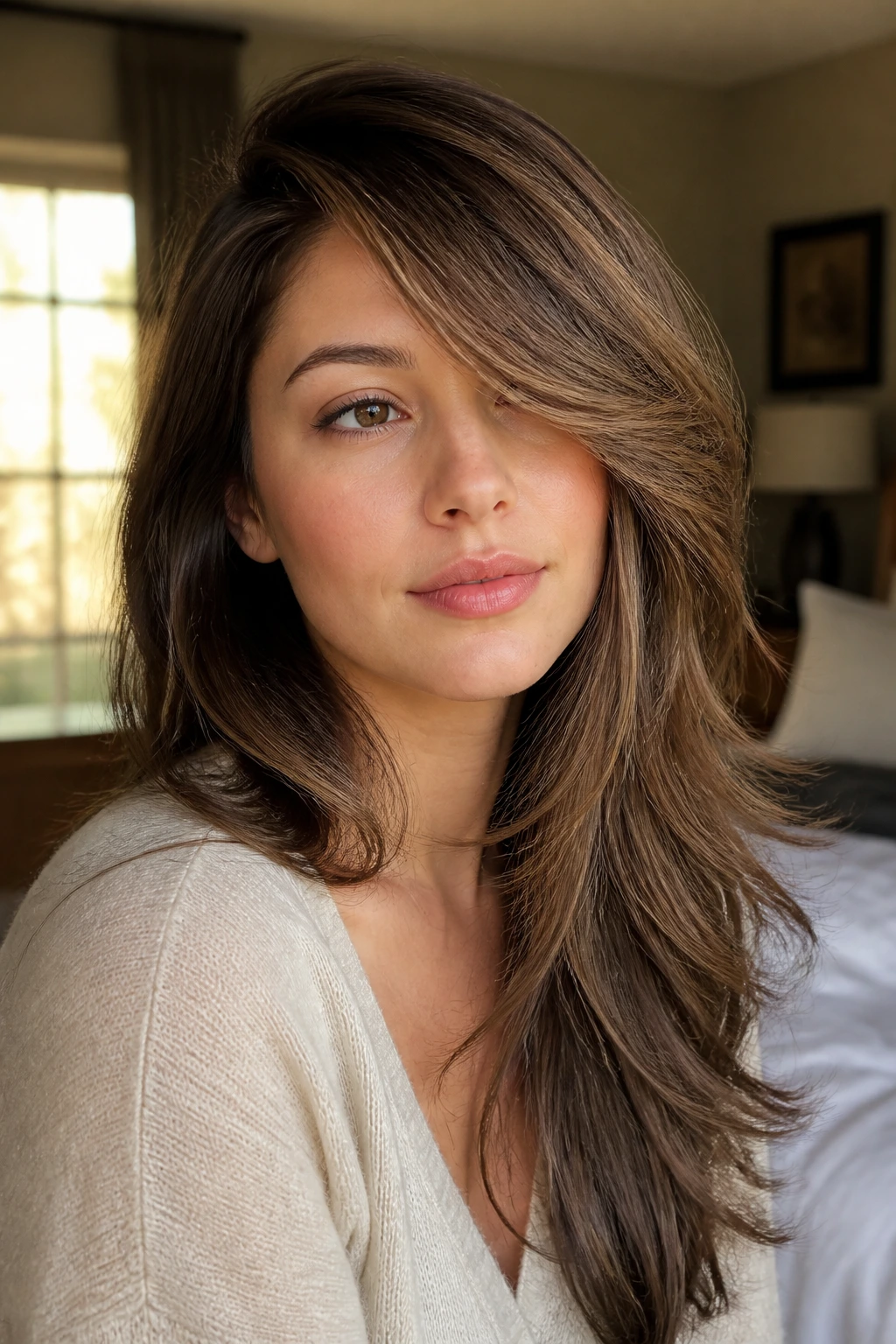
Side parts still earn their place. On a round face, they break symmetry in a way that feels flattering without being fussy, and they give the top of the head a little lift that a center part does not always deliver.
The cut itself should follow that diagonal energy. Ask for layers that sweep from a deep side part and fall across the forehead or temple before melting into the rest of the length. That line is useful because it pulls the gaze down and away from the widest part of the face.
I like this look on hair that already has some bend. Straight hair can wear it too, but the layers need to be soft and feathered, not chopped hard. If the side section feels too heavy, a tiny bit of texturizing at the ends usually fixes it. Not a lot. Just enough to keep the front from looking like a curtain.
6. Invisible Layers for Straight Hair
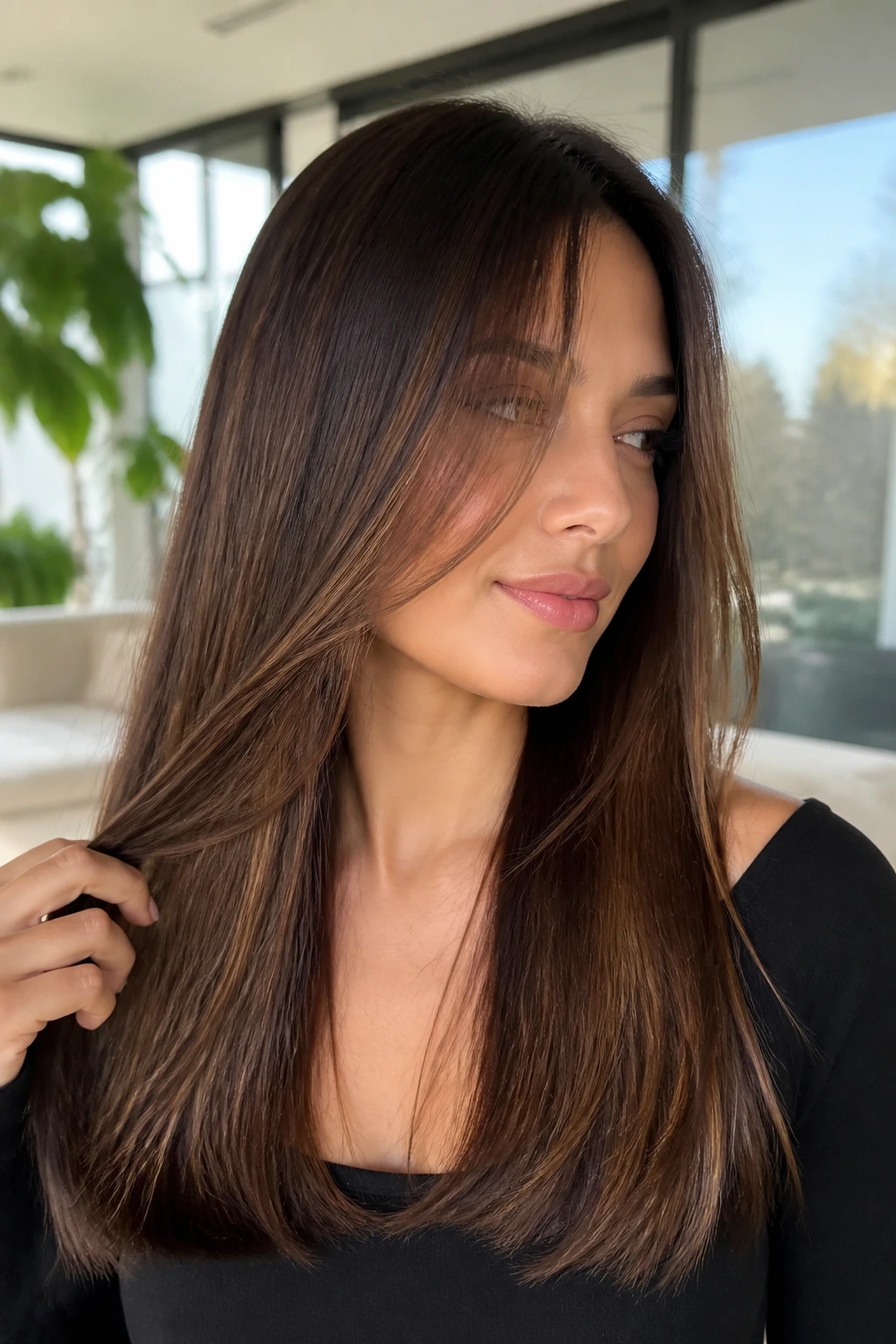
Invisible layers are the quiet option, and I mean that in the best way. Unlike a shag or a butterfly cut, they do not announce themselves from across the room. They live inside the haircut, which is exactly why they suit straight hair that can look boxy when it’s cut blunt.
The shape stays long and clean, but the weight shifts so the sides don’t hang like a flat sheet. That gives round faces a little extra length without adding obvious width at the cheeks. If your hair tends to fall into one heavy line, this is a fix that keeps the polish.
This cut works especially well if you wear your hair down a lot and want it to move when you turn your head. Ask for internal layers only, or very soft face framing that begins below the cheekbone. I would skip a hard fringe here. The haircut is strongest when it stays light and smooth.
7. Long Shag With Airy Texture
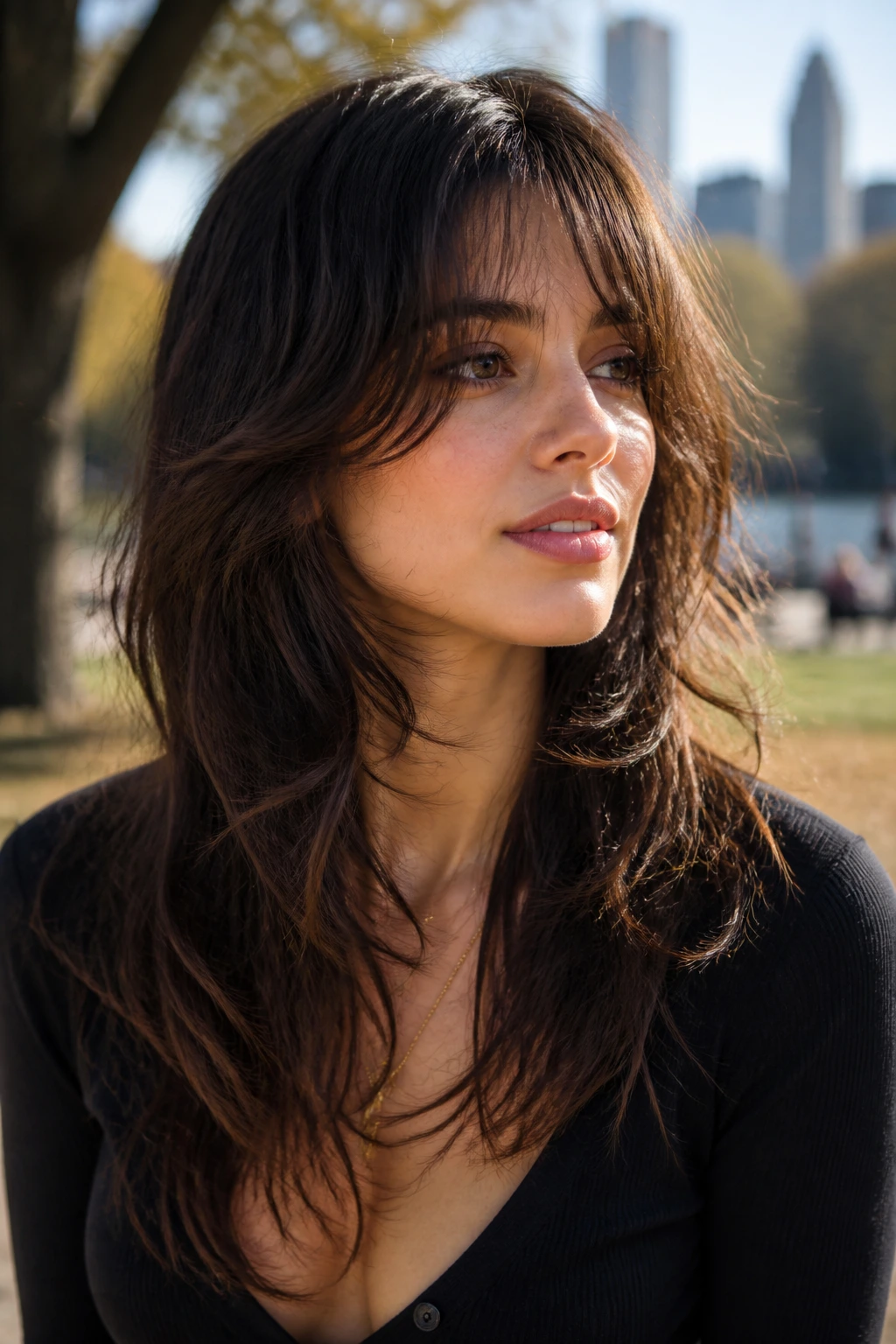
A long shag can be a gift for a round face when it is kept loose enough to stay airy. The whole point is movement, not volume dumped right at the sides. That part gets misunderstood all the time.
What Makes It Airy
The best version uses broken-up layers around the crown, temple, and collarbone, then leaves the longest section intact. The fringe should feel feathered, not thick, and the ends should be point-cut so they do not sit in a blunt line. That matters more than people think.
- fringe that opens the forehead
- crown layers that lift without puffing
- wispy ends around the chest
- soft texture sprayed or scrunched through the midlengths
A little mousse at the roots and a diffuser can keep the shape alive without turning it frizzy. If your hair is fine, keep the layers longer. A shag that goes too short can make the top look sparse in a hurry.
8. The V-Cut With Tapered Ends
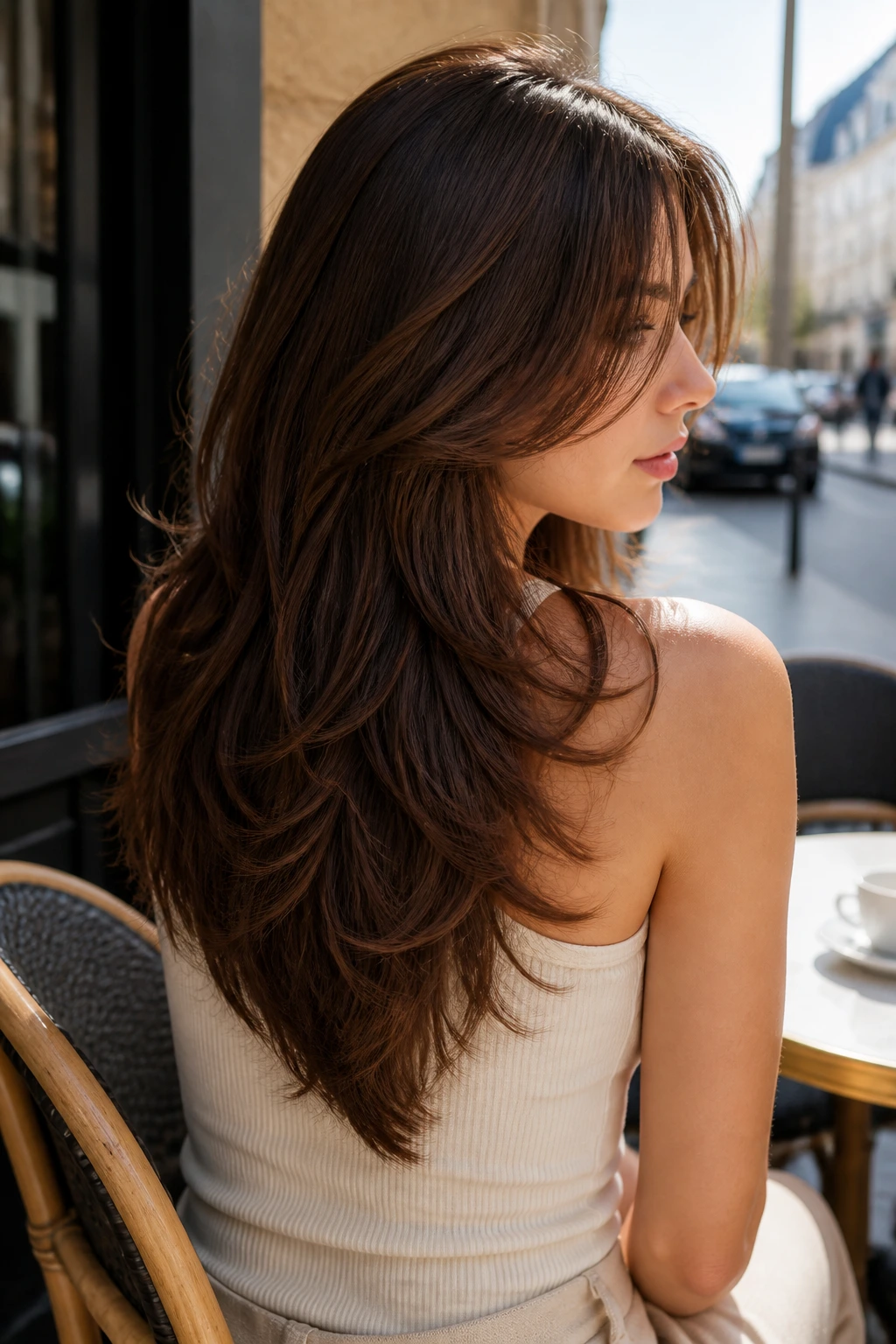
Can a V-cut flatter a round face? Yes, if the taper is soft enough to feel light instead of sharp.
The V shape narrows the visual weight at the back and under the hair, which draws the eye down. That gives the face a longer read, especially when the front pieces still sit below the cheekbone. I like this shape on medium to thick hair that needs a little direction at the ends.
The mistake is going too pointy. A hard, skinny V can feel dated and overly obvious. Keep the point long and the sides softly graduated so the silhouette still feels wispy. A loose wave helps a lot here because it breaks up the straight lines and keeps the bottom from looking like a tail.
9. Cheekbone-Starting Layers
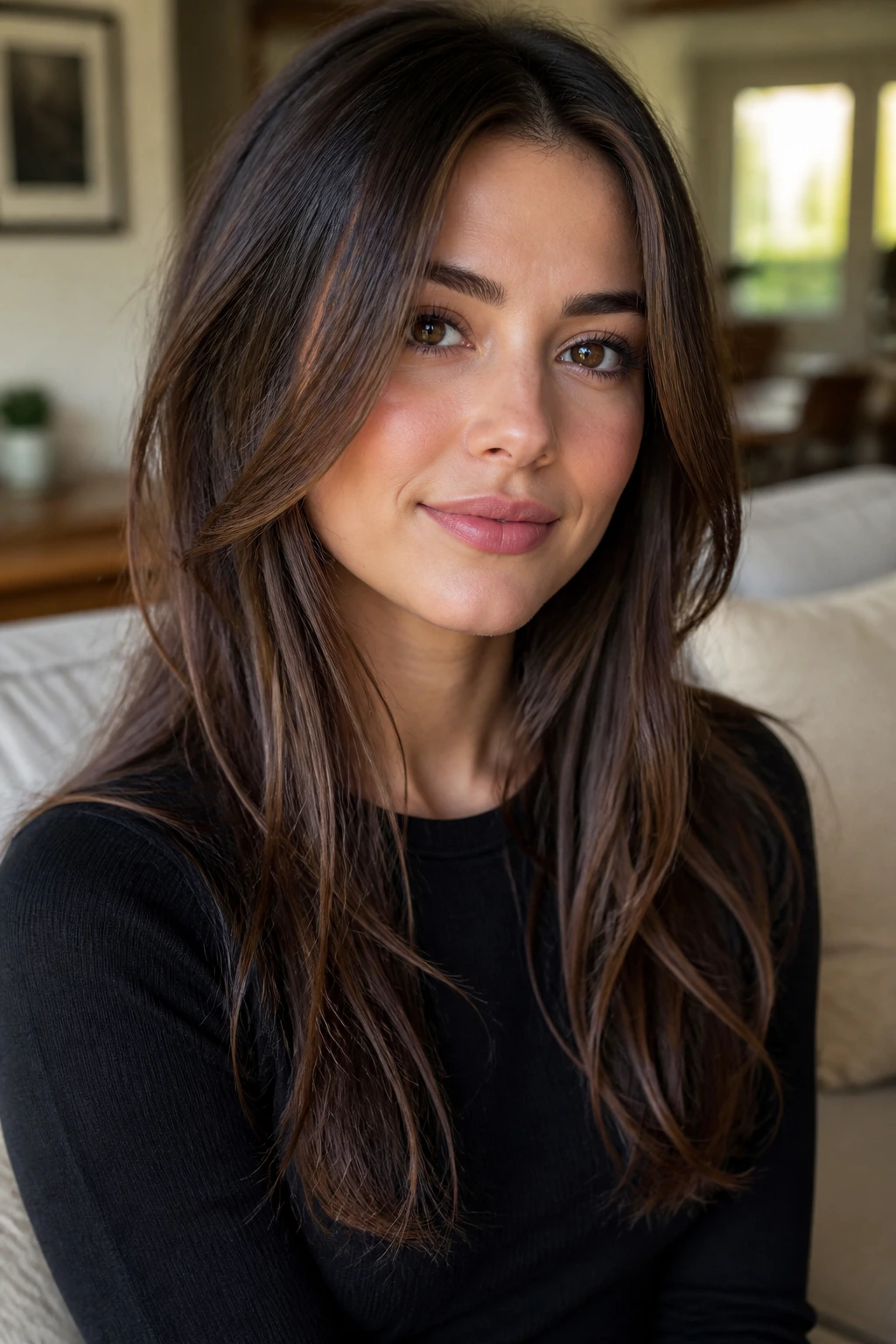
If your face feels widest right across the cheeks, this is the cut to handle with care. Start the shortest layer above the cheekbone and you can accidentally widen the very area you were trying to soften.
A better move is to begin just below that point. The front pieces can skim the face and then drift into the jaw or collarbone, which gives the haircut a longer shape. It sounds tiny on paper. In the mirror, it is not tiny at all.
What to Tell Your Stylist
- begin face framing below the cheekbone
- keep the shortest piece soft, not blunt
- blend the side layers into the ends
- avoid a wide shelf at the jaw
This cut is a smart choice if you want to keep the length but make the front feel less heavy. It gives you room to tuck hair behind the ear without losing the shape.
10. Razor-Cut Center Part Layers
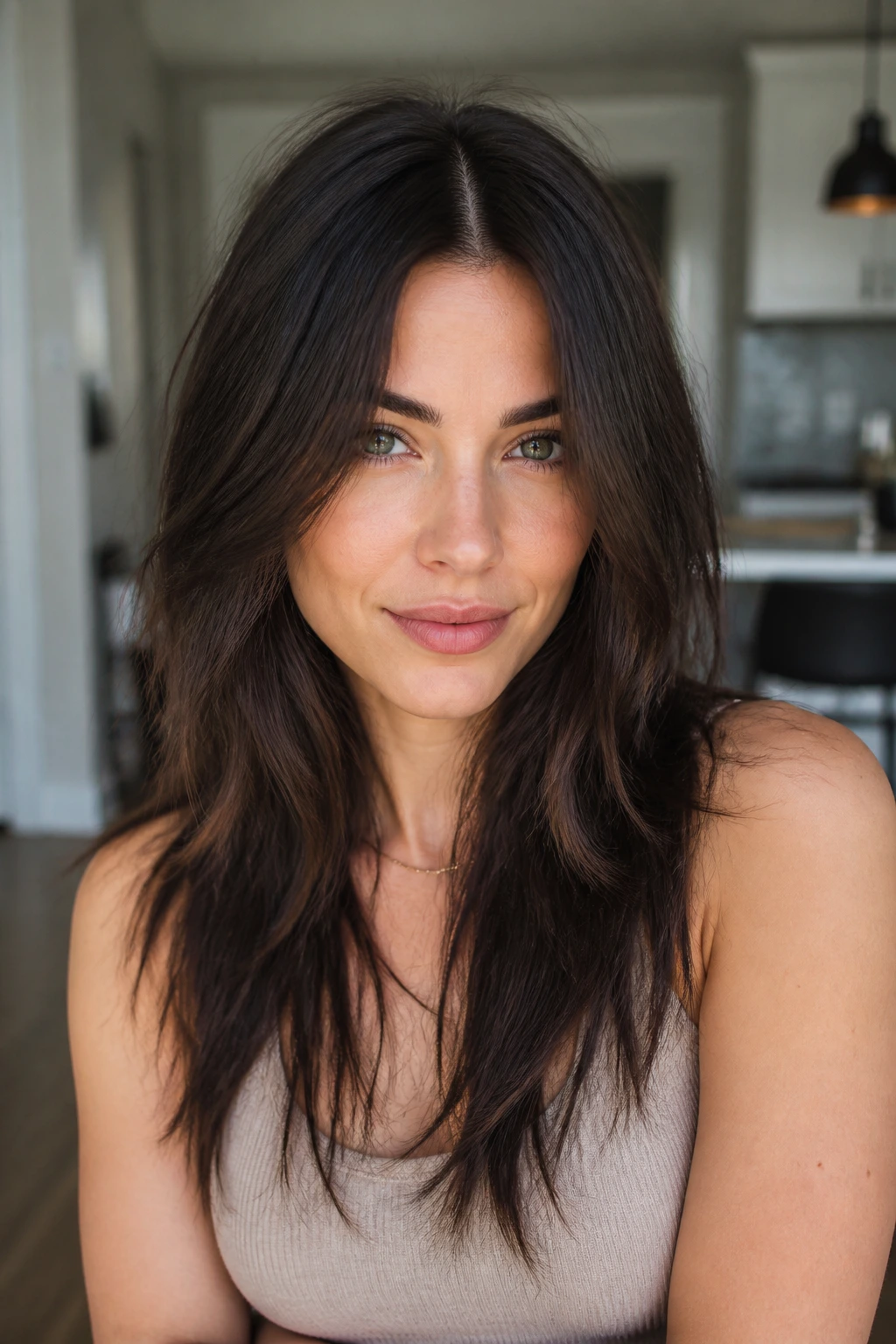
A center part isn’t the problem. The problem is a flat wall of hair hanging down on both sides with no movement in it.
Razor-cut layers solve that by taking some weight out of the front and mids without making the haircut look chopped. On round faces, that softens the side panels and keeps them from sitting like two dense curtains. The center part helps by creating a clean vertical line, which is a nice visual counter to fuller cheeks.
I’d be picky about hair type here. Thick, straight, or slightly wavy hair tends to respond well. If your hair is already frizzy or porous, a razor can make the ends look frayed. In that case, ask for point-cut scissors instead. Same idea, less roughness. The shape should feel piecey, not shredded.
11. Bottleneck Bangs With Waves
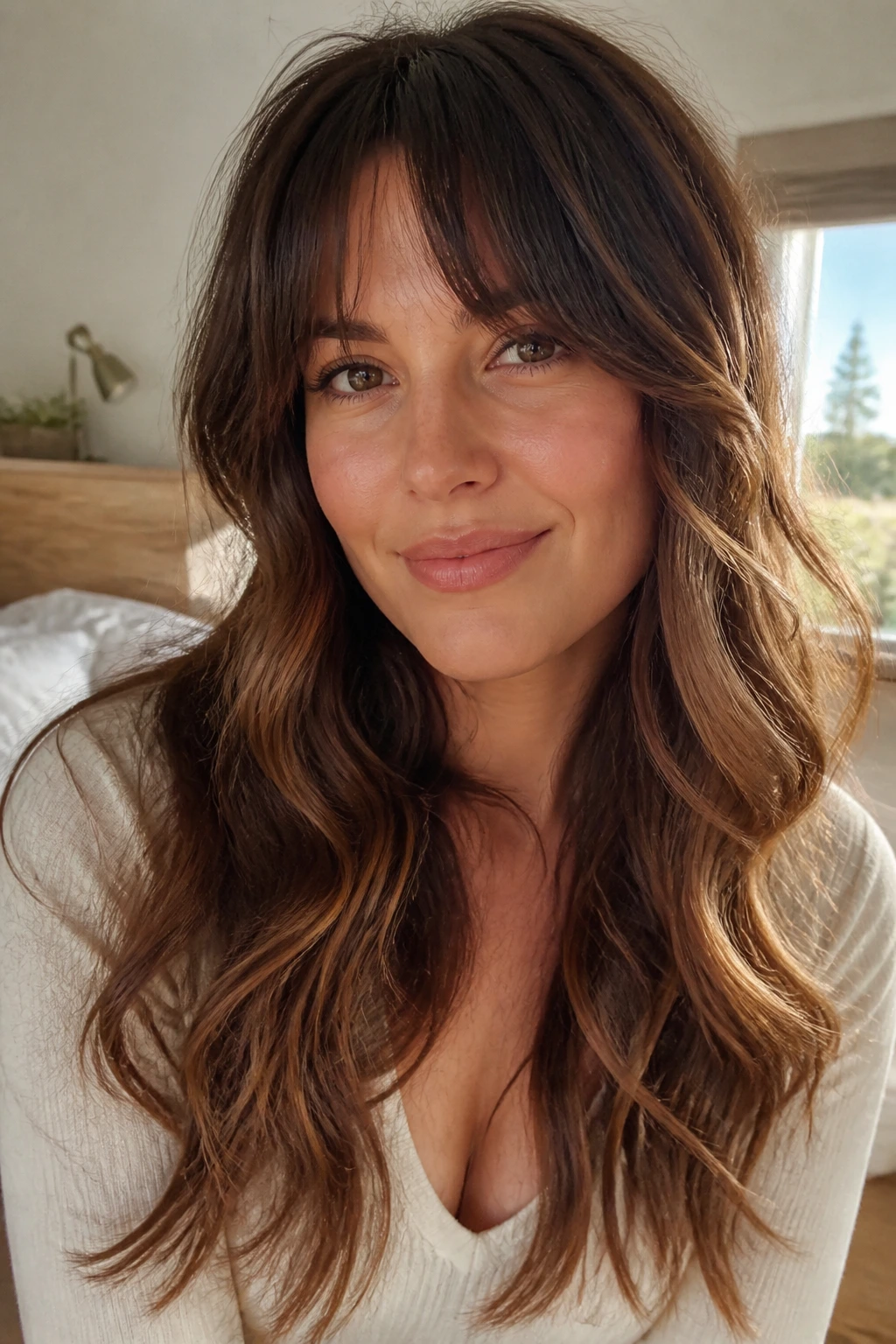
Bottleneck bangs are a clever little shape. They’re narrow near the center, then open out near the temples and cheekbones, which means they don’t sit like a straight line across the forehead.
That opening matters on a round face. It breaks up width at the top and lets the sides of the fringe fall diagonally, which is far friendlier than a blunt bang. With long waves underneath, the whole haircut reads soft and elongated instead of full and compact.
The best part is the grow-out. Bottleneck bangs are less annoying than a heavy fringe because they slide into curtain bangs pretty naturally. If you style them, use a small round brush or a Velcro roller at the root for 3 to 5 minutes while the hair cools. That shape gives you lift without a puffy bang puff.
12. Deep Side Part With Cascading Length
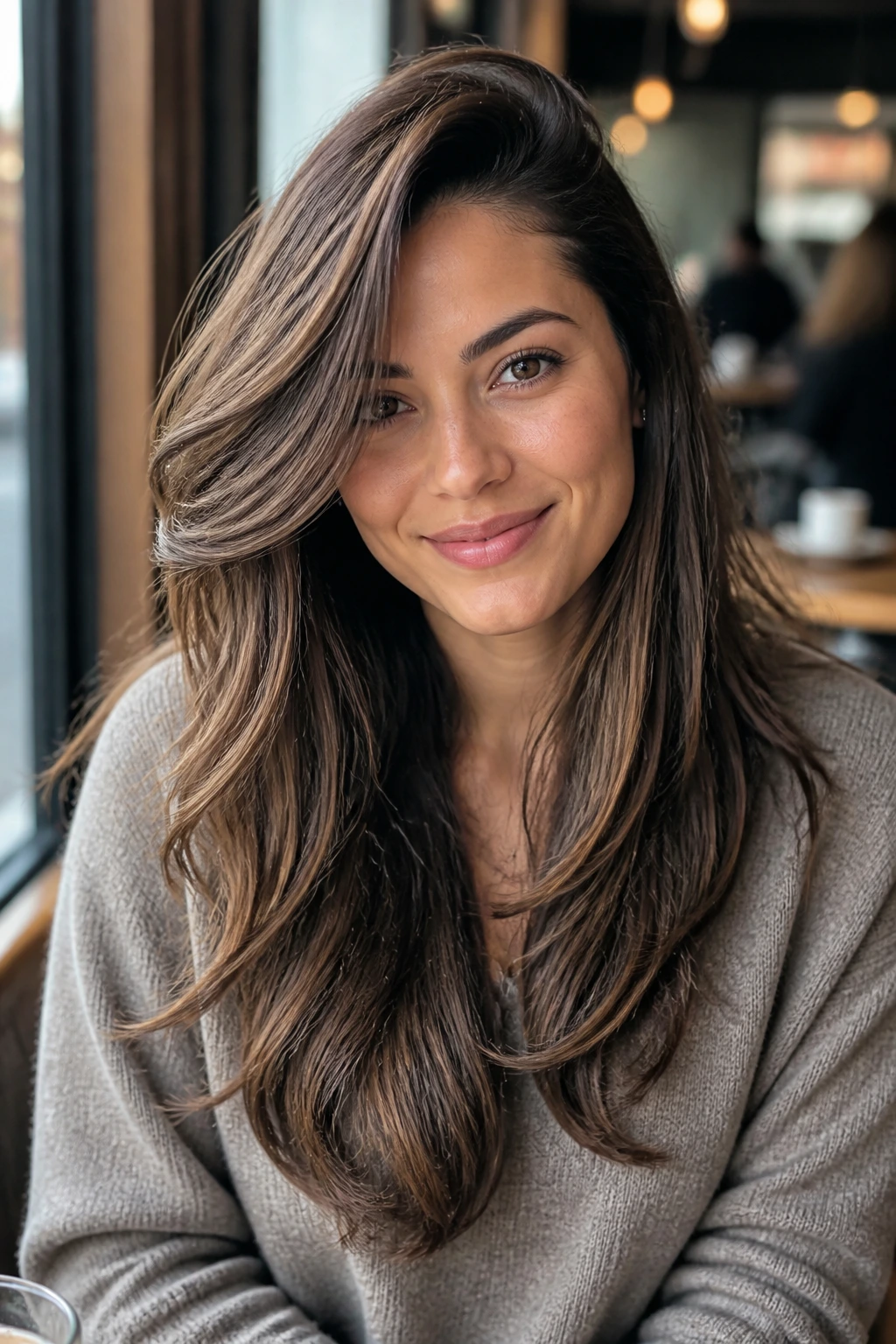
Unlike a center part, a deep side part gives the roots some lift and breaks up the roundness fast. It also gives the hair a diagonal line, which does a lot of shape work with almost no effort.
The cut should support that part with layers that cascade from the heavier side down into the length. I like this on people who want a polished look but do not want to wear bangs. The front can sweep across the forehead, then melt into the rest of the hair somewhere around the jaw or collarbone.
If your hair falls flat at the roots, mist a light mousse there and blow-dry the part in the opposite direction first. That tiny reset gives the side more body. Then flip it back and smooth the top layer over. It is a small trick, but it makes the cut look intentional instead of accidental.
13. Blowout Layers With Crown Lift
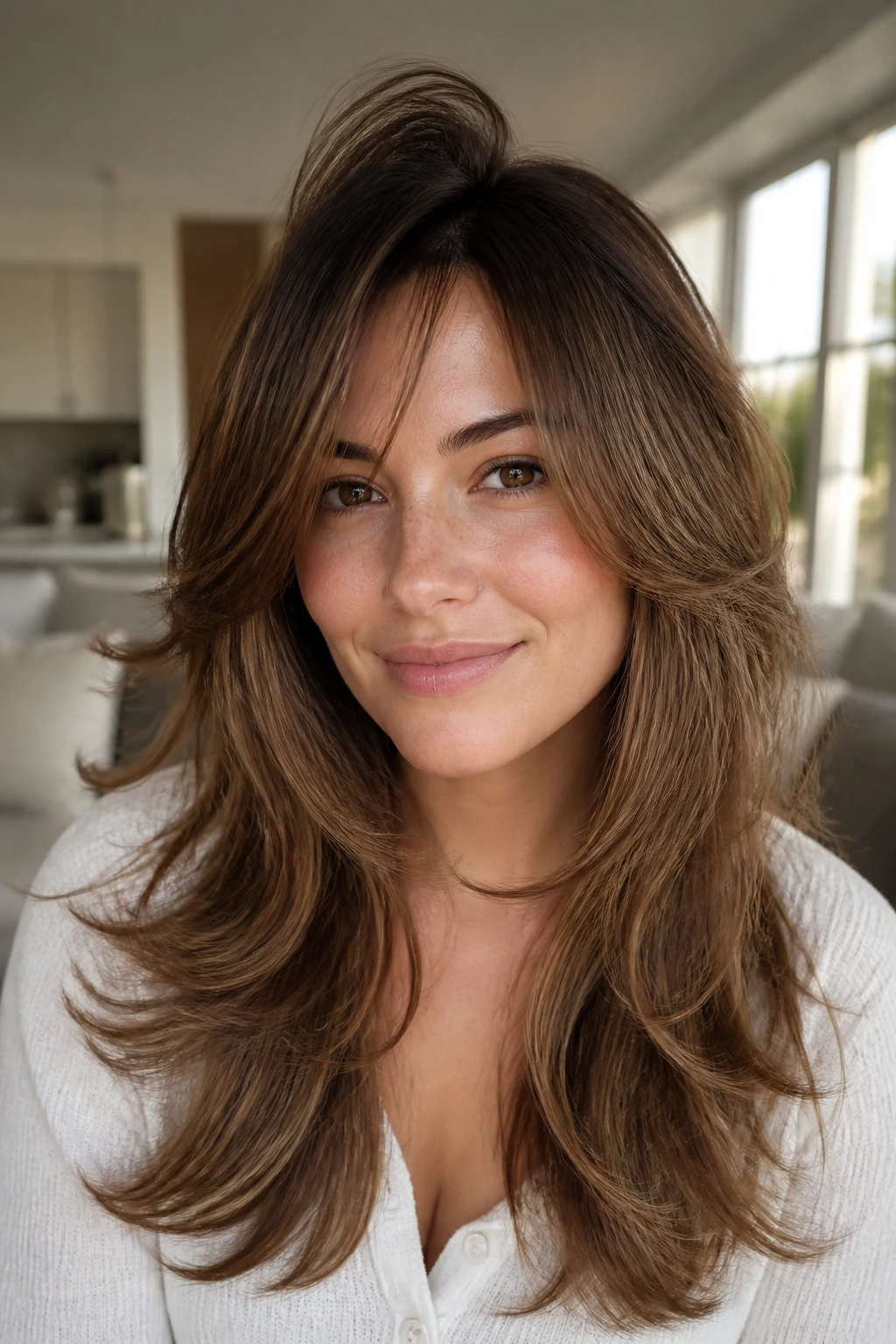
This is the haircut that looks like you spent half an hour with a round brush, even when you didn’t. The secret is where the volume lives: up top and through the ends, not directly on the cheeks.
How to Ask for It
Tell your stylist you want layers that support a blowout, with lift at the crown and soft framing around the face. The shortest layers should still stay below the cheekbone, and the ends should be light enough to flip or curve with a brush. Heavy ends ruin this look fast.
- crown layers for height
- face framing that stays low
- ends texturized for movement
- a shape that bends away from the cheeks
A 2-inch round brush can give this cut a smooth finish, but a medium Velcro roller at the front works too if your arms get tired. That’s the real appeal here: the haircut is doing some of the styling for you.
14. Feathered Temple-to-Chest Layers
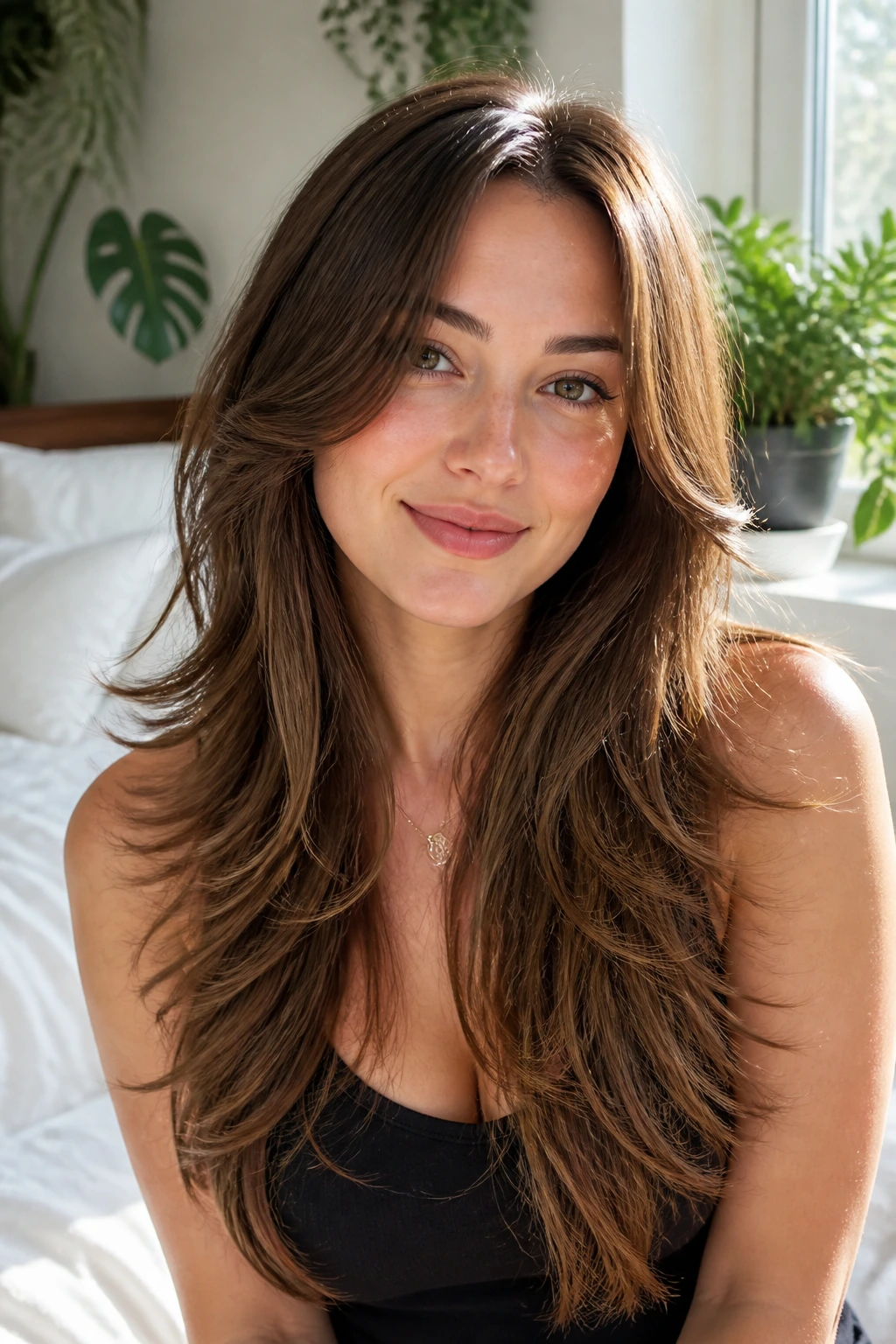
Feathering is underrated. When it starts around the temple and travels down toward the chest, it softens the side of a round face without making the whole cut feel thin.
The point is not to shave away all the weight. It’s to let the layers break up the outline in a gentle way. That keeps the hair from reading as one wide mass, especially if it’s medium to thick. I like this shape when the client wants movement but hates looking “layered” in an obvious way.
A stylist will usually point-cut or lightly razor the ends so the pieces separate a little. That separation is what gives the wispy finish. If the feathering gets too short near the jaw, the hair can flare out, so keep the softest movement lower and let the face frame stay long.
15. Wispy Layers for Fine Hair and Round Faces
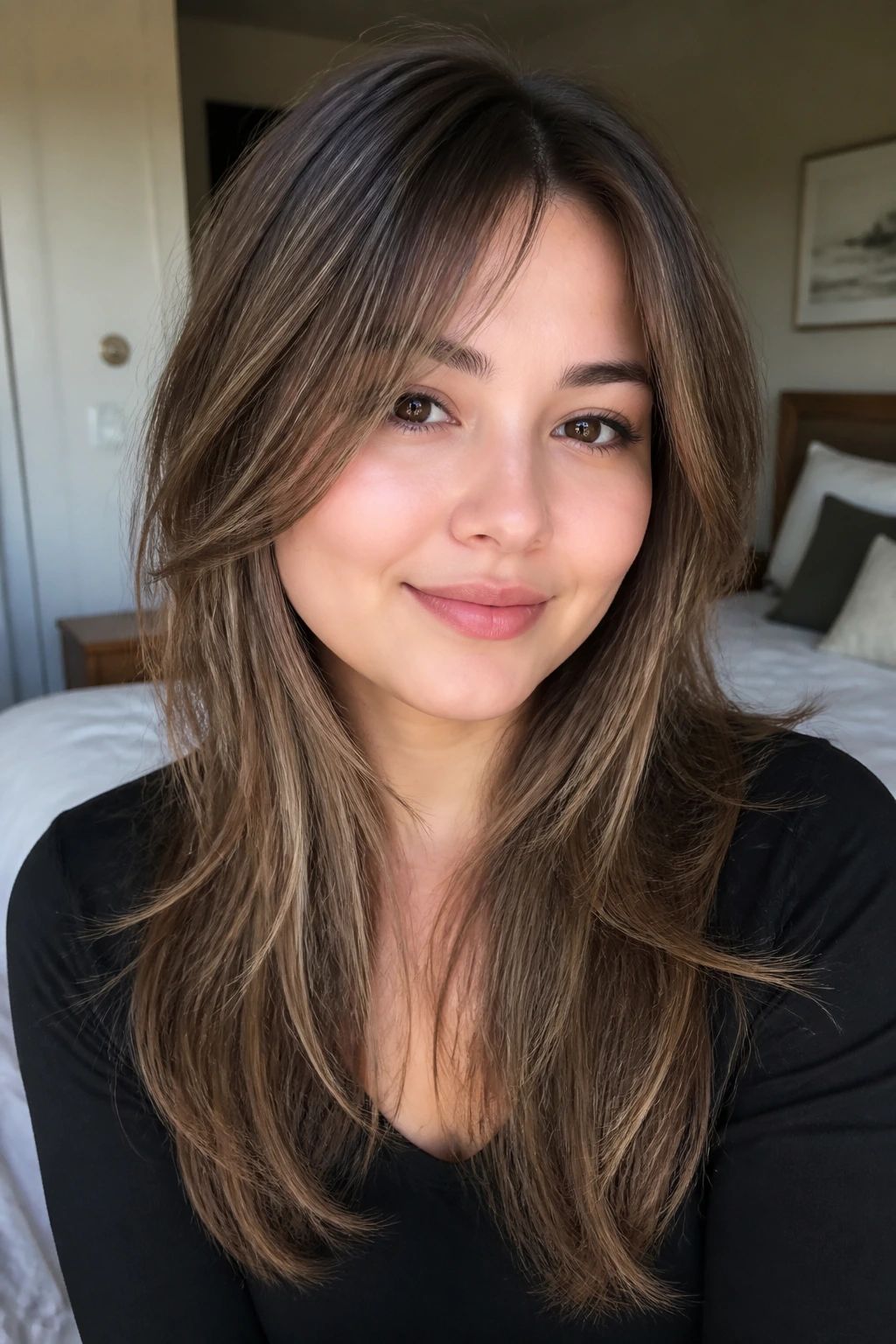
Fine hair needs restraint. Too many short layers can hollow it out and make the ends look thin, which is the opposite of what most people want from a wispy cut.
The better answer is long, spaced-out layers that keep some weight in the bottom while still letting the sides move. On a round face, that gives you shape without exposing too much scalp at the crown. The haircut stays light, but it doesn’t collapse.
What to Avoid
- short layers stacked around the cheeks
- heavy thinning shears through the top
- blunt bangs that take up too much forehead space
- over-texturizing the ends until they look sparse
A root-lifting spray and a 1.25-inch curling iron can fake more body than cutting the hair into pieces ever will. I’d rather see a fine-haired client leave with a slightly fuller silhouette than an over-layered cut that looks tired after one shampoo.
16. De-Bulked Layers for Thick Hair
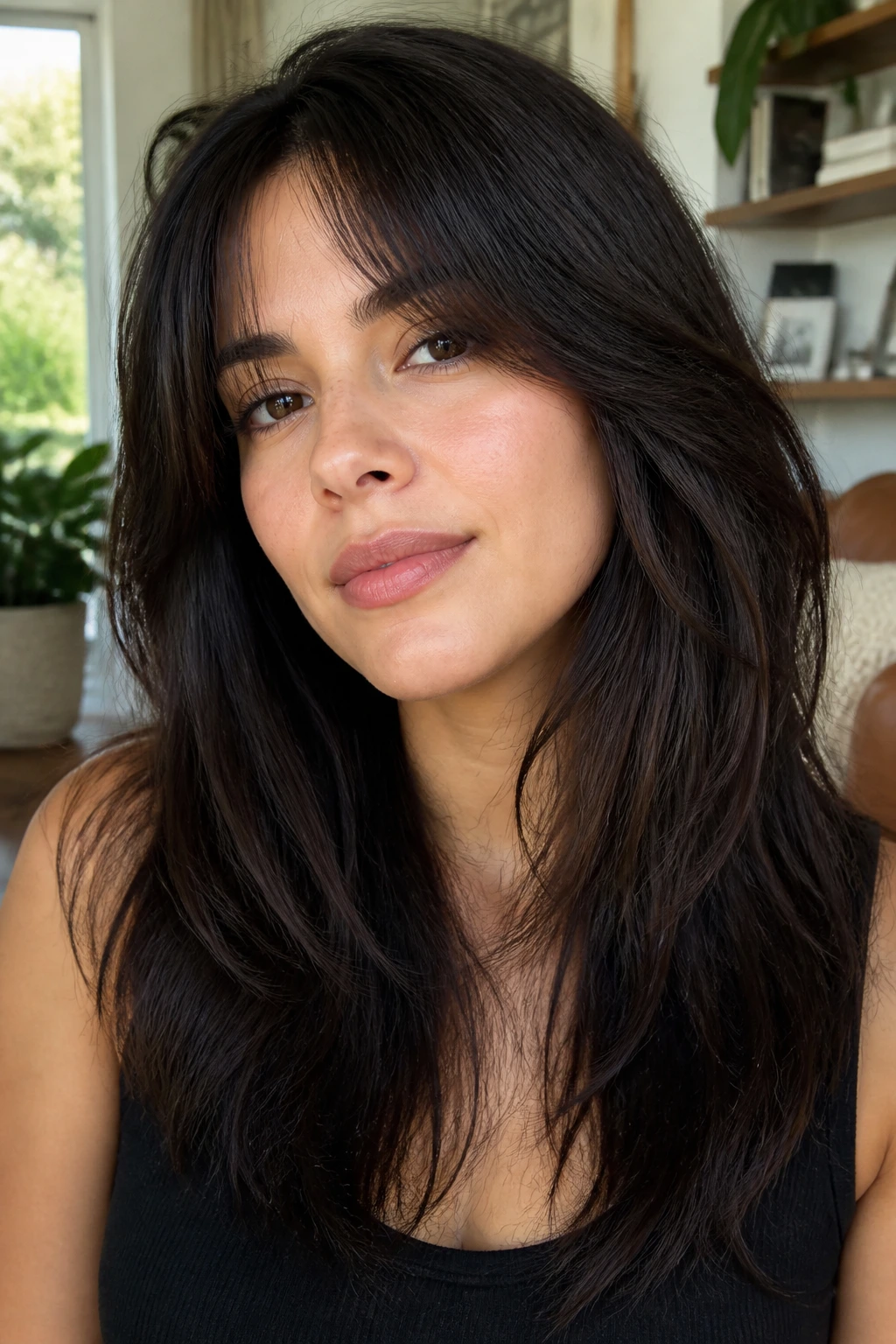
Thick hair can go wide fast. On a round face, that usually shows up as a soft halo around the cheeks and jaw, which sounds lovely until the whole shape starts feeling too broad.
Internal de-bulking fixes that without destroying the length. The stylist removes weight from inside the haircut, then keeps the outer shape long and wispy. That means the hair can still move, but it stops acting like a triangle. The front should stay longer than the side panels, and the ends should be soft enough to fall rather than stand out.
This cut is a good place for slide cutting or careful point cutting. I would be cautious with aggressive razoring on coarse hair, because it can swell and frizz. A clean, controlled removal of weight is usually better. The goal is not to thin the hair into nothing. The goal is to let it stop fighting the face.
17. Wavy Hair With Broken-Up Ends

Wavy hair can carry a wispy cut better than almost any other texture, because the wave naturally breaks the outline. The ends do not sit as a hard line, and that softness helps a round face feel a little longer and lighter.
The trick is to keep the cut irregular in a good way. A blunt perimeter can make waves puff outward at the sides, while broken-up ends let the hair settle into uneven movement. I like a dry cut here, or at least a consultation with hair in its natural wave pattern, because shrinkage changes everything once it dries.
Use a curl cream or lightweight mousse, then scrunch and leave it alone. A round brush can polish the front if you want, but don’t chase perfect uniform bends. Waves look better when they keep some looseness. That little bit of mess is part of the charm.
18. Balayage-Friendly Contour Layers
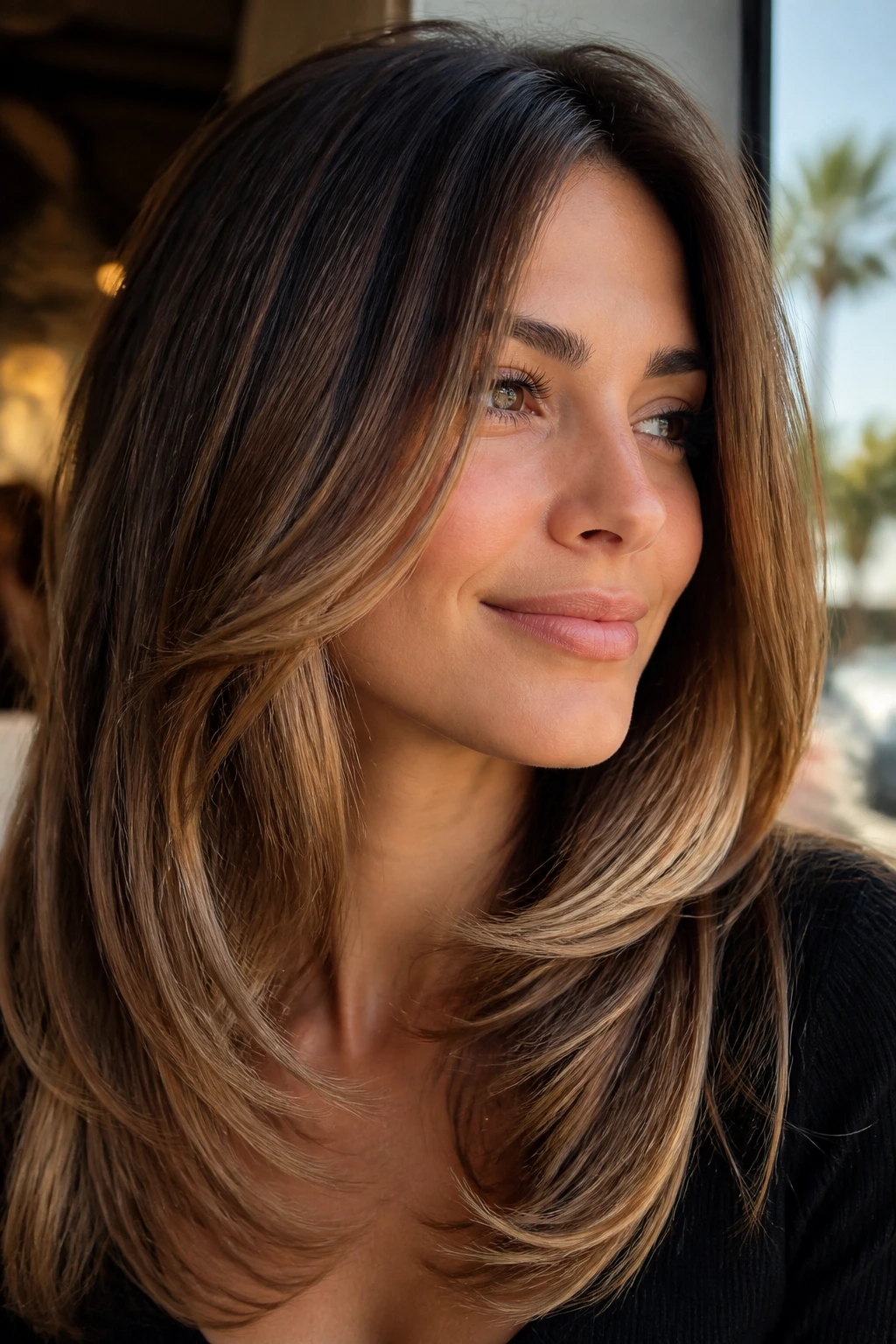
Color changes the haircut more than people admit. If you wear balayage or soft face-framing highlights, contour layers can make a round face look longer by placing lighter pieces where the eye should travel.
The layers need room to show the color. That means face-framing pieces that fall past the cheekbone and midlength layers that don’t crowd the sides. A round face looks best when the brightest pieces sit a little lower than you’d expect, often near the jaw or collarbone rather than right on the cheek.
This cut is a smart pick if you like dimension in your hair and want the color to do part of the shape work. Keep the front soft, the ends wispy, and the contrast gentle. Too much striping around the cheeks can pull focus the wrong way. A little placement goes a long way here.
19. Shattered Ends With Length
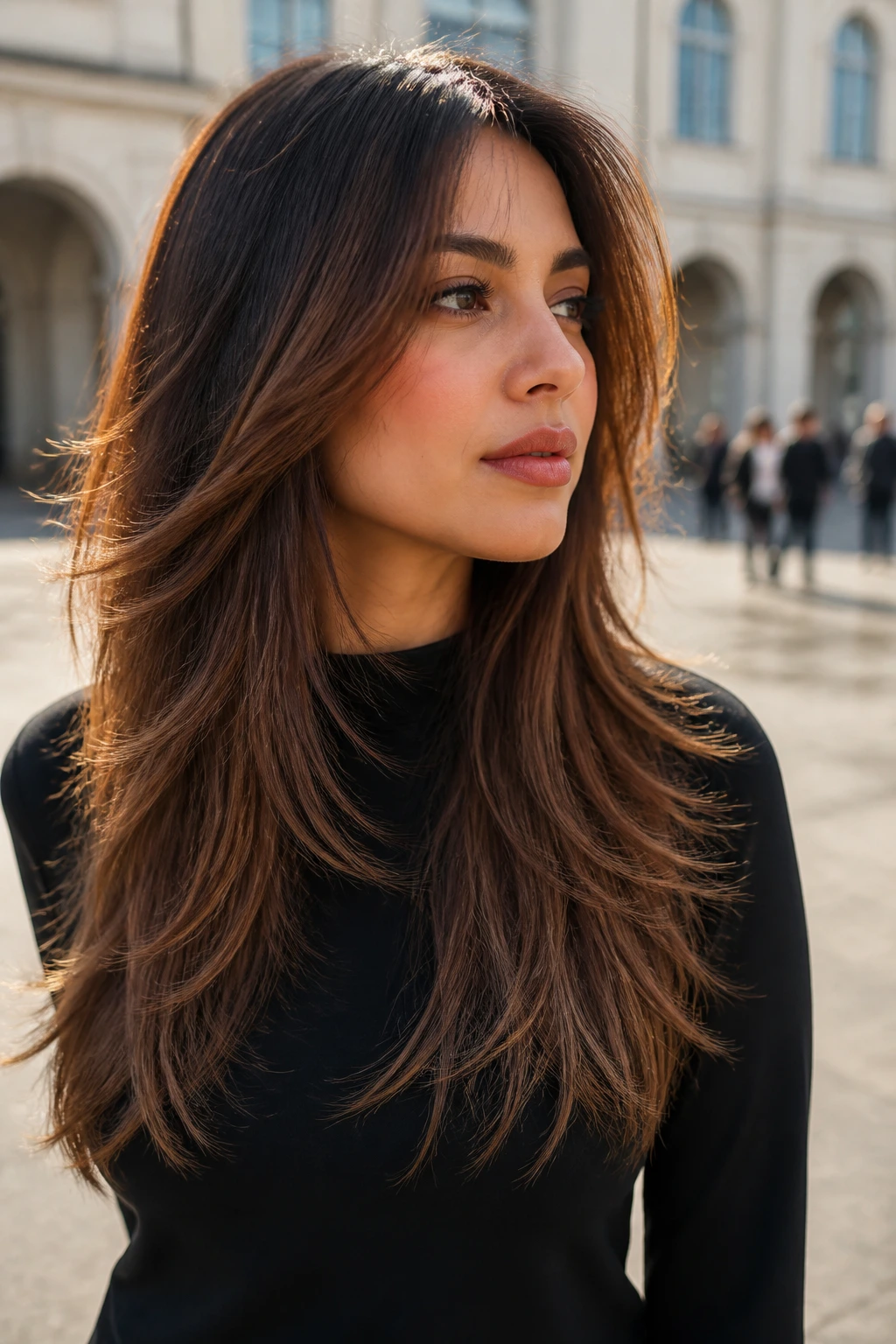
Shattered ends sound edgy, and they can be, but on a round face they work best when the fracture lives only at the bottom few inches. The point is to take the heaviness out of the perimeter without making the cut look shredded.
That lighter edge helps long hair fall with more movement. Instead of sitting as a solid block, the ends break apart just enough to create some shadow and swing. It is a nice fix for hair that feels too heavy around the lower face.
I’d use this on straight or slightly wavy hair that tends to look dense at the bottom. Keep the face frame longer and the shattered texture lower down. If the roughness creeps too high, the shape can look thin in the wrong places. One of those cases where less really is more.
20. Softer Wolf Cut
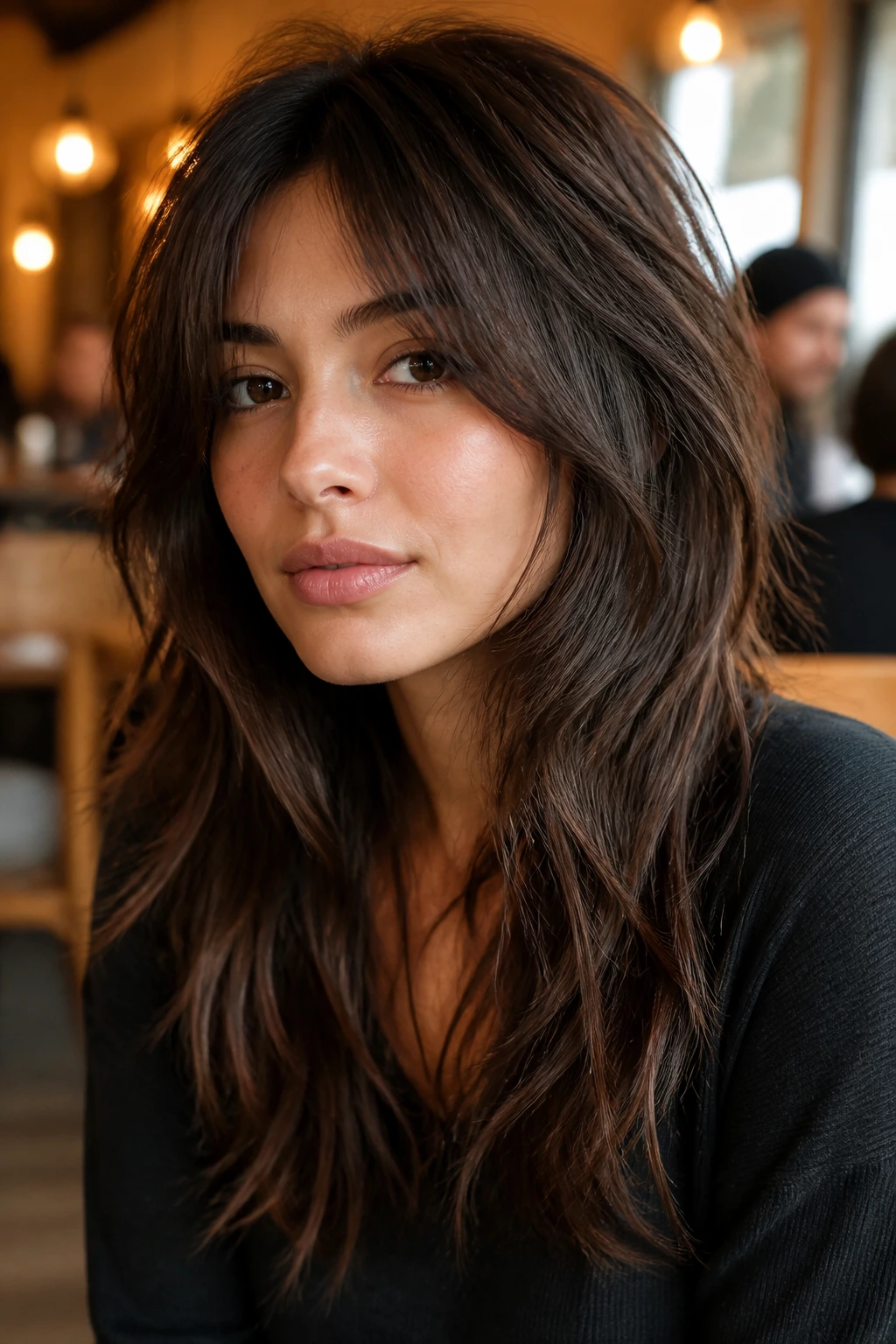
The wolf cut can be a mess on a round face if it gets too short around the cheeks. That does not mean you have to skip it. It means you soften it.
A softer wolf cut keeps the edgy, broken layers through the crown and upper midlengths, but the front pieces stay long enough to skim below the cheekbone. That balance lets the haircut keep its bite without adding width where you do not want it. It also helps if the fringe is wispy rather than heavy.
Where to Soften It
- keep the side layers longer
- blur the transition from crown to mids
- avoid a hard, choppy line at the cheek
- style with a light texture spray, not a crunchy one
This is a good choice if you like texture and movement and you do not want a haircut that feels too precious. It has a little attitude, but the length keeps it wearable.
21. Polished U-Cut With Interior Movement
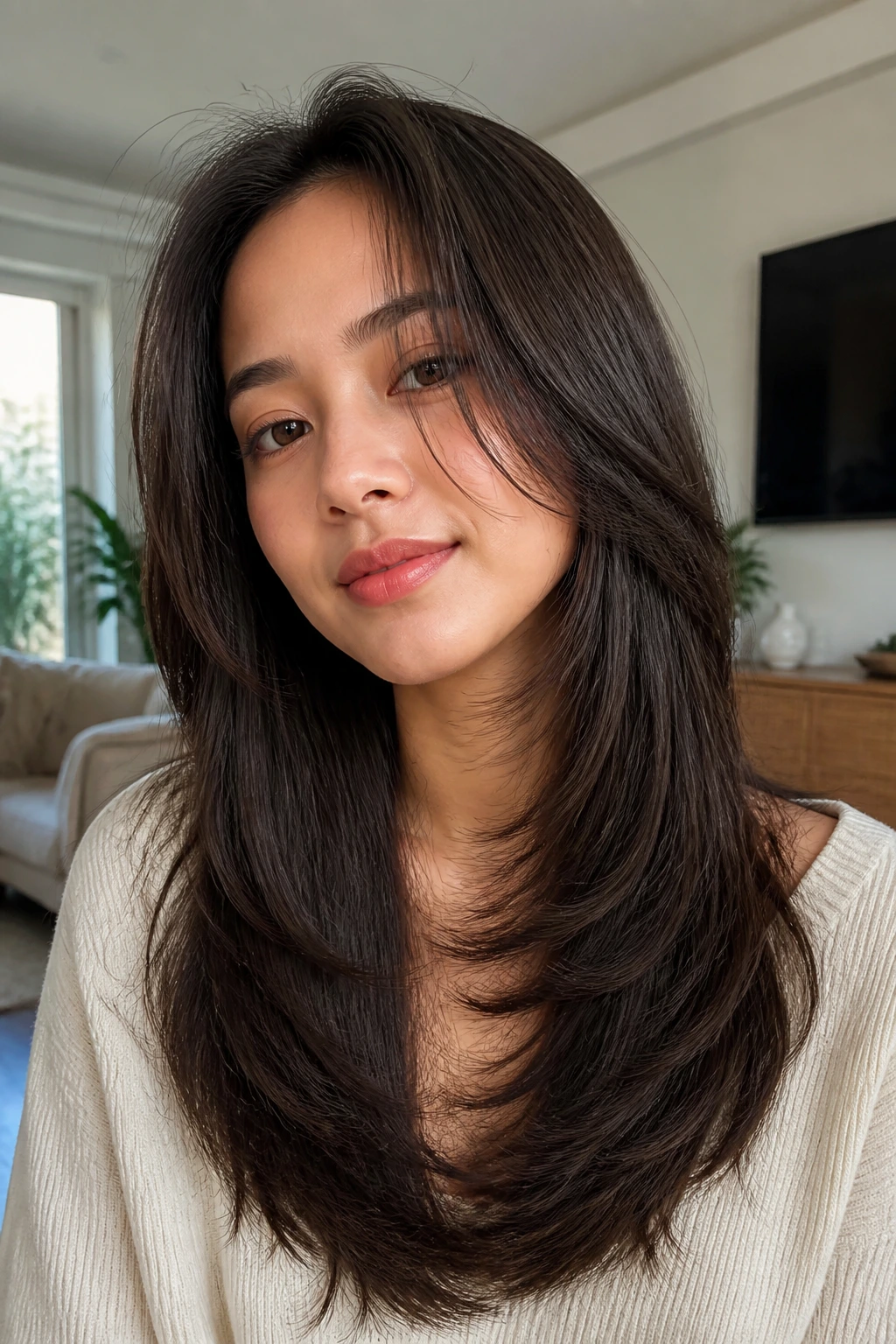
If you like your hair tidy, a polished U-cut is hard to beat. It keeps a clean outline, but the interior layers add motion so the haircut does not hang like a curtain.
On a round face, that matters because you get structure without bulk. The U shape curves gently around the back and sides, while the hidden movement keeps the front from feeling heavy. It is one of those cuts that looks calm from the outside and still moves when you run your fingers through it.
I like this on people who wear long hair to work, out to dinner, and everywhere in between. It does not scream for attention. It just sits well. If you want a cut that can be air dried into a neat shape or blown out into a soft bend, this is one of the better bets.
22. Long C-Cut With Side Fringe
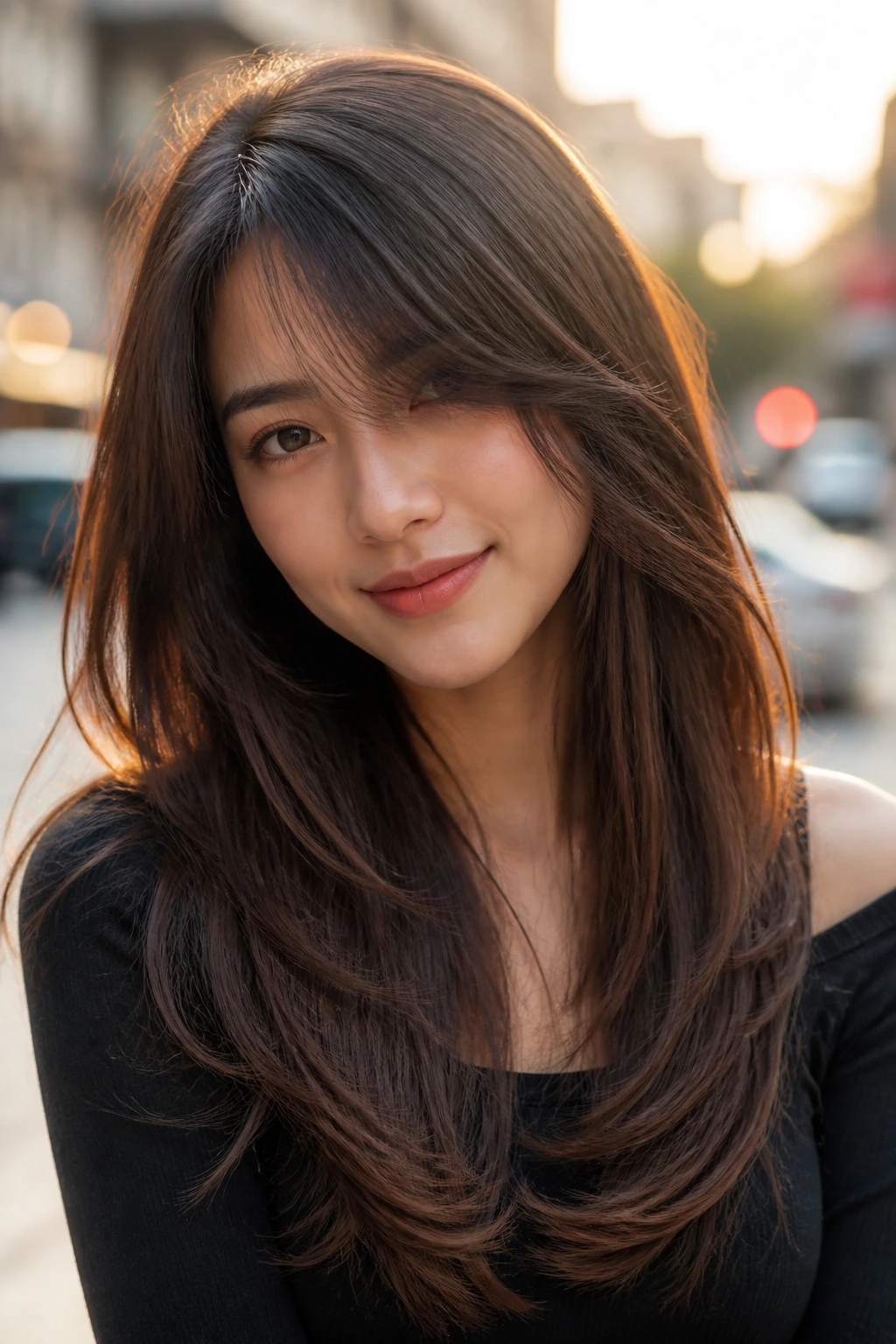
A C-cut wraps the hair around the face in a soft curve, which sounds simple, but it can be excellent on round faces when the curve stays low enough.
The “C” comes from the shape of the front and side pieces curling inward and then flowing back out through the length. Add a side fringe, and you get a diagonal line that slices through the fullness of the cheeks. That combination gives the face some angle without looking severe.
Ask Your Stylist For
- front pieces that hug the jaw, not the cheek
- a side fringe that lands around the brow or temple
- soft layering through the lower half of the cut
- ends that curve, not flip hard
A medium round brush and a touch of smoothing serum are enough to keep this one tidy. It is one of the cleanest options on this list if you want a feminine shape that still trims down width.
23. Curly Long Layers for Round Faces
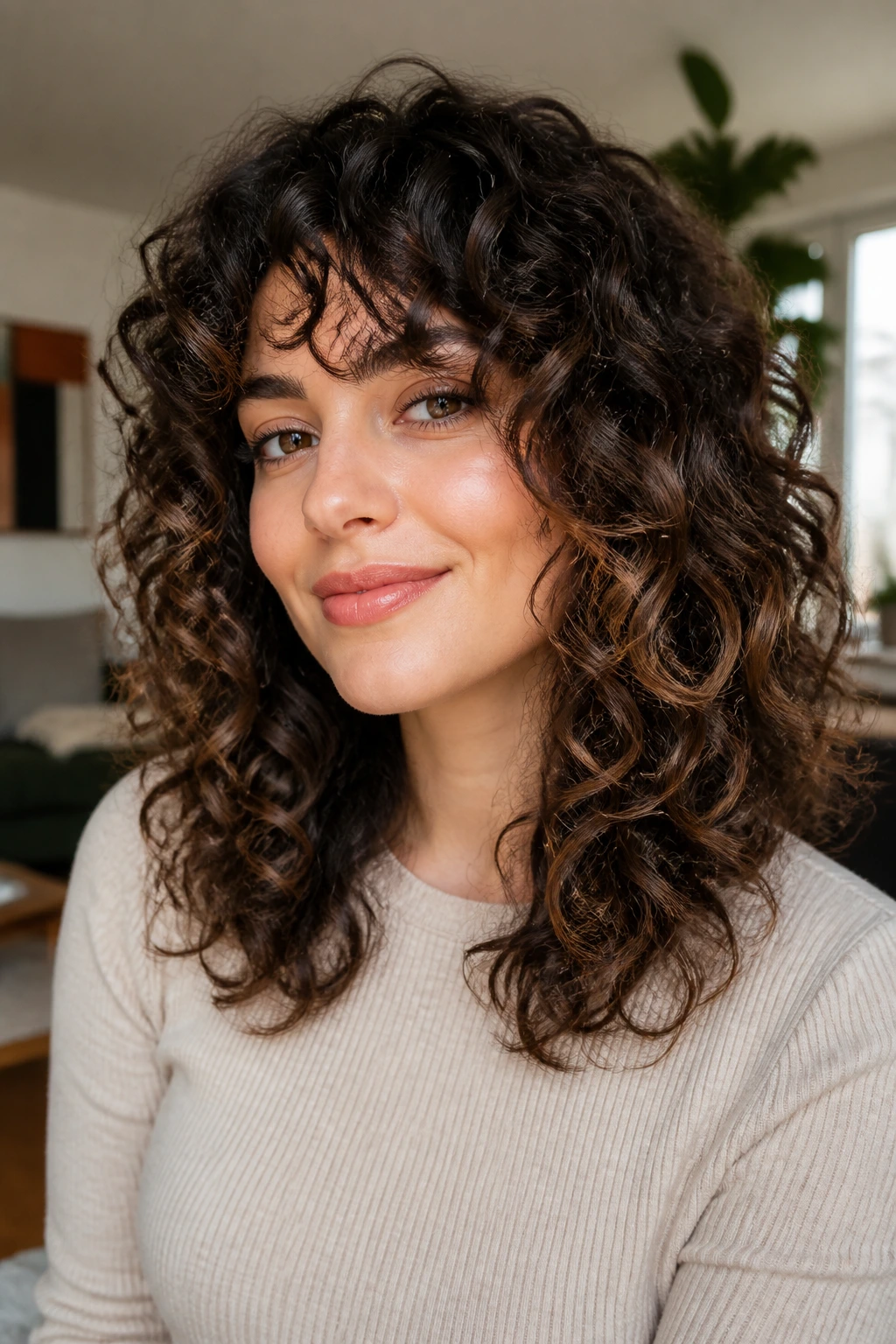
Curly hair needs room to behave like curly hair. If you try to force it into a blunt long shape, the sides can balloon and sit right where a round face already has the most width.
Long layers solve that by giving the curls space to stack vertically instead of spreading out sideways. The shortest layer should usually stay below the chin, and sometimes much lower, depending on curl tightness. That keeps the cheek area open and lets the shape fall around the face rather than into it.
A dry cut is worth asking about if your curls are inconsistent, because shrinkage can fool even a good scissors hand. Once the shape is right, use a curl cream or gel that gives definition without crunch. The wispy part here comes from how the curls separate, not from thinning the hair into bits.
24. Sleek Minimal-Layer Cut
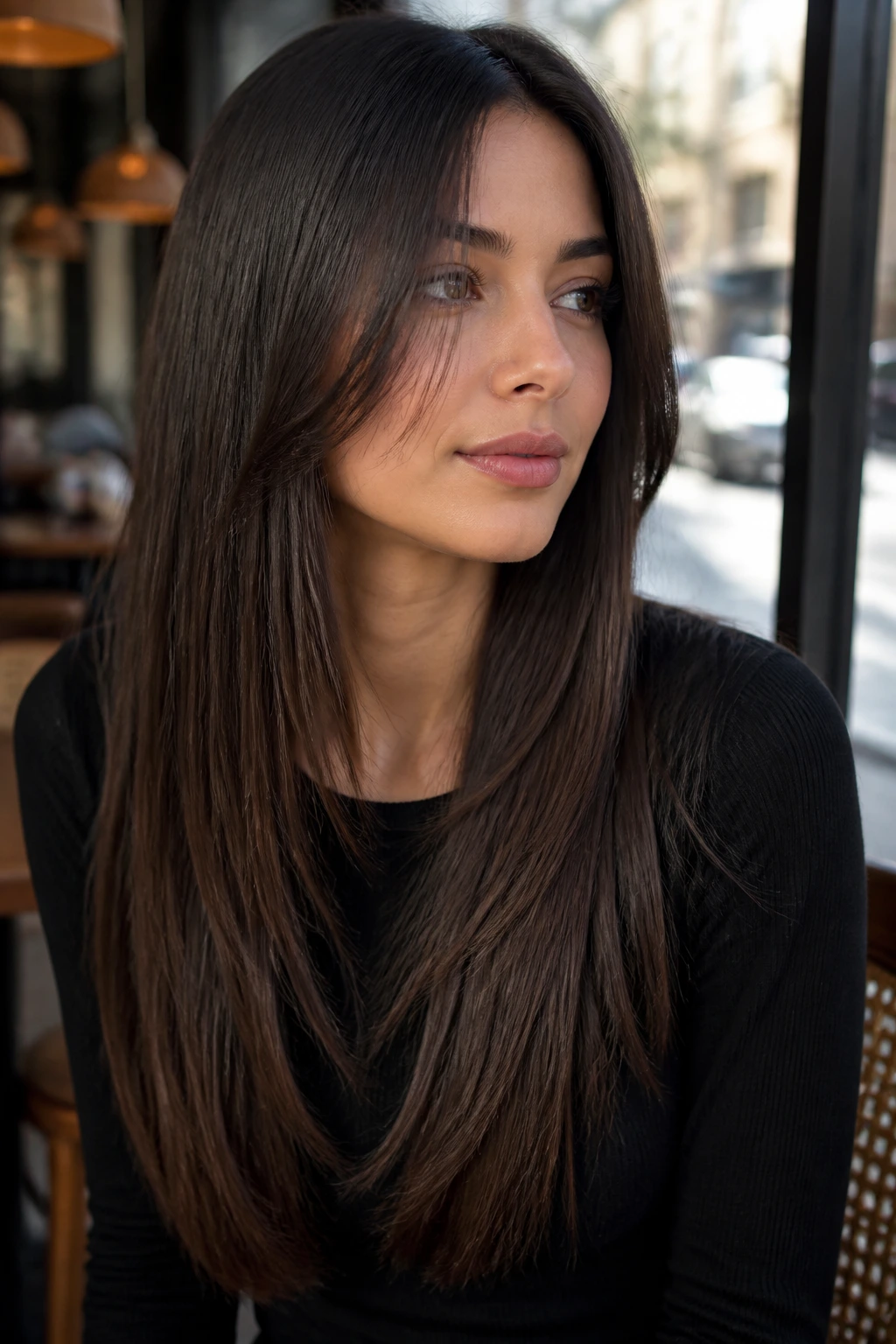
Not every round face needs texture everywhere. Some look better when the hair stays smooth and the layers are barely there.
This cut keeps the length long and the shape clean, then adds just enough front movement to stop the sides from feeling flat. A subtle face frame below the cheekbone and a soft center or off-center part can do the job without making the haircut busy. That restraint is the point.
It works best for people who like glossy, straight styling and do not want to spend time roughing up the ends with sprays or irons. The danger is making the hair too blunt. If the perimeter gets heavy, the whole look can widen. Keep the ends soft, the part honest, and the line long. That is enough.
25. Long Face-Framing Layers That Stay Below the Cheeks
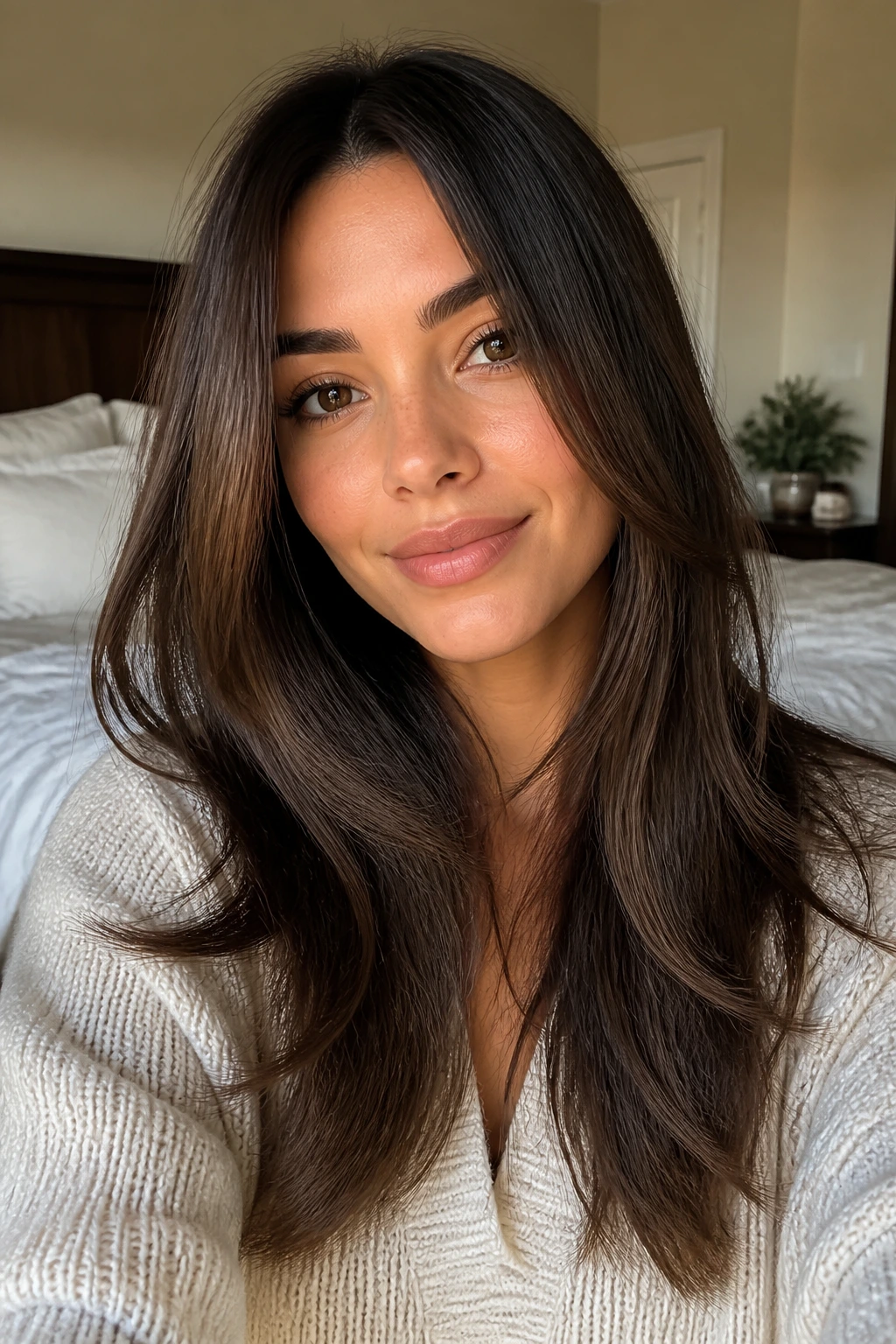
If you only remember one rule, make it this one: keep the shortest face-framing piece below the cheekbone. That single detail gives you the most flexibility, because it works with waves, straight hair, blowouts, ponytails, and loose clips.
The rest of the haircut can shift around that anchor point. You can go U-shaped, slightly layered, softly feathered, or more textured at the ends, but the front stays long enough to lengthen the face instead of widening it. That is why this cut is such a reliable starting point.
I like this choice for people who change their part, wear their hair up a lot, or just do not want to babysit their haircut. It looks calm on a normal day and still holds its shape when you tuck one side behind the ear. If you are stuck between several options, this is the one I’d hand to a stylist first.
