



Round faces and long hair can be a very good match. The trick is that the haircut has to do a little more work than people expect: it needs to stretch the eye downward, keep bulk out of the cheek area, and give the face some angle instead of a hard horizontal line. The best long haircuts for round faces do that without making the hair feel chopped up or fussy.
A round face usually has soft curves, a similar width and length, and a bit of fullness through the cheeks. That does not mean you need to “hide” it. It means the cut should bring in some vertical movement, some shape below the cheekbones, and a little breathing room around the jaw. I’ve seen blunt lines sit right on the widest point of the face and make everything feel wider. I’ve also seen the exact same hair length look sharp and lean once the layers were dropped lower and the part changed.
Blunt ends at the cheek can be a fight you’ll lose.
The good news is that long hair gives you room to work. You can use layers, bangs, parting, texture, or a cleaner one-length shape, depending on how much styling you want to do and how much hair you actually have. Thick hair, fine hair, curls, waves, straight hair — they all need a slightly different cut, even if the goal is the same.
1. Long Layers That Start Below the Chin for Round Faces
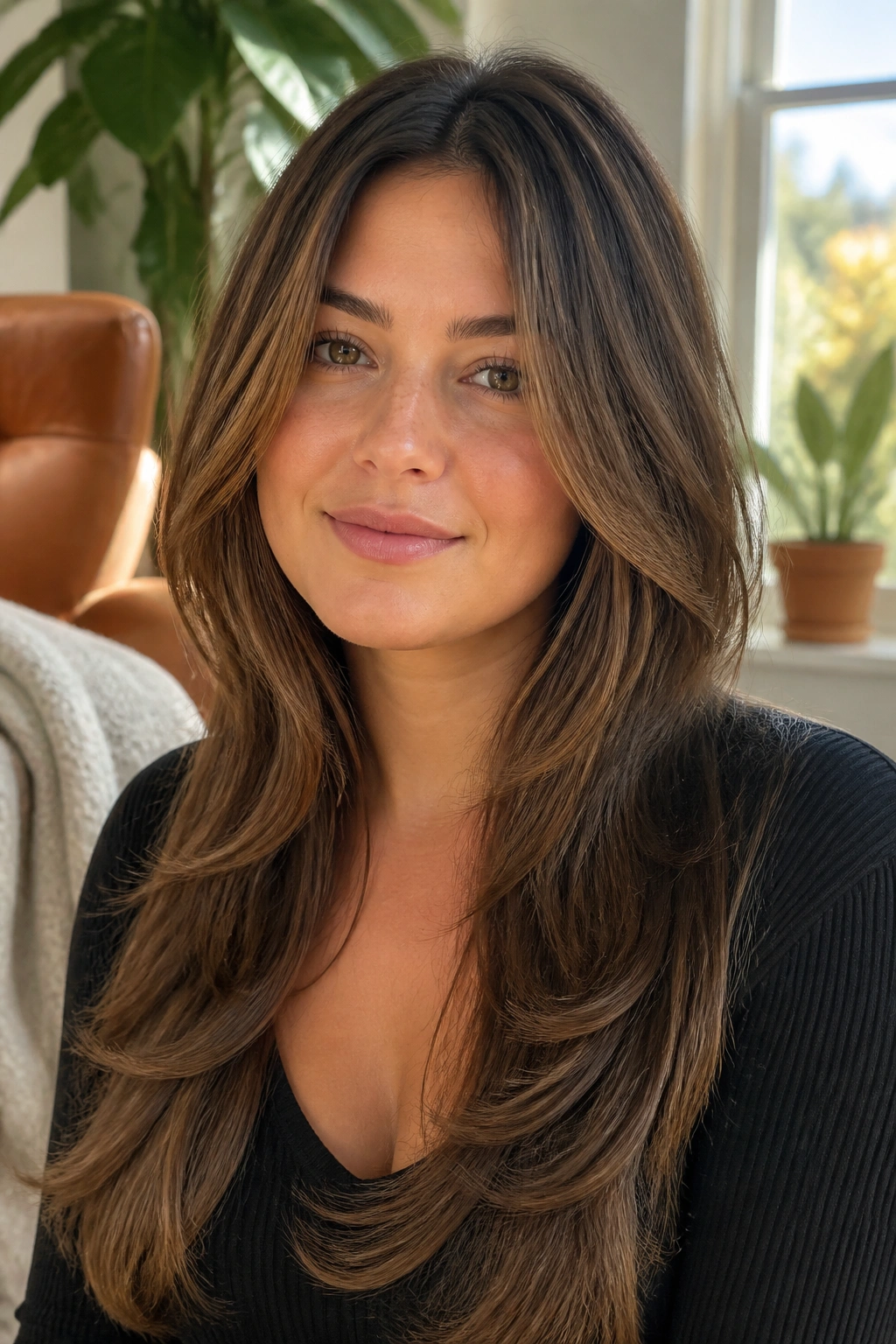
The easiest win is also the least fussy. Long layers that start below the chin pull the eye down instead of stopping it at the widest part of the face, which is why they tend to flatter rounder shapes so well.
What I like about this cut is the restraint. You still get movement, but you do not get that over-layered helmet effect that makes the sides puff out. Ask your stylist to keep the shortest face-framing pieces around the lower lip or just below the chin, then let the rest of the layers fall gradually through the chest. That keeps the cheek area calm.
What to Ask For
- Shortest face-framing layer: lower lip to just below the chin
- Longer layers that blend into the chest
- A soft perimeter, not a hard shelf at jaw level
- Minimal thinning near the cheeks if your hair is already fine
This cut works on straight, wavy, and softly curly hair. The only real caution is to avoid starting the layers too high. Once the shortest pieces land near the cheekbone, the face can look wider instead of longer. Lower is usually better here.
2. Curtain Bangs That Split at the Cheekbones
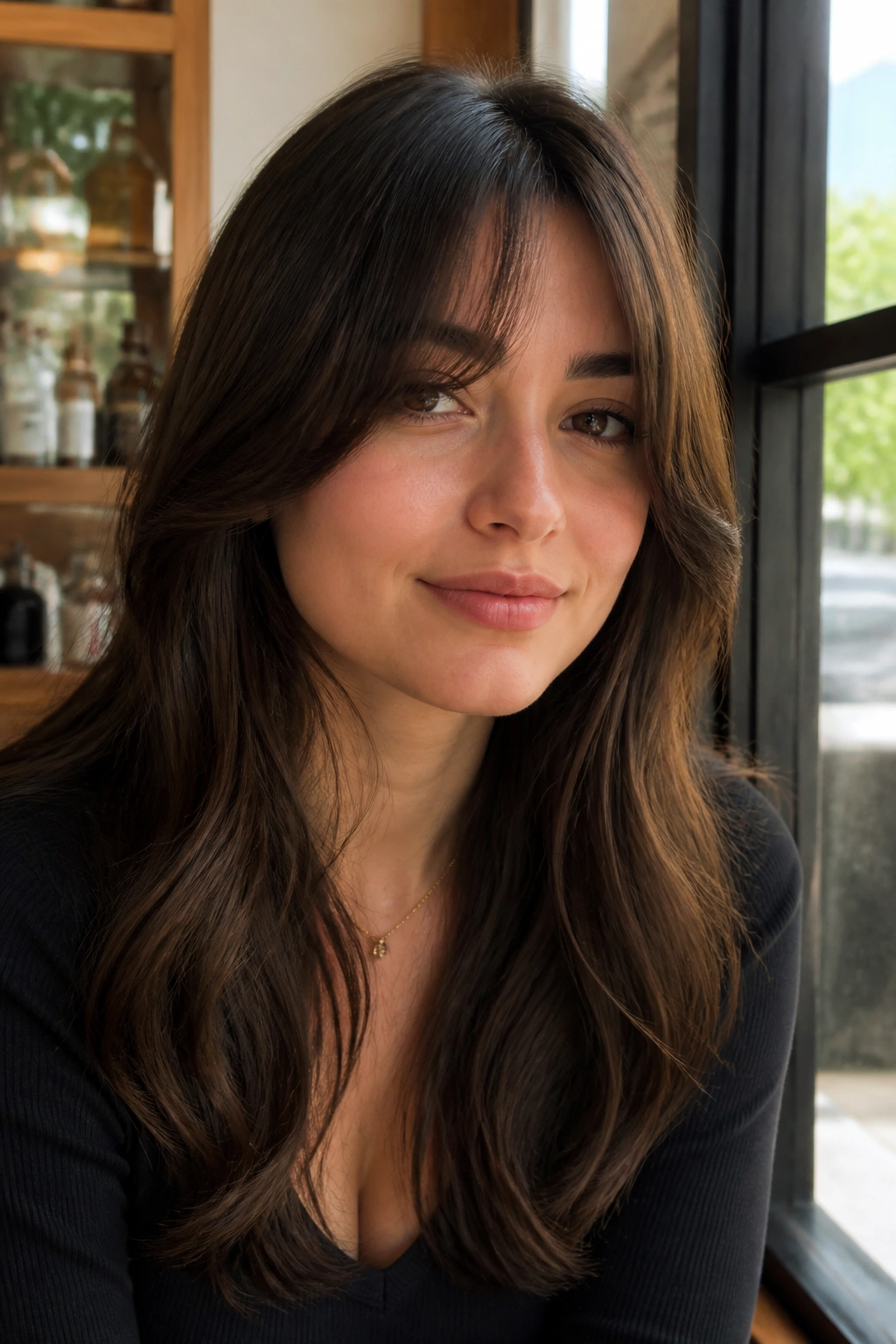
Can bangs work on a round face? Absolutely. The wrong bangs can be annoying. The right curtain bangs can change the whole shape of the haircut.
The sweet spot is a soft center split with the shortest point hovering around the cheekbone or just above it, then tapering down into the sides. That little diagonal does a lot of work. It opens the center of the face, breaks up width across the forehead, and gives you a frame that feels light instead of blunt. Heavy straight-across bangs usually fight round features. Curtain bangs, though, tend to slide with them.
What Makes Them Different
Curtain bangs are not about hiding the forehead. They’re about creating two soft lines that lead the eye outward and down. If you wear your hair with a center part, they make the part look intentional. If you wear a side part, they soften the shift and keep the front from looking too empty.
They’re also useful if you like to tie your hair back. A couple of face-framing pieces falling from a bun or ponytail can slim the front in a way that feels easy, not overstyled. Just keep them long enough to brush the cheek, not sit on top of it.
3. The Butterfly Cut With Lift at the Crown
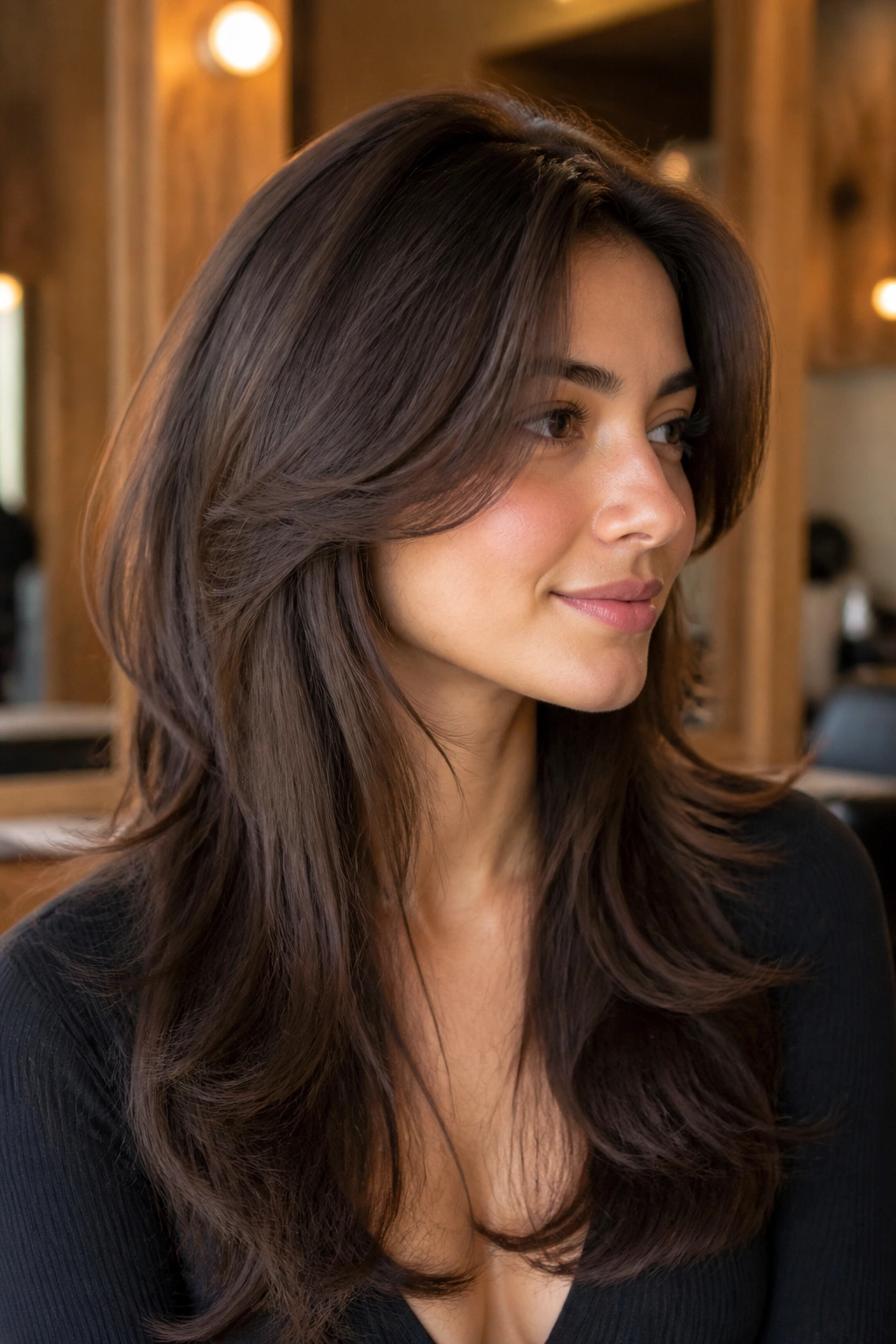
This is the cut I reach for when someone wants volume without a lot of width around the face. The butterfly cut uses shorter layers around the crown and face, with long hair left underneath, so you get lift up top and length through the body of the hair.
The shape can be gorgeous on round faces because it keeps the top airy while the longer lengths drag the eye downward. The trick is placement. You want those short pieces to begin high enough to create movement near the crown, but not so short that the sides swell out at cheek level. If the shortest bits sit around the collarbone and the rest falls much longer, the whole head gets that lifted, stretched look.
For thicker hair, this cut can take out a lot of heaviness without making it stringy. For finer hair, it works best when the top layers are soft, not aggressively chopped. A good butterfly cut should feel bouncy, not choppy.
4. Sleek Center-Parted Length With a Clean Hemline
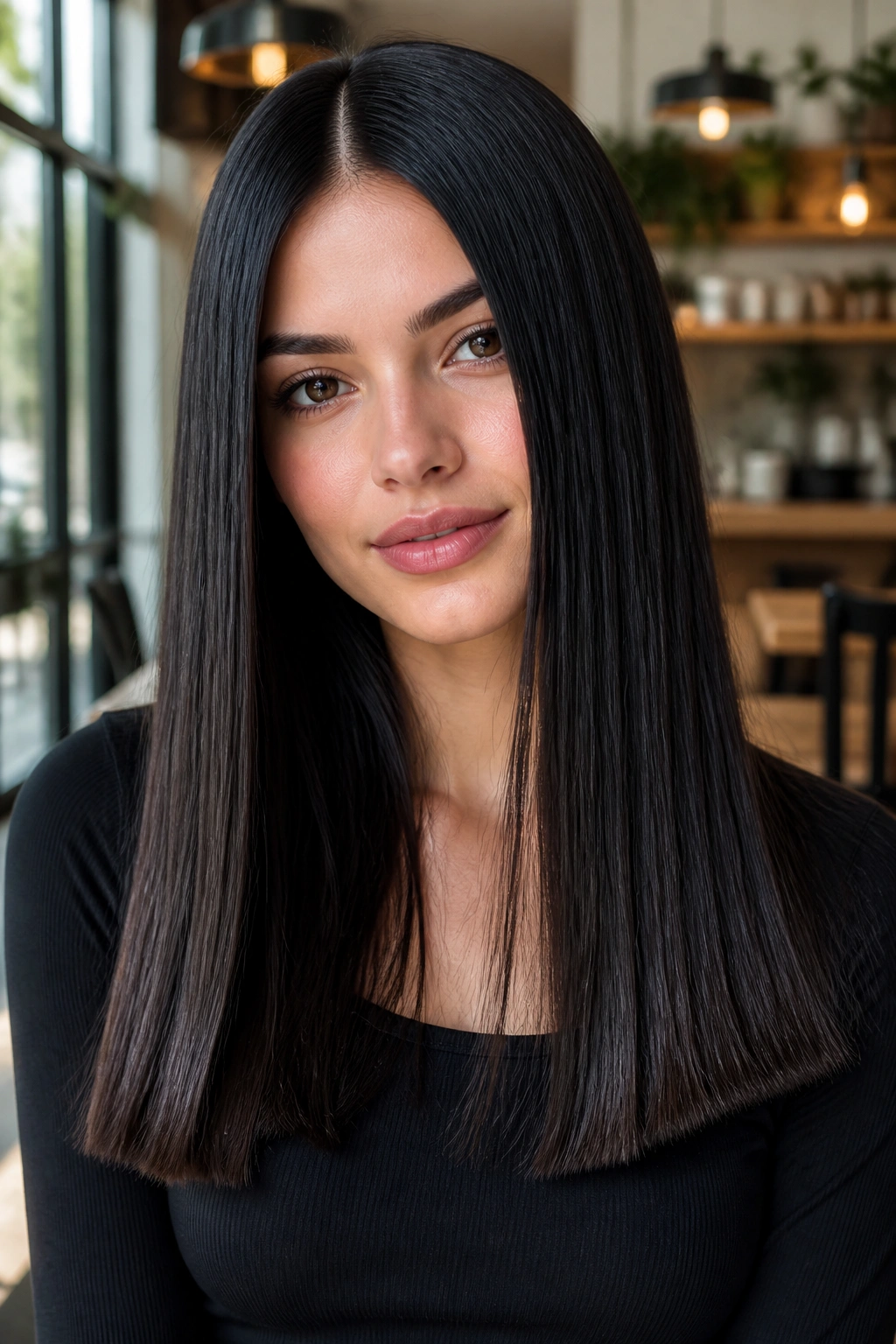
Not every round face needs layers. That surprises people. A sleek, center-parted long cut can look cleaner and more lengthening than a busy layered shape, especially if your hair is straight or has a smooth wave that holds a line well.
The reason it works is simple: the eye follows the vertical line of the part, then continues down the length of the hair. A blunt or softly beveled hemline keeps the ends full, which helps the hair hang straight instead of flaring outward. If your hair is fine, this is one of the smartest choices because it keeps the perimeter strong.
The catch is that the cut has to stay polished. If the ends get ragged or the front pieces start flipping at the cheeks, the effect is gone. I like this look when the hair falls below the chest and the front is tucked behind the shoulders now and then. It feels deliberate. No extra drama needed.
5. A Deep Side Part With a Long Sweeping Fringe
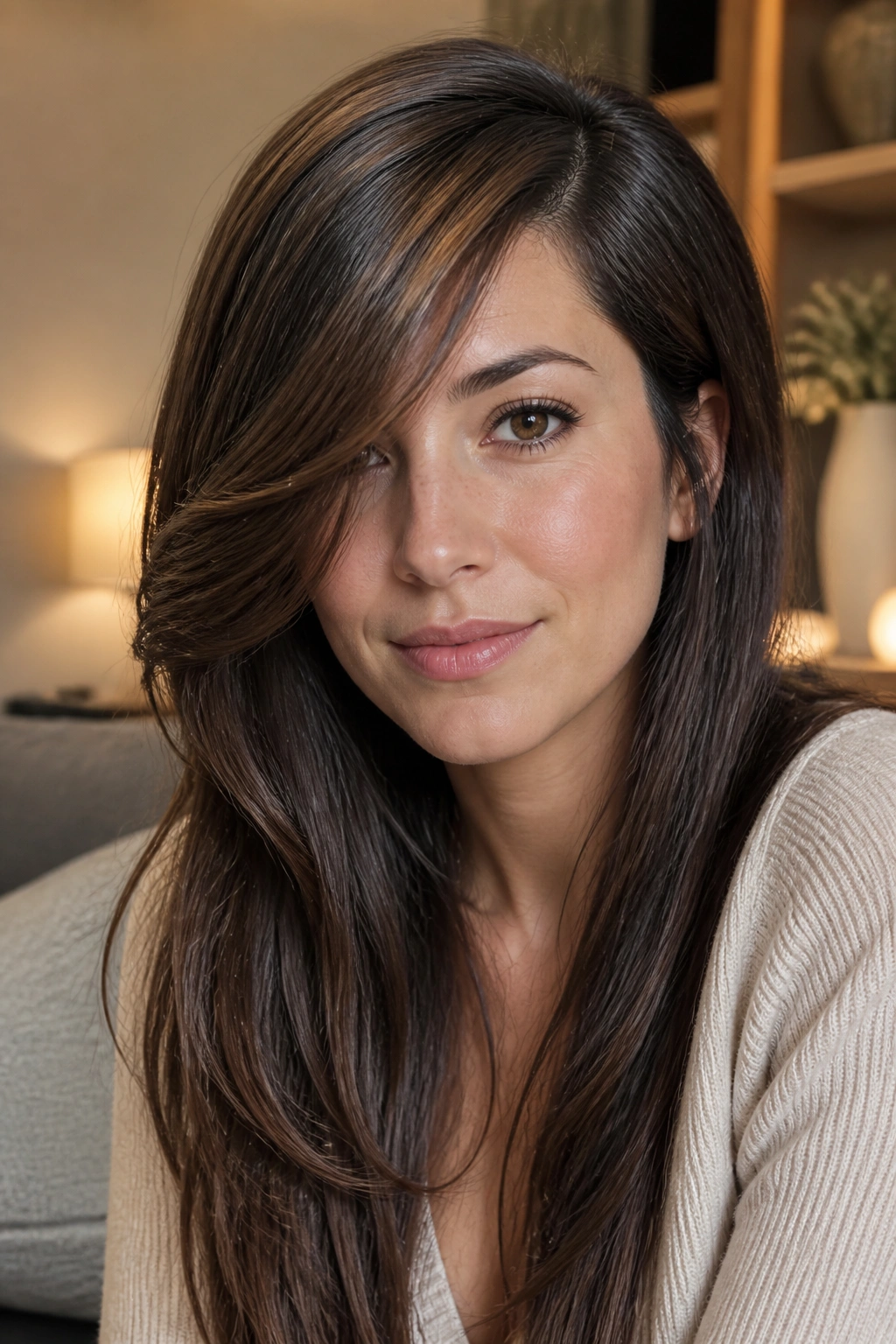
A side part changes the whole geometry of the face. On a round face, that shift can be a gift. Instead of splitting the face evenly, the part creates a diagonal line that makes the front feel longer and a little sharper.
The fringe matters more than people think. Keep it long enough to sweep across the forehead and skim past the cheekbone, not end right at the widest part of the face. If the side fringe is too short, it can add width where you least want it. If it’s long and soft, it works almost like a shadow line. Quiet. Useful.
Best Pairings
- Loose waves with a slightly off-center part
- A blowout with lifted roots
- Glasses, especially angular frames
- Hair that sits between collarbone and mid-back
This cut is one of my favorites for anyone who wants face shape help without committing to bangs. It does require a little styling, though. A clean part and a quick round-brush pass at the front make the difference between “nice hair” and “that haircut is doing something smart.”
6. The Soft U-Shaped Cut
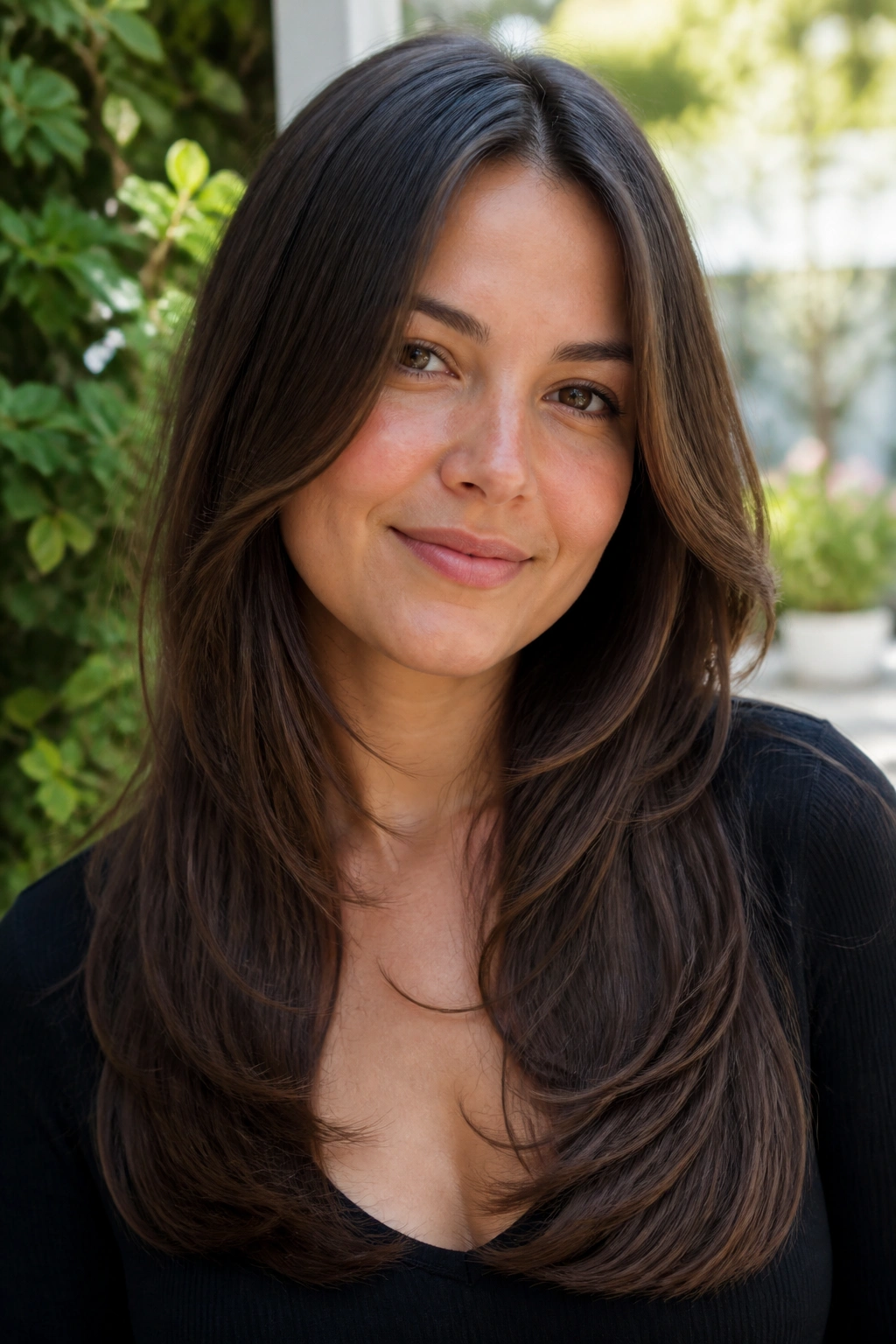
If you want length that still looks soft, the U-shape is a quiet hero. The back stays longer, the sides curve up gently, and the outline feels rounded without being boxy.
That shape helps a round face because it avoids the wide, straight line that can make the jaw area feel broader. Instead, the eye moves down the center and then gently outward. The curve is subtle, but it matters. On long hair, subtle shape often beats obvious layering.
This cut also plays well with thick hair, because the arc keeps the ends from looking heavy and blunt. If your hair is fine, ask for a light U rather than a deep one. You want shape, not a see-through finish. The nicest version of this cut is one that falls cleanly over the shoulders and still has enough weight at the bottom to move naturally.
7. V-Cut Layers That Fall in a Point Down the Back
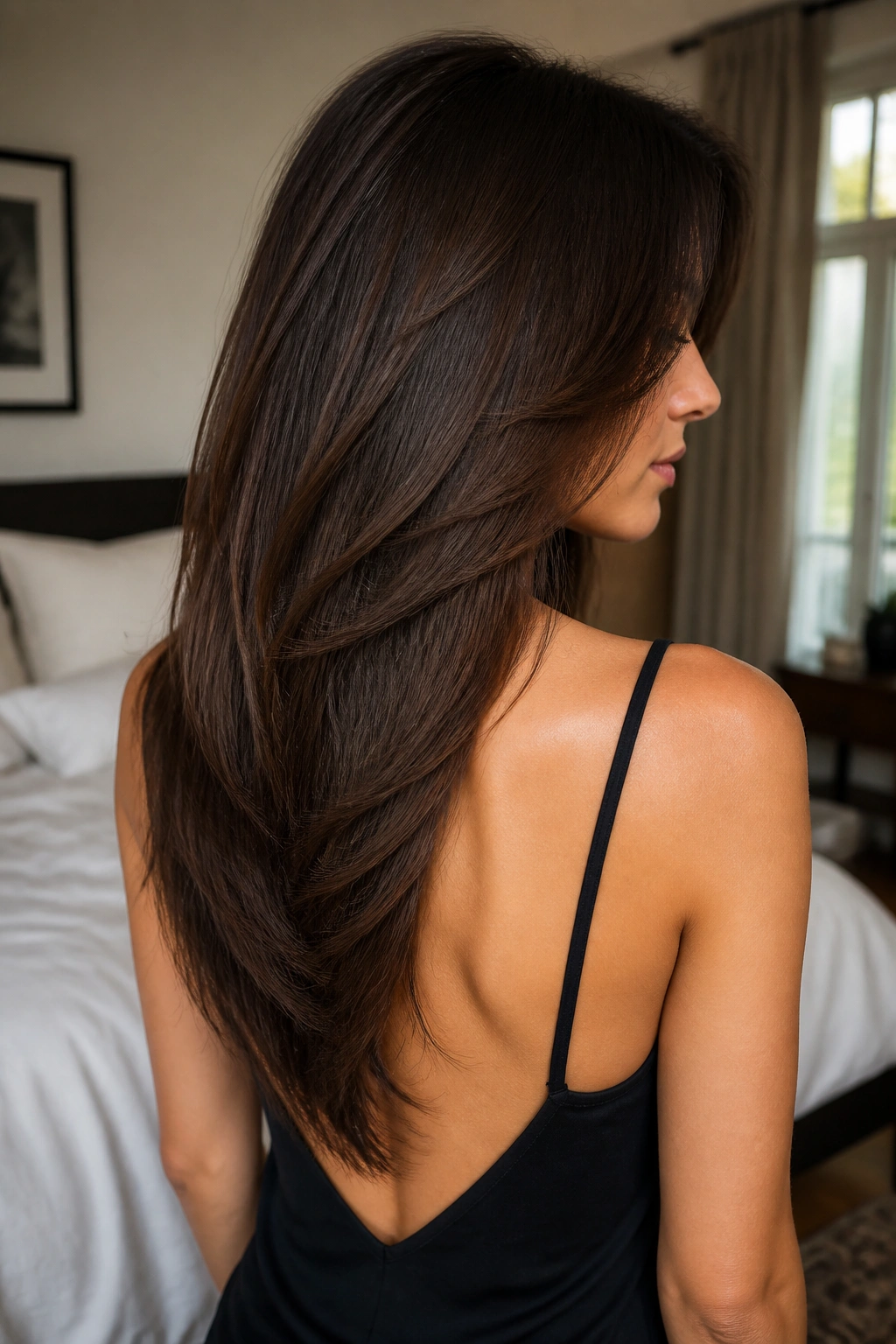
The V-cut is the more dramatic cousin of the U-shape. The back drops into a point, and the sides angle down from there, which makes the hair feel long even when it isn’t extra thick. That downward point is the whole trick.
Round faces usually benefit from any cut that draws the eye lower, and the V shape does it in a very direct way. The hair narrows toward the ends instead of sitting wide around the shoulders. If your hair is dense or heavy, this cut can take out some of that bulk without losing length. It also looks good in a ponytail, which sounds minor until you actually live with the haircut.
Who It Suits
- Thick straight hair
- Wavy hair that holds a shape
- People who like long hair with visible structure
- Anyone who wants less width at the lower half of the face
The only caution is not to overdo the point. A harsh V can look dated or too sharp. The better version is softer, with the point eased in gradually. You want a shape that moves, not one that looks carved with a ruler.
8. A Long Shag With Piecey Ends
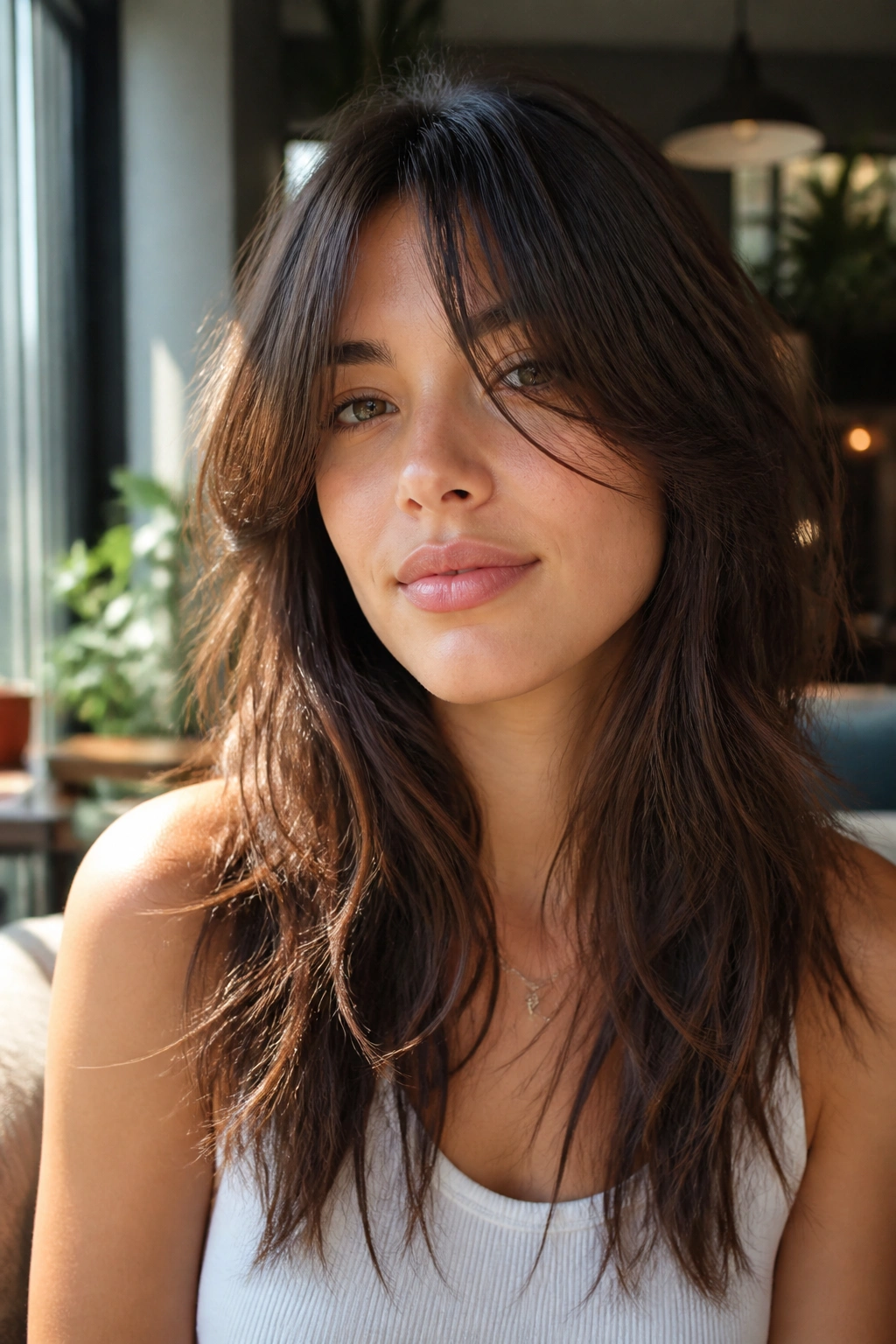
This cut needs confidence. It also needs a good stylist. A long shag can flatter a round face because the layers create movement in different directions, which keeps the hair from sitting like a flat curtain around the cheeks.
The key is placement. If the shortest pieces are too high and too puffy at the sides, the face can look wider. If the shag is grown out a little, with the bulk sitting lower and the pieces around the face kept soft, it becomes a really good option. The ends should look lived-in and broken up, not frayed.
This is the cut for someone who likes texture more than polish. It’s especially good on wavy hair that has a natural bend. Air-dry it, scrunch it, throw a bit of cream through the ends — done. If you hate anything that needs a round brush or a hot tool, a long shag can still feel manageable. It just needs the right amount of softness up front.
9. Face-Framing Layers That Begin at the Cheekbone
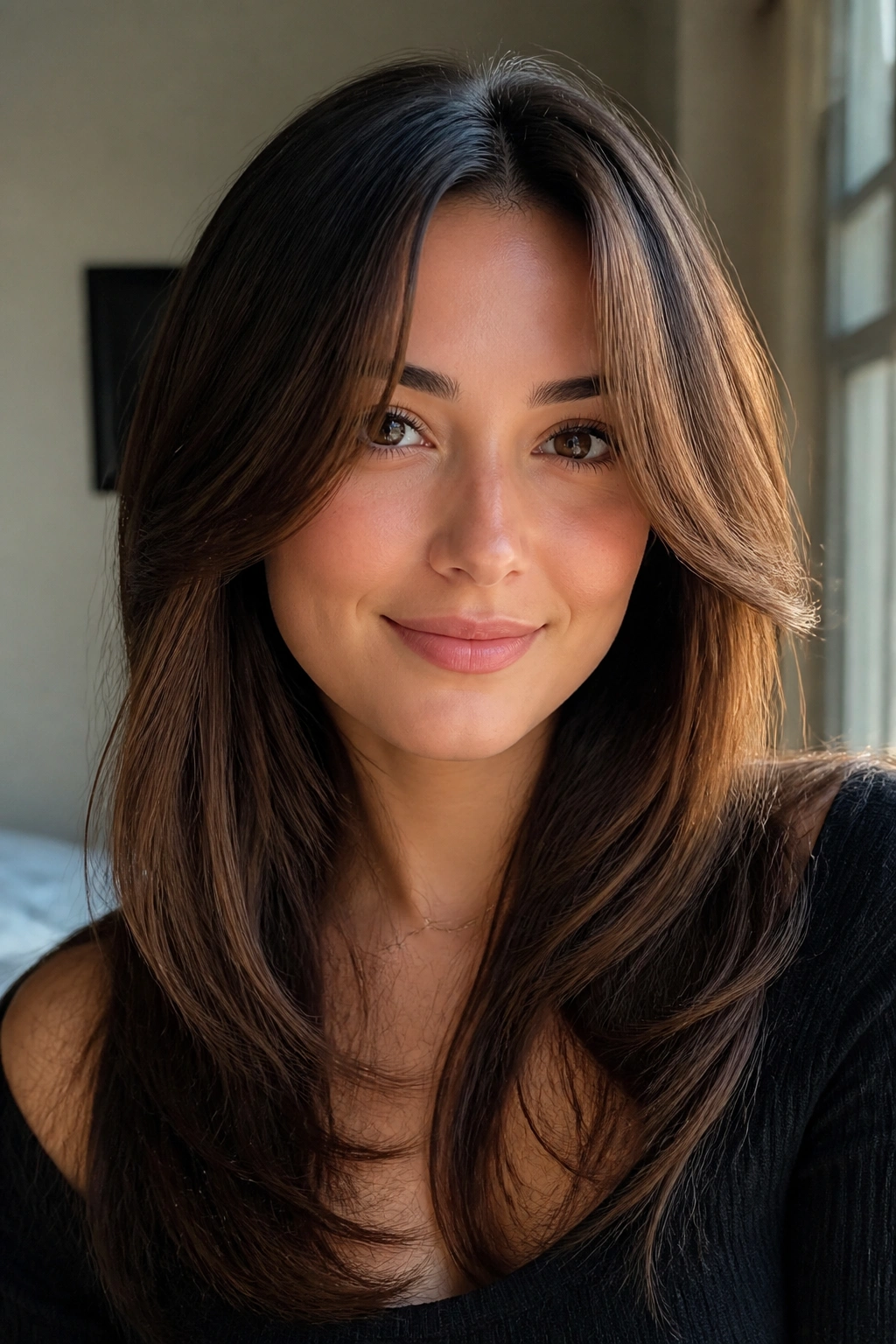
Why does this placement work so well? Because the eye follows the line.
Face-framing layers that start at the cheekbone can sharpen the front of a round face without making it look severe. The line falls diagonally, and that diagonal matters more than most people realize. If the shortest piece lands exactly at the cheek, it can call attention to fullness. If it starts a little lower and moves down toward the jaw, the shape feels longer and easier.
How to Wear It
A soft blowout brings this cut to life. So does a loose wave that starts below the cheekbone instead of right at the roots.
If your hair is straight, keep the front pieces smooth and a little bent away from the face. If your hair is wavy, let the layers curve naturally instead of trying to flatten them. The point is not to force the hair into submission. It is to let the frame sit in the right spot. That small shift can make a big difference.
10. Soft Waves Built on Long, Carved-Out Layers
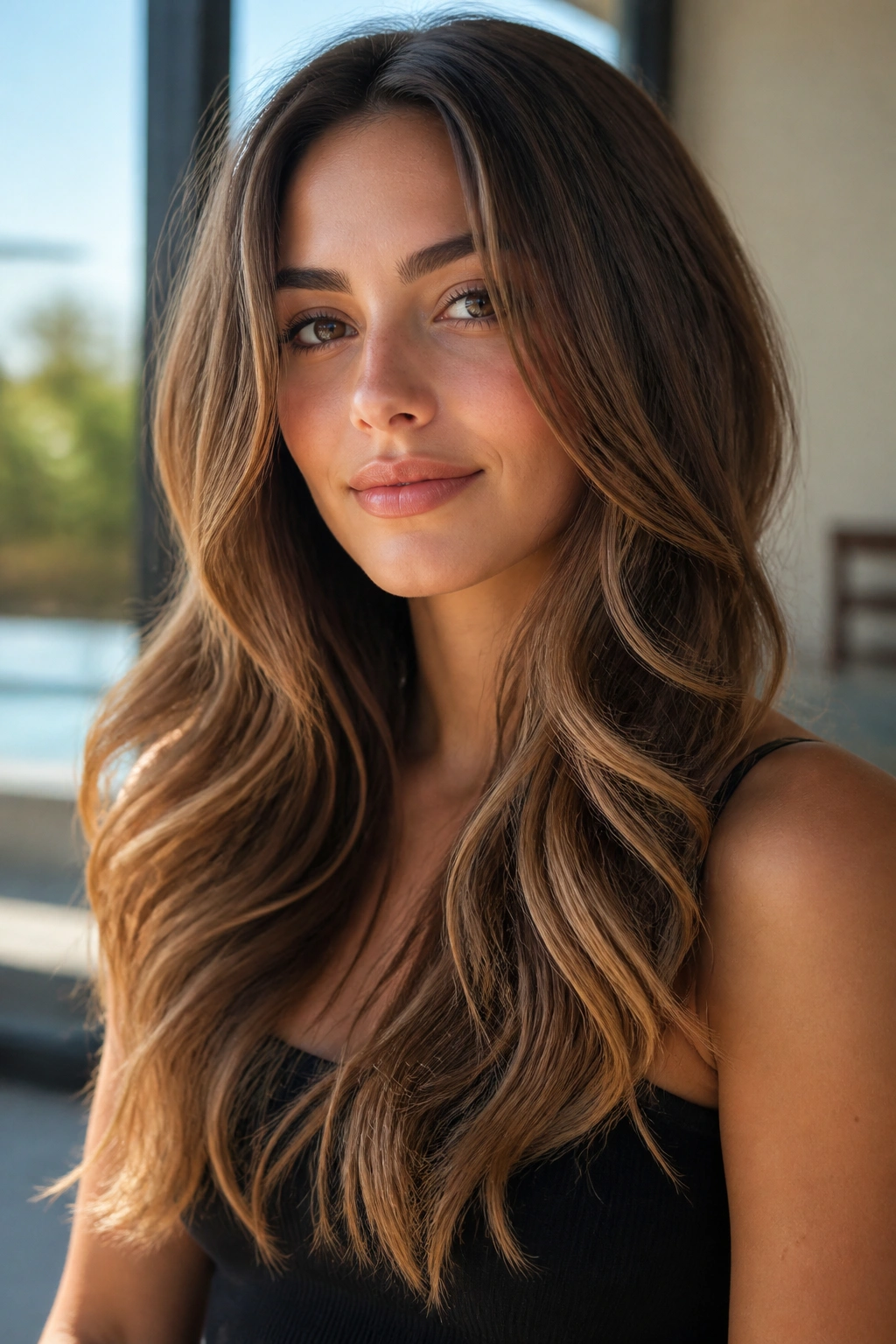
A great wavy haircut looks like it was made for the hair, not against it. Long, carved-out layers give waves room to fall without ballooning out at the cheeks, which is why this shape works so well on round faces.
The trick is to keep the wave pattern a little lower and looser near the front. If the curl starts too high, the width shows up exactly where you do not want it. If the wave begins around the cheekbone or lower, the whole silhouette looks longer. I like using a 1.25-inch curling iron or wand for this kind of styling because it creates a bend without turning the hair into tight ringlets.
A few practical details make a difference:
- Leave the last 1 to 2 inches out for a softer finish
- Alternate curl directions for a more natural fall
- Brush through once the hair cools
- Finish with a light serum on the ends, not the roots
This cut feels especially good when the layers are invisible enough that the hair still looks full. Movement is the goal. Not fluff.
11. Bottleneck Bangs With Long, Lean Length
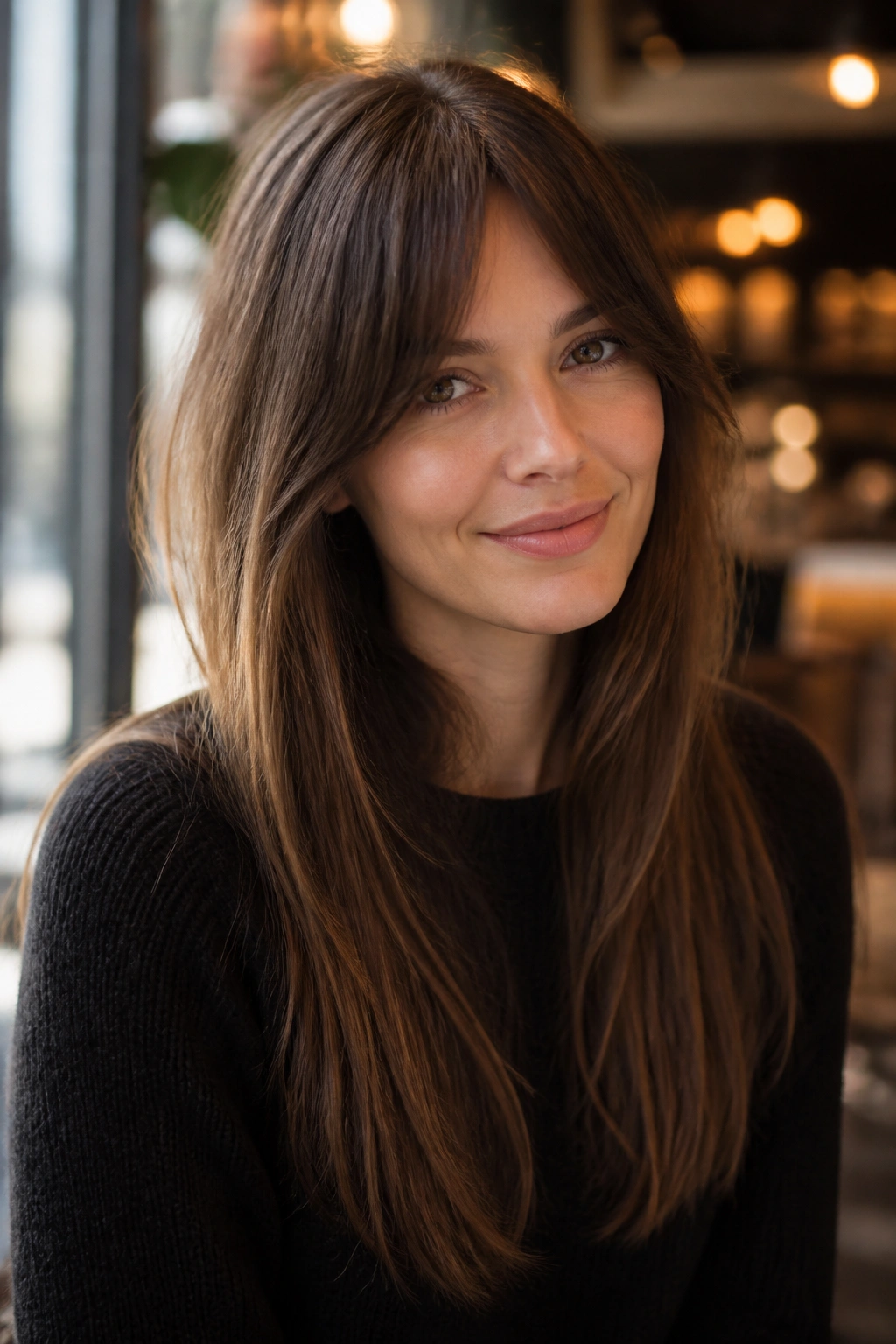
If full curtain bangs feel like too much hair on your forehead, bottleneck bangs are a smarter middle ground. They’re narrower in the center, fuller around the temples, and then they melt into the rest of the haircut.
That shape is useful on a round face because it frames the upper half without spreading across the cheeks in a heavy block. The bang opens the center of the face, but the longer sides soften the transition into the hair. It’s a neat little trick. Cleaner than a full fringe, less obvious than a curtain bang.
Bottleneck bangs are a strong choice if you want some face framing but still like long hair to do most of the work. They pair well with waves, loose blowouts, and even a straight finish. The one thing I would avoid is cutting them too short. Keep the longest edges grazing the cheekbone or just below it. That length is what gives the haircut room to breathe.
12. The Long Wolf Cut Grown Out Just Enough
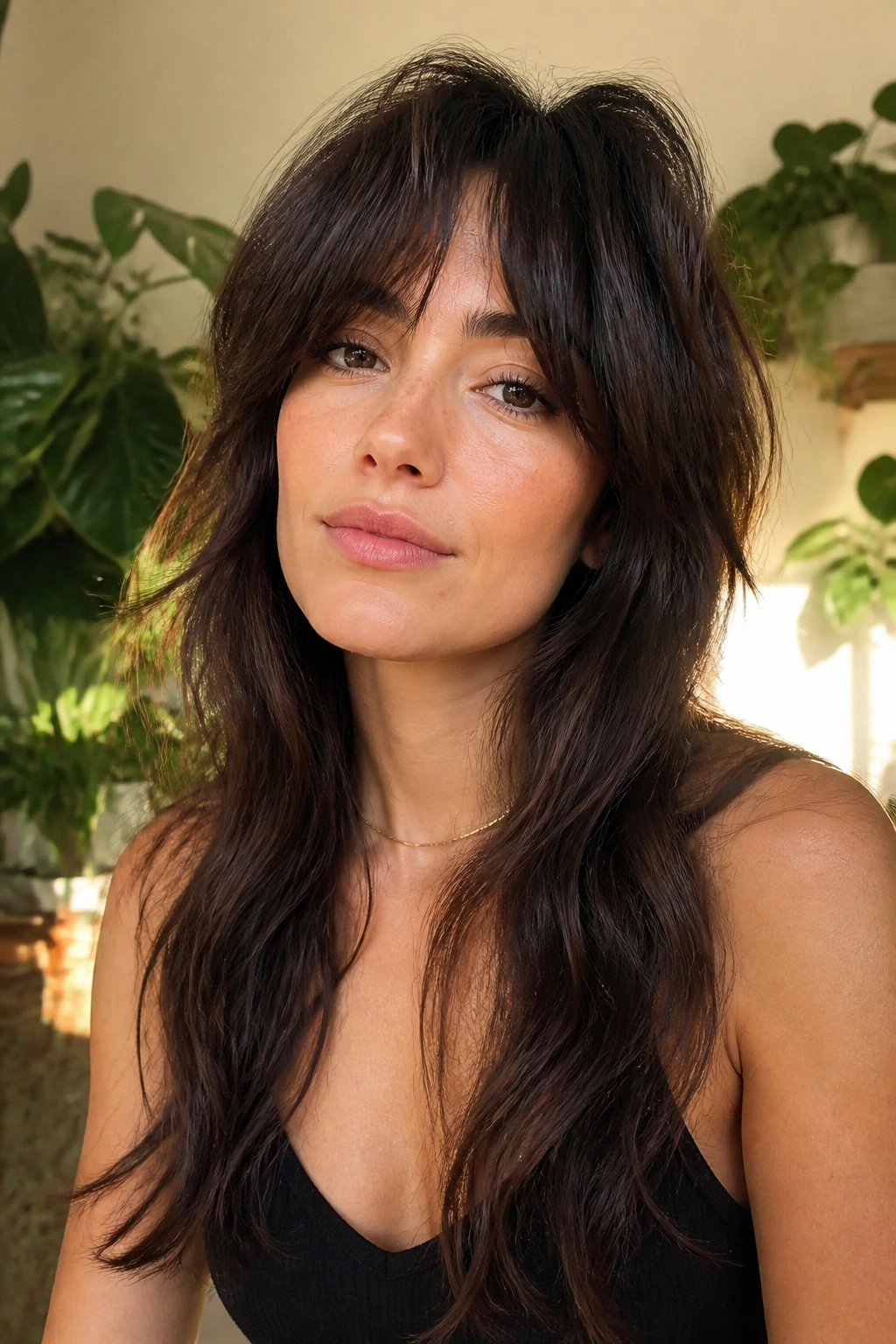
Yes, a wolf cut can work on a round face. But it has to be the right version — the grown-out, slightly softer one, not the super-short, top-heavy version that adds bulk at the sides.
The appeal here is the contrast. You get choppy layers at the top and around the crown, then long lengths below, so the eye keeps moving downward. That movement can be flattering on a fuller face because it keeps the silhouette from feeling too circular. The trick is to avoid too much volume at cheek level. If the side layers puff out, the face gets wider.
This cut is best on hair that already wants to bend or break into texture. Straight hair can wear it, too, but it needs styling to keep the shape from going flat on top and wide at the sides. Think soft, not wild. The best grown-out wolf cuts look like they’ve got energy without shouting about it. A little mess helps. A lot of mess just looks like you skipped the trim.
13. Razor-Cut Lengths With Feathered Ends
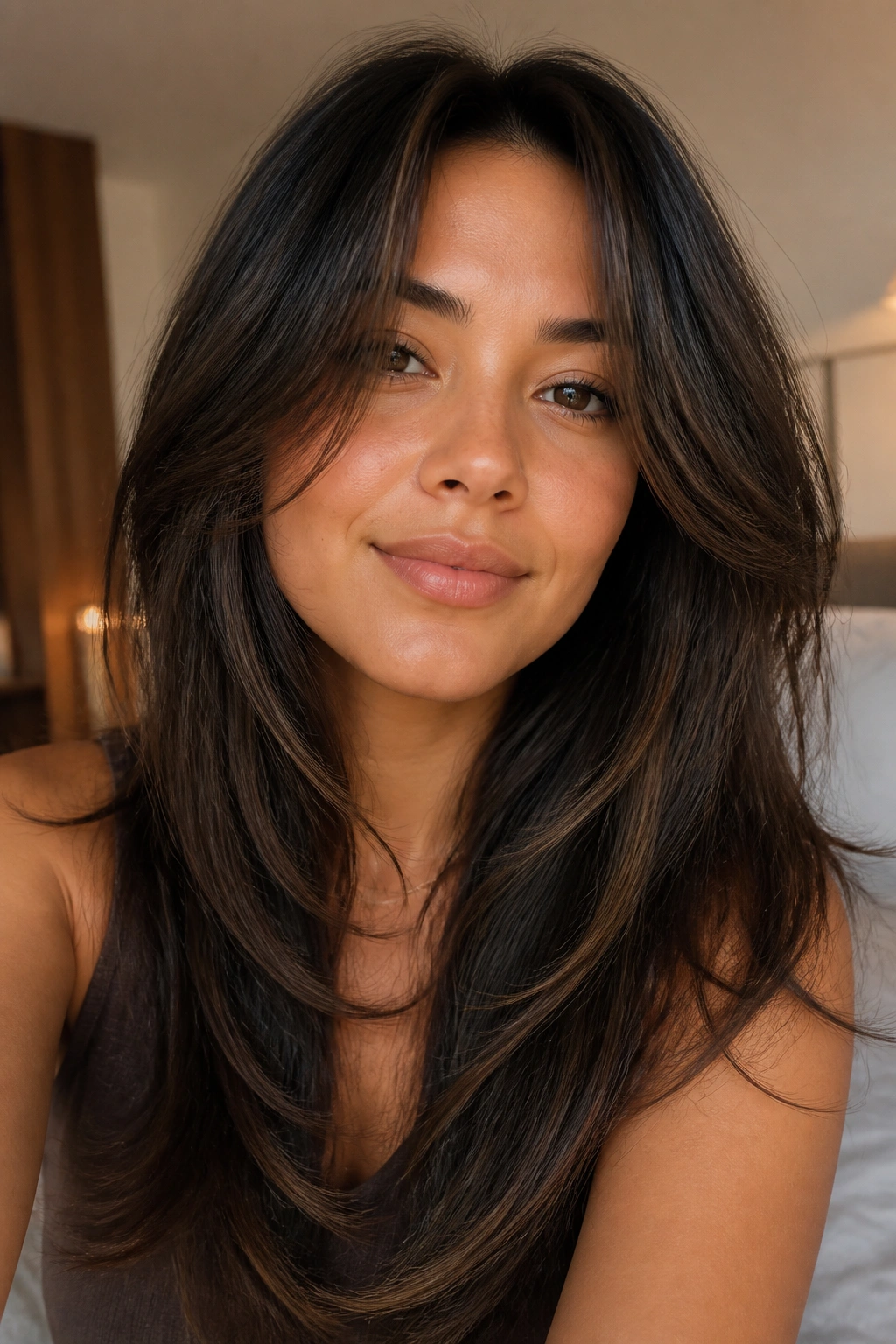
Razor cutting gets a bad reputation because people have seen it used badly. Fair enough. On the right hair, though, it can be excellent. Razor-cut lengths soften the perimeter and create a feathery finish that keeps dense hair from sitting like a block around the face.
For round faces, the real advantage is movement. Heavy blunt ends can make the lower half of the hair feel wide and still. Feathered ends fall with more shape, which helps the face look longer. This works especially well if your hair is straight and thick enough to hold the texture without frizzing up.
Who Should Skip It
- Very curly hair that frizzes when thinned
- Fine hair that already lacks density at the ends
- Hair that’s badly damaged or breaking
If you do choose this cut, ask for softness, not aggressive texturizing. A few well-placed razor passes are enough. Too much, and the ends go wispy in a bad way. A good razor-cut finish should feel light in your hands and move easily when you turn your head. That’s the whole point.
14. Old Hollywood Layers That Turn Away From the Face
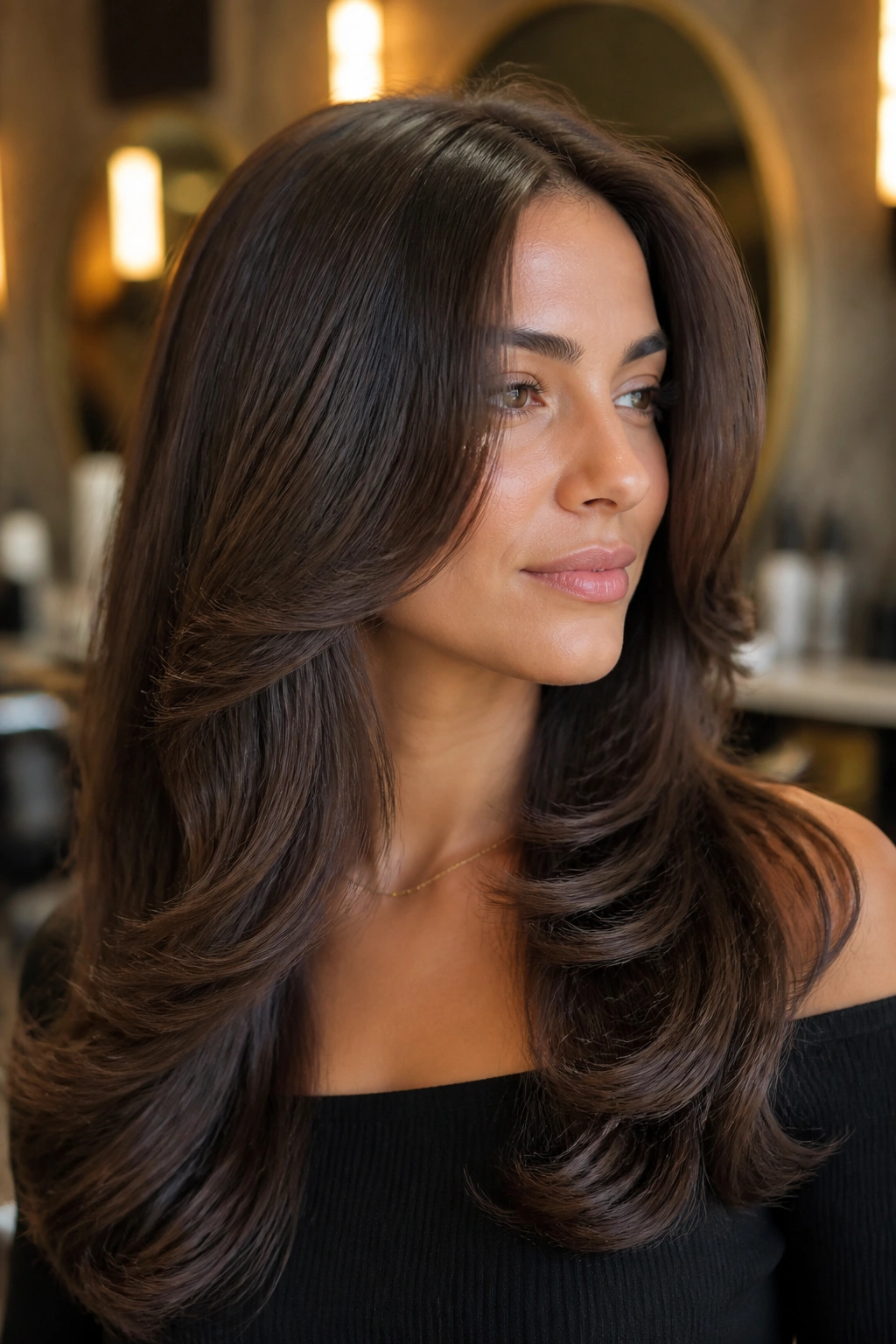
This is the glamour option, and I’m a fan of it because it does something smart while still looking polished. Old Hollywood layers are long enough to keep the shape elegant, but the front is usually set to sweep away from the face in a smooth curve.
That outward turn is useful on a round face because it opens the cheek area instead of boxing it in. The hair feels lifted, and the face gets a longer outline from the side view. You can wear this with a deep side part, a soft center part, or even tucked behind one ear if you want a cleaner line.
The styling matters. A round brush, a medium-barrel brush, or a large velcro roller at the front can give the ends that curved-away shape. It does not have to be prom-hair. Done well, it just looks expensive in the plainest sense of the word: smooth, controlled, and a little glossy. I like this cut for people who want long hair that still has structure.
15. Long Curls Shaped Below the Jawline
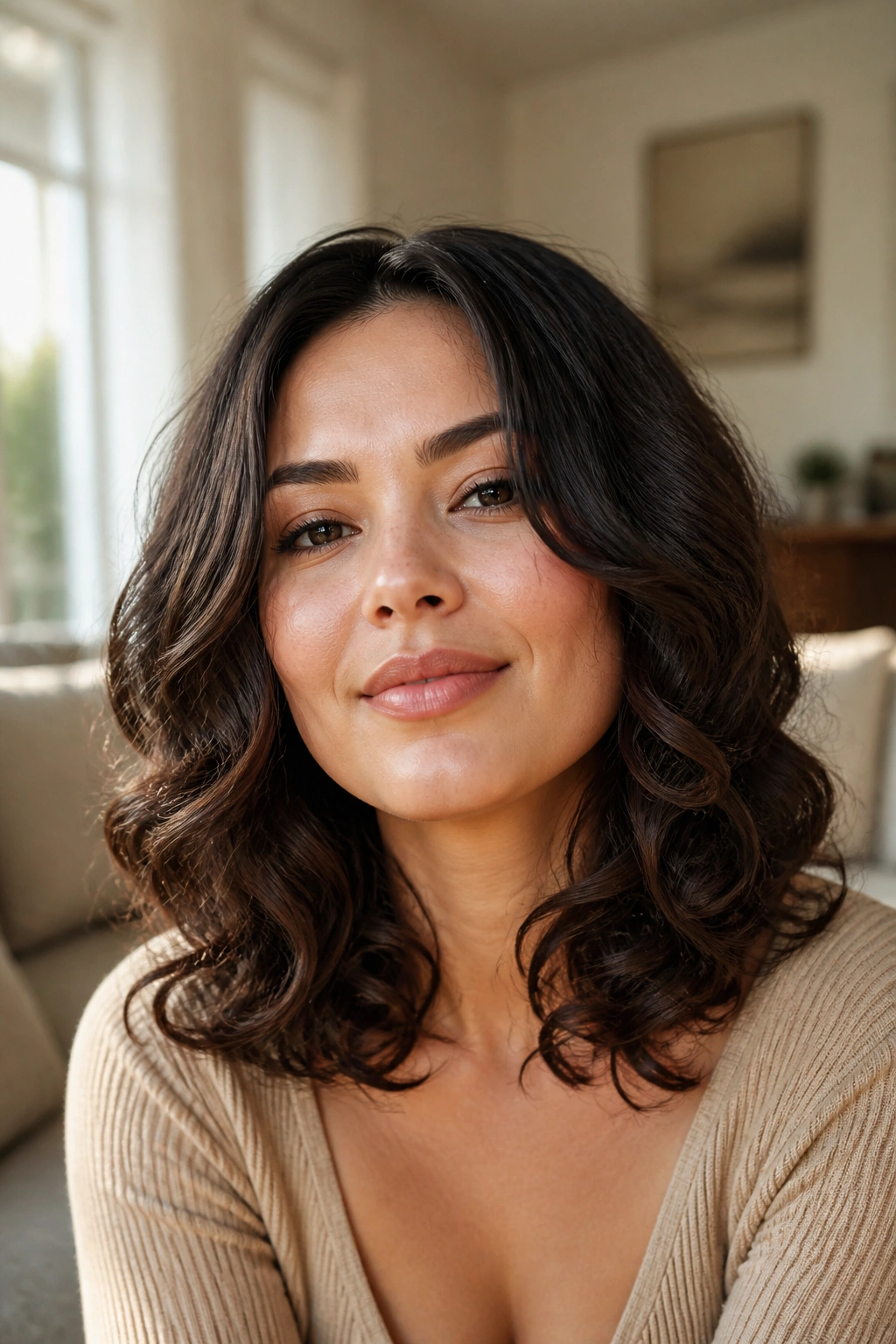
Curly hair and round faces can be a beautiful pair, but the cut has to respect the curl pattern. Long curls that are shaped below the jawline keep the volume lower on the face, which helps preserve length instead of width.
The biggest mistake is cutting curly hair too bluntly at the cheeks. The curl springs up, and suddenly the face has a puffed-out frame right where you least want it. A better approach is to keep the outer shape long, then remove weight underneath so the curls stack softly instead of spreading outward. Dry cutting, or cutting with the curl mostly in its natural state, often helps the stylist see where the shape actually sits.
A Few Things That Matter
- Keep the shortest curl pieces below the cheekbone
- Avoid over-thinning the sides
- Shape the top so it does not rise too high
- Use a diffuser on low heat to protect the curl pattern
This style is not about making curls smaller. It is about giving them a cleaner map. When the shape is right, curls can make a round face look balanced and fresh instead of overly full.
16. Invisible Internal Layers for Thick Hair
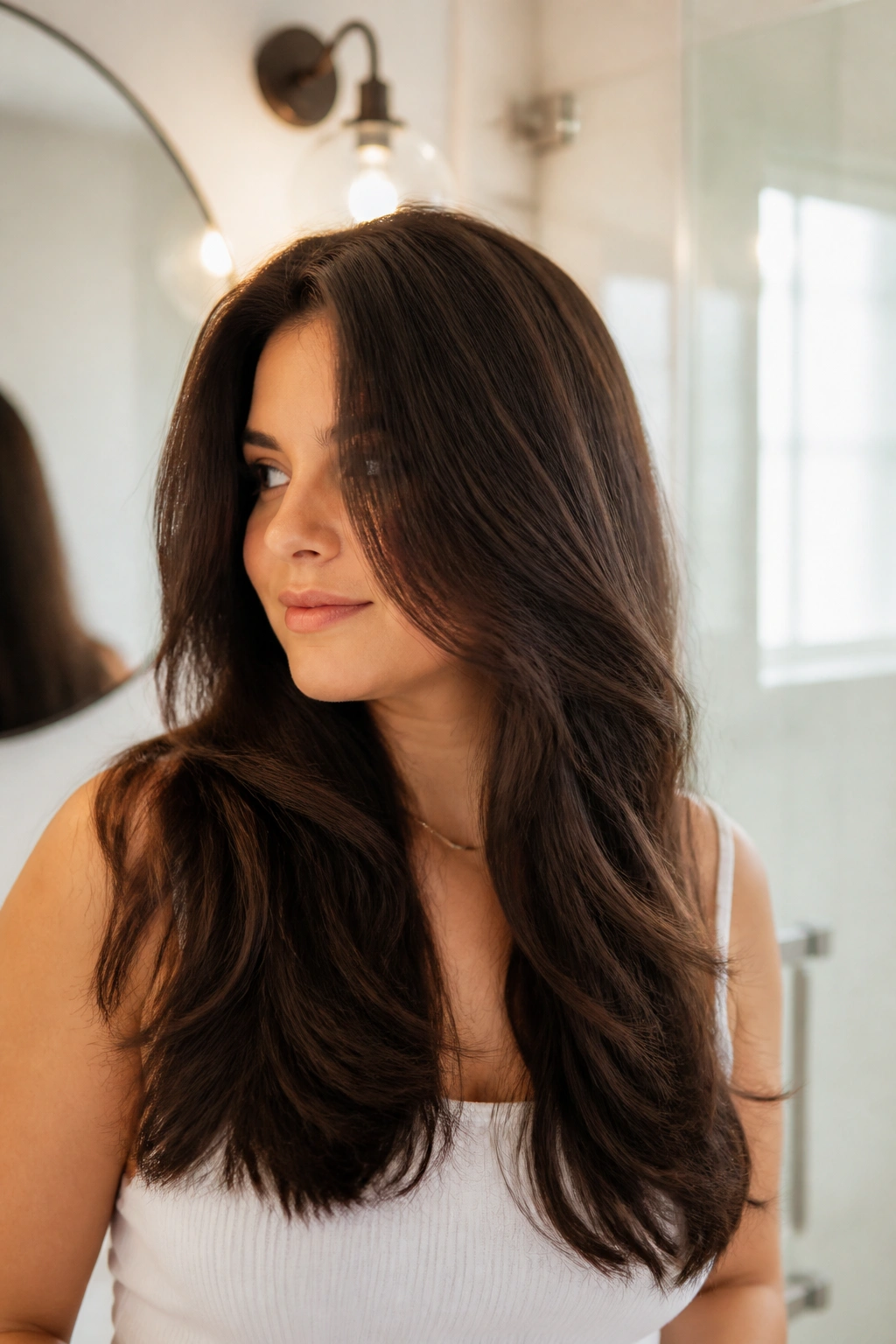
Some people want long hair without seeing obvious layers. Fair. Hidden internal layers are the answer when the hair is thick, heavy, or prone to sitting flat at the roots and bulky at the ends.
These layers live inside the haircut, not on the surface. They remove weight where it matters, but the outside line still looks long and smooth. For a round face, that means you can slim the hair’s overall mass without adding extra width at the cheeks. It’s a smart move if your hair tends to puff at the sides after a blow-dry.
The best version keeps the outer shape simple. No choppy face frame. No short pieces floating around the chin. Just enough internal work to help the hair fall better. This cut is one of those quiet ones that people underestimate until they see it moving. It behaves better in a ponytail, dries faster, and usually feels lighter on the shoulders. Not flashy. Just useful.
17. Blunt Ends With a Slight Forward Angle
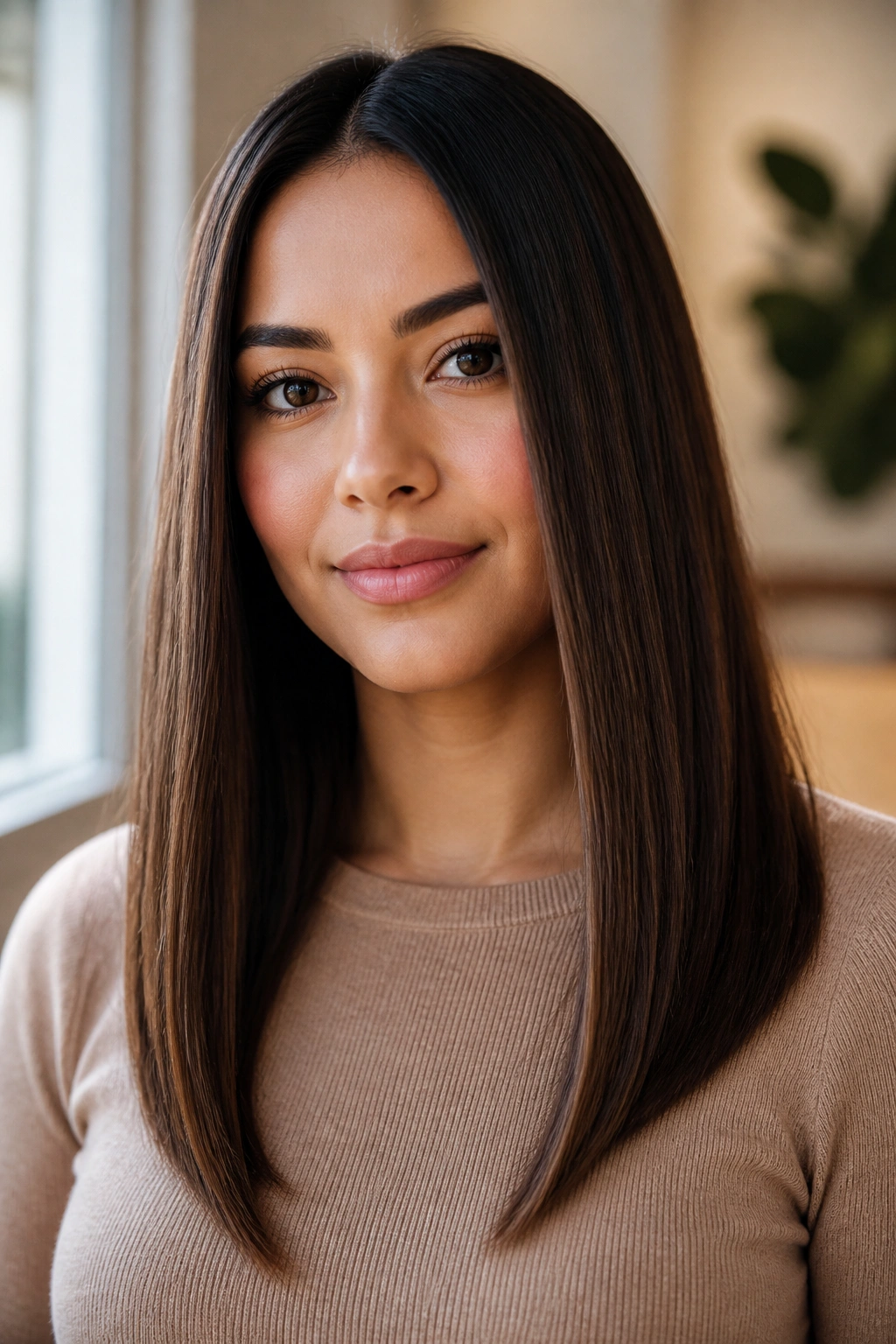
A blunt cut is not automatically bad for a round face. The problem is usually placement. If the hemline sits at the widest part of the face, it can look heavy. If it drops lower and angles slightly forward, the whole haircut feels longer and more intentional.
The shape here is subtle. The back can stay a touch shorter, while the front lengths graze farther down toward the chest. That tiny forward tilt keeps the eyes moving downward and away from the cheeks. I like this option for straight hair because it shows off shine and gives the ends a crisp finish. It also works well if you wear a middle part or a gentle off-center part.
There’s a catch, though. A blunt line needs maintenance. Split ends and frayed edges make the whole thing feel tired fast. If you choose this cut, trims matter. The good version looks sharp and calm. The bad version looks like the hair gave up halfway through the month. Small difference. Big effect.
18. Long One-Length Hair With a Deep Side Part for Round Faces
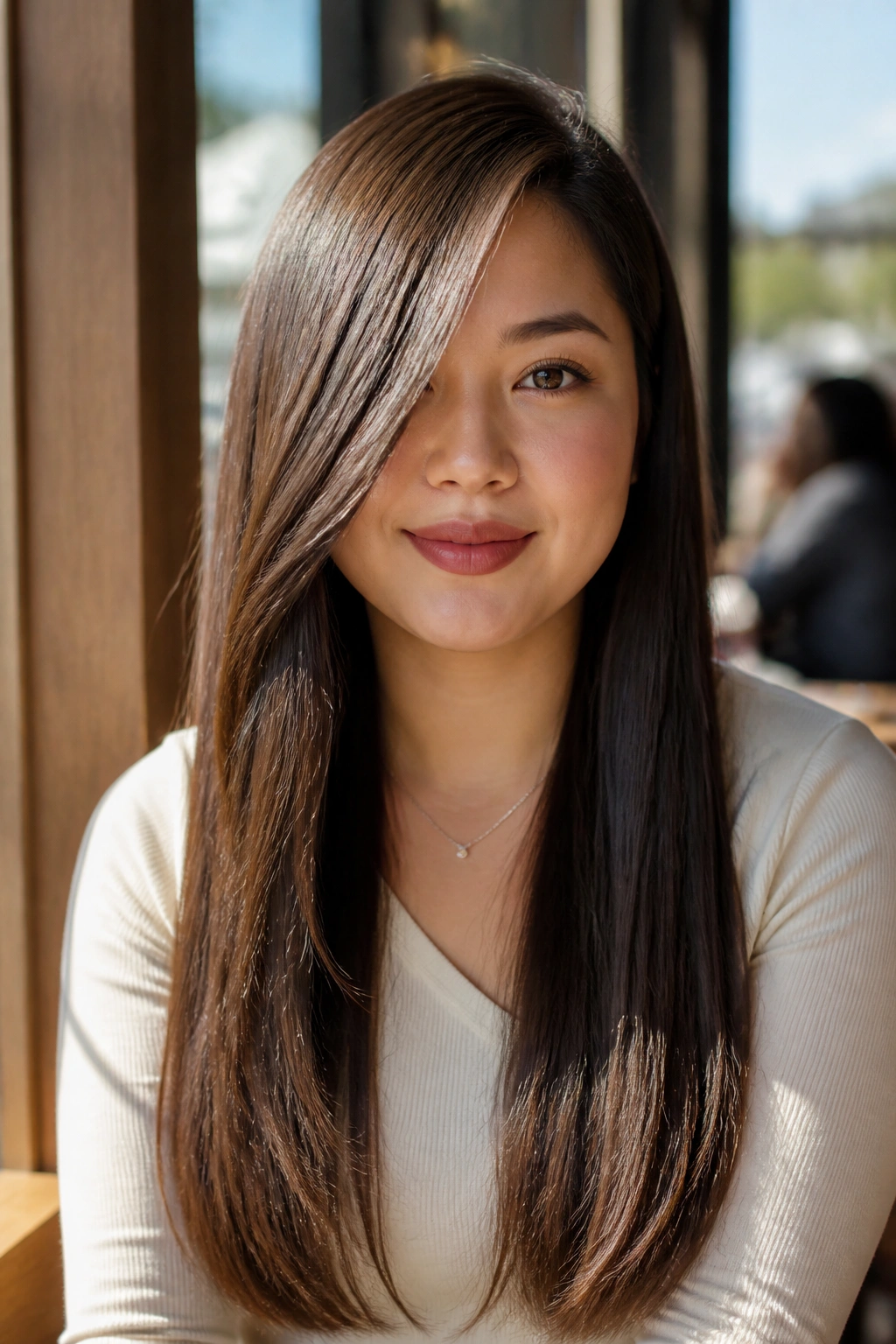
Sometimes the cleanest answer is the right one. A long one-length cut, worn with a deep side part, can be one of the most flattering options for a round face because it keeps the silhouette simple and the line long.
I like this when someone wants low-maintenance hair that still looks thought through. The cut itself doesn’t rely on a lot of layers or a lot of styling tricks. Instead, the part does the shaping. The deeper side section creates a diagonal across the face, and the long length pulls the eye down past the shoulders. If your hair is naturally shiny or reasonably straight, this can look especially good.
The important detail is where the length lands. Chest level is safer than jaw level, and a little bevel at the ends keeps the hair from looking too heavy. If you want to keep it even simpler, ask your stylist to remove bulk only from the inside of the hair rather than adding obvious layers around the front. That gives you movement without losing the clean line.
If you want one haircut to bring to the salon first, this is the one I’d put on the list. It’s calm, it’s easy to live with, and it gives a round face a long, tidy frame without asking for much in return.
