



A good inverted cut does something a blunt bob rarely manages: it gives a round face a cleaner line without making the hair look stiff. The shape pulls the eye downward and forward, which matters when the widest part of the face sits around the cheeks. That is why inverted haircuts for round faces keep coming up in salons — the angle does quiet work.
The wrong version is easy to spot. It stops right at the cheekline, sits too full on the sides, and turns the whole head into a soft circle. Not cute. Not flattering. Just wider-looking than it needs to be.
Length helps, but angle does the real work. A little stack at the back, a front piece that falls below the jaw, or a side part that cuts across the face can change the whole read of the cut. And once you see how these shapes behave, you stop thinking of “short hair” as one thing and start seeing all the little decisions that make it behave.
1. The Chin-Length Stacked Inverted Bob That Sharpens a Round Face
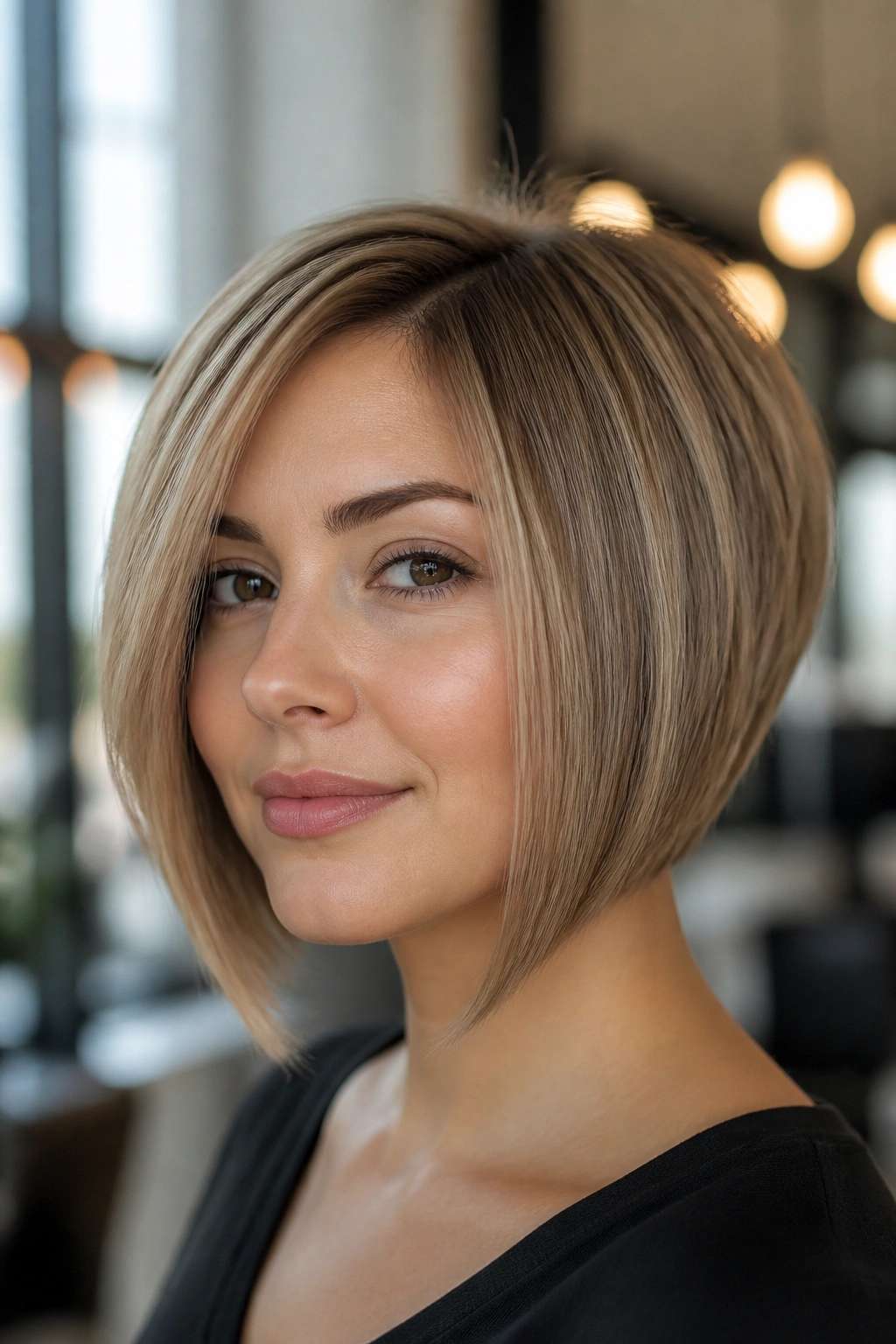
This is the classic for a reason. A chin-length inverted bob creates lift at the back, then leaves the front long enough to draw the eye past the cheeks instead of sitting right on top of them. On a round face, that little bit of forward length matters more than people expect.
Why this shape works
The back stack gives the crown a small boost, which helps the face read a little longer. The front should fall closer to the jaw, not hover at the widest part of the cheeks. That single choice keeps the cut from puffing out in the middle.
Ask for a soft stack, not a hard wedge. A hard wedge can look sharp in a mirror and bulky in motion. A softer build at the back moves better and grows out with less drama.
- Best for straight to slightly wavy hair
- Good if your hair is thick and tends to sit flat at the crown
- Needs trims about every 6 to 8 weeks to keep the angle clean
- Looks best with a slight side part or a center part that isn’t too strict
Pro tip: keep the front just a touch longer than the chin if your cheeks are full. That tiny bit of length saves the whole haircut.
2. The Collarbone-Length Inverted Lob That Softens the Cheeks
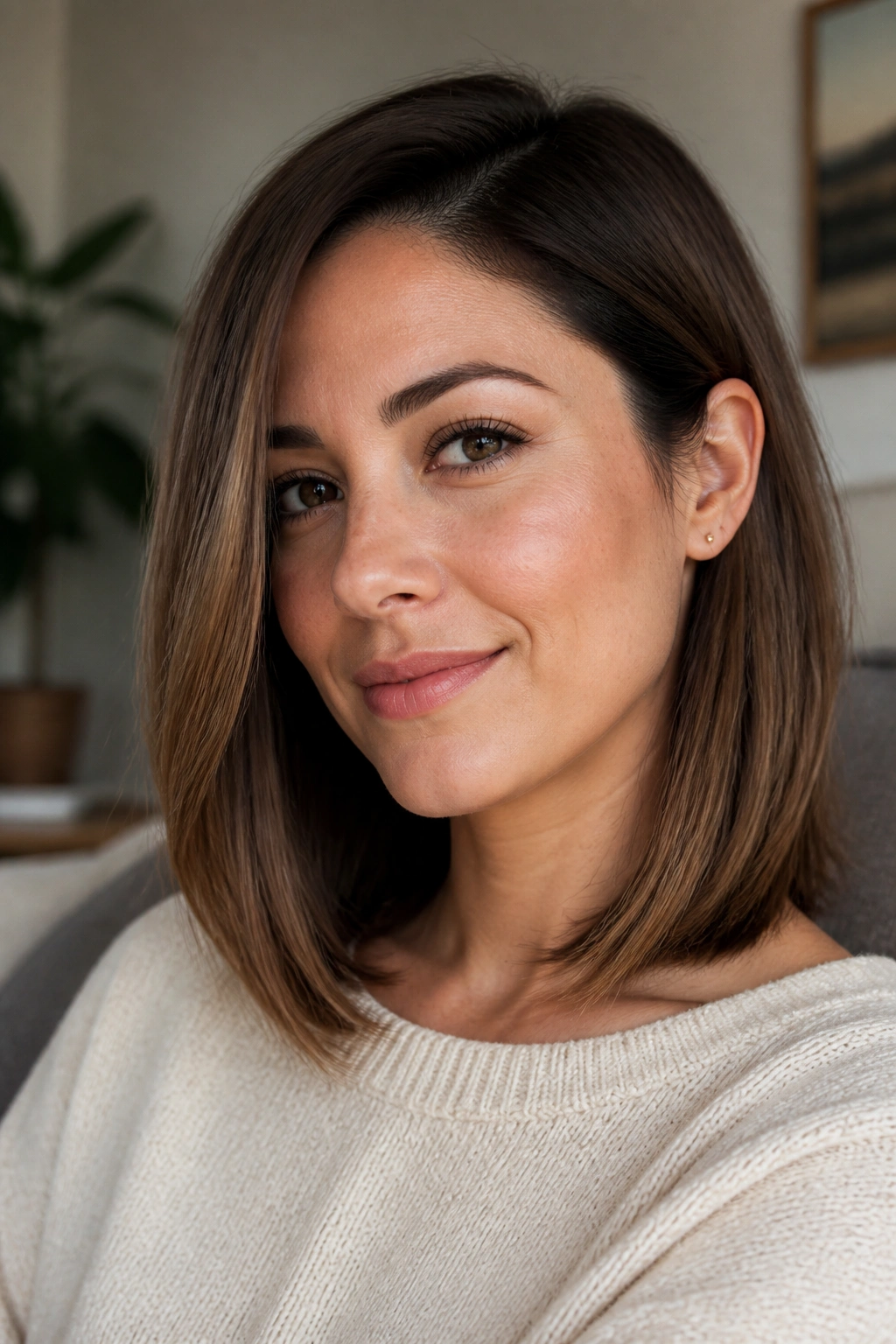
A longer inverted lob is the safest bet if you want the shape without going too short. It gives you the angled back and longer front, but the extra length near the shoulders keeps the silhouette from feeling too sharp. I like this version on people who want movement first and drama second.
The collarbone is a useful stopping point because it sits below most round faces’ widest zone. Hair that rests there tends to stretch the outline in a nice way, especially if the ends are beveled instead of blunt. It also gives you room to tuck one side behind the ear, which sounds small and looks surprisingly helpful.
This cut is one of those quiet winners. It does not shout for attention. It just makes the face look a little narrower, the neck a little longer, and the whole profile a little more deliberate.
If your hair gets frizzy at the ends, ask for minimal layering near the face and more weight left through the lower lengths. That keeps the lob from floating outward like a triangle, which is the one thing you do not want here.
3. The Side-Swept Asymmetrical Cut That Breaks Up Full Cheeks
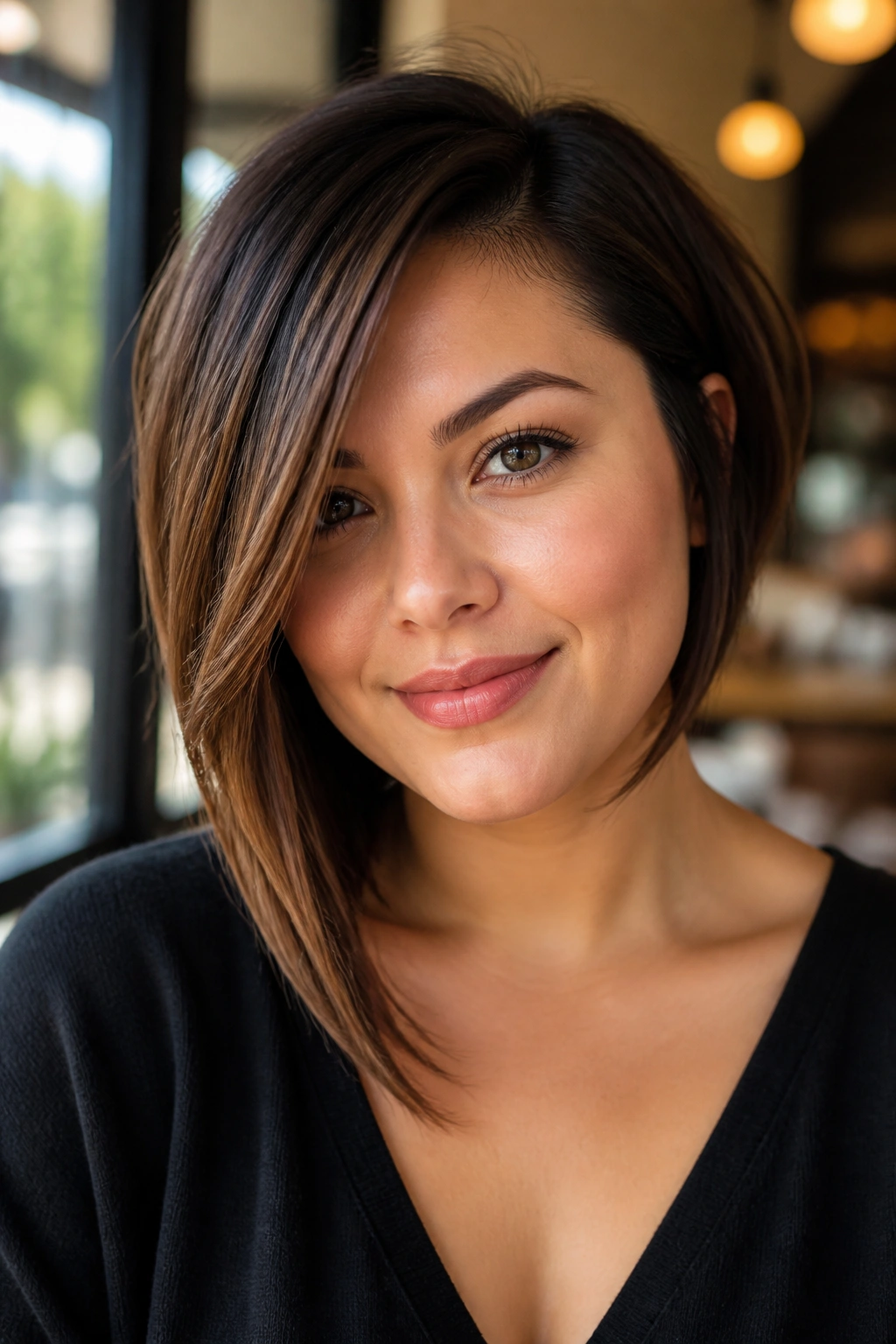
A strong diagonal line is one of the easiest tricks for a round face. Asymmetry interrupts the circle. It gives the eye a path to follow, and that path matters more than perfect symmetry ever will.
How to ask for it
Tell your stylist you want one side to hit closer to the chin and the other to fall near the collarbone. The difference does not have to be dramatic. Even a two-inch shift creates enough angle to make the face look less wide.
Why it feels different in motion
The side that hangs longer acts like a frame. The shorter side opens the face and keeps the cut from feeling heavy. Together, they create a bit of tension, and that tension is what makes the haircut look intentional instead of safe.
This version shines when the part is moved off center by about an inch or two. Too far over and the style can look lopsided. Too little and you lose the point of the cut.
- Great for thick hair that needs shape
- Works well with blow-dried bends at the ends
- Ask for point-cutting on the longer side so it does not look chunky
- Keep the shorter side soft around the jaw, not blunt
A side-swept asymmetrical bob is a little less polite than the classic version. That is the charm.
4. The Soft Wavy Inverted Bob With Curved Ends
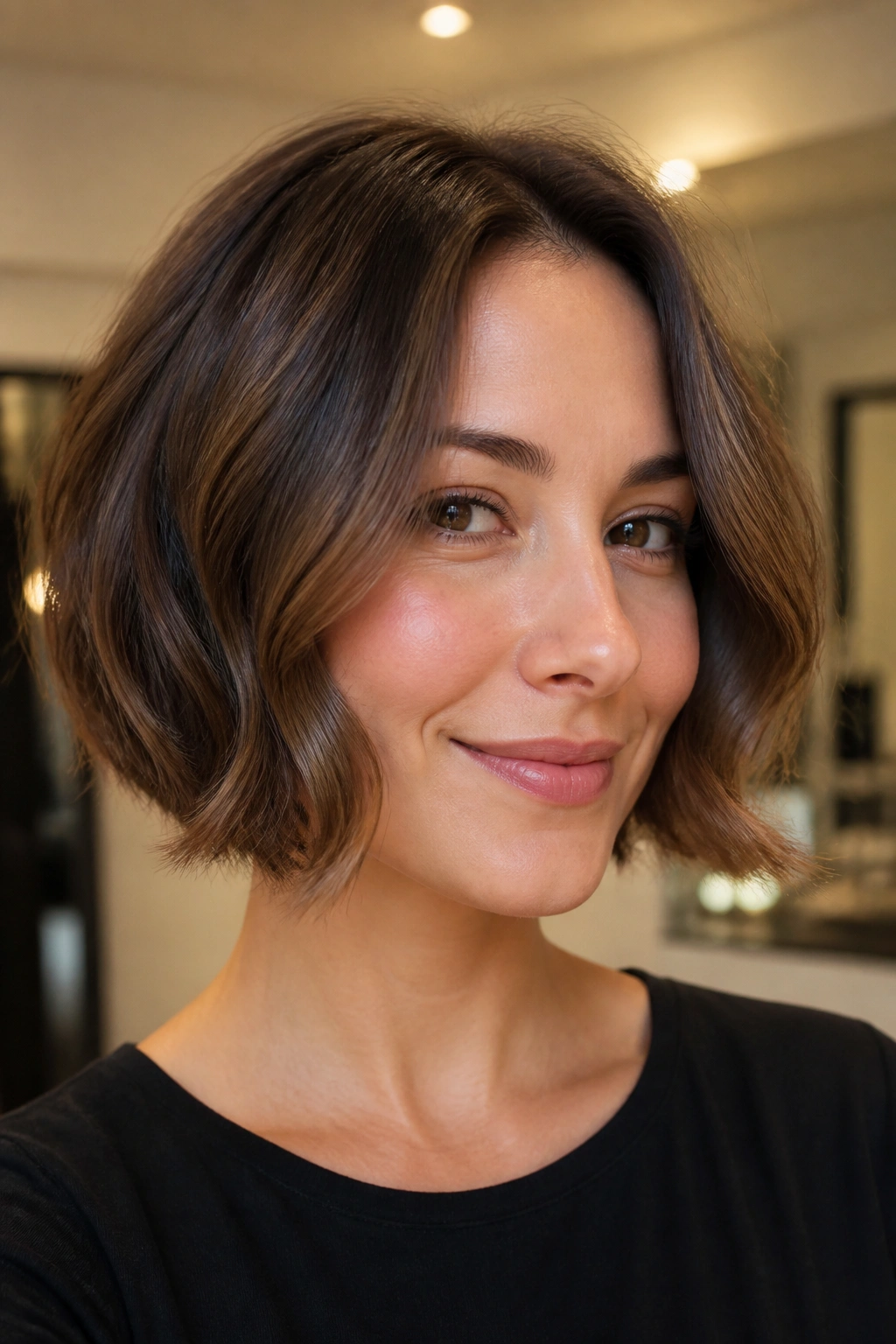
If your hair has a natural wave, this is one of the prettiest ways to use it. The curve of the inverted shape gives the waves a place to settle, while the longer front pieces stop the style from blooming out at the sides. It feels easy, but there is some real structure hiding in it.
A round face usually benefits from hair that bends inward or downward near the cheekbone. Loose waves can do that beautifully if they are kept controlled through the mid-lengths. The mistake is piling too much wave right at the cheeks, where it adds width instead of softness.
What to ask your stylist to do
Keep the layers long. Really long. You want movement, not a chopped-up cloud. A gentle bevel on the ends helps the hair curve instead of frizzing outward.
A diffuser can be your friend here, but only if you stop drying before the hair becomes too puffy. Leave it around 80 percent dry, then finish with a small round brush or a flat iron bend at the front pieces.
Soft wave, clean shape. That combination is hard to beat.
5. The Sleek Inverted Bob With a Deep Side Part
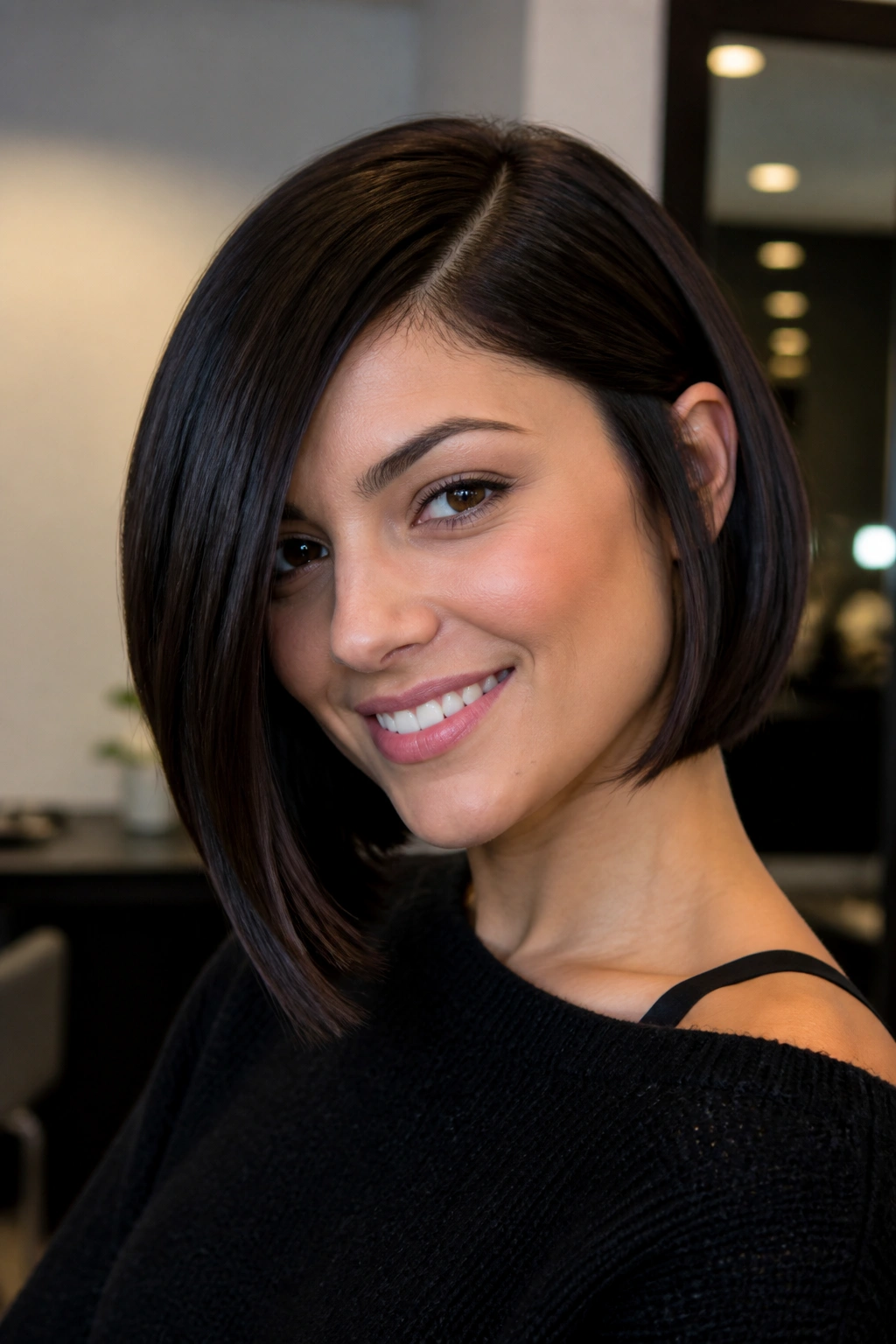
This cut is sharp in the best way. A sleek inverted bob takes the roundness out of the face by keeping the surface smooth and the line clean. The deep side part does half the work before the scissors even come out.
What makes it different
The straight, glossy finish gives the cut a long visual line. That line starts at the crown, drops through the side, and keeps the eye moving. Round faces usually look better when the hair does not expand sideways, and this version keeps everything tucked in close.
A deep side part also adds height at the front. That small lift matters. It stretches the face a little and keeps the top from looking flat, which is a common issue with shorter bobs on fuller faces.
How to wear it without making it stiff
Use a paddle brush for the base and a round brush only at the ends. You want the front to bend under just enough to skim the jaw. Too much curl at the ends makes the shape feel old-fashioned.
- Best on straight or relaxed hair
- Needs heat protection if you smooth it with a flat iron
- Ask for invisible internal layers so it lies flat
- Avoid heavy face-framing pieces that start too high on the cheek
This is a strong choice if you like neat hair. It is not casual. It is precise.
6. The Choppy Textured Bob That Keeps Movement Near the Ends
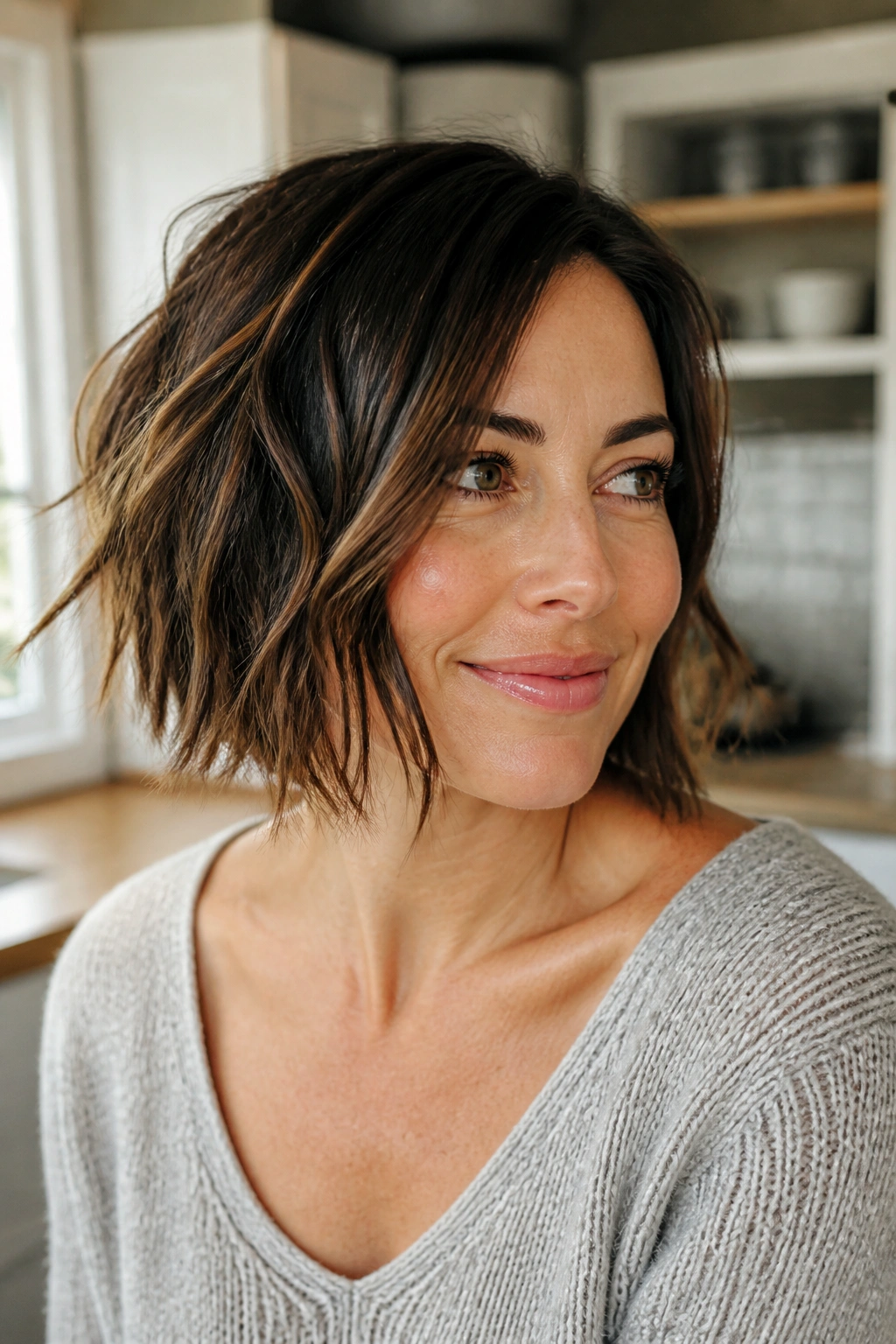
If you have ever had a bob turn into a triangle, you already know why texture matters. Choppy ends keep the shape from sitting like a helmet. They break up the mass, and on a round face that can make the difference between “cute” and “why is my head so wide?”
I like this cut on medium to thick hair because it gives the ends some swing. Not a lot. Just enough to keep them from locking into one heavy block. The trick is to leave the top and sides a bit smoother so the texture stays near the perimeter instead of puffing all over the head.
The best choppy inverted bob feels a little undone in a controlled way. The pieces move. The line still exists. That balance is harder to pull off than people think.
A matte cream or light paste works better here than a heavy serum. Heavy product can make the texture separate in a bad way, especially on finer hair. A small amount between the fingertips is enough.
7. The Curly Inverted Cut With Longer Front Pieces
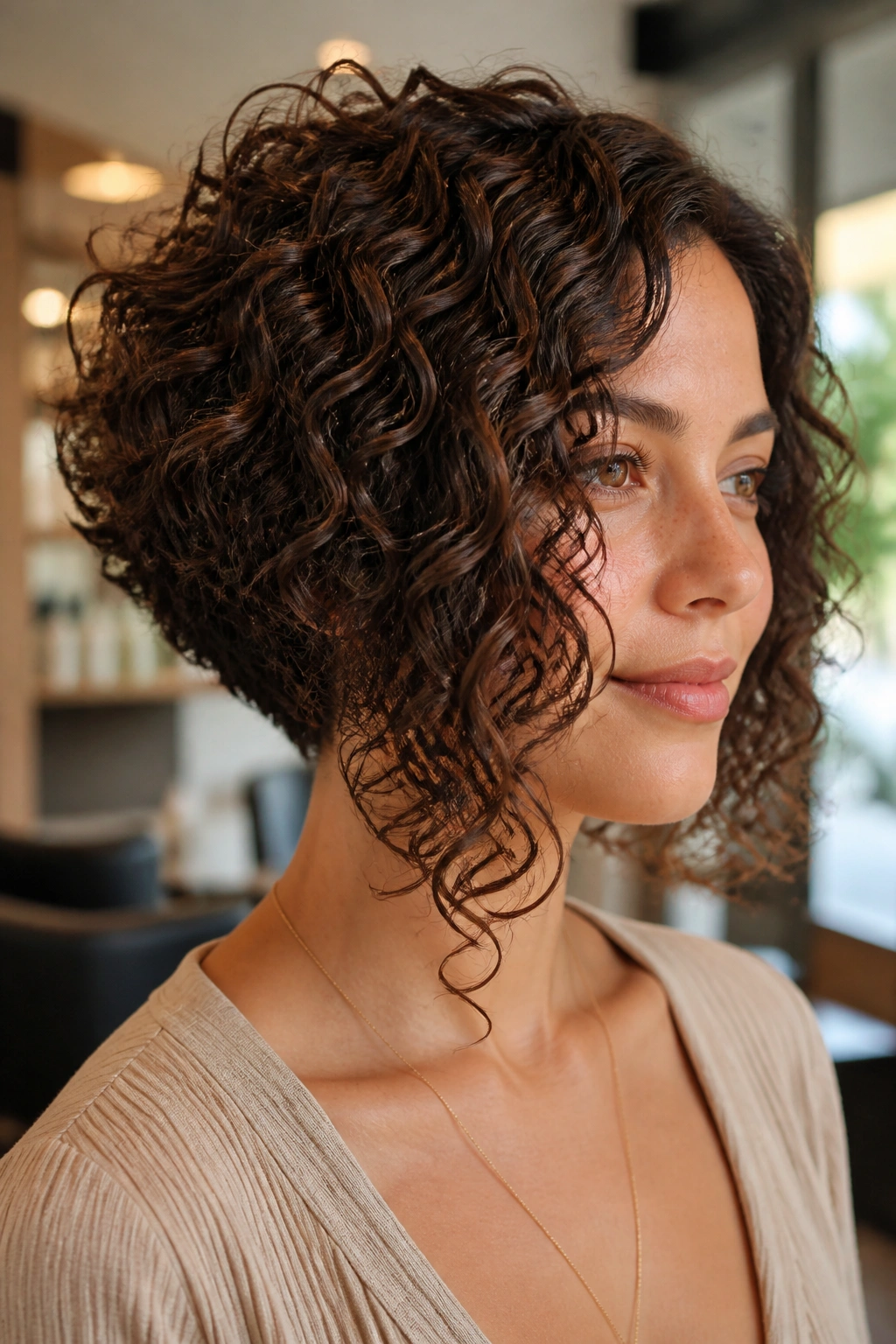
Can curly hair carry an inverted shape without turning into a triangle? Absolutely. The answer is in the balance between the back and the front. Curly inverted haircuts for round faces work best when the curls are shorter at the nape and left longer near the jawline and beyond.
How to keep the curl line narrow
Cutting curls dry is usually the smarter move. That lets the stylist see where each curl lands instead of guessing. With a round face, the goal is to let the curl pattern sit below the widest part of the cheeks, not square on top of them.
The front pieces should stretch a little farther forward than you think. Shrinkage is real. If the hair springs up two inches after it dries, a chin-length cut can end up much higher than planned.
A curl cream with a light hold gel on top usually gives the cleanest finish. Scrunch from the ends upward, then leave the curls alone. Too much touching makes the sides expand, and that gets wide fast.
- Best for loose curls, spirals, and mixed textures
- Ask for curl-by-curl shaping if the hair is dense
- Keep the nape shorter but not shaved unless you want a stronger look
- Long front pieces help soften the cheeks
Curly hair does not need to be forced into a straight-hair shape. It just needs a better outline.
8. The Inverted Bob With Curtain Fringe
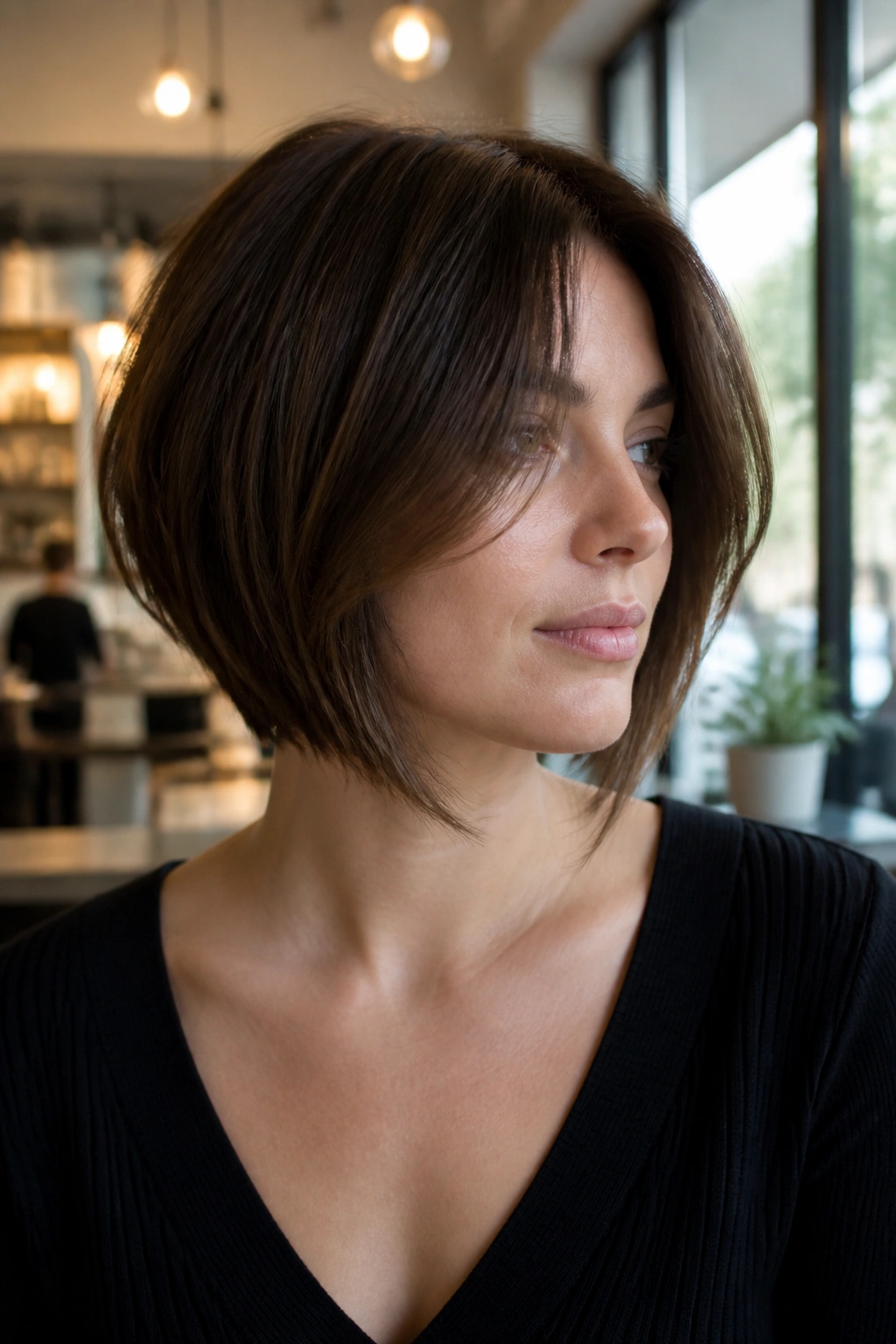
A curtain fringe can be a smart move on a round face, as long as it opens away from the center and does not sit too heavy across the forehead. The fringe adds vertical motion near the eyes, which keeps the haircut from feeling like one solid block from ear to ear.
This is a good choice if you want the front of your face to feel softer without losing structure. The fringe should hit around the cheekbone or just below it, then split into the longer front lengths of the bob. That little overlap is where the shape starts to work.
I prefer this version when the rest of the haircut stays clean. If the bob is already very textured, a curtain fringe can make it feel busy. If the bob is sleek, the fringe brings just enough softness to keep it from looking severe.
There is one catch. The fringe has to be trimmed often enough to keep its parting open. Once it gets too long and falls flat, the whole effect disappears. Then you are just dealing with hair in your eyes.
9. The Jaw-Skimming Feathered Inverted Cut
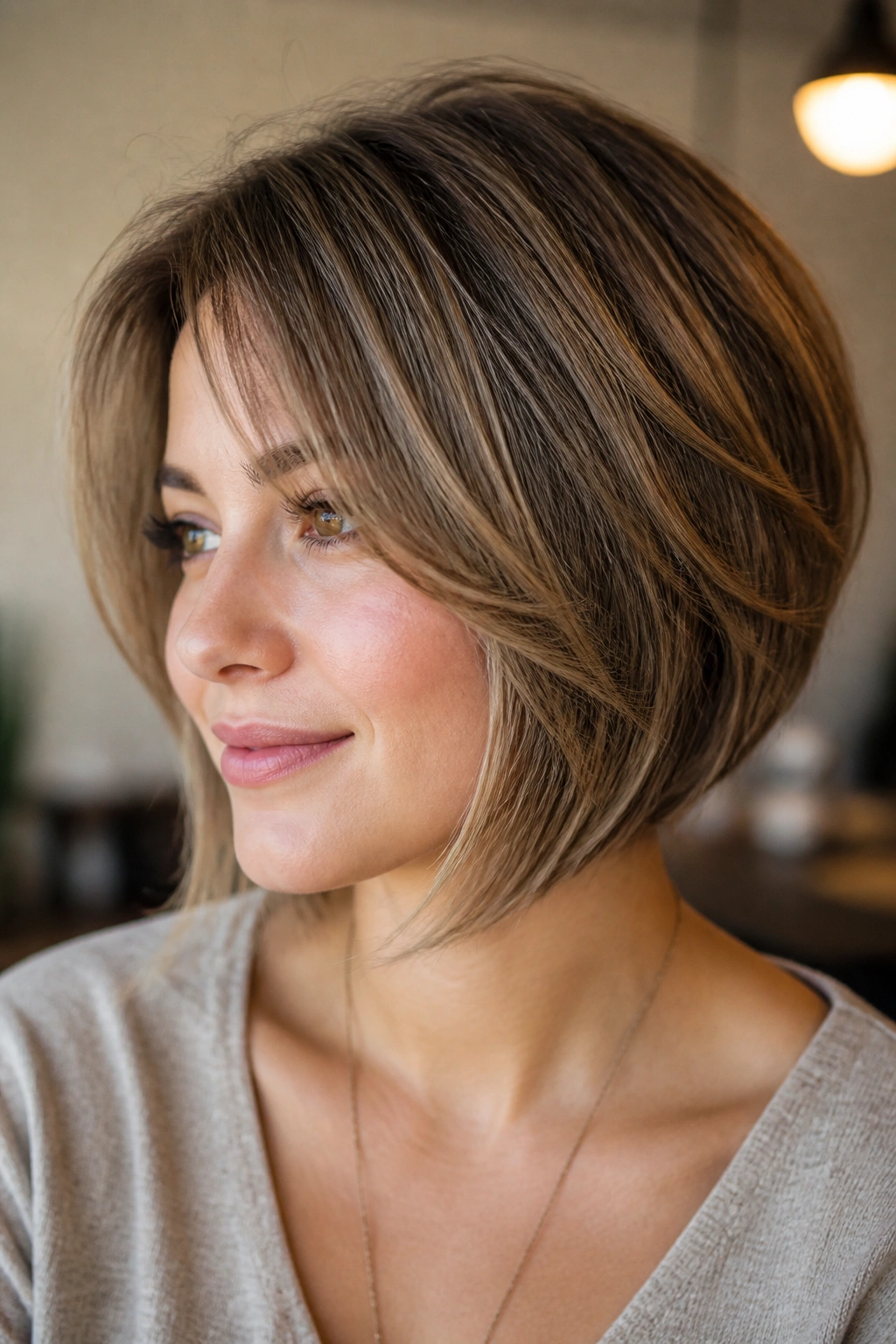
Feathering sounds old-fashioned until you see it done well. On a round face, feathered ends can be a relief. They soften the jaw without adding a hard line at the widest part of the face, which is often where a blunt cut gets tricky.
Why the texture matters here
A feathered edge breaks up the outline, so the haircut feels lighter around the lower face. That matters if your hair is thick, because thick hair can balloon outward at the bottom and widen the silhouette. Feathering keeps the ends moving instead of sitting like a shelf.
This style is especially good if you want your neck and jawline to look longer. The hair should skim the jaw, not sit on it. The difference is subtle on a hanger. It is obvious in a mirror.
What to ask for
- Soft point-cut ends rather than a blunt line
- Face-framing layers that start below the cheekbone
- A back that is stacked enough to hold shape, but not so much that it gets puffy
- Light styling with a brush, not a big curl at the ends
The best feathered inverted cuts look easy from the outside. They are not. They need a careful hand.
10. The Angled Lob That Tucks Cleanly Behind One Ear
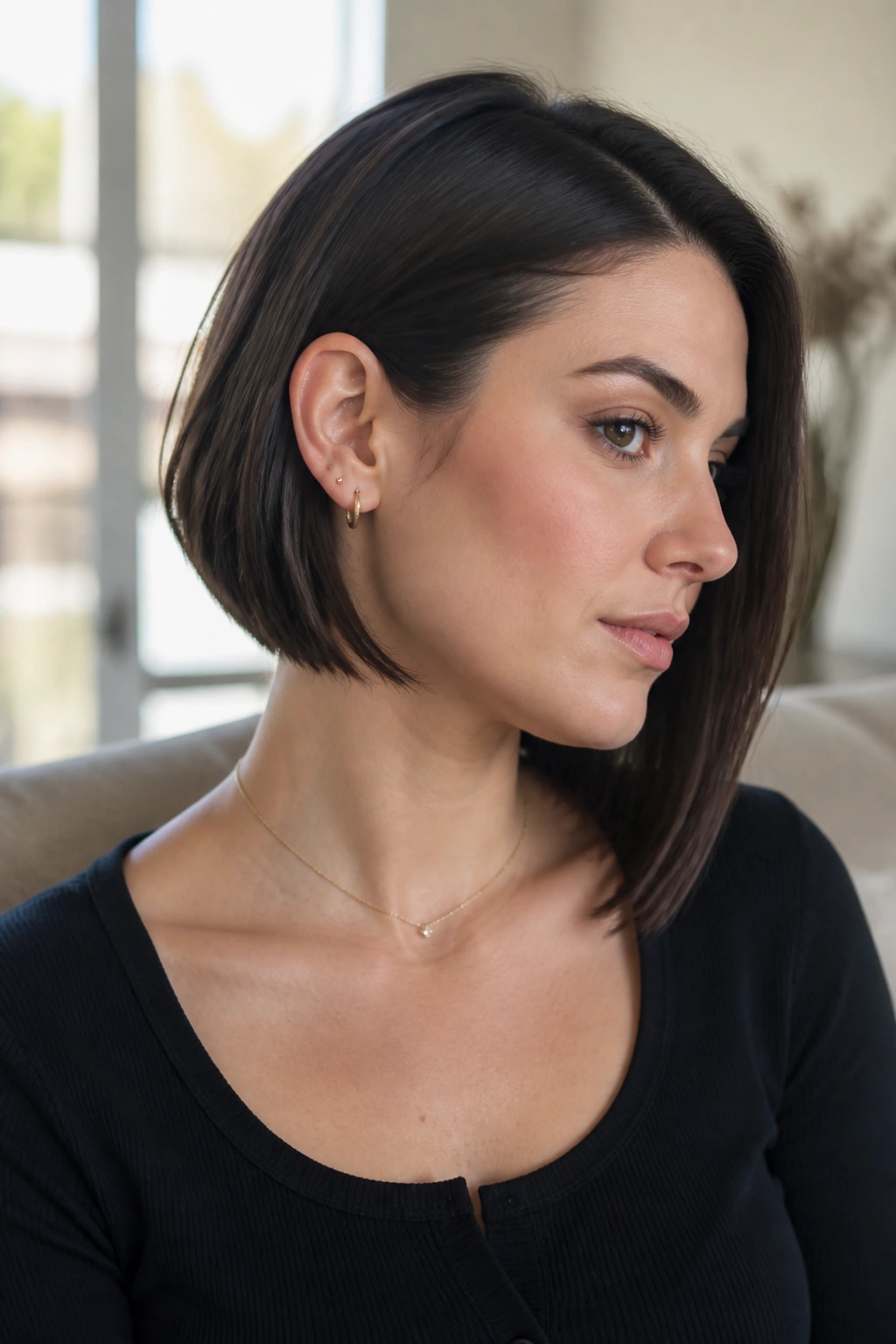
A good angled lob gives you an honest shortcut when you want the face to look slimmer fast. Tucking one side behind the ear opens up the cheek and jaw on that side, and the diagonal front line does the rest. It is a small move with a decent payoff.
Why the ear tuck matters
When one side is tucked, the eye sees more neck and less width. That alone can make a round face feel longer. Pair it with an angled cut that falls toward the collarbone and you get a shape that looks intentionally styled, not accidental.
This is a nice choice if you do not want to fuss with round-brush blowouts every day. The cut itself carries the style. You can let it air-dry with a little product and still get the same basic effect.
A side part helps, but do not force it too deep if your hair fights back. The cut already has enough angle. Overdoing the part can make the top collapse on one side and puff on the other. That is an easy way to lose the clean line.
11. The Undercut Nape Inverted Bob With Clean Lift at the Back
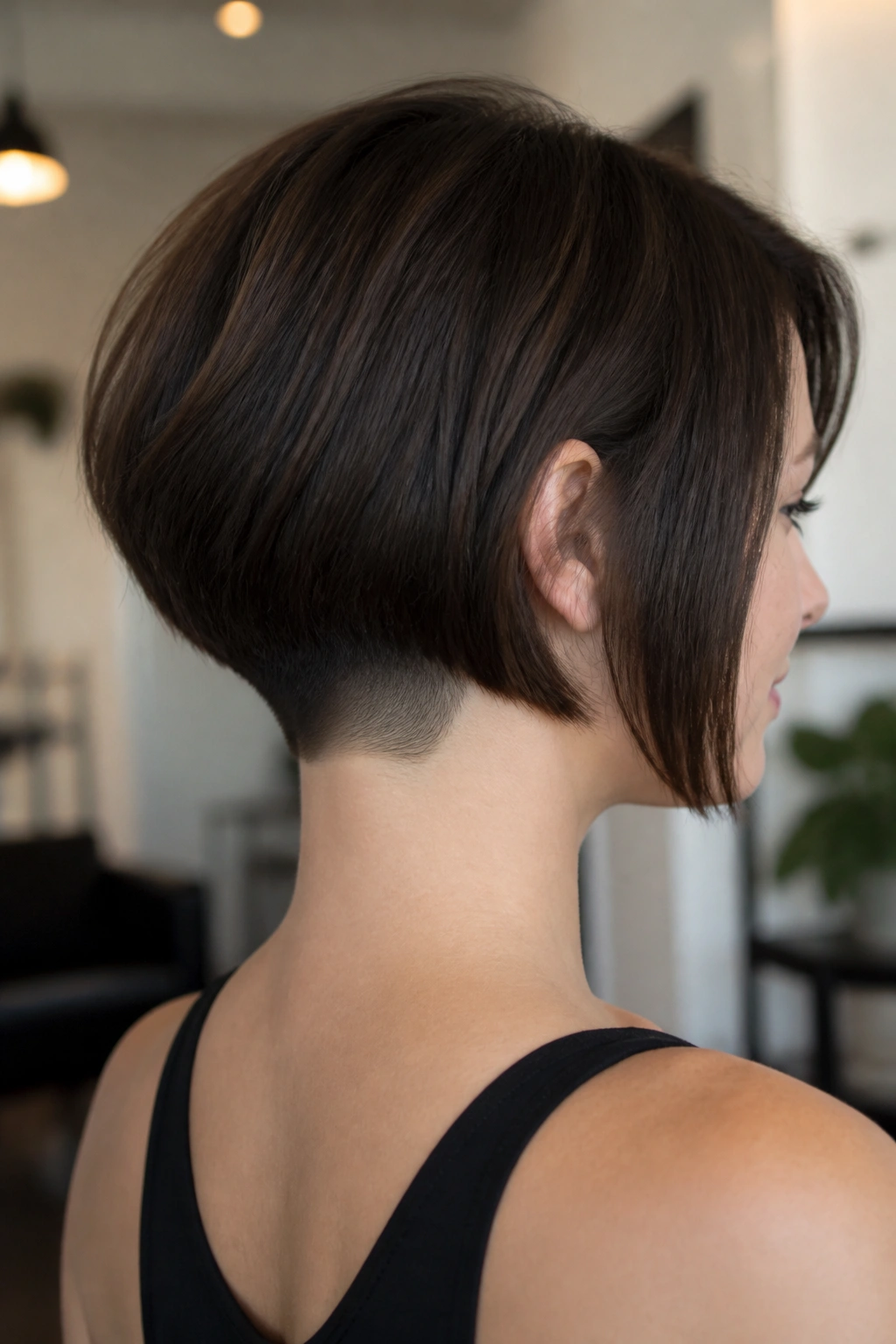
This is the bold one. The undercut at the nape removes bulk where thick hair tends to stack and swell, which lets the rest of the haircut sit closer to the head. For a round face, that can be a gift.
The whole point is control. By taking weight out underneath, the back can lift without turning bulky. The front stays long enough to frame the face, and the neck gets a little more breathing room. That combination is crisp.
It is not the best option if your hair is very fine or if you hate frequent upkeep. An undercut grows out faster than people expect, and the shape starts to lose its snap when the hidden section gets fuzzy. Still, on dense hair, it solves a problem that ordinary layering sometimes cannot.
If you wear your hair up half the time, this cut is even better. The hidden shave or close clip gives the back a neat finish when the hair is down and takes some weight off your head. That sounds minor. It is not.
12. The Micro-Stacked Bob With a Rounded Back View
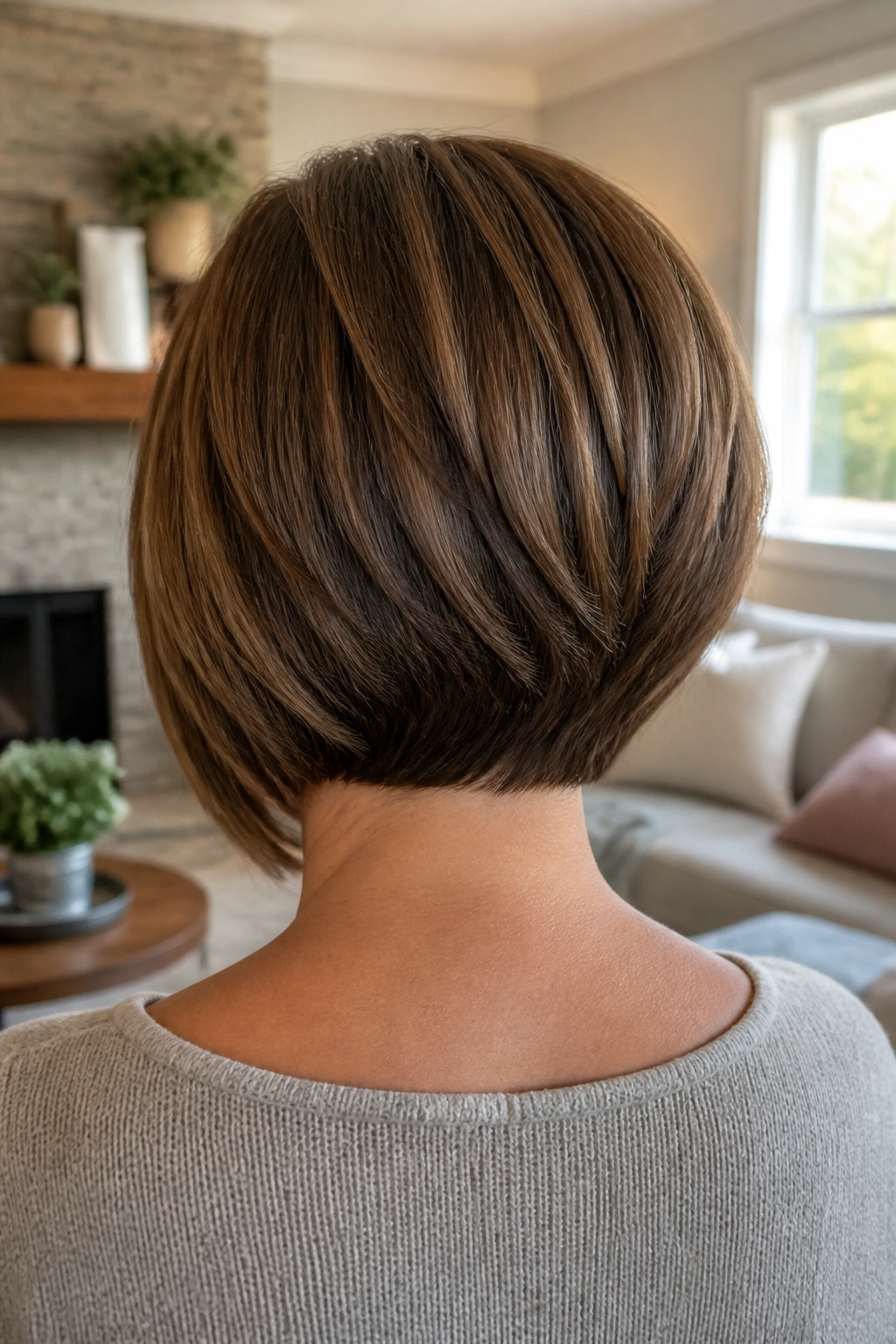
A micro-stack is for someone who wants shape without a visible shelf. The back rises just enough to create a clean curve, then drops into the longer front pieces. From behind, the haircut looks tidy and compact. From the front, it still lengthens the face.
What it looks like in real life
The hair hugs the head more closely than a heavier stack. That makes the silhouette look polished rather than puffy. It is a good choice if you like structure but do not want the haircut announcing itself every time you turn your head.
This version works especially well on straight to slightly wavy hair. If the hair is very thick, the stylist has to be careful not to overbuild the crown. Too much stack at the back can push the whole shape outward, and that is the opposite of what a round face needs.
- Ask for a subtle graduation, not a steep wedge
- Keep the front ends soft and slightly beveled
- Use a small round brush at the crown for lift
- Trim regularly so the back keeps its curve
The nice thing about this cut is that it still looks considered on a lazy day. That is rare.
13. The Razor-Cut Inverted Shag Bob
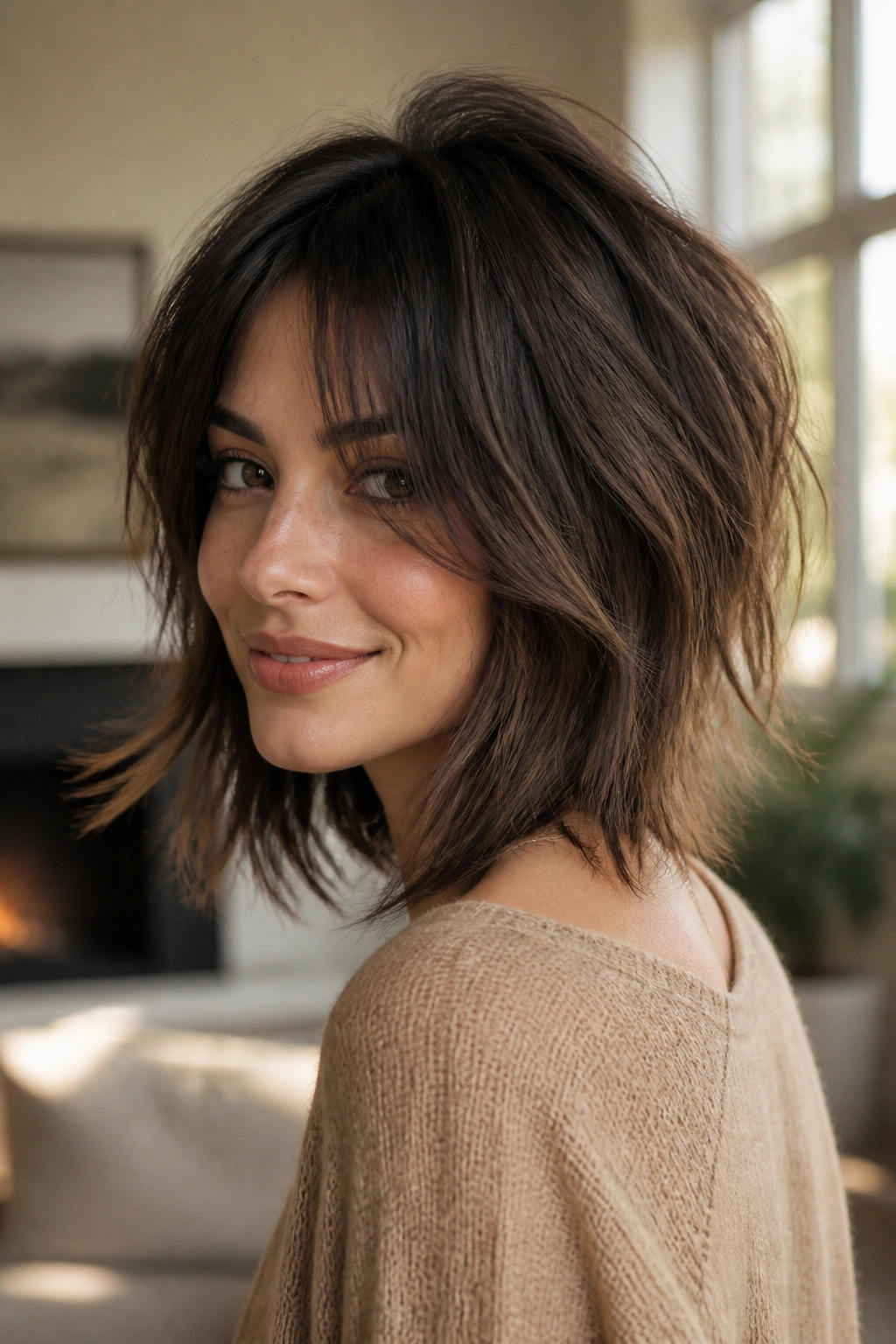
Can an inverted cut be shaggy and still flatter a round face? Yes, if the mess is controlled. A razor-cut inverted shag bob gives you movement, separation, and a little edge, but it has to keep its length in the right places.
The razor softens the ends so they do not sit in one blunt block. That helps if your hair is medium to thick and tends to hang heavy. The shag influence brings some lift around the crown and cheek area, but the front should still fall below the widest part of the face.
This is not the cut for someone who wants perfect lines. It is for someone who likes shape with some grit in it. If the hair is fine and fragile, a razor can make the ends look wispy too fast. A scissor-cut version may be safer.
Dry styling cream works well here. A little bend, a little separation, and done. Too much polish kills the point of the haircut.
14. The Flipped-Out Inverted Bob With Light Ends
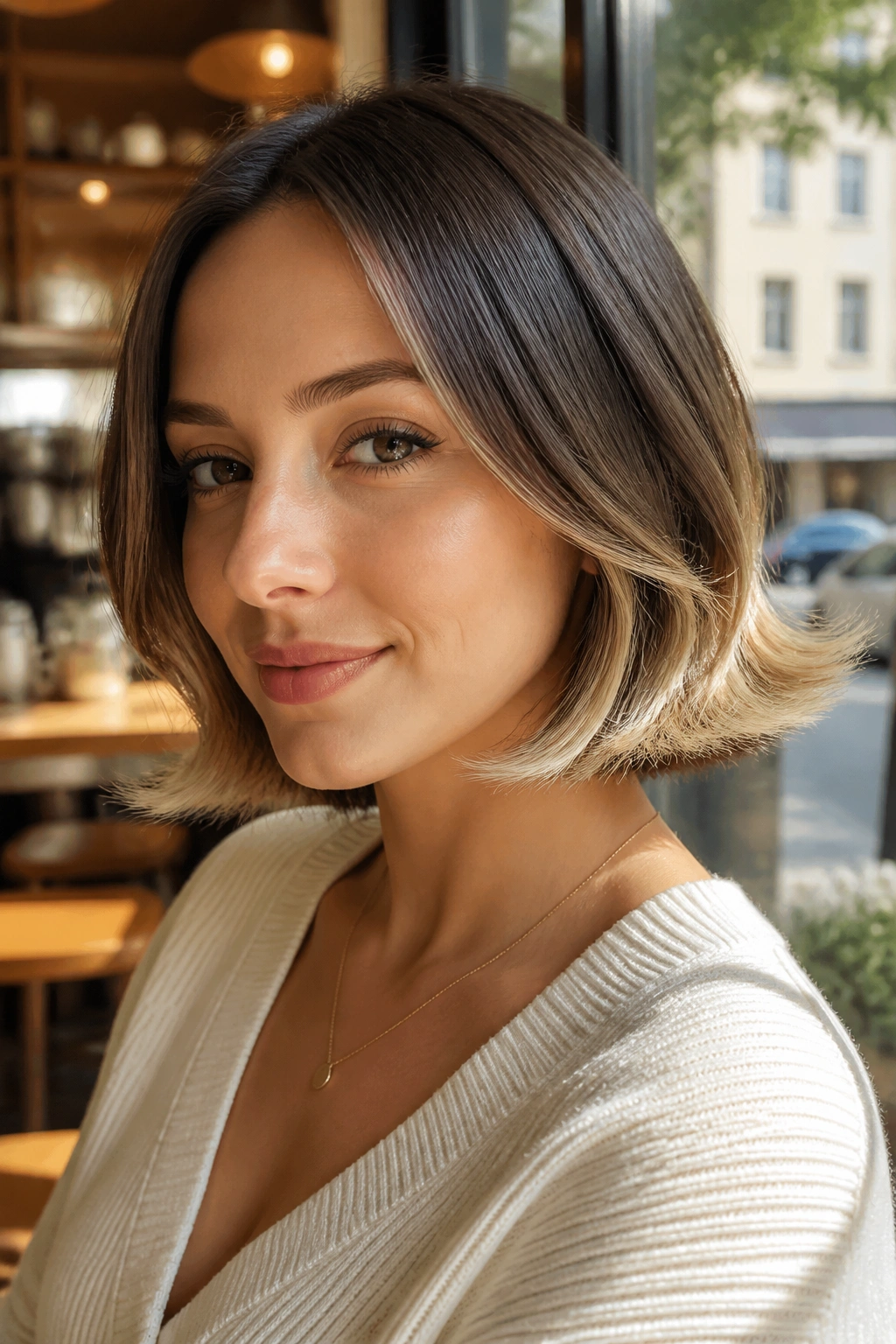
A flipped-out finish sounds retro, but it can work on a round face when the flip starts low and stays light. The trick is not to curl the ends out so hard that they flare at the cheeks. You want a small outward bend near the bottom, not a full swing.
Where the flip should start
The movement should begin below the jawline. That keeps the widest part of the style lower, where it does less visual damage. If the flip starts too high, the sides get wider and the face gets lost inside the shape.
This cut is good when you want a little energy in the style without going full curl. It also works well with a sharp side part because the part adds length while the flipped ends keep the look from feeling severe.
A flat iron bend or a round brush can create the finish. Use a light hand. That sounds obvious, but this is the kind of cut people over-style all the time. The more the ends stick out, the more the face looks round.
- Best on medium-density hair
- Keep layers long so the flip stays at the ends
- Use a light-hold spray, not a crunchy one
- Great for shoulder-length and slightly shorter versions
Small flip. Big difference.
15. Side Bangs on an Inverted Bob for Round Faces
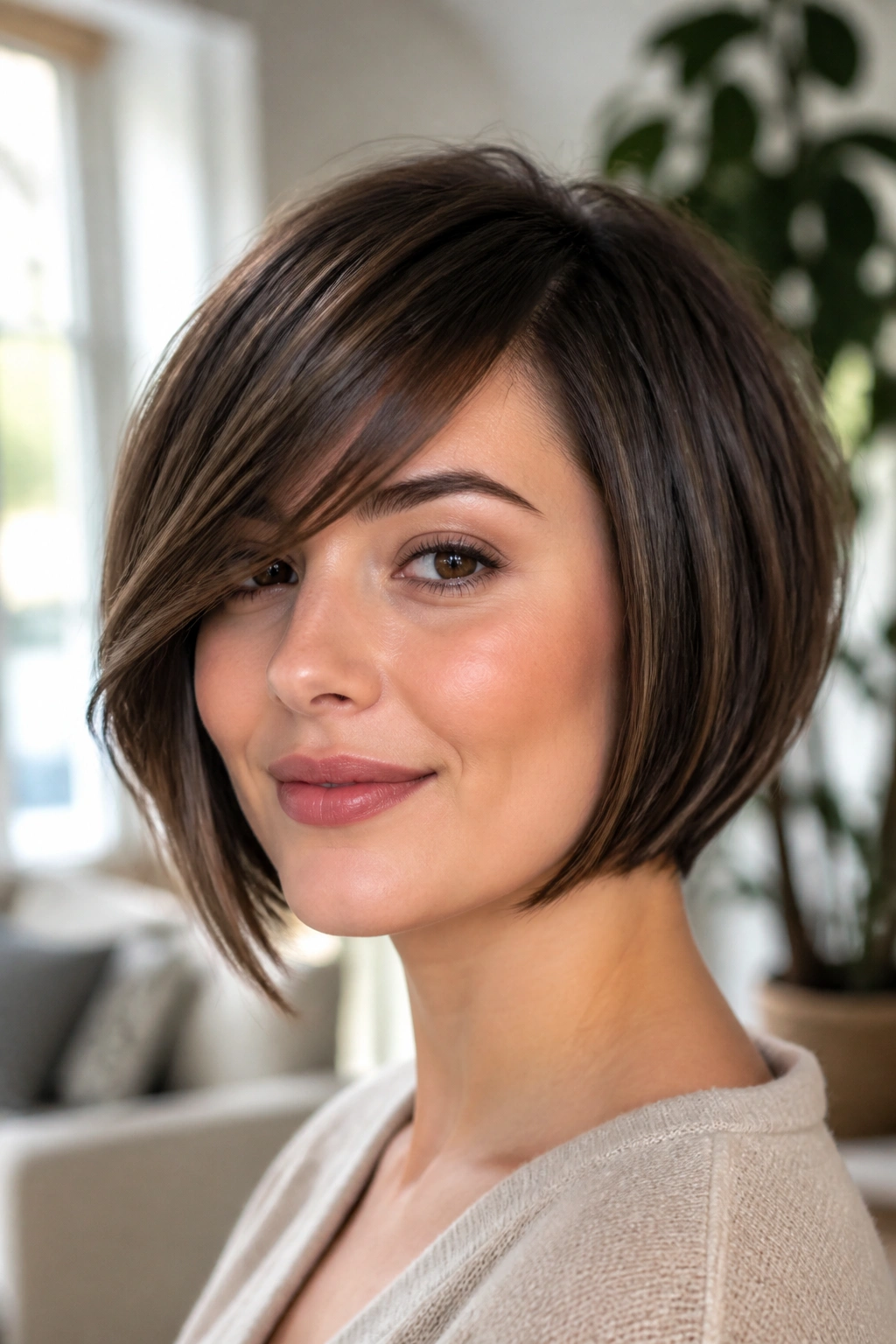
Side bangs can be a smart fix when a round face needs a bit more diagonal movement near the forehead. The bangs should sweep across the face and blend into the longer side lengths, not sit as a chunky block that chops the face in half.
The sweet spot is usually around the cheekbone. That is where the bangs can break up the width of the face without crowding the eyes. If they start too short, they can make the forehead look rounder. If they are too thick, they just add more weight on top.
This style suits people who want a bit of softness around the eyes. It also works nicely if your hair is straight or has a gentle bend, because the bangs can lie in place without much fight. On very curly hair, the shape can be harder to control unless the curl pattern is loose.
A good side bang should feel like part of the haircut, not a separate piece sitting on top. When it flows into the front angle, the whole cut reads slimmer and cleaner.
16. The Softly Graduated Inverted Crop With Crown Volume
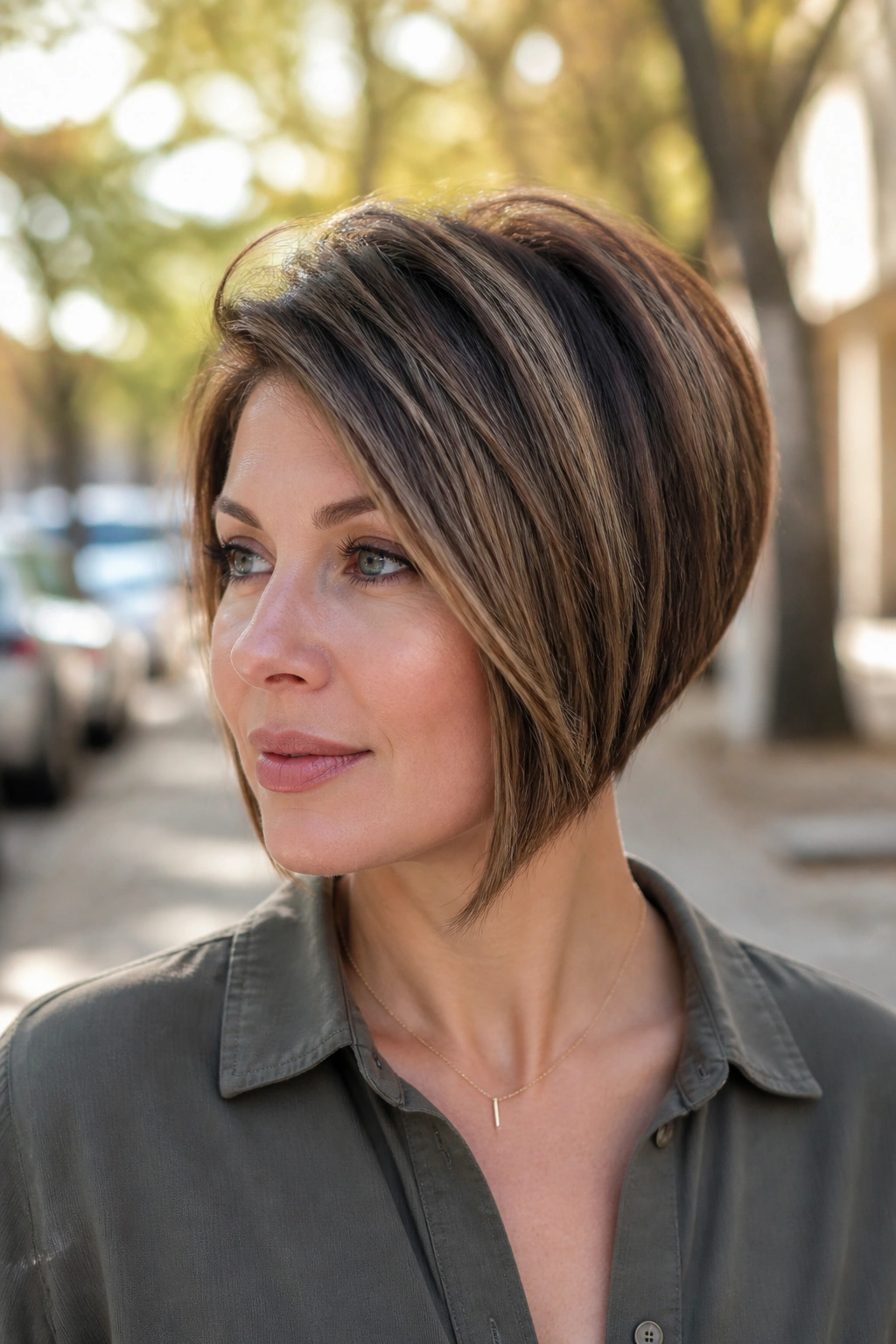
This is the shorter, sharper sibling of the classic bob. A softly graduated crop keeps the back compact and the crown lifted, which gives a round face more height without making the sides explode outward. It is a neat little piece of architecture.
Why the crown matters so much
A little extra lift on top changes the silhouette fast. It draws the eye upward, which balances cheek width and keeps the haircut from sitting low and wide. The crown does not need a giant tease or a stiff blowout. It just needs enough support to avoid flattening.
This cut is good for people who like short hair and do not mind shape maintenance. It needs regular trimming because the graduation shows fast when it grows. If the back loses its line, the whole thing can go a little boxy.
I like this on straight or lightly wavy hair with some density. Fine hair can wear it too, but the graduation has to stay soft or the ends look too thin. A light mousse at the roots and a quick round-brush lift are usually enough.
- Shorter nape, rounded crown, soft front lengths
- Best with a side part or soft off-center part
- Works well for active routines and quick styling
- Keep the front longer than the cheek if you want a slimmer look
17. The Collarbone Cut With Hidden Inverted Layers
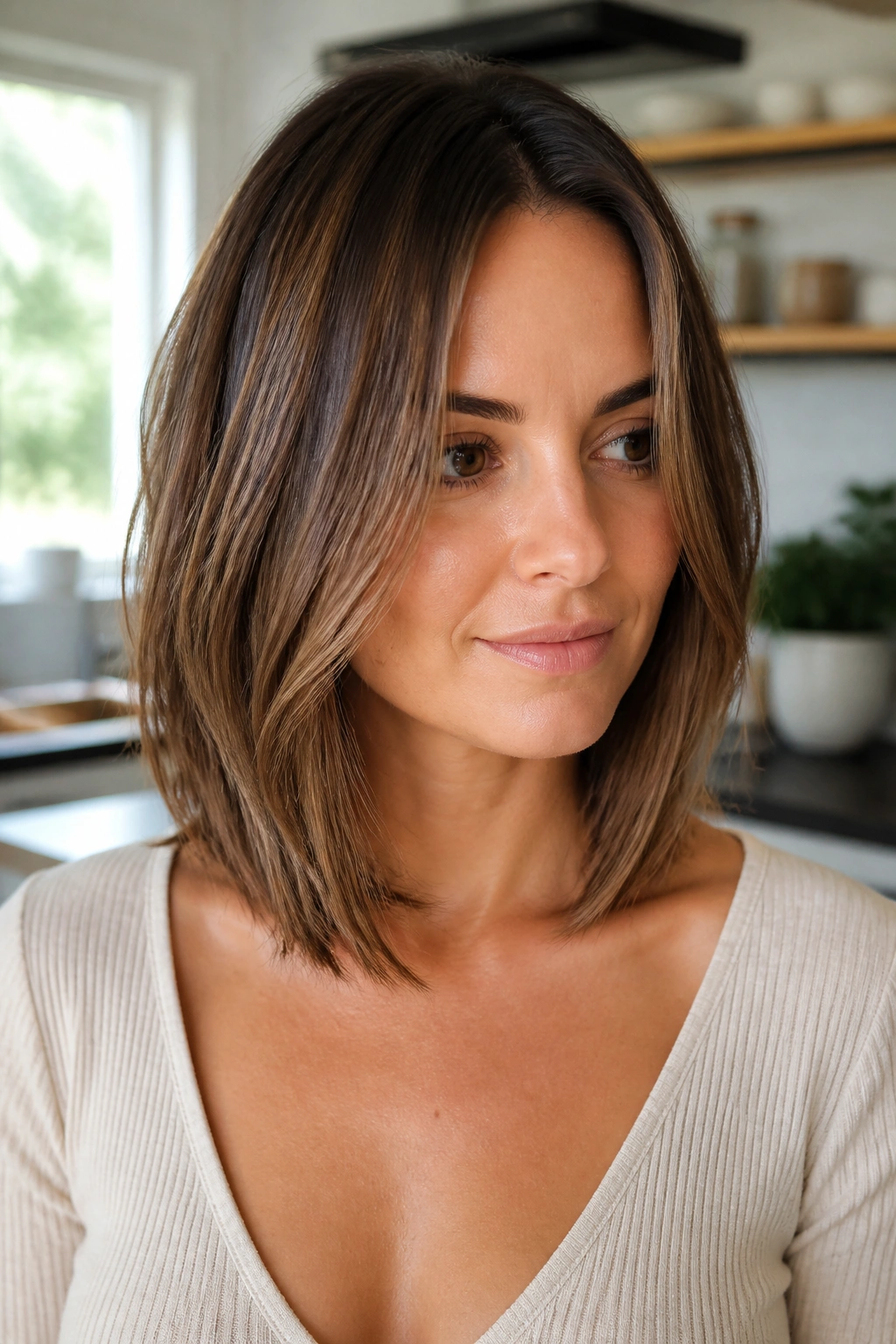
Not every inverted haircut has to announce itself from across the room. This version keeps the length around the collarbone, then hides the graduation inside the cut so the outer shape stays clean. The result is movement without obvious stacking.
That hidden layering is useful on round faces because it gives the hair somewhere to sit without widening the outline. The front pieces can remain long and soft while the interior supports the bend and prevents the ends from looking heavy.
This is the cut for someone who likes to tie hair back sometimes, wear it down other times, and not wrestle with a strict shape. It is also kinder during grow-out than a shorter bob. The structure is there, but it does not scream for attention.
The only thing to watch is over-layering near the cheeks. Keep the face-framing pieces long enough to pass the jawline. If they start too high, the haircut can open up the cheeks too much and lose the slimming effect.
18. The Polished Inverted Bob With a Long Side Fringe
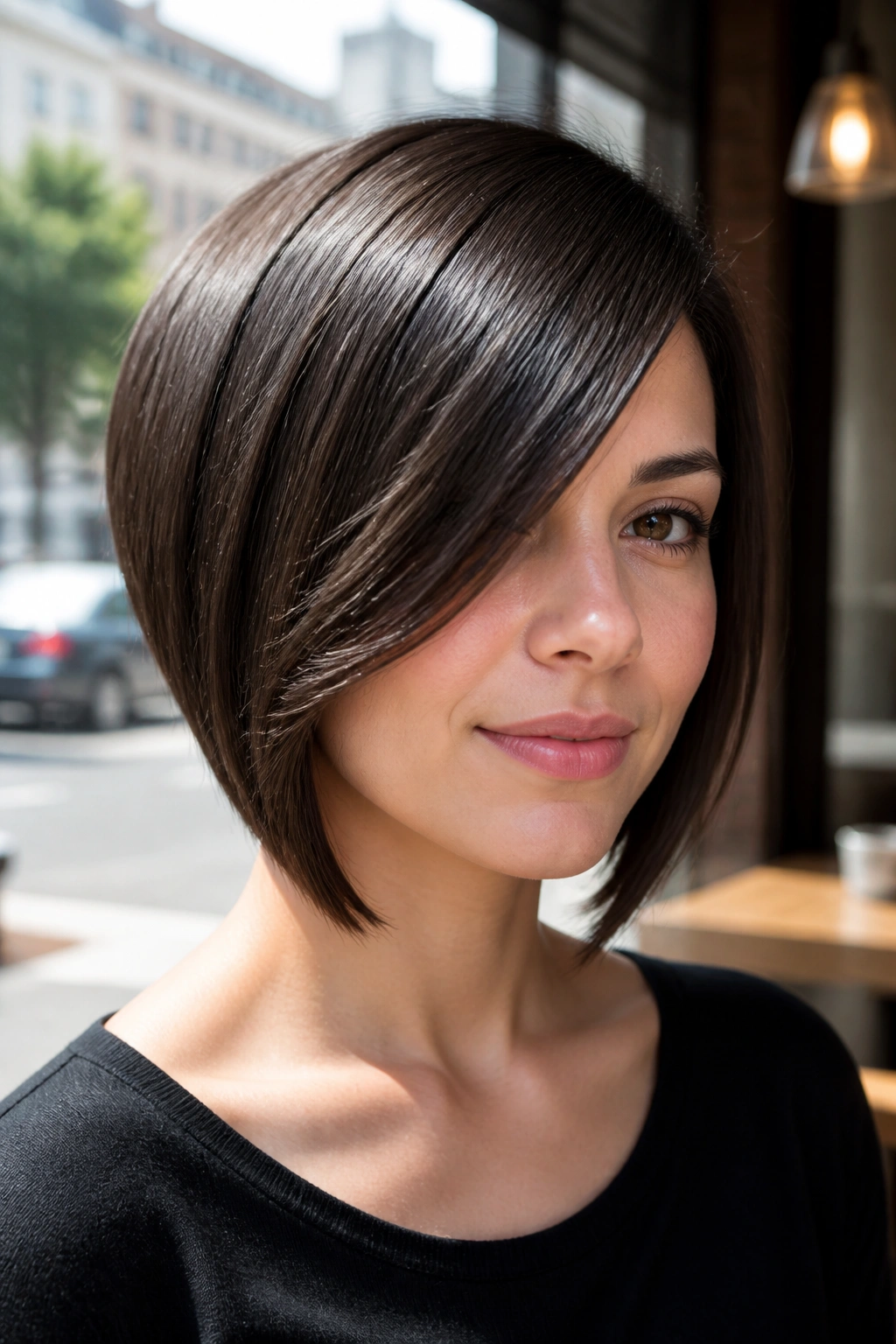
If you want the cleanest version of the look, this is the one I would point to first. A polished inverted bob with a long side fringe gives a round face structure, movement, and a clear line without piling on extra texture. It is neat, but not stiff.
The long fringe helps because it sits diagonally across the forehead and drifts into the front angle of the bob. That diagonal line cuts through roundness in a way that a short blunt fringe never will. It also keeps attention near the eyes and cheekbones instead of the full width of the face.
This version shines when the ends are smooth and the angle is obvious. You do not need a severe difference between back and front. You need enough contrast that the eye reads the shape right away. A little bevel at the ends, a soft side fringe, and a clean part are often enough.
It is a strong pick for work, dinners, weddings, all of it. The haircut holds up because the lines are simple. Simple lines age better. They also grow out better, which saves you some annoyance between trims.
Final Thoughts
The best inverted cuts for round faces do two things at once: they lift where the hair tends to fall flat, and they leave room where the face is fullest. That is the whole game. Angle, length, and part placement matter more than fancy styling tricks.
If you are taking one thing to the salon, bring a photo that shows the side and back, not just the front. The back shape changes everything. A great inverted bob looks good from the mirror; a really good one makes your profile look cleaner too.
