



Round faces and wavy hair can be a little tricky together. A cut that lands at the wrong spot can make the cheeks look wider, while the right one adds length, movement, and a cleaner line through the jaw. That is why wavy haircuts for round faces are less about chasing a cute shape and more about placement. Where the shortest layer falls matters. Where the part sits matters. Even the way the ends are texturized can change how the whole face reads in the mirror.
Waves have a habit of puffing out exactly where you do not want them. Around the cheeks, that extra width can make a face look shorter and fuller than it really is. The fixes are usually simple: length below the chin, soft angles, side movement, and face-framing pieces that start low enough to avoid boxing in the face. A blunt cut can still work, but only if it is handled with enough shape that the width doesn’t settle right at cheek level.
The good cuts on this list all do one of two things. They either stretch the eye downward, or they break up the roundness with diagonals, layers, and a little asymmetry. Some are low-maintenance. Some need a diffuser, a round brush, or a quick bend at the front. None of them are magic. But the right one can make wavy hair behave in a way that feels cleaner, lighter, and a lot easier to wear.
1. Long Layers That Make Wavy Haircuts for Round Faces Look Taller
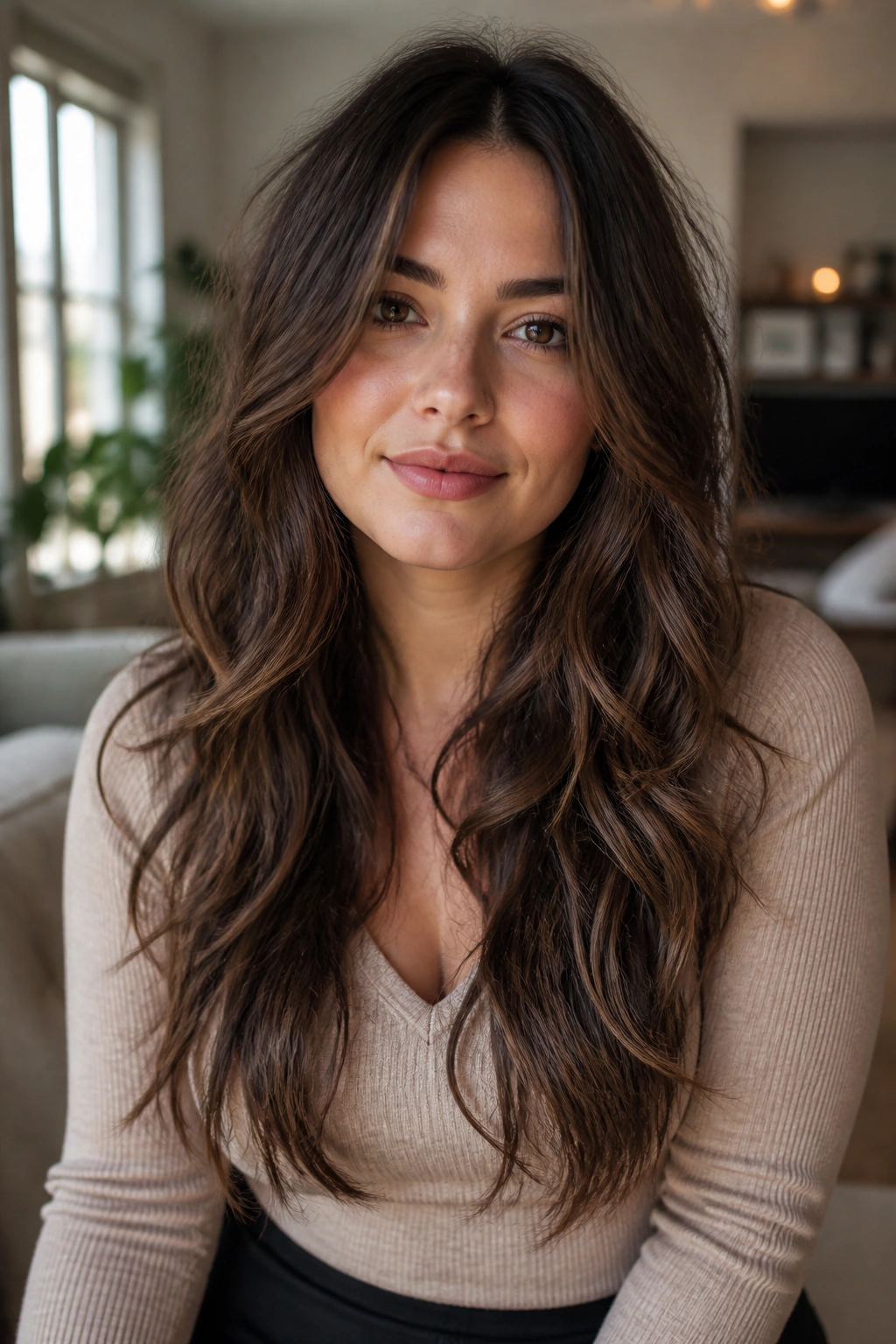
Long layers are the safest place to start, and they’re not boring when they’re cut well. The trick is to keep the length below the chin and let the layers move the eye downward instead of outward. On wavy hair, that means you get shape without the puffy triangle that can happen when too much bulk sits at the sides.
Why the Length Matters
Ask for the shortest face-framing piece to begin 2 to 3 inches below the chin. That one detail changes the whole balance. If the cut starts at the cheekbone, the wave pattern can flare there; if it starts lower, the face gets a longer line.
A clean middle part works here if your waves fall softly, but a slight off-center part can be even better. I like this cut most on hair that has a loose, bendy pattern and enough density to hold shape without collapsing.
- Keep the longest layers grazing the chest.
- Let the front angle down, not out.
- Use a light cream, not a heavy butter.
- Diffuse only until the roots are about 80% dry.
Best move: tell your stylist you want movement below the cheekbones, not volume right on them.
2. Collarbone Lob With Invisible Layers
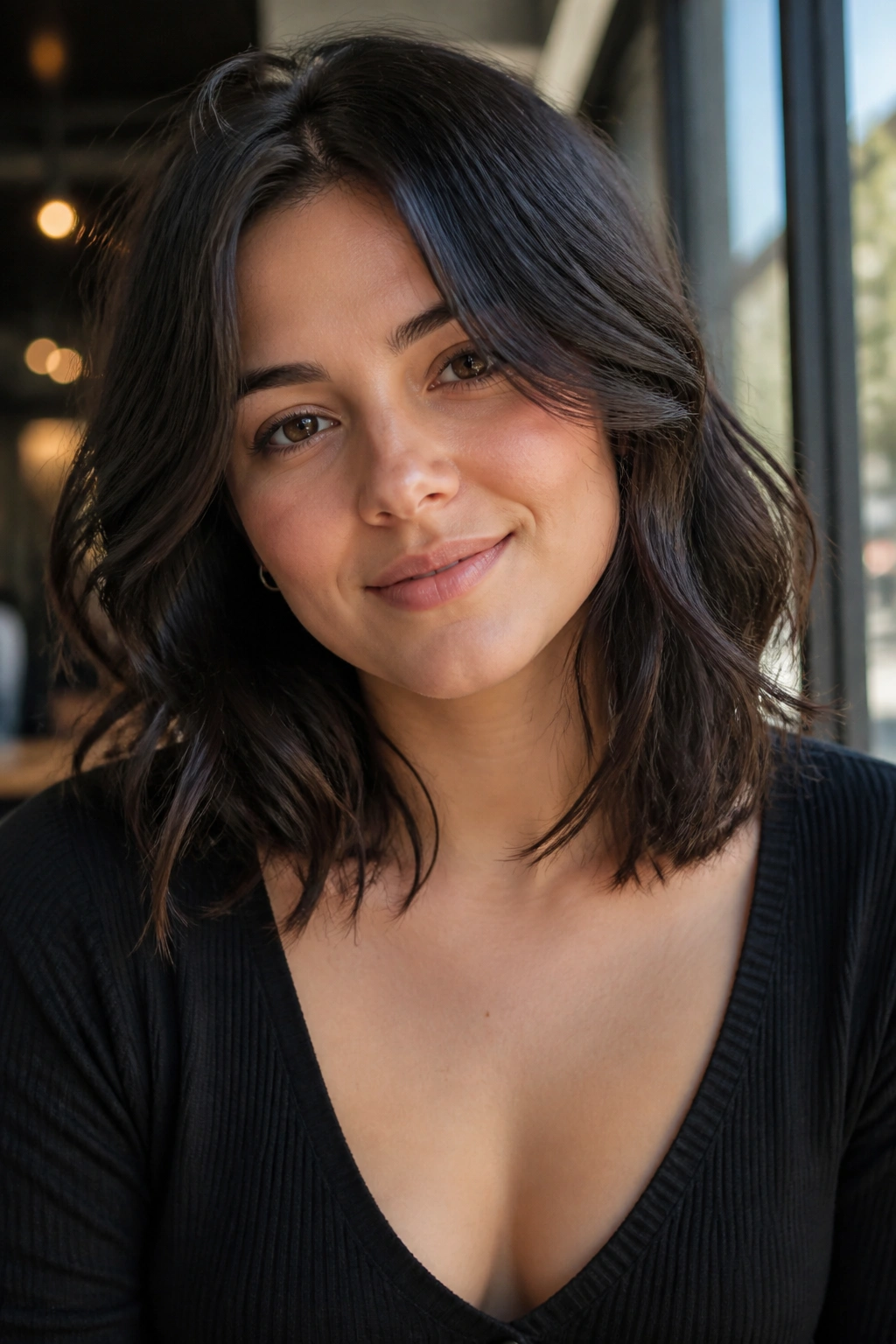
The collarbone lob is one of those cuts that looks simple until you wear it on a round face. Then you notice what it’s doing. The length sits low enough to narrow the face a bit, and the invisible layers stop the ends from turning into one heavy block.
Wavy hair likes this shape because the collarbone gives it a place to rest. Not too short. Not too long. If the ends flick a little, even better. You get that soft swing around the shoulders without piling width at the jaw.
I prefer this version over a blunt jaw-length bob for most round faces. A blunt bob can look cute, sure, but it can also make the face read broader if the wave pattern is thick. A lob with internal texture gives you the same ease with less risk.
Keep the part slightly off center, scrunch in a small amount of mousse, and let a few ends dry straighter than the rest. That small mismatch is part of the charm.
3. Deep Side-Part Shag With Cheekbone-Skimming Layers

A shag can be a dream on wavy hair, but only if the layers are cut with some discipline. Too much shredding and you get a halo of width. Too little, and it turns heavy. The version that works on round faces uses a deep side part, with the shortest pieces breaking just above the cheekbone and then falling away.
How to Ask for It
Tell your stylist you want more lift at the crown and less bulk at the sides. That wording matters. The crown height gives the face a longer line, while the side part breaks the symmetry that can make round faces look wider.
A good shag on wavy hair should feel touchable, not wild. I like it with soft ends, not razor-thin ends. If your hair is fine, keep the layers longer. If it is thick, the layers can be choppier, but they still need to stay controlled.
- Part hair where the arch of the eyebrow begins.
- Keep the fringe long enough to tuck behind one ear.
- Use mousse at the roots and a pea-sized bit of cream through the ends.
- Scrunch, then diffuse upside down for lift.
Tiny warning: a shag cut too high on the sides can make a round face look even rounder. That one is easy to miss in the salon chair.
4. Curtain Bangs With Mid-Length Waves
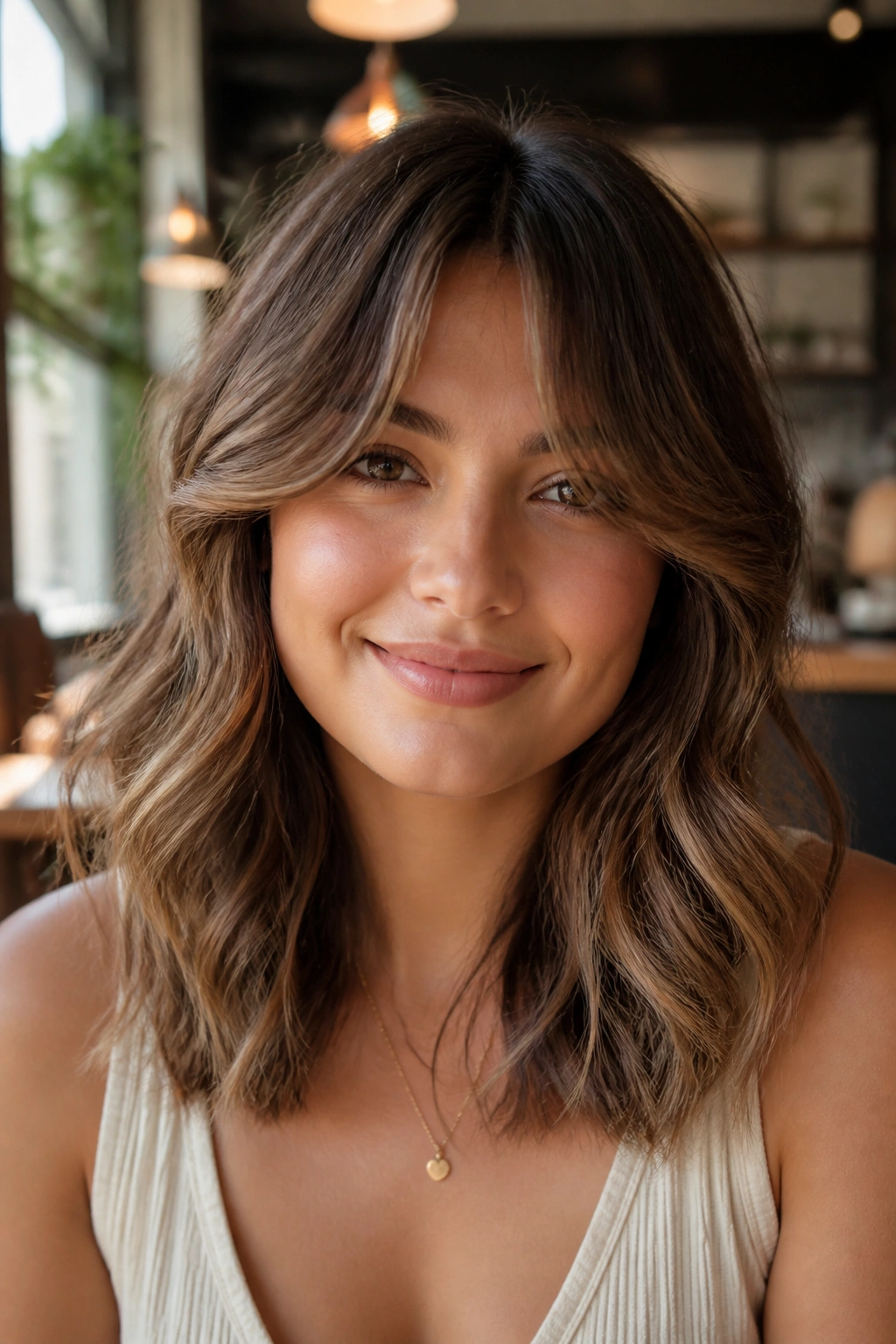
Curtain bangs work because they open the face instead of closing it off. On a round face, the best version starts long enough to graze the cheekbones and sweeps away from the center, not straight across the forehead. Paired with mid-length waves, the whole shape looks softer and longer at the same time.
The important part is length. Short curtain bangs can chop the face in half. Longer ones, especially on wavy hair, blend into the rest of the cut and make the eyes travel downward and outward at once. That diagonal movement does a lot of the flattering work.
What to Watch For
The bangs should not sit as a thick curtain right at the widest part of the face. They need a little air. If your wave pattern is strong, ask for the bangs to be left longer at first; wavy hair shrinks when it dries, and too-short bangs are a pain.
This cut is strong if you like a face frame but hate anything stiff. It grows out cleanly too, which matters more than people admit. A bad fringe is annoying every single morning.
5. Angled Lob Longer in Front
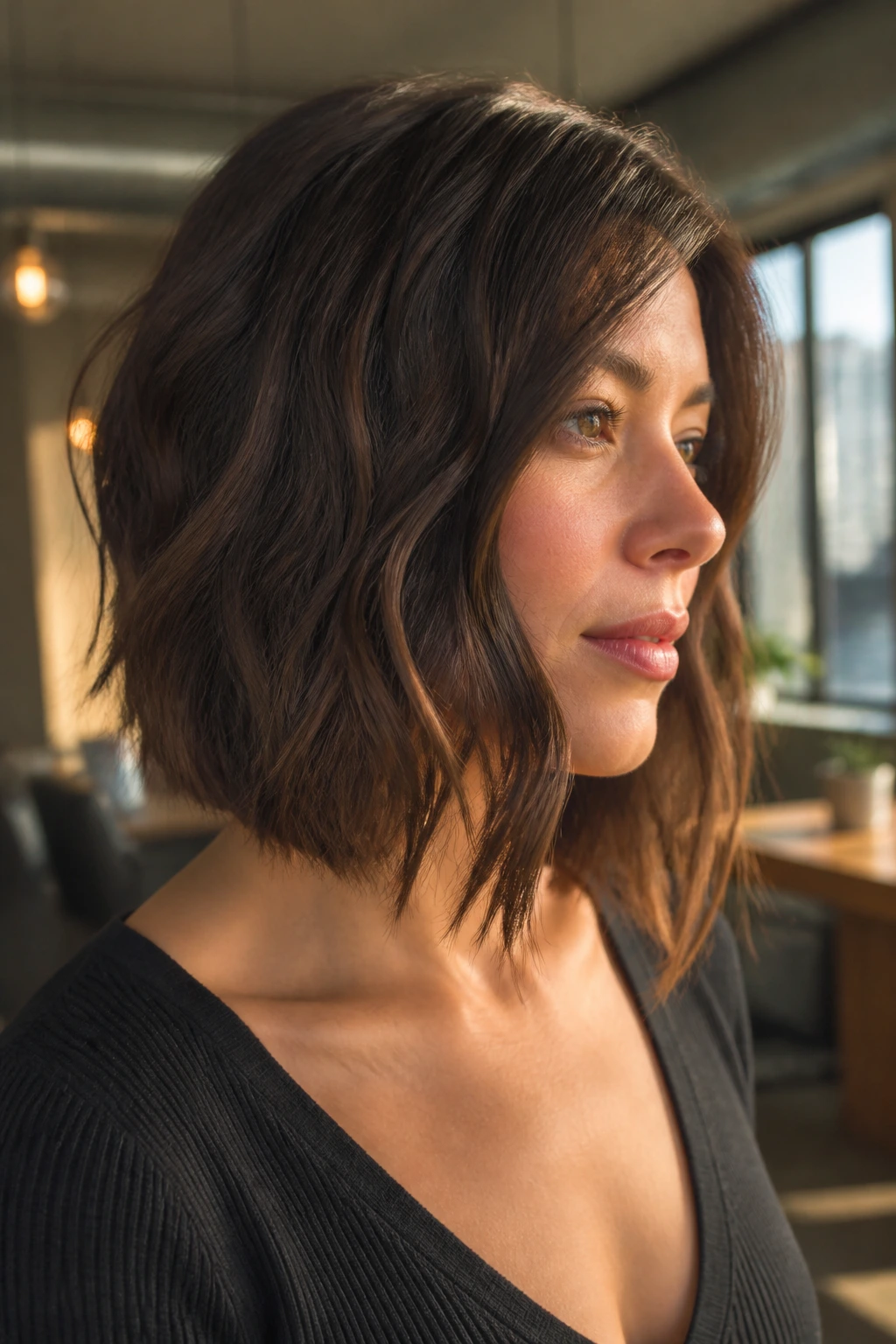
An angled lob is a blunt little truth-teller. The back is shorter, the front is longer, and that front angle gives a round face a sharper line without looking severe. On wavy hair, the bend in the ends softens the geometry so it doesn’t feel like a graphic haircut.
What I like about this cut is that it works even when styling is minimal. You can air-dry it with a bit of mousse and still get the benefit of the shape. The longer front pieces fall toward the collarbone, which pulls the eye down and away from the cheeks.
Unlike a straight-across lob, this one has direction. That matters. A round face does not need more horizontal energy. It needs a cut that knows where to point.
If your hair is dense, ask for the back to be slightly beveled so it does not sit like a shelf. If it is fine, keep the angle softer. Too much difference between front and back can look dated fast.
6. Butterfly Layers for Round Faces That Need Lift

The butterfly cut can be gorgeous on wavy hair, but only if the short layers stay away from the cheek line. Done right, it gives you lift at the crown, movement around the face, and longer pieces below that keep the shape from ballooning out.
Where the Layers Should Start
Ask for the shortest face-framing layer to begin below the cheekbone. That is the line that keeps the cut from widening the face. The upper layers should blend into longer lengths, almost like two cuts living in the same haircut.
This one is especially good if your hair goes flat at the top but frizzes out at the ends. The butterfly shape makes the top feel lighter and lets the wave pattern show without turning puffy. If your hair is thick, it takes some weight off. If it is finer, the cut still works, but the layers should stay a bit longer.
- Short layers should live in the crown and upper sides.
- Long layers should keep the bottom half stable.
- Blow-dry the top pieces away from the face.
- Leave the ends soft, not feathered to death.
My take: this is one of the best choices if you want movement without giving up length.
7. Soft Wavy Pixie With Height on Top
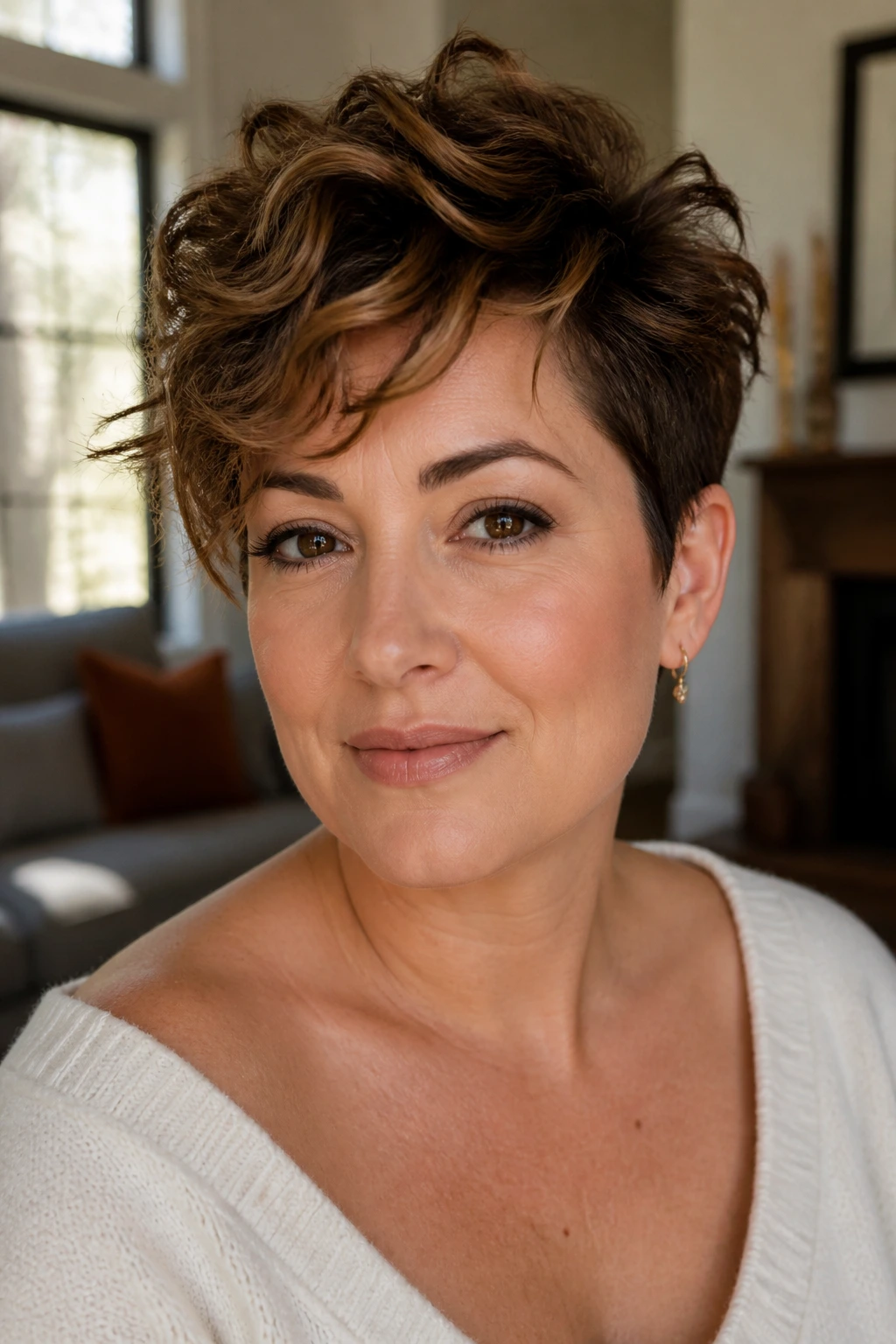
Short hair can work on a round face. It just needs height. A soft wavy pixie with a little lift on top and tapered sides can be sharp in a good way, especially if you like pieces that fall over the forehead instead of a stiff, helmet-like shape.
The secret is keeping the sides close and letting the top stay loose. You do not want width at the temples. You want a line that rises slightly upward, then breaks softly over one side. That tiny tilt changes everything.
I’ve always liked this cut for people who are tired of fighting length. It shows off cheekbones and eyes, and it makes waves look deliberate instead of unruly. The catch is styling. If you skip product completely, it can puff up. A small dab of paste or cream keeps the shape in place without making it crunchy.
A round face and a pixie can be a great match. A round face and a fluffy, all-over short cut usually are not. That difference is the whole game.
8. Shoulder-Length Waves With a Deep Side Sweep
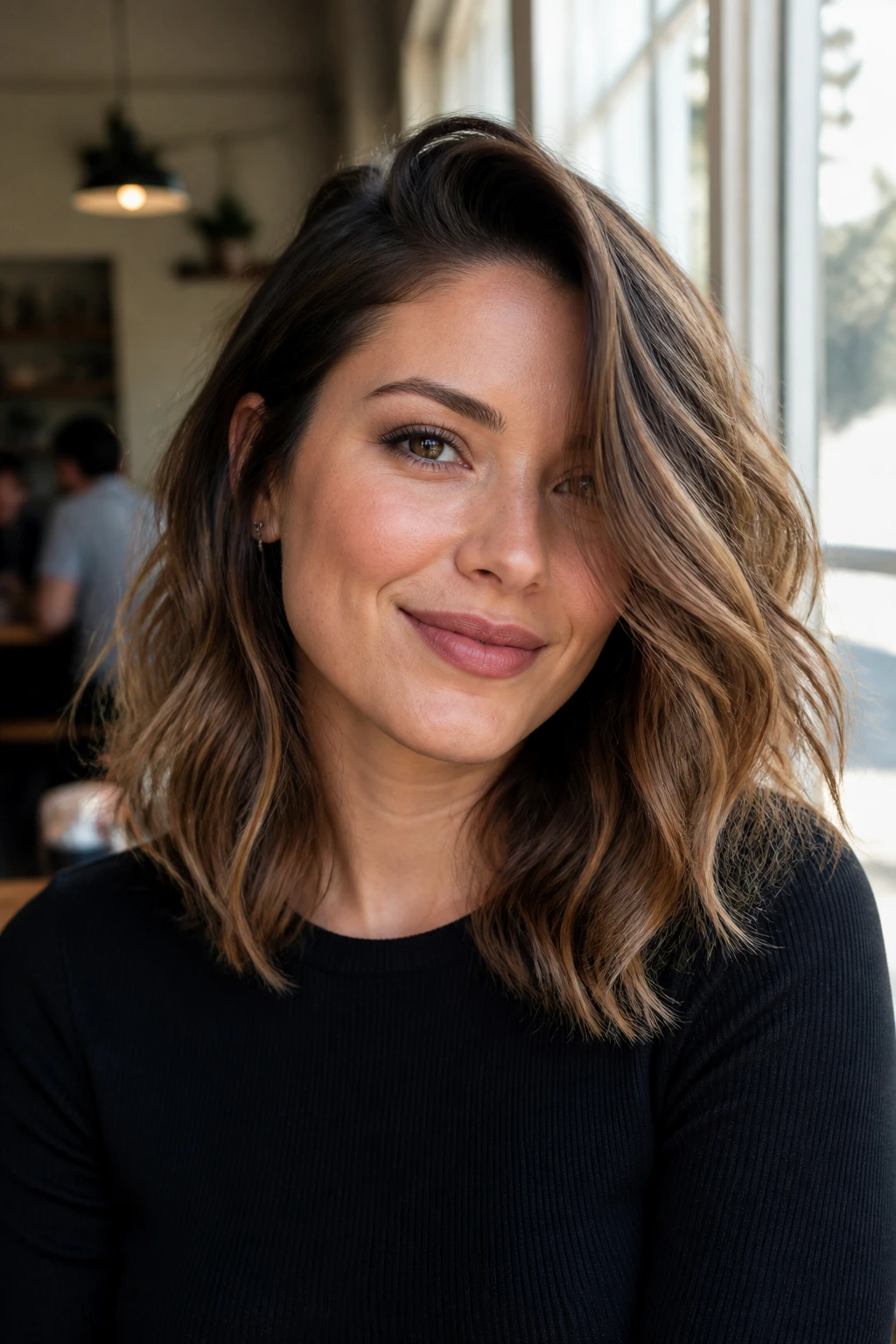
Shoulder length is underrated. It gives waves enough room to fall, but it does not drag the face down the way very long hair sometimes can. Add a deep side sweep, and you get a cut that cuts across the face on a diagonal instead of wrapping around it in a circle.
This is the one I’d suggest to someone who wants an easy haircut, not a dramatic one. The shape is familiar. The effect is not. One side builds a little height at the root, and the longer side creates a visible vertical line along the cheek.
The styling part is simple. Dry the roots in the opposite direction first, then flip the part back. That gives a bit of lift that holds longer than you’d think. Keep the ends a touch messy. Too-polished shoulder-length waves can look bulky.
No heavy fringe needed here. In fact, leaving the forehead more open often makes the whole cut look cleaner.
9. Controlled Wolf Cut With Soft Ends
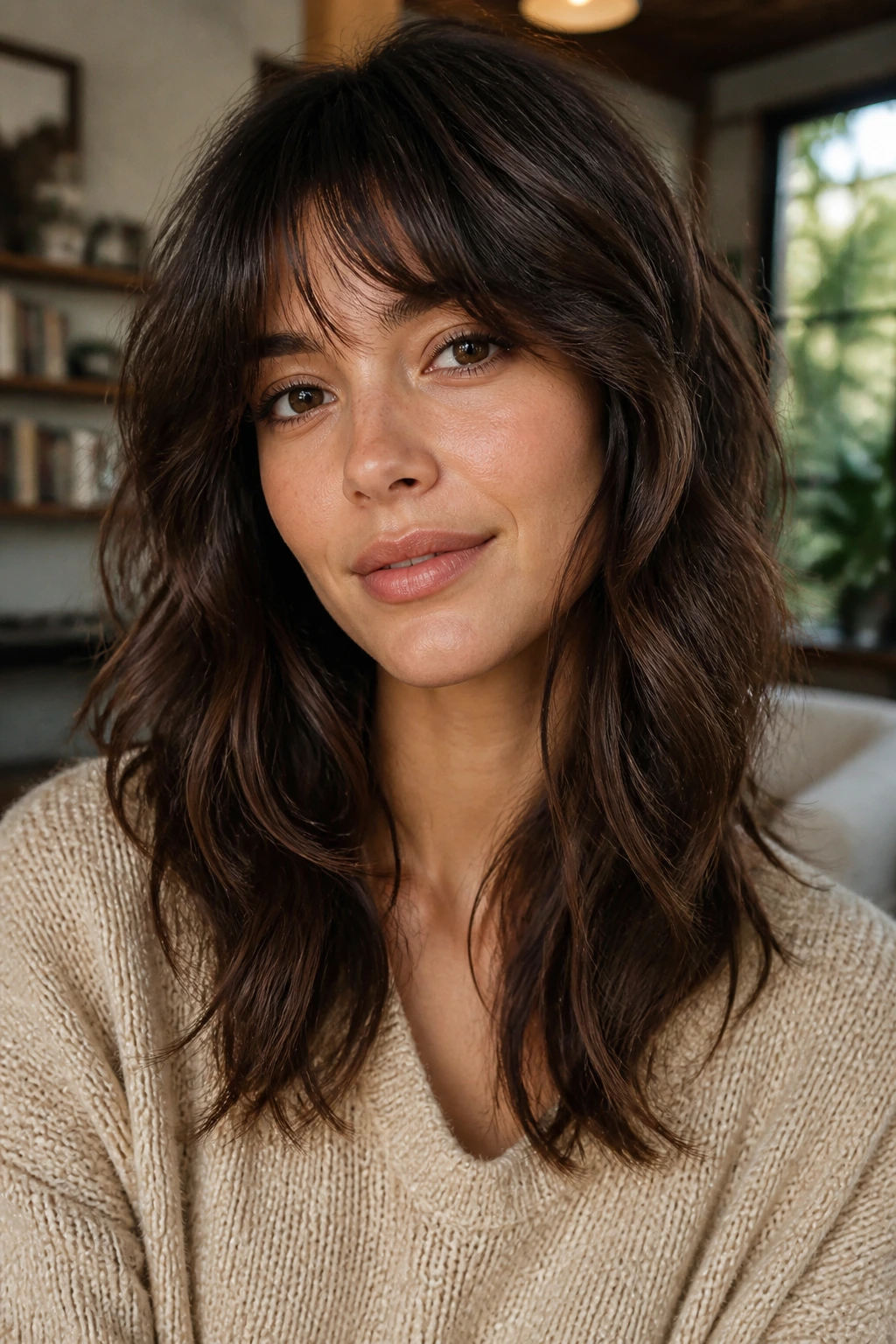
A wolf cut can be a mess on round faces if it’s done with no restraint. But the controlled version? That one has real shape. The top stays shorter, the bottom stays longer, and the layers are broken enough to stop the hair from sitting in one wide lump.
The Difference Between Shaggy and Too Shaggy
The best wolf cut for a round face should keep the fullness closer to the crown and temples, then let the bottom lengths stay slimmer. If the shortest layers hit right at the cheeks, the face can look wider. If they stay higher up, the eye travels up and down instead of side to side.
This is a good cut for thicker waves that need movement. It is less forgiving on very fine hair, because the cut can eat too much density if it goes too short. A little wave cream, a diffuser, and some finger-tousling are usually enough.
- Ask for soft disconnect, not choppy overload.
- Keep the back longer than the sides.
- Leave the fringe piecey, not blunt.
- Use a low-heat diffuser to protect the wave pattern.
Good wolf cuts look lived-in. Bad ones look like you lost a fight with thinning shears.
10. Textured French Bob With Piecey Fringe

A French bob can work on a round face, but it needs texture and a little attitude. The straight version that ends exactly at the chin? Risky. The textured version that sits just under the jaw, with piecey fringe and broken-up ends? Much better.
The reason is simple. Round faces do not need another round edge sitting at cheek level. They need a cut that interrupts the circle. A little asymmetry in the fringe does that nicely, especially if the waves bend away from the cheeks instead of curling inward.
This cut is fantastic if you like short hair and want it to feel stylish without being overworked. It also grows out well, which matters because short cuts can get awkward fast. If your hair is dense, ask for the ends to be softened a bit so the bob doesn’t feel boxy. If it is finer, keep the fringe light and the bottom line crisp.
A French bob should look a little cheeky. Not bulky. There’s a difference.
11. U-Shaped Long Cut That Keeps the Sides Slim

A U-shaped cut is one of the simplest ways to give long wavy hair a cleaner outline. The center stays longest, the sides curve in gently, and the shape stops the hair from turning into a blunt curtain that sits too wide on the face.
On a round face, that U shape helps because the eye follows the center length downward. The sides do not flare out as much, and the whole silhouette feels a little narrower. That is especially useful if your waves are thick or your hair naturally expands in humidity.
I like this cut when someone wants length but also wants movement that doesn’t eat the jawline. It’s low drama. Which is good. Not every haircut needs a speech.
Keep the front layers modest. A little face framing is enough. Too many short pieces up front can make the U shape lose its clean line, and then the cut starts to puff at the sides again.
12. Midi Waves With Cheekbone Layers
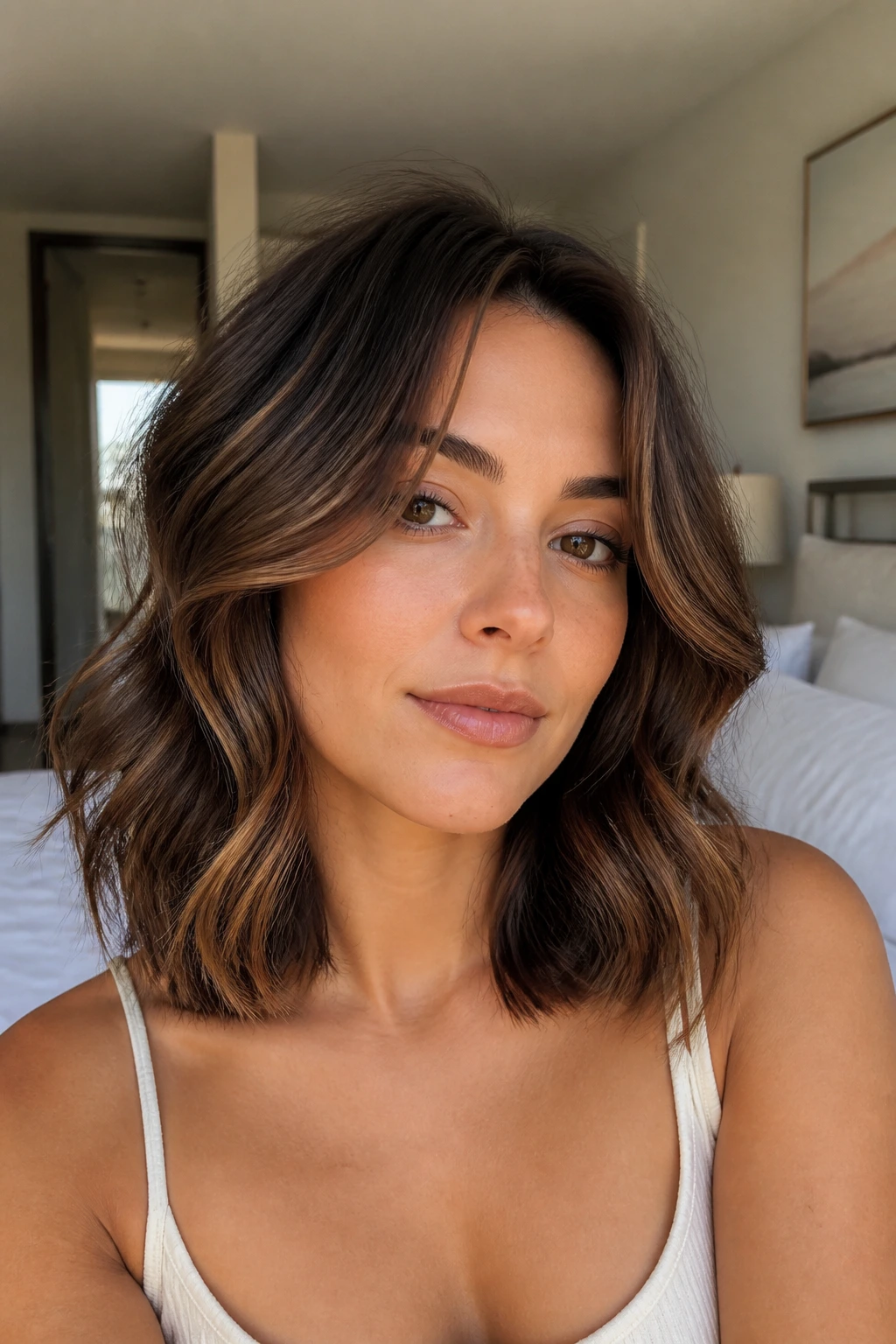
A cut that lands between the collarbone and the upper chest can hit a round face in exactly the right way, especially when the face-framing layers start around the cheekbone. The wave pattern gets room to move, but the shape still stretches the face visually.
Why This Length Works So Well
Mid-length hair is long enough to fall past the widest part of the cheeks, yet short enough to keep volume under control. That is the sweet spot for a lot of round faces. The cheekbone layers break the width without making the haircut feel choppy.
This one is especially useful if you like your hair loose and touchable. A little bend at the front is enough. You do not need to curl every section. In fact, over-styling tends to puff the sides out.
- Keep the shortest face piece at cheekbone level or lower.
- Use a medium barrel iron only on the front sections if needed.
- Scrunch the back and leave it imperfect.
- Avoid heavy oils near the roots.
If you want easy and flattering, start here. It is one of the least fussy options on the list.
13. Soft Asymmetrical Bob
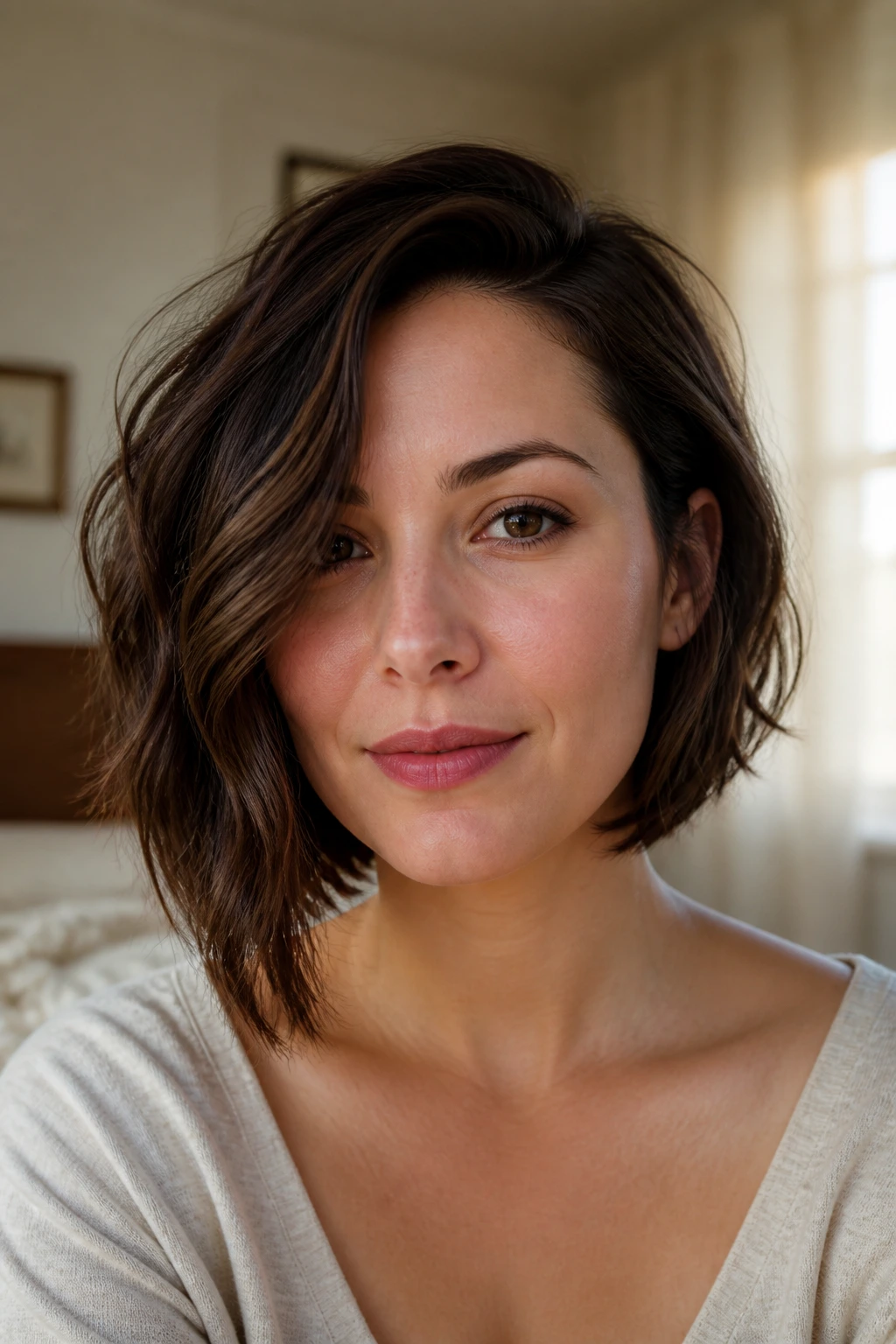
A soft asymmetrical bob is a quiet little trick. One side sits a bit longer than the other, and that difference breaks up the circular shape of a round face without shouting about it. On wavy hair, the asymmetry looks even better because the movement keeps the cut from feeling stiff.
Keep the difference small. One inch is enough. Sometimes less. If the angle is too dramatic, the haircut can start looking costume-y instead of clean. The point is subtle imbalance, not a red-carpet stunt.
I like this bob when someone wants a shorter cut but still wants something a little sharper than the usual rounded shape. It also works well with a side part, which helps the longer side fall across the face in a diagonal line.
The ends should be lightly texturized so the waves don’t stack up too full at the bottom. This is a cut that needs shape, not bulk.
14. Blunt Lob With Hidden Movement

A blunt lob can sound like the wrong choice for a round face, and honestly, the wrong version is. But if the cut sits just below the chin, uses hidden internal layers, and lets the waves fall in soft bends, it can look polished without making the face seem wider.
The blunt edge gives the haircut a clean line. The hidden movement keeps it from turning into a box. That balance is what saves it. On naturally wavy hair, the ends tend to live a little differently each day anyway, which helps keep the shape from feeling too strict.
This cut is a good fit for someone who likes a tidy outline but doesn’t want to give up texture. Keep the part off center if the cheeks are full, and avoid curling the ends inward on purpose. Inward bends can make the face look more circular.
A little looseness around the collarbone keeps the whole thing honest. Too perfect, and it starts working against you.
15. Razored Mid-Length Layers That Stay Light at the Sides

Razoring is not for every head of hair, but on thick waves it can be a relief. The blade softens the ends and takes out some weight, which matters when a round face already has enough width around the cheeks. The cut feels lighter and moves faster.
When a Razor Helps
Use this only if your hair can handle it. Thick, dense waves usually love it. Fine hair can go wispy in a bad way if too much is removed. A good stylist will keep the razor work controlled and focus it on the lower lengths and face frame.
The shape should still lean downward. That part matters. If the ends are too shredded at the sides, the haircut can spread out instead of narrowing in. Ask for texture, not fray.
- Best on medium to thick wavy hair.
- Keep the shortest layer below the cheekbone.
- Style with a cream that has some hold.
- Air-dry or diffuse; do not overbrush.
I’d pick this cut for someone who wants movement first and polish second. It has a little edge without going full shag.
16. Wavy Mullet With a Clean Nape
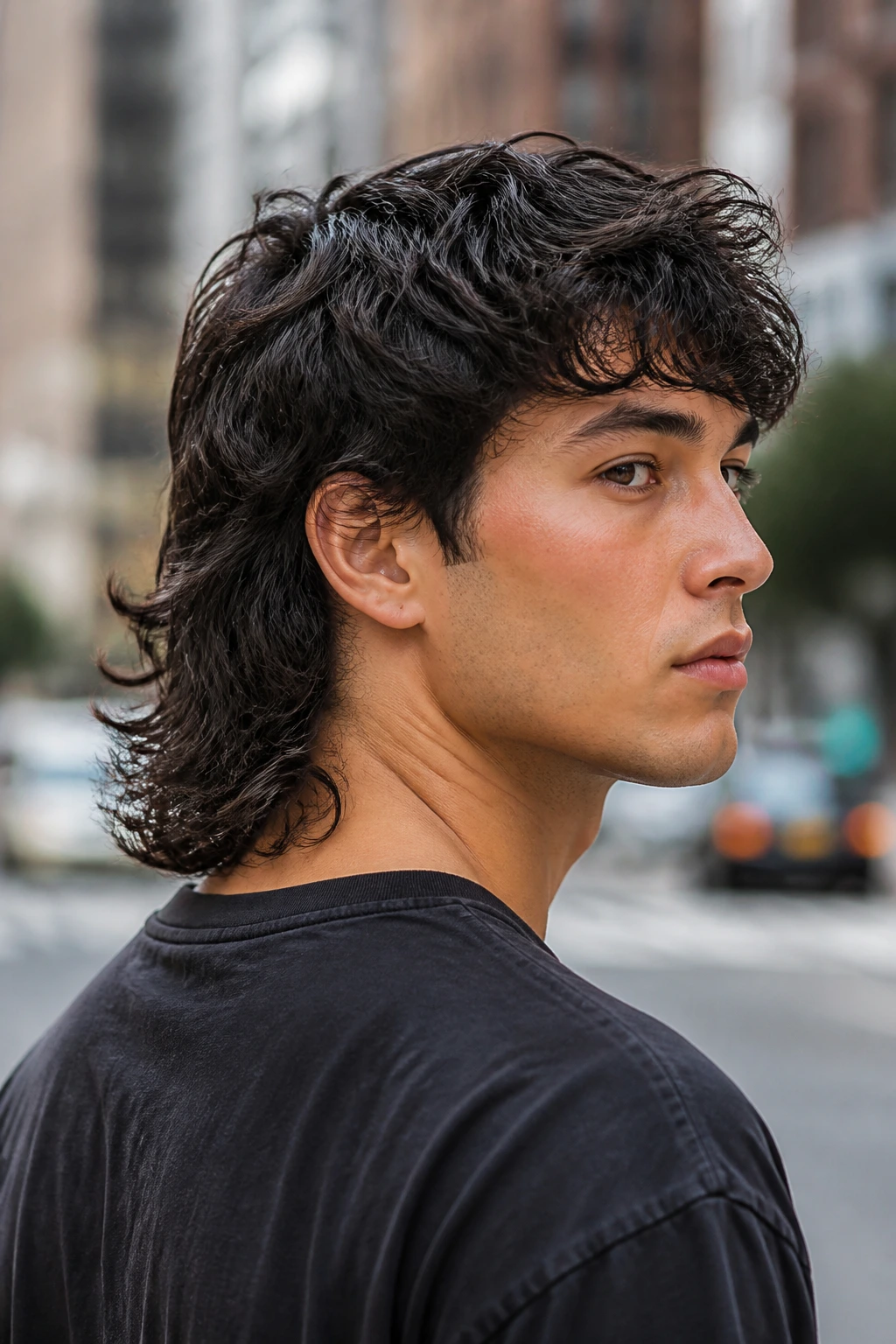
The modern wavy mullet is not the wild, cracked-out version people still picture from old photos. The cleaner one keeps the nape tidy, leaves the crown airy, and lets the back fall longer so the face gets more vertical balance.
Round faces can wear this well because the shorter top gives height. The longer back gives length. The sides should stay softer than you think. If they get too wide, the cut loses its edge and starts to puff around the cheekbones.
This is a strong choice for someone who likes personality in a haircut. It is not quiet. It is also not sloppy when done well. A bit of styling paste through the top layers keeps the shape visible, and a diffuser helps the wave pattern stay separated instead of turning fluffy.
The best version has intention. The worst version just looks grown out. There is a big gap between those two.
17. Flipped-End Midi Waves That Open the Jawline
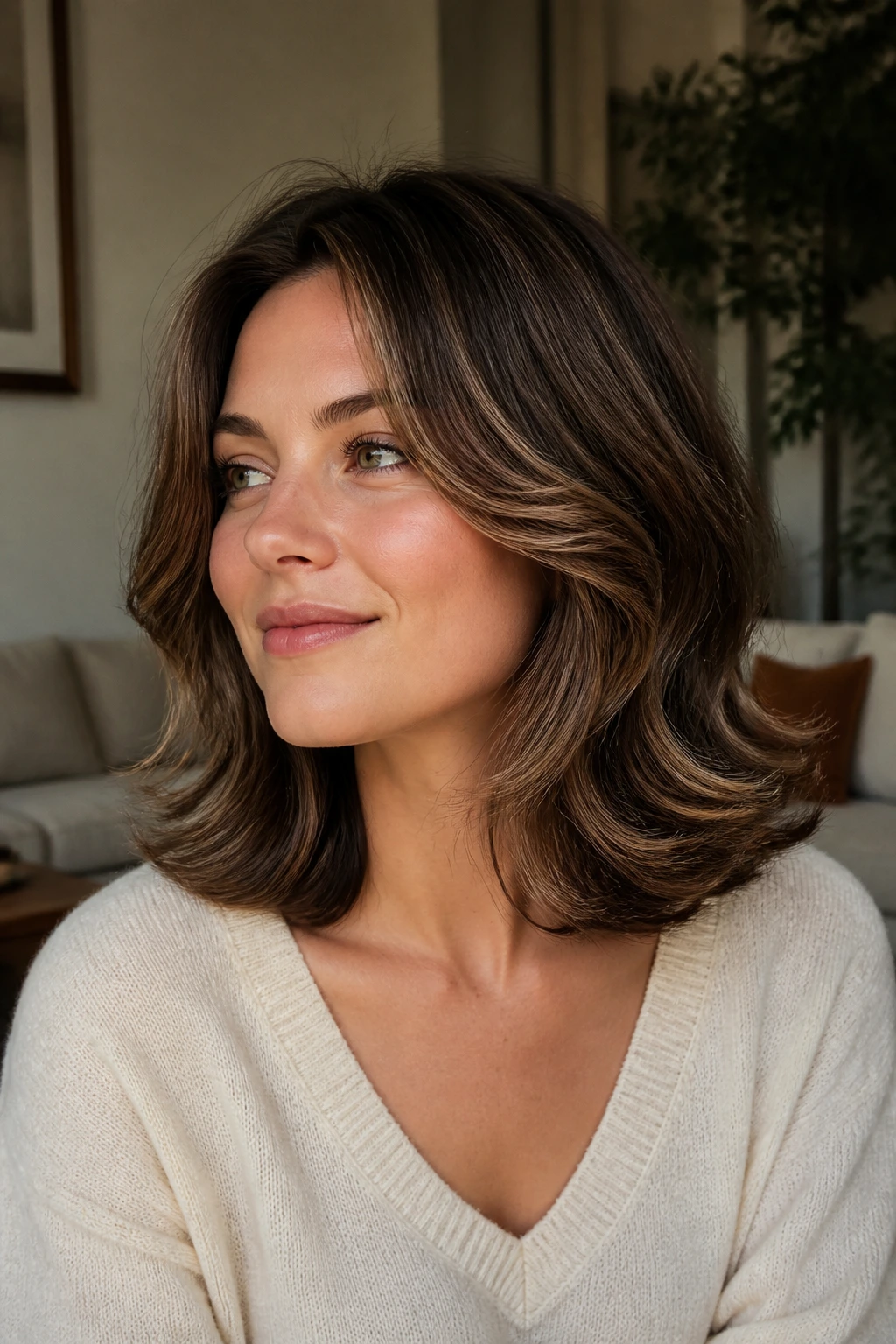
Flipped ends can sound dated, but on a round face they work when they are soft and deliberate. A midi cut that ends around the shoulders, with the ends turned slightly outward, opens the jawline instead of wrapping around it.
The key is restraint. You want a bend, not a curl. A round brush or a quick pass with a flat iron on the ends is enough. The upper half of the hair should stay relaxed so the bottom movement does the work.
This cut reads especially well on wavy hair because the wave pattern keeps the flipped ends from looking too neat. There’s a lived-in quality to it. A little airy. A little undone. That balance keeps the haircut from feeling stiff.
If your waves are heavy, this shape can help the bottom edge look lighter. If your hair is fine, keep the flip subtle so the ends do not look sparse.
18. Face-Framing Money Pieces That Pull the Eye Down
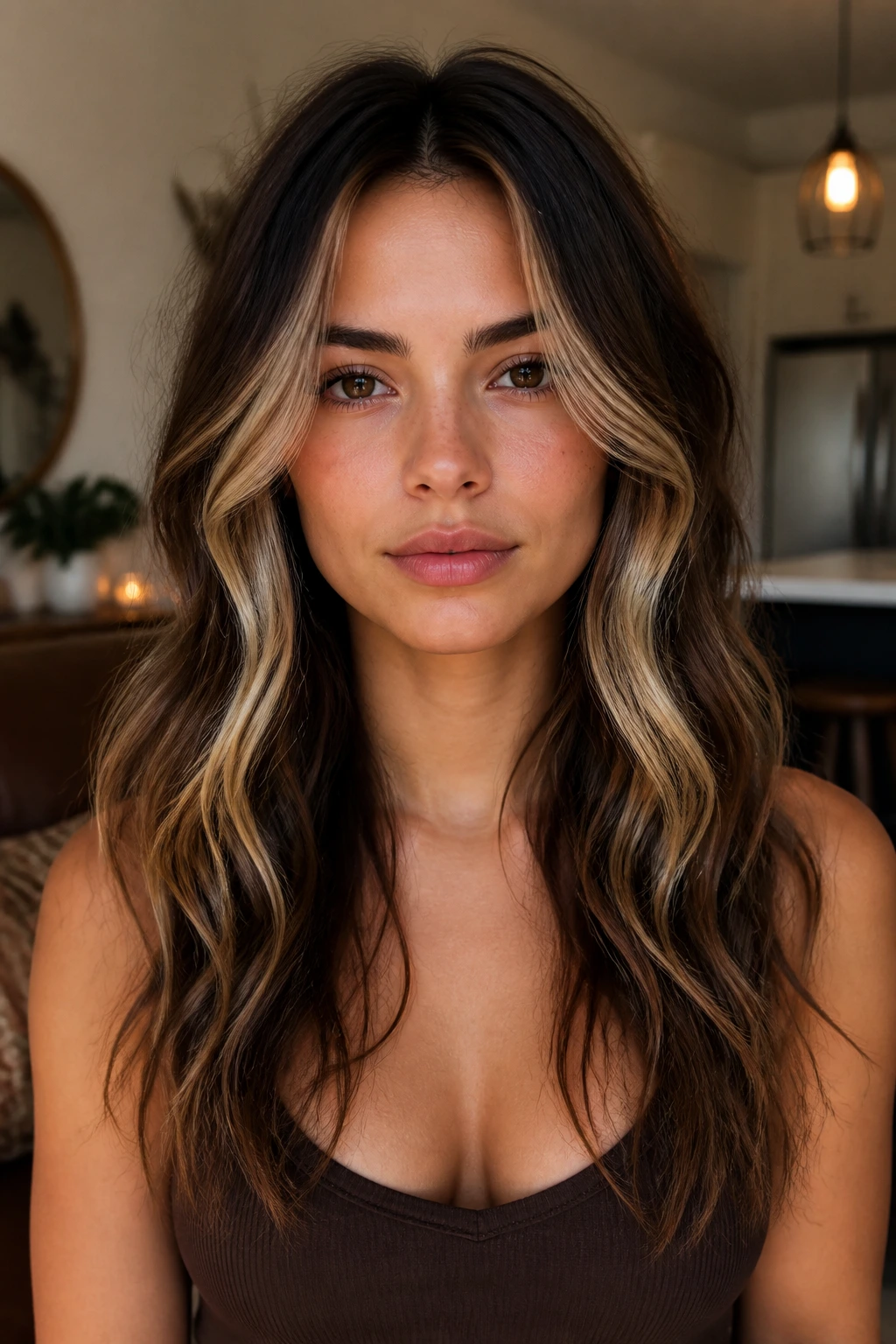
A few bright front pieces can change the whole reading of a haircut. The money-piece approach is not just about color; it is about shape. On a round face, narrow, lighter strands placed just off the center line can create a vertical effect that makes the face look longer.
Where They Should Sit
Do not start them too high. Keep them beginning around the cheekbone or just below it. That way they frame the face without boxing it in. If the bright pieces are thick and wide, they can do the opposite of what you want.
This works especially well with wavy hair because the contrast between the lighter face frame and the darker body of the cut gives the hair more depth. It is a simple move, but it changes the way the eyes travel across the face.
- Keep the bright pieces thin.
- Blend them into long layers.
- Ask for soft edges, not a stripe.
- Pair them with a side or off-center part.
If your haircut feels flat, this is the easiest fix. You do not always need a new shape. Sometimes you need a smarter front section.
19. Bottleneck Bangs With Shoulder Waves
Bottleneck bangs are clever. They start narrow near the forehead, then widen a bit as they fall toward the temples and cheeks. That shape fits a round face better than a straight fringe because it softens the center without adding a hard horizontal line.
Shoulder-length waves keep the rest of the haircut grounded. Together, the bangs and the length make the face feel a little slimmer and a little longer. The wave pattern helps the fringe blend instead of sitting like a separate piece.
Why This Fringe Is Better Than a Heavy Bang
A blunt bang can chop a round face in half. Bottleneck bangs do the opposite. They open the center and frame the sides in a way that feels softer and more natural.
Ask for them to be long enough to split and tuck. If they’re too short, they lose the whole effect. If your hair is very wavy, they may need a little extra length for shrinkage.
This is one of those cuts that looks simple in a mirror and then looks even better in motion. That is the real test.
20. Graduated Lob With Beveled Ends
A graduated lob is a smart choice if you want shape without visible layers everywhere. The back sits a touch shorter, the front stays longer, and the ends are beveled so the waves tuck under just enough to keep the outline clean.
For a round face, the graduation helps create a gentle lift at the back of the head. That gives the face a slightly longer profile. The longer front pieces then draw the eye down instead of out. It is tidy without being stiff.
I like this one on hair that has some thickness but not so much that it turns into a triangle. If your waves are very dense, keep the bevel soft. If they’re fine, this cut can give the hair a fuller look without adding bulk where you don’t want it.
It’s the kind of haircut that looks expensive even when it’s not trying to. That’s mostly because the line is clean.
21. Airy Crop With a Long Top Layer
A short crop can be flattering on a round face if the top stays longer and the sides are tapered in a clean way. The long top layer gives the eye somewhere to go upward, which matters more than people think. Without that height, short cuts can flatten the face.
This version is good for wavy hair that has a strong natural bend. The wave pattern adds texture, and the long top keeps the shape from looking too tight. You want softness through the crown, not puffiness around the ears.
It is also practical. Easy to wash, fast to dry, and less fussy than a short bob. The price you pay is styling discipline. A crop like this needs a little shaping with your fingers, or it can turn fuzzy fast.
For a round face, the sides should stay close and the top should stay alive. That’s the whole idea.
22. Long, Lean Waves for Round Faces
Sometimes the cleanest answer is the longest one. Long, lean waves with only a few face-framing pieces can be the most flattering cut of all, especially if you want your hair to feel soft but not wide. The length below the shoulders keeps the silhouette vertical, and the minimal framing avoids crowding the cheeks.
The Finishing Details That Matter
Keep the shortest front pieces low enough to skim the jaw, not sit on top of it. That little shift changes how the face reads from the front. A center part can work if the waves are loose and the front pieces are long. A slight off-center part is safer if your hair swells at the sides.
This is the cut I’d steer someone toward if they want the least drama and the most flexibility. You can wear it air-dried, blown smooth, or slightly bent with a curling iron. It behaves.
- Long length keeps the face line open.
- Light framing keeps the cheeks from looking boxed in.
- Soft waves add movement without extra width.
- A little root lift keeps the whole shape from sinking.
If you want one haircut that is easy to live with and hard to mess up, this is the one I’d circle first.
