



Round faces and messy haircuts get along better than most salon chatter makes it sound. The catch is shape. If the cut lands its widest point right at the cheeks, the face can look fuller than it really is. If the cut adds height at the crown, softness around the jaw, or a clean diagonal line through the front, the whole thing changes.
That’s why the best messy haircuts for round faces rarely look random. They look loose, but they’re doing quiet work under the surface. A bit of lift here, a broken edge there, a longer front piece that brushes the cheek instead of stopping on it — those small choices matter more than the label on the cut.
And messy does not mean neglected. It means movement, texture, a little bend in the hair, and enough structure that the cut still looks intentional when you skip a perfect blowout. If you’ve ever left a salon with a shape that looked cute in the chair and puffier than expected a week later, you already know how important that difference is.
1. Textured Pixie With Crown Lift
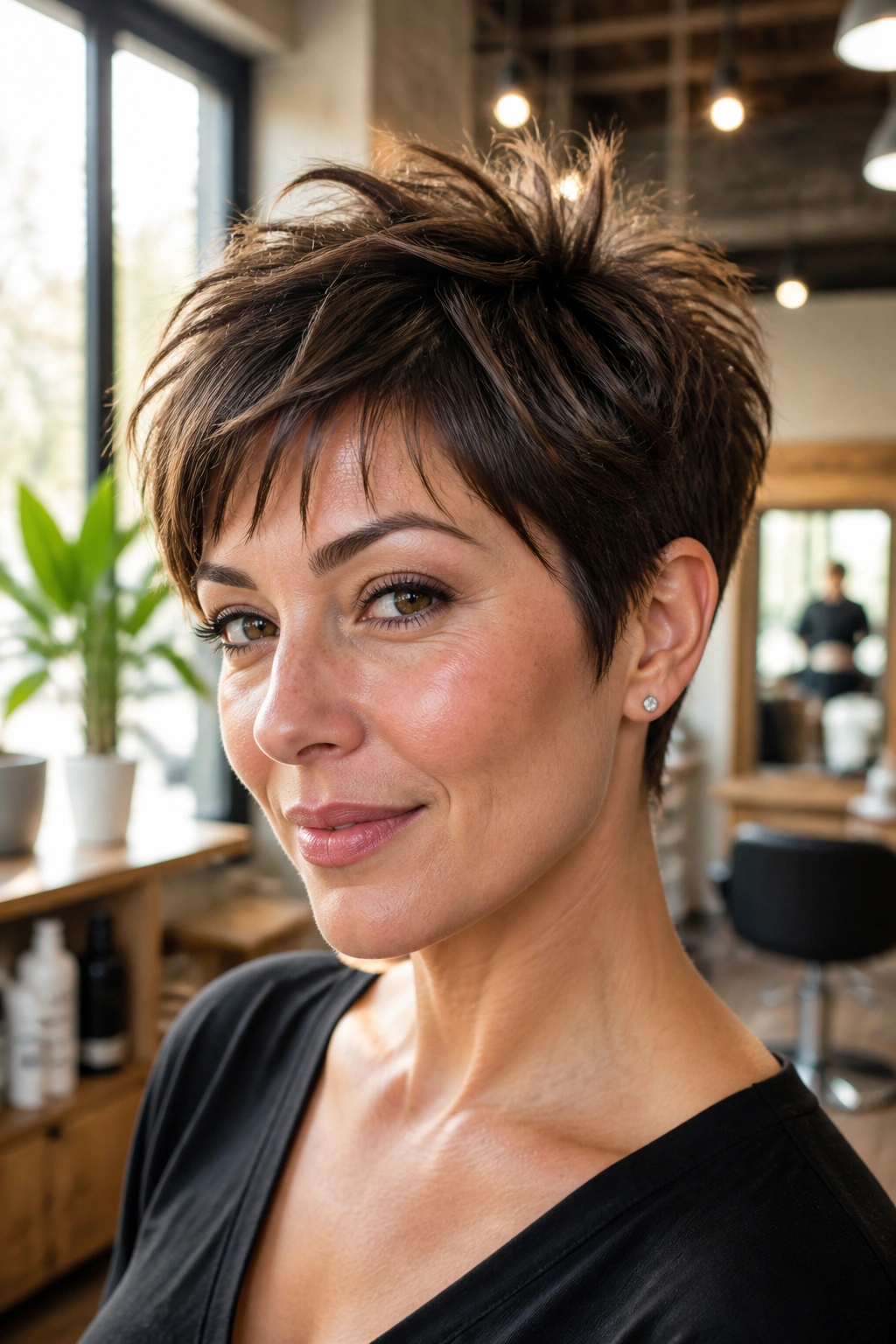
Short hair can be a gift for a round face when it stays light on the sides and taller on top. A textured pixie with crown lift does exactly that. It pulls the eye upward, which helps lengthen the face, and it keeps the cheek area from getting boxed in.
Where the volume should live
Ask for the shortest pieces around the ears and nape, then leave enough length at the crown to push forward, up, or slightly to the side. That little bit of height is the whole point. Without it, a pixie can sit flat and make the face look wider than it is.
The messy part comes from the finish. A matte paste, not a shiny pomade, gives you separation without turning the hair into one stiff shape. Work a pea-sized amount through dry hair, then pinch a few top pieces upward. Tiny changes. Big difference.
- Keep the top about 1 to 2 inches longer than the sides.
- Ask for soft, broken ends rather than a hard outline.
- Leave the fringe piecey, not blunt across the forehead.
- Blow-dry with your fingers first, then finish with a small round brush at the crown.
Best move: keep the sides slim and let the top do the talking.
2. Choppy French Bob
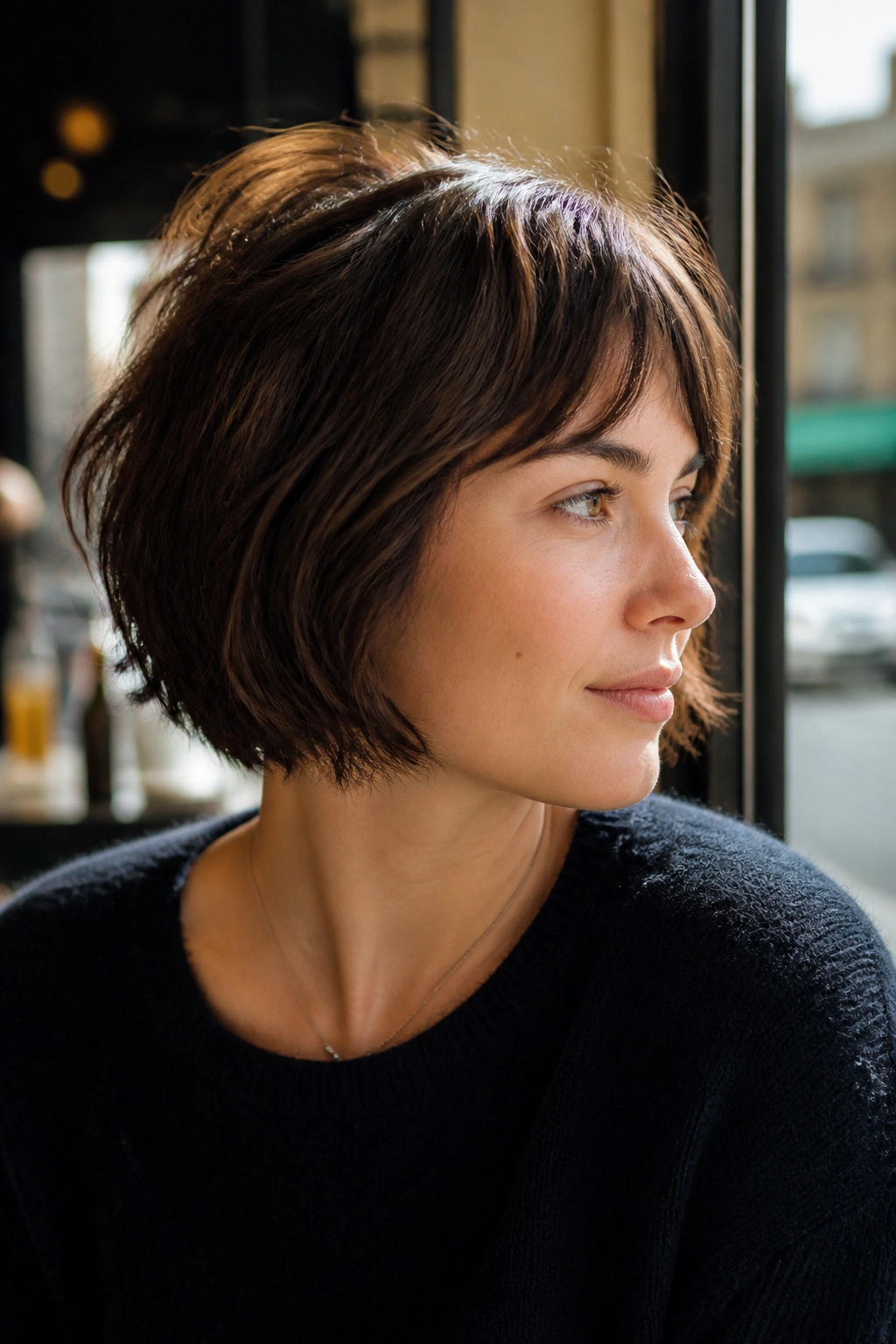
A French bob can work on a round face, but not the neat, helmet-like version. The choppy version is a lot better. It sits around the jaw or just below it, with broken ends that keep the line from looking too heavy at the cheeks.
The cut feels chic because it has contrast. The outline is short and tidy, but the texture is loose enough to keep things from looking rigid. I like this one most on straight or softly wavy hair, because the movement shows up fast without much styling.
The trick is to avoid a blunt puff right at jaw level. That’s the part that can make a round face look wider. Ask for slight length in front, then tuck a few pieces behind the ear when you want more angle. It’s a small styling move, but it changes the whole read of the haircut.
A little air-dried bend, a little grit spray, and you’re done. No overthinking. No giant brush-out.
3. Asymmetrical Lob With Deep Side Part
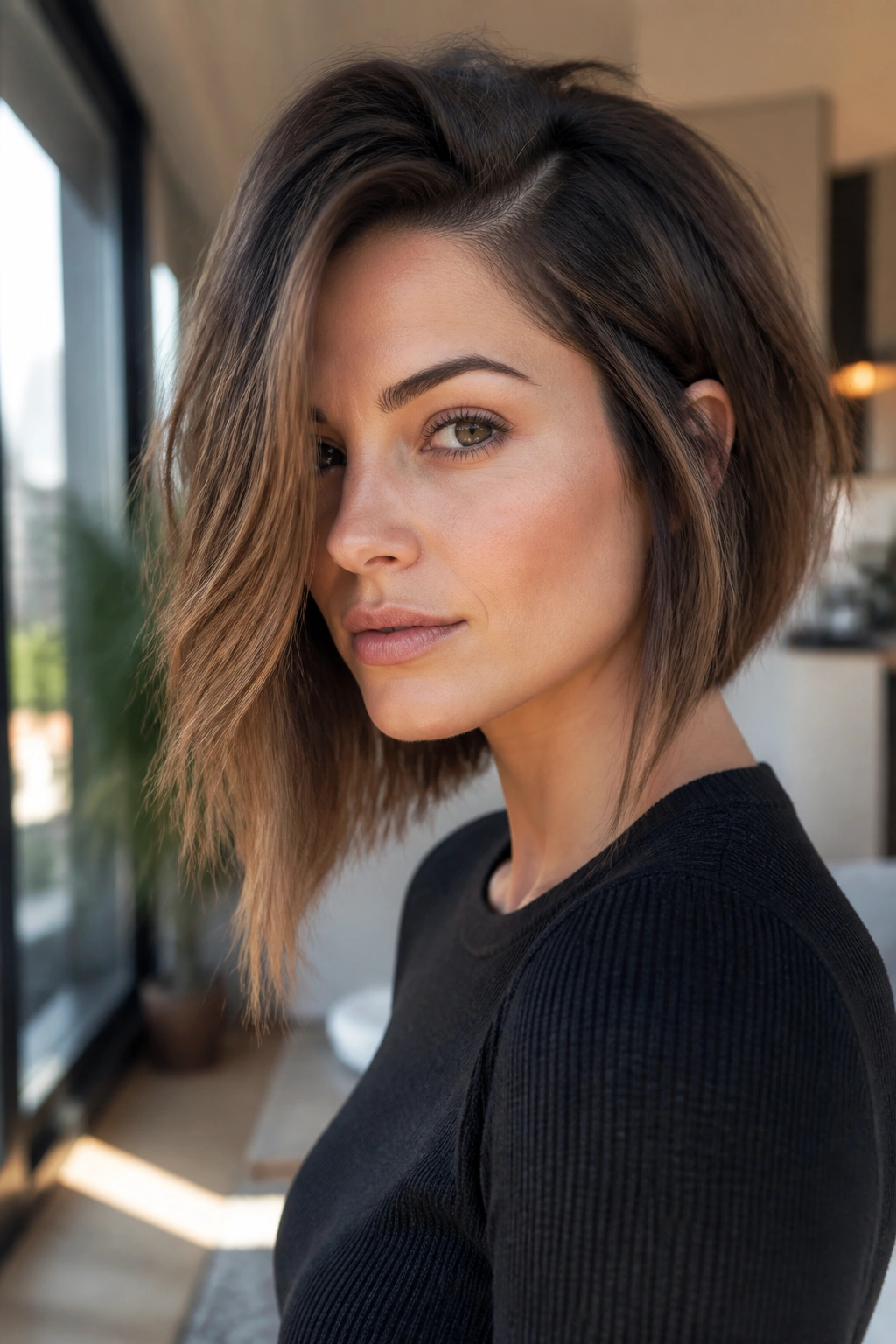
Want a cut that trims width without looking severe? This is the one I reach for first. An asymmetrical lob gives you a longer line on one side, and that diagonal shape does a lot of face-slimming work without screaming for attention.
The deep side part matters as much as the cut itself. It breaks up the symmetry of a round face, which is usually where the softness lives. One side can fall around the collarbone while the other skims just under the jaw. That one- or two-inch difference is enough to make the whole haircut feel sharper.
What the angle does
A diagonal line pulls the eye downward instead of outward. That’s the whole game. If your hair is fine, the asymmetry also gives the illusion of more density because the longer side swings with a little weight.
Styling is easy. Blow-dry with a side part, then flip the ends out just a touch with a flat iron or round brush. Keep the finish imperfect. If both sides are too polished, the cut loses the messy edge that makes it flattering in the first place.
4. Shoulder-Length Shag With Curtain Bangs

A shoulder-length shag is a workhorse for round faces. It gives you height at the crown, movement through the mids, and enough face-framing softness that the cheeks don’t dominate the whole cut. Add curtain bangs, and the shape gets even better.
Curtain bangs split the forehead into two vertical lines, which helps stretch the face. They also blend into the shag instead of sitting on top of it like a separate piece. That’s why this cut feels relaxed rather than overdone.
Why the fringe matters
The bangs should start higher than the cheekbone and open out before they hit the widest part of the face. If they fall too short or too thick, they can make the face look rounder. A good curtain bang brushes the cheek, then fades into the rest of the layers.
This cut loves a rough blowout or a diffuser. Use a light mousse on damp hair, twist the front sections away from the face, and let the ends dry with a bit of movement. Perfection is not the goal here. Shape is.
5. Wolf Cut With Soft Ends

A wolf cut is not just a mullet in a leather jacket. The softer version is much friendlier on round faces because it keeps volume high and edges loose. You get short, airy layers near the crown and longer, shaggy lengths underneath, which means the face gets lift without a hard horizontal line.
This cut works best when the top stays fluffy and the sides don’t balloon out. That part matters. Too much width at cheek level and the whole effect goes sideways. The good version creates a little wildness, but it still knows where to stop.
Ask for these details
- Keep the shortest layers above the cheekbone.
- Let the longest pieces fall below the jaw.
- Feather the ends instead of leaving them chunky.
- Soften the front so it blends, not chops.
If your hair is thick, this cut can take a lot of bulk out. If your hair is fine, you’ll need a little texturizing spray or root lift to keep the crown from collapsing by lunchtime. Either way, the shape does the heavy lifting.
6. Long Layers With Face-Framing Pieces
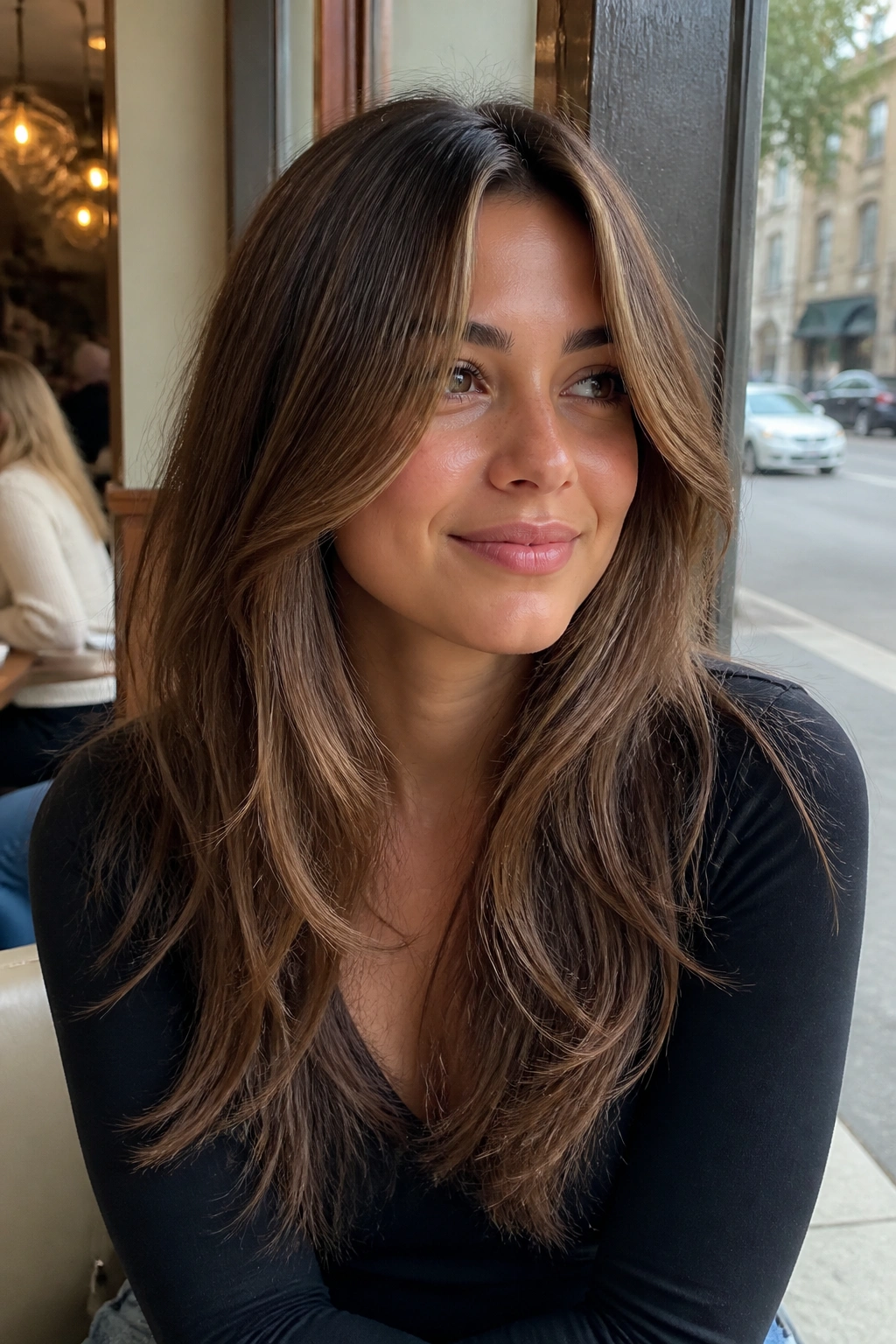
If you like keeping your length, this is the safest bet. Long layers with face-framing pieces can flatter a round face because they keep the bulk away from the cheeks while still giving hair movement. The shape is simple, but simple doesn’t mean boring.
The important part is where the shortest layer lands. You do not want it stopping right at the cheekbone. That’s the widest point on many round faces, and cutting there can make everything feel a little too full. Start the framing a bit lower, then let it angle down toward the jaw or collarbone.
This cut looks best when the front pieces are visibly different from the rest of the length. A soft bend around the face is enough. You do not need beach-wave perfection or a curled-under blowout every day. A flat brush, a few loose bends, and some leave-in cream usually do the job.
It’s the kind of haircut that still looks decent when you toss it into a clip. That counts for a lot.
7. Razor Cut Crop With Piecey Fringe
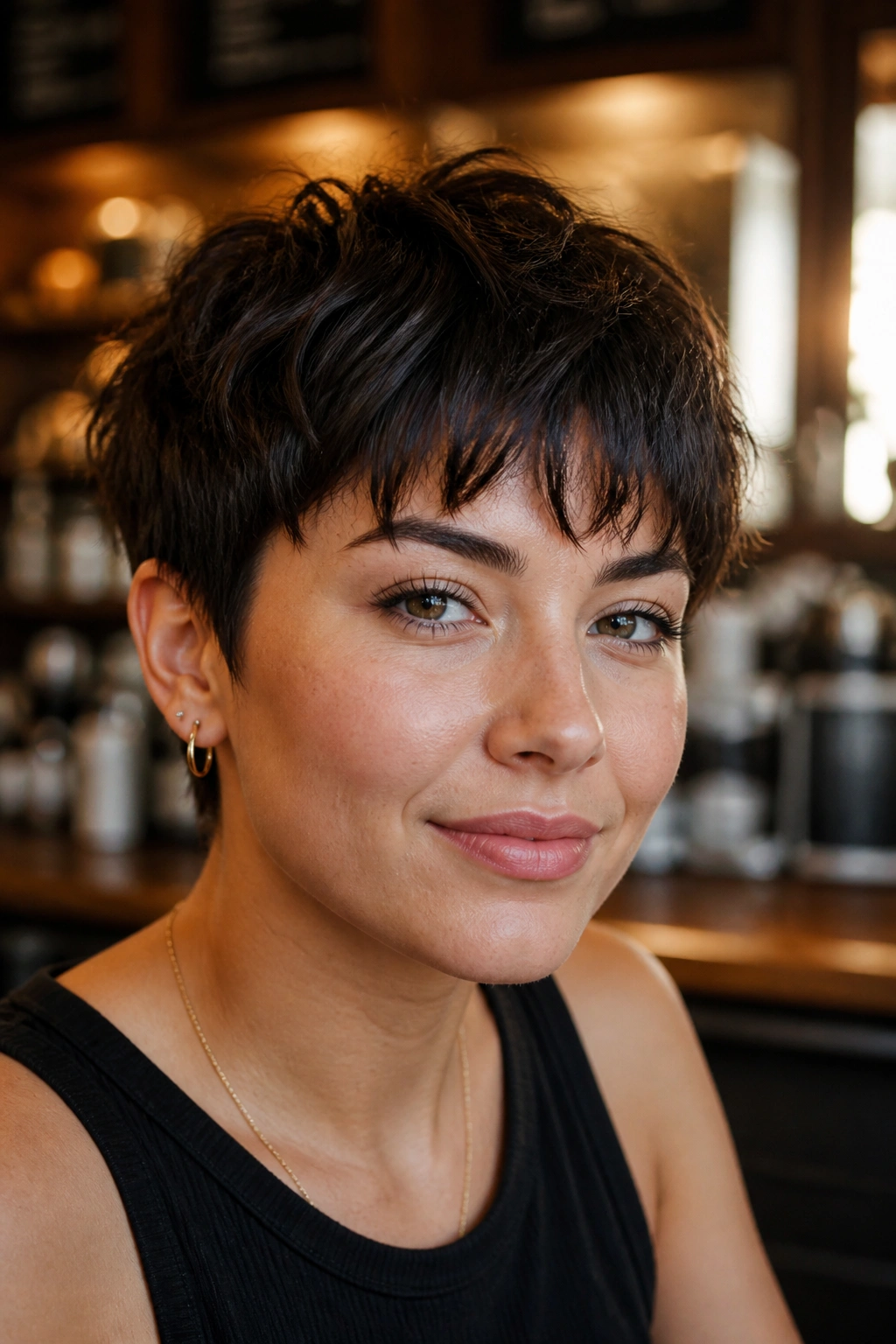
A razor cut has a certain lightness that scissors sometimes miss. The edges come out softer, the ends look broken in a good way, and the whole crop feels a little undone from the start. On a round face, that broken texture keeps the outline from reading too boxy.
The fringe is what makes this cut stand out. Piecey bangs or a wispy forward sweep keep the forehead from feeling too open while still leaving room for the face to breathe. Heavy fringe is a bad move here. Too much density on top of the face can close the shape in fast.
This cut suits straight to slightly wavy hair best. On tighter curls, the razor can fray the ends and make the shape hard to control. That’s not a moral failure — just a texture mismatch. If your hair does take to the razor, a little wax on the tips gives you separation and keeps the crop from turning fuzzy.
The vibe is sharp, a little rebellious, and far easier to wear than it sounds.
8. Curly Shag For Natural Texture
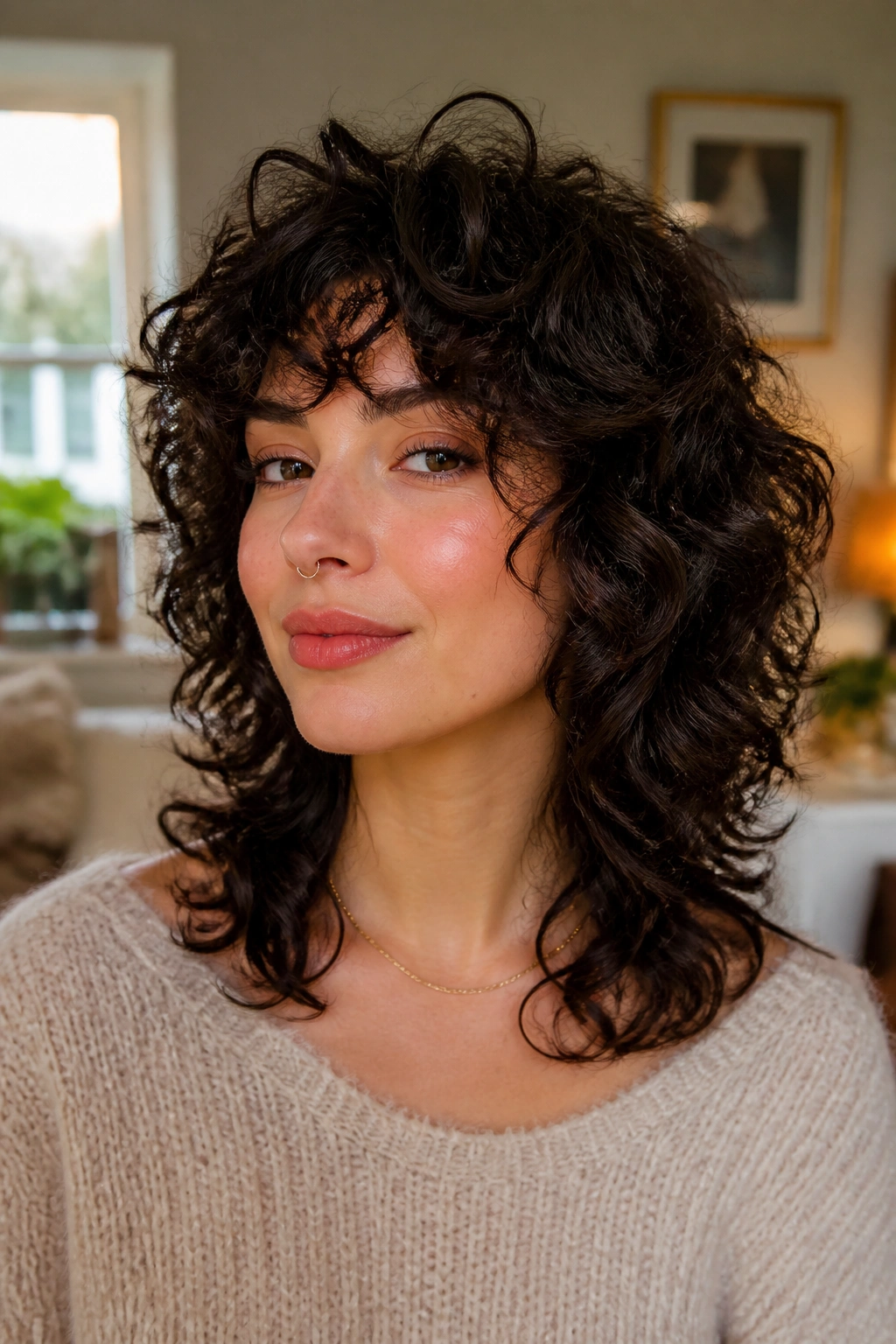
Curly hair and round faces can be a gorgeous match when the cut respects the curl pattern instead of fighting it. A curly shag does that well. It builds lift at the top, lets curls stack in soft layers, and keeps the silhouette from puffing out in one solid circle.
What to ask for
Dry cutting helps here. Curls shrink, and a wet cut can hide where the shape will really land once it dries. Ask for layers that start around the cheekbone or just below, then continue downward so the volume spreads instead of collecting in one spot.
A curly shag also needs room around the face. If the shortest pieces are too blunt, the cut can widen the cheeks. A few curls should fall forward, yes, but they need to arc, not sit flat against the face.
Use a curl cream or light gel on soaking-wet hair, then scrunch and diffuse. Let some pieces fall where they want. A curly shag looks best when it keeps a little unpredictability.
9. Collarbone Lob With Airy Waves
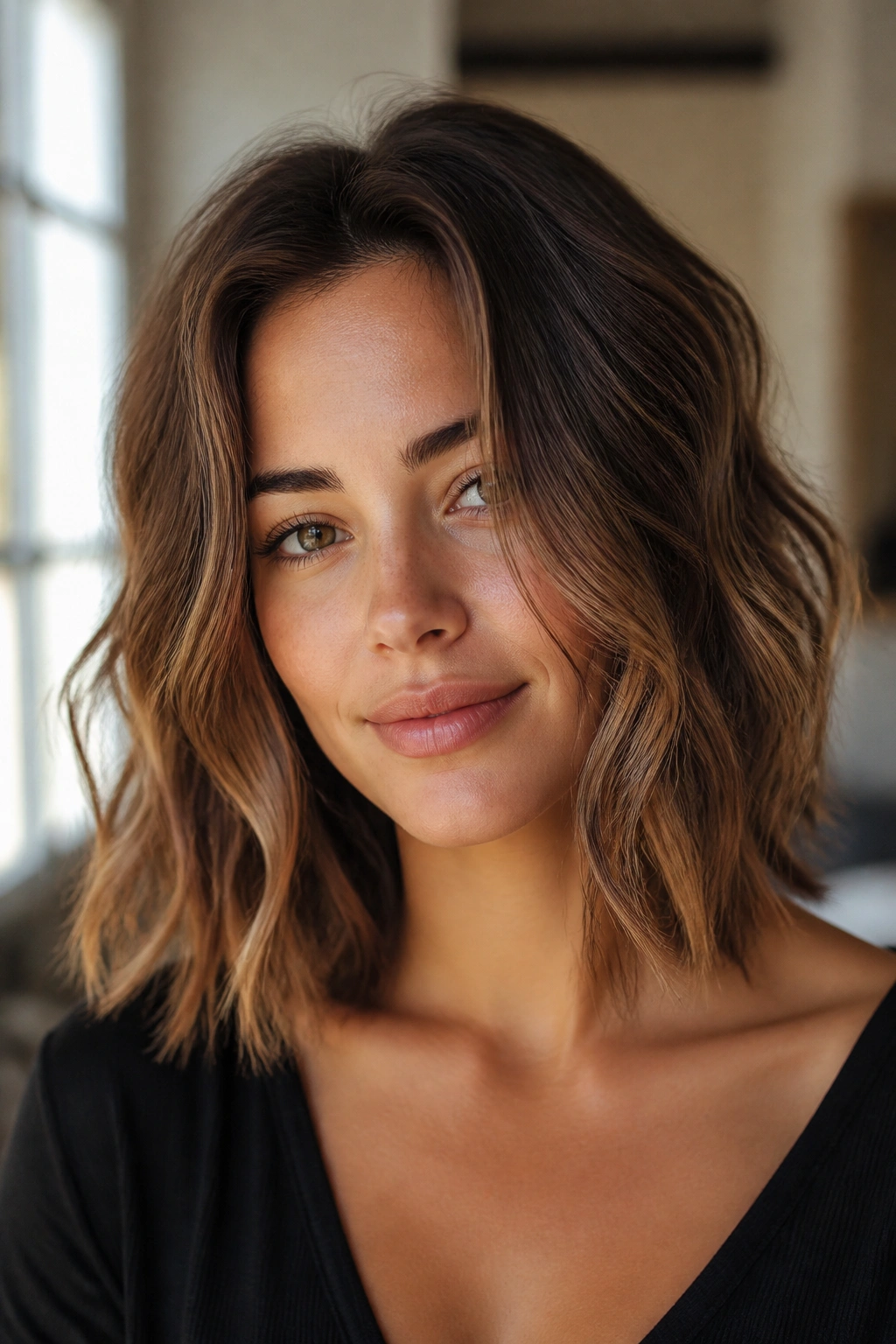
The collarbone is a useful length line. It sits below the broadest part of the face, which is exactly why a collarbone lob works so well on round faces. The cut feels soft and easy, but the shape still gives you that longer vertical line you want.
Airy waves keep it from looking heavy. Not crimped waves. Not polished pageant curls. Just loose bends with space between them. If the waves are too even, the lob can gain width at the sides and lose the flattering angle.
A middle part can work here, but a slightly off-center part often looks better because it breaks up the symmetry. That tiny offset makes the face read a touch slimmer. You can also tuck one side behind the ear to carve out more jawline.
This is one of those cuts that looks expensive in a low-key way, even when you barely style it. A touch of texturizing spray, a few passes with a medium iron, and you’re out the door.
10. Tapered Pixie Mullet
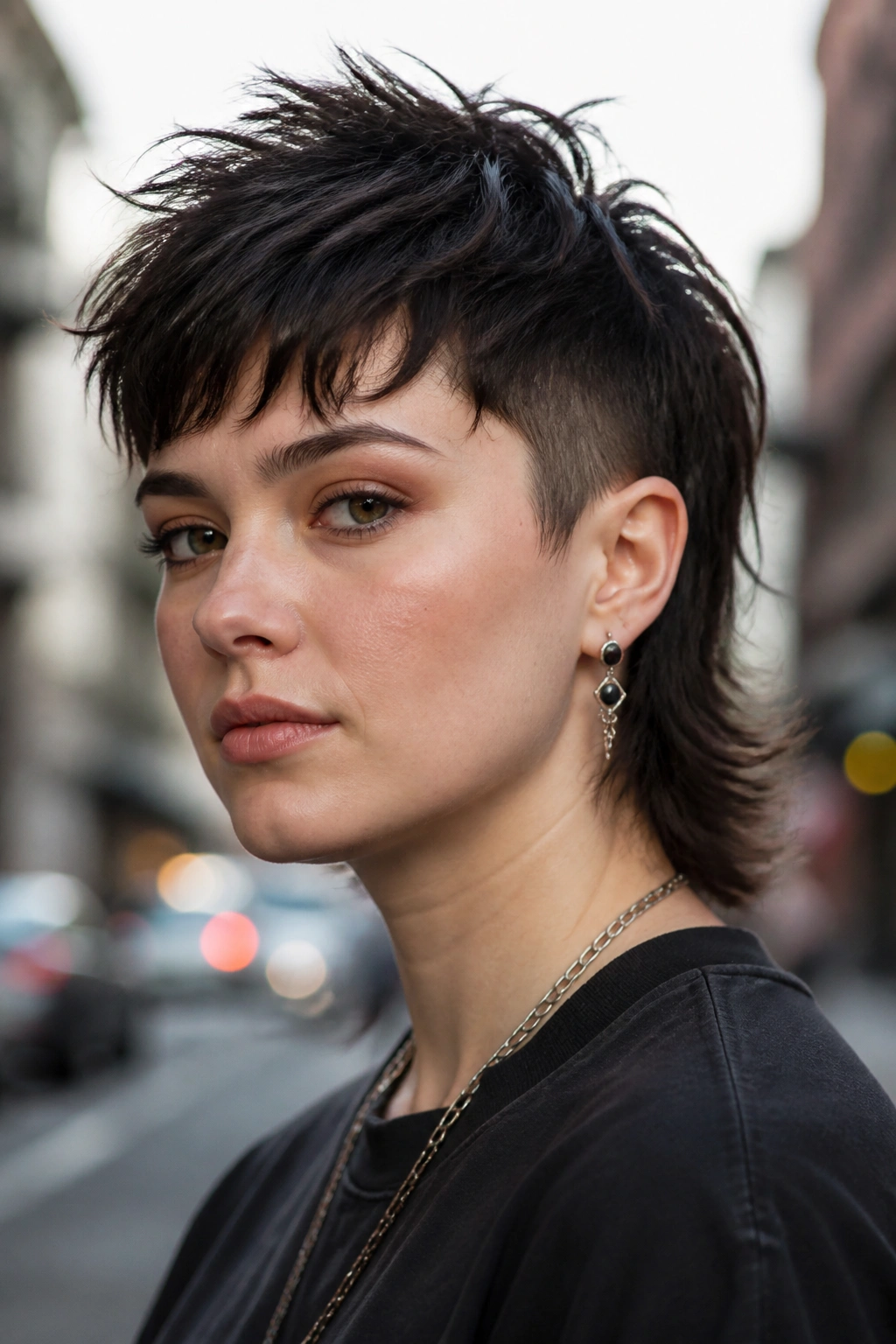
This one has edge. A tapered pixie mullet keeps the sides tight, leaves a little length at the nape, and adds enough top height to stretch the face. On a round face, the tapered shape matters more than the mullet label. The taper is what keeps the cut from ballooning out.
It’s a smart choice if you want something short but not sweet. The longer back gives movement, the crown adds lift, and the front can be worn soft or messy depending on your mood. It has a cooler feel than a classic pixie, and less bulk than a full shag.
Best for these hair types
- Thick straight hair that needs weight removed
- Wavy hair that likes to sit with texture
- Fine hair that can hold a little lift with mousse
- Hair that naturally grows forward around the hairline
A bit of styling paste at the top is usually enough. Push the hair forward, then flip a few pieces back with your fingertips. It should look touched, not engineered.
11. Layered Midi Cut With Side-Swept Bangs

A midi cut gives you more length than a bob, but less drag than long hair. That middle ground is useful for round faces because it lets the hair fall below the cheeks without getting too heavy. Add side-swept bangs, and the shape gains a clean diagonal that pulls the eye across the face.
The bangs should be soft, not chunky. Think of them as a sweep, not a curtain. They should begin somewhere near the arch of the brow and skim across the forehead before blending into the side layers. If they’re too thick, the face can feel closed in.
This cut shines on medium-density hair. It has enough body to keep the layers visible, but not so much bulk that the sides get wide. A round brush at the roots helps, though a rough dry with a little mousse can work just as well if you’re not in the mood for a full blowout.
It’s polished without feeling stiff. That’s a good place to be.
12. Messy Bixie
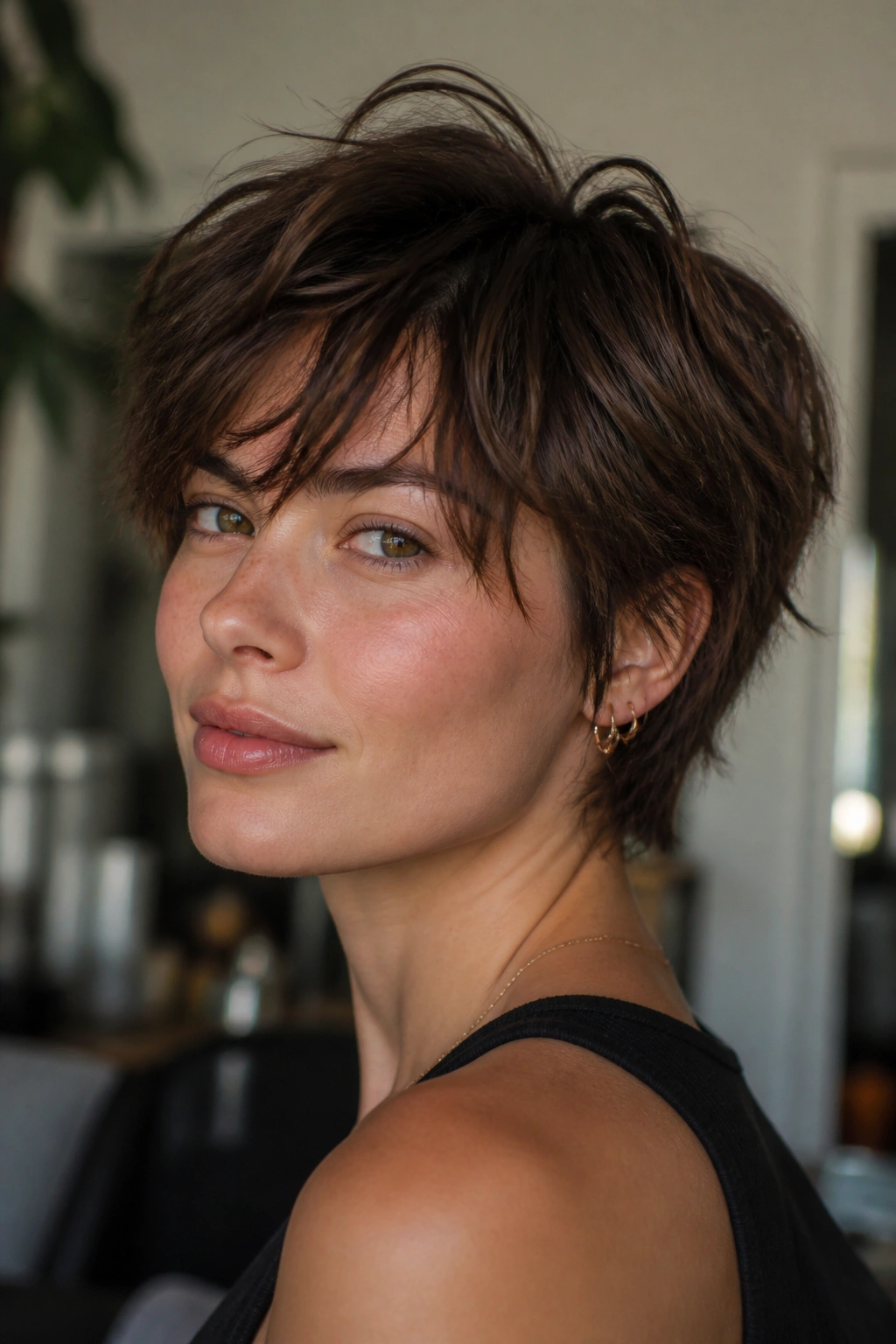
A bixie is the middle ground between a bob and a pixie, and that in-between shape is a sweet spot for round faces. It gives you the neck exposure and lift of a short cut, but keeps enough length around the ears and temples to soften the transition.
The messy version is better than the precise one. Clean edges can make a bixie feel too neat, which tends to emphasize the roundness of the face. Piecey layers, a little bend at the front, and some movement at the crown keep it from looking too packaged.
The best part is how fast it styles. You can rough-dry it, work in a small amount of paste or cream, and pinch the top into shape. That’s it. No elaborate round-brush ceremony.
If you’re nervous about going short, this cut is a good test run. It feels shorter than a bob, but it doesn’t carry the same commitment as a true pixie. And on a round face, that slight lift near the crown does a lot more than people expect.
13. Shoulder-Grazing Cut With Flipped Ends
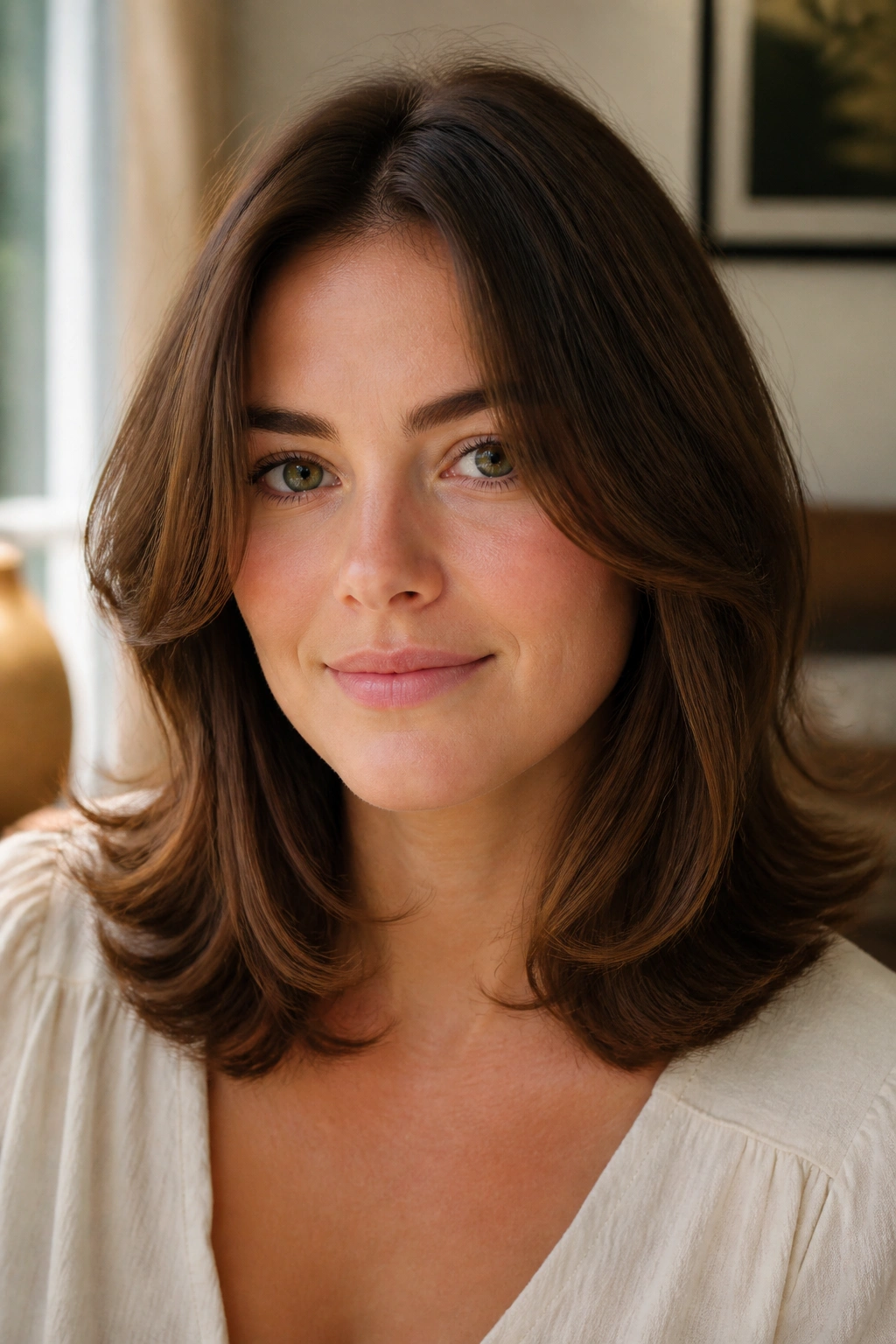
Shoulder-grazing hair gives you room to play, and the flipped-end version brings in movement without piling width onto the cheeks. The flip matters because it pushes the ends away from the face instead of letting them sit flat and heavy.
This cut is especially nice if your hair tends to hang limp at the bottom. A subtle outward turn at the ends creates a broken line, which feels more relaxed and a little more sculpted at the same time. It also stops the hair from forming one big curtain around the jaw.
How to style the flip
Use a flat iron or a medium round brush and turn the last inch or so away from the face. Keep the bend soft. If the flip is too sharp, the cut starts to feel retro in a way that fights the round face instead of balancing it.
A bit of layering through the lower half keeps the style from feeling bottom-heavy. Without that, the cut can sit too square. And square around a round face is rarely the move.
14. Soft Mullet With Crown Volume

Not every mullet is a dare. The soft version is more wearable than people assume, especially on a round face. It keeps the crown lifted, the sides light, and the length in the back gentle enough to create a vertical line instead of a boxy one.
The key is softness around the face. You want short layers up top and near the temples, but nothing too hard or choppy at the cheek. The back should have movement, not a stiff tail. When it’s done well, the cut looks a little rebellious and a lot more flattering than its reputation suggests.
I like this one on wavy hair because the shape comes alive with almost no effort. A little curl cream, a little scrunching, and the layers separate naturally. Straight hair can wear it too, but it needs more texturizing to avoid looking flat at the crown.
It’s not for everyone. Fine. Some people want quiet hair, and this is not quiet. But if you want edge with shape, it earns its place.
15. Wavy Lob With Understated Layers
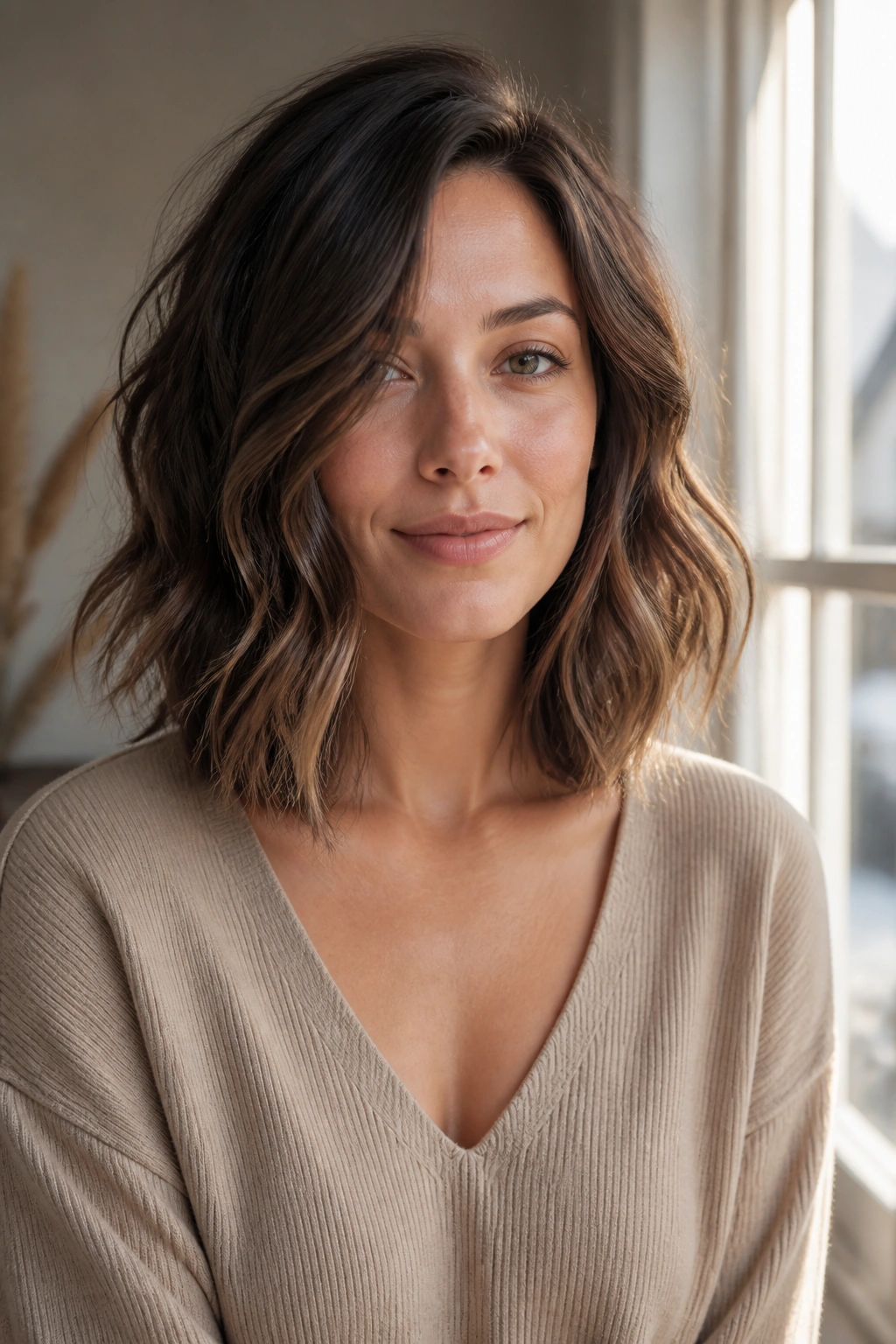
A lived-in wave does a lot of heavy lifting here. A wavy lob with understated layers keeps the silhouette calm while still giving the hair enough bend to avoid that heavy, round-on-round effect. The layers are quiet on purpose.
That restraint helps. Too many chopped layers can make a lob puff outward, which is the last thing a round face needs. Here, the cut stays mostly long and smooth through the top, then moves just enough at the ends to keep the shape from looking flat.
The shape to ask for
- Length that sits between the chin and collarbone
- Layers that start below the cheekbone
- Soft movement through the ends, not choppy bulk
- A front section that opens away from the face
This is one of the easiest styles to live with. Let it air-dry halfway, then add a few bends with a curling wand if the ends need help. A mist of light-hold spray keeps the wave from collapsing without making the hair crunchy. That balance matters.
16. Blunt Bob With Internal Texture

Blunt doesn’t have to mean boxy. A blunt bob can work on a round face if the texture lives inside the haircut instead of sitting on the outside edge. The outline stays clean, but the interior layers take out the puff.
That contrast is what saves it. A one-length bob that ends right at the cheeks can widen the face fast. A blunt bob that lands closer to the jaw or just below it, with a little hidden movement, reads sharper and more modern. I’d also nudge the part slightly off center. It stops the cut from feeling too symmetrical.
This style is best if you like a neater finish but still want a bit of mess in the mix. Think loose bends, not full waves. Think separation at the ends, not frizz. A smooth blow-dry with a flat iron wave at the front usually gives enough life to keep the cut from looking stiff.
It’s a cleaner choice, but not a boring one.
17. Long Wolf Cut With Bottleneck Bangs

Need length but still want the face to look longer? A long wolf cut with bottleneck bangs is a smart answer. The layers keep the crown lifted, the ends stay feathered, and the bangs narrow at the center before opening toward the cheeks. That opening makes a round face look less wide through the front.
Bottleneck bangs are a little underrated. They give you forehead coverage without the density of a straight fringe. They also blend into the cut better than blunt bangs, which can sit too heavily on soft features. If the face shape is round, that softness is useful, but it needs a vertical break somewhere. These bangs provide it.
The long wolf cut also gives you room to keep the weight lower than the cheeks. That’s the part people forget. The layers need to start high enough to create movement, but not so high that the whole head turns fluffy.
It’s a strong option for thick hair that needs shape and for wavy hair that wants a little attitude without going short.
18. Jaw-Skimming A-Line Bob
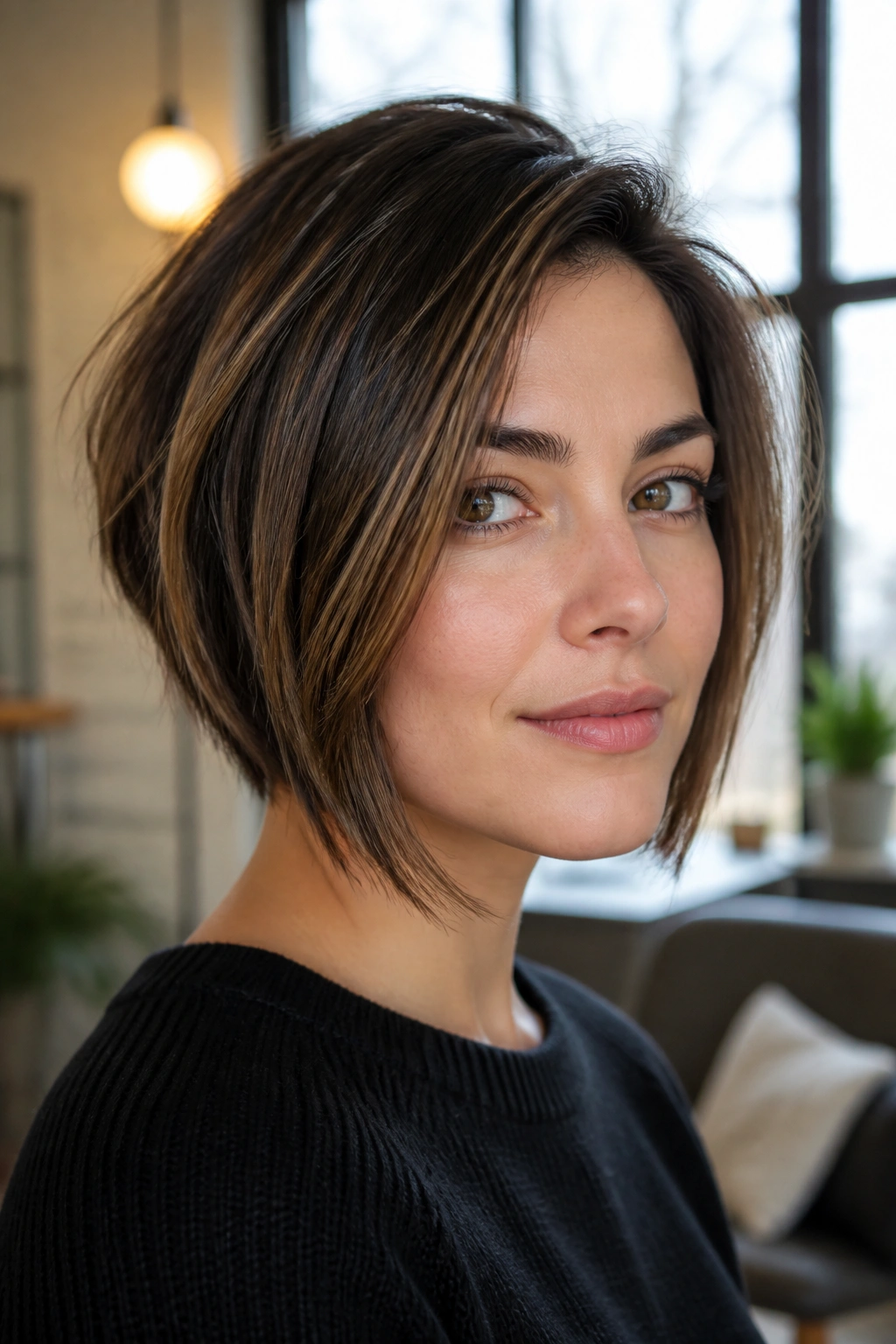
If your jawline is a little softer, this shape can sharpen it fast. A jaw-skimming A-line bob is shorter in back and slightly longer in front, which draws a diagonal line down and forward. That angle is flattering on round faces because it cuts through the width instead of sitting across it.
The front pieces should graze the jaw, not clamp onto the cheeks. That difference matters more than people think. Too short and the face looks fuller. Too long and you lose the clean line. The sweet spot is a bob that leans forward just enough to create movement.
A side part helps here too, especially if the hair has a natural bend. It breaks the symmetry and keeps the bob from feeling too tidy. A little under-curl at the ends can be nice, but I usually prefer a soft outward flip or a loose bend. It feels less old-school and more alive.
This cut has shape without a lot of fuss. That alone makes it worth a look.
19. Feathered Cut With Wispy Bangs
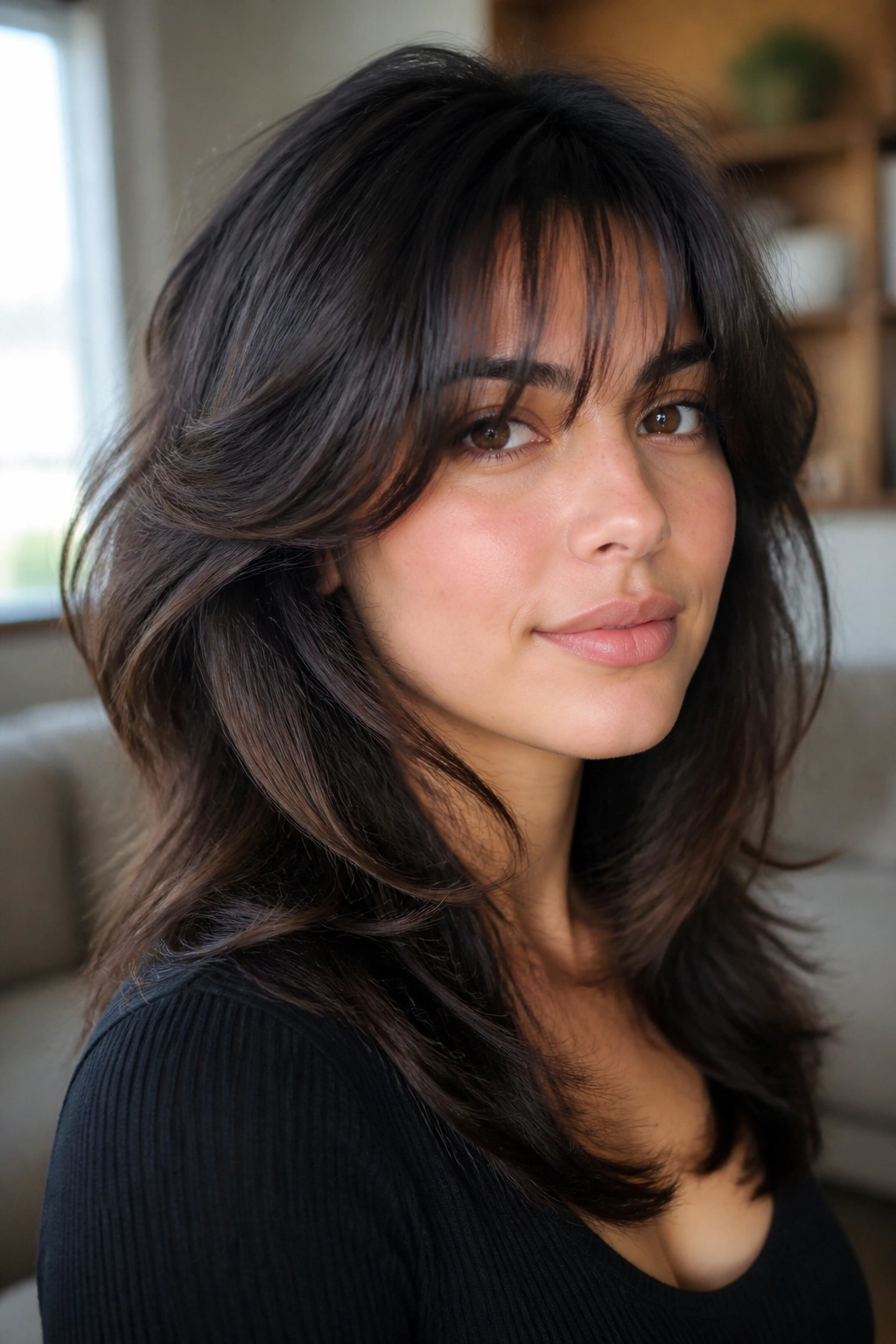
Feathered layers still earn their keep. They soften thick hair, create movement through the sides, and keep the whole cut from turning into one heavy block. On a round face, that lightness is a relief. It lets the face show through instead of sitting under a curtain of bulk.
Wispy bangs add another useful layer of shape. They break up the forehead area without sealing it off. The fringe should look light enough that you can almost see through it in places. If it’s too solid, the cut loses that airy feel and starts to close in the top third of the face.
How to wear it
- Dry the bangs first so they don’t split in weird places.
- Use a small round brush for a soft bend, not a curl.
- Keep the ends feathered around the cheek and jaw.
- Finish with a touch of dry texture spray at the roots.
This one is especially good if your hair is dense and you want movement without losing length. The cut does the thinning for you, which beats hacking at it with a razor at home. Bad idea. Don’t do that.
20. Extra-Long Layers With Side Sweep
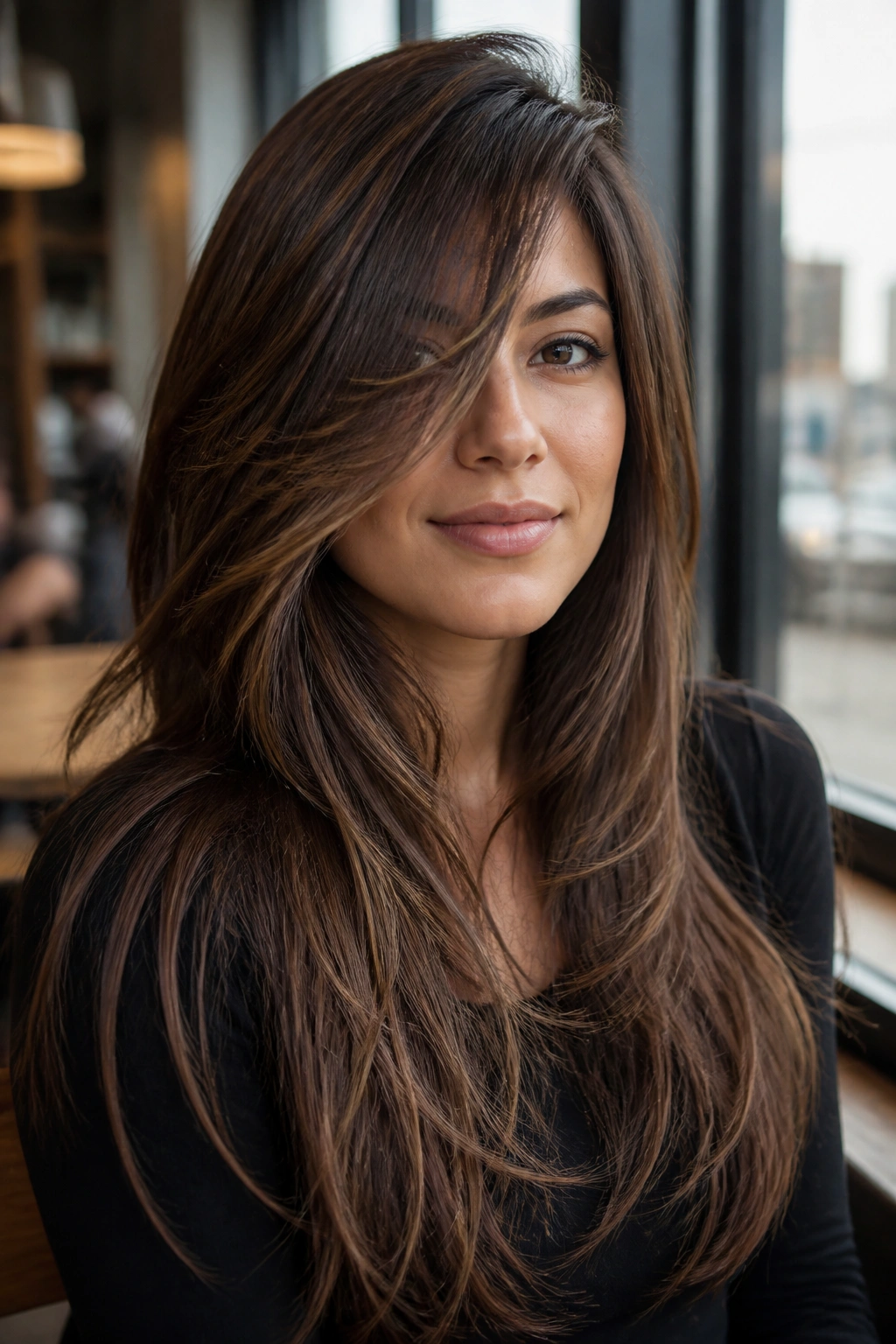
Long hair can work on a round face when the layers are cut with purpose. Extra-long layers with a side sweep keep the length, but they stop the hair from hanging like one heavy sheet. The side sweep brings in a diagonal line, and that line is what keeps the face from looking too wide.
This cut is useful if you’re attached to long hair but still want shape around the face. The shortest pieces should live below the cheekbone and move toward the collarbone or jaw. That keeps the focus away from the widest part of the face. If the layers start too high, the sides puff. If they start too low, the whole cut can feel flat. There’s a narrow sweet spot, and it’s worth asking for it clearly.
A round brush can help, but it’s not required every day. A loose side part, a little blow-dry lift at the roots, and a soft bend through the front usually give enough shape. Long hair does not have to be heavy. Not if it’s cut well.
