



Medium haircuts for round faces work best when they stop trying to hide the face and start drawing cleaner lines around it. That sounds almost too simple, but it’s the truth I keep coming back to. A cut that lands at the wrong spot can make cheeks look fuller; a cut that slips past the chin, adds a little height at the crown, or opens up one side can change the whole read of the face.
The biggest mistake people make is chasing length for its own sake. Long hair can be lovely, sure, but medium haircuts for round faces often do more with less because they create shape where it matters: below the cheekbone, around the collarbone, and at the part. That is the whole game. Not disguise. Direction.
A round face usually has soft width through the cheeks, a gentle jawline, and not a lot of sharp angles to “hold” a haircut. So the cut has to supply those lines. A good one adds vertical movement, a little asymmetry, or a clean edge that pulls the eye down instead of side to side. Small choices matter more than people think — the part, the layer placement, the way the ends are finished, even whether the front pieces kiss the chin or miss it by half an inch.
And yes, you can wear bangs. You can wear blunt ends. You can wear shaggy texture. You just need the right version of each. Some are softer, some are sharper, and a few are much easier to live with than they look at first glance.
1. The collarbone lob for round faces
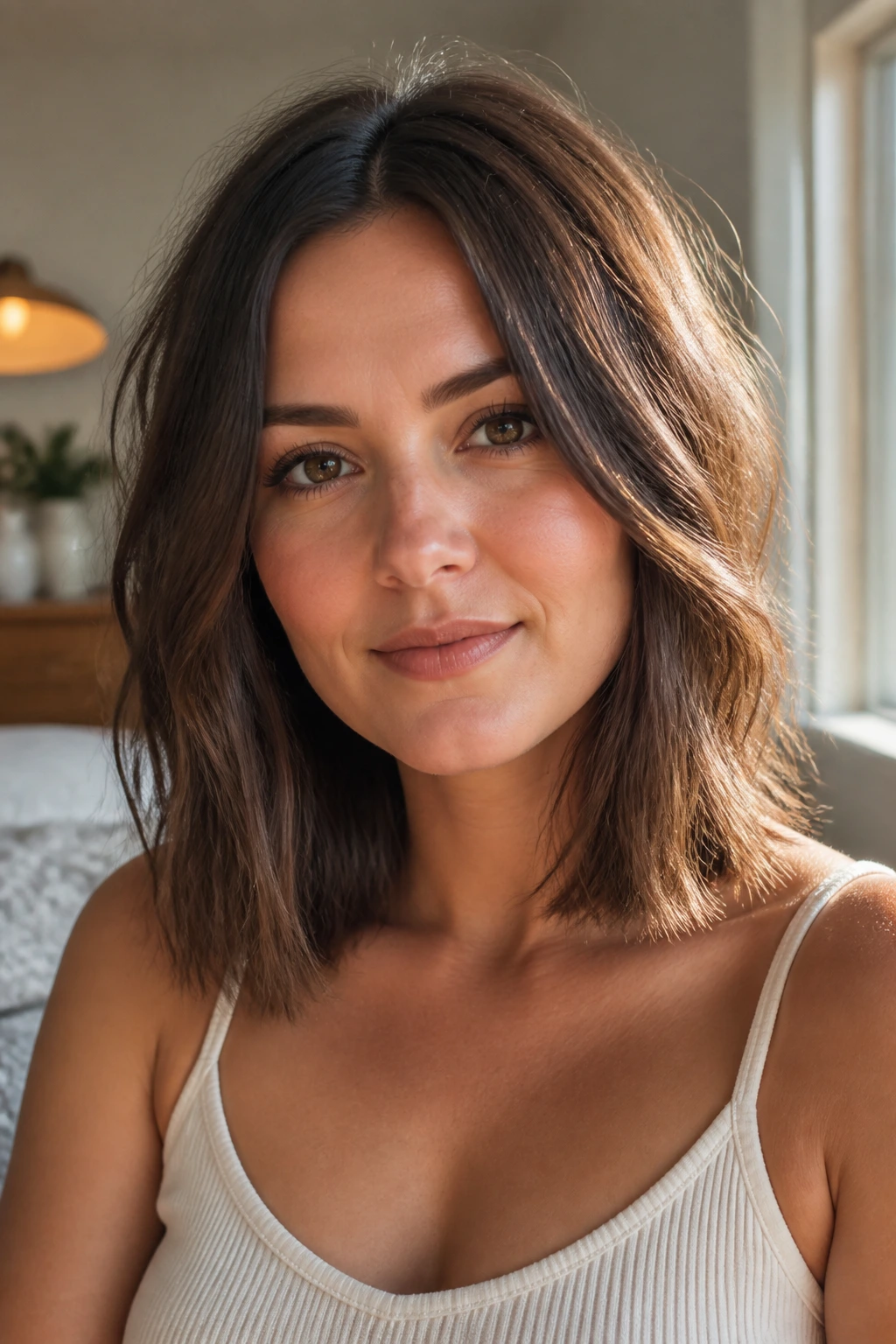
This is the haircut I recommend when someone wants one safe, flattering place to start. The collarbone lob gives you length without dragging hair all the way down the chest, and that matters because the collarbone creates a clean visual stop below the widest part of the face.
Why it flatters
The strongest version of this cut lands right at, or a touch below, the collarbone. Not the jaw. Not the top of the shoulders. That extra inch or two keeps the silhouette from puffing out around the cheeks.
Ask for a blunt perimeter with very soft internal movement. If the layers climb too high, the shape can get fluffy at the sides. Keep the front pieces a little longer than the back, and let the ends swing instead of sit stiff.
- Best for straight, wavy, or slightly thick hair.
- Works well with a side part or an off-center part.
- Easy to air-dry with a bend at the ends.
- Good if you want to grow your hair out later.
Pro tip: Tell your stylist you want the longest pieces to hit the collarbone when dry, not when wet. That tiny detail saves a lot of regret.
2. Curtain bangs with airy layers

People get nervous about curtain bangs on round faces because they picture short, heavy fringe sitting right on the cheeks. That version is the problem. The good version starts longer, splits softly at the center, and sweeps away from the face in two clean arcs.
What makes them work
The bang should begin around the bridge of the nose or a little lower, then taper toward the cheekbone. That shape creates a vertical opening in the middle and keeps the width from piling up across the face. If the bangs are cut too short, they can make the upper face look boxier. Too thick, and they become a curtain in the bad sense.
The layers behind the fringe matter just as much. Ask for airy layers that begin below the chin, with the lightest pieces around the cheekbone and nothing choppy right at the widest part of the face.
How to style them
- Blow-dry the bangs away from the face with a small round brush.
- Use a light mousse at the roots if they go flat fast.
- Set the ends with a cool shot so they stay curved, not puffy.
- Keep the center slightly shorter than the sides.
One rule: if the bangs hit the cheekbone too hard, soften them.
3. The angled lob that narrows the jaw
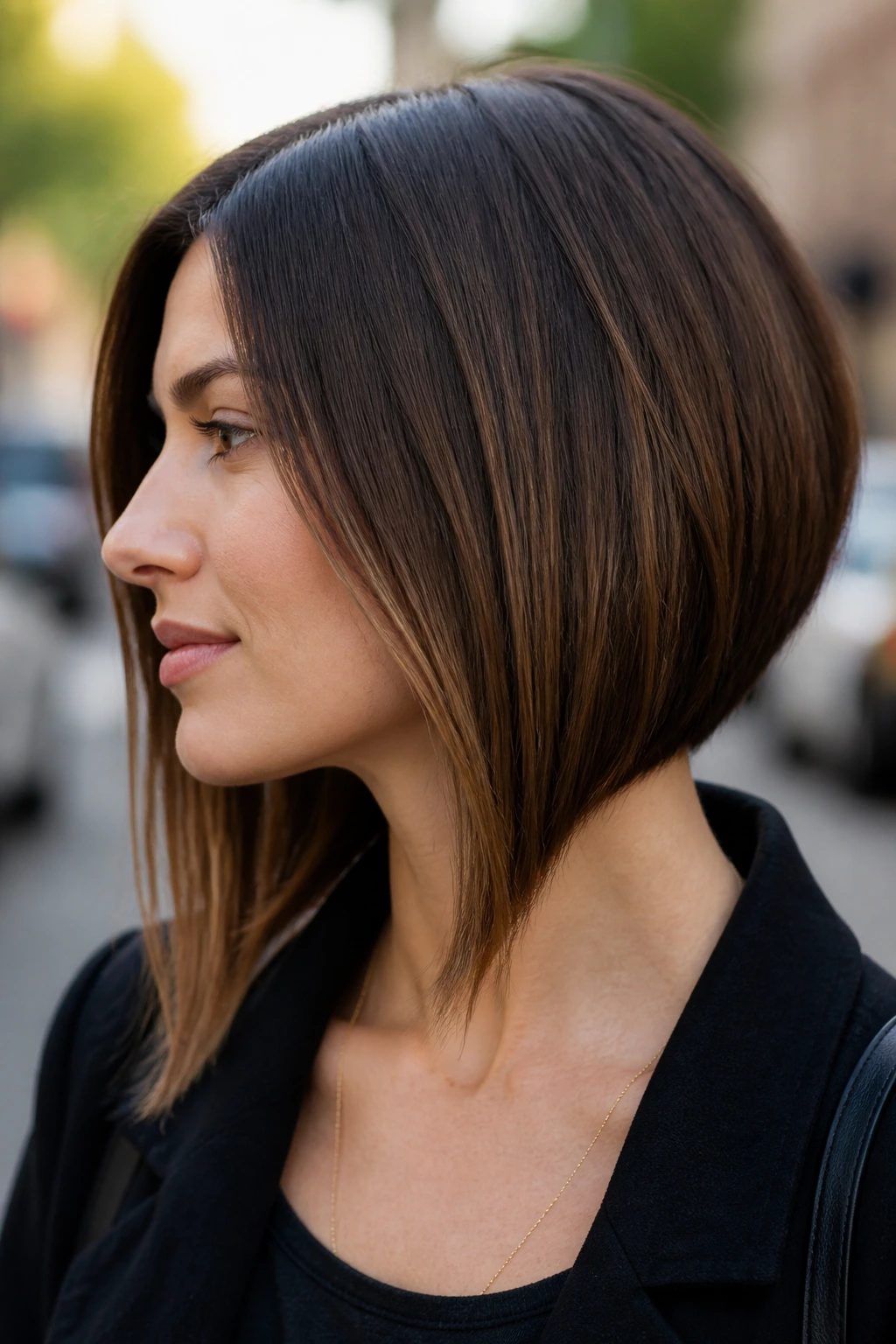
Can an inch of angle really matter? Yes. A little diagonal line changes the way the eye moves, and that is exactly why this cut earns a place here. The front is longer than the back, but not in a dramatic, stacked way. It just leans forward enough to create a slim, clean line.
How to ask for it
Tell your stylist you want the back to sit around the nape or just above the shoulders, with the front gradually lengthening toward the collarbone. The angle should be visible, but not severe. If the front drops too long too fast, it starts looking like an old-school wedge.
This cut is especially good if your jawline is soft and you want a little more definition without adding a lot of layers. It also photographs well from the side because the front pieces create shape instead of sitting flat.
Best for: people who like polished hair, blowouts, and a cut that still behaves on day two.
4. Butterfly layers for round faces
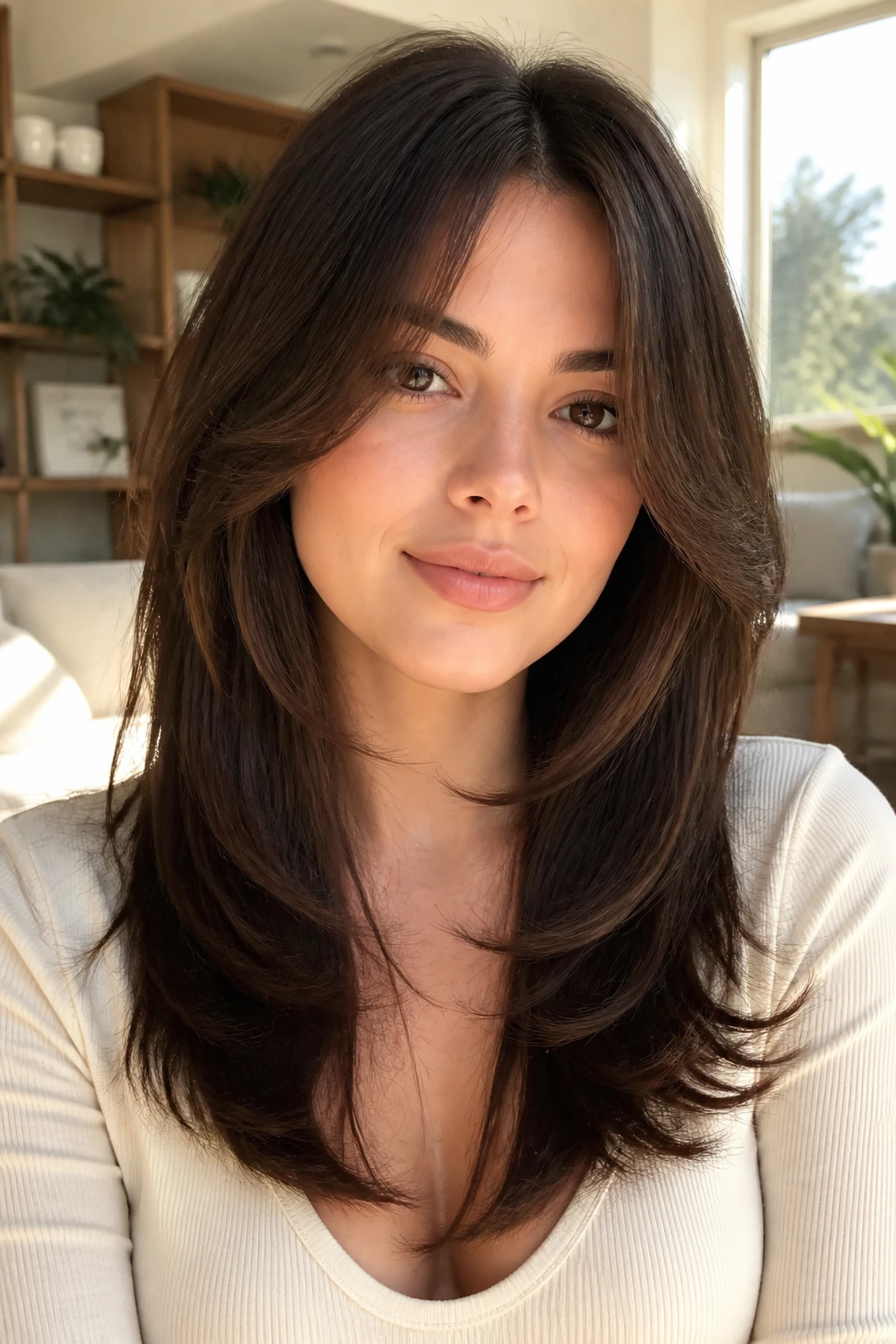
If your hair feels heavy through the mid-lengths but you still want to keep the bulk of your length, butterfly layers are a smart play. They lift the top section, keep the bottom section long, and create a shape that opens the face instead of boxing it in.
The trick is placement. The shortest pieces should sit at or below the chin, never above the cheekbone. That keeps the volume from spreading sideways where a round face is already full. The longer layer underneath gives you movement without losing the clean outer line.
I like this cut on thick wavy hair in particular. It looks like you did something deliberate, even when the styling is loose.
What to ask for
- Shorter top layers that start near the cheekbone, not the eyes.
- Long lower layers that keep length through the shoulders.
- Face-framing pieces that taper toward the collarbone.
- A soft blowout shape, not a round, puffy finish.
Good sign: when you shake the hair out, it should fall in two clear tiers, not one giant blob.
5. A shaggy medium cut with broken ends
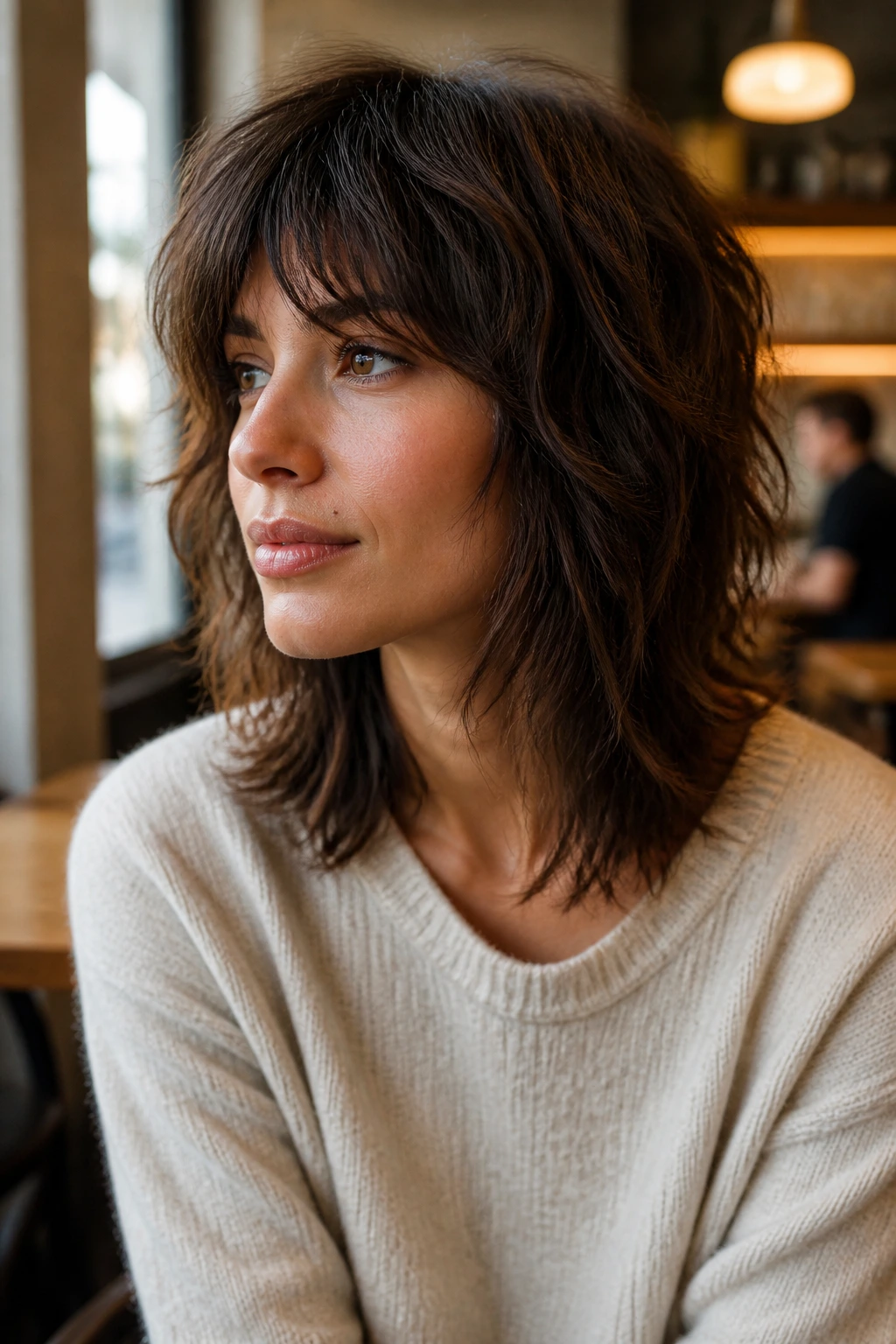
A shag works when the pieces are cut to move, not when they are hacked apart. That distinction matters. The best shag for a round face keeps enough weight at the bottom to stay grounded, while the top layers add a little lift and the ends look broken up instead of heavy.
I prefer this cut on hair with natural wave or bend. The texture helps the shape breathe. On very straight hair, the shag can look flat unless you style it a bit, so I would not call it the easiest option for everyone.
What I like most is the looseness. It keeps the sides from forming a hard circle around the face, which is the last thing you want.
A good shag should look deliberate even when it is messy. That means point-cut ends, not razor-thin wisps everywhere, and layers that stop before they crowd the cheek.
If your hair tends to frizz, ask for softer internal layers and less thinning at the perimeter. That one adjustment saves the cut.
6. Long layers and a deep side part

Unlike a center-parted one-length cut, a deep side part gives a round face a little asymmetry right away. That asymmetry is useful. It interrupts the width across the cheeks and creates a line that the eye follows upward on one side, then downward through the length.
The layers should stay long. Start them below the chin, then let them taper toward the collarbone and chest. Short layers around the cheek can make the face feel broader, and you do not need that fight.
This is the cut I suggest when someone wants movement but hates obvious layering. It is quieter than a shag, less styled than a lob with bangs, and easier to wear pulled back.
Best way to wear it
- Part the hair about 1 to 2 inches off center.
- Blow-dry the roots up and away from the part.
- Keep the front pieces curved softly toward the jaw, not flipped hard out.
- Use a large brush or a 1.5-inch curling iron for one bend, not tight curls.
My take: this is one of the easiest ways to make medium hair feel longer without actually growing it out.
7. The blunt shoulder cut with hidden movement
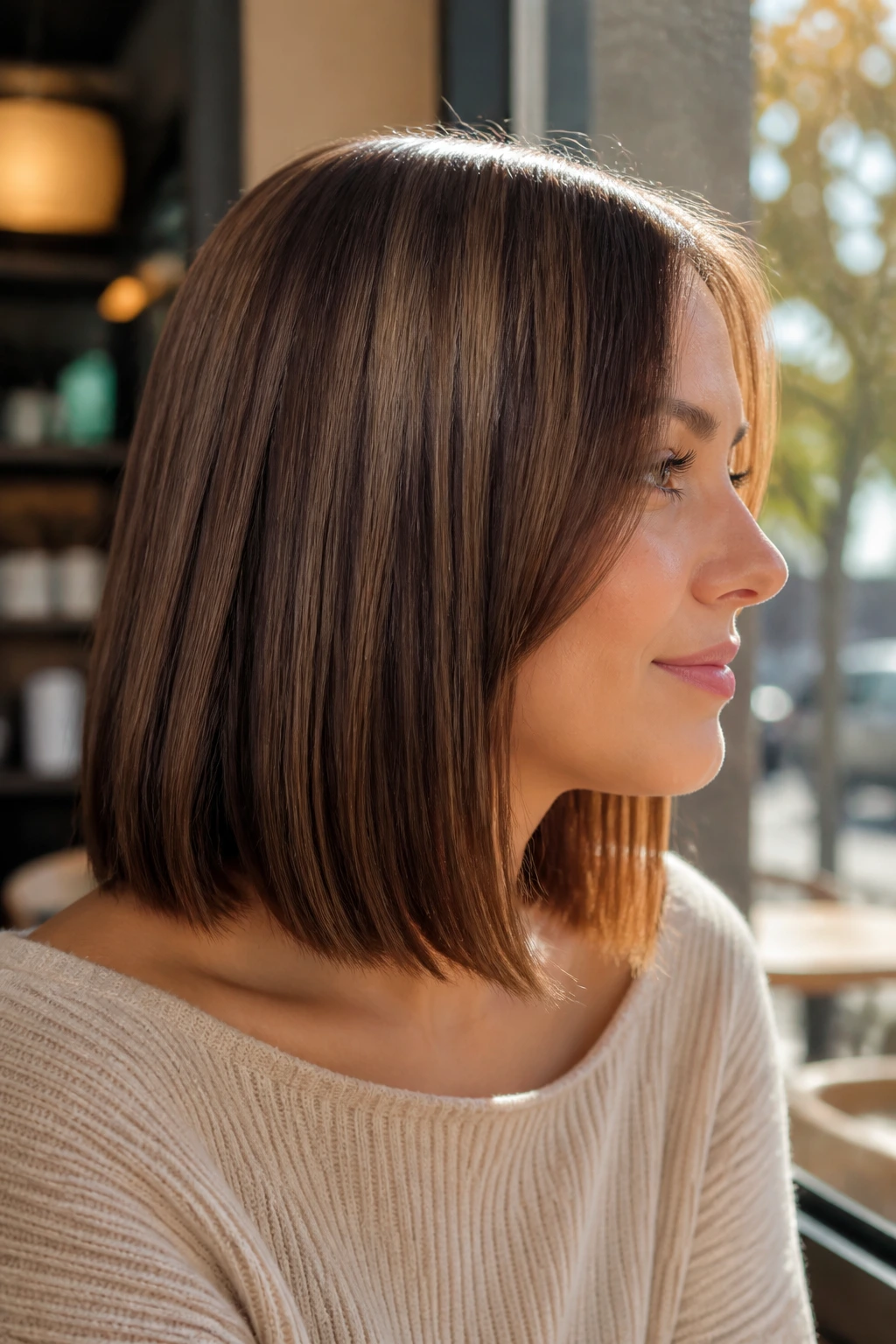
A blunt line sounds risky for a round face, and a bad version is. A good one, though, is clean, sharp, and quietly flattering when it lands just past the shoulders. The key is keeping the perimeter solid while hiding the movement inside the cut.
Where the movement hides
Ask for internal layers under the top section, especially near the nape and the lower back of the head. That keeps the silhouette from bulking out at the sides. The outside still reads as blunt, which gives the hair density, but the inside stays light enough to move.
This is a nice choice if your hair is fine or medium-fine. Blunt ends can make hair look fuller, which is helpful when you do not have much natural volume. Just keep the shoulder line clean. If it ends right at the widest point of the shoulder and the cheek together, the shape can feel boxy.
Watch for this: if your stylist starts texturizing the outer edge too much, the whole point of the cut disappears.
8. A wavy lob with piecey ends
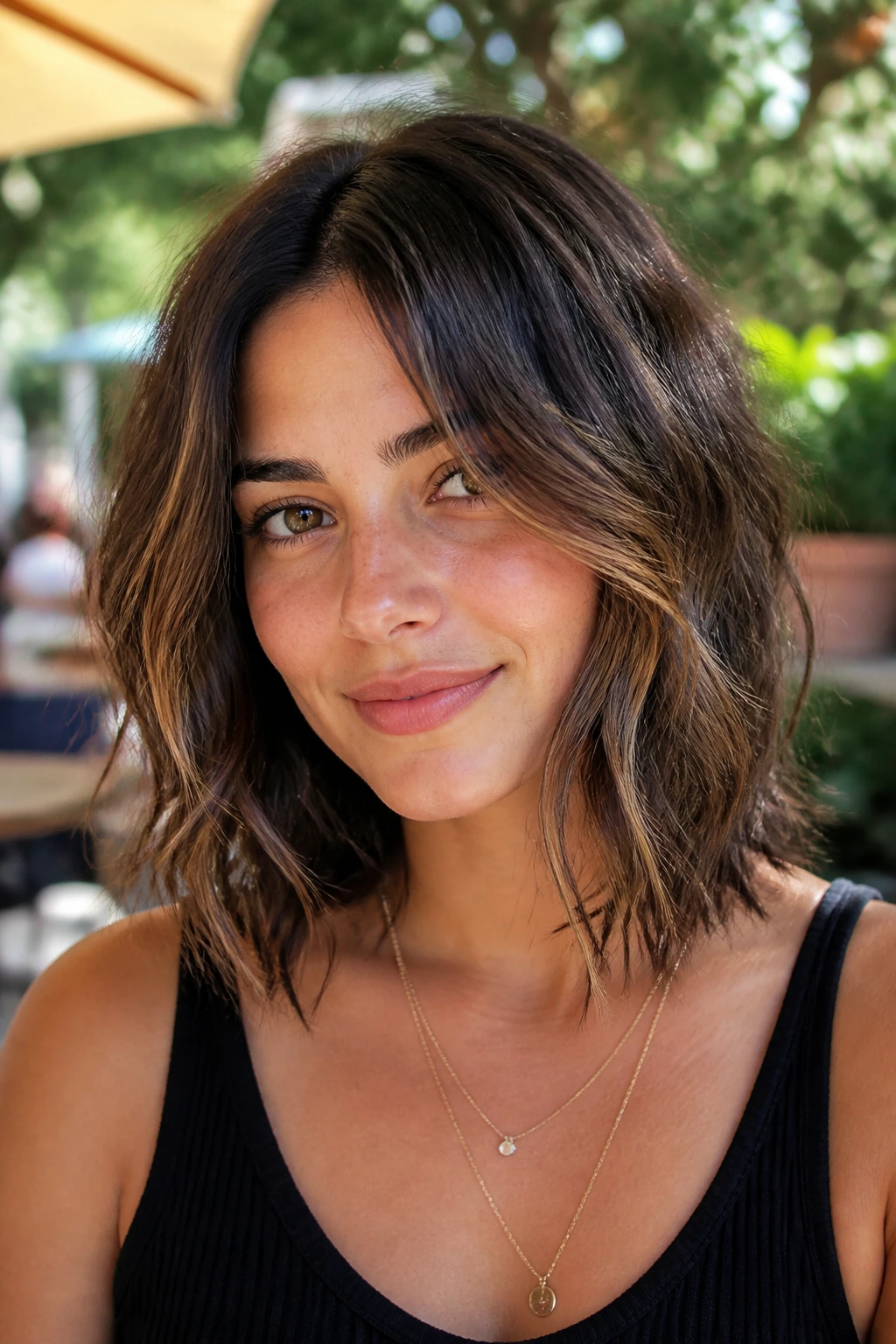
Texture does the heavy lifting here. A lob that ends between the collarbone and the top of the chest looks softer on a round face once the waves break up the outline. The shape stops reading as one full circle of hair and starts reading as movement.
I like the ends kept piecey, not brushed into a big rounded shape. That means the wave pattern can live in the mid-lengths while the ends stay a little straighter. The result feels lighter around the cheeks, even when the hair has some body.
If your hair is naturally wavy, this cut is easy to live with. If it is straighter, a 1-inch iron and a little bit of leave-in cream are enough. You do not need perfect curls. You need separation.
One small thing: avoid over-layering the bottom half. Too many layers can make the lob kick out at the sides, and that gets bulky fast.
9. Bottleneck bangs with a mid-length cut

Why choose bottleneck bangs instead of a full fringe? Because they give you the softness of bangs without turning the face into one wide horizontal line. They are narrower in the center, then get a bit wider as they curve toward the cheekbones, which helps draw the eye down.
That shape is useful on a round face because it frames the eyes and forehead without cutting the face in half. It also plays nicely with shoulder-length or collarbone-length hair, which gives the whole cut a long, flowing line.
How to wear them
- Keep the center of the bangs light, not dense.
- Let the side pieces graze the cheekbone and then taper.
- Blow-dry them with a small round brush or a medium Velcro roller.
- Pair them with a mid-length cut that ends below the chin.
This style needs a bit of maintenance. Not a ton, but enough that you should like styling your fringe before you commit.
10. Razor-cut layers around the jawline
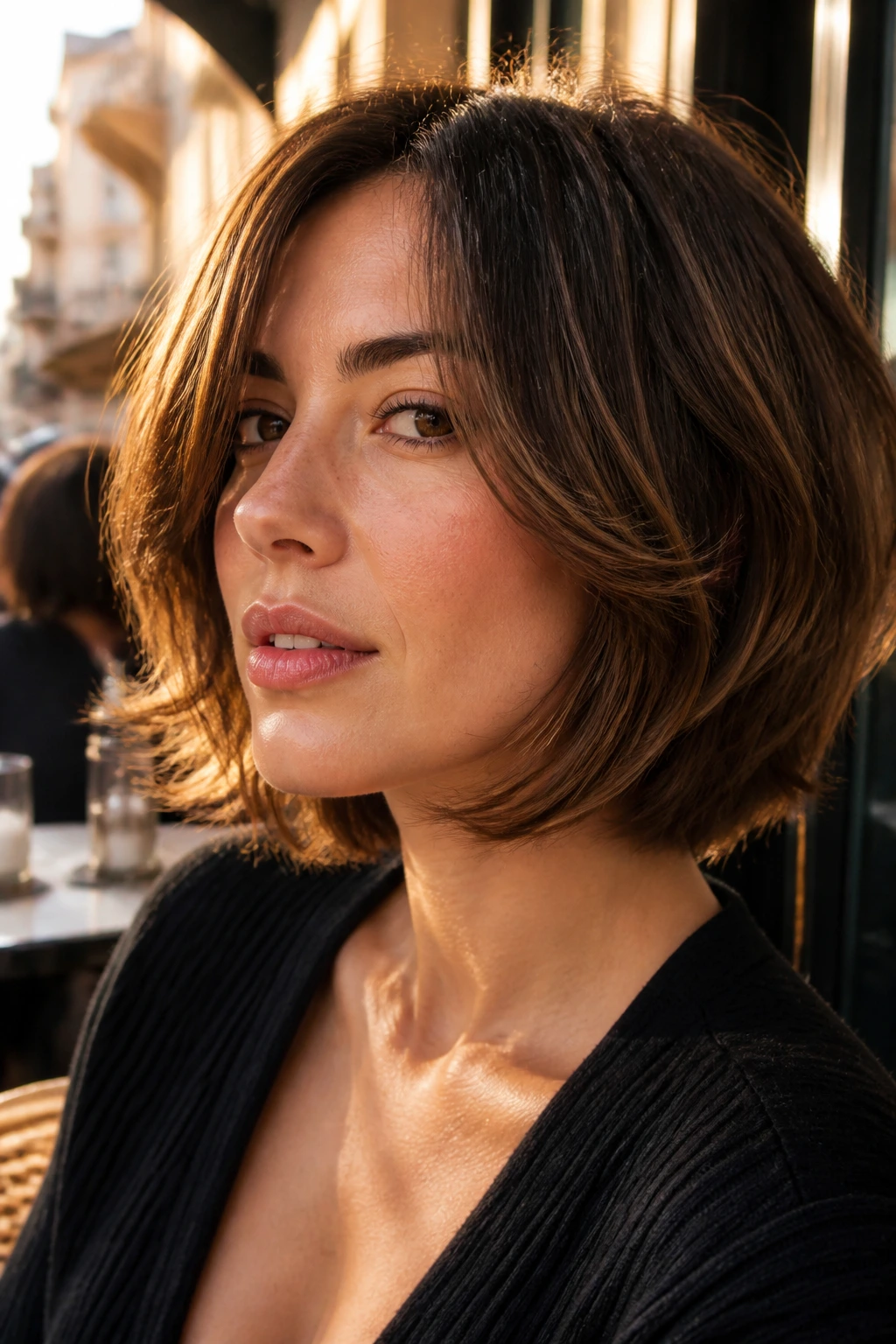
If your hair feels like one heavy curtain, a razor can breathe into it. Used well, it removes weight around the jawline and creates airy, broken edges that stop the shape from feeling thick at the sides. Used badly, it makes frizz and chew marks. So yes, skill matters here.
The best version keeps the razor work low and controlled. I want the softest pieces around the jaw and just below it, not a shredded mess all over the head. That way the face gets movement without extra width through the cheeks.
What to ask for
- Razor shaping only on the lowest face-framing pieces.
- Length that still clears the chin.
- Soft movement, not choppy separation.
- A stylist who knows how your hair reacts when it’s dry.
If your hair is fine, damaged, or very frizz-prone, scissors may be safer. No shame there. Not every head needs a razor.
11. Flipped-out ends that keep the face open

Flipped ends can look playful, but they need restraint. The shape works best when the turn starts below the chin and moves outward toward the shoulders, not when the flip sits right beside the cheeks and adds width where you do not want it.
I like this cut on medium hair that has a little natural bend or can hold a brush set. It opens the face and gives the perimeter some life without demanding full curls or beach waves. The ends feel lifted, but the face stays visible.
The danger is overdoing it. Too much flip around the jaw and the haircut starts to feel old-fashioned in the wrong way. Keep the turn soft, almost like the hair decided to move on its own.
A light smoothing cream and a round brush usually do the job. You do not need a lot of product. Too much will make the ends sticky and heavy, which kills the shape.
12. The modern Rachel-inspired medium cut

This is not the bouncy, over-layered cut from old magazine photos. The modern version is calmer. It keeps the face frame softer, the layers longer, and the overall shape a little cleaner around the shoulders.
What makes it work on a round face is the movement at the crown and the glide through the sides. The shortest pieces should stay below the cheekbone, and the layers should fall into each other instead of stacking up in a blunt wave at the cheek.
It is a good cut if you like a blow-dry and want hair that looks styled without feeling stiff. Medium-density hair tends to suit it best. Hair that is too fine can lose the shape unless you build in some root lift.
I would ask for softness around the front, not a dramatic frame. The old version could look boxy. This one does not need to.
13. Face-framing slices with a straight finish
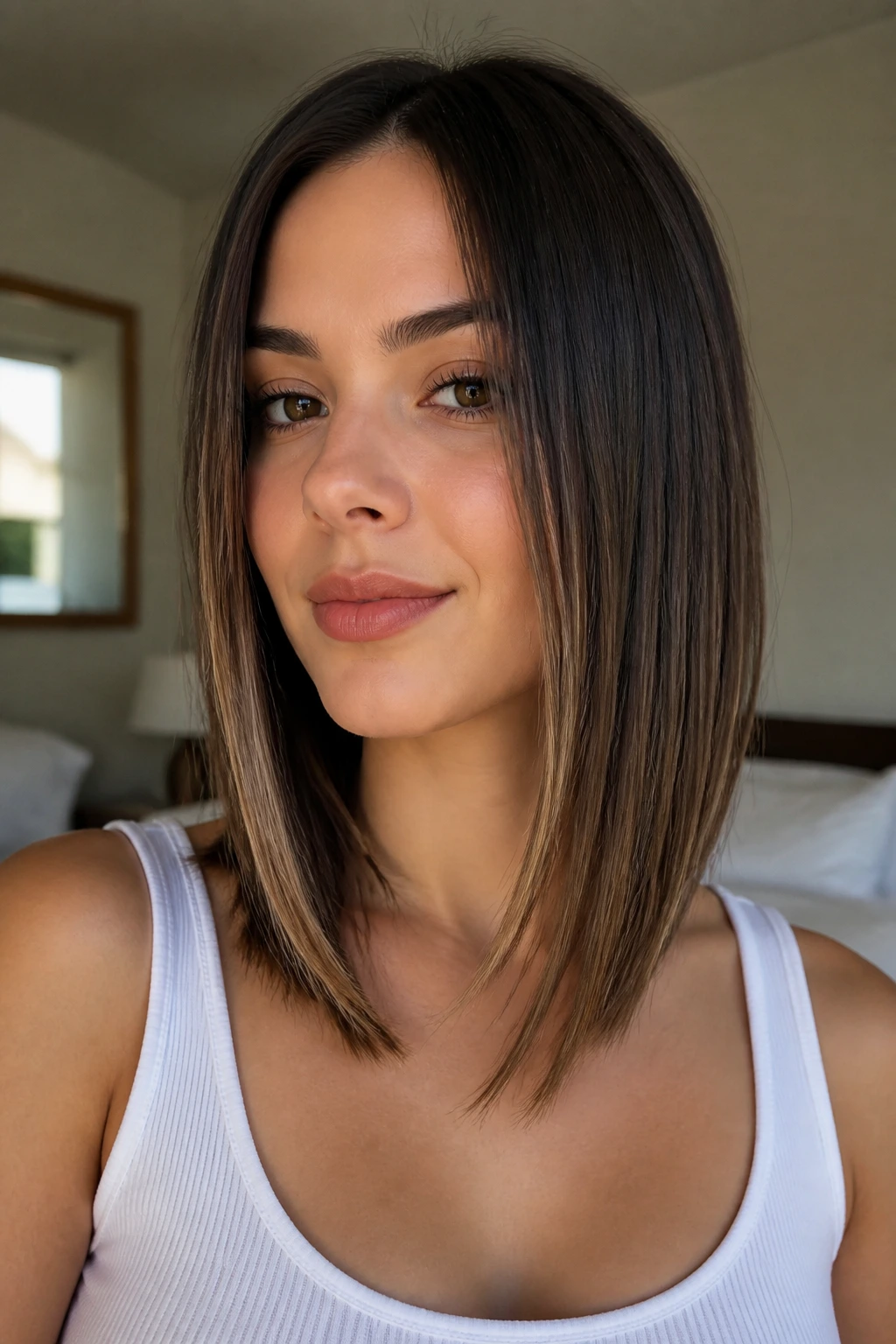
Straight hair can still have shape. It just needs a better outline than a flat one-length cut. Face-framing slices do that job without taking away the clean feel of straight hair, which is why I keep recommending them.
Why the slices matter
Ask for two front pieces that start around the lip or chin and then angle down toward the collarbone. The rest of the haircut can stay fairly straight and solid. Those two pieces make the eye travel vertically, and that helps a round face look less wide.
This cut is especially handy if you like a sleek finish. You do not have to curl anything. A flat iron with a slight inward bend at the ends is enough. Keep the line smooth and let the front pieces do the work.
Good fit for
- Straight or slightly wavy hair.
- People who want low-fuss styling.
- Medium density hair that can hold a clean line.
- Anyone who hates too many layers.
Tiny detail, big payoff: tuck one front piece behind the ear and leave the other loose. That split creates asymmetry without trying too hard.
14. A medium wolf cut with crown lift
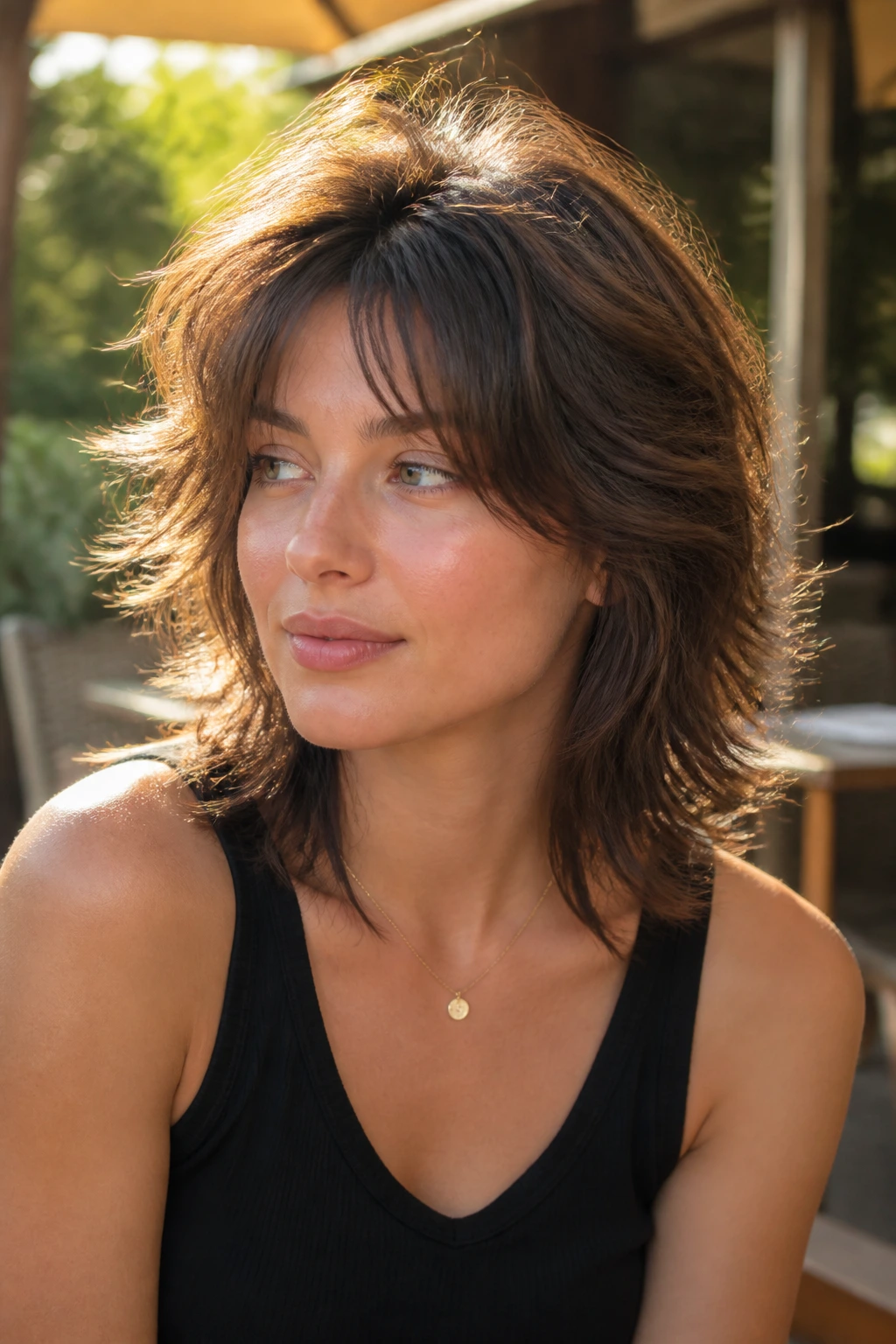
The right wolf cut can be surprisingly good on a round face. The wrong one can look too wide, too short, and too eager. The difference comes down to where the layers sit and how much bulk you leave at the sides.
You want crown lift, not cheek width. The top layers should bring the eye up, while the bottom length should stay below the jaw to keep the shape from ballooning out. If the shortest bits stop at the apple of the cheek, the cut can make the face look fuller. I would avoid that.
This style makes the most sense on thick, wavy, or naturally textured hair. It has attitude, sure, but it also has practical benefits if your hair likes to swell. The right wolf cut keeps the silhouette lively without turning it into a triangle.
If your hair is fine, proceed carefully. A little texture goes a long way. Too much and the cut loses its body.
15. Curtain fringe and a soft blowout shape
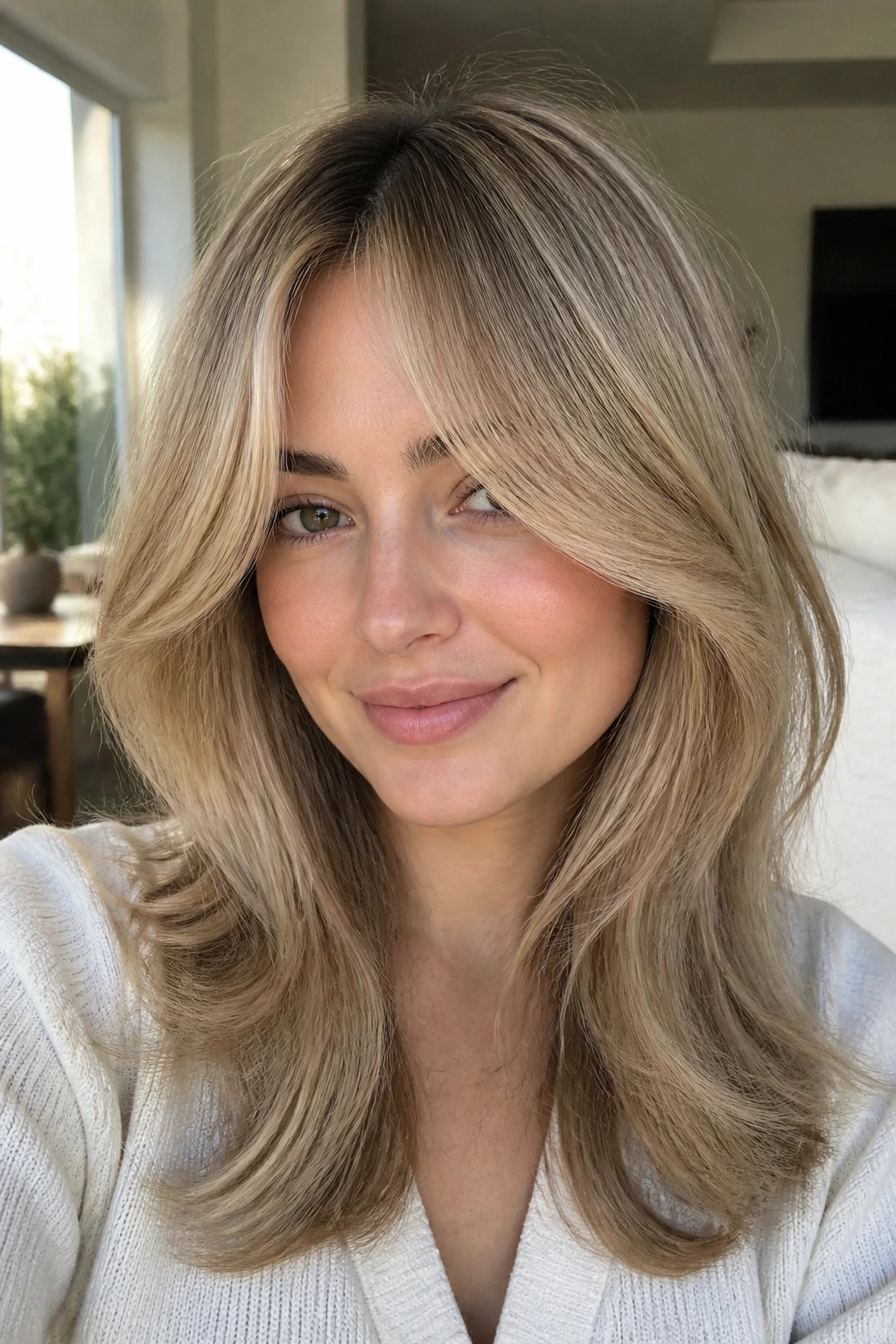
Why does a blowout shape work so well on round faces? Because the round brush pushes the hair away from the cheeks and builds a little height at the roots, which changes the silhouette right away. The face looks longer when the volume sits above the widest point instead of beside it.
The fringe helps, too. Curtain bangs paired with a soft blowout give you a frame without a hard edge. That combination works especially well when the length falls around the shoulders or collarbone, because the whole cut feels open and lifted.
How to style it
- Blow-dry the roots first, not the ends.
- Use a 1.5-inch round brush for the front sections.
- Roll the bangs away from the face and clip them while they cool.
- Finish with a light spray, not a heavy lacquer.
This is one of the better choices if you like polished hair but do not want a stiff look. It holds shape without feeling frozen.
16. The soft asymmetrical lob

If you always part your hair the same way and tuck one side behind your ear, let the cut help. A soft asymmetrical lob creates a slight angle on purpose, which gives a round face a cleaner line without shouting about it.
The difference between flattering and awkward is tiny here. One side should be only about half an inch to an inch longer, not dramatically tilted. The aim is subtle movement, not an obvious A-line that steals attention from your face.
What makes it useful
- It adds a diagonal line across the face.
- It looks intentional even when air-dried.
- It grows out without looking messy.
- It works well with straight or lightly wavy hair.
I like this cut for anyone who wants a little edge but still needs something wearable at work, on errands, or pulled back in a clip. It has enough shape to matter. Not too much.
17. Thick-hair layers that remove bulk
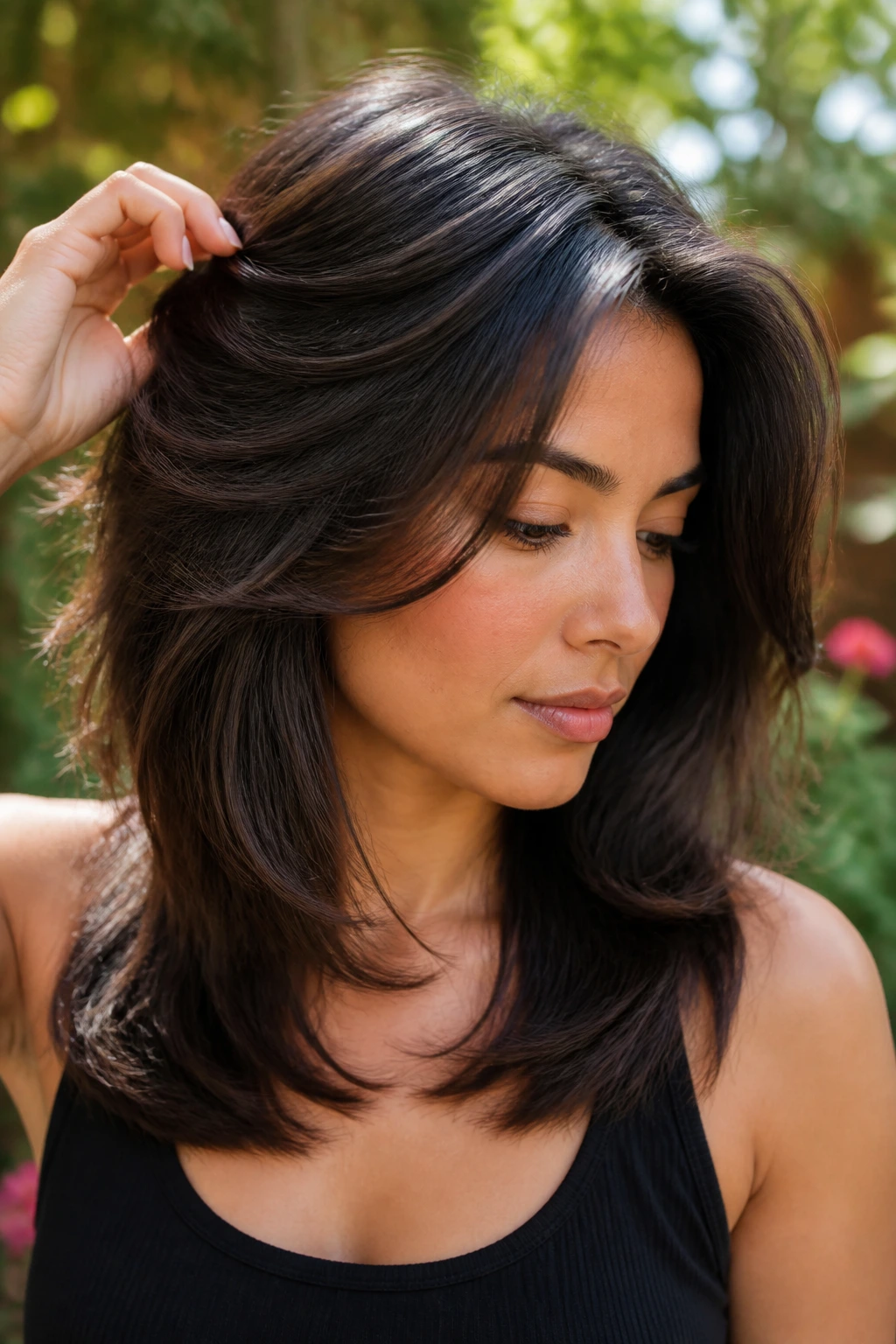
Thick hair and round faces can fight each other if the shape sits like a helmet. That is usually what goes wrong. The answer is not to thin the hair into nothing; it is to remove weight in the right places so the outline stays long and controlled.
Ask for internal layering below the crown and around the lower mid-lengths. Keep the perimeter long enough to fall past the widest part of the face, and do not let the stylist carve out too much volume near the cheeks. The hair should feel lighter when you lift it, but still look full when it drops.
This is the kind of cut that changes how your whole day feels. Drying time gets shorter. Your hair stops fighting your face. A little cream or smoothing lotion can help, but the real fix is the shape itself.
If your thick hair has a wave, even better. It will move instead of ballooning.
18. Fine-hair midi cuts that fake fullness
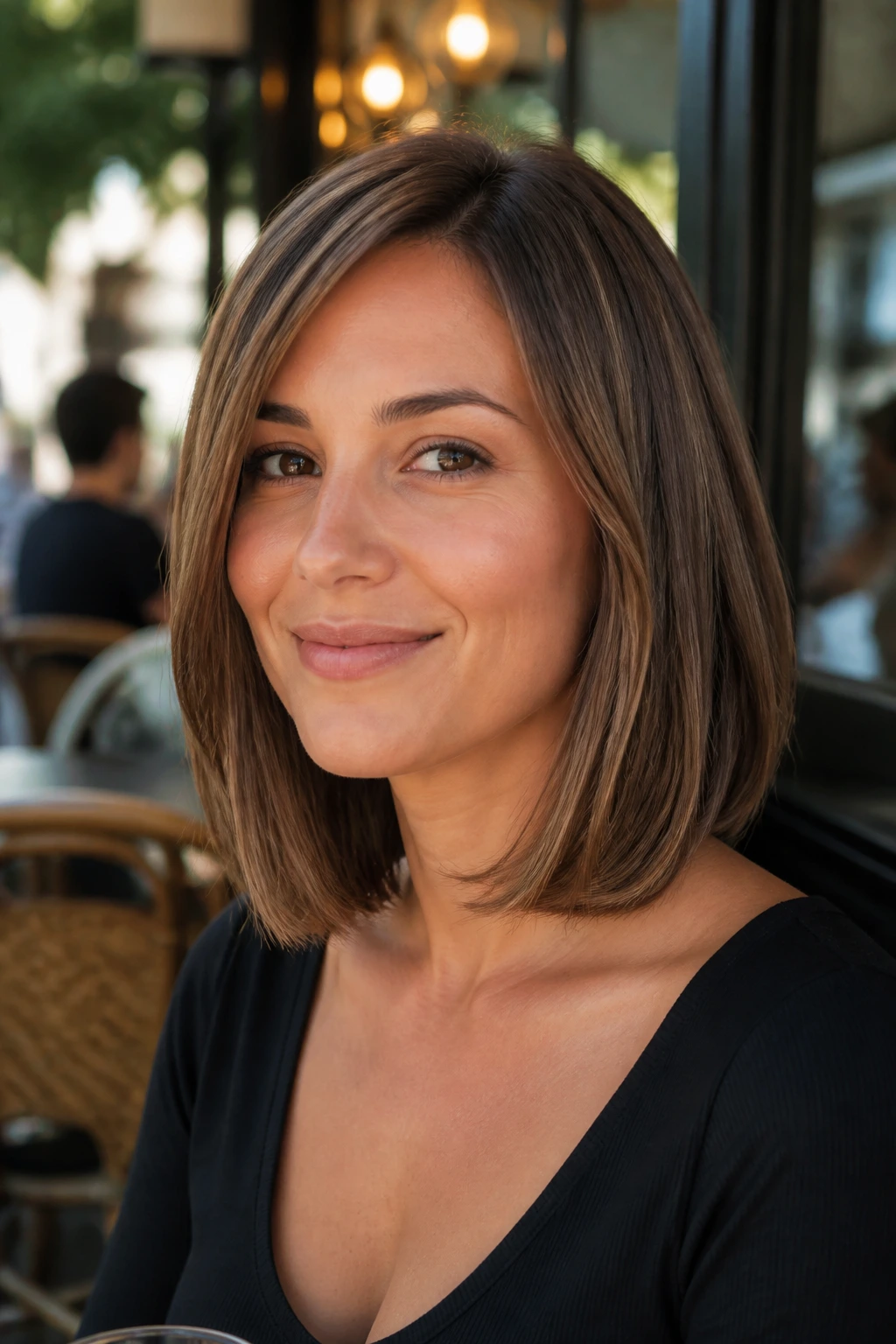
Fine hair needs a different playbook. Too many layers on a fine head can leave the ends wispy and expose the cheeks in a way that makes a round face feel even rounder. A cleaner shape usually does more.
A collarbone-length midi cut with only a few face-framing pieces can fake thickness while keeping the silhouette long. The trick is keeping the weight at the line, so the hair looks solid at the bottom and not stringy around the sides.
Best approach
- Keep layers minimal and low.
- Use a side part or soft off-center part.
- Add root spray before blow-drying.
- Finish with a round brush lift at the crown.
This cut is a good choice if your hair goes flat fast and you want a shape that still looks tidy by the end of the day. It does not need to be fancy. It needs to be honest about what the hair can do.
19. U-shaped layers that keep the sides light
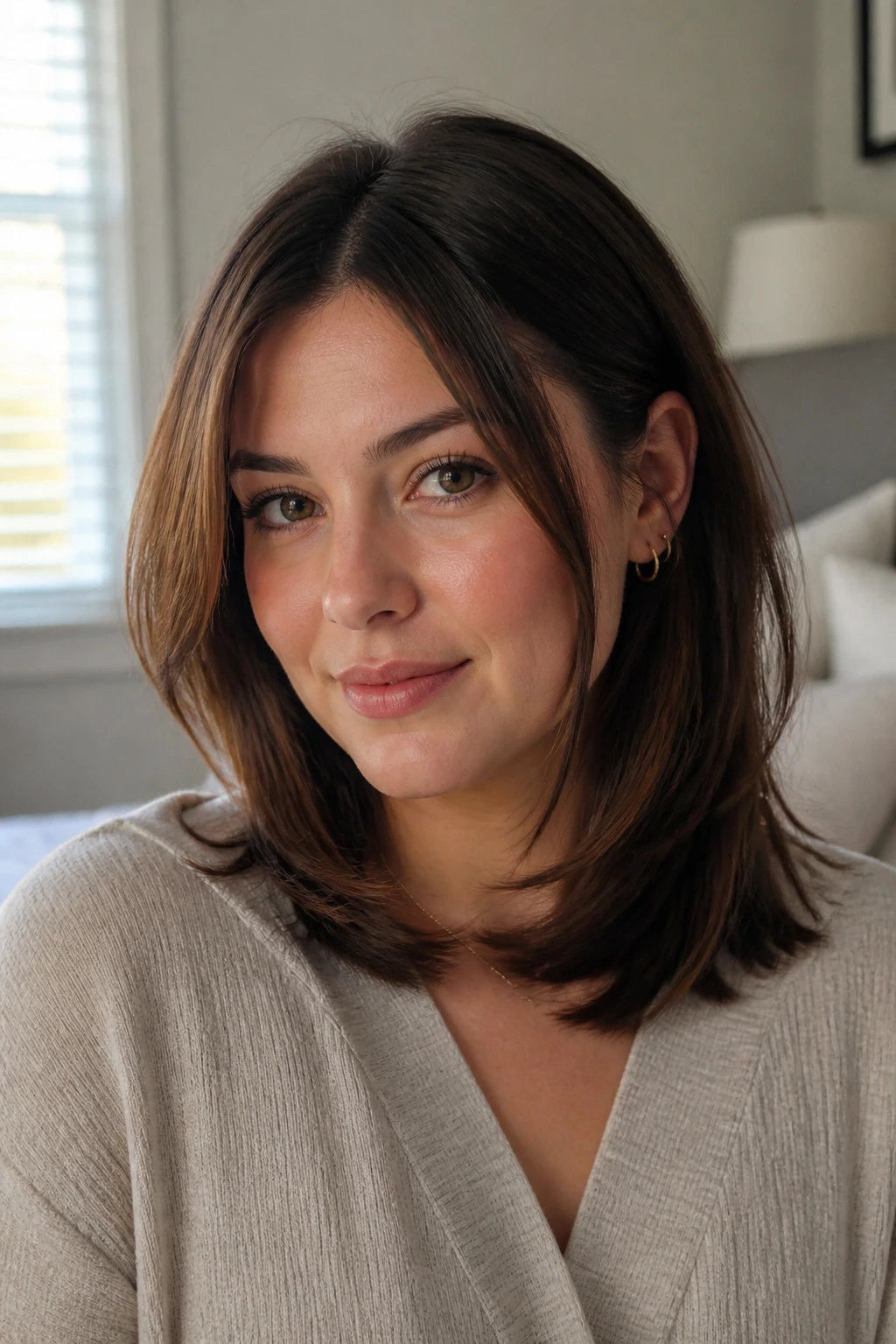
A U-shape sounds subtle, and that is why I like it. The back stays a little longer, the sides curve up gently, and the whole haircut avoids the blunt, boxy look that can make a round face feel wider than it is.
The soft U line keeps the front pieces from hanging heavy at the cheeks. It also gives the hair a nicer fall when you tuck it behind your ears or throw it into a low clip. That matters more than people admit. A cut that works in motion is worth more than one that only looks good standing still.
What to ask for
- A gentle U shape, not a sharp V.
- Front pieces that start below the chin.
- Enough length in back to keep the outline clean.
- Soft, blended layers rather than hard steps.
It’s a quiet cut. That’s the appeal.
20. The Bottom-Line Lob

If you want one medium haircut that can take a lot of styling habits and still behave, this is the one I would hand to most round faces. The bottom-line lob keeps the length around the collarbone, uses a soft side part, and leaves the front pieces just long enough to skim below the cheekbone.
That combo does a lot of work without looking busy. The shape gives you vertical lines, a clean edge, and enough swing to keep the face from feeling boxed in. It also grows out well, which is one of the few things I think a haircut really ought to do.
I keep coming back to the collarbone because it’s honest territory. Too short, and the cut can land right where the face is widest. Too long, and you lose the easy, medium-length feel that makes this category so useful. Right there in the middle is where the good stuff happens.
If you are stuck between a few options, start here. Then adjust from there with bangs, a side part, or a little more texture based on how your hair actually behaves when you wash and dry it. That part matters. A cut only works if it lives well on your head, not someone else’s.
