



Round faces do not need to be hidden. They need angles.
That is the whole game with choppy haircuts for round faces: texture, piecey ends, and a little asymmetry can make the face look longer, sharper, and more defined without turning the cut into something fussy. A blunt line that sits right at the cheek can make a round face feel even rounder. Choppy movement, on the other hand, breaks that circle up in a way that looks easy, not forced.
The best versions do one or more of three things: they build height at the crown, they drop length below the widest part of the face, or they carve out face-framing pieces that land at the jaw or collarbone instead of hugging the cheeks. That sounds technical, but in real life it just means the haircut should move. Still hair. Not helmet hair.
Some round faces look best with soft shags and curtain bangs. Others need a sharp bob with broken ends, or a pixie that keeps length on top and leaves the sides slim. Texture matters too. Fine hair needs a different kind of choppiness than thick hair, and curly hair needs a lighter hand than straight hair. So the options below are not just pretty ideas — they are the kinds of cuts that actually play nicely with a fuller face shape.
1. Collarbone Choppy Lob with a Side Part

A collarbone-length lob is one of the safest bets for a round face, and the choppy version is better than the polished one. The length drops below the cheeks, which helps stretch the face visually, while the uneven ends keep it from sitting like a heavy block.
Why It Works
A side part gives the cut a little lift on top, and that small change matters more than people think. Round faces usually benefit from height at the crown and movement that falls past the widest point of the cheeks.
- Ask for soft, broken ends, not one blunt edge.
- Keep the longest pieces grazing the collarbone.
- Blow-dry with a round brush only at the roots.
- Finish with a light texturizing spray, not sticky wax.
Best part: it grows out cleanly. That alone makes it worth wearing.
2. Razored Shag with Curtain Bangs
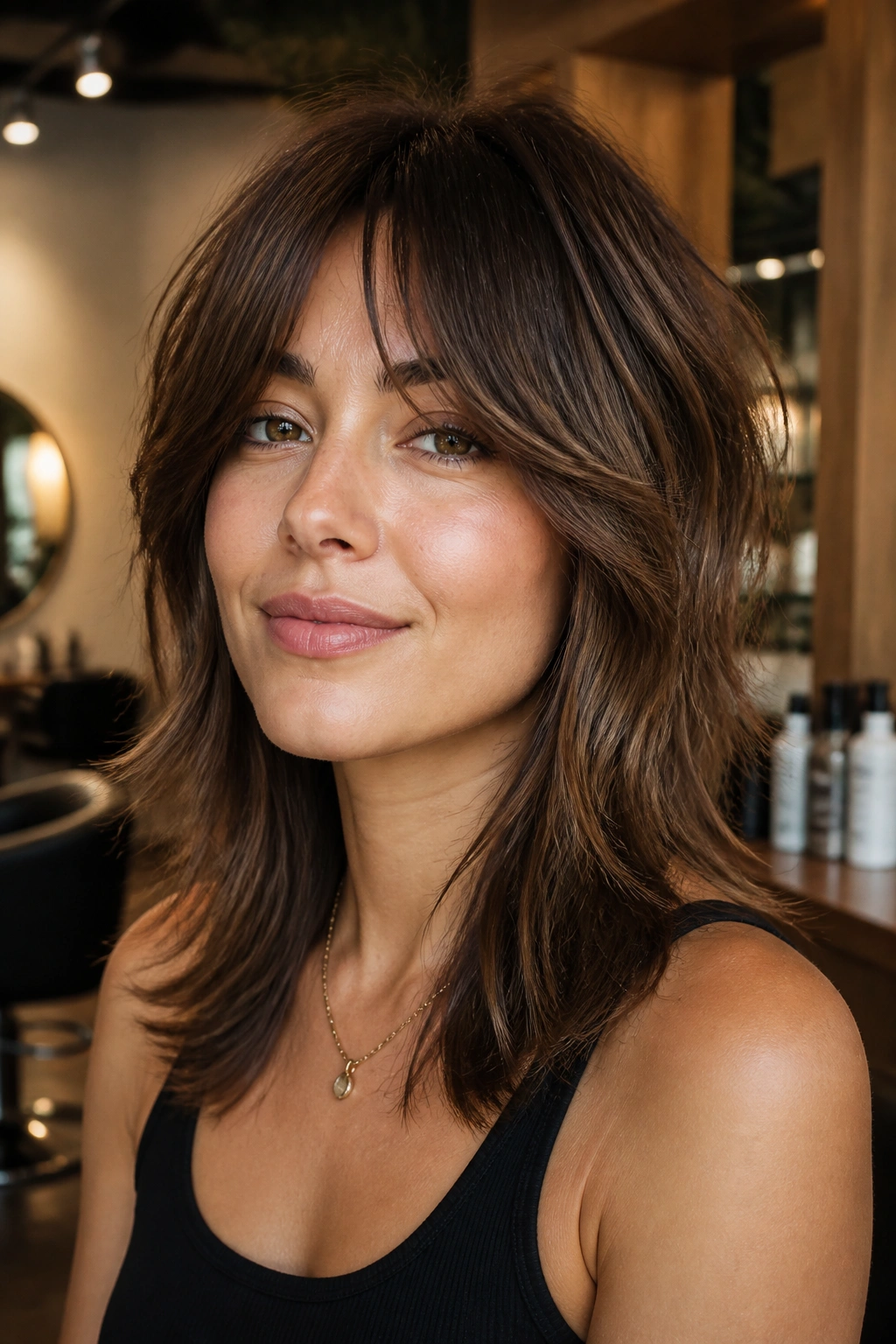
This cut has attitude, and that is a good thing. A razored shag gives a round face vertical movement, while curtain bangs split the forehead and keep the center from looking too closed in.
The face-framing pieces should start near the cheekbone and fall in a loose bend. If they hit too high, the cut can widen the face instead of softening it. That’s the part a lot of people miss.
The shag works especially well on wavy or thick hair, where the layers can move instead of puffing out. Ask your stylist to keep the crown airy and the lower layers more tapered. You want a lived-in shape, not a stacked triangle. A little mess is the point.
3. Piecey Pixie with a Long Top
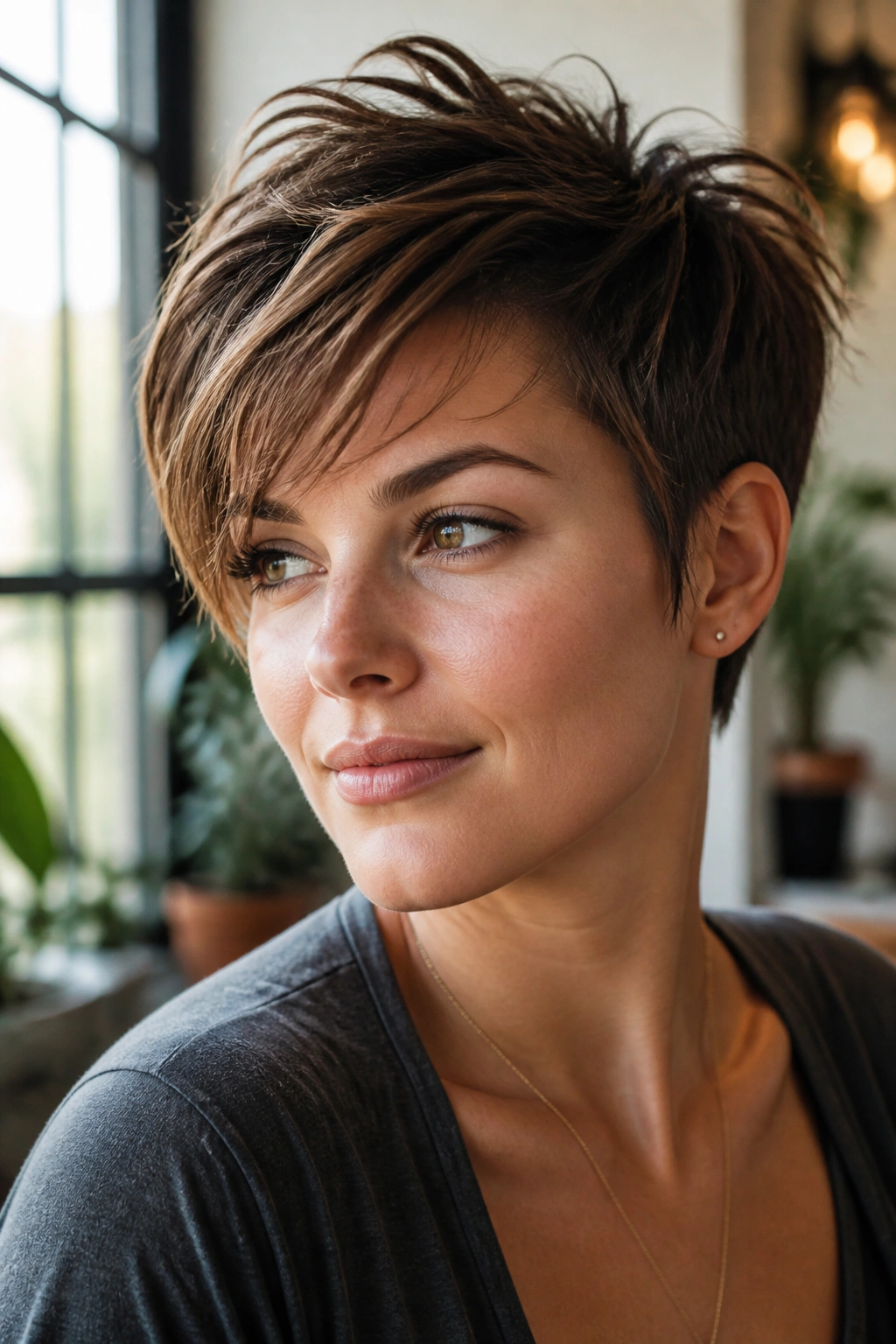
Can a pixie flatter a round face? Absolutely — if it keeps length on top. The long top adds vertical line, and the shorter sides stop the haircut from feeling too wide around the cheeks.
How to Style It
Use a pea-sized amount of matte paste and pinch the top into separate pieces. Don’t smooth it flat. That kills the shape.
A good piecey pixie should have movement around the forehead and temples, with enough length to sweep up and slightly forward. That forward direction keeps the face from opening up too much across the sides. If you have straight hair, this is one of the easiest cuts to make look intentional. If your hair is wavy, even better. The bend does half the work.
4. Angled Choppy Bob
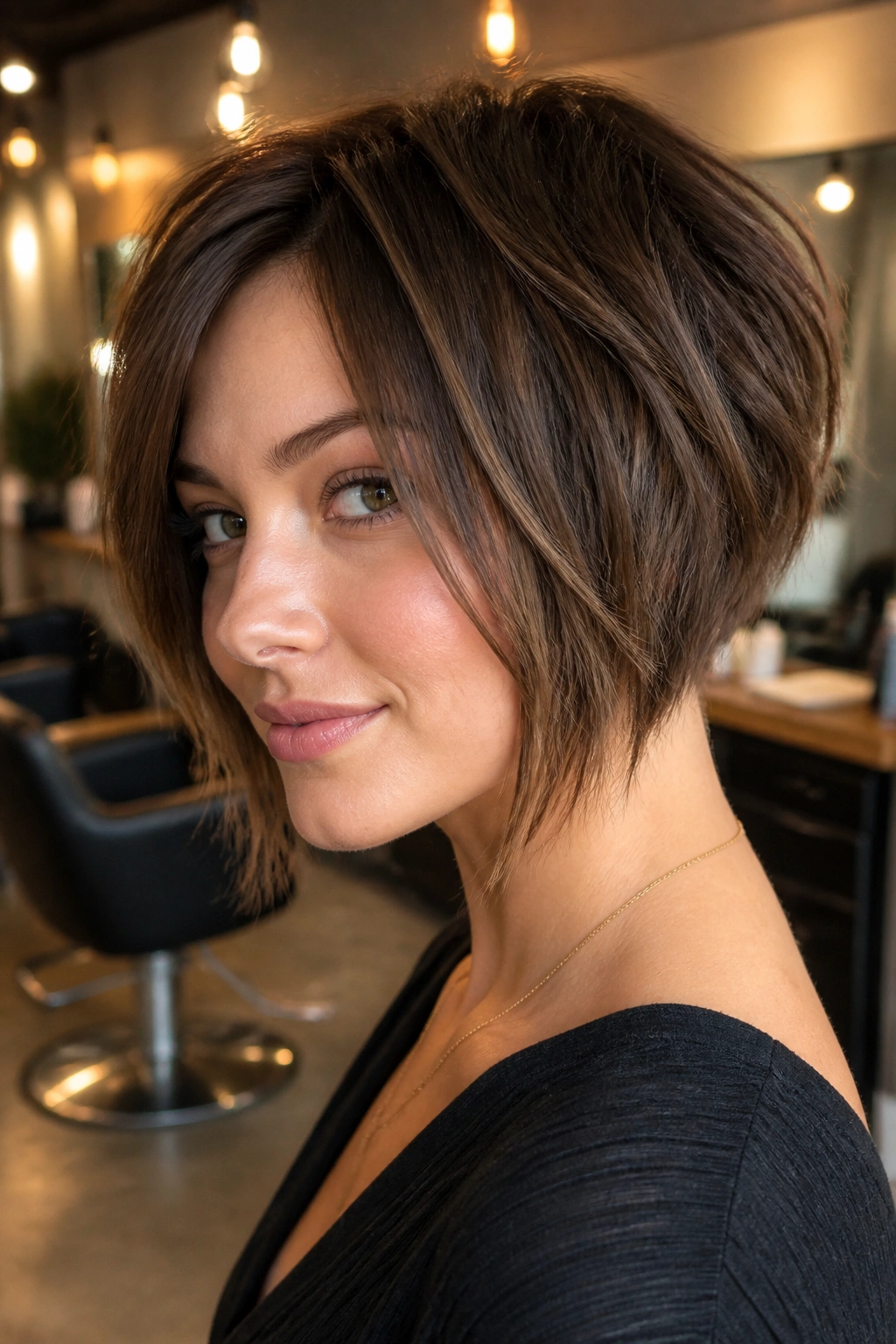
An angled bob is sharp in the best way. Shorter in the back, longer in the front, it gives a round face a cleaner diagonal line than a one-length bob ever could.
The front pieces should angle toward the jaw or just below it. That little drop helps slim the lower half of the face, especially if the ends are textured instead of blunt. A slight undercut at the nape can also remove bulk without changing the silhouette too much.
This is a strong choice if you like structure but do not want your hair to look stiff. Blow it smooth, then rough up the ends with a flat iron bend or a round brush flick. The shape should feel modern, not exact. Too perfect and it starts working against you.
5. Shoulder-Length Layers with Face-Framing Pieces

Shoulder-length hair can be tricky on a round face. Too blunt, and it can feel boxy. Too layered, and it can turn frizzy or thin. The sweet spot is a shoulder-length cut with soft internal layers and face-framing pieces that start below the cheekbone.
What makes this work is balance. The outer shape stays long enough to lengthen the face, while the front pieces guide the eye downward. If your hair is fine, ask for fewer layers and more texture at the ends. If it is thick, the stylist can take out weight around the lower half without making the top look flat.
This is one of those cuts that looks better with a little wave than with a pin-straight finish. A flat iron bend at the ends can keep the style from looking too sweet.
6. Wolf Cut with Soft Taper

The wolf cut can be loud if it is pushed too far, but the softer version is brilliant on round faces. It builds volume up top and thins out toward the ends, which creates that elongated, slightly wild shape.
The crown should feel airy. The side layers should not balloon at the cheekbones. That is the line to watch. If the layers flare out there, the face looks wider; if they fall below the jaw with a bit of swing, the whole haircut feels longer.
This cut is best when the texture is a little messy. Air-dry it with curl cream, or rough-dry it with a diffuser if your hair waves on its own. The point is movement, not neatness.
7. Side-Swept Bob with Piecey Ends
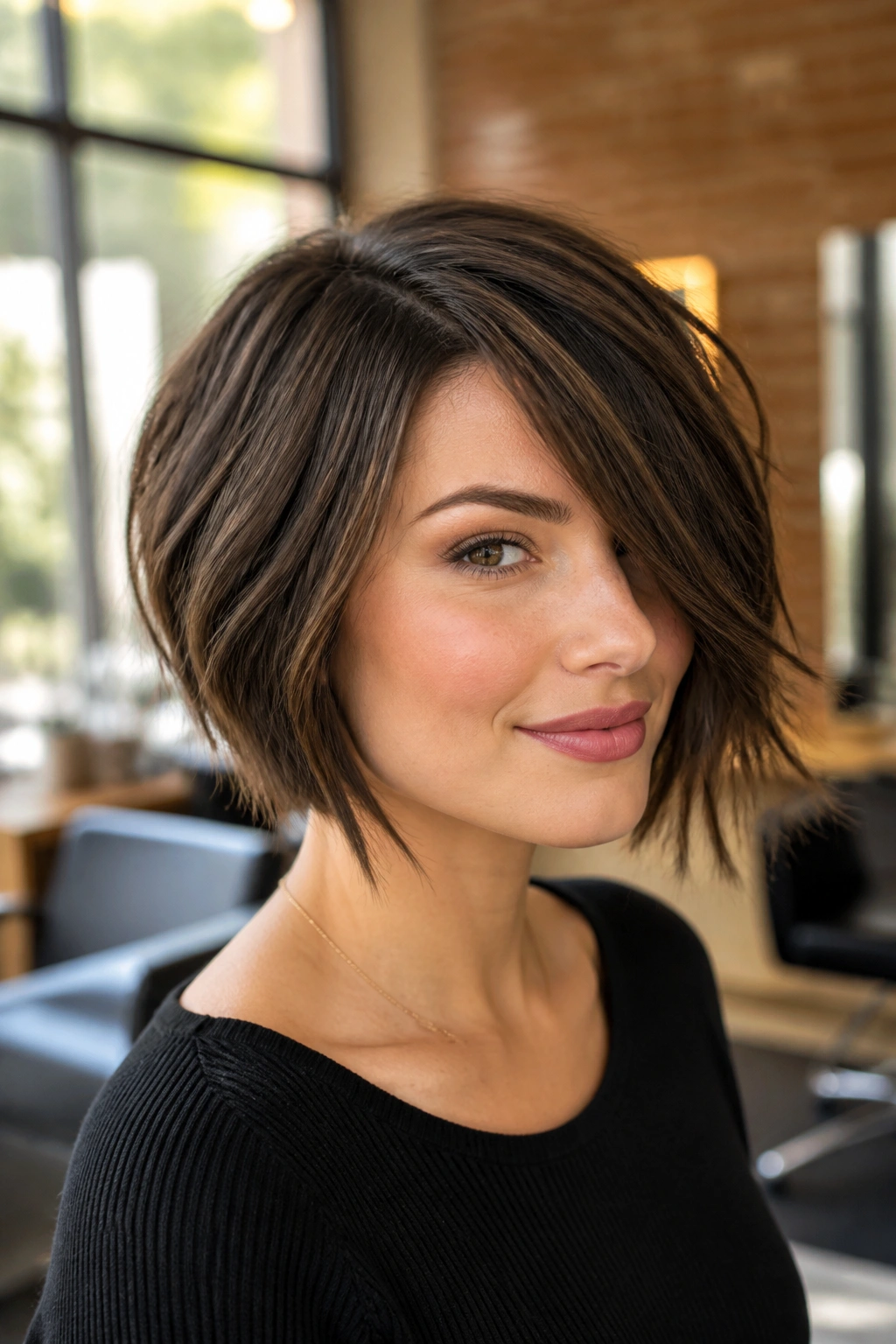
A side-swept bob has a nice built-in cheat: it breaks symmetry. Round faces often look sharper when the part is off-center and the front is pushed to one side, because the eye stops reading the face as a perfect circle.
What Makes It Different
The ends should be choppy enough to keep the bob from looking too exact. A blunt bob can sit heavy at the cheeks. A side-swept version moves.
- Part slightly off the highest point of the arch.
- Keep one front section a touch longer.
- Use a flat iron only on the mid-lengths.
- Finish with a flexible spray so the hair still moves.
It is a good cut for anyone who wants polish without stiffness. Clean, but not severe.
8. Invisible-Layer Cut on Medium Hair
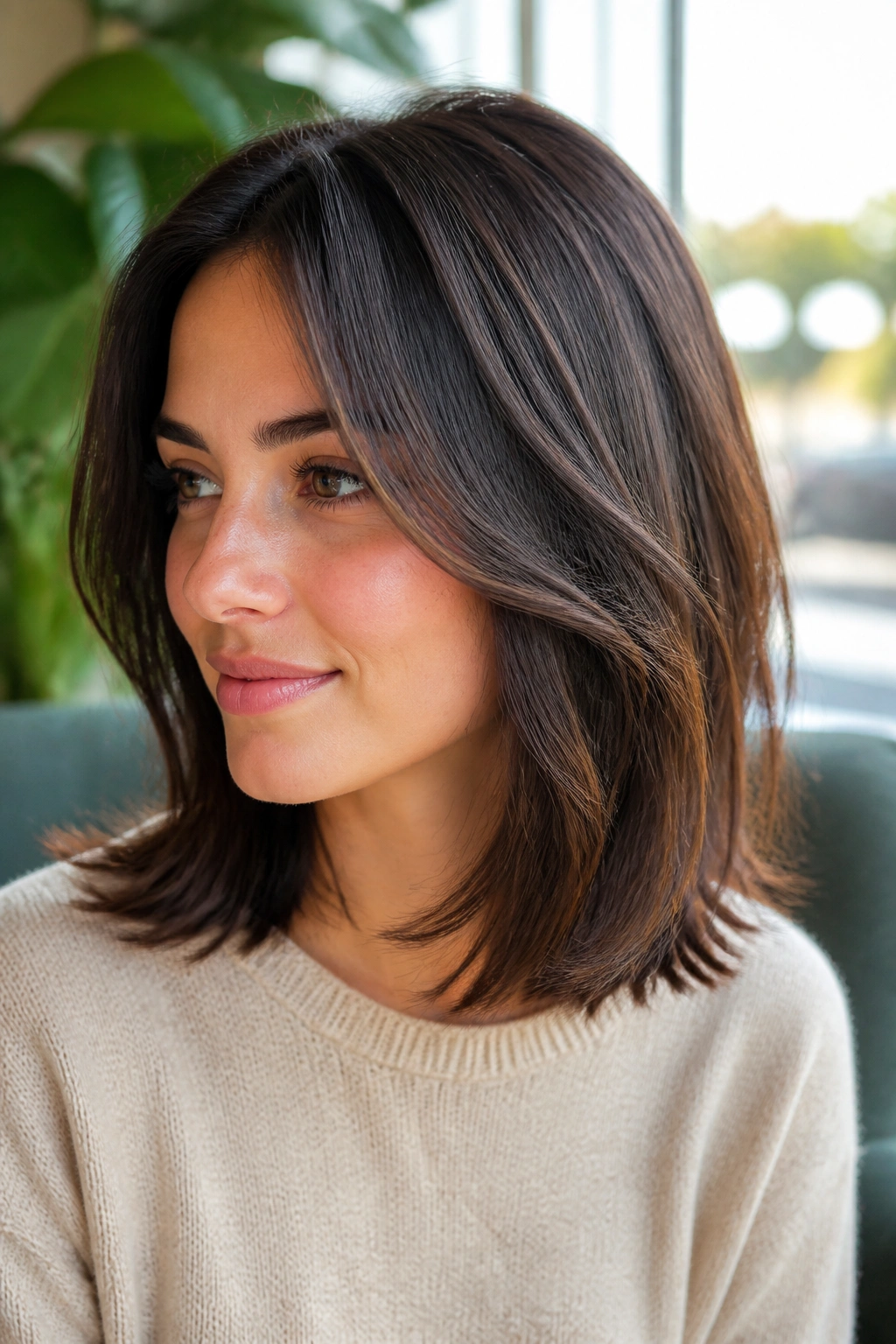
Invisible layers sound subtle because they are. That is the appeal. Instead of obvious steps, the stylist removes weight inside the shape, leaving the surface looking smooth while the hair gains movement underneath.
For a round face, this matters because the haircut stays soft around the outside while the internal lift keeps it from falling flat against the cheeks. The shape can sit at the shoulders or a little lower, and the choppy feel comes from the hidden movement rather than visible chunkiness.
This is especially nice for straight hair that tends to hang. You get motion without too much separation. If you like low-maintenance hair that still looks shaped, this is one of the smarter picks on the list.
9. French Bob with Wispy Fringe

A French bob can work on a round face, but it needs the right details. Keep it a touch longer than chin length, and let the fringe stay light, airy, and a little irregular.
How It Helps
A heavy full fringe can make the face look shorter. A wispy fringe softens the forehead without chopping the face in half.
The edges should not be razor-sharp. They should feel broken up, almost slightly piecey. That gives the bob more movement and keeps it from sitting too neatly against the jaw. It suits straighter hair especially well, but a soft wave can make it look even better.
This cut has personality. It reads chic, but not precious. That matters.
10. Center-Part Layered Cut with Long Bangs
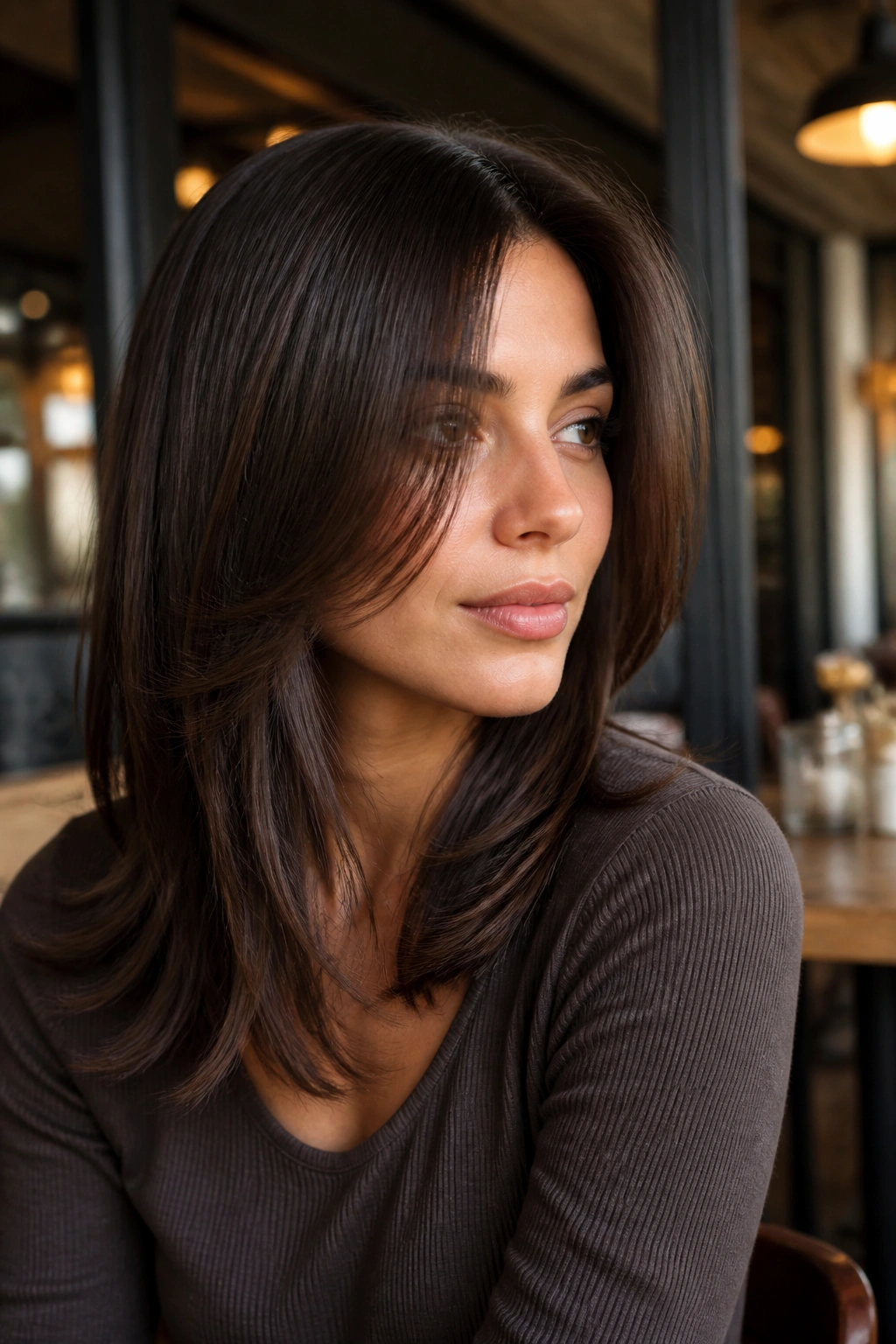
A center part is not the enemy of a round face. The real question is what hangs beside it. Long bangs or front layers that fall below the cheekbone can lengthen the face in a way that feels soft and flattering.
The haircut itself should have enough layering to keep the sides from puffing out. If the hair is thick, the stylist can thin the interior a little so the front doesn’t build too much width. If it’s fine, the layers need to be lighter, because too much thinning will make the ends look scrappy.
This cut works best when the front pieces are styled with a slight bend away from the face. Not curled. Just bent. That tiny move opens up the cheeks and keeps the center part from feeling too severe.
11. Asymmetrical Bob with One-Side Tuck
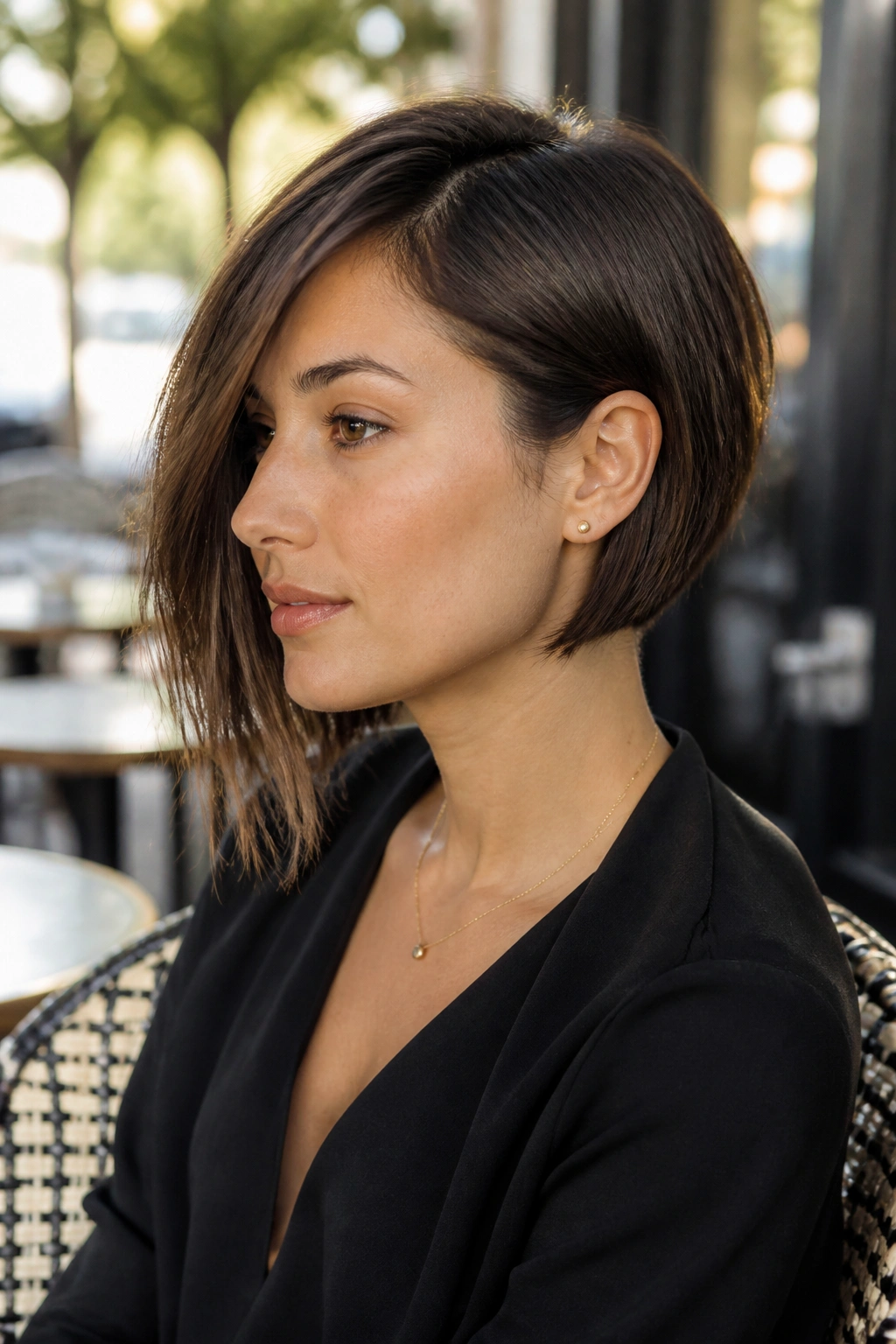
An asymmetrical bob is a strong move, and I mean that in a good way. One side sits longer, the other side stays a touch shorter, and that imbalance breaks the roundness immediately.
The longer side should skim the jaw or drop just past it. Tucking the shorter side behind the ear creates an easy line through the face and draws attention to the neckline and cheekbone instead of the width of the cheeks. It sounds simple because it is.
Best of all, this cut looks deliberate even when it is slightly undone. If your hair gets flat by midday, the asymmetry still keeps it interesting. A round face can wear this beautifully because the shape gives the eye somewhere else to go.
12. Soft Mullet with Feathered Nape
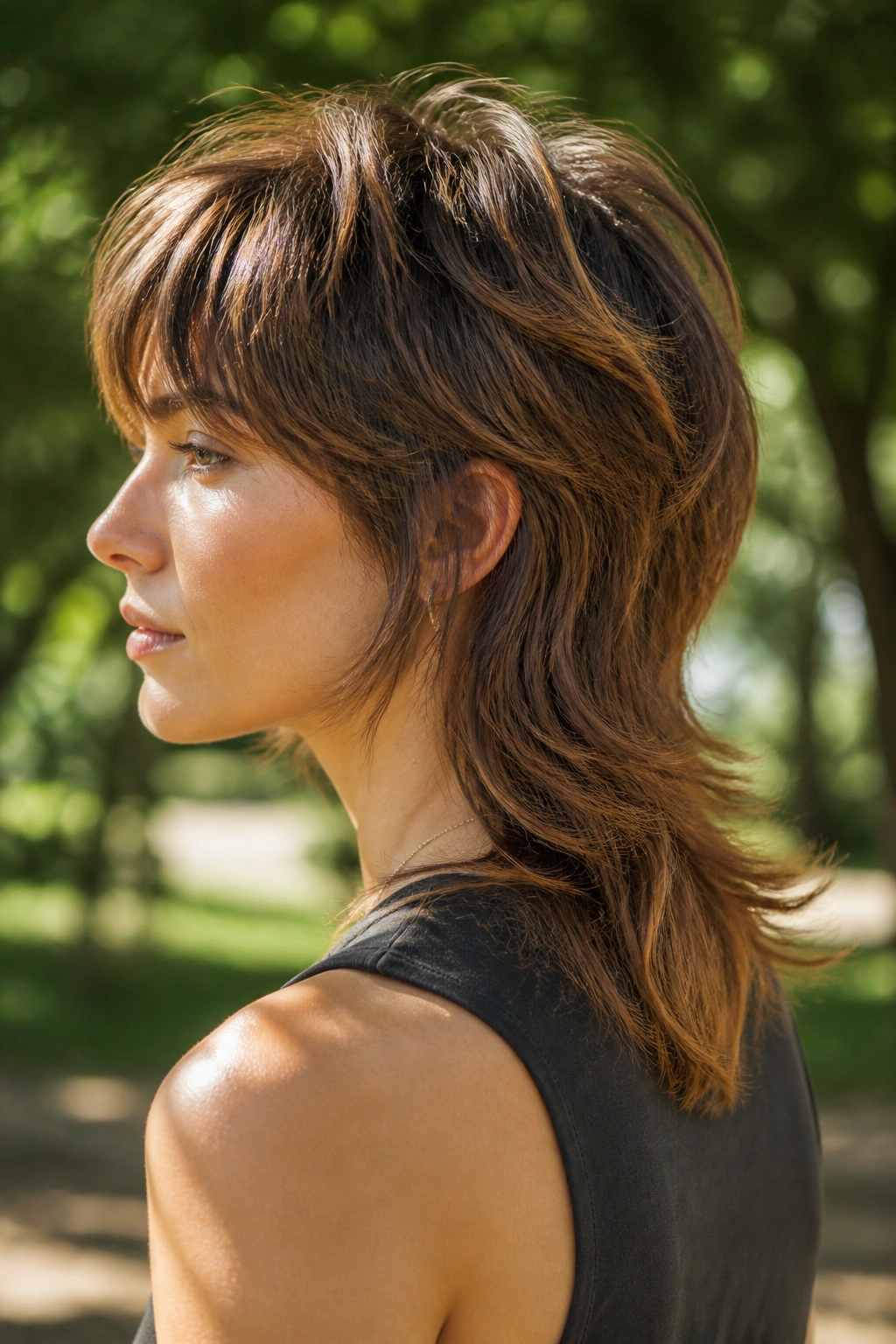
A soft mullet is not a joke haircut anymore. The trick is keeping the edges feathered and the top slightly fuller, so the shape feels light instead of choppy for the sake of being choppy.
Why It Flatters Round Faces
The shorter layers around the crown create lift. The longer pieces in back pull the silhouette down, which helps lengthen the face.
The sides should stay controlled. Too much side width turns the cut boxy fast. A good soft mullet uses texture like a steering wheel — it guides the eye where you want it to go. That’s what makes it flatter a round face instead of fighting it.
If you have thick hair, this cut can take a lot of bulk out. If your hair is fine, keep the feathering gentle so you don’t lose the shape.
13. Bottleneck Bangs with Choppy Mid-Lengths
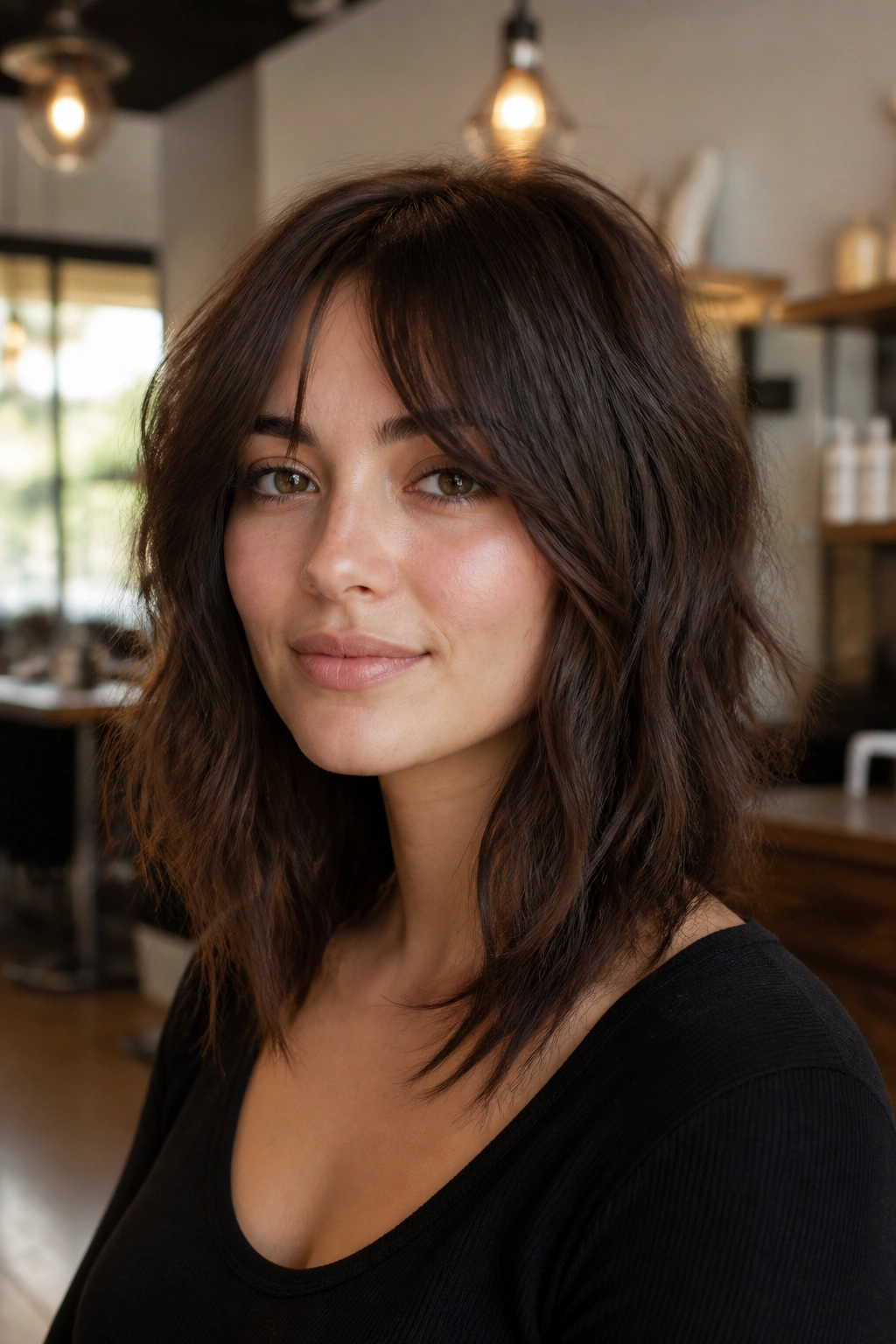
Bottleneck bangs open out at the temples and narrow in the center, which is a smart shape for a round face. They soften the forehead without drawing a hard horizontal line across it.
Pair them with mid-length choppy layers and the whole haircut starts working in your favor. The bangs bring attention inward, then the broken lengths move the eye downward. That is the kind of visual line round faces often need.
This cut does ask for some styling. A quick round-brush pass at the bangs helps them sit properly, and the layers look best with a loose wave or bend. Air-dried can work too, but the bangs should not be left to do whatever they want. They’ll usually choose chaos.
14. Long Choppy Layers for Thick Hair
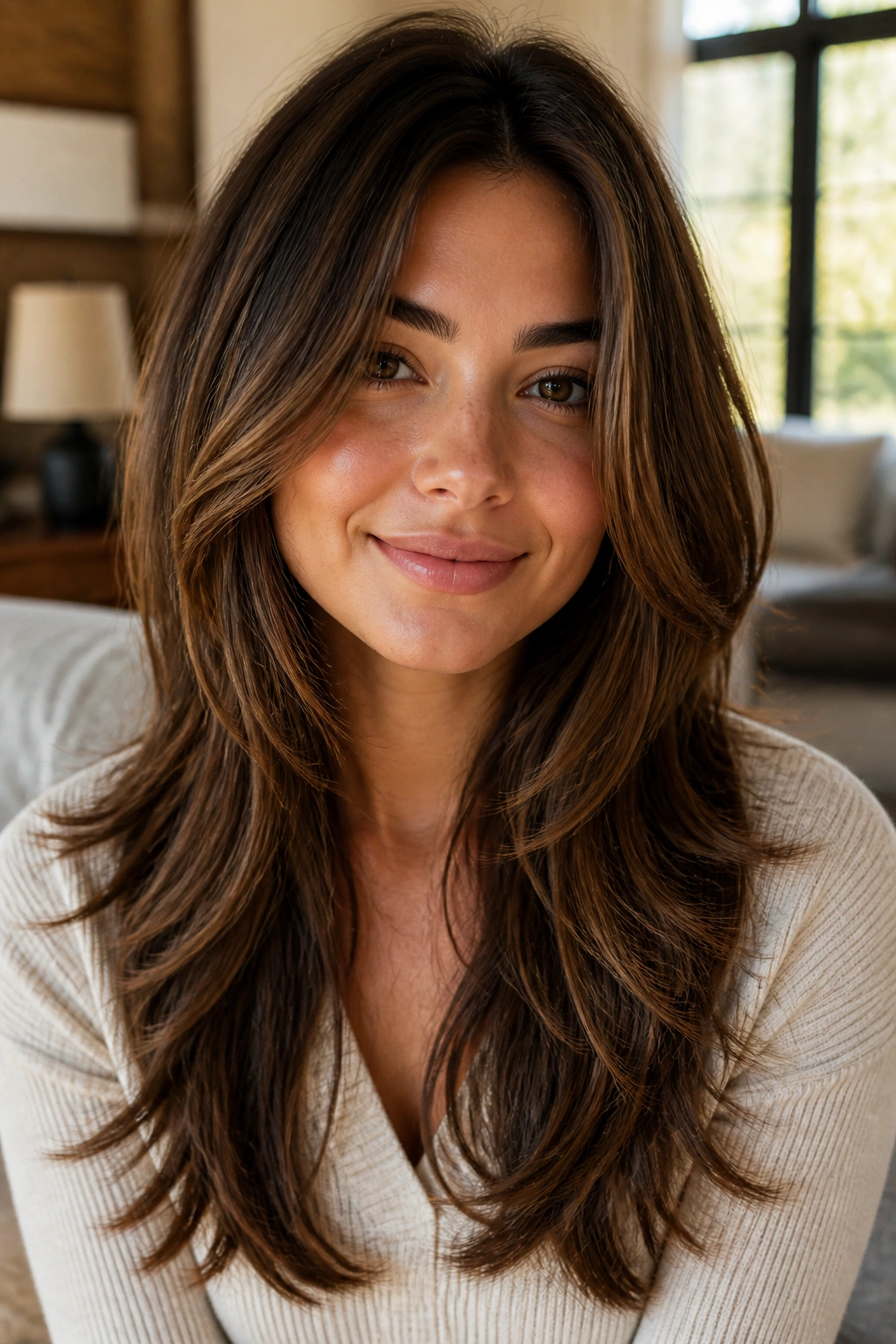
Thick hair and round faces can be a tricky pairing. Too much bulk around the jaw can make the face look wider. Long choppy layers fix that by removing weight and creating movement that falls past the cheeks.
The layers should start lower, usually around the chin or below, so they don’t flare out at the widest part of the face. Ask for point-cut ends or soft razoring to break up the density. That keeps the shape from becoming heavy and triangular.
This is one of the best cuts if you want to keep length but stop your hair from feeling like a blanket. It gives you swing, and swing is flattering. There’s no mystery there.
15. Cropped Shag with Micro Bangs
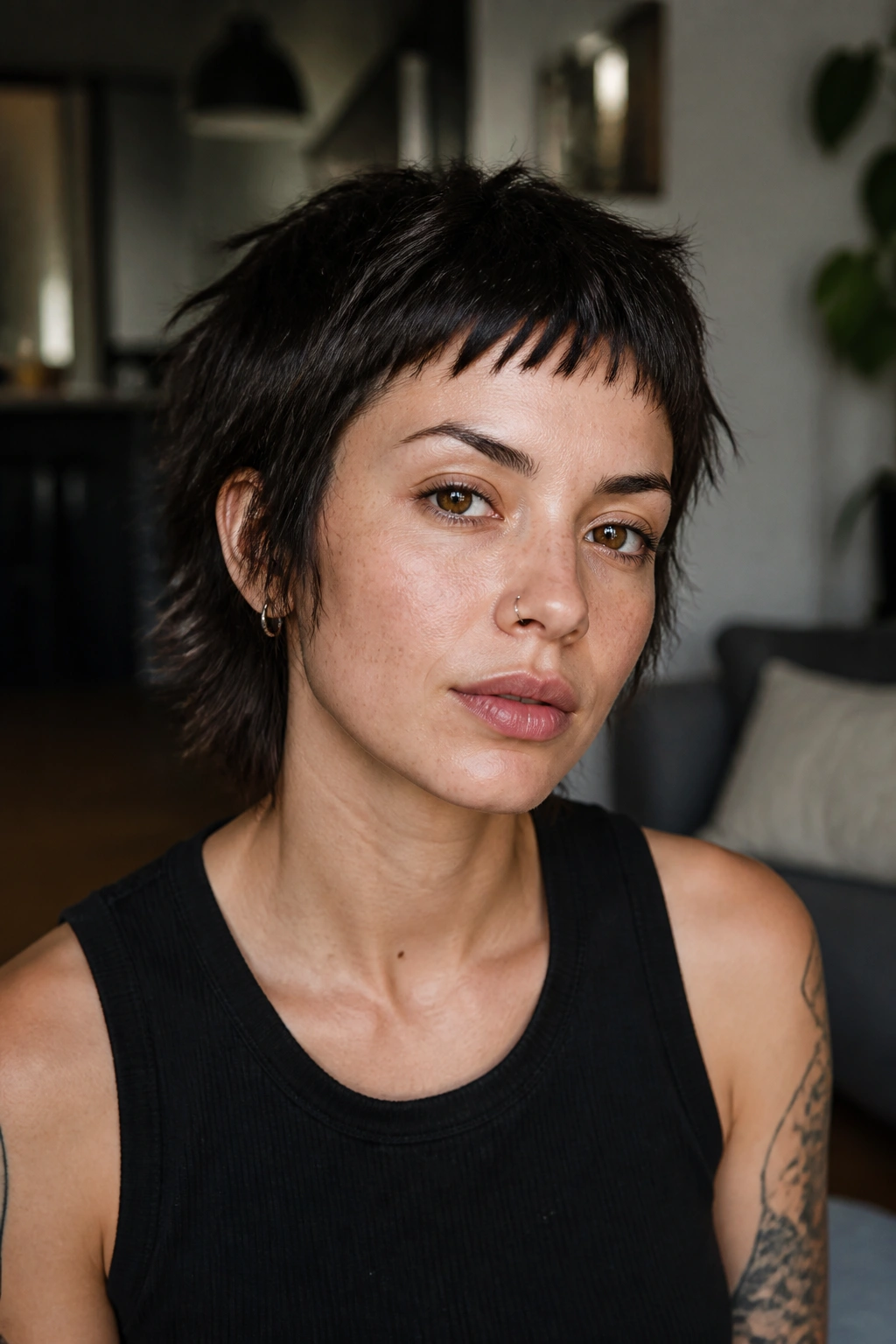
A cropped shag with micro bangs is bold. It is also surprisingly good on some round faces, especially when the hairline is strong and the wearer wants something that reads sharp instead of soft.
The key is keeping the top textured and the sides snug. The micro bangs should be short enough to feel deliberate, not accidental, and the layers need enough bite to avoid the helmet effect. If the cut gets too rounded, it will fight the face shape. If it stays jagged and lifted, it works.
This is not the safest choice on the list. It’s the most opinionated. That can be a virtue when you want a haircut with personality.
16. Butterfly Cut with Choppy Ends
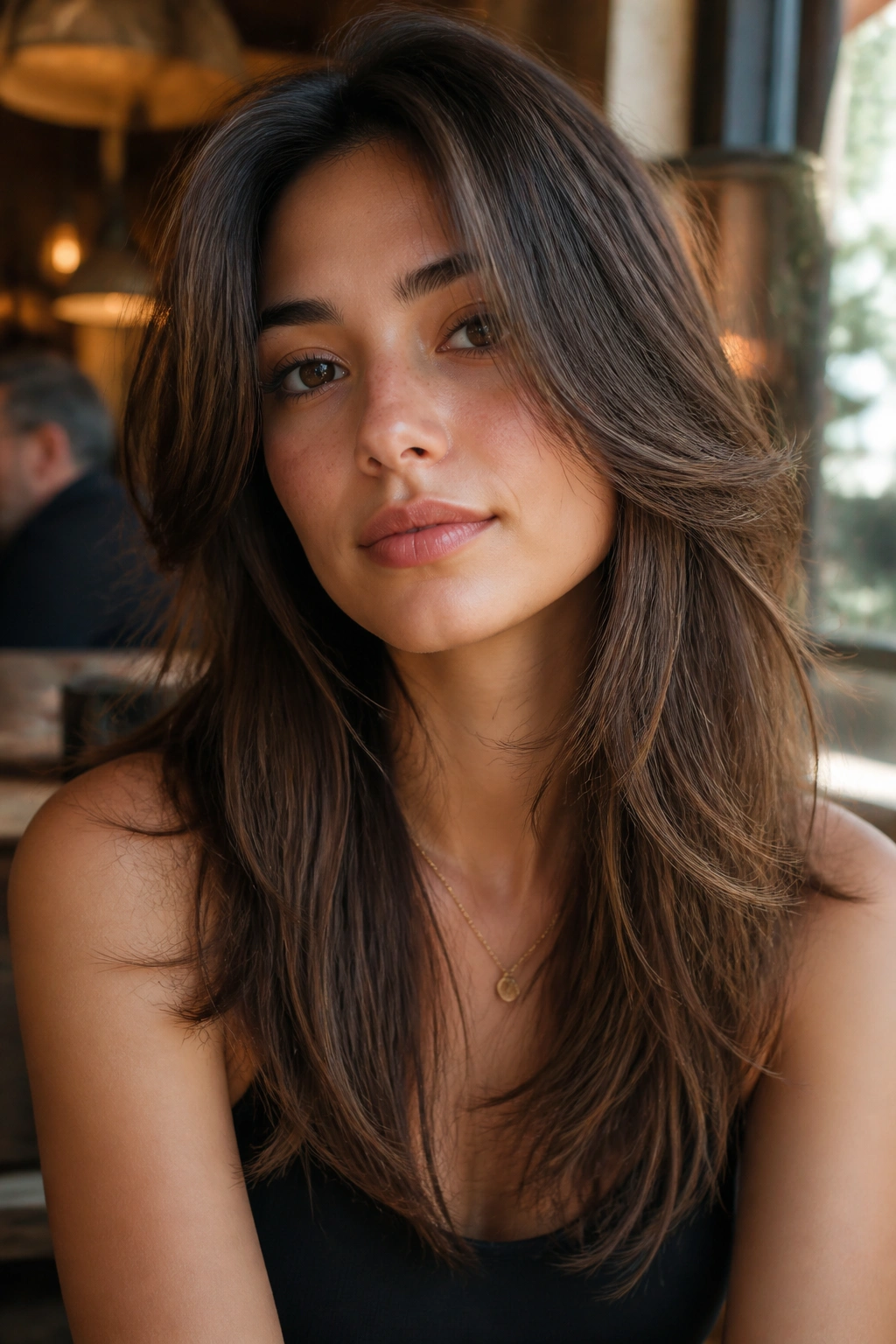
The butterfly cut is built on long layers that kick up around the face and fall longer underneath. On a round face, that layered motion can do a lot of flattering work, especially when the shortest pieces start below the cheekbone.
The top layers create volume without adding width at the cheeks. The longer bottom layers keep the length. Put those together and you get a shape that feels soft but not flat. Choppy ends keep it from looking too polished or blown out in a bridal way.
This cut is a nice choice if you like the idea of volume but do not want your hair to sit heavy around the jaw. It can be styled with a round brush, but a large curling iron or heatless bend also works.
17. Wavy Lob with Razor-Textured Ends
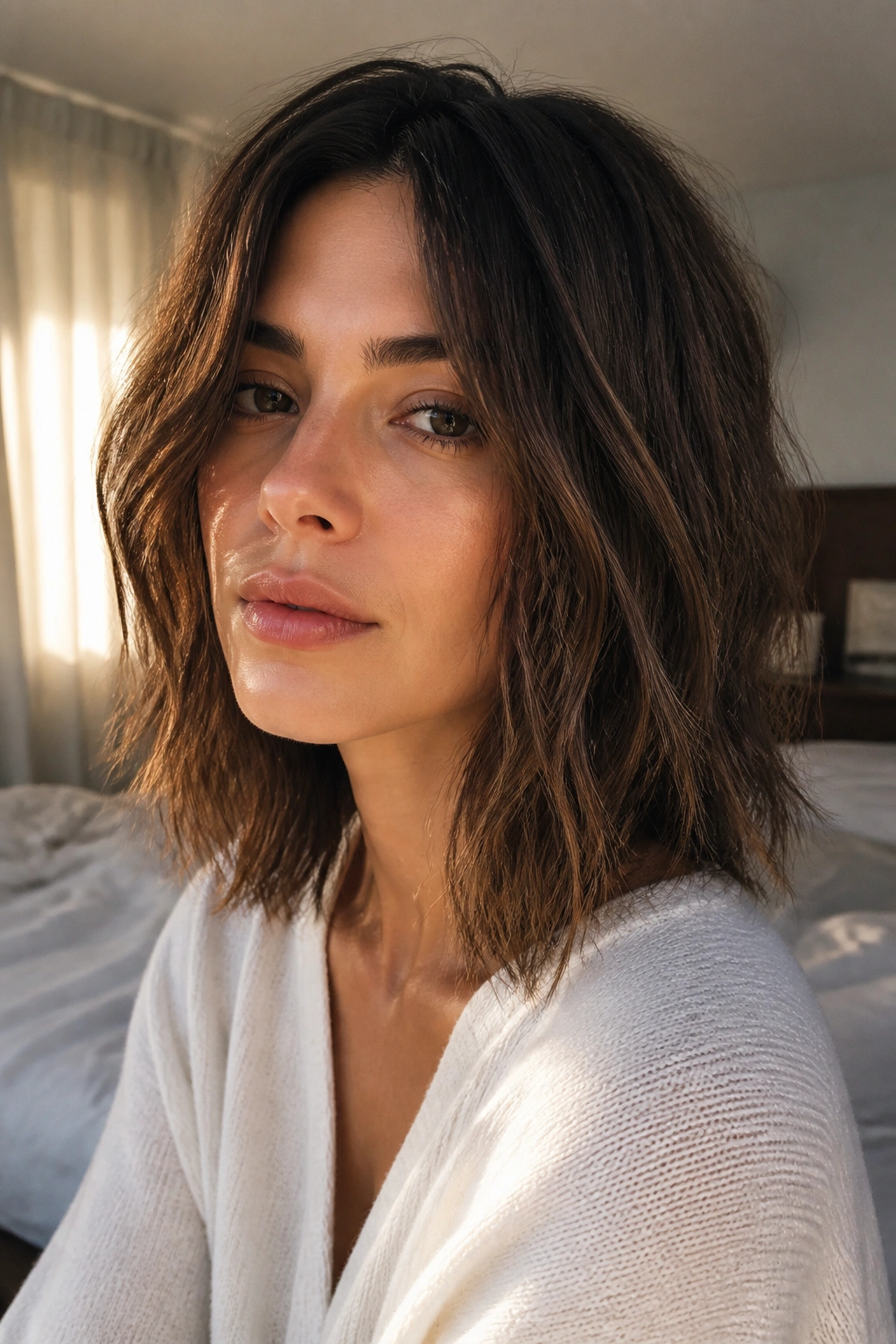
A wavy lob with razor-textured ends has an easy, lived-in feel. The razor work matters because it keeps the ends soft and broken, which helps the haircut sit away from the face instead of clinging to it.
Round faces tend to look better when the wave starts lower than the cheekbone. High, fluffy wave right beside the cheeks can add width. Lower, looser movement gives you that long line without making the haircut stiff.
This is one of the least fussy options here. It works with natural wave, a curling wand, or even a quick braid-and-unbraid routine. The ends should look slightly uneven. That is the whole point.
18. Chin-Skimming Bob with Internal Layers
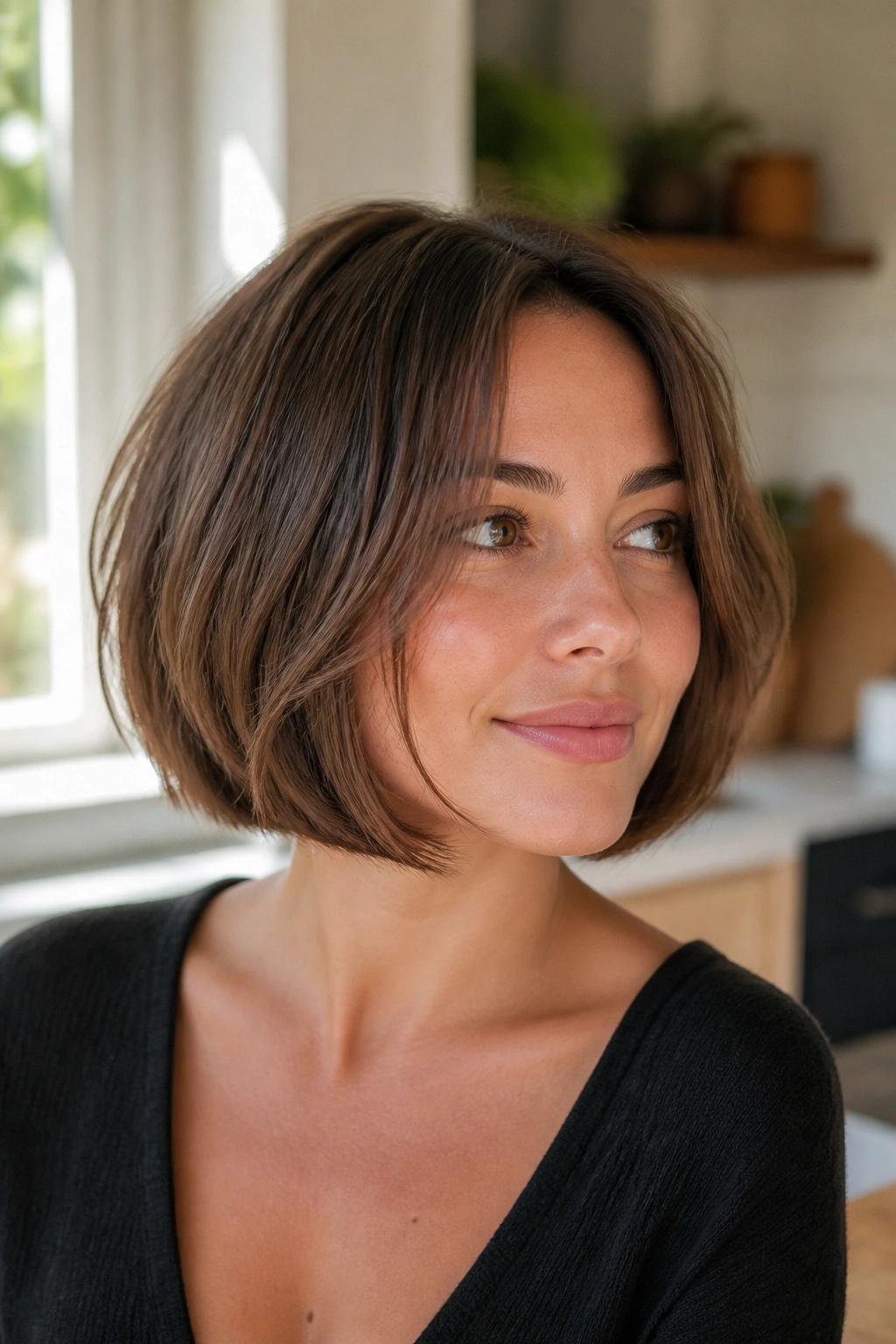
A chin-length bob can be risky on a round face, but the internal-layer version is different. Instead of sitting as one solid ring around the head, it has movement hidden inside the shape, which takes away some of the width.
The length should skim the chin rather than stop hard at it. That little bit of softness keeps the face from looking boxed in. If the jaw is especially full, I’d lean slightly longer, closer to the top of the neck than the exact chin.
This cut is clean and airy when done well. It is not the bob for someone who wants a big, blunt statement. It is for someone who wants neat lines with a bit of air under them.
19. Disconnected Pixie-Bob
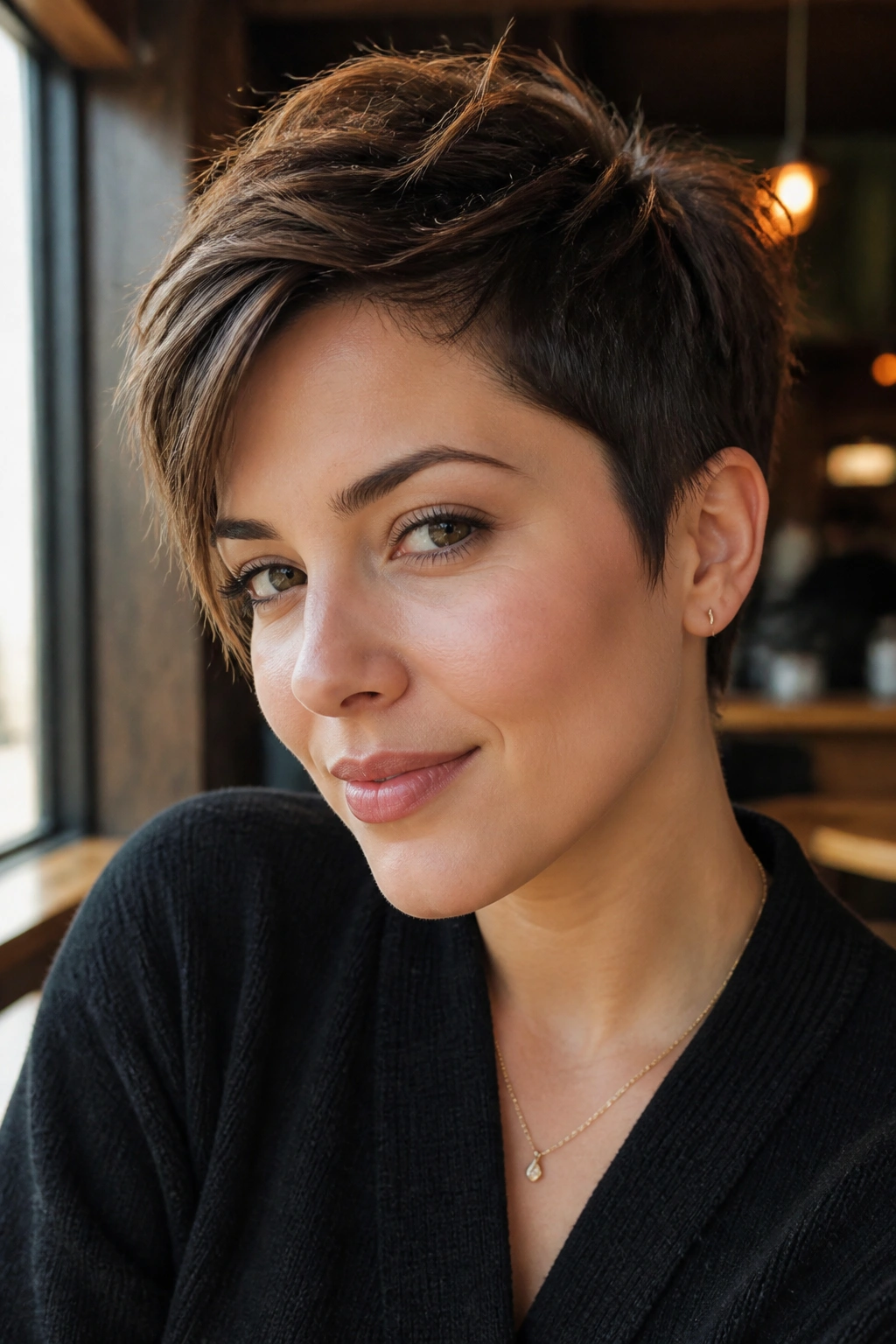
The disconnected pixie-bob sits between a short crop and a bob, which makes it useful for round faces that want edge without going fully short. The top stays longer, the sides stay tighter, and the disconnect keeps the shape from swelling out.
The Shape to Ask For
Tell your stylist you want length where it counts — on top and slightly forward — with close sides that do not puff at the temples. That detail matters.
- Keep the top at least 2 to 4 inches long.
- Use shorter, tapered sides.
- Leave a little softness around the ear.
- Style with a cream or paste, not heavy oil.
It is a smart cut if you want something quick in the morning. Less hair. More shape.
20. Deep-Side-Part Textured Cut
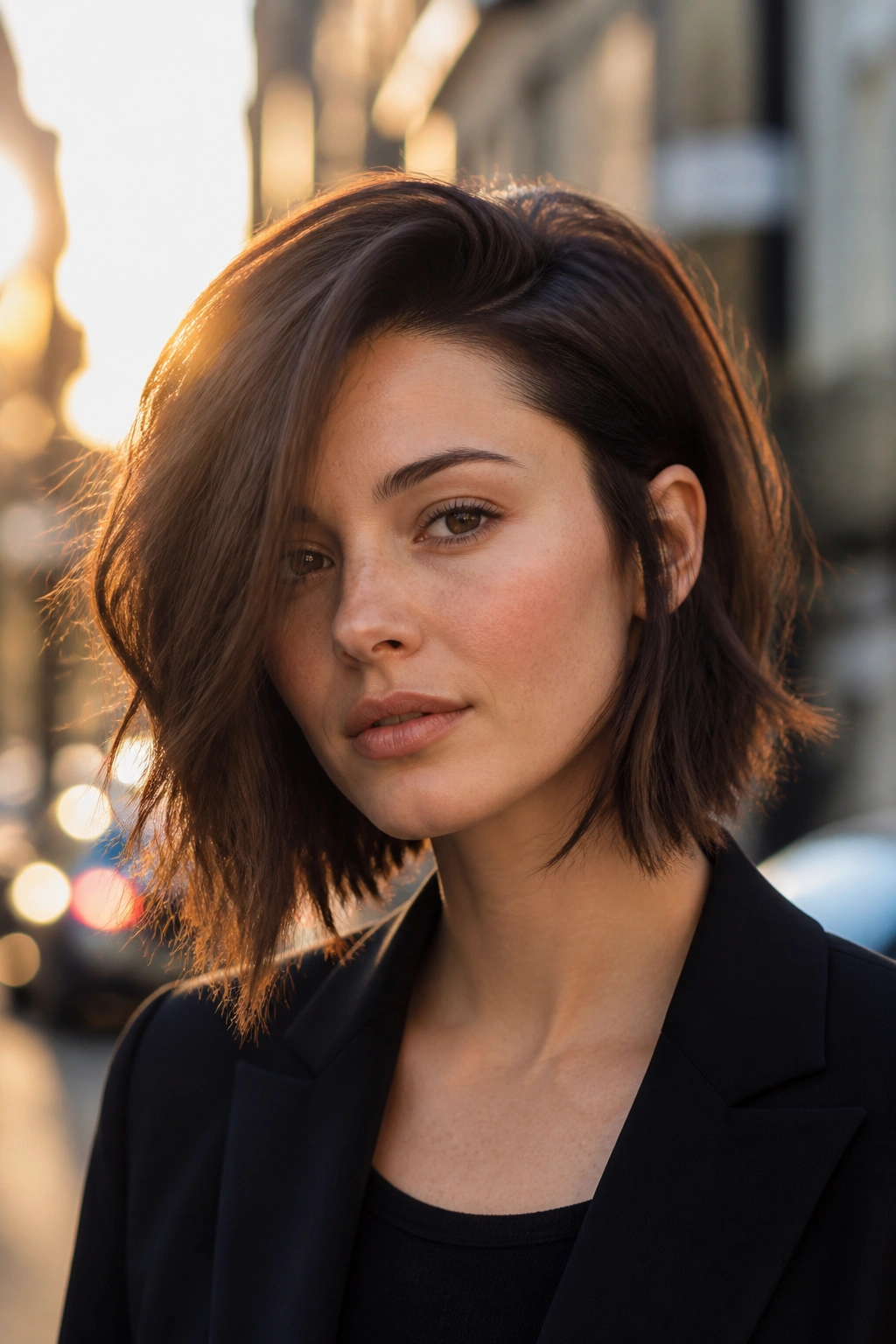
A deep side part can change a round face faster than a lot of people expect. It creates height on one side, breaks symmetry, and makes the face look longer in a very low-effort way.
The textured cut underneath can be a bob, lob, or shoulder-length shape. What matters is that the ends are broken up enough to keep the style from feeling too smooth. Straight, flat hair with a deep side part can still look wide if the silhouette is too even.
This one is useful because it does not require a haircut overhaul. Sometimes the styling choice does half the job. A root lift spray and a quick blow-dry at the crown can be enough.
21. Curtain Layers with a Blown-Out Bend
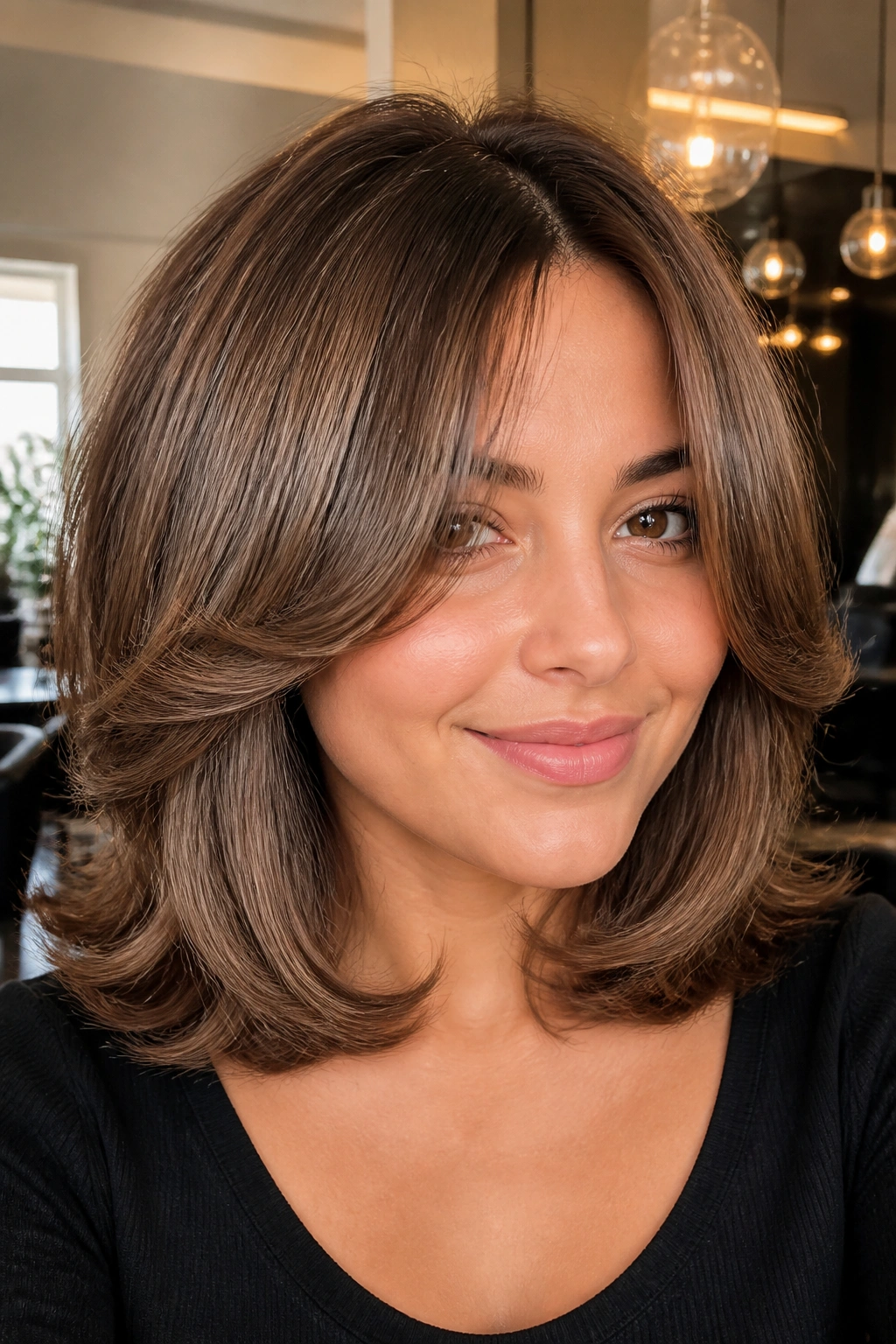
Curtain layers are not just about bangs. They can be built through the whole front of the haircut, starting around the cheekbones and sweeping outward like a soft frame.
That outward bend is the selling point for round faces. It opens the center, narrows the sides, and keeps the face from looking boxed in. If the layers are too short, the shape can widen the cheeks. If they are longer and softly broken, they fall in a much kinder way.
This style looks especially good when the hair has a smooth blowout finish. Not stiff. Smooth with movement. A round brush and a medium heat setting are usually enough.
22. Tousled Medium Cut with Flipped-Out Ends

Flipped-out ends sound retro, but the modern version is less polished and more piecey. That matters for a round face because the ends should move away from the cheeks, not wrap around them.
The cut works best around shoulder length or a touch below. If it sits too close to the jaw, the flipped-out shape can widen the lower face. If it drops lower, the whole style feels looser and longer.
This is a fun cut for people who like a bit of bounce in their hair. The flip can be done with a blow-dryer brush, a flat iron, or a roller set. Easy enough. No need to overthink it.
23. Choppy Cut for Curly Hair
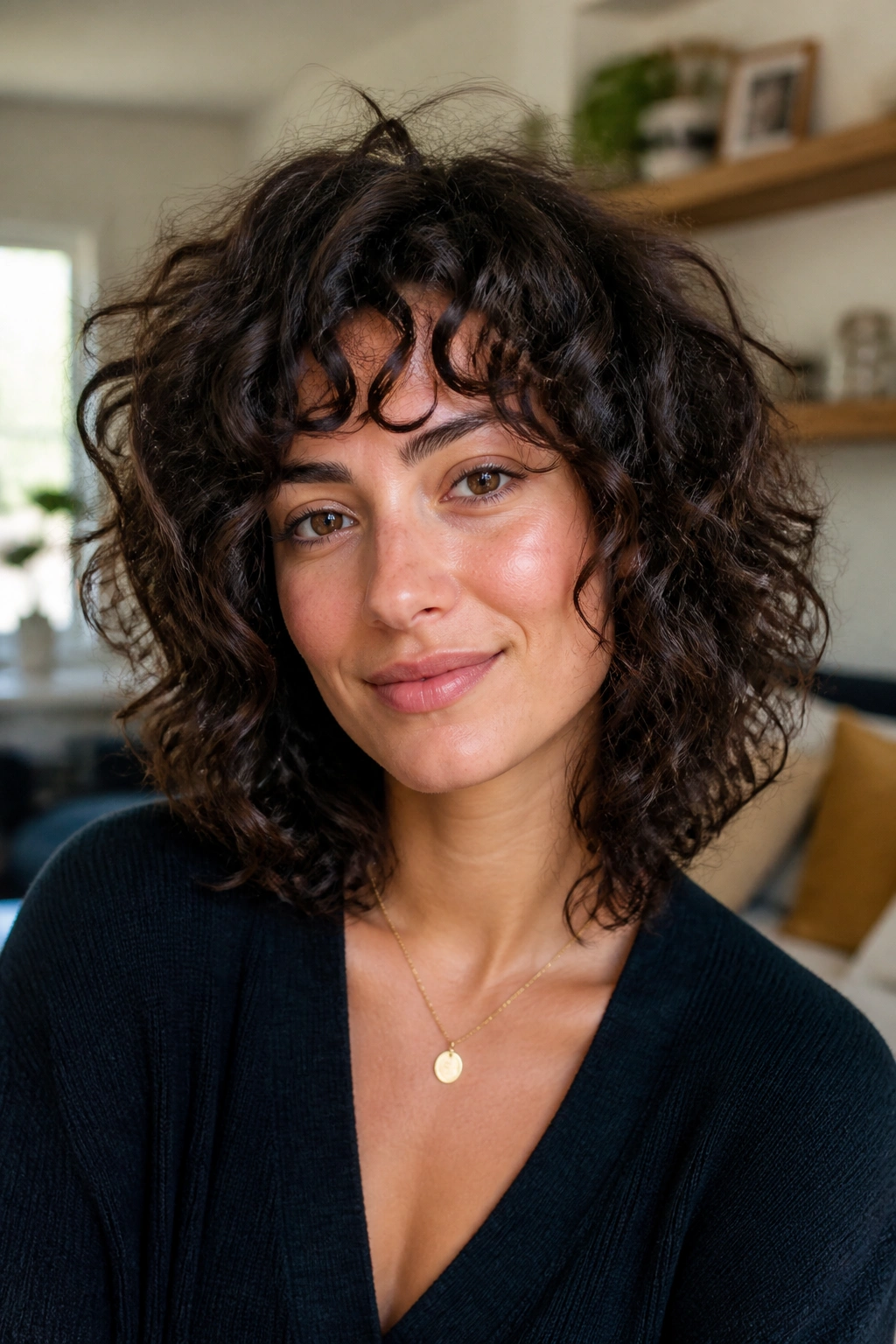
Curly hair and round faces need careful shaping, not random thinning. A good choppy cut on curls keeps the silhouette soft at the sides while building lift higher up and allowing the lengths to fall with movement.
The face-framing curls should not stop right at the cheek. That tends to widen the face. Let them land a little below, then shape the rest of the cut so the curls stack in a flattering way rather than blooming outward.
Dry cutting often gives the best result here because curls move so much when they dry. Ask for layered sections, not a vague “reduce bulk” request. Those are not the same thing, and the difference shows in the mirror.
24. Choppy Cut for Fine Hair
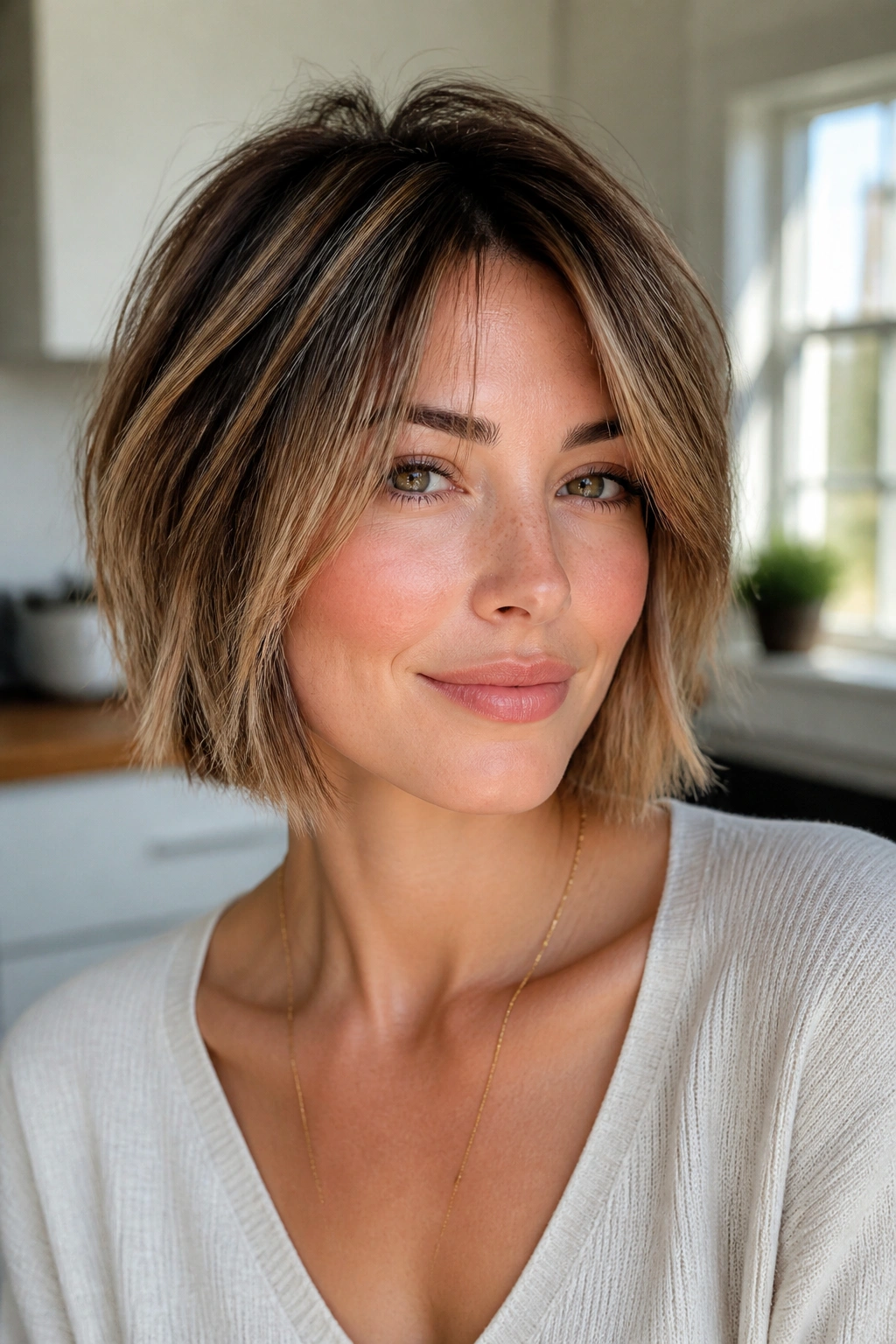
Fine hair needs choppiness with restraint. Too many layers and the ends disappear. Too little and the cut falls limp. The right version keeps a bluntish base for density, then adds soft texture through the interior and around the face.
For a round face, the main goal is to avoid width at the cheek line. That means the shortest pieces should usually start lower, not right at the apples of the cheeks. A bit of lift at the crown helps too, since fine hair tends to collapse there.
This cut can look expensive when styled simply. A tiny amount of volumizing mousse at the roots and a quick bend through the ends is often enough. Heavy cream is the wrong move.
25. Shaggy Lob with Piecey Fringe
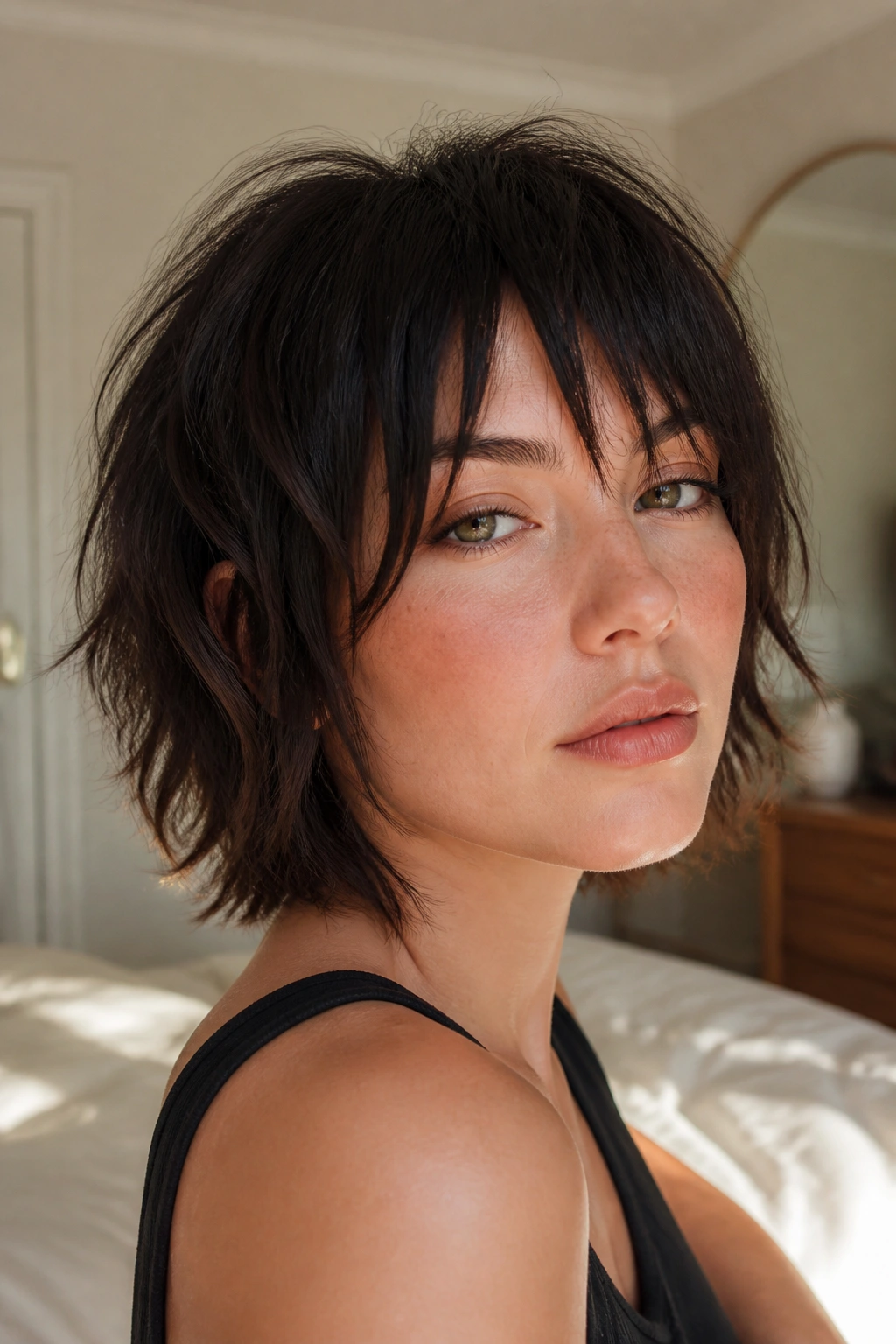
A shaggy lob with a piecey fringe has a relaxed, cool shape that suits round faces better than a heavy straight fringe. The fringe breaks up the forehead without creating a full wall across the face, and the lob length keeps everything from getting too short.
The layers should be loose enough to move but not so shredded that the hair loses its body. That is where people go wrong. A shag is not supposed to look wispy everywhere. It still needs structure under the mess.
If you like easy styling, this is one of the friendliest cuts here. A little sea-salt spray, a diffuse, and a finger comb is often enough.
26. Collarbone Cut with U-Shaped Layers
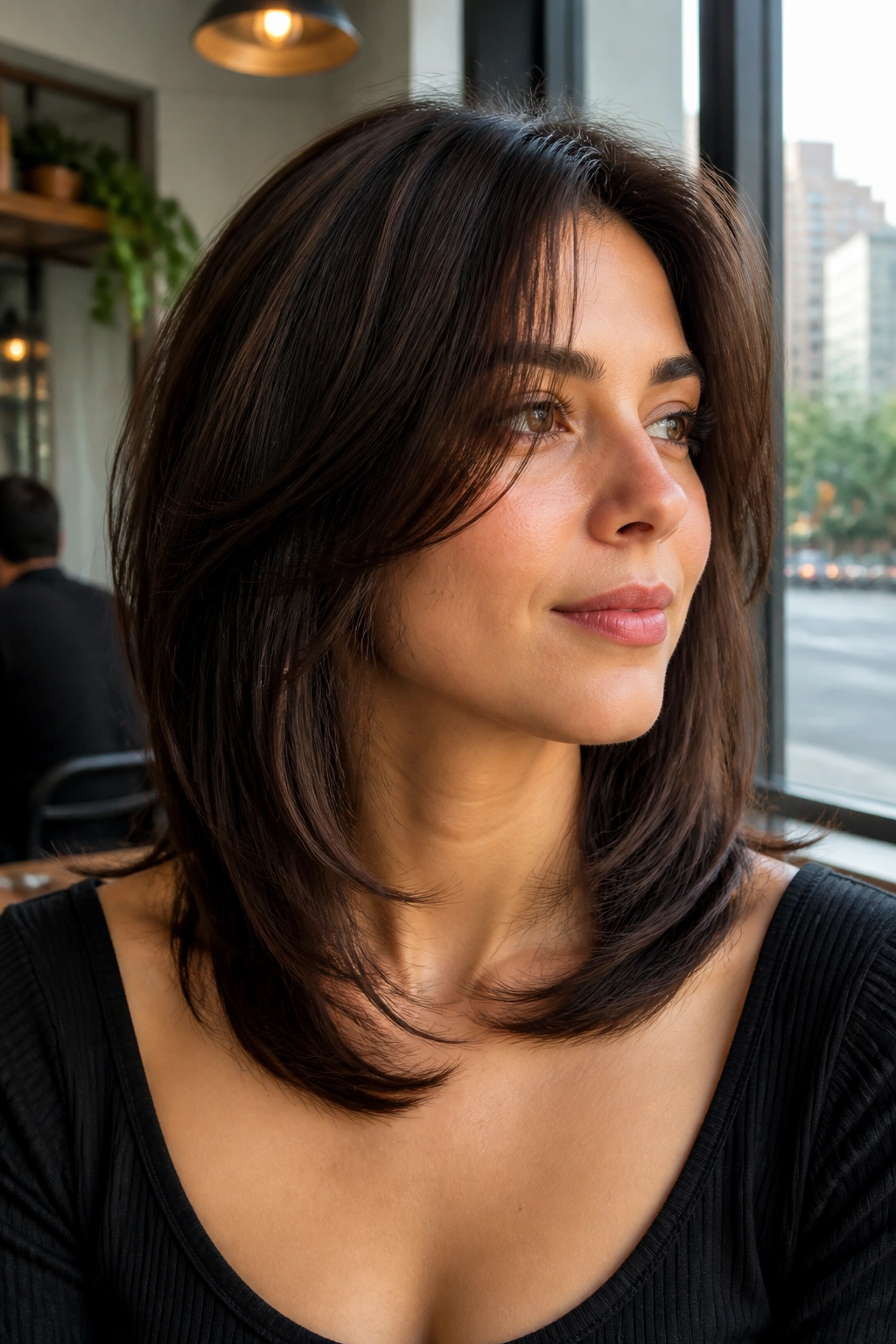
A U-shaped cut lets the back stay a little longer than the sides, which gives the hair a graceful curve. On a round face, that downward shape helps pull the eye lower, away from the widest part of the cheeks.
The choppiness comes from the layers around the front and the softened ends, not from obvious stair-steps. It’s a good option for someone who wants movement but still likes a clean outline.
What to Watch For
The front layers should not float too high. They need to fall with the rest of the cut, or they can make the face appear fuller.
The prettiest version is understated. A few bends, some texture, and a length that sits right at the collarbone. That combination does a lot of work with very little effort.
27. Short Shag Bob with Subtle Undercut
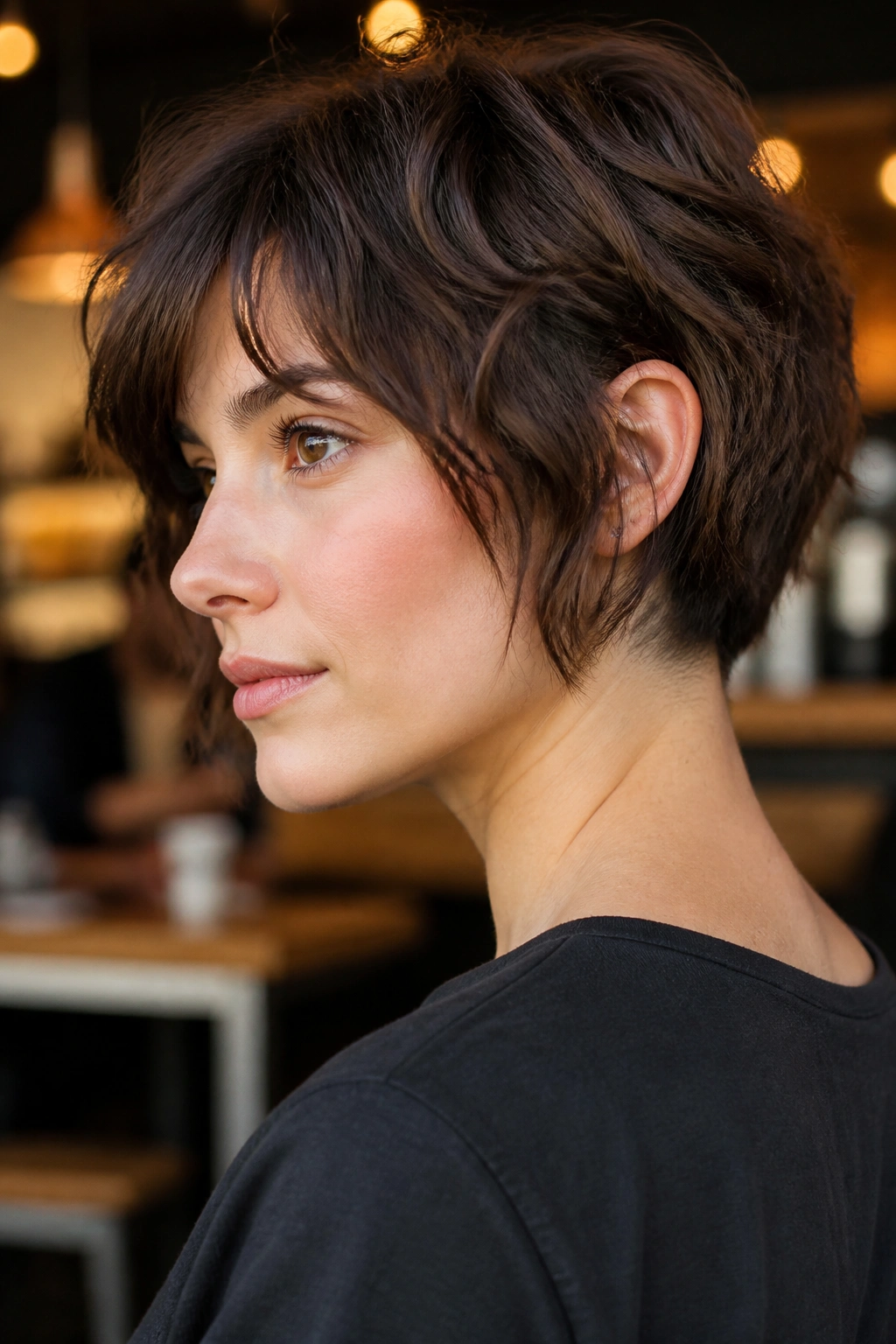
This cut is a little cooler than a standard shag bob because the subtle undercut removes bulk where round faces often need it most. The top and front stay textured, while the lower section sits lighter and closer to the head.
That contrast helps the silhouette look narrower without making the haircut severe. If the undercut is too aggressive, the shape can become too sharp. If it is subtle, the hair falls with better control and less puff.
It is a smart choice for thick hair, especially if the bob tends to balloon out. You still get texture, but not the mushroom shape that so many round faces accidentally end up wearing.
28. Long Choppy Haircut with Broken Ends
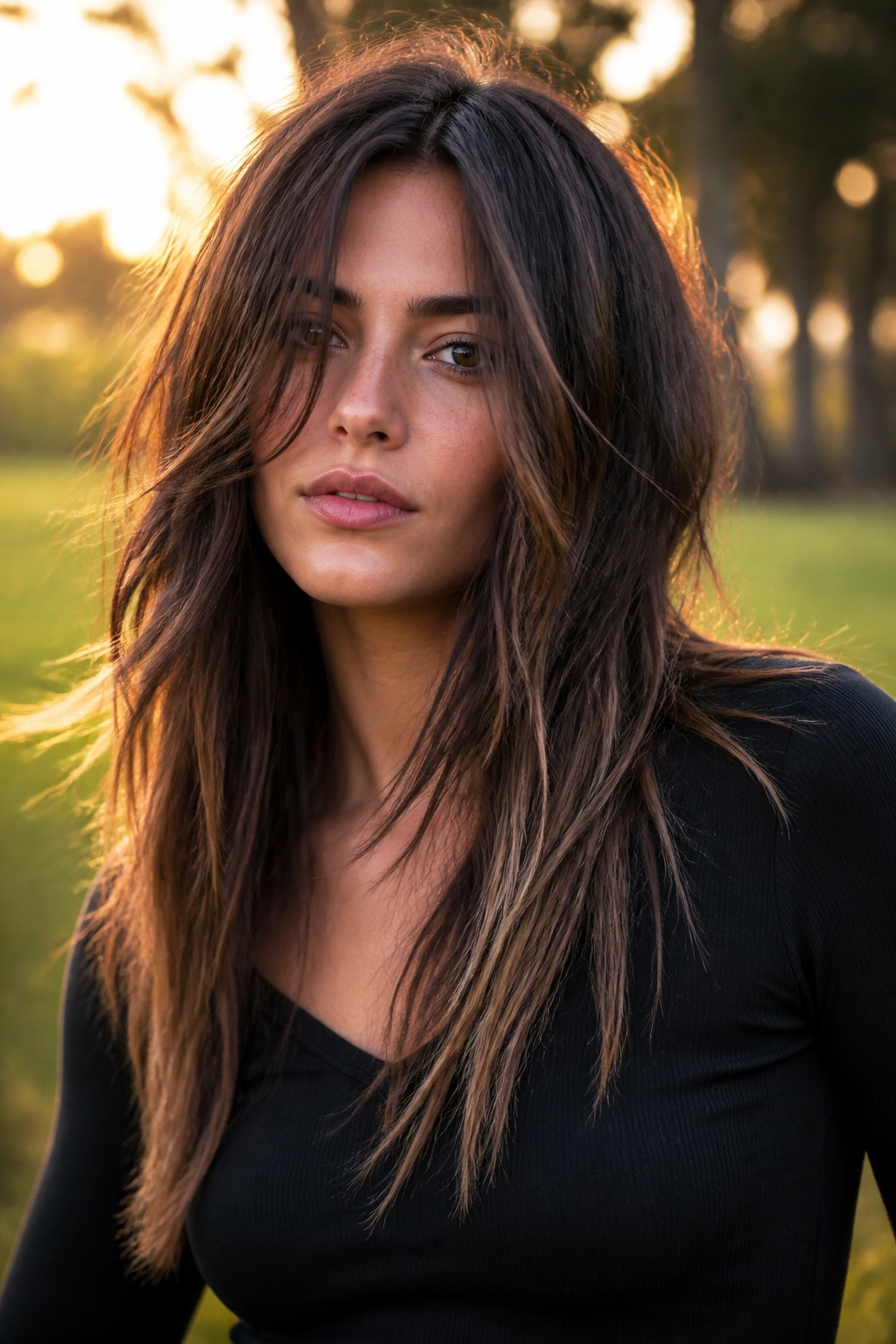
Long hair can flatter a round face, but only when it is not all one length. Broken ends and long, soft layers keep the length from looking heavy and flat. That matters because long, unlayered hair can drag the whole face downward without creating any shape.
The best version keeps the shortest face-framing layers below the cheekbone and lets the rest fall in uneven, airy sections. The ends should look lived in, not chopped off. If you wear your hair straight, a tiny bend near the bottom keeps the silhouette from feeling heavy. If you wear it wavy, even better. The texture does the flattering for you.
This is the cut for someone who wants length but refuses to let it look boring. Fair enough.
Round faces can wear choppy cuts beautifully when the shape is doing real work, not just adding texture for show. The best haircut is the one that changes the outline a little — lifts here, narrows there, keeps the eye moving instead of parking it in one wide spot.
That is why the details matter so much. Where the layers start, how the fringe falls, whether the ends are blunt or broken, whether the part sits centered or off to the side — all of it changes the final effect more than most people expect. A good stylist will talk through those points before picking up the shears. A better one will know when to ignore a trendy shape and choose the one that fits your face, your hair, and your daily routine.
