



Fine hair can look flat by noon and airy by dinner, which is exactly why the right cut matters so much. The best short haircuts for fine hair do not fight the texture; they give it a stronger outline, a cleaner shape, and a little help where the hair tends to collapse. That usually means less random layering, more blunt ends, and a smarter choice of length.
Fine hair and thin hair are not the same thing, by the way. Fine means the individual strand is small in diameter. You can have a lot of fine hair, and that changes how a cut behaves on the head. A style that looks wispy on one person can look dense on another, which is why a good haircut is never one-size-fits-all.
The sweet spot is usually somewhere between the jaw and the cheekbones. Too long, and the weight pulls the roots down. Too short, and the wrong kind of layering can leave the ends looking sparse. The cuts below lean on shape, clean edges, and small design choices that make a big difference once you leave the salon chair.
1. Blunt Chin-Length Bob
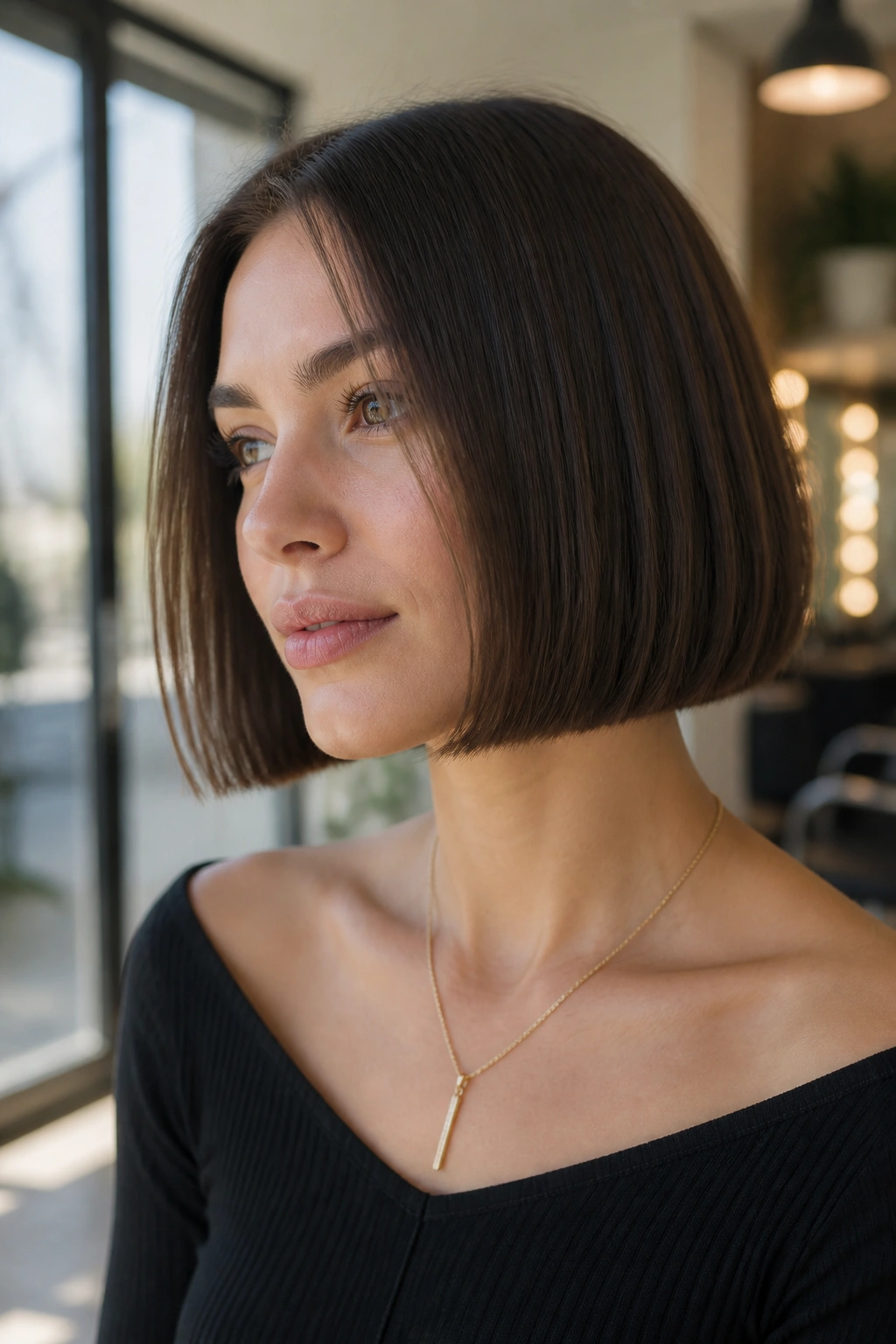
This is the haircut I reach for first when someone wants fine hair to look fuller without a lot of styling drama. A blunt chin-length bob keeps every end in the same line, and that line gives the eye something solid to read. Fine hair loves that.
Why It Works
The perimeter does the heavy lifting here. Instead of breaking the outline into tiny layers, the cut keeps the bottom edge dense and even, which makes the whole head of hair look thicker. A side part helps, but the real magic is the straight hem sitting right where the jaw starts to sharpen.
- The blunt edge keeps the ends from looking see-through.
- Chin length gives movement without letting the hair collapse against the shoulders.
- A smooth blowout with a paddle brush or 1.5-inch round brush makes the shape look fuller.
Ask for no aggressive thinning at the ends. That one detail matters more than almost anything else on fine hair.
2. French Bob With Eyebrow-Grazing Fringe
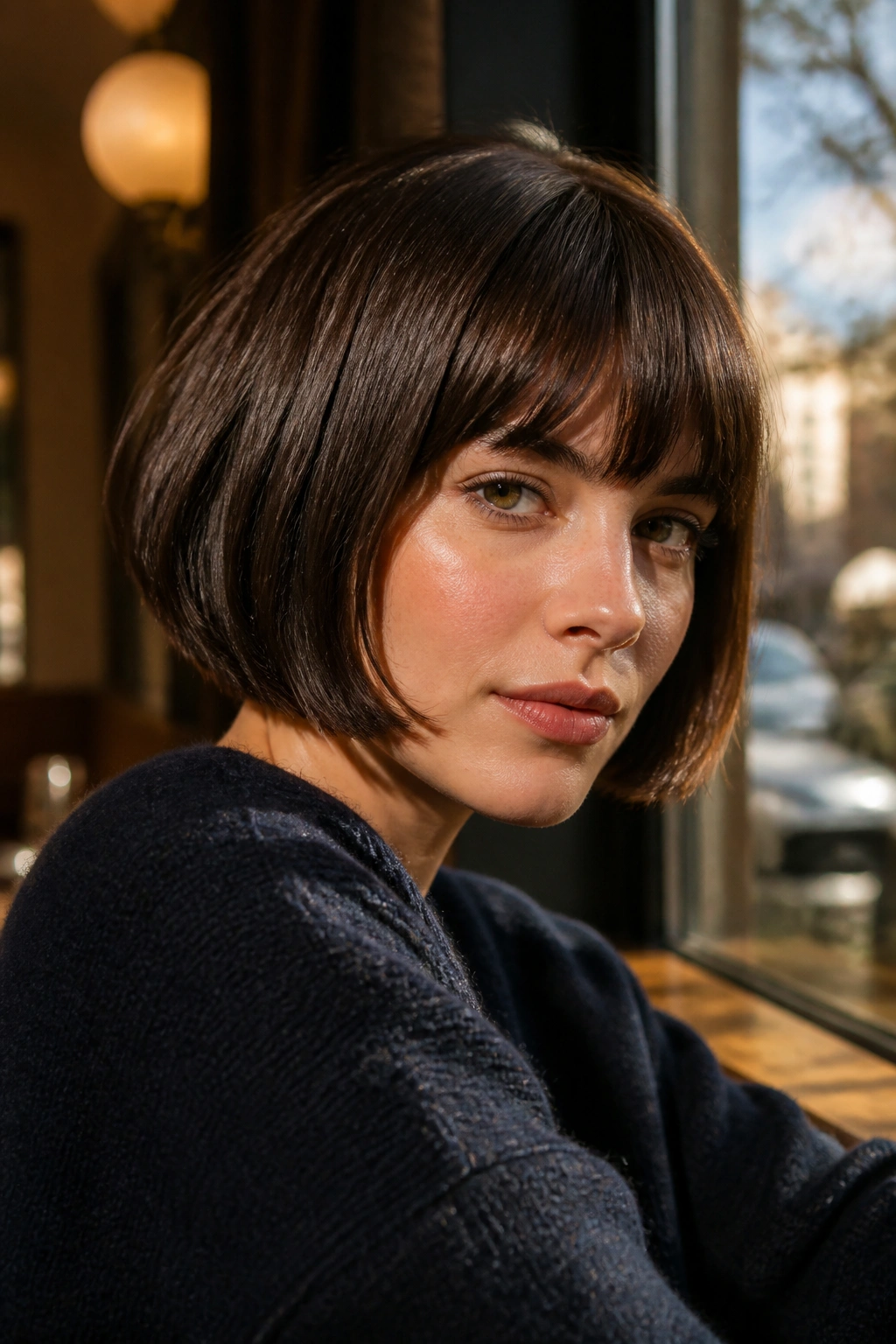
If your hair goes limp the second you step outside, the French bob is a sharp little fix. It usually lands between the cheekbone and jaw, and the short fringe gives the haircut a bit of attitude without needing a lot of bulk. Fine hair often looks better when it is edited down, not dragged out.
This cut works especially well when the front is a touch softer than the back. That small contrast keeps it from feeling helmet-like. The fringe also gives the style a built-in focal point, which helps when the ends are naturally light.
I like this one for hair that has some bend but not much body at the roots. It can air-dry with a bit of cream and still look intentional. If your hair is pin-straight, a quick bend from a flat iron at the ends keeps the shape from going too severe.
3. Italian Bob With Soft Bend
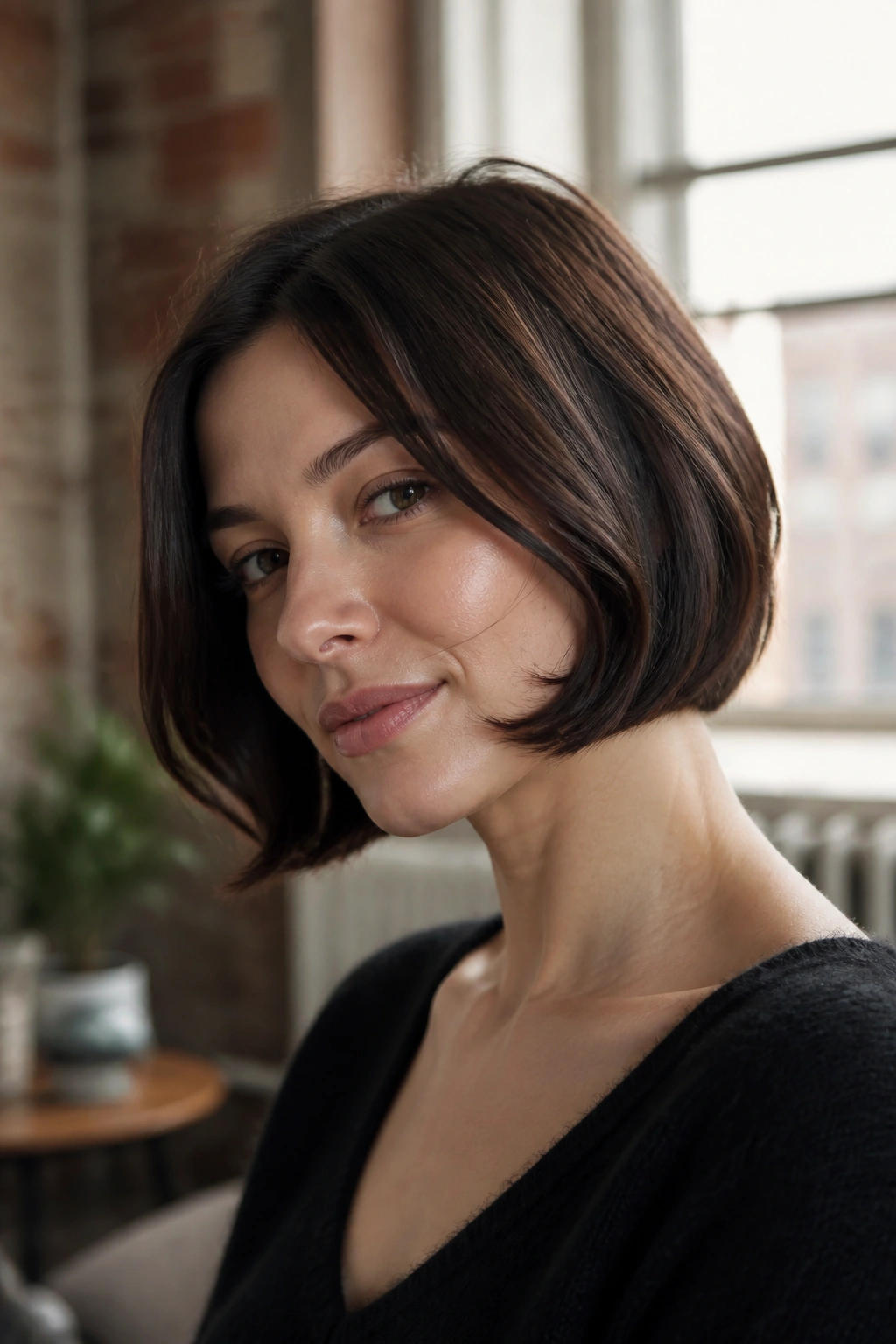
Why does the Italian bob flatter fine hair so well? Because it gives you a little more length than a French bob, which helps the ends stay calm instead of flipping out. It’s still short, but it has enough length to move in a soft, polished way.
The real advantage is balance. The shape sits around the jaw or just below it, and that extra inch or two gives fine hair a richer outline. You can tuck it behind one ear, flip it to the side, or wear it smooth and rounded. It handles all three.
How to Style It
- Blow-dry with a medium round brush and curve the ends under.
- Use a pea-sized amount of lightweight cream through the mid-lengths.
- Finish with a soft-hold spray, not stiff hairspray.
This is the cut for someone who wants a neat shape without the sharpness of a micro bob. It feels a little less graphic, a little more lived-in.
4. Micro Bob That Sits at the Jaw
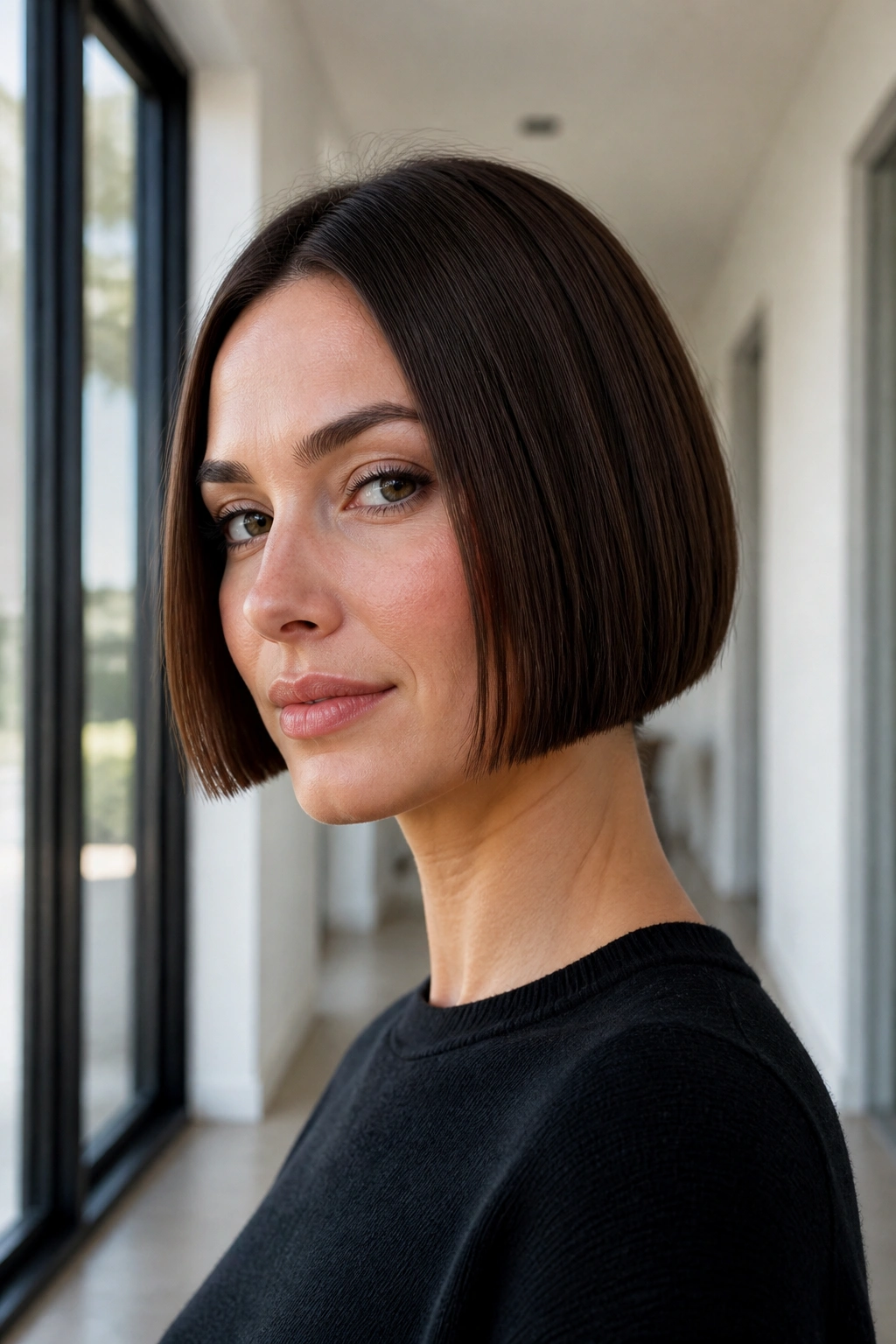
Shorter can look fuller. That’s the whole appeal of the micro bob. When the length lands right at the jaw or slightly above it, fine hair gets a stronger visual shape and stops looking dragged down by its own weight.
This cut does ask for confidence. It is not the lazy-girl bob that can go six months without a trim. You need regular cleanups, usually every four to six weeks, because the whole point is keeping the line crisp. If the ends start to fray, the haircut loses its punch fast.
It works best on hair that naturally falls straight or close to straight. If your hair bends a lot or kicks out at the sides, the micro bob can become fussy. Still, when it works, it really works. The hair looks denser almost instantly, and your neck gets that fresh, open feeling that only short hair can give.
5. A-Line Bob With a Clean Nape
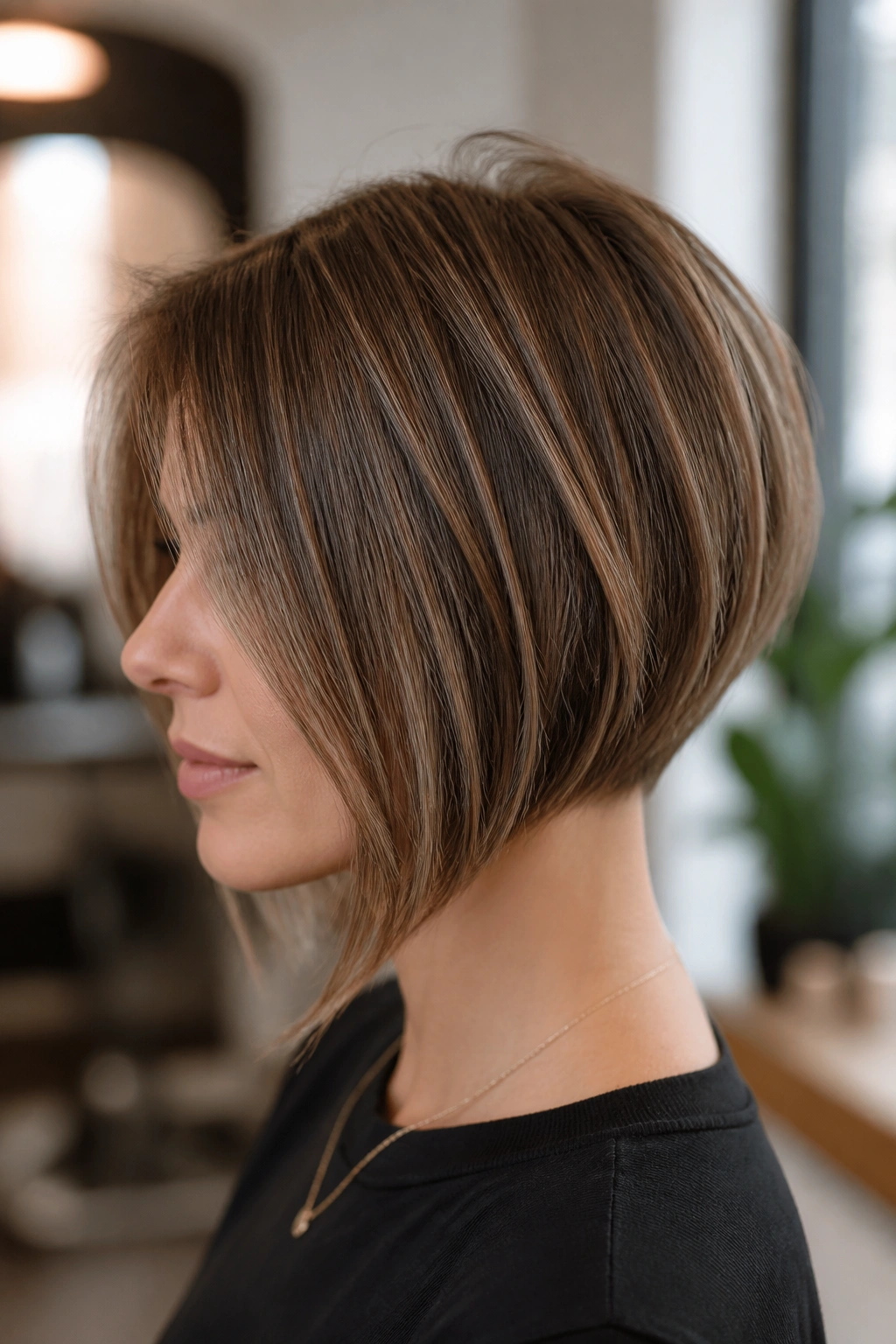
Run your fingers from the back of an A-line bob to the front, and you can feel the shape immediately. The nape is shorter, the front stretches a little longer, and that gentle angle makes fine hair look more deliberate. It is a clean haircut, not a busy one.
That slant helps fine strands because it builds visual weight toward the face. The front pieces catch the eye first, so the style feels fuller even when the actual density is modest. It also gives the hair a nice forward swing, which can soften a narrow chin or a long face.
I prefer this cut when someone wants structure but not a stacked back. It gives shape without piling all the volume at the crown. If you have a cowlick at the nape, the shorter back can also keep things from flipping out awkwardly. Small win. Big difference.
6. Inverted Bob for Lift at the Back
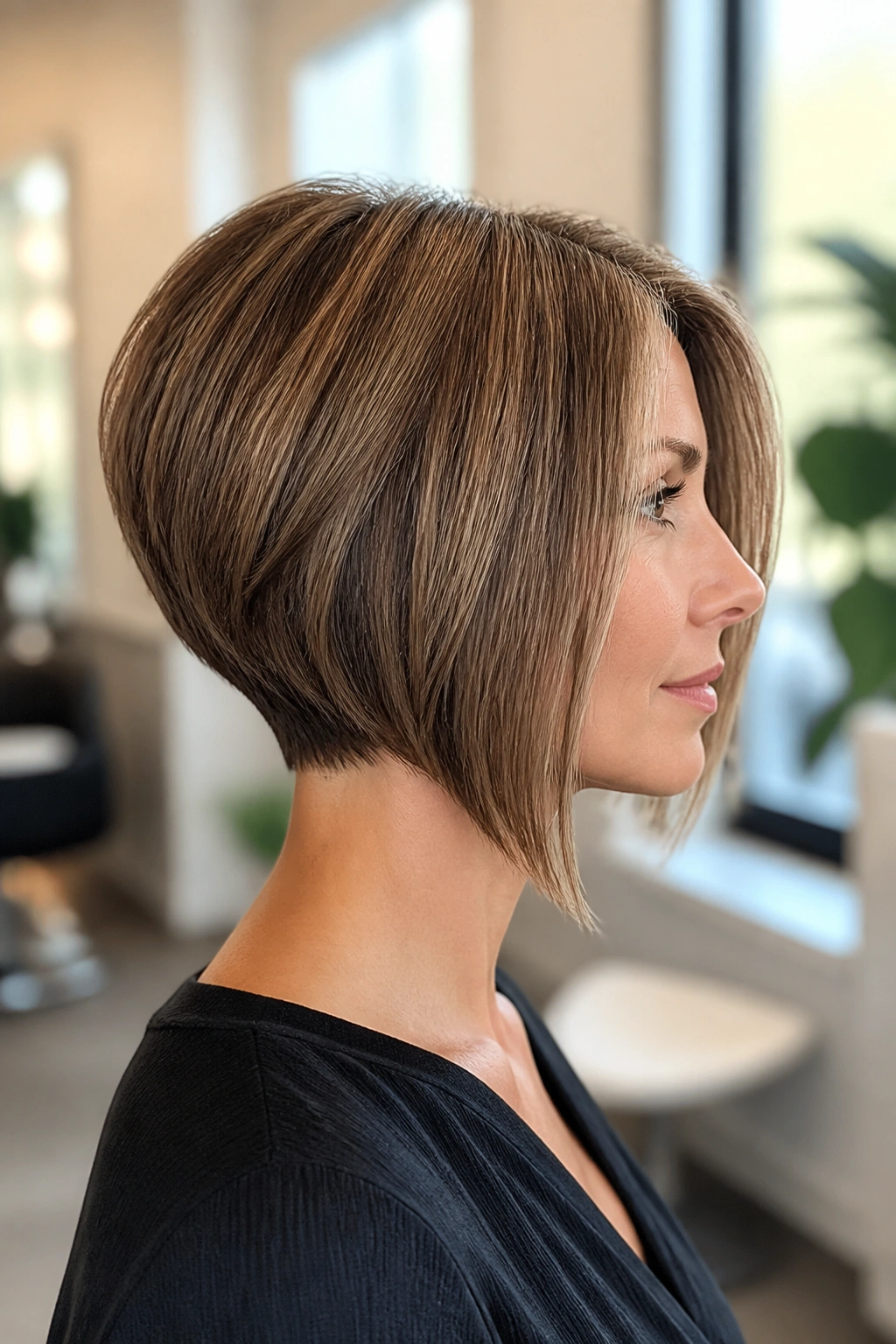
Unlike a blunt bob, the inverted bob gives you built-in lift at the back. That’s the part fine hair often needs most, because flat roots can make the whole style look tired. A subtle inverted shape solves that without turning the haircut into a triangle.
The front stays longer, while the back is cut with more graduation. That angle creates a sense of fullness right where the head starts to round, which is why this style feels a little more structured than a standard bob. It suits people who want shape they can see from the side.
Choose this if your hair lies flat at the crown and the back of your head tends to disappear. Ask your stylist to keep the graduation soft, though. Too much stacking can look dated fast, and fine hair does not have enough density to hide a bulky shelf.
7. Stacked Bob That Builds Shape at the Crown
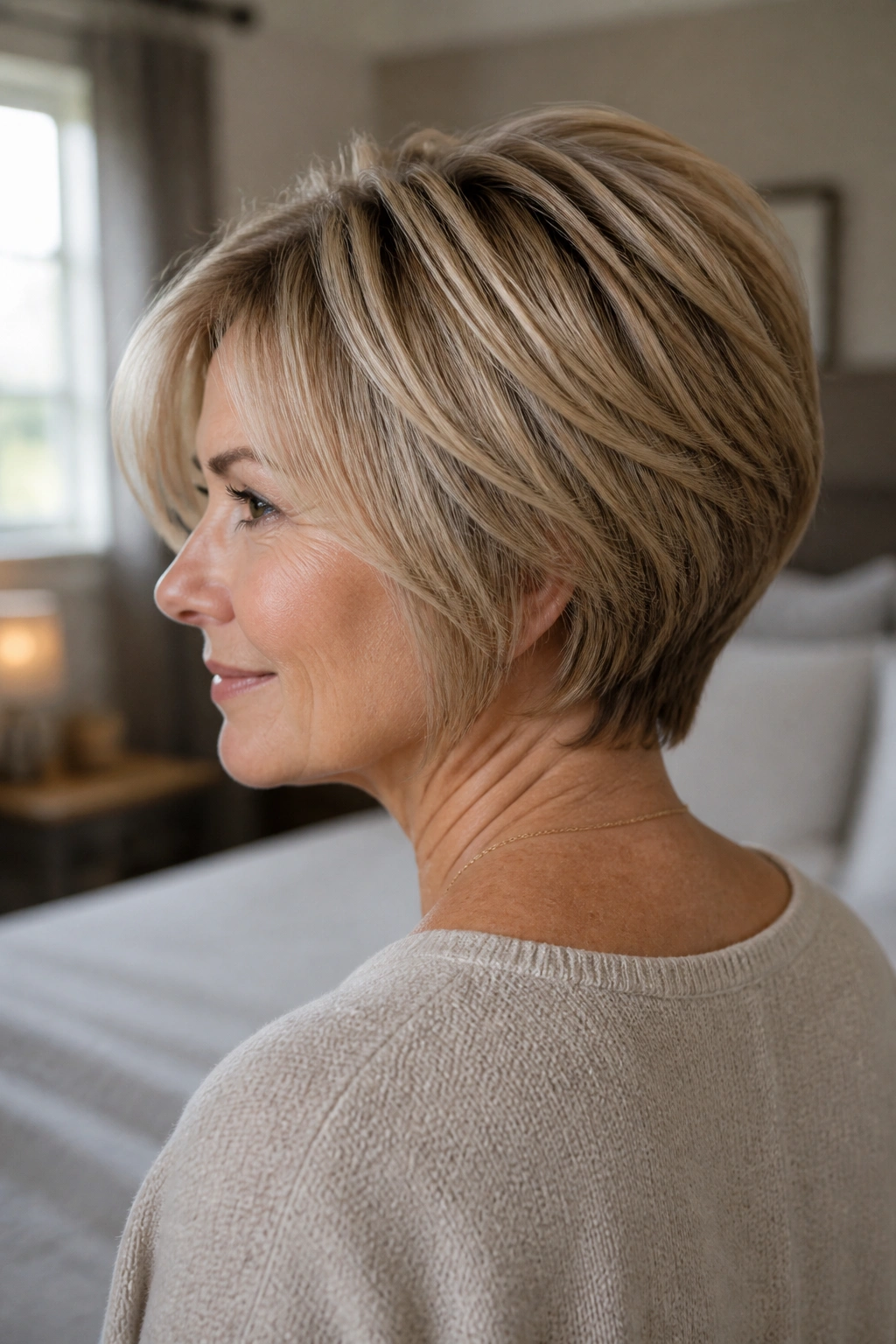
A stacked bob can save a flat crown. When the back is cut with controlled graduation, the hair lifts instead of hanging like a curtain, and fine strands suddenly look much more alive. That lift is the whole point.
What to Ask For
Ask for the stacking to stay tight near the nape and lighter as it moves upward. You want shape, not a bulky bump. If the layers are pushed too high, the crown can get puffy while the ends look thin, which is a bad trade on fine hair.
- Keep the perimeter blunt or only slightly softened.
- Ask for the crown to be rounded, not teased up.
- Use a root spray before blow-drying for extra support.
This cut needs a good blow-dry. Not a complicated one, just a deliberate one. Lift at the roots with your brush for a few seconds, then let the hair cool in place.
8. Rounded Bob With a Smooth Outline
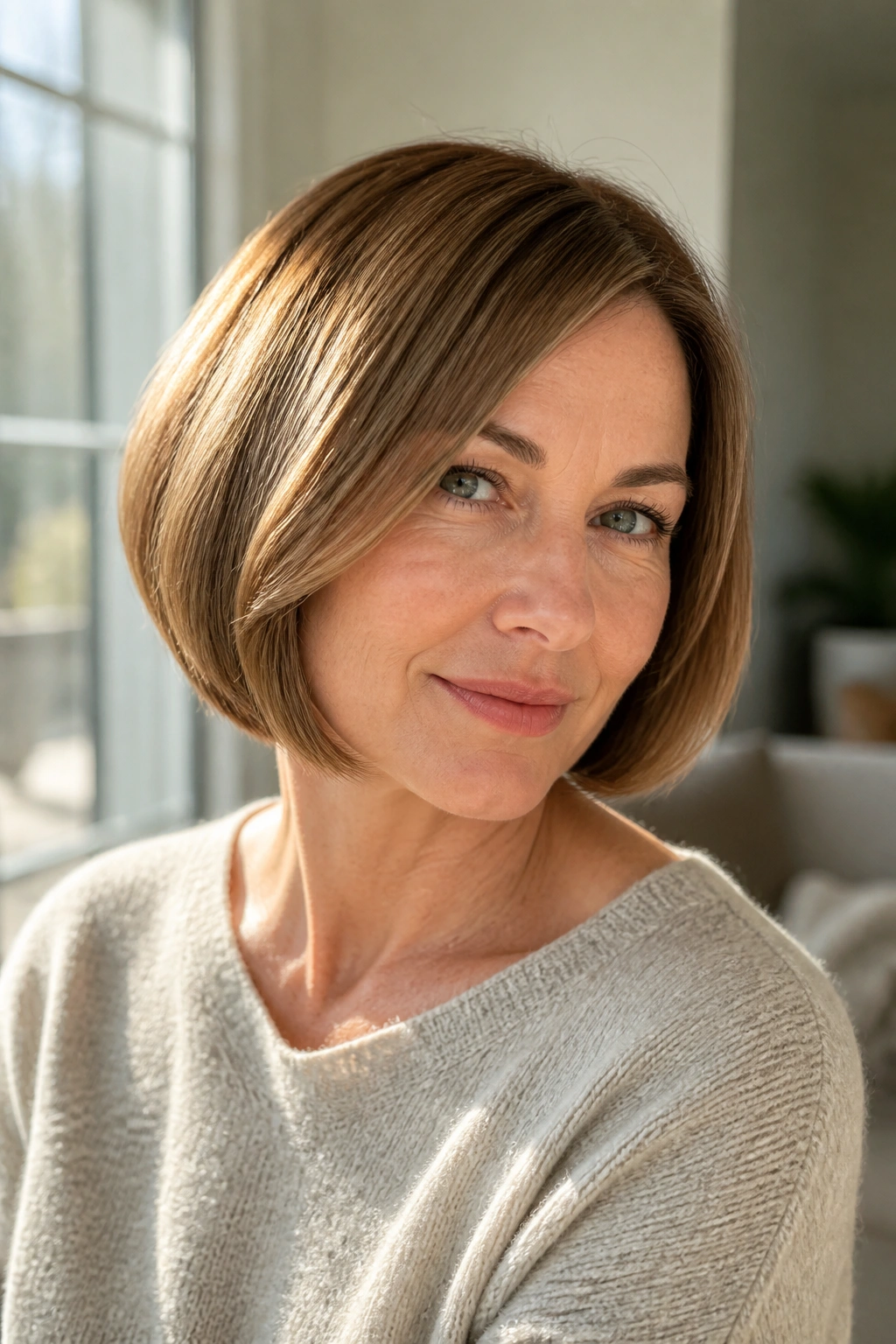
Picture a haircut that curves in toward the neck instead of kicking out at the sides. That’s the rounded bob, and on fine hair it can look surprisingly rich. The shape gives the hair a neat, full outline that feels softer than a blunt cut but still controlled.
This one works especially well if your hair tends to frizz at the ends. The curve helps hide small flyaways, so the style looks smooth even when the weather is not cooperating. It also suits people who like a polished finish without anything severe around the face.
A round brush is your friend here. Blow-dry the ends under and keep the brush moving slowly so the curve lands cleanly. If you let it air-dry, the shape can go a bit vague, which is fine for a casual day but not as nice if you want the full effect.
9. Box Bob for Sharp, Even Edges
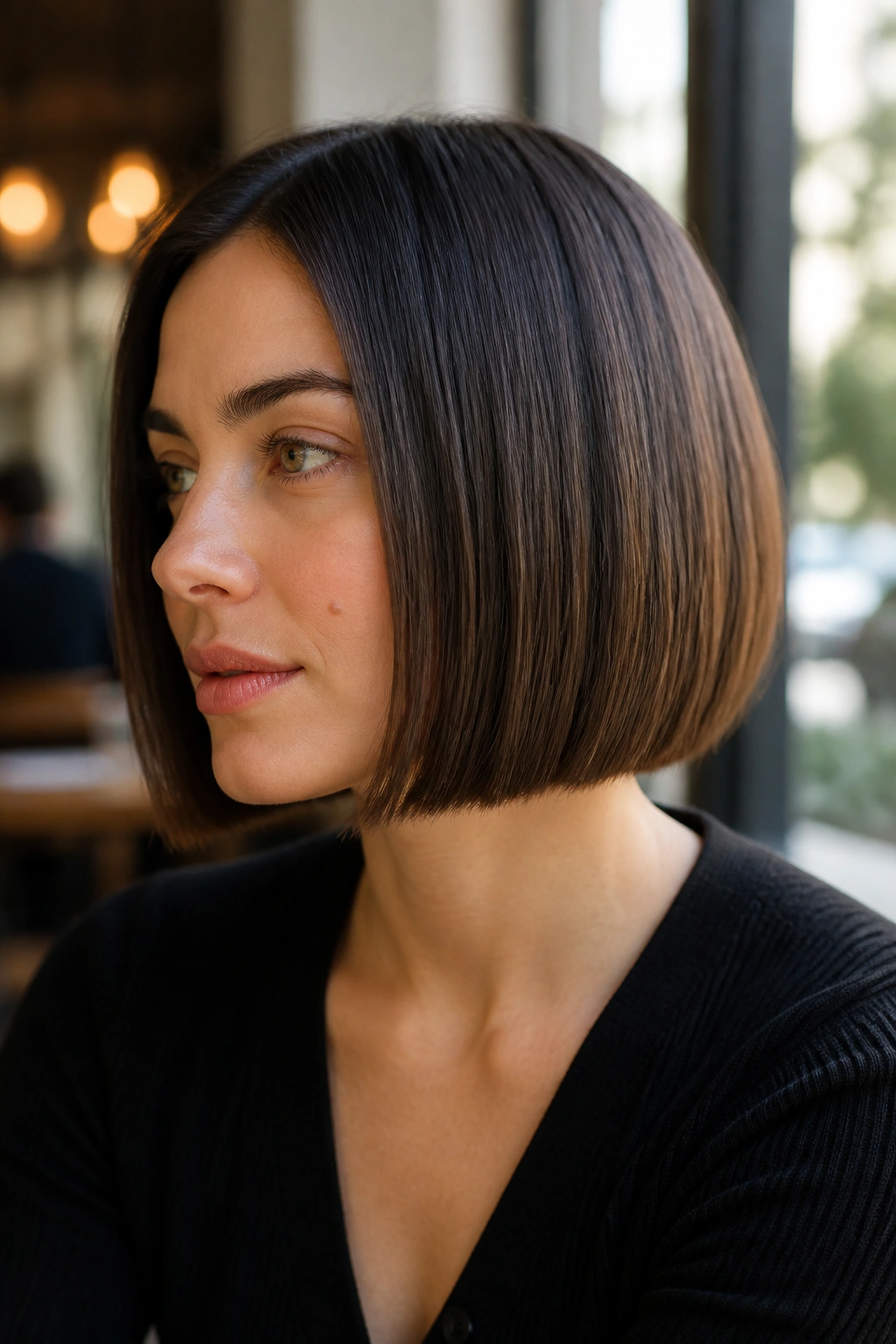
Can a square shape look soft on fine hair? Yes, and that is the fun of the box bob. The haircut keeps straight sides and a crisp bottom line, which makes the hair appear denser because the eye sees one solid shape instead of broken layers.
This is a smart choice if your hair is naturally straight and your face can handle a cleaner frame. The cut looks especially good on strong jawlines and longer faces because it adds width where the face may feel narrow. It is precise, but not fussy.
Quick Fit Check
- Best on straight or slightly wavy hair.
- Works well when you want a sharper look with little movement.
- Needs regular trims to keep the outline boxy, not grown-out.
The box bob is not for someone who wants soft, tousled texture. It’s for someone who likes clean edges and does not mind a haircut that has opinions.
10. Sleek One-Length Bob
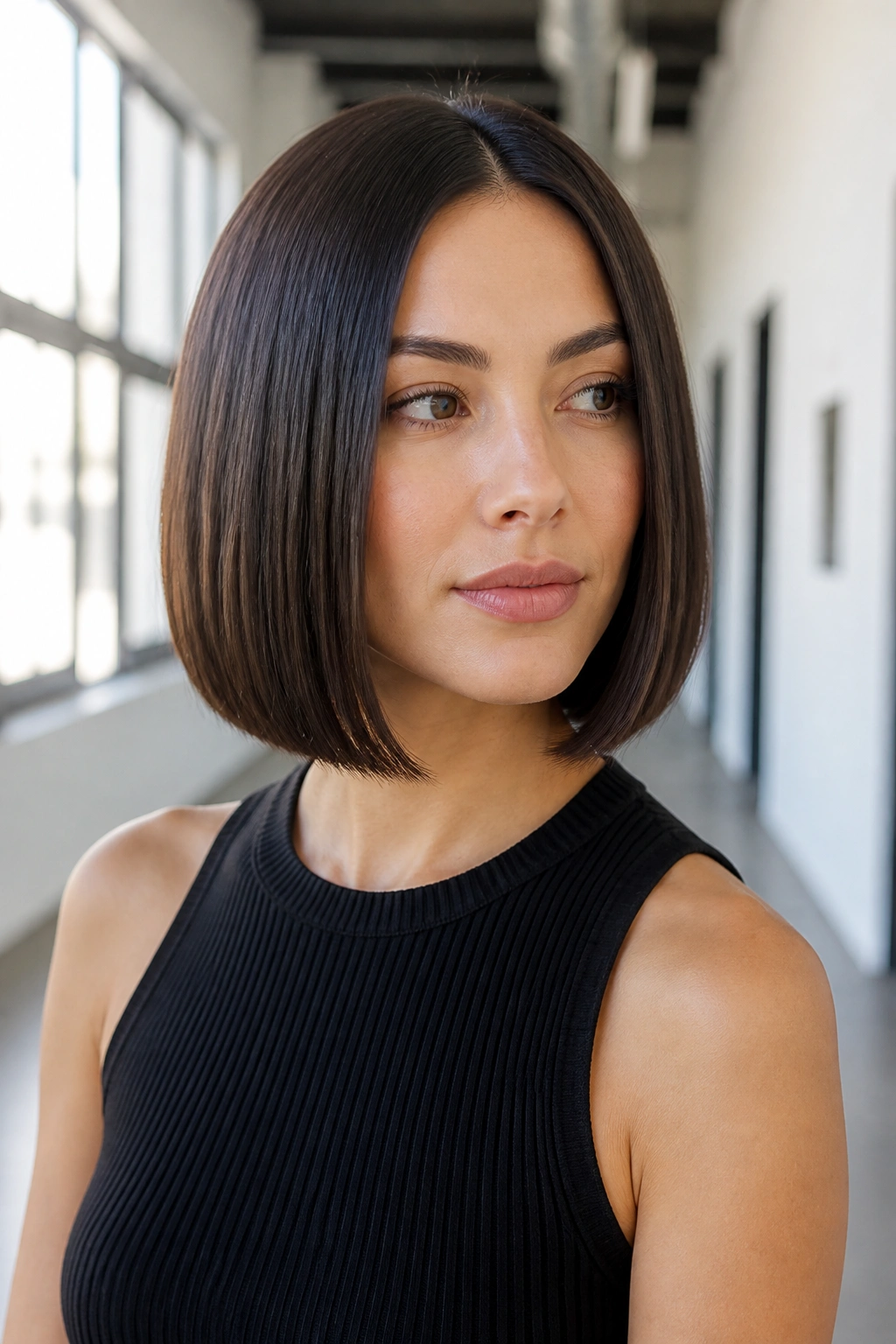
If feathered ends make your hair disappear, go simpler. The sleek one-length bob keeps every strand in the same lane, which gives fine hair a thicker visual line from root to tip. It can look almost expensive in its plainness.
This style is especially good when your hair already lies flat and straight. Instead of fighting that, the cut uses it. A center part can look neat, but a slight off-center part often gives a little more lift at the roots without disturbing the shape.
The trick is shine and control. A light serum on the mid-lengths and ends keeps the line smooth, and a flat brush during blow-drying helps the cut stay sleek instead of fuzzy. If the hair splits easily, this is one of the few cuts that hides that problem rather than advertising it.
11. Feathered Bob With Airy Ends
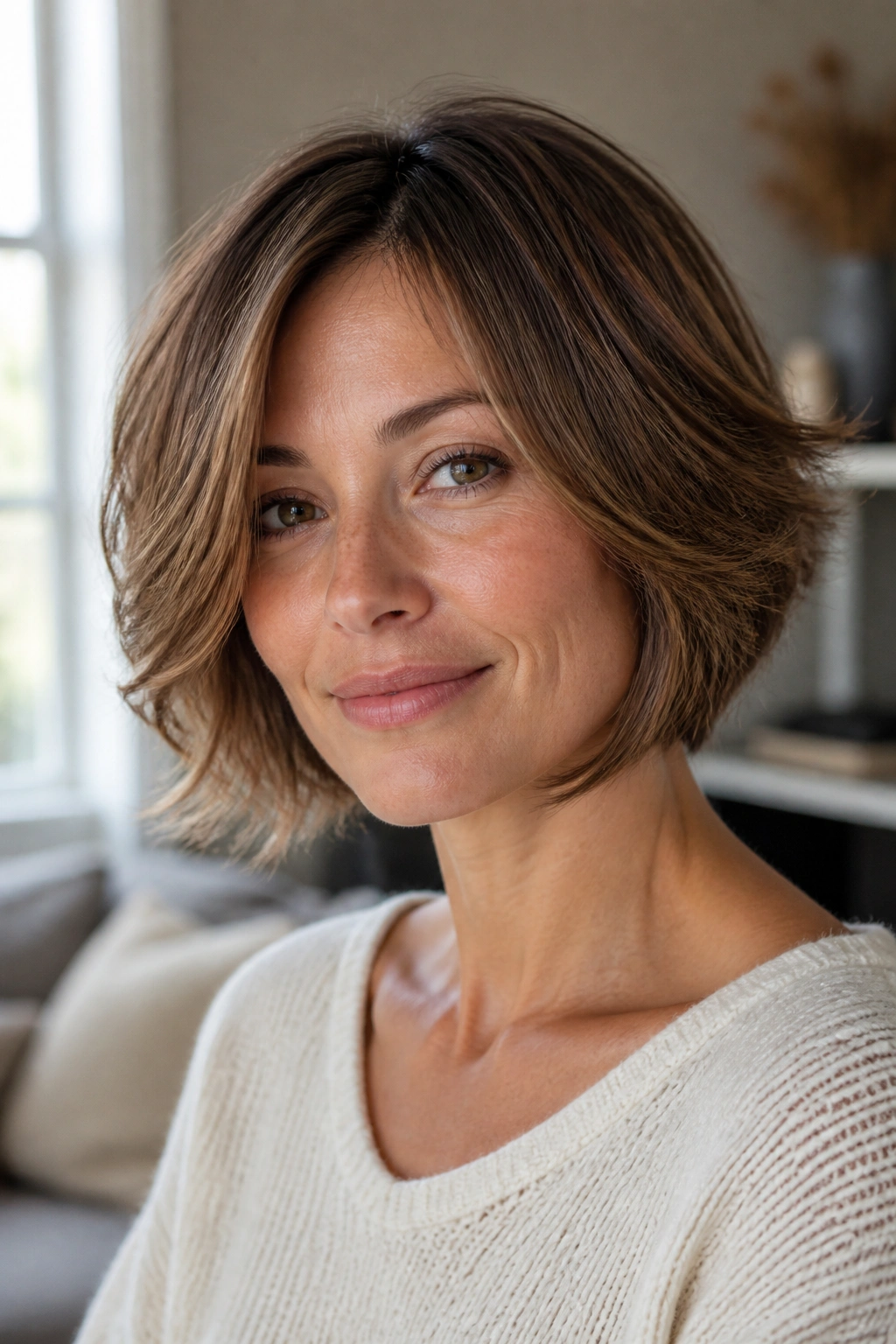
A little feathering can help fine hair; too much will bury it. That is the whole story with this cut. The ends are softened just enough to move, but the base still stays solid so the hair does not look stringy.
Where the Softness Should Go
Ask for light feathering only through the outer edge, not all the way up the head. That keeps the density where you need it. If a stylist pulls out thinning shears too high, the style loses its body fast.
- Keep the crown fairly full.
- Let the face-framing bits be the softest part.
- Style with a small amount of mousse or foam for separation.
This bob is a good middle ground for anyone who thinks a blunt bob looks too hard. It gives you a little swing without making the hair look frayed. That balance is harder to get than people think.
12. Textured Bob With Piecey Layers
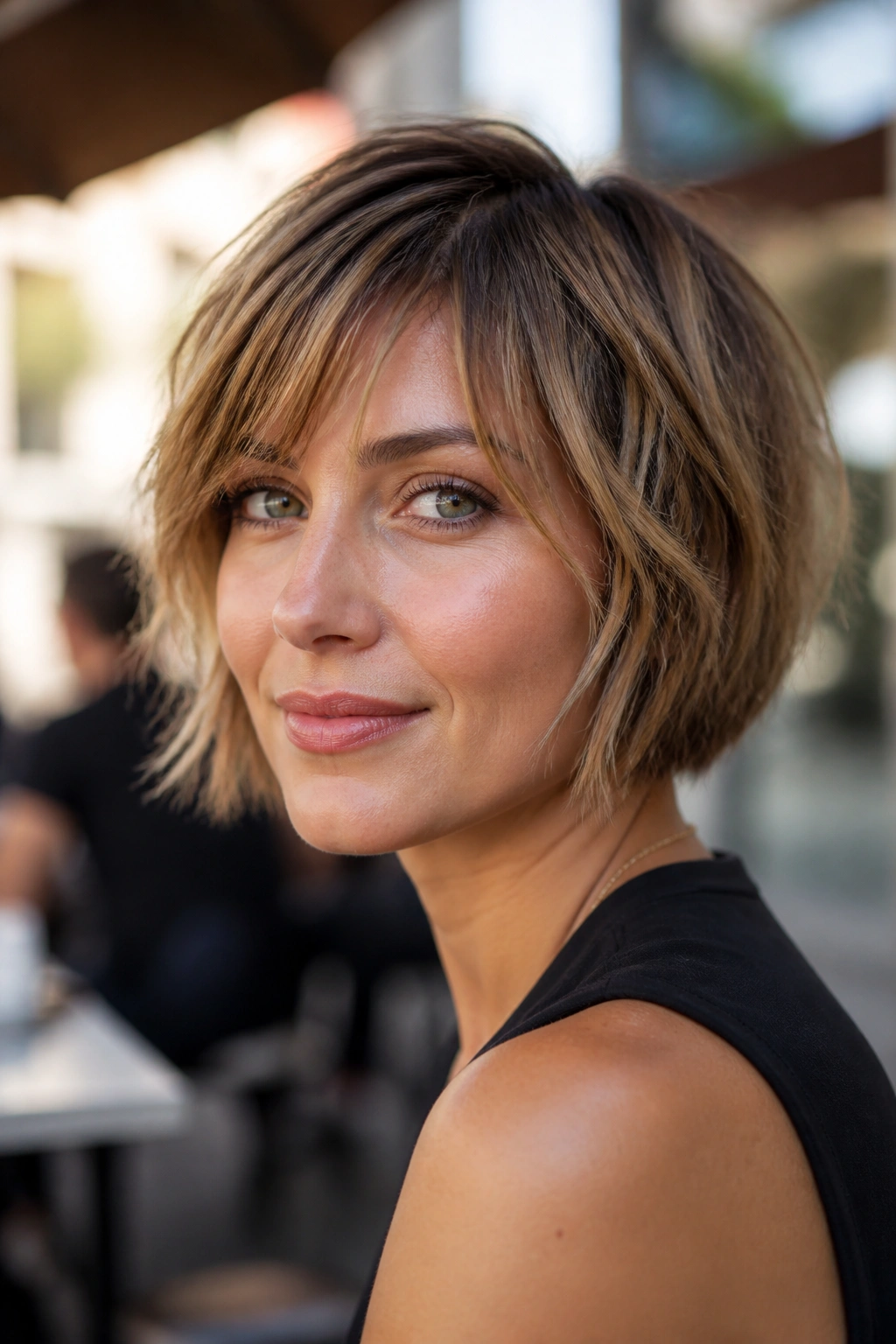
When fine hair has some bend but needs more grit, this is the middle path. A textured bob uses piecey layers to break up the surface just enough to create movement, but not so much that the ends vanish. It looks best when the texture feels intentional, not random.
This cut can be a lifesaver for hair that collapses in humid weather. The uneven surface gives the style a bit of grit, so it does not lie perfectly flat against the head. A salt spray or texture spray can help, but keep the product light. Fine hair gets greasy fast.
I like this cut for people who want a casual look that still has shape. It does not need perfect blow-drying, which is part of the appeal. A quick twist with the fingers and a rough dry can be enough if the cut was done well.
13. Shaggy Bob With Light Fringe
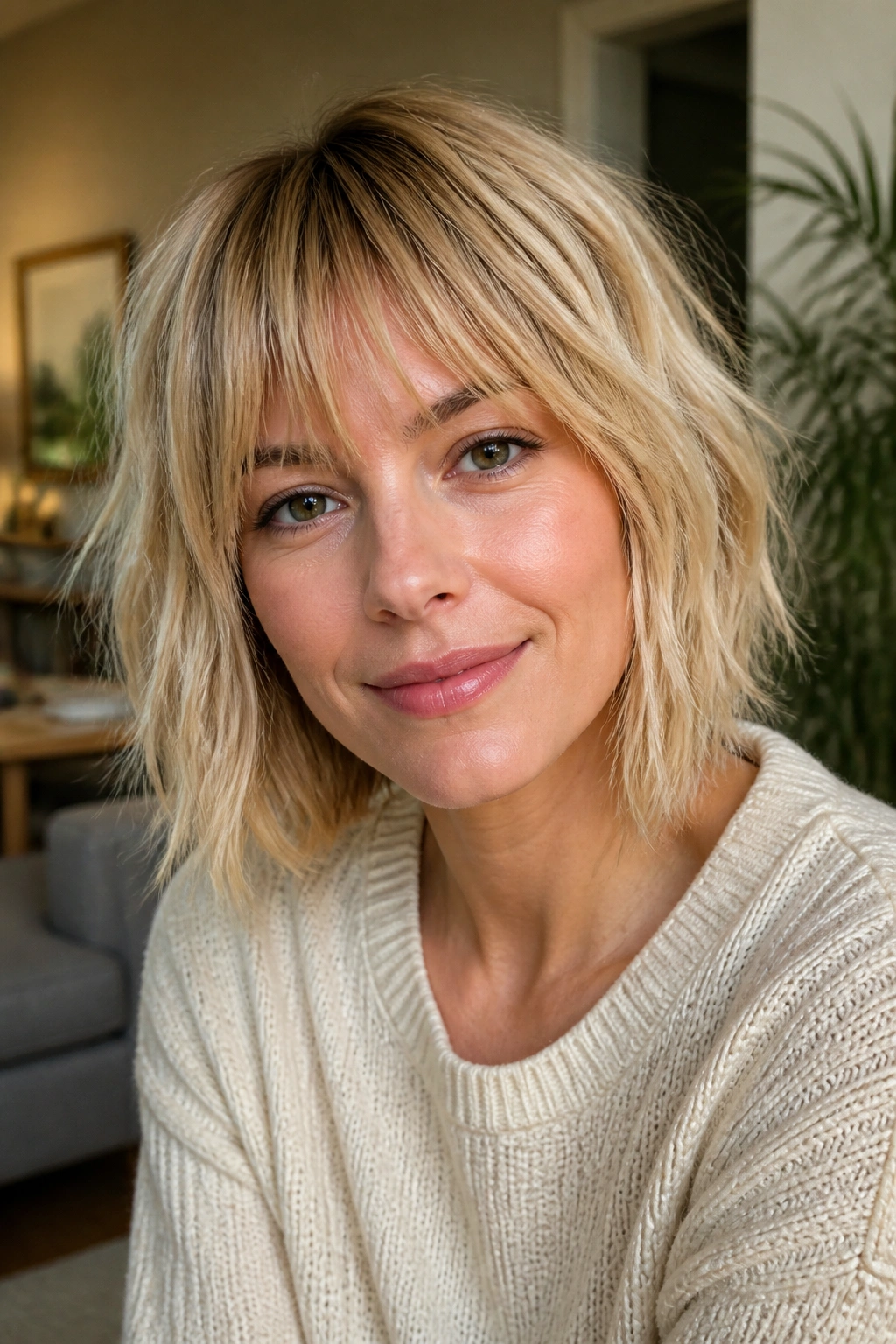
Is a shag bad for fine hair? Not if the layers stay light. The shaggy bob works when the texture is controlled and the fringe is soft enough to frame the face without eating the whole haircut.
This version is better on fine hair with a little wave than on hair that is pin-straight. The layers give movement around the crown and cheekbones, which keeps the style from lying too close to the head. What you do not want is a heavily razored shag that turns the ends wispy.
How to Keep It from Looking Stringy
- Ask for longer, disconnected layers rather than lots of short ones.
- Keep the fringe soft and broken, not heavy.
- Diffuse if your hair is wavy, or use a small brush for bend at the ends.
The shaggy bob has personality. It just needs restraint.
14. Curly Bob With Internal Layers
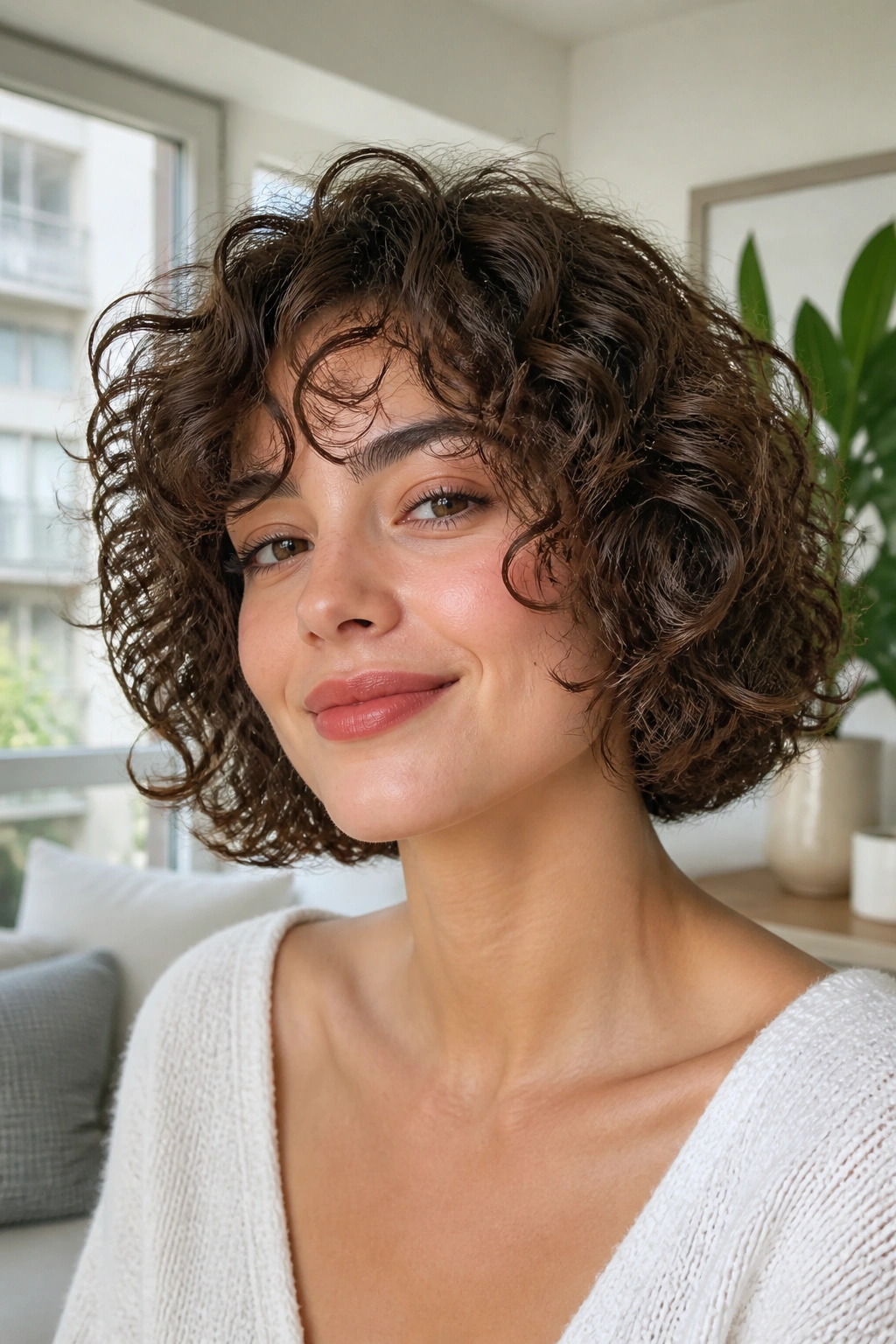
Fine curly hair does not need to be flattened into a triangle. It needs room to clump, which is why a curly bob with internal layers can be so useful. The shape supports the curl without removing so much weight that the ends go hollow.
Dry cutting helps here because curls do not behave the same wet and dry. A stylist who understands curl pattern can place the layers where they help the shape rather than where they merely reduce bulk. That matters more on fine curls, which can fall apart if overcut.
Use a diffuser and stop fussing with it once the curls start to set. Too much finger-combing breaks up the curl pattern and makes the hair look thinner. A bob like this should feel soft, not puffy, and that is a narrow line.
15. Classic Pixie Cut
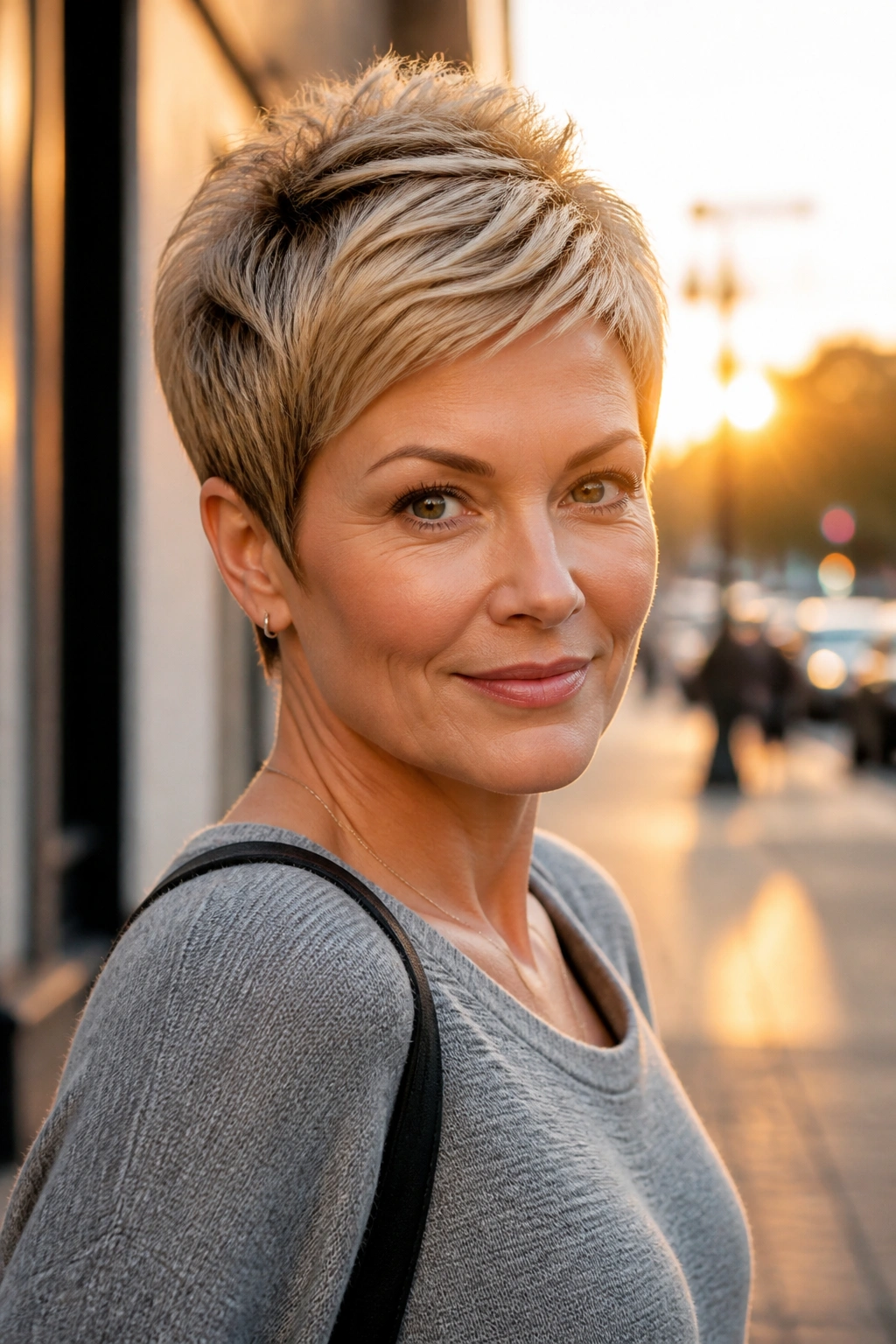
Short hair should feel lighter on the neck the minute the cape comes off. The classic pixie delivers that feeling fast. It removes length, but it keeps enough shape on top to make fine hair look purposeful instead of sparse.
The strongest version keeps the sides and back neat while leaving a little more length through the crown. That small difference creates lift without asking the hair to do something impossible. Fine hair often looks fuller simply because there is less weight dragging it down.
This cut does need regular trims. Every four to six weeks is common if you want it to keep its edge. A little pomade or styling cream is enough for most days. The point is not to build a huge style; it’s to let the cut do the talking.
16. Long Pixie With Ear Coverage
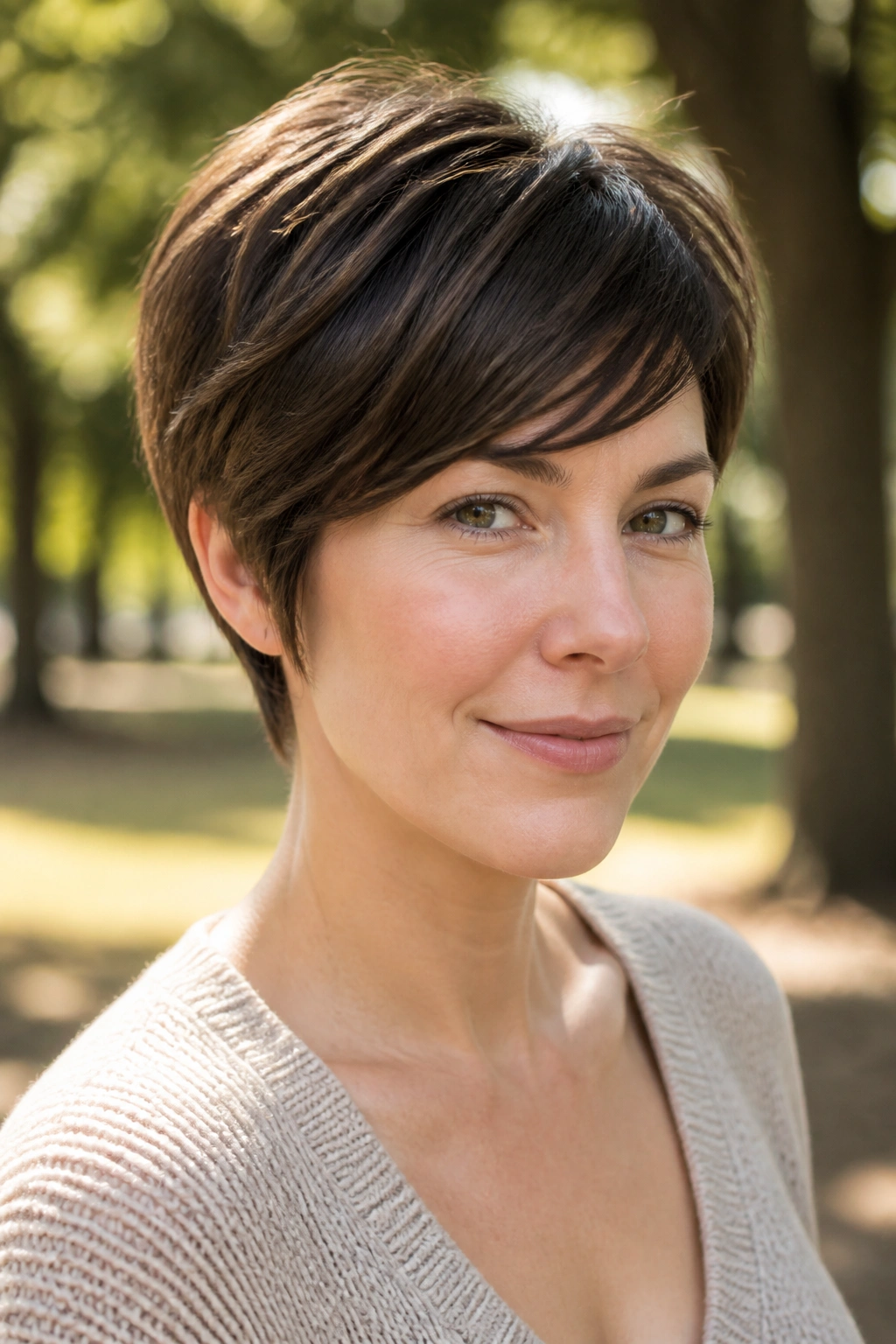
This is the friendlier version of a pixie. A long pixie keeps enough length around the ears and on top to feel soft, but it still gives fine hair that easy lift that short cuts are good at creating. It is especially nice if you want to go short without exposing every line of your face.
The longer top makes styling simpler, too. You can sweep it back, push it to one side, or let it fall forward a little. That flexibility is useful if your hair has different moods depending on the day, which fine hair often does.
Choose this if you want short hair but not a dramatic crop. It grows out well, and that matters. A lot of short cuts look good only for three weeks. This one gives you a little more room to breathe.
17. Pixie With Side-Swept Bangs
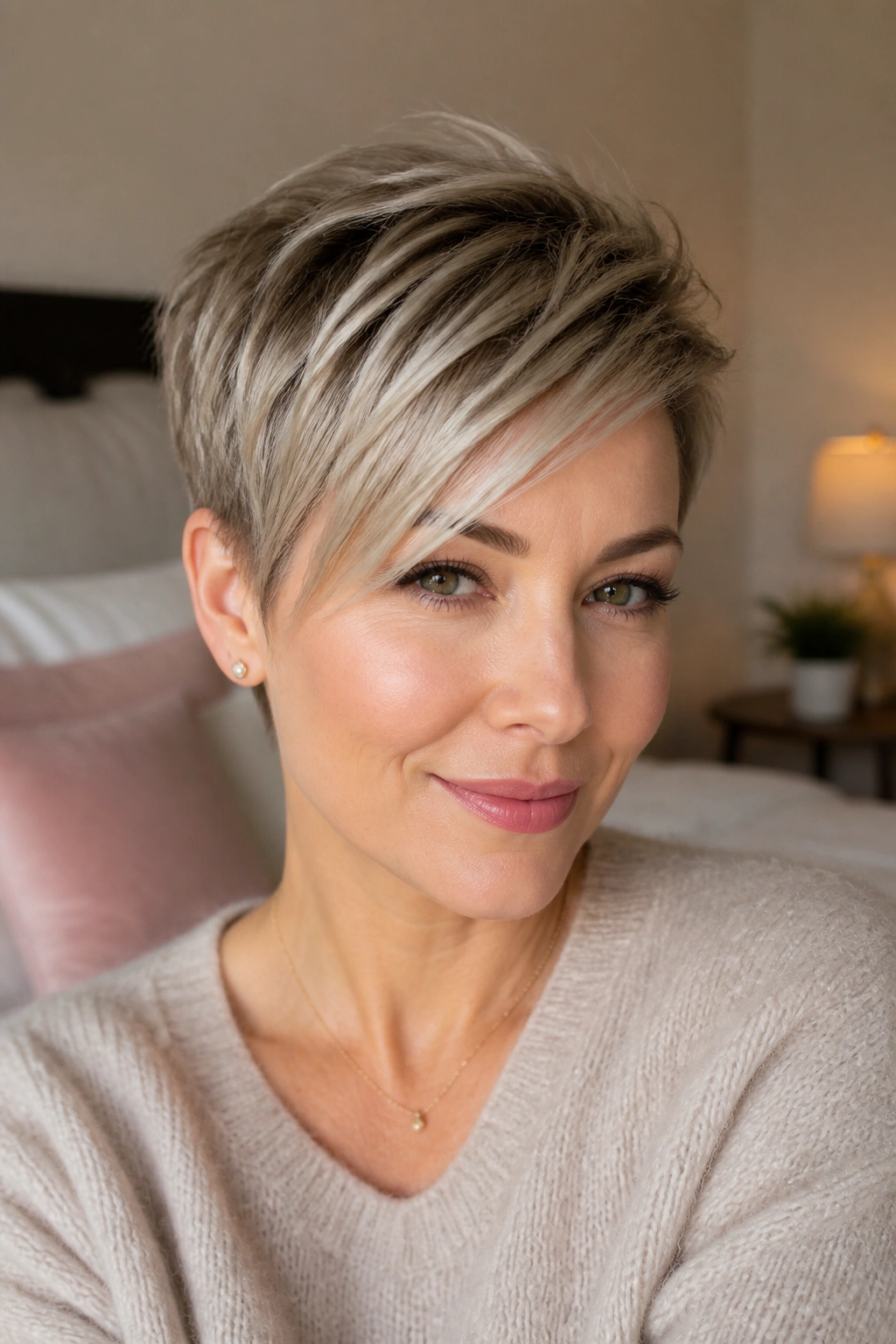
A diagonal fringe can do more for fine hair than another inch of length. The side-swept pixie pulls the eye across the face, which gives the cut motion and hides any flatness right at the front hairline. It’s a tidy trick, and it works.
Styling Notes
- Blow-dry the fringe in the opposite direction first, then sweep it over.
- Use a lightweight cream, not heavy wax.
- Keep the ends soft so the bangs do not look chopped.
This cut is a smart fit for long faces, higher foreheads, or anyone who wants a little softness around the eyes. The side sweep makes the style feel less severe than a straight-on pixie. It also grows out more gracefully than a blunt micro fringe.
18. Pixie With Micro Fringe
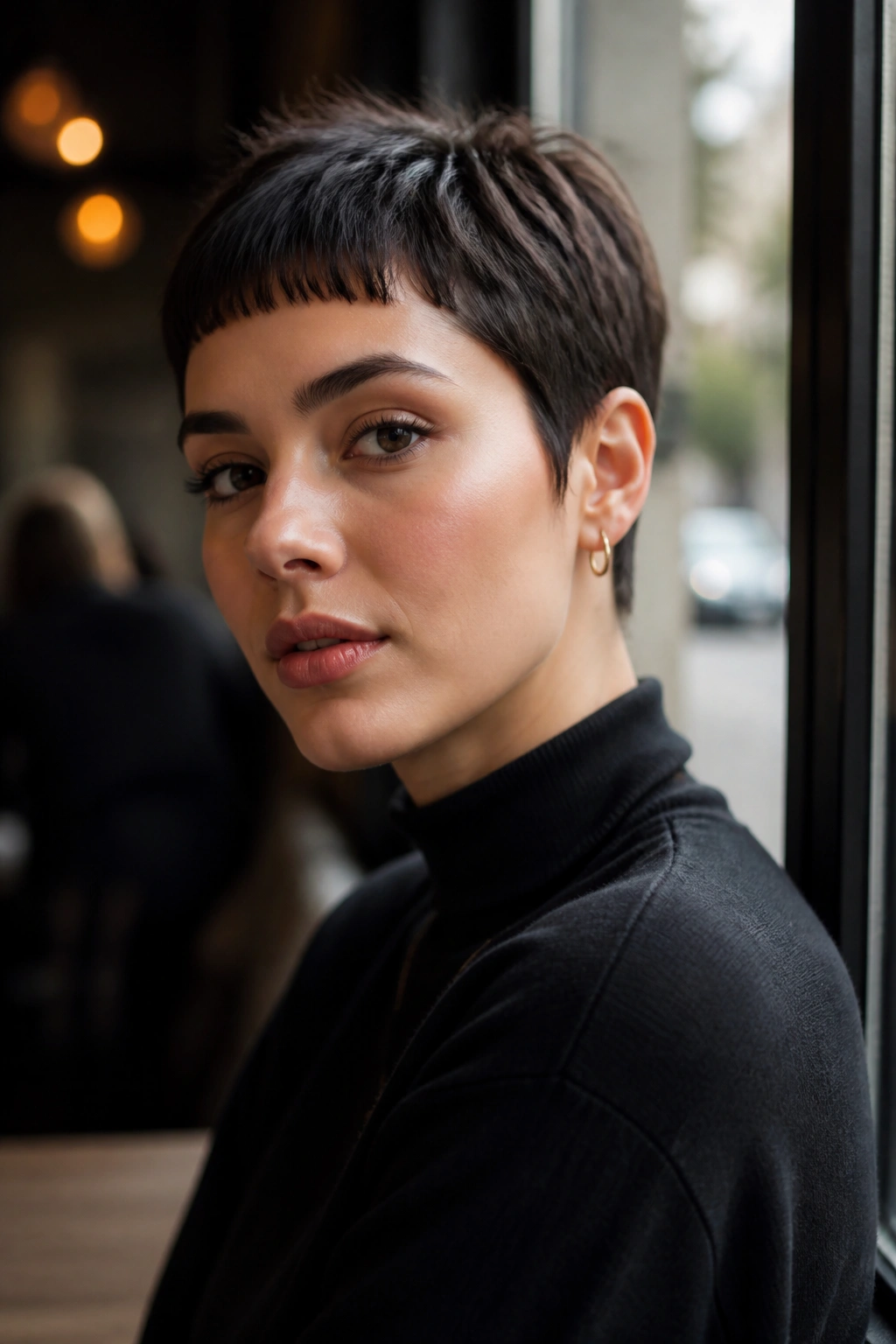
If your forehead feels a little bare after a big chop, the micro fringe fixes the balance. It gives the face a sharp top line and makes the whole cut look more deliberate, almost editorial, without asking for a lot of hair.
Fine hair can actually benefit from a tiny fringe because the short length makes the strands look denser up front. The key is keeping the line clean. A jagged micro fringe on fine hair can slide into “accidentally uneven” fast, and nobody wants that.
This cut is not for everyone. It needs confidence, a good brow shape, and a stylist who knows how to keep the fringe tiny without making it look choppy in the wrong way. Done well, though, it gives a crisp, smart finish that feels fresh.
19. Undercut Pixie for Extra Lift
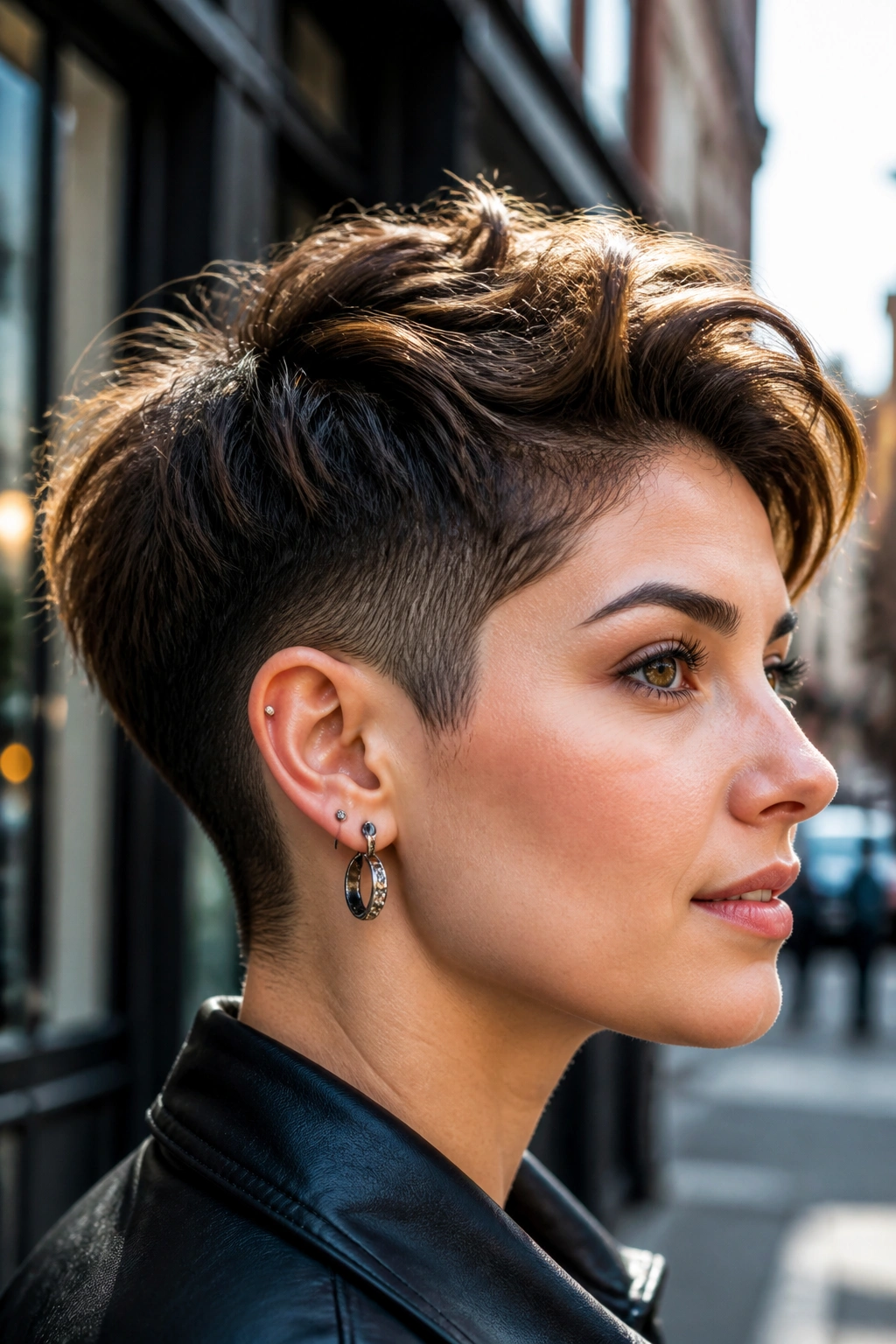
Does an undercut help fine hair? Yes, if the hair around the nape or sides is bulky enough to collapse the shape. Removing weight underneath lets the top sit higher, which creates lift without asking the crown to do too much work.
The undercut also makes styling faster. Less bulk means the hair dries quickly, and that is handy when you want a quick shape in the morning. Fine hair at the top can stay soft while the underside stays neat and tidy.
What to Watch For
- Keep the transition smooth so the cut does not look patchy.
- Ask for the undercut to be hidden unless you want it visible.
- Trim it often, because regrowth shows fast at this length.
This is a strong choice for someone who likes a little edge and does not mind maintenance.
20. Bixie: Between Bob and Pixie
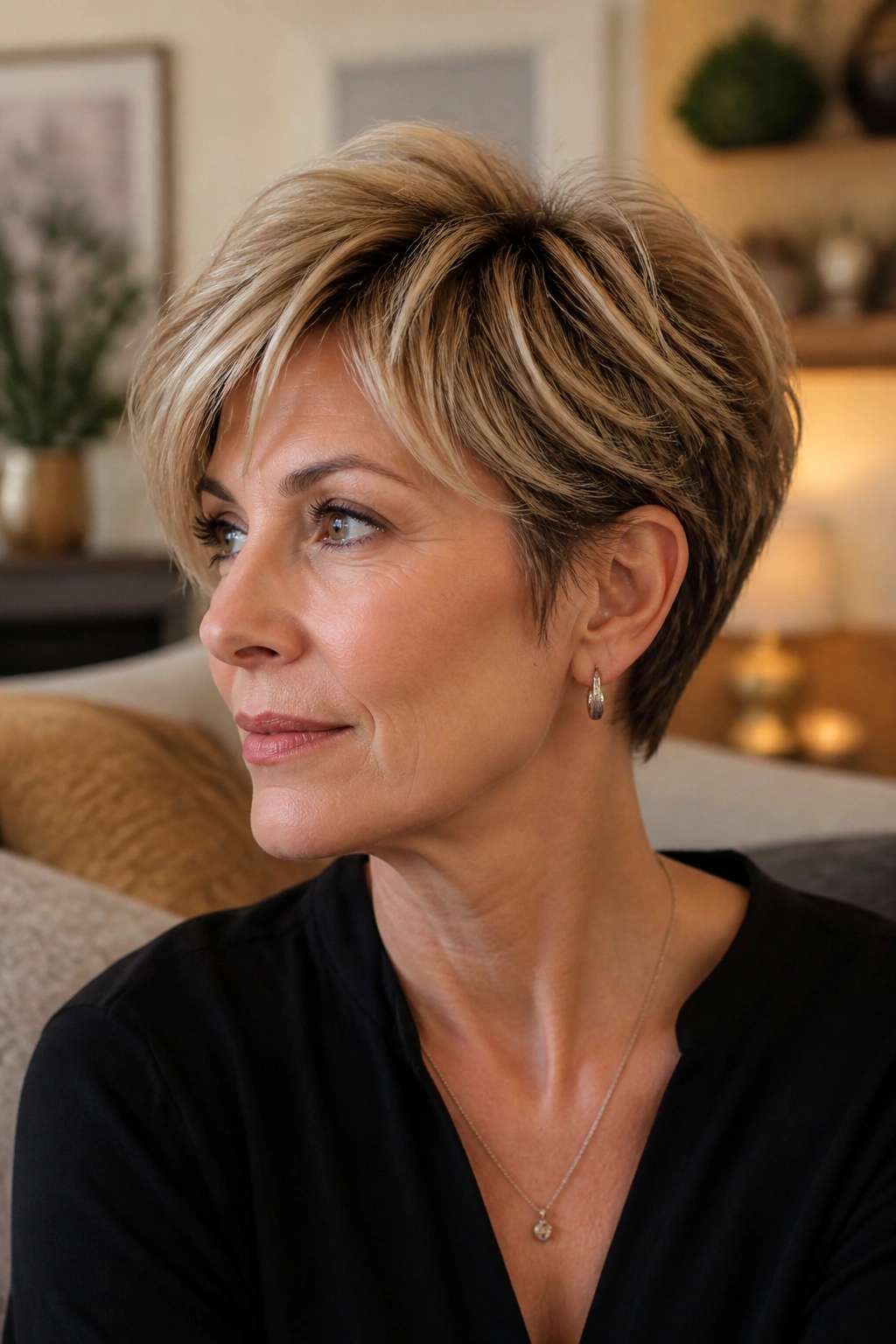
The bixie sits in the comfortable middle. It has the softness of a bob and the lightness of a pixie, which is useful when you want short hair without committing to one camp or the other. On fine hair, that in-between shape can look fuller than either extreme.
The top is usually a bit longer than a traditional pixie, while the ends still sit short enough to keep the style lifted. That means you get movement around the ears and crown without the hair falling flat along the neck. It’s practical, but not boring.
I like this cut for people who are growing out a pixie or testing the waters before going shorter. It also holds up well when air-dried, which is nice if you do not enjoy a long styling routine. A touch of mousse and a bit of finger shaping is often enough.
21. Tapered Crop With a Soft Nape
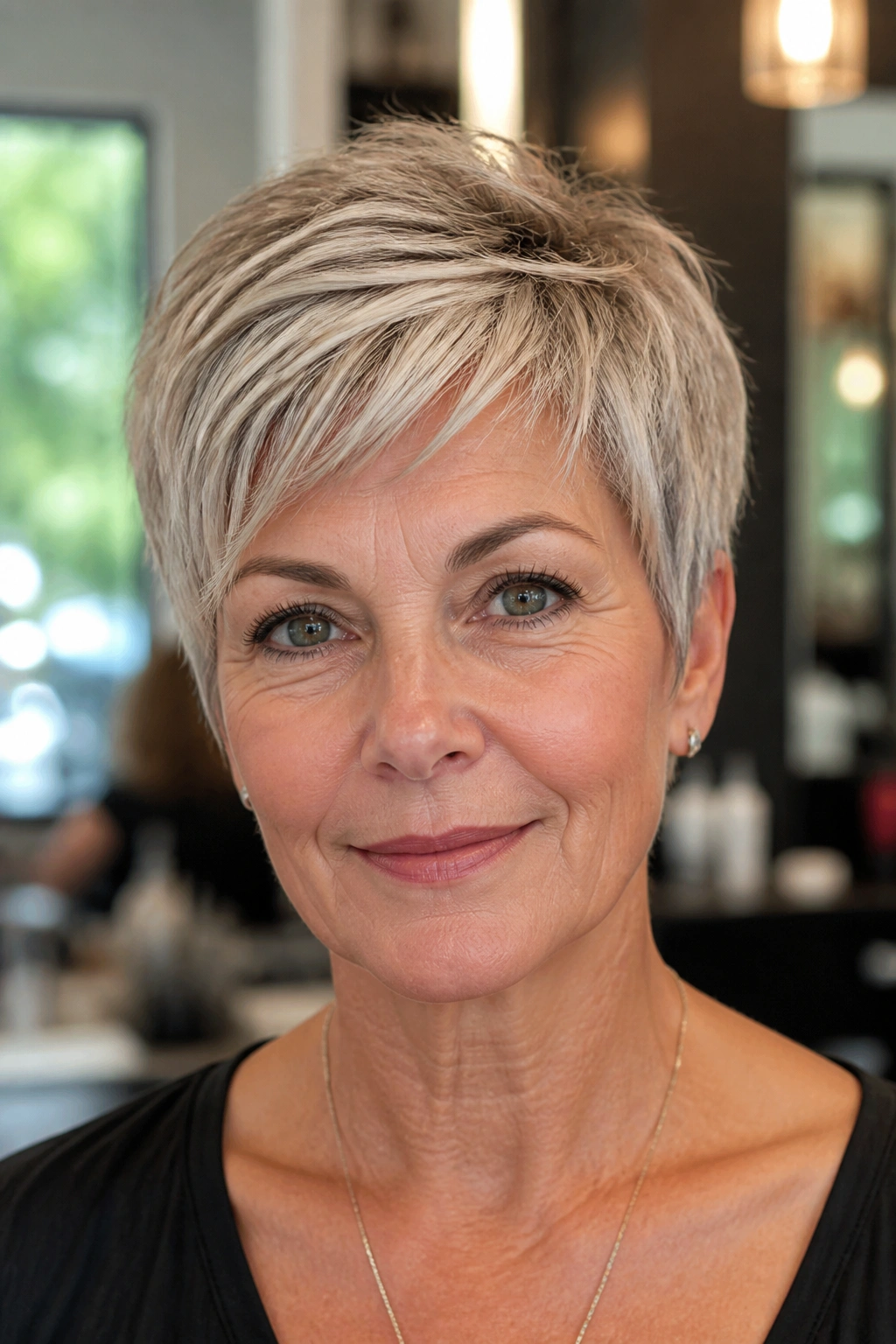
For very flat crowns, a tapered crop is hard to beat. The shape is short and neat at the nape, then slightly fuller on top, which helps fine hair look lifted without looking puffy. It is a clean, honest cut.
What to Ask For
Tell your stylist you want the neckline tapered closely but the top left with enough length to move. That balance is the whole point. If the top gets cut too short, the style can lose its shape and start to look like a buzzed blur instead of a crop.
- Keep the sides close, not shaved unless you want a stronger contrast.
- Leave a touch more length at the crown for soft lift.
- Style with matte paste if you want texture, or cream if you want it smoother.
This cut is easy to wear and easy to maintain, which is why people return to it. It does not ask for much. That is often a gift.
22. Textured Crop With Choppy Top
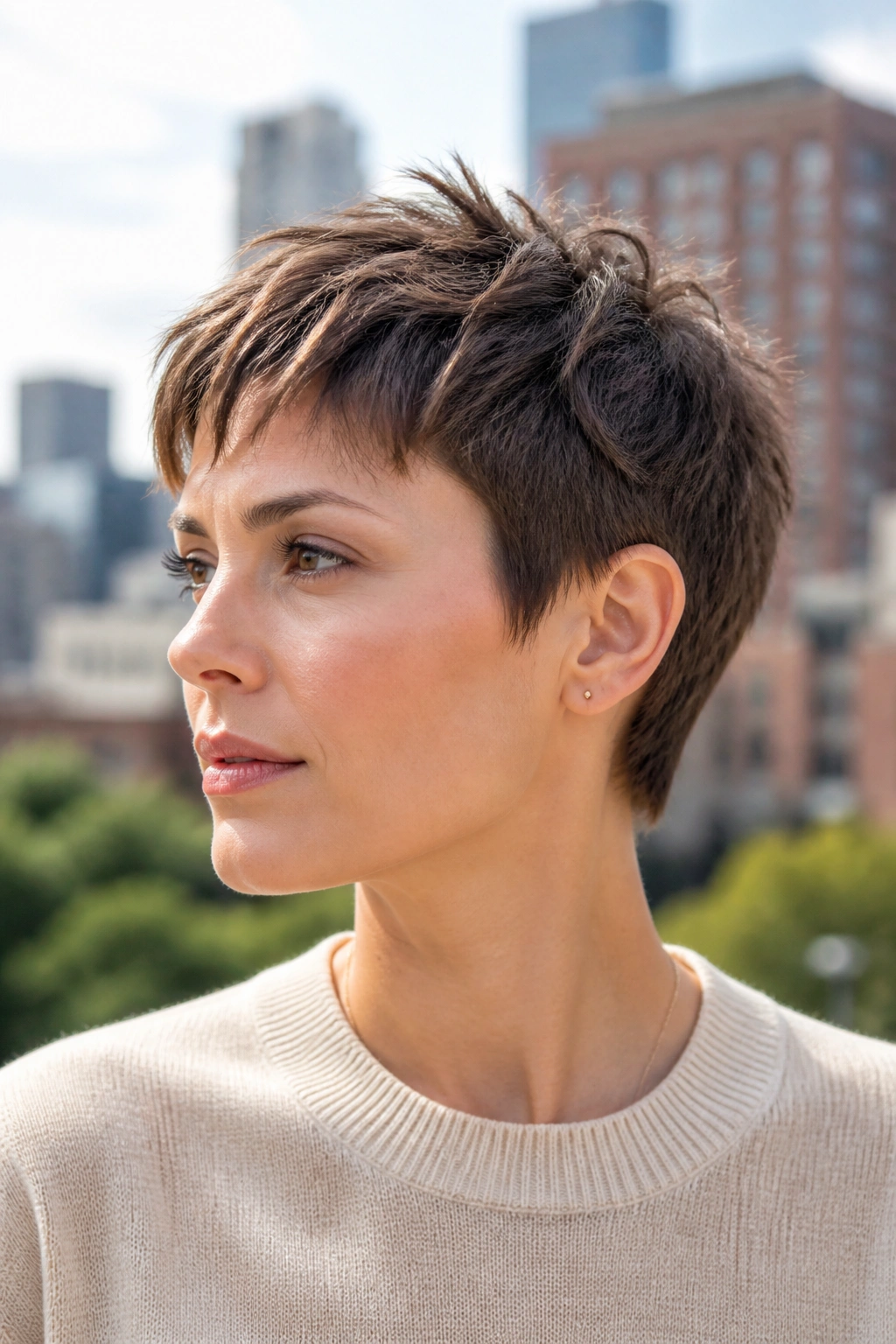
If you like messy, but not messy in a bad way, this is the one. The textured crop uses choppy top layers to create separation, and on fine hair that separation can make the strands look denser than they really are. The trick is keeping the chunks small and controlled.
A matte paste works better than shiny products here. Shine can make the hair look thinner because it exposes the scalp more clearly. Texture gives the eye more to look at, which is exactly what you want.
This cut suits straight or slightly wavy hair that needs some edge. It can look a little too fractured on very sparse hair, so the shape has to stay compact. If the ends get too wispy, the whole thing loses its punch.
23. Soft Crop With Curtain Bangs
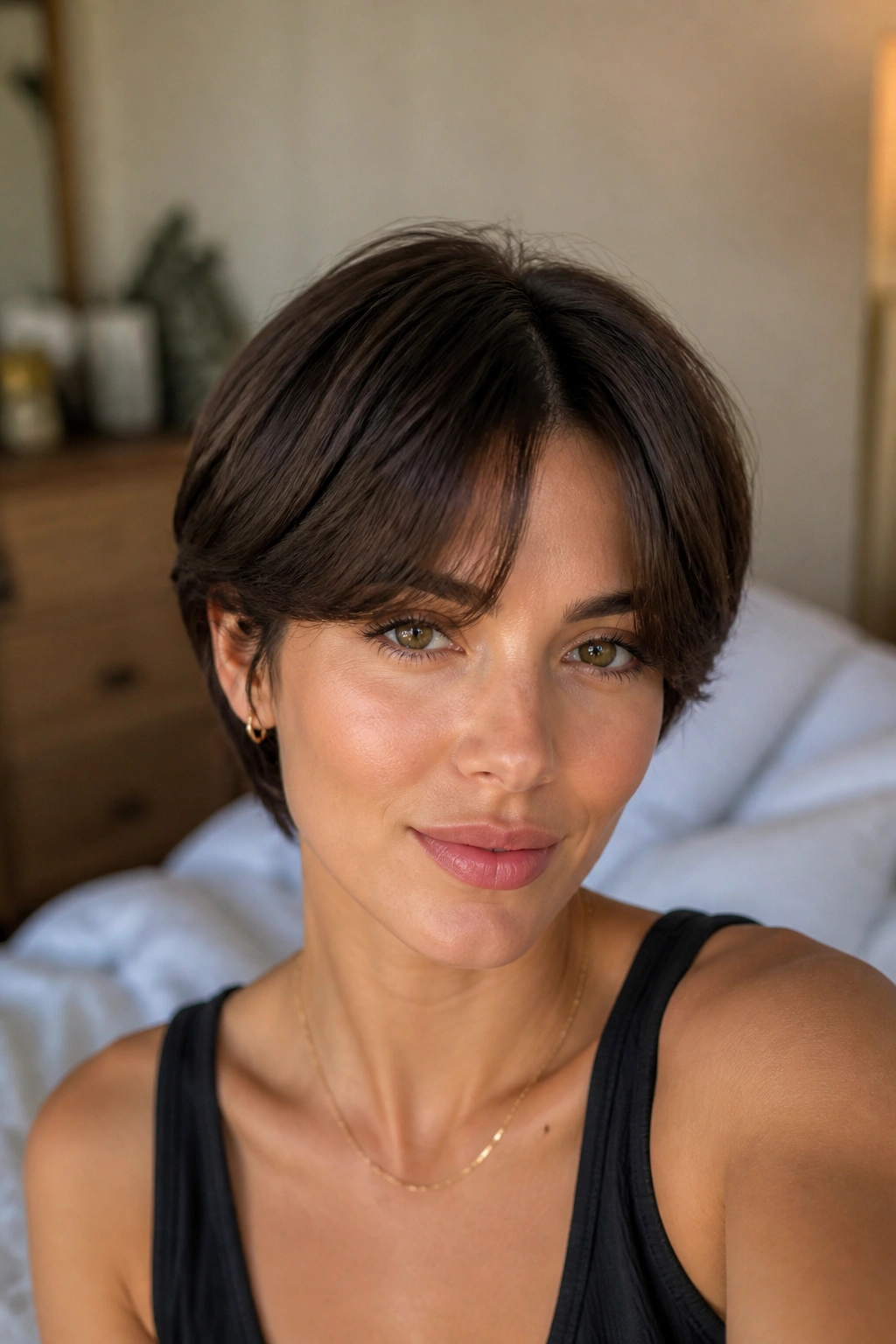
Can short hair still frame the face gently? Absolutely. The soft crop with curtain bangs does that by keeping the sides short and adding a parted fringe that opens in the center and falls away from the cheeks.
The bang shape matters here. Curtain bangs soften a high forehead and give fine hair a sense of flow without needing long lengths. The short crop underneath keeps the style from sagging, while the fringe gives it a more lived-in look.
Best Styling Move
- Blow-dry the bangs away from the face first.
- Use a round brush or your fingers to set the split.
- Keep the rest of the crop piecey, not fluffy.
This is a good option if you want a short haircut that still feels gentle around the face. It has shape, but it does not feel sharp.
24. Side-Part Crop for Easy Volume
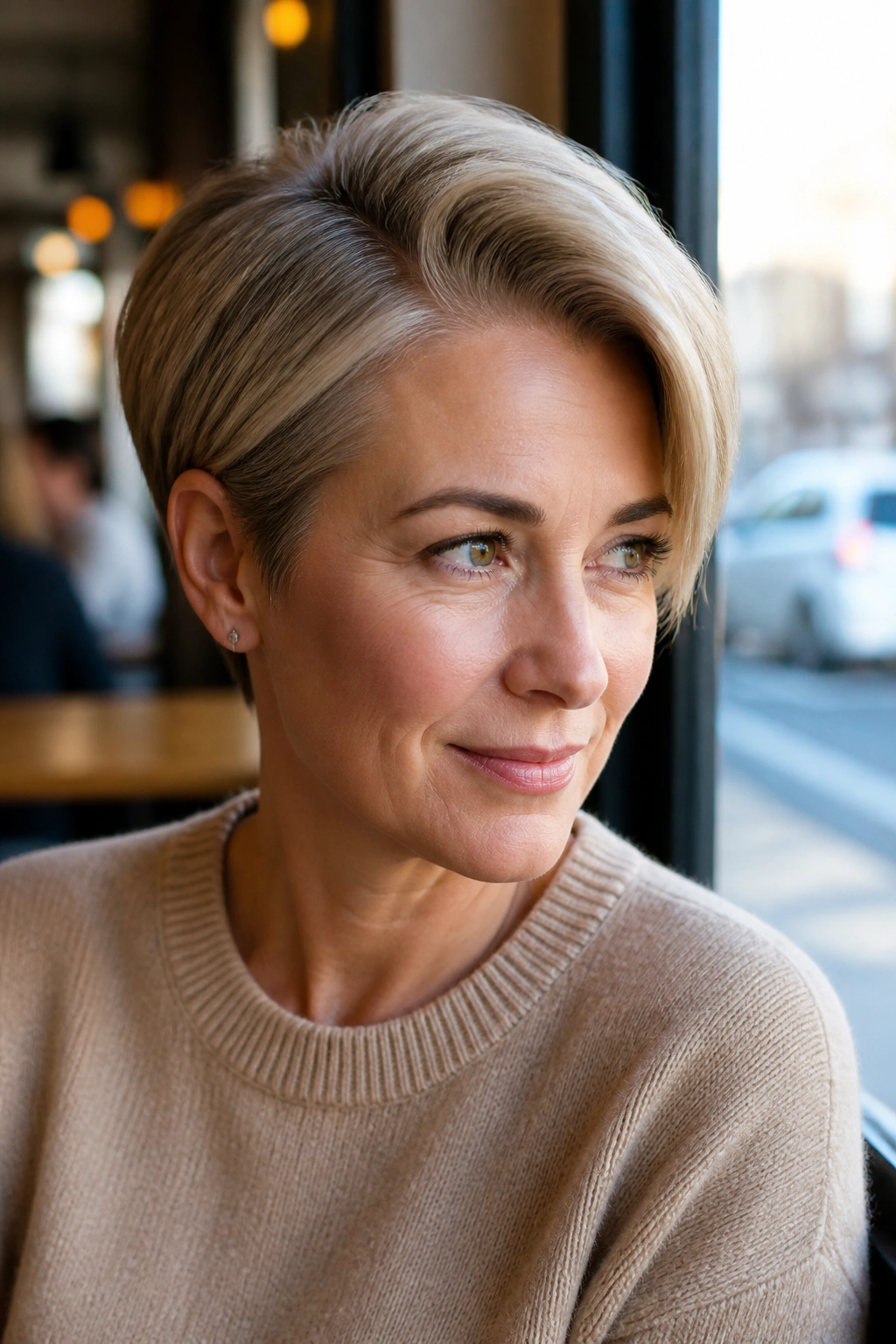
Middle parts are not the only route to volume. A deep side-part crop can lift fine hair at the roots and create instant height on the heavier side, which is useful when your crown tends to lie flat no matter what you do.
The side part changes the whole read of the haircut. Instead of a symmetrical shape, you get a diagonal line that draws the eye upward. That little shift can make the hair look fuller without adding length or layers.
This cut is especially good for round faces or anyone who wants a quick styling shortcut. You can flip the part, spray the roots, and get out the door. It sounds simple because it is simple, and that is part of why it works.
25. Wedge Cut With a Full Back
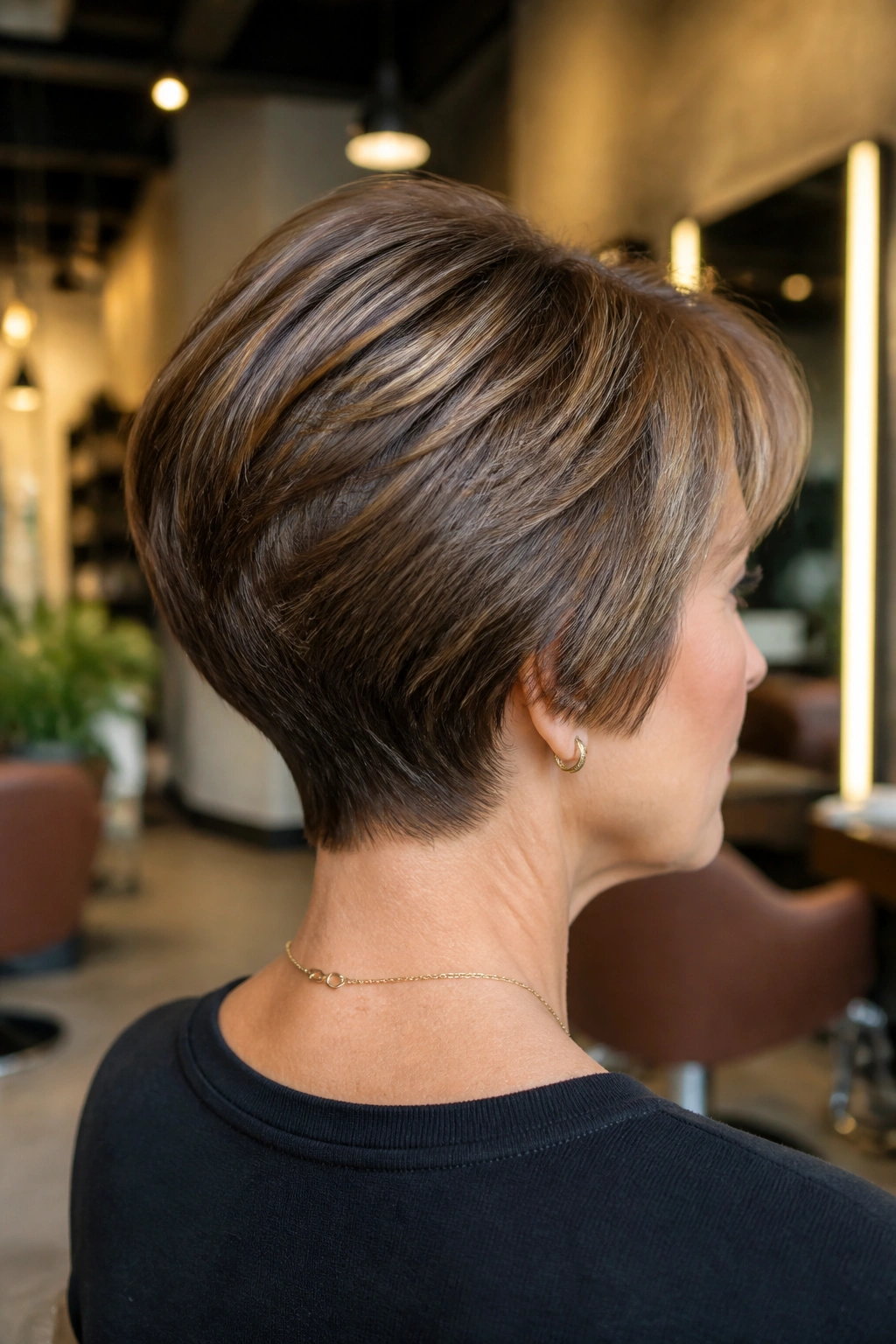
A wedge cut has a shape you can feel before you even see it. The back is fuller and rounded, while the sides taper forward in a controlled way. For fine hair, that solid back section can make the whole head look thicker.
The cut has a little vintage energy, which some people love and some people fight. The difference usually comes down to styling. If the finish is smooth and the angles are soft, it feels polished. If it is too stiff, it can read older than intended.
Key Details
- The back should build weight without becoming bulky.
- The front needs enough length to soften the angle.
- Blow-dry with a round brush to keep the curve clean.
This is a strong cut for hair that needs structure and does not want to be fussed over all day.
26. Asymmetrical Bob for Fine Strands
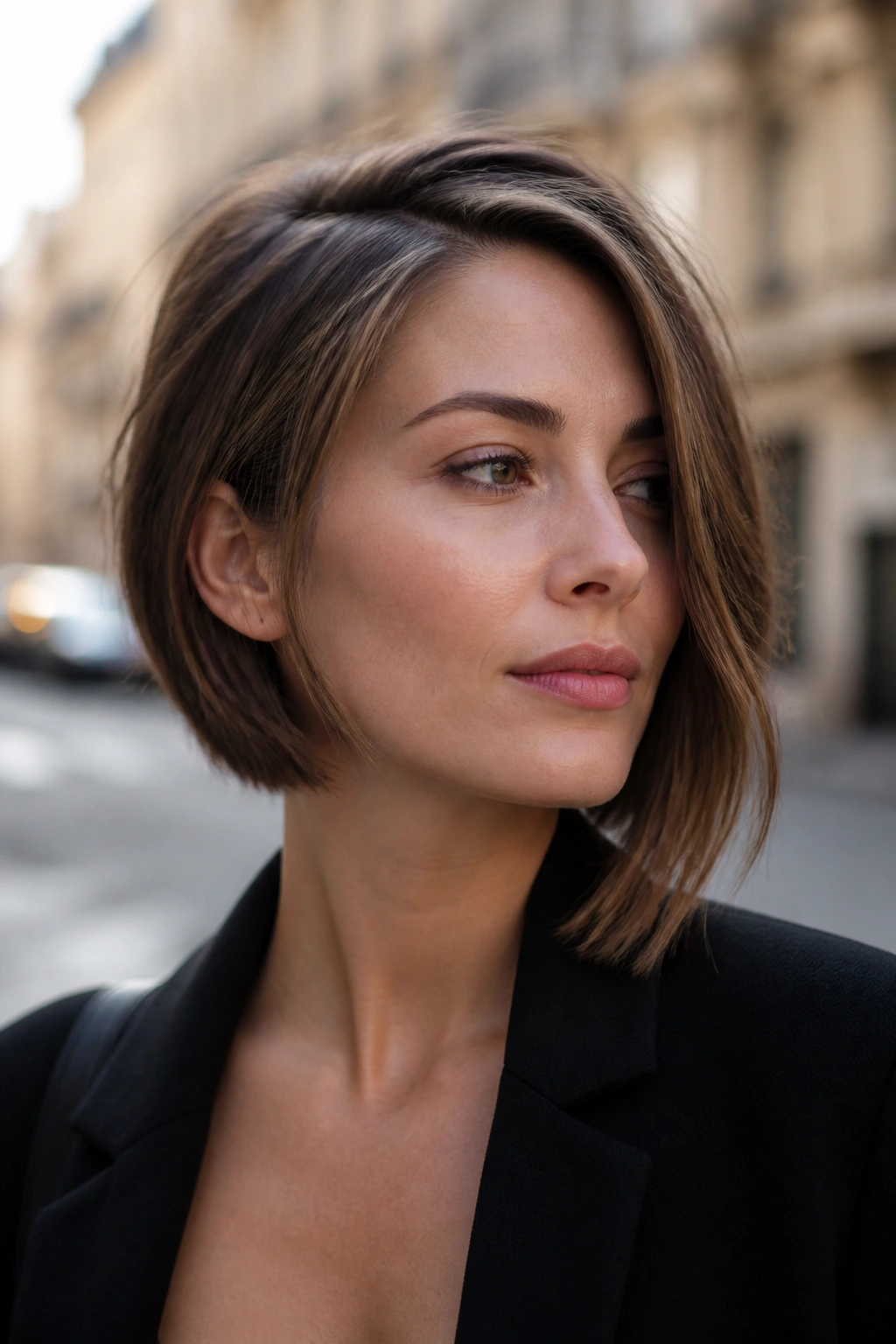
Uneven length can make fine hair look richer, not thinner. The asymmetrical bob works because the eye follows the longer side, which creates the impression of more material and more movement than a perfectly even cut would. It is a visual trick, and a good one.
The shorter side keeps the neck open, while the longer side gives the haircut a bit of swing. That contrast can sharpen a jawline or soften a round face, depending on how the line is placed. It also keeps the style from feeling too predictable.
Choose this cut if you like a little drama but do not want a full-on edgy crop. It works best on straight or lightly wavy hair, where the angle stays visible. If the hair is very curly, the asymmetry can get lost unless the shape is kept clean.
27. Collarbone Lob With Blunt Ends
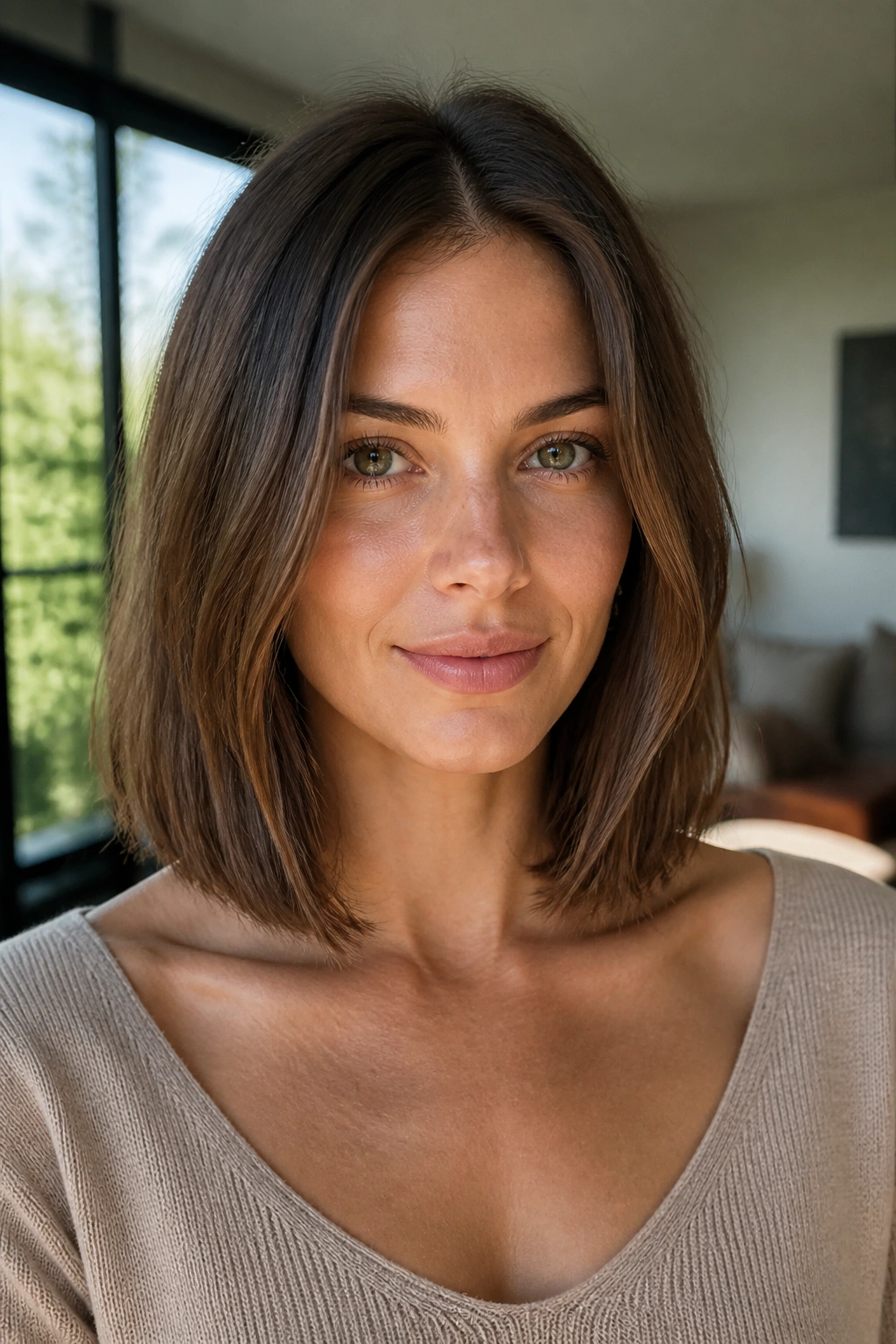
Sometimes the smartest short haircut is the one that keeps a little more length. The collarbone lob with blunt ends gives fine hair a denser look while staying light enough to move. It’s the cut for someone who wants shorter hair without giving up all their styling options.
Why People Keep Coming Back to It
The blunt edge keeps the perimeter solid, which is the part that matters most. A slight bend at the ends helps the hair feel soft, but the overall shape stays thick-looking. That matters if your hair tangles easily or if you hate seeing see-through ends.
- Keep layers minimal.
- Ask for the length to graze the collarbone, not sit far below it.
- A deep side part can give the roots a little extra lift.
This cut is useful when you want flexibility. You can tuck it, clip it, curl it, or wear it straight. It does a lot without showing off.
28. Wolf Bob With Controlled Movement

If you want movement and you do not mind a bit of edge, the wolf bob can work. The trick is keeping it controlled. Fine hair does not have enough density to carry a wild, over-layered version, so the cut has to stay compact and balanced.
The best version keeps the outline solid while letting the crown and face pieces move a little more freely. That gives the haircut lift without turning the ends into string. It is a nice choice for wavy hair that wants shape but also likes a lived-in finish.
This is not the cut I’d hand to someone who wants clean perfection. It suits people who like texture, a little roughness, and hair that does not look too polished. If the layers are light and the perimeter stays full, it can be a very good fit.
Final Thoughts
The short haircuts that flatter fine hair share the same habits: a solid outline, careful layering, and enough length in the right places to keep the hair looking dense. Blunt bobs, controlled crops, and soft pixies usually do more for fine strands than heavy, broken layers ever will.
If your hair tends to go flat, start with the cuts that keep the perimeter clean. If you want movement, choose texture with restraint. That difference sounds small, but on fine hair it changes everything.
Bring one or two photos to the salon and be specific about what you want the ends to do. Dense, soft, sharp, lifted, rounded — those words matter more than a vague “shorter.”
