



Fine hair does not need more drama. It needs a smarter shape.
That sounds almost too simple, but it’s the part most people miss. Fine hair can look flat for two different reasons: the strands are thin, or the density is low, or both. Those are not the same thing, and the haircut that flatters one head of hair can make another look thinner in about five minutes. A blunt line, the right fringe, and the right length can do more than a shelf full of volume spray.
A cut for fine hair has to earn its keep. If it removes too much weight in the wrong places, the ends turn wispy and the hair loses the little bit of body it had. If it hangs too long, it drags the roots down and the whole style starts looking tired by lunch. The good haircuts work with the hair’s natural tendency to collapse, not against it.
The list below leans on that idea over and over: clean edges, controlled layers, short lengths that support lift, and face-framing pieces that don’t chew up density. Some are polished, some are a little rough around the edges, and a few are the cuts I’d pick for someone who wants their hair to look thicker without pretending they have a different head of hair. Start with the one that matches the way you actually live.
1. Blunt Chin-Length Bob
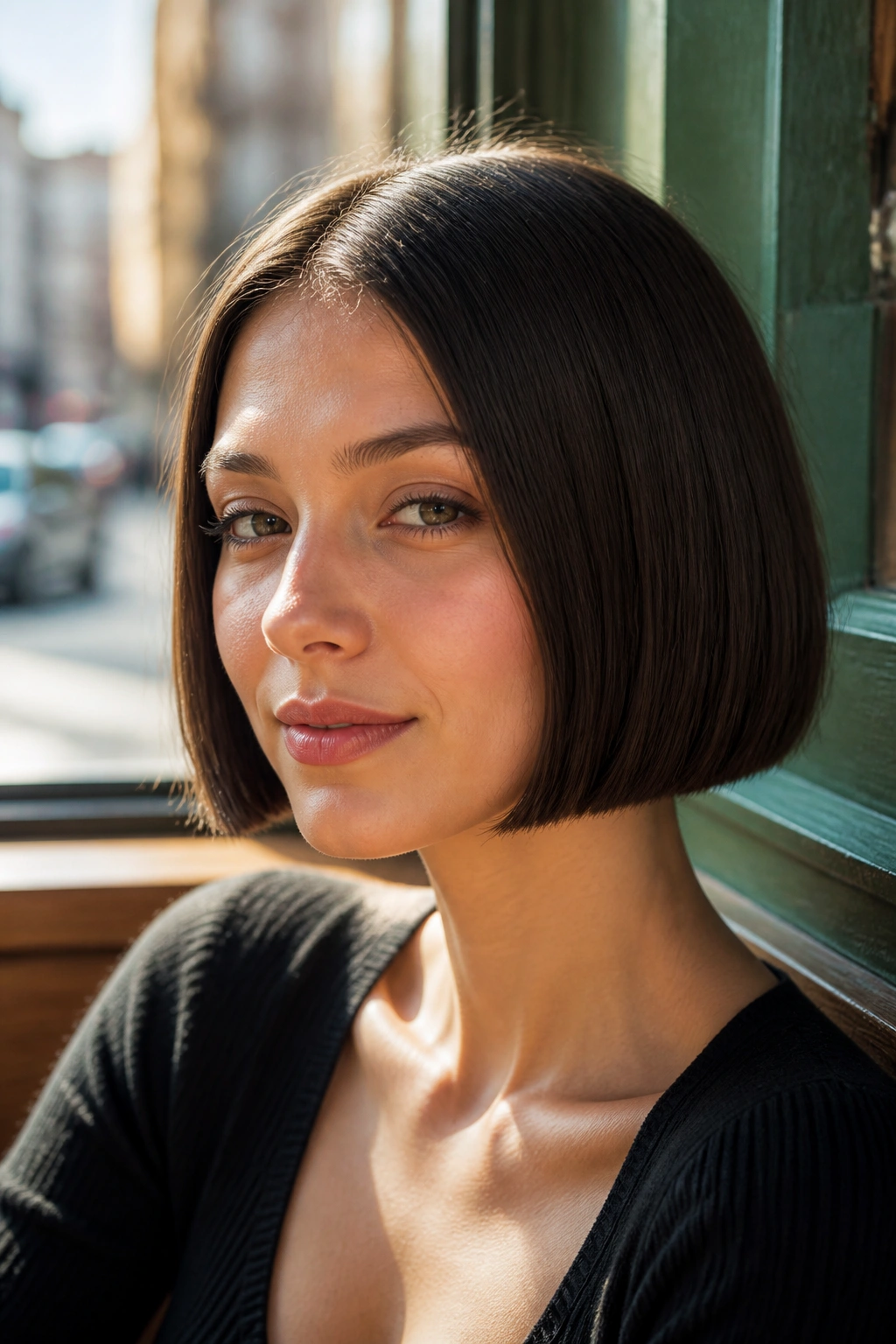
A blunt chin-length bob is the old reliable of haircuts for fine hair. The line sits right around the jaw, which gives the hair a stronger visual edge and makes the ends look fuller than they would in a longer cut.
Why It Works for Fine Strands
The magic is in the perimeter. A clean, blunt line keeps all the ends sitting at nearly the same length, so the eye reads the shape as denser. If the bob hits just at or a hair below the chin, it also puts some lift near the face, which helps when your roots want to collapse.
Ask for no heavy thinning shears and very little layering inside the shape. The cut should look crisp when it air-dries and still hold together if you rough-dry it with a round brush.
- Keep the length at the jaw or just below it.
- Ask for blunt ends, not shredded ends.
- Style with a 1-inch round brush or a flat brush and a small bend at the ends.
- Use a lightweight mousse at the roots, not a heavy cream.
Pro tip: If your hair flips out at the bottom, a tiny bevel inward at the ends is enough. You do not need a dramatic curl under.
2. Collarbone Lob with Minimal Layers
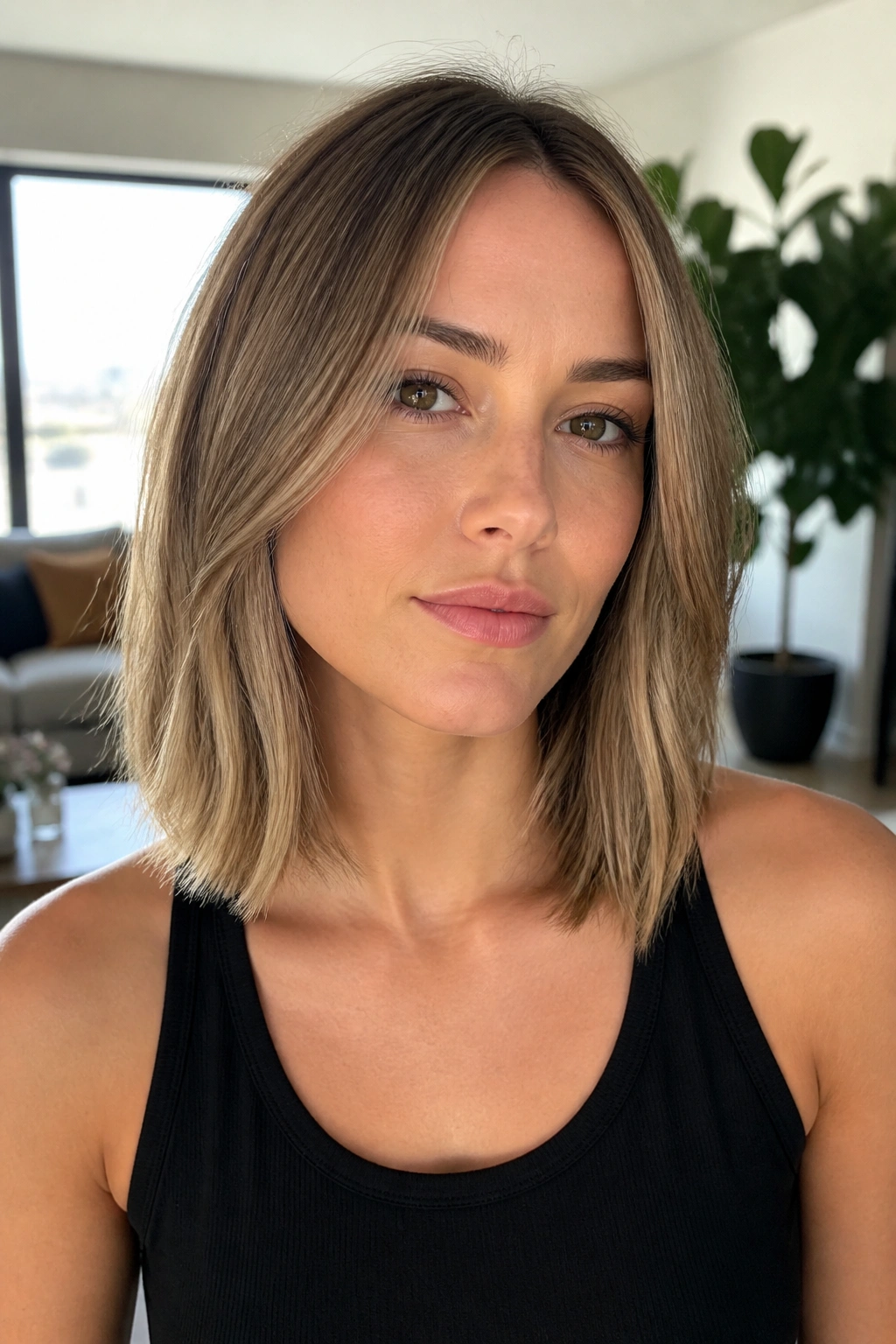
The collarbone lob is one of the easiest haircuts for fine hair because it gives you a little length without dragging the style down. It’s long enough to feel soft, short enough to keep some movement, and blunt enough to avoid that see-through look at the ends.
The trick is restraint. A collarbone lob with too many layers turns limp fast. A collarbone lob with minimal layers keeps the silhouette solid while still letting the hair swing when you walk. That swing matters more than people think. Hair that moves looks fuller than hair that just lies there.
Wear it straight for a sleek line, or bend the ends with a 1-inch curling iron and brush them out so the texture looks loose, not curled. That keeps the style from getting puffy.
3. French Bob
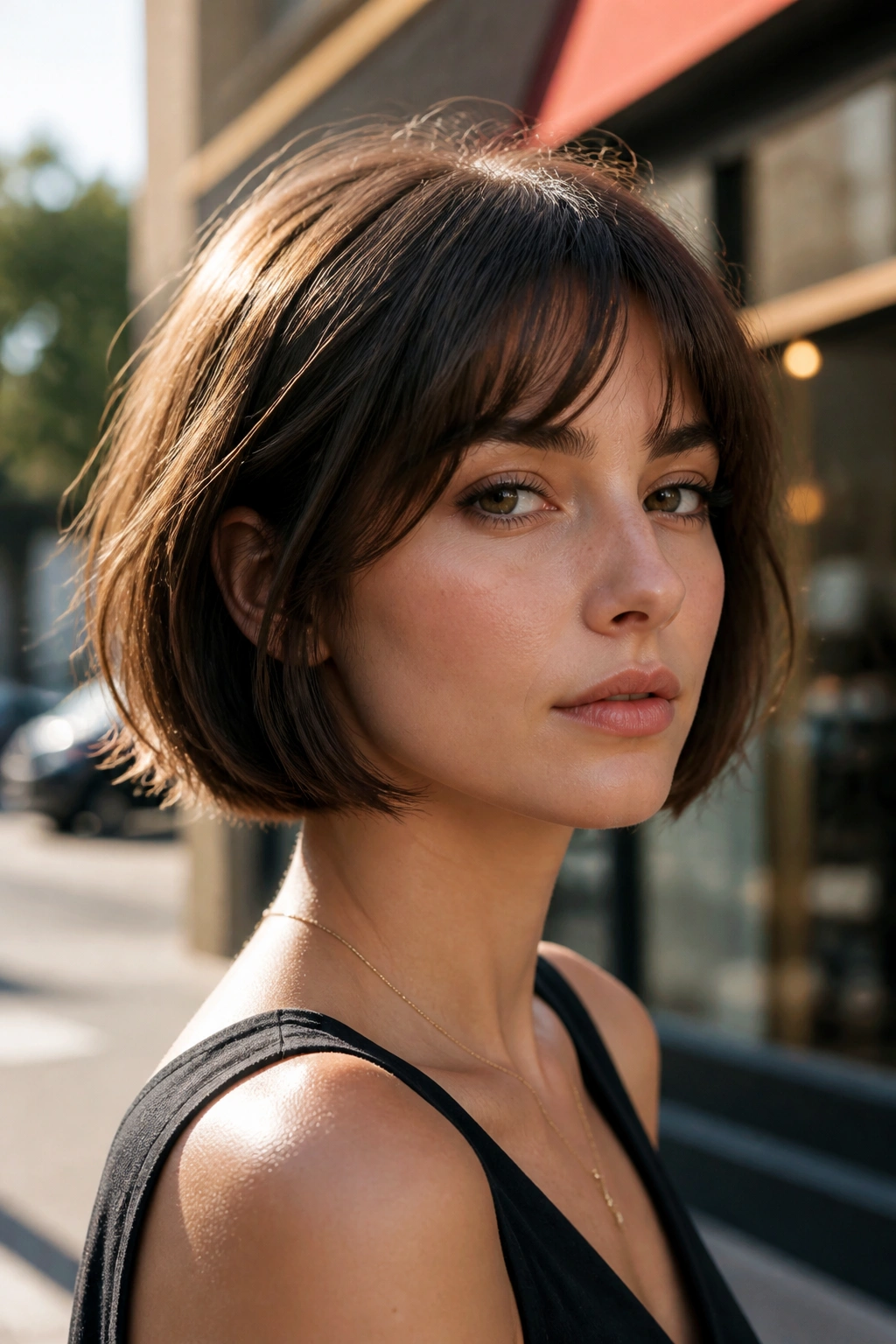
Why does a French bob make fine hair look fuller so fast? Because it cuts away the dead weight and puts all the attention on the line of the haircut, not the amount of hair you have.
A French bob usually sits around the cheekbone or just under the ear, sometimes with a soft fringe. On fine hair, that shorter length gives the roots a fighting chance. The hair does not have to drag itself past the collarbone, so it springs up more easily and feels cleaner around the head.
How to Ask for It
Tell your stylist you want a short, soft bob with a blunt base and only light texturizing around the face. If you want bangs, keep them airy. Heavy fringe on fine hair can swallow the whole cut and make the front look stringy.
This cut looks especially good on straight or slightly wavy hair. It has attitude. A little bit of bedhead only helps.
4. Pixie Crop
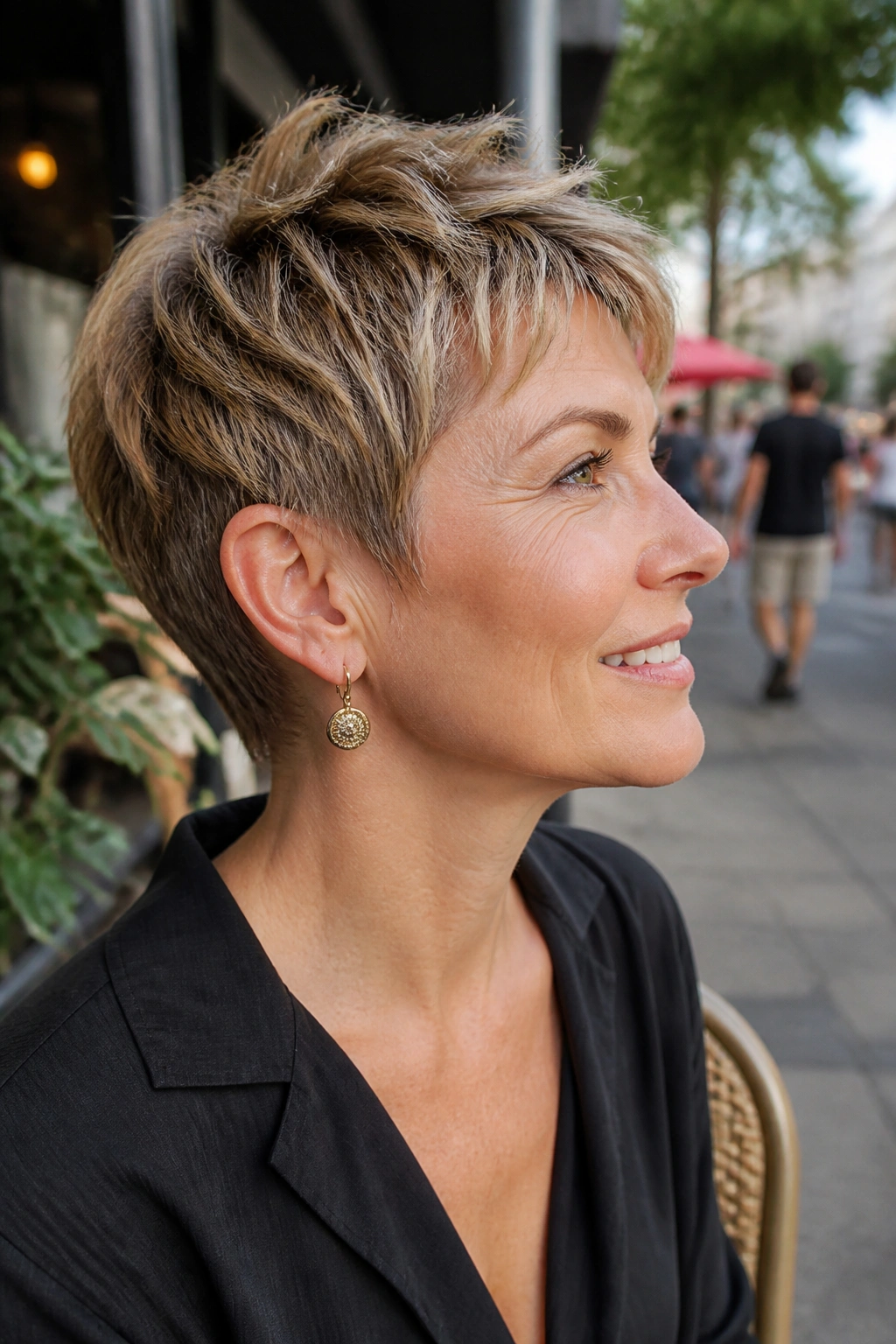
If your fine hair refuses to hold a jaw-length shape, a pixie crop can feel like a relief. The cut takes away the weight that pulls the roots flat, and suddenly the hair has room to stand up on its own.
A good pixie for fine hair is not shaved to the scalp all over. That’s the part people get wrong. You want enough length on top—often around 1.5 to 3 inches—to create lift and texture, with shorter sides and a soft nape so the head shape looks clean.
- Keep the top piecey, not spiky.
- Ask for soft scissor work around the ears.
- Use a pea-sized amount of matte paste.
- Blow-dry the top forward, then push it back with your fingers.
One caution: If your crown is very flat, the top needs a little more length than you think. Too short, and the style collapses instead of floating.
5. Soft Shag
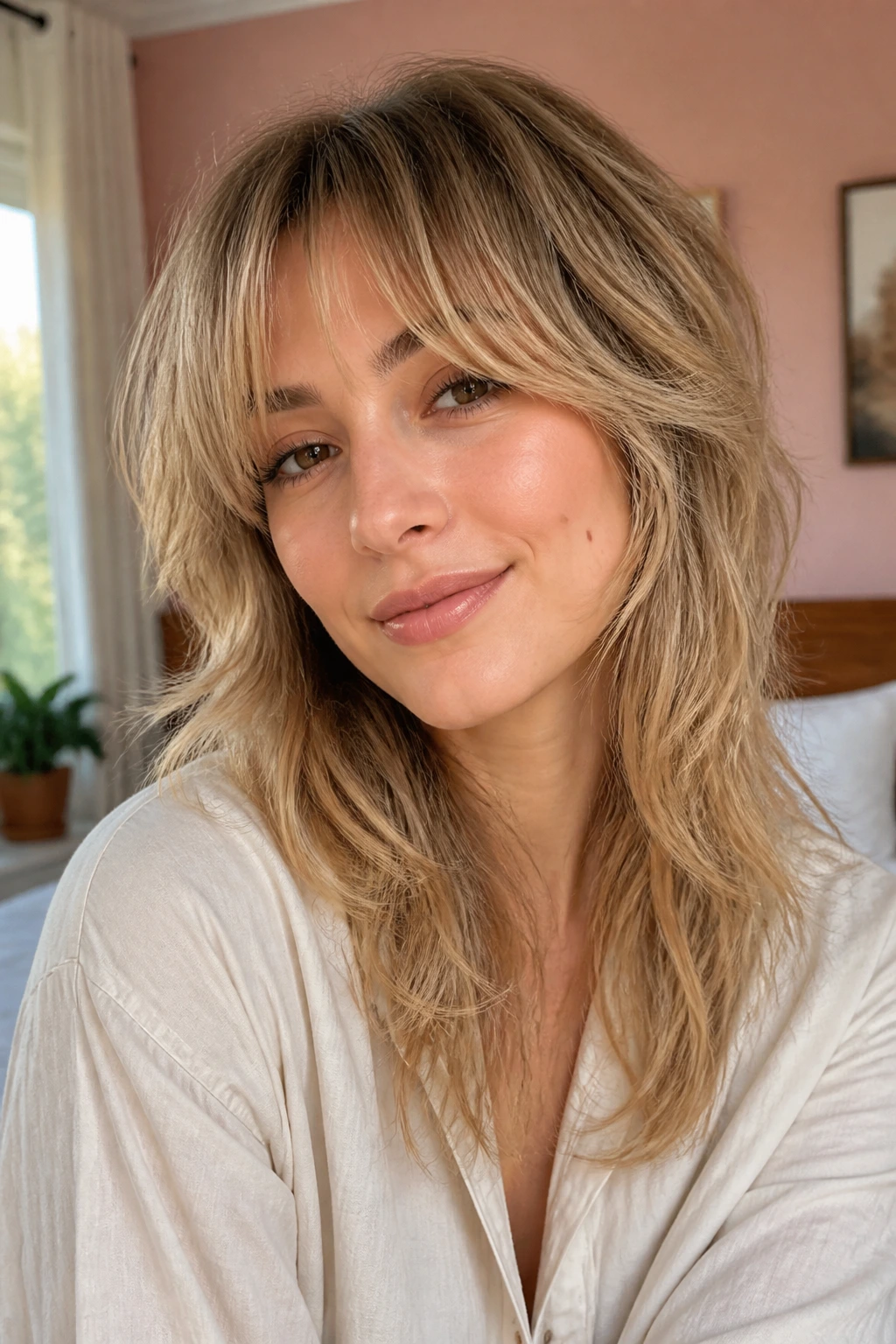
A soft shag works for fine hair when it is done with a light hand. Not the shredded, overworked version that looks cool for about three days. The useful version is gentler: face-framing pieces, soft internal movement, and enough perimeter left intact to keep the ends from looking sparse.
Fine hair likes a shag only when the layers are controlled. If the stylist chops too many short pieces into the crown, the whole cut can go fluffy at the top and thin at the bottom. That is not volume. That is stress.
Keep the layers long enough to blend, especially if your hair is shoulder length or longer. The shape should feel airy, not hacked apart. A soft wave spray and a quick scrunch can be enough; you do not need a big styling ritual every morning.
6. Inverted Bob
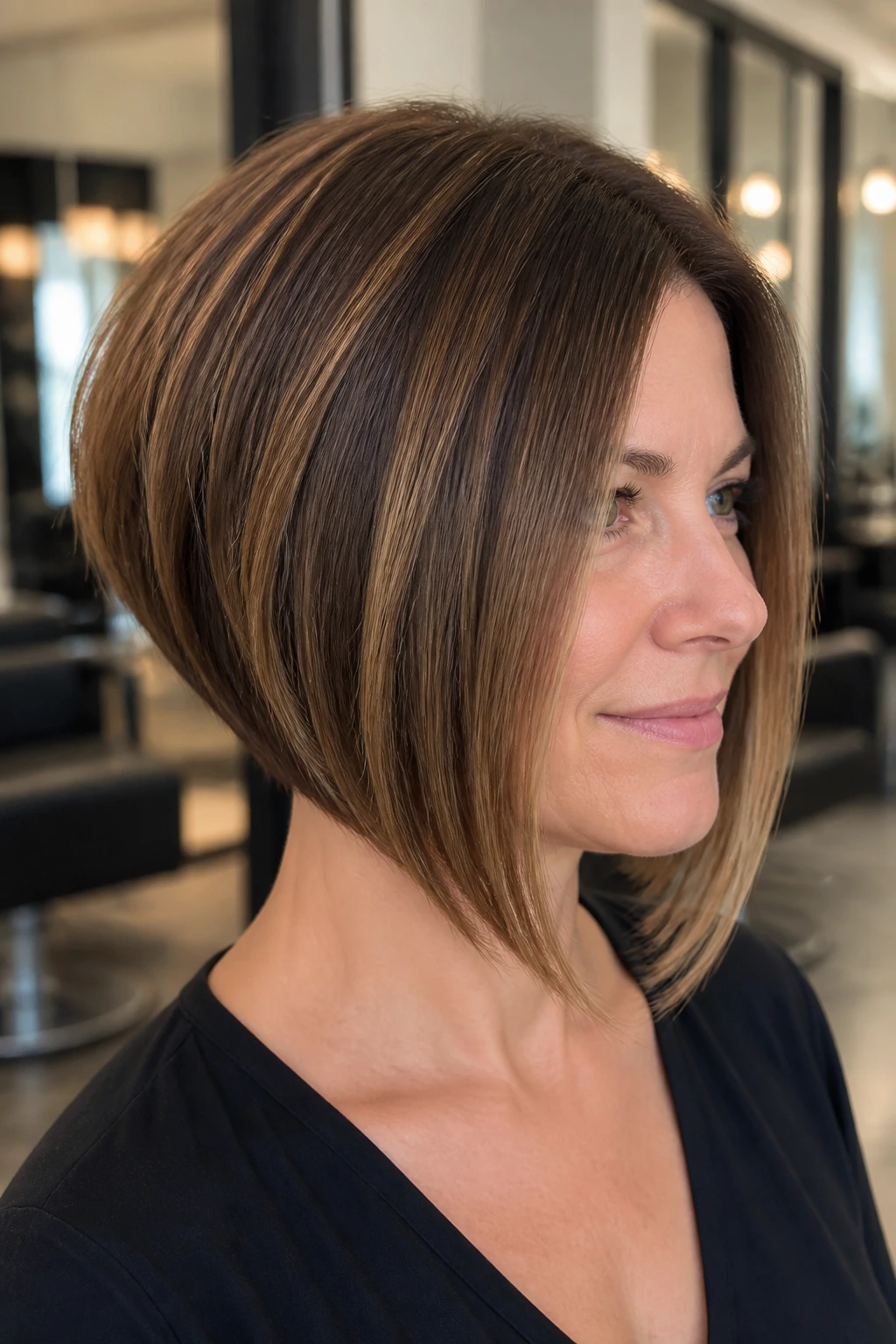
Unlike a straight bob, the inverted bob is shorter in the back and longer toward the front, and that angle gives fine hair a stronger profile. It creates the illusion of lift at the crown without forcing you to pile on product.
The shorter back removes the weight that usually flattens fine hair at the nape. The longer front keeps the cut from looking severe, which matters if you want something sharp but not harsh. It’s one of those haircuts that looks polished even when the styling is lazy.
This cut is a good fit if your hair lies flat near the back of your head or if the ends always turn inward on their own. The angle does some of the styling for you. Ask for a gentle slope, not a dramatic wedge, unless you want a stronger shape.
7. Box Bob
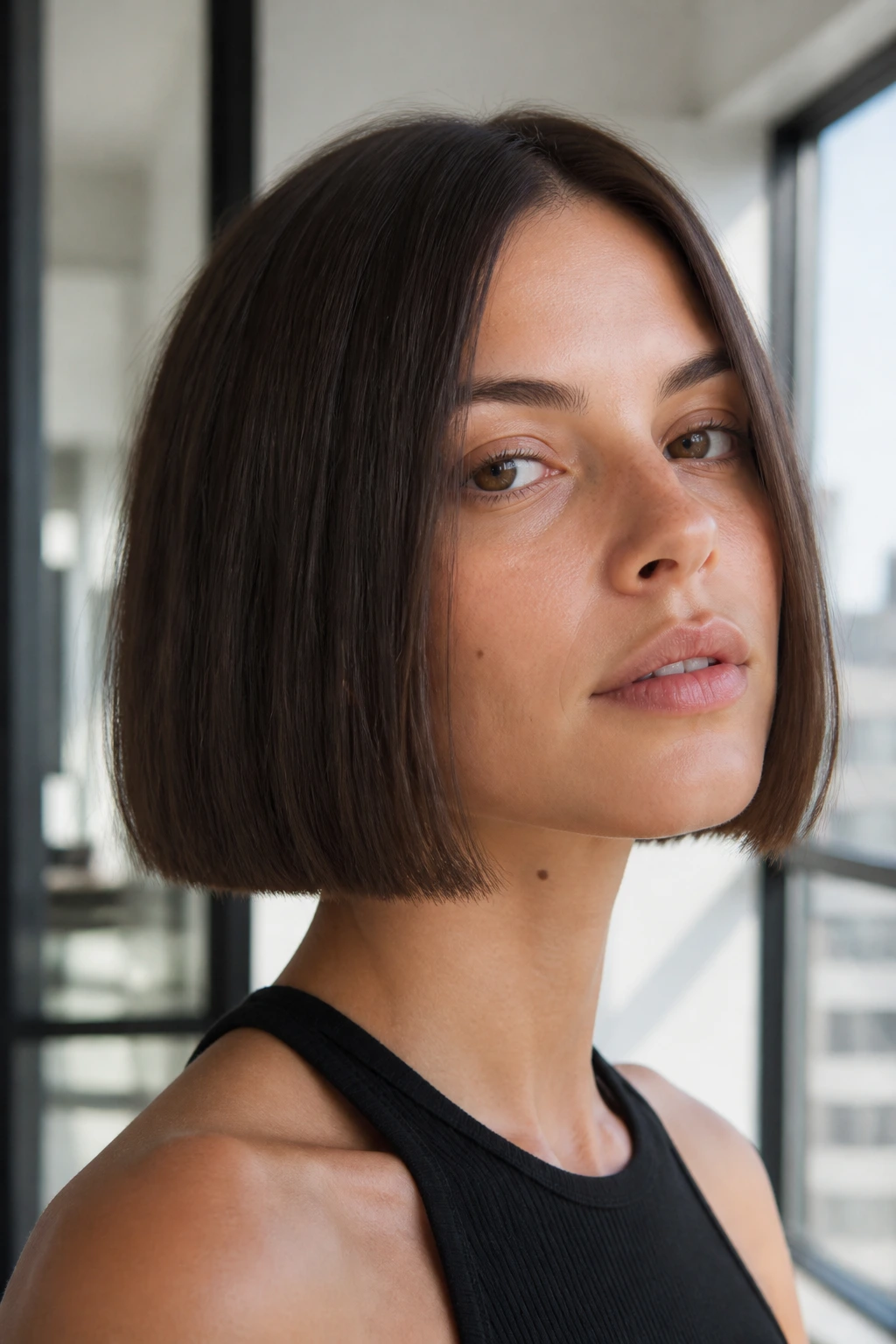
A box bob is blunt, square, and clean along the bottom edge. That sounds severe, but on fine hair it can be a lifesaver because the shape makes the hair look fuller at the perimeter.
What Makes It Different
The box bob usually keeps the sides and back at nearly the same length, which creates a solid, graphic outline. There is less softness than a rounded bob, and that is the point. Fine hair often looks thinner when it is over-layered and over-shaped. A box bob says, “Nope, we’re keeping the edge.”
What to Tell Your Stylist
- Ask for a solid one-length perimeter.
- Keep texturizing light and only around the surface.
- Avoid razoring through the ends.
- If you want movement, add a subtle side part rather than more layers.
This cut suits people who like neat hair and do not mind a little maintenance. The line has to stay sharp, or the whole thing loses its bite.
8. Curtain-Bang Lob

A curtain-bang lob is a smart middle ground if you want softness without giving away the body at the ends. The bangs open at the center and sweep into the rest of the cut, which keeps the face framed without a hard line across the forehead.
The biggest mistake with curtain bangs on fine hair is making them too thick. That front section can eat up density fast. Keep the bangs light, start them around nose length, and let the longest pieces blend near the cheekbones. The rest of the lob should stay fairly blunt so the cut still has weight.
This style works especially well if your face feels long and you want a little width around the eyes and cheekbones. It also grows out more gracefully than straight-across bangs, which is not a small thing. Daily life gets in the way, after all.
9. Bixie
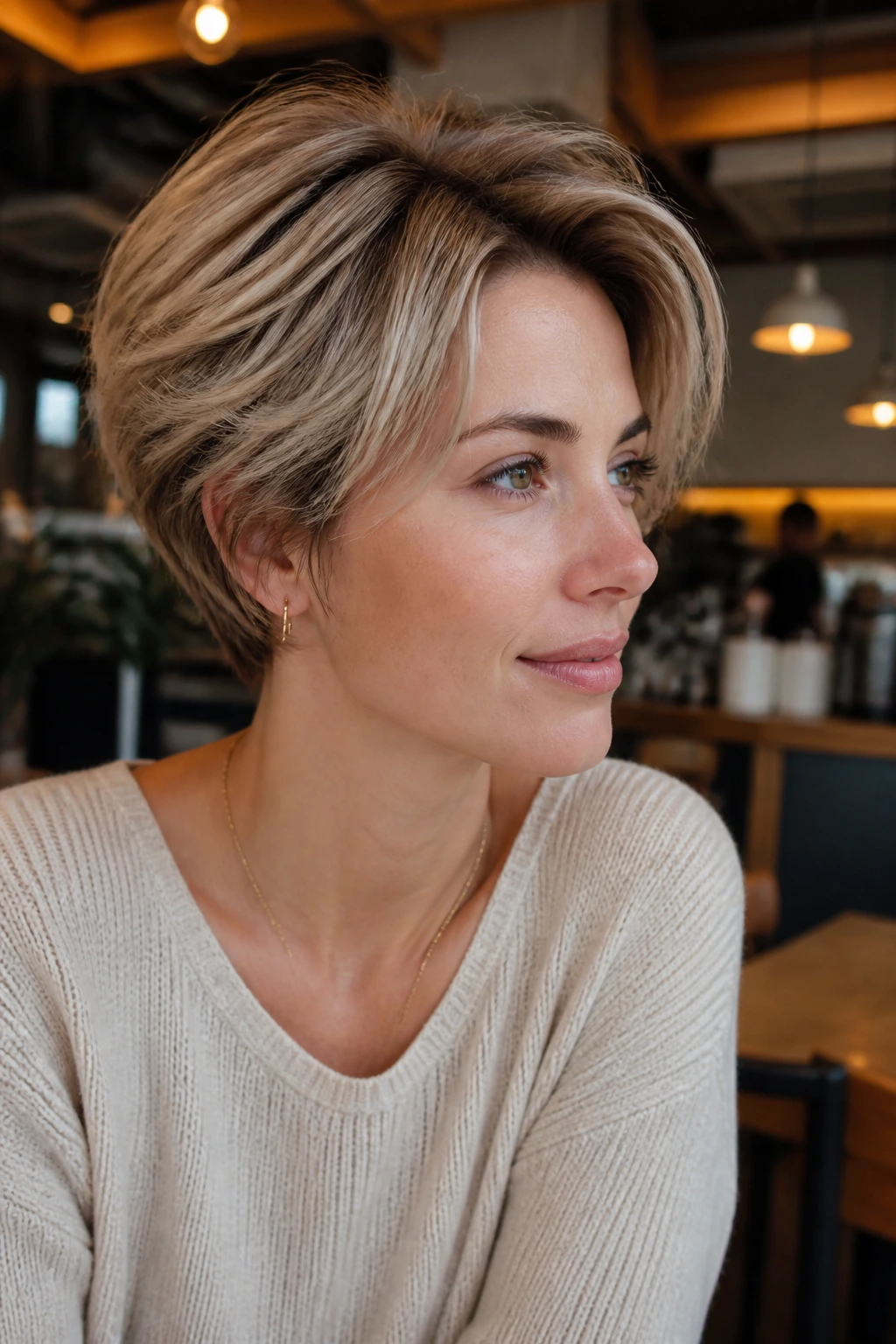
What do you get when a bob and a pixie have a sensible conversation? A bixie.
It’s a short cut with a little more length than a pixie and more air than a bob. For fine hair, that in-between length is useful because it gives you lift at the crown while keeping enough softness around the face to avoid that overly cropped feeling.
How to Style It
Use a lightweight volumizing mousse at the roots, then rough-dry with your fingers until the top is about 80 percent dry. If you want the pieces to separate, finish with a tiny amount of styling wax warmed between your palms. Too much product will make fine hair look greasy fast.
The bixie is a good choice if you want short hair but do not want the maintenance of a full pixie. It feels modern without being fussy.
10. Long One-Length Cut
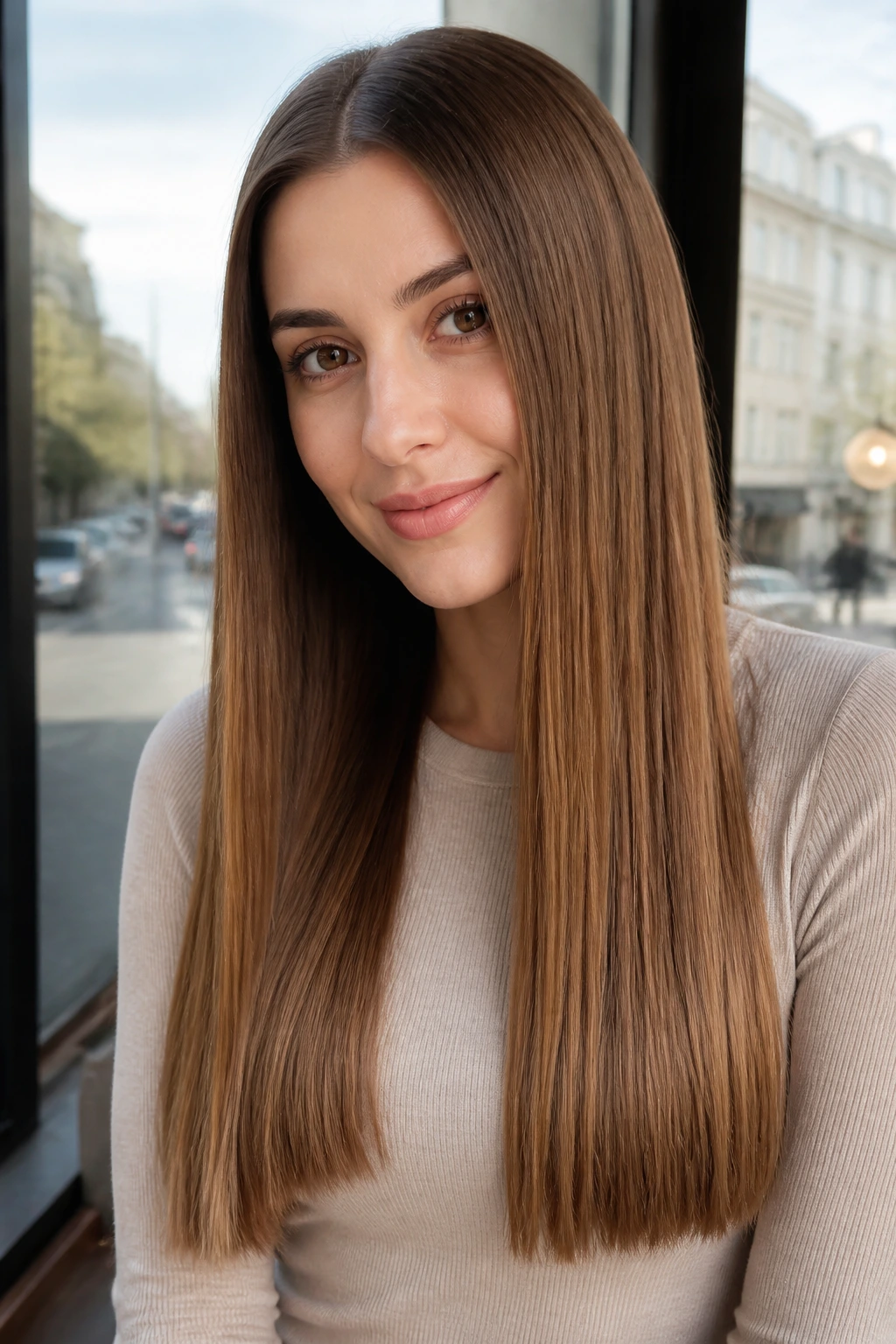
A long one-length cut is for the person who loves length and refuses to give it up. Fair enough. Fine hair can still wear long hair well, but the ends need help, and a blunt one-length shape gives that help by keeping the line thick.
The reason this works is simple: fewer layers means fewer places for the hair to fray out at the bottom. If the hair is long and heavily layered, the ends often look stringy no matter how much you blow-dry. A straight, clean edge keeps the whole cut feeling heavier.
- Best when the hair is healthy and not overly processed.
- Needs regular dusting to keep the ends from looking split.
- Looks fuller with a center part or a low side part.
- Works well with a single face-framing piece starting around the chin.
Keep it sleek or slightly waved. Either way, the line should stay clear.
11. Side-Parted Bob
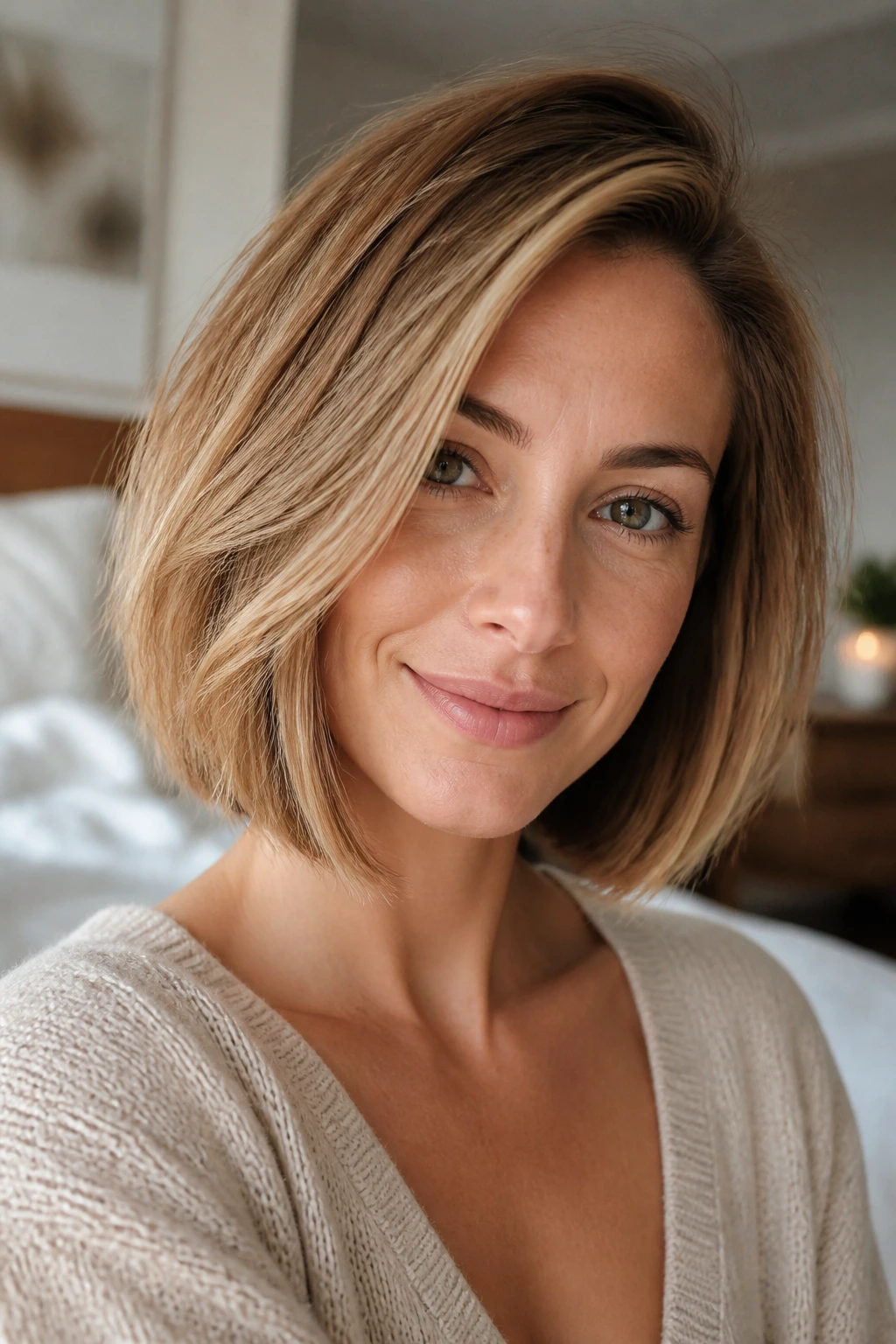
A side-parted bob can do more for fine hair than people expect. Shift the part off center, and the hair at the crown gets a little natural push-up from the root. That small change can be the difference between flat and full.
The cut itself can be blunt or softly beveled. What matters is where the hair falls. If your hair has one side that naturally collapses, a side part usually helps balance it. It also gives the style a bit of asymmetry, which keeps the bob from looking too neat or too stiff.
This is one of those cuts that looks better after a quick blast-dry than it does when you overwork it. A round brush at the roots, a few clips while the hair cools, and you are done. Honestly, that’s the appeal.
12. Feathered Shoulder Cut
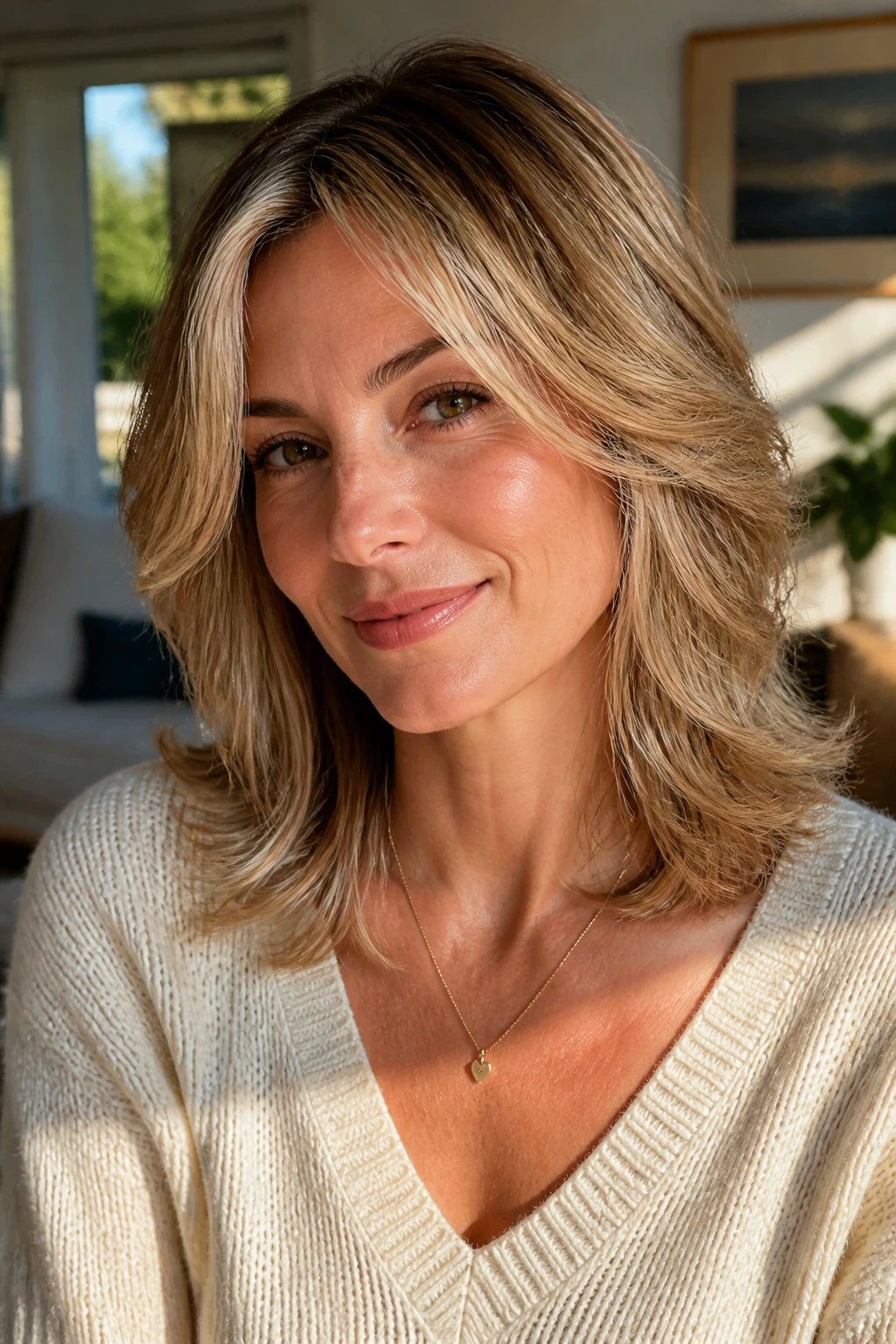
Unlike heavy layers, a feathered shoulder cut softens the outline without stripping away the base. That’s why it works on fine hair. You still keep enough weight at the bottom to make the hair look dense, but the surface has movement.
The feathering should be light and concentrated around the mid-lengths and face frame. If the stylist takes too much hair out of the interior, the ends start to look transparent. The goal is air, not holes.
This cut suits someone who wants shoulder length but hates the solid block feeling that sometimes comes with it. It also works if your hair turns a little puffy at the bottom. Feathering can calm that down without making the cut look thin. A soft blowout with a medium round brush suits it well.
13. Angled Lob
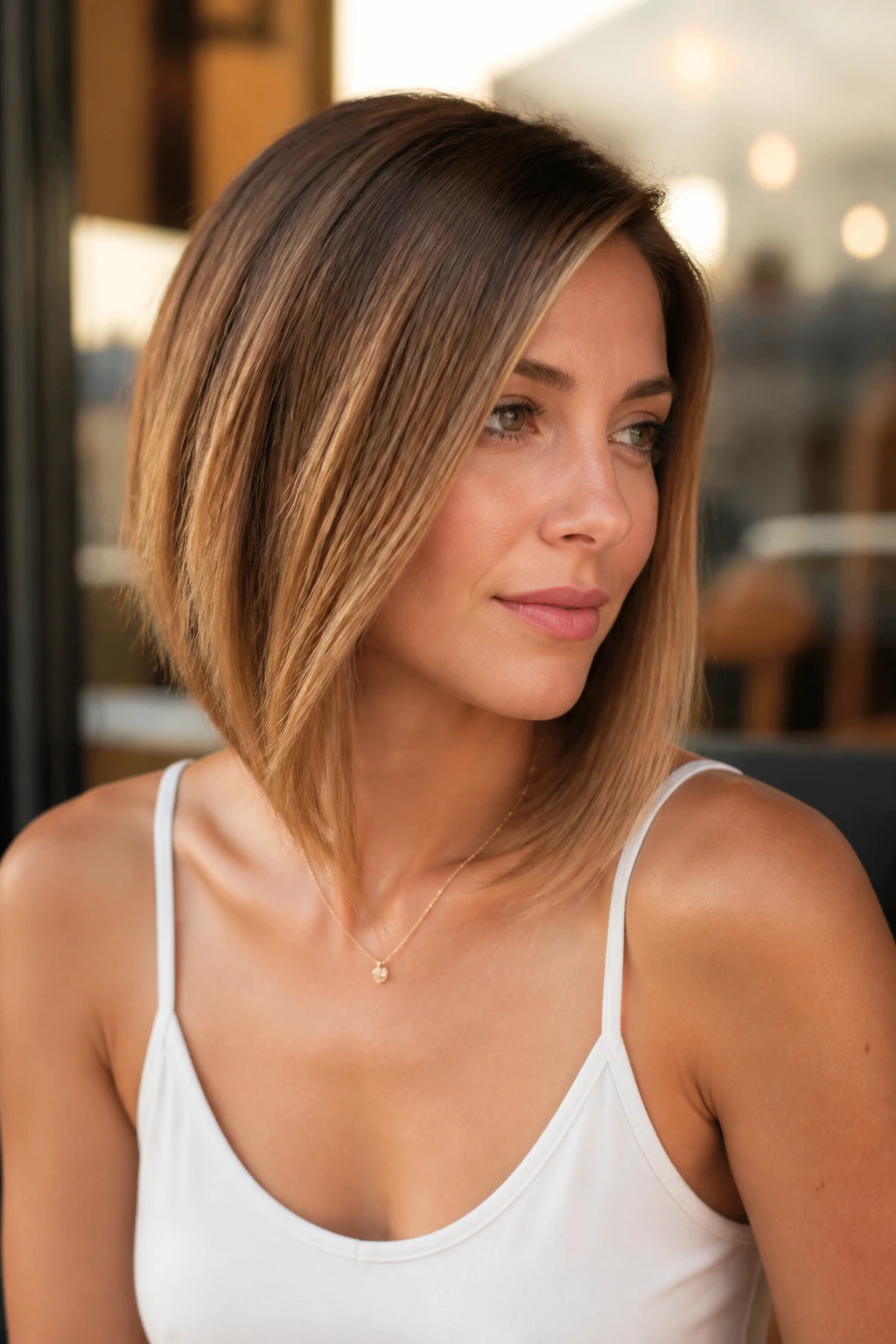
An angled lob gives fine hair a little attitude and a little lift. The back sits shorter, often near the nape, while the front drops longer toward the collarbone. That diagonal line pulls the eye forward and makes the hair seem sharper.
What to Ask For
Ask for a noticeable but gentle angle, not a harsh wedge. On fine hair, a severe angle can look chopped instead of sleek. The best version keeps the front pieces long enough to graze the collarbone while the back stays just short enough to create shape.
This cut works when you want the ease of medium length but still need structure. It is also kind to straight hair that tends to fall flat at the back. Blow-dry the roots up and forward, then smooth the ends with a brush so the line stays clean.
14. Micro Bob
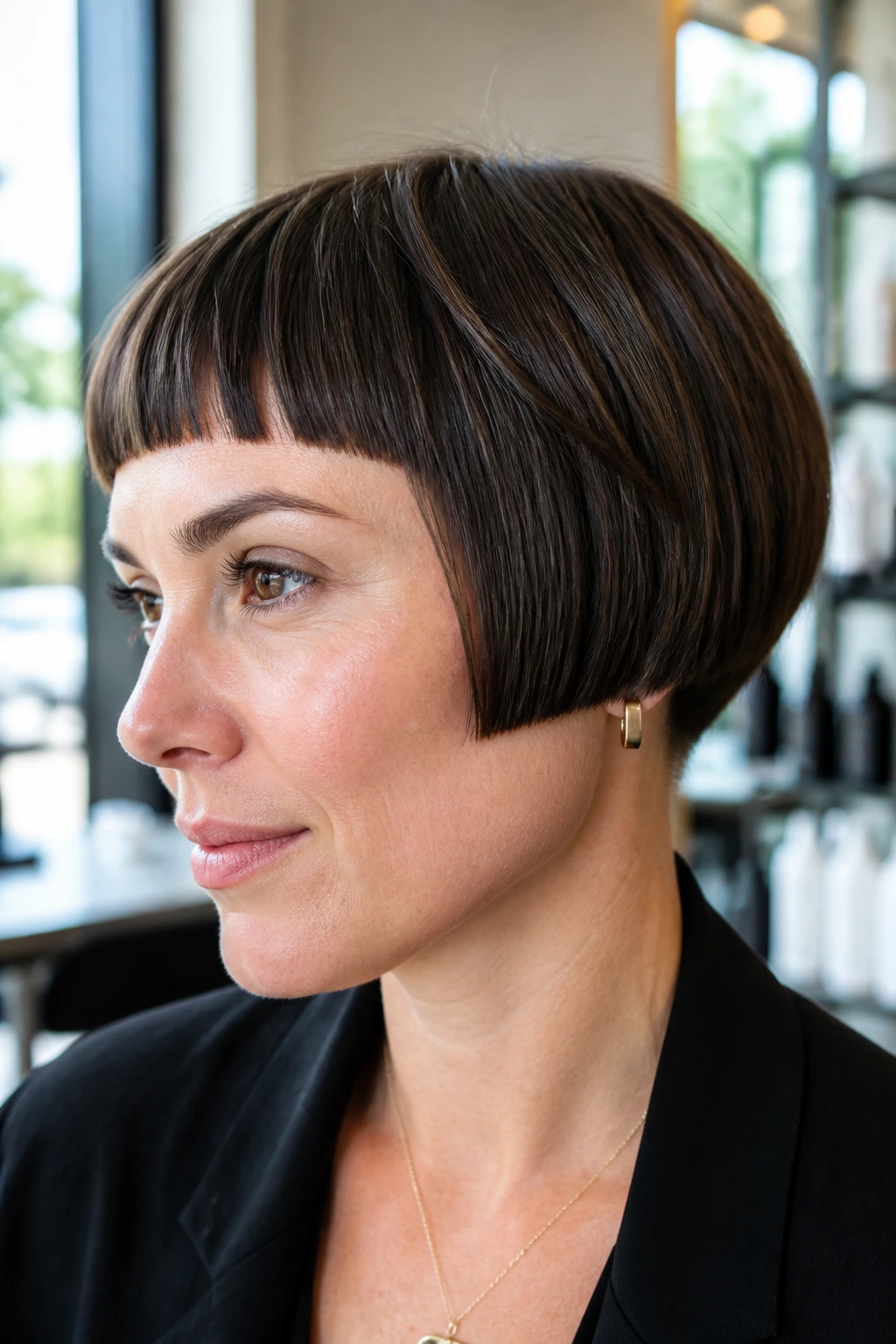
A micro bob sits around the ear or just below it, and that short length can make fine hair look denser than a longer cut ever could. It’s a bold move, sure, but the payoff is real: less weight, more lift, cleaner ends.
The cut has to be precise. If the line wobbles, the whole thing looks accidental. You want crisp edges and a shape that follows the head, not a puffed-out triangle. On very fine hair, a micro bob often looks healthier because there is less space for split ends and see-through pieces to show.
It does not suit everyone. If you rely on tying your hair back all the time, this one will frustrate you. But if you like a short, tidy shape that still feels feminine and sharp, it’s hard to beat.
15. Rounded Bob
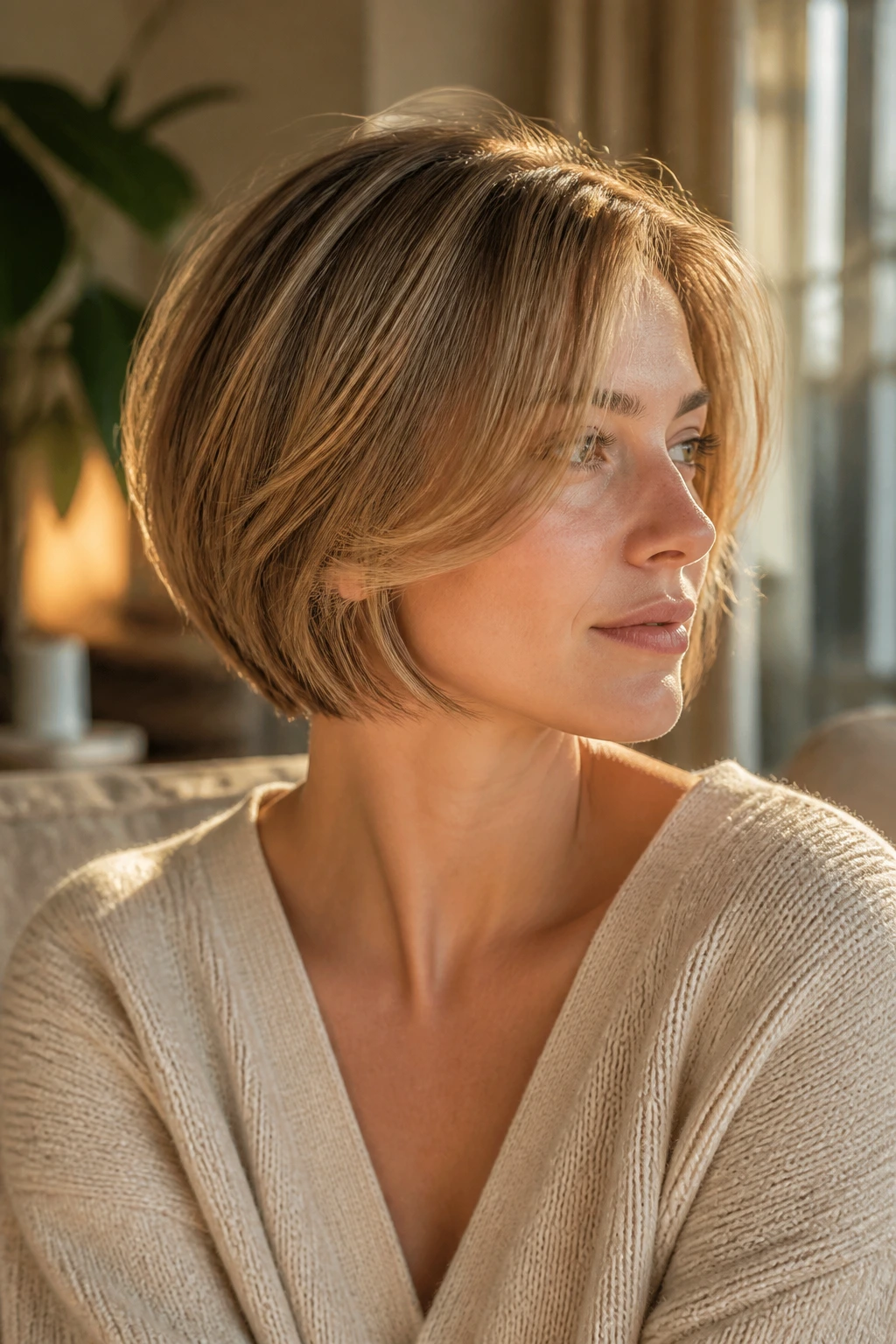
Why do some bobs look flat while others seem to sit on the head with a little lift? Shape. A rounded bob curves softly under the chin and around the sides, and that curve can make fine hair look fuller without a ton of product.
The roundness should be gentle, not helmet-like. You want the top to stay close to the head while the sides gain a touch of body and the ends tuck under just enough to frame the jaw. This is a cut that loves a bit of blow-dried polish.
If your hair has no natural bend, a rounded bob can still work, but it will ask for a round brush or a hot air brush now and then. If you do have a slight wave, even better. The shape comes alive faster, and the hair looks less strict.
16. Long Pixie
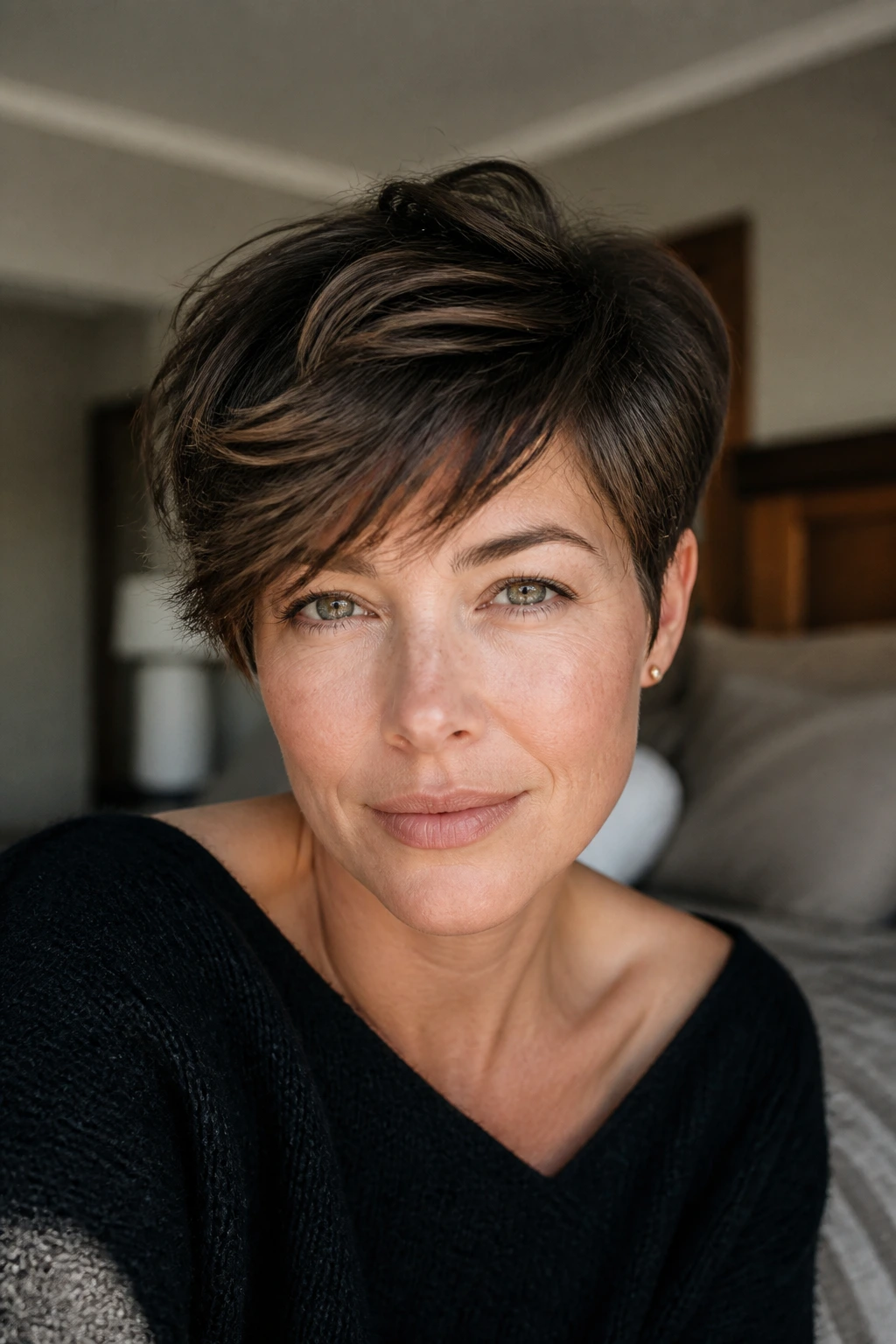
A long pixie is the cut people choose when they want short hair but need a little softness around the face. For fine hair, that extra top length matters. It keeps the style from looking too clipped and gives you enough hair to fluff, sweep, or tuck behind the ear.
I like this cut for someone growing out a shorter style. It gives shape during the awkward stage, which is where most people get annoyed and chop everything off again. The top can stay around 2 to 4 inches, with tapered sides and a neat nape.
- Ask for soft layers on top, not choppy chunks.
- Keep the fringe long enough to sweep sideways.
- Use a light wax or cream, never a heavy paste.
- Blow-dry with the direction you want the hair to fall.
The long pixie has range. It can look polished, messy, or somewhere in between.
17. Layered Midi Cut with Internal Layers
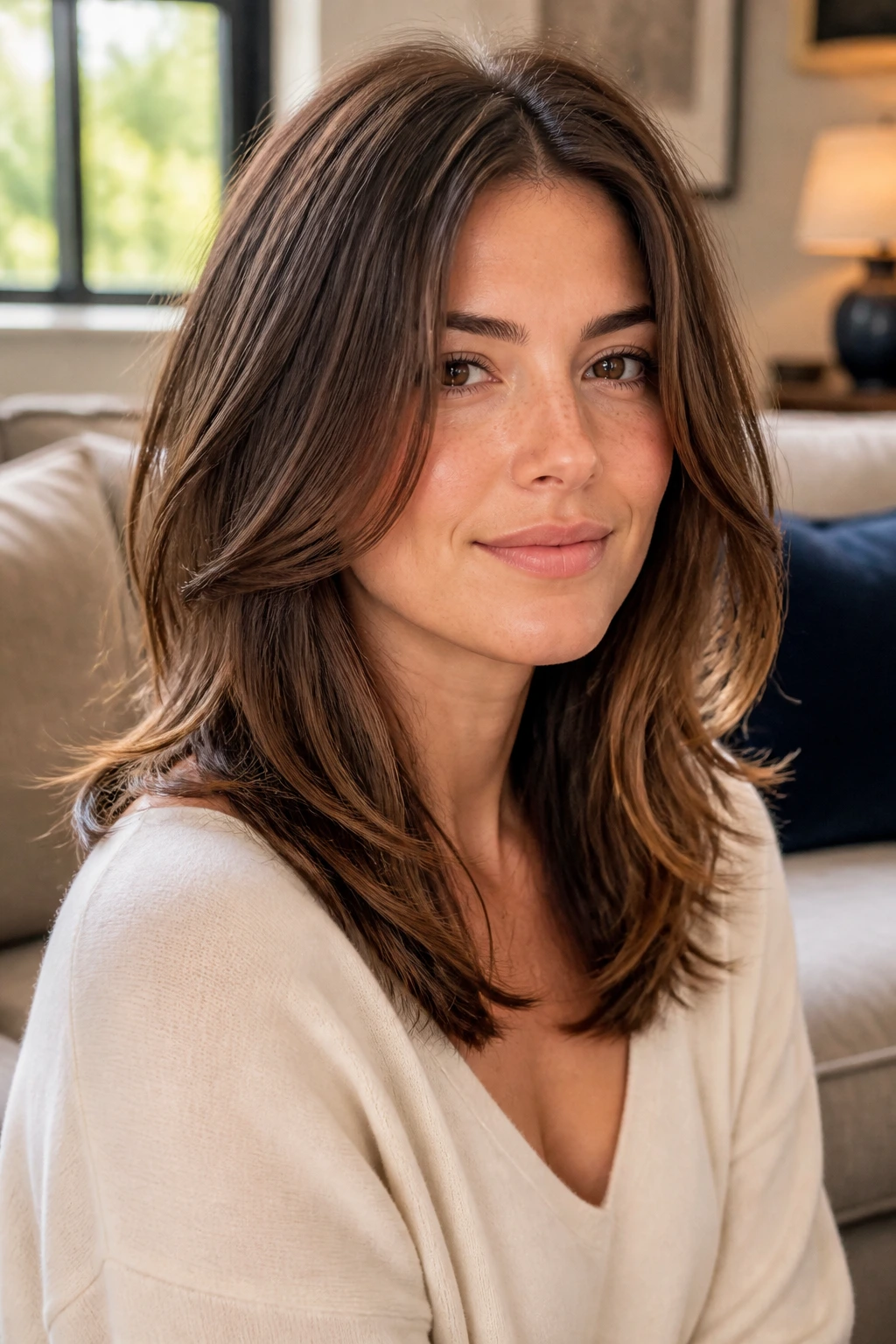
A midi cut sits between the collarbone and the chest, and on fine hair that middle ground can work beautifully if the layers stay inside the shape. Internal layers remove some bulk without exposing the ends.
That distinction matters. Visible layers can make fine hair look wispy if they start too high. Hidden layers, cut carefully through the mid-lengths, keep the outside line intact while giving the hair a bit of air underneath. It’s a cleaner trick than most people realize.
This is a good choice if you want movement but don’t want a bob and don’t want long hair that hangs heavy. Wear it with a center part or soft waves. The cut should still look full when it’s straight, which is the real test.
18. Asymmetrical Bob
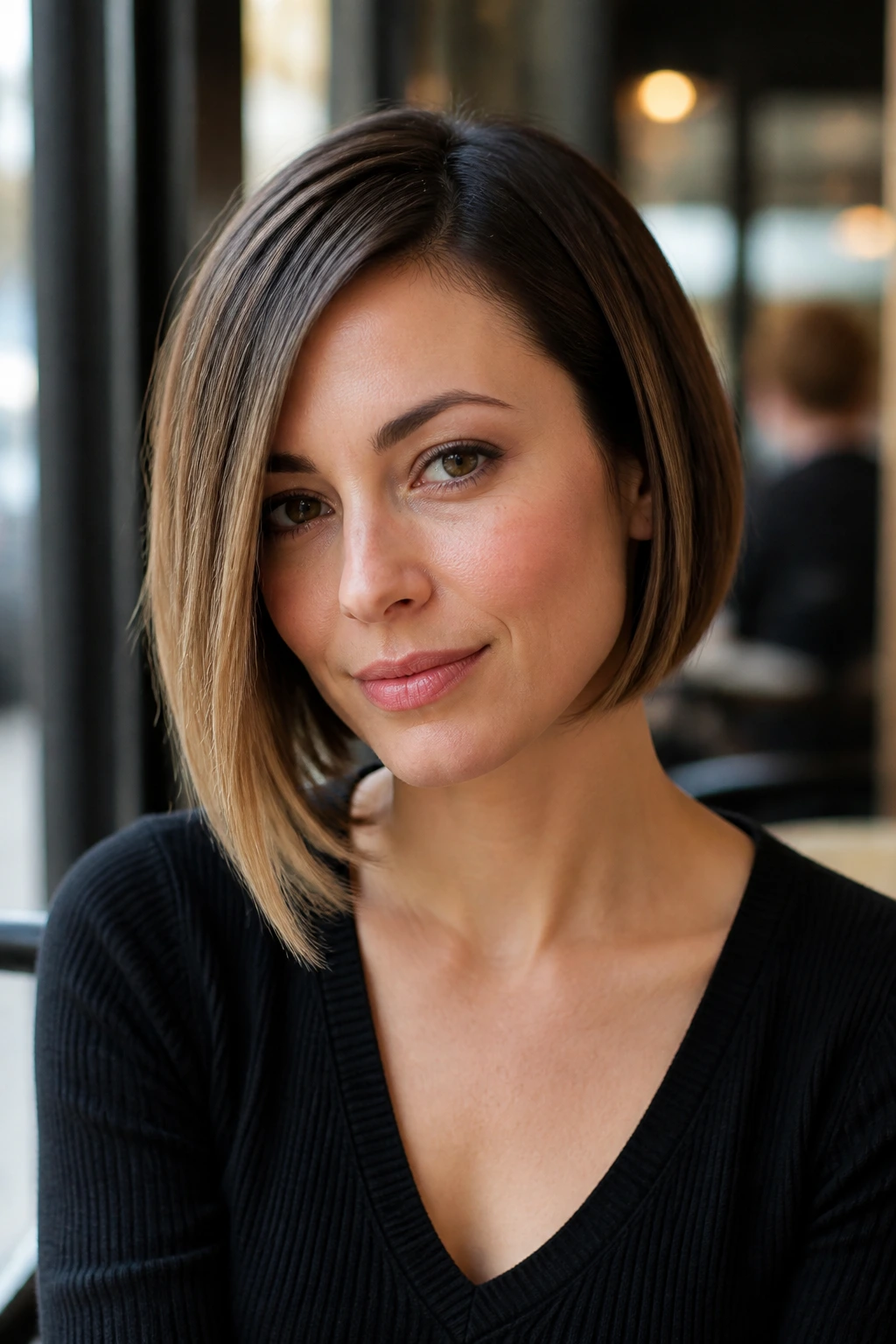
Unlike a symmetrical bob, the asymmetrical version gives one side a little more length, and that tiny imbalance can create a stronger shape for fine hair. It pulls the eye across the face, which makes the haircut feel more deliberate and less delicate.
A good asymmetrical bob is subtle. The longer side may only be half an inch to an inch lower than the shorter side, not wildly different. That slight shift can add movement and stop fine hair from looking too neat in a flat way.
It’s a solid pick if your face is very even and you want a little edge, or if your hair naturally falls more strongly to one side. The style does not need a ton of product, but it does need a clean cut line. If the ends are rough, the whole effect falls apart quickly.
19. Clavicut with Face Frame
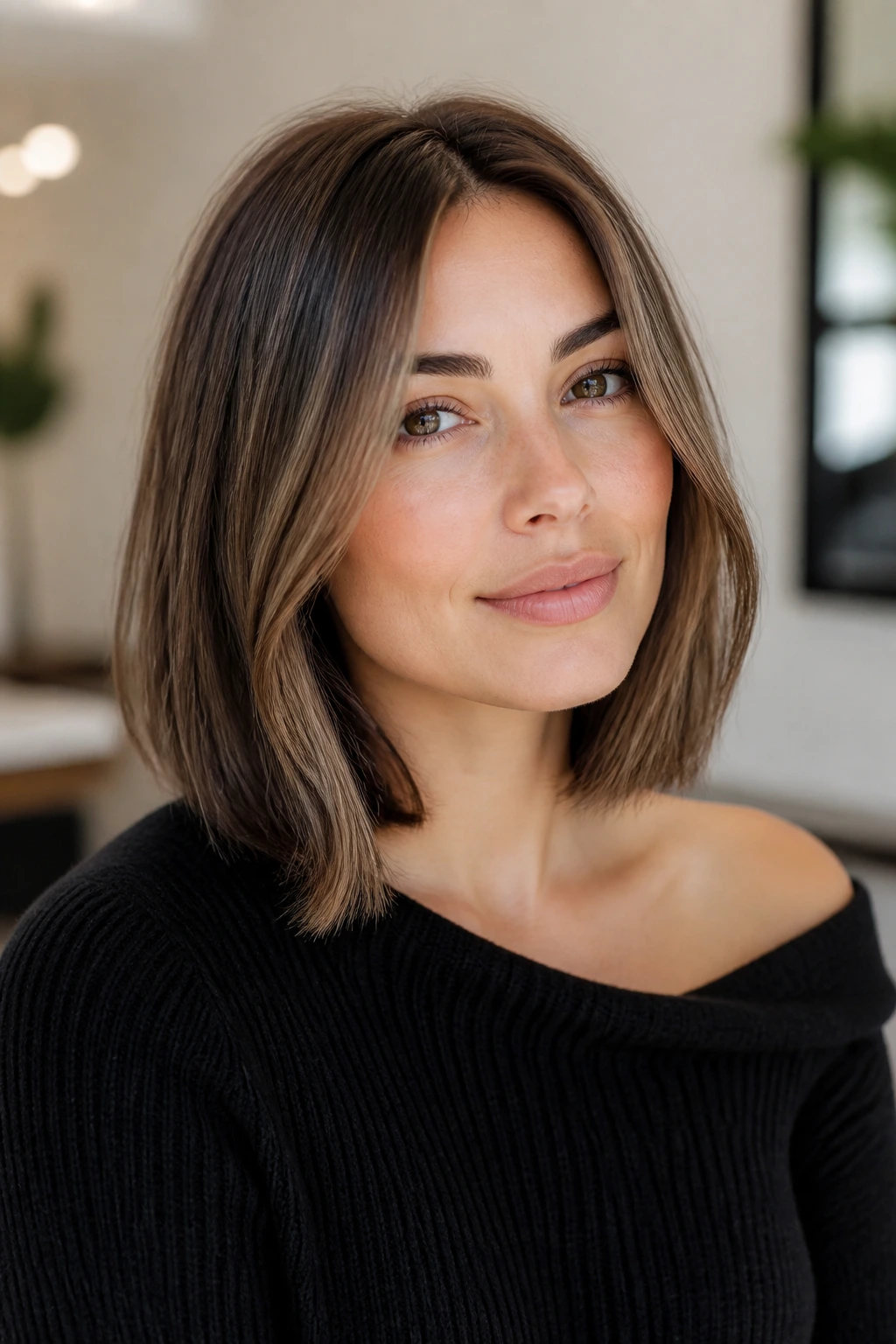
The clavicut sits right at the collarbone, and that placement is a sweet spot for fine hair. It keeps some length, but the ends are still close enough to the shoulders to get a bit of support and bounce rather than hanging limp.
Why It Flatters Fine Hair
The collarbone catches the hair as it moves, which sounds minor until you see the difference in real life. Hair that lands there seems to have more body than hair that sits a few inches longer and gets pulled flat against the chest. The face frame gives the front a little bend, so the cut does not feel boxy.
How to Wear It
- Keep the bottom line blunt or nearly blunt.
- Start face-framing pieces around the chin or cheekbone.
- Use a 1.25-inch curling iron for soft bends, not tight curls.
- Let the ends sit naturally; don’t over-style them.
This is one of the easiest haircuts to live with if you want length and shape in the same cut.
20. Mixie Cut
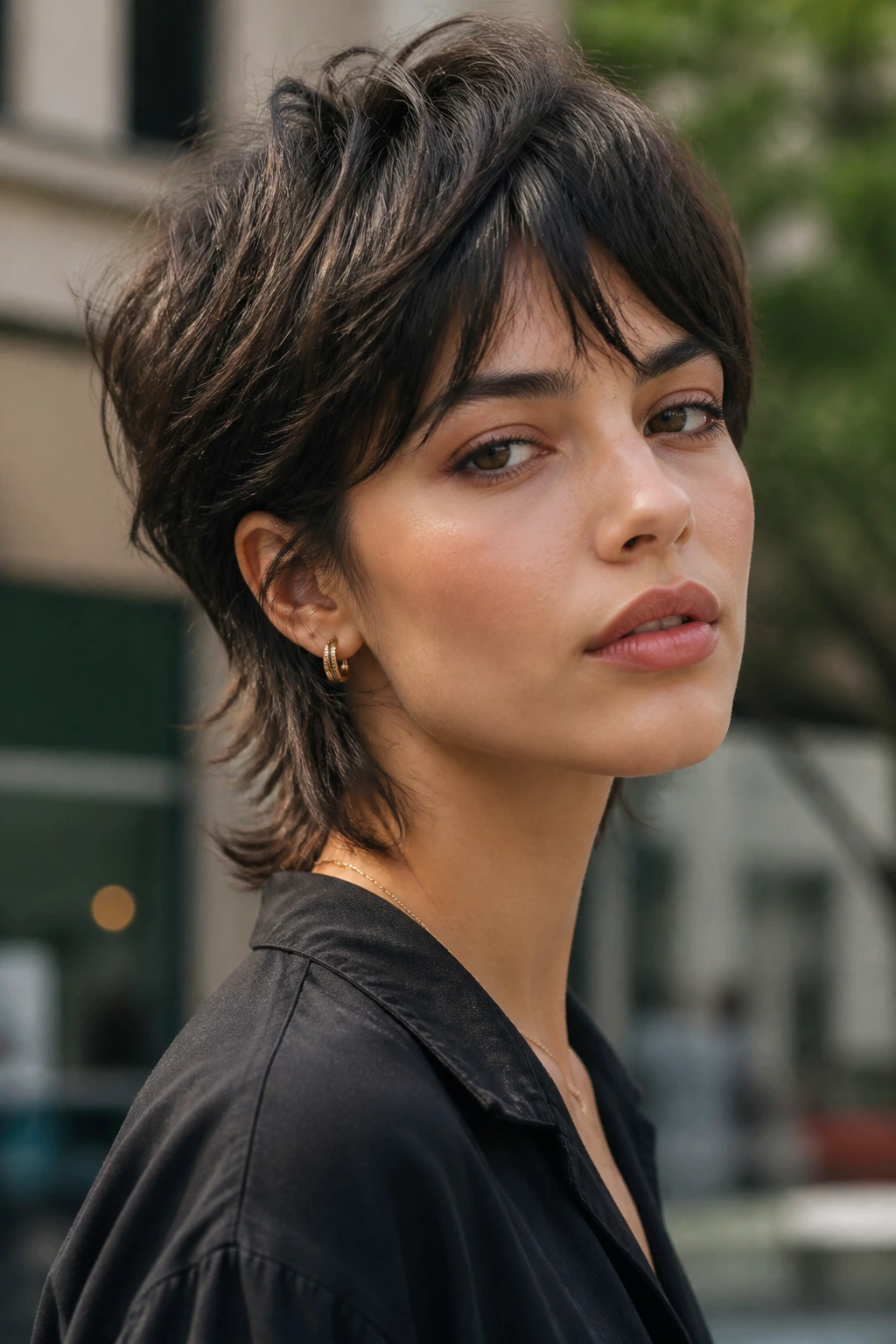
A mixie is the slightly unruly cousin of the pixie and the mullet, and on fine hair that can be a very good thing. The short crown gives lift, the longer nape gives softness, and the whole cut feels light without being flat.
The mixie works because it breaks up the head shape in a flattering way. Fine hair often looks best when it is not all one length, but too much layering can make it sparse. The mixie lands in the middle: short enough to move, long enough to keep some fullness where it counts.
It suits people who want a cut with a little personality and do not mind that it reads fashion-forward. Styling is quick. Finger-dry the top with a touch of mousse, then shape the ends with a small dab of paste. Done.
21. Sleek Shoulder-Length Cut with Invisible Layers
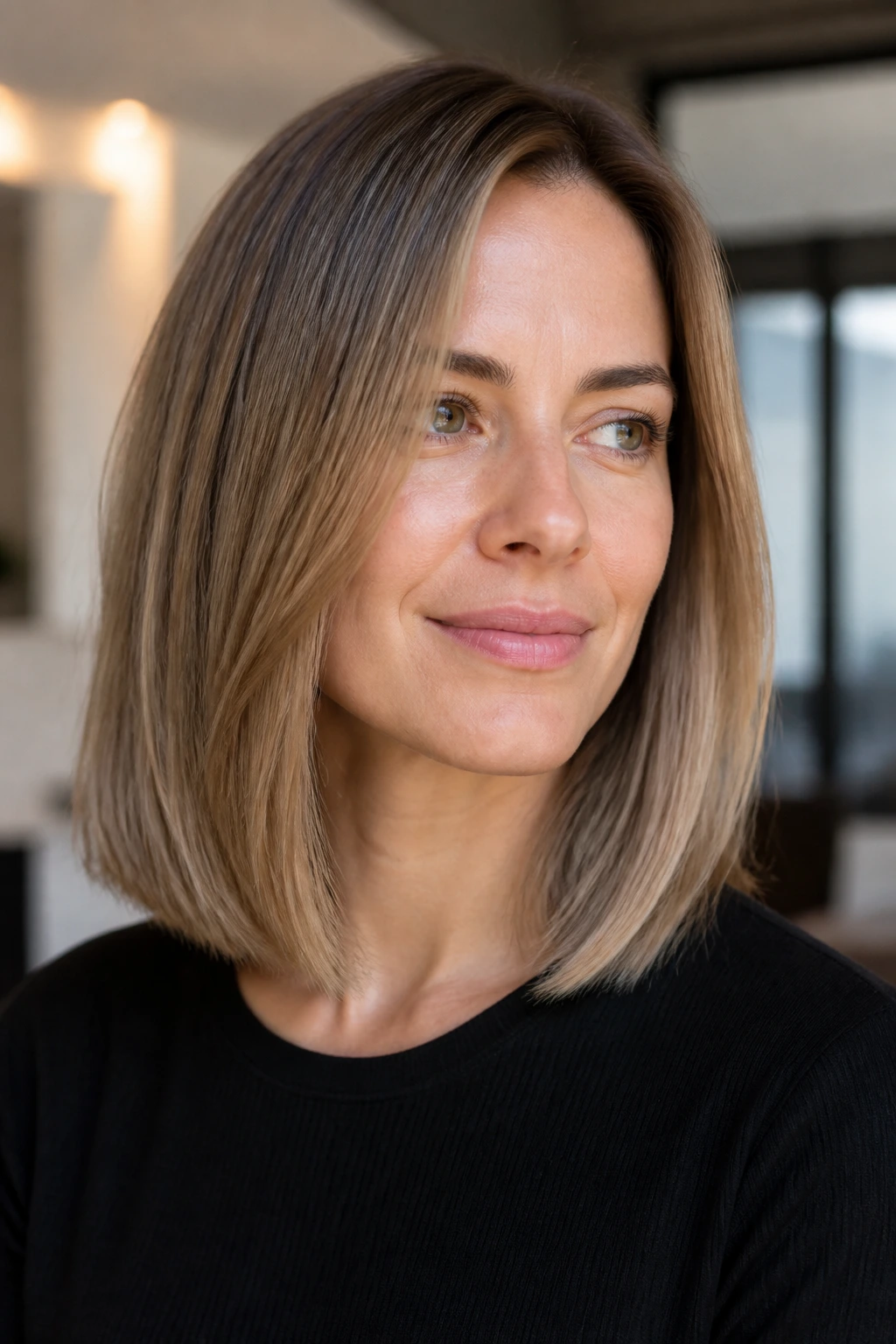
Can shoulder-length hair work on fine strands without looking limp? Yes, if the layers stay almost invisible.
The cut should read as one clean shape from a distance, with only tiny internal adjustments to stop it from hanging like a curtain. That is the whole point. Fine hair often suffers when the layers become too obvious, because the eye starts seeing gaps instead of mass.
How to Wear It
Keep the part slightly off center for a little lift. Blow-dry the roots with a paddle brush, then smooth the lengths with a flat iron if you want a polished finish. A few invisible layers inside the shape can help the hair bend instead of droop, but the perimeter should stay intact.
This cut works well if you want a grown-up, low-fuss shape that still feels soft.
22. Wavy Chin-Length Cut
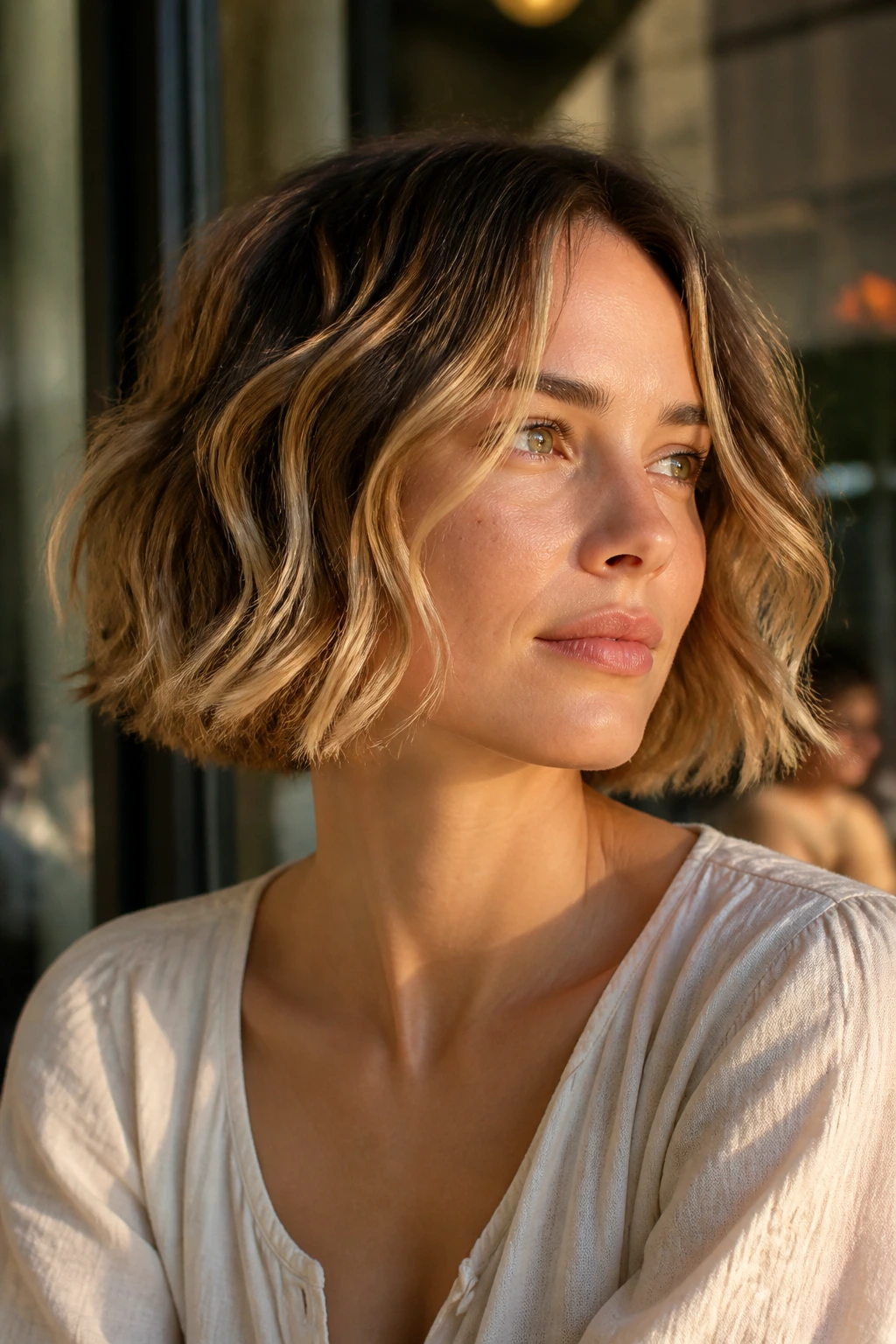
A chin-length cut and natural wave are a good pair for fine hair, especially if the hair has a bit of bend on its own. Shorter length lets the wave show up without stretching out under its own weight.
I’ve seen too many wavy heads buried under long layers that make the texture look tired. Shorter hair gives the wave a better chance to spring. The right chin-length cut should have just enough room to let the wave sit, but not so much length that it drags itself straight.
- Best when cut mostly dry or with the natural wave pattern in mind.
- Ask for soft shaping, not aggressive thinning.
- Use a salt-free wave spray if your hair dries crisp.
- Scrunch with a microfiber towel, not a rough bath towel.
This cut can look a little messy in a good way. That’s the point.
23. Bottleneck-Bang Bob
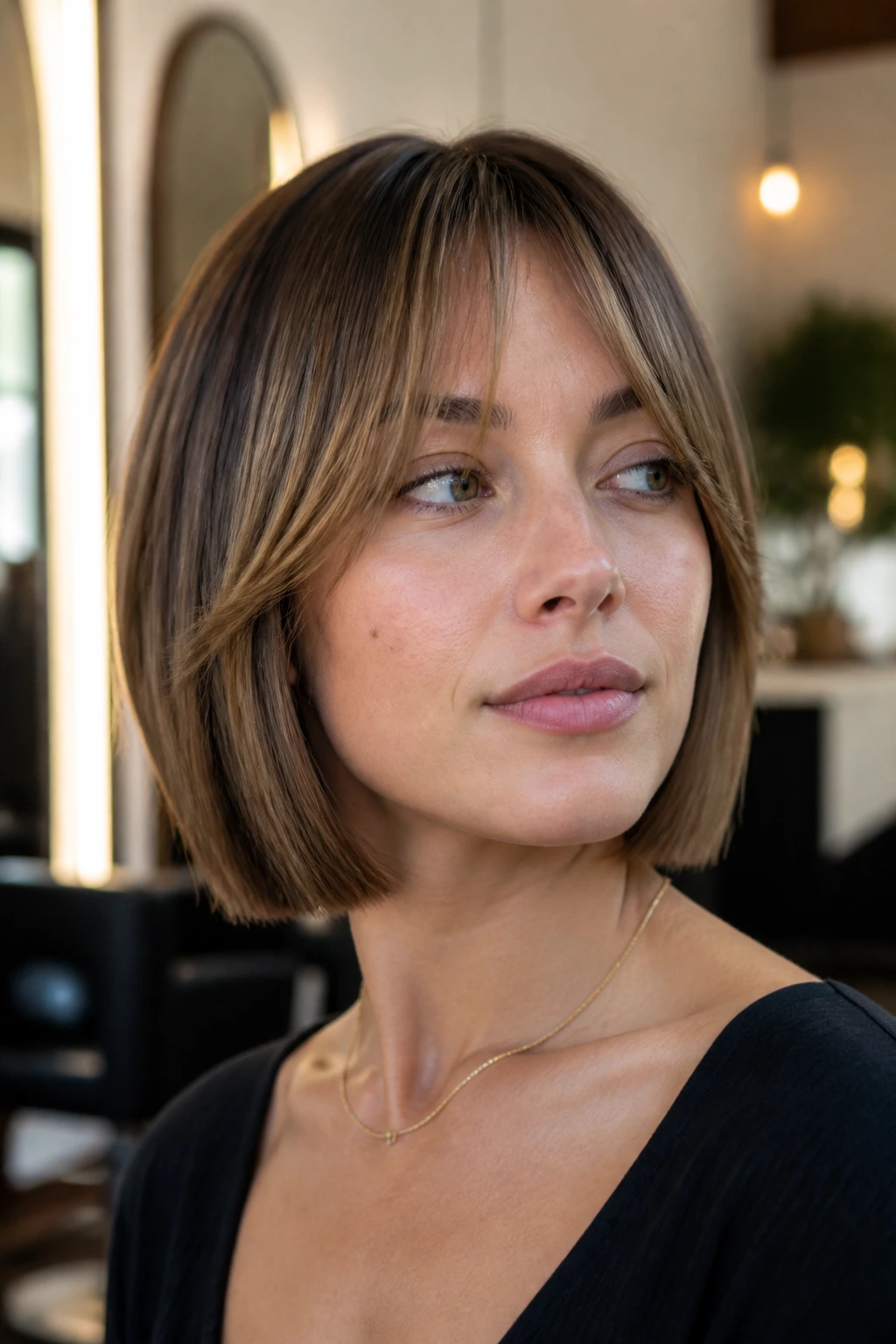
A bottleneck-bang bob is a strong choice if you want fringe but do not want your forehead to disappear under a heavy curtain of hair. The bangs are shorter in the center and longer at the sides, which opens the face while still giving some softness.
For fine hair, that shape matters. Straight-across bangs can swallow too much density, and super wispy bangs can look broken up. Bottleneck bangs sit in a more forgiving middle ground. They give the front of the cut interest without draining the rest of it.
The bob underneath can stay blunt, which is how you keep the hair looking full. If you want a little bend, tuck the bangs slightly away from the face with a round brush and let the ends of the bob stay clean. It has a quiet elegance to it, and I mean that in the useful sense, not the brochure sense.
24. Tapered Crop
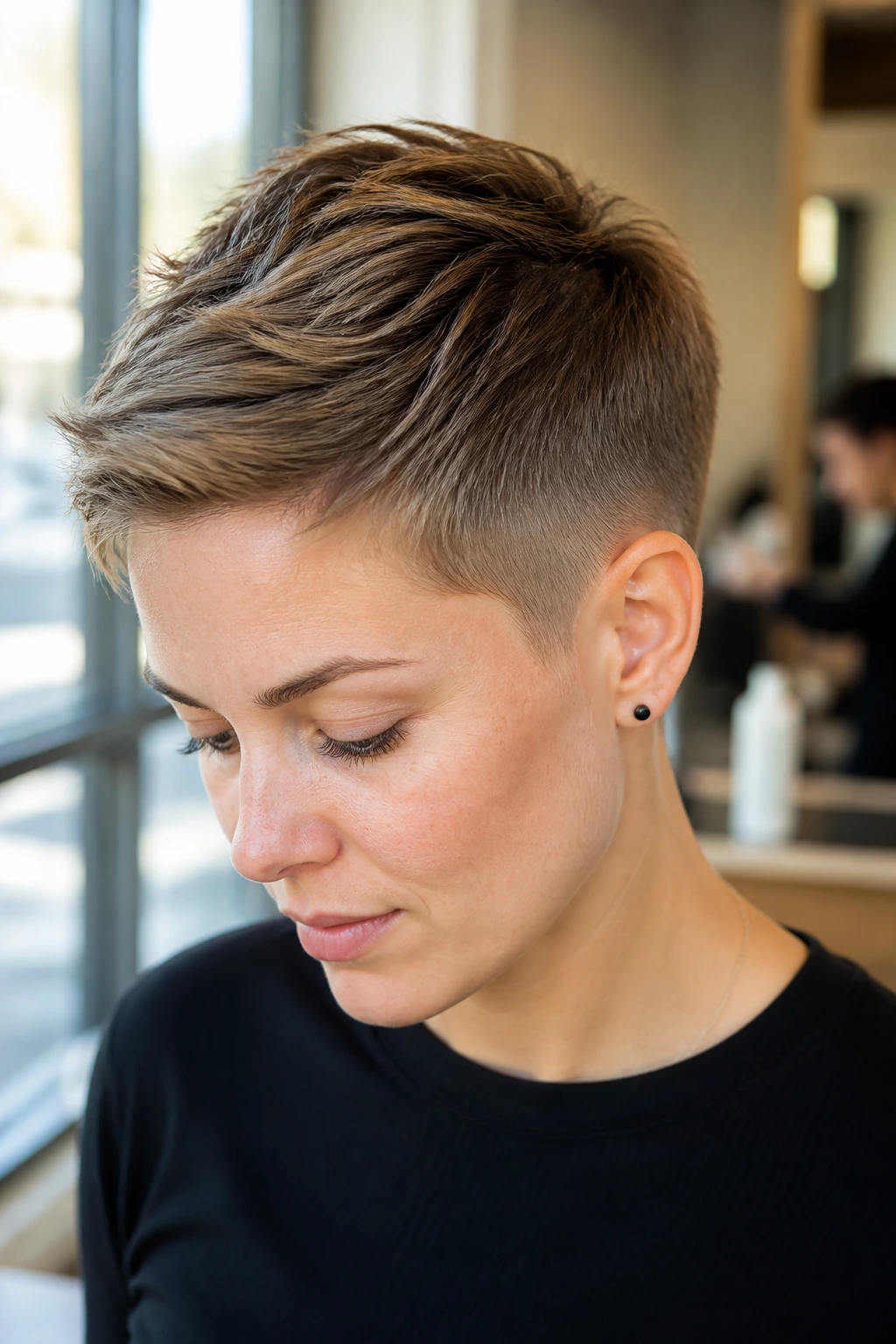
A tapered crop is shorter at the nape and temples, with more length on top, and that taper helps fine hair look denser where it counts. The cut removes bulk in the places that tend to lie flat while keeping lift on the crown.
Unlike a uniform pixie, the tapered crop feels more sculpted. The top can be styled forward, swept to the side, or left slightly messy, but the tapered edges keep the outline sharp. That makes the hair look intentional even on low-effort days.
It’s a smart option if your hair is fine, straight, and stubbornly flat at the sides. It is not the cut for someone who wants to tuck everything into a ponytail. Still, if you want short hair that feels clean and light, this one earns its place.
25. U-Shaped Long Cut with Soft Face Frame
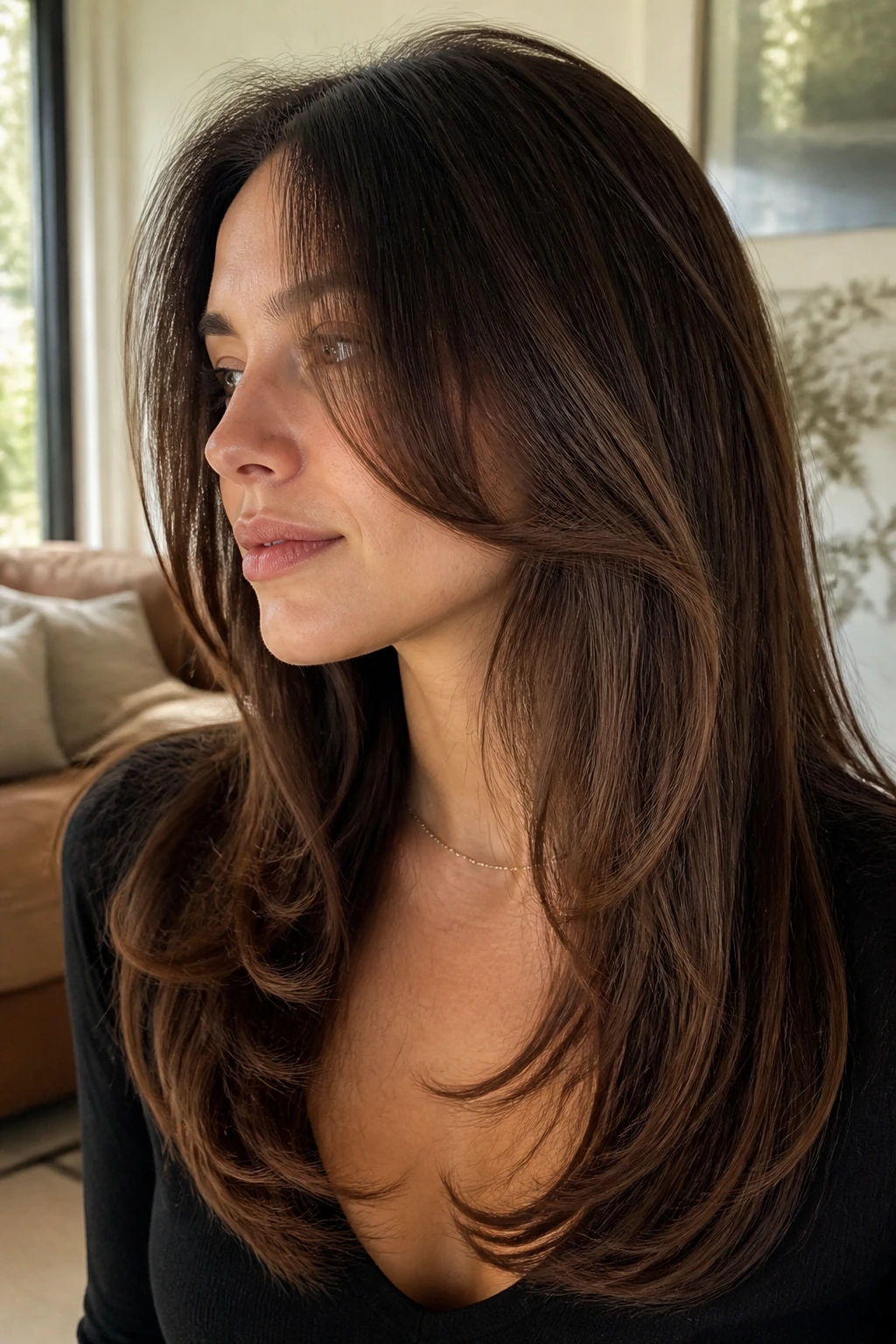
A U-shaped long cut is a good compromise for people who want to keep their length but need the hair to look less blunt at the bottom. The soft U shape keeps the center a touch longer while the sides curve up gently toward the face, which adds movement without carving too much out of the ends.
What Makes It Work
Fine hair often looks best when the perimeter stays thicker than the interior. The U shape does that. It gives a little softness around the face, but the back still carries enough weight to stop the ends from looking stringy. If the hair is very long, this shape is usually kinder than a hard straight line.
Styling Notes
- Keep the face frame subtle, starting near the chin.
- Use a blow-dry brush to give the ends a soft bend.
- Avoid heavy layering below the shoulders.
- Trim every 8 to 10 weeks if the ends start to fray.
This cut is for the person who wants length, movement, and a little shape without sacrificing the feeling of full hair.
Final Thoughts
The cuts that work best for fine hair usually do one of two things: they keep a blunt edge, or they shorten the hair enough that it can support itself. That’s the real pattern here. Not every fine head of hair needs the same answer, but almost every good answer respects density instead of fighting it.
If you’re taking one idea to your stylist, make it this: keep the ends strong. That one decision changes everything. A little lift at the crown is nice. Fuller-looking ends are what make the whole haircut read as thick.
Bring a photo of how your hair dries on a normal day, not the best day of your life. That tells the story fast, and it saves everyone a lot of guessing.
