



Round faces do not need to be hidden. They need edges, lift, and a little nerve.
The right haircuts for round faces add shape where the face already has softness, which is the part people often miss. A blunt line that lands at the widest point of the cheeks can make the whole face feel wider. A cut with a little angle, a little height, or a little asymmetry does the opposite. It gives the eye a path to follow.
Fine hair, thick hair, curls, coils — they all play by different rules. Still, the same basic idea holds: keep the strongest line away from the cheek line, and do not crowd the sides with too much width. Even a tiny change, like shifting the part or lowering the shortest layer by an inch, can change the whole read of a cut.
The boldest cuts are usually the ones with the cleanest shape. Sharp bobs. Cropped fringes. Long layers that move instead of sit there. Some are sleek, some are messy, and some have a little bite to them. That mix matters. The first cut earns its spot because it shows how much shape you can get from a simple line.
1. Angled Bob for Round Faces
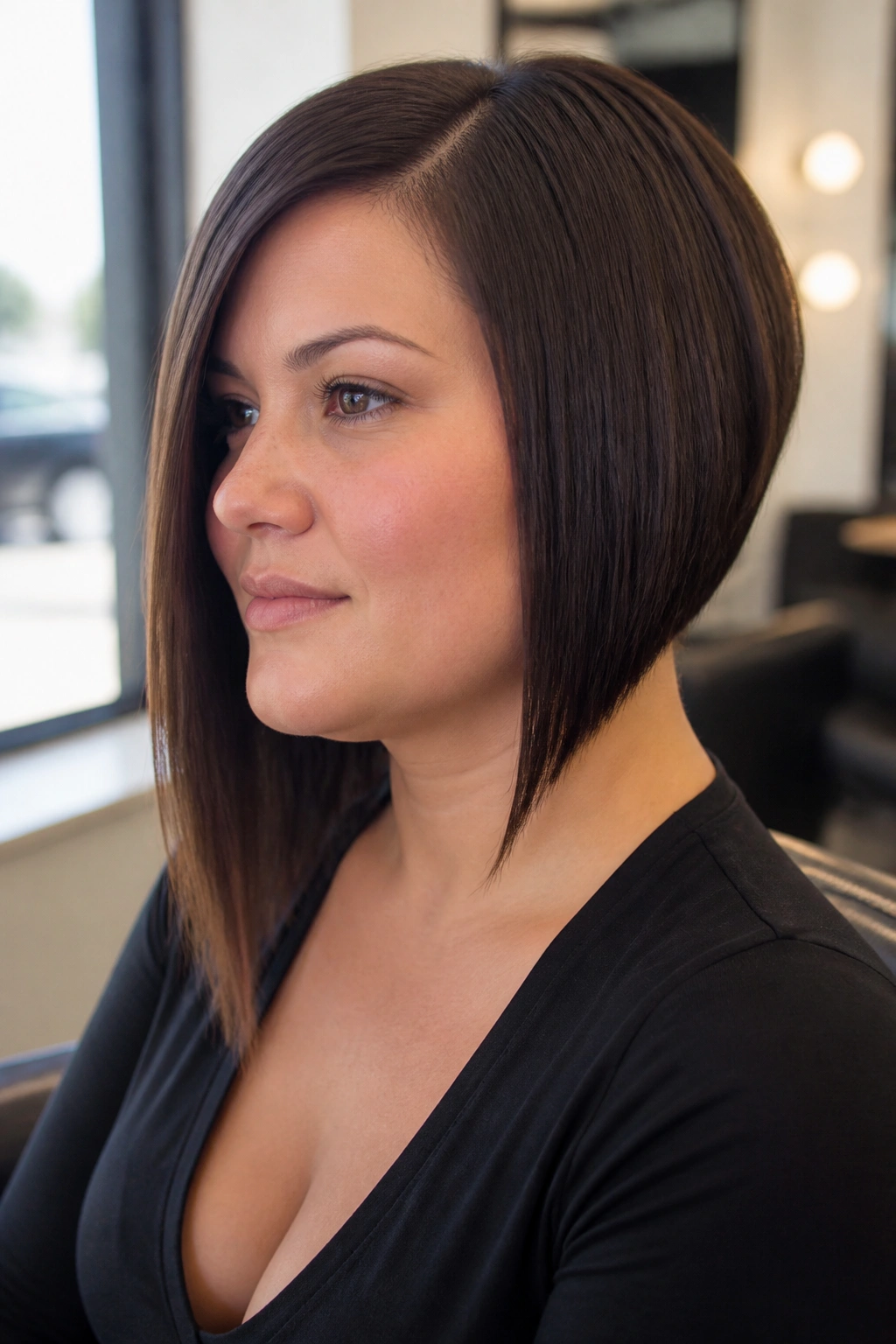
A sharp angled bob is one of those cuts that looks calm at first and then does a lot of work once you see it from the side. The back sits shorter, the front drops longer, and that diagonal line pulls the eye down instead of letting it spread sideways. It’s clean. It’s crisp. It gives round faces a little architecture.
Why It Works
The key is the front length. Ask for the longest point to fall about 1 to 2 inches below the jawline, with the nape kept neat and lifted. That keeps the shape from ending right at the cheek.
- Keep the back softly stacked, not puffed.
- Ask for blunt ends in front, not wispy ones.
- Wear it with a side part if your hair tends to sit flat.
Best for: straight to wavy hair that can hold a line without collapsing.
Skip the chin-length version if your hair flips inward hard; it can turn boxy fast.
2. French Bob With a Clean Edge

Short hair can work on round faces. The trick is where the line lands.
A French bob feels bold because it keeps the cut close to the face without turning heavy. The sweet spot is usually lip to chin length, with a soft fringe or a broken edge across the forehead. Too short and it can open the cheeks too much. Too round and it starts to look like a helmet, which nobody needs.
I like this cut most when it has a little bite at the ends. Not shaggy. Not fluffy. Just enough texture to keep the line from looking stiff. A tiny off-center part helps too, especially if your face reads widest across the middle.
Ask for a crisp perimeter and fringe that skims the brows instead of landing straight across them. That small detail keeps the cut sharp instead of sweet.
3. Side-Part Lob That Breaks the Circle

Why does a side part matter so much? Because it changes the whole geometry of the face.
A lob cut to the collarbone can feel soft and safe, but shift the part deep to one side and it suddenly gets sharper. The hair crosses the forehead on a diagonal, one cheekbone gets a little more light, and the face stops reading as one smooth circle. That small change does more than people expect.
How to Wear It
The cut itself should sit between the collarbone and the top of the chest. Any shorter and it can bunch at the cheeks; any longer and the shape gets less immediate. Keep the ends blunt enough to hold weight, then add just a few long layers around the front.
A little bend through the mid-lengths helps. Nothing too polished. If the hair is too straight, the line can look severe. If it’s too curly, the width comes back in. So aim for a soft wave and keep the volume at the crown, not the sides.
4. Long Shag With Cheekbone Layers
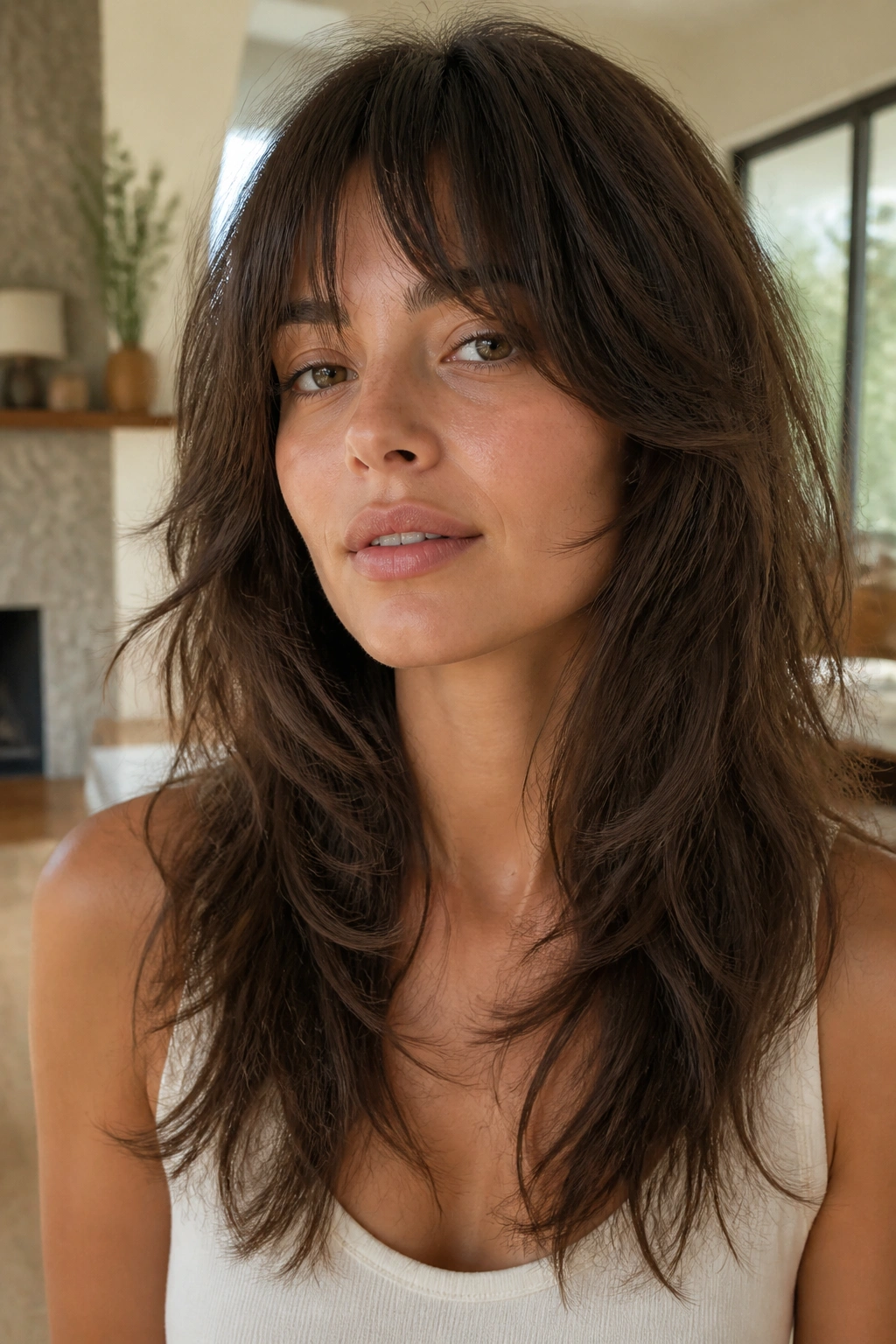
A long shag is what I recommend when someone wants movement but does not want the haircut to feel precious. It is messy in a good way. The layers start high enough to create lift, but not so high that they puff out around the cheeks, which is the mistake a lot of shag cuts make on round faces.
The best version has cheekbone-skimming layers that break the outline without cutting the face in half. The ends stay airy, the top has energy, and the whole thing feels a little lived-in.
What To Ask For
- Shorter layers around the crown for height.
- Face-framing pieces that begin below the cheekbone.
- Point-cut ends to keep the finish soft, not chunky.
This cut loves natural texture. It also loves a little rough drying. If you blow it smooth every time, you lose the point of it.
5. Bixie With Lift at the Crown
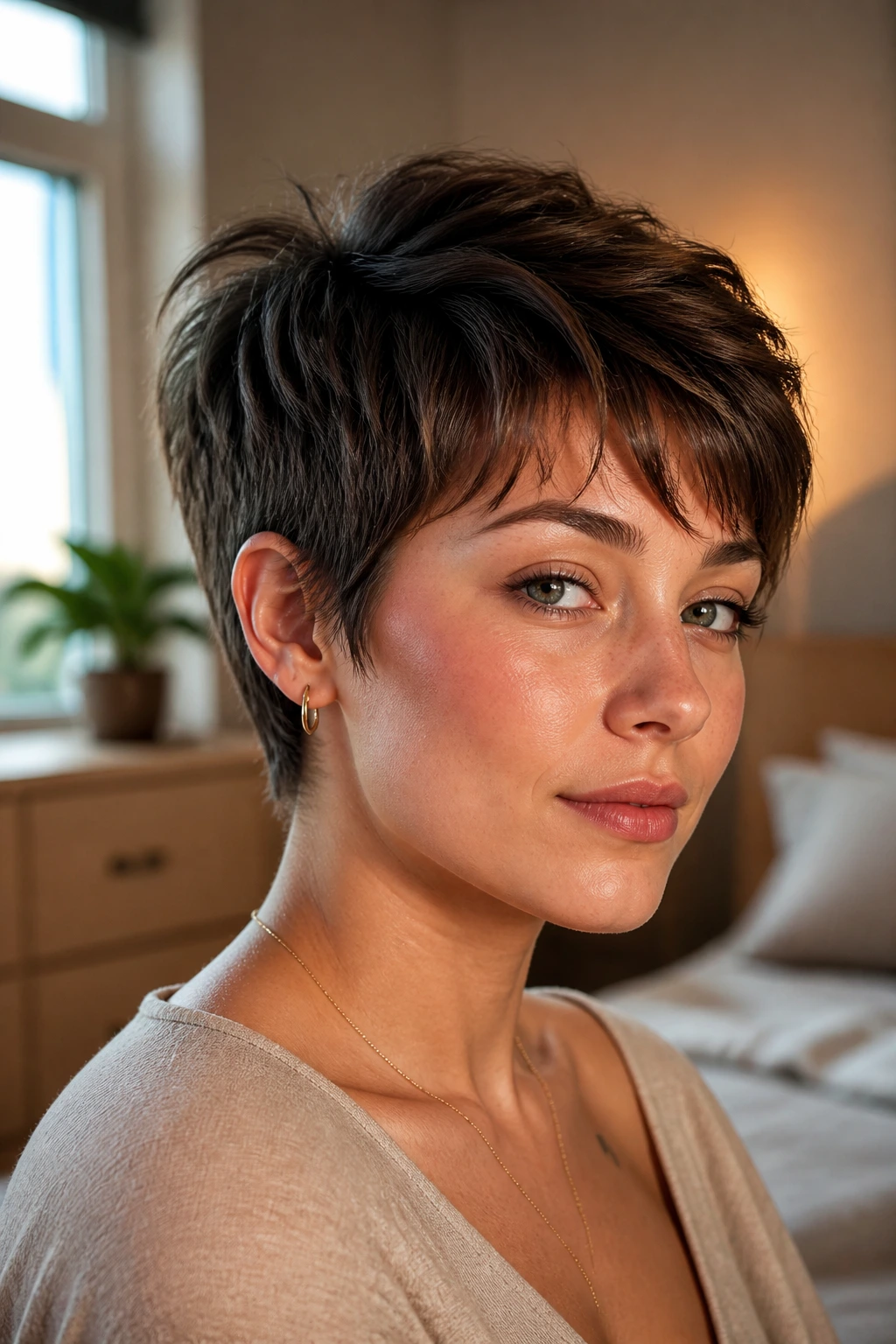
The bixie sits in that sweet middle ground between a bob and a pixie, and honestly, that’s why it works. A round face usually benefits from a cut that removes bulk at the sides while keeping some height on top. The bixie does exactly that, without feeling severe.
The crown should stay the tallest point. That matters. If the sides are too full, the face looks wider. If the top is too flat, the cut loses its shape and starts to read as a grown-out bowl. Nobody wants that.
I like the bixie with a little piecey texture through the fringe and ears exposed just enough to sharpen the outline. It feels modern without trying too hard. If your hair is fine, use a mousse at the roots and rough it up with your fingers while drying. If it’s thick, ask for internal debulking so the shape doesn’t balloon.
6. Asymmetrical Bob With a Longer Front
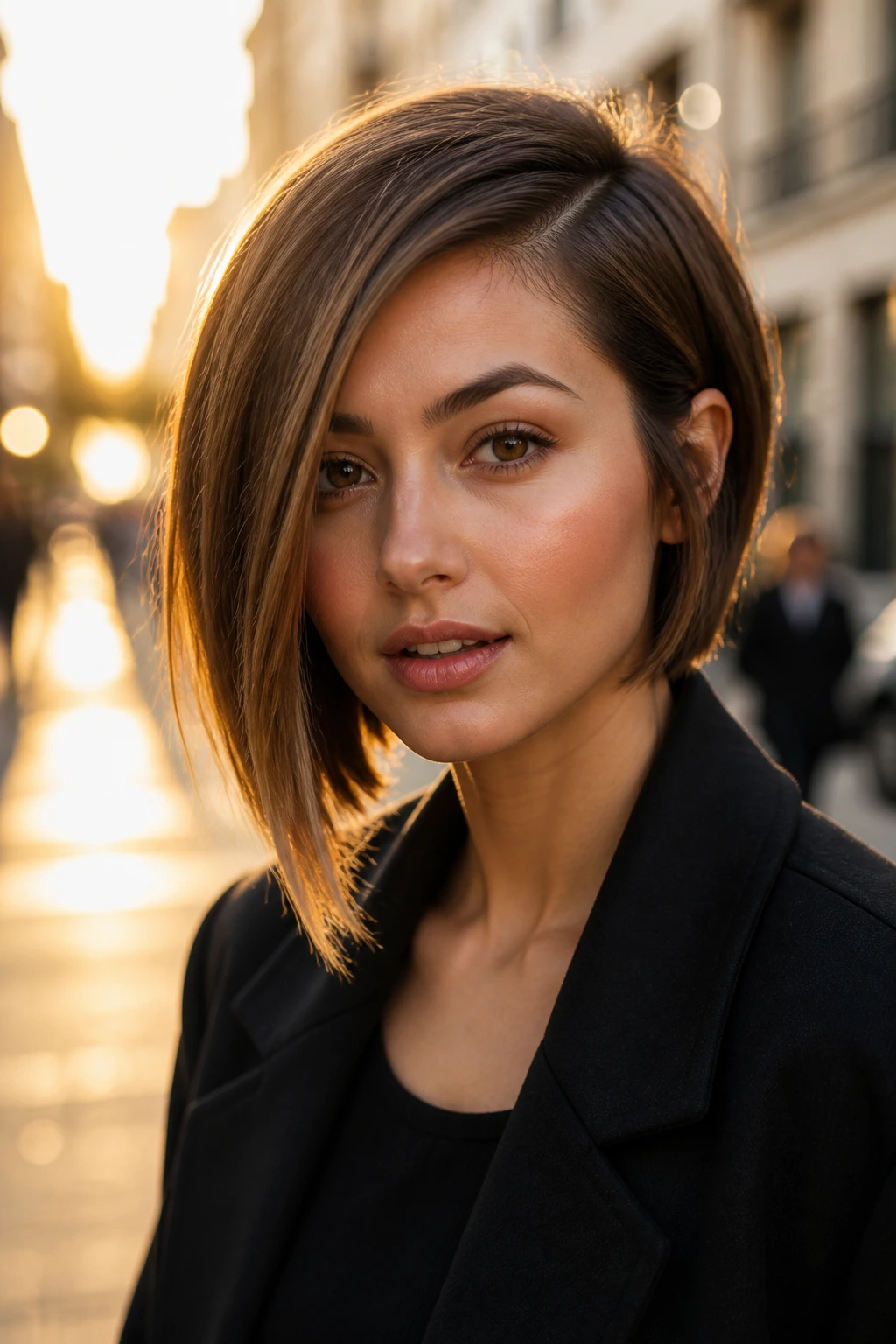
A symmetrical bob is tidy. An asymmetrical bob is sharper.
That one-sided drop gives round faces something useful: direction. The eye follows the longer side, then drops down past the chin. The face feels a little longer, a little more defined, and less centered on its widest point. It is a small shift with a big visual payoff.
This cut works best when the difference between sides is obvious enough to matter but not so dramatic that it looks costume-y. Usually, 1 to 2 inches longer on one side is enough. If your hair naturally falls to one side already, lean into it instead of fighting it.
Best for straight or lightly wavy hair. The line needs to stay visible. Too much curl can blur the shape unless the ends are cut with extra care.
7. Collarbone Cut With Face-Framing Ribbons
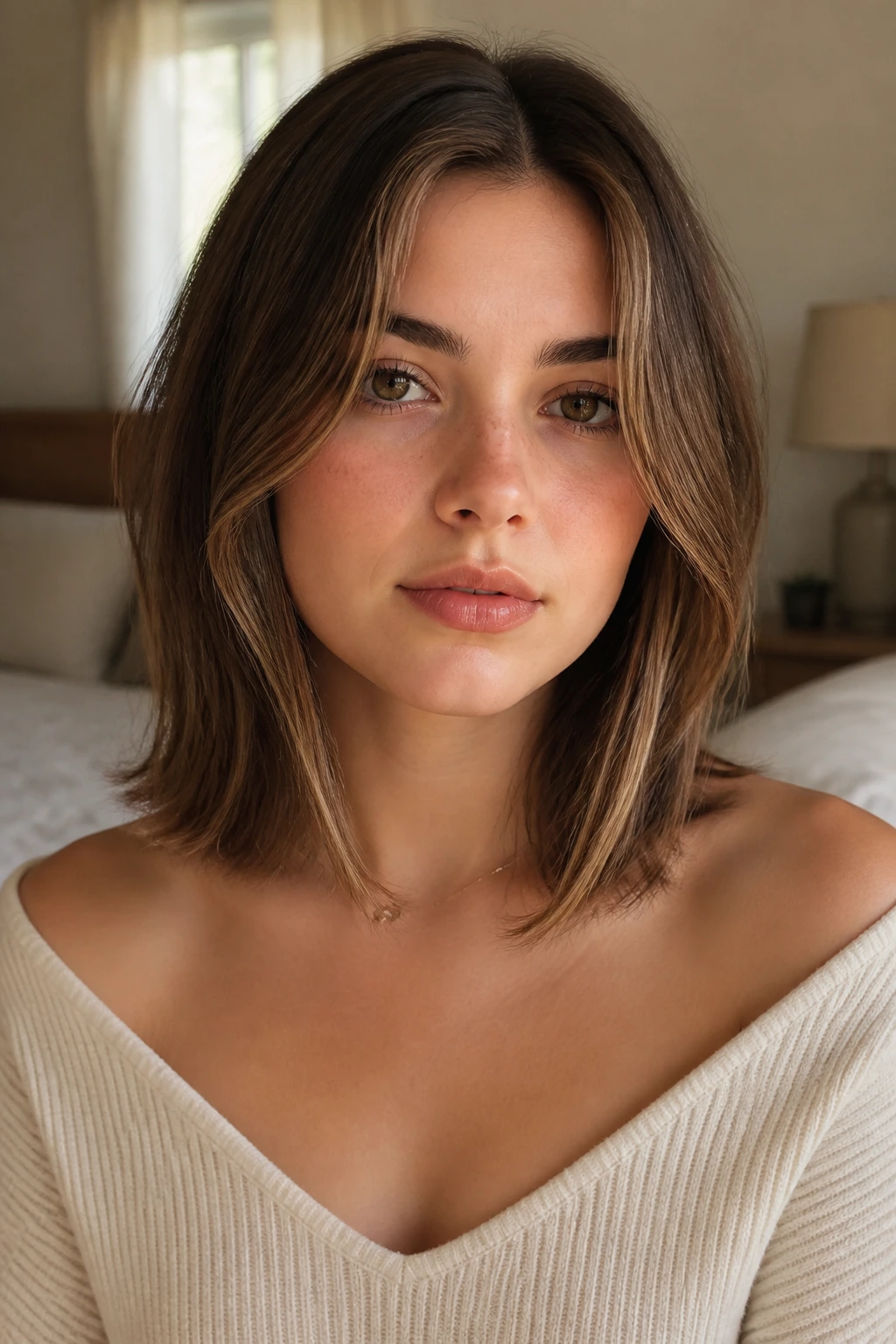
The collarbone cut has become popular for a reason: it gives you length without the weight of very long hair. On a round face, that matters because the hair gets enough length to narrow the overall shape, while the front pieces can still do some sculpting.
Where The Ribbons Should Start
The face-framing pieces should begin below the cheekbone, not across it. That’s the part that people miss. If the shortest layer lands right at the widest part of the face, it works against you.
- Keep the base length at the collarbone.
- Ask for two front pieces that angle toward the jaw.
- Leave the crown soft, not rounded out.
The result should feel loose, not layered to death. A few clean ribbons around the front are enough. Anything more starts to look busy, and busy hair often reads wider than intended.
8. Wolf Cut With Airy Ends

A wolf cut can look wild, but it does not have to. On round faces, the version that works has lift at the top and lighter ends through the perimeter. That keeps the sides from feeling thick and lets the shape rise instead of spread.
The mistake is making the whole cut equally shaggy. That just turns into fuzz. What you want is contrast: more height near the crown, less density around the cheeks, and ends that flick rather than hang.
This cut is especially good if your hair has some natural body. Fine hair can wear it too, but the layers need to be handled carefully so the top does not go see-through. Thick hair? Even better, as long as the weight is removed in the right places.
It’s a messy cut. That’s the point. But it should still feel edited.
9. Long Pixie With a Sweeping Fringe
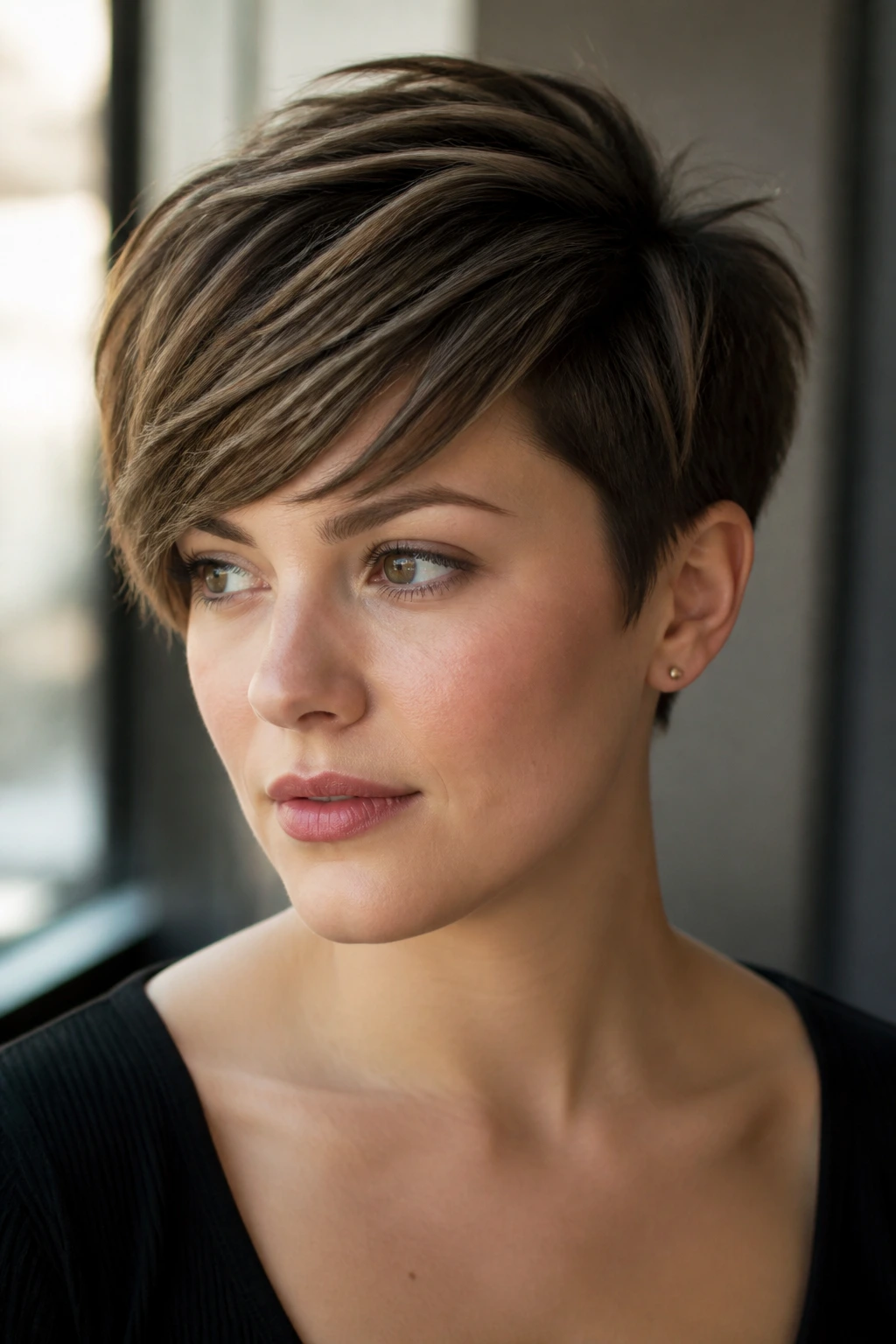
Can a pixie work on a round face? Absolutely, if it has direction.
The long pixie keeps enough length on top to build height, while the fringe sweeps across the forehead instead of stopping bluntly in the middle. That diagonal line is doing the heavy lifting. The sides can stay close, even a little tucked, as long as the top remains soft and mobile.
How To Style The Fringe
Keep the top about 3 to 4 inches long so you can push it over with your fingers or a small brush. A matte paste gives better control than a heavy cream, which can flatten the front and make the cut look sleepy.
A clean nape helps too. So does a sideburn that tapers into the cheek instead of ending in a hard corner. The whole point is to let the face breathe while keeping the silhouette sharp.
10. Curtain-Bang Lob

A curtain-bang lob is one of those cuts that looks easy, but the placement has to be right. The bangs should open in the middle and fall away from the face, not land across the widest part of the cheeks. Done well, they soften the forehead and guide the eye downward.
The lob itself should sit around the collarbone or just above it. That length keeps the face from feeling boxed in. If it hits the jaw, it can get tricky. If it falls much lower, the curtain bangs start to lose their job.
What To Watch For
- Ask for the shortest point of the bangs to sit below the brow, not right at the cheek.
- Keep the center part loose, not rigid.
- Leave the ends blunt enough to hold shape.
This cut is easy to wear, which is half the appeal. You can air-dry it, bend it with a round brush, or wear it sleek. It still holds its line.
11. Graduated A-Line Bob
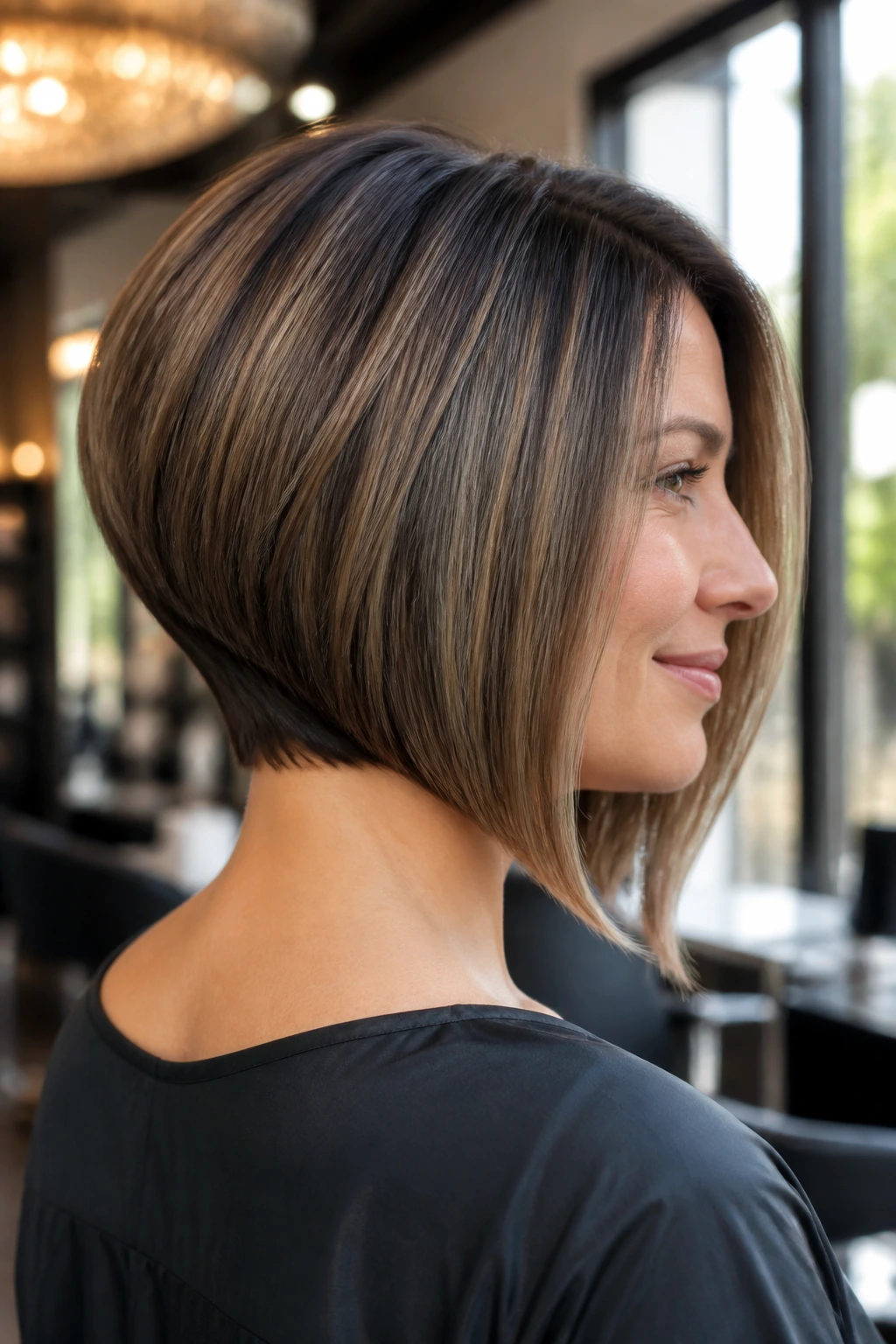
The graduated A-line bob is pure shape, and that’s why it suits round faces so well. The back is lifted and slightly stacked, while the front edges angle downward toward the jaw. It gives the neck a cleaner line and keeps the width from sitting squarely at the cheeks.
What I like here is the structure. This is not a fluffy bob. It is a cut with intention. The weight stays controlled, the front pieces stay longer, and the whole style feels neat without being stiff.
It works especially well on thick hair because the graduation helps remove bulk at the back. On fine hair, it can create the illusion of density without adding width. Ask for the stacking to stay subtle if you want the cut to feel modern rather than retro.
A sharp blowout makes this one sing. A flat, limp finish kills the angle.
12. Curly Shullet
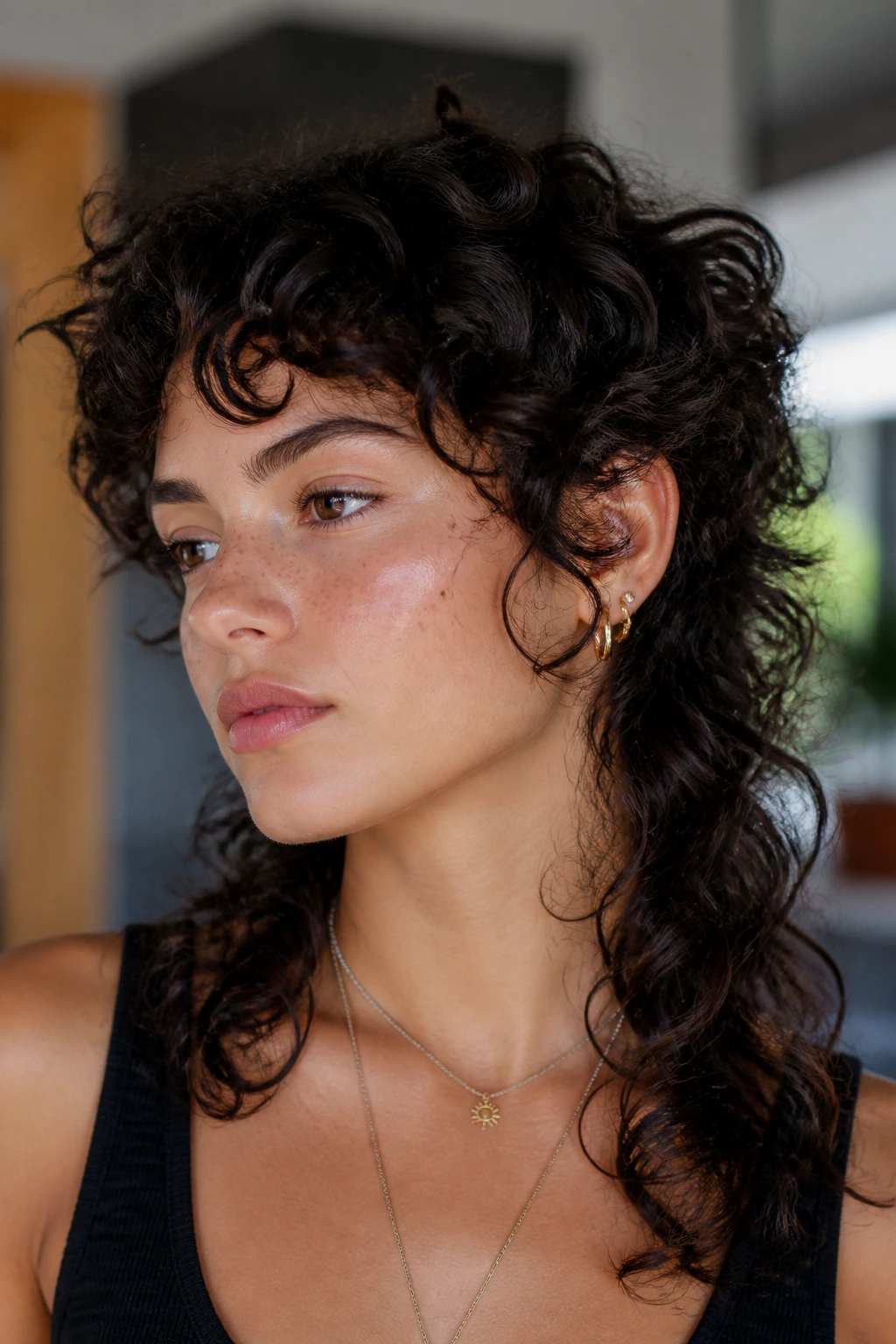
A curly shullet sounds playful because it is playful. It’s part shag, part mullet, and on curly hair it can be a smart way to keep the shape from puffing out around the face. The shorter layers up top create lift. The longer back keeps the curl pattern from spreading too wide.
Unlike a heavy curly bob, this cut leaves space between the curls and the face. That space matters. Curls need room to spring, but they also need a shape that doesn’t turn into one big halo at cheek level.
Ask for layers that respect the curl pattern and do not cut every curl to the same length. That’s how you get triangle shape, and triangle shape is a fight nobody wins.
Best for medium to tight curls with enough spring to show the layers. A diffuser helps, but the cut is doing the real work.
13. Tapered Curly Crop
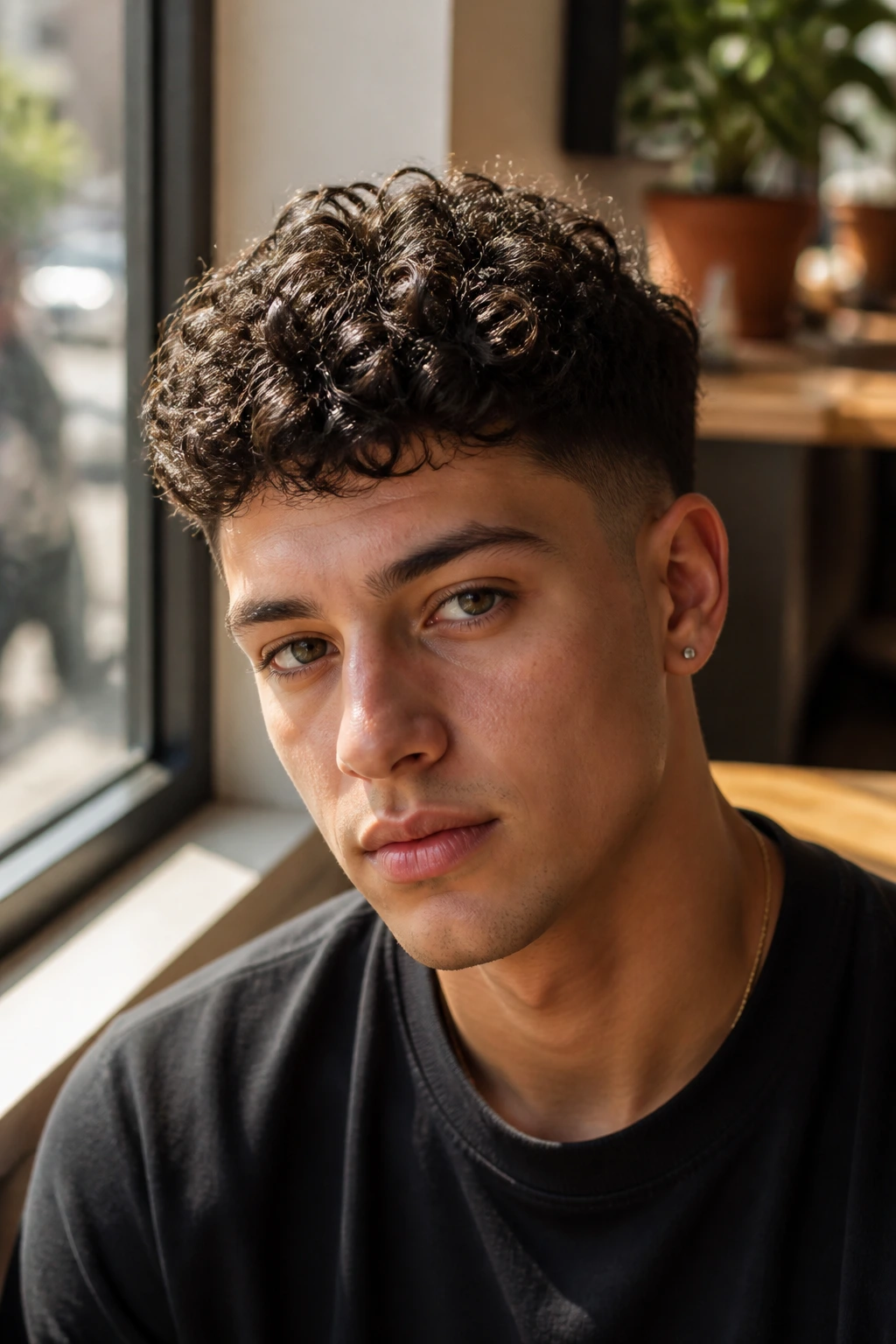
A tapered curly crop is one of the strongest short cuts for round faces because it keeps the sides close and lets the top carry the shape. Coily and curly textures do this beautifully when the taper is clean and the crown is left with a little height.
What Makes It Different
The taper should be gradual, not shaved down to nothing. The top needs enough length — usually 2 to 4 inches depending on curl tightness — to create movement and lift. If the top is cut too short, the whole style loses its line and can feel blunt around the face.
- Keep the nape neat.
- Leave the temples soft, not bulky.
- Shape the top so it rises upward, not outward.
This cut has attitude. It also has discipline. The difference is the silhouette.
14. Blunt Midi Cut With Beveled Ends

A blunt cut can be a friend to a round face if the line is placed well. The sweet spot is usually the collarbone or just below it, where the hair has room to fall straight without stopping at the cheeks. The blunt edge gives structure, and the slight bevel at the ends keeps the finish from feeling heavy.
That beveled end matters more than people think. It stops the cut from hanging like a curtain. A tiny inward turn at the bottom gives the face a longer look and keeps the perimeter neat.
This is a good choice if you like a low-drama haircut that still looks deliberate. It is clean, sharp, and easy to maintain if your hair behaves well with a brush or a flat iron. If your hair flips at the ends on its own, ask for a little more length so the bend happens below the face, not at it.
15. Modern Mullet With Soft Nape
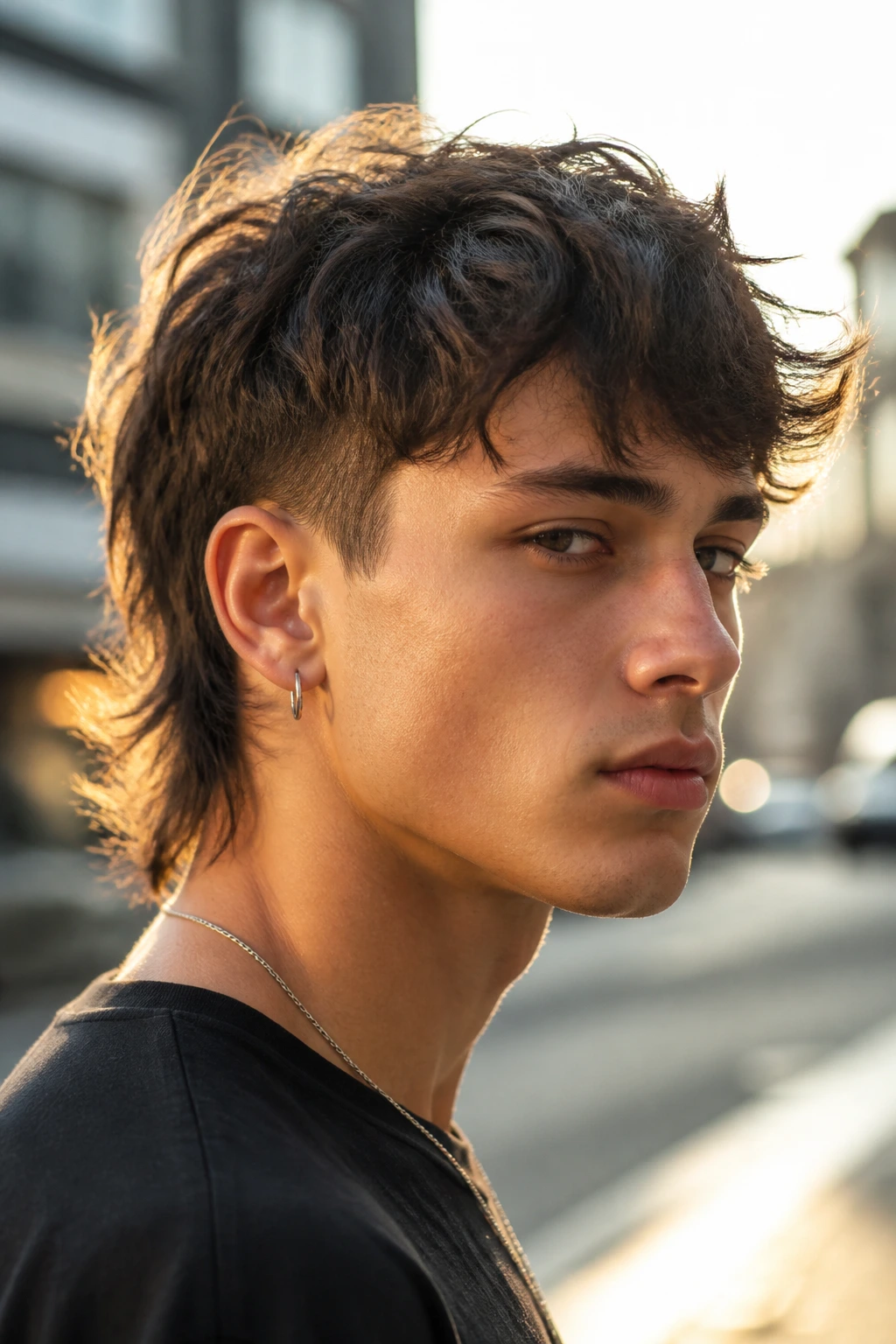
Why does a mullet help a round face? Because it shifts the visual weight. The top and back carry the shape, while the sides stay leaner. That creates length without making the whole cut feel flat.
The modern version is softer than the old hard-edged one. Think controlled texture, a little piece around the face, and a nape that’s longer but not ragged. The goal is a cut that feels intentional, not shaggy by accident.
Where To Keep It Soft
The side sections should not balloon. That’s the whole game. Keep the temple area tucked and let the back carry a little more length.
A light styling cream helps the layers sit in place without clumping. If the hair is thick, the interior needs some removal so the shape doesn’t get bulky. If the hair is fine, keep the layers longer so the style still has enough body to hold.
16. Razor Lob With Soft Movement
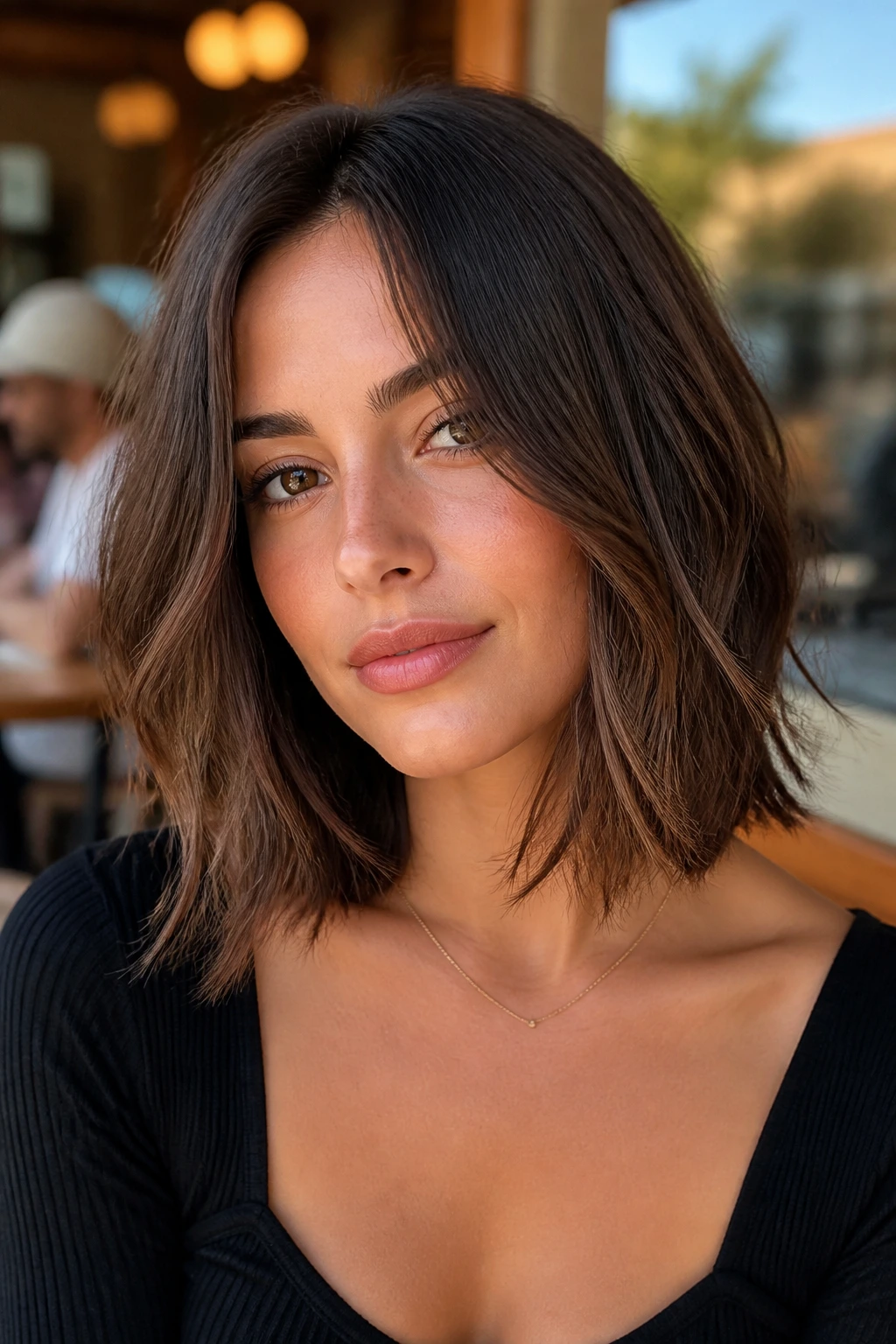
A razor lob is for someone who likes a bit of swing in the hair. The razor takes weight out of the ends and gives the cut a light, airy movement that can look especially good on round faces, as long as the texture cooperates.
The main thing to watch is frizz. Razor cutting on hair that already feels rough or dry can make the ends look frayed. On smoother hair, though, it creates soft edges that don’t sit as a hard line at the cheeks. That keeps the face open.
What To Ask Your Stylist For
- A collarbone length lob.
- Soft razor work only through the ends.
- Face-framing pieces that start below the cheekbone.
This is not the cut for someone who wants a stiff, glossy helmet. It is for someone who likes movement and a little edge.
17. Butterfly Cut With Shorter Face Layers
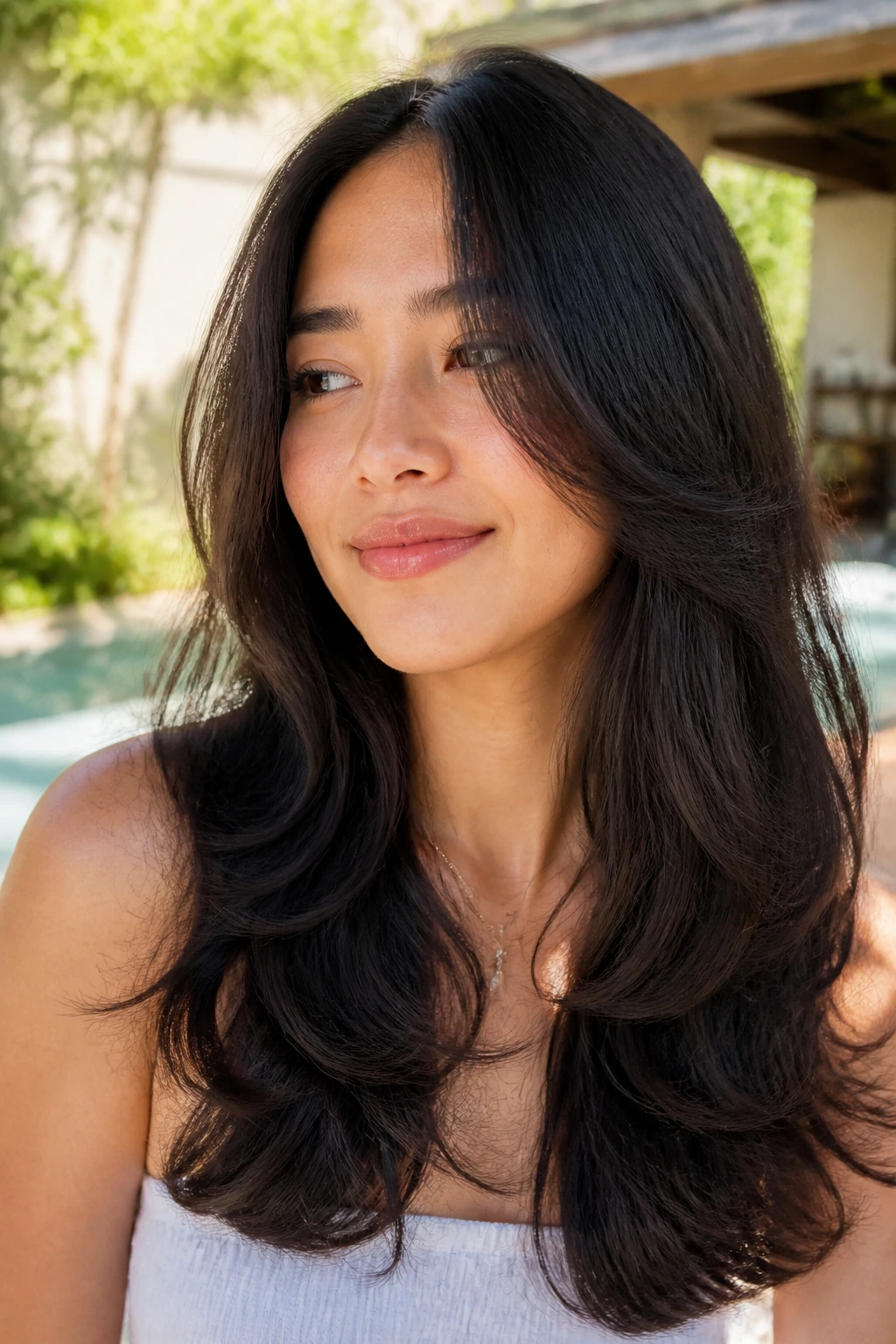
The butterfly cut gets its name from the way the shorter top layers lift away from the longer length underneath. On a round face, that can be a smart move because it adds vertical motion without giving up the long line.
The face frame should not start too high. That’s the trap. If the shortest layers hit the cheekbones, the width comes right back in. Better to let the pieces begin lower and sweep back, where they can soften the jaw without crowding the cheeks.
I like this cut on long hair that feels heavy or one-note. It keeps the length, but it stops the ends from dragging the whole look down. With a blowout brush, the shape looks airy. With natural texture, it feels fuller and a little undone.
Long hair does not have to mean flat hair. This cut proves that.
18. Tucked-Under Pageboy
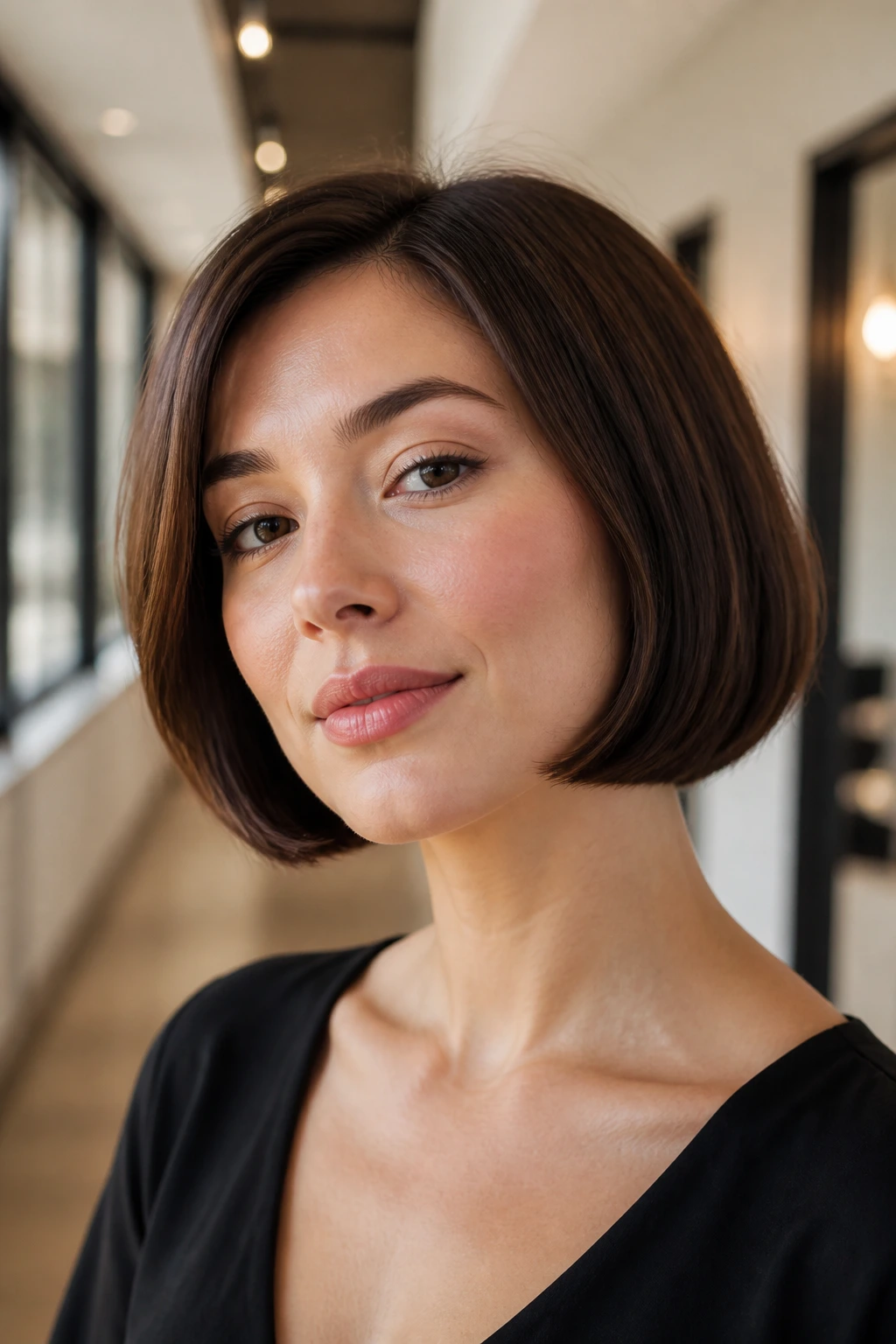
The pageboy is having a quiet comeback for a reason. When it’s cut well, the shape turns under at the ends and gives the face a clean frame instead of a wide one. That inward bend can work nicely on round faces, especially if the hair is straight or blow-dried smooth.
Unlike a boxy bob, the tucked-under pageboy has a controlled curve. The length usually lands near the jaw or just below it, but the important part is that the ends do not flare out. They hug inward.
That inward shape can be unforgiving if the cut is too thick at the sides, so the interior needs a little removal. Not too much. Just enough to let the bend happen.
It is a polished look, but not a fussy one. Good for people who like clear lines and do not mind spending ten minutes with a brush.
19. Deep Side-Part Waves
A deep side part paired with long waves is a small styling move that changes the whole haircut. The part creates asymmetry, the waves add movement, and the result is a shape that feels longer and less centered on the cheeks.
The Cut Needs The Right Foundation
This works best when the cut underneath has long layers, not too much width at the sides, and enough length to keep the wave from puffing out at chin level. If the layers are too short, the wave can spread sideways. That is the last thing a round face needs.
- Keep the heaviest side a little sleeker at the root.
- Add bend through the mid-lengths, not at the ends only.
- Let one side tuck behind the ear for a cleaner line.
The beauty of this style is that it does not look overworked. It’s just hair with a smarter part.
20. Choppy Shoulder Cut With Bottleneck Bangs
A shoulder-length cut can feel wide if it sits too bluntly, which is why the choppy version is useful. The uneven ends keep the shape from reading as one solid block, and the bottleneck bangs give the forehead some movement without cutting straight across the face.
This combo works because the bangs start narrow, then open out as they move down. That little shape helps the top of the face feel lighter. Meanwhile, the choppy ends stop the shoulders from becoming the widest point in the whole haircut.
It’s a nice cut if you want edge but not drama. The texture should feel broken up, not shredded. A little matte spray or salt spray helps the pieces separate without getting crunchy.
This is one of those cuts that looks better the second day. A little mess suits it.
21. Invisible-Layer Long Cut
Can long hair do anything for a round face? Yes — if the layers are hidden instead of obvious.
An invisible-layer cut keeps the outside shape long and clean while building movement inside the haircut. That means the perimeter stays slim, but the hair still has lift and swing. It’s a smart choice if you love length and do not want the sides to feel bulky.
Where The Layers Belong
The shortest internal pieces should start below the cheekbone and travel downward. The face frame can still be there, but it should be long enough to avoid sitting right on the widest part of the face.
A good cutter will point-cut the ends so the line stays soft, then keep the outer layer long enough to preserve the length. The result is subtle. Not flashy. But it makes the face look longer without screaming about it.
22. Disconnected Bob With an Undercut
A disconnected bob with an undercut is for someone who wants a little edge and a lot of control. The undercut removes bulk below the surface, which lets the top layer sit sleeker and closer to the head. On a round face, that can be a gift.
The disconnect means the top and bottom do not blend fully. That sounds dramatic, and it is, but it gives the haircut a cleaner outline. The face sees a sharper line instead of a wide one.
What To Know Before You Try It
- Best for thick or coarse hair that puffs at the sides.
- The undercut can stay hidden unless the hair is tucked up.
- The top layer should still have enough weight to fall smoothly.
This is not a timid haircut. It feels cool because it has a little tension in it.
23. Tucked-Under Lob With a Side Sweep
A tucked-under lob is one of my favorite low-fuss shapes for round faces because it feels neat without looking severe. The ends curve inward, the length sits around the collarbone, and a side sweep keeps one side from matching the other too neatly.
That little asymmetry matters. A strict middle part can make a round face feel broader if the hair is dense. A side sweep breaks the symmetry and gives the hair a soft diagonal.
The tuck-under shape also helps the ends sit below the cheekline, which keeps the haircut from widening the middle of the face. If your hair is fine, this shape can give it a little body. If it’s thick, the inward bend keeps it from puffing out.
It’s a clean, wearable cut. No drama. No clutter. Just shape.
24. Short Crop With a Strong Fringe
A short crop with a strong fringe is not shy, and that is exactly the point. The fringe becomes the main shape, so the rest of the cut can stay close and clean. On a round face, that gives you a bold top line without adding width at the cheeks.
Unlike a soft pixie, this version is more graphic. The fringe can be blunt, slightly choppy, or brushed forward with a little texture, but it should have a clear edge. That helps the cut read intentional.
Best on straight to slightly wavy hair. If your hair is too curly, the fringe can shrink up and lose its line unless it’s cut with extra length. Ask for the sides to stay tight enough that the forehead becomes the star, not the fullness around the temples.
Strong brows and this cut get along well. So do people who like a haircut with a point of view.
25. Rounded Afro With a High Crown
A rounded Afro can be gorgeous on a round face when the crown is lifted and the sides are kept in check. The shape should rise up and out with intention, not spread widest at cheek level. That’s the difference between balanced and bulky.
Shape Notes That Matter
Ask for a cut that supports height at the top and a cleaner silhouette at the sides. The outline can stay rounded, but the widest point should sit higher than the cheeks.
- Keep the crown full.
- Taper the sides softly.
- Trim the outline often so the shape stays deliberate.
This is one of those cuts where the silhouette does the work. Texture helps, but the shape matters more. If the sides get too wide, the face can disappear inside the hair. If the crown stays lifted, the whole style looks stronger and more sculpted.
Final Thoughts
The best cuts for round faces are not the ones that try to erase the face shape. They are the ones that give it direction. Angle, height, asymmetry, and the right amount of movement can change the whole read of a haircut without making it fussy.
I’d start with one question: where does the strongest line of the cut land? If it hits the widest part of the cheeks, think twice. If it drops below the chin, leans to one side, or builds lift at the crown, you are usually in much safer territory.
Bring photos, sure. But bring your texture, too. That matters just as much. The same cut can look sleek on straight hair, airy on waves, and completely different on curls or coils, so the best version is always the one shaped for the hair you actually have.
