



Thick hair can be a blessing until it starts fighting the shape you wanted. A blunt cut that looks crisp in a salon chair can puff out at the cheeks, stack up at the jaw, and feel two inches wider by lunch.
Short asymmetrical haircuts for thick hair solve that by changing the line, not just taking length off. One side sits longer, the back can be tighter, and the front can fall across the face instead of standing out from it. That shift sounds small. It changes everything.
People often think thick hair needs aggressive thinning, but that usually leaves the ends wispy while the bulk still lives where you do not want it. Better cuts move weight with stacking, point cutting, internal layers, and a careful nape taper. On the right head, those details make the difference between busy and shaped.
Some of these cuts are soft and easy. Others lean sharp, almost architectural. All of them work with thick hair instead of fighting it.
1. Stacked Pixie Bob with a Deep Side Part
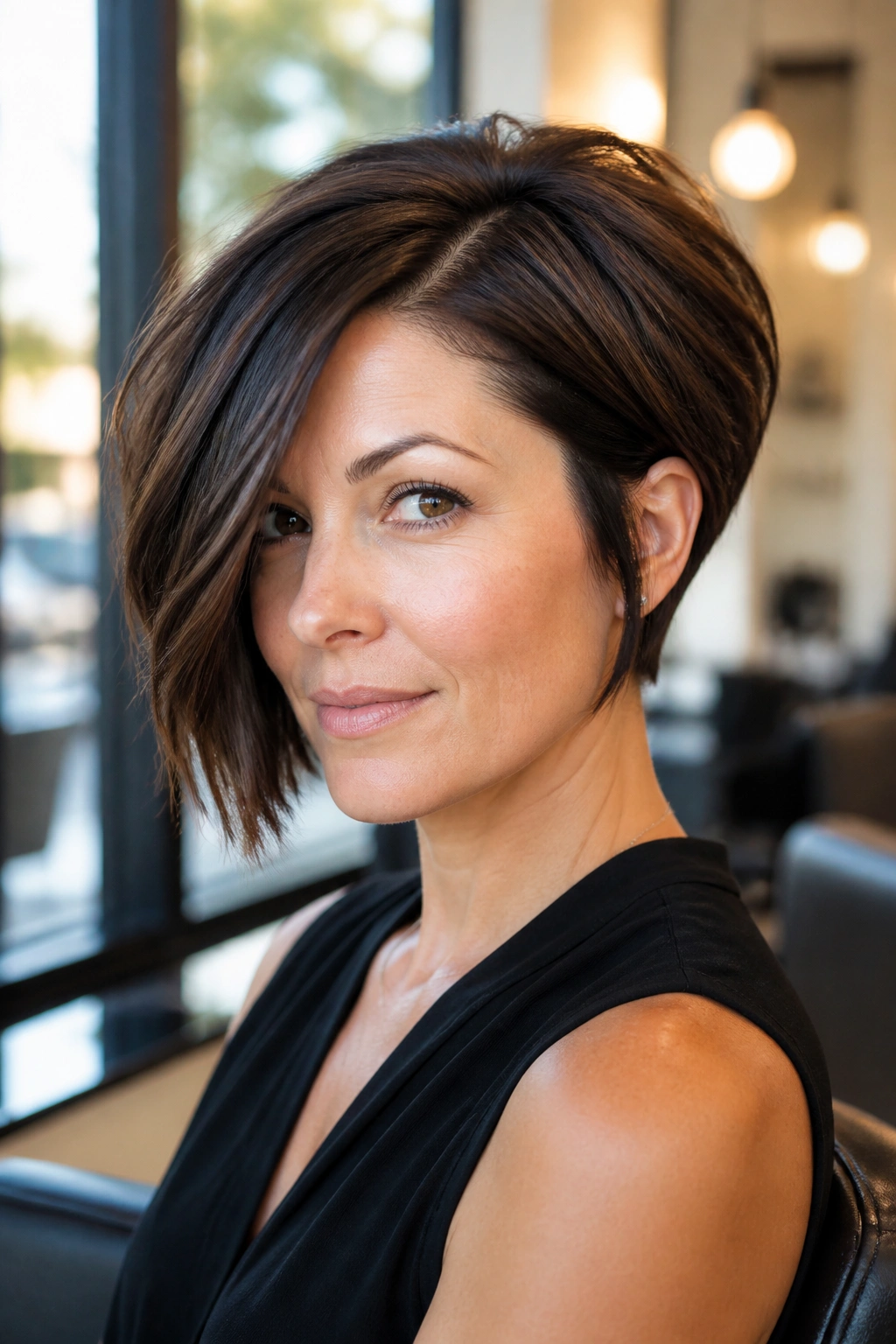
This is the cut I point people toward when they want the ease of a pixie and the shape of a bob. The stacked back lifts the crown, while the longer front keeps thick hair from ballooning around the jaw.
Ask for the nape to be cut tight and the weight line to sit high behind the ear. A good stylist will point-cut the ends rather than shred them with thinning shears, because thick hair needs clean edges more than it needs random gaps. One side can land right at the cheekbone, the other can sit closer to the ear.
It looks polished with a side part and a small amount of mousse scrunched through damp hair. If your hair grows fast or sticks out at the crown, plan on shape-ups every 4 to 6 weeks. After that, the cut starts doing half the styling for you.
2. Angled Chin-Length Bob with Interior Debulking
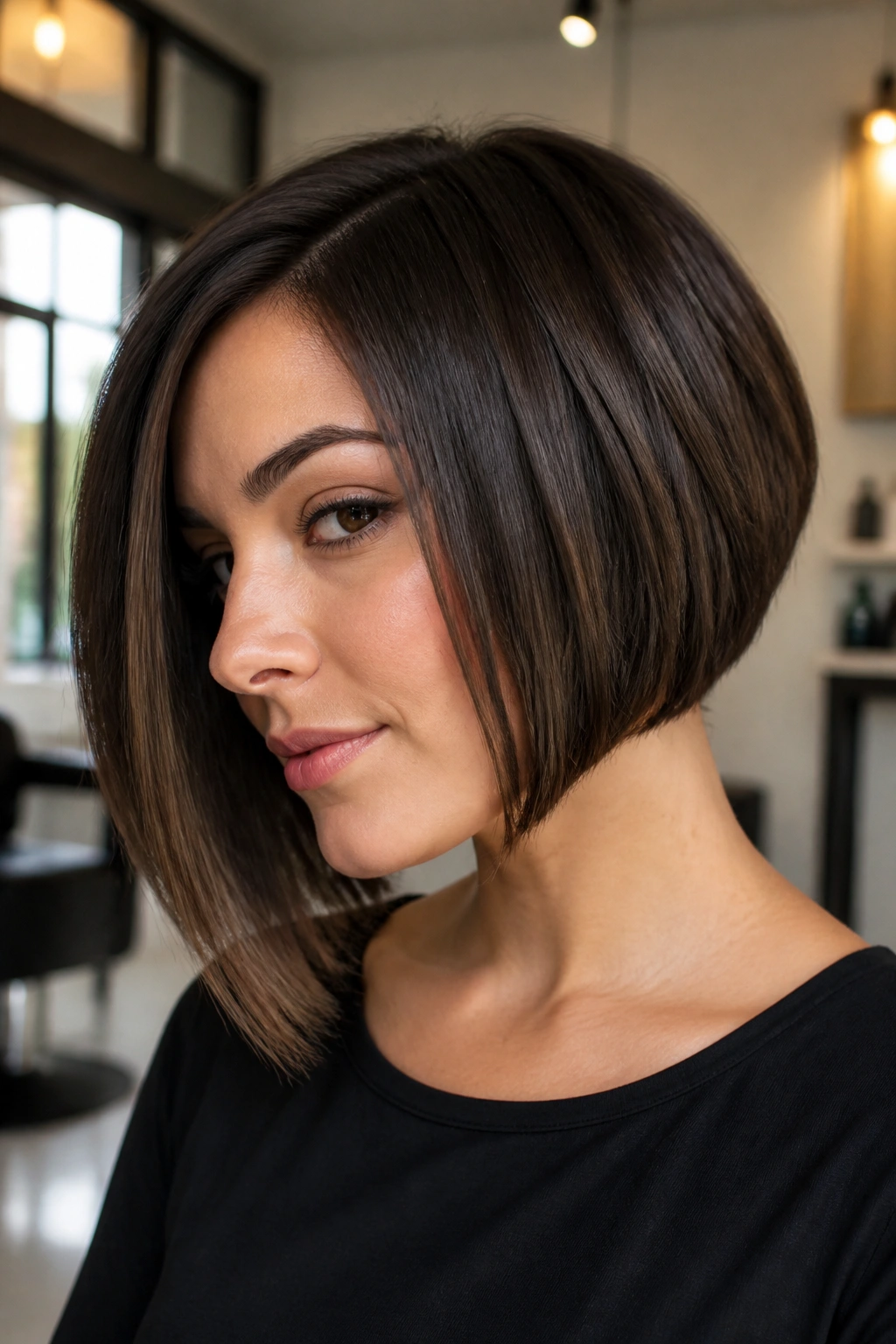
Why does this version feel lighter than a blunt bob? Because the perimeter stays clean while the inside loses weight.
What to Ask For
- Ask for a longer front that skims the chin and a back that rises by about 1 to 2 inches.
- Ask for internal layering under the top section, not heavy thinning at the ends.
- Keep the front pieces soft enough to tuck behind one ear without sticking out.
- If your hair is coarse, have the stylist check the line dry before they call it finished.
That hidden reduction keeps the shape sleek instead of puffy. Blow-dry it with a paddle brush, then bend the front under just a little so the angle reads clearly. It is one of the more dependable short asymmetrical haircuts for thick hair when you want something neat rather than edgy.
3. Side-Swept French Bob with Soft Corners

Unlike a blunt French bob, this cut keeps the line airy. One side lands at the jaw, the other creeps past the mouth by half an inch or so, which gives thick hair a direction instead of a wall.
It works especially well if your hair is dense but not too coarse. A 1.25-inch round brush and a quick bend under at the ends keep the perimeter from flaring. Skip heavy mousse; it can make the crown feel sticky and inflate the outline.
A side part with a narrow tucked side makes the asymmetry read faster. If you wear glasses, even better. The frames and the shorter side play off each other without much effort.
4. Feathered Bixie with a Long Crown
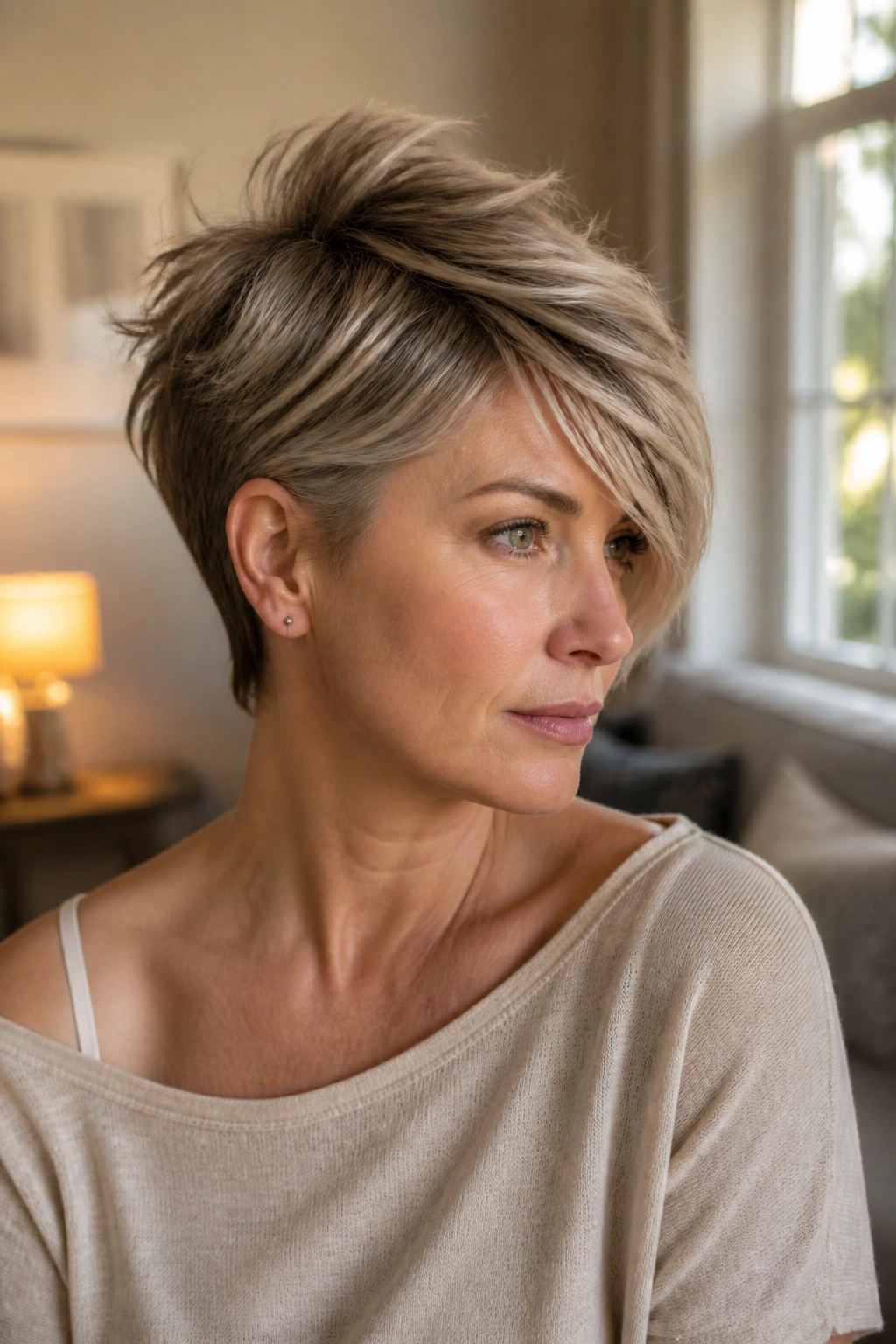
If you want short hair that still moves, the bixie earns its keep. It sits between a pixie and a bob, which gives thick hair a little room at the crown without leaving the sides bulky.
Shape Notes
- Keep the nape close and the top around 2 to 3 inches.
- Leave one side fringe longer so it sweeps, not spikes.
- Use feathering through the crown, not heavy layers.
- Keep the ears partly open so the silhouette does not feel packed.
A dab of matte paste on dry hair gives grip. Work it through the roots, then pinch the ends so the cut does not fall flat by noon. If your hair has a wave, the bixie usually looks even better on day two.
5. Curly Asymmetrical Bob with Face-Framing Spiral
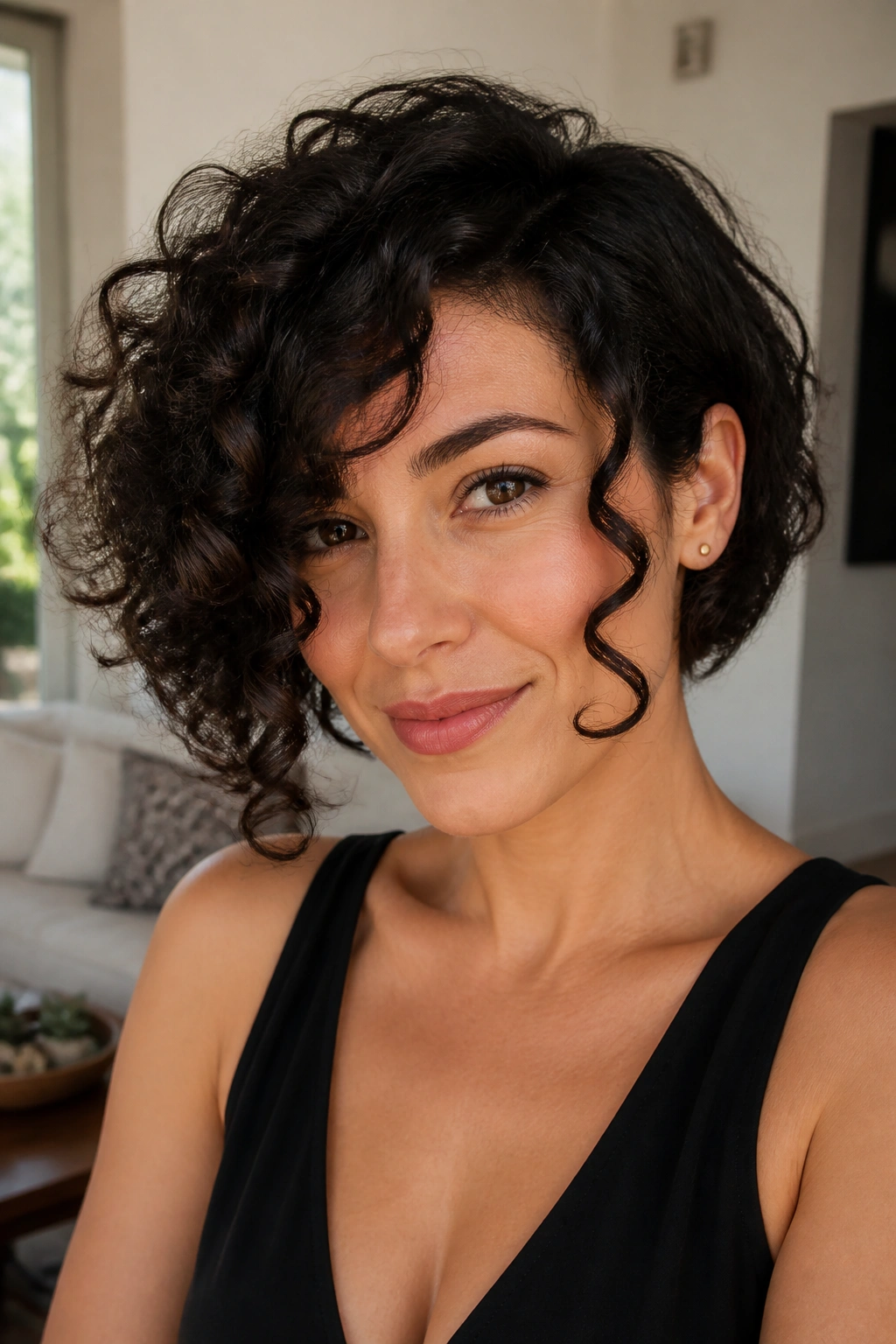
If your curls turn triangular in a blunt bob, you already know why this shape matters. The asymmetry gives the curl pattern somewhere to fall without piling all the volume in one corner.
For thick curly hair, ask for a dry cut or at least a curl-by-curl check at the end. One side can sit at the jaw, the other at the chin, and the front should be long enough to frame the face instead of springing up over it. Keep the layers controlled; too much chopping near the crown can make the whole cut puffy.
Diffuser on low heat. Then stop touching it. Let the curls set, scrunch in a little cream, and use a clip at the roots if one side needs help staying lifted. That is usually enough.
6. Undercut Pixie with Long Fringe
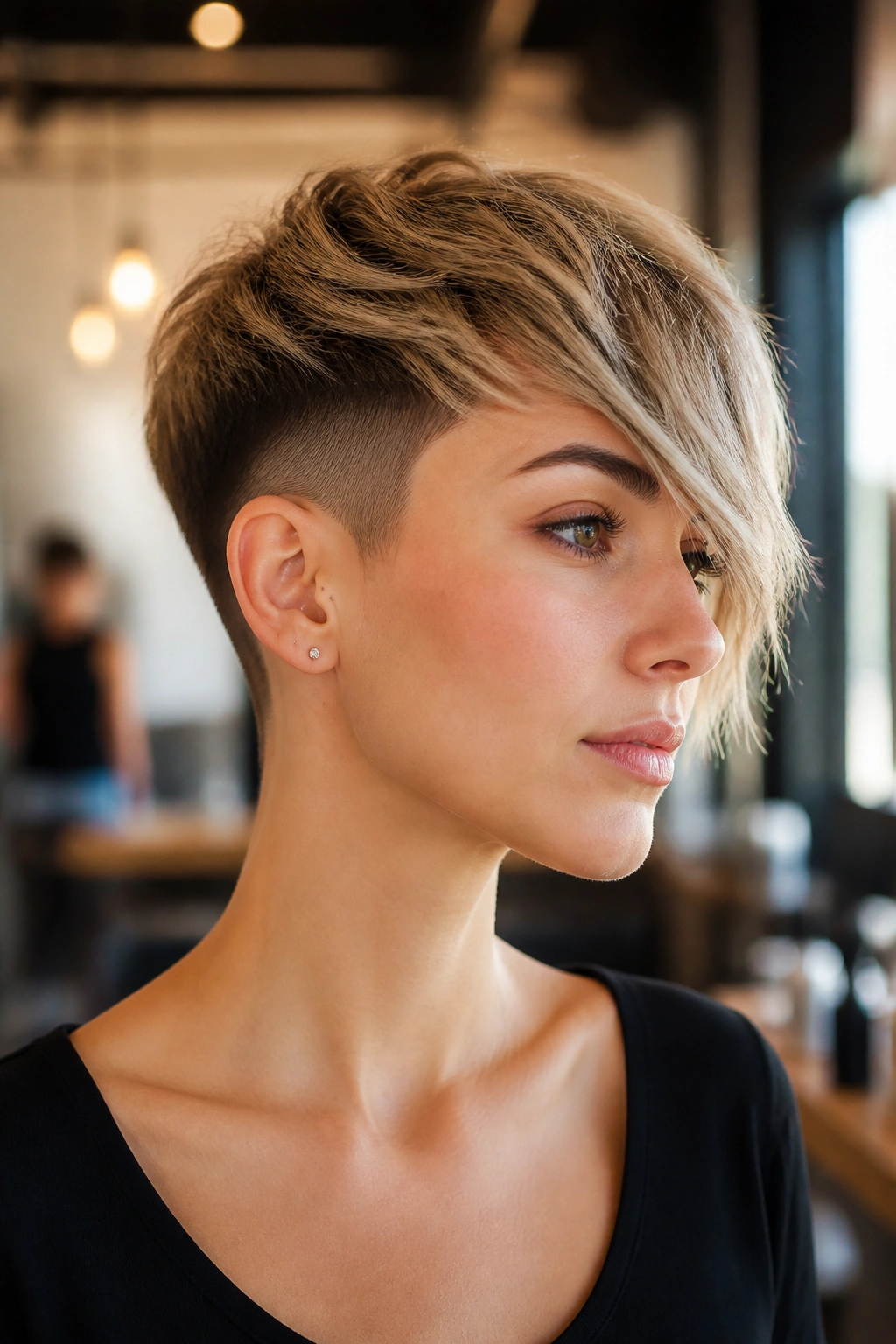
Need less bulk around the ears? This is where the undercut earns its place. Thick hair often expands at the sides first, so removing a narrow strip underneath can make the whole shape sit closer to the head.
How to Style It
- Blow-dry the fringe forward first, using a small round brush or your fingers.
- Sweep the longer side across the forehead while the hair is still warm.
- Finish with a pea-sized amount of paste only on the top layer.
- Keep the undercut neat with trims every 4 weeks, or the shape starts to lose its clean edge.
The contrast is the point. Short underneath, longer on top, and a little drama at the front. It looks sharp without asking you to fight your hair every morning.
7. Inverted Wedge Bob with a Tapered Nape
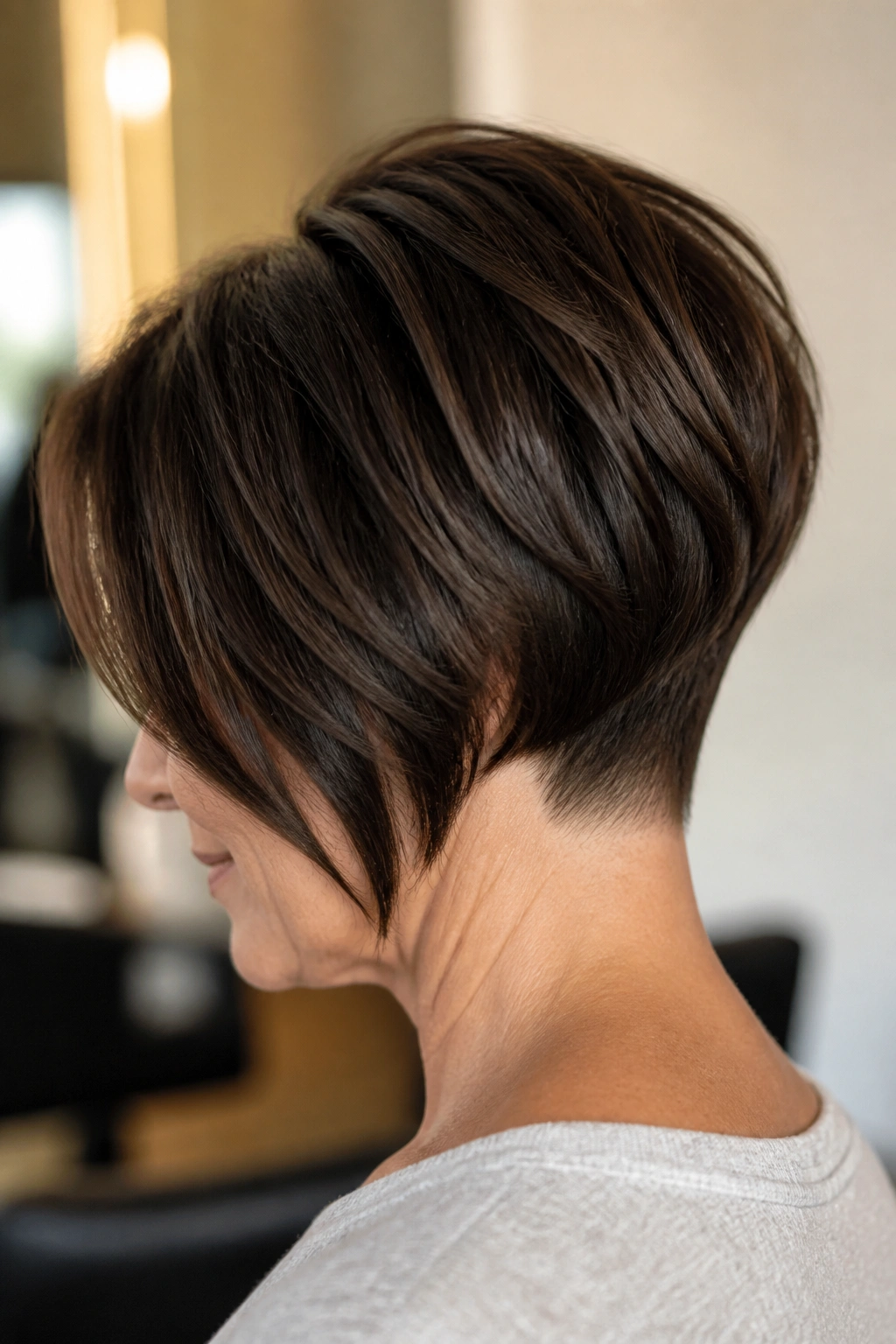
This cut loves thick hair because the shape is built from the back forward. The nape is short and snug, the crown has lift, and the front length eases down toward the face.
A good inverted wedge uses that density instead of trimming it into a flat line. The shorter back creates a natural curve, which keeps the head from looking wide. If your hair is straight or only slightly wavy, the angle shows up cleanly. If it is coarse, the curve still works, but the ends need a careful bevel so they do not stick out.
It suits square and heart-shaped faces well because it leaves room around the jaw while still exposing the neck. A quick round-brush pass at the crown gives the cut enough height. Not much more is needed.
8. Razor-Cut Crop with Micro Fringe
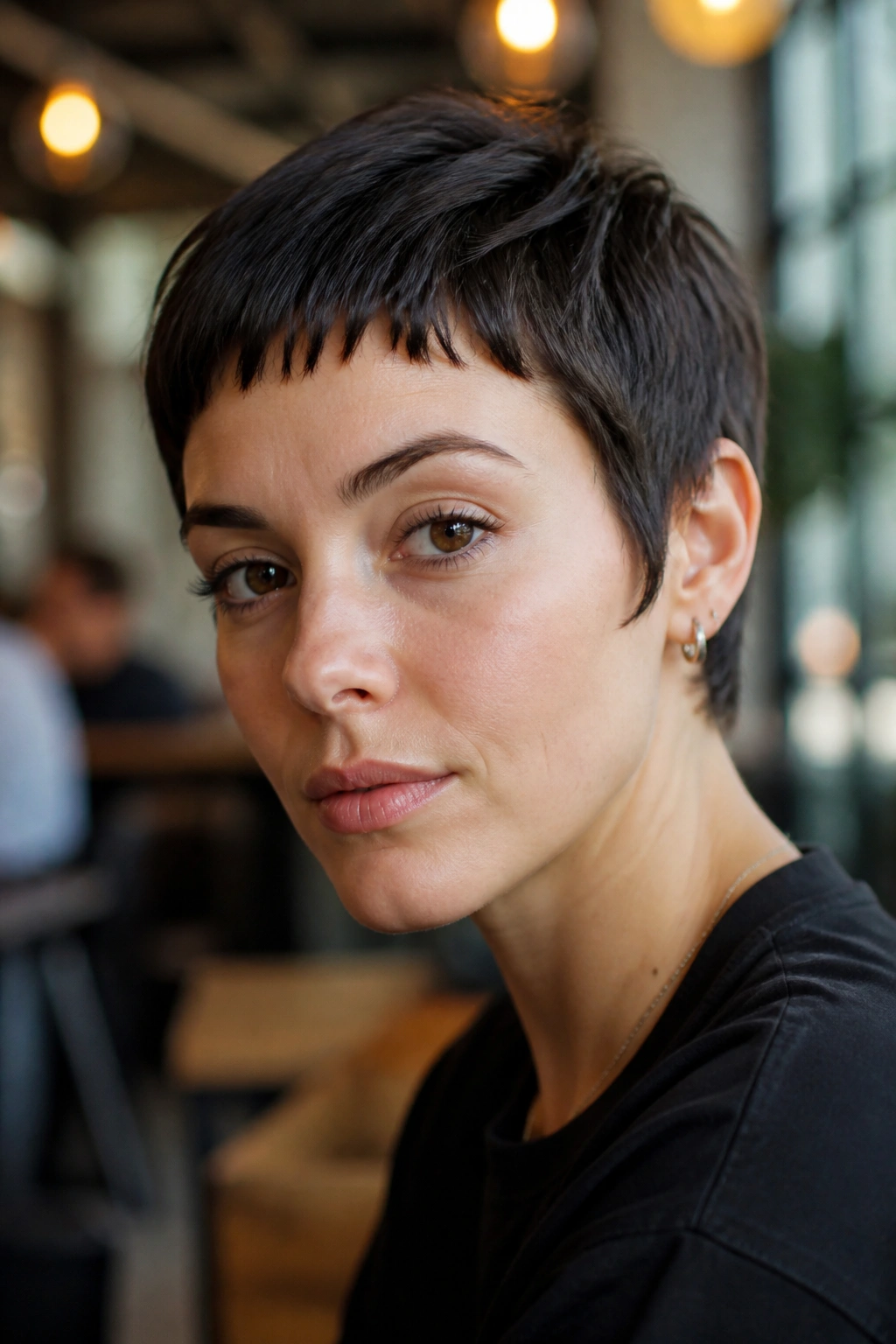
A razor-cut crop can look airy on thick hair, but only when the razor is used with restraint. The goal is softness at the ends, not shredded pieces that fray after one shampoo.
What Makes It Different
- The perimeter stays short, often around ear level.
- The micro fringe opens the forehead and keeps the cut modern.
- The sides are texturized enough to prevent helmet bulk.
- The crown stays compact so the silhouette does not balloon.
Be careful with very coarse curls here. A heavy razor on that texture can leave the ends rough and hard to smooth. Straight to loose-wavy hair usually handles it better, especially if you like a little edge without much daily styling. A small round brush and a touch of heat protectant usually do the trick.
9. Tapered Nape Crop with Side Layers
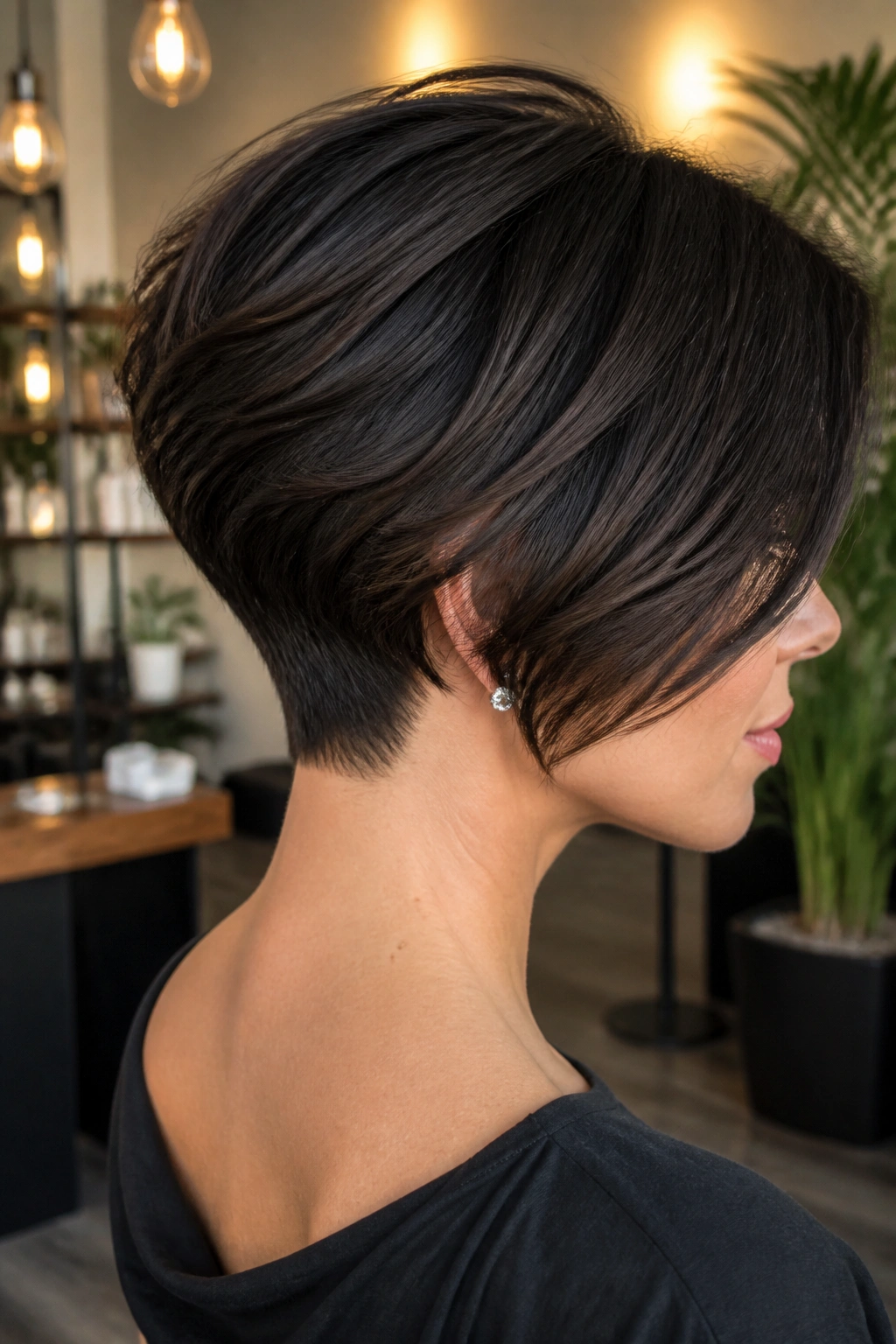
Some cuts are about the front. This one is about the back.
When thick hair kicks out at the nape, a tapered crop fixes the problem fast. The back is trimmed close to the neck, then the side layers sweep forward at a slight angle. That lets the cut look tidy from every side, not only from the mirror.
Ask for a soft line above the ear and a little extra length through one front corner. That corner keeps the asymmetry visible, while the taper keeps the neck area from puffing out under collars and scarves. It is a small thing that matters more than people expect.
A light root-lift spray at the crown helps, but the cut should already sit well on its own. If it needs a lot of heat to behave, the shape is off.
10. Jaw-Grazing Asymmetrical Bob with a Tucked Side
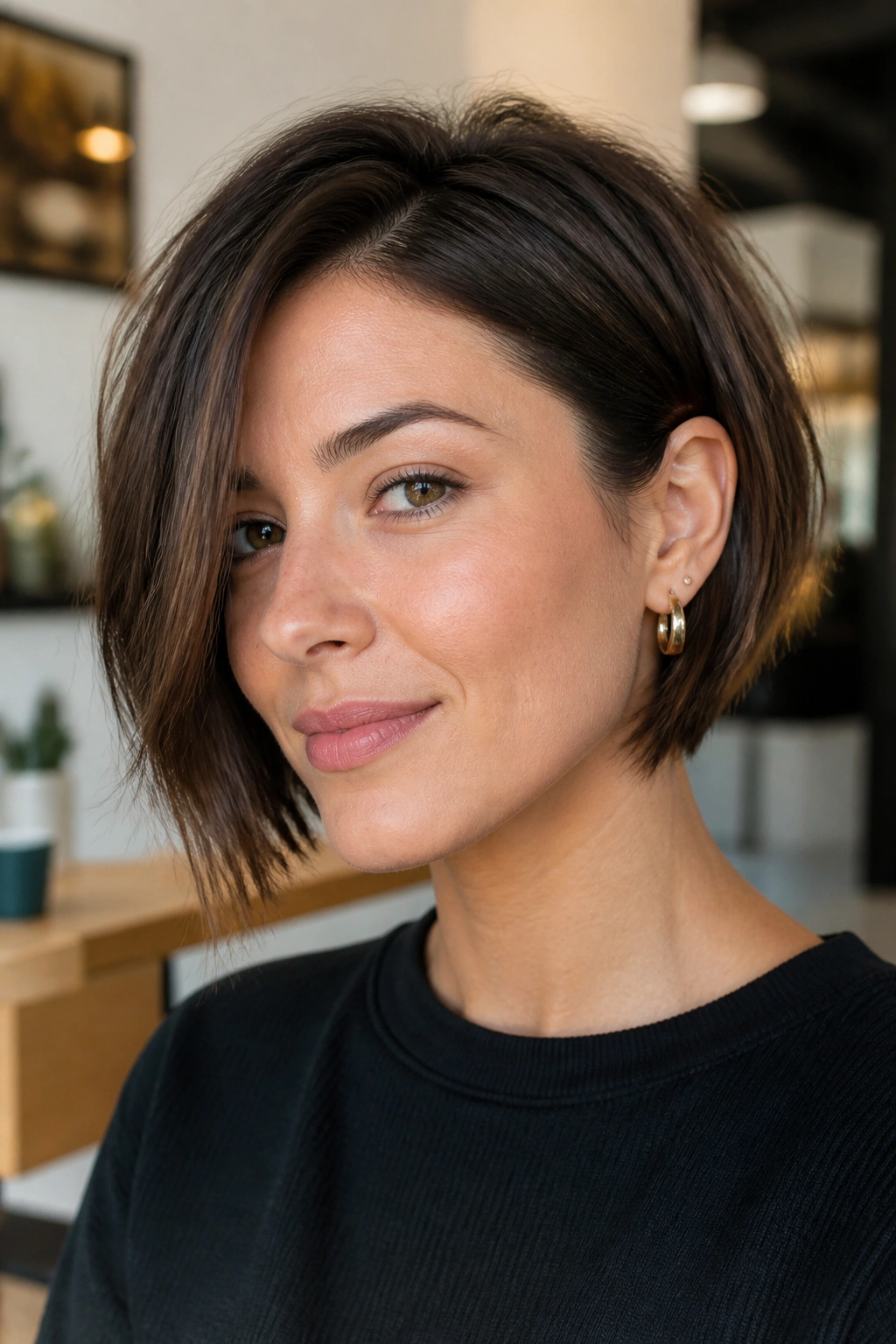
What if you like a bob but hate how much width it adds at the jaw? This is the version worth asking about.
Who It Flatters
- Oval faces get a clean line that shows off the jaw without boxing it in.
- Square faces benefit from the soft sweep across one side.
- Longer faces look balanced when the front lands at the jaw instead of below it.
One side is long enough to tuck behind the ear, and the other side hangs loose so the shape stays off-kilter in a good way. Thick hair looks better here when the ends are beveled, not bluntly chopped, because the line needs to move. A flat brush or paddle brush is enough for styling. The tuck creates the asymmetry; the blow-dry keeps it honest.
11. Choppy Shag Bob with Side Bangs
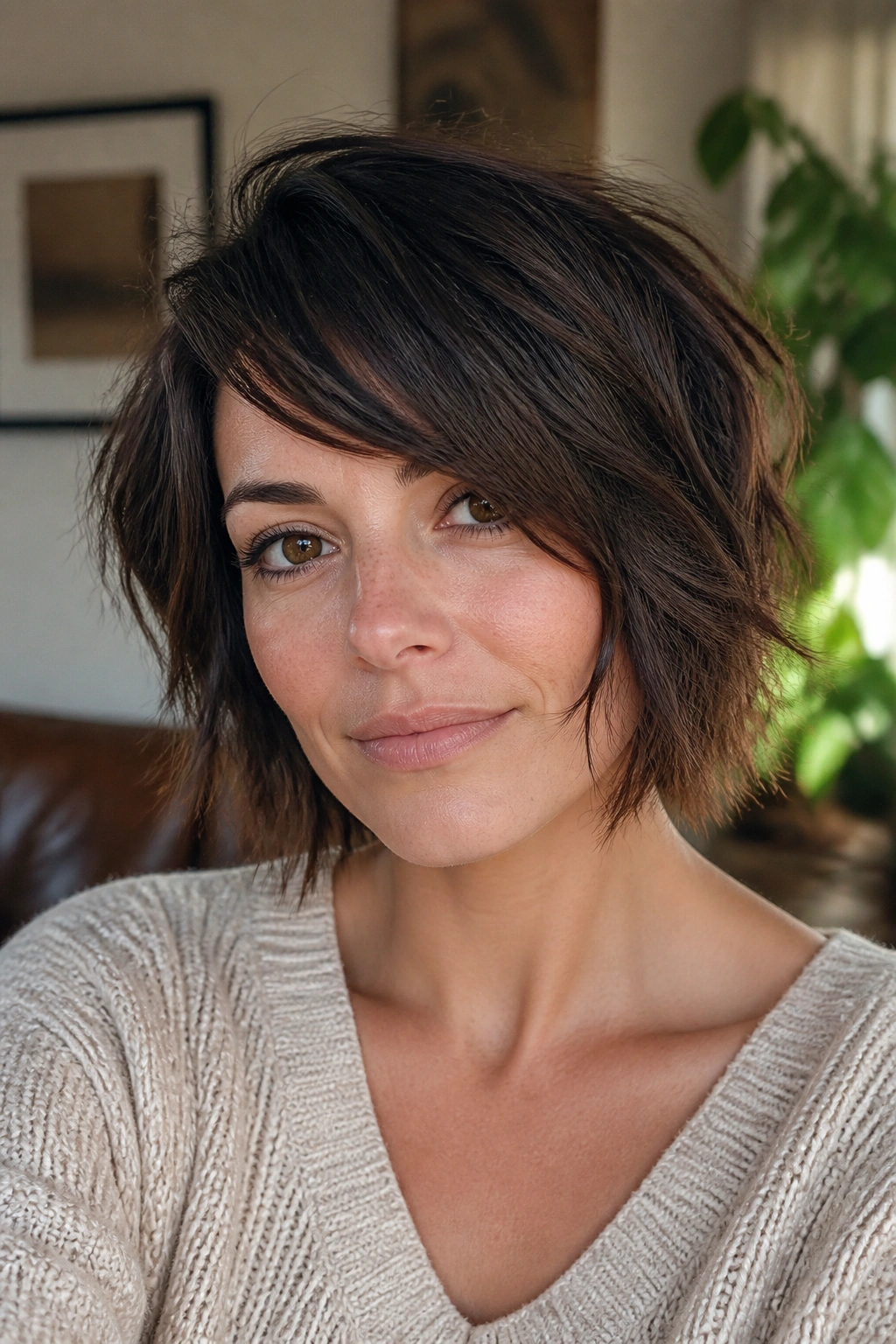
Messy is the point here. Thick hair can take a shaggy shape without falling apart, and the asymmetry keeps it from looking too round.
The side bangs do a lot of work. They break up the forehead, soften a strong brow, and let the rest of the cut stay short without feeling severe. Keep the layers longer than you think you need; too many short pieces can make thick hair stand out instead of lie down. The best version has movement near the front and a slightly uneven hem.
Use a lightweight cream or a mist of texture spray, then rough-dry with your fingers. A brushed-out shag on thick hair can look too neat and lose the point. This cut likes a little bend. A little mess, too.
12. Ear-Length Crop with a Long Front Corner
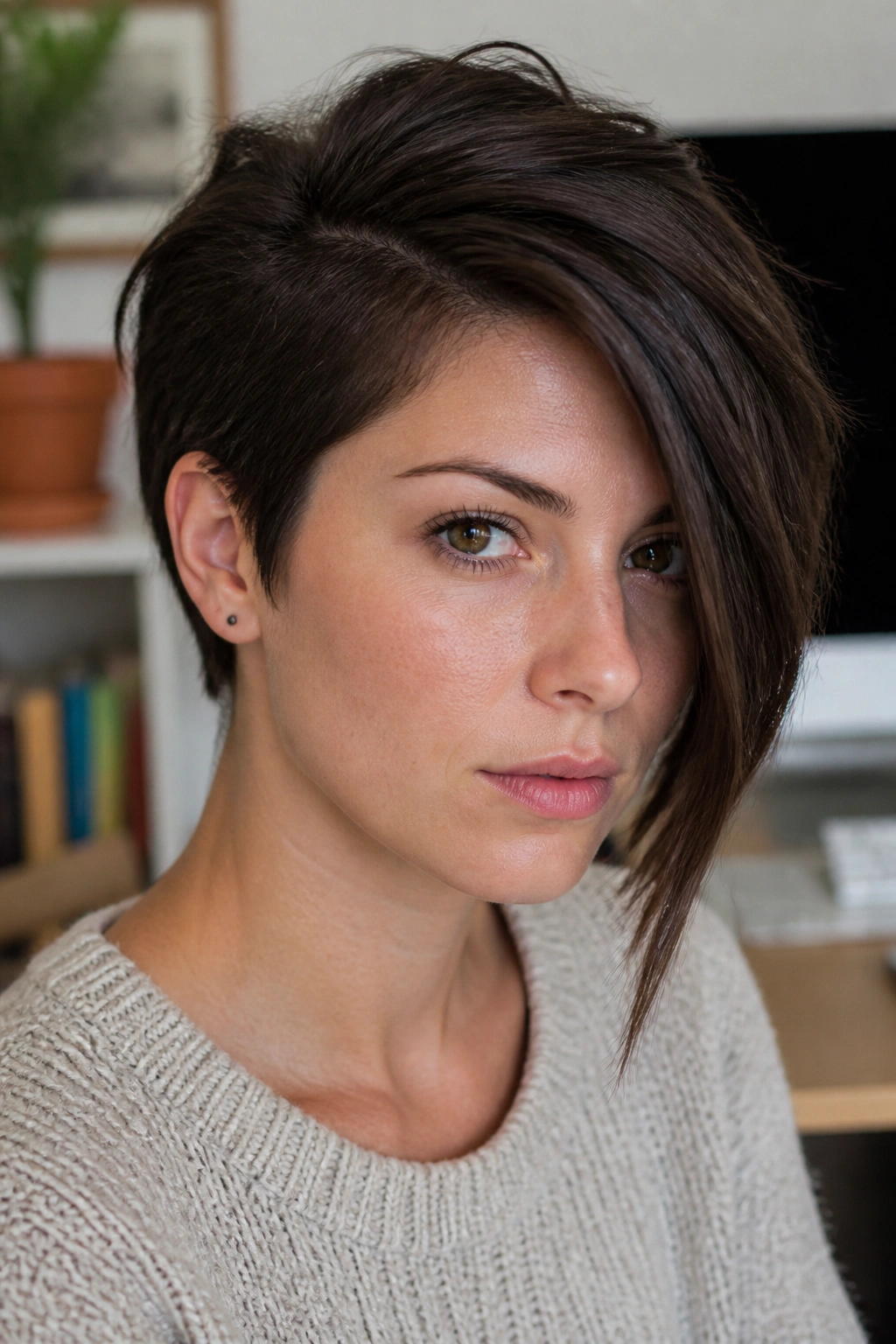
This sits between a crop and a bob, which is why it works so well on dense hair. The ears stay mostly exposed, the nape stays clean, and the longer front corner gives the eye a place to land.
It is a good pick if you wear earrings or glasses and want the haircut to frame, not hide, your face. The long corner can fall toward the lip line on one side while the opposite side stays snug around the ear. That difference is enough to make thick hair feel deliberate.
Keep the texture soft at the ends. A tiny bend with a flat iron or a quick round-brush turn will do. If the front corner is too blunt, the cut can look severe fast. The trick is keeping it sharp without making it stiff.
13. Curved Bob with a Hidden Temple Undercut
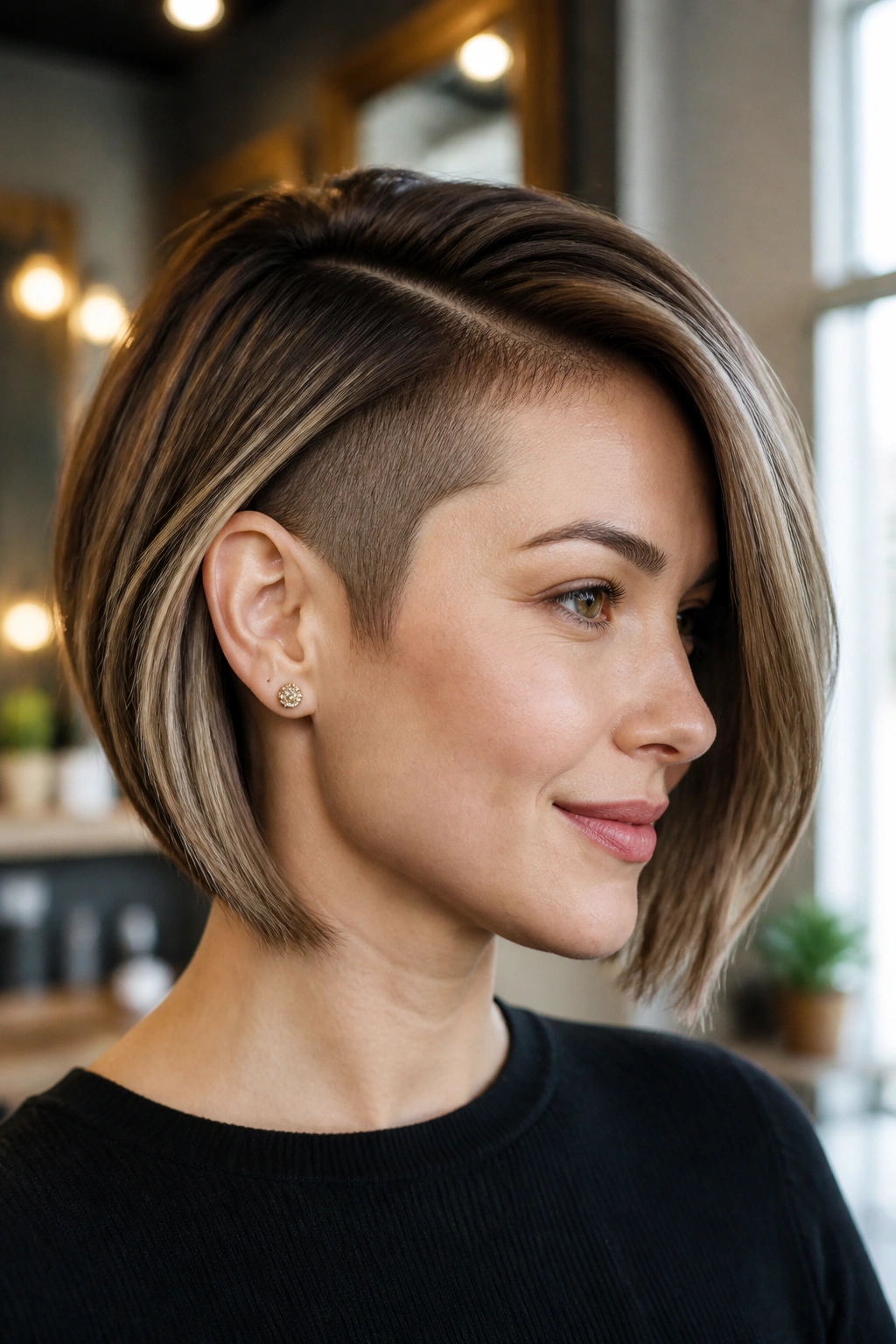
A tiny temple undercut changes more than people expect. Take a narrow strip behind the ear or at the temple, and thick hair stops pushing the side outward like a spring.
The rest of the bob stays curved around the head, which gives you shape without the bulk. One side can sit slightly longer and sweep forward, while the hidden undercut removes the weight that usually gathers around the face. It is a smart move for straight, dense hair that tends to sit heavy at the sides.
This one looks subtle from the front and serious from the side. That is the whole appeal. You get a cleaner outline without announcing the undercut every time you turn your head. Ask the stylist to check the fall dry, because thick hair will tell the truth once it settles.
14. Asymmetrical Pageboy with Texture
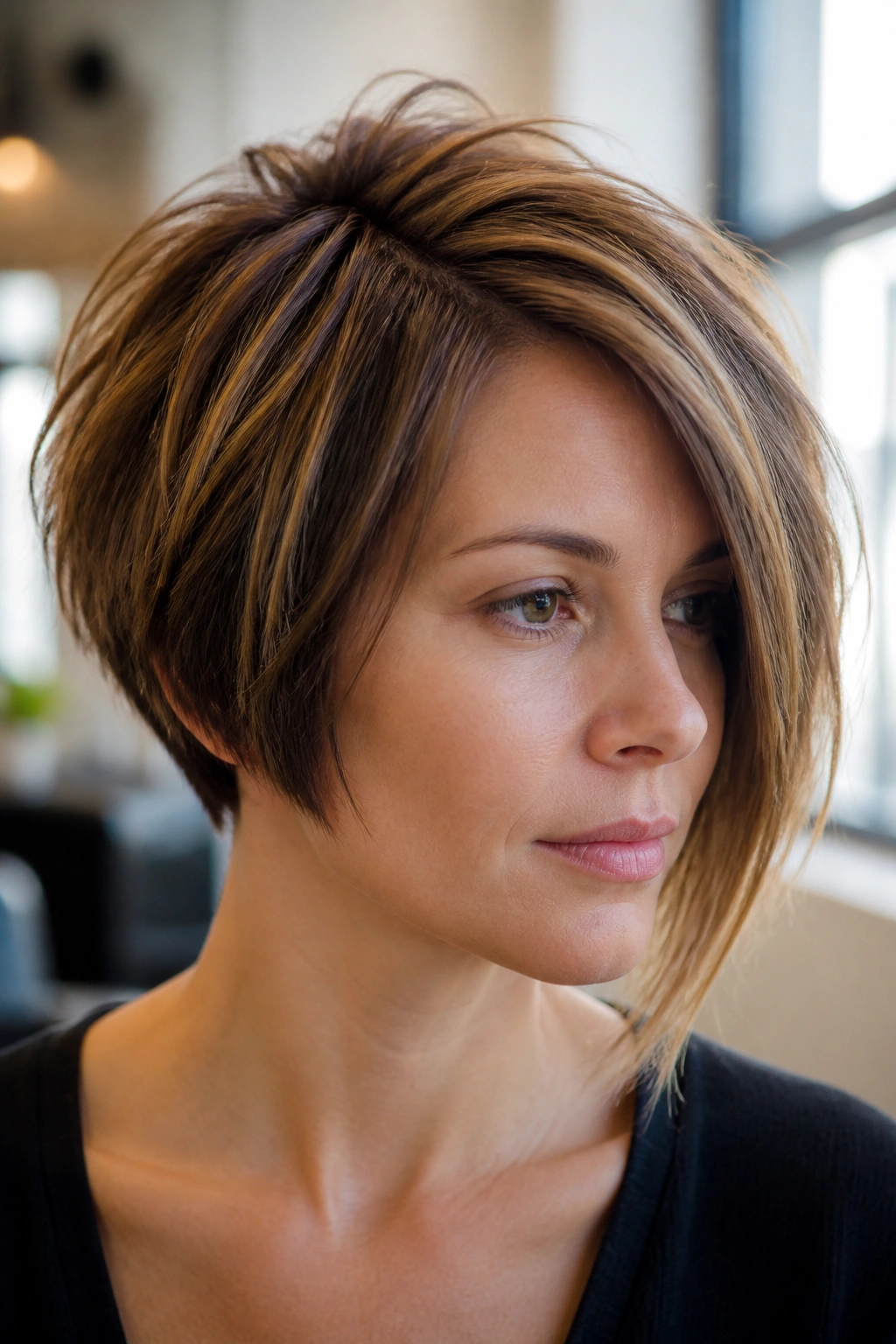
Unlike the old-school pageboy, this version drops the helmet effect. The line still curves under, but texture keeps it from looking stiff or dated.
It is a nice choice if you like structure. Thick hair supports the rounded shape well, and the asymmetry gives it a little tension so it does not become a perfect circle. One side can sit a touch lower, and a side-swept fringe keeps the top from looking flat.
This cut likes a paddle brush and a smooth blow-dry, followed by a small amount of serum on the ends. Not much. Too much product makes the perimeter collapse. If you want a shape that feels polished without being fussy, this one lands in a good place.
15. Flipped-Out Bob with a Deep Side Part
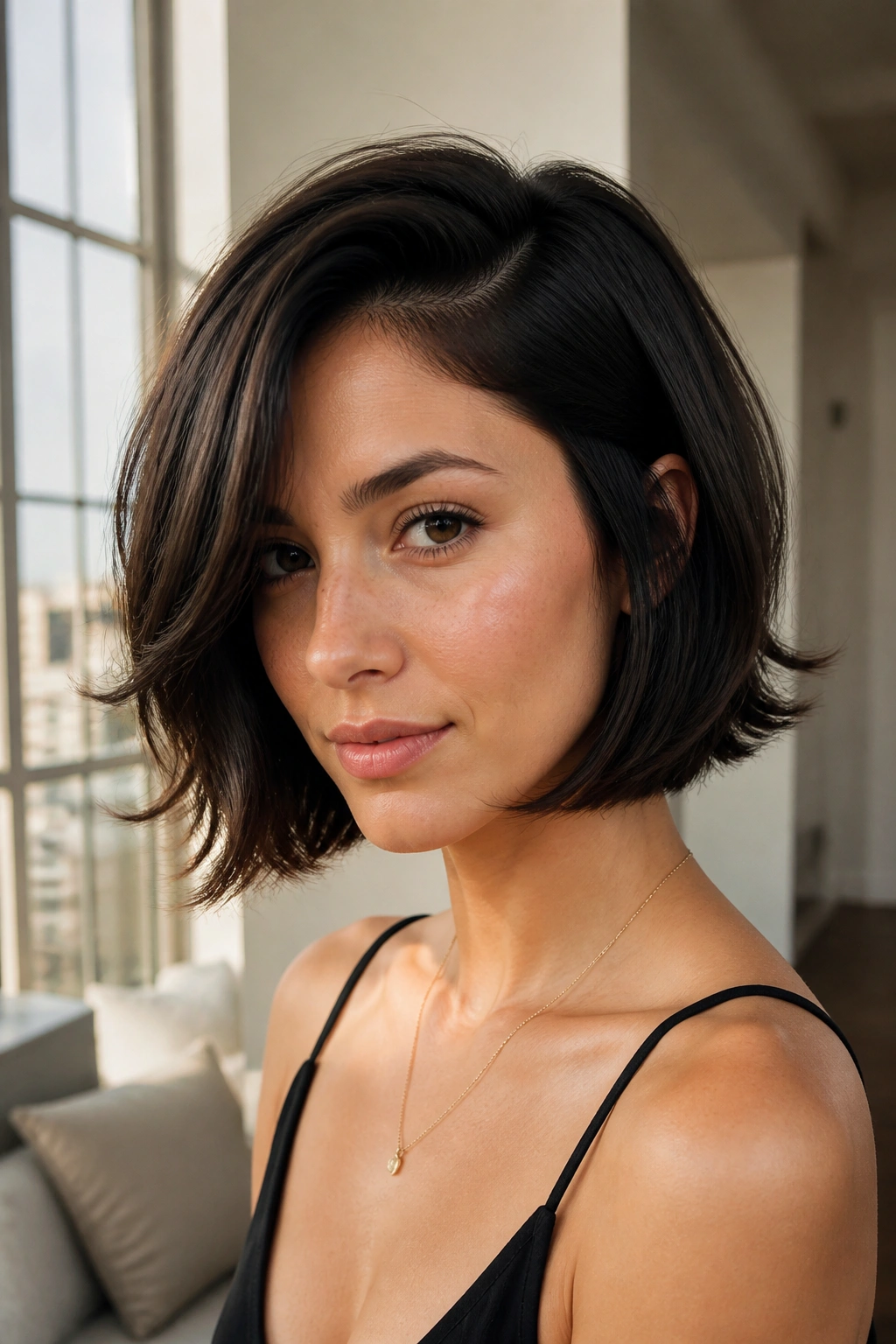
Some thick hair wants to move away from the face instead of hugging it. A flipped-out bob leans into that instinct and uses it on purpose.
Tools That Help
- A medium round brush gives the ends a controlled kick.
- A flat iron can bend the front corner out by a half-inch.
- Light hold spray keeps the flip from dropping by lunch.
- Heat protectant matters here because the ends get touched more than once.
The deep side part changes the balance and makes the shorter side sit closer to the head. The longer side catches the flip and makes the asymmetry obvious. It is a cut with a little attitude, but not much maintenance. Thick hair holds the shape well once the ends are trained.
16. Coily Asymmetrical Crop with Sculpted Sides
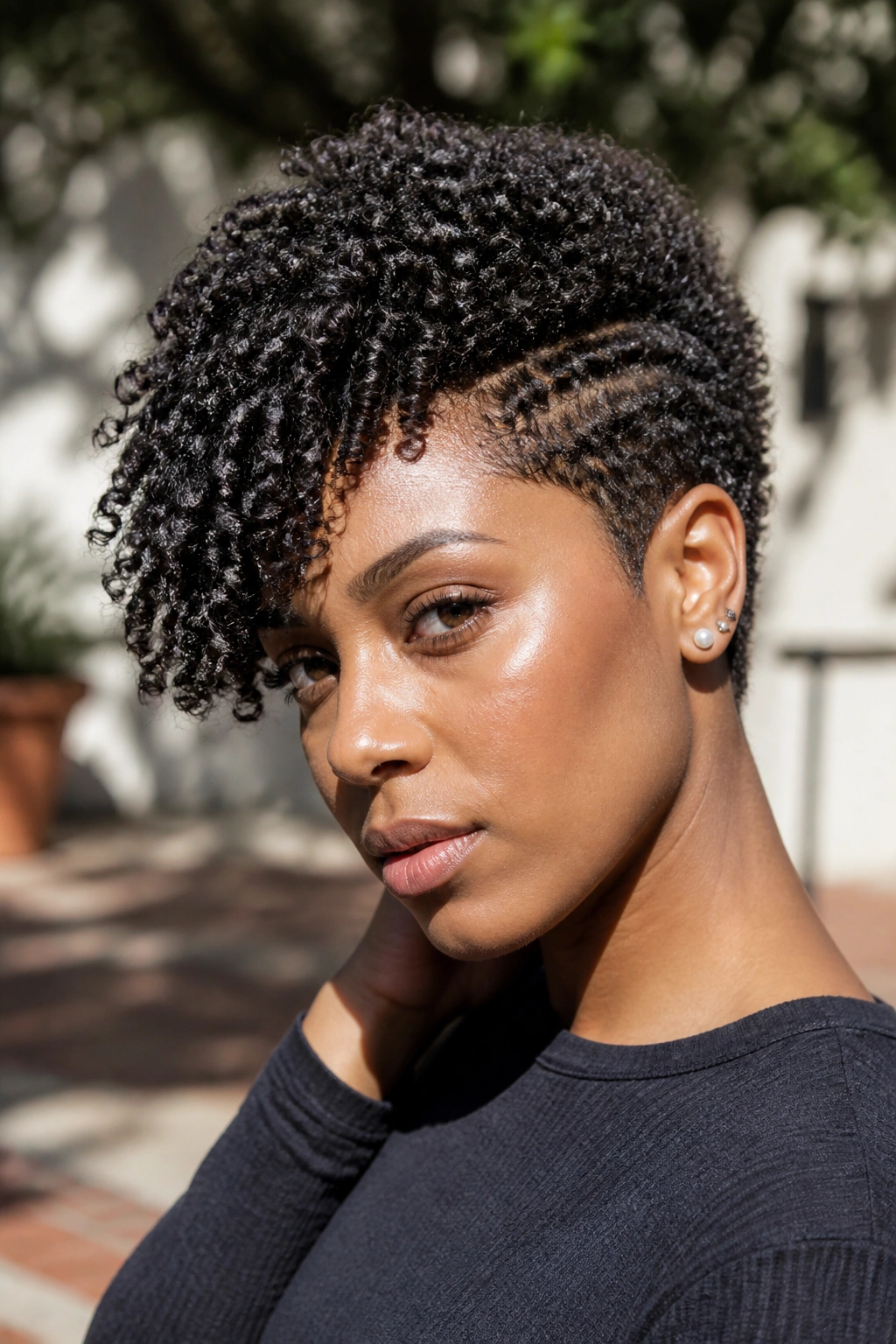
How do you keep coily hair short without losing the shape to shrinkage? You cut for the shrinkage, not the wet length.
How to Ask for It
- Ask for a dry cut or a final dry check so the stylist can see the real silhouette.
- Leave one side longer by at least an inch when dry, since coils pull up.
- Keep the sides sculpted close if the hair tends to puff around the ears.
- Define the front angle with the face shape, not with a ruler.
A coily asymmetrical crop looks strongest when the outline stays clean and the top has room to breathe. Use cream first, then a bit of gel on the edges if you want more hold. A diffuser can help, but hand-shaping often gives a better finish. Thick coily hair has its own volume; the haircut should direct it, not fight it.
17. Disconnected Pixie with a Long Crown
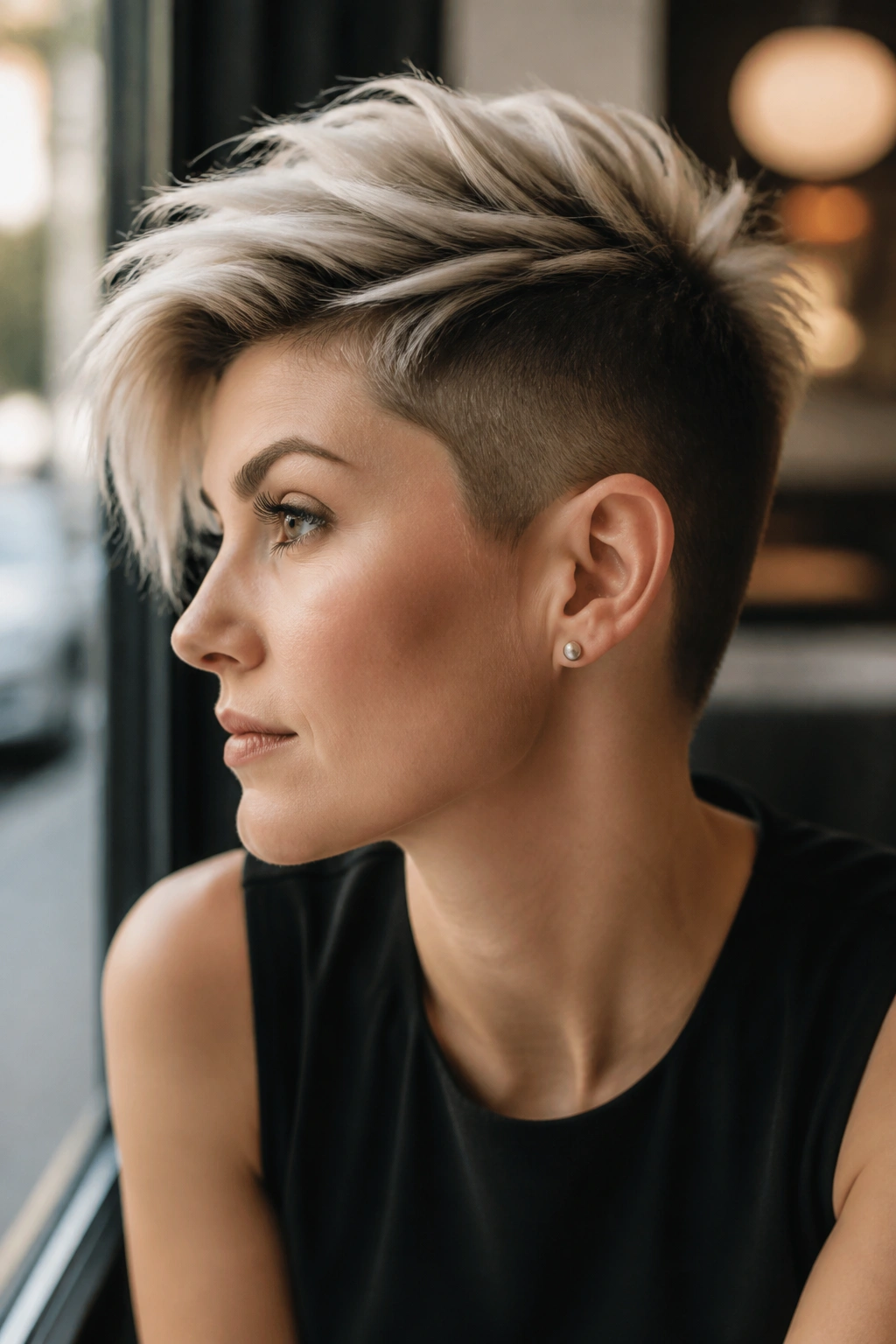
Short on the sides, long on top, and unapologetic about the contrast. That is the disconnected pixie in one line.
- Sides and back can sit at a quarter inch to half an inch.
- The crown usually keeps 3 to 4 inches.
- One front section can fall over the brow for the asymmetry.
- The shape works well if you want air around the ears and neck.
This cut looks clean on thick hair because the weight is removed in clear zones instead of spread everywhere. It can feel daring, but the actual styling is easy: blow-dry the top forward, lift at the roots, and smooth the longer side with a small dab of paste. If you like a sharp outline and a fast morning routine, this one makes sense.
18. Sleek Asymmetrical Bob with Hidden Layers
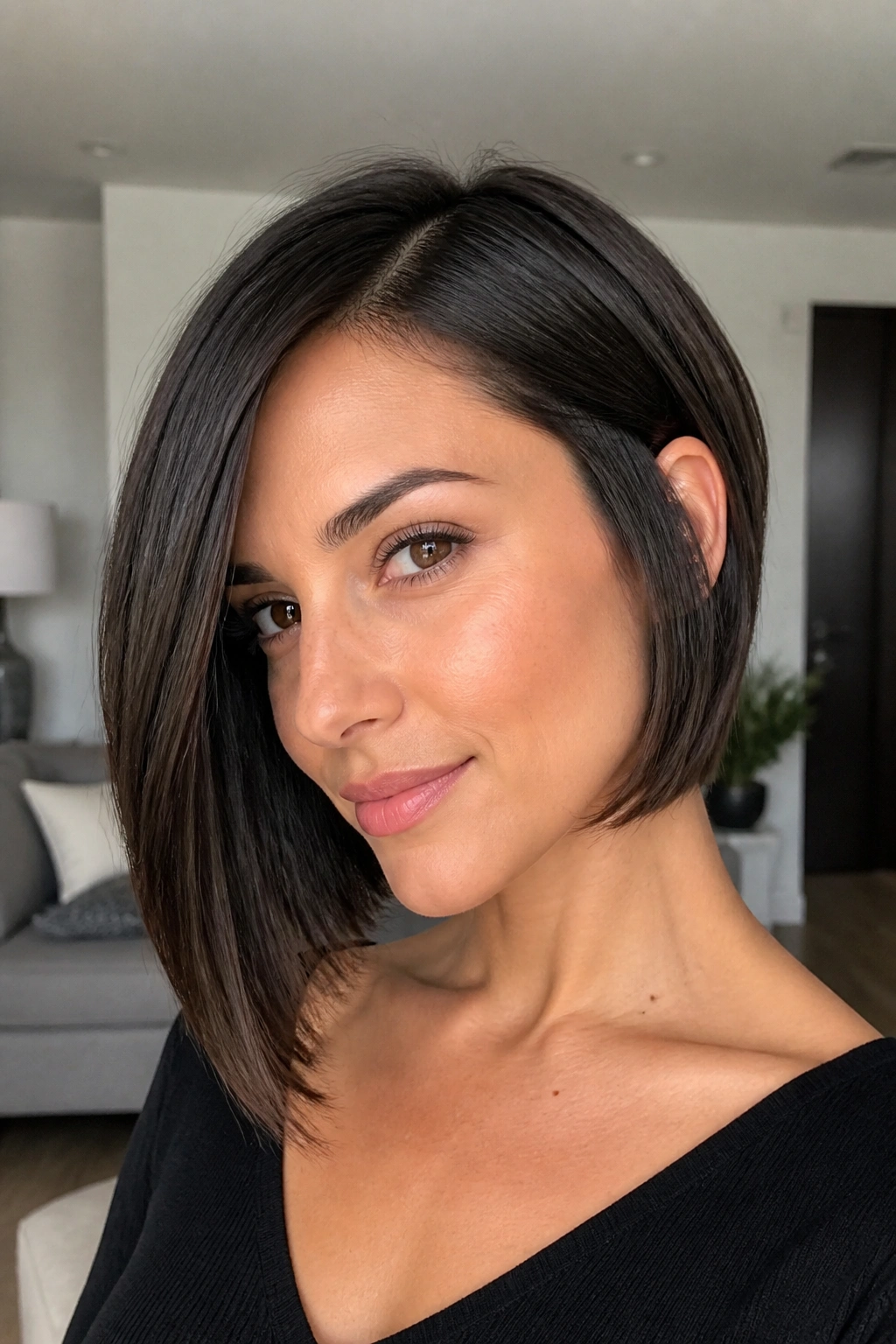
Thick straight hair can look expensive when the line is clean. It can also puff out like a triangle if the weight is sitting in the wrong place, which is why hidden layers matter here.
The trick is to keep the surface sleek while removing bulk underneath the top panel. One side can land lower than the other by an inch or two, and the front should stay long enough to brush the cheek. You do not want a lot of choppy texture at the ends. You want a controlled fall.
Use a nozzle attachment on the dryer and a paddle brush, then finish with a tiny amount of serum only on the last inch or two. If the cut needs flat ironing every day, it was probably cut too bluntly. A good sleek bob should already know where to sit.
19. Side-Parted Sculpted Crop with a Soft Undercurve
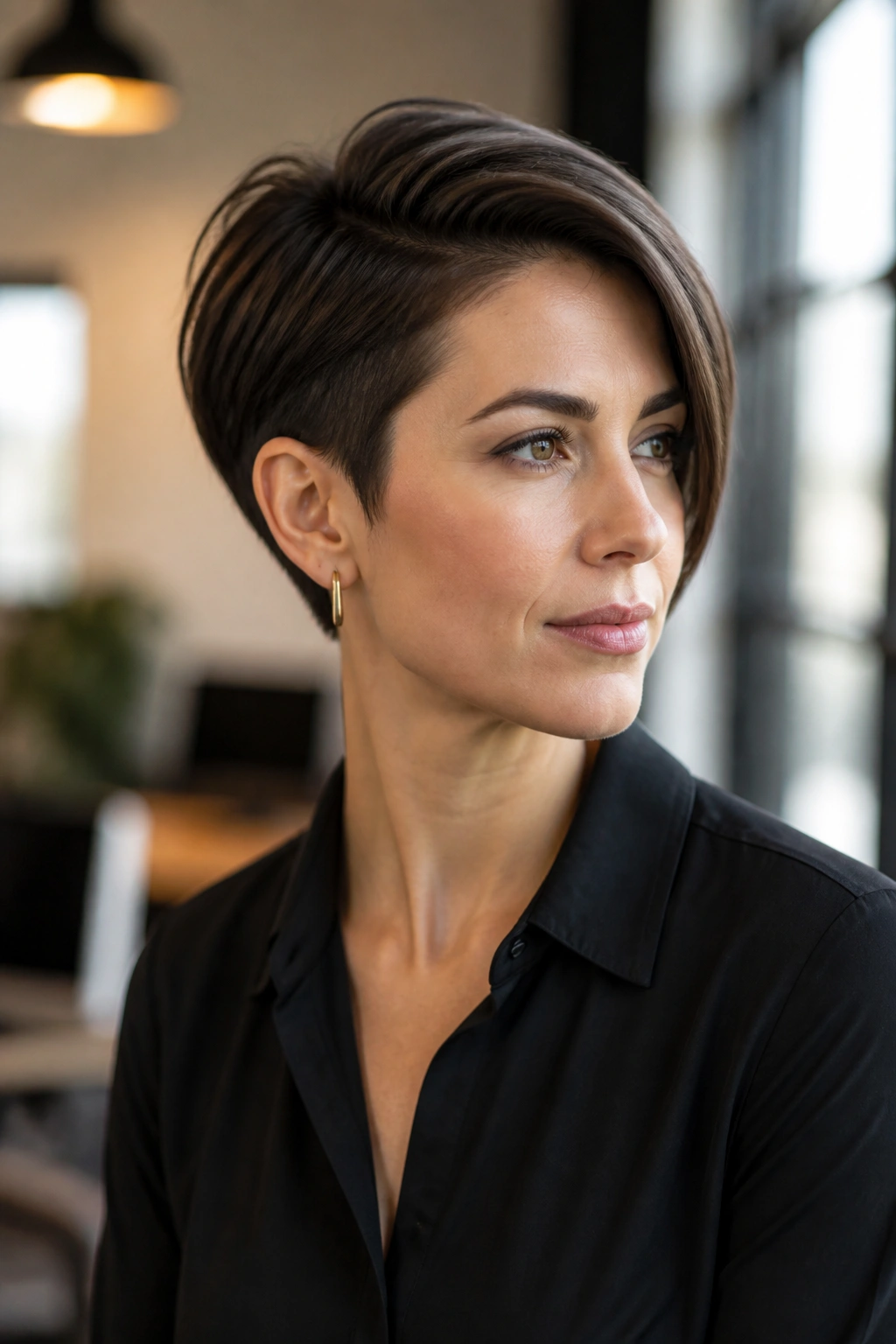
A short cut does not have to mean exposed scalp everywhere. A sculpted crop can stay close at the sides and back while leaving enough length on top to keep the line interesting.
The soft undercurve matters here. It pulls the outline inward near the nape and under the ears, which stops thick hair from flaring outward. The side part then pushes the top into a clean sweep that makes the asymmetry easy to see. It reads crisp, but not hard.
This is a good choice if you want a haircut that behaves in an office, on a train, or after a long day when your hair has lost patience. It still needs shape trims, but not much daily effort. That mix is rare enough to matter.
20. Modern Asymmetrical Bowl Cut with Soft Edges
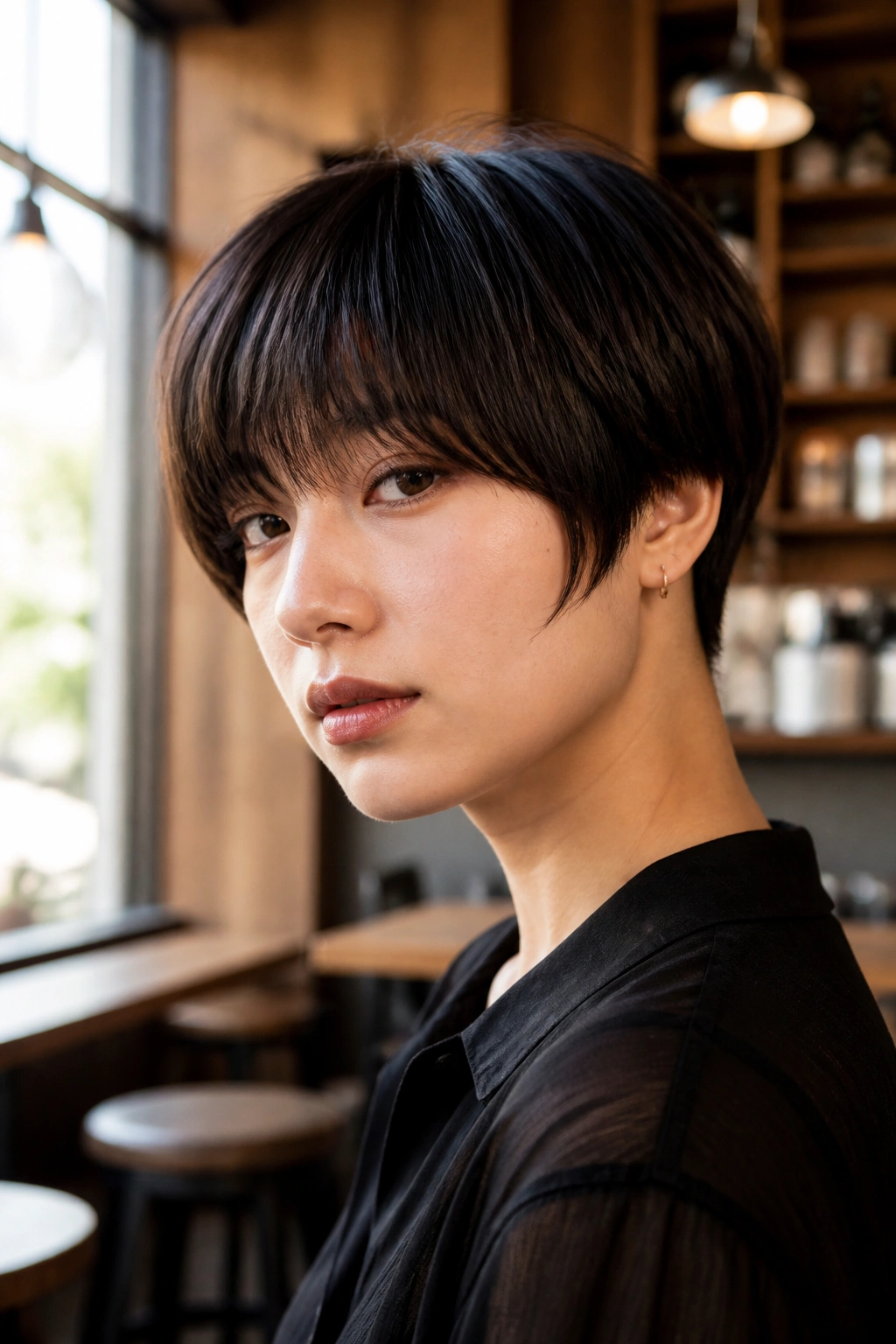
Yes, the bowl cut can work. No, not the old mushroom version.
The modern take keeps the perimeter soft and the longer side slightly broken up so thick hair does not turn into one solid ring. A little asymmetry changes the whole mood. One side can skim the cheekbone while the other stays closer to the ear, and the fringe can be feathered rather than blunt. That stops the shape from looking heavy.
Why It Works on Thick Hair
- The dense hair gives the cut structure.
- The soft edges keep the outline from feeling rigid.
- The long side adds movement without losing the shape.
- The rounded top sits neatly when the stylist removes weight underneath.
If you like fashion-forward hair and do not mind a clear silhouette, this is a strong option. It is not subtle. That is the point.
Final Thoughts
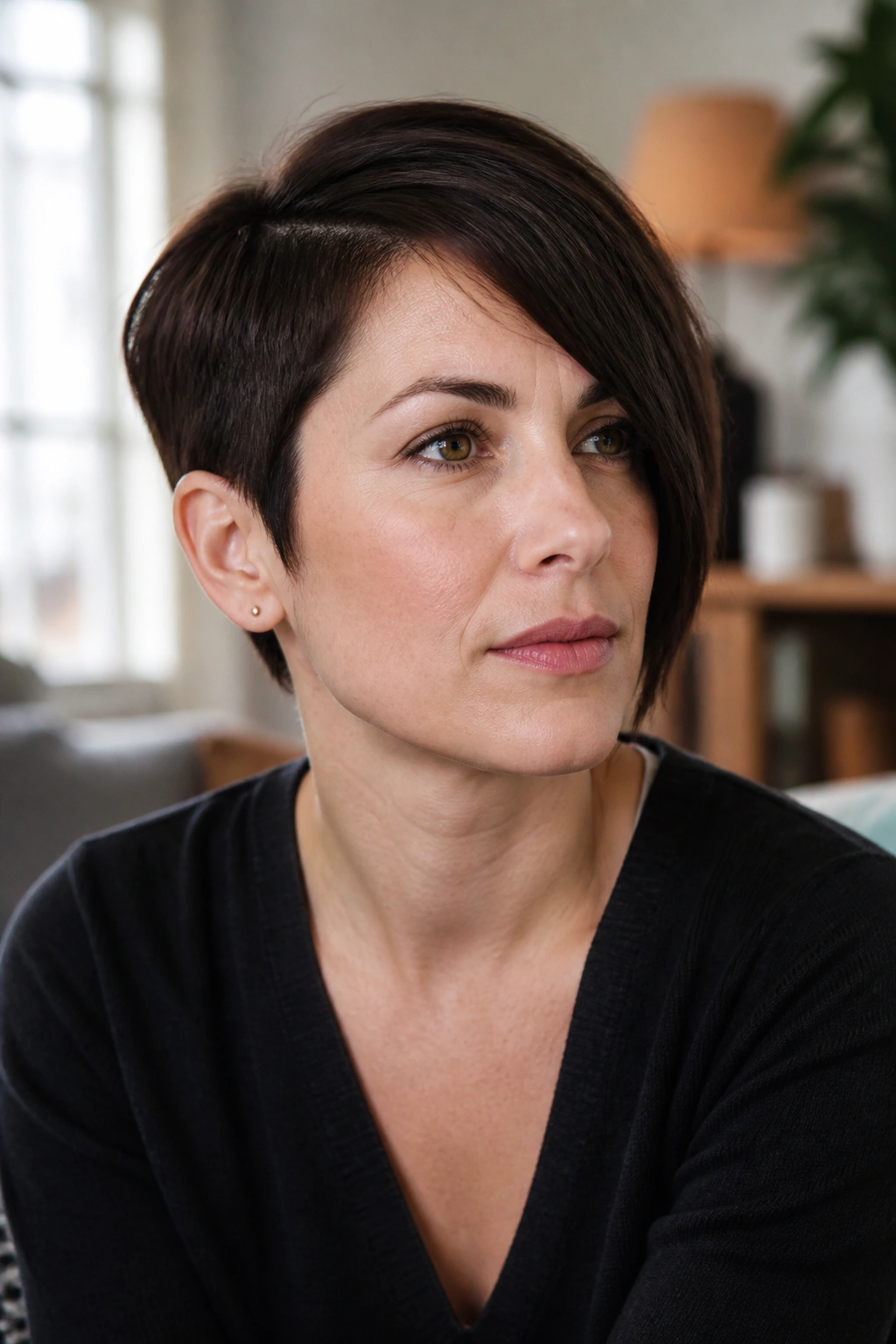
Thick hair does not need to be thinned into submission. It needs a shape that puts the weight somewhere useful, whether that means a tight nape, a longer front corner, or a side part that stops the whole cut from swelling out.
The most wearable short asymmetrical haircuts for thick hair usually do one smart thing very well. They either remove bulk underneath or move the eye with a strong angle. Sometimes both. If you are talking to a stylist, bring two photos: one for the shape you want and one for the length you can actually live with. That second picture saves a lot of regret.
The cleanest choices are the ones that match your daily life. If you want fast mornings, lean toward a stacked pixie bob, tapered crop, or sleek angled bob. If you want more edge, the disconnected pixie or modern asymmetrical bowl cut gives you that sharp line without wasting thick hair’s natural body. Hair this dense is not the problem. The wrong outline is.
