



Round faces can look soft, bright, and youthful — and that is exactly why the wrong haircut can throw things off so fast. A blunt line that lands at the cheeks, a heavy middle part, or too much width at the sides can make the face read fuller than it actually is. The best messy haircuts for round faces do the opposite. They add lift at the crown, movement through the ends, and a little controlled disorder that keeps the shape from feeling too neat or too wide.
The trick is not “hiding” the face. That never works for long, and it usually looks overthought anyway. What works is angle, length, and texture placed in the right spots: above the cheekbones, below the jaw, and around the crown where the eye naturally starts reading upward.
Messy hair has a reputation for being casual, but the good versions are cut with a plan. A good shag, lob, pixie, or bob can look like you slept on it — in the best way — while still doing the quiet job of balancing the face. That balance comes from shape, not volume for its own sake.
1. Tousled Collarbone Lob for Round Faces
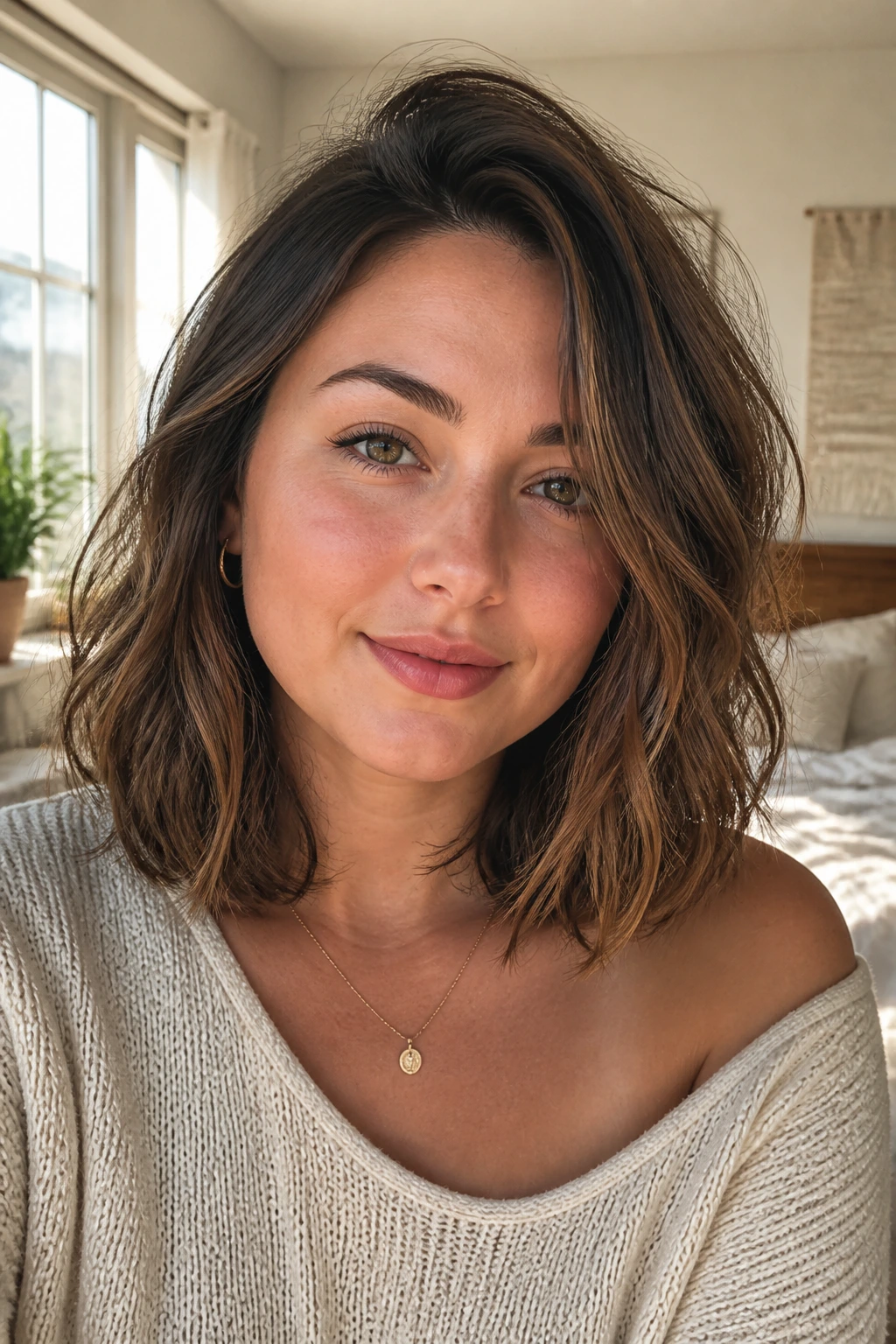
A collarbone lob is one of those cuts I keep coming back to because it gives you room to move without letting the hair sit right on the widest part of the face. When it skims the collarbone, it creates a long vertical line, which helps a round face look a little leaner and a little sharper. It also looks good when it gets a little imperfect, which matters here.
Why it works
The length does most of the heavy lifting. Ends that land below the jaw keep the haircut from echoing the face shape, and soft internal layers stop it from looking like a helmet. A side part or a slightly off-center part helps even more.
Ask for a blunt-ish baseline with rough, lived-in ends, not heavy layers that puff out around the cheeks. Keep the front pieces a touch longer than the back. That subtle angle matters more than people think.
Styling note: rough-dry the roots, bend the midlengths with a 1-inch iron, then leave the last inch straight. That little bend at the ends is enough.
2. Choppy French Bob with Airy Fringe
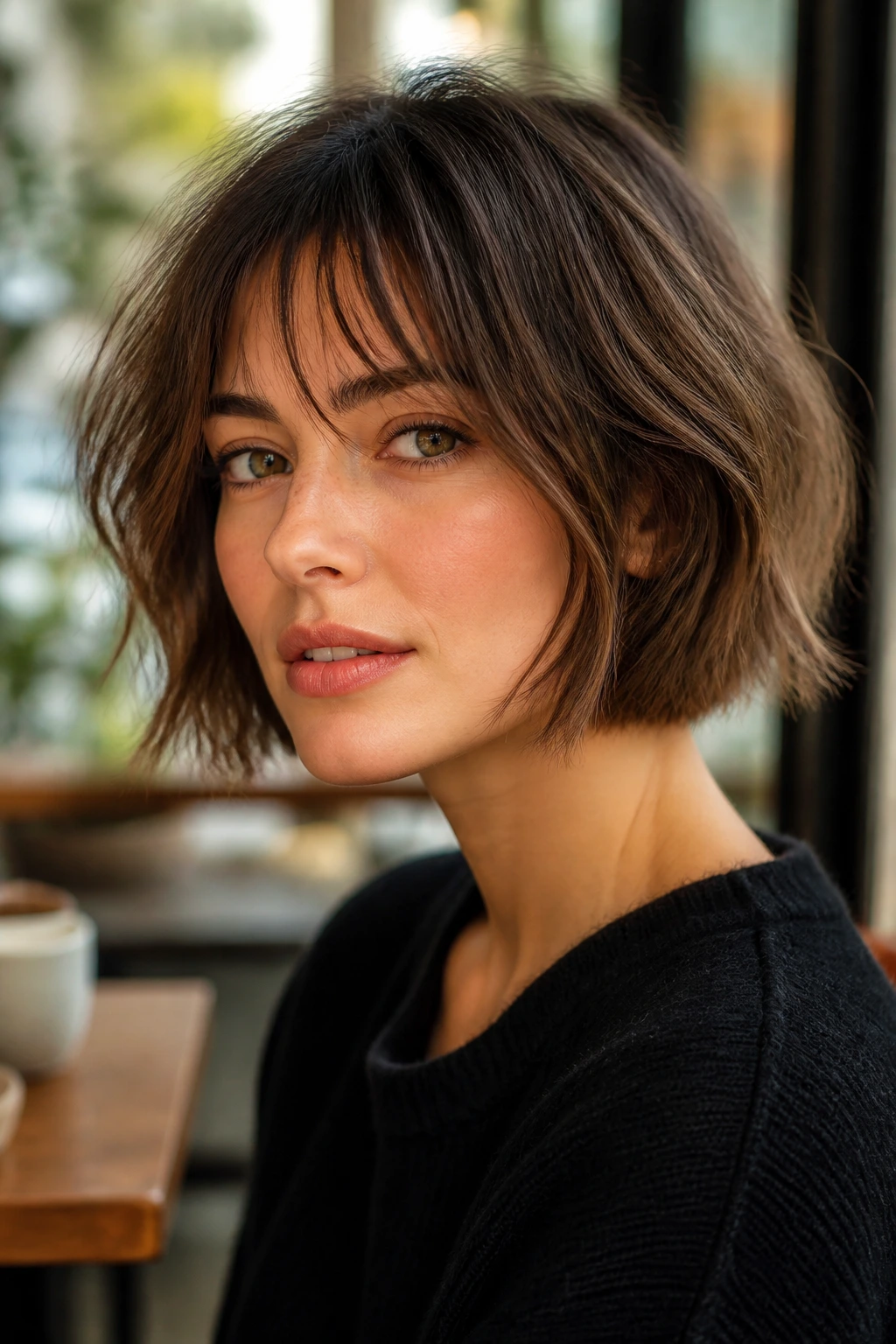
A French bob can work on a round face, but only if it has enough breakup to avoid that neat little circle effect. The choppy version feels lighter because the ends are shattered a bit, the fringe is airy instead of dense, and the shape doesn’t sit perfectly symmetrical. That last part is doing real work.
This cut shines when the length lands somewhere between the mouth and the top of the chin, with pieces that move instead of sitting flat. If the fringe is too heavy, it pulls the face down. If it is too short and blunt, the shape can feel boxy. Softness is the whole point.
You want texture, not fluff. A small amount of matte cream through dry hair is usually enough. Too much product makes the bob collapse, and then the cut loses the little bit of sharpness that gives it character.
3. Side-Swept Pixie with Height at the Crown
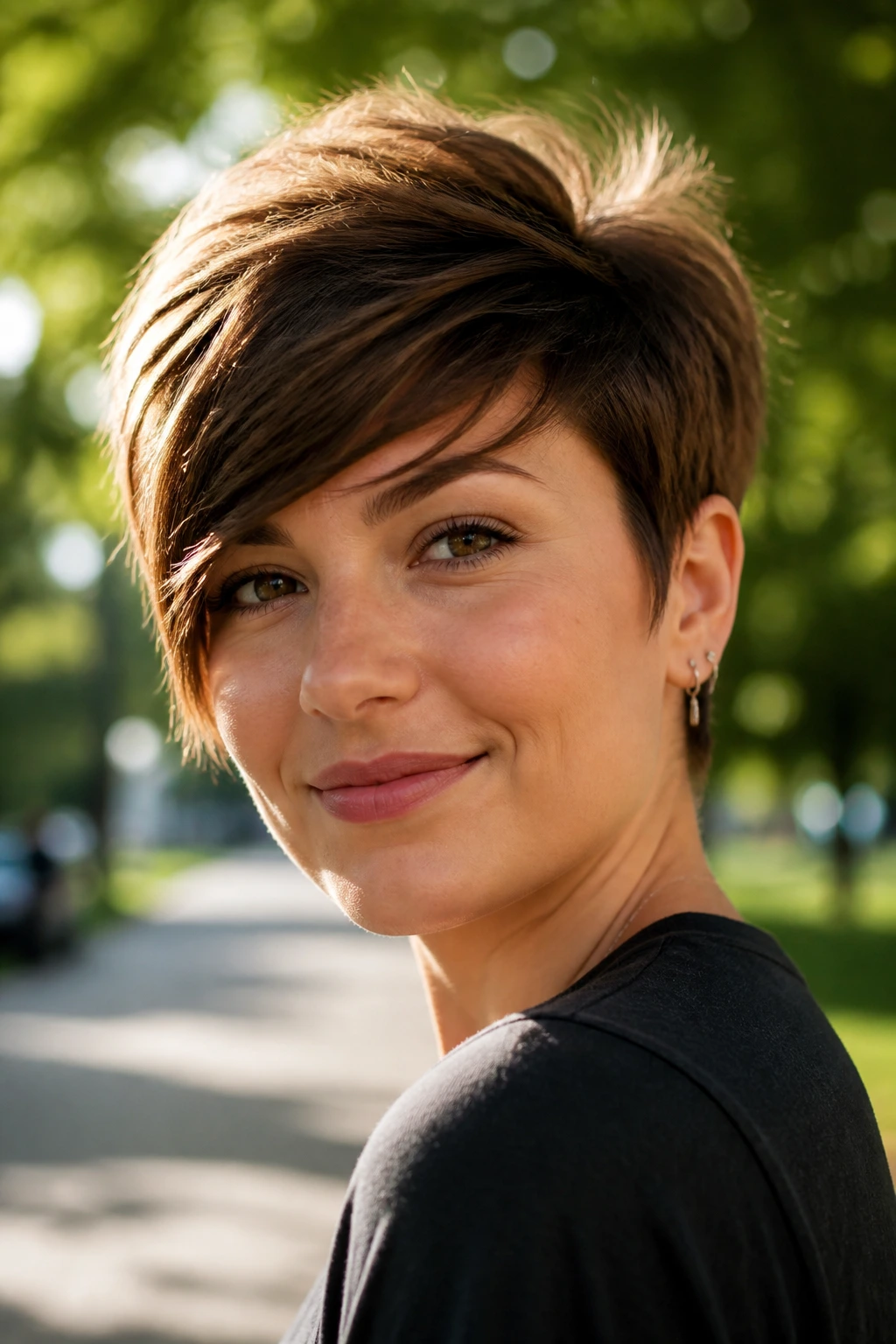
Short hair can be brilliant on a round face when the height is at the top and the sides stay tight. A side-swept pixie does exactly that. It keeps the eye moving upward, and it lets one longer fringe section slide across the forehead instead of sitting flat across it.
What to ask for
- Keep the top about 2 to 4 inches long so it can be pushed up or over.
- Taper the sides and nape closely.
- Leave one longer fringe piece that can sweep past the eyebrow.
- Avoid a round, puffed silhouette at the temples.
That shape is cleaner than a fluffy short cut, and it is far more flattering on a round face. It also grows out better, which is a nice bonus because short cuts can go weird fast if they are too even.
Best styling move: blow-dry the top forward first, then push it back with a dab of paste. The lift happens faster that way.
4. Wolf Cut with Curtain Bangs
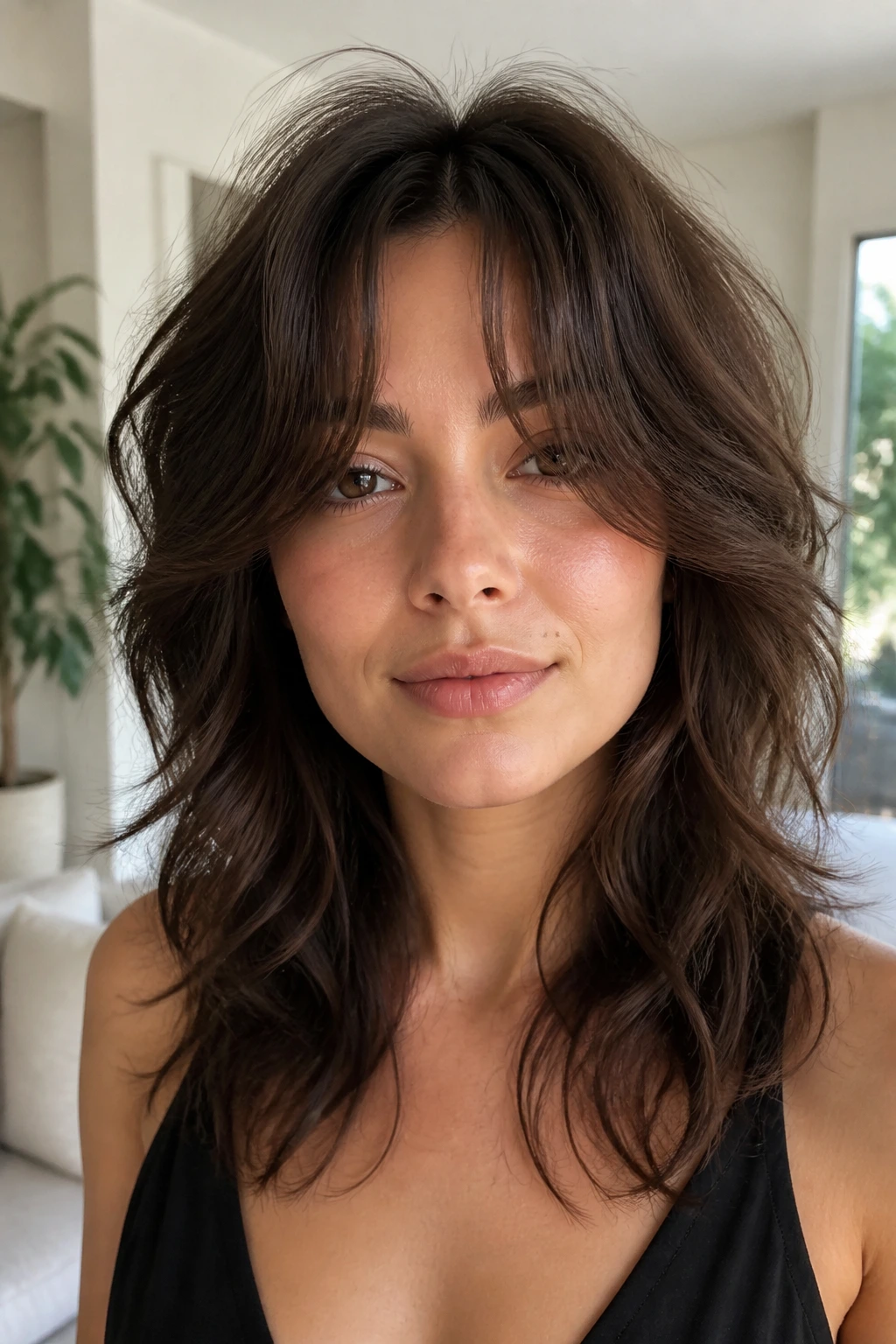
A wolf cut can be a dream on a round face when it is cut with restraint. The point is not to make the head look enormous. The point is to build height near the crown and let the lower layers fall in a softer, longer line around the jaw and collarbone. That broken shape is what keeps it from looking too sweet.
Curtain bangs matter here. Good ones start around the cheekbone, open in the center, and taper into the side layers without drawing a hard horizontal line across the forehead. That split gives the face room to breathe.
This cut likes a little mess. Air-dried waves, a diffuser, or a rough blow-dry all work. If you flatten it too much, the silhouette loses the whole point and starts to look like a haircut instead of a shape.
5. Long Shag with Face-Framing Layers

Long hair is not off limits for round faces. It just needs structure. A long shag with face-framing layers keeps the length, but it stops the sides from hanging like one solid curtain, which is where longer cuts can go wrong on fuller cheeks.
The safest place for those face pieces is below the cheekbone, often near the chin or even a touch lower. That gives the face a diagonal line instead of a circle. The top layers should stay loose and broken up so the crown does not flatten everything into a wide shape.
Where this cut helps most
It works especially well if your hair is thick, wavy, or prone to puffing at the sides. The layers remove weight without sacrificing the length people usually want to keep.
If you like easy styling, this is a forgiving one. A little sea-salt spray, a few bends with a curling wand, and a finger comb through the ends is enough. It should look a little undone. That is the whole charm.
6. Bixie with a Textured Crown
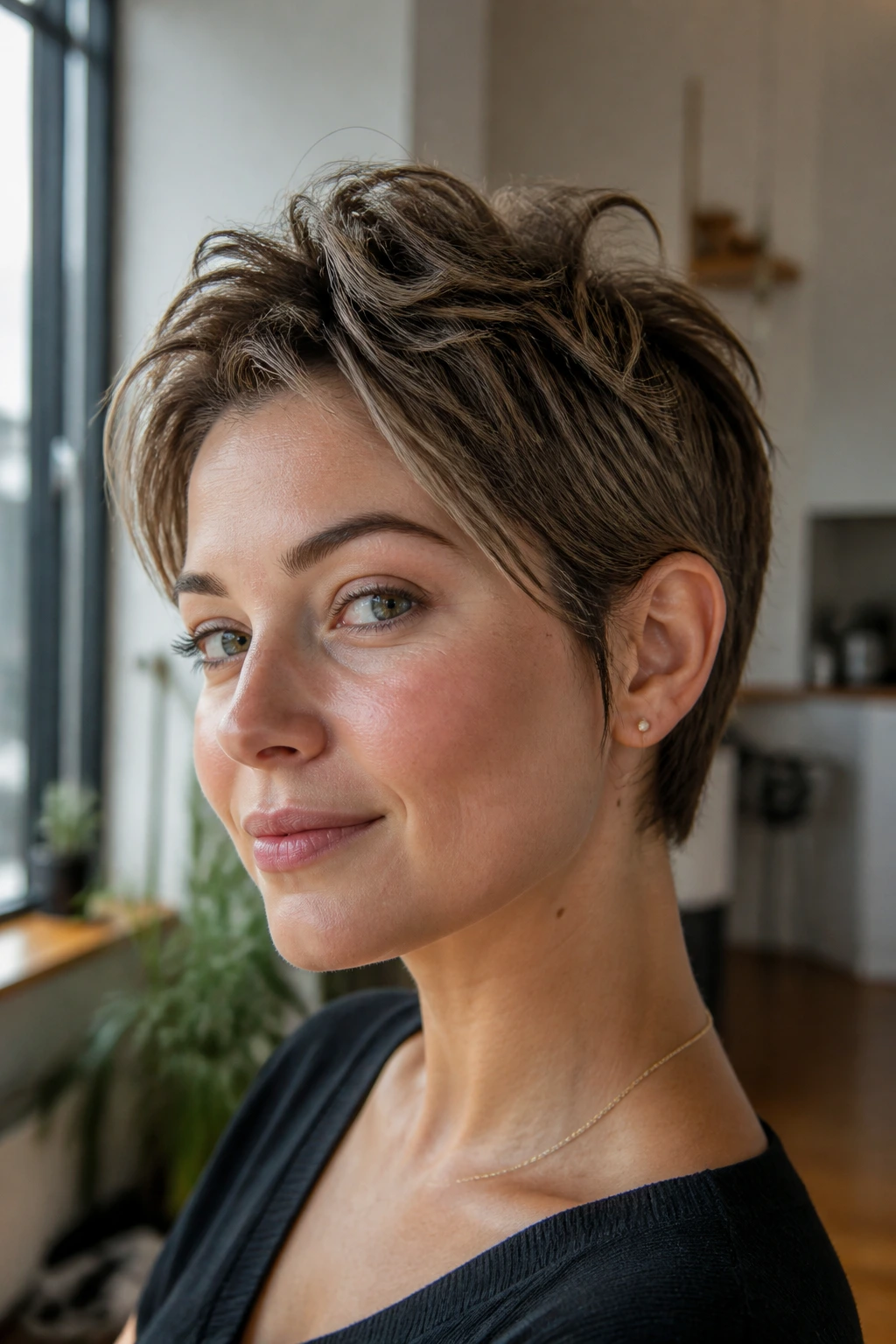
The bixie sits between a bob and a pixie, and that in-between space can be a sweet spot for round faces. You get enough length to soften the edges, but not so much that the sides balloon out and widen the face. A textured crown keeps everything lifted and active.
What makes this cut different is the mix of shapes. The back is short enough to stay light, while the front keeps a few longer pieces that can fall across the cheekbones or tuck behind the ears. That little bit of movement gives the face angles without making the haircut harsh.
It is a good choice if you want short hair but do not want a severe crop. It also works on finer hair because the texture creates the illusion of fullness on top, not around the sides where you do not need it.
7. Shattered Chin-Length Bob
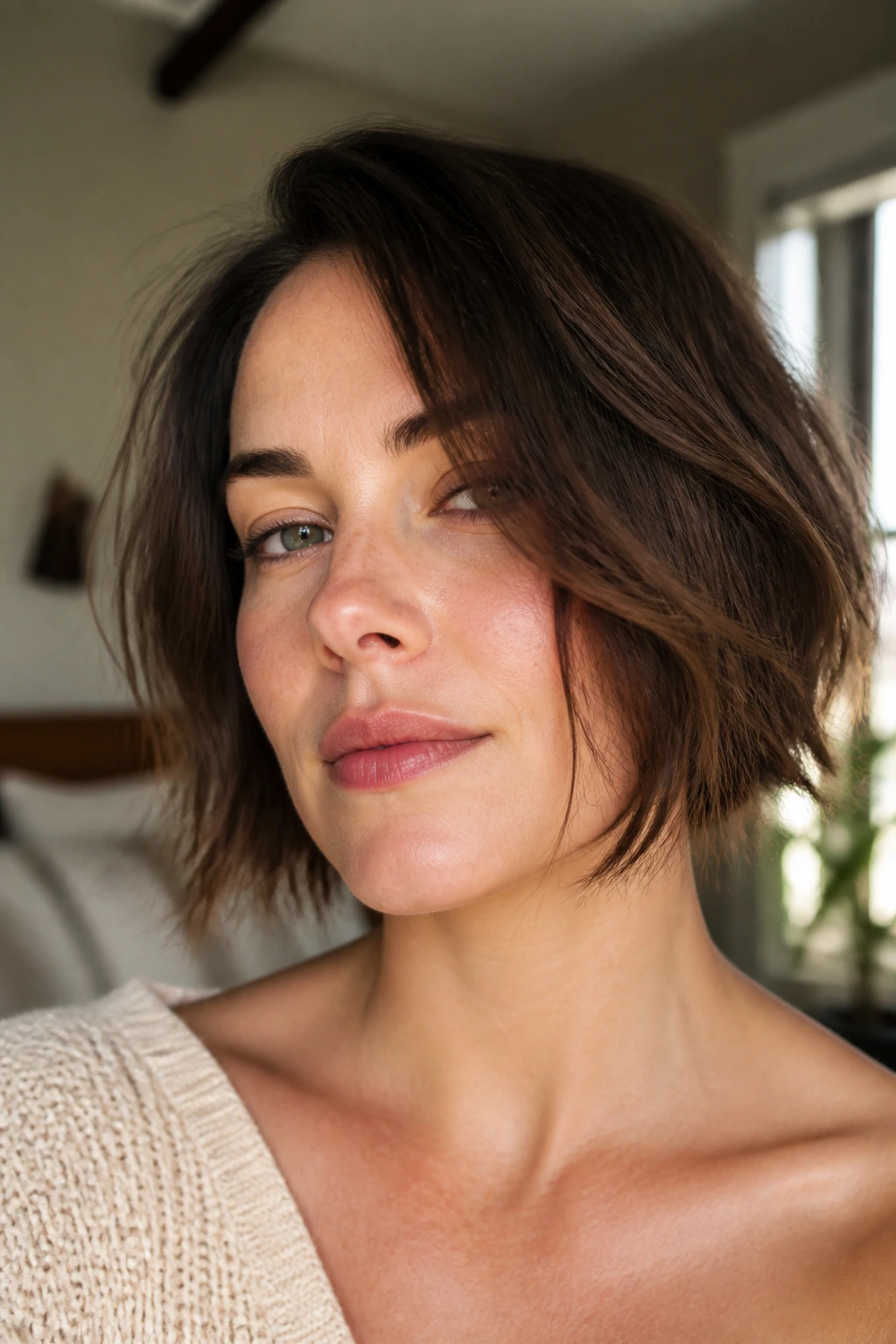
A chin-length bob can be tricky on a round face, and I would not pretend otherwise. When it is blunt and heavy, it can make the face look wider. When it is shattered and slightly irregular, though, it gets interesting fast.
The breakup at the ends is what saves it. Soft, uneven pieces keep the line from circling the face like a frame. A little off-center part helps too, because it breaks the symmetry that can make round faces read even rounder.
Keep the shape loose
- Ask for a chin-length baseline with broken ends.
- Keep layers subtle around the sides.
- Add a few longer pieces in the front.
- Use a light bend, not tight curls.
This is one of those cuts that looks better on day two than day one. The clean edges relax a little, and the texture comes forward. That slight mess is the part worth keeping.
8. Modern Mullet with Soft Edges
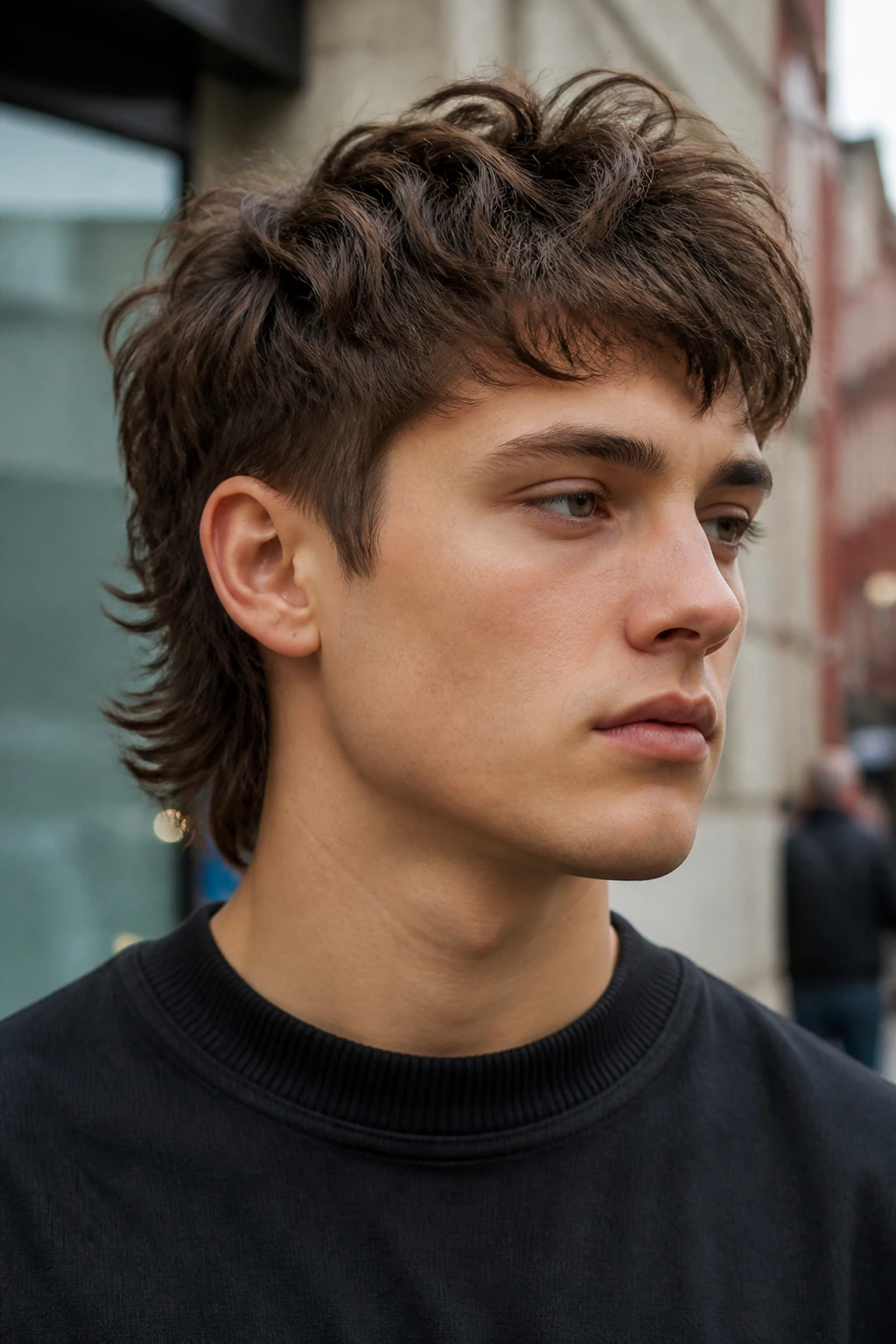
A modern mullet is not for everyone. Let’s be honest about that. But if you like hair with attitude, it can be sharp on a round face because it keeps volume away from the cheeks and puts more shape through the crown and back.
The softer versions work best. Think tapered sides, a little lift up top, and length that hangs in the back without turning severe. Hard lines can feel costume-like fast. Soft edges keep the cut wearable and stop it from swallowing the face.
This cut has a nice kind of tension to it. It looks casual from a distance, but up close the shape is doing real work. If you want a haircut that does not flatten out when it gets a little lived in, this is one of the stronger choices.
9. Airy Shoulder-Length Cut with Bottleneck Bangs
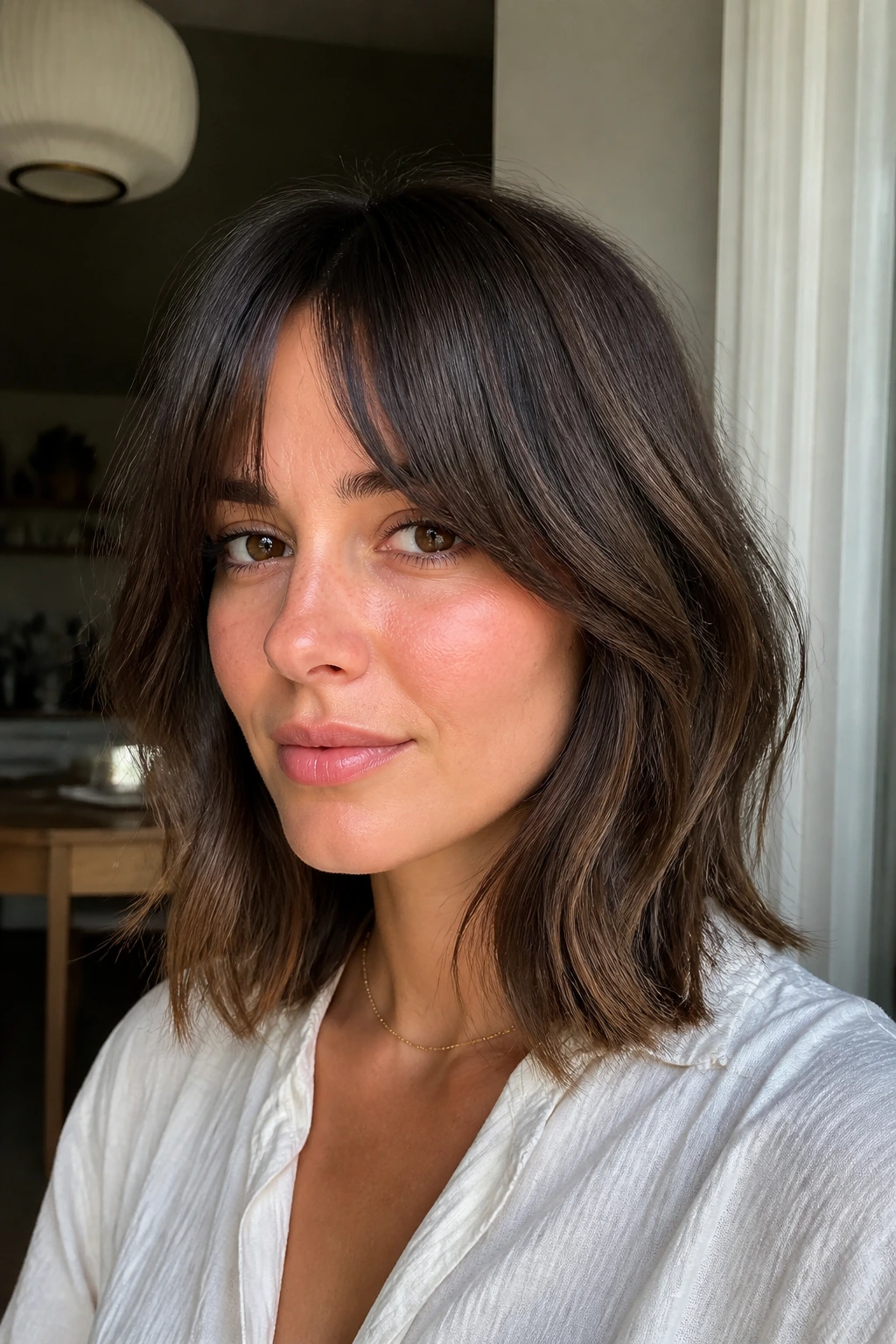
Shoulder length is a sweet spot for round faces when the ends are light and the fringe is doing some of the balancing. Bottleneck bangs start narrow in the center, open a little around the eyes, and blend into the sides without forming a straight bar across the forehead. That shape is kinder than dense bangs, which can feel heavy on a fuller face.
The bang shape matters
The middle should be shorter, then it should lengthen softly as it moves outward. That gives the illusion of a slimmer face while keeping the forehead from looking boxed in. The rest of the cut can stay loose and shoulder-skimming, with airy ends rather than chunky layers.
Styling it without overdoing it
- Blow-dry the bangs first with a small round brush.
- Bend the ends away from the face.
- Keep the root lift at the crown, not the sides.
- Use a light mist, not a sticky spray.
The haircut works because it creates small shifts in line. Nothing is dramatic. That is the point.
10. Layered Crop with Piece-Y Fringe

A layered crop can look modern and sharp on a round face if the fringe is broken up and the sides stay narrow. The piece-y fringe does a lot here. It sends the eye diagonally, which is a better move than letting a heavy fringe cut the face straight across.
This is a good cut for straight to slightly wavy hair that wants shape without length. It keeps the silhouette compact but not flat, and the layers give it movement even when you do not spend long styling it. A little mess on top reads as texture instead of puff.
Use a matte paste or a dry cream, and work it through the ends with your fingers. The goal is separation, not shine. Too much shine can make the crop look polished in a way that steals the edge.
11. Asymmetrical Lob
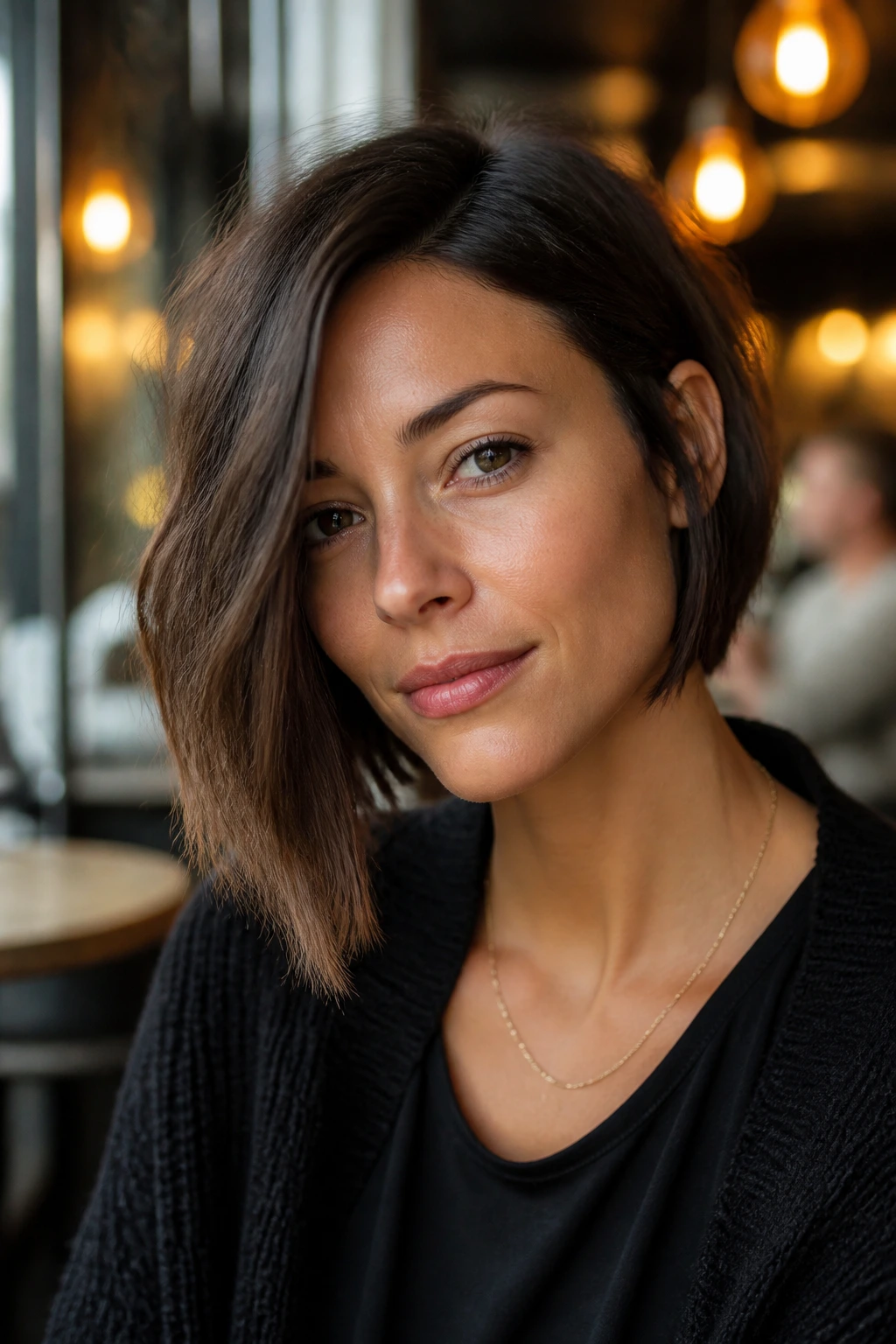
An asymmetrical lob changes the face without making a huge scene about it. One side sits a little longer than the other, and that simple difference pulls the eye across the face instead of around it. For a round face, that diagonal line is gold.
The shorter side should still fall below the jaw. If it cuts right at the jawline, the angle can get fussy and shorten the face instead of opening it. The longer side usually looks best near the collarbone, where it can swing without piling up at the cheeks.
This cut feels especially good if you like a little style with not much effort. It looks intentional even when it is air-dried and a bit uneven from sleep. That is a rare thing, and worth keeping in mind if your hair likes to do its own thing.
12. Curly Shag

Curly hair and round faces can make a beautiful pair when the cut respects the curl pattern instead of fighting it. A curly shag lets the curls spring where they want to spring, but it removes bulk from the sides so the face does not feel boxed in. That’s the part most people miss.
What to ask for on curly hair
- Cut it dry or mostly dry, curl by curl if possible.
- Keep the shortest layers high enough to build lift at the crown.
- Leave longer pieces around the jaw and collarbone.
- Avoid stacking too much width at the cheeks.
A curly shag should feel light, not thin. The right version keeps fullness on top and movement through the perimeter, which gives round faces more length and less side weight.
Dry curls with a diffuser and then break the cast with a drop of oil or cream. Do not rake through the curls while they are wet unless you want frizz to take over.
13. Feathered Midi Cut with Flipped Ends
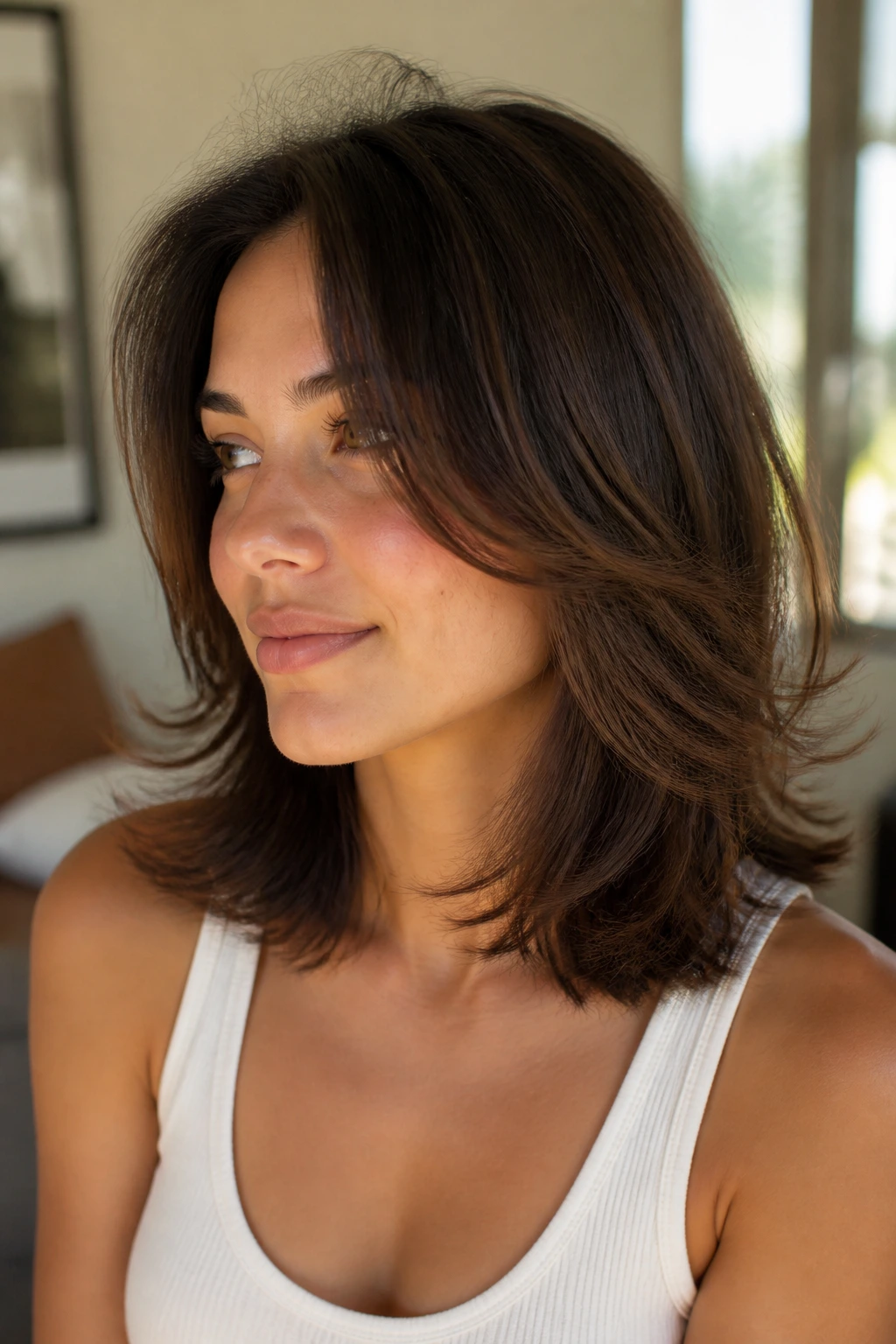
A feathered midi cut has a soft retro feeling, but it can look surprisingly fresh on a round face when the layers are light and the ends flip away from the cheeks. That outward movement creates space around the face, which is exactly what you want.
The feathering should start below the cheekbones, not right beside them. If the shortest layers sit too high, they can widen the face. The flipped ends should feel loose and a little imperfect, never like a school photo from a decade ago.
This cut works best when you are willing to give it a quick blow-dry with a brush. It is not fussy, but it does like a little shape. A round brush or a large velcro roller at the front can give you that bend without much effort.
14. Long Layers with Invisible Internal Shaping
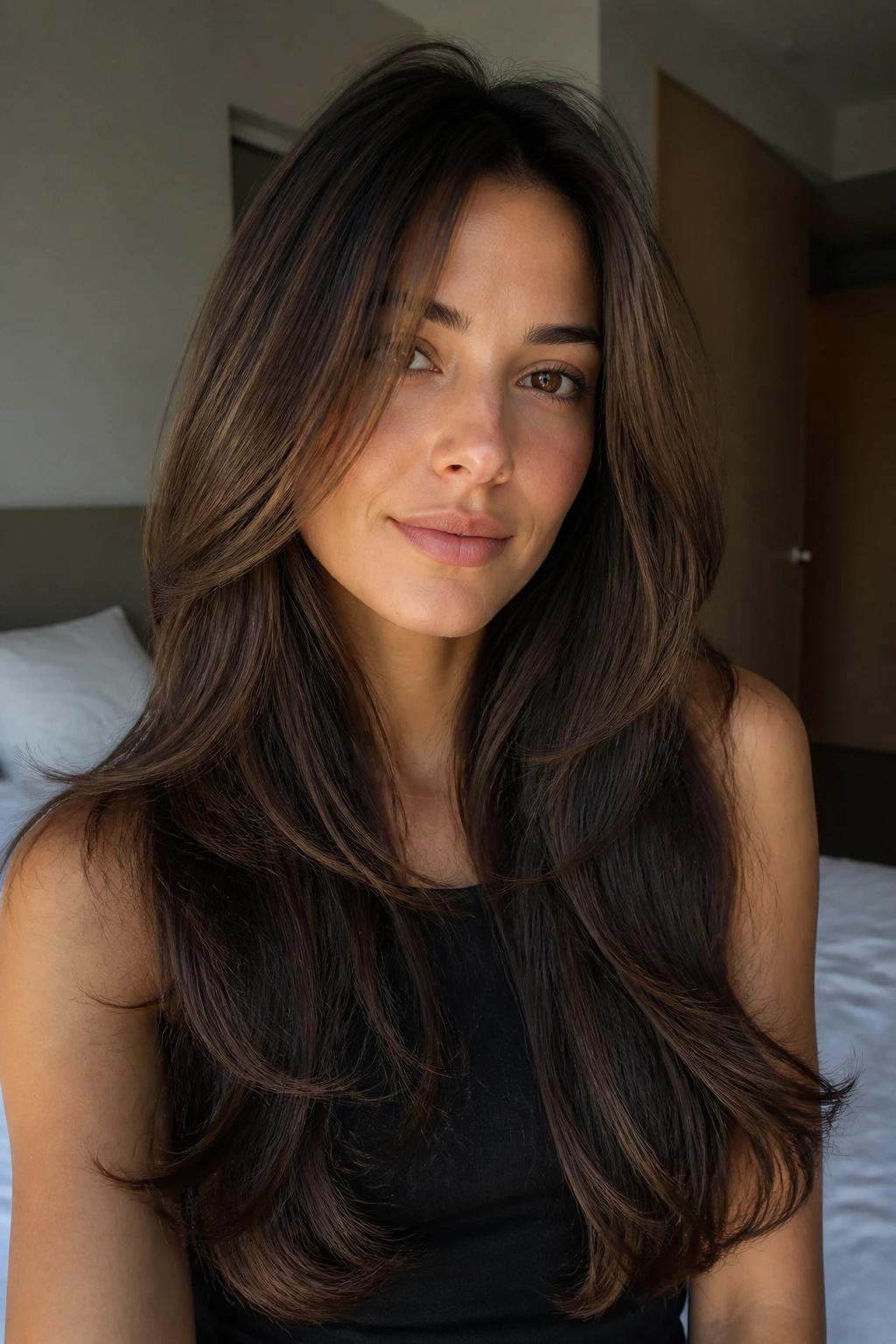
Long hair on a round face needs more than a face frame. It needs weight control inside the cut, where the bulk actually lives. Invisible internal shaping removes that heaviness without leaving obvious steps in the surface, so the hair still falls long and smooth.
That matters because a lot of long cuts look pretty until they spread out around the cheeks. Then the face reads wider. Internal layering stops that puffing by making the hair collapse more vertically instead of outward.
Ask your stylist for this
- Keep the perimeter long.
- Remove weight from the interior, not just the ends.
- Start the front layers below the cheekbone.
- Keep the crown light enough to avoid a flat top.
This is one of the smartest options if you like long hair and do not want a style that screams for attention. It is subtle. It works because the shape is there even when the styling is barely there.
15. Razor-Cut Bob with a Deep Side Part
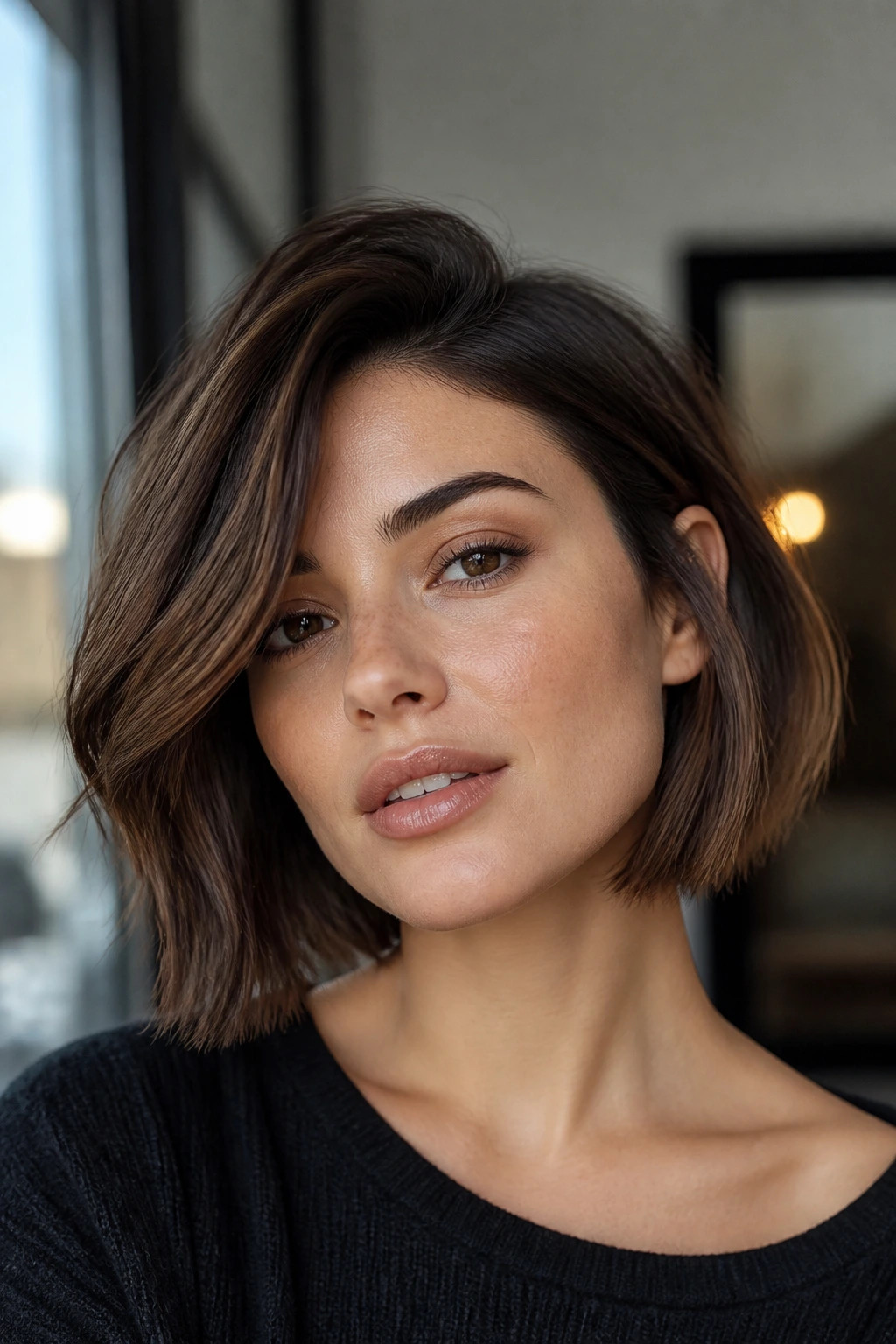
A razor-cut bob has a softer edge than a blunt scissor-cut bob, and that softness can help a round face feel less boxed in. The deep side part is the real shape-shifter here. It breaks the symmetry, creates a sweep across the forehead, and makes the face look a touch longer.
The razor work should be controlled, not shredded. You want movement, not fray. Too much razor cutting can make the ends look wispy in a thin, tired way, and that is not the same thing as texture.
This cut tends to flatter fine or medium hair because it gives the ends a little slip and swing. If your hair is thick, ask for lighter razoring around the perimeter and a cleaner interior so it does not puff out. That balance is worth being picky about.
16. Tapered Pixie for Thick Hair
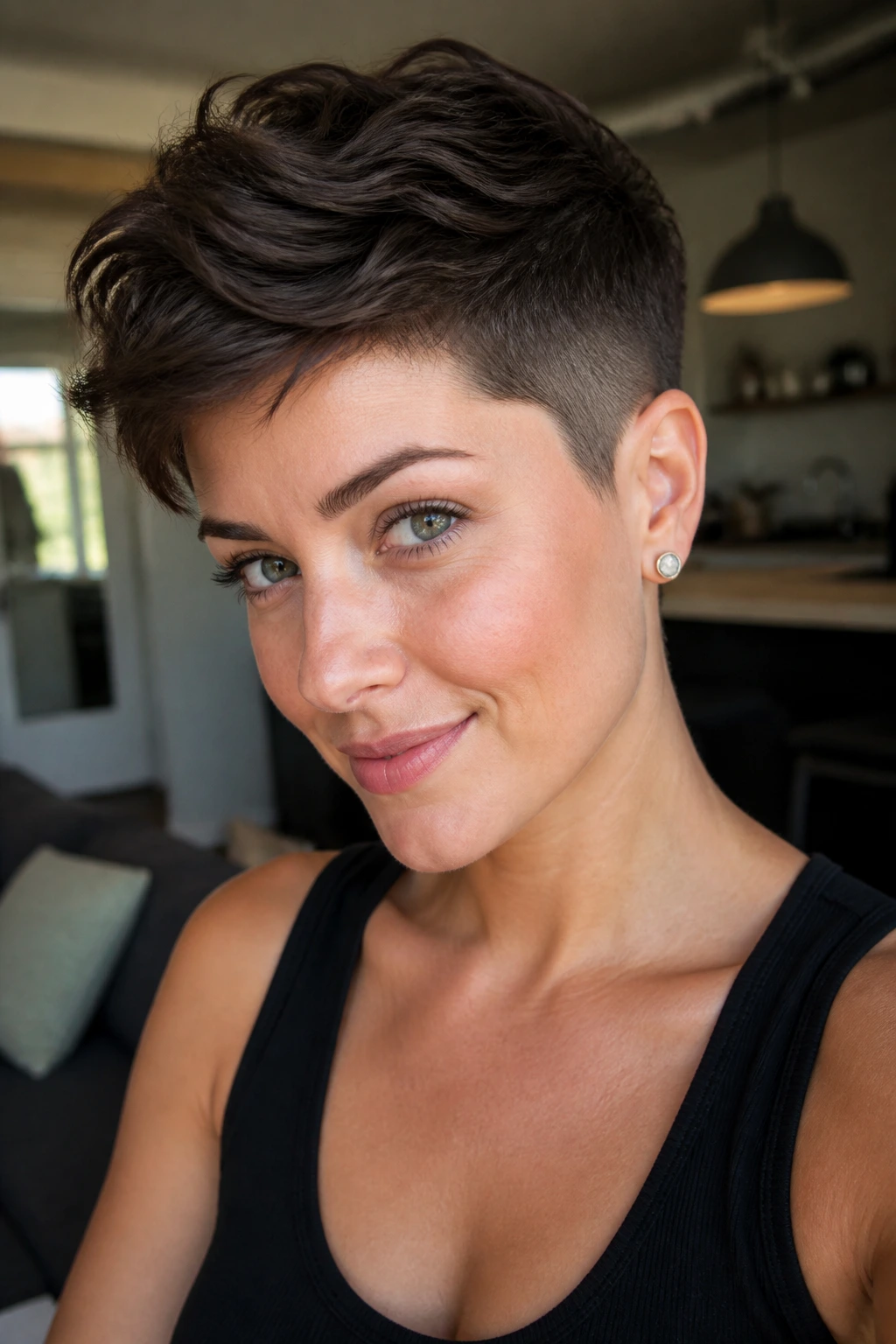
Thick hair can look gorgeous in a pixie, but only if the sides are tapered enough to keep the width under control. A tapered pixie narrows the lower half of the haircut and leaves the top with enough height to balance a round face. Without that taper, the whole thing can turn bulky fast.
The best version keeps the nape close and the top airy. Long, heavy pieces on the sides are the problem. They sit right where the face is widest and make the cut feel dense instead of lively.
A few things to ask for
- Taper the sides tightly.
- Keep more length through the crown.
- Leave one longer section at the fringe for movement.
- Thin out bulk around the temples if your hair is dense.
This is a strong cut if you like waking up and needing ten seconds, not twenty minutes. A little paste, a pinch of lift at the roots, and you are done. No drama.
17. Octopus Cut
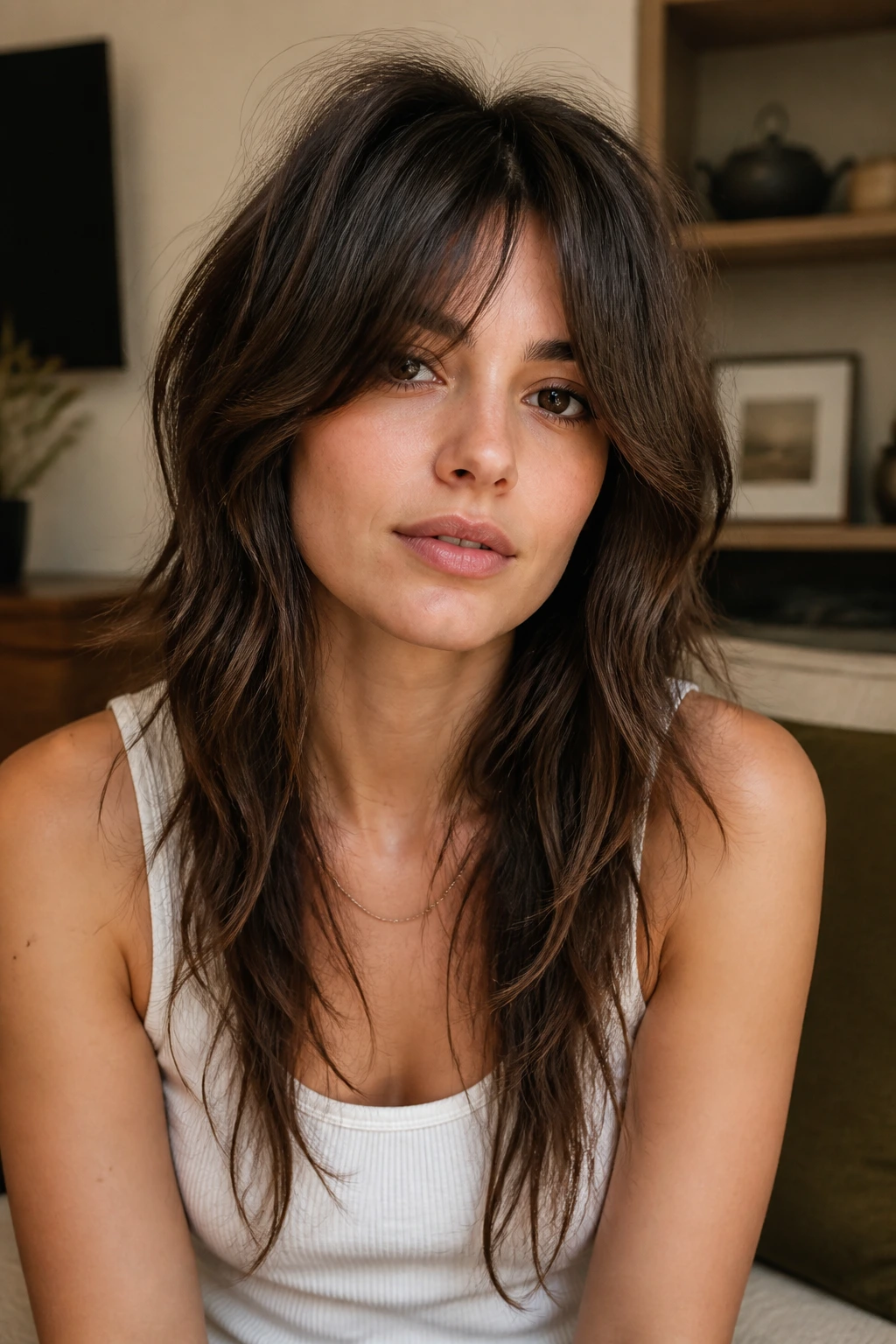
The octopus cut looks a little strange on paper, which is part of why it works so well in real life. It has a fuller top, a lighter middle, and longer ends that hang down like soft tentacles. On a round face, that means height where you need it and length where you want the eye to travel.
It is not a blunt shape at all. The contrast between the top and the ends is the point. That contrast keeps the face from feeling boxed in, and it gives the cut a bit of motion even when you are standing still.
This is a good choice if you like something a little different but do not want to go full mullet. It feels playful, and it takes to messy styling better than most cuts. A diffuser, a little mousse, and a rough shape with your hands is usually enough.
18. Uneven Lob with Chunky Ends
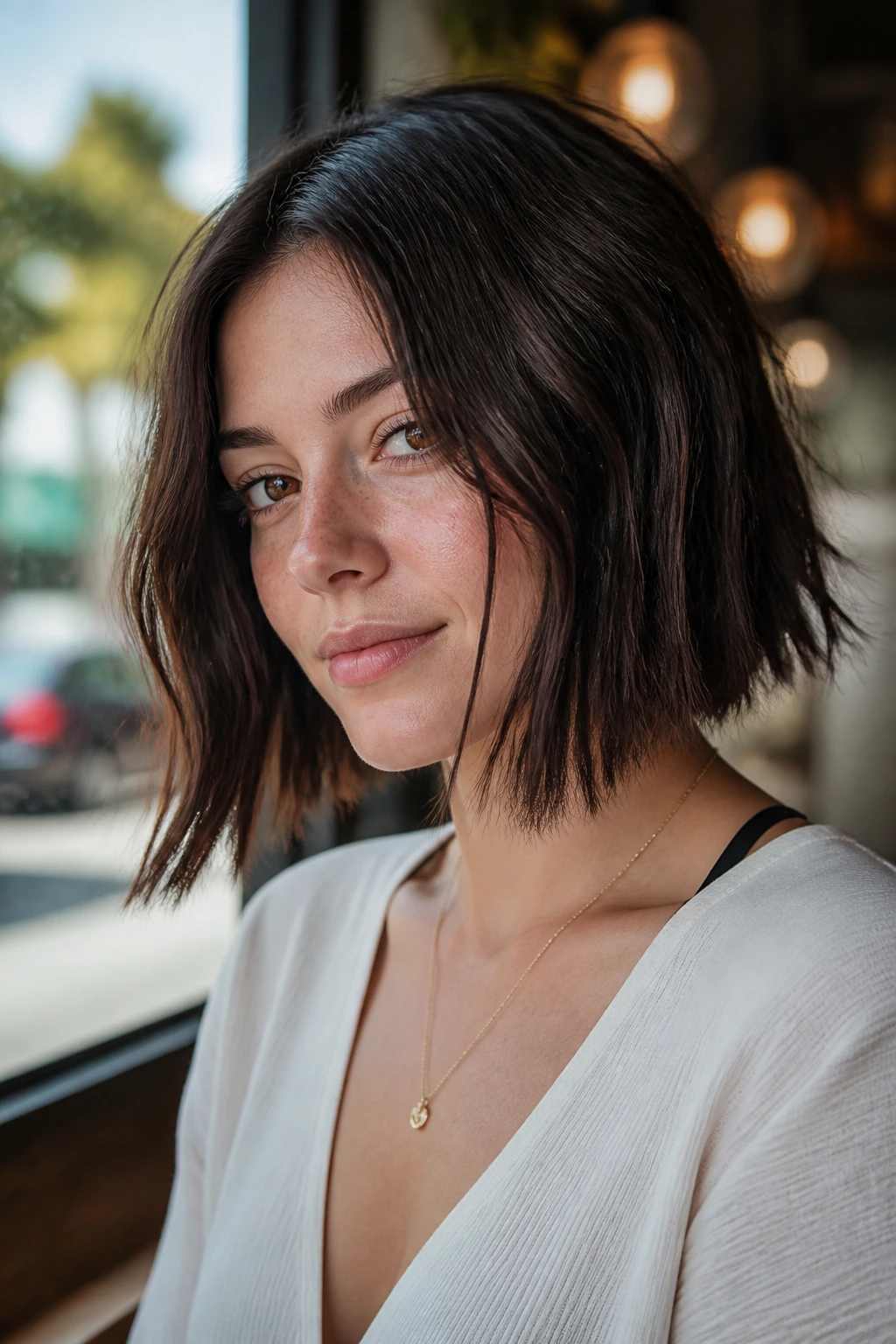
A perfectly even lob can be polished. Sometimes too polished. On a round face, a slightly uneven lob with chunky ends is often better because it refuses to sit in one perfect curve. That broken edge keeps the eye moving.
This is not the same as sloppy layers. The unevenness should feel deliberate, with one side a touch more weighted or a few interior pieces sticking out in a controlled way. That little irregularity stops the haircut from wrapping around the face like a frame.
It suits straight hair especially well because straight strands can look heavy fast. Chunky ends break up the line and give the shape some attitude. If your hair is wavy, the cut can look even better on day two, once the pieces settle.
19. Soft Mullet Bob
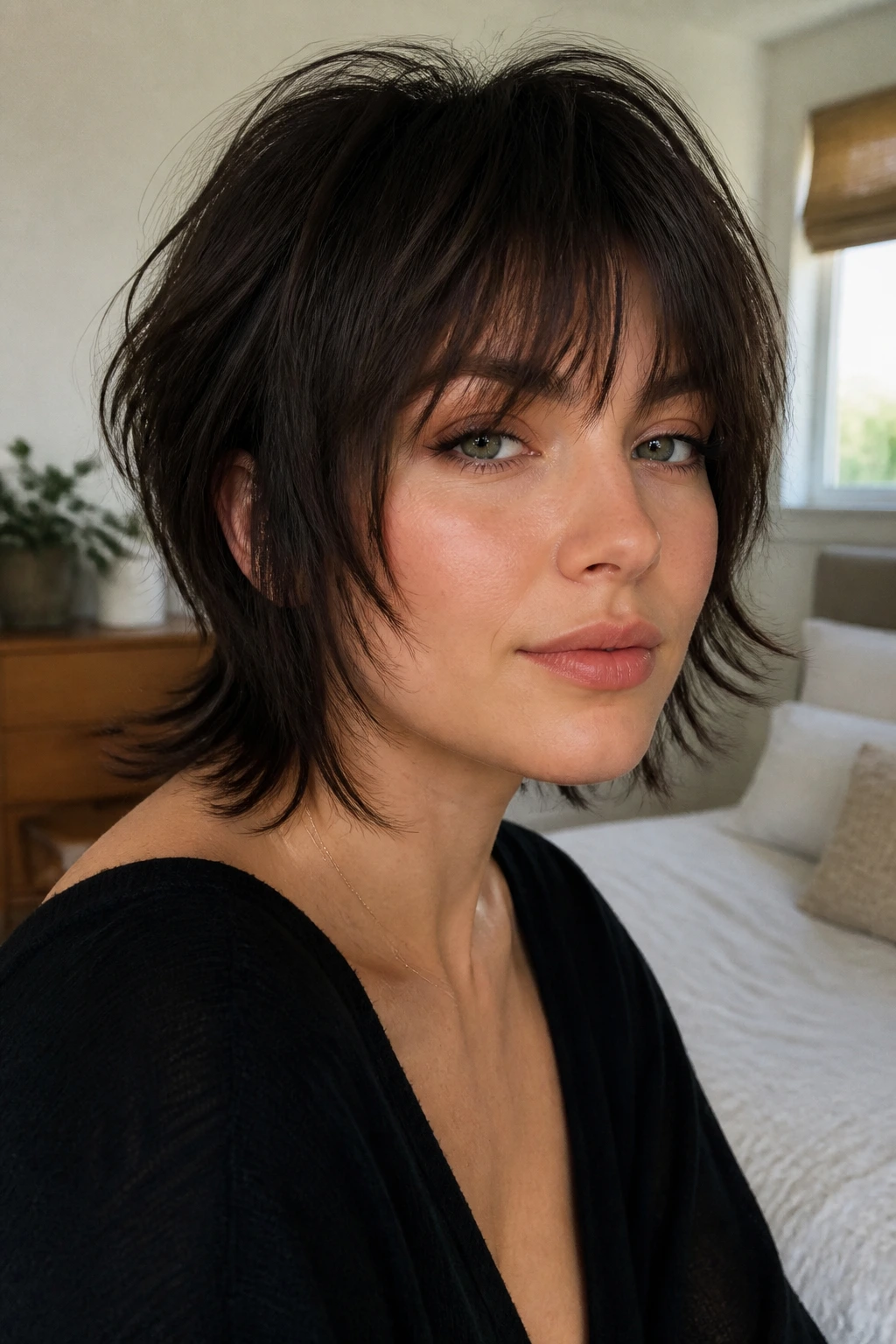
A soft mullet bob is a good compromise if you like a little edge but do not want the full short-on-top, long-in-back mullet shape. It keeps the front and sides bob-like, then lets the nape stay a bit longer and looser. That extra length at the back helps a round face feel less wide through the cheeks.
The softness is what makes it wearable. If the layers are too sharp, the haircut can feel dated in a hurry. Keep the transition gentle, with enough length around the jaw to blur the shape instead of outlining it.
This is a cut that likes personality. It is not trying to be polite. If you want hair that looks a little undone even when it is brushed, this one has a nice bite to it.
20. Face-Framing Layers with Long Curtain Bangs
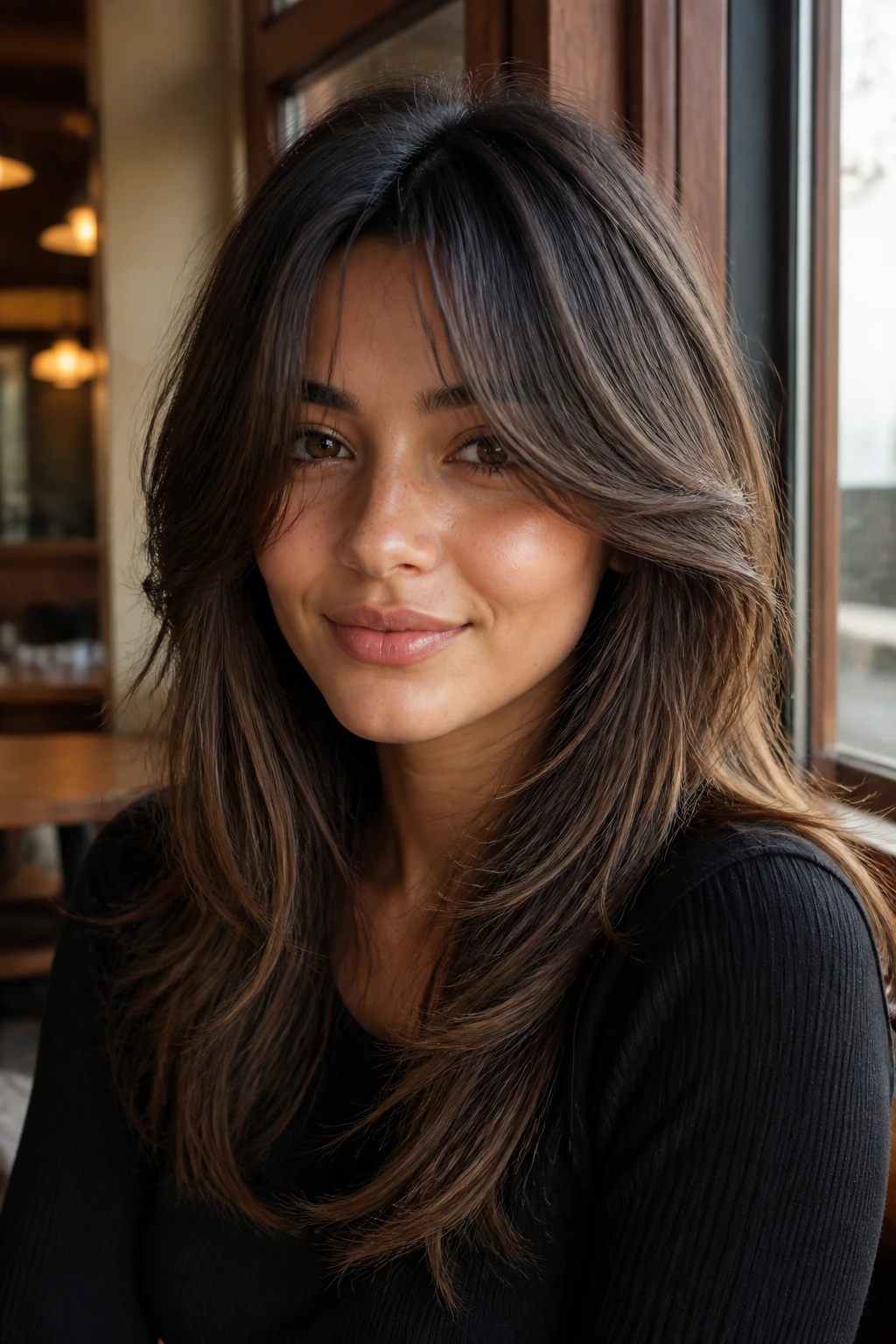
This is the classic move for a reason. Long curtain bangs split the face, while the layers around them keep the front from looking heavy or square. On a round face, the key is where the first layer begins. Too high, and the cheeks get more attention. Lower is safer.
Where the layers should start
- Start the shortest face-framing pieces around the cheekbone or just below.
- Keep the curtain bangs long enough to tuck back.
- Blend the bangs into side layers, not into one blunt shape.
- Keep the crown light so the top does not flatten.
This cut works on straight, wavy, and loosely curly hair. It is one of the least risky options on this list because it gives you shape without a drastic change. The hair can be messy, brushed, or tucked behind one ear, and it still reads well.
21. Tucked-Under Bob with Broken Texture
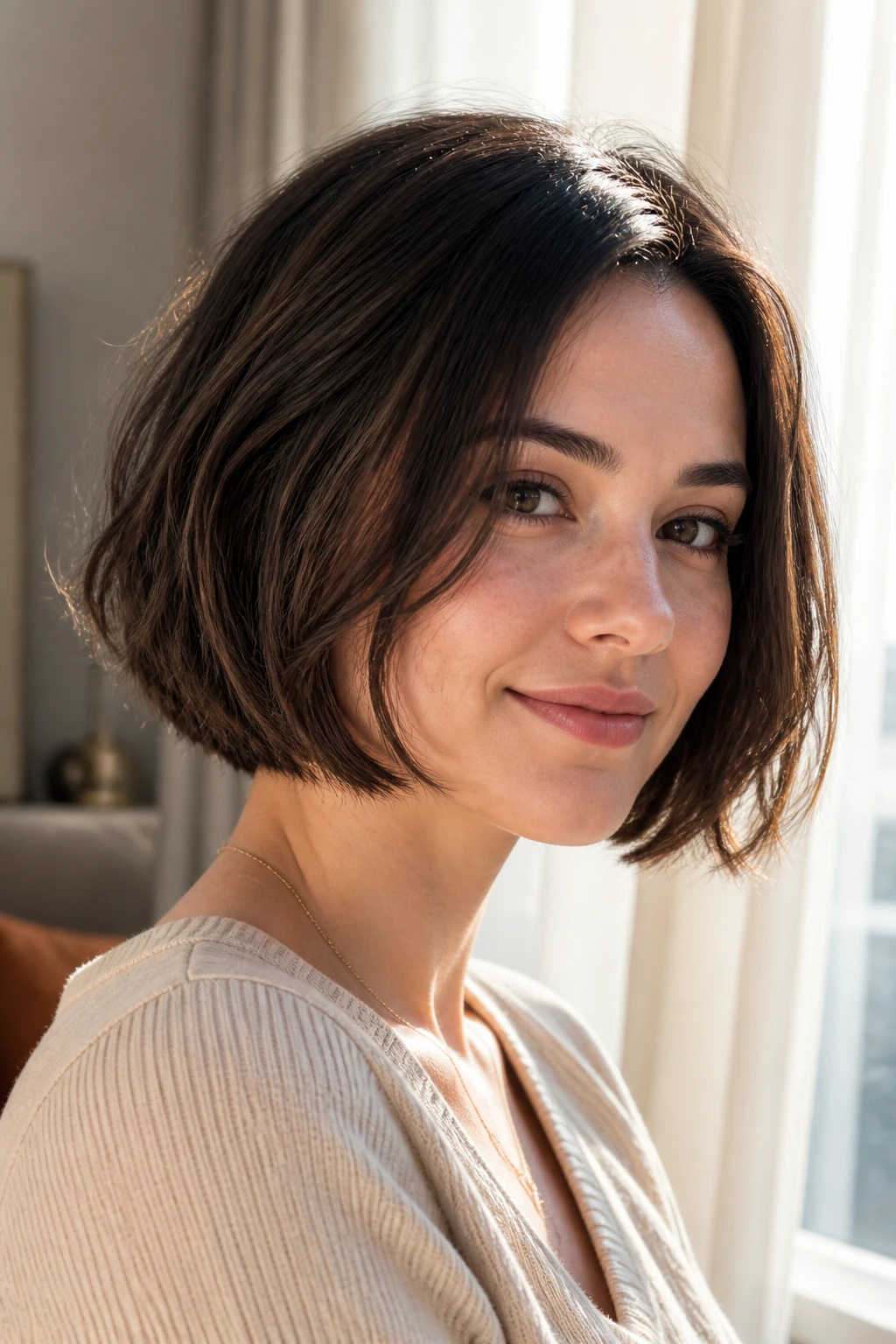
A tucked-under bob can look neat in a good way, but it needs broken texture to keep it from feeling stiff on a round face. The under-bend gives the haircut a clean line, and the texture keeps that line from turning too round or too solid. That contrast is the point.
The length should sit below the jaw, and the bend should be soft, not curled under like a pageant style. You want the ends to hug the neck a little, then fall apart just enough to keep things modern. A side part helps if your face tends to feel widest at the center.
This cut is especially nice if you like a shape that can move between polished and undone. Brush it in the morning and it looks tidy. Run your fingers through it later and it loosens up without falling apart. That flexibility matters more than people admit.
22. Grow-Out-Friendly Layered Shag for Round Faces
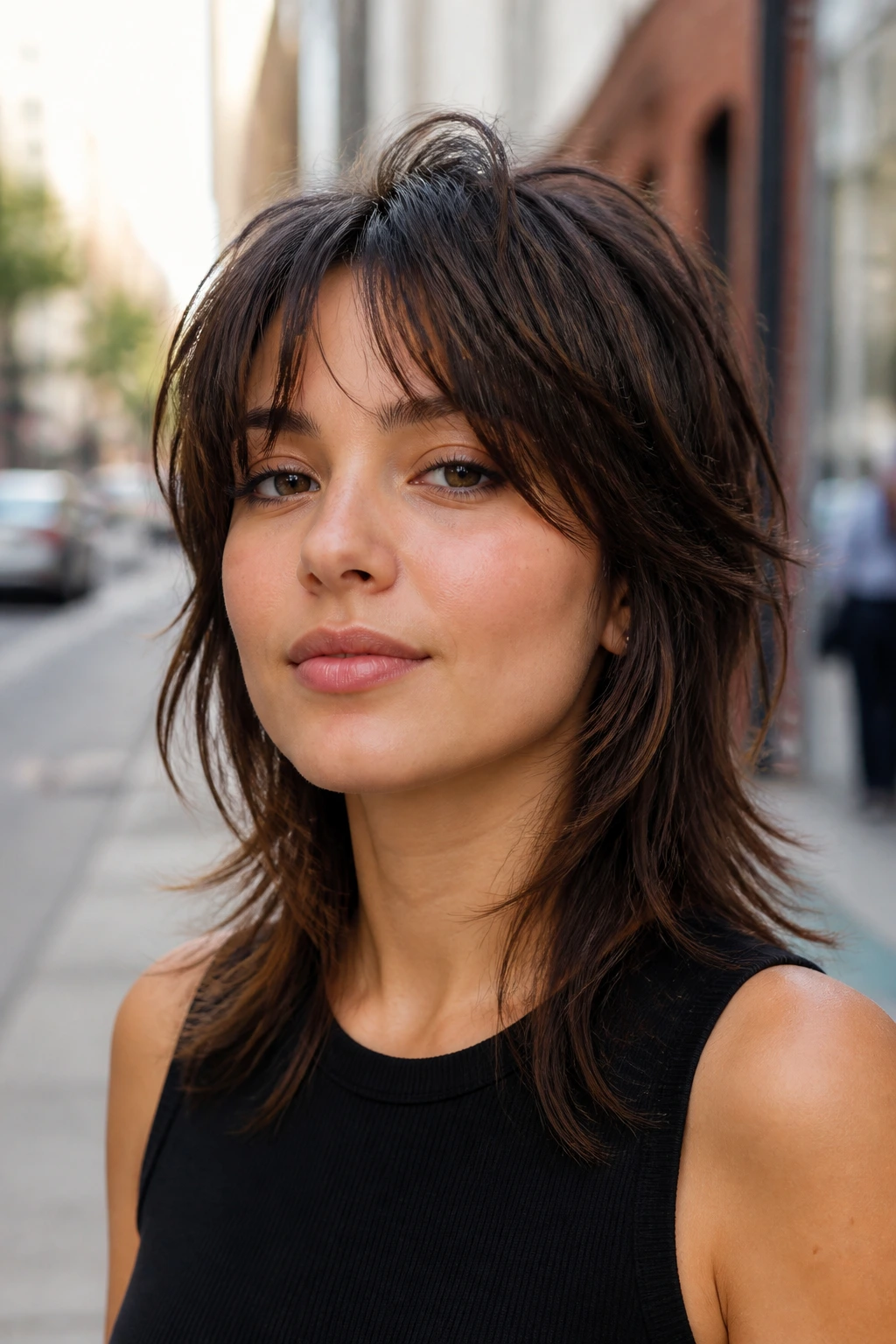
If you want one cut that does not turn hostile the minute it grows a half inch, this is the one. A grow-out-friendly layered shag keeps its shape because the layers are meant to live in motion, not in perfect lines. On a round face, that looseness is useful. It keeps the sides from feeling heavy and gives the top enough lift to stretch the shape.
The best version is slightly longer than a classic shag, with layers that start below the cheekbone and end somewhere around the collarbone. That range gives you room to air-dry, diffuse, rough-blow, or even do nothing and still look like you meant it. Shorter pieces around the crown keep the top lively. Longer front pieces stop the face from feeling boxed in.
Why it hangs onto its shape
The shag shape does not rely on razor-sharp edges. It relies on movement. So when it grows, it still has a little structure instead of collapsing into one wide block. That is why so many people keep coming back to it after one round face-flattering cut that looked good for a month and then went flat.
How to keep it useful
A little mousse at the roots, a curl cream through the ends, and a quick scrunch is often enough. If you want a more defined finish, bend only the front layers with a 1-inch iron and leave the rest a touch messy. That is where the charm lives.
A good shag never looks afraid of its own hair. It grows out with you, and that makes it one of the smartest cuts to ask for when you want texture, shape, and a face that feels a little longer without looking overworked.
