



A good haircut after 40 does a lot more than shorten the hair. It can lift the face, soften a jawline, give fine hair a little more body, and make thick hair stop acting like it has a grudge. The best haircuts for women over 40 are usually the ones that work with your texture instead of fighting it.
That’s the part people miss. Hair changes. It may get drier, flatter at the crown, wirier around the temples, or lose some of the blunt density it had before. A cut that looked effortless ten years ago can suddenly feel heavy, stringy, or too high-maintenance. And no, the answer is not always “cut it short.” Sometimes the smartest move is a cleaner line. Sometimes it’s a few well-placed layers. Sometimes it’s bangs. Sharp ones. Soft ones. The right ones.
I’ve always liked cuts that do two jobs at once: they look polished when you walk out of the salon, and they still behave after you’ve slept on them, run errands, or gone a little too long between trims. That’s the sweet spot. Not fussy. Not boring either.
So here are 22 haircuts that do exactly that.
1. Soft Collarbone Lob
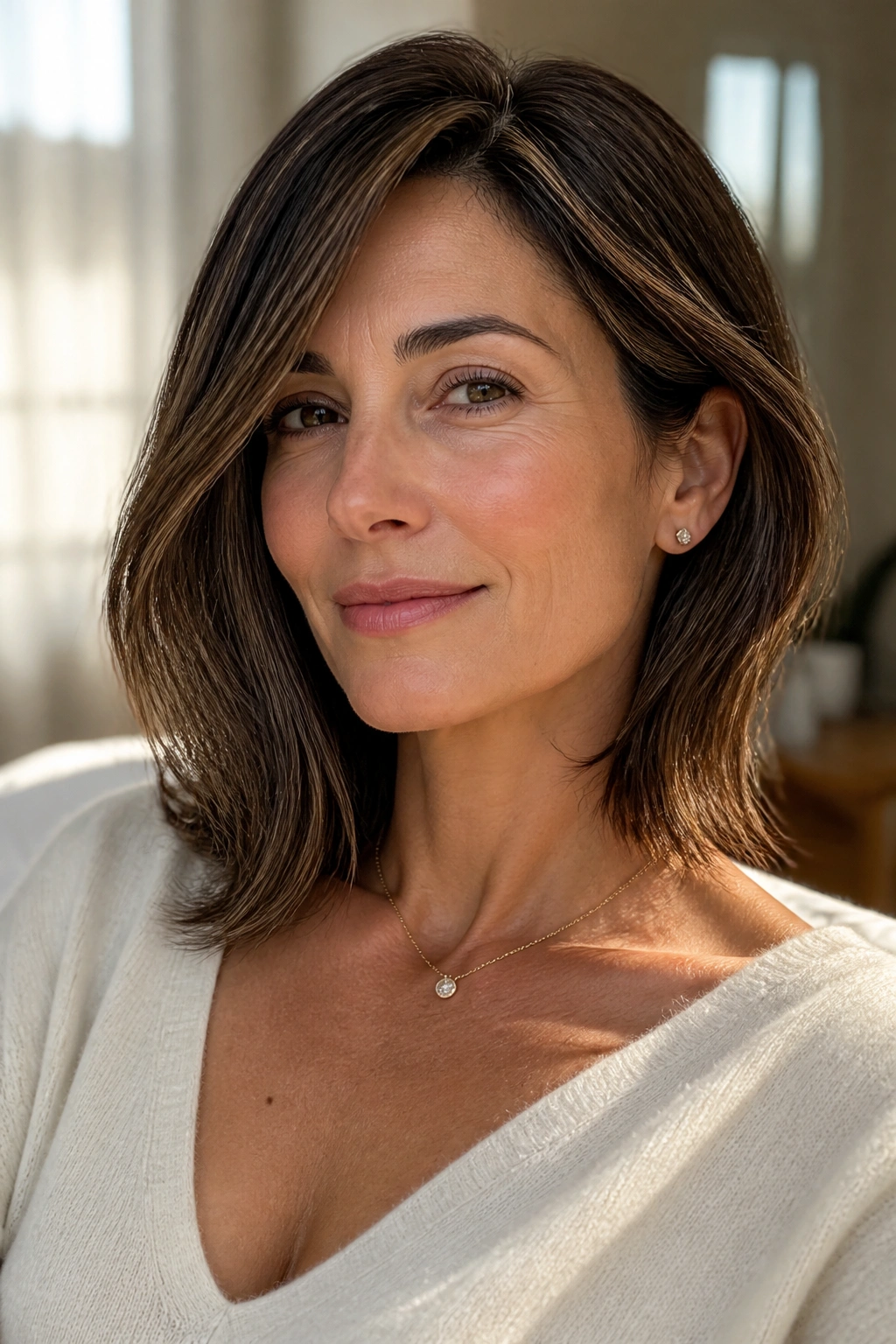
The collarbone lob earns its place because it sits in that useful little zone between short and long. It brushes the collarbone, which gives the cut movement without taking away your options. You can tuck it behind the ears, wear it straight, add a bend with a flat iron, or let it air-dry into a relaxed shape.
What makes this cut work so well for women over 40 is the balance. It doesn’t drag the face down the way longer, heavy hair sometimes can, and it doesn’t feel severe the way a blunt chin-length bob can if you want something softer. Ask for barely there layers around the front if you want a little lift near the cheekbones.
It’s also a forgiving haircut. If your hair is fine, the length still gives the illusion of body. If your hair is thick, the collarbone length keeps the weight under control. Easy. Clean. No drama.
2. Chin-Length French Bob
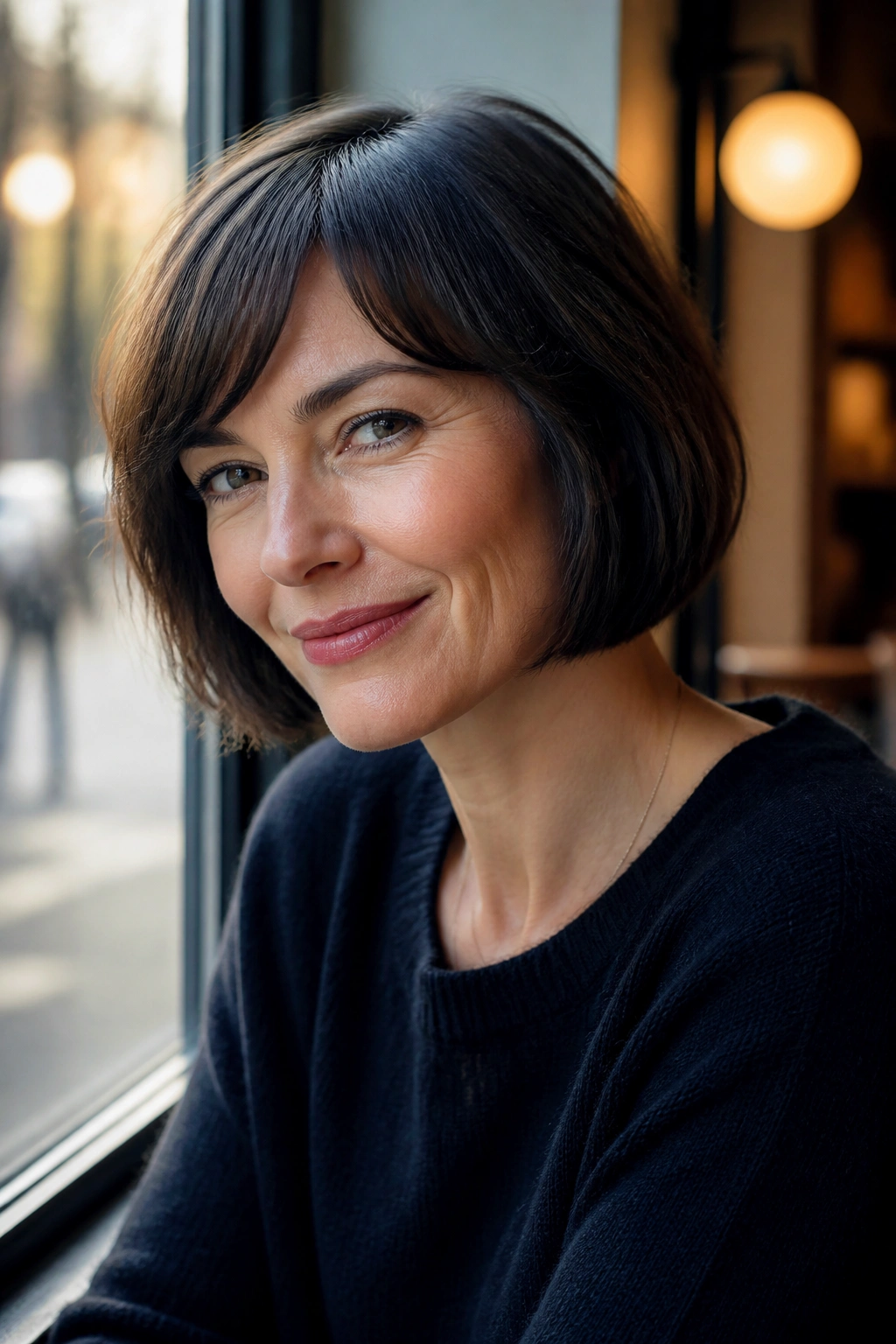
Why does a chin-length bob look so good when it’s cut with a little softness? Because it puts the focus exactly where you want it: the eyes, cheeks, and jawline. The French bob is short, but it never has to feel severe. A tiny bit of texture keeps it from looking helmet-like.
This cut works best when the ends are slightly beveled or softly tucked in, not blunt to the point of looking rigid. It also plays nicely with a small fringe or a side part. If your hair has a natural wave, even better. Let it do some of the work.
Best for
- Fine hair that needs shape fast
- Straight to wavy textures
- Women who want a cut that air-dries with some personality
- People who do not want long blow-dry sessions
A French bob can feel chic with almost no effort, which is rare. It does ask for regular trims, though. Short hair shows growth more quickly, and once it starts losing the line, the whole point gets fuzzy.
3. Blunt Bob With a Clean Edge
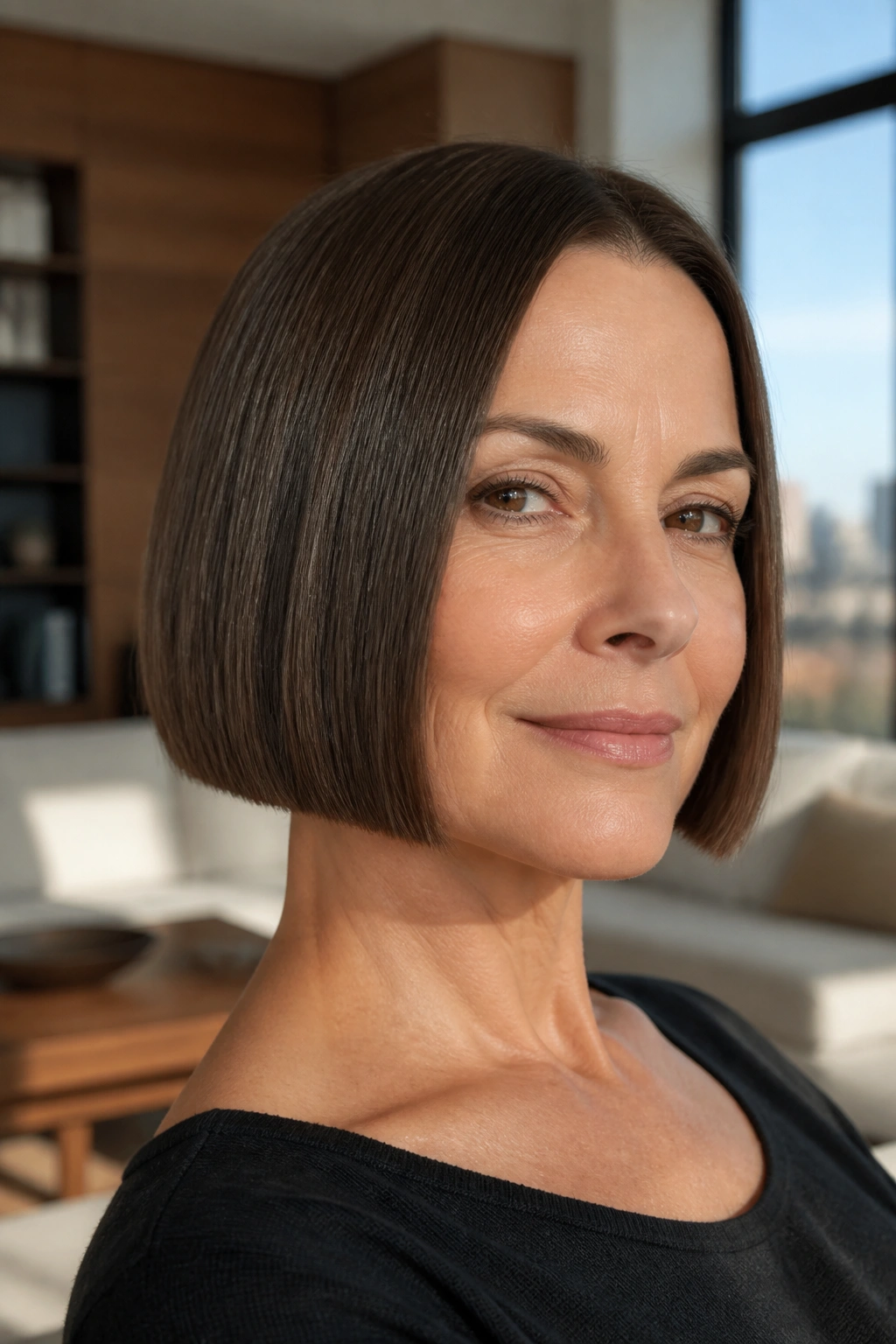
A blunt bob is the haircut equivalent of a crisp white shirt. It looks simple until you notice how much work the shape is doing. The straight edge makes hair look denser, especially at the ends. That matters a lot if your hair has thinned a little or lost some fullness.
I like this cut when the length lands between the jaw and just below it. Too short and it can feel boxy. Too long and the blunt effect starts to fade. The clean line is the whole story here. If you want movement, keep it in the styling, not the cut.
Why It Works
- Creates a stronger-looking perimeter
- Makes fine hair look fuller
- Looks sharp with center parts or deep side parts
- Needs less layering than most people think
The catch? A blunt bob can expose breakage if your ends are rough. Dry, fuzzy ends will show. So this cut is best when you’re willing to keep the last inch healthy and trimmed.
4. Shoulder-Length Layers
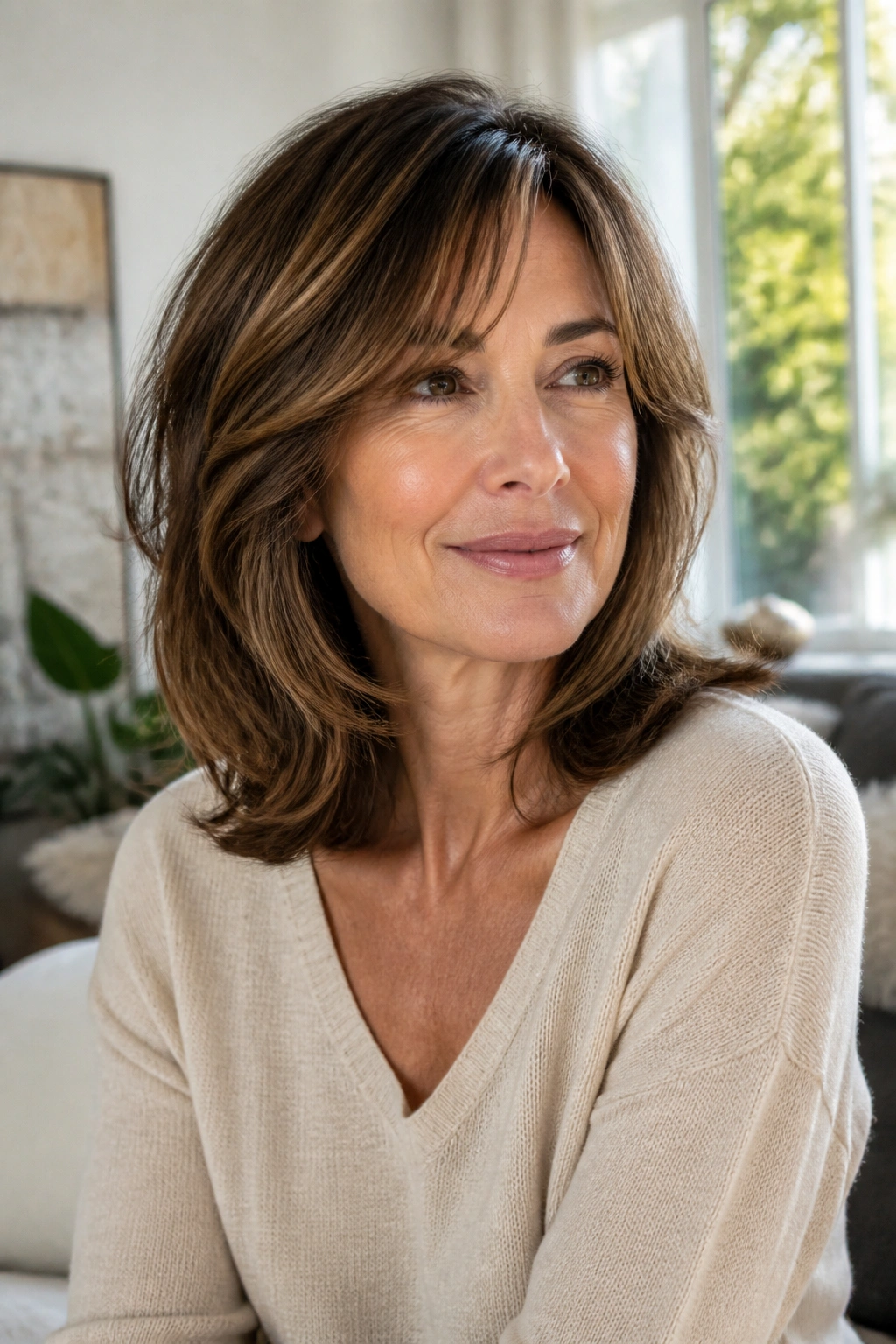
Shoulder-length layers are one of those cuts that quietly solve a lot of problems. The length gives you styling room, while the layers keep the shape from dropping flat around the face. This is a good haircut if you want movement without giving up length.
I usually like the layers to start low, around the chin or lower, so the hair doesn’t end up looking chopped up. High layers can be lively, but they can also create weird puffiness if the hair is thick or slightly frizzy. Low layers move better. They fall better. They grow out better too.
This cut works especially well if you wear your hair in loose waves most of the time. The layers help those bends hold instead of collapsing after an hour. If you want a haircut that behaves on a workday and still looks soft on a weekend, this is one of the safest bets.
5. Long Layers With Face-Framing Pieces
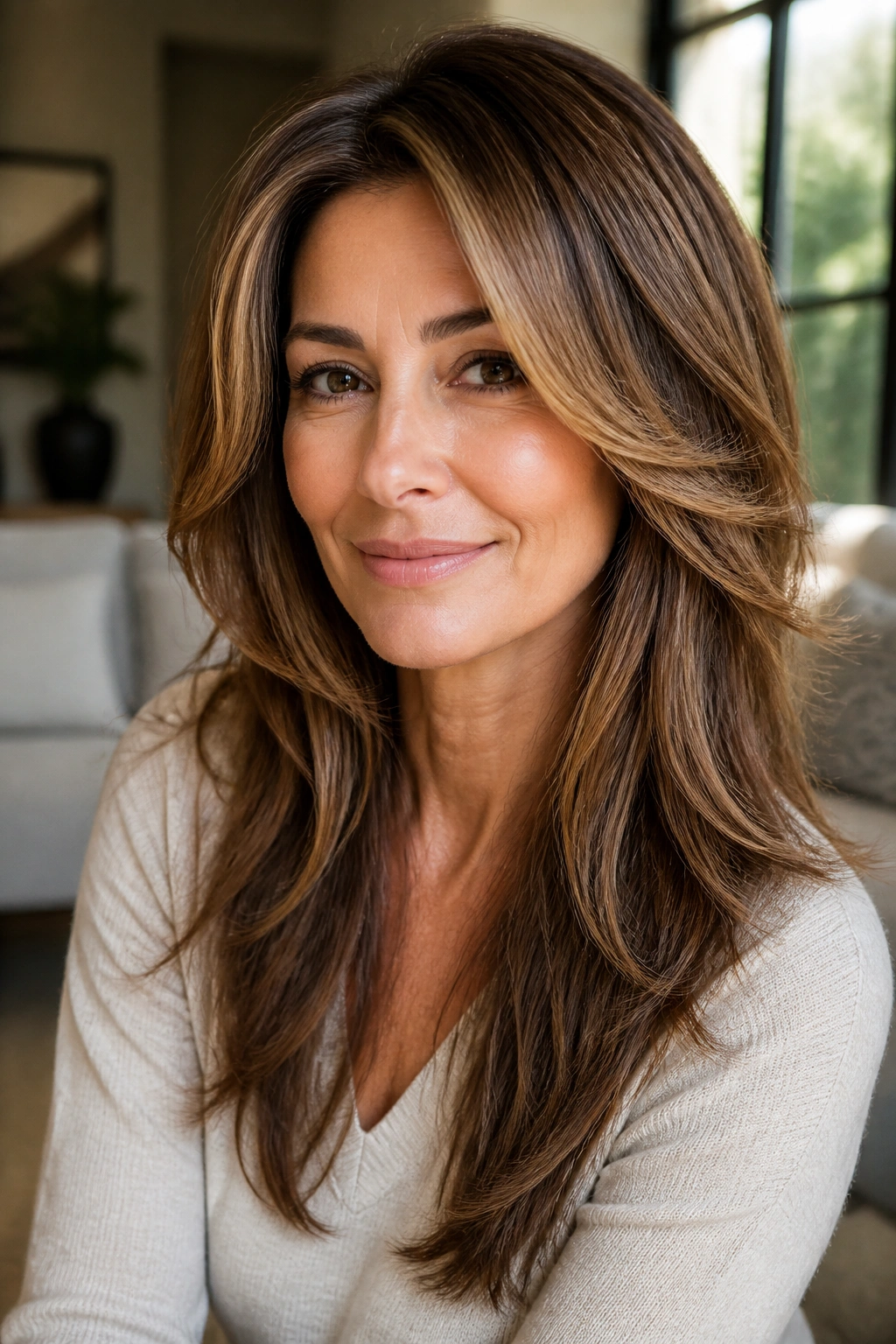
Long layers can get a bad reputation because people imagine feathered strips from a very specific decade. That’s not what I mean here. Modern long layers are more restrained and more useful. They keep the length, but they remove enough bulk so the hair swings instead of hanging.
The face-framing pieces matter more than people think. A soft piece that starts around the cheekbone or jaw can change the whole mood of the cut. It can soften a strong jaw, open the face, and pull attention upward without screaming “I got bangs.” That’s often why this cut works so well for women over 40 who like length but want a fresher shape.
If your hair is thick, ask for internal removal of weight, not just obvious layers. If your hair is fine, keep the layering subtle so the ends don’t look thin. The trick is restraint. Too much layering and the cut starts looking tired fast.
6. Pixie With a Longer Top
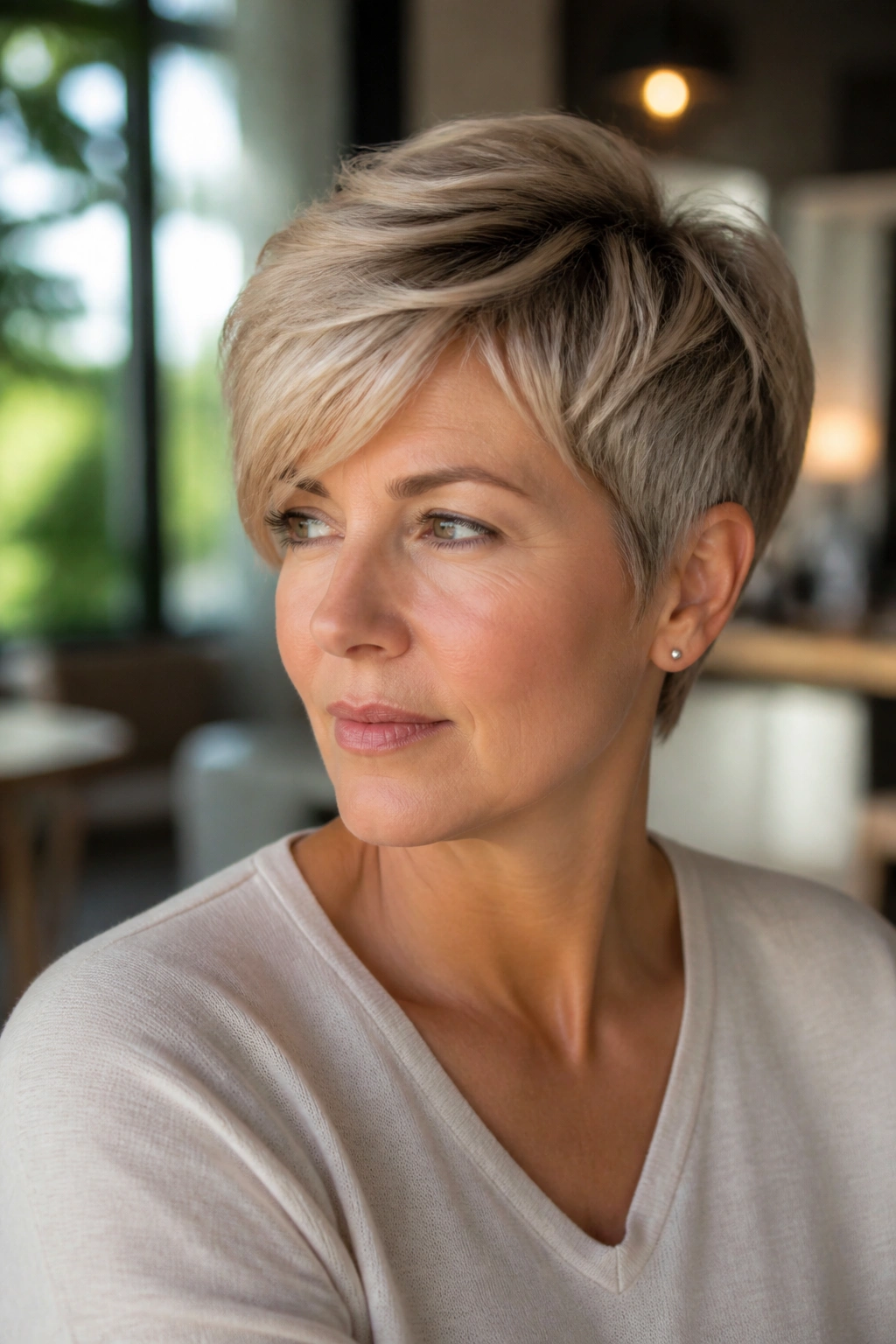
A pixie with a longer top gives you the lift of short hair without locking you into a boyish shape. The extra length on top keeps the cut feminine, soft, and flexible. You can sweep it forward, spike it a little, or tuck some of it to one side.
I like this cut on women who are done wrestling with heavy hair every morning. It can be a relief. The ears and neck feel exposed, the face looks open, and styling can take five minutes if the cut is shaped well. That said, it is not a “wash and ignore” haircut. A good pixie needs a good scissor hand. Bad pixies grow out into chaos.
Styling Note
Use a pea-sized amount of cream or paste on damp hair, then push the top in the direction you want. Blow-dry with your fingers for lift, or let it air-dry for a softer finish. If the crown lies flat, a quick blast at the roots helps a lot.
7. Bixie Cut
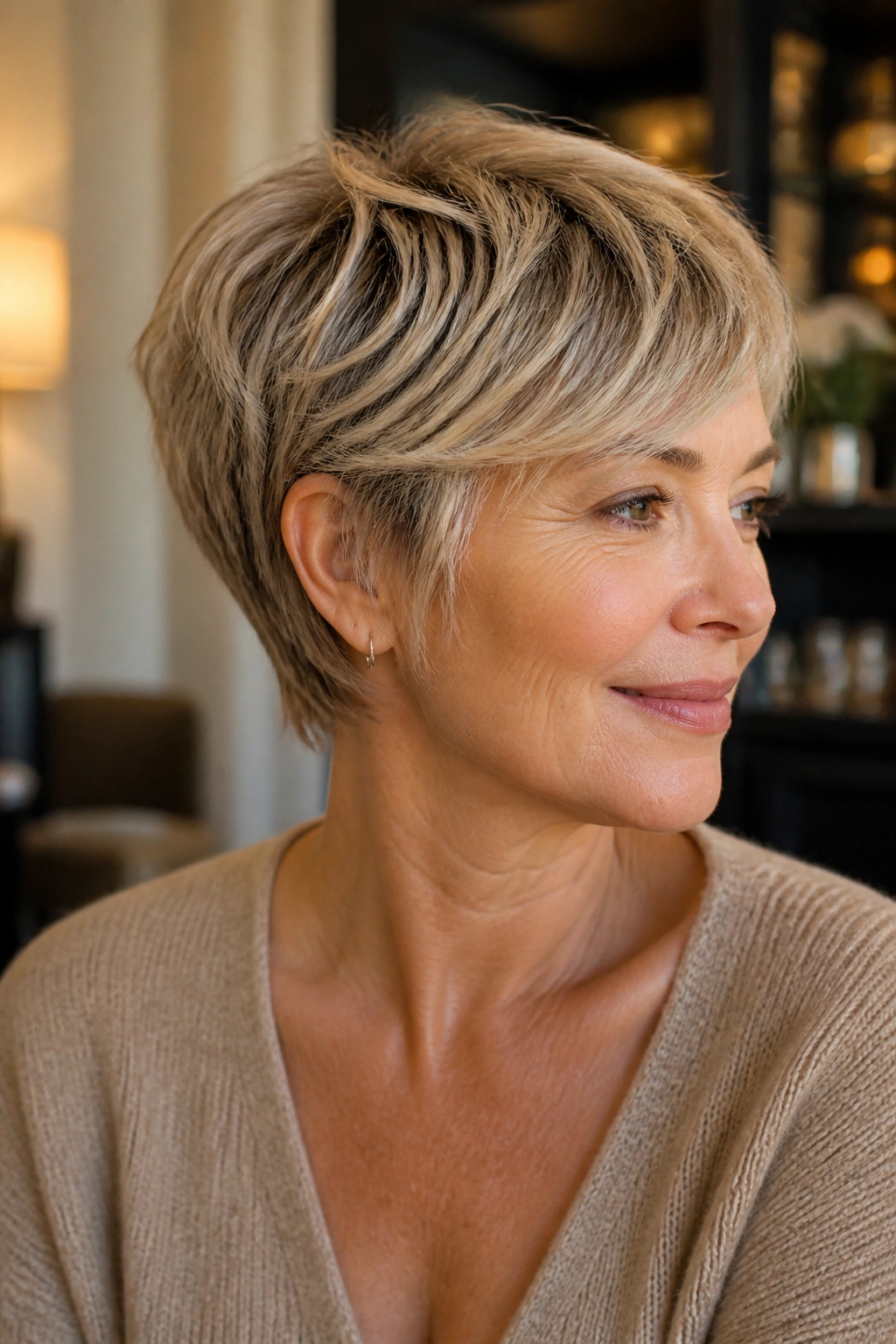
The bixie sits between a bob and a pixie, which is exactly why people keep coming back to it. It has enough length to feel soft, but it still has the lightness of a short cut. If a full pixie feels too short and a bob feels too familiar, the bixie lands in the middle.
This cut is especially kind to hair that has lost some density. The layers create movement, and the shorter length removes drag. You also get a little more shape around the ears and neck, which keeps the whole look modern without being severe.
It suits straight, wavy, and lightly curly hair. Very tight curls can wear it beautifully too, but the shape needs a stylist who understands curl shrinkage. That part matters. A bixie cut that ignores curl pattern can end up shorter than planned, and nobody wants that surprise.
8. Feathered Cut
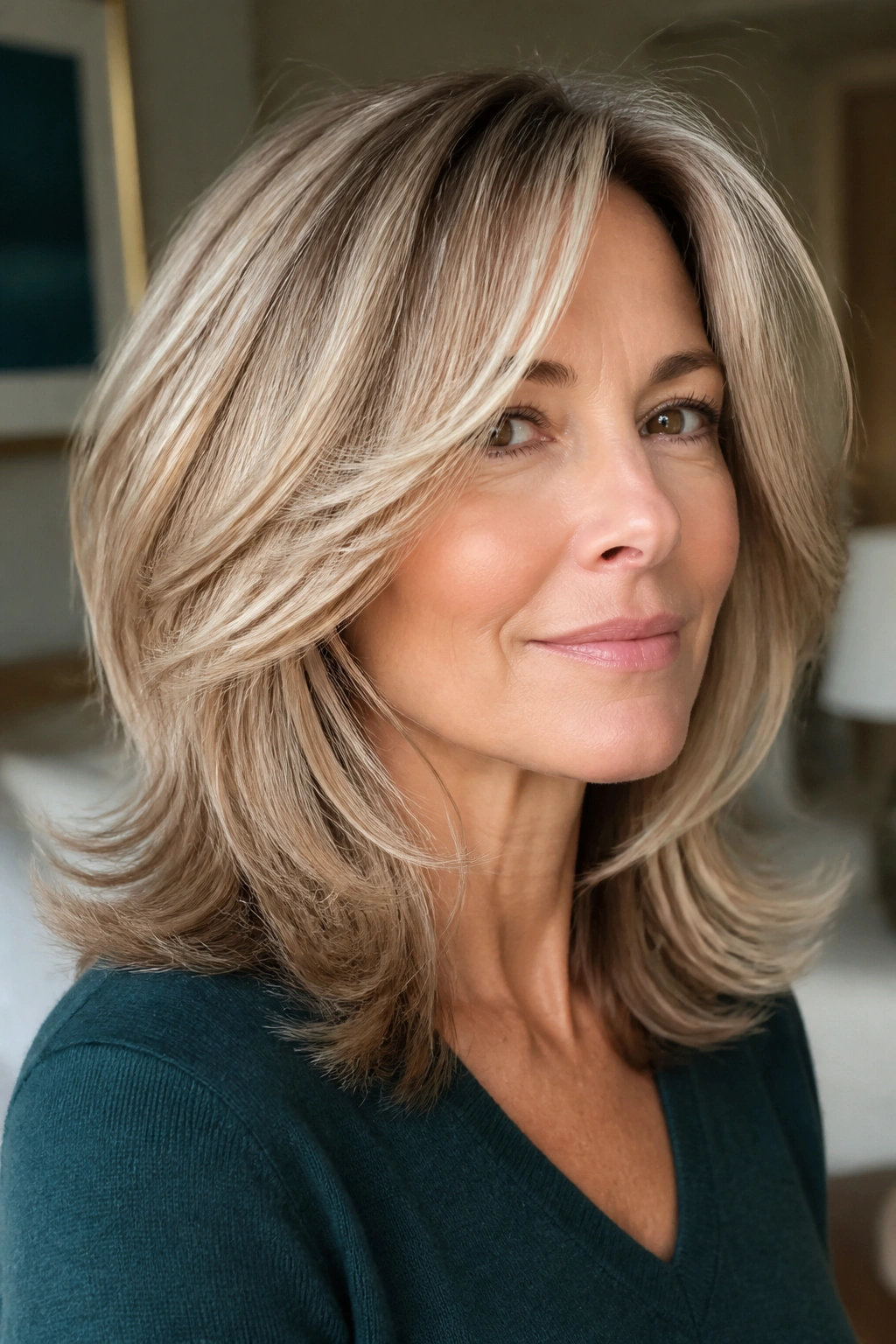
Feathered hair is back in a smarter form. Not the blown-out, overdone version with the hard curl at the ends. The modern feathered cut is softer, lighter, and more wearable. It works by removing weight in a way that keeps the hair moving away from the face.
This is one of the best haircuts for women over 40 who want volume without obvious layering. The ends don’t feel choppy. They feel airy. That’s the difference. When the hair is feathered well, it catches movement naturally, especially around the cheekbones and jaw.
A quick round-brush blow-dry brings it to life, but you do not need to sculpt every strand. A light mousse at the roots and a medium-sized brush is usually enough. If your hair tends to puff in humidity, keep the feathering lower and cleaner. Too many short bits around the crown can get frizzy fast.
9. Side-Parted Lob
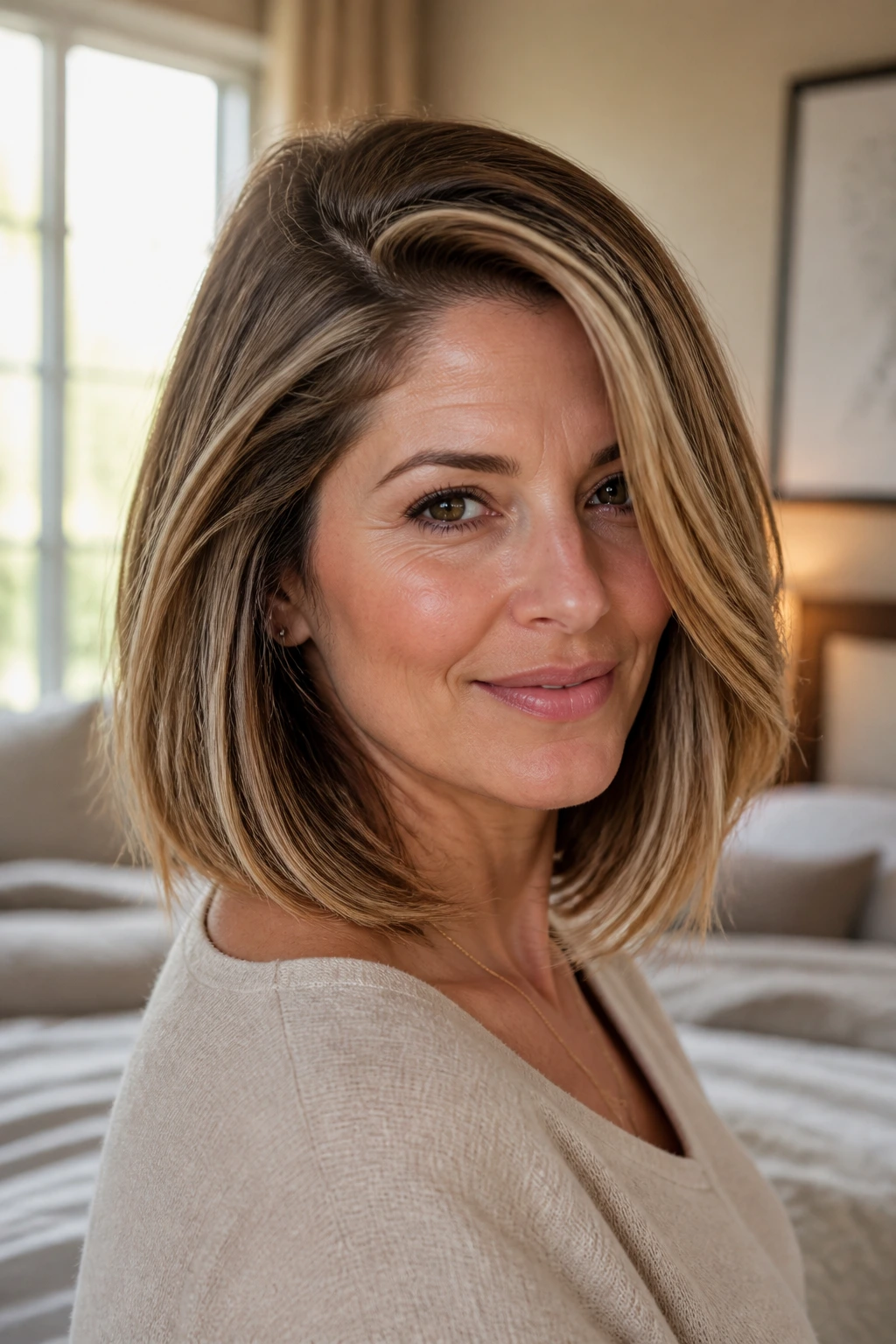
A side part changes more than people expect. It gives a lob some lift, creates asymmetry, and can make the face look less flat. Sometimes the haircut is fine — the part is what wakes it up.
The side-parted lob is especially good if your hair falls flat at the crown. The part lifts one side, which creates a little volume without teasing or heavy product. It also works if one side of your face feels stronger than the other. Hair can be useful that way. It’s not vanity; it’s proportion.
Keep the ends just past the collarbone or around the shoulders, then add soft movement through the mid-lengths. If the hair is straight, a bend through the front sections keeps it from looking stiff. If it’s wavy, even easier. A side part plus texture can look almost accidental in the best way.
10. Curtain Bangs With Mid-Length Hair
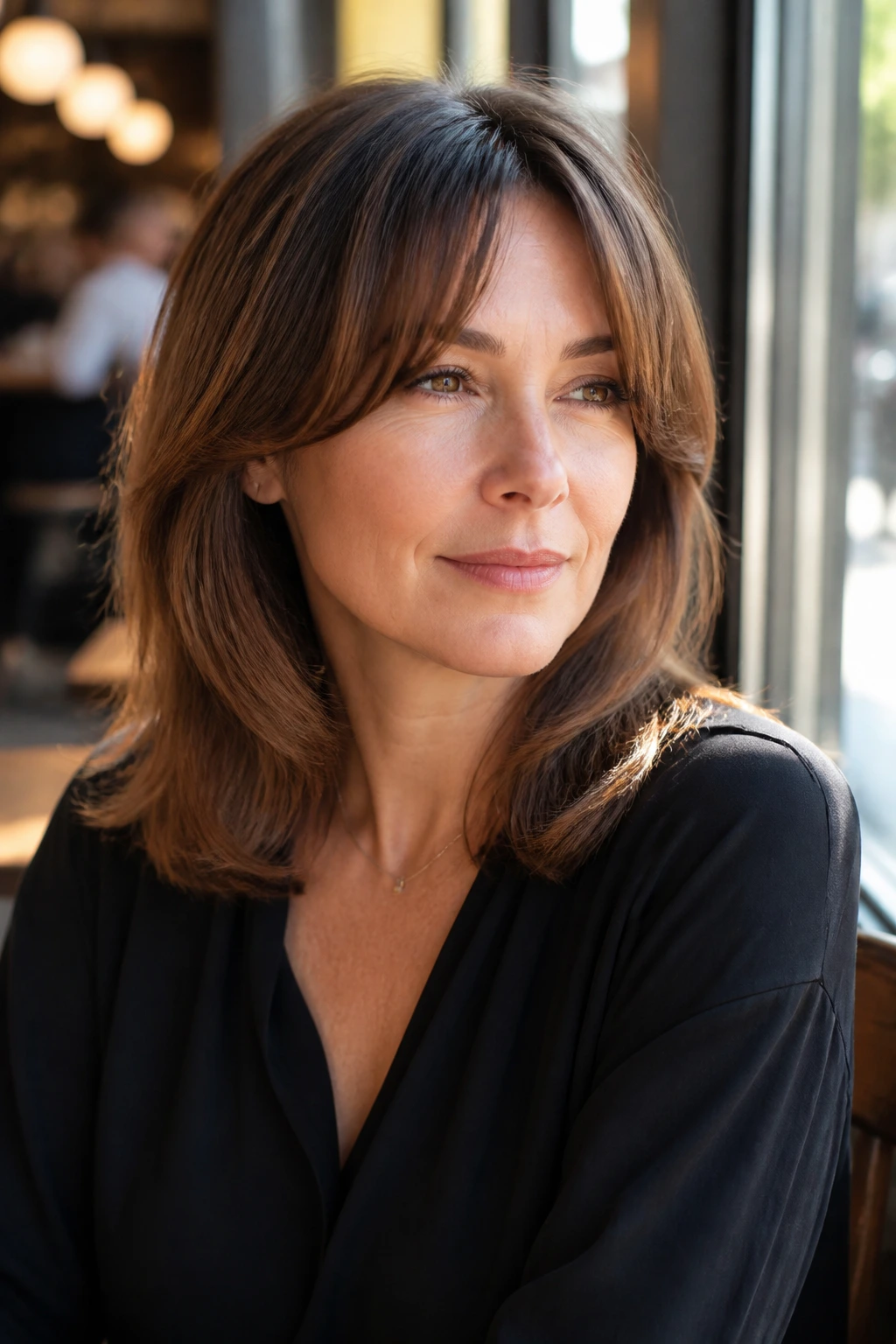
Curtain bangs are popular for a reason, and the reason is not hype. They soften the forehead, blend into layers, and grow out better than blunt fringe. That makes them a good choice if you want change without a hard commitment.
They work especially well with mid-length cuts that stop at the collarbone or shoulders. The bangs should open from the center and fall into the rest of the haircut, not sit on top of it like a separate piece. When they’re cut well, they narrow the face a little and draw the eye toward the cheekbones.
What to Watch For
- Keep the shortest part around the bridge of the nose or cheekbone
- Ask for softness, not a thick curtain
- Style them with a round brush or a quick blow-dry from side to side
- Trim them before they get heavy and split apart
Curtain bangs are not maintenance-free. They need a little shaping. But they are kinder than a blunt fringe if you want flexibility.
11. Soft Shag
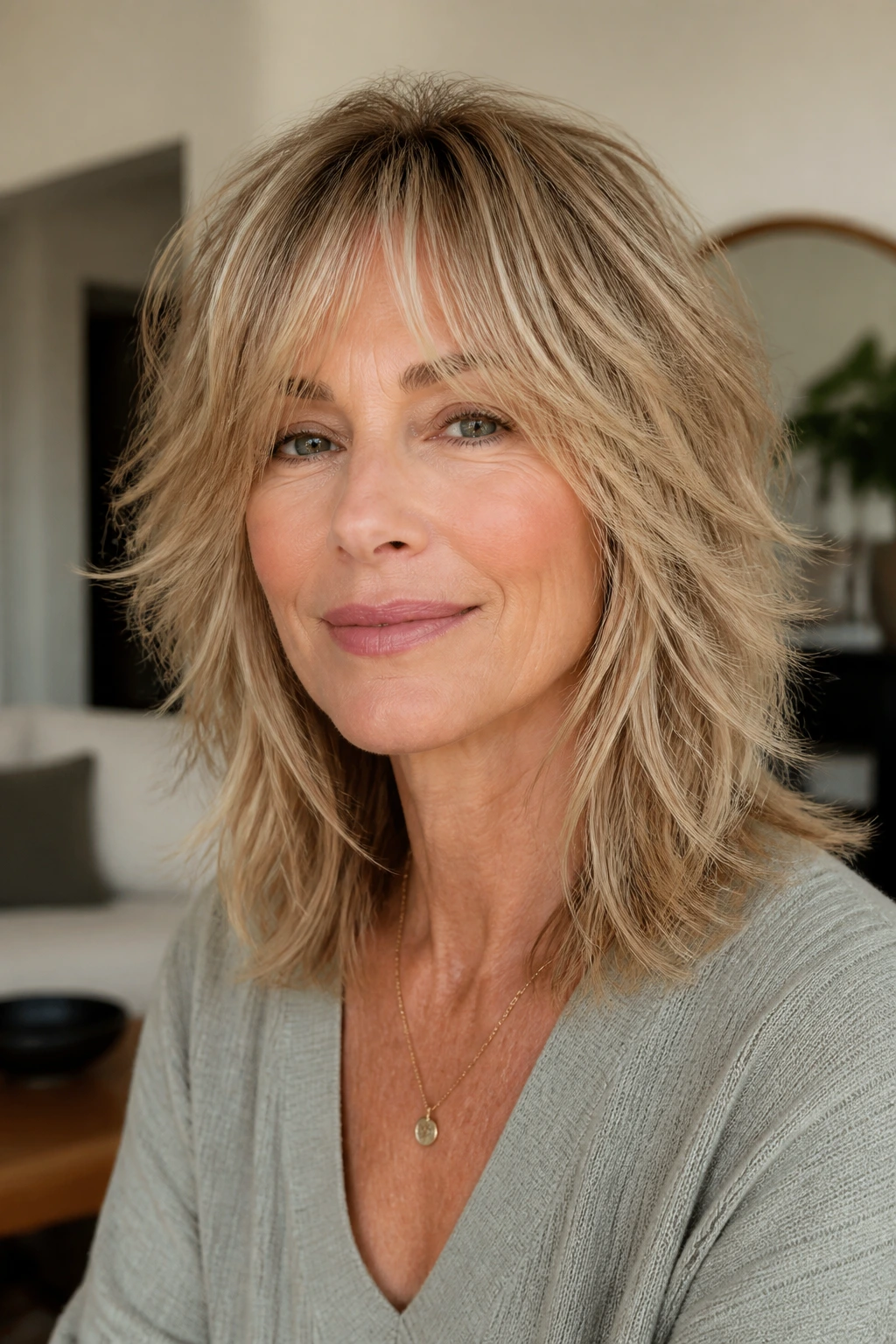
A soft shag is for the woman who likes movement and does not want her hair to sit still all day. It gives the cut texture without turning it into a punky, over-layered mess. That’s the line to hold onto. Soft, not shredded.
The beauty of the shag is in the way it breaks up density. Thick hair gets lighter. Wavy hair gets more obvious pattern. Straight hair gets a little air. And if your face feels a bit softer around the jaw or neck, the shag can lift the whole shape upward.
I prefer a shag with longer layers around the face and a feathered fringe rather than super-short bangs. It feels more relaxed and less dated. If you like to scrunch in cream and let your hair do its thing, this cut makes sense. If you want polished and sleek every day, maybe not. It has a freer personality.
12. Angled Bob
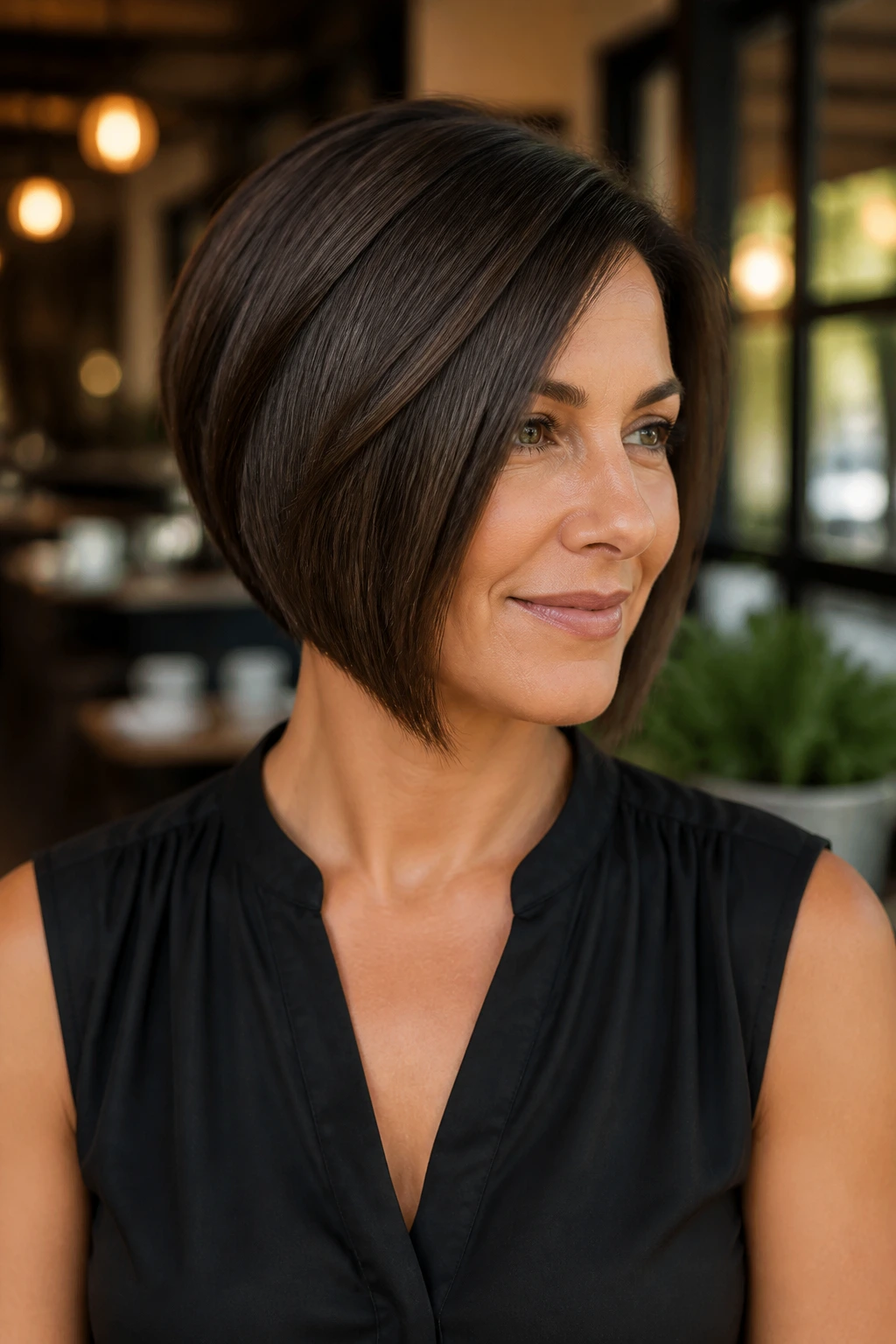
An angled bob makes a quiet but strong statement. The front is longer, the back is shorter, and the line pulls the eye forward. That angle can sharpen the jawline and give the whole face a cleaner frame.
This cut is especially useful if you want a bob that feels less heavy than a one-length version. The shorter back adds lift, while the longer front keeps softness near the face. It’s a good compromise if you like structure but still want some movement.
The angle should be obvious enough to matter, but not so dramatic that it starts looking severe. A slight tilt is easier to wear day to day. Pair it with a deep side part if you want more edge, or keep it centered for a calmer look. Either way, the line needs to stay clean.
13. Textured Crop
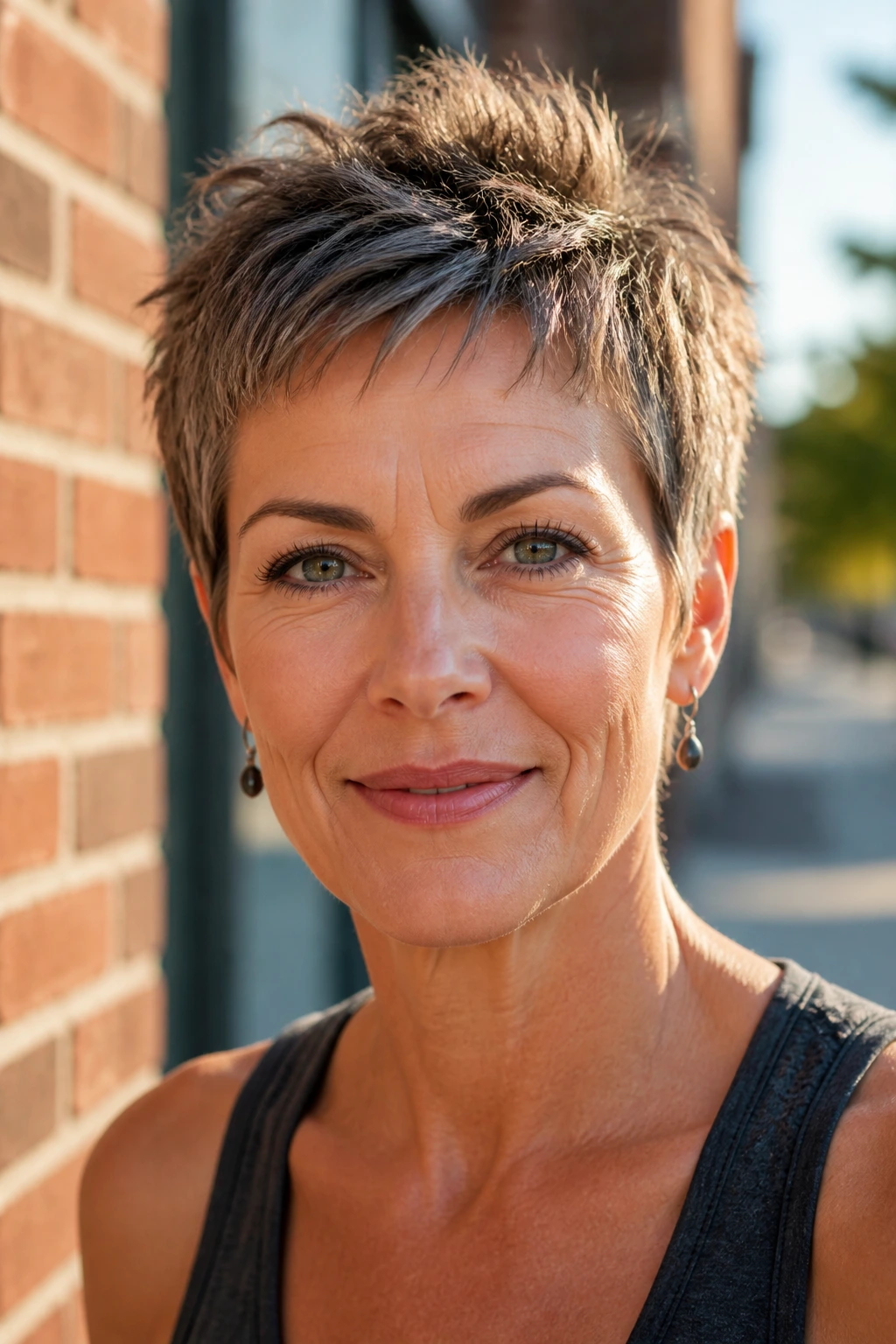
A textured crop is short hair with a bit of attitude, but not the hard kind. It works because the texture breaks up the shape and keeps the cut from feeling flat against the head. That matters a lot when the hair is fine or the crown needs help.
This cut is best when the top has enough length to move, while the sides and back stay close and tidy. It gives you lift without creating a helmet shape. A tiny bit of paste or wax can define the pieces, but the real work comes from the cut itself. If the styling has to rescue the shape every day, the cut wasn’t done well.
It’s a good option if you want something easy, sharp, and not at all bulky around the ears or neck. It does need regular trims. Short hair grows out fast, and a textured crop loses its edge when it gets too fluffy.
14. Stacked Bob
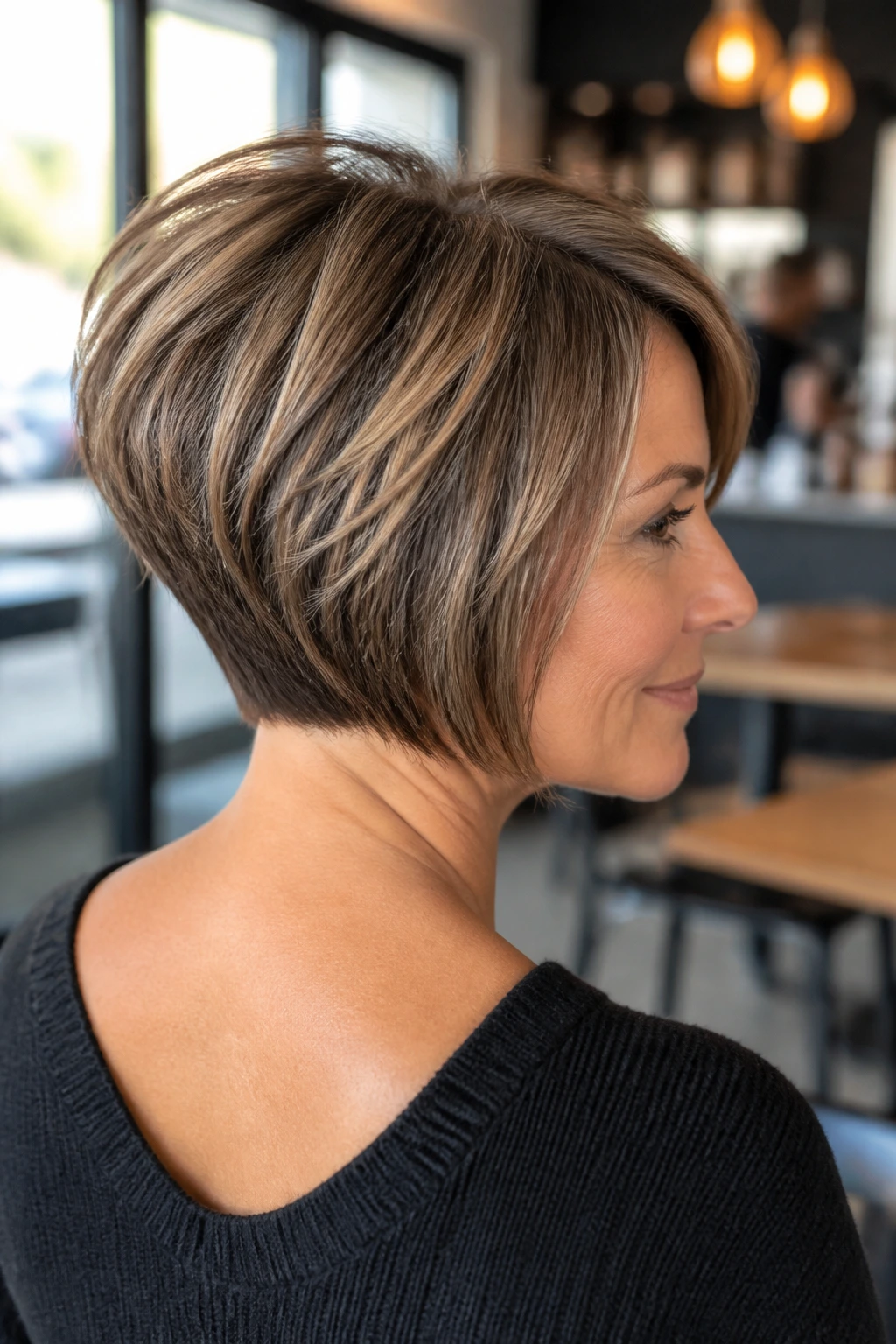
The stacked bob is one of those haircuts that looks like it should be high-maintenance and then turns out to be practical. The back is cut in layers that build volume, while the front stays longer and smoother. That stacked shape gives the crown lift, which many women want more than they’ll admit.
It’s a smart cut if your hair falls flat at the back of the head. The stacking creates shape where you need it most, especially if the nape tends to collapse. On thick hair, it removes bulk. On fine hair, it adds body. That’s a useful trick.
What Makes It Different
- Built-in volume at the crown
- Clean neck line
- Front length that softens the face
- Easy to style with a round brush or blow-dry brush
The downside is grow-out. A stacked bob loses its clean shape faster than a blunt cut, so trims matter. Let it go too long and the back starts to puff out in the wrong place.
15. Wavy Lob
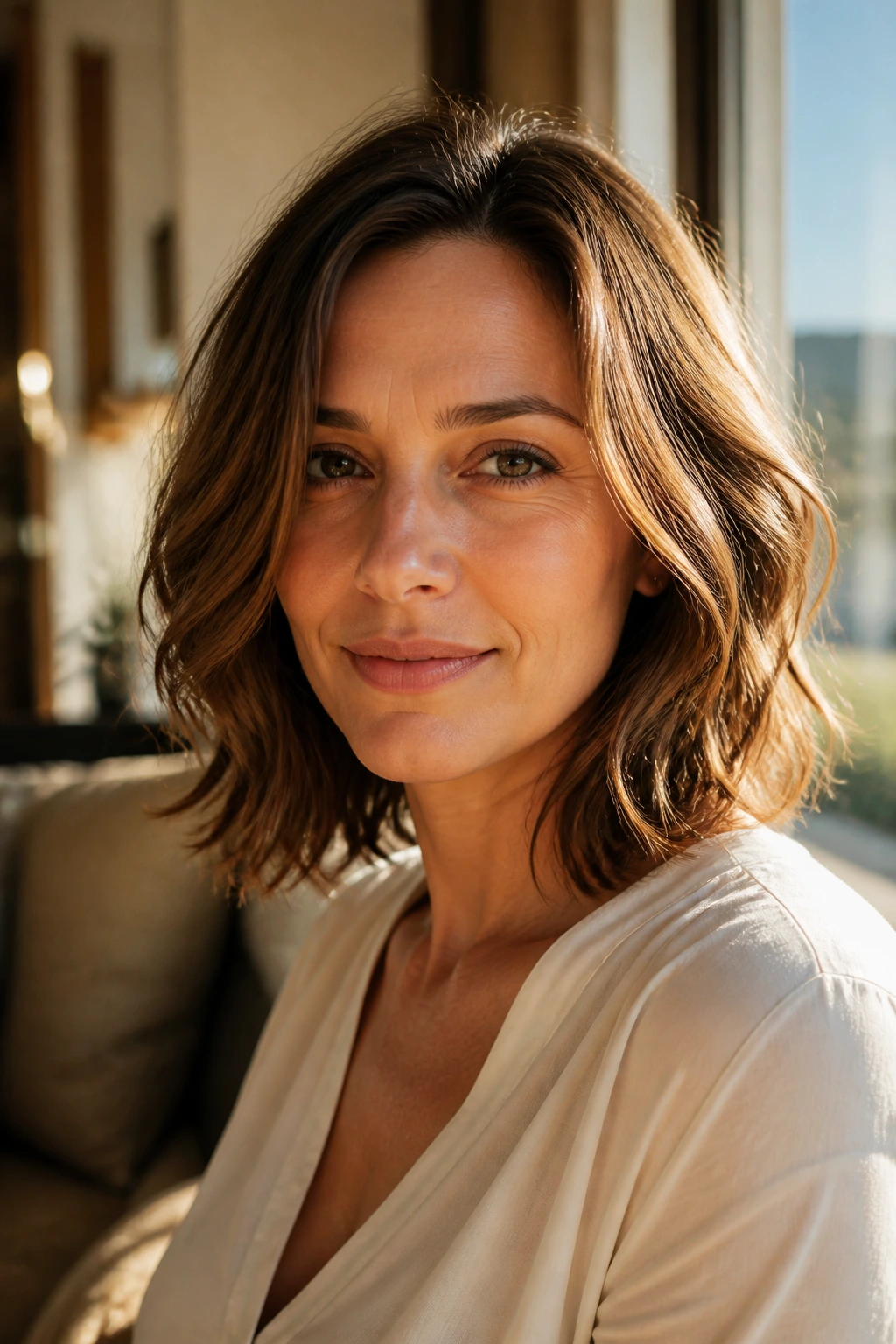
The wavy lob has a loose, easy feel that flatters almost everyone when the cut is done with enough shape. It’s not about perfect curls. It’s about a bend that looks lived in, not forced. That difference matters.
If your hair already has a little wave, the lob length makes it easier to see. If your hair is straight, a few passes with a medium iron are enough to create movement. Keep the ends soft and a little undone. A wavy lob that’s too polished starts looking like it’s trying too hard.
This cut suits women who want something modern but not severe. It softens around the jaw, skims the neck, and looks good tucked behind one ear. If you like hair that looks better a little messy, this is one of the easiest styles to live with.
16. One-Length Cut
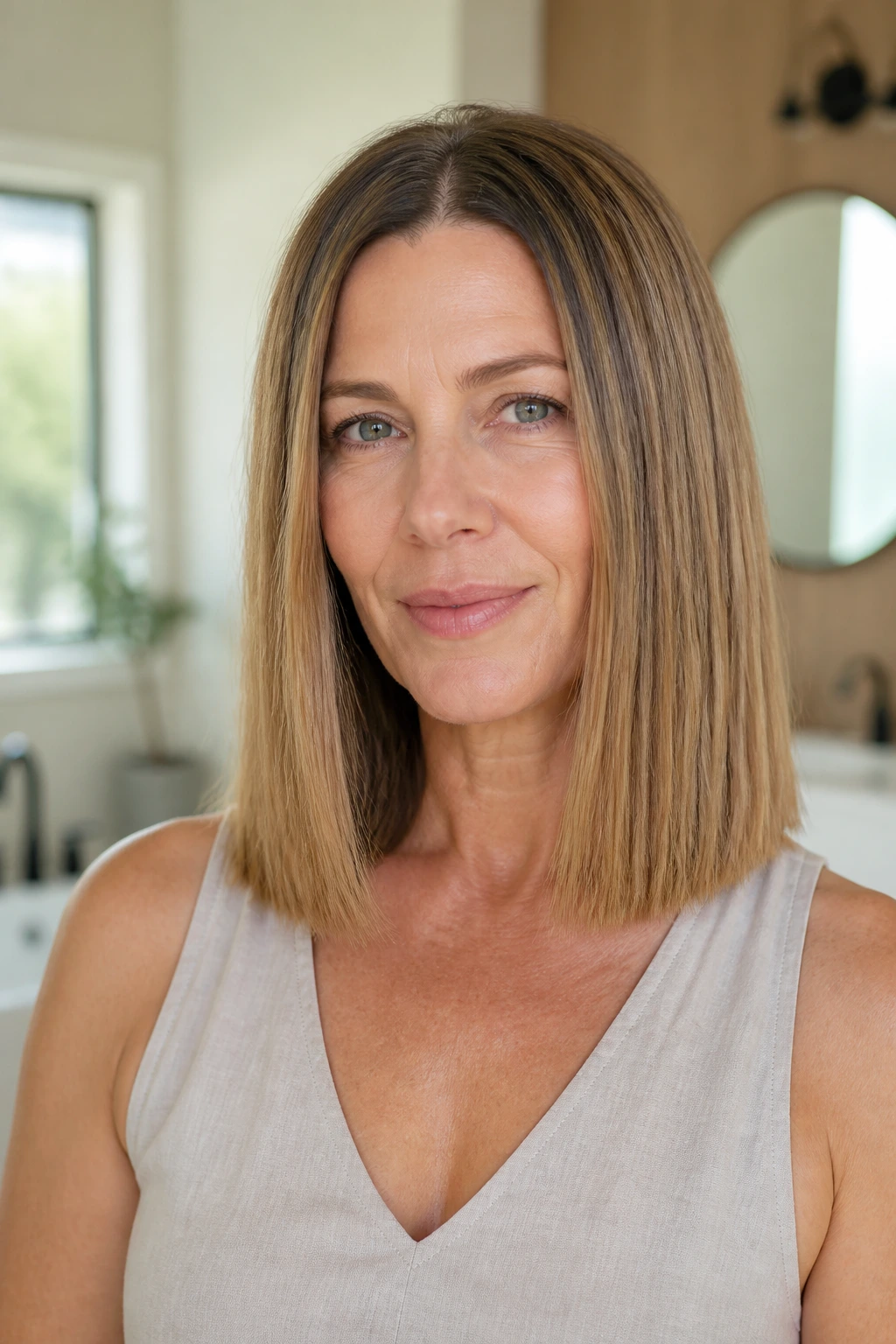
A one-length cut is underrated. People assume layers are always better, but that isn’t true. A single, clean line can make hair look thicker, healthier, and more controlled. That’s a huge deal if your ends are fine or if you want a stronger outline.
This cut works best on straight to softly wavy hair. It gives a sleek look with less effort than a layered style that needs shaping every morning. If your hair is very thick, ask for a tiny bit of internal weight removal so it doesn’t become a triangle. If it’s fine, keep the line as solid as possible.
How to Wear It
- Air-dry for a natural edge
- Use a flat iron on low heat for a smooth finish
- Tuck one side behind the ear for softness
- Add a side part if you want more volume at the crown
A one-length cut is a good choice when you want polish without fuss. It’s honest hair. Clean, direct, and better than people give it credit for.
17. Modern Wolf Cut
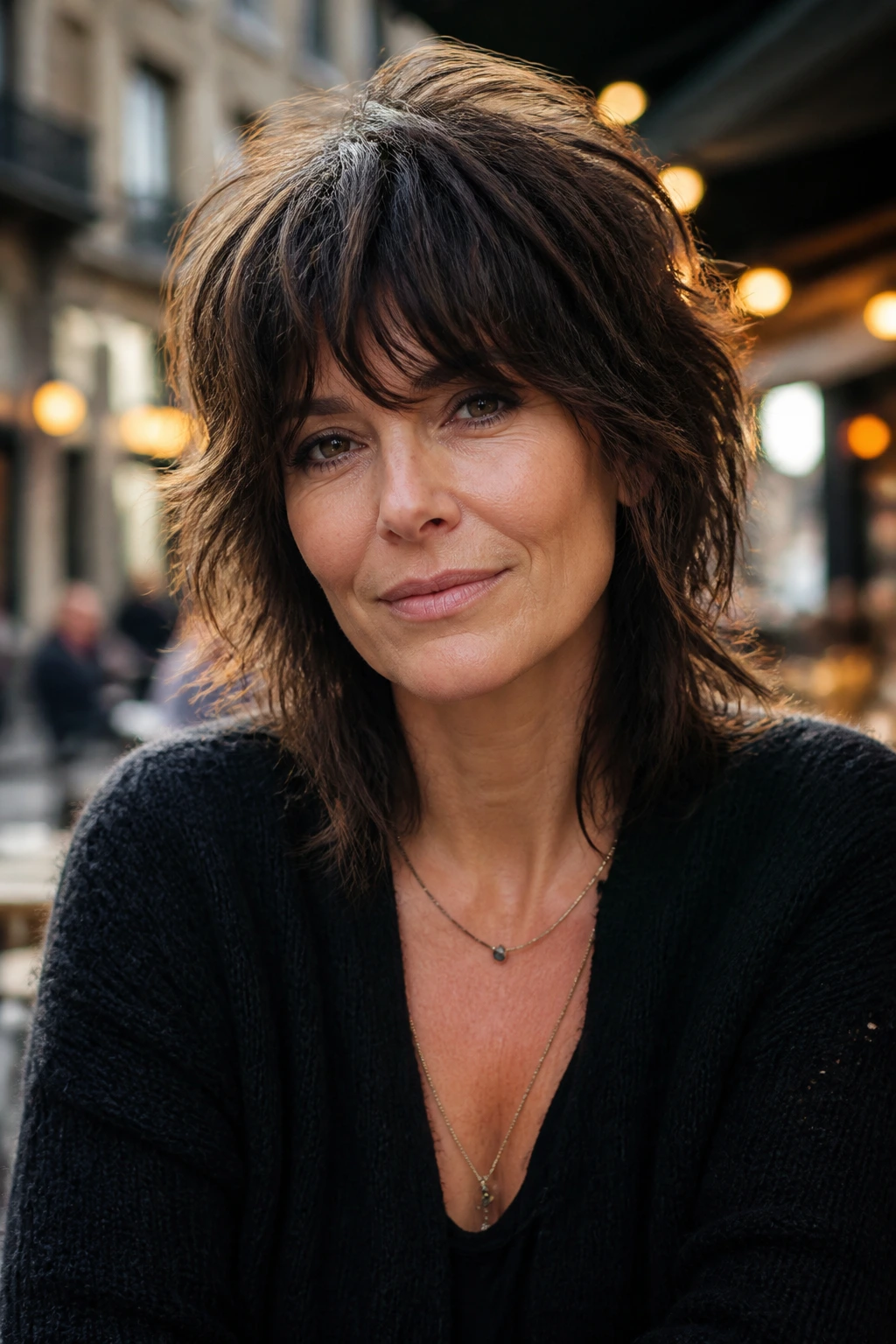
The modern wolf cut borrows the spirit of a shag and a mullet, then tones down the wild part. What you get is texture, lift, and movement without the heavy retro baggage. Done well, it looks cool rather than costume-like.
This cut is for someone who wants shape with personality. It can work on wavy hair especially well because the layers enhance the natural bend. If your hair is straight, you’ll need a little styling to bring the shape out. If it’s curly, the layering has to respect the curl pattern or the result can get too puffy.
How It Differs From a Classic Shag
- More length in the back
- More edge around the crown
- Less roundness through the sides
- Better when you want a messy, piecey finish
It is not the safest haircut on this list. It has attitude. But if you want something that feels current without being overbuilt, the modern wolf cut has a real place.
18. Shoulder-Grazing Layers
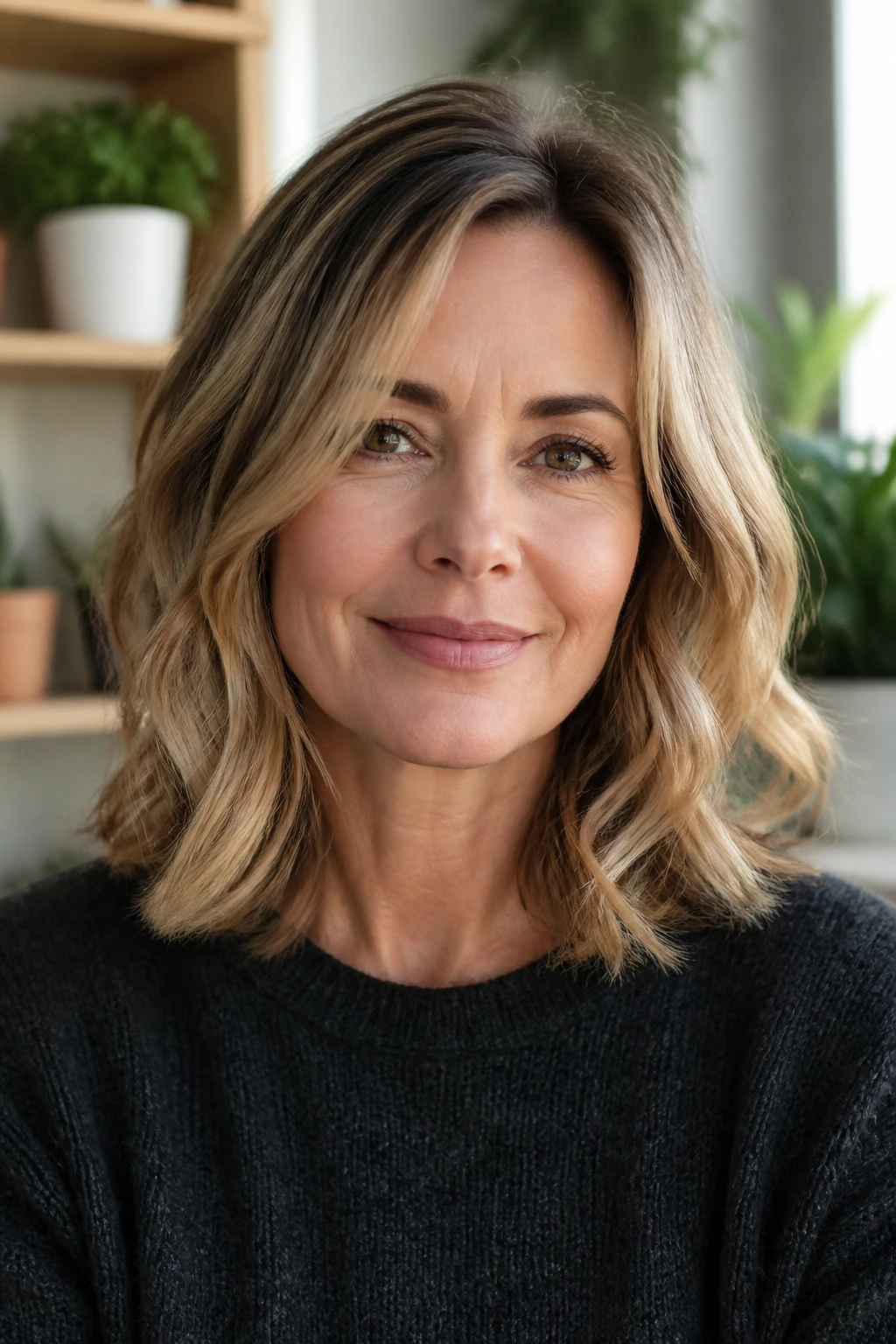
Shoulder-grazing layers are one of the easiest ways to make hair feel lighter without losing the security of length. The cut sits just above or at the shoulders, which keeps the outline neat while the layers stop the ends from looking blunt in a heavy way.
This is a sweet spot for women who want movement but not a big chop. It works on thick hair that needs some air, and it can also help finer hair look more alive when the layers are subtle. The shoulders are also a nice place for the hair to sit if you want to clip it up sometimes or wear it down without it feeling too long.
I like this shape because it behaves well as it grows. That matters. A lot of cuts look best only in a narrow window. Shoulder-grazing layers usually stay decent as they lengthen, which saves you from that awkward in-between stage.
19. Long Hair With Invisible Layers
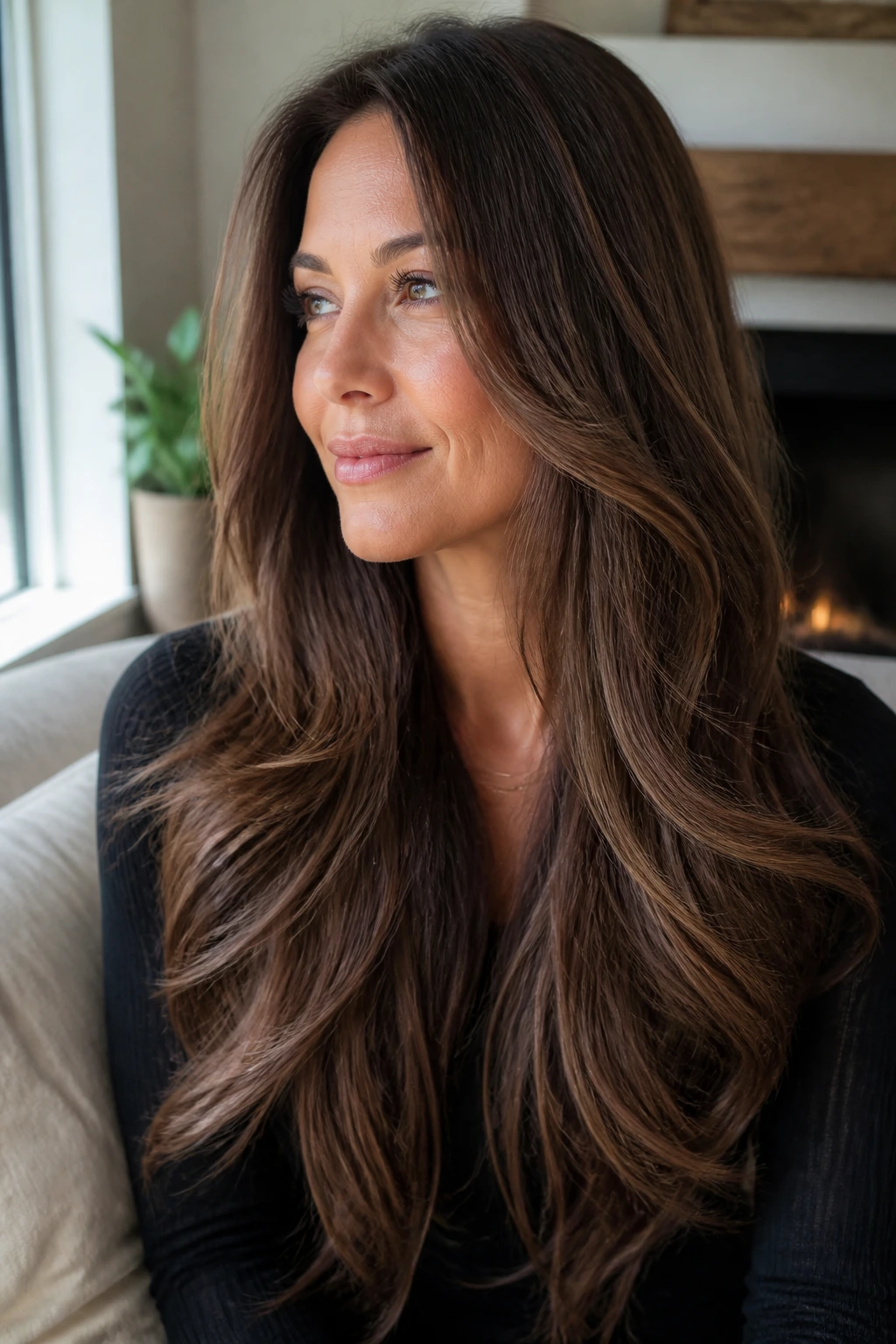
Invisible layers are for women who want to keep their length but stop their hair from hanging like one heavy sheet. The layers are there, but they hide inside the cut instead of announcing themselves.
That subtlety is useful. It keeps the ends looking full while still giving the hair some movement through the middle. If your hair is long, thick, or slightly wavy, this can be the difference between “beautiful length” and “why does this feel like a blanket?” The answer is often weight removal in the right places, not more visible layering.
This cut also suits people who wear their hair up often. The length stays intact for ponytails and buns, but the loose hair looks less dense and stiff. If you’ve been told you have to cut long hair off after 40, that advice is lazy. Long hair can absolutely work. It just needs smarter shaping.
20. Tapered Crop With Nape Detail
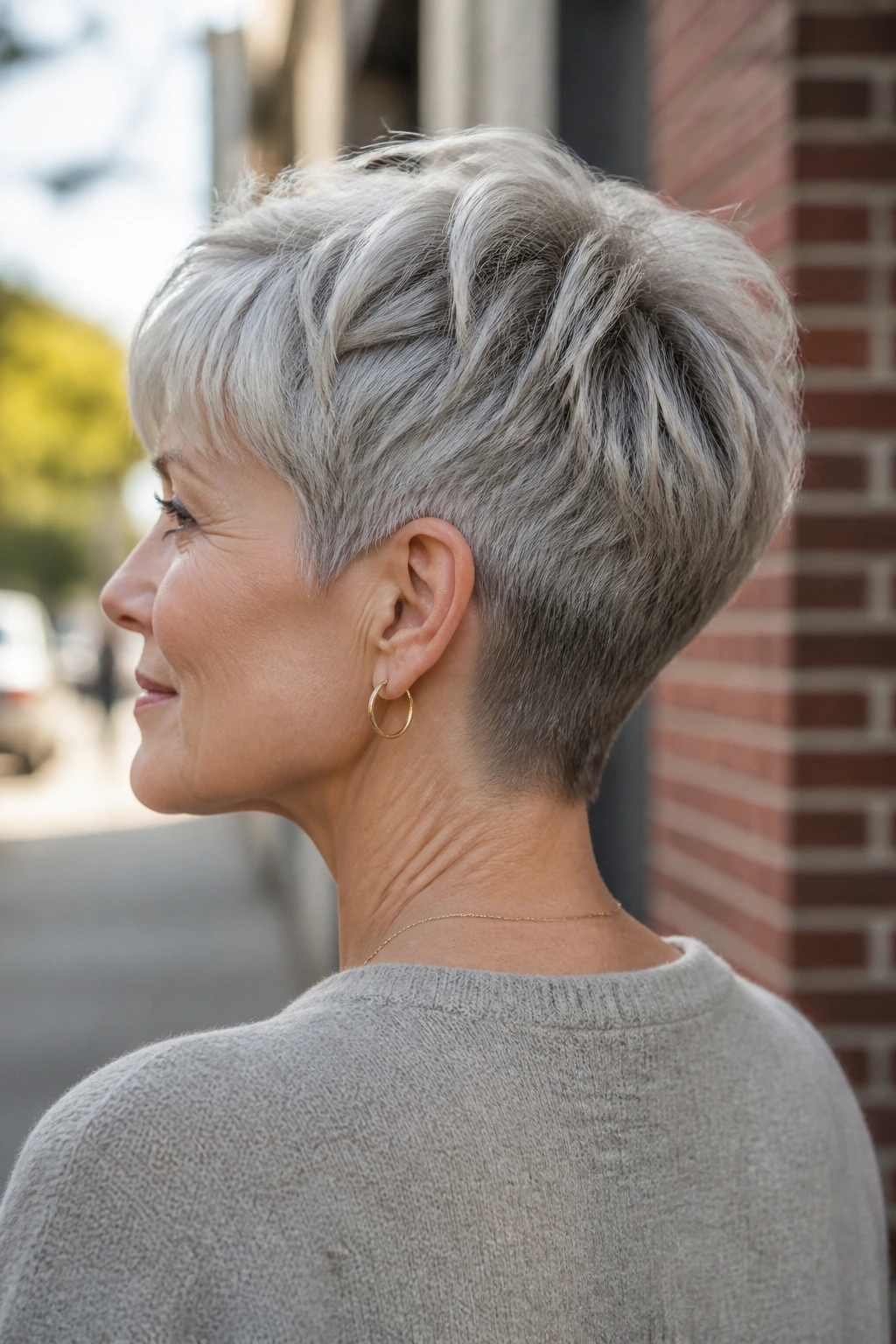
A tapered crop is short, neat, and sharper than people expect. The back narrows at the nape, the sides stay close, and the top keeps a little length for movement. The nape detail is what gives the cut its clean finish.
This is a strong choice if you want a cut that feels crisp around the neckline. It can be especially flattering for women who wear earrings, collars, or structured clothes because the haircut leaves space around the face and neck. It also keeps maintenance simple. Shorter edges dry faster and need less daily work.
What I like most is the shape. It doesn’t balloon out at the back the way some short cuts do. It stays tidy. If you have a stubborn cowlick at the nape, make sure your stylist accounts for it. That tiny patch can make or break the whole look.
21. Flip-Out Ends
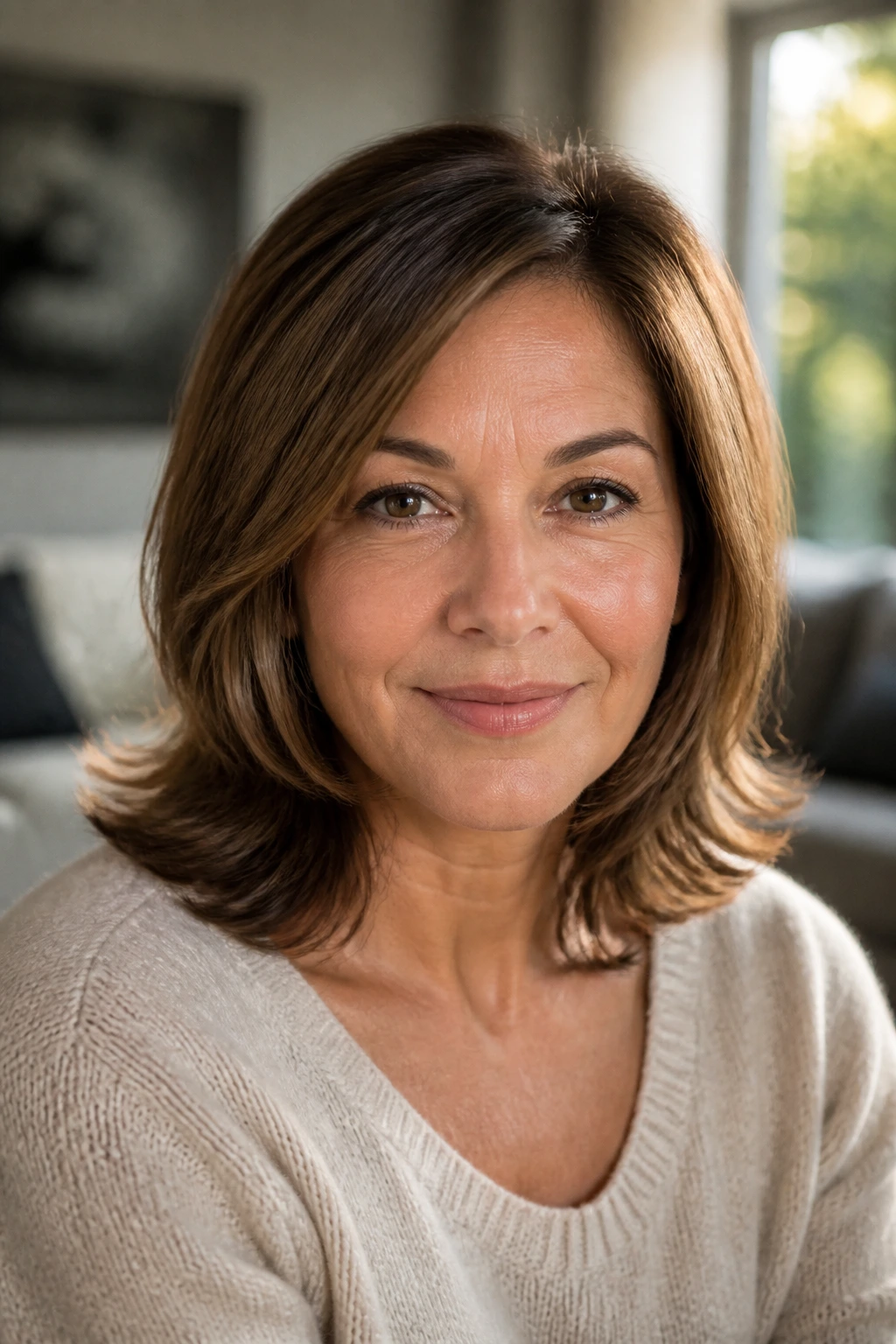
Flip-out ends sound retro, and yes, they can be. But when the cut is modern and the flip is soft, the result feels fresh rather than costume-y. A little outward bend at the ends gives the hair bounce and a bit of attitude.
This works especially well on medium-length hair that lands near the shoulders or collarbone. The key is not making the flip too stiff. You want a gentle turn, not a hard curl. A round brush, a blow-dry brush, or even a flat iron with a wrist turn can create that shape.
The style is useful if your hair tends to collapse inward and look flat. The flip opens the outline and gives the ends more life. It can also soften a cut that feels too straight or too plain. Tiny change. Big effect.
22. Soft Midi Cut With Internal Layers
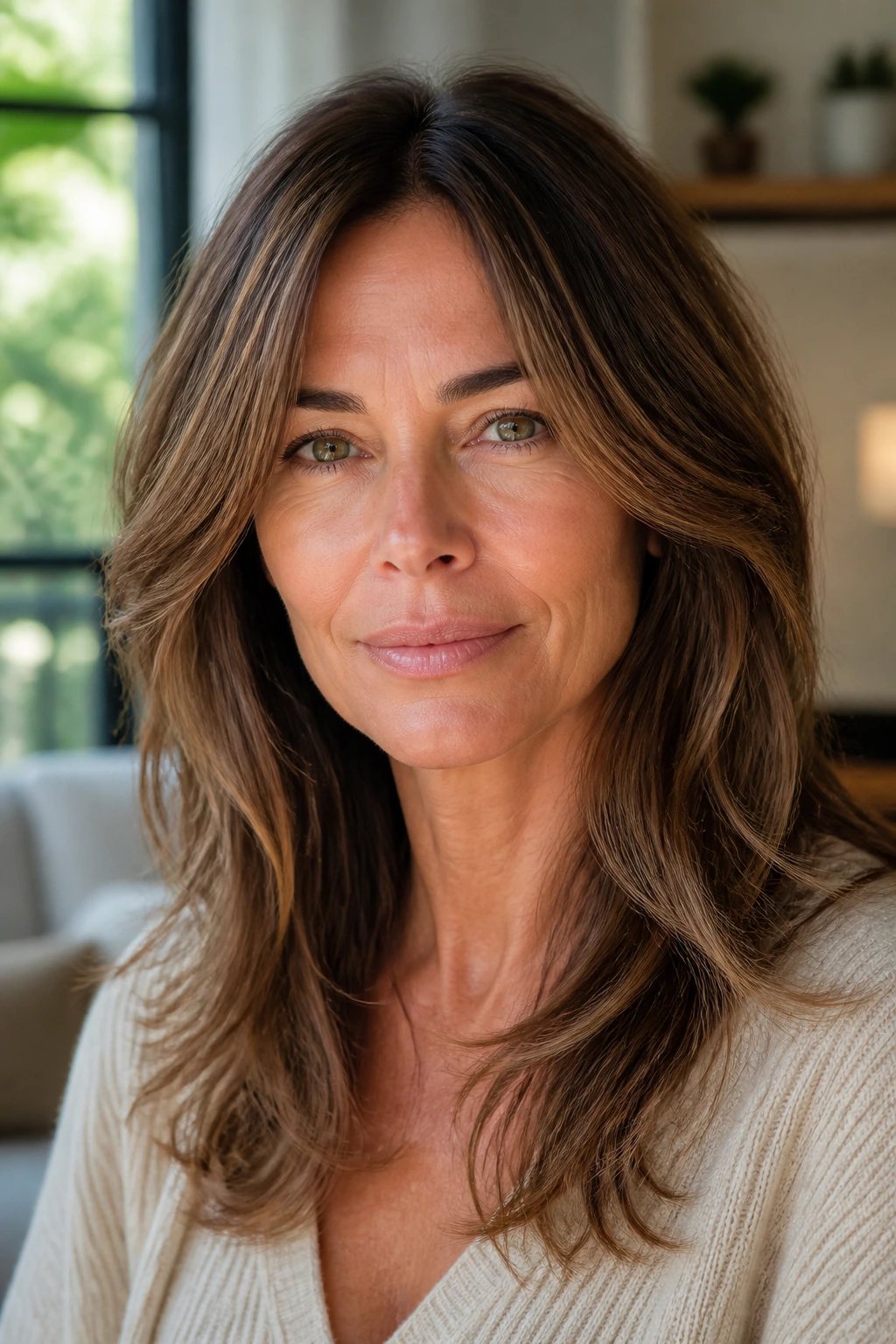
The soft midi cut is the kind of haircut that quietly earns loyal fans. It sits somewhere between the shoulders and the chest, with internal layers that keep the bulk under control. You get movement, but the surface still looks smooth and full.
This is one of the best haircuts for women over 40 who want a grown-up length that still feels easy to wear. It’s long enough for a ponytail, short enough to avoid constant tangling, and soft enough to flatter without looking too strict. The internal layers do the work without stealing the fullness from the outer shape.
If your hair has gone a little flatter over time, this cut can be a good reset. It keeps the silhouette relaxed, which matters more than people think. A haircut does not have to shout to look good. Sometimes the best ones just sit right.
Final Cut
The truth is that the best haircut is the one that fits your hair as it is, not as it was ten years ago. Texture, density, and styling time matter more than chasing some imaginary ideal shape. If your hair is fine, chase fullness. If it’s thick, chase movement. If it’s curly, chase a cut that respects the curl pattern instead of flattening it into obedience.
And don’t ignore the grow-out. A haircut that still looks decent at six weeks is usually smarter than one that only looks good the day you leave the salon. That’s the part people feel in real life, even if they don’t name it.
Pick the cut that solves the thing that annoys you most in the mirror. That’s usually the right one.
