



Round faces don’t need to be hidden. They need shape.
That’s the part a lot of people miss when they search for modern haircuts for round faces. The goal is not to make the face disappear under hair. The goal is to add length, angles, and a little visual push away from the widest part of the cheeks. Get that right, and the whole haircut starts working harder for you.
The good news: there are a lot of flattering options. Short cuts can look sharp and confident. Mid-length cuts can slim the face without looking severe. Long hair can be even better, but only if the layers are placed with some thought. A blunt line at the wrong spot can puff the face out. A side part in the right place can do the opposite in about five seconds.
Texture matters too. Fine hair, thick hair, waves, curls, and straight hair all behave differently once they hit the face. So the smartest haircuts for round faces are never just about length. They’re about where the volume sits, where the eye gets pulled, and how the ends fall around the jaw and cheekbone.
1. Chin-Length French Bob with Soft Ends
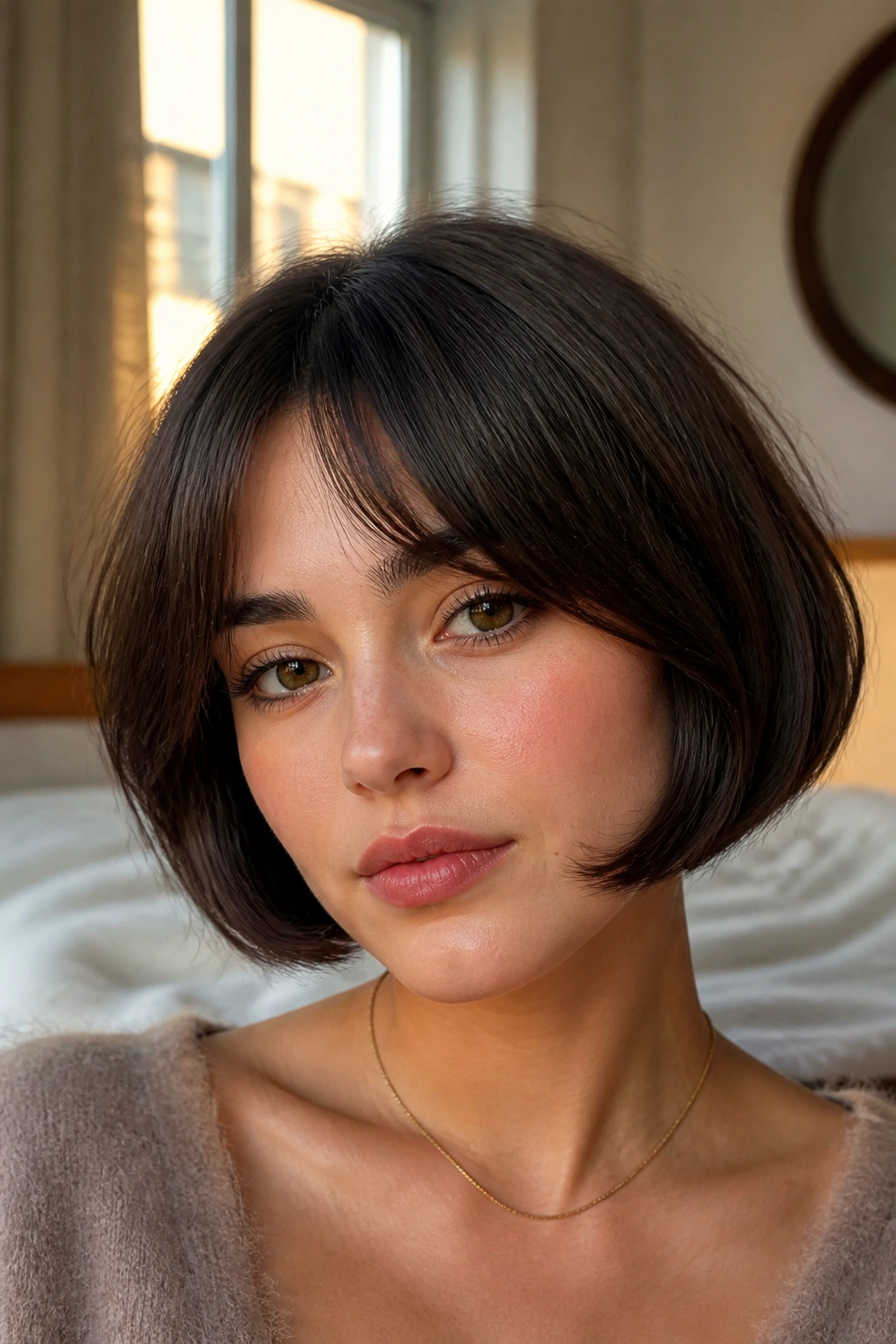
A chin-length French bob can be magic on a round face when the ends are kept soft instead of boxy. The chin line gives the face a frame right where you want one, and the softness keeps it from adding a hard horizontal line across the cheeks.
I like this cut because it has attitude without trying too hard. It sits close enough to the face to feel current, but it still leaves room for movement. The trick is to keep the perimeter just under the chin, not right at the widest point of the cheek. That tiny difference matters.
Ask for a little internal texture, not aggressive thinning. Too much thinning can make the ends puff out in odd places, especially if your hair is dense. A side part or a slightly off-center part usually makes the whole shape feel longer and less round.
2. Angled Lob with a Clean Diagonal Line
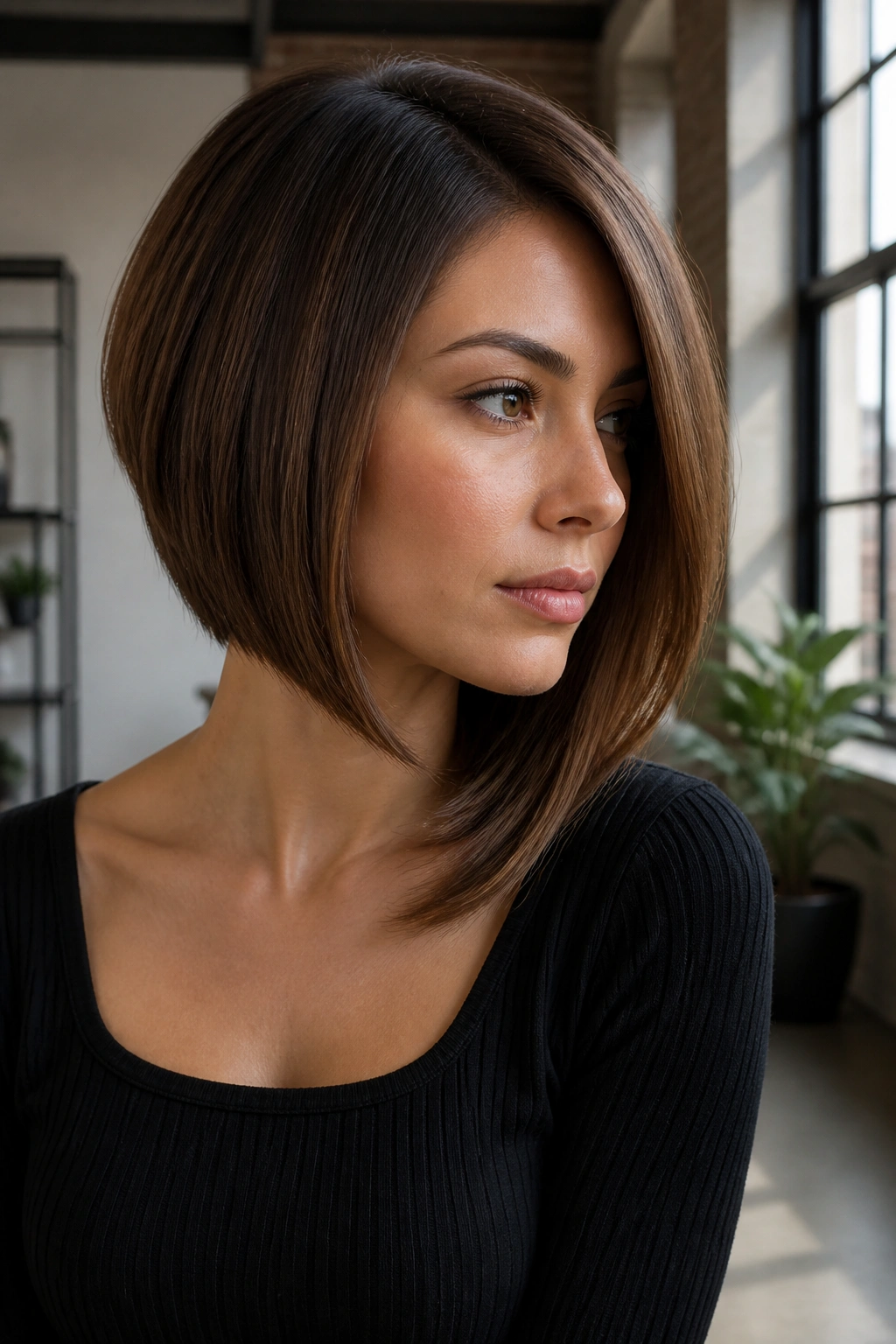
Why does an angled lob keep showing up in round-face haircut conversations? Because it does one simple thing extremely well: it pulls the eye downward. The front stays longer, the back sits a little shorter, and that diagonal line naturally narrows the face.
What Makes It Work
A good angled lob should never look like a haircut that is trying to announce itself. The angle can be subtle. In fact, subtle is often better. If the front pieces land around the collarbone and the back hugs the nape a bit closer, the whole shape feels longer without getting sharp or harsh.
How to Ask for It
- Keep the front pieces at or just below the collarbone.
- Let the back sit 1 to 2 inches shorter.
- Ask for light shaping around the jaw, not bulky layers at the cheek.
- Style with a soft bend, not a tight curl.
The version I trust most is the one that still looks good when air-dried. If you need a curling iron to force the shape every morning, the cut was probably too fussy.
3. Collarbone Lob with Face-Framing Layers
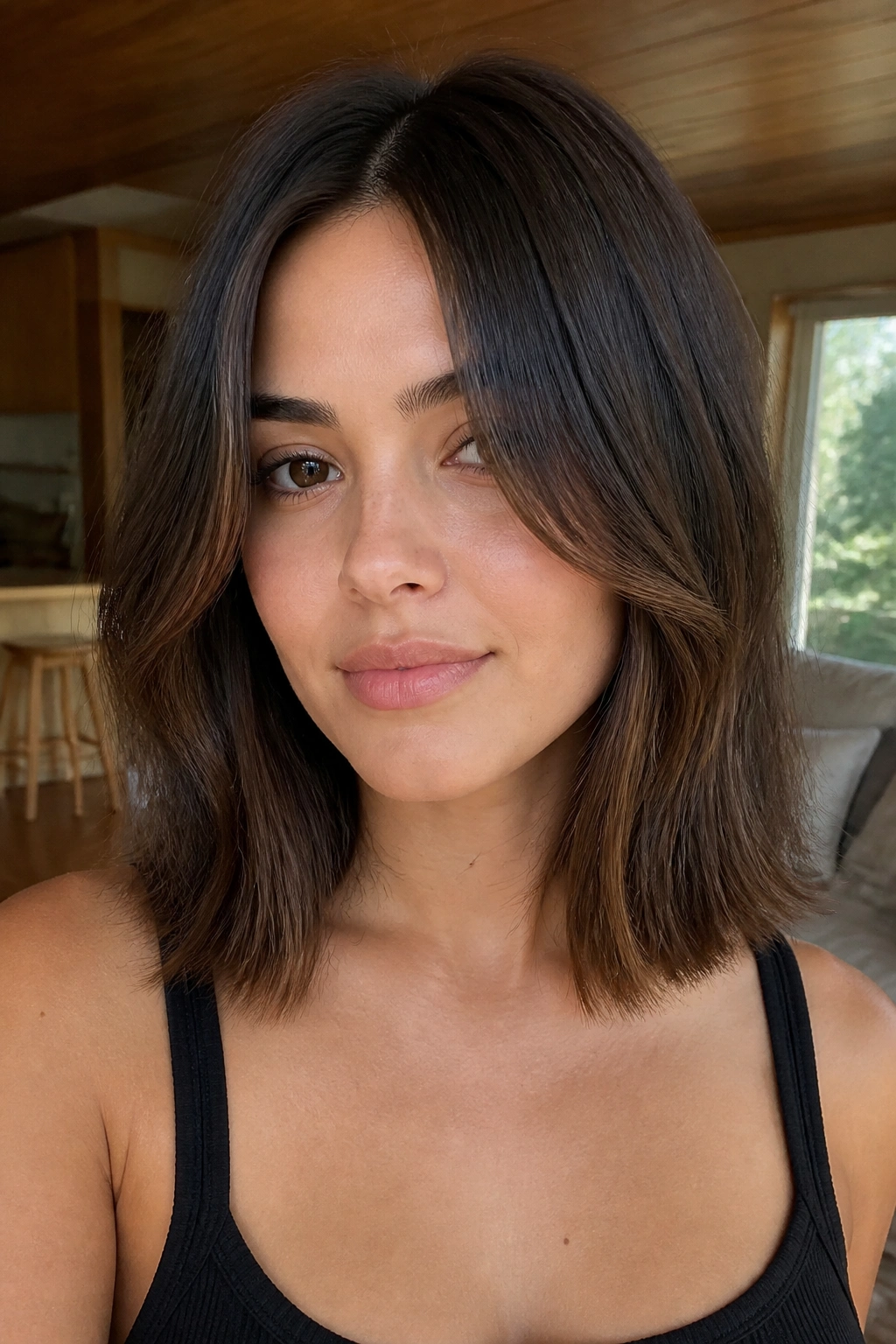
A collarbone lob is the safe bet that doesn’t look safe. It gives you length past the jaw, which is already a win for round faces, but the face-framing layers stop it from feeling flat or heavy.
The best versions start the shortest layer below the cheekbone. That keeps the eye moving vertically instead of straight across the cheeks. Too many face-framing layers begin too high and end up widening the middle of the face. That’s the mistake I see most often.
This is a good haircut if you want something that grows out gracefully. It can be worn straight, wavy, tucked behind one ear, or blown out with a round brush. It does not need a perfect styling routine to work. That’s part of why people keep coming back to it.
4. Curtain Bangs and Long Layers
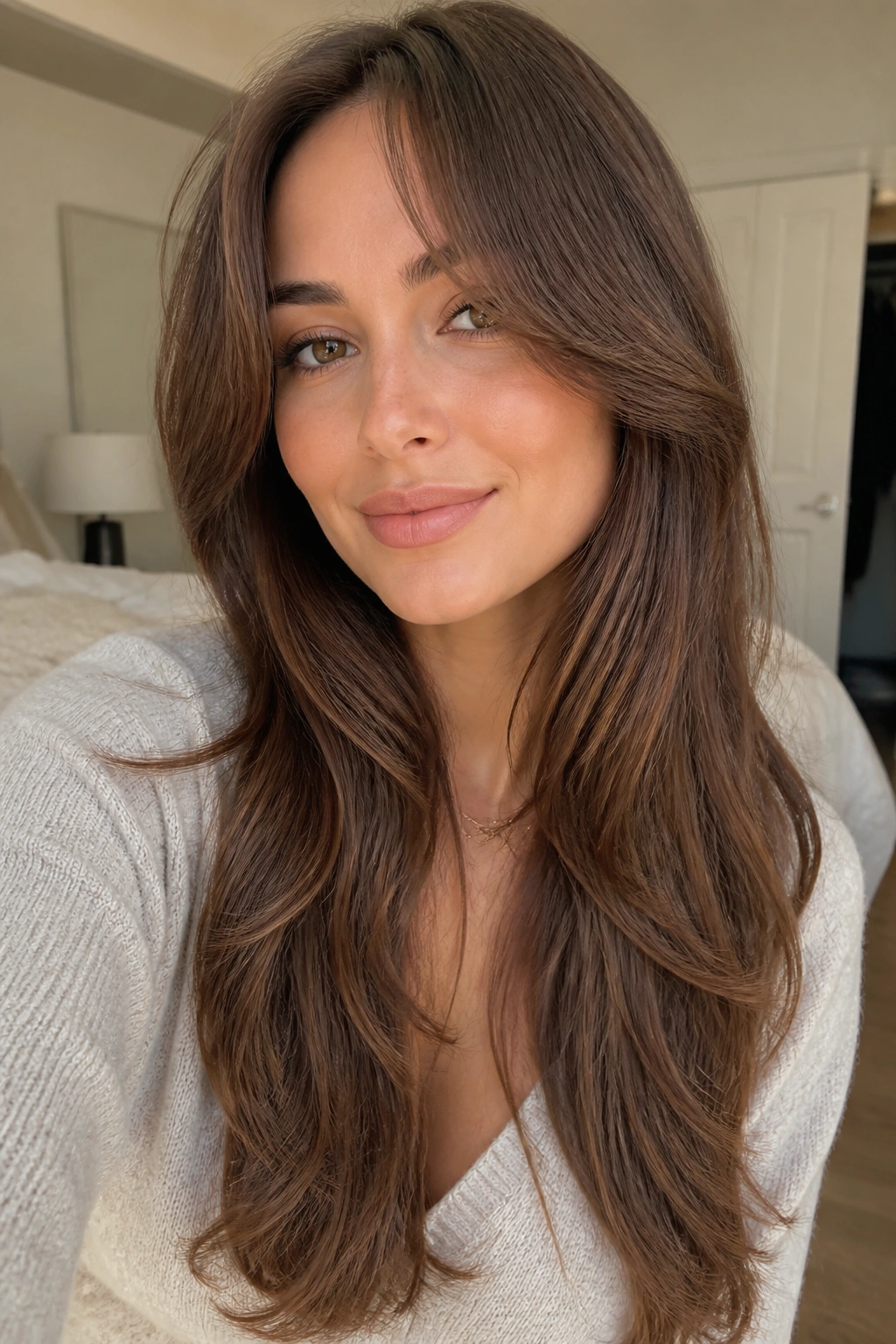
Curtain bangs can be a gift for round faces, but only when they’re cut with enough length to sweep outward. Short, heavy bangs can make the face look shorter. Soft curtain bangs do the opposite. They open the center of the face and lead the eye downward in a gentle V.
The Sweet Spot
The best curtain bangs usually start around the brow and taper toward the cheekbone or lip line. That taper matters. It keeps the bangs from forming one blunt curtain across the face, which would add width where you least want it.
Who Should Try Them
- People with medium to thick hair
- Anyone who likes a blowout look
- Wavy hair that falls nicely when air-dried
- Long layers that need a little structure in front
This cut is flattering, but it does ask for some styling. A quick blow-dry with a small round brush or a velcro roller at the front makes the shape much better. If you skip that step, the bangs can split in odd places and lose the softness that makes them work.
5. Side-Parted Pixie
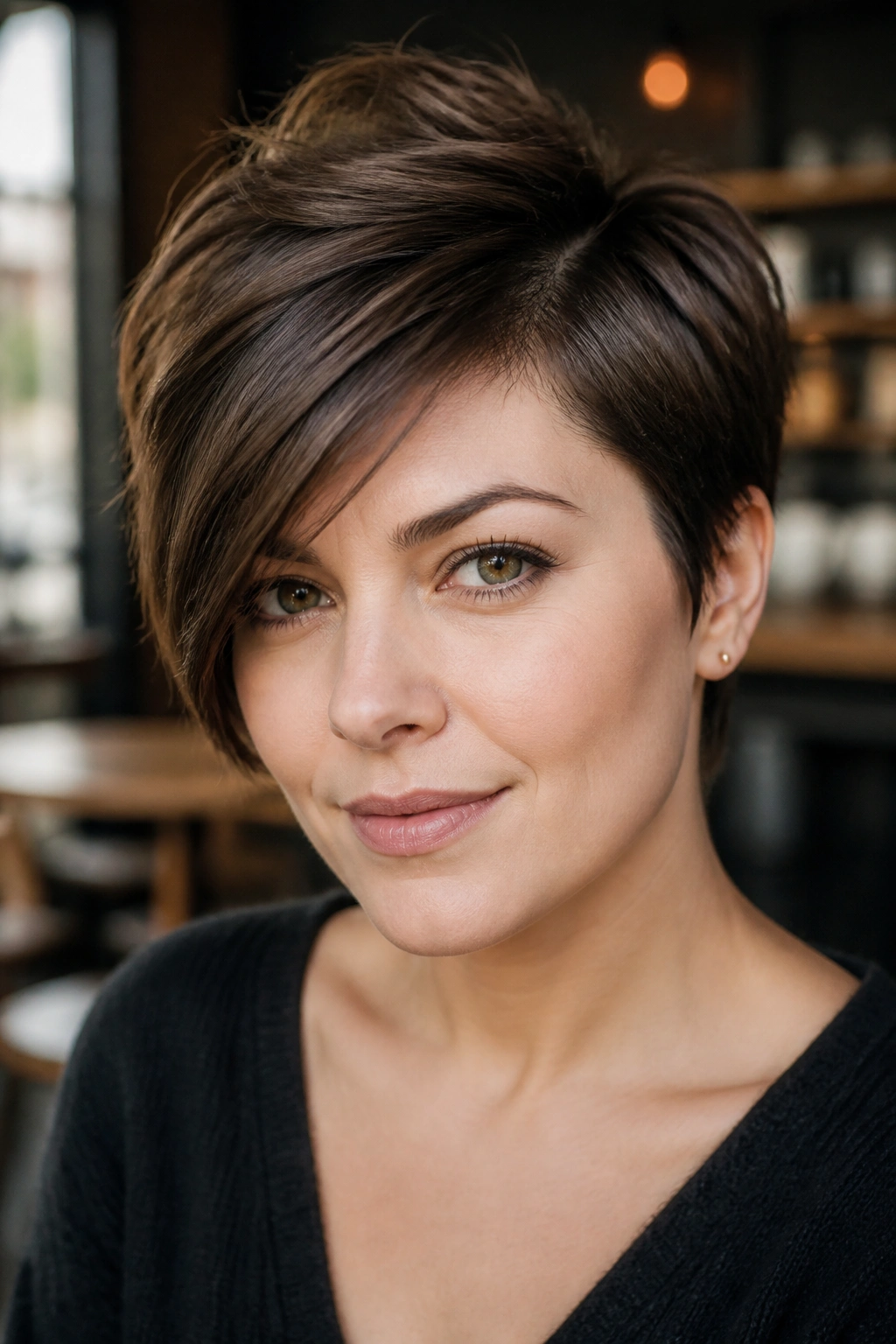
A side-parted pixie is one of those cuts that looks far more deliberate than people expect. The side sweep creates a diagonal line across the face, and diagonals are your friend on a round shape. They break up all the softness and give the eye somewhere to travel.
The crown should have a little height. Not helmet height. Just enough lift to lengthen the face without making the top look puffy. Keep the sides neat and the fringe longer on one side, and the whole haircut starts to feel slimmer.
This one is for someone who wants a short cut with personality. It does need maintenance, usually every 4 to 6 weeks if you want the shape to stay crisp. If you’re fine with a softer grow-out, you can stretch that longer. But the silhouette changes fast, and that is the deal you make with a pixie.
6. Bixie Cut with Piecey Texture
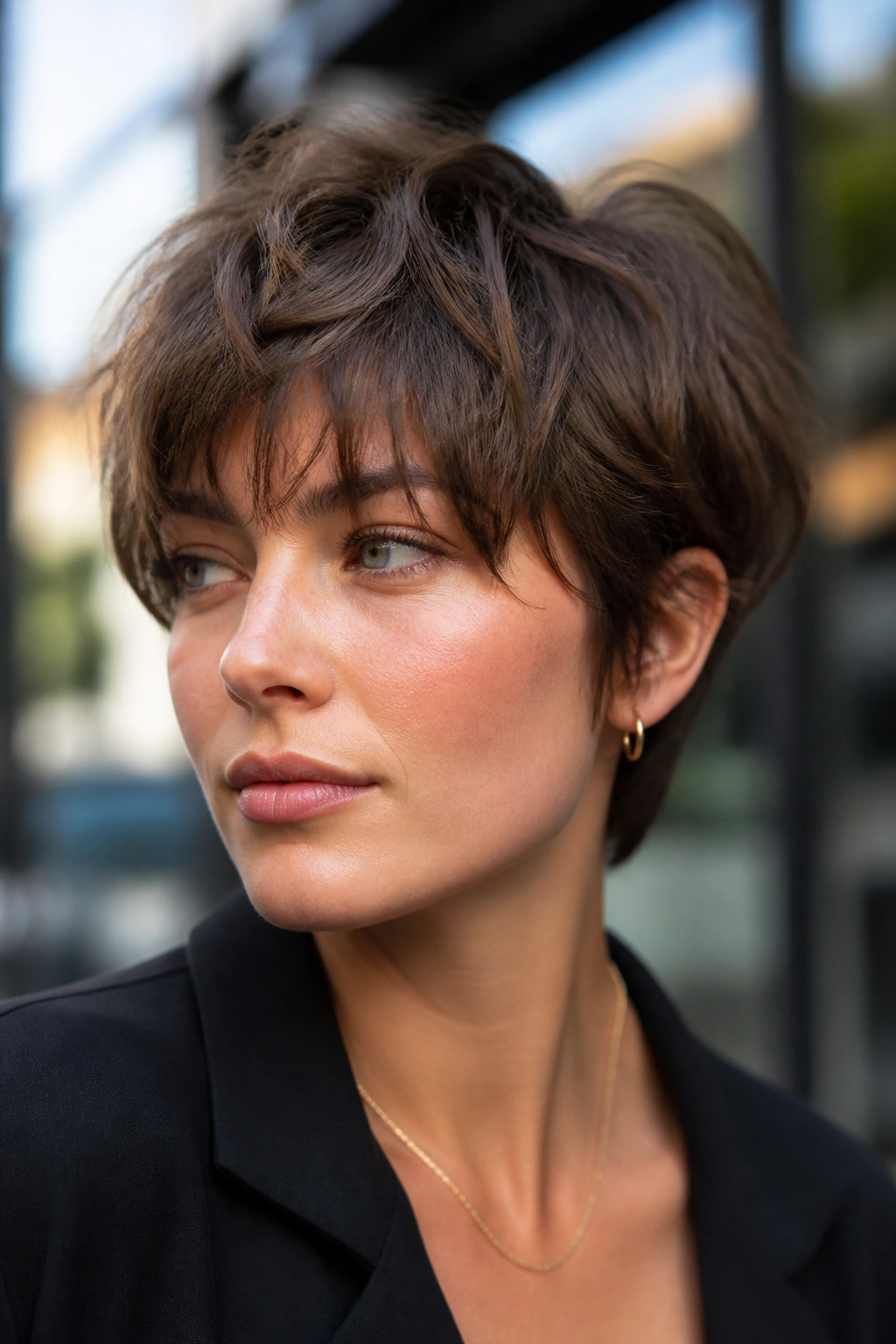
The bixie is the smartest short cut for people who want something between a bob and a pixie. It keeps a little more length around the face than a classic pixie, which helps round faces feel less exposed, and it stays lighter than a full bob.
The piecey texture is the whole point. A bixie should move. It should not sit there like a solid block. The nape can be short, the top can have lift, and the front can skim the cheekbones in a soft, broken way. That irregularity is what keeps the shape from feeling circular.
I’d call this a strong option for fine hair because it builds the impression of fullness without needing a lot of bulk. Thicker hair can wear it too, but the shape needs careful debulking so the sides don’t balloon out. A little matte paste goes a long way here.
7. Modern Shag with Cheekbone-Grazing Layers
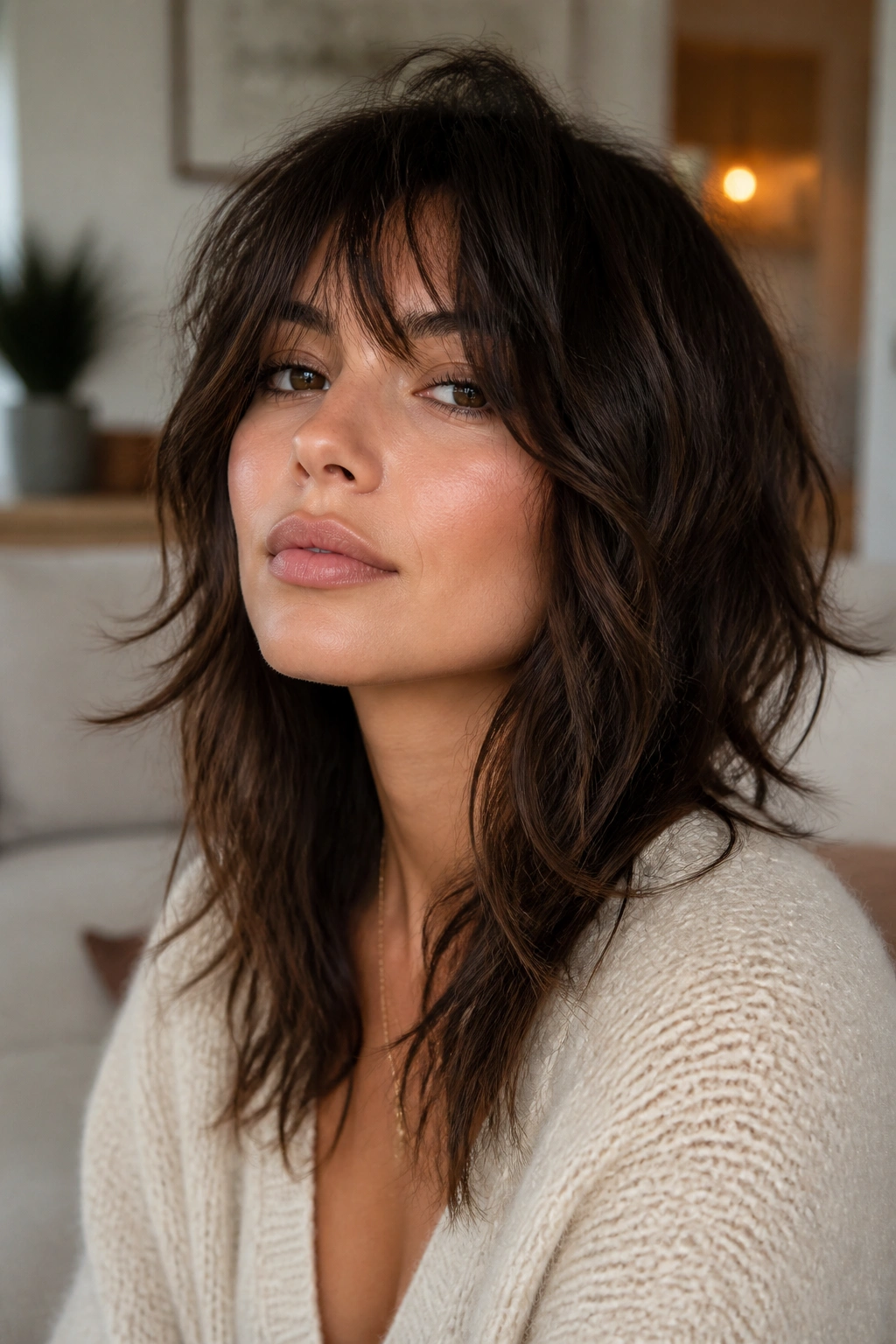
Can a shag flatter a round face? Absolutely — if it’s cut with discipline. A modern shag is not a pile of random layers. The best ones keep the shortest pieces around the cheekbone and below, then let the rest fall in a loose, broken line.
Why It Helps
The shag adds vertical movement. That matters. Round faces already have softness, so a flat haircut can make everything feel wider. A shag gives the hair a lived-in shape that pulls the eye up and down instead of side to side.
What to Watch For
- Too much width at the sides
- Short layers that end right at the cheek
- Over-texturizing, which can make the ends look thin
- Flat roots, which kill the whole shape
This is one of those cuts that can look effortless in the best sense of the word, but only if the layers are placed well. A sloppy shag is just frizz with better branding. A good shag has movement with purpose.
8. Soft Wolf Cut

The wolf cut gets a lot of attention, and fair enough. It has edge. It has lift. It has that slightly undone shape people either love immediately or need a minute to warm up to. For a round face, though, the softer version is the one that makes sense.
Here’s the trick: keep volume near the crown and back off on width around the cheeks. The best wolf cuts leave enough length in front to avoid turning the face into a circle with layers. The silhouette should still feel elongated, not mushroom-shaped.
This haircut shines on wavy hair, because the natural bend helps the layers separate. Straight hair can wear it too, but it often needs a bit of styling to keep the shape from falling flat. If you like texture sprays, this is your playground. If you hate styling, be careful. The wolf cut can be a little needy.
9. Long Layers with a Center Part
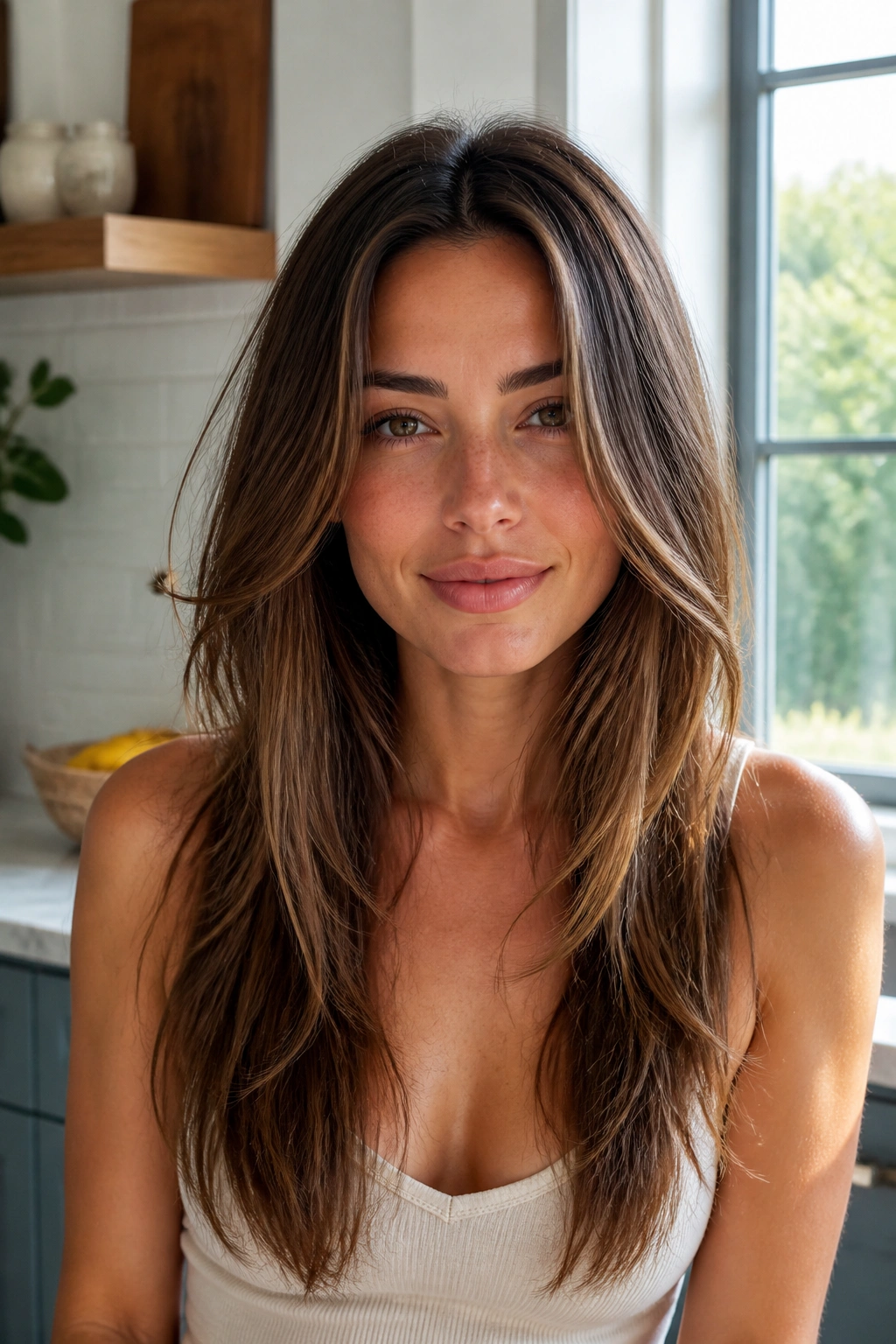
A center part on a round face is not the enemy. A badly cut center part is. Big difference. When the hair is long enough and the layers are placed below the cheekbone, a center part can create a clean vertical line right down the middle of the face.
The style works best when the front pieces are long enough to slide past the cheeks and toward the jaw. That keeps the widest part of the face from being boxed in. If the shortest face-framing layer lands right at the cheek, the effect flips and the face can look wider. So placement matters a lot.
I prefer this cut on straight or softly wavy hair because the lines stay clear. It also plays nicely with sleek styling — a little shine serum, a middle part, and hair that falls in two smooth panels can make the face look longer without feeling severe.
10. Blunt Mid-Length Cut
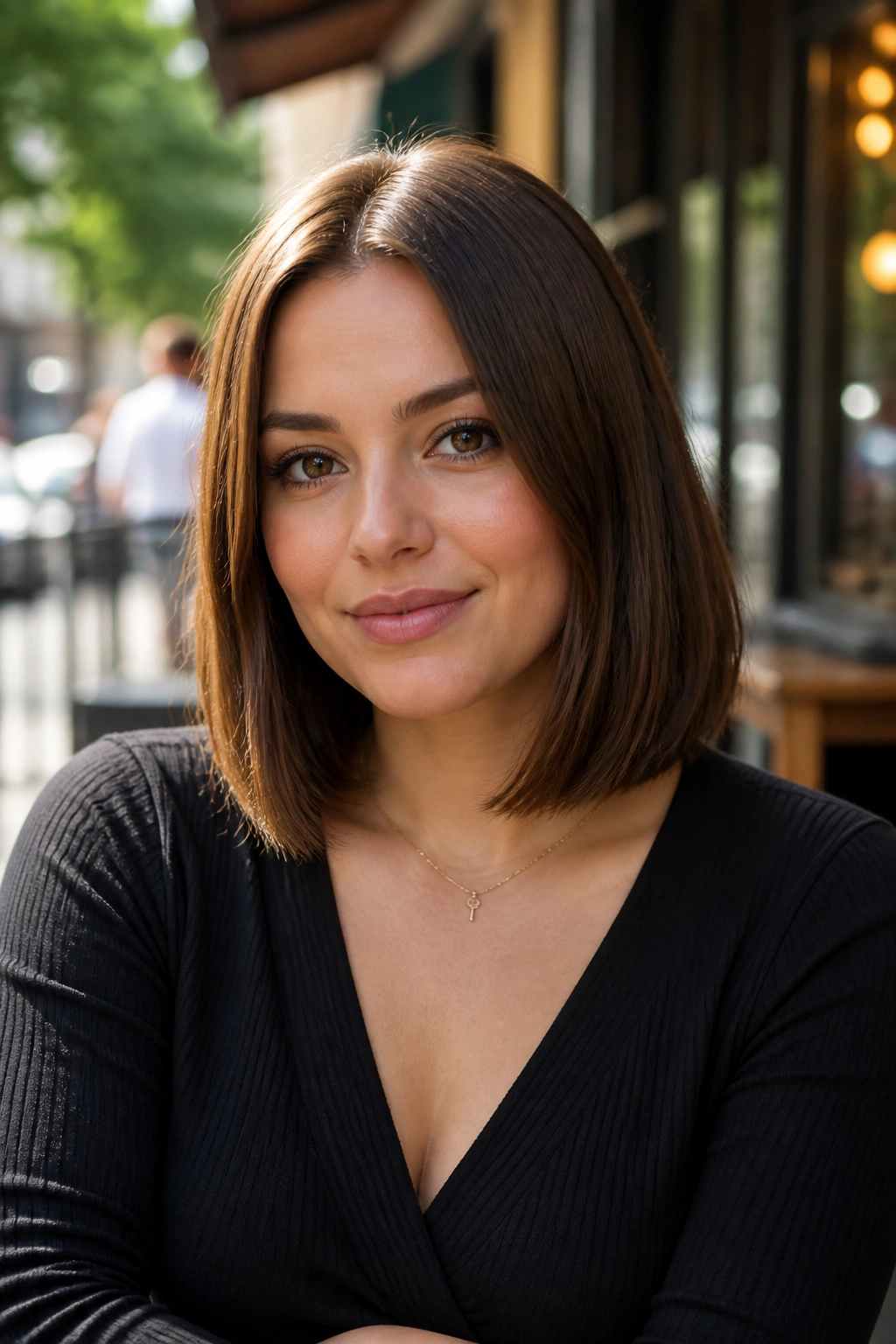
A blunt mid-length cut is crisp, and that crispness can be flattering on a round face. The straight edge gives the hair a strong outline, which helps counterbalance softer facial curves. It is clean, modern, and a little bit stern in a good way.
Styling Note
- Keep the ends blunt, but not thick and heavy.
- Ask for slight internal shaping if your hair is dense.
- Wear it with a slight bend at the ends, not a flipped-under helmet shape.
- Tuck one side behind the ear when you want a longer-looking profile.
I have a soft spot for this cut because it does not beg for tricks. It just sits there with confidence. Still, it works best when it lands below the jaw, often around the collarbone or just above it. A blunt line that stops exactly at the widest point of the face can make things look broader than they are.
11. Graduated Bob with a Tucked Nape
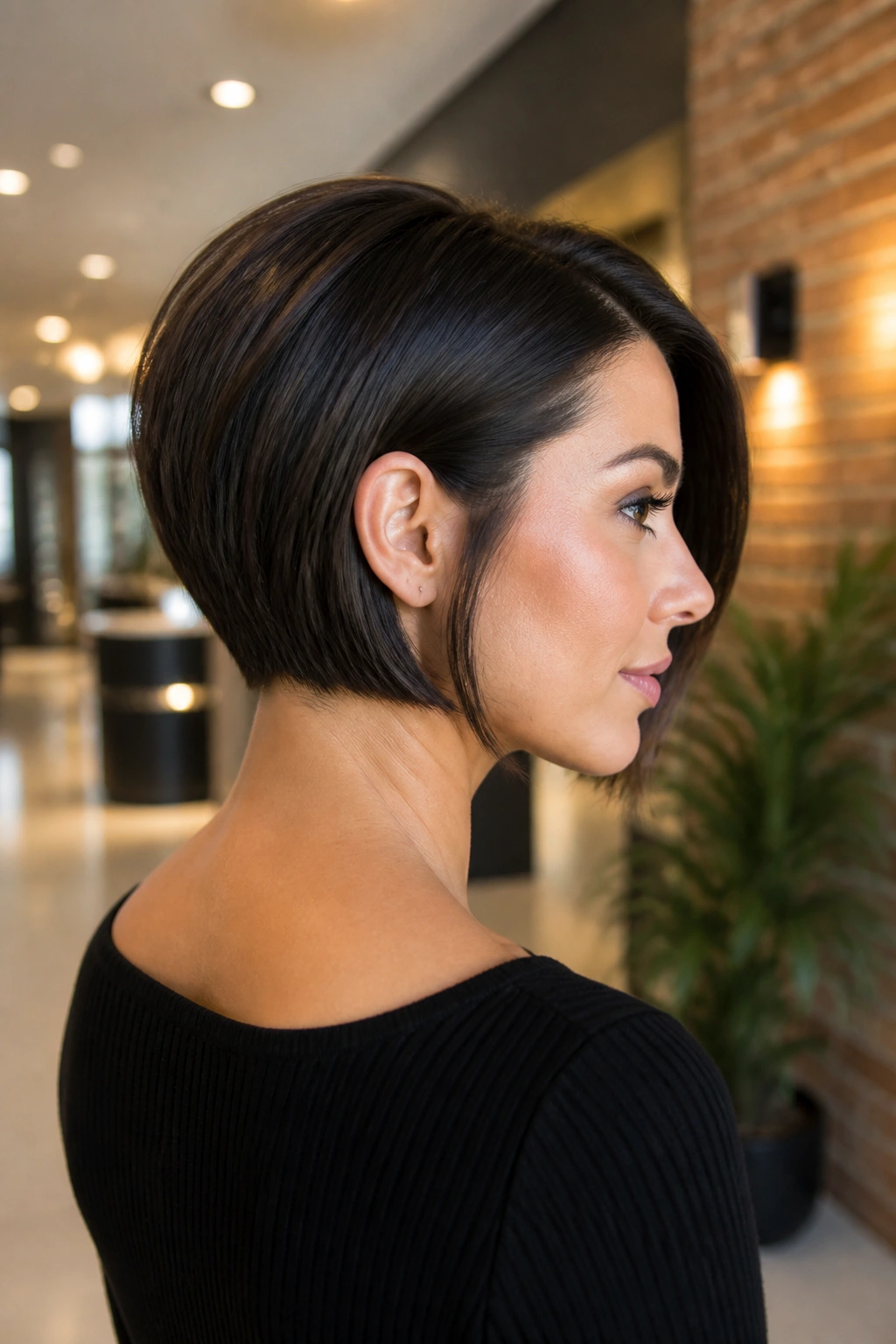
A graduated bob creates lift in the back and keeps the front a bit longer, which gives round faces a useful illusion: more length, less width. The stacked shape at the nape adds structure without making the sides bulky.
This is a smart cut if your hair is fine and tends to lie flat. The graduation gives it some body where it matters. If your hair is thick, the bob can still work, but the interior needs to be handled carefully so the sides don’t turn into a block.
The front should stay long enough to graze below the jaw. That keeps the haircut from cutting the face in half. A little tuck behind the ears can also sharpen the outline, especially if you want the style to look polished without being overly styled.
12. Textured Crop with Tapered Sides
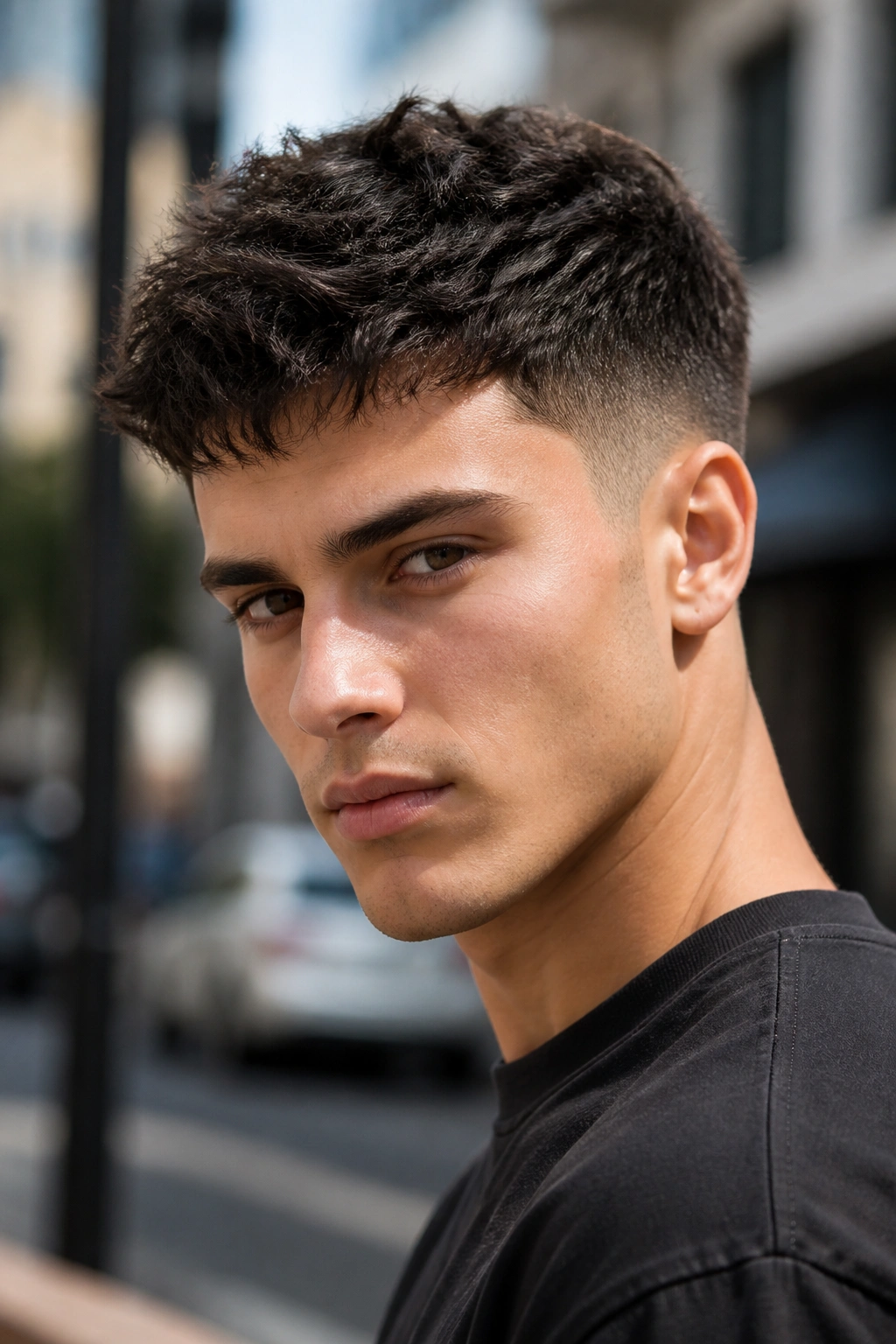
Short hair on a round face does not have to be soft and wispy. A textured crop with tapered sides can actually be one of the strongest choices, because it narrows the sides and puts the focus higher on the head.
The crown is the whole story here. You want height and piecey texture on top, not flatness. The top should feel lifted, separated, and a little messy in a controlled way. That vertical movement lengthens the face far more than heavy volume at the temples ever will.
This cut looks best with a matte paste or clay worked through dry hair. Small amount. Really small. Too much product flattens the top and makes the hair look greasy instead of sharp. If your goal is low-maintenance but not boring, this is one of the better bets.
13. Butterfly Cut
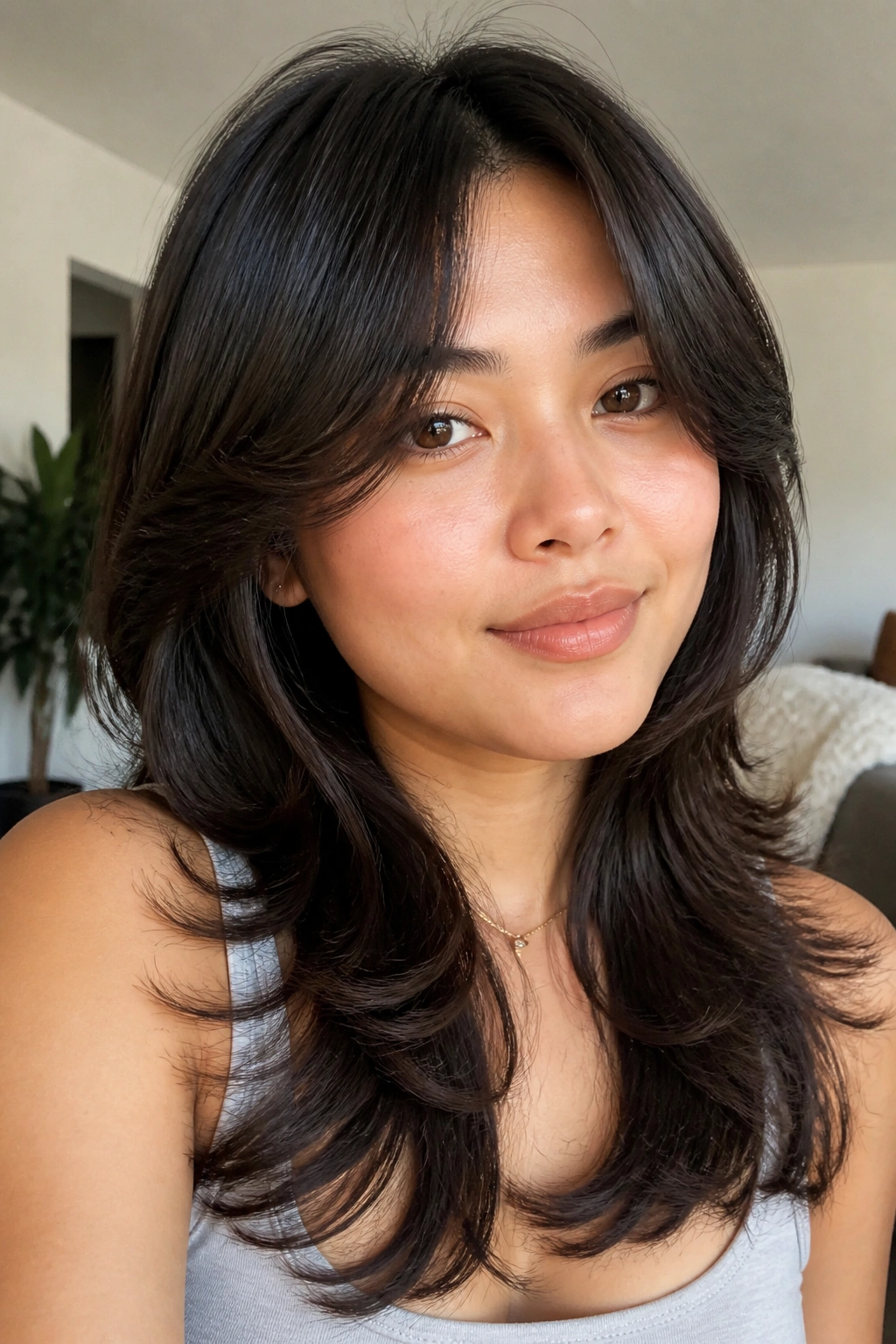
What makes the butterfly cut so useful for round faces is the contrast. The short layers around the front create lift, while the longer underneath section keeps the length intact. You get movement near the face without losing the slimming effect of longer hair.
The Shape That Matters
The shortest visible layers should not stop at the cheek. That’s the line I keep coming back to because it’s the line that matters. If the face-framing pieces begin lower, the haircut opens up the face instead of widening it.
Best Fit
- Long hair that needs more shape
- Thick hair that feels heavy at the bottom
- Blowout styling
- People who want volume without a full shag
This cut does ask for a bit of styling, usually with a blow-dryer brush or a round brush and clips. But when it is done well, the effect is clean and airy. The haircut moves when you move, which sounds small until you see how much better it frames a round face in motion.
14. Shaggy Midi with Bottleneck Bangs

Bottleneck bangs are one of the better fringe choices for round faces because they narrow at the top and open lower down. That shape creates a little visual taper in the middle of the forehead, which keeps the face from feeling wide across the top.
The shaggy midi underneath gives the bangs a place to blend. Shoulder to collarbone length works well here, because the layers can fall with enough freedom to keep the whole cut light. If the midi sits too high and the bangs are too full, the shape can turn puffy. That’s the version to avoid.
I like this cut for people who want a little drama without going full shag. It has texture, but it still feels wearable. It’s also forgiving on grow-out, which matters more than people admit. A fringe that falls out of shape after two weeks is not cute. It is a chore.
15. Asymmetrical Bob
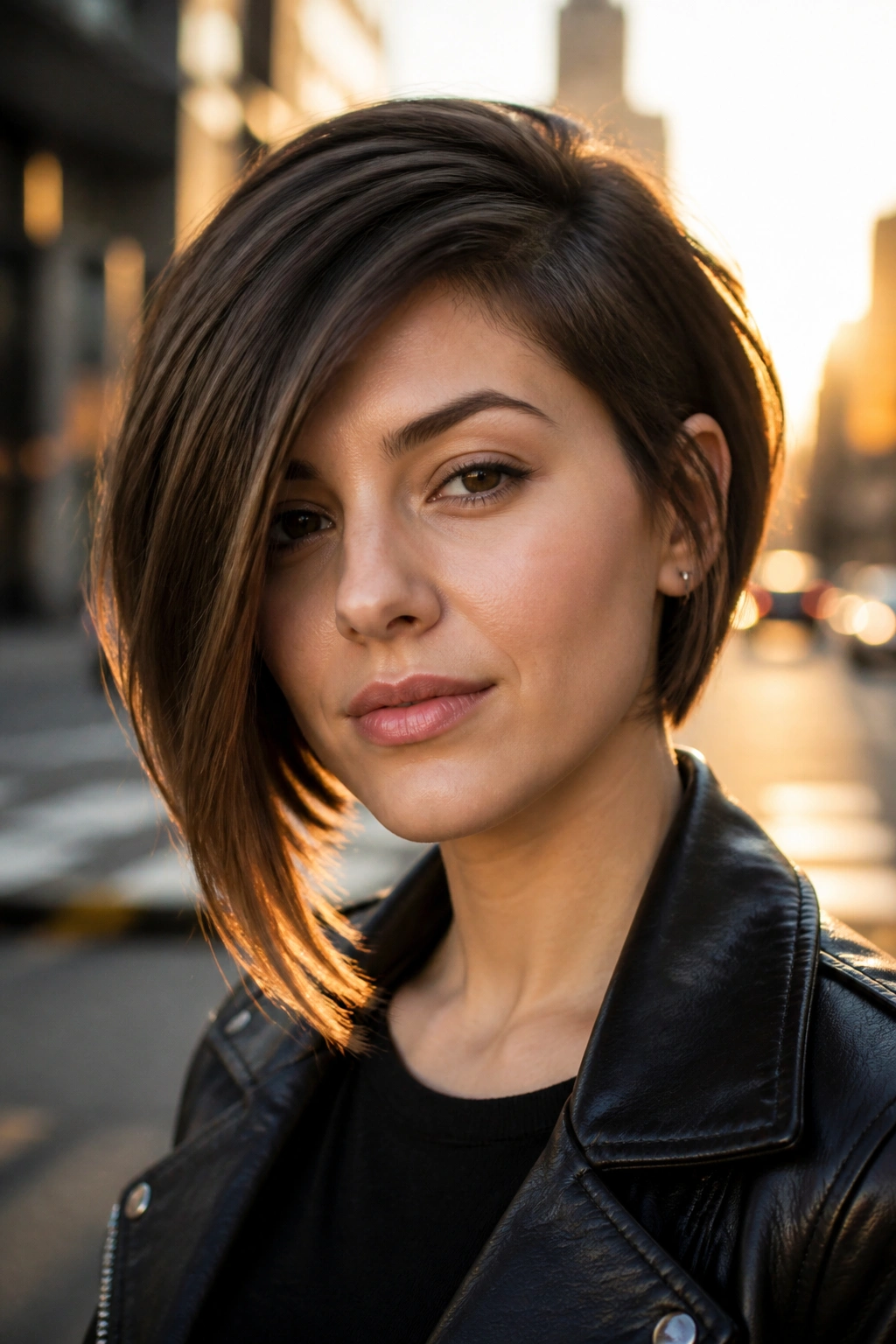
A bob that is slightly longer on one side can do a lot for a round face, mostly because asymmetry breaks the circle. The eye has to move, and that movement creates the illusion of length.
Why It Looks Different
Unlike a perfectly even bob, an asymmetrical cut keeps the face from being framed in a neat box. That loose diagonal line can be especially good if your cheeks are full and your jawline is soft. It adds structure without making the haircut look stiff.
Who It Suits
- Straight hair that shows clean lines
- Wavy hair with enough control
- Anyone who likes a sharper silhouette
- People who want a bob that feels a little less expected
This is not the haircut I’d suggest if you want zero maintenance. One side will always ask for a little more attention. But if you enjoy a cut with attitude, this one earns it. The difference can be subtle — sometimes only an inch or two — and that subtlety is what makes it feel modern rather than theatrical.
16. Soft Mullet
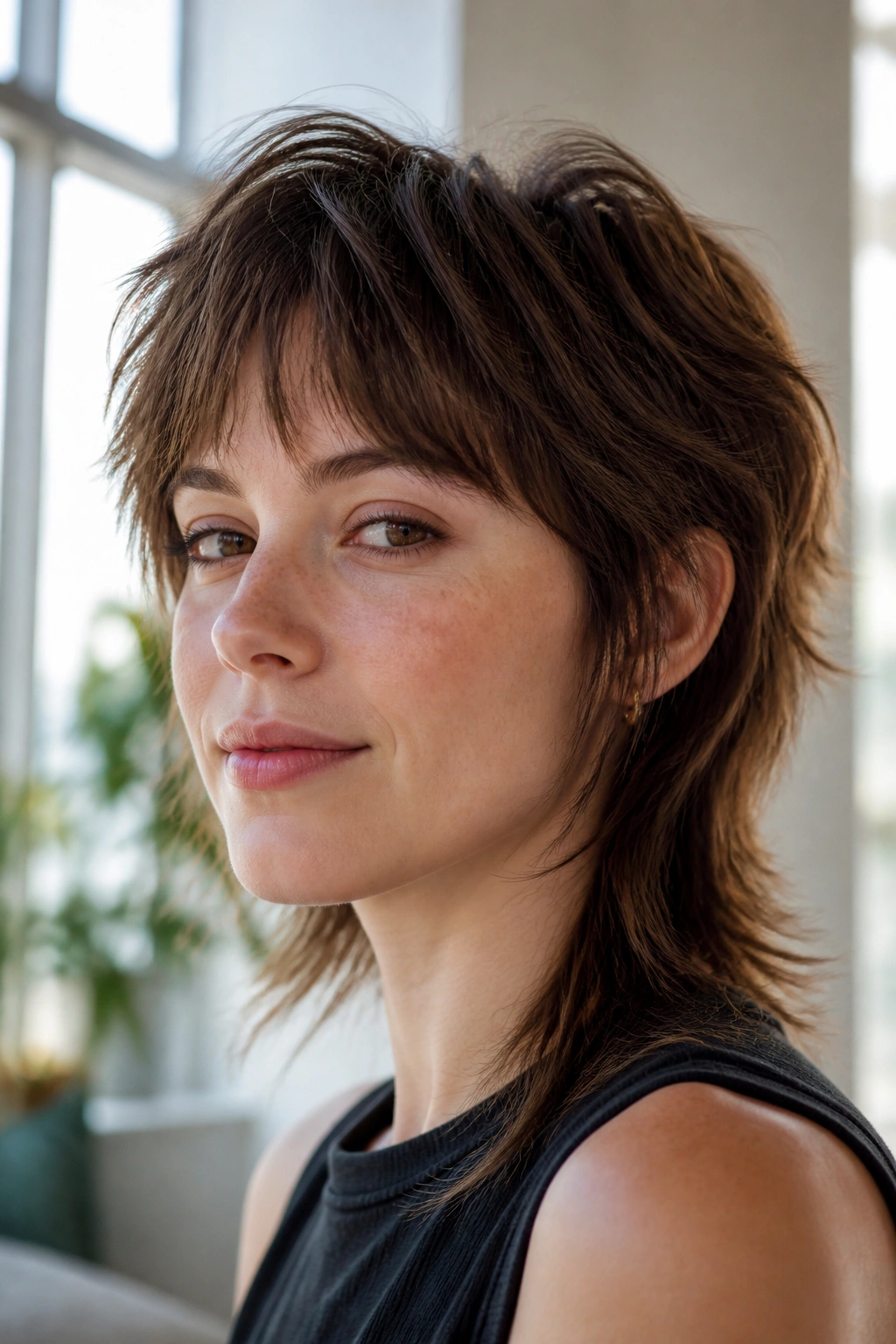
A soft mullet sounds riskier than it looks. The modern version keeps the edges blended, the sides lighter, and the back longer without turning into a retro costume piece. On a round face, that controlled imbalance can be a real advantage.
The reason it works is simple: shorter layers at the crown create lift, while the longer back stretches the silhouette. If the front is handled well, the cheeks stay open instead of crowded. That’s the line to protect. Keep the softness around the temples, and do not let the sides balloon.
Wavy and textured hair wear this especially well. Straight hair can look good too, but the layers need careful blending or the shape can go too flat on top. If you like a haircut that has some personality and a little edge, this is a strong one. If you want something neat and polite, skip it.
17. Shoulder-Grazing Layers
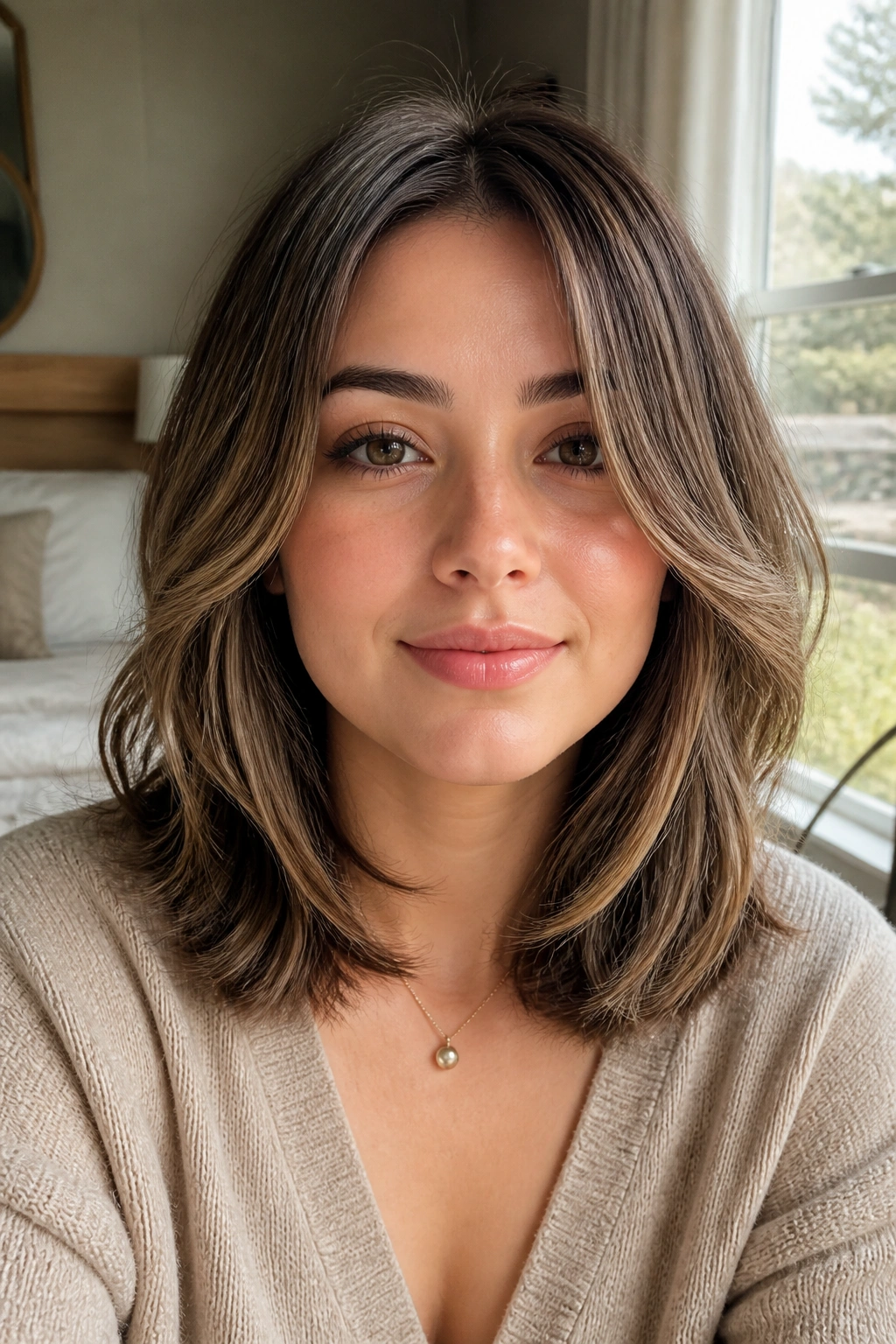
Sometimes the best haircut for a round face is not a dramatic cut at all. Shoulder-grazing layers can do the job quietly. The length keeps the face from feeling boxed in, while the layers keep the hair from dropping like a curtain.
The trick is where the layers start. I prefer them below the cheekbone and above the shoulder, so they build shape without widening the middle of the face. When the front pieces are too short, the haircut can feel busy. When they are too long and flat, it can feel heavy. This length sits in the middle and usually behaves well.
If you want an easy daily routine, this is one of the least fussy options on the list. Air-dry it with a leave-in cream, or give it a rough blow-dry with a big round brush. Either way, it tends to cooperate. That counts for a lot.
18. Feathered Blowout Layers
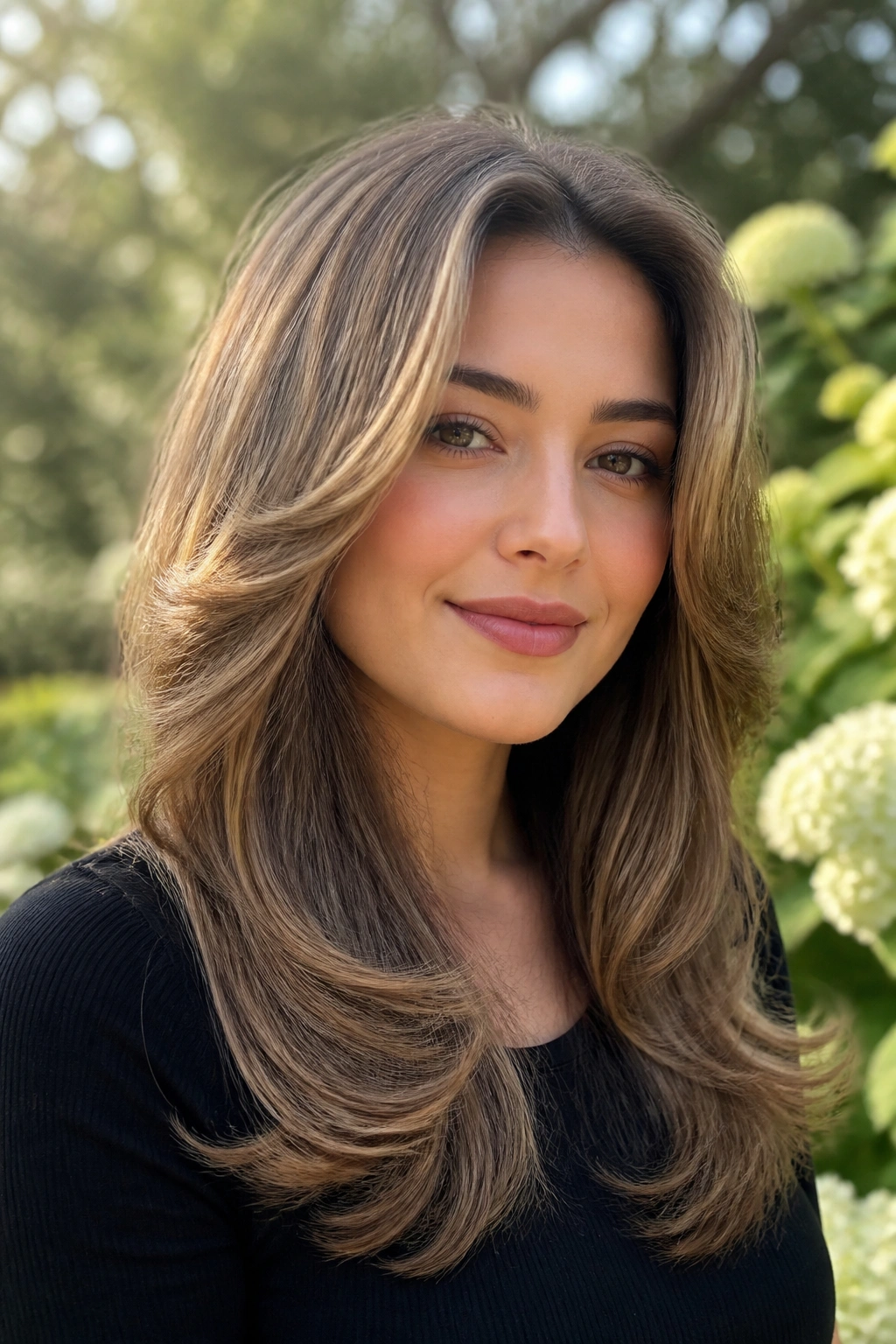
Feathered layers bring back a little movement without going full shag. The ends are light, the shape is soft, and the layers sweep away from the face instead of hanging straight down. On a round face, that sweep matters.
How to Style It
- Use a round brush to lift the roots.
- Curl the ends away from the face.
- Keep the top smooth, not flat.
- Finish with a light mist of flexible-hold spray.
This cut is especially kind to thick hair, because the feathering removes some bulk while keeping the outline soft. It also looks polished with very little drama, which I appreciate. A blowout can make it feel glamorous. An air-dry with a little texture can make it feel more relaxed. The haircut does not fight you, and that is a nice change.
19. Curly Layered Cut with Crown Lift
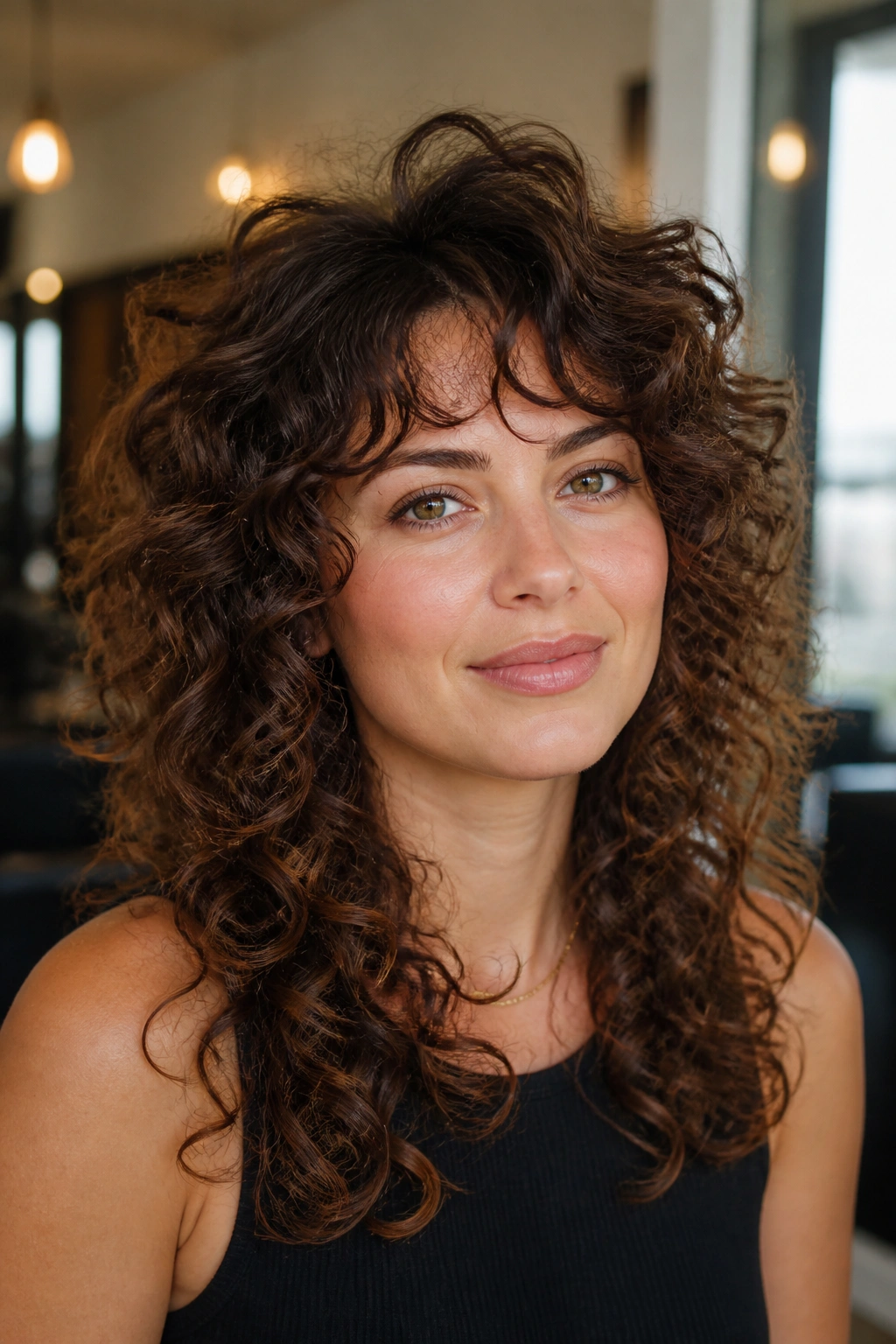
Curly hair and round faces can be an excellent match when the cut respects the curl pattern. The problem is usually shape, not curl. If the haircut is too rounded at the sides, the face can feel fuller than it is. Lift at the crown and controlled length at the edges solve that.
A good curly layered cut should be shaped dry or at least checked dry, because curls spring in different ways. The shortest layers need to encourage height without creating a halo around the cheeks. That means the stylist has to be thoughtful about where each curl lands when it shrinks up.
If you wear your curls natural, this is one of the most flattering approaches you can take. The shape feels alive, not puffy. Diffuse upward. Keep the sides from getting too wide. That’s the whole trick, and it is a useful one.
20. Deep Side-Part Long Hair
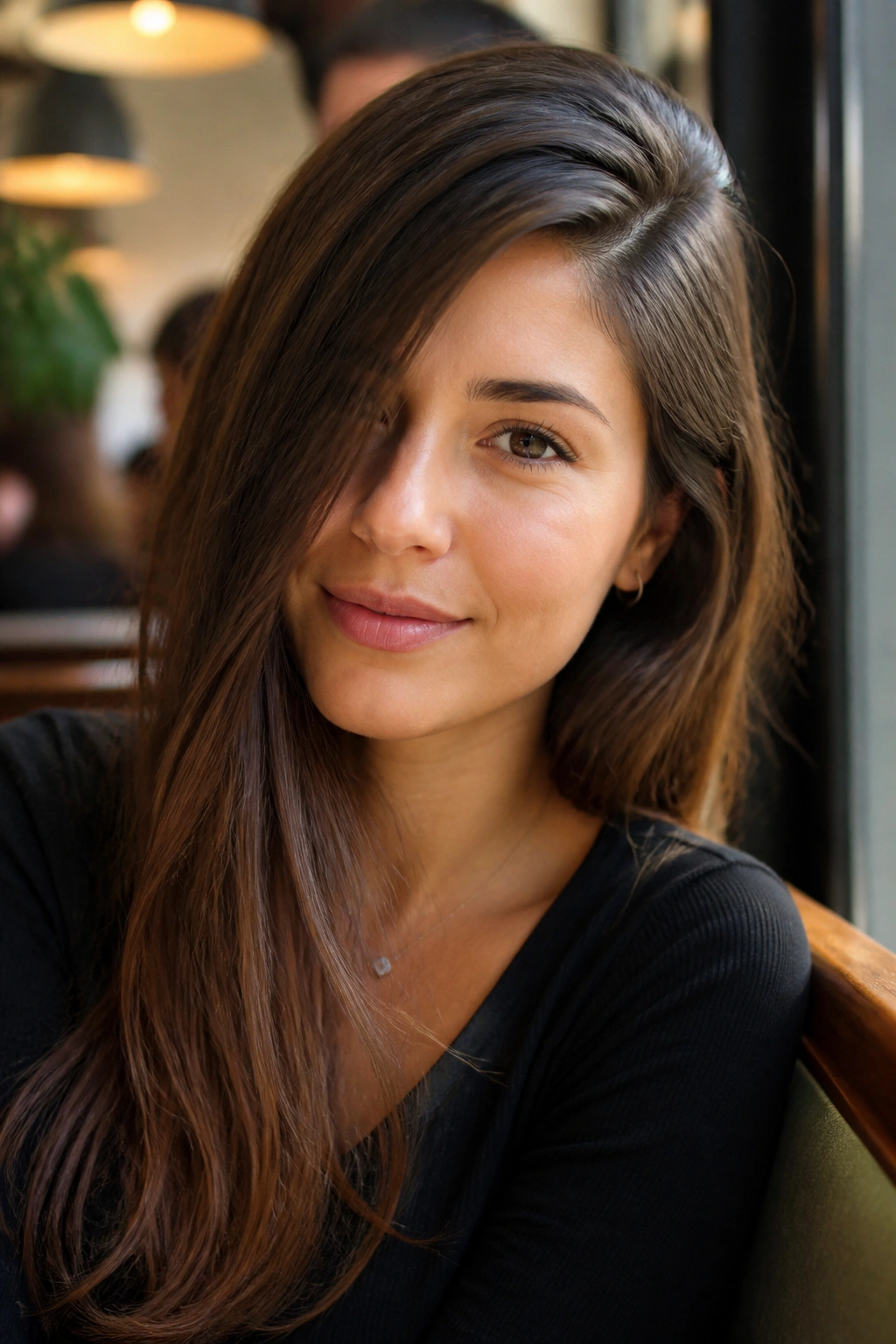
A deep side part can change a haircut more than people expect. On round faces, it creates an immediate diagonal across the top of the face and breaks up the symmetry that makes the face look wider.
Long hair gives the part room to work. The weight falls to one side, the forehead feels longer, and the profile gets a little more shape. If your hair is straight, the effect is cleaner. If it’s wavy, the part can feel softer. Either way, the difference is noticeable.
I’d use this when you do not want to cut much length but still want a change that matters. It is the simplest option on the list, and maybe that is why I like it so much. No drama. No salon overhaul. Just a strong part in the right place and hair that knows where to fall.
21. Micro Fringe with Long Length
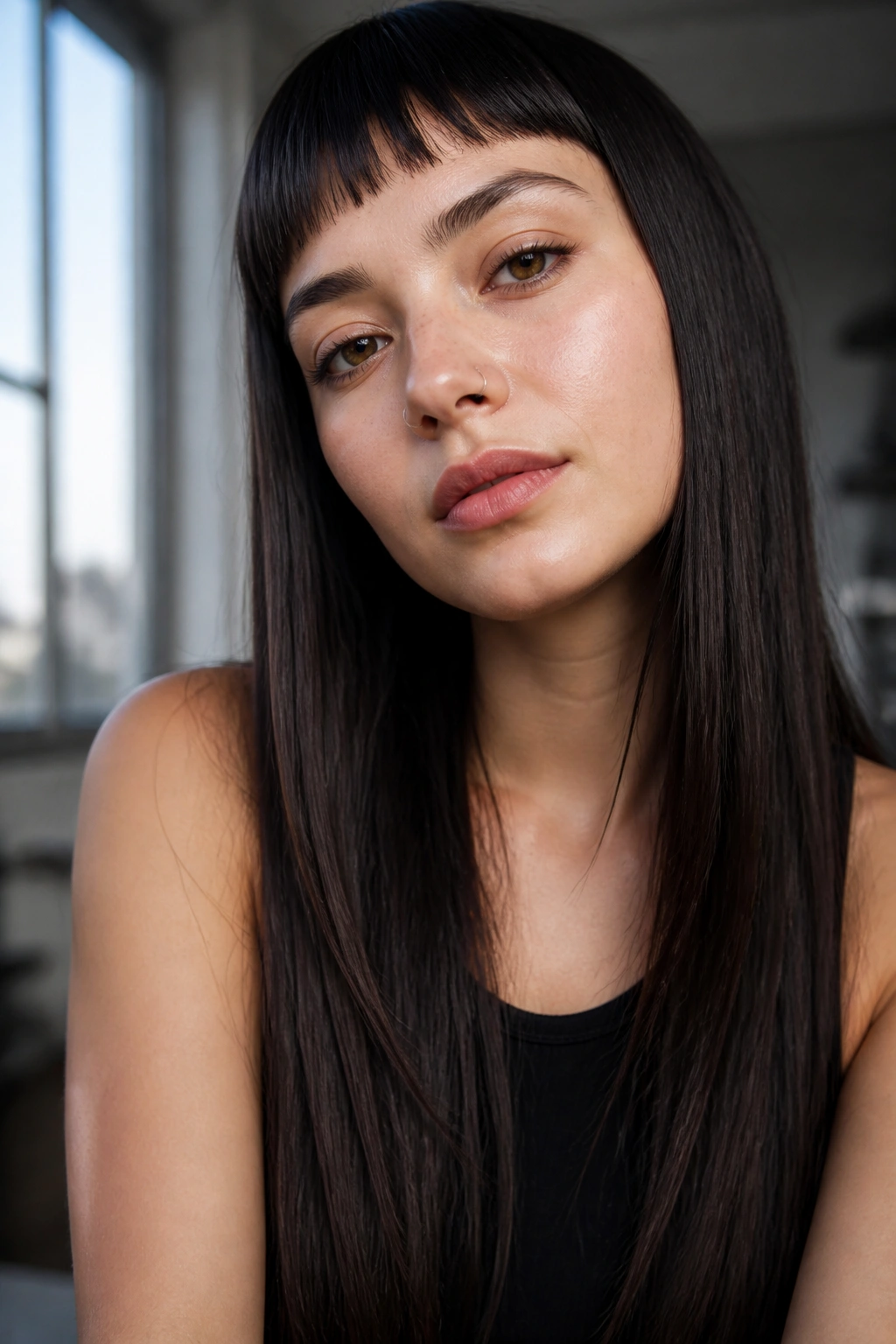
A micro fringe is not the obvious choice for a round face, which is exactly why it can be so interesting. The short fringe draws attention upward, while the long lengths below keep the face from feeling too short. The contrast is the point.
What to Keep in Mind
- The fringe should be light, not heavy and blunt.
- The rest of the hair needs length.
- Sleek styling usually works better than fluffy styling.
- The cut should feel intentional, not accidental.
This is a fashion-forward move, and I would not suggest it to someone who wants a quietly flattering haircut with no edge. The fringe can be brilliant when the rest of the shape is long and clean. It can also go wrong fast if the bangs are too thick. That is the catch with a micro fringe: it is either sharp or awkward, and there is not much middle ground.
22. Box Bob with Internal Layers
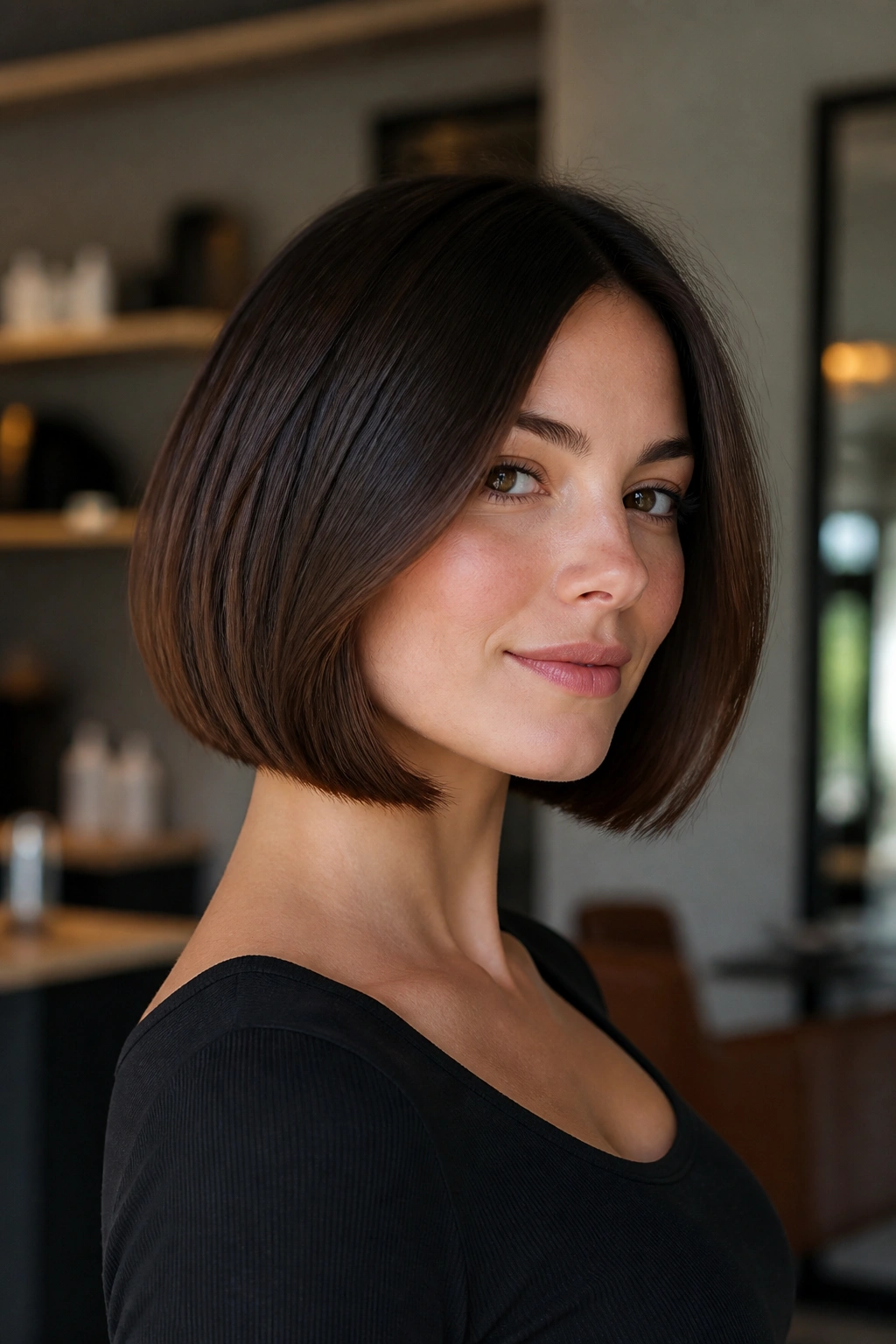
A box bob sounds severe, but the modern version can be surprisingly good on a round face if the interior is softened. The outside keeps a strong outline, while the hidden layers stop the hair from puffing out at the sides.
The shape works because it adds structure without relying on wispy tricks. A round face often benefits from a cleaner edge somewhere in the haircut, and this one gives it. The key is to keep the bob a little longer than the jaw and to let the internal layers remove some weight. That prevents the box shape from feeling heavy.
This is a cut for someone who likes order. It can look sleek, sharp, and a little expensive in the best sense of that word. Wear it tucked behind the ears, straight and glossy, or with a soft bend at the ends. It holds up well in a lot of settings, which is more useful than people admit.
Final Thoughts
The best haircut for a round face is rarely the one with the most movement or the most volume. It is the one that puts volume in the right place. Crown height helps. Diagonal lines help. Length below the cheekbone helps even more.
If I had to hand you one practical rule, it would be this: keep the first major visual break below the widest part of the face. That one habit saves a lot of bad haircuts, and it works whether you want a bob, a shag, or long layers that fall cleanly past the jaw. Pick the silhouette that fits your hair texture, then make sure the shape gives the face room to breathe.
