



Round faces can carry a lot of style, but the wrong cut can make the widest part sit front and center.
That is why haircuts for round faces work best when they add length, diagonal movement, or a little lift at the crown. A blunt line right at the cheeks can feel boxy; a cut that falls below the chin or sweeps across the face tends to look lighter and sharper.
You do not need to hide your face shape. You need a haircut that works with it. A shag, a lob, curtain bangs, a pixie with height, even a sleek long cut can all work if the proportions are right, and that part gets missed far too often.
1. Long Layers That Start Below the Chin
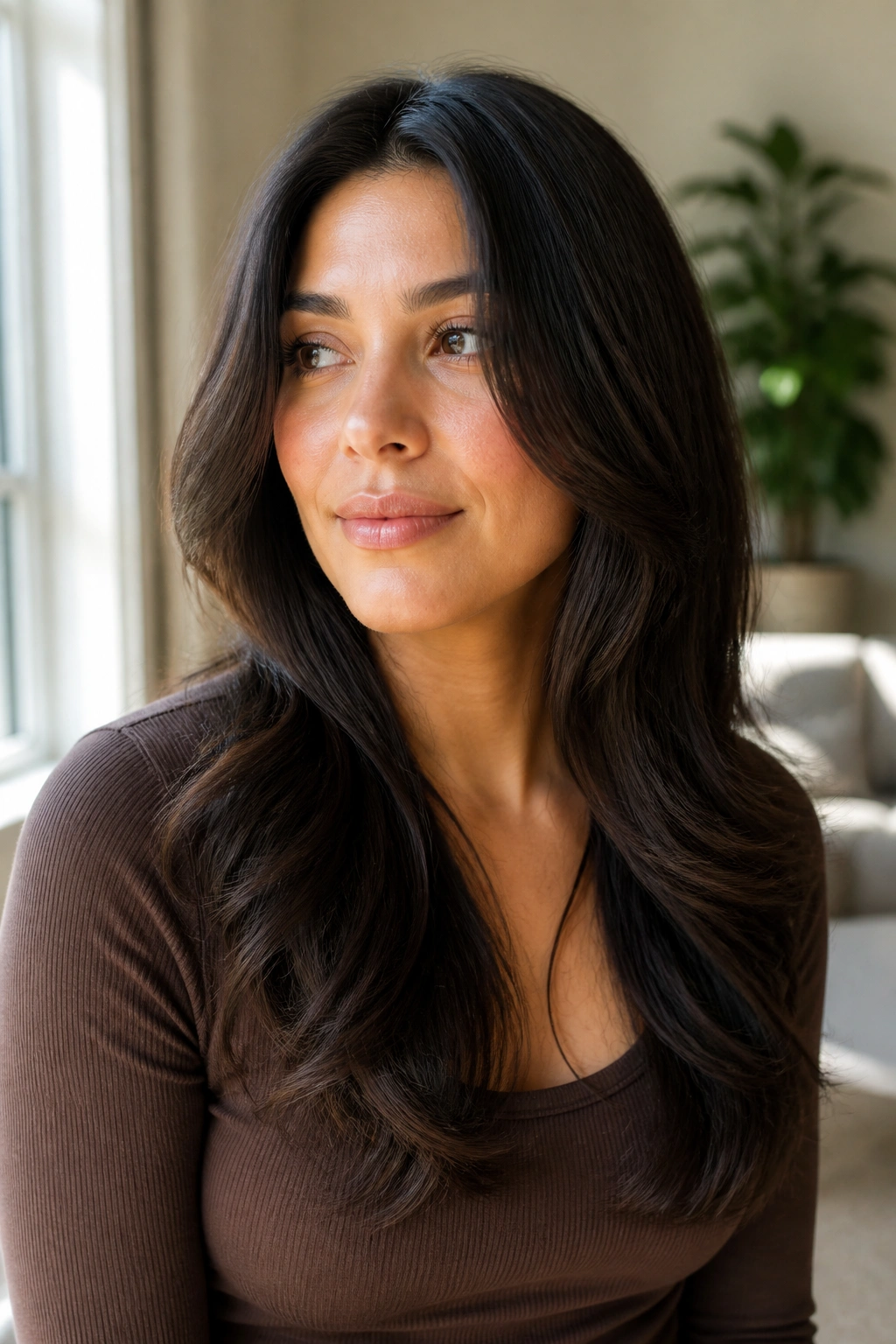
Long layers are the quiet workhorse of haircuts for round faces. They keep the length you want, then pull the eye downward instead of letting everything stop at the cheeks.
Why This Shape Works
Layers that begin below the chin help the face look a little longer because they avoid stacking width right where round faces are fullest. The result feels softer, not severe.
Ask your stylist for long, blended layers that start around the collarbone or a little lower. That one detail matters. If the shortest pieces hit at the cheek, the shape can puff out in exactly the wrong place.
- Best on medium to thick hair
- Easier to wear straight, wavy, or blown out
- Good if you want movement without losing length
Pro tip: Keep the shortest face-framing pieces below the jawline. That small move changes everything.
2. Collarbone Lob With a Deep Side Part
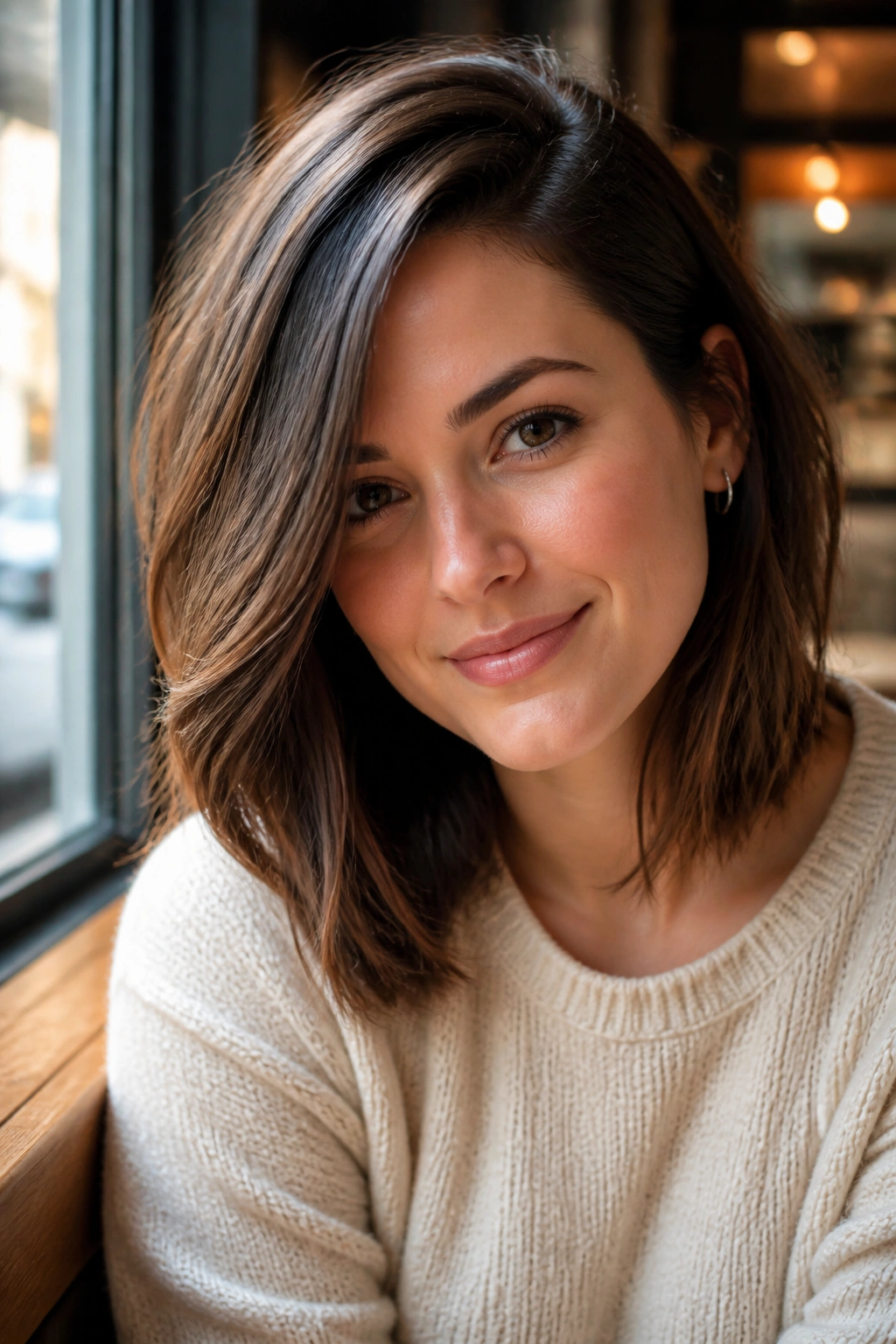
A collarbone lob is one of those cuts that just makes sense. It sits in a sweet spot: long enough to slim, short enough to feel fresh, and easy to tuck behind one ear when you want a cleaner line.
The deep side part is what gives it extra shape. It breaks up the symmetry of a round face and creates a diagonal line across the forehead, which draws the eye sideways and down at the same time.
This is a good pick if you want something polished without looking stiff. A little bend in the ends keeps it modern; dead-straight hair can make the whole thing feel flat. If your hair is fine, a blunt-ish perimeter with minimal layers gives the cut more body. If it is thick, ask for internal texturizing so it does not balloon out at the sides.
3. Curtain Bangs With Loose Waves
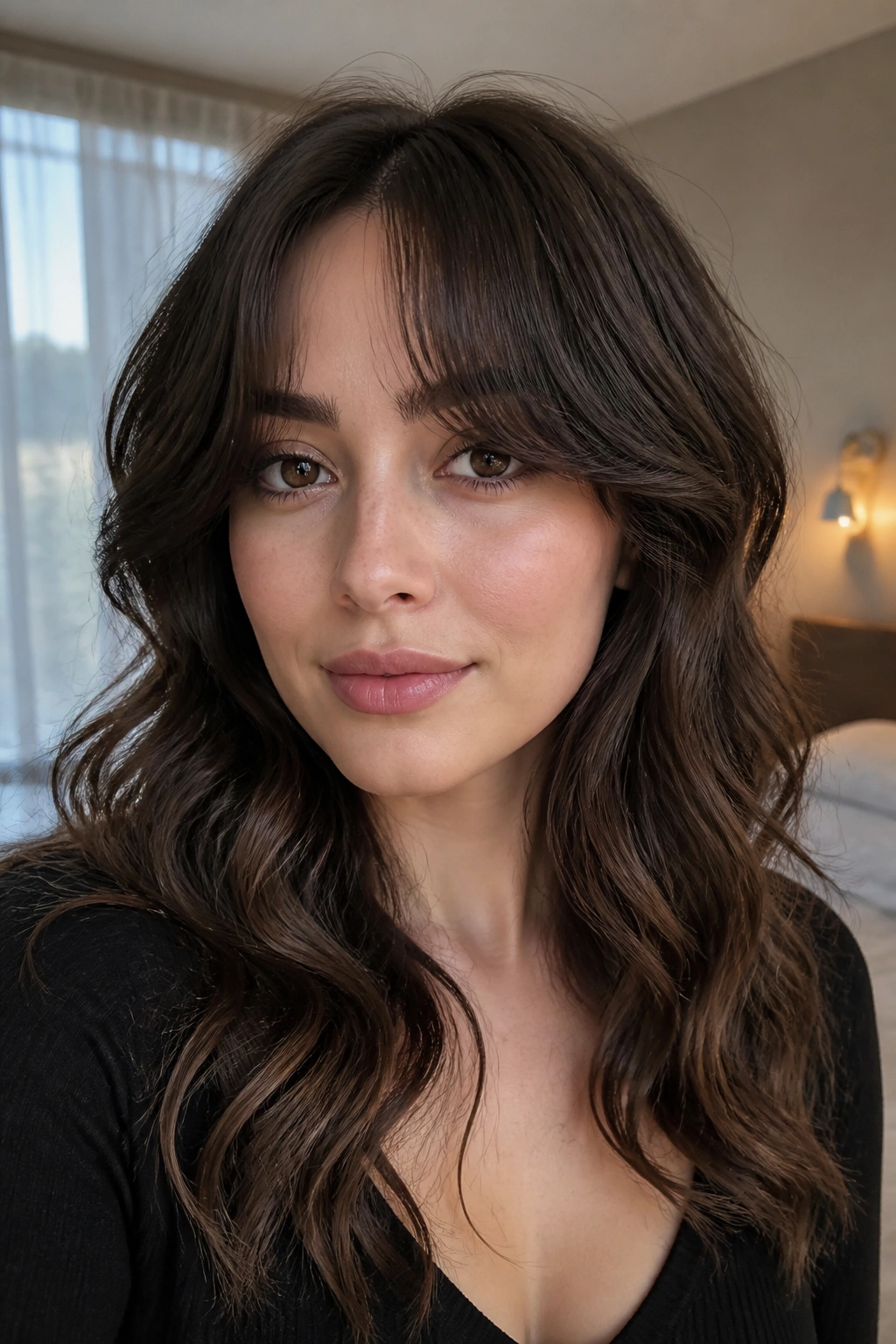
Do curtain bangs work on round faces? Yes, if they are cut with some restraint. The trick is keeping the shortest point a little lower than people expect.
Curtain bangs split in the middle and fall away from the face, which helps open the cheeks instead of boxing them in. Paired with loose waves, they make the whole cut feel softer and more vertical.
What to Ask For
- Bangs that start around the eyebrow or slightly below
- The shortest pieces grazing the cheekbone, not sitting above it
- Layers that blend into the rest of the hair instead of stopping hard
If your bangs are too short, they can make the face feel wider. Too thick, and they turn heavy fast. Keep them airy. That’s the sweet spot.
4. Angled Bob With a Longer Front
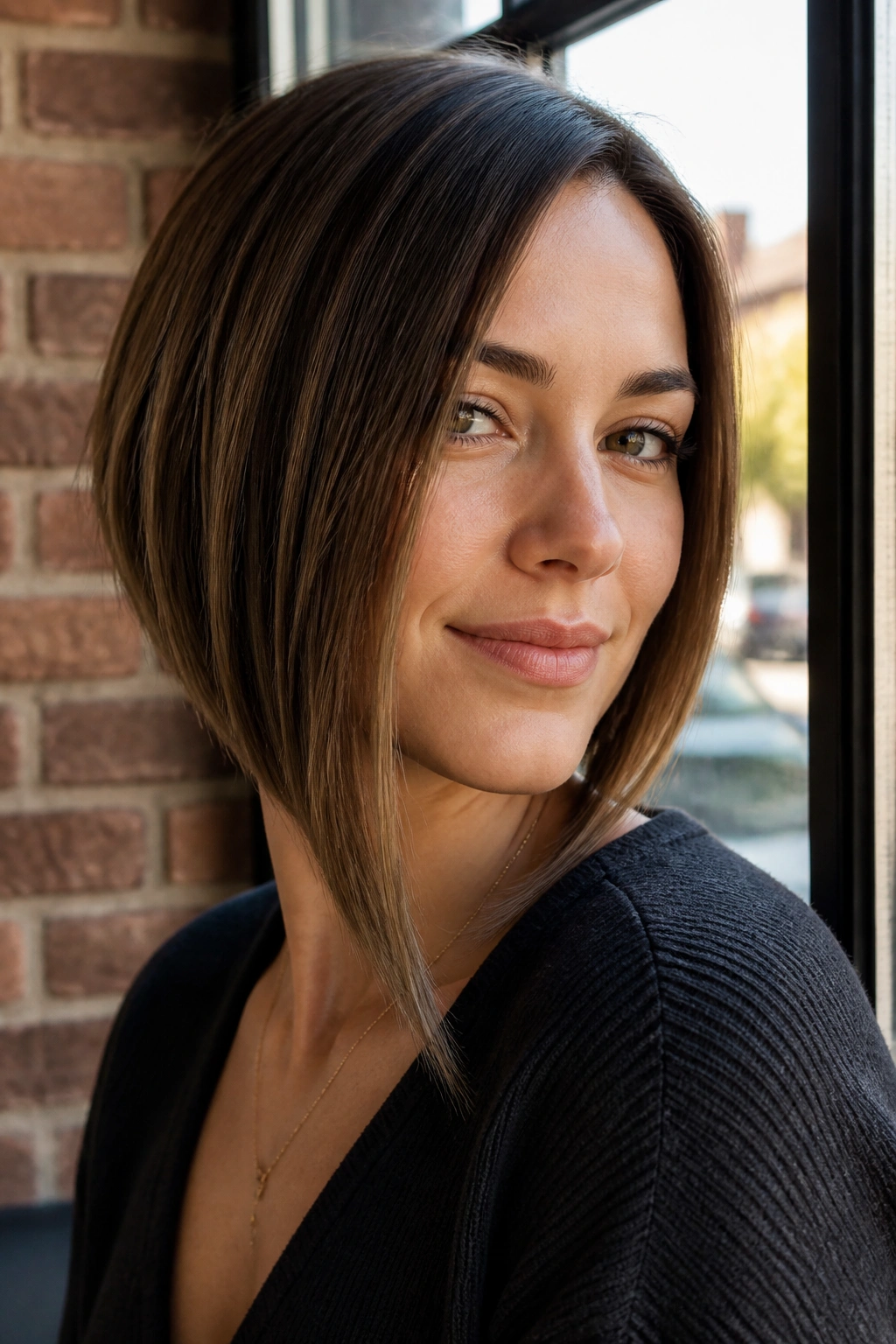
An angled bob gives round faces a clean line to follow. Shorter in back, longer in front, it creates movement that points the eye downward rather than outward.
That angle is not just decoration. It changes the shape of the whole haircut. When the front pieces pass the chin, the face looks a little longer and a little narrower, which is why this cut shows up so often in round-face haircut lists.
The best version is smooth through the crown and slightly beveled at the ends. Too much volume at the sides can make the head look wider. Too little, and the bob can feel helmet-like. If you want something sharper, tuck one side behind the ear and let the longer front section fall forward on the other side. Small move. Big payoff.
5. Soft Shag With Airy Texture
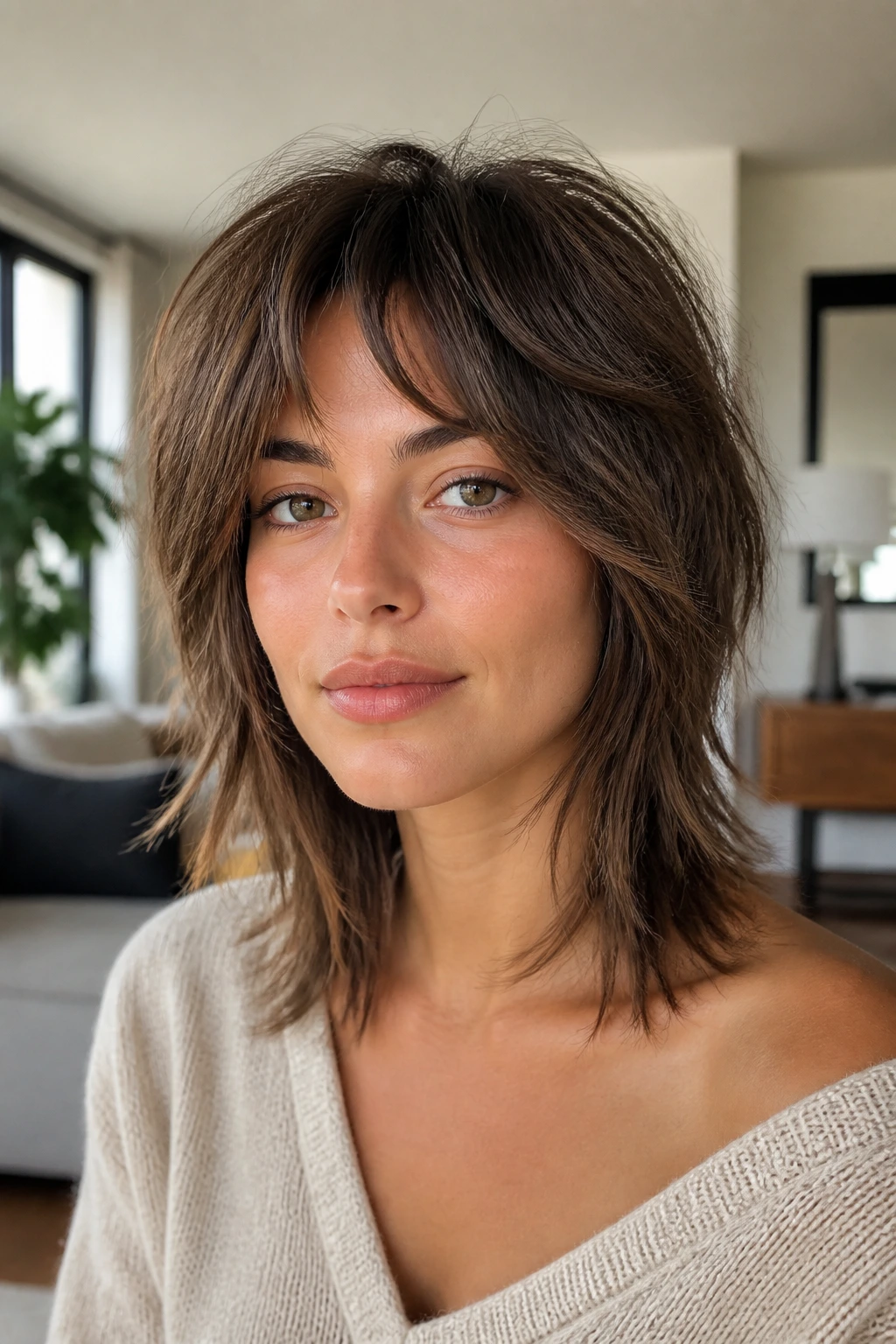
A soft shag is one of the easiest ways to add shape without making round faces look wider. The layers do the heavy lifting, especially when they are concentrated around the crown and cheekbones instead of flaring out at the jaw.
Why It Helps
The shag breaks up a circular outline. That matters. Round faces can look extra soft when hair sits in one smooth block, so the point of a shag is to create edges and movement.
This cut works well on wavy hair, but straight hair can wear it too if you style in a bit of bend. A light mousse at the roots and a quick rough-dry usually does more than a barrel curl ever will.
- Ask for soft, piecey layers, not choppy ones all over
- Keep the fringe long and light if you want one
- Use a matte texture spray, not heavy cream
It should feel a little undone. That’s the whole charm.
6. Pixie Cut With Height at the Crown
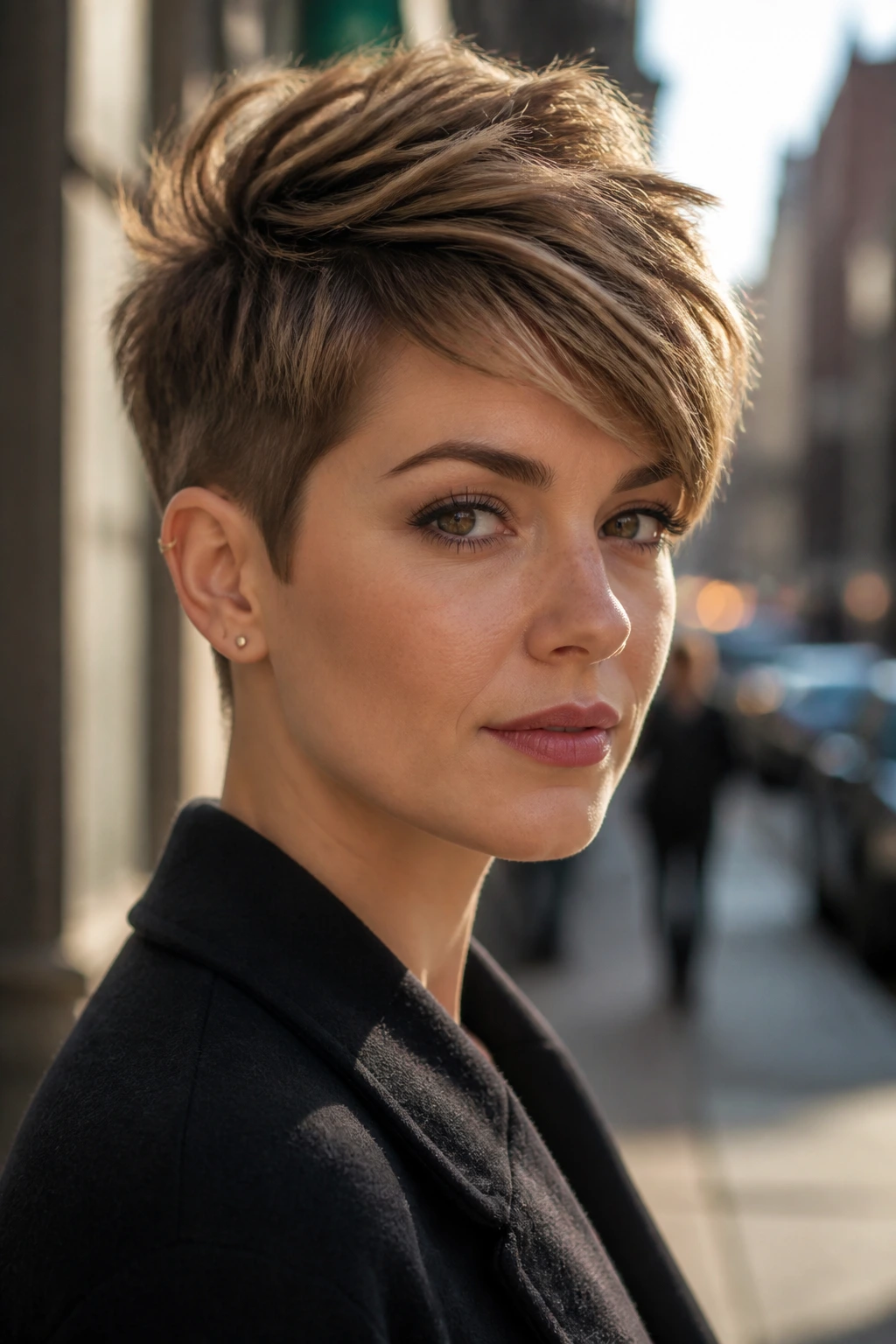
Short hair can flatter round faces. It just needs shape.
A pixie with height at the crown and neat sides gives you that vertical line people are usually trying to create with longer cuts. The lift on top matters more than the total length. Without it, a pixie can sit too close to the head and make the face look broader.
This version works best when the top is textured and the fringe is swept to one side or pushed upward. Keep the sides soft and tapered around the ears. If you want a very short crop, ask for a little extra length on top so you still have room to style.
It is bold, sure. It is also practical. Less drying time, less fuss, and a shape that can look sharp with almost no effort.
7. Butterfly Cut With Light Face Framing
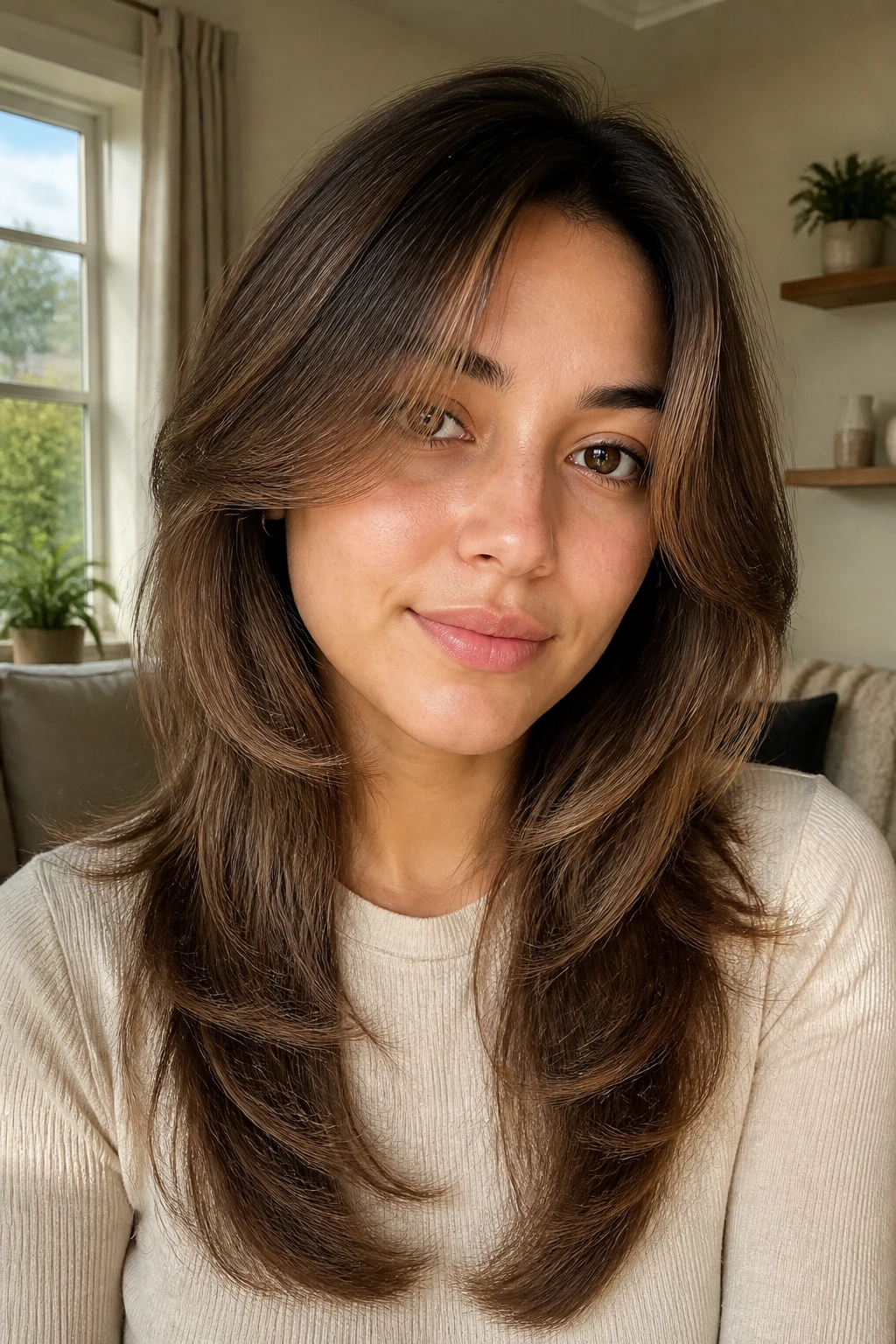
The butterfly cut earns its place because it gives you two things at once: movement around the face and a longer shape through the ends. That balance is useful for round faces, which can get swallowed by heavy, one-length hair.
The face-framing pieces usually start near the cheekbone or below, then drift into longer layers. That creates a soft frame without stopping the eye right at the widest part of the face. When the hair is blown out with a little bend, the whole cut feels airy and lifted.
What Makes It Different
Unlike a plain layered cut, the butterfly shape keeps the lower length strong. You get the drama of shorter layers without losing the swing of long hair.
Best for:
- Thick hair that needs movement
- Medium-to-long lengths
- People who like a blowout finish
If you wear your hair up often, this cut still works. The shorter front layers leave enough around the face to soften a ponytail.
8. Asymmetrical Lob
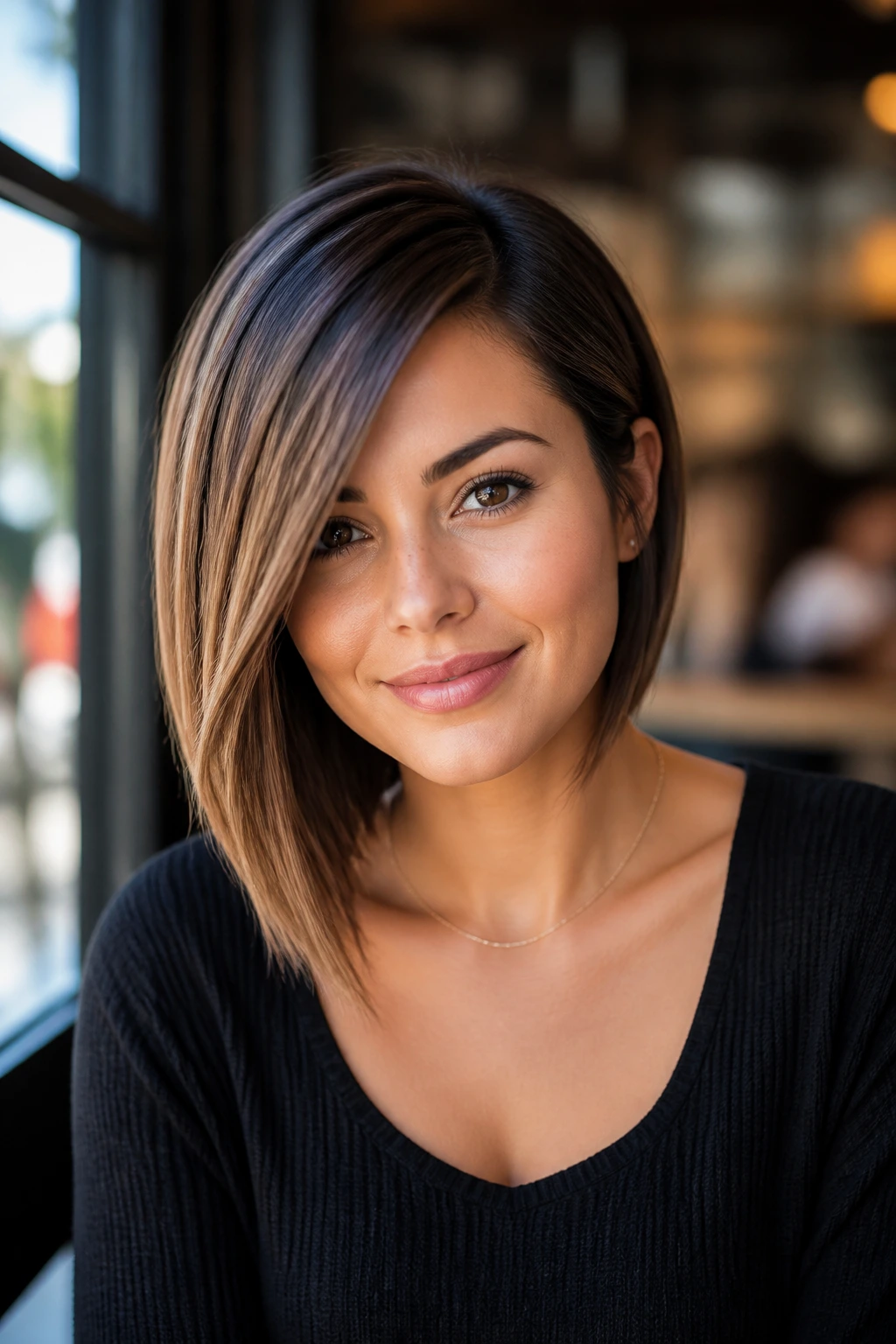
An asymmetrical lob is a nice fix for anyone who wants a clean cut with a little edge. One side is slightly longer than the other, and that uneven line interrupts the roundness of the face in a subtle way.
The difference does not need to be dramatic. Even an inch or two can make the shape feel more interesting. A deep side part usually makes the effect stronger, especially if the longer side falls forward toward the collarbone.
This is one of those cuts that looks expensive even when it is not trying hard. Straight hair shows the line best, but soft waves can make it feel less strict. If your hair is very thick, ask for lightweight internal removal so the ends do not puff out. If it is fine, keep the perimeter blunt for more fullness.
9. Bixie With Feathered Ends

The bixie sits between a bob and a pixie, and that middle ground is exactly why it works for round faces. You get enough shortness to feel fresh, but not so much that the shape turns boxy.
Feathered ends keep the cut soft around the temples and jaw. That softness matters because round faces can look harsh with hard corners. The bixie avoids that by keeping the top a little longer and the edges lightly textured.
How to Wear It
A small amount of paste through the crown gives lift without making it spiky. Brush the fringe to one side or let it fall forward in a broken line.
It suits straight to wavy hair best. Very tight curls can work too, but the cut needs a curl-friendly shape and a stylist who knows how hair springs up when it dries.
It is short, but not severe. That’s the appeal.
10. U-Shaped Long Cut
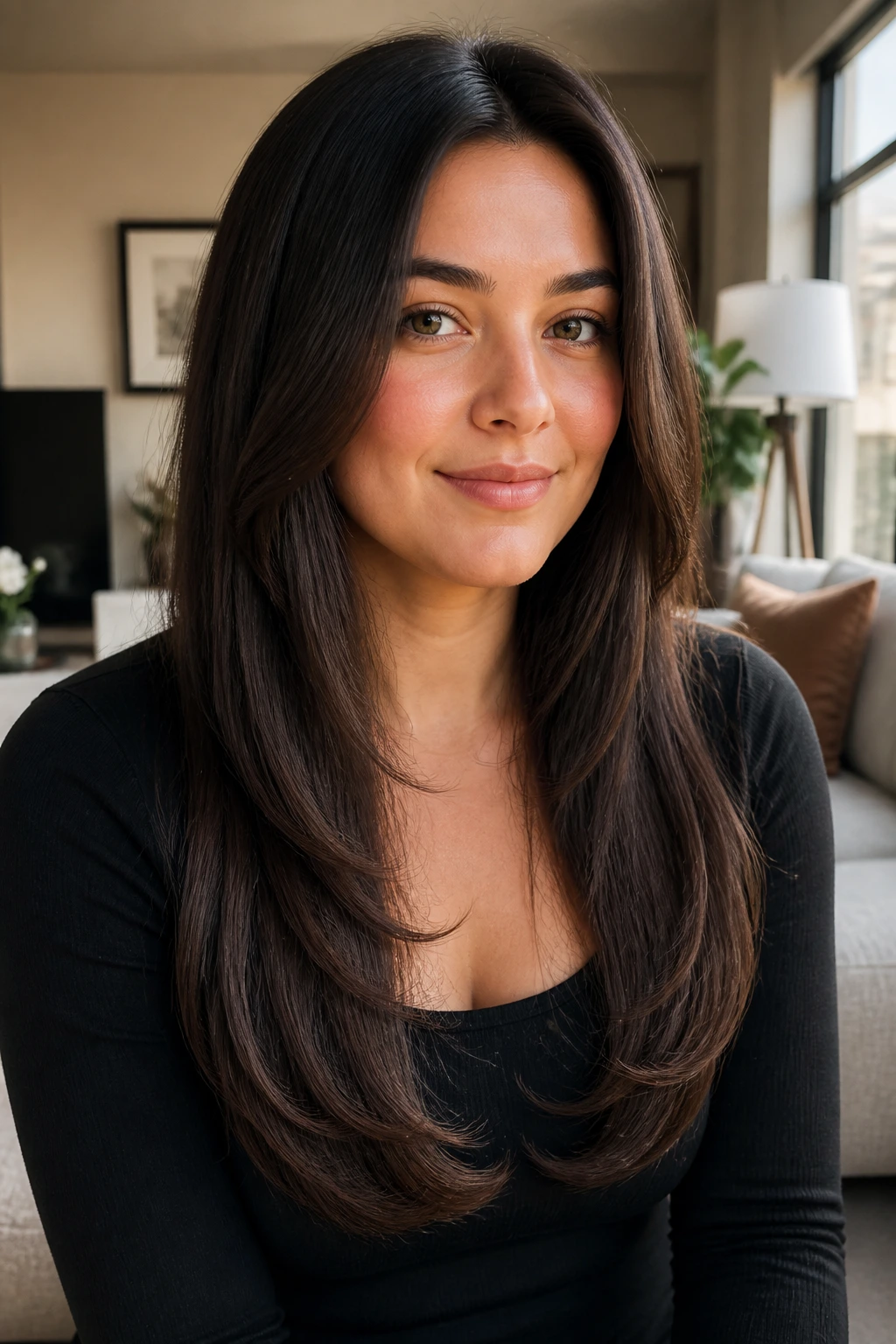
A U-shaped cut keeps the center of the length a touch longer than the sides, which creates a soft frame that hangs well on round faces. It looks simple. It is not boring.
The gentle curve at the back helps long hair move instead of hanging in one flat sheet. That movement is useful because it keeps the hair from spreading wide around the face. If you like long hair but hate the feeling of it sitting heavy, this cut solves that problem better than blunt ends do.
It also grows out nicely. You do not need a trim the second it loses its shape. Ask for the U to be subtle, not dramatic, unless you want a more visible silhouette. A middle part works well here, but a soft off-center part can be even better if you want a little extra lift.
11. Side-Swept Fringe With Shoulder Layers
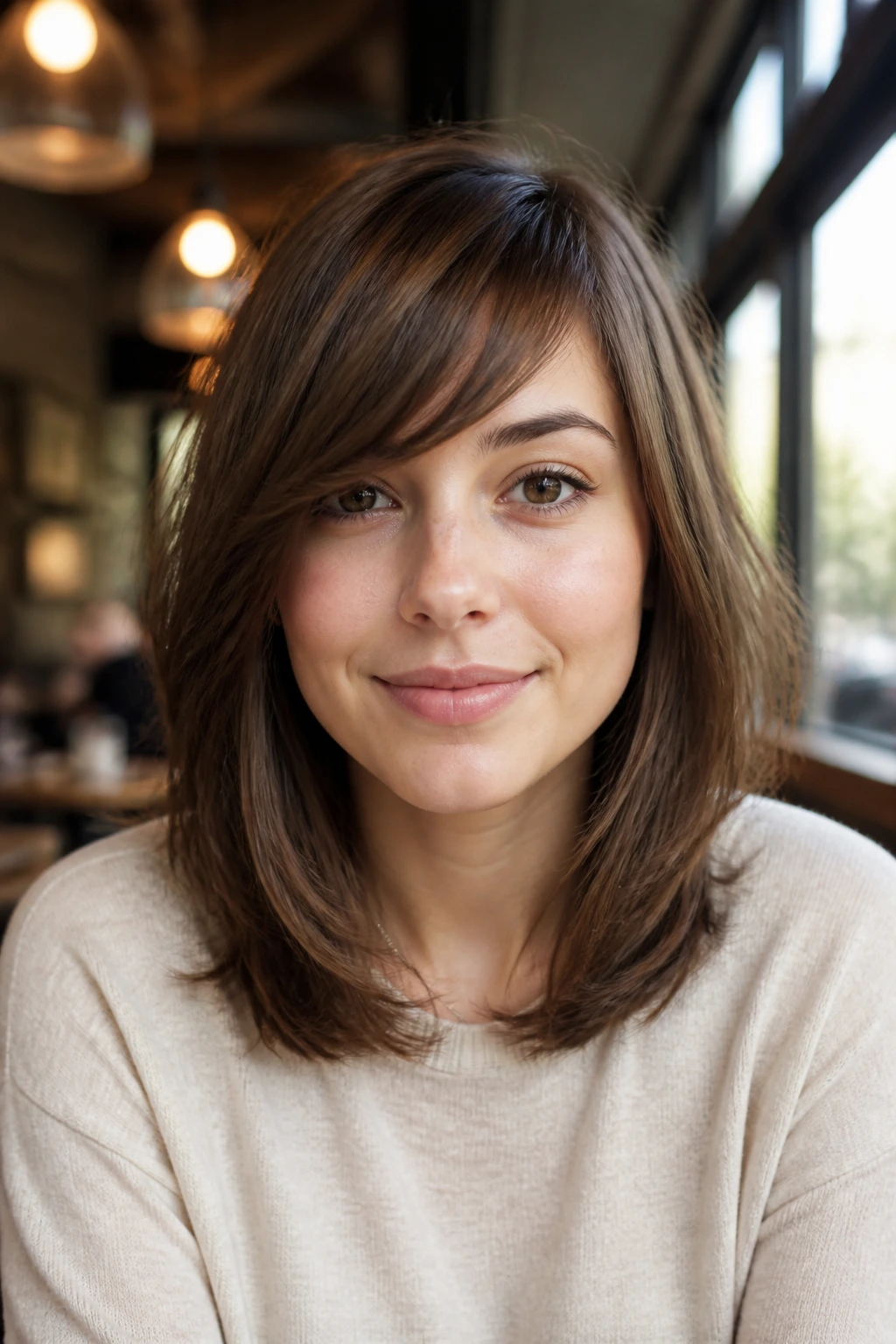
A side-swept fringe is a good answer when curtain bangs feel too trendy for your taste. It gives the face a diagonal line without cutting the forehead in half.
On round faces, that diagonal matters. It breaks the circle. Shoulder-length layers keep the rest of the cut light, so the fringe does not have to do all the work alone.
This is also one of the easiest styles to live with. The fringe can be pushed across with a round brush, pinned back, or tucked behind the ear on days when you want a cleaner look. Shoulder layers keep the ends moving, which is better than a blunt shoulder cut that flips out in a chunky way.
If you want a low-drama salon request, this is a strong one. Short enough to feel new. Soft enough to grow out well.
12. Layered Cut for Natural Curls
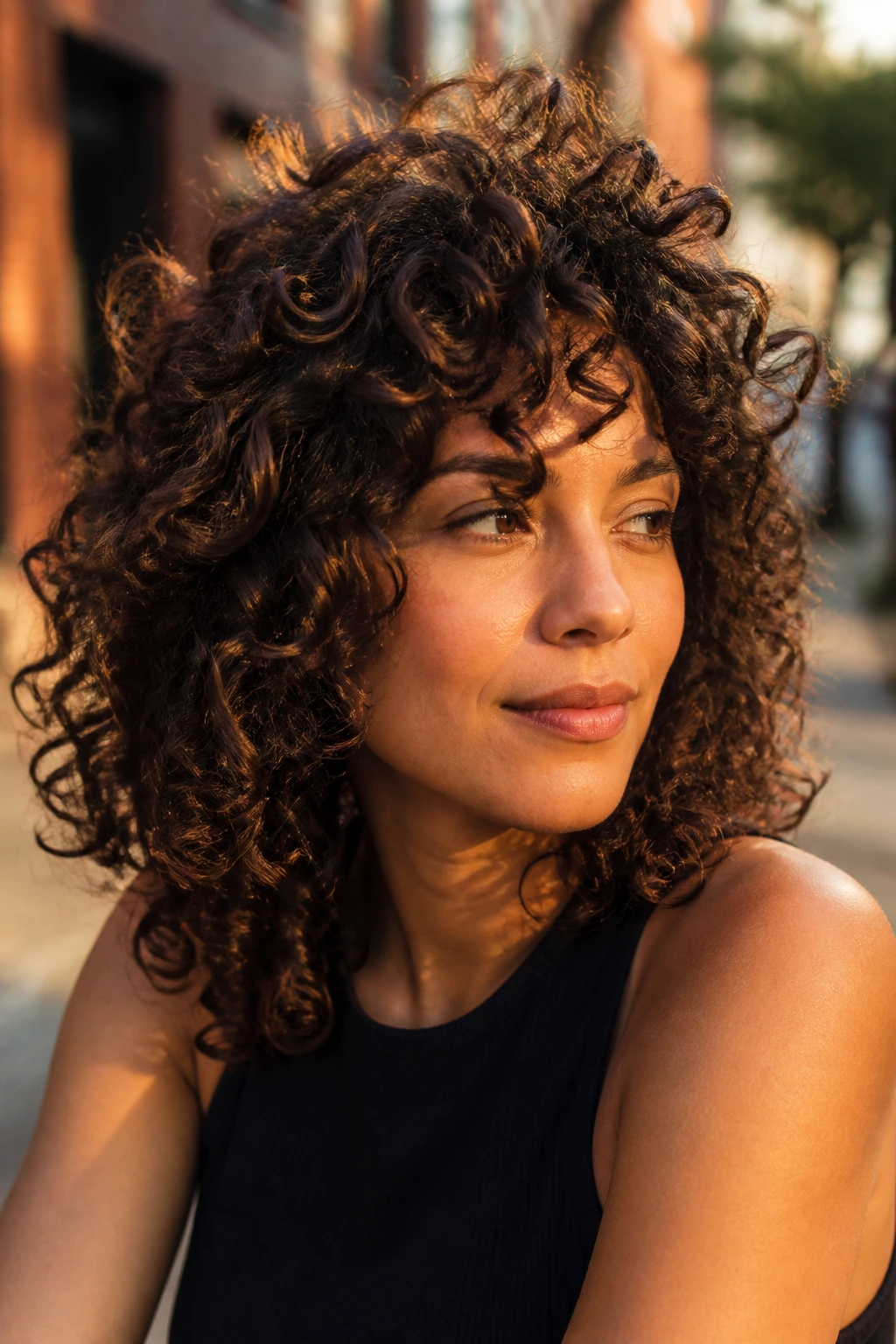
Curls need a different plan. Heavy layers cut the wrong way can make the sides bulge, and that is the last thing a round face needs.
A good curly cut respects the curl pattern first. It should remove weight where the hair expands, usually at the sides, while keeping enough shape on top so the style has height. Dry cutting helps because curls tell the truth when they are dry. Wet curls lie. They shrink, bounce, and surprise you later.
What to Watch For
- Ask for curl-by-curl shaping if your texture is loose to medium
- Keep the shortest face-framing pieces below the cheekbone
- Avoid a blunt line that ends right at the jaw
Curly hair on round faces looks best when the shape feels lifted, not wide. A diffuser and a light gel cast can hold that structure without turning the hair crunchy.
13. Blunt Lob With Soft Internal Texture
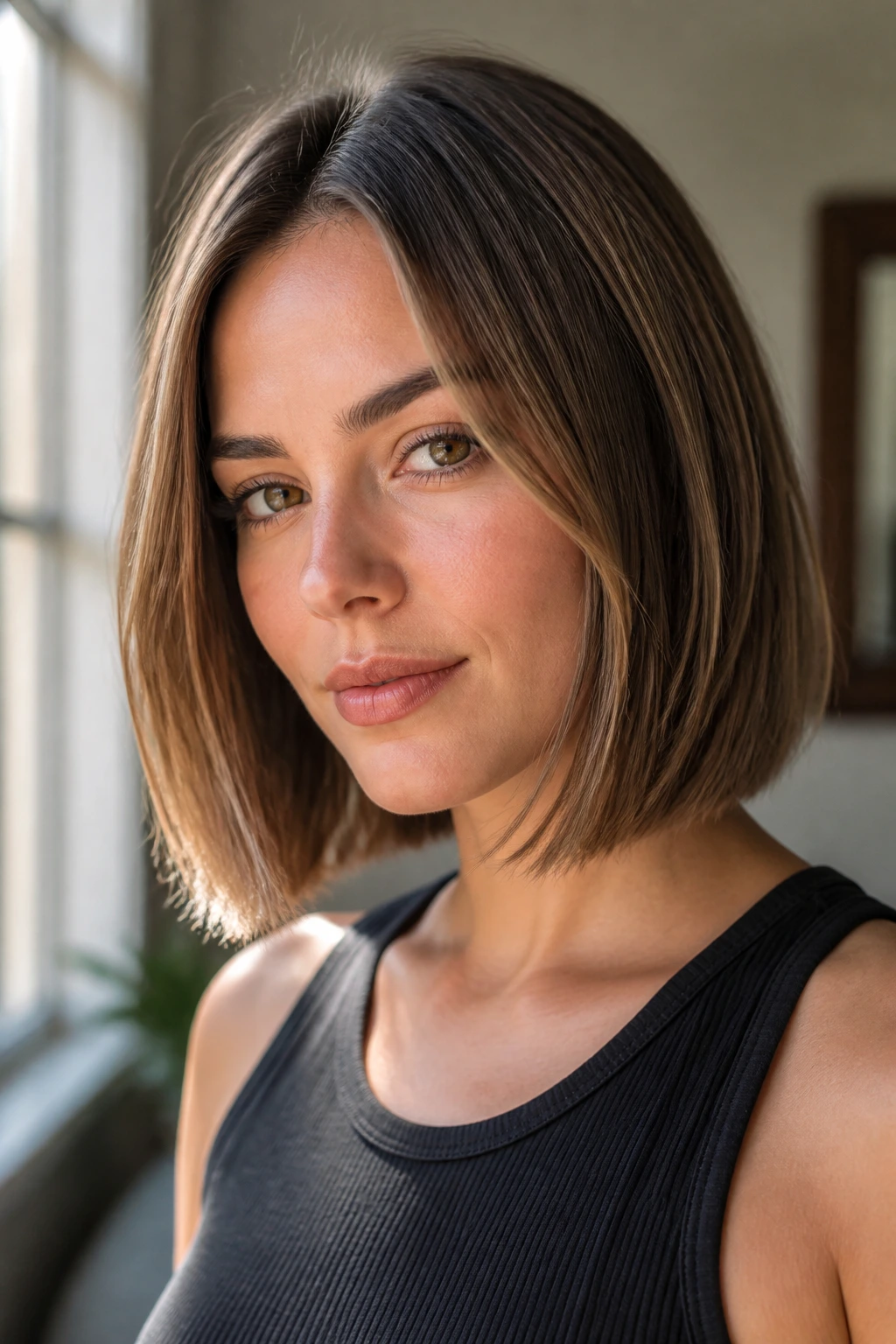
A blunt lob sounds risky for round faces, and in the wrong place it is. Put it right at the chin and it can widen the face. Put it a little lower, with some internal texture, and it turns into a sharp, flattering cut.
The blunt edge gives the hair a clean finish. The hidden texture inside keeps it from feeling heavy or blocky. That combination is what makes it work. You get a strong line at the bottom, but the inside has enough movement that the shape does not sit like a helmet.
This style is good for thick hair that needs control. It also works for fine hair if you want the ends to look fuller. A center part can be nice, though a slightly off-center part often softens the whole look. Keep the length at or below the collarbone, and the result tends to be much kinder to round cheeks.
14. Wolf Cut With Controlled Volume
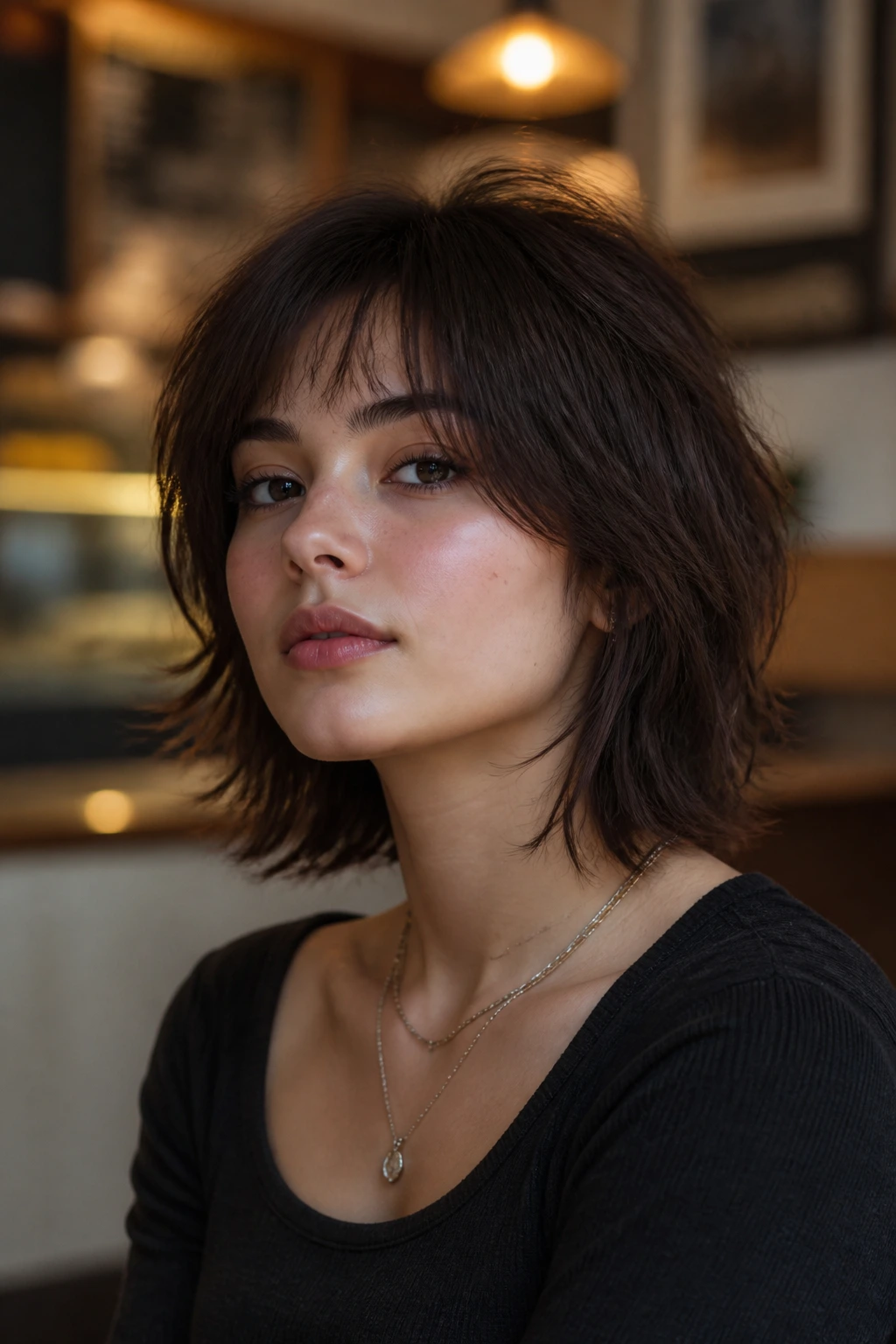
A wolf cut can be a mess in the best way, but round faces need a calmer version of it. Too much volume at the sides and too short a fringe can make the face look wider. That is the version to skip.
The better approach is controlled volume at the crown, soft feathering through the mid-lengths, and length that stays below the jaw. That keeps the rebellious shape people like about the wolf cut without turning the face into the widest part of the whole look.
This cut shines on wavy hair. The texture does half the styling for you. If your hair is straight, you will probably need a little work with a round brush or a large curling iron to keep the layers from falling flat. A wolf cut should feel a bit wild, yes, but not sloppy. There is a difference.
15. Tapered Crop With Long Top
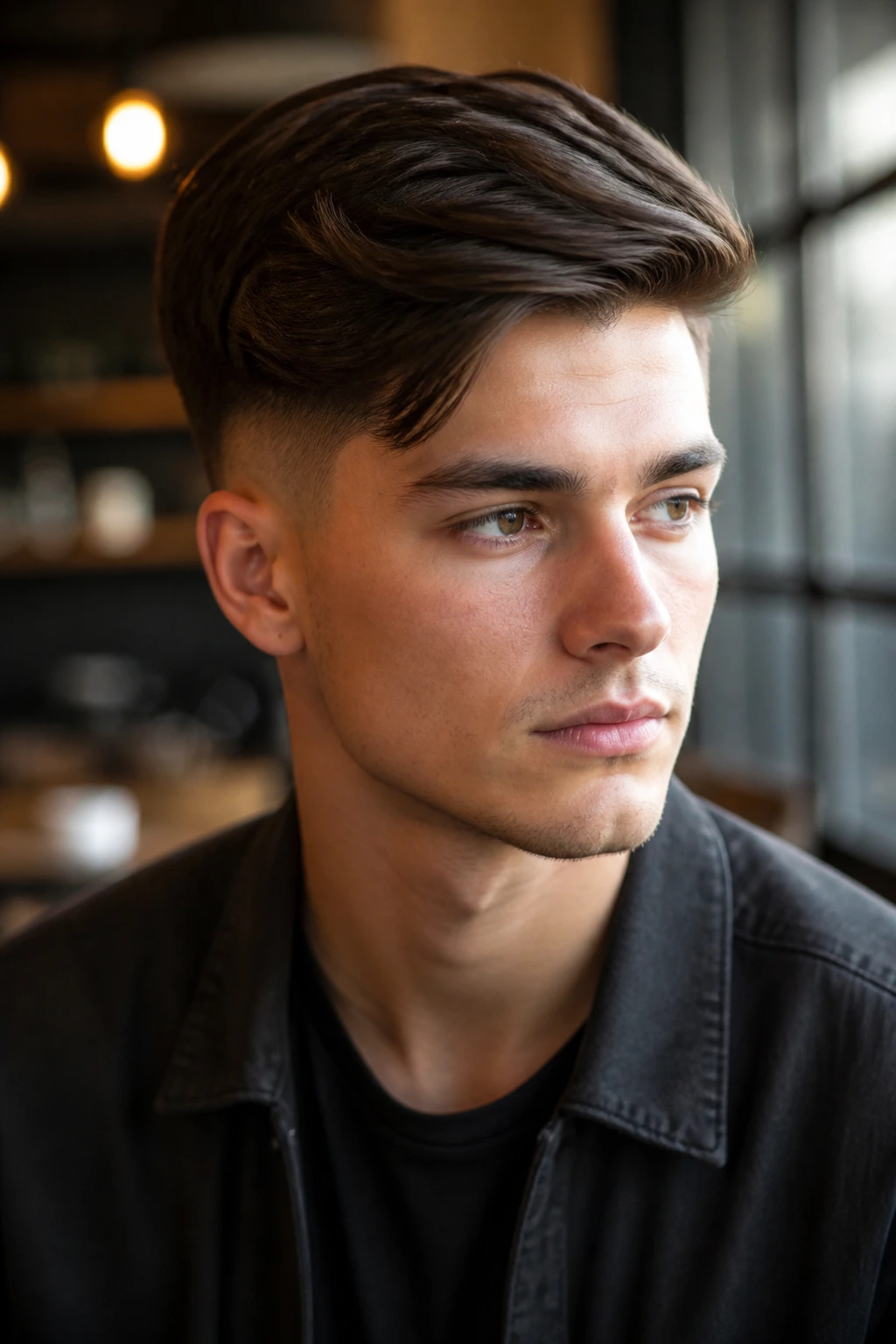
A tapered crop is the short haircut for someone who likes clean lines but still wants some softness. The sides stay close to the head, the top stays longer, and that creates a slim, vertical shape that flatters round faces well.
The Shape at a Glance
The crown gets most of the attention here. A little height on top elongates the face, while the tapered sides keep the outline neat. If the top is left too short, the cut can feel flat. If the sides are too bulky, it can look wide. The balance is the whole point.
This style is easy to make yours. Sweep the top forward, part it to the side, or keep it textured and piecey. It is a good cut for people who want low maintenance without looking plain. If you wear glasses, it plays nicely with frames because the ears and temples stay clean.
16. Midi Cut With Cheekbone Layers
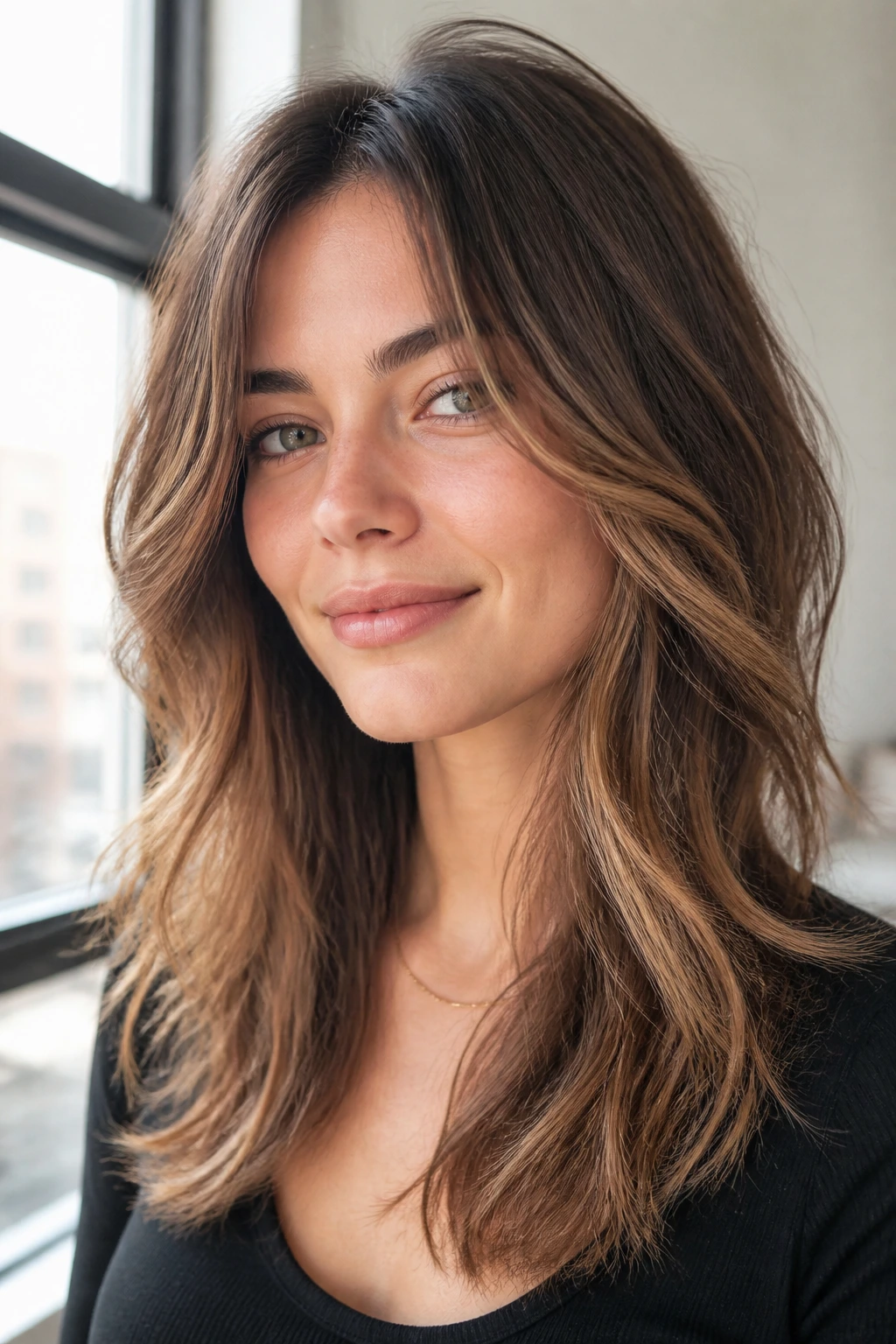
A midi cut lives between the shoulders and the chest. That in-between length is useful on round faces because it gives you movement without crowding the jaw.
Cheekbone layers do the shaping. They pull the eye upward and then let it travel down through the rest of the hair. Done well, the cut feels soft around the face but still has enough body to look styled even on quiet days.
This is one of the least fussy choices in the whole list. It works in a ponytail, a loose bend, or a straight blow-dry. If you are trying to grow out shorter hair, the midi cut is a good landing place. Ask for the layers to start around the cheekbone, not at the jaw. That small shift keeps the silhouette light.
17. Long Straight Hair With Invisible Layers
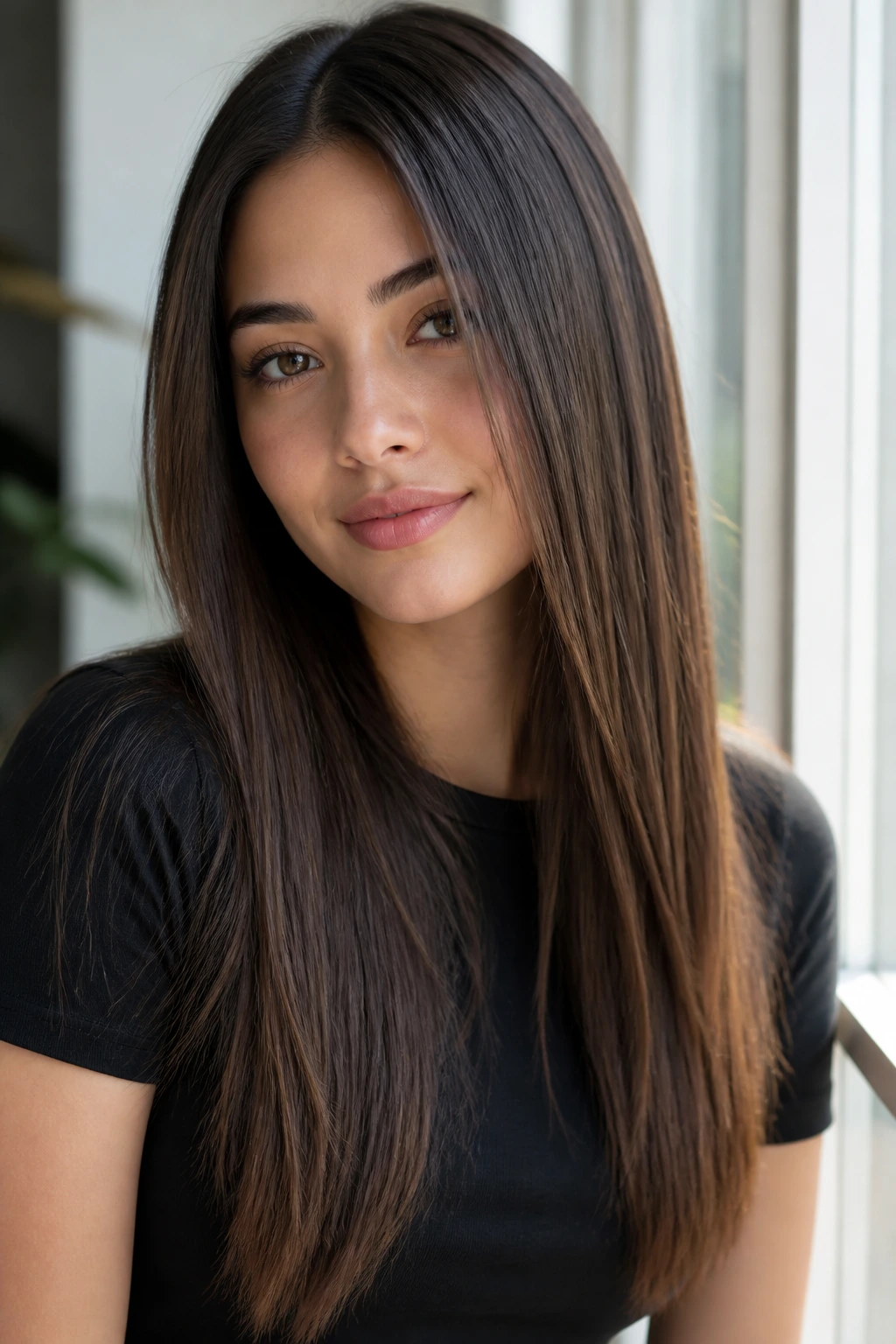
Long, straight hair can flatter round faces if it has the right internal shape. The trick is avoiding a heavy curtain that stops at the cheeks or clings too closely to the sides of the face.
Invisible layers help because they remove weight without making the haircut look chopped up. The outside still reads as smooth and long, but underneath there is enough movement for the hair to fall with a little swing. That swing matters. It keeps the look from going flat and widening the face.
If you like sleek hair, this is a strong pick. A middle part can work, though a slight off-center part often looks softer. Add a glossing serum to the ends, not the roots, or the whole thing can collapse. Long straight hair does not need drama. It needs shape.
18. Graduated Bob With Nape Lift
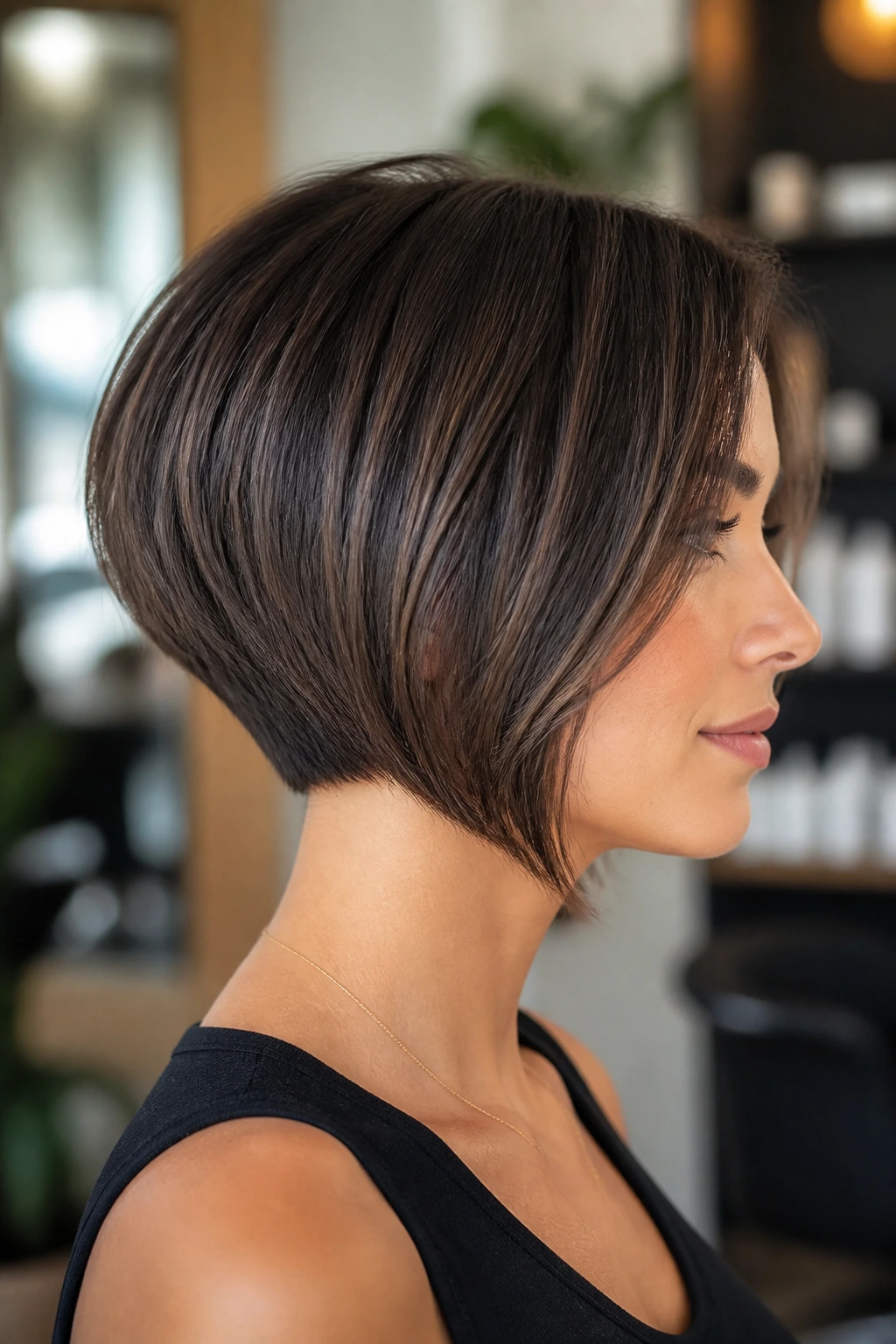
A graduated bob is all about the back. Shorter at the nape, longer as it moves forward, it creates a lifted shape that gives round faces a little more vertical line.
What to Ask For
Tell your stylist you want a bob with stacked volume at the back, but keep it soft. Too much stacking can feel dated fast. Too little, and the haircut loses the lift that makes it flattering.
- Shorter nape for a clean neck line
- Longer front pieces that graze below the jaw
- Soft graduation, not a hard shelf
This cut is especially good if your hair is fine and tends to collapse by noon. The built-in structure helps. It also works well with straight styling, which is handy if you do not want to spend forever on your hair. The shape itself does the decorating.
19. Flippy Lob With Ends Turned Out
The flippy lob has a cheerful, slightly retro feel, and it can work on round faces when the length stays below the chin. The outward bend keeps the look lively instead of flat.
The important part is placement. If the ends flip out right at the jaw, the face can look wider. If the lob sits closer to the collarbone and the flip starts lower, the shape feels playful without adding bulk where you do not want it.
This cut looks best with a bit of movement in the roots and soft shine through the ends. A large round brush or a flat iron flicked gently at the last inch can create the shape. It is not a hard curl. It is more of a clean, casual bend. The kind that looks like you touched your hair, but not for long.
20. Curve Cut
A curve cut follows the face in a soft C-shape, with the shortest pieces around the cheekbone and the longest pieces drifting down toward the chest. That curve is why it flatters round faces so well.
The line frames without boxing. The hair bends in rather than outward, so the silhouette feels more fluid. It works especially well when styled with a blow-dry brush or a medium round brush, because the ends can hug the face in a controlled way.
This cut is a smart choice if you like movement but not too much layering. It feels modern without leaning too hard into a trend label. Ask for the curve to start below the widest point of the face. That keeps the shape elegant instead of cute in the wrong way. Slightly longer in front, softer through the sides, and the whole thing starts behaving.
21. Modern Mullet With Soft Length
The modern mullet is not the harsh, chopped version people picture from old photos. The good one has soft layers, a bit of texture, and enough length in back to keep it wearable.
For round faces, the key is keeping the sides broken up and the crown lightly lifted. That creates angles. It also stops the haircut from spreading outward at the cheeks. A light fringe can work here, but it should stay airy. Heavy bangs can make the look feel crowded fast.
Why It Works on Round Faces
The shape adds height and removes width at the same time. That is rare. Most short cuts do one or the other.
Best paired with:
- Wavy or piecey texture
- A little styling paste
- A stylist who is comfortable cutting movement, not just length
It is not for everybody. Fine. That is part of its charm.
22. Long Pixie Bob With Sideburn Detail
A long pixie bob sits between short and medium length, which makes it one of the most flexible options on this list. The sideburn detail is the quiet trick here. It adds length near the cheeks without adding bulk.
That small bit of length near the face can slim a round shape more than people expect. It gives the eye a line to follow, especially when the rest of the cut is tucked close at the nape and lightly layered on top.
This is a strong choice if you want short hair that still feels feminine and soft. You can sweep the top back, part it to the side, or let it fall forward in pieces. It also grows out better than a super-short crop, which saves you from that awkward in-between stage so many short cuts hit. If you want one haircut that feels fresh, easy, and a little polished without trying too hard, this one delivers.
