



A round face doesn’t need to be hidden. It needs shape. That’s the part so many cuts miss: if the hair stops at the widest point of the cheeks, or puffs out exactly where the face is already full, the whole look can feel wider than you meant it to.
The smartest haircuts for round faces do one of three things. They add length. They create angles. Or they break up the curve with movement, side-swept lines, or a little asymmetry. A good cut isn’t trying to fight your face shape; it’s giving it a better frame.
Texture matters more than most people realize. Fine hair behaves differently from thick hair, curls need different layering than straight hair, and a bob that looks sharp in a sleek blowout can turn boxy if it’s cut without enough internal weight removal. The devil is in the details — where the shortest layer starts, how the fringe falls, how much fullness is left at the sides.
Some of the cuts below are sleek and polished. Some are messy on purpose. A few are short enough to feel bold, while others keep the length long and use layering to do the work. All of them can flatter a round face when the shape is right.
1. Long Layers That Start Below the Chin
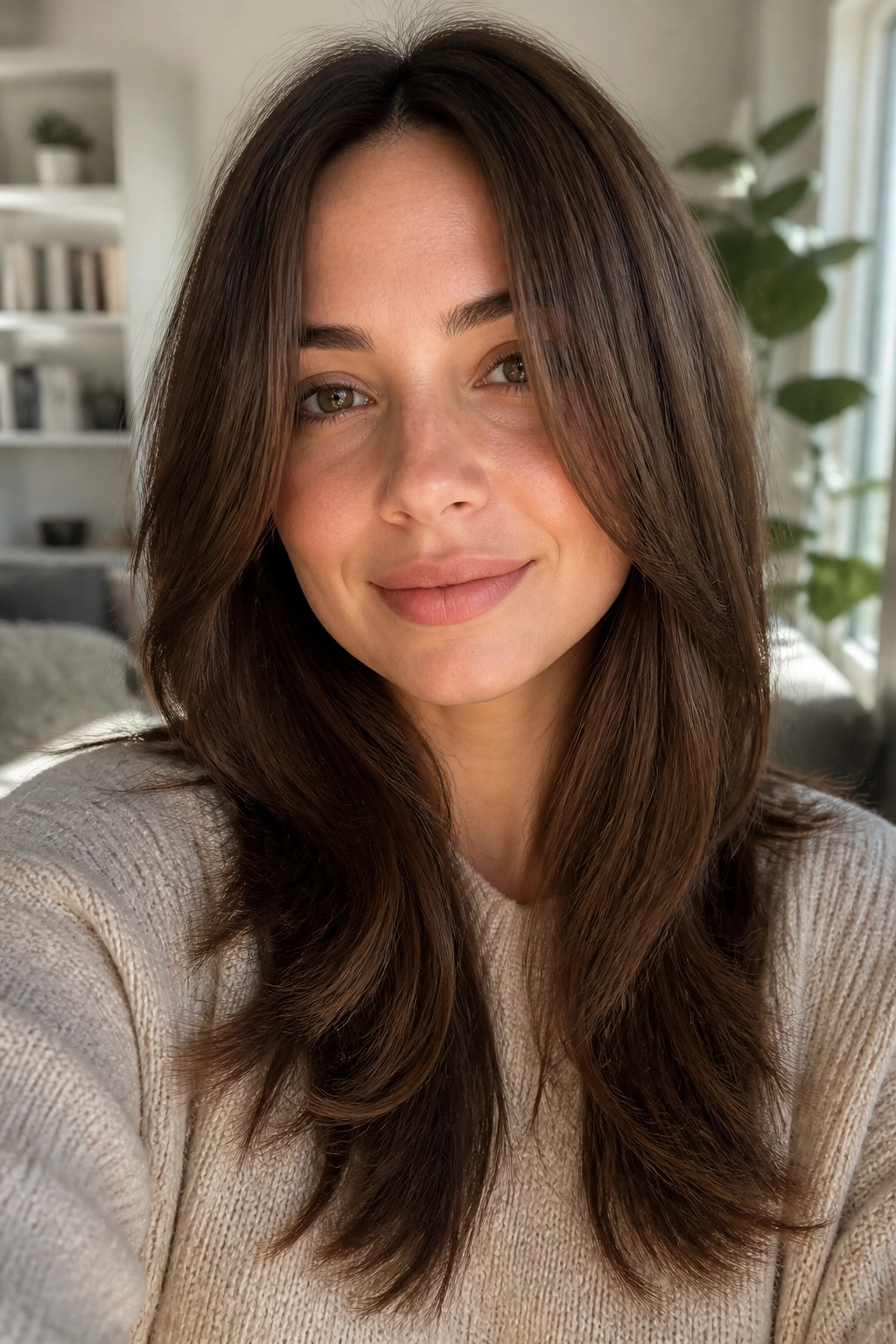
The easiest mistake with long layers is starting them too high. If the shortest pieces land right at the cheeks, the haircut can add width where you do not want it.
Why This Works
Long layers that begin below the chin keep the eye moving downward instead of outward. That little difference changes everything. The face still has softness, but the cut stops the hair from ballooning around the middle of the face.
This shape is especially good if you like to wear your hair loose and want movement without committing to bangs. It also plays nicely with blowouts, loose waves, and straight hair that needs a bit of life.
- Ask for layers that start 2 to 3 inches below the jawline.
- Keep the front pieces grazing the mouth or collarbone.
- Leave enough weight at the bottom so the ends do not look wispy.
Best tip: if your stylist wants to shorten the front layer to the cheekbone, ask them to leave it longer. That one change can save the whole shape.
2. Collarbone Lob with Curtain Bangs for Round Faces

This is one of those haircuts for round faces that looks expensive even when it’s not trying to. The collarbone length gives the face a vertical line, and curtain bangs split the width right at the center, which is where a round face usually benefits most.
The key is softness. Curtain bangs should sweep away from the middle and land somewhere between the cheekbone and lip, not sit as a blunt little shelf across the forehead. If they’re too short, they can make the top half of the face feel heavy. If they’re too thick, they start acting like a wall.
I like this cut on hair that has a little bend in it. Straight hair can still wear it, but the shape wakes up fast with a blow-dry brush or a large round brush. You want the ends to curve, not flip into a hard bend.
It’s polished without feeling stiff. That’s the appeal.
3. Textured Shoulder-Length Shag
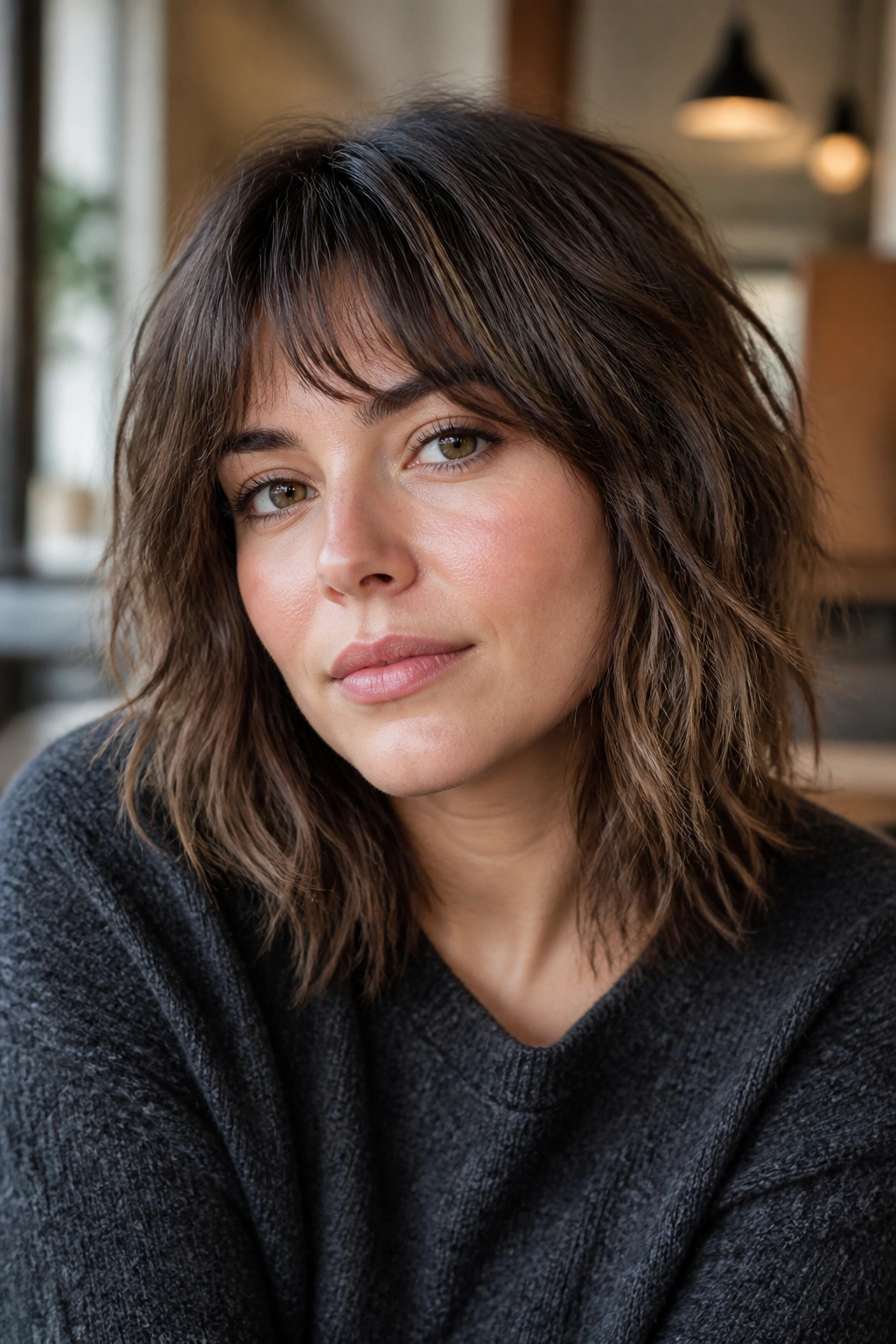
A shag can be a gift for a round face, but only when the layers are placed with some restraint. Too much width at the cheeks and it turns into a halo. Too little, and you lose the point of the cut.
Why does it work? Because the shag breaks up the roundness with uneven lengths and air between the layers. The shape feels looser, less neat, and that looseness is doing real visual work. The face doesn’t sit inside one smooth circle anymore.
How to Style It
- Rough-dry the roots first so they don’t lie flat.
- Use a small amount of mousse or curl cream, not both.
- Scrunch or bend the ends with your hands instead of over-brushing them.
A shag is not the cut for someone who wants perfect symmetry every morning. It’s for someone who likes hair that moves when they do.
4. Angled Bob with a Longer Front
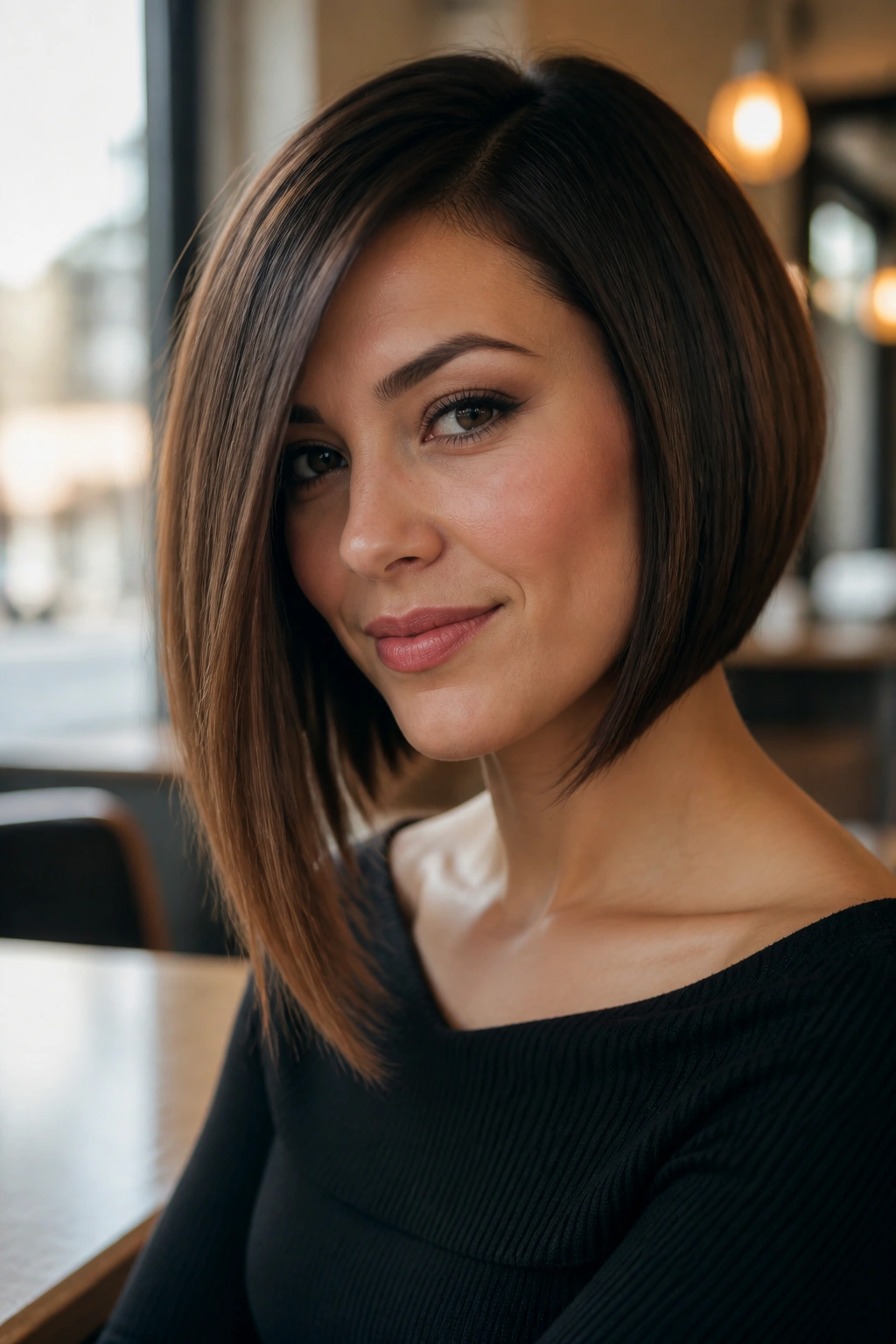
A straight bob that ends at the jaw can look boxy on a round face. An angled bob fixes that by shifting the line forward and down. Shorter in the back, longer in the front. Clean. Sharp. No confusion.
The angle gives the eye a path to follow, and that path stretches the face without making the haircut feel severe. If the front pieces hit just below the jaw, the shape tends to read more elegant than blunt. If they stop too high, the angle loses its job.
This is one of my favorite options for someone who wants structure but not fuss. It works on straight hair, lightly wavy hair, and thick hair that needs a shape with some bite.
If your face feels fuller at the cheeks, keep the front section a touch longer than you think you need. A little extra length can make the whole cut behave better.
5. Side-Part Pixie Cut
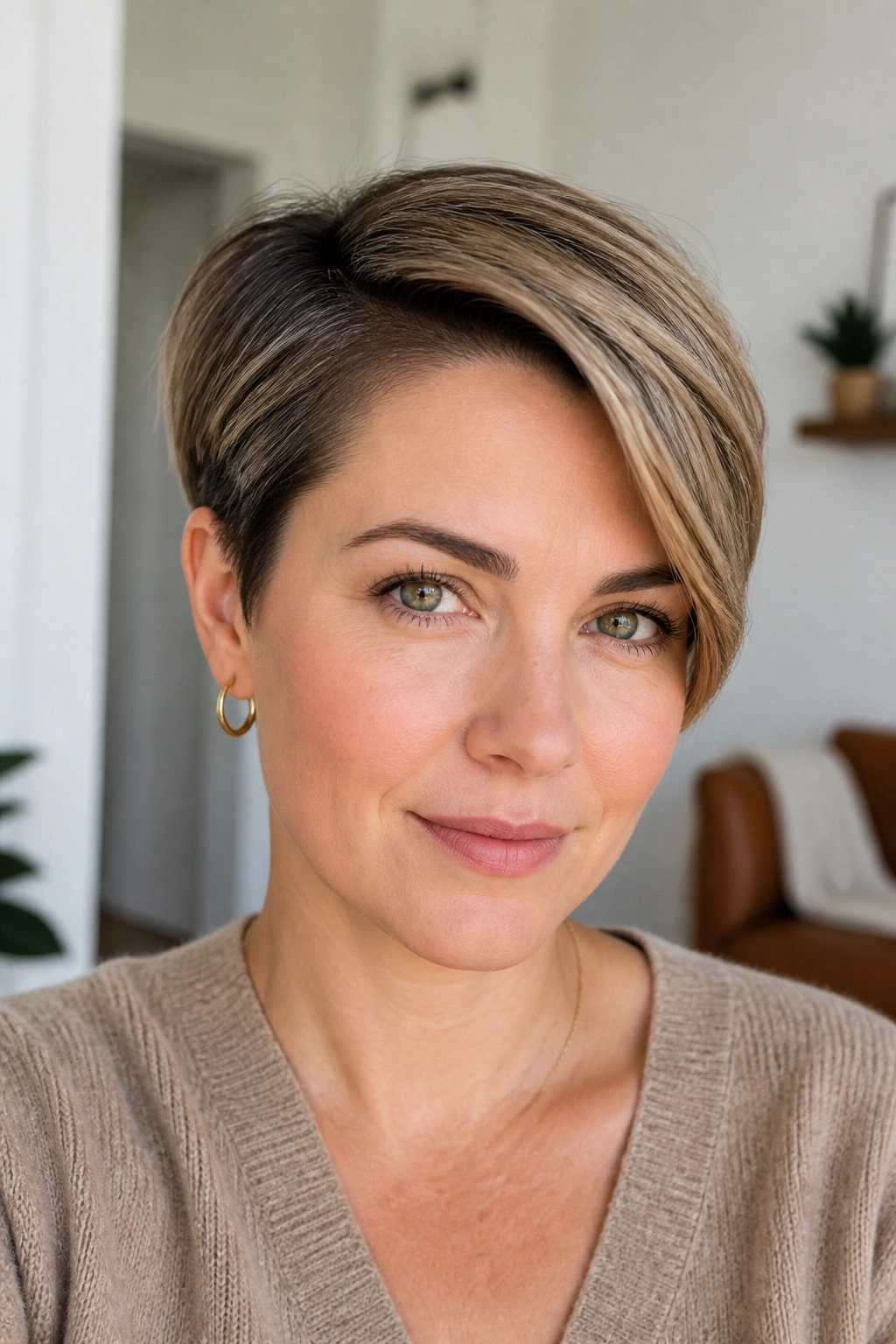
A pixie is not automatically too short for a round face. The problem is usually the shape, not the length. A side-part pixie with longer top layers and neat sides can look sharper than hair that hangs around the jaw.
The side part creates asymmetry, which is useful here. Instead of framing both cheeks the same way, it sends the eye across the forehead and up toward the crown. That small lift changes the proportions fast.
This cut loves a little styling paste or lightweight pomade. Work it through the top, then sweep the front slightly up and over. Keep the sides controlled, but not tight. If the sides are clipped too close to the face, you lose the softness that makes the style flattering.
It’s a good pick when you want something short but still feminine, modern, and not fussy.
6. Soft Wolf Cut

The wolf cut can go wrong in a hurry on a round face if it’s too heavy at the sides. The soft version solves that by keeping the crown airy and the perimeter a bit broken up.
Unlike a classic shag, a soft wolf cut usually has a little more length at the back and a little more edge around the top layers. That means you get height near the crown and movement around the cheek area without filling the face with bulk.
It’s a strong choice for medium to thick hair, especially if you already have wave or bend. Straight hair can wear it too, but it needs a bit of styling to show the shape. A diffuser, a few bends with a flat iron, or even a quick twirl with a round brush makes a big difference.
If you like hair that feels slightly wild but still intentional, this is the one.
7. Butterfly Cut with Cheekbone Layers
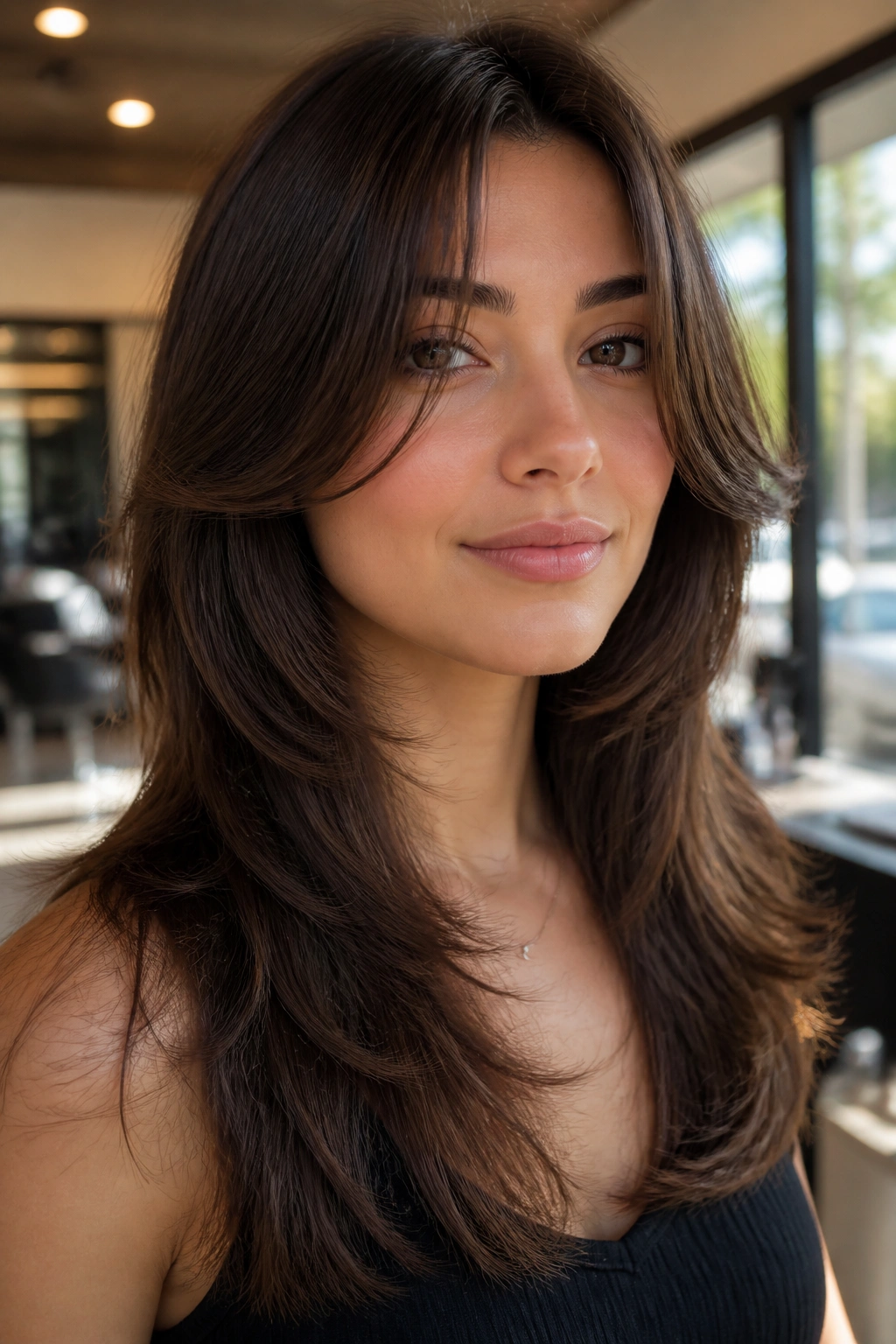
The butterfly cut is built for movement, and that movement can be very kind to a round face when the shortest layers are placed well. The long layers keep the length, while the upper layers flick away from the cheeks and around the face.
What Makes It Different
The whole point is illusion. You keep the long hair feel, but the face-framing layers create lift and separation around the top half of the head. That helps the face look longer without chopping off the bottom length.
- Ask for the shortest layers to hit at or just below the cheekbone.
- Keep the front pieces soft, not choppy.
- Let the lower layer stay long enough to skim the chest or shoulder.
Pro tip: this cut looks best when the layers are visible. If the hair is cut too bluntly, you lose the fluttering effect that makes it work.
8. Blunt Bob with a Deep Side Part
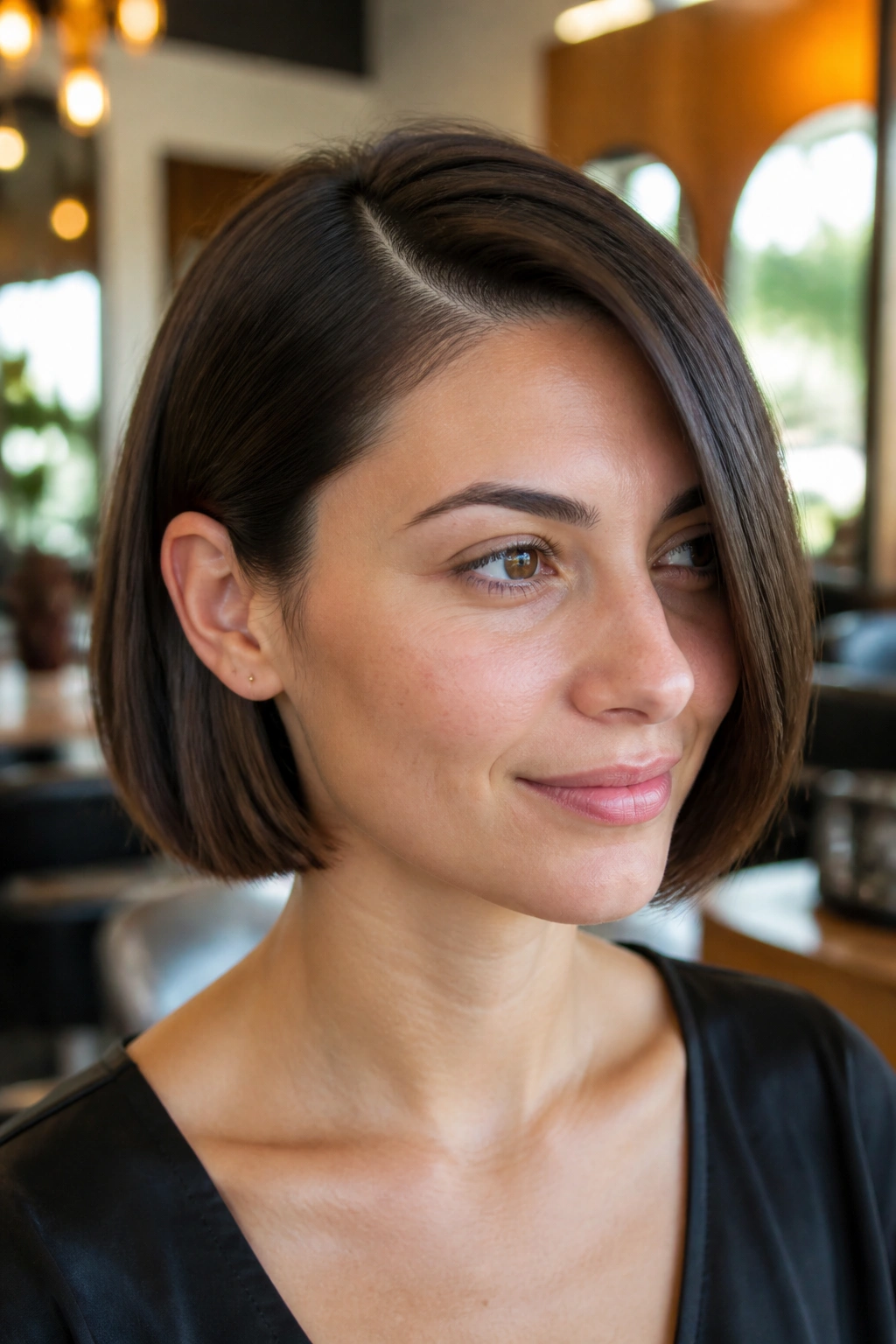
A blunt bob can work on a round face. I know, that surprises people. The trick is that the part and the finish need to do some of the heavy lifting.
A deep side part interrupts the horizontal line of the cut and gives the face a diagonal line instead. That diagonal matters. It stops the bob from reading like a perfect circle around the jaw. The blunt edge still gives polish, but the part keeps it from feeling too even.
This is a good option if you have straight hair or a smooth blowout habit. It’s also strong on thicker hair because the blunt end gives the style a dense, expensive feel. The only caution: keep the length at or just below the chin. Too short, and the width comes back.
Sharp can be good. You just need the angle.
9. Long Straight Cut with Invisible Layers
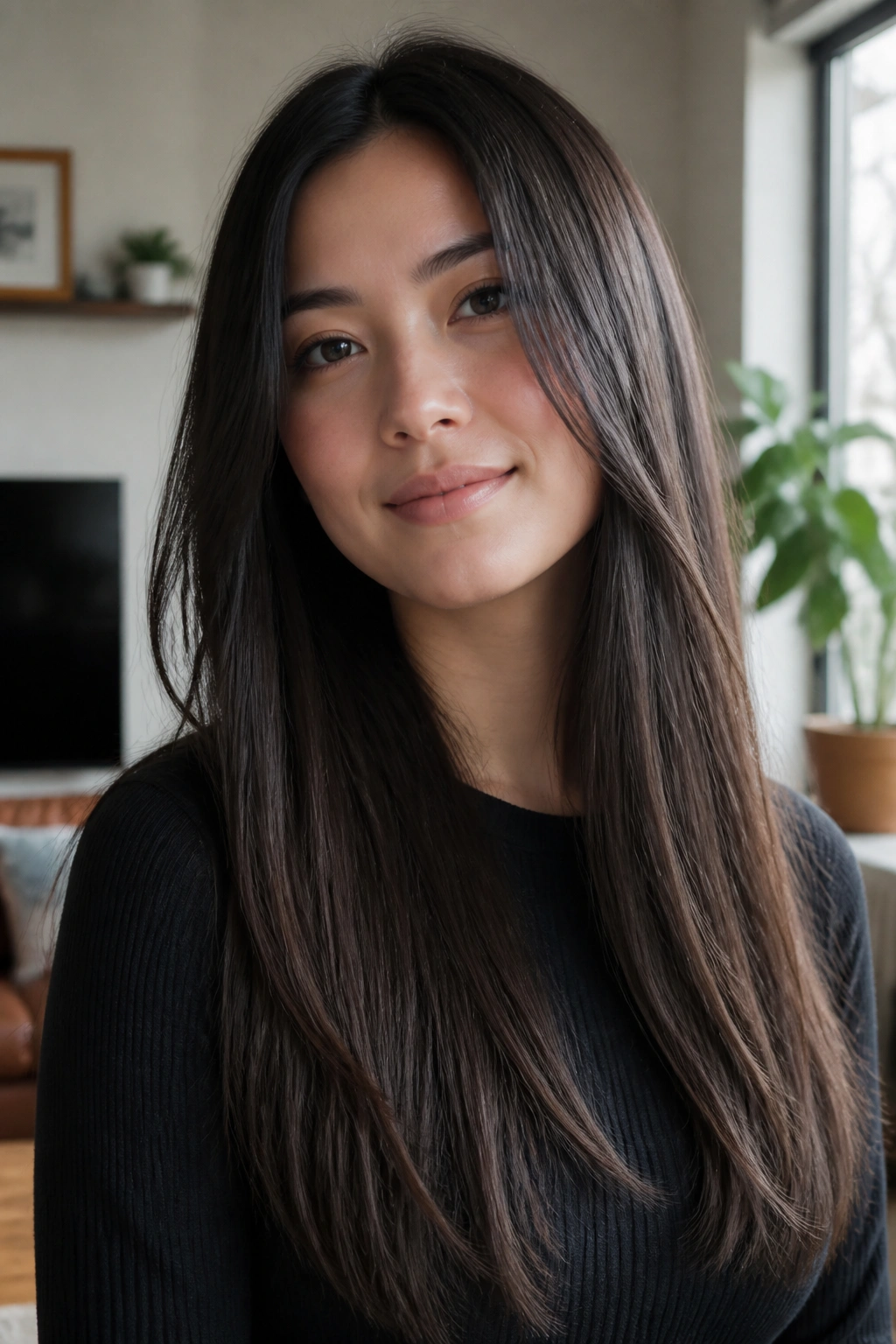
Do you want length without that heavy curtain effect that some long cuts get? Invisible layers are the answer.
The cut looks almost one-length from the outside, which is the appeal. Inside the shape, though, there’s enough lightness to keep the hair from flattening the sides of the face. That matters on a round face because heavy, solid hair can press straight across the cheeks and make the face feel wider.
How to Ask for It
Tell your stylist you want:
- A mostly straight outline
- Internal layers for movement
- Face-framing pieces that start below the cheekbone
- The ends kept full, not shredded
This is one of the easiest styles to live with if you like low-drama hair. It air-dries well, blow-dries well, and grows out without a weird shelf line.
10. Wavy Lob with Face-Framing Pieces

There’s a reason this cut shows up so often on round faces: it’s friendly. Not lazy. Friendly. The collarbone length gives enough length to elongate the face, and the face-framing pieces soften the line near the cheeks.
A wavy lob looks best when the waves are loose and irregular rather than perfectly curled. Tight ringlets at the cheeks can make the face feel fuller. Gentle bends, especially around the ends, keep the line light.
This cut is a sweet spot for people who want to air-dry part of the time and still look put together. A little salt spray, a bit of cream, and a rough bend with a flat iron if needed — that’s usually enough.
If you have fine hair, don’t overload it with product. A wavy lob can go limp fast if the styling cream is too heavy.
11. Asymmetrical Bob
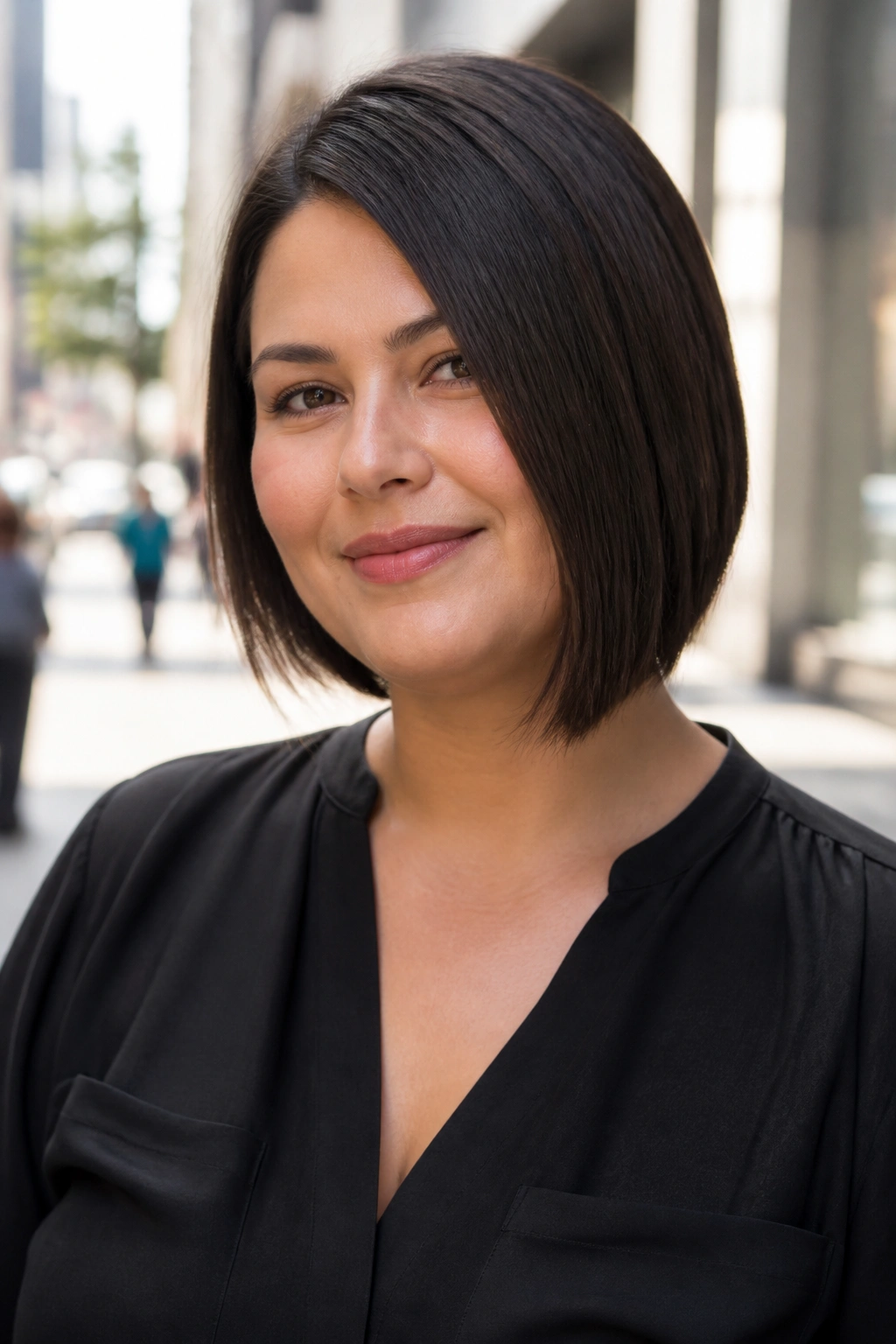
I like an asymmetrical bob because it refuses to sit still. One side longer than the other creates tension, and that tension breaks up the roundness of the face in a clean way.
The difference does not need to be dramatic. In fact, a subtle asymmetry often looks better than a huge one. Think half an inch to an inch of difference, not a dramatic editorial cut unless you really want that look.
This style is especially good on straight hair, where the line shows clearly. It can also help finer hair feel more deliberate, because the cut itself supplies the interest. Keep the ends neat and avoid piling too much volume on both sides of the face.
There’s a little bit of attitude here. That’s the point.
12. Chin-Length Bob with Crown Volume
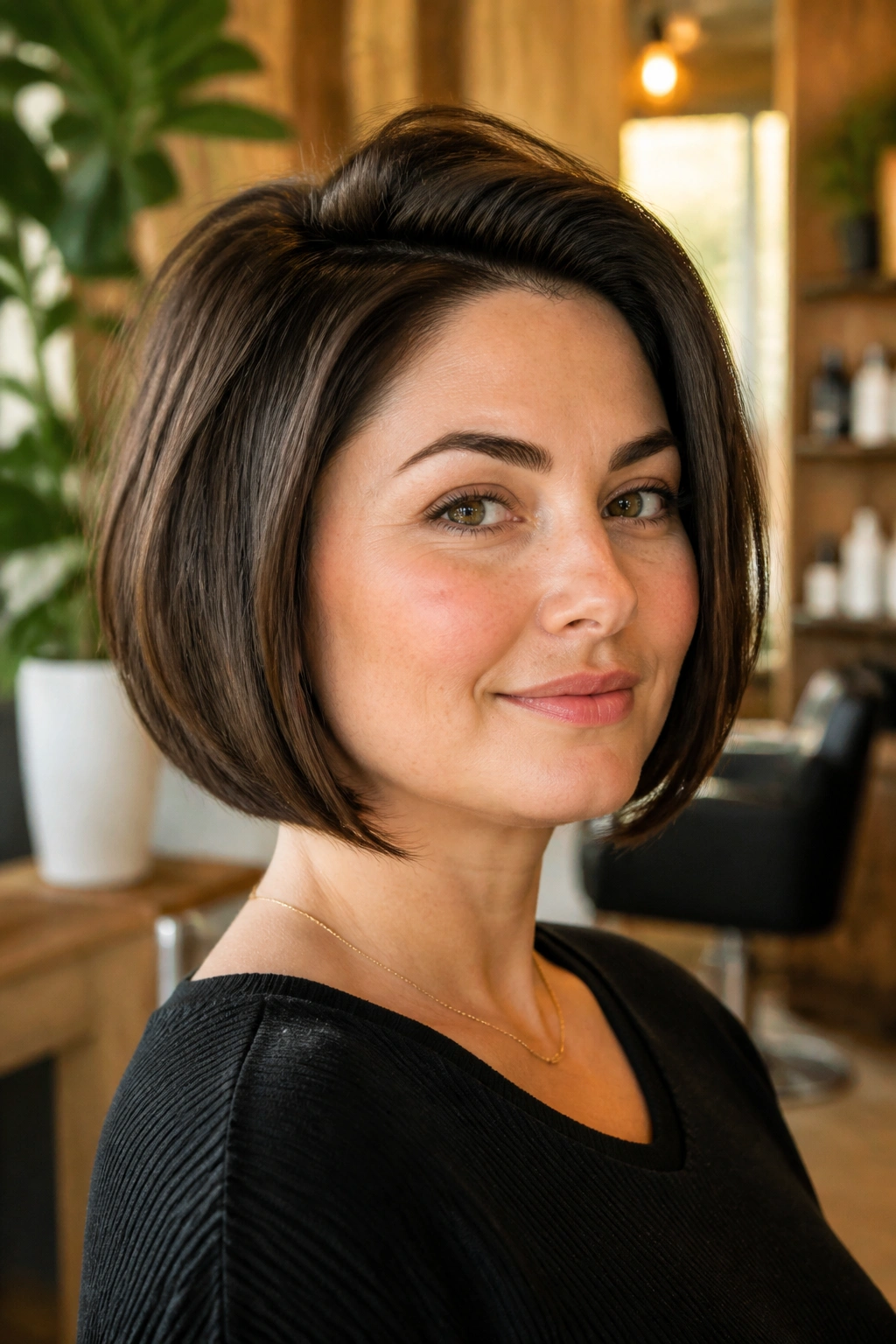
A chin-length bob can flatter a round face when the crown has lift and the sides stay controlled. Without that lift, the cut can widen the cheeks. With it, the whole shape feels taller.
The crown volume pulls the eye upward. That’s the real trick. A small amount of root spray, a round brush, or even a quick blast of heat at the roots changes how the haircut sits on the face.
This style suits fine to medium hair especially well because the shorter length gives the ends some body. It’s also a good pick if you want a clean, simple shape that still looks styled. Keep the perimeter neat, but don’t make it puff out at the cheeks.
A chin-length bob is not the most forgiving cut if the proportions are off. When it’s right, though, it looks crisp and fresh.
13. Curly Layered Cut
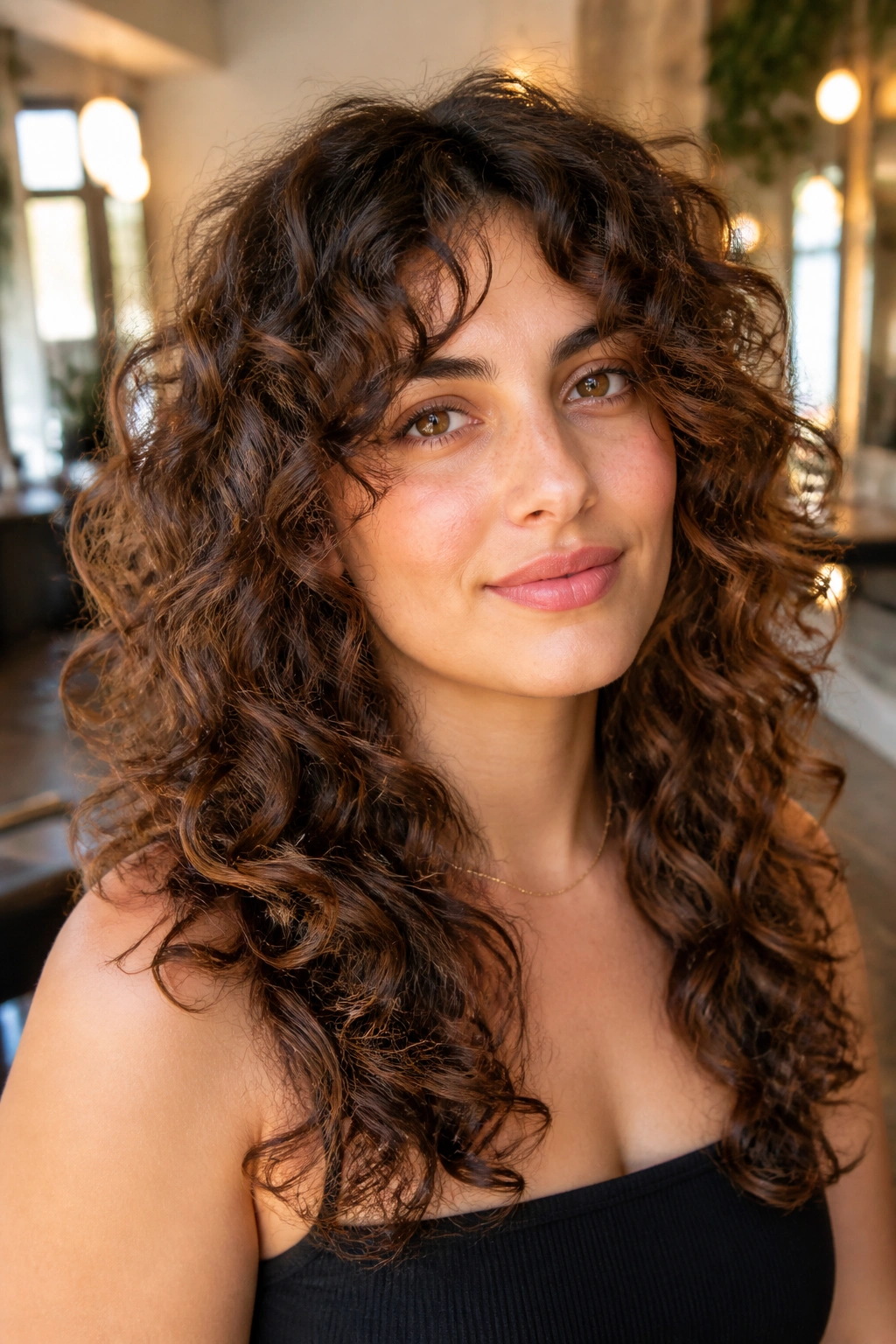
Curly hair needs room to move, and that’s exactly why layers matter on a round face. A good curly layered cut removes the side bulk that can make the face appear wider, while keeping the spring and shape of the curl pattern intact.
Why It Works on Curly Hair
Curly cuts should be shaped around the curl, not forced into a straight haircut and then hoped for. If the layers are placed while the hair is dry and in its natural state, the curls stack more cleanly and fall with less side spread.
A few things help:
- Dry-cutting or curl-by-curl shaping
- Long layers around the cheeks, not short shelves
- Enough length to let the curls drop instead of puffing out
Best tip: ask your stylist where the widest curl line should sit. If they understand that, the cut usually behaves much better.
14. Bixie Cut
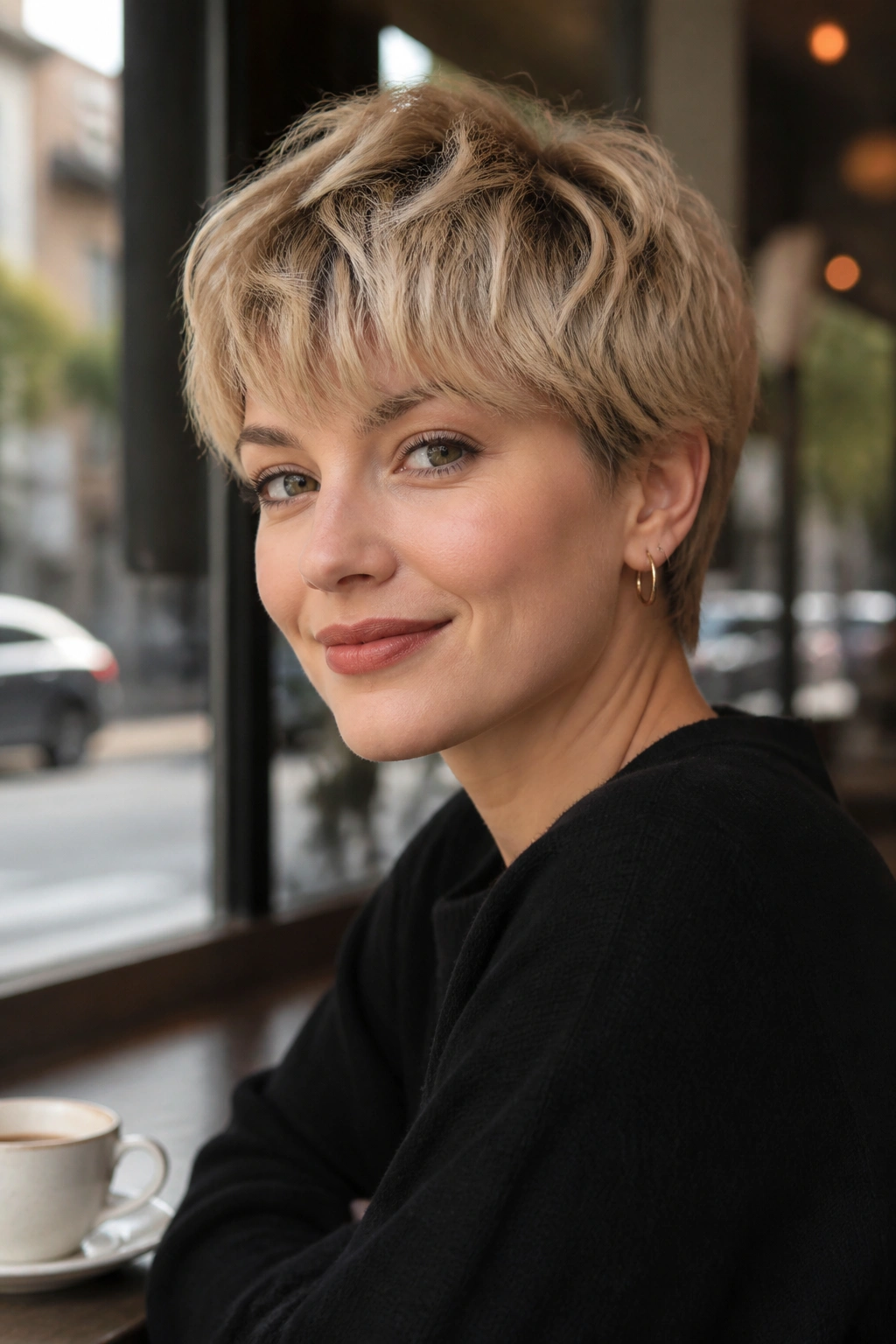
A bixie sits between a bob and a pixie, which is exactly why it can work on a round face. You get short hair energy without the hard edge of a super-short crop.
The longer top gives you a little height. The softer sides keep the face from feeling boxed in. That combination is useful if you want cheekbone emphasis but not width at the cheeks. The style also works well for people who like to run their fingers through their hair and move on with the day.
It’s a smart cut for fine hair because the shorter length gives the body more presence. But it also works on thick hair if the stylist removes enough weight through the sides and nape.
A bixie is one of those cuts that looks casual in the best way. It feels light, but not flimsy.
15. U-Shaped Long Cut
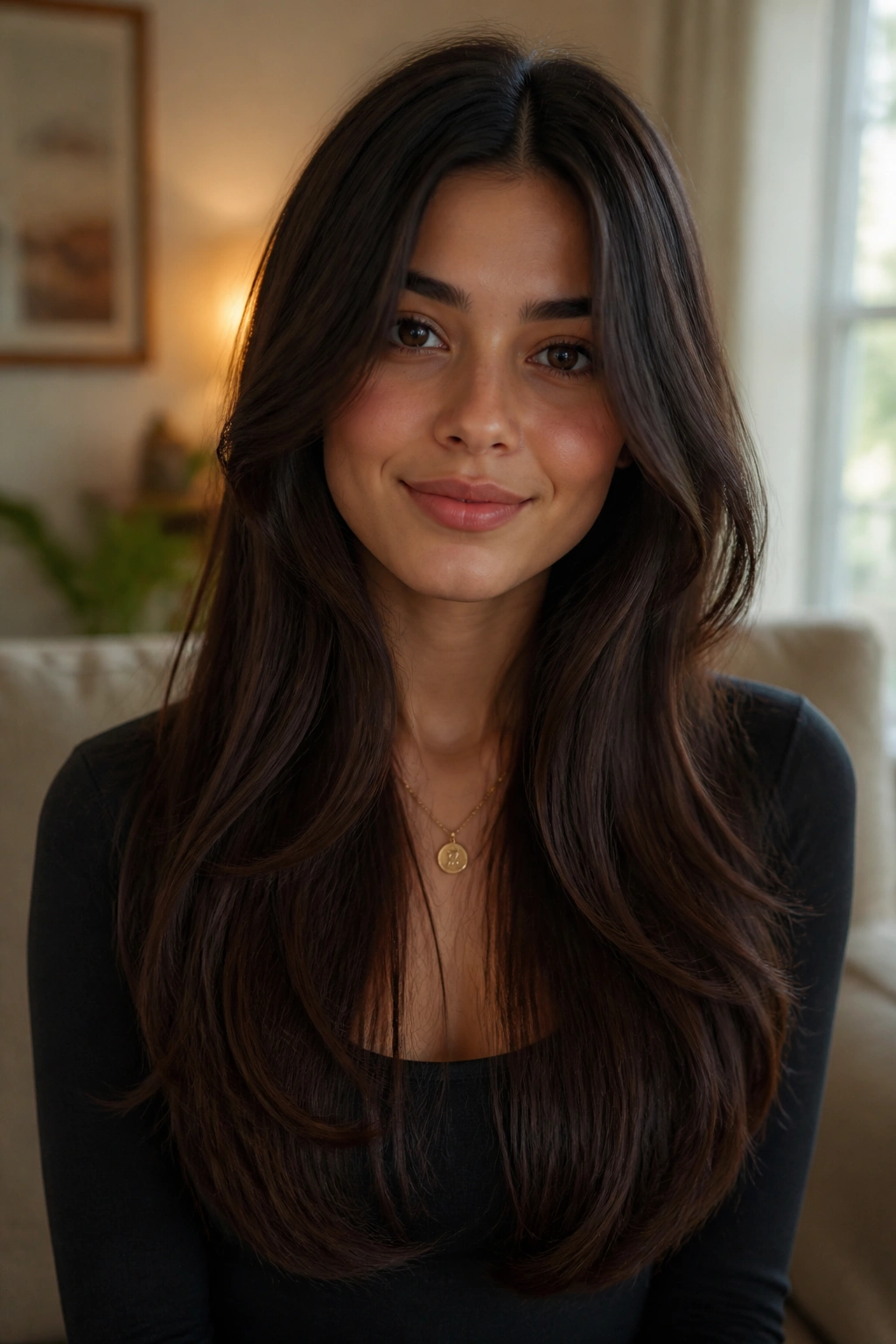
Why does a U shape matter when the hair is long? Because a blunt bottom line can feel heavy and wide, especially when the hair falls straight down around a round face.
The U shape keeps the length in the back and lets the front pieces fall a little shorter. That curve softens the silhouette without making the ends look thin. It also gives the eye a vertical path through the center of the hair, which is helpful when you want the face to look longer.
How to Ask for It
- Ask for long layers that keep a U-shaped outline
- Keep the front pieces below the cheekbone
- Avoid a sharp, flat bottom line
- Leave enough density at the ends so the hair still feels full
This is a safe bet if you love length and don’t want to lose it.
16. French Bob with Soft Fringe

A French bob can flatter a round face, but only if the fringe is handled with care. Too heavy, too blunt, too short — and the whole cut can push width straight across the forehead and cheeks.
The softer version is better. A light fringe that barely brushes the brows, paired with a bob that sits around the lip or just under the jaw, gives shape without boxing in the face. It feels airy, not rigid.
This cut shines on straight or lightly wavy hair. If your hair naturally expands a lot, you’ll need to keep the perimeter neat and the fringe thinned out enough to move. I would not ask for this shape if you want low-maintenance and high humidity in the same sentence.
Still, when it works, it has a crisp, chic edge that never feels overdone.
17. Feathered Shoulder Cut
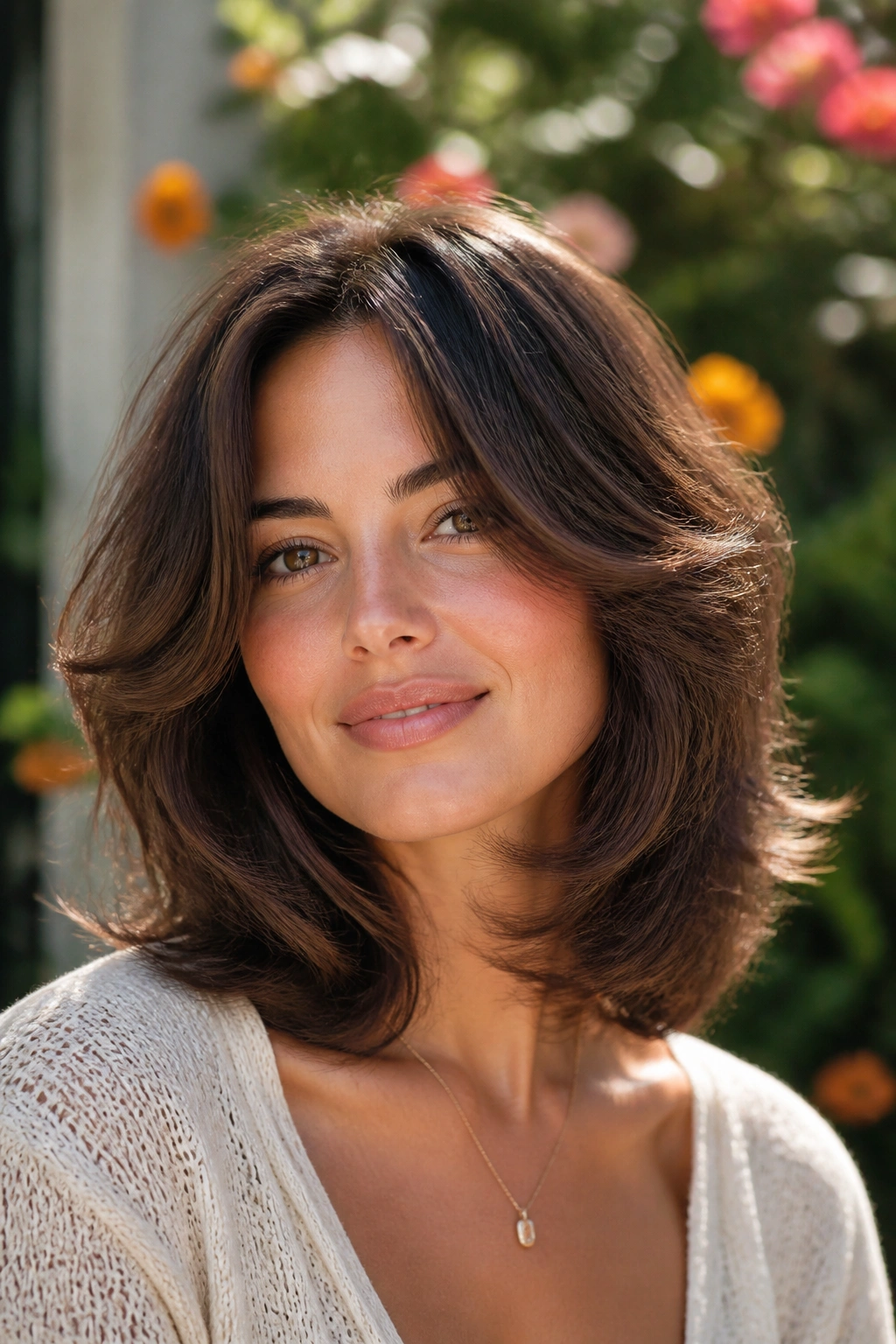
A feathered shoulder cut is one of the easiest ways to soften a round face without losing length. The feathering keeps the ends from sitting in one blunt block, which matters more than people think. Hair that stops in one solid line can make the face feel wider. Hair that breaks up softly around the shoulders feels lighter.
This cut is especially kind to thick hair. The layering removes some of the weight, but the feathered finish keeps the shape from turning fluffy. On fine hair, feathering can still work, though it needs a careful hand so the ends do not look straggly.
It also grows out in a graceful way. That matters. Some cuts look great for two weeks and then turn annoying. Feathered shoulders tend to hold their shape as they get longer, which means fewer awkward in-between days.
If you like movement, this is a safe, flattering place to land.
18. Stacked Bob
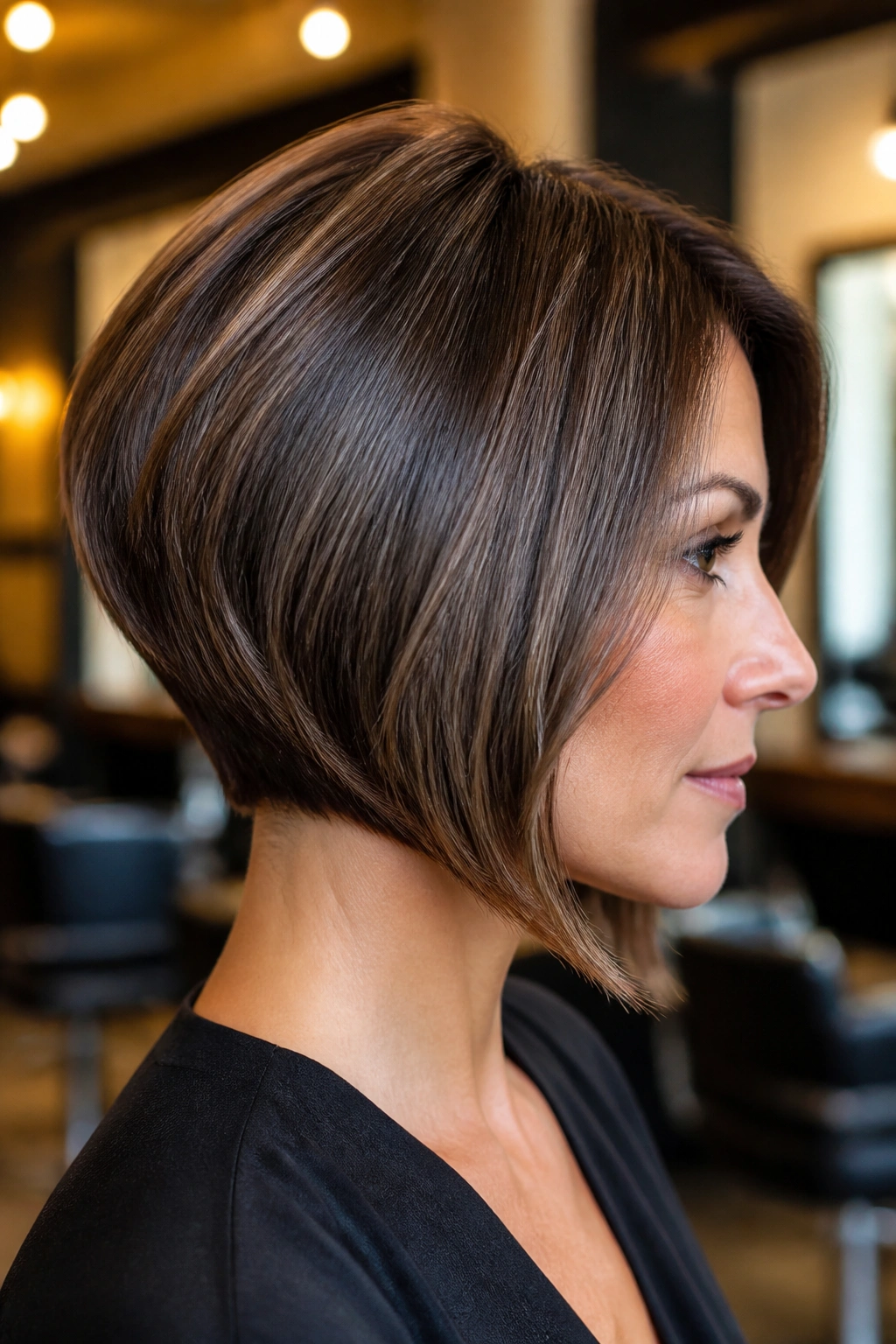
A stacked bob is all about lift in the back, and that lift can help a round face a lot when the front stays a little longer. The stacking creates a tapered shape rather than a circle. That alone makes the haircut feel leaner.
Unlike a flat bob that sits in one line, this one uses the nape to build height and stop the sides from ballooning. The back looks fuller, but the silhouette gets narrower as it moves forward. That balance is the whole point.
It’s a strong choice for fine hair because stacking can make the hair feel denser. It’s also good if you like a neat neckline and a cut that keeps its shape between salon visits. Just don’t let the front get too short or too puffy near the cheeks.
A stacked bob needs a little upkeep. Worth it, if you like structure.
19. Soft Mullet
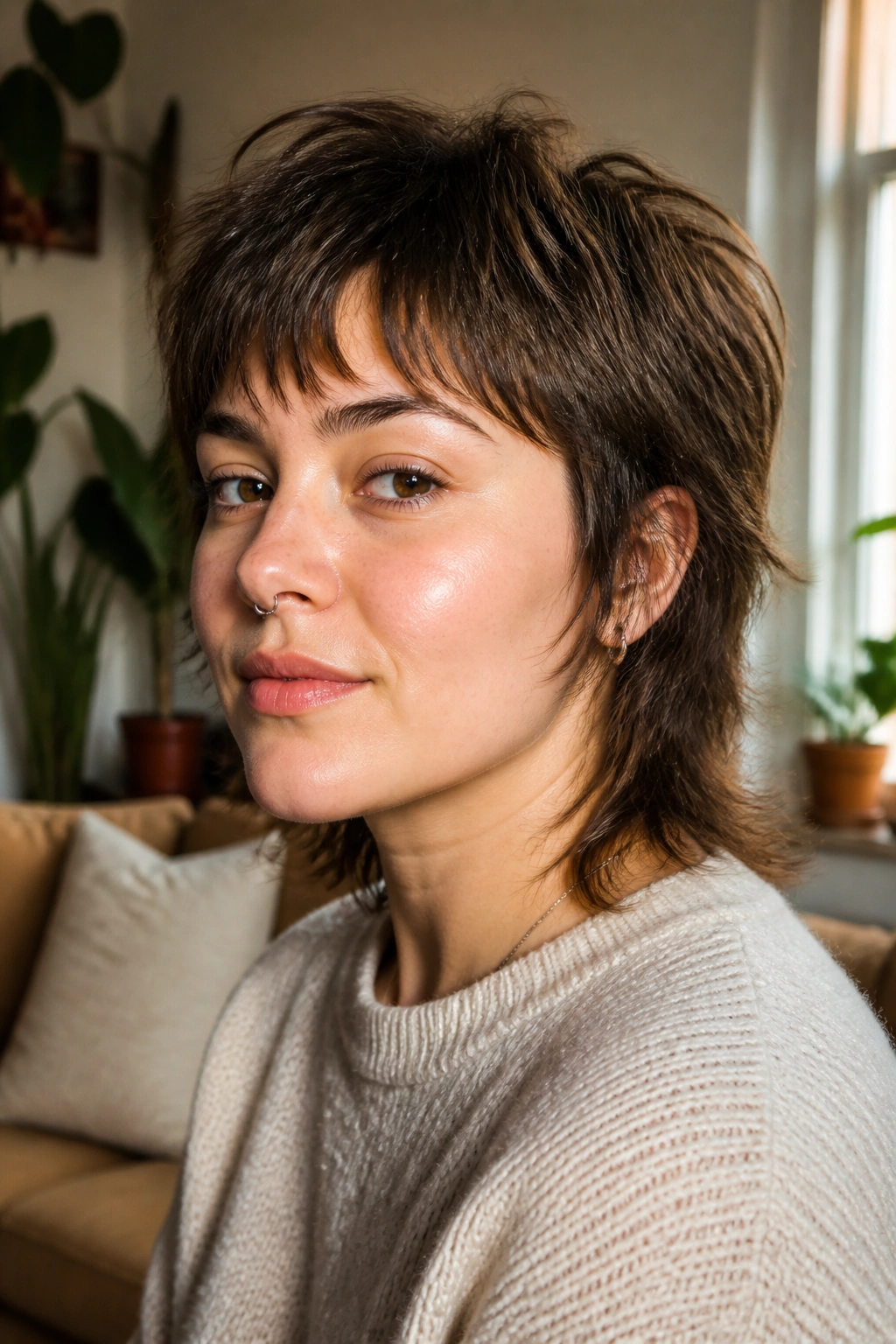
A soft mullet is not for everyone. Good. Haircuts should have opinions.
The reason it can work on a round face is that it keeps volume up top, lightens around the sides, and leaves length at the back. That setup pulls the eye vertically and keeps the face from sitting inside a perfect circle of hair. The soft version avoids the harsh, extreme edge that scares people off.
Quick Notes
- Keep the crown lifted, not bulky
- Leave the side pieces airy around the cheeks
- Don’t cut the back too abruptly
- Ask for a rounded perimeter instead of a hard point
This cut has personality, but it doesn’t need to feel costume-y. If you want movement and a little edge, it’s a strong choice.
20. Face-Framing Lob with Side-Swept Bangs
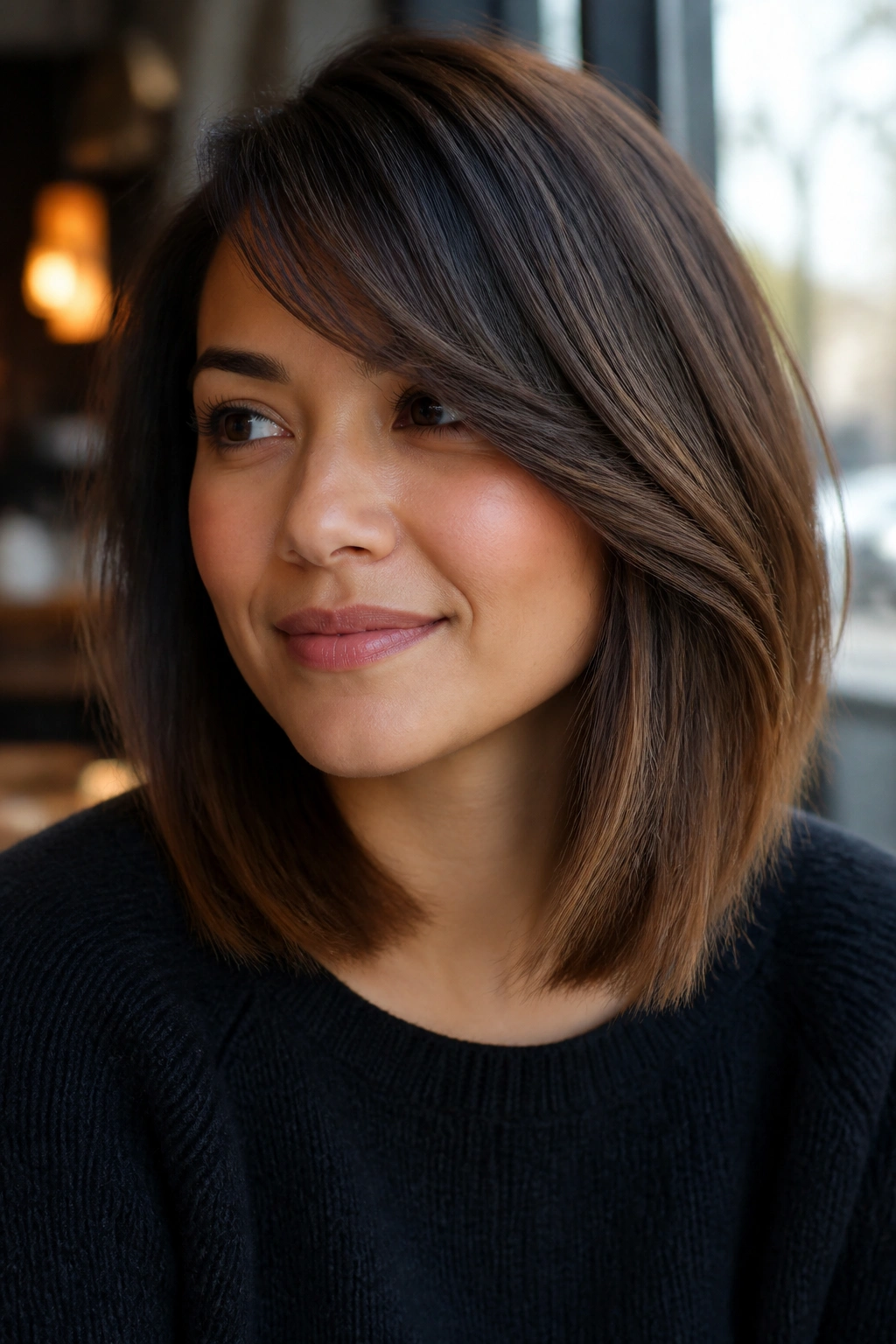
This is a smart haircut because it solves two problems at once. The lob length adds vertical line, and the side-swept bangs break up the forehead and cheek area with a diagonal move.
The bangs should not start too far forward. That’s where people go wrong. You want the sweep to feel natural, starting back enough to fall across the face instead of sitting on it. When it’s done right, the fringe guides the eye across rather than straight down the widest part of the face.
It works with straight, wavy, and lightly curly textures. The styling can change, but the shape stays useful. I especially like this for someone who wants a haircut that can be tucked behind one ear and still look intentional.
It’s an easy favorite because it doesn’t ask for much drama.
21. Razor-Cut Shag Bob

Can a bob be messy in a good way? Yes, if the texture is controlled and the ends are cut with enough softness.
A razor-cut shag bob breaks up the outline so the hair does not sit in one solid wall around the face. The razor work creates air between the strands, which helps on round faces because the sides feel lighter and less boxy. It also adds a slightly undone finish that keeps the style from looking too engineered.
How to Wear It
Use a light mousse or texture spray, then rough-dry the roots. If the hair is wavy, let the bends happen and only touch the front pieces with a round brush or flat iron. If it’s thick, ask for enough removal through the interior so it doesn’t puff outward.
This is a cut for people who like hair with a little grit.
22. One-Length Collarbone Lob with Tucked-Under Ends
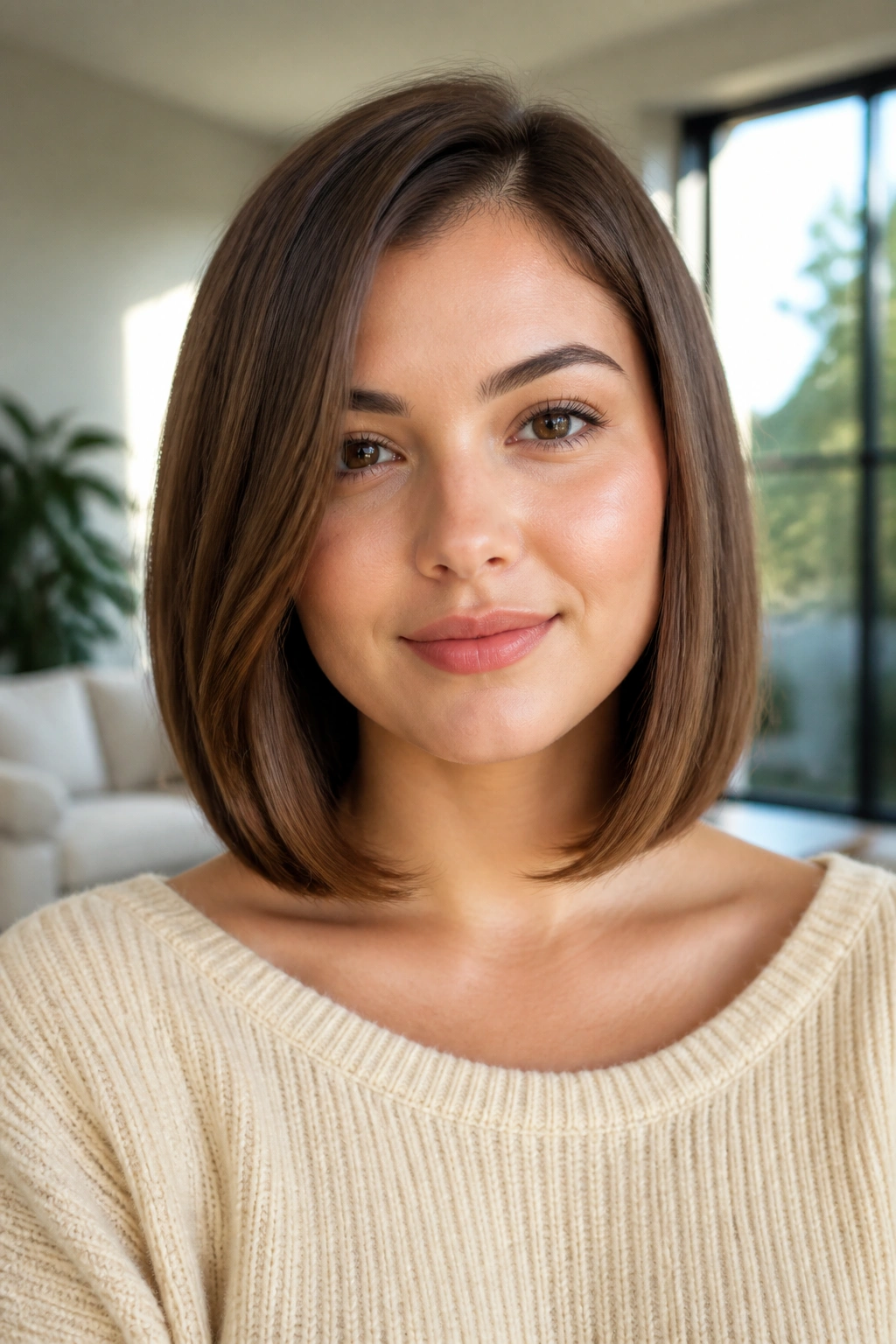
A one-length lob sounds plain, but on a round face it can be a useful shape when the ends are handled with a bit of bend. The collarbone length keeps the cut below the widest part of the face, and the tucked-under finish stops the ends from flaring outward.
I’ve always liked this for people who want polish without obvious layering. It’s neat. It’s steady. It doesn’t try too hard. The trick is the styling, not the haircut itself.
Key Details
- Keep the length grazing the collarbone
- Blow dry the ends inward with a round brush
- Ask for a soft off-center part if your face feels especially full through the cheeks
- Avoid a hard flip-out at the ends, which can widen the line
A clean lob is less flashy than some of the cuts on this list, but that’s part of why it works.
23. Tapered Pixie Crop
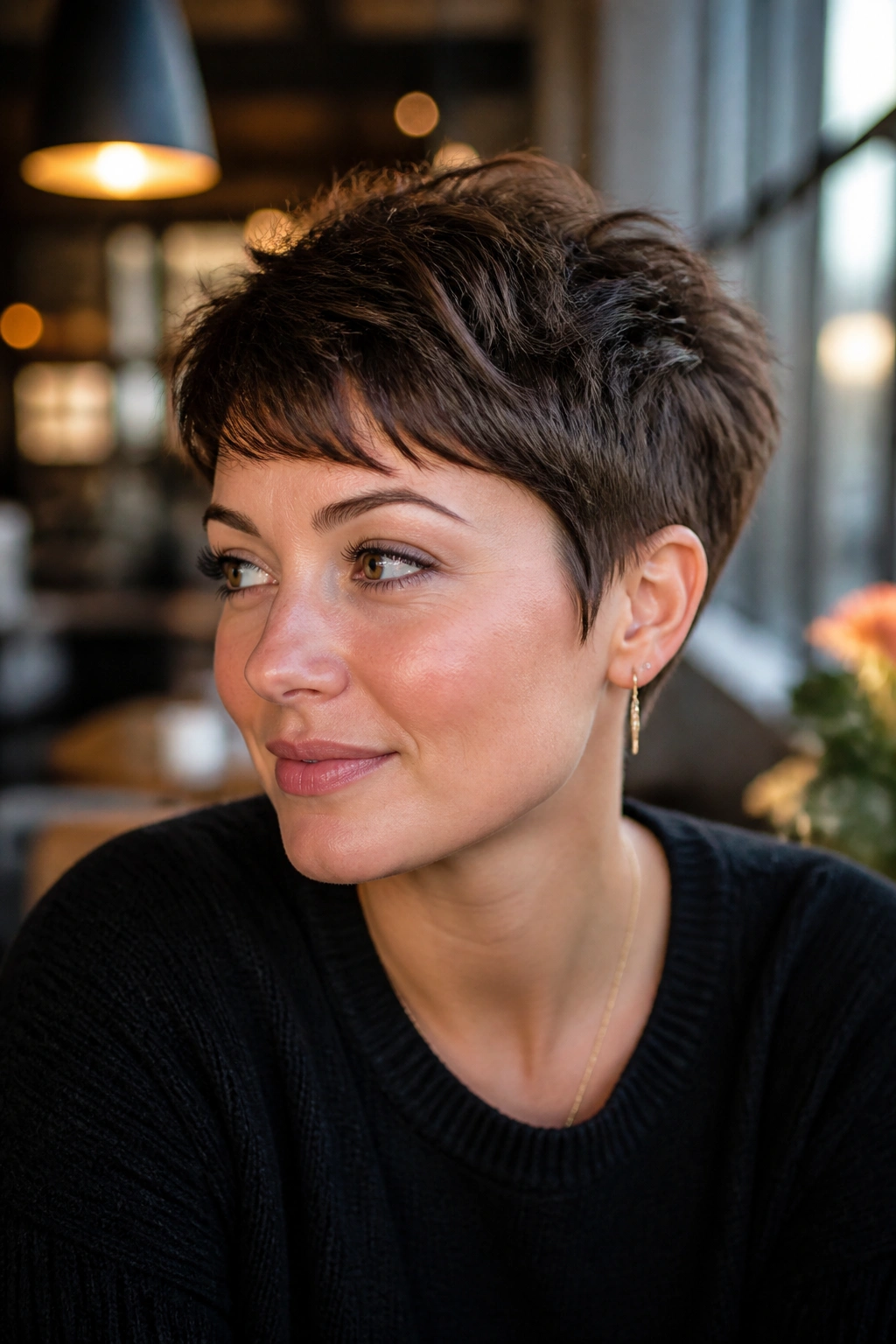
A tapered pixie crop can look fantastic on a round face when the top stays longer and the sides stay soft. The taper creates a narrow lower half, while the top gives you height and movement where you need it.
The haircut should never feel like a helmet. That’s the danger. If the sides are too tight and the top too flat, the face can end up looking broader by comparison. You want lift around the crown, a little softness at the temples, and enough length on top to sweep or piece out.
This cut is great if you want low styling time and a clean neckline. It’s also surprisingly flattering with strong brows or statement glasses because the hair gets out of the way and lets the face do the work.
Short hair can be bold. It can also be very kind.
24. Long Layered Curls
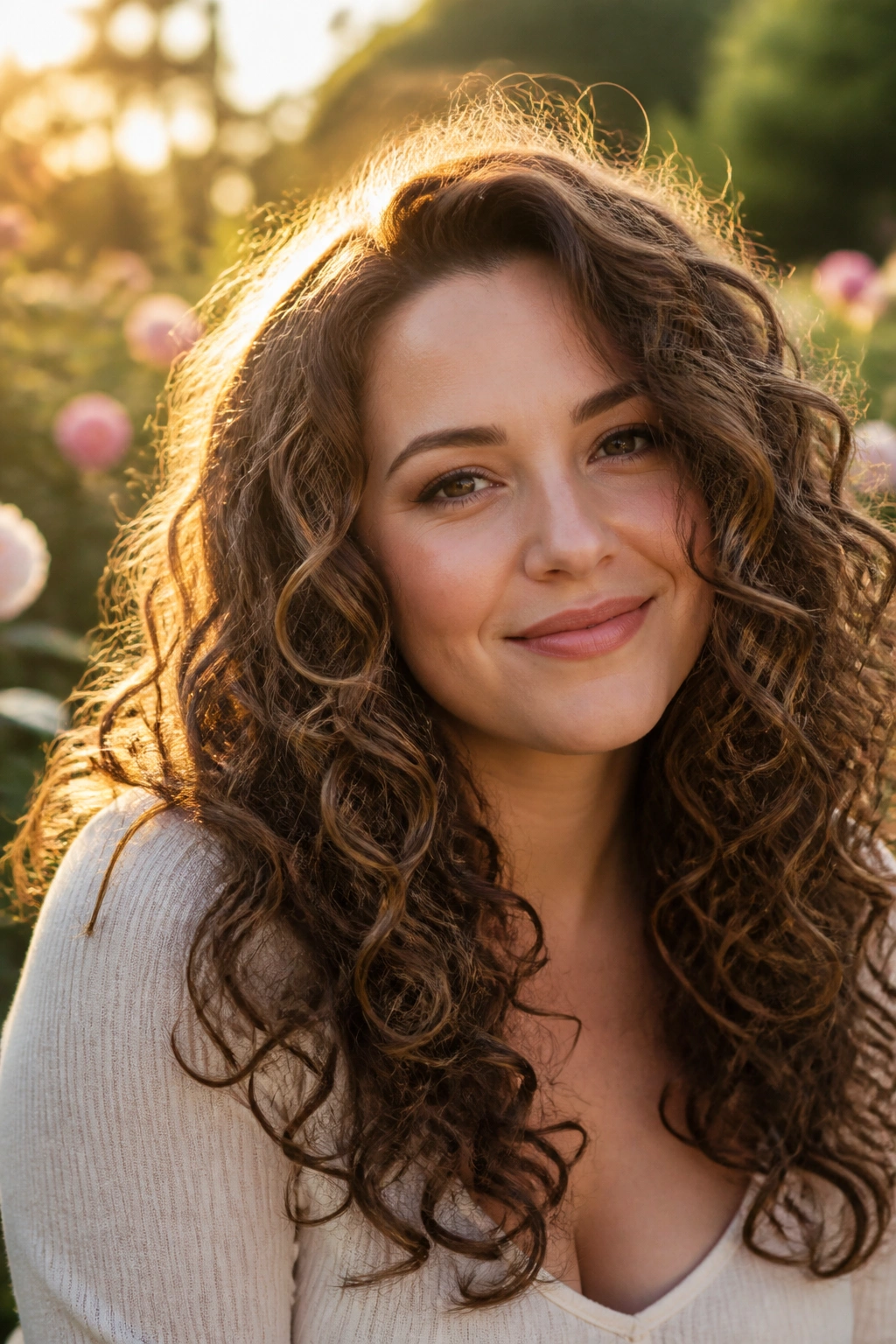
Long curls can widen a round face if they’re cut as one heavy mass. Layering changes that. It gives the curl room to fall in separate sections instead of building one big circle around the head.
The goal is not to take all the weight out. That creates frizz and triangle shape. The goal is to keep enough length for the curls to drop while removing enough bulk so the side silhouette stays soft. Dry cutting usually helps here, because curls lie to you when they’re wet.
This cut works best when the top is not over-thinned. You want the curls to stack, not spread. A curl cream with good hold and a diffuser can keep the shape clean without freezing it into place.
If your curls feel like they take over your face, this shape gives them a better job.
25. Hush Cut
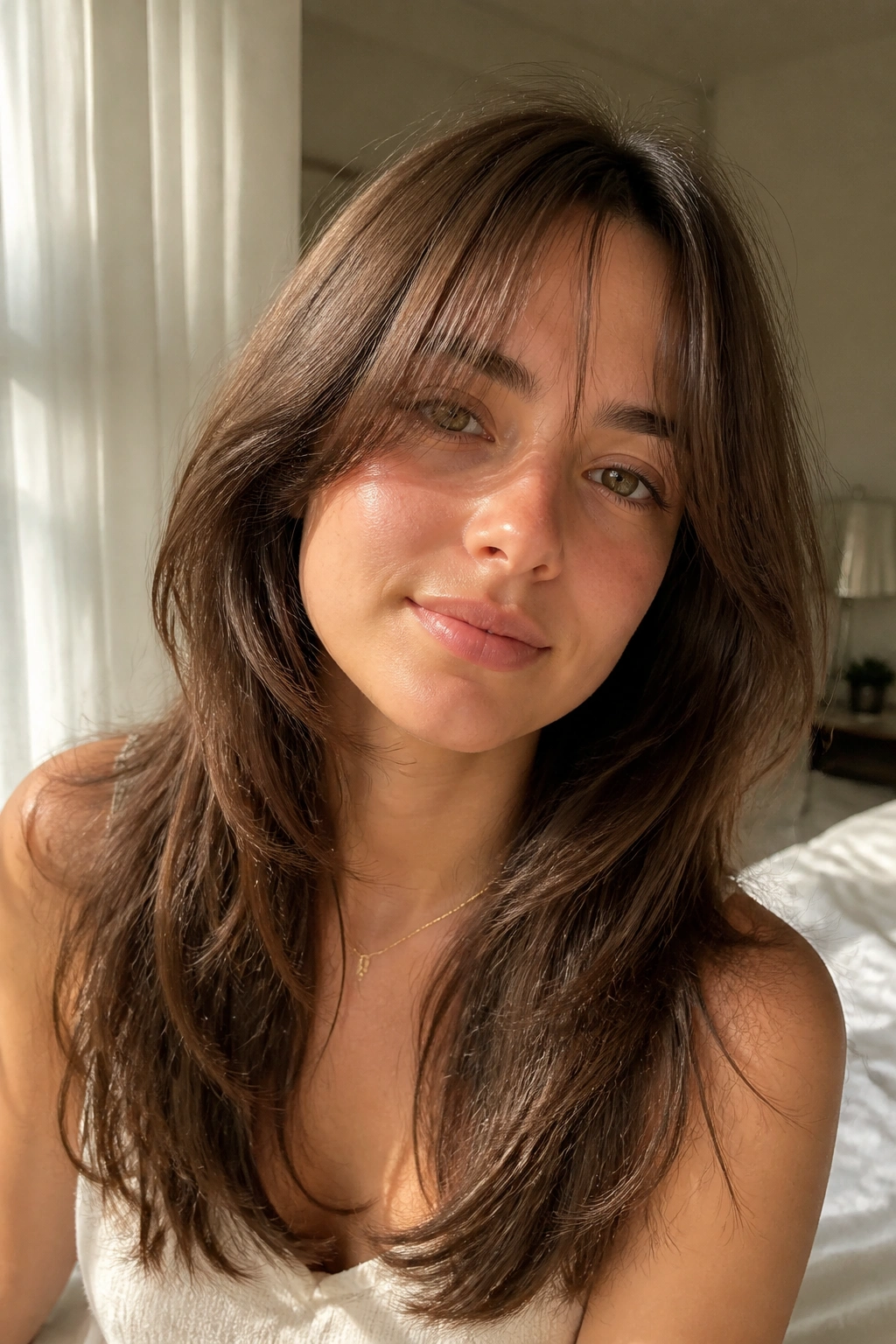
The hush cut has a quiet, airy look that suits round faces because it lightens the hair around the face without building a hard frame. The layers are soft, the ends are broken up, and the fringe area usually falls in a loose, almost sleepy way.
Why It Flatters
The cut keeps fullness lower and movement higher. That combination matters. Round faces tend to look best when the sides are not too dense, and the hush cut does that without making the hair feel thin or chopped up.
- Ask for soft, internal layers
- Keep the front pieces light and long
- Avoid a blunt fringe line
- Leave enough weight through the bottom so the cut does not look empty
Best tip: this one looks better when it is a little imperfect. If every strand is forced into place, the softness disappears.
26. Graduated Pixie Bob
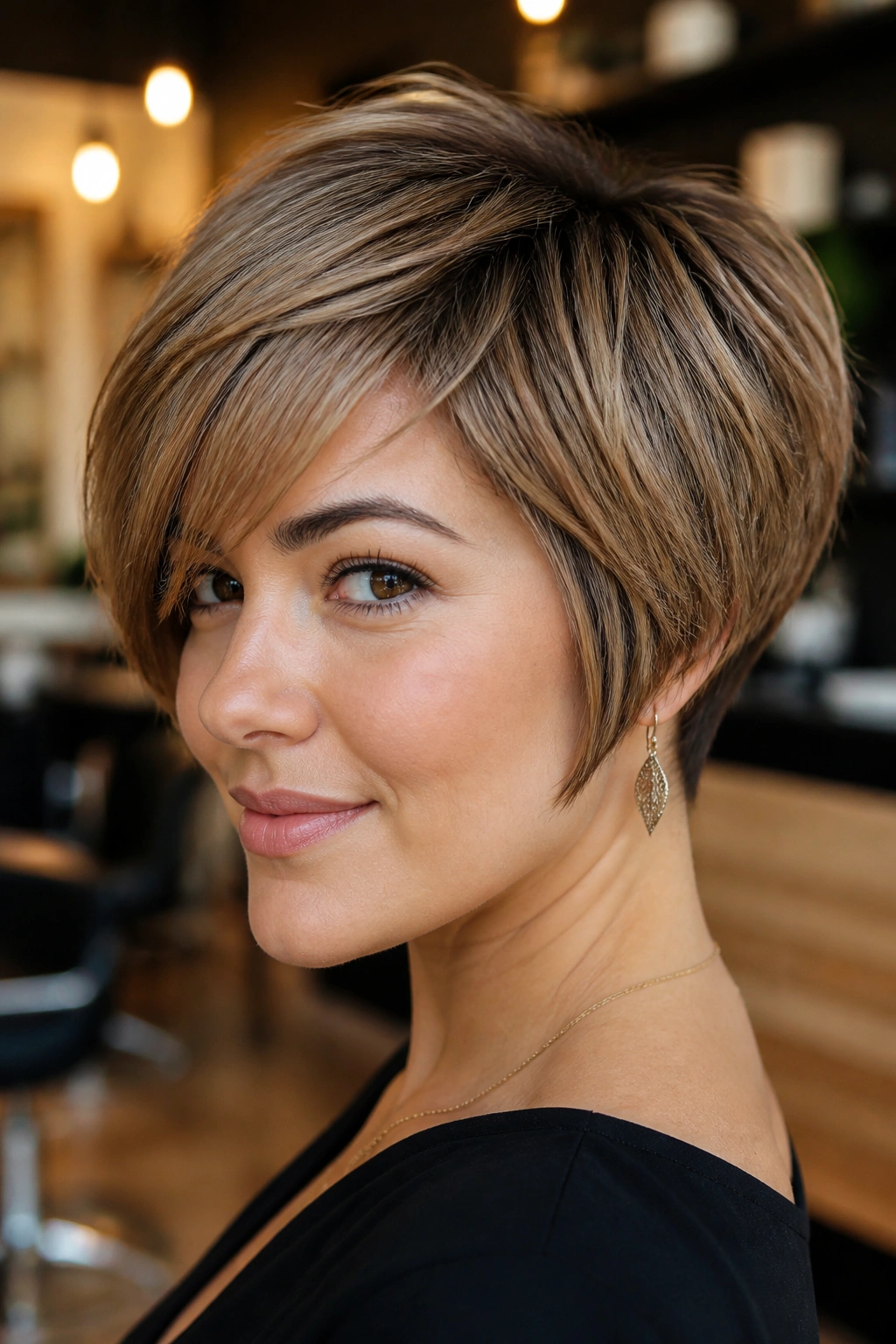
A graduated pixie bob is a tidy little shape with real structure. The back sits shorter and higher, while the front keeps enough length to soften the face. That gradation helps a round face by taking bulk out of the sides and giving the crown a lift.
I like this on fine hair in particular. The shorter layers in the back make the hair look fuller, and the longer front keeps the cut from feeling too abrupt. It’s a neat compromise for anyone who wants the ease of short hair but not the severe look of a classic crop.
This cut can go wrong if the graduation is too rounded. Then it starts echoing the face shape instead of changing it. Keep the silhouette slightly angular, and you’re in good shape.
It’s practical, but not dull.
27. Mid-Length Cut with Bottleneck Bangs

Bottleneck bangs are a clever shape for round faces because they stay narrow in the center and open wider as they curve out toward the cheekbone. That keeps the forehead framed without building a solid wall across it.
The mid-length cut gives the rest of the hair room to move around the shoulders, which helps balance the fringe. You get softness at the top and length below, a useful combination for rounder features.
How to Ask for It
- Keep the center of the bangs shorter than the outer corners
- Let the longest pieces hit around the cheekbone
- Pair the fringe with medium layers, not blunt ends
- Style the bangs with a round brush so they bend away from the face
This is a better bang choice than many people expect. It feels modern without needing much fuss.
28. Choppy Lob with Beveled Ends
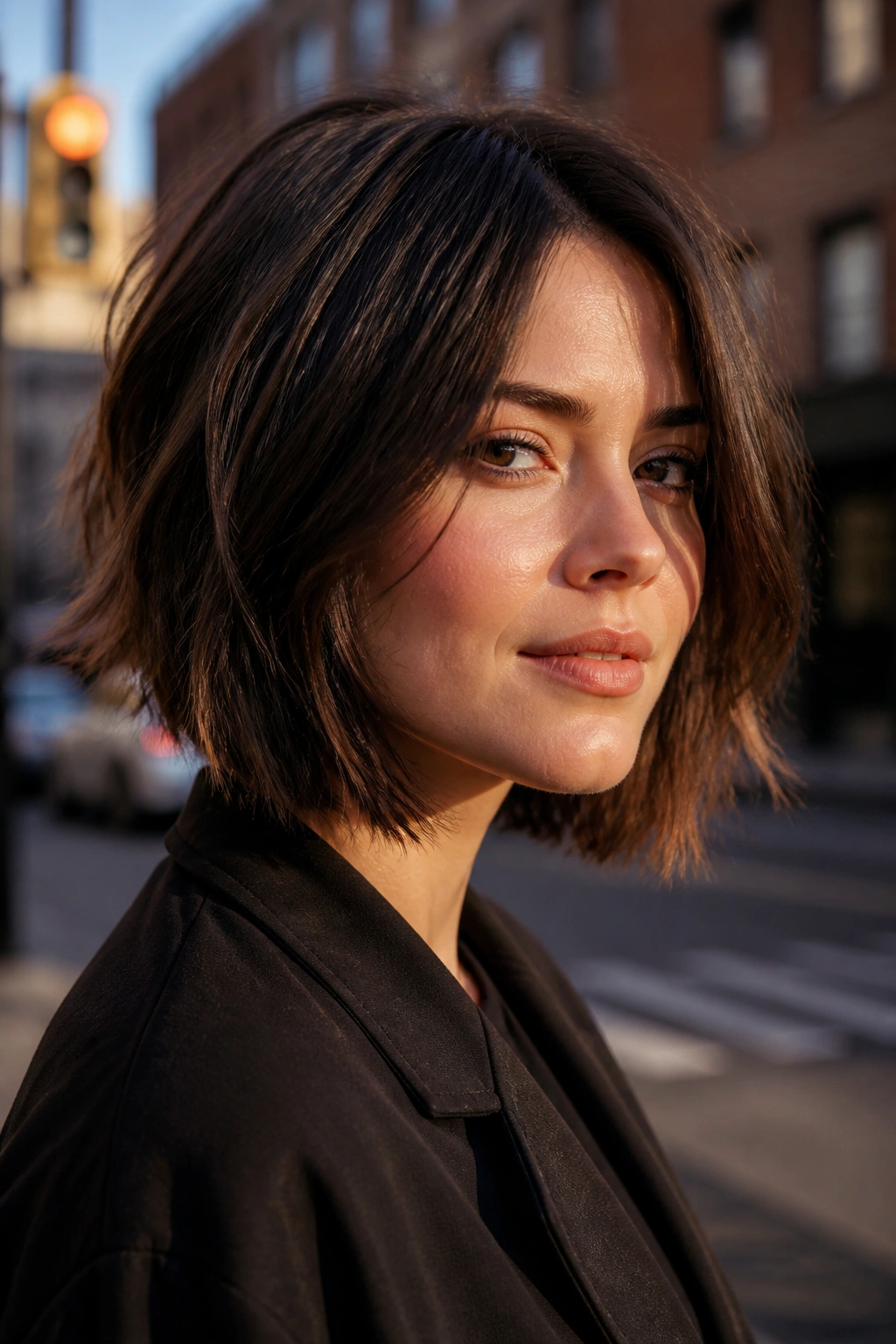
A choppy lob with beveled ends is a good final pick because it gives you movement, shape, and a little edge without turning into a high-maintenance haircut. The choppiness breaks up the roundness, while the beveled ends keep the outline from puffing outward at the bottom.
That bevel matters. Straight, blunt ends can sit like a shelf. A soft inward bevel creates a cleaner fall around the jaw and collarbone, which is where the face shape starts to look more balanced.
This cut is especially useful if you air-dry part of the time and do not want to fight your hair every morning. It has enough texture to look intentional even when it is a little undone. If your hair tends to expand, keep the layers light and let the ends stay slightly longer than you think.
It’s one of those styles that looks casual, but the shape is doing a lot of work.
