



Grey haircuts for round faces work best when the line travels down, not out.
That sounds fussy, but it matters. A round face already has soft curves, so the cut has to create a little direction—height at the crown, a side sweep, an angle at the jaw, something that gives the eye a place to go besides the widest part of the cheeks.
Grey hair makes this even more interesting. Silver, white, and salt-and-pepper strands tend to show shape more clearly than heavily pigmented hair, and they can also behave in odd ways: one section lies flat, another flips out, and the front can feel coarser than the sides. That is why the best haircut is rarely the one that looks good only from the front. It has to move well when you turn your head.
I’ve always liked cuts that do a bit of quiet work in the background. Not loud, not fussy. The ones below do that for round faces and grey hair in different ways—some slim the face with angles, some add lift, and some make the texture itself carry the style.
1. Angled Silver Bob
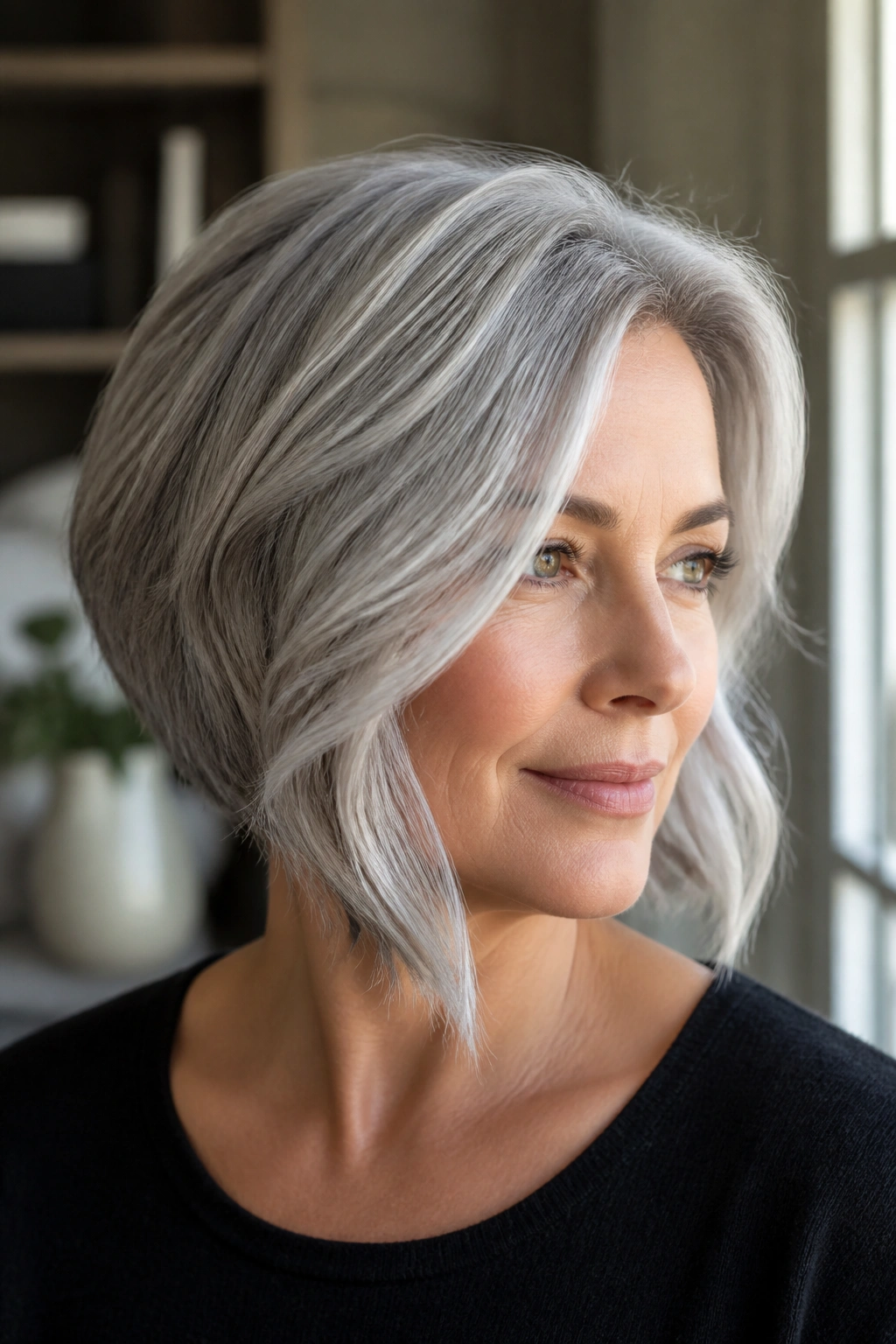
An angled bob is one of the easiest ways to make grey hair feel crisp without making it stiff. The longer front pieces pull the eye downward, while the shorter back gives the shape a clean lift at the nape.
Why It Works
The angle matters more than the label. Ask for the front to sit about 1 to 2 inches longer than the back, with the front ending near the jaw or a little below it. That keeps the widest part of the face from lining up with the hem of the haircut.
A round face looks good in this shape because the bob creates a diagonal line. Diagonals are your friend here. They break up the softness in a way that looks sharp instead of harsh.
- Keep the back snug at the nape.
- Leave the front pieces slightly longer.
- Ask for soft internal texturing, not choppy ends everywhere.
- Blow-dry with a small round brush for a bend under the front.
Tip: If your grey hair has a wiry feel, a drop of lightweight cream on the ends keeps the line polished without flattening the cut.
2. Long Layers with a Side Part
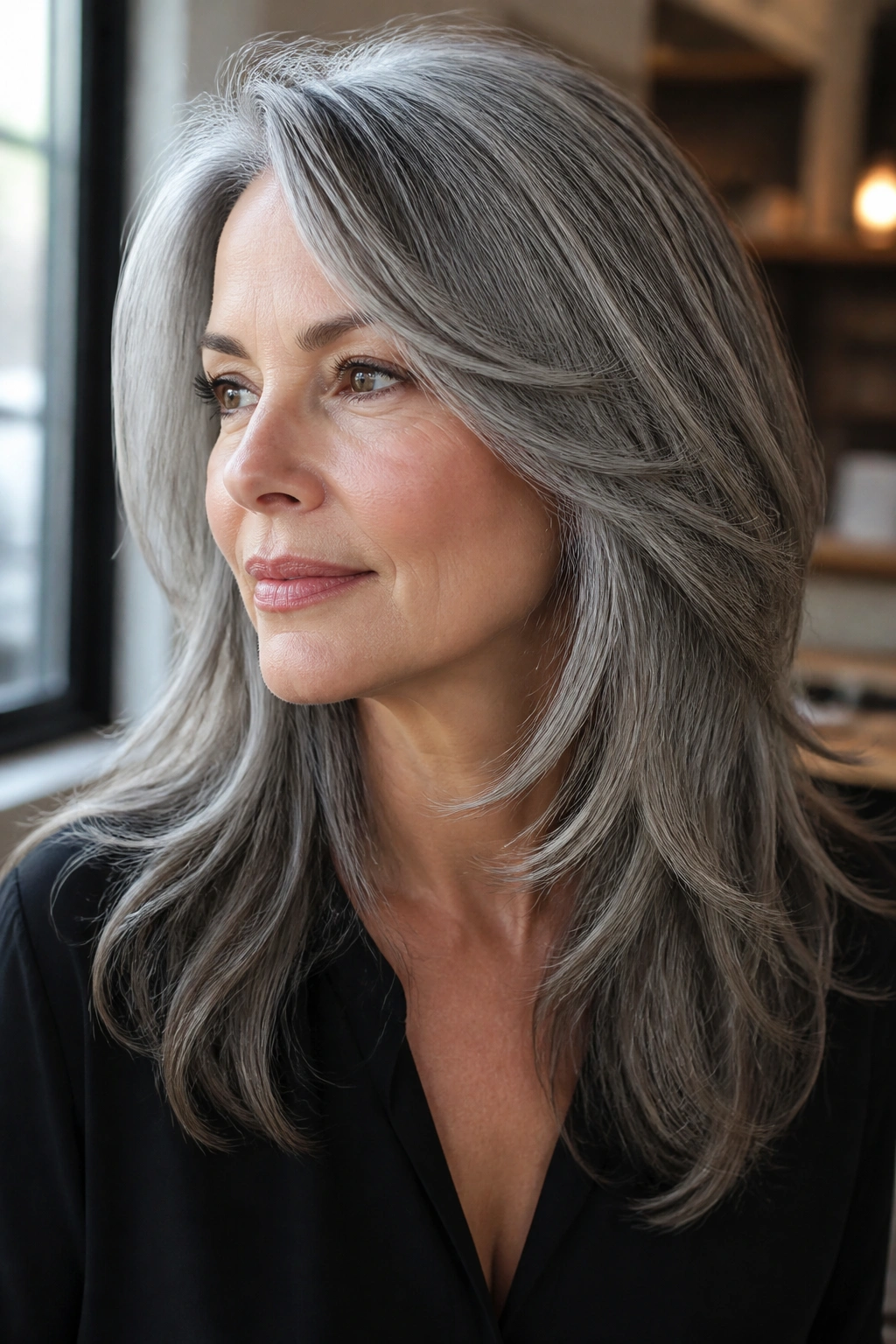
A side part does more for a round face than people give it credit for. It shifts the visual weight off center, and that off-balance line makes the face look longer at a glance.
Grey hair tends to show layer placement clearly, so this cut works best when the shortest layers start below the cheekbone. That keeps the fullness from sitting right beside the face. The overall length can fall at the shoulders or a little past them, which gives the layers room to move.
The part is the quiet hero here. Deep or soft, it breaks up symmetry and keeps the style from feeling boxy. If your hair is fine, a side part also helps the crown lift a little when you blow-dry the roots in the opposite direction first. Small trick. Big payoff.
You can wear this cut sleek, wavy, or slightly bent at the ends. It’s one of those shapes that looks expensive without trying hard, which is partly why I keep coming back to it.
3. Chin-Length Stacked Bob
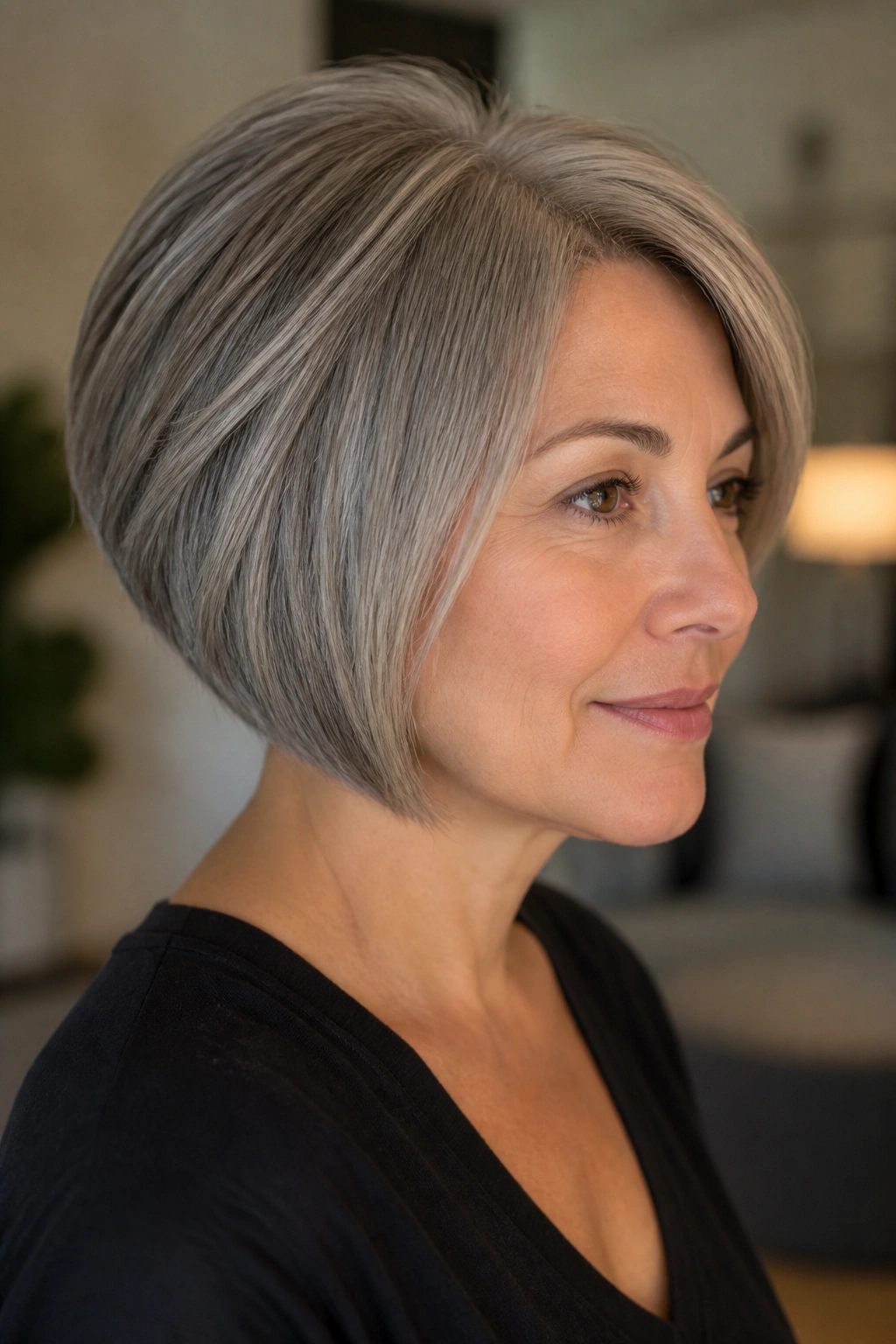
Can a chin-length bob work on a round face? Yes—if the back is stacked and the crown gets some height.
A flat chin-length cut can widen the face. A stacked version does the opposite because the shorter layers at the back build lift where you want it and narrow the visual weight around the sides. On grey hair, that lift makes the shape feel sharper and cleaner.
How to Style It
Use a round brush or hot brush to lift the roots at the crown, then tuck the front ends under slightly. The goal is a smooth curve, not a helmet. You want the bob to feel light around the cheeks and tighter at the nape.
If your hair is thick, ask for graduation in the back so the shape does not puff out. If it’s fine, keep the stack subtle and let the cut stay airy. Either way, the line should skim the jaw, not sit directly on the fullest part of the face.
This is a neat haircut. It has structure. That’s the point.
4. Shoulder-Grazing Shag

A shoulder-grazing shag is a good answer when grey hair starts feeling heavy around the face. It removes weight, adds movement, and keeps the ends from hanging in one blunt block.
The best version for a round face is soft, not shredded. Ask for layers that start around the cheekbone and continue downward in loose steps. That creates movement without giving the sides too much bulk.
One nice thing about the shag on grey hair: it shows off texture instead of fighting it. Natural wave, bend, even a little frizz—those things stop looking like problems and start looking like part of the shape.
- Layers should begin around the cheekbone or lower.
- Keep the crown light but not spiky.
- Use mousse at the roots if your hair collapses fast.
- Air-dry or diffuse for the least work.
Watch this: If the top gets too short, the cut can widen the face. Keep the shag soft and the length controlled.
5. Pixie with a Long Top
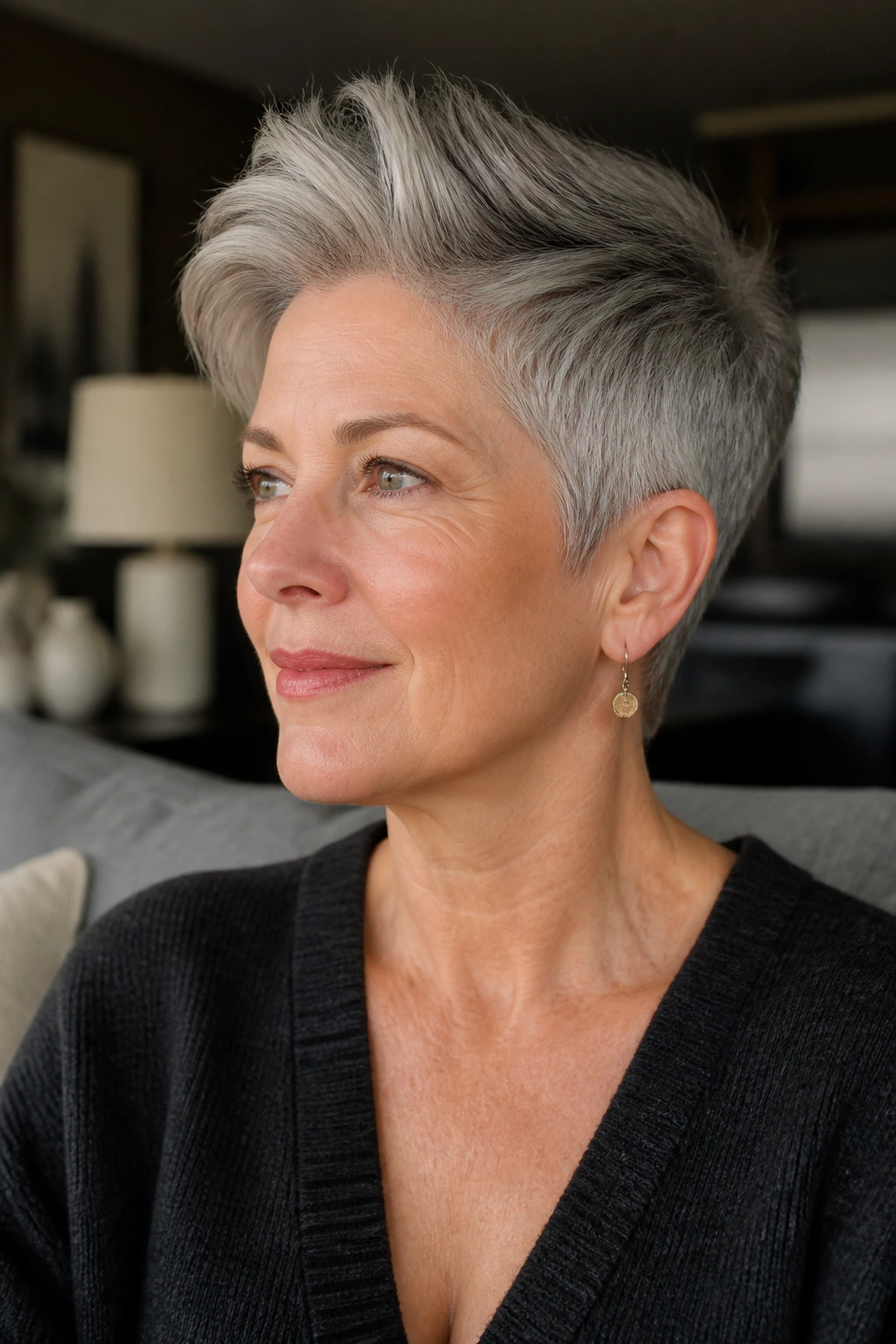
A pixie with a long top works because it gives the face height without adding width. The sides stay close, the crown rises, and the eye moves upward fast.
Grey hair can look especially good in this cut because the texture reads clearly. Each piece has a job. The top can be swept back, slightly forward, or off to one side, and that small change makes the whole style feel different. I like a top that sits around 3 to 5 inches long, with the sides tapered neatly around the ears.
Flat pixies are the trap. Avoid them.
If the top lies too close to the head, a round face can look wider. Ask for a bit of lift through the crown and a soft taper at the temples. That keeps the head shape leaner. A matte paste or a pea-sized dab of styling cream is enough; you do not want the hair slicked down and stuck there.
This cut has attitude, but it still needs softness. That balance is what makes it work.
6. Collarbone Lob with Curtain Bangs
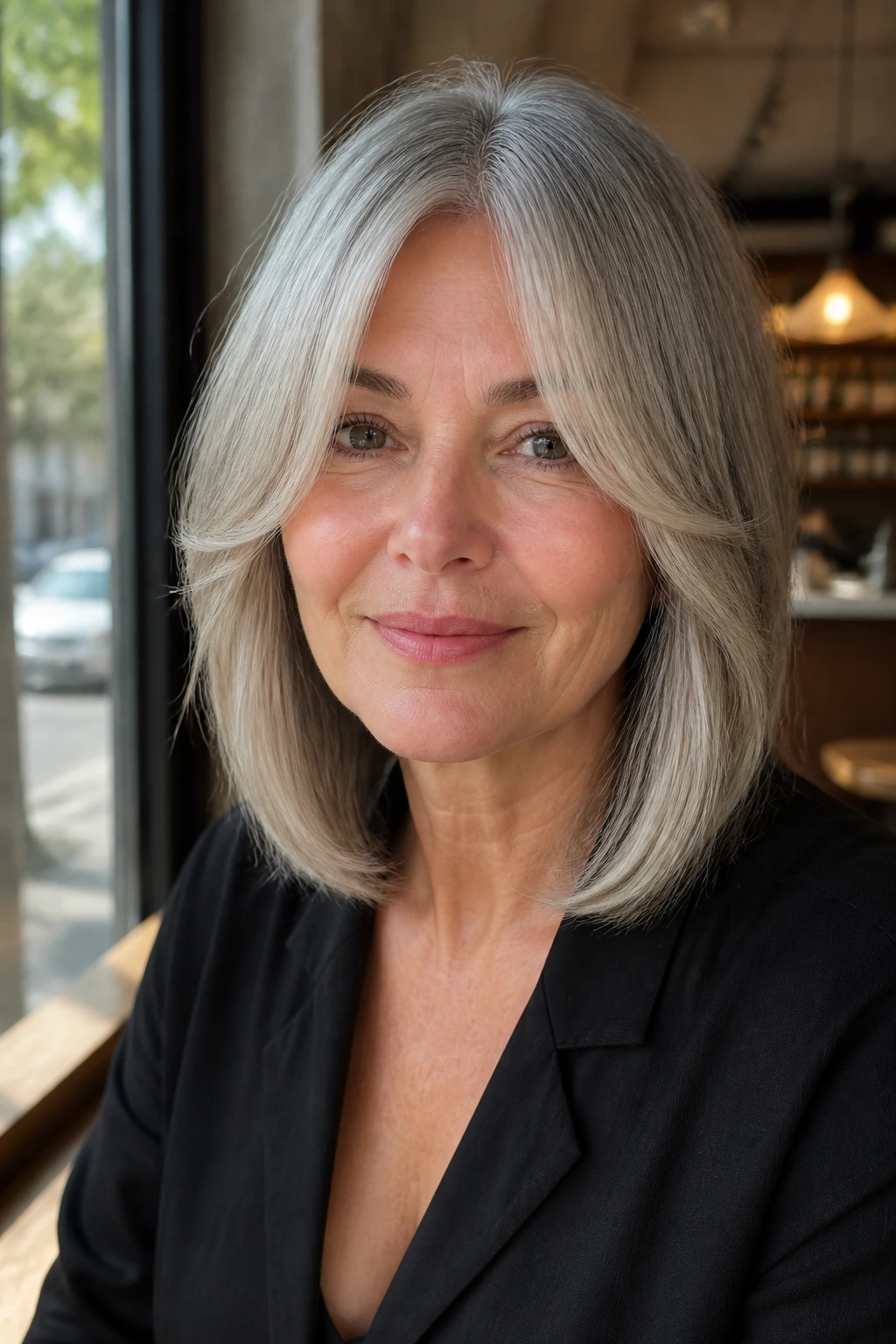
Compared with a blunt bob, a collarbone lob with curtain bangs feels softer around the face and less boxy at the ends. That matters on a round face, where hard horizontal lines can work against you.
The length should sit right at the collarbone or a touch below it. That keeps the hair long enough to narrow the face without dragging everything down. Curtain bangs help by opening in the middle and sweeping out toward the cheekbones, which creates a gentle frame instead of a heavy curtain across the forehead.
This cut is a good middle ground for people who want shape but not a dramatic chop. The bangs add movement near the eyes, and the length keeps the profile neat. Grey hair often looks especially pretty in this shape because the lighter strands pick up the curve of the bang and the bend at the ends.
If your face tends to look fuller when hair is pulled straight back, this cut is a smart compromise. It gives you softness, but not too much.
7. Asymmetrical Bob
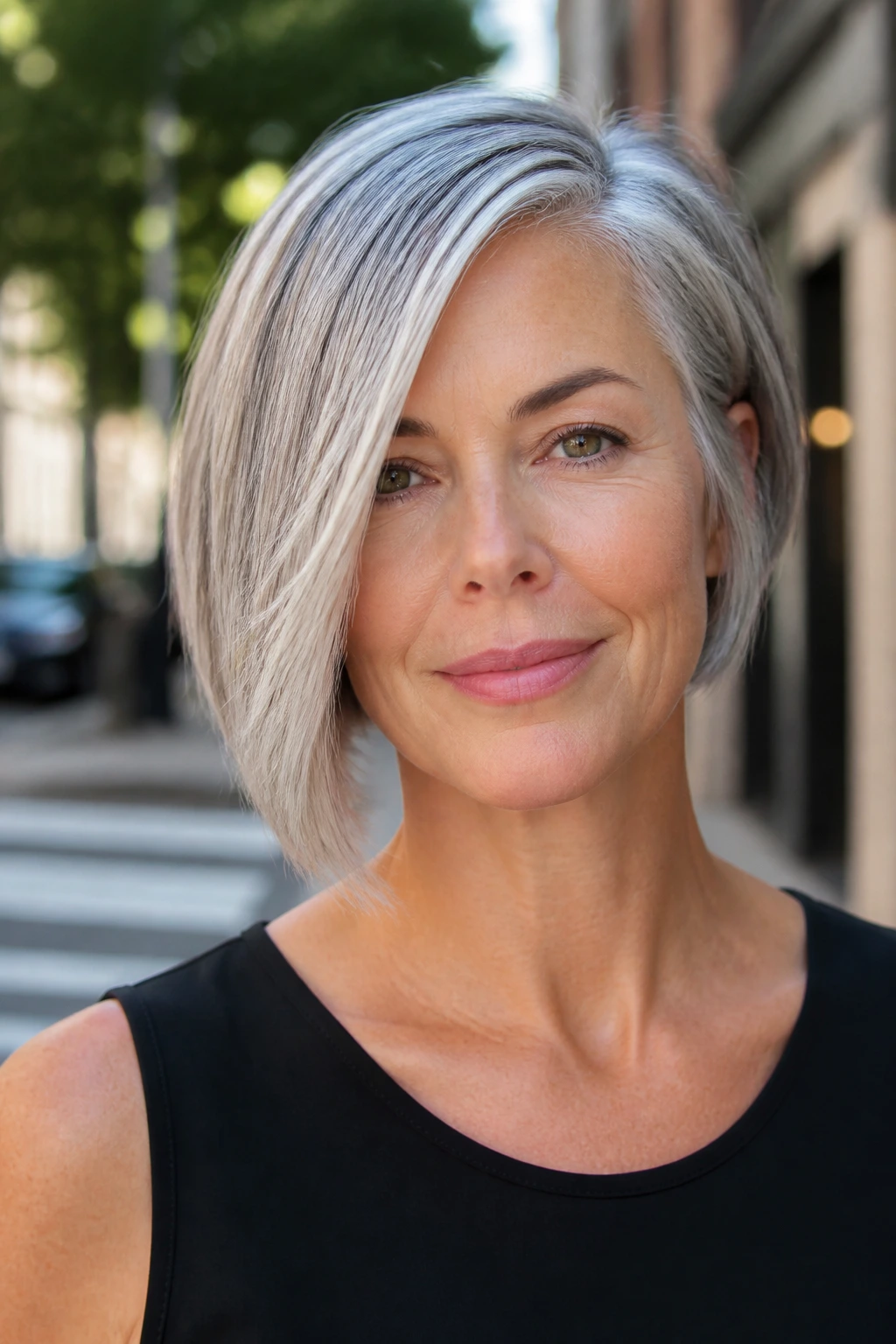
An asymmetrical bob is one of the fastest ways to make a round face look longer. One side stays a little longer than the other, and that uneven line tricks the eye into moving side to side instead of circling the cheeks.
What to Ask For
- One side about 1 to 1.5 inches longer than the other.
- A soft beveled end, not a harsh corner.
- A side part placed opposite the longer side.
- Light texturing through the ends so the shape doesn’t feel heavy.
The cut looks especially sharp on silver hair because the color shows the line cleanly. If the hair is dense, the asymmetry keeps it from looking like one heavy block. If it’s fine, the uneven length creates the sense of movement that fine hair usually needs.
I like this one for people who want a little edge but not a full avant-garde moment. It still reads polished. It just refuses to sit politely in the middle.
8. Soft Wolf Cut

The wolf cut gets a bad rap when it’s taken too far. A soft version is different. It keeps the airy crown and tapered ends, but it stops before the layers start shouting at each other.
That softer approach works well for grey hair on a round face because the shape breaks up fullness around the cheeks. The crown has a bit of lift, the length hangs lower, and the layers around the face stay loose enough to avoid a puffed-out look. If your hair has wave, this cut can feel almost effortless on good days.
The key is restraint. You want movement, not a triangle. Ask for the shortest face-framing pieces to begin below the cheekbone and the longest layers to fall past the shoulders or collarbone. That keeps the visual line long.
Air-dry with a little curl cream, or rough-dry with a diffuser if the texture needs help. This cut does not need perfect styling. It needs shape and a little grit.
9. Feathered Shoulder Cut
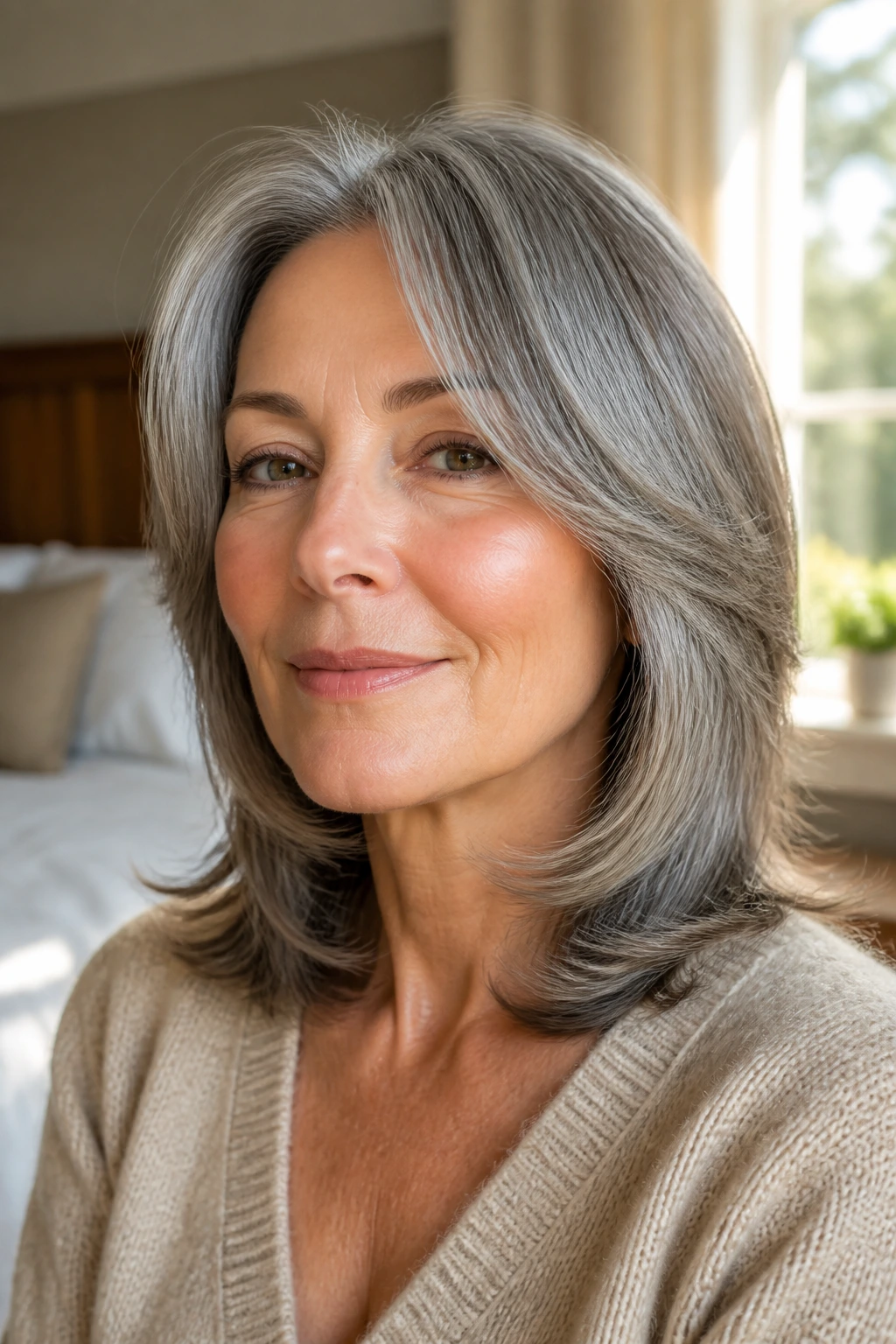
What makes feathering so useful on a round face? It pushes the ends away from the cheeks and keeps the haircut from sitting like a wall.
A feathered shoulder cut gives grey hair motion without losing too much length. The layers are cut and styled so the ends flick softly rather than hang bluntly. That small detail matters. Straight across, shoulder-length hair can widen the face. Feathered edges pull the eye downward instead.
How to Style It
Use a medium round brush and dry the front sections away from the face. Work in panels no wider than 2 inches so the bend stays clean. Finish with a light mist of flexible spray, not heavy hairspray. You want movement when you turn your head.
This cut suits people who want something flattering but easy to wear on ordinary days. It does best when the hair has a little natural body, though fine hair can wear it too if the layers stay soft. It is one of those cuts that makes grey hair look airy instead of dense.
10. Tapered Crop with Side Fringe
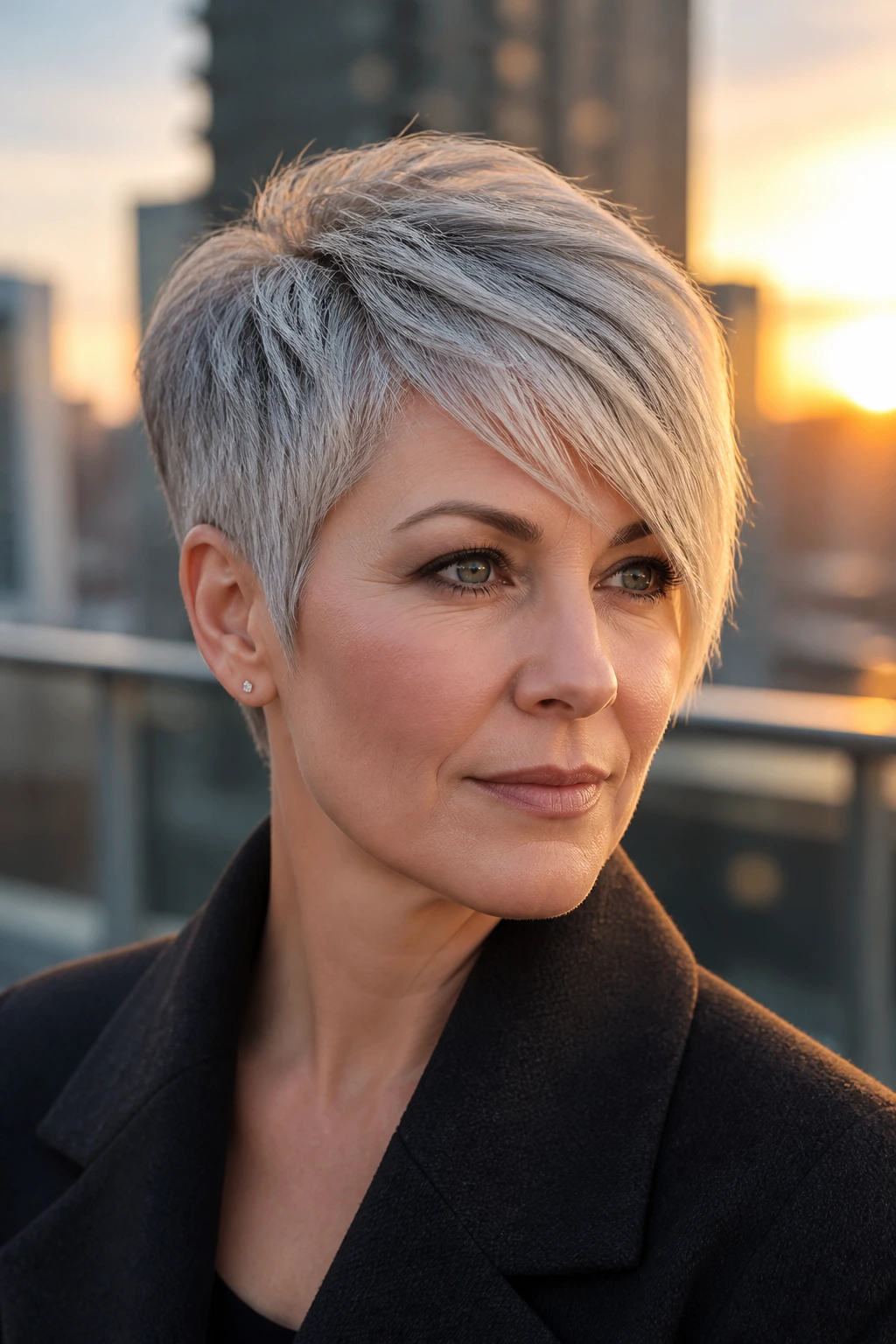
A tapered crop can be surprisingly kind to a round face when the fringe sweeps sideways instead of straight across. The taper keeps the sides close, and the fringe pulls the eye diagonally.
Picture a short cut that hugs the head at the nape and ears, then leaves enough length on top to sweep forward or to the side. That top length is what saves the shape. Without it, the crop can feel too round. With it, the cut gains height and direction.
A side fringe should start higher than a heavy bang and skim toward the cheekbone. That keeps the forehead open and avoids a blocky line. Grey hair shows those lines plainly, which is good here. You want the shape to read clean from across a room.
This is a strong choice if you like short hair and do not want to fuss with a long blow-dry. A little wax through the fringe, and you’re done.
11. Wavy Lob with an Off-Center Part
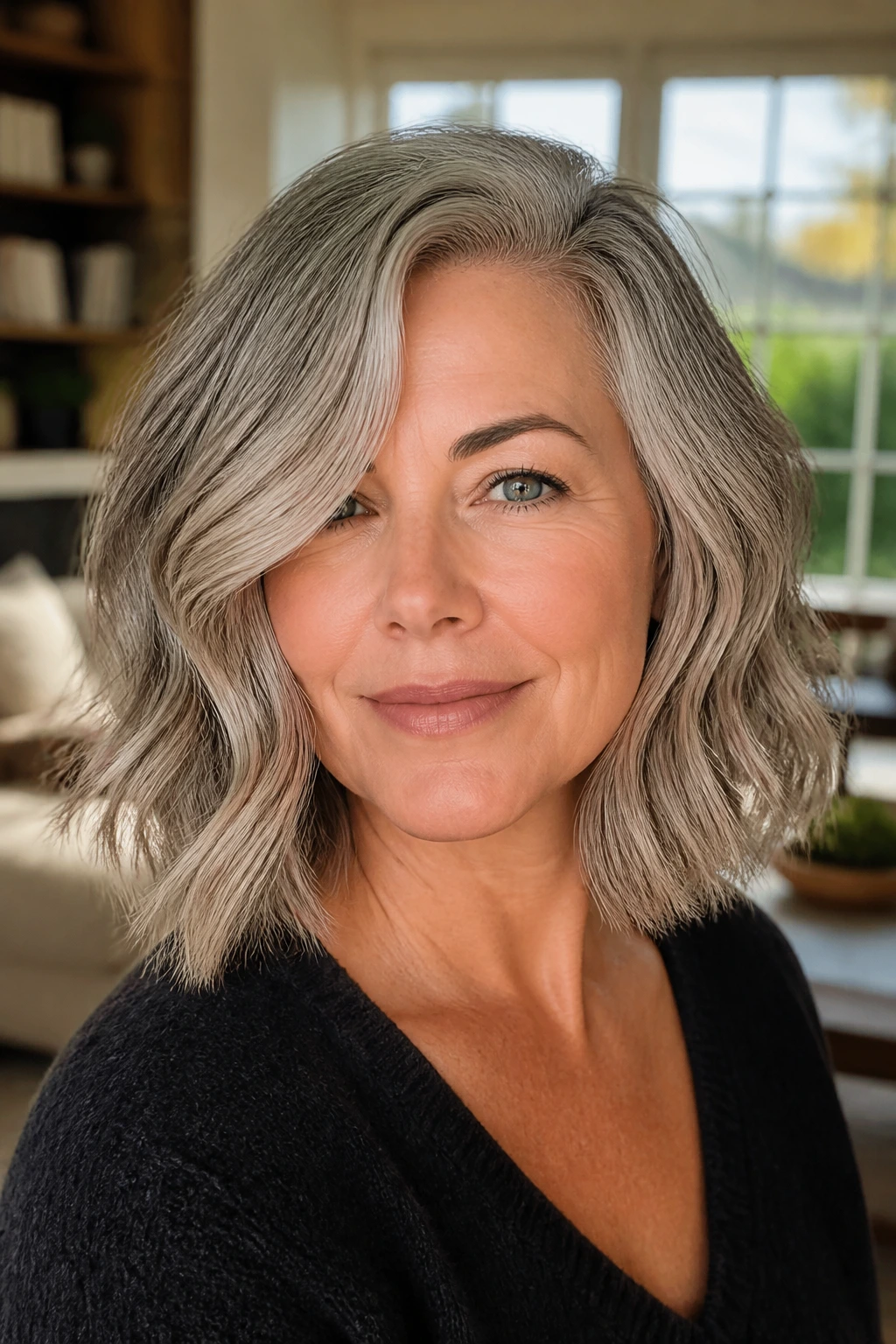
The off-center part is the little detail that makes this lob work. It stops the haircut from feeling too symmetrical, and symmetry is what often makes round faces look wider than they are.
When the lob hits around the collarbone and the waves fall in loose bends, the whole style creates a vertical rhythm. That rhythm helps stretch the face. Grey hair catches the wave pattern in a clean way, especially if the ends are kept blunt enough to hold their shape.
I prefer this cut on hair that already has some bend. If you fight the wave, the style can get too controlled and lose the softness that makes it flattering. A 1.25-inch curling iron or a few loose overnight braids can give it enough movement without turning it into curls.
This is one of those cuts that looks calm but not boring. The off-center part gives it attitude. The length does the rest.
12. Sleek Blunt Lob
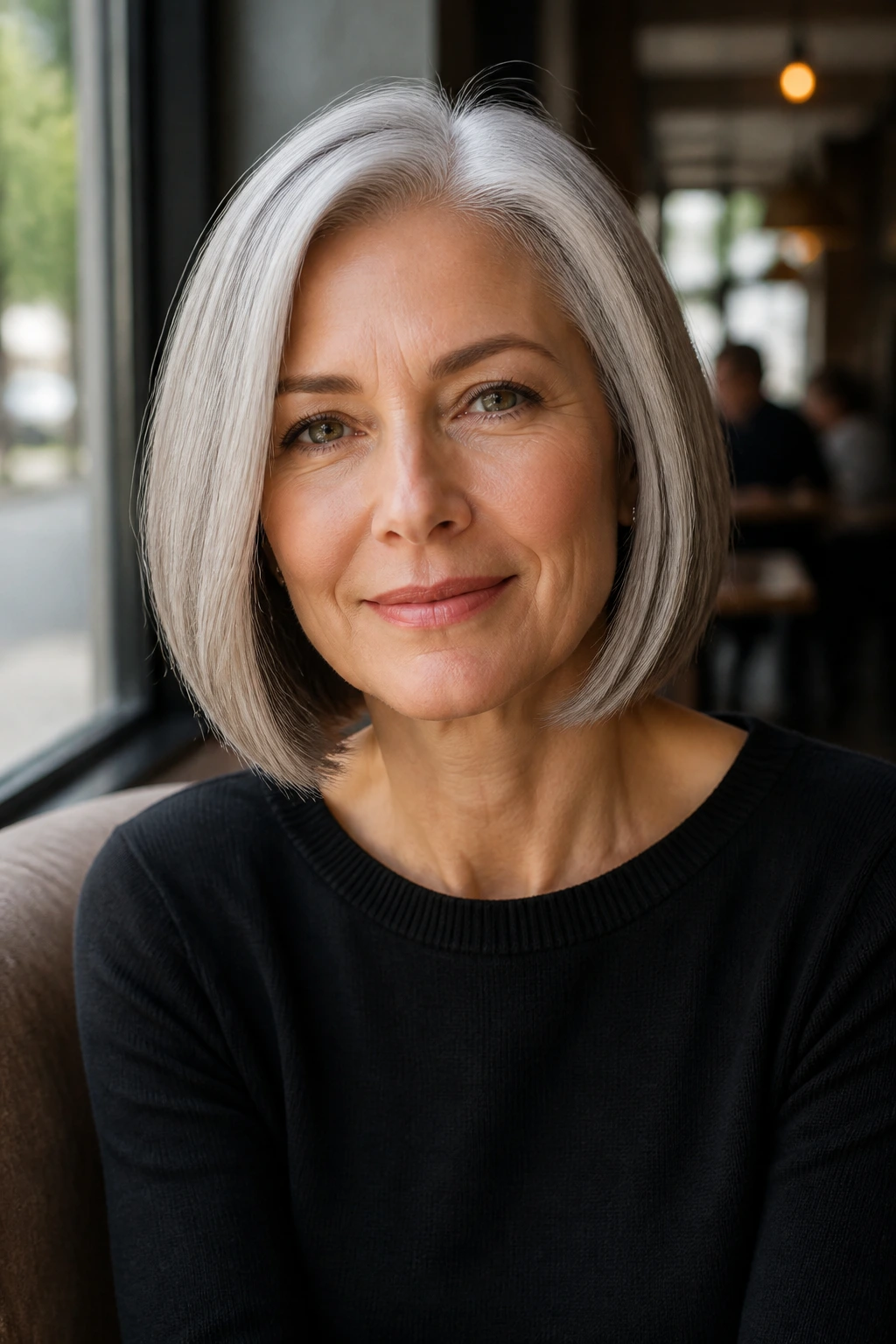
Unlike choppy styles, a sleek blunt lob relies on one strong line. That line can be very flattering on grey hair, especially if the color has a clean silver or white tone.
The trick is where the line sits. Aim for just below the chin or at the collarbone, with a slight forward angle if your face is especially round. A cut that stops exactly at the chin can widen the middle of the face. A few extra inches make a difference.
Best For
- Straight or lightly wavy grey hair.
- Anyone who likes a sharper finish.
- Fine hair that needs the illusion of density.
- Thick hair that needs the ends kept tidy.
This cut is less forgiving than a shag, which is part of the appeal. It asks for a neat blow-dry and a clean center or side part. If you like a polished shape that feels deliberate, not messy, this one earns its keep. I’d avoid heavy layering here; the line is the whole point.
13. Textured Crop with Side-Swept Fringe
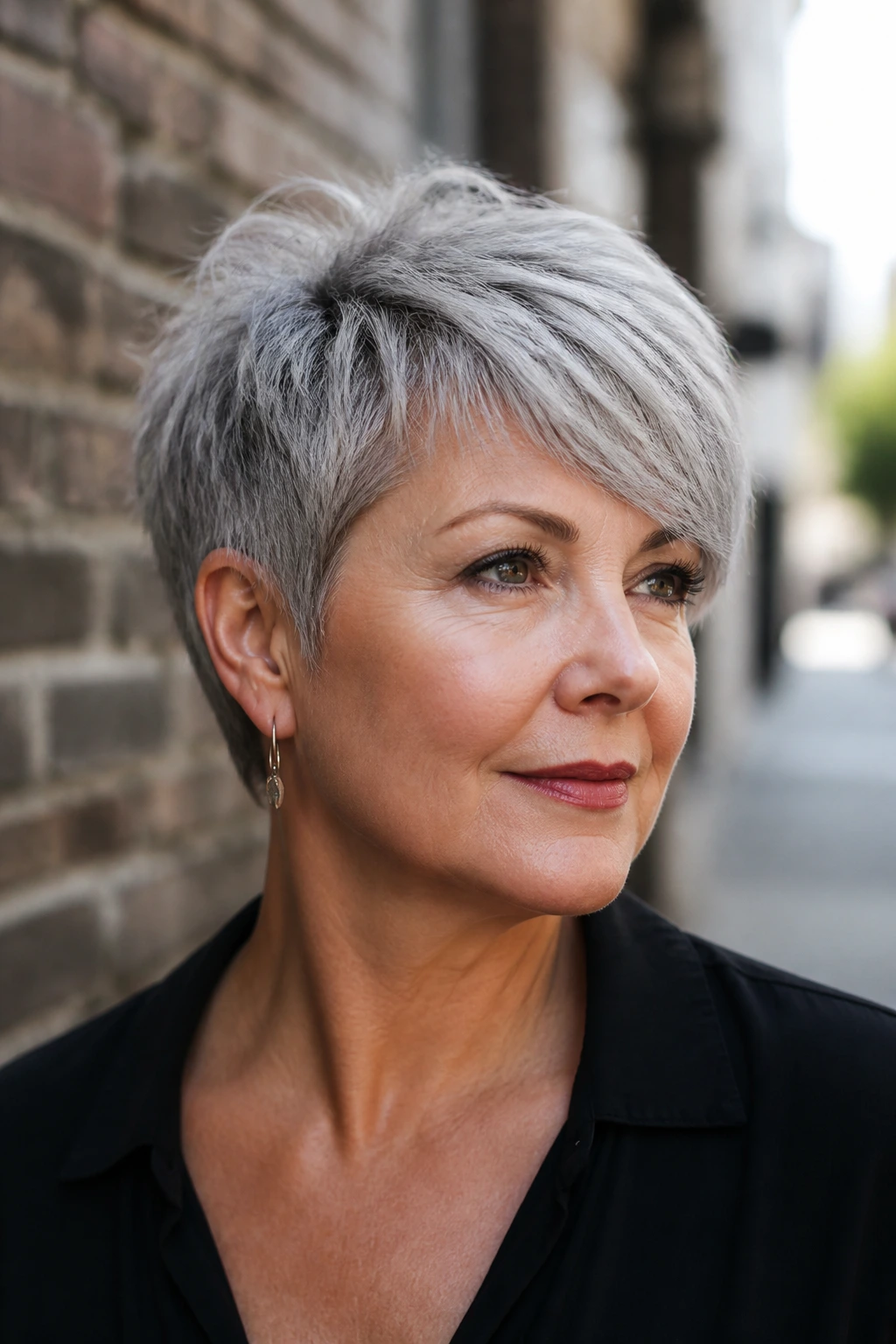
A textured crop can look playful on grey hair without reading juvenile. The side-swept fringe is what keeps it flattering on a round face, because it cuts across the width of the forehead and leads the eye upward.
Why It Works
The top stays a little longer than the sides, and that difference creates shape. Ask for the fringe to start high enough to sweep, not drop. If it lands too low and straight, the cut can make the face look shorter.
The texture should be soft and piecey, not chopped into tiny spikes. Grey hair often has a bit more grit than younger hair, so the pieces can hold shape well. That makes this crop a good fit if you do not want to spend ten minutes coaxing it every morning.
A tiny bit of pomade on the fingertips is enough. Work it through the fringe and crown, then leave the ends a little undone. That rough finish keeps the haircut from feeling too neat, which is part of its charm.
14. Layered Midi Cut with Face-Framing Pieces
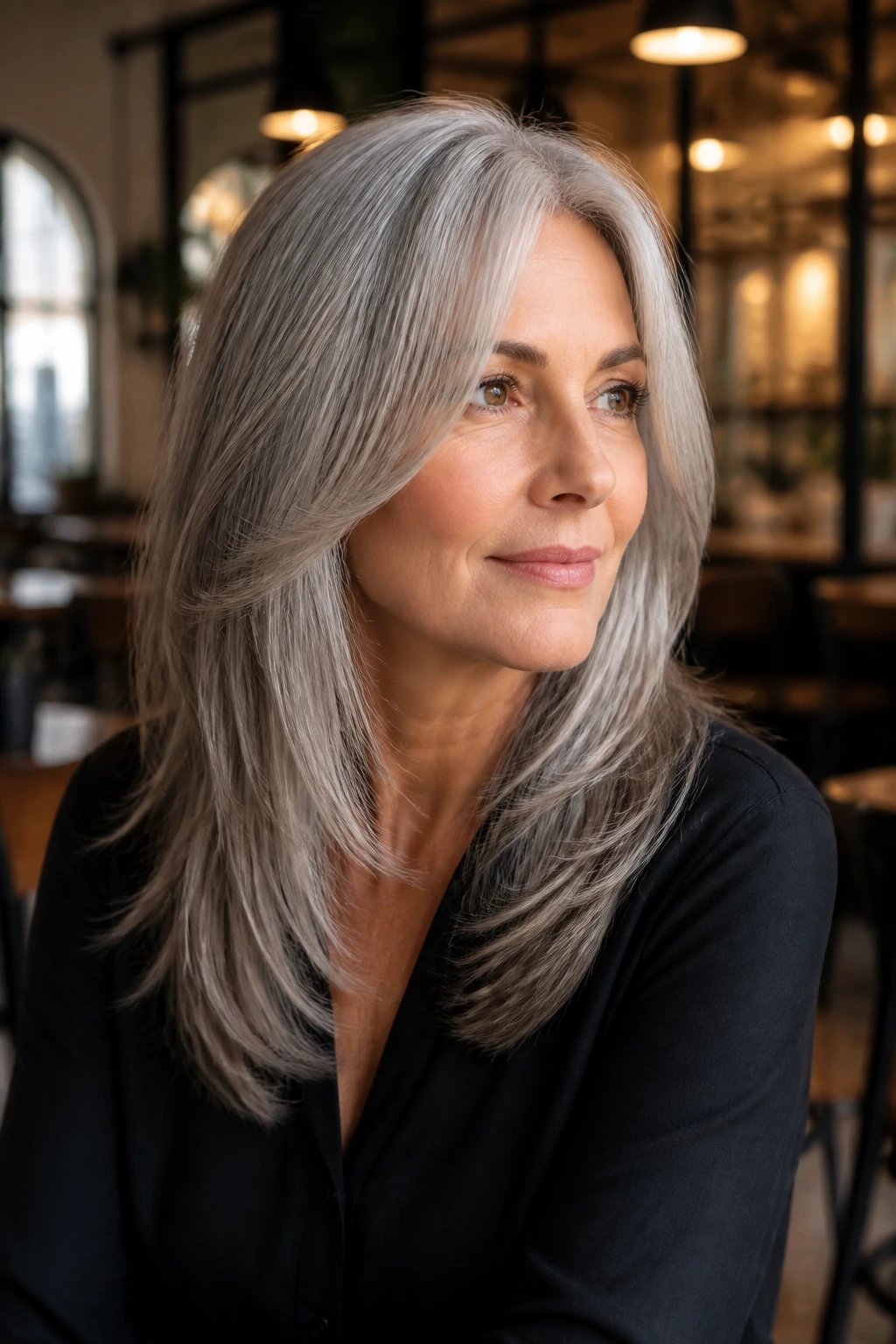
If you want movement without giving up length, this is a workhorse cut. A layered midi shape keeps the hair around the chest or upper back, while face-framing pieces break up the width at the sides.
The face-framing bits should start below the cheekbone, not at it. That’s the piece most people miss. Short layers right beside the cheeks can make a round face look fuller. Longer framing pieces fall more like a diagonal line, which is much friendlier.
This cut is nice for grey hair because it shows dimension. Silver strands catch the layers, and the lower pieces keep the whole style from floating away. It works straight, wavy, or blown out with a soft bend at the ends.
If your hair is thick, ask for internal weight removal so the shape does not feel bulky. If it’s fine, keep the layers longer and more subtle. The goal is flow, not too much separation.
15. Curly Shag for Natural Texture
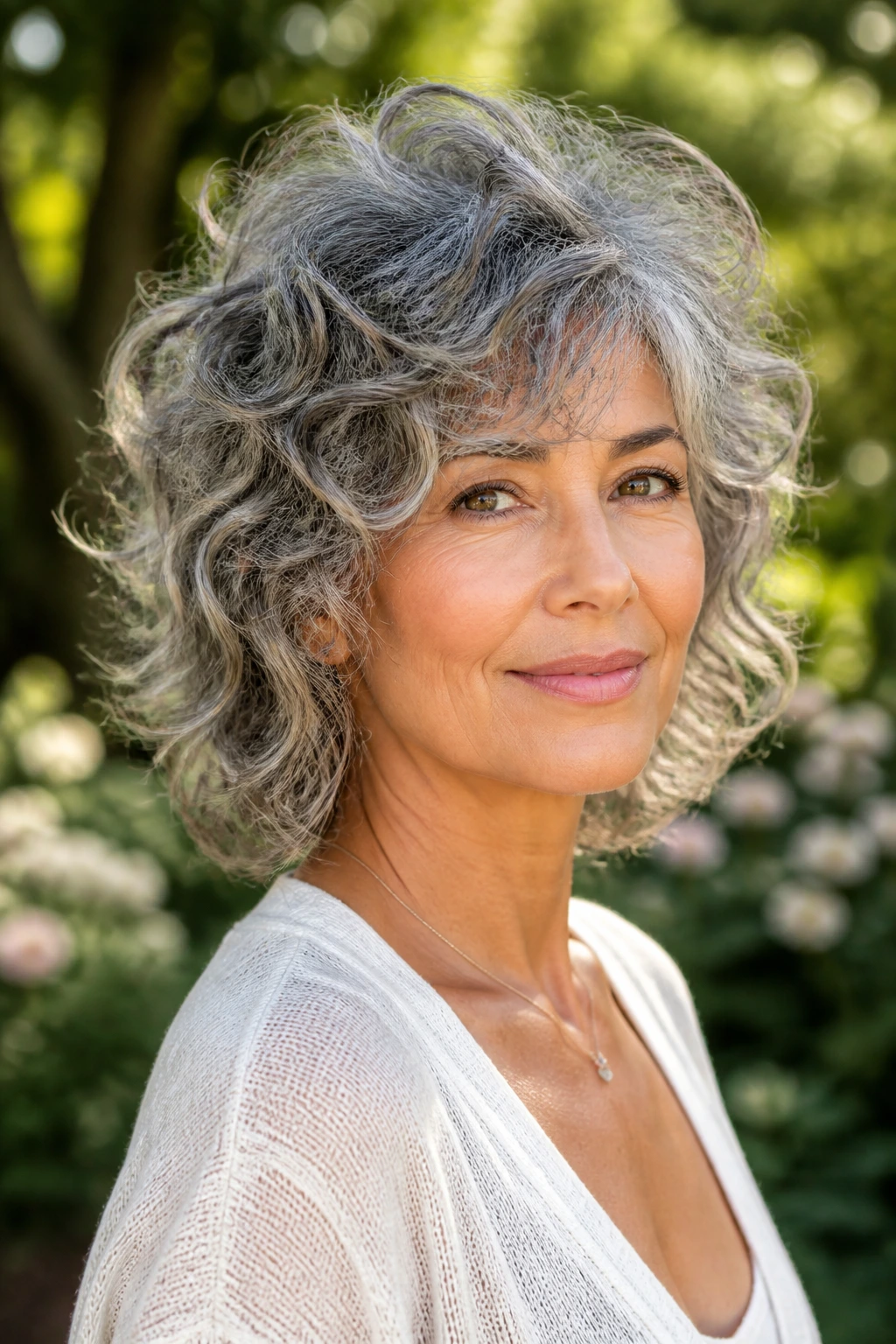
What if your grey hair is curly? Then a shag can be one of the smartest cuts in the room.
Curly hair on a round face needs shape at the top and space around the sides. A curly shag gives both. The layers prevent the curls from forming one wide halo, and the length keeps the silhouette from stopping at the cheeks. That matters more than people think. Curls that end at jaw level can widen the face fast.
How to Use It
- Ask for curl-by-curl shaping if the hair is dense.
- Keep the crown lightly lifted.
- Use a diffuser on low heat.
- Scrunch in a light leave-in conditioner while the hair is damp.
Grey curls often feel drier, so this cut benefits from moisture without too much weight. A heavy cream can flatten the top, which ruins the shape. I like a lighter leave-in and a little gel at the ends when the curl pattern needs help holding together.
This is not a fussy haircut. It asks for honest texture and a stylist who knows curls.
16. Inverted Bob with Crown Volume
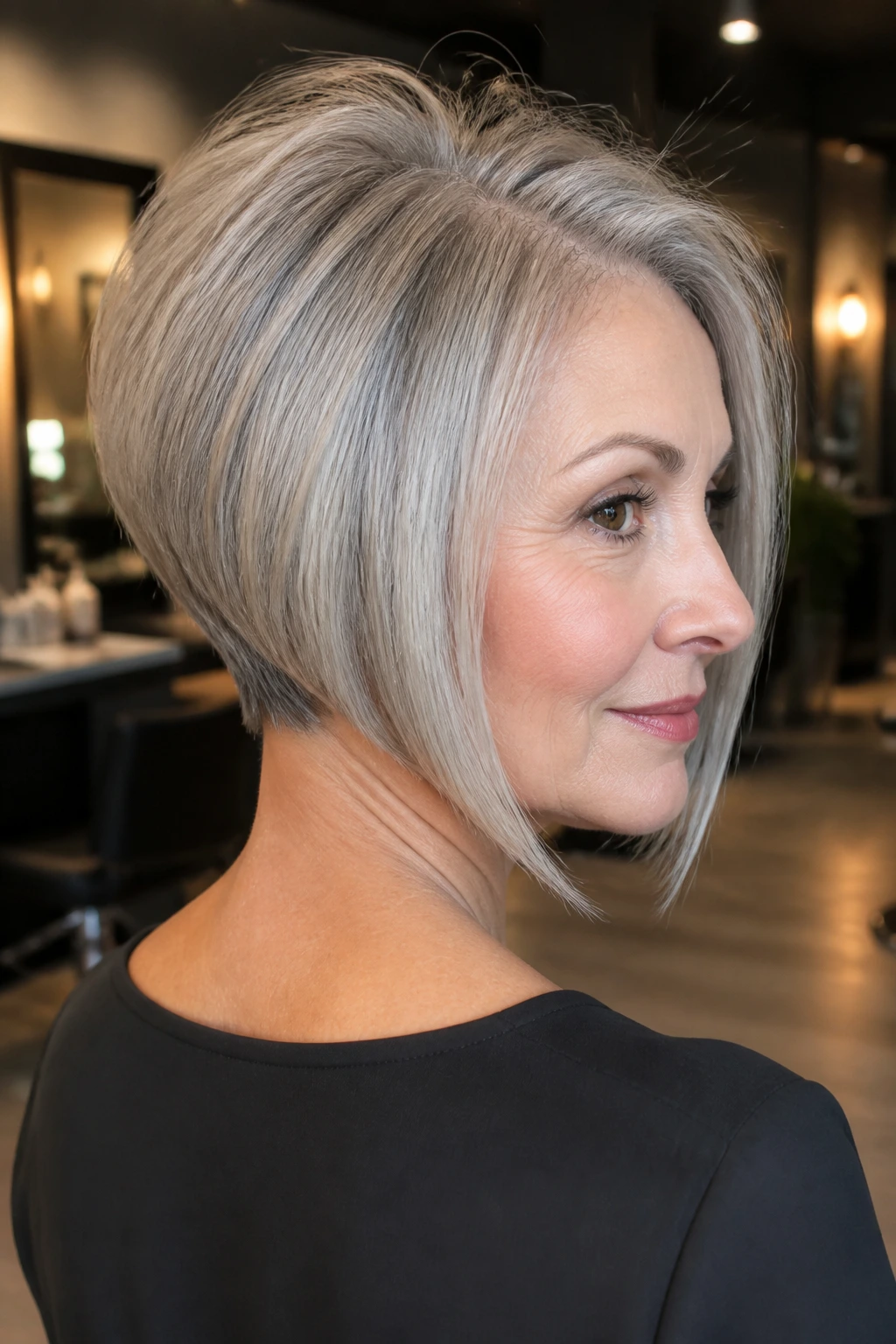
An inverted bob is a good choice when you want a clean shape with a little drama in the back. The shorter nape and longer front create a clear angle, and that angle helps a round face look longer.
The crown volume is the part that keeps this cut from feeling heavy. Without it, the bob can hug the cheeks too much. With it, the head shape looks lifted and the front pieces fall in a smoother line. On grey hair, the contrast between the stacked back and the longer front can look especially crisp.
A useful detail: keep the back tidy and controlled. If the nape flares out, the whole cut loses its edge. The line should curve inward slightly and then lengthen toward the front. That little geometry lesson is doing a lot of work.
This is a strong salon cut if you like structure and do not mind a little styling. It gives shape fast.
17. Side-Parted Pixie Bob
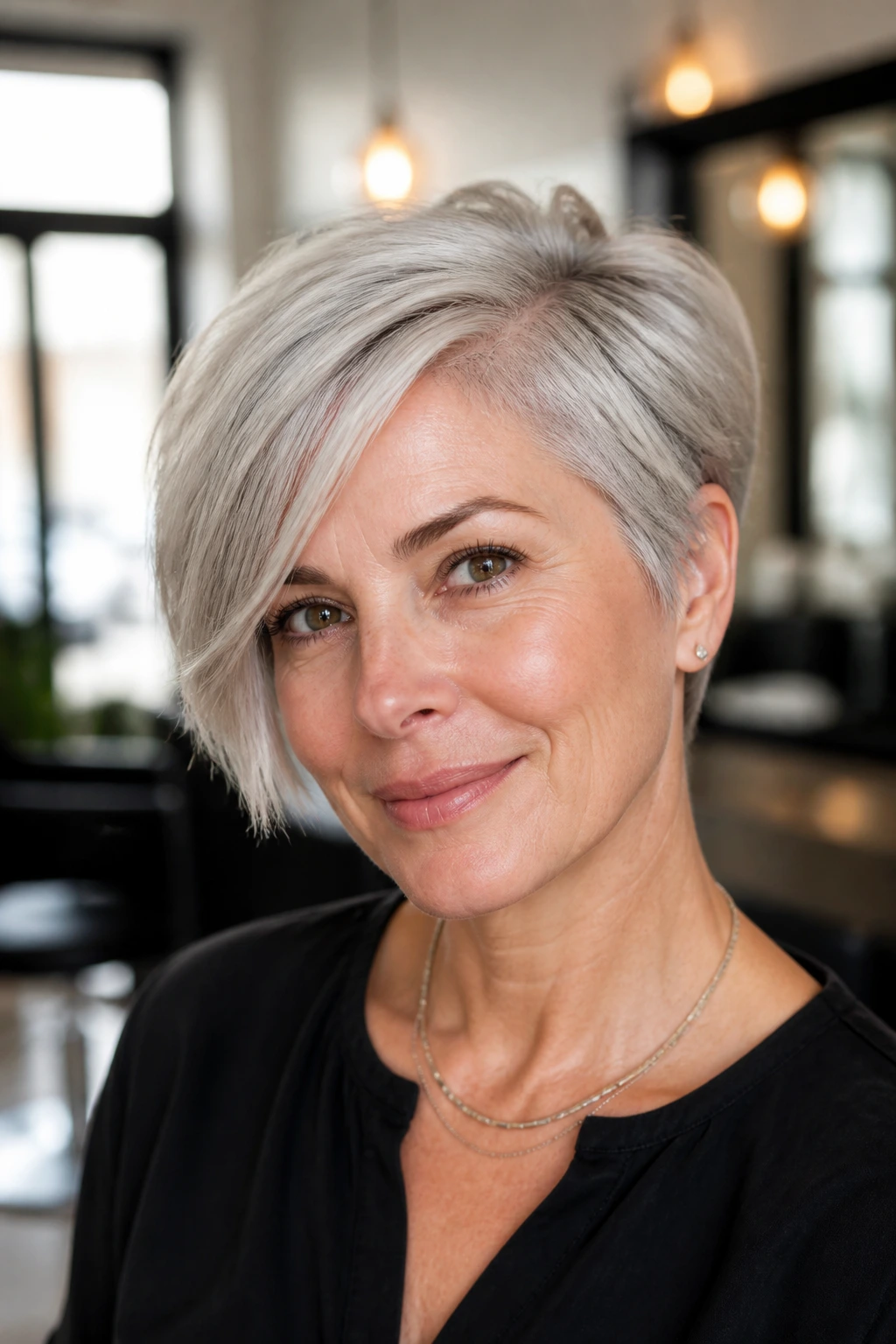
A pixie bob lives in the sweet spot between cropped and grown-out. That makes it useful for round faces, because it can keep the sides close while still leaving enough length to brush upward or across.
The side part matters here. It breaks the face open and keeps the top from sitting flat. I like this cut when the top has about 2 to 4 inches of length and the nape is tapered in tighter. That combo keeps the silhouette light.
Grey hair looks clean in a pixie bob because the short length shows off the natural silver tone without swallowing the shape. If the strands are thick, ask for soft debulking inside the crown. If they are fine, keep the layers intact and use a light styling cream rather than wax.
This is one of my favorite practical cuts. It is short, but it does not feel severe.
18. Long Grey Layers with a U-Shape
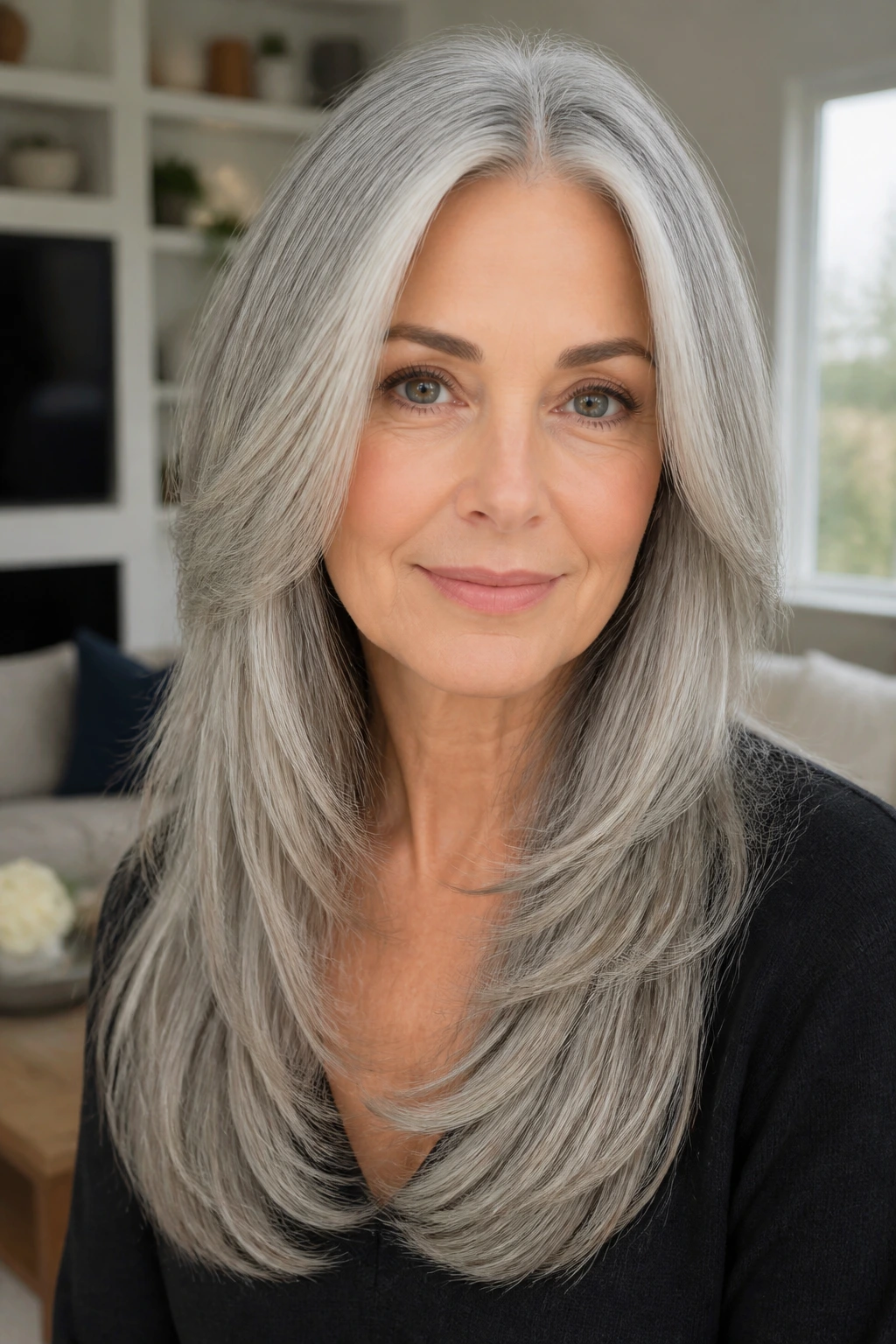
A U-shape works differently from a straight cut. The longest pieces stay in the middle back, and the sides curve up a little. That soft curve narrows the face more gently than a blunt horizontal line.
For round faces, long grey layers with a U-shape give the illusion of length without making the hair look flat. The front pieces can start below the chin and fall toward the chest, while the back keeps enough length to anchor the cut. That balance matters.
Thick hair benefits most from this shape because the U keeps the ends from feeling like one big curtain. Fine hair can wear it too, but the layers need to stay long and light. Too many short layers will break the line and make the ends look thin.
This is a good cut for people who want movement but not obvious layering. It looks calm. That calmness is part of why it flatters.
19. Bixie Cut
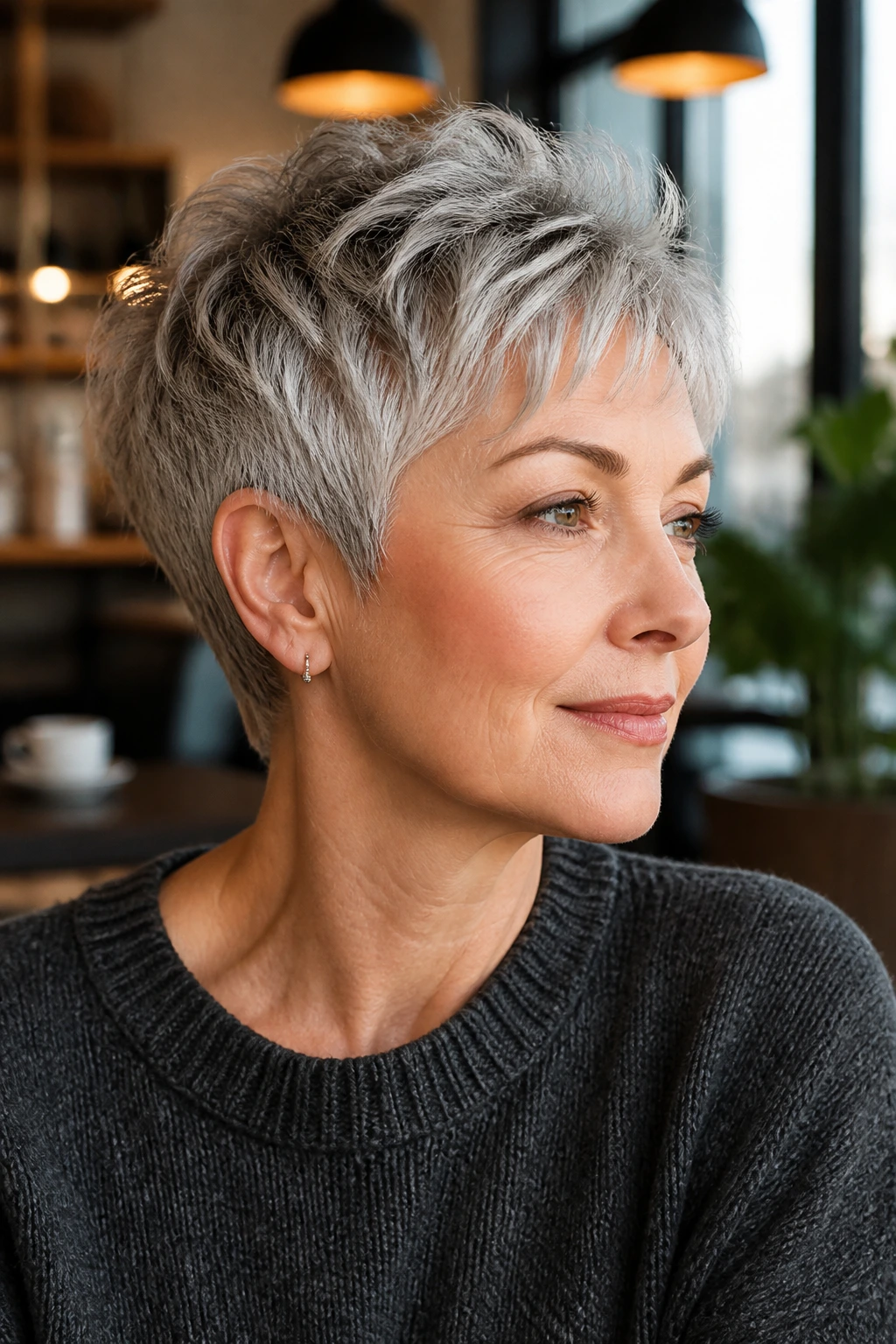
A bixie is the hybrid that can rescue a face when a bob feels too heavy and a pixie feels too short. It sits somewhere in the middle, with cropped sides and a little more length on top and around the face.
Why It Works
The cut opens up the cheek area without stopping there. That’s the trick. The longer top gives height, and the shorter sides keep the shape from spreading wide. On grey hair, the bixie reads modern without needing much styling.
- Keep the crown piecey.
- Leave enough length around the temples to soften the face.
- Ask for a tapered nape.
- Style with a small amount of paste or cream.
I like this one for people who want low effort but still want some shape. It can be worn neat or messy, which makes it forgiving on busy days. A round face gets a little lift, a little edge, and none of the bulk that can happen with longer cuts.
20. Soft Mullet

A soft mullet sounds edgy because it is, but the softened version can be kinder to a round face than people expect. The length stays longer at the back, while the crown and sides are lightly broken up so the head does not feel wide.
The main thing is restraint. You want a whisper of mullet energy, not a hard retro shape. Keep the front pieces around the cheekbone or a little lower, and let the back drift past the collar. That extra length draws the eye down the neck, which is helpful on fuller faces.
Grey hair can make this cut look elegant rather than punky, especially when the texture is loose. The silver tones soften the edges. If the hair is straight, a little bend through the sides helps the shape feel intentional rather than accidental.
This cut will not suit everyone. But if you like movement and want something with a bit of attitude, it has a real place on this list.
21. Graduated Bob with Nape Lift
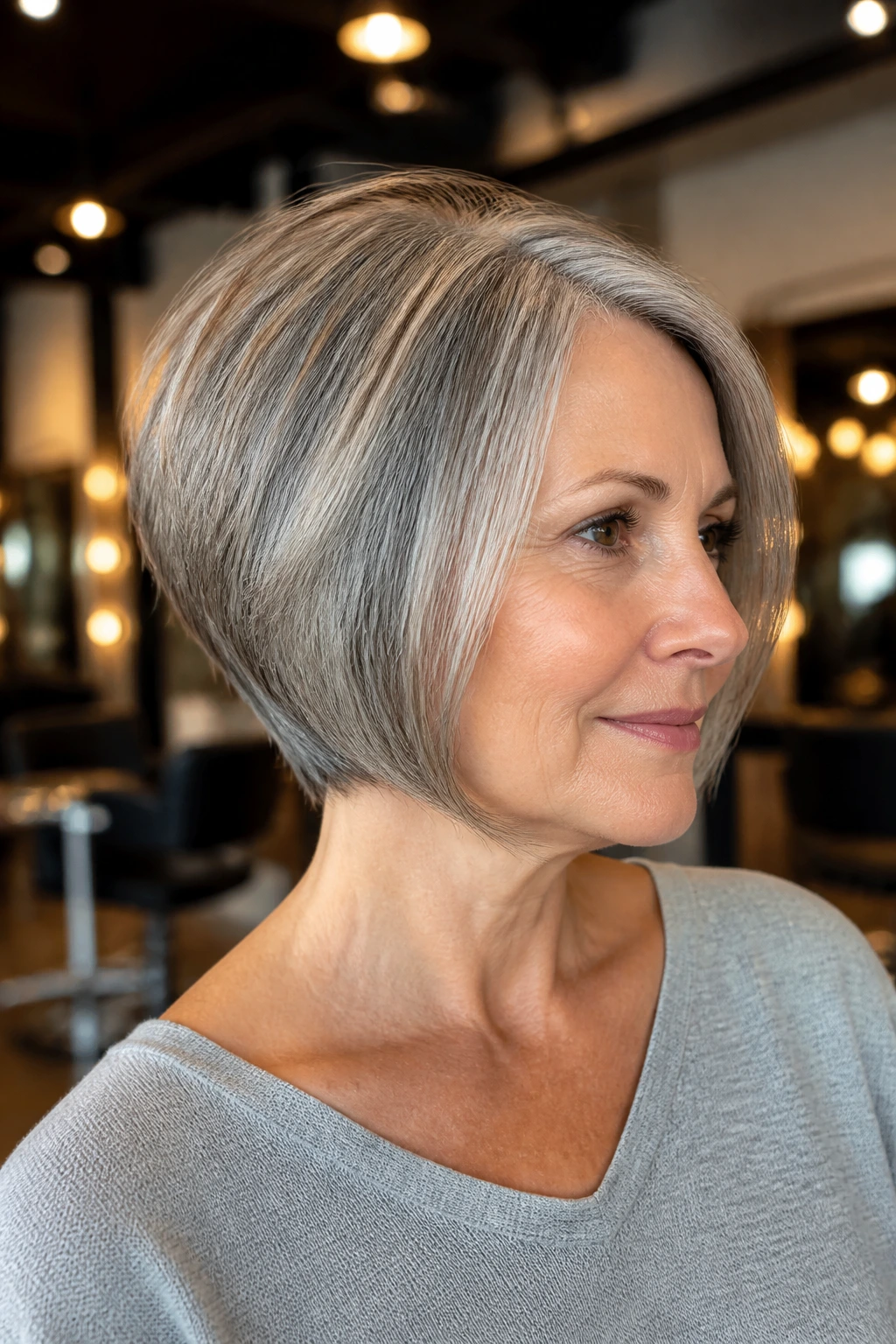
Why does a graduated bob work so well? Because the lift happens where the face does not need more width.
The back is cut with a stacked graduation that builds volume at the nape and crown, while the front stays longer and sleeker. That combination shifts attention upward and forward. On a round face, the shape creates length without going overly dramatic. Grey hair tends to show that graduation cleanly, which helps a lot.
How to Style It
Blow-dry the back first with a round brush, aiming the air downward at the ends and upward at the roots. Use a light heat protectant spray and keep each section around 1 inch wide for control. If the sides puff out, the cut loses its line, so work the brush in close to the head.
This is a disciplined haircut. It rewards a tidy finish and gives one back in return.
22. Shoulder-Length Cut with Bottleneck Bangs

There’s a reason bottleneck bangs keep showing up in good salons. They open the center of the forehead and widen gently toward the cheekbones, which is a neat trick for a round face.
At shoulder length, the rest of the cut stays long enough to narrow the shape while the bangs soften the top half. The result feels balanced. Grey hair makes the line of the bangs read clearly, so the shape should be soft at the edges and not chopped bluntly across the brow.
A few details matter here:
- Shortest point near the center of the forehead.
- Lengthening gradually toward the cheekbones.
- Shoulder-length body with a little movement at the ends.
- Soft styling cream through the fringe so it separates gently.
This cut works when you want forehead coverage without a heavy straight bang. It has a little polish and a little softness. That combination is hard to beat.
23. Jaw-Skimming Crop with Tucked Ends
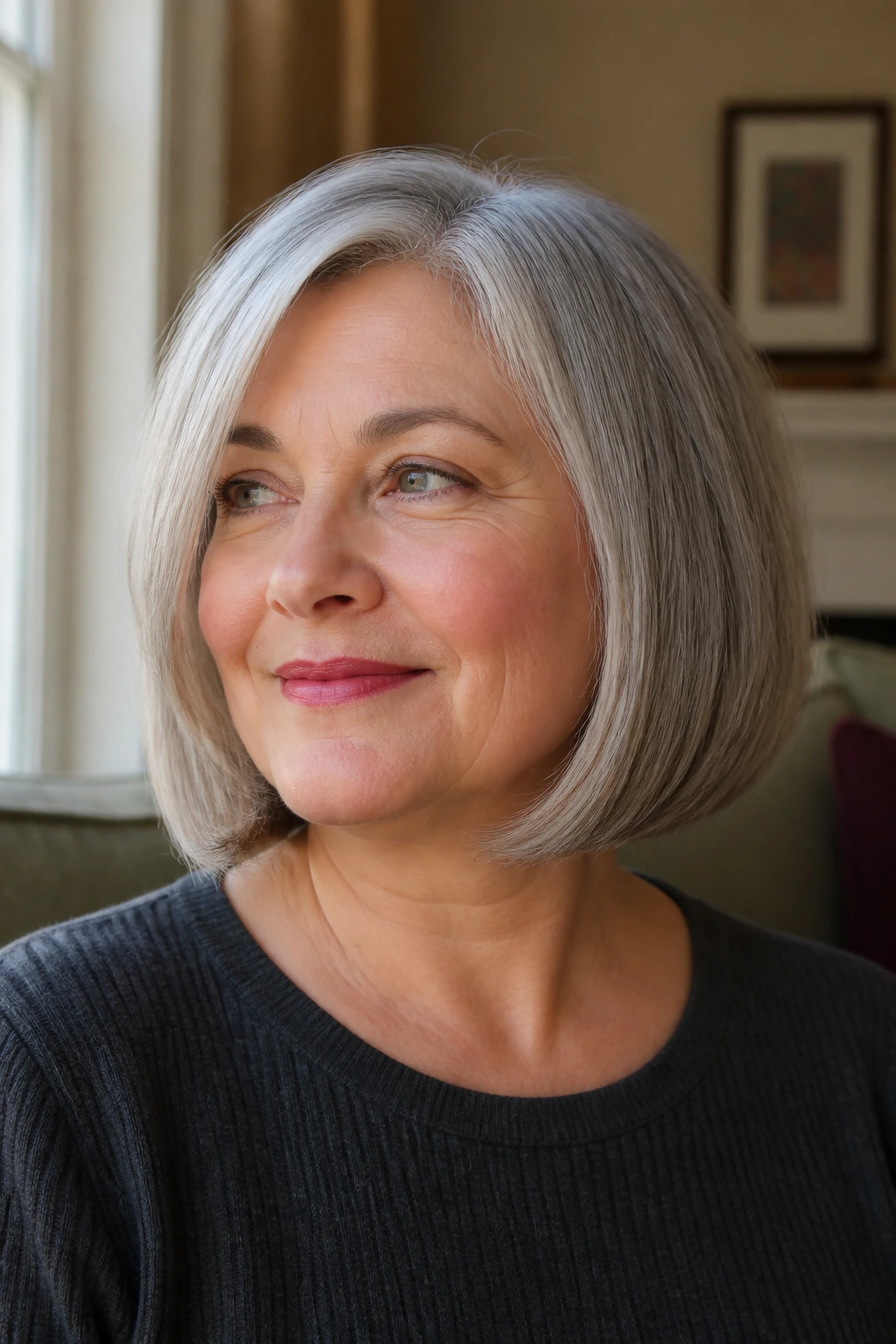
A jaw-skimming crop can flatter a round face if the ends are tucked under instead of flaring outward. That slight inward curve keeps the line neat and stops the cut from widening at the cheeks.
The length should sit a little below the jaw, not right on it. That extra fraction of space matters. Grey hair often holds a clean line well, so the shape can look crisp even when the styling is minimal. A soft bend under the ends gives the crop a finished feel without making it stiff.
This is a nice choice if you prefer shorter hair but want to avoid the helmet effect. Keep the sides slim, the top lightly lifted, and the curve at the ends controlled. A paddle brush and a quick pass with a flat iron can do most of the work.
It’s an understated cut. That does not make it dull. It makes it easy to live with.
24. Deep Side-Part Bob
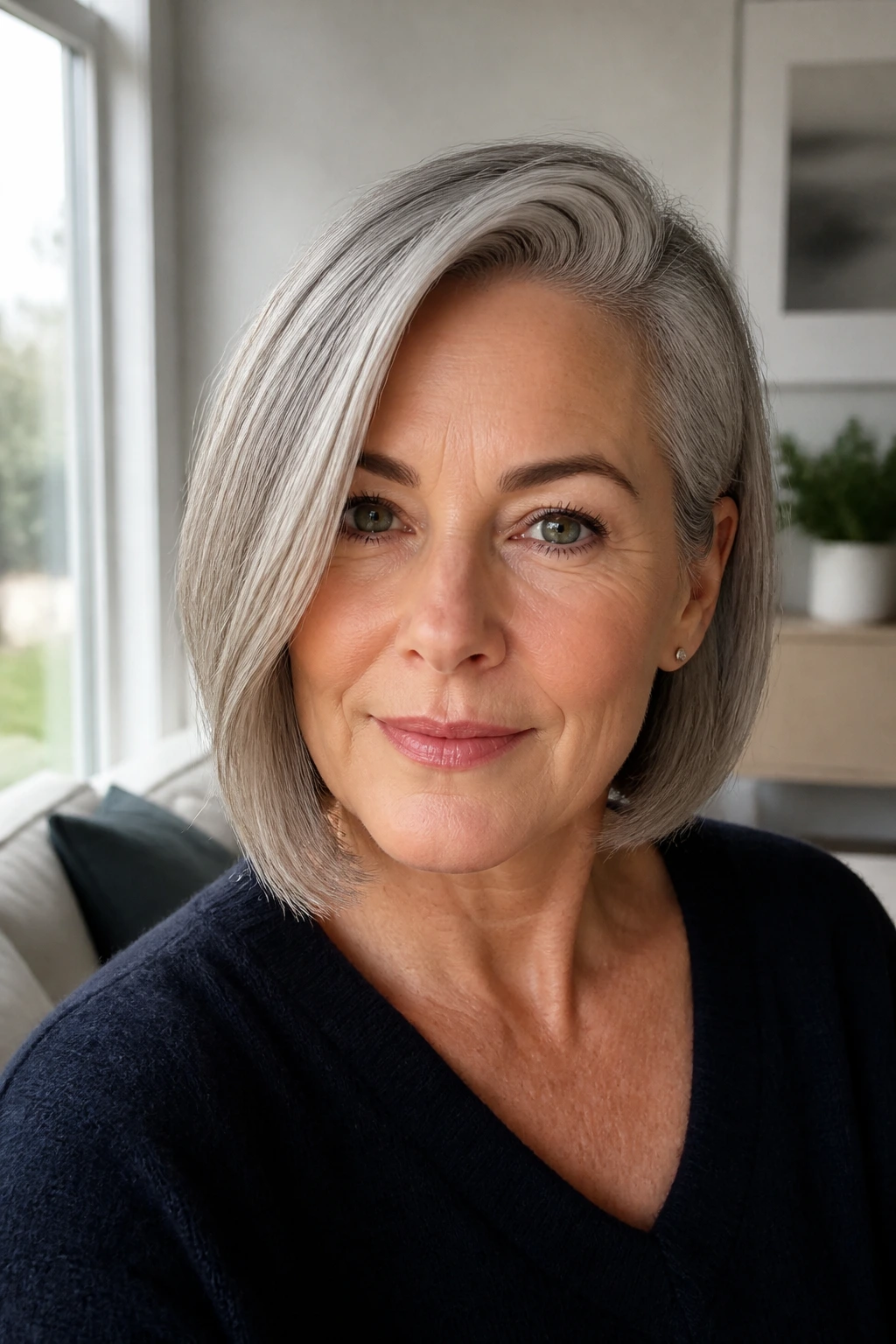
A deep side-part bob cheats the eye into seeing more length. That is the whole reason it works on a round face, and it works better than many people expect.
The part should sit about 2 to 3 inches off center, with one side tucked back or behind the ear. That creates asymmetry and prevents the hair from sitting in a perfect oval around the face. The bob itself can be blunt or slightly angled, as long as the shape stays below the cheek line.
Grey hair looks polished in this cut because the part line and the side sweep show up so clearly. If the hair is fine, use root-lifting spray at the part before drying. If it’s dense, keep the ends smooth so the sides do not swell out.
This cut is good when you want a simple bob with a little more shape. No drama. Just smart geometry.
25. Piecey Pixie with an Undercut
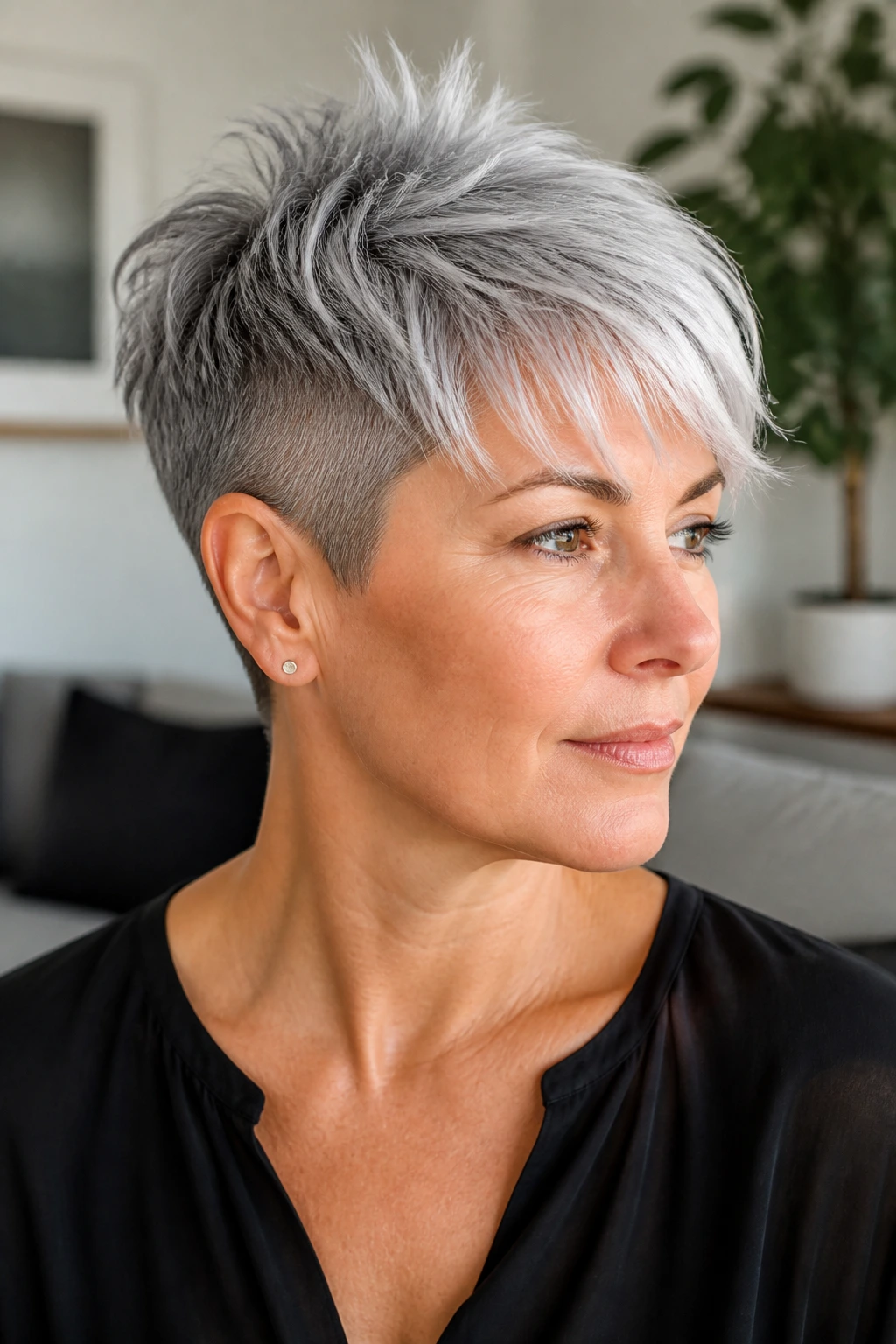
A piecey pixie with an undercut gives you two wins at once: less bulk around the sides and more focus on the top. For a round face, that combination can be very flattering.
What to Ask Your Stylist
- Keep the top about 3 to 4 inches long.
- Taper or clip the nape and around the ears.
- Leave enough fringe to sweep forward or sideways.
- Add piecey texture, not spikes.
The undercut helps if your hair is thick or coarse, because it removes weight where the head tends to feel widest. The piecey top creates lift and movement. Grey strands make the texture obvious, which is half the charm.
This is a bolder short cut, and it should look deliberate. If the undercut is too aggressive, the style can feel harsh. Soft texture on top keeps it wearable. A small dab of styling cream worked through dry hair is often enough.
26. Medium Cut with Internal Layers
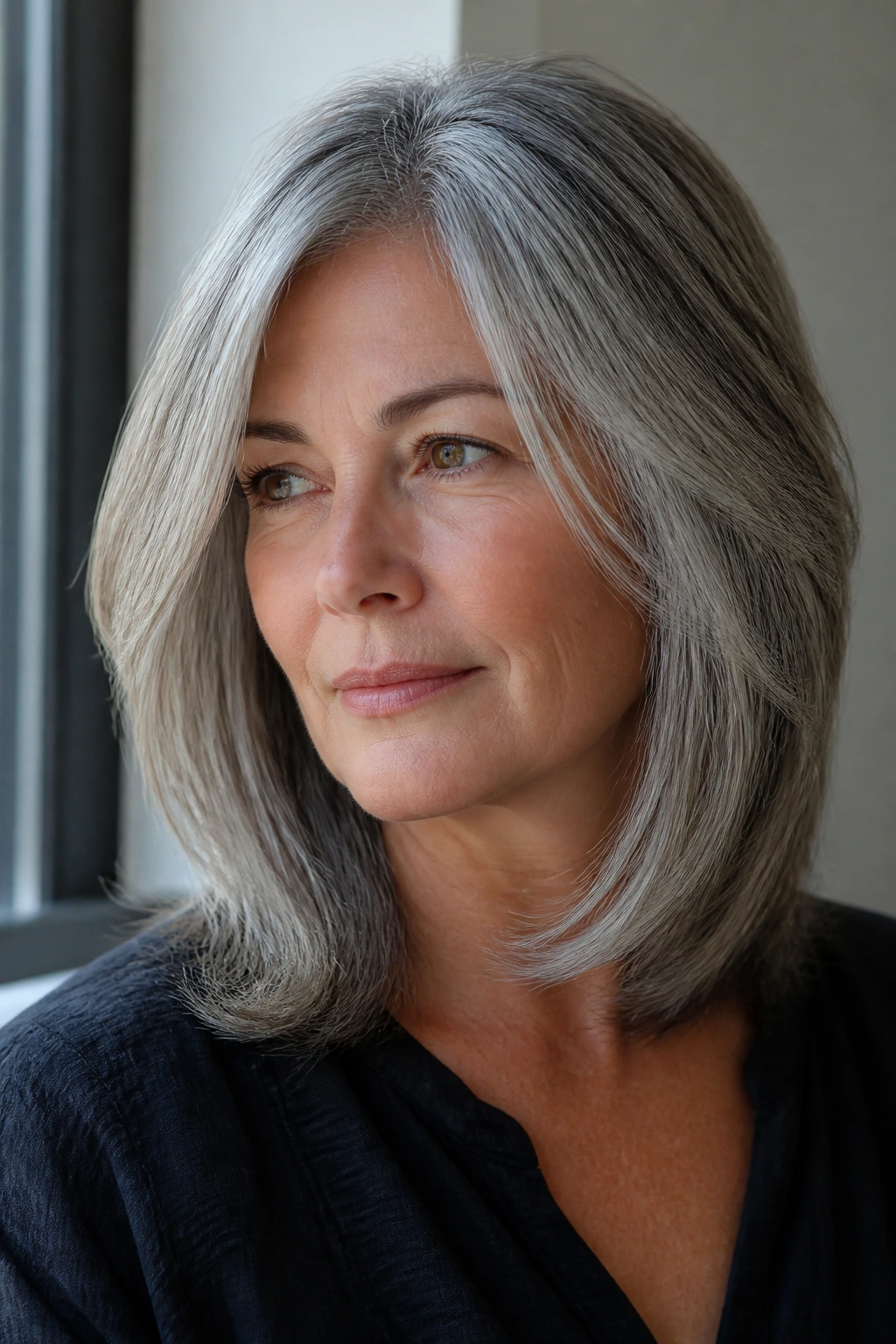
Internal layers are the quiet hero of grey hair. They remove weight from inside the shape without making the surface look ragged.
That matters for round faces because you get movement without extra width. The outer line can stay smooth and medium length—around the shoulders or a little past—while the hidden layers keep the hair from ballooning at the sides. It is a tidy solution, and I’m a fan of tidy solutions when they work this well.
This kind of cut is especially good if your grey hair is thick but not coarse enough to need a shag. The shape stays calm, the ends stay controlled, and the face gets a little vertical lift from the movement inside the haircut. A blowout looks polished, but the cut also wears well with a natural bend.
If your stylist starts hacking obvious layers into the outer edge, steer them back. The magic here is under the surface.
27. Soft Blowout Layers
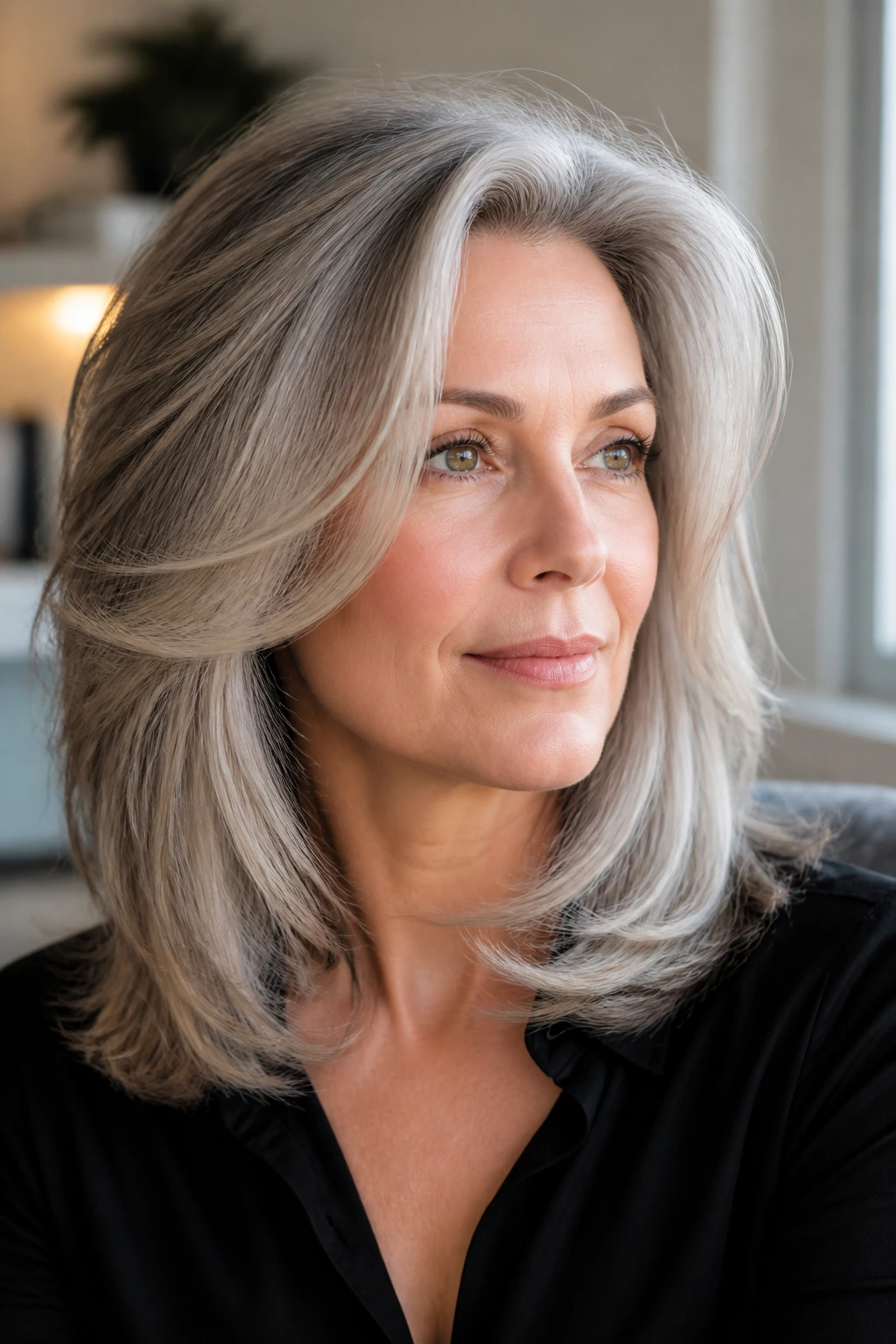
Need a cut that looks finished after a quick brush and a few passes of the dryer? Soft blowout layers are the one to ask for.
The shape usually starts around the cheekbone or lower and opens out toward the ends. That gives grey hair a light swing without breaking the outline too much. On a round face, the lift at the top and the movement at the sides work together to lengthen the shape. The ends should feel soft, not razor-thin.
How to Style It
Use a large round brush—think 2 to 3 inches across if your hair is medium to long—and dry each section away from the face. Finish with a cool shot to lock in the bend. That little cool blast keeps the blowout from collapsing before lunch.
This cut is good for people who like a salon finish but do not want a high-maintenance shape. It looks graceful, and it has enough motion to keep grey hair from feeling heavy.
28. Salt-and-Pepper Long Bob with Beveled Ends
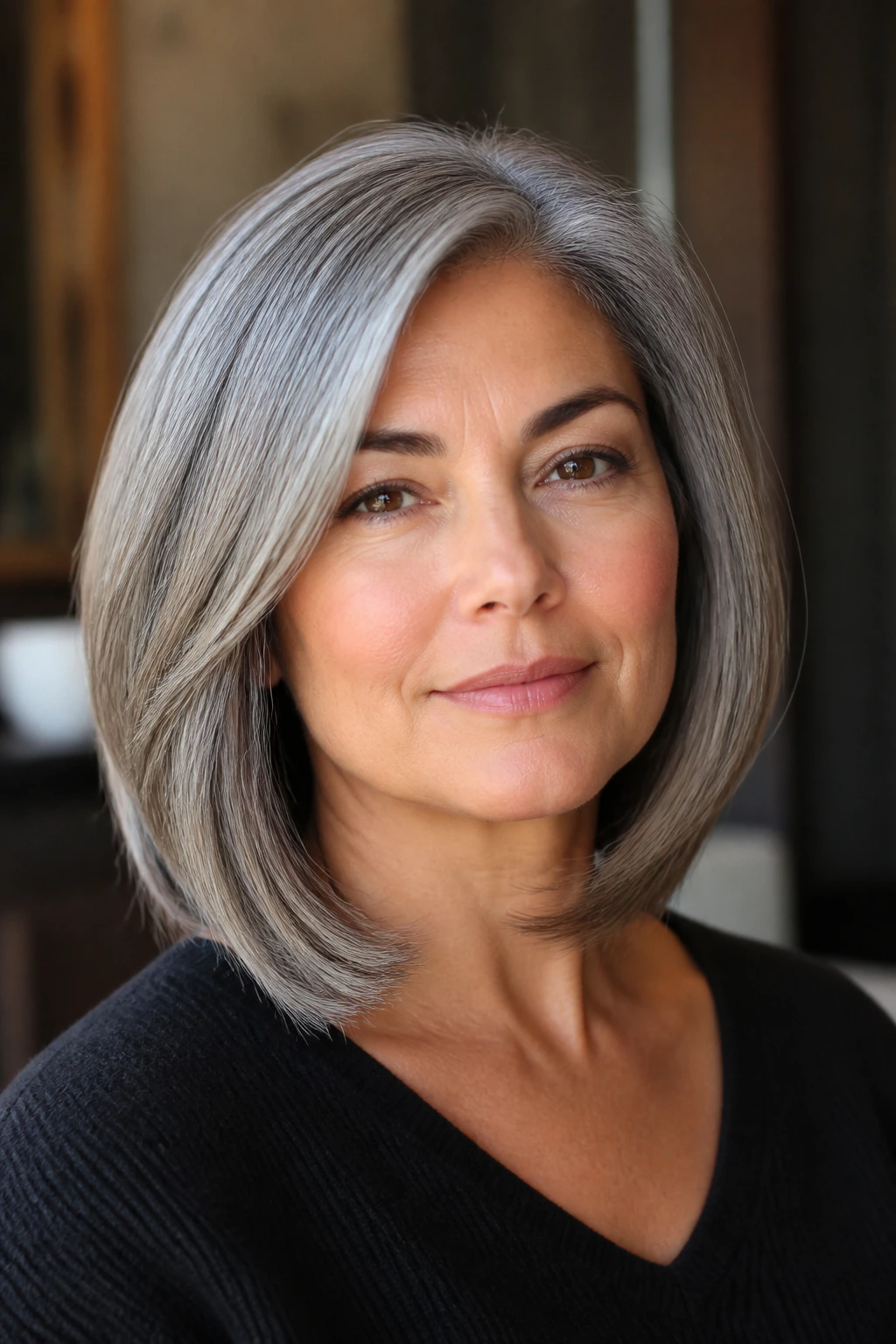
Salt-and-pepper hair has a special look when the cut respects the color instead of fighting it. A long bob with beveled ends does that well.
The bevel gives the ends a slight turn under, which softens the line and keeps the hair from hanging like a sheet. That is useful on a round face, where a blunt edge can feel too broad. The long bob should sit at the collarbone or a little below, giving the face room to narrow.
A few things make this shape sing:
- Collarbone length or a touch longer.
- Ends cut with a soft bevel, not a hard blunt line.
- A side or off-center part for lift.
- Minimal layering through the body so the color pattern stays visible.
This cut feels especially good when the grey is mixed with darker strands. The contrast shows the curve of the bevel and gives the hair depth without extra fuss. It is polished, but not stiff. That’s a nice place to land.
Final Thoughts
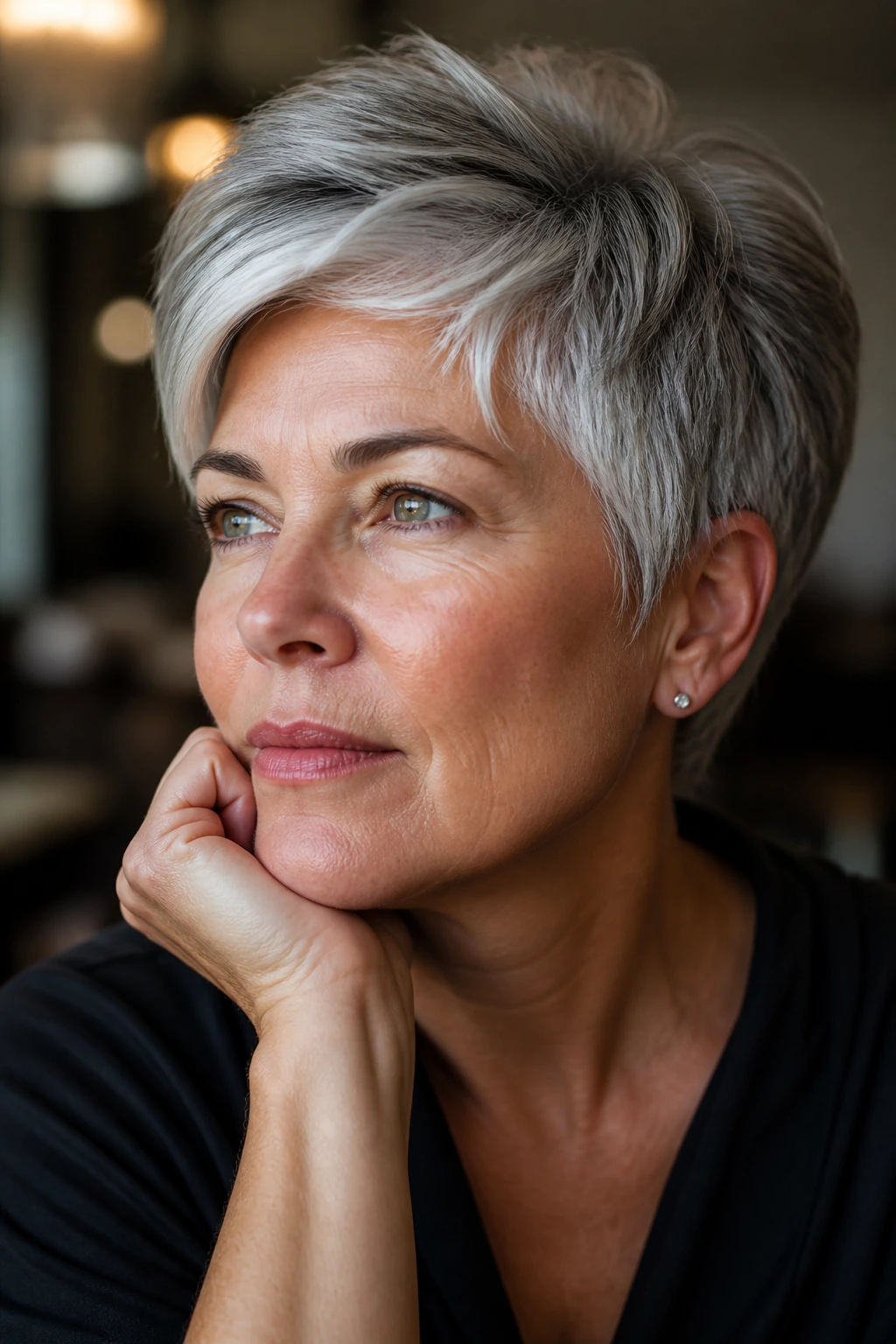
The best grey haircuts for round faces do two jobs at once: they give the eye a vertical path and keep the sides from building too much weight. That can mean a sharp angle, a soft fringe, a lifted crown, or a length that lands below the cheek line. The details matter more than the category name.
Grey hair also changes the way a cut reads. The texture shows up. The outline shows up. Bad shape is obvious fast, which is annoying and useful at the same time.
Bring a photo to the salon, yes, but also bring a clear opinion about where you want the width to live. If you know that, the rest gets easier—and the right cut starts doing work for you from the first comb-through.
