



A round face can look sharper, longer, and cleaner with the right cut. It can also look wider than it really is with one bad line in the wrong place.
The best sleek haircuts for round faces do three things at once: they add vertical line, they keep the shape from puffing out at the cheeks, and they stop the eye from lingering on the widest part of the face. That sounds technical, but in practice it’s simple. A cut that hits right at the jaw can make the face read fuller. A cut that falls below it, or angles past it, usually behaves better.
And no, sleek does not mean flat or boring. It means polished. Clean edges. A finish that looks intentional instead of accidental. Some of the best options are long and glassy, some are short and sharp, and a few rely on a smart side part or a small shift in length to do the heavy lifting.
1. Collarbone Blunt Lob for Round Faces
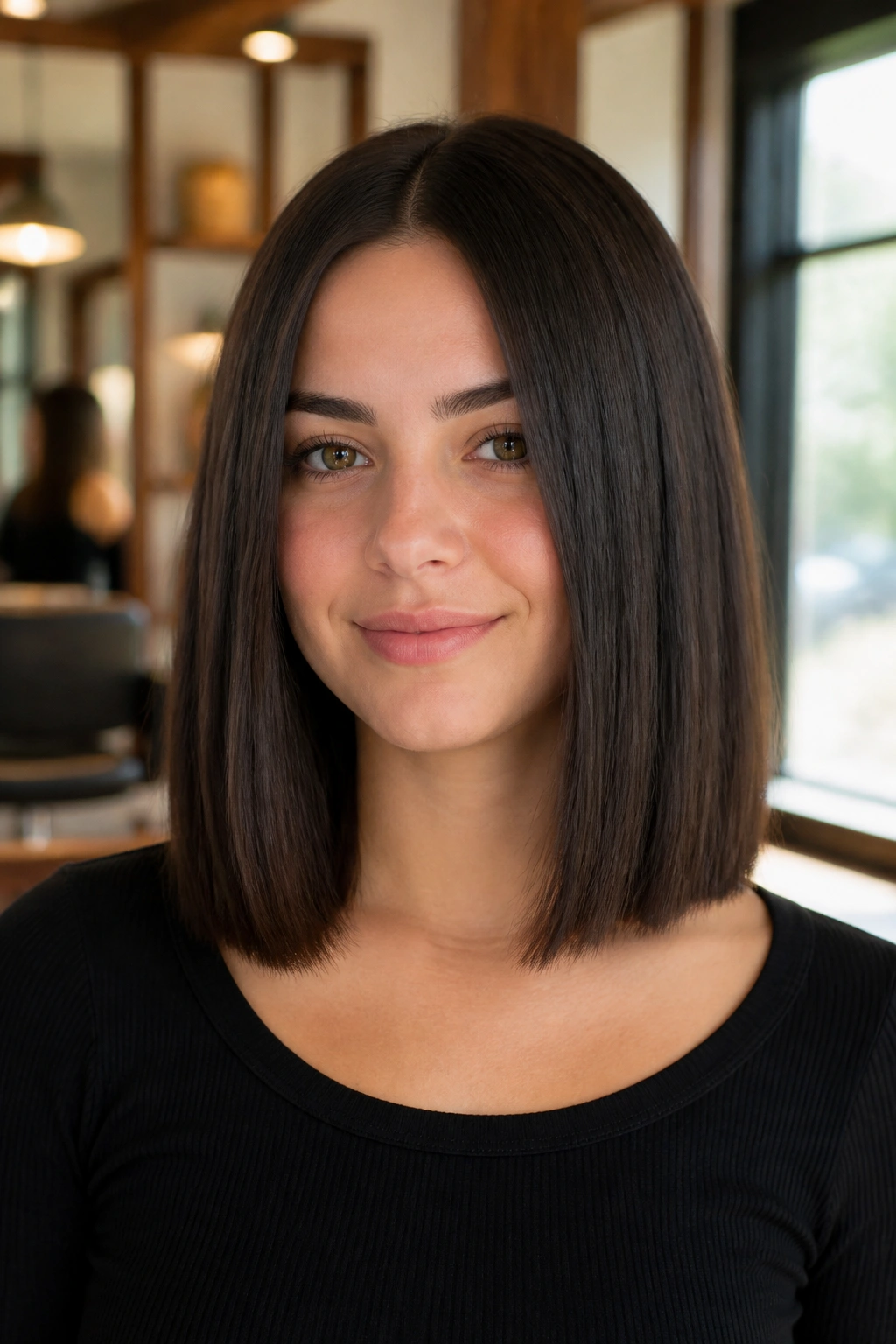
The collarbone lob is one of those cuts that just works without trying too hard. It sits long enough to create a vertical line, but not so long that it drags the whole look down. On a round face, that matters.
Why It Flatters the Face
A blunt edge at the collarbone keeps the shape clean, while the length falls below the jaw and gives the face a longer look. I like this cut best when the ends are kept straight and heavy, not choppy. That extra weight at the bottom stops the hair from ballooning out around the cheeks.
Ask for a center part if you want more symmetry, or a slight off-center part if you want a softer break in the face shape. Either way, keep the front pieces no shorter than the collarbone.
- Best for: fine to medium hair that needs structure
- Skip the heavy layering: it can make the sides feel rounder
- Styling note: smooth it with a round brush, then finish with a flat iron pass at the ends
Best move: tuck one side behind the ear for a little asymmetry. Tiny change. Big payoff.
2. Sharp Angled Bob
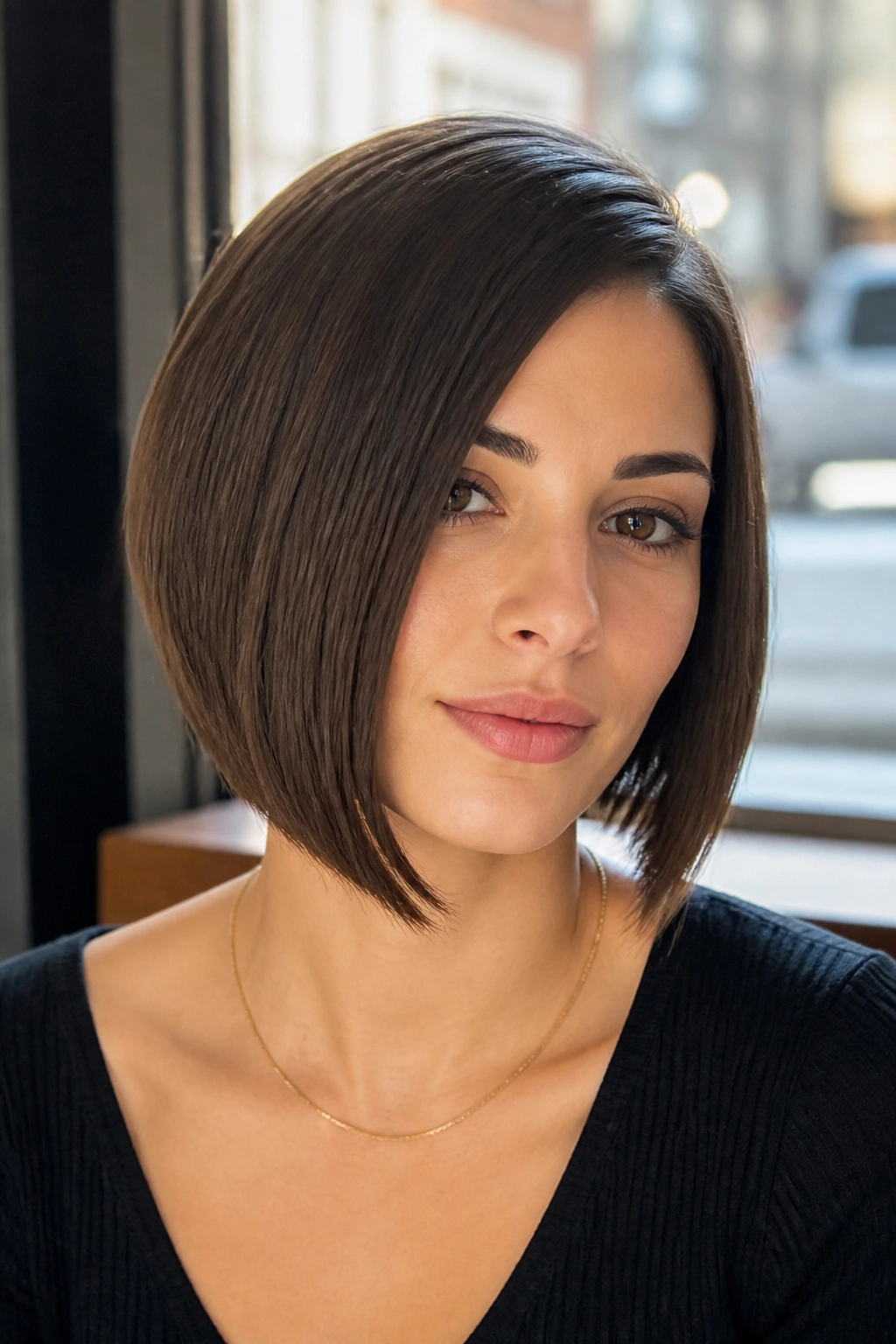
If you want a haircut that makes the face look longer fast, an angled bob is a strong choice. The back sits a little shorter, the front is left longer, and that diagonal line does a lot of visual work.
What I like about this cut is that it doesn’t rely on volume. It relies on direction. The eye naturally follows the slant from the nape toward the front, which helps break up the circular shape of the face. Keep the front just grazing the chin or a touch below it. If it ends right at the widest point of the cheeks, the whole effect gets lost.
This is a good cut for straight hair, but it also behaves well on hair that has a slight wave. The line stays visible, which is the whole point. Blow-dry with a paddle brush and keep the finish smooth. Messy angled bobs can read bulky. Sleek ones look deliberate.
3. Italian Bob With a Side Part

Why does the Italian bob keep getting attention? Because it has presence without bulk. It usually lands around the jaw or just under it, but the magic is in the styling: polished roots, a soft bend through the lengths, and a side part that shifts the balance.
That side part matters more than people think. A center part on a round face can work, but a side part often creates a cleaner break and makes the face feel a bit less symmetrical in the best way. The Italian bob also works because it has body without puff. It feels full, not fluffy.
How to Ask for It
Tell your stylist you want a jaw-skimming bob with soft weight at the ends and no round brushing around the cheeks. If your hair is thick, ask for interior debulking only, not too much removal at the surface. You want control, not frizz.
This cut looks especially good with a tucked side and a sharp lip color. It has that neat, slightly expensive feel—without needing much maintenance beyond a good blowout.
4. Long Layers That Start Below the Cheekbones
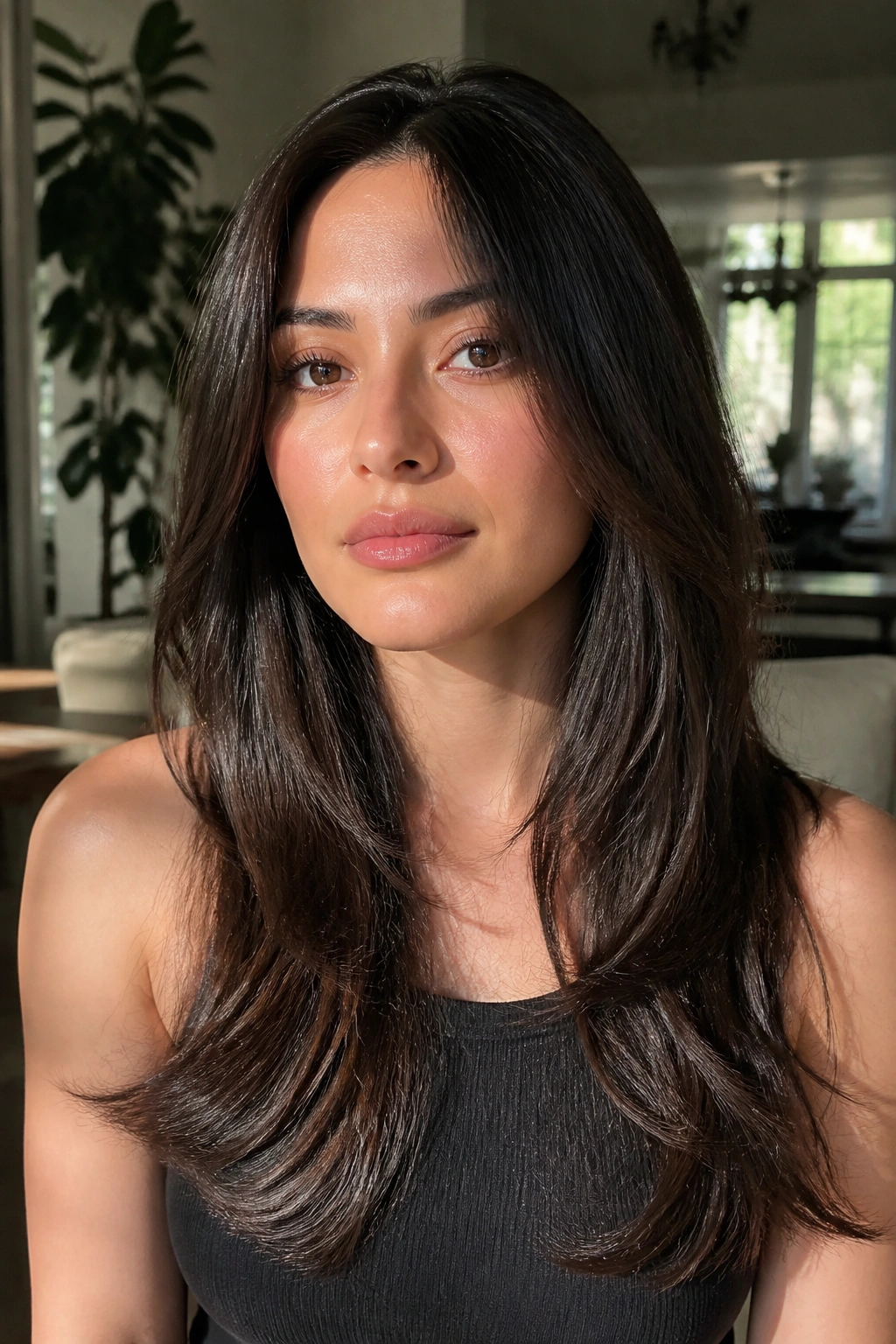
Put the layers in the wrong spot and a round face can look wider. Put them below the cheekbones and the face suddenly has room to breathe.
That is why this cut is so smart. The length stays long and sleek, while the layers begin low enough to avoid adding width at the middle of the face. You still get movement. You just get it where it helps. The hair falls past the face instead of curling in around it.
A lot of stylists make the mistake of layering right at the cheeks because it looks soft in the chair. It often looks less helpful once the hair is dry and moving. Ask for the first layer to start closer to the mouth or chin, then keep the rest subtle. A few long pieces around the front are enough.
- Works well with: medium-thick straight hair
- Best parting: center or slightly off-center
- Avoid: short layers around the temples
This is one of those cuts that can look plain in a photo and excellent in real life. That’s usually a good sign.
5. Sleek Pixie With Long Top Length
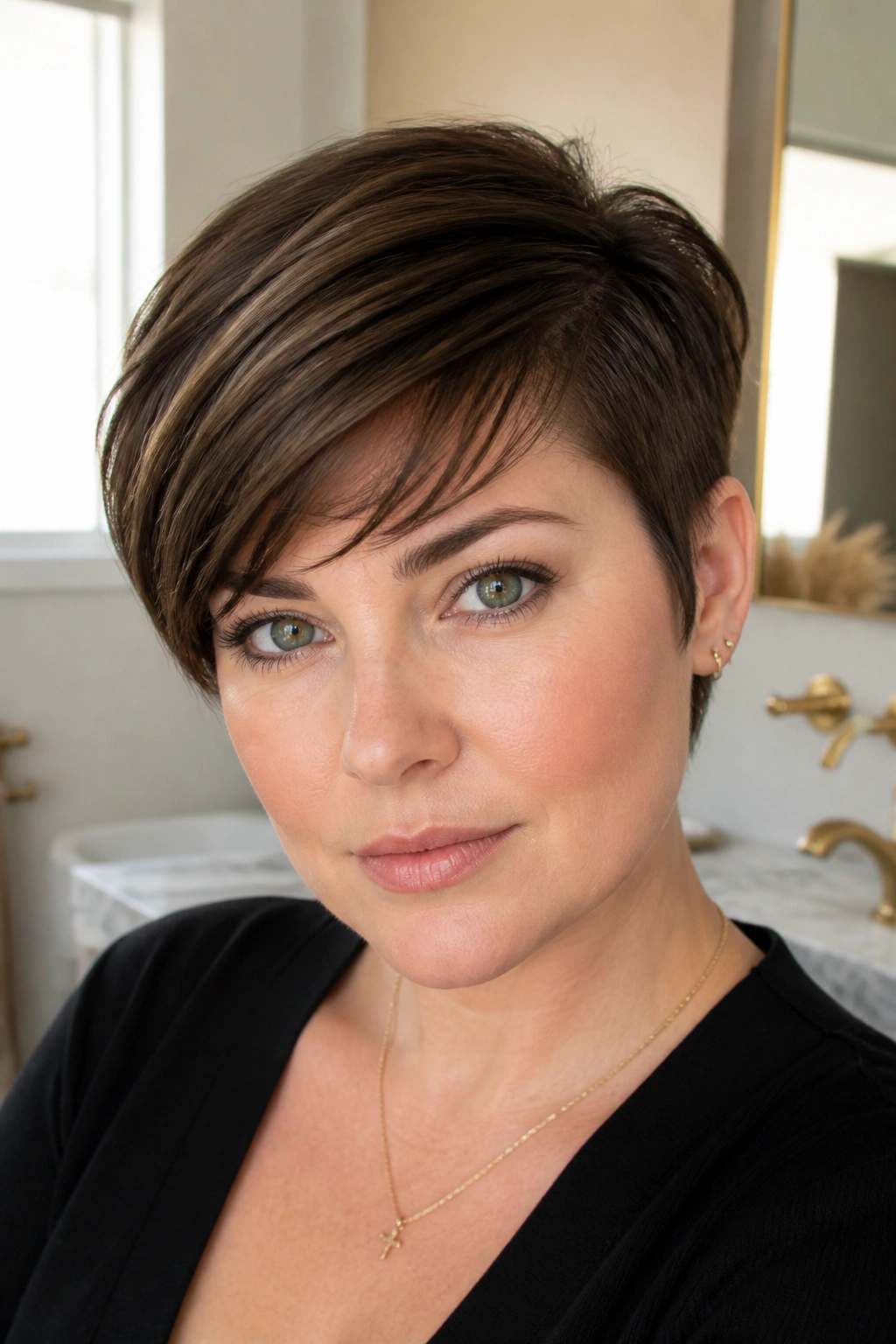
Short hair can flatter a round face. It just needs shape. A sleek pixie with longer top length and close sides does exactly that.
The short sides slim the face visually, while the longer top pulls the eye upward. That vertical lift is the whole game. If the top is left too short, the cut can widen the cheeks. If it’s too fluffy, it starts to lose the clean edge that makes it work. So the balance matters.
I prefer this cut with a little length at the fringe, swept across the forehead or slightly back. That movement breaks up the roundness without making the style feel severe. The nape should stay tidy. The sides should stay soft, not helmet-like.
A flat iron pass on the top section can make the finish look crisp and neat. Or keep it slightly piecey if you want less polish and more edge. Either way, this is not a fussy cut. It’s neat, quick, and surprisingly flattering when the proportions are right.
6. Shoulder-Grazing Cut With Curtain Bangs
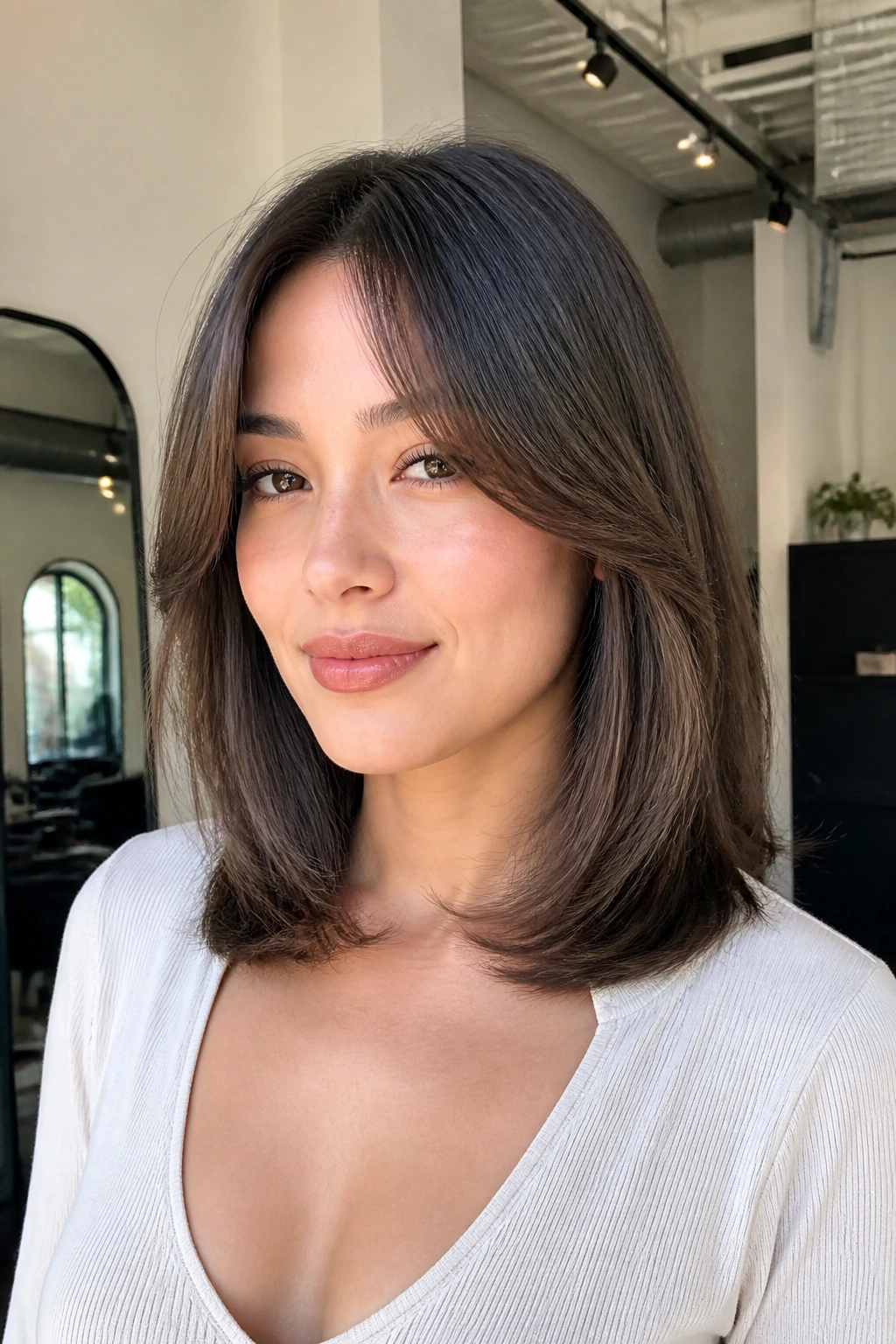
Can curtain bangs work on a round face? Yes—if they’re cut with enough length and parted with some space at the center.
The shoulder-grazing length keeps the hair moving downward instead of out toward the cheeks. The curtain fringe opens the face without chopping it in half. That’s the real trick. Too-short bangs can make the face feel wider. Longer curtain bangs, especially ones that start around the cheekbone and sweep toward the jaw, do the opposite.
What Makes It Different
This isn’t a baby-shape cut. It needs softness at the front and a clean line through the rest of the hair. The bangs should be feathered enough to move, but not so wispy that they disappear. If your hair is fine, ask for a denser fringe. If it’s thick, keep the center lighter and let the sides taper.
A straight blowout with a slight bend under the ends looks best. The hair should fall like a curtain, not sit like a cap.
7. Deep Side-Part Lob
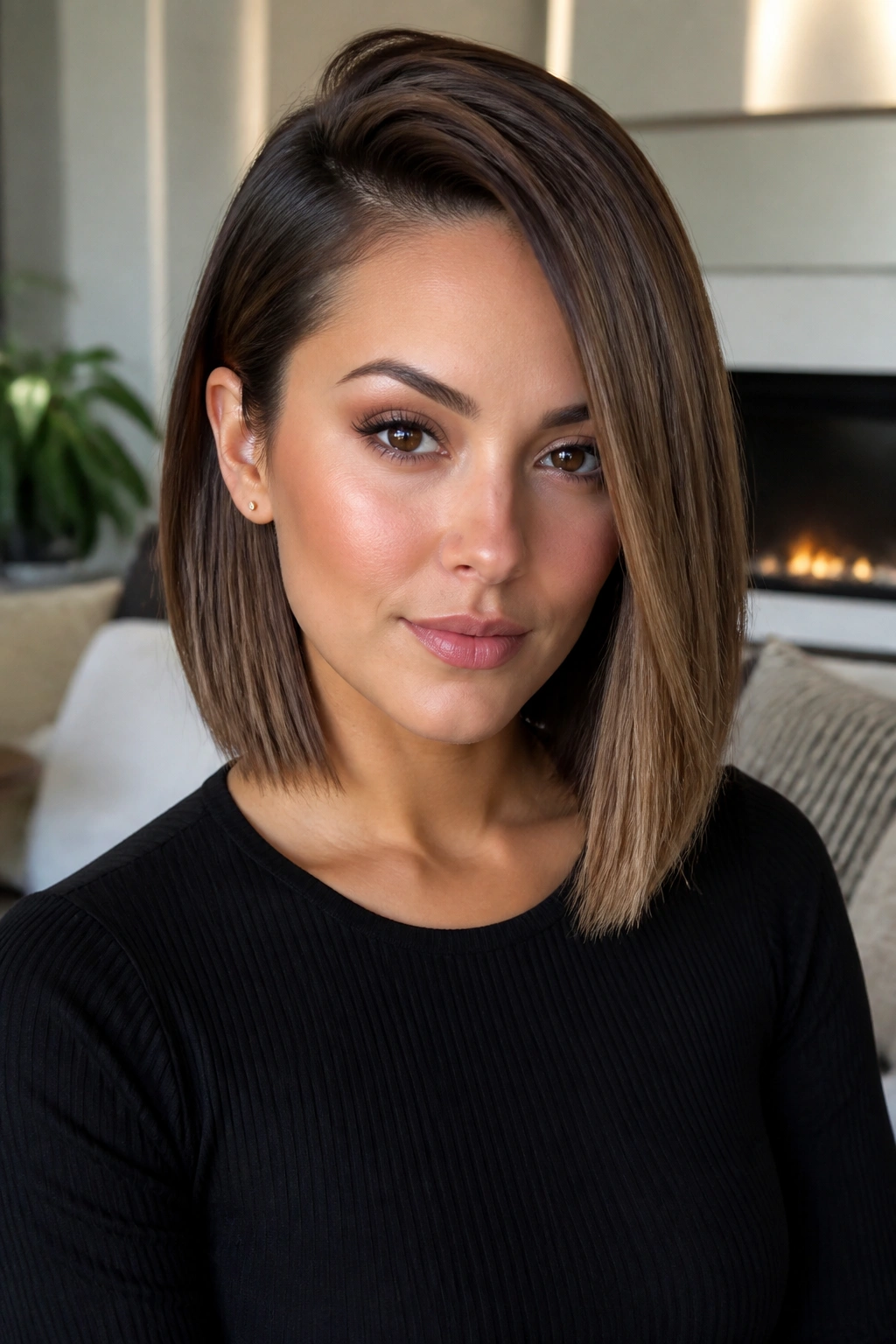
A deep side part can do more for a round face than ten minutes of styling with a curling iron. That sounds dramatic. It’s not.
The shift in part creates asymmetry, and asymmetry is useful when the face shape is naturally even and curved. A deep side-part lob keeps the overall line long, while the part draws attention upward and across instead of directly across the widest part of the face. It’s subtle, but it changes the whole mood of the cut.
This one looks especially good when one side tucks behind the ear and the other side falls forward. That little difference gives the face a diagonal line. If you want the style to feel sleek, keep the ends blunt or only slightly beveled. Too much layering can dilute the effect.
A clean blowout makes this cut sing. So does a pass of shine spray. Not a heavy one. Just enough to keep the hair reflective and smooth.
8. Glass Hair Long Cut
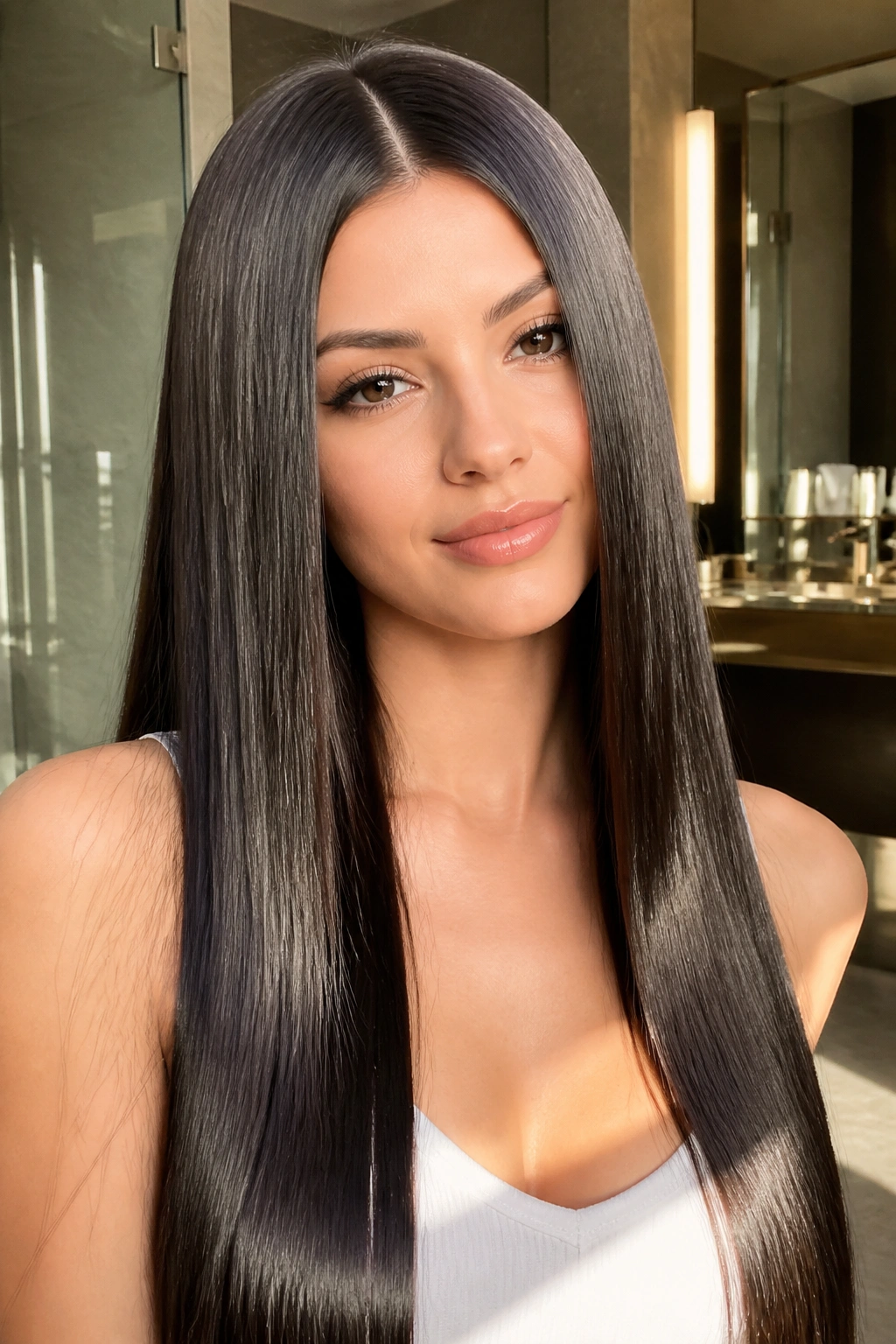
Glass hair looks expensive because it is all about control. The cut itself is simple: long, one-length, and smooth from root to end. For round faces, the length is what matters most. It drapes the face instead of stopping at it.
The shine finish helps too, because reflective hair draws the eye vertically. You notice the line, the fall, the length. You do not get distracted by bulk near the cheeks. That makes this a great option if you have naturally straight hair or hair that can be pressed smooth without much effort.
How to Wear It
Keep the cut one length or nearly one length. Ask for the ends to be blunt and tidy, with no face-framing layers that kick out at the jaw. If you want a little movement, make it happen through styling, not through the haircut itself.
A center part gives this style a crisp finish, but a soft off-center part can work too. The important part is the smooth silhouette. It should fall like a sheet, not like separate pieces.
9. Tapered Bixie
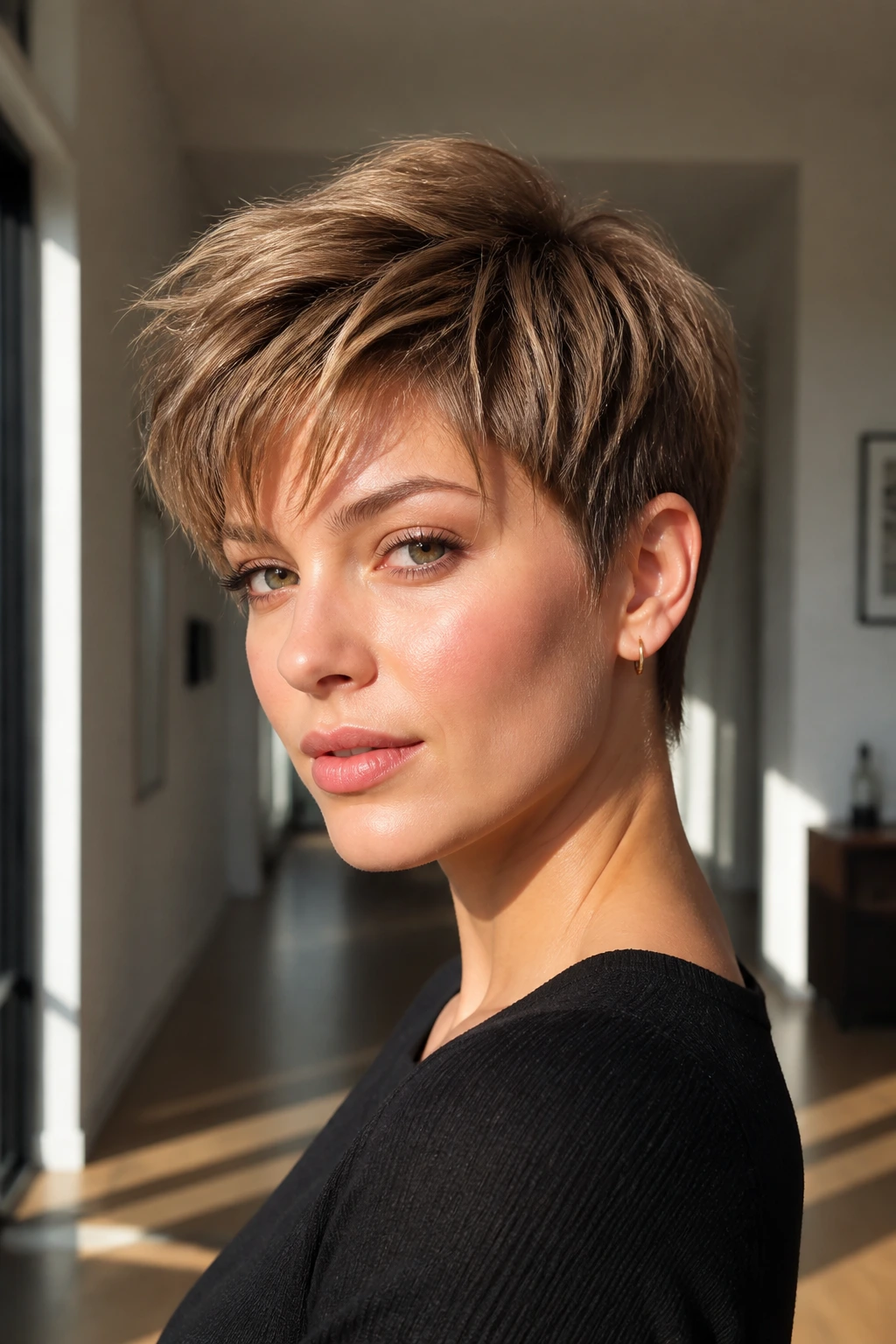
The bixie sits between a bob and a pixie, and on a round face, that middle ground can be a smart place to live. The tapered nape and shorter sides slim things down, while the longer top keeps the cut from feeling too severe.
What makes the bixie work is the contrast. The top can be brushed forward, lifted slightly, or swept to one side. The sides stay neat. That creates height, and height is useful when you want to stretch a face shape visually. It also keeps the cut modern without making it look harsh.
This is a good choice for hair that has some texture, because the shape can hold even when the finish is not pin-straight. Still, if you want it to feel sleek, a smoothing cream and a quick flat brush blow-dry will make a big difference.
It’s a short cut with personality. Not timid. Not overgrown. Clean, sharp, and easy to wear.
10. Rounded U-Cut
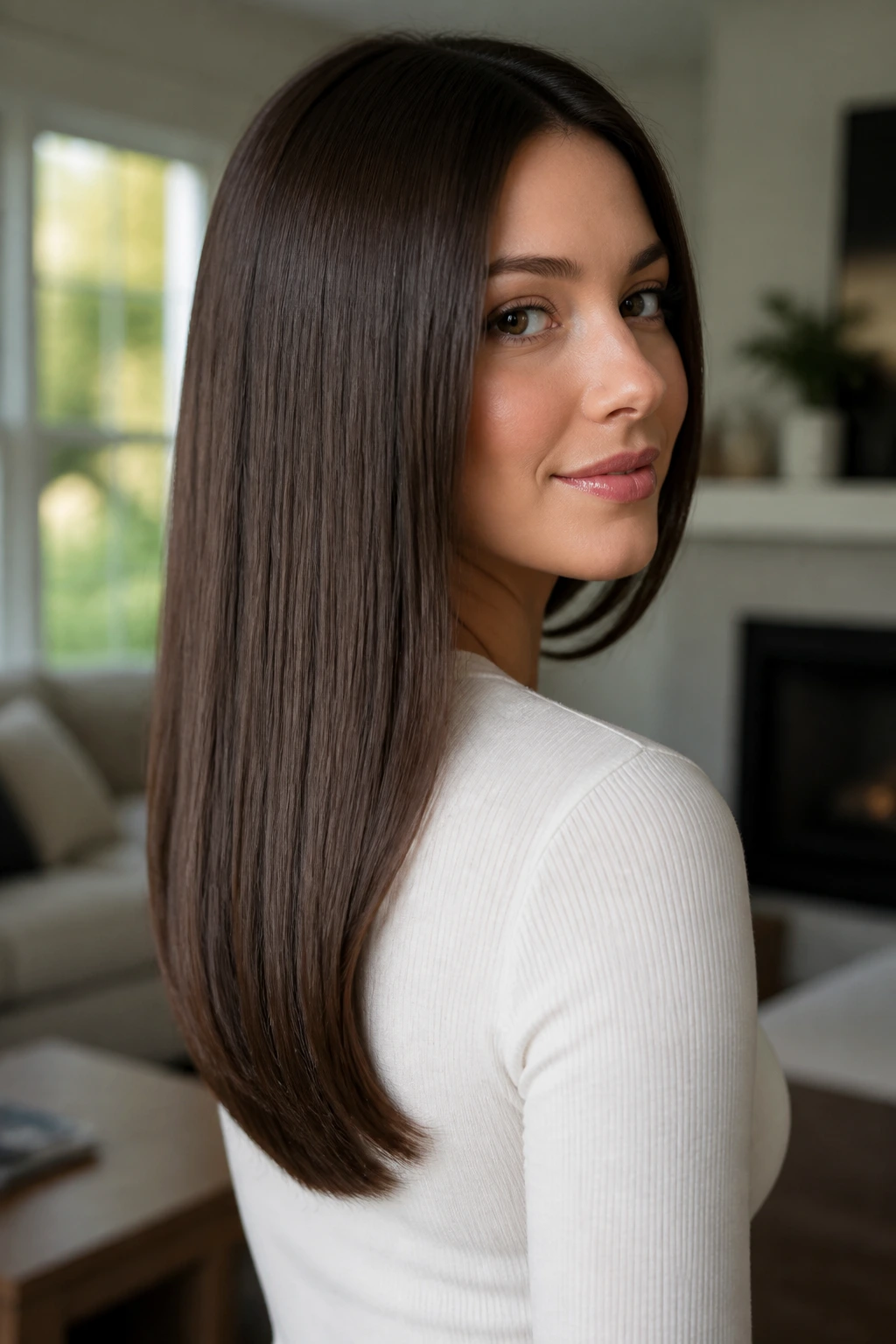
A U-cut sounds soft, but on long hair it can be very flattering for round faces. The back stays a touch longer in the center, then curves down toward the sides. That subtle arc creates length without leaving the hair looking blunt or boxy.
This shape works because it directs the eye downward. The face gets a long frame instead of a horizontal stop. I prefer this cut when the front pieces are left long enough to skim past the jawline. If the side lengths are too short, the curve can make the face seem fuller than intended.
The U shape is also a good answer for thick hair that needs structure but not a lot of layering. It keeps the bulk under control while preserving movement. The finish should be sleek enough to show the shape, because a fuzzy U-cut loses its line fast.
Straighten it, then curve the ends inward only slightly. You want a quiet shape. Not a hard one.
11. Blunt Midi With a Center Part
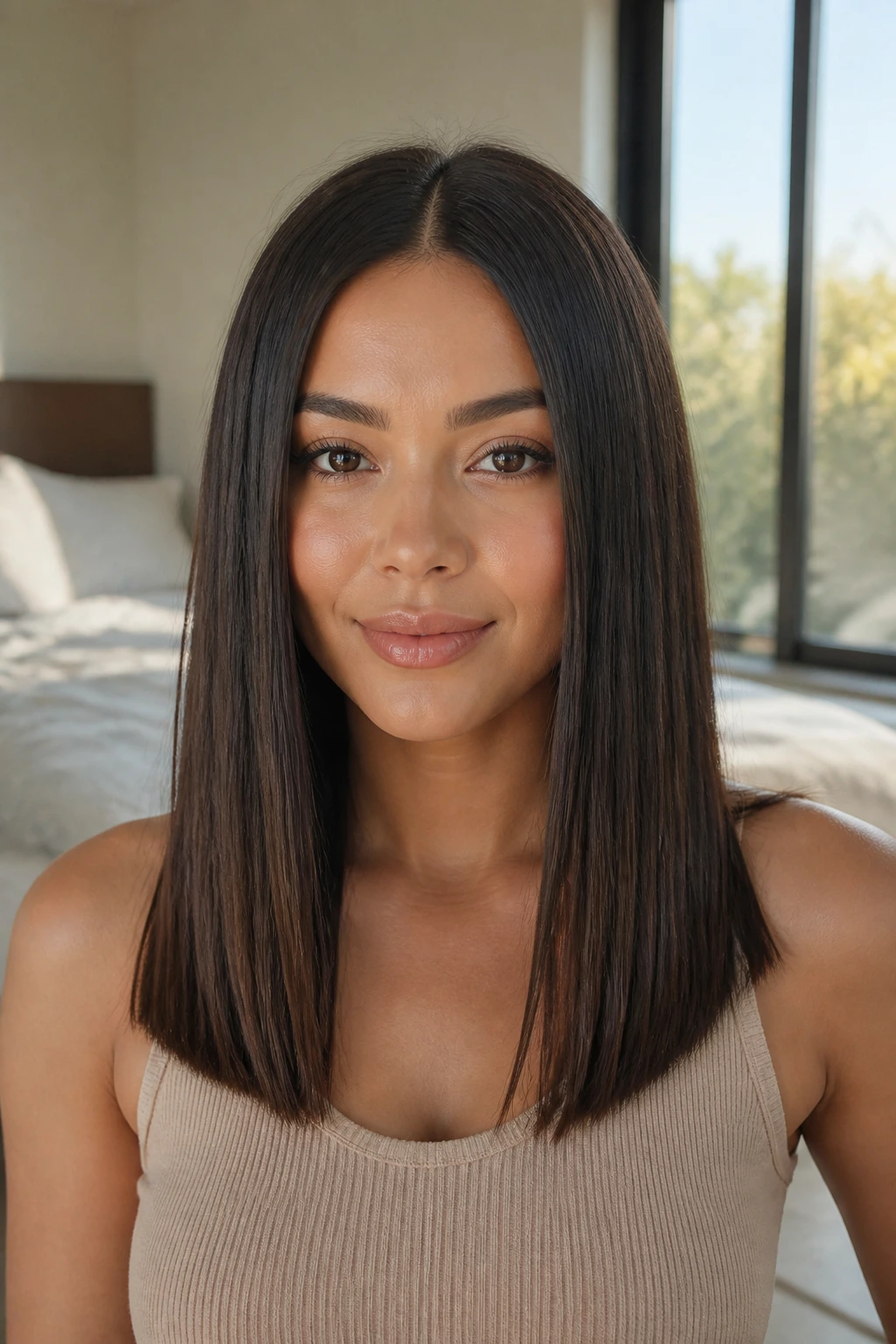
There’s something clean and confident about a blunt midi cut. It lands somewhere between the shoulders and the upper chest, which gives the face a long frame without feeling severe.
For round faces, the center part can work well here because the length is doing the lifting. The blunt ends stop the hair from puffing outward, and the length past the widest part of the face helps everything settle into a more vertical line. If the hair is very thick, keep the ends full but not heavy. If it’s fine, the blunt edge adds welcome density.
This cut is one of the easiest to make look sleek. A blow-dry with a flat brush and a touch of serum is often enough. No fancy shape needed. No dramatic layers. Just a smooth, even line.
I like this cut for people who want polish without a lot of daily effort. It looks intentional even when the styling is minimal.
12. Lob With Bottleneck Bangs

Why are bottleneck bangs such a good match for round faces? Because they open the center of the forehead, then taper softly toward the cheeks instead of cutting straight across them.
That taper matters. A blunt fringe can shorten the face. Bottleneck bangs do the opposite by creating a narrow center and longer sides that blend into the rest of the cut. On a lob, that gives you face framing without the usual heaviness around the cheeks.
How to Ask for It
Ask for bangs that are shorter in the middle and longer at the edges, with the side pieces starting around the cheekbone. Keep the lob itself sleek and below the chin. If the cut is too short, the fringe can overwhelm the face.
This one looks especially good with a slight bend through the lengths and a smooth root area. It feels soft, but not fluffy. That’s the balance to aim for.
13. Asymmetrical Bob
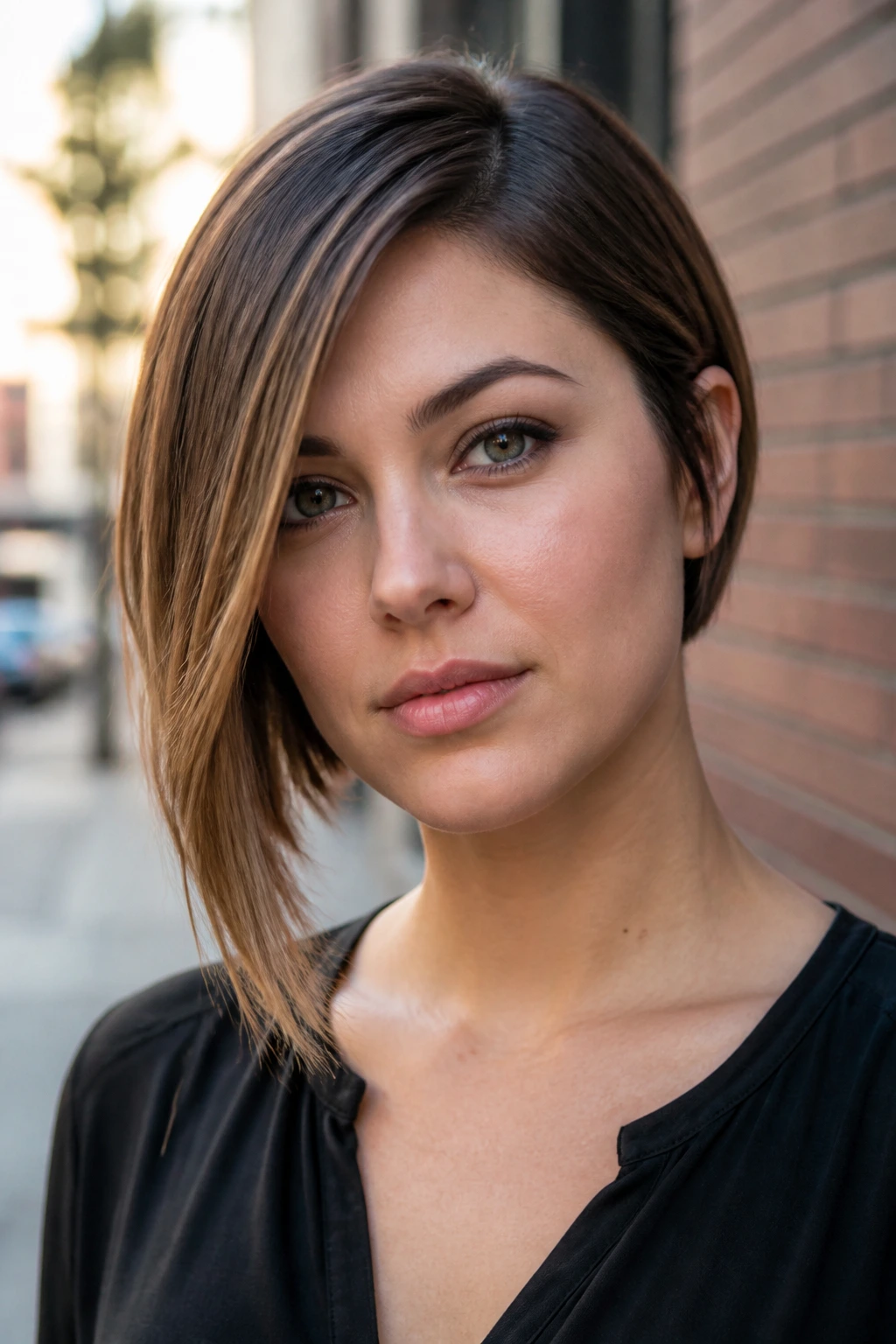
An asymmetrical bob is one of the easiest ways to interrupt the roundness of a face shape. One side sits a little longer, and that difference creates movement the eye can follow.
The best version is not extreme. You do not need one side dramatically longer than the other. Even a small difference can shift the whole feel of the cut. Keep the longer side grazing the jaw or just below it, and let the shorter side stay neat enough to keep the shape crisp.
This cut works especially well for straight hair because the line is so visible. It also pairs nicely with a tucked side or a small ear tuck, which makes the angle read more clearly. The face gets a diagonal edge instead of a soft circle.
There’s a reason this shape keeps showing up. It does not need volume to work. It just needs clean execution and a steady hand.
14. Soft Shag With Long, Sleek Layers

A shag can sound risky on a round face, and a choppy one usually is. But a soft shag with long, sleek layers can be a different story.
The point is not to build width. The point is to keep the hair moving downward while adding enough texture to keep it from falling flat against the face. Long layers around the lower face and collarbone can slim the shape nicely, especially when the ends are kept smooth and the top isn’t too poofy.
This is a cut I’d choose for someone who wants edge but still wants polish. The layers should be visible, but not broken. The ends should look deliberate, not shredded. A smoothing balm on damp hair goes a long way here, because the sleek finish keeps the layers from turning fluffy.
It has a little attitude. That’s part of the appeal. Just don’t let it get too messy if the goal is sleekness.
15. French Bob With an Elongated Front
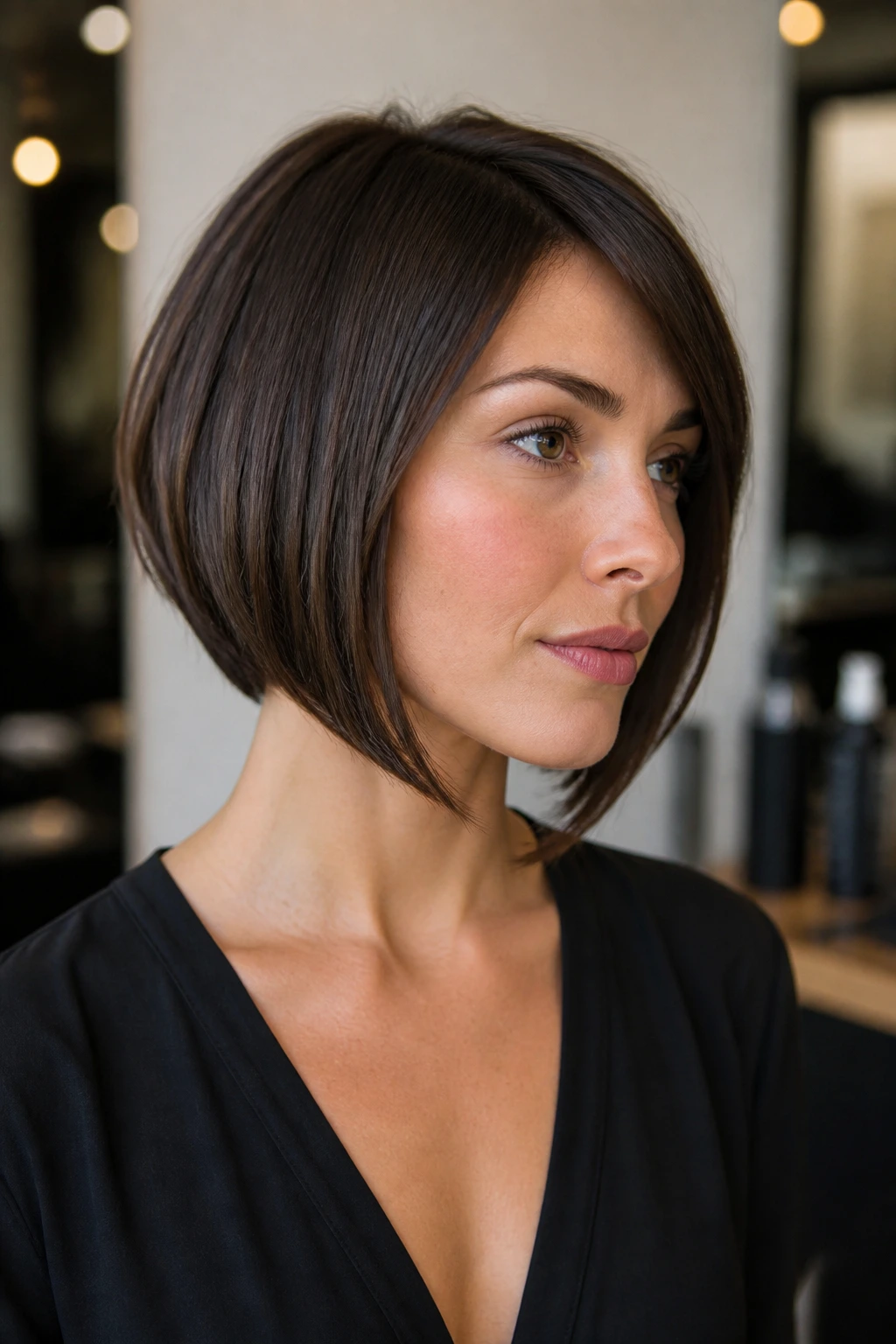
A French bob can be gorgeous on a round face, but the length needs to be handled carefully. The trick is to keep the front a touch longer so the cut does not sit squarely at the widest point of the cheeks.
That longer front gives the style a lighter feel. It softens the cheek area without turning the bob into a triangle. Add a side sweep or a slight off-center part, and the shape looks chic rather than blunt in a bad way. This is one of those cuts where a quarter inch matters more than people think.
What Makes It Work
- Keep the length just below the cheekbone line
- Leave the front slightly longer than the back
- Style with a smooth bend, not a puffed-out curl
- Skip thick, straight-across bangs unless you want a shorter, boxier look
This cut has a lot of personality when it’s done right. It’s sharp. It’s neat. It also needs a stylist who knows where to stop.
16. One-Length Long Cut With Hidden Face Frame
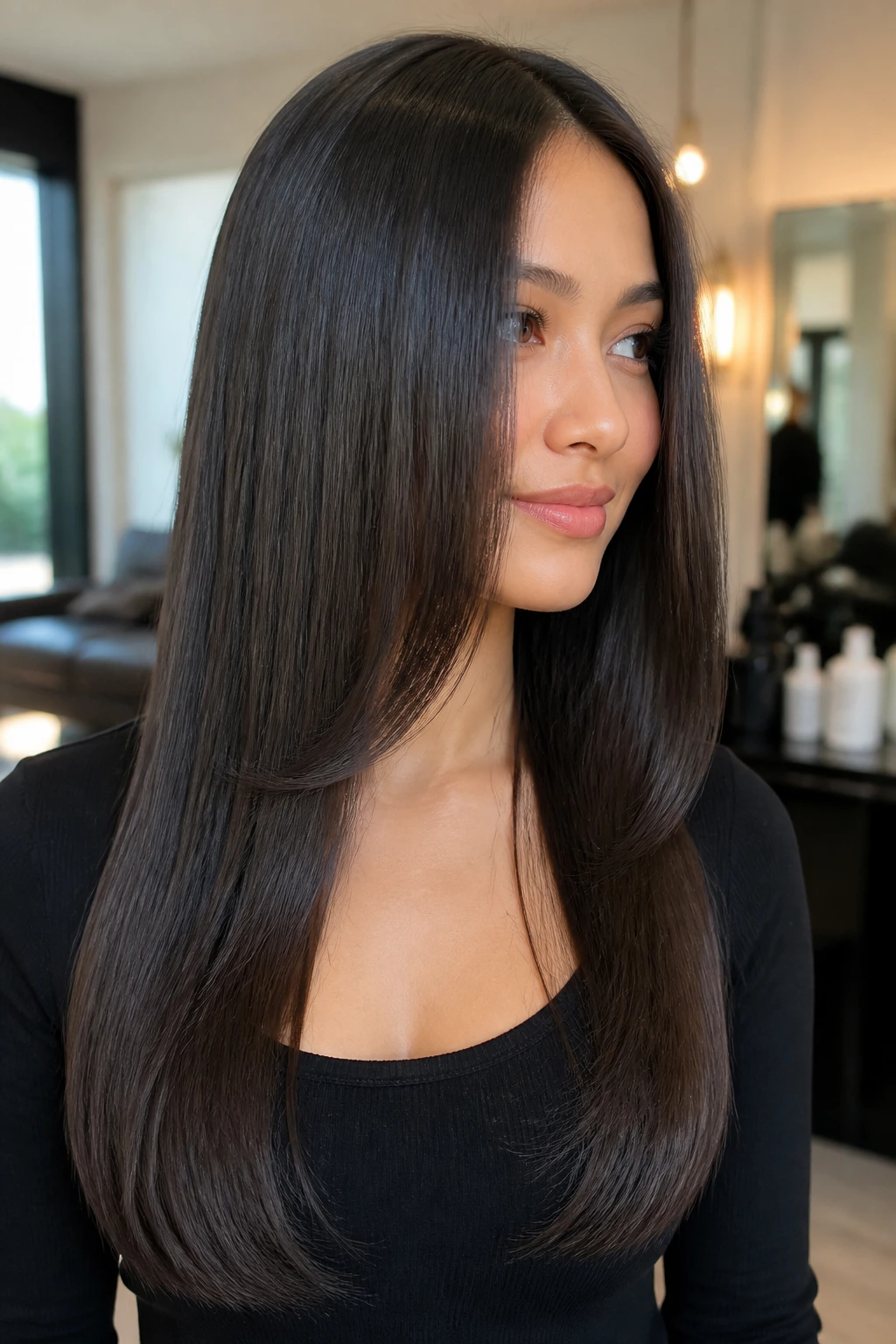
Not every sleek haircut for round faces needs visible layers. Sometimes the cleanest answer is a long one-length cut with a few hidden face-framing pieces that start low and stay subtle.
This keeps the overall silhouette long and smooth, which helps the face read more oval. The hidden face frame gives just enough movement around the front so the hair doesn’t look like one heavy curtain. That’s the sweet spot: movement without width.
The important part is restraint. The front pieces should not start at the cheekbone. Lower is better. Think mouth, chin, or below. Anything higher can pull the eyes sideways. Keep the rest of the hair blunt and sleek so the shape stays controlled.
I like this cut for thick hair that wants to behave but still needs a little help. It looks polished with almost no drama, which is my favorite kind of haircut.
17. Jaw-Clearing Bob With a Side Part
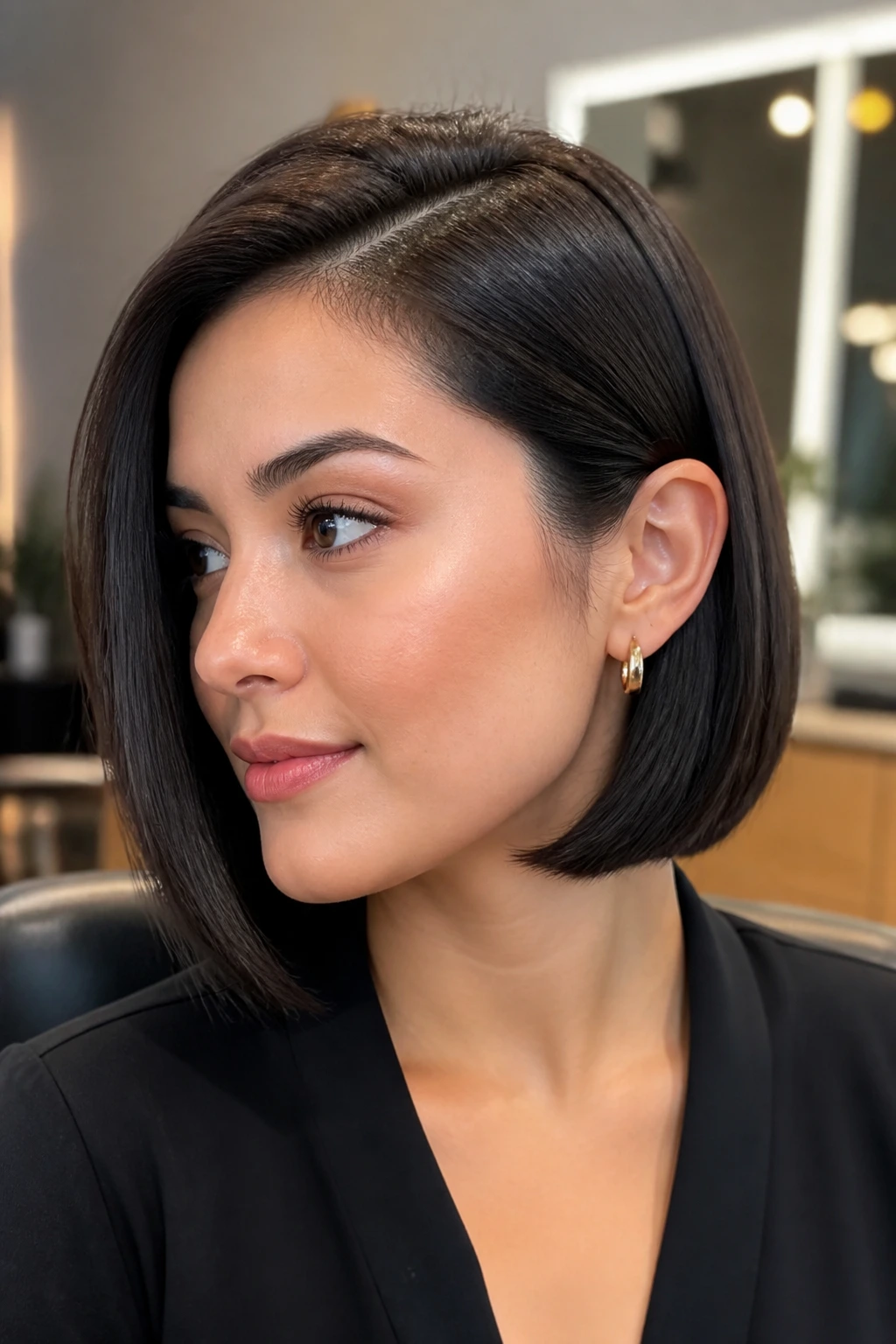
A jaw-clearing bob can be a gamble on round faces, so the exact line matters. Let it sit just below the jaw, not on top of it, and suddenly it becomes much easier to wear.
The side part is the saving detail here. It creates a break in the face shape and keeps the cut from feeling too centered or boxy. The lengths can be tucked behind one ear, which exposes the jaw and gives a cleaner outline. That little bit of asymmetry keeps the style from reading as a helmet.
This cut needs sharp edges. If the ends are too soft, the shape loses punch. If they’re too thick, the bob can start to look heavy. A precise blowout and a small flat-iron bend at the ends usually do the job.
It’s a bold cut, but not a reckless one. The difference is in the exact placement.
18. Sleek Crop With a Sweeping Fringe
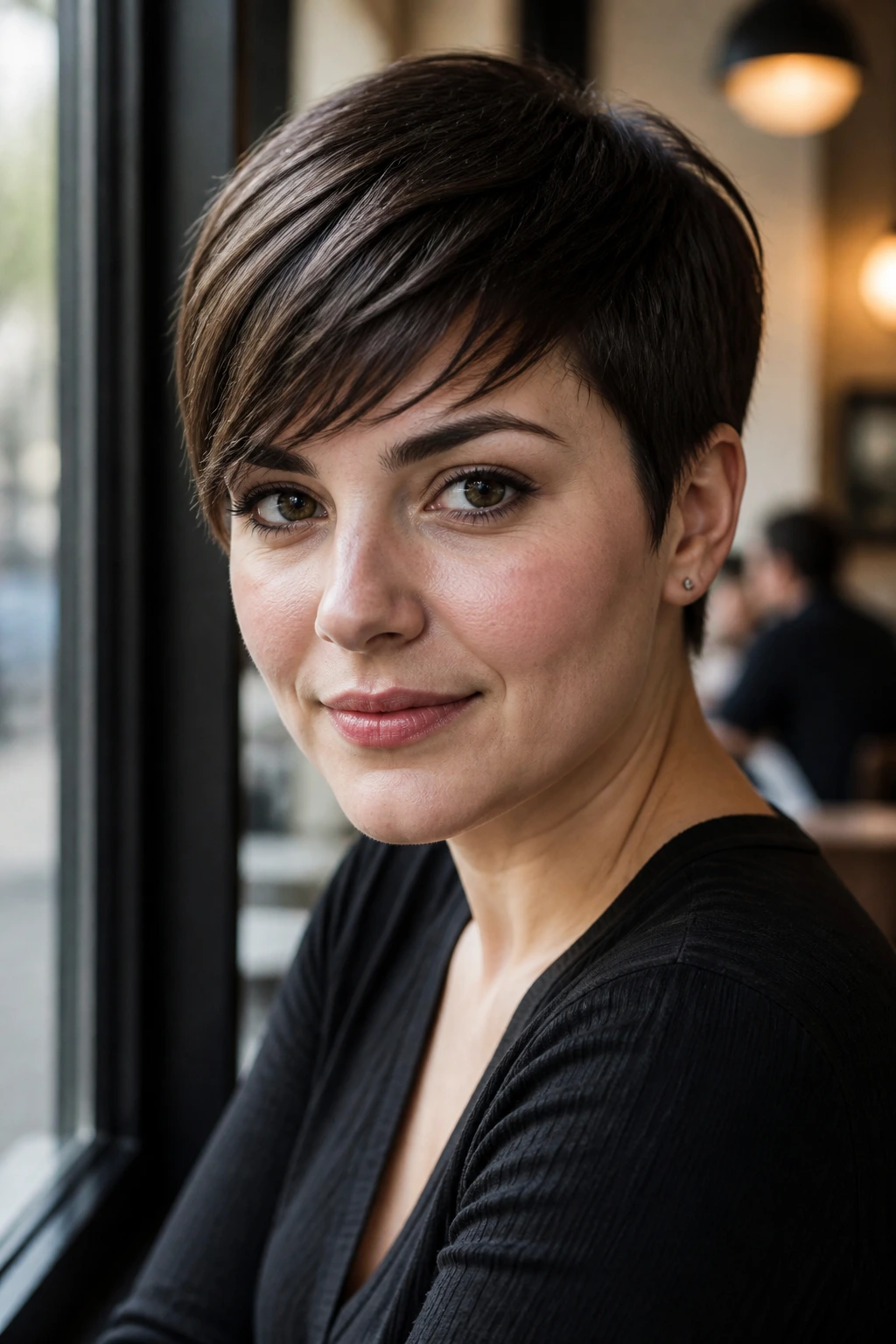
A short crop can flatter a round face if the fringe does the steering. A sweeping fringe moves the attention across the forehead instead of straight out from the cheeks, which helps balance the face.
The sides should stay close and neat. The top can carry a little length so you have room to brush the fringe over. If the top is cut too short, the crop starts to widen the face. If it’s too airy, the polish disappears. The sweet spot is controlled and compact.
This cut has a crisp feel that I love on strong features. It does not ask the hair to be big. It asks it to be tidy. That’s a refreshing change if you’re tired of chasing volume.
A matte paste or light cream can help separate the fringe just enough. Keep the finish smooth around the temples and nape. That clean outline is the whole point.
19. Collarbone Cut With Beveled Ends
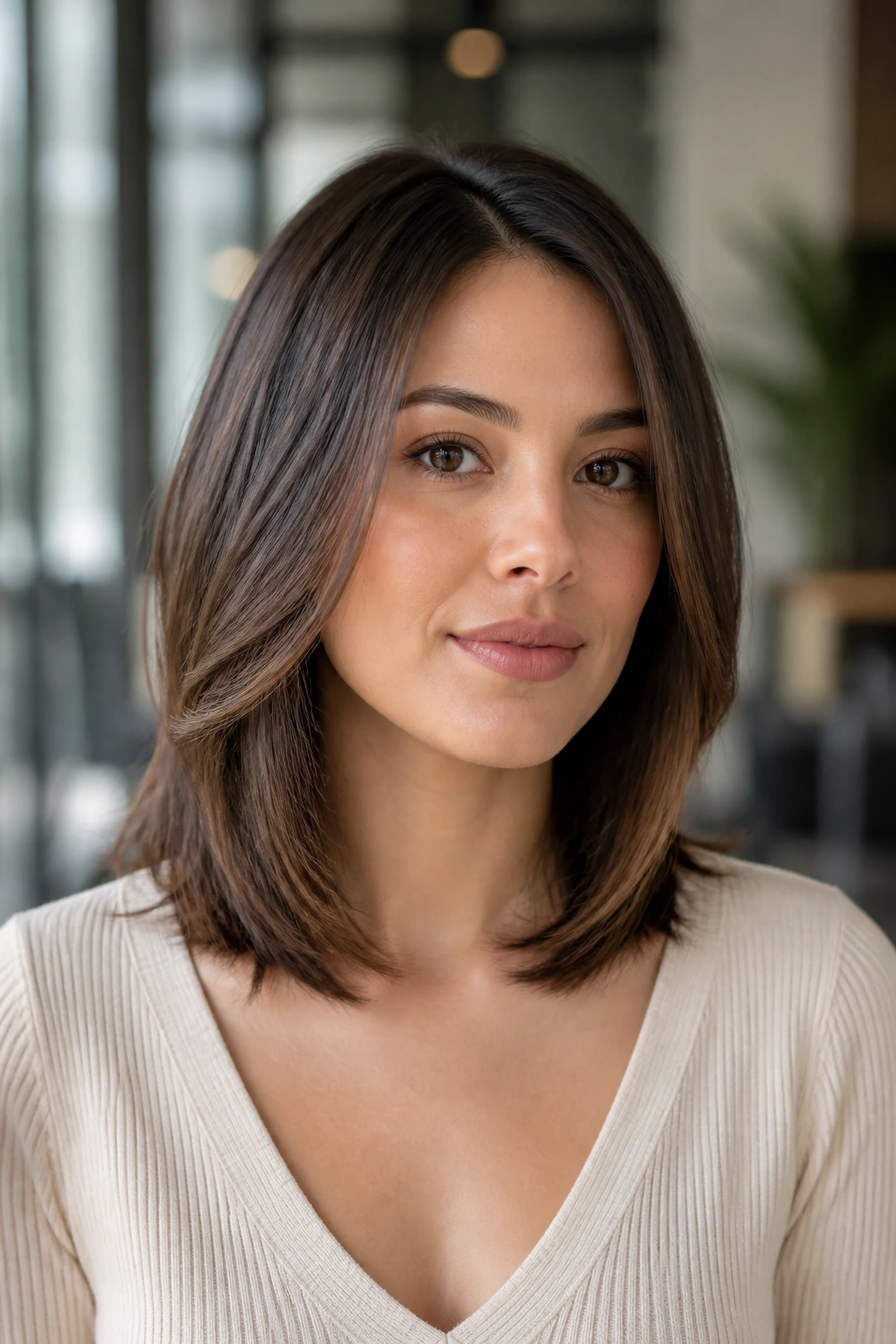
A collarbone cut with beveled ends looks softer than a blunt lob, but it still keeps the structure a round face needs. The bevel is tiny—just enough curve to turn the ends inward or outward a touch.
That small detail matters because it keeps the hair from falling like one solid block. The line still reads long, but the movement feels easier and less stiff. For someone who wants a sleek haircut that does not feel rigid, this is a very practical middle path.
What to Watch For
The bevel should stay at the ends. Do not let layers creep up too high. You want the cut to hold its line from the mid-lengths downward. A soft off-center part works nicely, but a center part can be just as good if the face framing is kept low.
This is a good everyday haircut. It wears well under a blazer, with a T-shirt, with almost anything. And it still does the face-flattering work quietly in the background.
20. Long Layers With an Off-Center Part
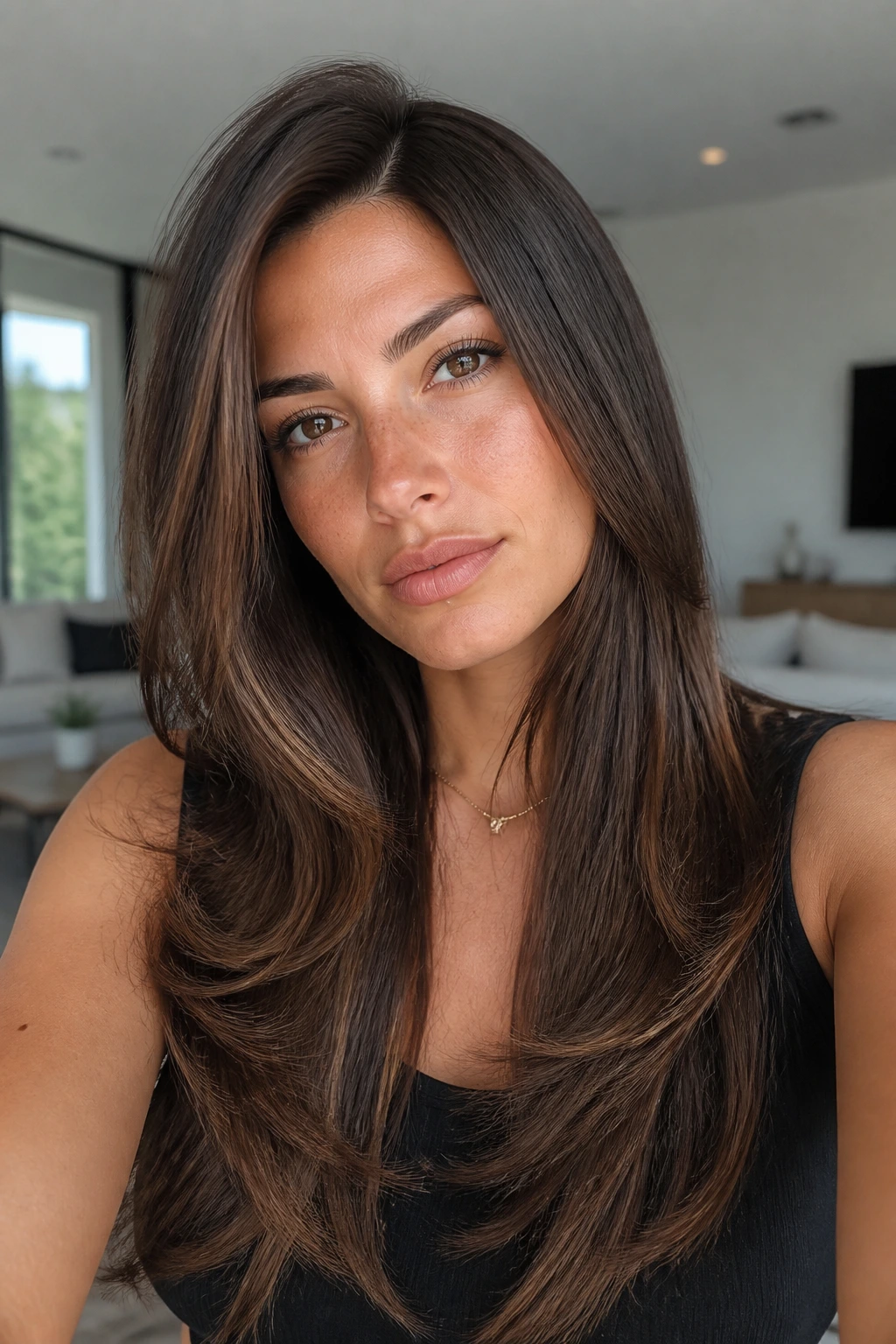
A slightly off-center part can change the look of long hair more than a major haircut change. Add long layers, and you get a style that stays sleek while easing the width around a round face.
The part keeps the symmetry from getting too strong, while the long layers give movement below the face rather than across it. That’s the difference. The layers should be soft enough to blend, but long enough to avoid that choppy, overworked feel. If the front pieces land around the mouth or below, even better.
This cut works across a lot of textures, but it really shines on hair that can be smoothed well. A blowout with a little bend at the ends keeps the shape from looking flat. Straightened to perfection, it becomes almost glassy.
A lot of people want layers because they fear flat hair. Fair enough. This version gives you movement without sacrificing the long line that flatters a round face.
21. Inverted Bob With Soft Graduation
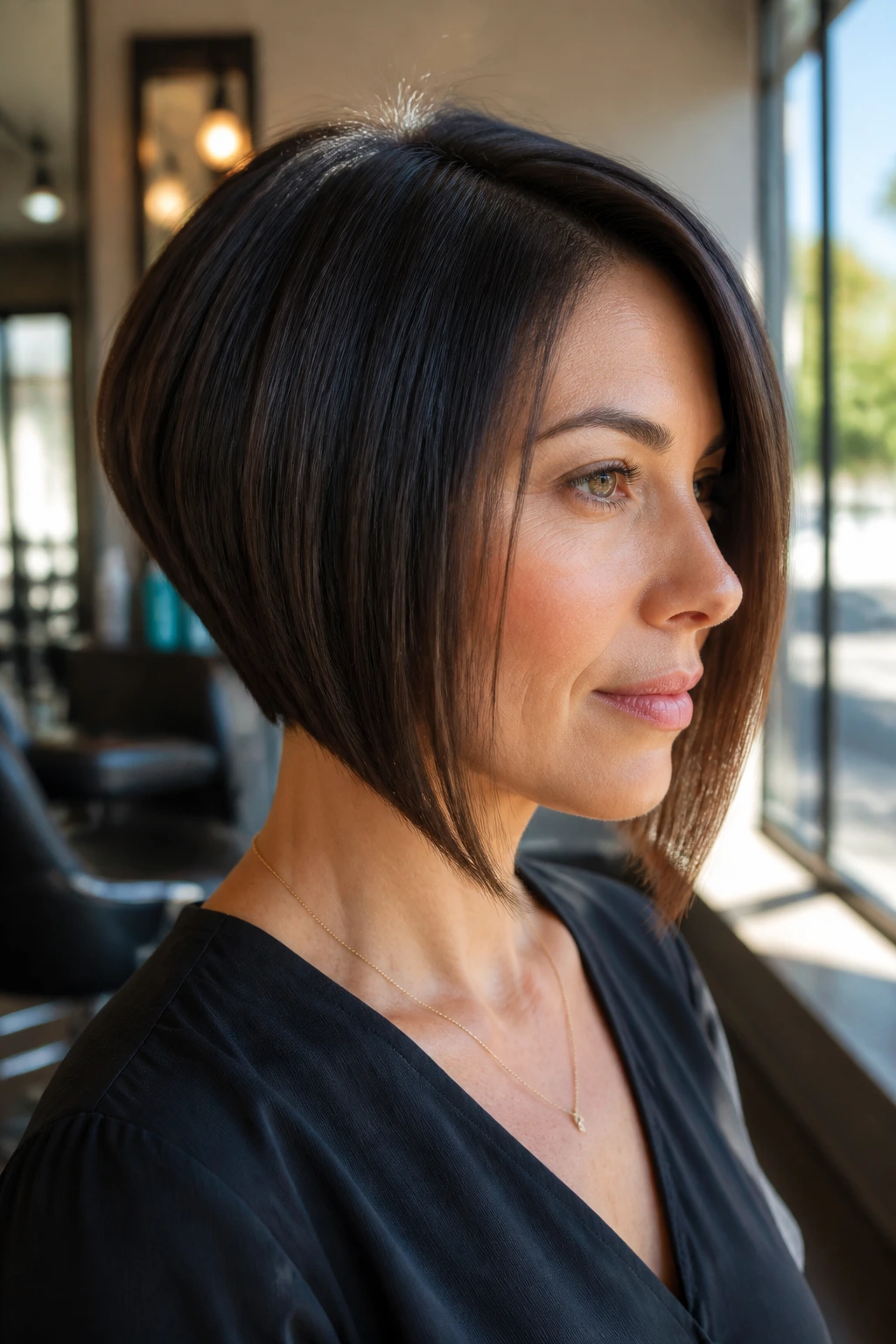
An inverted bob leans shorter in the back and longer in the front, which creates that diagonal lift round faces tend to like. The soft graduation keeps it from looking stacked in an old-fashioned way.
The cut works because the front panels lengthen the face while the back stays tidy and controlled. If the graduation is too dramatic, the shape can become dated fast. Keep it soft. The point is sleekness, not architecture.
How to Wear It
- Ask for a gentle rise in the back, not a hard shelf
- Keep the front pieces below the jawline
- Blow-dry with tension so the curve stays smooth
- Finish with a light shine cream, not heavy oil
This is one of my favorite cuts for people who want a bob with a little more shape than a plain one-length version. It has enough structure to feel current, but not so much that it starts shouting for attention.
22. Mid-Length Cut With a Face-Framing Veil
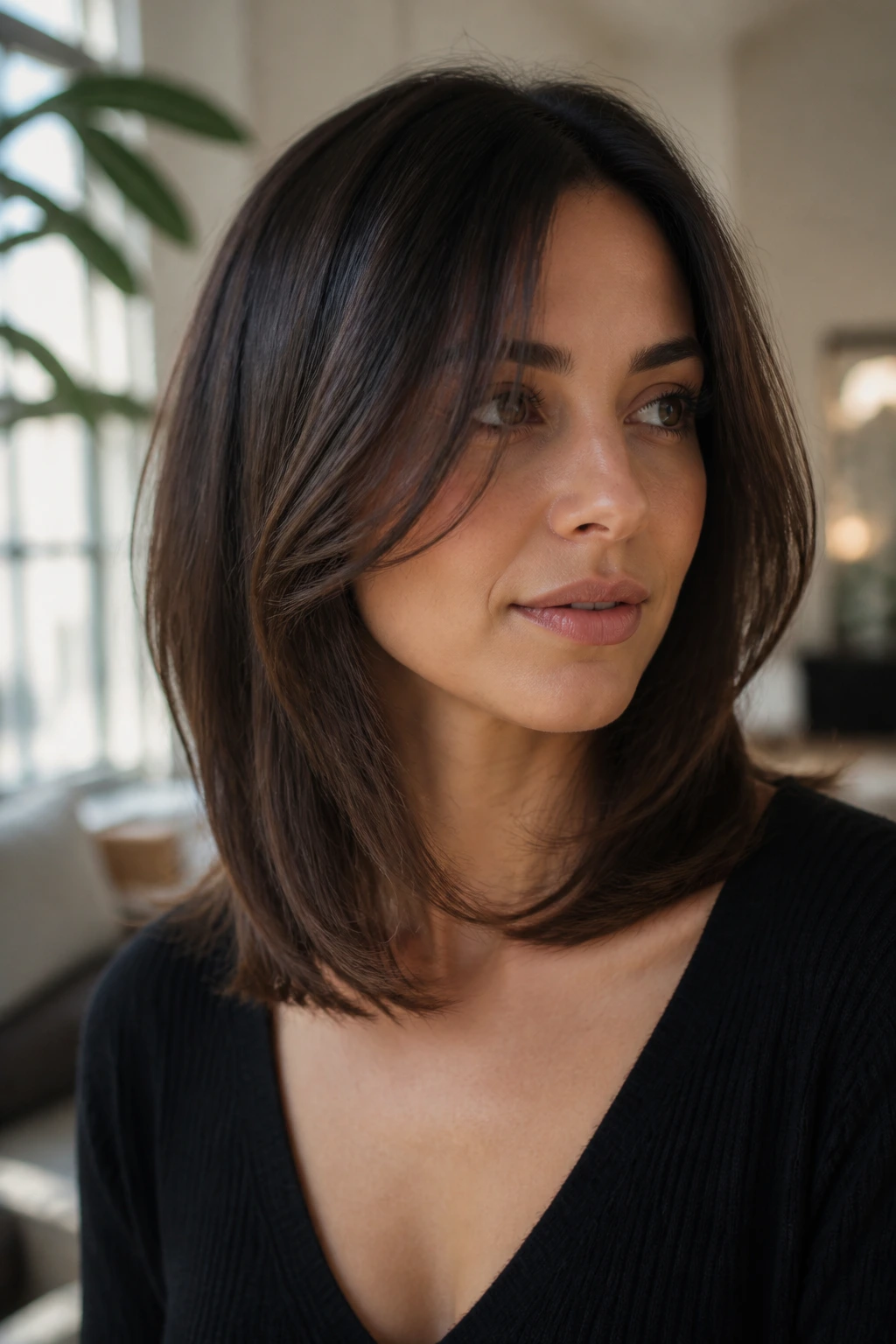
A face-framing veil sounds delicate, and that’s the point. The layers are long, soft, and controlled enough to flatter a round face without crowding it.
The veil pieces should begin low and fall toward the collarbone. If they start too high, the cut gets busy around the cheeks. If they begin lower, they create a nice soft frame that still lets the face breathe. I like this cut when the rest of the hair stays one length or nearly one length, because the contrast keeps it polished.
There’s a neat trick here: keep the face frame slightly longer on one side. It doesn’t need to be obvious. Just enough to make the style feel less square. That tiny irregularity helps the eye move.
This is a good choice for someone who wants movement but hates the look of obvious layers. It’s elegant in a quiet way. Not fragile. Just considered.
23. Long Hair With Internal Layers
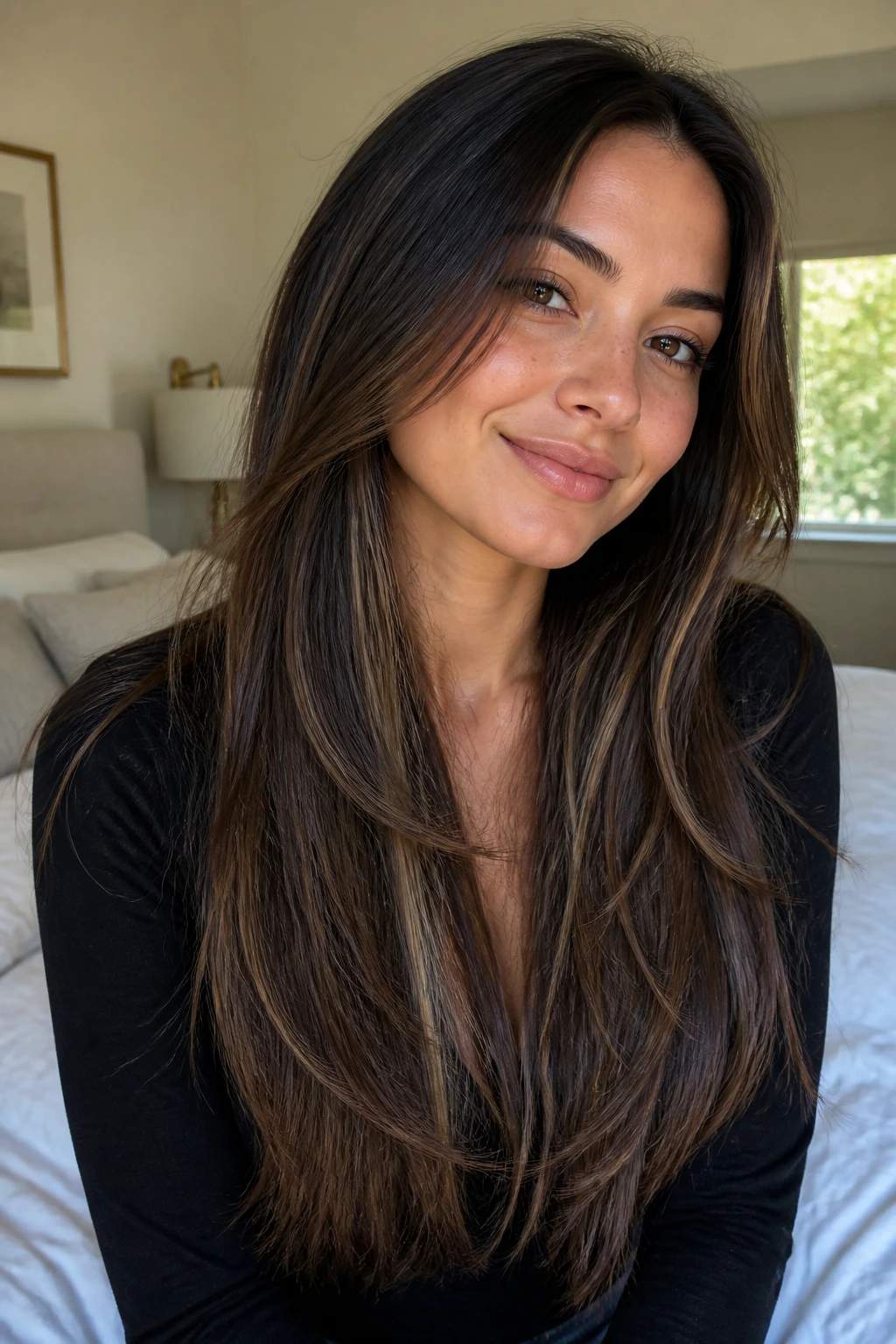
Long hair can absolutely work on a round face, but it has to be handled with care. Internal layers let the stylist remove bulk without chopping the outside shape into pieces.
That means the outline stays long and sleek, which is where the face-flattering benefit comes from. The layers live inside the haircut, hidden enough to give movement but not enough to widen the cheeks. It is a good answer for thick hair that tends to sit heavy around the lower face.
This cut also holds a blowout well. The outer line stays smooth, while the inner layers stop the style from feeling like a thick curtain. If you like long hair but hate the weight, this is the version worth asking for.
A middle part can work here, but a slight shift often looks better. The cut needs a little asymmetry to keep it from feeling too direct.
24. Sliced Lob
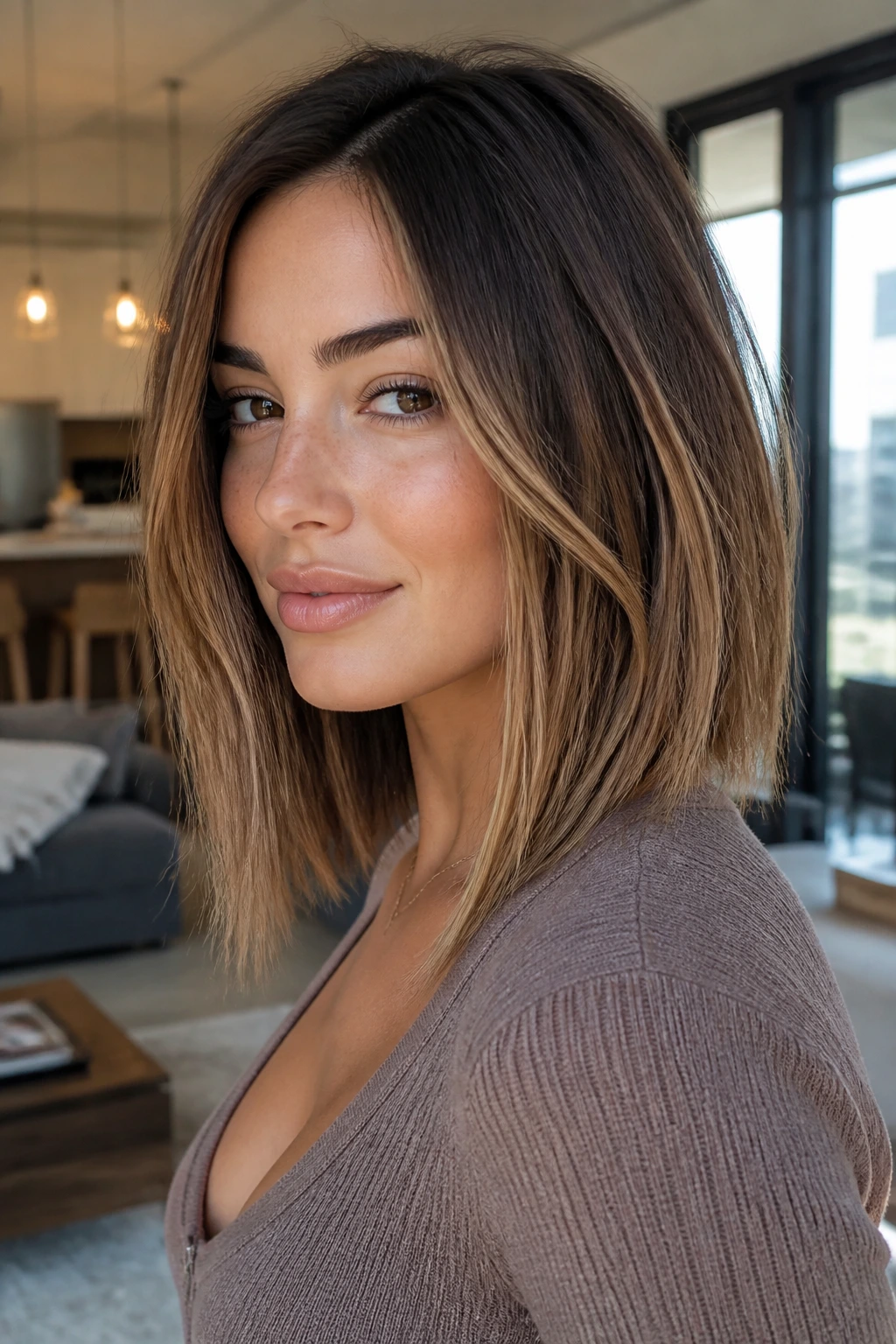
A sliced lob is a cleaner, lighter cousin of the blunt lob. The ends are softened with slicing, which keeps the haircut sleek but takes away some of the blockiness that can make a round face feel wider.
The trick is not to over-slice. You want movement, not wisps. The line should still read long and neat, especially when the hair is straightened. If the ends become too airy, the shape starts to look fuzzy. That’s the opposite of what you want.
This cut is especially helpful on thick hair because it removes some weight without destroying the outline. It also behaves well when tucked behind one ear or worn with a low bend through the front pieces. A slight off-center part makes it even easier on the face.
It’s a practical haircut. Clean, wearable, and a little lighter than the blunt version.
25. Bixie With a Tapered Nape
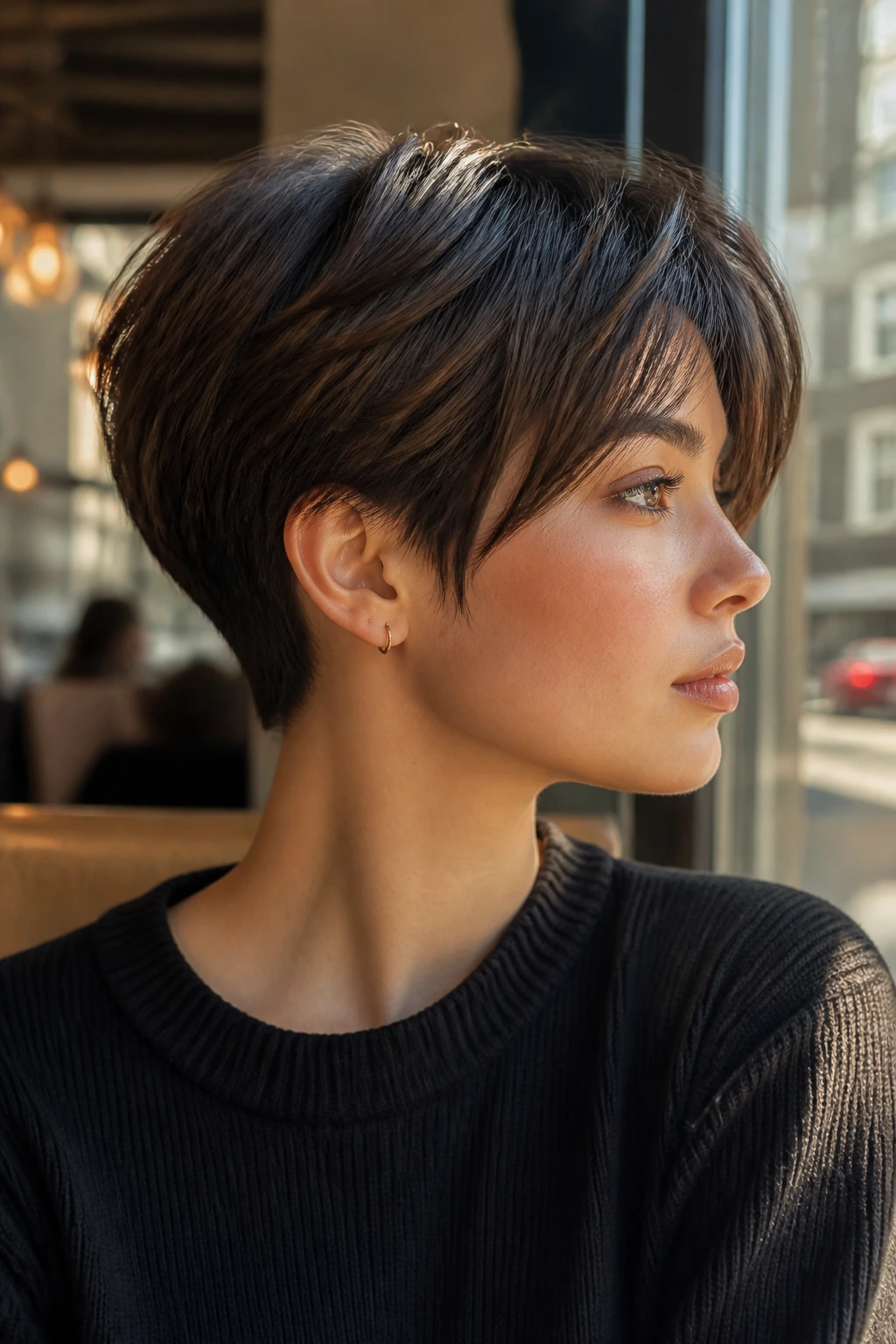
The bixie returns here, but with a different feel. A tapered nape and a longer fringe make the style look leaner and more directional, which suits round faces well.
The taper at the neck keeps the cut from ballooning at the bottom. The fringe gives you something to sweep sideways or forward, which adds an angle the face can use. I prefer this version when the top is smooth rather than fuzzy. Sleekness keeps the whole cut from turning too playful.
This style is also easier to maintain than a full bob for some hair types. It dries faster, and the taper keeps the shape neat between salon visits. If you want short hair without losing all your edge, this is a smart lane.
Not a timid cut. That’s part of its charm.
26. Straight Cut With a Peekaboo Side Bang
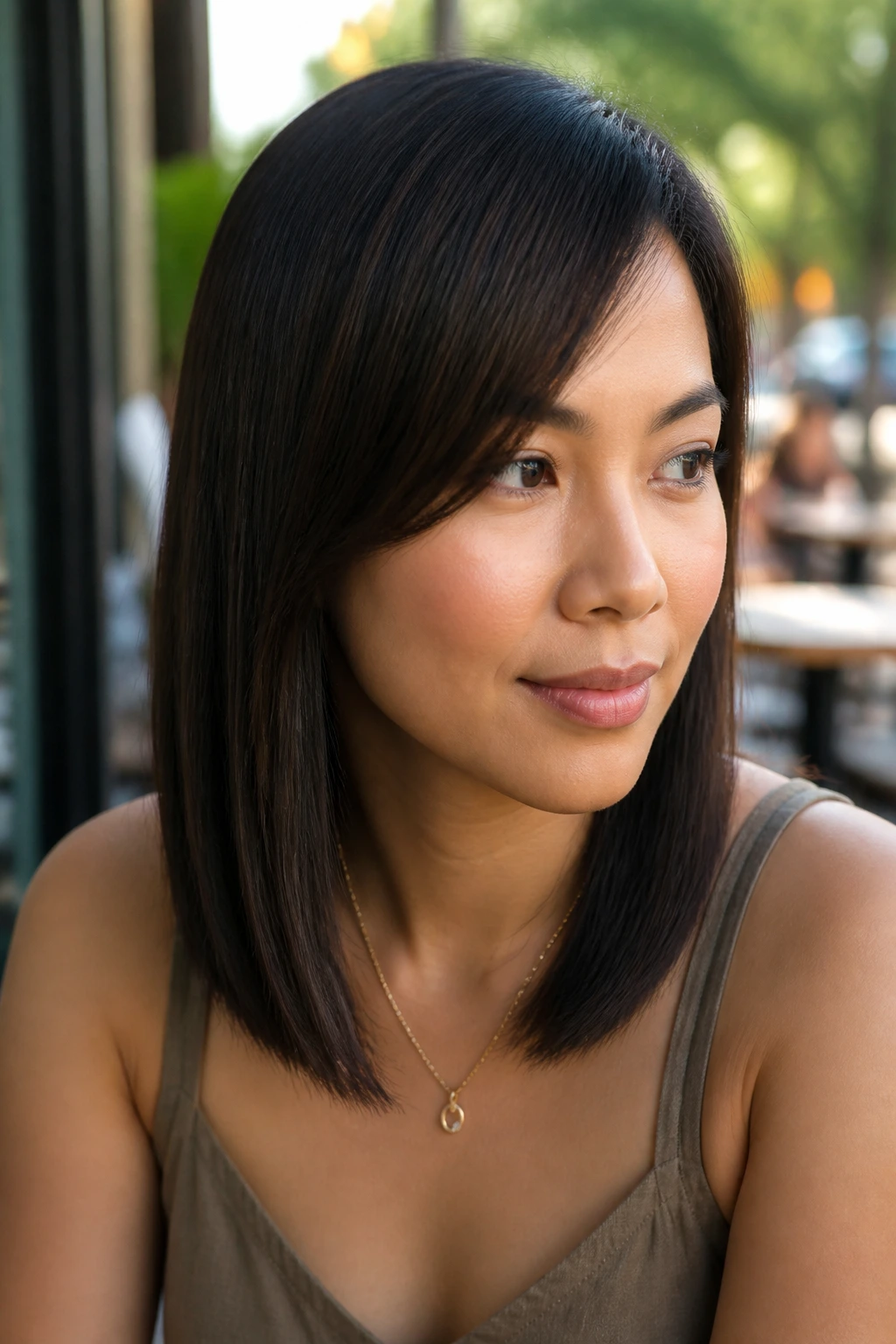
A peekaboo side bang is a nice way to add softness without filling the forehead with a full fringe. It slips across one side, partly hidden, partly visible, and that little bit of movement helps break up a round face.
The straight cut underneath should stay clean and even. The bang does the work at the front, while the rest of the hair stays calm. That balance keeps the style from looking too busy. If the bang is too thick, it can crowd the face. If it’s too short, it loses the soft sweep that makes it useful.
I like this on shoulder-length or slightly longer hair, because the length gives the bang room to breathe. A smooth blowout with a side sweep finishes it well. The hair should fall in one direction, not fight itself.
It’s subtle. Maybe even a little underestimated. That’s what makes it interesting.
27. Shoulder-Length Cut With Tucked Ends

A shoulder-length cut sounds plain until you see what happens when the ends are tucked and refined. On a round face, that slight shaping can turn an ordinary cut into a smart one.
The length lands below the cheeks and around the shoulders, which gives the face more vertical space. Tucking the ends inward or under makes the silhouette neater and prevents the hair from kicking out at the sides. That outward flip is what often makes shoulder cuts feel wider than they should.
How to Use It
This cut does well with a middle part, but a side part can soften it if you want a less direct look. Keep the ends clean. Keep the top smooth. If the hair has a little natural bend, that’s fine, but the shape should still look controlled.
It’s the kind of haircut that plays well with almost any outfit. The face gets length. The hair gets order. That’s enough.
28. Long, Airy Layers That Stretch Round Faces
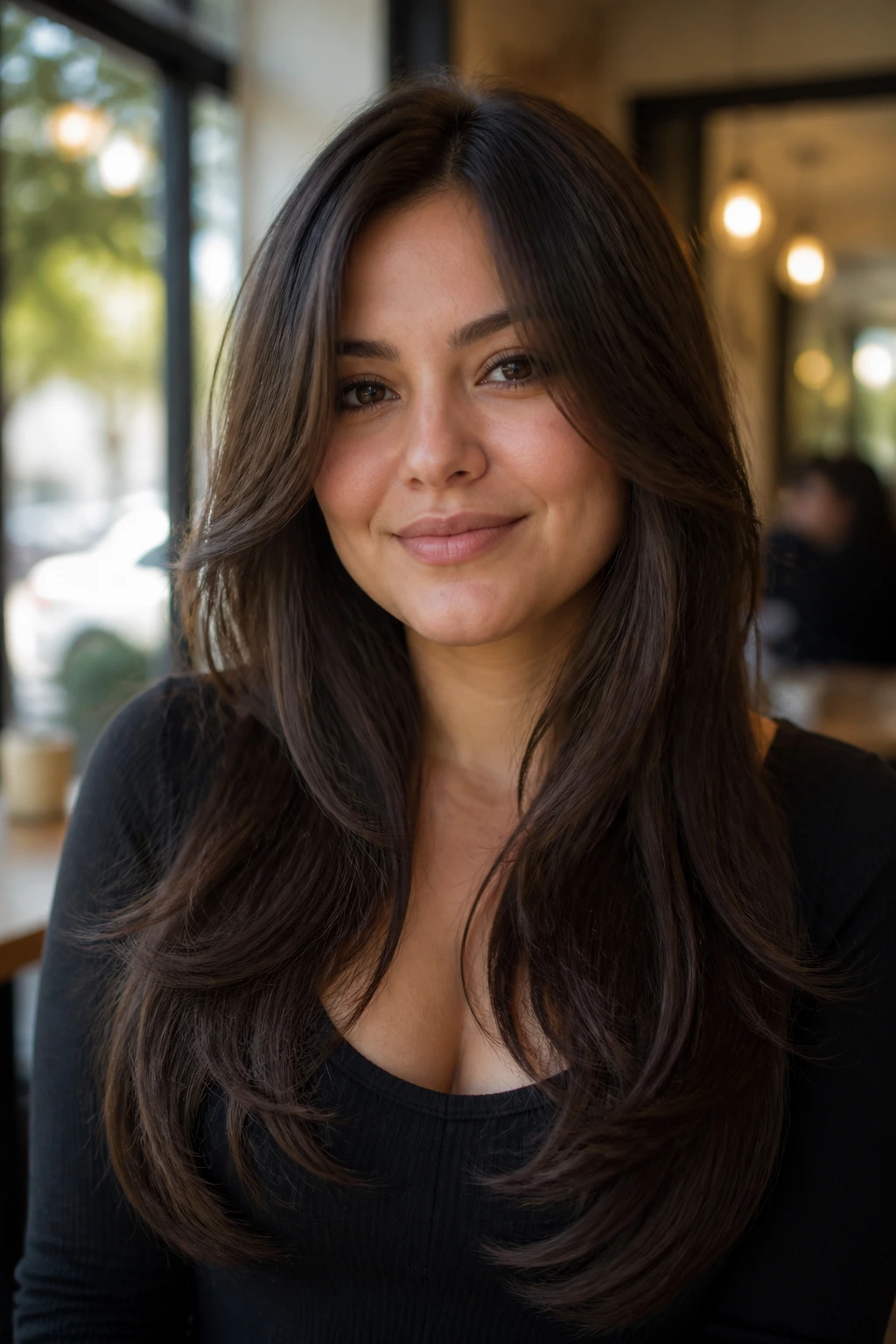
Long layers can be a bad idea on round faces when they start too high. They can also be one of the best options when the layers are placed low, airy, and used to stretch the line instead of widen it.
What matters most is placement. The first layer should sit below the cheekbone, often closer to the mouth or chin. From there, the rest can fall in a soft cascade that keeps the hair moving downward. That vertical direction is what helps the face look a little longer and narrower.
This cut is a good choice if you want to keep your length. You do not have to chop your hair off to flatter a round face. You just need the layers to behave. Sleek styling helps here too, because the smoother the finish, the more the eye reads the length instead of the bulk.
If you like long hair but feel it sometimes overwhelms your face, this is the version to try first. It is lighter, cleaner, and a lot easier to live with than people expect.
Final Thoughts
Round faces have more options than they get credit for. The right cut is not about hiding anything. It is about choosing lines that work with your features instead of against them.
The biggest wins usually come from simple things: length below the jaw, a part that adds asymmetry, and ends that stay clean rather than puffing out. Those details matter more than whether the haircut is short, medium, or long.
Pick the one that fits your hair texture and your actual routine. A sleek cut that you never style will always look worse than a simpler cut you wear well every day.
