



A round face can take more haircut variety than people give it credit for. The trick is choosing low haircuts for round faces that add length, break up width, and avoid building too much fullness right at the cheeks.
That does not mean you need to hide your face shape. It means you need shape in the right places: a little lift at the crown, a cleaner line near the jaw, maybe a side part that pulls the eye on a diagonal. Those details sound small. They are not.
I’ve seen too many cuts fail for one simple reason: they were cute on the salon chair and wrong the second the hair moved. Round faces tend to look best when the cut creates a vertical feeling, not a wide one. That can be a fade, a bob, a lob, a pixie, or long layers — if the weight sits in the right spot.
So let’s get practical and a little opinionated. Some cuts are flattering because they slim the face. Some are flattering because they sharpen it. And a few work because they do the opposite of what people expect.
1. Low Taper Fade with Side Part
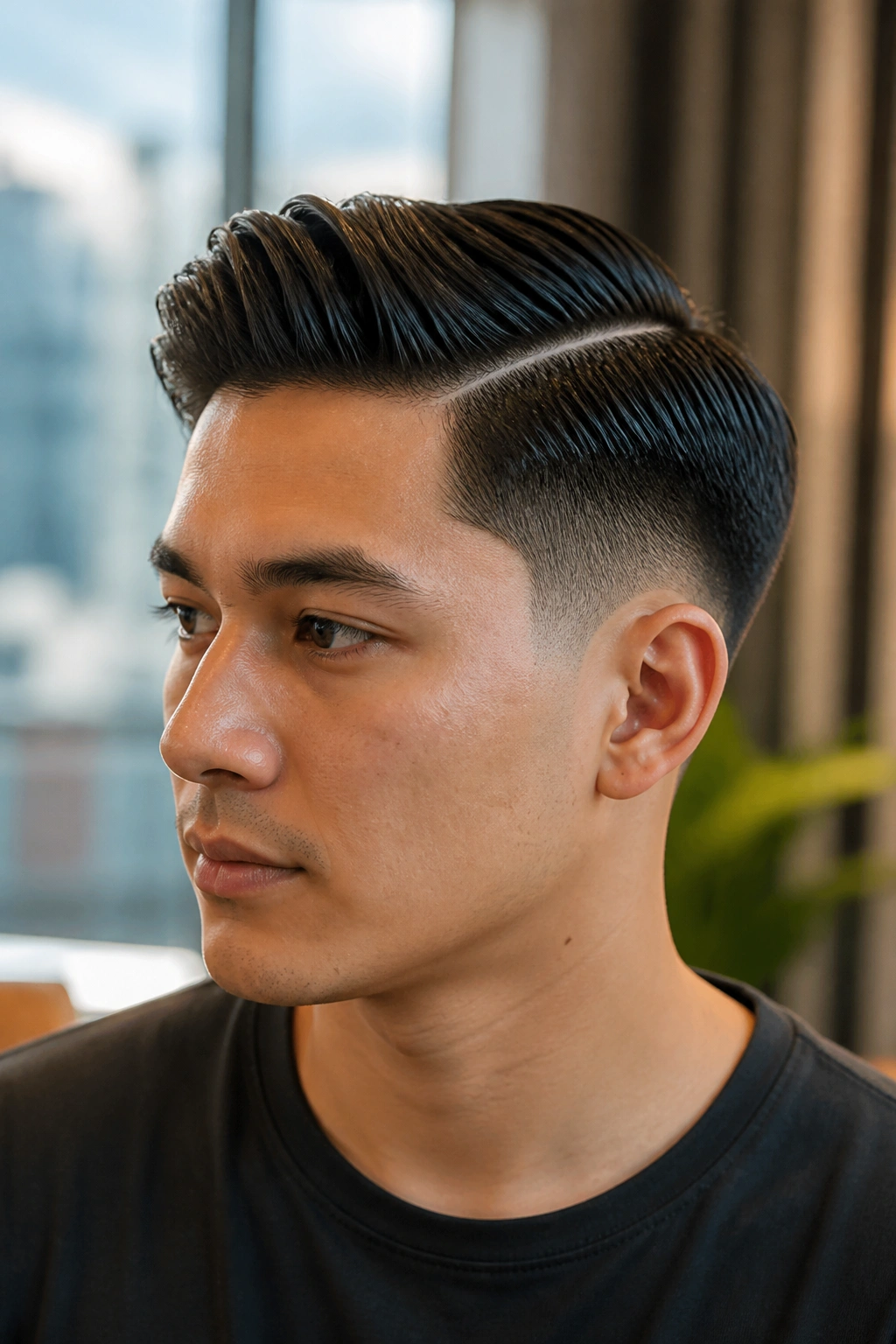
A low taper fade is one of the cleanest choices if you want short sides without making the face look wider. The fade stays low around the sideburns and nape, which keeps the shape neat while leaving enough bulk higher up to balance a rounder cheek line.
The side part does most of the visual work here. It gives the haircut a diagonal line, and diagonals are your friend. Straight-across shapes can feel boxy on a round face; a part that starts off-center and sweeps across the forehead changes that fast.
What to ask your barber for
- Keep the taper low, not high. You want the fade to stay below the temple line.
- Leave 2 to 4 inches on top depending on hair thickness and how much height you want.
- Ask for the top to be textured, not thinned to nothing.
- Style with a matte paste or cream, then push the front up and over.
A little height goes a long way. If the top is flat, the cut can look too close to the head and lose the lengthening effect. If the top is too tall, it starts looking forced. Aim for controlled lift, not a helmet.
2. Chin-Length Blunt Bob with Soft Ends
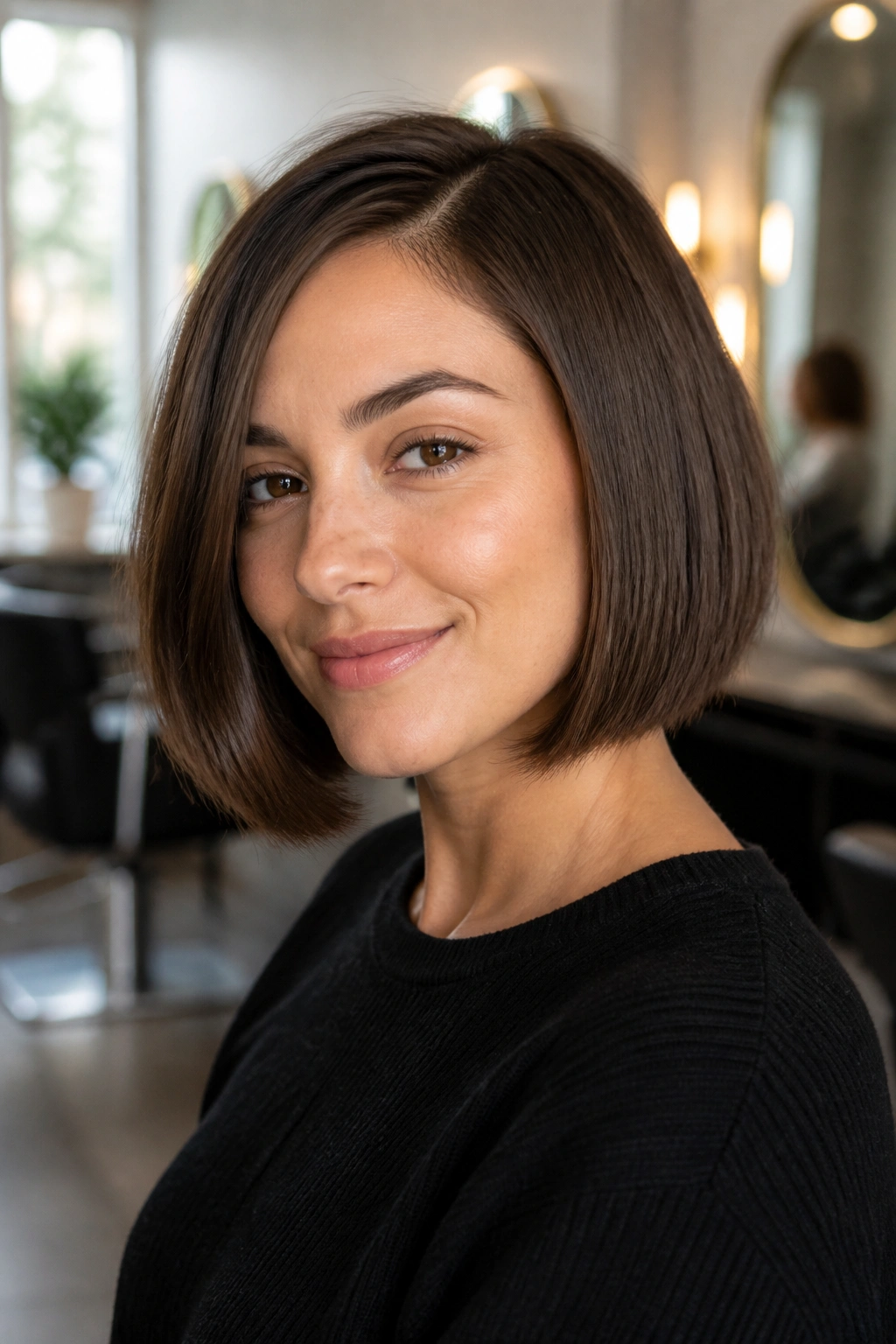
People worry that a blunt bob will make a round face look fuller. Sometimes it does. When it lands exactly at the chin and flips outward, it can be a mess. But a chin-length blunt bob with softened ends can be sharp in a good way when the line sits just below the jaw and the edges are lightly beveled.
That tiny change matters. A cut that lands half an inch to one inch below the chin gives the face a cleaner border, and that border can make the whole face look slimmer. The softness at the ends keeps the bob from turning into a hard box.
Keep the part slightly off-center. A dead-center part with a heavy, blunt bob can feel too symmetrical on a round face. Off-center breaks the shape up and adds a little attitude.
This cut works best on straight or lightly wavy hair. If your hair bends a lot, ask for the perimeter to be refined rather than chopped. You want the line to sit neatly, not puff out around the cheeks.
3. Collarbone Lob with Long Face-Framing Pieces

The collarbone lob is a favorite for a reason. It sits in a safe spot below the widest part of the face, and it gives you enough length to create movement without dragging everything down.
The face-framing pieces matter more than people think. Ask for the shortest front layer to start around the chin or lower lip, not the cheek. That keeps the eye moving downward, which is exactly what you want on a round face. Shorter front pieces that hit at the cheekbone can add width where you do not need it.
Why this length works
A lob that sits at the collarbone gives you an easy vertical line. It also leaves room for waves, bends, or a tucked-behind-the-ear finish without blowing out the sides. That is the quiet advantage here.
- Best for straight, wavy, and slightly curly hair
- Easy to wear with a middle or off-center part
- Looks good both sleek and air-dried
- Tucks neatly behind one ear without losing shape
If you want one cut that can move from polished to casual without much effort, this is one of the best bets. It behaves.
4. Textured Pixie with Crown Lift
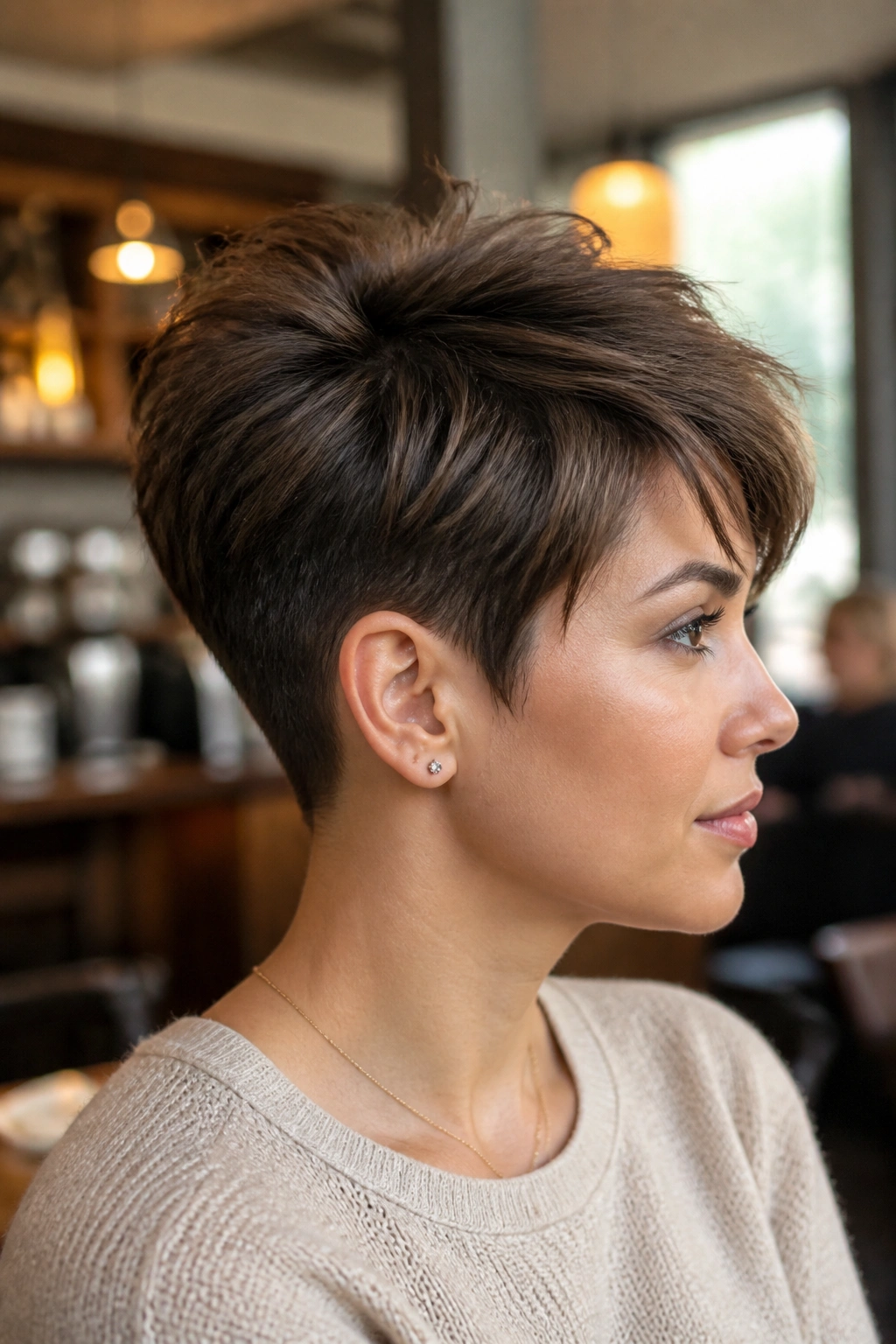
A pixie can be fantastic on a round face when it’s cut with the right balance. The secret is lift on top and closeness at the sides. That keeps the shape from spreading out horizontally.
Ask for the sides and nape to be tapered tight, then keep 2 to 3 inches on the crown with choppy texture. The top should have piece-y movement, not a soft puff that rounds out the whole head. The best pixies on round faces look a little sharper from the side view than from the mirror straight on.
This is especially good if your hair is fine. Fine hair often falls flat at the crown, and that can make a round face seem even broader. A textured pixie solves that in a very direct way.
A side-swept fringe helps too. It breaks the forehead line and pulls the eye diagonally. Straight-across bangs can work on some people, but on a round face they need more care than most stylists give them.
5. Curtain Bangs with Shoulder-Length Layers
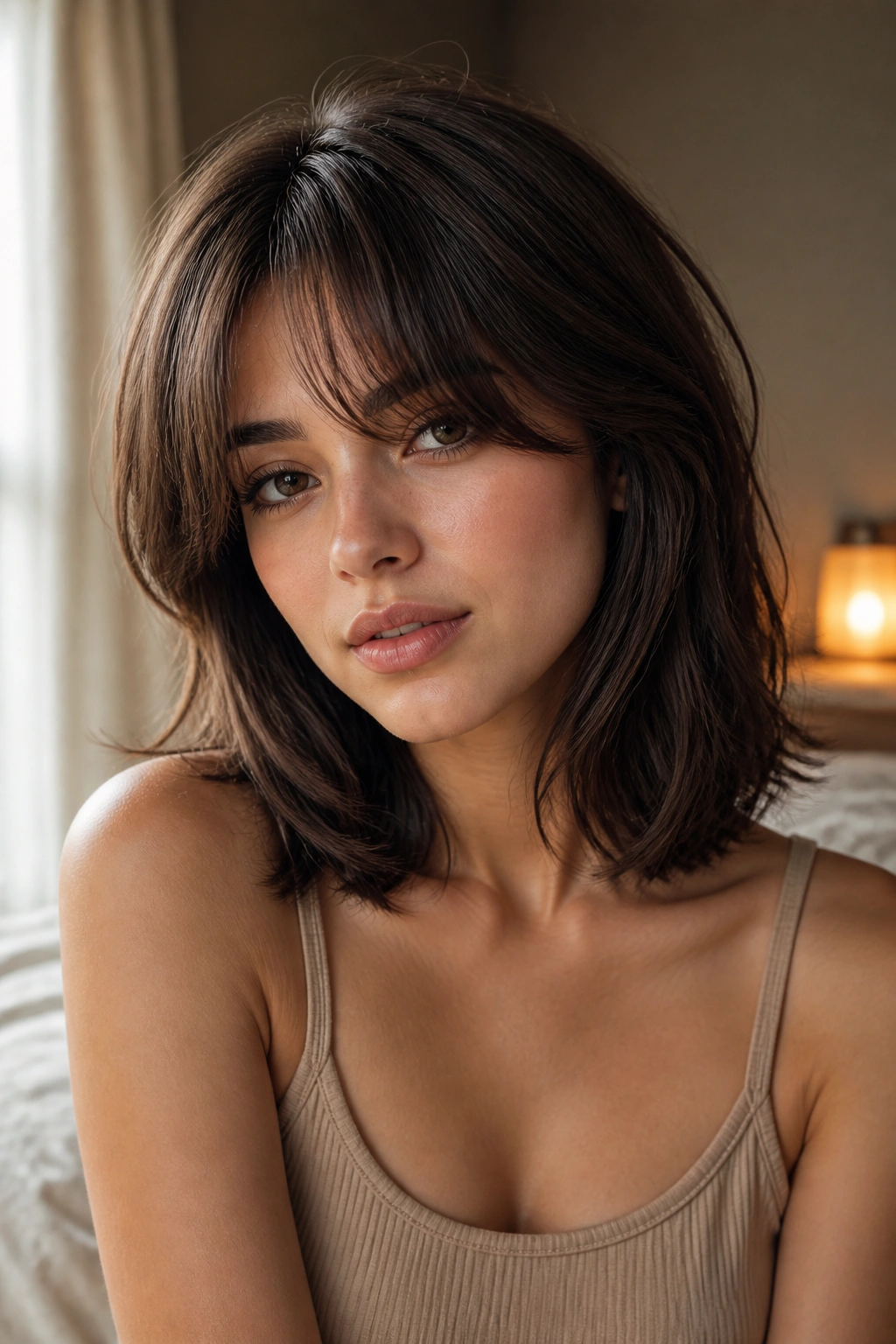
Curtain bangs can do a lot of heavy lifting for a round face. They split the forehead, create a long line down the cheek, and give you movement without forcing the whole cut to be short.
The sweet spot is shoulder length. That gives the hair enough drop to avoid extra width at the cheeks, while the bangs soften the upper half of the face. Keep the shortest bang pieces at or just below the eyebrow, then let them blend into layers that start below the cheekbone.
The parting matters more than people think
Curtain bangs look best when they open from a slightly off-center part or a soft middle part. If they’re cut too short or too dense, they can collapse into the face and make the cheeks look fuller. Nobody wants that.
Use a round brush only at the roots, then turn the ends away from the face. That tiny bend keeps the bangs from sitting flat. Air-drying can work too, but it helps to pinch the bangs apart while they’re still damp so they don’t dry into one heavy curtain.
6. Soft Shag with Invisible Layers
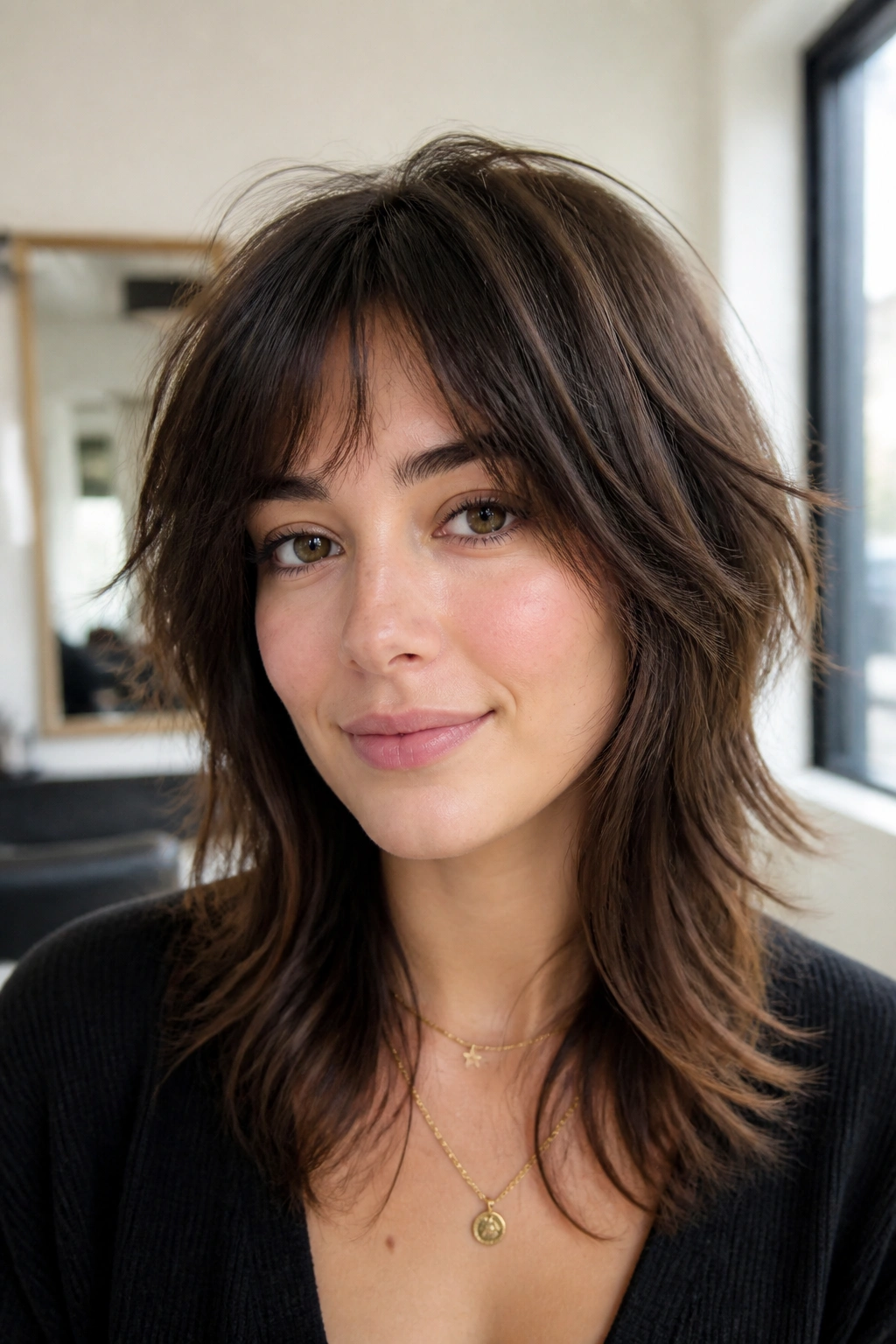
A shag sounds risky on a round face, and I get why. Too much shag can spread outward at the sides and make the face feel wider. But a soft shag with long, invisible layers is a different animal.
The layers should remove weight from the interior, not create puffy edges around the cheeks. Keep the shortest pieces around the mouth or chin, and let the rest flow longer. That gives you texture without turning the head into a triangle.
This cut is especially good for wavy hair because waves want movement anyway. A good shag lets that movement happen in a vertical way. It should look broken up and airy, not shaggy for the sake of being shaggy.
What to avoid
- Heavy fringe that stops right at the cheekbone
- Layers that start too high around the temples
- Over-thinning the ends
- Too much width at the lower sides
A soft shag needs control. The messier version can be fun, but it is not always friendly to a round face.
7. Asymmetrical Bob
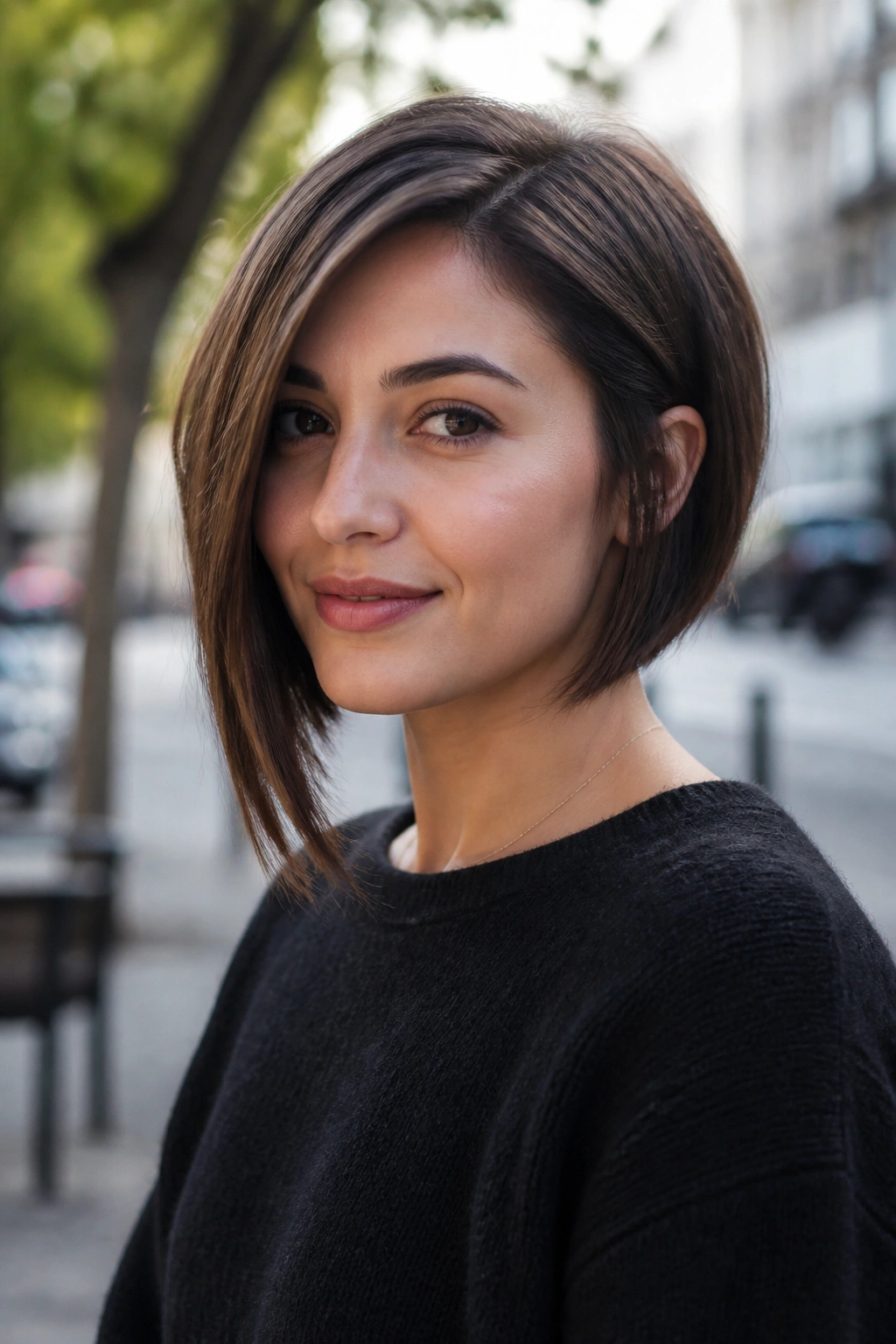
An asymmetrical bob is one of the easiest ways to create a longer-looking face without adding much length. One side sits a little longer than the other, and that slight imbalance draws the eye down and across instead of straight out.
The difference does not need to be dramatic. A length shift of half an inch to 1.5 inches is often enough. Too much contrast can start looking costume-like unless that is the look you want. The best version feels subtle until you notice it from the front and side.
This style works well with straight hair because the line shows up cleanly. On wavy hair, it has a softer edge, which can be even better. Keep the shorter side grazing the jaw and the longer side falling below it.
A side part usually helps this cut more than a center part. The asymmetry and the parting should support each other, not fight for attention.
8. Deep Side-Part Long Layers
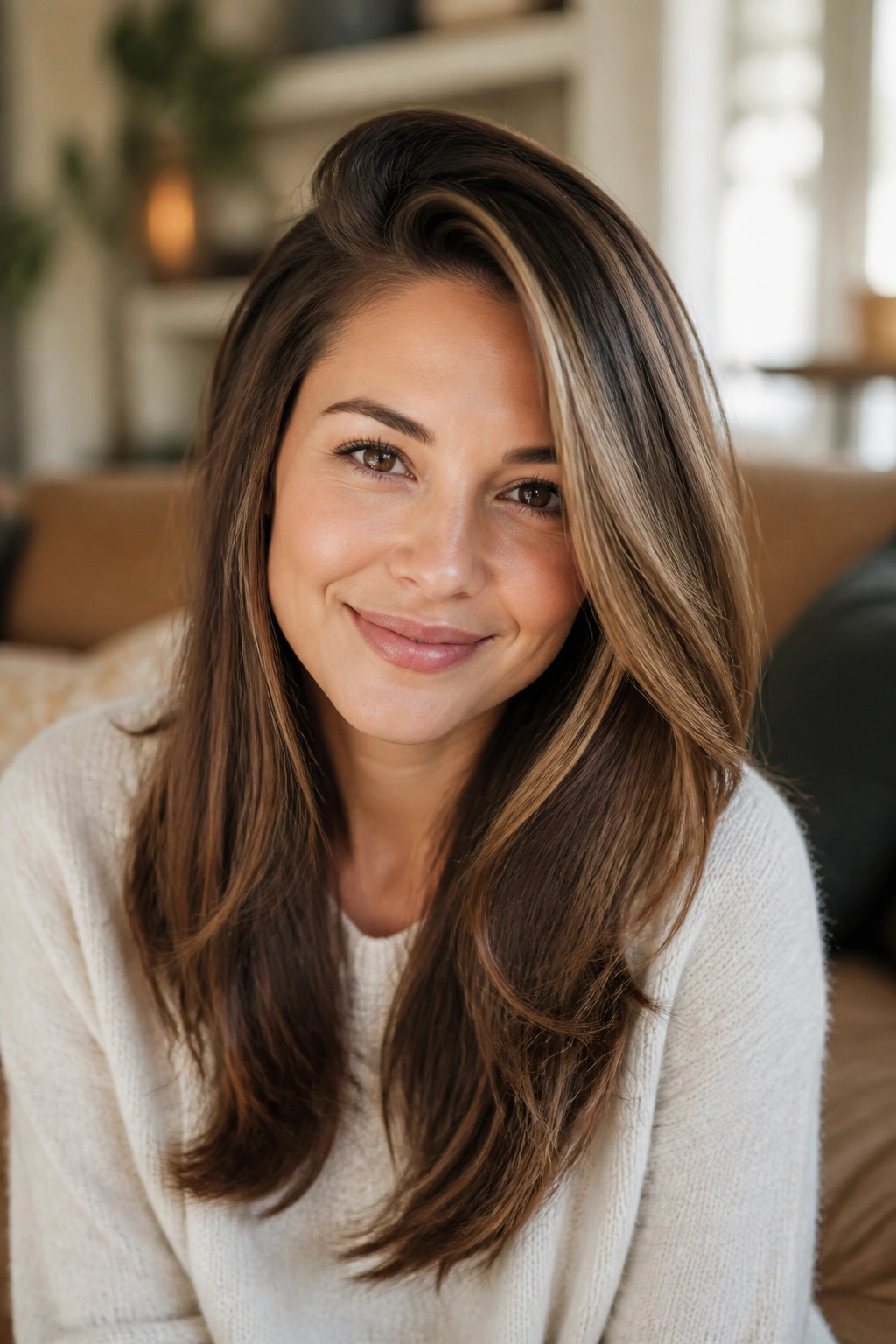
Long hair on a round face can be lovely, but only if the layers are doing something useful. A deep side part is one of the simplest tools for that. It creates height at the crown and breaks the face into uneven sections, which slims the overall look.
The layers should start below the chin. That is the part people often get wrong. If the shortest layers hit at the cheeks, they can make the face look wider. If they fall lower, they soften the jaw without crowding the middle of the face.
Best use case
This is a strong choice if you like longer hair but want it to feel lighter. Thick hair especially benefits from this because the part and layers can remove that blunt, all-over width that round faces do not need.
Wear it with loose bends or a smooth blowout. Either way works, as long as the volume sits up top or down low, not right beside the face. That middle zone is the problem area.
And yes, this is one of those styles that looks almost too simple to matter. It matters.
9. Rounded Bob with Tucked-In Ends
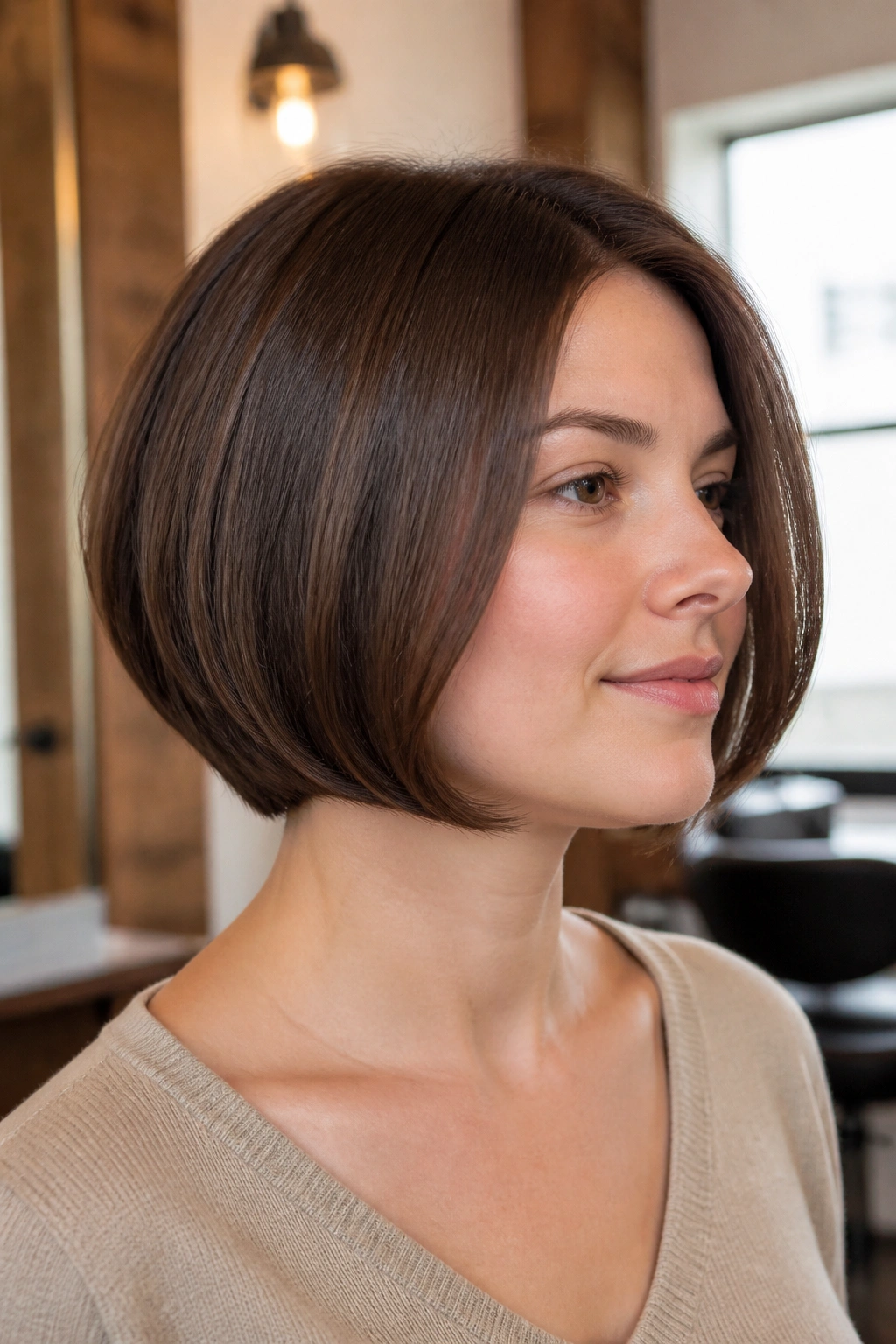
A rounded bob sounds like it should be a bad idea for a round face. It isn’t, if the curve is handled properly. The shape should tuck inward below the jaw, not puff out at the cheeks.
The line needs precision. A slight graduation at the nape helps the bob sit snug against the head, while the front pieces stay just long enough to frame the lower face. Think smooth, controlled, and a little polished.
This cut works beautifully on straight hair and on hair that can be blown under with a brush. The rounded edge gives the style a tailored feel, which can make a round face look more defined.
If you want this to stay flattering, keep the length at or just below the chin, never right on the widest part of the face. That’s the difference between “sleek” and “puffy.”
10. Low Drop Fade with Volume on Top
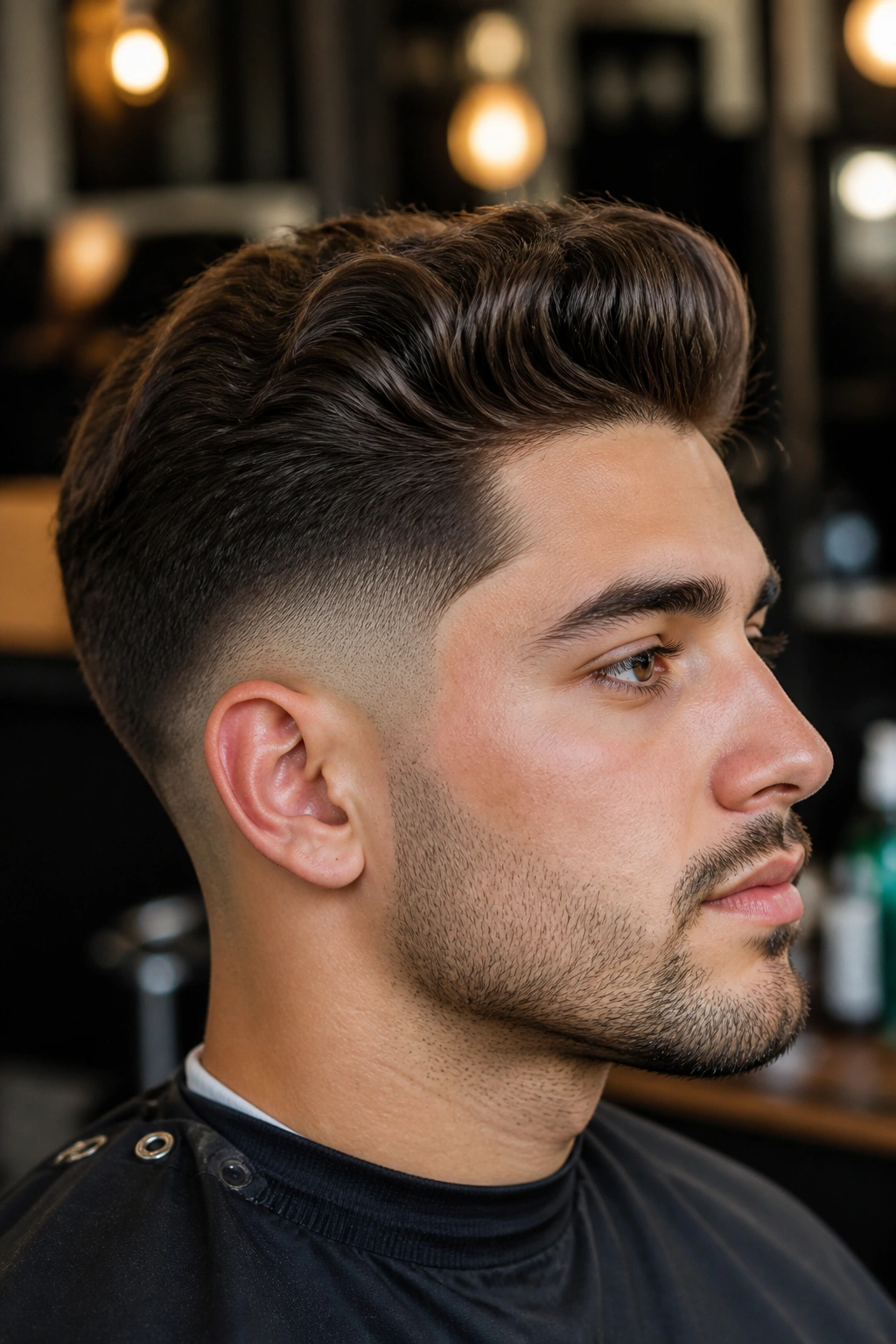
A low drop fade is one of the smartest short cuts for round faces because the fade curves lower behind the ear and at the nape, which helps stretch the head shape visually. The top carries the volume, and that’s where the attention should go.
Keep the top at 3 to 5 inches if your hair is straight or slightly wavy. If your hair is curly, you may need less length on top but more shape control. Either way, the goal is vertical lift. Not width. Never width.
The drop in the fade gives the sides a cleaner outline than a straight fade. That little dip helps the haircut follow the head shape instead of cutting it off awkwardly at the sides.
This is a sharp, practical cut. It looks polished with pomade, matte clay, or even just a quick blow-dry and finger styling. If you want something low around the sides but not flat on top, this is one of the best answers.
11. Butterfly Cut with Face-Framing Layers
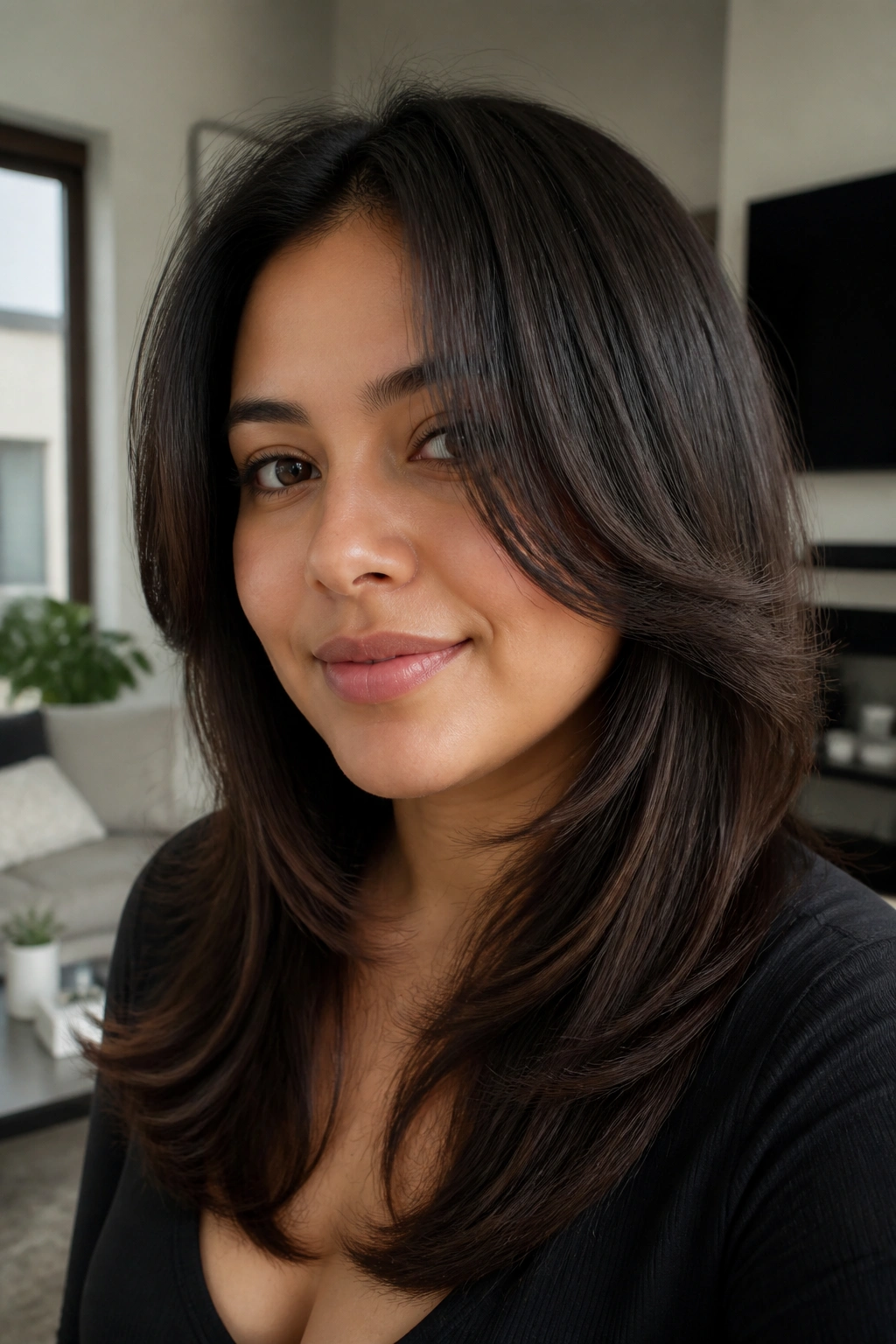
The butterfly cut can work on a round face, but only if the face-framing layers are placed with some restraint. The biggest mistake is starting the shorter layers too high and too close to the cheeks. That can make the face look broader than it is.
Ask for the shortest front layers to begin below the cheekbone, then let the longer layers fall well past the shoulders. That gives you bounce near the crown and softness around the face without building width right where the face is fullest.
Why this cut is tricky and useful
The butterfly cut creates that airy, blown-out effect people like, but the shape can get busy fast. On a round face, the trick is keeping the fluff controlled at the sides and focusing the movement upward and downward instead.
It is a strong option if you like long hair but want it to feel lighter around the face. The layers let you pin, curl, or blow out the front pieces without changing the whole shape of the haircut.
12. Wavy Lob with Subtle Bend
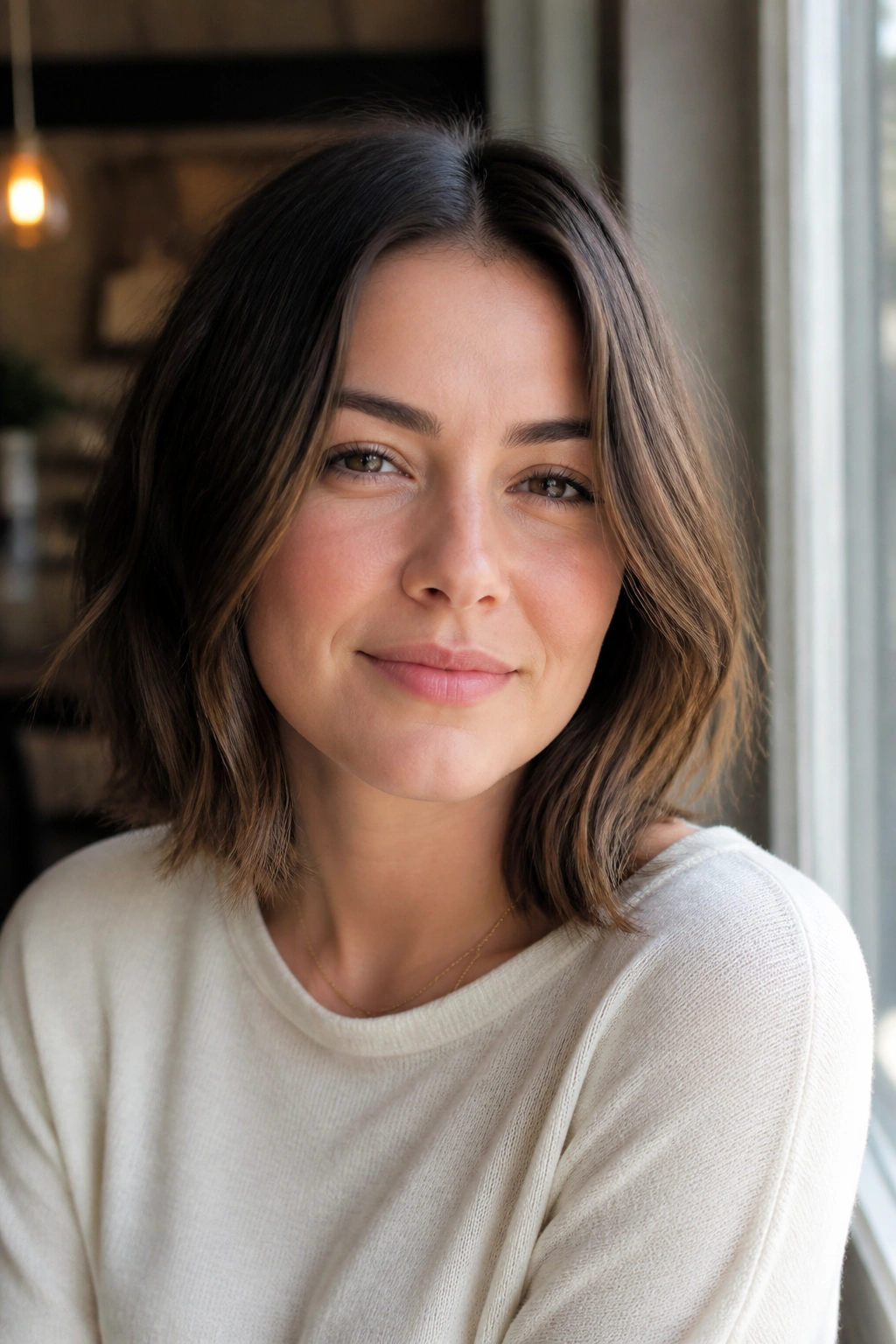
A wavy lob is one of those cuts that looks relaxed without being lazy. It sits at a nice length for round faces because it lands below the chin and gives the face more room to breathe.
The bend should be subtle. Loose waves that start too high can widen the upper face. Instead, begin the wave from the lower half of the hair so the movement sits below the cheeks. That detail sounds tiny. It changes the whole cut.
If your hair is naturally wavy, this is almost cheating. A little sea-salt spray, a quick twist while damp, and you’re halfway there. If your hair is straight, use a medium barrel iron and wrap away from the face, keeping the ends soft rather than curled tight.
This cut is especially good if you want something low-drama. It works at the office, on a day off, and under a hat. Easy hair has its own kind of charm.
13. French Bob with a Side Sweep

A French bob is short, chic, and sometimes a little unforgiving. On a round face, it needs a side sweep or soft fringe to keep it from reading too boxy. The length should sit just under the jaw, not straight across the fullest part of the cheeks.
The French bob works best when the line feels airy rather than solid. You want a bit of movement near the front and some breathing room around the neck. If the shape is too heavy, it can make the lower half of the face feel crowded.
This style suits straight to slightly wavy hair. The side-swept fringe helps interrupt the roundness, and the shorter length brings attention to the eyes and cheekbones rather than the jawline. That can be a nice shift if your face tends to look soft in photos.
Short and simple, yes. But not simple to cut well. A good French bob looks effortless because somebody did the hard part for you.
14. Long Pixie with Side-Swept Fringe
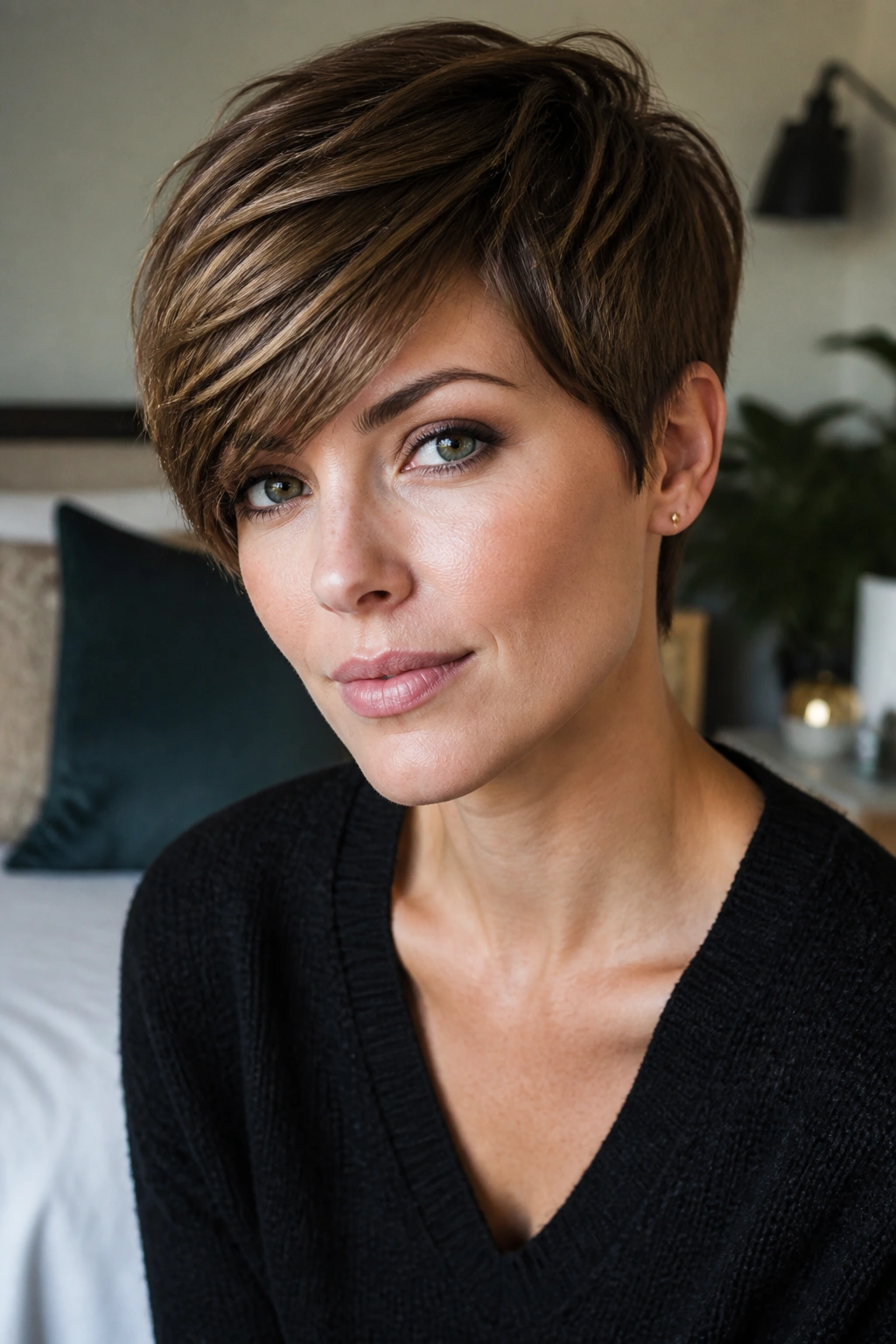
A long pixie is one of the most useful low haircuts for round faces because it keeps the sides tight while giving you enough length on top and in the fringe to reshape the face. It’s short, but not severe.
The fringe should sweep across the forehead and land around the eyebrow or just below it. The top can be soft and layered, but it needs direction. Random fluff is the enemy here. You want movement that points diagonally, not out to the sides.
Styling notes that matter
- Dry the fringe with a small brush from the crown forward.
- Use a pea-sized amount of cream or paste.
- Push the top slightly upward and to one side.
- Keep the nape clean so the neck looks longer.
This cut is good when you want something sharp without going all the way into a crop. It gives round faces a little edge and keeps the silhouette neat.
15. Blunt Shoulder Cut with an Off-Center Part
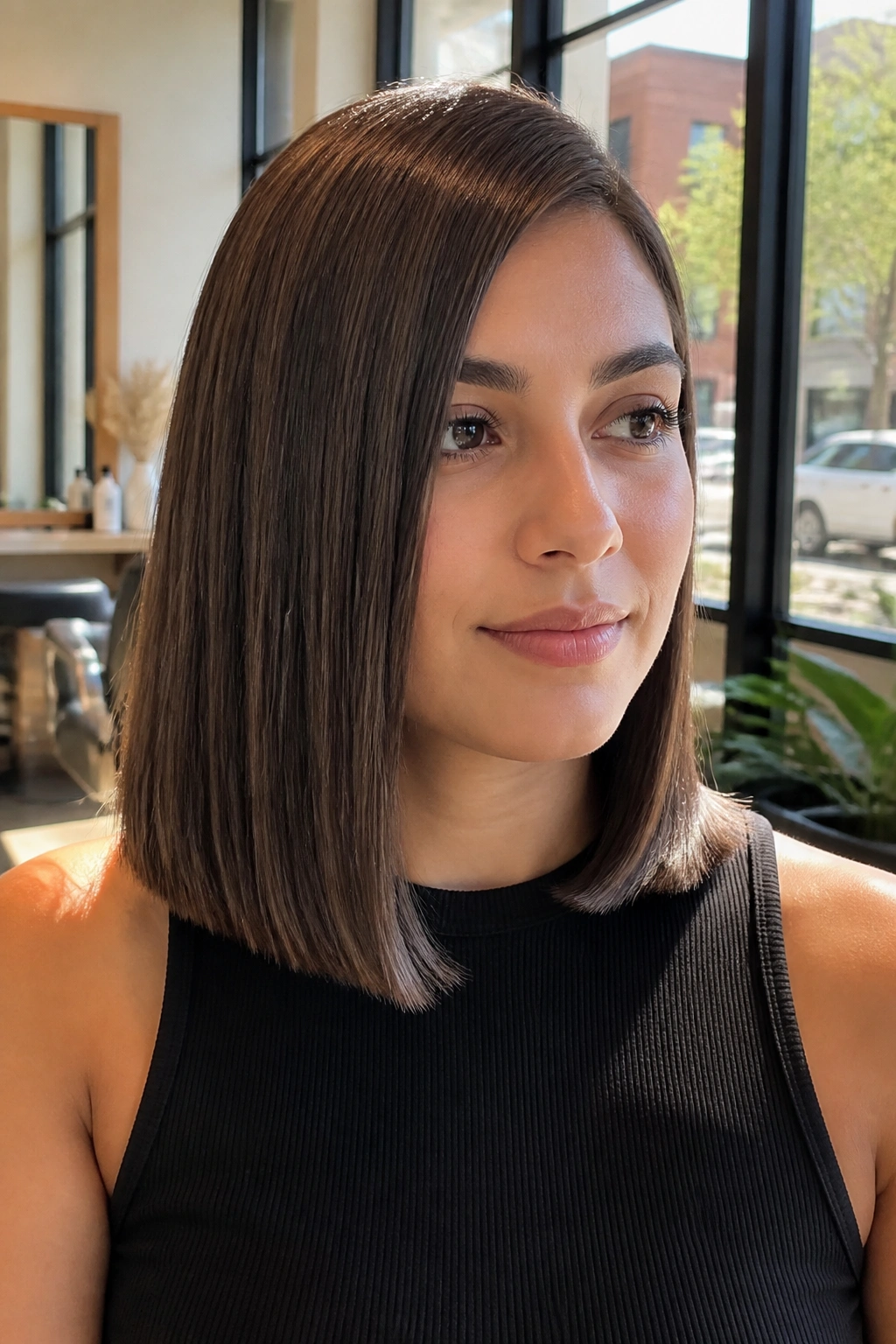
A blunt shoulder-length cut can be a beautiful match for a round face when the length lands at the collarbone or just below it. The shoulders give the hair a defined bottom edge, and that edge helps elongate the face.
The off-center part is doing quiet work here. It keeps the style from feeling too symmetrical and gives the top a little more lift on one side. That asymmetry breaks the roundness without making the haircut feel fussy.
This cut is a good choice for thick, straight hair that likes to hold a clean line. It can also work on wavy hair if you keep the ends from puffing out too much. A flat brush and a touch of smoothing cream help a lot.
I like this cut because it doesn’t try too hard. It just sits there and does its job, which is rarer than it sounds.
16. Curly Crop with Tapered Sides
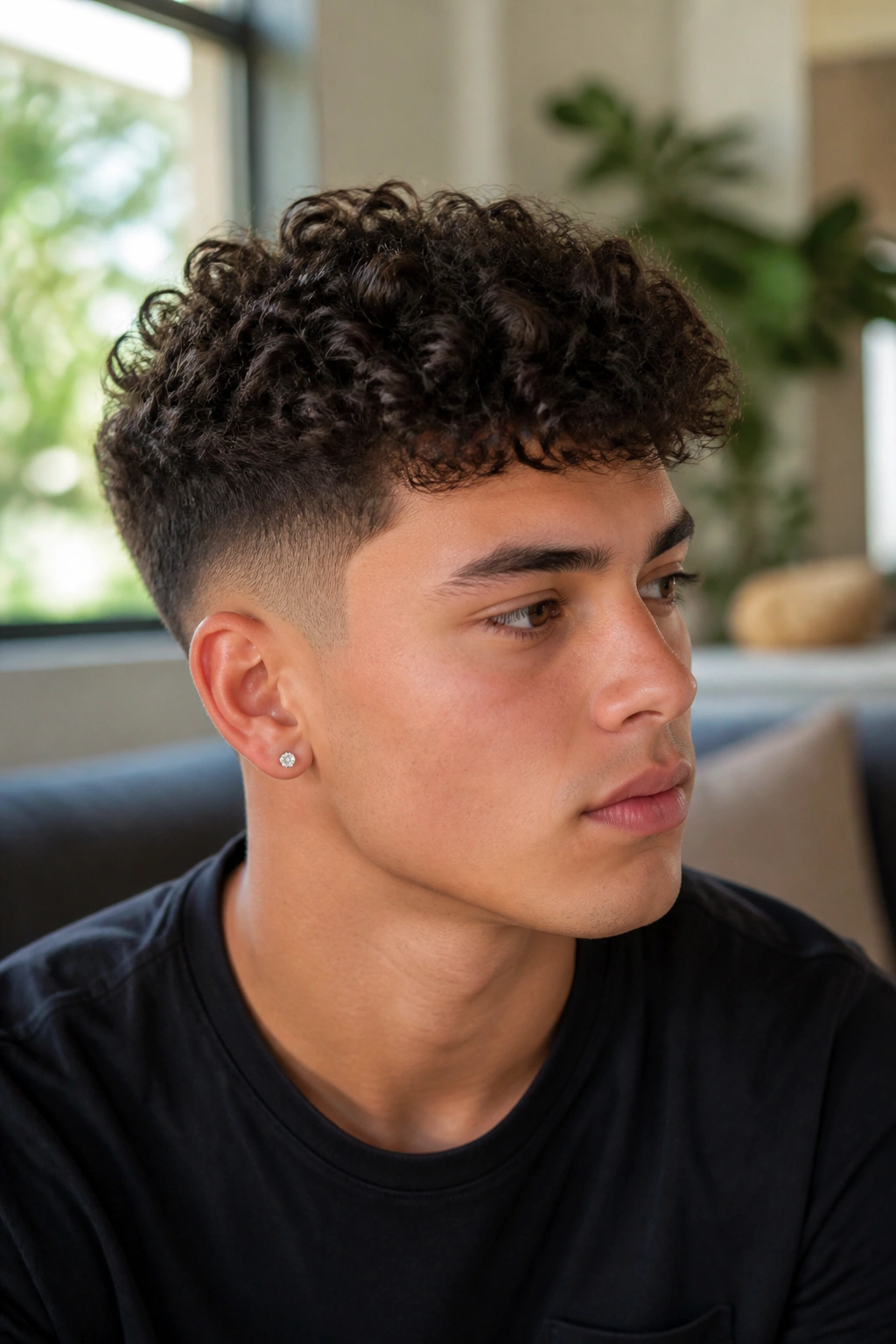
Curly hair needs shape, not punishment. A curly crop with tapered sides keeps the bulk close to the head where it should be, then lets the top rise in a way that lengthens the face instead of spreading it wider.
Ask for a dry cut or curl-by-curl shaping if your stylist knows how to do it. Wet curls lie. They shrink in weird ways, and a round face needs the final shape to be judged where the curls live, not where they look before they dry.
The sides and nape should be neat, and the top should have enough height to create a vertical line. That matters a lot on round faces with curls, because curls can either stretch the face or widen it depending on where the bulk lands.
How to wear it
Use a lightweight curl cream and a diffuser on low heat. Scrunch at the roots if you want more lift, but do not puff the sides outward. That’s the move that ruins the shape.
17. Angled Lob with Length in Front
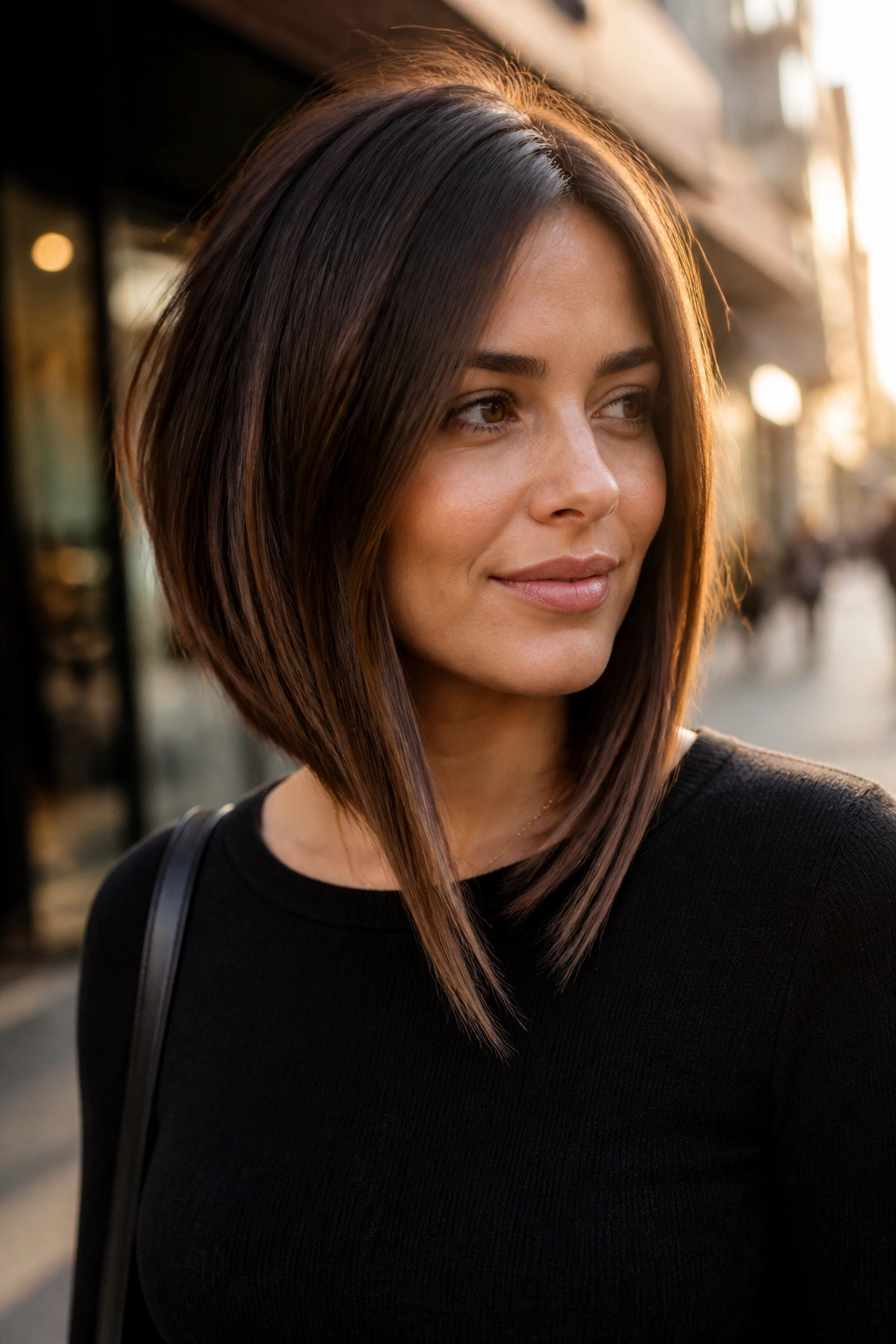
An angled lob does a lot with a little. The back sits slightly shorter, and the front pieces fall longer, which creates a clean diagonal line that flatters round cheeks almost by default.
The angle does not need to be extreme. A difference of 1 to 2 inches from back to front is enough in many cases. More than that can start looking sharper than you want. The sweet spot is sleek and clear, not dramatic for the sake of drama.
This style is especially good if your face looks widest at the middle. The forward length pulls the eye down and out, which makes the whole face seem longer. It’s one of those cuts that looks expensive when it’s well-kept, even though the shape itself is simple.
Wear it straight for the strongest effect. Waves soften the angle, which can be pretty, but straight hair really shows off the geometry here.
18. Graduated Bob with a Low Nape
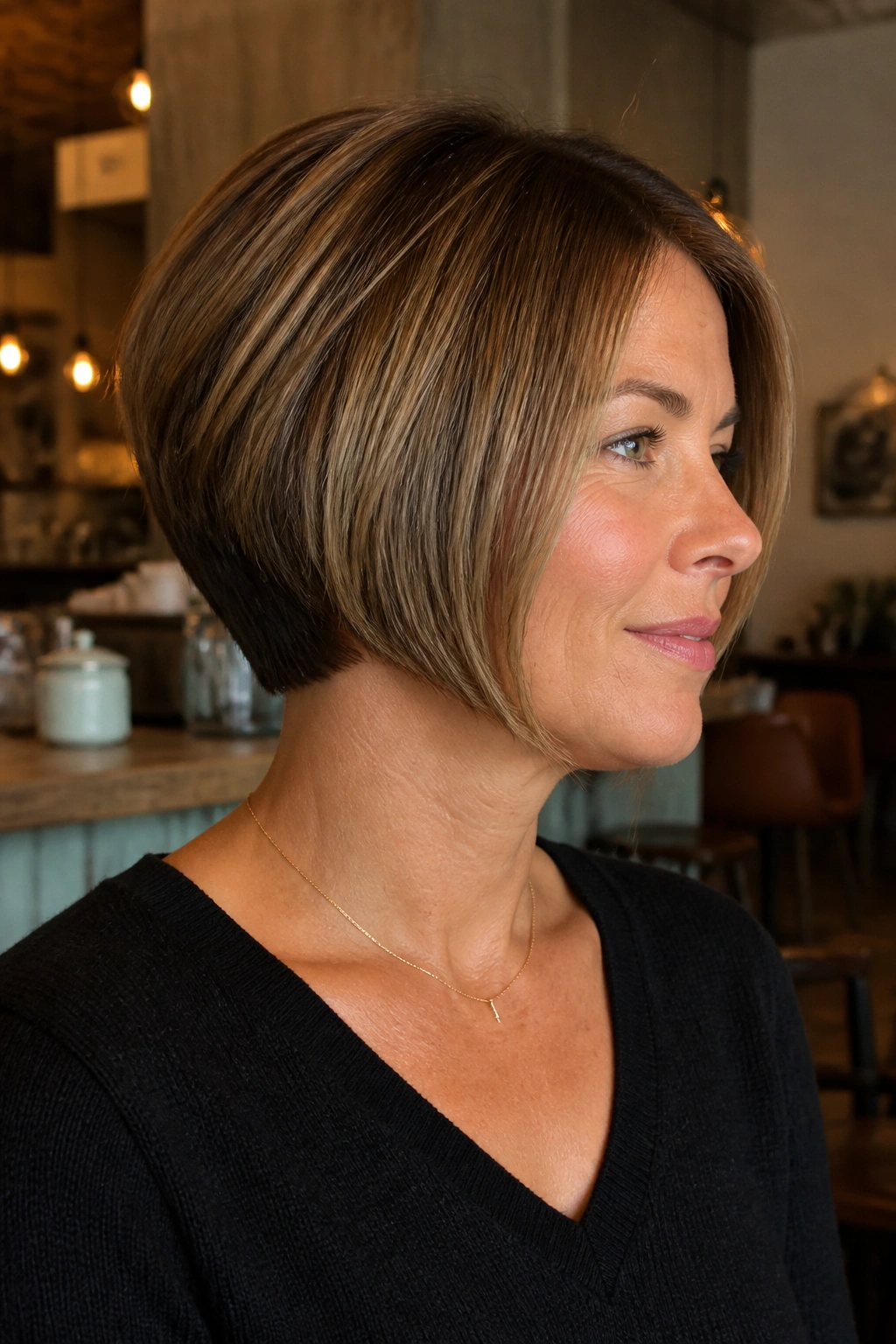
A graduated bob is built with more structure at the back, but on a round face the nape needs to stay low and controlled. You do not want a stacked mountain shape that widens the head. You want a gentle rise that supports the crown and tapers cleanly into the neck.
The front should stay longer than the back by enough to create movement, usually somewhere around the jaw to collarbone zone depending on your hair density. That keeps the face from being boxed in.
This cut works well for fine hair because the graduation creates body without making the sides bulky. It also works on straight hair that needs shape. The key is restraint. Too much stacking and the cut starts talking too loud.
A flat brush, a little root lift, and smooth ends are usually enough. Keep the sides close. Let the shape happen at the back.
19. Wolf Cut with Controlled Crown Texture

A wolf cut can be either a mess or a good idea. On a round face, the difference is control. Keep the crown textured and airy, but let the side layers stay long enough to avoid spreading the face outward.
The fringe should be soft and broken up, not heavy. The shortest pieces around the face should start below the cheekbone. Anything too short can add bulk in the exact place you’re trying to slim.
Why this version works
A controlled wolf cut gives you lift at the top and movement through the lengths, which can make a round face look more elongated. It’s especially useful for thicker wavy hair that tends to puff up at the sides.
- Best with medium to thick hair
- Better with air-dry texture or diffused waves
- Needs light layering, not aggressive shredding
- Looks strongest when the crown has height and the ends stay soft
This is not the cut for someone who wants tidy. It is for someone who wants shape with a little bite. There’s a difference.
20. Soft Mullet with Low Weight Removal
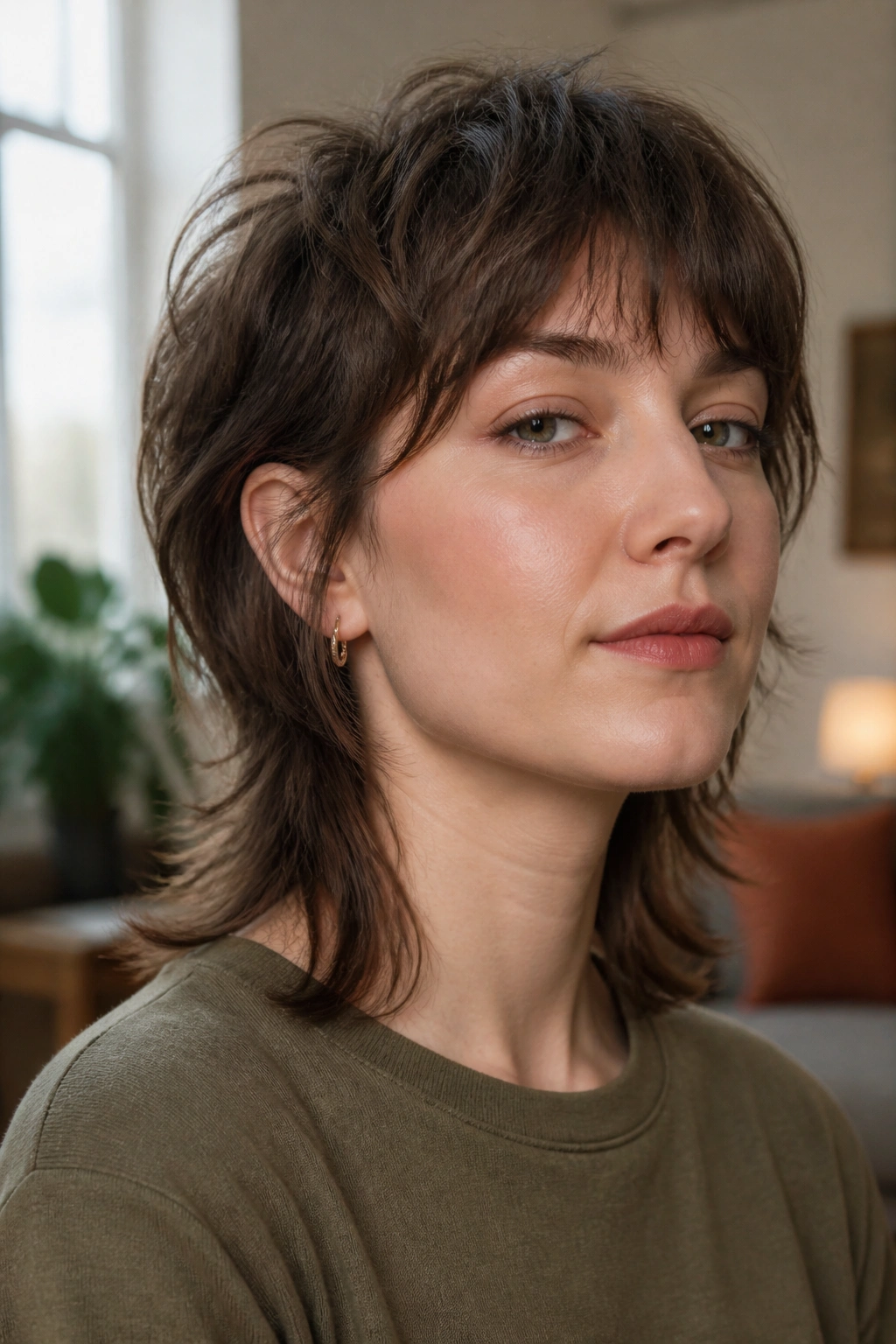
A soft mullet sounds edgy because it is, but the gentle version can be surprisingly flattering on a round face. The front stays lighter and more face-framing, while the back keeps some length to stretch the silhouette vertically.
The key is low weight removal, not all-over thinning. You want the sides to stay soft and controlled. If the top gets too fluffy near the temples, the face can look wider. If the back is too disconnected, the cut starts to feel choppy in the wrong way.
This style suits people who like some personality in their hair. It is also useful if your hair is naturally wavy or curly, because those textures help the shape move instead of sit like a block. A center part can work, but a slight off-center part often feels easier around the face.
There’s a fine line between intentional and awkward here. The good version looks cool because the shape is balanced. The bad version looks like it gave up halfway.
Round faces can wear short hair, medium hair, long hair, blunt lines, broken layers, and a little edge. The real question is where the weight sits and what the cut is doing when you stop posing and start moving.
The best low haircuts for round faces don’t fight the face shape. They guide it. They add length, break up width, and keep the eyes moving up and down instead of side to side. That’s the whole game, and once you see it, bad haircut advice gets easier to ignore.
