



Straight haircuts for round faces work best when they do one simple thing well: they create lines that pull the eye up and down, not side to side. That sounds almost too basic, but it’s the whole game. If your hair falls flat at the temples, puffs at the cheeks, or stops right at the widest point of your face, the wrong shape can make a round face look even rounder in photos and mirrors.
The good news is that straight hair gives you a cleaner canvas than most textures do. A sharp line, a thoughtful part, and the right length can change the whole read of your face without any fussy styling. A blunt edge can be brilliant. So can soft face-framing pieces. So can a bob that stops a little below the jaw instead of right on it. The trick is knowing where the cut should land, because a half-inch matters more than people think.
I’ve always liked round faces with straight hair because the best cuts don’t try to fight the face shape. They work with it. They keep the outline clean, skip the extra bulk at cheek level, and use length, angle, or a controlled bit of movement to make the face feel longer. That’s why some cuts that look “too simple” at first glance end up being the ones that look the most expensive on real hair.
1. Collarbone Blunt Cut for Round Faces

The collarbone blunt cut is one of those straight haircuts for round faces that looks almost plain until you see it on the right person. The line lands low enough to sit below the cheek area, which means the face gets room to breathe instead of getting boxed in at the widest point. On straight hair, that low, clean edge has a nice weight to it.
Why It Works
- The length hits near the collarbone, so it doesn’t stop at the jaw or cheek.
- The blunt edge makes fine straight hair look fuller at the ends.
- The shape feels tidy, which helps if your hair tends to collapse around the face by midday.
Ask for the perimeter to stay clean, then let your stylist soften only the tiniest bit at the ends if the line feels too hard. I like this cut best when the front pieces barely graze the collarbone and the back stays almost even. Too much bevel and you lose the whole point.
Pro tip: blow-dry it with a flat brush and tuck one side behind the ear. That tiny asymmetry does more than people expect.
2. Center-Part One-Length Cut
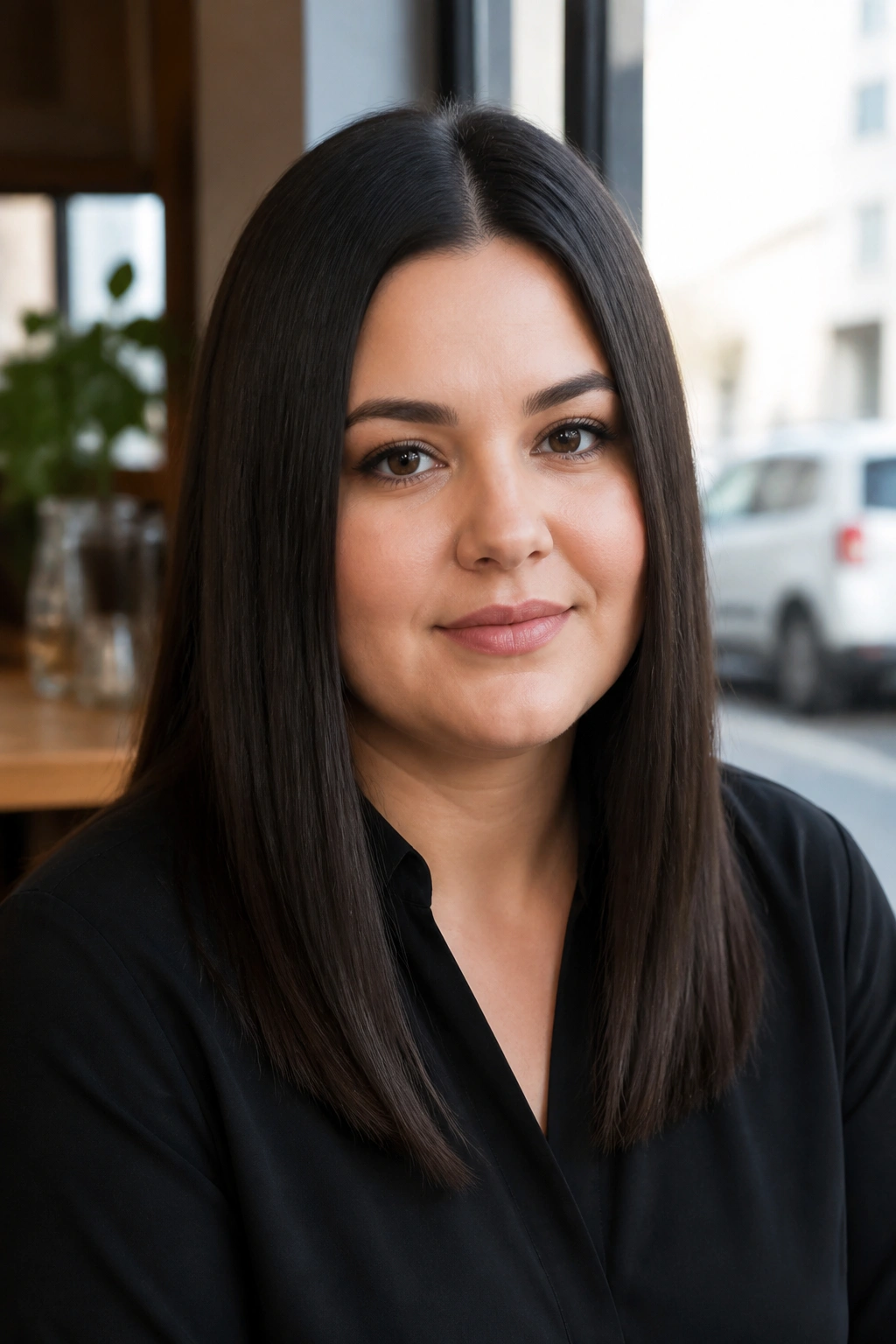
A center part is not the enemy. On a round face, it can actually be the cleanest way to draw a vertical line through the middle of the face, especially when the hair falls past the shoulders. The mistake people make is pairing a center part with a too-short cut that ends right at the cheeks. That’s where it starts to widen things.
With enough length, the effect changes. A one-length cut keeps the ends heavy and straight, which gives the hair a sleek curtain effect. The eye goes down the hair instead of stopping at the face. I’d keep this one at least collarbone length, and longer if your hair is fine or very dense.
It’s a low-drama cut, and that’s the point. You don’t need layers fighting for attention. You need a smooth line, a tidy part, and an edge that lands below the broadest part of the face. If your hair grows fast and you hate frequent trims, this one can be a good fit because it still looks intentional between salon visits.
3. Glass-Hair Lob
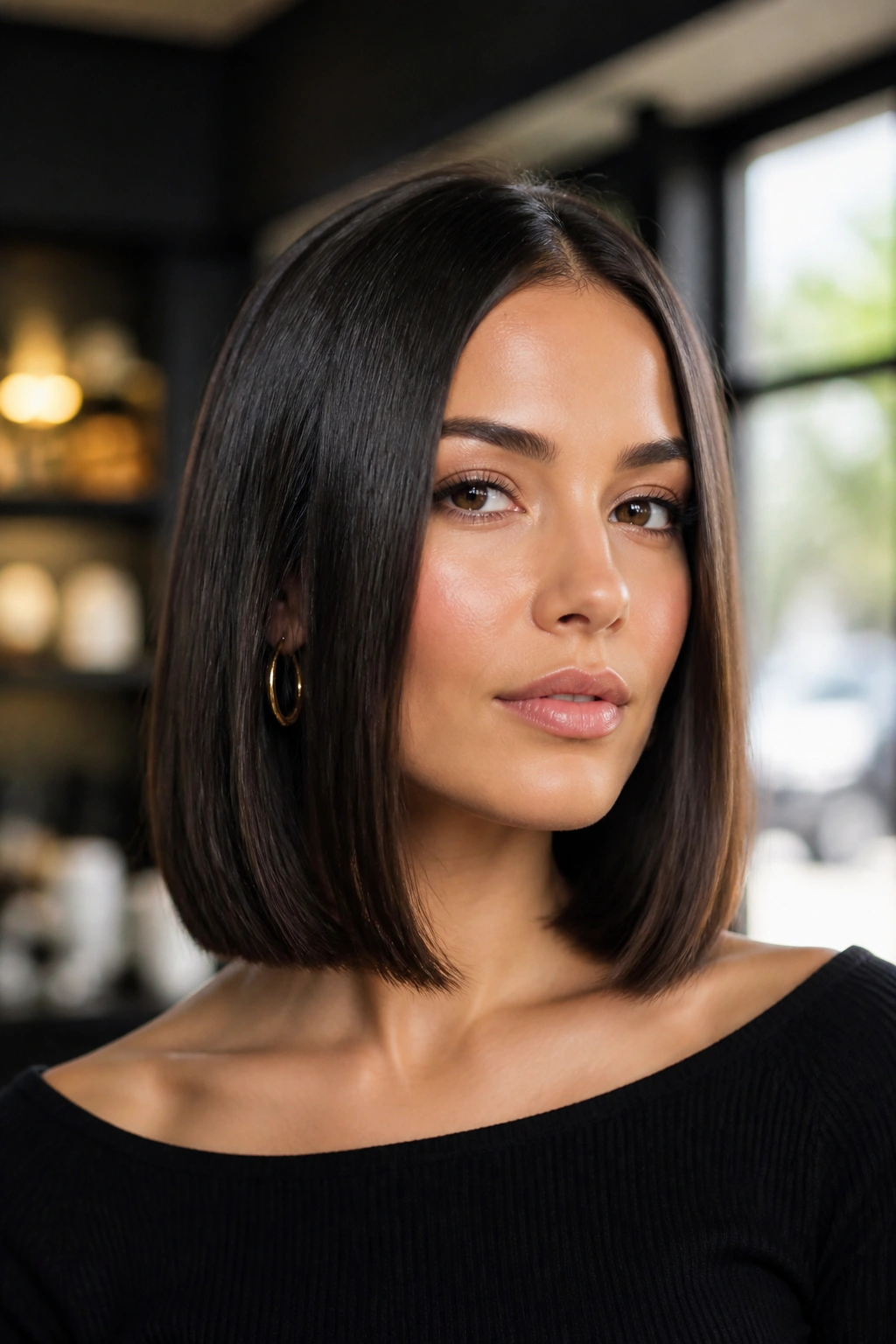
Picture a lob that’s been blown out until it lies flat and glossy, with ends that hit just above the collarbone. That’s the glass-hair lob, and on a round face it works because the shine and the clean finish make the haircut read as a shape, not a puff. Straight hair sometimes needs that extra bit of polish or it can fall into “everyday” territory fast.
The beauty of this cut is its restraint. There’s no heavy layering around the cheeks and no blunt line cutting straight across the jaw. Instead, you get a smooth frame that keeps the face open. If your hair has any natural wave, a quick pass with a flat iron after a blow-dry will keep the silhouette crisp.
A few useful details help here:
- Keep the length just below the chin or slightly lower.
- Ask for a subtle bevel at the ends, not a flip.
- Use a middle or slightly off-center part, depending on where your hair wants to fall.
What this cut is not: not airy, not shaggy, not choppy. It’s clean. That’s why it flatters.
4. U-Shaped Long Cut
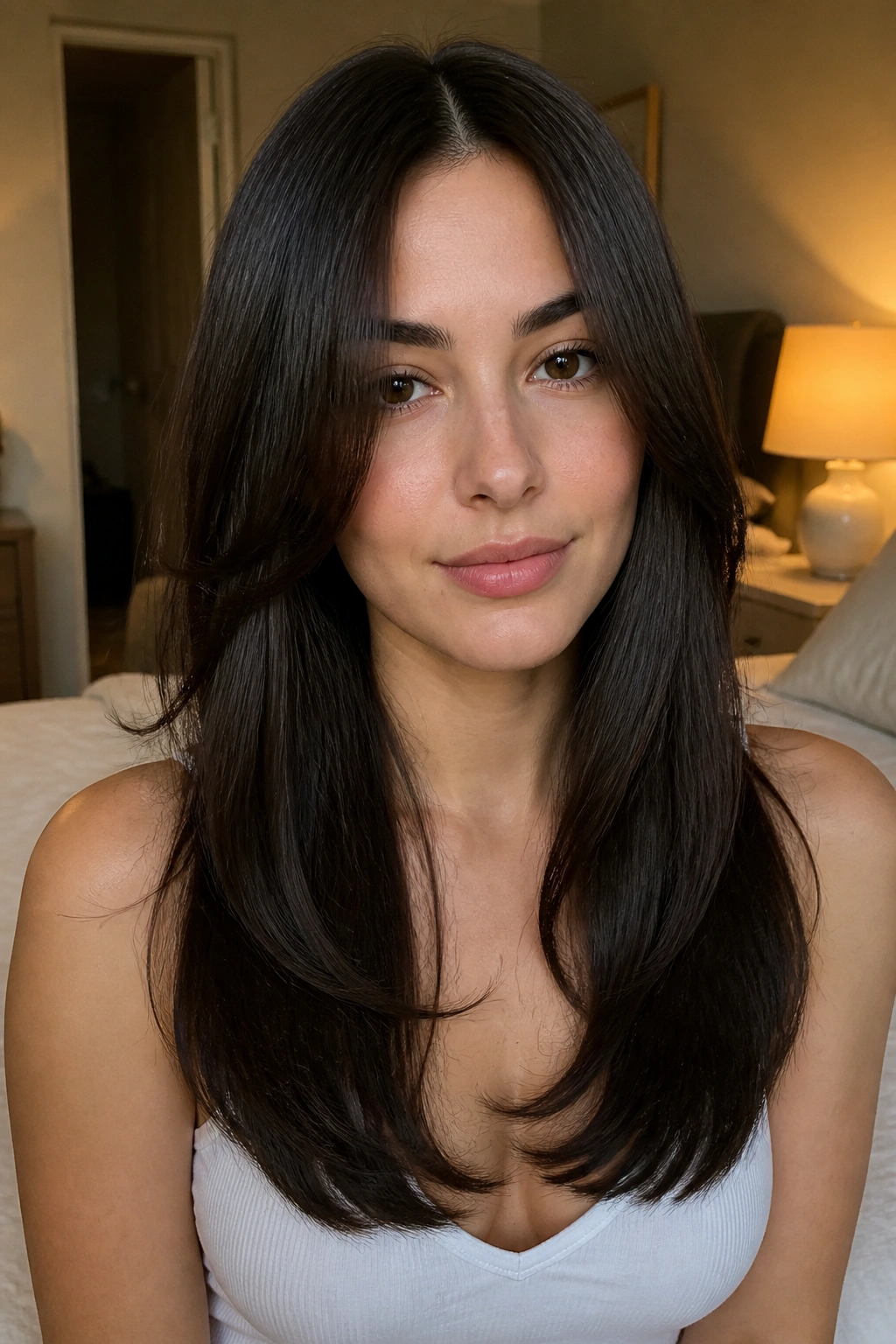
Why does a U-shaped cut work better than a hard curtain of straight hair on a round face? Because the softness at the back keeps the ends from feeling like one flat shelf. The longer center section creates a little vertical pull, while the side pieces ease away from the cheeks instead of landing right on them.
I like this shape on hair that’s at least past the shoulders, because the U really shows once the length has room to move. If the hair is very fine, the curve should stay subtle. If it’s thick, the U can be a little more obvious without looking bulky. The trick is not to over-layer the front, which defeats the purpose.
How to Ask for It
Ask for the center back to stay about 1 to 2 inches longer than the sides, with the front pieces angled down gently toward the chest. That gives you a soft outline without turning the cut into a shag. If you wear your hair straight most days, this shape gives you a little motion without forcing you into daily styling gymnastics.
5. Chin-Skimming Angled Bob
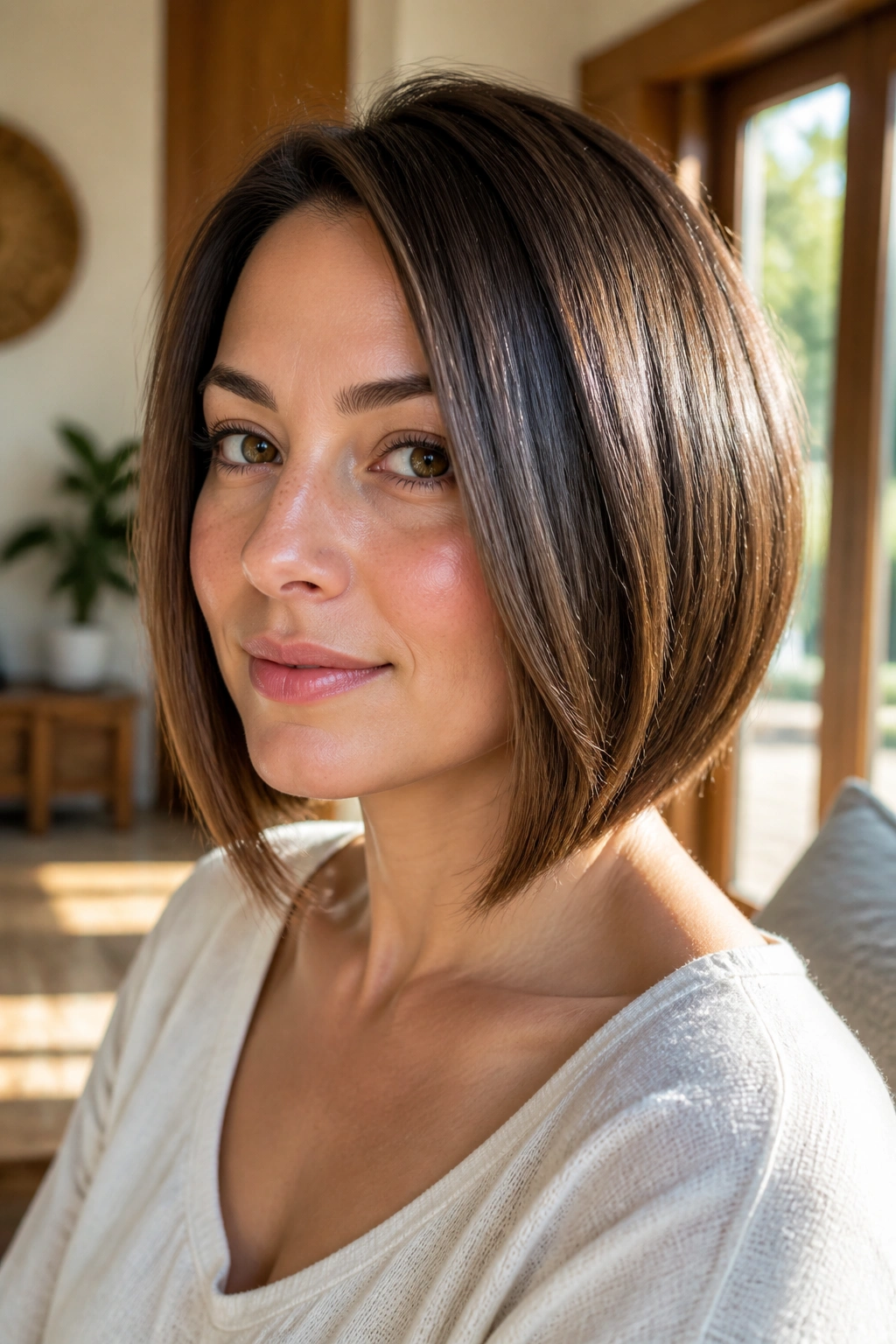
A chin-length bob can be tricky on a round face, and I won’t pretend otherwise. If it lands too straight across the jaw, it can make the face look wider. But an angled bob that dips slightly longer in front changes the whole feel. The front points downward, the back sits a bit tighter, and the face gets a sharper frame.
This is one of the better short options if you want a cut that looks crisp with almost no styling. The angle gives straight hair a little architecture. You don’t need curls, waves, or a lot of texture spray to make it work. You do need a clean neckline and a stylist who knows how to keep the front from floating too high.
I’d be cautious with very dense hair here. Too much bulk can make the side view feel heavy. A little internal thinning near the nape can help, but don’t let anyone carve out too much. You want the shape to feel sharp, not wispy.
6. Curtain-Bang Lob

Curtain bangs and round faces have a complicated reputation, mostly because people ask the bangs to do too much. A good curtain-bang lob doesn’t split the forehead and call it a day. It uses longer, cheekbone-skimming pieces to create diagonal lines that soften the face without widening it.
The sweet spot is usually around cheekbone level or a touch below. If the shortest part of the curtain bangs sits too high, the effect turns puffy. If it starts too low, the bang loses the framing job. The rest of the lob should stay relatively sleek so the bangs do the talking.
Unlike a full fringe, this cut gives you flexibility. Wear the bangs parted wider on busy days. Sweep them more toward the cheekbones when you want the face to look a little longer. It’s a smart choice if you like movement around the face but don’t want a heavy wall of hair on your forehead.
7. Side-Part Shoulder-Length Blunt Cut
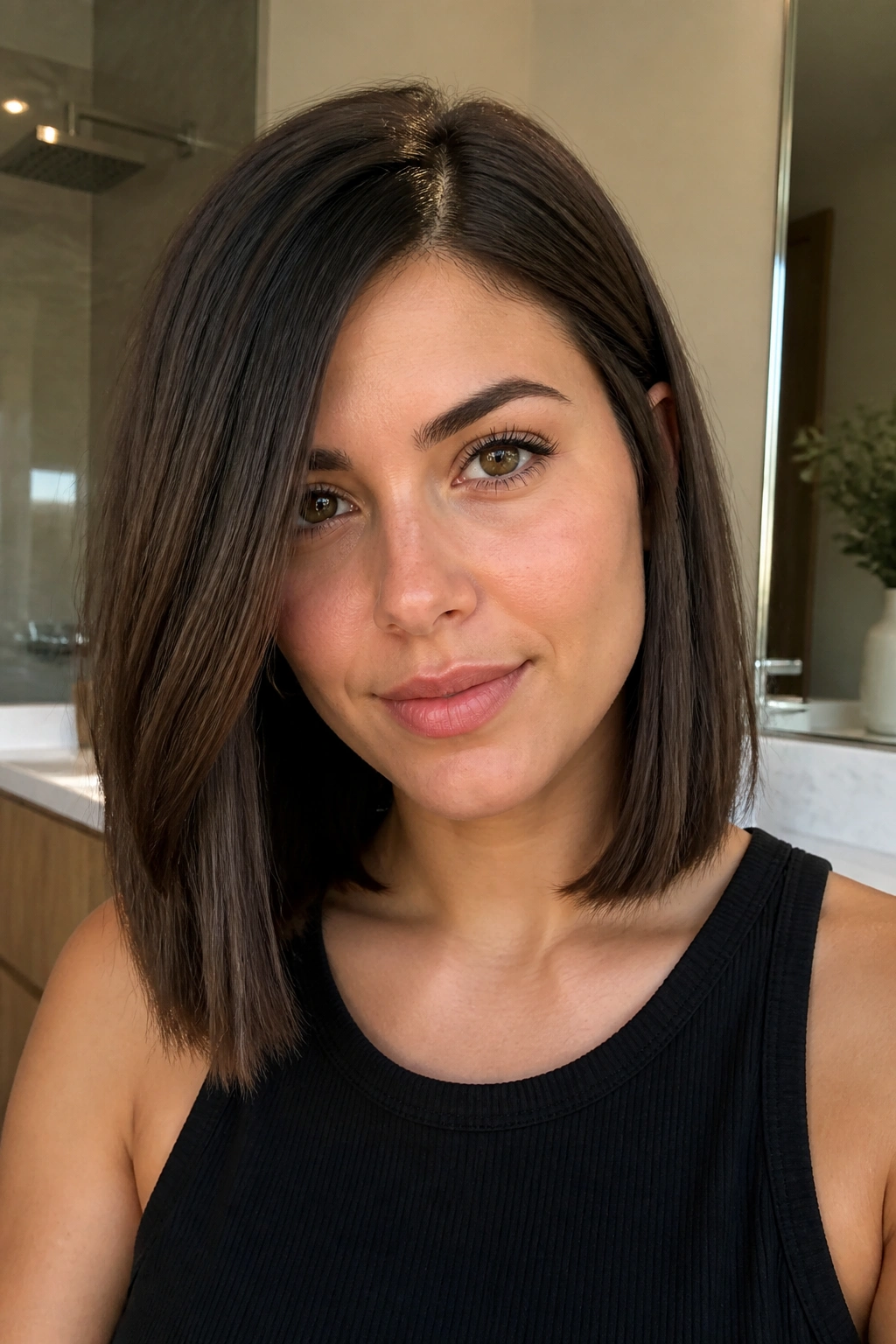
A side part changes the whole geometry of straight hair on a round face. It breaks up the symmetry, shifts visual weight, and creates a diagonal line that flatters more than a dead-center split on some people. Add a shoulder-length blunt cut, and the result is neat rather than severe.
Why the Side Part Helps
- It lifts one side of the face slightly.
- It creates a longer line from crown to chin.
- It keeps the haircut from feeling too boxed-in.
This cut works especially well if your hair is naturally straight and dense. The blunt edge keeps the ends full, while the side part stops the whole look from feeling static. If your cheek area is your widest point, ask your stylist to keep the front just a bit longer than the back, even if the difference is subtle.
One small detail matters here: place the part off the highest point of your arch, not too far over. Go too deep and the cut can start to feel dated or overly dramatic. A little shift is enough.
8. Long Layers with Face-Framing Pieces
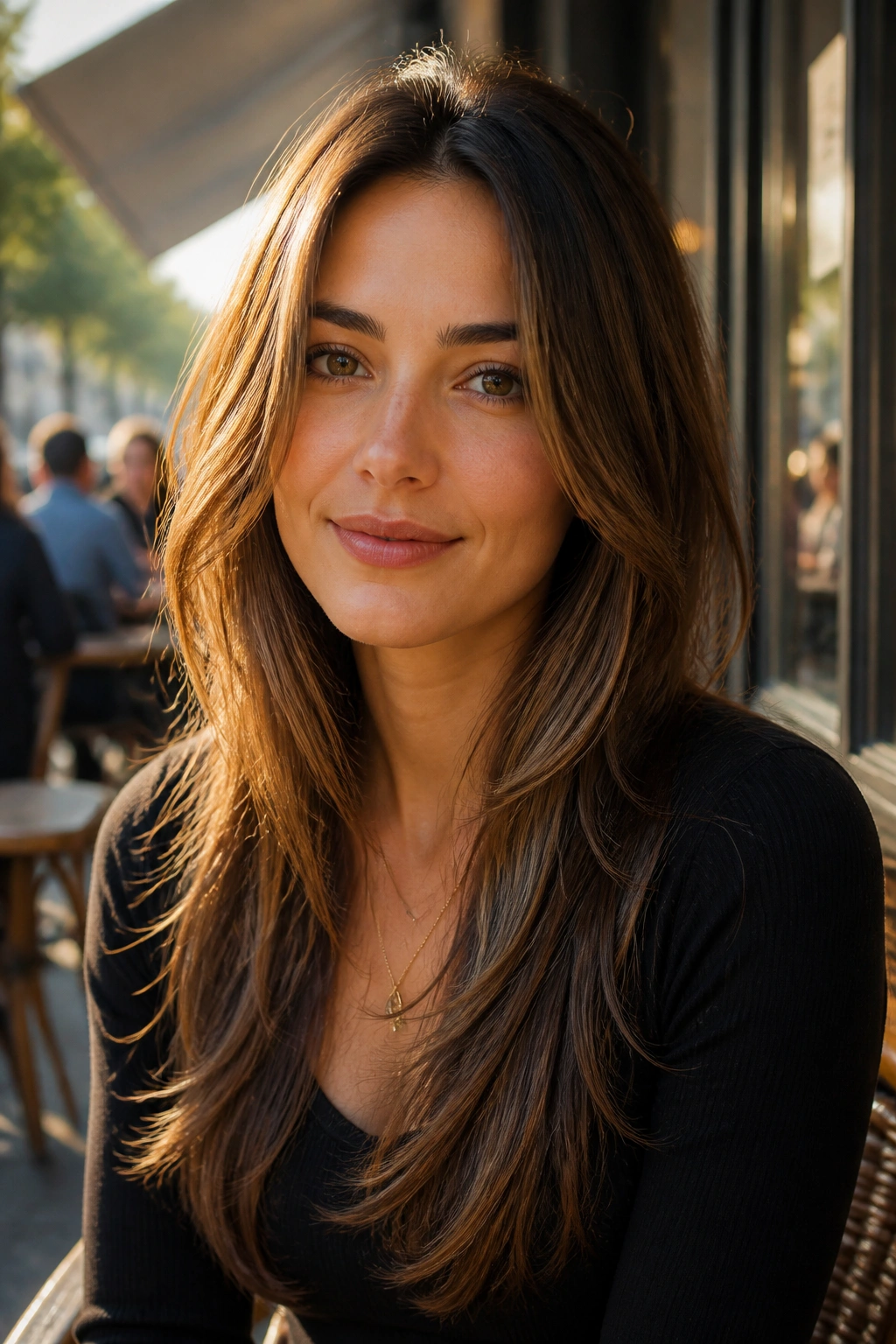
Layers can be your best friend or your worst decision. On a round face, they help only when they’re placed with restraint. The back should keep length, while the front gets the movement. That way the eyes read downward, not outward.
What I like about long layers on straight hair is that they can stop the cut from looking like one heavy slab. But the shortest pieces need to start below the chin. Once layers begin at cheek level, they often add width where you least want it. That’s the part a lot of stylists overdo, and clients notice it later when the blowout starts to puff.
If you want this shape, ask for face-framing pieces that begin around the jawline or lower, then soften into the chest area. You should still feel the weight of the length. If the haircut feels “too layered” in the chair, it probably is.
9. A-Line Bob
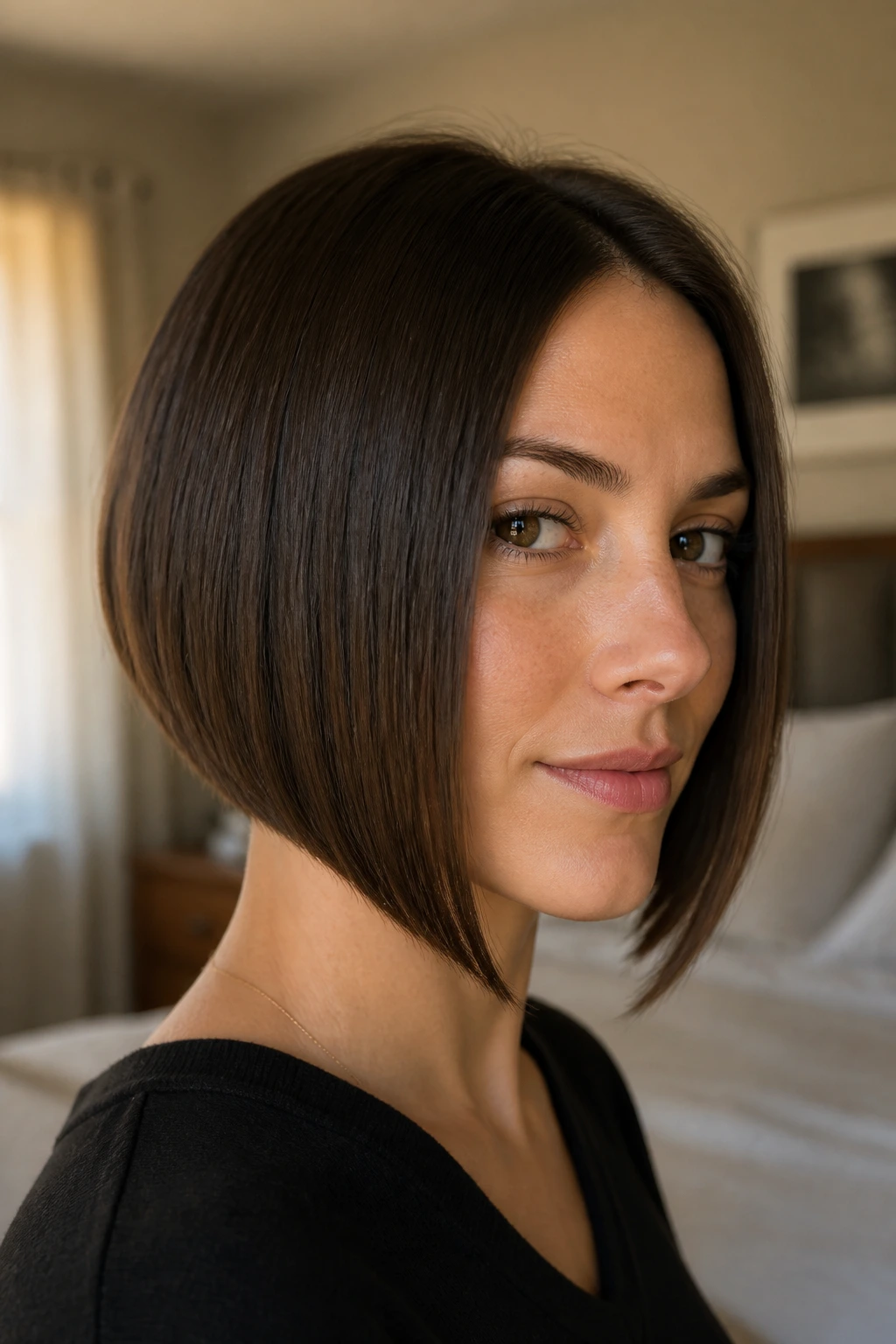
An A-line bob gives straight hair a diagonal line, and diagonal lines are gold on round faces. The back stays shorter and cleaner, while the front extends forward enough to draw the eye down along the jaw. That front angle does the lifting without looking fussy.
This is a smart cut if you like a polished bob but don’t want your hair to end right at the cheek. The front should usually fall somewhere around the chin or just below it, depending on neck length and density. The shorter back keeps the shape light and modern. On very straight hair, the angle shows up clearly, which is part of the appeal.
Keep the angle moderate. A steep A-line can feel a little theatrical unless your whole style leans that way. A gentle slope tends to look better on round faces because it gives shape without shouting. Straight hair loves that kind of precision.
10. Soft Shag with Straight Ends

Can a shag work on a round face if the hair is straight? Yes, but only when it’s softened and kept under control. The version that works here is not the choppy, high-volume shag you see on textured hair. It’s a gentler cut with broken-up ends, light movement, and enough length to keep the face from ballooning.
The main thing to watch is where the layers begin. If they start too high, the sides can widen fast. For straight hair, the better move is to keep the top pieces longer and use soft, low layers that fall around the collarbone or lower. That gives the haircut a bit of energy without losing the vertical line.
What to Watch For
- Keep the crown pieces soft, not short.
- Avoid heavy width at cheek level.
- Let the ends stay wispy, not feathered to death.
This is a good cut if you want something a little more lived-in than a blunt lob, but you still need the face to look longer. It has attitude, but not chaos.
11. Mid-Back Blunt Cut
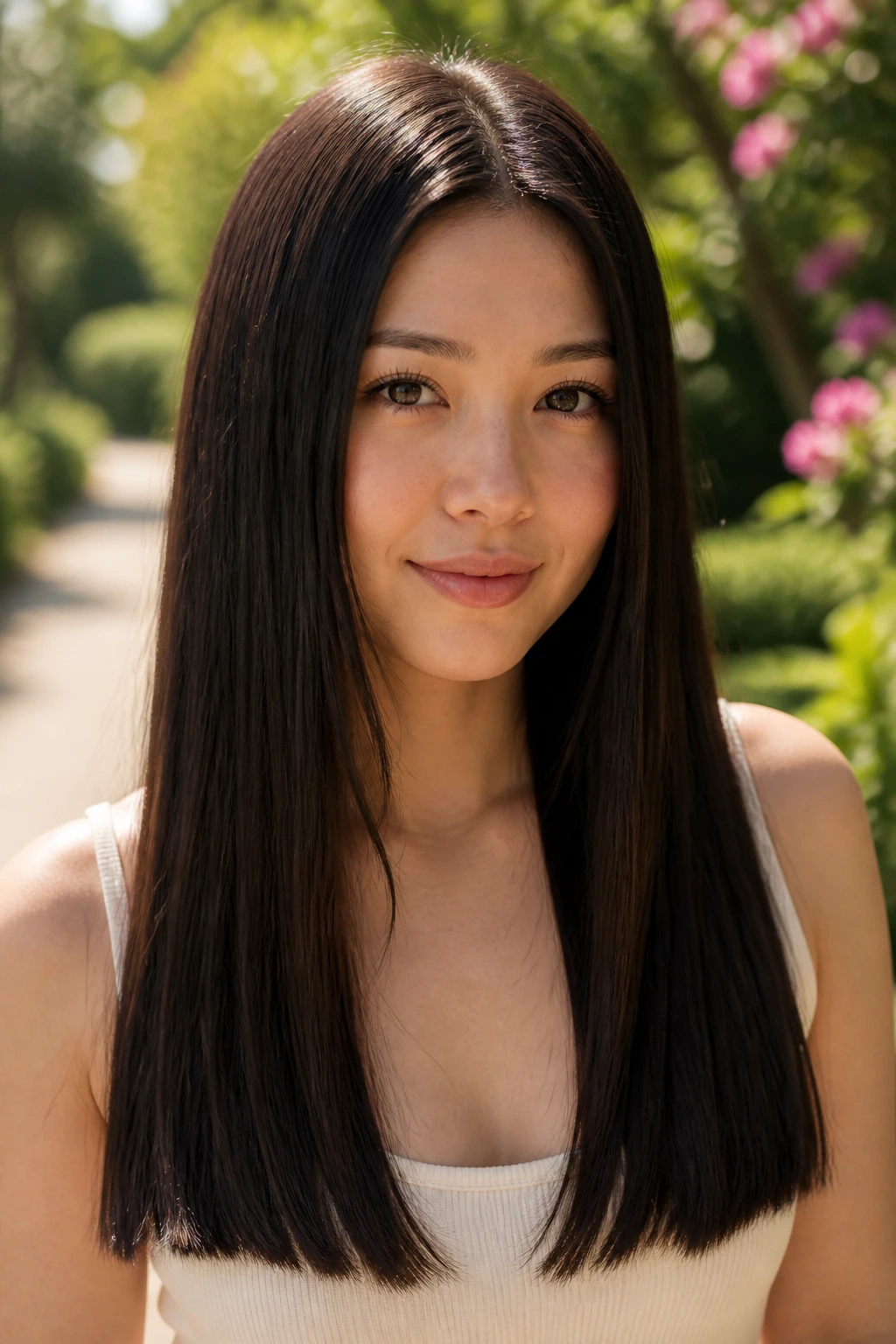
A mid-back blunt cut is underrated on round faces because people assume only short cuts can shape the face. Not true. Long straight hair with a clean edge gives a strong vertical line, and that line is flattering when the face has fuller cheeks. It’s a simple answer, but it works.
The key is keeping the ends dense. If long hair gets too thin at the bottom, it starts to look stringy and the face can feel wider by comparison. A blunt end solves that. It gives the hair a solid base and helps the length read as deliberate rather than accidental. I like this especially on hair that’s naturally shiny and straight, because the line becomes the feature.
There’s a catch. Long hair with no shaping can drag the face down if the part and ends are ignored. Keep the part slightly off center if your face is very round, and trim often enough to hold the line. This cut is simple, but it is not lazy.
12. Lob with Invisible Layers
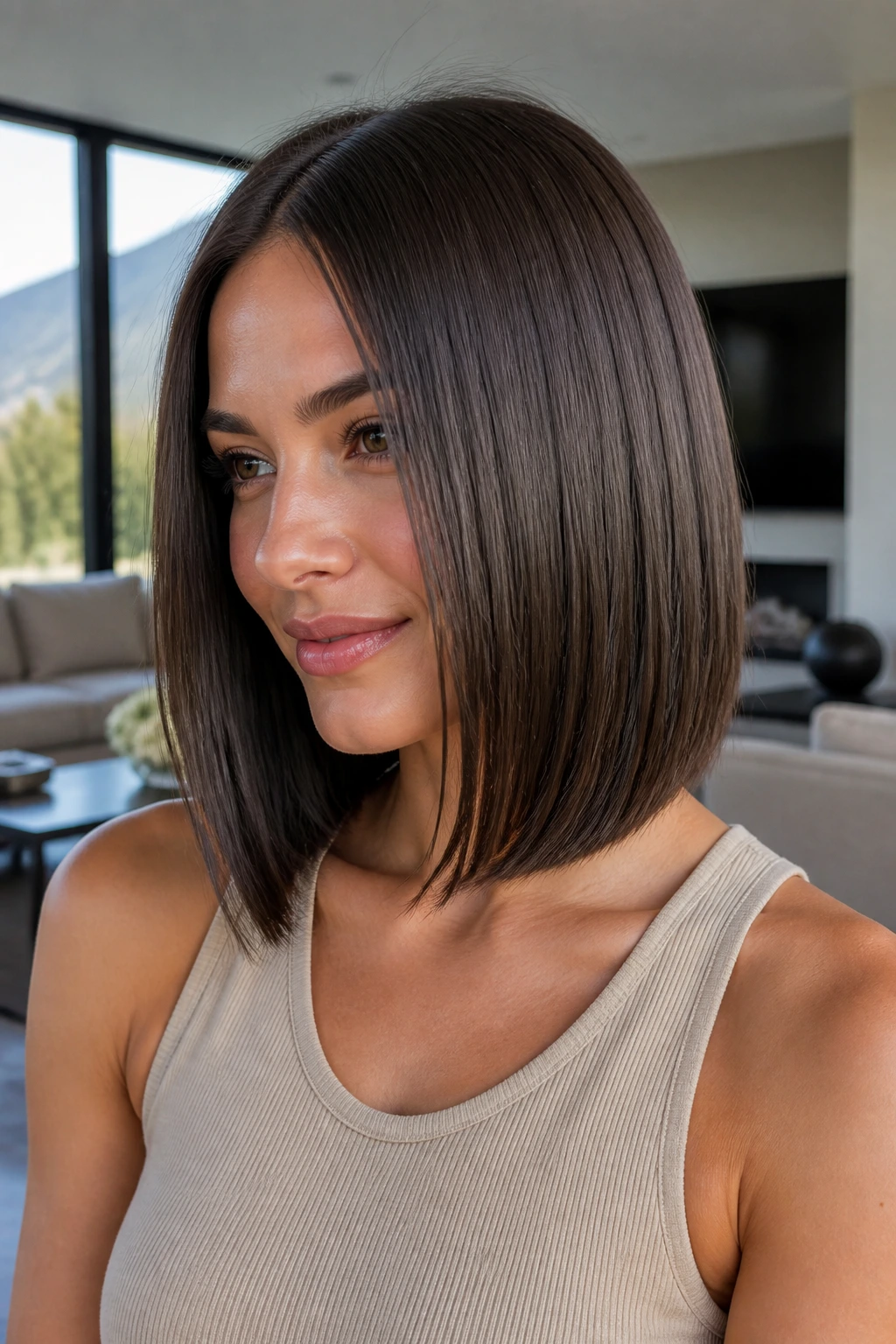
A lob with invisible layers is one of the quieter tricks in straight haircuts for round faces. You keep the outside shape clean, but the inside gets a little weight removed so the hair sits flatter and moves better. The layers don’t announce themselves. They just stop the cut from feeling blocky.
That matters if your hair is thick or very full at the sides. A heavy lob can make the face look wider because the ends sit in one thick line. Invisible layers let the outline stay sleek while taking some of the bulk out from underneath. You still get a blunt visual edge, just with less puff.
This cut is also kind to people who like to air-dry and finish with a flat iron only where needed. You won’t be fighting big shape changes. Ask for hidden internal layering, not choppy surface layers, and keep the longest points around the collarbone. That balance keeps the haircut modern without pushing the cheeks outward.
13. Deep Side-Part Long Cut
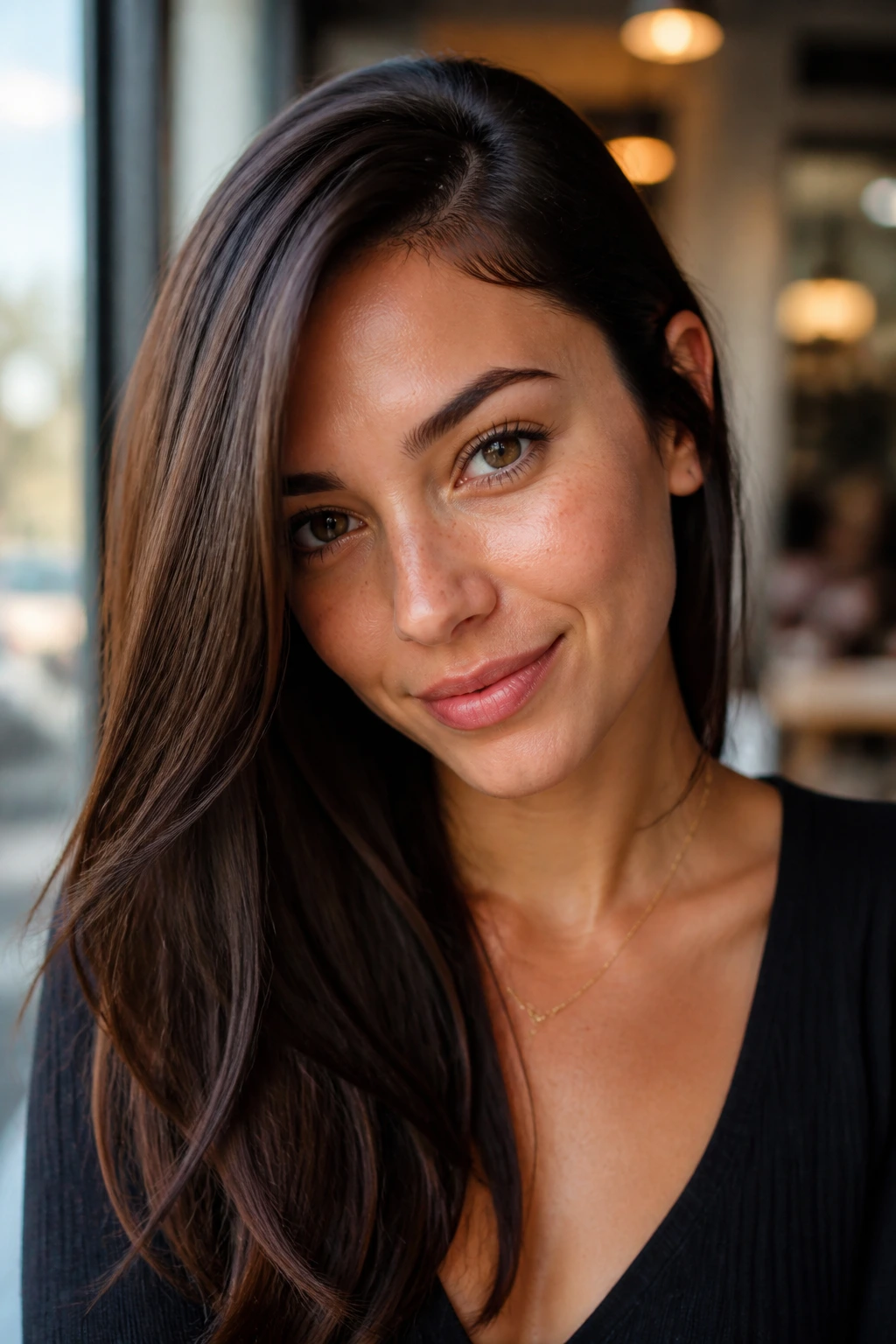
A deep side part changes straight hair in a hurry. It creates a long diagonal line from the scalp down past the cheek, and that line is excellent for softening a round face. You don’t need a dramatic haircut to get the effect. The part itself does a lot of the work.
The best version of this cut keeps the length long and the ends clean. A center part can look too symmetrical on some round faces, while a deep side part brings in a little asymmetry and attitude. If you tuck the heavier side behind one ear, the shape becomes even more flattering because one side of the face opens up.
Where to Place the Part
Try placing it just outside the outer edge of the eyebrow arch, then move it a half-inch if needed. Too deep and it can swallow your face. Too shallow and you lose the angle. The goal is to make the top of the head look a little taller and the face a little longer. That’s it. No need to overthink it.
14. Rounded Lob with a Sharp Perimeter
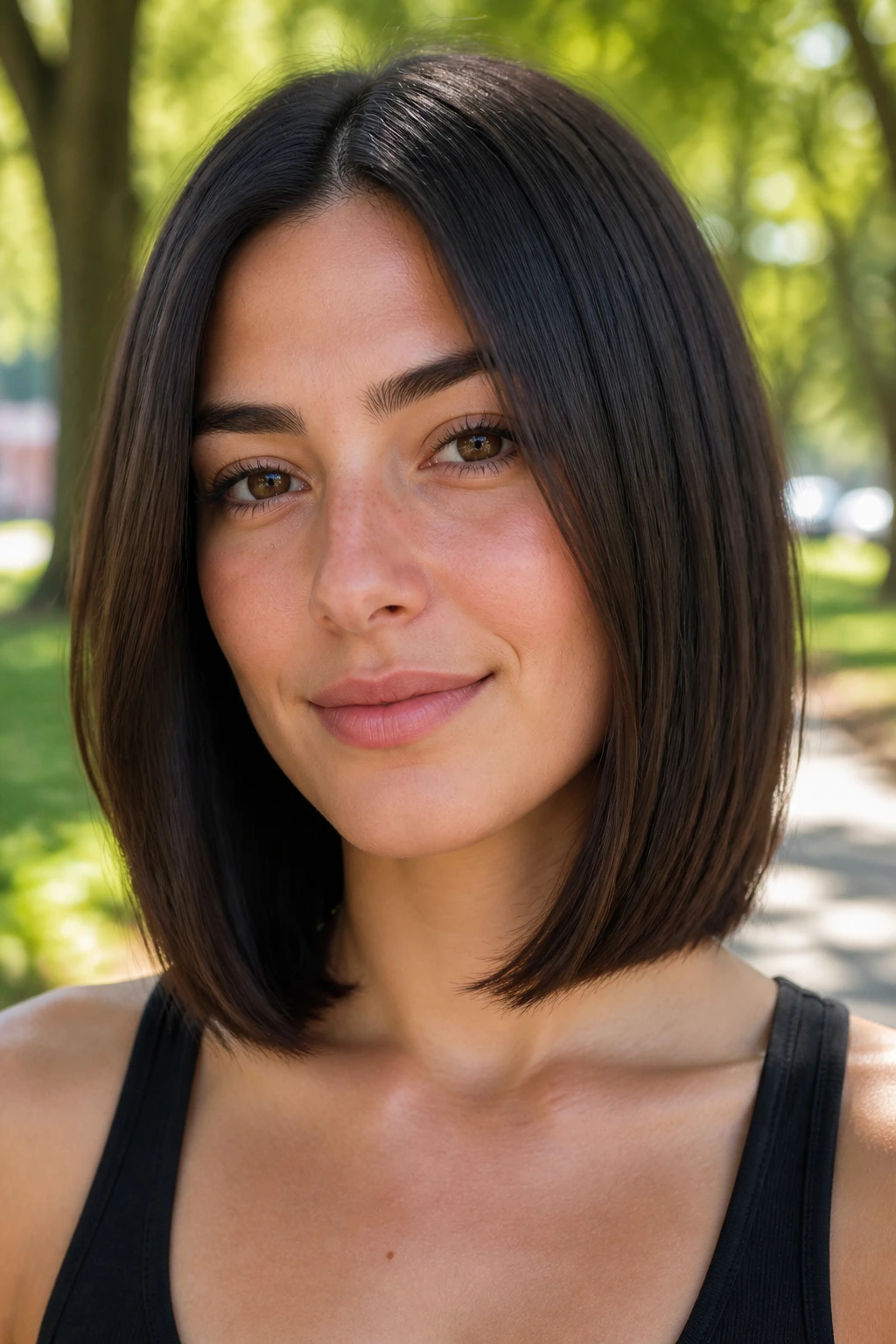
A rounded lob sounds softer than it is. The inside of the shape curves gently, but the perimeter stays crisp enough to keep straight hair looking structured. On a round face, that little contrast matters because it keeps the style from feeling boxy while still giving the haircut a clear edge.
This is a nice middle ground if you dislike anything too blunt or too layered. The rounded finish gives the front some softness, but the sharp perimeter still anchors the cut. I’d keep the length around the collarbone or just below, since that stops the sides from crowding the face. If your hair is dense, ask for the bevel to stay minimal.
The thing to avoid is over-rounding the ends. If the curve is too obvious, the silhouette can puff outward and work against the face shape. You want a controlled bend, not a helmet. A little discipline goes a long way here.
15. Butterfly-Inspired Straight Cut
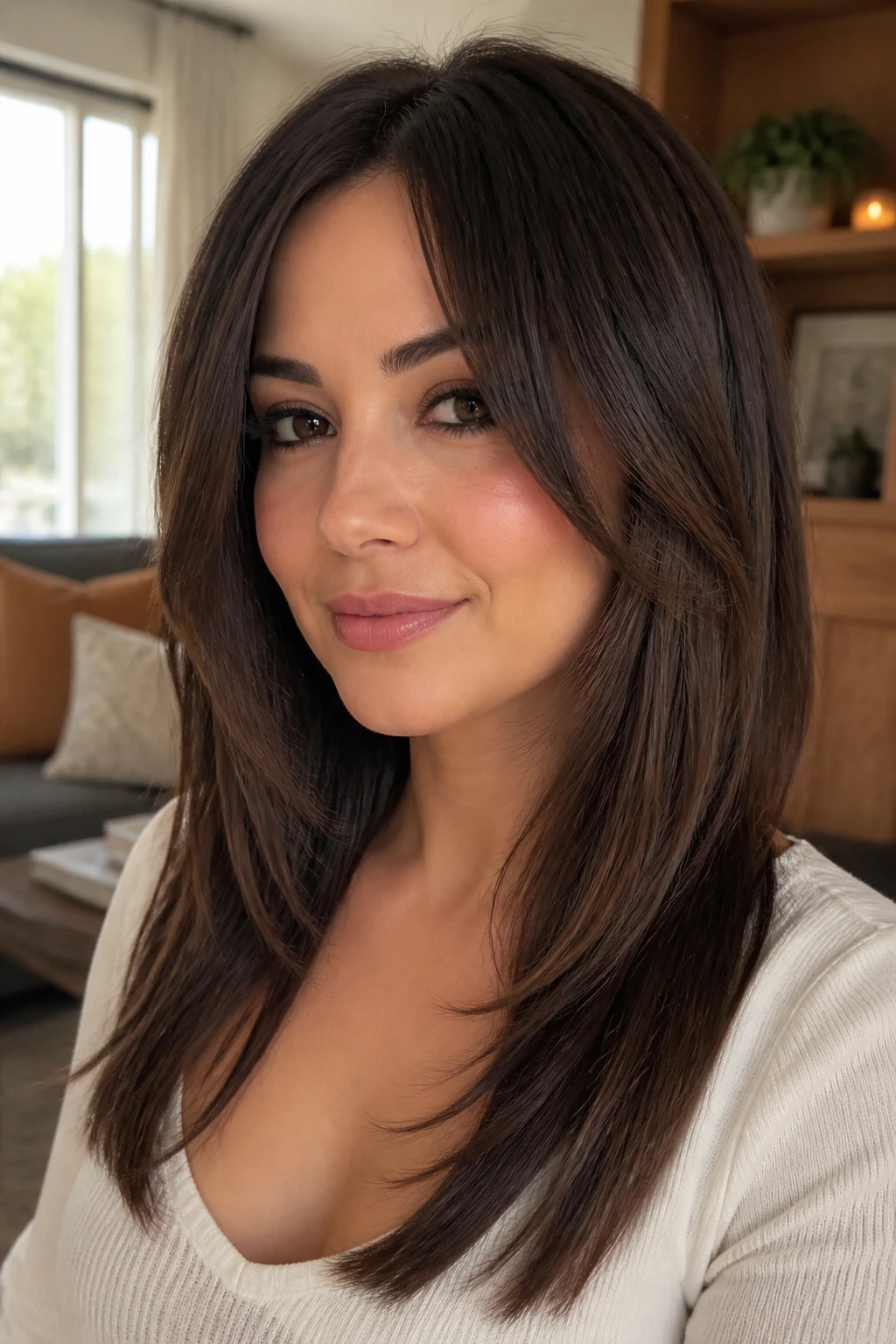
The butterfly cut gets talked about a lot with waves and curls, but straight hair can wear a softer version of it nicely. The idea is simple: keep longer length in the back, then add shorter face-framing layers that start high enough to lift the cheek area but not so high that the sides balloon out.
That shorter front section can make the face feel more open, which is exactly why this shape works on some round faces. The long back preserves the vertical line, while the front pieces create movement around the cheeks and jaw. If the contrast between lengths is too strong, though, the cut can feel disjointed. So keep the step between layers smooth.
This is a good choice if you like a dramatic blowout shape and don’t mind a bit more styling. You’ll need to round the front under slightly or give the ends a soft bend, because straight hair can make the layer difference more obvious than a wave would.
16. Collarbone Cut with Internal Weight Removal
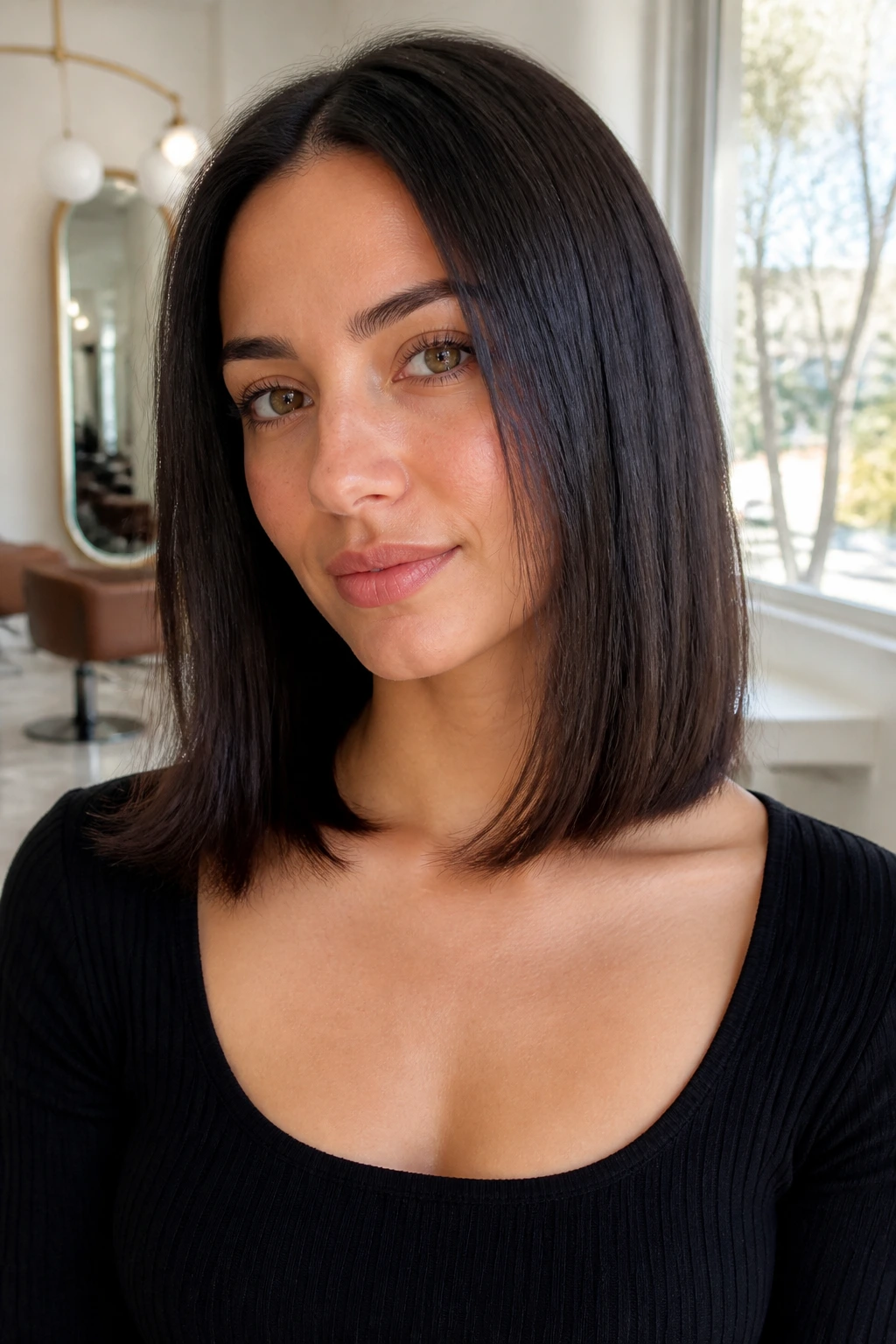
Why does internal weight removal help straight hair on a round face? Because bulk is sneaky. A cut can have a nice length on paper and still make the face look wider if too much density sits at the sides. Removing weight inside the shape lets the outline stay clean while the hair falls closer to the head.
This works especially well on thick straight hair that tends to bulge around the cheek and jaw area. A stylist can remove some interior mass while keeping the outer line intact, which means you still get the sleek finish you want. I’d keep this one at collarbone length so the cut doesn’t lose its grounding.
How to Ask for It
Ask for “hidden weight removal” or “internal debulking,” but make sure the outer line stays blunt and full. That combination is what keeps the haircut from turning wispy. If you see a lot of short pieces at the surface, stop them there. The top should look clean, not chopped up.
17. French Bob

A French bob can look terrific on a round face when it’s done with a little restraint. The classic version is short, crisp, and a bit cheeky, which is exactly why it can go wrong if the line stops too high on the face. The safer version sits just below the cheekbone or skims the jaw at a slight angle.
Straight hair makes this cut look sharp and airy at the same time. The important part is keeping the outline soft enough that the face doesn’t get boxed in. A small side part helps. So does tucking one side behind the ear. If you wear glasses, this cut can look especially good because the frames and the bob play off each other instead of competing.
I wouldn’t call this the most forgiving option on the list. It asks a bit more of the wearer. But if you want a short haircut with character, and your straight hair falls neatly, it can be a satisfying one.
18. Long Cut with Cheekbone-Grazing Pieces
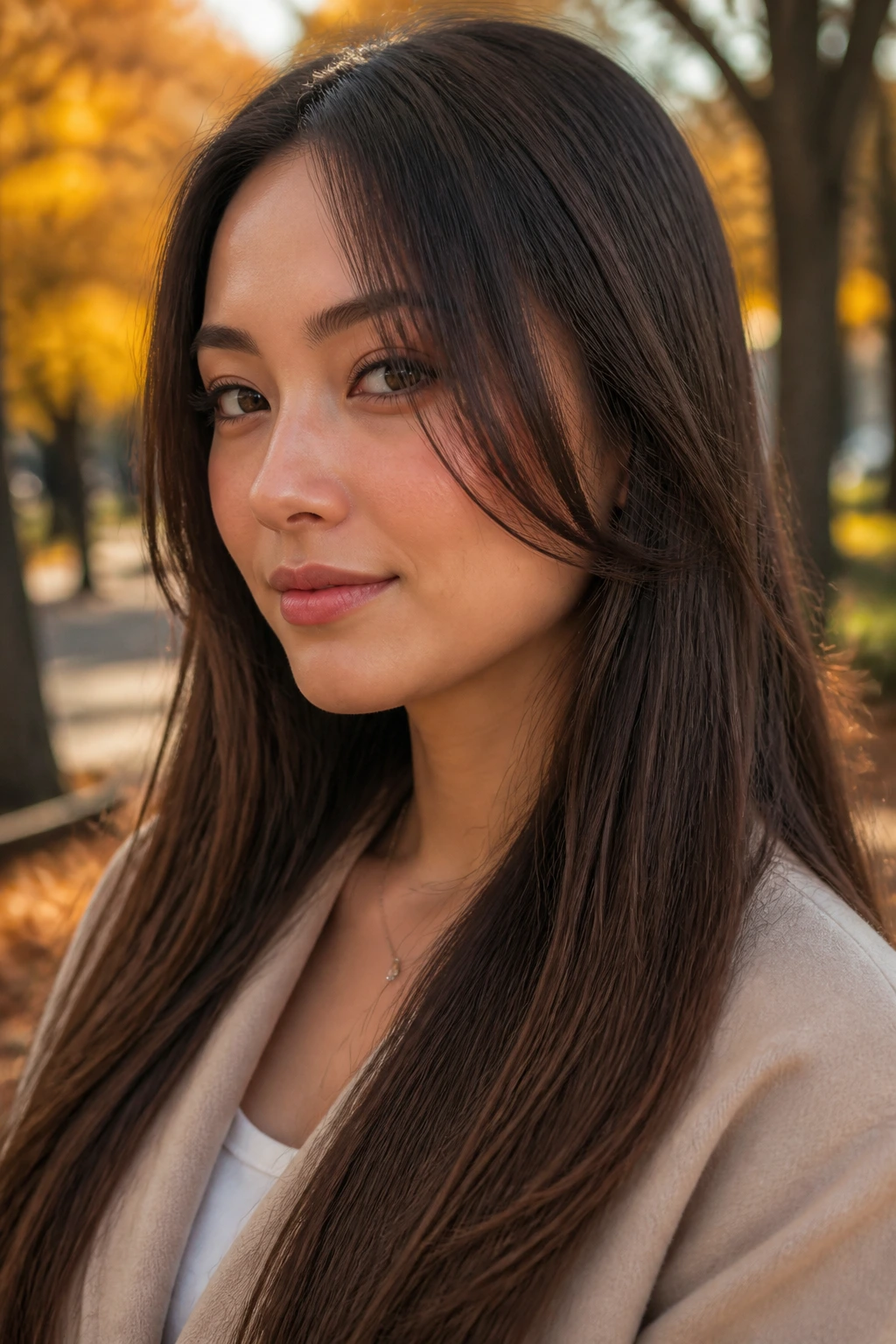
Cheekbone-grazing pieces are a smart alternative to full bangs on a round face. They create framing without building a heavy line across the forehead. On straight hair, those front pieces lie close enough to shape the face but long enough to keep the look open.
The shortest point should usually hit around the top of the cheekbone or just beneath it, then fall longer into the rest of the cut. That diagonal does a lot of work. It breaks the width of the face and gives the eye a place to travel. If the pieces are too short, they can widen the cheeks. Too long, and they stop framing at all.
This cut is especially good if you want to keep your hair long but still make the face look more sculpted. It also grows out more gracefully than a blunt fringe. That matters. Nobody wants a high-maintenance front section that turns awkward after two trims.
19. Blunt Cut with Micro Fringe

A micro fringe is a bold move, no question. On a round face, it can work if the rest of the haircut is long and sleek enough to create contrast. The short fringe brings attention upward and can make the face look a touch sharper, which is useful when the jaw and cheeks are full.
The fringe itself should stay light, not dense. Heavy micro bangs can feel harsh on straight hair and make the face appear shorter. A wispy edge is better. Pair it with a blunt cut that falls well below the chin so the short fringe doesn’t crowd the face. That contrast is the whole point.
Best Fit
- Strong brows.
- Straight hair that lies flat.
- A person who likes a little edge.
This is not a casual, disappear-into-the-background haircut. It has personality. If you want your hair to say something before you do, this one delivers.
20. Below-Chest Cut with a Slight Taper
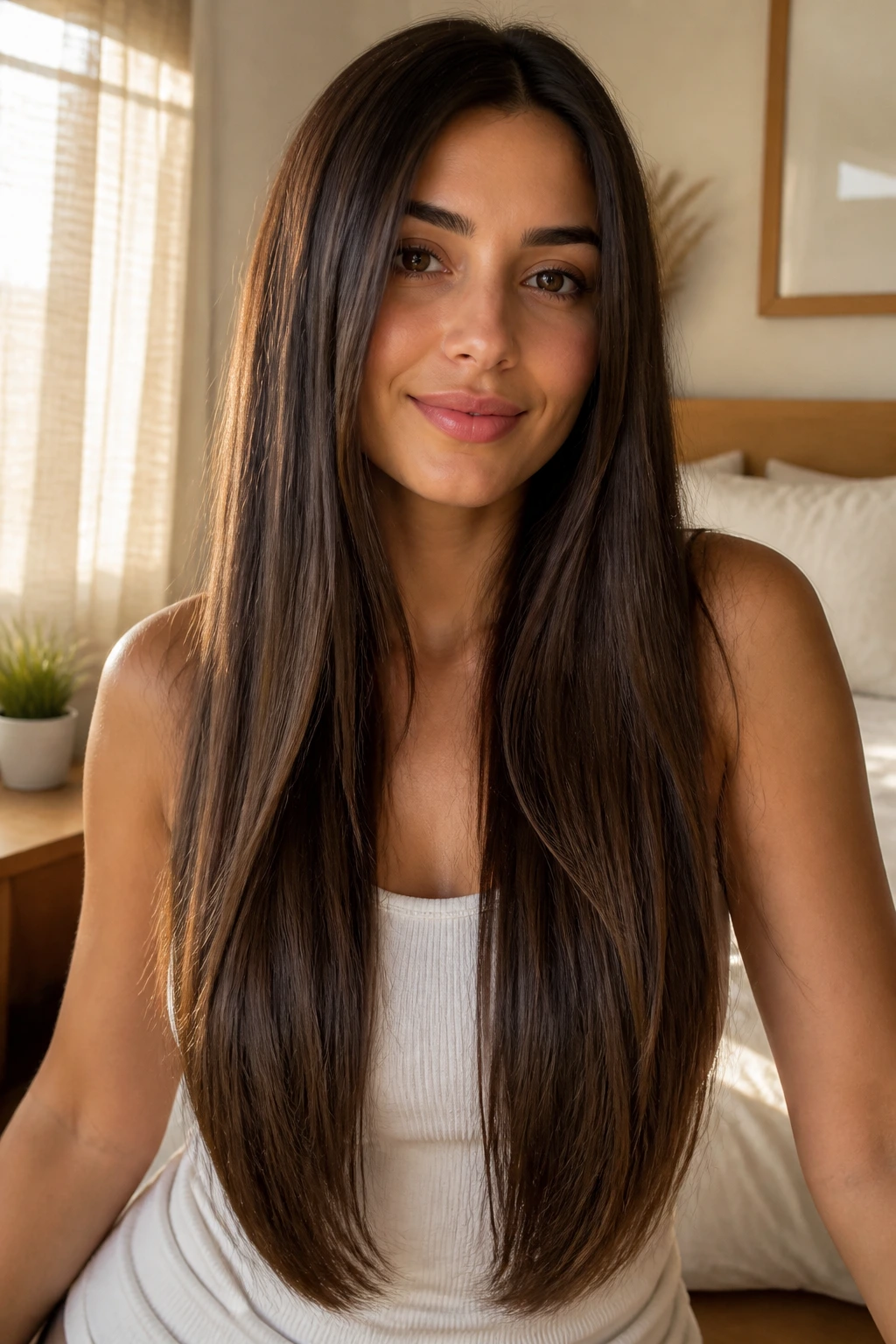
Very long hair can work on a round face. The myth that round faces need short hair is old and lazy. If the cut is kept clean, a below-chest length can draw the eye down in a way shorter shapes can’t. The key is the taper. You want enough shape to keep the ends from looking heavy, but not so much that the length disappears.
Ask for the front pieces to stay just a touch shorter than the back, maybe by 1 to 2 inches, so the face gets a gentle frame. If the cut is all one flat length and the hair is very thick, it can feel like a curtain. A slight taper fixes that without stealing the length.
This style suits people who love long hair and don’t want to give it up for face-shaping. It does need trims to keep the bottom line tidy. Long hair that frays at the ends loses the whole effect.
21. Tucked-Under Bob
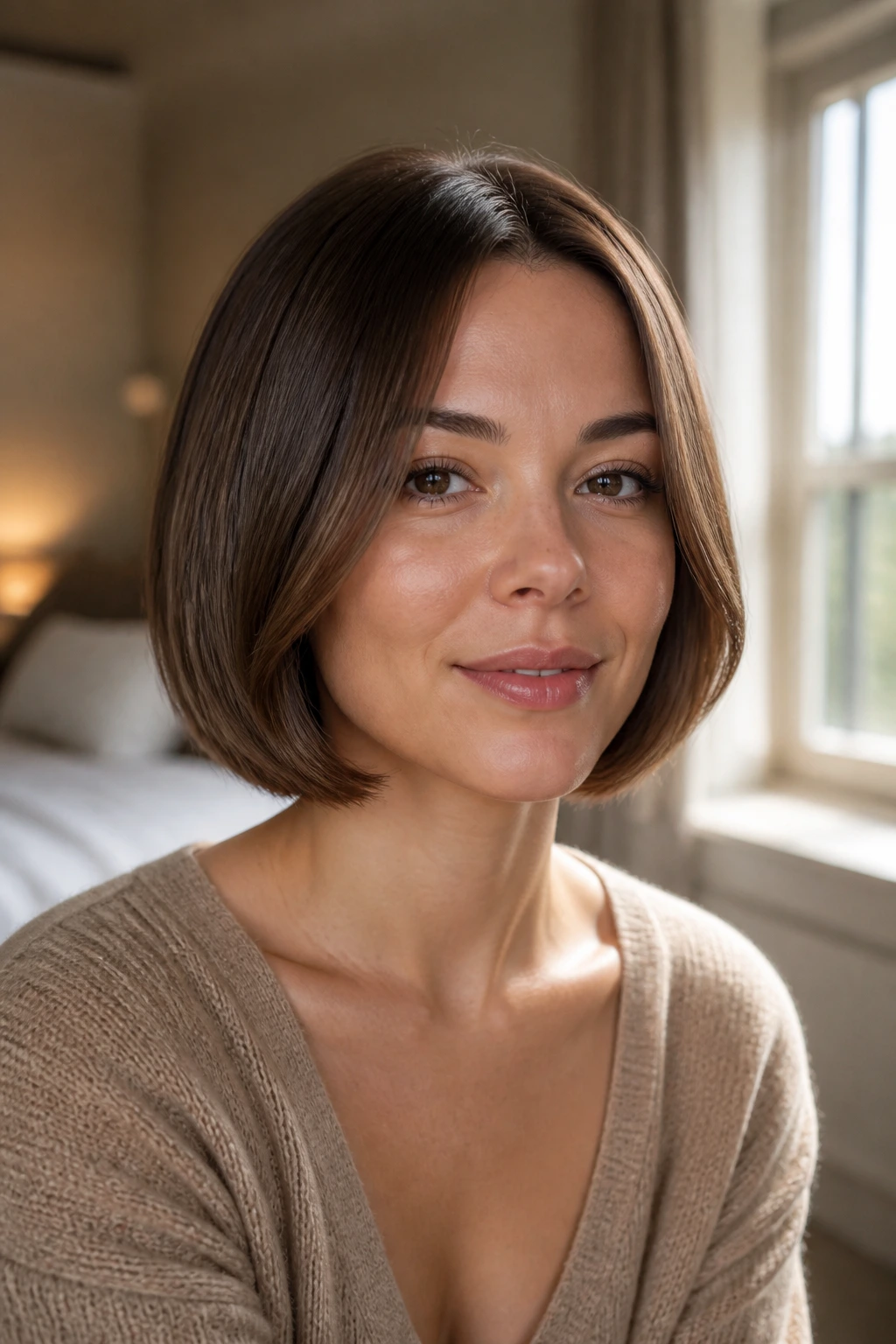
A tucked-under bob has a polished, tidy feel that works better on round faces than a bubble of outward volume. The ends curve slightly inward, hugging the neck and jaw instead of sitting wide at the cheeks. On straight hair, that inward motion gives you shape without puff.
This is a good cut if you like a finished look with little daily effort. A quick blow-dry with a flat brush usually does most of the job. If your hair is thick, the nape may need a little weight removal so the ends can tuck under cleanly. If it’s fine, keep the perimeter full so the bob doesn’t collapse.
The cut looks best when the curve is subtle. A dramatic curl-under can feel old-fashioned fast. You want control, not helmet hair. That distinction matters more than most people realize.
22. Straight Cut with Soft Invisible Layers
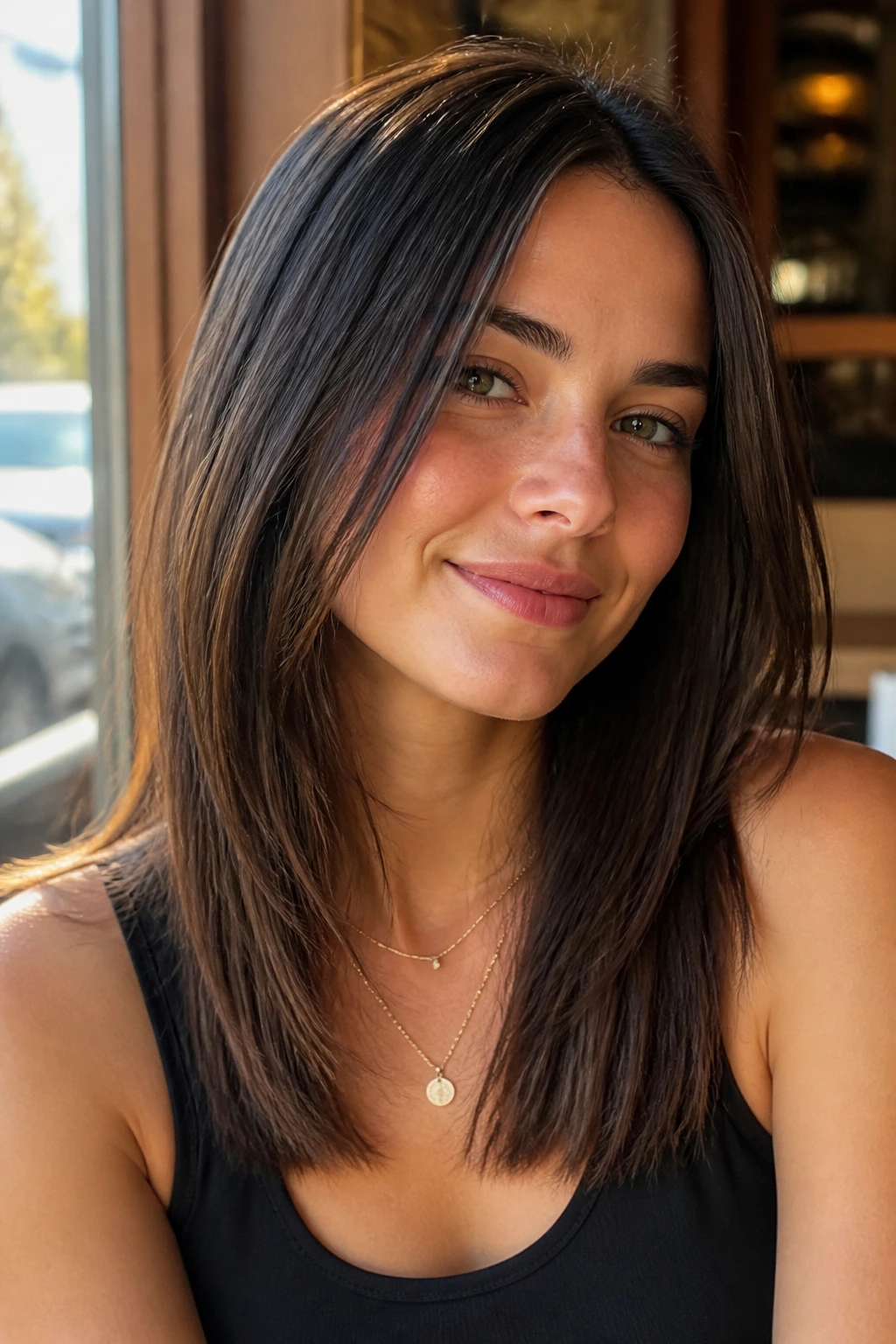
Soft invisible layers are the answer when your straight hair is too flat to hold shape but too fine to survive obvious layering. The goal is to keep the outside line simple while adding tiny internal breaks that help the hair move and sit better around a round face.
The front should still look long and calm. The layers live inside the haircut, where they remove just enough weight to stop the sides from spreading out. This is especially useful if your hair gets wider in humidity or if the ends flip awkwardly on their own. Invisible layers tame that without making the cut obvious.
How to Style It
Use a flat brush and direct the hair slightly downward as you dry. Then make a small bend at the ends with a flat iron, not a curl. That little bend keeps the cut from looking severe and gives the face a smoother frame. Simple. Clean. No fuss.
23. Angled Lob with Longer Front Pieces

An angled lob can be softer than a classic A-line if the slope is gradual and the front pieces are left a little longer. That matters on a round face because you want the eye to move down and forward, not stop at a sharp corner. The cut should feel like it sweeps, not points.
This shape is nice for straight hair because the angle stays visible even when the hair is flat and smooth. You don’t have to create texture for it to show up. The front can sit just below the jaw while the back hugs the neck a bit closer. That difference gives the haircut its structure.
I’d recommend this to anyone who wants a modern bob but doesn’t want the heaviness of a blunt chin-length shape. It’s neat, but not rigid. And when the front pieces are a touch longer, the whole face reads narrower.
24. Center-Part Bevel Cut
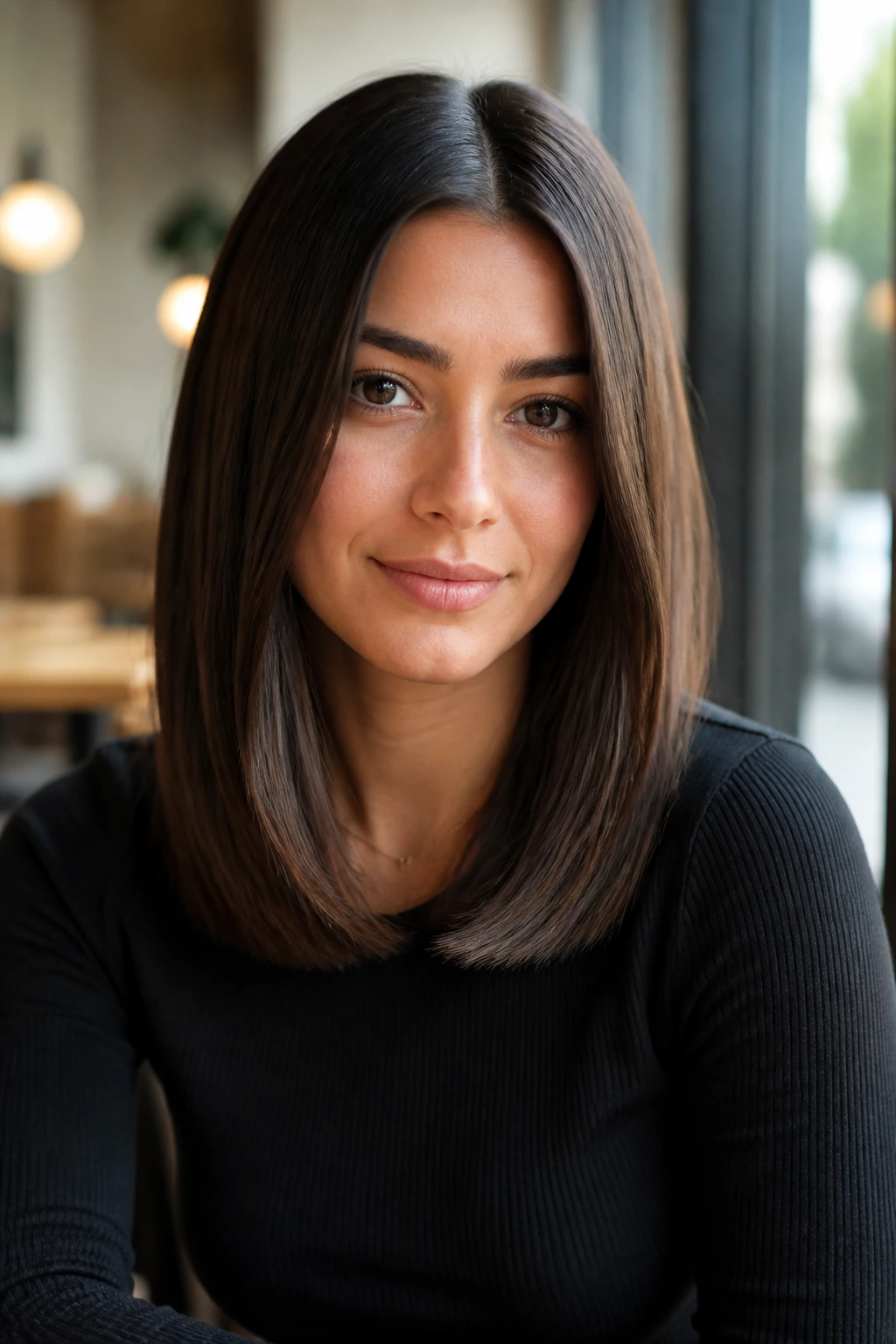
A center part gets a lot of blame on round faces, and some of that blame is fair. But a center-part bevel cut changes the script. The middle part stays, yet the ends are beveled just enough to soften the line and keep the hair from hanging straight across the cheeks like a curtain.
The bevel should be subtle. Think slight inward movement at the ends, not a curl or a flip. That tiny shift helps the hair follow the face instead of sitting flat and wide. On straight hair, the result can look extremely clean, especially when the cut falls around the collarbone or a little lower.
This is one of those cuts that looks plain in the best way. No drama. No visual noise. Just a controlled shape that keeps the face open. If you like a tidy, minimalist style, this one belongs near the top of your list.
25. Jawline Bob
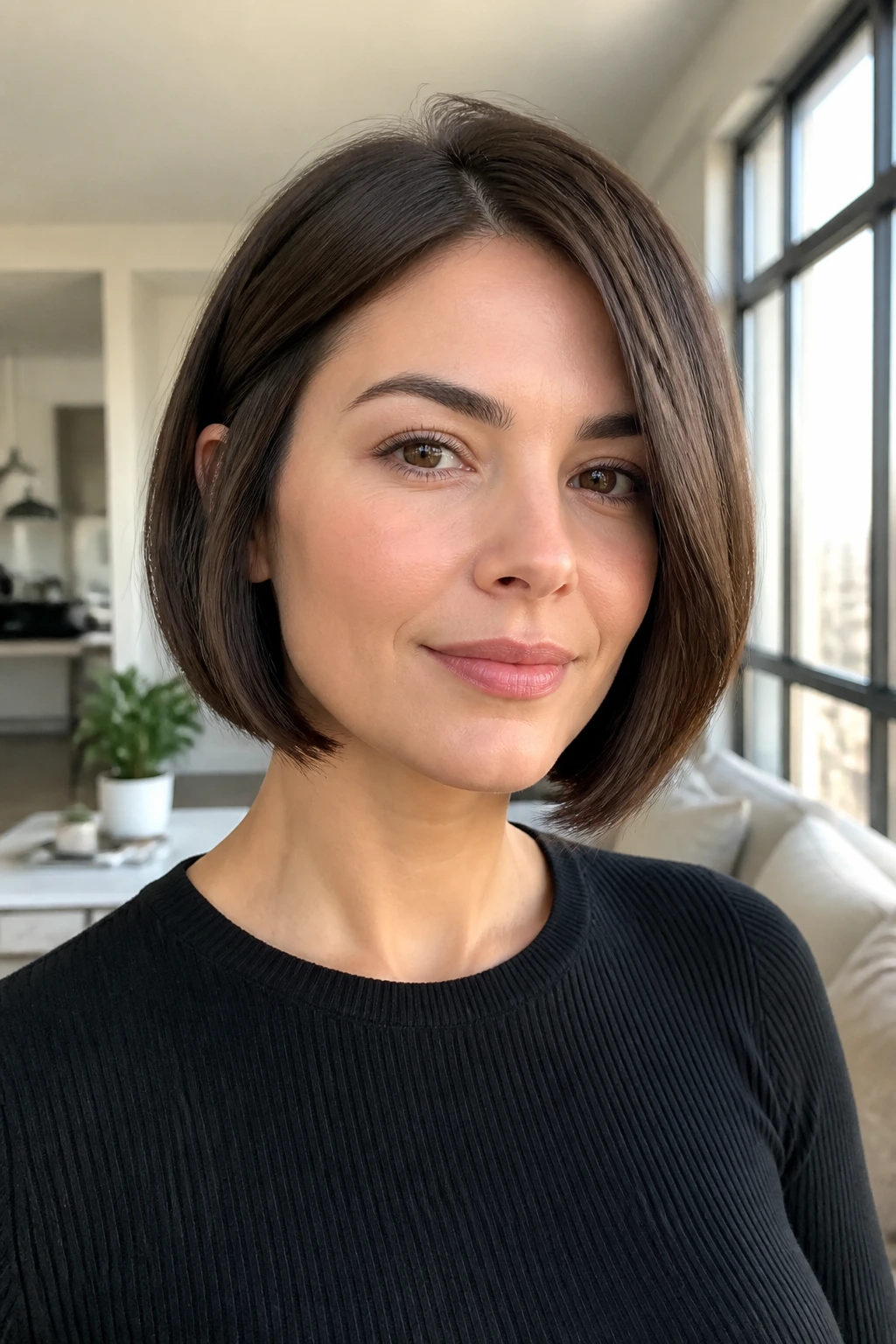
A jawline bob is risky on a round face, which is exactly why I’m including it. When it’s done badly, it can exaggerate width. When it’s done well, it gives the face a sharp frame and a little bit of attitude. The difference lies in where it lands and how much movement you allow at the ends.
The cut should skim, not sit heavy. If the bob stops right at the broadest part of the jaw and keeps a straight horizontal line, it can feel too blunt. But if the front is just a bit longer or the part is off center, the effect changes. Straight hair makes this cut look precise, and precision is what saves it.
This is a better fit for someone with a stronger jawline inside the round shape, or someone who likes a shorter cut and is willing to style it with purpose. It’s not the easiest option here, but it’s a good one if you want structure.
26. Straight Cut with Wispy Side-Swept Bangs

Side-swept bangs are one of the easiest ways to shift a round face without changing the length much. They create a diagonal line that breaks up the width of the forehead and pulls attention across the face instead of straight across it. On straight hair, the sweep looks clean and deliberate.
The bangs should start around the eyebrow arch and angle down toward one cheekbone. Too thick, and they can feel heavy. Too short, and they lose the softening effect. I like them best with a straight cut that stays shoulder length or longer, because the bangs then act like the accent instead of the whole haircut.
If you’re nervous about committing to full bangs, this is a smart middle ground. They grow out well, they’re easy to tuck back, and they work with both sleek blowouts and air-dried hair. There’s a reason stylists reach for this shape so often. It does the job without making the face look crowded.
27. Waist-Length U-Cut
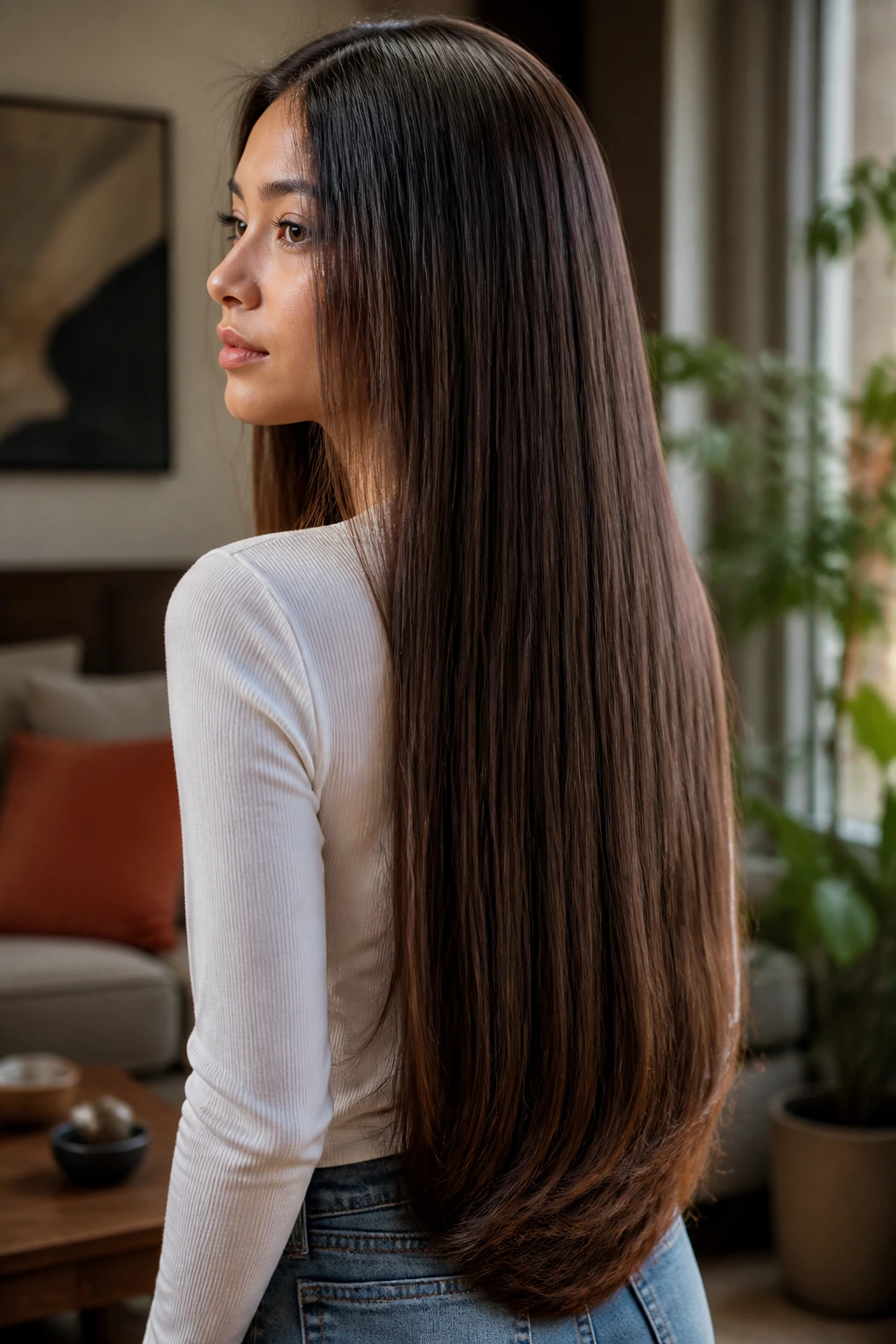
A waist-length U-cut is for the person who loves long hair and wants to keep it. That’s the honest version. Straight hair this long can look flat if the ends are too even, but a U-shape gives the length a little motion and prevents the whole outline from feeling like one giant sheet.
The longer center section brings the eye down, while the sides ease forward and back just enough to frame the face. You do need density for this cut to work well. If the ends are too thin, the U shape can disappear and the hair will start to look stringy. Thick or medium-thick straight hair usually wears it better.
This cut also asks for maintenance. Not constant maintenance, but enough to keep the ends healthy. Split ends show fast on long straight hair, and they flatten the whole look. Keep the line clean and the style stays elegant without trying too hard.
28. Long Pixie with Swept-Over Length
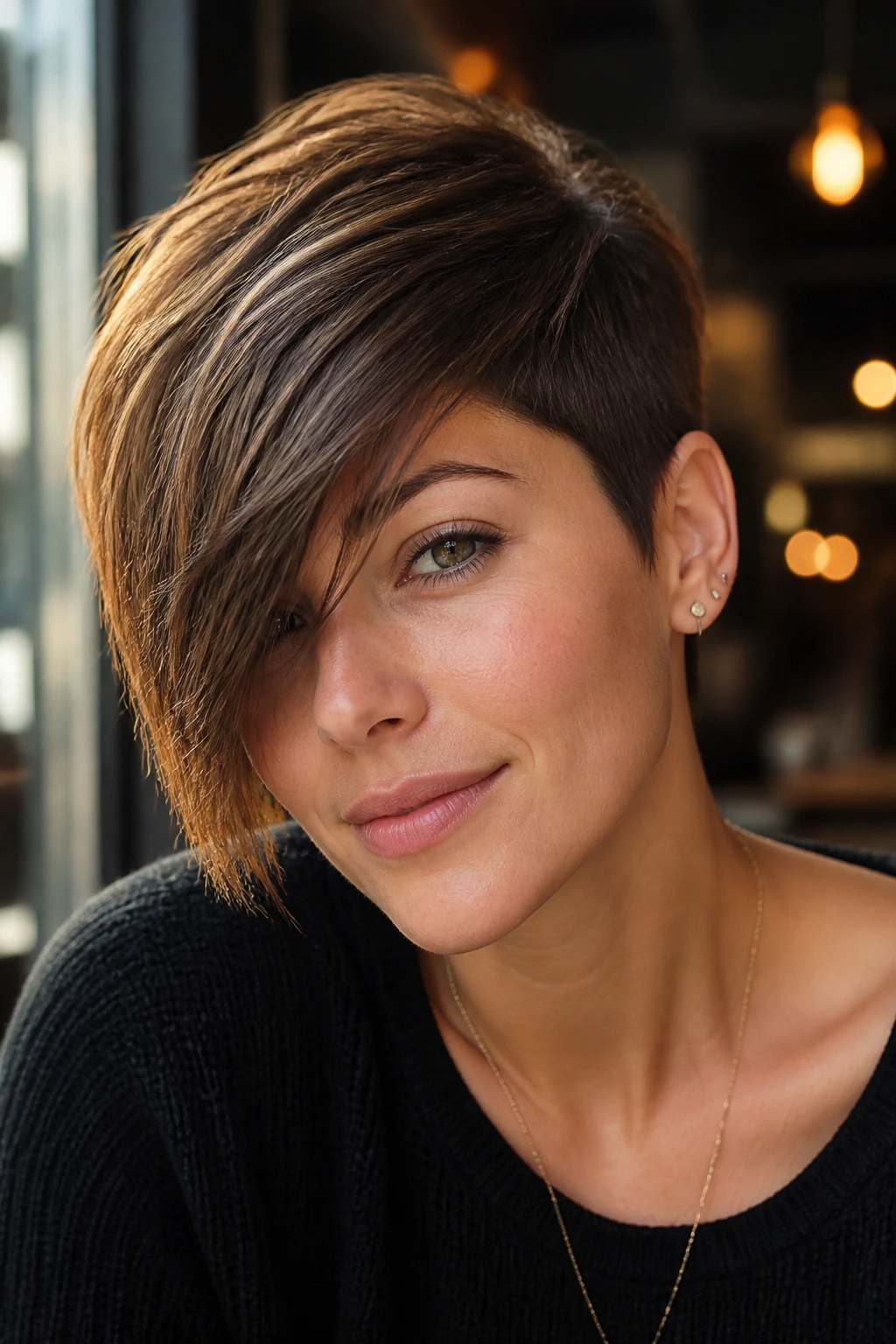
Short hair can work on a round face, but it has to be the right short hair. A long pixie with swept-over length gives you the face-lifting effect of a short cut without cutting the head shape off at the widest point. The top stays long enough to create a diagonal line, and the sides can be tapered close to keep the silhouette neat.
What makes this version smarter than a very short crop is the fringe area. Leave enough length on top to sweep across the forehead and slightly over one eye. That line breaks up roundness fast. Straight hair helps because the sweep stays visible and smooth instead of puffing up.
This cut is for someone who wants a strong shape and doesn’t mind regular trims. It can look incredibly clean with a little pomade or a light styling cream, but it also needs careful scissor work. Too short on the sides, and the face can look wider. Keep the top longer than you think. That extra inch is doing real work.
If you’re choosing between several straight haircuts for round faces, I’d start by asking one blunt question: do you want the cut to make your face look longer, softer, or sharper? That answer narrows the field fast. The best haircut isn’t the trendiest one in the room. It’s the one that lands in the right place, respects your hair’s density, and makes the whole shape feel cleaner the second you look in the mirror.
