



A round face does not need hiding. It needs shape.
That’s the part a lot of haircut advice gets wrong. People hear “round face” and think they should chase length at all costs, like long hair alone will solve everything. It won’t. The better move is to build vertical lines, keep bulk away from the widest part of the cheeks, and let the cut do some quiet work for you.
The most useful haircuts for round faces usually share the same trick: they move attention up, down, or diagonally instead of letting it sit squarely across the middle of the face. A blunt line at chin level can make the face look fuller. A soft angle, a bit of crown lift, or layers that begin below the cheekbones can change the whole picture.
Some cuts do that with bangs. Some do it with length. Some do it with texture that keeps the hair from ballooning out at the sides. The good ones don’t scream about it. They just make your features look more balanced when you catch yourself in the mirror.
1. Long Layers That Start Below the Chin
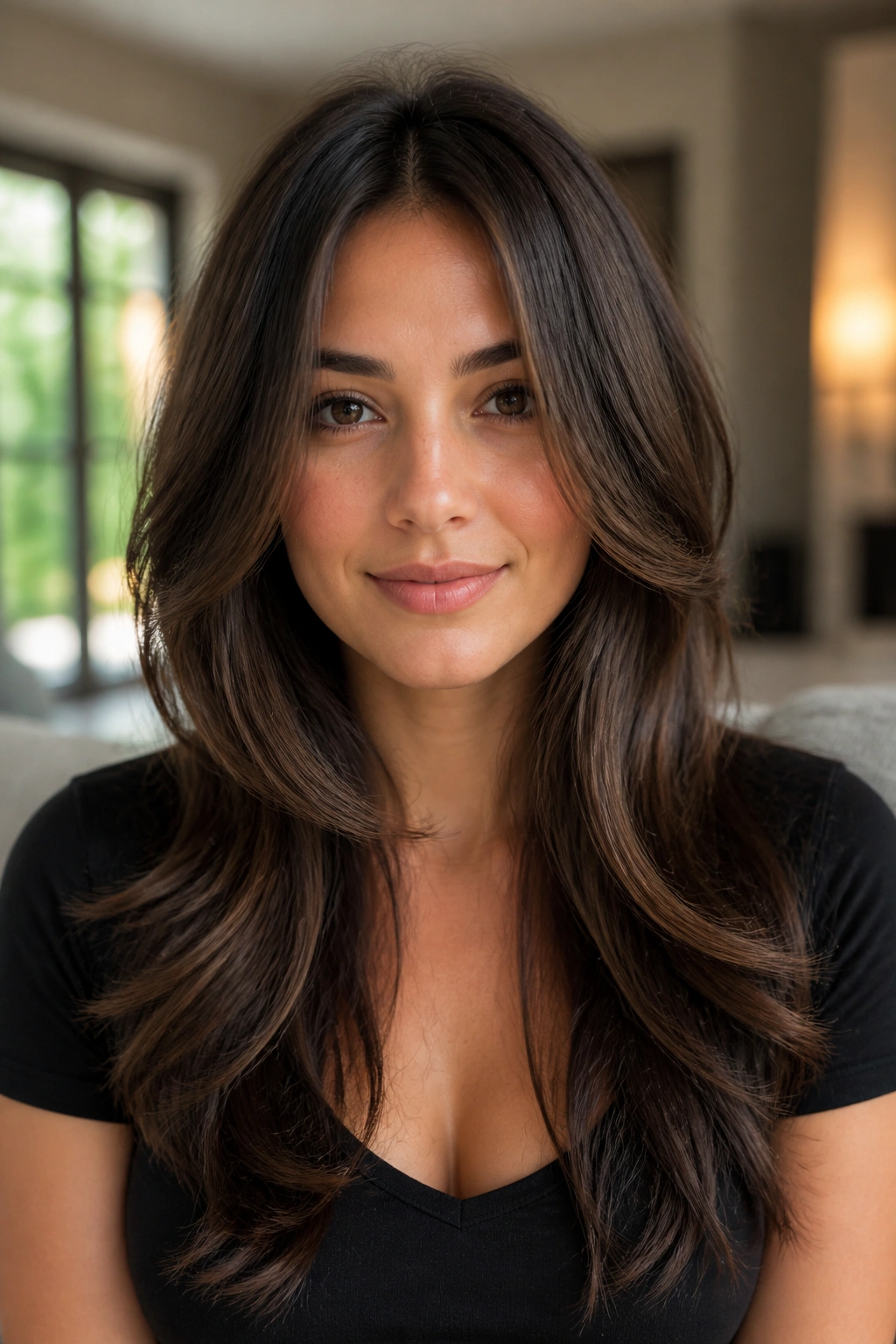
Long layers are one of those haircuts that sound ordinary until you see how much the starting point matters. On a round face, the important part is where the layers begin. If they start too high, you can end up with extra width right at the cheeks. If they start below the chin, the eye gets pulled downward instead, which is much kinder to softer face shapes.
Why the Starting Point Matters
The longest pieces should fall past the widest part of the face. That means below the chin, often closer to the collarbone if your hair is long enough. Ask for face-framing layers that begin low and move gradually, not chunky steps that land right beside your cheeks.
- Best for medium to thick hair that needs movement
- Works with straight, wavy, and loose curly textures
- Keeps length while trimming away the heavy, boxy feeling
- Easier to grow out than a sharp, high layer cut
Pro tip: Tell your stylist you want the layers to “open” the face, not sit on it. That single phrase saves a lot of awkward mid-cheek fluff.
2. Collarbone Lob for Round Faces
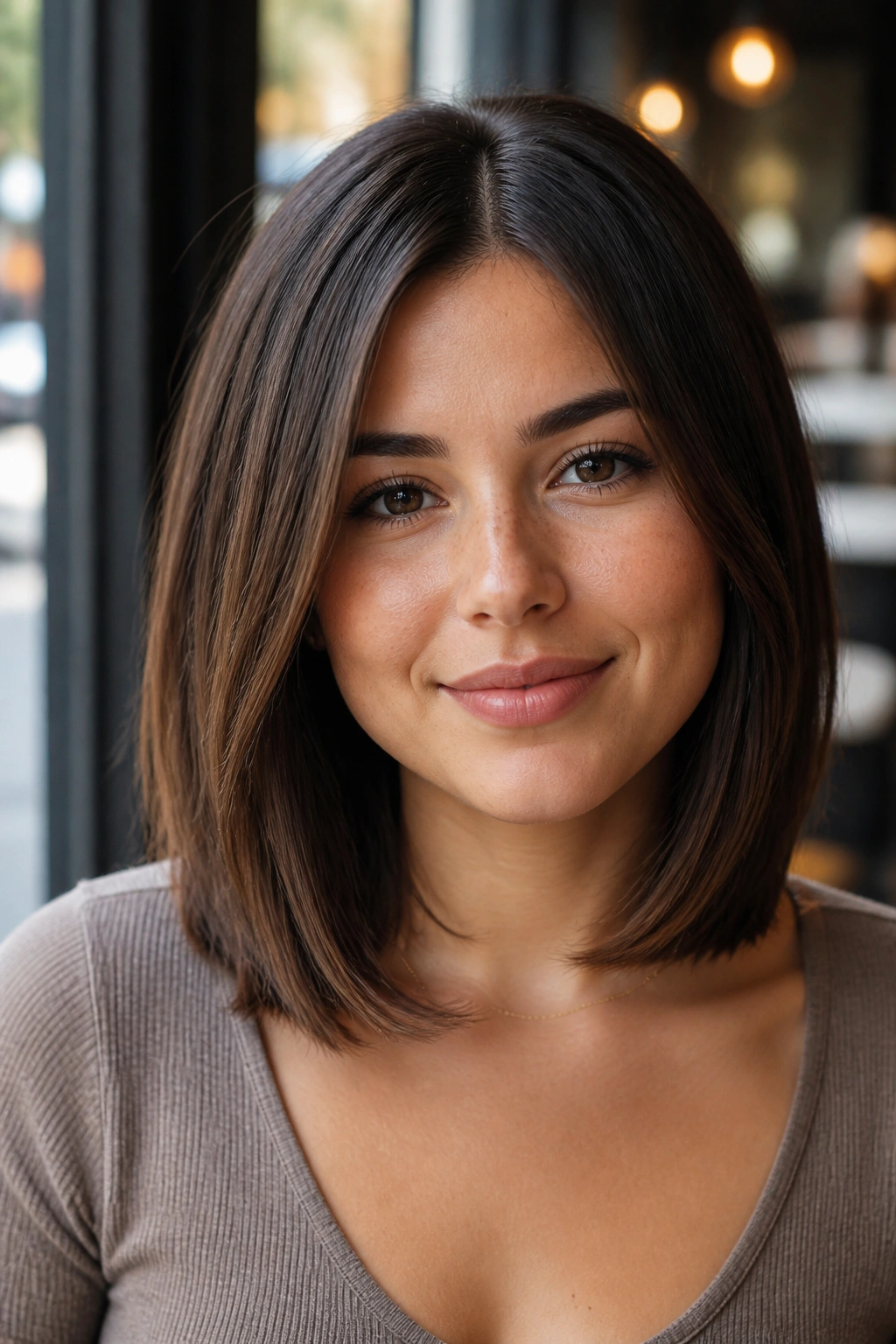
A collarbone lob is one of the cleanest haircuts for round faces because it lands in a sweet spot. It is long enough to skip the chin, but short enough to feel fresh and light. The collarbone length gives the hair a downward line, which helps stretch the face visually without making you look like you’re hiding behind your hair.
What I like about this cut is that it’s honest. It doesn’t rely on tricks. A slight bend, a soft blowout, or even a natural air-dry can all work here, as long as the ends don’t kick out right at cheek level. Keep the length touching or grazing the collarbone, and you get shape without the helmet effect that shorter bobs can create.
If your hair is fine, ask for a blunt edge with a few hidden interior layers. If it’s thick, soft texturing at the ends keeps it from feeling bulky.
3. Side-Swept Bangs with a Shoulder-Length Cut
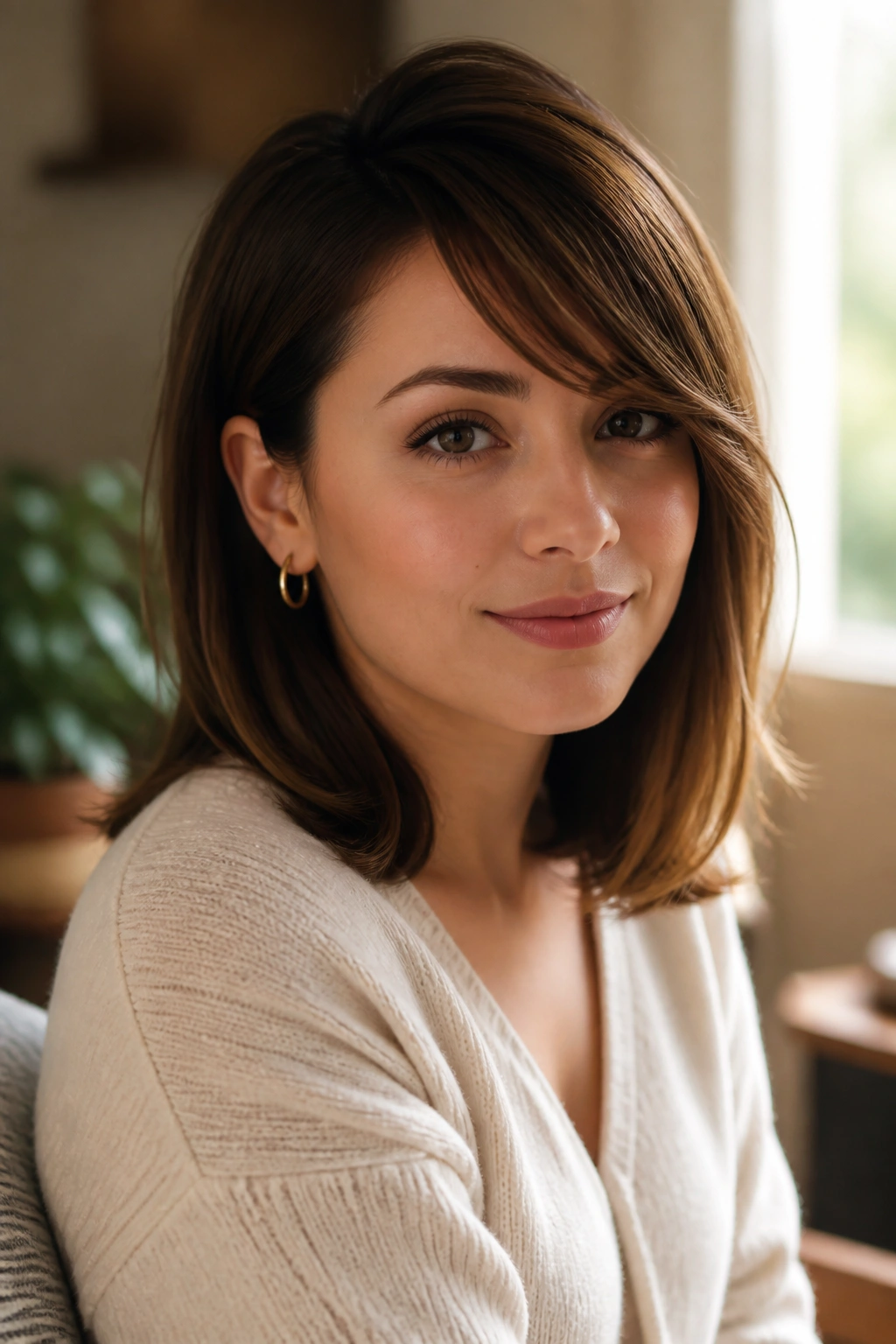
Can bangs work on a round face? Absolutely. The wrong bangs can make the face look wider, but side-swept bangs do the opposite when they’re cut with a long, angled line.
What Makes Them Work
A side-swept fringe breaks up the width across the forehead and pushes the eye diagonally. That diagonal line matters. It creates movement where a round face usually benefits from it most. The rest of the cut should stay shoulder length or a little longer, so the bangs don’t land on top of a wide midface area.
How to Ask for It
- Keep the bangs long enough to tuck behind the ear
- Start the shortest piece near the arch of the brow
- Blend the fringe into cheekbone-length layers
- Avoid a heavy curtain that sits flat across the forehead
This cut is especially good if you want softness without going full short haircut. It feels easy, and that’s the point.
4. Angled Bob with a Longer Front
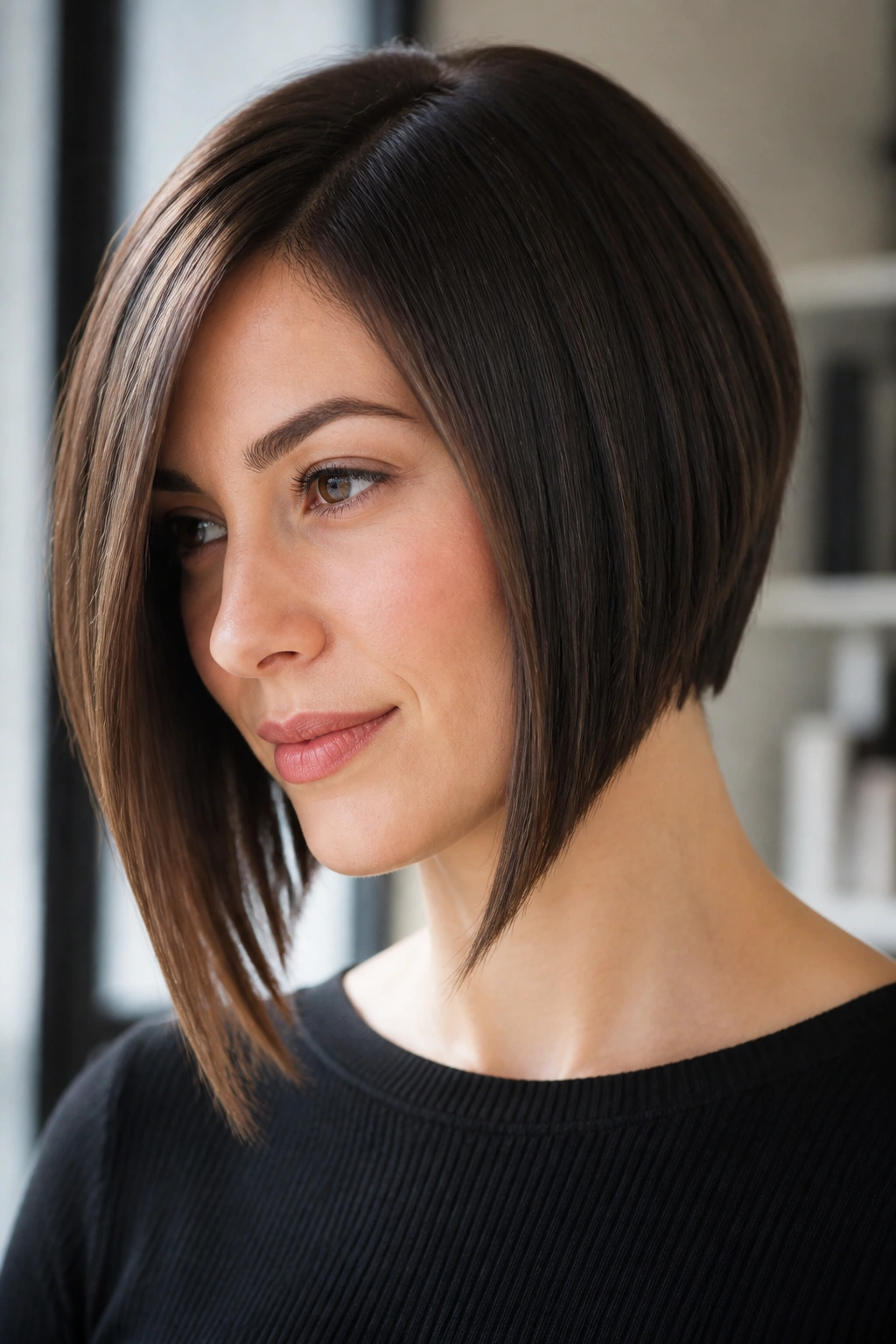
An angled bob is one of the strongest shapes you can choose for a round face because it gives you a built-in diagonal. Shorter in the back, longer in the front. Done.
That slope does a lot of visual work. It pulls the eye forward and downward, which helps counter the width through the cheeks. The front pieces should usually hit below the jawline, or at least skim past it, so the cut doesn’t stop at the face’s fullest point. A tiny bit of undercutting at the nape can keep the back neat without making the crown bulky.
What to Watch For
- The front shouldn’t be so short that it lands at the chin
- The back should stay clean, not stacked into a big bubble
- A soft side part helps the angle read more clearly
- Straight styling shows the line best, but loose bends work too
This is a sharp haircut. Not harsh. There’s a difference.
5. Asymmetrical Bob with One Side Tucked
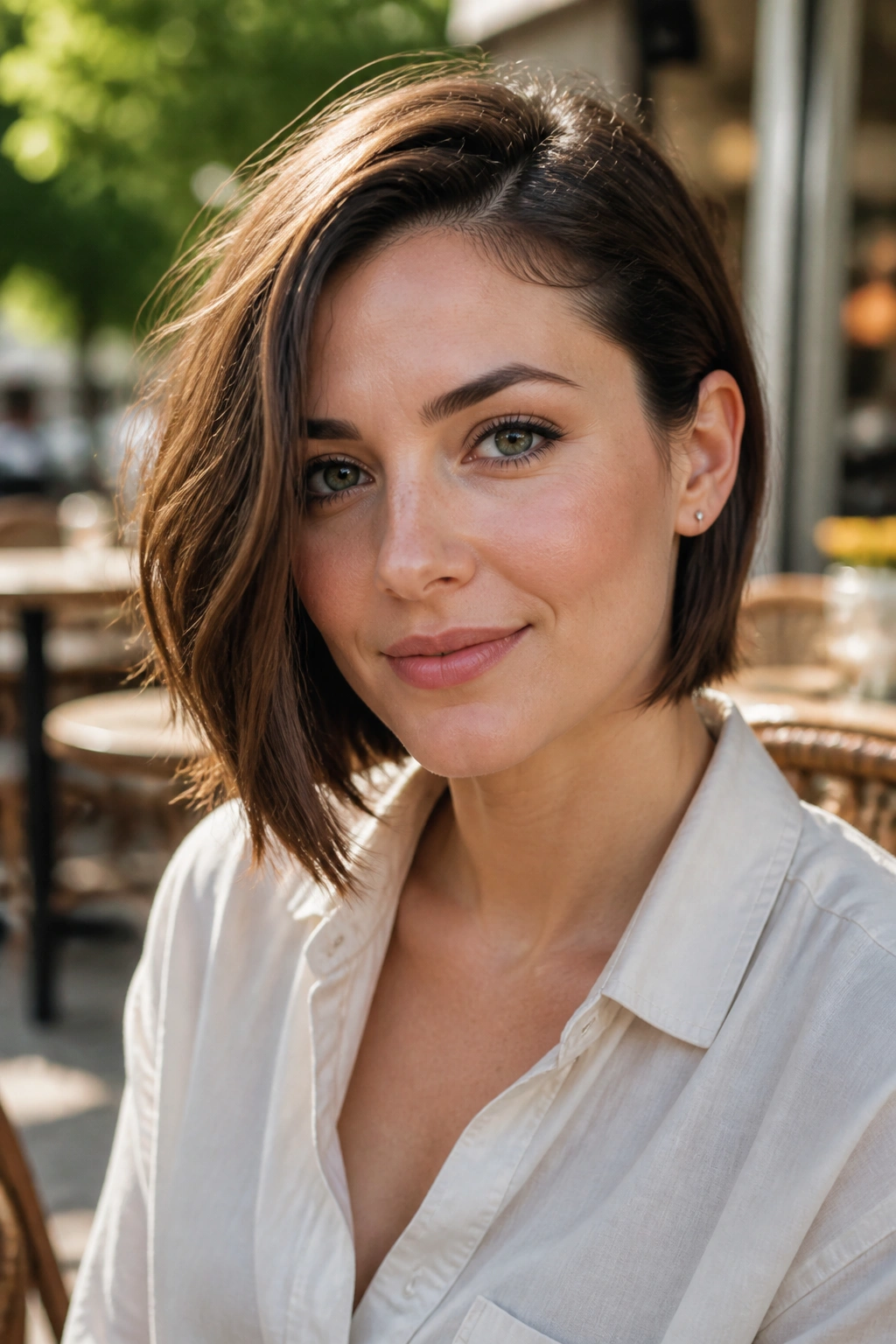
An asymmetrical bob has a little attitude, and round faces can wear that well. The unequal length keeps the eye moving instead of letting it settle on one horizontal line. That alone makes the cut feel lighter around the face.
The key is restraint. You do not need a dramatic, almost-mullet level difference between sides. A subtle shift of 1 to 2 inches is enough for most people. One side can tuck behind the ear while the longer side brushes the jaw or collarbone. That tucked shape opens up the face and keeps the cut from looking too dense.
It’s a good choice if you like structure but want something less predictable than a standard bob. And yes, it looks even better when the ends are slightly piecey instead of puffy.
6. Curtain Bangs and Mid-Length Layers
Curtain bangs are popular for a reason, and on round faces they earn their keep when they’re cut the right way. The center part opens the forehead, then the bangs sweep out toward the cheekbones instead of cutting straight across them.
The best version doesn’t stop at the cheekbone. It should drift past that point and melt into layers that continue below the chin. That length is what keeps the style from widening the face. If the bangs are too short, they can add width at the exact spot you’re trying to avoid. If they’re too thick, the whole look gets heavy fast.
This cut works especially well with medium-length hair that has a little bend. Blow-dry the fringe away from the face with a round brush, or use a velcro roller for a few minutes while you do your makeup. Small effort. Big difference.
7. Long Shag With Wispy Ends

A long shag is a good answer when you want movement but refuse to lose length. On round faces, the trick is keeping the layers airy and low enough that they don’t puff out beside the cheeks. The best shags look soft, broken up, and a little undone. Not messy. Just lived in.
Why It Helps Round Faces
The shag’s uneven layers create vertical variation, and that breaks up the roundness. A blunt, full shape can make a face feel wider. A shag lets the hair collapse a bit in the right places, which is exactly what you want around the sides.
- Good for thick hair that feels too solid
- Friendly to natural waves
- Can be worn with or without curtain bangs
- Needs texturizing spray or a light mousse, not heavy cream
If your hair is fine, keep the layers softer and fewer. Too much thinning will leave you with frizz and not much shape.
8. Wolf Cut With Soft Crown Lift

The wolf cut can be a disaster on a round face if it’s too choppy at the cheeks. But softened up, it’s one of the more interesting options. The crown gets a bit of lift, the top layers stay shorter, and the lower lengths keep enough weight to avoid looking puffy.
What makes it work is balance. You want texture on top, not width at the sides. The best version for a round face keeps the perimeter long enough to drag the shape downward while the upper layers add movement. Think of it as a shag with a little more edge and less polish.
If you like air-dried hair, this is a strong pick. It doesn’t need a perfect blowout to look intentional. A little grit in the texture helps.
9. Pixie Cut With Height on Top
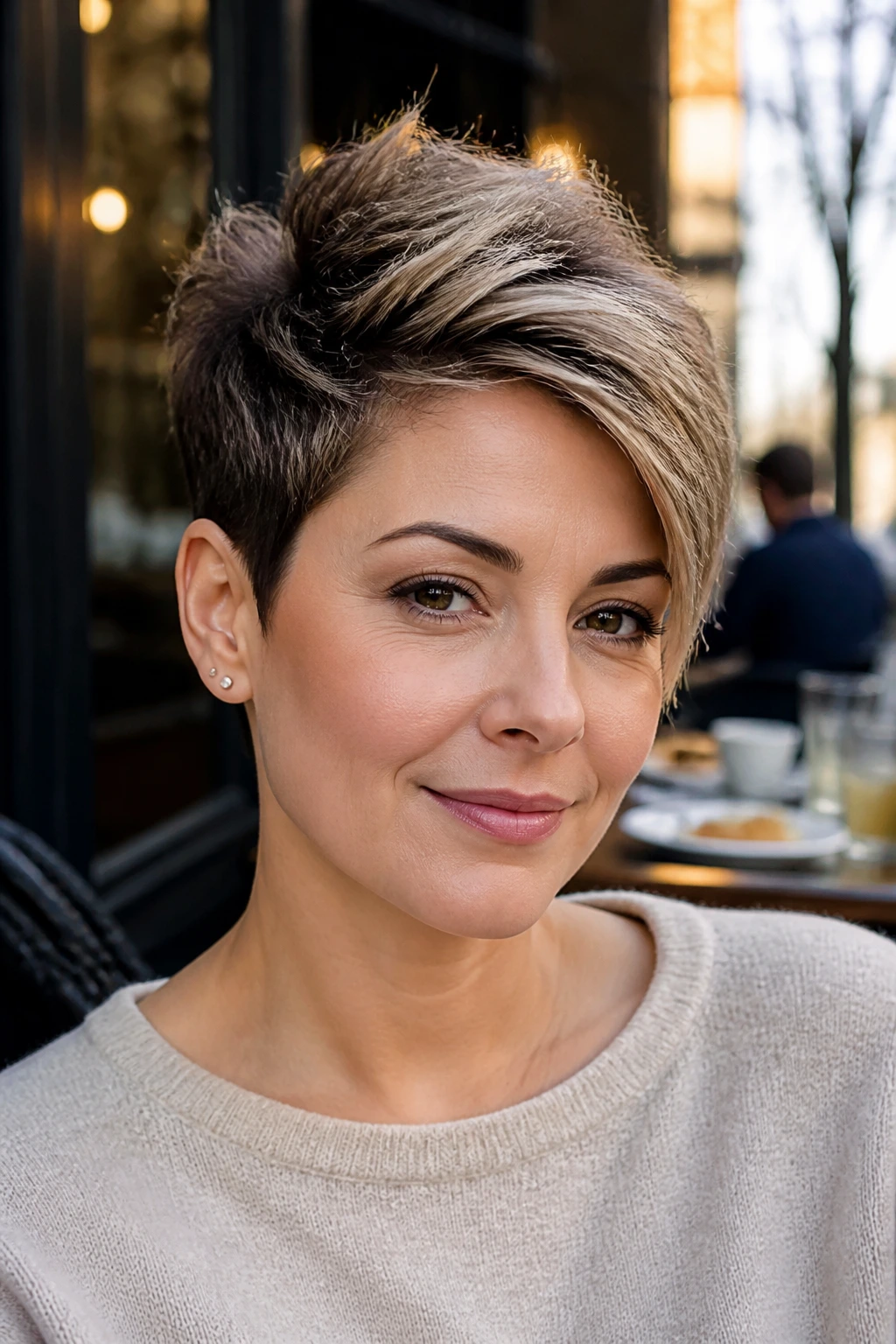
Short hair and round faces can get along just fine. The mistake is cutting everything to the same short length, which tends to make the face look even rounder. A pixie with height on top does the opposite. It gives you a vertical line right where you need it.
How to Ask for It
A good round-face pixie should have shorter sides, but not shaved-to-the-skin sides unless you want a very bold look. Keep the top longer so it can sweep upward or diagonally across the forehead. A side fringe is useful here because it breaks up the width across the brow.
What to Keep in Mind
- Top length should be around 2 to 4 inches for styling flexibility
- The crown needs lift, not puff
- The sides should stay close, but not helmet-tight
- A matte paste works better than shiny gel
This cut is sharp, easy, and surprisingly flattering when the shape is right.
10. Textured Crop With a Long Fringe
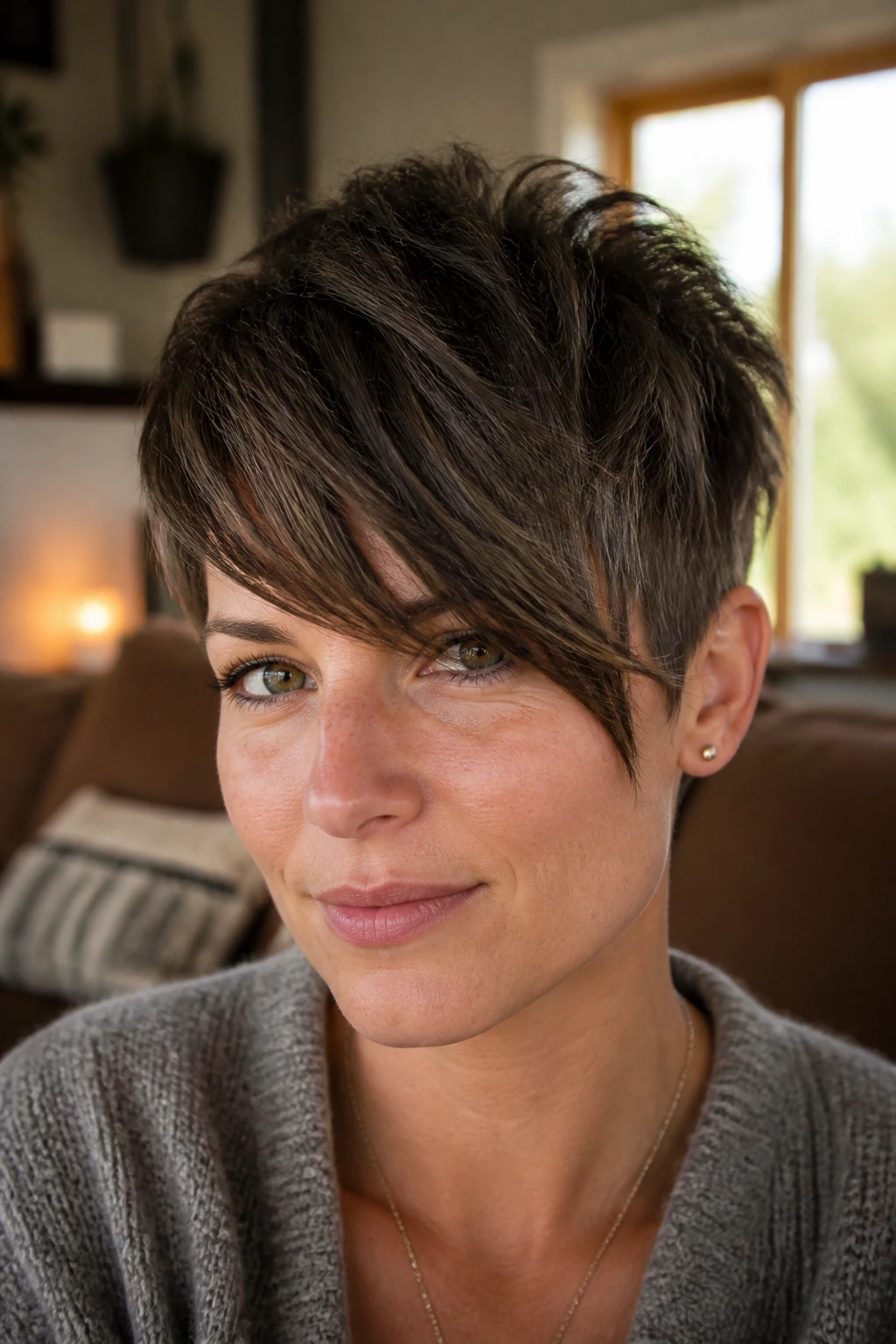
A textured crop suits round faces when you want something short but not severe. The top is cut short and broken up, while the fringe stays long enough to sweep across the forehead or sit slightly off-center. That long fringe is doing the heavy lifting here.
The rest of the cut should feel light around the temples and ears. If the sides are too full, the face gains width. If the top has a bit of separation, the eye moves upward. That’s the pattern you want. Short crop, longer fringe, controlled sides.
This cut is great for people who do not want to spend fifteen minutes wrestling with a round brush every morning. A fingertip of paste, a quick ruffle, and you’re done. Clean. Easy. No fuss.
11. U-Shaped Long Cut
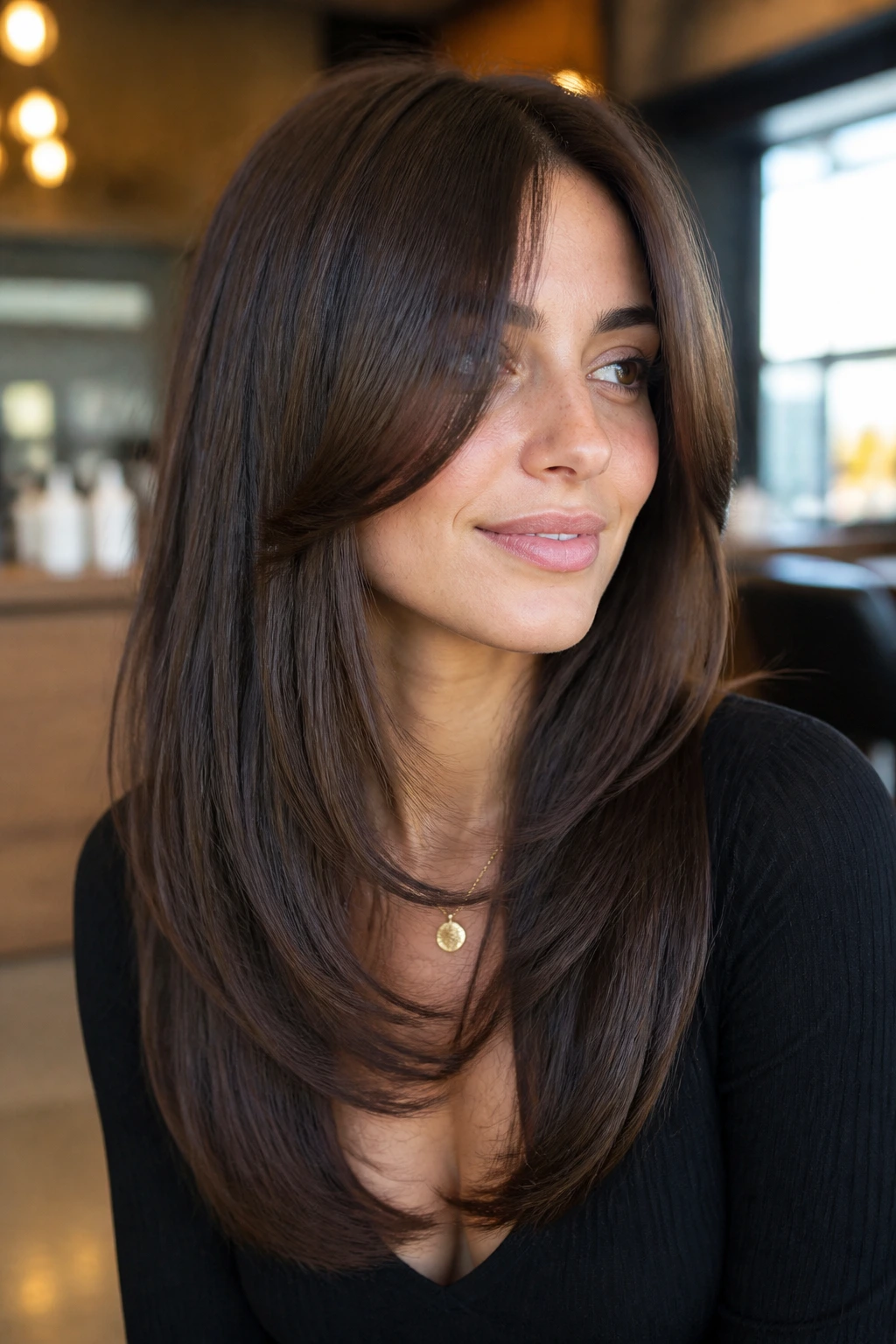
A U-shaped long cut is one of the safer choices if you love length and don’t want a dramatic shift. Instead of hanging in a straight sheet, the hair curves gently inward at the sides and stays fuller through the back. That shape keeps the perimeter from looking boxy.
What matters here is softness. The front pieces should be long enough to move past the cheeks, then blend into longer back lengths. If the front drops too sharply at the jaw, the cut can widen the face instead of balancing it. A gentle U shape avoids that and keeps the whole look fluid.
This is a strong option for thick hair that tends to sit heavy. The curve takes some weight away from the sides, which helps the hair move instead of just sitting there.
12. Face-Framing Layers That Fall Past the Cheekbones
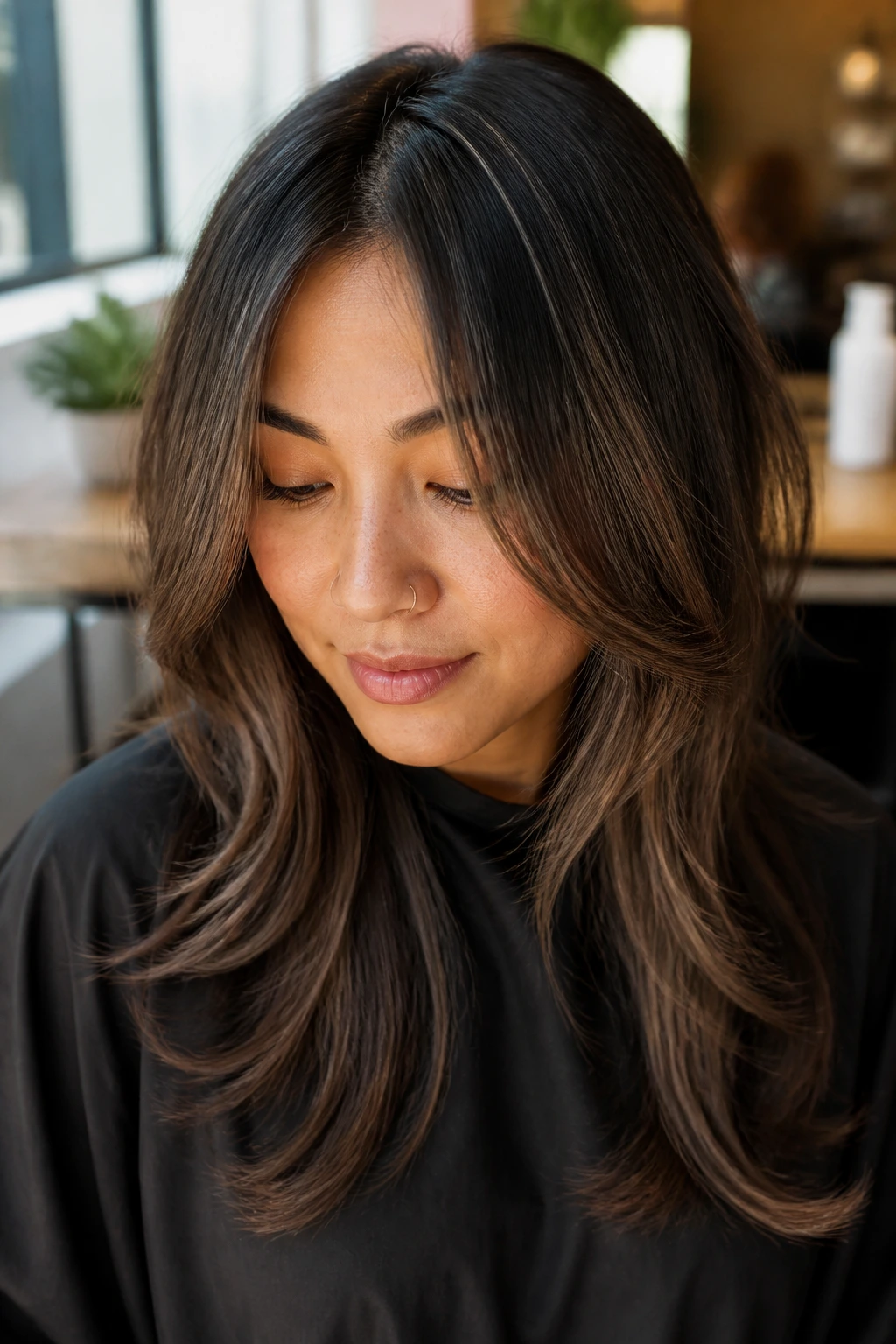
Face-framing layers can be brilliant on round faces, but only if they are cut low enough. The biggest mistake is letting the shortest front pieces land right at the cheeks. That tends to draw attention to the widest part of the face. Better to let the layers fall past the cheekbones and open from there.
What to Ask for at the Salon
Ask for pieces that begin around the lip or chin area and angle downward. That creates a soft curtain around the face without boxing it in. If you have wavy hair, keep the layers long so the wave pattern does not shrink them up too far.
Who This Works For
- People growing out a blunt cut
- Anyone who wants movement without losing density
- Hair that feels heavy near the front
- Medium and long lengths
The result is subtle, which I like. It doesn’t shout. It just makes the face look longer and the hair look lighter.
13. Blunt Lob With a Clean Center Part
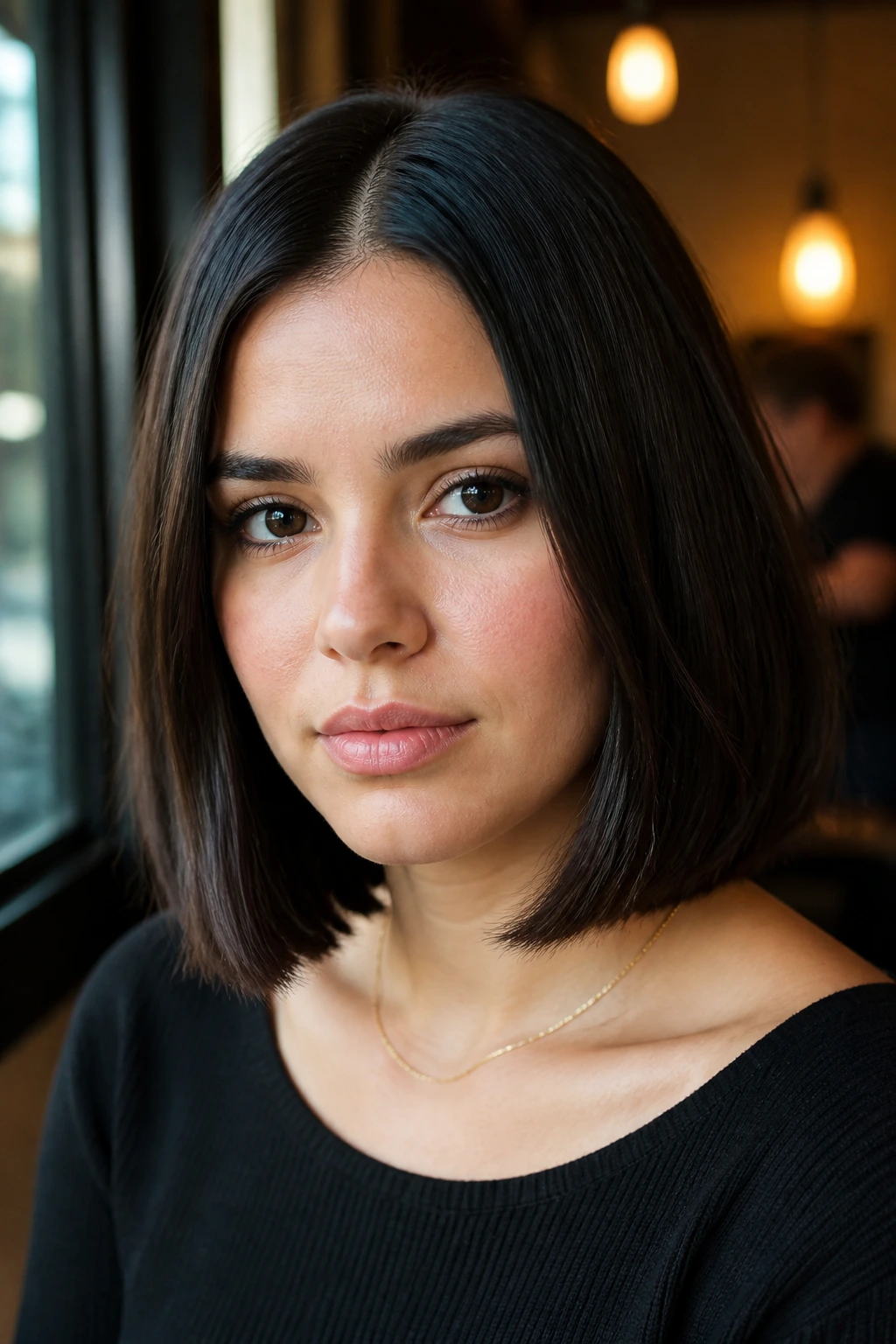
A lot of people assume round faces need lots of layers, but that’s not always true. A blunt lob with a center part can look crisp and balanced if the length sits below the chin. The straight edge gives the hair a clean line, and the center part draws a vertical line down the face.
The trick is placement. If the lob stops at the jaw, it can feel too square. If it sits at the collarbone or just above it, the face gets the benefit of the line without the extra width. Smooth styling helps too. Airy waves are fine, but keep them soft rather than bulky.
This cut is especially good if your hair is fine and you want the ends to look thicker. A blunt perimeter gives the illusion of fullness without building width at cheek level.
14. Butterfly Cut With Light Face Framing
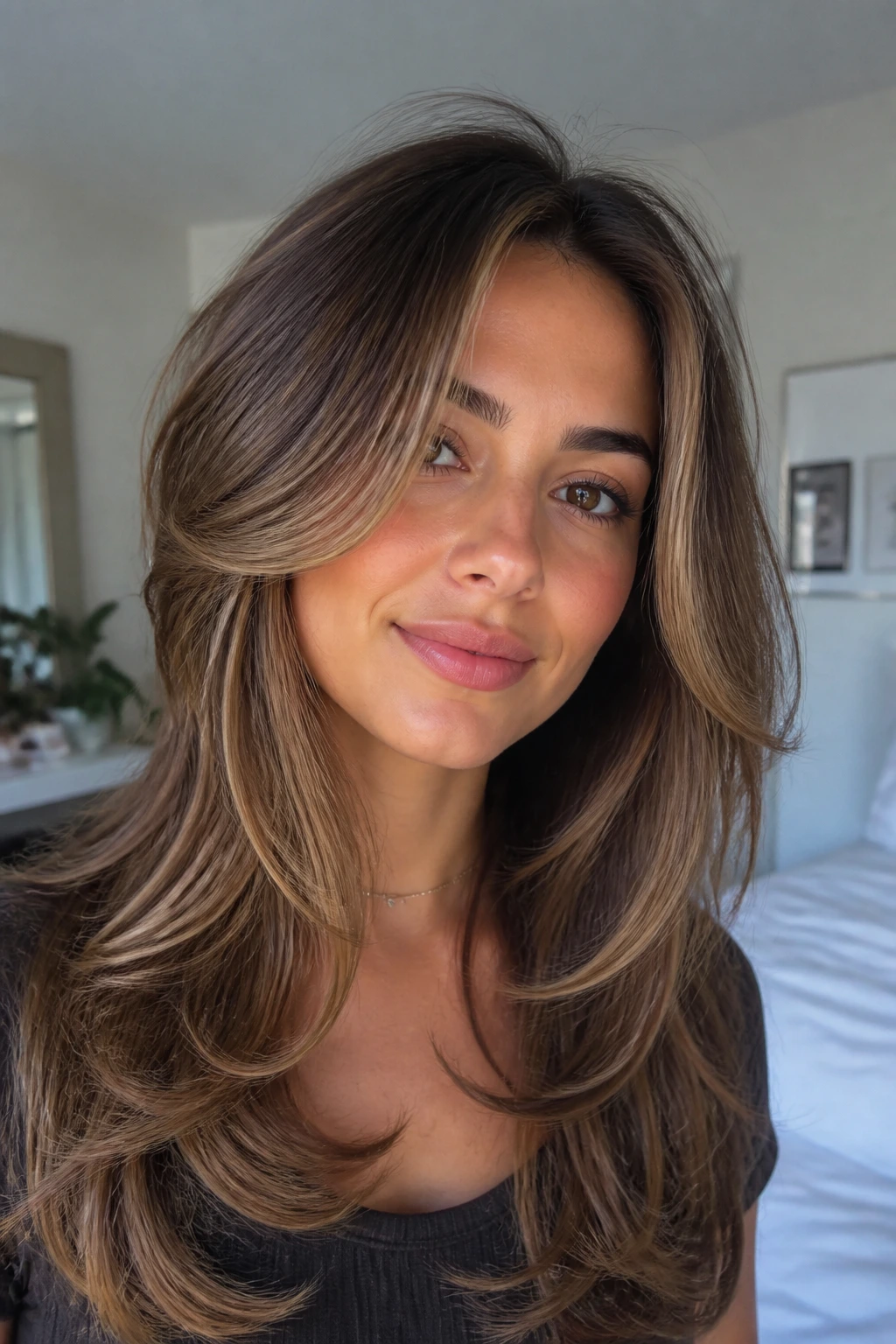
A butterfly cut can work beautifully on a round face when the layers are controlled. You get shorter pieces around the front, longer lengths in the back, and enough separation to keep the style from feeling flat. It gives movement without cutting the hair into a shaggy cloud.
The best part is the lift. The shorter top layers create a sense of height near the crown, which helps lengthen the face. The face-framing sections should stay soft and long enough to move past the cheeks. If they sit too high, they’ll do the opposite of what you want.
This is a good cut if you like volume but don’t want the hair to poof outward at the sides. Blow-drying the front pieces away from the face keeps the effect clean.
15. Choppy Midi Cut With Piecey Ends

A choppy midi cut sits in that useful middle ground between bob and long hair. For a round face, the texture matters more than the label. The ends should feel piecey, not thick and blunt, so the cut doesn’t stop the eye at one wide line.
Why does this work? Because the broken-up ends keep the hair from forming a block around the cheeks and jaw. The length stays around the shoulder or just below it, which helps add vertical line without going full long. It’s a nice choice if you want some edge but still need a cut that plays well with ponytails and clips.
A little sea salt spray helps, but don’t drown the hair in product. Too much grit can make the cut look dry rather than airy. Small amounts, worked through the mid-lengths, are usually enough.
16. Deep Side-Parted Layers
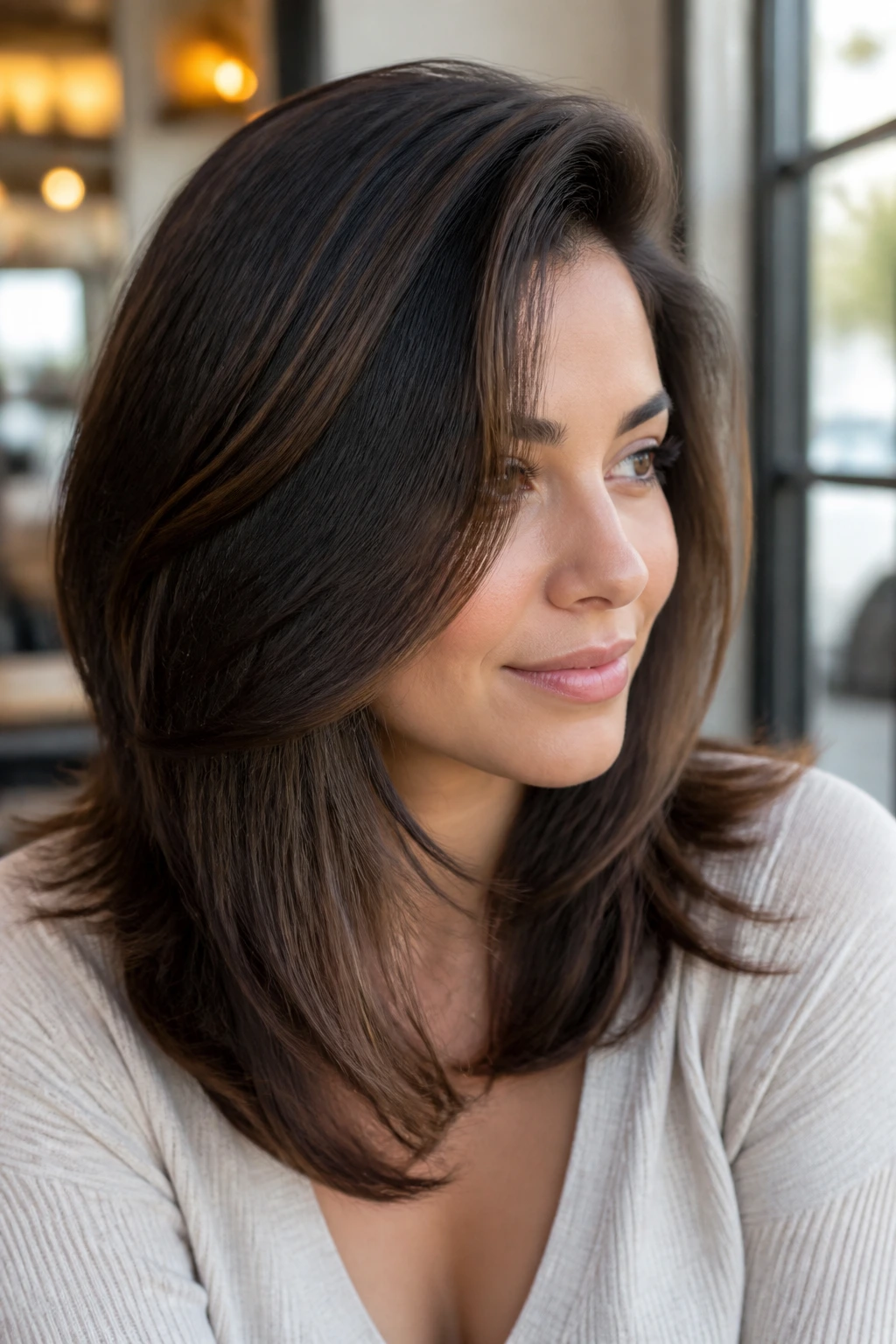
A deep side part can change the whole reading of a haircut. On round faces, it adds a diagonal line and a little height at the roots, both of which help the face look longer. Paired with layers, it becomes even stronger because the hair falls away from the center instead of sitting in a symmetrical frame.
I like this option for people who don’t want a big chop. You can keep medium or long hair and still get more shape from the part alone. The layers should stay soft around the bottom so the overall line doesn’t feel too busy. If your hair tends to collapse, clip the roots on the heavier side while it cools after blow-drying. That tiny bit of lift matters more than people think.
It’s not flashy. It just works.
17. Shoulder-Length Cut With Flipped Ends
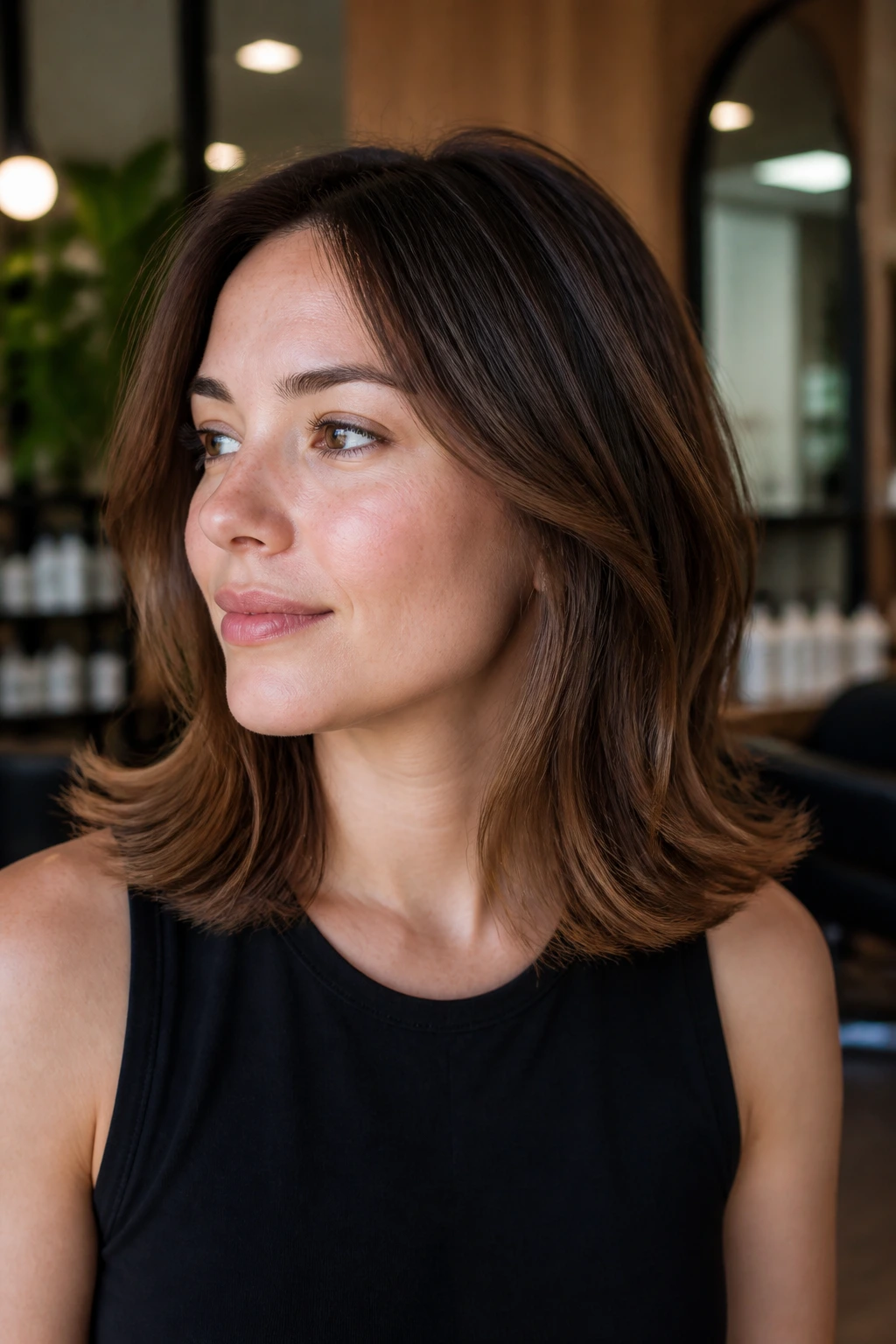
A shoulder-length cut with flipped ends has a little movement at the bottom, which keeps the hair from looking heavy and flat. On a round face, the important detail is where the flip happens. You want it around the shoulders or lower, not at the cheekbones, or the outward turn can widen the face.
This style can feel a bit retro, but that’s not a bad thing. Done well, it has shape and energy. A round brush or a blow-dry brush can turn the ends slightly outward, while the top stays smooth enough to avoid extra bulk. The overall effect is lighter than a one-length shoulder cut, but not as layered as a shag.
If your hair is straight or slightly wavy, this is a nice middle ground. It’s polished without feeling stiff.
18. Sleek Long Cut With Internal Layers
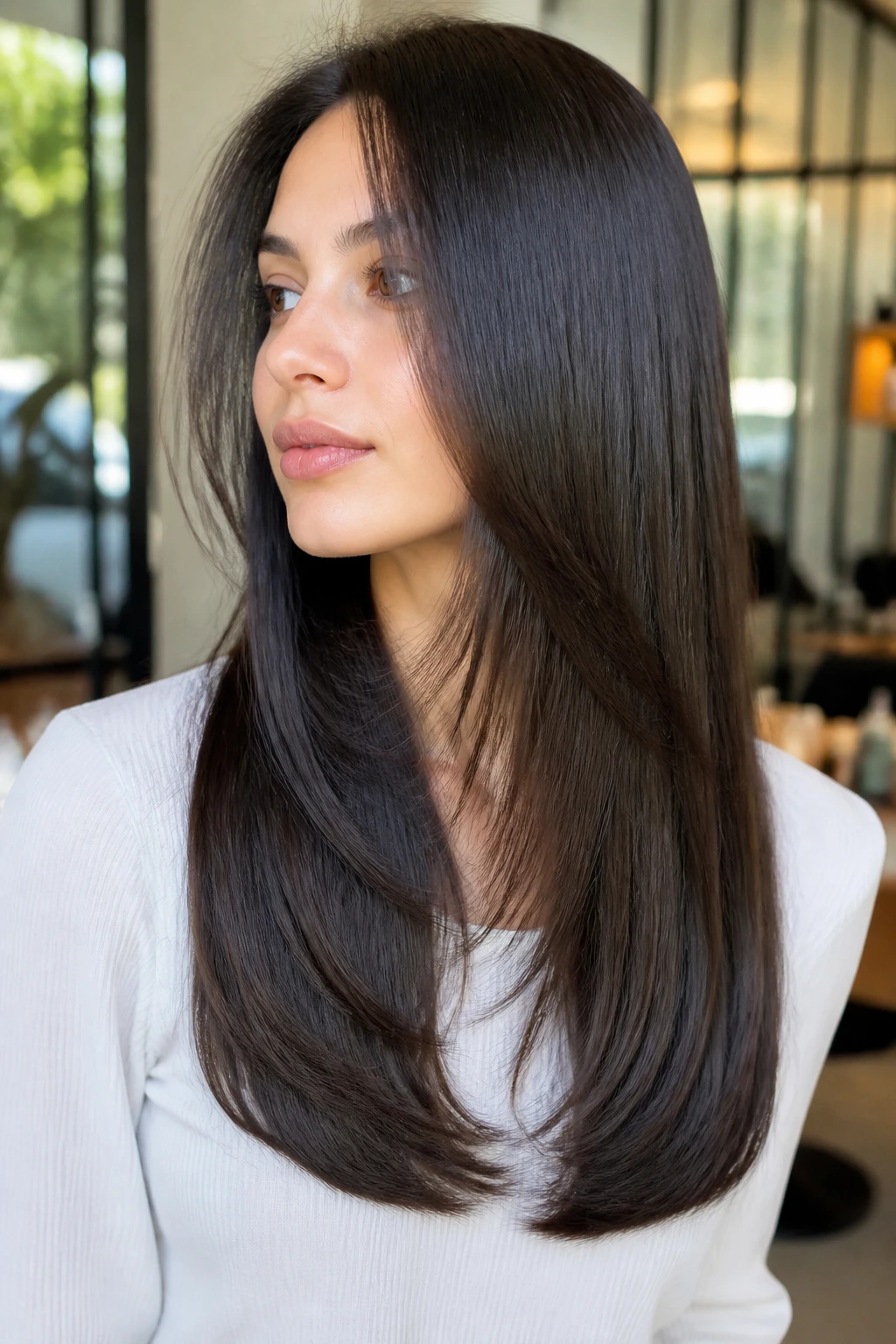
Sometimes the best haircut for a round face is the one that looks the least obvious. Internal layers remove weight from inside the shape without leaving big visible steps. That matters if you want length and smoothness, but your hair sits too heavy around the sides.
The outer line stays long and clean. The inside gets enough movement so the hair doesn’t hang like a curtain. This is a smart move for thick, straight hair that likes to swell around the jaw. A sleek blowout shows the shape clearly, but even a low-maintenance air-dry benefits from the hidden lightness.
If you’ve ever had a cut that looked great for a week and then turned into a triangle, this is the fix. Quiet. Practical. Useful.
19. Curly Cut With Stacked Shape
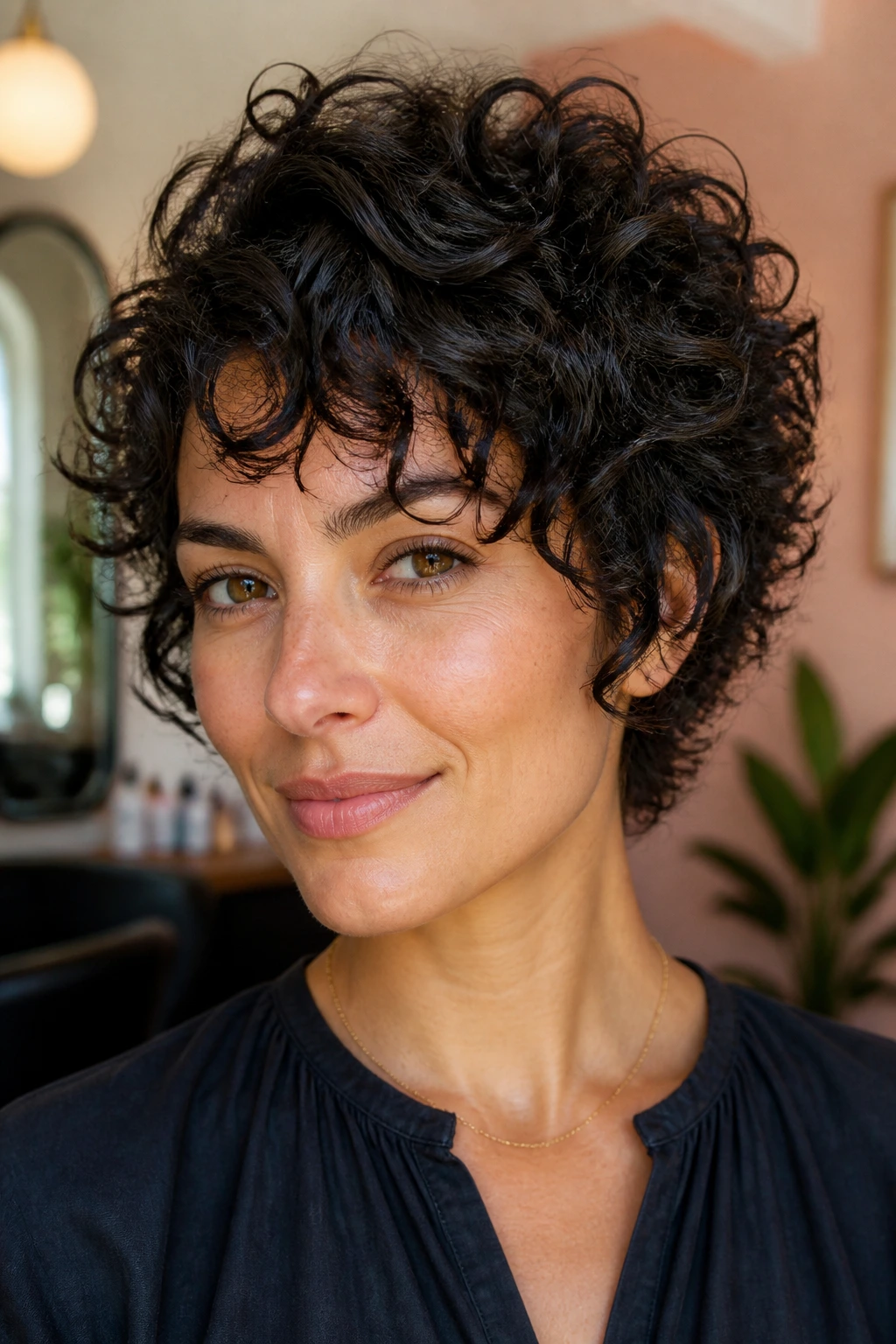
Curly hair changes the rules a bit, and round faces need a cut that respects the curl pattern instead of fighting it. A stacked shape can work well when the top is controlled and the sides don’t spread too far outward. The goal is lift, not a wide halo.
Why Curl Pattern Changes the Result
Curls shrink up, and that shrinkage can move a layer higher than you expected. That’s why a dry cut, or at least a curl-aware cut, matters. The stylist needs to see how the curls sit in their natural state. Otherwise, the shape can end up too short at the sides and too full at the cheeks.
What to Ask For
- Keep the shortest curls below the cheekbone line
- Add height at the crown, not the temples
- Avoid heavy bulk at jaw level
- Let the front pieces curve downward a bit
A good curly cut should feel rounded in the right places and controlled in the wrong ones. There’s a difference.
20. Wavy Shag Lob

A wavy shag lob is one of my favorites for round faces because it feels relaxed without getting sloppy. The length stays around the collarbone, which gives you that useful downward line, while the shag layers stop the hair from looking like one big block.
The wave does a lot here. It breaks up the width and gives the eye something to follow. That matters more than people admit. A flat, one-note texture can make a round face look wider, while a bit of movement creates shape. Keep the layers soft enough that the ends still hold some weight. If they get too thinned out, the cut can lose its structure.
This is the haircut I’d point to if someone wanted a low-pressure style that still looks finished with a good air-dry.
21. Tapered Pixie-Bob
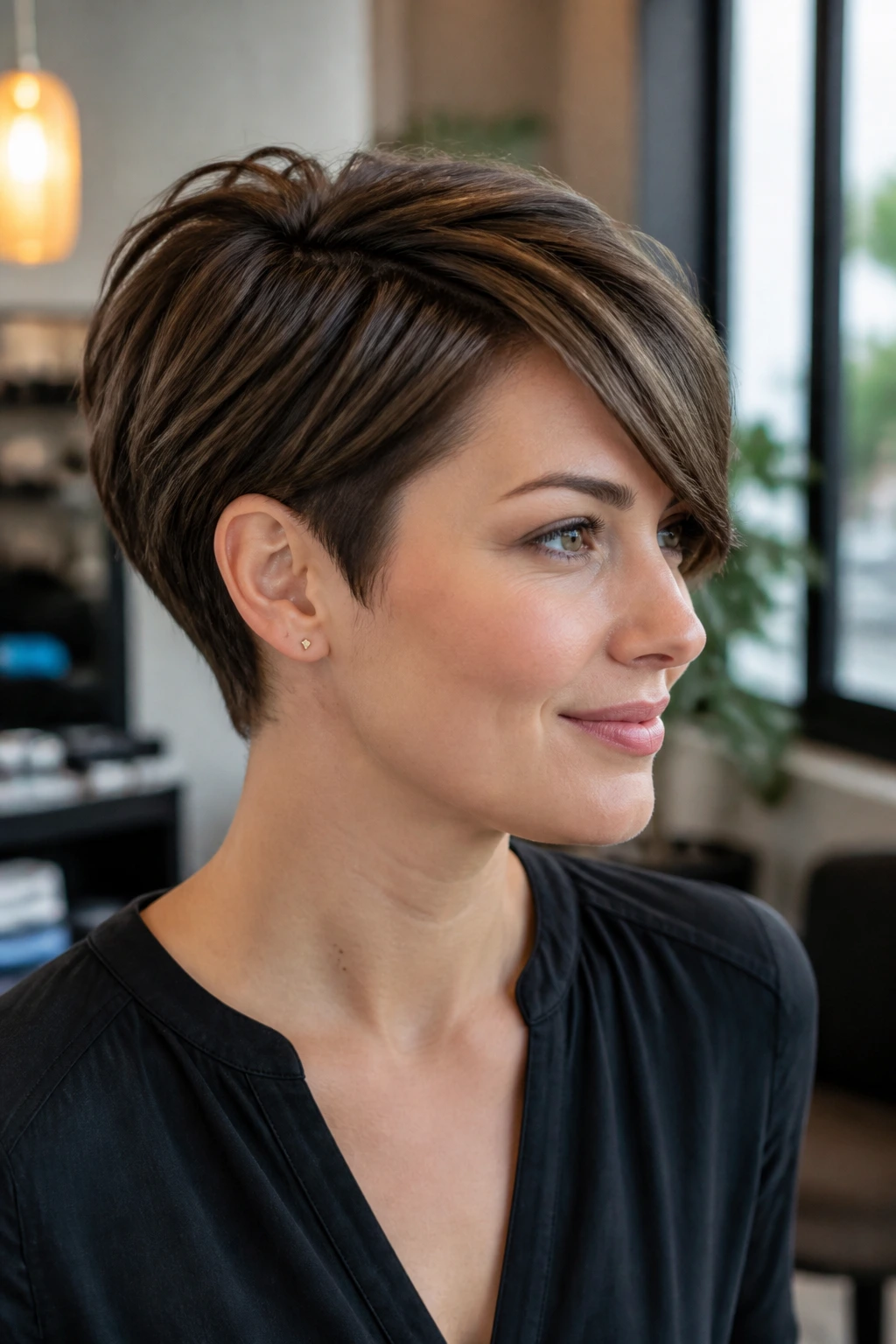
A tapered pixie-bob sits between a cropped cut and a short bob, and that in-between shape is the reason it works. The nape and sides are tapered close enough to reduce bulk, while the top and front keep enough length to create a flattering line on a round face.
The shape is especially useful if your hair is thick. Heavy sides can make the face look wider fast, and a tapered finish trims that problem away. A side fringe or longer top layer helps guide the eye diagonally instead of straight across. You can tuck one side behind the ear or let the front pieces fall toward the cheekbone.
It’s a neat cut, but not severe. That balance is hard to get, and this one does it well when the top has a little movement.
22. Jaw-Softening French Bob

A French bob can be tricky on a round face. The classic chin-length version is often too short and too blunt. But a softened version, with a little extra length and a wispy fringe, can be excellent.
What saves it is the edges. Keep the bob slightly below the jaw, or at least let the front pieces graze it instead of stopping right on it. Add airy bangs or a broken fringe so the forehead doesn’t become one solid block. The result feels lighter and less square than a strict bob.
This cut suits someone who likes a styled look and doesn’t mind a bit of daily attention. A fast bend with a flat iron or blow-dryer brush keeps it from sitting too flat against the face.
23. Clavicle Cut With Long Curtain Fringe
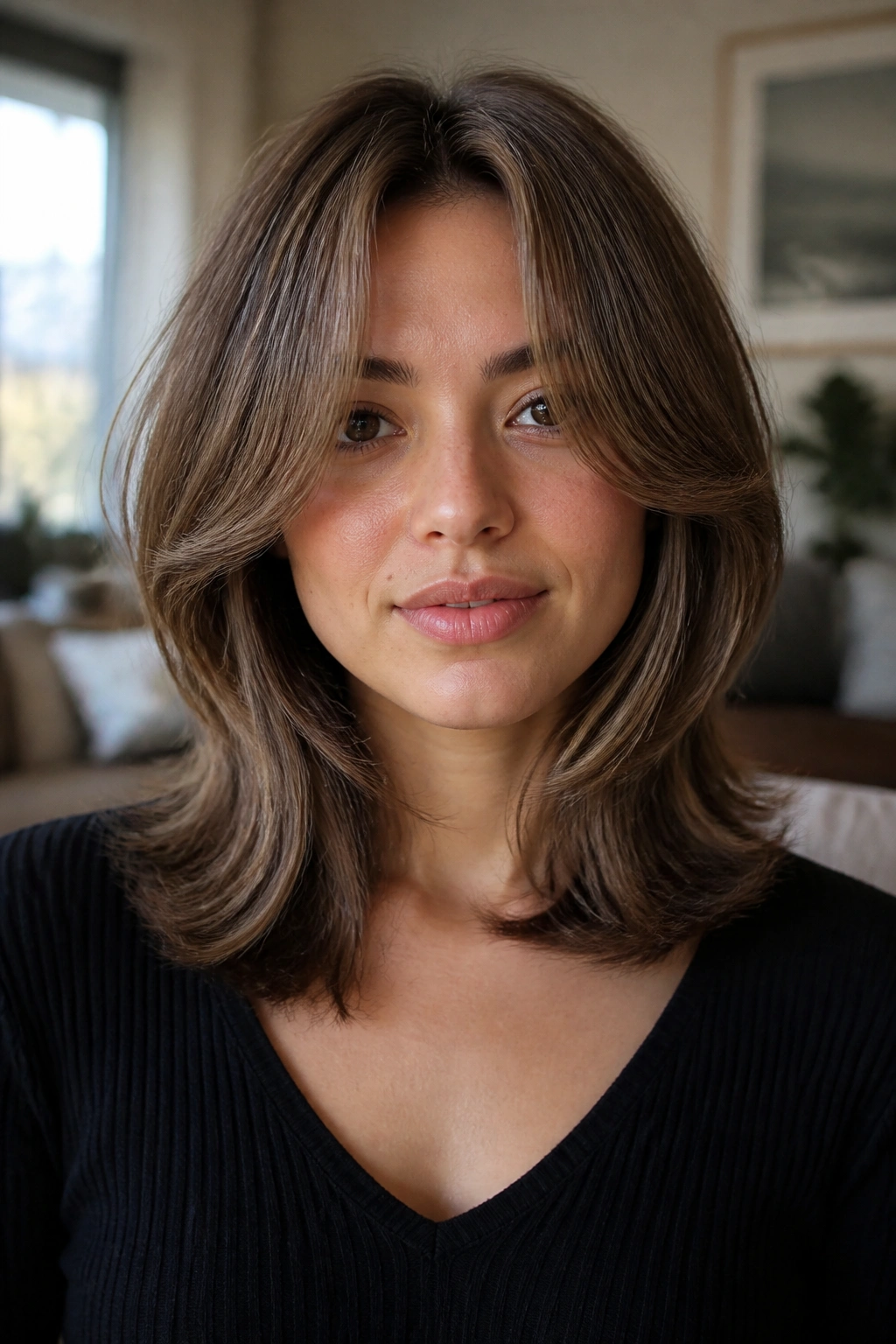
The clavicle cut might be the easiest answer for a round face because it gives you length, movement, and enough room for styling without demanding a huge commitment. It lands near the collarbone, which is far enough below the cheeks to help the face look longer.
The long curtain fringe is the real helper here. It opens in the middle, then sweeps out and down, which creates a soft frame instead of a hard line. If the fringe is blended properly, it disappears into the rest of the cut instead of looking tacked on. That blend matters more than whether the hair is straight or wavy.
This is a good choice if you want a haircut that behaves well on a normal day. Not just on a blowout day.
24. Modern Mullet With Soft Edges
A soft mullet can work on round faces when it is shaped with restraint. The crown gets a little lift, the top stays textured, and the back keeps enough length to pull the eye downward. The sides should stay light, not puffy, so the cut doesn’t widen the face.
What Makes It Different
Unlike a shag, which spreads movement more evenly, the mullet keeps a stronger contrast between top, sides, and back. That contrast can be useful if your face needs more vertical energy. It’s also a good choice if you like a bit of edge in your haircut and do not want something polished to the point of boredom.
Best For
- Wavy hair that wants shape
- Thick hair that sits heavy around the sides
- Anyone who likes texture with a little attitude
The softer the transition, the easier this cut is to wear. Hard edges are where it gets difficult.
25. Long V-Cut With Narrowing Ends
A V-cut pulls the eye downward through the center back of the hair, which can be useful on a round face. The sides stay a little shorter than the back, so the overall silhouette narrows as it goes down. That creates a long line without cutting the hair into obvious layers everywhere.
Why does this help? Because the hair doesn’t spread out in one blunt curtain across the shoulders. It falls into a point at the back, and that point gives the style direction. If the cut is too dramatic, though, it can look stringy at the ends. So keep the V gentle if your hair is fine or not very dense.
How to Use It
- Ask for a soft V, not a sharp point
- Keep front pieces long enough to move past the chin
- Pair with loose waves or a smooth blowout
- Trim every 8 to 10 weeks to keep the shape clean
26. Soft Undercut Pixie
A soft undercut pixie is one of the smartest choices for very thick hair on a round face. The undercut removes weight from the sides and back, which keeps the head from looking overly wide. Then the top stays longer, so you still have room to style height, sweep, or texture into the cut.
This one is not for someone who wants to wash and forget. It needs regular shaping, because the clean lines lose their edge fast when the sides grow out. But if you like a short cut that feels light on the head, it can be a relief. The top can be pushed upward, swept to one side, or loosened with a matte paste.
It’s bold, but not bulky. That’s the difference.
27. One-Length Cut With Polished Waves
A one-length cut can work on a round face if the length is long enough and the styling is controlled. The hair should sit below the chin, preferably closer to the collarbone, so the line doesn’t end at the widest part of the face. From there, polished waves can give shape without adding too much width.
The appeal here is density. Fine hair often looks fuller with a blunt edge, and a clean perimeter can make the ends feel thicker. The trick is keeping the wave smooth and directional, not big and puffy. A flat iron bend or a large-barrel curling iron can do the job if you brush the waves out a little after they cool.
This is one of those cuts that looks expensive when the finish is neat. No need for drama. Just clean shape.
28. Mid-Length Cut With Hidden Layers
Hidden layers are a nice little cheat for round faces. On the outside, the cut still looks full and even. Underneath, the weight gets removed so the hair moves instead of puffing out. That’s useful if you want softness without the obvious choppiness of a heavily layered style.
The strongest version usually lands between the shoulders and collarbone. That length gives enough room for the layers to work without making the hair feel too short. If your hair is thick, hidden layers can stop it from flaring at the sides. If it’s fine, keep the layers conservative so you don’t lose the body you already have.
This cut is easy to overlook. It shouldn’t be. It solves a lot of everyday hair problems.
29. Side-Parted Curls With Lift at the Crown
Round faces and curls can be a good match when the shape is controlled. A side part gives the curls a diagonal direction, and a little lift at the crown keeps the silhouette from spreading too wide across the cheeks. That combination matters more than a lot of people think.
The curls should be cut so they fall below the cheekbone line. If the shortest pieces sit at cheek level, the face can look broader. A diffuser helps keep the root lift without crushing the curl pattern. You can also clip the crown while it dries to encourage height right where the eye needs it.
What to Focus On
- Keep volume higher at the top, not the sides
- Let the front curls fall downward a bit
- Avoid a blunt curl line at the jaw
- Use a lightweight cream, not a heavy butter
That side part does real work. Small detail. Big payoff.
30. Long Hair With Invisible Layers
Long hair can be the best answer for a round face, but only if it has enough shape to avoid looking heavy. Invisible layers help with that. They remove bulk from the inside of the cut while keeping the outside line long and full. You get movement without obvious steps.
The main reason this works is restraint. The layers should not start too high, and they should not fan out around the cheeks. Keep the front soft and the longest pieces past the shoulders. If your hair is thick, those hidden layers keep it from turning into a solid wall. If it’s fine, the layers should stay subtle so the ends still look dense.
This is the kind of haircut that grows out well. Which matters more than people admit. A great cut on day one is nice. A cut that still looks decent six weeks later is better.
Final Thoughts
Round faces have a few haircut rules, but they’re not as strict as people make them sound. Length helps. So does angle. So does a little lift at the crown and any shape that keeps the widest part of the face from getting boxed in by hair that ends right there.
The real trick is choosing where the weight lives. Put it too high, and the face can look fuller. Put it too wide, and the cut starts working against you. Put it lower, softer, or more diagonal, and things start to balance out fast.
If you’re stuck between two options, choose the one that leaves room for movement. Hair that can shift, bend, or open away from the face usually wins.
