



A round face does not need to be hidden. It needs lines.
That sounds blunt, but haircuts are blunt instruments in the best way. The right shape can make a face feel longer, sharper, or more open without changing the person underneath. With edgy haircuts for round faces, the trick is usually one of four things: a diagonal line, a little height at the crown, movement below the jaw, or asymmetry that keeps the eye from settling on the cheeks.
People often cling to the old idea that long hair is the only safe choice. It isn’t. A cheekbone-skimming bob, a shag with broken ends, or a pixie with lift on top can do more than another six inches of length ever will. The cut matters more than the hair count.
That is the whole point here. These styles do not try to erase roundness; they change where the face feels widest, and that small shift makes a bigger difference than most people expect.
1. Long Shag With Curtain Bangs
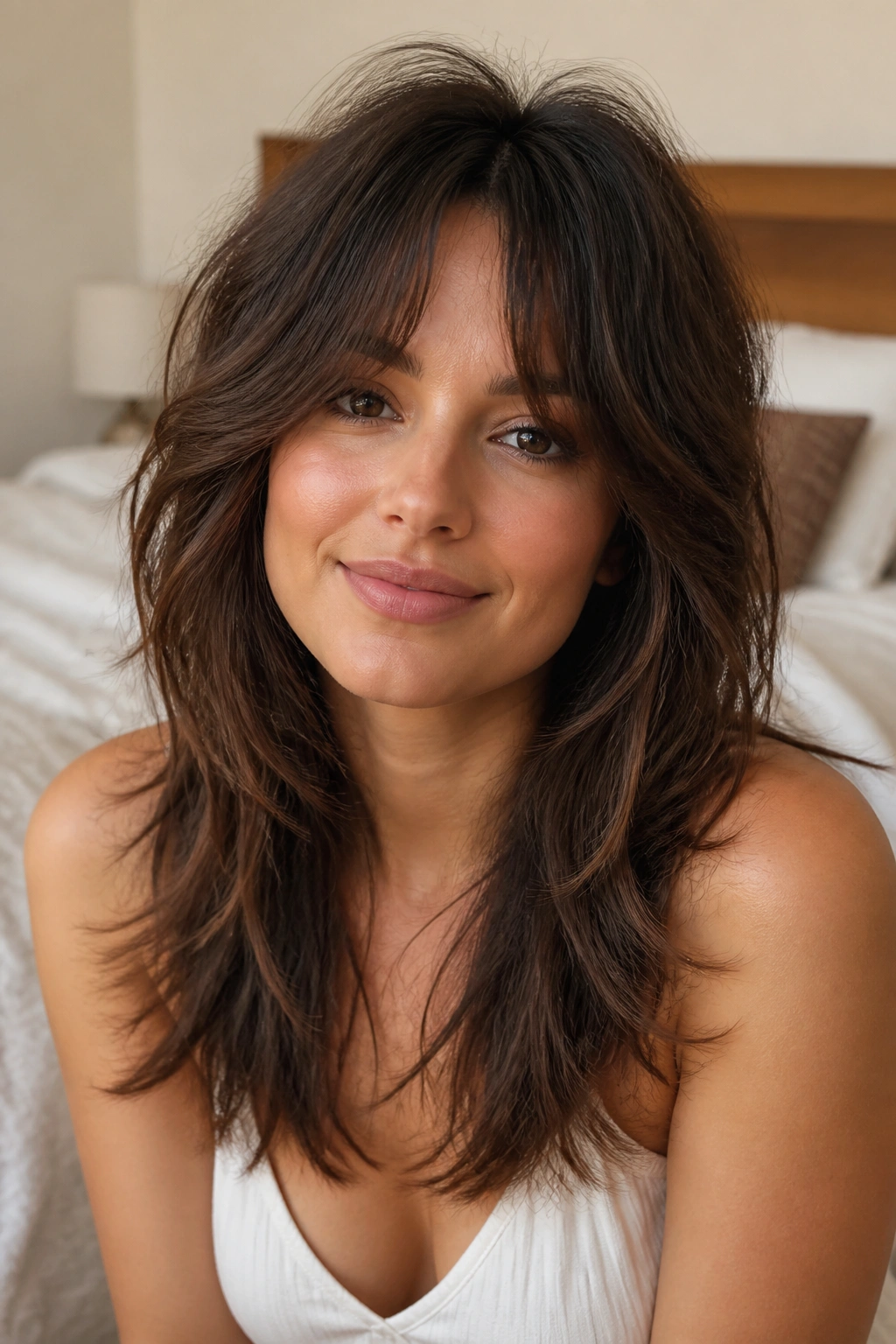
Long hair can still look sharp. It just needs a little disorder.
A long shag with curtain bangs works because the layers start low enough to avoid puffing out at the cheeks, while the bangs split the face and create a vertical path through the center. The effect is relaxed, but not sleepy. Ask for the shortest face-framing pieces to hit around the cheekbone or just below it, then let the rest fall toward the collarbone and chest.
Why It Flatters a Round Face
The real win is movement. A round face looks widest when hair sits in one soft halo at cheek level, so the shag breaks that outline into pieces. The bangs also keep the eye moving instead of landing on one full curve.
- Ask for point-cut ends so the layers look broken, not sliced into a clean block.
- Keep the crown layers light, not choppy to the point of frizz.
- Blow-dry the curtain bangs away from the face, then bend them back slightly with a round brush.
- Finish with a mist of texture spray, not a heavy cream.
Best move: keep the ends loose and the fringe soft. Hard bangs can pin the whole cut in place.
2. Angled Bob That Skims the Jaw
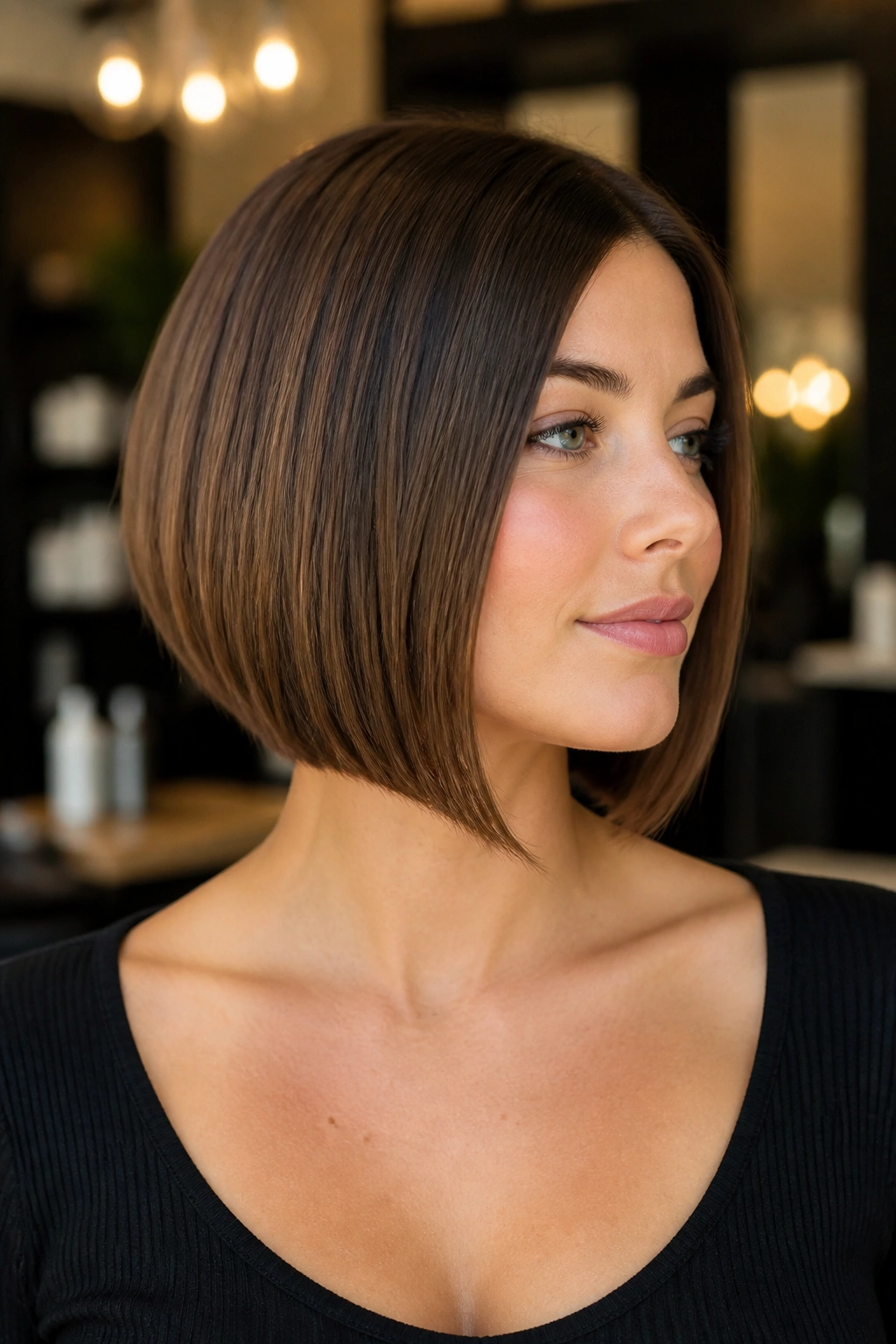
If you want a stronger profile fast, this is hard to beat.
An angled bob gives you a clean diagonal line from the back to the front, and that line does a lot of visual work on a round face. The back sits a little shorter, the front falls longer, and the eye follows the slope instead of locking onto the cheeks. The cut feels tidy, but it doesn’t read safe.
The sweet spot is usually just below the jaw in front, with the nape trimmed tighter. Too short at the sides and the face can look fuller. Too long and the angle disappears. You want the front pieces to touch the jawline or graze the upper neck, not sit right on the cheek.
Wear it sleek if you like a polished edge, or add a slight bend with a flat iron for a softer finish. Either way, the shape should look deliberate. A bob that curves inward around the face works against you. A bob that falls forward. That one does the job.
3. Pixie Cut With Crown Height
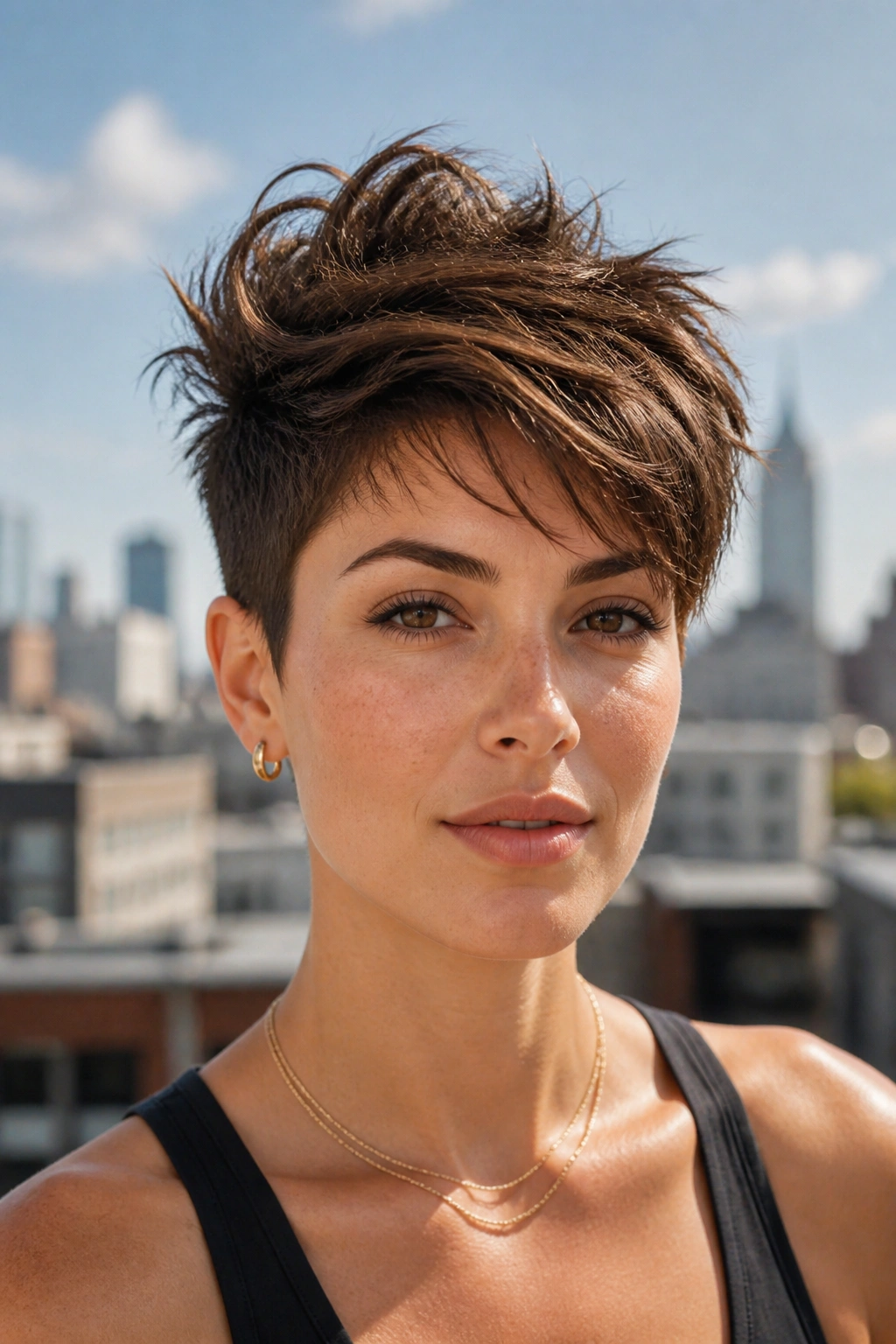
Can a short cut work on a round face? Absolutely—if the top has lift.
A pixie with crown height changes the whole silhouette because it adds inches where the eye needs them most. The sides stay tight, the top stays longer, and the face looks less like a circle and more like a shape with direction. Keep the top around 2 to 3 inches if you want room to tousle it, and do not let the sides puff out at the temple.
How to Style It
Dry the top first, lifting hair with your fingers or a small round brush. Then work in a pea-size amount of paste or clay and pinch the ends into little pieces. You want separation, not helmet hair.
- Keep the fringe a little longer if your forehead feels short.
- Ask for tapered sides rather than a round outline.
- Use a blow dryer on the crown for 20 to 30 seconds at a time.
- Finish with a matte product for grit.
This cut has attitude. It also needs upkeep. If you skip trims for too long, the sides lose shape fast and the whole thing goes soft.
4. Asymmetrical Lob for Round Faces
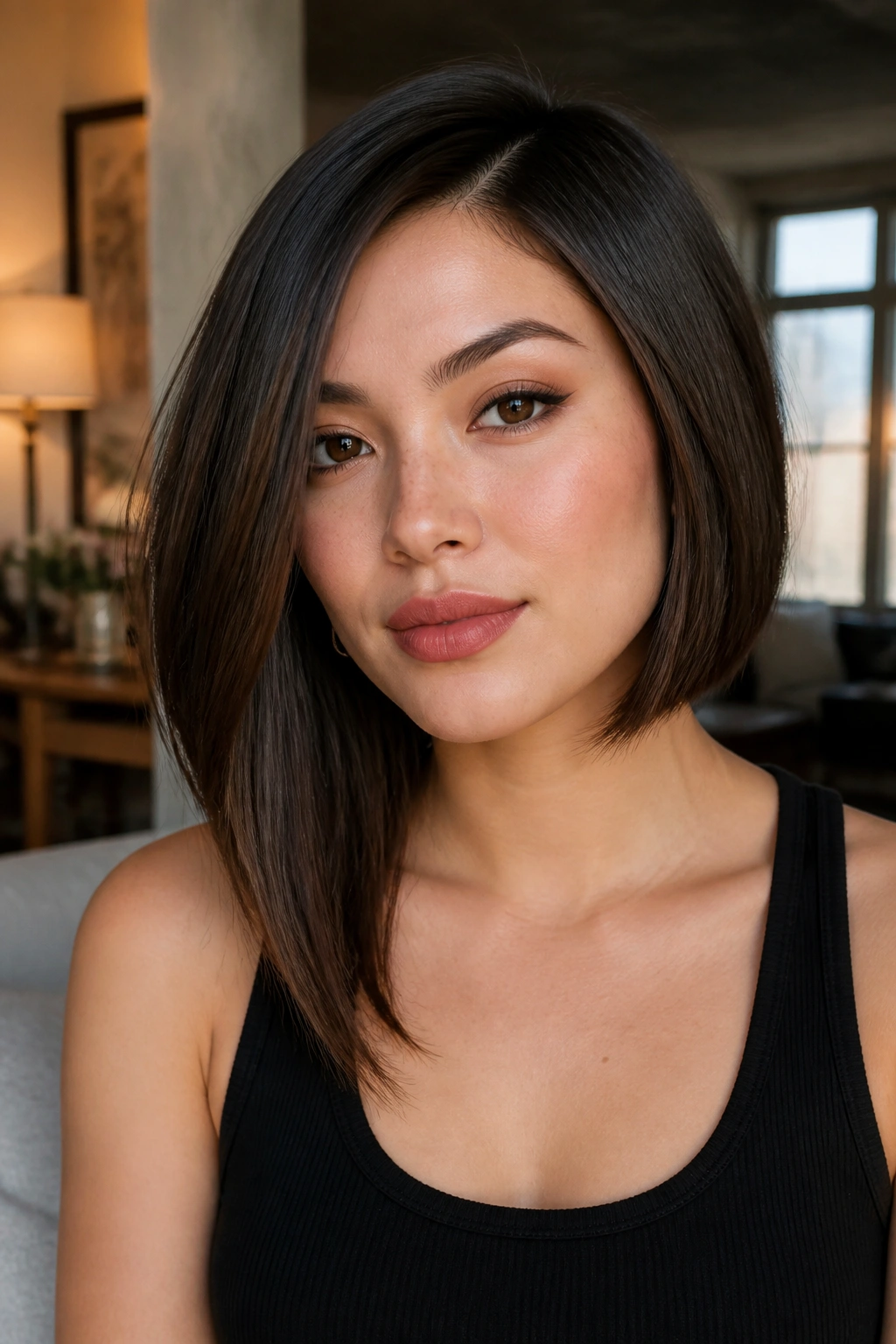
The first time one side is cut an inch longer, the face changes.
An asymmetrical lob is one of the easiest ways to break the symmetry that can make a round face look broader. The longer side pulls the eye downward, while the shorter side keeps the cut from feeling heavy. It is the sort of shape that looks clean in a mirror and even better in motion.
Try a slight off-center part so the longer side has room to fall. If your hair is straight, a blunt edge with one longer front piece can look sharp without feeling harsh. If your hair bends naturally, let the front curve away from the cheek instead of curling inward.
A few things matter here:
- Keep the length around the collarbone on the long side.
- Let the shorter side sit near the jaw, not higher.
- Ask for a soft bevel at the ends if your hair is thick.
- Tuck one side behind the ear when you want even more asymmetry.
It is a clean look. Not boring.
5. Wolf Cut With Soft Edges

The wolf cut gets messy fast if it is cut with no restraint. The good version has shape.
What makes it work on a round face is the way the volume sits higher on the head while the lower layers stay light and broken. That lifts the eye upward and keeps the silhouette from spreading out at the cheeks. The best wolf cuts do not look like someone attacked them with thinning shears. They look lived in, which is a different thing.
You want the top to feel airy and the ends to feel restless. Ask for textured layers, but keep the shortest face-framing pieces below the cheekbone if you want the face to read longer. If the fringe is too full, the cut turns heavy fast. If the ends are too neat, the whole point disappears.
This style loves natural wave, but it can work on straight hair too. Use a texture mist or a light mousse, then scrunch or rough-dry. The goal is a little disorder. Just enough.
6. Blunt Bob With a Deep Side Part

A deep side part changes a blunt bob from tidy to sharp.
That one move creates a diagonal line across the forehead and breaks up the symmetry that makes round faces feel wider. The bob itself stays strong and even, which gives the cut presence. The side part keeps it from going sweet or expected.
This shape works best when the ends land at the chin or just below it. Any shorter and the line can fight the widest part of the face. Any longer and the bluntness loses punch. The bob should feel like a clean edge, not a rounded bowl.
It suits straight hair especially well, though a slight bend through the mid-lengths can make it feel less strict. If your hair is thick, ask for internal weight removal so it sits flat. If your hair is fine, skip too much layering or the bob goes stringy.
Bold, simple, direct. That is the mood here.
7. Bixie Cut With Choppy Texture
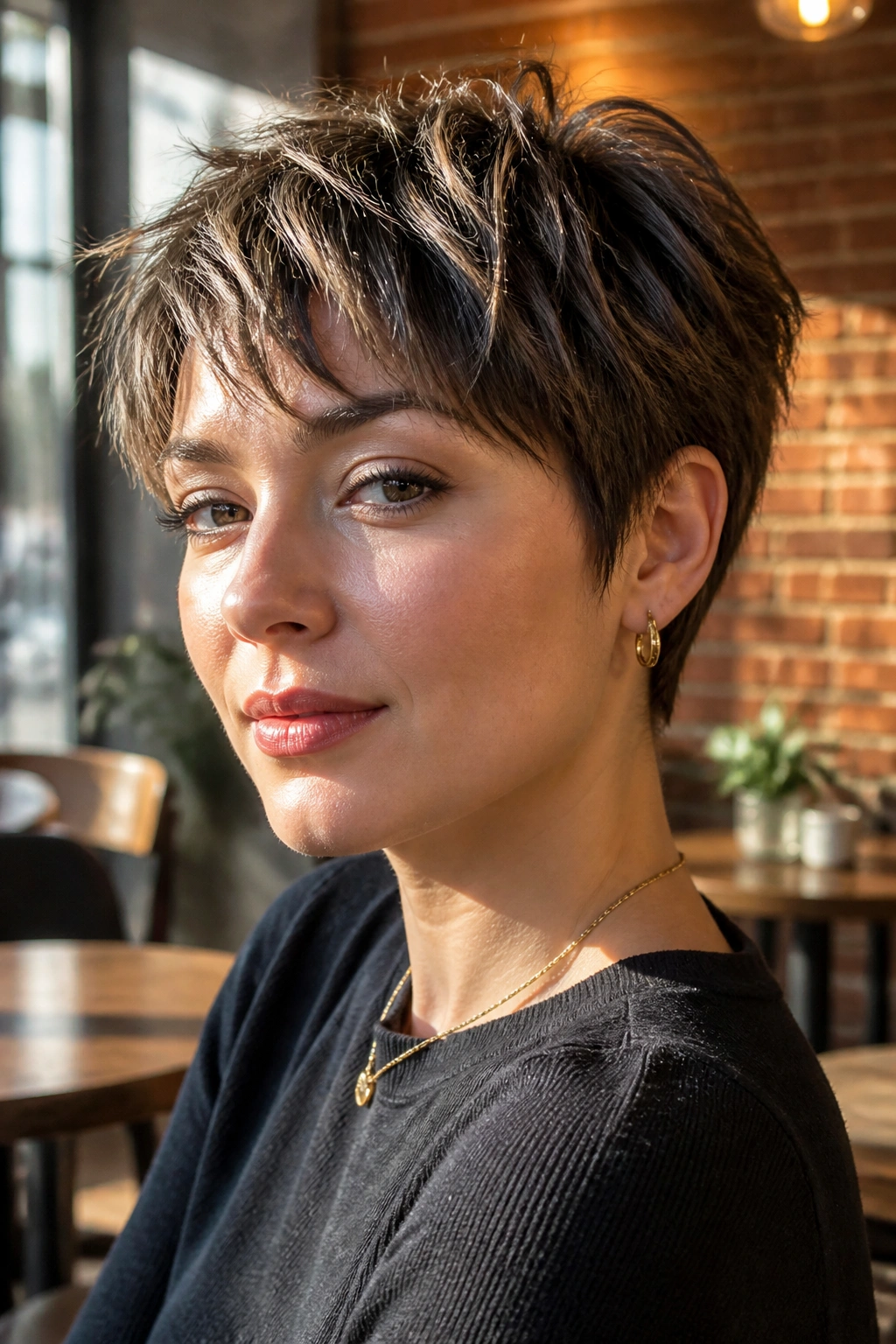
A bixie sits between a bob and a pixie, and that in-between space is the point.
The shape leaves enough length around the face to keep it from looking too severe, but it still removes the bulk that can make a round face feel extra full. The short top gives lift, the sides stay soft, and the nape usually feels neat. It looks cool without trying too hard, which is half the charm.
What Makes It Work
The trick is keeping the fringe piecey and the side length a little longer than you think you need. A bixie gets its edge from texture, not from a hard outline. If the layers are too feathered, the cut can lose its shape. If the sides are too fluffy, the face widens again.
- Ask for a longer fringe section, especially if you like to sweep hair forward.
- Keep the nape trimmed close so the neckline looks crisp.
- Use a small dab of styling cream on dry hair to define pieces.
- Blow-dry with fingers instead of a round brush for a rougher finish.
This is a smart cut for anyone who wants short hair without the full jump into a pixie.
8. Razor-Cut Shoulder-Length Layers
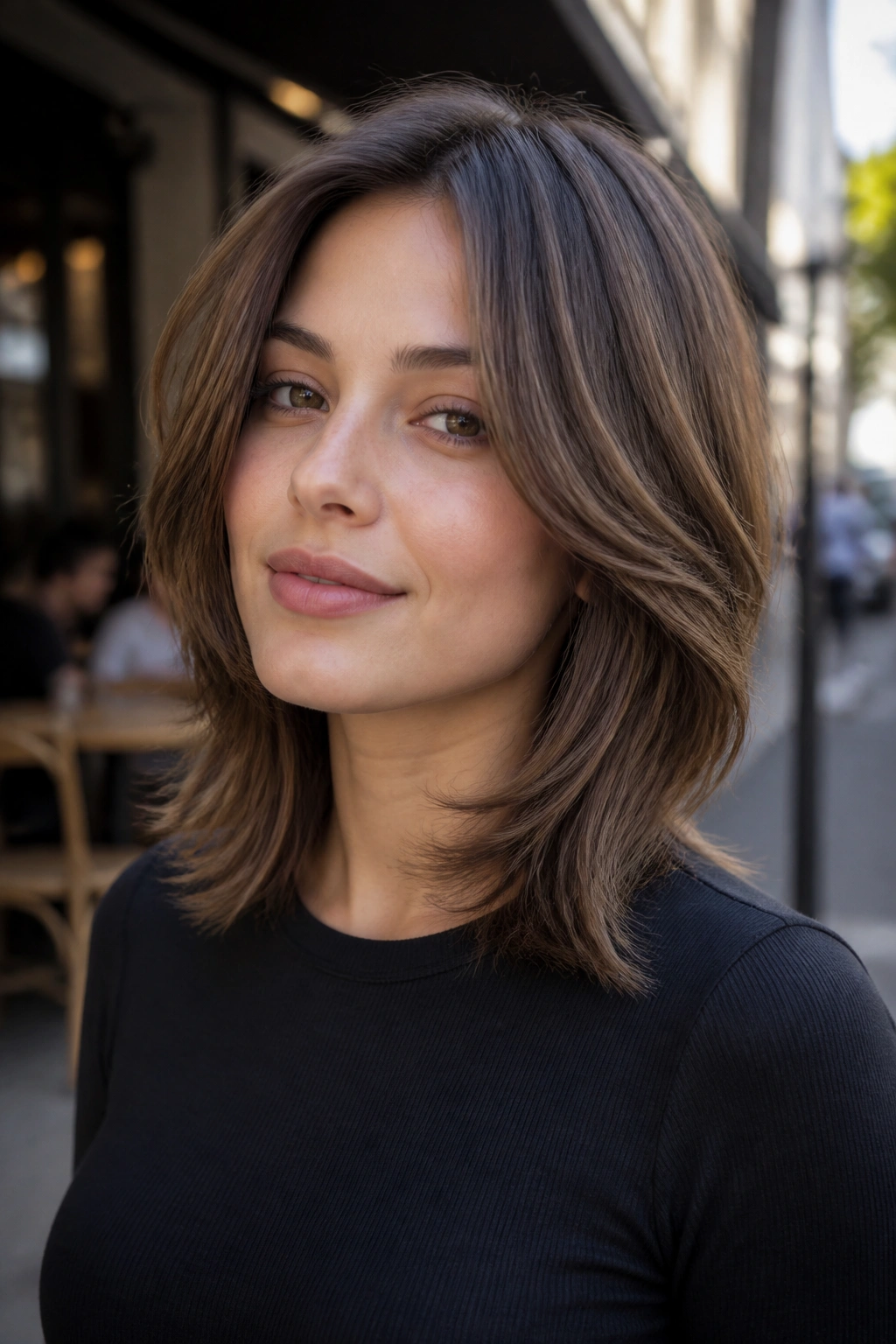
Razor-cut layers can go wrong when they are too thin, too wispy, or too eager to look airy. Done right, they move like they have some nerve.
On a round face, shoulder-length hair is useful because it drops below the widest point of the cheeks. The razor work softens the ends and keeps the cut from feeling bulky at the sides. That matters. A heavy shoulder-length cut can sit like a box. A razored one falls with a bit more bend and edge.
The best version keeps the perimeter just past the shoulders, with layers that start low enough to keep the cheeks clear. If your hair is thick, this cut can take out weight without making the shape collapse. If your hair is fine, ask for light razor work only at the ends, because too much slicing can leave it see-through.
This style is good with air-dried waves and also with a straight blowout. It has range. More than most people give it credit for.
9. Curly Shag With Lift at the Crown

Curly hair and round faces can be a gorgeous match when the shape is handled with care.
A curly shag keeps the volume where it helps and trims away the places where it adds width. The crown gets a little lift, the sides stay soft, and the curls can stack in a way that feels lively instead of puffy. If the haircut is done with too much caution, the result is a triangle. Nobody wants that.
How to Ask for It
Tell the stylist you want the curls shaped with height at the top and lighter bulk around the cheeks. If they cut curl by curl, even better. Dry cutting often shows the real shape more clearly, though not every salon works that way.
- Keep the shortest pieces above the cheekbone only if your curls shrink a lot.
- Leave enough length around the jaw to avoid a round halo.
- Use a diffuser on low heat so the crown keeps its shape.
- Scrunch in gel while the hair is damp, then do not touch it until it dries.
A good curly shag has a little chaos. That is the charm.
10. Modern Bowl Cut With Broken Fringe
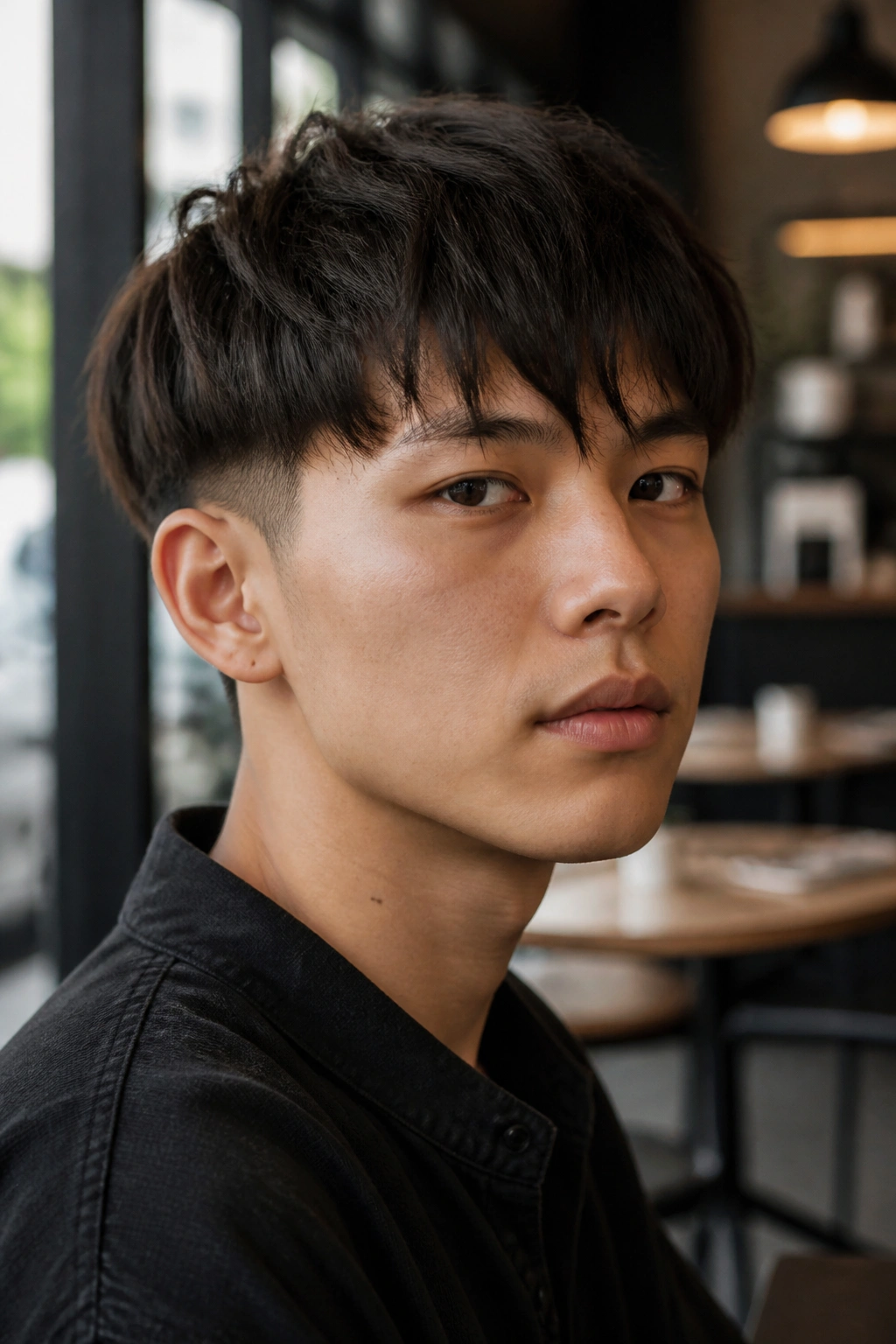
A bowl cut sounds risky until the edges get shattered.
The modern version is not the helmet shape people picture from old school photos. It has texture through the fringe, softer sides, and a little irregularity around the perimeter. On a round face, the appeal is the strong shape at the top and the clear break in the outline. The face gets framed, but not squeezed.
The length should stay a touch longer at the temples or just above the ears so the cut does not puff out at the widest point of the face. The fringe can sit above the brows or just touch them, depending on how bold you want it. If the fringe is too dense, the whole thing turns heavy. If it’s too wispy, the cut loses the punch that makes it interesting.
This is a statement cut. It asks for confidence and a good stylist. I like it best on straight or slightly wavy hair, where the line can stay visible. A little styling wax goes a long way.
11. Side-Swept Fringe With Long Layers
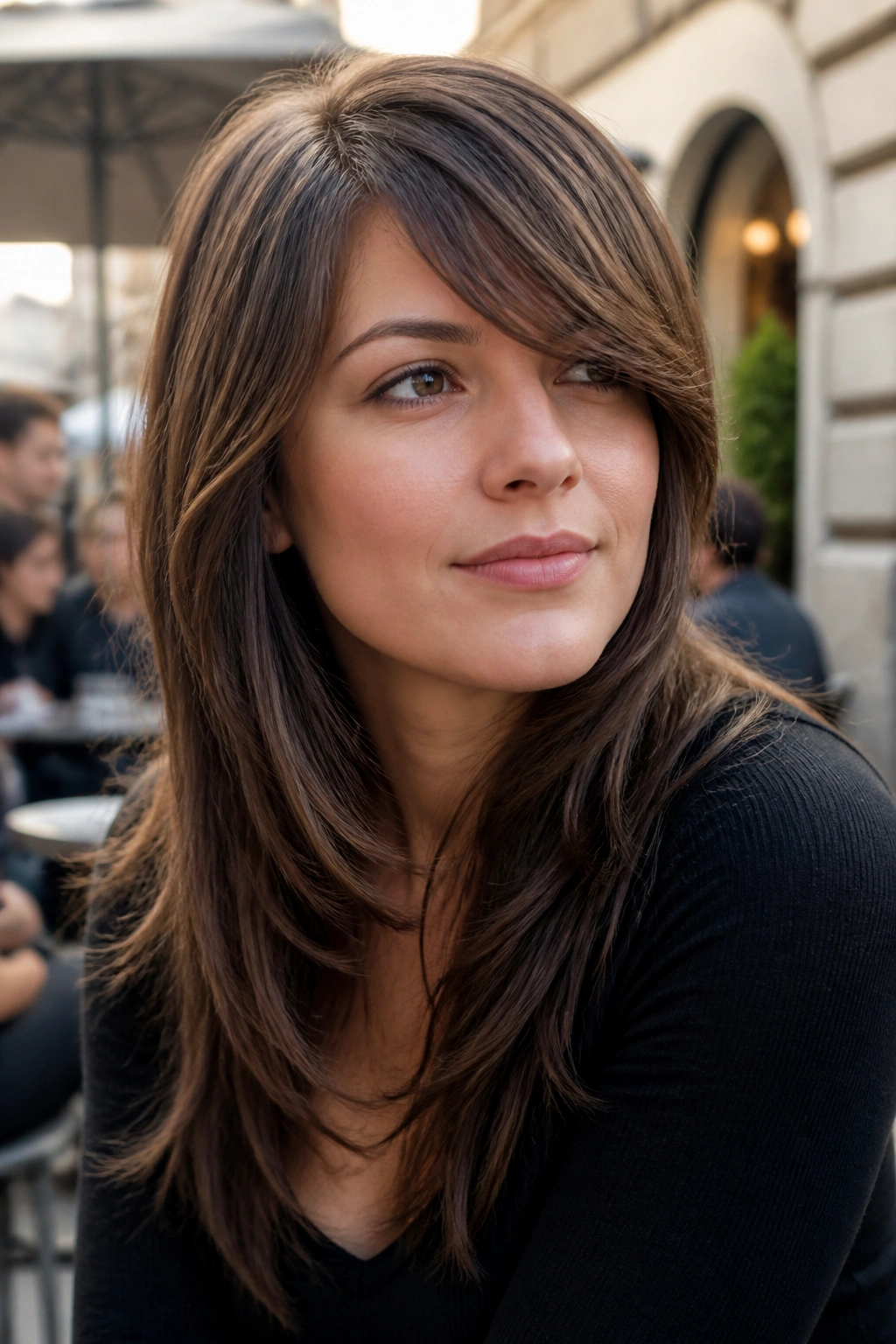
A side-swept fringe is one of those details that looks small on paper and does a lot in real life.
The diagonal line across the forehead takes attention off the width of the cheeks, which is exactly why it works on round faces. Pair it with long layers that start below the chin, and the whole cut starts to stretch the face visually. The layers keep the hair from sitting in one solid curtain, which is where things get bulky.
This shape is useful if you want edge without going short. The fringe gives movement, but it is softer than blunt bangs. The layers can be sharp or feathered depending on how rough you want the finish to look. A few broken pieces around the cheekbone help the cut feel less formal.
It also grows out well, which is a nice bonus. There’s nothing worse than a haircut that looks great for ten minutes and awkward for six weeks. This one holds together.
12. Graduated Stacked Bob
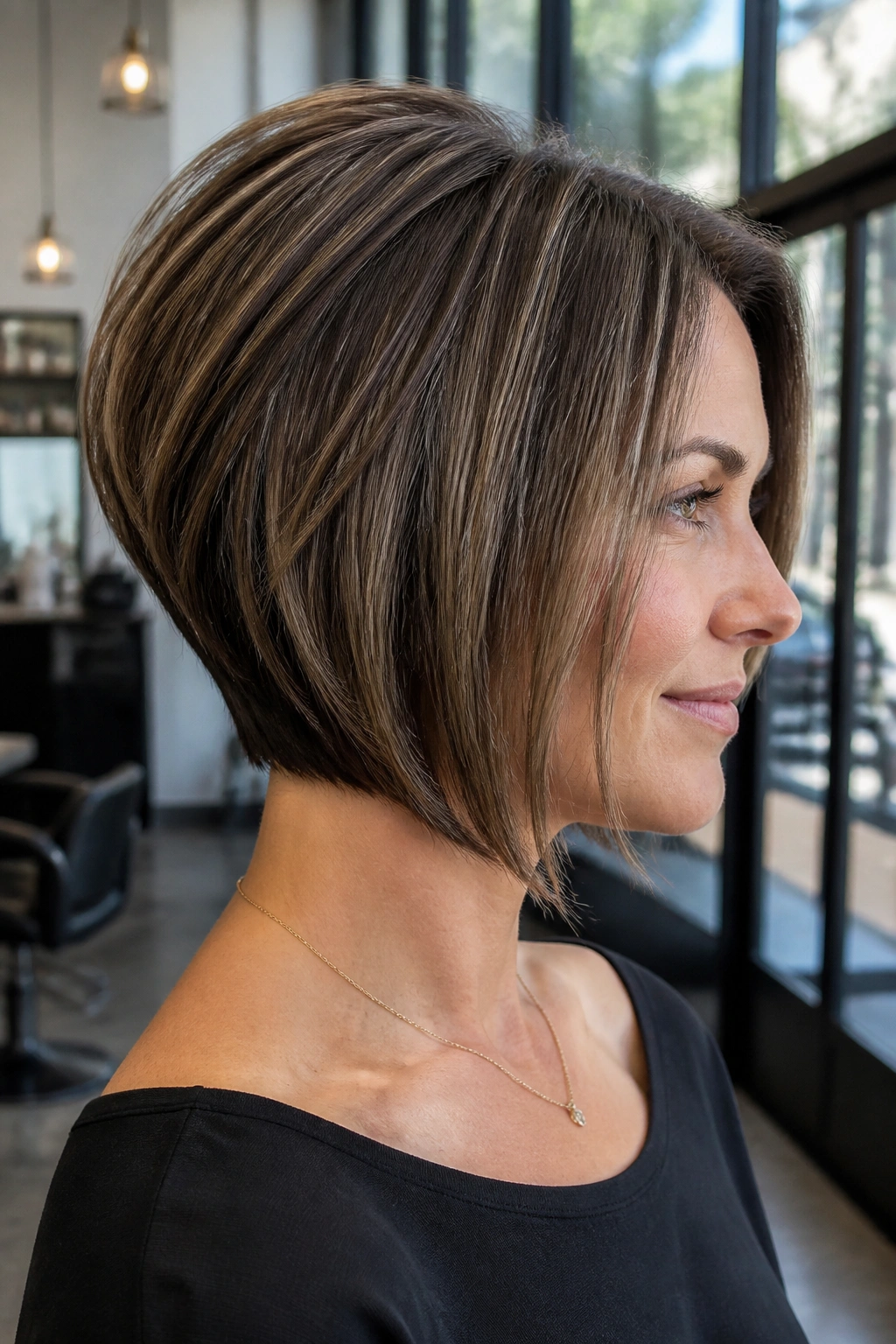
A stacked bob changes the head shape before it changes anything else.
The back is cut shorter and built up through stacked layers, which gives lift at the nape and a cleaner line along the jaw. For a round face, that structure can be a gift. It creates angle where the face is soft, and it keeps the silhouette from falling flat. The cut has a little architecture to it.
Unlike a flat bob, a stacked version gives the back some body without making the sides puff out. That matters if your hair is thick. A heavy bob can sit like a shelf. A good stack keeps the shape tight and polished. It also looks sharper from the side, which is where this haircut tends to shine.
Keep the longest front pieces near the chin or just below, and ask the stylist not to over-round the front. You want a clean slope, not a bubble. If you wear glasses, this cut can look especially cool because the frames and the haircut create two strong lines at once.
13. Mixie With Broken Layers
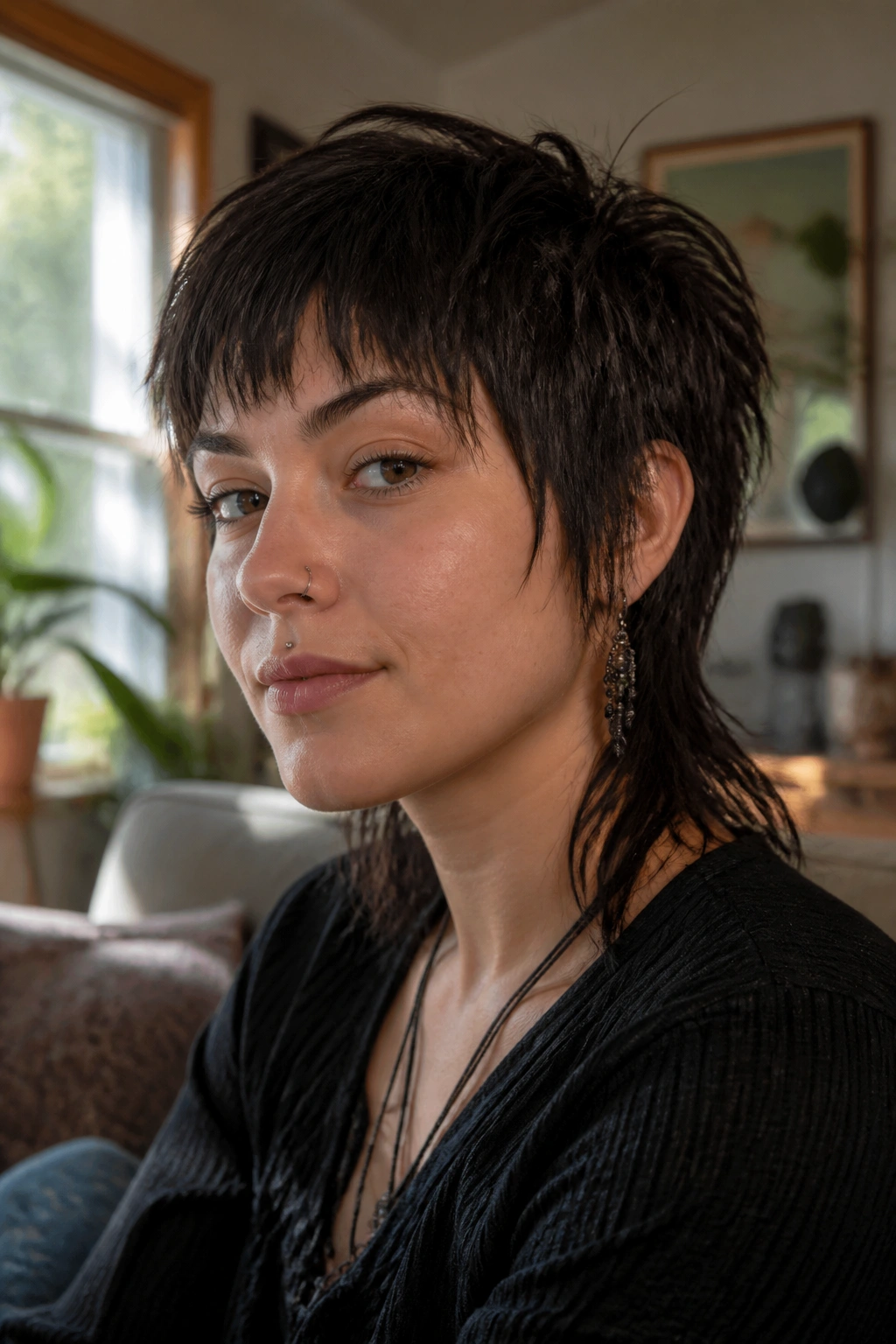
A mixie is a mullet’s cooler, less dramatic cousin.
The shape keeps the crown and top shorter, lets the back grow a little longer, and breaks the outline with rough layers. On a round face, that contrast works because it narrows the sides while giving the top some lift. The face reads longer, and the haircut feels less precious.
Why It Feels Different
Most short cuts either tidy the head or flatten it. A mixie does neither. It keeps motion in the top and a little length at the nape, which gives the cut a rebellious edge without turning it into a full retro mullet. That in-between feeling is what makes it interesting.
- Keep the fringe choppy, not heavy.
- Ask for texture around the ears so the sides do not balloon.
- Leave the nape soft and slightly longer.
- Style with a dry paste to keep the ends separated.
This cut is for someone who wants a little bite in their hair. Not a lot. Just enough to keep it from playing nice.
14. Shoulder-Grazing Cut With Flipped Ends

The flipped end can look playful, even a little cheeky.
On a round face, shoulder-grazing length is useful because it drops past the widest point of the cheeks. Add flipped-out ends, and the cut starts to move away from the face instead of hugging it. That outward turn creates a small visual lift, especially when the hair is straight or has a soft bend.
This is one of those cuts that looks simple until you notice how much shape it carries. The ends should sit on the collarbone or just above it, and the flipping should start near the final inch or two. If the turn happens too high, the sides can widen. If it starts too low, the shape gets lost.
I like this with a clean middle part or a soft side part. Both work. It is also one of the easier edgy styles to live with, because it does not demand a lot of daily fuss. A round brush or flat iron can set the ends in under five minutes if the cut is done well.
15. Choppy Lob With Invisible Layers
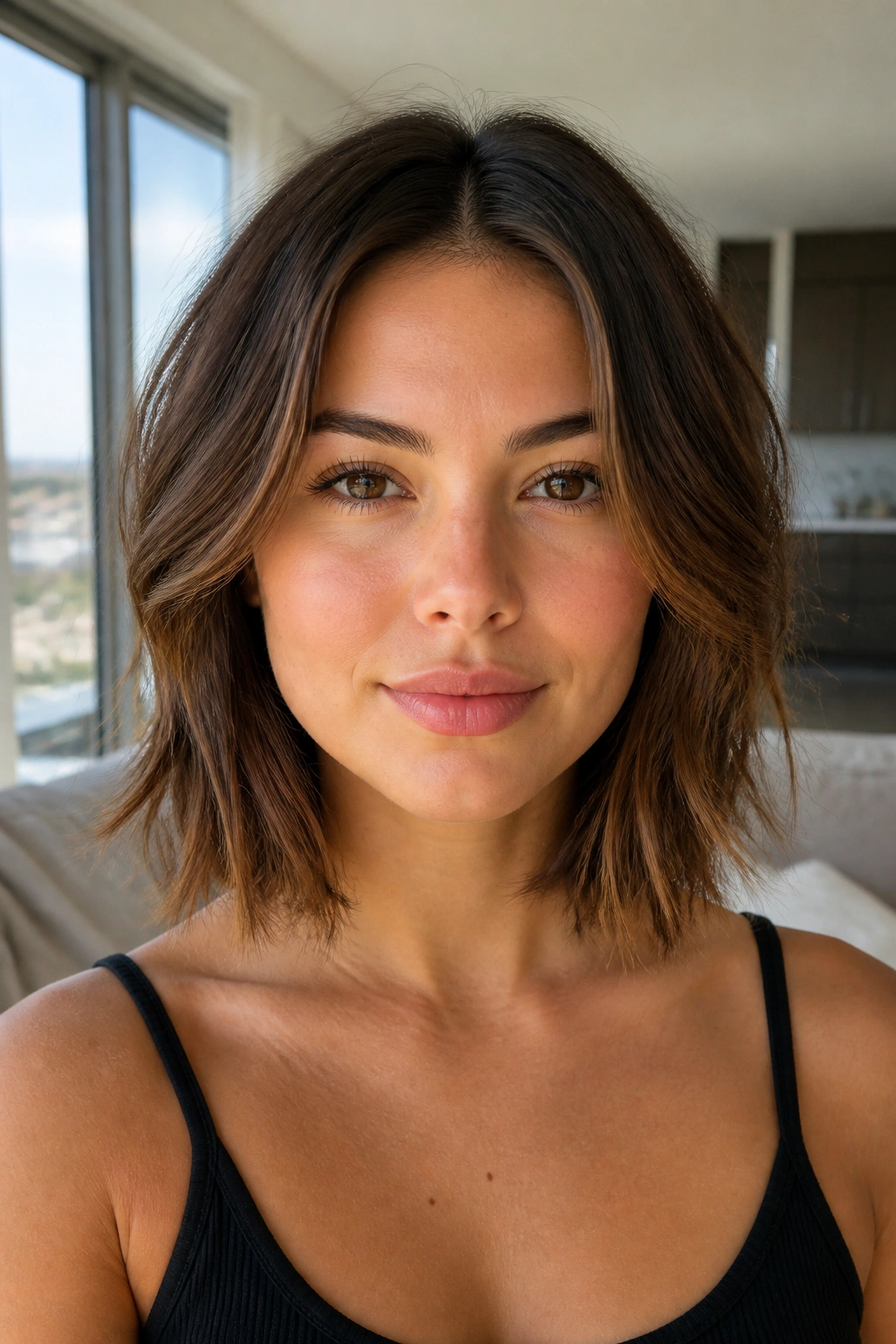
What makes this lob useful is not what you see first. It’s what you don’t.
Invisible layers sit inside the haircut instead of showing up as obvious steps, so the outer line stays neat while the hair loses some bulk underneath. That’s a smart move on a round face. You get a smoother outline through the jaw and collarbone, but the cut still has movement when you turn your head.
Ask for the length to land around the collarbone, with light face-framing pieces that begin below the cheekbone. The choppiness should live in the texture, not in a jagged perimeter. Too many visible layers can make the shape busy. Too few and the lob becomes heavy.
This cut is especially nice if you like hair that looks sharp but not stiff. It can be air-dried with a little cream, or blown out for a cleaner finish. Either way, the point is the same: less bulk at the sides, more shape where the eye needs it.
16. Undercut Pixie
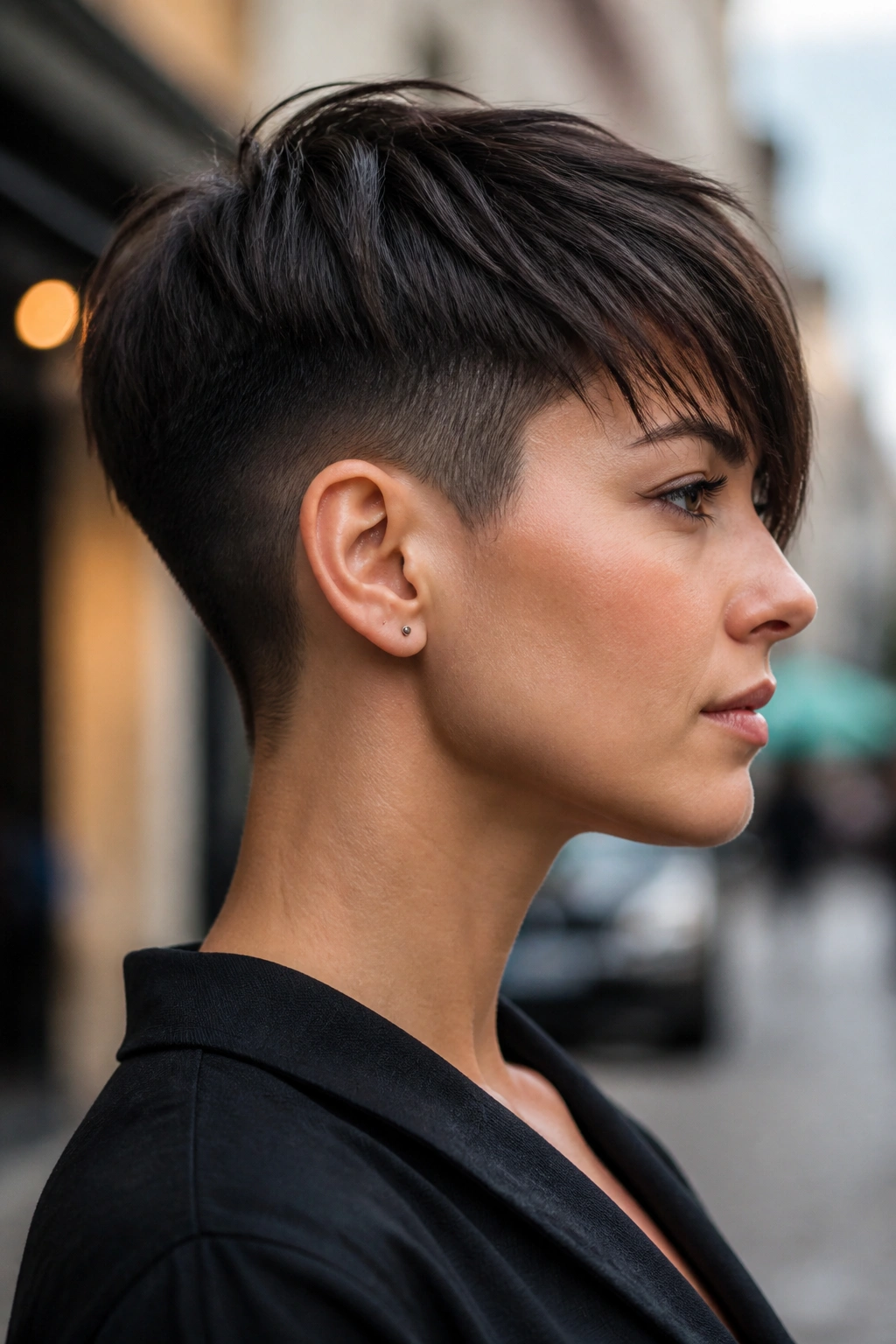
If your hair grows wide at the sides, an undercut can feel like a relief.
A small undercut at the nape or behind the ears removes bulk where round faces often don’t need more of it. Then the longer top and fringe give you the edge and height that make a pixie work. The contrast is what makes it look modern. It is also practical, because coarse or dense hair can get heavy fast in short shapes.
What to Know Before You Cut
This is not a haircut to fake. The shape needs commitment, because the undercut is part of the point. You will also need regular cleanups every 3 to 5 weeks if you want it to stay crisp. Skip that, and the sides start to swell.
- Keep the top long enough to sweep forward or up.
- Leave one fringe section longer if you want styling options.
- Use a matte paste for separation and hold.
- Ask for the undercut to taper softly into the longer sections.
It looks sharp. It also behaves better than you might think once you learn its rhythm.
17. Long Hair With Internal Face-Framing Layers
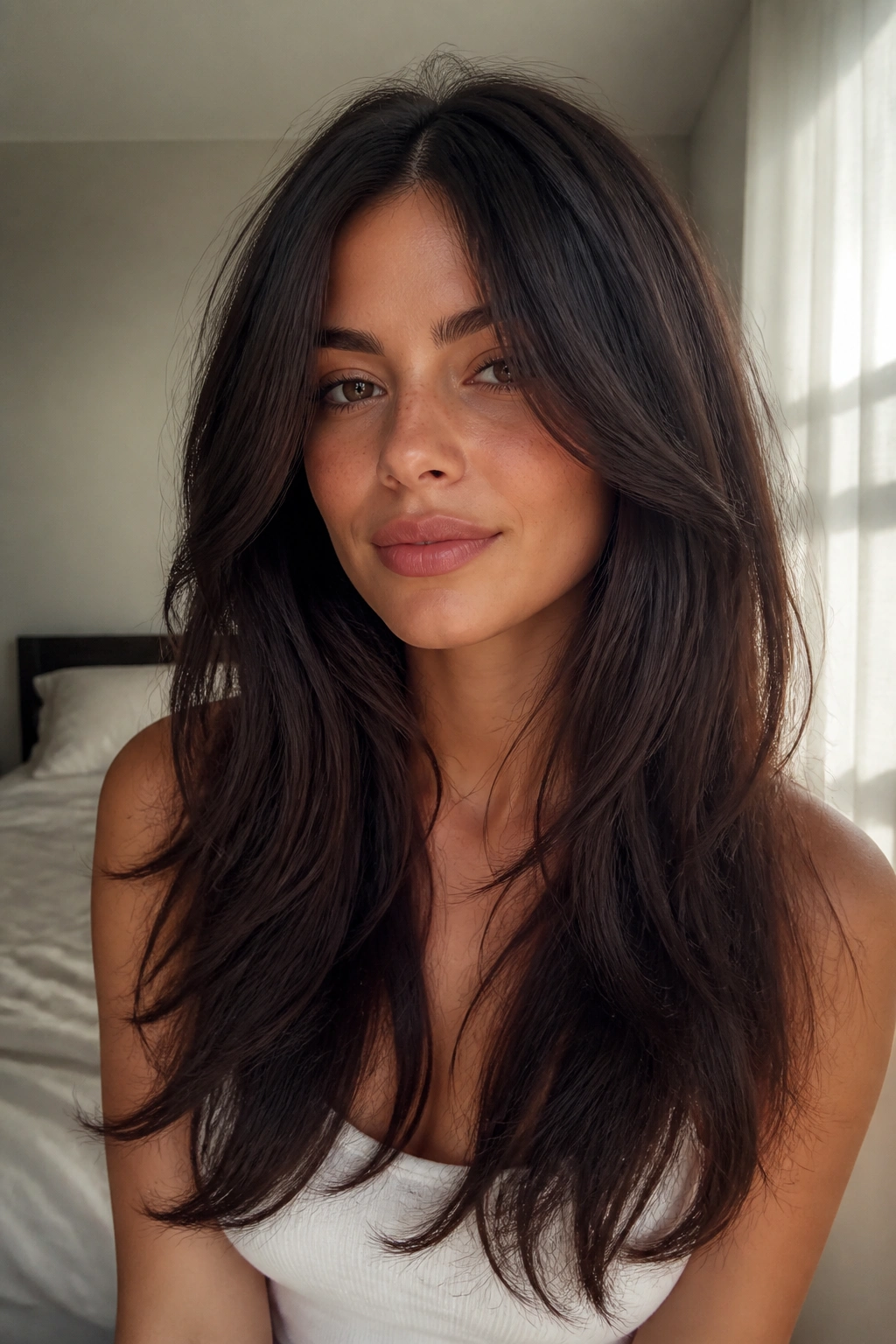
Long hair can get edge without losing length.
The easiest way is through internal face-framing layers that start below the cheekbone and move down toward the collarbone or chest. That keeps the face open around the widest point while preserving the drama of long hair. A blunt, heavy curtain of length can make a round face feel even rounder. These layers stop that.
The perimeter can stay blunt or slightly beveled, which gives the cut a clean finish. I like this on hair that can take a bend, because the layers show up better when the ends are not poker straight. A center part can work here too, as long as the front pieces are long enough to carve the face.
This is a good option if you want something stylish but not too short. The haircut looks polished in a ponytail, which matters more than people admit. If a cut only works when it’s fully styled, it gets old fast.
18. Shattered Bob
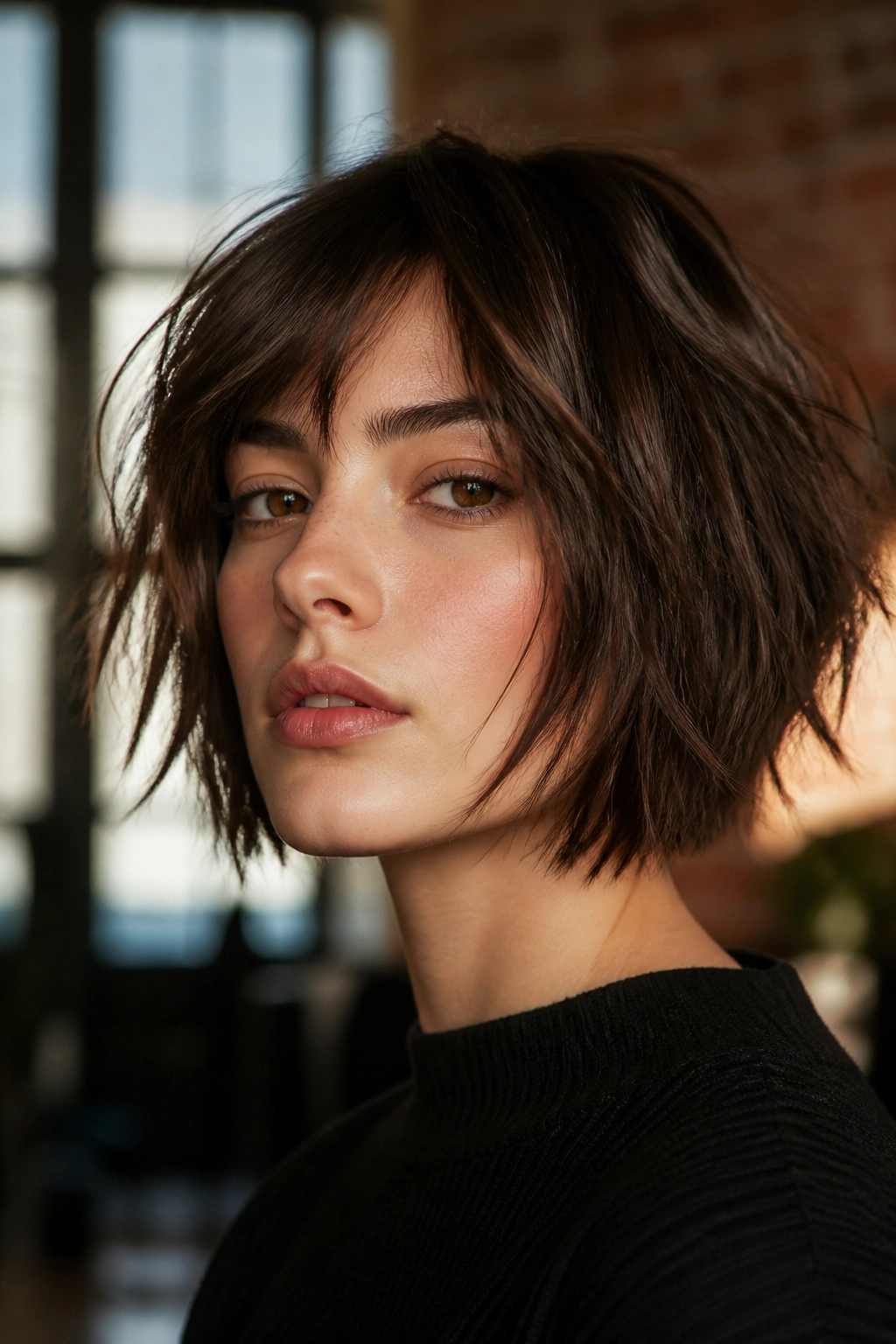
A shattered bob is for anyone who wants a bob with more bite.
Unlike a classic bob, the shattered version uses point-cut ends and broken texture through the perimeter, so the line feels less solid and more lived-in. On a round face, that broken edge keeps the haircut from forming one smooth circle around the cheeks. The shape still reads as a bob, just with more grit.
Keep the length at the jaw or a touch below. That’s where the silhouette starts to help instead of cling. If the bob ends right at the fullest part of the cheeks, it can make the face look wider. If it lands below the jawline, the shape starts working in your favor.
This cut likes a little product. Sea salt spray, dry texture spray, or a light cream can all help. What you want is separation. Not stiffness. A shattered bob should move when you turn your head, and the ends should look piecey rather than polished to death.
19. Crop With a Long Fringe and Tight Nape
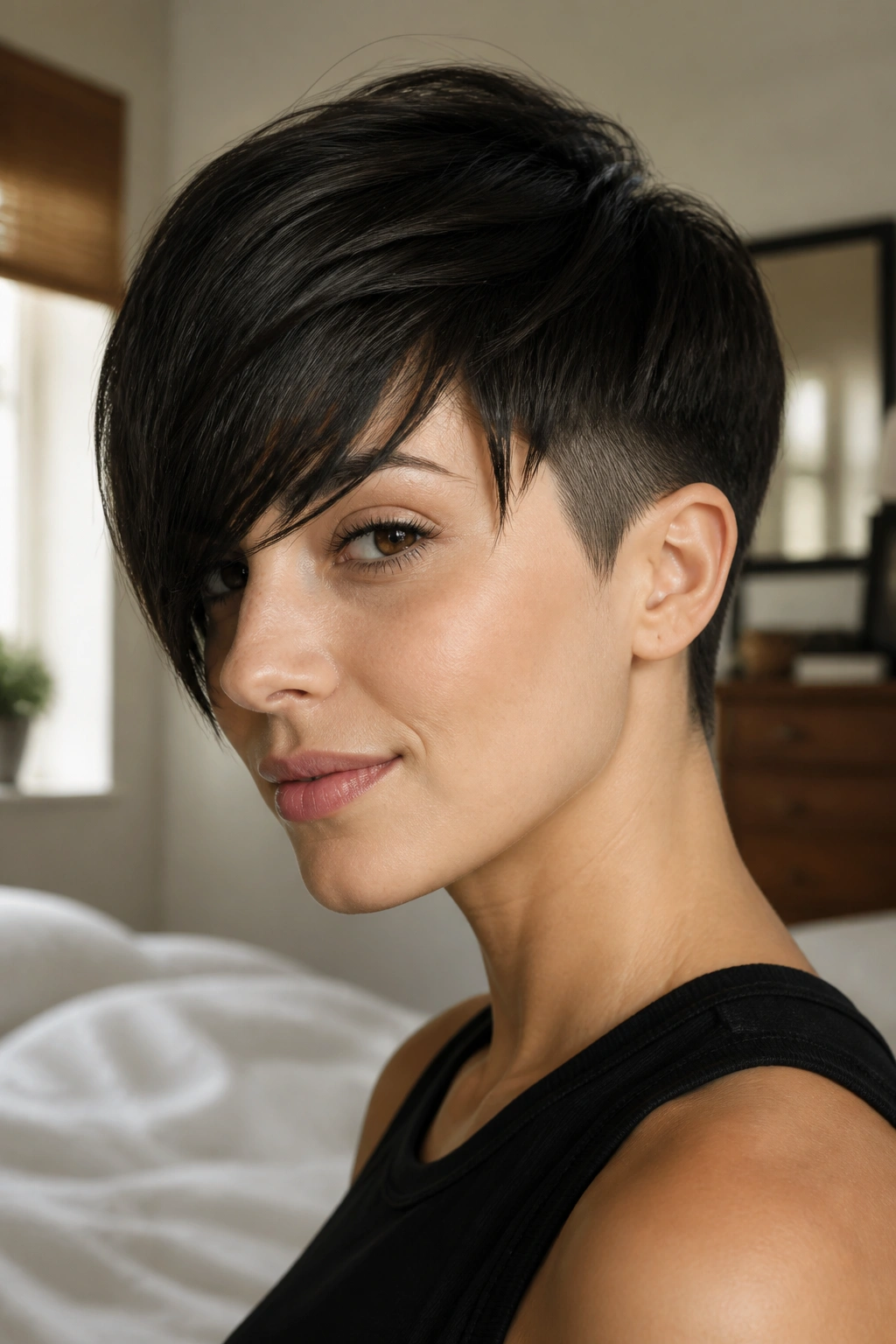
A strong fringe can do more than a lot of length ever will.
This cropped shape keeps the nape tight and the top compact, which clears space around the lower face. The long fringe then drops forward and cuts a vertical path through the face. That contrast is the whole thing. Short in back, longer in front, and a little rebellion across the forehead.
How to Wear It
The fringe should be long enough to sweep to one side or part down the middle, depending on the mood. If it’s too short, the face can start to feel open in the wrong places. If it’s too heavy, it blocks the eyes and makes the cut sit flat.
- Keep the nape neat every few weeks.
- Use a light cream on the fringe so it doesn’t frizz.
- Let the top stay a little airy instead of perfectly slick.
- Ask for texture through the ends, not through the whole head.
This is a strong look. It works best when you let it look a little imperfect.
20. Center-Parted Midi With Angled Front Pieces
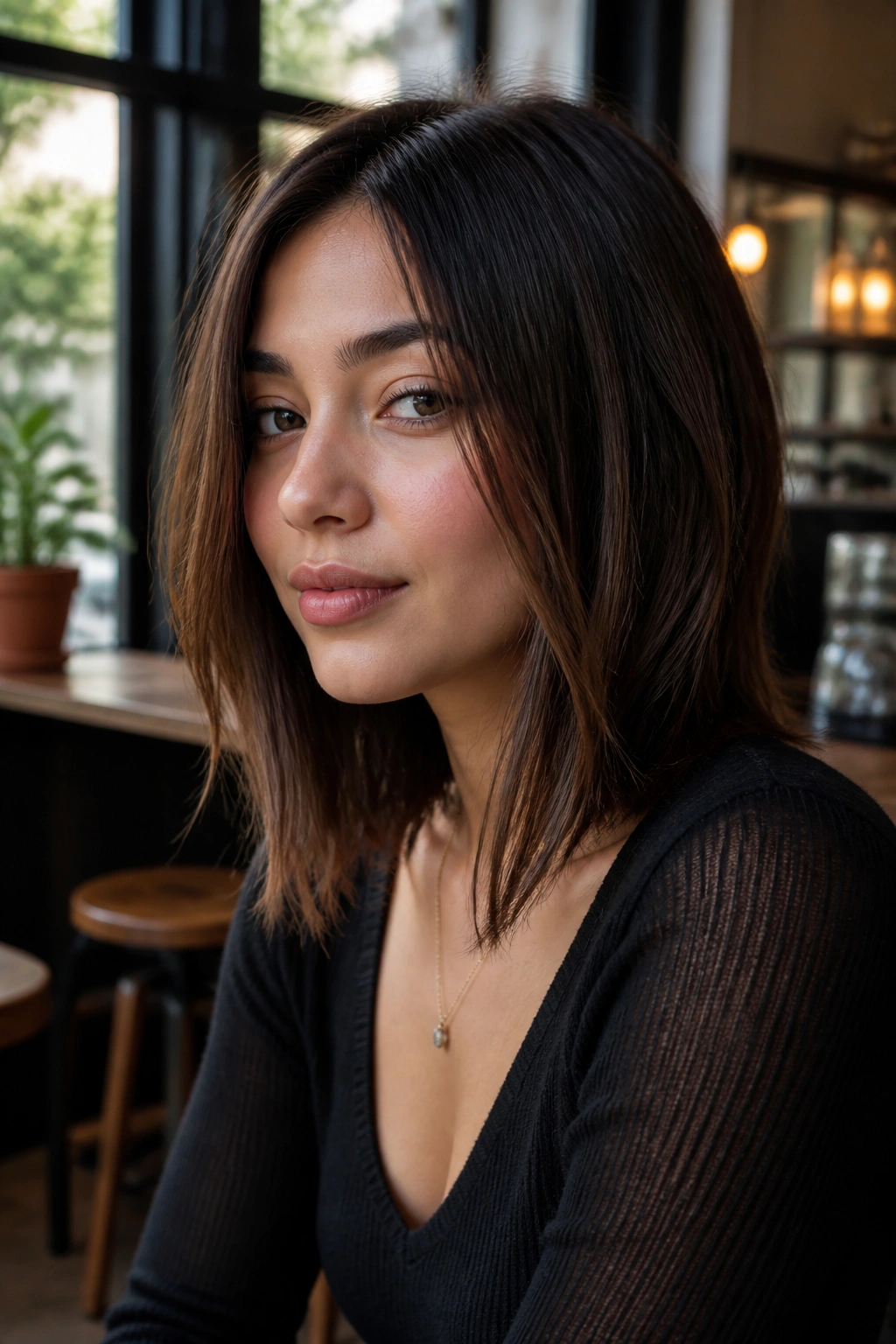
Center parts get blamed too fast.
On a round face, a middle part can work if the front pieces are long enough and the ends are angled instead of rounded. The middle split creates symmetry, but the longer front angles keep the cheeks from feeling boxed in. The cut sits between polished and sharp, which is a nice place to be.
The front pieces should graze the lips, chin, or collarbone, depending on your length. If they stop at the cheek, they can add width. That’s the line you want to avoid. A midi length gives you room to keep the shape moving without giving up the weight of longer hair.
This cut looks especially good when the ends are lightly beveled and the hair has a small bend through the mid-lengths. Straight and flat can work too, though it needs a little shine to keep from going limp. A center-parted midi is not the loudest style on this list, but it may be one of the smartest.
21. Curly Bob With Perimeter Length
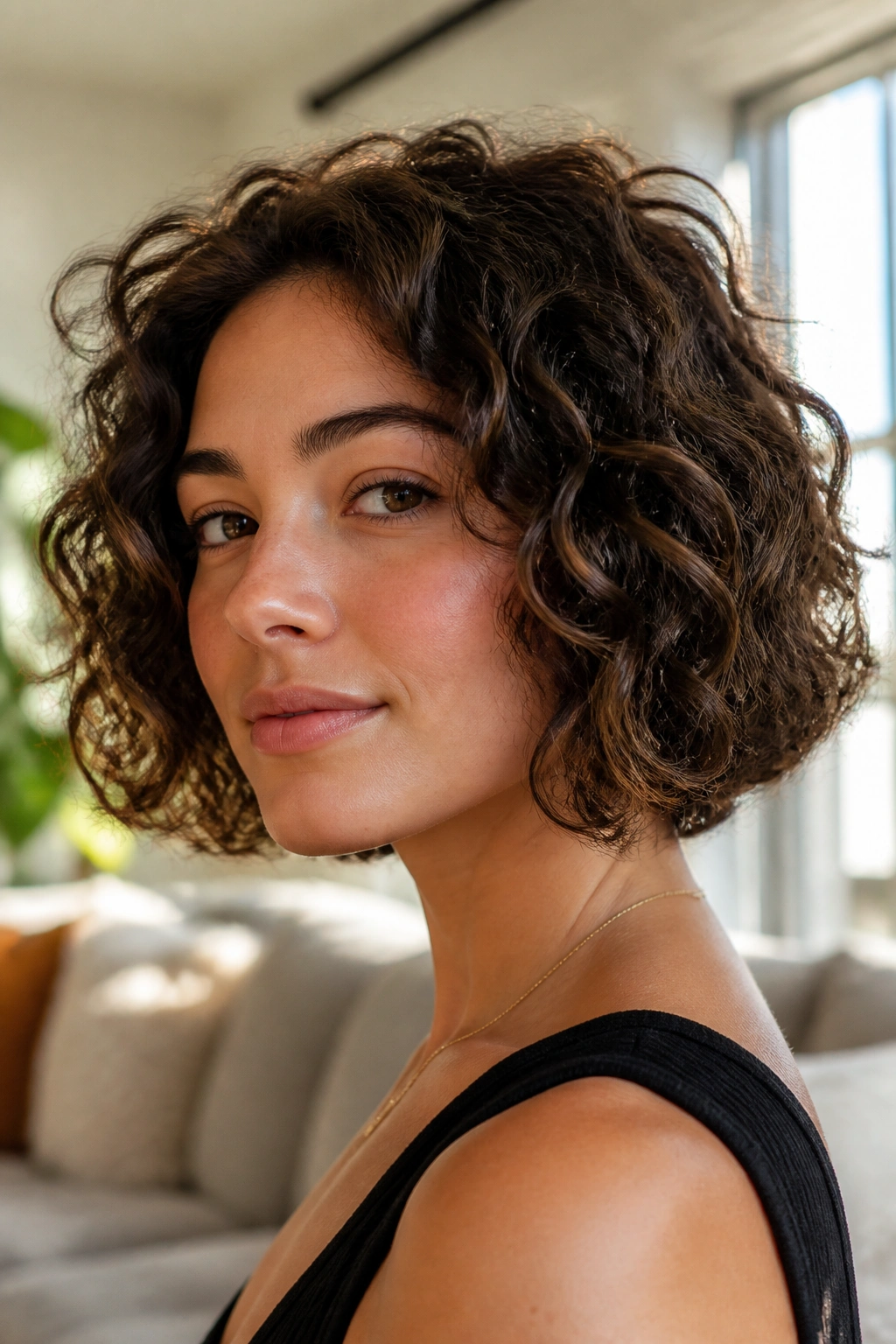
Can curls make a round face look wider? Sure. If the bob is cut too short, they can.
The fix is perimeter length. Keep the curly bob at the chin or below, and let the curls stack in a way that maintains shape without puffing out at the sides. The interior layers can take some weight away, but the outer line should stay strong enough to keep the face from feeling boxed in by volume.
How to Keep the Shape
A curly bob needs a little discipline. Not harsh discipline. Just enough to keep the silhouette from turning into a mushroom.
- Ask for the perimeter to stay low around the jaw.
- Keep the crown shaped, not flattened.
- Use a diffuser on low heat.
- Refresh the curls with a water-and-leave-in mix on day two.
A good curly bob feels full, not wide. That difference matters more than people think, and you can see it in the profile long before you notice it in the mirror.
22. Soft Mullet Bob With Bent Ends

This is the one for anyone who wants a little edge without going full punk.
A soft mullet bob keeps the top and crown shorter, lets the back run a touch longer, and leaves the front pieces broken rather than perfect. On a round face, that shape shifts attention upward and downward at the same time, which makes the cheeks feel less dominant. It has attitude, but it still wears well in real life.
The key is softness at the sides. If the back gets too long or the front gets too narrow, the cut starts to feel costume-like. Keep the layers loose, the fringe airy, and the nape a bit longer than a classic bob. That creates a shape that looks deliberate even when it’s messy.
I like this cut with a bit of bend in the ends, not pin-straight hair. A flat iron wave, a touch of mousse, and finger-drying can be enough. If you want the most edge with the least fuss, this is a strong place to land.
Round faces do not need to be fought. They need a haircut that gives the eye somewhere else to go. Angle, lift, asymmetry, and broken texture do that work better than blunt rules ever will.
Pick the shape that changes the silhouette, not the one that hides it. That is usually where the good hair lives.
