



A round face can handle more haircuts than people give it credit for. The trouble starts when the cut stops right at the widest part of the cheeks, or when every layer lands in the same place and the whole shape turns boxy.
No, you do not need to hide your face shape. You need movement, angles, and a little lift near the crown. That can come from a collarbone lob, a shag, a center part with long layers, or a pixie that keeps height on top instead of width at the sides.
What I like about haircuts for round faces is how much range they have once the cut stops fighting the bone structure. Soft fringe can work. So can a blunt bob, if the length is right and the styling is clean. Even curls can look sharper when they’re layered so they don’t balloon out at the cheeks.
These 22 cool haircuts lean into that idea in different ways—some create length, some break up width, and some use texture to keep the style from feeling stiff. The first one is the easiest place to start if you want something low-drama and easy to wear.
1. Long Layers With a Center Part
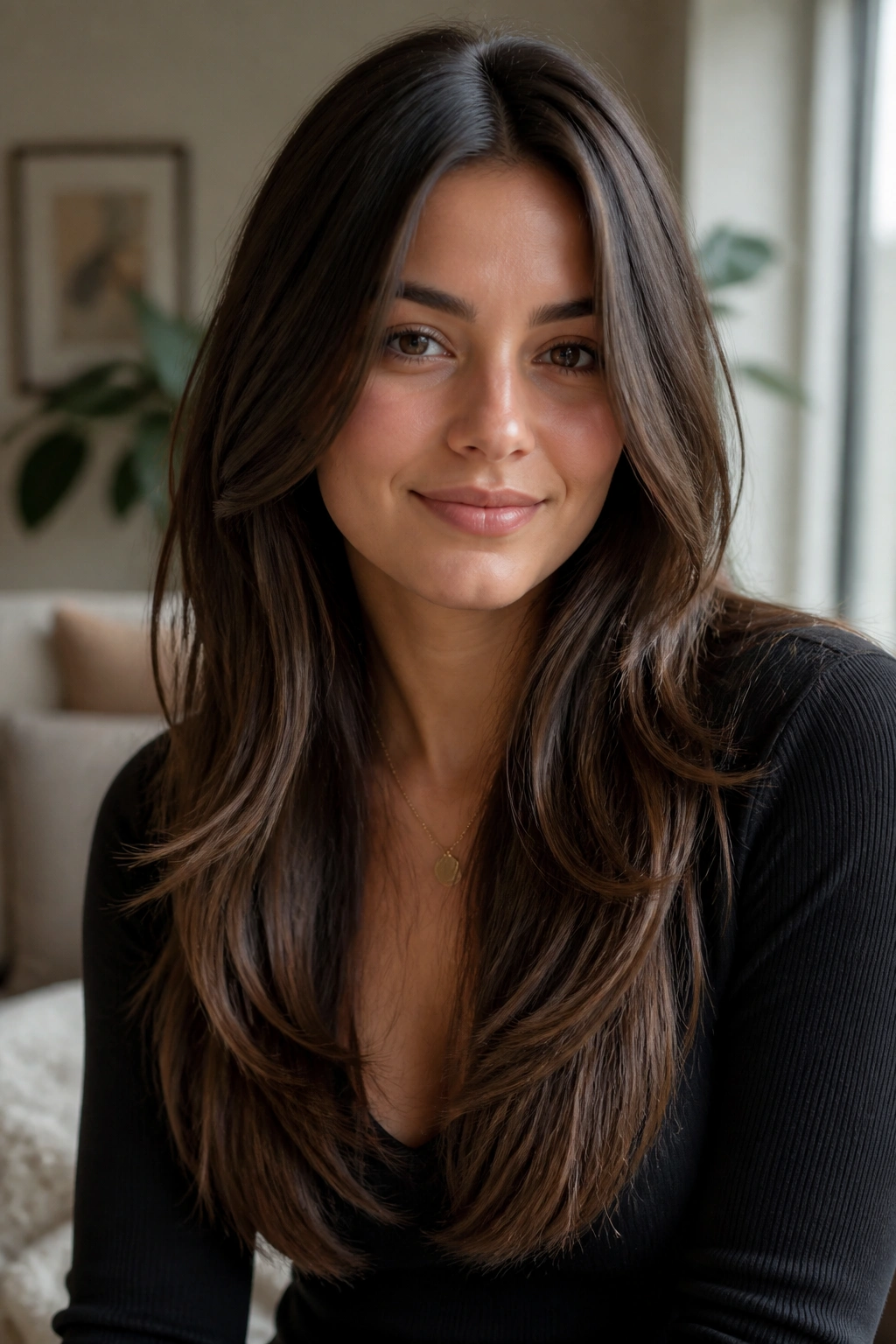
This is the safest place to begin if you want your hair to make your face look longer without looking like you tried too hard. Long layers with a center part draw the eye straight down the middle, and that vertical line matters more than most people realize.
Why It Works
Ask for layers that start below the chin, not at the cheekbone. That one detail changes everything. If the shortest layer sits too high, the haircut can puff out around the face; if it drops lower, the shape stays open and clean.
A center part also keeps both sides balanced. That symmetry can feel a little strict on some people, but on a round face it does useful work. The hair falls in two soft panels instead of creating a wide frame around the cheeks.
- Best on straight, wavy, or softly curly hair
- Ask for the longest layer to hit collarbone length or lower
- Style with a round brush or a large barrel brush, pulling the front pieces away from the face
- A tiny bend at the ends keeps the cut from looking flat
Pro tip: if your hair flips outward at the bottom, have the stylist clean up the ends with a soft point cut instead of a blunt chop.
2. Collarbone Lob With Soft Ends
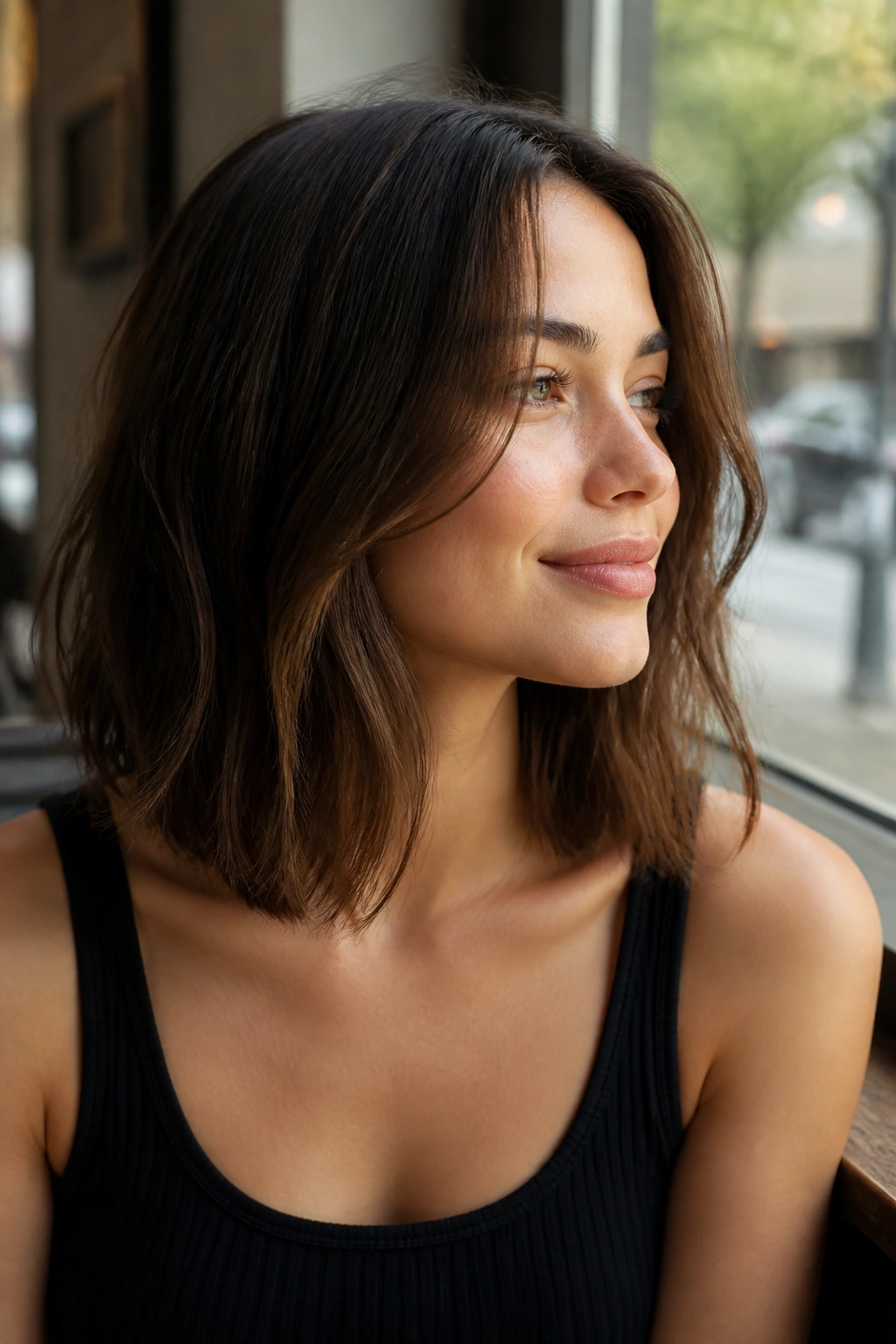
A collarbone lob is one of those cuts that quietly does everything right. It gives you length, keeps the neck line visible, and avoids the heavy width that can happen with a bob that stops at the jaw.
The soft end detail matters. Hard, blunt ends can look dense on fine hair and bulky on thick hair. Soft ends move better, especially when the cut grazes the collarbone and the front pieces drop a little lower than the back.
I like this cut for people who want a style that works in air-dry mode and still looks polished with a quick blow-dry. It’s friendly. It does not demand a full salon routine every morning. A little bend at the ends—barely there, really—keeps it relaxed and modern.
If you wear glasses, this length is especially useful. The shape sits neatly under the frames instead of crowding the face.
3. Side-Swept Fringe and Shoulder-Length Cut
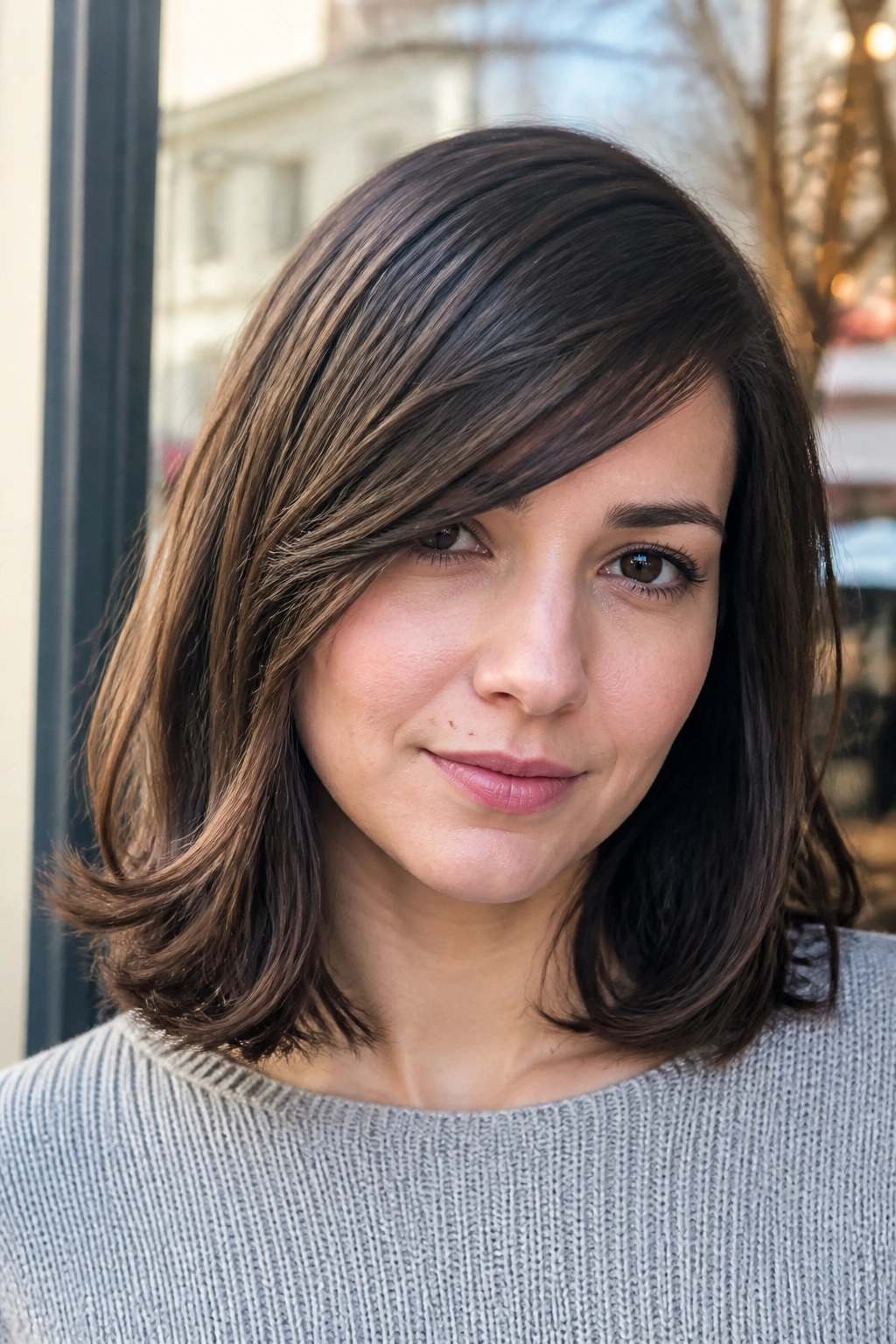
Can bangs work on a round face? Yes, if they move diagonally instead of cutting straight across. Side-swept fringe breaks up width, and shoulder length gives the rest of the hair enough room to fall below the cheeks.
The sweet spot is a fringe that starts near the arch of the brow and disappears into the longer layers by the cheekbone. That line pulls the eye to one side. It also gives the haircut a little motion, which matters more than people think when the face shape is soft.
How to Style It
Blow-dry the fringe with a medium round brush, directing it across the forehead and slightly away from the face. A light mist of flexible spray keeps the shape from collapsing by noon.
Shoulder-length hair around it should stay loose, not puffy. If your hair tends to swell at the sides, ask for interior weight removal only—not choppy ends. The difference is subtle in the chair and obvious when you look in the mirror.
4. Textured Shag With Piecey Layers
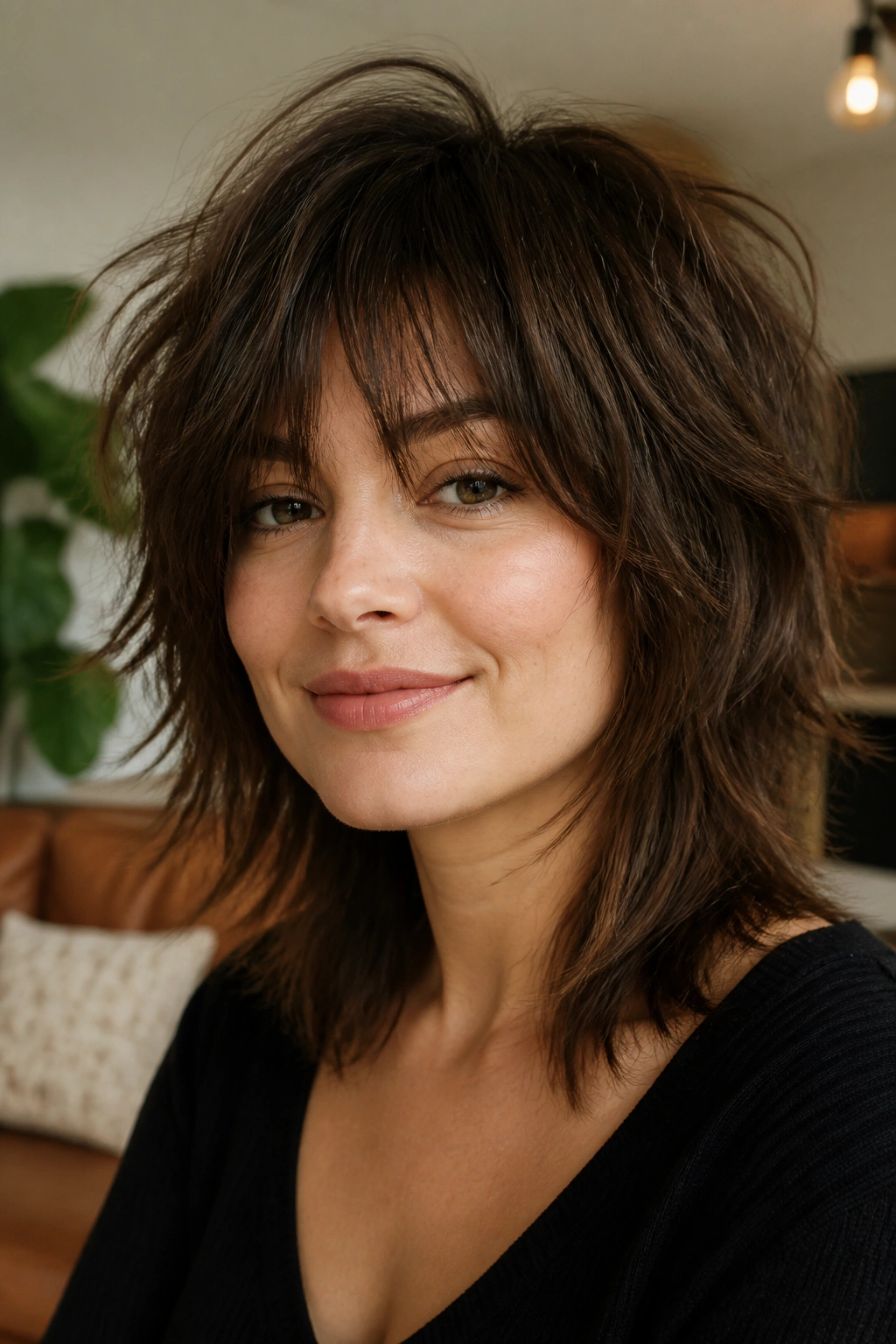
A shag can be magic on a round face, but only when it is cut with some restraint. Too much width at the sides and you get a mushroom. Too little texture and you lose the whole point.
The version I like has piecey layers through the crown and cheekbones, with the longest pieces falling past the jaw. That keeps the face open. It also gives the top more lift, which helps a round shape look a touch longer.
Ask for razored movement, not random choppiness. There’s a difference. The right shag looks lived-in; the wrong one looks like the stylist got carried away with the scissors.
- Good for wavy hair and dense straight hair
- Ask for volume at the top, not the sides
- Keep the bottom edge soft so it doesn’t sit like a shelf
- Use a small amount of mousse at the roots, then scrunch dry
A shag is not for everyone. But if your hair likes texture and hates looking stiff, this one earns its keep fast.
5. Angled Bob With Longer Front Pieces
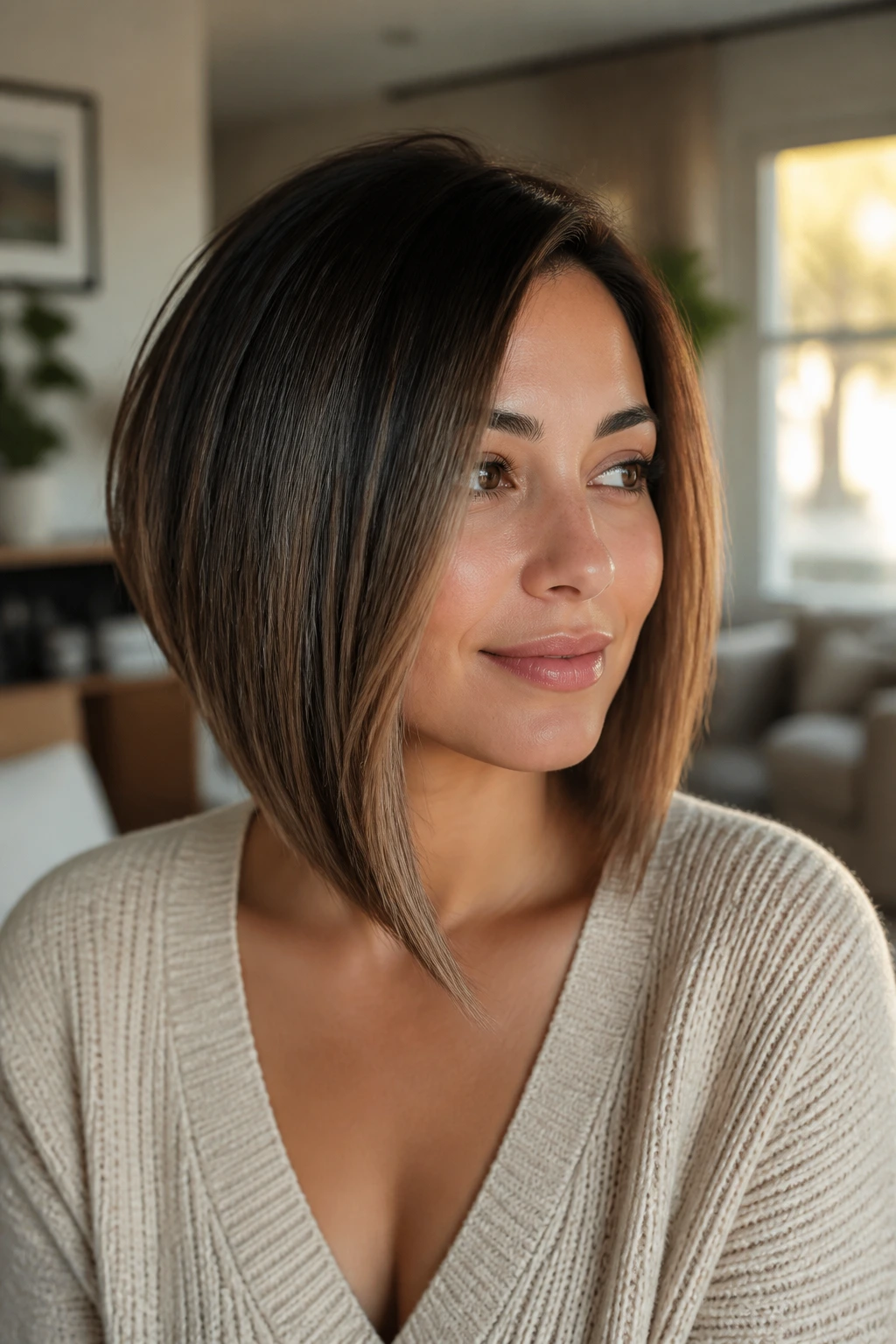
An angled bob does one thing better than almost any other short cut: it builds a diagonal line across the face. That diagonal line is what keeps a round face from looking wider than it is.
The back stays shorter. The front drops forward by an inch or two. That gentle slope changes the whole mood of the haircut. It looks sharp without turning severe, and it gives the jawline a little structure even when the face itself is soft.
I’m a fan of this one on straight or slightly wavy hair because the line reads cleanly. If your hair is very curly, the angle can disappear unless the cut is shaped carefully while dry. That part matters. Don’t let anyone cut this one as if every head of hair behaves the same way.
A little bevel at the ends keeps the bob from looking helmet-like. That’s the trap with this shape. When it’s too rigid, it can feel dated fast. Keep the edge soft, and it holds up much better.
6. Curly Shoulder Cut With Face-Framing Layers
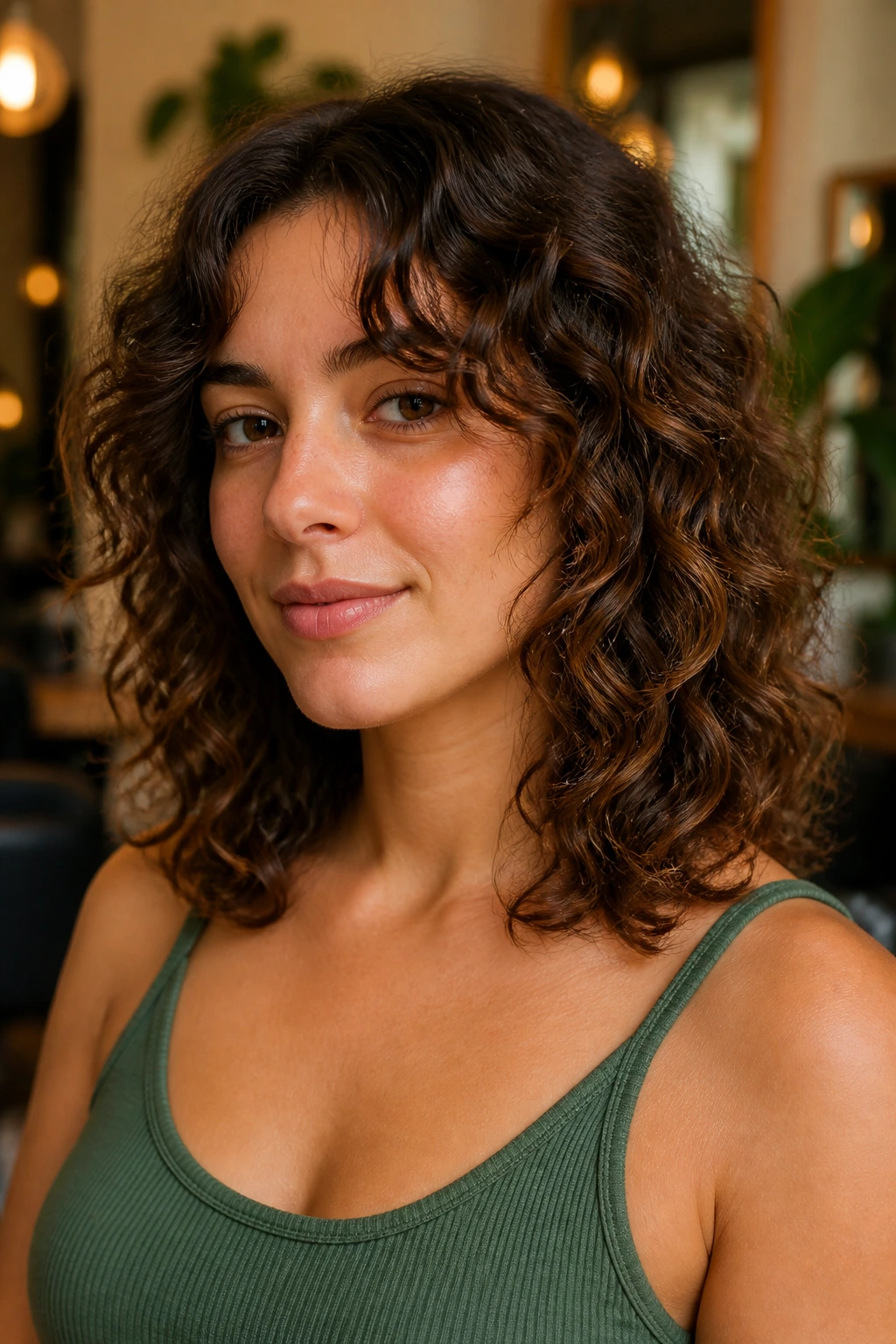
A curly haircut for a round face needs to solve one problem first: where the bulk sits when the curls dry. If all the volume lands around the cheeks, the face reads wider. If the shape opens up below the chin, the cut feels lighter right away.
This is why a shoulder-length curly cut with face-framing layers works so well. The shortest pieces should start below the chin once the curls spring up. That gives the face room. It also stops the curl pattern from building a triangle, which is a common issue with one-length curly cuts.
Unlike a straight cut, this one usually needs to be shaped with the curl pattern in mind. Dry cutting can help, or at least a stylist who knows how your curls shrink. That sounds obvious. It isn’t always done well.
If your curls are dense, ask for the layers to be concentrated through the top and upper sides rather than the lower edge. That keeps the outline from getting too wide. If they’re looser, a side part can add a little length without losing bounce.
7. Wispy Pixie With Height on Top
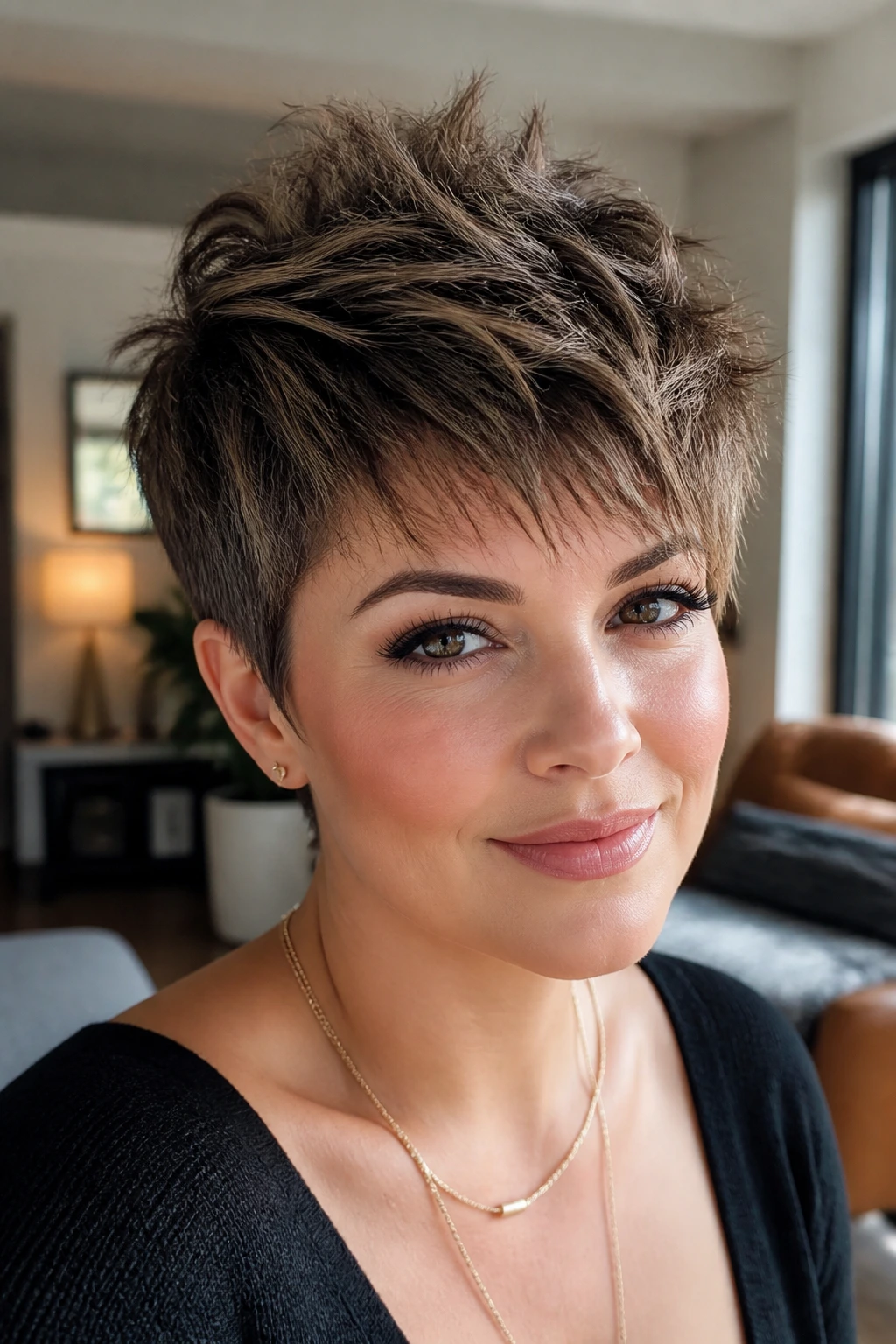
Short hair can flatter a round face beautifully when the top has lift. A wispy pixie does exactly that. It keeps the sides tight enough to avoid bulk and leaves enough length on top to build shape where it helps most.
What Makes It Work
The crown should have about 2 to 3 inches of length, sometimes a bit more if your hair lies flat. The sides can be tapered close to the head, and the fringe should stay soft rather than blunt. That softness matters. A heavy, straight fringe can squash the face shape fast.
This cut is also surprisingly easy to style. A pea-sized bit of matte paste or light wax through the top gives separation. If you want more height, dry the roots in the opposite direction first, then smooth the top layer back into place. Small move. Big difference.
- Best for fine to medium hair
- Needs trims every 4 to 6 weeks
- Ask for texture at the crown, not the temples
- Keep the nape neat so the whole cut looks intentional
A pixie like this is not low-maintenance in the “never think about it” sense. It is low-maintenance in the “five minutes and done” sense. That’s a better deal.
8. Sleek Blunt Lob With a Deep Side Part
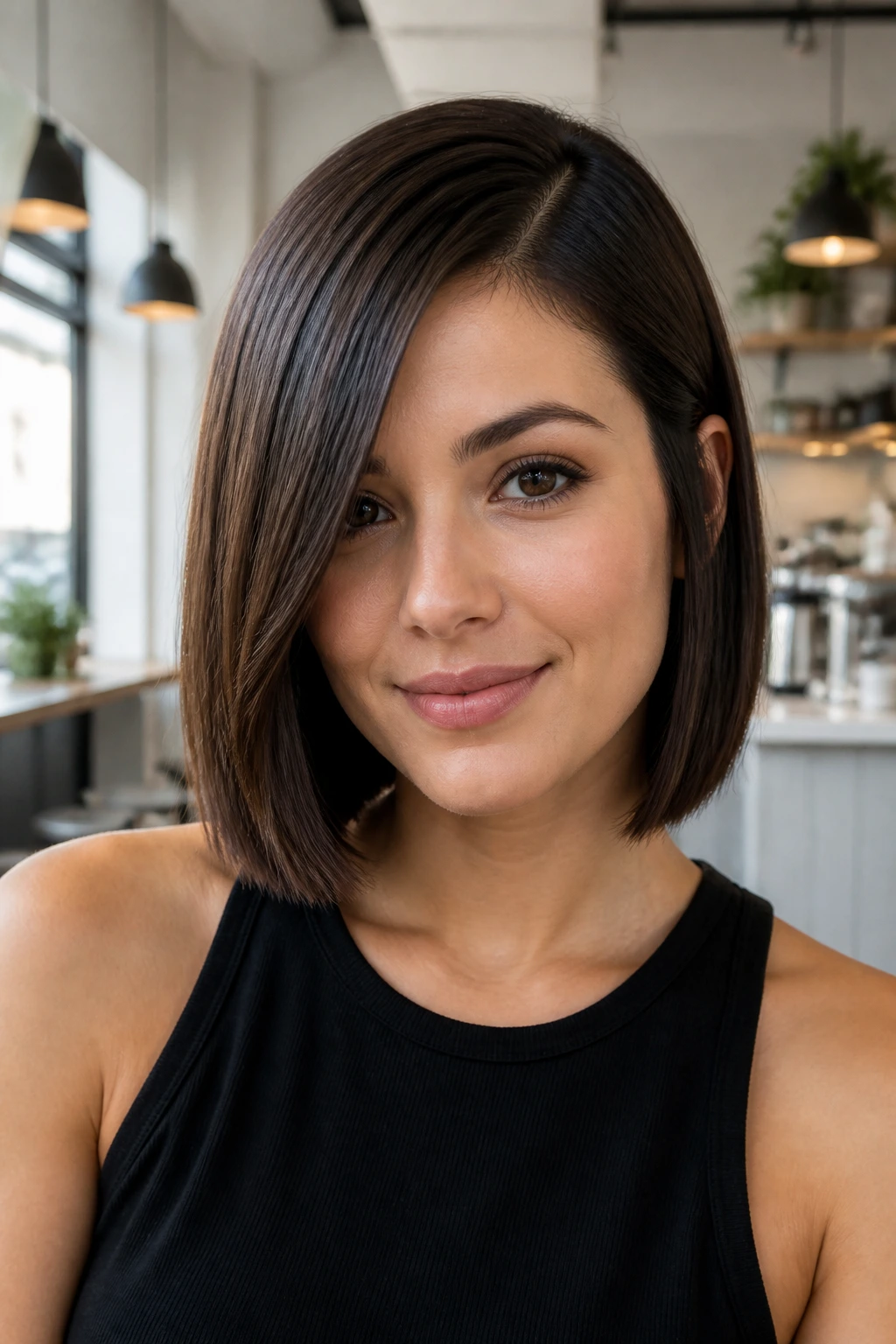
A blunt cut does not automatically make a round face look wider. Length and parting do the heavy lifting here. If the lob falls below the jaw and the part sits deep to one side, the shape can look clean and lean rather than bulky.
The deep side part creates a strong diagonal through the hairline. That line breaks up symmetry, which is useful when the face itself is softly rounded. The blunt edge then adds polish. It gives the haircut a crisp finish, especially if your hair is fine and naturally smooth.
This is one of my favorite choices for people who hate overly layered hair. There’s less chaos. Less fuss. And the cut can still look modern if the ends are kept sharp and the front falls a touch longer than the back.
A flat iron bend through the last inch keeps the bob from feeling rigid. Just a small curve. Nothing pageant-like. And if your hair tends to puff in humidity, a smoothing cream through the mid-lengths helps the line stay tidy.
9. Butterfly Cut With Cheekbone Layers
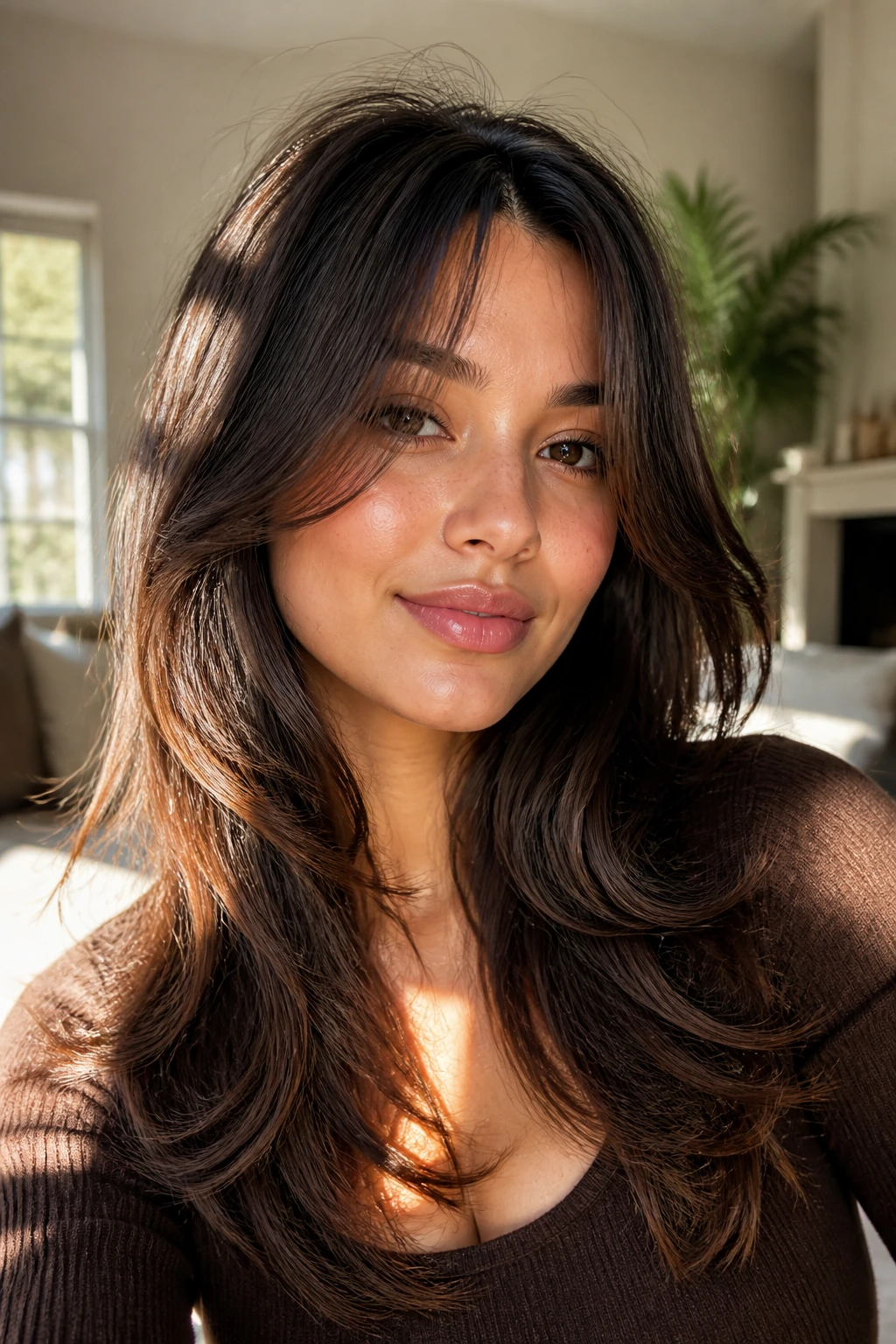
Why does this cut keep showing up in salon chairs? Because it lets you keep length while still giving the front some lift. That matters on round faces, where a little height around the cheekbone can change the whole read of the haircut.
The butterfly cut uses shorter face-framing layers up front and longer layers underneath. That creates movement without chopping off the length you may want to keep. It’s a smart middle ground if you like hair that swings but do not want a heavy curtain around the cheeks.
How to Wear It
Blow-dry the front pieces away from the face, then shape the lower layers with a loose bend. A big round brush works, but so does a blow-dry brush if that’s easier. Keep the shortest layer below the cheekbone once dry. Too high, and the face starts to feel crowded.
The butterfly cut is especially good on medium to thick hair, because there’s enough weight to hold the shape. On finer hair, it can still work, but the layers should be lighter. Nobody needs a dramatic set of steps running down the side of the head.
10. Curtain Bangs and Long Waves
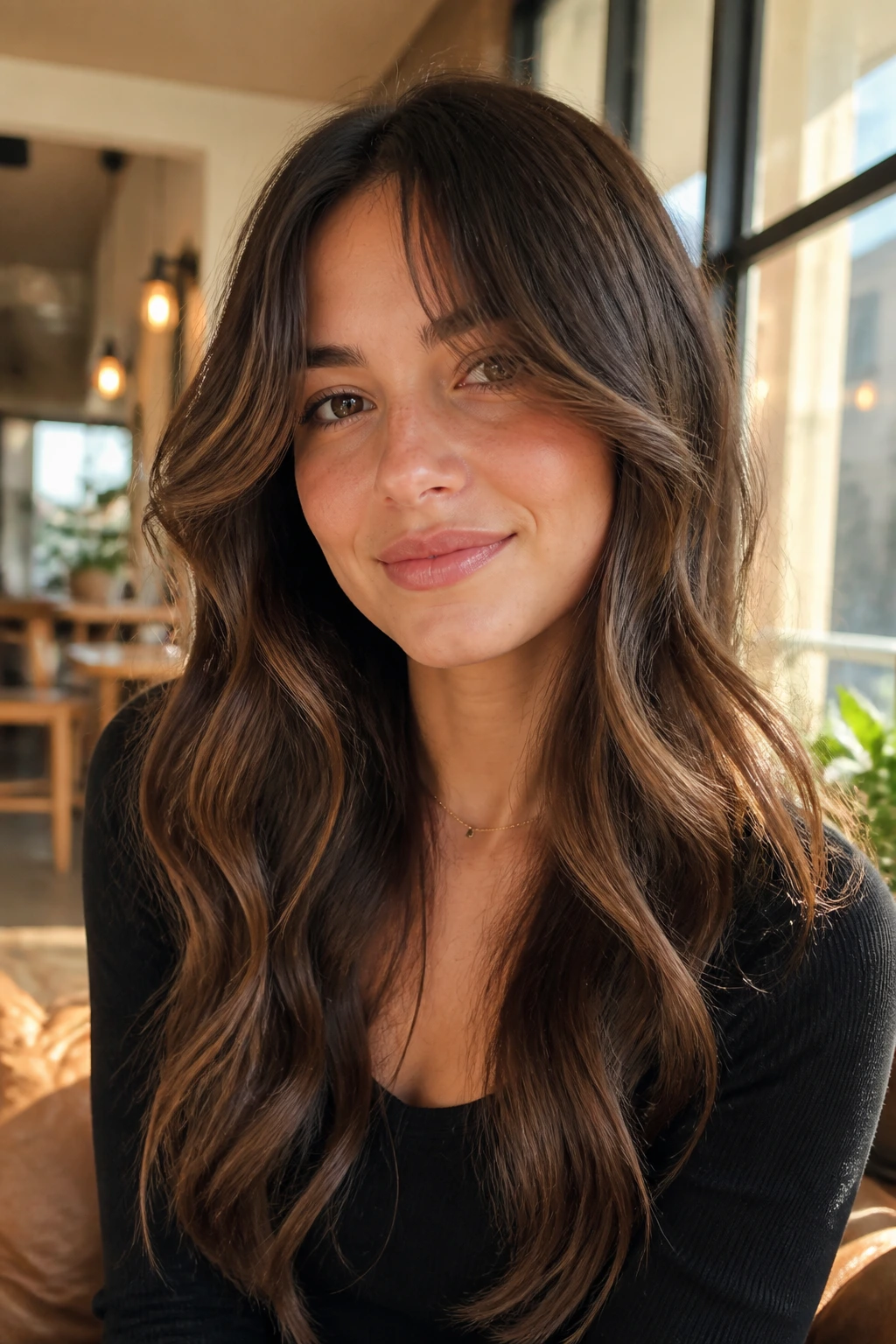
A lot of people want bangs and a round face and immediately hear “don’t do it.” That’s too blunt. Curtain bangs can work very well when they open in the center and sweep out toward the cheekbones instead of sitting in one flat line.
The reason is simple. Curtain bangs create a soft vertical opening through the front of the face. They don’t chop the forehead in half. They guide the eye down and out, which makes the face look a little longer and a little less circular.
Long waves give the bangs a place to land. If the rest of the hair is too uniform, the fringe loses its job. Ask for the shortest point of the bang to sit around brow level, with the longer edge blending into the first face-framing layer. That keeps the whole cut connected.
If you style this at home, bend the bangs away from the center with a round brush or a flat iron. Don’t force them flat against the forehead. They need a little lift. Just a little.
11. Asymmetrical Bob With One-Side Tuck
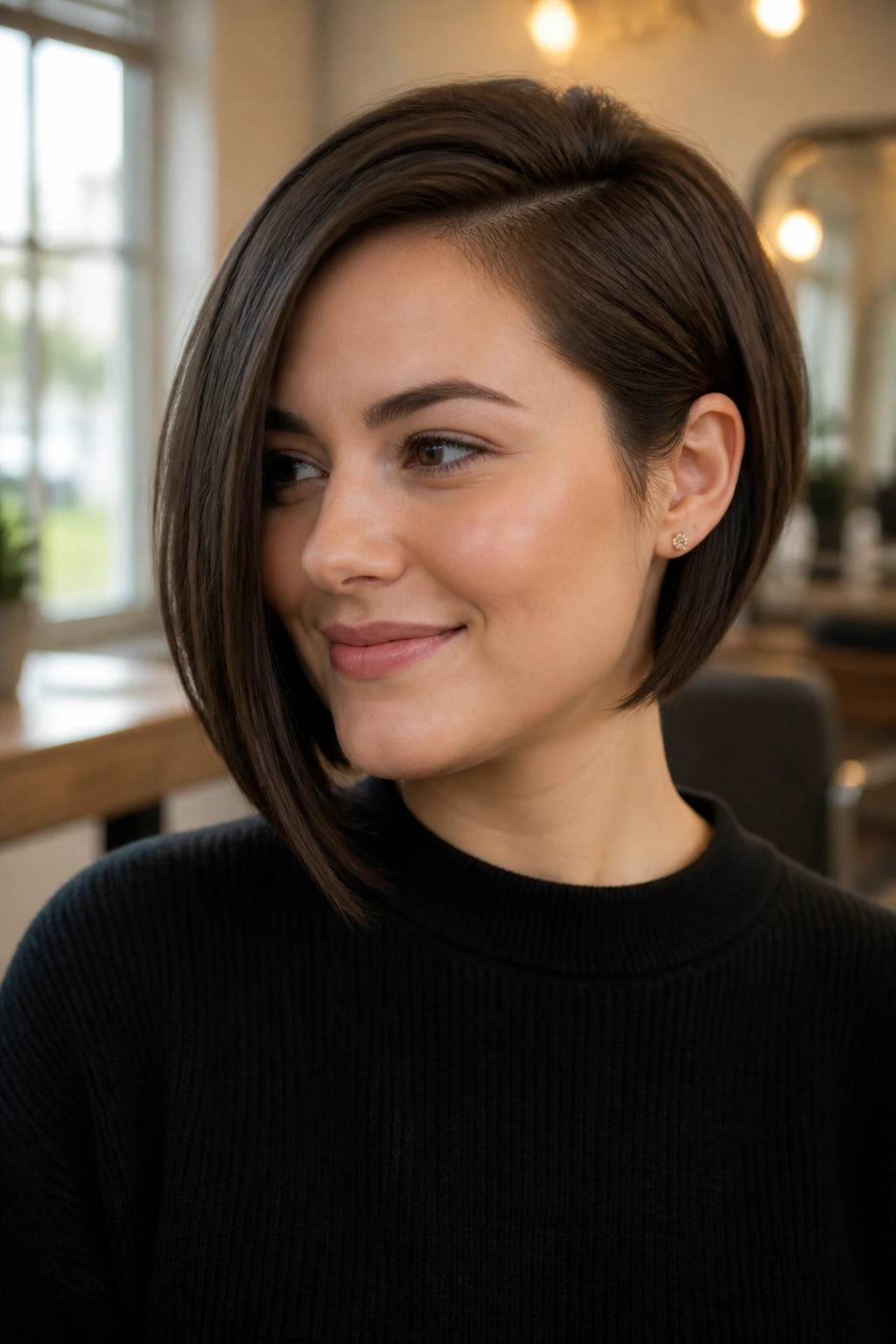
An asymmetrical bob is a clean fix for anyone who likes shape with a little attitude. One side is longer—usually by an inch or so—and that slight imbalance cuts across the face in a diagonal line. Diagonal lines are your friend here.
The beauty of this cut is that it feels sharp without relying on heavy layers or lots of styling. Tuck the shorter side behind one ear, and the length on the other side does the work. The face looks less wide because the hair does not sit evenly around it.
I like this on straight or lightly waved hair. Curls can still wear it, but the asymmetry needs to be planned carefully so the curl pattern doesn’t hide the shape. If your hair has a mind of its own, ask for the longer side to stay noticeably longer even after shrinkage.
This is a good choice if you want something professional but not boring. It has enough edge to feel deliberate, yet it is still easy to wear with simple blow-drying.
12. Mid-Length Cut With Invisible Layers
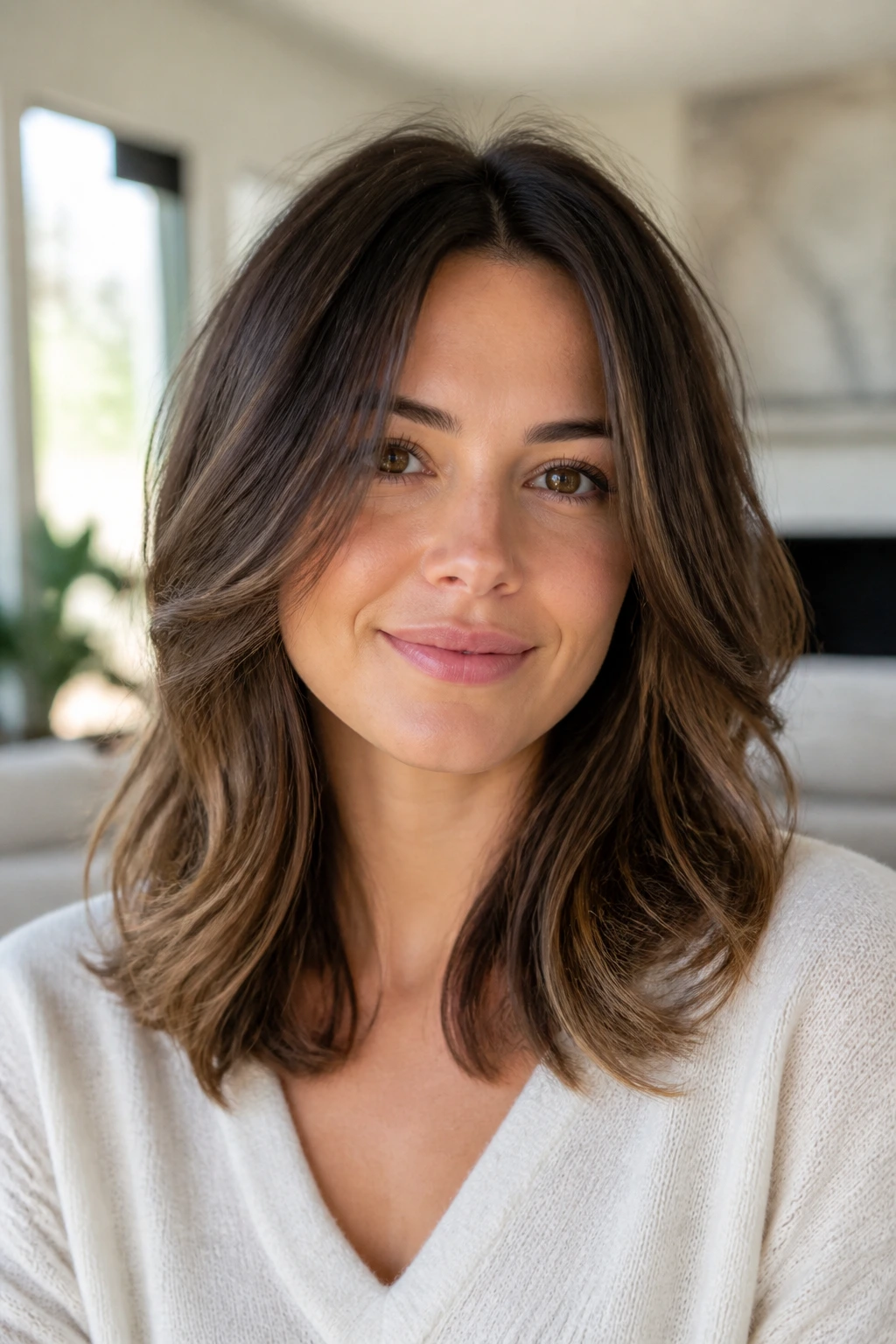
Invisible layers are the quiet solution for thick hair that keeps filling out at the sides. The cut still looks smooth on the outside, but the inside has weight removed so it does not balloon around the face.
That’s the trick. Not all layers need to announce themselves. Some should work from the inside, letting the hair move without exposing a choppy shape. On a round face, that matters because a visible step-cut can widen the silhouette when it’s too high.
This cut usually sits somewhere between the collarbone and the top of the chest. It’s long enough to pull back, which people forget to value until they’re rushing out the door, but short enough to feel current and easy to manage. If your hair is dense, this may be the least fussy option in the whole group.
- Ask for internal debulking, not big exterior layers
- Keep the front pieces a touch longer than the back
- Use a smoothing cream only through the mid-lengths
- Avoid over-thinning the ends, which can look wispy fast
If you like hair that moves but still looks calm, this is a good bet.
13. Shoulder-Length Cut With Flipped Ends

A flipped end can do more for a round face than people expect. It keeps the hemline from sitting dead straight at the jaw or shoulders, and that small outward turn adds lift without adding bulk.
The base cut should land around shoulder length, sometimes a bit below. Then the ends are shaped so they flip out slightly with a brush or a soft pass of a flat iron. The flip should be light, not retro and shellacked. Think movement, not costume.
What Makes the Flip Work
The layers underneath need to stay low enough that the outer line keeps its shape. If the layers climb too high, the cut loses that easy shoulder-length feel and starts to widen the sides. That’s the part many stylists get wrong when they go too eager with the scissors.
This look is nice on hair that already has a bit of bounce. Straight hair can wear it too, but it may need a round brush and a little root lift. The reward is a cut that feels softer than a blunt shoulder-length shape without sliding into obvious layering.
14. Soft Mullet With Tapered Sides
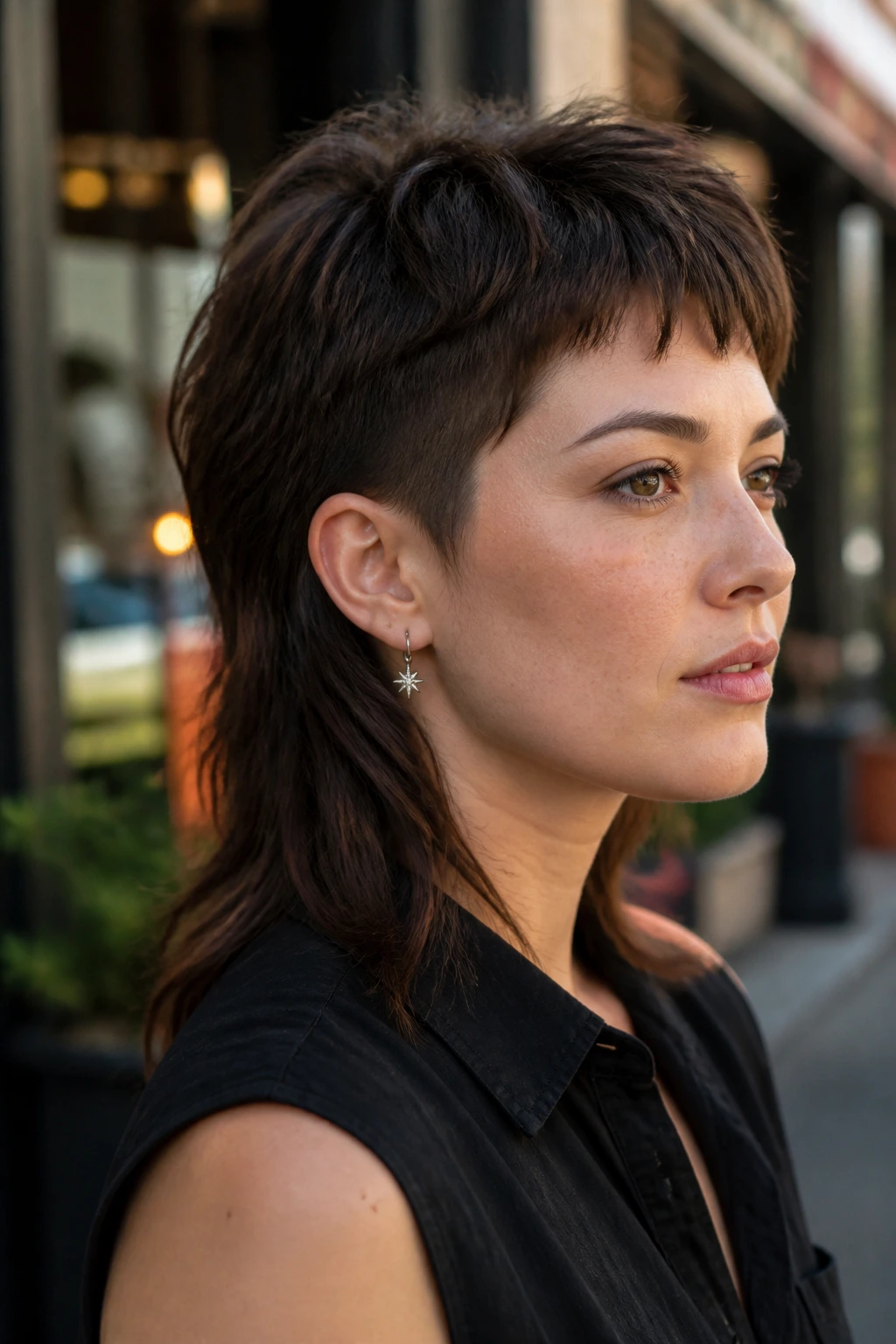
A soft mullet sounds more extreme than it usually is. The good version is controlled, wearable, and oddly flattering on round faces because it keeps bulk away from the sides while leaving room at the crown and back.
What you want is a gentle taper near the cheeks, not a heavy wall of hair sitting wide at the jaw. The top can stay a bit shorter and textured, the back longer, and the sides lean enough to keep the face open. That line matters. It keeps the haircut from turning into one big circle.
This is not the haircut for someone who wants neat and classic. It is for someone who wants shape and does not mind a little edge. On straight or wavy hair, it can look great with a bit of matte cream or texture spray. On curls, it needs careful shaping so the top does not puff too much.
There’s also a practical upside: it grows out better than many sharply layered styles. That’s worth something.
15. Razor-Cut Lob With Airy Texture
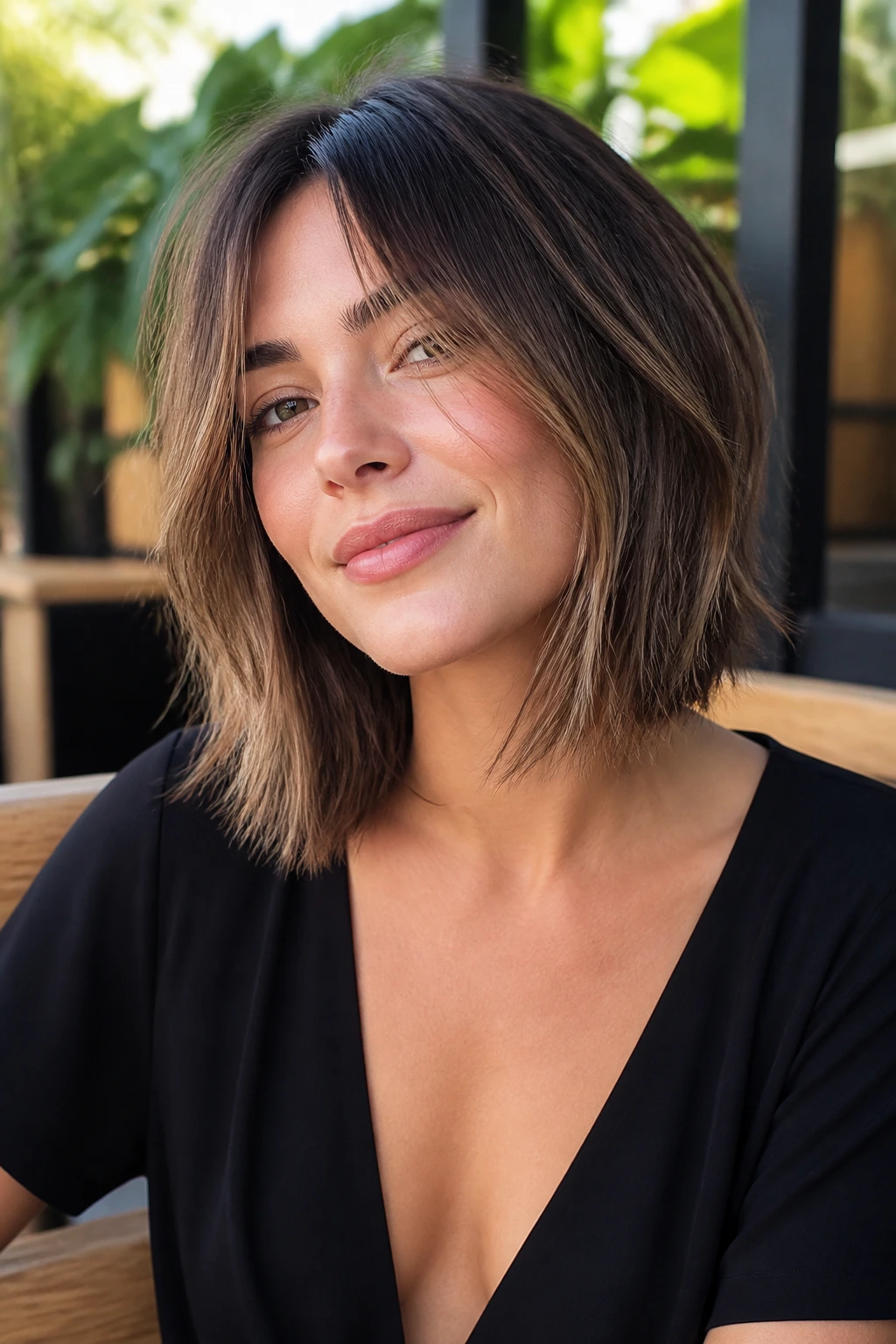
Does a razor cut help a round face? Sometimes, yes—but only if the hair can handle it. On thick, straight hair, a razor-cut lob can remove bulk and keep the side shape from getting too wide. On dry or frizzy hair, too much razor work can make the ends puff.
The sweet spot is a lob that sits around the collarbone with soft, airy ends. The razor should be used mostly through the mid-lengths, where the hair needs movement, not right at the last inch if the ends are already fragile. That’s the detail that gets skipped when someone wants a quick salon answer.
What to Ask For
- Length at or just below the collarbone
- Soft razor texture through the middle only
- Front pieces that fall slightly longer than the back
- A clean finish around the face, not a shredded edge
This cut has a loose, easy feel that works well if you like hair that bends instead of sitting stiffly. It looks especially good with a loose blowout or a large-iron wave. Keep it a little messy. Too neat and it loses the charm.
16. Long Curls With a Side Part
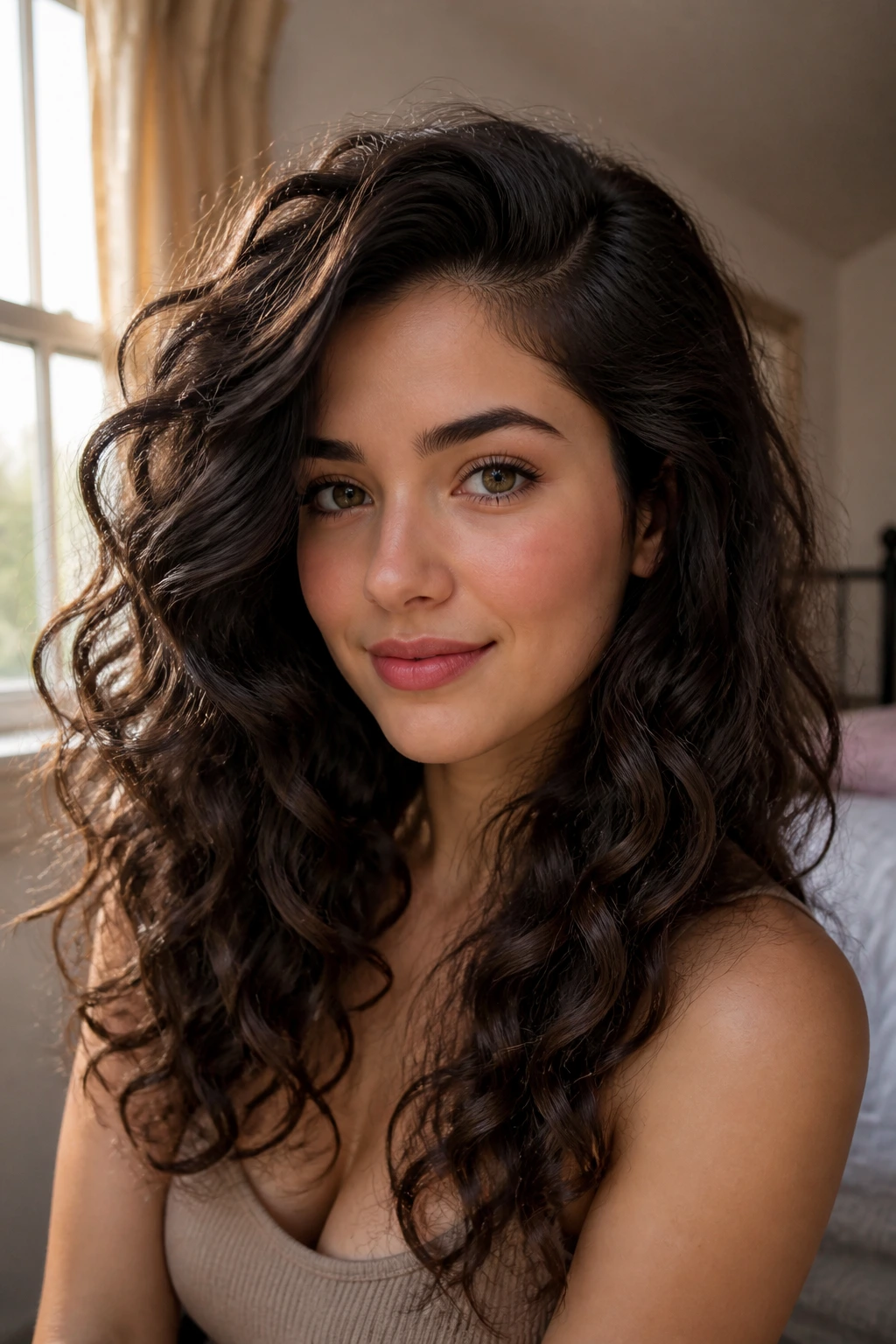
A middle part can make long curls fall into a wide curtain. A side part shifts that volume over, and on a round face that small change can make the whole style feel taller and slimmer.
The rest of the cut should be shaped so the curls do not stack too much at the cheeks. Ask for layers that begin below the cheekbone and keep the strongest volume around the lower half of the head. That keeps the top from looking flat and the sides from looking too full.
I also like a side part on curls because it gives the curls somewhere to move. They do not have to split down the center and behave. They can fall with a little drama. Good drama, not chaos.
- Diffuse on low speed if you want more lift
- Part while the hair is damp, not after it dries
- Use a curl cream that holds without turning sticky
- Let a few front curls hang forward, then tuck one side back if you want a cleaner line
Long curly hair on a round face can be gorgeous. It just needs direction.
17. Chin-Length Crop With Angled Fringe

A chin-length crop is the boldest move on this list, and it can work on a round face when the shape is handled with care. The cut should skim slightly below the chin, not stop directly on it, and the fringe should land at an angle so it does not seal the face into one circle.
That angled fringe is doing a lot. It draws attention upward and off to one side, which gives the cut more shape than a straight-across line ever could. If you like a neat, defined look, this one has real personality.
Straight hair wears this best, though a soft wave can also help. Very curly hair can wear a chin-length crop, but the shrinking factor needs to be planned or you’ll end up with a shorter, wider shape than you wanted. That part is not a small detail.
This is a cut for people who enjoy seeing the haircut, not hiding it. If you want something quieter, move on. If you want a clean line with a little asymmetry, this is a strong choice.
18. Wolf Cut With Controlled Volume
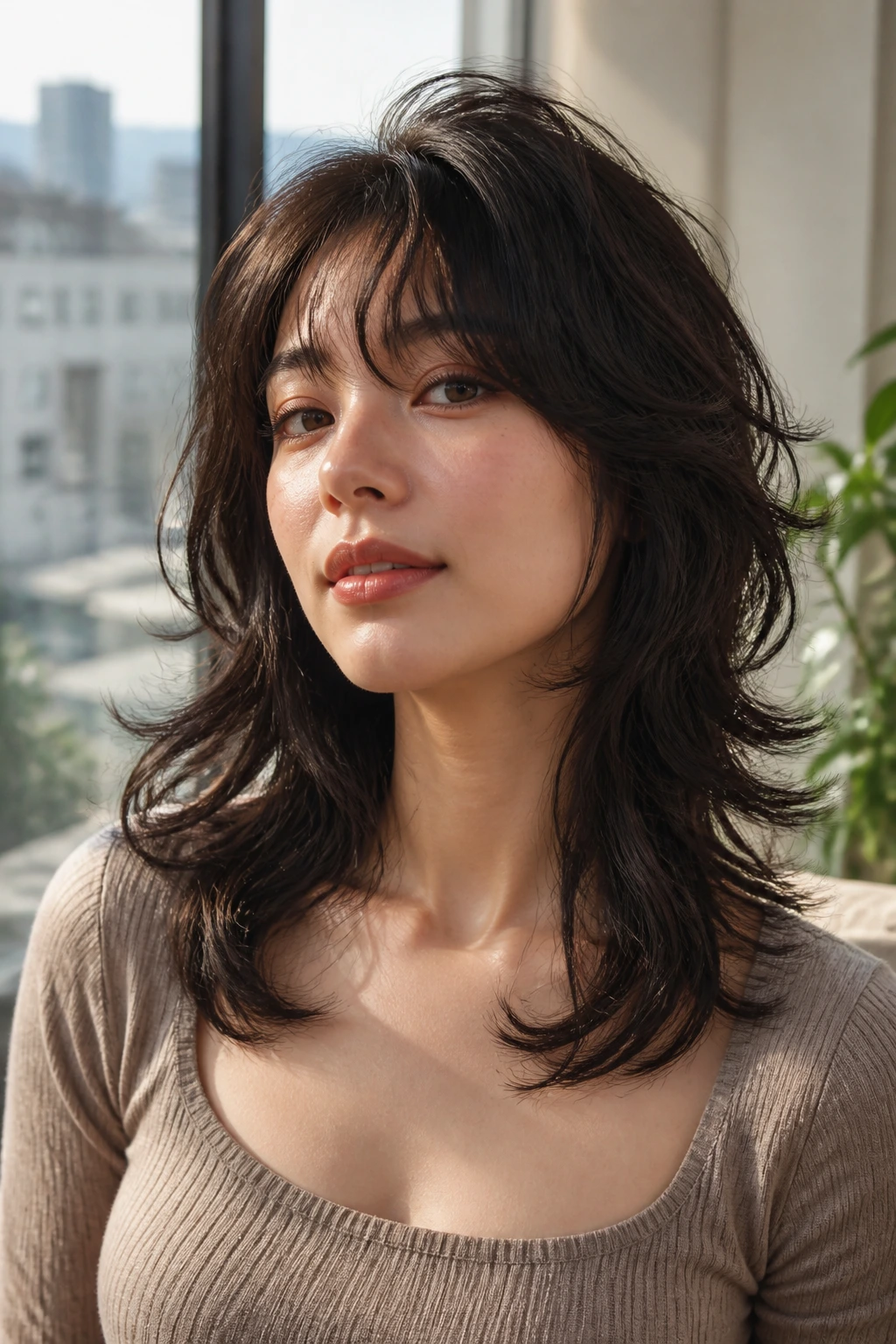
A wolf cut is basically a shag that got a little more attitude. On round faces, that attitude needs to be managed. Controlled volume is the difference between a flattering shape and a puffed-out halo.
The best version keeps the crown lifted, the sides lean, and the lower layers broken up enough to move. The volume should live higher on the head, not at the widest part of the face. That keeps the haircut from widening the cheeks while still giving you texture.
How to Keep It Balanced
Ask for the longest layers to stay past the shoulders if your hair is thick. That gives the cut some weight at the bottom. If the layers end too high, the shape can go full cloud. Fun for about ten minutes. Less fun after that.
A little texture cream through the ends is often enough. Heavy oil can drag the shape down and make the layers stick together. The goal is separation, not slickness.
This is one of those cuts that looks better with a bit of movement in it. Flat, pin-straight styling can make it look too severe. A slight wave is where it lives best.
19. Box Bob With Soft Internal Weight
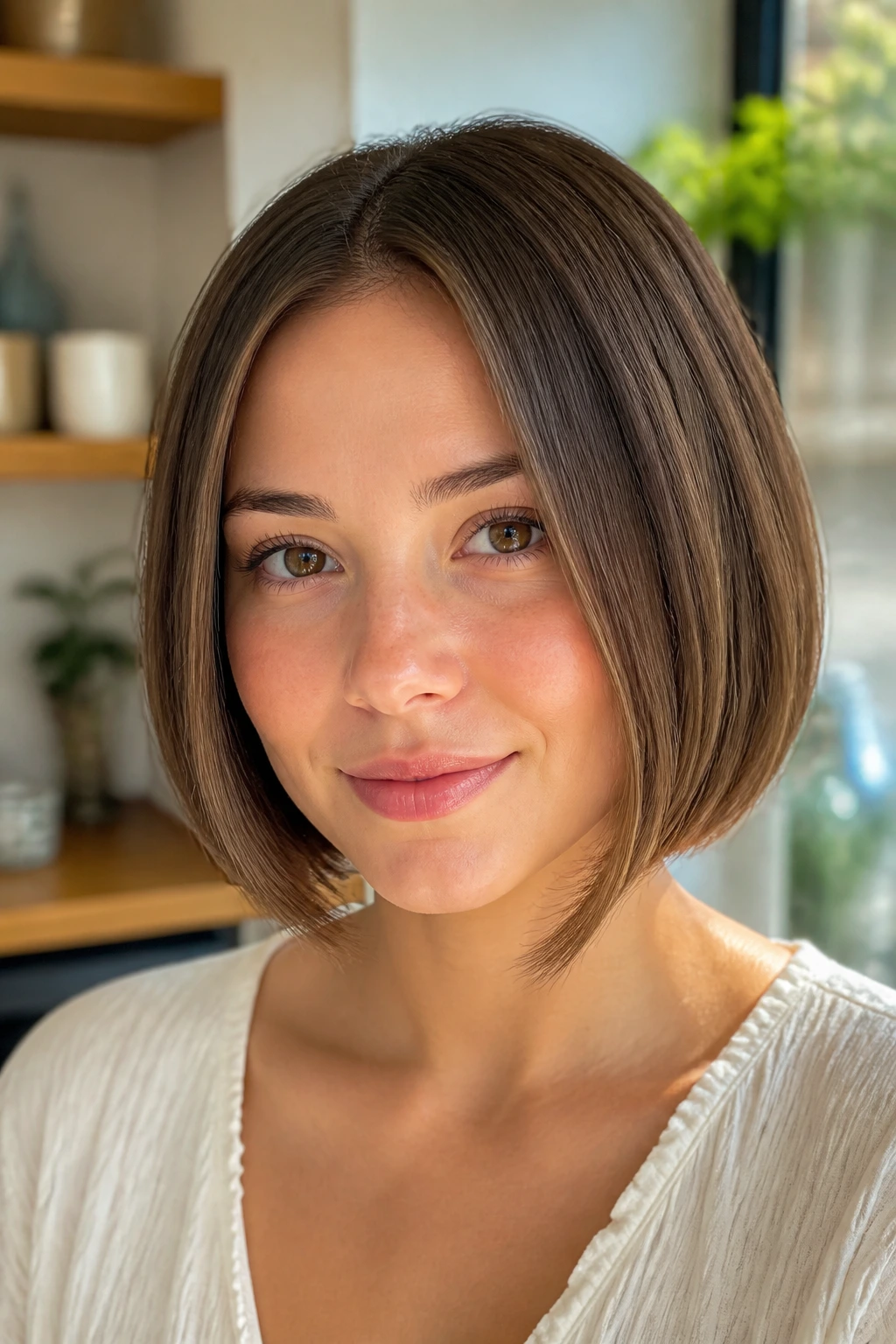
A box bob sounds strict, maybe even a little severe, but the soft version has its place on round faces. The outline stays clean while the inside loses enough weight to keep the sides from flaring out.
That inside work is the difference between a bob that hugs the head and one that sits like a square helmet. You want the edge to feel deliberate, not bulky. A slightly longer front—just enough to graze below the jaw—helps the face keep its length.
What Makes the Shape Flattering
The top should stay smooth. The sides should not puff. And the nape can be tapered just enough to keep the silhouette tidy when you turn your head. That last part matters more than people think. A haircut has to look good from the side, not only from the front.
This style works well for straight hair and for anyone who likes structure. It is not a soft, romantic cut. It’s more precise than that. If you want clean lines and easy mornings, though, it delivers.
20. Long Straight Cut With Tapered Ends
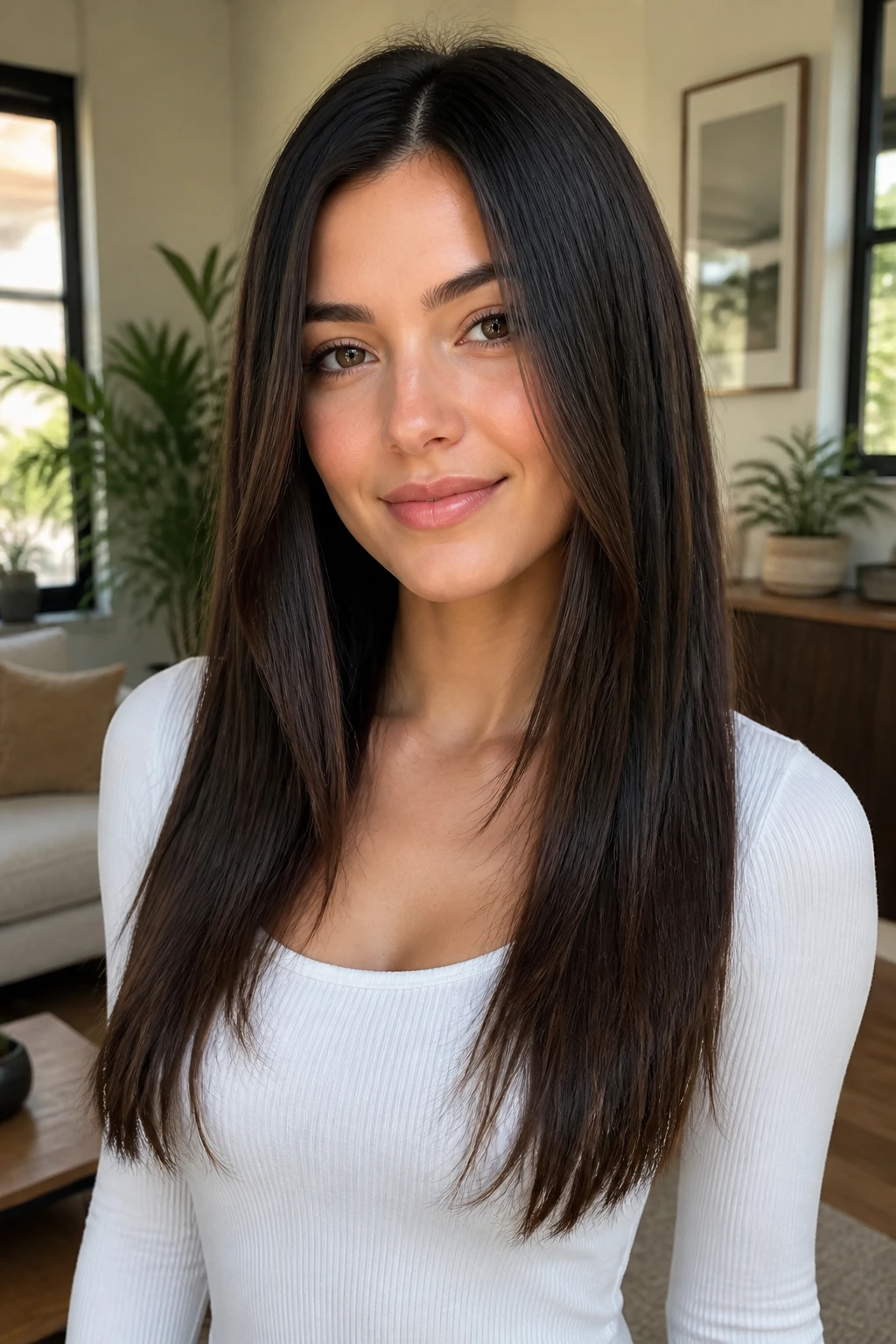
Long hair can flatter a round face, but only if it does not end in one blunt block. Tapered ends keep the length from feeling heavy and stop the cut from turning into a wide curtain around the cheeks.
I prefer this cut when the hair falls past the shoulders and the ends are softened just enough to move. Tiny internal layers can help, but the outer line should stay mostly intact. Too many layers and the whole look gets thin at the bottom. Too few and it looks like one solid sheet.
A center part works well here, though a slight off-center part can be even easier if your hair naturally refuses to sit in the middle. The point is to keep the front pieces from sticking out at the cheeks. A small bend around the collarbone makes the length feel lighter.
This is a good cut for people who want low-maintenance hair that still looks shaped. It’s simple. That’s its strength.
21. Tousled Lob With Cheek-Grazing Layers
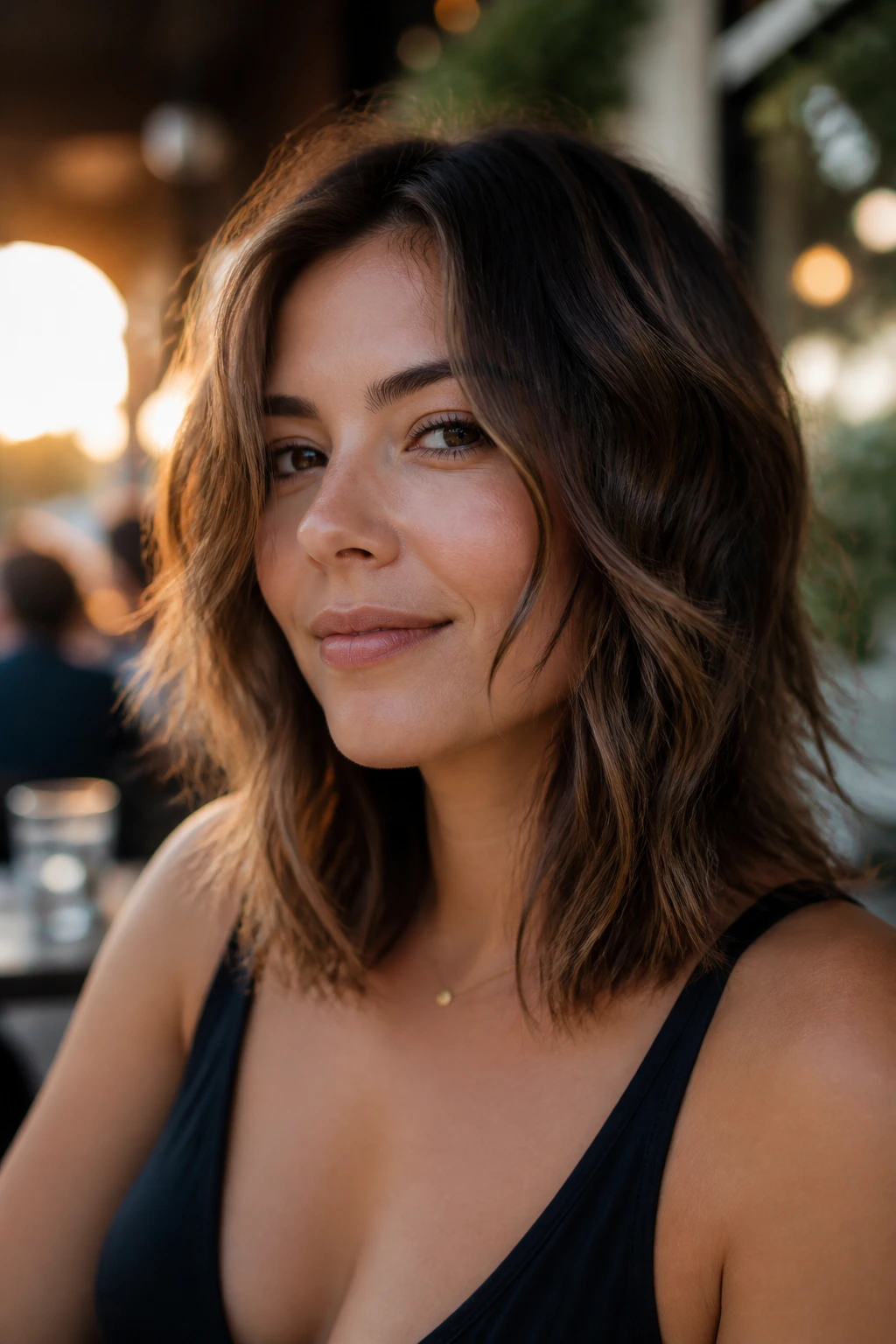
Want texture without going full shag? This is the sweet spot. A tousled lob with cheek-grazing layers gives movement near the front while keeping the shape soft and wearable.
The layers start around the cheekbone or just below it, which helps the hair fall around the face instead of puffing directly beside it. The lob length keeps the overall line long enough to feel lean. That combination matters on a round face, where too much volume at the sides can make the cut feel boxy fast.
I like this shape for people who air-dry often. It does not need perfect styling to work. A little texture spray, a rough-dry, and a few bends around the face are usually enough. If your hair is fine, keep the layers light. If it is thick, you can go a little stronger with the texture.
A tousled lob is one of those cuts that looks casual even when it’s carefully shaped. That is not easy to pull off.
22. Shaped Pixie-Bob With Lift at the Crown
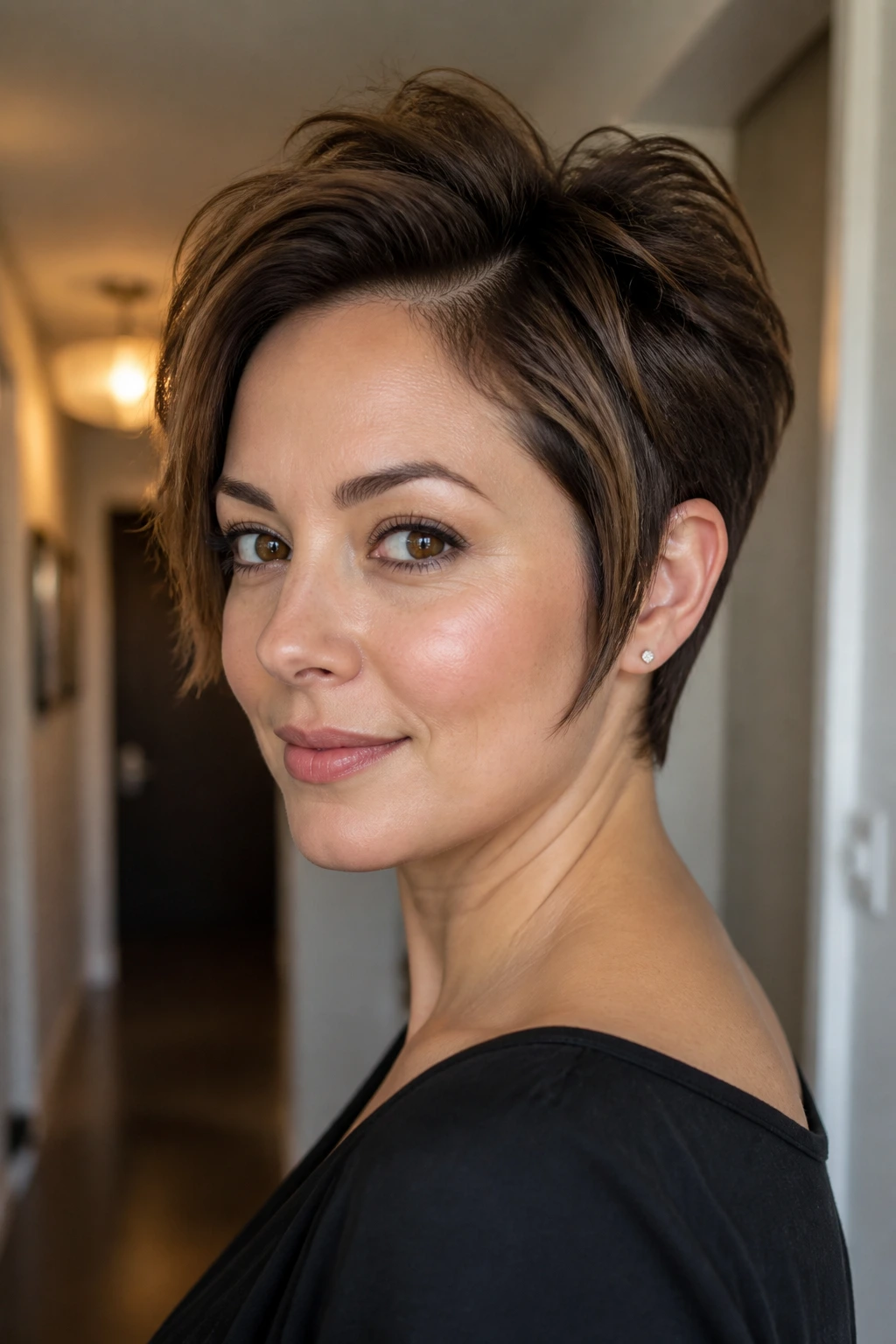
A shaped pixie-bob sits in that useful middle place between short and medium length. It gives you the lift of a pixie without losing the softness of a bob. On a round face, that balance can be excellent.
The crown stays longer so it can rise a little, while the sides stay close enough to avoid adding width. The front pieces can graze the cheekbone or jaw, depending on how much length you want to keep. That slight forward motion is what keeps the cut flattering rather than boxy.
This one is especially good if you want short hair but not a severe crop. It still feels feminine, if that matters to you, but not overly sweet. There’s some edge in it. Some shape. And a lot of room for styling with a quick blow-dry and a dab of paste.
If you want a haircut that looks intentional even on lazy mornings, this is a strong finish to the list. Keep the crown lifted, keep the sides neat, and the whole thing falls into place fast.
