



Round faces can wear short hair beautifully. The catch is that not every crop plays nice with soft cheek lines, and the wrong shape can make the face look wider than it is. The best short haircuts for round faces usually do one of three things: build a little height at the crown, leave extra length in front, or break up the curve with movement instead of a blunt line.
That does not mean you need to hide behind long hair. A jaw-skimming bob with a forward angle can make the face look leaner. So can a pixie with a side-swept fringe that lands near the eyebrow instead of cutting straight across the forehead. Texture matters too. A flat, one-length cut can feel boxy fast, while a few choppy layers or a soft off-center part change the whole read.
If your face is widest at the cheeks and softer at the jaw, the sweet spot is shape without bulk. You want lightness around the sides, but not a wispy mess that collapses by lunchtime. That balance is the whole game, and the cuts below handle it in different ways.
1. Long Pixie with Side-Swept Fringe for Round Faces
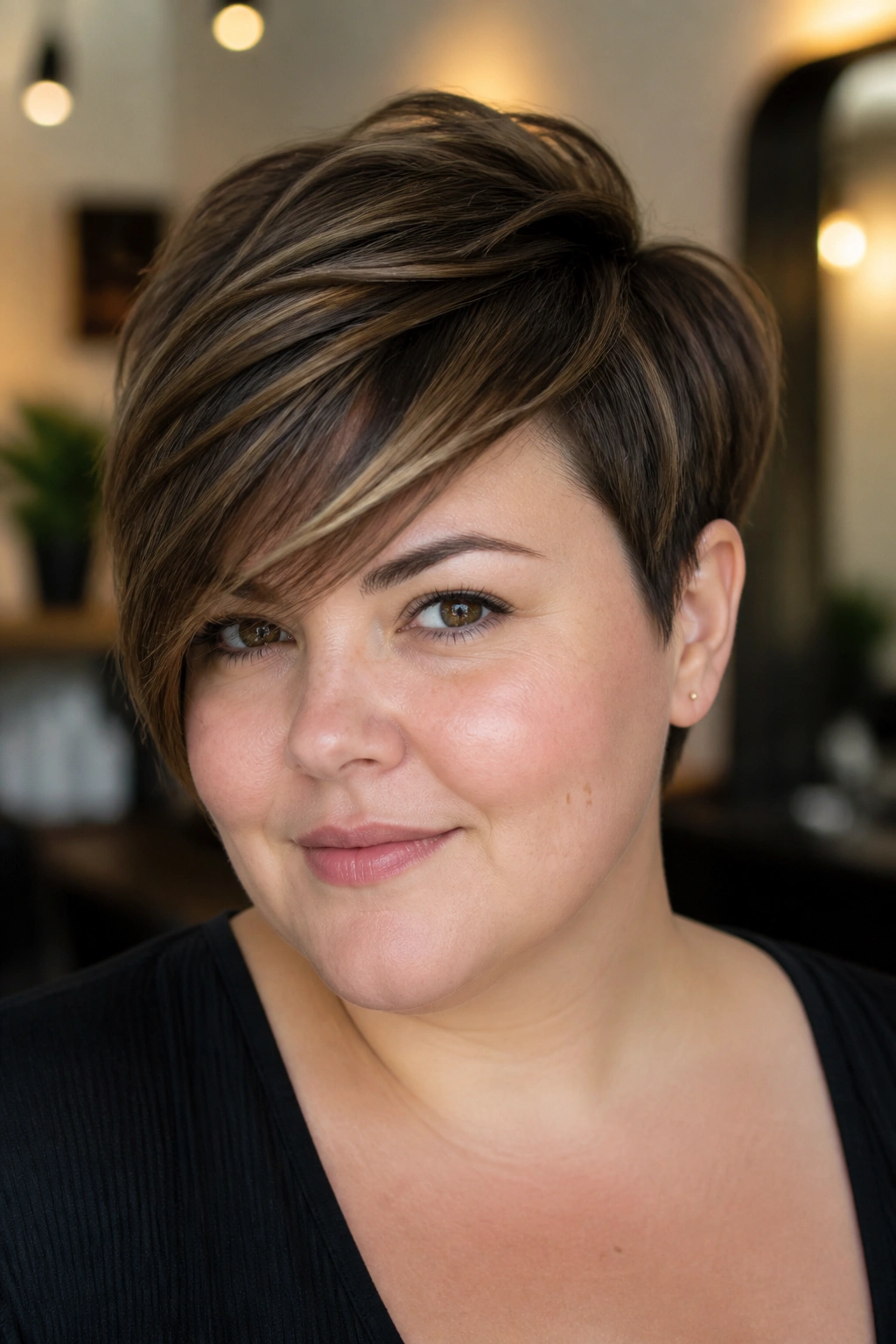
This is the cut I reach for when someone wants short hair but still wants softness around the face. A long pixie keeps the sides neat, leaves enough length on top to create lift, and uses the fringe to guide the eye diagonally instead of straight across.
Why It Flatterers the Face
The fringe should land somewhere between the outer brow and the top of the cheekbone. That tiny shift matters. A fringe that sits too short can widen the forehead; one that falls too low can close the face in.
Ask for the top layers to stay 2 to 3 inches longer than the sides, with a tapered nape and soft sideburns. That keeps the shape clean from behind while giving you room to style the front with a little bend.
- Keep the side fringe long enough to sweep across one eyebrow.
- Leave the crown slightly longer so you can lift the roots.
- Ask for clipped sides, not shaved sides, if you want a softer finish.
- Use a pea-sized dab of paste, then push the fringe sideways while it’s still warm from the dryer.
Best move: blow-dry the fringe across the forehead with a small round brush, then clip it in place for 5 minutes while it cools.
2. Angled Bob with a Longer Front
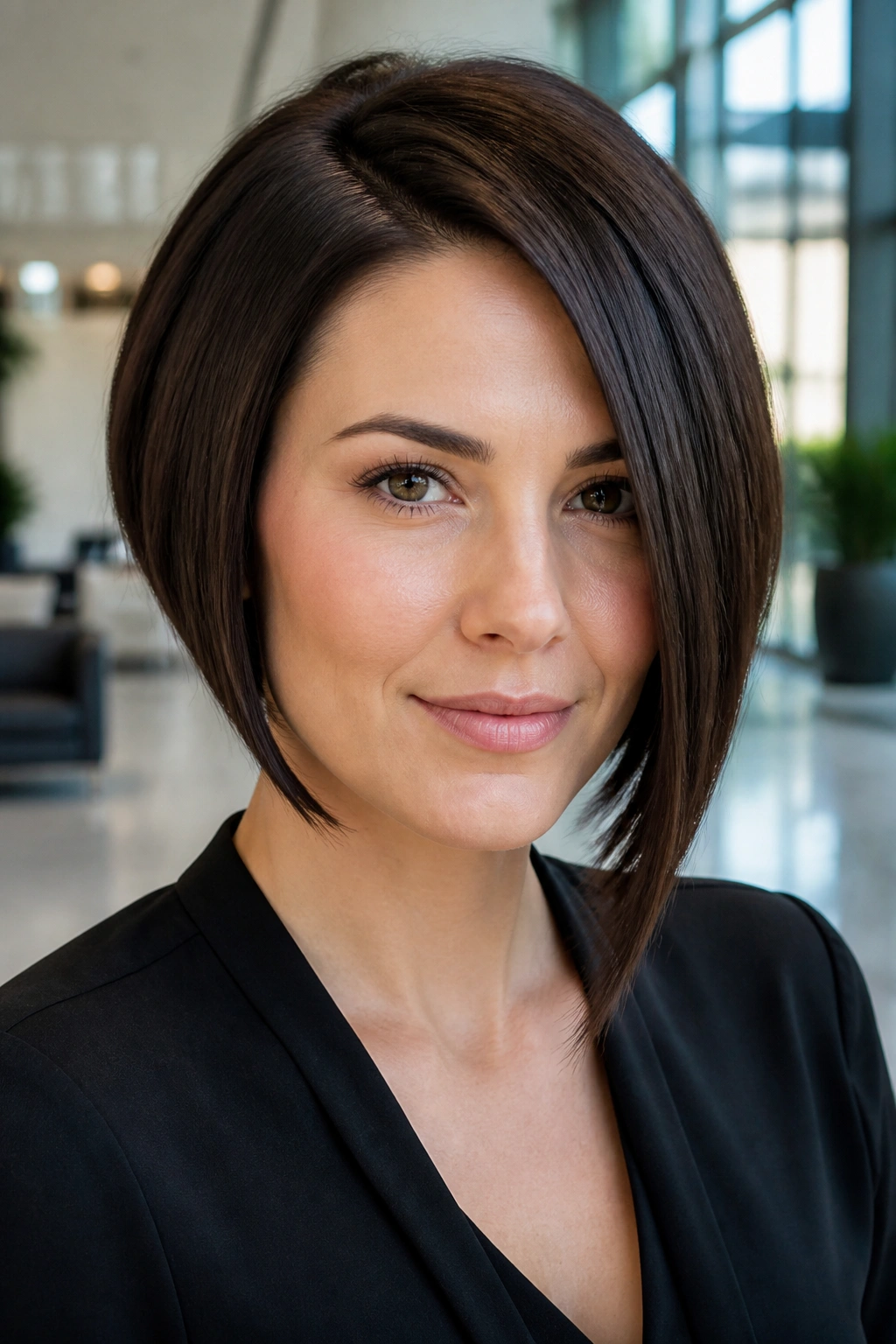
A clean angle can do more for a round face than a stack of face-framing layers. The reason is simple: the eye follows the line. When the front pieces sit longer than the back, the cut adds a diagonal that pulls the face downward and away from the cheeks.
If your hair is straight or only a little wavy, this shape is a workhorse. Keep the back at the base of the neck and let the front skim the jaw or fall just below it. That inch or two of extra length in front is enough to sharpen the silhouette without turning the bob into a lob.
I like this cut for people who want polish. It looks tidy with a blazer, but it also loosens up fast if you tuck one side behind the ear. A deep side part helps too, because it breaks up the symmetry that tends to echo roundness.
The only trap is making the angle too steep. Then it starts looking theatrical instead of wearable. Ask for a soft forward lean, not a ski slope.
3. Bixie Cut
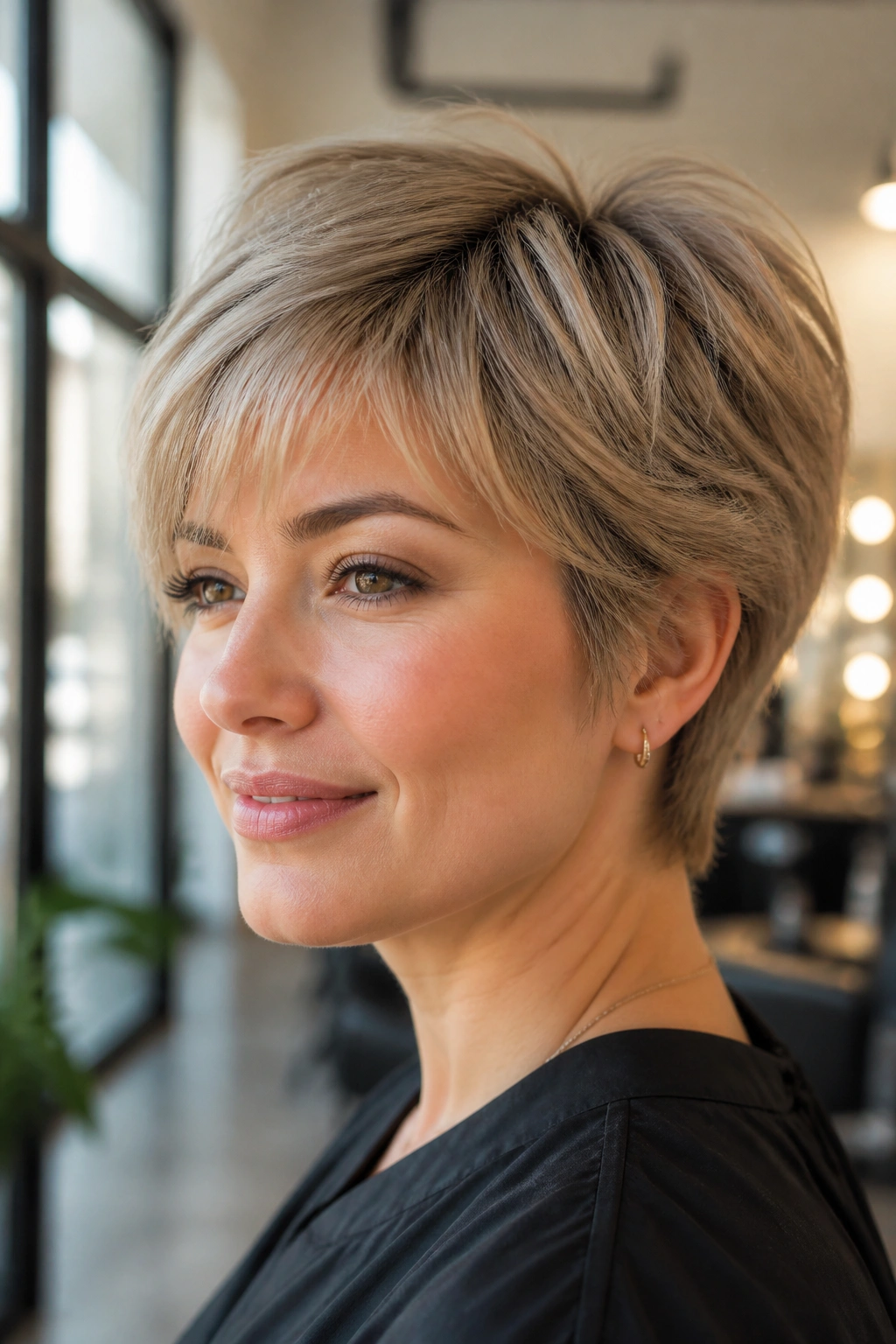
What do you get when a pixie gets a little extra length? A bixie. It sits in that useful middle ground where the hair is short enough to feel easy, but not so short that every line of the face gets exposed at once.
What to Tell Your Stylist
The bixie works best when the crown has lift and the sides are feathered rather than bulky. Ask for wispy layers around the temples, a slightly longer top, and enough length near the ears to soften the widest part of the face.
If your hair is fine, the bixie can make it look fuller because the shape creates the illusion of density without piling the weight on the sides. If your hair is thick, the same cut removes the mushroom effect that round faces often battle.
How to Wear It
A side part gives this cut a little attitude. A finger-combed finish keeps it modern. If you want more softness, tuck one side behind the ear and let the other side sit forward by the cheekbone.
It is one of those cuts that looks better with a bit of mess in it. Too neat and it loses the point.
4. Soft French Bob

If you like hair that tucks behind one ear and still has swing at the jaw, this is the bob to look at. The French version is shorter than a classic bob, but softer than a blunt chin-length cut. That softness matters on round faces.
Think of it as a line with a little air around it. The ends should be lightly textured, not chiseled to the point of looking stiff. A length that hits just below the jaw usually works better than one that stops exactly at the jawline, because it avoids drawing a hard circle around the face.
- Ask for a slightly off-center part.
- Keep the front pieces a touch longer than the back.
- Let the stylist point-cut the ends so they move.
- Skip heavy layers near the cheeks; they can add width fast.
This is a good cut if you like to air-dry your hair or twist it around a medium barrel iron for a soft bend. It should feel relaxed, not carved.
5. Asymmetrical Pixie
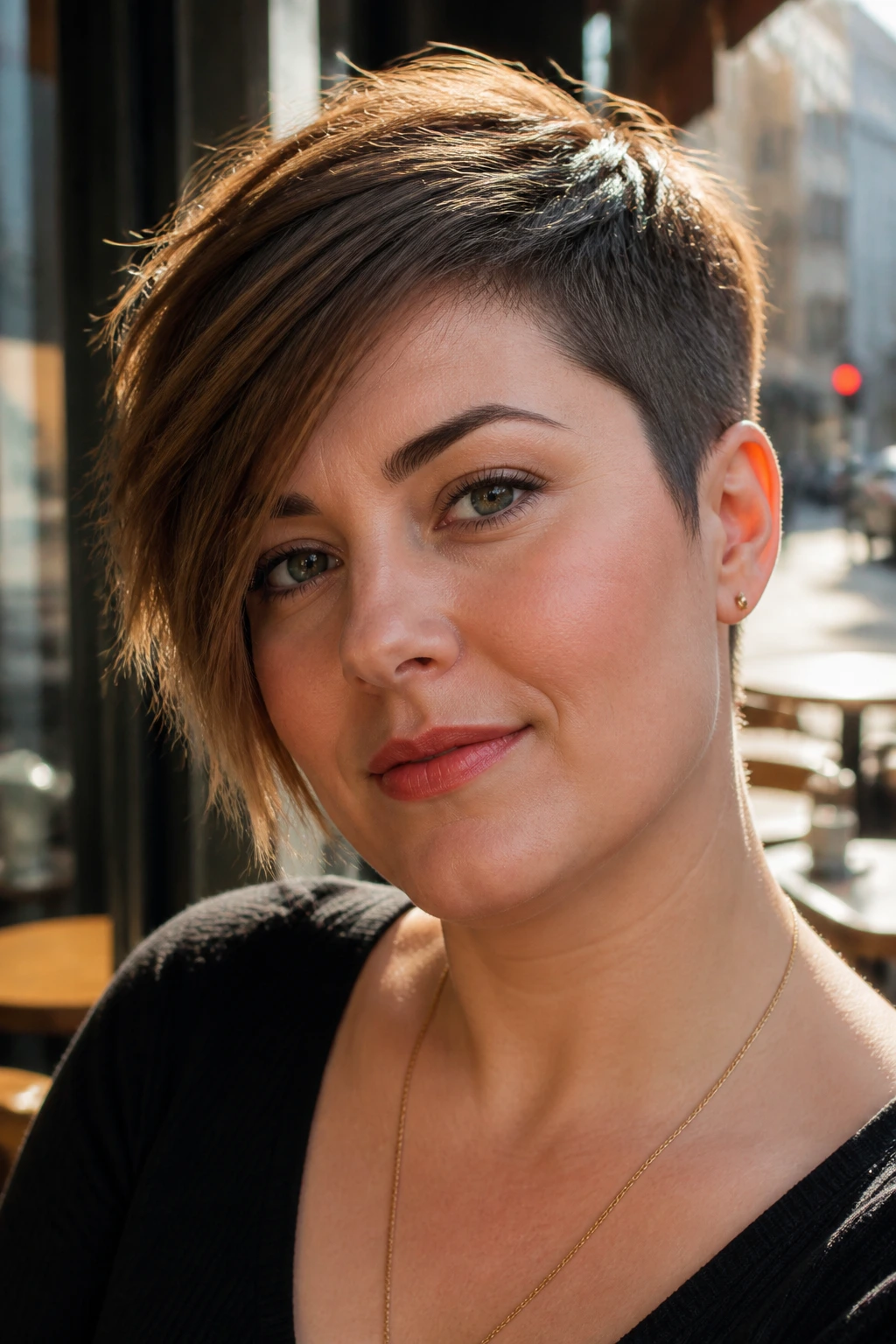
Symmetry is overrated here. A little imbalance does more for a round face than a perfectly even cut ever will, because the eye stops expecting a circle and starts following the shift from one side to the other.
The most flattering version keeps one side slightly longer, usually around the temple and ear, while the opposite side sits close to the head. That difference does not need to be dramatic. Half an inch can change the whole effect if the length lands in the right place.
What I like about this cut is the way it handles movement. When the top is brushed diagonally forward, the face looks longer. When it is pushed up and over, the cheekbones get a bit of attention without the cut feeling fussy. It also works well with glasses, since the asymmetry keeps the frame and the haircut from competing.
Maintenance matters. This shape loses its edge fast if the side length grows out too much, so trims every 4 to 6 weeks keep it sharp. Let it go longer and it starts reading as an accidental grow-out.
6. Jaw-Length A-Line Bob
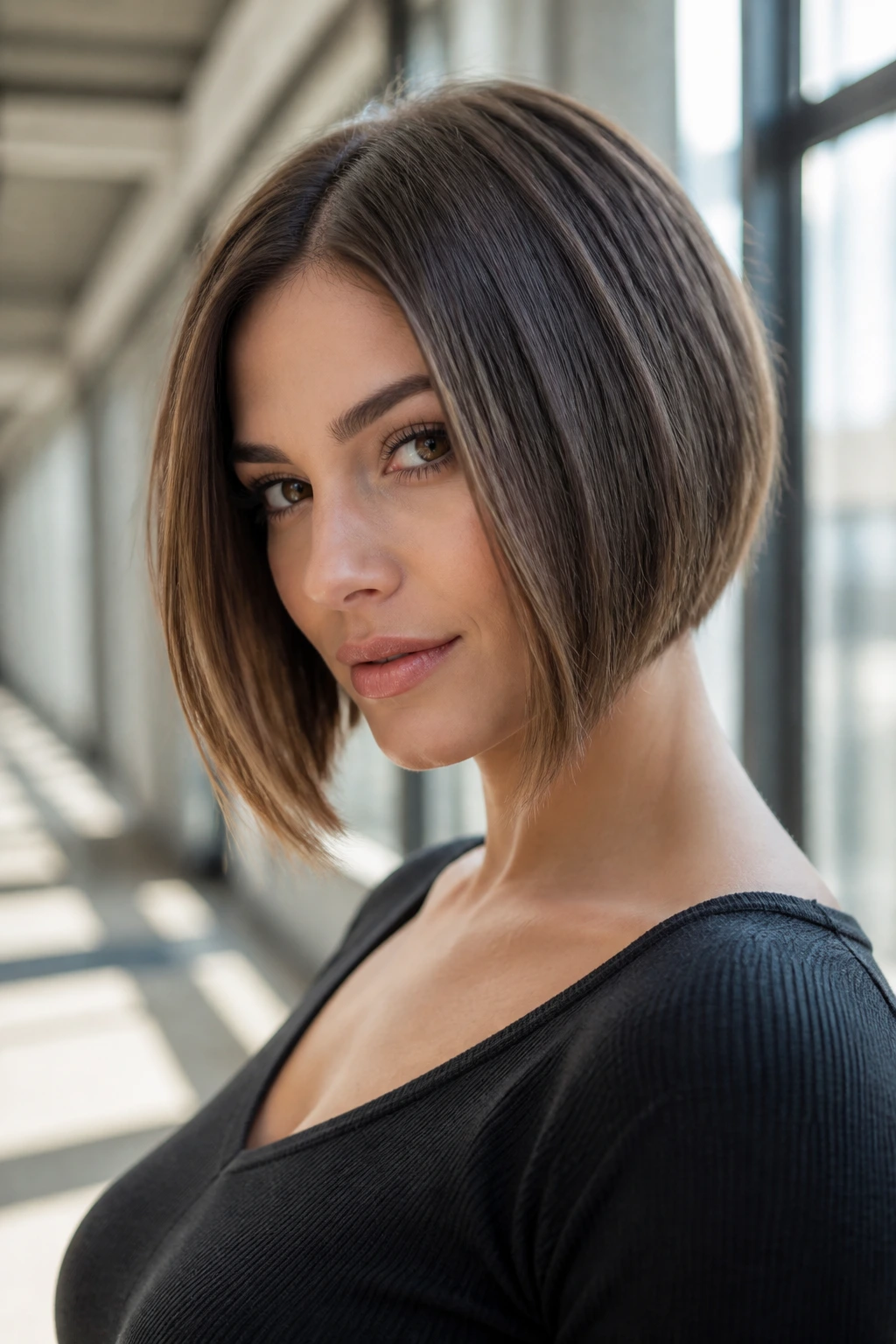
Unlike a blunt bob, this one leans forward. That forward angle is the whole point. The back sits a bit shorter, the front sits a bit longer, and the line gives the face a slimmer frame without feeling severe.
Ask for the back to sit about 1 to 1.5 inches shorter than the front. That is enough to create shape without making the cut look overstyled. If the front drops too far past the jaw, you lose the clean effect and start drifting into a lob instead.
This cut is especially good on straight hair because the angle stays visible all day. On wavy hair, the shape softens a bit, which can be nice if your face is especially full through the cheeks. A center part can work, but an off-center part usually reads better because it breaks the symmetry.
It is a neat choice if you want something polished but not stiff. It gives structure without shouting about it.
7. Curly Crop with Crown Volume
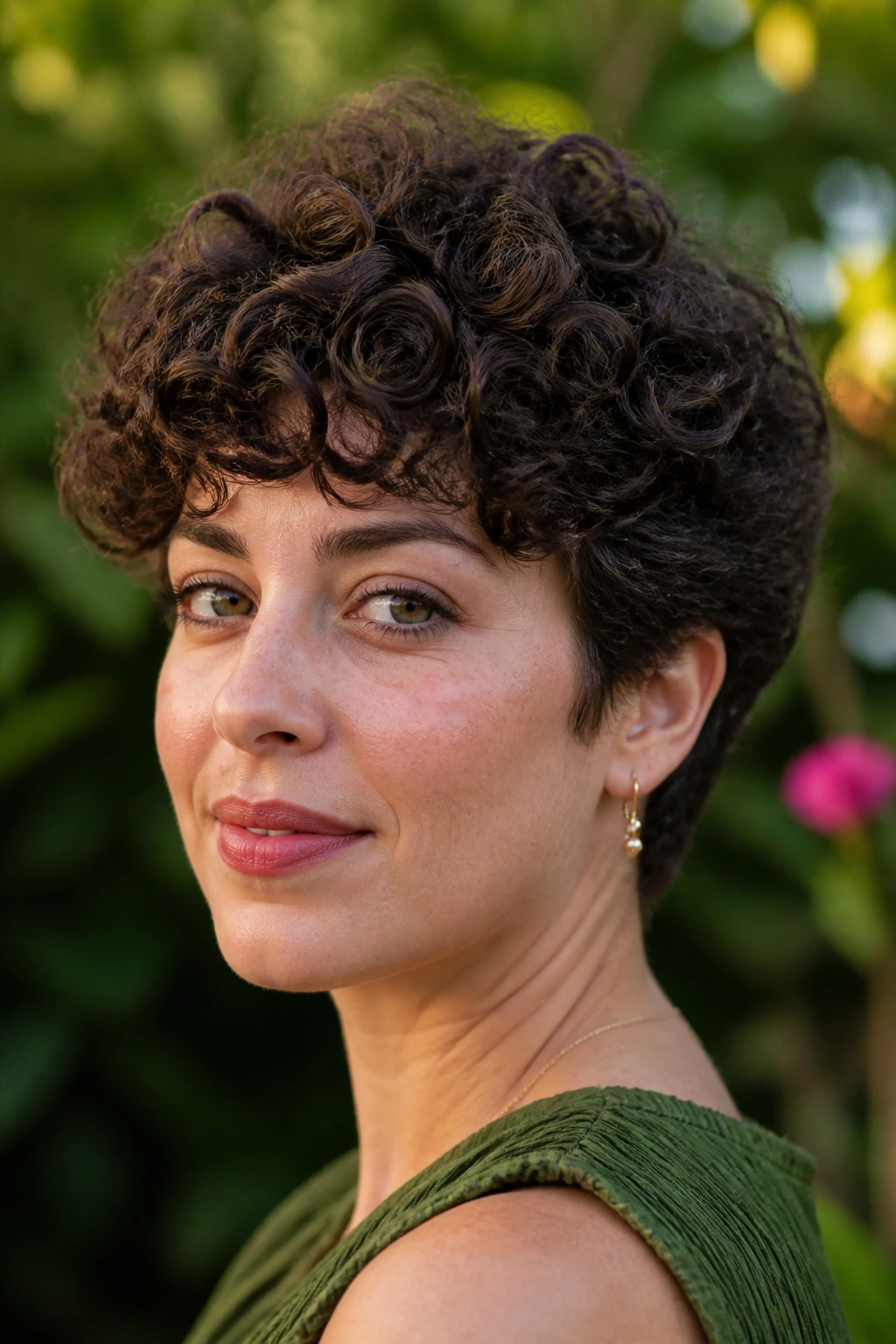
Can very curly hair sit short without puffing out at the sides? Yes, if the crop gives the crown some height and keeps the perimeter tidy. That combination changes everything on a round face.
What Matters Most
Curly hair needs a different kind of shape than straight hair. If the cut is too even, the width settles around the cheeks and jaw. If the top is too flat, the curls spread sideways. You want the curls stacked with intention, not left to do their own thing.
Ask for layers that start above the cheekbone and a shape that follows the head rather than flaring out from it. A dry cut is often the smarter move with curls, because the shrinkage tells the truth. Wet curls can fool everyone.
Best Styling Habit
Use a light curl cream or foam, then diffuse on low heat. Stop when the roots are about 80 percent dry, and let the rest air-dry if you have time. That keeps the crown from collapsing while the sides stay soft.
A little height up top goes a long way. On a round face, it changes the whole balance.
8. Textured Blunt Bob with Deep Side Part for Round Faces
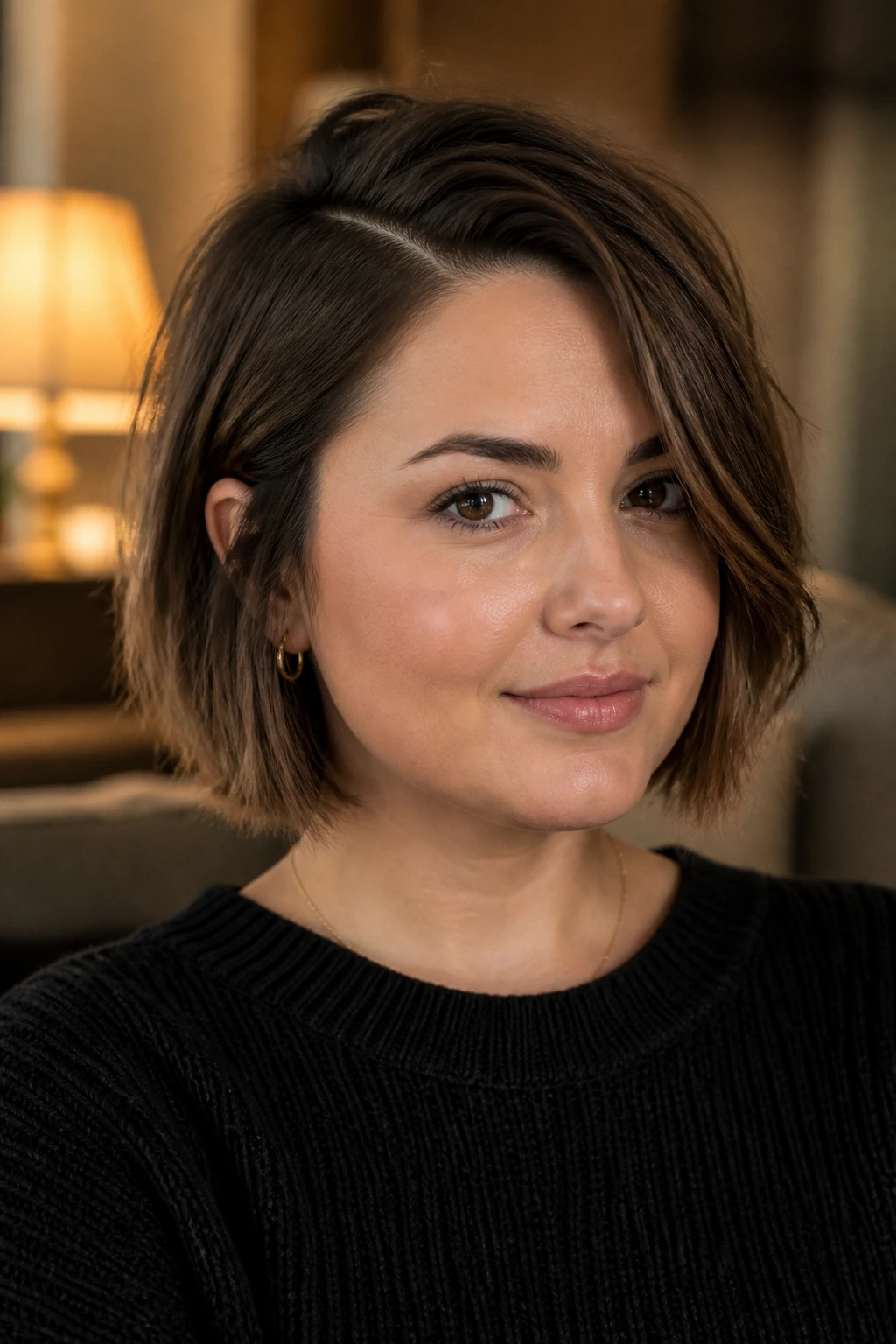
A blunt bob can flatter a round face if you stop letting it sit evenly on both sides. The deep side part creates a built-in diagonal, and that line does the heavy lifting. Without it, a blunt bob can feel like it is sitting right on top of the cheeks.
The trick is texture at the ends, not frizz. Ask for bluntness through the perimeter, then a bit of point-cutting so the line does not look like a ruler. Keep the length just below the jaw if your cheeks are full, because that extra bit helps the cut glide past the widest part of the face instead of stopping on it.
This shape works especially well if your hair is fine and you want it to look denser. A crisp outline makes fine hair look fuller than soft layers do. It also suits people who like a sleek finish and do not want to spend ten minutes roughing up the style every morning.
If you wear it straight, tuck the heavier side behind one ear. That little move opens the face and keeps the bob from feeling too boxy.
9. Tapered Crop for Natural Curls
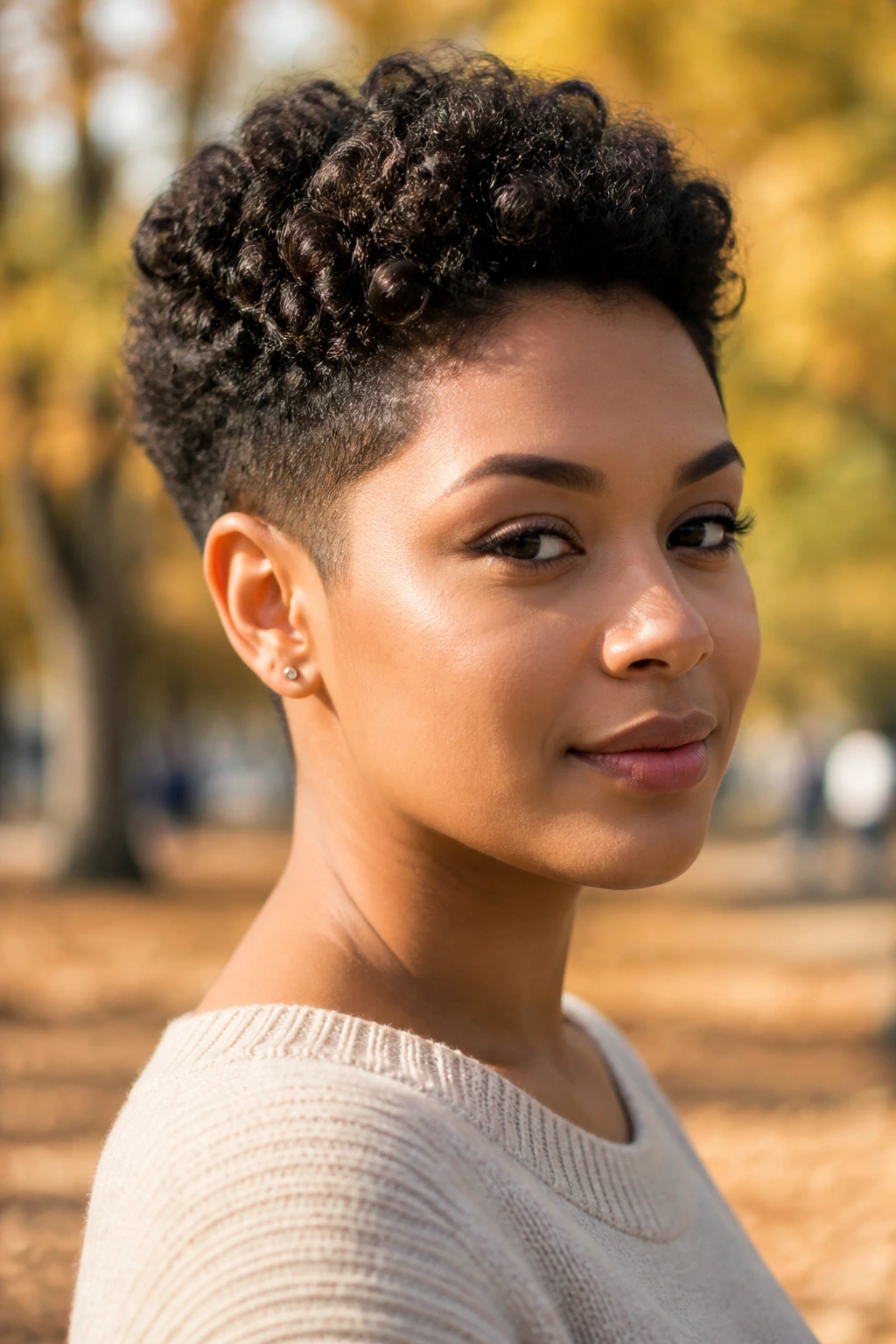
Can a very short cut still keep a round face balanced? Absolutely, if the sides stay close and the top keeps some height. A tapered crop does exactly that. The nape and temples are trimmed tighter, while the crown and front carry the shape.
What to Ask for
Tell your stylist you want the sides and back to taper neatly, not puff out. The top should stay long enough to let the curls stack upward instead of spreading outward. That may mean leaving the crown 1 to 2 inches longer than the temple area, depending on your curl pattern.
If your curls are tighter, the shape may need more room on top to account for shrinkage. If they are looser, the crop can sit closer to the head. Either way, the sides should stay controlled.
The best part of this cut is how tidy it looks with almost no effort. A little leave-in, a little finger fluffing, and it is done. If you like a face that looks a touch longer and less wide, this one earns its keep.
10. Wavy Lob with Invisible Layers

You grew out a bob, liked the movement, and do not want to go all the way short again. Fine. This is the cut that sits in the middle and still gives a round face some shape.
The length usually falls between the chin and the collarbone, which keeps the eye moving vertically. Invisible layers matter here because they remove weight without making the ends look shredded. On wavy hair, that kind of layering stops the cut from ballooning at the sides.
- Keep the front just a bit longer than the back.
- Ask for soft internal layers, not choppy ones.
- Part it off-center so the top does not sit flat.
- Use a 1-inch iron only on the front pieces if you want extra bend.
This is the sort of cut that looks expensive when it is done well, though what people really mean is that it falls in a tidy way. The cheek area stays open, the jaw gets a little length underneath it, and the whole face looks less circular.
11. Undercut Pixie with Feathered Top
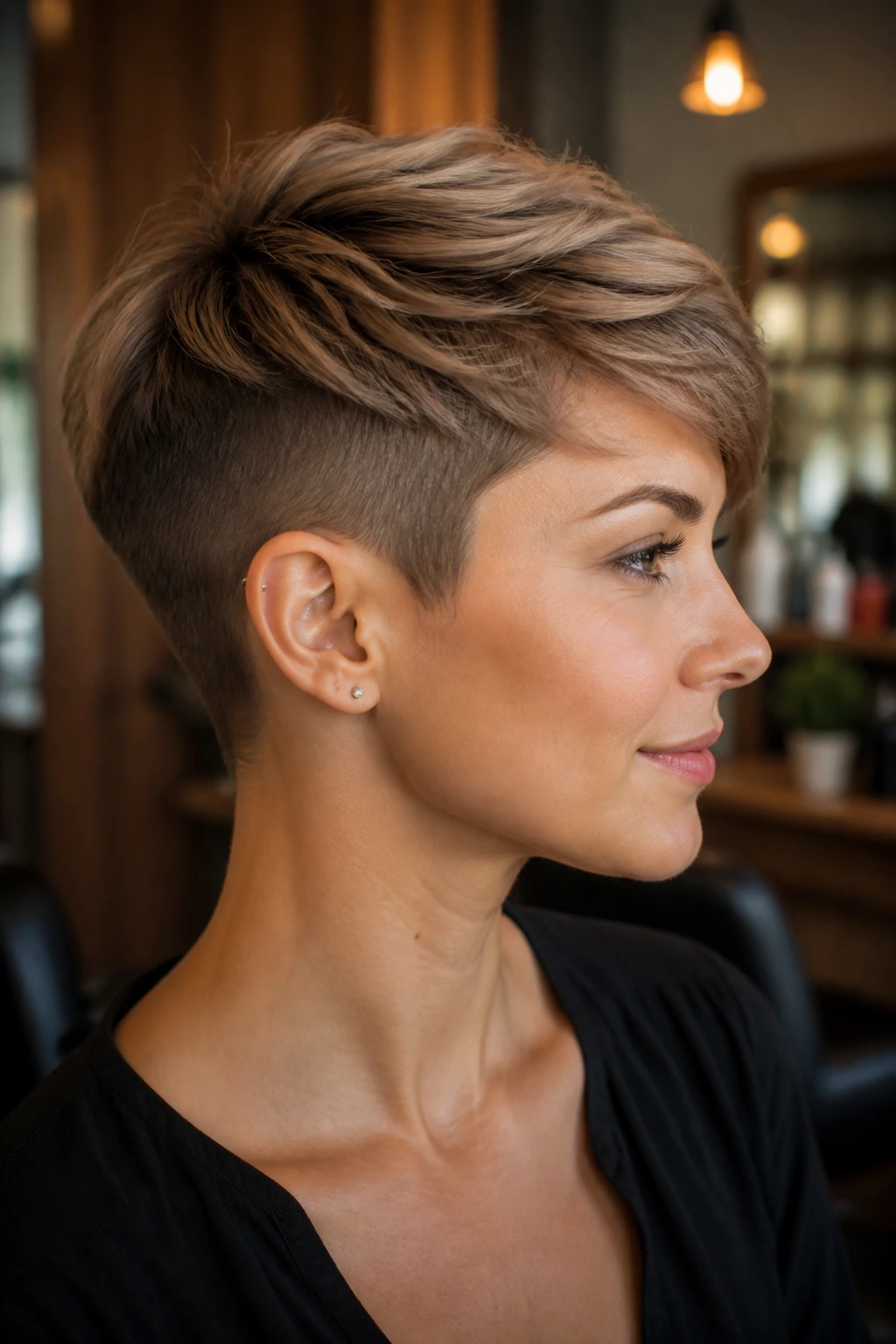
If your hair is thick, this cut can feel like a relief. The undercut removes bulk from the sides and nape, which matters because round faces and heavy sides tend to fight each other.
The top is where the personality lives. Keep it feathered and movable, not stiff or cropped too short. A little extra length through the crown gives you that useful bit of height, while the trimmed sides stop the shape from spreading outward. It is a strong cut, but not a harsh one if the top stays soft.
One-sentence truth: the feathering is what keeps this from looking severe.
This is a good pick if you are tired of hair that sits flat by midday. It also works well for people who like to style with paste, wax, or a matte cream. If you like shine and softness, it can still work, but the finish should stay light. Heavy product makes the short sides look greasy fast.
Not every face needs this much edge, and that is fair. But when it fits, it looks clean and sharp in a way longer cuts often do not.
12. Piecey Shag Bob

Unlike a smooth bob, this one likes to look a little undone. That is the appeal. The piecey shag bob breaks up the circle of a round face with small layers, not big dramatic ones, so the shape feels relaxed instead of heavy.
It works well when the layers start around the cheekbone and continue down toward the jaw. That creates movement where the face usually needs it most. If your hair is thick, the shag keeps it from puffing out. If your hair is fine, the chopped texture can make it seem fuller.
The key is not to overstyle it. A little mousse at the roots, a quick scrunch, and a rough dry is often enough. If you iron every wave out of it, the cut loses its point and starts acting like a plain bob with some choppy ends.
This is a smart option for people who want softness with shape. It does not shout. It just works.
13. Side-Parted Classic Bob with Soft Ends
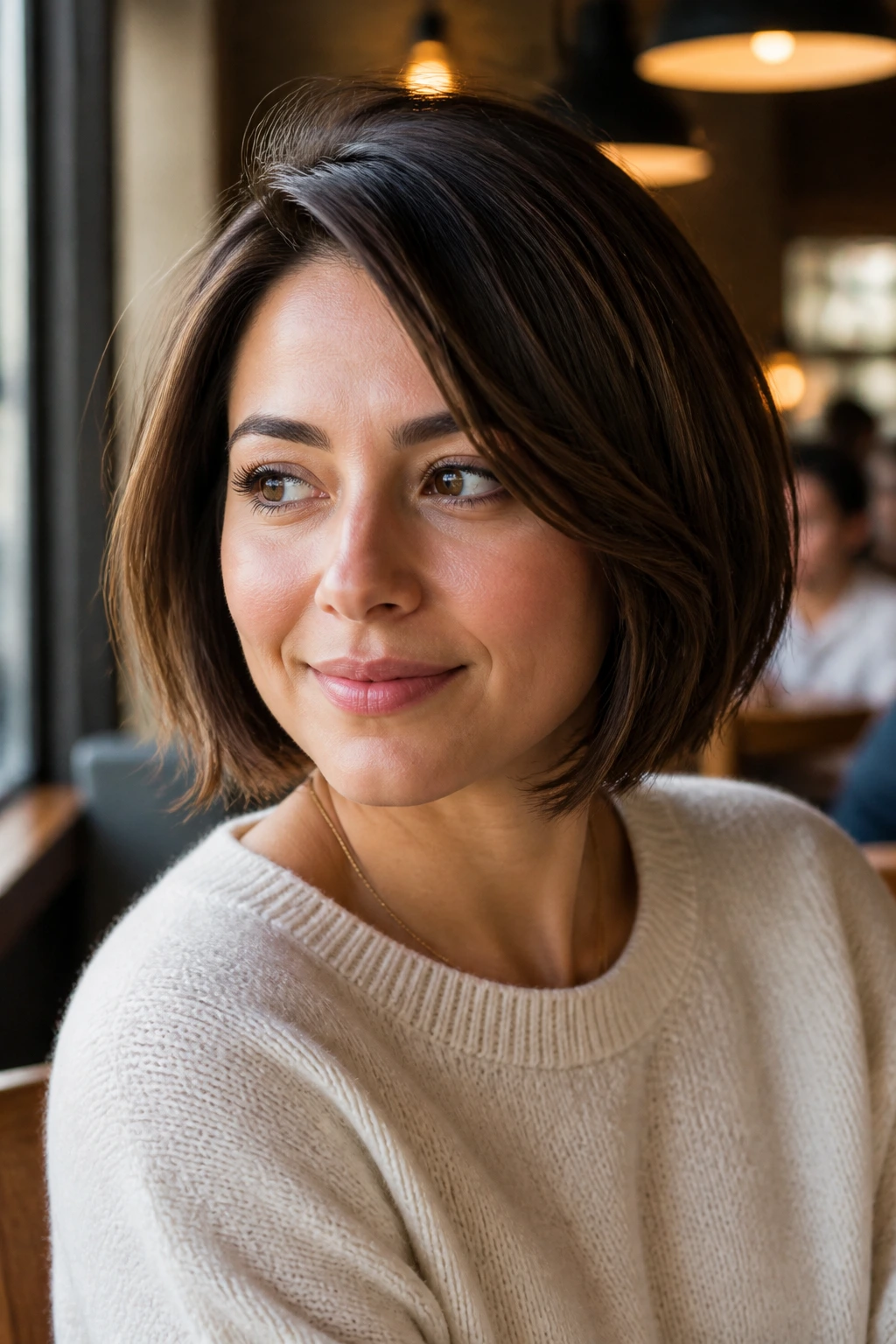
This is the haircut for people who want polish without a helmet shape. A classic bob can look too round on a round face when it sits dead center and ends sharply at the chin. Move the part, soften the ends, and the whole thing changes.
Why the Side Part Matters
A side part breaks the face into uneven pieces, which helps reduce the feeling of symmetry. Ask for the part to sit about 1.5 to 2 inches off center. That small shift can make the top look taller and the cheek area look less wide.
What the Ends Should Do
The ends should be soft, not blunt. That means point-cutting or light texturizing so the bob bends instead of clamping around the face. A length just below the jaw tends to be the safest spot, especially if your cheeks are the fullest part.
- Tuck the heavier side behind the ear for a quick lift.
- Keep the perimeter clean, but not razor sharp.
- Blow-dry with a paddle brush if you want smoothness without flatness.
- Avoid too much fullness right at the cheek line.
It is a simple cut. That is the point.
14. Choppy Crop with Long Fringe
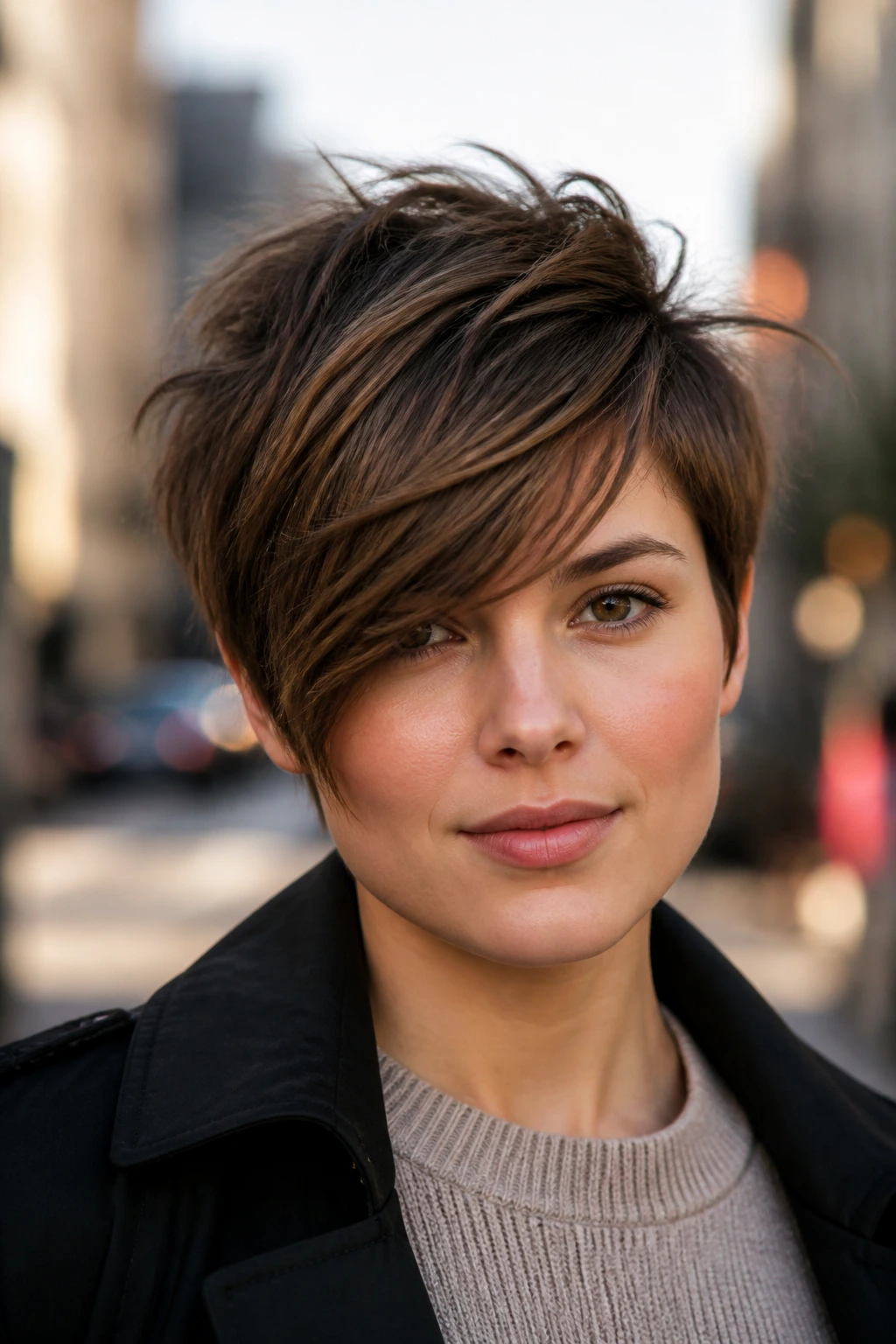
The fringe does the heavy lifting here. A long fringe can shift attention upward and diagonally, which is exactly what a round face needs when you want something short but not too severe.
The best version starts the fringe around the temple and lets it sweep across toward the opposite brow. That gives the face a line to follow. Underneath, the crop should stay choppy and light, with enough texture to keep the top from sitting flat. If the crown is flat, the whole thing loses lift.
This cut is a good match for straight or slightly wavy hair. On very curly hair, the fringe can need more work than it is worth unless you are committed to styling it. A matte paste or lightweight cream helps keep the pieces separated without making them stiff.
It is a good choice if you want something cool without going full pixie. The fringe keeps it soft, the choppiness keeps it modern, and the short length keeps it easy.
15. Graduated Bob with Nape Stack
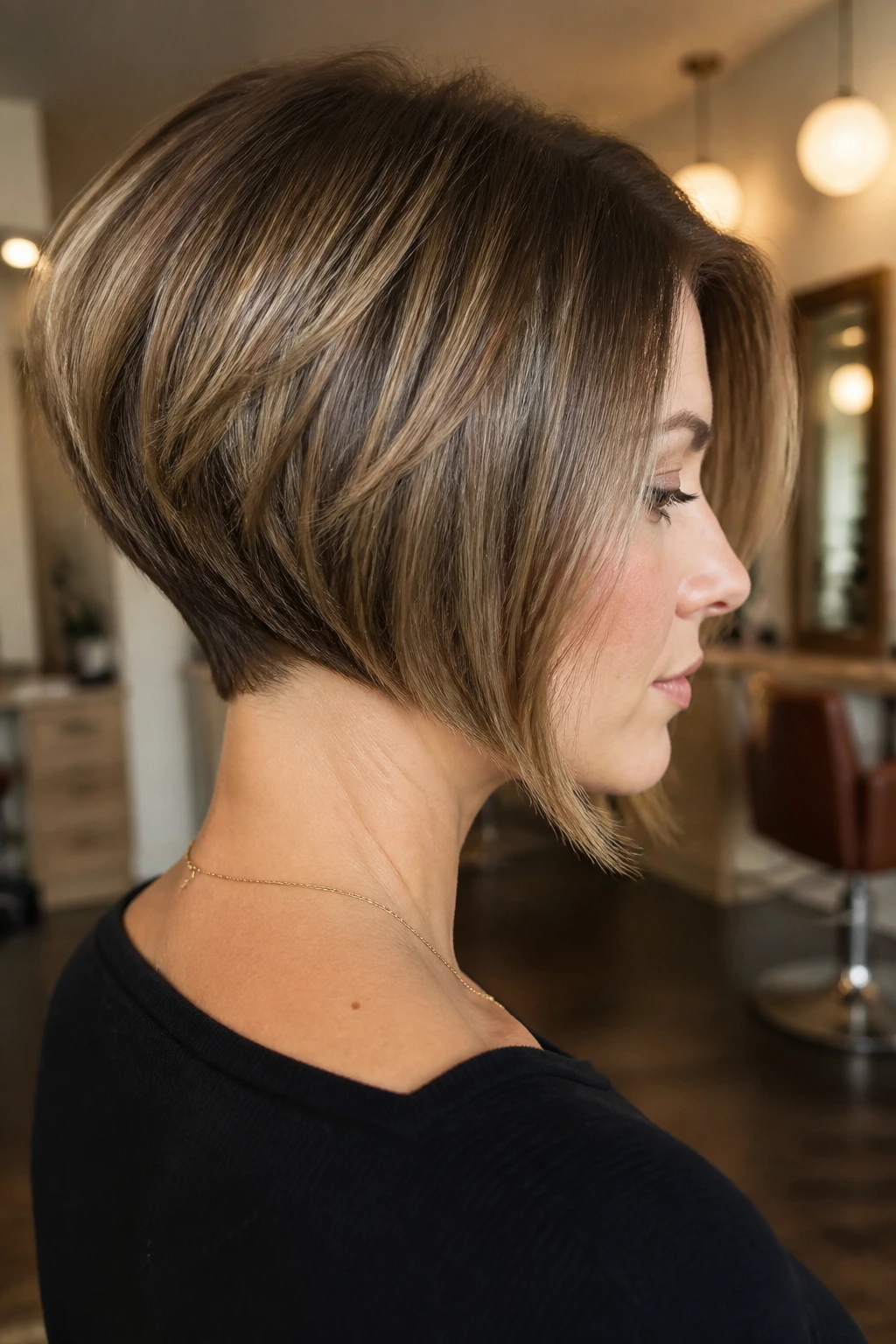
Why does a stacked back change the whole face shape? Because the eye sees lift where it expects width. A graduated bob builds that lift at the crown and removes bulk at the nape, which helps a round face look a little longer and a little narrower.
The back should be snug and layered, but not puffy. If the stack gets too high, the cut can look dated fast. Keep the front pieces long enough to skim the jaw or sit just below it, so the face has length to work with. That balance between a lifted back and a controlled front is what makes the cut feel intentional.
This style is especially useful for thick hair that wants to spread out. The graduation keeps the shape in place. On fine hair, the same structure can make the hair look fuller without piling it around the cheeks.
Ask your stylist to keep the transition smooth. You want a curve, not a shelf.
16. Tousled Crop with Curtain Fringe
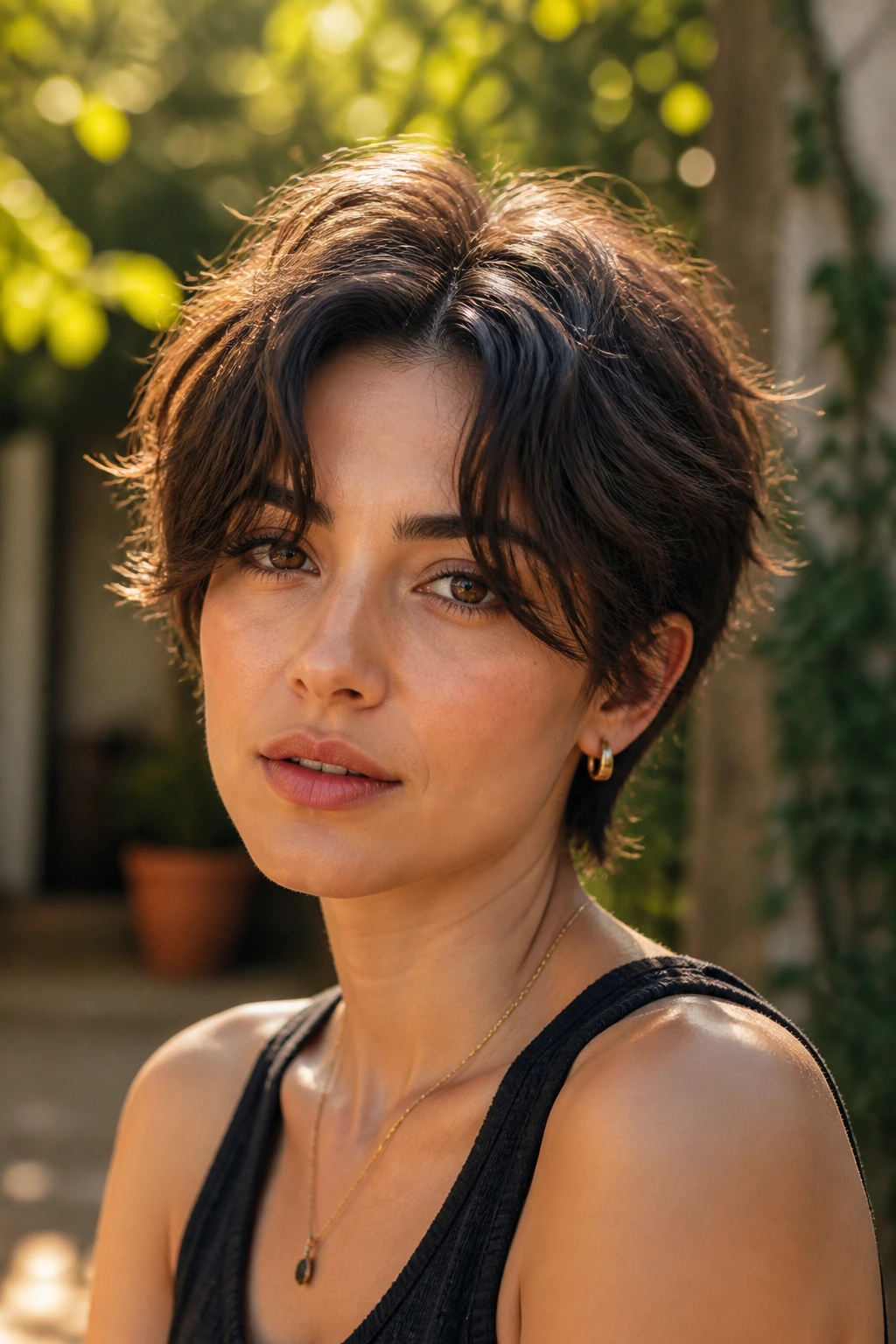
Picture this: the fringe splits in the middle, the sides skim the temples, and the cut never sits flat against the cheeks. That is the whole appeal of a tousled crop with curtain fringe. It opens the face without exposing every inch of it.
The curtain fringe works because it pushes the hair away from the middle of the face and lets the shorter pieces fall beside the eyes instead. On a round face, that creates a vertical window instead of a horizontal band. The crop underneath should stay loose and a little uneven so the style can move.
- Blow-dry the fringe forward first, then split it with your fingers.
- Use a light mousse if your hair tends to collapse.
- Keep the sides soft enough to tuck behind the ear.
- Let a few pieces fall loose around the cheekbone instead of forcing them back.
This cut suits people who do not want the hair to look too finished. It has shape, but it does not look sealed into place.
17. Soft Mullet Crop

A soft mullet is not the wild, spiky version people picture from old photos. Done well, it is more like a short cut with a little extra length in back and a lot of feathering around the crown and sides. On a round face, that extra vertical line can help.
The trick is restraint. Keep the front pieces around the cheekbone or a touch below, keep the crown lifted, and taper the back so it does not hang heavy at the neck. If the back gets too shaggy, the whole shape turns sloppy fast. If the top gets too flat, the face reads wider.
This cut is best for people who like a bit of edge and do not mind a style that needs regular shaping. It is also a good home for thick or wavy hair, because those textures give the layers something to do. Straight hair can wear it too, but it needs a bit more styling cream or texture spray to keep the layers visible.
Done right, it looks alive. Done wrong, it looks unfinished. There is a difference.
18. Ear-Grazing Sliced Bob for Round Faces
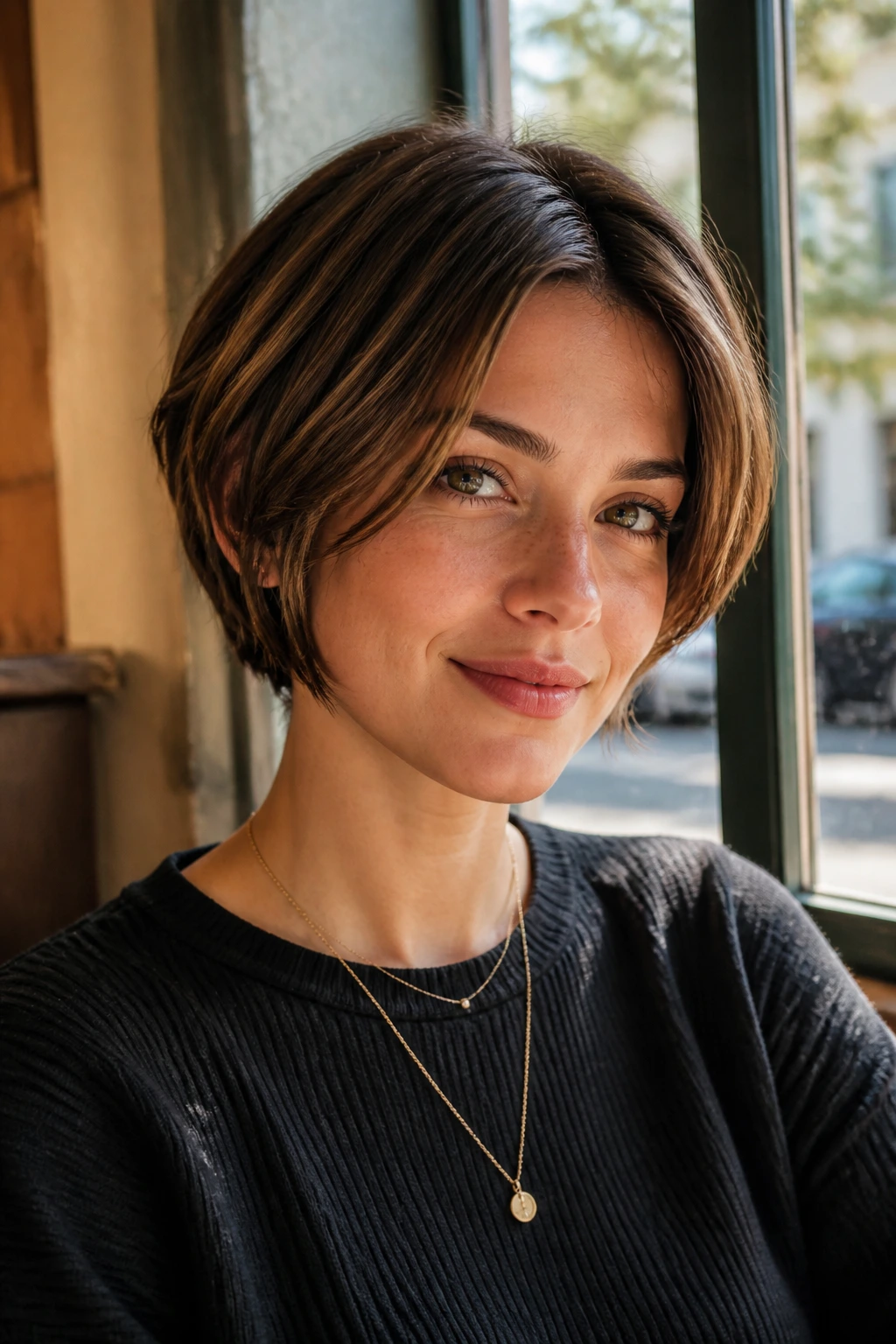
If you want the clean feel of a bob without the helmet effect, this is the one I’d keep near the top of the list. The ear-grazing length shows the jawline without boxing it in, and the sliced ends keep the perimeter from sitting heavy on the cheeks.
Compared with a blunt chin bob, this shape feels lighter. Compared with a pixie, it gives you more softness around the face. That middle ground is why it works so well on round faces: the cut has enough structure to look sharp, but enough movement to avoid turning the face into a circle.
Ask for the front to skim the tops of the ears, the back to sit clean at the nape, and the ends to be sliced rather than carved into one hard line. A slight off-center part helps too. It shifts the weight just enough to keep the face from reading too symmetrical.
If you are stuck between a bob and a pixie, this is the smart compromise. It is neat, quick to style, and easier to grow out than a super-short crop.
