



A sleek haircut on a round face can look sharper than a cloud of layers, but only if the line falls in the right place. The best sleek haircuts for round faces pull the eye down instead of letting it linger at the cheeks, and that tiny shift changes everything.
That usually means collarbone lengths, off-center parts, and front pieces that slip past the widest part of the face. The goal is not to hide your face. It’s to give it a cleaner frame.
People get tripped up by vague advice here. A chin-length bob can look wide on one person and lean on another, depending on where the ends sit, how much lift lives at the crown, and whether the part lands dead center or a little to the side. That detail matters more than the haircut name on its own.
The good part? Sleek hair isn’t one look. It can be sharp, soft, polished, severe, or a little undone. These 20 cuts cover short, medium, and long options, so you can match the shape to your hair texture and the amount of upkeep you actually want.
1. Deep Side-Part Lob
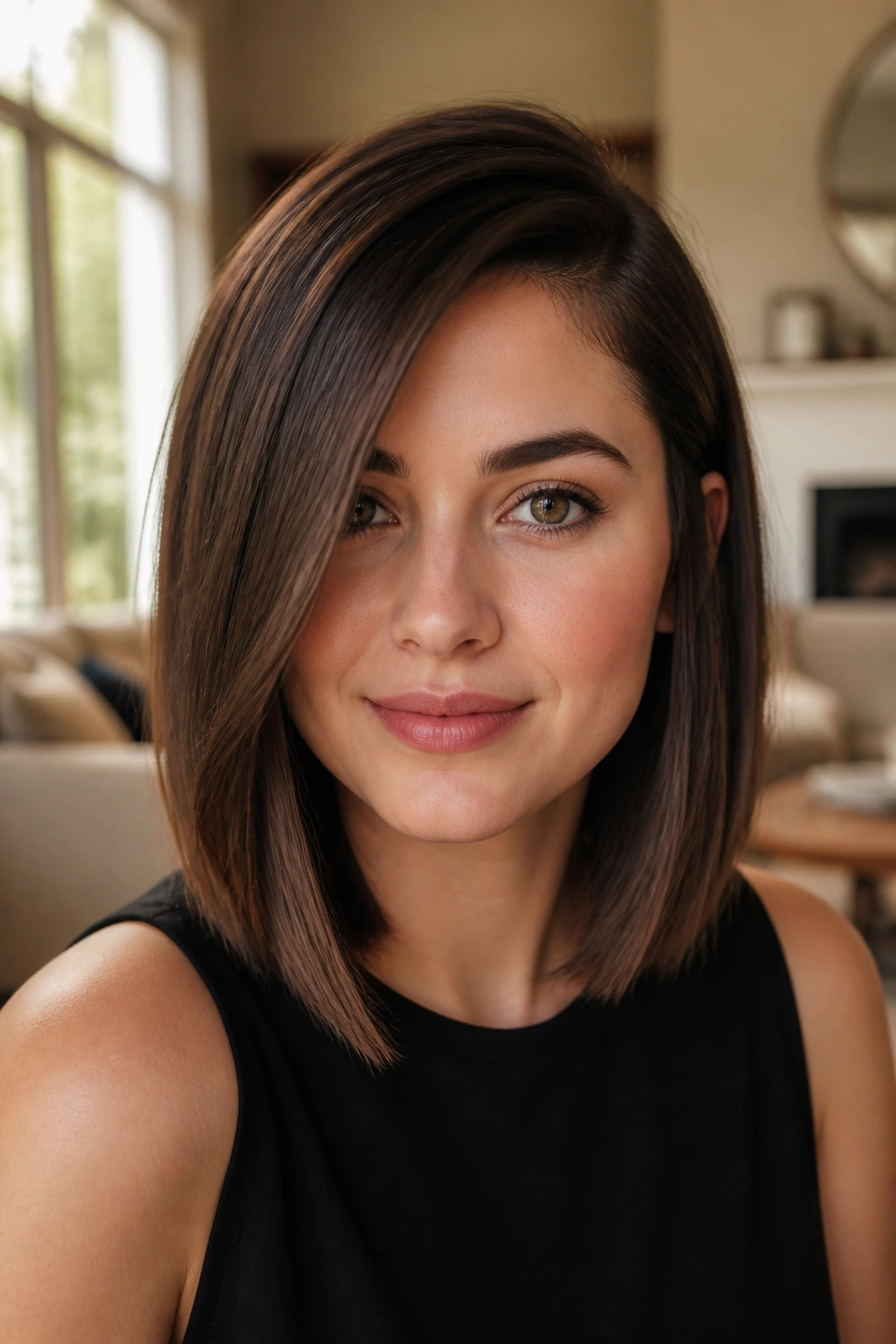
A deep side part is the easiest way to make a lob feel longer. It breaks up the circle of a round face and throws a diagonal line across the forehead, which gives the whole shape more length.
Why It Works
The lob itself should land at the collarbone, or even a hair below it. That length is doing half the work here. If it stops at the jaw, you lose the slimming effect and gain width right where you do not want it.
A deep side part also adds lift at the roots without making the sides puff out. The result is neat, not flat. And that matters, because sleek hair can go limp fast if the cut is too heavy.
How to Wear It
- Ask for a length that grazes the collarbone.
- Keep the front pieces 1 to 2 inches longer than the back.
- Ask for blunt or softly beveled ends, not choppy layers.
- Move the part 2 to 3 inches off center.
- Use a flat iron only on the mid-lengths, then leave a slight bend at the ends.
Best for: fine to medium hair that wants polish without looking stiff.
The cut feels calm and controlled. That’s the appeal.
2. Collarbone Blunt Cut With Glassy Ends
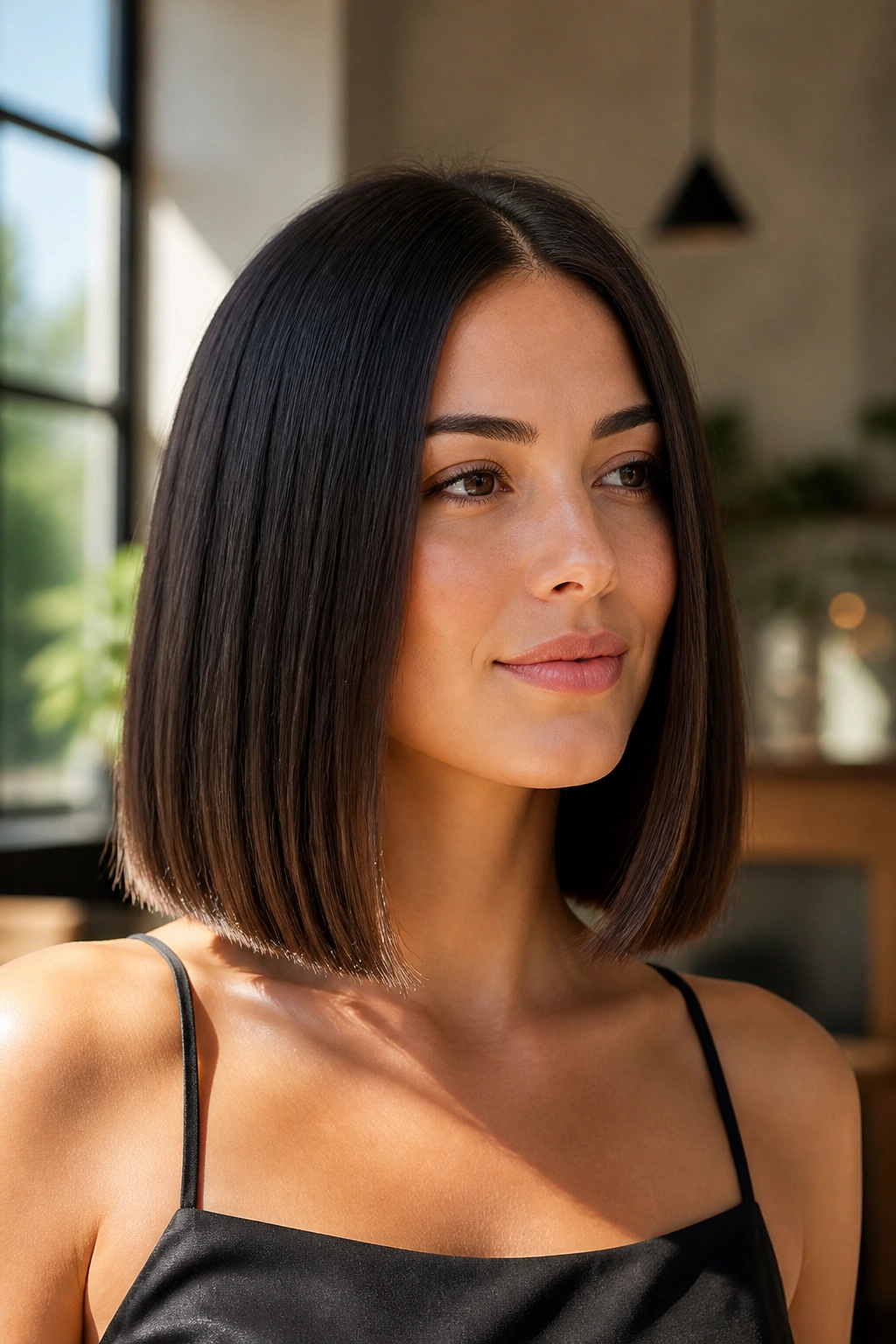
If you like clean lines, this is the haircut that does a lot with very little fuss. A blunt perimeter that lands at the collarbone gives the face room, while the straight edge keeps the eye moving downward instead of outward.
Simple. Sharp. Good.
The trick is not to over-layer it. Too many soft pieces around the cheeks can make the cut lose its shape, and a round face usually looks best when the line is clear. If your hair is thick, you can still remove bulk inside the shape, but the outside edge should stay solid.
This cut looks especially nice when the finish is smooth and shiny, almost reflective. A paddle brush blow-dry or a flat iron pass on medium heat is enough. The whole point is that the haircut itself does the visual work; the styling just keeps it neat. If your hair flips outward at the ends, ask your stylist to underbevel the hem slightly so it tucks in without curling under like a helmet.
3. Angled A-Line Bob
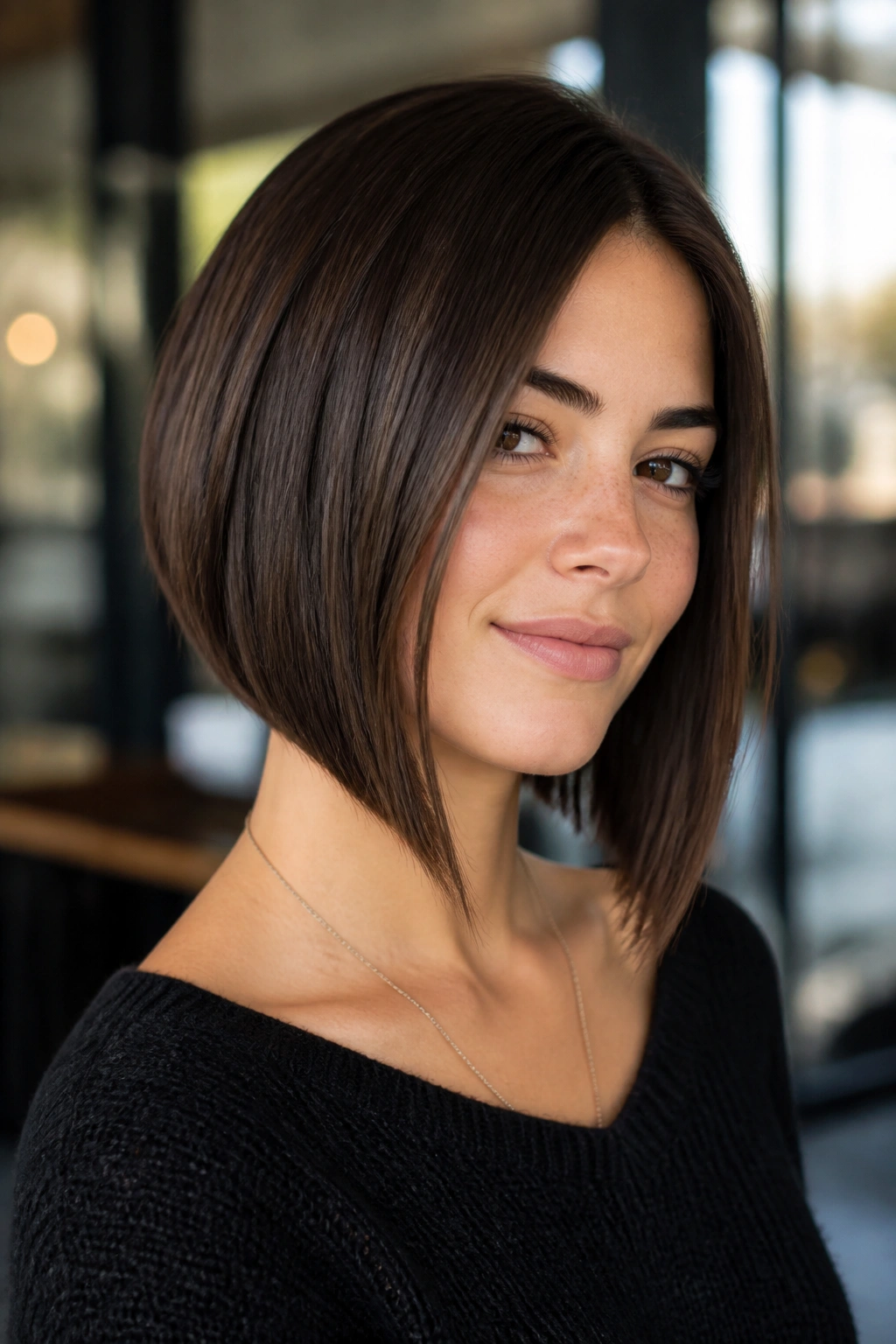
Walk into a room with an A-line bob and people notice the front first. That forward angle is the magic trick. It pulls the silhouette out of the widest part of the face and turns the haircut into a clean wedge instead of a circle.
The back should sit shorter at the nape, with the front dropping toward the jaw or just below it. That gradual slope makes the face look longer from the side. It also keeps the neck area tidy, which helps the whole style feel sleek rather than puffy.
Keep the crown smooth. A stacked back can add bulk where you do not need it, and a round face usually looks better when the volume lives a little higher up or a little lower down, not right beside the cheeks. If your hair is fine, this cut gives a nice sense of shape without needing much product. If your hair is thick, the angle helps control width in a way that blunt chin-length cuts often fail to do.
4. Asymmetrical Bob
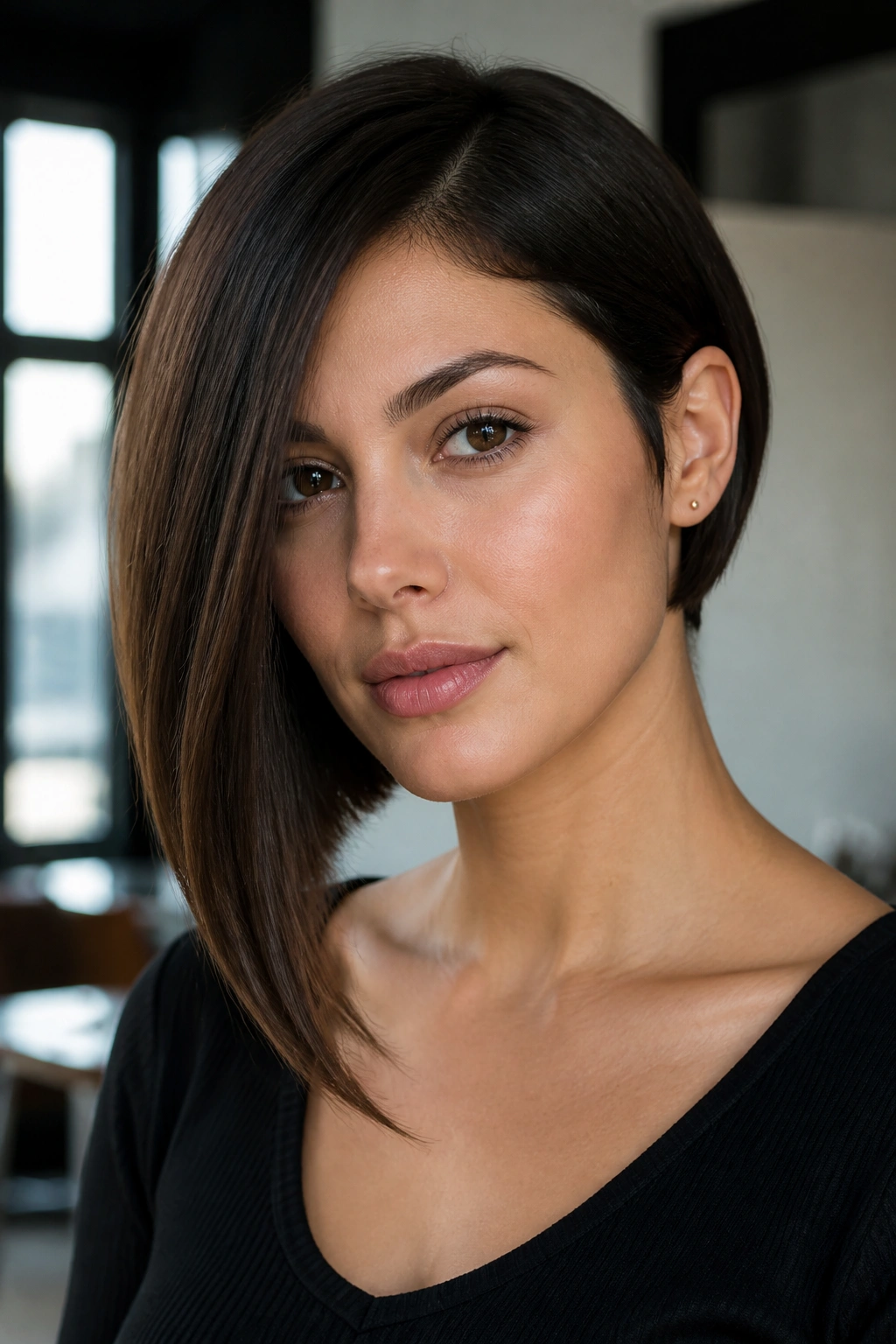
One side longer sounds small, but the effect is not subtle.
A strong asymmetrical bob gives the face a built-in diagonal, and diagonals are your friend when you want to break up softness. The longer side usually falls somewhere between the jaw and the collarbone, while the shorter side sits closer to the ear or jawline. That contrast creates movement without adding layers all over the head.
It works especially well with a sleek finish because the shape stays visible. If the hair is too fluffy, the asymmetry can get lost. If it’s polished, the line reads right away. I like this cut on someone who wants a little edge but does not want to go full fashion-editor with it. The haircut feels deliberate. A little dramatic, yes. But not fussy.
A side part usually makes it look sharper. A center part can work too, though it softens the impact and makes the whole cut a bit quieter.
5. Sleek Pixie With a Long Side Fringe
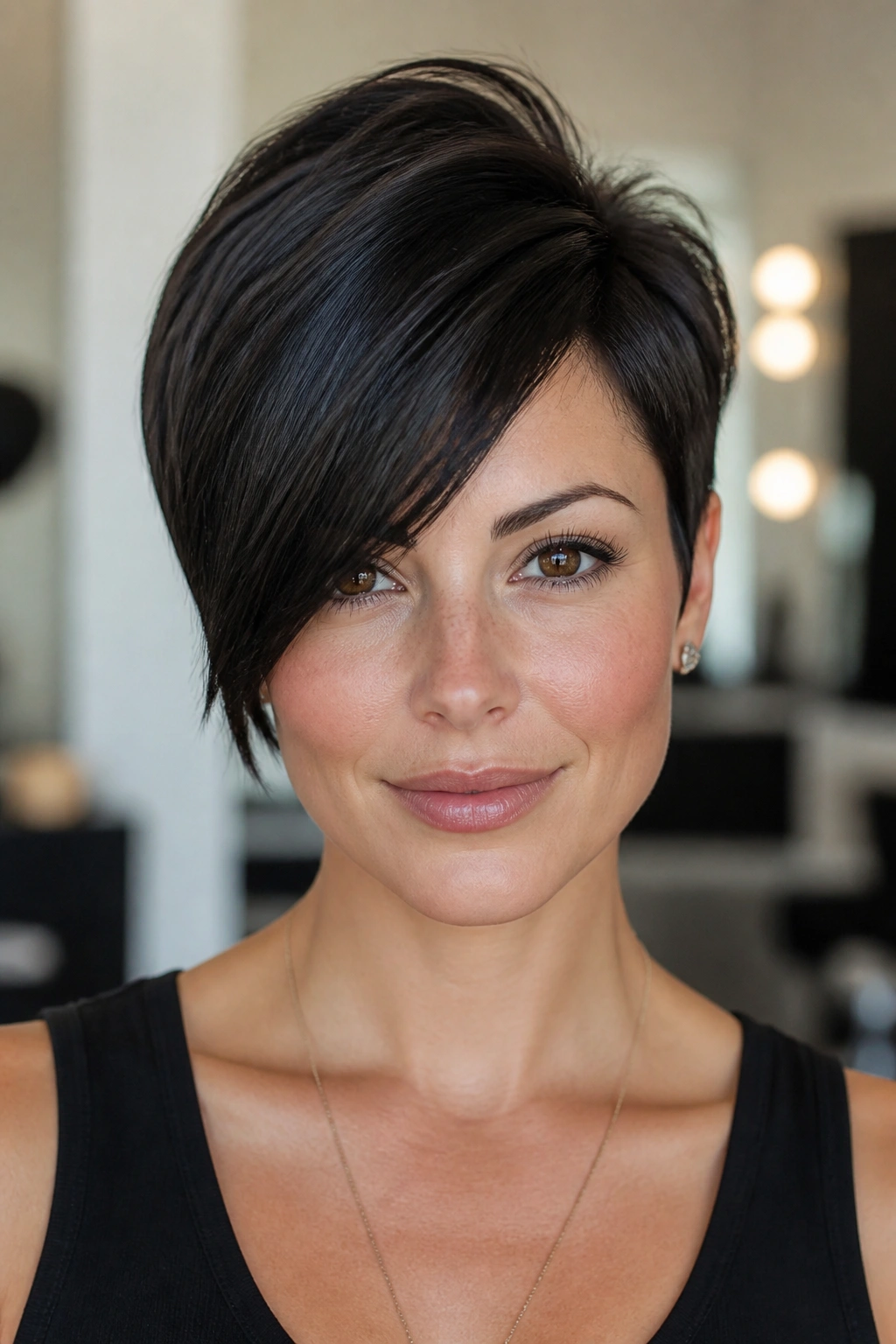
Can a pixie work on a round face? Absolutely, if the top has length and the sides stay close.
The fringe does the heavy lifting here. A long side fringe that sweeps past one eyebrow creates a vertical line, and that vertical line stops the face from reading too wide. The crown can be lifted slightly, but not teased into a puff. You want height, not fluff.
How to Ask for It
Tell your stylist you want:
- Tapered sides that sit close to the head.
- 3 to 4 inches of length on top.
- A fringe that sweeps diagonally across the forehead.
- Soft texture at the front, not jagged points.
- A neckline that stays clean when it grows out.
A pixie like this is good for someone who likes low drying time and does not mind trims every 4 to 6 weeks. It can look very sharp with a little styling cream on the ends. Too much product, though, and it starts to collapse. Keep it light.
6. Center-Part Midi Cut for Round Faces

A center part is not the enemy. On a round face, it only turns difficult when the ends stop too soon.
This version works because the length sits below the chin and the perimeter stays smooth. That extra drop below the jaw changes the whole visual balance. Instead of cutting the face across at its widest point, the hair forms two long lines that travel down the sides of the face.
A midi cut like this looks best when the crown stays flat and the ends are lightly beveled. You do not want a lot of bounce around the cheeks. You want the hair to fall in a clean sheet, then soften a touch at the bottom. If your hair is very thick, ask for hidden internal debulking so the sides do not balloon outward. If it’s fine, the blunt edge can make it look fuller without making the face seem wider.
This is one of those cuts that seems plain until you see it on. Then it reads as controlled and expensive, even when the styling took 10 minutes.
7. Italian Bob With a Soft Square Edge
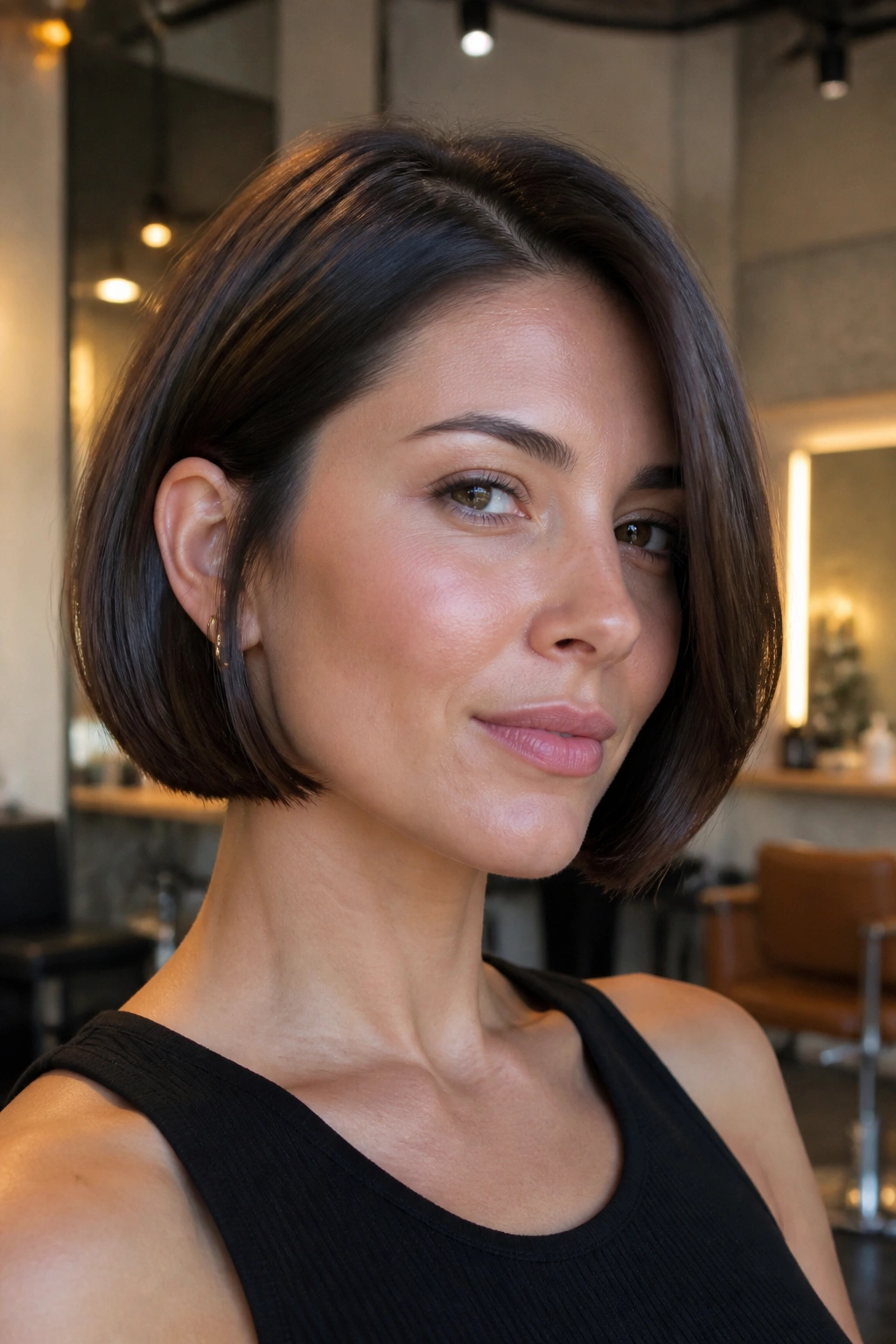
The Italian bob sits right in that sweet spot between polished and slightly full. It usually lands around the jaw or a touch below it, but the secret is the edge: soft, square, and a little beveled, not fuzzy.
That square outline helps a round face because it gives the shape structure. A fully rounded bob can echo the face too much, which is where the trouble starts. A square edge, even a gentle one, creates a more stable line around the lower face.
This cut looks especially good if you tuck one side behind the ear or use a deep side part. The visible cheek is not the issue; the issue is where the widest line of the haircut sits. Keep it under the cheekbone or past the jaw, and the whole thing stays balanced.
It also grows out well. That’s not a small thing. Some sleek bobs lose their shape in a week and a half, which is annoying. This one usually keeps its structure a little longer because the perimeter is strong from the start.
8. Long Straight Cut With Invisible Internal Layers
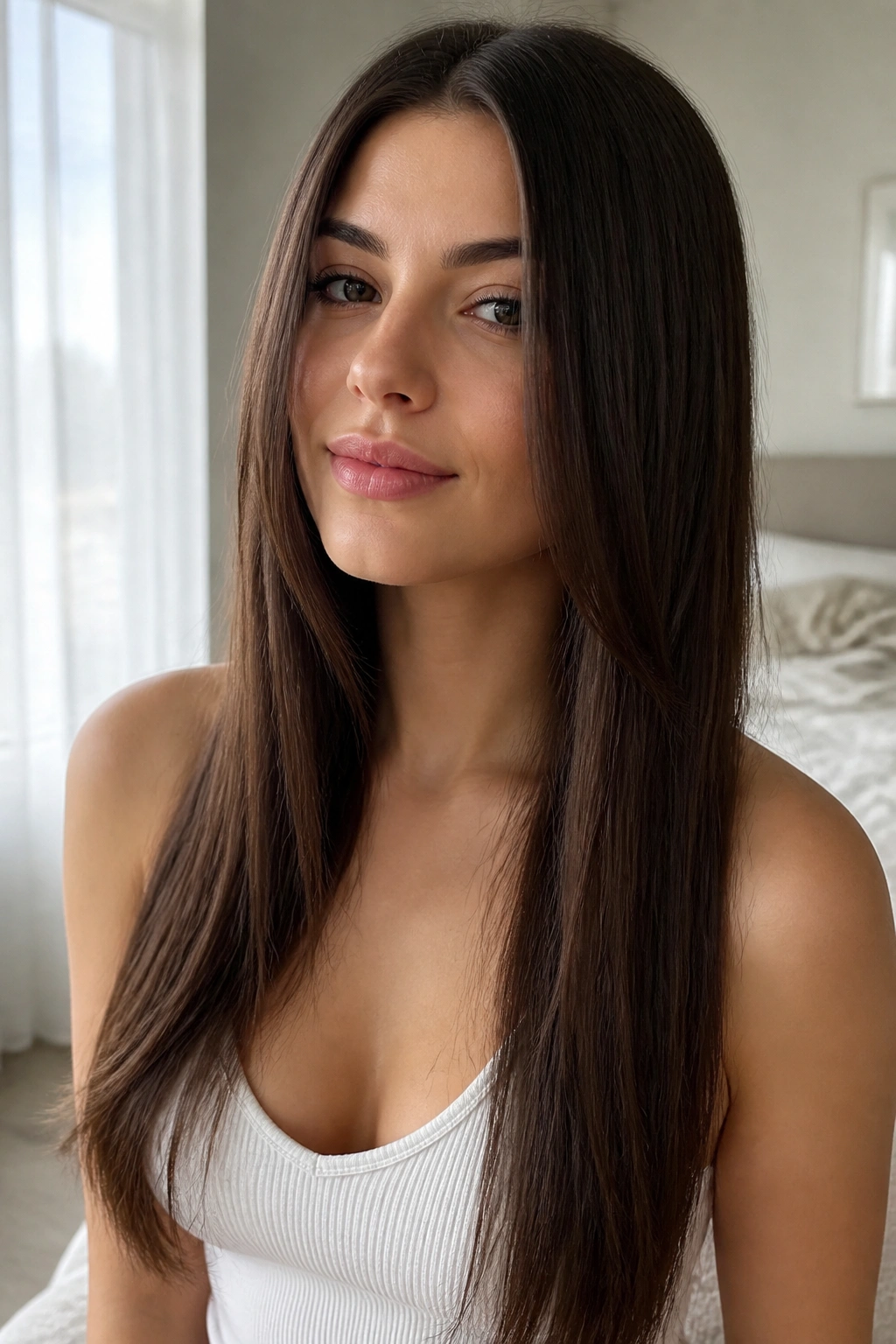
Long hair can flatter a round face if the weight sits in the right place. People forget that.
The outer line should stay long and clean, while the internal layers remove bulk from inside the hair, not around the face. That means the shape still falls like one long curtain, but it doesn’t puff out near the cheeks. It’s a quiet trick, and a good one.
This is a strong choice if you want sleek hair without chopping off length. Ask for layers that begin below the chin, not at the cheekbone. That starting point matters. Short layers near the face can widen things fast, especially if your hair is dense or has a little natural bend.
A middle part can work if the length is there. A soft off-center part works too. The main thing is to keep the surface smooth and the ends neat. If your hair tends to look heavy, a round brush blow-dry at the roots gives enough lift without turning the sides into a halo.
9. Tucked-Behind-the-Ear Bob

Tuck one side, and the whole haircut changes.
That little move opens up the face and removes visual width from the side that would otherwise sit against the cheek. On a round face, that matters more than people think. The exposed ear creates a gap, and that gap gives the eye a place to rest.
For the cut itself, aim for a bob that lands between the jaw and collarbone. Too short and the tuck becomes awkward. Too long and the clean edge gets lost. The ends should be smooth, with enough density to stay tucked without springing out.
This style has a nice, modern feel because it looks intentional even when it’s casual. A dab of styling cream on the tucked side keeps flyaways down. If the hair is very fine, a light mist of root spray helps the tucked side stay in place without collapsing. One neat side. One softer side. That imbalance is what makes it interesting.
10. Blunt Shoulder Cut With a Slight Underbevel
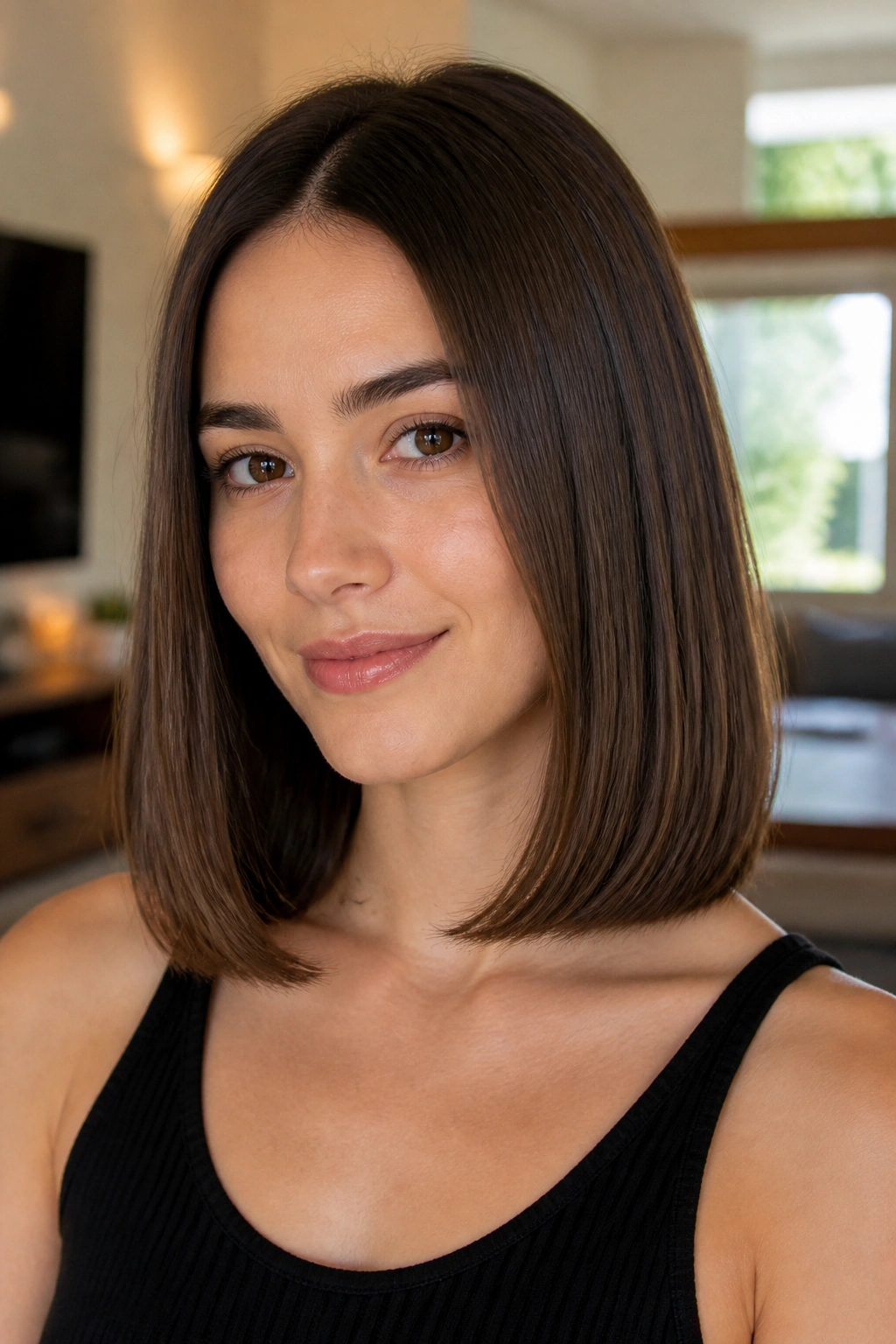
Why does a shoulder-length blunt cut work when a chin-length one does not? Distance.
That extra length below the jaw gives the face room to breathe. A round face usually looks fuller when the haircut stops right at the widest point, and shoulder length avoids that trap. The blunt edge keeps the style sleek, while the underbevel stops it from hanging like a sheet.
It’s a good option if you want something low-drama and easy to maintain. Ask for the perimeter to hit just at or below the shoulders, then have the stylist slightly angle the front so it doesn’t sit in one heavy block. If your hair is thick, this cut can get bulky fast, so a bit of internal weight removal helps. If your hair is fine, keep the line stronger so it doesn’t look wispy.
This cut works with straight styling, but it also looks nice with a loose bend from a round brush. The bend should live near the ends, not around the cheeks. That’s the whole game.
11. Face-Framing Lob With Long Lean Front Pieces

Face-framing pieces help only when they’re long enough. Short cheekbone pieces can land right on the widest part of the face and do the opposite of what you wanted.
A good version of this lob keeps the front pieces long, often dropping to the mouth, chin, or even a little lower. The back can stay blunt or slightly stacked, but the front is where the shape lives. That length draws the eye down and gives the haircut a cleaner, more vertical feel.
This cut works well if you want softness without losing the polished look of a lob. It’s a nice middle ground for someone who doesn’t want a severe blunt line but also doesn’t want layers everywhere. Keep the front pieces smooth and narrow, not thick and choppy. Thick, chunky pieces can widen the cheeks. Thin, lean pieces open the face.
A side part gives this haircut extra lift. A middle part makes it quieter. Both can work. The deciding factor is usually how much width your hair naturally creates at the sides.
12. Chin-Length Bob With a Deep Side Sweep

This is the riskiest cut on the list, and I mean that honestly.
A chin-length bob can widen a round face if it lands badly. But with a deep side sweep, tight nape, and smooth ends, it can look sharp and fashion-forward instead of boxy. The trick is that the sweep gives you a diagonal line across the face, and the diagonal interrupts the round shape.
This is a good cut if you like short hair and your hair is naturally straight or only slightly wavy. If it flips outward or has a lot of bulk at the cheeks, you’ll fight it every morning. Not impossible. Just annoying. And nobody needs an annoying haircut.
The side sweep should be dense enough to look deliberate, not wispy. The rest of the bob should stay clean and tucked close to the head. If you want a little edge, keep the nape cropped tightly and let the front skim the jaw on one side. It’s a bold look, but when it’s done well, it has a crisp, almost tailored feel.
13. Sleek Bixie With Extra Height at the Crown
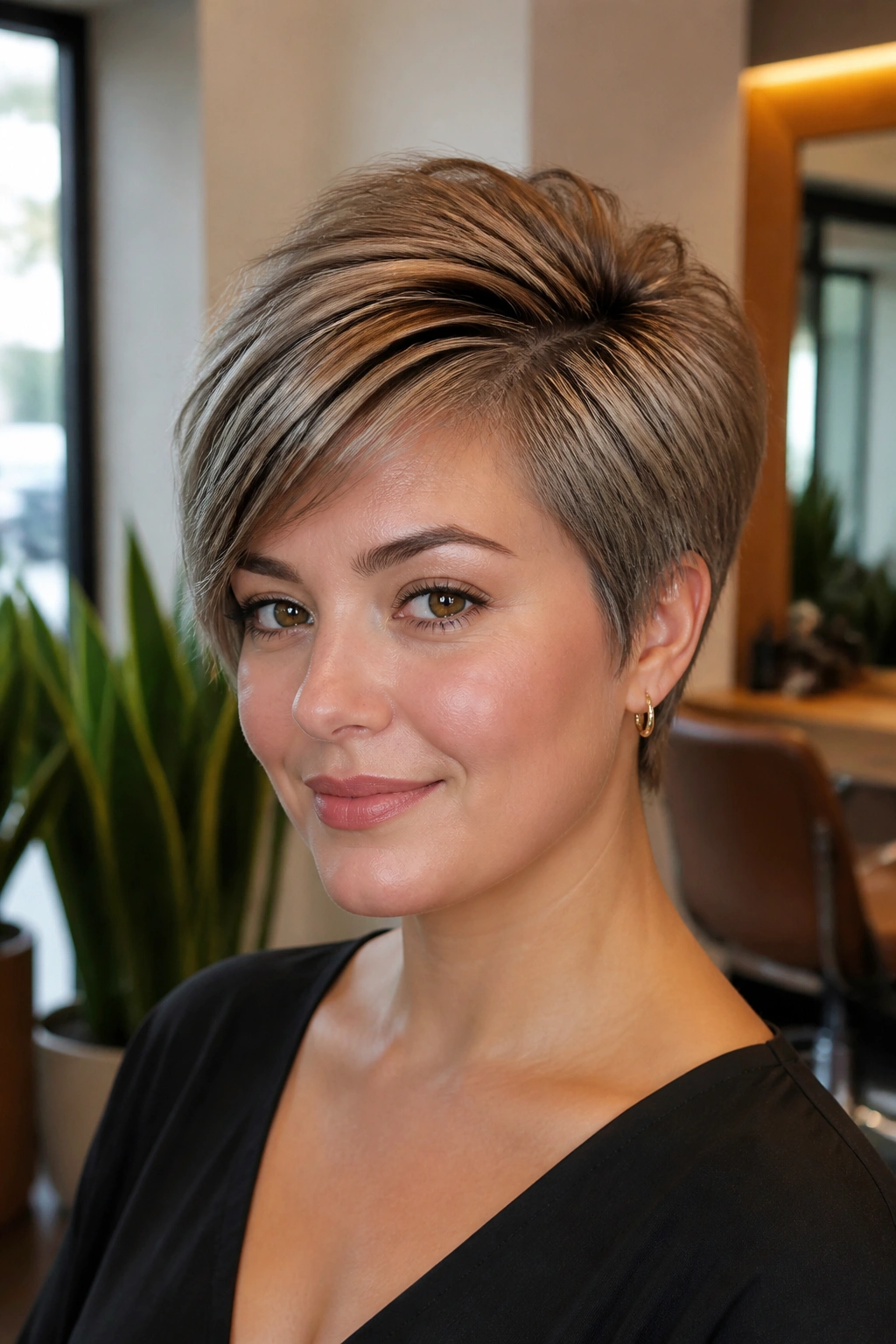
A bixie sits between a bob and a pixie, which sounds like a compromise until you see what it actually does for a round face. The added crown height lengthens the face, while the shorter sides keep it from spreading outward.
What Makes It Different
Unlike a full pixie, the bixie leaves enough length around the top and front to shape the silhouette. That means you can sweep the fringe to the side, lift the roots a little, and still keep the look soft. It’s a good move if you want short hair but don’t want anything too severe.
How to Wear It
- Keep the crown about 1 to 2 inches longer than the sides.
- Ask for tapered temples so the width stays controlled.
- Sweep the fringe diagonally, not straight across.
- Use a light cream or paste, not heavy wax.
- Trim it often, because the shape softens fast.
The bixie feels playful, but it’s not messy. That balance is the reason it works.
14. U-Shaped Long Cut That Keeps Length Near the Back
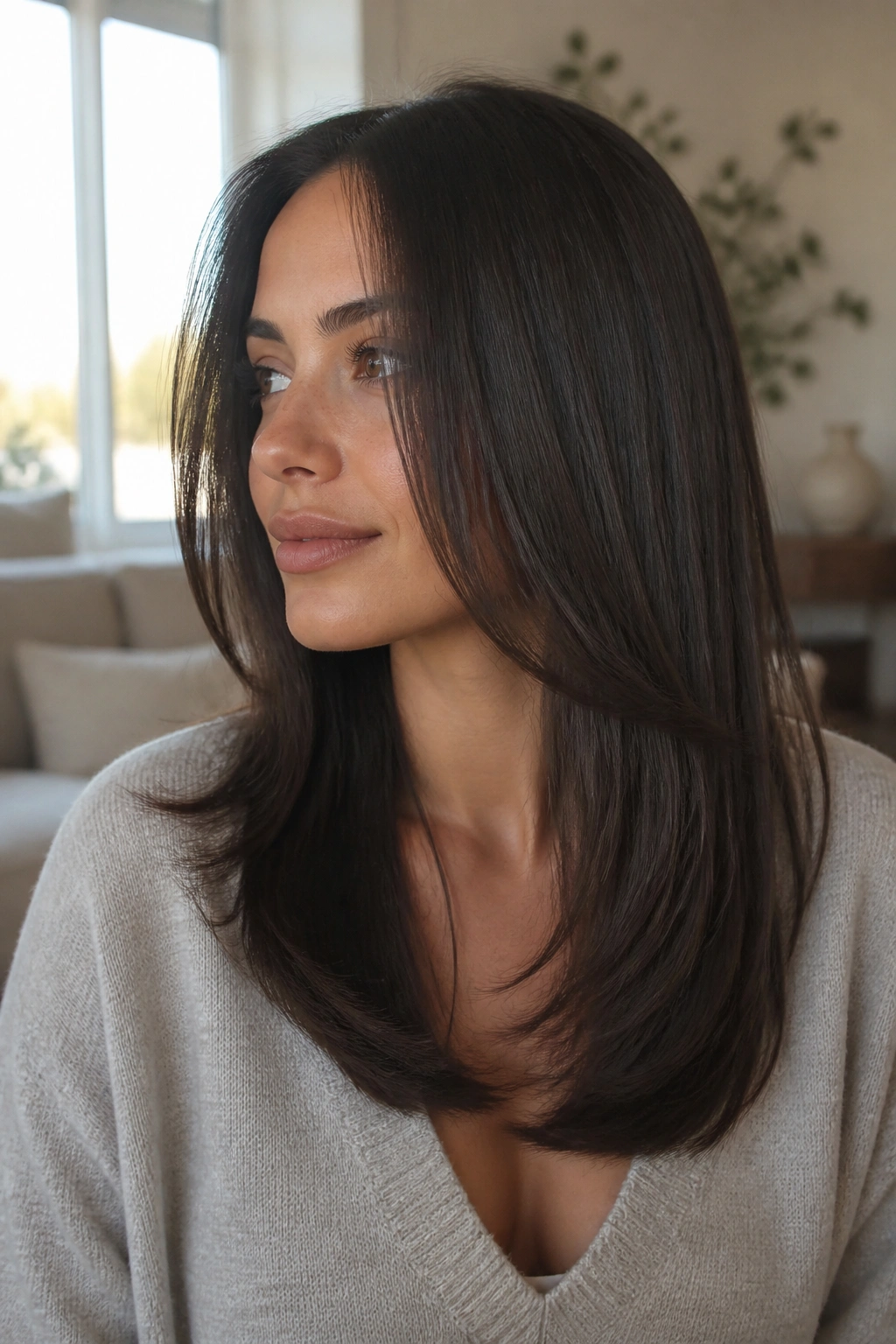
A U-shaped cut is one of the easiest ways to keep long hair flattering on a round face. The sides are slightly shorter than the back, which creates a gentle curve rather than a blunt wall around the face.
That curve helps the eye travel down. It also keeps the front from looking too heavy. If your hair is thick, this shape prevents the sides from ballooning. If it’s fine, the soft outline still gives enough shape to feel finished.
I like this cut for someone who wants long hair but hates the way straight-across lengths can sit like a shelf. The U shape gives movement without throwing layers all over the place. Keep the front pieces below the chin, ideally closer to the collarbone, so the face never gets boxed in.
This is one of those cuts that looks plain until the hair moves. Then the shape shows up. A loose bend at the ends is enough. No need to curl it into submission.
15. Micro-Fringe Pixie With Tapered Sides
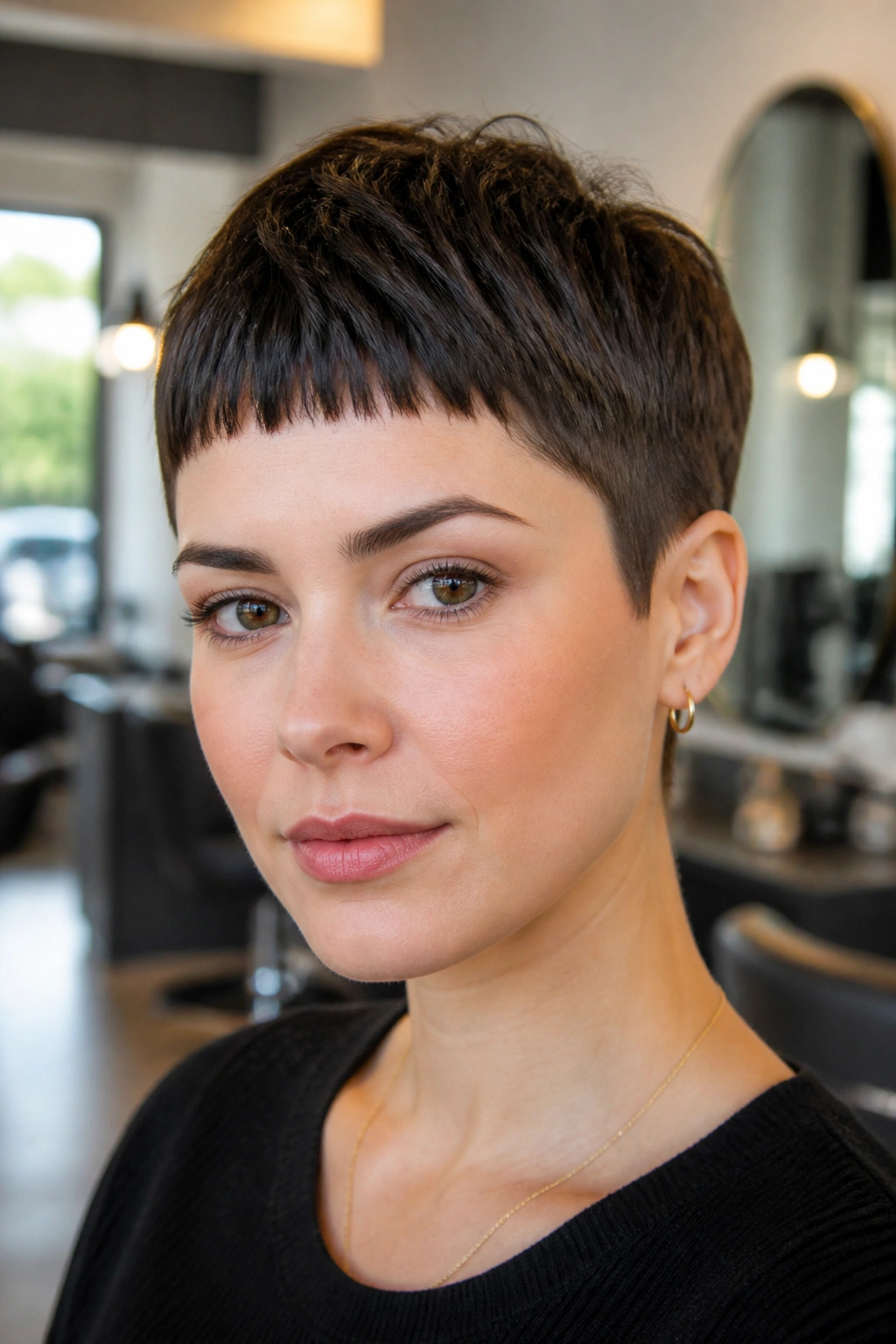
This one is bold. No pretending otherwise.
A micro fringe opens the face vertically, which can work well on a round face, but only if the sides are tight and the top stays controlled. If the temples puff out, the whole thing goes sideways fast. The shape has to be narrow at the edges and neat at the neckline.
What to Tell Your Stylist
- Keep the fringe short, but not jagged.
- Taper the sides close to the head.
- Leave enough length on top to add a bit of lift.
- Keep the nape clean and narrow.
- Plan on trims every 3 to 4 weeks.
This cut suits someone who likes a strong look and does not mind being noticed. It’s not the most forgiving style, and it doesn’t try to be. But when it’s cut well, it makes the face look open and clean, with none of the heaviness that a bulky short cut can bring.
16. One-Length Midi Cut With a Strong Middle Part
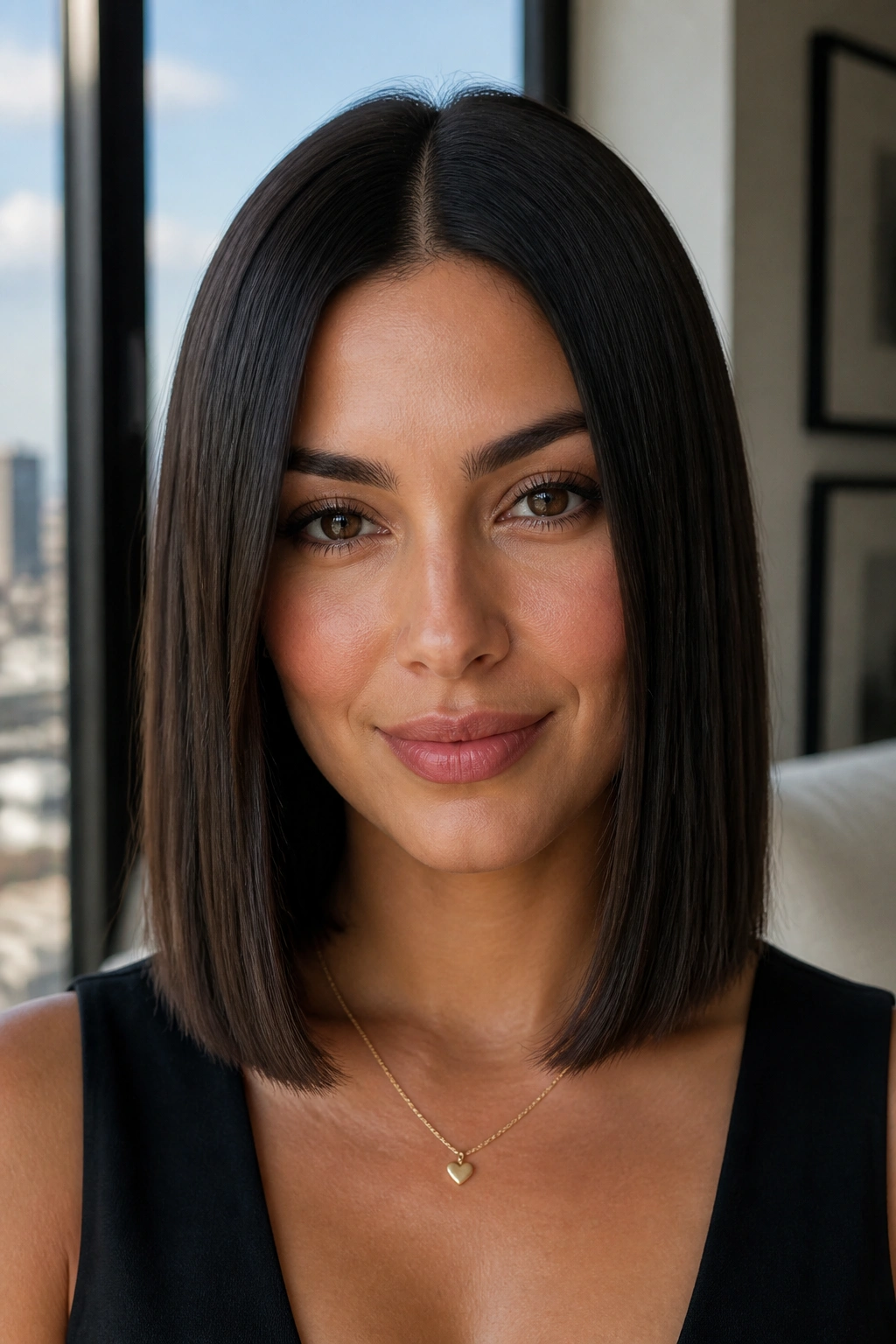
A one-length midi cut can look striking on a round face because there’s no extra movement around the cheeks. Just one clean line, falling straight down.
That simplicity is the appeal. The ends should hit the collarbone or a little below it, and the center part should stay precise. If the hair is naturally straight, the result is sleek in a way that feels calm rather than severe. If your hair has a wave, you’ll need a little heat or a smoothing blow-dry to keep the shape from puffing out at the sides.
This is not the cut for someone who wants lots of softness around the face. It works because it’s controlled. The line makes the face look longer, and the lack of side volume keeps the cheeks from getting extra attention.
It also pairs well with hair that has shine. Not oil-slick shine. Just healthy, smooth hair that reflects light without looking greasy. That clean surface does a lot of quiet work here.
17. Softly Curved Long Bob

Not every sleek cut has to be pin-straight. A softly curved lob can still read polished if the bend is low and gentle.
The curve should start near the lower third of the hair, not around the cheekbones. That’s the part people get wrong. If the bend sits too high, it adds width. If it sits low, it creates a soft inward line that narrows the shape without making the haircut look stiff.
This cut is a nice pick for wavy hair that wants structure. You can smooth the top, leave the middle controlled, and turn the ends in just enough to keep the silhouette tidy. It looks especially good with a side part or a subtle offset part, because the line around the face stays longer on one side.
A 1-inch or 1.5-inch round brush is usually enough for the finish. You are not trying to create a curl. You’re just nudging the ends into place.
18. Slick, Short Crop With Temple Tapering
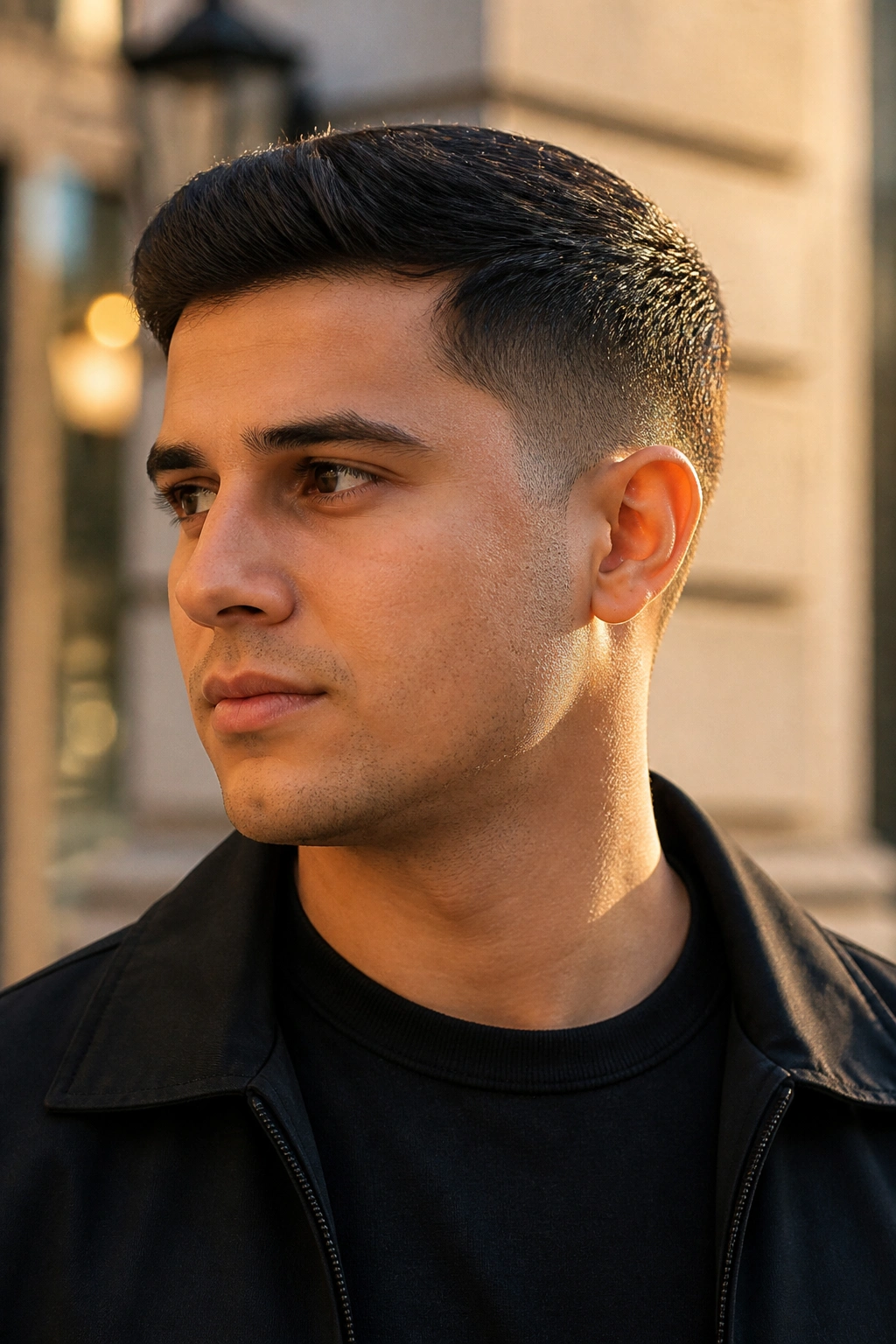
The temple area is the part that changes everything here.
A short crop can work on a round face if the temples are tapered close to the head and the top has just enough length to sweep slightly upward or to the side. That removes bulk right where the face tends to feel widest. It also gives the cut a cleaner, more tailored outline.
This style works well on straight hair and dense hair, especially when you want something neat with very little daily styling. The sides and back should stay tight. The top can be left a little longer, maybe 2 to 3 inches, so it has shape instead of sitting flat like a helmet.
What to Watch For
- Don’t let the sides get puffy.
- Keep the crown controlled, not round.
- Ask for soft tapering at the temples.
- Use a small amount of matte cream or light pomade.
- Trim it before it loses the taper.
If the taper disappears, the whole shape gets wider. That’s the catch.
19. Long Layers With a Polished Blowout Finish
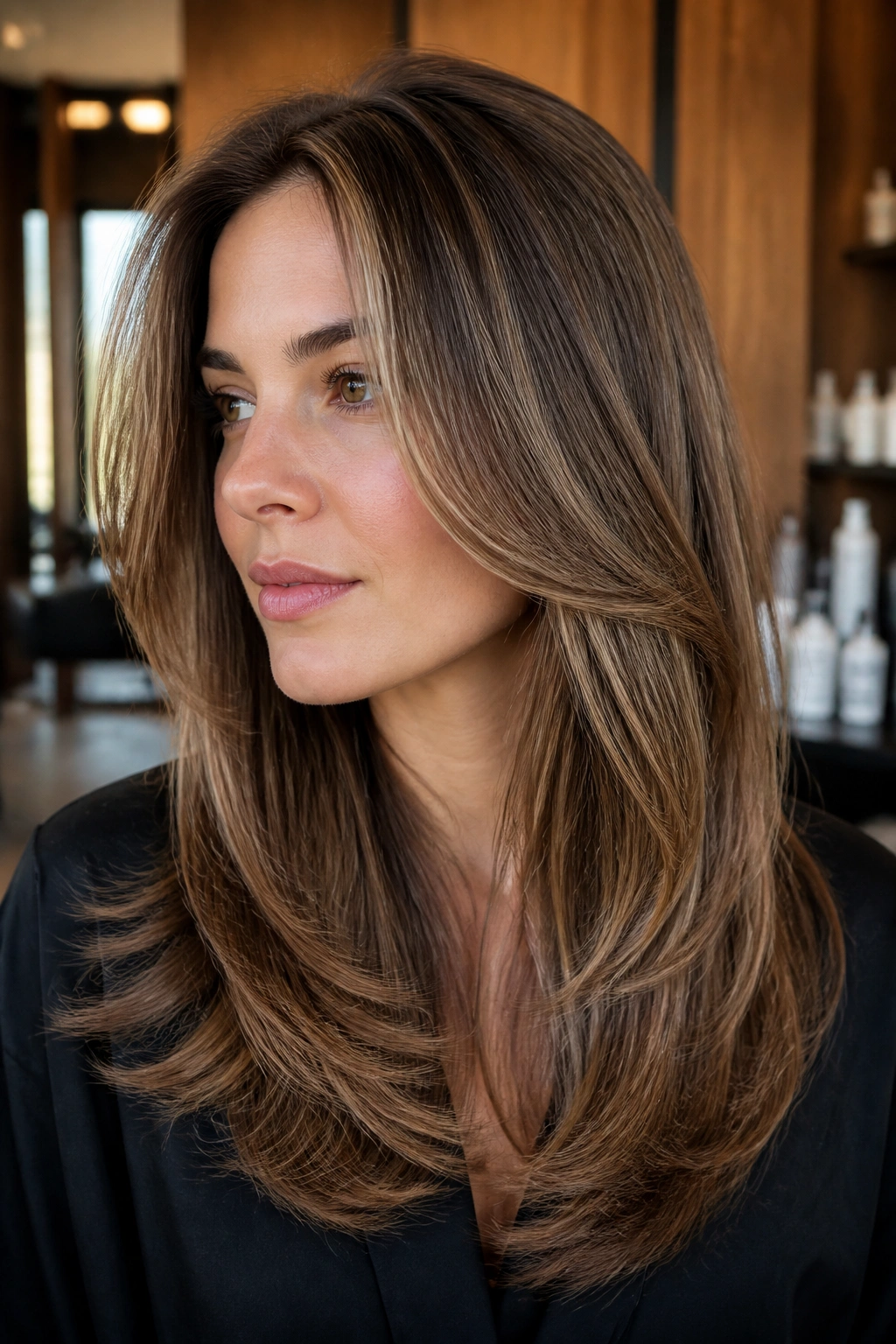
Can layers work on a round face? Yes, if they’re long and placed low.
That’s the piece most people miss. Short layers around the cheeks can make the face feel wider, but long layers that start below the chin create movement without adding bulk at the center of the face. The haircut stays sleek, yet it never looks too heavy.
A polished blowout finishes the job. You want root lift at the crown, then a smooth fall through the mid-lengths, with the ends turned under or left with a soft bend. The styling should look deliberate, not puffy. A round brush and a medium heat setting are usually enough if your hair is cooperative. If it isn’t, a flat iron pass on the top layers can calm the shape without flattening everything.
This is a smart choice if you want the security of longer hair but still want some movement. It’s also forgiving. If you wear it straight one day and with a bend the next, it still holds its shape.
20. Sleek Pixie Bob With a Narrow Nape
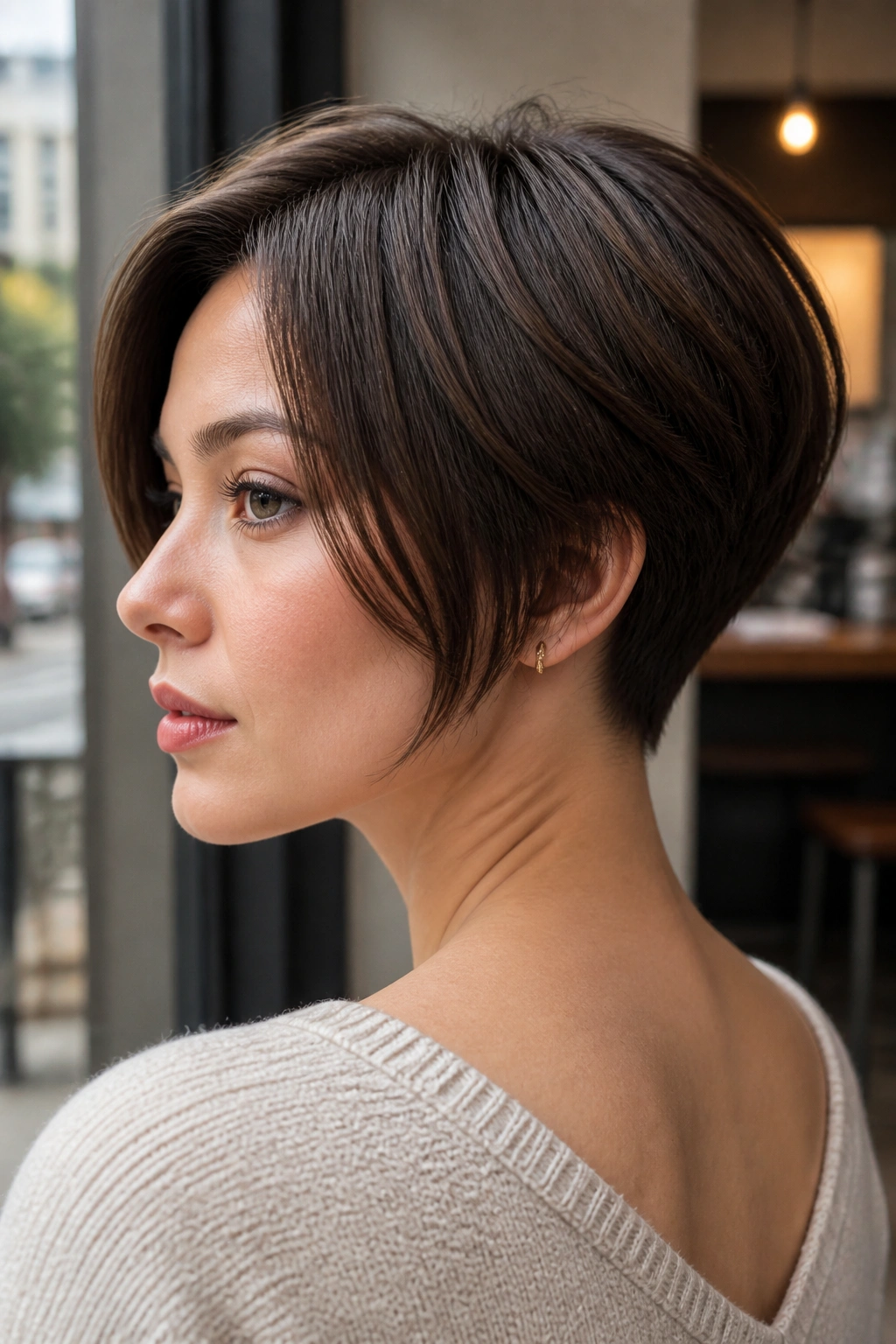
A pixie bob is a good ending point because it borrows the best bits from both worlds. The nape stays narrow and close, the top has enough length to move, and the front pieces can sweep diagonally or sit softly around the cheekbones without crowding them.
That narrow nape is the quiet hero. It keeps the back from getting bulky, which matters a lot on a round face. The front can be slightly longer, almost bob-like, so the haircut keeps some softness. You get the ease of a short cut without the hard edge of a cropped pixie.
It’s a great pick if you want something modern but not severe. Ask for a longer top, tapered sides, and a front that lands just below the cheekbone or chin depending on how strong you want the line. The styling should stay smooth, with a little bend rather than a lot of texture. Too much texture makes the cut widen. A clean finish keeps it lean.
The nicest thing about a sleek pixie bob is that it doesn’t fight the face. It gives the face room. And that’s really the whole trick with round faces and sleek cuts: less puff at the sides, more clean line, more shape where the eye can travel. If you remember only one rule, make it this one — keep the length below the widest point, and let the silhouette do the flattering for you.
