



A round face does not need more length everywhere; it needs the right length in the right places. That sounds like a tiny difference, but it changes everything. A medium cut that lands at the cheek can make the face look wider. Move that same shape an inch lower, add a side part, or break up the front with a little angle, and the whole thing starts to work.
Medium haircuts for round faces have a sweet spot that long hair often misses. They can keep the neck open, show movement, and still give you enough room for layers, fringe, and texture. The trick is simple on paper and a little fussy in real life: avoid adding extra width at the cheeks, and instead pull the eye up, down, or diagonally.
That does not mean every flattering cut has to be sleek or severe. Some of the most useful shapes here are soft, messy, airy, even a little shaggy. Texture helps. So does a bit of asymmetry. And yes, the part matters more than most people think it does.
Here are 18 medium-length cuts that do a good job on round faces, along with the details that make each one worth asking for at the salon.
1. Collarbone Lob for Round Faces
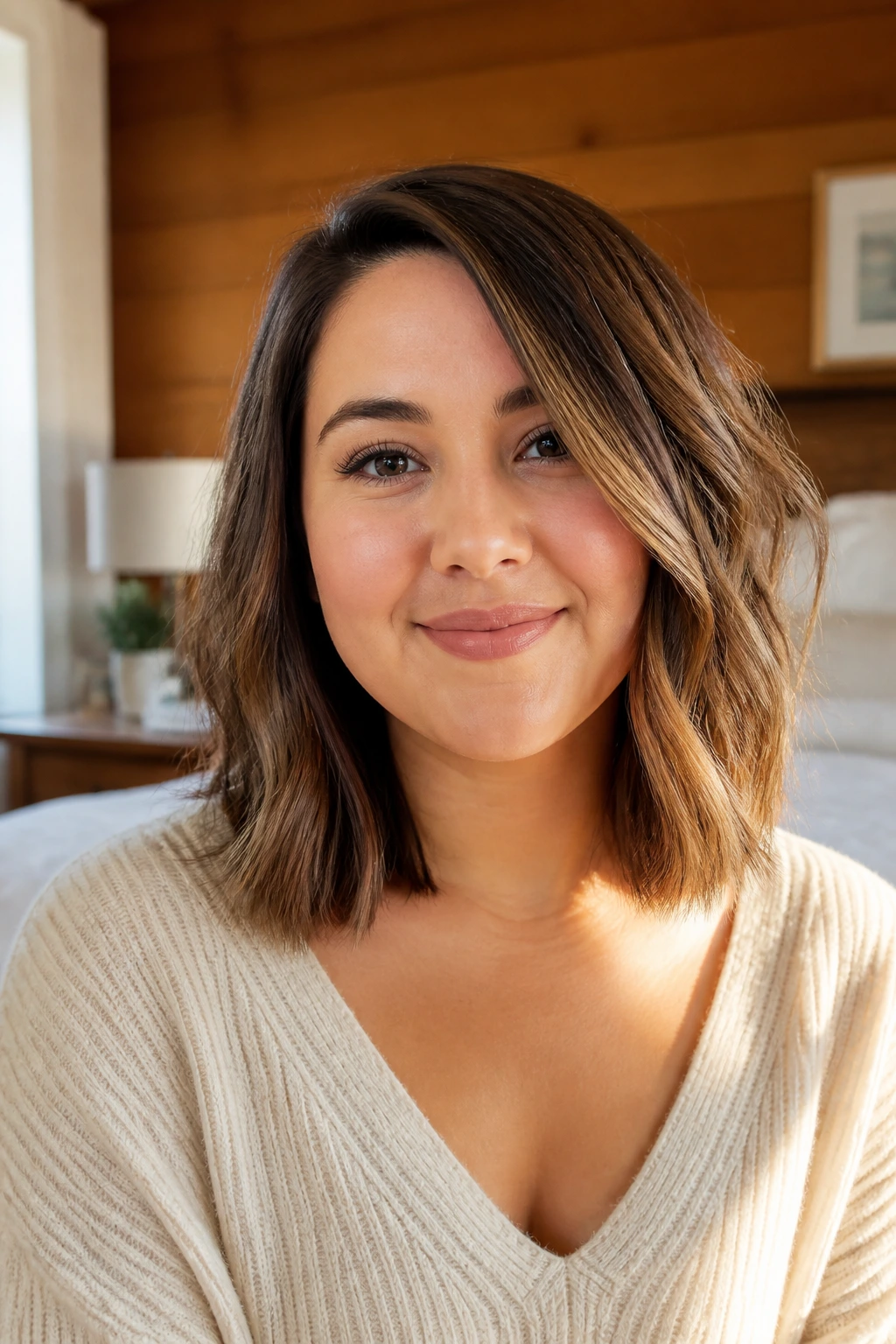
The collarbone lob is the safest place to start. It hits low enough to stretch the face, but it still keeps that clean, easy shape people like in a medium haircut.
What makes it work on a round face is the landing point. A lob that stops right at the fullest part of the cheek can make the face feel broader. A collarbone length slips past that zone and gives the eye a longer line to follow. If you wear it with a side part or a soft bend through the ends, the shape gets even better.
I like this cut on straight and wavy hair because it looks polished without needing a lot of styling. A quick blow-dry with a round brush, or even a flat iron bend through the front pieces, is enough. If your hair is fine, ask for very light texturizing at the ends, not heavy thinning. If it’s thick, keep the outline blunt enough to hold its shape.
This is the cut I’d point someone to if they want something easy, not fussy, and forgiving on most days.
2. Long Layers That Start Below the Chin
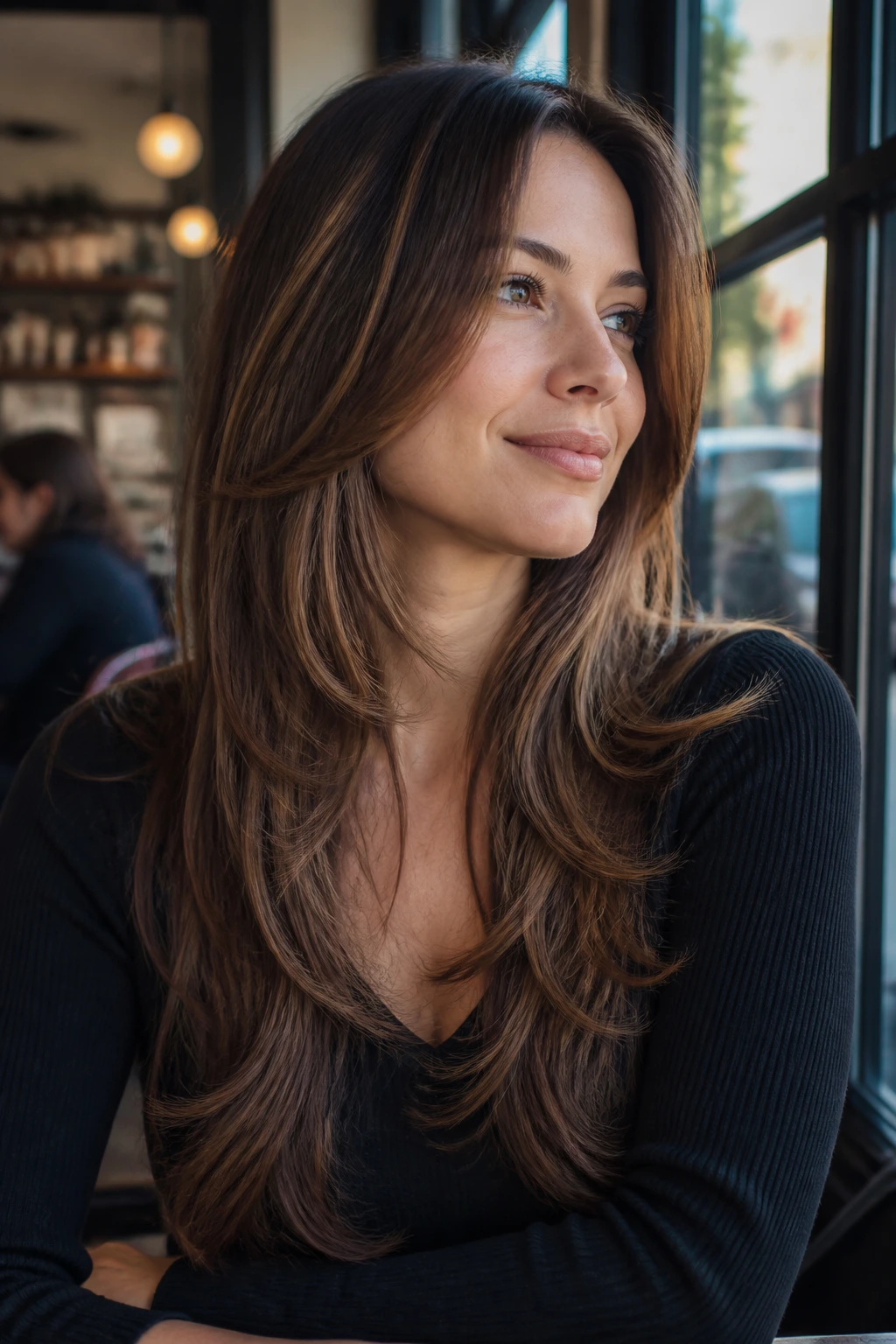
Why do some layers flatter a round face and others make it look softer in the wrong way? Placement. That’s the whole game.
Layers that start below the chin keep the cheeks from getting boxed in. They let the mid-lengths move, but they don’t cut across the widest part of the face. The result is a longer line, especially if you let the front pieces fall past the jaw instead of curling inward right on top of it.
Where the first layer should land
A good starting point is somewhere between the collarbone and the top of the shoulder. That gives you shape without creating a shelf at the cheeks. I’d skip short face layers that hit at lip level unless the rest of the cut is longer and very soft.
How to style it
- Blow-dry the roots up and away from the face.
- Wrap only the front sections around a 1¼-inch iron for a loose bend.
- Keep the ends piecey, not puffy.
- Use a light cream or spray, not a heavy oil that makes layers sit flat.
This is one of those cuts that looks better when it moves. Stiff layers lose the point.
3. Angled A-Line Lob
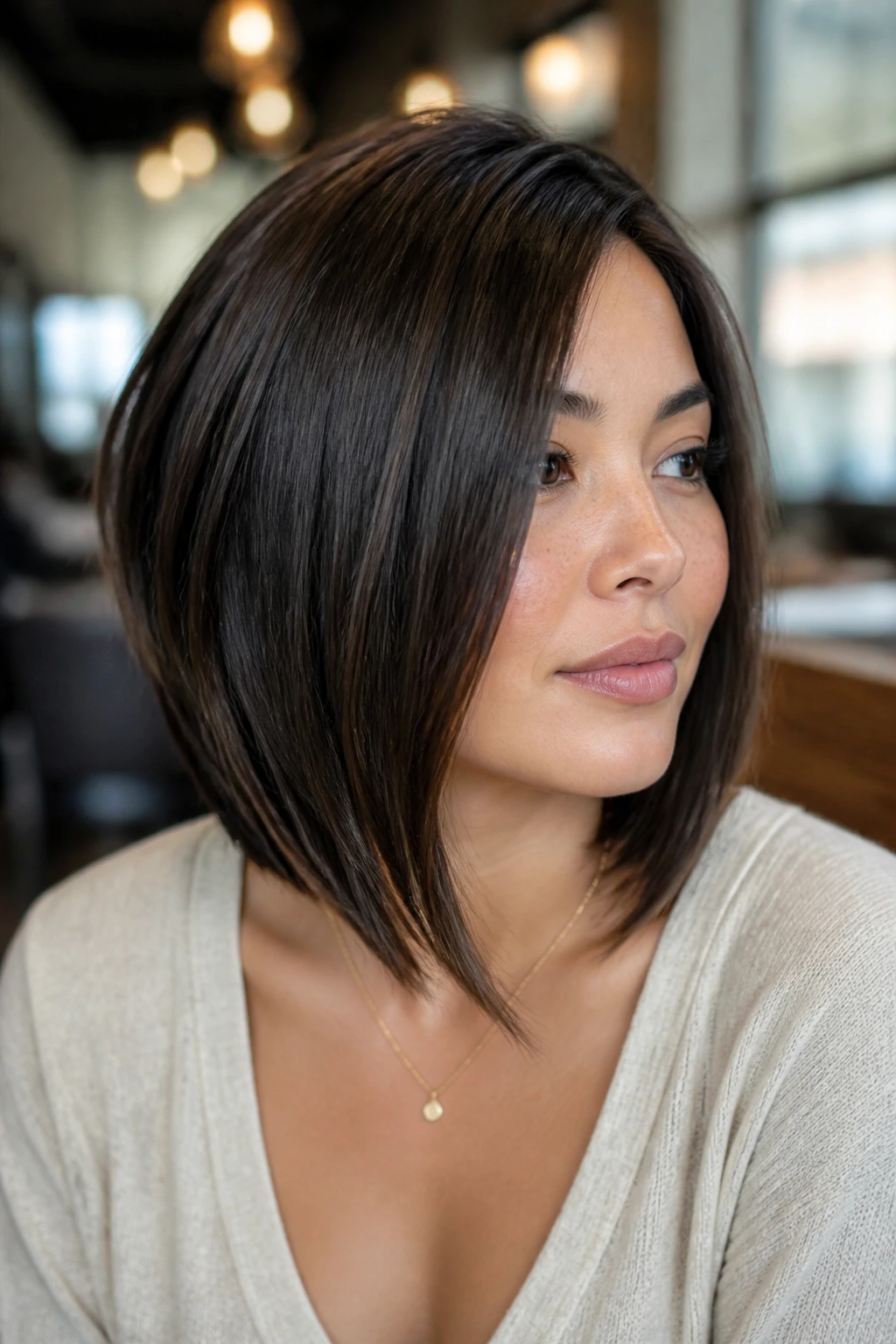
A true angled lob gives you shape without shouting about it. The back sits a little shorter, while the front drops longer toward the collarbone or even the upper chest.
That slant does a lot of quiet work on round faces. Your eye follows the diagonal line instead of stopping at the widest part of the cheeks. It also keeps the cut from looking boxy, which is a real risk with medium lengths that are too blunt on both sides.
This shape is especially good if your hair tends to puff at the sides. The longer front pieces act like a frame, not a shelf. Straight hair shows the angle most clearly, but waves make it feel softer and more lived-in. I would not make the angle dramatic unless you want something fashion-forward. A subtle difference of an inch or two is usually enough.
Ask for a clean perimeter and a gentle slope from back to front. Too steep, and the cut starts to feel dated. Too flat, and you lose the point.
4. Curtain Bang Midi Cut

Curtain bangs are popular for a reason, and on round faces they make a lot of sense. They split the face open down the middle, then drift outward around the cheekbones instead of cutting straight across the forehead.
That shape matters. A blunt fringe can shorten the face fast. Curtain bangs do the opposite when they’re cut well, because the shortest point sits near the center and the longer pieces frame the outer eye area. They create a soft vertical path, which is exactly what you want with a rounder shape.
What to tell your stylist
- Keep the shortest point around the bridge of the nose or just below it.
- Let the longest bang pieces brush the cheekbone or the top of the jaw.
- Blend the bangs into medium layers, not a hard disconnection.
- Avoid a heavy, full bang line unless your hair is very dense and your face is longer than it is wide.
This cut looks especially good with a loose blowout. Twist the bangs back and away from the face while drying, then let them fall open. If they collapse straight down, they can lose the lift that makes them useful in the first place.
5. Soft Shag With Airy Ends

The shag can go wrong fast on a round face if it gets too wide through the sides. But when it’s soft, airy, and kept a little longer, it can be one of the most flattering medium cuts around.
What you want is movement, not bulk. The best version uses layers to break up the outline and keep the hair from sitting like a helmet around the cheeks. A few pieces can land around the cheekbone, but the overall shape should still move downward. That downward movement is what keeps the face from feeling boxed in.
I like this cut for wavy hair because it works with the texture instead of fighting it. On fine hair, though, the layers need to stay controlled. Too many short pieces and the whole thing starts to look sparse. Too little shaping, and the shag loses its point.
The sweet spot is a cut that feels cool and easy, not chopped to bits. If you are after something with a little edge but still wearable at work, this is the one that tends to land well.
6. Butterfly Cut for Medium Hair
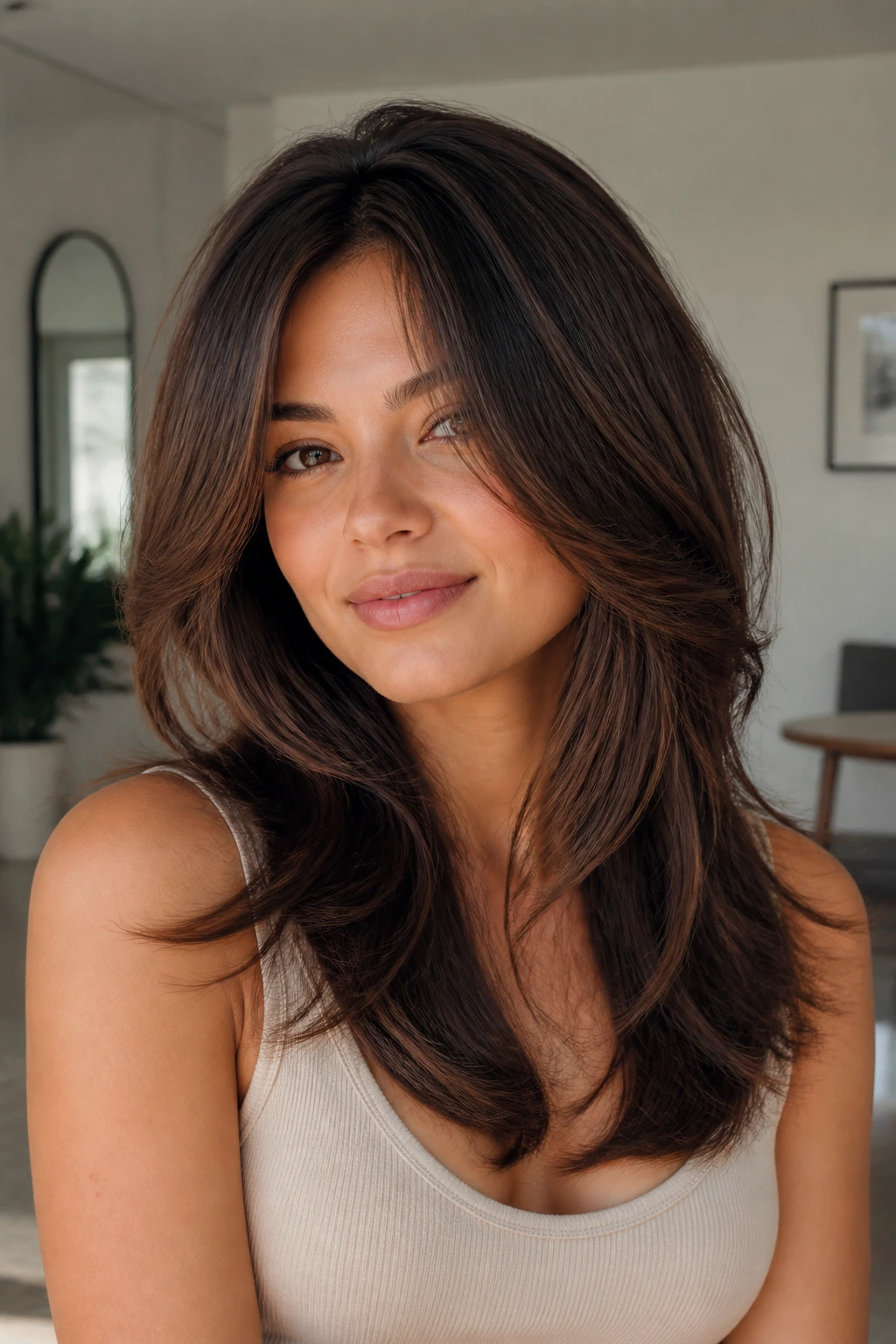
The butterfly cut earns its place because it gives you two things at once: lift around the face and length through the bottom. That split is useful on round faces, where you usually want the front to feel lighter without losing the vertical line of the rest of the hair.
Why it lifts the face
The shorter top layers create motion around the crown and cheek area, while the longer bottom layers keep the silhouette from getting wide. The trick is where those short pieces stop. If they hit too high, the face can look puffier. If they fall a little below the cheekbone, they soften the face and still leave room for styling.
What to ask for
- Shortest front layers should sit below the cheekbone.
- Bottom length should stay at the collarbone or longer.
- The crown should have lift, but not a stack of choppy layers.
- Blowouts work better than air-drying on this cut if you want the butterfly shape to show.
My one strict rule: do not let the shortest layers hit right at the widest part of your cheek. That half-inch makes a difference.
7. Deep Side-Parted Waves
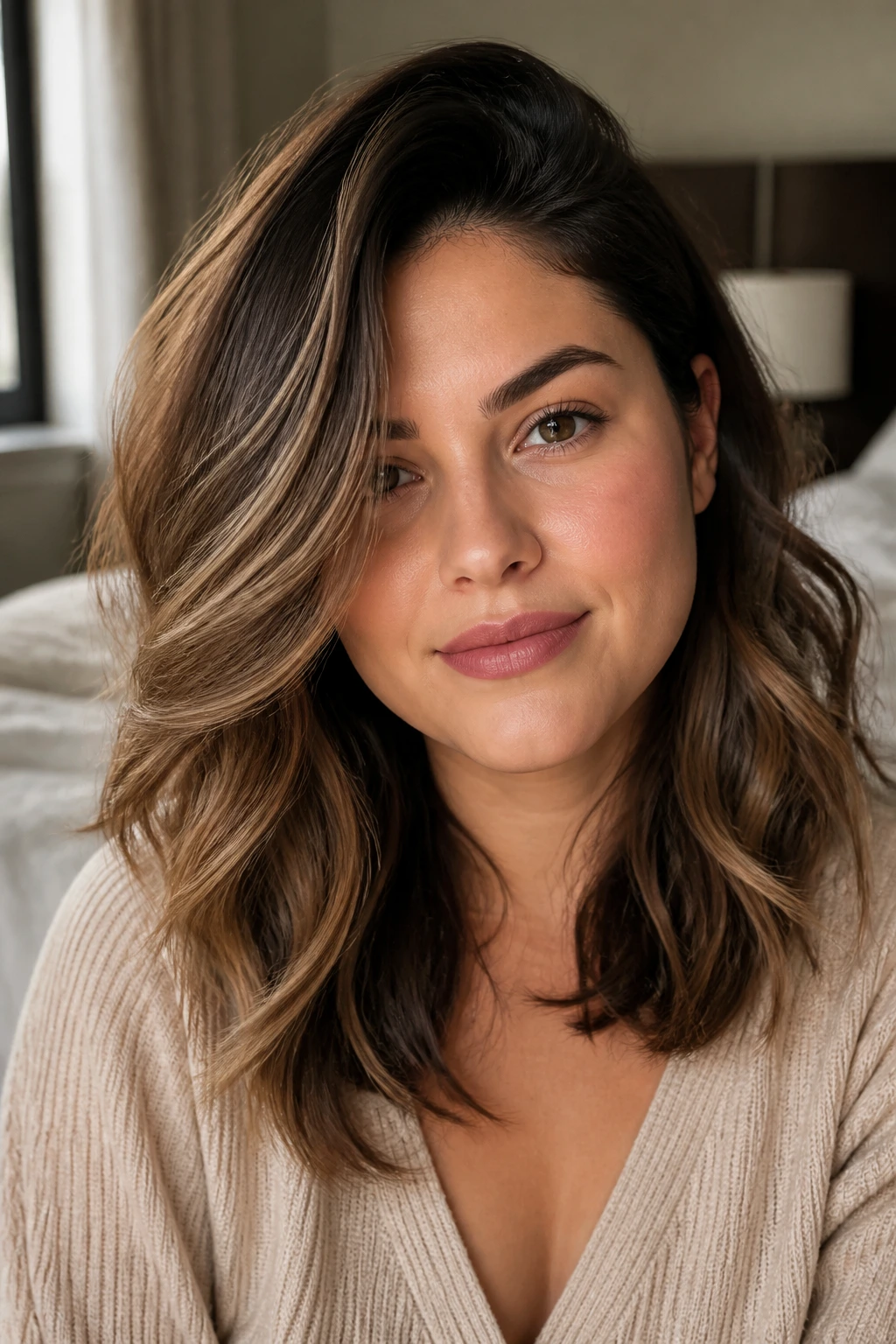
A side part can do more than a lot of people expect. On a round face, it creates asymmetry, and asymmetry is useful because it breaks up all that evenness.
Deep side-parted waves also give you a diagonal sweep across the forehead and cheek area. That line draws the eye across the face instead of straight out from the sides, which helps the face read a little longer. If your hair has a natural bend, this style is almost unfairly easy. If it does not, a 1-inch curling iron or a set of loose bends with a flat iron can get you there.
This cut works best when the volume sits a bit higher at the roots and softer through the ends. The heavy part should not sit flat against the scalp. Lift it. Tuck the smaller side behind the ear. Let the waves fall loose rather than brushed out too much, or you lose the shape.
I like this style because it doesn’t require a haircut overhaul. Sometimes the part and the styling are enough to change the whole feel of medium hair.
8. Blunt Midi for Round Faces
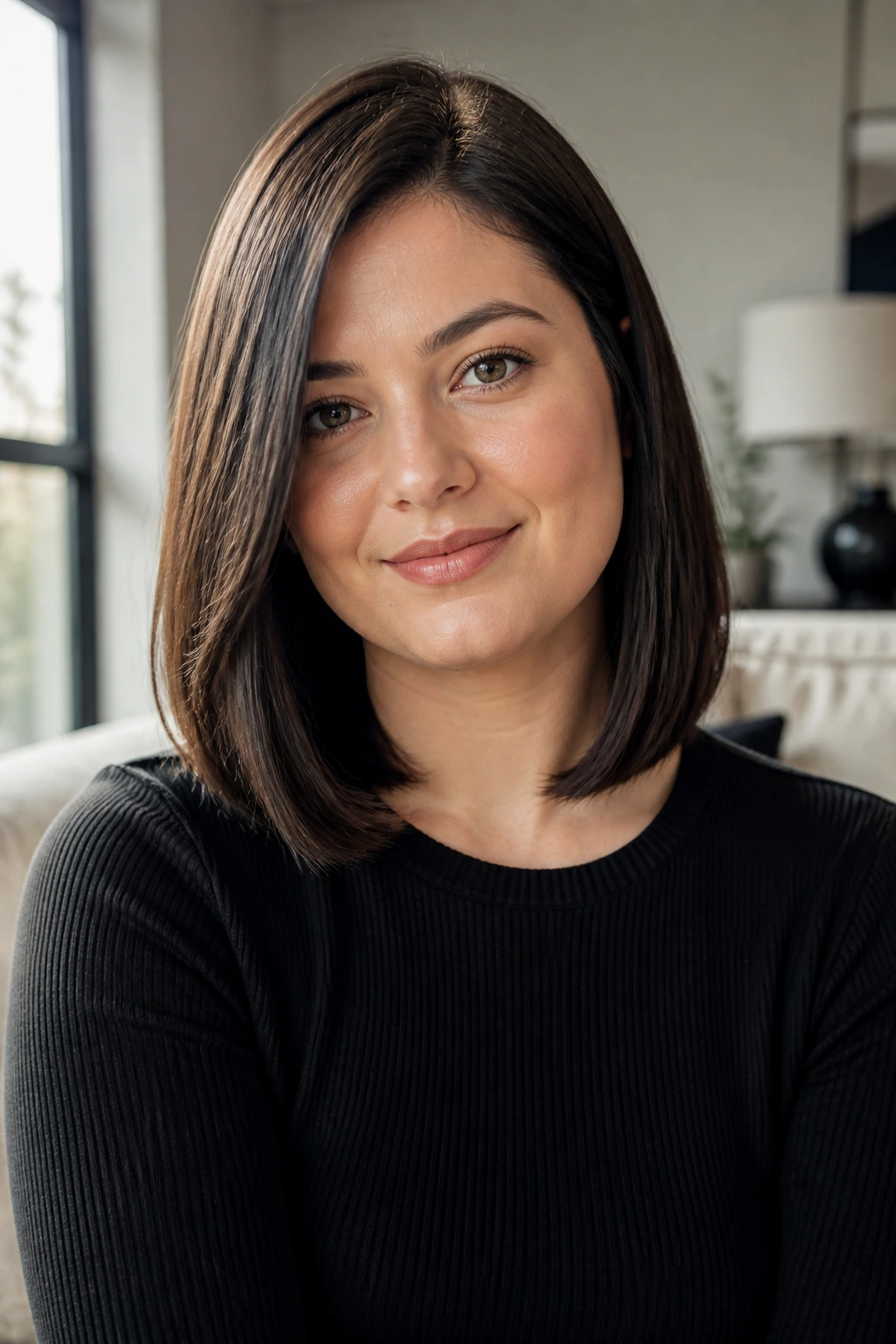
People hear “blunt cut” and assume it is banned on round faces. Not true. It just needs better placement and cleaner styling.
A blunt midi can look sharp and modern when it falls below the jaw, usually around the collarbone or just a touch higher. The straight edge gives the hair a tidy line, which can be useful if your texture is fine and tends to look wispy with heavy layering. The catch is that the cut needs enough length to stay away from the cheeks. If it ends right there, it can widen the face fast.
What makes it work
The best blunt midi has a slight off-center part, polished ends, and enough weight to hang straight. It suits straight hair beautifully and can also work on a soft wave if you’re willing to smooth the top layer. If your hair flips out at the ends on its own, ask for a little internal shaping so the line doesn’t kick out at the wrong spot.
This is a good choice if you like a cleaner look and do not want the messiness of a shag or butterfly cut. It is less forgiving than layered styles, though. Messy blunt cuts can look accidental. Clean ones look deliberate.
9. Razored Lob With Feathered Ends

A razored lob is for the person who hates heavy ends. If your hair sits like one solid block, a razor can take the weight out and give the cut some air.
The feathered finish softens the outline, which is useful on round faces because the eye does not stop at a hard edge. Instead, it moves through the shape. That keeps the hair from looking too wide near the cheeks. It also helps thick hair feel lighter without chopping it into obvious layers.
A few practical notes matter here. Razor cutting works better on straight to wavy hair than on coarse curls that frizz easily. If your hair is already dry or rough, an aggressive razor can make the ends look shredded. I’d ask for a soft razor finish, not a dramatic one. And if the stylist starts talking about thinning out the whole bottom, pause. You want movement, not a sparse-looking perimeter.
This cut looks especially good with a tuck behind one ear and a loose bend through the front. Small move. Big difference.
10. U-Shaped Cut With Face-Framing Layers
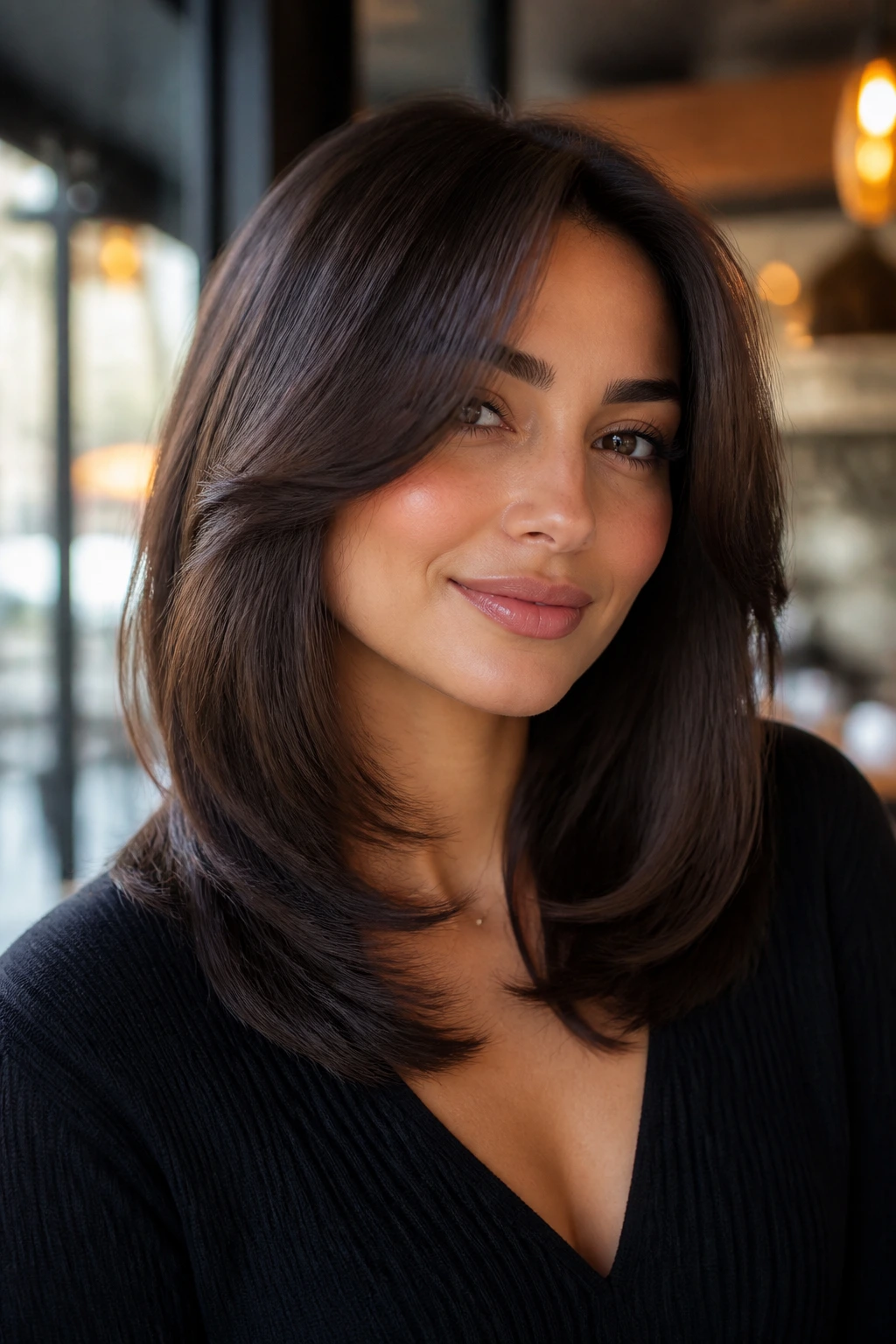
Unlike a straight-across hemline, a U-shaped cut keeps the back slightly longer and the sides slightly shorter. That gentle curve can be flattering on round faces because it gives the hair a built-in vertical line.
The face-framing layers matter here, but they need a calm hand. You do not want them starting too high and ballooning around the cheeks. The best version begins below the chin, then blends into the rest of the cut so the curve feels soft, not obvious. It’s a very good shape for thick hair because it removes some visual bulk while keeping the length intact.
This cut also behaves nicely in a ponytail or half-up style. The front pieces fall out on purpose, which keeps the face from looking wide and square. If you like your hair to look styled even when you are not doing much to it, this one earns its keep.
Ask your stylist for a subtle U, not a deep one. The deeper the curve, the more obvious the shape becomes. Sometimes subtle is the smarter move.
11. Bottleneck Bangs and Shoulder-Length Layers

Bottleneck bangs are a smart middle ground between curtain bangs and a full fringe. They start narrow between the brows, then widen as they blend toward the temples. On a round face, that shape helps because it opens the center of the face while softening the outer width.
The shoulder-length layers underneath keep the cut from feeling dense around the jaw. That part matters. A cute fringe with the wrong base cut can still make the face look shorter. Here, the layers do the heavy lifting. They keep the silhouette light, and they give the bangs room to fall into the rest of the haircut without a harsh line.
This style does need some upkeep. Bangs that grow out too long start to lose the shape that makes them flattering. Dry them first, style them first, and trim them often enough that they keep their bend. If you have a cowlick at the front hairline, tell your stylist before they cut. It changes where the shortest point should sit.
There’s a reason this shape keeps showing up on hairboards. It hides a lot of sins.
12. Swoopy Side-Swept Fringe Cut

A side-swept fringe can feel old-school if it’s cut too heavy, but the right version still works. On a round face, it creates a diagonal line across the forehead, and diagonal lines are your friend.
How to keep it from collapsing
The fringe needs support at the root. Blow-dry it in the opposite direction first, then sweep it across with a round brush or your fingers. That little bit of lift keeps it from sticking flat against the skin. If the fringe gets too short, it can spring up awkwardly. Too long, and it disappears into the rest of the hair. Somewhere around eyebrow level on the short side usually works well.
This cut is at its strongest when the rest of the hair is medium length and lightly layered. The fringe then acts like a soft frame, not a helmet. I also like it for people who want something that feels more polished than curtain bangs but less blunt than a straight fringe.
Tip: keep the longest edge of the fringe long enough to tuck behind the ear. That makes the grow-out phase easier, and it gives you a way to change the shape when you want a break from the sweep.
13. Choppy Midi With Crown Volume
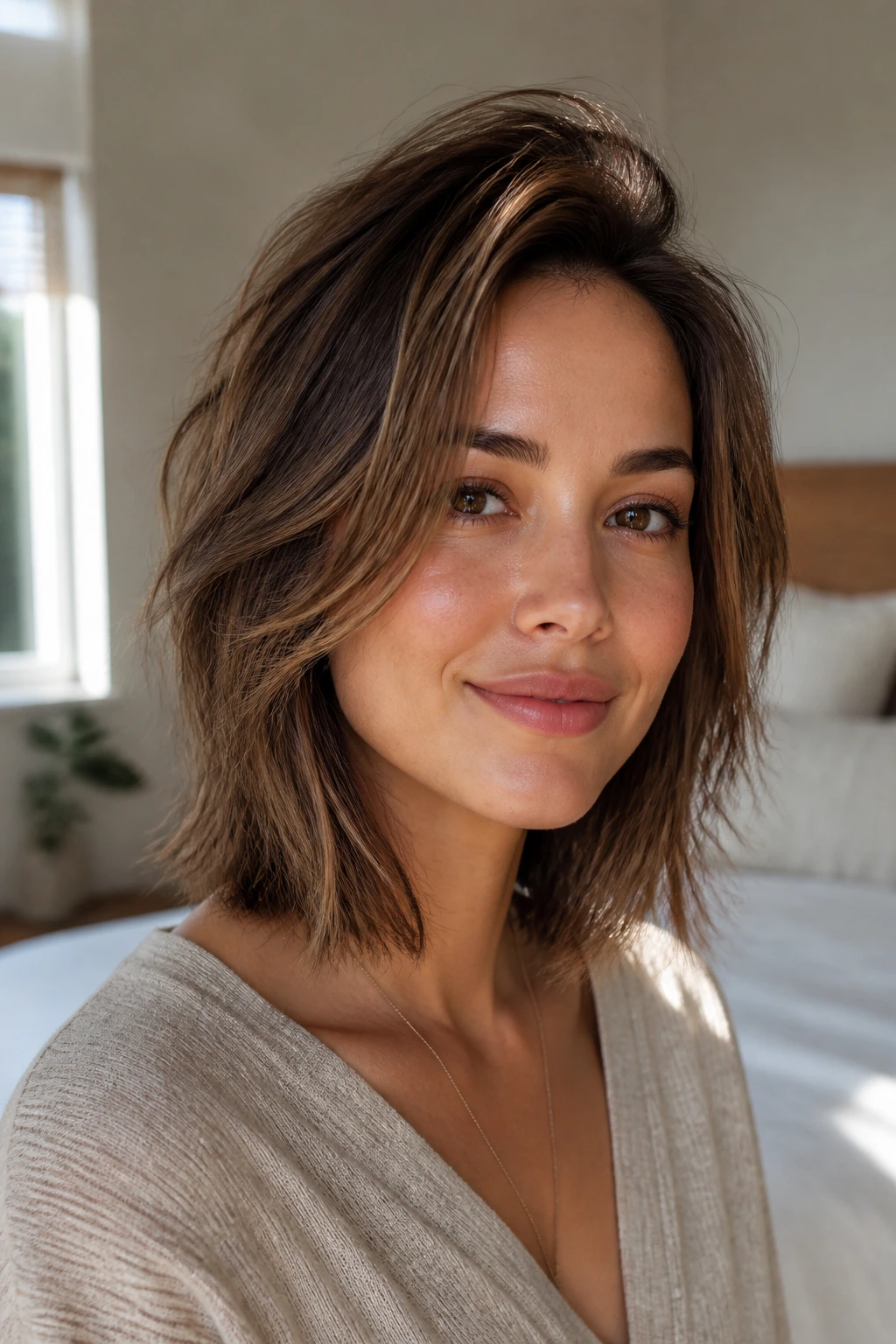
Round faces do not need all the volume in the world. They need it in the right place. A little lift at the crown changes the shape fast.
That’s why a choppy midi can work so well. The texture breaks up the outline, and the crown volume pulls the eye upward. The face reads longer when the top has life and the sides stay a touch lighter. If the choppiness sits mostly at the bottom, the hair can spread out and make the face look wider. So the placement matters.
This cut is a nice fit for fine hair that needs body. A root mousse, a quick rough-dry, and a few bends with a flat iron can make the texture show up. Thick hair can wear it too, but only if the stylist removes bulk from the right spots. Otherwise, the choppy pieces turn into a puffball. Nobody wants that.
I’d call this the “don’t overthink it” haircut. It looks better a little imperfect. Finger-combed waves, a dry texture spray, and a bit of lift at the roots usually beat a perfectly polished finish.
14. Curved Clavicut
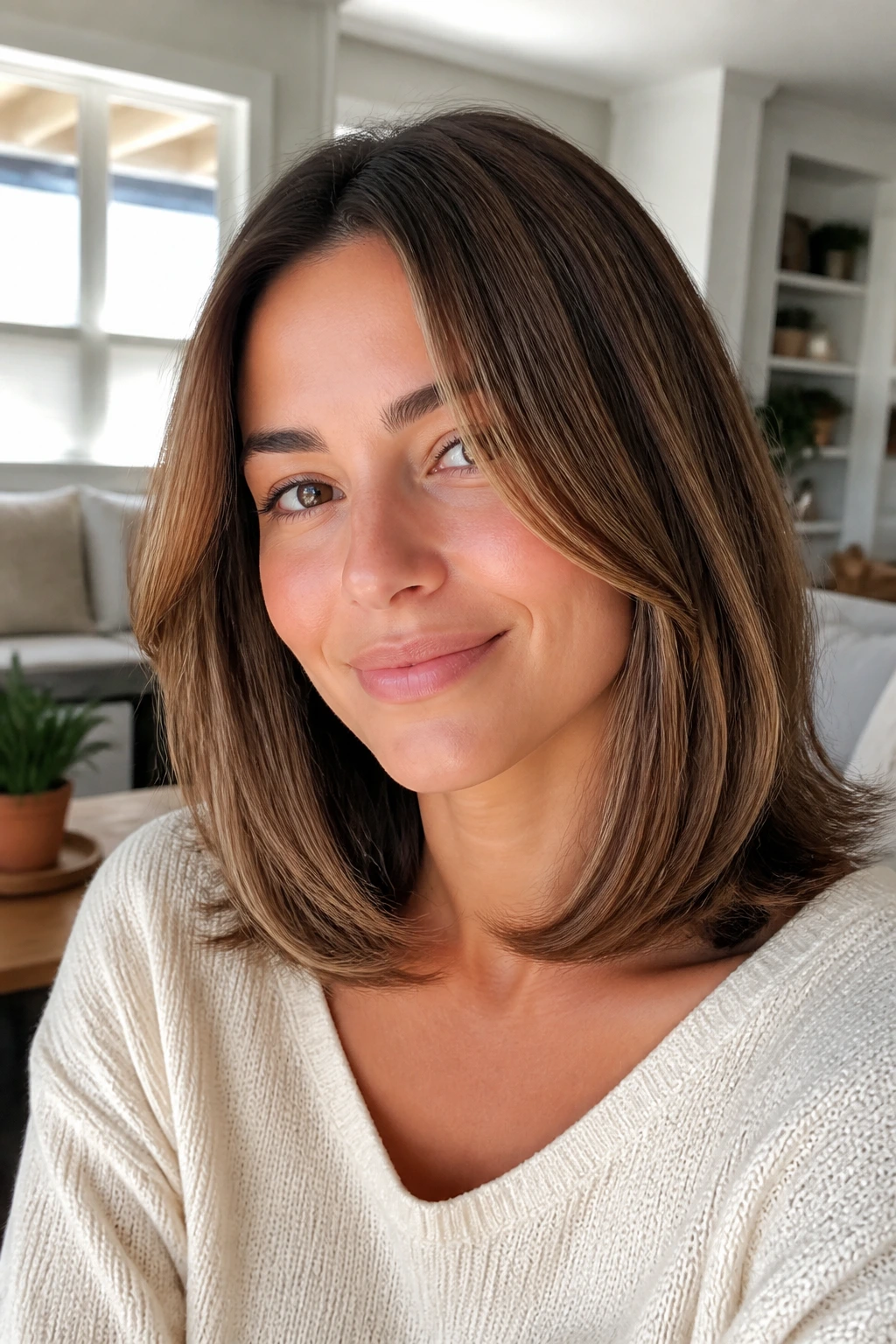
What’s a clavicut? Basically, a collarbone cut with a softer curve through the ends. It’s not flat. It’s not shaggy. It sits in that useful middle ground that a lot of medium haircuts forget about.
The curve helps on round faces because it bends the eye inward and downward instead of out toward the sides. That sounds small, but hair shape is full of tiny choices like that. A soft bevel at the ends can keep the cut from feeling blunt and boxy, while still giving it enough weight to look healthy.
Why the curve matters
The best clavicut does not flip hard at the bottom. It just bends slightly, like the hair has been tucked under with a round brush and then left alone. That softness is the point. It keeps the cut from looking too severe, which matters if your features are already soft and full.
This one suits straight and wavy hair especially well. If your hair is very curly, the curve may need to be built a different way, because curls will do some of the shaping on their own. Ask for a shape that follows your texture instead of fighting it.
15. Tousled Wavy Lob

If your hair naturally bends a little and you keep flattening it, this is the haircut that lets you stop fighting for once. A tousled wavy lob gives the wave somewhere to live without turning the sides into a triangle.
The reason it works on round faces is the looseness. The hair moves around the cheeks instead of hugging them. That keeps the face from looking boxed in. A bit of messiness is part of the charm here, but the cut still needs structure underneath. Without that structure, the waves can spread wide. With it, they fall in a more vertical line.
A lightweight mousse or wave cream is usually enough. I would skip heavy creams that collapse the shape, and I’d be careful with salt sprays if your hair is already dry. Air-drying can work if your wave pattern is strong. If not, a diffuser on low heat gives better control and a softer finish.
This is a good cut for people who want hair that looks interesting without needing a full blowout every day.
16. Invisible Layers for Fine Hair
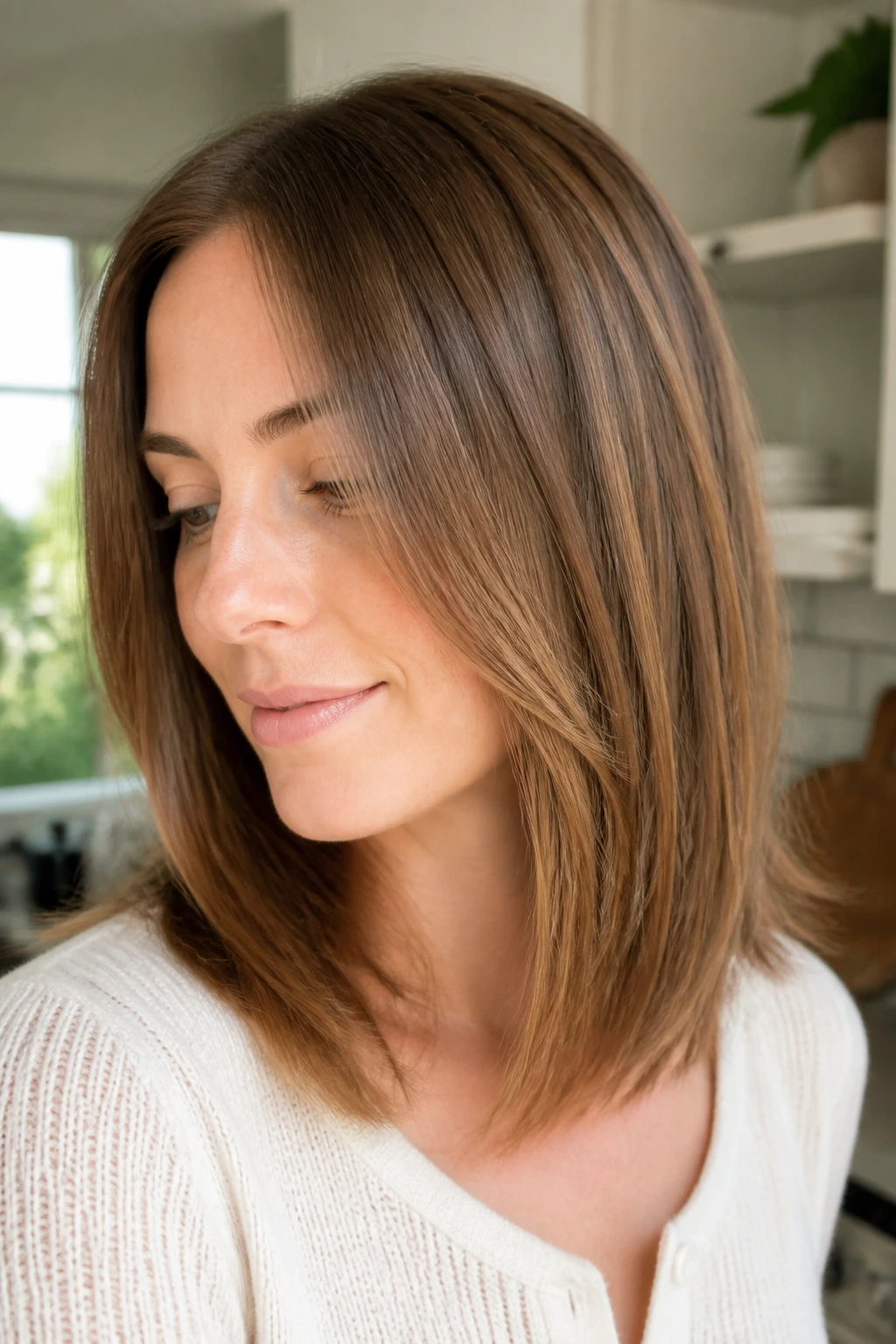
Invisible layers are one of my favorite tricks for fine hair on a round face because they do the job without showing off. The cut looks simple from the outside, but the inside has just enough removal to stop the hair from lying flat.
That matters because fine hair can get stringy at medium length. Too many visible layers make it look thinner. Too little shaping makes it sit like one flat sheet. Invisible layers split the difference. They keep the outline smooth while giving the top some movement and the ends a little lift.
Ask for internal layering or soft point-cutting rather than obvious steps. Keep the front pieces long enough to pass the cheeks, and don’t let the shortest layers jump up around the temples. That would widen the face instead of softening it.
This cut is especially useful if you like to wear your hair straight or with a small bend. It won’t scream for attention. It just makes the hair behave better, which, honestly, is often the whole point.
17. Modern Wolf Cut, Softened
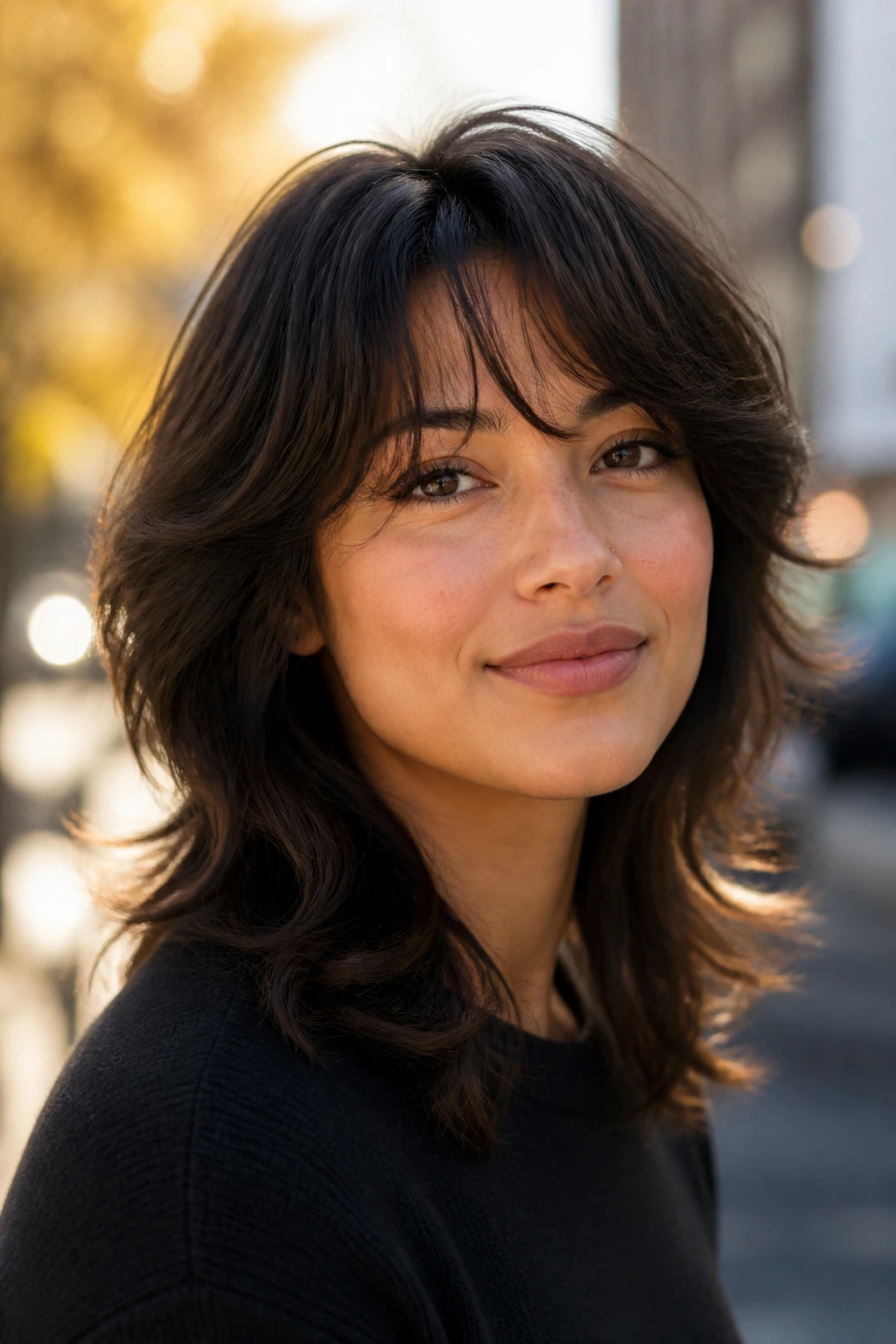
The full wolf cut can be a lot on a round face if the top is too short and the sides get too wide. A softened version is a different story. It keeps the texture and lift, but trims back the extremes.
Think of it as a shag with a little more attitude. The crown gets movement, the mid-lengths stay airy, and the longest pieces still reach past the cheeks. That last part matters. On a round face, you want the length to stay visible below the widest part of the cheek, or the shape can balloon out.
This version works best if you like styling your hair with your hands instead of a brush. It suits wavy hair nicely, and it can give straight hair some grit. If your hair is very thick, ask your stylist to keep the layers controlled so the cut does not puff out near the sides. If it is fine, the crown can use a bit more lift.
A soft wolf cut is not a safe haircut, exactly. But it is not the wild one people worry about either. It lives in the middle, and that’s the useful part.
18. Shoulder-Length Cut for Round Faces With Flipped Ends
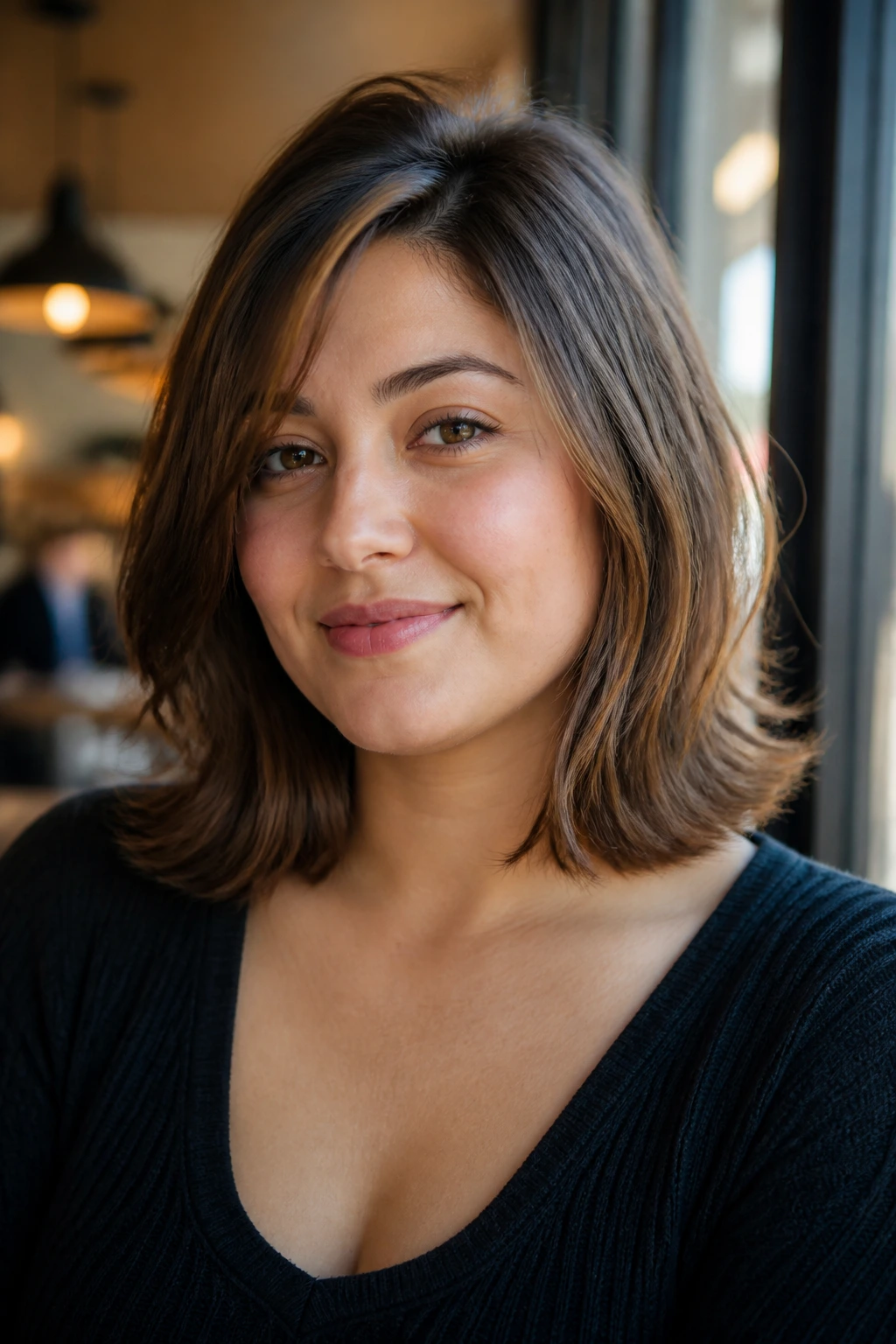
A shoulder-length cut can be a strong choice when the ends are shaped to move away from the face instead of sitting flat against it. That little flip adds motion and keeps the line from feeling heavy.
The reason it works on round faces is simple. Hair that turns inward at the cheeks can make the face feel tighter. Hair that bends out slightly or kicks away from the jaw opens the area up. You still get softness, but not that same closed-in feel. It’s a very good option if you like a polished look that doesn’t take forever to style.
How to wear it
- Use a round brush or a flat iron to give the ends a soft kick.
- Keep the part slightly off-center if you want more shape through the forehead.
- Add a light root spray at the crown for lift.
- Avoid over-curling the ends into a bubble shape. That can widen the face.
This cut is one of those quiet winners that can look dressy or casual depending on the styling. It’s easy to wear, easy to grow out, and easy to adjust if you want more bend one day and more sleekness the next.
A medium cut on a round face works best when it respects the shape instead of trying to hide it. Once the lines are right, the rest gets much easier. And yes, that half-inch still counts.
