



A round face does not need to be hidden. It needs shape.
That’s the real trick with blonde haircuts for round faces: the cut has to create a little length, a little angle, and a little movement where the eye naturally wants to linger. If the hair falls too evenly around the cheeks, or if the volume sits too far out at the sides, the face can look wider than it is. If the lines are placed well, the whole look changes fast.
Color plays a bigger role than people give it credit for. A beige blonde lob, a shadow-rooted balayage, or a bright money piece near the cheekbone can make the same haircut look softer, sharper, or longer. A strong cut plus the wrong blonde tone can feel heavy. A simple cut plus the right blonde placement can look expensive without trying too hard.
Placement matters. Length matters. And yes, the part line matters too.
Some of the best options below are polished and tidy. Others are messier and more lived-in. A few are short enough to feel bold, which I like on round faces because too much caution usually leads to hair that just sits there and does nothing.
1. Long Layers with a Deep Side Part
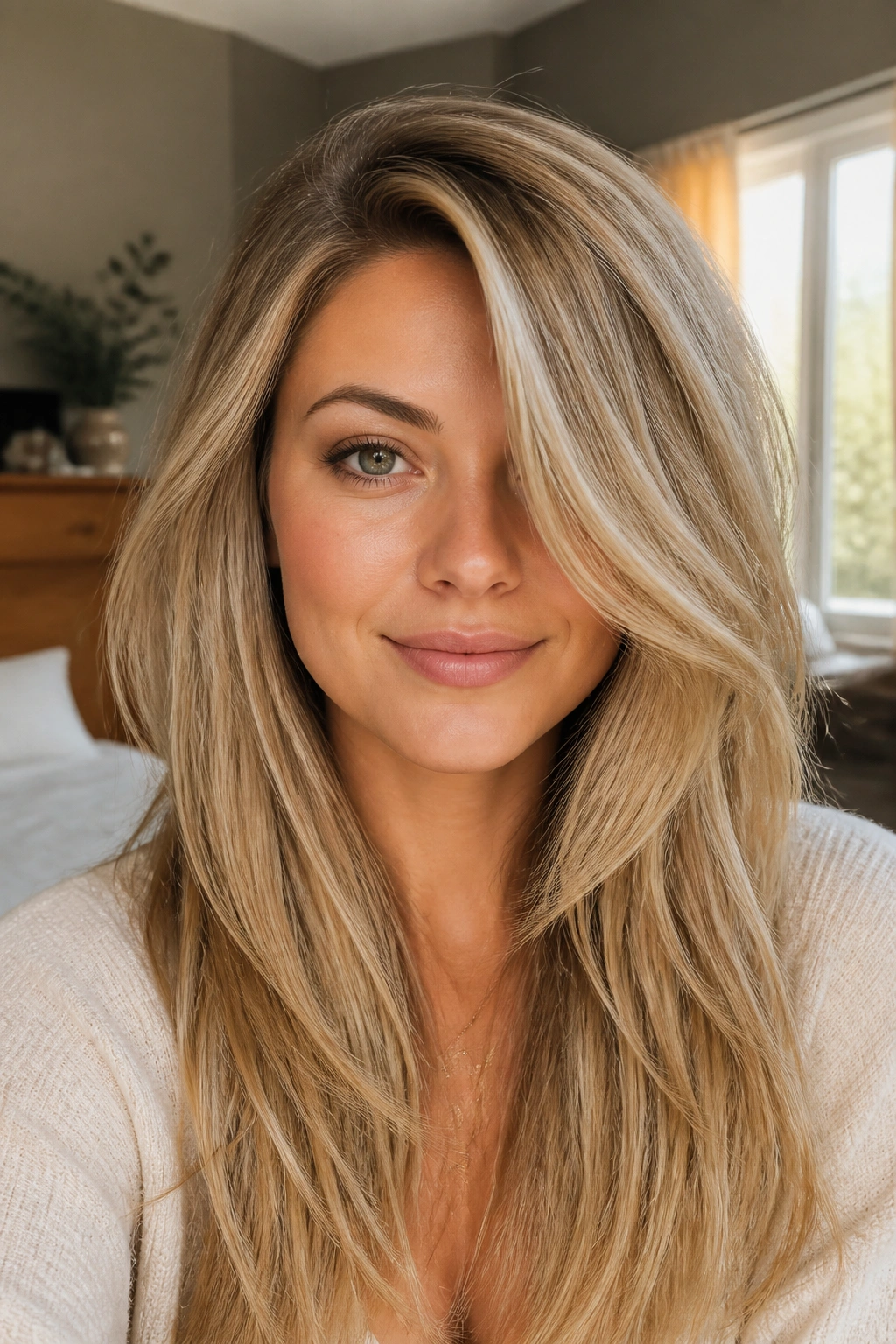
Long layers are one of the easiest ways to give a round face more vertical line. The deep side part does a lot of the heavy lifting here, because it shifts attention away from the widest point of the cheeks and opens space at the forehead and crown.
Why It Flatters So Well
The magic is in the spacing. Keep the shortest face-framing piece around the cheekbone or just below the jaw, then let the rest fall past the collarbone. That keeps the hair from ballooning out at the sides, which is the one thing you do not want.
A soft beige blonde or honey blonde works beautifully with this cut because the lighter pieces can run downward through the length instead of sitting in a wide band around the face. If your hair is fine, ask for light layering through the ends rather than lots of short internal layers. Too many short layers can make the style puff out.
Quick Style Notes
- Ask for a side part that sits about 1 to 2 inches off center.
- Keep the face-framing pieces longer than the chin.
- Use a 1.25-inch curling iron or a round brush for a loose bend, not a tight curl.
- Finish with a lightweight serum on the ends only.
Best for: straight, wavy, or medium-density hair that needs shape without losing length.
2. Collarbone Lob with Soft Ends
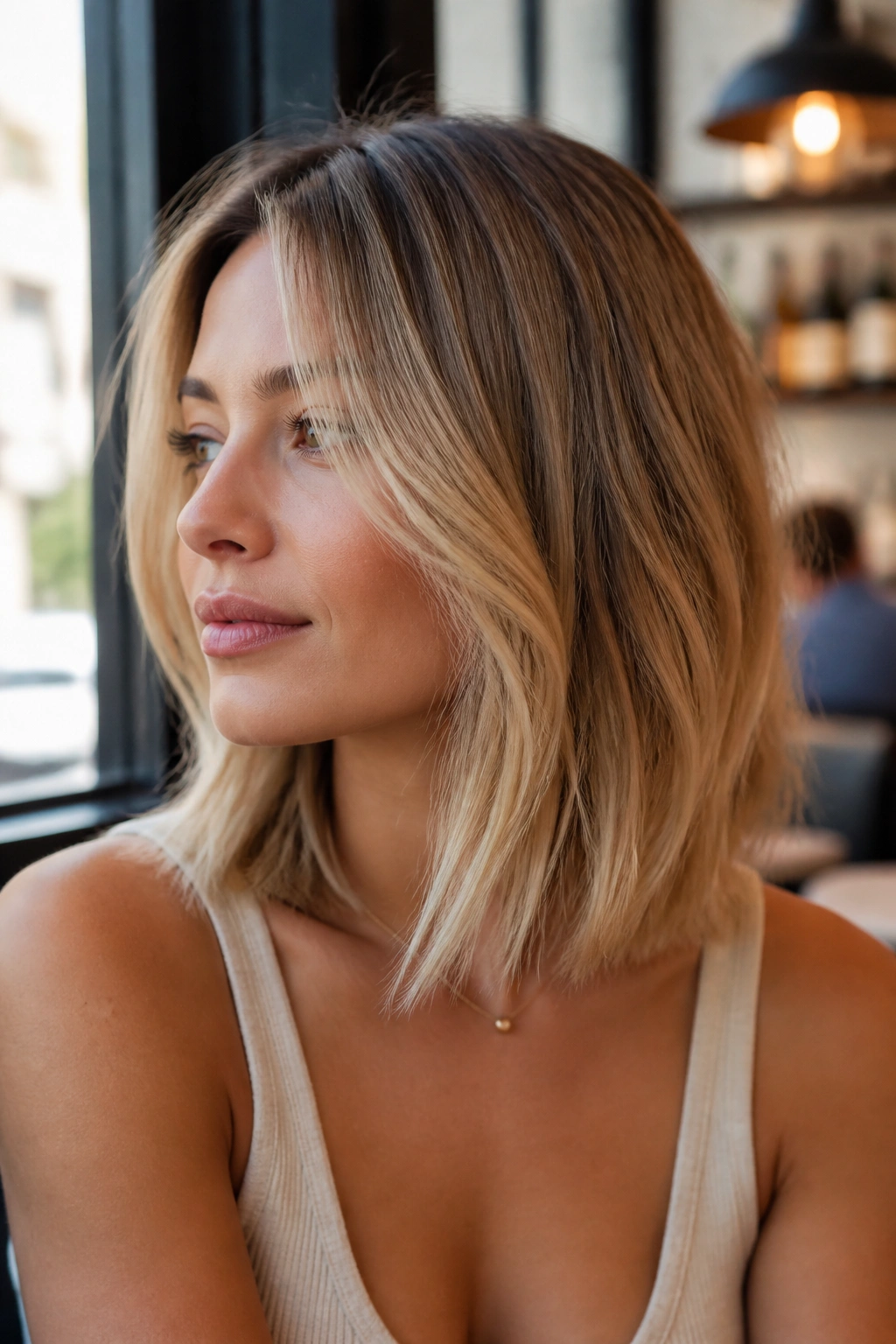
A collarbone lob is one of those cuts that looks calm on the surface and does a lot underneath. The length lands below the widest part of the face, which helps visually stretch the cheek area and keeps the silhouette clean.
The soft ends matter. A blunt line that stops too sharply at the jaw can make a round face look broader, especially if the hair is thick and sits heavy. Ask for ends that are blunt-ish but not boxy, with a little softness carved into the perimeter. That little bit of movement stops the cut from feeling helmet-like.
Blonde color helps more than people expect. A rooted butter blonde or sandy balayage gives the eye a place to travel downward, which is exactly what a round face needs. You can wear this one smooth and polished or with a loose wave. Either way, it should feel easy, not over-styled.
3. French Bob with Cheekbone-Grazing Fringe
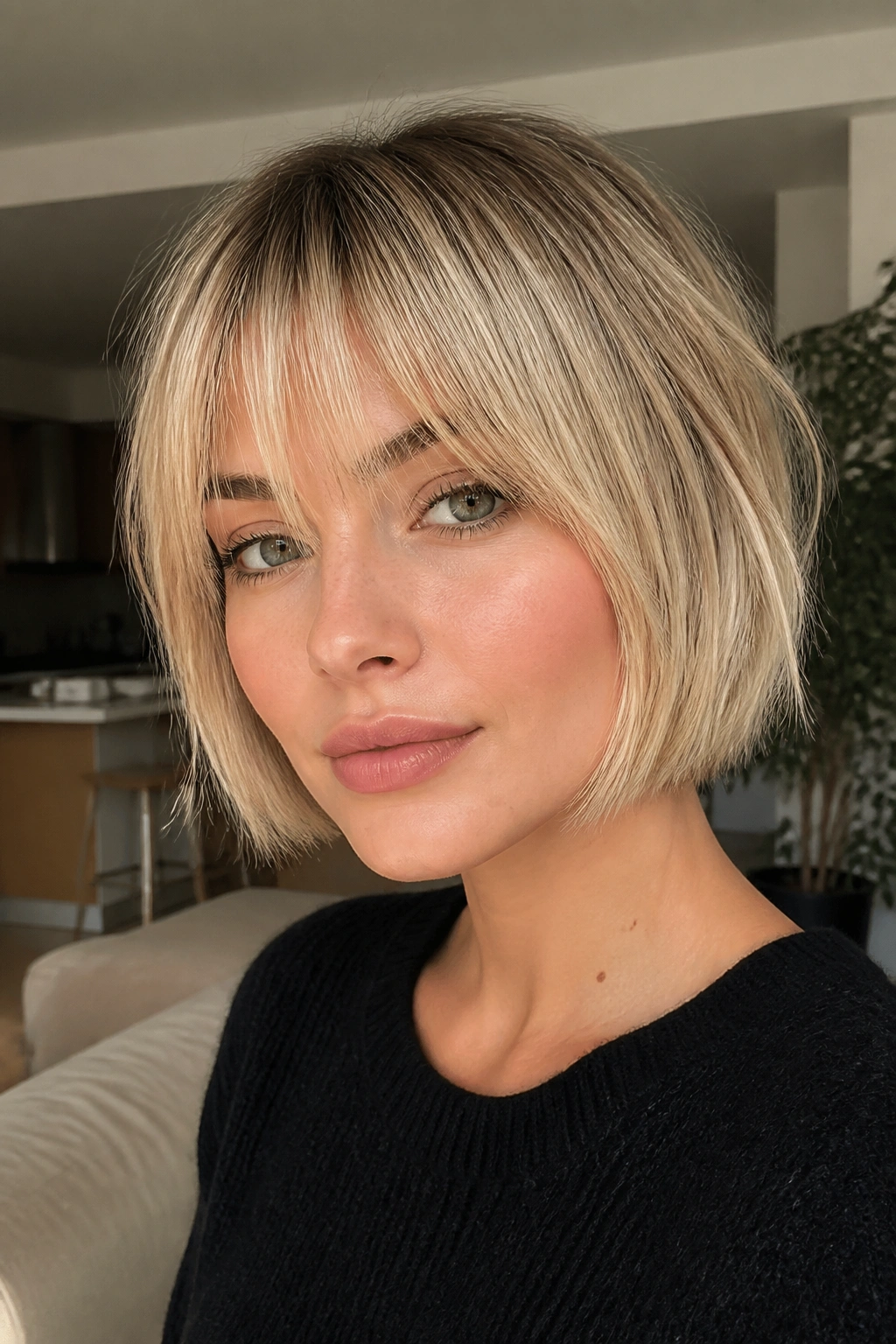
A French bob can work on a round face, but only if it is cut with some restraint. The classic chin-skimming version is tricky because it can stop at the widest part of the face and make everything look fuller. A slightly longer version, with the ends sitting just under the jaw, is the smarter move.
What to Ask Your Stylist For
- Length that lands just below the jawline
- A soft, broken fringe that brushes the cheekbones
- Texture through the ends, not through the whole head
- A little bevel inward so the line doesn’t puff out
The fringe is the part that changes everything. When it hits the cheekbone, it breaks up the circle of the face in a really natural way. A pale champagne blonde makes this style feel airy, while a creamy blonde with a darker root shadow keeps it from looking too precious. It’s a sharper haircut than it first appears.
This is a good choice if you like a bit of attitude in your hair and you don’t mind trimming every 5 to 7 weeks. It grows out fast, and a grown-out French bob can lose its shape quickly.
4. Curtain Bangs with Medium Layers
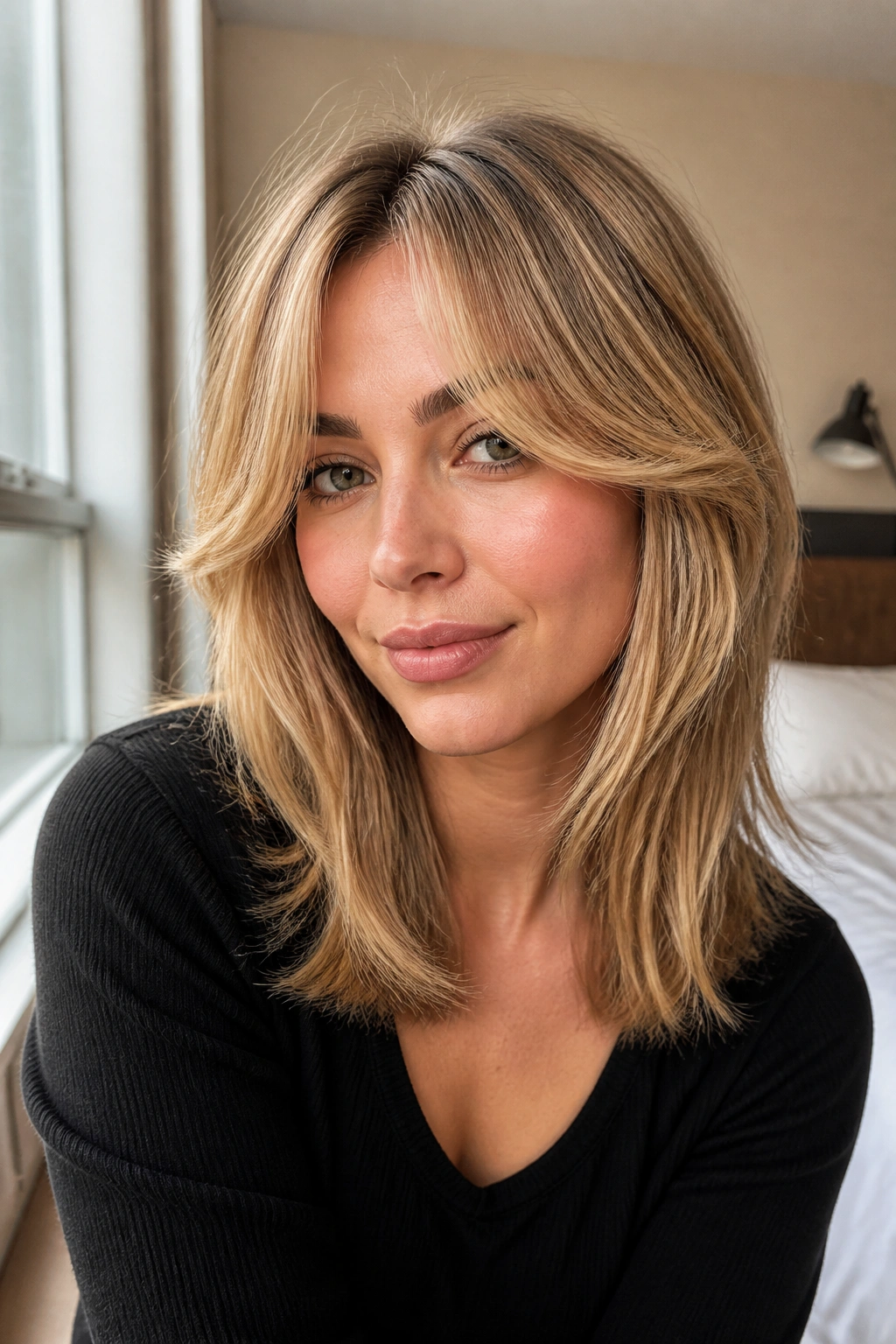
Curtain bangs are one of the few fringe styles that reliably play well with round faces. The reason is simple: they split the forehead open, then sweep outward and downward in a way that makes the face feel longer.
The bangs need to start high enough to open the face, but not so short that they create a shelf. The sweet spot is usually around the cheekbone or upper lip, depending on your hair density and how much movement you want. Pair them with medium layers that fall around the shoulders, and the result looks soft without getting puffy at the sides.
A warm blonde, especially one with lighter money pieces at the front, gives this cut extra lift. The bright front sections pull the eye down and around the face instead of across it. That tiny detail matters.
Too-short curtain bangs are trouble. They can make the face look rounder, not slimmer, because they sit right in the middle of the forehead and don’t create enough length.
5. Shoulder-Length Shag
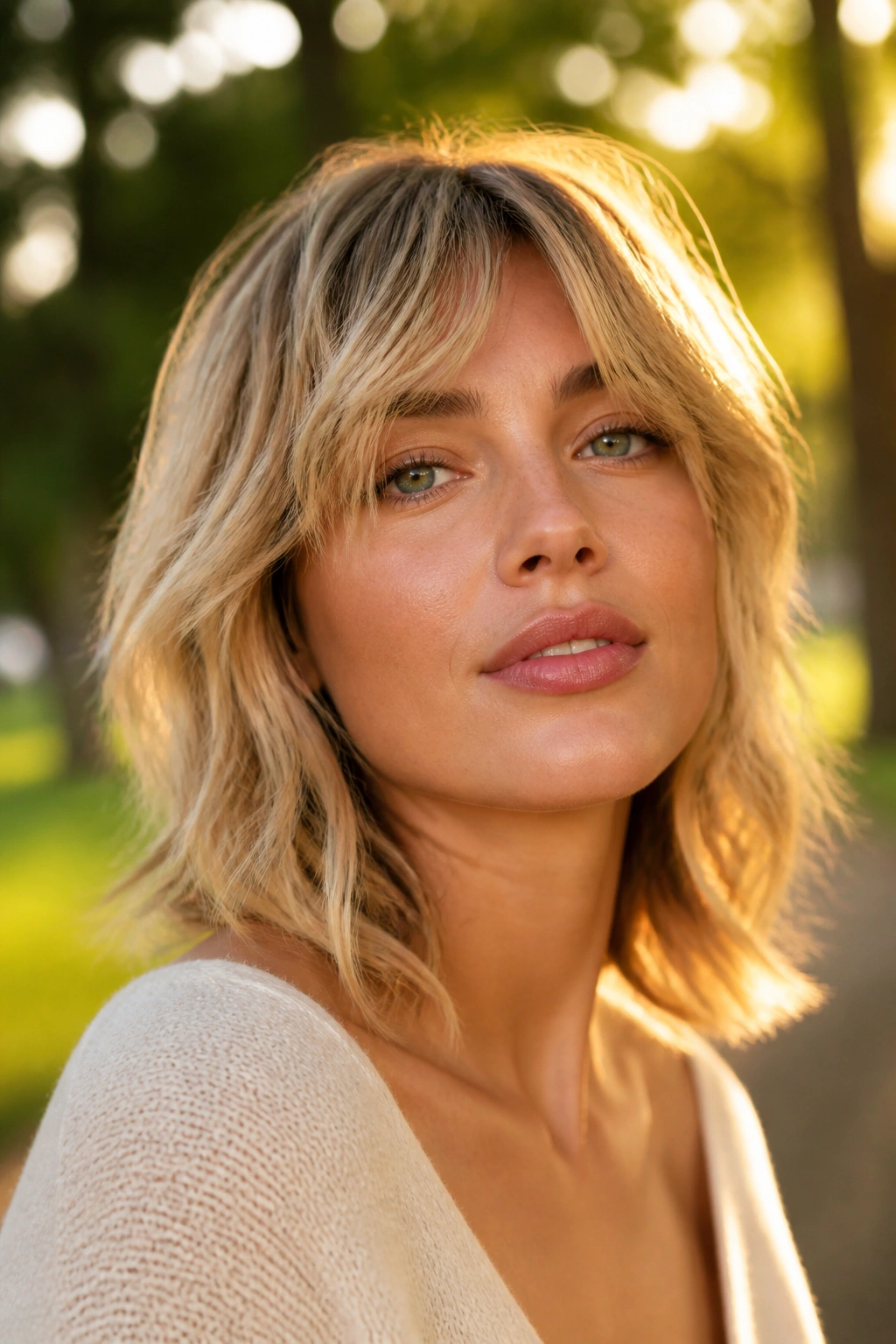
A shag can be fantastic on a round face, but only when it’s cut with intention. The wrong shag turns into a fluffy triangle. The right one gives you air, movement, and a little edge around the cheekbones.
The key is keeping the top light and the sides broken up. You want softness around the crown and texture through the lengths, not a bunch of short, choppy layers that widen the head. If your hair is thick, ask for internal weight removal only where it helps the hair drop flatter. That sounds technical because it is. Good shags are cut carefully.
This style looks especially good with dimensional blonde color—think dirty blonde, beige blonde, or a lived-in balayage with a few brighter ribbons through the ends. The contrast helps the layers show up without making the cut feel busy. A little mousse at the roots and a rough dry with your fingers is usually enough.
What Makes It Work
- Layers should start below the cheekbone.
- The side pieces should stay long enough to skim the jaw.
- The crown can have lift, but the sides should not flare.
- A touch of wave beats a tight curl here.
6. Angled Bob
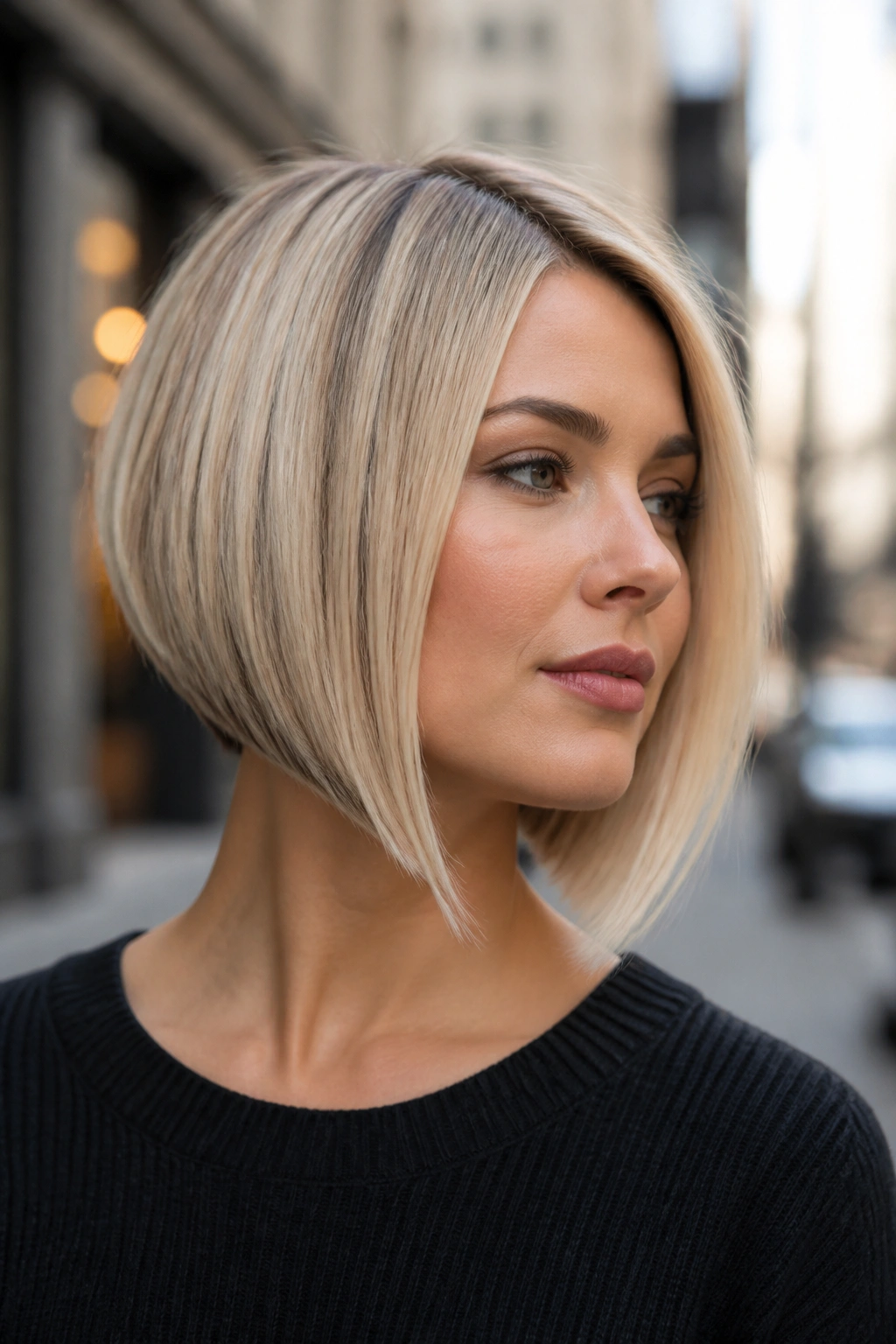
A bob does not have to be round to suit a round face. In fact, that’s usually the problem. A clean angled bob, shorter at the back and longer in the front, brings in the missing lines.
The front pieces should fall below the chin, not right at it. That little bit of extra length keeps the jaw from looking wider, and the diagonal line of the cut creates shape without making the whole look severe. I like this cut best when the angle is obvious but not cartoonish. You want a clear front-to-back difference, not a wedge.
Cool blonde shades—pearl, beige, or soft icy tones—make the geometry stand out. If the hair is too yellow or too flat in tone, the cut can lose its crispness. A side part makes the shape even stronger, though a soft center part can work if the angle is pronounced enough.
This is a smart choice if you want a haircut that looks polished in five minutes. It does need upkeep, though. The angle loses its snap as it grows.
7. Pixie with Long Top and Side Fringe
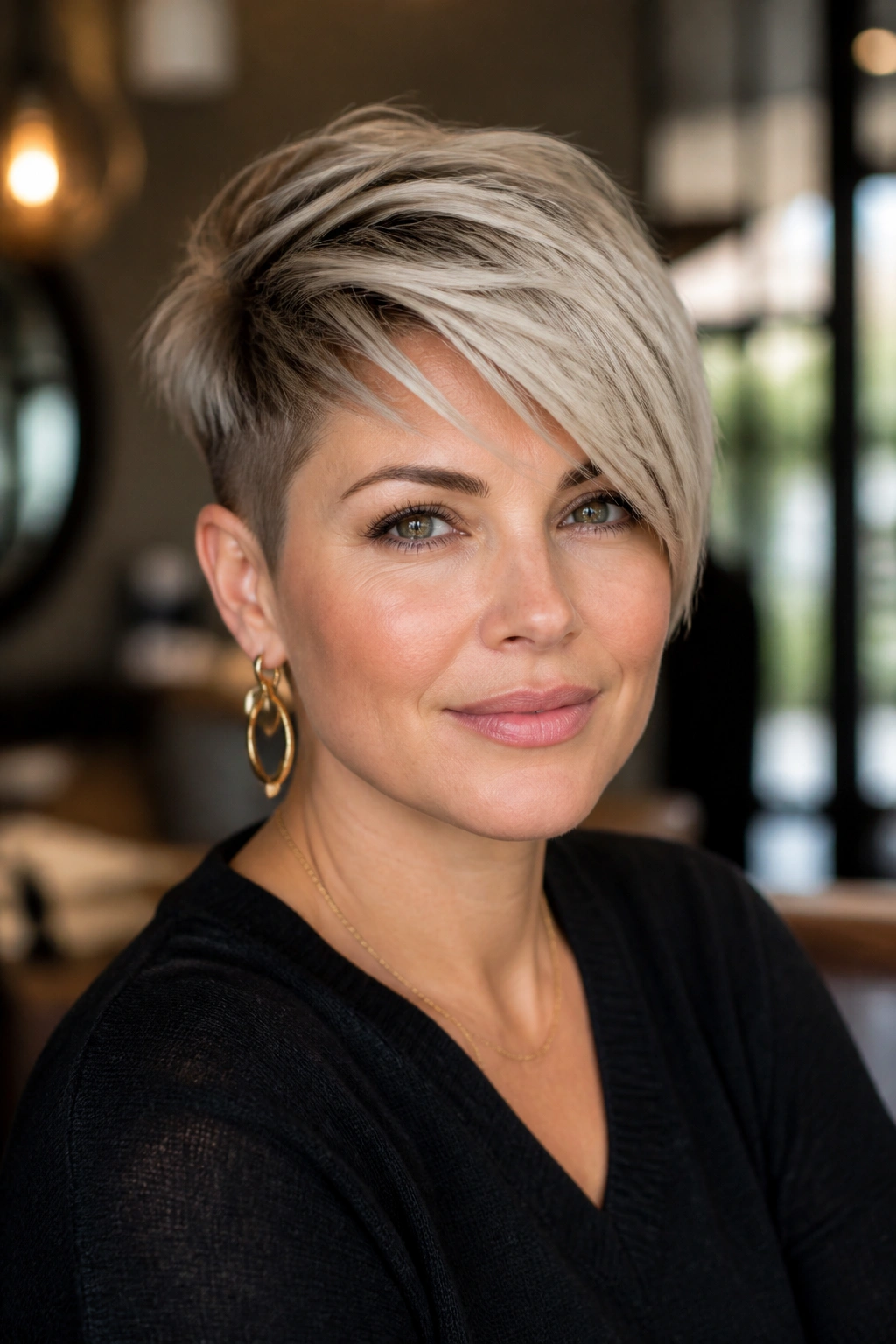
Short hair can absolutely work on a round face. The mistake is going too short all around and leaving nothing to interrupt the width of the face.
The better version is a pixie with a longer top, tight-ish sides, and a side fringe that falls diagonally across the forehead. That diagonal line is what keeps the look from reading too circular. You want height on top and some softness at the front, not a uniform crop. A couple of extra inches at the crown make a bigger difference than people think.
What to Tell Your Stylist
- Keep the top at least 2 to 3 inches long.
- Leave the fringe long enough to sweep sideways.
- Taper the sides, but do not shave them too close unless you want a very sharp finish.
- Use texture, not bulk, to build shape.
Platinum and icy blondes can look striking here, but they also show every uneven section of the cut, so the shape has to be clean. A creamier blonde is easier to live with. A little pomade or styling cream is usually enough; heavy wax tends to flatten the top and kill the lift.
8. Butterfly Layers
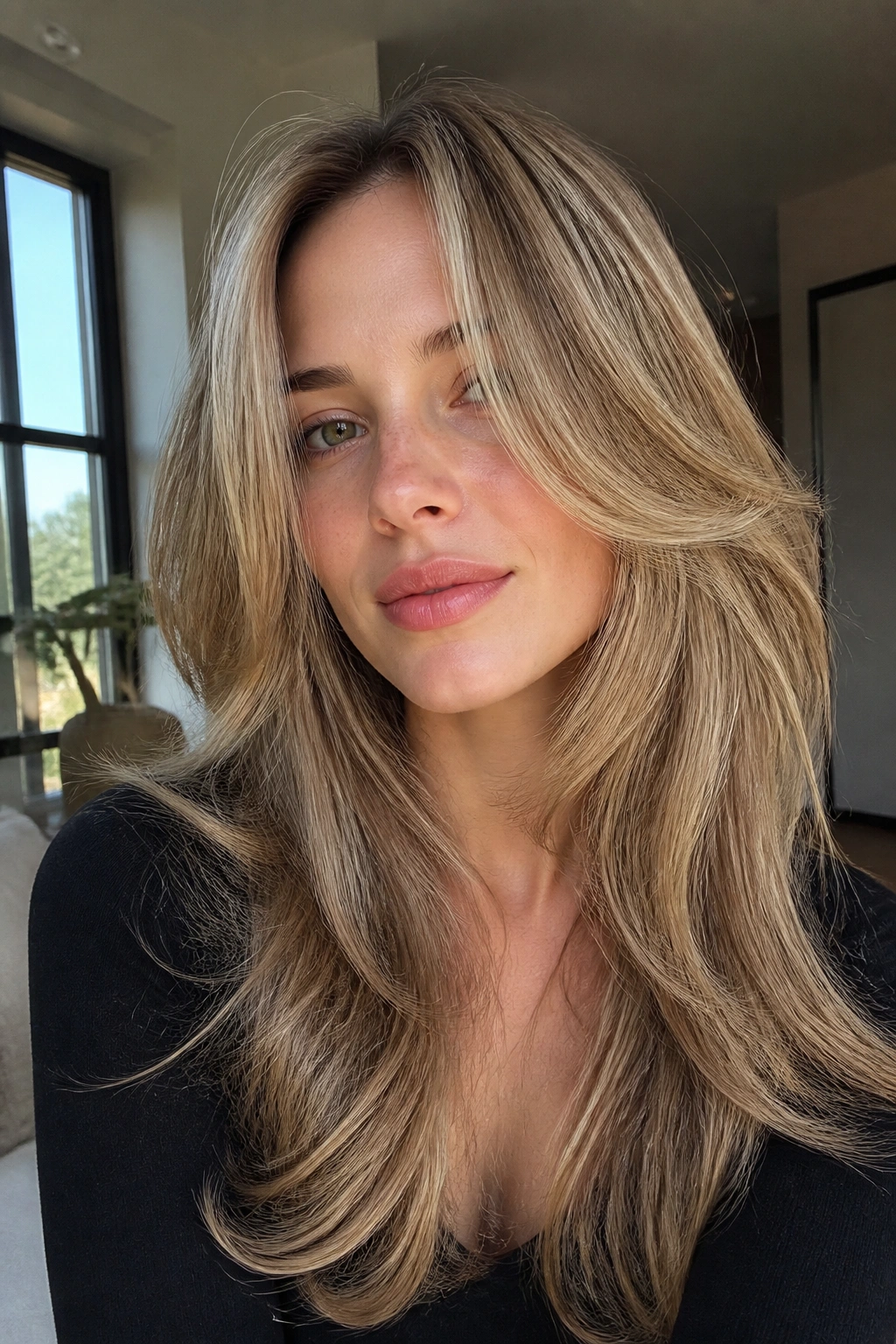
Long hair can suit a round face, but it needs some structure. Butterfly layers are a smart way to keep the length while adding lift around the face and crown.
The short face-framing layers should begin around the chin or cheekbone, then blend into longer layers that fall through the chest. That gives you movement where you need it and keeps the bottom from looking like one heavy sheet of hair. If the shortest layers sit too high, the cut can widen the cheeks. If they sit too low, the shaping gets lost.
This cut loves blonde dimension. Bright face-framing pieces, a soft root shadow, and a few lighter threads through the ends create depth without making the hair look striped. Use a large round brush or a 1.5-inch curling iron if you want that lifted, fluttery finish. It looks especially good when the layers move away from the face instead of tucking inward.
The only catch? It takes a little styling. If you want your hair to air-dry and behave, this is not the most forgiving option.
9. Wispy Bangs with Soft Waves
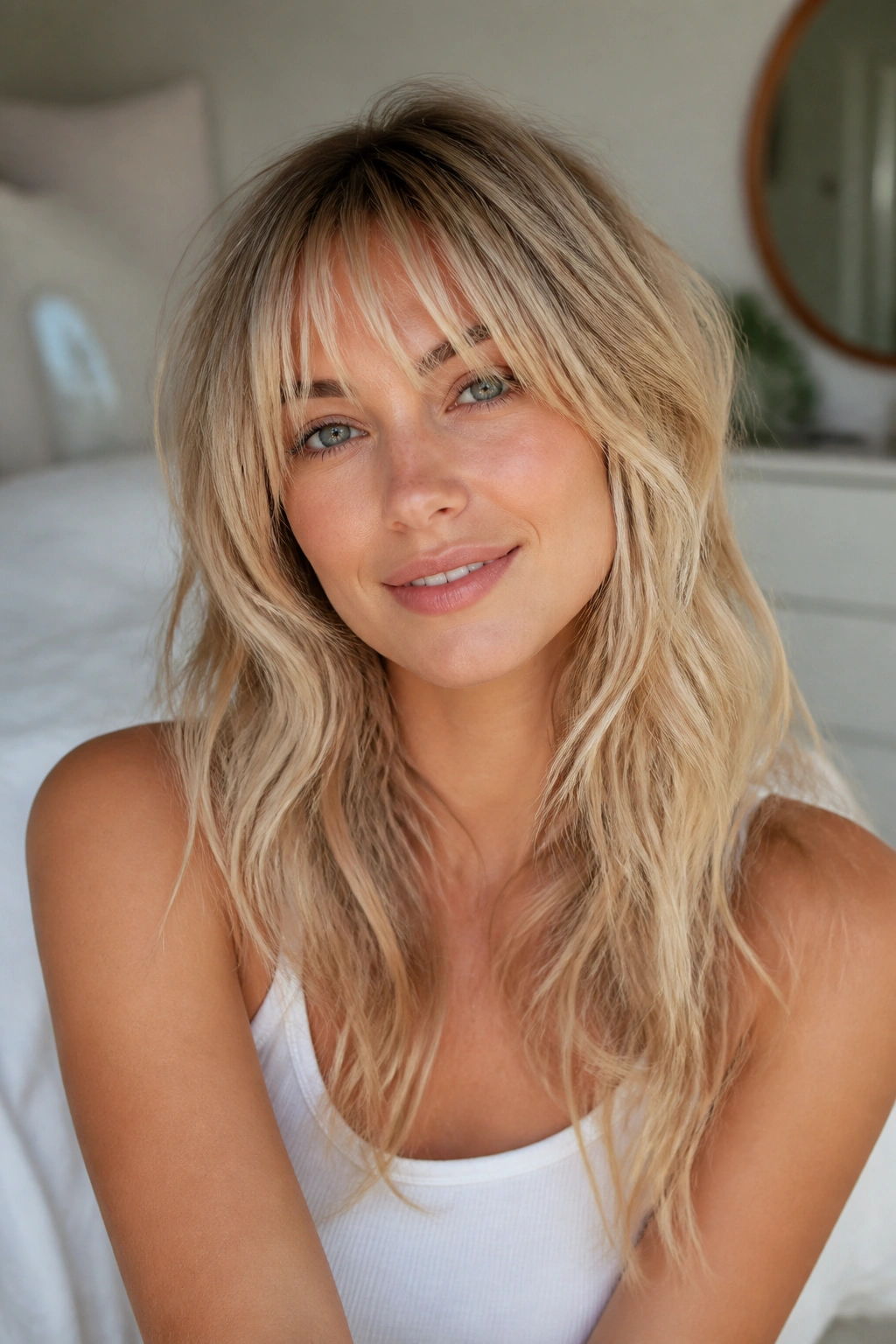
If you want fringe but hate the idea of a heavy bang, wispy bangs are the safer bet. They soften a round face without cutting it in half, which is what blunt bangs can do when they’re too dense or too straight.
The best version is light, slightly separated, and a little irregular at the ends. It should look like a whisper across the forehead, not a curtain nailed into place. Pair it with soft waves that start below the cheekbone, and the face stays open while still feeling styled.
Honey blonde and strawberry-blonde shades work especially well here because the softness of the color matches the softness of the cut. The whole thing feels airy. A sea-salt spray or a light texturizing mist helps, but use a small amount. Too much product makes wispy bangs clump, and then the whole idea falls apart.
Best for People Who Want
- Some forehead coverage
- A softer front line
- A cut that can be tucked or pinned back easily
- A low-drama grow-out
10. Asymmetrical Bob
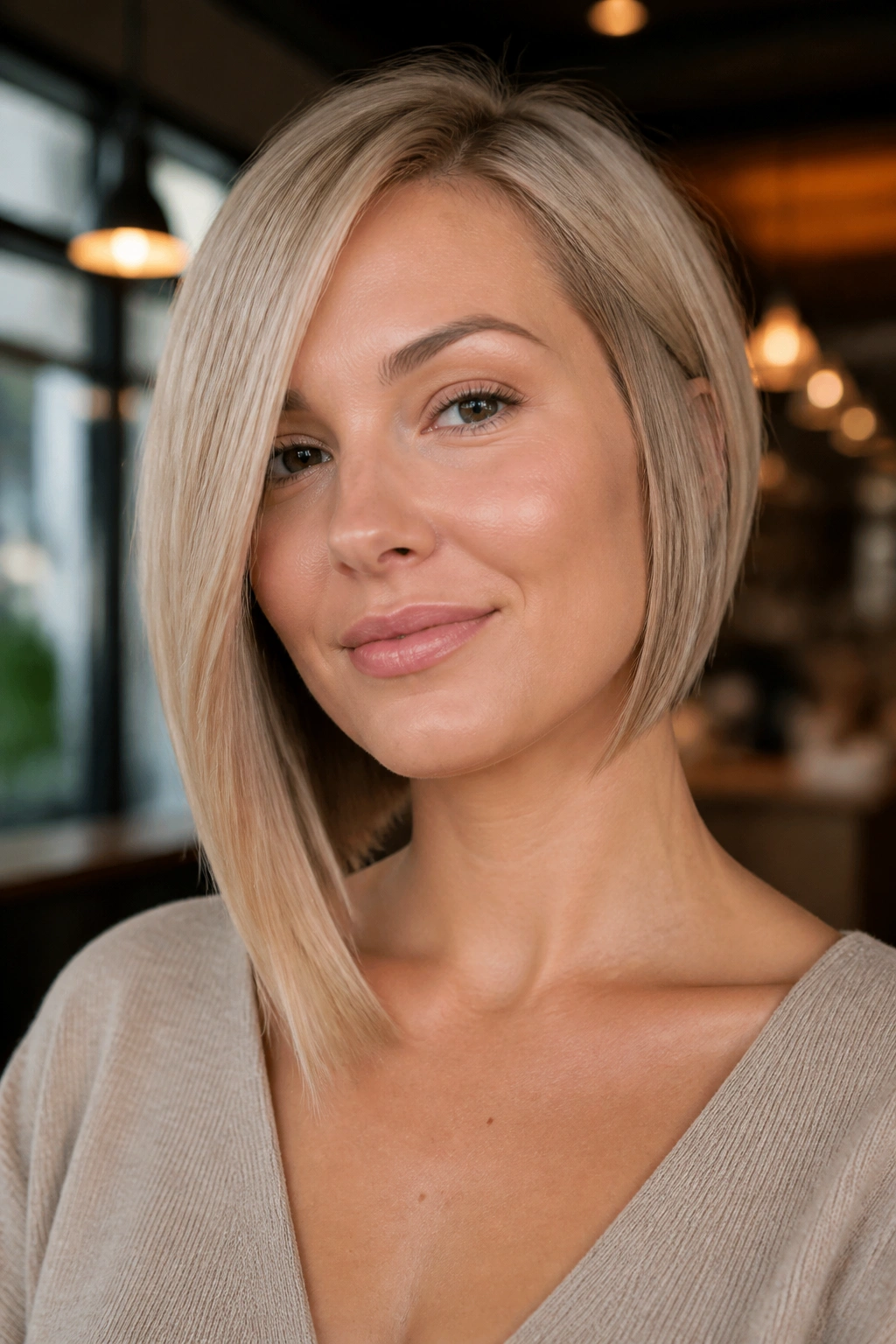
An asymmetrical bob gives a round face a built-in angle. One side is usually a bit longer than the other—sometimes by just an inch, sometimes by a little more—and that diagonal line pulls the eye across the face instead of letting it sit in a perfect circle.
That’s why this cut works. It breaks symmetry in a way that feels deliberate, not flashy. A side part helps, but the haircut itself is doing the main work. If you tuck the shorter side behind the ear, the line gets even cleaner and the jaw looks a touch slimmer.
I prefer this style with a neutral blonde or soft platinum because the color keeps the geometric shape from feeling too harsh. If the blonde is too dark at the root and too bright at the ends, the contrast can overpower the shape. Clean color, clean line. Simple.
This is not the easiest cut to grow out gracefully, so if you hate regular trims, keep that in mind. Still, when it’s done well, it has a sharpness that a lot of round faces wear beautifully.
11. Blunt Lob with Tucked Ends
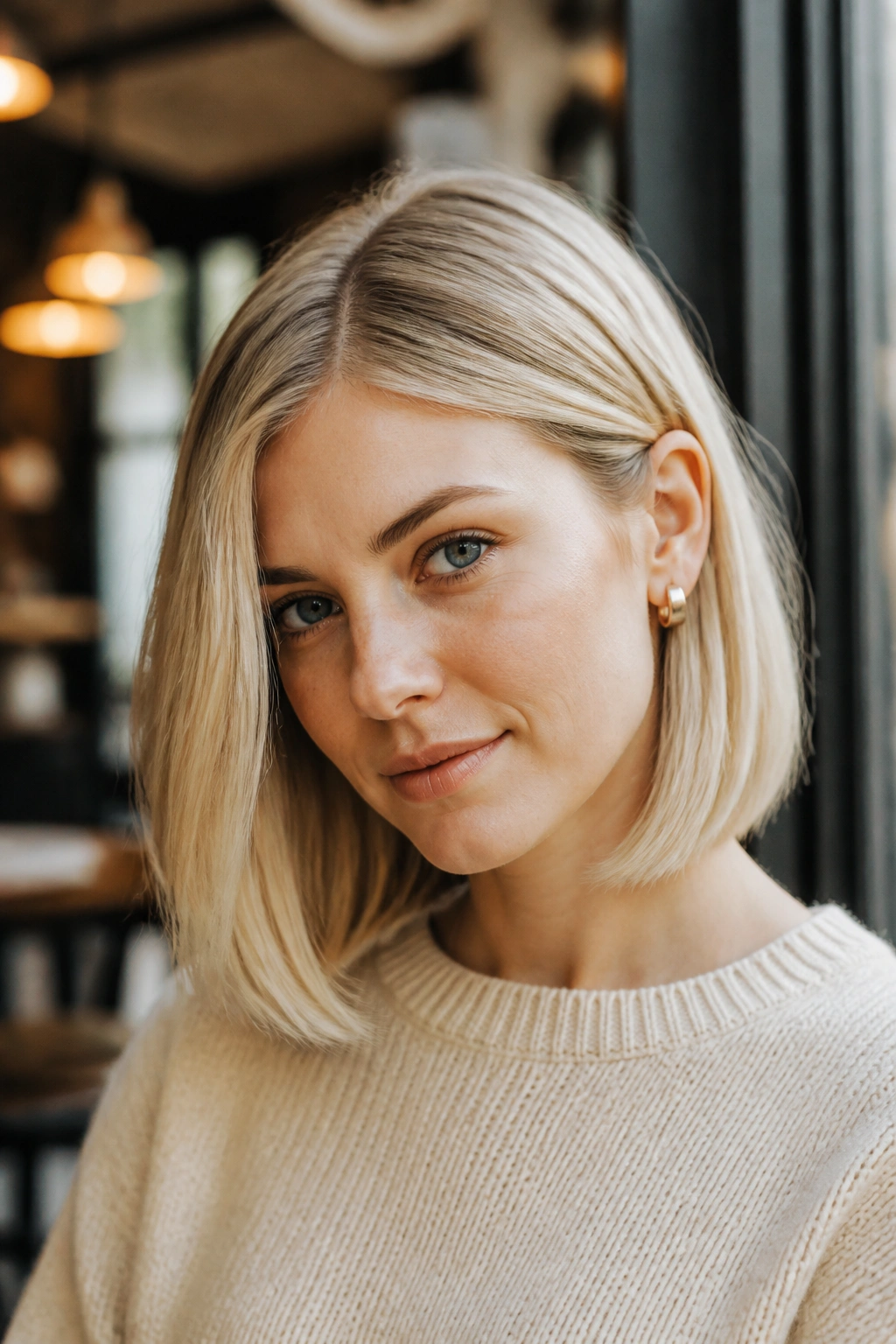
A blunt lob can work on a round face if it’s cut below the widest part of the cheeks and styled with a little inward bend. The word “blunt” sounds severe, but the trick is in the finish. You want a strong line, not a stiff block.
How to Keep It from Looking Boxy
- Keep the length at the collarbone or a touch below.
- Ask for subtle internal removal near the ends if your hair is thick.
- Part it slightly off center for lift.
- Tuck one side behind the ear now and then to interrupt the shape.
This cut is especially nice on thicker hair because the clean edge makes the hair look dense and healthy. A creamy blonde or beige blonde softens the line so it doesn’t feel too hard. If you have a lot of wave, you may need a quick blow-dry around the ends to keep them from flicking outward at the cheeks.
The biggest mistake here is cutting it too short. Once a blunt lob hits the jaw, the face can start to feel wider. A little extra length solves a lot.
12. Layered Midi Cut with Money Pieces
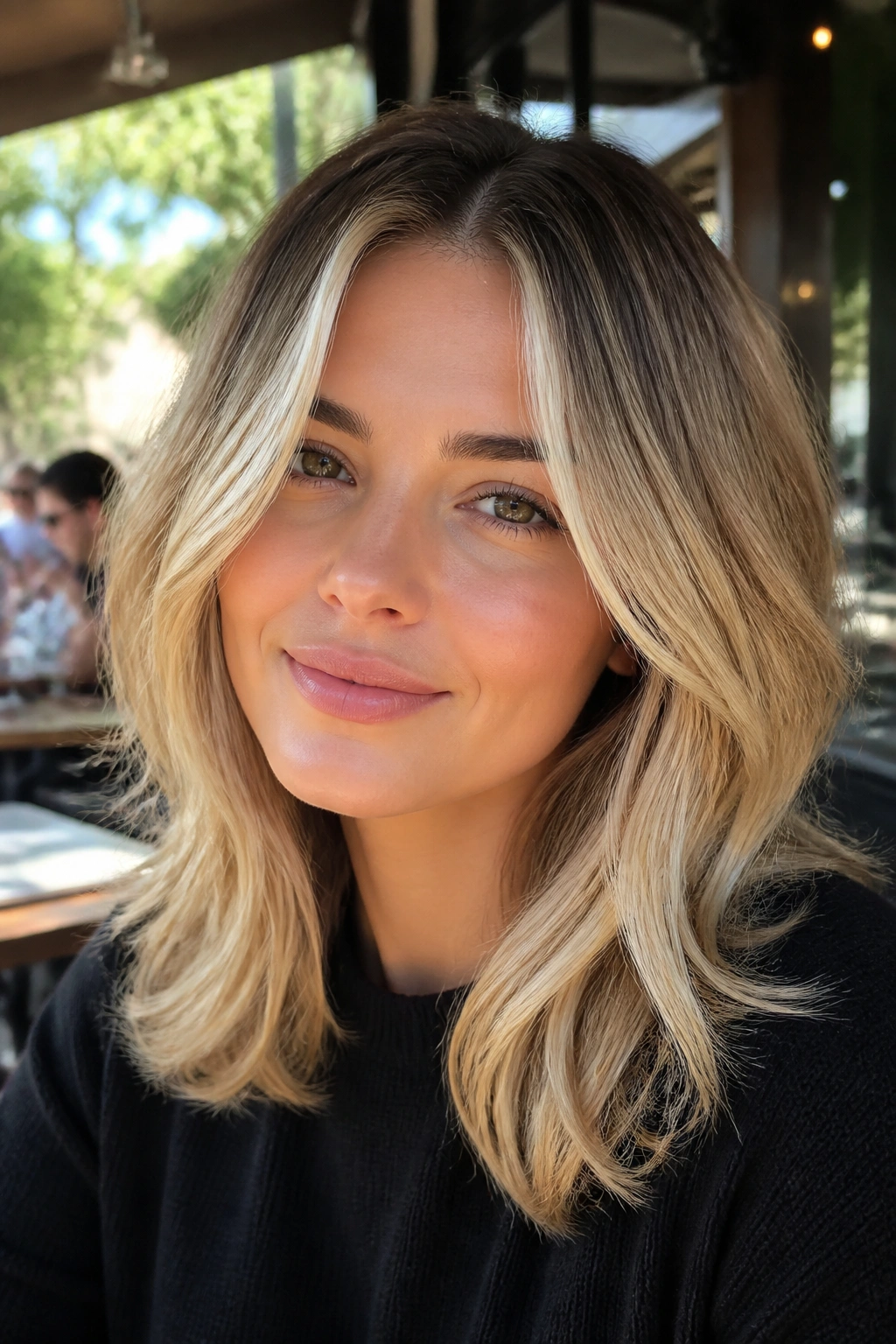
A midi cut sits between a lob and long hair, usually somewhere around the upper chest. On a round face, that longer length gives you room to build shape without crowding the jaw.
The money pieces matter here. Bright front highlights around the cheekbone and temple pull light upward and outward in a way that makes the face feel more sculpted. Keep the brightest blonde pieces near the front, but don’t start them too low. If the lightest streaks begin at the jaw, the width gets emphasized instead of softened.
This cut is also good for people who like a little color drama without going full contrast. A soft root shadow, warm beige mid-lengths, and brighter ends make the layers easier to see. The haircut does not need to be fussy. In fact, it looks better when the layers move a little.
If your hair is heavy, ask for face-framing layers that begin around the chin and blend downward. That keeps the shape from getting wide where the face already has fullness.
13. Curly Blonde Cut with Rounded Layers
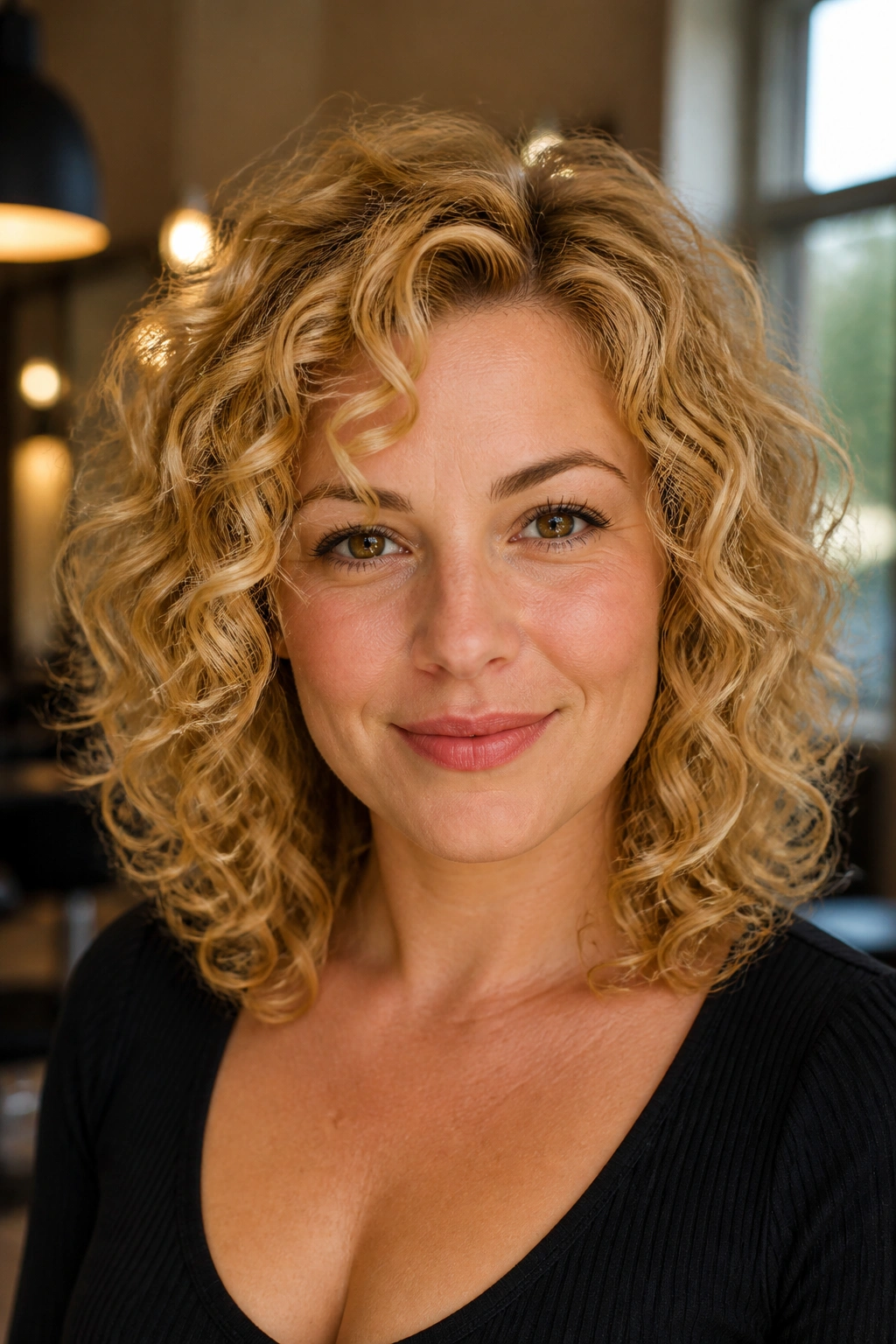
Curly hair and round faces can be a very good match, but the cut has to respect the curl pattern. One-length curly hair tends to widen out. Rounded layers solve that by taking bulk away from the sides and leaving more height at the top.
The best approach is usually a dry cut or a curl-by-curl shaping session, because curls shrink in ways that are hard to guess when they’re wet. You want the shortest pieces to support the curl shape, not to sit right at the widest part of the face. A longer front curl at the cheekbone can be enough to create a slimmer line.
Blonde curls are especially good at showing depth. Babylights, a soft balayage, or a few brighter curls around the front make the shape easier to read. Too much all-over lightness can flatten the pattern, though, so lowlights are helpful.
Styling Notes for Curly Hair
- Use a leave-in conditioner that won’t weigh the curls down.
- Diffuse on low heat or let the hair air-dry.
- Skip heavy brushing after drying.
- Ask for layers that follow the curl, not fight it.
14. Wolf Cut with Soft Edges
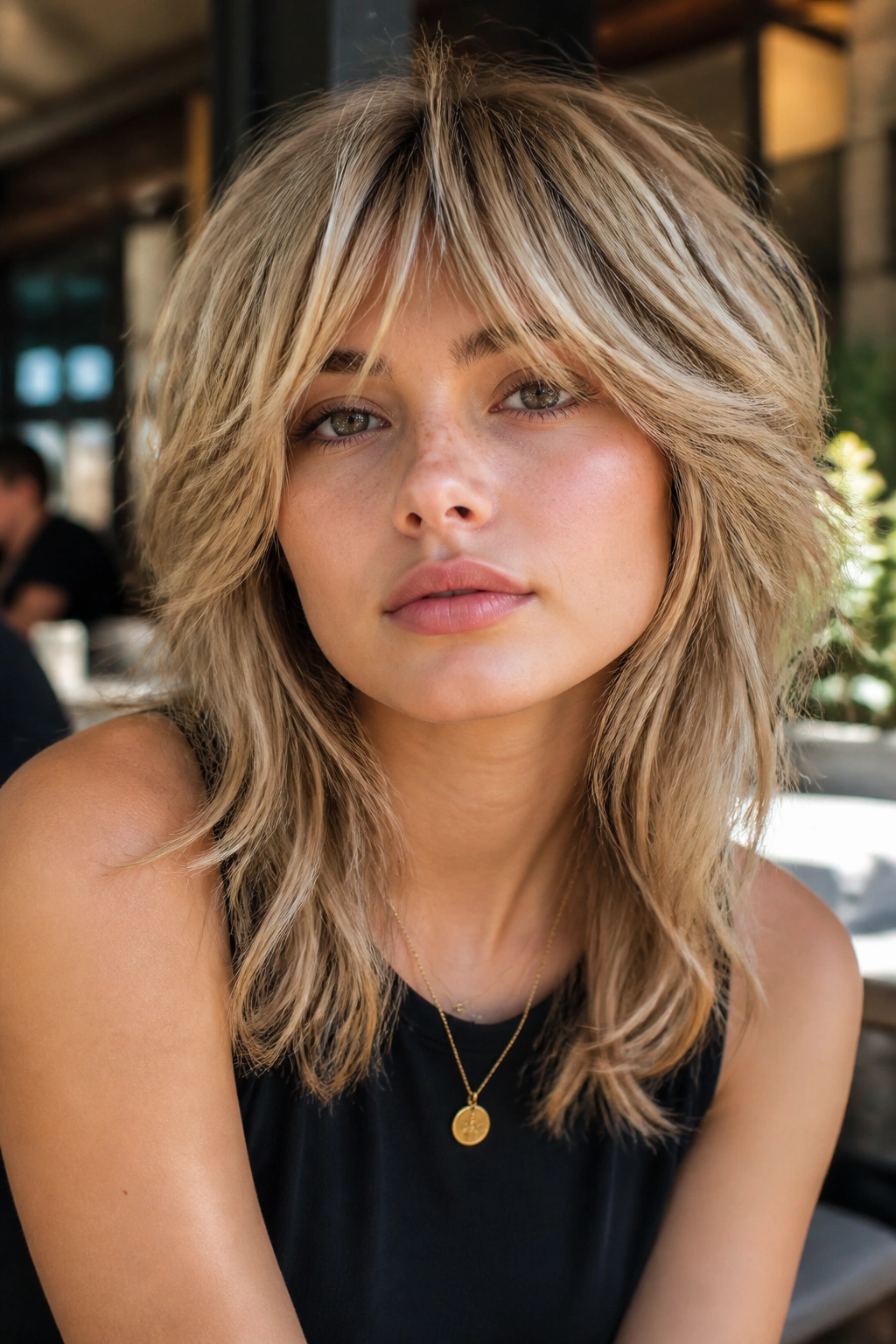
A wolf cut can look fantastic on a round face if it’s softened a little. The trick is to keep the crown volume and the choppy texture, while avoiding too much width around the ears and cheeks.
That means the top can be shaggy and full, but the side layers need to stay controlled. If the shortest pieces kick out at the cheekbone, the face can look broader. If they fall with a bit of bend and then taper into longer ends, the whole cut looks cooler and more balanced.
This style pairs well with smoky blonde, sandy blonde, or a lived-in beige tone. The messier texture makes the color look dimensional. A little dry texture spray goes a long way. Do not drown it in product. A wolf cut should move.
It’s a bolder choice than most of the cuts on this list. That’s part of the appeal. If you like a haircut with personality and you don’t mind some styling, it can be a strong fit.
15. Bixie Cut
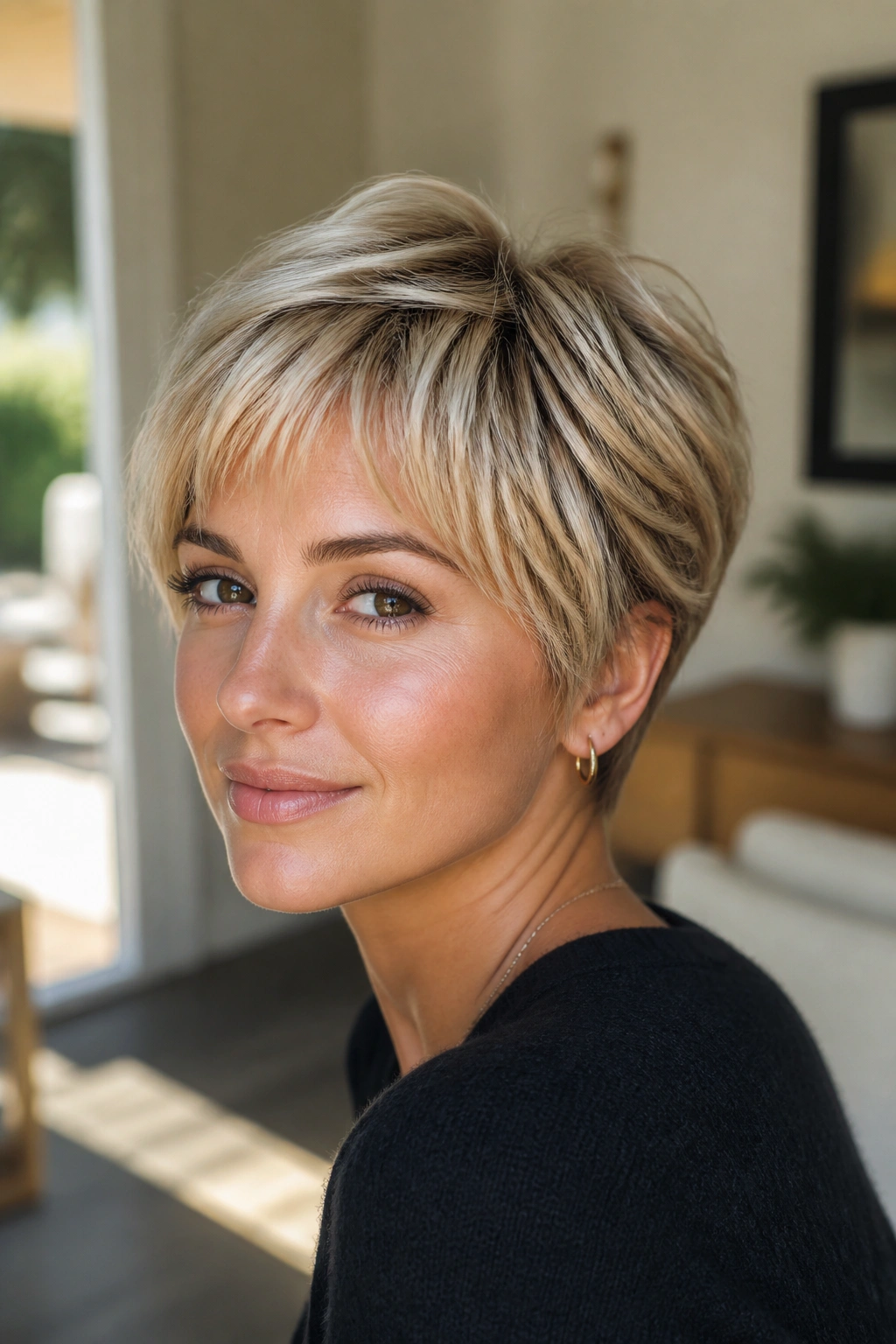
A bixie sits between a bob and a pixie, which makes it a nice middle ground for people who want short hair but not a full crop. On a round face, that in-between length is useful because it keeps some softness around the jaw while still creating lift and shape.
The best bixie has a slightly longer fringe, textured top layers, and tapered sides that don’t flare out. Keep the front pieces a little longer than you think you need. That stops the cut from feeling too boxy and gives the face a diagonal line to follow.
This is one of the easiest short blonde cuts to personalize. A rooty blonde keeps it casual. A bright champagne blonde makes it sharper. If you want a more modern edge, ask for piecey texture around the crown and a little separation at the fringe.
It’s low on length, but not low on attitude. That’s a good combination when a face shape needs some angle.
16. Long Bob with a Deep Side Part and Loose Wave
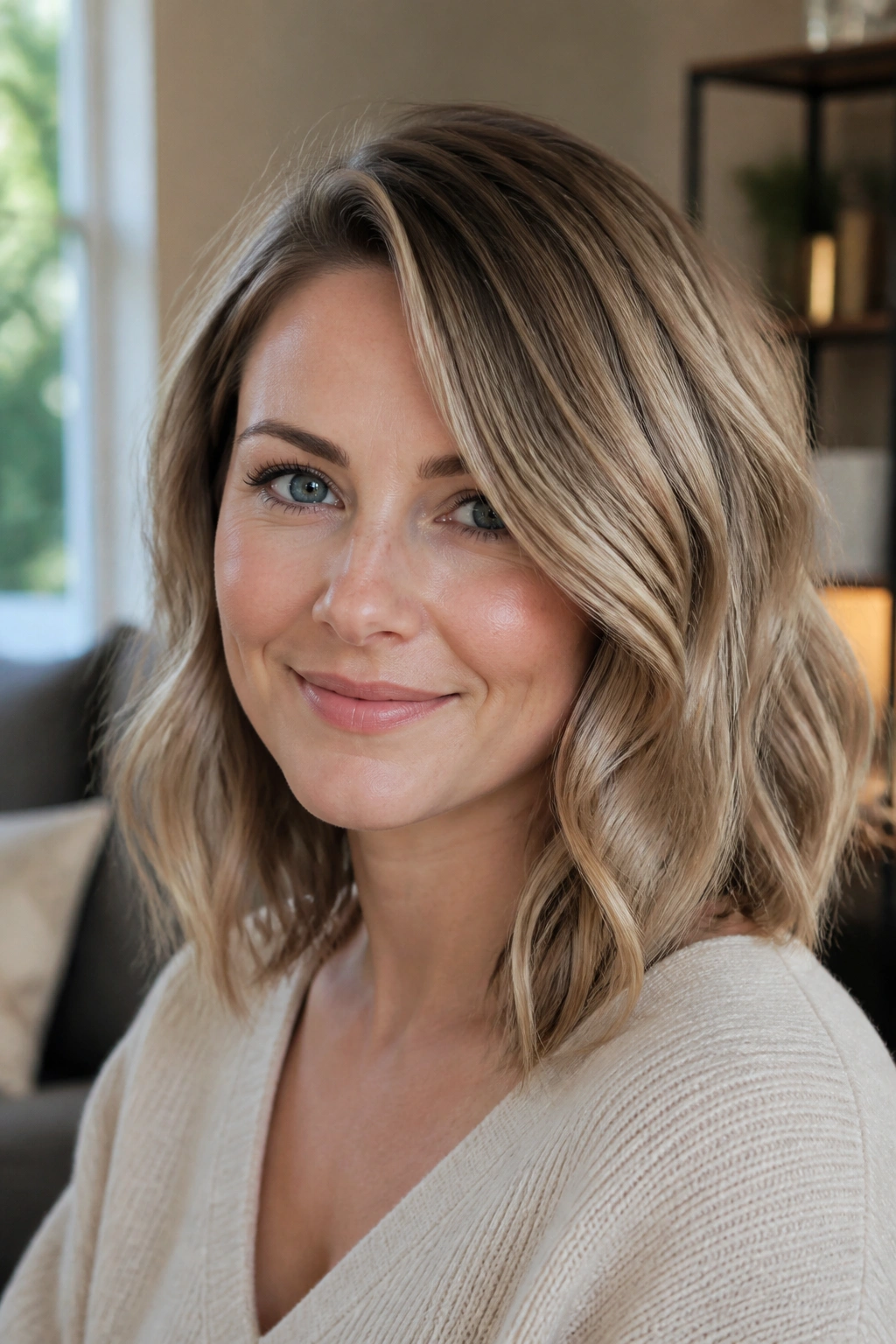
A long bob with a deep side part is a quiet winner. It does not scream for attention, which is exactly why it works. The side part builds height at the crown, and the loose wave keeps the width from settling right on the cheeks.
Keep the wave starting below the cheekbone if you can. Higher waves can puff out in the wrong place. A 1.25-inch curling iron or a wide iron clamp gives the soft bend you want. Leave the ends a little straighter if you like a modern finish. That contrast helps the cut look cleaner.
A buttery blonde with soft beige lowlights is a nice fit here because the color reads dimensional without looking stripey. This cut is especially good if your hair is fine and you want more body without going shorter. It also grows out in a graceful way, which is useful if you prefer fewer salon visits.
Nothing fancy. Just good shape.
17. Choppy Shoulder Cut
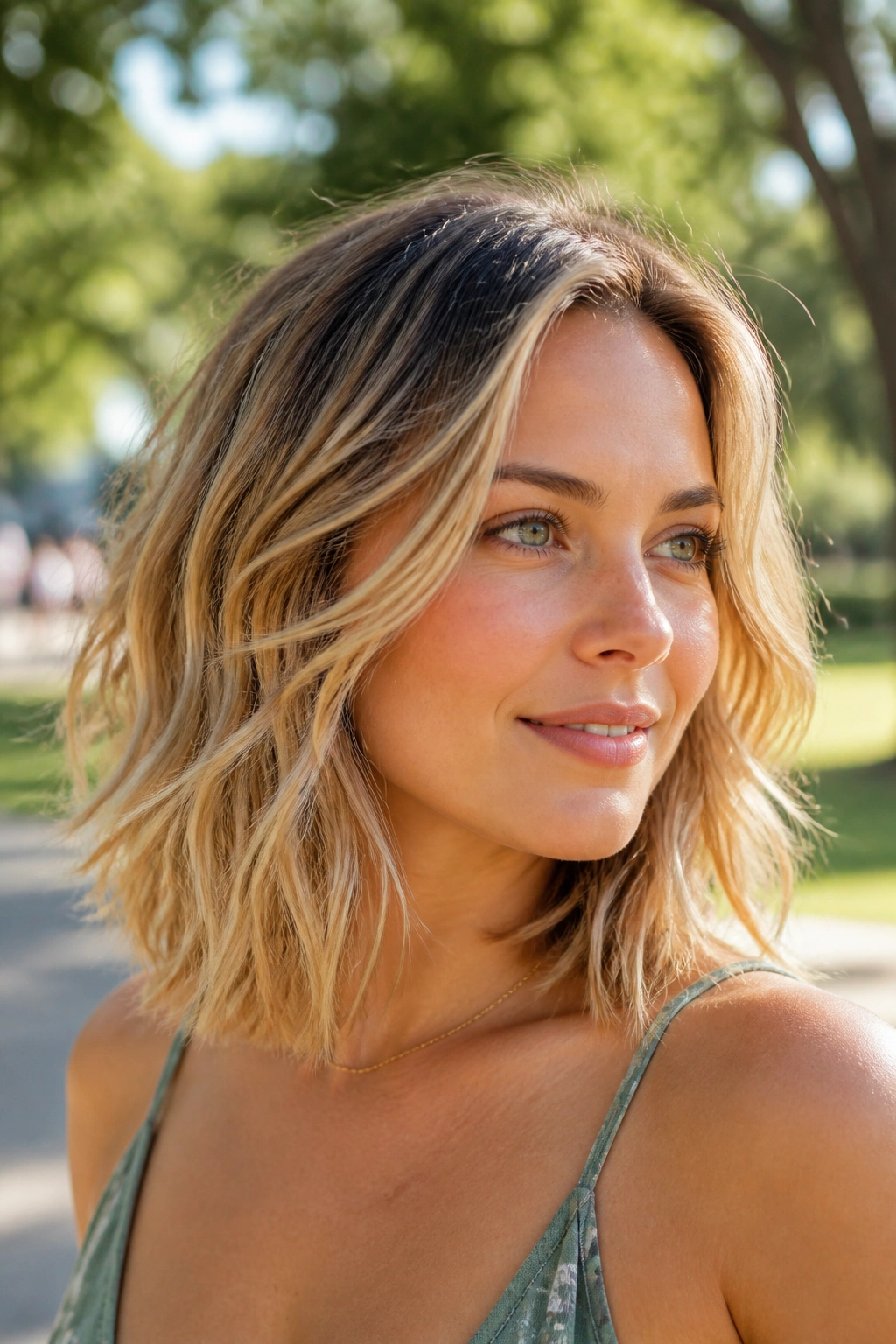
A shoulder-length cut with choppy ends can be a better choice for a round face than a smooth, all-one-length style. The broken ends keep the hair from forming one wide arc around the cheeks.
The length should hit right around the shoulders or slightly below, depending on your neck and jawline. From there, light layering through the ends keeps the silhouette moving. If the hair is thick, this cut can save you from that heavy triangular look that shows up when long hair is cut too bluntly.
I like this one with a lived-in blonde—something that has darker roots and lighter ribbons, not a flat all-over color. The texture makes the color look natural and stops the style from feeling overdone. It’s also forgiving on busy days, which matters more than people admit.
A little salt spray, a quick scrunch, and you’re done. That’s part of the appeal.
18. Classic Layered Cut with Flipped Ends
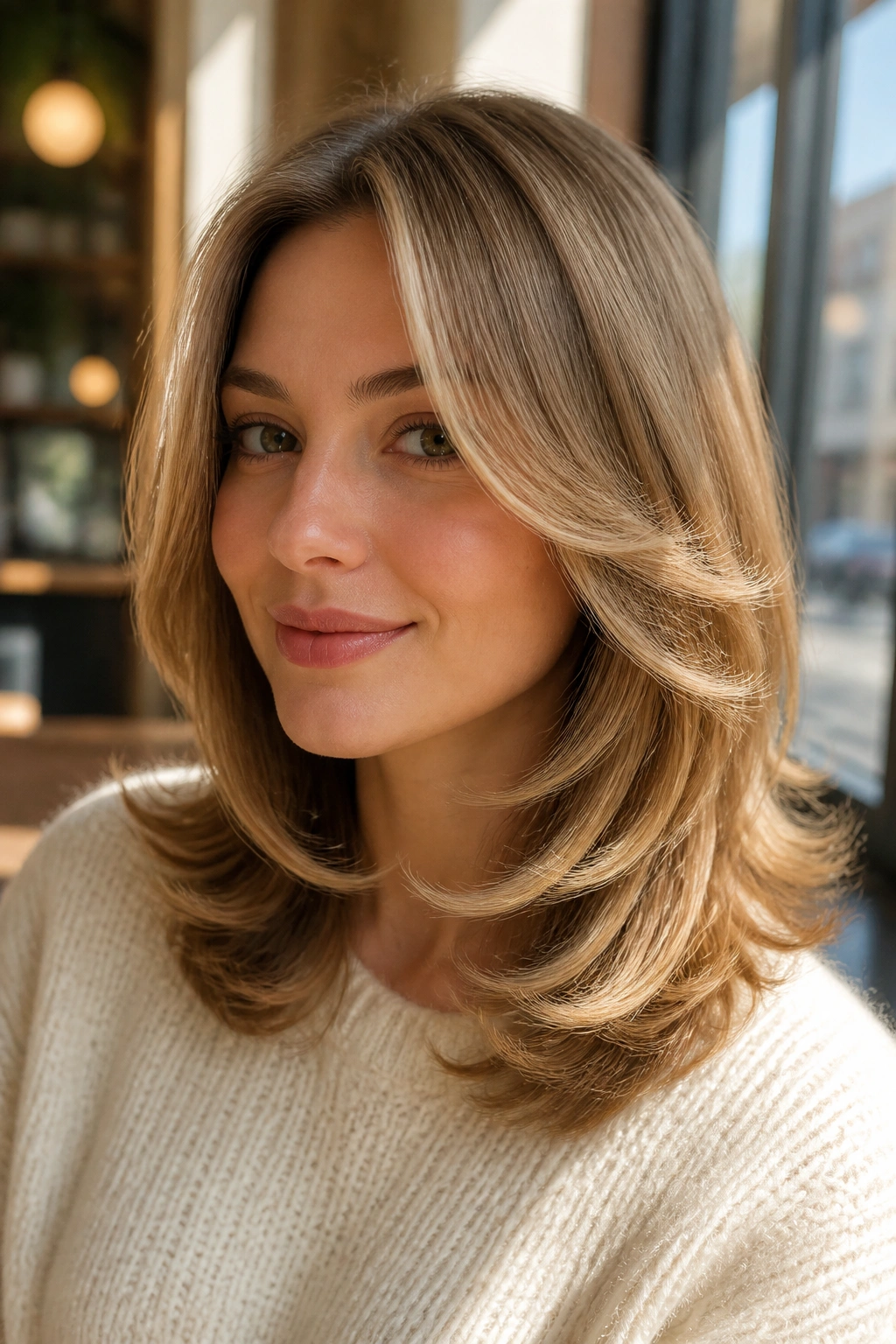
Soft flipped ends can change the feel of a cut fast. They pull the hair away from the face and create that gentle outward sweep that helps a round face look a little longer.
The layers should begin below the cheekbone so the width isn’t built right where the face is fullest. Then the ends can be styled with a subtle flip out or a soft bend away from the jaw. It’s a classic blowout look, and there’s a reason it keeps hanging around: it flatters without needing a lot of drama.
Warm blonde shades work especially well here. Golden beige, honey, and soft caramel highlights give the movement something to catch. If the hair is too ashy and flat, the flip can look stiff instead of airy.
A Good Way to Style It
- Blow-dry with a round brush, rolling the ends away from the face.
- Use a medium-hold spray, not a stiff lacquer.
- Keep the root lift moderate so the style doesn’t go puffy.
- Finish by brushing through the ends once they cool.
19. Jaw-Length Bob with Interior Layers
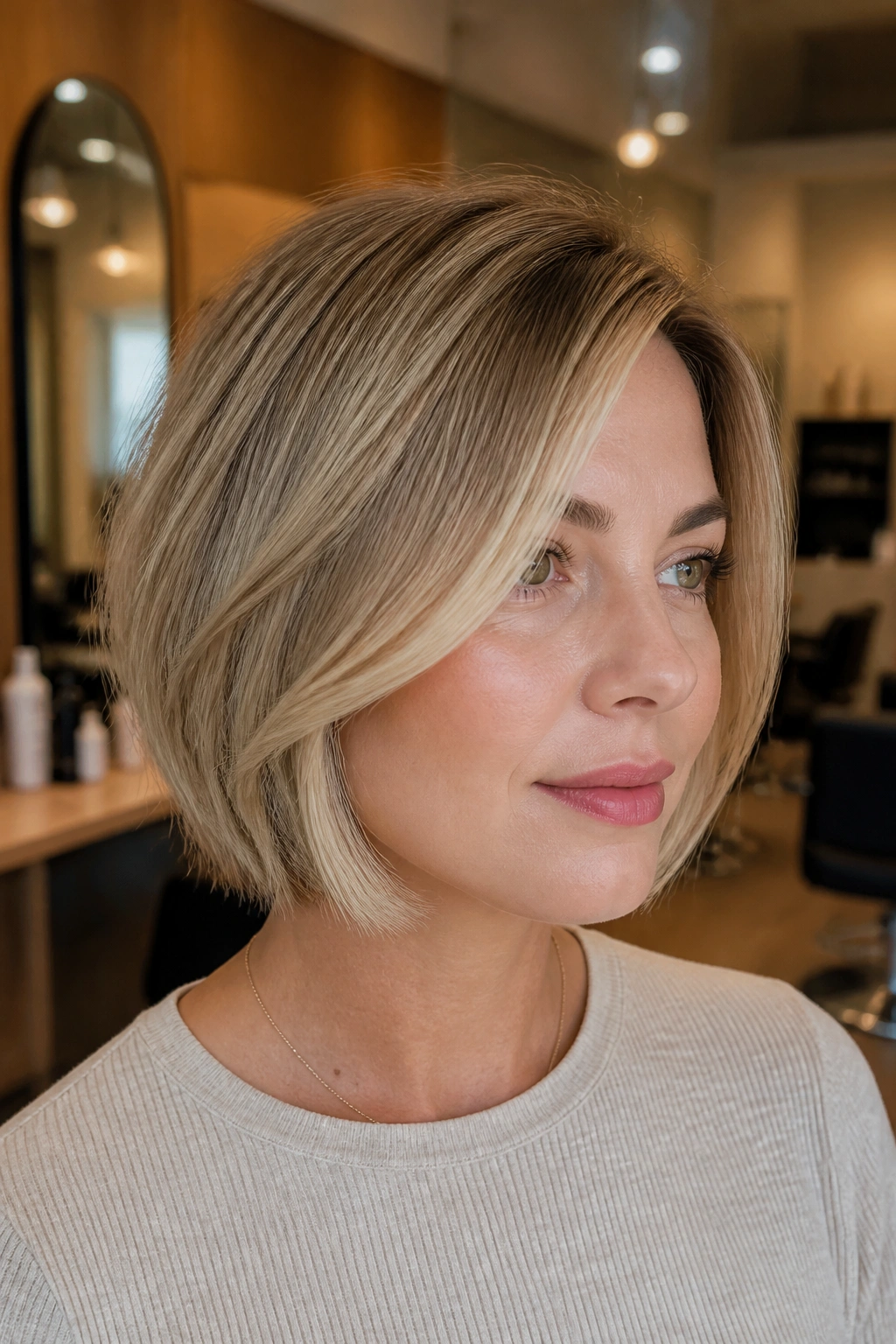
Jaw-length cuts are tricky on round faces. They can look fantastic, or they can make the lower face feel wider in a hurry. The difference usually comes down to what’s happening inside the cut.
A straight perimeter at jaw level is the risky version. A jaw-length bob with interior layers, a slight side part, and a little bend through the front is the safer, better-looking choice. The inside layers remove bulk so the shape doesn’t sit as a hard circle around the face.
This style needs clean styling. If the hair flips outward or puffs at the jaw, the proportions go wrong fast. A flat brush, a smoothing cream, and a quick bend under the front pieces can keep it sharp. A cool blonde or pearl blonde adds crispness, while a soft root shadow makes the line less severe.
It’s a bold haircut, but not a wild one. Good for someone who likes structure and doesn’t mind taking ten minutes with a blow-dryer.
20. Feathered Cut with Crown Volume
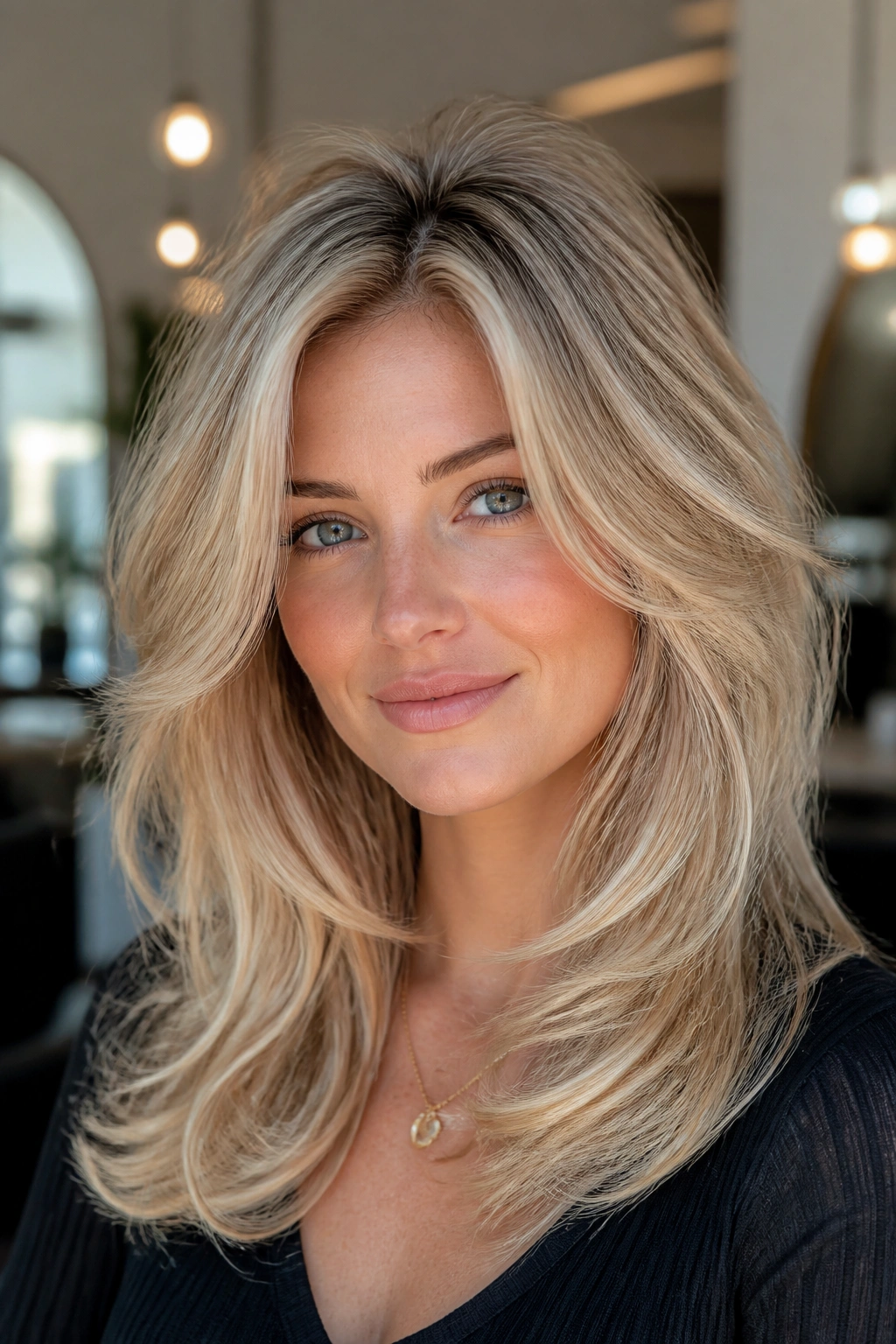
Feathered layers are having a long, steady run for a reason: they make hair feel lighter without stripping away the shape. On a round face, the lift at the crown is a gift. It draws the eye upward, which helps lengthen the whole look.
The feathering should start around the temples and cheekbone, then blend into longer layers that fall past the face. You want movement that opens the cheeks, not layers that puff them out. That’s the whole balancing act. If the feathering is done well, the hair floats instead of sits heavy.
This is a strong choice for medium to long hair, especially if you like a blowout finish. A beige blonde with soft lowlights keeps the feathering visible and stops the cut from looking flat. I also like this one for people who want a flattering haircut that does not feel too trendy or too severe. It’s easy to wear, and it forgives a rough styling day better than sharper cuts do.
If you’re choosing between several options, pick the one you can style in ten minutes on a normal morning. That usually tells the truth.
