



A good men’s haircut should make your morning easier, not harder. If you need a blow dryer, three products, and 12 minutes in the mirror to leave the house, the cut is working against you.
That’s why haircuts for men matter more than most people admit. A tight buzz can sharpen a face in seconds. A textured crop can hide a stubborn hairline. A side part can make thick hair look controlled instead of heavy. The wrong cut does the opposite, and you can spot it immediately: the sides puff out, the front falls flat, or the whole shape looks like it gave up halfway through the grow-out.
Barbers notice more than length. They watch the way your hair grows at the crown, how fast your sides swell, where the cowlick sits, and whether your hair bends, frizzes, or lies down like it was pressed. That stuff changes everything. A cut that looks sharp on one man can look awkward on another, even if they both ask for the same thing.
So the smartest move is to start with the shape that fits your texture and your routine. Clean and simple. Or longer and more styled. The good ones are all here.
1. Buzz Cut
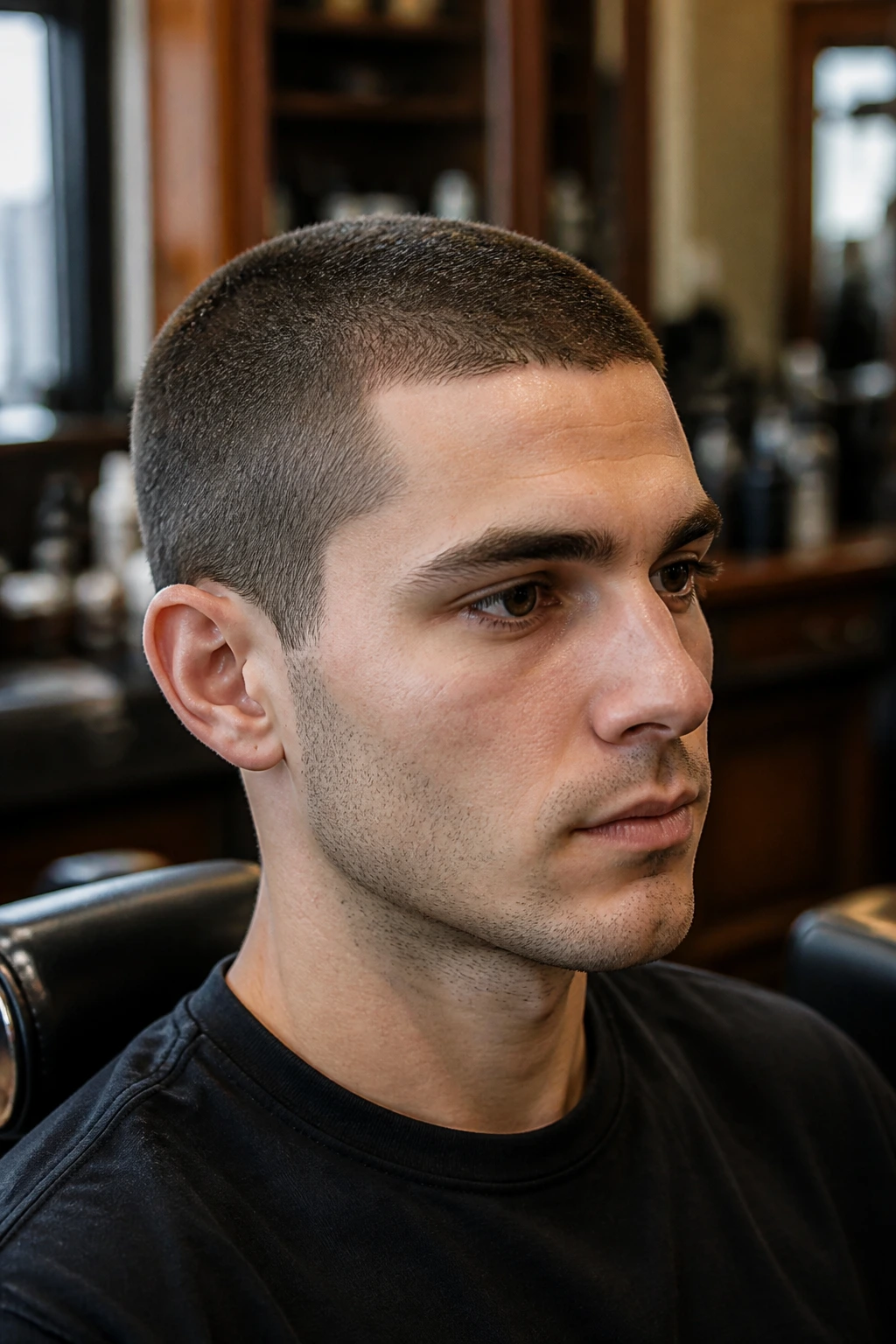
Short and clean wins here. The buzz cut is the most stripped-down haircut on the list, and that’s exactly why it works. It removes the drama, the bulk, and the morning fuss, leaving you with a sharp shape that’s easy to keep neat.
Why It Works
A buzz cut keeps the same basic length across the head, usually with clipper guards somewhere between #1 and #4, depending on how close you want it. That even length makes thinning hair look more intentional, and it keeps thick hair from exploding into a helmet shape. If you want it a little softer, ask for a low taper around the ears and neck instead of a hard outline.
What to Ask For
- #1 or #2 guard if you want it very short and crisp.
- #3 or #4 guard if you want a little more softness on the scalp.
- A low taper at the nape and sideburns if you want less of a military feel.
- A clean line-up only if your hairline is naturally even; otherwise, keep the edges softer.
I like this cut most when a man wants to look put together without styling anything at all. It’s blunt. That’s the point. Just remember one thing: if your scalp shows easily, sunscreen matters.
2. Crew Cut
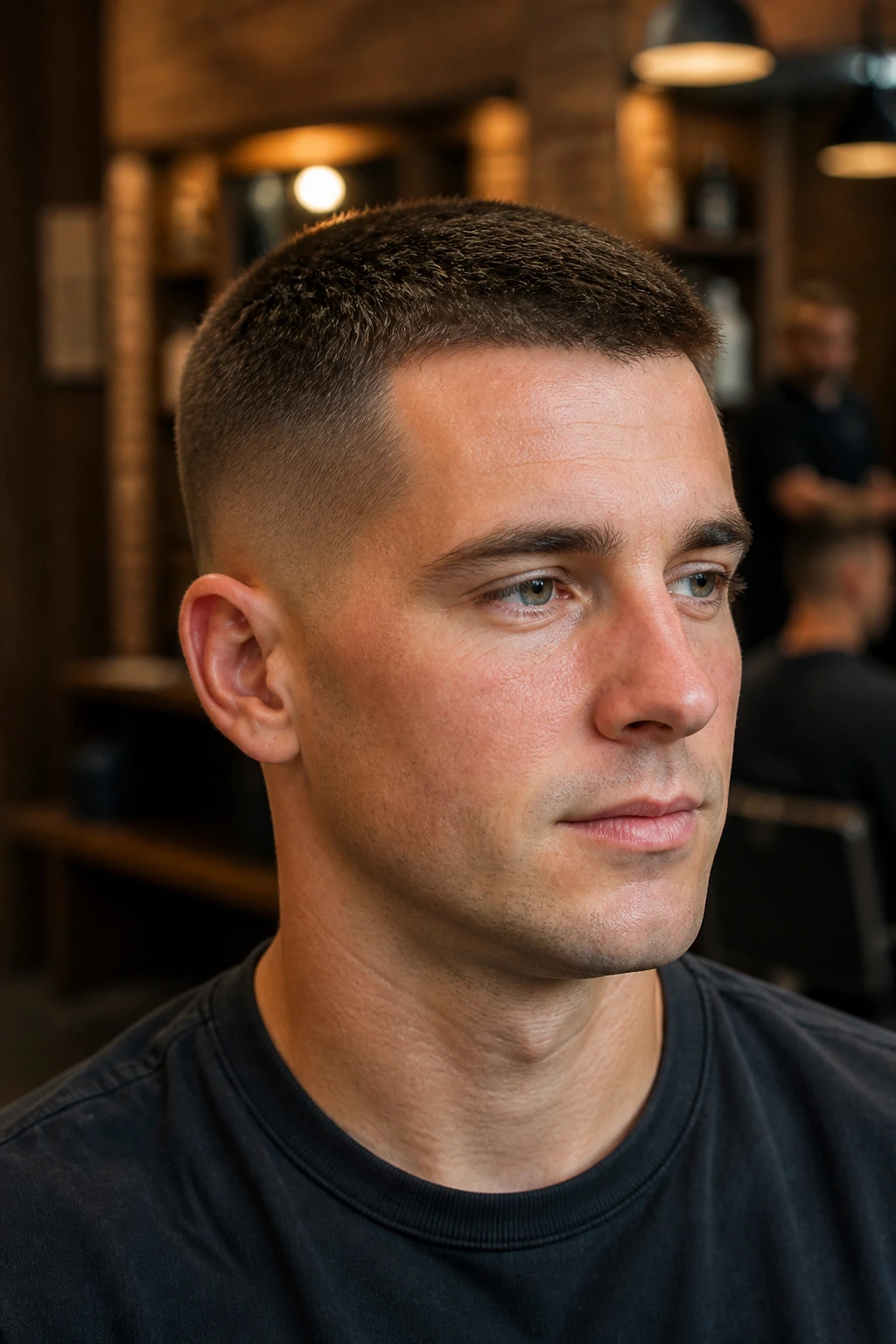
The crew cut sits in the sweet spot between shaved and styled. It’s short enough to stay easy, but it still leaves a little length on top, which gives your barber room to shape the crown instead of flattening it.
Usually, the top stays around 1 to 2 inches, with the sides tapered down tighter. That small bit of height up top helps balance the face, especially if you have strong jawlines or a head shape that looks better with a little structure. It also grows out in a forgiving way, which is one reason so many men end up wearing some version of it without really planning to.
A crew cut is a smart choice for straight or slightly wavy hair. If your hair tends to stick up in the wrong places, ask for more texture on top and less blunt cutting. Use a pea-sized amount of matte cream only when you want control. Most days, a towel dry and a comb with your fingers is enough.
3. Ivy League
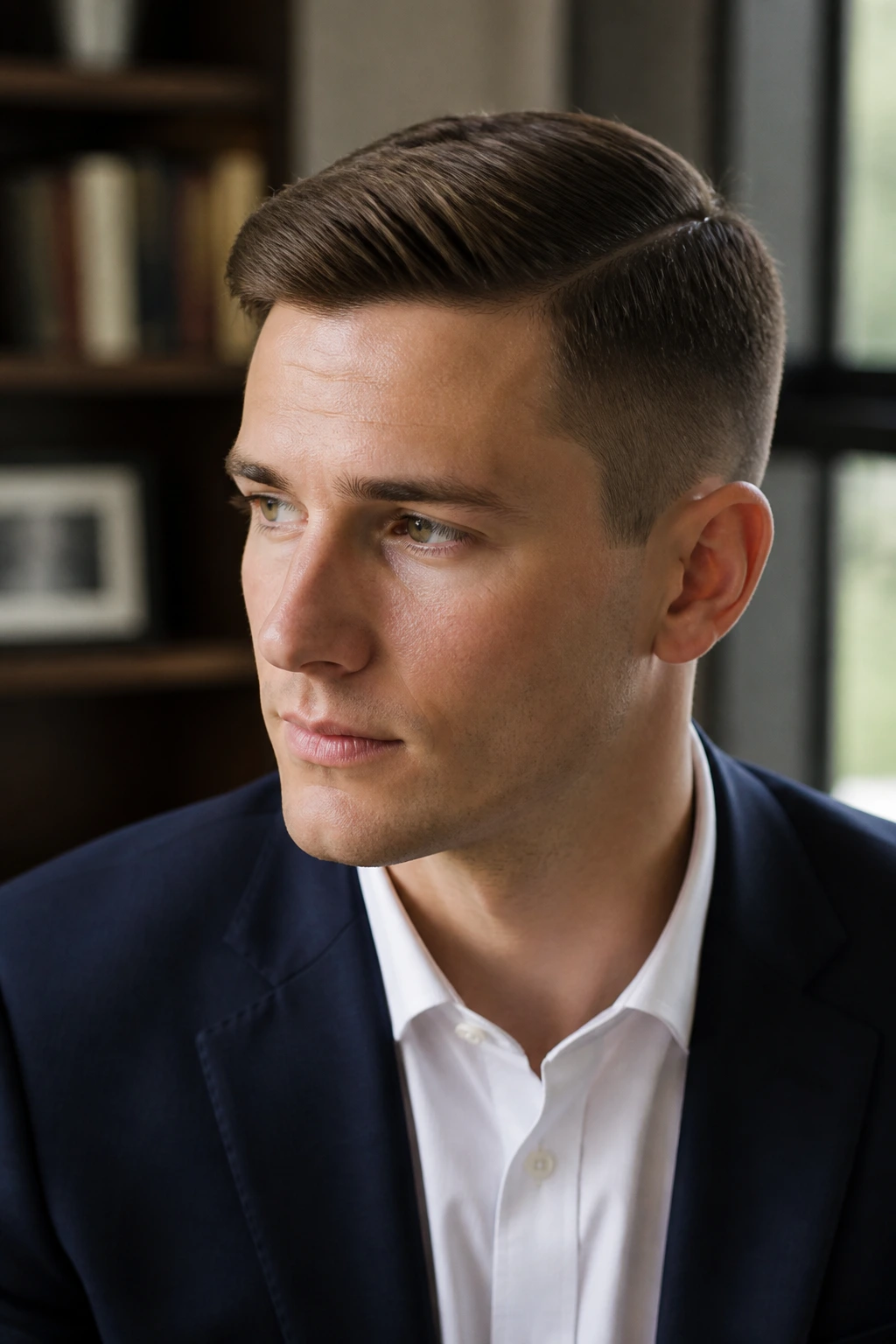
Want something neat without looking stiff? The ivy league does that job better than people give it credit for. It’s basically a longer crew cut with a side part and enough top length to brush into place.
The charm is in the balance. You get a polished shape, but it never feels glued down. Ask your barber for 2 to 3 inches on top, shorter sides, and a taper that doesn’t climb too high. If your hair is straight or has a gentle wave, this cut falls into place with very little effort. If your hair is coarse, it still works, but you’ll need a bit more product to keep the part visible.
Good Fit For
- Men who want a professional look without a heavy pomade finish.
- Hair that lies naturally to one side.
- Faces that benefit from a little extra height on top.
This is one of those cuts that looks better when it’s not trying too hard. A soft side part, a light cream, and a tidy neckline are enough. No drama. No shine.
4. French Crop
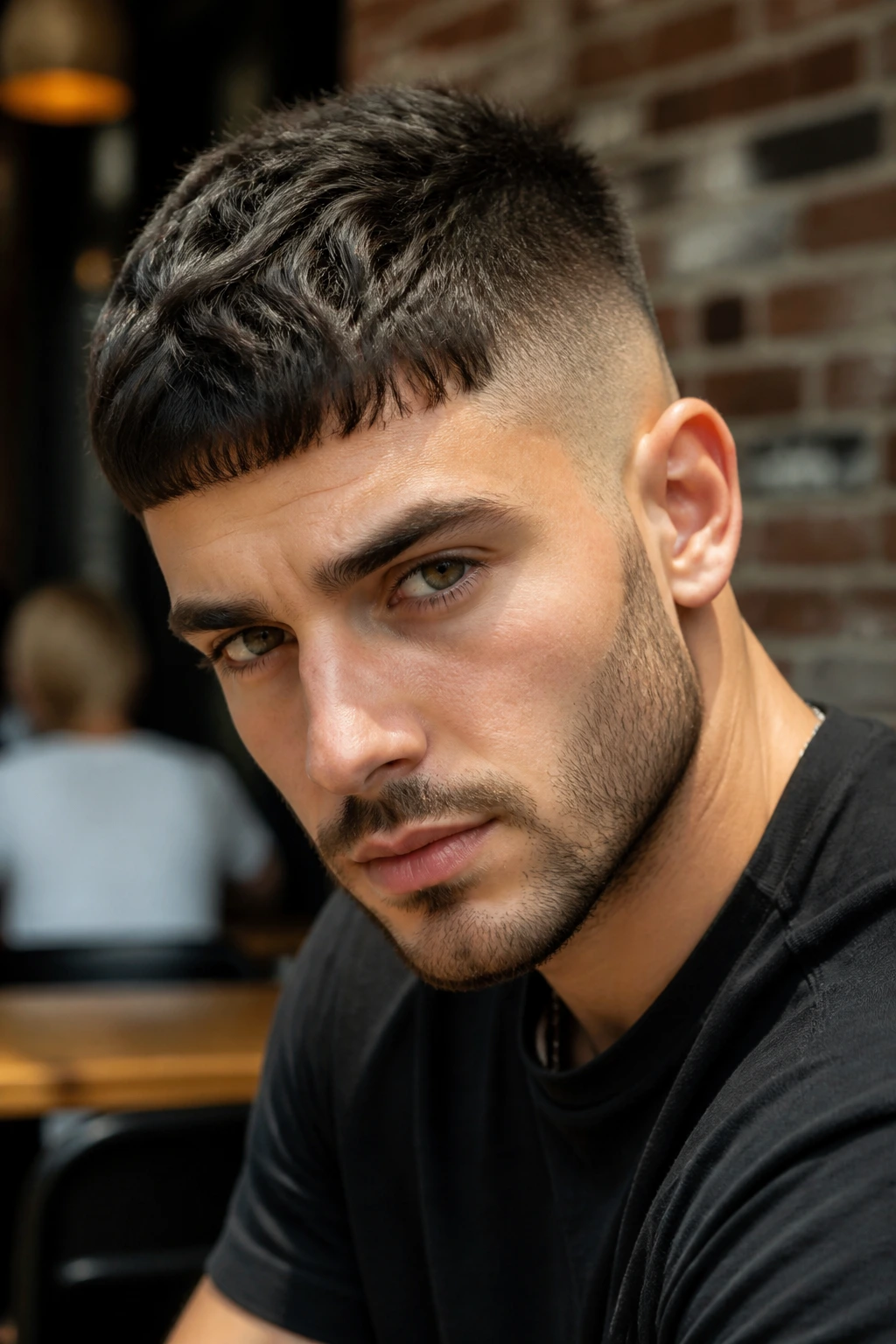
The fringe does the heavy lifting here. A French crop keeps the sides short and the top textured, then pushes the front forward into a blunt or slightly uneven fringe. It’s one of the easiest ways to make short hair feel current without making it fussy.
This cut suits thick hair especially well because the crop removes weight from the top while the fringe gives the haircut shape. It also helps if your forehead is on the longer side or your hairline sits a little higher than you’d like. The front falls forward on purpose, which means you are styling the haircut around the face instead of fighting it.
What to Ask Your Barber
- Keep the top around 1.5 to 3 inches.
- Use point-cut texture so the fringe doesn’t look like a hard shelf.
- Keep the sides tight, but not so high that the cut turns boxy.
- Ask for a soft taper if you want it to grow out neatly.
A matte paste works better than anything shiny here. A little grit helps the crop sit forward instead of sliding flat.
5. Caesar Cut
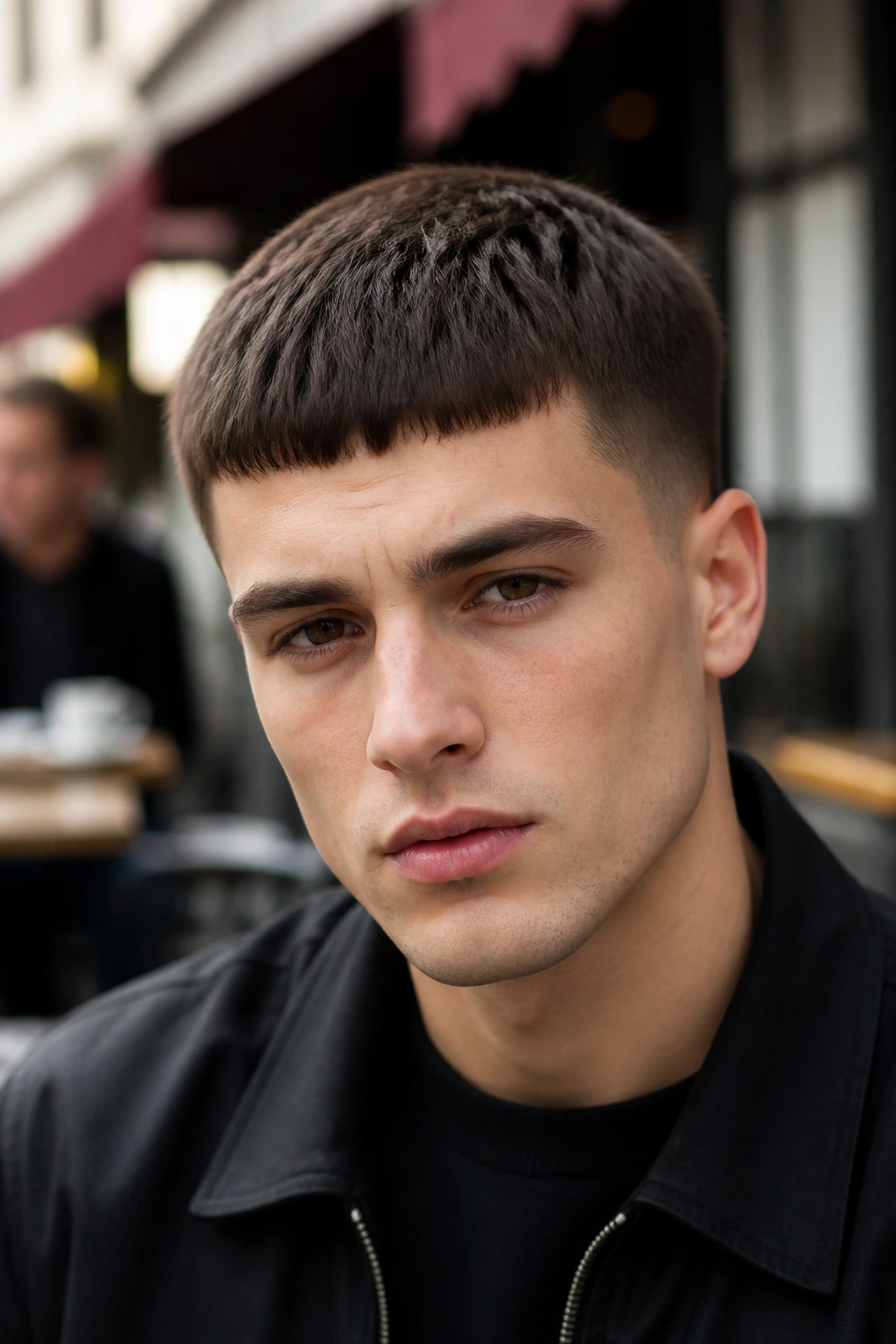
A Caesar cut can be a quiet fix for a tricky hairline. It’s short, even, and built around a small, forward fringe that sits across the forehead without looking heavy. The shape has been around forever because it does a useful thing: it keeps the front deliberate.
Compared with the French crop, the Caesar is usually shorter and more uniform. The fringe is straighter, the top is tighter, and the whole cut has a flatter profile. That makes it a smart option for men with receding temples or straight hair that tends to separate into awkward pieces. It doesn’t try to create volume where there isn’t any. It just gives the hair a cleaner outline.
A good Caesar should not feel stiff. The best versions still have a little texture on top so the fringe doesn’t sit like a ruler across the forehead. If your hair grows forward naturally, this cut is easy. If it grows in a swirl, the barber may need to adapt the fringe a bit. And that’s fine. Hair should work with the head, not against it.
6. Textured Crop
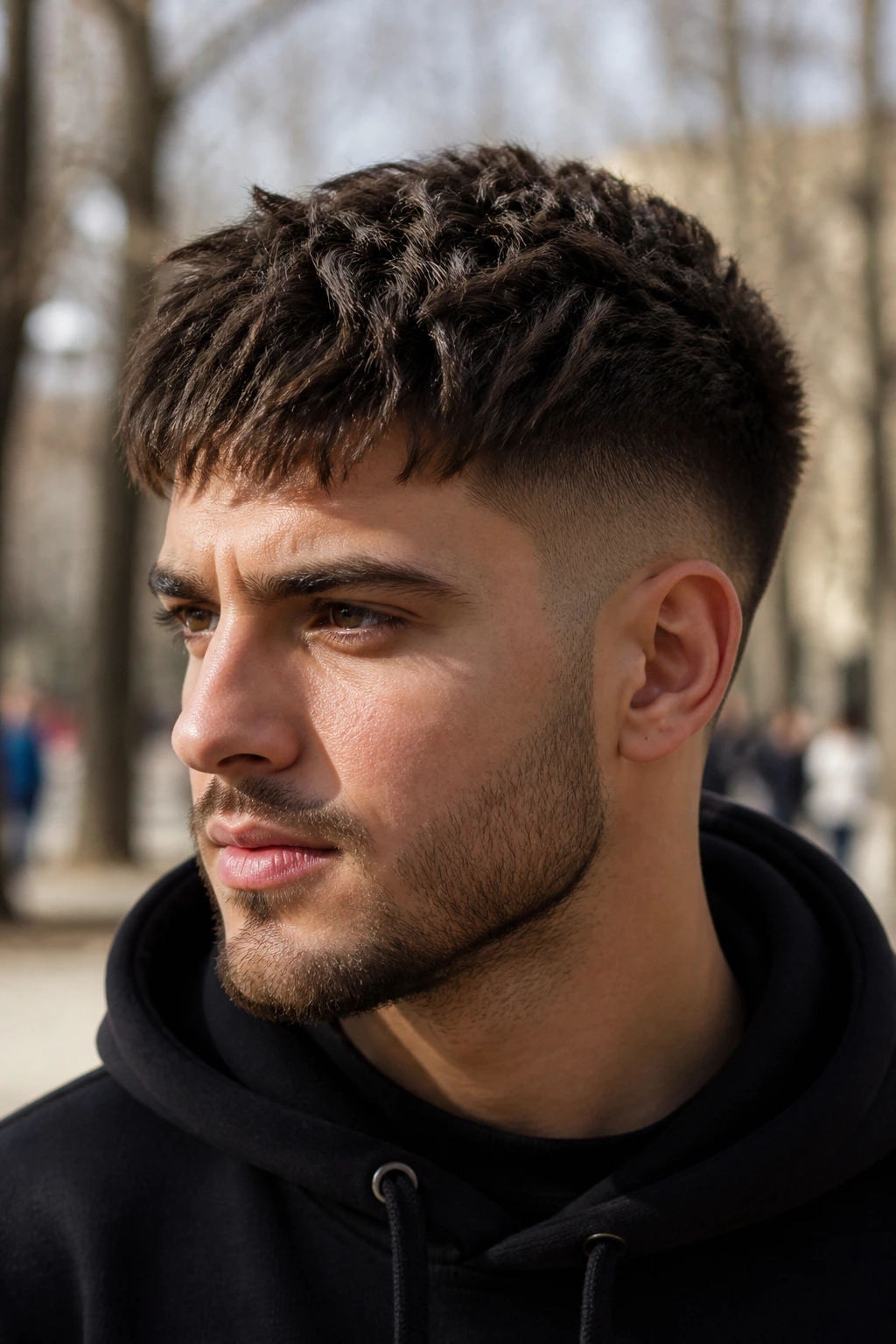
Thick hair finally gets a job with the textured crop. This cut takes bulk off the sides and breaks the top into choppy pieces, so the hair moves instead of swelling into one heavy shape. It looks casual, but it is not random. The texture is doing a lot of the work.
Why It Stands Out
The textured crop is one of the best short cuts for men who hate spending time on their hair. It looks better when it’s a little messy, which takes the pressure off. A barber usually cuts it with scissors or point-cutting shears to create edges that aren’t all the same length, then keeps the sides tighter so the top has room to breathe.
A quick spray of sea salt spray on damp hair gives it grip. After that, a small bit of matte clay can shape the front and stop the top from collapsing. If you use too much product, the whole cut loses its best feature, which is movement. Keep it light.
- Great for dense or wavy hair.
- Works well with a low fade or taper.
- Looks best when the top has uneven, choppy texture.
7. Side Part
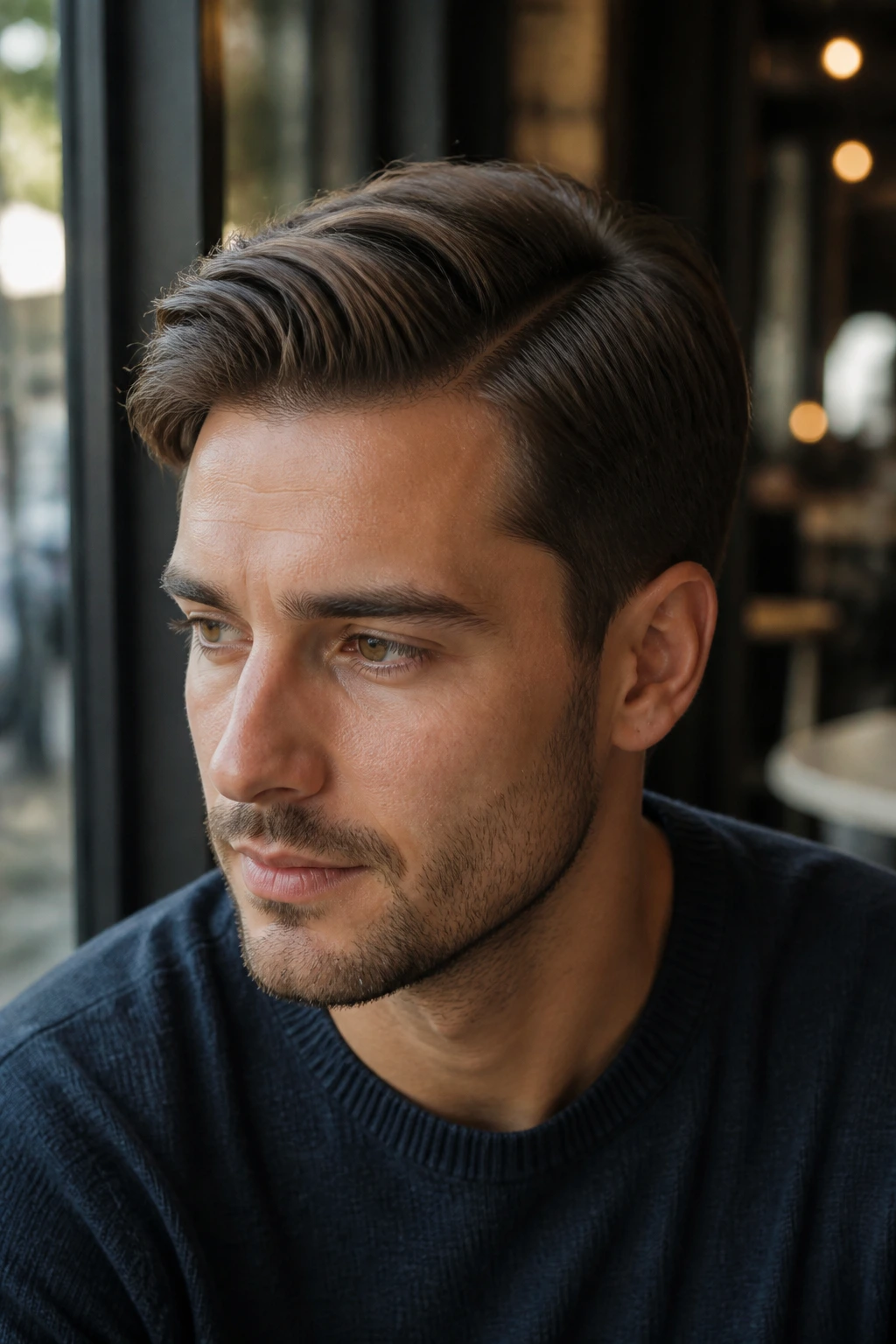
Side parts look simple until the part itself is wrong. Then the whole haircut starts looking forced. A good side part follows the natural direction of your hair, not the line you wish it grew in.
This is still one of the most useful men’s hairstyles because it can go clean or casual. Keep the part soft and it feels relaxed. Add a sharper taper and a firmer comb-over and it turns more formal. The trick is not to overbuild it. You do not need a slick, shellacked finish unless that’s your thing.
How to Make It Modern
Use a light cream or low-shine pomade, then comb the top over once and stop. If your hair has some wave, let a bit of it show. That keeps the cut from looking stiff. A hard part can look sharp, but it also grows out faster and asks for more upkeep.
This cut works especially well on men with medium-density hair and a defined side pattern. If your cowlick keeps fighting the part, listen to it. Fighting your crown every morning is a terrible hobby.
8. Slick Back
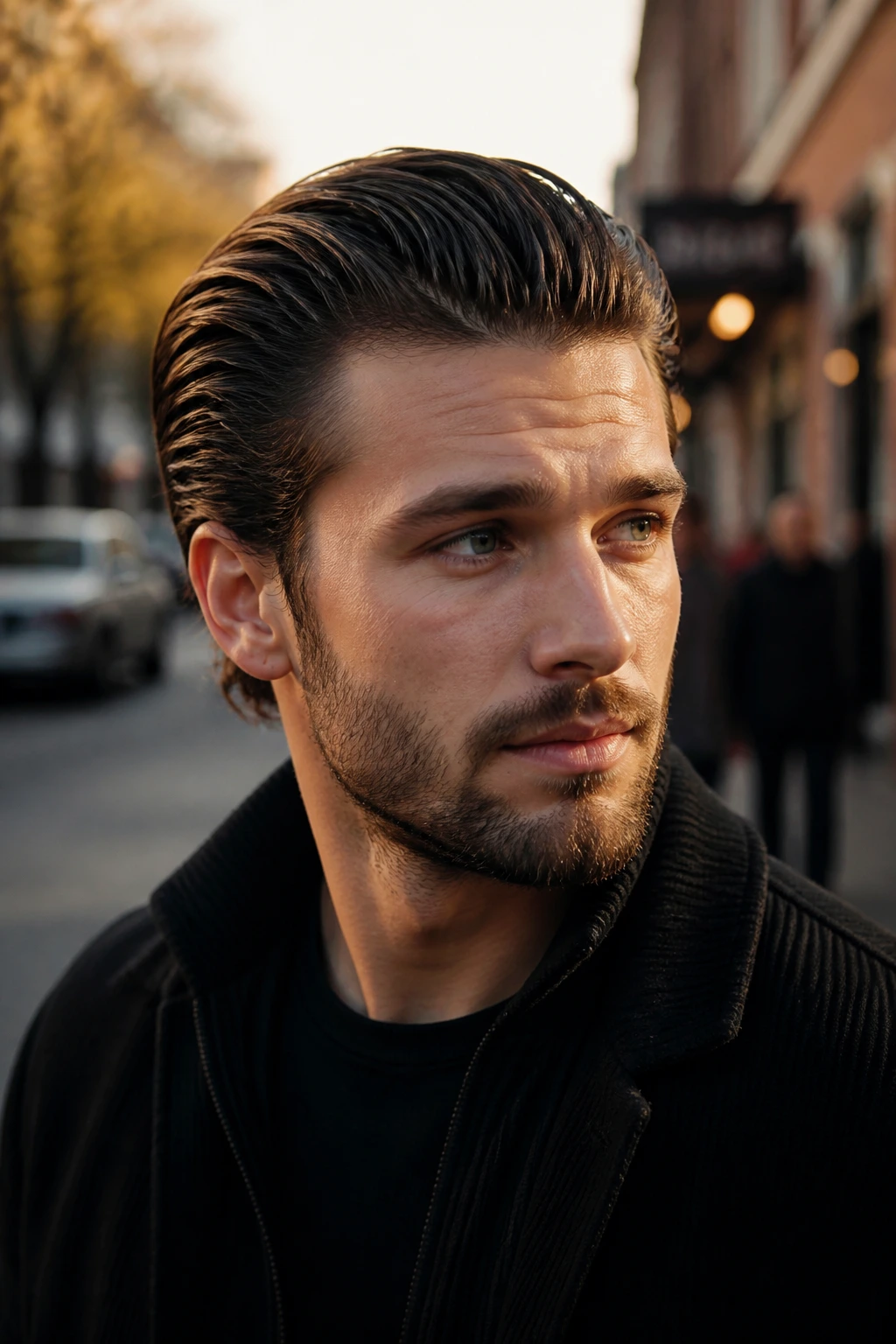
Slicked-back hair has a reputation, and some of it is deserved. Done badly, it looks greasy or overworked. Done well, it’s one of the cleanest ways to wear medium-length hair because it pulls the hair away from the face and shows off the shape of the head.
The best slick backs usually start with enough length on top to comb back without strain. Straight or dense hair handles this easiest. If your hair is fine, go for a softer brushed-back version rather than the high-shine, tightly controlled look. A matte finish usually feels more modern and less helmet-like.
This cut also changes a lot depending on the sides. A taper makes it feel smart and neat. An undercut makes it sharper and more dramatic. I prefer the softer version for everyday wear because it grows out better and doesn’t demand a full restyle if the wind hits it wrong.
A comb, a blow dryer, and a little product go a long way here. Too much product is the fast road to disappointment.
9. Quiff
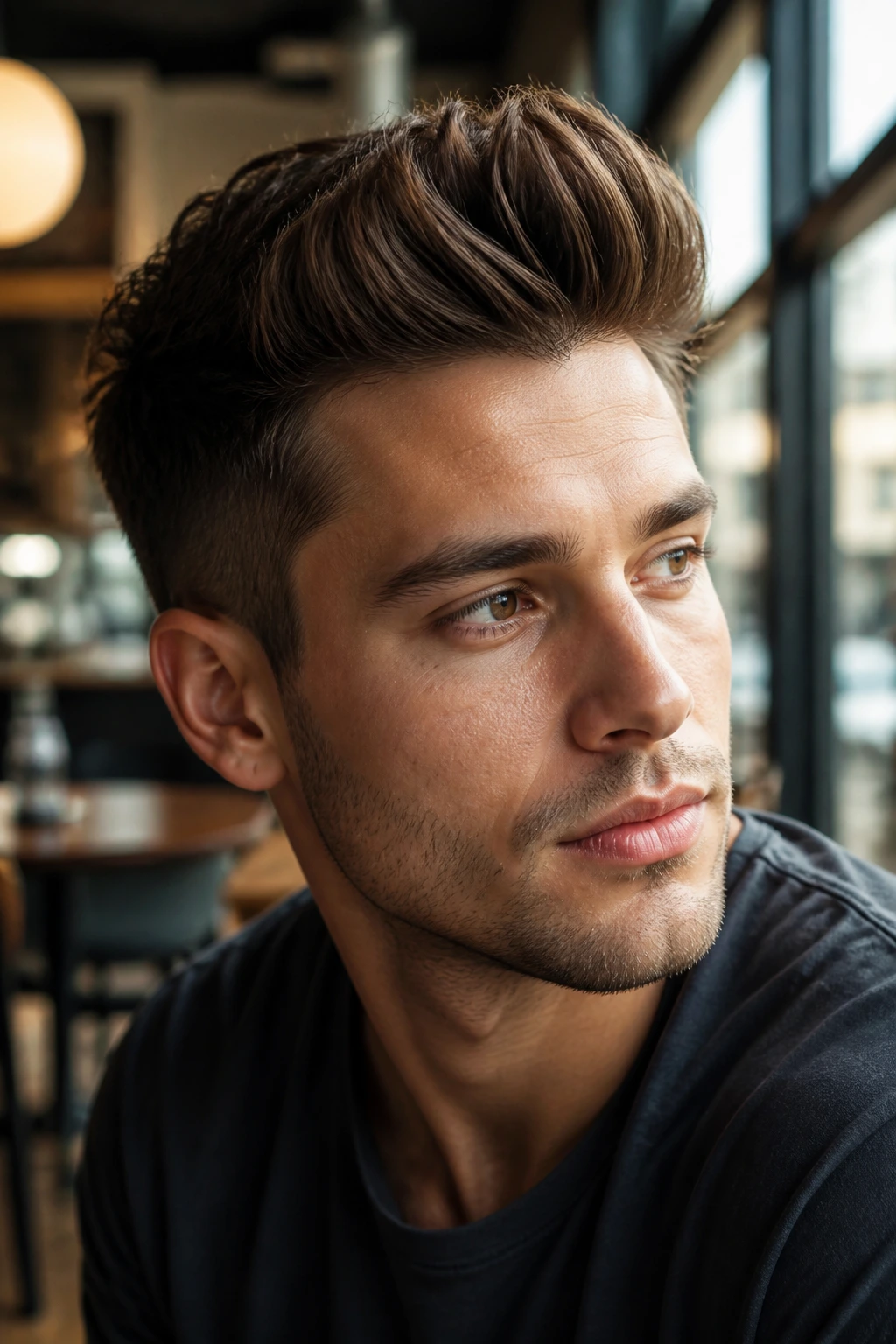
A good quiff starts before the product does. If you want lift in the front, the haircut itself has to leave enough length and shape for the hair to stand up without collapsing into a lump.
The quiff sits somewhere between casual and styled. It gives you height at the front, but it doesn’t need the stiff shell of a pompadour. Ask for short sides, more length at the front hairline, and texture through the top so the style can move. That extra texture matters. Without it, the quiff tends to look puffy instead of controlled.
How to Build the Lift
- Towel-dry the hair until it’s damp, not dripping.
- Blow-dry the front upward and slightly back with your fingers or a vent brush.
- Finish with a matte paste or clay about the size of a pea.
- Push the front into shape, then stop touching it.
The quiff is good for men with medium-thick hair who want height without too much shine. Fine hair can still wear it, but the shape needs more careful drying. If you skip the blow dryer, you lose most of the volume.
10. Pompadour
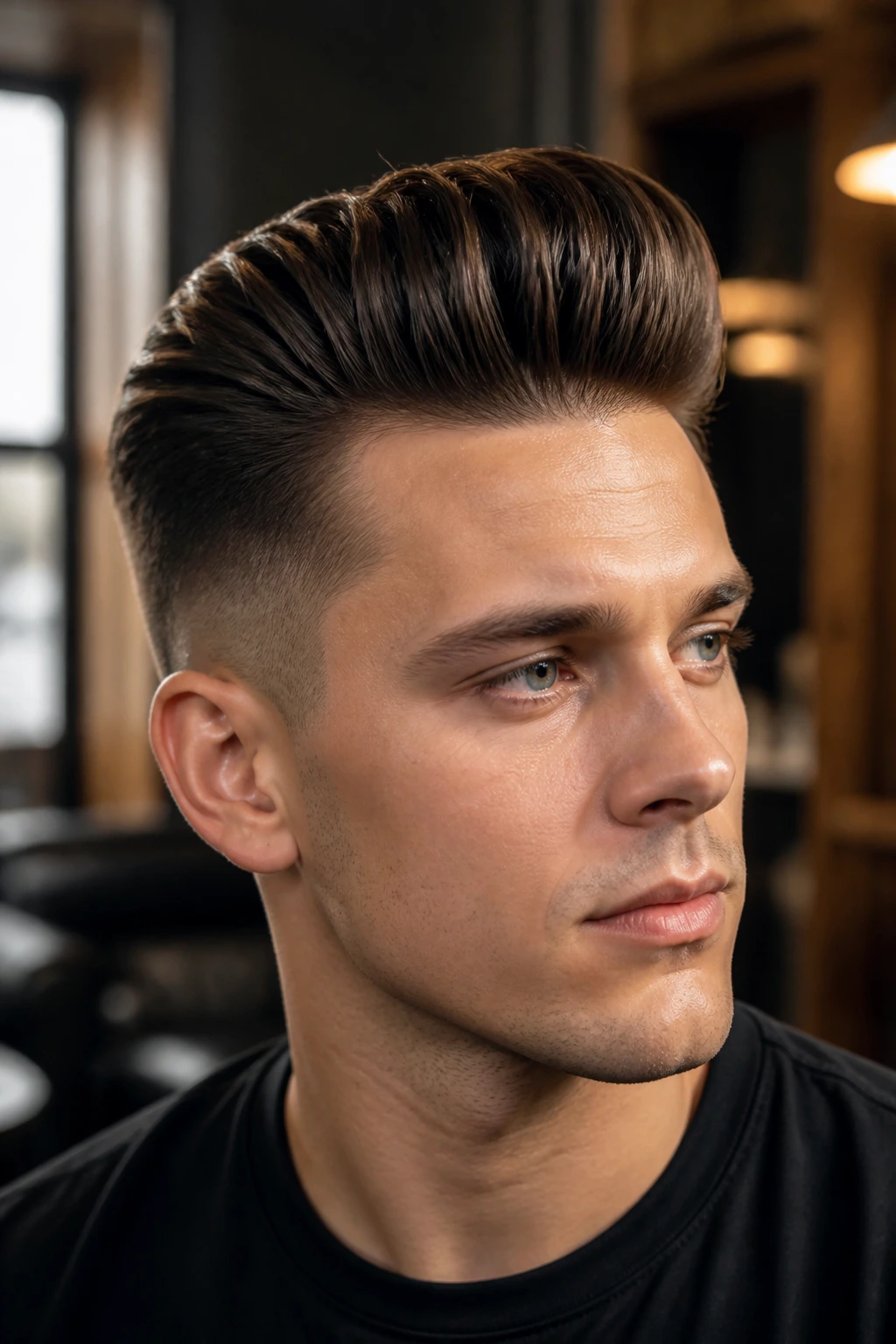
Pompadour height is a game of balance. Too little length and it falls flat. Too much product and it looks like it’s trying to win a contest. The best pompadours sit in the middle, with volume at the front and tight sides that make the top feel even bigger.
This cut suits men who want a strong shape and don’t mind spending a few minutes on it. Thick, straight hair takes to it well. So does hair with a little wave, as long as the cut is shaped carefully. Fine hair can wear a softer pompadour, but the full classic version usually needs more density than people expect.
What to Watch For
- Keep the sides shorter than the top by a clear margin.
- Use a blow dryer to lift the front before product goes in.
- Don’t load the hair with heavy grease; it drags the front down.
- Ask for enough length at the front to brush upward and back.
A pompadour has presence. That’s the point. But it works best when the edges are clean and the top still looks touchable, not frozen.
11. Low Taper Fade
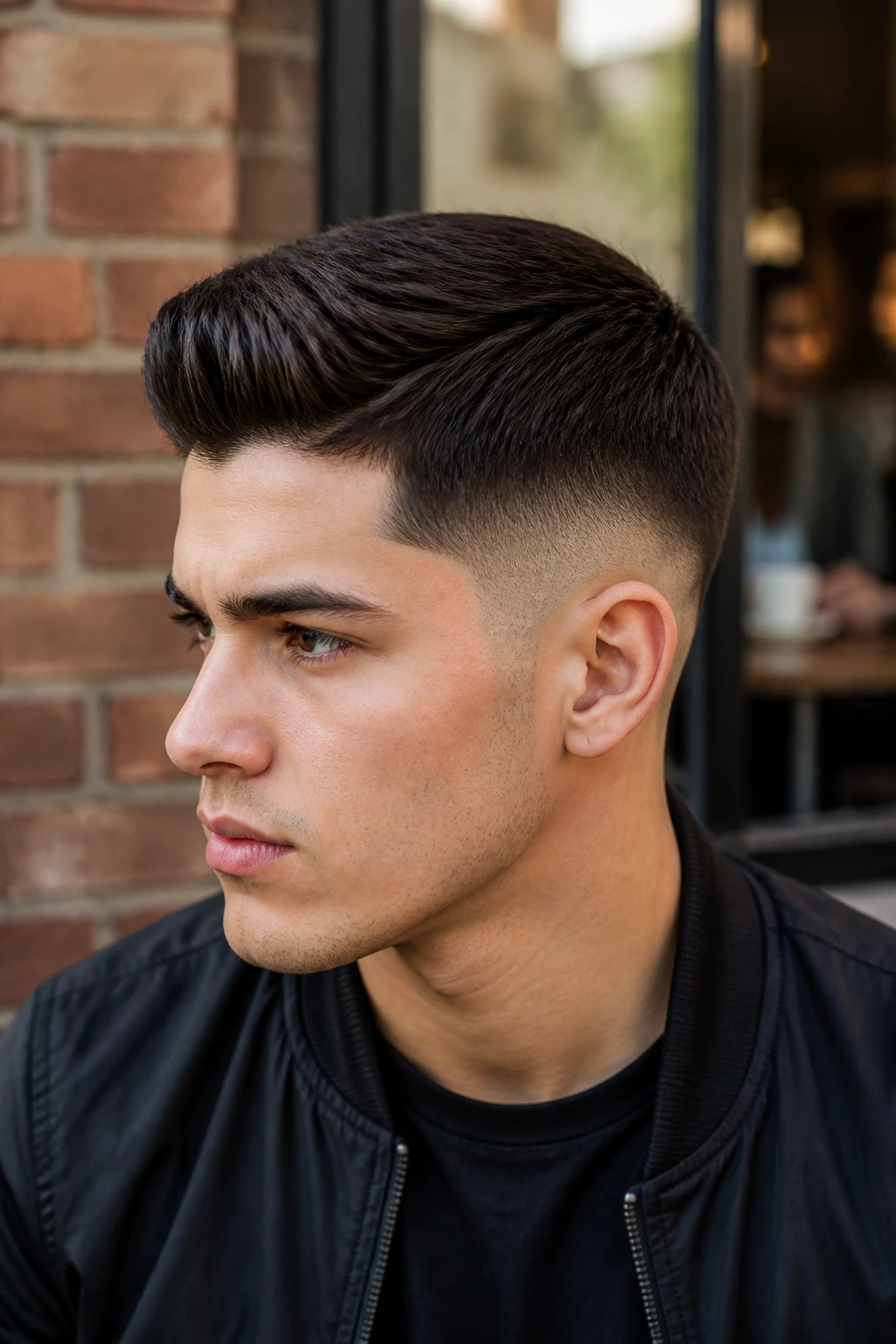
The taper fade is the haircut equivalent of a clean frame. It tightens the edges around the sideburns, ears, and neckline without taking the whole cut down to skin. That gives you a neat finish while keeping the rest of the haircut flexible.
I like low tapers because they play well with almost everything. You can pair one with a crop, a side part, a curly top, or even longer hair. The fade stays low and subtle, so the haircut looks finished instead of chopped up. It also grows out better than a harsher fade, which matters if you do not want a barber visit every couple of weeks.
Best Uses
- Cleaning up a crew cut or French crop.
- Softening the edges of a curly top.
- Making a medium-length style look more intentional.
If you want the fade to blend into a beard, tell your barber before the first clipper passes. That small detail changes the whole shape.
12. Skin Fade
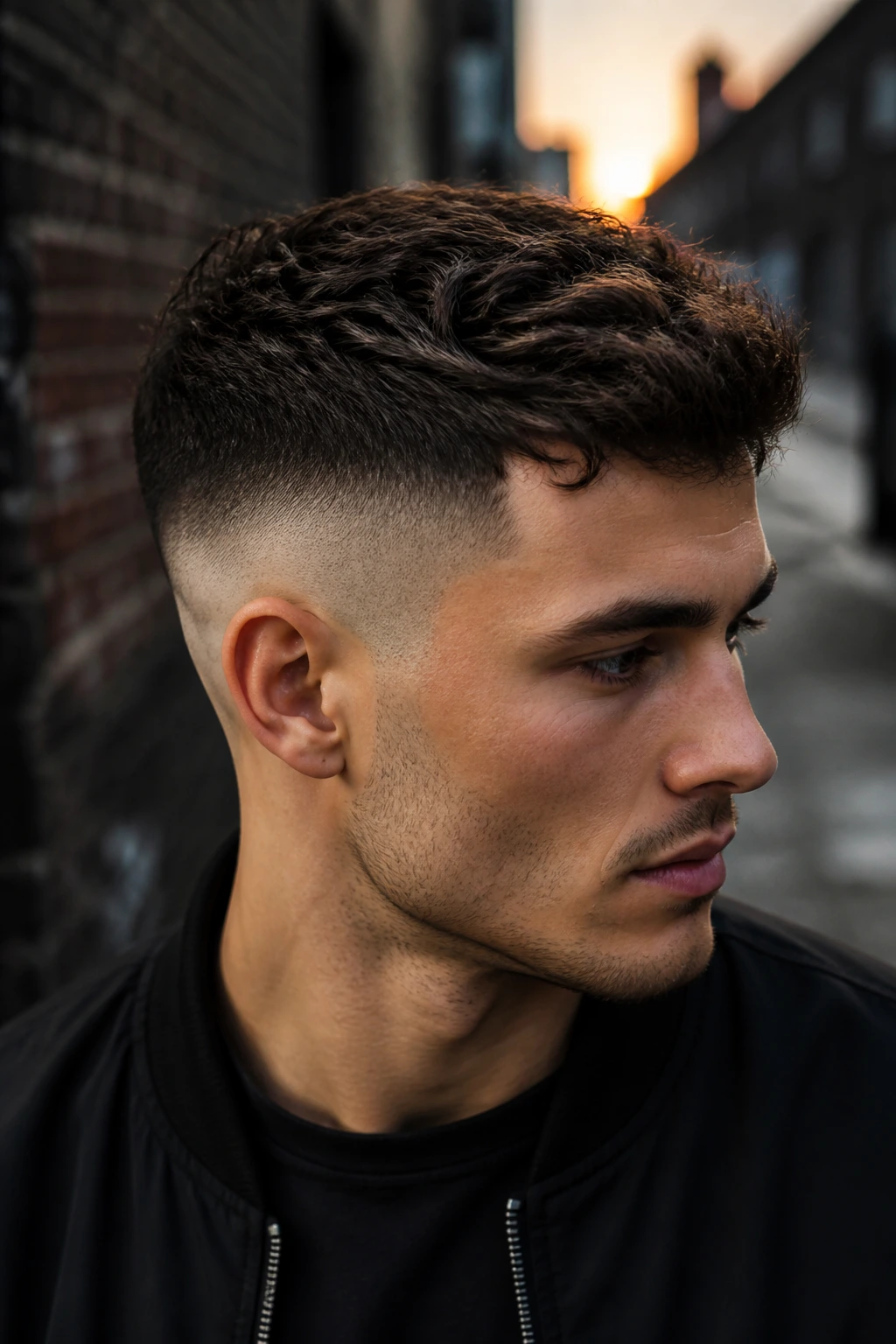
Skin fades are blunt instruments. That sounds harsh, but it’s accurate. They take the sides all the way down to skin and then blend upward, which creates a sharp contrast that can make the top look fuller and cleaner at the same time.
The cut works with a lot of different tops: curls, crops, pomps, even a simple textured style. What matters is the contrast. That contrast is the whole show. It can make a haircut feel crisp and modern, but it also grows out fast and starts to lose its edge once the shadow on the sides comes back.
A skin fade looks best when the blend is smooth and the line around the ears is neat. If the fade is patchy, you’ll see it immediately. Not all barbers blend skin well, so this is one cut where a steady hand really matters. If you like the sharp look, expect touch-ups fairly often. It’s a tradeoff, and a fair one.
13. Undercut
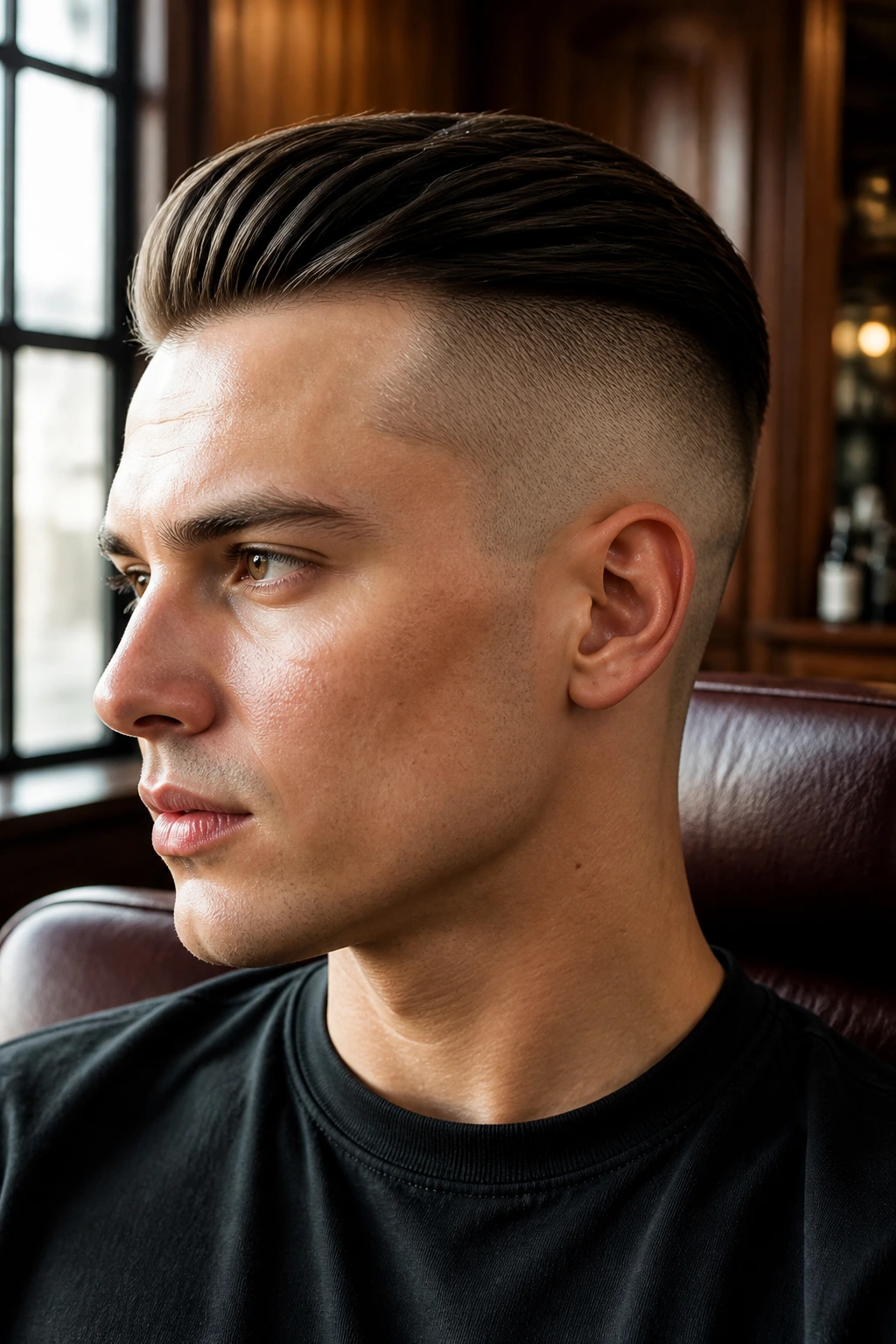
Undercuts are not subtle. The sides are cut short or disconnected, while the top stays much longer, creating a hard break between the two zones. That strong contrast is exactly why some men love it and others never warm to it.
The undercut works best when the top has enough weight to sit over the sides with intention. Straight and wavy hair handle it easily. Thick hair can look great too, though it sometimes needs more layering so it doesn’t balloon. If your face is very round, keep some height on top so the cut doesn’t widen the head even more.
Different Ways to Wear It
- Slicked back for a sharper, dressier look.
- Swept to the side if you want a softer finish.
- Loose and textured for a more casual shape.
Ask for a true disconnection if you want the classic undercut effect. If you ask for a fade instead, you’re in a different haircut entirely, which is fine, but it changes the result.
14. Bro Flow
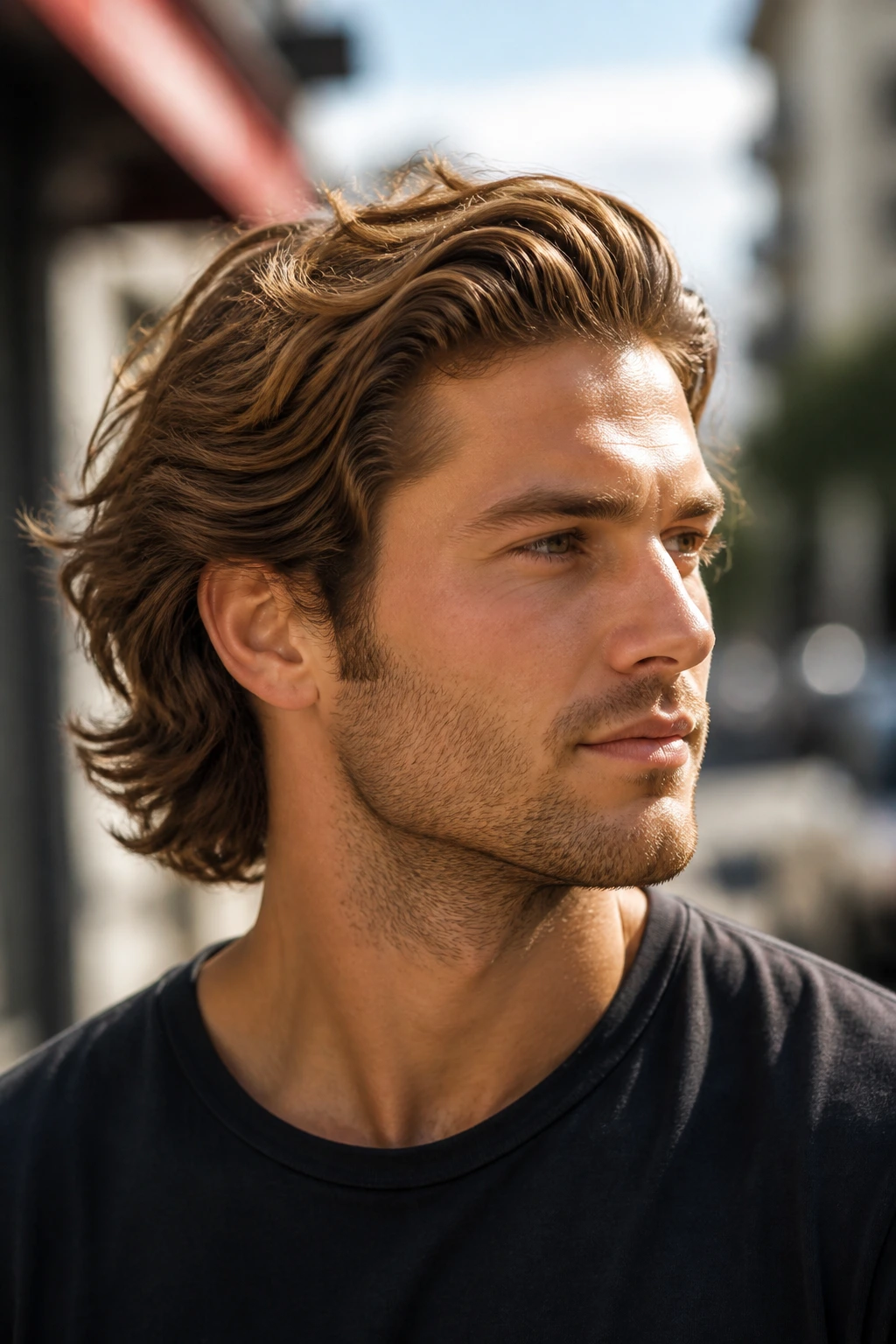
Bro flow only looks accidental when it has been shaped well. The whole point is medium-length hair that moves back naturally, usually brushing away from the face and falling with a little bend. It should look relaxed, not neglected.
This cut suits men who are willing to grow their hair out past the awkward stage and keep it trimmed enough to hold shape. Wavy hair does especially well here because the natural bend gives the style life. Straight hair can still wear it, but it needs more attention to avoid hanging flat. The secret is in the ends. If the ends are too blunt or too heavy, the shape loses flow and starts looking like a mop.
What Helps
- A trim every 6 to 8 weeks keeps the ends from getting ragged.
- Leave-in conditioner helps longer hair stay soft and less puffy.
- A little sea salt spray gives movement without making it stiff.
I’ve always liked bro flow on men who want hair they can tuck behind the ears when needed and still wear down the rest of the time. It has range.
15. Curtains
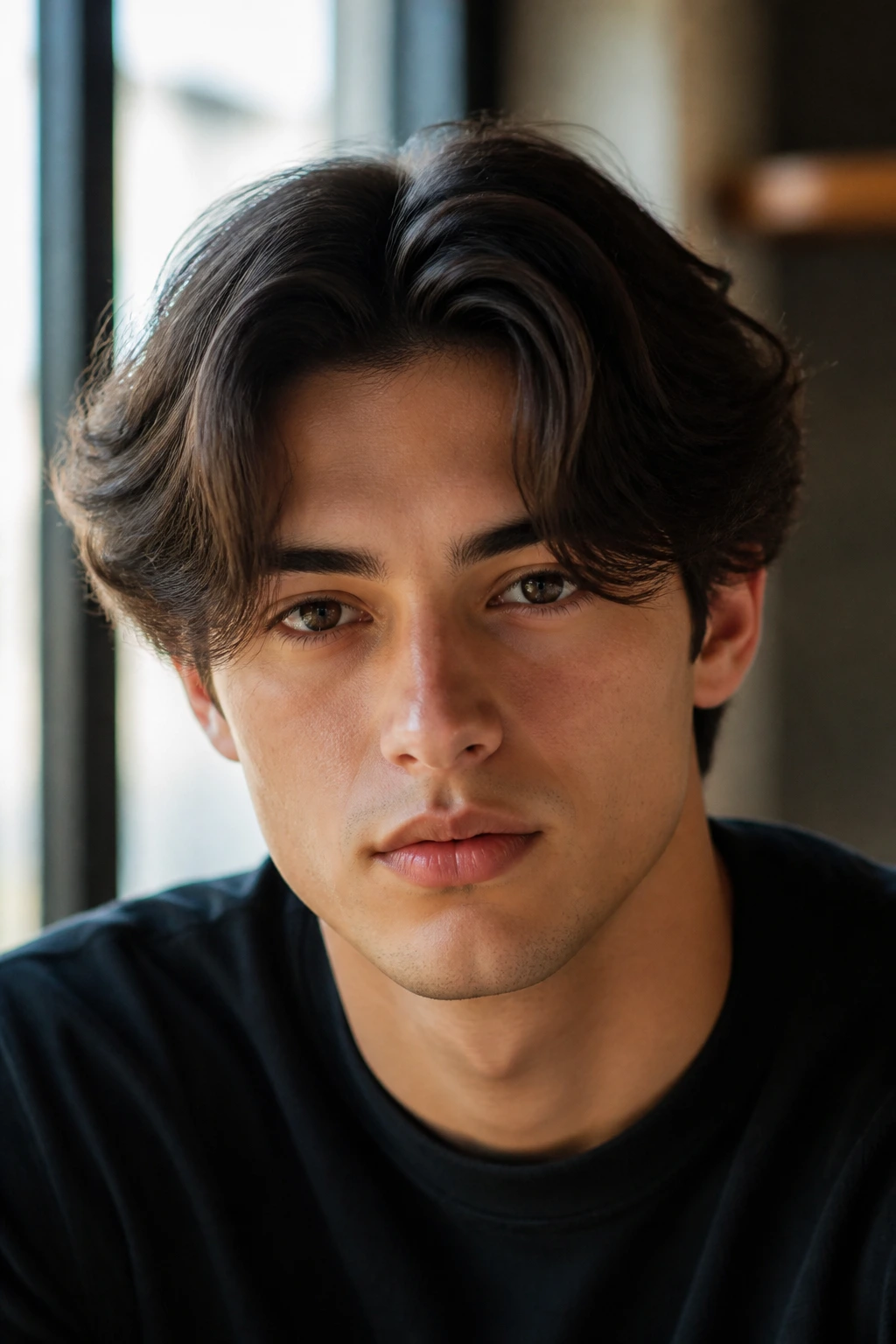
Curtains are about face framing, not nostalgia. The style parts near the middle, or just off-center, and lets the hair fall to both sides of the forehead. When it’s cut well, it can make straight or wavy hair look lighter and more balanced.
The length matters more than people think. Too short, and the part won’t sit naturally. Too long, and it gets floppy. A good curtain cut usually has enough top and fringe length to split cleanly while still leaving movement around the cheeks. If the hair has a cowlick at the front, the barber may need to adjust the part slightly so the style doesn’t fight itself every morning.
Best For
- Wavy hair that already bends away from the face.
- Men who want a softer, more relaxed shape.
- Faces that benefit from some width near the temples.
Use a light cream or a touch of mousse if you want the hair to fall with shape. Heavy product kills the movement fast, and curtains need movement to look right.
16. Brush Up
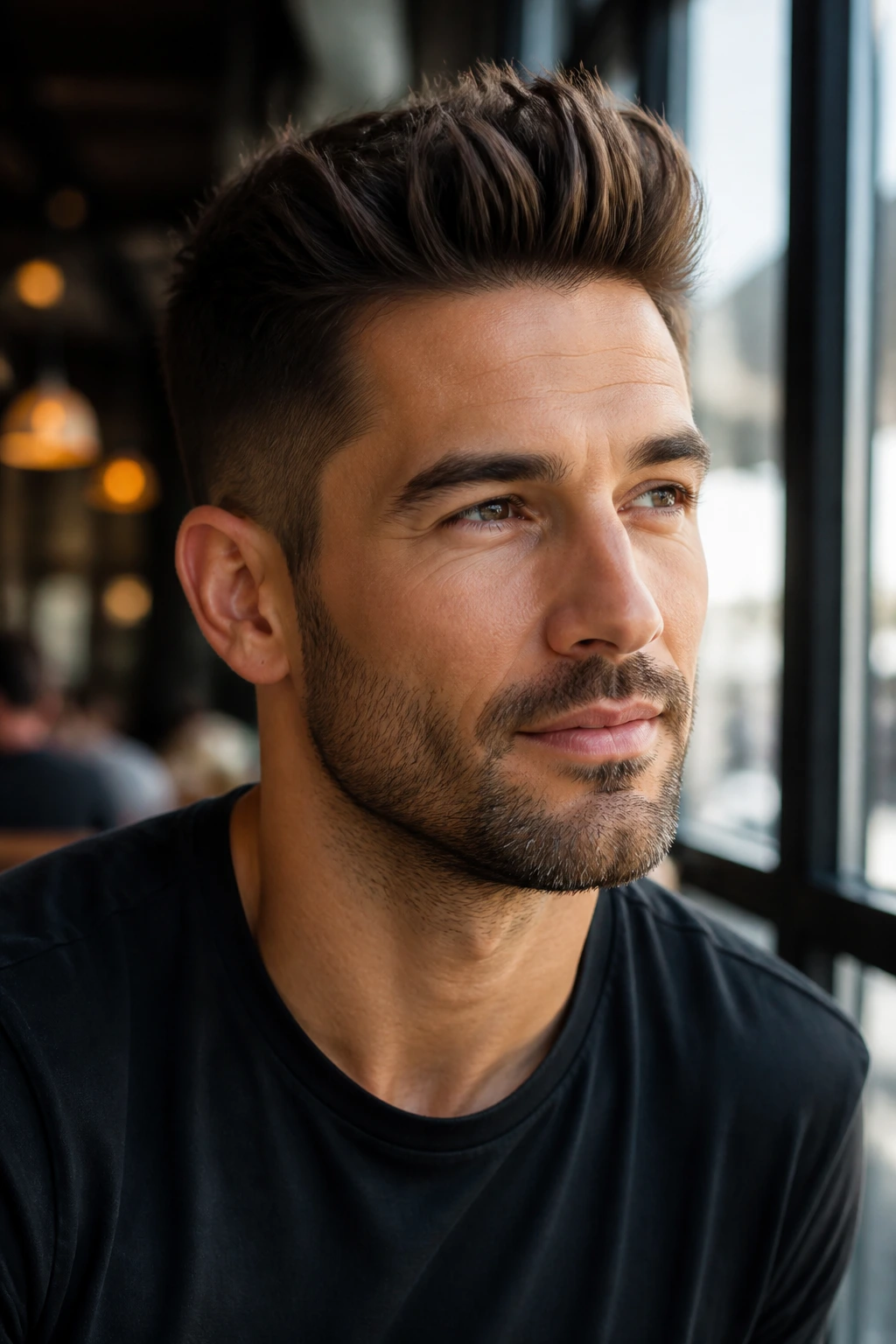
Brush-up hair likes lift, not shine. It’s one of the better choices for men who want volume in the front but don’t want the polished look of a pompadour. The top is cut with texture, then pushed upward and slightly back so it feels energetic instead of stiff.
This cut works nicely on thick hair because thick hair holds the shape without sagging. If your hair is straight, a blow dryer will help it stand. If it’s wavy, the shape can get even better with a matte product and a quick finger rake through the front. The sides should stay tighter so the top has a clear job to do.
A brush-up sits in that useful middle ground between casual and styled. You can wear it to work. You can wear it on a night out. It does not demand perfection, which is a relief, because perfection looks weird on most heads anyway.
17. High and Tight
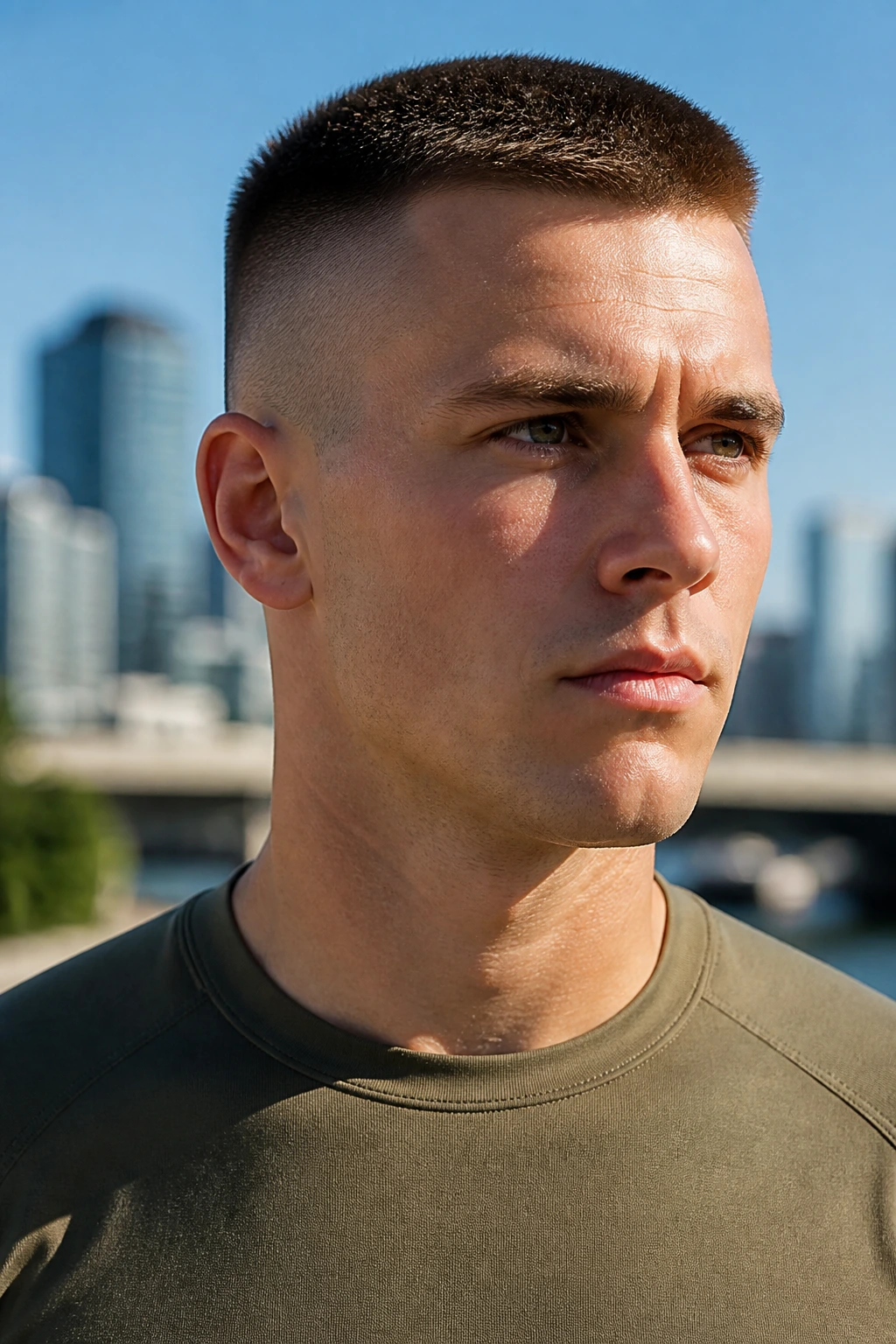
High and tight is all edges and almost no fuss. The sides are cut very short and climbed up high, while the top stays short enough to stay clean but long enough to show a little shape. It has military roots, and you can still feel that directness in the cut.
The style works especially well for men who want a cut that stays out of the way. Coarse hair and thick growth patterns often look tidy in a high and tight because the short sides prevent puffiness. It can also sharpen facial features by keeping the focus on the face instead of the hair. That said, it’s a firm look. If your head shape is very narrow or your forehead is prominent, ask your barber to soften the transition a touch.
This is not the haircut for men who want flexibility. It’s for men who want clarity.
18. Curly Fringe
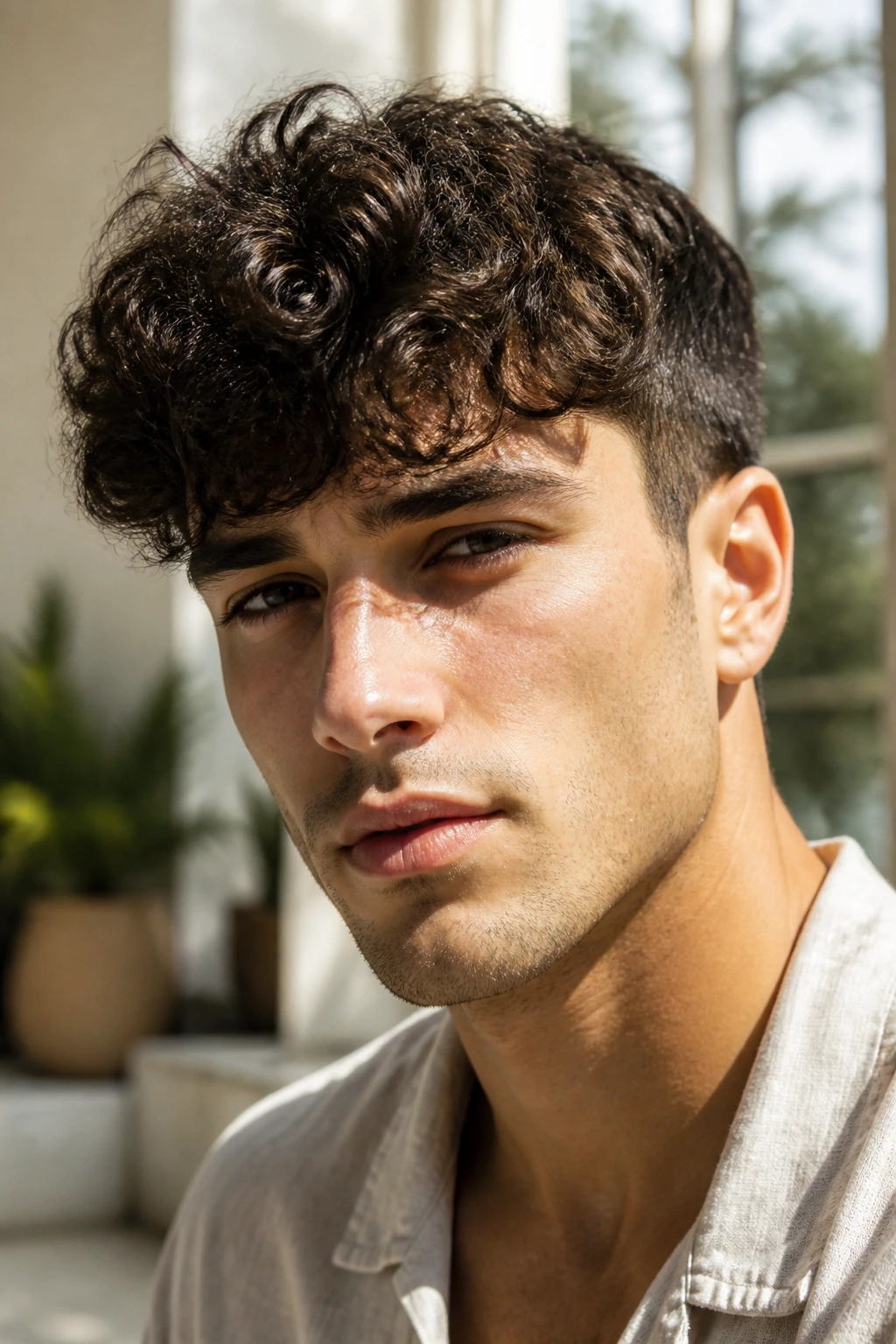
Curly fringe works best when the curls are left alone. That sounds obvious, but people ruin this cut all the time by trimming the front too short or trying to flatten the curl pattern into submission. The better approach is to keep enough length in front for the curls to sit forward and shape the forehead naturally.
What to Ask For
- Leave the fringe longer than you think you need.
- Shape the sides with a taper or fade so the curls stay the focus.
- Cut the curls dry if your barber knows how they spring up.
- Avoid heavy thinning at the front unless the hair is extremely dense.
Moisture matters here. Curl cream, leave-in conditioner, and a diffuser can make the difference between defined curls and a fuzzy halo. If your curls dry out, the fringe loses shape fast. This cut looks best when the curl pattern is respected instead of flattened. That’s the whole game.
19. Long Layers

Long hair on men lives or dies by the layers. Without them, the hair can build too much weight at the bottom and turn triangular. With them, the shape moves, the ends look cleaner, and the haircut has room to breathe.
Long layers work on straight, wavy, and thick hair, though the exact cut should match the texture. Straight hair usually needs more shaping around the face. Wavy hair benefits from layers that keep the bend from turning bulky. Thick hair often needs the most removal of weight so the ends don’t feel heavy. The key is not to “grow it out and hope.” That plan almost always ends in frustration.
A Few Practical Rules
- Get a trim every 8 to 10 weeks so the ends stay healthy.
- Use conditioner, or the hair will start feeling dry and rough.
- Ask for face-framing layers if you want the shape to move away from the cheeks.
Long layers reward patience, but they also reward discipline. Let them drift too long without shaping, and the haircut starts running the show instead of you.
20. Afro Taper
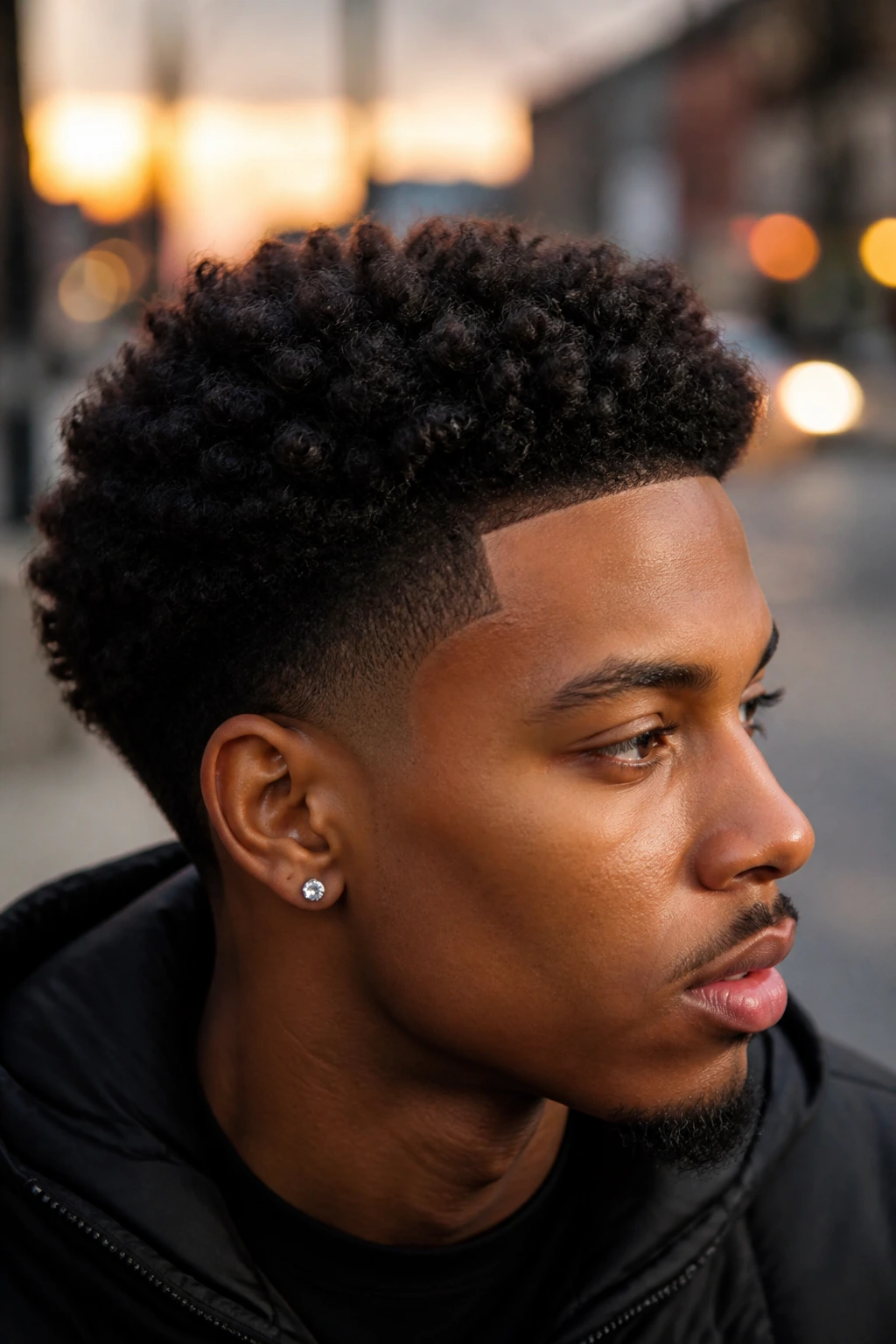
Afro taper is one of the cleanest shapes in men’s hair. It keeps the natural volume on top and tapers the sides, neckline, and edges so the whole haircut looks controlled without losing its texture. The shape matters more than brute length, and that’s what makes it so good.
This cut works because it respects the hair’s natural pattern. Coily hair looks best when it has space to expand on top but clean boundaries around the sides and back. A good taper keeps the silhouette neat while letting the texture stay full and rich. If the outline is sloppy, the whole style loses its shape fast.
How to Keep the Shape
- Moisturize regularly so the coils stay soft instead of dry and brittle.
- Use a sponge or pick only when needed; overworking the hair can break the pattern.
- Ask for a clean taper at the temples and neckline so the cut stays fresh longer.
This is one of the most handsome short-to-medium cuts when it’s done right. It’s balanced, clear, and full of character without looking overbuilt.
Final Thoughts
The best haircut is the one that fits your hair on a normal Tuesday morning, not just the one that looks sharp in a chair under good lighting. If you need five products and a wrestling match with a blow dryer, you probably want a different cut.
Texture matters. So does maintenance. A buzz cut can be smarter than a pompadour for one man, while another looks better with a fringe, a taper, or long layers that move a certain way. The cut should work with your hairline, your growth pattern, and how much effort you want to put in.
If you’re stuck between two options, choose the one that will still look good when it grows out a little. That’s usually the wiser haircut, and the one you’ll keep reaching for.
