



Round faces can wear short hair beautifully. The trick is shape.
A cut that falls straight across the cheeks tends to make the face look wider. A cut that cuts a diagonal through it does the opposite — the eye moves up, then down, then out of the widest part of the face. That is why asymmetry keeps showing up in salons, from tiny crops with one long fringe to sharp bobs that skim the jaw and keep going.
The sweet spot is never random. It’s a deliberate mismatch: one side clipped tighter, one side kept longer, a front panel that lands below the cheekbone, or a crown built high enough to add lift without piling width right where you don’t want it.
Some of these haircuts are polished. Some are rough around the edges in a good way. All 22 lean into angles, movement, and a little attitude — the stuff that keeps a short cut from sitting flat on a round face.
1. Undercut Pixie With Long Side Fringe
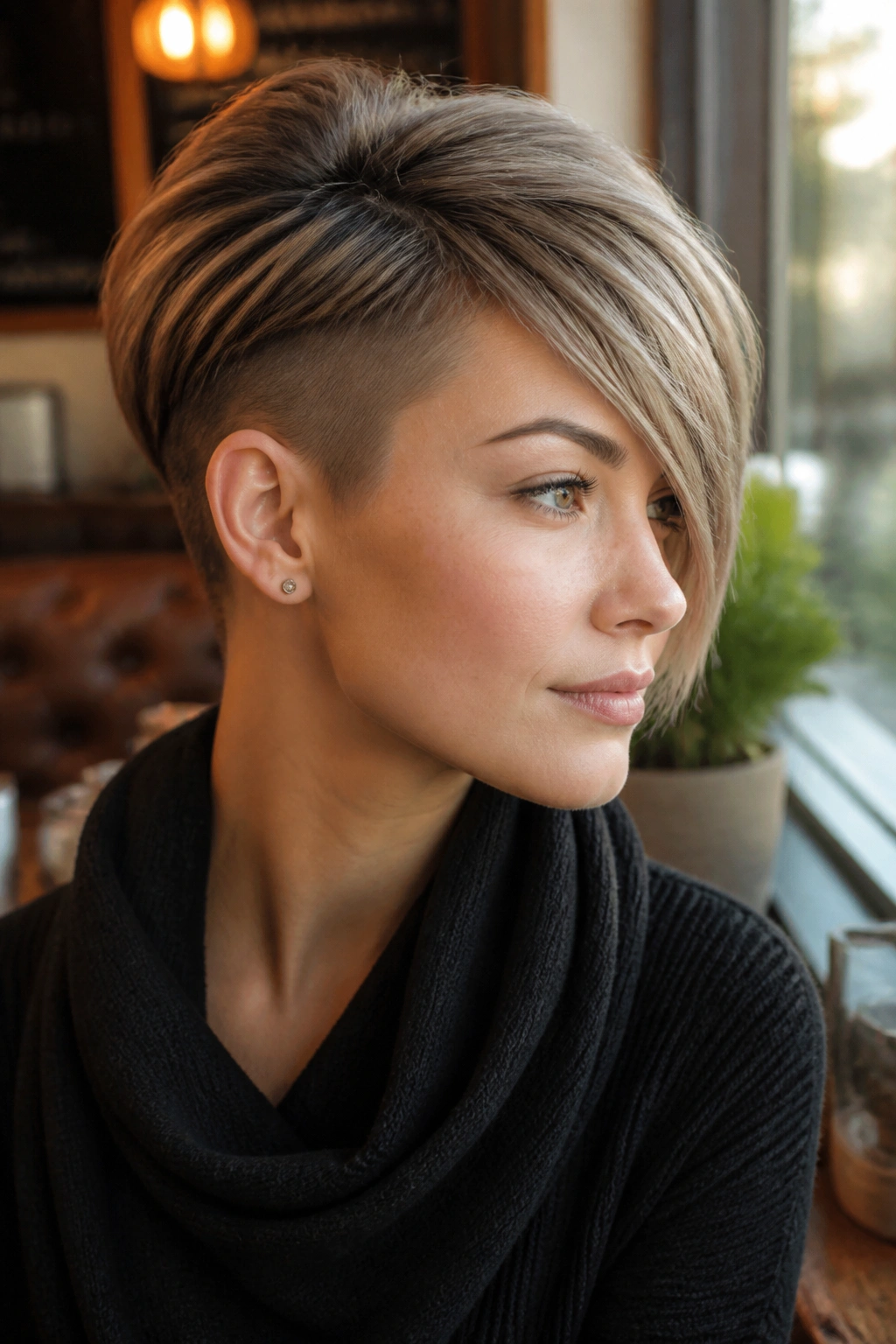
This is the haircut I reach for when someone wants short hair that still reads sharp. The undercut removes bulk at the nape and one temple, while the long fringe pulls the eye across the face instead of straight out to the sides.
Why It Works
- Keep the fringe long enough to hit the outer corner of one eye or graze the cheekbone.
- Ask for the nape to be tapered close, not chopped blunt; the back should melt into the neck.
- Leave enough length on top for a little lift at the crown, even if it’s only 1½ to 2 inches.
- Style with a pea-sized dab of matte paste, not heavy wax, or the front will separate into stiff little spikes.
Best move: blow-dry the fringe in the opposite direction first, then push it across. It gives the hair a bend that stops the front from collapsing by noon.
2. Angled Micro Bob for Round Faces
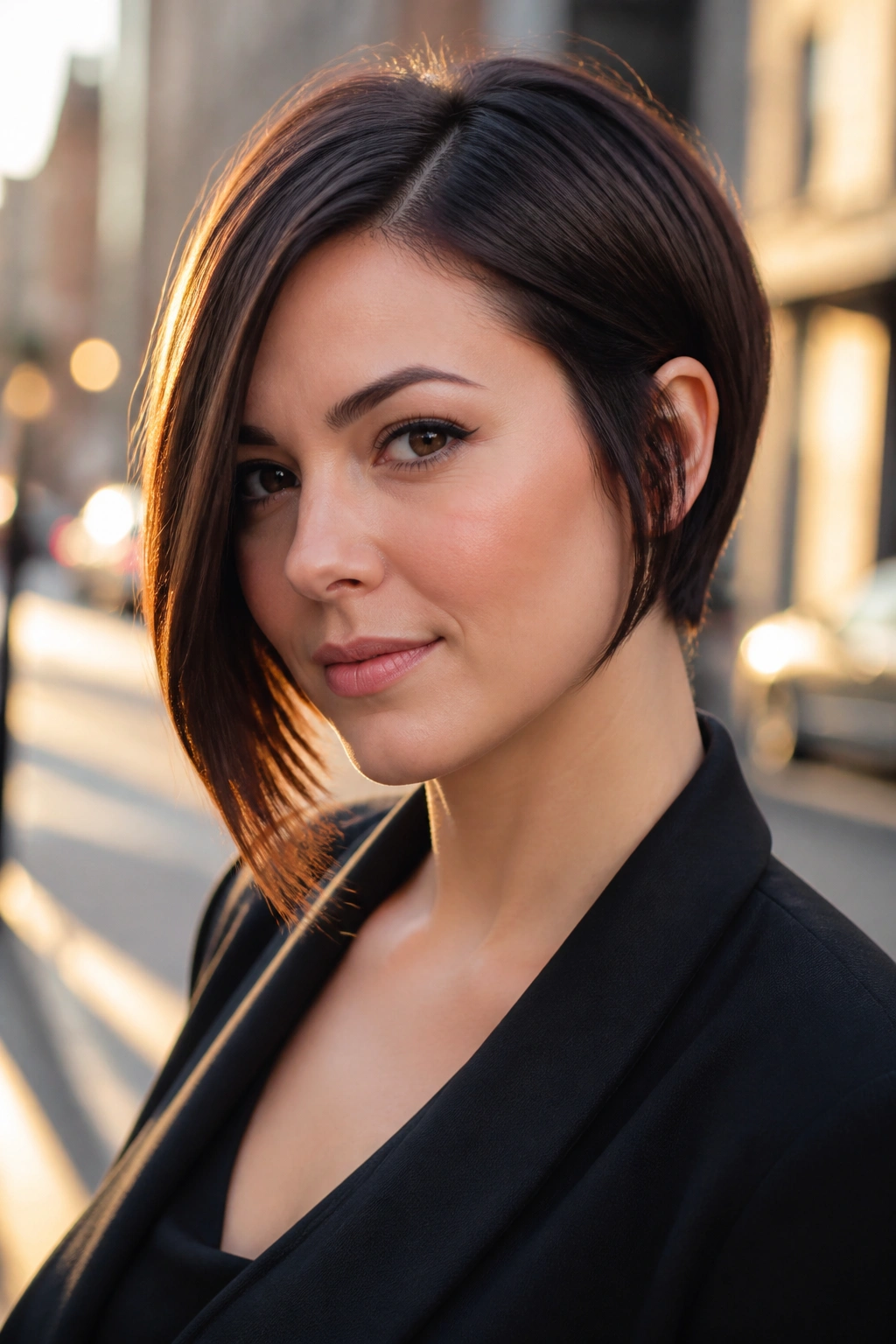
Can a bob be this short and still narrow a round face? Yes — if the front line drops lower than the back. The whole point is a clean diagonal, not a cute little bowl shape sitting level all the way around.
The back usually lands high on the nape, while the front skims the jaw or slips a touch below it. That extra length at the front creates a slim vertical line, which matters more than people think.
How to Wear It
- Ask for a side part placed a little off-center, not dead in the middle.
- Keep the front pieces 1 to 2 inches longer than the back.
- Use a round brush only at the ends, just to tuck them under slightly.
- Finish with a light spray, not a crunchy one.
This cut looks especially good when the hair has a little bend in it. Pin-straight hair can work too, but only if the line is crisp. Otherwise it starts to feel flat, and flat is not the friend of a round face.
3. Bixie With a Tapered Nape
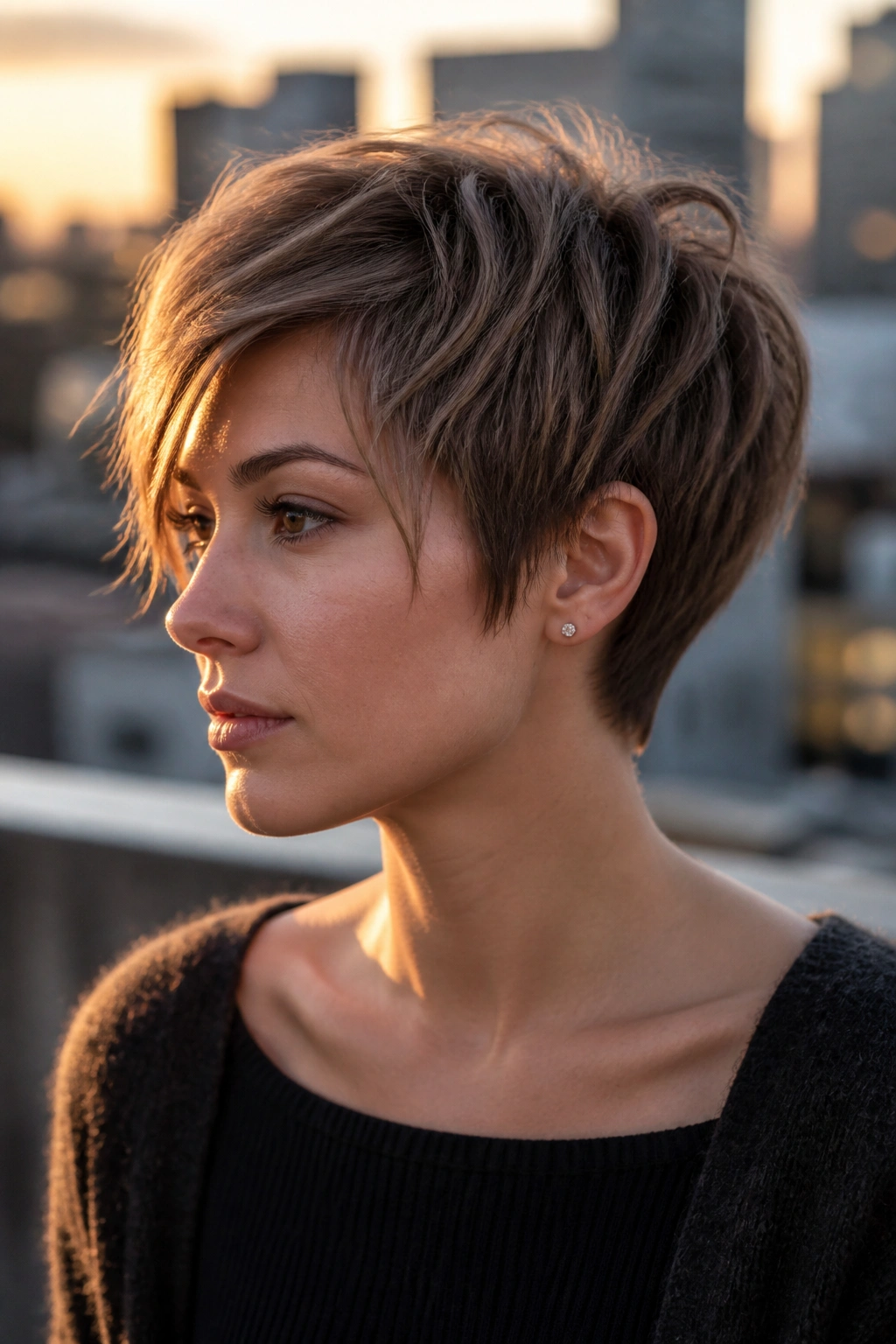
If you hate the growing-out stage, the bixie is your friend. It sits between a bob and a pixie, which sounds vague until you see it: short, piecey, and just long enough to keep some softness around the face.
The tapered nape is the useful part here. It clears out the back so the style doesn’t build width low on the head, while the top stays a little fuller and more uneven. That contrast keeps the cut edgy without making it heavy.
You want the front to fall in broken pieces, not one solid curtain. A few longer strands near the cheekbone do more work than a thick, uniform fringe.
- Best on hair that has some natural bend.
- Good for fine hair that goes limp fast.
- Easier to style with a cream than a heavy pomade.
- Needs trimming every 5 to 7 weeks if you want the shape to stay clean.
A bixie can look sweet if it’s too rounded. Ask for corners. A little roughness is the whole point.
4. One-Side Tucked Ear-Length Bob
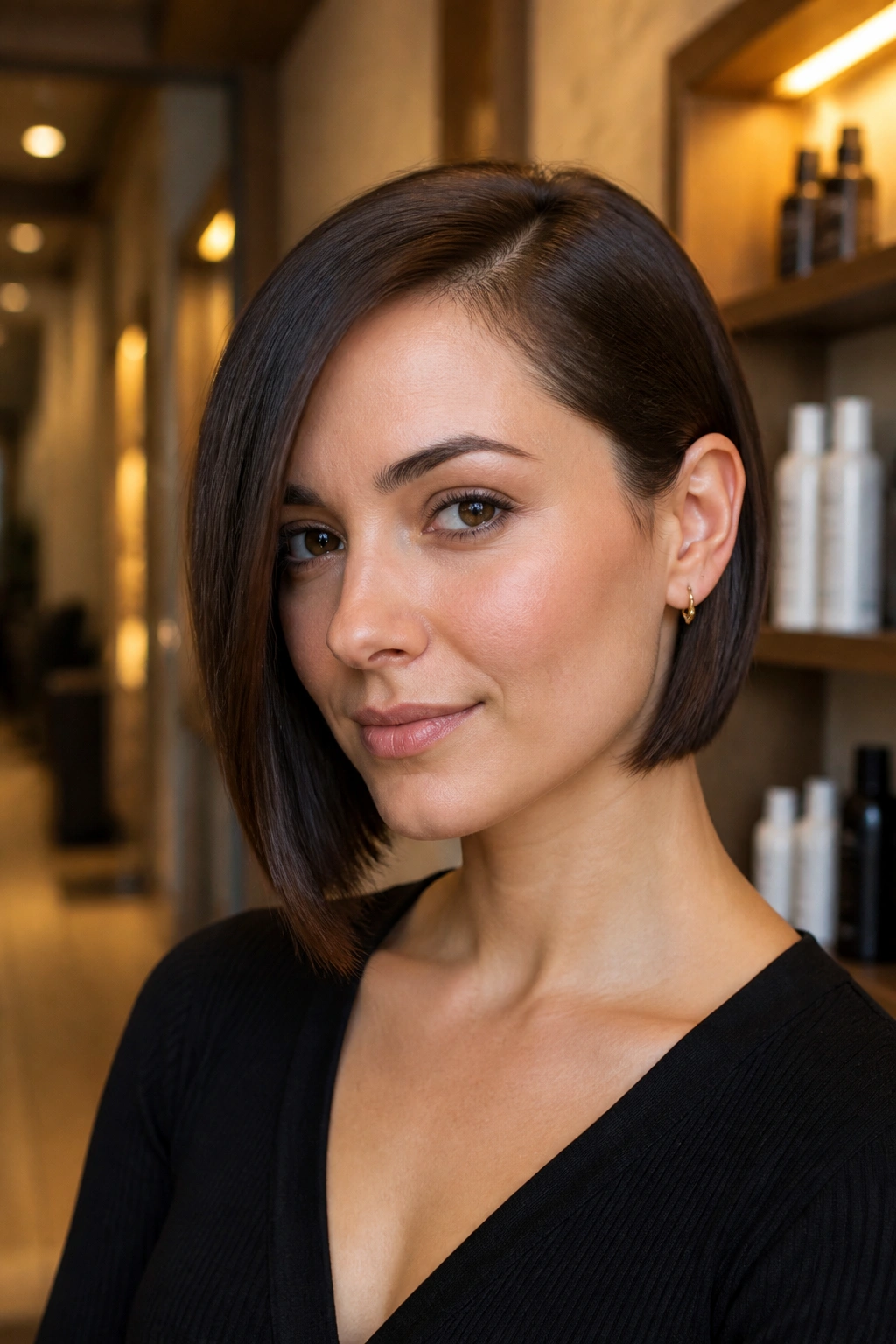
This cut has real attitude because it plays with exposure. One side sits at the ear and gets tucked or pinned back, while the other side stays longer and brushes the jaw. That difference makes the face look slimmer without trying too hard.
The trick is not to let both sides sit at the same height. That would flatten the whole idea. You want a clear short side and a longer side, plus enough bevel at the ends so the bob doesn’t feel stiff.
There’s also a nice little bonus: earrings matter more here. A hoop, a small cuff, even a plain stud suddenly gets a job to do.
Keep the longer side just below the cheek, not at the widest point of the cheek. That tiny shift changes the whole line of the cut. It’s a small thing. It matters.
5. Choppy Asymmetrical Shag Crop
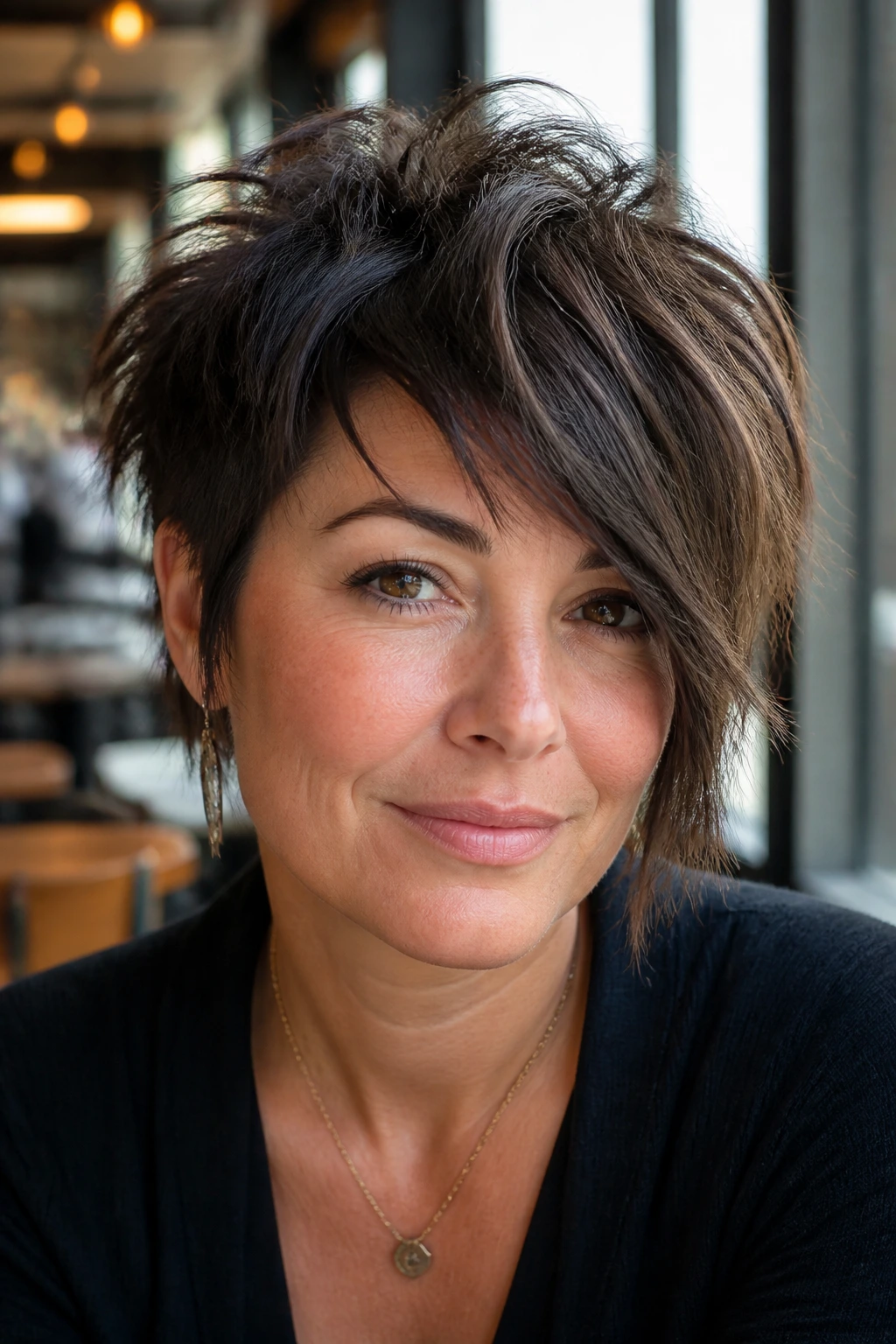
Why does this work so well on round faces? Because the layers break up the width. A round face can take a lot of softness, but it still needs direction, and this cut gives it direction in pieces.
The crown stays textured, the fringe is broken, and one side usually drops a touch longer near the temple or cheek. Nothing sits in one clean ring. Good. That would be boring, and more important, it would widen the face.
How to Style the Texture
- Scrunch in mousse when the hair is damp.
- Twist a few top sections around your fingers before drying.
- Let the ends stay a little uneven.
- Use a diffuser on low heat if the hair waves or curls.
This is the cut for someone who wants a short shape that looks better when it’s slightly messy. If you like hair that moves, bends, and doesn’t apologize for itself, this one earns its keep.
6. Side-Swept Micro Bob
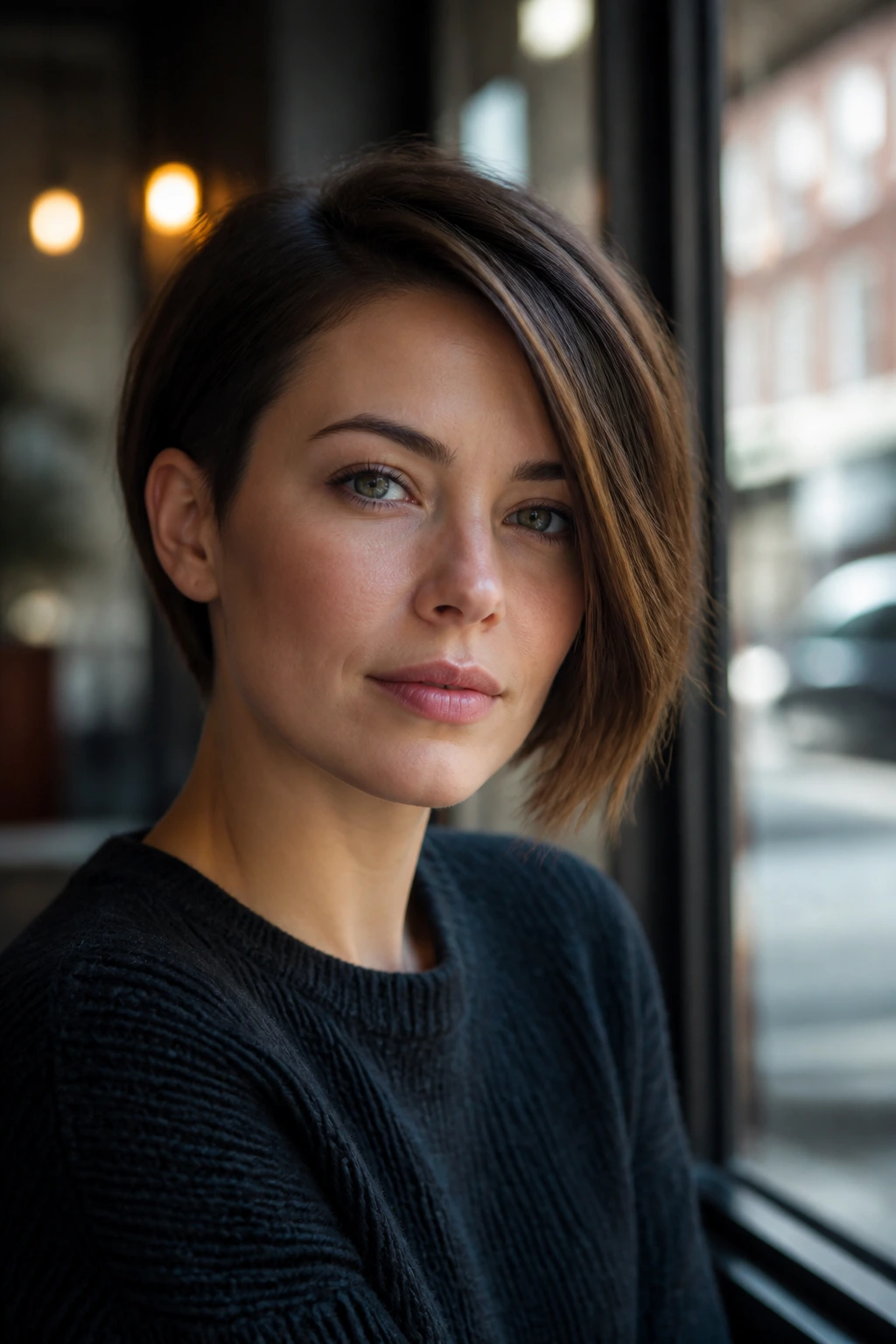
Unlike a blunt bob, this one doesn’t sit there like a shelf. The side-swept micro bob leans into one direction, which gives a round face a cleaner diagonal and a less boxy outline.
The length usually lands between the ear and the jaw, with one side tucked close and the other side carrying more of the weight. That imbalance is the whole point. It makes the face feel a little longer and the jaw a little sharper.
This cut is especially good for fine hair that needs shape without too much bulk. A blunt end can make fine hair look sparse at the tips. A slightly beveled, side-swept line keeps the edge looking deliberate.
I like this on people who don’t want a lot of daily styling. A quick blow-dry with a small round brush, a part shifted off-center, and you’re done. No drama. No fuss. Just a neat, angled line that does the work for you.
7. Pixie Mullet
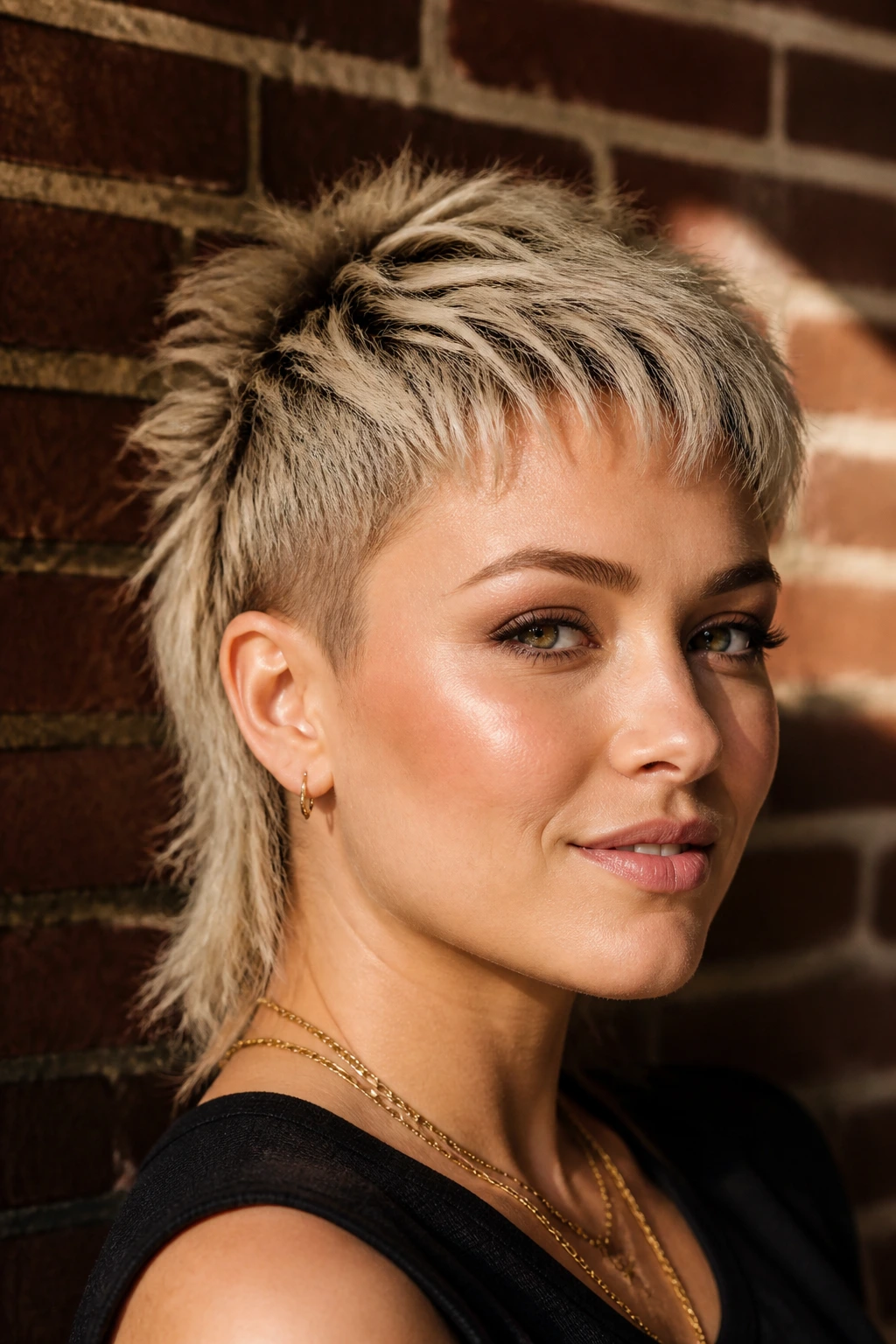
Some people want short sides but don’t want a polished salon finish. That’s where the pixie mullet lands. It keeps the front and sides cropped close, then lets the back stay a little longer and feathered at the nape.
The shape matters for round faces because it lifts the eye up through the crown before it drops back down at the neck. That vertical movement is the opposite of what a round face usually needs to avoid. So, yes, this one earns its edge in a useful way.
A good pixie mullet should never look heavy in the back. The length there needs to feel airy, almost broken up. If it gets too solid, the whole thing turns into a blob.
- Crown: slightly longer and piecey
- Sides: close, but not shaved to skin unless you want a hard contrast
- Nape: feathered, not blunt
- Finish: matte paste or light cream
It’s a little rebellious, and that’s the charm. But it still needs shape or it turns into a grow-out mess.
8. Curly Asymmetrical Bob
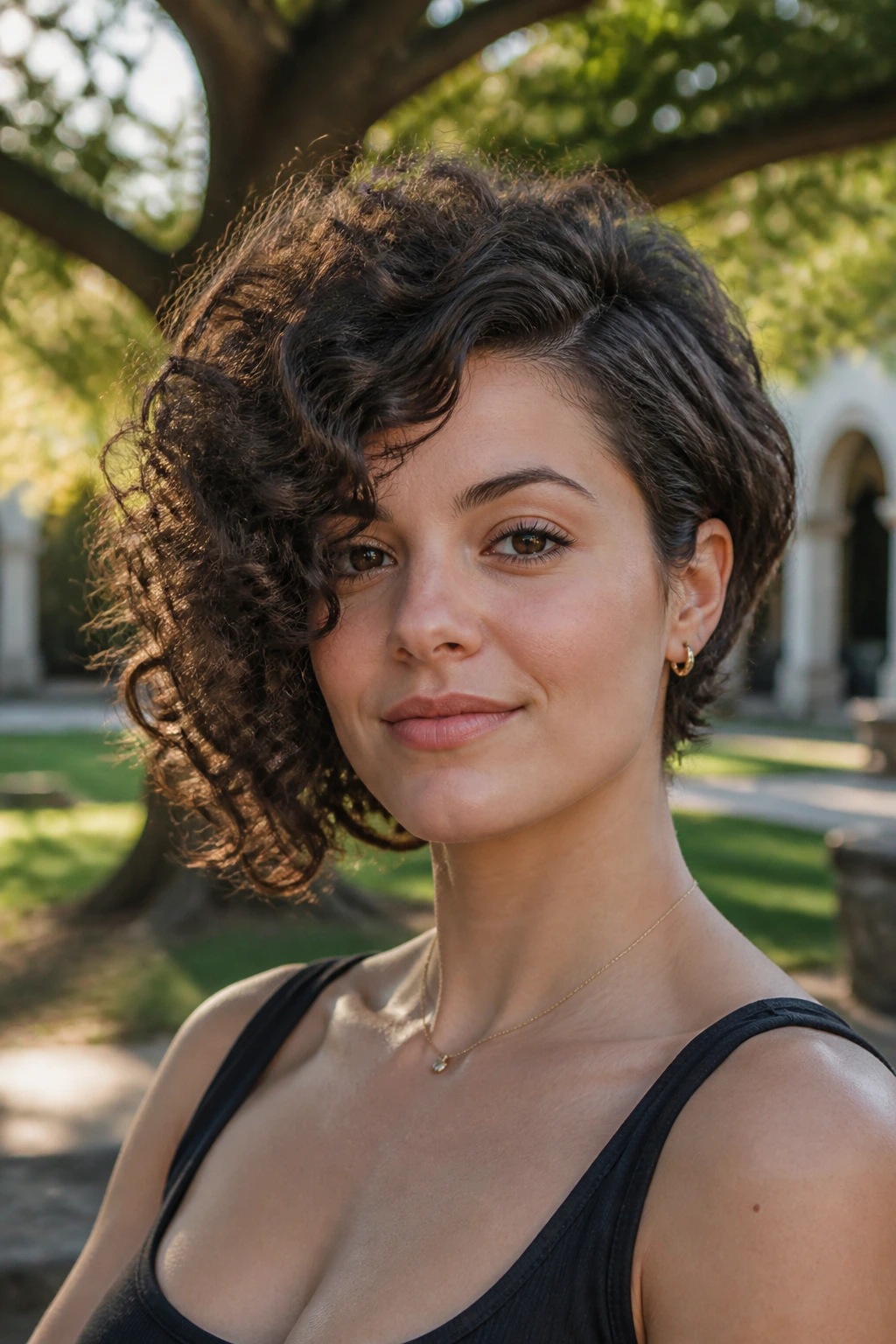
Curly hair changes the game because the curl pattern adds its own width. On a round face, that means the cut has to be smart about where the weight sits. A curly asymmetrical bob does that by keeping one side a bit longer and letting the curl stack where it helps, not where it fights the face.
The best version is cut dry or almost dry, curl by curl. Wet curls lie to everybody. They shrink, puff, and do strange things when they dry. Cutting them in their own state keeps the shape honest.
One side can graze the jaw while the longer side drops just below it. That slight diagonal gives the curls a route to follow instead of letting them bloom in a circle around the cheeks.
Use a light curl cream and a diffuser. Go easy on the top if your curls are springy, because too much product at the crown will flatten the lift you need. And lift matters here. A lot.
9. Buzzed Temple Crop
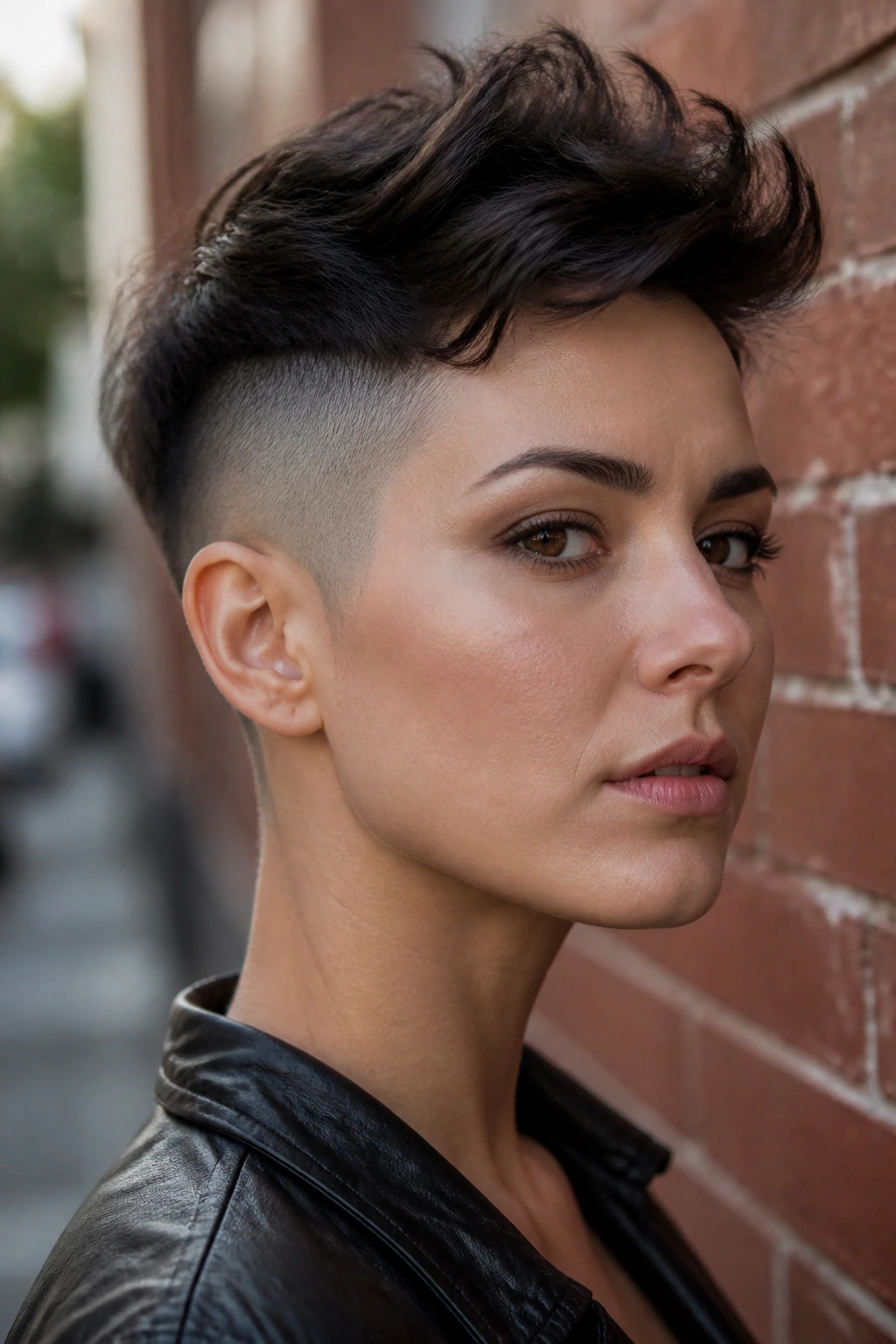
This one is for readers who want edge, not just a cute short cut. The buzzed temple crop uses contrast in a blunt, graphic way: one or both temples are clipped short, while the top stays softer and longer.
On a round face, that shaved section strips away side width fast. The eye stops reading the outer edge of the head and starts reading the top line instead. That shift can make the face look longer in a way that feels almost architectural.
What to Ask For
- A clipper guard around #1 or #2 at the temple, depending on how bold you want to go
- A longer top, usually 2 to 3 inches, for styling options
- A soft fringe or diagonal front piece so the cut doesn’t get too hard
- A clean fade into the nape so the back stays close
This cut looks best when the top has some movement. Flat top, shaved side, no shape? Not enough. Give it texture. A little bend makes the whole haircut feel intentional instead of severe.
10. Jaw-Grazing Bob for Round Faces
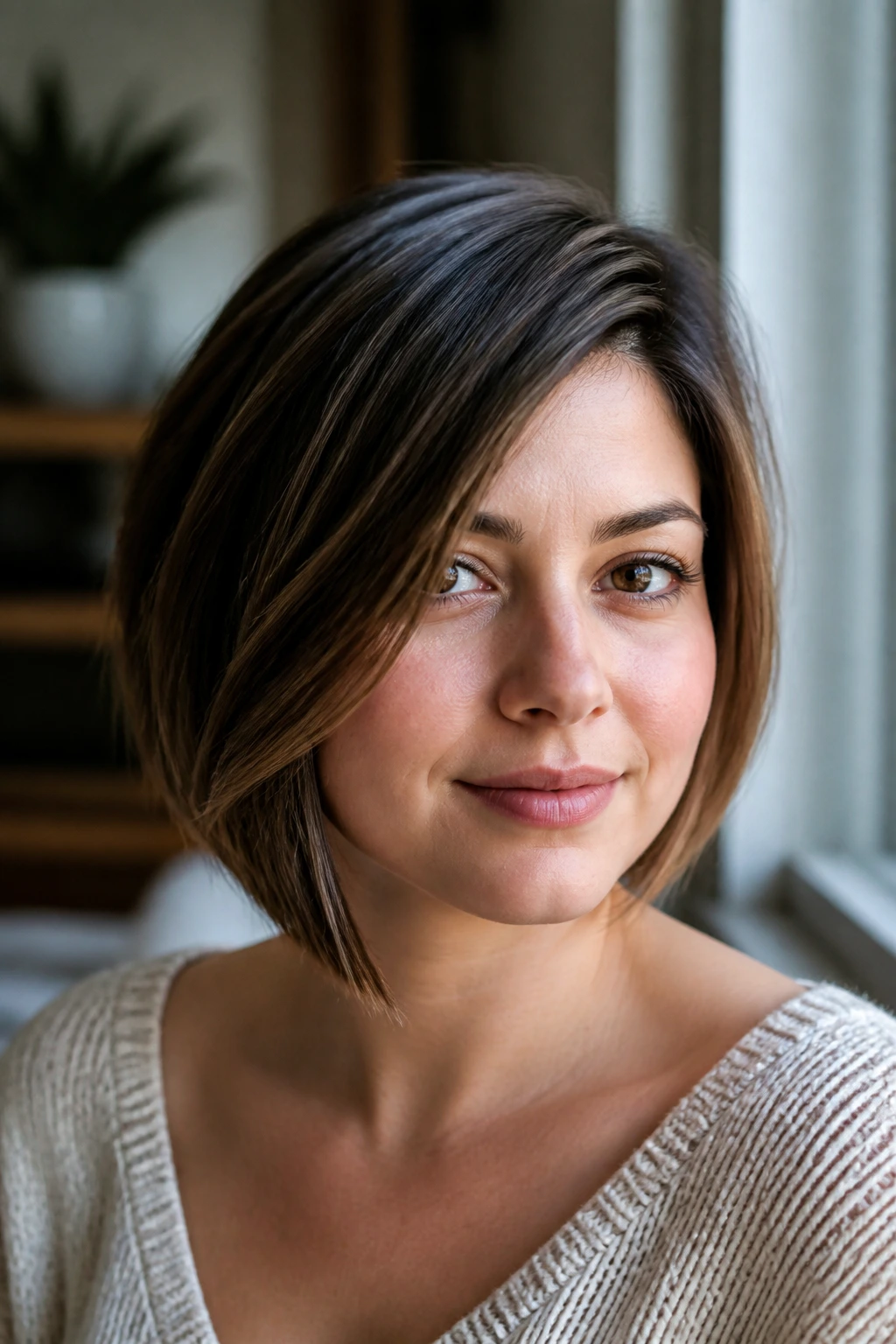
A jaw-grazing bob sounds simple, but the details are touchy. If both sides stop exactly at the jaw, the face can look wider. If one side slips lower and the front has a slight angle, the haircut suddenly starts doing the work you want.
The smartest version keeps the shortest point just under the jaw and the longest point drifting toward the cheekbone or collar area. That creates a narrow path down the face instead of a heavy horizontal line.
Never stop both sides at the same mouth level. That’s where this cut loses its shape.
I like this one for straight or slightly wavy hair because the line shows up clearly. A soft bend through the ends is enough. Too much curl at the sides can puff out and fight the angle.
11. Razor-Cut Feathered Crop
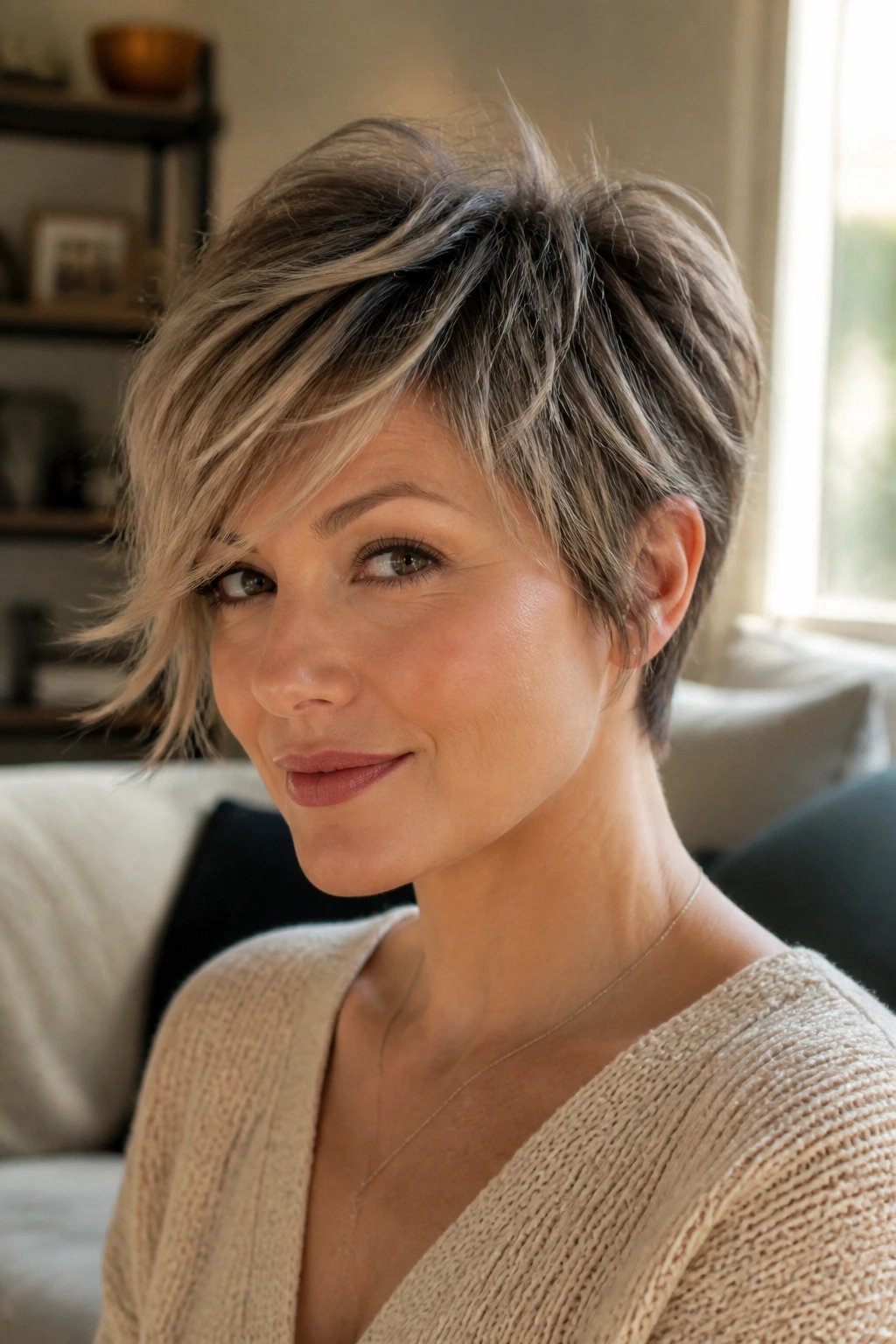
A razor cut and a scissor cut do not behave the same way. The razor removes bulk from the ends and leaves them light, which is useful if your hair is thick and you want the shape to move instead of sitting like a block.
The feathering is what flatters a round face. The edges break apart, and the haircut doesn’t form one solid circle around the cheeks. You still want structure, though. This is not a messy shortcut.
Best on straight to softly wavy hair. On very frizzy hair, a razor can make the ends puff if the stylist goes too hard. Ask for light pressure at the perimeter and keep the internal layers soft.
This kind of crop can look almost tailored when it’s done well. The front falls in a broken line, the sides stay lean, and the top gets enough piecey texture to keep the shape from going too neat. Clean, but not precious.
12. Asymmetrical Curly Pixie
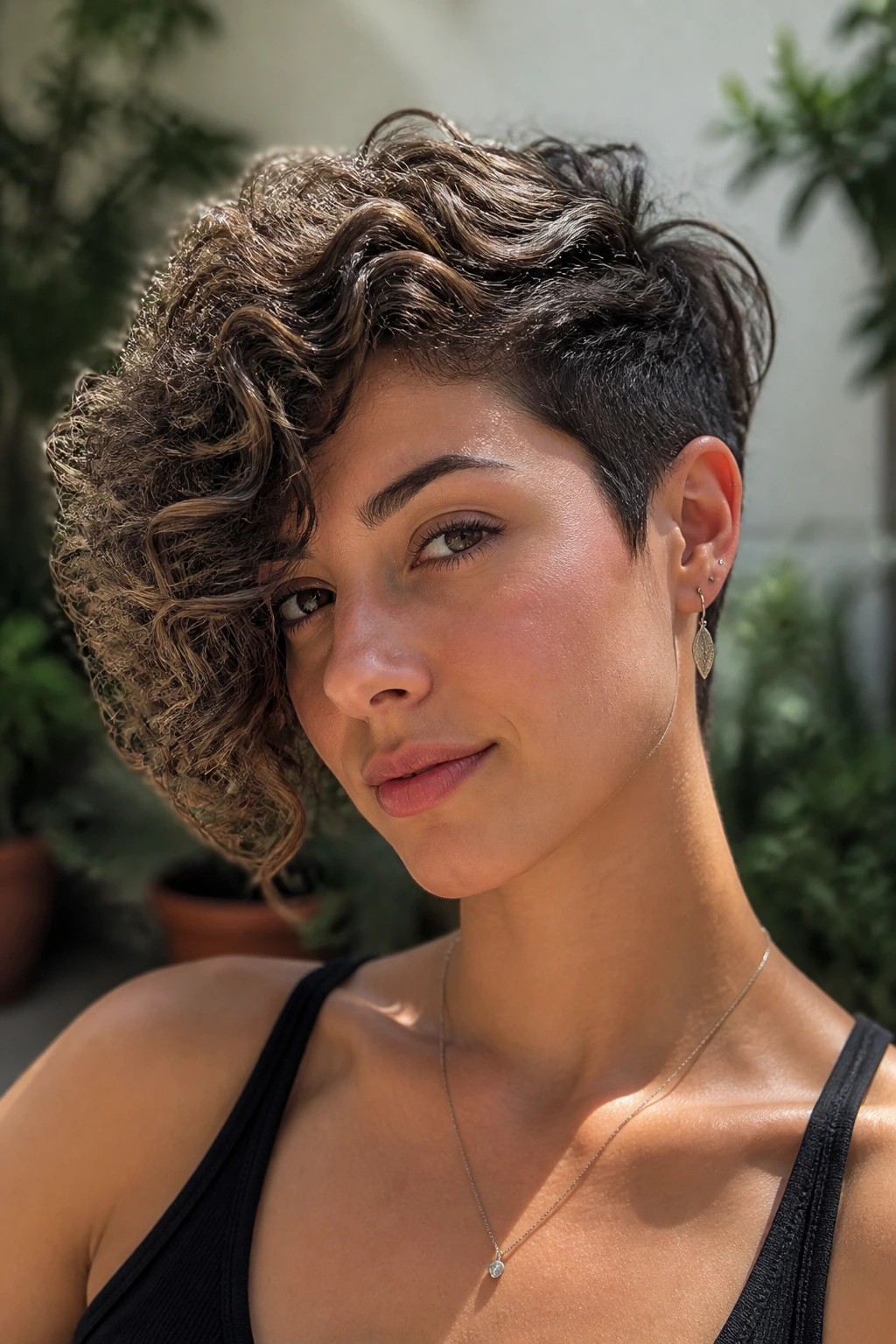
Curly pixies are tricky, and that’s exactly why they’re interesting. The asymmetry keeps the cut from turning into a round halo, which is the thing you do not want on a round face unless you’re aiming for maximum fullness.
The longer side can sit at the cheekbone while the shorter side hugs the temple or ear. That offset makes the curls feel directional. They move across the face instead of out from it.
Cutting this shape dry matters more than most people expect. A 1-inch change in a curl can turn into 2 inches after it dries. If a stylist cuts wet and guesses, the result can float too wide.
- Ask for visible length difference between sides.
- Keep the crown a touch longer for lift.
- Use a curl gel with medium hold, not a heavy cream.
- Diffuse with your head tilted slightly forward.
A curly pixie like this doesn’t need to be perfect. It needs to be shaped. That’s the difference.
13. Stacked Asymmetrical Bob
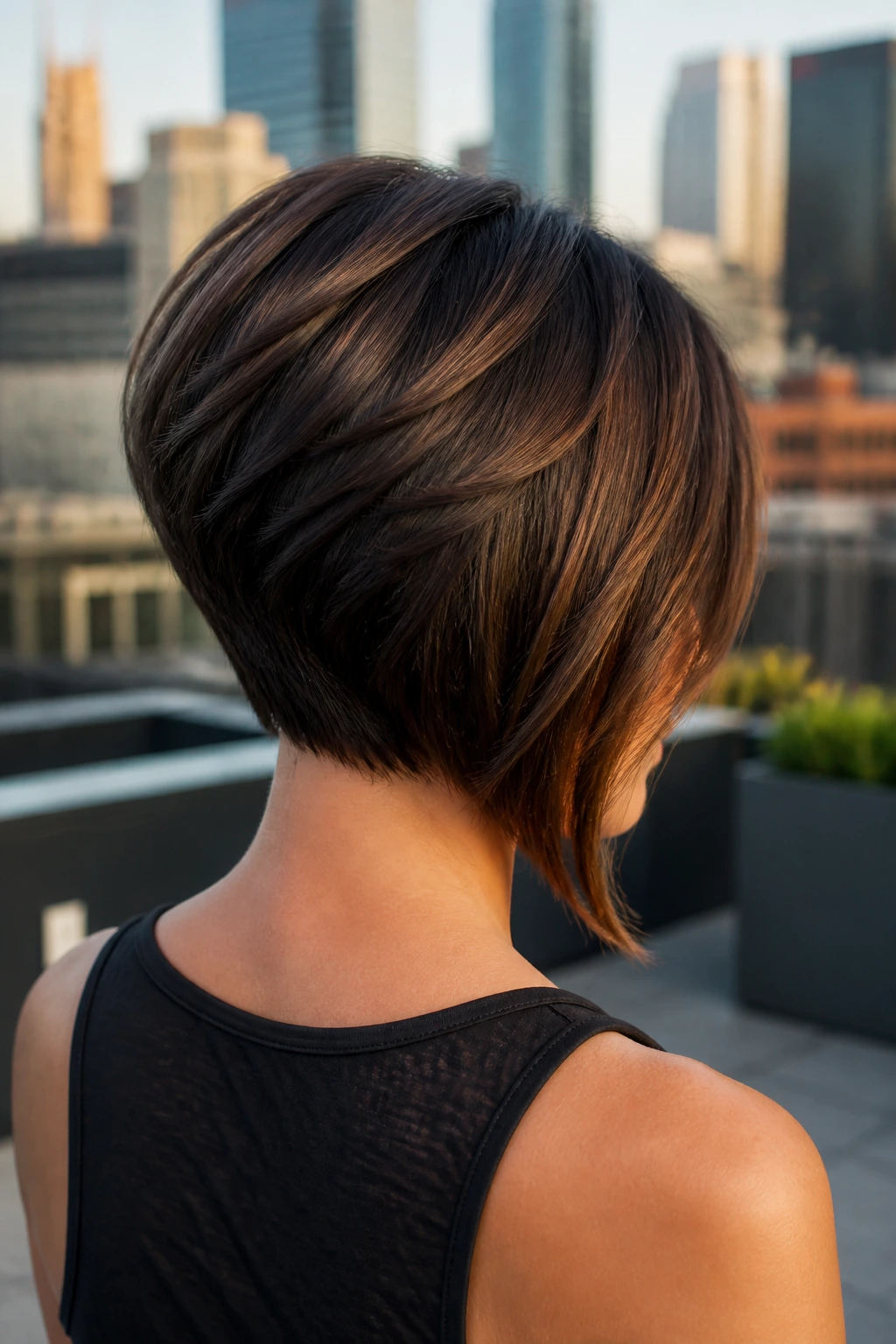
This is one of the smartest bobs for round faces because it builds height where you need it and keeps the sides controlled. The stack in the back gives the crown lift, while the front pieces stay longer and angle down.
That back shape matters. A flat bob can sit like a block. A stacked one pushes the silhouette upward, which helps lengthen the face without adding width at the cheeks.
A good cut here keeps the graduation tight at the nape and more open through the front. The longest pieces should not stop at the widest part of the cheek. Let them drift lower. That small shift keeps the eye moving.
If your hair is thick, this can be a relief. The stacked back takes weight out, so the head doesn’t feel heavy. If your hair is fine, it still works — but the layers need to be careful or the back will collapse.
14. Slicked-Back Asym Crop
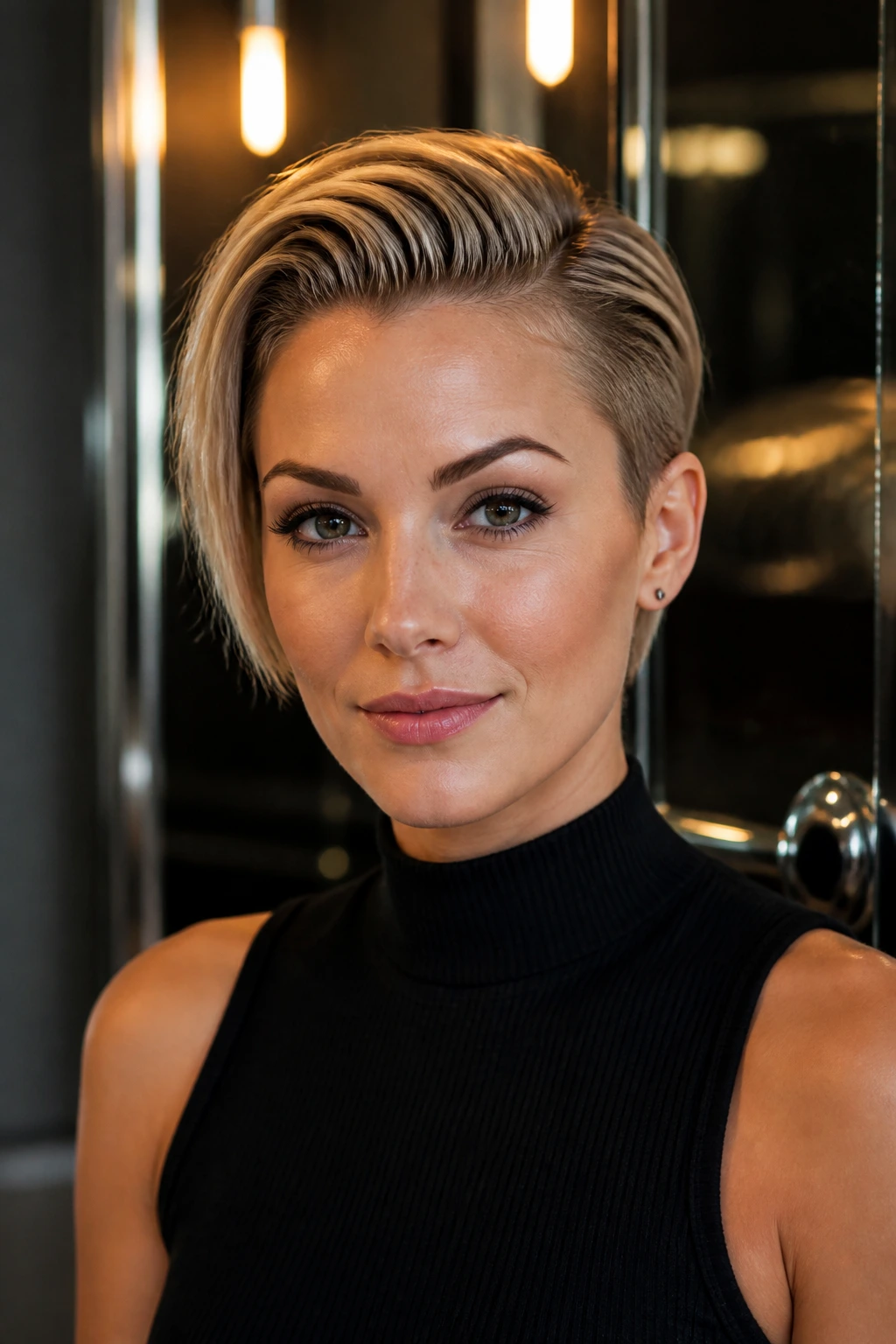
A slicked-back asymmetrical crop is not shy. It exposes the face, shows off the line of the cut, and puts the whole emphasis on angle and shine. On a round face, that can look unexpectedly strong because the short sides and tight styling pull everything upward.
The key is keeping the top long enough to sweep back without splitting into tiny spikes. A little gel, a little pomade, and a comb are enough. You want the hair to look glassy, not crunchy.
The asymmetry still matters even when the hair is smoothed back. One side can stay slightly longer or deeper at the part so the shape doesn’t feel symmetrical and bulky. That subtle difference keeps the cut from turning into a plain cropped helmet.
This is a good choice for nights out, humid weather, or anyone who gets tired of dealing with fringe. It’s also a nice fix when the hair is naturally oily. Sometimes the easiest style is the one that stops fighting the texture you already have.
15. French Bob With Uneven Fringe

A French bob gets a little more interesting when the fringe is uneven. One side can graze the brow, the other can slip to the cheekbone. That mismatch softens the face and keeps the cut from sitting too evenly around a round face.
The line should feel broken, not careless. A sharp edge can still be soft if the fringe is cut with point cutting or tiny razor strokes. The goal is a little irregularity, not a DIY accident.
How to Keep It From Looking Sweet
- Keep the length just below the mouth on the longer side if you want more edge.
- Use a side part instead of a center part.
- Ask for light texture through the fringe so it moves.
- Skip heavy blowouts that puff the sides outward.
I like this one because it has attitude without trying too hard. It feels cool in a quiet way. Not polished. Not fussy. Just enough tilt to make the face look longer.
16. Shullet With Soft Undercut
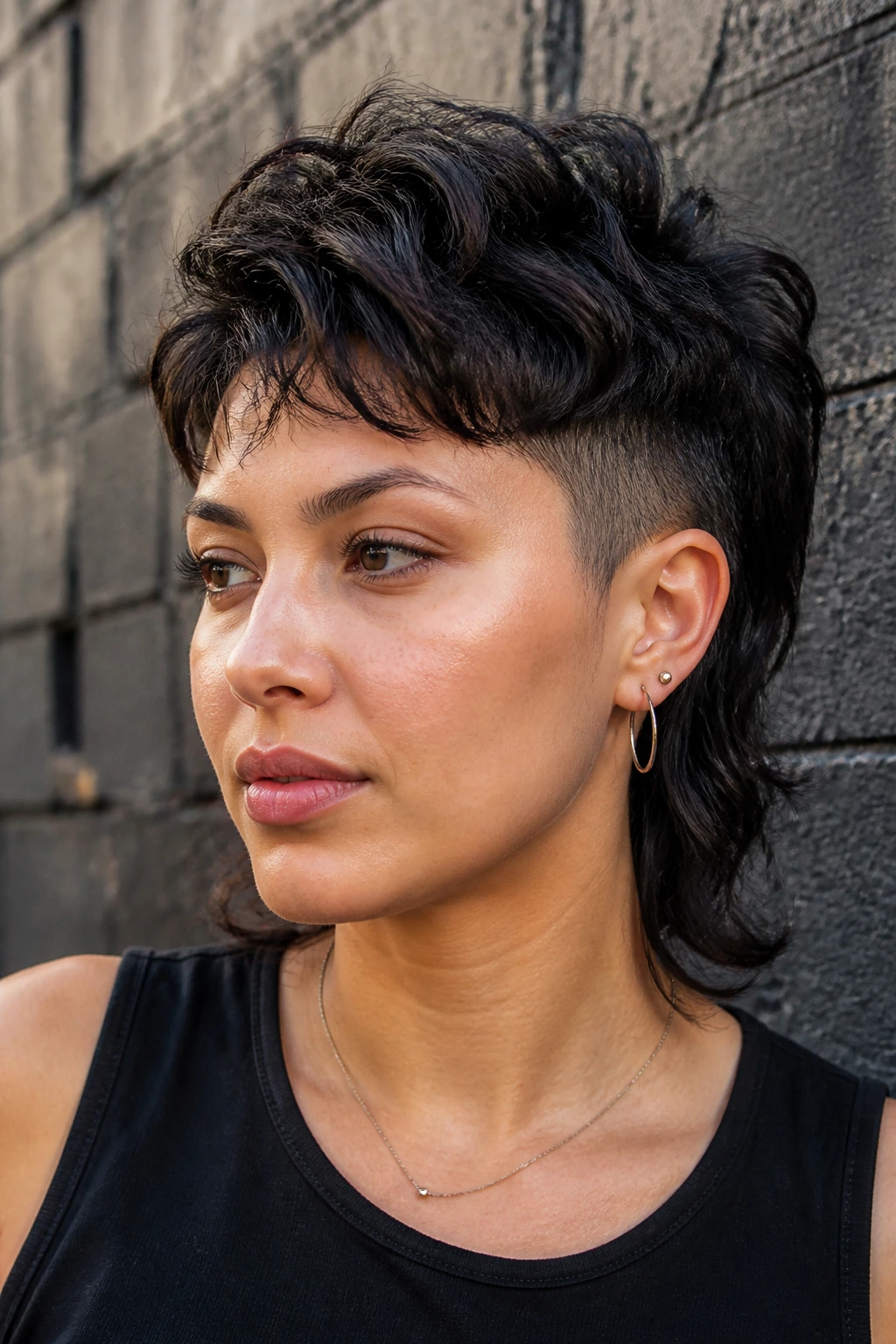
Unlike a classic mullet, the shullet keeps the top broken up and the back short enough to stay lean. The result is a shape that feels rougher and less retro, which is part of why it works so well on round faces.
The soft undercut takes bulk away from the lower sides and nape. That stops the haircut from ballooning at the cheeks. Then the longer top and back pieces pull the eye downward in a line that isn’t too stiff.
This cut loves thick, wavy hair. The natural bend helps the layers separate. Straight hair can do it too, but it needs texture spray or a small amount of styling paste to keep the shape from going flat.
If you want something short, strange, and easy to style into a piecey mess, this is a strong pick. It doesn’t ask for perfection. It asks for movement.
17. Tapered Afro Crop With Slant
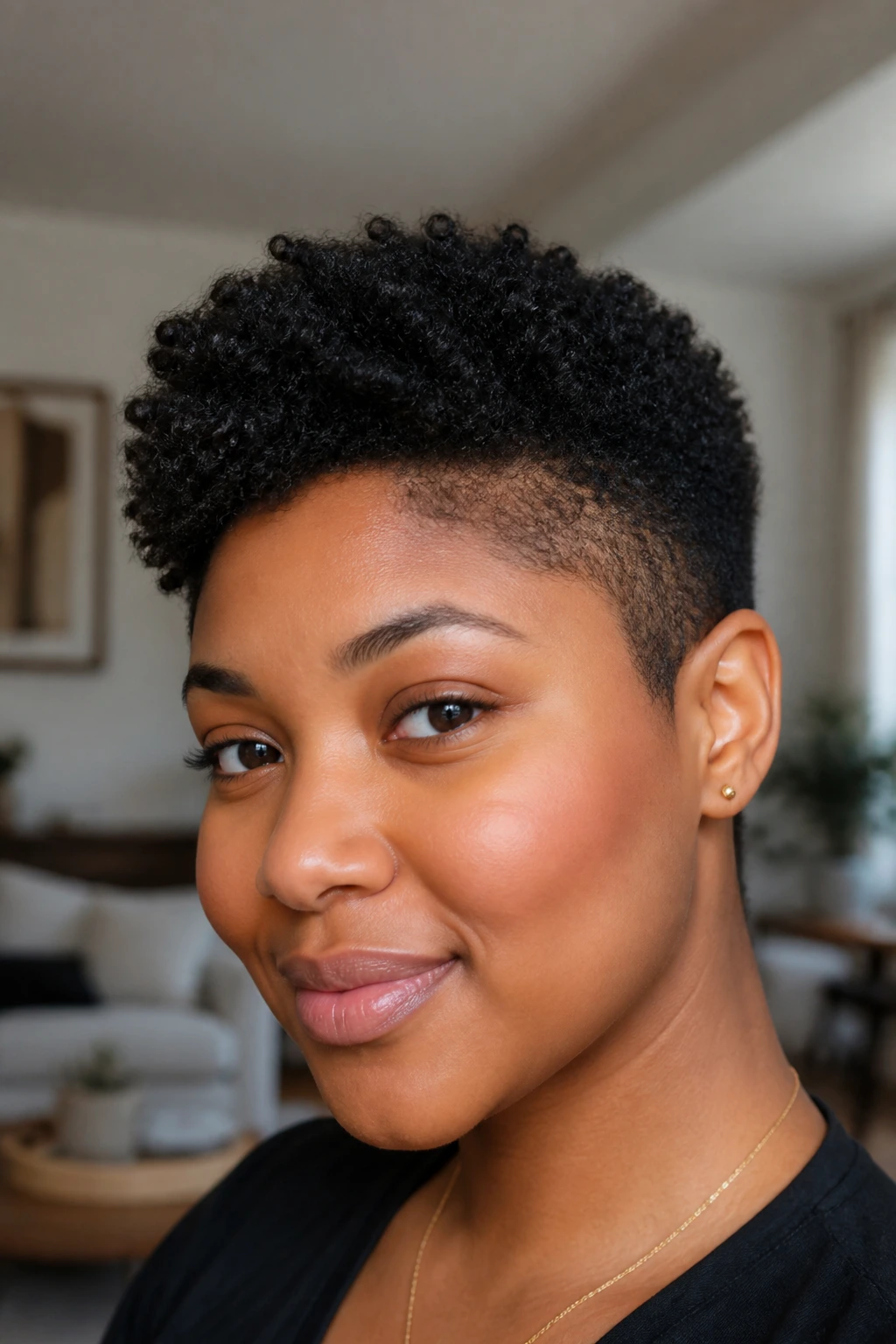
A tapered afro crop with a slanted front line does something that flatters round faces fast: it adds height, trims the sides, and gives the eye a diagonal to follow. That diagonal matters just as much in coily texture as it does in straight hair.
The taper around the ears and nape keeps the silhouette neat. The top stays fuller, but not puffed outward in a big circle. That difference is the whole haircut. If the shape turns too round, you lose the point.
What to Ask For
- Keep the sides tight at the temple and nape.
- Leave the top long enough to shape upward, not outward.
- Angle the front slightly longer on one side.
- Clean up the outline every 2 to 3 weeks if you want the shape crisp.
Moisture matters here. A curl cream or light butter keeps the texture soft, and a small sponge or pick can help shape the top without stretching it sideways. Skip anything greasy. It weighs the hair down and the crop starts to slump.
18. Choppy Crop With Temple Fade
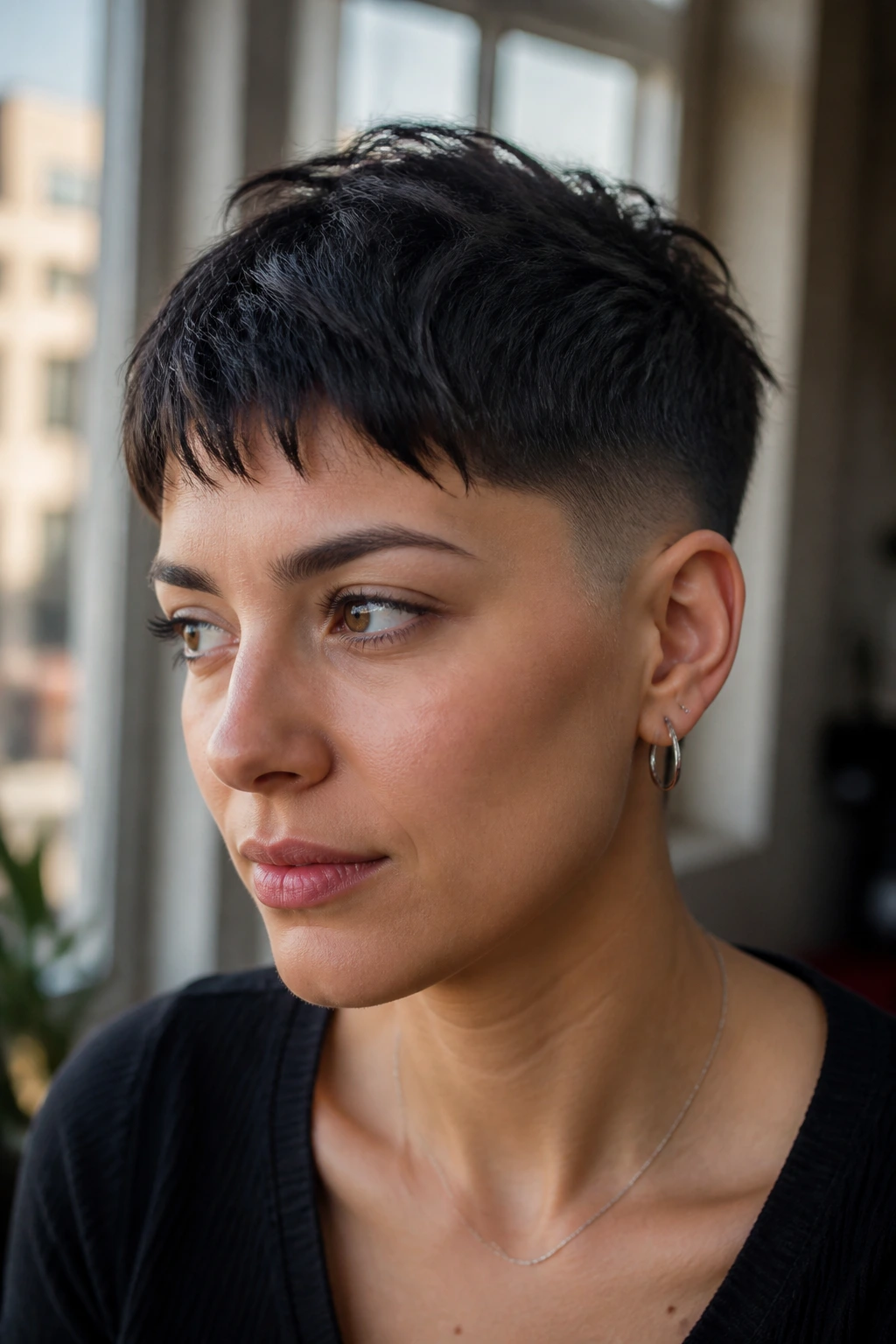
This cut suits dense hair that likes to push outward at the sides. The temple fade removes that extra width near the face, which is a gift on a round shape. Then the choppy top keeps the energy up and the line broken.
I’ve seen this haircut make a big difference on people who want short hair but hate that mushroom effect. The fade at the temple narrows the head visually, and the choppy top keeps the style from feeling too neat.
Use a clipper fade that starts low, not halfway up the head. If the fade climbs too high, the haircut can look severe. Keep the top around 2 inches if you want enough movement without losing the cropped feel.
A little matte clay goes a long way. Work it through the top with your fingers, not a comb. You want separation, not a polished helmet.
19. Asymmetrical Bowl Cut With Texture
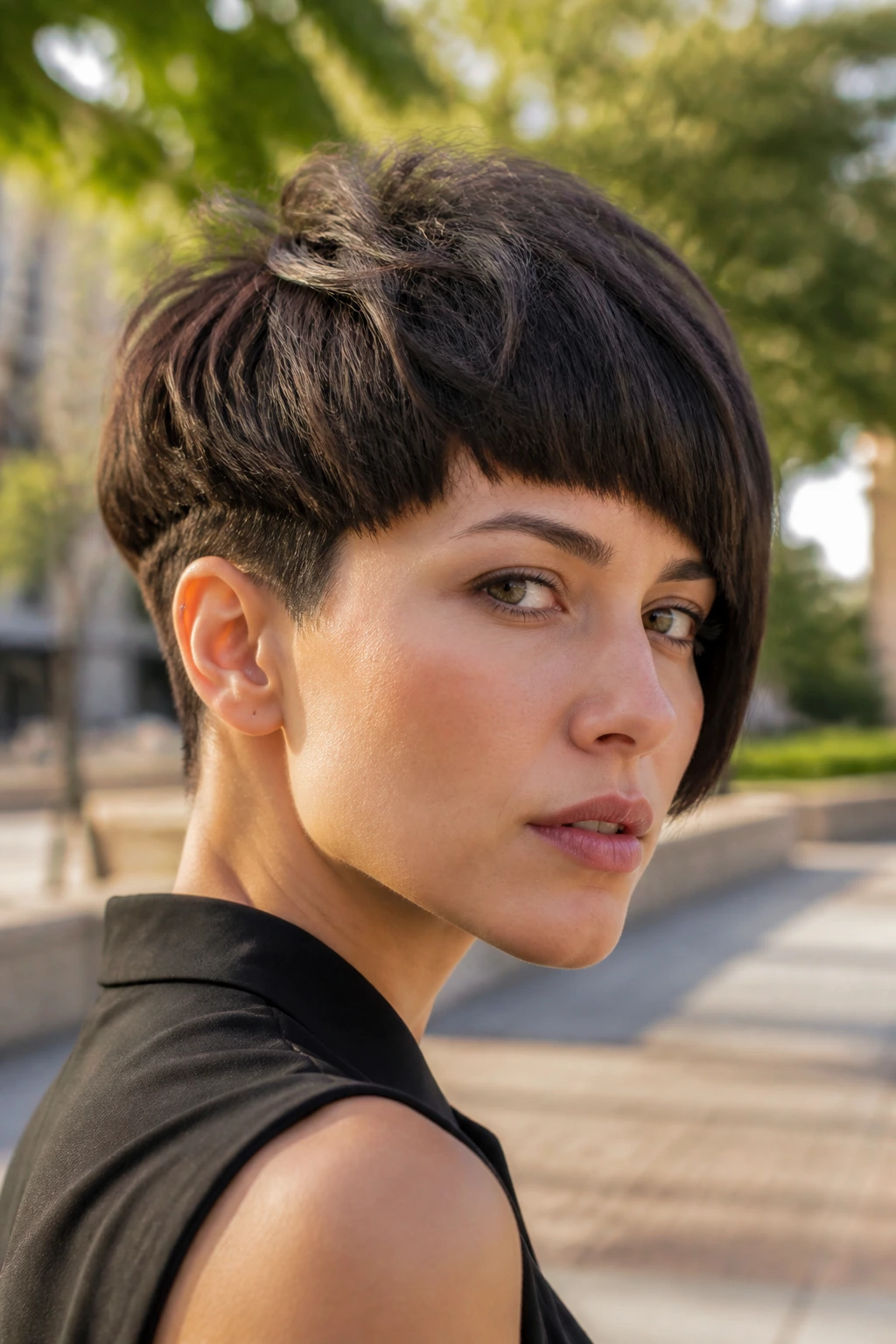
A bowl cut gets a bad reputation because people remember the solid, round version from old photos. This one is different. The asymmetrical bowl cut breaks the line, thins out the edge, and gives the shape enough texture to avoid looking like one big circle.
The longer side usually falls lower around the cheek or ear, while the shorter side stays tighter and cleaner. That difference gives a round face somewhere to go. It shifts the eye instead of boxing it in.
The texture is what saves it. A few broken ends, some internal layers, and a soft fringe keep the outline from getting heavy. If the perimeter is too blunt, the haircut can widen the face fast.
This is one of those styles that looks far better in person than people expect. It can feel sharp, a little weird, and surprisingly flattering all at once. The key is not to make it precious. A touch of roughness keeps it alive.
20. Side-Part Shaggy Pixie-Bob for Round Faces
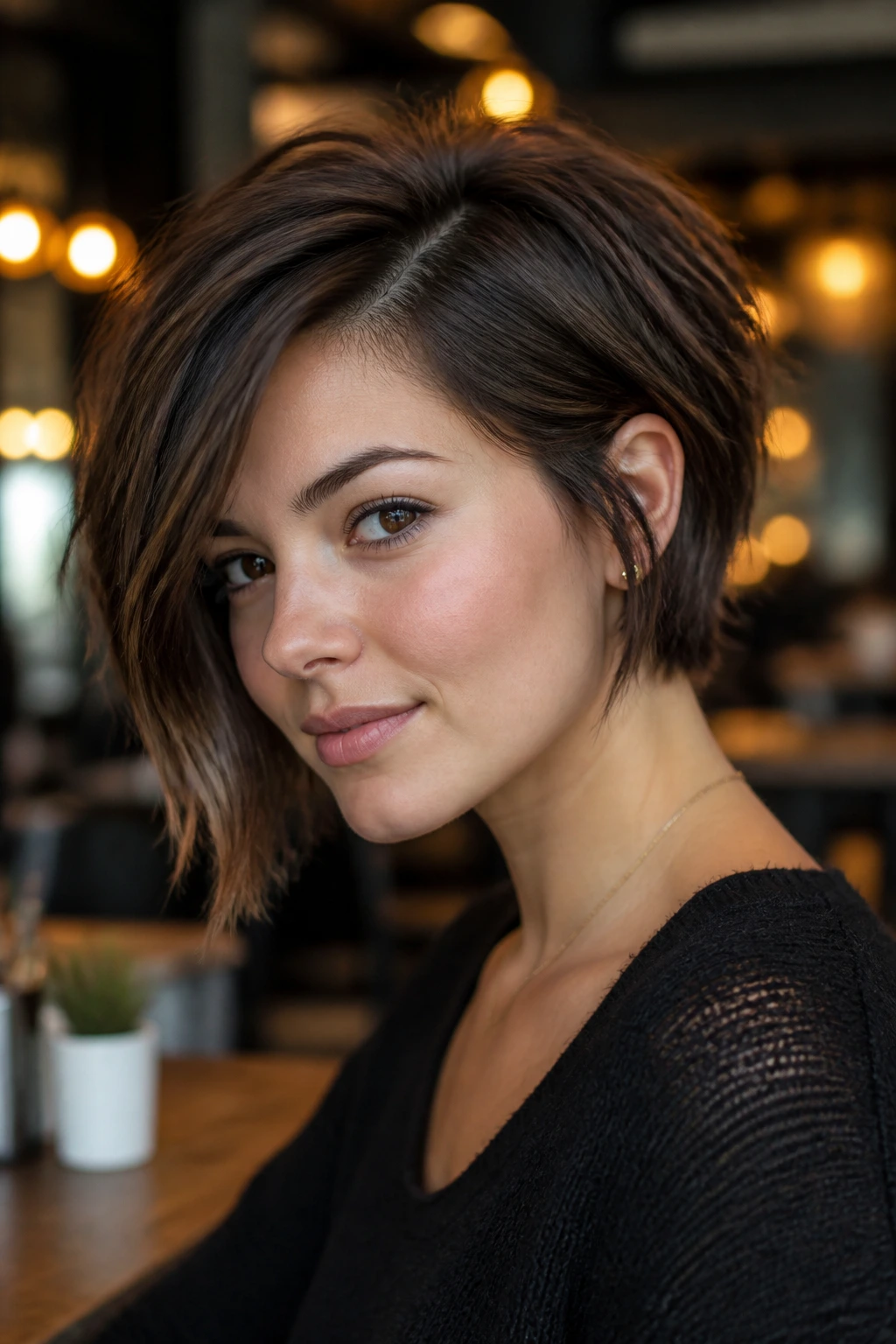
Is it a pixie? Is it a bob? It sits between both, which is exactly why it works. The shaggy pixie-bob keeps enough length around the front to narrow a round face, but it stays short enough in the back to avoid bulk.
The side part should land well off center. That pulls more hair to one side and creates a stronger diagonal across the forehead. A dead-center part would flatten the whole thing and make the shape feel too even.
Where to Part It
Part the hair above the highest point of one eyebrow arch, then let the longer side fall toward the cheek. That small shift can change how much of the forehead you show, and that changes the balance of the face more than people expect.
Use a texture spray at the roots and a light cream through the ends. Too much product will clump the pieces together. Too little and the layers disappear. You want separation with movement, not fuzz.
21. Wavy Asymmetrical Crop for Round Faces
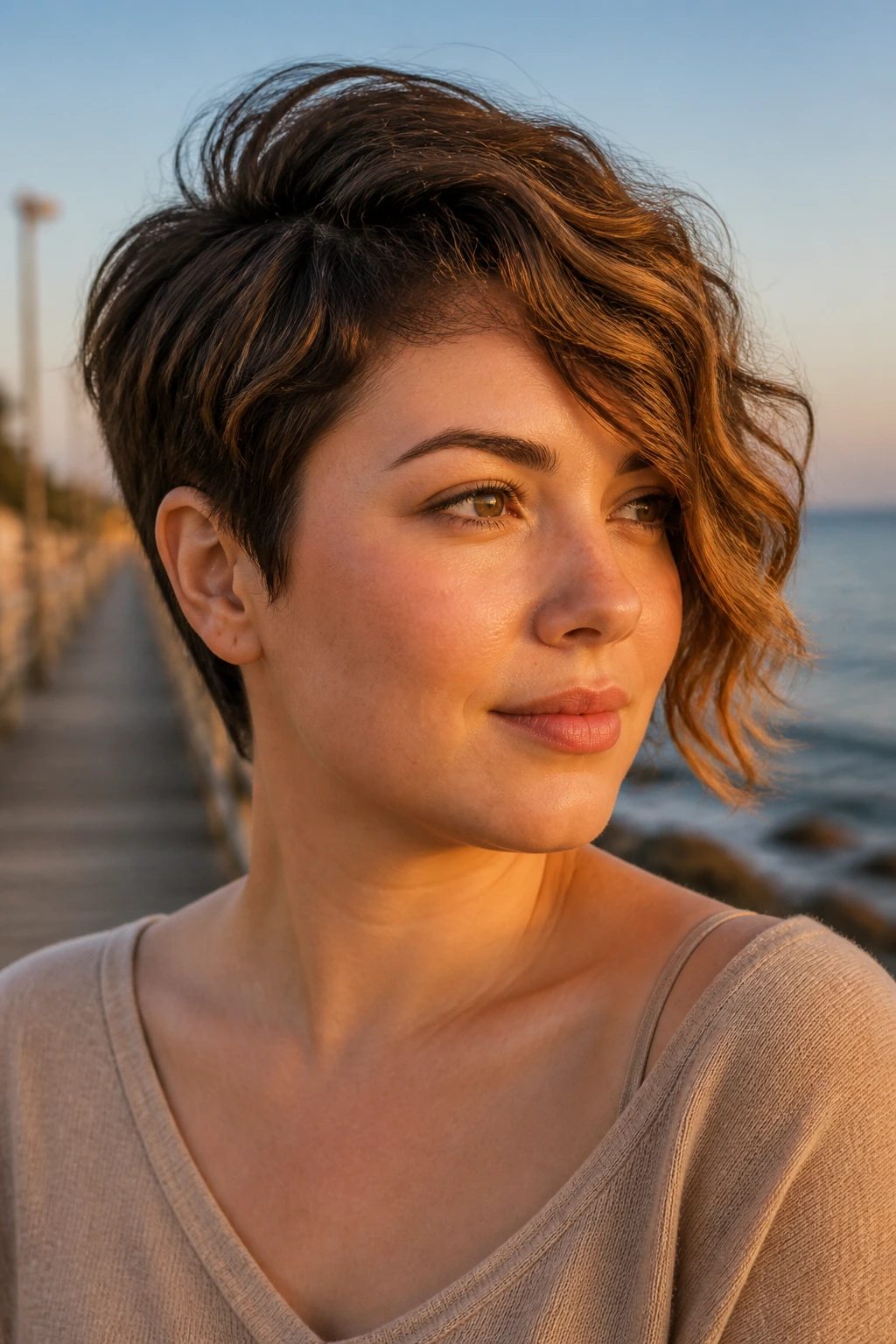
Wavy hair needs a different kind of control. If you cut it one length, the wave can puff outward at the cheeks. An asymmetrical crop solves that by giving the wave a direction and keeping one side a little longer.
The shape usually lands around the ear on the shorter side and just below the jaw on the longer side. That makes the wave fall diagonally instead of spreading outward. The face looks a touch longer, and the cut feels less puffy.
This is a good option if you air-dry most of the time. A small amount of cream through damp hair, a quick scrunch, and maybe a gentle diffuse on low heat — that’s enough. No need to overwork it.
I like this cut for people who want easy styling without giving up edge. It’s short, but it doesn’t feel severe. It’s casual, but not plain. That balance is harder to get than it sounds.
22. Graduated Pixie-Bob With Sweeping Bang
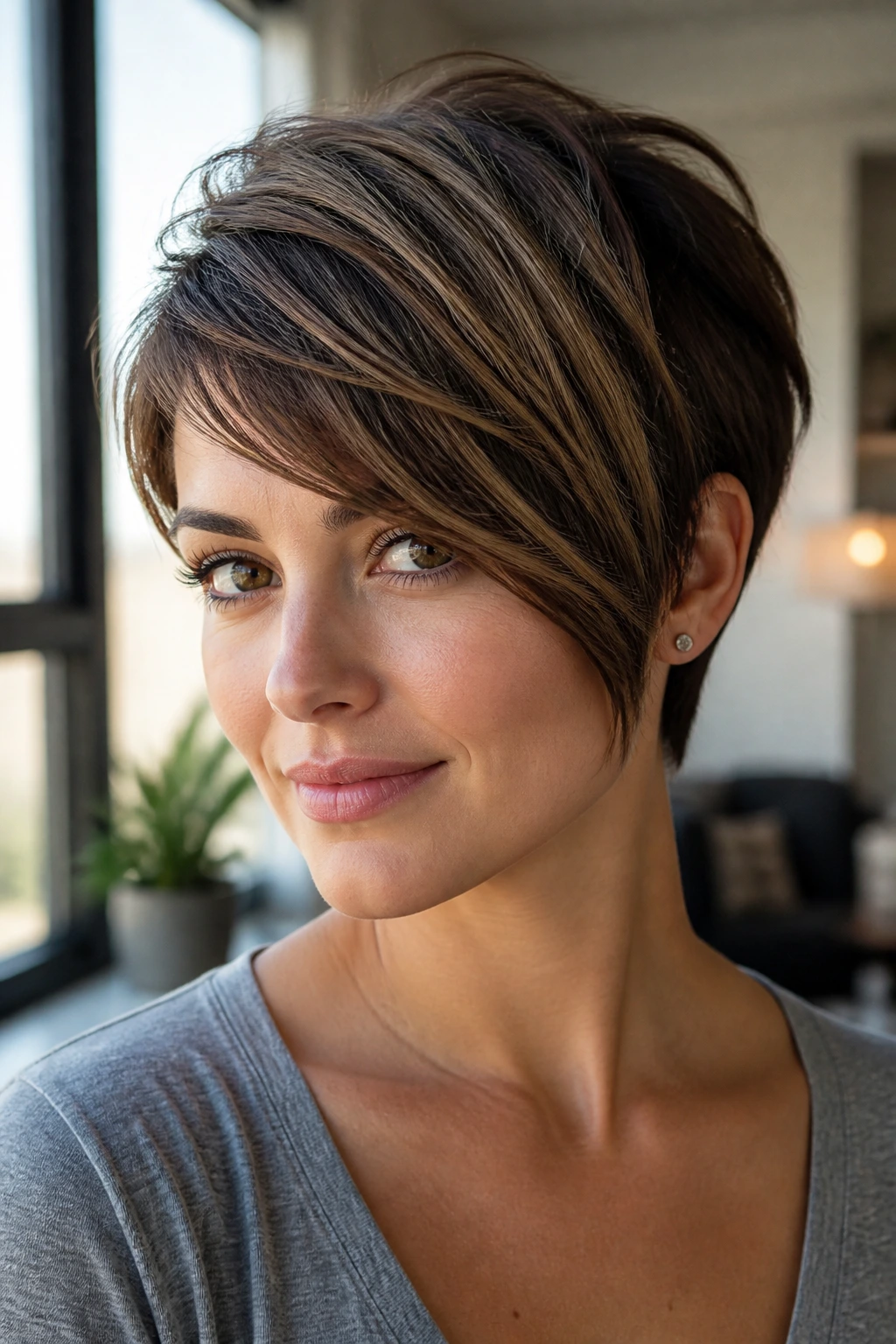
This is the safest place to land if you want edge without going all the way to a pixie. The graduated back gives the crown lift, the longer front keeps the face from looking too exposed, and the sweeping bang does the quiet but important work of narrowing the forehead and cheek line.
Ask for the shortest length at the nape and the longest point to stop just below the cheekbone. That creates a real angle, not a timid little slope. The bang should travel across the face, not sit as a heavy curtain.
What I like about this cut is how flexible it is. It can look clean with a round brush and a smoothing cream. It can look rougher with texture spray and finger-drying. It can even handle a little grow-out before the shape loses its edge.
If you’re unsure where to begin, start here. A graduated pixie-bob gives you the visual lift, the diagonal line, and the short length most round faces need — without making the haircut feel like a dare.
