



Short asymmetrical haircuts for men have a useful trick up their sleeve: they look deliberate before they look flashy. A small shift in weight — a longer fringe on one side, a hard part that sits off-center, a taper that drops faster on one temple — changes the whole read of the cut.
That matters because short hair can go flat fast. Same-length sides and a blunt top can feel plain unless the shape is doing some work. Asymmetry gives you that work without asking you to grow your hair out for months.
Barbers think about this stuff in very physical terms. Where does the crown push? Does the fringe split on its own? How much bulk sits above the temple? Those little details decide whether the cut looks sharp or just uneven in a bad way.
The good versions below stay clean, wearable, and easy to explain at the chair. The bad versions are the ones where the imbalance feels accidental. There’s a big difference, and it shows in the mirror.
1. Short Asymmetrical French Crop
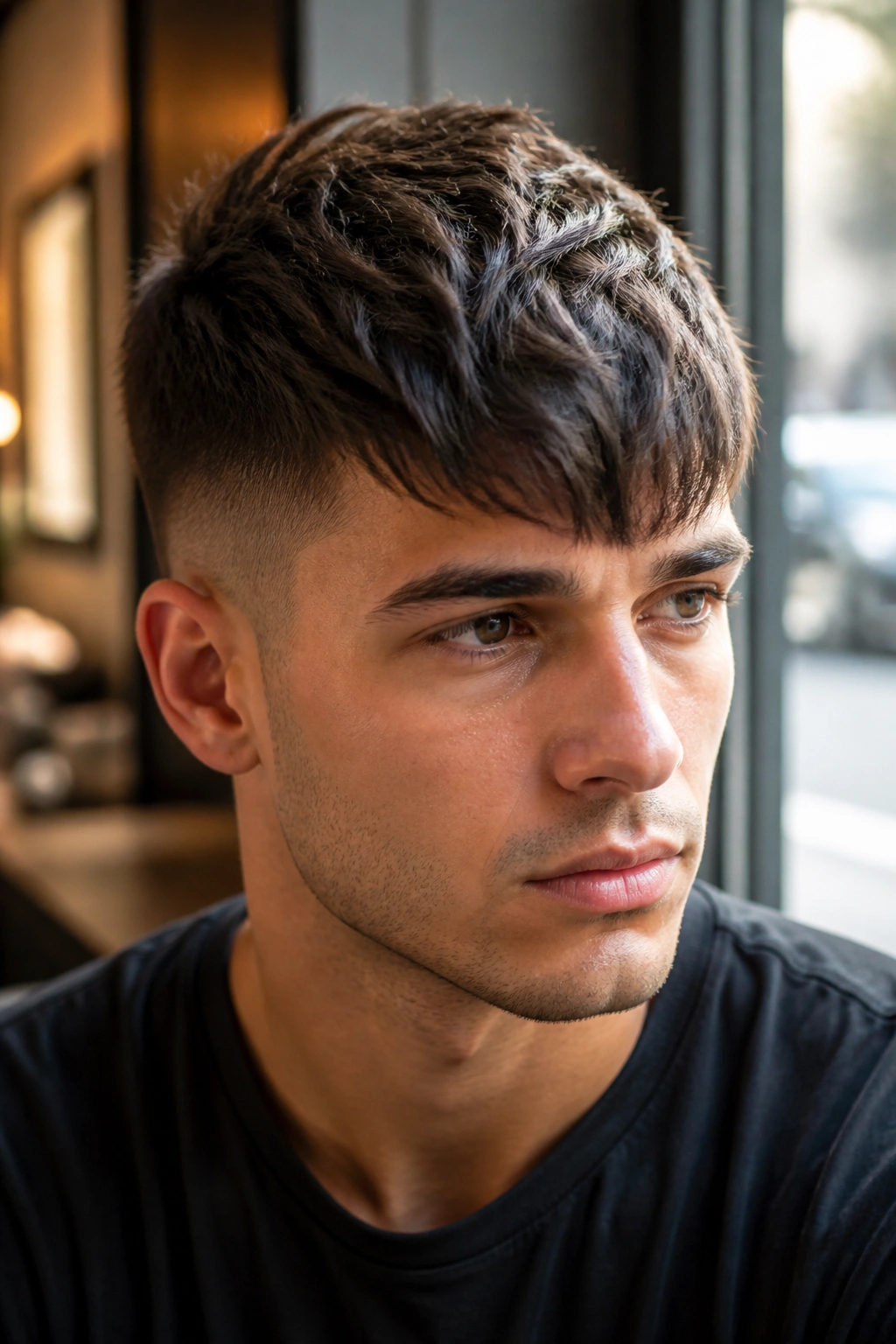
A French crop already has structure. Tilt the fringe to one side, and the cut stops feeling tidy in a basic way and starts feeling purposeful.
The version I like keeps the top around 1.5 to 2 inches, with one side of the fringe left a touch heavier so it falls across the forehead at an angle. The sides can stay tight with a low taper or a skin fade if you want more contrast. That little mismatch in the front does most of the visual work.
What to tell your barber
- Top: Keep roughly 1.5 to 2 inches, with the front slightly longer than the crown.
- Fringe: Push it diagonally, not straight across.
- Sides: Ask for a low taper or a clean fade around the ears.
- Finish: Leave the texture choppy, not smooth.
This cut works especially well on straight or mildly wavy hair. A matte paste is enough. Rub a pea-sized amount through damp hair, then push the fringe off-center with your fingers. Do not chase perfect symmetry here; the cut loses its point the moment you over-comb it.
2. Side-Swept Undercut with a Longer Front
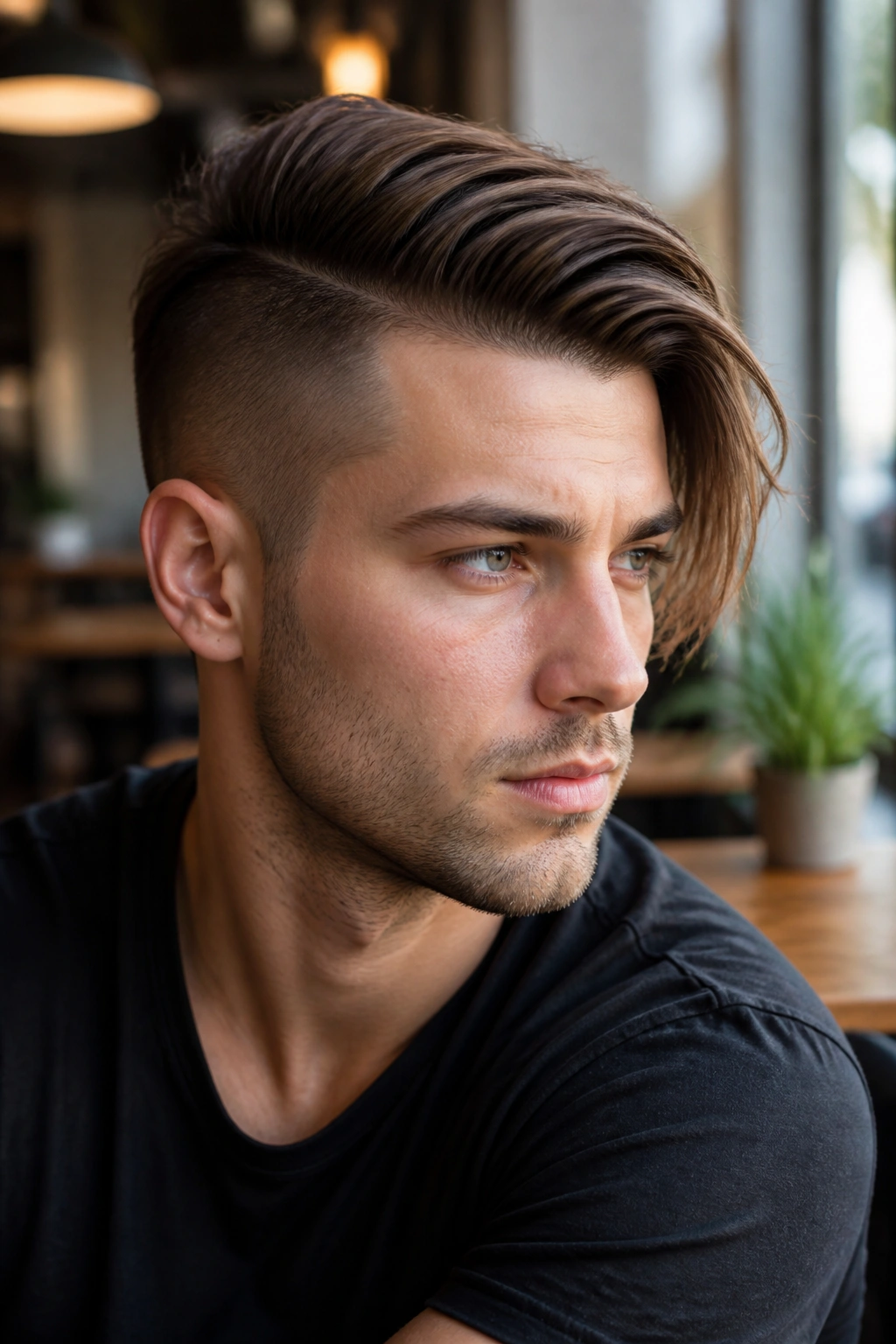
This is the cut for men who want contrast without looking like they spent half an hour in front of the mirror. The sides stay tight, the top sweeps hard to one side, and the front carries the weight.
It looks best when the front is about an inch longer than the back of the top section. That extra length gives the sweep enough bend to sit with intention instead of flopping. Thick hair handles this style well because it keeps some body after drying.
If your hair is dense, ask for the undercut line to sit cleanly above the temple. That keeps the separation obvious. If your hair is fine, keep the contrast a little softer. Too much skin on the sides can make the top look small.
A light blow-dry makes a real difference. Aim the nozzle where you want the hair to go, then pinch the front into a side sweep with your fingers. Heavy product is the enemy here. You want movement, not a lacquered lid.
3. Disconnected Crop with a Hard Part
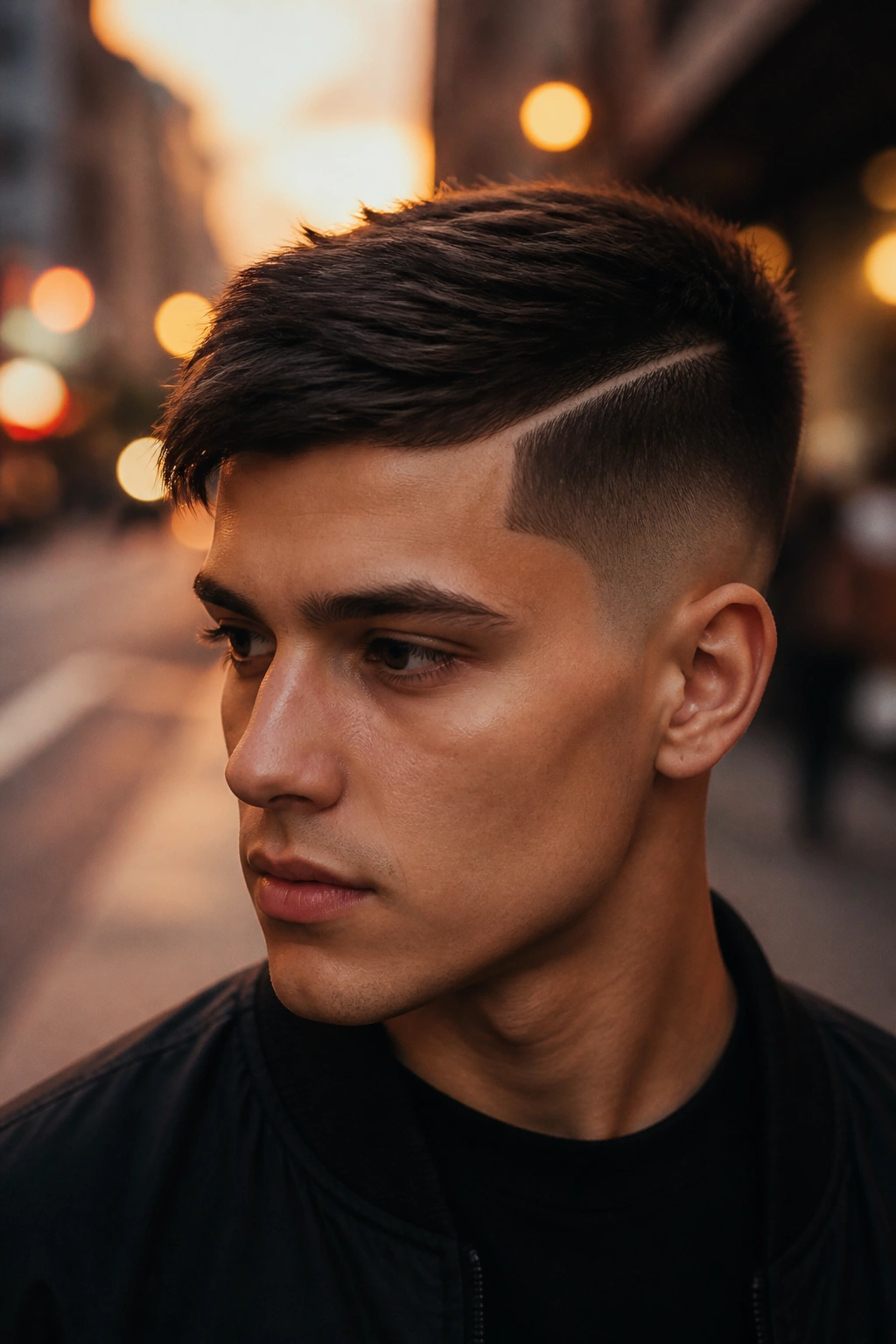
What makes this style work is the line. A hard part draws a clean boundary, and the disconnection beside it lets the cut lean without looking messy.
The top should stay short enough to keep shape — think 1 to 2 inches — but long enough for the front to tip over one side. The barber should carve the part where the hair naturally wants to split, then leave the opposite side tighter and flatter. That contrast is the asymmetry.
How to ask for it
A simple script helps:
- Keep the top short and textured.
- Add a hard part on one side.
- Leave one side heavier through the front.
- Fade the sides tight but not bald unless you want strong contrast.
This cut can be a smart move for fine hair, because the part and the texture give the illusion of more density. It is not the best choice if your hair whorls wildly at the front. A stubborn cowlick can fight the whole shape. If the front already leans, though, this cut feels almost made for it.
4. Angular Caesar
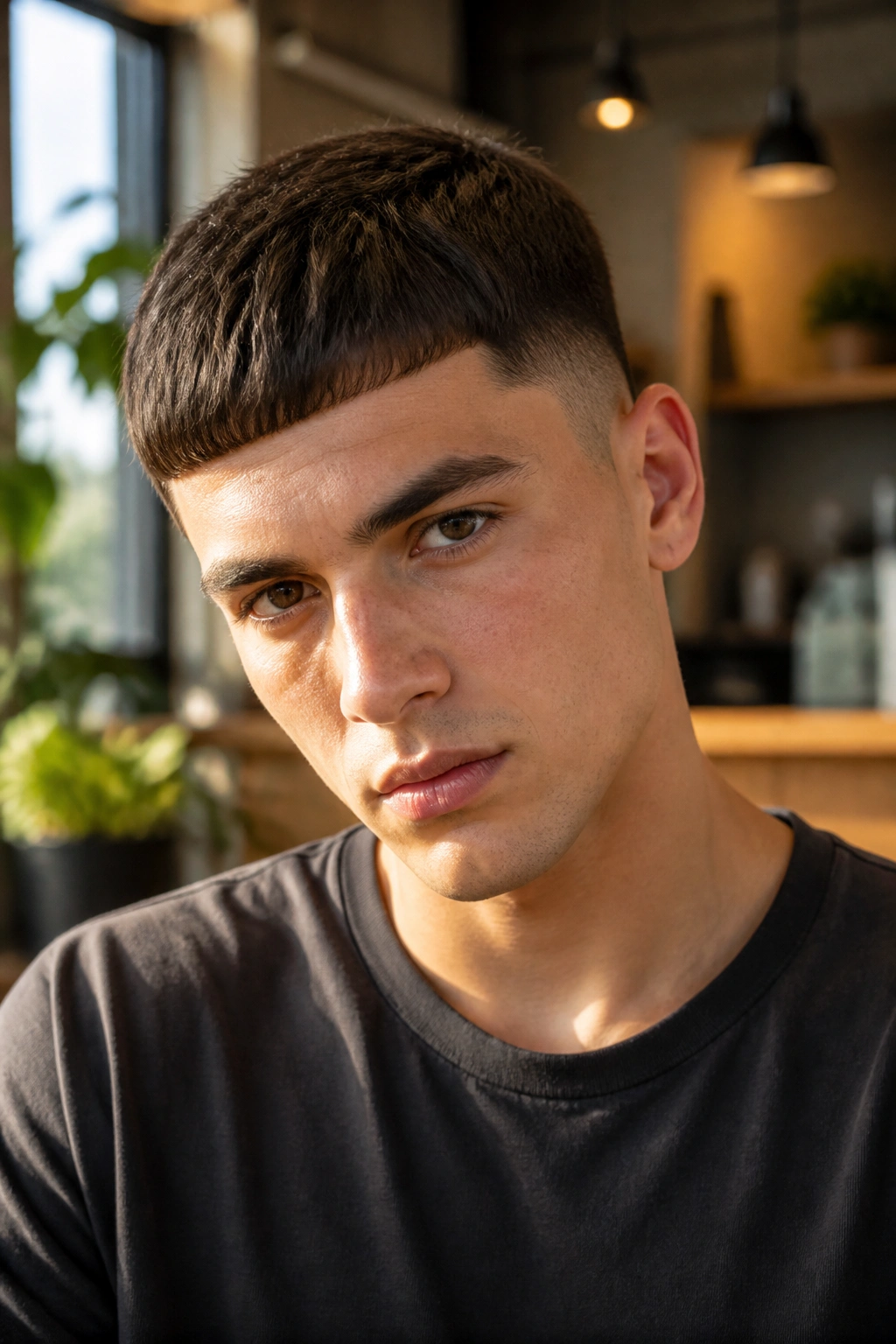
A Caesar cut has a blunt, low-frills feel, which is exactly why the angled version hits harder. You keep the short fringe, but you let it sit lower on one side and a little higher on the other.
Picture a straight fringe that has been nudged off balance on purpose. That tiny shift makes the forehead line less boxy and gives the cut more movement, even though the hair stays short. It is a good option if you want something tough-looking without going full fade-heavy.
The barber should keep the top around 1 to 1.25 inches and use the fringe to create the angle. The sides can be tapered or faded close, depending on how much contrast you want. A rough matte clay works better than shine here, because the style should feel compact and dry to the touch.
Best for: straight hair, strong jawlines, and men who want short hair that still has a shape to read from across a room.
5. Textured Ivy League with an Uneven Part
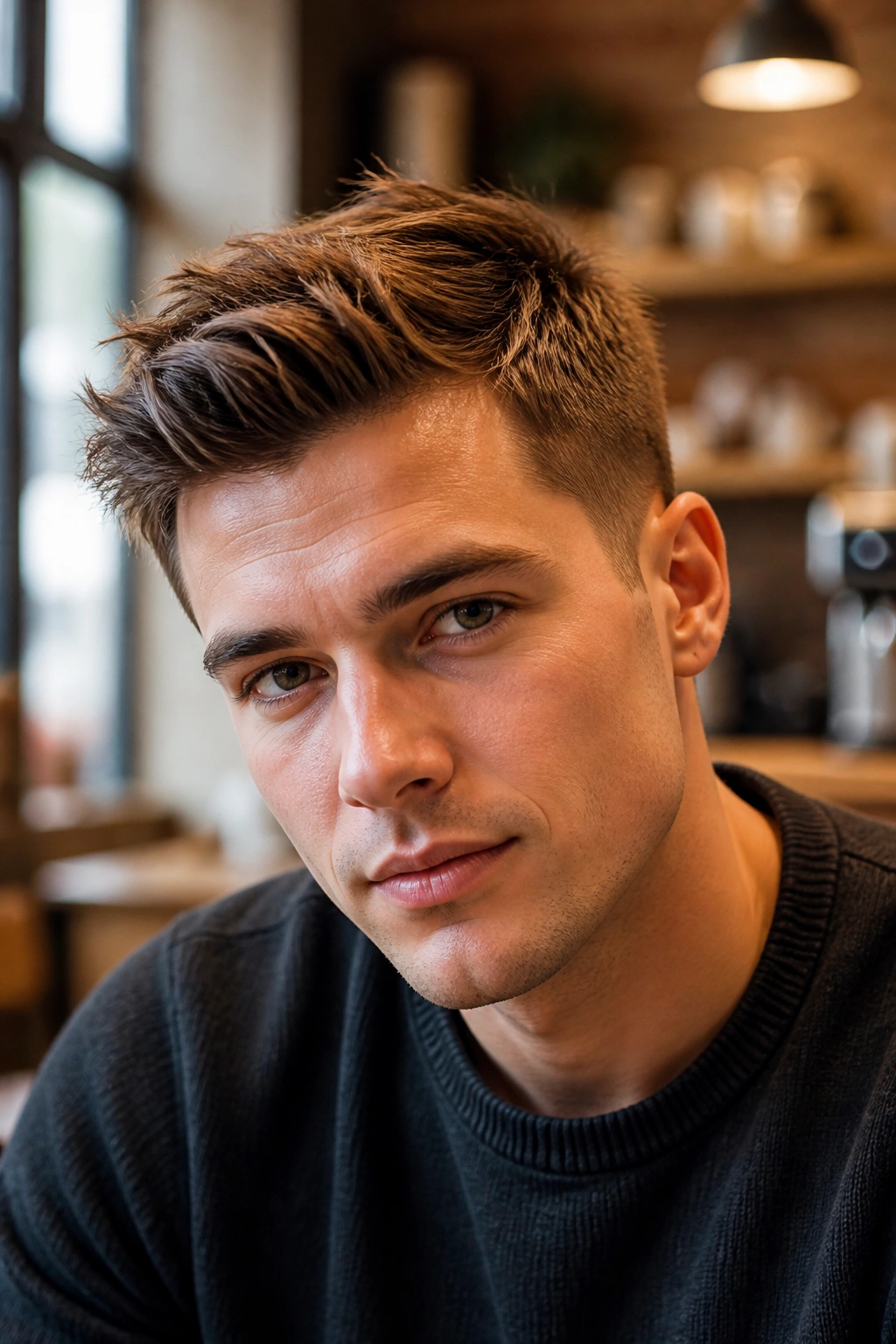
Unlike the classic Ivy League, this version does not try so hard to be polite. The part sits a little off-center, one side gets more lift, and the front has just enough mess in it to keep the cut from looking like office wallpaper.
That small imbalance gives the style a better profile. From the front, it still reads clean. From the side, the top has more personality because one half lifts and the other stays closer to the head. You get structure without the stiffness.
This is a strong choice if you like tailored clothes, button-downs, and hair that behaves in a meeting but still has a pulse after work. Use a light styling cream or a low-shine paste. Comb it once if you need to, then stop. The whole point is that it should look controlled but not frozen.
The odd thing about this cut is how forgiving it is. Hair that’s slightly wavy, slightly coarse, or slightly fine can all work with it. Slightly is the magic word.
6. Curly Asymmetrical Taper
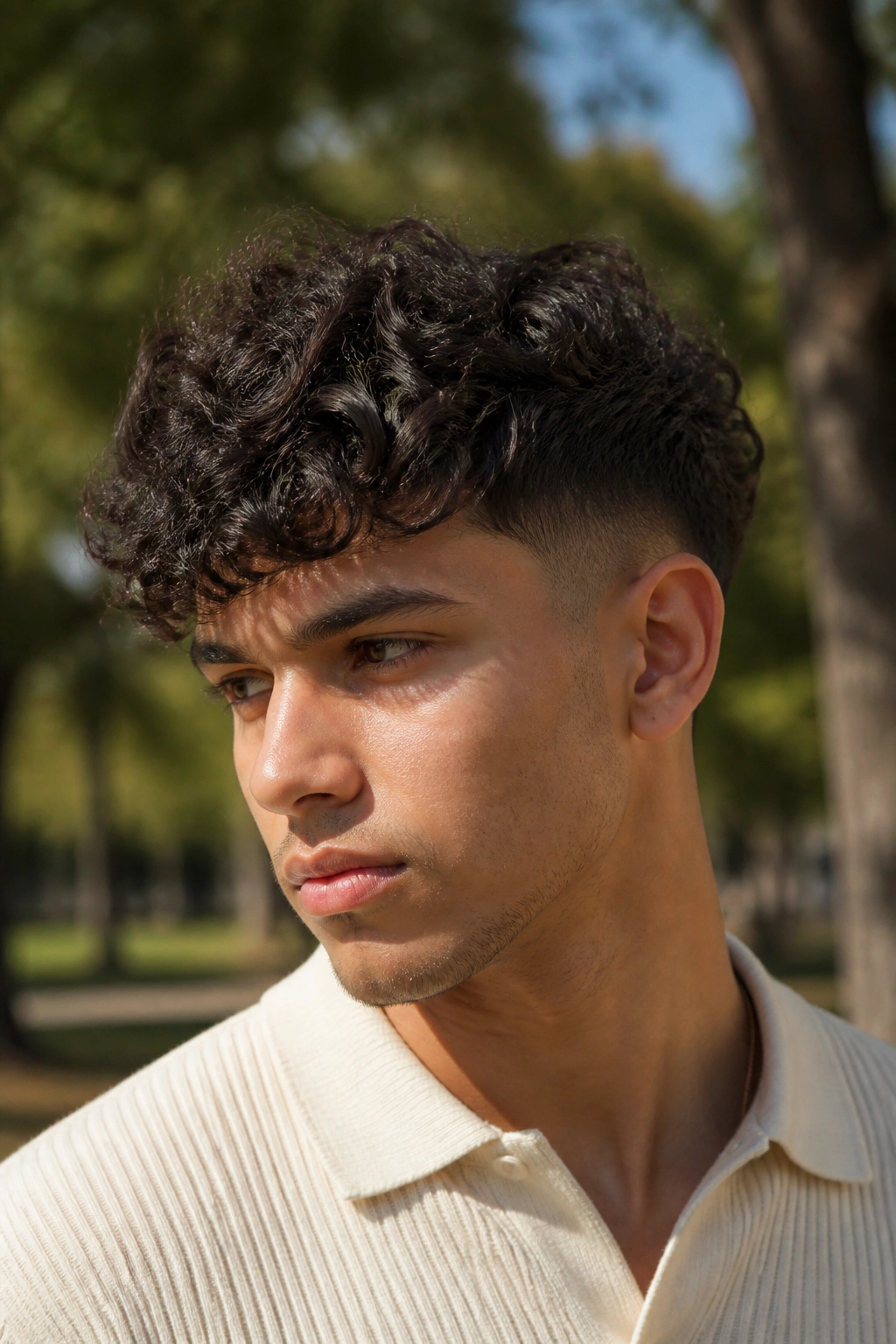
Run your fingers through this cut and you should feel movement, not helmet hair. The curls stay short on top, one side carries a little more length, and the taper on the sides keeps the shape crisp.
Curly hair makes asymmetry easier than people think, because curl pattern already creates uneven texture. The cut just needs to guide that texture instead of fighting it. A barber should keep the top around 2 to 3 inches if the curl is tight, or a bit shorter if the wave is loose.
A curl cream or lightweight leave-in conditioner matters here. The hair should look soft, not crunchy. Scrunch it into place after showering, then let it fall where it wants. If one side has more weight, leave it alone. That’s the point.
This style looks best when the taper around the ears is clean. It frames the curls and stops the top from turning into a shape-less puff. Dry cutting can help a barber see the curl pattern more honestly, which is worth asking about if your texture is stubborn.
7. Short Asymmetrical Quiff
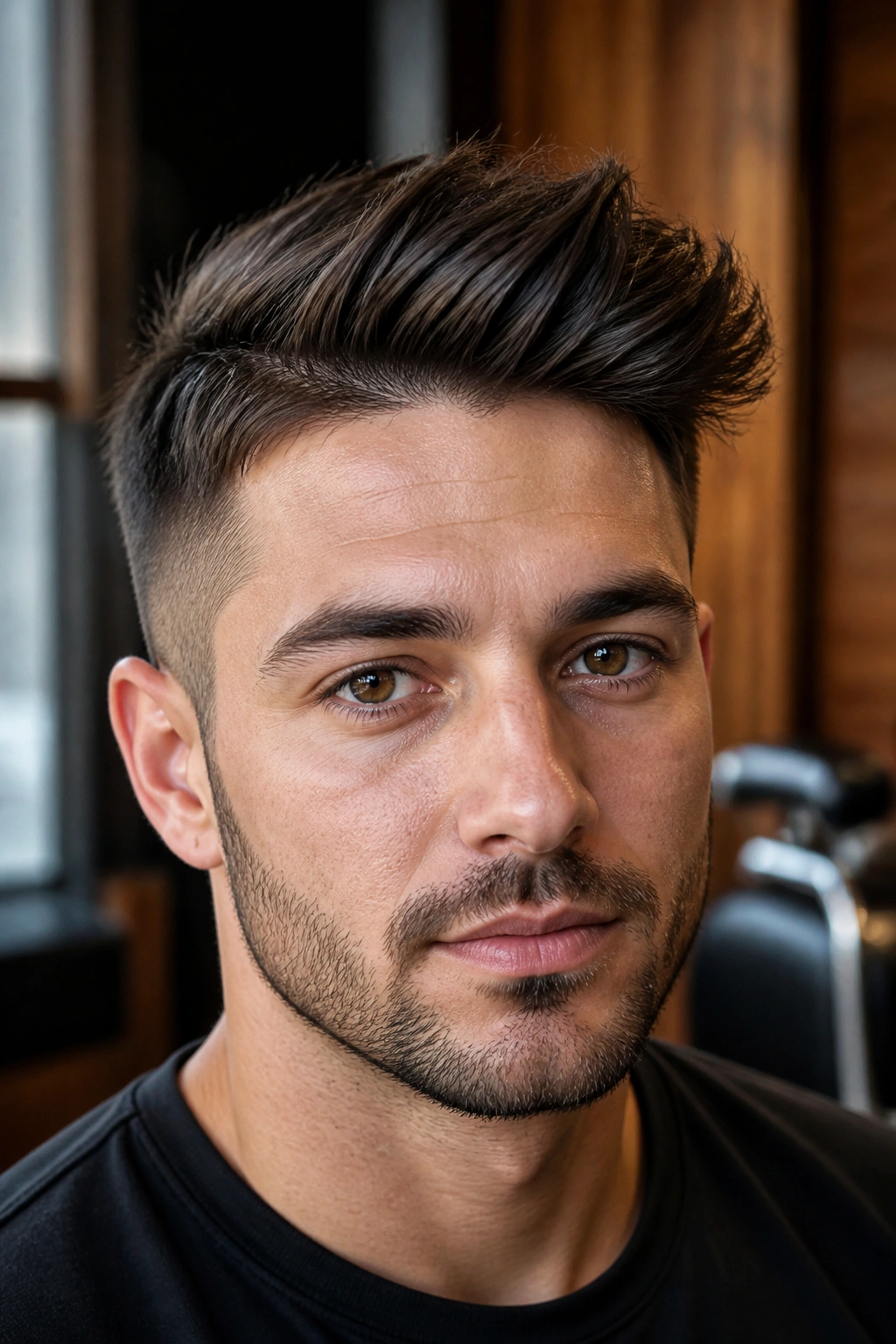
The short asymmetrical quiff looks better when it is a little imperfect. A perfectly centered quiff can feel dated fast. Tilt it, and suddenly it has movement.
Keep the front long enough to rise — usually 2 to 3 inches — while one side of the quiff carries more height and the other lies flatter. The sides should stay tight, but not so tight that the top floats awkwardly above them. Balance still matters. It just needs to be off-balance on purpose.
What makes it work
- The front is lifted, but not tall enough to feel theatrical.
- One side has more volume.
- The shape should lean, not wobble.
- Matte clay or a soft pomade keeps it touchable.
This cut suits thicker hair best, though medium-density hair can manage it with a blow-dryer and a bit of patience. Aim the dryer up and slightly across the top, then push the front toward the heavier side with your hand. Do not over-slick it. A quiff that shines too much starts looking like a costume.
8. Low Fade with a Slanted Fringe
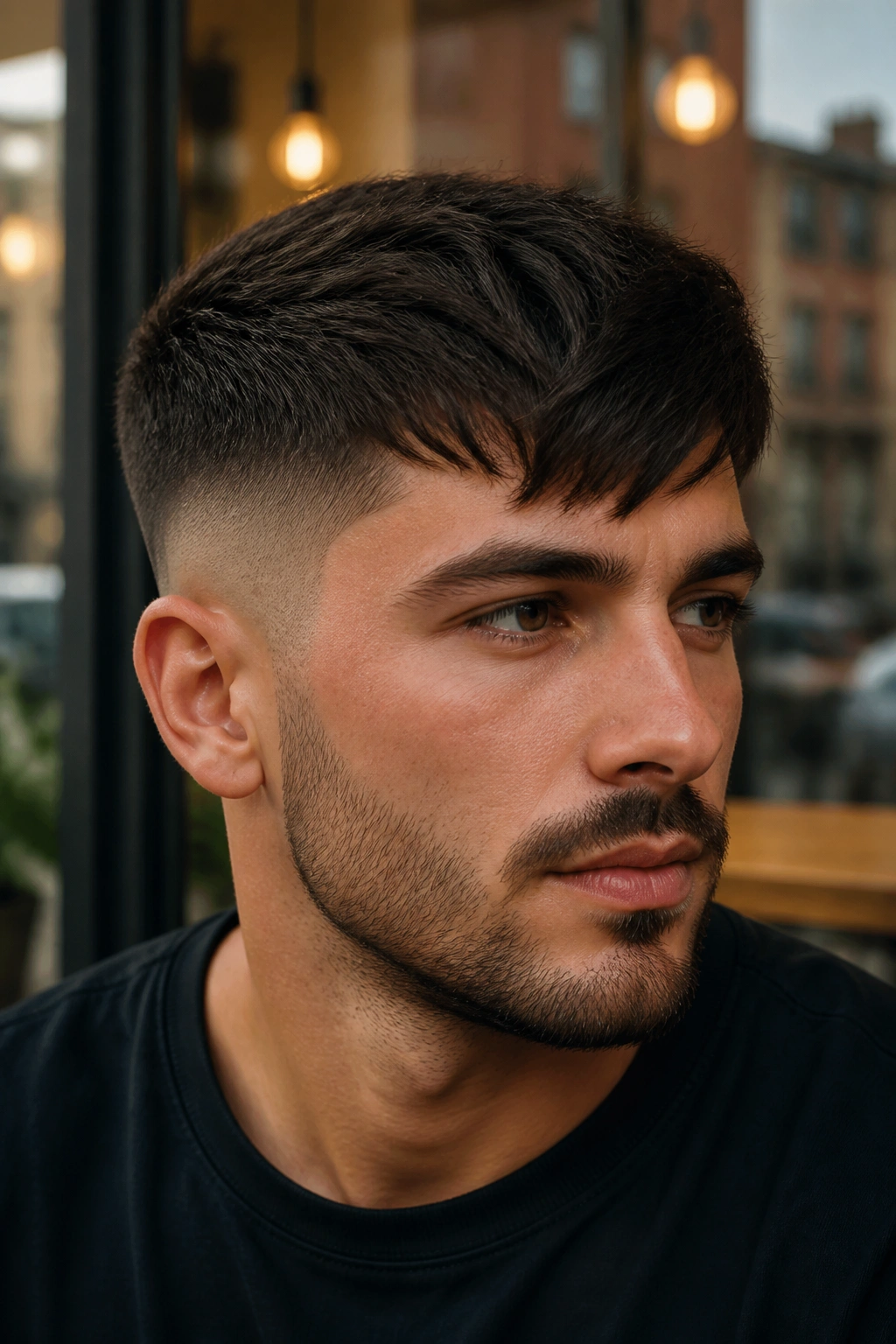
Want something that sharpens the face fast? A low fade with a slanted fringe does that without asking for a huge amount of hair on top.
The fringe drops diagonally across the forehead, which is handy if you want to lengthen a round face or soften a wide forehead. The low fade keeps the sides neat without stealing all the attention. The effect is clean, but not boring.
This style works especially well when the front is cut with texture instead of a blunt line. A blunt fringe can make the angle look too stiff. A slightly chopped edge feels more natural and easier to move around with your fingers. That matters on busy mornings.
I like this cut on men who want a little drama but don’t want to look like they tried to create drama. There’s a difference. The slant should look like it belongs there, not like it was measured with a protractor.
9. Brush-Up with One Heavy Side
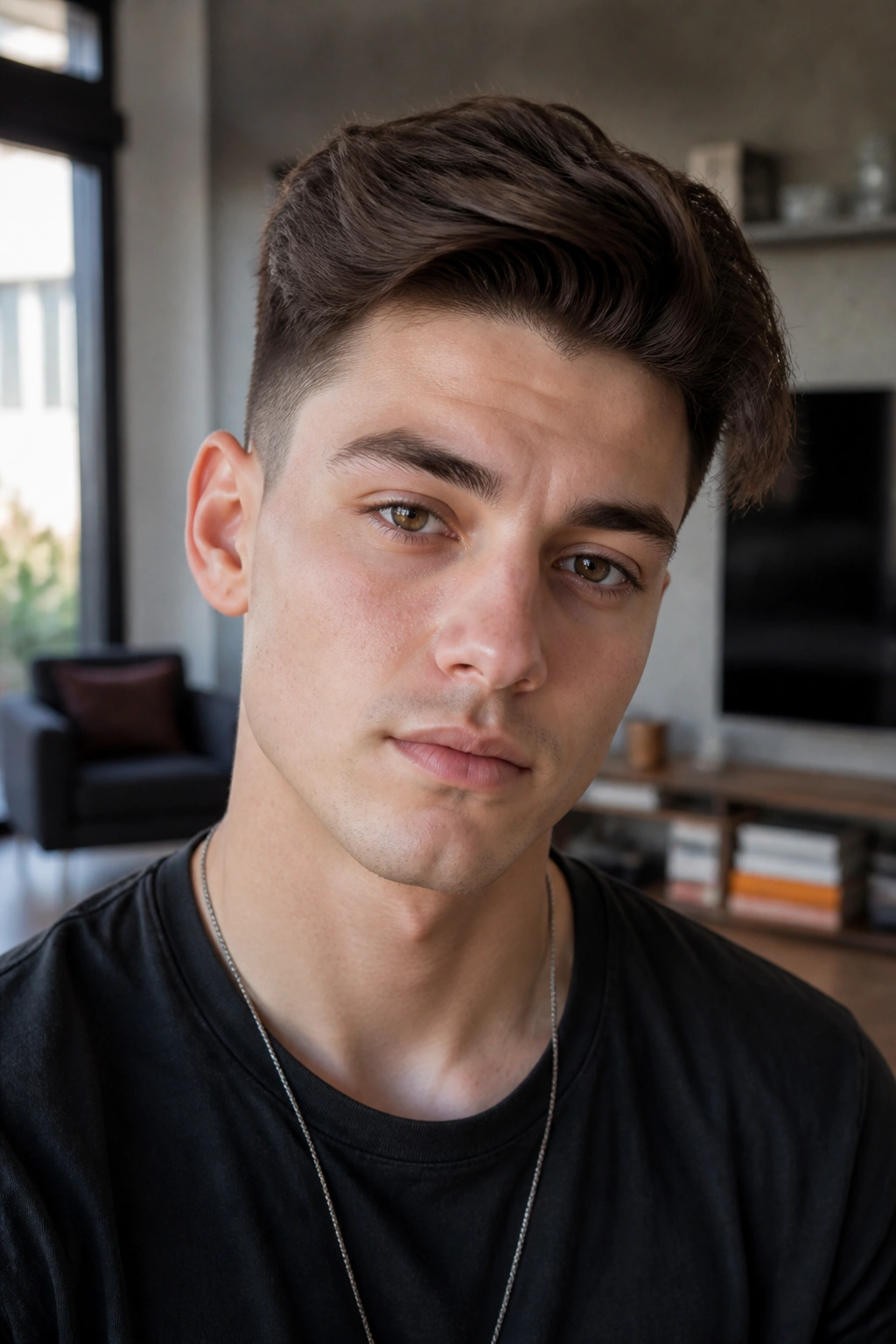
If your hair stands up on its own, do not fight it. Use that lift and let one side carry more weight than the other.
This cut works when the top is brushed upward and slightly over, with one front corner left fuller. The shape lands somewhere between a short quiff and a crop, which gives it more range than people expect. It can look relaxed during the day and sharper at night with a quick restyle.
The trick is to keep the side with more hair a little longer through the front quarter, not the whole top. That keeps the cut from turning into a lopsided helmet. A medium-hold matte product is usually enough. Work it into dry hair, then brush upward with your fingers or a vent brush.
No need to overthink this one. The style looks best when it has a bit of natural mess. Too much precision kills the energy.
10. Buzz Cut with a Diagonal Line
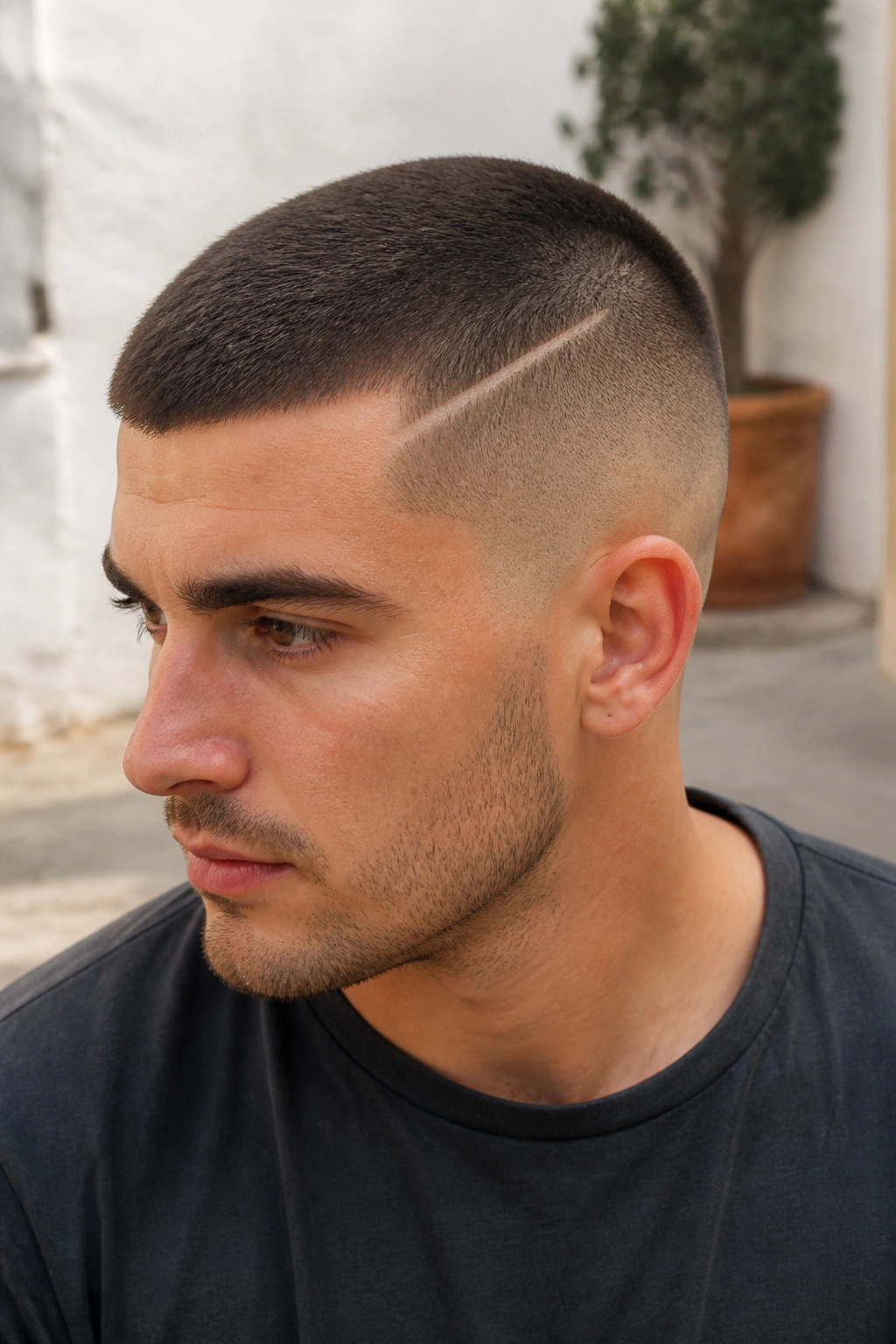
A buzz cut does not have to be plain. A diagonal line, a guard shift, or a slightly longer front ridge can turn it into a short asymmetrical style without adding much upkeep.
Think of the asymmetry as embedded in the shape, not piled on top. One side can sit at a #2 guard while the other sits closer to a #3, or the barber can carve a thin diagonal part into the fade. The result is subtle enough for men who like short hair, but it still gives the eye somewhere to go.
Details that matter
- Keep the line clean and thin.
- Ask for a soft fade at the temples.
- Leave the top one guard length longer on one side if you want more visible imbalance.
- Book touch-ups every 10 to 14 days if you want the line to stay crisp.
This is a good cut for guys who want low maintenance and still want some design. It is not loud. It just has a smarter shape than a standard buzz.
11. Side-Part Fade with Longer Crown
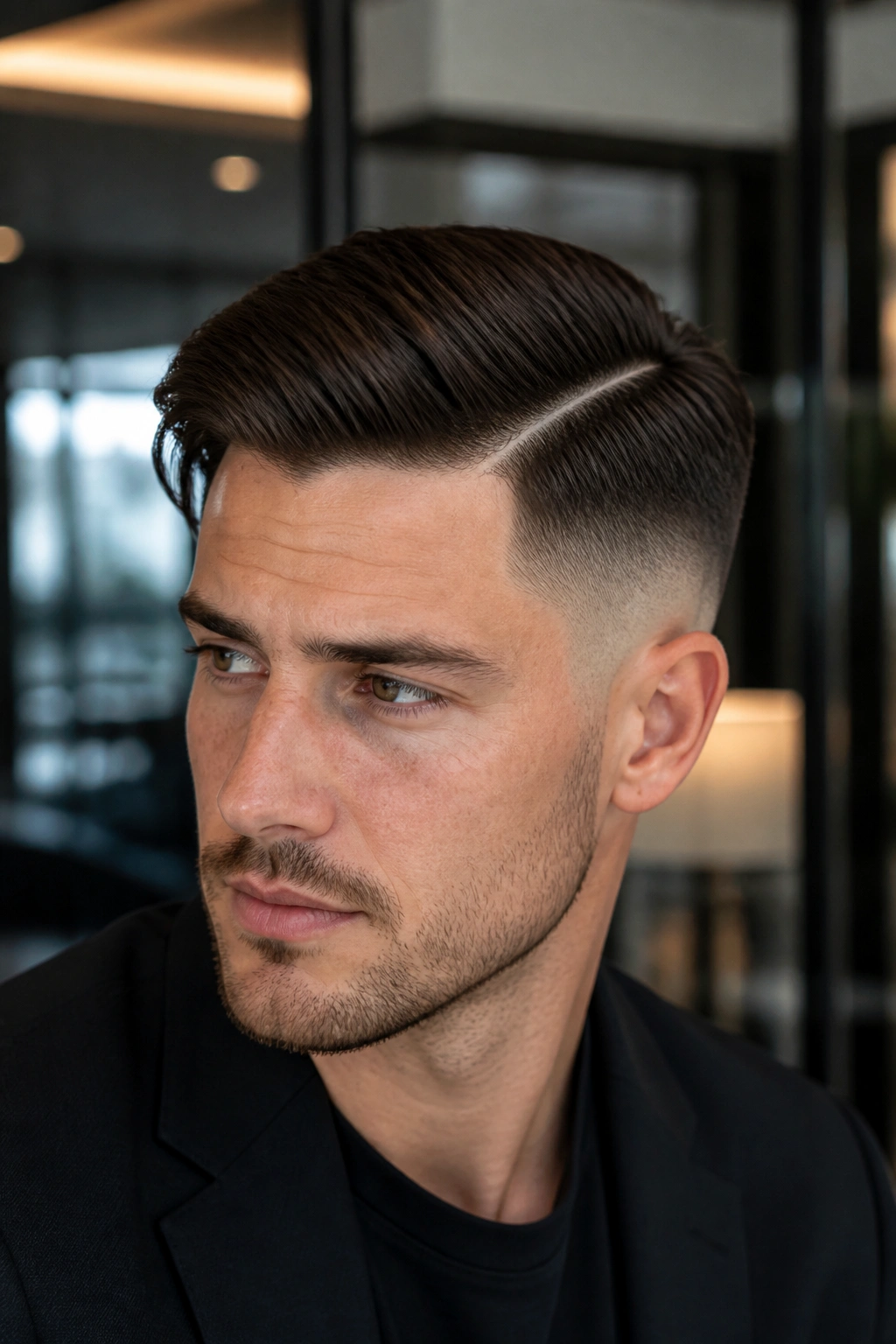
A side part can feel old-fashioned when it is too neat. Let the crown stay a little longer, shift the part off-center, and the whole cut gets more life.
The top should have enough length to lift at the crown, then drop to one side with a gentler curve. The fade at the sides keeps the cut from getting bulky around the ears. What makes this version interesting is that the crown doesn’t sit evenly. One side takes more height, and that tilt changes the profile.
This cut does well in settings where you want polish without looking sealed into place. A small amount of styling cream or a light pomade gives control without stiffness. Comb the part once, then break it up with your fingers. That little bit of mess keeps it from feeling stiff.
The best versions of this cut have a clean side profile and a slightly softer front. That mix looks expensive in the simple sense of the word — neat, calm, and clearly thought through.
12. Messy Crop with a Dropped Fade
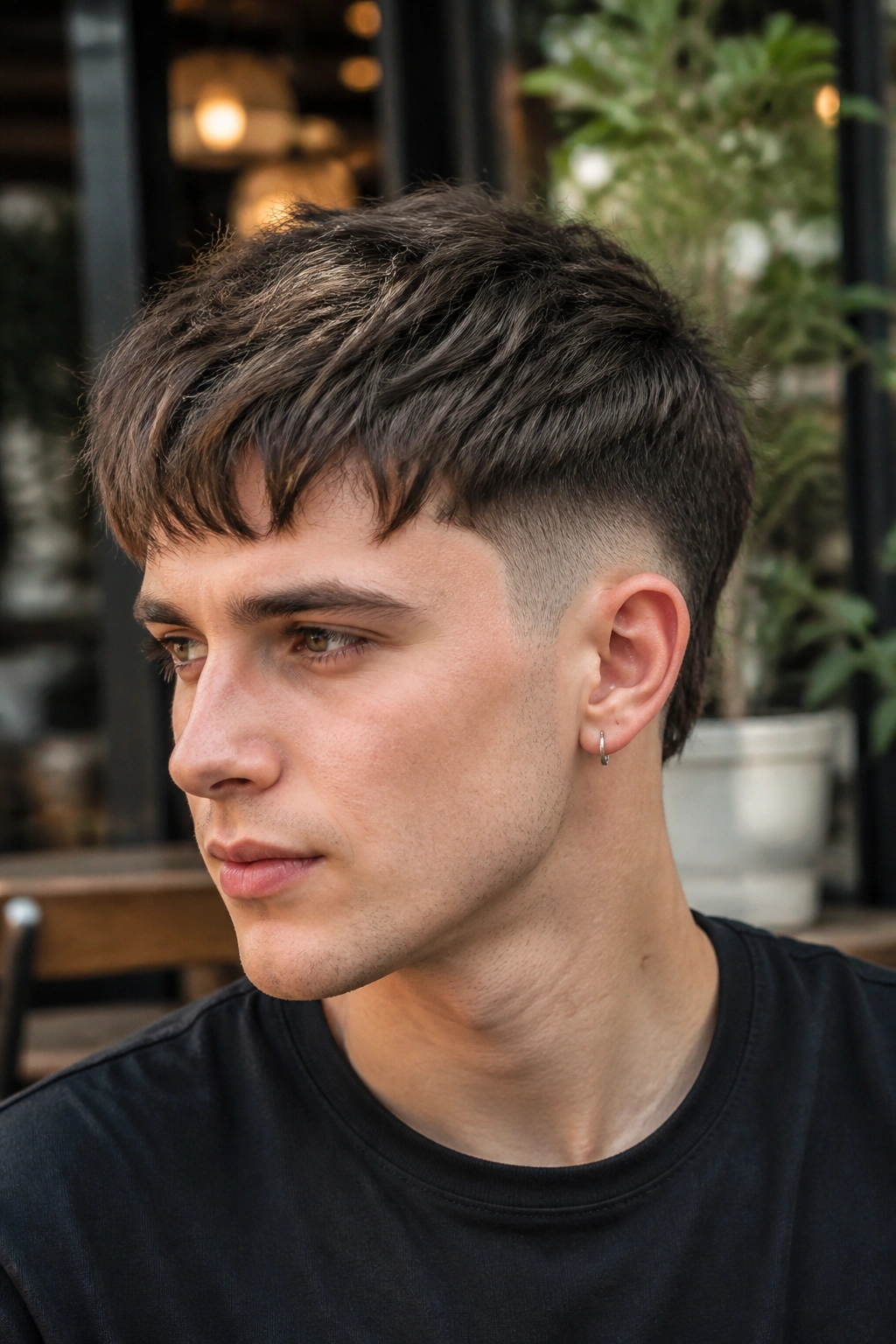
A messy crop is already easy to wear. Add a dropped fade, and the cut starts to feel more sculpted around the head.
The drop fade curves lower behind the ear, which gives the whole shape a bit of contour. Then the top stays short and choppy, with one side carrying more fringe than the other. That uneven front keeps the style from looking like a standard short crop with random texture sprayed into it.
This is one of the better cuts for thick hair that likes to puff up. The shorter length on top controls the bulk, and the drop fade removes weight where it matters. A texturizing spray or a dry matte product is enough. Blow-drying can help, but it is not mandatory if your hair naturally falls with some bend.
I like this cut because it looks good on a real head, not only in a barber photo. It forgives cowlicks, slight unevenness, and the kind of mornings where hair is doing its own thing.
13. Slick Side Sweep with Tighter Sides
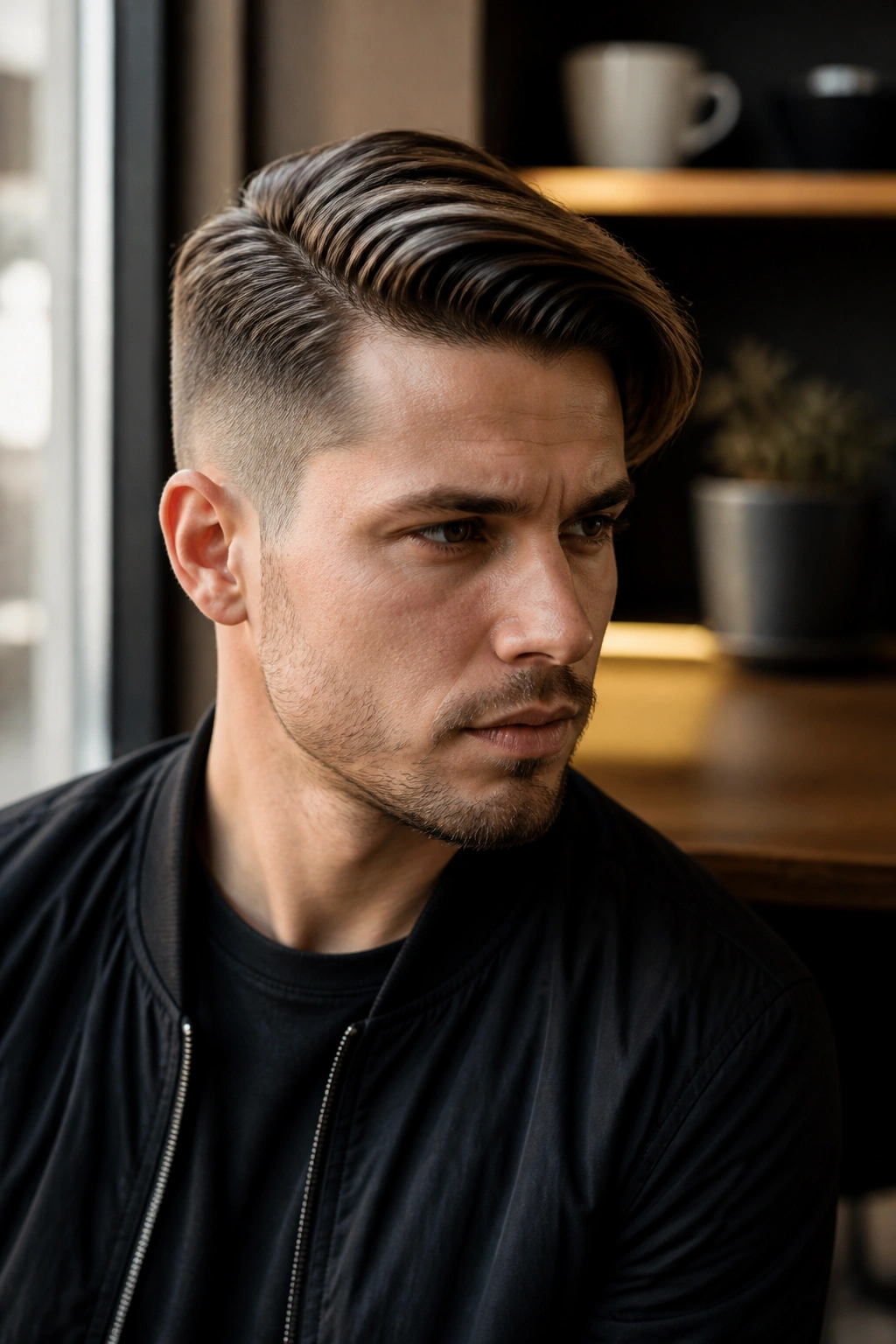
Most men ruin this cut by drowning it in shine. That’s the first thing to fix.
A slick side sweep should look smooth and controlled, but the asymmetry comes from the top being directed more aggressively to one side, with the opposite side lying flatter and closer to the head. The sides stay tight, which makes the sweep feel sharper. Keep the top around 2 to 3 inches if you want enough movement without losing short-hair practicality.
The finish matters a lot. A light pomade or cream gives the hair direction without turning it wet and flat. Use a comb if you need a cleaner line, then break the front slightly with your fingertips. You want a sweep, not a shell.
This is a good cut for straight hair and for men who like a neat silhouette. It also handles formal clothes well. The problem is over-styling. Once the product starts looking glossy enough to catch every light in the room, the cut gets less handsome and more precious.
14. Burst Fade Mohawk
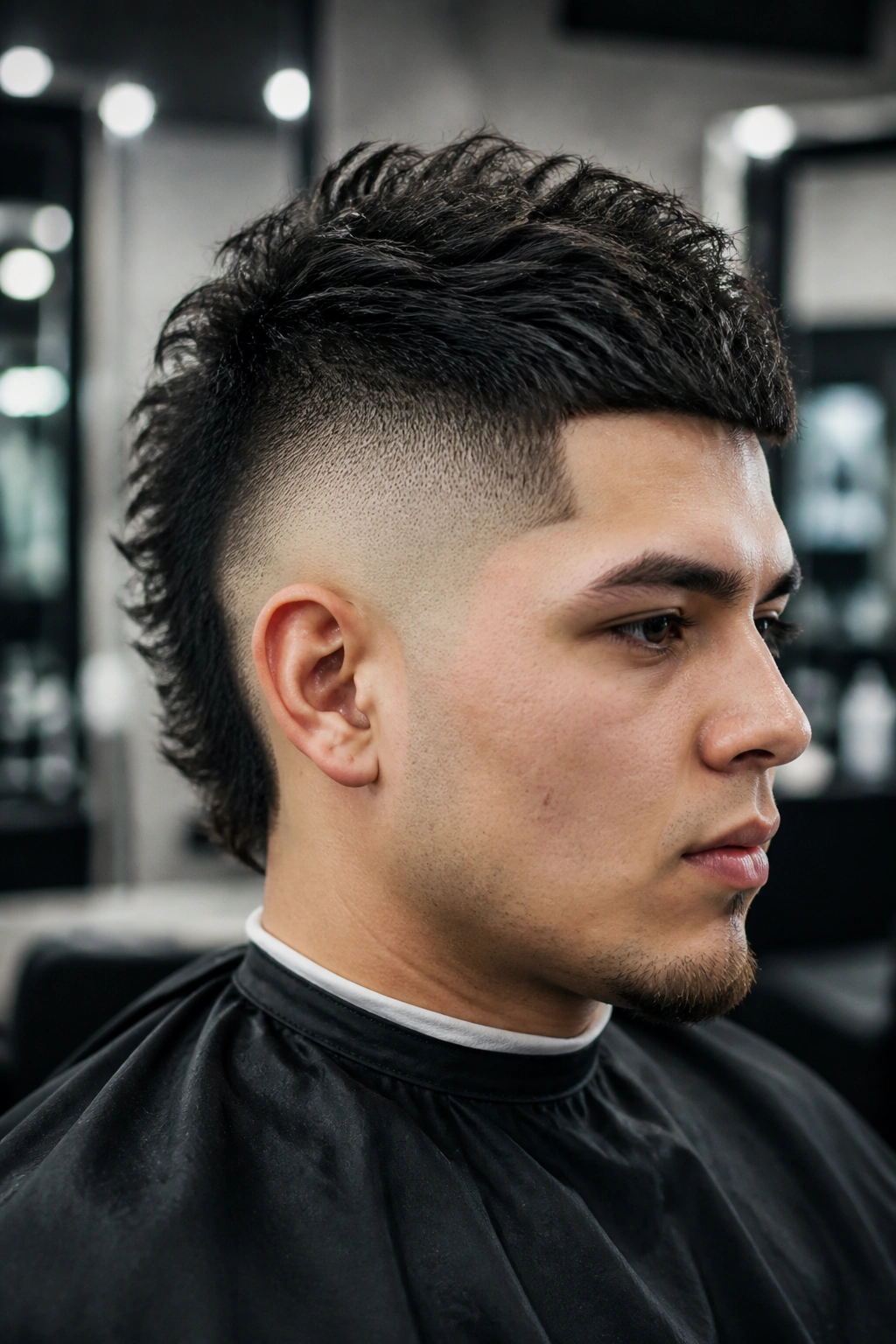
Can a mohawk be short and wearable? Yes, if the top is compact and the sides are faded tight in a burst shape around the ear.
The burst fade pulls the eye around the temple and ear area, which gives the top a more dramatic frame without making the whole cut spiky. Keep the central strip short — usually 1.5 to 3 inches — and let one side lean a little fuller if you want the asymmetry to show. That slight mismatch makes the style feel less like a costume and more like a haircut.
Who should skip it
- Men who need a very conservative look.
- Anyone who hates regular barber maintenance.
- Hair that lies flat and resists styling on top.
If you do want it, ask for the top to stay textured and not too narrow. A too-thin strip can make the head look pinched. A little width in the center keeps it balanced while the fade does the sharp work on the sides. It is a bold style, but it can still be neat.
15. Wavy Fringe with a Deep Side Drop
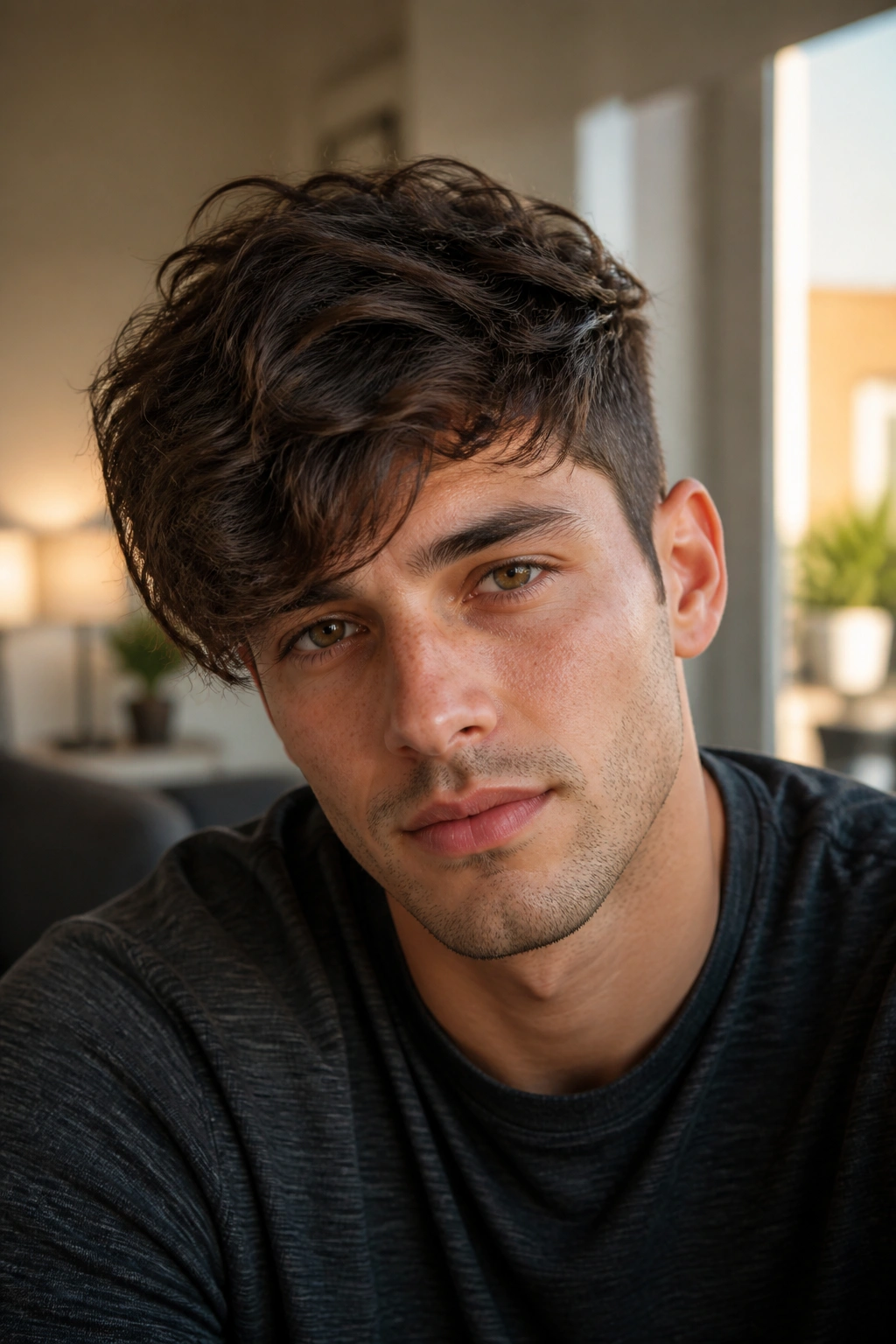
Wavy hair loves a bit of imbalance. A deep side drop lets the fringe fall heavier on one side while the other side stays lighter and cleaner.
The best part is how little effort it needs. Let the waves keep their bend, trim the fringe so it angles across the forehead, and keep the sides tapered so the shape does not balloon. If your wave pattern is loose, a sea salt spray can add grip. If it is stronger, a light cream may be enough.
This cut works because it follows the hair’s natural motion. You’re not flattening the wave or forcing it into a straight line. You’re just deciding where the weight lands. That distinction matters. Hair that fights its own shape always looks like it lost a small argument.
The deep side drop also helps men with a longer forehead or a strong widow’s peak. It breaks the straight line and gives the front a softer edge without hiding the face.
16. Crew Cut with Off-Center Texture
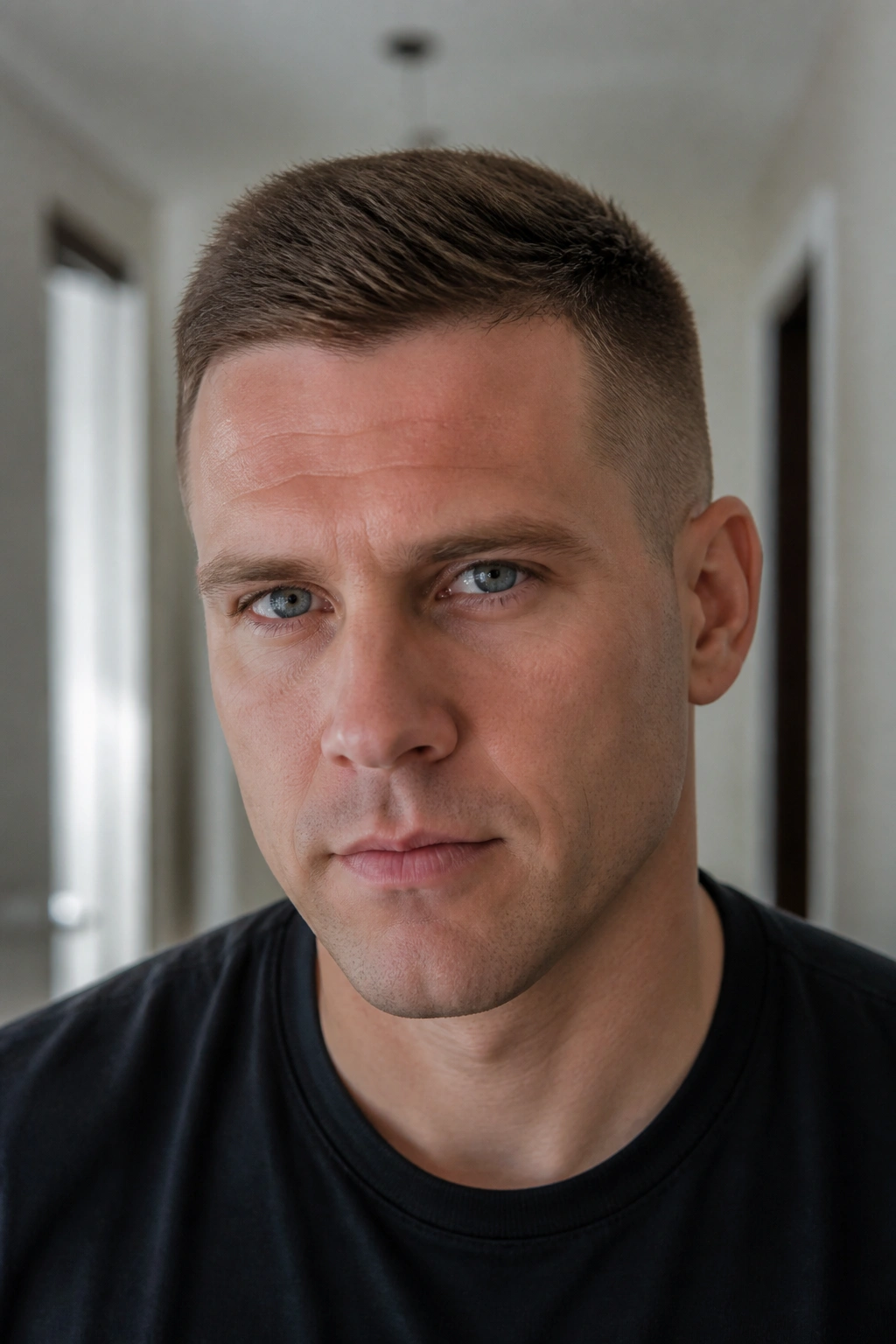
A classic crew cut is even, tidy, and easy to explain. The off-center version keeps that discipline but shifts the texture so one side has more lift than the other.
This works because the crew cut already has a simple shape. Once you add a little weight to one front corner, the haircut stops reading like a military leftover and starts reading like a deliberate choice. Keep the top short — around 1 to 1.5 inches — and fade or taper the sides close enough to show the shape clearly.
Why the tilt matters
- It changes the front view without adding much length.
- It keeps the cut low maintenance.
- It works well on straight, coarse, or lightly wavy hair.
- It grows out cleanly.
A crew cut like this is a good fit for men who want short hair but still care about the silhouette. The styling is fast: a bit of matte paste, a quick push with the fingers, and you’re done. No need for a heavy brush, no need for elaborate drying. That’s part of the appeal.
17. Tapered Pompadour with a Tilt
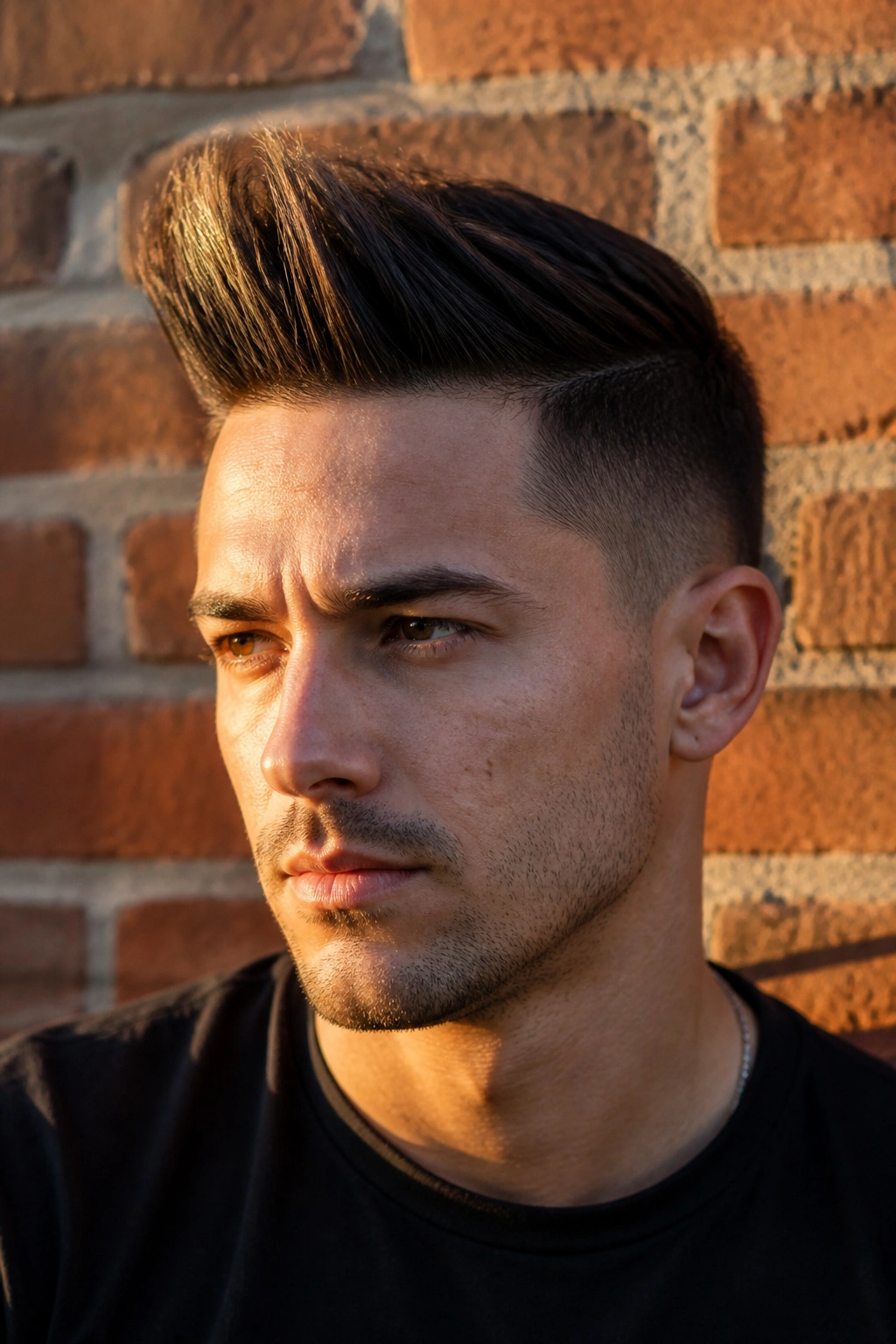
A pompadour can be short and still have character. The trick is to keep the sides tapered tight and let the front rise unevenly instead of building a perfect center peak.
One side should carry more volume through the front ridge. The other should sit lower and smoother. That subtle tilt makes the style feel modern without losing the old-school lift that makes a pompadour recognizable. Keep the top shorter than a classic pompadour — around 2.5 to 3.5 inches — so it stays in the short-hair lane.
This cut likes a blow-dryer. Aim the hair up and slightly across, then shape the front with a small brush or your hands. A medium-hold pomade gives enough control, but the finish should still have movement. If the top looks too sculpted, the whole thing loses energy.
It’s a strong choice for thicker hair and for men who want height without a big maintenance burden. The tilt keeps it from looking too formal.
18. Angular Side Fringe
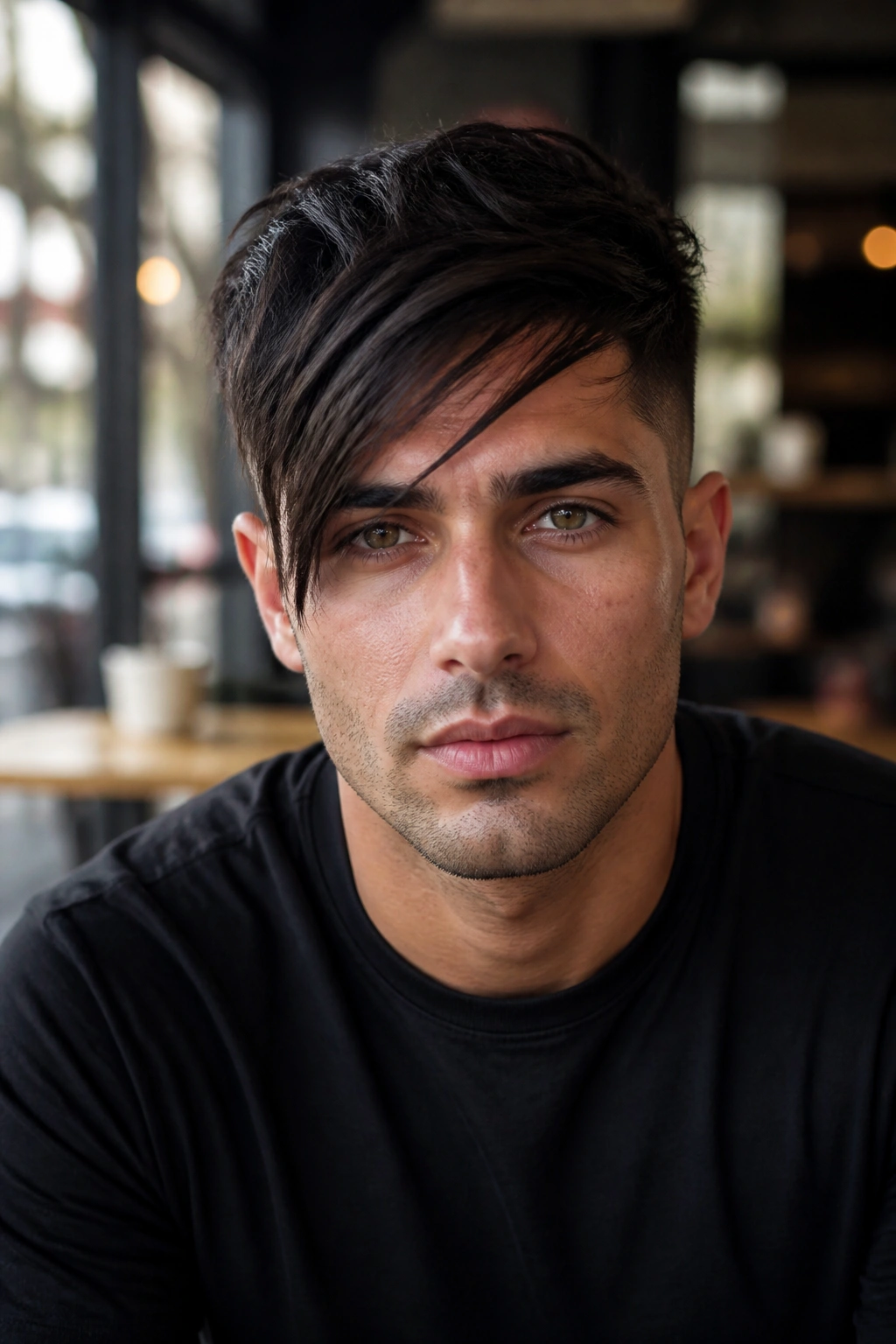
Want something softer than a hard part but sharper than a messy crop? An angular side fringe sits right in that middle space.
The fringe angles down across the forehead, but the line isn’t blunt. It should feel sliced, not chopped into a block. The sides can stay tapered or faded low, depending on how much contrast you want. The result is a short cut that frames the face without crowding it.
This shape is especially useful if your hair naturally wants to fall forward. Instead of fighting that habit, the cut builds around it. Ask the barber to keep the front long enough to sweep, then remove enough bulk on one side that the hair can lean cleanly. A little texture through the fringe keeps it from looking stiff.
The angular side fringe is one of those cuts that looks calm from a distance and more interesting up close. That is a good quality. Not every haircut needs to shout.
19. Temple Fade with a Heavy Top Shelf
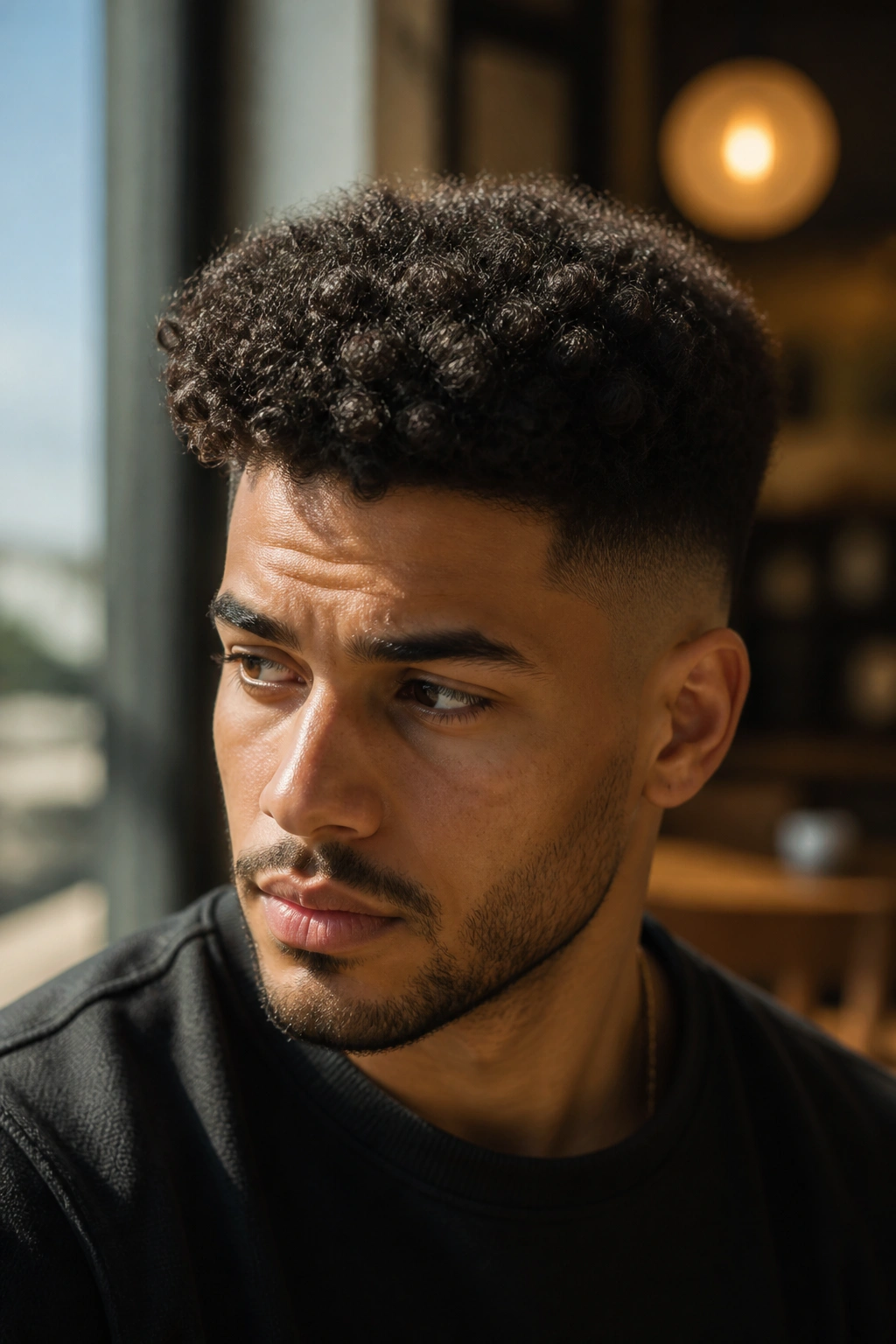
If your hair grows tight and dense, this cut gives it a place to sit. The temple fade clears the sides around the temples and ears, while the top keeps a heavier shelf that leans to one side.
The asymmetry comes from weight, not drama. One front corner stays fuller, and the top shelf drops in a way that looks clean against the faded sides. That makes the haircut feel sharp without needing a lot of length. It is a smart move for coily or tightly curled hair, where shape matters more than perfect combing.
What to ask for at the chair
- Keep the top short but dense.
- Fade the temples cleanly.
- Leave one front corner heavier.
- Shape the top so it tilts instead of sitting flat.
This is also a strong cut if you want to show texture without letting the sides bulk up. A curl sponge, a little cream, or a soft matte product can keep the top defined. The whole style works because the top has enough weight to read, but the fade keeps it from spreading.
20. Short Asymmetrical Taper With a Heavy Front Corner
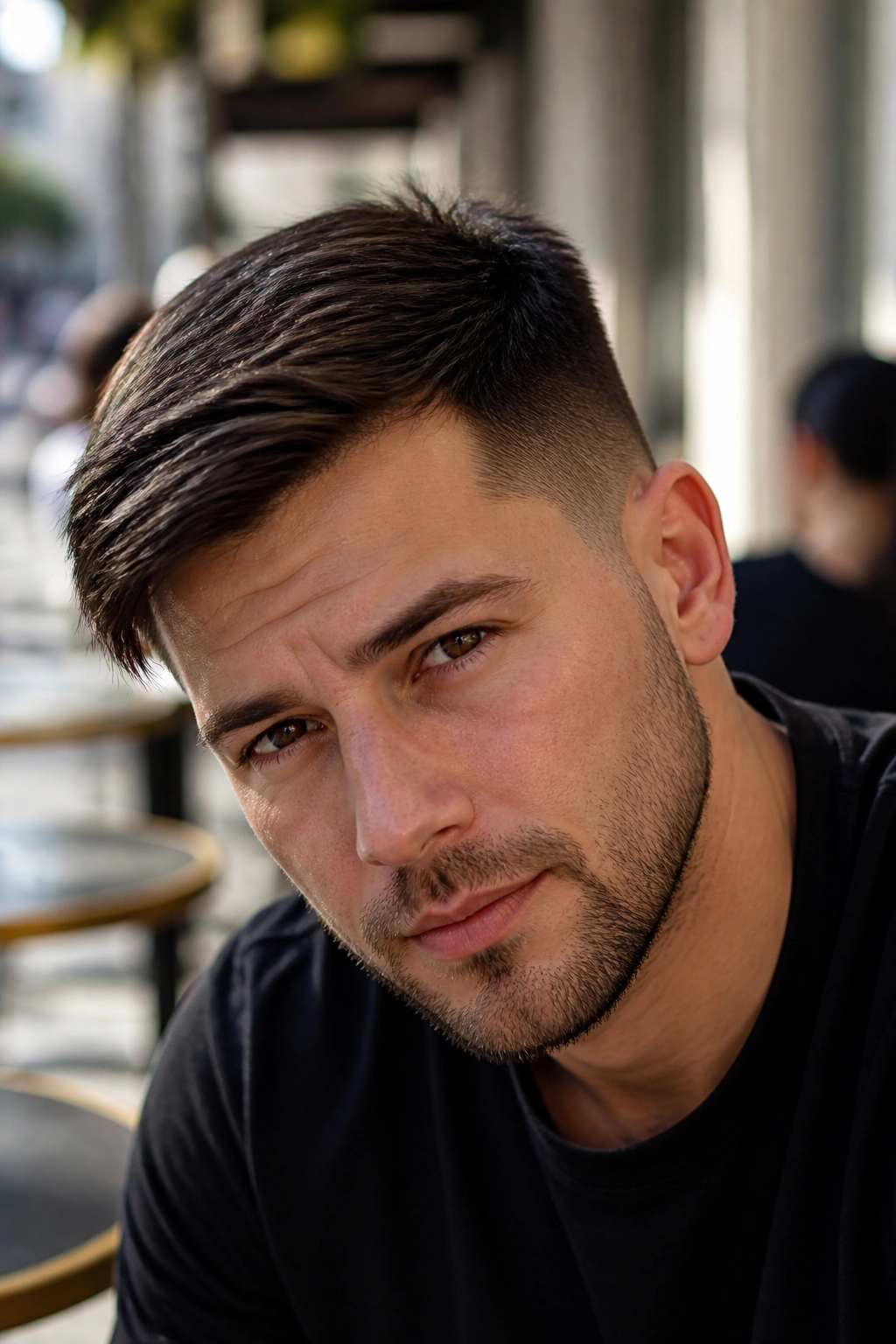
This is the cut I’d send to someone who wants one asymmetrical style that can handle a lot of different faces and hair types. Keep the sides tapered clean, leave the top short, and let one front corner carry more length so the whole shape leans in that direction.
It is not loud. That’s the charm. The haircut looks neat at a glance, then you notice the front is slightly heavier on one side and the crown doesn’t sit like a textbook diagram. That small imbalance makes it feel modern without turning it into a statement piece.
A barber can build this with about 1.5 to 2.5 inches on top, depending on texture, then tighten the sides with a low taper or a mid taper if you want more contrast. Styling is easy: a matte cream or paste, a quick push with the hand, and a little pinch at the front corner. If the hair wants to fall one way already, lean into it. If it doesn’t, do not force a dramatic angle. Subtle usually ages better.
This is the kind of cut that keeps earning its place because it works in real life — at work, after the gym, on a windy day, and three weeks after the haircut when it has started to grow out. That’s the honest test. A good asymmetrical cut still has shape when the mirror is not perfect, and this one passes that test better than most.
