



The wrong haircut on fine hair can do two annoying things at once: flatten the crown and make a round face look wider than it is. That combo is why so many people leave the salon feeling like the cut looked good in the chair and then fell apart the minute they got home.
The sweet spot is usually a shape that builds height at the crown, keeps the widest points away from the cheeks, and avoids ends that sit like a shelf at jaw level. Fine hair is its own beast, too. People use the word thin when they mean fine, but those are not the same thing. Fine hair has a smaller strand diameter, which means it can go soft and flat fast, even when there’s plenty of it on your head.
That’s where good fine haircuts for round faces earn their keep. They do not fight your hair’s texture. They work with it. A sharp part, a little asymmetry, and the right length can change the whole read of your face without making the haircut look try-hard or overstyled.
The best part? You do not need some giant, fussy transformation. You need shape. Clean shape. The kind that still looks decent when the blowout starts to lose steam and the weather decides to get involved.
1. Long Layers Below the Collarbone
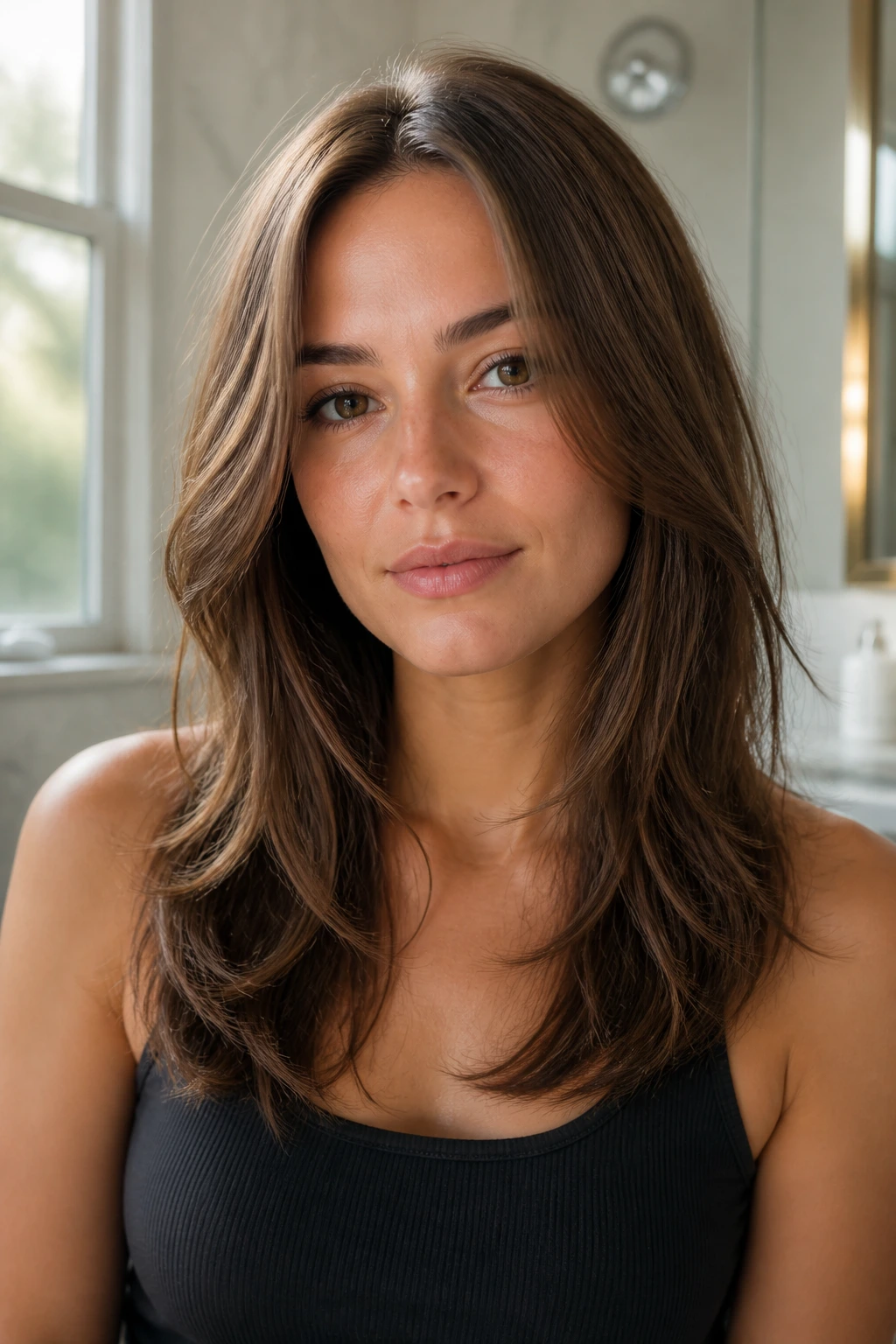
Long layers below the collarbone are one of those cuts that sounds boring until you see what they actually do. They keep enough weight in the bottom half of the hair to stop fine strands from floating away, but they still give you movement where it matters. On a round face, that extra length pulls the eye down instead of stopping it right at the cheek.
What to ask your stylist for
The shortest front pieces should start around the bottom of the cheekbone or lower. That keeps the cut from ballooning out at the widest part of the face. Ask for soft, blended layers rather than choppy ones, and skip heavy thinning shears near the crown.
- The longest layer should land at or below the collarbone.
- The face-framing pieces should angle past the jaw, not stop on it.
- Keep the ends blunt enough to look full.
- Use a round brush or a large Velcro roller at the crown for lift.
I like this cut for anyone who wants movement without a lot of maintenance. It grows out well, and that matters more than people admit. A good long layer should still look intentional three weeks after the salon, not like it lost a fight with humidity.
Best for: fine hair that goes limp at the top but still has enough length to hold shape in the ends.
2. Chin-Length Textured Bob
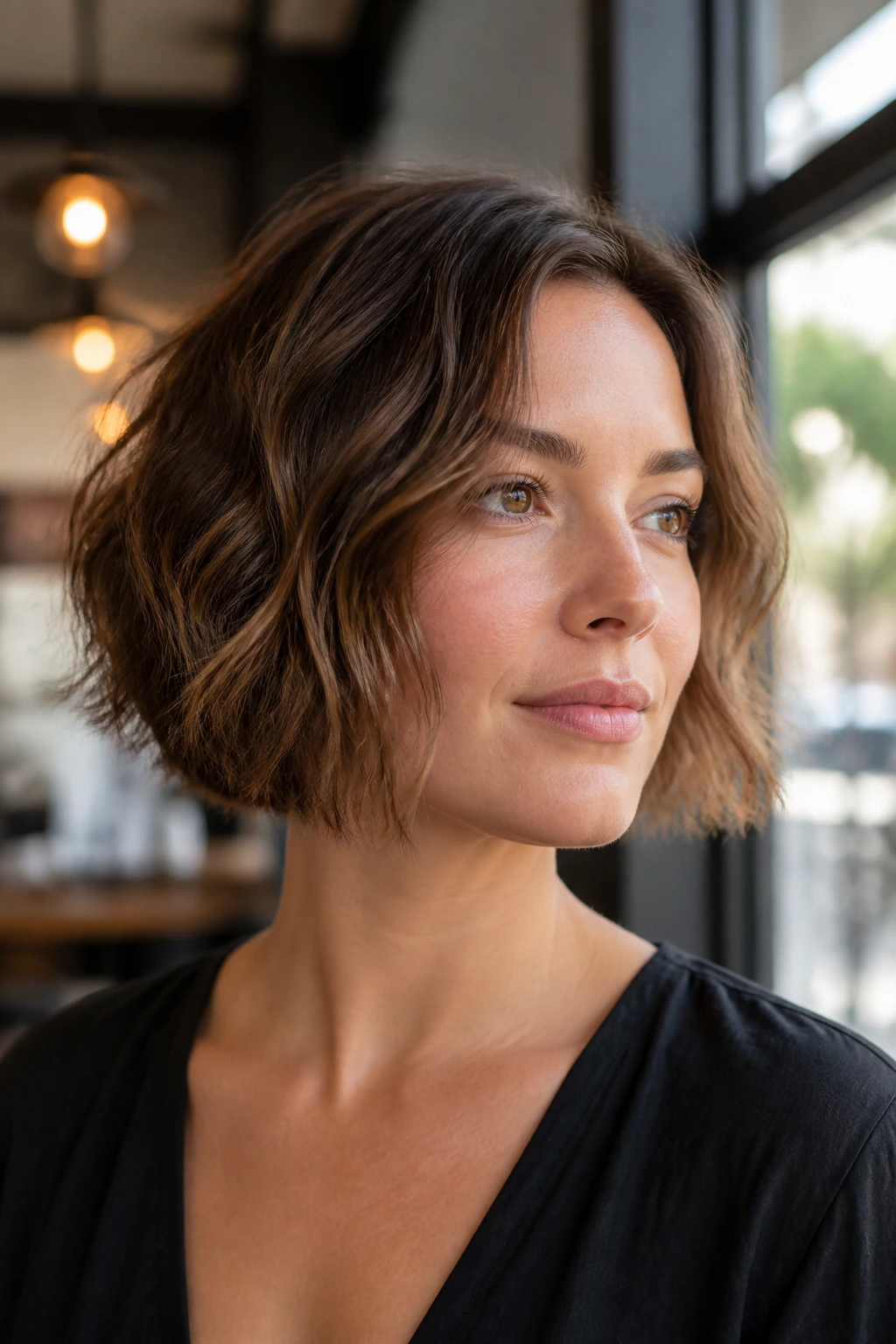
A chin-length textured bob can be sneaky in the best way. It sits right where the jaw starts to narrow, which can make a round face look more defined, but only if the texture is soft enough to keep it from puffing out at the sides.
The sweet spot is texture, not thinning
Too many bobs on fine hair get hacked into wisps that look airy for about ten minutes and then collapse. What you want instead is point-cutting at the ends and a little movement through the interior, not aggressive razor work. That gives the bob a cleaner edge and keeps it from looking see-through.
If your hair is very fine, I’d avoid a super blunt chin bob with no layering at all. It can look chic in photos and flat in real life. A small amount of bend at the ends helps it sit closer to the head, which keeps the face from looking wider.
This cut is best if you like hair that feels polished without needing a lot of styling. A side part helps. So does a quick pass with a flat iron just at the front pieces to curve them under slightly.
3. Angled Lob With a Deep Side Part
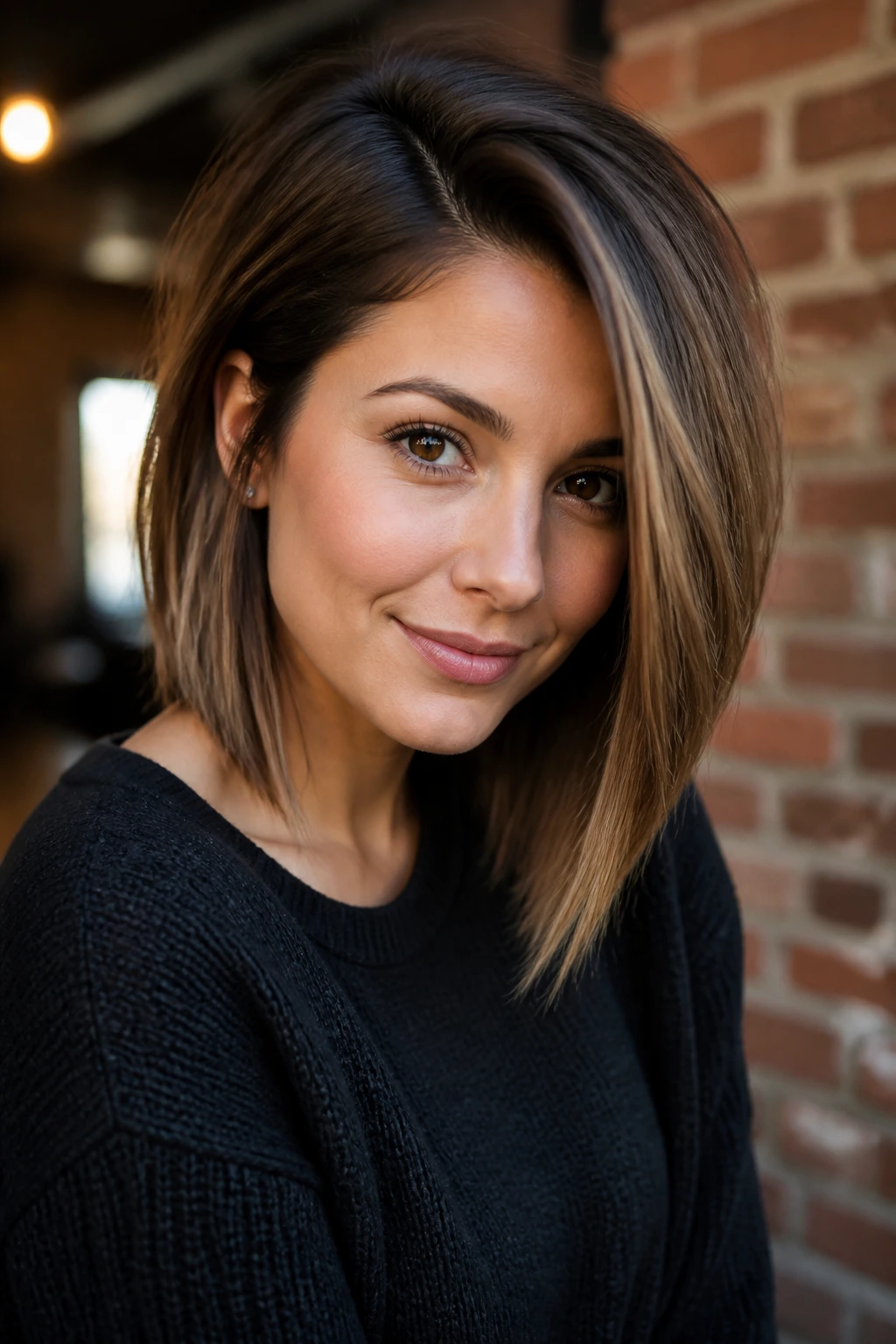
Why does an angled lob work so well on a round face? Because the line is doing half the job for you. The front is longer than the back, which creates a diagonal that naturally stretches the face, and the deep side part adds a little height where fine hair usually gives up.
How to wear the part
A center part can work, but a deep side part is usually stronger here. It creates asymmetry, and asymmetry is your friend when the goal is to avoid making the face look even and wide. I like a part that starts about one eyebrow-width off center, then falls into a soft sweep.
The angle should be noticeable, but not dramatic enough to feel like a scene haircut. If the back is too short, the contrast gets harsh. If the front drags too long, the cut loses energy and can make fine hair look stringy.
Styling note
- Blow-dry the crown up and back first.
- Direct the front pieces forward, then tuck one side behind the ear.
- Finish with a light mist of texturizing spray at mid-lengths only.
That little combo gives you lift without making the hair feel crunchy. Nice and tidy. No helmet.
4. Curtain Bangs With Shoulder-Length Layers

Curtain bangs are the haircut version of a good middle ground. They soften a round face, split the width across the forehead, and make the whole cut feel lighter. On fine hair, though, the bang length matters more than people think.
The sweet spot for the bangs
The shortest point should usually hit around the bridge of the nose or just below the brow, then open out toward the cheekbones. If curtain bangs are cut too short on fine hair, they tend to separate and look skinny. If they’re too long and heavy, they drag the face down.
Shoulder-length layers underneath keep the whole shape from feeling flat. They give the bangs something to sit on, which helps the haircut hold together. I also like a soft center part here, even if it is not perfectly straight. Slightly imperfect looks better than too-symmetrical.
- Ask for feathered ends, not chunky layers.
- Keep the bang density light.
- Blow the bangs away from the face with a round brush.
- Use a pea-sized amount of mousse, not oil, at the roots.
The best curtain bangs on fine hair look like they belong there from day one. They should fall open on their own after a few minutes, not need constant re-combing.
5. Soft Pixie With Height at the Crown
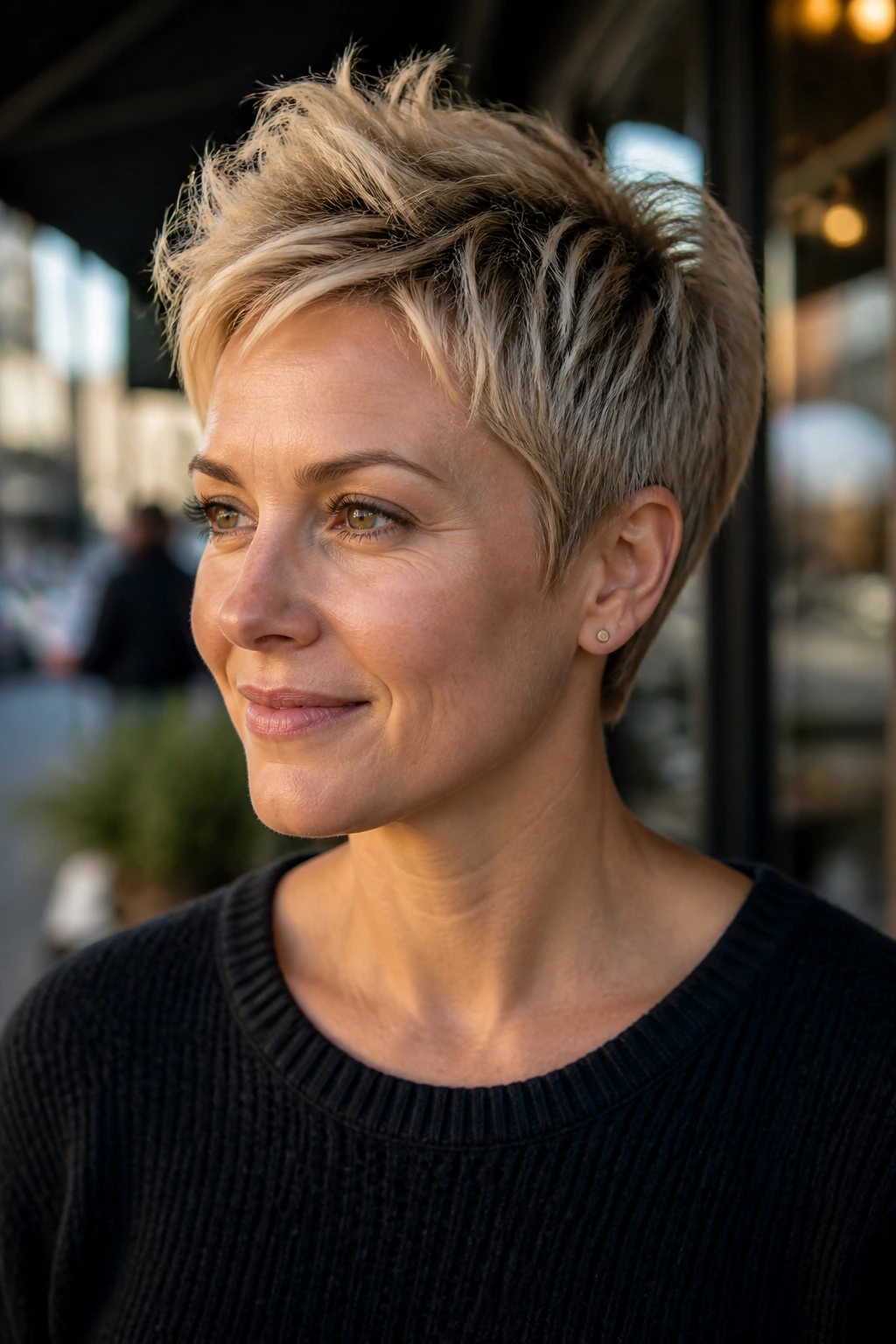
A soft pixie can be one of the smartest fine haircuts for round faces, and I mean that without the usual pixie haircut caveats. The trick is crown height. Without it, the cut can sit too close to the head and make the face read wider. With it, everything lifts.
The sides should stay close but not severe. Think tapered, not shaved down to the skin. That keeps the silhouette clean and gives the face some breathing room around the jaw. The top usually needs a bit more length — enough to sweep forward, lift up, or part slightly off-center.
This is one of those cuts that looks expensive when it’s cut well and a little sad when it’s not. Harsh lines are the enemy here. Fine hair benefits from softness, especially near the temples and ears, where round faces already carry visual width.
Use a matte paste or a light styling cream, not a heavy pomade. Heavy products flatten the root and make the whole thing look greasy by noon. And if your stylist wants to razor the top to death, say no. A bit of texture is good. Too much can make fine strands disappear.
6. Collarbone Lob With Invisible Layers
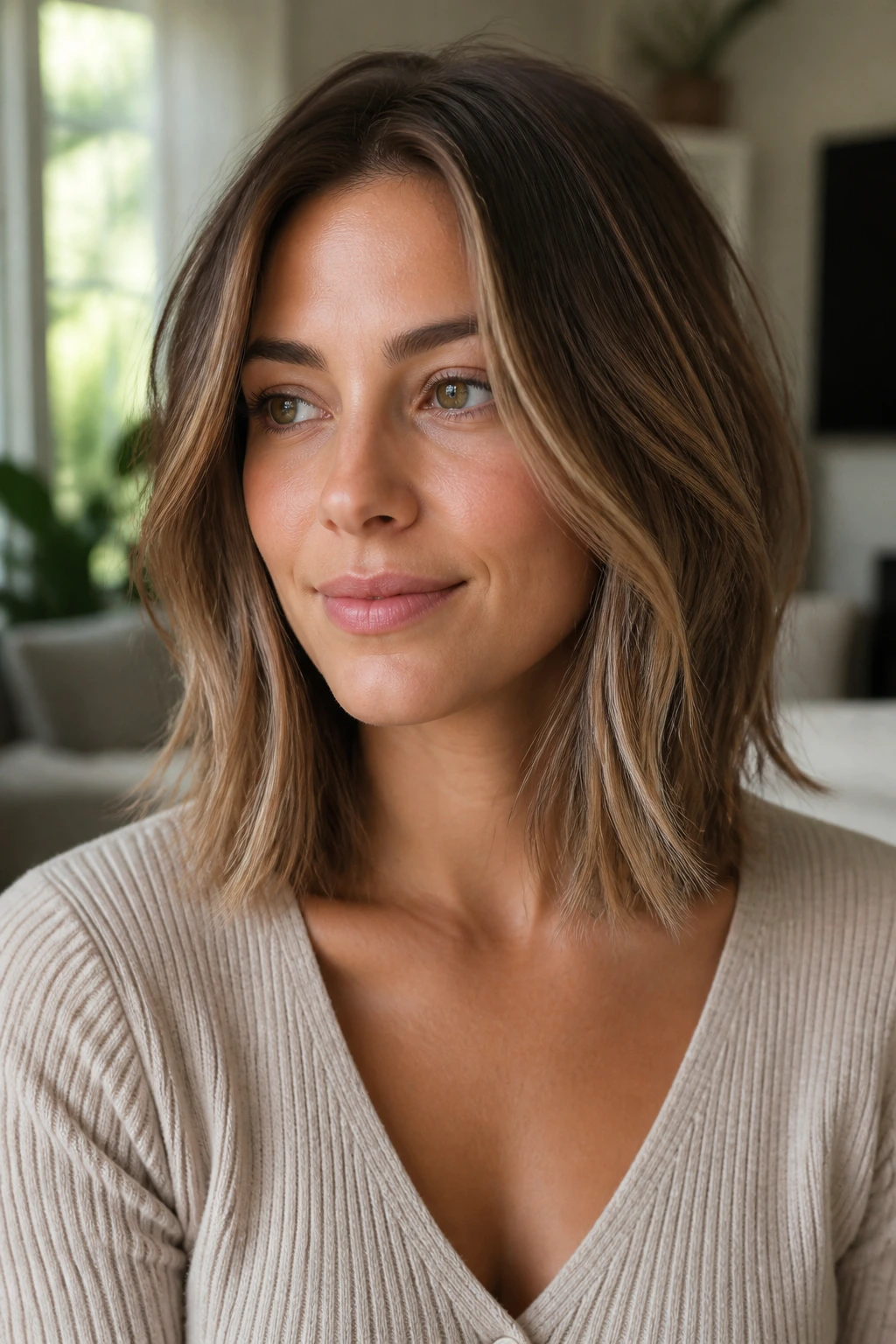
A blunt collarbone lob and a softly layered one can look similar in a mirror, but they behave very differently. The invisible-layer version keeps the perimeter looking thick while taking just enough weight out of the interior to let the hair move. That is a big deal if your hair is fine and you hate the see-through ends that some layered cuts create.
Invisible layers vs. obvious layers
Visible layers can be too much for fine hair unless the density is high enough to support them. Invisible layers are tucked inside the shape, so the outline still reads as solid. On a round face, that means you get length and a little lift without the haircut shouting for attention.
The collarbone length is doing useful work here, too. It sits below the widest part of the cheek and above the chest, which is a clean place for the eye to land. I find this cut especially good for people who want to tuck hair behind one ear and still keep a little swing in the front.
If you wear glasses, this one is a sleeper hit. The length clears the frames without swallowing them. And if you air-dry a lot, even better. The cut does not depend on perfect styling to look polished.
7. Shag With Wispy Ends

Why does a shag sometimes look amazing on fine hair and sometimes look like a bad day at a music festival? Because the version that works is controlled. A shag for a round face needs softness at the edges, not a million disconnected pieces all over the place.
How to keep it soft instead of fluffy
The shortest layers should usually live around the cheekbone or slightly lower. That gives the cut lift near the top without parking volume right at the widest part of the face. On fine hair, too many short layers can leave the ends too light, and then the whole thing collapses into frizz.
A good shag on fine hair leans on airy texture, not raw choppiness. Ask for wispy ends and a little separation around the crown. If the stylist starts talking about taking out a huge amount of bulk, pause. Bulk is not the problem on fine hair; shape is.
Styling it well
- Use mousse on damp roots.
- Scrunch lightly, then diffuse on low heat.
- Finish with a tiny bit of dry texture spray at the ends.
It is messy by design, but not careless. There is a difference, and you can see it from across the room.
8. Bixie Cut With Swept Fringe
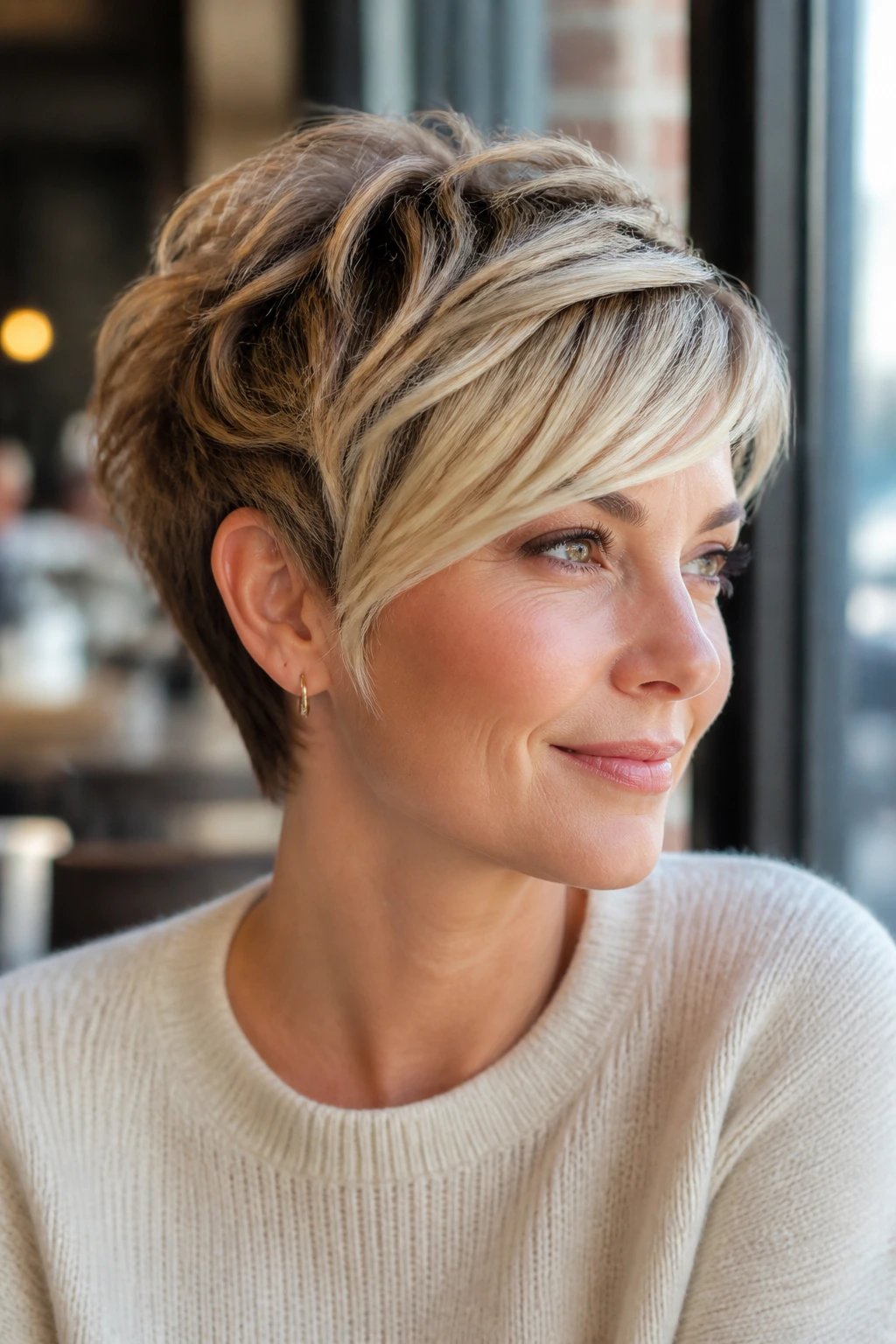
The bixie — that awkward little middle ground between a bob and a pixie — can be a very good answer for fine hair that wants some personality without going full crop. The swept fringe helps pull the eye diagonally across the face, which is useful on rounder shapes. It also softens the forehead in a way that makes the whole cut feel more balanced.
This is the cut I recommend to people who keep saying they want short hair but then back away at the last second. Fair enough. The bixie gives you shortness around the neck and ears, but keeps enough length on top to style in different directions.
A good bixie should never look bulky on the sides. The shape needs room around the temples and cheekbones. If the fringe is too dense, it can make the face feel boxed in. If it is too sparse, the cut can lose its point, so the density needs a careful hand.
- Ask for a fringe that sweeps across, not straight down.
- Keep the crown a touch longer for lift.
- Taper the nape closely.
- Use a light wax only on the ends.
I like this one for active people, honestly. It dries fast. It moves well. And it does not ask for much.
9. A-Line Bob With a Tapered Nape
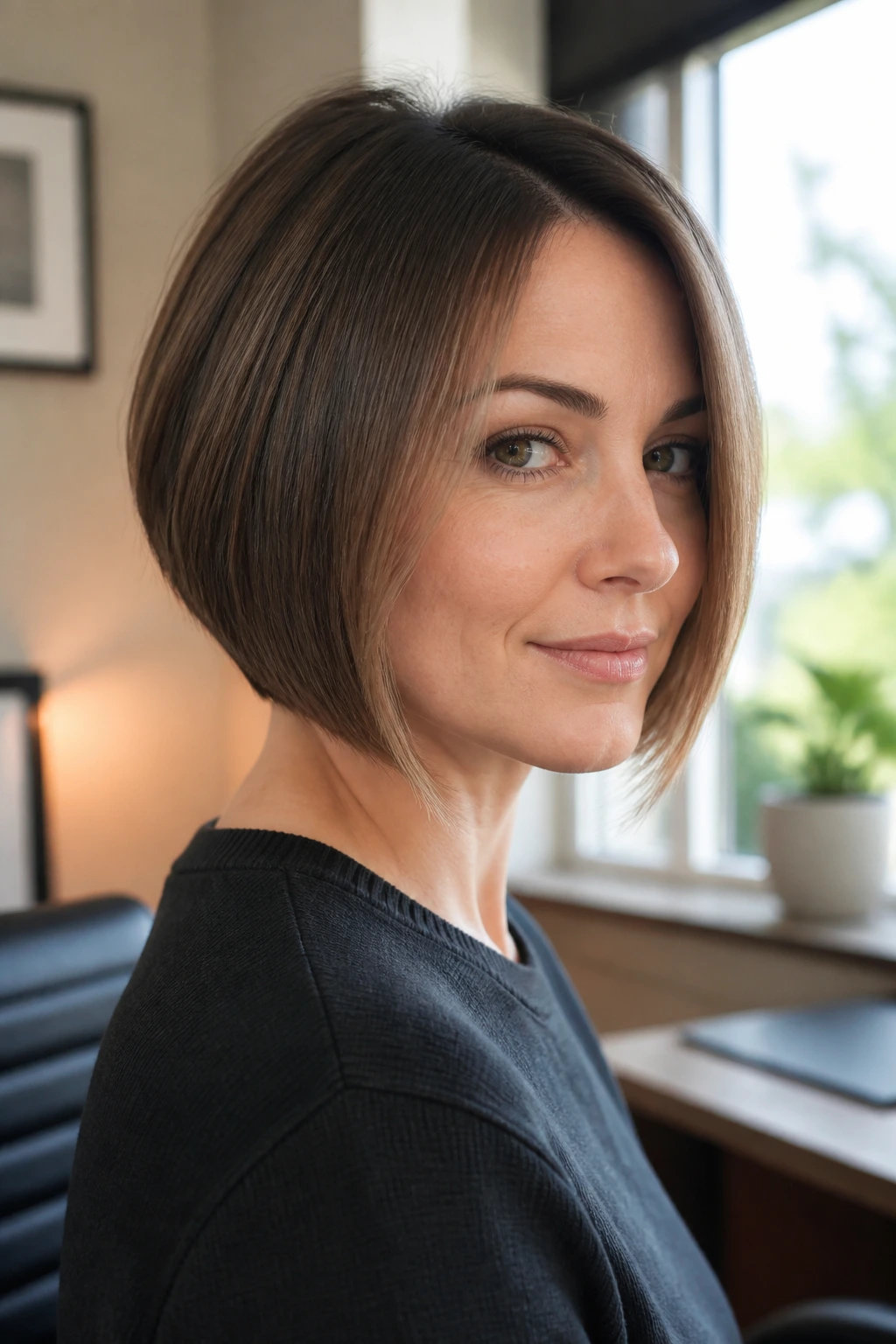
An A-line bob is one of the cleanest shape tricks in haircutting. The back sits shorter, the front gets longer, and the line itself creates length where a round face can use it most. Add a tapered nape, and the cut hugs the head instead of puffing out at the neck.
That back section matters more than people think. If the nape is too heavy, the haircut can look boxy. If it is too shaved or too disconnected, the bob loses its polish. A soft taper keeps the whole thing neat and lets the front pieces do the work of slimming the face visually.
This cut is especially good if you like crisp lines but do not want something severe. It sits somewhere between tailored and easygoing. Fine hair tends to behave well in this shape because the slant creates the illusion of fullness, even when the actual strand diameter is small.
I would keep the front just grazing the jaw or a little below it. That’s the zone. Any shorter and you risk emphasizing the cheeks. Any longer and the A-line loses its edge.
10. Face-Framing C-Shape Layers
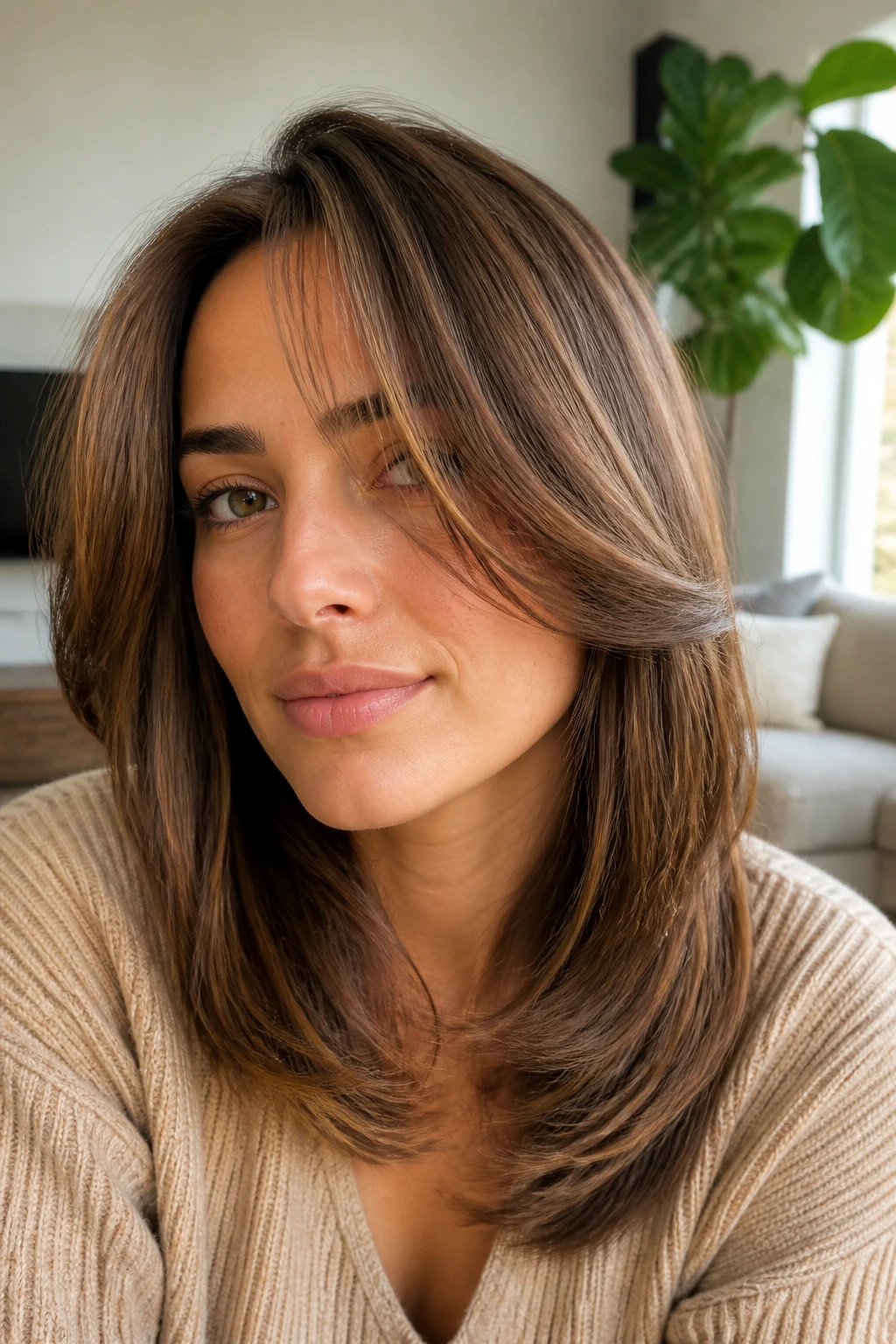
A C-shape layer is a lot softer than the old-school “big face-framing pieces” people used to ask for. Instead of a straight drop or a hard angle, the hair curves in toward the face and then away again, almost like a soft arc. On a round face, that curve is flattering because it creates movement without drawing a hard horizontal line.
Why the curve matters
Straight face-framing pieces can sometimes make the face look wider if they stop right at the cheek. A C-shape bends the line so the eye keeps moving. It is gentler, and on fine hair gentler often looks better because the hair holds its shape without becoming chunky.
What to ask for
- The first curve should begin around the cheekbone.
- The longest front piece should fall below the jaw.
- Keep the layers soft through the mid-lengths.
- Avoid heavy face-framing that ends in a blunt shelf.
This style works in a lot of lengths, which is part of its appeal. It can sit on a lob, a longer cut, or even a shaggy shoulder-length shape. I like it because it solves the round-face problem without screaming, “I’m trying to fix my face shape.” It just looks good.
11. Feathered Mid-Length Cut
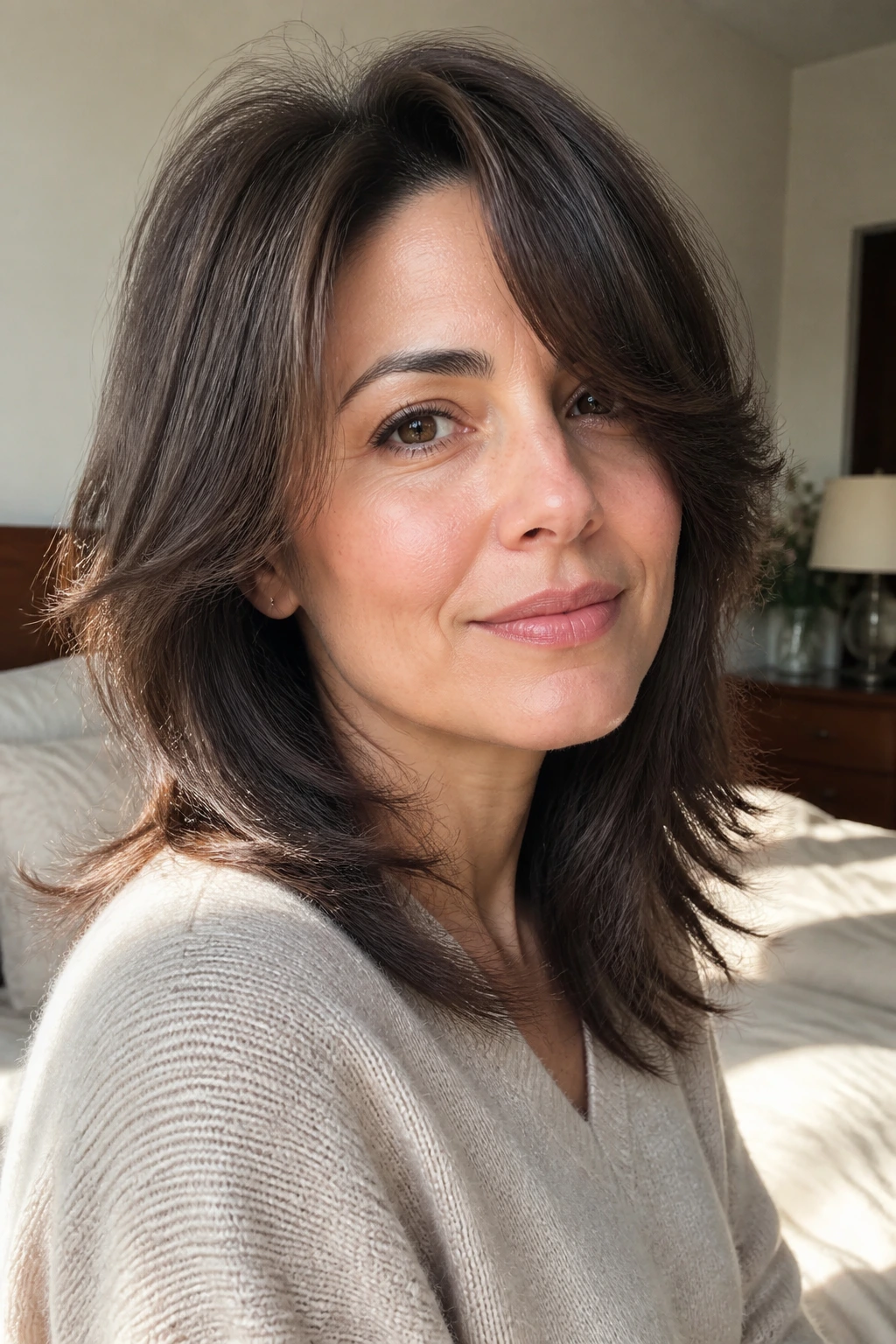
Could feathering work on fine hair without making it look flimsy? Yes — if the feathers live where the cut can support them. The mistake is feathering every section until the whole head turns see-through. Fine hair needs selective movement, not constant shredding.
A shoulder-skimming or mid-length feathered cut softens the perimeter and keeps the face from looking boxed in. The key is to preserve enough weight at the bottom so the ends still look like hair, not smoke. On round faces, that soft perimeter helps lengthen the line of the face.
How to keep it light
Ask for feathers around the outer edge and some movement near the cheekbones. Leave the crown relatively tidy. If everything gets layered, the hair can lose its body fast. I’m not anti-layer, not at all. I just like layers that earn their place.
- Great if your hair bends easily but falls flat at the root.
- Good with a side part or a loose center part.
- Works best with a round brush and a light heat protectant.
- Not ideal if you want a blunt, architectural look.
This is the cut for people who like softness but do not want an obvious shag.
12. Blunt Lob With a Slight Underbevel
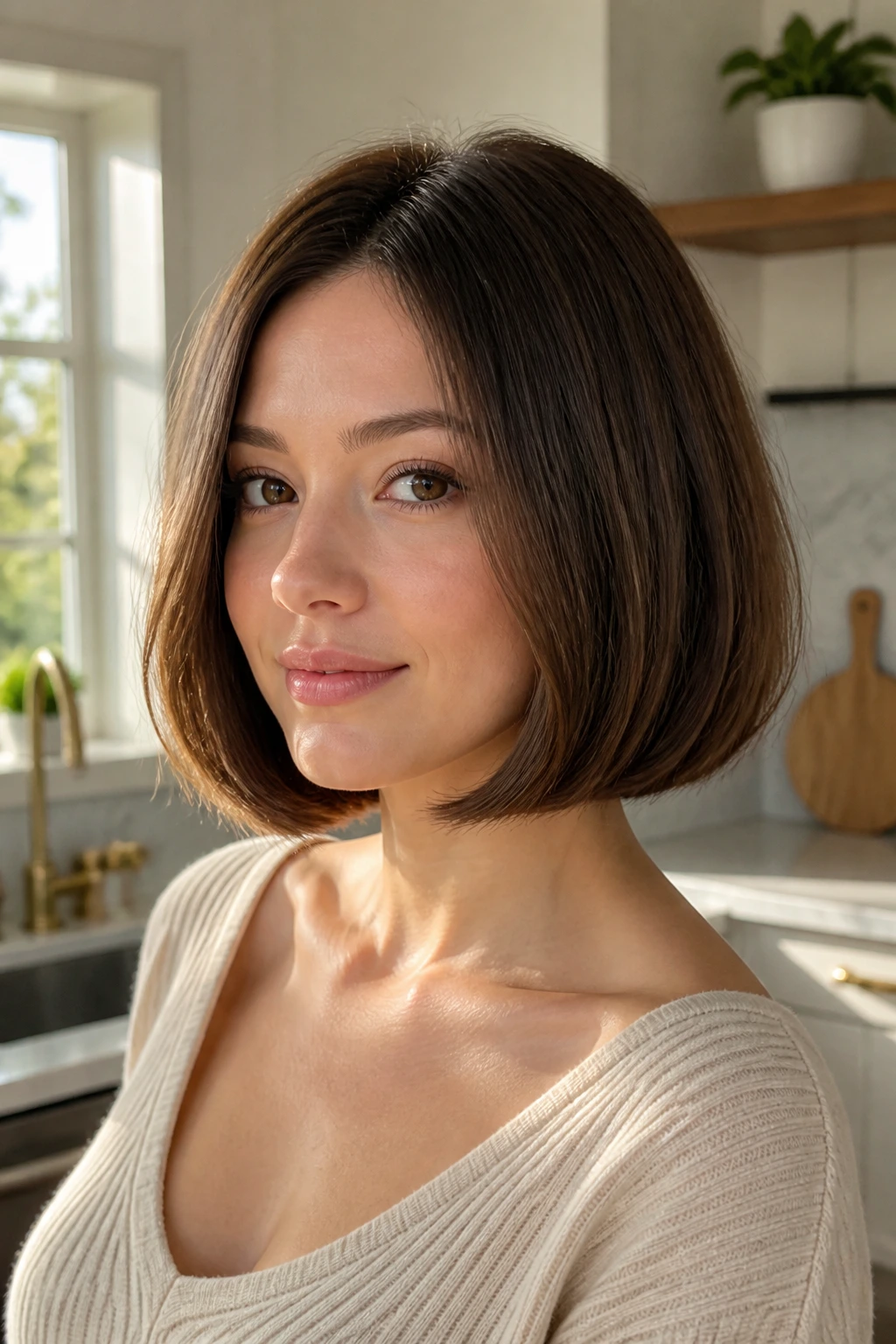
A blunt lob can be a small miracle for fine hair. People assume blunt means heavy, but on fine strands it often does the opposite: it makes the hair look denser. A slight underbevel — where the ends curve inward a touch instead of flipping out — keeps the shape neat and helps the face look longer.
What I like here is the discipline of it. There is no fussy layering to hide behind. The line does the work. If your hair is fine and straight or barely wavy, this cut can look much thicker than a layered version that tries too hard to create movement.
For a round face, the lob should land below the chin, usually around the collarbone. That keeps the widest part of the face from being the end point of the cut. It is a small detail, but small details are where this shape lives.
This is also one of the easier styles to maintain. You can air-dry it, tuck one side back, or smooth it with a flat brush. It does not need a complicated setup to make sense.
13. Wavy Shoulder-Length Cut

A shoulder-length cut with a natural wave can be lovely on fine hair, but only if the shape is kept loose enough to avoid extra width at the cheeks. That is the danger with shoulder length on round faces: if all the volume sits right at the side of the head, the face can look broader.
The answer is movement that starts lower. Let the wave fall from mid-lengths down, not from the root. That keeps the top cleaner and gives the face some vertical space. I also like this cut when there is a little bend in the hair already, because the texture helps carry the shape without much effort.
If your waves are fragile, skip heavy creams. They weigh fine hair down fast. A light foam or a small amount of leave-in spray is enough. Then scrunch and let the ends dry naturally or diffuse on low.
What helps most
- Keep the layers long.
- Part slightly off-center.
- Let the front pieces skim below the jaw.
- Avoid bulky curls right at the cheek line.
It should feel relaxed, not puffy. That’s the whole trick.
14. Side-Swept Bangs With Long Layers

Side-swept bangs are a classic for a reason: they break up the width of a round face without closing it in. They also give fine hair an easy place to create shape, because the fringe can be moved, tucked, or pushed forward depending on the day.
Where the fringe should start
I prefer a side-swept bang that begins around the peak of the brow and falls across to the cheekbone. Anything shorter can get too wispy on fine hair. Anything longer can slide into the eyes and turn into a fussy maintenance problem.
The long layers underneath should be quiet. No big jumps. No chunky disconnect. You want the bangs to lead the eye, while the length keeps the haircut from feeling too top-heavy. That balance matters.
The styling is simple, which is part of why I keep coming back to this shape. Blow the bang section side to side with a nozzle and a small round brush. Cool it down. Then leave it alone. Fine hair usually looks better once it settles a bit.
This cut is especially good if you dislike center parts but also do not want full fringe. It sits in the middle, which is where many people actually live.
15. Graduated Bob With Crown Lift
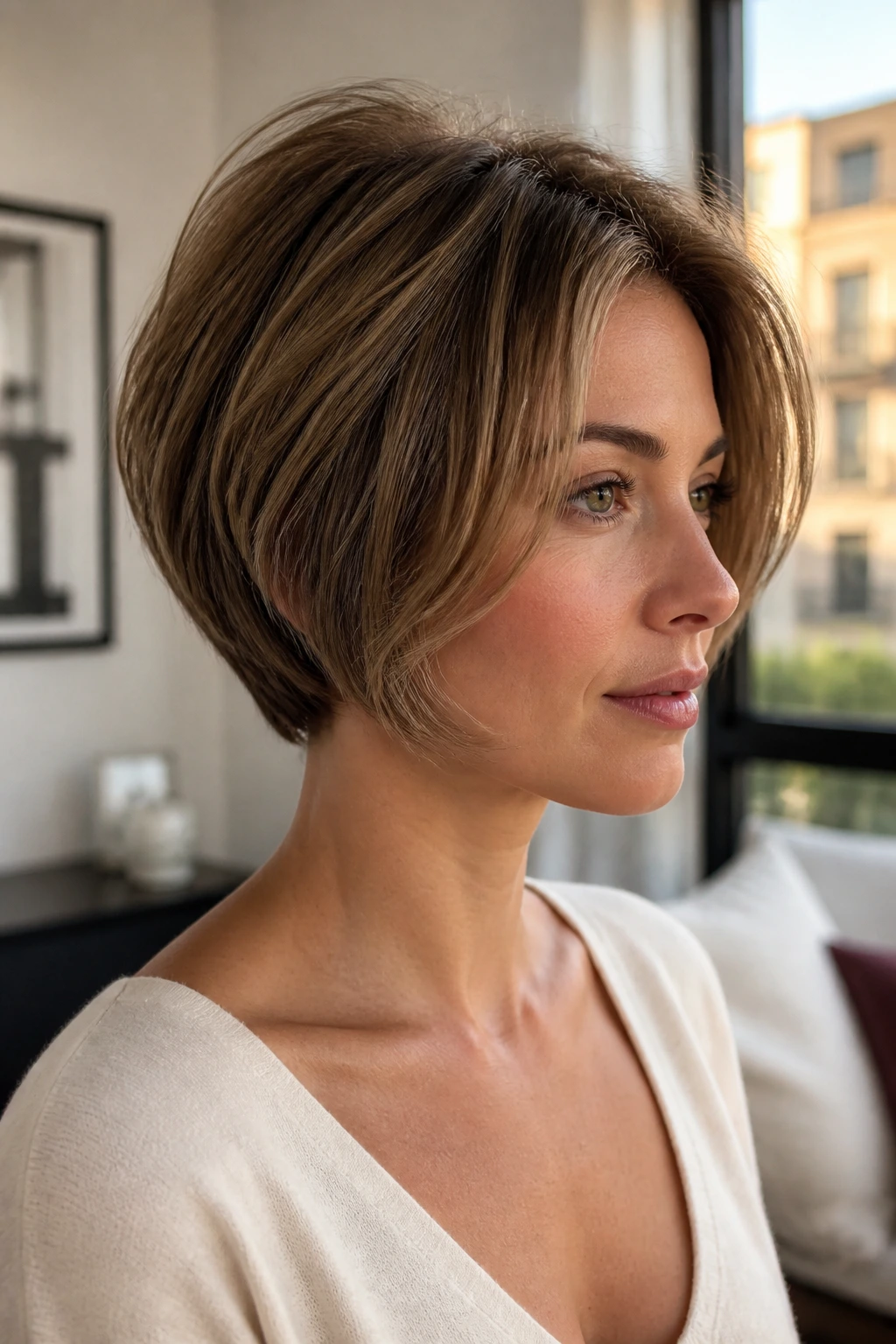
A graduated bob can work beautifully on fine hair when the graduation is soft enough to add lift rather than bulk. The shorter back gives you a clean shape at the nape, while the crown lift keeps the top from collapsing. For a round face, that upward energy is the whole point.
The cut should not be stacked so high that it puffs out like a mushroom. That’s the common problem. A little graduation is elegant; too much turns the back into a shelf. On fine hair, a subtle version tends to wear better anyway because it keeps the outline tidy.
I like this cut for people who want a real bob shape, not a long compromise. It gives structure. Structure matters when your hair has a tendency to fall flat and forget itself by lunchtime.
Why the back matters
- A shorter nape creates a cleaner neck line.
- The crown can be lifted without adding width at the cheeks.
- The front pieces can stay slightly longer for balance.
- A soft side part keeps it from looking too symmetrical.
It feels sharp, but not severe. That’s a hard line to hit, and this cut gets there when it’s cut with restraint.
16. Shoulder-Grazing Cut With Micro Layers
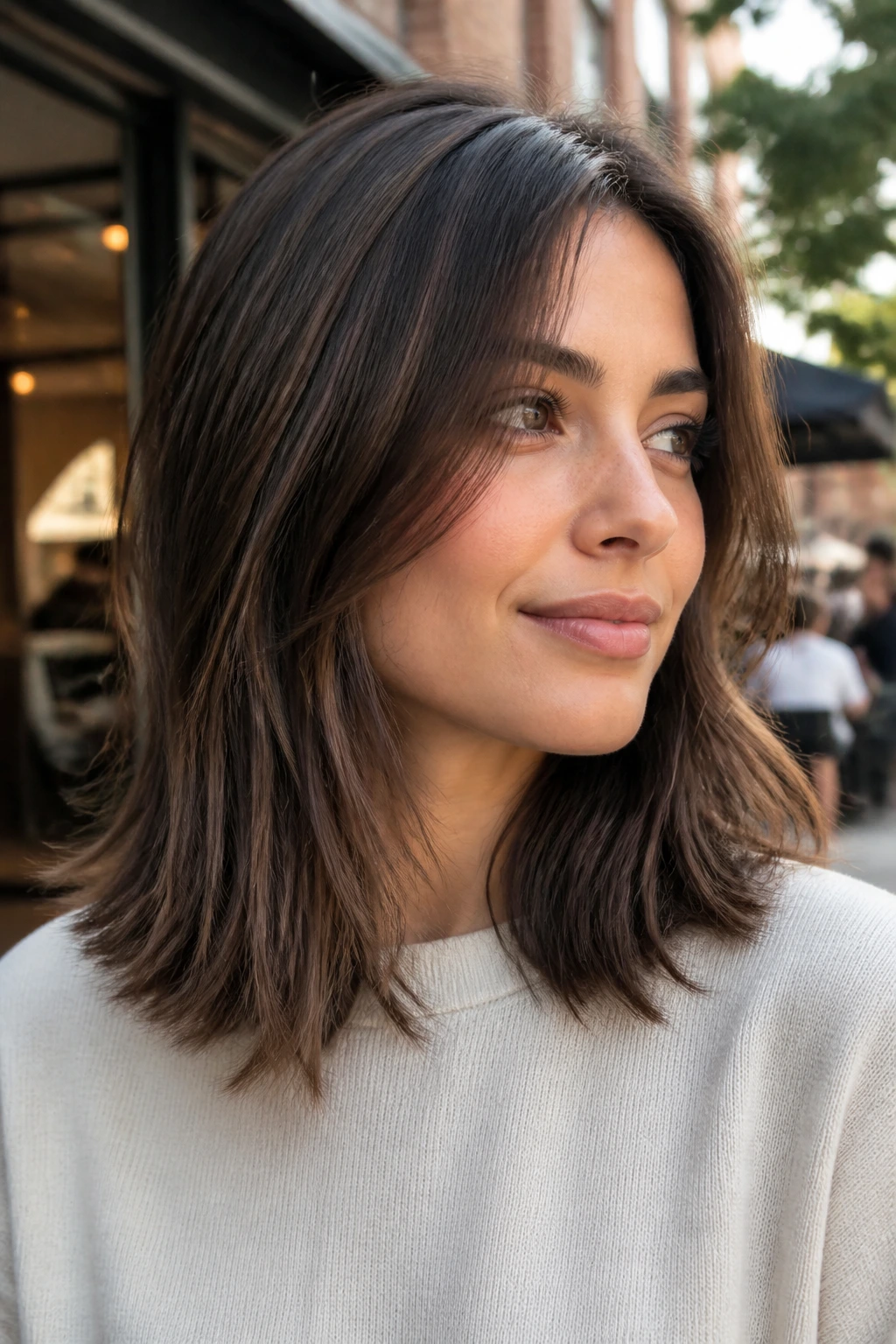
A shoulder-grazing cut with micro layers is one of my favorite quiet fixes for fine hair. Micro layers are tiny, almost invisible adjustments near the ends and around the shape, not big interior chops. That means you get movement without sacrificing the thickness that fine hair needs to look healthy.
This cut is especially useful if you’ve been burned by layers before. A lot of stylists go too far and end up making the ends look skinny. Micro layers avoid that mess. They nudge the hair into place instead of tearing the shape apart.
The shoulder line gives round faces a useful vertical edge, especially when the front pieces drop a little lower than the back. It is soft enough to feel easy, but it still has enough shape to keep the face from reading wide.
If you’re wondering whether this is boring, maybe a little. But boring hair that looks good is underrated. A haircut does not need drama to be useful.
17. Curly Crop With Height at the Top
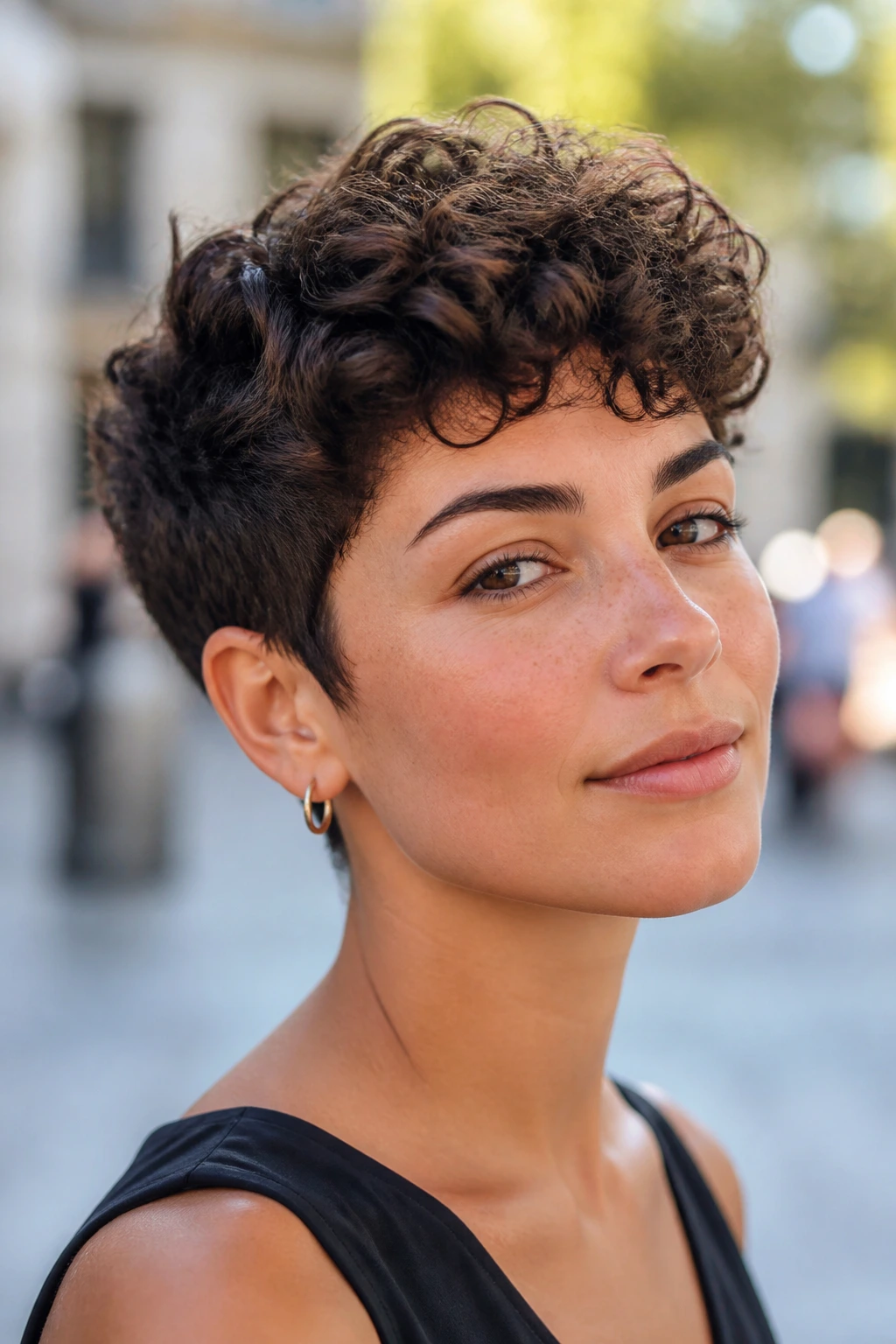
Fine curly hair needs a different set of rules. If you cut it the same way you’d cut straight fine hair, it can lose shape fast and spring out in the wrong places. A curly crop with height at the top keeps the silhouette lifted, which helps a round face look longer.
The top should stay a bit taller than the sides. That sounds simple, but it changes everything. Curly hair has its own shrinkage pattern, so the cut needs room to move. If the sides are too bulky, the face gets wider. If the top is too short, the whole thing loses shape and turns into a fuzzier version of itself.
Fine curls need a different map
- Dry-cutting can help the stylist see the curl pattern.
- Keep the crown longer than the temples.
- Avoid over-thinning the curls.
- Use a light gel or foam that dries with a soft cast.
This cut is not about forcing curls into neat little boxes. It is about giving them a shape that sits well on your face. If you have fine curls, that distinction matters a lot.
18. Long Pixie-Bob Hybrid
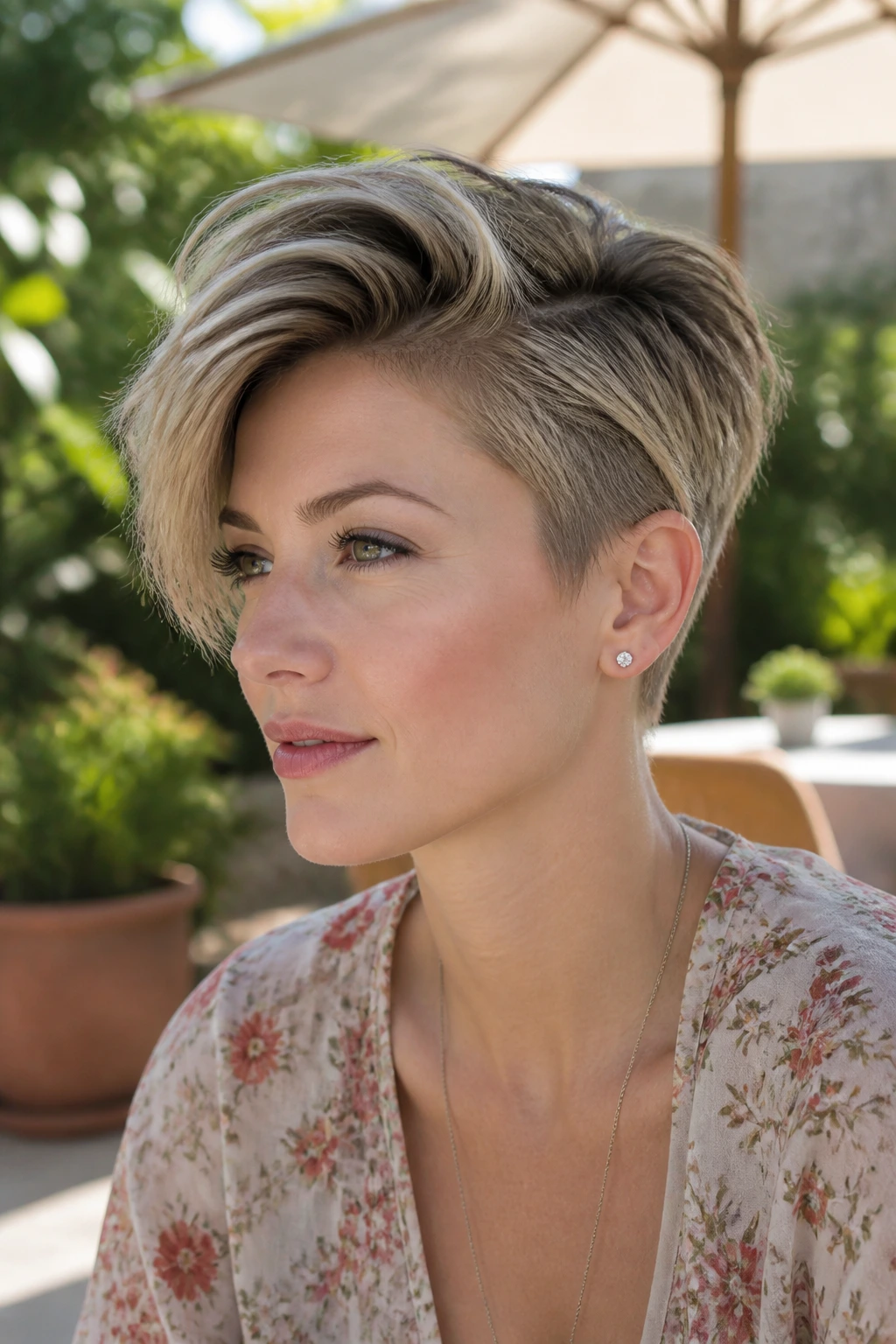
If you cannot decide between a pixie and a bob, this hybrid is the cut I’d point you toward first. It keeps the neck and sides neat like a pixie, but leaves enough length on top and around the front to behave more like a short bob. On fine hair, that mix can be gold.
The reason it works on round faces is the contrast. Shorter sides keep the shape close to the head where you want it, and the longer top gives you the height that fine hair often lacks. You can sweep it back, part it off-center, or let the front pieces fall forward in a soft curve.
It also grows out in a forgiving way, which I appreciate. Some short cuts go strange after five weeks. This one usually just gets softer. That is not the same thing, and it is much easier to live with.
If I were choosing one cut for someone who wants short hair but still needs movement, this would be high on the list. It has enough shape to flatter a round face, enough length to style, and enough texture to keep fine hair from disappearing. That’s a rare combination.
